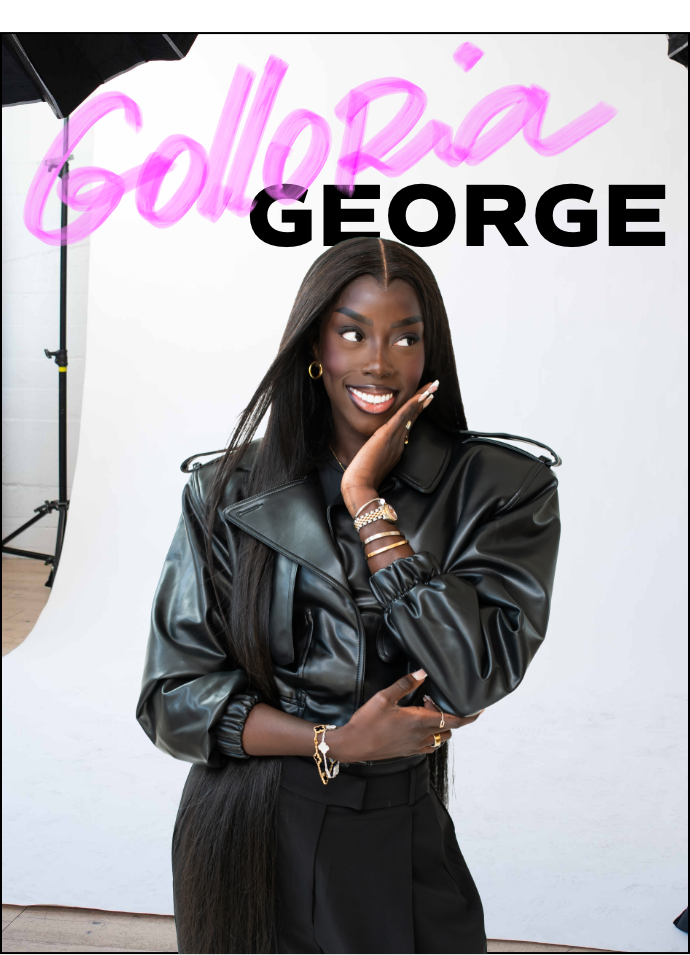
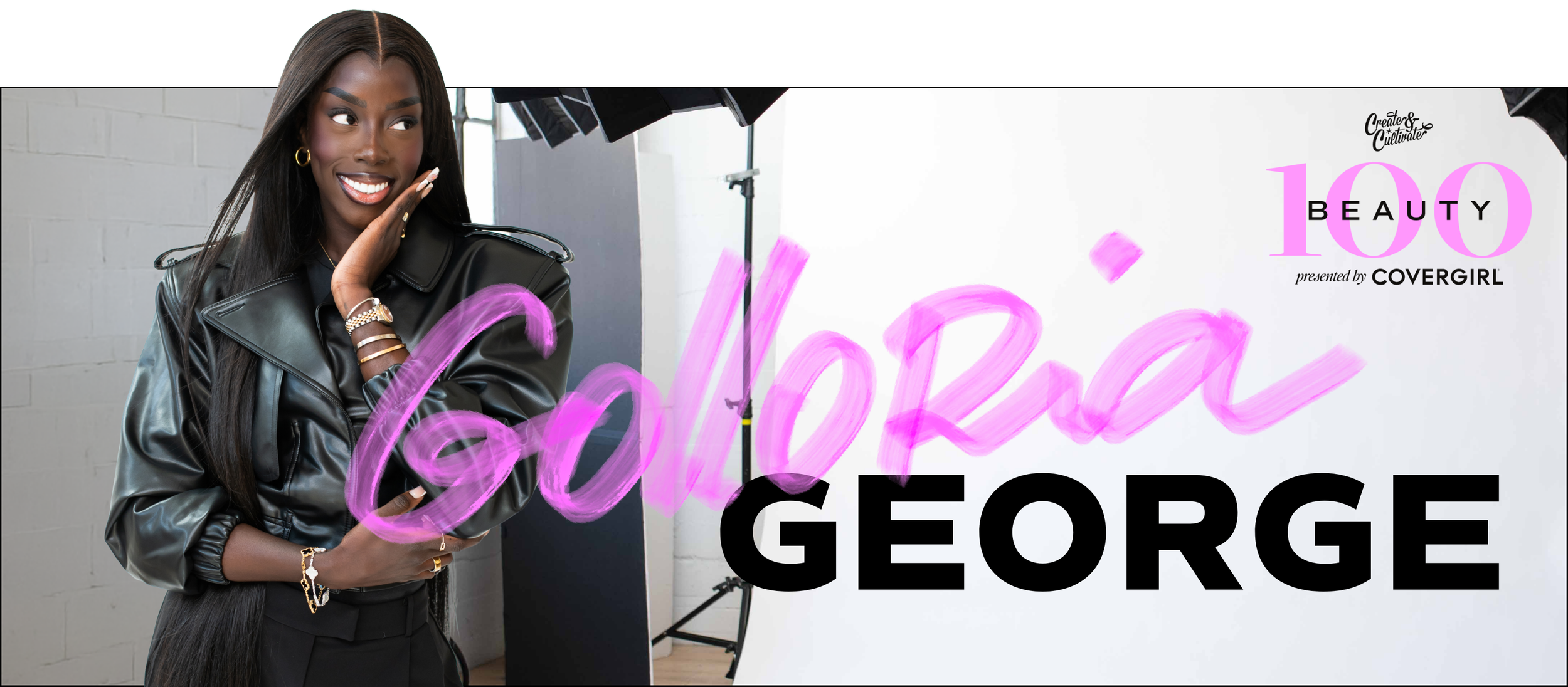
GOLLORIA GEORGE isn’t YOUR AVERAGE BEAUTY CREATOR.
She’s a truth teller.
The South Sudanese creator and BeautyTok powerhouse built her platform by doing something deceptively simple yet telling: swatching the darkest shades in new complexion launches and telling her audience, and brands, exactly whether they measure up.
Her viral “Darkest Shade” series has turned product reviews into a powerful form of advocacy, pushing some of the biggest names in beauty to expand their shade ranges and rethink who they’re creating for.
But George’s influence goes far beyond foundation. With her radiant confidence, tell-it-like-it-is honesty, and unwavering commitment to representation, she’s redefining what it means to take up space in the beauty world. Whether she’s calling out performative inclusivity, championing Black-owned brands like Danessa Myricks Beauty, or reminding dark-skinned women that they belong in every room they enter, George has become a voice for a new generation of beauty. Read about Golloria George’s journey in her C&C 100 interview below.
Tell us a little bit about yourself for anyone who may not know you.
If you’ve been on TikTok—at least on MakeupTok—I’m that girl who is always testing the darkest shade in every complexion product. I’m not really happy with a lot of brands, especially when it comes to inclusivity. You can call me the inclusivity queen because we’re getting things done, and we’re getting them done right the first time.
What is your earliest beauty memory?
Probably trying my first-ever foundation that actually worked for me. It was the Fenty Beauty foundation. It wasn’t right when it came out, but it was still pretty new. It was the first foundation that worked for me. That moment felt iconic because I had tried so many products and tested so much makeup, and nothing ever worked. Then suddenly I had this one product that did.
A few months later, I tried the Fenty contour stick, and I posted a video about it. That became one of my first viral videos, and it’s what really put me on the map. So, Rihanna, if you see this, boo, I love you.
Growing up, were you into beauty?
Not really. I feel like growing up, I was never the beauty standard. With a complexion as dark as mine, people weren’t used to seeing it, but they also weren’t used to embracing it.
Growing up dark-skinned, you experience a lot of colorism and racism, and you almost feel like you have to make yourself small because the world isn’t perceiving you in a way that feels good. It took me a long time to learn self-love. It took me a long time to love my skin color for what it was. It also took a lot of solo work. You have to sit down and unpack a lot of the things that were said to you and a lot of the things that were done to you. When you’re a kid, you can’t fully conceptualize what’s happening, but you know there are negative feelings attached to it.
It took a lot of work, but here I am—beautiful as ever, and my skin is tea.I love everything about how I look. Don’t ask me if I think I look good. The answer is always yes. I’m obsessed, and I really hope people borrow those beliefs.
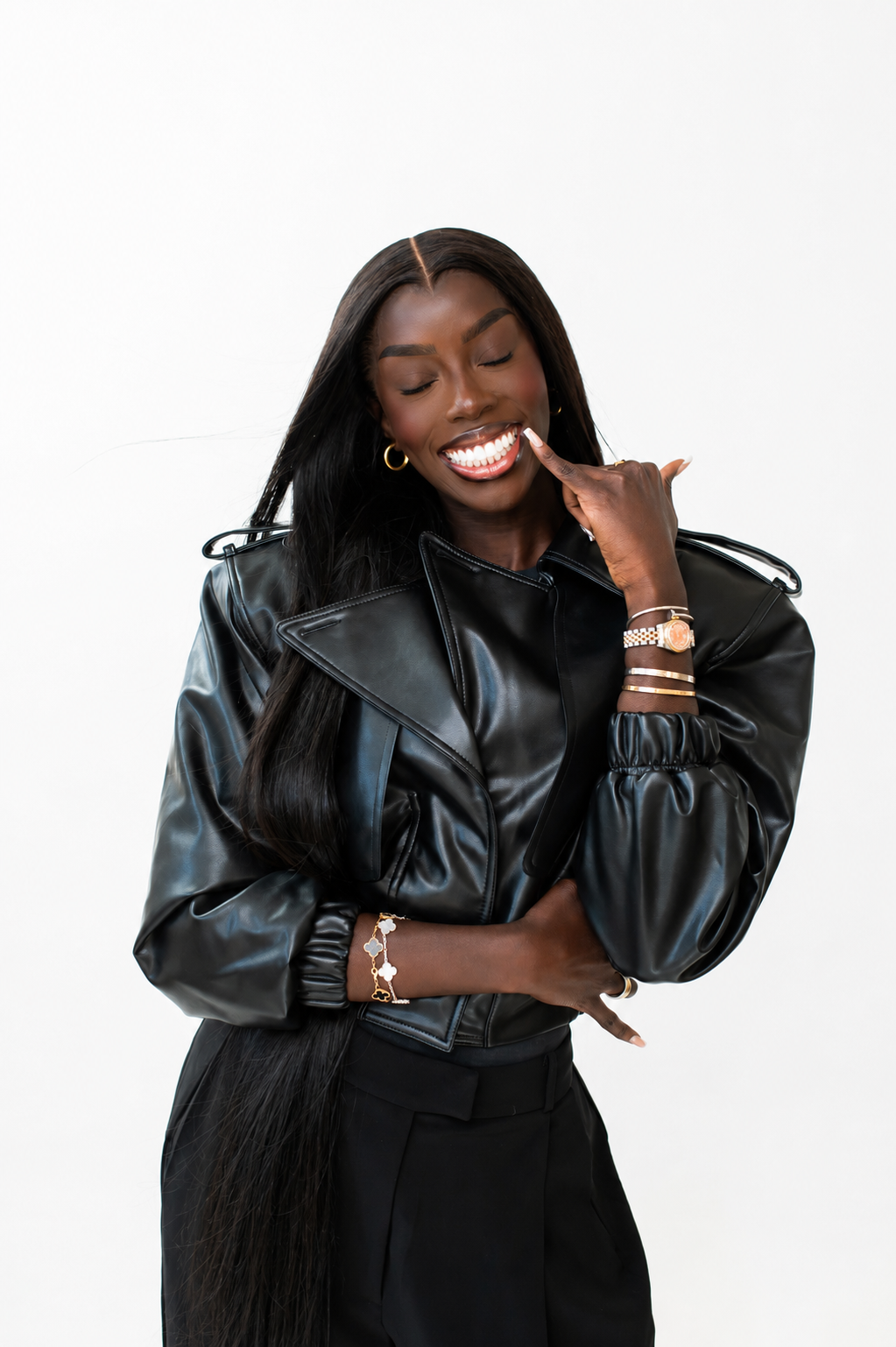
Your “Darkest Shade” series has become incredibly impactful. What sparked the idea?
What sparked it was the experience of getting ready with my friends. Girls love getting ready together, and when you’re the only one in the room who doesn’t have makeup that works for you, that stays with you. There also weren’t a lot of girls who looked like me. In high school, I got really into YouTube and started watching Nyma Tang. Nyma is iconic. She’s the blueprint. For South Sudanese girls, we love Nyma. She reminded younger South Sudanese girls like me that we belong here, we belong in this space, and we deserve to feel beautiful. That’s when I realized this was a much bigger issue.
People had always had something to say about my skin color, but I didn’t realize it was systemic. I wasn’t just experiencing this personally. I was experiencing it systemically. In Sephora and Ulta, my shade wasn’t missing because it wasn’t stocked—it simply wasn’t made. The world didn’t see me. And I decided I wasn’t okay with that. I was going to take up space and do it unapologetically. People didn’t have to like me, but I was going to do it anyway.
Do you think the beauty industry is still falling short when it comes to inclusivity and representation?
Yes. It’s very performative. I’m not going to say it hasn’t gotten better, because it has. But inclusivity goes far beyond the product. Who are you inviting on brand trips? Who are you adding to your ad campaigns? What kinds of girls are representing your brand, and what do they look like? That’s where a lot of brands fall short.
Maybe it’s laziness. Maybe it's just the fact that they don’t want to do it. But with voices like mine and so many other Black women in this industry, even if you don’t want to do it, I promise you—by force, you will.
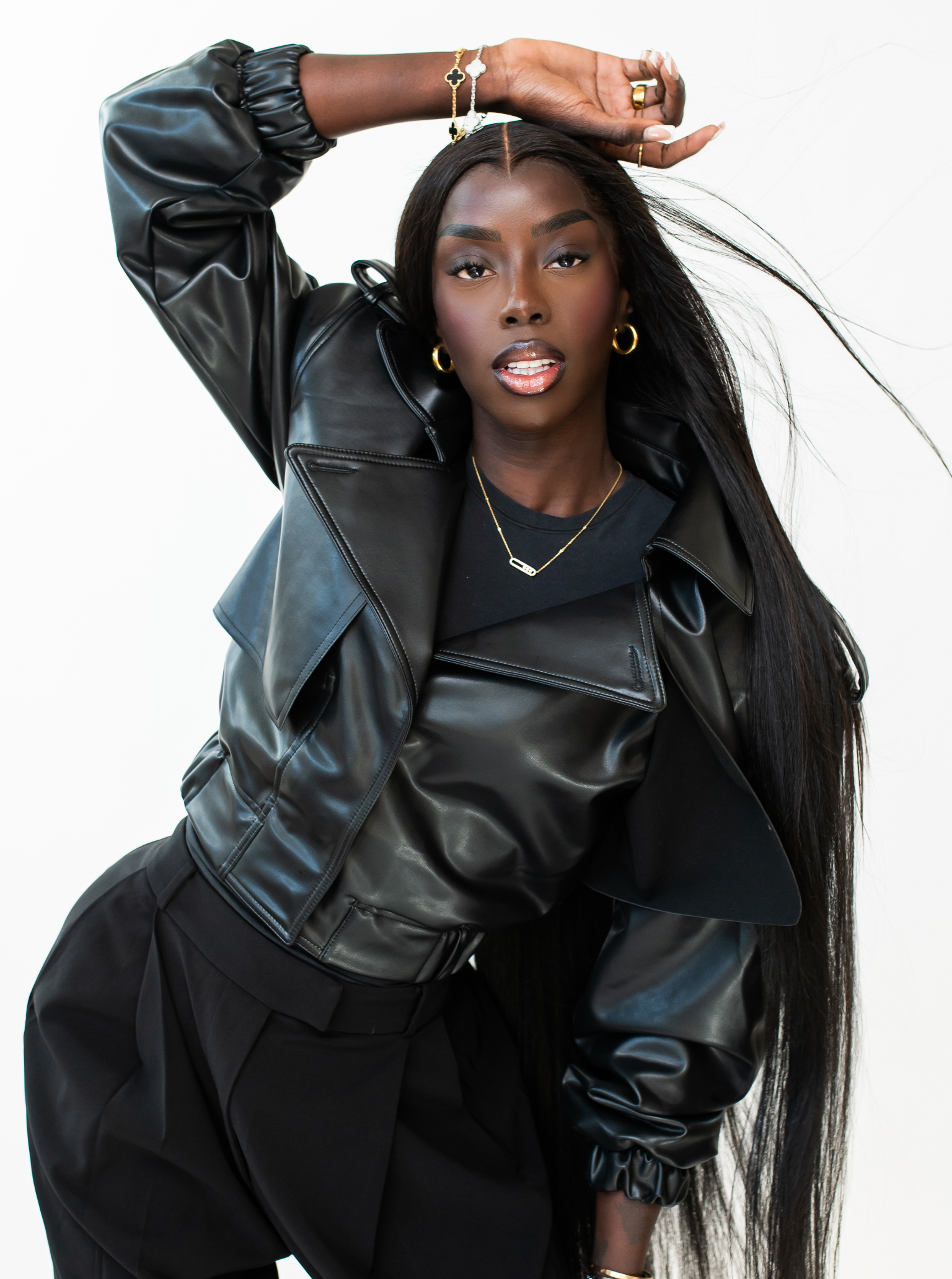
What’s something about building a beauty platform that people don’t talk about enough?
Probably the hate. Sometimes on the internet, the girls really overdo it. You have to have thick skin for this. No one has really seen someone as dark as me doing it as hard as I do, and that visibility comes with a lot of attention—some of it supportive, some of it very negative. There’s also racism and colorism.
The content I make isn’t necessarily fun. I’m swatching products that don’t work for my skin tone and constantly reminding myself that this industry still doesn’t see me. It's not the most fun thing to do. A lot of people consume my content and say, “Well, just use another product. It wasn’t made for you.” When you see inclusion through such a short lens, you have so much privilege you don’t even realize it. So I’ve had to put my foot down and say, “I’m not going for this.” I’ve also learned that taking breaks in this space is a beautiful form of resistance.
Yes, I am a Black woman. I am strong. I am all of those things. But I also deserve a break. I deserve to shut my ears, close my eyes, go to bed, and have some matcha.
What is a goal you have that both excites and scares you?
I know that I work very hard. Anytime I say that I’m going to do something, I’m going to do it. I’m very, very favored. God loves me. With that being said, I know this may be where I’m at right now, but I’m going to take over the world.
Who has changed your outlook on beauty standards for the better?
Danessa Myricks. That answer will always be Danessa Myricks. I love everything she has done in this space and in this industry.
She has created one of my favorite Black-owned beauty brands in Sephora, and honestly, she should be worldwide. I’ve had a lot of conversations with Danessa, and seeing a dark-skinned woman do what she does with so much intentionality in her products and in her brand is a beautiful thing. It makes me think, “Girl, when I’m older, I better be running the game.” I think that with running the game it also means taking a lot of just looking at my peers and taking what they do and also just like implementing it in my everyday life. Danessa is one of those people where everything she does is iconic.
What does advocating for inclusivity mean to you?
We do exist. We deserve these opportunities and these spaces. We deserve the spotlight, the front row, the campaigns, the cameras, and everything in between. And I think that goes for all Black women. We go through a lot. We carry a lot and are often at the forefront of every movement. The most important thing for me is not just reminding myself that I belong in these spaces, but making sure every Black girl after me can enter them with ease.
What product has changed your get-ready routine for the better?
The Jordana Ticia bronzer. I literally did not have a bronzer that worked for me until I tried this product. As soon as I implemented a bronzer to my routine and added some warmth and dimension to my face, my makeup changed for the better. Jordana, if I could give you your flowers, I would hand-deliver them. Black girls wear bronzer too!
What’s one piece of advice would you give to an aspiring content creator? What do they need to stand out?
Exist unapologetically for yourself. If you’re not doing this in a way that makes you feel good, and you’re just performing for the internet, you’re not going to have any fun. This industry is already such a hard industry to be in. If you’re going to be in it, at least be in it unapologetically.
Rapid fire POP QUIZ:
The first thing I do when I wake up in the morning is:
Brush my teeth!
If I had one more hour in the day, I would:
Sleep.
A song that describes the era I’m in right now is:
“Introduction” by Asake.
My current obsession is:
Shopping.
3 words to describe the legacy I want to leave behind:
Unapologetic. Black. Black.