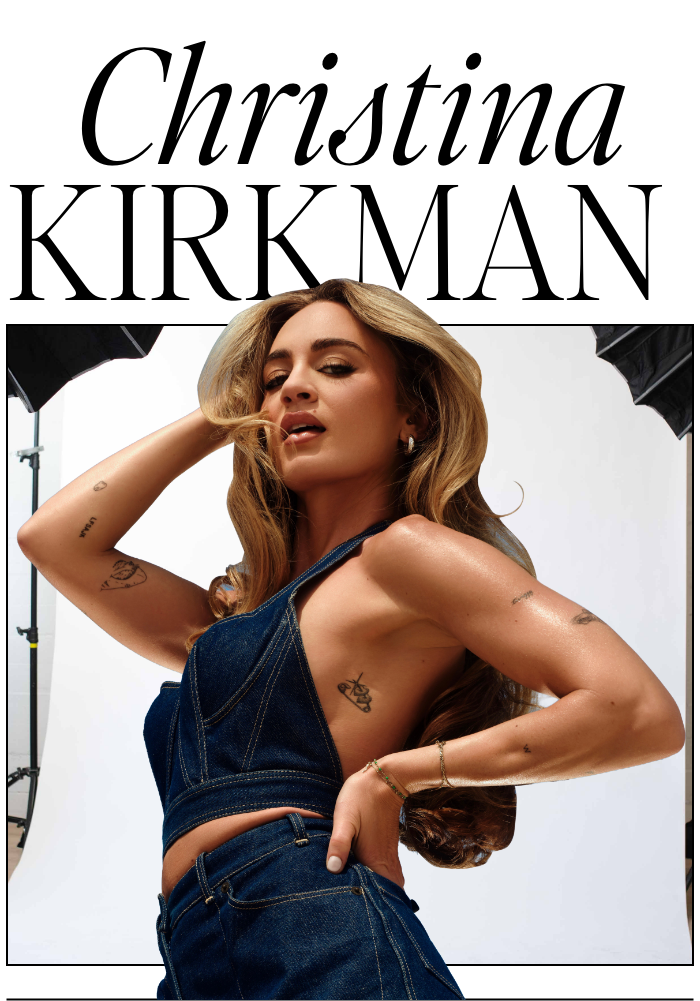
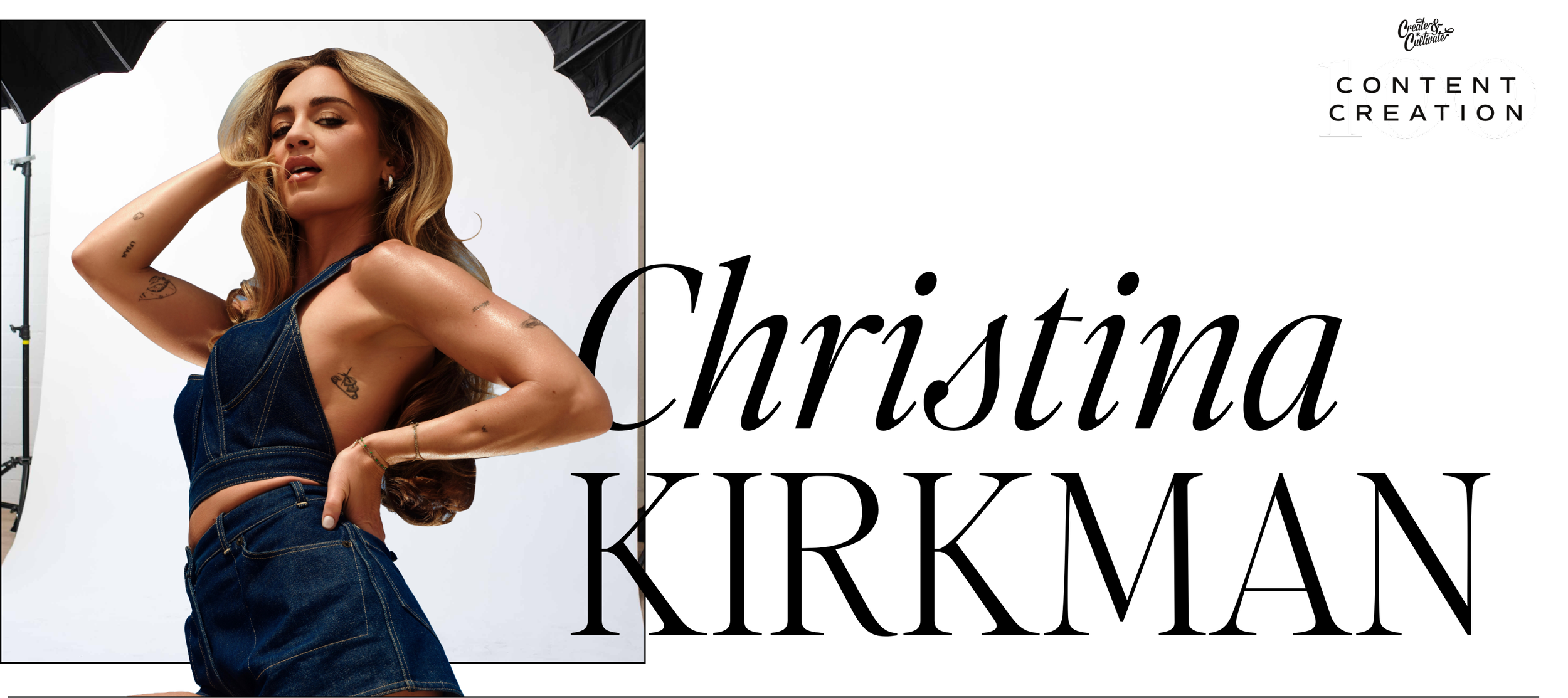
Christina Kirkman NEVER PLANNED TO BECOME A content creator.
For years, the former child star—best known for her time on All That—was singularly focused on acting. But after years of rejection and burnout, she realized that what she truly wanted wasn’t a specific title, but the ability to entertain people on her own terms. Social media gave her exactly that.
Kirkman found her breakthrough when she stopped trying to fit into the polished mold of online creators and leaned into the loud, unfiltered humor that felt most natural to her. Today, she has built a devoted audience through radical honesty, proving that authenticity resonates more than perfection ever could. Read about Christina Kirkman’s journey in her C&C 100 interview below.
Was becoming a content creator something you set out to do intentionally, or did it happen by chance?
F*ck no. I’ve been pretty open about my relationship with this career and how much it has evolved over the years. For a long time, I only wanted to be an actor. I was incredibly close-minded and tunnel-visioned about that path.
Honestly, I was envious of content creators. They had something that felt so unattainable to me at the time: complete control over their brand, their voice, and the way they showed up in the world. As a “struggling” actor, so much of your career can feel like waiting for permission.
That said, I don’t think anything in my life has happened by chance. I think a lot of it has been saying ‘yes’ first and figuring it out after. After years of rejection, burnout, and feeling defeated, I realized the real goal was never one specific title, it was to entertain people. Content creation allows me to do that every single day.
I’m incredibly grateful that I found a way to do that on my own terms.
When did you realize your content had really taken off? Was there a video that went super viral unexpectedly?
I think a huge reason why I was so against content creation for so long is simply the fact that I didn’t relate to a lot of what I was seeing. The carefully curated clean aesthetic and organized entertainment just didn’t align with my personality so naturally, I felt there wouldn’t be a place for me. Similarly to my approach with traditional Hollywood, I originally came on the internet and played the game I thought people wanted me to play. I tried to fit into every trend and be the entertainer that could fill those molds. Of course, that content never performed well.
It really wasn’t until my organic review of “Lemme” that something clicked for me. That video was messy, loud, a little vulgar, and completely unpolished which is to say, it was actually me. It went against a lot of what felt popular at the time, and I think that’s exactly why it connected.
That was my real ah-ha moment: people weren’t responding to perfection, they were responding to authenticity. The second I stopped trying to be what I thought the internet wanted and started leaning into my actual voice, everything changed.
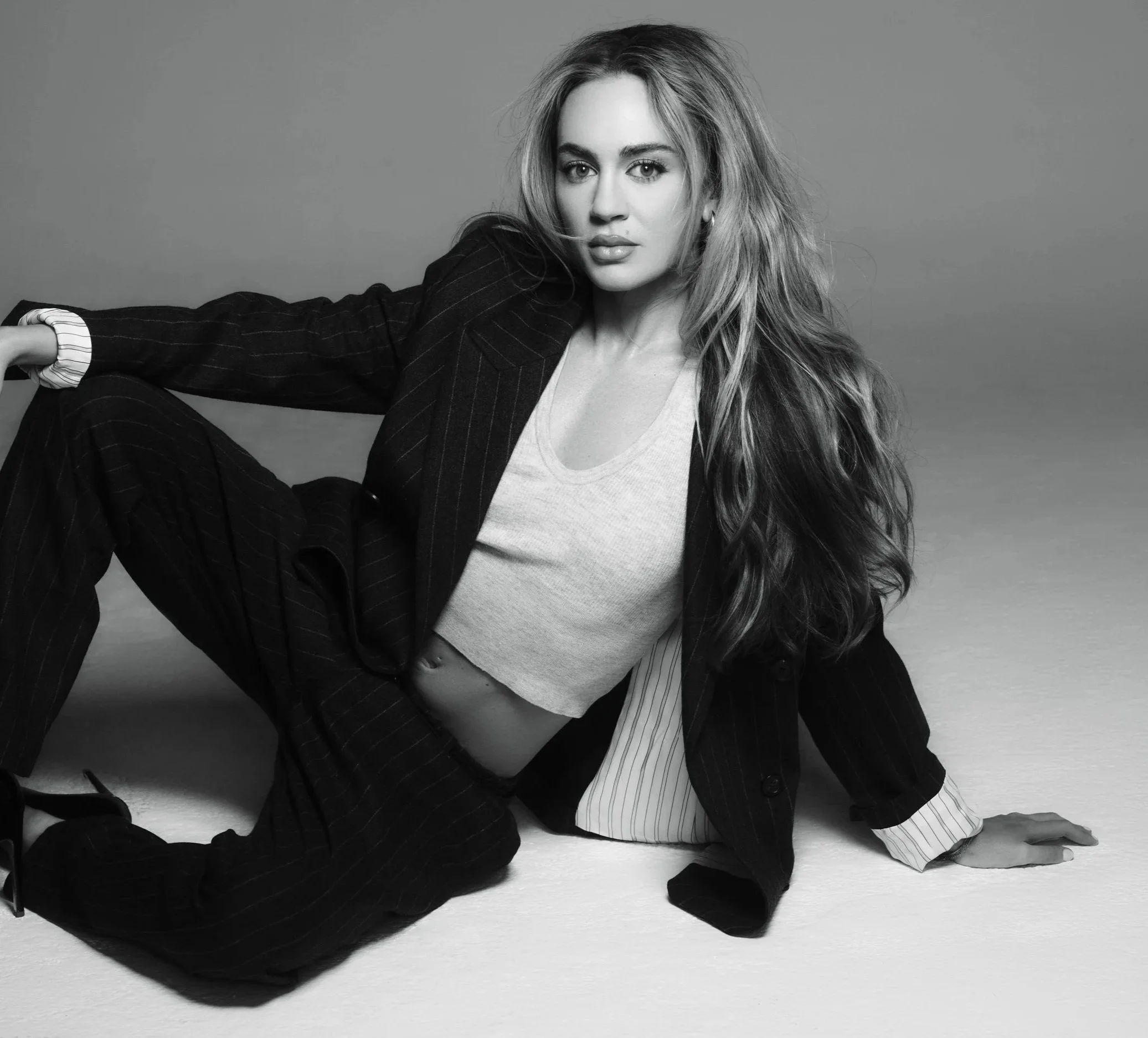
“As long as I’m able to keep entertaining people, making them feel something, and maintaining freedom with my ideas and my time, I’m happy.”
What is the hardest part about building your brand, and how do you stay motivated to post consistently?
Honestly, the hardest part depends on the day. Sometimes it’s being vulnerable and letting people in when all you want to do is retreat. Sometimes it’s accepting that people can form opinions about your life at any given moment, whether they know the full picture or not. And sometimes it’s figuring out where the line is between the life you share online and the life you protect offline.
As for staying motivated, that has honestly always been a strong suit of mine in every area of life. I love working, I love expressing myself and I love creating. That’s not to say I never feel burnt out or uninspired, we all do. I let myself have those moments when they come, but I always find my way back feeling excited to create again.
I genuinely love what I do, and that makes consistency feel a lot more natural. To me, there’s never a shortage of things to make or ideas to share.
How do you draw the boundary between who you are in front of the camera and who you are IRL?
I can confidently say I’m the exact same person in real life as I am online. I don’t think it would be sustainable for me to maintain two different versions of myself. What you see on camera is genuinely me.
That said, authenticity doesn’t mean sharing every detail of your life, that would be insane. I’m selective about what I choose to keep private, but everything I do share is real and true to who I am.
How do you determine which brand deals are right for you vs. not?
I spent a lot of my life ignoring my gut, especially when you’re a “struggling” artist, or trying to make it in any field. In those moments, it’s easy to convince yourself to overlook your instincts in the name of opportunity. I think all of those years ultimately taught me how valuable intuition really is.
Now, if something feels off in my stomach, I don’t do it. Period. If the people behind a brand aren’t kind or respectful, I’m not interested. I only want to be part of campaigns that genuinely excite me, inspire me, and allow for the right creative marriage between their brand and mine.
What’s a piece of content that surprised you with how well it performed?
Honestly, nothing really surprises me anymore. I’m constantly pushing the envelope and testing how far I can take an idea creatively. More often than not, what surprises me now is when a brand can actually see the vision early, even when the concept sounds wacky, wild, or a little chaotic on paper.
I can say my most successful partnerships have almost always been the ones where brands trusted me with creative control. Audiences can feel when something is authentic, entertaining, and true to the creator. People respond to that and I think we need a lot more of it.
What is the most common thing that lands in your DMs?
Yes, my hair is real, my core came from years of being a competitive gymnast, my lip liner is “Wherever Walnut,” and no Jacob Elordi, I will not go on a date with you
What kinds of doors are you hoping your content will open in the future?
Honestly, I’m open to endless doors, and windows too. I don’t think every opportunity has to arrive as some huge, grand entrance. Sometimes it’s a side door, sometimes it’s a window you climb through, sometimes it’s something small that leads somewhere bigger later.
As long as I’m able to keep entertaining people, making them feel something, and maintaining freedom with my ideas and my time, I’m happy. That’s always been the real goal.
But hey, if they ever remake Deadpool and need a female lead…I’m available.
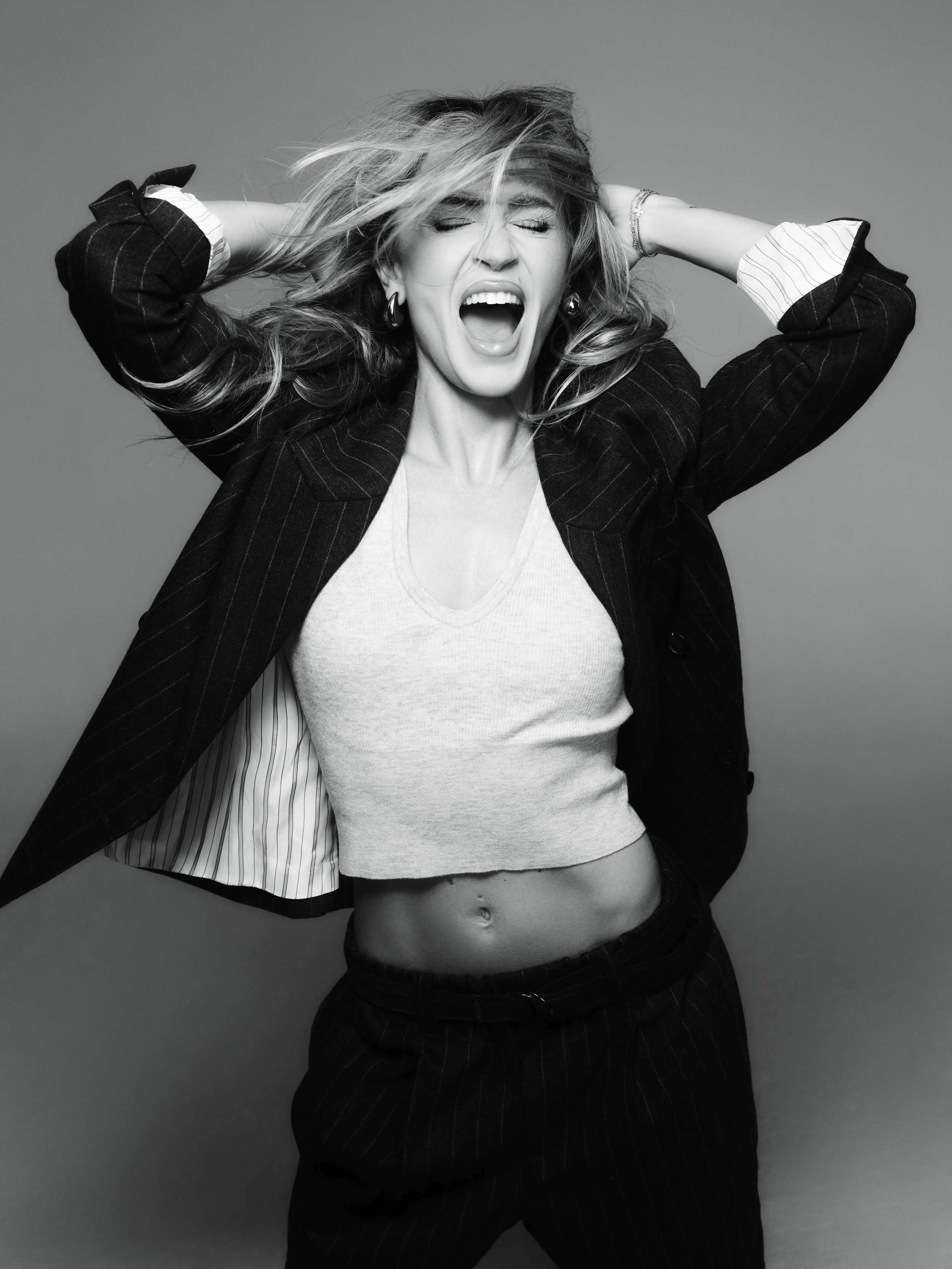
With a large online presence comes more responsibility. One “bad” take or accidentally liking the wrong comment can have consequences. Has being more visible online made you more cautious about how you engage on the internet?
Of course. There are definitely times I find myself overanalyzing small things, the way I phrase something, how I react, even details I would never think twice about in my private life. Visibility naturally creates a different level of scrutiny, and you become more aware of how easily things can be interpreted out of context.
At the same time, younger generations have taught me a lot, and I’m genuinely grateful for that. There’s so much growth, awareness, and accountability that has come from online spaces. But there are also parts of internet culture that can feel discouraging as a creator, performative outrage, virtue signaling, and a focus on appearances over real action.
At the end of the day, I try to stay grounded in how I was raised: to be a good person, treat people well, and move with integrity. The people who know me in real life know my character, and that matters more to me than anything happening online.
On the business side, what advice would you give to emerging creators about owning their value in brand negotiations, even without a large following?
Coming from traditional Hollywood first, I had a lot of experiences, both positive and negative, with representation, contracts, and the business side of entertainment. When I started content creation, I handled everything on my own for years. I spent time researching negotiation tactics, contract language, legal red flags, and how deals are structured. I made some great deals and some terrible ones too, but every experience taught me something valuable.
By the time I signed with a team, I already understood the landscape. I knew how negotiations worked and what questions to ask, which helped me protect myself and advocate for my value.
My biggest advice is this: no one will ever look out for you the way you can look out for yourself. There are great people in the industry, absolutely, but you still need to stay informed and involved. Speak up, ask questions, understand what you’re signing, and never assume your value is determined by follower count alone.
Rapid fire POP QUIZ:
The first thing I do when I wake up in the morning is:
kiss my dogs
If I had one more hour in the day, I would:
spend it with my dogs
A song that describes the era I’m in right now is:
You Get What You Give - New Radicals
My current obsession is:
telling people I’m a reader now (I’ve read 127 pages of 1 single book)
Three words to describe the legacy I want to leave behind:
BAD BITCHES ONLY