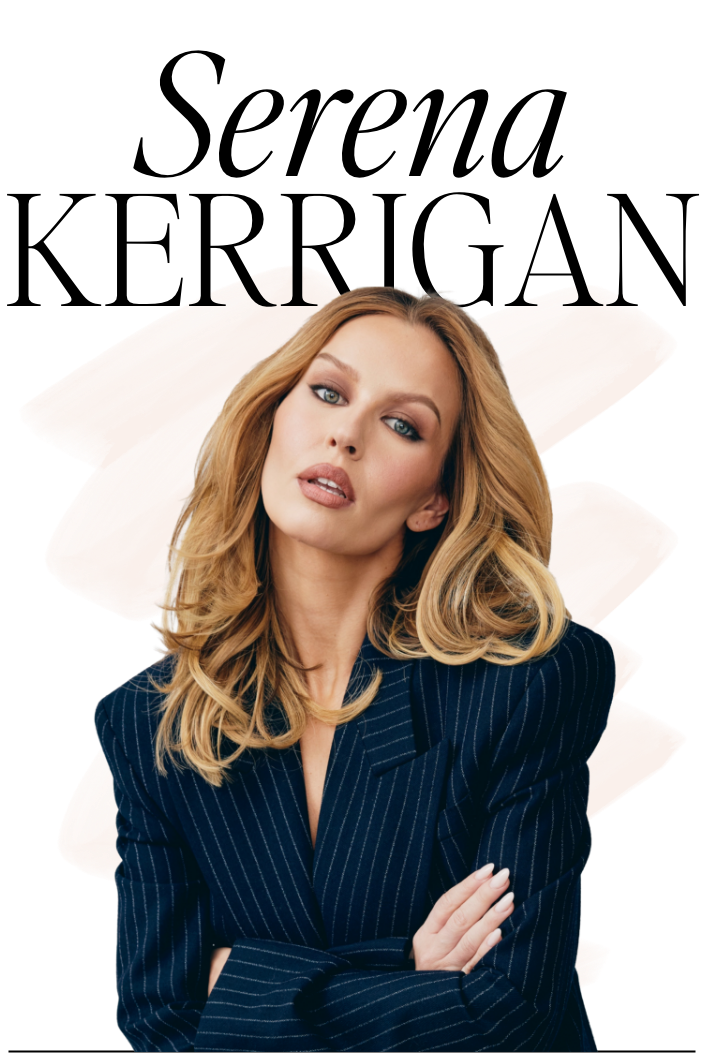
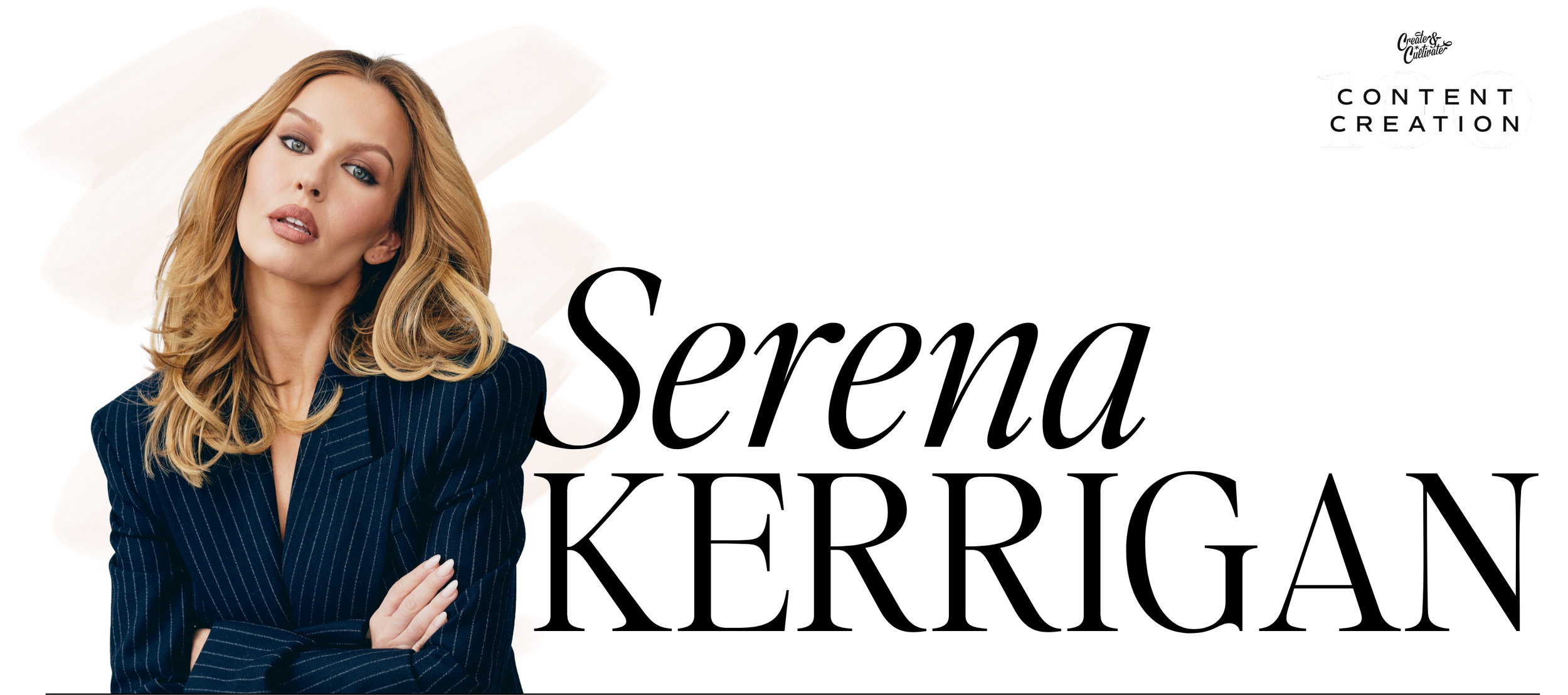
Serena Kerrigan DIDN’T SET OUT TO BECOME AN influencer.
Raised by a filmmaker father and a television executive mother, Kerrigan grew up immersed in the world of content before honing her voice at Refinery29. In 2020, she turned a pandemic-era Instagram Live dating show, Let’s F*cking Date into a breakout success that resonated with women navigating modern relationships and learning to raise their standards.
Since then, Kerrigan has built a multi-platform brand rooted in confidence, dating advice, and radical self-worth. Her community knows her as “Serena F*cking Kerrigan,” but behind the bold persona is an entrepreneur who expanded her business beyond brand deals into books, products, and film. For Kerrigan, the ultimate goal is to create stories that empower women and eventually reach millions. Read about Serena Kerrigan’s journey in her C&C 100 interview below.
Was becoming a content creator something you set out to do intentionally, or did it happen by chance?
I've wanted to make movies since I was fifteen years old. My dad is a filmmaker and my mom was a television executive, so I grew up in a house where content was the thing that brought us together. After Duke, I took a job at Refinery29 and spent three years creating content across their verticals. By 2020, I was ready to take the leap and build something of my own—an empire focused on empowering women. Then suddenly it was lockdown, I was alone in my apartment, and the whole world went virtual. So I grabbed a ring light and started going live like many of us did during that time. Because I was single and curious about how singles were navigating dating through the pandemic, I launched an Instagram Live dating show called Let's Fucking Date from my couch, and dated 50 men across three seasons.
When did you realize your content had really taken off? Was there a video that went super viral unexpectedly?
The dating show took off in its first season. The number of people tuning in live every week was wildly disproportionate to my follower count at the time. It was the equivalent of LeBron James going live. By season two, we had sold six figures worth of sponsorships, including a month of episodes with Bumble, which was unheard of for an Instagram Live show. But the real moment was the DMs. Women weren't just watching for entertainment. They were writing to me saying they'd ended a situationship or raised their standards because of something I said on a Friday night livestream. That's when I realized this wasn't just content. It was a conversation people needed to have.
What is the hardest part about building your on and offline, and how do you stay motivated to post consistently?
The immediate feedback. It's a double-edged sword. You launch something and you know instantly how people feel about it—which is incredible until they don't feel anything, and suddenly your self-worth is tied to a number. That's why I've loved writing my book, Let’s F*cking Date, this year. Dedicating myself to something every day for a year and not receiving the instant validation has been both challenging and freeing. It forces you to trust the work without the dopamine hit of a like count. And then there's the constant calculation of how much to share. Because if you put something out there, you will get flack. That's the job. People will disagree, be mean, make fun of you. In order to thrive in the creator economy, you must build thick skin, which I struggle with because I am very sensitive. The people who win at social media are the ones willing to put it all out there. You just have to figure out where your line is.
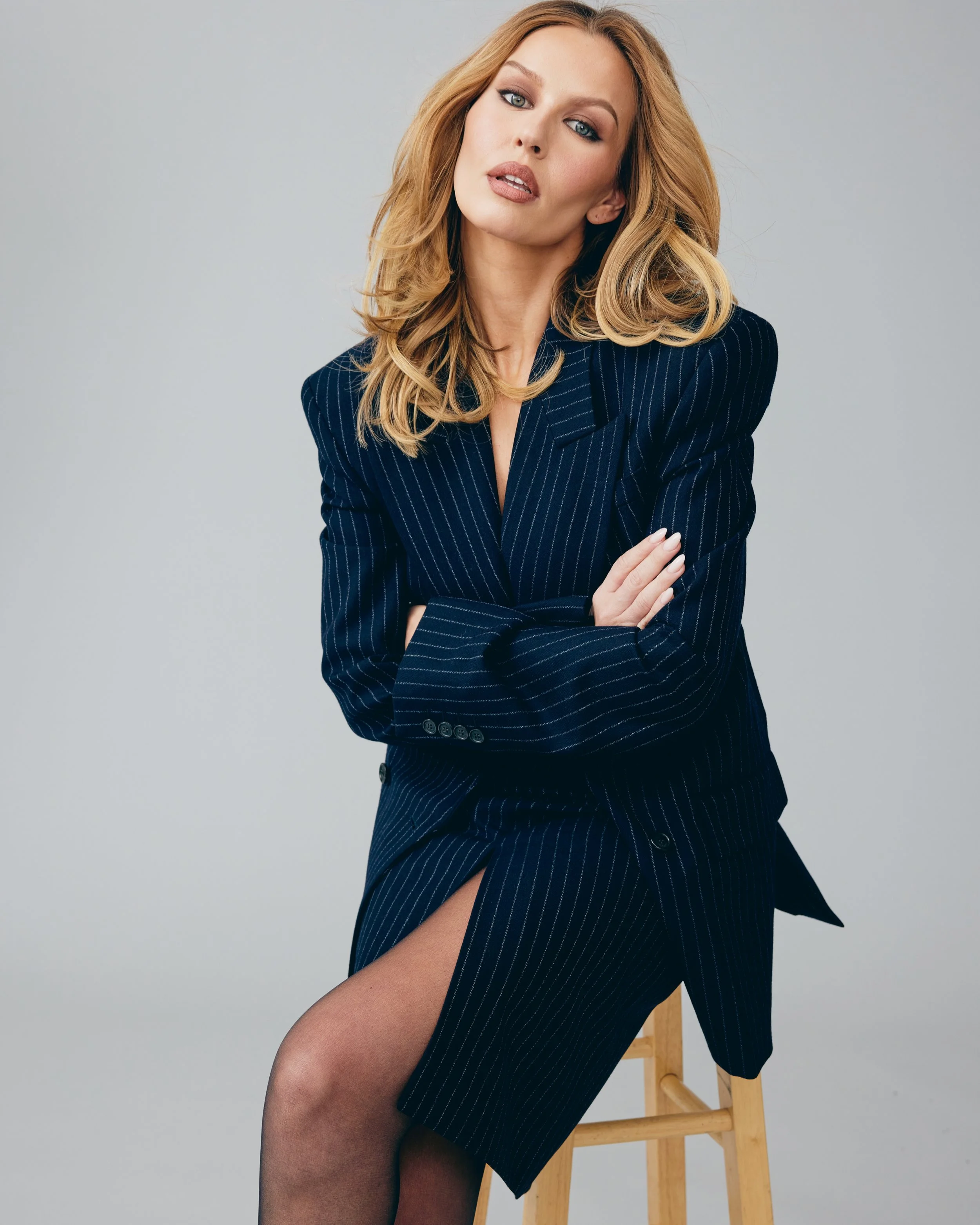
“Would I recommend this to my group chat? If the answer is no, I don't care what the number is.”
How do you draw the boundary between who you are in front of the camera and who you are IRL?
For a long time I relied on the persona I created, Serena Fucking Kerrigan, because she protected me and my sensitivity. She was great for business but terrible for dating. The shift happened when I realized the version of me people connected with most was the one without the armor. I still don't share everything. The camera doesn't capture every bad day or every phone call to my mom. But the gap between on and off has gotten much smaller. That's on growth.
How do you determine which brand deals are right for you vs. not?
Would I recommend this to my group chat? If the answer is no, I don't care what the number is. My audience has been with me since I was doing live dates from my couch in a robe. That trust took years to build and can be destroyed with one bad partnership. Credibility isn't something you can buy back.
With a large online presence comes more responsibility. One “bad” take or accidentally liking the wrong comment can have consequences. Has being more visible online made you more cautious about how you engage on the internet?
The internet now is a lot different than it was even a few years ago. There's so much more surveillance on how you interact and what you post, and the magnifying glass is real. What if you liked the wrong image or commented on someone's video and then they said something problematic? Because I worked at a media company for three and a half years and was trained in live content where there was no editing, I'm very thoughtful about what I put out there and who could take it the wrong way. However, I can only speak from my experience and those around me, and at the end of the day, my focus is to empower women to be unapologetically themselves.
The reality is that being polarizing is what gets you attention, and attention in this era of social media is currency. Having the hot take, even if people disagree, is what gets you views and dollars. But the blending of your personal and professional identity as a creator is so fragile now because one wrong take and you could lose brand deals, which is how a lot of creators make a living. That's why the most important thing is to diversify your income. You cannot be dependent on brands alone. Start a Substack, create a product, write a book, do something outside of social media. Because at the end of the day, you are building on rented land. If TikTok or any of these platforms disappears tomorrow, everything you built goes with it. You need to own something that's yours, even if it's as simple as a newsletter.
What’s a piece of content that surprised you with how well it performed?
I'm rarely surprised when something does well because my North Star is simple: I make things I would want to watch. What actually surprises me is when something doesn't perform. That's when I get confused, because I put the work in and believed in it. But sometimes it's the algorithm, sometimes it's the hook, sometimes it's just beyond your control. The wins don't shock me. The misses do.
What advice would you give to emerging creators about communicating their value in brand negotiations, even without a large following?
Everything is a negotiation, so don't be afraid to aim high when it comes to your rates. What brands actually care about is whether you can convert, and typically the creators who convert best are the ones with smaller, more engaged followings. Many of the biggest opportunities I've gotten, I went out and got myself. I launched my own earring collection because I walked up to the founder at a party and said, "I would be a great fucking fit for you guys." You get what you ask for, “closed mouths don’t get fed” as they say. It's also critical to have a strong team that you trust and that operates professionally. The people who represent you are not your friends. I've seen it time and time again where creators say "my manager is my best friend," and I'm like, no, babe. They work for you. If you create a dynamic where they feel like your friend, it becomes very difficult to have the hard conversations or ask for what you need because you don't want them to not like you. That's not their job. Their job is to advocate for you, and that line needs to be clear.
What is the most common thing that lands in your DMs?
Some version of "I went on a really great date and I haven't heard from him" or "I've been talking to this guy for months and he won't make a plan." So much of modern dating is stuck in the texting phase, and I think that's where people lose the plot. You simply cannot get to know someone over text. It must be face to face. And if a man isn't making a plan, delete his number. You don't have time for someone who isn't putting in the effort. Abolish the talking stage.
What kinds of doors are you hoping your content will open in the future?
Television. I want to bring what I've built online to a screen that reaches millions of people. I just finished writing my first feature film, which has been one of the most creatively fulfilling things I've ever done. Growing up with parents in film and television, storytelling has always been the through line of everything, and I feel like I'm finally coming back to that.
Rapid fire POP QUIZ:
The first thing I do when I wake up in the morning is:
sip the iced coffee my barista—I mean, my boyfriend—brings to bed.
If I had one more hour in the day, I would:
learn French.
A song that describes the era I’m in right now is:
"Run the World (Girls)" by Beyoncé
My current obsession is:
my dog Pancho, who has zero respect for my authority.
Three words to describe the legacy I want to leave behind:
Legends never die.