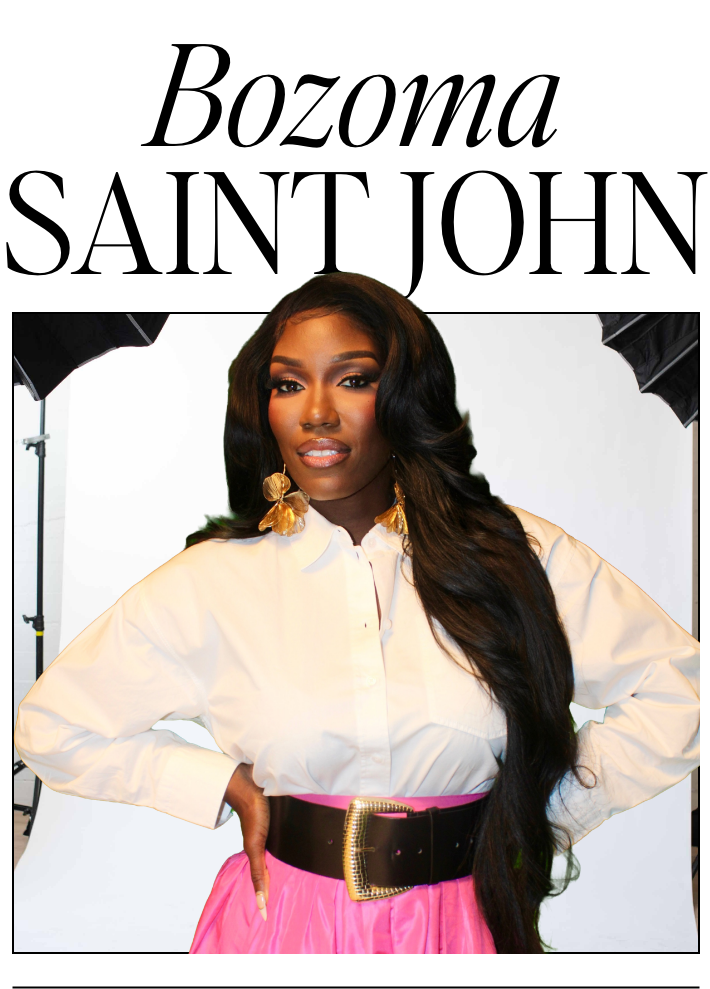
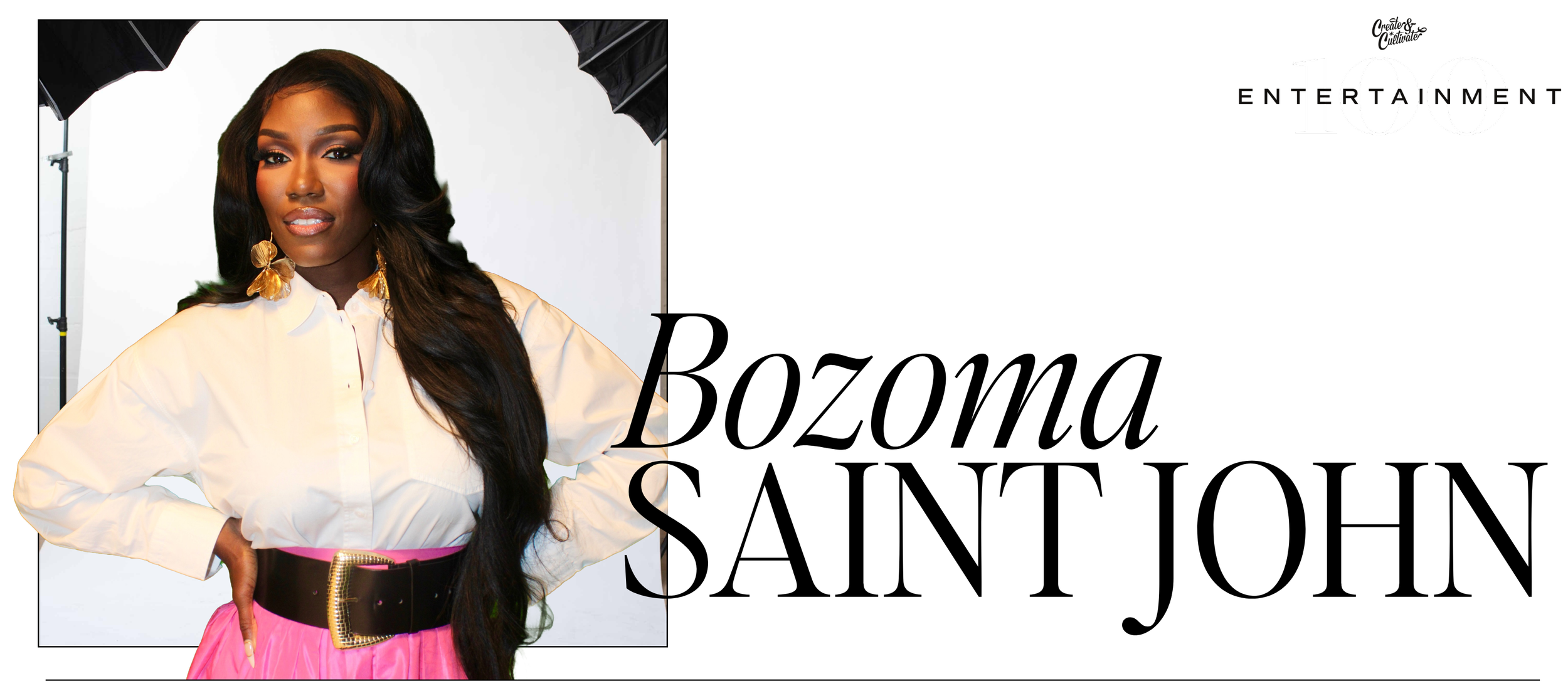
FEW corporate executives HAVE SHAPED POP CULTURE FROM behind the scenes AS POWERFULLY AS Bozoma Saint John.
Over the course of a career that has included chief marketing roles at PepsiCo, Beats, Apple, Uber, and Netflix, Saint John has become known for marrying data with instinct—and for being the new face of bringing your whole self to work.
Whether she was helping launch Apple Music, putting icons like Beyoncé on some of the world’s biggest stages, or challenging outdated notions of what a Black woman executive should look like, Saint John has built a career by trusting her gut over conventional wisdom. In recent years, she has expanded that influence by bringing her brilliance by launching ventures like her haircare brand Eve by Boz, her Badass Workshop, and her appearance on The Real Housewives of Beverly Hills. Her biggest flex? Making the 85-year-old version of herself proud (more on that below!) Read about Bozoma Saint John’s journey in her C&C 100 interview below.
You’ve built your reputation inside some of the world’s most influential companies—what made now the right moment to step into more independent ventures (i.e. reality television, Eve By Boz, The Badass Workshop, etc)?
Girl, do I ever know when the right time is? No, I really don't. I think people always ask me if I have some master plan, and I'm like no, actually, I don't. I'm over here flying by the seat of my pants. It's all vibes and intuition. The honest truth is there haven't been a lot of times in my life where people have championed my moves, even in the corporate space. You look back on my resume and everybody is like, “oh, brilliant career! This is incredible!” But if I were to tell you the stories about the moves in between jobs, people said,”I don't think that's a good idea.” Like, [when I went from] Pepsi to Beats, which eventually became Apple Music—people tried to talk me out of it. I was doing great things at Pepsi, like putting Beyonce on the super bowl halftime stage. [I’ve got] Bruno Mars and Katy Perry and Lady Gaga, one after the other. [People would ask], “Why are you leaving to go work for Dr. Dre at this headphone company?” I needed something that was going to give me life and draw me into the future, because all I was doing was crying about the past. That move was really important to me, even though everybody was scared for me. [They said] you need to sit down and grieve for a year, and then you can make a move. Beats then was acquired by Apple, and because I was in the head seat of marketing, Apple then offered me the job to run iTunes and then to develop Apple music. I would not have had that opportunity if I had waited a year
I could give you six more examples. I would say in recent times, it was terrifying to leave my corporate jobs and go into entrepreneurship, because again, people are like,”why would you leave this storied corporate career and head into something that's so unknown?” Most of the time, people become entrepreneurs because something frustrates them so much in the corporate space that they're like, you know what? Screw this. I'd rather work for myself. For me, that wasn't the case. I was doing just fine. I just decided that I'm done with this life.
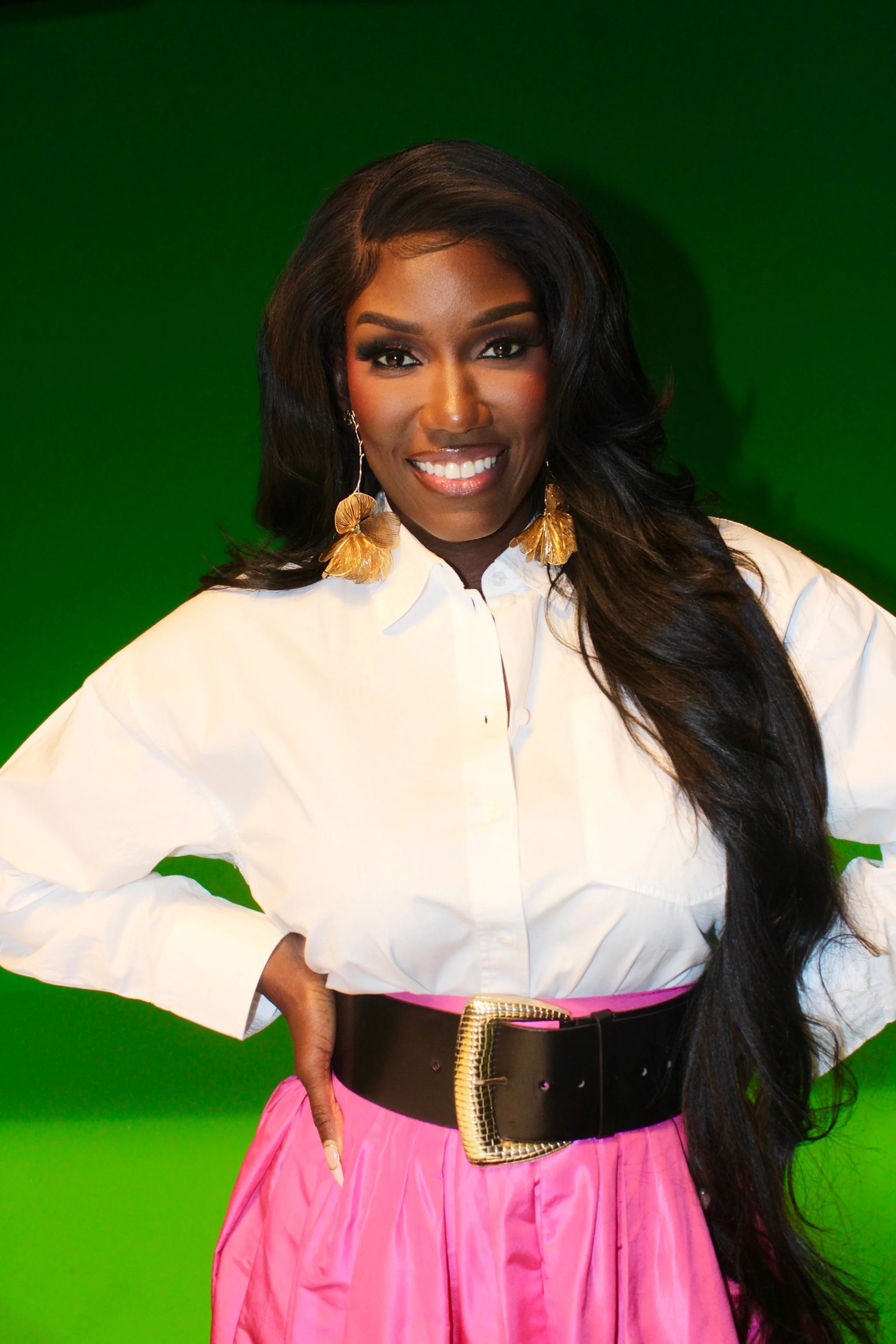
“As you rise, people think that it gets easier because now you have the power, you have budgets, and you have the title. It's not true. The scrutiny just gets brighter.”
When you were first starting out, was there ever a moment where you felt unseen while pursuing your marketing career? What kept you going in those uncertain times?
Well, you think it's a hero story, but it's not. When I first started out my career, I was looking at the corner office and trying to mold myself right around who I saw as successful. They certainly didn't look like me, and try as I might pull my hair back in a tight Chinon, wear the gray suit, sit on my hands so I didn't gesture too much, try to keep my voice at an even pace so that I didn't talk too loud to scare people—they called me passionate or angry. All of those things I did still didn't get me great reviews. Even though I was providing great work and I was hitting the numbers, the reviews were always like, “Boz, you know, you can be a little intimidating in these meetings, and sometimes your colleagues have a hard time connecting to you.” I remember the very last one where I went home. and I just cried my eyes out. I was like, “well, I'm never going to get to the corner office because people think I'm scary and my interest in pop culture is silly.” I gave up. [I figured] if you think my outfits are too loud and my pop culture references are dumb, oh well. I won't make the corner office. It's fine. But it was that release of their expectations that set me free. That next day, I showed up in my leather pants and my floral blouse and I was talking about where Angelina Jolie's third child was born. That's when people were like, “oh, she's got the insider information.”
All of a sudden, I was the cool kid. I came out from the shadows and I was brand new, because I stopped caring about what people thought about me so much. And that is what has saved me time and time again. As you rise, people think that it gets easier because now you have the power, you have budgets, and you have the title. It's not true. The scrutiny just gets brighter.
And so it is the practice of two decades of really living my life on my own terms and being completely unapologetic in it that has allowed me to then remain successful.
I couldn't see anybody who looked like me, but my hope is that somebody looked at me and said, “Boz did it.” She did it by wearing different hair every other day of the week. She did it with her red suit on. She did it in her dress. She did it with her blackness and her joy of it. She did it completely unabashed. I want somebody to look at that and say they could do that too.
Talent is often the baseline that gets people in the door—what do you feel is your IT factor that’s made you stand out?
One of the talents that I have and that I had at the very beginning was being able to have a finger on the pulse of pop culture and being able to call it quickly. I think at the start of my career, people thought it was frivolous and not serious, and, you know, you just needed to have the data in order to be a great executive.
I've proven time and time again that pop culture is the reason why I am who I am and why I've found the successes that I have. I can put my finger to the wind and be like, oh, we're moving that way. Let's go over there or see talent and say, that one is the next one. This is how my relationship with Beyoncé started. It was the recommendation that I had after seeing her on MTV's Carmen, the hip-hopera, where critics totally panned her. But I said, “hey, look, like, I think she's got something.” And Spike Lee, who was my boss at that point, said, “yeah, let me go talk to her and see what that's about.”
“It has become my calling card to understand pop culture. I think even in this current space where I am in my entrepreneurial pursuit with my hair company, I recognize the fact that the conversation has now evolved from when I started in business where you could only have straight hair. We all know the issues with the crown act and knowing that black people can be punished in some sort of way because they're wearing their hair in its natural state. I was the chief Brand officer at Uber, on the cover of the New York Times with the headline, “Is this the woman who will save Uber?” I had my braids with cornrows in the front. I wanted you to see that a corporate executive can look like this. When I showed up at the Apple Keynote to present Apple Music for the first time, I had my Afro twist out, and it was just like, yeah, this is an executive who runs tech and can win on this high level. There is nothing wrong with being expressive and therefore using the crown as it really is, because it's going to sit on my head and I'm going to walk like the queen I am.
Eve by Boz is your latest business venture. What has been the most challenging and rewarding thing about building a hair brand from the ground up?
Not to pat myself on the back too much, but one of the most important roles in the C-suite next to CEO is the CMO: the person who is shepherding the brand image and therefore affecting sales. I have been very practiced in that role, so becoming an entrepreneur that is actually manufacturing a product has been the hardest lesson. Understanding how the systems work, having the fortune of being able to see the end of the road, and seeing how I want to talk to consumers at the end of the day has helped me to become very disciplined in the way that the product is made.I didn’t want it [my hair or hair products] tp arrive in a plastic bag, because for far too long, you're spending so much money on extensions or hair care goods and they're showing up in cheap plastic bags. Why is that? I decided to manufacture a fabric that I made with one of the oldest printing houses in Ghana called GTP. I'm then going to hire seamstresses to make bonnets, which will substitute bags that then you can utilize. I wanted the narrative to be that I value you and I value your dollar, and I'm not going to deliver an expensive product to you in a cheap plastic bag. That meant I had to figure out how I was going to manufacture something that will complement the product I am delivering to you to make it an even better experience.
You’ve accomplished so much as an executive, TV star, and entrepreneur. What’s a dream that’s still on your vision board?
That is a complicated one because I really tried to shy away from the five and 10 year plans, because I just feel like those plans will be too small for what is possible for me and it's hard for me to visualize where I'm going. I could never have envisioned this life 20 years ago or five years ago. So I'd like to leave myself open. However, I do feel a responsibility to the 85-year-old version of myself—the woman who is going to be able to tell her grandchildren all of these amazing stories, and I want her to have some really good ones. I feel beholden to her. That's who I'm trying to impress. I'm not trying to impress anybody who's my peer or my contemporary. I'm trying to impress that woman over there…the one who will look back and say “golly, girl, you lived a good life.”
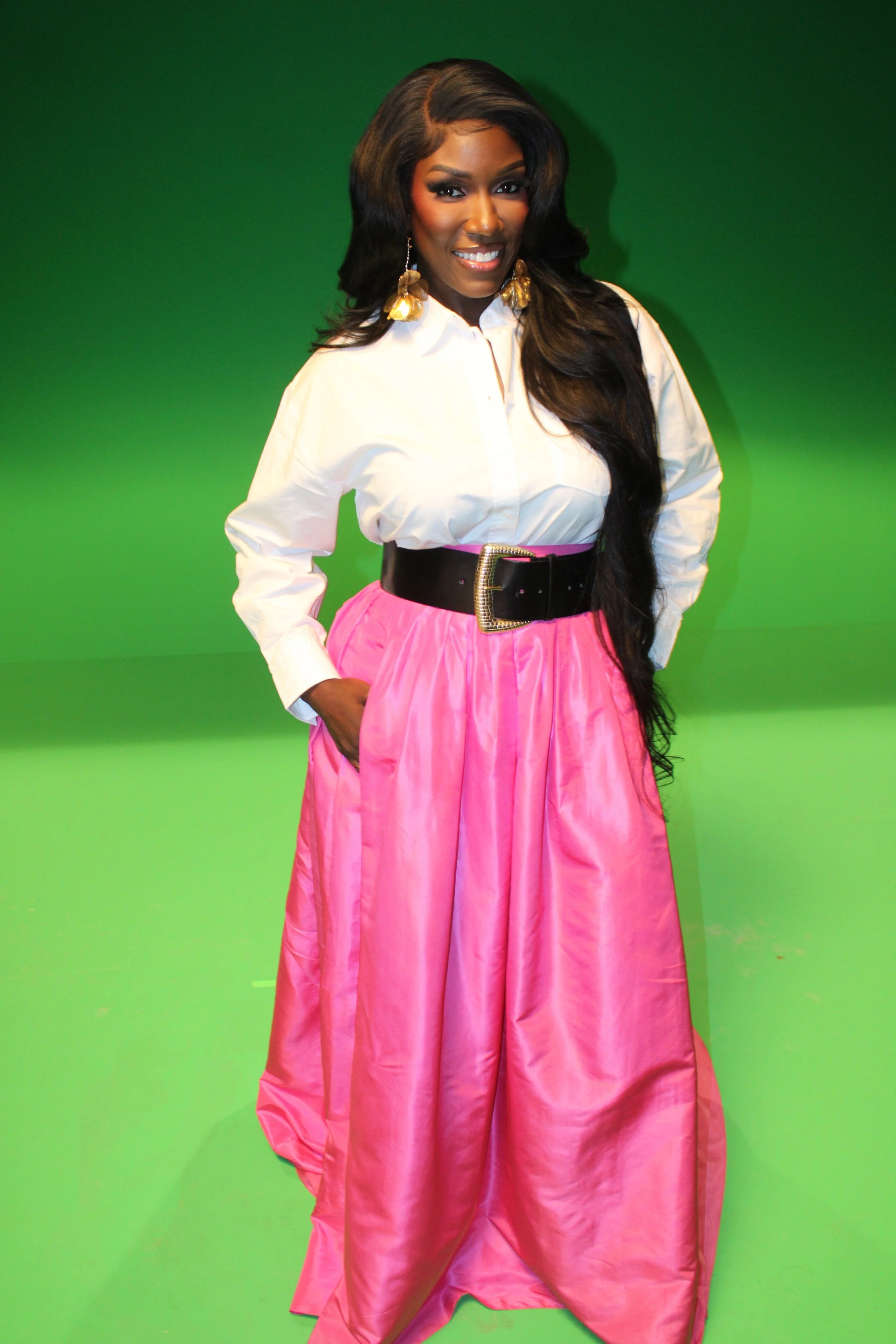
When presented with an opportunity (whether a panel appearance, TV show, or brand deal), how important is it for you to follow your gut? And did that instinct come naturally to you or did it have to be developed over time?
I'll answer it backwards, which is that today, I operate fully on instinct. I absolutely counsel against pro and con lists, against the 1-year, 5-year, 10-year plans—all of those things, please sis, throw them out. All they do is inhibit your understanding of what is happening in this present moment, which then could influence your destiny. You stop listening to what is happening in the universe and in the world for you, and you start looking down at your piece of paper that you came up with in your head and start operating against that. That is the fastest way to shorten your greatness. How can you envision the greatness that is possible for you? You have to be looking up, and you have to be doing the work and out in the world and experiencing different things in order to be able to be open to those opportunities.
If you're busy trying to grade yourself against some list that you made three years ago that has absolutely nothing to do with the evolved person you are today, you're going to miss the boat. So I always encourage the fact that you've got to listen to your own instinct.
It’s also extraordinarily important not to listen to those in your inner circle who try to advise you because they haven't been where you are. They think they know that they're advising you properly, but usually that advice is based on their own fear and insecurity. It's not based on what is possible for you because they haven't seen it. I have very well trained my friends, my confidants, and my family that they don't advise me on the moves I make in my career or in my personal life. Most of the time, what I'm doing is operating from a place where I am wholly dependent on my gut, my intuition, and my instinct to drive, and not dependent on other people's declarations about what is good for my life
Let me add this in there too: when you are dependent on other people's opinions about your life, you stop listening to yourself and what you actually want.
Being on such a popular show like Real Housewives, how do you determine what feels safe to share publicly versus keep private?
You can't decide to come on a program like this and not expect to share everything. It's just not possible. You may think that you're going to keep some things to the side, but unfortunately or fortunately, the audience is as much a character in these shows as the ladies who are sitting around the table. And so they are going to come up into your personal life and point out things and say “well, what about that thing over there? And what about this over there?” I would say I was moderately well known for my professional successes. You know, that I think people would recognize my name based on the jobs I've had. So they knew the decisions I'd made in the boardroom. They'd known the pivots I'd made. Maybe they know the accolades I've had. From a professional. People didn't deeply understand who I am as a mother. or as a girlfriend or now a fiance or as a friend. Signing on to do this meant that I was going to expose all of that. While I might want some more balance—because my professional career is still going and I'm an entrepreneur—I recognize the center of this storytelling is about your personal life.
Rapid fire POP QUIZ:
The first thing I do when I wake up in the morning is:
pray
My best ideas come from…
early mornings
A song that describes the era I’m in right now is:
“Ambitionz Az A Ridah” by 2pac.
My current obsession is:
My hair
My best ideas come from when...
Unforgettable, lasting and fierce.