
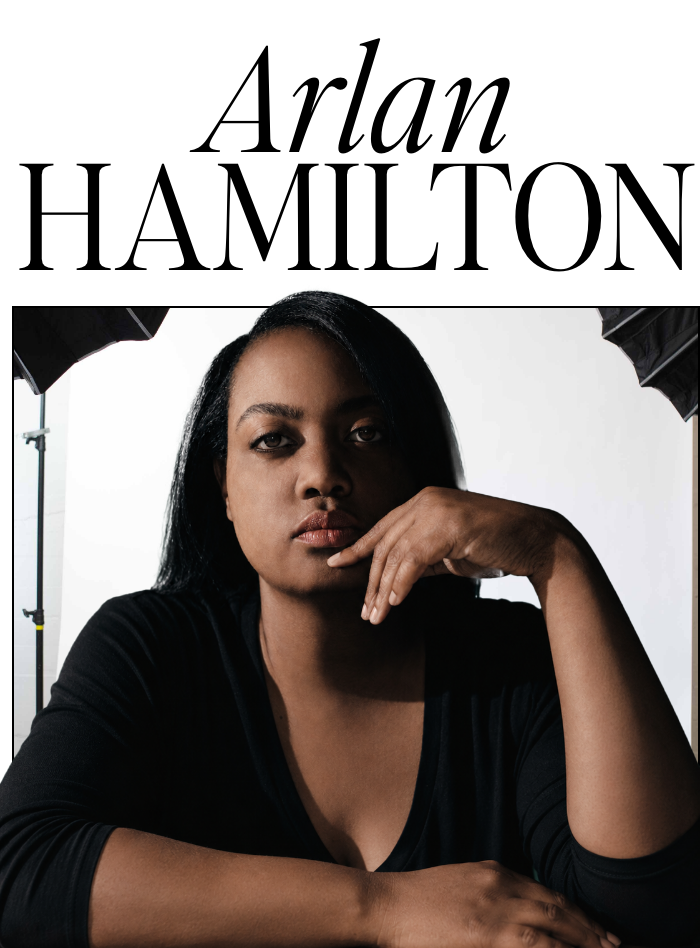

BEFORE Arlan Hamilton BECAME ONE OF VENTURE CAPITAL’S most influential voices, SHE LEARNED HOW TO BE resourceful.
Growing up, money conversations at home were centered on survival and how to stretch what was available. That early lesson shaped her belief that wealth is built through consistency versus a single “I’ve made it” moment.
As the founder of Backstage Capital, Hamilton has dedicated her career to investing in under-estimated founders, including women, people of color, and LGBTQ+ entrepreneurs often overlooked by traditional venture capital. From launching the firm while experiencing homelessness to becoming a bestselling author, Hamilton’s story is proof of what can happen when you bet on yourself. Read more about Arlan Hamilton’s journey in the C&C 100 interview below.
Growing up, what were some of the earliest lessons you were taught about money? Was money something that was openly discussed at home?
Money wasn’t really a strategy conversation in my house. It was more like, how do we make this stretch, how do we get through. I learned how to be resourceful before I learned anything about wealth. So I figured a lot of that out on my own later.
You’ve built your career as an investor and founder of Backstage Capital — what initially drew you to the VC space, and what has kept you in it?
I got into the VC space because I didn’t see people like me getting funded, and I couldn’t ignore that. It felt obvious that talent was being overlooked. What’s kept me in it is the impact. When you back founders who are underestimated, you’re not just investing — you’re changing who gets to win.
What pep talk would you give a friend who’s struggling to negotiate confidently — whether it’s a job offer or raising capital for a business?
You are not asking for a favor. You are offering value. That shift matters. Say your number clearly. Don’t apologize for it. And don’t rush to talk after you say it. Let them respond.
What’s something you wish more people understood about building wealth over time?
It’s not one big moment. It’s a lot of small decisions that stack. People want a breakthrough, but most wealth is built in a very unglamorous, consistent way.
“Early on, money felt like something I had to chase down. Now it feels like something I get to direct.”
How should women think about money in their 20s vs. their 40s?
In your 20s, focus on learning and trying things. Get in the room, build skills, take swings. In your 40s, it’s more about leverage. Ownership, assets, and protecting your time start to matter a lot more.
How has your relationship with money evolved as you’ve advanced in your career?
Early on, money felt like something I had to chase down. Now it feels like something I get to direct. I think more about where it’s going and what it allows me to do, not just how to get it.
If someone wanted to start building wealth today but felt overwhelmed or intimidated, what’s the first mindset shift you’d encourage?
You don’t need to have it all figured out. You just need to decide you’re in the game. Wealth isn’t for a special group of people. It’s for people who are willing to learn and keep going.
What’s the most important financial or career lesson you’ve learned the hard way so other women won’t have to?
Not asking for enough. Salary, equity, ownership. I’ve left things on the table because I didn’t fully see my value yet. I see it now, and I want other women to see it sooner.
What does financial freedom look like to you these days?
Options. Being able to choose what I work on, who I work with, where I spend my time. And being able to support people and ideas I care about.
Rapid fire POP QUIZ:
The first thing I do when I wake up in the morning is:
check my phone, if I’m being honest.
A song that describes the era I’m in right now is…
something by Beyoncé. Very intentional, very grounded, very clear.
My current obsession is…
building systems that generate revenue without me being in every step.
If I had one more hour in the day, I would…
spend more time thinking, not reacting.
Three words to describe the legacy I want to leave behind…
access, ownership, change.