
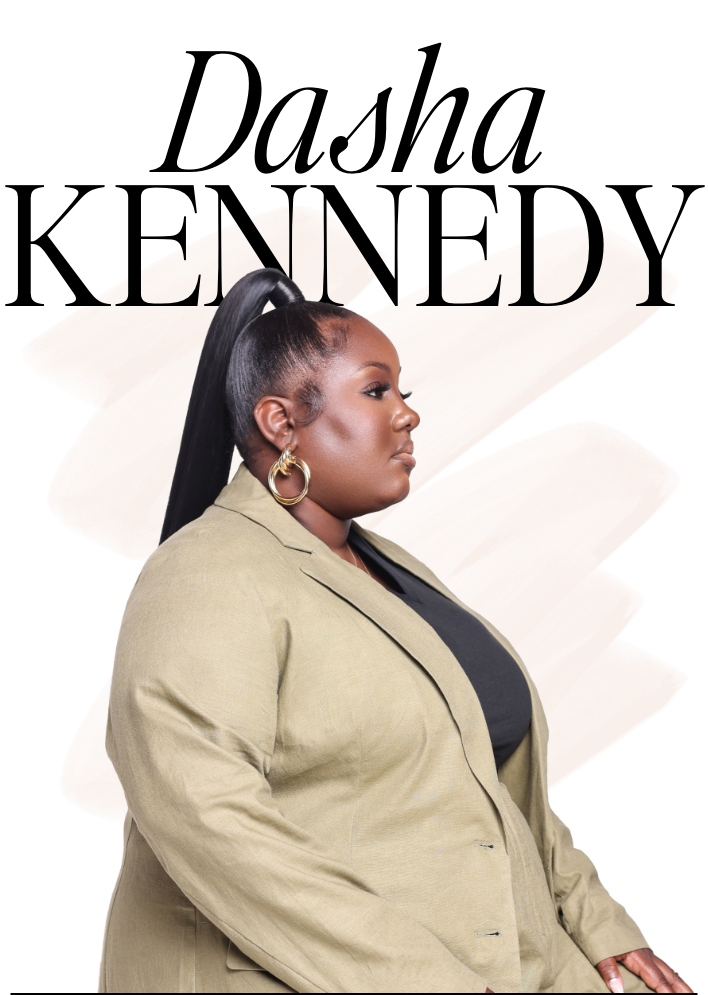
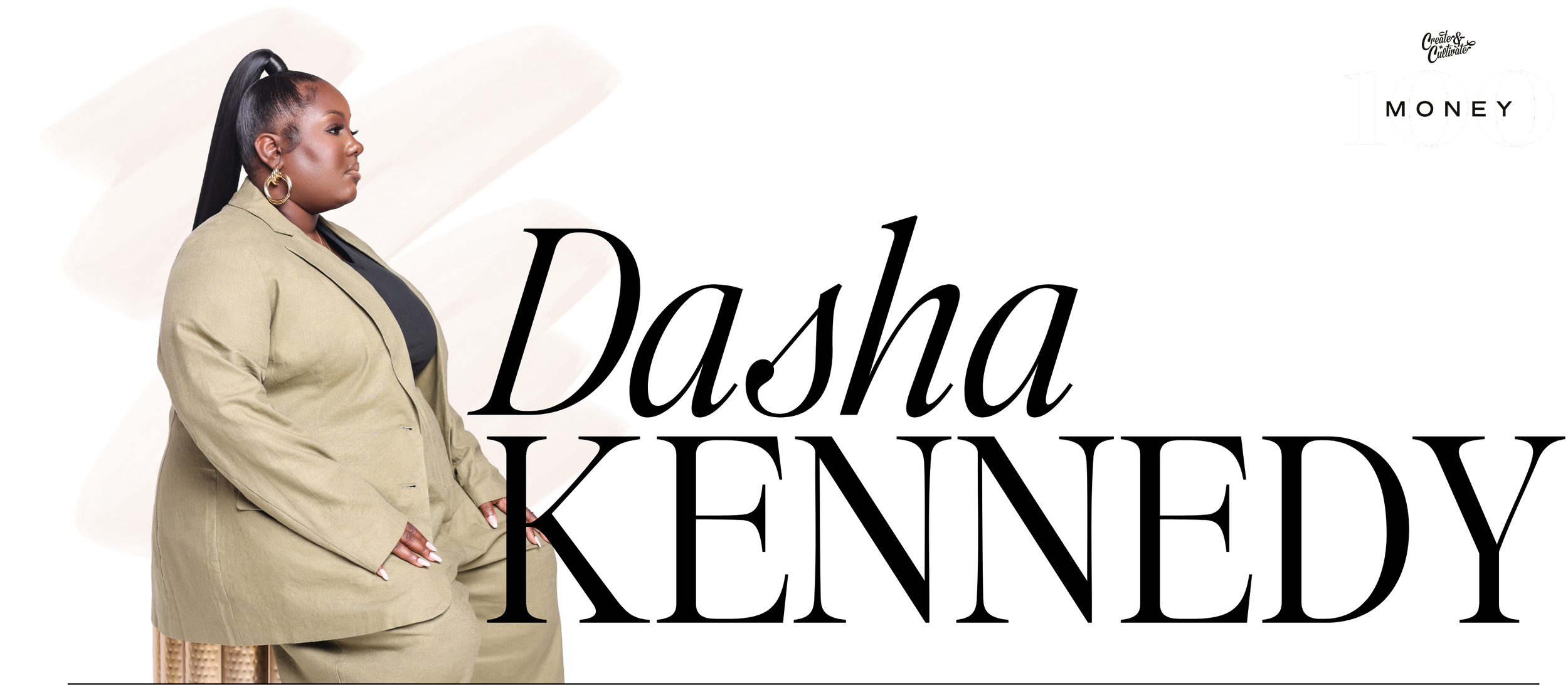
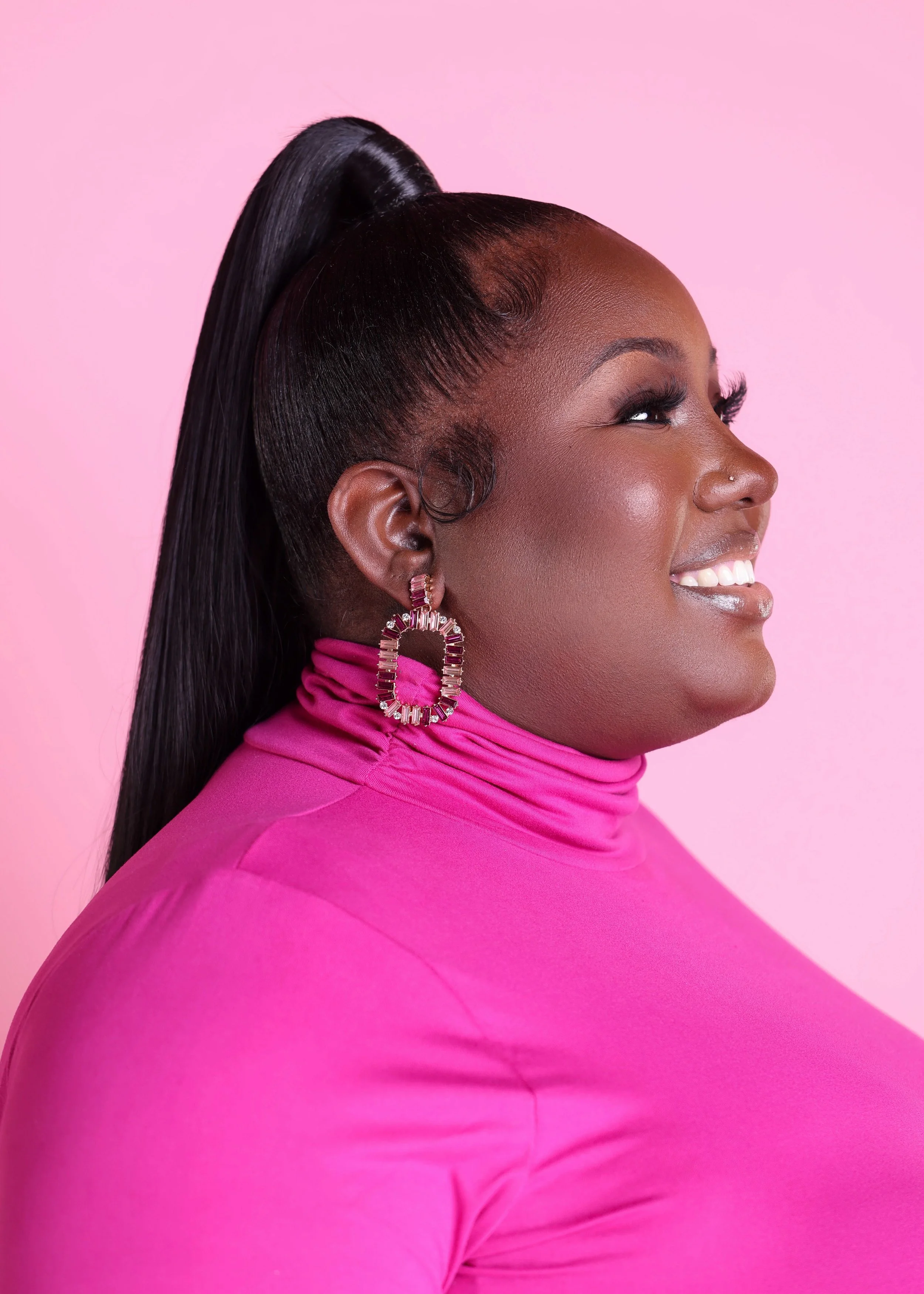
DASHA KENNEDY KNOWS THAT financial freedom IS ABOUT FAR MORE THAN SEEING multiple commas IN YOUR BANK ACCOUNT.
As the founder of The Broke Black Girl, the Atlanta-based financial activist has built a powerful platform dedicated to helping Black women and other historically marginalized communities navigate money with less shame and more confidence. Kennedy’s candid approach, rooted in her own experiences with financial hardship, has resonated with millions who typically feel overwhelmed and excluded from traditional personal finance advice.
Kennedy’s teaching about money resonates because she teaches that wealth-building is as much an emotional journey as it is a mathematical one. Her mission is to share the hard-earned lessons about money, so others won’t have to learn the hard way. Read more about Dasha Kennedy’s journey in the C&C 100 interview below.
Growing up, what were some of the earliest lessons you were taught about money? Was money something that was openly discussed at home?
Money was definitely discussed in my home but mostly through stress, survival, sacrifice, and figuring things out in real time. I grew up seeing how expensive life could be before I ever fully understood money itself. I watched the women in my family stretch things, make things work, go without, and still show up for everybody else. A lot of my earliest lessons around money came from observation more than actual financial education. I learned what overdrafts looked like before I learned what investing looked like. I learned how people survive financial hardships before I learned how wealth is actually built. That shaped me deeply and honestly became part of why I do this work now.
You’ve built your career as a financial activist—what initially drew you to the financial space, and what has kept you in it?
What initially drew me in was honestly frustration. I was doing everything people told me to do and still struggling financially. I realized very quickly that a lot of financial conversations were not built for real people living real lives, especially Black women. There was so much shame, judgment, and oversimplification attached to money. What has kept me in this space is seeing how life-changing financial language and systems can be when people finally feel seen instead of judged. I'm not interested in talking down to people. I'm interested in helping people build stability and ways that actually fit their lives.
What pep talk would you give a friend who’s struggling to negotiate confidently—whether it’s a job offer or raising capital for a business?
I would tell her that confidence is not the absence of nervousness. Most people are nervous when money conversations happen. The difference is whether you believe you deserve to advocate for yourself anyway. A lot of women have been conditioned to overperform first and negotiate later. Meanwhile, other people walk into rooms expecting to be compensated before they've even proven themselves. You do not have to shrink your ask to make other people comfortable. Preparation matters, data matters, but your belief in your value matters too.
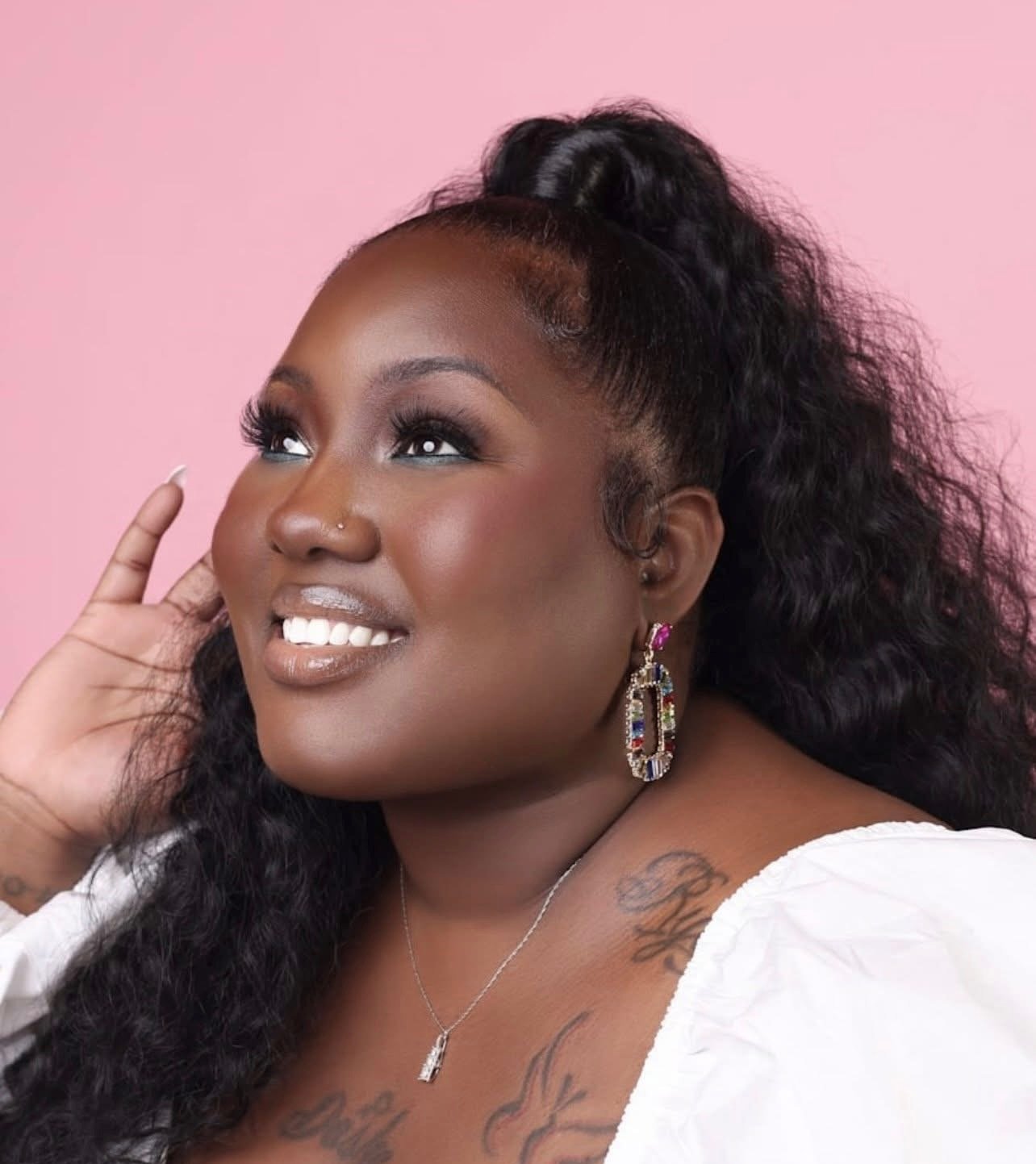
“Most people are nervous when money conversations happen. The difference is whether you believe you deserve to advocate for yourself anyway.”
What’s something you wish more people understood about building wealth over time?
I wish more people understood that wealth is usually built through consistency long before it becomes visible. Most people only notice wealth once it looks glamorous, but the foundation is often boring. It's systems, patience, boundaries, discipline, saying no, starting small, and repeating simple habits over and over again. I also wish people understood that wealth building is deeply emotional. Your relationship with money affects your decisions just as much as your income does.
How should women think about money in their 20s vs. their 40s?
In your 20s, I think the focus should be less about trying to look financially successful and more about learning. Learn your habits, your triggers, how debt works, how investing works, and how to recover from financial mistakes without spiraling into shame. By your 40s, the goal shifts more toward protection, sustainability, peace, and ownership. You start asking different questions. What kind of life do I actually want? What do I need to do to maintain it? What am I building that lasts beyond appearances? Honestly, I think women deserve financial conversations that evolve with them instead of constantly centering hustle culture.
How has your relationship with money evolved as you’ve advanced in your career?
Earlier in my life, money felt tied to survival and urgency. I was constantly trying to catch up, fix things, or recover from something. As I've grown, my relationship with money has become much more intentional. Now I think about money as support. Support for my family, my health, my peace, my future, my time, and my ability to live a slow life. I've also learned that making more money does not automatically heal financial anxiety. Systems, boundaries, and emotional honesty matters more to me now than it ever did.
If someone wanted to start building wealth today but felt overwhelmed or intimidated, what’s the first mindset shift you’d encourage?
I would encourage them to stop thinking they have to become a completely different person overnight. That is the biggest misconception when it comes to changing your relationship with money and building wealth. A lot of people think wealth building starts with huge dramatic changes when most of the time it starts with small repeatable decisions. You do not need to know everything to get started, you just need to stop believing that everybody else was born understanding money and somehow you missed the class. Most people are learning as they go.
What does financial freedom look like to you these days?
Honestly, if I had to describe what financial freedom looks like for me I would have to say it looks like having options and being able to exist in this world without panic. It looks like being able to spend time with my family without constantly calculating what it's costing me. It looks like grocery shopping without anxiety. It looks like taking care of my body. It looks like saying no when I want to instead of having to say yes because I am desperate. It looks like building a life that feels sustainable instead of performative.
What’s the most important financial or career lesson you’ve learned the hard way so other women won’t have to?
One of the hardest lessons I learned is that overworking is not always the same thing as building. Sometimes women become so focused on surviving that we don't pause long enough to ask whether the way we're working is actually sustainable. I also learned that access matters, relationships matter, and visibility matters. You can be brilliant and still need support, community, collaboration, in rooms that recognize your value. Especially a room of like-minded women.
Rapid fire POP QUIZ:
The first thing I do when I wake up in the morning is:
Check my calendar, check my notes app, and mentally map out my day before the world starts asking things from me… that includes my family and children as well.
A song that describes the era I’m in right now is…
“Bigger in Texas” By Megan Thee Stallion, Even though I'm from St Louis this era of my life feels really big. Bigger goals, bigger boundaries, bigger dreams, bigger confidence. I feel like I'm growing into a whole new version of myself right now.
My current obsession is…
building a softer, slower, more intentional life that still feels financially responsible.
To crush your goals, you have to be willing to…
be consistent long enough for the results to finally catch up to your effort.
My best ideas come from…
real life. Everything I come up with, everything that I talk about is a direct result of my real life experiences and everyday people. Conversations, hard seasons, motherhood, routines, breakdowns, rebuilding, and paying attention to what everyday people actually need