
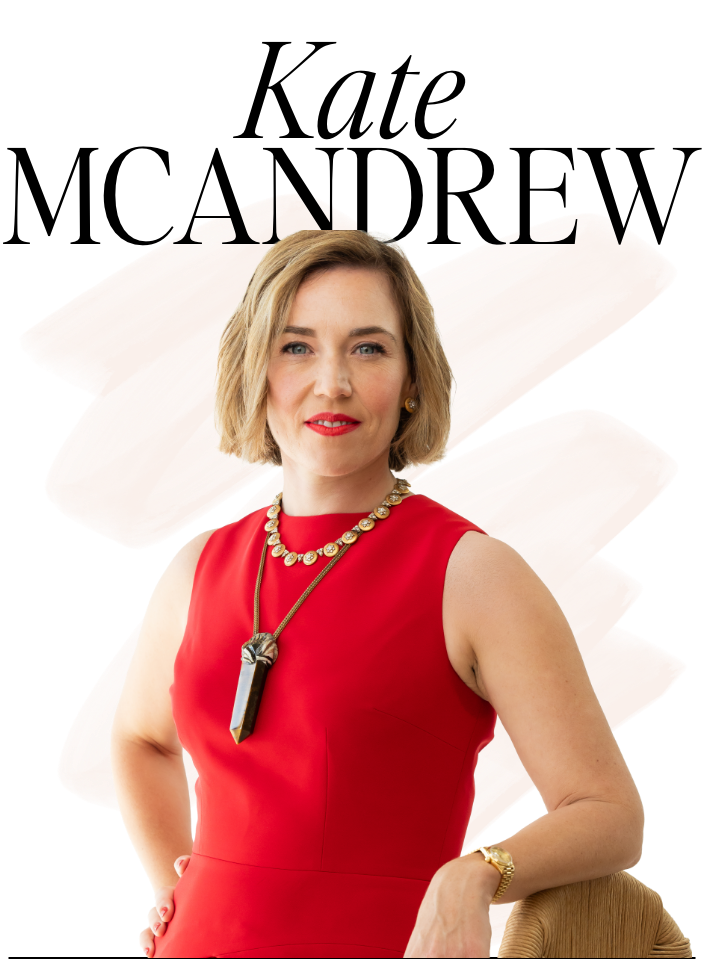
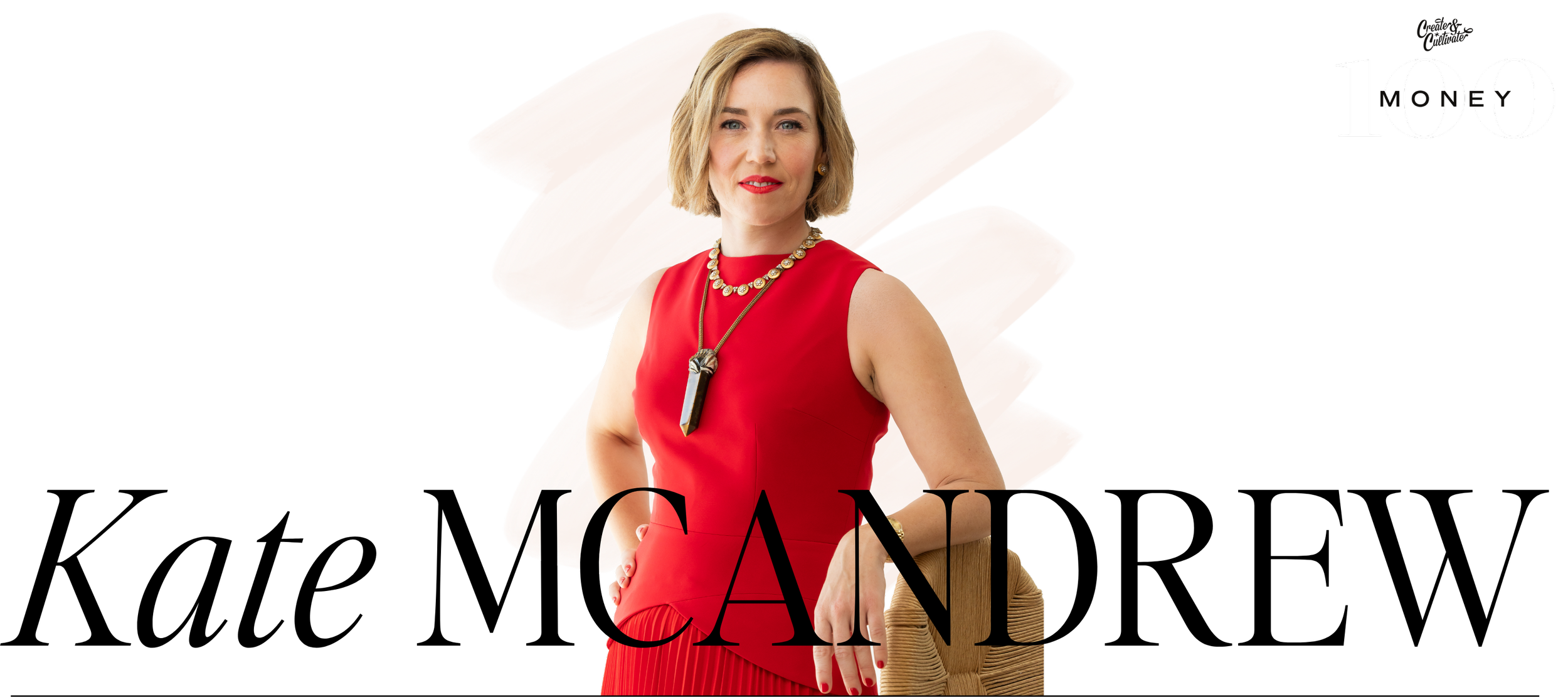
Kate McAndrew HAS BUILT A CAREER AROUND BACKING ambitious founders AT THE EARLIEST STAGES OF THEIR business.
Long before she was writing seven-figure checks from her $100M VC fund, McAndrew was soaking in life lessons about perseverance, creativity, and ownership from her parents—one a corporate veteran, the other a musician-turned-financial advisor who once sold wine by serenading restaurant owners.
McAndrew’s magic sits between strategy and intuition. She holds some unconventional wisdom for women about protecting their financial future, and what financial freedom looks like to her now. Read more about Kate McAndrews’s journey in the C&C 100 interview below.
Growing up, what were some of the earliest lessons you were taught about money? Was money something that was openly discussed at home?
Money wasn’t openly discussed in my home. What I absorbed were more implicit values; simplicity, intentionality, and a deep appreciation for what you have. We didn’t go out to eat much. Instead, my mom hosted and cooked, and I always saw that as beautiful, not as a financial constraint.
Both of my parents demonstrated incredible work ethic and drive in different ways. My mom worked at Safeway in corporate for 35 years. She showed me the power of sticking with the work, even if you don’t love it. Things have not always been a straight line for me in business, and her perseverance is one of the reasons I’ve dug in when others would have quit.
My father is a musician, and a natural salesman. I remember him telling me stories of selling wine to restaurants around the bay area in the 1970’s just as Napa was exploding. He would write songs about the wine with the best gross margins, show up to a restaurant, and ask the owner if he could “sing them this wine.” He sold A LOT of wine through music. He later became a financial advisor, and his quarterly updates read more like poems than memos. He taught me that creativity has a place in everything, even finance, and to always own a piece of what you build.
You’ve built your career as a VC Founder—what initially drew you to the VC space, and what has kept you in it?
I’ve always been an entrepreneur. When my second grade teacher asked us what we wanted to be when we grew up, I said “the boss.” That said, I always thought I would go into the arts and run a gallery. I studied Art History and Cultural Studies in Montreal during the peak indie era, 2005-2009. I had absolutely no concept of what a startup was, or what venture capital was.
I graduated into the teeth of the global financial crisis, and there were no jobs, let alone art jobs. I carved my own path in LA consulting for companies on social media strategy, drafting off of what I’d learned from working at the lululemon flagship store. It became very clear to me that I wanted to start a company, and I thought I needed to get an MBA to “learn business,” but it didn’t make sense to me to go into $100k of debt if I was going to be an entrepreneur.
The first time I heard about venture capital, it completely reframed how I thought about money and knowledge. The idea that someone would invest money into a founder’s idea and then help them build the business blew my mind. It was like the inverse of business school, and I knew I wanted to be part of it. I took a job at an accelerator program, made my first 20 investments, and was hooked. Soon after, I moved to San Francisco, and never left the industry. That was 2014.
In 2022 I co-founded Baukunst, a $100m VC fund leading investments in new companies at the frontiers of technology and design.
At Baukunst I get to work with incredibly ambitious, curious, and unconventional thinkers every day—that kind of environment is endlessly energizing, especially for an intellectually voracious, 99% extrovert like me.
And, there’s nothing quite like telling a founder—someone putting everything on the line—that you believe in them and are backing them with their first $1-2 million of capital. Being part of that moment, and helping unlock someone’s potential, someone’s dream, is a privilege, an honor, and my life’s work.
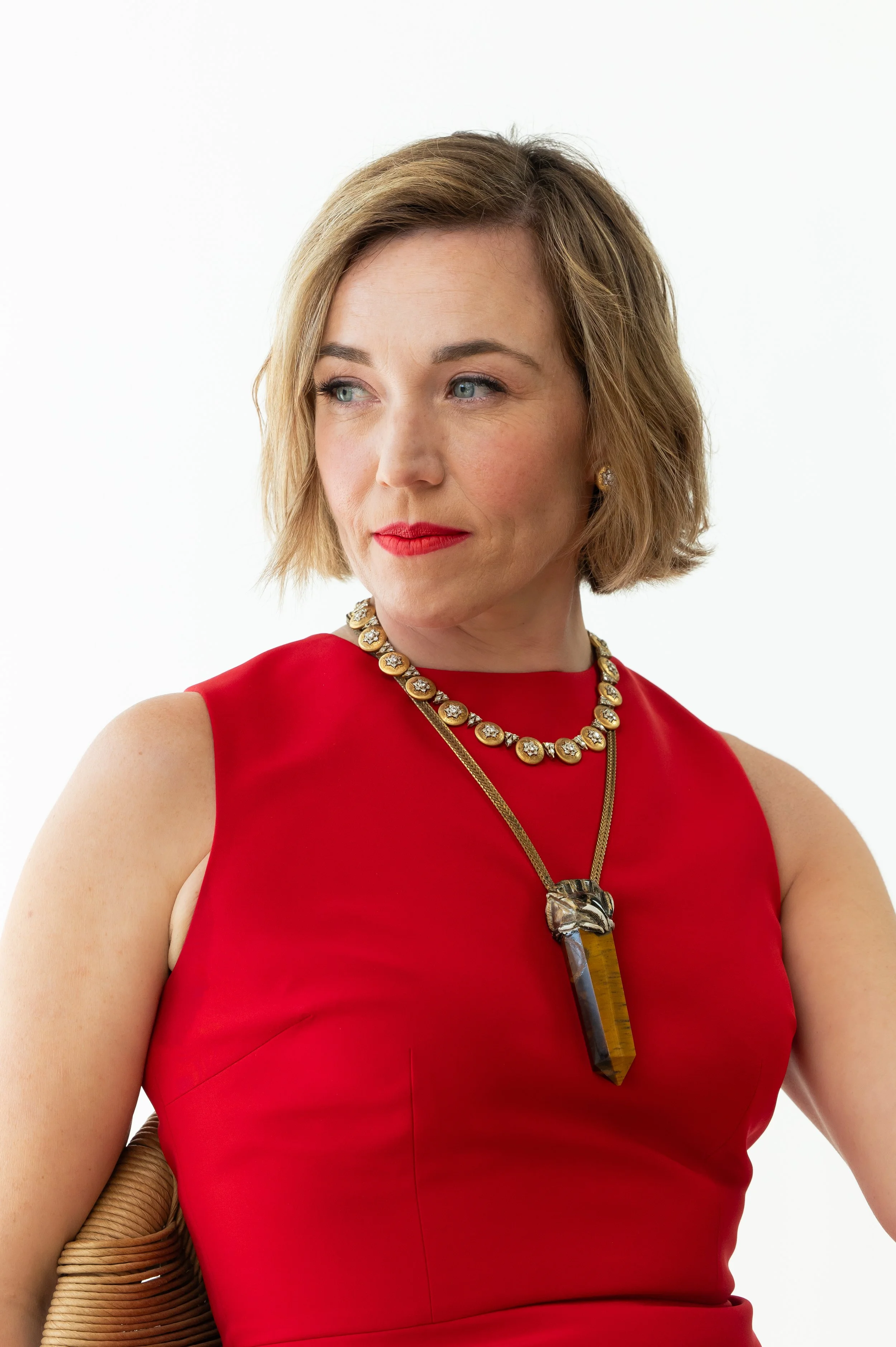
“There’s nothing quite like telling a founder—someone putting everything on the line—that you believe in them and are backing them with their first $1-2 million of capital.”
What pep talk would you give a friend who’s struggling to negotiate confidently—whether it’s a job offer or raising capital.
My style of negotiation is collaborative, not adversarial. A lot of people think negotiation has to be “me versus you.” But I think the best negotiators are able to get both parties on the same side of the table, thinking creatively about how everyone can win. And remember, “You can’t always get what you want, but if you try sometimes you might just find you get what you need.”
What’s something you wish more people understood about building wealth over time?
Wealth is deeply tied to time, and most people underestimate how important patience is. In venture, you’re forced to think in decades. You invest, and then you work, and you wait. Some things that look bad early on become massive outcomes, and some that look promising at first go to zero. That perspective trains you to zoom out.
On the topic of time, never forget that Albert Einstein famously refers to compound interest as the "eighth wonder of the world.” The earlier you start investing and the longer you stay consistent, the more it works in your favor.
How should women think about money in their 20s vs. their 40s?
In your 20s, you should do two things to create upside, and two things to protect your downside.
On creating upside in your 20’s: If you want to build wealth, forget about money, and focus solely on growth. Put yourself in environments—companies, teams, industries—that are expanding, so that you have the chance to take on more and more responsibility. This is how you will leap frog your peers. Startups are perfect for this. Second, make sure you are on a team where your contributions are recognized. If possible, contribute to growing revenue not cutting costs. If you are growing the pie, getting more responsibility, and people are noticing? You’re in the right place.
On protecting downside: The two biggest financial drains I see in my peer group are divorce and fertility treatments. If you are in your 20’s, freeze your eggs now, just in case. If you think you’ve met the one, don’t marry them until you both hit 30 (got to get through that Saturn return!). Waiting costs you nothing, and you don’t realize how much you are still growing and changing right now. Any doubts? Don’t do it.
I’m 39, so I’ll leave advice to women in their 40’s to the women who have lived that decade. I personally can’t wait to turn 40. I think it’s going to be my best decade yet!
If someone wanted to start building wealth today but felt overwhelmed or intimidated, what’s the first mindset shift you’d encourage?
Keep it simple! You don’t need to do everything; you just need to start with a few simple, consistent actions. Begin with the basics: max out your retirement accounts, and set up automatic distributions (5-10% of what you are earning) to either a high yield savings account, or professionally managed brokerage account.
You don’t need to have a lot of money to have a financial advisor, you just need to find an advisor who believes in you and wants to help you grow. They can manage your investments, and also teach you along the way if you are interested. Most are hungry to teach if you are hungry to learn. And if you’re not, no problem. Let them be the expert at their discipline, and you focus on growing your career, compensation, and ownership in what you’re building. Many people think you need a lot of money to have a brokerage account managed, but you don’t. I started with $10k. If you feel intimidated approaching a manager, I’ll connect you with my sister who is at Raymond James. She’s amazing at helping women get in the game in a low pressure way. DM me on instagram for a referral!
What does financial freedom look like to you these days?
Flexibility. Last week it was unseasonably warm in San Francisco. I picked my son (who’s 5) up from school at 3pm and took him to the beach. While we were running on the sand playing in the waves, my company continued to run without me. As the sun set over the water, I remember thinking “this is freedom.”
How has your relationship with money evolved as you’ve advanced in your career?
My relationship with money hasn’t changed much. I’ve bet on myself again and again, and I optimize for career love and long term wealth building over short term gains.
Starting a VC firm was a huge risk. I had just had a baby, was going through a difficult separation from my ex-husband, and had no backup plan. Still, it only took me 30 seconds to decide to start the firm with my partners. Logic would dictate that I should have taken a cushy partner job at a big VC firm, but I would say all founders are a little unhinged, and I’m no exception.
As I’ve made more money, I’ve continued to outsource more and more of the things I don’t like to do, in order to have more time for the things I love. I like a very clean and orderly home and I outsource pretty much all of that. Instead of cleaning and returning packages, I get to spend my time building my company, playing LEGO with my kid, dancing, and planning the class camping trip. The ability to outsource domestic labor is a privilege and one I do not take for granted.
What’s the most important financial or career lesson you’ve learned the hard way so other women won’t have to?
Trust matters more than almost anything else in your career.
Early on, I assumed most people operated with the same integrity and intentions that I did…and that’s not always the case! Choosing the right people to work with—partners, collaborators, teams—is critical. When trust is there, everything moves faster and more effectively. When it’s not, it’s incredibly costly—emotionally and financially. If something feels off, pay attention to it early. You’re only as good as the team you are playing on.
And if you can, avoid litigation at all costs. It will cost you financially, emotionally, and spiritually.
Rapid fire POP QUIZ:
The first thing I do when I wake up in the morning is:
work. I work from about 4:30am until my son gets up at 6:30am.
A song that describes the era I’m in right now is…
“These are the days” by 10,000 Maniacs
My current obsession is…
maximalist workwear!! I’m having almost too much fun getting dressed for work events and discovering amazing female led workwear brands.
If I had one more hour in the day, I would…
dance. I take a dance class 3-4 days a week
Three words to describe the legacy I want to leave behind are…
joy, connection, freedom.