

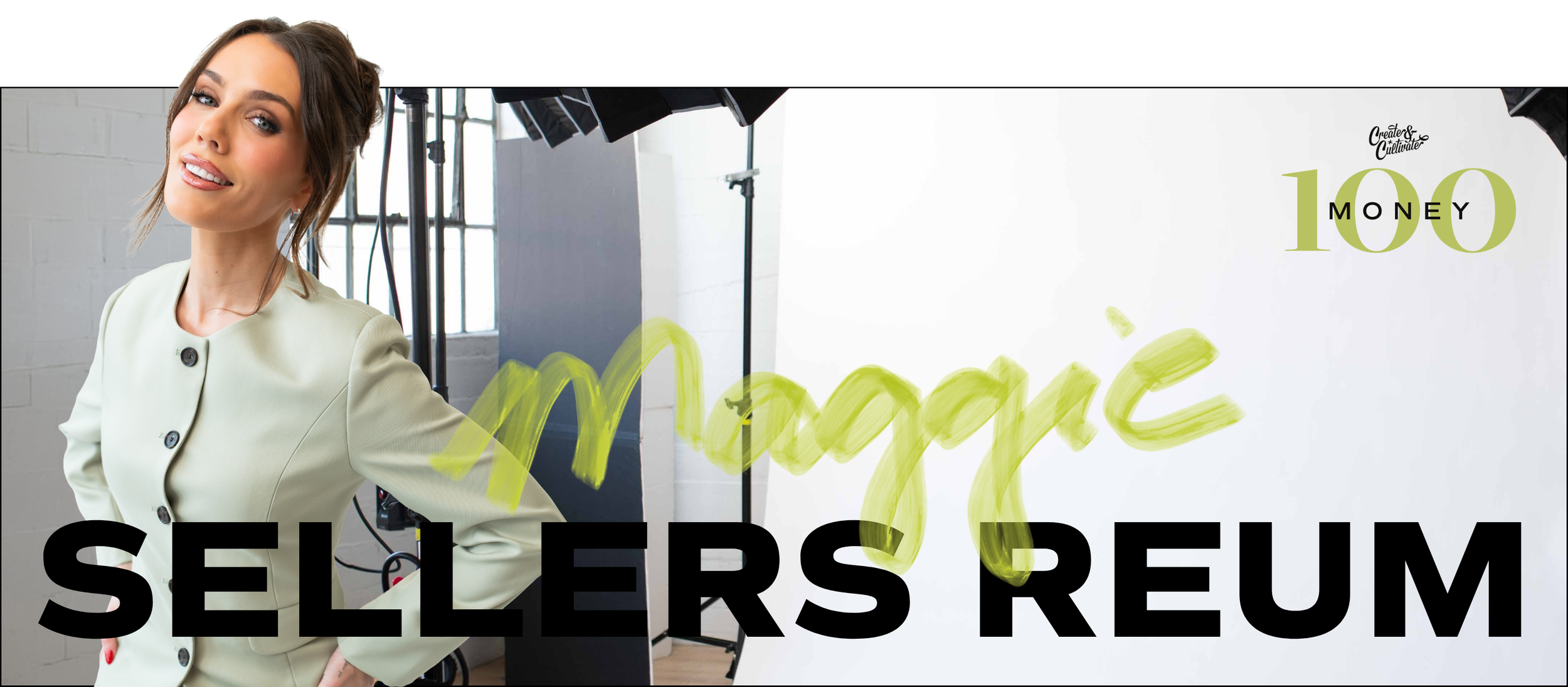
BIG SWINGS, big rewards. THAT’S THE MINDSET BEHIND Maggie Sellers Reum’s SUCCESS.
The co-founder of Hot Smart Rich podcast and founder of HSR Ventures made her first real estate investment at 24 and put her entire life savings on the line to become her own boss, despite being advised not to. Why? She tells us it’s because, “I wanted to bet on myself before I asked anyone else to.”
Fast forward to today, and Sellers is often on the other side of the table, with brands vying for her investment. Her edge lies in identifying potential and helping founders scale with intention. So far, it’s paying off.
Read more about Maggie’s journey in the C&C 100 interview below.
Growing up, what were some of the earliest lessons you were taught about money? Was money something that was openly discussed at home?
Money was never taboo in my house, and I'm genuinely grateful for that. But I also watched closely enough to know exactly the life I didn't want to build. My mom had a budget, an allowance, and needed what felt like permission for every big purchase when the same rules didn’t apply for my dad who was our breadwinner. That image never left me. Early on I understood that money wasn't just about things. It was about freedom. The ability to make your own decisions without asking anyone.
I also grew up wanting things in rooms where other people had them, which my family just didn't value the same way. I like nice things, what can I say! So instead of resenting it, I got motivated. If I wanted it, I'd have to build it myself. I had my first business at 7 and my first real job at 14.
What I feel lucky about is that despite knowing people close to us for whom money was truly scarce, it was never a source of fear in our home. That gave me a foundation I didn't take for granted, and it's a big reason why everything I build now is about making sure that access isn't reserved for people who were born into it.
You’ve built your career in investing—what initially drew you to this space, and what has kept you in it?
I'm drawn to things that should exist but don't. That's always been the pull. There's something about being at the ground floor of building something, knowing your instincts and decisions are shaping what it becomes, that I find hard to replicate anywhere else.
I also know my zone. I'm genuinely good at getting companies from zero to fifty, and once I understood that about myself, investing across a portfolio made more sense than going deep in just one place. I get to do what I do best, across more bets.
What keeps me in it is the people. The social capital. The sense that the companies we back are creating a future we actually get to help design. And finally, with my first exit behind me, I'd be lying if I said the money wasn’t nice too!
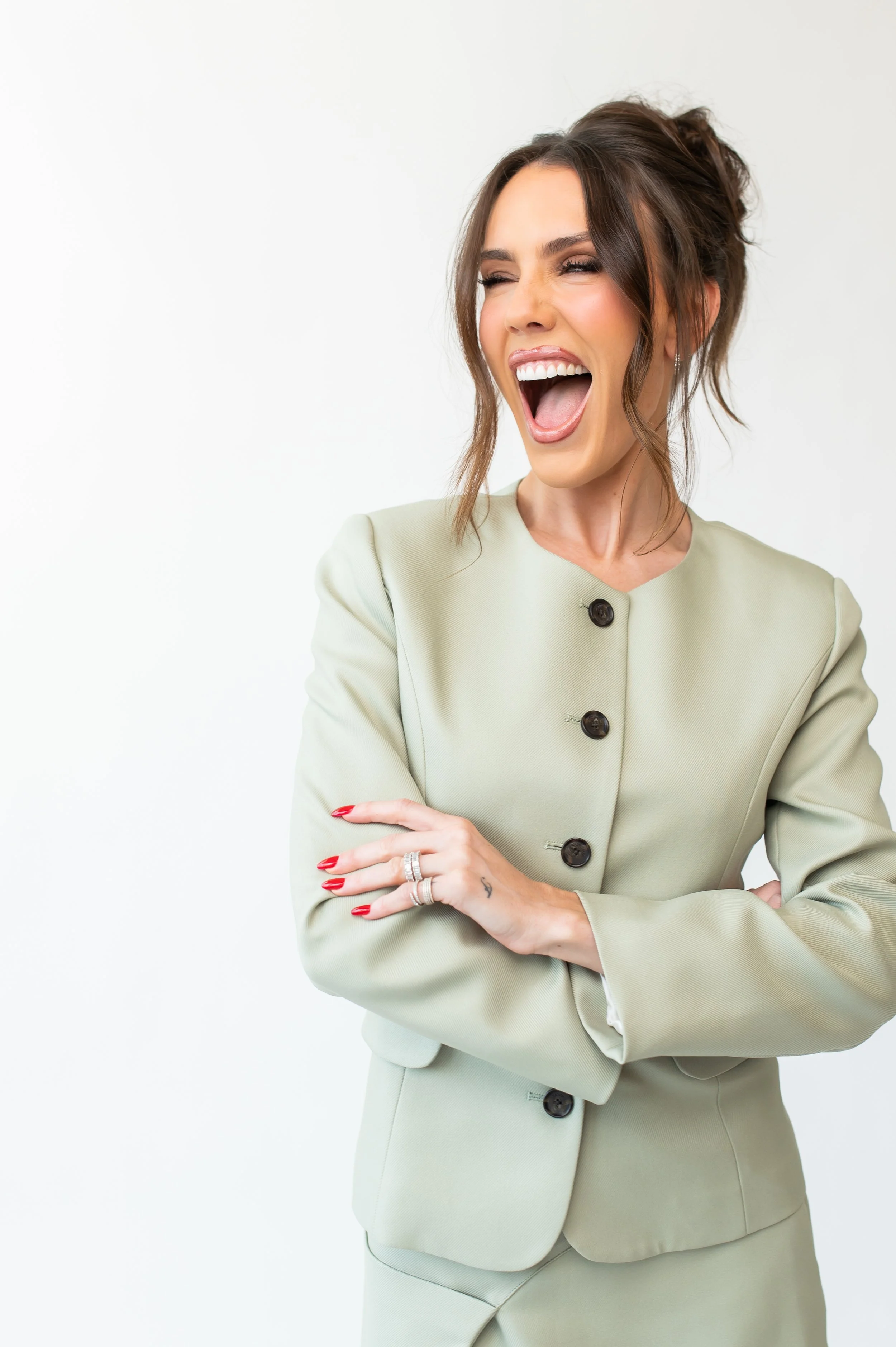
“People treat you the way you let them. You set both the floor and the ceiling.”
What pep talk would you give a friend who’s struggling to negotiate confidently—whether it’s a job offer or raising capital for a business?
People treat you the way you let them. You set both the floor and the ceiling.
Most women I know negotiate based on their past results, not their future potential. We recap, we prove, we justify. But the person across the table isn't investing in what you've already done. They're investing in what you're going to do. Learn to sell the dream, not just the résumé.
And stop thinking of negotiation as asking for something. You're offering someone an opportunity. When you make that switch, the entire dynamic changes. You're not smaller in that room. You're the one extending something.
What’s something you wish more people understood about building wealth over time?
It doesn't happen all at once, and it doesn't have to.
We're all reaching for the billion-dollar brand, but the honest truth is most of us won't build one. And that's fine, because you don't have to build it to be part of it. Private markets, public markets, there are ways to have real skin in the game that most people aren't talking about loudly enough.
What actually builds wealth is compounding. A small amount, moved consistently, growing over time. It's not glamorous but it is the answer. The people who understood that early are the ones who have real options now.
How should women think about money in their 20s vs. their 30s?
In my 20s I took big swings. I bought my first tiny duplex house in Toronto in a gentrified neighborhood at 24. I put my entire life savings, $150K, into an E2 visa to live and work for myself in the United States. Most people told me not to do both of those things. I did it anyway because I wanted to bet on myself before I asked anyone else to. Zero regrets.
As I move into my 30s the mindset has shifted. I’m still taking big bets, but being smarter about compounding along the way and diversifying a portfolio. When I do spend, it's intentional. It has to serve a purpose beyond the thing itself. I'm not going to pretend I don't love Hermès. But I know exactly why I'm buying it, and that distinction is everything.
If someone wanted to start building wealth today but felt overwhelmed or intimidated, what’s the first mindset shift you’d encourage?
Be curious.
Here's what I mean by that: when most of us feel overwhelmed, we get defensive. We back away. We decide the room isn't for us. And that instinct is costing people real money and real time, especially women.
If instead you can stay curious — ask the question that makes you feel dumb, learn the thing you think you should already know, be completely okay looking like a beginner — you will be so much further ahead than the person who waited until they felt ready. Nobody feels ready. Curiosity is what moves you anyway.

How has your relationship with money evolved as you’ve advanced in your career?
I'm more in it now. That's the simplest way to say it.
I actually enjoy checking my accounts. I like going through my credit card statements and being honest with myself about where the money is going. There's no shame in that. There's power in it. So much of life feels out of control right now, and financial awareness has become one of the places where I feel like I actually have a say.
My focus has also shifted from saving more to making more. Those are different problems with different solutions, and for a long time I was only solving one of them.
I'm also thinking harder about how to share what I have, not just philanthropically but structurally. I call myself a conscious capitalist. I believe you can do well AND do good. But investing is not charity so while I build wealth unapologetically, I want to help other people do the same thing at the same time.
What’s the most important financial or career lesson you’ve learned the hard way so other women won’t have to?
Protect yourself before you need to.
The boss who says the raise is coming, the partner who insists it'll be different, the collaborator who swears you don't need it in writing. Don't take their word for it. Not because people are bad, but because circumstances change and promises aren't legally binding.
Get the contract. Get the prenup. Get the operating agreement signed before you build anything together. The people who genuinely have your back will not be offended by the paperwork. And if they are, that's information.
What does financial freedom look like to you these days?
F*ck you money. And the ability to walk out of any room where I no longer feel respected.
Rapid fire POP QUIZ:
The first thing I do when I wake up in the morning is:
Cuddle my husband for 5 minutes. Non-negotiable.
If I had one more hour in the day, I would:
Read more.
A song that describes the era I’m in right now is:
Bejeweled by Taylor Swift
My current obsession is:
Being the dumbest person in the room.
3 words to describe the legacy I want to leave behind:
Women With F*CK You Money