


Rachel Rodgers BELIEVES WE SHOULD all BE millionaires, AND SHE’S PUTTING THAT BELIEF in action.
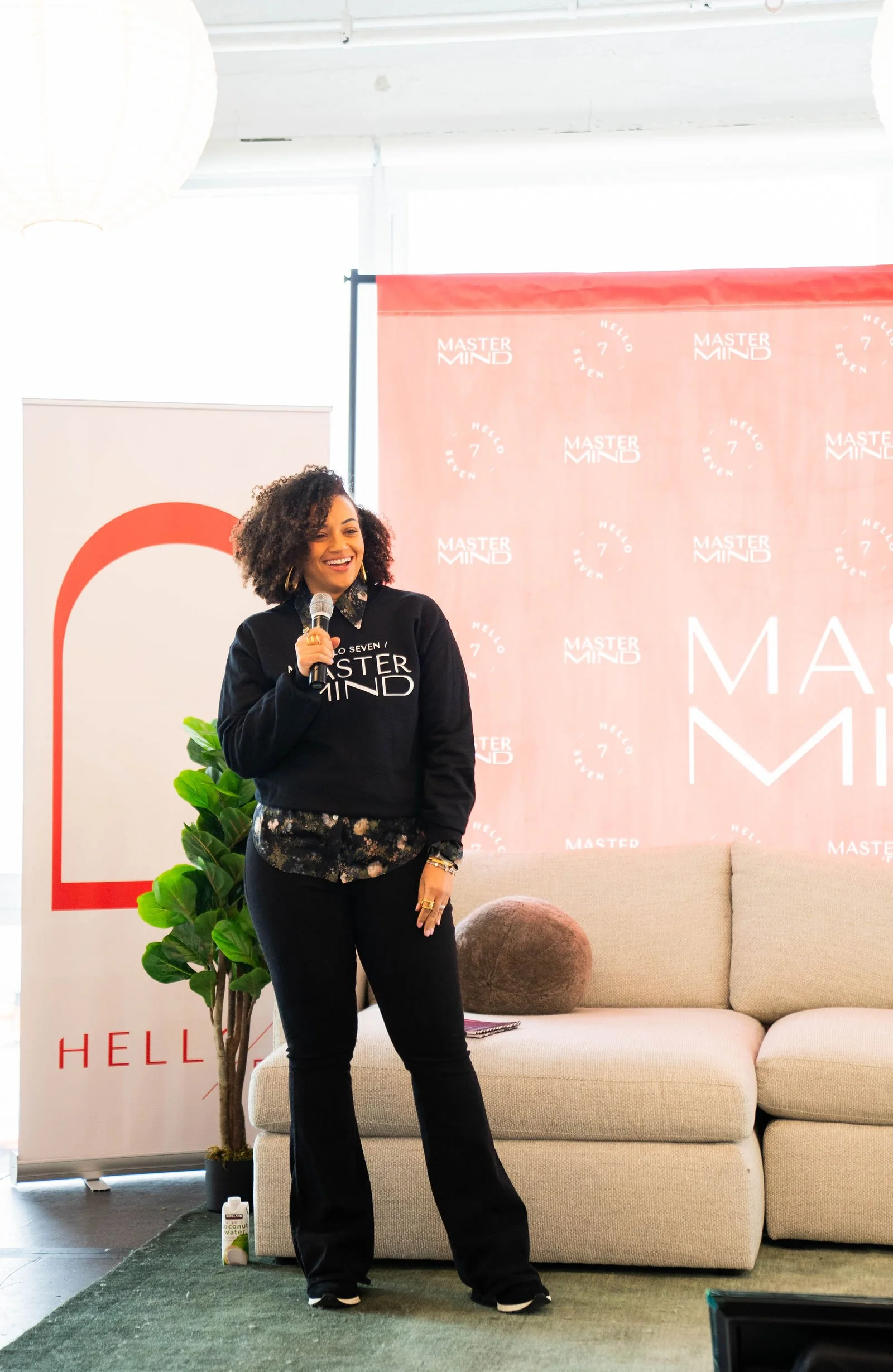
In fact, she’s making it her life’s work. Rodgers is founder and CEO of Hello Seven, a coaching and education platform designed to help women reach seven-figure status. Whether through a lucrative side hustle or through scaling and selling a business, Rodgers believes a life of abundance is possible for any woman willing to put the work in.
The work, as she’s discovered, isn’t logging twelve hour days and participating in hustle culture. It’s the mindset shift: doing it scared, showing up even when the results are uncertain, and doing it scared—these are all ingredients in Rodgers’s recipe for success. Read more about Rachel Rodgers’s journey in the C&C 100 interview below.
Growing up, what were some of the earliest lessons you were taught about money? Was money something that was openly discussed at home?
Money was not openly discussed in my house. What I saw was my parents arguing about it, stressing about it, never having enough of it. Nobody had to sit me down and tell me there wasn't enough. I was watching it happen.
Sometimes I'd ask for something and they'd tell me we couldn't afford it. But honestly, I rarely asked. I already knew.
That's the part people miss when they talk about financial literacy. You absorb the message about money long before anyone explains it to you. The wealth gap doesn't only live in bank accounts. It lives in what kids overhear at the kitchen table.
You've built your career as a founder and business coach — what initially drew you to this space, and what has kept you in it?
I went to law school and graduated straight into the Great Recession in 2009. There were no jobs. So I took a risk and started my own practice serving small business owners.
I ran that firm for seven years. And in that time, I learned something I would have never figured out otherwise: I was really good at business. Not just lawyering. Business. I loved marketing. I loved the sales. I loved managing a team and figuring out how to make the whole thing work. The strategy of it lit me up.
What happened next was kind of accidental. My clients kept asking me for business advice, and a mentor finally pulled me aside and told me, "You should be selling that, not giving it away." So I started coaching on the side. Some of those first clients had wild results. That's when I knew this was a real business, not a side hustle. That's when Hello Seven started.
I've stayed because I love it. I love helping people realize they can make more money. That they can be entrepreneurs. That they can be the authors of their own lives instead of waiting on gatekeepers. Our mission is to help women and historically excluded people build wealth, and that's what keeps me showing up.
What pep talk would you give a friend who's struggling to negotiate confidently — whether it's a job offer or raising capital for a business?
Feel the fear and do it anyway. We don't get what we don't ask for.
Practice the ask. Practice asking for the sale. Practice asking for the raise. Practice asking for whatever it is you actually want. You're building a muscle. You'll need it for the rest of your life, so you might as well start now.
Here's the other thing I'd tell you: know your BATNA. That stands for "best alternative to a negotiated agreement." Translation: if this doesn't go your way, what's your next move? What's your Plan B? When you know you've got options, the pressure comes off. The negotiation doesn't have to go perfectly because you already know what you'll do if it doesn't.
“People think the hard work of building wealth is the hours. The twelve-hour days. The nights and weekends. Hustle culture sold us all on that lie.”
What's something you wish more people understood about building wealth over time?
People think the hard work of building wealth is the hours. The twelve-hour days. The nights and weekends. Hustle culture sold us all on that lie.
That is not the hard work. The actual hard work is mindset. Staying committed for the long haul. Sitting with discomfort and showing up anyway. Asking for the sale even when you're scared. Holding on through the low parts until you make it to the other side.
The other thing I wish people understood: wealth gets easier to build the longer you do it. But you have to actually start. Stop trying to make every move your lottery ticket. Not every play has to be a unicorn or a retirement plan. You compound. Small wins, then slightly bigger ones, then bigger ones than that. That's how wealth actually gets built.
But the most important piece, and this is the part nobody wants to hear, is that wealth is built on risk. If you're not willing to risk anything, you are not going to build wealth. Hard work alone won't get you there. Wealth comes from being willing to bet on yourself. Risk your time. Risk your money. Risk your energy. Risk your ego. That's what it actually takes.
How should women think about money in their 20s vs. their 40s?
The biggest difference between your twenties and your forties is experience.
In your twenties, you're trying to figure out what your thing is. So try everything. Network, go to events, take classes, read books, accept the project nobody else wants. Be a sponge. The whole point of that decade is to expose yourself to enough different work that you can finally figure out what you're good at and what you actually love. That's the thing you're going to build wealth around later.
In your forties, you're established. You've got ten-plus years of experience doing something you've gotten really, really good at. Now your job is to take that niche and squeeze as much money out of it as possible. Find every avenue you can deploy that skill set. Run the numbers. Where can you charge more? Where can you scale? Where can you stack income streams?
And the reason you do this in your forties is simple: to enjoy your life now AND still have enough to retire. Both.
What's the most important financial or career lesson you've learned the hard way so other women won't have to?
Being nice will cost you money. It is very expensive.
You have to take your money seriously, because if you don't, somebody else will take it from you. Hire the lawyer. Read the contract. Ask the questions. Understand the numbers, and if you don't understand them, do not pretend you do. Slow the whole thing down until you actually feel comfortable with what you're spending money on.
People are trying to relieve you of your cash on a daily basis. That's just true. You have to be aware of it. You have to protect your pockets. You have to take seriously every investment you make and demand a return on it. Nobody else is going to do that for you.
Being polite is not a financial strategy. Being direct is.
What does financial freedom look like to you these days?
Financial freedom looks like protecting my peace. It looks like only spending money on things that actually matter to me. It looks like having a lot of free time. It looks like having real assets, the kind that mean even in a tough year, I'm still wealthy and protected.
And honestly? It looks like being able to walk away from a relationship that isn't working, even when it costs me to do it. I recently paid someone to go away. Just paid them. Because the small cost of that check was worth so much less than the peace it bought me back.
That's freedom. The ability to choose your peace and afford to keep it.
How has your relationship with money evolved as you've advanced in your career?
The shift was when I stopped wondering if I was going to make it. I just started knowing I would.
I'm calmer about money now. Clear that I can earn it. Clear that I can keep earning it. Clear that I'm capable of making smart decisions with it. That clarity changes everything.
But the biggest evolution is patience. I'll now take on projects that take a long time to pay off. I'll invest in things that don't cashflow today but have a serious return later. Those are often the best opportunities, the ones that don't reward you immediately. When you're earlier in your career, you can't always afford to play that long game. Now I can. And I do.
I'm also much more clear on what my work is worth. I know my skill set. I know what I bring to the table and I'm confident in what I deserve to be paid.
If someone wanted to start building wealth today but felt overwhelmed or intimidated, what's the first mindset shift you'd encourage?
Change the thought.
If your default belief is that making money is hard, or scary, or for other people, you have to actively replace it. Write down a new thought: "Making money is easy." And then your job, every single day, is to look for evidence that the new thought is true.
Look in your own life. Look at your friends. Look at the people whose books you're reading. Look at strangers on the internet who are doing it. Start collecting evidence. The more evidence you stack, the more your brain starts to believe it. And once you actually believe it, you start acting on it. That's when the money starts showing up.
This isn't woo. This is how your brain works. We don't take action on beliefs we secretly think are bullshit. So you have to do the work of actually believing first.
Rapid fire POP QUIZ:
The first thing I do when I wake up in the morning is:
snuggle with my kids.
A song that describes the era I'm in right now is…
"Amber" by 311. That's my vibe this season.
My current obsession is…
AI, and how it can help women and Black and brown people build real wealth faster through entrepreneurship.
If I had one more hour in the day, I would…
spend it with my husband. I really like him.
Three words to describe the legacy I want to leave behind…
She loved. She taught. She delivered.