

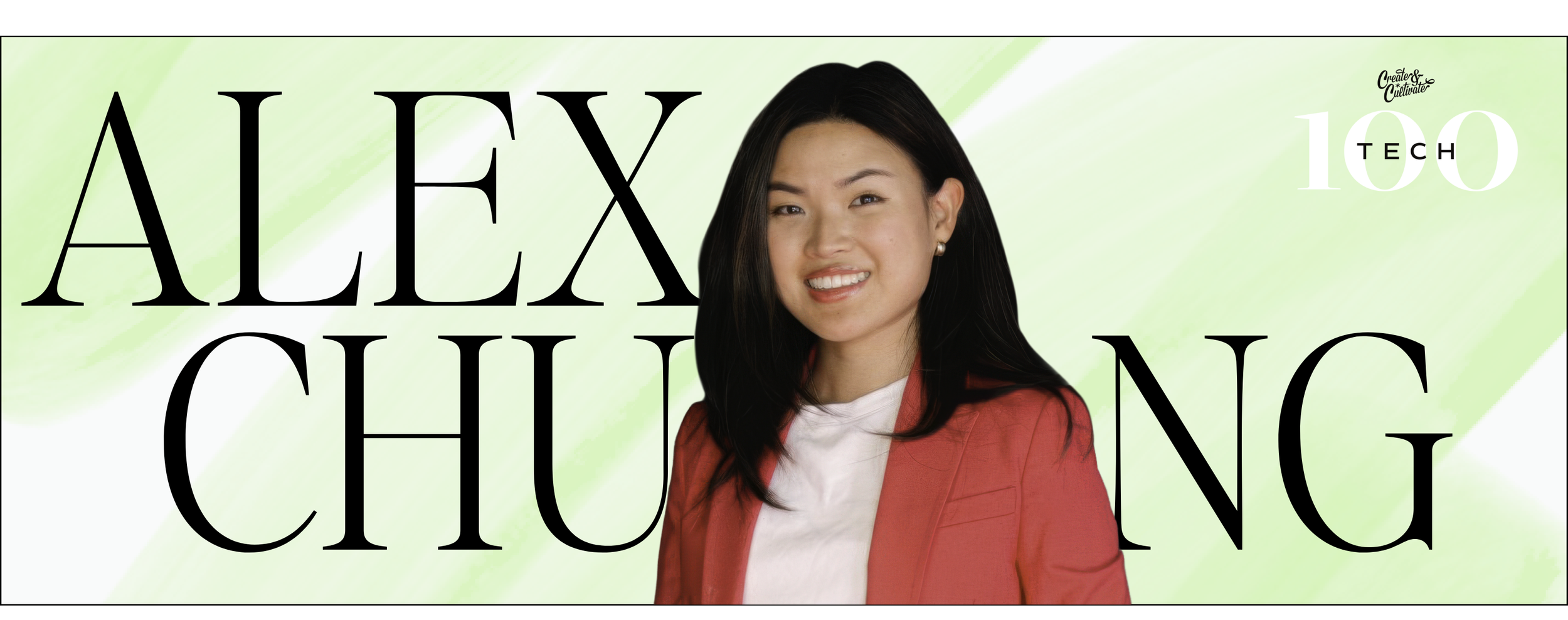
AS A former venture capitalist WITH A sharp eye FOR WHAT MAKES A COMPANY worth betting on, Alex Chung HAS SPENT YEARS studying tTHE INGREDIENTS OF breakout success.
But somewhere between evaluating founders and spotting market opportunities, she realized she wanted to build, not just invest. The New York–raised operator and founding head of growth at Stealth now channels that investor mindset into her own work at the intersection of AI, health, and longevity, where she’s as passionate about meaningful relationships as she is about emerging technology.
Whether she’s hosting intimate dinners that spark career-defining connections or using AI to turn rough ideas into fully formed strategies, Chung represents a new generation of founders who pair analytical rigor with genuine community-building. Her mission is as ambitious as it is personal: to help people live longer, healthier lives—and to build the kind of ecosystem that makes that future feel possible. Read about Alex Chung’s journey in her C&C 100 interview below.
When did you know you wanted to pursue a career in tech?
It started at UChicago during my junior year when I started my thesis writing process that incorporated AI ethics in business. I met Starr Marcello and did the College New Venture Challenge, and it completely cracked open a world I didn’t know existed. The idea that you could build something much bigger than yourself, from scratch, with the right conviction? That rewired everything for me.
I grew up in New York City, first-generation Korean-American. Both my parents immigrated here as kids and built their careers from nothing. They went to Smith and Cornell, became lawyers, and have been my biggest cheerleaders my entire life. Achievement was always the expectation in my house, but tech and startups showed me a different kind of ambition — one that felt like mine to define.
From there I went into VC. Decibel during Booth, then two years at Chai Ventures. I learned how to evaluate companies, pattern-match on founders, and understand what separates a real bet from a good-looking one. Eventually I realized I wanted to be on the other side of that table, so I made the jump.
What risk have you taken as a founder that’s changed the trajectory of your business?
Leaving venture capital to become an early operator. After my years at Chai, I walked away from a track that looked safe and prestigious to join a company as founding head of growth — a space where I genuinely was the target customer and a superconnector myself. No playbook handed to me. No team built out. Just a blank slate and a bet that I could build something real.
What do you care more about right now: perfecting the product or building the right team? And why?
Team, without question, and I say that as someone who obsesses over product. At the stage most of us are operating in, the product is always going to evolve. What you can’t evolve around is the wrong people. The best product in the world launched by the wrong team will stall. A scrappy, aligned team will find a way to make almost anything work. I’ve been on both sides of that equation. I’d rather bet on the people every time.
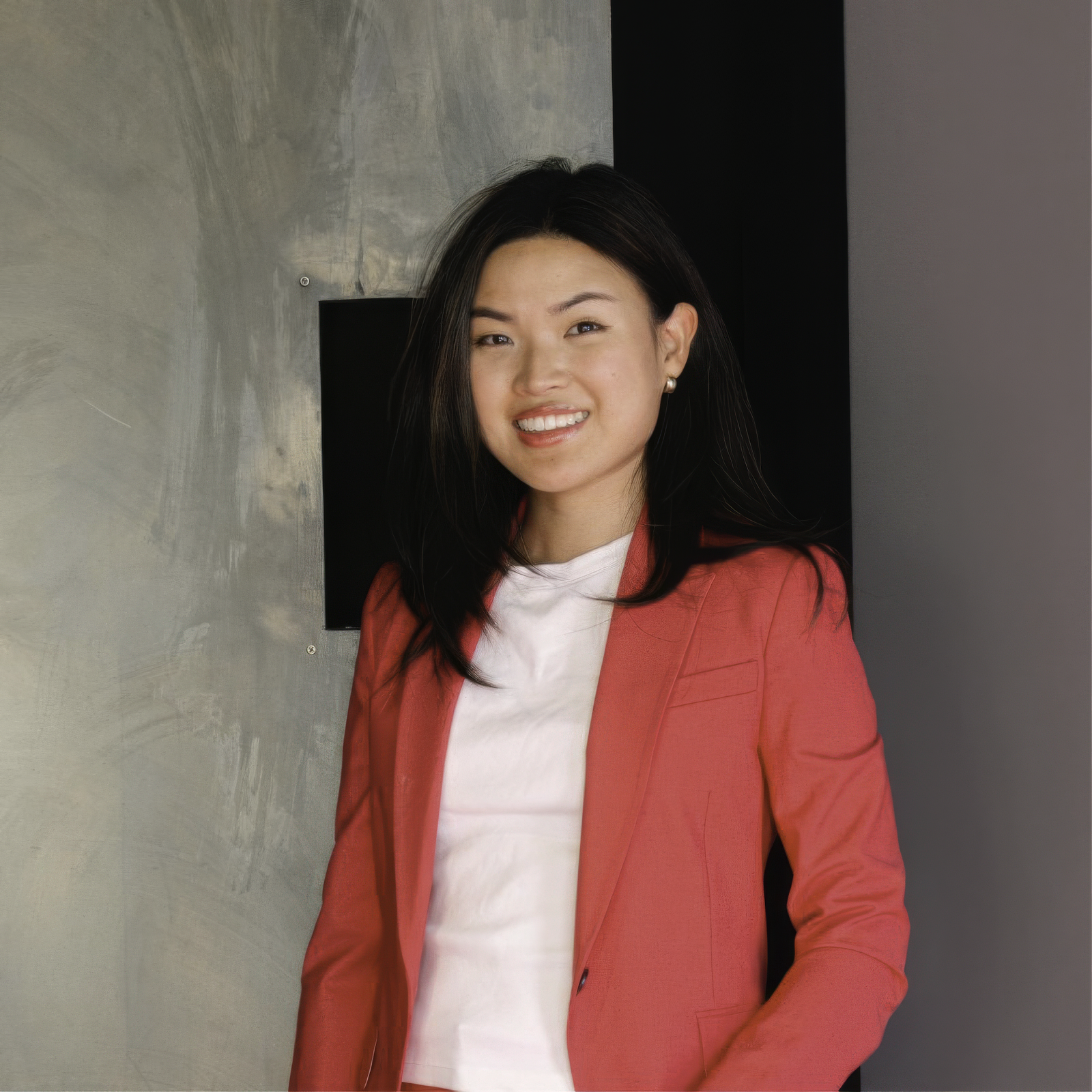
“The best product in the world launched by the wrong team will stall. A scrappy, aligned team will find a way to make almost anything work.”
What is your recipe for building business relationships that are authentic and not purely transactional?
I host a lot of dinners. No agenda, no pitch, no ask — just eight or ten people in a room who should know each other and don’t yet. I’ve been doing it for years, in New York and everywhere else. Some of the most important relationships in my career came directly out of those tables.
I think it comes from growing up in this city. New York teaches you that everyone is busy, everyone has options, and nobody owes you their time, so you either show up with something real to offer — genuine curiosity, a useful introduction, a reason to stay in touch, or you don’t get a second conversation. I’m a connector by nature, which means I genuinely enjoy bringing people together without needing anything back from it. That instinct, more than any strategy, is what makes relationships feel human instead of transactional.
What do you think is the biggest barrier to female founders receiving VC funding?
Pattern matching. VC is a copycat industry and investors back what looks like what worked before, and historically that profile has been pretty narrow. I spent years in venture. I watched it happen. The problem is that pattern matching on founder type rather than founder quality is just bad investing. And it’s self-reinforcing: the less representation there is at the decision-making table, the harder it is to shift what “fundable” looks like. Most of it isn’t malicious — but impact matters more than intent.
The fix is more women with check-writing power, and more intellectual honesty that the current baseline was built on a very limited sample set.
AI is undeniably the biggest thing in tech right now, and it’s changing everything around us. How should women entrepreneurs be leveraging it to level the playing field? How are you using it in your business?
AI is the most powerful force multiplier I’ve ever had access to, and I think women in business, especially those who are resource-constrained, should be treating it exactly that way. It lets one person do the work of a team.
I use it every single day. Competitive intelligence, writing, building dashboards, analyzing data, drafting outreach, and beyond that, I’ve built custom automation pipelines that monitor industry news and run on autopilot. My output has probably tripled. More importantly, the quality of my thinking has gone up because I can iterate faster and stress-test ideas in real time.
The people who figure out how to delegate to AI intelligently are going to have a structural advantage that compounds. For anyone who’s ever had to do more with less — that’s the lever to pull right now.
What’s your most common AI prompt?
Something like: “Here’s the context. Here’s what I’m trying to do. Push back if something doesn’t make sense — don’t just tell me what I want to hear.” I use AI as a thought partner, not a yes machine. The pushback is the whole point. I want it to poke holes, flag blind spots, and offer alternatives. That’s where the real value is.
What does your current tech stack look like—and how has it changed your daily output?
Claude (+ Cowork + Claude Code) for thinking, writing, and building automation. Canva for design. Superhuman for email. And a handful of custom-built tools I’ve put together myself — competitive monitoring pipelines, content compliance checkers, industry digests that run daily without me touching them.
The honest answer is that my output has multiplied, but the more interesting change is
qualitative — I think better because I can iterate faster. I can go from rough idea to
stress-tested plan in a fraction of the time. For an early-stage operator, that’s everything.
How would you describe your personal mission statement right now?
To help people live longer, better lives — and to build the kind of community around that
mission that makes the work actually stick.
That’s become deeply personal lately. My grandfather passed away last November at 88. He was the grittiest person I’ve ever known — he escaped North Korea as a young boy with just a nanny by his side, built a life from nothing, and spent the last eleven years of his life on dialysis without ever once complaining about it. He just kept showing up. Watching him, and then losing him, changed how I think about time and health in a way that I don’t think anything else could have.
Around the same time, I got into marathon running, and discovered what the body is actually capable of when you invest in it properly. Those two things happening together made me want to be building at the intersection of AI and longevity. Not health as something reactive, something you address when things go wrong, but it’s absolutely the most important long-term bet any of us can make. That’s the mission I’m orienting around right now.
Rapid fire POP QUIZ:
The first thing I do when I wake up in the morning is:
look at my phone, run through my mental to-do list, and then I tell myself today’s the day I start meditating. I’m still working on that last part.
If I had one more hour in the day, I would:
run.
A song that describes the era I’m in right now is:
Levitating by Dua Lipa.
My current obsession is:
building systems that make great work feel inevitable instead of heroic.
Three words to describe the legacy I want to leave behind:
built something big.