

WHILE WORKING AS a stylist IN DALLAS —
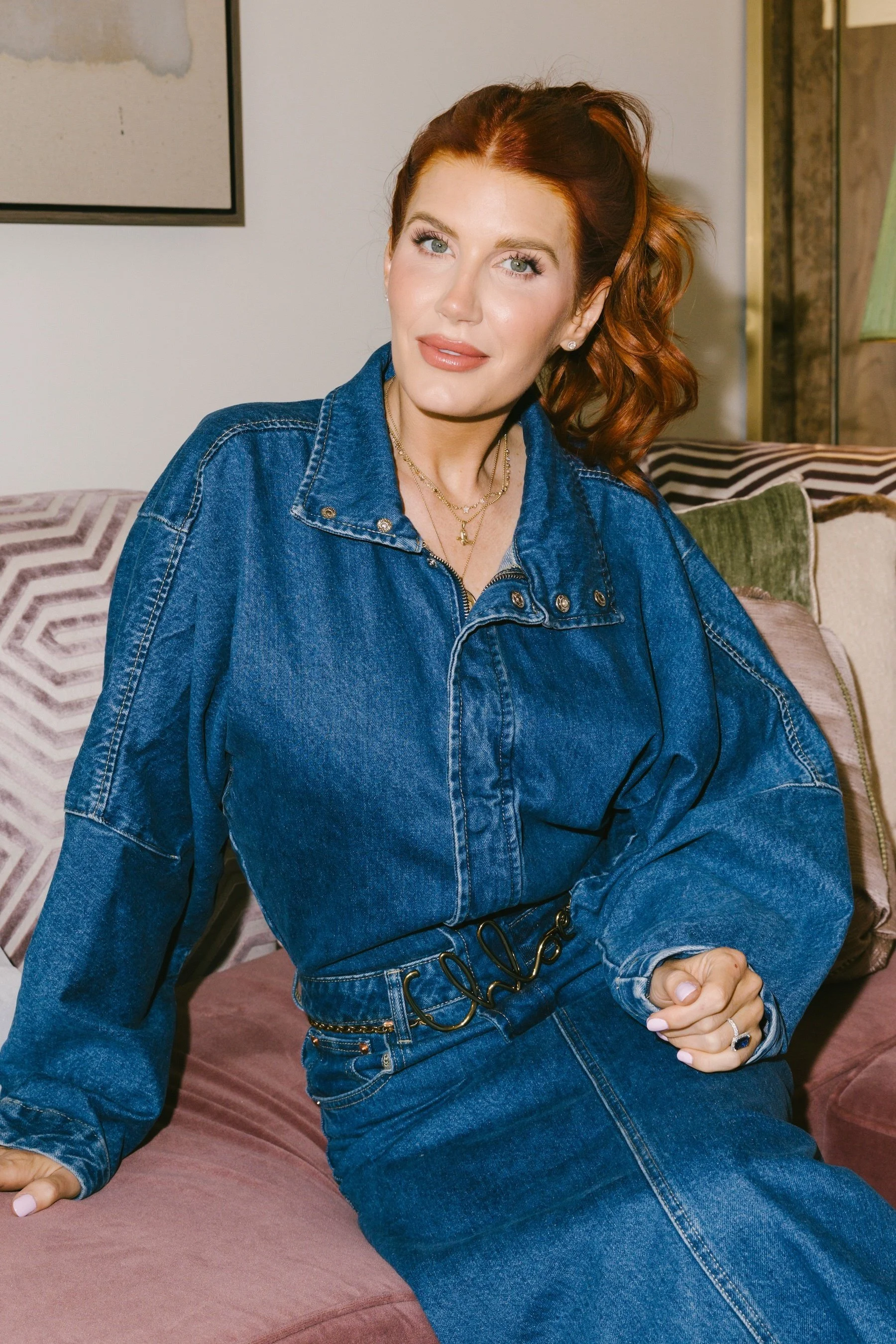
Amber Venz Box NOTICED THAT WHEN SHE SHARED product recommendations ONLINE, THERE WAS no way FOR FOLLOWERS TO SHOP THOSE ITEMS through her.
That gap inspired her to build LTK, a platform that allows creators to monetize their influence and for brands to turn trusted recommendations into sales.
Over the past decade, Venz Box has helped define an entirely new category at the intersection of technology, commerce, and content. And now, she’s laser-focused on ensuring that trust stays at the center of shopping for products. Her vision extends beyond LTK itself. She’s trying to build the systems that empower creators and preserve authentic human connection in an AI-driven world.
Read about Amber Venz Box’s journey in her C&C 100 interview below.
Describe the moment you realized there was a problem in the tech space that wasn’t being solved, and that your idea could be the new solution?
At the time I was working as a personal shopper, which meant I had private clients who hired me to dress them seasonally or for special occasions. I set up business arrangements with various retailers across Dallas where I could pull products from their stores to show my clients in their homes and if I sold the item, the retailer would pay me a commission. I loved dressing people and helping them feel confident in what they were wearing.
When I started sharing those same recommendations online, I saw the gap. People were discovering the products, but there was no way to connect that inspiration to purchase through me - they were going off and buying on their own. The demand existed, but the technology didn’t. That disconnect is what led me to realize there was an opportunity to build something much bigger.
What risk have you taken as a founder that’s changed the trajectory of your business?
Early on, just believing this was a real business was a risk. There wasn’t a playbook for creator commerce, and we were building something that didn’t fit neatly into existing categories. Later, bigger risks followed - like rebuilding the platform and shifting our business model for the brand platform - but that initial leap of conviction, that this behavior could become an entire ecosystem, is what set everything in motion.
What do you care more about right now: perfecting the product or building the right team? And why?
This is one of those moments where the answer is both - but with a heightened focus on the product. We’re building for the AI era, which means rethinking how people discover, trust, and engage with content. That kind of shift requires deep product focus. But ultimately, it’s the team that determines whether you get it right. The balance is making sure you have the right people to build the right future.
What’s been harder than you anticipated while building your brand?
One of the hardest parts has been continuously educating the market as the category evolves. Early on, we were explaining what a blogger was, then what an influencer was, and now what the creator economy means at scale.
Today, the challenge has shifted. We’re no longer trying to prove that creators matter - 97% of CMOs are increasing investment in 2026. The conversation is now about infrastructure: how brands operationalize creator marketing in a way that’s efficient, transparent, and performance-driven.
The terminology and platforms will keep changing, but the core insight hasn’t - people trust people more than they trust ads. Our role has been translating that into something actionable for brands at every stage.
“People trust people more than they trust ads.”
Did you raise capital for your business—and if so, what surprised you most about the process?
Yes, we raised capital to build LTK into what it is today. What surprised me most was how much storytelling and education the process required, especially early on. We were not just pitching a product, we were introducing an entirely new category. Many investors did not yet understand that creators were driving meaningful retail sales or that this could become a core marketing channel. As a female founder in tech, I also saw a difference in how questions were framed. Some conversations focused on whether I could do it, rather than how big the opportunity could be. Learning to stay grounded in the data and consistently bring the conversation back to the scale of what we were building was one of the most important lessons.
AI is undeniably the biggest thing in tech right now, and it’s changing everything around us. How should women entrepreneurs be leveraging it to level the playing field? How are you using it in your business?
AI is the most transformative shift we’re seeing in technology right now, and I think women entrepreneurs should view it as a multiplier. You’re starting to hear CEOs talk about how AI can “clone” parts of themselves - expanding their output, their reach, and their ability to operate at scale. That’s incredibly powerful.
For me, AI is a copilot, not a replacement for creativity, judgment, or voice. The real opportunity is using it to remove friction - whether that’s research, first drafts, synthesizing information, or pressure-testing ideas - so you can spend more time on what actually moves the business forward: strategy, relationships, and decision-making.
My approach is simple: if something doesn’t require uniquely human judgment, we look for ways AI can do it faster and better. That frees us up to focus on the parts of the business only humans can do - and that’s where the real advantage is.
What’s your most common AI prompt?
My most common prompt is some version of, “Help me distill this into three clear, concise options I can react to.” I will often drop in notes, a messy brainstorm, or a long document and ask it to turn that into structured directions, headlines, or frameworks. From there, I choose, refine, and layer in my own perspective. I use AI to get to a strong starting point faster, not to hand me the final answer.
What does your current tech stack look like—and how has it changed your daily output?
Our tech stack has evolved pretty significantly as we’ve built for the AI era. At the core, we’re combining our proprietary data - millions of creator posts, products, and performance signals - with AI to power discovery across the platform. That includes how content is surfaced to consumers, how creators are matched with brands, and how brands identify the right partners.
On a day-to-day level, it’s also changed how we operate internally. We’re using AI tools to support everything from research and synthesis to first drafts and idea development. It’s allowed us to move faster, make decisions with more context, and ultimately increase our output without increasing complexity.
What do you want to build beyond just the LTK brand itself?
Beyond LTK, I’m focused on building the broader infrastructure for trust on the internet. LTK started as a way to connect creators and commerce, but the bigger opportunity is creating systems where real people, real recommendations, and real relationships are at the center. As AI continues to reshape how content is created and distributed, that layer of trust becomes even more critical. I want to build technology that ensures creators remain the most valuable signal in a very noisy world.
Rapid fire POP QUIZ:
The quiet part no one says out loud about building a brand is…
It's how people feel about you, not what you tell them you are
If I had one more hour in the day, I would:
Spend more time unwinding with my husband
One thing most people would be surprised to know about me is…
I am an introvert
My current obsession is:
This year: health
Three words to describe the legacy I want to leave behind:
Generous, others-oriented, a doer