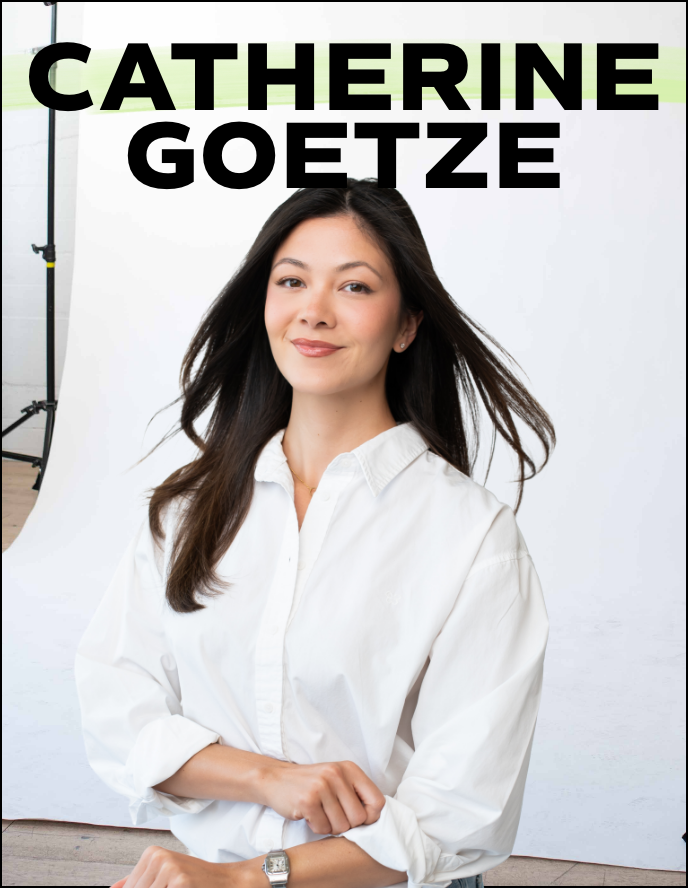
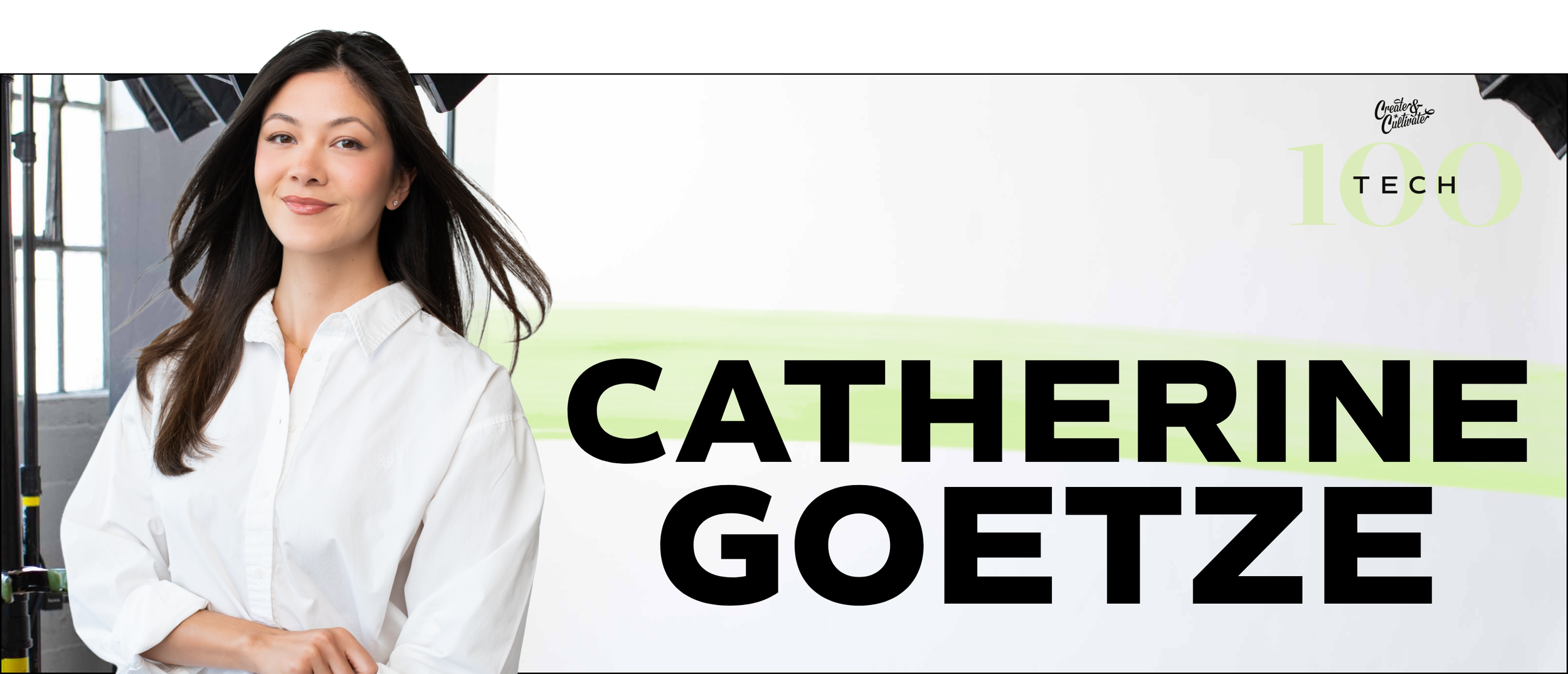
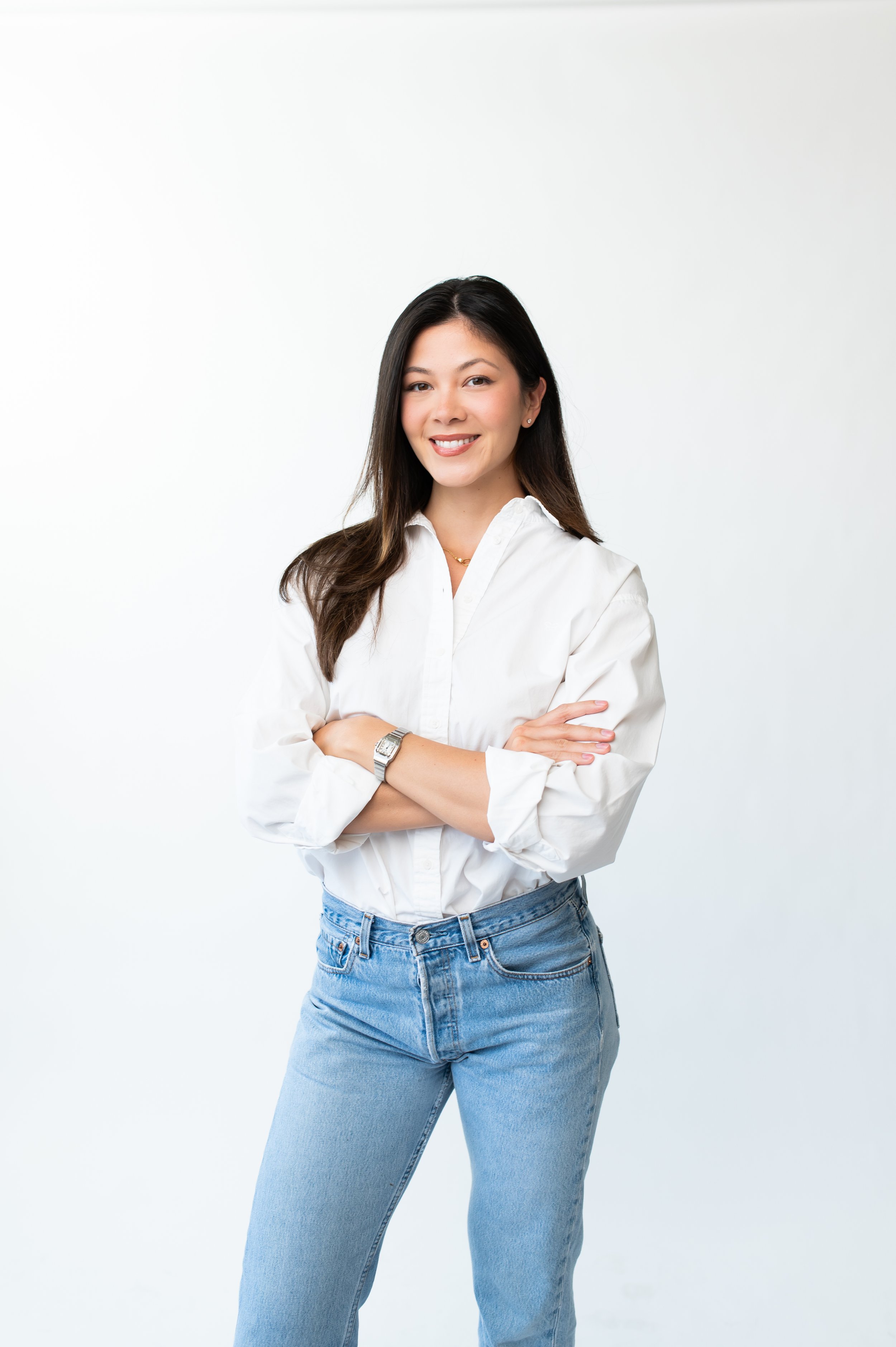
IF THERE’S ANYONE MAKING AI feel LESS INTIMIDATING AND MORE chic, IT’S Cat Goetze.
Through her CatGPT platform, the tech entrepreneur has built a loyal following by translating complex tools into practical ways to work smarter, think bigger, and reclaim your time. Her newest venture, Physical Phones, was inspired by a relatable problem: wanting all the convenience of a smartphone without being glued to it 24/7.
Equal parts tech evangelist and digital wellness advocate, Goetze is proving that innovation and intentional living don’t have to be at odds. Whether she’s championing AI as the ultimate entrepreneurial cheat code or designing products that help people disconnect, her mission is clear: to build technology that makes life feel more expansive, creative, and human. Read about Cat Goetze’s journey in her C&C 100 interview below.
What was the moment you realized you didn’t just want to work in tech, but that you wanted to build something of your own?
When you work in startups, one of the greatest gifts it gives you is that you get to work up close and personal with people who have started and run their own companies. And it makes you realize that, impressive as these people are, they are just people. At the end of the day, every entrepreneur is just a person in a room trying to make the best decisions they can with the information they have available to them. Humanizing the entrepreneur was a pretty critical life-changing moment for me because it made me realize — oh, if these people can do it, so can I. There's nothing that separates me from other people in the sense of just being willing to take the risk and take the leap and bet on myself. I've always known that I'm a very self-motivated, driven, autonomous person and that I'd probably function best without a boss, to be completely honest. I've always enjoyed doing my own projects growing up, even as a kid. And once I figured out that natural transition into entrepreneurship, it felt like a shoe that fit naturally my whole life — that I had been looking for and was just instantly a perfect fit.
Describe the moment you realized there was a problem in the tech space that wasn’t being solved, and that your idea could be the new solution?
Physical Phones are definitely the best example of this. A couple of years ago, in mid-2023, I was trying to spend less time on my phone and I really wanted to have a landline phone again. I wanted to spend less time on my smartphone at home, and if I could have a landline, that would be the best way to do that. But then I looked into what it would take to get a landline and you'd have to get a whole other phone number and pay $100 a month to the phone company and I was like, that's so stupid. I'm not going to do that. So I thought, how hard would it really be to make an actual real landline phone Bluetooth compatible so that I could sync it up with my existing smartphone? I looked into what was on the market and there was nothing. All of the solutions were these really janky, kind of patchwork solutions of dongles and cords and antennas hanging out. I want something that looks effortless and chic and cute that I would actually feel happy and proud to display in my home but that could also quite literally function as a utility of being able to make phone calls. And that's how Physical Phones was born.

What risk have you taken as a founder that’s changed the trajectory of your business?
I think starting to talk about digital hygiene online as a primarily AI creator has been a huge risk for me and for my brand of CatGPT. The first year of CatGPT really was all pretty tech positive in the sense that I was talking about how you can use AI to build your dream life and start companies and do all these things. So for me to come out with videos about here's why you spend so much time on your phone, here's how to spend less time on your phone — I think it came across to a lot of people as very anti-tech, and that was a risk I was willing to take on. But the reason I did it and why I was so confident in it was because I genuinely felt like these were two sides of the exact same coin. Wanting to use AI to build your dream life has everything to do with having a healthy relationship with tech in the same way that being off of your phone does. Because in order for you to really accomplish your dream life, you can't be distracted by the feed or other addictive or frivolous distractions. You have to be able to be present and lock in and make decisions about how you want to spend your time, how you want to spend your life.
What do you care more about right now: perfecting the product or building the right team? And why?
Building the right team, 100%. Both are so, so, so important, but I think when you have the right team in place, everything else falls into place. It's the equivalent of getting a group project done in college when you're working with the smartest, coolest people who also inspire you — all together — versus nailing the exact execution. The reality is tech and just life in general these days moves so quickly. You might have the right product one day and then the next day it's been taken over by a competitor, it's been bought out, it's obsolete, there's a newer, better, faster, sexier model or whatever the case is for your business. But if you have the right team, you will be so agile and so adaptable that you will be able to pivot and adapt to whatever the world throws at you. That's why I'm investing so much right now in building Cat Labs, which is the world's first creator-first product studio. I want to bring the brightest minds, the best tinkerers and vibecoding and artists and creatives together all under one roof to work together on building new products — whether it's hardware or software or art or experiments — because I think that cross-pollination just breeds the best innovation, the best products, the best ideas. And that's also just where you have the most fun, and I think at the end of the day, having fun is what life is all about.
AI is undeniably the biggest thing in tech right now, and it’s changing everything around us. How should women entrepreneurs be leveraging it to level the playing field? How are you using it in your business?
I think all entrepreneurs should be using it to their advantage. For women in particular, we have to resist any of the marketing that leads us to believe that it is a bro-y or a male thing to be into tech. There have been great headwinds over the past decade — Women in STEM, Girls Who Code, all these great organizations — but I think the actual work of what it means to be an entrepreneur and build a business has shifted so significantly from the "boys who build" ideology to "girls who create." Entrepreneurship often shows up in girls as creativity and building, and it's so exciting to be at a time where the building has just gotten 10 bajillion times easier because of AI and video coding tools. Now what really makes businesses stand out is the founder's ability to connect with an audience, to sell, to market, to do branding, to come up with a storyline that genuinely connects with audiences and identify problems that truly need solving — which I think historically women are fantastic at. One thing in particular I would push women to do is to not be afraid to think about vibecoding. Most of the power of AI comes from the fact that these large language models can write code. The same model that is producing English that you're using as better copy for your email or your marketing campaign can also generate lines of code that actually work and compile and work on a computer. That's where the real power of AI comes in. I want to inspire and encourage women not to be afraid — the reality is that in order to engineer software, all you need to be able to do is speak English. There's this whole other category of entrepreneur that you can be even if you've never written a single line of code in your life.
What do you want to build beyond just the company itself?
Big picture, I want to build a legacy. I want to build a footprint that I can leave on the world so that long after I'm gone, I've left the world a better place than how I found it. I think the way I can do that is by being the truest version of myself and showing people my lived experience. I want to build a life that is led more by my curiosity than my fear, and I think if I do that, then I will create a beautiful life that will inspire other people to do the same.
What’s been harder than you anticipated while building your brand?
Learning all the people skills has been the hardest part for sure. I'm lucky in the sense that I started my creator brand after already having seven years of corporate experience under my belt, which has really given me an advantage in everything from negotiations when I was still self-managed, to just understanding how to navigate and talk in a primarily B2B sales space, which is where I exist because that's what most of the sales are that I do on the brand partnership side for CatGPT. Being comfortable in rooms and being able to walk the walk — that's been really helpful. But the people side of knowing how to hire, knowing how to fire, knowing the right people, being able to go from "here's this problem that I'm facing in my business" to "here's the job description that I need to post" is still something that I'm learning. What's hard about people is that when it works, it so works and it's so great and it's the best thing ever. But when it doesn't work, it's really hard and it's a painful, painful decision to have to unwind and undo. So I'm just trying to get better at getting it right a higher percentage of the time.
What’s your most common AI prompt?
My favorite prompt that I use most often is where I tell the AI to interview me and to ask me questions to better clarify — to get whatever information it needs from me in order to better answer my question. So often when I go to AI, I have this rough stab of kind of what I want to cover or what I want to express, but by basically making it the AI's responsibility to ask me for whatever it needs, it makes it so much easier. It just gives me an ordered list of questions and I just answer exactly what it needs to know from me.
What does your current tech stack look like—and how has it changed your daily output?
My current tech stack is a lot of Claude, Slack, Notion, Google Drive. I use Fireflies for note-taking. Oh, and a classic — just paper and a pen. I do not leave the house without just regular-ass printer paper and a pen because I still need to be able to just use my hand to write my notes down on paper. I feel completely hamstrung if I don't have that. The way it's changed my daily output — having AI means I'm spending way more of my day in an orchestrating or a conducting role. I'm delegating more, I'm doing less tedious busywork. I have such a low tolerance for busywork now. I just basically refuse to do it and I delegate a ton of those tasks onto Claude.
Rapid fire POP QUIZ:
The first thing I do when I wake up in the morning is:
make my bed
If I had one more hour in the day, I would:
spend it cuddling my cat
A song that describes the era I’m in right now is:
My Way Frank Sinatra
My current obsession is:
Claude Cowork
Three words to describe the legacy I want to leave behind:
Creative. Empowered. Inspired.