
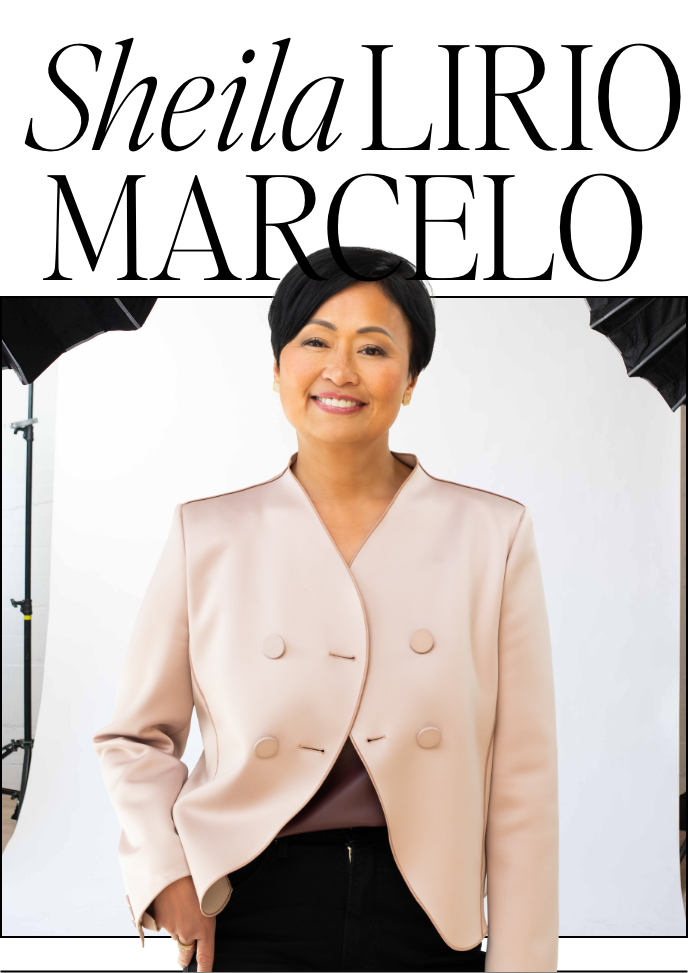

FEW founders HAVE DONE MORE TO reshape THE WAY FAMILIES FIND support THAN Sheila Lirio Marcelo.
With Care.com, Marcelo transformed how millions of parents find and hire trusted help. Now, with her latest venture Ohai.ai, she’s tackling the invisible mental load that so often falls to one person in the household.
Part AI assistant, part family operating system, Ohai.ai is designed to handle the remembering, planning, and coordinating that keeps daily life running behind the scenes. Marcelo has spent her career building technology around one simple but profound idea: when families feel supported, everyone thrives. Her legacy isn’t just about creating successful companies. It’s about giving parents and caregivers the freedom to be more present for the moments that matter most. Read about Sheila Lirio Marcelo’s journey in her C&C 100 interview below.
Describe the moment you realized there was a problem in the parenting space that wasn’t being solved, and that your idea could be the new solution?
I remember a moment very clearly. It was after I had already built Care.com, so on paper I had solved the problem of getting help. But one evening at home, in the middle of the usual rhythm of family life, I realized I was still the one holding everything together.
I was the one remembering who needed to be picked up, what was happening next week, whether the sitter was confirmed, whether the form had been signed, whether we were out of groceries. Everyone around me was helping, but I was still the one carrying the full picture in my head.
I remember pausing and asking myself why this was still happening. It wasn’t about effort or willingness. It was about visibility. Everything still lived in one person’s mind, and that person never really got to turn it off.
What’s interesting is that the idea had actually been with me for a long time. Back during my Care.com days, after I had my second son Adam, I remember writing something down. I called it “My Adam.” It was this idea of having an assistant that could walk me through my day—tell me the weather, remind me what was coming up, and help me stay on top of everything happening across my family. More than anything, I wanted something that could look ahead for me and help me anticipate what I needed before I was already overwhelmed.
We actually tried to build something like this at Care.com. But the technology just wasn’t ready yet. The data wasn’t connected, the AI wasn’t there, and it was still too early to make something like that truly work.
Years later, when AI began evolving in a real way, I had this moment of recognition. I thought back to that idea I had written down and realized that what once felt impossible was finally within reach.
That’s when it all connected for me. The real problem wasn’t just access to help. It was that families don’t share visibility, and so much of family life still lives in one person’s head. And now, for the first time, the technology existed to actually do something about it.
That realization stayed with me, and over time it became the foundation for Ohai.
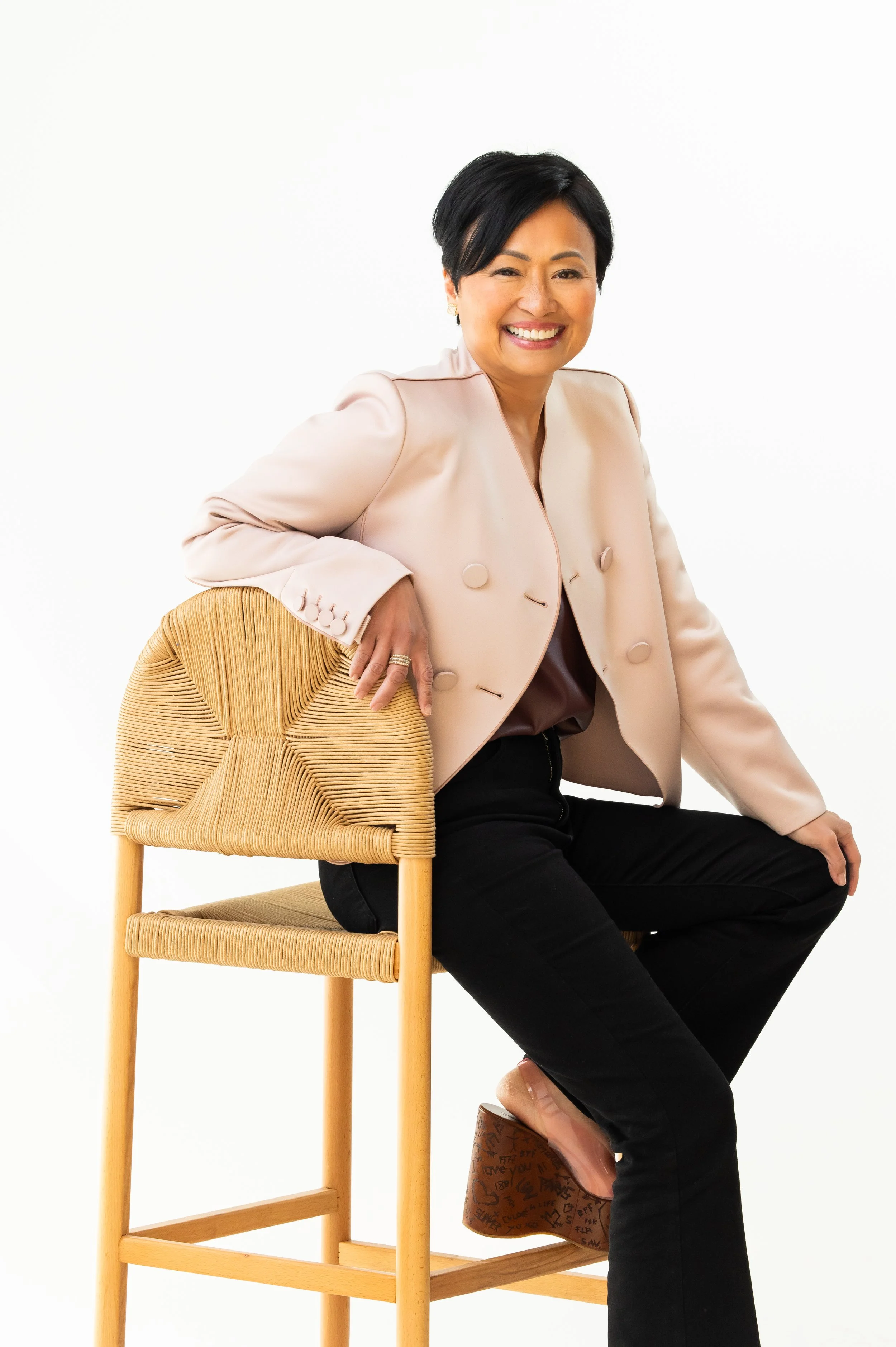
“Sometimes the biggest risk is listening to the part of you that knows you’re not done yet—and choosing to build again.”
What risks have you taken as a founder that’s changed the trajectory of your business?
One of the biggest risks I took was deciding to become a founder again when I didn’t have to.
After Care.com, I had reached a point where I could have stepped back. We had built something meaningful, taken the company public, and I could have chosen a different pace or path. People would often ask why I would take on the weight of building another company from the ground up.But I kept coming back to the same feeling: I didn’t feel done.
Through Care.com, and through my own life as a parent, I had seen the deeper problem of the invisible mental load families carry every day. We had helped solve access to care, but the coordination of family life—the cognitive and emotional work behind it—was still largely unsolved. That realization stayed with me.
Starting Ohai meant stepping back into uncertainty. It meant learning new technologies, building in a new era of AI, and putting myself in the position of being a beginner again—especially when your goals shift beyond trying to prove anything.
But sometimes the biggest risk is listening to the part of you that knows you’re not done yet—and choosing to build again. For me, it changed the trajectory of everything. It brought me back to building from a place of conviction and purpose, because I believed the work still mattered.
As you’re building Ohai.ai, what do you care more about right now: perfecting the product or building the right team? And why?
For me, it always comes back to the team.
I’ve seen over and over again that the right group of people changes everything. At Care.com and now with Ohai, the people I trust most are not just executing tasks. They are thinking with me. They anticipate what might break, they see patterns early, and they bring a level of care to the work that goes beyond the surface.
With Ohai, this matters even more because what we’re building is so personal. It sits inside daily family life, and that requires a level of empathy and judgment that you can’t fake or add later.
What has been especially meaningful is that some of the people on the Ohai team are people I’ve worked with for more than twenty years. We’ve grown up in this space together. They are care space veterans who understand the problem deeply because they’ve devoted their careers to it.
At the same time, I also love working with younger people who bring fresh thinking and new ways of seeing the world. Technology is evolving so quickly that sometimes they are teaching me something new every day. The best teams create an environment where everyone learns from one another and grows together.
Care is not always the most obvious or flashy problem to work on, but it is one that every single person in the world depends on in some way. That shared understanding creates a different kind of commitment.
It also means we can be honest with each other. We can challenge each other, push each other a little, and say when something isn’t working. That kind of trust is what allows you to build something that actually matters.
The product will evolve, and it should evolve. But the way your team thinks, the way they show up, and the way they hold each other accountable—that’s what shapes everything in the long run.
AI is undeniably the biggest thing in tech right now, and it’s changing everything around us. How should women entrepreneurs be leveraging it to level the playing field? How are you using it in your business?
I think of AI as a shift in leverage more than anything else.
When I was building Care.com, so much of what we did required large teams. If you wanted to move faster, you hired more people. If you wanted to test something new, it required coordination across multiple functions. There was a real cost and time barrier to building.
What has been striking to me now with Ohai is how much that has changed.
We are intentionally very lean, but the tools available today allow a small group of people to do what used to require entire teams. You can move from an idea to something tangible much faster. You can test, iterate, and learn without the same level of overhead.
There have been moments where I step back and realize that a handful of people are able to accomplish what once required a much larger organization. For women entrepreneurs, this is especially powerful. It lowers the barrier to entry and makes it possible to build and experiment without needing the same level of capital upfront. You can get closer to the problem and start solving it more quickly.
At Ohai, we’re very intentional about how we use AI. The goal isn’t to replace human judgment or care—it’s to support it. We focus on using AI to take the coordination work off families’ plates, the invisible work that keeps everything running, so parents can focus on what actually matters.
To me, the real opportunity with AI isn’t just speed or efficiency. It’s the ability to build more thoughtfully, with fewer resources, and direct that leverage toward problems that have been overlooked for far too long. Care is one of those problems.
What’s your most common AI prompt?
I wouldn’t say there is one common AI prompt. Rather, I’d say that I brainstorm a lot with AI. It really helps me hash out ideas, do competitive research right away, or build out designs I’ve been thinking about to present to the team.
What does your current tech stack look like—and how has it changed your daily output?
My workflow today is much faster and more iterative than it used to be. I move from an idea to an outline to something more tangible in a shorter amount of time. We use a combination of tools like Notion AI, Figma AI, and different language models depending on the task.
What has changed the most is not just speed, but flexibility. I am able to explore more directions without committing too early. That has made the process feel more dynamic and less linear, which has been a meaningful shift in how I work.
What do you want your legacy, and that of your companies, to be?
When I think about legacy, I think about families.
So much of the world runs on invisible care—the remembering, planning, coordinating, and emotional work that holds families together. For too long, too much of that has been carried silently by one person.
If the companies I’ve built helped lighten that load, even a little, then that would mean everything to me.
Because when families feel supported, something powerful happens. Parents can be more present. Children feel more seen. Families have more time for each other.
Technology often pulls our attention away from one another. Every new tool becomes something we spend time with, sometimes without realizing the unintended consequences. My hope is that this next generation of technology does the opposite—that it gives us time back.
Not to replace people, but to help us show up for each other more fully. To take care of the things that keep life running so we can focus on the things that make life meaningful.
If technology can help us be more human—and help families spend more time caring for each other—then that’s the legacy I want to leave behind.
What’s been harder than you anticipated while building this new brand?
What has been harder than I expected is helping people understand something that doesn’t fit neatly into an existing category—and helping them feel comfortable letting go of control.
Many parents will say they need help. They openly admit that juggling everything is overwhelming. But at the same time, it’s very hard to hand that over. And that makes complete sense. It can feel scary to give someone—or something else—visibility into your life, your schedule, and the rhythms of your family.
I often think about this through my own experience working with my assistant, Aline. I’ve worked with her for over twenty years. There is no way I could have built my career as an executive without her. But I didn’t hand everything over to her right away. It took time. It took getting comfortable with trusting someone else with that level of context and responsibility.
What I realized over time is that the more context she had, the better she was able to support me. She could look ahead for me. She could anticipate what I needed before I even asked. That’s when things really started to change.
I see the same dynamic with parents. The value of support is clear, but trust takes time—especially when it comes to new technology.
So part of what we are building at Ohai isn’t just the product itself, but that relationship. We have to earn trust over time. We have to meet families where they are and allow them to gradually let go. Because once that trust is there, what opens up isn’t just efficiency. It’s time. It’s space. It’s the ability to not carry everything alone. And that’s the part we’re most excited about unlocking.
Did you raise capital for any of your businesses—and if so, what surprised you most about the process?
Yes, I did raise capital for Care.com, and the experience taught me a lot.
In the early days, Nick Beim, a partner at Matrix Partners, had seen my work at a prior company where he was on the board. He invited me to join Matrix as an Entrepreneur in Residence. It was incredibly meaningful that he wanted to sponsor me and give me the space to explore what eventually became the idea for Care.com.
But even with that support, raising capital back then meant targeting a very small group of venture capitalists who were willing to believe in a female-founded company focused on families. That simply wasn’t the mainstream venture narrative at the time.
One moment that really stayed with me was our Series B. Patricia Nakache at Trinity Ventures believed so deeply in what we were building that she actually preempted the round. At the time, there were very few women in venture capital, and having someone who immediately understood the scale and importance of the problem made an enormous difference.
Later, when we raised our Series C, Tony Florence at NEA also believed in the mission. He had been raised by his mother and grandmother, and he immediately understood the importance of the problem we were trying to solve. Those kinds of personal connections to the issue mattered.
Even with those champions, fundraising was not easy. There simply weren’t many investors who saw the opportunity in a company focused on caregiving and families. About 85% of our members were moms, and at the time there were very few women in venture capital. For many of the men making investment decisions, they just weren’t proximate to the daily realities of caregiving. It was harder for them to see the scale of the problem because they weren’t living it.
What’s interesting is that raising capital today still has its challenges. Even with experience and a track record, a good friend at a venture firm recently pointed out that ageism and gender bias still exist in the industry. In some ways the landscape has evolved, but in other ways some of the same dynamics are still there.
The difference for me now is perspective.
Raising capital the second time is different. There’s more proof. There’s a track record and a level of trust that didn’t exist before.
What matters most to me now is who I raise from. I care deeply about bringing in people who understand the problem—especially women and moms who have lived it themselves. We’re also in the middle of one of the largest wealth transfers in history, with more capital moving into the hands of women. I see that as an important opportunity for women to back companies that reflect their lived experiences and priorities.
I’m proud that our cap table today reflects that kind of diversity.
Fundraising will probably always be challenging. But over time I’ve learned it’s not just about raising capital. It’s about finding the right partners to build with.
Rapid fire POP QUIZ:
The first thing I do when I wake up in the morning is:
Stretch and Meditate
If I had one more hour in the day, I would:
Spend it drawing with my granddaughter Cece
A song that describes the era I’m in right now is:
Top of the World by the Carpenters
My current obsession is:
Making support feel seamless—so families can focus on each other.
Three words to describe the legacy I want to leave behind:
Care. Seen. Shared.