
Why This Emmy Winner Says You Should Flip Off Failure
And the best takeaways from her new book.

Fearless and free. It’s a pretty good place to be when it comes to your career. Which is exactly what Emmy-award winning TV news producer and author Wendy Sachs writes about in her book, Fearless and Free, How Smart Women Pivot— and Relaunch Their Careers.
In the book she discusses the self-imposed barriers that hold women back. The job market’s radical change in recent years. And how we can all take small steps that lead to massive growth.
Here are our 5 favorite takeaways that you can apply to your career today. Free? Fearless? Right this way.
1. “The only career goal you should be focusing on right now, is staying relevant.”
In the book Wendy quotes Karen Shnek Lippman, a managing director at the Sloan-Koller Group. Lippman says, “There is no such thing as a career path now.” It’s scary to think about, but in the last decade we have seen industry change exponentially. Keeping yourself relevant, continuing to advance and develop your skills (ahem, learn new ones), and evolve with the times is a way to make sure you keep your job.
2. Your sorry’s add up.
Wendy references the Amy Schumer May 2015 sketch on Inside Amy Schumer, that documents the female tendency to apologize. It’s satire sure, but that means it’s biting. And it packs some truth. Think of how many times you say “sorry” when someone runs into you. Sorry! It’s innocuous enough in that moment, but the propensity to apologize adds up and seeps into our other behavior.
We suggest testing out actively not saying sorry in instances that aren’t your fault. Someone runs into you? Look them in the eye and wait for their apology. See if it shifts your attitude and self-worth even a smidgen. Because smidgen's add up too.

“Inertia is a confidence killer.There’s no time to get stuck.”
3. Confidence is more important than competence.
Wendy cites research from journalists Katty Kay and Claire Shipman and their book, The Confidence Code: The Science and Art of Self-Assurance, in which they found that we’re either hardwired for confidence or we’re not. “Like blue eyes,” Wendy writes, “this inheritable trait is something we are born with— imprinted in our genetic code. Kay and Shipman found that the correlation between genes and confidence may be as high as 50 percent and may be even more closely connected than the link between genes and IQ.”
Did that make your heart stop? We’ve always been told that we can power pose our way to confidence! (Something Wendy also discusses in the book.) And these women are telling us, maybe not? “The key here,” says Wendy, “is that those with overconfidence weren’t faking it—it simply wasn’t bravado or bluster—they actually believed they were that good.”
So what’s a woman not born with the confidence gene do with this research? We say, allow yourself off the hook for not getting the [insert anything you’ve ever beat yourself up about here] and then rewire your brain to become more confident.
Wendy says, “While confidence may be partly genetic, the good news is that it is also very malleable. It’s like a muscle that can be strengthened.”
She also says that “confidence creation is about taking risks.” So go ahead and make some risky moves.
4. Get Up and Go After It
If you’re making risky moves, you’re going to fail. You’re going to fall. Sometimes that means starting all over again.
Wendy recounts the story of Jill Abramson, The New York Times’s first and only female executive editor, who was fired two and a half years into her job. “Some reported,” writes Wendy, “that Jill was ‘difficult,’ which for a female executive is a word loaded with gender double standards. It was also reported that Jill had hired a lawyer before she was fired to look into compensation issues, believing that she was not paid the equivalent to her male predecessor.”
But Jill didn’t stay down. According to Wendy, “The morning after Jill was fired, she went to a session with her trainer that handed her pair of boxing gloves. She had never boxed before, but hitting the bag was intensely satisfying, Jill asked her trainer to take a picture of her with the gloves and she emailed it to her kids who were worried about her.” The pic went viral after her daughter Cornelia posted it to her Instagram.
It’s a great reminder that no one fall is your end. Only you can decide your professional end.
Which is why we love #5…
5. Flip off failure.
Seriously. Process your failure and then give it the bird. (And the wings so that it may fly away.) You can’t become paralyzed because something doesn't work or survive in the marketplace.
"Process your failure and then give it the bird. (And the wings so that it may fly away.)"
Tweet this.
We’re reminded of this modern day biz facet the whole book through. And it’s a vital Wendy says, “Inertia is a confidence killer, and with the world today moving at the speed of social, there’s no time to get stuck.”
For more career advice and how to fail forward, check out Wendy’s book, available on Amazon here.
MORE FROM OUR BLOG





The Female CEO Who Turned Sophia Bush Down
And the actress' rad response.
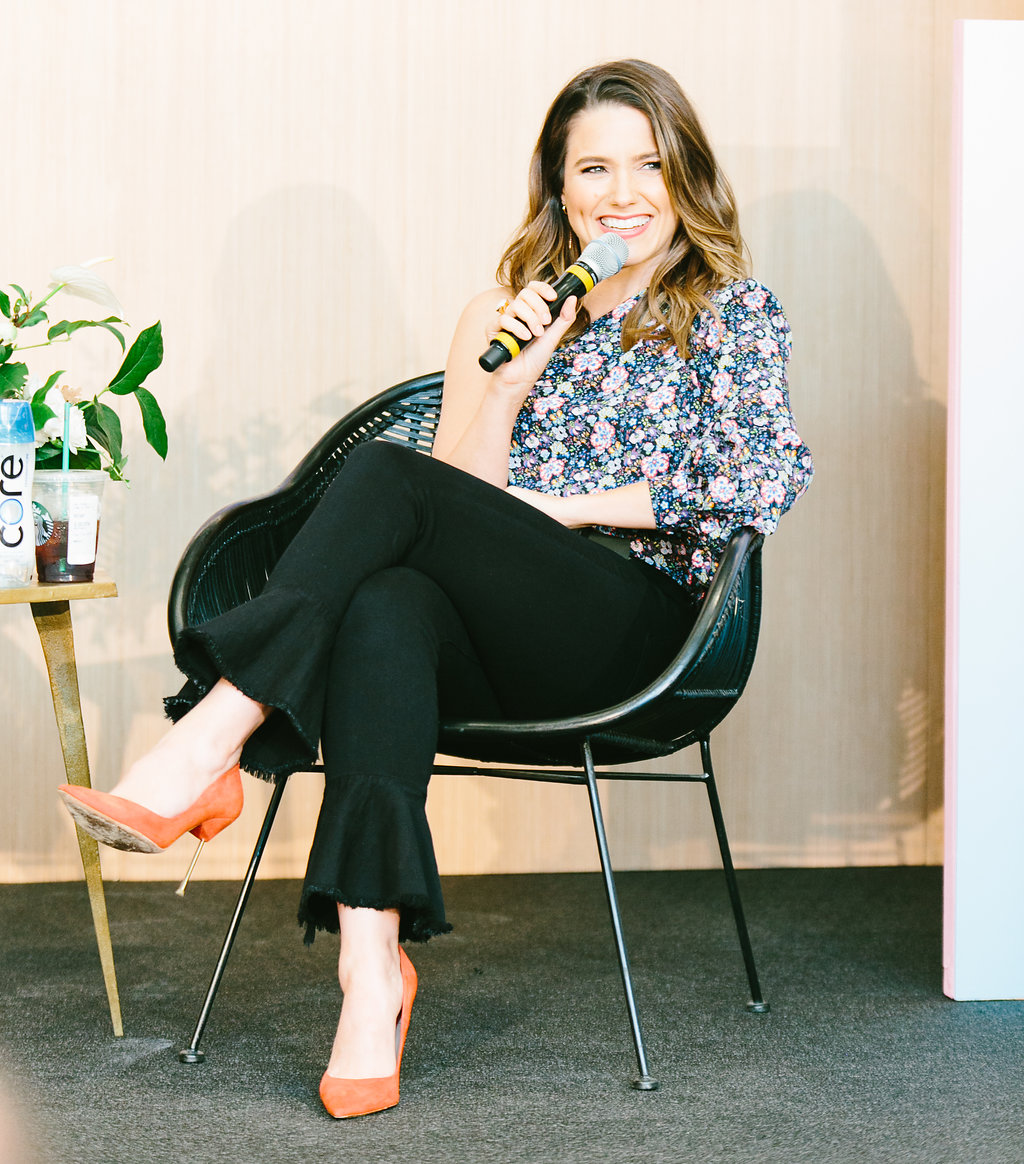
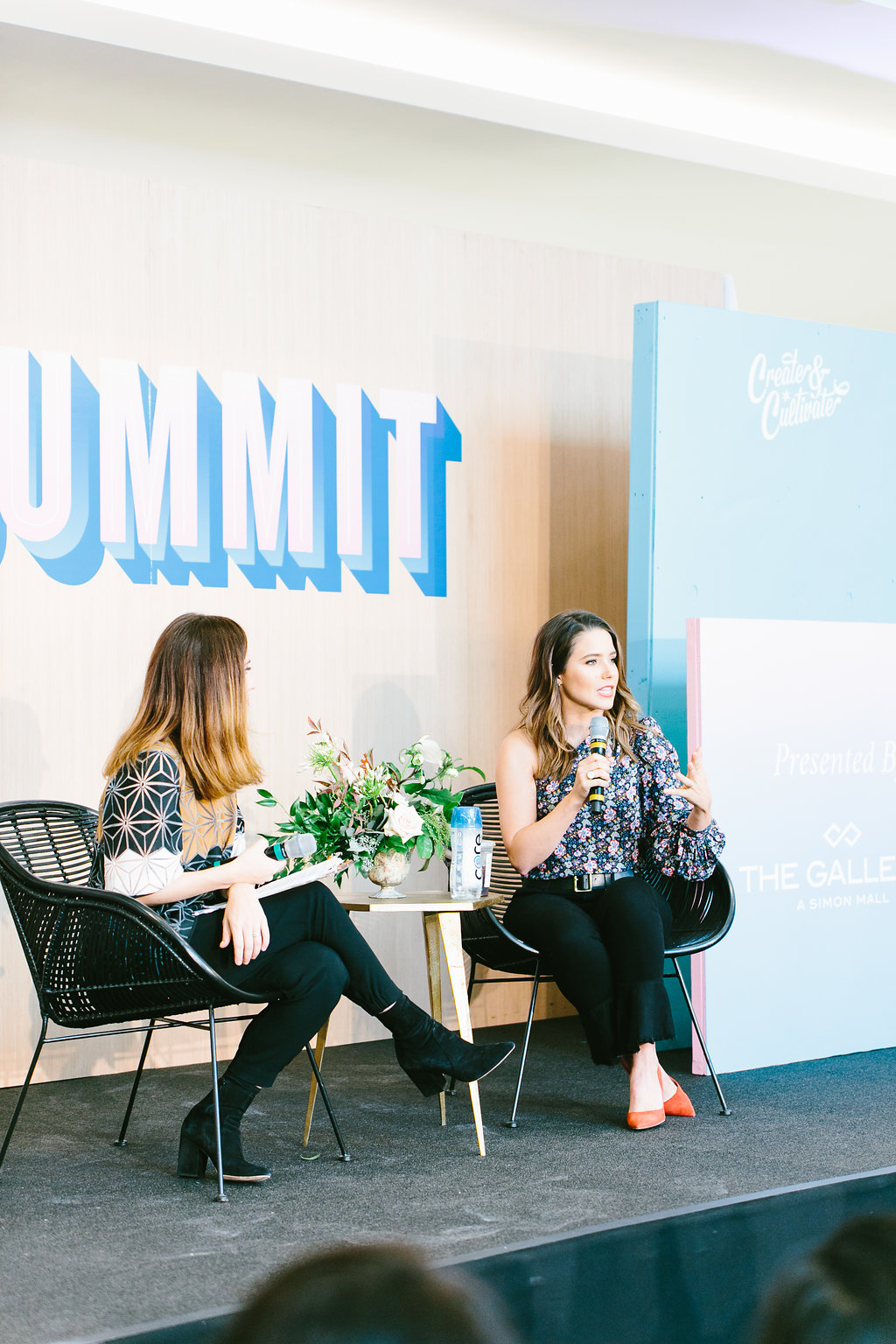
Sophia Bush, actress and activist, keynoted our Style Summit at the Simon Mall Houston Galleria this past weekend, and we're still on a high from the knowledge she intentionally slammed, forget dropped-- this wasn't casual, on stage.
If you missed out, we're sharing 6 of our favorite moments to keep you motivated through your work week.
On being a tender-hearted softie who takes no shit.
I’ve had to learn, sometimes, how to scream and swear at the phone and then not send it. You know, write the draft of the response to the person who deserves it, but then channel Michelle Obama, ‘when they go low, I go high,’ and I delete it. But still I am really learning the art of a good clapback and I deserve that. Simply because I exist in public does not make me a receptacle for people’s garbage.
It’s taken me 15 years, but I think I’m sort of an expert.
"I am really learning the art of a good clapback and I deserve that."
Tweet this.
On activism being a huge part of her story and advice to women
You have to find the thing that lights you up and that can be in a good way, or a bad way. What sets you on fire? What makes you so angry? I read a lot about what’s happening in the world today and I’m pissed, I’m so pissed all of the time, and that FIRE that it calls up in the gut of my gut, I’m like, this is why I can’t be quiet. It’s really easy to turn off the news. And look, today is Saturday. My best friend and I laid in bed all morning and ate french fries and drank iced coffee and watched Fixer Upper-- I needed a day. But we have to pay attention and I think the first and foremost step to becoming a more engaged more active member of society, is to pay attention.
On the internet life.
I would encourage everyone here to make the easiest free investment ever. For the next week, please every day, leave a really lovely compliment on at least one of the accounts of women you follow. Please once a day. Because most of the people who take the time to leave comments are assholes. The really nice together people, are scrolling and liking, but we’re busy. So we can really tilt the conversation by leading it with positivity.
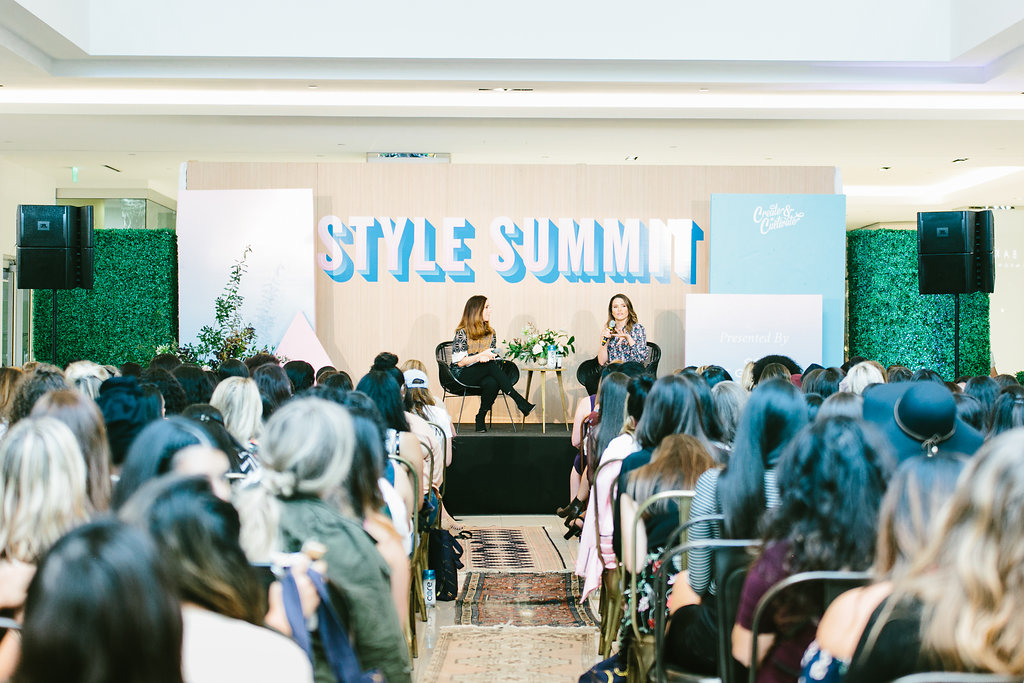
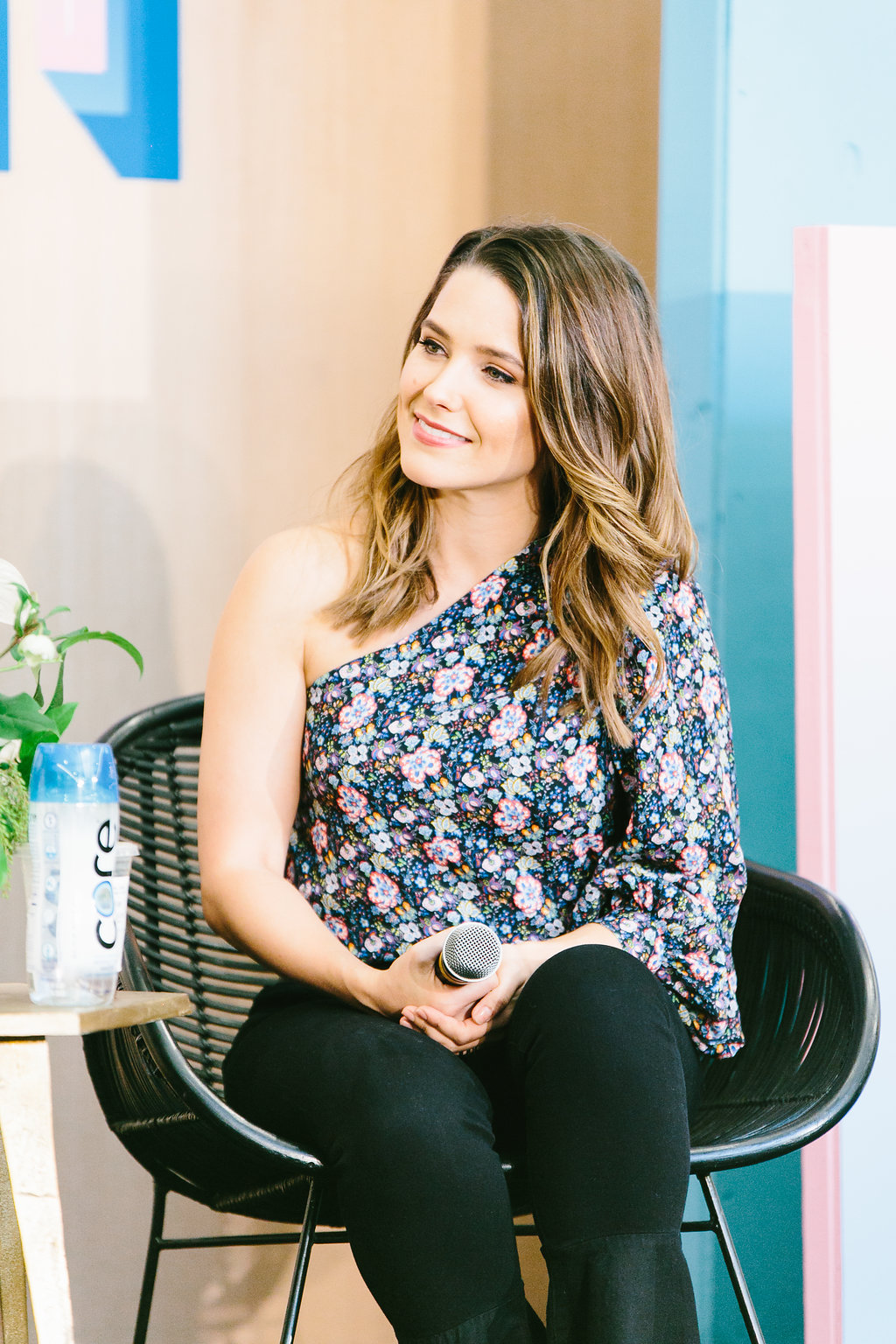
On personal style.
When we look at the ways we express ourselves and the ways each of us still might be feeling like maybe today’s version of expression was a risk? Support each other. Whether that’s girls who tend to dress in menswear or girls who love to show off their bodies or girls who are fully covered and wearing a hijab. Love on women. Love on them and tell them they are beautiful. Tell them that their style is sick, even if it’s different from your own. I can’t wait to be eighty and be like Iris Apfel meets Georgia O'Keeffe. I’m gonna be such a silver-haired old lady wearing crazy shit out in the desert collecting bones and painting them.
Her advice to her 20-year-old self.
I was so nervous about letting people down. I didn’t know that when I was 21 and started working in television that I didn’t have to answer every question journalists asked me to be polite. What is polite anyway? Figure out what’s important to you and you don’t have to open up your life in ways you don’t want to. You don’t have to please other people before you please yourself. You don’t have to stay in a job that makes you unhappy. You don’t have to stay in a relationship that makes you unhappy. If you’re pretty sure that guy you’re dating is lying to you, he is. Let it go. I learned that one the hard way.
"You don’t have to please other people before you please yourself."
Tweet this.
I really wish I could look at her and say ‘you already know, stop worrying about what other people know or think or want from you more than you worry about how you feel in the root of the root of yourself.’
On putting yourself out there.
Women are often so reductive about ourselves. Men don’t say I think. Women say I think. You might write an email and say I just think it would be so wonderful to know you. No you know it would be wonderful to get to know that person. That CEO who you idolize or whoever that person is, say: "It would be such an honor for me to spend a morning with you. I have a couple of questions that I know your expertise would be so valuable." Stop saying I think I could benefit, I think I would like to-- no you know what you’d like. You know what you can do. Just go for it. I’ve done that. Last year, I sent an email to an incredible female CEO who I admire so much basically asking the same question. She was so lovely in response and said I’m incredibly strapped for time as it is and what free time I have goes to my kids but thank you so much for writing this email to me, the compliment that you paid me really means the world, and I do hope that in some point when we’re in the same city we both have some free time and we’ll get together. I was like I’m so sad but you’re so classy. It made me feel so good to know that I made her feel good.
Photo credit: Smith House Photo
MORE FROM OUR BLOG

How to Handle Your Year End Performance Review
Do the right research. Get paid.

Written by: Alexandra Dickson, CEO & Founder, Ask For It
Year end performance reviews are coming up. Maybe you’re looking for a raise or are hungry for a new challenge? Whatever it is that you’re hoping for, you can prepare to ask for it in three simple but powerful steps. You can get clarity and gain confidence to negotiate before that next meeting with your boss.
Gather your evidence.
Evidence can be broken down in two ways — value you’ve created and value you’ve saved your company. Set aside some time to go back through your notes and notable emails from the year to refresh your memory and make it easier to speak to your accomplishments. Then assess: what value have you created for your team or company? Think bigger when it comes to value; it doesn’t necessarily have to mean sales or revenue. Value you’ve created could be launching a new initiative, bringing on a new partner or inventing a new campaign. Do quantify this if at all possible, whether in terms of dollars, number of people impacted, or any other relevant metric, but know that value doesn’t always mean money.
What value have you saved? Again, value you’ve saved could mean financial savings, or it could mean increased efficiencies. If someone on your team left and you’ve been taking on their projects rather than filling the position, there’s an example of value you’ve saved.
Do the right research
How will you know what to ask for if you don’t do some benchmarking? Your goal should be to get data points from both inside your own company and more broadly, in your industry.
You can start your research online using websites like Glassdoor, PayScale and Salary.com, but you need to go further to get really useful information. Make it a priority to speak to half a dozen people: three men and three women. Ask people who would know how much someone in your position typically makes. This could be your own colleagues, if you feel comfortable asking them, or someone who’s doing a similar job to you at another company, or even an industry mentor who hires people at your level. I realize this may make you uncomfortable, but trust me, it’s worth it. You’ll go into your negotiation with much more confidence and it will make it easier for you advocate for yourself.
Feeling tongue tied? Try this simple script:
“I’m doing research because I’m preparing to ask for a raise, and I think you have some information that could help me. Would you be willing to share your ballpark salary with me?”
Practice
Grab a trusted friend or colleague and ask them to do a little practicing with you. If you’ve never asked for a raise before, repeating your request out loud is an easy and effective way to give yourself the best chance of success.
Not sure how to put it all together? Try something like this, and be sure to tailor it to your personal situation: “According to my research, similar positions in our industry pay about X. But I didn’t just take the salary guides I found online as gospel. I went further and spoke with some folks in similar roles, so I know my request is in line with the current marketplace.”
Use your review as an opportunity to cash in on your hard work all year long. Build your case, shore up your confidence, get in there and ask for it.
MORE FROM OUR BLOG

When You Should (or Shouldn't) Work for Free
Perfect Sunday brunch convo. Weigh in.


Working for free. Whew. These are fighting words for some. The concept of being asked to do work for nada (or on spec) has been lampooned in videos, illustrations, and even a dedicated Twitter account. But it’s one of life’s most nebulous gray areas: There’s no clear-cut correct answer to the “should you work for free?” question (sorryyy). Instead, the right-for-you answer is constantly shifting, dependent on your current needs, goals, and availability. What’s right for you might not be right for someone else, and what’s right for you now might not be right for you in five years.
With that in mind, there are some instances in which doing gratis work can actually be just the kick in the pants your burgeoning career or business needs. Below we dig into six situations where it might make sense, and share a look at how some top entrepreneurs feel about taking on a no-pay gig.
Your work will be exposed to a large audience.
You’re just getting started. Your work is rad (RAD), and you knowww the world will love it. (They will!) But you’re a little stuck when it comes to getting the word out, creating in vain—and in a vacuum. One solution: Offering up some freebies to a legit company that can help boost you over the hurdle by letting you tap into their audience. In these situations, though, know that the promise of “exposure” is not enough. Get down and dirty with the details. Ask for attendee numbers for events, probe publications for their readership numbers. Will companies link back to your site? How and where—exactly—will this happen? Will they promote you, along with your work, on their social channels? On related marketing materials? Big companies should have budgets, but sometimes the only way to get that toe in the door (and land a gig that might otherwise go to a more established colleague), is by offering to do it for free. But if a company isn’t forthcoming about their audience or how they’ll promote you, they can take a hike.
You’ll gain an awesome example for your resume or portfolio.
Sometimes one.single.resume.line of you doing amaze work for a credible company can catapult you into the realm of paying jobs for life. The same goes for visual examples of beautiful work, whether you’re a graphic designer, photographer, stylist, or brand consultant. We know an incredible interior designer who decorated a pal’s pad for free (labor, of course, not materials), had it photographed by a profesh, and plastered it all over her site and social-media accounts. Then paying gigs for design work and requests for interviews by shelter magazines started rolling in. Nail one job down, lean on it hard when talking with future clients or companies, and see where it gets you (and, ahem, they don’t need to know you did it for free).
You'll score new, IRL experience.
This is especially important when it comes to career pivots. You’re languishing in middle management at an accounting firm, holding tight to the same cupcake-baking dream you’ve had since you were knee high. But you have no idea how a successful baked-goods biz is run! You know that bakery around the corner? Consider offering to help out for free and you’ll pick up priceless on-the-job experience. Not saying this will be easy. It might mean crazy-early mornings. Scaling back to part-time at your paying job. Your hubs having to pick up major slack with the kiddos for months. But it’s doable. We actually know an inspiring lady who leveraged an unpaid apprenticeship at a hot-town San Francisco restaurant into a paying job there and then bagged a cookbook deal.
The networking is unbeatable.
Sometimes passion projects with little-to-no budgets are attached to influential folks with big names and tons of connections. Getting swept up into their network—being on calls and trading emails with people of note, organizing events with a A-list guest lists or speakers—can land you job after job after paying job down the line. Tons of career breaks have been launched by a friendly “remember me? loved working with you” email after you’ve done solid work and built rapport with a killer new network of people-who-can-hire-you.
Transitioning to a for-pay job is highly likely.
Back in our day, we trudged eight miles barefoot through the snow to intern for free. Welllll, not really, but we logged many an hour at unpaid internships, and several of us flipped them into paying jobs at the company we’d been interning for and at other great companies within the same industry. So, it’s possible, as long as the terms are clearly defined and you let it be known from the get-go that paid work is your ultimate goal. And no, you don’t have to be a 19-year-old college student to make this happen. Imagine striking a deal with a museum or library that you’ll take on grant-writing for free until you’ve secured the grants covering a potential salary for yourself and then some. An airtight contract is key here, but you’ve essentially created a job for yourself out of thin air.
You’ll be doing some good in the world!
Charity or volunteer work! This should really be numero uno on our list! As they say, this one is about giving rather than gaining. It could be anything from acting as treasurer for a nonprofit in need to accompanying your little one to the animal shelter to read to dogs every weekend. The point is that the more you give, the better you’ll feel—recent studies have shown that the secret to happiness is helping others. Just be clear upfront about the amount of time you’re willing to dedicate so that it doesn’t creep into something unmanageable that breeds resentment.
This article first appeared on Alice’s Table, a new woman-founded company that throws flower-arranging workshops and teaches women how to host classes themselves so they can launch a creative career or side gig that’s fun, flexible, and rewarding.
MORE FROM OUR BLOG

5 Women of Color Dominating the Startup Tech Space
Don't hit like. Hit follow.

Esosa Ighodaro, co-founder of COSIGN
The stats on women in STEM and tech are pretty dismal. (About 26% of women hold tech jobs.) Those numbers drop lower when it comes to women of color-- they hold only 3 percent of all tech positions in the U.S. Which is why supporting of women who are doing their damn thing, and doing it well, is crucial.
Here are five amazing women of color in the tech space you need to hit that follow button on.
1. Jessica O. Matthews & Unchartered Play
Jessica O. Matthews is the Founder & CEO of Uncharted Play, an energy company that designs renewable energy technology systems for infrastructure and smart applications. Founded by Jessica when she was 22, Uncharted Play’s flagship product is the SOCCKET ball, an energy generating soccer ball that provides off-grid power for the developing world. Jessica invented the SOCCKET when she was 19 years old.
Jessica’s research and career centers around the intersection of disruptive technology, human behavior, and the psychology of self-actualization. A dual citizen of Nigeria & the U.S., Jessica has a degree in Psychology and Economics from Harvard University, and
an MBA from Harvard Business School.
2. Dawn Dickson & Solutions Vending
Dawn W. Dickson is a serial entrepreneur with over 15 years of experience in marketing and business development. She launched three successful cash flow positive companies since 2002, her most recent venture Solutions Vending International (SVI) in October 2012 after identifying a need develop a software solution to make vending machines more intelligent.
What Solutions Vending International does: Smart vending machines now represent a new breed of machines connected to the internet. Their software helps vending machines not only understand retail customer demographic and sales data, but communicate with one another to understand consumer purchasing behavior, identify venue traffic patterns, and establish a network of connected retail devices. SVI is building a network of connected machines to securely collect and analyze data about consumers and venues across the United States.
3. Maude Okrah and Bonnti
Bonnti is a mobile platform which helps women navigate and simplify their hair experience. The site explains, "We understand ethnic hair is different and we want to empower women to have more choice when it comes to your hair."
Okrah recently told Project Entrepreneur, "I’d love to see more women, especially women of color, dive deeper into the tech world and come up with solutions to solve the unique everyday problems we face. I’ve learned so much throughout this entrepreneurial journey that I’d be remiss not to share it with any other woman who even shows an inkling of interest in this field. I mentor a small group of women from my alma mater and the D.C. area, helping them navigate the challenges I faced when beginning on this journey."
4. Erin Horne McKinney and KissIntel
Passionate about emerging technology and entrepreneurship, Erin Horne McKinney is the cofounder of Black Female Founders (#BFF) and KissIntel. KissIntel is the first mobile application to function as a "CRM for dating" by creating a platform where users can aggregate and track their dating lives, compare and rate dates and get instant feedback from their family and friends in real time. KissIntel’s proprietary date aggregator allows users to compile all their date options in one place. KissIntel revolutionizes the way people make dating decisions and creates an entirely new way to interact with potential partners by providing customized comparison and rating tools that tie into the user’s curated contact list and social network for immediate feedback from family and friends they trust. In addition to the end-user focused capabilities, KissIntel can offer its rating and comparison engines directly to online dating sites.
5. Esosa Ighodaro and Cosign
She's the woman who is making your photos shoppable. COSIGN connects you to your favorite brands and retailers in just one tap. COSIGN is the first app to make products in your photos ready-to-buy, turning your social media followers into customers and your style into a way to earn cash rewards.
After constantly asking herself, "where did she get that?" Ighodaro decided to come up with her own solution, creating an app to solve her shopping issues. CoSign serves as a mobile app that makes any product with an image shoppable on social media. As an added incentive, users can make a commission for every product purchased through the app.
In this new world, women save themselves. Have more amazing women we should be following? Share in the comments below!
MORE FROM OUR BLOG

Me Too: The Create & Cultivate Staff Weighs In
Denial, anger, bargaining, depression and acceptance...? Not quite.

Last Saturday, actress Alyssa Milano tweeted, "Suggested by a friend: If all the women who have been sexually harassed or assaulted wrote 'Me too' as a status, we might give people a sense of the magnitude of the problem." As Vice pointed out, via Ebony, “It was since revealed by Ebony that a campaign with the same name and aims, though without the social media virality, was initiated by a black woman named Tarana Burke ten years ago.”
This has been building forever and magnitude doesn’t even begin to describe the situation. As one friend’s Facebook status asked: “So, every woman I know has been sexually harassed? Horrified.”
Me too.
You’ve seen a lot of it the last two days. Felt a lot of it in your gut. Maybe it's bringing up feelings you've avoided dealing with. Maybe you have "not me" too guilt, as one CEO texted me yesterday. Maybe you're wondering "does this count?" There’s no way to Bento Box this convo into neat little compartments. And the conversation around our office has been all over the damn place. We're going through the five stages of grief, surely, but we're also talking and sharing our stories. We happen to be a little intubated by C&C because we work with so many women. (We are, quite literally, a staff of 9 women.) Some of us (raises hand) have chosen to work with women because of such horrible work experiences with men. Is that the answer? Maybe not.
But because we work in a safe space that doesn't mean we haven't experienced harassment both in and out of the workplace.
#metoo. We're sharing.
“Sorry I can’t help myself sometimes.”
When I was 21 I took a job at a marketing agency with two male co-founders and a mostly male staff, I was the only female employee. I was young and eager to please, this was my first job and I was just getting my work wheels in motion. I remember the first time it happened. I was leaving a meeting walking down 5th Ave. and my male colleagues were commenting on the client's breasts and how they couldn’t take their eyes of them and “mmmm” (grunt noise followed by an equally barf-y motion). I kinda just kept walking, put my head down and pretended not to hear but it kept happening. I would be in meetings and my boss would come stand behind me and press up right against my back and rub my shoulders, only to tell me he couldn’t stay for the meeting because he had a “hard out at 3.” The words, the motions, still make me want to vomit. I would mutter okay and keep looking at my notepad.
All of these micro-aggressions led me to develop a defense mechanism, a “I'm one of the guys and I can handle this mentality,” that was equally sad and difficult to accept. It wasn’t until my next job, one where my boss, mentor and someone I admired took everything too far, did I do something different. It was my first big work trip, I was staying in a hotel room, in a different state, pitching a big company-- it was all so exciting! I remember going out for a steak dinner with my boss and clients (first work trip!) and having a glass of wine (on the client!) it was a new experience for me and then then clients sort of left. My boss and I stayed and the conversation turned to love lives. He kept telling me my boyfriend wasn’t good enough for me and I deserved better, all of this while his wedding ring was glistening in the steak house lights. I remember responding with a “yeah, cool. Totally. Im tired!” As we made our way back to the hotel room, we were both on the same floor (damnit), I walked toward my room and he slipped in front of me, “One more drink?” he asked. "Ummm I’m okay," I said. “ I have a suite,” he persisted. I said, "No, I'm tired," quickly swiping my hotel key and taking refuge in my room. He me texted afterward: “Sorry I can’t help myself sometimes,” or something to the equally gross and not OK effect. This continued on and off for three months. After so much dodging and coming up with excuses to not meet, I had to find a new job.
"I still remember his red sports car."
At the time I was proud of my title...
"Teacher's pet."
"Mr. so-and-so's favorite"
It was 5th grade and although it felt completely harmless at the time, when I think back on it now I cringe for the other girls who must have been made to feel like they were his favorite student (now knowing that such a title comes with a price).
The special treatment ranged from solo "field trips" to the zoo, 1:1 lunch outings (during the school day) and even after school hangouts at his house where he lived as a recent divorcee. (His daughter's presence, who was many years younger than me, must have given my mom the piece of mind she needed to allow this.)
I still remember his red sports car. I remember driving with him alone. I remember feeling prettier than the other girls in my class. I remember feeling smarter and more like-able. So much so that even during those few times where I felt nervous or anxious around him I told myself not to complain. Not to ruin it.
Even years later, when a girl from my school publicly accused him of molesting her, I told myself it wasn't true.
Mr "so-and-so" could never do that. I remember thinking she was just be looking for attention. Even at that age, I blamed her. I made it her fault. Conversations about it with other classmates always started with, "Oh, come on" or "She's making it up." And yet they ended in "He wouldn't have, would he?"
I played memories over in my head. Recounted steps. Replayed our times spent alone. I wondered if I blocked things out. I still wonder if I did. I just wanted to be liked. I craved attention and in the process I turned my cheek (my very young, poreless cheek) to an older man who took advantage of his power and his influence.
Male privilege, rape culture, victim blaming... It is engrained in our culture, even in the minds of 10 year old girls. I wish I could go back in time. I wish I could choose to say no to being "the favorite" I wish I hadn't believed it was special or that I was special because of it. Most of all I wish I could have hugged her. The girl who stood up for herself. I wish I would have told her it was not HER fault.

"Stay true to myself, hold my own."
I’ve been fortunate to join multiple teams where the majority of the staff is female. From the Keep A Breast Foundation to now C&C, they are led by empowering women who, over the years have taught me how to unapologetically stay true to myself, hold my own, and craft my voice in a way for it to be heard and respected.
I’m also thankful for the experiences I’ve had with the men I’ve worked with, because they too valued my opinions and work, and never failed to see me as their equal. As we have seen from basically the beginning of mankind, I’ve been lucky. My time in the music industry, which is majorly known as a “boys club,” was also positive. But I have countless of female friends with shocking and heartbreaking stories. While I can’t say “Me Too” in the workplace, I am disgusted and angry and will always say, “I believe you. I am here for you.”
“Ahhh yeah, I like the way you walk.”
Cars. I have a fear of them. I’ve had so many experiences minding my own business walking on a sidewalk or in a parking lot where a man or a group of men, usually twice my size and age, have pulled up next to me, hollering for me to come closer.
*whistles*
“DAMN GIRL, YOU LOOKIN FINE."
“Ahhh yeah, I like the way you walk.”
“You look so exotic, let me get your number.”
etc, etc. It’s terrifying. Not flattering. But I put a polite smile on my face to not offend or anger them, as if I’M in the wrong. And I quicken my step hoping they don’t follow me. It’s exhausting to always have a guard up day and night.
"If I was wearing a cheerleading uniform."
When I was interning in NYC for a sports management company (super illegally - 0 payment or credit) the CEO use to make me attend “mandatory” Sunday work meetings where I had to travel over an hour to watch sports games with him and his friends at bars. Does that seem innocuous? Maybe to some, but looking back, was it beyond inappropriate. Definitely.
More specifically, I cheered professionally throughout college. And I mean… If I was wearing a cheerleading uniform (which I wore for 15 years of my life) it was like I had a sign on my back that said men can feel free to touch me wherever you want. Professors, student athletes, co-ed teammates, strangers at games, guests at the president of the university’s house, coaches... I was fair game after the game to them. It's insane now when I look back at it. But it paid for college so it was something I put up with. Equally as crazy.
"Will never work with men again."
I used to work for major telecommunications company in the mid-west. It was all white men. Khaki men. They knew nothing about entertainment or lifestyle marketing, which is what I was brought in to do.
I ended up getting laid off, replaced by a 55-year-old white man. And I swore when that happened I would never work for white men again. They were never sexually inappropriate, but they talked down to women all the time. I heard the phrase, “You don’t know what you’re talking about,” constantly. In large meetings and in small meetings. After that experience I knew I wanted to work for a female-owned company or a company where the senior leadership team was comprised mainly of women.
MORE FROM OUR BLOG

This Is the Best Way to Deal with Jealousy
Comparison is the thief of um, everything.

The original version of this article appeared on Darling Mag.
Written by: Renae Regehr
Let’s be brutally honest, do you ever feel like you are failing at not comparing yourself to others?
We have all had those thoughts and feelings as we open our social feed and scroll through Instagram, “Wow, she has so many new followers since yesterday [jealous feeling rears her head], but I should happy for her [uncomfortable jealous feelings are pushed down but continue to simmer].”
We continue to peruse and observe, “I can’t believe she is off in England for work again [feelings of longing show up], I wish my work took me to cool places too [now disappointment and jealous are simmering beneath the surface].”
And then we check our latest post, “How come only five people liked my last picture? [Disappointment creeps in], was it not as interesting as the other ones I posted?”
We scroll for 30 more seconds and then close the app. Even though we know that we should not compare our lives to social media, we have trouble brushing off those uncomfortable feelings, and we are feeling slightly less happy and satisfied with ourselves post Insta-scroll.
Of course, we don’t want to fall into the comparison trap.
In fact, whenever we see, “Comparison is the thief of joy” or “Admire another woman’s beauty without questioning your own,” we wholeheartedly “like,” comment with a hands-up emoji and give a silent amen.
But the truth is, not comparing ourselves to others is actually really hard.
Why? Because our brains are wired to evaluate and judge the things we see around us. And it feels like we are fighting an uphill battle because social comparison is a natural part of our human development. So, what this means is that these good-intentioned inspo-phrases just become reminders of how easy it is to fall into, and stay in, the comparison trap unless we dig a little deeper and acknowledge what we are feeling.
It may seem surprising, as the steps we need to take might be counter-intuitive:
1. Notice Your Automatic Thoughts
Let your automatic thoughts come as soon as you notice jealously or disappointment creeping in. In fact, write them down so you can see exactly what you are thinking.
For example, some observations might be, “I wish I had more followers,” or “I wish people were more engaged with what I wrote,” or “People never notice me.” These are immediate and automatic thoughts that we have no control over. Only after we allow these deeper, more vulnerable parts of us to be brought into the light can we actually start to work with them.
2. Acknowledge the Deeper Beliefs
As you look over your automatic thoughts, ask yourself, “What am I believing about myself based on these thoughts?” This process only works if we become honest with ourselves. An answer might be, “I’m going to be a useless writer unless people become more engaged with what I write,” or “I would be happier and more confident if I had more followers.”
3. Identify the Thinking Traps at Work
This step is crucial and liberating because we put our thoughts and beliefs to the test by identifying what they truly are. Every single person falls prey to unhelpful thinking traps, but the problem is when we get stuck in them.
Some common ones include: predicting the future, assuming we can read other people’s minds, thinking only in terms of entirely black or white, overgeneralizing everything to always be a certain way, disqualifying positive things that happen in our life, jumping to conclusions etc. Many of our uncomfortable thoughts fit into those traps, so start identifying which ones you are guilty of.
4. Use Evidence
Bring on the evidence that bolsters and refutes your deeper beliefs (as realized in step 2). For example: What is the evidence that supports you will be a more confident and happier person if you have more followers? What is the evidence that refutes the belief your happiness and confidence will increase based on more followers?
Don’t shy away from the evidence. And, it is almost guaranteed what we’ll find is that we have long lists of evidence that refute our unhelpful and perhaps, a little embarrassing beliefs.
5. Reframe
After all our thoughts and feelings have surfaced and curiously inspected, we can create more balanced thoughts in response to the initial automatic thoughts. Remember to keep these reframed thoughts realistic so that you actually believe them. For example, “It might feel special to be followed by others, but I feel most happy when I feel known and accepted by people who care about me.”
6. Take Action
Follow through with the appropriate and natural response action that needs to be taken.
By allowing all the parts of ourselves, including the envious feelings and uncomfortable thoughts, to be given a voice we can refute the unhelpful or untrue thoughts and can come to live more freely not hindered by thinking traps.
So the next time we notice jealously rearing her head, be curious about what thoughts and beliefs are underlying those feelings. As we embrace the uncomfortable through this aforementioned process, we’ll move beyond the comparison game and become attuned with what we really need and want in life.
What are the most common thinking traps you fall into?
MORE FROM OUR BLOG

From Shitty To Pretty: 5 Things To Ask Yourself Before Buying A Fixer Upper
No need for home FOMO. Penny tile is easy to install.


Let’s face it. With housing prices on the rise, buying a home already seems pretty insane -- especially in cities like Los Angeles, where the average home goes for $515,000 (and rent is supposed to increase by about 3% by 2019).
For many who’ve caught the homebuying bug, the reality is that a fixer upper might be your only way into today’s hot market.
Fixers tend to be lower priced, sit on the market longer, and get less competitive offers. They require more creativity and elbow grease to see their potential. This means you could be getting a steal compared to your neighbors who just couldn’t live without that penny tile in the bathroom. P.S. No need for FOMO. Penny tile is easy to install.
While you’ve probably had your fair share of binging HGTV (do the words “open concept” and “shiplap” ring a bell?), scrolling through endless renos on Remodelista, and Insta-stalking your favorite home decor bloggers, turning a fixer upper from shitty to pretty can be super exciting and rewarding, but it’s no small task.
Here are 5 questions you should ask yourself before buying your first hard hat.
Is it worth the fix?
Ugly is easy to repair, but structural issues are a beast. Many people might pass on a home because it looks outdated, but their ‘nope’ is your moment to carpe that diem. Little touches like new paint, cabinet hardware, or ripping out nasty carpet in exchange for hardwood floors can go a long way. These cosmetic fixes are easier to DIY and budget for and will add instant value.
On the flip side, be wary about homes with major issues like foundation problems. Unless you can negotiate with the seller for a credit, this could cost you tens of thousands to repair on something you can’t even see or enjoy. It’s not worth your stress or your hard earned money.
Will you be able to maintain your lifestyle?
Owning a home isn’t fun if you become a slave to it. Margot Stephenson, founder of Someone Social, recently bought a fixer upper condo after spending seven months hunting for a cute cottage. “When I sat down and really made a budget, I looked at how it would affect my lifestyle and realized I’d have to stop everything and just hole up in my place.” Eventually, Margot opted to look at homes under her price range so she wouldn’t have to make sacrifices in her day-to-day life.
A fixer could satisfy your home goals while preventing you from stretching yourself too thin. You’ll need more cash up front to help cover initial repairs you want to make, but a smaller loan means lower monthly mortgage payments so you can still have your grain bowl, and eat it, too.


Is this your forever home or a for-a-few-years home?
Is the location, the one thing you can’t change, somewhere you could see yourself in for a long time? Maura Cottle, a Partner and Creative Director at Heatwaves Collective, knew that a fixer upper was the right choice because the location was a must. In order to get into their dream neighborhood, Maura and her husband Ken are taking on their remodel in small projects. “I have really big plans for this home, but I’ve made it what I need it to be until I get there. I love the neighborhood, so I’m really happy.”
But, if you know this isn’t a long term sitch, consider your future buyers. While you should always do you and put your needs first, don’t go crazy with the statement chandelier or the custom built-ins. Save that for when you find your dream casa, and opt for stylish yet budget-friendly upgrades that you know will add to your home value.
Can you & your wallet roll with the punches?
#Facts: remodeling your home will test your patience, make you question your sanity, and cause occasional fits of rage-slash-tears-slash-joy. As you uncover additional issues -- oh, hey weird old wiring that needs to be replaced and rotting floor boards -- it will inevitably take longer and cost more than you expect.
Apparently, time is a flat circle, especially when it comes to home renovations. If you have mad DIY skills, there’s lots of things you can tackle on your own, but know that even if you’re working with a contractor, weekend projects can quickly turn into month-long projects. You’re gonna need to take some deep breaths. Okay, a lot of deep breaths.
Do you have a ~*VISION*~?
If you’ve got an inner Kelly Wearstler just waiting to be unleashed, a fixer could be the perfect blank slate for you and give you the ultimate creative control and freedom to create your perfect place. “If we had spent more money on a move-in ready house, I would’ve slowly updated it anyways,” says Maura. “Now I don’t feel bad about tearing our bathroom apart.”
If getting lost in the details of exposed beams, vaulted ceilings, grout colors, and marble slab veining sounds like heaven to you, then a fixer upper would have more pros than cons. You’d be able to get type-A with it and pick every detail to your liking to build your ultimate dream pad.
Angeline Vuong is VP of Marketing at Open Listings, a startup focused on making homebuying simple & more affordable. Ask her anything home-related: angeline@openlistings.com.
photo credit: Monica Wang Photo
MORE FROM OUR BLOG

We Need to Talk: Are You As Exhausted by Harvey Weinstein As We Are?
It feels like Groundhog Harassment Day.

Are you exhausted? We’re exhausted.
Asking ourselves, what’s the point, when every day feels like Groundhog Harassment Day. The rotation of recordings. Men saying nasty shit. You don’t want to listen, but you press play anyway. And you shudder when you think about all of the one-sided conversations you’ve had that sound just. like. that.
Is your head on your desk? Are you thinking about the times in your youth that someone harassed you and you said nothing. Are you angry at yourself for being too young or too scared to speak up. Mad for not knowing. Mad for knowing better and turning the other cheek anyway. Only to have it grabbed. Are you wondering, did you need that job that much. Did you stay on board for the health insurance. The financial security. Did you laugh it all off because that's how you showed up the next day. And the next.
Are you wondering how much of yourself you've sacrificed for your career. How many other women have you sacrificed in the process as well. Are you thinking about the story your friend told you about her boss that referred to all female clients as cunts. Or the boss who said he’d love to take you to dinner to talk about your future at the company. The one who wanted to photograph you. Who needed you to come over late at night. Or the male colleague who got you fired when he found out you made more money than him.
The news cycle about the allegations of rape and harassment against Harvey Weinstein are exhausting. It's likely bringing up years of shit you haven't thought about. Microaggressions. Maybe macro ones.
We're just like you today. We don't want to read anymore, but we can't look away. We see ourselves in these stories and we keep wondering who will speak up next now that the gates have opened?
It's OK to feel down. To feel exhausted. To wonder what's the point.
Five minutes.
Harvey Weinstein wanted Ambra Battilana Gutierrez to stay for five minutes. We want five minutes of peace.
So what's to be done?
###
Even though one in four women in the United States report experiencing sexism in the workplace, many incidents go unreported. Women fear losing their jobs, being seen as difficult, or think that a lawsuit will prevent them from securing another position. Women in high-level positions don't report harassment, especially when they work for larger companies, because they don't want the information to go public. Similarly, large corporations often settle in mediation to avoid the public shaming of the company name. Some companies have employees sign arbitration agreements upon hiring so that any future legal matters are handled privately.
So what are the best ways to handle and deal with sexism and harassment in the workplace?
SHOULD YOU CONFRONT THE PERP?
It's not your responsibility to school employees. Or teach anyone a lesson. But if you think standing up for yourself is the right move and shows that you can stand your ground professionally and personally, one of the best approaches is to ask the harasser to repeat what they said. The act of making someone repeat and joke or a comment and making clear that you don't find it funny is enough to make it stop. There are some fires that can be put out without dragging your boss into the mix. If confronting the situation head-on is not working, it's time to take next steps.
KEEP A LOG
If you are experiencing overt or subtle sexism in the workplace and you know a conversation or confrontation will only make it worse, start tracking it. There are jokes, comments about co-workers' appearances, and more that offend some and not others. If you are experiencing workplace fodder, harassment, or more, that makes you uncomfortable, you don't have to lie to kick it with your co-workers. Meaning: don't let the peer office pressure of being the one employee who doesn't find it funny stop you from tracking incidents. The sexual harassment suits that are taken the most seriously are those with the most data.
BEING AFRAID TO REPORT IT IS OK. BUT REPORT IT.
Report it to a supervisor you trust. If you work for a company that is large enough to have an HR department, take it to them. We know this is scary and that you're worried about losing your job. But ask yourself two very important questions: 1. Is any job worth feeling that uncomfortable? 2. Do you want to work for a company that doesn't take harassment complaints seriously? If they are willing to overlook and dismiss concerns of this nature, you can be sure that they do not value you as an employee.
"Ask yourself: Do you want to work for a co. that doesn't take sexual harassment claims seriously?"
Tweet this.
WHAT HAPPENS IF YOU'RE STONEWALLED?
The reality is, many women who work in both the private and public sector have experienced sexism in the workplace. Part of the issue is that all companies outwardly profess support of women in the workplace as well as a zero tolerance policies regarding sexual harassment and discrimination. Behind closed company doors, it's a little different. If your concerns are going unaddressed and there are no disciplinary actions taken, it's time to talk to an attorney. An employer may be held liable for the conduct of the employee if the employer knew or should have known of the employee’s conduct and failed to take prompt remedial actions. The complaint should be made in person and in writing, and you should keep a copy of for your own records. In the complaint use the log you've created to state specific acts and dates and what effects the harassment is having on your job performance.
Note: states have varying time limits on how far from the date of incident the lawsuit can be filled. You will also need to file with the Federal Government. You have three hundred days to do this. Most lawyers' fees come from a percent of your settlement or verdict.
For more information on sexual harassment visit the U.S. Equal Opportunity Employment Commission to read the Policy Guidance Documents Related to Sexual Harassment.

Hollywood Roundtable: 4 Actresses Talk Sexism in Tinseltown
Take this sexism.
Given the recent reports of Harvey Weinstein's disgusting behavior, we are re-sharing this conversation, which took place this past July.
What’s it like being a woman in Hollywood? It’s a frustrating (and surely, aggravating) question on many fronts. Well, it’s like any other industry. There are moments of extreme pride and accomplishment. There are moments of doubt. Moments of anger and rage at endless sexism.
But we caught up with Natalie Morales, director, writer, and actress whom you'll see in the upcoming Emma Stone and Steve Carell flick, Battle of the Sexes, June Diane Raphael, actress, comedian, and writer who currently plays Jane Fonda's daughter and the CEO behind Lily Tomlin’s organic lube enterprise in the acclaimed Grace and Frankie, and Kulap Vilaysack, writer, actress, comedian, and the only female show-runner/EP alongside four male EP’s on Bajillion Dollar Propertie$ on Seeso to ask just that.
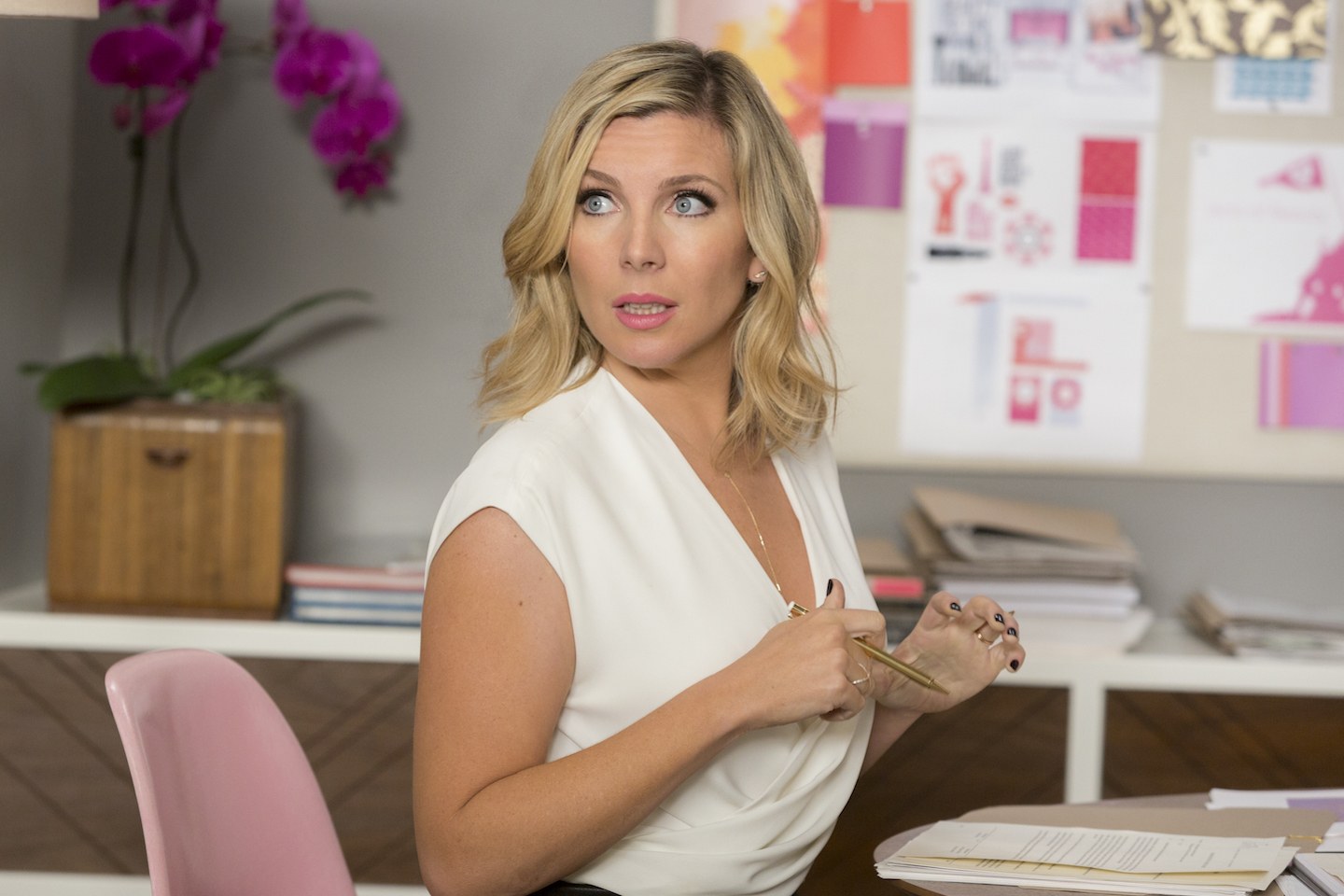


left to right: June Diane in Grace and Frankie; Natalie Morales for Into the Gloss shot by Tom Newton; and Kulap Vilaysack.
So, what’s it like as a woman in Hollywood?
Natalie Morales: This is a question I get a lot and I’m never sure how to answer because I don’t know what it’s like to be a man in Hollywood. I feel great. I love my industry. I love what I do and I love the people I meet.
June Diane Raphael: I love being a woman. And I love acting and writing and overall creating. Sometimes the combination of those two things can be frustrating, but being a woman is one of my favorite things to be!
Kuala Vilaysack: At the moment, I feel empowered and clear-eyed… Like Moana on the other side of the horizon. Now I know what you are thinking, “Kulap is very cool and accessible for connecting so strongly to an animated film made for children.” Thank you.
“At the moment, I feel empowered and clear-eyed… Like Moana on the other side of the horizon.”
Tweet this.
Do you ever think your job would be easier if you were a man?
Natalie: Definitely, but I think most jobs would be. For starters, I’d get paid more. So that makes it easier off the bat. Secondly, as in most jobs, people would take me more seriously. Especially as a director and writer. I’m sure there are a lot more reasons it’d be easier, but those are the big ones.
June Diane: I’m married to a man and we have very similar struggles (always wanting more out of our careers, always struggling with feeling “less than” as an artist) but I also have particular fears and concerns that (for me) feel specifically female (likability or lack there of, sexuality and too much of it/too little of it, reluctance to self promote) I think in general being a human (if you are awake to the experience) can be very challenging (men need healing for their role as oppressors/maintainers of the patriarchy as much as women need healing as the oppressed — we have both lost our humanity in this struggle). I feel this as a white person who benefits (through no merit of my own) from the white supremacist society we live in. I don’t wish to be in someone else’s shoes, but I wish to dismantle the racist patriarchal society I live in as it both oppresses me and supports me.
Kulap, you’re the only female show-runner/EP alongside four male EP’s on Bajillion Dollar Propertie$ on Seeso, has there been a time when it felt your gender held you back?
Kulap: No, probably because I have the final say on all matters concerning the show. Scott Aukerman, David Jargowsky, Thomas Lennon and R. Ben Garant continue to be incredibly supportive and I’ve benefited greatly from their experience and input. Fortunately, I’ve been afforded the space necessary to come into my own.
Do you have any specific anecdotes of gender bias?
Kulap: When we were interviewing department heads before production of Season 1, the old school men tended to direct their questions to the male seated beside me. I did not appreciate that. With four seasons of the show under my belt, I am glad to be past the craning of necks looking for the man in charge.
Natalie: I have had people tell me to my face, and mean it, that women are not as funny as men. And so they don’t hire women. This is a real thing. I have had people tell me to sit in the back of the 12 passenger van when I’m already in the front seat (I get car sick) because my male peer might like to sit in the front. I am 100% sure I have been paid less than most of my male co-stars for the same or more work. I have been thought of as a silly actress when I present work that I’m trying to direct or write.
"I have had people tell me to my face, and mean it, that women are not as funny as men. And so they don’t hire women."
Tweet this.
June Diane: Before pitching a feature film to a studio, an older male producer hid my index cards around the room while I went to the bathroom. When I returned, he had me play the “hotter colder” game while I walked around trying to find them. He then also requested I take off the blazer I was wearing to see my tank top. I complied.
That all sounds truly awful. Where are the areas where Hollywood can make progress?
Kulap: We need more women in power/hiring positions in all aspects of the business. More men in these positions need to make it a priority to hire more women. Hire women. Recommend women. Advocate for women.
June: Every story shouldn’t have one black friend or one woman to create the illusion of inclusion. Diverse casts can support more than ONE! The same goes for writer’s rooms. We need to look at this idea of “we just want to hire the best people for the job” and ask ourselves what that means. Storytelling, at least in my experience, has been at it’s best with a million different perspectives and viewpoints and life experience.
Natalie: Equal pay, equal hire, be less afraid of women, understand that women-led movies and tv MAKE MONEY, be more intersectional with your support of women, cast out of the “ordinary”, give chances to female filmmakers who are small and starting out, encourage women to tell their own stories.
So on the topic of sexism. Fun! Natalie, Battle of the Sexes is a timely movie. Women are living in the aftermath of demanding equality. What was it like being a part of telling that story?
Natalie: It’s kind of terrible that it’s timely, isn’t it? But it somehow is. It somehow feels like we’ve been fighting for our rights for so long and some people have convinced themselves that we’ve won, but we haven’t. Not by a long shot. Sure, women in America have some things easier than in other countries, but we’re still so behind. It was wonderful to be a part of that story. To show people that weren’t around when this happened (like myself) that this fight is not new, it’s hard, and it’s worth it.
Why do you think it’s important to tell now?
Natalie: I think it will be important to tell for all of time. It’s important now because Billie Jean King accomplished something by fighting back. It gives us courage and tells us someone came before us. We can do it too. It will be important in the future, when hopefully rights are truly equal across the board, to tell the story of why then needed to fight for it.
Why do you think studios are reluctant to put as much money behind female-led movies?
June Diane: The long-standing idea has been that male viewers will not care about female narratives while female viewers will care about male narratives. They fear “female led” movies will have a smaller audience and so they won’t make as much money. Wonder Woman disproves this theory as do the MANY MOVIES LED BY WOMEN THAT HAVE MADE MONEY AT THE BOX OFFICE.
Speaking of rights being truly equal across the board, do you think wage parity will become a reality in Hollywood?
Kulap: I sure hope so.
June Diane: Yes.
Natalie: I am an optimistic person, despite my snarky tone. So I’m going to say yes.
What needs to change to get there?
Kulap: A long road of greenlights to prove that our stories and our leadership have the same value. Better yet, an open highway.
June: I would love the major Hollywood agencies to start a real dialogue about this [wage parity]. I would also love every actor/writer/director to bring up wage parity in every conversation they have about what they are getting paid.
June, you’re about to launch into some positive convo with your book The Badass Woman's Guide to Running for Office and Changing the World, coming out 2019. How are you badass and how do you want to change the world?
I’m badass in that I’m a working mom. The end! But also because I’m committed to working hard to politically engage in my world. I’m calling my reps and showing up as much as I possibly can. I am also doing the internal work (much harder and more painful) to figure out where I can dismantle the racist heteronormative sexist ideology I have accepted unconsciously.
“I’m badass in that I’m a working mom. The end!”
Tweet this.
How do you reconcile the liberal face of Hollywood against the ageism and sexism that exists?
June Diane: I don’t reconcile it! I am working hard to change it.
Natalie Morales: I don’t [either]. I don’t know how. The most I can say is that I don’t work with the sexists. I’m lucky enough to be able to afford not to. I can turn down a role if I don’t like it. I will work hard to give women jobs so that they can turn down roles if they don’t like them too.
Let’s end this end on a positive note. What have you seen in your industry that excites you?
June Diane: I love what Zoe Lister-Jones just did with Bandaid (hiring an all female crew). I’m so used to seeing so many men on sets I find the idea exciting and I would LOVE to work with an all female crew.
Natalie: Opportunity for women, and successful women extending a hand to younger, less experienced women.
Kulap: Social media continues to shine a bright light on gender and racial bias, pushing us forward to be representative of the country as a whole.
It’s been thrilling to see badass girlfriends of mine, wearing hats on top of hats and getting their projects produced. Shout out and shine on June Diane Raphael, Casey Wilson, Danielle Schneider, Andrea Savage, Jessica St. Clair, Lennon Parham, Naomi Scott… this list too goes on and on, but not long enough.
MORE FROM OUR BLOG

5 Reasons to Get a Jump on Nabbing Your Create & Cultivate LA Ticket
Hugging Issa Rae? OK.
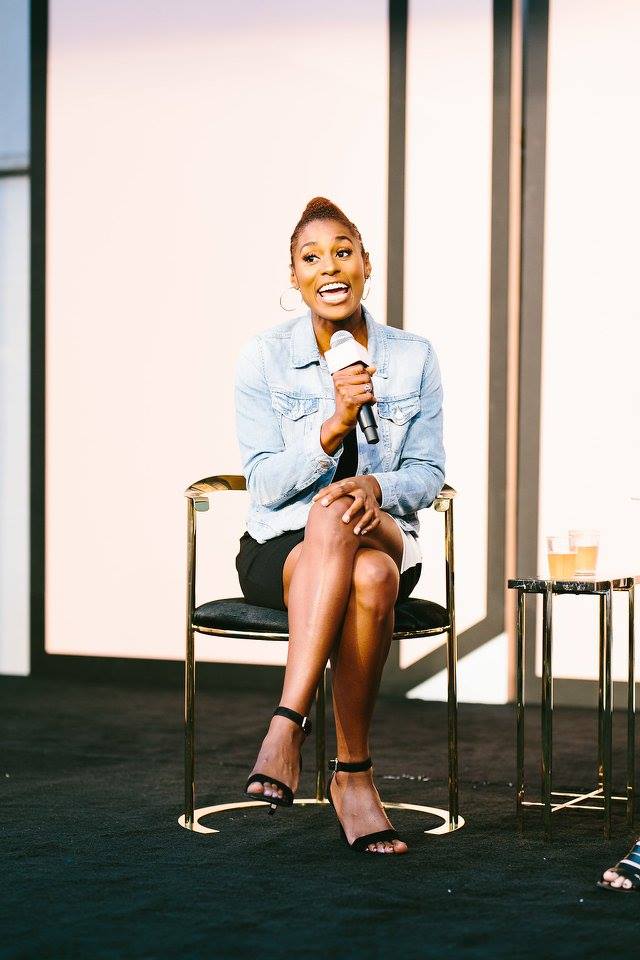
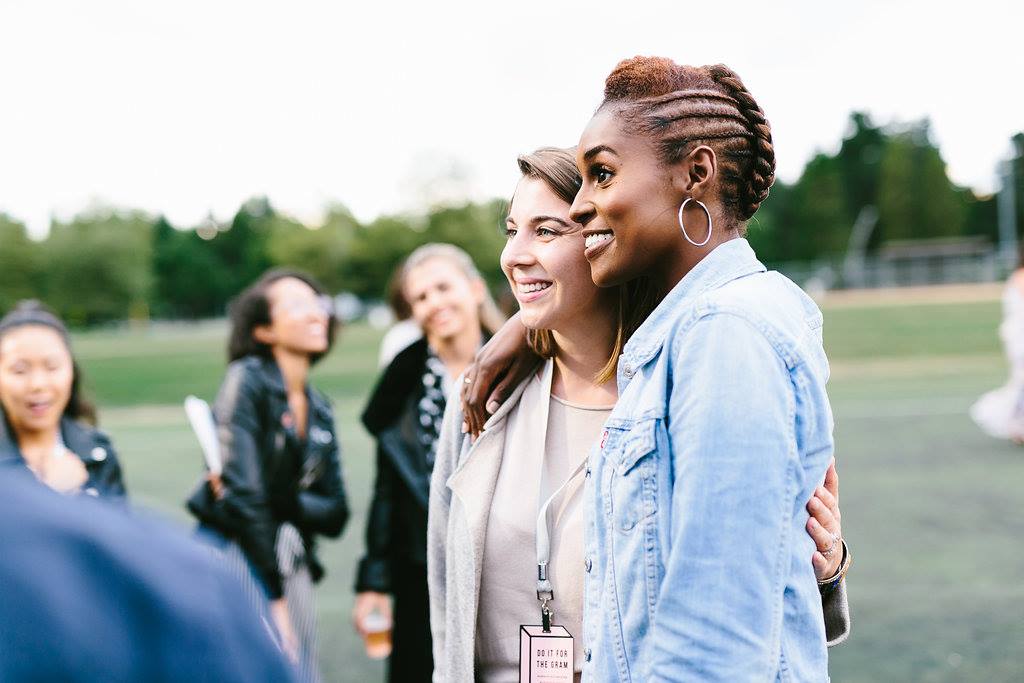
We're no sellouts, but we do sell out conferences. And, if you've been paying attention to Create & Cultivate for a while, we have a tendency to drop a final keynote name after tickets are already gone.
So we're counting down the top 5 reasons you should hit Add to Cart and then Add LA 2018 to you calendar.
#5 REMEMBER SEATTLE. REMEMBER YOUR FOMO?
If you were sleeping after Seattle thinking about the amazing conference you missed, we don't want that to happen again. Insomnia is no one's friend. From the amazing "Woman with a Plan" installation to the women WITH plans on the stages, it was
#4 OK. WE DON'T WANT TO RUB IT IN, BUT REMEMBER SEATTLE? REMEMBER ISSA RAE?
We announced Issa Rae as keynote after tickets were already gone. We're not gonna say this is our strategy, but it's worth paying attention. In New York, we announced Gloria Steinem after tickets were sold out as well. It's a pattern. We might repeat it. Ya never know.
#3. FIRST COME, FIRST MENTORED
Our mentor power hours are legendary. And when you purchase a VIP ticket you get first selects at mentors before they fill up. VIPs also get to select their track. Don't wait. You want to be able to make the most of this life-changing day.
#2 OUR LINEUP IS ALREADY STELLAR, AND IT'S DAY ONE
'Cause we're your day one conference. And we've got Lauren Conrad, Aimee Song, Jessamyn Stanley, Chriselle Lim, and Justina Blakeney-- to name a few boss women. They will be dropped their best life and career advice. And we've got so much for coming soon.
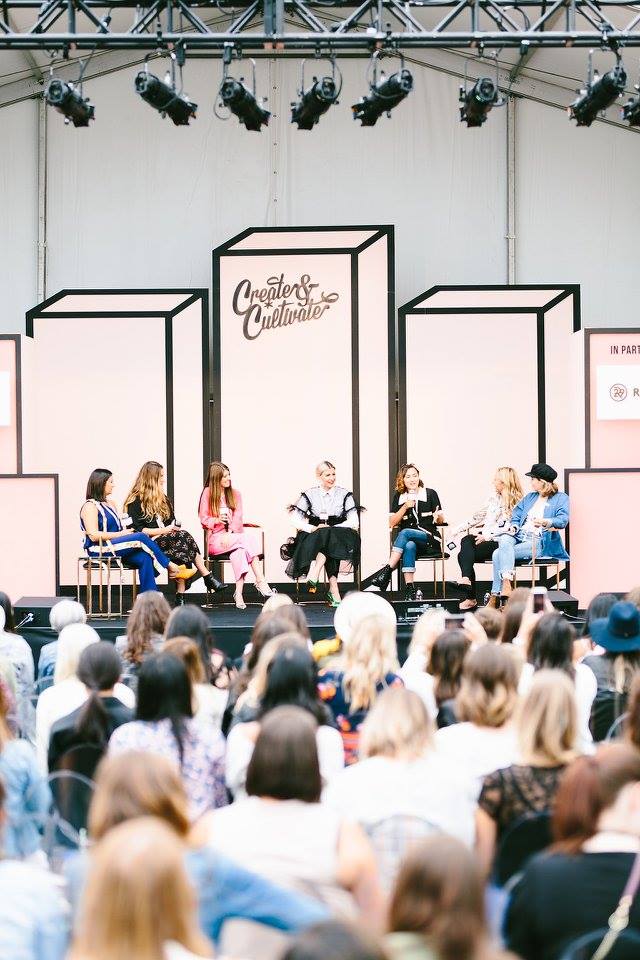

(+ our stage game is always tight.)
#1 IT'S OUR HOME TURF, SO YOU KNOW WE'RE GONNA BRING OUR A+ GAME
There's something about playing on your home court where the stakes feel higher. The crowds are louder. The excitement is next level. So you bring it. You bring it home. #CreateCultivateLA is going to be a game-changer. We can't reveal everything quite yet, but you're in for some major reveals.
Worried about the funds? Here are ways to pitch your boss to pay for C&C. We promise you (and them) it's worth the company's while.
HIT THE LINK HERE TO GRAB TICKETS FOR #CREATECULTIVATELA
MORE FROM OUR BLOG

How to Own Your Glow During the Most Dysfunctional Season of All
Glow get 'em.


In her new book, OWN YOUR GLOW: A Soulful Guide to Luminous Living And Crowning The Queen Within, Latham Thomas talks about how, "Personal growth is not about how much you accumulate but how much you release." In the book, Thomas, who is also the creator and mama guru at Mama Glow, offers an antidote to the hustle-hard/burnout fast culture, instead suggesting a slower and intentional pathway to empowerment.
When it comes to our careers (and our career fears), "releasing" might sound like some NO_WAY_NOT-HAPPENING kind of advice. (If the idea of that has you clenching your fists, this read is def for you.) After all, we want to accumulate: titles, raises, praise. Right? Well, what if we flipped the script a bit? Especially during the upcoming holiday season when we can all get a little... antsy, to put it nicely. Because the holidays are hard. On everyone. We don’t take care of ourselves and contrary to glowing xmas tree lights, we all tend to DIM A LIL BIT.
Own Your Glow, is the ideal way to stay on life track and a way to stay bright-eyed and bushy-tailed as we close out 2017. So we asked Latham to talk about what she dubs “The Core Four,” as they relate to career and the workplace.
Latham tells us:
I encourage you to start asking yourself probing and productive questions to unlock hidden tendencies and obstacles and identify parts of yourself that need a little more glow so you can step more prominently into your power. When you construct your questions, use what I call “the Core Four”: who, what, when, and how. Here are some questions I invite you to explore as you reflect on your journey professionally.
When we are ready to facilitate change and up level our lives to harness what lies ahead we naturally take stock of what’s already on our plates and what we need to increase for our abundance and what we need to release.
Who am I holding on to by attracting people who don’t serve my highest good?
When we anchor ourselves in soil that is seeded with people who aren’t vested in our success, who don’t value our gifts and who are committed to catty competition, we replay the same patterns and experience the same lack of growth personally and professionally. Who deep down inside are we afraid of loosing, or becoming by keeping the wrong company? Find your flock. Invest time with people who make you feel more radiant who serve as a catalyst for the good in your life. This can be in the form of mentorship or sponsorship, a sister circle of friend supporters, a group mastermind or an online private group.
"Invest time with people who serve as a catalyst for the good in your life."
Tweet this.
What do I gain by remaining stuck in the same situation or circumstances?
It’s easy to adhere to the stories we tell ourselves about our circumstances. Why is it that I can’t seem to advance in my position? Sometimes staying in the same position or lingering in circumstances that we’ve outgrown serves as a comfort zone and an impediment to our personal growth. Sometimes being stuck feels most comfortable since it’s familiar. What would we gain if we moved past our comfort zone professionally speaking? What would it look like to put more on your plate, not task wise but risk wise? A quick way to jump forward past your circumstances is to embrace risk and commit to doing what scares you. Take on a project that will help you spread your wings, activate a team of supporters and show off a ton of your skills.
When do I feel my best, and what is keeping me from following that feeling?
Self-care is about assessing what supports you at the deepest level and honoring those feelings and responding with rituals and making space for yourself to rest and recharge. A strong self-care practice sharpens our discernment and we learn what supports us and what depletes us. When we feel our very best we make choices aligned with that sense of well-being. Knowing what actions lead to you feeling your best will help you stay on track with moving towards your goals and achieving them.
"A strong self-care practice sharpens our discernment."
Tweet this.
How have I constructed my life to follow other people’s rules?
It’s important to explore the paradigms we operate within. We have been indoctrinated to be kind, to keep in line, to follow the rules and always say 'yes' and please everyone else at the expense of our own well-being and happiness. Where do you need to excavate these patterns that are rooted in a lack of self-awareness? What are the building blocks of beliefs you’ve used to construct your life? What needs to crumble for you to succeed? I decided to stop following the rules a long time ago and my life has been prosperous ever since.
Want more? Grab your own copy of OWN YOUR GLOW: A Soulful Guide to Luminous Living And Crowning The Queen Within by Latham Thomas
MORE FROM OUR BLOG

You Should Really Consider This Before Giving a Friend a Referral
Friends forever?

photo credit: Turkan Najar
Referrals are a huge part of our society. We see them everywhere from Yelp to Facebook to LinkedIn, and however you look at them, they are incredibly important. When a trusted friend tells you about a business, you transfer that trust to the company, and similarly, when a trusted acquaintance refers you to a person, you then transfer your trust into the referral.
When you refer someone, you put your own name on the line
When you refer a friend, you’re not only putting them up for scrutiny, but you’re putting yourself up for it as well. If you refer someone that clearly isn’t a good fit for the company, it can suggest two main things:
- It suggests that you haven’t done any research on the company and what the company is looking for in an employee.
- It suggests that you really don’t know the person that well, so it weakens your referral.
Either option reflects badly on you. If you’re going to refer someone, it’s important to do your research so you feel truly confident that they could be a good fit for the company.
Similarly, you want to ensure that you believe in someone’s work ethic and quality of work prior to referring them to someone. It’s impossible to control other people’s actions, but the reality is that if someone doesn’t work out or someone makes a bad impression at work, you’re probably going to think about who referred them in the first place. This is part of the reason why that referral from a friend is such a big deal. They’re putting their own reputation on the line along with yours.
You truly don't know what someone is like at work until you actually work with them
People can be very different in and outside of the office, and ultimately you never truly know how someone acts at work until you’ve seen it first-hand. GlassDoor estimates that being referred by someone at the company boosts your chance of successfully landing a job as high as nearly 7%. This makes a big difference during the job search, but it can be tough for someone to refer you when they haven’t seen your work ethic.
"You don’t truly know what someone is like at work until you actually work with them."
Tweet this.
If you are asking a friend or acquaintance for a referral, make sure that you can show them that you’re worth it. Their name and reputation is on the line just as much as yours is, so do your best to highlight why you’re the right fit for the position. If you can show them what you’ve accomplished in your career and what you would like to accomplish at the company, that is ideal.
It can set you up for an awkward situation if things don’t work out
One of the hardest parts about referring someone or getting a referral from a friend is that it can make for some awkward conversations if things don’t go as planned. Going back to the fact that you don’t know how someone acts at work unless you’ve worked with them, you might be surprised to hear that a friend had a low work ethic or another less than ideal quality. It can also be hard to tell a friend that the person they referred made a bad impression. While this isn’t the end of the world, this is why asking for or giving a referral for a friend is such a big deal.
Acknowledge the fact that if someone is giving you a referral, they are confident enough in you to risk their reputation or some potentially awkward conversations down the line. On the opposite end, it is important to acknowledge the risk and make sure you are confident in your choice when you are referring a friend.
________________
Ultimately, referrals make a huge difference when looking for a job or looking for a candidate to hire, but they can be risky for the person who is giving the referral. If someone is willing to give you a referral, it means that they have confidence in you, so it’s important to do your best to uphold that. Referrals mean that both the referrer and the referral get judged, and this is what you need to consider before you ask for or give a friend a referral.
A native San Franciscan, Michele Lando is a Certified Professional Resume Writer and founder of writestylesonline.com. She has a passion for helping others present the best version of themselves, both on paper and in person, and works to polish individuals' application package and personal style. Aiming to help create a perfect personal branding package, Write Styles presents tips to enhance your resume, style, and boost your confidence.
MORE FROM OUR BLOG

Why Ban.do's CCO Says There's No Shame In The Hustle Struggle
Pursuing your passion isn't all glitz + glam.
Our girl Jen Gotch is back with her business advice series. This week, the CCO of ban.do + breakout star of Instagram stories is answering your burning questions on the infamous work-life balance. One of our favorite pieces of gold from JG? "There shouldn't be any shame in the struggle of doing what you LOVE!"
Check the videos below for more gems on pursuing your passions!
Q: HOW DO I PERSEVERE TOWARDS MY GOALS + BALANCE CAREER AMBITIONS WITH MENTAL HEALTH/STRESS?

Q: HOW DO YOU PREVENT YOURSELF FROM BURNING OUT?

Jen also designed a super soft, short sleeve t-shirt as a little tribute to her advice series and 15% of the proceeds will be donated to writegirl, an la-based creative writing and mentoring organization that promotes creativity, critical thinking and leadership skills to empower teen girls.

4 Microaggressions You're Not Paying Attention To
You start the call, Jim.

photo credit: Smith House Photography
Overt workplace sexism is easy to spot. Most of the time.
Sexual harassment. Harassing language. Comments about women's bodies, clothing, and the way we speak-- we have a pretty firm grasp on the big NOs. Those are all means for dismissal.
But sometimes sexism is so engrained/are attitudes we've adopted toward ourselves that we don't even notice it's happening. Company culture often starts at the top and gets reinforced by managers, so it’s not hard to see how a toxic culture could breed an environment of harassment, intimidation, and generally offensive behavior.
And it's often up to us to make the shift. Even when presented with evidence, men have a hard time accepting that gender bias is real.
So here are four microaggressions that can slowly chip away at your self-confidence in the workplace.
Are you being asked to start the call?
Whether you’re the most senior person in the room or the most junior, are the women always being asked to dial in to start the call? Pay attention to who is charged with the dial in. It seems small, perhaps petty even, but making or asking for small shifts like these to be made can actually change company culture.
Next time. You start the call, Jim.
You're asked to order lunch.
Everyone gets hungry, but if you're the only woman on the team (or one of few) and you're constantly being asked to order lunch, or do tasks that are often assigned to assistants, it's time to put an end to it.
There is nothing wrong with ordering lunch. There is something wrong if you're the one asked to do it ALL the TIME.
"You should be good at that."
The should that launched a thousand eye rolls. Any time someone suggest that you "should" be good at something based on your gender or race, that's not a compliment. Maybe you are good at it, but it's the intention behind the "compliment."
Your authority is constantly in question
Studies have shown that men often question the authority of their female manager, circumventing their authority and asking make boss before proceeding with a task. Derald Sue Wing, a leading scholar of microaggressions and professor of psychology and education at Columbia University, told Forbes, "“This is the type of climate that many women experience every day,” said Sue. “It can be exhausting and tiring, leading to battle fatigue that is invisible to fellow co-workers and, oftentimes, invisible to female employees. Often, they internalize their feelings and feel less worthy and less capable.”
MORE FROM OUR BLOG

Why You Should Stop with the #Squadgoals
You're only showing #HalftheStory.

photo credit: Half the Story
Written By: Karin Eldor
Celebrities, bloggers and founders have been vocal about the negative impact social media has had on their well-being, to the point where many have implemented a detox or complete hiatus from their digital channels. Kanye is currently inactive on social; Ed Sheeran quit Twitter this summer after he was dragged on social due to his Game of Thrones cameo; and Saturday Night Live’s Leslie Jones took a short Twitter break after trolls cyber-bullied her. (She returned two weeks later, because she always gets back up. Yaaasss Queen.)
Chrissy Teigen expressed her dismay when she recently stumbled on a website created with the sole purpose of cyberbullying her. Not only is she often publicly shamed for her parenting choices, but some haters even mock her for being open about her experiences with depression and IVF. Sadly, people can be this mean.
On this World Day of Bullying Prevention (which always falls on the first Monday of October) and with World Mental Health Day around the corner on October 10th, it’s critical to highlight cyberbullying and how we can make strides to take it on—together.
Let’s Get Real
Shoutout to #HalfTheStory for providing a platform for people to create real connections with others, while shedding light on mental health and cyberbullying in the process. Founded by fashion blogger and social media strategist, Larissa May, #HalfTheStory is a global community that encourages people to share parts of their lives that exist outside the standard social media narrative. Life unfiltered. No Instagram highlight reels: just realness.
It currently features over 2,500 stories about bullying experiences, mental health, struggles, and crucial life experiences. People who have openly shared their story on #HalfTheStory include Ban.do founder and CCO Jen Gotch and singer Grace VanderWaal.
According to a recent Teen Vogue article, “cyberbullying can be even nastier than IRL bullying, since people sometimes feel less responsible for their words and less inclined to think before they type.” The article also lists the results of a 2016 study, which states that 34% of people experience cyberbullying at some point in their lives, and that it can have real consequences on one’s mental health.
34% of people experience cyberbullying at some point in their lives.
May explains: “As adults, many of us think that ‘cyberbullying’ is only something that applies to a younger generation, but I often overhear conversations about people judging and commenting about others’ social media profiles. The female community is stronger than ever, yet social media still seems to be a barrier to our positive human interactions.”
So how is #HalfTheStory taking the steps towards solving this issue?
About #HalfTheStory
First, here’s the behind-the-scenes story: When social media strategist/producer/fashion blogger Larissa May, a.k.a. Larz, decided to launch #HalfTheStory, she was a student at Vanderbilt University and juggling her other life as a fashion blogger, covering New York Fashion Week for media outlets. While on her way to interview Diane von Furstenberg, a completely burned-out May face-planted: juggling 17-hour workdays took its toll on her.
But the picture that May’s own hyper-curated social media feed painted was that of a girl who not only had everything together, but was living “THE. DREAM.” After all, May wasn’t posting photos of sleep deprivation, debilitating anxiety and stress-infused selfies. So she decided to invest her full self into #HalfTheStory.
#HalfTheStory celebrates hidden human talents, passions, beliefs, and struggles that connect us on a deeper, more human level.
May continues: “By sharing a part of our identity that is not regularly revealed through social media, we can encourage positive interactions on social media. Social media is a very vulnerable place and has opened another door for bullying, exclusivity and Instagram squads.”
"Social media is a very vulnerable place and has opened another door for bullying."
Tweet this.
But these squads are far from #goals.
“When I first started #HalfTheStory, I was balancing two worlds, as a full-time student at Vanderbilt and the NYFW scene. In both parts of my life, individuals expressed their concerns and dissatisfaction with the ‘disconnect’ that social media created. As female leaders, it’s our job to set the precedent for future generations by encouraging positive behaviors on social media, showing support for others, and preventing negative interactions.”
In addition to what #HalfTheStory is doing on social media, it’s also making an impact IRL, with workshops at Universities and Organizations about positive social media use. It has hosted workshops titled "The Power of Social Storytelling" and “Transcending the Stigma” at Fordham, Vanderbilt, The New School (including Parsons), and Miami Ad School, and the team is heading to University of Southern California this month. These interactive sessions serve to give participants a chance to learn about positive social media behavior and share their experiences with each platform.
Here’s What We Can All Do
Here are some tips to help prevent cyberbullying, or at least combat the effects of it, according to Larissa May:
1. Stand up for what you believe in.
Don’t be afraid to share your truth, despite the smoke and mirrors we tend to create on social media. This is stronger than authenticity; it’s having the courage to share your voice in your posts, without worrying about the likes, dislikes or unfollows. Also, keep in mind that like attracts like; so whoever un-follows you as a result of one of your posts is likely not aligned with your brand message anyhow. “Bye, Felicia.”
2. There’s no such thing as #squadgoals. Stop trying to create the illusion of a social media clique.
Yes, the feeling of inclusion creates a sense of community, but it can also have the reverse effect and make others feel lonely. Don’t feed (or buy) into this type of social engineering and instead create an inclusive, empathetic narrative on your social platforms.
"Create an inclusive, empathetic narrative on your social platforms."
Tweet this.
3. If you see a post that causes concern, give your friend a call rather than making a comment.
If you notice a friend’s post in which they seem sad or troubled, reach out rather than commenting on their social feed. #HalfTheStory’s mission is all about bringing the human touch back into our interactions, rather than being out of touch.
Ed note: We are definitely here for this, especially given the tragic events in Las Vegas. If you see something that concerns you, say something. You never know whose life it will save.
MORE FROM OUR BLOG
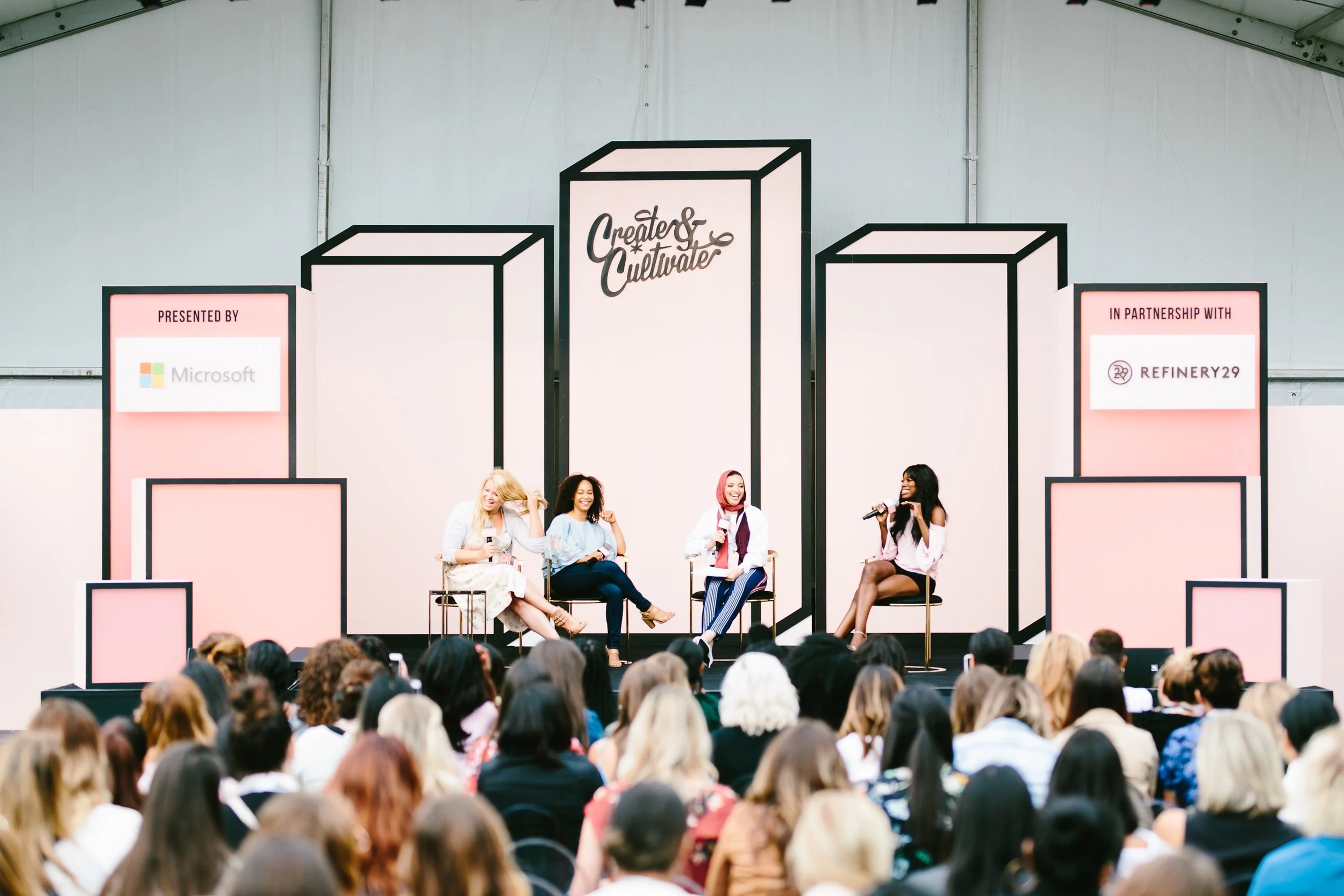
Being Interviewed? Here Is the Only Piece of Advice You Need
Ok.. so it's three pieces of advice. We're givers.

photo credit: Smith House Photography
So. It's finally happened. The day has come when an editor or blogger has reached out to YOU because they want to profile you/your business/your brain on their outlet.
Has the panic set in yet? While there is plenty of advice we could dole out-- be AUTHENTIC ( are you sick of that word yet?), be honest, be prepared, ask for the questions in advance so you can prep, know your audience, know your interviewer and check out their past work-- the list goes on. And while most of that advice matters, we're sharing our top three picks.
1. Contrary to what you just read-- Don't ask for the questions in advance.
Does that scare you? It should. Be nervous. Revel in nervous. The best content comes from a place of discomfort. And as such, the best interviews aren't prepared. If you're accepting the interview in the first place, you should have trust that you're in good interviewer hands. But pre-planned answers and media training. You know your work. You need to trust in yourself as well. Actress Zoey Deutch once told us, "I don't know if media trained Zoey is a role I want to play." And asking for questions in advance is just that-- you playing a role.
2. Do it over the phone or in person.
Everyone has gotten pretty lazy when it comes to the interview. In part, the email Q&A is the fault of the content churn and burn-- you can't produce multiple in-person interviews per day. Transcription is time consuming. It's much easier to send things via email and have the subject do the work for you. Everyone is guilty of this because there isn't enough time. TIME YOU DEVIL.
But WHEN and IF possible always ask to do it over the phone or in-person. Your responses and your personality will shine through in the piece. That's what you want the public to see.
And if you're the interviewer, or green to this whole profession and feel more comfortable conducting an interview over email, today's the day: it's time to step out of your comfort zone. That's where the good content is.
"Today's the day: It's time to get out of your comfort zone."
Tweet this.
3. Learn how to speak in Tweets.
Sure, Twitter may have upped the character limit to 280 for some users, (and man, people don't like it) but you still need to talk in Tweets. Call them "sound bites" or "quotables," just don't call them late for dinner! But really, if you want your interview to be shared (which, is the goal for most) you need to make sure that it is sharable. That doesn't mean dumbing down your language. Brevity is the soul of wit. Wit gets Tweeted. Wit gets shared.
When we get nervous we tend to ramble. Rambling lives at the corner of no one is reading and high bounce rate. Don't overthink sounding smart. Sound human. Be human. (Goes back to not asking for questions in advance.)
Many women we've spoken to are masters at this. Kristen Bell. Sophia Bush. Yvonne Orji.
Examples include:
"Don’t let your feelings of self-worth come from detached clicks."
"Let social media be fun. Don’t let it be important."
"I stand my ground and do my thing as me. I can go toe-to-toe with the next guy."
But they're famous you say. People pay attention to them no matter what. Did you ever think people started paying attention because they knew this was key to mastering the interview?
Think about it.
MORE FROM OUR BLOG

Bizz What? Jen Gotch Is Dishing All Her Best Business Advice
Q&A is the new T&A.
If you're like us, Jen Gotch's Instgram stories are at the top of your must-watch list. Every. damn. day. The CCO and Founder of the fun-centric Ban.do has built a brand with cult-like following of millennials. #FORBES. While she might not like to admit it, she's pretty D.O.P.E. at this whole business thing. And when she's not making us laugh (and/or cry and/or laugh-cry) on IG stories, she shoots an advice series called Honor Roll answering fan-submitted questions about business-related things + more.
Watch her spill on spill some solid bizz advice for anyone looking to turn that side-hustle into a full time thing.
Q: I'M THINKING OF STARTING A BUSINESS. ANY ADVICE?

Q: WHAT IS YOUR ADVICE FOR REACHING POTENTIAL FOLLOWERS WITHOUT A LARGE FOLLOWING?

Q: HOW DO I GET STARTED ON MY OWN BUSINESS WITH LIMITED MONEY?

BONUS. Jen also designed a super soft, short sleeve t-shirt as a little tribute to her advice series and 15% of the proceeds will be donated to writegirl, an la-based creative writing and mentoring organization that promotes creativity, critical thinking and leadership skills to empower teen girls.
Love these? We'll be sharing more videos starring JG soon. Leave your burning business questions below!
MORE FROM OUR BLOG

The One Skill This Owner Says All Small-Biz Employees Need
Read this if you work on a small team.
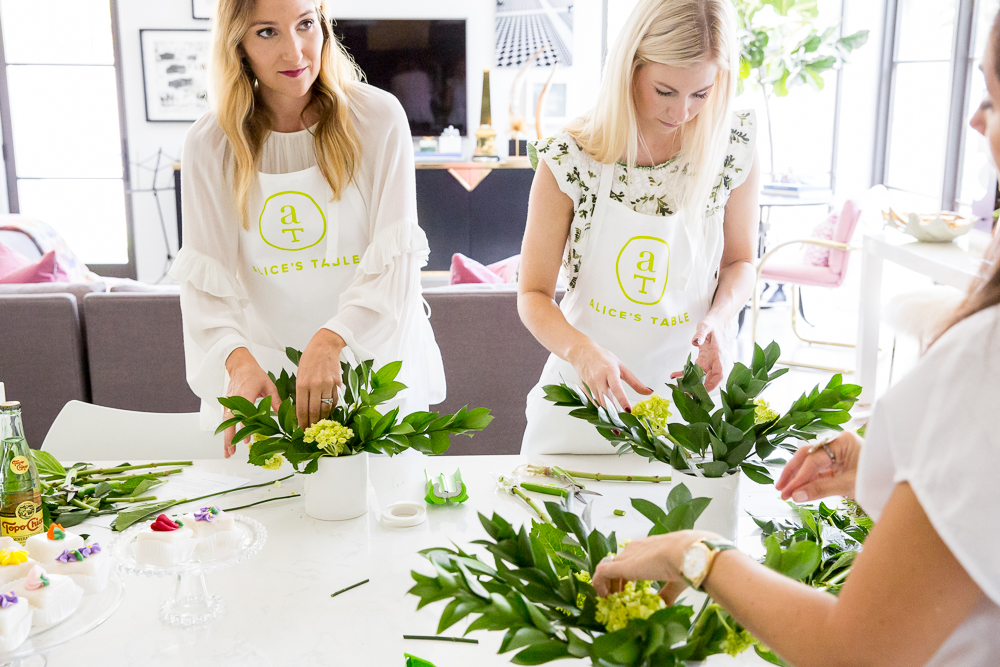
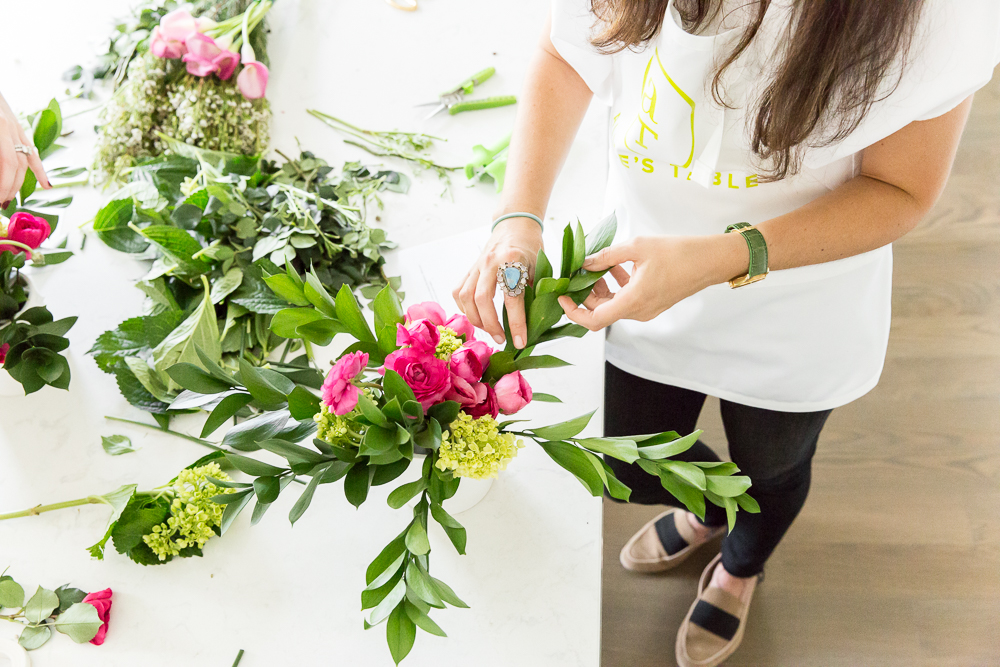
Maybe you’re employee #4 at a brand-spankin’-new startup. Or you’ve launched your own thing, made a couple hires (go you!), and are looking to gently coax the most productivity out of your team. Even if you can count the number of employees at your company on one hand, small teams can be mighty.
The small-team dynamic is singular. You’re agile and energized. Communication flows easily. Ideas blossom, are seen to fruition, and are celebrated (or mourned if they fail, which—let’s be real—can happen!). You feel true ownership in the company and its outcome. Not to mention that coworkers frequently become as close as family, easily trading sibling-esque banter that can make work feel like play. But certain things that fly at big companies (like flying under the radar), are a no-go on small teams. Employees’ contributions are obvious, which means pulling your weight and then some, and also learning skills that don’t always align with your background or, frankly, job description (not necessarily a bad thing!).
One woman who knows this better than most is Alice Rossiter, the Boston-based 27-year-old founder of Alice’s Table, a new company that throws chic flower-arranging events in cool venues around the country, and also teaches people how to host their own workshops so they can launch a creative career or side hustle. (And you know we love a side hustle.) They just graduated from Techstars, have thrown events in half of the states in the U.S., have onboarded nearly 100 event Execs, and frequently collaborate with companies like Good Housekeeping and Country Living.
And they have 6 employees.
So we reached out to pick her brain for some advice on how to achieve small-team success.
What are the benefits of a small team?
With a small team communicate is much easier. We’re all on the same page about projects. In fact we all sit in the same room! We all rely on each other's work so much that each person feels accountable to get their job done. Also a small team is great for building strong relationships.
What are some ways an employee on a small team can excel?
Being a team player is key! There are always projects that don’t clearly fall in anyone’s lap so over-performers pick up those balls and run with them. It’s also important for you to be constantly learning. You might not come in knowing anything about Facebook ads, for example, but if your company decides to give them a go, you’ll be willing to figure them out and try to make them as successful as possible.
“I am a true believe that grit is the key to success.”
Tweet this.
How has your team stepped up in the past?
On a small team it’s inevitable that unexpected tasks will come up. For us it happens every week—that's the nature of an event-focused business! My team has gone above and beyond countless times, from working through customer-care complications on the weekend, to rushing to an event after work to take photos for an exciting press opportunity that we would have otherwise missed. We’ve had to problem-solve flower deliveries going missing in the middle of the country and hurricanes canceling our flower orders. Above all, working for a small company takes agility and passion.
What’s your take on work quality vs speed?
We all have endless task lists—even more so on a small team—so time-management is extremely important. I can be a master procrastinator, so I feel the pain! I encourage my team to set aside time each day to work on tasks that are easy to complete, in addition to dedicating blocks of time to bigger think projects. When you strategically plan out your work, it automatically sets a time limit and typically that focus produces a higher quality result. The best small-team employees don’t labor indefinitely on a single task—they just can’t! There’s not enough time! You have to make sure that ‘great’ doesn’t get in the way of ‘done.’
What’s more important: Talent or motivation?
Motivation, always! The number one skill I always look for is work ethic; someone willing to go the extra mile to find the right answer. Anyone can learn a skill if they have the drive! When I started dreaming about Alice’s Table, I didn’t know much about flowers and now I can whip up a professional arrangement in under five minutes! I am a true believe that grit is the key to success.
Would you recommend that employees learn other parts of the business?
Completely! When I launched Alice’s Table I was CEO (of myself), chief bucket washer, trash collector, customer-care agent—you name it! Understanding each team member's role (and how your roles intersect) usually unlocks ideas for ways you can help each other out.
Should employees push for regular brainstorming sessions?
“I’ve always had the mindset that many heads are better than one. We all bring different perspectives to the table, and those contributions help keep our ideas fresh and propel our business forward. We have multiple strategy sessions as a team each week.”
What is the one skill you’d recommend all small-team employees possess?
“Everyone needs Excel skills! Tracking your data is key and as a small business you usually can’t afford all the fancy tools, but Excel always does the trick!”
On the other hand, what’s one thing that someone on a small team should never do?
Never be afraid to ask questions. For example, we just closed our first round of fundraising. I encouraged everyone to ask questions because it was important to me that everyone on my team knew what was going on, and why we were making certain decisions as a company. We would never grow if we never asked questions, even the silly ones.
“You have to make sure that ‘great’ does not get in the way of ‘done.’”
Tweet this.
How do soft skills come into play?
As a team of six, we work extremely closely—five feet apart to be exact! Strong communication and interpersonal skills allow our team to challenge each other, but also to take time to celebrate our successes!
Startups are often encouraged to fail fast and pivot, since they usually don’t have the resources to keep a failing idea afloat. When should someone be able to realize that a certain strategy might not be working?
I always tell my team, ‘If something seems to be heading south, speak up!’ We’re all about process-building, but if a process isn’t working and is causing more mental exhaustion than progress, it’s either time to revisit, or move on all together. Since we’re constantly growing and trying out new systems, I try to remain flexible when setting timelines. Our team checks in weekly on a variety of projects to make sure we feel confident in the direction they’re heading. Identifying a roadblock is the most important step to fixing the issue and pushing the business forward!
How do the best small-team members handle failure?
Failures feel like sh*t—it’s just a fact of life. Every startup has good days and bad days (or, as we like to say, good hours and bad hours). On a small team we thrive off of each other’s energy, so, even when faced with a loss, it's important to keep our heads up, reflect, and move forward. I’m also working harder to celebrate our victories (big and small), because taking time to enjoy the wins puts the hard times into perspective. Plus, we all need to pop a little bubbly now and again!
MORE FROM OUR BLOG
4 Times Glam App Comes Through in the Clutch
Glam is a state of mind.

Makeup doesn’t make the girl, the girl makes the makeup. And we hope you know you’re gorgeous through and through-- because. you. are. freaking. gorgeous.
But occasionally, whether for a special occasion or due to lack of time, you need a glam squad to come through on-demand.
In 2015 Cara Santana, alongside close friend and celebrity makeup artist Joey Maalouf to launch the Glam App, available in 22 cities across the country.
Today, with the push of a button, the Glam App delivers beauty experts to your front door. (Or office door.) Offering services that range from a blow dry, to make up applications, to a mani-touchup. Here are five ways the service comes through in the clutch! So you can grab yours and head out the door.
You’re About to Meet the Microsoft CEO
OK. While we realize this isn’t an everyday occurrence, this did happen to us during Create & Cultivate Seattle. And Glam App made sure that we looked the part before going to shake the hand of Satya Nadella. NBD.
Truth is, sometimes biz life throws you a curve ball and you need to be able to act quickly. Instead of freaking out that you don’t have your makeup bag and that your hair is a hot mess, all you have to do is push a button, request a service, and march off like a boss to holler at Satya.
Your Boss Needs You as a Last Minute Plus One
The invites that make their way into your boss’ inbox don’t often make their way to yours. Listen, those RVSPs come with time, but every so often she’ll ask you to be her +1 to an event, even though you might be sitting at your desk feeling like a -2.
Push that glam button. Even if you don’t need makeup or hair services, this would be the perfect time to get a quick mani. With all the hands you’ll be shaking at the party, you want those fingers polished when you’re passing out biz cards.
You Need to Treat Yourself Cause You Got a Raise
We are on-the-go women with very little time to take care of ourselves. But celebrating our accomplishments is vital to our next success. It’s a confidence boost that every self-made woman needs.
If you just got a raise, or are about to get a holiday bonus, you can baby-splurge, get your makeup and hair done and hit the town with your #workwife to celebrate. You deserve it.
Um… It’s About to Be Holiday Party Season
How many invites are too many invites? When it comes to holiday time you have to make some tough decisions about what to RSVP yes to. But you shouldn’t have to make tough decisions about how good you look.
To easily take your look from office to office party, get glam right at your desk while you fire off the final emails of the day. That’s called glam multi-tasking.