
Money Matters: New Eyewear Startup Shares the Top 3 Biggest Monthly Expenses
And why the founder doesn’t pay herself.
You asked for more content around business finances, so we’re delivering. Welcome to Money Matters where we give you an inside look at the pocketbooks of CEOs and entrepreneurs. In this series, you’ll learn what successful women in business spend on offices spaces and employee salaries, how they knew it was time to hire someone to manage their finances, and their best advice for talking about money.
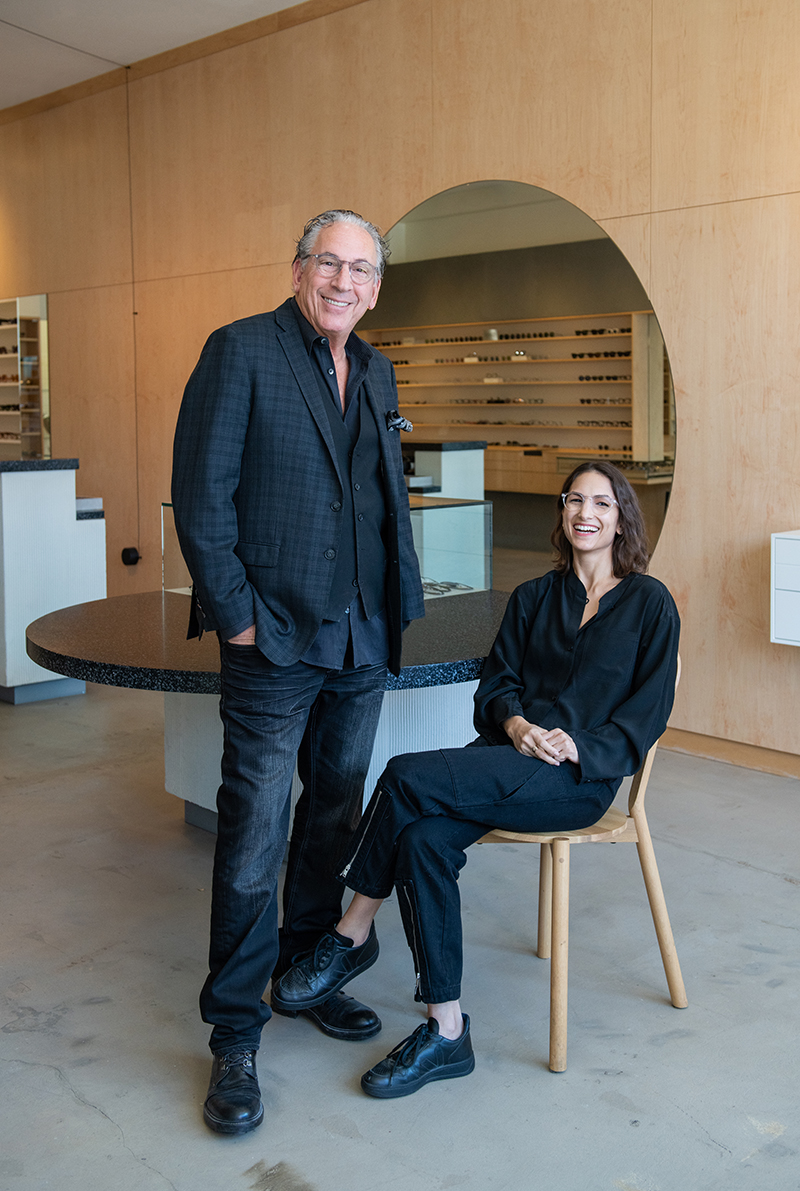
Photo: Courtesy of Zak.
I’ve had 20/20 vision my entire life and despite regular visits to the doctor or dentist to take care of myself, eye care has definitely been pushed to the bottom of my to-do list. In fact, I’m ashamed to admit that I’ve never had my eyes checked and with my 40th approaching next year, I suddenly started to notice a shift in my sight. It slowly creeped up on me and for a long time I thought my eyes were just tired and dehydrated from staring at a screen all day (and they probably were). But after speaking with the founder of L.A.-based eye health brand, Zak., Kyly Rabin I soon realized that it could be more, and that, unfortunately, I’m not alone in neglecting my eye health.
It’s one of the reasons she launched Zak and it’s bricks and mortar store on the popular Fairfax street in West Hollywood (next to Jon & Vinny's, across from Canter's Deli, LA's most walkable block) along with her father, renowned optometrist Dr. Myles Zakheim. Despite nine out of 10 people agreeing that eye health is important, only half of them actually see a specialist or do anything about it and just “1% of people know that signs of serious conditions like thyroid disease, high blood pressure, autoimmune disorders and certain types of cancer can be detected through annual eye exams.”
So, Rabin and her father set about creating a new way of seeing *pun intended* the world of eye care. Their 360 approach covers the spectrum of eye health including exams with an on-site optometrist, and exclusive frames with same-day fabrication in their on-site lab, and even blue light lenses for screen time. Rabin hopes to disrupt the eyewear industry making eye health as routine as dental, body, and skin.
My personal experience at Zak was extremely positive. Every step of the examination process was explained to me so I felt comfortable along the way and in control of the care I was receiving. Turns out, I did need a mild prescription and my eyes were also dehydrated so the optometrist recommended a few drops I can use before bed and in the morning as well as some eye exercises to help with the computer glare and strain. I stepped out of the exam room and ordered my pair of Zak frames which will be made in store and shipped out to me (they arrive today!)—super simple and they only cost $125 with prescription too.
Naturally, I was intrigued to learn more about how Rabin launched their startup especially since this model hasn’t been been done before and there was no roadmap. Ahead, Rabin shares her financial journey, what she’s paying herself, her team, and their top three biggest expenses each month.
Where do you think is the most important area for a business owner to focus their financial energy?
Product, creative and team are all mission critical. Each area fuels the other. If I had to choose one area for Zak. it would be product—core product, and the goods or services you’re providing, is the backbone of your business and deserves the appropriate resources (both time and financial). You have to get that core product right first and everything else can follow.
What was your first big expense as a business owner?
Our largest initial expense was the design and build out of our brick and mortar space on Fairfax, Los Angeles. An elevated eye care experience is an essential part of our model and it was extremely important to showcase our aesthetic in a physical space that challenges the typically antiquated doctors office in both form and function. As one may expect, design, build, and investing in state-of-the art medical equipment are expensive, but in our case, necessary to nourish our brand and mission.
The second biggest expense was developing our in-house eyewear collection. Zak frames are designed to change the way you shop for glasses. We’ve streamlined the shopping experience so selection is finally easy to navigate while providing styles that function like your favorite white t-shirt/everyday uniform. Our styles are timeless, to the point, unfussy, and at an accessible price point, but not cheaply made. Finding the right partners and vendors to bring our high quality product to life took time (and money).
“We aren’t saving anything. Everything that comes in immediately fuels another area of the business in order to optimize growth.”
How did you decide what to pay yourself?
We are still a very new and currently self-funded business. Before taking the leap into all things Zak., I assessed my savings as I knew a salary wouldn’t be possible for at least the first two years without external investment. I’m not paying myself to ensure that every dime is funneled back into the business, which is necessary at this crucial stage of infancy.
How did you decide what to pay employees?
Our full-time team is made up of optometrists and opticians who power the brick and mortar space. We determined wages based on market value and operational excellence. We believe that investing in our team means investing in our growth. I’m interested in working with people who are smarter and more talented than I am and sometimes that means paying more than I’m comfortable with as I’m betting on the productivity and efficiency that the right team provides, which inevitably drives results.
What are your top three largest expenses every month?
Rent, payroll, and the bank loan.
How much do you spend on office space?
Our Fairfax location is our brick and mortar retail space, medical facility and office. It’s the hub of all things Zak and it comes with a hefty price tag—rent is 14% of our monthly gross.

How much do you spend on employee salaries?
We’re currently a very small team made up of full-time and part-time salaried and hourly employees. Our payroll is approximately 25% of our current monthly revenue.
How much are you saving? When did you start being able to save some of your income?
We aren’t saving anything. Everything that comes in immediately fuels another area of the business in order to optimize growth. Our projections anticipate a break even at the two year mark.
What apps or software are you using for finances?
We use a comprehensive all-in-one software that combines our POS with a fully integrated doctor system (EHR). All patient, retail and sales information live in the same place, which is extremely helpful for financial reporting, which we typically run ourselves.
Do you wish you’d done anything differently in your financial journey as a business owner?
All delays in the launch process were costly. In hindsight, more efficient decision-making and a clear establishment of roles would have expedited our opening. Delays in construction, delivery of product, and staff training resulted in increased expense.
Why should women talk about money?
Awareness. The more we know and share with each other about how we’re spending and what we’re making will allow for an equal playing field.
“Identify the areas to be scrappy versus when it’s worth spending.”
Do you have a financial mentor?
My dad. We are co-founders and both bring different skillsets to the business. He still owns/operates a large multi-office optometric practice in L.A. that he opened over 35 years ago with a bank loan. He is a wealth of knowledge when it comes to finances and specifically financial planning within the optical industry.
What is your best piece of financial/money advice for new entrepreneurs?
Identify the areas to be scrappy versus when it’s worth spending. It’s fundamental to be resourceful and do things on your own that can eventually be outsourced but it’s extremely important to have an understanding of when a spend is essential to your brand.
Up Next: "For 3 Years I Didn’t Pay Myself"—The Pai Skincare Founder Gets Real About Money in Business.

High Risk Hire: How to Interview While Pregnant
Because life is full of all kinds of bumps in the road.
Written by Arianna Schioldager.

Photo: Angelica Marie Photography
Looking for a job while pregnant may seem daunting, but don’t let that stop you. The Equal Employment Opportunity Commission (EEOC) enforces Title VII of the Civil Rights Act of 1964. Title VII bars discrimination in employment on the bases of race, color, sex, national origin, and religion. A little over a decade later, Title VII was amended to include the Pregnancy Discrimination Act, which prohibits an employer from refusing to hire a pregnant woman because of her pregnancy, childbirth, or related medical condition. Simply put, an employer may not refuse to hire a woman because she is or expects to become pregnant. Not to say that these refusals don’t still happen.
Looking for a job while pregnant is hard to hide. Unless you're in the first or early second trimester, it's pretty obvious when you have that baby bump. An employer doesn't have to ask, and no matter what the Pregnancy Discrimination Act states, as an interviewee you're a HRH. A high risk hire.
Hiring discrimination is very difficult to prove but to pretend it doesn't happen is turning a blind eye. So how do you address the elephant in the room? In the words of Harper Lee, "It's when you know you're licked before you begin anyway and you see it through no matter what," that's where the bold as brass boss in you lives.
FIRST THINGS FIRST
Never include a "disability" on your resume. Ever.
Next, before you interview, you need to ask yourself an important question: "CAN I DO THE JOB?" If the answer if yes, you should walk into that interview as confident as ever. Baby bumpin' or not.
WHEN THE RICH MAN ASKS YOU TO COUNT HIS SILVER...
Do you do it?
Because interviews are scarce and applicants are high, there is a reality to the fear that the employer has the power and you should concede to "illegal" questions. Nothing could be further from the truth. The ball, in an interview, is in both courts, especially if you are good at your job. You need work. The company needs someone skilled to fill the position.
By proving that you are the best person for the job regardless of physical condition. With every employee there is the risk that something unexpected could happen.
You will quickly find out what kind of company it is if you respond to an inappropriate question by addressing it as such, and looking the interviewer right in the eye.
Which is why you should also:
DO YOUR RESEARCH ON THE COMPANY AND MAKE SURE YOU WANT TO WORK FOR THEM
You deserve the job but does the job deserve you? There are questions you need to ask yourself before saying "I do" to an interview, or a company. Look at how the company treats women. There are plenty of companies who have no problem—as they shouldn't—with a pregnancy. The White House, for one. In 2015 the WH took an influential position on the issue of economic, family-friendly policies when they announced that State Department spokeswoman Jen Psaki would replace the President's outgoing communications director. Psaki was pregnant at the time of hire.
There are companies most concerned with that first question you asked yourself: Can you do this job?
I was looking for a job while pregnant and was offered the position because the company recognized that my childbearing had no affect on how I could perform the requested duties.
That's not to say it's not terrifying and there is an extra layer of pressure. But don't let your fear win out over your skills. A smart employer will recognize your determination. In fact:
"Don't let your fear of interviewing while preg win out over your skills. A smart employer will recognize determination."
Tweet this.
USE PREGNANCY TO SHOW OFF YOUR STRATEGIC SKILLS
When you're not showing, the advice as to whether or not disclose your pregnancy is split. But when you are showing, it's best to address it head-on. Use the pregnancy to your advantage by showing your potential employer your planning skills. Outline your flexibility. No matter what, the decision to interview while pregnant is brave and shows that you are capable of making bold business decisions, as well as a work ethic that should be admired.
Keep that in mind when you walk in those doors.
Oh and to also keep in mind: The United States is currently the only developed country that does not offer government-sponsored paid maternity leave. #Facts.
About the Author
Written by Arianna Schioldager, Director of Content and Marketing at Girlgaze Inc. You can find her on IG @ariannawrotethis and more about her on this site she never updates www.ariannawrotethis.com

Did You Know That Marketing Fraud Is Illegal? Here's 4 Ways to Keep Your Influencer Brand Ethical
Take note of these legal guidelines.
Jori Hamilton is a writer and journalist from the Pacific Northwest who enjoys covering topics related to social justice, business, and feminism. You can follow her on twitter @hamiltonjori or keep up with her latest work on her Contently.

Photo: Smith House Photo
Have you ever seen a blogger or brand make an exaggerated claim about their product or service online? If you have, then it’s possible they were committing marketing fraud. Well, marketing fraud is illegal, and it’s not limited to intentional deception on the part of a brand or influencer. Laws prohibiting marketing fraud are in place to protect the consumer.
False marketing can land you and your brand in a world of trouble. For instance, if you sell medications or supplements and a follower experiences harm such as negative health effects or a significant financial loss due to your advertising practices, you could set yourself up for a lawsuit—and your reputation and bank account could take a really big hit too.
Let’s explore some of the legal guidelines for marketing and how to market products and services ethically.
Always Disclose: Influencers Must Abide By FTC Requirements
Individual influencers, bloggers, and content creators need to be aware of the Federal Trade Commission (FTC) guidelines for endorsements and disclosures. This means that if a brand gives you a free product in exchange for promoting or reviewing it, you have to disclose that you have been compensated in some way.
The FTC provides guidelines for disclosure here, as well as rules for social media promotion. This also applies to brands who place content as advertisements. If you’ve ever seen a sponsored article on a website or in a newspaper, the “sponsored article” notification is the publication’s disclosure as required by the FTC.
Remember: If you have any conflict of interest (such as advertising a former employer or a family member’s brand), you need to disclose it to your consumers.
How to Avoid False Claims: Be Authentic
When we go online, we’re inundated with information and advertisements. Thanks to effective content marketing, those things are often one and the same. Competition for consumers’ attention is steep—some state the average person sees at least 4,000 advertisements over the course of their day. When it comes to watching a video or reading a piece of content, Google searchers make a decision based on trust when they click on your link.
It’s safe to say that the used car salesman is quite a trope. Stereotypically, they’re known to make false claims about their cars to move them off the lot and make a buck. Take a minute to think about why this trope is so unappealing to consumers. We think of used car salesmen as:
Dishonest
Disrespectful and sexist
Putting the sale above the relationship with the customer — a critical failure in marketing
Fast talkers
Untrustworthy and unreliable
Shady or even illegal
While most used car sales people aren’t actually like that in real life, the trope is pretty pervasive because the actions of bad salesmanship are reprehensible and vilified. Obviously, you don’t want your brand to be affiliated with any of these qualities. Brand reputation is invaluable.
By using an approach of authenticity as a core part of your branded experience, you can avoid developing a poor reputation. You want your brand to be considered honest, respectful, and engaging. You want to establish and strengthen your reputation, communication, and relationship with your customer. You want to earn that trust and execute business in a legal and ethical fashion.
Consumers are engaged by brands that are authentic enough to stand for something. When Gillette embraced the #MeToo movement and tackled toxic masculinity in its ad campaign, it started a massive conversation but it also provided a look at who makes the household buying decisions when it comes to razors and shaving cream (hint: women often do). In this way, Gillette started a conversation that was important and relevant to them as a brand but also engaged their consumers.
Behind the scenes, there was likely a lot of testing and debate about this as a business decision, but ultimately, they must have decided that it was worth alienating outmoded thinkers to engage an audience of women and men who would more enthusiastically purchase and engage.
Positive Side Effects of Transparency
Doing the right thing is ethically imperative and can keep you out of trouble with the FTC. Providing disclosure also has some other benefits for you. Namely, your audience will appreciate your transparency and they will trust you more.
If your relationship with your audience is truly more important than landing another sponsor, it will benefit you in the long term. Your fans and community will support, defend, and forgive you for missteps. Those who have followed your brand for some time will be more likely to consider your behavior over time and less likely to drop you if you make a small mistake.
As an influencer or brand representative, you’re more likely to make mistakes than you would be if your posts had to go through several layers of approval. Transparency is an aspect, but without someone else constantly double-checking you, mistakes can and will happen. Your audience wants an element of unplanned, live, and raw reactions from you. You’ve got to build up the social credit to take a fall every now and then. It’s a natural part of the branding cycle.
How to Protect Yourself
Have you done the work to become registered as a Limited Liability Corporation (LLC)? Getting LLC or S-Corp status is the first step you can take to protect yourself against lawsuits about false claims and other legal troubles that are bound to arise as you grow in popularity. If your brand is big, it’s only a matter of time before you need legal and financial protection.
General liability insurance coverage for business can also help. This insurance protects you against liability claims. For example, if a follower tries a skin care product you recommended in a YouTube video and experiences a skin rash, liability insurance can protect you in the event that they sue. It should cover property damage claims advertising injury claims, court costs, libel/slander, settlements, and more.
As you represent your brand passionately and authentically, remember to protect yourself and abide by the legal rules surrounding advertising. Your passion, transparency, and expertise will win you new customers and fans.
MORE ON THE BLOG








From Scratch: How the Head of Marketing at Drybar Launched Their Wildly Successful Massage Business
“Entrepreneurship is a dance.”
We know how daunting it can be to start a new business, especially if you’re disrupting an industry or creating an entirely new one. When there is no path to follow, the biggest question is, where do I start? There is so much to do but before you get ahead of yourself, let’s start at the beginning. To kickstart the process (and ease some of those first-time founder nerves) we’re asking successful entrepreneurs to share their story in our new series, From Scratch. But this isn’t your typical day in the life. We’re getting down to the nitty gritty from writing a business plan (or not) to sourcing manufacturers and how much they pay themselves, we’re not holding back. If you want to know how to start a business, you’ve come to the right place.

Photo: Courtesy of Squeeze
Drybar. If you haven’t tried it yet then it’s highly likely (in fact, we’d say it’s a guarantee) that you’ve at least heard about the chic salon for blow-outs. The buttercup yellow is hard to miss along with its co-founder and C&C 100 nominee, Alli Webb—she’s taken her 117,000 Instagram fans along for the ride. But we’re not here to talk about Drybar, this story is about their former head of marketing, Brittany Driscoll who, after taking the company from $30M to more than $100M in four years, was asked by Alli Webb and her brother, Michael Landau to head up their revolutionary new massage concept, Squeeze as the CEO.
The industry-leading business is so much more than just another massage parlor. Squeeze is also a technology company. Their app allows you to book, pay, tip, and review all in the one place so you can walk in and float out without the hassle—it’s the Uber of the massage world.
We tapped Driscoll to find out how they launched this new concept from scratch—from writing a business plan, to choosing the name, and funding it.

Photo: Courtesy of Squeeze
Did you write a business plan? If yes, was it helpful?
"I did. I outlined our company's positioning based on market analysis and competitive research, identified our target audience, created a rough go-to-market plan as well as a longterm vision for scale, and built a financial model to determine my staffing mix, expenses, and to determine if my pricing strategy would ultimately result in profitability. While we knew we'd have a lot to learn once in-market, the business plan and financial model has been a helpful guide in measuring the initial performance of the business.
How did you come up with the name? What was the process like?
I can't take credit for this one, it was all my co-founder's idea, Michael Landau. The entire concept for Squeeze, including the name, was really his brainchild. But we all immediately fell in love with the name. We knew there was so much fun we could have with it. All of our services include the name—Mini Squeeze, Mid Squeeze, and Main Squeeze, my email sign-off for example is always "Big Squeeze," our Valentine's Day campaign was "Squeeze the Ones You Love," and of course the commonly used "Easy, peasy, Squeezy"— there will be many more to come.
What were the immediate things you had to take care of to set up the business?
The initial things we did when setting up the business included creating the business entity, developing our operating agreement, securing our web domain, filing for a trademark, and securing our social media handles. I'm sure there were plenty of other small things that I'm forgetting at the moment, but those where the big ones.
“If there’s anything for certain, building a business is a rollercoaster, you have to be up for the ride.”
What research did you do for the brand beforehand? Why would you recommend it?
Squeeze was really born out of personal necessity. So many of the insights of our experience came from frustration with the lack of options available in the marketplace. We are all avid massage goers who wanted a personalized, convenient, and quality experience. Since there really wasn't anything else out there delivering on those things, we decided to create it ourselves.
Did you self-fund the company? Did you raise seed money or initial investment money? What would you recommend?
The founding team put in the initial capital to get the business off the ground and develop our technology platform, and then we raised a small friends and family round to open our first location and begin the franchising process.

Photo: Courtesy of Squeeze
How big is your team now? What has the hiring process like?
Our corporate team consists of just myself and our chief product officer, David Werner. Our Studio City shop has over 30 team members and counting. I did have experience building a team from my time at Drybar, but the process of building a team never gets old. It's magical and incredibly important. We're in the people business at the end of the day so who you are at your core matters most in our business. We conduct a cultural interview before we assess your skills because so much of what we're delivering is a genuine, healing service and that has to first come from the heart.
Did you hire an accountant? Who helped you with the financial decisions and set up?
Yes, setting up your books for long-term success is critical so I definitely recommend investing in this from the outset. The longer you hold-off on this front, the messier it's going to get.
What has been the biggest learning curve during the process of establishing a business?
What isn't a learning curve when starting a business?! I am still learning something new everyday. There's so much you don't know, so much you're figuring out as you go, and really the most important thing is that you keep going no matter what. Anyone who says they had it all figured from the beginning is lying. Launching anything from scratch is hard and there are many moments of doubt, it's important we are all honest about that.

Photo: Courtesy of Squeeze
Do you have a business coach or mentor? How has this person helped? Would you recommend one?
I'm super fortunate to have the business partners that I do who are available to help guide me when I have questions or need to gut-check anything. I believe having a mentor is crucial when starting a business—there are just so many small, but critical decisions to make in the beginning. Even if you don't know someone personally, don't be afraid to reach out on Instagram or LinkedIn. We all thrive on helping each other so you never know who will respond.
How did you promote your company? How did you get people to know who you are and create buzz?
My background in marketing and the success of the founding team of Drybar helped to launch Squeeze successfully. We used a mix of PR, social, and local marketing to get the word out, however I think ultimately the strongest form of marketing is word-of-mouth so anything you can be doing to create authentic conversation, the better off your business is going to be. The true measure of success is to have your customers market for you.
“Entrepreneurship is a dance.”
What is one thing you didn’t do in the setup process, that ended up being crucial to the business and would advise others to do asap?
I'm not sure there's one thing per se, but I would definitely dive into as many of the details as you can in the beginning. Think through all of the what-if scenarios and how you would respond. You won't think of everything but the more upfront preparation you do, the less frazzled you'll be. On the flip side, try not to stress yourself too much. I can't tell you how many times I woke up at 3 a.m. worrying about things that never ended up being an issue. Entrepreneurship is a dance.
For those who haven’t started a business (or are about to) what advice do you have?
If there's anything for certain, building a business is a rollercoaster, you have to be up for the ride.
We’re coming to San Francisco for our next major conference! Buy your tickets before they sell out.
MORE ON THE BLOG

"Make Your Own Waves"—How to Create a Brand (and Website) That Stands Out From Industry Voices
Do something different.

Even if you have a strong idea of who you are as a person, you can have a difficult time laying it all out on your website. It’s way too easy to get lost trying to imitate your favorite boss icons even though you already have an amazing personality and ideas that deserve to be seen. When I send out questionnaires to new clients, I often receive similar responses when I ask who they most admire for their writing. Many of my recent clients have been photographers who admire industry giants like Jenna Kutcher and Katelyn James, both of whom are known for their fun, personality-driven words.
It’s great to have role models, but too often we don’t look past those who we believe are setting the tone of our industry and realize that we can make waves of our own. When copywriting is a major part of building your personal brand, you have to stick the landing just right. The only way to accomplish this is to go through your own brand-building process to ensure that your words stand out in a competitive landscape.
Industry role models are awesome, but having your own voice is important if you really want to stand out. It may seem like one person is the tastemaker in an industry and that we should all follow that person, but why not try to do something different? Read on for four ways to make your brand and website stand out.
Tell your story.
When many solopreneurs dive into writing their website for the first time, they skip the all-important step of spelling out their offer, unearthing their core values, and surveying their ideal client. To really understand what needs to be on your website, you have to engage with your brand as an entity.
What do you envision for the future? How do you seek to help others? And why should your ideal clients be lining up around the block to work with you? This is also a great time to dig into your story and why you started your business in the first place. After all, every brand needs to have a point of difference. It’s likely you’ll find yours in your story.
The process may not look like everyone else’s, and this could also be what sets you apart. During this time, think about what you’re tired of seeing in your industry and what you wish you saw on other websites but have yet to discover.
Think about your ideal client.
When you’re fired up about an industry voice, it’s easy to get swept up in their brand so much so that you want to be exactly like them. It may seem like they are the only voice anyone would want to listen to. But think about it: You may love these industry voices, but does your ideal client? It’s possible and even likely that your ideal client may not resonate with the same people you do. Plus, even if your ideal client does admire them just as much as you do, isn’t it important to stand out?
The last thing you want to do is appear as if you’re imitating someone else. So take a little time to break down exactly why you like this industry voice. Is it because they are personality-driven, friendly, professional? Keep this tone in mind when you go to write your website but close the tabs with their pages so you can hear yourself think. When you go through the process of developing your messaging you can keep these adjectives in mind while writing but ultimately come to your own conclusions as to how you should write.
Walk through the user experience.
Too much of the time, we think of copy and design as separate entities but they’re really two different ends of the same process that leads to a cohesive brand and website. Which is why you should keep design in mind while writing copy.
Instead of trying to emulate someone else’s site, consider the main goal of your website. What do you want readers to take action on? Should they schedule a consult call or book their session? If they aren’t ready to buy from you, can they download a free guide or read your blog? Make sure your site offers something to the reader and make it extremely clear what you need the reader to act on so they can connect with you.
Not only will this make your site targeted to your ideal client but it will also be unique from others with different goals for their readers.
Get inspired.
If you’re still struggling to imagine writing differently from industry greats, it’s time to find yourself a larger pool of inspiration. Pinterest is a great resource for web design and copy inspiration if you just want ideas for your general aesthetic and style. It could give you ideas about how to lay out copy, configure your site, and place calls to action. But always remember that you should never imitate someone else’s site and always aim for uniqueness.
About the Author
Kayla Dean is a website copywriter and content writer for visual creatives helping entrepreneurs say what they mean with confidence and strategy. Her byline has appeared in publications like Bustle, The Believer, and Darling. When she’s not writing, you’ll find her planning her next big trip or marking a book as “currently reading” on Goodreads.
MORE ON THE BLOG

We Need to Talk: How I Dealt With Founder Depression and Came Out on Top
Never doubt the underdog.

We Need to Talk is a bi-monthly, anonymous series, where contributors share stories about business, life, and the stuff we don't like to talk about.

Photo credit: Laura Dee
“Worse than losing competence is losing the ability to even tell if you are competent or not.”
It was a sentence I circled around for what felt like twenty minutes. Once I got to “not” I’d find myself back at the start with “worse.”
Not worse. Not worse. Not worse. It began to feel like a mantra where I was trying to convince myself of a feeling opposite of what was happening. I’m “not worse” than I was a year ago. I’m “not worse” than anyone else in my position. Except, I was; at least I felt so in this particular moment.
The piece was written by Hanna Rosin for Lenny Letter. She was chronicling her switch from a 20-year career as a working writer to radio—a medium which she had no experience in. She then found herself back at career ground zero. Now, she is a co-host of the NPR show Invisibilia. It was a bold switch she made in her ‘40s and I was nothing short of envious.
Especially to me, founder of company "X," devouring her words while simultaneously spooning Honey Nut Cheerios into my mouth and wondering, what if I gave it up all too? What if I said screw this entrepreneur thing, the pitching, the selling, the sweat and tears, and pumping my own money into company "X" for the last five or so years, and started over? Would that even be possible? It’s one thing to switch careers, but to shutter your own baby? I don't know, I whispered to myself, I just don't know. Not. Worse. You're not worse.
The last statement is not untrue. My company is profitable, though small. I employee 7 people. They have health insurance and paid vacations and I do the right thing by them. I feel respected by other business people and can hold my own in a conference room full of investors. On the other hand, I feel a wave of uncertainty.
It's a feeling often pegged as "impostor syndrome." When you're not sure why or how you've made it and that soon those rose-colored glasses through which everyone sees you, will become less rosy and more mossy. They'll see that you don't have the experience, the foresight, and will challenge that you are charging exorbitant prices for your services. (Stick to your money guns, you're not. There's a reason someone paid you XYZ to start—you're worth it).
In some cases, impostor syndrome can manifest into something far less talked about: founder depression. They don't talk about it in business school or boardrooms. Women certainly don't seem to talk about it in front of male peers. From what I've seen, they don't even like to talk about it in front of other female founders. But why? What is founder depression and why does it hover like a grey cloud over your professional and personal life?
Starting a business takes a leap of confidence. It’s you telling the world, “Hey, you need this service or this product and I am going to be the one to deliver it to you. Me. Out of the 7.125 billion people on the planet, I have the ability to solve this problem for you…" That’s no small undertaking. And the outcome of all your hardworking and determination to make you company successful may not always end in happiness or perfection. In some cases, it is common to develop a form of depression that is hard to shake. And how does that affect your confidence and ability to sell yourself as a business owner and your product? Telling someone you're depressed feels like the opposite of both confident and competent. Especially as the leader of a business venture that you’re trying to sell to the world. Scary, right?
No one, not even your best, most trusted employee, will care as much as you do about your vision for your business. There are days when you’re completely disheartened, as if the anxiety is a tide waiting to pull you under and all your doubts pull you to the bottom of the ocean. There will be nights when you stare at the ceiling wondering why you started the business in the first place and there are moments where you lose the ability to discern if you’re competent or not.
"There are moments where you lose the ability to discern if you’re competent or not."
Tweet this.
There is no worse feeling—the feeling of incompetence. But it's also temporary. (You should also talk to other founders and understand that this feeling, this doubt, this low—is completely normal.)
As a female founder, you don't want to be perceived as weak. Beyond that, no one wants to feel weak in their leap of faith to launch your own business. I’m telling you to reconsider that feeling. Doubt should be used as a driving force rather than a setback. It’s our missteps that make us stronger. It is our weaknesses that make us reevaluate our strengths and propel us forward.
Look. Here’s what happens on a bad day: an employee quits, three deals blow up in your face, and your dog runs away. You feel completely alone; solopreneur for life.
Here’s what happens on a good day: homeostasis.
Here’s what happens on your worst day: your business folds.
Here’s what happens on a great day: you land an account, something that has been pending for months gets SIGNED, Forbes sticks you on 30 under 30, the most talented copywriter comes to work for you, and your grandma calls to tell you she’s proud.
And that is when you realize, you're "not worse." No. Quite the opposite.
"You are competent." You are brilliantly competent.
This story was originally published on June 26, 2016 and has since been updated.
More from our blog:
Turning a Page—5 Successful Women on the #1 Book That Changed Their Career
*Add to cart.
In this age of information, we have everything we need to start a new business, create a website, or set up a budget right at our fingertips—Google is a powerful tool. But sometimes you need a deep dive into the topic to truly understand the scope of what’s required from every angle—that’s when we turn to books. In our new series, Turning a Page, we ask successful people to share their go-to tomes that helped transform their business. Whether you listen to them or need to physically flip the pages (and write notes or underline the text like us!), there is so much power in self-educating. Ready to turn a page in your career? These books will help take you there.

This time of year, there are dozens and dozens of reading lists being published. The best romantic novels, fiction finds, and self-help books get aggregated into lists so you can optimize your free time. And I live for these lists but while I trust these authors and their recommendations, it’s nice to take a page out of an expert’s book.
The experts I’m talking about are successful women who have grown their own businesses and represent aspirational careers and skill sets we all admire. So before you head out on your next vacation or need some reading material for your long haul flight, be sure to take some of these recommendations with you.
Sophia Roe, Chef & Sustenance Maker
Book: The War of Art by Steven Pressfield
“This is a hard one, as I am constantly reading, and working on ways to better my approach to business, and evolving personally as well. But consistently The War of Art by Steven Pressfield is the one I always find myself grabbing again, and again. It’s the perfect book for anyone who is struggling with inspiration, motivation, and/or all I wanna do is be a writer, but I’m not writing—why?
“He really gets to the bottom of what it’s like to break down barriers, resistances, and mental blocks that we create in our minds that keep us from following our dreams. It’s also a super quick, and easy read. I’ve easily gifted this book to over 10 of my friends who are struggling with creative blocks. It does such a great job of kickstarting your spirit.”
Jane Ko, founder of A Taste of Koko, Austin Food & Travel Blog
Book: Go Ask Ali: Half-Baked Advice (and Free Lemonade) by Ali Wentworth
“I was walking by one of those book shops in the airport and Go Ask Ali caught my eye and I read it on my flight back. I've been blogging for nine years and full-time for five years. Working with several brands every month, 10-15 on some months, is very stressful and I'm constantly asking myself what am I doing? Go Ask Ali was a hilarious read that reminded me to not take myself too seriously and most things will work out at the end.”
Joanne Encarnacion, Founder of GoFitJo
Book: Pussy: A Reclamation by Regena Thomashauer
“The book that I'm currently reading at the moment that is changing or evolving my business is Pussy: A Reclamation by Regena Thomashauer. This book was recommended by a friend when I mentioned that I wanted to get into relationship and sexuality coaching to help women show up as better partners to themselves and for their partners. Originally I had no idea that the author of this book and I had walked similar stories of pain and struggle in our upbringing. As I dove deeper into this book it gave me a better understanding of womanhood and the pieces of a woman's life that I can help guide and uncover as a women's life coach.”
Karlee Andrews, Founder of Madame Andrews
Book: #Girlboss by Sophia Amoruso
“When I read #Girlboss by Sophia Amoruso, it changed me. She is unapologetically herself and I admire that so much. Confidence is always something that I've struggled with so when I read her book, I lived through her in a sense. And by doing that, it helped me have confidence that I can accomplish my goals, even if not how I imagined. Confidence, and believing in myself, are the main things that I took away from the book. My goals have changed about a million times through my career, but if I strive to be confident in myself and in what I do, I find that I'm more at peace (even when I'm stressed).”
Taylor Walker, CPT, BARRE, Holistic Health Coach
Book: The Subtle Art of Not Giving a F•CK by Mark Manson
“This may sound funny, but The Subtle Art of Not Giving a F•CK was a game changer for me. We live in the age of comparison and FOMO and I felt like I was shifting my brand to fit in with my peers—I started to feel inauthentic and a bit scattered. When brands would pass on a collaboration, I would begin to feel inadequate and harbor unnecessary anxiety.
“After reading the SANGF I was able to re-focus and find my confidence again. What I had thought were missed opportunities turned into an honor that I was even being considered. After reading it, I embraced the unknown with a newfound freshness and ability to forge forward, cultivate new relationships and develop a solid new vision for my brand.”
What book changed your career? Share it with us below?

Make a Difference—3 Steps to Kickstart Your Own Nonprofit Organization
It’s not exactly easy, but it’s worth it.
Jori Hamilton is a writer and journalist from the Pacific Northwest who enjoys covering topics related to social justice, business, and feminism. You can follow her on twitter @hamiltonjori or keep up with her latest work on her Contently.

As a person who is passionate about humanity, it isn’t difficult to see the disheartening array of hardships and problems that desperately need addressing. After recognizing the issues, the next step is to do something about them. Are you passionate and organized? Maybe it’s time to consider starting a nonprofit.
Starting a nonprofit is not exactly an easy task, but it is a powerful way to direct funding, people, and attention toward the causes that matter to you personally. Nonprofit organizations provide a substantial benefit to the communities where they are focused and play a major role in helping to address concerns. If you believe that you have the dedication and ability to start a non-profit organization, here are steps to help you get going.
1. Address Your Issue
There are so many reasons to start a nonprofit. So many, in fact, that it can be hard to choose just one to focus on. Some of your reasons may be:
You’ve suffered through a terrible situation but are willing and able to share your experience to help alleviate the same scenario in other’s lives.
The Pablove Foundation, a nonprofit that raises funding for cancer research, family education, and grants to improve the lives of children living with cancer, is the perfect example of this. Jo Ann Thrailkill lost her son, Pablo, to a rare type of kidney cancer at a young age. She turned her experiences from this hardship into a nonprofit that makes a positive difference in the lives of children living with cancer and their parents.
You have lived through difficulties you hope future generations can avoid.
The types of issues you see in the world can be greatly influenced by your background, and you may be in a unique position to help make a positive change. For instance, if you are a minority, it may be perfectly obvious to you that there is a need to increase diversity in STEM. A nonprofit designed to offer assistance and opportunities for minorities in the field may be just the ticket.
You are in a strong position to make a difference. Your upbringing or educational background may give you greater insight into how exactly to solve specific problems in the world today. Take Shanay Thompson, who started the nonprofit Every Kid Fed. Thompson was previously a model and is now a medical school student who realizes her unique experiences give her a profound opportunity to help tackle childhood hunger in a way that helps avoid common stigmas.
You are passionate about tackling difficult topics and reaching people.
A large part of running a nonprofit is convincing people to donate money or time to your cause. This means you have to be passionate enough to make them see why your cause matters. Some of the most difficult tasks to garner support for involve problems that are not in our backyards, such as wildlife conservation or climate change action. If you are passionate about a cause, a nonprofit may be the perfect way to express it.
2. Recruit Passionate People
After coming up with the perfect idea for a nonprofit and thinking through the ways you’d like translate your passion into action, the next step is to find the right people to help you make it a reality. Running a nonprofit is a great deal of work that may done on a volunteer basis for a long time, and you cannot be expected to do it all by yourself. Finding the right people who share your ideas and goals can ensure your nonprofit will thrive throughout the potentially difficult times ahead.
As you begin to put together your team, take steps to make sure everyone is on the same page and moving toward the same goals. Develop solid working relationships and work on team building right off the bat. This can help you to identify strengths and weaknesses, as well as communication styles in the team that can help you to move through workflows more efficiently in the future.
Additionally, start looking for partners and organizations that you can do work with. For example, if your nonprofit will focus on increasing English literacy in neighborhoods with recently settled immigrants, connect with local refugee centers and schools that may be looking for additional help. Consider your costs as well: Are there local businesses that may be willing to contribute time or space for practicing conversational English or exploring job opportunities?
3. Organize, Finance, Market
You have an idea, a plan, and a team; now it’s time for the most important and difficult step: getting off the ground. Organizing and financing a nonprofit can work in similar ways to a for-profit company. Clear budgets that account for all monthly expenditures are necessary to meet qualifications of a nonprofit and attract investors.
Nonprofit organizations are tax-exempt, which means they are able to redirect those funds into community-benefitting activities. It also means a boatload of paperwork at both the federal and state levels. Documents must be submitted yearly to both the IRS and any state-level revenue agencies to ensure you retain your nonprofit status.
Finally, you’re cleared to implement your idea with your team. In order to get off on the right foot, start with a strong marketing plan for your nonprofit—one that exemplifies who you are and what you have to offer your community. Get your name out there as much as possible. When it comes to your first public appearance, make sure it is clear everyone knows what you’re about. Work to create demonstrable improvements that you can point to and show off your success.
There are many, many noble reasons to start a nonprofit. If you are considering doing so, evaluate your idea and develop a strong plan. As things begin to come together, build a strong team, organize finances, and start marketing. Soon you’ll be making a difference to be proud of.
Are you starting a non-profit organization? Or do you have one already? Share it with us below.
MORE ON THE BLOG

From Here On Out: 16 Steps to Financial Success for Every Stage of Life
The first day of the rest of your life.

This story was originally published on February 17, 2019 and has since been updated.
THE SOONER YOU START CRAFTING A FINANCIAL PLAN, THE BETTER YOUR CHANCES OF HAVING A LIFETIME OF FINANCIAL SUCCESS.
Have a 401k? Are you putting your dollars into an IRA? Do you know the 50-30-20 rule? You want to set out on your own, buy a house, plan for retirement? There's no time like the present to give yourself the present of a future. So let's talk money, honey.
YOU'RE TWENTY? WELCOME TO ADULTING.
No longer a teen, no longer relying on your parents to bail you out of tricky financial situations, and perhaps paying for your own health insurance. Your twenties are when you first really start to understand the inner-workings of earning, saving, and planning for your future. Especially since you're facing down an overcrowded job market and some oh-so-painful student loans. The Class of 2015 is the most indebted in history, the average student owing $35k, and many others taking out second loans for grad school.
In order you prep for a secure future, in your twenties you should focus on saving-- and that means living below your means. You might be tempted to blow that first big(ish) paycheck, or YOLO it for a bit, but if you're dropping dollars you don't have and racking up hefty credit card debt, you're screwing yourself. Forget FOMO, you should be more concerned with FOMRO (fear of money running out.)
Forget FOMO, you should be more concerned with FOMRO (fear of money running out.)
Tweet this.
1. PAY YOURSELF FIRST. You've heard of treat yo'self. This is pay yo'self. This catchy tagline is intended to encourage saving. Even if it's a small amount every week, you need to start putting money away. Here's a tip: If you're using cash and you break the bill, deposit the rest of the amount into savings.
2. YOU NEED AN EMERGENCY FUND. If you lose your job, get sick, or are unable to work, financial planners suggest having an emergency fund that can cover a month's expenses. That way you're not dragging yourself into debt when you're already down.
3. LEARN THE 50-30-20 Rule.50 percent of your income should cover needs like rent, food, and transportation costs. 30 percent should cover things you want like night's out with friends, the occasional trip, maybe a new pair of shoes. 20 percent should be put away. This doesn't always work out every month, expenses pop-up, but you should be tracking your finances too see how close you're hitting the goal.
4. STOP GETTING PARKING TICKETS. You need to be financially responsible now and stop wasting money. If you have a pile of unpaid parking tickets in your glove box, it's time to take a good hard look in the mirror and at those parking signs.
5. START SAVING FOR RETIREMENT NOW. If it sounds crazy, it's not. LearnVest, a financial program that is accessible to everyone, released a study finding that a planner who starts putting $600 a year away at the age of 25 will have $72k by 65.
6. TAKE ADVANTAGE OF 401(k) EMPLOYER MATCHING PROGRAMS. It's hard to think about the "future" when it feels like a distant nebulous blob. And you're first thought at putting money into a 401(k) or similar program might be: I want this money now. However, if you're lucky enough to land a job where your employer offers a contribution-matching 401(k) do not overlook this opportunity. It might mean a slightly smaller paycheck, but it's free money for your future. You'll barely even notice it, but you will notice the chunk of savings you've accumulated by the end of the year.
ALRIGHT, YOU'VE HIT YOUR STRIDE IN YOUR THIRTIES
If you learned how to save and plan in your twenties, in your thirties:
1. ALL OF THE ABOVE RULES STILL APPLY. You need to consistently practice saving-- both for short-term and long-term goals. Want a house? That down payment doesn't come cheap, and to get a bank loan you need to have proven steady income, and cash in the bank.
2. CREATE A DEBT-FREE-BY-40 SCHEDULE. You should also aim to be completely debt-free by the time you hit forty. That way you enter the big 4-0 able to focus on your nest egg instead of those student loans.
Beyond that many of us typically make some very significant financial decisions in our thirties, like buying the aforementioned starter home, or starting a family. You might have more money in your thirties, which means it's prime time to be even more careful about how you spend. It's called lifestyle inflation-- don't get caught in it. When we have money in the bank we feel a little freer to spend on "unnecessaries," which can be dangerous. Treat yourself, sure, but don't treat yourself right out of a comfortable future. Short term pain, long term gain.
"Don't get caught in lifestyle inflation in your '30s. Live within your means."
Tweet this.
3. PAY YOUR BILLS ON TIME. If you're looking into home ownership, you can be sure the bank is looking into you-- and every bill you pay, or haven't. From checking if you've paid your car payments on time and haven't lagged on other bills, to seeing what you spend monthly. If you have creditors chasing you down, you can bet your bottom dollar that those bigger life purchases are going to be impossible to acquire. Good credit is a must if you want a good rate from auto loans to mortgages.
4. START INVESTING. You need mix up your investments by starting a stock portfolio which sets you up for greater financial security in the long run.
5. BUY A COOKBOOK. All that money you spend out eating out in your twenties? It's time to meal-plan in order to financial plan. Americans spend more money on eating out than on groceries. And with apps like Postmates making food delivery a cinch, we're tossing away dollars.
6. STOP BLIND SPENDING. We tend to work longer hours with every passing decade. And the app economy has made convenience very appealing-- but it's at a high cost. Apps like the aforementioned Postmates make it easy to spend without seeing. What the tech banks on is that you're not registering how much you're actually spending. A five dollar delivery here, six dollars there-- in the immediate it seems small, until you realize you've spend 300 the last month of delivery fees. That's 300 dollars you could be putting in savings or an emergency fund.
WELCOME TO FORTY & THE REST OF YOUR LIFE
1. OUT OF DEBT? YOU SHOULD BE, OR CLOSE TO IT. Wild to think about it, but in your forties you're closer to retirement than you've ever been before.
In 2013 data showed that the average female worker in the U.S. retires at 61. You should be as close to out of debt-- especially with those student loans, than ever before.
You shouldn't be paying off your student loans while paying for your kids to go to school.
2. INCREASE YOUR SAVINGS. From your emergency fund to how much you're putting away for retirement. Since the aim for your forties is to be out of debt, you should be able to reallocate those fund into savings. Your life is probably a little more expensive than it was in your thirties and the stakes are a bit higher. So even if you're making more money, that mortgage, cost of kids, and that nicer car don't pay for themselves.
3. MAXIMIZE YOUR CONTRIBUTIONS. Currently, for 2016, the 401(k) and IRA contribution limits are $18k and $5,500, respectively. In your forties you should be maximizing these contributions, especially if your employer matches your donations.
4. START A COLLEGE FUND, IF YOU HAVEN'T ALREADY. If you're planning to send your kids to college, it won't come free or easy. Higher education comes at high costs. According to the College Board, the average cost of tuition and fees for the 2015–2016 school year was $32,405 at private colleges, $9,410 for state residents at public colleges, and $23,893 for out-of-state residents attending public universities. That doesn't include: housing, meals, personal transportation, or books.
MORE FROM OUR BLOG


Sh*t Talk: The Politics of Office Pooping
Behind closed stalls.

photo credit: @ohbabuska
By Jane Helpern
Everybody poops. Yes, even your impossibly chic, Comme des Garçons-clad CFO who has never worn the same blouse twice even though each is basically indiscernible from the next in all its starchy-white-glory (I mean, who knew a top could have such an overt air of superiority?). Yes, even she hits her rock-ribbed-yet-stylish mid-century modern couch after a long day of donning judgmental ensembles, and with a pair of Outdoor Voices joggers and a bottle of red, farts gleefully along to the bachelorette before lavishing at least four different serums unto her face before bed.
Sure *logically* we know that evacuating one’s bowels is a normal, healthy, and detoxifying part of the morning routine (and sometimes afternoon and/or night, depending on schedule/green juice intake). And yet, when it comes to doo-doo-ing the deed at the workplace— where so many of us devote 8-12 hours of our day—women are crippled by anxiety and shame, and guilty of holding it to the point of agony, constipation, toot trails (you know, the kind that seep out en route to the toilets), or worse.
“Holding in your poo on the rare occasion is fine, but [shouldn’t be] done all the time,” says Alison Chen, N.D., and author of What Your Poo Says About You. Chen notes that among the unwanted side effects of keeping clenched are constipation, colon damage, and unnecessary strain when the urge inevitably strikes again in a more familiar setting. Furthermore, by burying the urge deep inside you risk missing out on the euphoric sensation gastroenterologist Dr. Anish Sheth refers to as "poo-phoria”— an exultant trifecta of chills, sweating, and lightheadedness triggered by a particularly rewarding bowel movement stimulating the vagus nerve, which Sheth says can cause a feeling of “sublime relaxation.”
Despite chasing the ever-elusive poo-gasm, between unpleasant acoustics, the fear of having your new Gucci's spotted beneath poorly engineered stalls that leave more room for snooping than actual pooping (cue George Costanza’s infamous Seinfeld rant), and the nightmare that is getting stuck at the sink alongside your manager to whom you owe an email (when the only reason you’re even going through the motion of washing your hands in the first place is so she doesn’t think you’re an unsanitary cavewoman), the communal office bathroom can cause even the most open-minded sphincter to snap shut.
To get to the bottom (hehe) of this widespread workplace phobia, we chatted with professional women across several career trajectories to get their poo-cents on office pooping protocol: why it’s sh*tty, how to hack it, and why secret bathrooms are a feminist issue!
Cindy Gallop, Founder and Former chair of the US branch of advertising firm Bartle Bogle Hegarty, and founder of the IfWeRanTheWorld and MakeLoveNotPorn
Now, I'm actually fortunate in that I work for myself and I work from home, so I don't encounter this issue as much as I used to in corporate life, but as and when I do in a shared female bathroom environment, I have to admit that even I am prone to doing all those things we do as women in this context:
Putting toilet paper in the bowl first so no 'plopping' sounds are heard
Flushing the toilet during so no sounds are heard
If there is someone else in the bathroom or the neighboring stall, waiting in the hope they will leave the bathroom first
Flushing several times in the course of the operation to reduce odor
I'm assuming men do none of these things (not least because of their proclivity to treat this as a real occasion deserving of lingering, reading, being on their phone, playing games etc - and yes, I mean in the office as much as at home) and I think our behavior is as much us being considerate of other women/people, as embarrassment we feel ourselves.
An editor at a Condé Nast style publication
I have a secret pooping bathroom. That's basically how I handle pooping at work. Obviously not every workplace has this luxury but when you work in a building with 90 floors and have access to pretty much all of them, you find yourself a relatively underutilized/secret, private restroom. I actually discovered mine on my first day — it's on a different floor from my office and reserved for fancy executive board room meetings, which rarely ever happen on this particular floor and these fancier bathrooms have stalls that are way more private, so even if someone does enter the space you're still way more secluded. I personally do not care if someone else is pooping in a public restroom while I'm in it — that's literally what bathrooms are for — but I feel like other people get weirded out and then I get stage fright. So even though traveling to poop is longer, it takes less time overall since it's much more relaxing to go in near complete privacy and comfort.
"I have a secret pooping bathroom. That's basically how I handle pooping at work."
Tweet this.
An IT Senior Associate
You know how in a shared bathroom, sometimes you know who is in there? Or like when people want to talk to you when you’re on the toilet? My manager does that sometimes. And I remember needing to poop and she’s talking to me and I had that moment of ‘“do I drop this or try to hold it in there.” Like, we’re in our stalls. It’s not for talking about work. It’s for personal business. So, I pooped. And it wasn’t quiet. And she stopped talking.
Kejal Macdonald, VPee of Marketing, Icon
At Icon HQ we don't believe in TMI, so nothing is taboo, including poo. While I have no problem talking about my bowel to bowl movements, I do need privacy to actually do the doo. Our shared bathroom is a little too high traffic for my colon, so I retreat to a more private commode two floors up. To avoid sphincter stage fright my ideal setting is a completely empty bathroom and a full Instagram feed.
Arianna Schioldager, Editor-in-Chief, Create Cultivate
After childbirth, nothing is embarrassing. And TBH, I don't have time to play the I'm pretending to throw out a tampon even though I'm not on my period game. Just poop and get over it. You're calling more attention to yourself rustling around in there. Plus, it is a construct of the patriarchy that women don't poop. If you really want to resist, start pooping everywhere.
"It's a construct of the patriarchy that women don't poop. If you really want to resist, start pooping everywhere."
Tweet this.
Jane Helpern, Freelance Writer and Editorial Director
Pooping affects my mood, productivity, and energy. Which is why overtime (and after many in-house jobs) I’ve learned that the pros of pooping when you gotta outweigh the cons of being put on blast, while you blast. I used to work for a fashion brand where everyone always wore super distinct, designer shoes. The bathrooms—as nice as they were with their incense diffusers, plants, and artisanal soaps—still had those giant gaps under the stalls and you could identify everyone by their fancy footwear.
For a while, I tried to keep my feet elevated so as to maintain anonymity, but literally my abs would tremble and I couldn’t relax. I’m a big proponent of the courtesy flush to drown out as much noise and odor as possible, and I’ll admit that I’m probably single handedly responsible for the California drought by leaving the sink running to conceal any embarrassing sounds if I’m in a stall that’s precariously located in close proximity to where others are hanging out. I think girls pooping is one of the last remaining taboos, now that we've dealt with bleeding and body hair. It’s okay to be polite—no need to start ripping rancid farts in public—but don’t let the patriarchal expectations of female hygiene come at the expense of your gastrointestinal well-being.
"I’ve learned that the pros of pooping when you gotta outweigh the cons of being put on blast, while you blast."
Tweet this.
Jacqueline Frances, Author, Comedian & Stripper
As far as going number two, man, I've never really put much thought into it. I'm one of those lucky ones who can go anywhere (didn't know that was a thing until Broad City). I just try to have some solid reading material with me, and set up a little crown of TP along the seat and go for it. Like most comedians, I'm pretty sure my best jokes were developed on the shitter.
Zarna Surti, Founder, Tonal Magazine
Ahh, the office poo. Here's the deal: I'm actually very regular—the morning is like clockwork for me, so I'm usually able to handle my business before my morning commute. But, like everyone else, I'm only human and sometimes things get a little tricky.
I used to work in an office where I could set up the amazing 'sneaky worky poop.' What does that mean exactly? There was a secret Pepto-Bismol-colored haven that only had 4 stalls, so if I timed it out perfectly, I would end up in a state of solo bliss. But my new workplace? Not so much. We work in an open loft with one bathroom right next to the CEO's office. Needless to say, that shit (sorry, my humor resembles that of a 13-year-old teenage boy) can get really weird, really quickly. Also, the only couch and refrigerator are right outside of the restroom, so any weird smells leave you as the only culprit.
What do we want? Secret bathrooms. When do we want them? NOW, please, for your sake and mine. Also, an assorted magazine rack wouldn't hurt either.
"What do we want? Secret bathrooms. When do we want them? NOW, please, for your sake and mine."
Tweet this.
An Associate Creative Director at a New York Agency
Pooping is the first thing I do every morning. I have trained myself to do that, so I don’t really have to go during the day. I’ve always had so much anxiety about going in public stall style bathrooms. I would hold it in and be uncomfortable all day. My friend told me she had a scheduled pooping time in the morning, so one day I tried it and realized you can actually train yourself to do it. Luckily, if I have to go at work, we have single stalls with real doors....so I'm ok to go in those. But I usually won’t go in shared stalls with the walls not to the floor. Unless it’s an airport, I don’t mind there.
Have any tales from the toilet you want to share? Chime in below!
Jane Helpern is a freelance writer, copywriter, and founder of Jane Says Agency. She enjoys helping brands find their voice, writing about fashion and feminism, and walking-at-an-incline-with-wine™
This story was originally published on December 17, 2017 and has since been updated.
MORE FROM OUR BLOG

These 5 Resume Mistakes Are the Worst—Here’s How to Fix Them
You only have six seconds to impress a recruiter—make yours memorable.
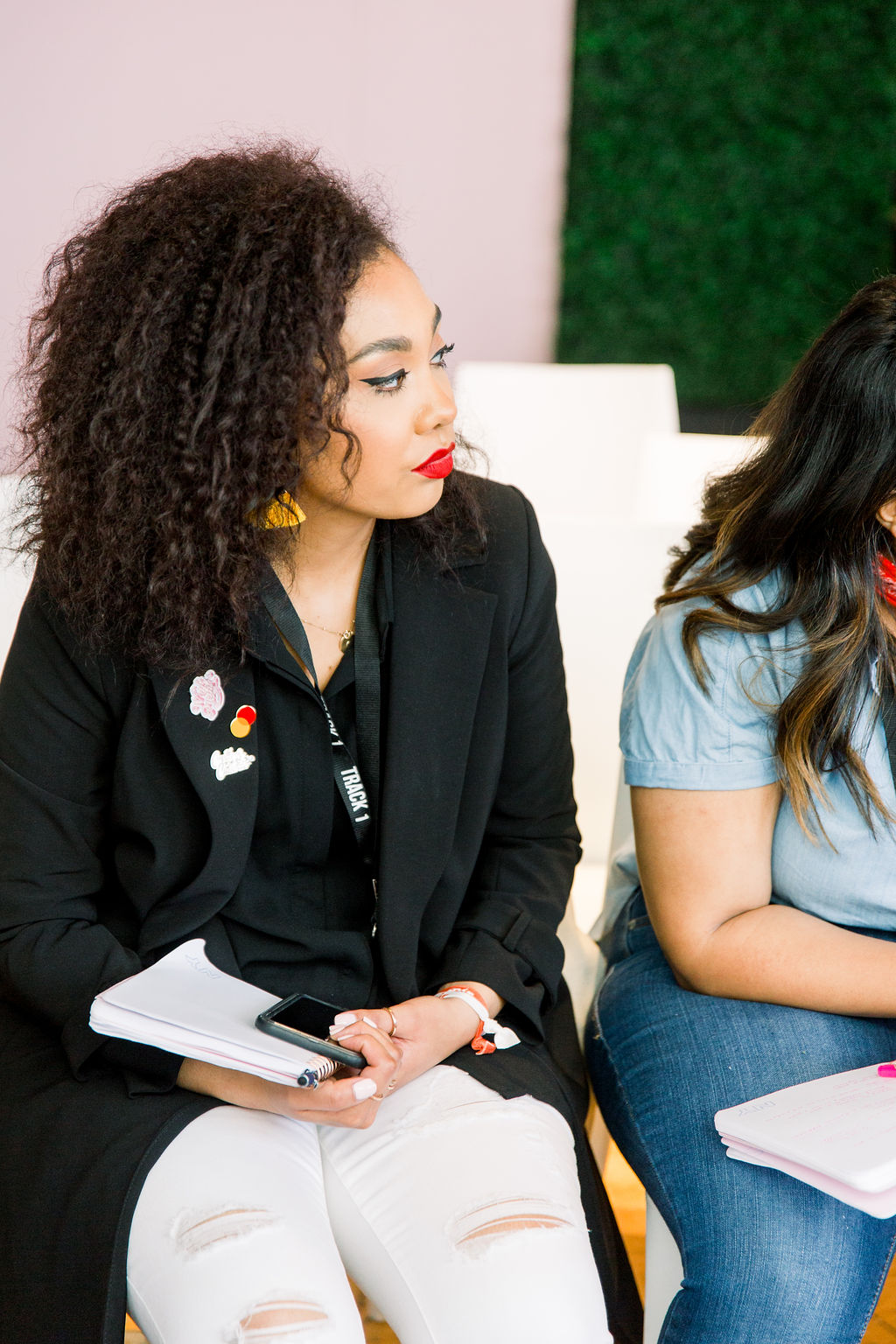

When is the last time you updated your resume? Months ago? Years ago? Whether you’re actively looking for a new job now or are considering making a career change in the future, keeping your resume in tip-top shape is crucial. In order to differentiate yourself from other applicants, you’ll want to avoid making these five mistakes on your resume so you stand out to recruiters. Knowing from personal experience in the recruiting world, recruiters only give about six seconds to review a resume—ten if they’re feeling generous. All this to say: you need a stellar resume, and we’re here to help.
Read on to learn about five resume mistakes we see all the time and how to fix them.
Resume mistake: Typos and grammatical errors
Quick Fix: I’m going to be frank with you here—there is no excuse for having typos and grammatical errors on your resume. But that’s easy to fix. Especially with GoogleDocs corrections and the plethora of extensions that you can add to your browser. Just install the Grammarly extension in your Chrome browser and it will check all of your documents including emails and give you suggestions. All of our editors at C&C use it. It’s just nice to know that someone’s got your back.
Resume mistake: Not customizing your resume
Quick Fix: Ever heard of a burrito? Typically made with beans, rice, cheese, salsa, and the like? Your resume shouldn’t look anything like that. Let me explain. There are two types of resumes that you should have—a burrito resume and a targeted resume. The burrito resume is, often times, only for you. It lists every career experience you’ve had with as much detail about each experience as you see fit. This resume should not be sent with a job application, that’s where your targeted resume comes in. Your targeted resume should be customized to the job that you’re applying for—for example, if I’m applying for a job in influencer marketing, I should list experience that involves analytical, creative, and customer service experience. Everything else should be kept out. And now who’s hungry for a burrito?
Resume mistake: Lack of detail
Quick Fix: Instead of simply stating what you did, explain in more detail the work that you have accomplished.
For example:
1. Ran influencer campaigns on YouTube.
2. Executed over 200 YouTube influencers by sourcing, negotiating, and launching campaigns with talent directly, resulting in over 1,000+ new customers and $200,000 in product sales.
Number one doesn’t provide enough information to get a recruiter interested, whereas number two is equal parts quality and quantity. You want to explain what you did and quantify your work as much as possible.
Resume mistake: Too long
Quick Fix: If your resume is targeted for the job that you’re applying for, chances are, you should be able to keep it to one page. And one page is truly the ideal length for your resume. Especially when a recruiter is shifting through hundreds of resumes a day, you don’t want them to immediately see that your resume is two or three pages long and dismiss it. Short and sweet, while simultaneously detailed and effective.
Resume mistake: Overly visual (or not visual at all)
Quick Fix: The design and layout of your resume is just as important as the quality of your statements. And while I typically would encourage you to showcase your personality through design, when it comes to your resume, you’ll want to lean towards a more minimalist look. I’d recommend capping your resume to three colors—black, white, and something of choice. This is only if you absolutely feel the need to show color, your resume will stand out without color too. You can, and should, explore some of the templates that Microsoft word or Google offer.
About the Author
Syama Meagher is the Chief Retail Strategist at Scaling Retail. They have launched brands around the world, through a combination of expert advice and creative marketing strategy. Scaling Retail believes in the power of hard work to grow and build your businesses. Discover Scaling Retail at ScalingRetail.com.
MORE ON THE BLOG

“People Over Everything”—5 Small Business Owners Share Their Best Advice
You can’t put a price tag on success.



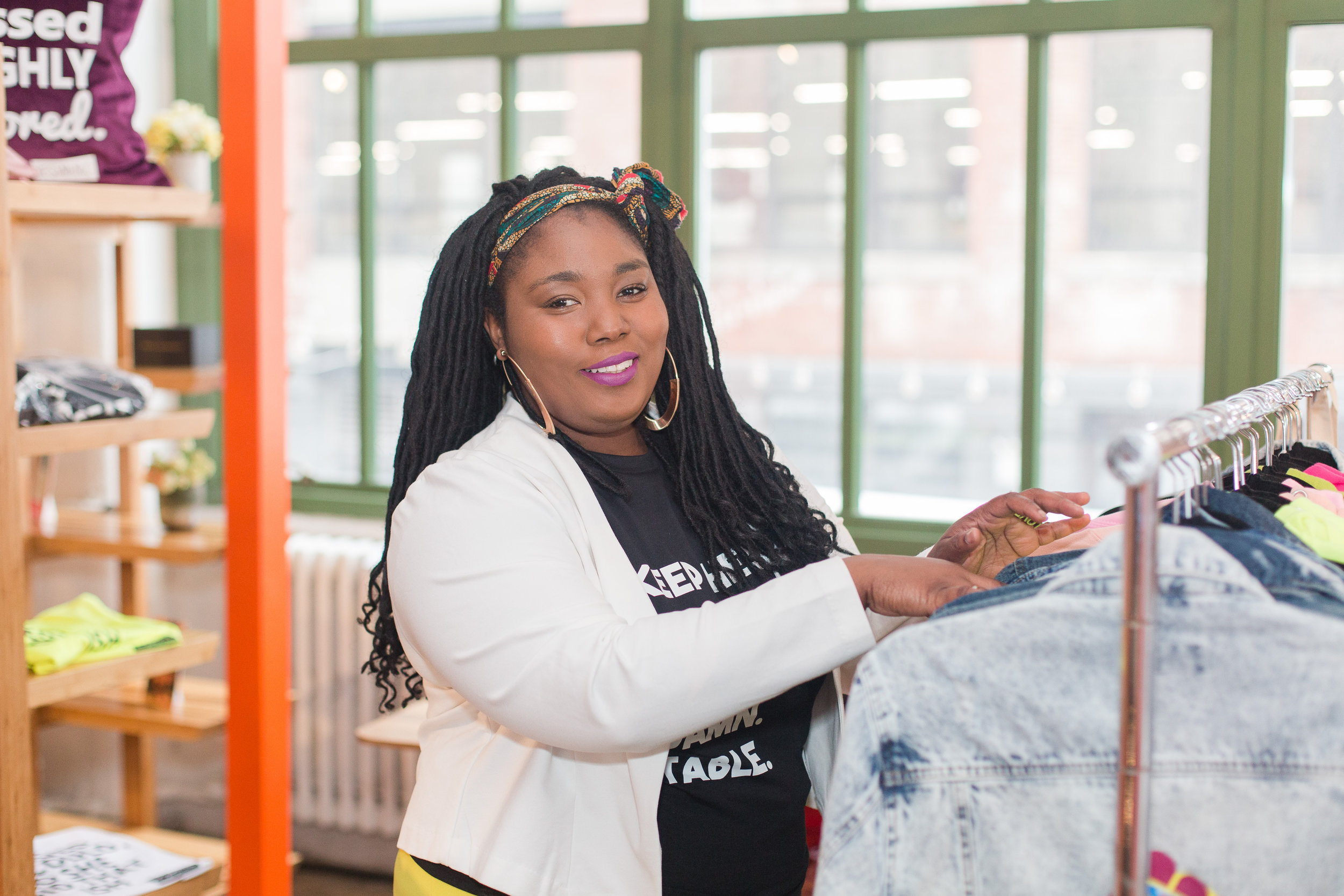

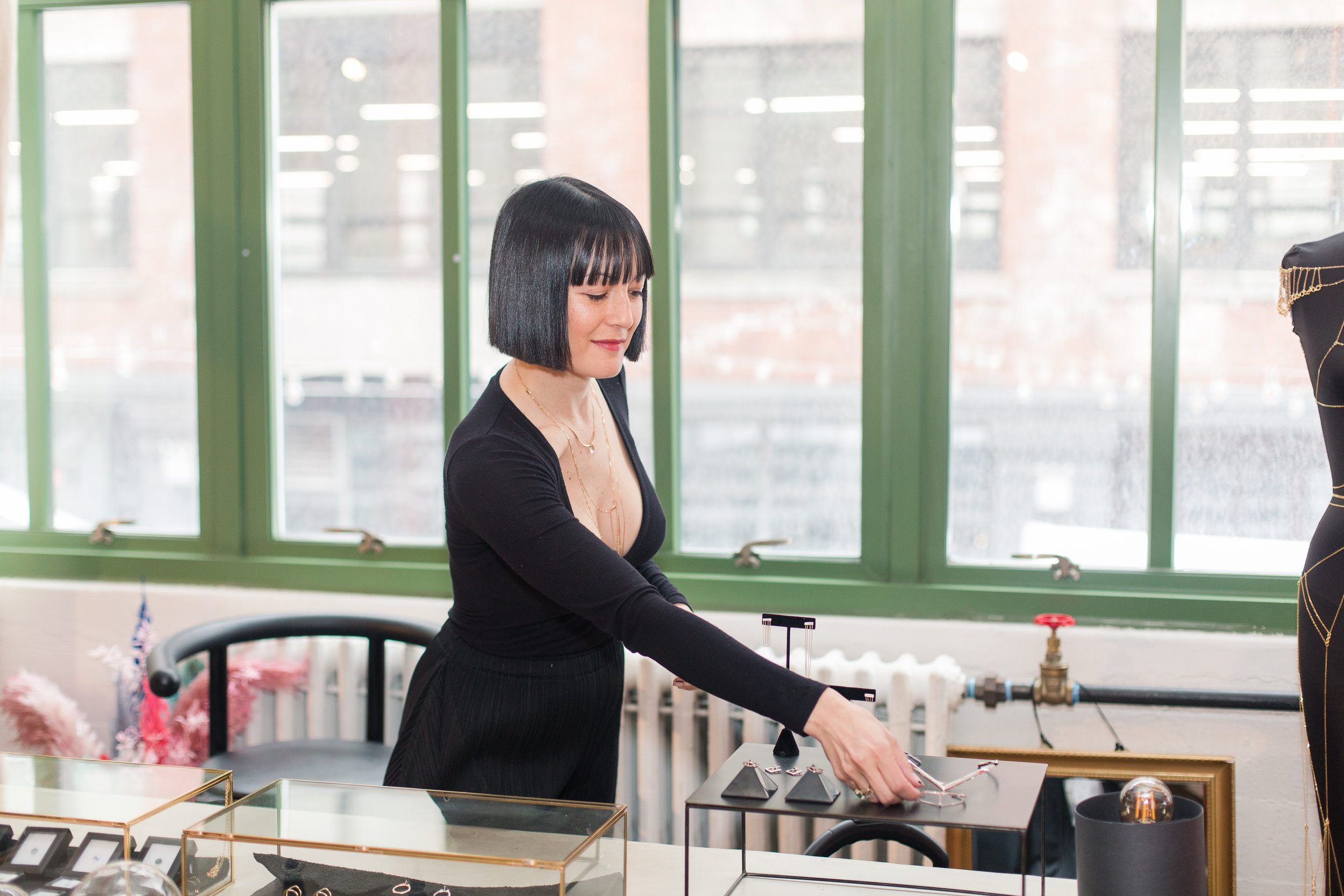
In a world where pretty much anything can be monetized—AKA your passions, dreams, and talents turning into your latest career venture—it’s easy to forget the things that don’t have a price tag. Things like community, motivation, and advice. When you’re thinking of throwing in the towel or u-turning away from your goals, it’s the people who support you unconditionally that help you reconsider. It’s also the people that have been through similar scenarios who give the best advice. Starting a business can be daunting and thinking of where to begin can be exhausting.
So, we tapped the shoulders of five women who showcased their passion-turned small businesses at our Mastercard Small Business Marketplace in New York. We have been dying to know what their best piece of priceless advice is—read on for the inside scoop.
Q: What were some resources you found super helpful in launching your business?
Coco Dotson and Breezy Dotson, Founders of Coco & Breezy: “When we launched our business we started with less than $1000 dollars. We had just moved to New York to launch. Since we didn’t have any access to capital our biggest resource was the internet and sharing our brand story in the rawest and authentic way.”
Teressa Foglia, Founder of Teressa Foglia: “My branding agency, Scout Lab. Finding an attorney and accountant who works with small businesses: Paco De Leon. A strong network for friends and agencies who can support you and be a sounding board for strategic planning. A community of like-minded brands to collaborate and co-promote with. I also attended and continue to attend workshops, panels, retreats and any events that can be educational or inspiring with industry leaders. Some of my favorites are hosted by Create & Cultivate, Soho House, The Assemblage, FashRev, Habitas, Neuehouse, The Wing, HER USA and Industry City.”
Kelsea Olivia Gaynor, Founder of East Olivia: “My most vital resources have consistently been women who I’ve either worked for previously or alongside launching my business. I believe in supporting one another as women, and surround myself with a community of peers and mentors who value sharing their successes and failures. This has continued to be a core priority as I grow my business. I have a tribe of people who hold me accountable for being the leader I've committed to beingbe, and consistently have to be willing to ask for support from that group when I move into unfamiliar areas, which happens quite often in growing a business.”
“When I heard Ginger Siegel, Head of North America Small Business, speak at Create & Cultivate—I knew immediately that she was someone I wanted to connect with. She was someone who I felt could provide insight as I financially planned East Olivia's future. I come from a background with limited financial education and experience, so asking for financial advice can feel daunting and intimidating. For me, it all feels like uncharted territory. However, each time I’ve pushed past my fears to ask important questions or for support in an area that felt overwhelming to me, I am always grateful I did.”
Bliss Lau, Founder of Bliss Lau: “When I first started my business I had no credit, so I had trouble getting financing to buy the supplies needed to fill my orders. I built my credit by getting a Mastercard, using the max and paying it off in full almost every month. Eventually, I was able to get a small business loan and a higher balance. Ultimately utilizing my credit allowed us to develop new products seasonally and expand without a huge financial risk or taking on investors.”
Michelle Cadore, Founder of YES I AM, Inc.: "My BBA in Entrepreneurship and Small Business Management helped me in many practical ways, and I also learned about plenty of resources while working for NYC's Department of Small Business Services, but nothing beats real life experience. At the end of the day, you need capital to grow your business and thankfully my Mastercard helped pay for those start-up expenses.”
“Many people would never dare take this risk, but if you believe in what you have, and you pour your all into your business then no matter what happens you are already a success.”
Q: What’s your biggest business goal for the next year?
CD and BD: “Our biggest business goal is that we will raise our first round of funding to help scale our company and DTC business model. We are really excited to grow our team and to bring on great talent that can help build our big ideas. We’ve been bootstrapping since day one of our business.”
TF: “Sales growth. We’ve cultivated an amazing community and develop partnerships that are invaluable— that’s where our focus will always be and this year we’re adding wholesale growth and direct to consumer growth through our online experience.”
KOG: “My biggest goal for this year is to sustain our growth in a consistent and financially healthy way. Building our team of full time and part-time staff is a major part of this goal. As we grow our staff, my responsibilities to our staff grow exponentially. I am committed to hiring talented creatives and offering them the things they deserve like great salaries, quality health insurance, 401k's, and an amazing work environment. In order to accomplish and maintain those standards for my employees I am prioritizing profitable growth above and beyond those hard costs.”
BL: “I am working with all of my gemstone vendors and manufacturers to help them understand the value of respect to the environment and people especially women who are impacted by our products. Transparency is no longer an option it is a must, and I want to help my industry move forward with honesty and respect. It is not about disruption for us it’s about the partnership, shared goals and evolution.”
MC: “By next year, I want YES I AM Clothing to be the signature clothing brand for empowerment and inspiration while earning $1M in sales.”
Q: What’s the most priceless piece of advice you could give to a new business owner?
CD and BD: “Continue to get to know yourself. In order to be a great leader and founder, you have to make sure you give yourself time to breathe, learn and grow as an individual. We all spend a lot of time working hard but it’s easy to burn out. I know the word self-care can be a little cliché and overused, but it is truly important. Also, don’t be afraid to ask questions. Sometimes people have fears that people may just you from not knowing an answer. But always remember that everybody doesn’t know everything—you learn as you go.”
TF: “Do everything with passion,define your values, mission, and purpose in your brand strategy. Have the right team and agencies aligned with you? Once you have your vision set, don’t compromise your product or service for opportunities that deviate from who you are.”
KOG: “People over everything. Meaning. I believe that the success of my business, while in large part fueled by my passion and hard work, is dependent on the people who stand alongside me. I can only do so much myself. I am the spark, but in order to see my vision, goals, and dreams come to life I need the right people in my corner. Whether it's your first hire, your mentor, or the freelancers you bring on project-by-project— the people you surround yourself with will directly impact the quality of your work, your ability to grow, and ultimately, the success of your business.”
BL: “Know yourself first. Truly diving into what your independent ideology is, is paramount to staying true to your vision.”
MC: “You have to believe in your business and in yourself. Being a business owner is not for the faint of heart or the easily discouraged. It is your baby and no one is going to love your baby more than you do. You have to eat, sleep, breathe your business with a passion to grow it to a successful level. It can take as long as 10 years to hit your stride and you better be willing to sacrifice. You may lose friends/relationships. You may not have work/life balance. You will have failures or missteps. You will have high highs and you will have lows that will make you want to give up. Many people would never dare take this risk, but if you believe in what you have, and you pour your all into your business then no matter what happens you are already a success.”

Out of Office, Out of Mind: The Ultimate Guide to Taking PTO Without Guilt
When it comes time to actually take advantage of vacation hours, many of us feel anxiety: How will my work get done? What if my team needs me? Am I going to come back to a ton of work to catch up on? We break it down.

Ahhh, PTO. There are few abbreviations that make us so giddy. But when it comes time to actually take advantage of vacation hours, many of us feel anxiety: How will my work get done? What if my team needs me? Am I going to come back to a ton of work to catch up on?
We hear you. That’s why we’re partnering with Microsoft Teams to share the ultimate guide to taking PTO without leaving your coworkers in the lurch. Read on, reach out, and get that vacation planned, girl—you’re about to go on a guilt-free getaway.
1. Make a formal PTO request. This step is easy—obviously, you should follow your company’s handbook in requesting time off (whether it be through an HR system, email, or calendar) and get it approved by your manager before moving forward.
2. Share your vacation schedule with your team. If you have a shared team calendar, input your PTO as soon as you know you’ll be vacationing. If you’ll be gone for an extended period of time, give your team plenty of notice so they’re not caught off guard—otherwise, a week or two in advance works well so it’s on everyone’s radar.
3. Adapt your workflow. You might be leaving, but your work’s not going anywhere. Work with your direct manager to figure out the nitty-gritty of what’ll happen in the office while you’re gone. Move deadlines, reschedule meetings, and start conversations about assigning crucial tasks to other employees.
“Will you be checking email while you’re gone? Or are you going totally off the grid? Share your availability to set reasonable expectations (and boundaries) for your colleagues while you’re away.”
4. Come up with a coverage plan. Your coworkers will be picking up your slack while you’re gone (bless them). Work with your boss to delegate your responsibilities while you’re OOO, then use a project management tool like Microsoft Planner to reassign projects that need to be completed in your absence.
5. Remind your boss. As the date of your departure approaches, give your supervisor a friendly reminder that you’ll be out of office soon, and reassure them that your responsibilities are being taken care of by your team. Your PTO schedule isn’t likely top of mind for them, so they’ll appreciate a second notice.
6. Set your away message. Will you be checking email while you’re gone? Or are you going totally off the grid? Share your availability to set reasonable expectations (and boundaries) for your colleagues while you’re away.
7. Hand off remaining work. If you’ve followed the steps above, you shouldn’t be panicking last-minute about leaving the office. Wrap up what you need to do on your last day, then send out a message in your team chat with any updates on projects they’ll be handling while you’re out.
8. Go forth and vacation! Today’s the day! Take your mind off those deadlines and kick back and relax. You’ve (literally) earned it.
MORE ON THE BLOG

How Big Is Your "But"?—4 Simple Ways to Kick the Bad Habit
Stop making excuses.

“But,” it’s probably one of the most crippling words in our vocabulary and often the hardest to kick. Think about it. So many of us have dreams and goals that end with “but.”
BUT… I don’t have enough time.
BUT… I’m not good enough.
BUT… It’s already been done.
When we add “but” or “someday” or “if only” to our dreams we often hold ourselves back with an excuse for inaction. Because the truth is we have as many hours in a day as Beyoncé, self-discipline and endurance can trump talent, and there’s enough room for all of us to chase our passions. If we want to create a life that we love, a life where we feel deeply fulfilled, it takes self-awareness and action. You have to know what you want and then actually show up to pursue them.
Sounds pretty obvious right? But there are so many feelings that can creep up and distract us from reaching our goals. Here are a few types of kryptonite that we’ve all fallen victim to:
Fear
Fear is the number one thing that holds people back from finding (and living out) their full potential. Fear is tricky to notice because it can sneak into our subconscious as a tiny seed of doubt, slowing us down with thoughts like, “I don’t have what it takes,” “what if I fail,” or “what will people think?" and so on. Over time though, these small thoughts can snowball, leaving even the best of us with a pile of “what ifs” that can paralyze us from taking action.
Perfection
We all want to put our best selves out into the world. But the attempt to be “perfect” can also keep us stuck. It’s easy to get caught up in all the details, which can lead to self-sabotaging our growth as we wait for everything to be “just so” before we move forward.
Feeling Overwhelmed
So many of us walk around carrying the weight of unneeded stress and feeling overwhelmed—chasing our version of success one check mark at a time. It’s so easy to get caught up in all-of-the-things that we think we should be doing, including those menial tasks that don’t actually help us gain any real ground toward our goals. But the truth is, complexity is the enemy of execution. Working in an endless state of feeling overwhelmed isn’t proactive and it slows down our efficiency and progress.
Loss of Excitement
When we’re passionate about something, our desire can outweigh and override the hustle needed to reach our goals. But if we lose the excitement and the passion behind what we’re working toward and why, our drive can easily fizzle away as well. This can leave us feeling unmotivated and quite honestly, blah about the work in front of us which opens the door to any type of excuse or distraction.
So how do we kick the excuses and stay focused on our goals when the feelings of fear, stress, overwhelm, or a lack of motivation stand in our way? Here are four quick tips to help you kick the “but...” and stay on top of your game.
1 | Make sure your vision is clear.
Take some time to really visualize your goal. When you have a clear vision, and you’re working toward something that you're passionate about, your desire can propel you past the doubt or fear. The future vision of your goal coming to life can act as a springboard to push you forward out of the struggle (whether it be stress, overwhelm, or just feeling meh).
2 | Prioritize and Plan.
Take time to thoughtfully break down your goals. When we have huge dreams, it's easy to get overly ambitious and want to accomplish everything all at once. But when you take on more than you can handle, it can quickly lead to that feeling of being overwhelmed which in turn can lead to burnout. So, it’s important to pull the reins and remember that it’s a long-term game. Be strategic in planning out how you will reach your goals; break them up into annual, quarterly, monthly, and weekly mini-goals (working forward one step at a time).
3 | Take Action—again and again.
It’s easy to take action when we’re in the zone, but sometimes we have to commit to ourselves and take action even when we don’t necessarily feel like it—i.e. when fear walks in the door.
It’s also natural for our brains to coax us to stay in the comfort zone, to resist change. But if you want to reach your goals, you have to be willing to put in the work and embrace the not-so-great feelings sometimes. I'm not saying that you need to subscribe to a lifestyle of stress or overwhelm, but it’s important to expect seasons of hustle–where you'll have to roll up your sleeves and put in the work.
4 | Choose your thoughts.
Too many of us listen to our thoughts instead of choosing which thoughts we actually want to think. (Let that soak in for a moment.) We may not have a choice over our circumstances, but we can always choose our thoughts. There’s a lot of mindset training out there, but a quick way to keep your thoughts in check is to use a simple mantra that can help you to stay grounded and focused.
At Create & Cultivate NYC (Spring 2019), we had the opportunity to listen to the fabulous Ashley Graham. She shared a simple but powerful mantra that she uses to remind herself of her worth, “I am bold, I am brilliant, I am beautiful.” So good, right?!
Regardless of where you are in chasing your dreams, and no matter how big your “but” is, it’s important to know that you’re not alone. Everyone with a pulse deals with their own kind of fear and doubt. Chasing big goals isn’t easy, but it’s worth it.
If you’re serious about reaching your and living your fullest potential you’ll need to get comfortable being bold and taking action again and again (despite the fear). And it all starts with kicking the excuses and the “but” out of your vocabulary.
Sasha Kill is the founder and lead designer at Outlaw Creative where she’s on a mission to empower entrepreneurs to grow their brands in remarkable ways. With an extensive background in marketing design and online strategy her clients include best-selling authors, celebrity chefs, world renowned artists, and multiple self-made 7 figure businesses. You can find her insights on design, marketing, and branding on www.outlawcreative.com.

Collaboration Over Competition: How This Company Is Sharing Data to Make Driving Safer for All
We all know we’re stronger together than apart and this company is proving exactly that.

I grew up in a 1980 Volvo Coupe. It was large and in charge with a bold, bright red hue. Fast forward 20 years, and I would do anything to have that car again. Now more so than ever because I’ve learned about Volvo’s positive impact on the auto industry, and the values they’re inspiring all of us to believe in, too.
Volvo is a prime example of how “collaboration over competition” can be put into action for the greater good. We’re partnering with Volvo to share how this philosophy can be applied to every aspect of your life, whether or not you’re behind the driver’s seat.

Volvo Gave Away Their #1 Invention
It’s hard to believe that car safety used to be an afterthought. Now, we have cameras on our rear view mirrors and sensors telling us when we’re getting close to other cars. Driving has never been easier, some would argue, but it wasn’t always that way. Volvo was the first car manufacturer to care deeply about consumer safety. So much so that they “gave away the most important safety device ever invented: the three-point seat belt.” Car safety was forever changed because they believed that the best thing to do was to share their knowledge and collaborate on changing the way we drive today.
Building the Road Ahead—for Women
In March 2019, Volvo announced that they will share research on “crash-test safety with other automakers for free,” roughly 60 years after the three-point seat belts became standard in all cars. They continue to embody this idea of “collaboration over competition,” and are even making strides to specifically protect female car occupants. Volvo’s Project EVA, which stands for Equal Vehicles for All, aims to diversify test dummy sizes and designs, including people outside of average height and weight ranges that fare worse in car crashes. One of the ways Volvo has already addressed this concern is by implementing WHIPS anti-whiplash seat design in 1998 to help women, and especially tall women, be less likely to incur whiplash neck injuries in crashes.
Aiming for Zero
Volvo is not only changing the way all automakers keep their drivers safe, but they’re committing to Vision 2020, the goal being to have no one killed or seriously injured in a new Volvo by 2020. This isn’t a “better than thou” type of commitment, this is a basic priority that they’re giving to every human being. Volvo’s safety experts have identified three ‘gaps to zero’ that they will address to reach Vision 2020: speeding, intoxication, and distraction. Volvo will be limiting the top speed on all its cars to 180 kph (that’s roughly 112 mph) in 2020, as well as looking into geofencing technology that would automatically limit speeds around schools and hospitals. And with the invention of in-car cameras, Volvo vehicles may be able to intervene by slowing down and parking safely if it senses the driver is intoxicated or distracted in other ways. They’re thinking of everything and sharing their ideas and findings with their counterparts.
Volvo’s embodiment of “collaboration over competition” inspires all of us to think about how we can share our own knowledge and advice to those who need it most. When we’re open to sharing and open to caring, great things happen.
Sponsor: Volvo
MORE ON THE BLOG

The CC Team Asks: How Do I Make My First Investment?
Nothing ventured, nothing gained.

Written by: Camilla Marcus, Co-Founder of TechTable and Partner of Pound for Pound Consulting
The start of a new year is often when we take stock of our lives, think about new opportunities we can pursue that will enrich our day-to-day, and look for ways we can give back. Investing is an incredibly rewarding experience, and a smart way to accomplish both of those goals. By investing, not only do you get to help entrepreneurs realize their dreams (and maybe change the world) but you’ll often see worthwhile returns yourself.
Yet I constantly hear reasons why people don’t invest. I get it, investing can seem daunting. But getting started is often the hardest part. As a female investor, I especially want to encourage other women to leverage whatever success they have to pay it forward and support female-led startups. So, if you’re interested to kick off your investment portfolio, here are six tips for how to make an investment and ensure your first steps as an investor are less intimidating.
START WITH WHO YOU KNOW
For the first few investments you make, it can be helpful to invest in a friend’s company or alongside another friend with experience. If you’re investing in the venture of a friend, ideally you already know their work ethic and if they are a fit for the idea, so you can have faith they will put your hard-earned money to good use and (hopefully) yield a solid return. Additionally, investing alongside people you know—a business savvy friend or a colleague in your network whom you trust and respect—is a helpful way to learn the ropes and can often lead to more opportunities in the future.
ONLY INVEST WHAT YOU CAN STAND TO LOSE
This sounds self-explanatory, but it’s still worth saying (and reminding yourself over and over): “Don’t bet the house.” As a general rule, your total portfolio shouldn’t be more than 10% of your income or net worth, so don’t invest what you need, such as rent.
"Your total portfolio shouldn’t be more than 10% of your income or net worth."
Tweet this.
Sometimes even the best sounding deals don’t go anywhere, and you may never see a return on some investments, especially in the early or seed stages. Before signing on the dotted line, ask yourself, “If I lost this, would I be okay?”
DON'T SELL YOURSELF SHORT
A common misconception is that because you might not have a large amount of capital to work with, you can’t or shouldn’t invest. “I don’t have a lot of money” isn’t a good reason not to invest at all. You may not have unlimited funds, but you likely have a unique skill set or valuable network. Perhaps you’re a marketing savant or a talented writer or work for an exciting company, and you can be a strategic asset to the venture in other ways, even if you can’t cut a big check. You won’t know until you show interest and ask the founder—nothing ventured, nothing gained. Another option is to create an informal syndicate with other friends interested in investing, pooling together what you each have to spend in order to satisfy the minimum investment requirement.
KNOW WHAT YOU DON'T KNOW
In the beginning, it’s easier to learn to swim in familiar waters, so invest in products, companies, or industries that you’re passionate about and have at least some level of expertise in. No matter how appealing or attractive an opportunity appears, it’s important to be able to have a pulse on that specific market and the competitive landscape so you can properly evaluate the business with context. I personally prefer to be a more hands-on, strategic partner rather than a passive capital provider, so I find it most valuable to invest in products that I would use or in businesses where my specific background and experience can be useful to the founders. There are a lot of resources out there for beginners, such as Joanne Wilson’s blog Gotham Gal and Charlie O’Donnell’s #newtovc, which hosts monthly classes and workshops for people new to the investing community. And if there’s any part of the process that you don’t understand, it’s important to be thoughtful and humble about asking for help.
“'I don’t have a lot of money' isn’t a good reason not to invest."
Tweet this.
HONESTY IS THE BEST POLICY
Along the same lines, you have to be truthful with yourself about what kind of investor you are and want to be. Are you willing to invest long term? Do you need cash flow right away? What is the maximum check size you’re willing to contribute? Do you have any other special requirements or restrictions? Deciding what your investor profile is will help attract the right kind of opportunities, guide you through the evaluation process, and help you filter through deals more efficiently.
PASS IS NOT A FOUR-LETTER WORD
Be realistic about what opportunities are a good fit and be confident to know that not every company or investment is right for you. Sometimes people who’ve never invested before begin to feel obligated to complete a transaction during due diligence because they feel they’ve put too much time and energy into the investment already. Even if you’ve taken a few meetings with an entrepreneur and you’ve seen their term sheet, it’s okay to pass at any point before signing final documents as long as you do it politely and while maintaining an earnest and thoughtful reputation (this world is small, after all).
BONUS—HAVE FUN WITH IT
Finally, investing should be something you enjoy and have a passion for. It’s okay if you find out it’s not a great fit for you, but if you’re going to be investing your hard-earned (and post-tax) money, you should definitely embrace the adventure. Remember to live by the golden rule: don’t invest just to invest.
Camilla Marcus is the co-founder of TechTable, a hospitality technology thought leadership platform, an active angel investor, and a partner of Pound for Pound Consulting. She brings a broad base of experience across business development, hospitality ideation, culinary operations, and real estate. She received a JD/MBA from New York University, an AA from the International Culinary Center, and a BS from The Wharton School. She is also a mentor in residence for TechStars New York and a board member for Wellness in the Schools in New York City.
This post was originally published on December 11, 2017, and has since been updated.
MORE FROM OUR BLOG

If You Have These 4 Money Books You Won't Need a Financial Planner
Read 'til you own it.

photo credit: Beth Cath
Sure, the world wide web has a seemingly endless bounty of information. Better yet, it’s all just a click away. But that doesn’t mean you should discount the value of a great book, especially when you’re looking to take charge of your financial situation.
Whether you are looking to reduce your debts, up your savings, start investing, or anything in between, there’s a book for you. Ahead, we check out some of the best personal finance books, period. So, pick up a coffee and settle in for some excellent reading—and start cultivating the bank account of your dreams, too.
FINANCIALLY FEARLESS
LearnVest founder Alexa von Tobel published Financially Fearless a few years ago, and it has quickly risen to the top of the ladder when it comes to must-read books. Von Tobel won’t make you give up your latte. But she will make you whip your finances into shape. That’s the good news. The even-better news is it won’t hurt. Von Tobel’s advice is accessible, down-to-earth and easy-to-implement. By the end of this book, you’ll feel confident about your financial future and raring to put your new money routines in place.
WORTH IT
If you hate being the last to know, make sure you add Worth It, the book by DailyWorth founder and CEO Amanda Steinberg, to your reading list, stat. Worth It will inspire you to see how money can be the key to freedom—by building your savings, taking control of your situation, or even just taking steps to understand what comes next for you. Sure, Steinberg gets into the nitty-gritty, which can be overwhelming for some of us. Happily, Steinberg makes it feel as easy as talking to your BFF.
YOU ARE A BADASS AT MAKING MONEY
If you’ve already read Jen Sincero’s life-changing New York Times best-seller, You Are a Badass, don’t skip the financial-themed follow-up: You Are a Badass at Making Money. Here, Sincero breaks down her money story in detail in a series of personal essays. Along the way, you’ll discover the little lessons that Sincero has learned from, all of which lead her from living in a converted garage to traveling the world. While every woman’s story is and will be different, Sincero’s is relatable, which means it’s practically guaranteed you’ll be able to pull something from this book that will change your life for the better.
OWN IT
Okay, so Own It is not a book about money. But it is written by Sallie Krawcheck, Ellevest founder and one of the most powerful women to have ever worked on Wall Street. In Own It, Krawcheck offers up advice on how women can play by a new set of rules in the workplace. And Krawcheck doesn’t just talk the talk; she walks the walk. Drawing on her experiences at the highest levels of business, Krawcheck outlines all the steps women can take to seize our power, at this moment in time, and change the game.
Noa is a Certified Financial Planner™ and founder of Socialyte Capital, a financial planning firm for style influencers. She is passionate about helping women reach their wealth potential through financial education and strategic money management.
This post was originally published on April 18, 2017, and has since been updated.
MORE FROM OUR BLOG

This Celebrity Stylist Shares Her Secret to Success (Pssst...It's Instagram)
“If you want engagement on your page, you need to engage with other pages and be active on the app.“

Justine Marjan is a celebrity hair stylist and ghd ambassador.
If you don’t think of Instagram as a networking tool…think again. Celebrity hair stylist Justine Marjan is an IG guru, using it to not only score gigs but also build a wildly-beautiful portfolio. We partnered with ghd to hear how she makes the most of social media—plus ask for all her beauty secrets and beyond.
Q: Working with celebrities sounds incredible, but also scary! What’s been the biggest challenge and the biggest reward in having a famous roster of clients?
A: The biggest challenge has been putting my personal life on the backburner to meet crazy call times and travel schedules. I love traveling so it’s been an amazing experience, but when I moved to LA I dived head first in to my career that I didn’t have much time to socialize. The biggest reward is getting to be creative, share a vision with fellow artists, and see your work come together on a carpet or editorial. I love making women feel good about themselves and it’s great to be a part of that transformation.
Q: You attribute your career to social media. Tell us a little about how you built your career thanks to Instagram?
A: Instagram is the greatest marketing tool, and it’s free! As an artist, it is less essential to have a traditional portfolio or website now as most people find and look for your work on Instagram. I love using the platform to educate my peers, share my work with my followers, and connect with potential and future clients.
Q: Any tips you can share with others who look at how you built your career and say, “I want to leverage social media in that way?”
A: I would suggest being consistent, only posting quality content, using hashtags, and engaging with other artists and people you want to work with! In a meeting with Instagram, they told me “engagement is a two way street,” meaning if you are only a voyeur on the app, you can’t expect people to comment and like your content. If you want engagement on your page, you need to engage with other pages and be active on the app.
“In a meeting with Instagram, they told me “engagement is a two-way street,” meaning if you are only a voyeur on the app, you can’t expect people to comment and like your content.”
Q: What are some of your best tips for working women who want to get out the door quickly but want to look put together for work?
A: I love the new ghd glide hot brush! It is my life saver for busy mornings where I need to fix my hair but don’t want to spend a ton of time on it. It’s a heated brush that tames frizz, adds shine, and smooths the hair. If I wake up with a crease or frizz I can trust that it will quickly fix it.
Q: You’ve said before that the most underrated hairstyle is the ponytail, and as busy women, we agree! What’s the secret to a great ponytail?
A: The secret is placement! We are so used to seeing our hair from the front, but a ponytail is all about the profile. Notice where it sits on your head and how that compliments your facial features from the side. I love a ponytail that falls right in like with the cheekbone for a super flattering finish.
Q: What are some of your favorite tools or products for on-the-go women?
A: If I could only have one tool in my kit, it would definitely be the ghd platinum plus styler. I love that the rounded edges make it easy to create waves, curls, and sleek looks. The new festival collection styler also comes in a cute holographic color. Another must have for women on the go is a great silk pillowcase. Sleeping on silk reduces frizz, bedhead, sleek crease, and extends the life of your blowout. My favorite brand is The Hollywood Silk Solutions.
Q: If you weren’t a stylist, what would you be doing?
A: I would probably be a photographer, creative director, or social media manager. I love taking photos, coming up with a concept, behind behind the camera and engaging on social media. Anything creative and hands on gets me excited.
Q: What’s something we might not know about you?
A: I’m a certified yoga teacher.
Q: What’s next for you?
A: My hair accessory collection with Kitsch has really inspired me to keep creating new pieces! I’m working on my next two launches with them and can’t wait to share what we’re working on. I just finished filming Project Runway on Bravo and loved working on TV. That is definitely something I would love to do more of. And I hope to get more into education and sharing my knowledge and story to inspire others.
This post is sponsored by ghd.
MORE ON THE BLOG

A Glimpse at our 2019 Houston Style Summit
Houston you NEVER disappoint.

Photo by Becki Smithouse Photography

Our annual Create & Cultivate Style Summit was one to remember leaving everyone motivated to take their career(s) to the next level. Each year, we leave the Houston Galleria with an even bigger and better experience than before. Influencers both big and small arrived at Houston’s go-to culture hub ready to learn, network, and gain wisdom from influencers we’ve grown to love over the years proving that there’s no such thing as an overnight sensation.
Top 5 Mic Drop Moments From the Day:
Agatha Ashiofu: Find your passion! Once you find it, the rest will unfold.
Agatha Ashiofu: Plan and do the work— Sometimes you have to sacrifice fun for long term success.
Sarah Adam Hafez: Whatever your definition of success might be, you have to put that as a priority. Life is too short to wait and say “what if”— Just start and take it slow.
Lee Anne Benjamin: In the beginning, I was afraid to share raw moments and what made me unique. Be yourself/share those raw moments. Those are the days where I get the most engagement.
And last but not least, our Keynote Audrina Patridge left us with a charge to:
“Get a lawyer up front, especially one that specializes in your industry.”

Photo by Becki Smithouse Photography
Who said you can’t have beauty and brains? Whoever made that up can kick it to the curb because our panelist hit the runway with effortless style and grace! Fun fact, did you know by day, Agatha Ashiofu is an account and Jaserah Asadullah is a Petroleum Engineer Technologist? Seriously, women do it all and these ladies make it look so easy.


Shop their looks at The Houston Galleria:
Courtney: Scotch + Soda (outfit), Sam Edelman (shoes). Check out her Instagram to see how it all came together.
Agatha: Maje (outfit). Can we all agree how major she looks?
Jaserah: Sandro (dress and heels). You have to see how Jaserah styled it.
Lee: Express (jacket and cami), Madewell (jeans). Check out Lee’s full look on her Instagram.
Carrie: Paige (jeans). We love how she put it all together.
Jaclyn: Ted Baker (entire outfit) . She styled it to perfection.
Think we’re done? Think again! During the day attendees watched a live 30-minute tutorial filled with tips and tricks from celebrity makeup artist, Jamie Greenberg; making time consuming beauty looks achievable for our attendees!


If you weren’t able to make it this year, be sure to check back later this week for our recap video.
Follow and stay connected with all of our panelists, keynote guest, and moderators on social:
Eye For Style: How to create & cultivate your confidence through your closet:
Panelist
Sarah Adam Hafez— @SarahAdamHafez on Insta
Agatha Ashiofu— @IronyofAshi on Insta
Lee Anne Benjamin— @LeeAnneBenjamin on Insta
Jaserah Asadullah—@SimplyJaserah on Insta
Courtney Kerr— @Kerrently on Insta
Moderator
Carrie Colbert — @CarrieC on Insta
A conversation with our Founder, Jaclyn Johnson and Audrina Patridge
Keynote Speaker
Audrina Patridge — @AudrinaPatridge on Insta
Moderator
Jaclyn Johnson — @JaclynJohnson on Insta
Makeup Tutorial
Jamie Greenberg (@JamieMakeup), Model: Brittany Puerto (@BrittanyPuerto) - Make up used for this tutorial was provided by Morphe.
MORE FROM THE BLOG

5 Ways To Build Successful HR Relationships
Building successful HR relationships comes from building up people, not walls. Here are some ways you can start cultivating better connections.

HR – It's time to tear down the wall. Our job is to build up people, not walls, so let's dig into our why, our purpose, and how we can build successful HR relationships. Prejudice of all kinds exists, whether it be race, gender, sexual orientation, or difference of thought. And for those of us in HR positions, our goal is to let all of these go.
We need to let go of all the things that weigh us down because we can't help anyone if we are carrying such a heavy load. The beginning stages of shedding this heaviness is asking ourselves the hard questions. Are we over processing and over-engineering people to make them fit into a certain culture? Are we putting people into a box instead of looking at the things that they add value to? Are we becoming hypocrites of our own mission?
Get clear
In order to be the change, you need to keep it simple. Your choices are what matters, and getting clear on the tough questions is what will begin tearing down the wall for a brighter future. What do you want that future to be and who will help you bring it to fruition? What are the most important things that your team needs? Start here and focus on understanding what you have in an organization, rather than focusing on what you don't have. What's important to an organization are the people that add value and bring a team to success on both a mental and spiritual level. Every hire is a representation of your company, so you need to define what you want the HR department to look like - good ideas plus good intentions, and a clear mind will create success.
Erase fear
Don’t stand in your own way and let fear run your business. Especially in HR, we need to be the change and to be fearless in our endeavours. Those who have entered into HR are there to be the voice for the ones who can’t speak up. They have integrity and a fiduciary responsibility to ethics and equality for all. We need to eradicate the walls and work with people to bring a positive change into the workplace. Be the HR hero that leads with human compassion and empathy, and the reward will be success and equal opportunity.
Provide support
It’s so important to provide a safe and supportive work environment. This leads to positive ROI, creativity, inspiration and an inclusive workplace where walls don’t exist. It is our time to disrupt, change and evolve. We support the masses – we support everyone and this change begins with education. What drives diversity and inclusion is education for all. Education is our salvation for a brighter tomorrow and has an impact on our communities, our customers and ultimately our ourselves.
Build from the inside out
You must build from within. Today’s statistics prove that there’s still far to go before we see significant success. 71% of people with jobs are looking for other jobs and the average tenure for millennial's is 15 months in their first 3 job positions. Retention rate starts with proper hires, fostering education and growth within a workplace. This is a systemic problem that needs to be addressed. Many work environments place unneeded pressure on employees and view them as replaceable and just a number. They should instead be putting time and energy into building a culture that’s about education and training for success. Recycling employees has now proved to be an issue and has led to a skills gap in this country.
Education is key
You need to look at every role with an education component in mind to ensure success. Companies and the teams within them win when they have education and a solid cultural foundation. Start with the basics and place more of an emphasis on hiring based upon personal qualities and skills. Many things can be learned, and hiring genuine people is extremely valuable to the future growth of a company. When you focus on obtaining quality skill sets and quality people, your company will begin to progress and move forward. This ultimately opens the door and the market for people that are actively looking to learn, work with your inclusive team, and wanting to make an impact. Focus on your active talent and invest and educate the people within your team. And when we focus on education, it leads to diversity and inclusion amongst your entire organization. We did not get into HR to stand down - we got into HR to stand up for inclusion for all, and education is our path to success for all.
Kristy McCann is the founder of GoCoach, an employee training platform.
MORE ON THE BLOG