
Why It's Time to Ditch the "YOLO" Mindset
Your old pals dollars and sense say so.

Don't worry, she made that coffee at home...
These days, in our world of instant gratification (we may even be able to leverage our selfies to make purchases), it’s more necessary than ever to be able to stay focused on saving money any way you can. So to help you monitor your spending habits and cut expenses (to put more $$$ in your pocket), here are 20 easy hacks you can use every day—starting right now. Now, that’s instant gratification at its finest!
1. Have a weekly money date.
Commit to sitting down with your money once a week for a money date. During this time, update your budget, review your accounts and track your progress against your financial goals. Like any relationship, if you want your financial life to improve, you must spend time with your money.
2. Plan out your meals for the week.
Taking a few hours every weekend to grocery shop and meal plan for the week will definitely save you money, as dining out is the No. 1 expense for most households. By eating at home, you save money that would otherwise be spent on tax and tip—and you usually save calories, too.
3. Cut out cable.
Gasp! Cut out TV?! Never! But with services like Hulu, Netflix and Amazon Prime, you can now watch your favorite TV shows and movies for a fraction of the cost of cable TV. A study by NPD shows that cable bills will soon grow to an average of $123 per month, or $1,476 per year. By switching over to an online service or cutting out TV altogether, you can save that money for another financial goal—like paying off debt, traveling or saving for a home down payment.
4. Host a potluck.
The more friends you have, the more money you spend on lunch dates, birthday parties and gifts. Switch it up and instead of meeting over a fancy dinner, host a potluck and have everyone bring his or her favorite dish. That way you can save money you’d spend on restaurant extras like tax, tip and parking—and you’ll usually have a more intimate meal together, too.
5. Leverage Airbnb.
Finding a place to stay while traveling is so convenient when you use Airbnb. You can often find a place that has a kitchen (so you can cook meals at home to save money) at a rate that’s comparable to hotels. You can even rent out your own place on Airbnb while you travel to make some extra cash to pay for your own travel expenses. It’s a win-win scenario.
6. Make coffee at home.
This one’s not my favorite, as I absolutely love going to coffee shops and drinking organic, delicious coffee. However, spending $4 to $5 on coffee every day definitely adds up. So try my approach and allow yourself a few days a week to buy coffee at cafes, and make it at home the rest of the time.
7. Work more.
When you’re working a lot, there’s not much time left to shop and spend money. Stay busy and pursue a career you love—then watch how when you’re busy hustling, you spend less.
8. Wait 48 hours before you click “buy.”
Since we can have anything we want these days with just the click of a button (there’s that instant gratification again!), you need to find a system to help buffer your impulse purchases. Example: Wait 48 hours before spending money on things that cost more than a certain amount. When you do, you will find that most of the time the item was more of a “want” than a “need.” Plus, you’ll save money and work toward being more mindful with your spending.
Stop spending money on things you don’t need to impress people you don’t like.
tweet this
9. Use blogs and Pinterest to learn DIY beauty treatments.
Self-care is important—but going to spas and getting pedicures, massages, etc. can really add up. Allow yourself a certain amount to spend on these things, then use blogs and Pinterest to find at-home beauty treatments to help you save money. Often you can find a DIY, organic option using common household or kitchen products.
10. Outsource with Fivrr or Task Rabbit.
Time is a commodity, and your time is precious and valuable. And these days, there are so many tasks you can outsource that will save you time and money. But how do you figure out if outsourcing something is worth the expense? A great thing to do is to actually calculate the cost of your time, which will help you figure out if you can pay someone to do something for less than your hourly rate. Here’s an example: A monthly net income of $3,000 divided by a total of 160 hours worked equals an hourly rate of $16.75. Now that you know the value of your time, you can strategically outsource it, using a service like Fivrr or Task Rabbit, for a fraction of your hourly rate.
11. Get creative with gifts
Find creative ways to express your love to friends and family members for birthday and holiday gifts. After all, a handwritten note explaining why you love someone can be more sentimental than some expensive gift he or she may never even use. Most people will appreciate the thought behind your gifts more than anything, so don’t be afraid to save money and find free ways to celebrate birthdays and holidays.
12. Choose quality over quantity
This can apply to food, clothes, electronics and much more. Although it’s tempting to choose the more budget-friendly version of an item, sometimes choosing quality over quantity will save you more in the long run. Save up your money and get the best-quality product you can afford, and leverage the cost-per-wear philosophy with more expensive clothing and shoes. This applies to food, too: Buying quality organic food can nourish you in ways that fill you up more than the pre-packaged, processed stuff and potentially save you health care costs in the future, since you’re taking good care of yourself. Find a balance that is right for you and choose quality whenever you can.
13. Deal with your emotions.
A lot of times excessive spending is a way to avoid feeling certain emotions. If you check in with yourself before you go on a major spending spree, you may be able to identify if you’re feeling bored, lonely or stressed and spending money as a way to avoid the underlying emotion. Check in before you buy and be mindful with your spending.
14. Stop trying to keep up with the Kardashians.
It’s hard to keep your blinders on and not compare your financial life to others’, especially celebrities. However, it is really important to be clear about what matters most to you and make sure you build a financial plan that supports that vision. This will keep you moving toward your financial goals and stop you from spending money on things you don’t need to impress people you don’t like.
15. Read a personal finance book.
When you learn about personal finance, you’ll learn even more strategies to help you save money for your goals in life. Knowledge is power and the more you know, the more you can save.
16. Balance out your “YOLO” mindset.
With social media controlling our lives like never before, people often fall victim to the “fear of missing out” phenomenon and instead go overboard with a “you only live once” mentality. While it is important to live in the present and soak up each precious moment of life, make sure you balance that out by saving for your financial future, too. Without checks and balances in place, you can find yourself saying yes to everything and spending more money than you have—all because of the fear of missing out.
17. Map out your financial goals.
Be very specific with your financial goals. For example, saying, “I want to save for a home down payment” is not enough. You need to map out how much you need, by when, and what you need to save every month in order to reach the goal. When you know what your targets are, you’re more likely to stay the course and continue saving for them for the long-term.
18. Keep your eye on the prize.
Staying focused on your goals take discipline and determination. Saving can be easy and exciting at first, but after a while you may lose that initial motivation and start to find other things you can spend that money on. To avoid veering off course, check in with your goals regularly and keep your eye on the prize.
19. Track your progress
People in the U.S. save only 5.5% of their money compared to the 20% that personal finance teaches that you should put away. But instead of feeling ashamed about your lack of savings, just start by saving something. Even 1% is better than nothing. Track your progress and continue to increase the number year after year. Step by step, day by day, you can get to that 20% savings level. The truth is there are many ways to save money. Find the ways that work for you and slowly start incorporating the strategies into your life.
What tricks do you have for saving money?

Brittney Castro is the Founder & CEO of Financially Wise Women, an LA-based financial planning firm for women. Brittney has been featured in the Wall Street Journal, New York Times, CNBC, Glamour.com, KTLA, Entrepreneur.com, CBS, and more. Away from the office, you can find Brittney working out, drinking coffee with steamed almond milk, reading, playing with her fur baby Arya, and, of course, dancing. Follow her at @brittneycastro.

I'm Good With Whatever: The High Price of People Pleasing
Whatever's not working.

Photo credit: Arielle Vey
I’m good with whatever. This phrase has been a mantra for the majority of my life. When I am at my best, I can be adaptable, spontaneous, and free-spirited. At my worst, I am a relentless people pleaser.
In my work as a counselor, few clients come to me with the primary goal of working on their people pleasing. And yet, I see its fingerprints on the lives of nearly every woman I work with. On the surface, it often presents itself as a fog of emotional fatigue resulting from the constant work of balancing the needs, wants, and expectations of others. It fuels many struggles with depression and anxiety. It colors relationships with underlying bitterness and resentment.
At its core, people pleasing is rooted in fear. We worry about how our choices might impact or inconvenience others. Instead of asking the people in our lives for what we need and desire, we say no for them. We find ourselves settling for a role as a background character in others’ stories because we’re scared — often for good reason — to show up in our own.
My people pleasing journey began early. Like many young children of divorce, I entered elementary school with an extra dose of insecurity. To top it off, I was a super sensitive kid who did not cope well with even the mildest disapproval or casual mistake. Classrooms and playgrounds provided the perfect environment for me to hone the skill of perception management to avoid that stinging shame.
"We find ourselves settling for a role as a background character in others’ stories because we’re scared."
Tweet this.
Today, my husband has most often been the recipient of my people pleasing efforts — which has only intensified since becoming parents. He works hard, is a wonderful, attentive father to our two little boys, and carries a big chunk of the household duties which keep our world functional.
When he checks in with me about doing things during a morning, evening, or weekend — going for a run, meeting up with some guy friends, getting some extra work done — I almost always say yes. No problem. I’m good with whatever.
Throughout the decade we’ve been married, I’ve begun to notice a pattern. It most often begins with feeling anxious and overwhelmed by the “Have-Tos” of life. I then respond by checking out emotionally when it all just feels like too much. This typically follows with passive-aggressive behavior, complaining, and — every once in a while —rounds out with a nice, tear-filled breakdown in which I spew blame upon my poor husband.
We recently had a conversation in which I bemoaned the lack of relational connection in my life. As I processed this, I found myself saying, I would have more time for friends in my life if YOU didn’t spend all of our free time running, working, and spending time with your friends.
The second these words escaped my mouth, I knew just how wrong I was. It wasn’t his fault. I was bitter that he had the courage and the forethought to ask for what he needed and wanted and I didn’t.
What I discovered was this — my knee-jerk yeses and whatevers often become excuses to not take ownership of my own life. Managing the expectations and anticipating the needs of others is a full-time job that has robbed me of a full life and meaningful relationships. It’s too high a price to pay.
"Managing the expectations and anticipating the needs of others is a full-time job."
Tweet this.
I also have learned that self-care isn’t enough. While I’m all for a good bubble bath and glass of wine, I think what we people pleasers need most is a supportive shove. We need people in our lives who will cheer us on as we commit ourselves to some of those things we always say we’d do if we had more time. We need to be held accountable to making space for those dreams that perpetually remain on the back burner. The fact that you are reading these words today is the result of a handful of people who have lovingly pushed me to take a risk.
The truth is, the people in our world will gain far more from our courage to live with authenticity and purpose than they would ever receive from our mere accommodation and fear of disappointing them.
It’s time to be done with someday. It’s time for the world to stop missing out on us. Let’s make some waves today.
Is people pleasing an issue for you? What do you think is at the root of it?
An original version of this article appeared on Darling Magazine. Written by Melissa Brownback.
MORE FROM OUR BLOG





Help! The More I Make the Less I Save
Is your bank account up in flames?

Does it feel like with every passing year, and every (hopefully) subsequent raise and bonus, life's expenses keep going up to? It's not in your imagination.
According to Nerd Wallet, "the rise in the cost of living has outpaced income growth over the past 13 years. Median household income has grown 28% since 2003, but expenses have outpaced it significantly. Medical costs increased by 57% and food and beverage prices by 36% in that same span."
Since 2009, most Americans have said they prefer saving over spending, but the fact remains that the average overall U.S. household debt increasing by 11% in the past decade. Today, the average household with credit card debt has balances totaling $16,883.
To adjust to the growing cost of living, we have to re-examine our relationship to money. It's not the only source of wealth and it's not only for spending. Obviously, you should be spending less than you make. But old models don't apply to new costs. For example when it comes to rent: The general recommendation is to spend about 30% of your gross monthly income (before taxes) on rent. Therefore, if you'll be making $4,000 per month, then your rent should be $4,000 x 0.3, or about $1,200. Those numbers don't really work when rent has been steadily increasing across the country, while wages do not.
So what's a working woman to do? Changing your mind about money is one solution.
Laleh Hancock teaches people how to uncover their own unconsciously held beliefs about money to experience greater wealth. Some of her top tips include:
1. Be willing to explore your beliefs around money
If you grew up in a family that said money is evil, you have to work hard to make money, or men should earn more, you may have adopted it as your own belief, even if it’s not. Ask yourself: If I had no belief about money being good or bad, what are all the different areas money can come into my life or my business?
2. Write a list of things you do and don’t enjoy... and question it all
It’s possible the things you ‘don’t like’ are on the list because other people have said it’s a chore, boring or hard work. Things you thought you didn’t like, but do, could become an extra source of revenue for you. Ask yourself: Do I really enjoy this? Do I really not enjoy this? And what is it that I do or do not enjoy about this, and what would make it more enjoyable?
3. Allow the business to work for you instead of you working for your business
Your business has a consciousness. Instead of trying to control everything in the business, partner with its energy for guidance instead.“Most of us work a million hours thinking we have to control everything in the business,” Laleh says. “If we are willing to allow the business to work for us, however, the business will draw in clients and staff for you.” Ask the business questions every day: What do you require from me today? Who would you like me to contact today?
4. Be open to change every day
Your money or business goals and decisions are not set in concrete. Be open to making a different decision every day, every hour or even every 10 minutes. “You have to know when it’s time to change and be willing to move in a new direction,” Laleh says. Ask yourself: is this what I want to be working on?
MORE FROM OUR BLOG

Guess Which First Time Female Director Broke Records This Weekeend?
Is that a double power pose we see?

Merie Wallace / A 24
You might know Greta Gerwig from indie-movies like Frances Ha and Mistress America, but this weekend the 34-year-old actor, writer, and first time solo director broke box office records with Lady Bird.
A coming-of-age story about a young woman in Northern Cali, Lady Bird, charts the ups and downs of teen Christine McPherson, who has a clunky relationship with her mother and requires people in her Sacramento town to refer to her as "Lady Bird," the nickname of LBJ's wife.
(Side bar: Claudia Alta "Lady Bird" Johnson was First Lady of the United States, as the wife of the 36th President of the United States, Lyndon B. Johnson. Notably well-educated for a woman of her era, she proved a capable manager and a shrewd investor.)
Speaking with Rolling Stone, Gerwig said, "Writing this character was an exploration of all these things I didn't have access to or I couldn't be. In that way, it almost felt like this fairy-tale invention of a deeply flawed heroine, but one who I admire. I think she shows courage and a lot of character even when she's flailing."
Gerwig wrote the script between 2013-14, stumbling through numerous drafts and titles. The hard work paid off. Lady Bird broke box office records last weekend.
The lead semi-autobiographical character is played by Oscar nominee Saoirse Ronan. The movie has been dubbed a smash success by critics-- "perfect" according to Rolling Stone-- and moviegoers, who turned out in droves this past weekend to see the film. Opened to limited audiences its first weekend, the movie showed in four locations, a "specialty box office opening." It grossed $375,612 in four theaters, with a theater average of $93,903. Those numbers blow typical small box office openings out of the water, making it the best speciality box office opening of 2017. Those numbers also make Lady Bird the best ever limited debut for a movie directed by a woman. With Patty Jenkins’s Wonder Woman breaking the record for highest-grossing live-action film directed by a woman in the world, it’s a landmark year for women in Hollywood.
Keep on soaring, LB. Keep soaring, ladies.
MORE FROM OUR BLOG

Bumble Queen Whitney Wolfe's Best Real Talk Advice
Plus, 7 other women give us the truth on National STEM Day.

Written by: Tyeal Howell
Nearly all of the fastest growing occupations in the U.S. are within the STEM/STEAM industries. The gender gap in these industries is unreal. #NationalSTEMDay was created to celebrate, inspire and encourage the younger generation to explore their interests in the Science, Technology, Engineering, Art and Math fields. To join the celebration, we talked with 8 Women in STEM to get the best “real talk” advice they’ve ever received:
Stay humble.
Know that your career path and your goals may change over time, but stay true to yourself along the way. - Latinas in STEM
Your close crew matters.
“Who you hang out with determines what you dream about and what you collide with. And the collisions and the dreams lead to your changes. And the changes are what you become. Change the outcome by changing your circle.” -- Seth Godin - Claire Burke

Breathe.
Take a deep breath and move on! You will realize that you are a lot stronger than you think. - Leura Fine
Honestly, be authentic.
Answer honestly, support authentically, share resources and share other women's work. - Heather Lipner
Get thick skin.
The bigger the risk, the more likely the failure. You have to develop thick skin if you want to accomplish a lot in life. - Rachel Tipograph
Celebrate the small wins.
I've tried to actively start celebrating small milestones and successes, since I know that I'm really bad at recognizing how far we've come as a company. - Aarthi Ramamurthy

"A successful career is earned and requires sacrifice."
Tweet this.
A successful career is earned and requires sacrifice. It truly is done through dedication and a lot of hard work, nothing is handed to you. - Melissa Grillo
Don't sweat it.
Snap out of it! It always looks better in the morning. - Whitney Wolfe
What other women in STEM are you inspired by today? Comment below!
MORE FROM OUR BLOG

So You Started A Business... Now What?
Now the work starts.
If you're like us, Jen Gotch's Instgram stories are at the top of your must-watch list. Every. damn. day. The CCO and Founder of the fun-centric Ban.do has built a brand with cult-like following of millennials. #FORBES. While she might not like to admit it, she's pretty D.O.P.E. at this whole business thing. And when she's not making us laugh (and/or cry and/or laugh-cry) on IG stories, she shoots an advice series called Honor Roll answering fan-submitted questions about business-related things + more.
Watch her spill solid biz advice below and be sure to nab a ticket to Create & Cultivate LA, where Jen will be spilling even more on our "Never Not Posting" panel.
Q: SHOULD I BRING ON A BUSINESS PARTNER?
Q: HOW DO YOU HIRE EMPLOYEES THAT ARE A FIT FOR YOUR COMPANY?
Q: HOW DO YOU STAY MOTIVATED FOR NEW PRODUCT DEVELOPMENT?

Dos and Don'ts for Overcoming the Worst Work Day Ever
When it feels like Monday all week long.


Written by: Crosby Noricks
From the outside, owning your own business means waking up each morning Cinderella-style; singing with the sunrise, adorable little bluebirds helping you to get dressed, a zippity doo dah of gratitude and oh yeah, great hair.
And sure, on those days when everything is humming along, professional independence is a bit like being the fairy godmother of your own life. But we all know life itself is no fairy tale. Some days, you wake up just not feeling it. at. all.
It could be the never-ending news cycle horrors, a fight with your main squeeze, a good morning panic attack (a recent study found that 72% of entrepreneurs surveyed cited a mental health concern, the struggle IS real), or a go-go-go couple of weeks that have left you tired in all the parts and places a human can be tired.
When something personal is affecting you professionally, try out some of these guidelines to help you persevere through those ups and downs.
After all, you still have to make sure someone is driving the carriage and paying attention to that midnight deadline.
Don’t resist reality
Sometimes it’s our unwillingness to accept what’s actually happening that ends up causing us the most pain. All that running from what’s going on makes moving on harder, not to mention leaves you wide open for an emotion-filled sneak attack when you least expect it. Often, you will immediately feel better when you clearly acknowledge your emotional attachment; “My dad is in the hospital and I am scared,” or “I wasn’t able to secure sponsorships during yesterday’s conference call and I’m second-guessing myself.” Get a handle on the root of the problem.
For Brand Consultant and Certified Coach Stacey Hagen, a tough spot is a call to go inward. “Since I'm ultimately responsible for the energy I bring and I don't want that energy influencing a client on a coaching call, I do my best to sort out whatever is going on prior to getting on a client call. I do this by meditating and journaling. It helps me clear my mind so I can show up fully and hold space.”
Ask yourself, “what do I need to do to feel better?” and start there. A quick 20-minute walk or bitch session with a friend who gets it can work wonders.
Do fix what you can
For circumstances where there’s miscommunication and frustration building between yourself and someone else, getting on the path to peace might be easier than you think. Consider the adage, “no one can resist a non-resistant person.” This phrase is one Relationship Coach and Therapist Kelli Adame uses to help her clients move into a non-resistant, acceptant flow around a challenging affair. She suggests, “the next time you’re dealing with a difficult interpersonal conflict, focus on validating the other person by making them right. Everyone has the right to feel and think whatever they want, after all. Making the other person feel heard is the first step toward de-escalating a situation and puts the other person in a better mindset to receive what you need to deliver.” Adame recommends using this language “I hear everything that you are saying and you have every right to that concern AND I’d like or I need (whatever you have to negotiate).”
Do tell those you trust
Now, it might not be the most professional of declarations but sometimes getting real with your network about certain challenges can deepen rapport.
For Alex Moresco, a Chicago-based entertainment publicist and star of the new original reality web series “PRGirl”, a Lyme Disease diagnosis in 2016 completely changed how she approached working with clients. “Working and balancing a chronic illness can be incredibly tricky, especially in a service based industry such as PR. I have been especially fortunate to work with clients that I now also call my friends, and who genuinely care about my wellbeing. It is imperative that I am transparent with clients about my limitation so I can set expectations and provide the best service possible.
Don’t silo yourself
You could go back to bed and wallow in whatever has you down. It’s your company after all, and if you need to close up shop to get your mind right before getting back in the game, it’s a viable option. However, there’s a fine line between hiding out and simply giving yourself some necessary, though temporary, down-time.
That said, the quickest way to stop self-pity is to focus on serving others. Making valuable business introductions or taking your new intern to lunch are all easy-effort acts to get outside yourself and into the feel-goods that doing for others sparks. For an instant uplifting mood boost, Adame loves to simply buy the person behind her in line coffee.
Whether you choose to shut down or power through, how you handle your rough days can shed light onto your values and expectations as a business owner, it also models to self-care for your own team, clients and partners. Not all situations or solutions are one-size fits all of course, but over time you’ll learn how to overcome not-so-ideal days with ease and grace and find a regimen for achieving happiness and professional sustainability that fits your personal needs and gets you back on track toward happily-ever-after.
Crosby Noricks is the founder and director of PR Couture, the sourcebook for fashion and lifestyle communicators. As part of the site’s own 10-year anniversary celebration, Crosby launched The Bespoke Communication Awards, a global online award program established to recognize excellence among agencies, in-house teams, individuals and brands.
MORE FROM OUR BLOG
What One Founder Calls the Most Essential Skill to Starting

From the pop-friendly Studio DIY products to Baby Boy Bakery journals to Color Theory Premium Inks by Studio Calico (above), April Foster, CEO and founder of Inked Brands has launched some of the most beloved influencer products. A leader in influencer commerce, you come to Inked with a vision and they do the rest. But do they rest? That's a whole different question.
Which is why we caught up with the entrepreneur and mom of FOUR (!) to find out her thoughts on influencers, hard no's, and where she finds the time.
You’ve said that you’re an entrepreneur at heart. For young women wondering whether or not they should launch a co, what does that mean to you?
If you’re a creator and are constantly curious, inventing new things or if you see better ways of doing things, or a hole in the market that you know how to address; I think it’s just in your blood.
What do you consider the most essential skill when starting?
Paying attention. It’s about learning when the details matter and when they don’t and are just paralyzing you. It’s about paying attention to the numbers, to customer feedback, to your team and fixing what you can and letting go of what you can’t. Being disciplined in this practice and objective is extremely important, too. I can remember times as I was packing boxes I realized weights on them were wrong and I’d have to call back and unpack then repack half our orders for the day. That wasn’t pleasant, but it saved us money and helped us get to the next month. When I haven’t paid attention to the details that matter, mistakes are made, sometimes ones that are incredibly costly.
How do you know when it’s time to hire?
For me, I had to hire right away because I was keeping my day job so the profits could fund the growth of the business. Also, I was hiring for the positions that were most well-defined and easiest to monitor (customer service & fulfillment). This didn’t mean I wasn’t involved. In the early days, I answered customer service daily alongside my employees and packed boxes with them, too. I have strong opinions regarding understanding your business and customers, and the primary way to do that is to get in and get your hands dirty. Many founders of VC-backed companies are robbing their founders of this valuable experience. But, when the duties are compromising your ability to perform tasks that ONLY you can do, that’s when it’s time to hire.
Micro-influencers have played a large part of your strategy in growing your biz. For a long time they were overlooked by bigger brands. What do you think people aren’t paying attention to now that they should be?
There is so much media and investor attention towards fast growth, but it’s the slow and steady brand builders that will win the race. Influencers who become insta-famous, can just as instantly become irrelevant. I’m interested in the people and brands who want to run a marathon, not a sprint; those who want to get it right instead of just getting a quick paycheck.
"Influencers who become insta-famous, can just as instantly become irrelevant."
Tweet this.
What does Inked offer influencers that other companies don’t?
We combine products and content in a way that is meaningful and relevant to the influencer or thought leader and their followers. That’s our main differentiator. We work as a partner to develop, source, and design these products, then display and sell them in a unique and meaningful way whether that’s subscription, traditional ecommerce, or premium content such as online courses.
What do you as CEO offer influencers that other companies don’t?
The main reason I started this model three years ago was because I could see influencers’ desire to have long lasting revenue streams and not be overloaded with sponsorships that devalue and exploit their brands. I’m committed to that and our policies and practices align with that.
You’ve said not to surround yourself to “yes men,” what’s one of the hardest but most useful (in the long run) “no’s” you’ve ever heard?
I hear “no” every day and I’m probably not the only person that hates hearing it. The most useful “no” I’ve heard in my career came at a pivotal time for the business. My CFO/COO was diagnosed with terminal cancer, which was a resounding “no” that I wouldn’t be able to grow the company as I first envisioned. That “no” taught me that I’m not in control (which bugs the fire out of me!), it taught me patience and selflessness, and that my family and spiritual well-being are the most important. That “no” helped me more than any “yes” ever has.
Your pump up jam when you can’t seem to find the inspo?
Ha! I live for silence. With 4 young kids and never any alone time, if I can be by myself with zero noise, that’s the most refreshing thing ever. That’s probably not the answer you were looking for.
RIght so, uou have four kids, so we have to know… where is the time? What’s the most important mom lesson you’ve learned?
I’m forever wishing for more hours in the day! From the time I became a mom, I knew setting a routine would be so important to the well-being of our family. I thrive in a structured environment as does my husband. So, we stuck to a fairly rigid schedule that still works almost 7 years in. Our kids go to bed by 7pm and sleep 12 hours most nights (there’s an occasional potty emergency). That allows me to set a work schedule where I’m home in the evenings for mealtime and bedtime, then I have time after 7 to work on tasks that require undivided attention while it’s relatively early. As for a mom-lesson I’ve learned which is entirely the opposite of my work approach: have low expectations! With four little people each with minds of their own, I expect there to be misbehavior, I expect to wake up during the night, or to have a car that’s not pristine. I expect to not be able to eat organically or healthy all the time. By setting low expectations, I’m not disappointed nearly as often, I’m more patient and understanding, and in general, I’m a happier person and better mom.
MORE FROM OUR BLOG

Weed Need to Talk: I Had an Unconventional & Controversial Job
We chatted with a female grower about the weed biz.

We Need to Talk is a bi-monthly, anonymous series, where contributors share stories about business, life, and the stuff we don't talk about.

Mary Jane. Mother plant. Only female plants make the buds needed to get you buzzed. So it seems natural that women could dominate the billion dollar marijuana industry.
In 1996 California was the first state to allow the medical use of marijuana with the passing of Prop 215. There are now five states, Alaska, Colorado, Oregon, Washington State, as well as Washington, DC which have legalized recreational, as well as medical, marijuana. 20 more states have legalized medical Mary Jane. It's an incredibly lucrative business, both for health and fiscal purposes, but in 2004 there weren't a lot of women working as growers.
We caught up with one of the women in CA who went from grunt to dealing with large volume dispensaries to chat herb and business.
What was your role in the business?
I was green and super young when I started. At the beginning it was all about shadowing my business partners who were very knowledgeable, discreet, and a little intimidating. So like any job I did the grunt work: potting, balancing the PH water levels, feeding, spraying, plant spotting, testing equipment and cleaning water wells.
As we grew into the farm I managed the life-cycle of the plants from babies to curated buds. Every eight weeks we had a new crop but every five weeks we were seeding for the next round. It goes quickly and like any business you're constantly managing what's going out and what's growing up. Plant production is a lot like event production. High stress, lots of moving pieces and equipment, and big pay days!
"Plant production is a lot like event production. High stress, lots of moving pieces and equipment, and big pay days!"
Tweet this.
Six months into the business I was also managing the sales. Our business partner made some initial connections but since we all had the same product I started venturing out. I was eager, young, and a little naive, but it played well into my sales. I hit the pavement hard. I walked into dispensaries showed them samples, gave them notes, and high balled the product. Being a young and attractive lady in a male-dominated industry, I rocked at sales! Before long I did sales trips on my own and negotiated with large volume dispensaries in Oakland, LA, and SF.
How did you get into it?
Love! Love at first sight kind of love. My friend dragged me to a house party and the moment I locked eyes with this man we were hooked. But our romance was suppose to be quick since I was moving to NYC in five weeks. I told him not to fall in love.... I ended up leaving but only got as far as Santa Fe when he sent me an email and a business plan in Excel. He laid out his plan to build a farm, make loads of cash and travel the world with me. He was smitten and I was intrigued.
I put NYC on hold and flew back to him and started what was the beginning of an incredible journey and the story that is my life.
What kept you involved?
Love, money, and seeing the world! I was 22, it was 2004 and I had never considered I could be a self-made woman. I am fiercely independent so the appeal of creating my own lifestyle and product at such a young age was an incredible opportunity.
We both developed side projects throughout our partnership which helped with the stress and anxiety of our business. As a freelance florist I was exposed to a new side of luxury and I was hooked. Flowers and event design were ultimately the driving force to me leaving the farm business.
Was there any point where you were worried about the legality of what you were doing?
Yes and no!
No, because we always stayed within our permit limits when growing. But everything else we dealt with was like living in a constant state of extreme paranoia!
Were there any ‘oh sh*t’ moments? I’m about to get arrested or someone I know just got raided?
Many! I am actually considering writing a book about all of them. We were blackmailed, a few of my buyers got busted, and in a state of utter paranoia my ex partner had me cut down an entire crop. I remember that day thinking to myself this is it. I am done. I had a stash of cash and quickly made plans to leave SF. I had enough and was ready for my NY experience.
"In a state of utter paranoia my ex partner had me cut down an entire crop."
Tweet this.
When people asked you 'what do you do,' how did you respond?
Creative Services! Once we had the garden going I started freelancing as a florist. I really immersed myself and learned everything I could about plants, flowers, and business. I got a few steady freelance gigs that helped me stay connected to the outside world.
There aren’t many women in the weed biz, especially a decade ago, what was that like?
Oh, I love this question. I realized early on that being a women in my position was a huge asset. It was unexpected, surprising, and refreshing. It showed in my sales and gave me an edge. At times it was intimidating when negotiating price per lb. with five guys in a warehouse, a guard and cameras everywhere, but ultimately my product was superb and boutique. Having multiple businesses since then I actually prefer being a minority.
What do you think decriminalizing weed would look like nationwide? is this something that’s important to you?
Absolutely. We have got to pull out all those young men and women who are serving time for non -violent offenses, possession, or who have been targeted because of their socio-economic situation. Our laws surrounding marijuana are archaic, unjust, and need to be amended.
"Our laws surrounding marijuana are archaic, unjust, and need to be amended."
Tweet this.
More from our blog:

Is the Text Message Interview a Scam?
What to know before you accept.

Written by: Makeda Waterman
If you think you know technology, the text messaging interview tops our list. The reality is most job seekers will not be prepared when an unexpected text arrives on the smartphone. With the rapid pace of technology, you need to know more than the most common interview questions.
Before you accept your next text interview, we included the pros, cons and why it is becoming popular across the globe.
Why Text Message Recruiting is Popular
According to a Gallup News article, “sending and receiving text messages is the most prevalent form of communication for Americans younger than 50.”
HR staff at organizations have realized that emails can get lost in spam folders, but people take the time to check their phones a few times a day. Online tools such as Google Voice give recruiters an opportunity to send a text message from their computer.
The Android and iPhone have voice dictation tools that help them to create a text message without the use of their cell phone or keyboard. Sounds like an easy way for employers to find top talent.
SMS Interview Tips
The entire purpose of SMS interviews is for recruiters to screen out applicants without having to spend countless hours on the telephone or play cat and mouse phone tag to connect with applicants successfully. An SMS message may come as a surprise. Here are messages to avoid sending if you receive one.
- CU later!
- XOXO :D
- Thx for the invite!
- Gr8! C U Soon
What to consider when sending a professional SMS message:
- Try to avoid sending long text messages if you have a basic question like directions to find the location of the interview.
- When you need help with a more detailed inquiry, send an email or call the recruiter. Keep your messages within a 140 character tweet limit.
- Emojis are casual but are not professional when communicating with an HR rep. If you can avoid using slang and check for spelling errors, you are well on your way.
- Send your responses during regular business hours. A text to a recruiter at 3 am may not be looked at as professional hours.
The Benefits of Text-based Interviewing
There is a belief that text-based interviewing minimizes bias when recruiters hire top talent. The recruiter is less distracted with personality or accents and can stay focused on how the applicant answers their questions.
It helps to improve the chances of qualifying the right candidates to come in for an interview. The conversation with a recruiter can end quicker if they choose not to move forward. The information can stay on record and text messages can be shared with managers throughout the hiring process.
The Cons of Interviewing via Text
Not all applicants understand the do’s and don’ts of how to be professional when replying to text-based interviews. An applicant that adds an emoji or sends a casual response might be a qualified candidate. Depending on the person that receives the text, he or she may not have an interest in carrying on an interview via SMS. It is fair to say that not all millennials or job seekers appreciate texting over a one on one connection with a live recruiter.
Text Message Recruitment Scams
Doesn’t it sound like a convenient way to communicate? Yes, indeed. The other side of this text-friendly recruitment practice is scammed becoming popular.
On Indeed, job seekers shared their experiences of generic text messages from illegitimate companies. Beware of the text message that asks you to send your full name, date of birth, address and Social Security Number. A recruiter from a real company will not ask you for this information. If this happens to you, we strongly recommend that you hold onto the message and report it to your local authorities.
The next time you receive an SMS from an HR recruiter, think of it like an in-person interview. It takes a few seconds to use autocorrect and think of a pleasant and professional way to answer a question. You most likely are one out of the many people that will receive it. Do your best to wow the recruiter and good luck!
MORE FROM OUR BLOG

The Female CEO Who Turned Sophia Bush Down
And the actress' rad response.
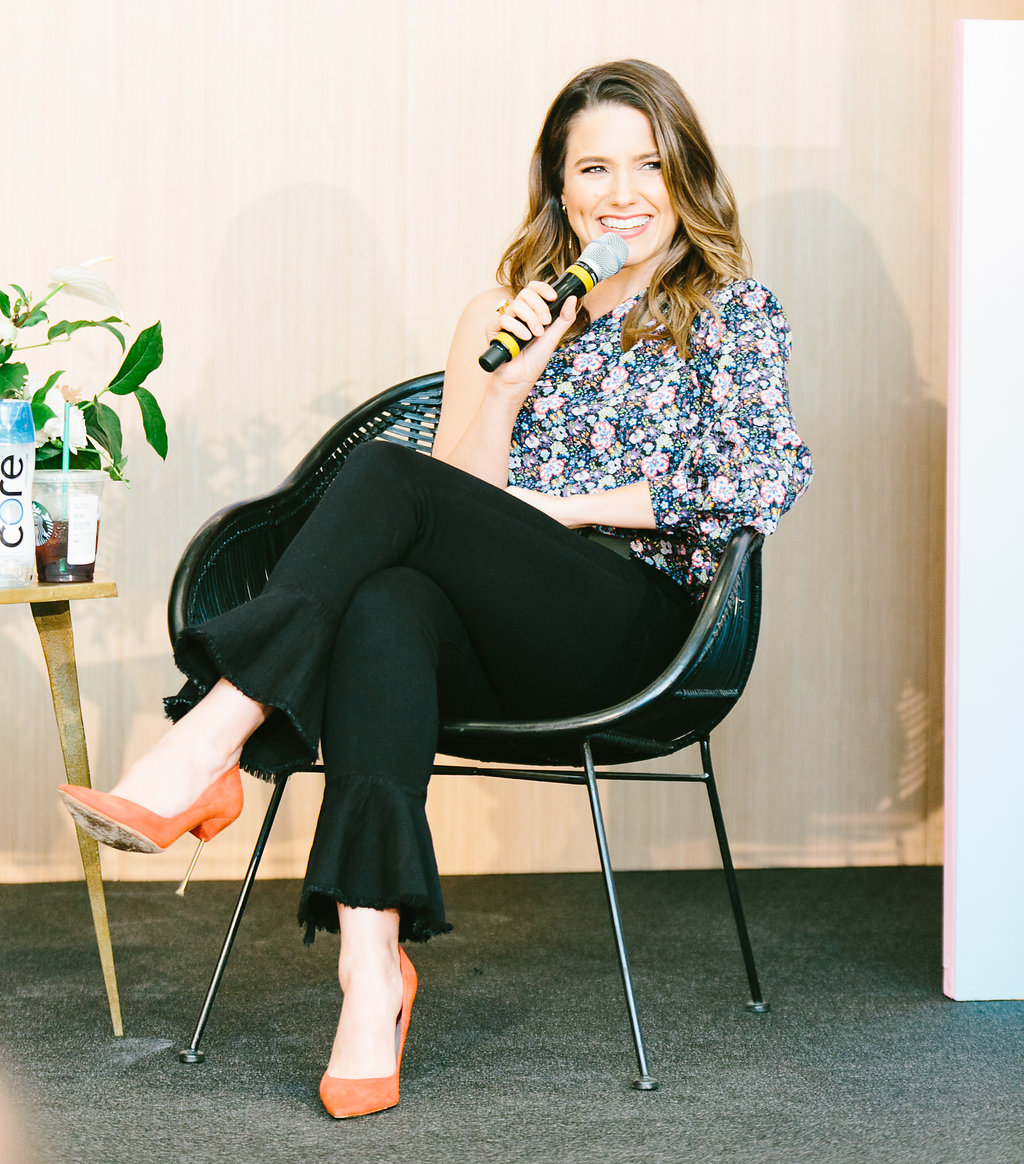
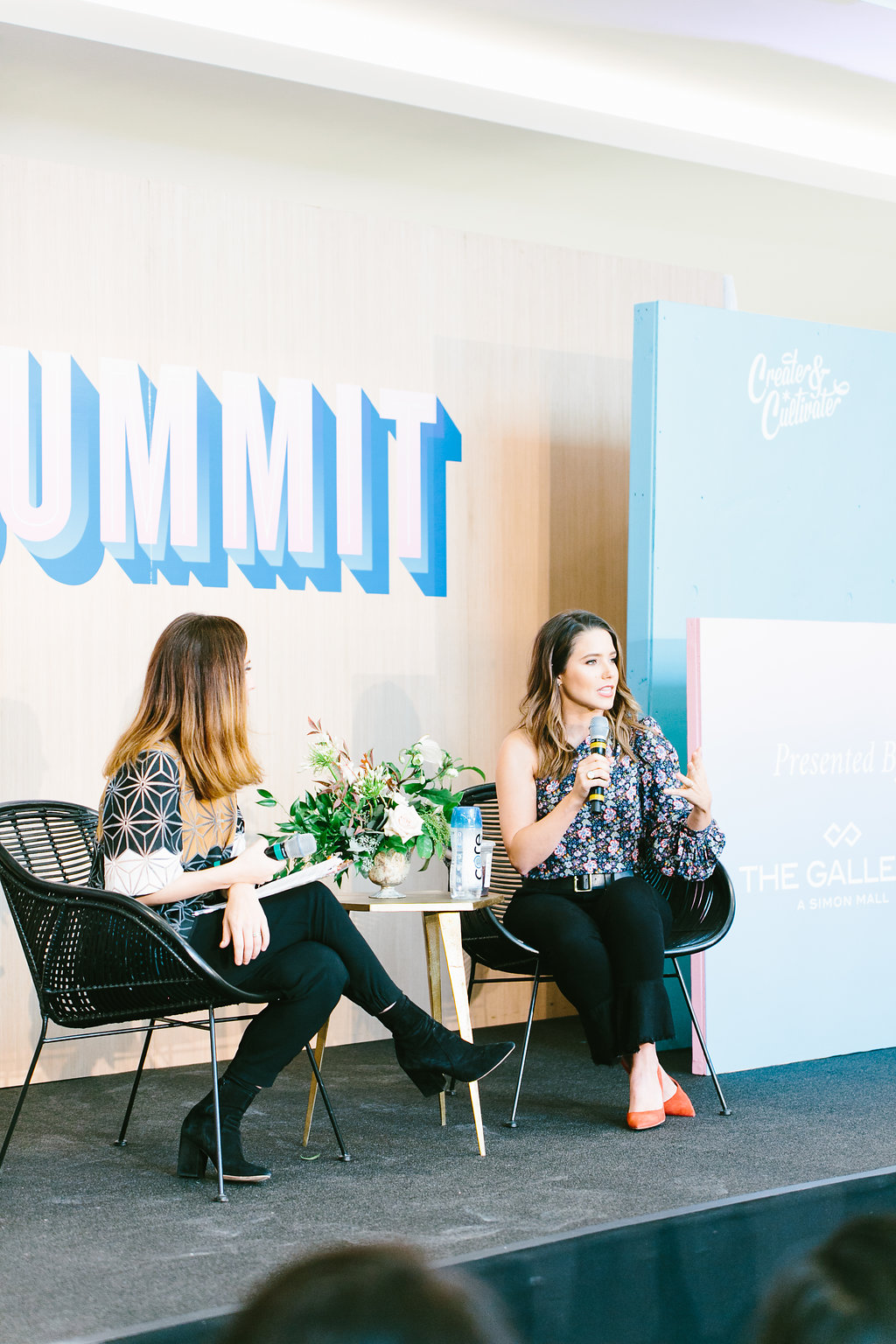
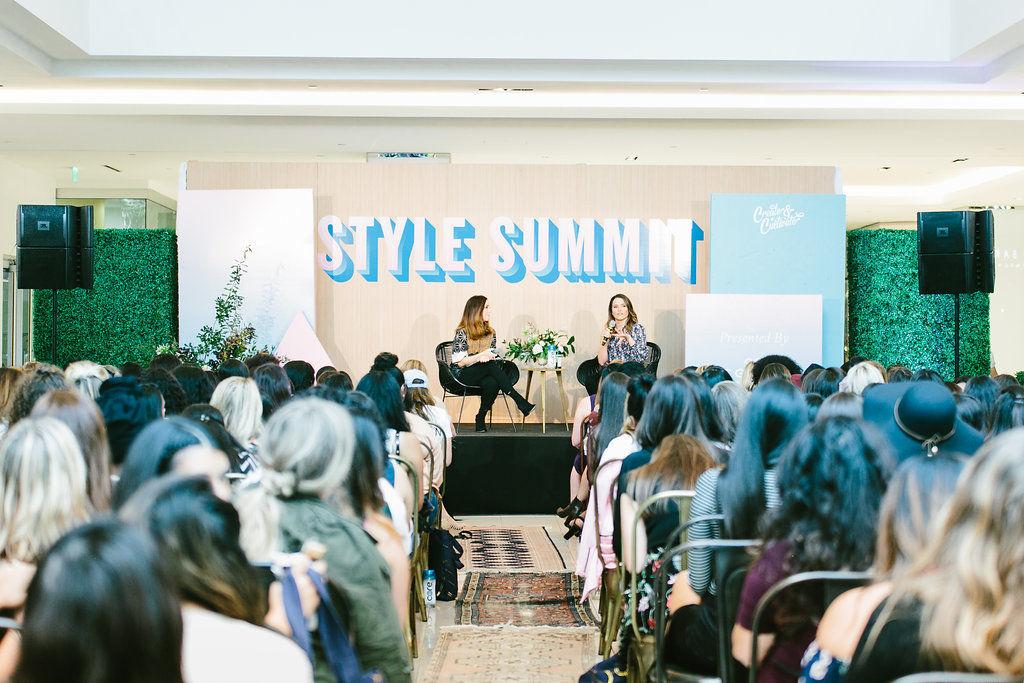
Sophia Bush, actress and activist, keynoted our Style Summit at the Simon Mall Houston Galleria this past weekend, and we're still on a high from the knowledge she intentionally slammed, forget dropped-- this wasn't casual, on stage.
If you missed out, we're sharing 6 of our favorite moments to keep you motivated through your work week.
On being a tender-hearted softie who takes no shit.
I’ve had to learn, sometimes, how to scream and swear at the phone and then not send it. You know, write the draft of the response to the person who deserves it, but then channel Michelle Obama, ‘when they go low, I go high,’ and I delete it. But still I am really learning the art of a good clapback and I deserve that. Simply because I exist in public does not make me a receptacle for people’s garbage.
It’s taken me 15 years, but I think I’m sort of an expert.
"I am really learning the art of a good clapback and I deserve that."
Tweet this.
On activism being a huge part of her story and advice to women
You have to find the thing that lights you up and that can be in a good way, or a bad way. What sets you on fire? What makes you so angry? I read a lot about what’s happening in the world today and I’m pissed, I’m so pissed all of the time, and that FIRE that it calls up in the gut of my gut, I’m like, this is why I can’t be quiet. It’s really easy to turn off the news. And look, today is Saturday. My best friend and I laid in bed all morning and ate french fries and drank iced coffee and watched Fixer Upper-- I needed a day. But we have to pay attention and I think the first and foremost step to becoming a more engaged more active member of society, is to pay attention.
On the internet life.
I would encourage everyone here to make the easiest free investment ever. For the next week, please every day, leave a really lovely compliment on at least one of the accounts of women you follow. Please once a day. Because most of the people who take the time to leave comments are assholes. The really nice together people, are scrolling and liking, but we’re busy. So we can really tilt the conversation by leading it with positivity.

On personal style.
When we look at the ways we express ourselves and the ways each of us still might be feeling like maybe today’s version of expression was a risk? Support each other. Whether that’s girls who tend to dress in menswear or girls who love to show off their bodies or girls who are fully covered and wearing a hijab. Love on women. Love on them and tell them they are beautiful. Tell them that their style is sick, even if it’s different from your own. I can’t wait to be eighty and be like Iris Apfel meets Georgia O'Keeffe. I’m gonna be such a silver-haired old lady wearing crazy shit out in the desert collecting bones and painting them.
Her advice to her 20-year-old self.
I was so nervous about letting people down. I didn’t know that when I was 21 and started working in television that I didn’t have to answer every question journalists asked me to be polite. What is polite anyway? Figure out what’s important to you and you don’t have to open up your life in ways you don’t want to. You don’t have to please other people before you please yourself. You don’t have to stay in a job that makes you unhappy. You don’t have to stay in a relationship that makes you unhappy. If you’re pretty sure that guy you’re dating is lying to you, he is. Let it go. I learned that one the hard way.
"You don’t have to please other people before you please yourself."
Tweet this.
I really wish I could look at her and say ‘you already know, stop worrying about what other people know or think or want from you more than you worry about how you feel in the root of the root of yourself.’
On putting yourself out there.
Women are often so reductive about ourselves. Men don’t say I think. Women say I think. You might write an email and say I just think it would be so wonderful to know you. No you know it would be wonderful to get to know that person. That CEO who you idolize or whoever that person is, say: "It would be such an honor for me to spend a morning with you. I have a couple of questions that I know your expertise would be so valuable." Stop saying I think I could benefit, I think I would like to-- no you know what you’d like. You know what you can do. Just go for it. I’ve done that. Last year, I sent an email to an incredible female CEO who I admire so much basically asking the same question. She was so lovely in response and said I’m incredibly strapped for time as it is and what free time I have goes to my kids but thank you so much for writing this email to me, the compliment that you paid me really means the world, and I do hope that in some point when we’re in the same city we both have some free time and we’ll get together. I was like I’m so sad but you’re so classy. It made me feel so good to know that I made her feel good.
Photo credit: Smith House Photo
MORE FROM OUR BLOG

How to Handle Your Year End Performance Review
Do the right research. Get paid.

Written by: Alexandra Dickson, CEO & Founder, Ask For It
Year end performance reviews are coming up. Maybe you’re looking for a raise or are hungry for a new challenge? Whatever it is that you’re hoping for, you can prepare to ask for it in three simple but powerful steps. You can get clarity and gain confidence to negotiate before that next meeting with your boss.
Gather your evidence.
Evidence can be broken down in two ways — value you’ve created and value you’ve saved your company. Set aside some time to go back through your notes and notable emails from the year to refresh your memory and make it easier to speak to your accomplishments. Then assess: what value have you created for your team or company? Think bigger when it comes to value; it doesn’t necessarily have to mean sales or revenue. Value you’ve created could be launching a new initiative, bringing on a new partner or inventing a new campaign. Do quantify this if at all possible, whether in terms of dollars, number of people impacted, or any other relevant metric, but know that value doesn’t always mean money.
What value have you saved? Again, value you’ve saved could mean financial savings, or it could mean increased efficiencies. If someone on your team left and you’ve been taking on their projects rather than filling the position, there’s an example of value you’ve saved.
Do the right research
How will you know what to ask for if you don’t do some benchmarking? Your goal should be to get data points from both inside your own company and more broadly, in your industry.
You can start your research online using websites like Glassdoor, PayScale and Salary.com, but you need to go further to get really useful information. Make it a priority to speak to half a dozen people: three men and three women. Ask people who would know how much someone in your position typically makes. This could be your own colleagues, if you feel comfortable asking them, or someone who’s doing a similar job to you at another company, or even an industry mentor who hires people at your level. I realize this may make you uncomfortable, but trust me, it’s worth it. You’ll go into your negotiation with much more confidence and it will make it easier for you advocate for yourself.
Feeling tongue tied? Try this simple script:
“I’m doing research because I’m preparing to ask for a raise, and I think you have some information that could help me. Would you be willing to share your ballpark salary with me?”
Practice
Grab a trusted friend or colleague and ask them to do a little practicing with you. If you’ve never asked for a raise before, repeating your request out loud is an easy and effective way to give yourself the best chance of success.
Not sure how to put it all together? Try something like this, and be sure to tailor it to your personal situation: “According to my research, similar positions in our industry pay about X. But I didn’t just take the salary guides I found online as gospel. I went further and spoke with some folks in similar roles, so I know my request is in line with the current marketplace.”
Use your review as an opportunity to cash in on your hard work all year long. Build your case, shore up your confidence, get in there and ask for it.
MORE FROM OUR BLOG

When You Should (or Shouldn't) Work for Free
Perfect Sunday brunch convo. Weigh in.


Working for free. Whew. These are fighting words for some. The concept of being asked to do work for nada (or on spec) has been lampooned in videos, illustrations, and even a dedicated Twitter account. But it’s one of life’s most nebulous gray areas: There’s no clear-cut correct answer to the “should you work for free?” question (sorryyy). Instead, the right-for-you answer is constantly shifting, dependent on your current needs, goals, and availability. What’s right for you might not be right for someone else, and what’s right for you now might not be right for you in five years.
With that in mind, there are some instances in which doing gratis work can actually be just the kick in the pants your burgeoning career or business needs. Below we dig into six situations where it might make sense, and share a look at how some top entrepreneurs feel about taking on a no-pay gig.
Your work will be exposed to a large audience.
You’re just getting started. Your work is rad (RAD), and you knowww the world will love it. (They will!) But you’re a little stuck when it comes to getting the word out, creating in vain—and in a vacuum. One solution: Offering up some freebies to a legit company that can help boost you over the hurdle by letting you tap into their audience. In these situations, though, know that the promise of “exposure” is not enough. Get down and dirty with the details. Ask for attendee numbers for events, probe publications for their readership numbers. Will companies link back to your site? How and where—exactly—will this happen? Will they promote you, along with your work, on their social channels? On related marketing materials? Big companies should have budgets, but sometimes the only way to get that toe in the door (and land a gig that might otherwise go to a more established colleague), is by offering to do it for free. But if a company isn’t forthcoming about their audience or how they’ll promote you, they can take a hike.
You’ll gain an awesome example for your resume or portfolio.
Sometimes one.single.resume.line of you doing amaze work for a credible company can catapult you into the realm of paying jobs for life. The same goes for visual examples of beautiful work, whether you’re a graphic designer, photographer, stylist, or brand consultant. We know an incredible interior designer who decorated a pal’s pad for free (labor, of course, not materials), had it photographed by a profesh, and plastered it all over her site and social-media accounts. Then paying gigs for design work and requests for interviews by shelter magazines started rolling in. Nail one job down, lean on it hard when talking with future clients or companies, and see where it gets you (and, ahem, they don’t need to know you did it for free).
You'll score new, IRL experience.
This is especially important when it comes to career pivots. You’re languishing in middle management at an accounting firm, holding tight to the same cupcake-baking dream you’ve had since you were knee high. But you have no idea how a successful baked-goods biz is run! You know that bakery around the corner? Consider offering to help out for free and you’ll pick up priceless on-the-job experience. Not saying this will be easy. It might mean crazy-early mornings. Scaling back to part-time at your paying job. Your hubs having to pick up major slack with the kiddos for months. But it’s doable. We actually know an inspiring lady who leveraged an unpaid apprenticeship at a hot-town San Francisco restaurant into a paying job there and then bagged a cookbook deal.
The networking is unbeatable.
Sometimes passion projects with little-to-no budgets are attached to influential folks with big names and tons of connections. Getting swept up into their network—being on calls and trading emails with people of note, organizing events with a A-list guest lists or speakers—can land you job after job after paying job down the line. Tons of career breaks have been launched by a friendly “remember me? loved working with you” email after you’ve done solid work and built rapport with a killer new network of people-who-can-hire-you.
Transitioning to a for-pay job is highly likely.
Back in our day, we trudged eight miles barefoot through the snow to intern for free. Welllll, not really, but we logged many an hour at unpaid internships, and several of us flipped them into paying jobs at the company we’d been interning for and at other great companies within the same industry. So, it’s possible, as long as the terms are clearly defined and you let it be known from the get-go that paid work is your ultimate goal. And no, you don’t have to be a 19-year-old college student to make this happen. Imagine striking a deal with a museum or library that you’ll take on grant-writing for free until you’ve secured the grants covering a potential salary for yourself and then some. An airtight contract is key here, but you’ve essentially created a job for yourself out of thin air.
You’ll be doing some good in the world!
Charity or volunteer work! This should really be numero uno on our list! As they say, this one is about giving rather than gaining. It could be anything from acting as treasurer for a nonprofit in need to accompanying your little one to the animal shelter to read to dogs every weekend. The point is that the more you give, the better you’ll feel—recent studies have shown that the secret to happiness is helping others. Just be clear upfront about the amount of time you’re willing to dedicate so that it doesn’t creep into something unmanageable that breeds resentment.
This article first appeared on Alice’s Table, a new woman-founded company that throws flower-arranging workshops and teaches women how to host classes themselves so they can launch a creative career or side gig that’s fun, flexible, and rewarding.
MORE FROM OUR BLOG

5 Women of Color Dominating the Startup Tech Space
Don't hit like. Hit follow.

Esosa Ighodaro, co-founder of COSIGN
The stats on women in STEM and tech are pretty dismal. (About 26% of women hold tech jobs.) Those numbers drop lower when it comes to women of color-- they hold only 3 percent of all tech positions in the U.S. Which is why supporting of women who are doing their damn thing, and doing it well, is crucial.
Here are five amazing women of color in the tech space you need to hit that follow button on.
1. Jessica O. Matthews & Unchartered Play
Jessica O. Matthews is the Founder & CEO of Uncharted Play, an energy company that designs renewable energy technology systems for infrastructure and smart applications. Founded by Jessica when she was 22, Uncharted Play’s flagship product is the SOCCKET ball, an energy generating soccer ball that provides off-grid power for the developing world. Jessica invented the SOCCKET when she was 19 years old.
Jessica’s research and career centers around the intersection of disruptive technology, human behavior, and the psychology of self-actualization. A dual citizen of Nigeria & the U.S., Jessica has a degree in Psychology and Economics from Harvard University, and
an MBA from Harvard Business School.
2. Dawn Dickson & Solutions Vending
Dawn W. Dickson is a serial entrepreneur with over 15 years of experience in marketing and business development. She launched three successful cash flow positive companies since 2002, her most recent venture Solutions Vending International (SVI) in October 2012 after identifying a need develop a software solution to make vending machines more intelligent.
What Solutions Vending International does: Smart vending machines now represent a new breed of machines connected to the internet. Their software helps vending machines not only understand retail customer demographic and sales data, but communicate with one another to understand consumer purchasing behavior, identify venue traffic patterns, and establish a network of connected retail devices. SVI is building a network of connected machines to securely collect and analyze data about consumers and venues across the United States.
3. Maude Okrah and Bonnti
Bonnti is a mobile platform which helps women navigate and simplify their hair experience. The site explains, "We understand ethnic hair is different and we want to empower women to have more choice when it comes to your hair."
Okrah recently told Project Entrepreneur, "I’d love to see more women, especially women of color, dive deeper into the tech world and come up with solutions to solve the unique everyday problems we face. I’ve learned so much throughout this entrepreneurial journey that I’d be remiss not to share it with any other woman who even shows an inkling of interest in this field. I mentor a small group of women from my alma mater and the D.C. area, helping them navigate the challenges I faced when beginning on this journey."
4. Erin Horne McKinney and KissIntel
Passionate about emerging technology and entrepreneurship, Erin Horne McKinney is the cofounder of Black Female Founders (#BFF) and KissIntel. KissIntel is the first mobile application to function as a "CRM for dating" by creating a platform where users can aggregate and track their dating lives, compare and rate dates and get instant feedback from their family and friends in real time. KissIntel’s proprietary date aggregator allows users to compile all their date options in one place. KissIntel revolutionizes the way people make dating decisions and creates an entirely new way to interact with potential partners by providing customized comparison and rating tools that tie into the user’s curated contact list and social network for immediate feedback from family and friends they trust. In addition to the end-user focused capabilities, KissIntel can offer its rating and comparison engines directly to online dating sites.
5. Esosa Ighodaro and Cosign
She's the woman who is making your photos shoppable. COSIGN connects you to your favorite brands and retailers in just one tap. COSIGN is the first app to make products in your photos ready-to-buy, turning your social media followers into customers and your style into a way to earn cash rewards.
After constantly asking herself, "where did she get that?" Ighodaro decided to come up with her own solution, creating an app to solve her shopping issues. CoSign serves as a mobile app that makes any product with an image shoppable on social media. As an added incentive, users can make a commission for every product purchased through the app.
In this new world, women save themselves. Have more amazing women we should be following? Share in the comments below!
MORE FROM OUR BLOG

Me Too: The Create & Cultivate Staff Weighs In
Denial, anger, bargaining, depression and acceptance...? Not quite.

Last Saturday, actress Alyssa Milano tweeted, "Suggested by a friend: If all the women who have been sexually harassed or assaulted wrote 'Me too' as a status, we might give people a sense of the magnitude of the problem." As Vice pointed out, via Ebony, “It was since revealed by Ebony that a campaign with the same name and aims, though without the social media virality, was initiated by a black woman named Tarana Burke ten years ago.”
This has been building forever and magnitude doesn’t even begin to describe the situation. As one friend’s Facebook status asked: “So, every woman I know has been sexually harassed? Horrified.”
Me too.
You’ve seen a lot of it the last two days. Felt a lot of it in your gut. Maybe it's bringing up feelings you've avoided dealing with. Maybe you have "not me" too guilt, as one CEO texted me yesterday. Maybe you're wondering "does this count?" There’s no way to Bento Box this convo into neat little compartments. And the conversation around our office has been all over the damn place. We're going through the five stages of grief, surely, but we're also talking and sharing our stories. We happen to be a little intubated by C&C because we work with so many women. (We are, quite literally, a staff of 9 women.) Some of us (raises hand) have chosen to work with women because of such horrible work experiences with men. Is that the answer? Maybe not.
But because we work in a safe space that doesn't mean we haven't experienced harassment both in and out of the workplace.
#metoo. We're sharing.
“Sorry I can’t help myself sometimes.”
When I was 21 I took a job at a marketing agency with two male co-founders and a mostly male staff, I was the only female employee. I was young and eager to please, this was my first job and I was just getting my work wheels in motion. I remember the first time it happened. I was leaving a meeting walking down 5th Ave. and my male colleagues were commenting on the client's breasts and how they couldn’t take their eyes of them and “mmmm” (grunt noise followed by an equally barf-y motion). I kinda just kept walking, put my head down and pretended not to hear but it kept happening. I would be in meetings and my boss would come stand behind me and press up right against my back and rub my shoulders, only to tell me he couldn’t stay for the meeting because he had a “hard out at 3.” The words, the motions, still make me want to vomit. I would mutter okay and keep looking at my notepad.
All of these micro-aggressions led me to develop a defense mechanism, a “I'm one of the guys and I can handle this mentality,” that was equally sad and difficult to accept. It wasn’t until my next job, one where my boss, mentor and someone I admired took everything too far, did I do something different. It was my first big work trip, I was staying in a hotel room, in a different state, pitching a big company-- it was all so exciting! I remember going out for a steak dinner with my boss and clients (first work trip!) and having a glass of wine (on the client!) it was a new experience for me and then then clients sort of left. My boss and I stayed and the conversation turned to love lives. He kept telling me my boyfriend wasn’t good enough for me and I deserved better, all of this while his wedding ring was glistening in the steak house lights. I remember responding with a “yeah, cool. Totally. Im tired!” As we made our way back to the hotel room, we were both on the same floor (damnit), I walked toward my room and he slipped in front of me, “One more drink?” he asked. "Ummm I’m okay," I said. “ I have a suite,” he persisted. I said, "No, I'm tired," quickly swiping my hotel key and taking refuge in my room. He me texted afterward: “Sorry I can’t help myself sometimes,” or something to the equally gross and not OK effect. This continued on and off for three months. After so much dodging and coming up with excuses to not meet, I had to find a new job.
"I still remember his red sports car."
At the time I was proud of my title...
"Teacher's pet."
"Mr. so-and-so's favorite"
It was 5th grade and although it felt completely harmless at the time, when I think back on it now I cringe for the other girls who must have been made to feel like they were his favorite student (now knowing that such a title comes with a price).
The special treatment ranged from solo "field trips" to the zoo, 1:1 lunch outings (during the school day) and even after school hangouts at his house where he lived as a recent divorcee. (His daughter's presence, who was many years younger than me, must have given my mom the piece of mind she needed to allow this.)
I still remember his red sports car. I remember driving with him alone. I remember feeling prettier than the other girls in my class. I remember feeling smarter and more like-able. So much so that even during those few times where I felt nervous or anxious around him I told myself not to complain. Not to ruin it.
Even years later, when a girl from my school publicly accused him of molesting her, I told myself it wasn't true.
Mr "so-and-so" could never do that. I remember thinking she was just be looking for attention. Even at that age, I blamed her. I made it her fault. Conversations about it with other classmates always started with, "Oh, come on" or "She's making it up." And yet they ended in "He wouldn't have, would he?"
I played memories over in my head. Recounted steps. Replayed our times spent alone. I wondered if I blocked things out. I still wonder if I did. I just wanted to be liked. I craved attention and in the process I turned my cheek (my very young, poreless cheek) to an older man who took advantage of his power and his influence.
Male privilege, rape culture, victim blaming... It is engrained in our culture, even in the minds of 10 year old girls. I wish I could go back in time. I wish I could choose to say no to being "the favorite" I wish I hadn't believed it was special or that I was special because of it. Most of all I wish I could have hugged her. The girl who stood up for herself. I wish I would have told her it was not HER fault.

"Stay true to myself, hold my own."
I’ve been fortunate to join multiple teams where the majority of the staff is female. From the Keep A Breast Foundation to now C&C, they are led by empowering women who, over the years have taught me how to unapologetically stay true to myself, hold my own, and craft my voice in a way for it to be heard and respected.
I’m also thankful for the experiences I’ve had with the men I’ve worked with, because they too valued my opinions and work, and never failed to see me as their equal. As we have seen from basically the beginning of mankind, I’ve been lucky. My time in the music industry, which is majorly known as a “boys club,” was also positive. But I have countless of female friends with shocking and heartbreaking stories. While I can’t say “Me Too” in the workplace, I am disgusted and angry and will always say, “I believe you. I am here for you.”
“Ahhh yeah, I like the way you walk.”
Cars. I have a fear of them. I’ve had so many experiences minding my own business walking on a sidewalk or in a parking lot where a man or a group of men, usually twice my size and age, have pulled up next to me, hollering for me to come closer.
*whistles*
“DAMN GIRL, YOU LOOKIN FINE."
“Ahhh yeah, I like the way you walk.”
“You look so exotic, let me get your number.”
etc, etc. It’s terrifying. Not flattering. But I put a polite smile on my face to not offend or anger them, as if I’M in the wrong. And I quicken my step hoping they don’t follow me. It’s exhausting to always have a guard up day and night.
"If I was wearing a cheerleading uniform."
When I was interning in NYC for a sports management company (super illegally - 0 payment or credit) the CEO use to make me attend “mandatory” Sunday work meetings where I had to travel over an hour to watch sports games with him and his friends at bars. Does that seem innocuous? Maybe to some, but looking back, was it beyond inappropriate. Definitely.
More specifically, I cheered professionally throughout college. And I mean… If I was wearing a cheerleading uniform (which I wore for 15 years of my life) it was like I had a sign on my back that said men can feel free to touch me wherever you want. Professors, student athletes, co-ed teammates, strangers at games, guests at the president of the university’s house, coaches... I was fair game after the game to them. It's insane now when I look back at it. But it paid for college so it was something I put up with. Equally as crazy.
"Will never work with men again."
I used to work for major telecommunications company in the mid-west. It was all white men. Khaki men. They knew nothing about entertainment or lifestyle marketing, which is what I was brought in to do.
I ended up getting laid off, replaced by a 55-year-old white man. And I swore when that happened I would never work for white men again. They were never sexually inappropriate, but they talked down to women all the time. I heard the phrase, “You don’t know what you’re talking about,” constantly. In large meetings and in small meetings. After that experience I knew I wanted to work for a female-owned company or a company where the senior leadership team was comprised mainly of women.
MORE FROM OUR BLOG

Survey Finds Women More Unlikely to Run for Office Than Ever
Feeling discourgaed? Don't!

Cosmopolitan.com has reported that "almost a year after Donald Trump’s election to the Oval Office, Democrats continue to tout what they see as a silver lining of his victory: record numbers of women deciding to run for office. Emily’s List, a group that helps elect pro-choice Democratic women to office, reported in August that more than 16,000 women had expressed interest in running since Trump won, and Emerge America, a group that recruits and trains Democratic women, said last month it had seen an 87 percent increase in applications to its programs. In July, She Should Run, a nonpartisan organization devoted to helping more women attain public office, launched a campaign to spur 250,000 women to run for office by 2030."
And yet, in a Cosmopolitan.com survey and “How to Run for Office” package which launched this week, the comprehensive, 16-piece package included surprising results. Namely, that the 2016 election discouraged women from running for office.
The survey of 3,813 adults over the age of 18 found that 15% of women were discouraged from running for office because of the election, versus just 10% who were encouraged. On the other hand, men were more encouraged (17%) than discouraged (13%). Men 18-34 were the most likely to consider running for public office now or in the future (26%), whereas women 35-64 were the least likely (9%).
Part of the reasoning likely includes that 72% of women think it's harder to get elected as a woman and that they are held to a higher standard. We can't argue with that.
Still, it's not exactly what we wanted to hear. However, the package also includes practical tools, advice, and op-eds from notable female politicians and former candidates – including Martha McSally, Cathy McMorris Rodgers, Muriel Bowser, Letitia James and Wendy Davis – to encourage more women to run for elected office.
How do you feel about running? Would you throw your hat in the ring to change the world? Let us know in the comments below. And check out the full findings here.
MORE FROM OUR BLOG

You Should Really Consider This Before Giving a Friend a Referral
Friends forever?

photo credit: Turkan Najar
Referrals are a huge part of our society. We see them everywhere from Yelp to Facebook to LinkedIn, and however you look at them, they are incredibly important. When a trusted friend tells you about a business, you transfer that trust to the company, and similarly, when a trusted acquaintance refers you to a person, you then transfer your trust into the referral.
When you refer someone, you put your own name on the line
When you refer a friend, you’re not only putting them up for scrutiny, but you’re putting yourself up for it as well. If you refer someone that clearly isn’t a good fit for the company, it can suggest two main things:
- It suggests that you haven’t done any research on the company and what the company is looking for in an employee.
- It suggests that you really don’t know the person that well, so it weakens your referral.
Either option reflects badly on you. If you’re going to refer someone, it’s important to do your research so you feel truly confident that they could be a good fit for the company.
Similarly, you want to ensure that you believe in someone’s work ethic and quality of work prior to referring them to someone. It’s impossible to control other people’s actions, but the reality is that if someone doesn’t work out or someone makes a bad impression at work, you’re probably going to think about who referred them in the first place. This is part of the reason why that referral from a friend is such a big deal. They’re putting their own reputation on the line along with yours.
You truly don't know what someone is like at work until you actually work with them
People can be very different in and outside of the office, and ultimately you never truly know how someone acts at work until you’ve seen it first-hand. GlassDoor estimates that being referred by someone at the company boosts your chance of successfully landing a job as high as nearly 7%. This makes a big difference during the job search, but it can be tough for someone to refer you when they haven’t seen your work ethic.
"You don’t truly know what someone is like at work until you actually work with them."
Tweet this.
If you are asking a friend or acquaintance for a referral, make sure that you can show them that you’re worth it. Their name and reputation is on the line just as much as yours is, so do your best to highlight why you’re the right fit for the position. If you can show them what you’ve accomplished in your career and what you would like to accomplish at the company, that is ideal.
It can set you up for an awkward situation if things don’t work out
One of the hardest parts about referring someone or getting a referral from a friend is that it can make for some awkward conversations if things don’t go as planned. Going back to the fact that you don’t know how someone acts at work unless you’ve worked with them, you might be surprised to hear that a friend had a low work ethic or another less than ideal quality. It can also be hard to tell a friend that the person they referred made a bad impression. While this isn’t the end of the world, this is why asking for or giving a referral for a friend is such a big deal.
Acknowledge the fact that if someone is giving you a referral, they are confident enough in you to risk their reputation or some potentially awkward conversations down the line. On the opposite end, it is important to acknowledge the risk and make sure you are confident in your choice when you are referring a friend.
________________
Ultimately, referrals make a huge difference when looking for a job or looking for a candidate to hire, but they can be risky for the person who is giving the referral. If someone is willing to give you a referral, it means that they have confidence in you, so it’s important to do your best to uphold that. Referrals mean that both the referrer and the referral get judged, and this is what you need to consider before you ask for or give a friend a referral.
A native San Franciscan, Michele Lando is a Certified Professional Resume Writer and founder of writestylesonline.com. She has a passion for helping others present the best version of themselves, both on paper and in person, and works to polish individuals' application package and personal style. Aiming to help create a perfect personal branding package, Write Styles presents tips to enhance your resume, style, and boost your confidence.
MORE FROM OUR BLOG

Why Ban.do's CCO Says There's No Shame In The Hustle Struggle
Pursuing your passion isn't all glitz + glam.
Our girl Jen Gotch is back with her business advice series. This week, the CCO of ban.do + breakout star of Instagram stories is answering your burning questions on the infamous work-life balance. One of our favorite pieces of gold from JG? "There shouldn't be any shame in the struggle of doing what you LOVE!"
Check the videos below for more gems on pursuing your passions!
Q: HOW DO I PERSEVERE TOWARDS MY GOALS + BALANCE CAREER AMBITIONS WITH MENTAL HEALTH/STRESS?

Q: HOW DO YOU PREVENT YOURSELF FROM BURNING OUT?

Jen also designed a super soft, short sleeve t-shirt as a little tribute to her advice series and 15% of the proceeds will be donated to writegirl, an la-based creative writing and mentoring organization that promotes creativity, critical thinking and leadership skills to empower teen girls.

The One Skill This Owner Says All Small-Biz Employees Need
Read this if you work on a small team.
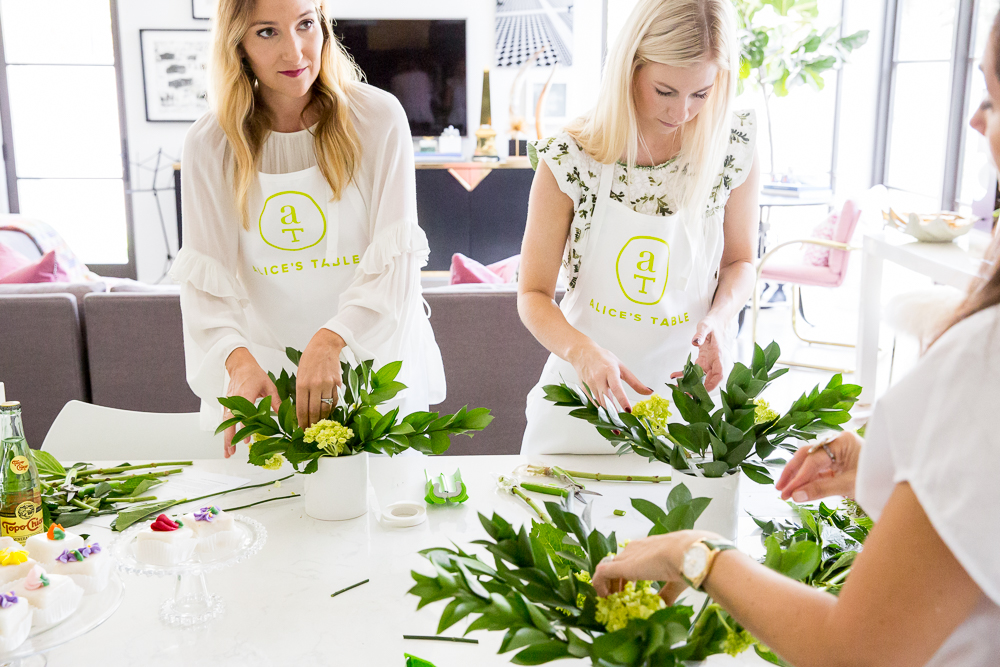
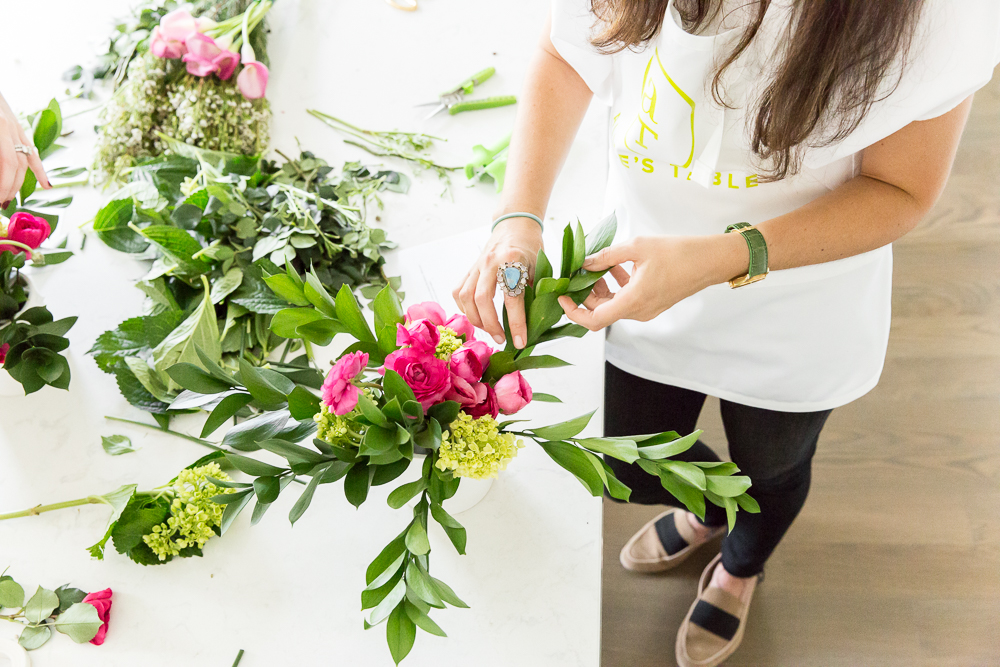
Maybe you’re employee #4 at a brand-spankin’-new startup. Or you’ve launched your own thing, made a couple hires (go you!), and are looking to gently coax the most productivity out of your team. Even if you can count the number of employees at your company on one hand, small teams can be mighty.
The small-team dynamic is singular. You’re agile and energized. Communication flows easily. Ideas blossom, are seen to fruition, and are celebrated (or mourned if they fail, which—let’s be real—can happen!). You feel true ownership in the company and its outcome. Not to mention that coworkers frequently become as close as family, easily trading sibling-esque banter that can make work feel like play. But certain things that fly at big companies (like flying under the radar), are a no-go on small teams. Employees’ contributions are obvious, which means pulling your weight and then some, and also learning skills that don’t always align with your background or, frankly, job description (not necessarily a bad thing!).
One woman who knows this better than most is Alice Rossiter, the Boston-based 27-year-old founder of Alice’s Table, a new company that throws chic flower-arranging events in cool venues around the country, and also teaches people how to host their own workshops so they can launch a creative career or side hustle. (And you know we love a side hustle.) They just graduated from Techstars, have thrown events in half of the states in the U.S., have onboarded nearly 100 event Execs, and frequently collaborate with companies like Good Housekeeping and Country Living.
And they have 6 employees.
So we reached out to pick her brain for some advice on how to achieve small-team success.
What are the benefits of a small team?
With a small team communicate is much easier. We’re all on the same page about projects. In fact we all sit in the same room! We all rely on each other's work so much that each person feels accountable to get their job done. Also a small team is great for building strong relationships.
What are some ways an employee on a small team can excel?
Being a team player is key! There are always projects that don’t clearly fall in anyone’s lap so over-performers pick up those balls and run with them. It’s also important for you to be constantly learning. You might not come in knowing anything about Facebook ads, for example, but if your company decides to give them a go, you’ll be willing to figure them out and try to make them as successful as possible.
“I am a true believe that grit is the key to success.”
Tweet this.
How has your team stepped up in the past?
On a small team it’s inevitable that unexpected tasks will come up. For us it happens every week—that's the nature of an event-focused business! My team has gone above and beyond countless times, from working through customer-care complications on the weekend, to rushing to an event after work to take photos for an exciting press opportunity that we would have otherwise missed. We’ve had to problem-solve flower deliveries going missing in the middle of the country and hurricanes canceling our flower orders. Above all, working for a small company takes agility and passion.
What’s your take on work quality vs speed?
We all have endless task lists—even more so on a small team—so time-management is extremely important. I can be a master procrastinator, so I feel the pain! I encourage my team to set aside time each day to work on tasks that are easy to complete, in addition to dedicating blocks of time to bigger think projects. When you strategically plan out your work, it automatically sets a time limit and typically that focus produces a higher quality result. The best small-team employees don’t labor indefinitely on a single task—they just can’t! There’s not enough time! You have to make sure that ‘great’ doesn’t get in the way of ‘done.’
What’s more important: Talent or motivation?
Motivation, always! The number one skill I always look for is work ethic; someone willing to go the extra mile to find the right answer. Anyone can learn a skill if they have the drive! When I started dreaming about Alice’s Table, I didn’t know much about flowers and now I can whip up a professional arrangement in under five minutes! I am a true believe that grit is the key to success.
Would you recommend that employees learn other parts of the business?
Completely! When I launched Alice’s Table I was CEO (of myself), chief bucket washer, trash collector, customer-care agent—you name it! Understanding each team member's role (and how your roles intersect) usually unlocks ideas for ways you can help each other out.
Should employees push for regular brainstorming sessions?
“I’ve always had the mindset that many heads are better than one. We all bring different perspectives to the table, and those contributions help keep our ideas fresh and propel our business forward. We have multiple strategy sessions as a team each week.”
What is the one skill you’d recommend all small-team employees possess?
“Everyone needs Excel skills! Tracking your data is key and as a small business you usually can’t afford all the fancy tools, but Excel always does the trick!”
On the other hand, what’s one thing that someone on a small team should never do?
Never be afraid to ask questions. For example, we just closed our first round of fundraising. I encouraged everyone to ask questions because it was important to me that everyone on my team knew what was going on, and why we were making certain decisions as a company. We would never grow if we never asked questions, even the silly ones.
“You have to make sure that ‘great’ does not get in the way of ‘done.’”
Tweet this.
How do soft skills come into play?
As a team of six, we work extremely closely—five feet apart to be exact! Strong communication and interpersonal skills allow our team to challenge each other, but also to take time to celebrate our successes!
Startups are often encouraged to fail fast and pivot, since they usually don’t have the resources to keep a failing idea afloat. When should someone be able to realize that a certain strategy might not be working?
I always tell my team, ‘If something seems to be heading south, speak up!’ We’re all about process-building, but if a process isn’t working and is causing more mental exhaustion than progress, it’s either time to revisit, or move on all together. Since we’re constantly growing and trying out new systems, I try to remain flexible when setting timelines. Our team checks in weekly on a variety of projects to make sure we feel confident in the direction they’re heading. Identifying a roadblock is the most important step to fixing the issue and pushing the business forward!
How do the best small-team members handle failure?
Failures feel like sh*t—it’s just a fact of life. Every startup has good days and bad days (or, as we like to say, good hours and bad hours). On a small team we thrive off of each other’s energy, so, even when faced with a loss, it's important to keep our heads up, reflect, and move forward. I’m also working harder to celebrate our victories (big and small), because taking time to enjoy the wins puts the hard times into perspective. Plus, we all need to pop a little bubbly now and again!
MORE FROM OUR BLOG

Fight Stage Fright: Five Killer Steps to Speaking on Panel
From light stalking to cheat sheets.


Photo: Alyssa Dawson
Written by: Michelle Newbery, President of The Mine
I’ve had the opportunity to attend and participate in many panels over my career. The first one I ever attended was the Lowe's Women’s Leadership Summit, an annual event created by Lowe’s to empower women in retail and foster diverse thinking. It was an amazing experience that helped shape my career path at Lowe’s (which owns The Mine), inspired me to pursue my goals, and motivated me to help other women find success.
As President of The Mine, it was an honor to be asked again to be a panelist for the Create & Cultivate Conference at Microsoft Headquarters in Redmond, Washington. I’m deeply invested in the entrepreneurial pursuits of my fellow women in business, and I take my role in this event very seriously.
Here’s how I approached preparing for this year’s event:
1. Research the other presenters, and be prepared to get (a little) personal.
Organic dialogue between panelists always resonates with audiences, and it’s much easier to do if you can quickly and easily establish a genuine rapport with them. I was once on a panel at the Forrester’s Digital Transformation Event with other Lowe’s execs and we discussed the challenges of balancing speed with quality, and how to find middle ground that helped create The Mine as a very nimble part of the Lowe’s organization. The audience enjoyed the discussion, but became even more engaged when we framed “finding the middle ground” in a context of the Lowes.com VP’s love of barbecue and my tastes as a vegetarian. We talked about how compromise can lead to creative solutions, much like those we rely on at The Mine. In short, personalizing the story – revealing something about yourself to both the audience and your fellow panelists – can increase engagement across the board.
2. Know your audience, and know how to connect with them.
Who attends the event and what are they most interested in? How can you personally relate to them and share your own experiences in a way that will both inspire and help them get further, faster? I remember being at the Time, Inc., Home Summit and how designers there appreciated hearing about how e-commerce can positively impact their business. They also enjoyed learning about how we work with designers like Alexa Hampton; how meaningful those relationships can become. It’s easy for me to speak from the heart to designers about design, because it’s a passion of mine. But, what if you face an audience with interests that don’t dovetail so well with your own? It’s important to spend time learning about what you do have in common, so you can be prepared to best resonate with your audience.


3. Create a target list.
Who’s going to be at this event that you want to meet? You should always start networking before you get there. It only takes a moment to browse or start following an Instagram or Twitter feed to get familiar with what kinds of things interest the people you want to meet. If they have written a book or an article, read it. Mentioning it can make for a pretty irresistible conversation starter.
4. Make a cheat sheet and fill it with WOW.
Okay, so it’s not really a cheat sheet, but hopefully it got your attention – because these days fast facts and one-liners have the kind of social “stickiness” that big speeches lost long ago. Coming prepared with key statistics and talking points you can easily reference will help you show up authentically and build creditability. That’s what I learned at Create & Cultivate New York, an amazing conference to help women literally create and cultivate the careers of their dreams. Those women really knew the power of social media and were ready to use it. Audiences now have more socialsavvy than ever – they’ll Tweet you before you’re even ready, so keep your cheat sheet and WOW metrics close at hand.
5. Leave the script at home.
This is a tough tip to follow, but it’s important. It’s better to be natural, and maybe a little flawed, than to recite canned material like a robot. Be able to talk spontaneously about your facts, not just recite them. Preparing you message is important, but whem I’m facing an audience I try to relax and share by ideas more naturally by infusing personal stores and humor were possible. As a mom of a teenage daughter and tween son, I have a lot of material. Keep it professional, but keep them guessing. That’s how we can win over our audiences as panelists with presence.