
The Most Interesting Interview Questions You Need to Know
When you're in a sea of applicants battling it out for the same job, make sure you're prepared with the proper answers to nail that interview and land that job.

“So, tell me about yourself?” How many interviews have you had that open with that question? It serves two purposes: 1) an ice-breaker to kick off the conversation and 2) to witness how the candidate prioritizes the details of her life. After that easy lob, you can’t predict what interview questions will come next.
Our favorite Q&A site Quora posed the question: What one question do you always ask applicants in a job interview, and why? Here, our favorite interesting interview questions and answers.
1. How do you stay current?
“The answer gives me a feel for the candidate’s curiosity and desire to continue learning, technical interests apart from work experience and how they value the knowledge and experiences of the broader technical community in building their skills and network.” —Travis Truman, software architect
2. If you could change one thing on your resume, what would it be and why?
“The answer tells me a lot about what they perceive as their own weaknesses, career regrets, and shortcomings.” —Tommy Thorton, IT professional
3. On a scale of 1-10, how lucky do you think you are, and why?
“This question has worked wonders for me to bring out some key incidents, experiences, and the overall philosophy.” —Puneet Mehta, cofounder, MyCityWay
4. Where do you rate your skills in [software/program/] on a scale 1-10?
“The number they give is usually irrelevant to the actual interview, but the way they go about explaining their answer reveals a lot about their character. A simple 1-10 rating scale on skill set with an explanation will give you so much insight about how a person views learning and improving.” —John B. Petersen III, startup founder
5. What’s the biggest misconception about you and why?
“Then, after they’ve answered, I follow up with, “How do you know it’s a misconception?” Tests how self-aware someone is, and whether they are open-minded. Two key traits in a great team member.” —Jane Yu, partnerships and philanthropy, AltSchool
6. What did you care about most when you were 10 years old?
7. What was the last thing you changed your mind about?
“Both are more specific than ‘tell me about yourself,’ and challenge the respondent to be specific, and, to me, the second question can show maturity and introspection.”—Gagan Diesh
8. What’s your favorite website?
“In truth, there are no wrong answers, but people who practice and read how to give the perfect interview are always flabbergasted. I want to know how they sound when they’re passionate about something, and make sure they love the internet. You can teach the rest…” —Alex Williams, creative and digital strategy director
9. Rank the following in terms of importance:
- Investors
- Management
- Colleagues
- Customers
- Oneself
“It speaks to the alignment of goals, resource allocation, and priorities, and ability to tie different moving parts i.e. people … that are hard to measure and which make or break the company.” —Mrinal Desai, CEO and cofounder of addappt
10. Who is your hero and why?
“The why is most important. Research has shown that high-achievers have role models and you want to find out what personal attributes the job candidate admires and hopefully tries to live up to.” —Tony Mariotti, COO, Friendbuy
MORE FROM OUR BLOG

This Is Us Through the Week
We've *almost* made it.
WE made it! Congrats. Take a brief recap walk through your week with British comedian Miranda Hart.
Catch you on the other side.
MONDAY AM.

MONDAY END OF DAY.

TUESDAY.

WEDNESDAY.

THURSDAY.

FRIDAY.

AND A BIT MORE OF THIS.

BUT DON'T WORRY. SATURDAY IS VERY CLOSE.

AND.
SUNDAY... THIS IS US.

Any questions?
MORE FROM OUR BLOG

Why LA-Based Christy Dawn Is About So Much More Than Cool Dresses
It is super cool tho.
Everyone in the digital fashion space has deemed LA-based fashion label Christy Dawn the “It,” the “Cool Girl,” the “Dress Every Girl in LA Is Wearing.” And they’re not wrong.
But they’re not entirely right.
That’s not the whole picture.


It'd be hard to flub your fashion in a Christy Dawn dress or sweater (recently launched!!), from both a fashion POV to an ethical one to yes, even a spiritual one.
The breezy Cali brand sources deadstock fabric, manufacturing is done locally, they pay their sewers a living wage (15+ an hour), host a ping pong lunch everything Friday at 3pm, and just got everyone who works for them health insurance. “Christy Dawn isn’t just me,” the founder and lead designer says. “It’s every person who puts energy into the garment.”
This is the pulse that beats through the company. “It’s not hard to find good people,” she says, “ if you treat them well.” As a business owner she says treating her workers well is a “non-negotiable.”
One such person is Pedro Trujillo, the company’s production manager who has been Christy Dawn’s sewer and sounding board from the beginning. Christy and Aras Baskauskas, her husband and biz partner, used to work from his couch. He used to tell them, “Most of my clients don’t usually come down here.” But working from Pedro’s couch gave Christy insight into the people side of production. “Pedro paid people so well,” she says, “it was a priority for him.”
Years of modeling also gave her insider info into her priorities. “I knew how to make an e-commerce site survive. I gathered so much data from jobs,” she says. “I asked so many questions.” She also gathered information ”No one ever mentioned the artisans,” she says of doing e-commerce every single day for four years. “There was no respect.”
"Abundance is about so much more than money.”
Tweet this.
As Christy Dawn grew, so did the need to find a space. Last January Christy and Aras made the decision to really go for it— they signed a lease in the Arts District, but shortly thereafter they knew it wasn’t right. “For us, the space is super important,” she says. And they made the decision to forfeit their deposit, instead moving into the 12,000-square-foot factory in downtown Los Angeles. It’s bright, clean, with a fully built out kitchen, and on tap kombucha and coffee.


It’s a place you’d be proud to work at. To show your fam. And it is a family affair at Christy Dawn.
Pedro’s daughter Valeria is the company’s production coordinator, whom they recently gave her first raise. “We told her, we’re going to give you what you ask for.” And they were true to their word. Last year Christy and Aras also called up Pedro one day and told him and Valeria to meet them at a Toyota dealership. They bought the father and daughter matching Rav 4s, so they could get to work safely. “Our company is growing,” Christy says, “but we don’t need 20 million dollars. We want every one of our sewers to be able to afford what they’re making. Money is just multiplication. It’s just numbers. It’s just energy.”
It’s an energy in each dress, blessed by Pedro’s wife Teresita, who does all the finishing work. “She’s the last person who has her hands on every garment,” shares Christy. A little while back she saw Teresita talking over the garments. She asked Pedro what his wife was doing. “She was blessing each dress,” says Christy. “We had no idea.”
What she does have an idea about are her hopes for the brand's longevity, commitment to deadstock, and sustainability. “There’s nothing timeless about a trend,” she shares of her hopes for the brand’s longevity. “I’m not afraid anymore if it’s a ‘success’ or not. Abundance,” she shares, “is about so much more than money.”
Photography: James
MORE FROM OUR BLOG

Slay Your 2018: Getting Back on the Grind
We have no time for the back-to-work-blues.

photo credit: Molly Cranna
The holidays are officially over and your out-of-office email is off. Noooo. YES. You might be in denial but the 2017 calendar is not. You had your break and ate it too (so many macarons), but it’s time put fingers to keyboard and *work work work work work*.
We know: getting back to reality is rough, and if money grew on trees, we’d be mid-eggnog siesta right now. But you’re a natural born hustler baby, we just want you to know. And you were not made to lounge about all day. To get back on track, here are 5 steps you can take to start the first workweek of 2017 off right.
HACK YOUR MORNINGS
If you spent the last week of December sleeping in, waking up to an alarm once again can be tough. It doesn’t have to be so hard. Make your mornings more efficient and cut your prep time in half by setting yourself up for success the night before.
Before you go to bed, give yourself some extra mental prep time in the AM by picking out your outfit, pre-packing your work bag, and cut time by showering the night before.
Also, if you want to cut time making breakfast in the morning, prepare some overnight oats (a favorite in the C&C office) in the fridge and you’re set to take your breakfast to the office too.
SET UP A TEAM MEETING & SET A GAME PLAN
If you want to prep for success, you need to make sure that you and your team are on the same page.
At some point this week, have everyone on your team write down their plan of action for the week/month and go over all the details of who is tackling what. Once you have all set your game plan for the week, you will feel 10x more confident in taking on the rest of the week with a clear mind and clear tasks as a team.
"A negative madditude about heading back to the office will manifest in counterproductive ways."
Tweet this.
GET FOCUSED AND PRIORITIZE YOUR TO-DOS
Now that you and your team have set your game plan, it’s time to prioritize your own to-dos. Get yourself focused and use your preferred task-management method. Whether you like the old school way of handwriting down your tasks, or you prefer to write them down in a platform like Asana or Trello, writing down and organizing all your tasks will make getting back on the grind a lot less bumpy.
RE-ORGANIZE YOUR WORK SPACE
New year means new desk space. A cluttered desk is a cluttered headspace-- even science says so. Don’t allows clutter to build up until it’s time to do spring cleaning. Do it now.
If you have old useless paperwork lying around your table, or you just need to freshen up your desk with new supplies, clean up. Not only will cleaning up your physical desktop (along with your computer desktop) help you stay organized, but it also gives you a sense of relief.
REPEAT POSITIVE AFFIRMATIONS
Before you went to sleep, you probably liked a few memes on your Instagram feed about the dread of going back to work. It that may have given you a few LOLs, having a negative madditude about heading back to the office can and will manifest in counterproductive ways. Focus on positive affirmations, bump a killer playlist that gets you in good mood, grab a good cup of coffee, and get ready to slay your day. There is no room here for back-to-work blues.
What are some of the ways that you get back into your groove when returning to work? Let us know below!
MORE FROM OUR BLOG

Take the Leap: 5 Reasons to Start Before You're "Ready"
Ready? You were born ready.

photo credit: Kelley Raye
If you are reading this post, I'm going to guess that you either:
Have a full or part time day job and are running your blogging or creative business in your free time (and possibly want to take that blog or business full time) or,
Work on your blog or creative business full time and want to take it to the next level.
If either of these guesses are true, keep reading, friend.
You are not alone. There are a LOT of people trying to do exactly what you are doing. I write this not to deter you from doing it, but to illustrate that in order to stand out and grow, you're gonna have to take action.
Here's the really great news: You have a lot of power in this situation. More than you probably realize.
And to harness that power and start allowing big things in your business and life, you have to get comfortable with being a little uncomfortable.
One thing I notice with aspiring creative business owners vs. entrepreneurs is that they are timid to take big risks. They don't want to let go of that day job for fear of struggling financially. They don't want to reach out for that big opportunity in their business for fear of being rejected (or even worse, ignored). They don't want to talk too much about their work or ask too much money for their products and services, for fear that they will turn off potential customers and clients, or won't be able to deliver on their promises.
"You have to get comfortable with being a little uncomfortable."
Tweet this.
See a pattern forming? Yep, it's fear. Fear of not being ready. Fear of making a big commitment without knowing the outcome. Fear of not being good enough.
Fear of struggle.
Once you can move past the fear and use your intuition--that gut feeling--to make big decisions for your business, you will find that really great things will start happening.
But what if your gut is telling you that you aren't ready to take those big leaps?
Here are my thoughts on that:
1. Spoiler: You will never be ready.
You can plan your next move for years without ever actually making the move. It's fun to plan and research, isn't it? You are learning! You are filing all that information away neatly for the day that you are finally ready to launch. So much fun!
And you're totally protected by the fort of information that you have built around yourself.
But you are trapped. You have to take action, or all that research will go to waste. You might even find that the information you gathered wasn't as helpful as what you will uncover by taking the leap and putting yourself out there.
2. You will figure it out and learn as you go.
I run a product-based business and a couple of years ago I decided to start wholesaling my products to retailers. I knew nothing about wholesale, except that it was a great way to sell more product and get fresh eyes on my work.
One night, I finally decided to start reaching out to shops, and ended up getting a really large order. It was amazing. And so stressful!
I did many things wrong, even after following all the "advice" I had found online. I got paid late and I barely made any money.
But my experience with that order helped shape my entire wholesale program as it is today.
Now? I have regular wholesale orders and the bulk of my income comes from my wholesale business. And I get paid on time!
I threw myself into it and learned from my inevitable mistakes, and now it's no biggie.
3. The money will come.
I've amazed myself at times with how quickly I can make $300 when my feet are held to the fire.
I'm not here to tell you to quit your day job tomorrow, but trust me when I say that you know how to make money on your own. Sometimes that day job (or other job-like commitment) is a financial crutch. You think you need it.
You need money, not a specific job. There are plenty of ways to make money by doing what you love.
Start figuring out ways to make up that income. Start scaling back your day job hours. Start taking back your time and devoting it to things that you really want to do. Do these things before you can rationalize it (by the way, the only rationalization you need is that you want to do it).
You might be amazed at how resourceful you are, too, when your feet are held to the fire.
4. Now is the best time to start building your experience.
The sooner you put new work out into the world and introduce it to the people that can help you grow your business, the sooner you will build a fantastic body of work.
Your work may not be the best ever the first time you create that new product, or reach out for that big brand collaboration or magazine feature. But if you do it now, and keep doing it over time while taking note of the things that weren't strong, you will improve.
If you don't look back and cringe a little at your old work, then you probably launched too late. Launch early and don’t give up on the opportunities that are important to you.
5. There's no better feeling than doing exactly what you want every day.
Several years ago, I spent most of my time doing all the things I should have been doing and only dreaming about all the things I actually wanted to do.
Now, I get to choose what I want to do most days. Being able to spend my time on things that bring me joy is one of the most empowering feelings, ever.
But you don't get to that place by sitting around waiting for it to happen to you. You have to chase it, wrangle it, overcome adversity, and ignore everyone saying "You know what you should do..."
Focus consistently on your goals, both big and small. What action will get you closer to achieving them? Do that.
And do it as soon as possible.
Casey Sibley is a Reno, Nevada based designer and writer. She writes the blog Leap Repeat, sharing her experiences in pursuing a business and life that brings her joy, and encouraging other aspiring creative entrepreneurs to lead a life by their own design, on their own terms. She also owns Casey D. Sibley Art + Design, a lifestyle brand of accessories and home goods in a colorful, modern style meant to inspire a happy life.
You can find her sharing behind the scenes snapshots of her work on Instagram, Facebook, and Twitter, and a few thoughts on leading a joyful life on Periscope @caseydsibley.
An original version of this article appeared on Blog Society.
MORE FROM OUR BLOG

6 Texts Responses to Your Boss That Are Too Passive Aggressive
Sounds great.

I was feeling great, but then my mood changed. Happens all the time. And to the best of us.
We get snippy. Grumpy. Hangry. Overwhelmed by emails and a lack of Vitamin D. We have long days and are short on sleep. All of these effect how we respond to certain situations. And sometimes we get a little too passive aggressive. Espeically over text, where we feel like we can get away with a little 'tude.
#1 OK. or K.
That period is so telling. So is the all caps. If you really do mean, Ok! then add an exclam or write it out: okay. It's so much more gentle that way.
#2 The hard ask, followed by a smiley face.
We all know what that smiley face means. It's a big ole FU. Wink.
#3 Sure.
Here's the thing, everyone reads "sure" in a harsh tone. Even if it's meant playful and "sure, I'd love to do that." An unqualified "sure" is a surefire way to piss off whomever is on the receiving end.
#4 Fine.
Same as the above, especially when followed by a period. It's too short, curt, and doesn't exactly scream, "I'm on it!"
#5 That's not my job, but happy to pitch in.
There are a lot of tasks we all take on that "aren't our job." Airing your grievances via text to your boss is not the way to address it. It's not professional. It's not mature. And most likely, it's going to get a smiley face FU in return.
#6 The three dots (AKA an ellipses) followed by... nothing.
Let's say you get a text from your boss on the weekend and it's urgent. You start to respond, she sees you responding ... she's waiting ... and then ... nothing. And nothing for hours. If it's urgent and she's texting you, for the love, please respond. If it becomes an issue or everything is "urgent" on the weekend, a larger talk is warranted. But know that she likely doesn't want to be sitting around waiting on you anymore than you want to be hearing from her. Text her back and move on.
So how do you prevent yourself from snapping in a work environment? We've got a few tips for ya'll to put into practice.
1. Stop visualizing the worst case scenario.
Part of the reason we get stressed is because we're thinking doom and gloom. A pessimistic attitude is not about the present. Most often it's because we're borrowing negative emotions from the future and adding them to our present current mood. If you mess up with a client or blow it at work, don't imagine getting fired. That's only going to put you in a worse/stressed AF mood. Imagine taking responsibility for your actions and then doing just that.
2. Realize it takes more energy to be angry.
Getting mad at your job, your colleagues, your boss... totally normal. But holding onto grudges that lead to months of passive aggressive texting or emailing is incredibly counter-productive. Use that energy to come up with a plan where you can be HAPPY at work. It's a win-win for all.
What's the most passive-aggressive text you've sent or received in a work context? Share below!
MORE FROM OUR BLOG

Let's Talk About Love Language in the Creative Workplace
Men should prob read this.

Love language, not to be confused with romance languages like French, Italian, and Spanish, is an important part of your communication and interaction with others. There’s a very well-known book called The Five Love Languages, which explains the ways in which people like to give and receive love from their partners, and how you can make each type of person feel the most loved and appreciated.
The main theme of the aforementioned book is that there is no fool proof, one-size-fits-all method to communicate to a partner that you care about them. The same concept is true when attempting to land a new job, bond with your co-workers, or improve an existing client relationship, especially with creatives in the corporate world.
Here’s a breakdown of the five ways that people feel appreciated—and how you can apply this knowledge to your advantage in the workplace.
Gifts *ahem it's the holiday season*
It doesn't have to cost you a dime. Workplace gifts can come in the form of shared information, like sending a colleague or boss an article relevant to your company. Perhaps it is a white paper on new design software, or a blog post about the most annoying fonts. (Ryan Gosling would appreciate that one - we all know he hates Papyrus!)
Promo or swag items are also appropriate during the holidays or for another special occasion. I personally LOVE corporate swag, especially when it’s edible, or practical items like water bottles or portable chargers. When working with creatives, think about something they would like, such as a custom stylus or dot journal.
Quality Time
For many, quality face time is the the preferred method of communication. Especially when working with new clients or when starting a new role. For QT lovers, sending an email every few weeks won’t suffice. Instead, they will be much more appreciative if you set up face to face meetings.
The creative process can be complex, whether this is giving a brief for banner artwork, or an intake call to compose a white paper. Many subtle details can’t be captured through bullet points, and require an in-person (or at least a phone) conversation. In remote work environments, this can be a bit tricky. Try to keep yourself available for Google Hangout/Skype meetings and always be online when your boss or client needs you. Lastly, communicating realistic timelines are crucial. The client has deadlines to meet, but you don’t want to cut your creative process short. Be crystal clear about how long certain things take to finish to ensure quality, and don’t allow yourself to be rushed!
Words of Affirmation
It never hurts to send a thank you note after a professional exchange, that’s just basic manners. Those folks whose love language includes words will certainly appreciate that handwritten note or email thanking them for working with you. Luckily for creative types, you can put your talents to use and write a beautiful poem, or design a custom typography illustration. Vocalizing your appreciation can speak volumes about your professionalism and positive attitude.
Additionally, when brainstorming with a client, it can be helpful to talk about emotions. This is not a session where you share your personal emotions, but rather the emotions the client is looking to elicit from their audience.The more information you can find out about what emotions or feelings your client wants the project to convey, the more aligned your goals will be.
Acts of service
These “acts” don’t have to include grand gestures. For some people, the epitome of service is when their significant other goes out of their way to do an everyday task like taking out the trash without being asked. Similarly, for some clients, a little extra service goes a long way. Simple things like hand delivery, discounting/waiving fees, or saving your client time by making their travel arrangements can go a long way to make them feel appreciated. Another thoughtful gesture is to show a client a sneak peek or preview before the deadline. Delivering early and giving a behind the scenes look of your project is sure to impress!
Physical Touch
I’m certainly not suggesting anything that will land you a complaint with HR!! In a romantic relationship, people who speak this love language like holding hands, hugs, or other forms of PDA. In the professional world, this can translate to hand shake styles. A firm, yet natural shake is always best. A “I’m sticking my hand out to shake but really I wish you would kiss my hand to worship me like the princess I am” extended limp hand is just as bad as a “I’m going to break your fingers to show you that I am important” handshake. Both options guarantee an awkward first impression with a boss, colleague, or client, and should be avoided at all costs. Not confident on your handshake yet? Practice on a friend, partner, or family member until you get it right.
Shake on it? OK. Now.
How to tell which type you’re dealing with:
Take note of how the person in question treats you. Chances are, they will act upon whichever gestures they appreciate the most. Reciprocate in the same style. If they are hard to gage, experiment with several different styles to show your appreciation, and pay careful attention to how they react to each.
It’s also important to keep in mind that women and men generally have different professional communication styles. According to Monster, men are typically more aggressive about sharing their ideas, and women are more inquisitive. Forbes conducted research and found the top strengths for women are: body language awareness, good listening skills, and display empathy effectively. Alternatively, the top strengths for men are: commanding physical presence, ability to get straight to the point, and display power effectively. Keep this in mind when you’re next addressing your client!
If you can’t narrow down their particular favored love language, or preferred communication method based on their gender, find out their birthday and use this guide based on their sign! When in doubt, trust your gut. It is always a good idea to keep the lines of communication open in your creative workplace, regardless of your preferred love language!
Written by: Kait Dunning 👩💻 Marketing Consultant; 💙 Founder: Giv-Now; 💼 Founder, Fierce Girls Entrepreneurs Club
MORE FROM OUR BLOG





Professional Ghosting: Why Is It So Horrible
Are you there colleauge? It's me Margaret.

Urban Dictionary defines ghosting as “The act of suddenly ceasing all communication with someone,” and while the term originated in the dating world, it seems to be slithering itself into the workplace too.
Professional ghosting isn’t just horrible when you’re on the receiving end, but it can be disastrous for your reputation of you’re the one doing the ghosting. The average worker spends an estimated 28% of the workweek managing e-mails, so chances are that if you’re the recipient, you’ve at least seen the email come through. According to a study done at USC, more than 90% of replies happen within a day of receiving the message, so if you haven’t received a reply in a day or two, there’s a very high chance that you won’t receive a reply at all.
TWO DAYS?!
GETTING GHOSTED
Obviously no one likes being on the receiving end of professional ghosting. It can hurt your self-esteem, and lead to internal questions about what you could have done differently. “Did I say something wrong?” “Could I have approached this differently?”
The important thing to remember if you’re being professionally ghosted is to take the high road. Learn from your experience and don’t ghost others. If you come across the person who ghosted you at a later time, keep your cool and act professional. While it’s okay to mention that you sent them an email (or many) without a response a while back, it’s important to show that you have taken the high road and aren’t holding a grudge. Internal feelings are fine, but keeping outward presentation pleasant is what will help you professionally. No one likes someone who holds grudges, especially at work. And while it doesn’t make it okay, you never know what came up or why that person never responded.
BEING THE GHOSTER
It may seem easy to just brush off an email and not respond, but on top of being extremely rude, if you professionally ghost someone, you are being unprofessional and hurting your reputation. Everyone is entitled to their own opinion, and as long as you voice that opinion respectfully and appropriately, there is nothing wrong with that.
Have you decided that you don’t want to work with someone or that a project isn’t the right fit? Totally your choice, but take action and tell your potential partners what’s going on. There’s nothing worse than negotiating with someone only to all of the sudden not receive any responses. If you’ve gone with another option, that’s okay, but communicate and don’t burn your bridges.
By ghosting someone, you are showing that you:
- Don’t care enough or respect the other party enough to respond
- You lack professionalism
- You cannot take accountability for your decisions
Do you want to represent that in your career? Hopefully not. Try the touch it once rule-- it helps keep you on your best email grind.
What do you do if you’ve ghosted someone and want to fix it?
Responding late is better than never. It’s still rude to wait a long time to respond to someone, but if you have and want to remedy the situation, the best way to handle it is to take responsibility.
A great way to respond is something like this:
“Hi ___, So sorry for the delayed response. This email should have gotten out to you sooner. Unfortunately we’ve decided to go with another option, but we appreciate your hard work, and would love to keep in touch about future opportunities. Best of luck on your endeavors!”
This response shows contrition (or email guilt), gives you accountability for your actions, and lays out the situation clearly. All you can do is take responsibility, learn from your mistakes, and move forward. A simple email saying “Thank you, but we’re not interested at this time” or something of that nature takes seconds to craft, and shows the recipient that you care enough to take the time to respond. No one can hold it against you if you’ve gone a different direction as long as you’ve been clear with your communication.
______
Is one email response really worth ruining your reputation and potentially your career? Chime in below.
In the time it takes to write a quick email, you will be able to help your professional reputation, give someone piece of mind, and ensure that you’re not burning any bridges.
A native San Franciscan, Michele Lando is a Certified Professional Resume Writer and founder of writestylesonline.com. She has a passion for helping others present the best version of themselves, both on paper and in person, and works to polish individuals' application package and personal style. Aiming to help create a perfect personal branding package, Write Styles presents tips to enhance your resume, style, and boost your confidence.
MORE FROM OUR BLOG

Issa Rae on Failure, The Old Hollywood Boys Club & Throwing Chairs

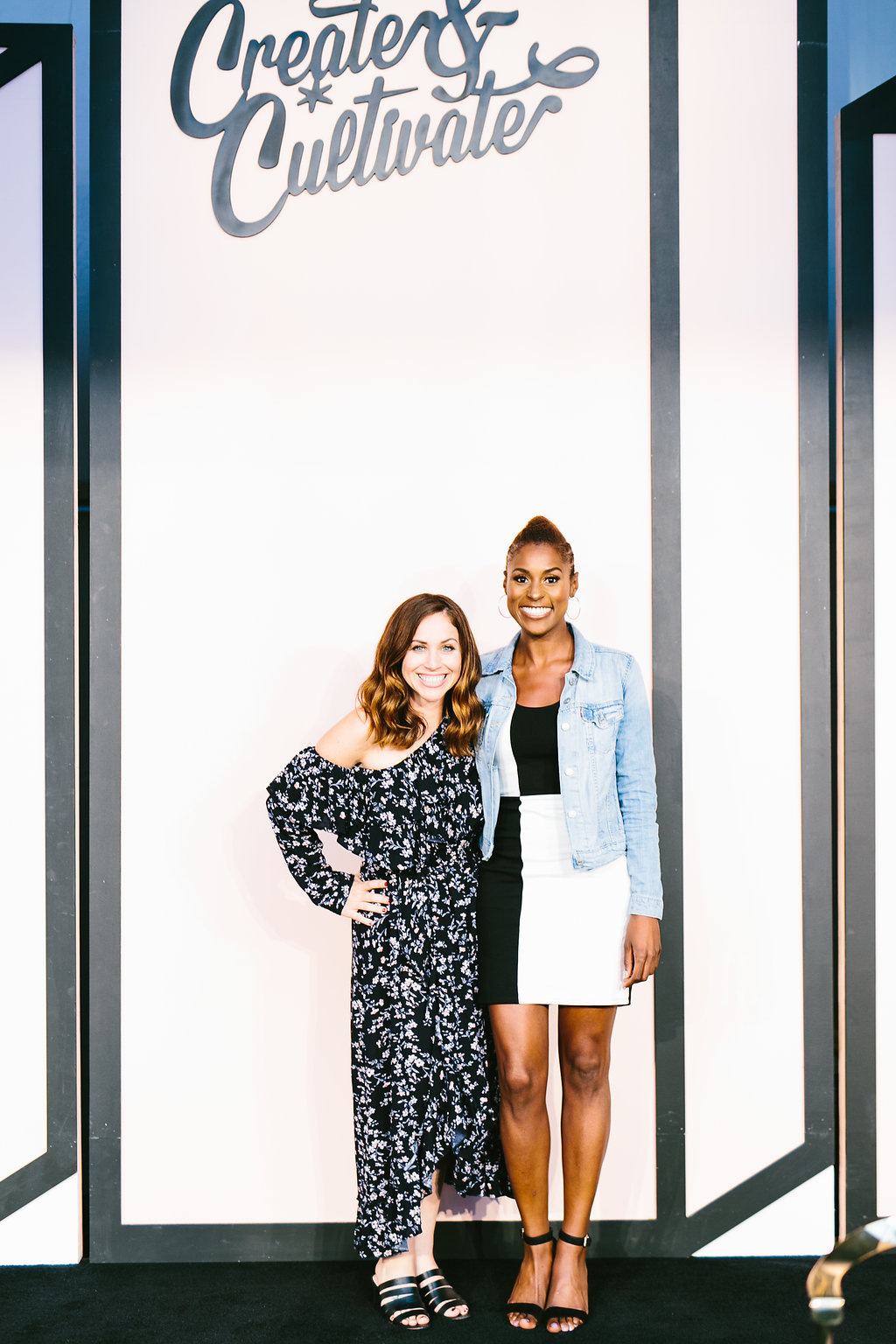
When Issa Rae joined us on stage at Create & Cultivate Seattle as keynote conversation with CEO founder Jaclyn Johnson there was a fair amount of fan-girling that went on. Which, fair. The self-made YouTube star has made moves since Awkward Black Girl, creating and starring in HBO's Insecure, as well as landing in Time Magazine's "Firsts" issue, credited as the "First black woman to create and star in a premium cable series."
Here's what she shared with the audience.
On the old boys club:
"You’re constantly getting excuses from higher-ups that they can’t find people.. But they’re not trying hard enough.
Sometimes you have to take a risk on people that have no experience, so they can work. There is an old boys club at the end of the day. They’re recycling people and they are risk-averse. But when you have black and Latino people supporting a black show, the results are clear and it feels authentic. For us it was making sure that we’re doing our part to give other people the spotlight."
On your ‘one shot':
"During Awkward Black Girl... I was producing that out of pocket, and my pockets were empty. That was hard. I produced it with 25 dollars. We set a Kickstarter goal of 30k and ended up raising 60k. And then Pharrell [Williams] contacted us in the middle of our season and asked if he could fund the second season. That changed the game from there."
Shonda Rhimes and co ended up reaching out to Issa.
"I was producing Awkward Black Girl out of pocket. And my pockets were empty."
Tweet this.
"I pitched them a show called I Hate LA Dudes. It was something true to my heart and true to their hearts too. I developed that with them. I felt like it was my one shot. I was extremely eager to please. Shonda was great at hand-holding but where I fell short was navigating network notes. When the studio and network would give notes I was a 'yes woman' and I lost what I was trying to say in the process. At the end of the day they want you to funnel their notes through your voice. I didn’t get that at the time. They ended up passing on the series. I thought that was my one shot. So when HBO called and I knew that I should never dilute my voice again."
On failure:
"I can’t go a day without failing. I think where I thrive is knowing I’m not gonna make that mistake the same way again."
On bringing up other people:
"Too often we try to find people that are established or go the star route and networks encourage that. But I’d been following Yvonne’s [Orji] career for such a long time, just via Facebook. She was one of the random people I had friended post election when she had posted a video trying to claim Obama as a family member after the election. I thought it was the funniest shit ever. I just friended her. When we got picked up I hit her up and said, ‘Hey will you audition for this?’
The web is where you can be the most free. It’s your pure unfiltered voice. And it’s where you can highlight other content creators. Which is what Issa Rae Productions is about. It’s about building a pipeline to get people into television and film. It’s been super exciting as a genuine fan of dope artists.
Everyone on the Insecure team is all about that. Elevating other content creators. That’s what it’s going to take to shift the industry and shift the crazy excuses as to why there aren’t relatable shows of color."
On first mini-viral moments:
"Me and my girlfriends were sitting around drinking Moscato one night. Because we heard Lil' Kim talk about it in a song. And we could afford it. We had a freestyle session where I thought, I need to record this. We are killing it. We weren’t. I used Windows Movie Maker and turned it into a music video. It spread around our campus."
On breaking into the industry:
"At the same time [as the viral videos] I was trying to break into the industry traditionally. I came to LA to try and sell a spec script I wrote with a partner. I was told by executives that there was no audience for the kind of work we we’re trying to do. I had a lightbulb moment when I thought I am such an avid user of Facebook, it would be so cool to do a mocumentary about what it’s like to be black at Stanford and just upload it. And did it. It started spreading to other schools. For me that was an epiphany that I had direct access to an audience. But I graduated and didn’t do it again until about two years later. Awkward Black Girl was my third web series. It blew up from there."
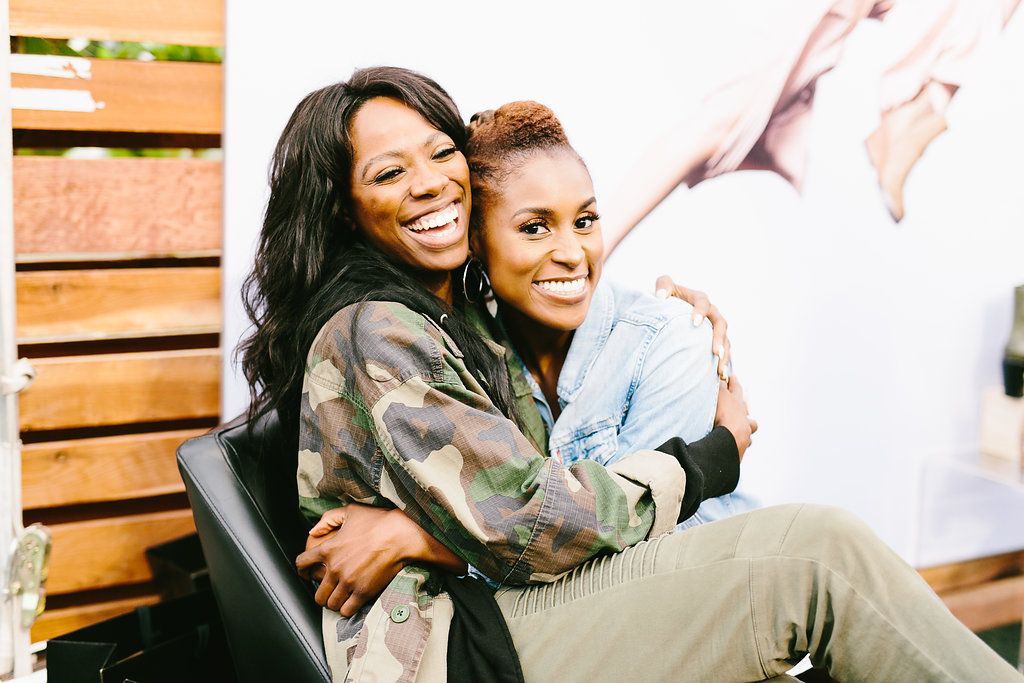

On being ‘Insecure’
For Awkward Black Girl I was 100% nervous. I had never put my own face out there. I wanted another friend to star in it, but by the time I actually went through with it she was like, ‘Girl I’m in law school.’ I knew I was running out of time. And I knew the character and that I could play it. That took a lot of pumping up. I know how ruthless people are, but I had to get over it. I had my best friend come over and showed her the first edit and watched her genuine feedback and laughter. Then I closed my eyes, uploaded it, and went to sleep. By the time I woke up, it had spread beyond my network, which I thought was just incredible."
"I can’t go a day without failing."
Tweet this.
On representation:
"I was a fan of television shows that had a specific type of humor. But I never saw people of color representing that humor. Sometimes they were being laughed at or the butt of the joke, but they weren’t cracking the jokes."
At the time Issa had a film blog where she would vent her frustrations.
"On the blog I would talk about what I wanted to see. And I would talk shit a lot. And one commenter was like, ‘Bitch you talk a lot of shit, why don’t you do it?’ And I was like, 'Oh maybe I can.' So I really created Awkward Black Girl so I could continue to talk shit."
On the start of her career:
"There is someone who should have equity and is the reason I put out the show. Commenter ShyWeb18 is responsible for my entire career. Shoutout to her."
On female friendships:
"When I was in in college I loved watched the reality shows for the drama and the ignorance and the ridiculousness of it. But then I thought this is all we have depicting black female friends. We’re constantly battling each other, we’re conniving. We’re throwing chairs and wine bottles at each other. And I’ve never thrown chairs in my life.. at my friends. We wouldn’t be friends after that. I wanted to depict the real friendships that I knew. Yvonne’s character Molly is based off of one of my best friends.
I love women. Some of my best friends are women. There’s just a comfort and a shorthand and a support system. For me it comes from being around dope active women. There’s a narrative that we don’t support each other, that we’re catty, that we tear each other down. That’s never been my experience. It’s so rewarding to grow with so many different women. "
Photo credit: Smith House Photography
Arianna Schioldager is editor-in-chief at Create & Cultivate. You can find her @ariannawrotethis.
MORE FROM OUR BLOG

How To Reclaim Your Time & Your Meetings
Hello timesaver. Hello future.

If you were super-duper, pep-talk in the mirror honest with yourself, how would you answer this question: Where are your eyes during a meeting? Are they on your phone? Scrolling through emails?
Liking photos on Instagram…
We’ve all been there, to the point where we at C&C have a company-wide policy that at all-hands meetings, it’s all hands off phones. That’s right. They stay in our pockets or at our desks. Because ACTIVE listening is how we truly get into action.
And while you might be thinking, hold up, wait a multi-tasking minute. That’s how I stay productive. Studies show that you’re not actually getting as much done as you think while “multitasking.” The truth is, our brains can’t handle jumping from task to task.
Just. Not. Possible.
However, thanks to Bamboo, we've found a solution to the meeting madness. They introduced us to the idea of Mindful Meetings and their new smartpad is unplugged digital note taking at its finest! All you need is the Bamboo Folio and the accompanying pen, and it does the rest-- tracking your notes, sending them to your device-- it will even auto-type your handwritten notes with its Inkspace app. It’s been a HUGE timesaver for us. It also helps us focus on the meeting at hand. And the less you’re distracted in meetings, the less meetings you have to have! Who isn’t keen on that? (Your boss will love it, for one.)
And speaking of bosses, we asked 3 successful CEOs their best advice for having more mindful meetings in the office. This is what they said.

WEEKLY TEAM MEETINGS
"Something Social values weekly meetings to their core. We meet weekly to discuss major team goals, updates on clients, new initiatives, and more. While it may seem really easy to do all of this while also being on your laptop and phone, we make sure we don’t waste this time by fully focusing on the conversation. We leave our laptops and phones at our desks. Oftentimes, we’ll also take a few moments to discuss personal goals as well as professional, which helps us tie our work to our personal growth. Ironically, one of the things that most helps us stay mindful at the office is a piece of technology – the Bamboo Folio. The Folio lets us write meeting notes and ideas with a pen on any paper and then save the work as a digital file with the touch of a button."
Cali Cholodenko, Founder/CEO of Something Social
Read more on Something Social’s mindful office practices here.

TIME BLOCK YOUR SCHEDULE
"If you’ve been around these parts for a while, then you know time blocking is a method that I absolutely swear by! I give each hour of my workday a specific task and I focus solely on that task during that allotted timeframe. This keeps me from spending hours in my inbox or getting caught up on one client project that eats away my entire afternoon. Plus, having a consistent schedule for my workday allows me to plan accordingly and know what’s next. Rather than floating from task to task, I know that I’ll spend 30 minutes answering emails, one hour working on client design projects, 15 minutes brainstorming future content ideas, etc. If you haven’t tried time blocking before, I highly recommend it!"
Bonni, Founder/CEO of B is For Bonnie Design
Read Bonnie’s Time Management Tips + Tools For Running A Business here.

STAND UP!
"When your body is active, so is your mind! Have a standing, no-tech meeting. You’ll be surprised how fast people will try to get things done in that meeting. You could also invest in a standing desk. We use them for when we are really ready to bust out tasks. Plus, it’s easier to do a victory dance when you’re already standing."
Promise Tangman, Founder of Go Live HQ
Read more on how the Go Live HQ Team tackles their to-do lists.
Want to learn more about how you can apply mindfulness to your office culture? Read more about Bamboo’s Mindful Meetings movement + see what their Smartpads have to offer. Where there’s a will, there’s a way.
MORE FROM OUR BLOG

How These Co-Founders Are Revolutionizing the Jewelry Industry
For your benefit.


Gold is element 79 and its symbol is Au. And Sophie Kahn and Bouchra Ezzahraoui, the co-founders of AUrate, have struck their own version of the shiny element with their jewelry brand. Inspired by Warby Parker, the duo launched in 2015, with the intention of offering high-quality gold jewelry direct-to-consumer.
What began as a friendship forged in the hallways of Princeton University's graduate school, where they met studying Finance, became a life-altering, business-founding partnership for the women. Both had recently moved to the US, Sophie from the Netherlands and Bouchra from France (and previously Morocco), and they connected over a love of fashion and a keen ambition to do things differently. I.e. smarter and better. "We realized that many fine jewelry brands have higher price points because of the wholesale markups and the customers’ lack of education about gold. For that reason, we decided to start a fine jewelry brand with a direct-to-consumer model, cutting out the middleman," says Bouchra.
The powerhouse duo share a remarkably complementary partnership, combining Bouchra's sharp expertise in business and passion for artisanship with Sophie's fashion industry experience and design savvy. And this month, the brand is opening 3 new retail stores in Boston, Williamsburg and DC.
So we had to know, how are they doing it? And making it look so good...? Read on.
Turning a friendship into a business relationship can be challenging. What made you both know you were up to the challenge?
Sophie Kahn: Bouchra was a Derivatives trader at Goldman Sachs and I was doing strategy & Marketing at Marc Jacobs after a stint at The Boston Consulting Group. Our different backgrounds and our shared love for fashion and business were the reasons we came up with the idea, we saw a need in the market and wanted to address it. Instead of seeing it as a challenge we saw it as an opportunity, not only to turn “a friendship into a business relationship,” but to build a strong foundation for AUrate.
Piggybacking on that a little. You’ve said that you have a complimentary partnership. So what were each of your strengths and weaknesses that made you confident in each other?
Bouchra Ezzahraoui: We both realized very quickly we wanted to do build something of our own that is bigger and more meaningful while at our corporate jobs. Our complimentary personalities and skill sets enabled us to strike the balance you find in your ideal co-founder. Sophie built a great toolkit combining fashion industry knowledge along with her consultant skills, I on the other hand really learned how to work in a very fast-paced result-driven environment that forged my business and risk taking experience. I believe you need a business partner who shares the same vision but who can bring something different to the founders’ table.
To answer the last part of your question: We’re both very impatient and that’s the common denominator that keeps the AUrate journey going.
"You need a business partner who shares the same vision but brings something different to the founders’ table."
Bouchra, from a BSc in Mathematics and an MsC in Applied Mathematics, your road to AUrate co-founder has certainly been an interesting one. You obviously bring a wealth of business knowledge to the team. So what would you tell young entrepreneurs just starting out that they need to be aware of on the numbers side?
BS: Make sure you keep the big picture in mind, know your market (all the numbers and your competition) and invest very early in your team and your product. Cashflow management is primordial but it all comes down to taking calculated risks. Your investors would appreciate that.


Sophie, similar question to you— because a successful company is not just about numbers. What should young entrepreneurs be focusing on in terms of branding and creative strategy?
SK: Use a consumer-centric approach to business – creating a brand with our consumers in mind, getting to know of what they want and appreciate, what are their preferences, instead of what we think they want.
How much of business is going by the numbers?
SK: Most of it, if not all. Our team focuses a lot on collecting data and executing on findings. We just opened 3 stores at 3 locations where our customers wanted an AUrate physical presence. We also just designed a whole collection based on customer feedback.
How much is going with your gut?
BS: ALL of it. Really. You can simulate all the possible scenarios but in a startup environment, you won’t have enough data to allocate the appropriate probabilities to those very scenarios. It comes down to following your gut and just going for it.
How did you each know that it was time to turn AUrate into a full-time gig?
SK: We had the proof of concept after a few months of operations. We saw a void in the market, we tackled it and our customers were receptive to our product and our mission. It was a no brainer.
Was the transition hard for you?
BS: Neither of us had the jewelry background nor went through the traditional fashion route. We learned how to run a business from scratch. The market structure, hiring the right talent, looking for strategic manufacturers and partners all had to be done at the same time. You have to build structure within an endless list of priorities without having the traditional set up at a corporate job. The hardest part of the transition is learning how to be patient and dealing 100% with unexpected scenarios.
What was the hardest part of leaving your jobs and striking out on your own?
The trajectory is less obvious, you become your own boss and have to take all the decisions.
What was the easiest?
SK: For me, it's having a real impact on this world. My parents are doctors, so I've always had this thing of wanting to give back. But I like fashion, so I felt very conflicted for a very long time. Now, we've got our company where we're a) helping kids read, b) creating jobs, and c) doing that all by ourselves.
How is AUrate revolutionizing the industry for the consumers’ benefit?
BS: We felt a true void in the marketplace, as we found it hard to find fine contemporary jewelry that was accessible. We realized that many fine jewelry brands have higher price points because of the wholesale markups and the customers’ lack of education about gold. For that reason, we decided to start a fine jewelry brand with a direct-to-consumer model, cutting out the middleman, empowering our customers, giving back in a transparent way and providing the same to better quality jewelry at a fair price without any concessions.
What is your hope for the company?
BOTH: We believe that the new generation of consumers cares not only about the aesthetics of the product but also its quality, how it is made and what it stands for.
It is important that we invest ourselves in more than just beautiful jewelry and business growth but we also strongly believe that true corporate social responsibility is increasingly critical in this world– we’re hoping AUrate will lead by example in a much bigger impactful way in our industry.
MORE FROM OUR BLOG

The 5 Best Free Apps to Help Your Job Hunt Now
Get the career edge on yourself.

photo credit: Sarah Natasha Photography
JOB HUNT.
There are few words that cause such considerable strain, anxiety, and YES! Heartache. Searching for the right job is as time consuming as searching for Mr. or Mrs. Right. But just as the dating world has gone the way of the app, so has the job search. And these 5 apps will help you land the career of your dreams instead of your career of right now.
We have faith in the system.
Good & Co.
Cost: Free
Let’s start at the beginning. Maybe you have NO IDEA what you want to do. The good news is, you can’t be stuck in a career rut, until you find yourself a career. Good & Co. wants to help you get there (to the career, not the rut.)
"Good news: you can’t be stuck in a career rut, until you find yourself a career."
Tweet this.
This app is designed to help you find a cultural company fit. What does that mean? It’s a personality quiz that asks you a series of questions based on measuring eight personality factors, including the academic, clinical, and organizational psychology gold standard ‘Big Five’ – the five basic building blocks of personality, supported by a wealth of empirical research reaching back many decades.
It’s like career day at school, but the counselor has been replaced by an app.
According to the Wall Street Journal, it’s a “personality test that raises the bar” and hopefully your salary when you find your niche and hit your career stride.
Resume Star
Cost: Free
Writing a resume doesn’t have to be difficult, but it is a crucial component of the job-seeking process.
Resume Star is credited as one of the easiest (and free!) resume builders on the app market. It is a precision targeted and professionally typeset resume-- which, two LA-recruiters will tell you is key to scoring the interview. (Find their tips on NAILING that interview here.)
You type in your information and Resume Star produces a clean, correctly formatted PDF that you can email, post, or print. It’s the first step in standing out.
Jobr.
Cost: Free
Swipe right on your career? That’s the idea with Jobr.
Jobr lets you advance your career by easily browsing for jobs and connecting with employers without the hassle of a formal job search. Engage with recruiters at top companies and only spend time on those interested in hiring you! Jobr shows you positions it thinks you’d be interesting and allows you to anonymously “Like” or “Pass.” If a hiring manager is interesting in you, Jobr makes the introduction and allows you to chat within the app. It works the same way for recruiters.
It’s a simple and informal way to get to weed out jobs that don’t make sense and chat through the ones that do.
BumbleBizz
Cost: Free, but Bumble does have plans to monetize their apps in the future
This one is from the genius of Whitney Wolfe. The Founder of Bumble wants to help you network, professionally. With Bizz, every swipe you make is an opportunity to expand your professional landscape and make empowered career moves.
BumbleBizz, like Bumble, will require the female users to initiate conversation. The app will exist within the Bumble framework and users will be able to move back and forth between dating on Bumble, career contacts on Bizz, or making friends on BumbleBFF. (Who needs to go outside!?)
This is one beehive that wants you connecting and making plans for your future-- in more ways than one.
Glassdoor
Cost: Free
Do you know what your earning potential is? Glassdoor job search not only gives you the latest job listing, it also provides applicants with an inside look at company reviews, salaries, benefits, and office photos by those who know the company from the inside out-- the employees.
It’s a comprehensive career community that gives you the edge on yourself.
MORE FROM OUR BLOG

You Should Def Think Twice Before Doing This On Social Media
Check yourself before you wreck yourself.

It’s estimated that 81% of Americans are on social media, (up 5% from last year) so it’s more than likely that you’ll come across professional contacts on various social media platforms. While it might be second nature to connect with those in your professional network, it’s important to think twice before adding a professional contact on social media and make a conscious decision about whether or not connecting is the right move. There are a few extremely important things to consider first.
Nothing is private
One of the reasons why you should think twice before adding a professional contact on a social platform is because nothing is private. This goes for anything you put on the internet, but it becomes even more important when you’re dealing with your career. Regardless of privacy settings, it’s important to remember that everything you put out there can be seen by those in your network.
The first thing that comes to mind may be party pictures, but it’s important to think about the other factors of social media that others see. Are you posting pictures of a relaxing mental health day? Or did one of your friends post a funny meme that your boss might not like? Just remember that when you connect with someone on social media, you are giving them a window into your personal life. If you’re someone that likes to keep your work life separate from your private life, it’s best not to connect with professional contacts on social media.
You’re putting yourself in the line of judgement
It’s human nature to judge others, but when you add a professional contact on social media, you’re opening yourself up to a new line of judgement. Think about it this way: If someone sends you an email and you don’t respond, but you’re actively posting on social media, it sends the message that you don’t care enough to respond to your professional contact, or that you are spending more time on social media than handling your professional obligations.
This can negatively affect you and cause others to judge your work ethic and level of respect. Similarly, if you’re sneakily (or not so sneakily) on social media at work, others will be able to see it. Depending on the office culture and social media rules, this may or may not be allowed, so you’ll want to make sure that you consider this when you’re posting.
If you’re someone who often posts social updates and pictures, you might want to think twice before adding a professional contact on a social platform so it doesn’t affect your reputation at work. If you are going to make a social post, be conscious of who will see it and what they will think.
Sometimes it’s best to keep your work and personal life separate
An industry-wide study of over 2,500 people found that 55% of workers would take less pay to have more fun at work. With that in mind, fun at work is still different than fun outside of work, and it’s important to note the difference. Regardless of your company culture or how relaxed your office is, it’s still important to remember that work is work, and you need to uphold your professionalism.
Remember that you can’t un-see something. If someone sees a picture of you hanging out at the beach in a bathing suit, they will remember that at the office. If you’re comfortable with your office contacts seeing you in that setting, there’s no problem, but it just depends on what you’re comfortable with. It’s a very personal decision that only you can make.
This goes back to the judgement issue, but one of the reasons why you should think twice before adding a professional contact on a social platform is because you don’t want your personal life, outside hobbies, or personal opinions to have an impact on your work. In a perfect world these issues would not affect one another, but it’s human nature to take everything into consideration. With that said, it would be a shame if a personal opinion or weekend activity affected how someone viewed your work or your professional reputation.
_______________
In a society where we’re all connected and plugged into various social platforms, it’s important to think twice before adding a professional contact on social media. Ultimately it comes down to what you’re comfortable with and what you want to share with others. Social platforms are a window into our personal lives, so when you’re considering adding a professional contact, consider if your personal life outside of the office is something you’re willing to share, or if it’s something that you want to keep private.
A native San Franciscan, Michele Lando is a Certified Professional Resume Writer and founder of writestylesonline.com. She has a passion for helping others present the best version of themselves, both on paper and in person, and works to polish individuals' application package and personal style. Aiming to help create a perfect personal branding package, Write Styles presents tips to enhance your resume, style, and boost your confidence.
MORE FROM OUR BLOG

Ask: Jaclyn Johnson, Create + Cultivate founder
Jaclyn Johnsons' tips for hiring potential staff.

We put out a call on Instagram to find out what you wanted to ask Create + Cultivate founder Jaclyn Johnson about starting and running a business. We got tons of amazing questions, and here Jaclyn is addressing one from South African jewelry designer A Ring To It: "Any tips when interviewing or hiring potential staff members and what has been your approach to managing a team that executes your creative vision?"
• Get referrals
When it comes to hiring, I start with friend referrals and fans of the brand before I look anywhere else. Send an email to everyone you know in your industry and ask if they know of anyone; and also put out a call on social media. If someone is already familiar with your brand, it will likely be easier for them to jump in and get up to speed. (If you're the one who wants the job, email and email—and follow up—to show that you want it.) Also, intern! Three of our current employees are former interns :).
• Do a trial run
Once you do find someone, start them out with a test period. I think three months is always good for new employees—that way, you can find out if they're the right fit. It's always good to have an open dialogue about how they're feeling and performing in the job. Not everyone is right for every job, so if something doesn't work out, it's not necessarily because they or you failed.
• Know what characteristics are important to you
I tend to look for and hire self-starters. Our business is always changing and I need people who can think on their feet. With new employees, I like to give them a few projects and situations that they can own and run with so that I can see how they think and how comfortable they are with autonomy. Also, be brutally honest—I never pretend to have the fluffiest work environment—it’s hard work! Also understanding your employees' goals are key! Where do they see their career going? What is their dream? That way you can map back to that at all times.
Our business is always changing and I need people who can think on their feet.
Tweet this.
• Expect that there will be a learning curve
As a business owner, you sometimes have to remind yourself that people aren't mind readers. In most cases, it's going to take at least six months for people to understand how you think and work, and how you expect them to perform. Also, assign mentors—as a business owner you might be too slammed to be on top of everything, but having senior employees mentor junior employees has been a super helpful program for us!
Entrepreneurs, do you have any hiring and management tips? If so, share them in the comments below.

4 Steps to Do Away With That Pesky Five-Year Plan
Let's focus on the next five minutes, shall we?

Photo credit: Vibe Tribe
As the bartender made his way over with four birthday shots in hand my girlfriend looked at me and said, “Chels, I don’t want to turn 26.”
At first I thought it was a bad attempt at making a joke but the look in her eyes told me she was actually being serious. I gave her the biggest hug as I tried to wash away the confused feeling in my chest. Despite having a passionate budding career under her belt, a loving man by her side and the greatest friends behind her, she still felt that she wasn’t exactly where she “needed” to be. As we raised our glasses in honor of the birthday girl I found myself distracted by the elephant in the room that apparently now comes with turning a year older. Instead of celebrating it with arms wide open, society has cast a spell over us saying if we don’t have x, y, and z by the time we blow out a certain amount of candles then we must be doing something wrong. We than proceed to beat ourselves up and never take a moment to stop and realize that possibly, we are doing everything right.
Let me ask you this, have you ever thought that you could actually plan out your entire life?
Half of you are currently laughing at me while the other half know exactly what I’m talking about. If you fall into the latter category, you aren’t alone. I am completely guilty of being the college senior who sat at her desk and wrote out a 5-year plan. I put my heart and soul into that color coded timeline so it may come as a surprise when I say that I am forever thankful that the plan on that piece of paper never became my reality. The person I loved, the city I wanted to call home and the job I strived to land were all meant for the girl who I was then, not the woman I am now.
Here are a few steps you can take to say goodbye to the 5 Year Plan:
1. DON'T DRAFT A TIMELINE BASED ON SOMEONE ELSE'S
As cliché as it may sound, playing the comparison game will only lead you to a dead end. Comparisons can either make you feel superior or inferior and neither of those feelings serve a useful purpose. Write your own story, learn from your own experiences and live your life through your eyes.
"Playing the comparison game will only lead you to a dead end."
Tweet this.
2. EVALUATE YOUR GOALS
Saying goodbye to the 5-year plan does not mean you should wash away your goals, no ma’am! Instead, use this as a chance to check-in with your personal and professional goals and know that it is absolutely OK to tweak them if you see fit to do so!
3. BE NICE TO YOURSELF
When you are your own best friend, you don’t seek out validation from others because you realize that the only approval you need is your own. This is your life, your journey and once you recognize the value to that then no one, not even a ‘plan’, can get in the way of your happiness.
"The only approval you need is your own."
Tweet this.
4. WELCOME NEW OPPORTUNITIES
Since life doesn’t always go according to plan being able to welcome new opportunities with open arms is key. How silly would it be to close the door on an opportunity just because it wasn’t color coded on a piece of paper you drafted up three years ago? Don’t sell yourself short out of fear of not sticking to your 5-year plan, learn to ride the wave of life with a smile on your face and motivation in your heart.
Life is going to take a different path for every single one of us so constantly comparing your journey to someone else’s will only hinder you from making the moves that are meant for your life. Just because your best friend is engaged, your roommate landed her dream job or your younger sister purchased a house with the white picket fence all before you did does not mean that you are screwing up. With each new day and each year that you are lucky enough to blow out an added candle know that this is your life to live and your journey is uniquely beautiful.
Keep dreaming, keep loving and as always, just keep swimming.
Living on my own terms,
Chels
Chelsea Briche runs the popular blog The Millennial Miss. A platform for young women surviving their twenties with grace and a lot of humility. The platform is Chelsea's "pledge to you, the ones who haven’t quite figured it all out yet. That we, together, will immerse ourselves in every single thing possible; explore, love a lot, love a little, and never touch the ground."
More from our blog:

Boo Hoo Babe: When, If Ever, Is it OK to Cry At Work?
A boss girl's guide to tears on the job.

Crying at work. We’ve all done it— some of us more openly than others. Whether it’s hidden in a bathroom stall **allergies** or in the middle of a conference room, business environments can be tense and, at times, move us to tears.
Unfortunately, there’s a shame that comes with crying at work, especially when you’re a woman— like you’ve failed some kind of litmus test for feminism (not true). There’s this underlying assumption that if you’ve got boobs and working tear ducts you’re either A. on your period or B. not tough enough to be a part of the boys’ club. You cry at work, and men judge you. So (ugh, sorry!) do other women who act like it sets us back in the workplace. It’s a tricky territory to navigate.
Thankfully, there are CEOs and Founders who are attempting to change this stigma. But let’s be real— very real: We can’t pretend that there isn't a difference between crying when you own the company and crying when you’re the intern.
There are different tiers for tears. So let’s break it down by rank.
CRYING WHEN YOU’RE CEO.

Jen Gotch, Founder and Chief Creative Officer of ban.do (who spoke on a panel at C & C this past March in Los Angeles), posted a selfie 14 weeks ago of her crying at work on Instagram. In the caption she wrote: “Ever wonder what it looks like, really looks like to be the chief creative officer at a rapidly growing company? This is me, today, after my efforts to make something work, well, did not work. In fact they kind of back fired. So I cried, ate some cool ranch Doritos, contemplated getting in my car and driving far far away and never returning and then I did something crazy. I challenged myself to own the part where I failed.” The photo is an un-retouched, raw selfie. Her eyes are wet. There are tears on her nose.
Crying when you’re the CEO is awesome. It allows your employees to see you as human (even if you have superhuman boss powers where you're fully operational on three hours of sleep). That you have bad days like they do, that you feel your failures instead of blaming them on other people, and it signals a shift surrounding the "humiliation" of crying on the job.
When you work for yourself or you own the company, it’s obviously OK to say, of course cry at work. Let it out. It’s good for you. In conversation with Lena Dunham for Lenny, Gloria Steinem said: “Because I am crying, I will live longer than you.”
But no one is firing Gloria Steinem (or Lena, who also has copped to copious amounts of tears) at this point.
CRYING WHEN YOU’RE MID-LEVEL, ALMOST BOSS
It’s a hard position to be in. You have some power, but you still answer to your boss, and you want to be sure that the employees below you, respect you. However, you need to trust that you've gotten this far for good reason, even if there have been a few tears along the way.
Jen Stith, VP of Communications and Brand Development at Bumble told us, “I work for a startup so I wear so many hats. I don't even know what day it is, I don't have time to cry. Although, sometimes I almost cry when I can’t find Red Bull when I land.”
Which brings up an interesting point about the current office environment. So many of us work on-the-go, and the old office model no longer applies. Crying at work might mean crying alone. In which, have at it. It doesn't make you weak. It doesn't mean you've failed. In fact, releasing that tension has proven to lead to better concentration.
"Sometimes I almost cry when I can’t find Red Bull when I land.”
Tweet this.
Another employee of a major fashion brand, who asked to remain anonymous told us, "One of my favorite quotes is, ‘Some days you’re the dog, some days you’re the hydrant.’ And some people are more comfortable being the hydrant all of the time. But if you want to make moves, you have to be willing to stand your ground, and sometimes that can lead to tears. That doesn't mean you're weak, often times it means you really care about your job."
"Some days you’re the dog, some days you’re the hydrant."
Tweet this.
CRYING WHEN YOU’RE A MINION.
Every. Single. Assistant in Los Angeles has a crying story. Or a thousand of them. People like to pretend it’s character building, that being knocked down a few pegs is all part of climbing the corporate ladder.
When I was an assistant I had a boss who was determined to make me cry. He used to say, “I will break you. I’ve made everyone cry, you’re no different.” It became a sick game, especially given my position within the company. I had no clout, and therefore in my mind, there was no crying. (Not in the office anyway.) I cried in the car, at home, to my mom, basically to anyone that would listen, until finally in between sobs someone talked some sense into me, and I left that job.
I never would have felt comfortable crying at the office, but that was due to the fact I was the lowest on the totem pole in a high-stakes, high-pressure environment.
When we aren't in charge, we worry about jeopardizing our standing or reputation in the company. That is a very real threat and a very real fear. That's not to say you can't cry, but you have to understand your individual situation and make that decision. (Even if that means realizing you might be in the wrong job.)
TO TEAR OR NOT TO TEAR
There is a difference between bringing your personal life to work and crying because of say, a failed relationship, and crying out of frustration when, like Jen Gotch, you're really feeling a failure.
If you're feeling down because something goes wrong, or you feel disrespected and forced to put your tail between your legs, take a moment. Feel your feelings. Where you want to do this, is up to you. There is no one-size-fits-all model. You were hired by your company because they saw something in you that they trusted. Bank on that and your gut. If that means stepping outside to cry, go for a walk. If that means tearing up in front of your co-workers, then so be it.
Even the strongest athletes get overwhelmed by emotion when they cross the finish line, whether they come in first or last.

New Royalty, Meghan Markle, Shares 6 Pieces of Advice
A real princess knows best.

photo credit: David Rosario.
Take some advice from a real (almost) duchess ladies.
It's been said that a woman who knows exactly what she wants is one of the most powerful creatures in the world. And when the newly engaged (to ahem Prince Harry) Suits actress Meghan Markle took to the Create & Cultivate stage she gave attendees a glimpse at what that looks like.
Charming, intelligent, and not afraid to let her guard down, Meghan is the definition of the modern woman and soon to be princess! Here are our favorite moments and six best pieces of advice the princess, actress, editor, and activist shared with #CreateCultivateATL attendees. Watch the full video here.
1. "DON'T GIVE IT FIVE MINUTES IF YOU'RE NOT GONNA GIVE IT FIVE YEARS."
Passion was a hot topic at the conference all day. Meghan echoed this sentiment by telling the crowd that if they couldn't see themselves dedicating five years of their life to their endeavors, what was the point in even giving it five minutes?
"Five years sounds like a long time," she said, "but it's really not."
Time is precious. Focus your efforts on your passions and success is sure to come. "That's when you see your long-term goals payoff," she added.
2. "BLIND OUTREACH IS JUST LIKE AUDITIONING, IT'S A NUMBERS GAME."
Meghan started developing The Tig after receiving advice from The Coveteur co-founder Jake Rosenberg, to do a site herself. A company had approached her to essentially create MeganMarkle.com, but after giving herself a gut check she knew it didn't feel right. She wanted her site to be less about fashion and include more "think pieces and op-eds about empowerment."
But just because she's on a show, the actress said she still had to blind email people. "No one knew what The Tig was at the beginning," she said, "but I kept putting out outreach. At the time some people loved Suits and some people hadn't a clue what it was. It seems like I had more of an in, but it wasn't the case."
She told the audience about cold emailing Heidi Klum's assistant for an interview request. "I don't know Heidi Klum," Megan said, "but she said yes."
"We all do cold outreach."

photo credit: David Rosario
3. "STOCK EMAILS WITH TYPOS? FORGET IT."
Meghan is all about a personal touch, explaining that she still sends out handwritten thank you notes. "I can't tell you how few of them I get," she said, "but one hundred percent of the time, I end up remembering that person."
And even though she acknowledges typos happen, she says it's vital to make sure you're proofreading. It shows the recipient that you're paying attention and that you value their time.
4. "YOU DON'T HAVE TO PLAY DRESS UP TO BE A FEMINIST. YOU ARE A FEMINIST EXACTLY THE WAY YOU ARE."
After an audience member asked Meghan how she balances being a feminist with being feminine, Meghan answered that there is no difference. "They are not mutually exclusive," she shared. "You can be a woman who wants to look good and still stand up for the equality of women."
"You can be a woman who wants to look good and still stand up for the equality of women."
Tweet this.
You're allowed to be a feminist in whatever way that looks like to you.
5. "DON'T TRY TO WIN THE PART, JUST WIN THE ROOM."
Meghan shared that as a biracial actress she has heard 'no,' an endless number of times. "Because," she said, "I was going in for the ambiguous girl, the black girl, the white girl, even the sassy Latina girl-- even though I'm not Latina and I'm not even that sassy."
"It's very hard to not question something about yourself in those moments," she said of the endless parade of nos. "But at the end of the day it does not matter if you get that part or you get that dream job. It may see like it at the time, but if you make fans of the people who saw you in that room, that carries on so much longer than what that job might have become."
6. "IT'S ALL STILL EXCITING. BE GRATEFUL FOR THE LITTLE THINGS. THAT'S HOW YOU ENJOY IT."
Meghan told the audience that for five months she climbed into the back of her trunk after auditions because she couldn't afford to get the broken locks on her car fixed. "This epic day happened where the locks stopped opening with the key," she shared. "And the clicker wouldn't open the front doors. I couldn't afford to fix the doors and this was my girl, this is how I got from one audition to the other." So she would drive to auditions, park in the back of the lot, and once they were over, she'd wait until no one was paying attention and climb back into her car through the trunk.
Never in her dreams did Meghan think she'd be on a show that has run for six seasons, but in sharing real and humbling moments she's able to enjoy and stay grateful for the journey.
MORE FROM OUR BLOG

#FollowFridays: The 8 Female Artists We're Obsessing Over
Much-needed weekend inspo.
Need new inspirational IG accounts to follow? Our #FollowFridays posts will have you showing mad love online when we round up our favs in art, business, wellness, philanthropy, tech, media + so much more. Check out who we're following below!
@monicaahan + @jackeyblue_


CLICK THEIR HANDLES. LEARN MORE ABOUT THE ARTISTS & SHOW THEM SOME LOVE.
Who are you following?
MORE FROM OUR BLOG

Why GoDaddy Encourages Their Employees to Have Other Jobs
Heidi Gibson is an engineer with degrees from MIT. She's also won the national Grilled Cheese Invitational.

photo credit: Unsplash
Heidi Gibson, Direct of Product Management at GoDaddy, also runs a small local restaurant chain in San Francisco-- The American Grilled Cheese Kitchen. More so, she has written two successful cookbooks, won the National Grilled Cheese Invitational, been called the grilled cheese savant, and for eight years plus she's taught entrepreneurship and small business finance at The Renaissance Center, a non-profit entrepreneurship hub that serves women and minorities.
WOAH HEIDI. She's climbed so many mountains, we needed to know what the air was like from up top. Does it smell better?
How does one manage everything as a tech expert at GoDaddy and as a business owner? Her answers might surprise you. What also comes as a bit of a surprise is that GoDaddy encourages their employees to have other jobs. Yep. It shocked Heidi too, who was used to having to sign all kinds of contracts preventing her from working on other projects.
Read more to find out how she does it all, keeps her head on, and what 60 pounds of onions has to do with it.
How she builds products for small businesses:
My job is to figure out what small businesses want and need. Which you can do in a variety of ways, my favorite being, talk to them. Then you start with user needs and wants to get your insights.
For example...
We work with a lot of small businesses, those with 1 - 5 employees, and the majority of our customers are women. Our fastest growth areas are outside of the U.S., so we have exploding user bases in India and Africa and South America.
There are a lot of small entrepreneurs starting businesses. An example insight is, a lot of these folks think, if you build a website, it’ll show up. Right? Build it and they will come. So it’s a common thing here, historically, that small business owners build a WIX website and then call up support complaining because they’re not getting any traffic. From that insight, we’ll generate lists of hypotheses from additional research. And we’re like, okay, how do we help small businesses understand that they’ll actually need to market their website in order to get traffic? Then, how do we help them execute on that marketing in a completely seamless way, meeting them where they’re at? So, we’re not targeting developers. Most of our customers don’t know what SEO is, they’ve probably never even heard the term. And I would argue that there’s no good reason a baker should understand what SEO is.
"There’s no good reason a baker should understand what SEO is."
Tweet this.
On how she's breaking down the barrier between creative and tech:
Part of the reason I ended up at GoDaddy is because I have a unique background. I worked in tech for 20 years building consumer facing products and I am a small business owner. I've also have been volunteering and teaching entrepreneurship to women and minorities for the past 9 years at a local non-profit. I won the SBA small business of the year award, and so I am part of the San Francisco small business community. And very few people in tech are…
Why this matters, as both an employee and an employer:
What’s very unique about GoDaddy is that they actually encourage that in their employees. As a restaurant owner, every other place I’ve worked I had go through all these hoops with legal-- from conflict of interest forms and all this nonsense to have my other business on the side. And when I went to GoDaddy I asked, 'Okay, where’s the conflict of interest form?' And they said, 'Are you kidding? Run your business, promote your business, we want you to promote it inside, can we hire you for catering? Like, conflict of interest my ass, you know? Your business is a critical part of your success here.' GoDaddy actively encourages it’s employees. Support agents are encouraged to have a side business, even consulting and building websites for people. Even those directly competitive to GoDaddy. You’re not allowed to fully poach customers directly, of course. But you can be direct competitors and apply what you learn on the job. It's no problem, whatsoever because they’re such believers of you really living in your customer's shoes. It’s really refreshing.


So cheesy. Above: bites from the American.
Her standard piece of advice on launching a small business:
Figure out how to start small with what you have, and test your idea. It’s the same thing I do with software. You identify an opportunity, you gather insights, you form a hypothesis and then you ask yourself, “What is the piece of test I can run? How can I prove out my hypothesis in the fastest, cheapest, easiest way?” Your ability to do that is really gonna vary on your business. If you’re interested in marketing consulting, it’s pretty easy to hang a shingle out there, go do some networking, and find yourself a client or two. You’re probably already doing that work pro-bono for friends and family, right? It’d be pretty easy to say, alright, I’m gonna find someone to do this for and charge them and see how this goes and take a step into it without having to give up your day job. Then wait and work it to the point where you just can’t do both. I would say you can do that and that’s where it starts. It gives you freedom to learn and adapt as you go. You can really approach the whole thing in a really scientific way. You know, come up with a hypothesis and test it and think about what worked, what didn’t, and then adjust. Then test again. You have to be objective about your business. It’s hard because you get so caught up in it, and you feel like it’s you and you being the face of your business is also so critical for the success of small businesses. But you have to be able to step back and be like, what’s working, what’s not? Is my price right? Am I talking to the right clients, is this the right product? What’s the fit here and what is really the longer term opportunity and how does this grow? Also, write a business plan.
On whether you need a business degree and dealing with the numbers:
I’ve heard so many people saying “Who needs an MBA?” This one woman said to me, “I went through bankruptcy and I did write a business plan and I think that’s so much more valuable than an MBA” I gotta say I don’t entirely agree. I do question the value of an MBA for a lot of people too, but that old adage of failing to plan is planning to fail, I think is still true. Even if you’re constantly adjusting along the way, you still need to have this vision of where this thing is going and work backward from that vision. Instead of just playing around and hoping something sticks.
"Failing to plan is planning to fail-- I think that's still true."
Tweet this.
Force yourself to go through the act of writing the business plan, even if not a single number in there will ever come to pass. If you’re lucky, you’re 50% off, and that’s fine! It still gives you this benchmark for success, and now you’ve got a plan for success. If you go through the effort of doing the math and doing the research, you will learn so much along the way of putting together that research by forcing yourself to write a marketing plan and the financial projections. Yeah, it’s tedious but what you’re going to get out of it is so much more than what you’ll be putting into it. And another critical part of what that process makes you confront is realizing what you’re good at, what you know, and what you’re not good at and what you don’t know. And also, forcing you to think through, “What am I going to do? Okay, I don’t anything about finance and bookkeeping.” For more common scenarios, you’ll have some artisans who may not know marketing or bookkeeping or finance, which, good news, there’s plenty of people who do. But recognize that and plan for it and budget for it. When you’re starting out, you’ll probably have to do it yourself as best as you can and that might mean you might be uncomfortable. But understanding that long term you’re gonna need to budget for an accountant and a bookkeeper to help you figure out what your pricing is or how much you need to sell and to do that calculation of when to quit your job and go fully into it.
What she encourages young entrepreneurs to do:
I tell a lot of young people to go out and get an internship with a business owner. Specifically with the kind of business you want yours to be and what you want to do.
Yes. She did this herself.
Here I was, a VP of product and I went out and knocked on doors of cafes and sandwich shops until I got a little bagel shop to hire me-- they didn’t even pay me. I just worked for free. And we told him what we were doing. That we wanted to our own sandwich shop. It had been 15 years since I worked at a restaurant. I told him, 'I want to follow you around. Here’s what you’re going to get out if, I’m going to work for you for 6 months, which is longer than most people stay in restaurants. I’m going to rewrite all of your training documentation for you, update your systems, all of your ordering paperwork and do all this admin stuff, if you allow me to use that as a template for my own business.' Certain entrepreneurs will bite at that and realize, here’s the most motivated person I’m ever going to have and they’ll understand that you’re not a threat, you know? You’re not opening a sandwich shop across the street from you. I’m across town! People aren’t going to be deciding whether to go to my place or your place.
You can do it almost anywhere. You’d be surprised at how often, if you go through the owner, the amount of people who have gone through this journey at some time in their life. Usually they all say yes! What do they have to lose?
And she does it for others.
There’s a woman who owns an Indian wine bar in the city who was a system engineer and took my business planning class and was writing a business plan for her wine bar and she had no restaurant experience. She’d worked in tech her whole life and I let her know it's way harder than you think. And she goes, 'I get it, I get it.' So I said, 'Okay, come work at my restaurant.' And she did. And I told her, 'Okay break down these 50 pounds of potatoes and 60 pounds of onions.'
For women trying to find their voice. Gibson says:
Find an excuse to stand up during meetings. Walk up to the screen and gesticulate, assign people follow-up work – everyone will pay attention to you if you're standing, it's like a miracle has occurred. Suddenly you're in charge. It's now a joke in the office every time I do it (“Ha! Heidi's hijacking the meeting again!”), but it still works!
Expect that you'll need to 'socialize' your idea, no matter how fantastic it is. You'll likely have to pitch it to all the stakeholders separately and talk it up repeatedly for it to 'stick.' Don't get discouraged if, initially, people are interested but nothing happens. Also don't get discouraged if, after a while, nobody realizes it was originally your idea.
Let's say it again, WOAH Heidi, you superhero.
MORE FROM OUR BLOG

5 Crucial Tips for Conducting a Phone Interview
Listening is a good start.

Scoring the interview is a major coup. Nailing the interview is a whole different story.
People have started to rely on email Q&A (guilty::raises hand) but it never makes for the same kind of piece. When and if it makes sense, hop on the phone. You will always get better material from your subject, even if they push back a little. We're all out of practice on the phone and it can be intimidating.
It doesn't need to be.
Here are tips for conducting a phone interview that will get you the unique content you want.
FIRST THINGS, FIRST
Get your recording equipment set up and ready to go. Yes, you need to record the interview. Everyone has their own style and preference when it comes to programs, but don't rely on transcribing as the subject speaks.
Know that the fear that tech is going to fail you (this even happens to seasoned journalist Moira Forbes who told us that the “angst of losing an interview” is so real) and that you’re going to hop off the phone and have zero percent of the convo.Some people take notes as they go to counter that anxiety but if you’re too busy typing, it also means that you’re also busy not listening.
Do a bit of both. Hit record and listen for the golden nuggets. Typing while the person is talking can be a bit distracting to both parties, so opt to write notes by hand. Whether it's specific lines or taking note of a time of some great, jaw-dropping sound bite. Time stamping specific parts will help you when you're trying to piece together the story, or find the meat of the interview.
Trust your gut and know that you probably picked up on the guts and glory of the story as it was happening.
RIGHT, RIGHT, RIGHT?
You’re going to feel compelled to say something. For me, this is “right.” It’s part habit, part tick, but it’s also a tiny word that let’s the person on the other end know that you’re alive and paying attention.
In person this can often be achieved with a head nod. On the phone you need to fine tune this because you don’t want to throw the interviewee off track. A well-placed “right,” is sometimes the encouragement the subject needs to keep talking, however if you overuse the word or interject in the wrong place it will throw your subject off. If you’re only saying “right,” to make yourself feel relevant on the call, it’s not the correct time to say it. A good phone interview is both about leading and being lead. If the person is comfortable speaking without being prompted, allow them the space to speak. Use this as an opportunity to dig in a little deeper, jotting quick hand-written notes on pars of the convo that you want to ask follow-up questions about.
NOTES, NOTES, NOTES//LISTEN, LISTEN, LISTEN
Don’t let yourself get distracted. When you’re on the phone it’s easier to check your email, respond to a colleague's question, scroll social media (tsk, don’t) -- the “rudies” that you would never do during an in person interview. However accidentally, getting distracted on a long phone call, happens.
A great way to stop it from happening is to take the aforementioned notes. This solves two problems: one, if for some reason your recording device fails, you still have some content. And two, it helps you give your subject your undivided attention.
Remember that? From grammar school? Undivided is what you gave your teacher and it’s what you should give the interview. If you don’t, you WILL miss specific words and pauses and cues that allow you to ask more intricate and finely tuned questions. People are almost always willing to talk about themselves, but you have to know when to ask.
THE BEST PIECE OF ADVICE
One key piece of advice I heard early on is this: listen for the question not being answered. What does that mean?
Interview advice: Listen for the question not being answered.
Tweet this.
Within any given answer is a question you’re not asking-- one that you haven’t thought to ask or one that you didn’t know to ask. It’s when someone reveals something about themselves that feeds into (what might be) the most important question (or set of questions) you will ask during the entire interview: the one that’s not scripted.
IF YOU HAVE TO SEND OVER QUESTIONS BEFOREHAND
It’s common to have to send questions prior to a phoner so that the subject has the chance to review. Most people don’t like going into interviews blind (though, it certainly makes for a better, unrehearsed piece.) If you have to do this, don’t simply read from the scrip while you're on the phone. Listen for pauses and cues where you have the opportunity to ask something off the cuff. Make it a conversation and you will be rewarded when writing the piece.
This brings up something else that’s crucial: use the internet to do your research, not to write your questions. Do the research, commit the person’s story to mind, and then write and craft questions at a different point in time. That way you let their story soak into your brain a bit. This allows you to create questions not solely based off of information that already exists.
When it comes time to pick up the phone, do so with confidence and an understanding of your subject and their business. An unprepared interviewer is the worst.