
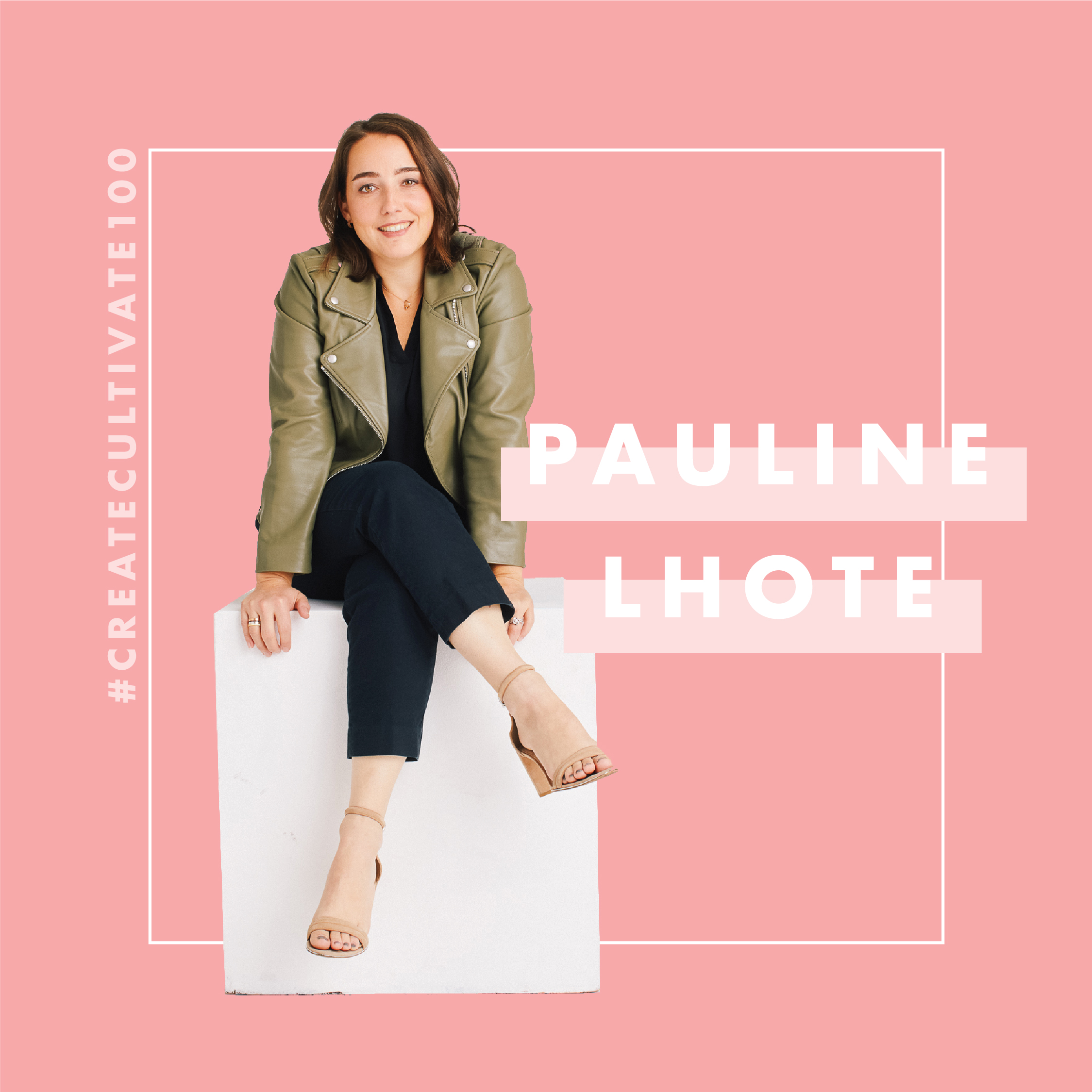
Create & Cultivate 100: Food: Pauline Lhote
Pauline never needed to search for her calling; it found her.


You need no introduction to Chandon.
As one of the world’s most recognized wine brands, consistency and quality is paramount. This is where Pauline Lhote comes in. The director of winemaking has known since the tender age of 14 that she was destined for a career in winemaking. Not only does she hail from the capital of all bubbly—Champagne, France, of course—her parents were both farmers and instilled in her a deep appreciation for agriculture, the environment, and the labor of love behind the winemaking process.
Lhote never needed to search for her calling; it found her. What started as a three-month internship at Chandon in 2006 turned into a full-time career, and 12 years later, Pauline has made a permanent impact on Chandon’s business and brand.
Winemaking is a very niche industry. How did you get your start?
Winemaking is indeed a small but mighty industry! I actually grew up in Champagne, France, and knew I wanted to be a winemaker since I was really young (maybe 14 years old)—but not just any winemaker, I knew I wanted to make bubbles. My parents are also both farmers, so I grew up in this environment where grapes and agriculture were so important, and I became so passionate about the industry and process. I eventually ended up applying to local winemaking schools, and was fortunate enough to attend one of the best for Sparkling Wine, the University of Reims in Champagne.

You’ve been with Chandon for years. How did you climb the corporate ladder and eventually become a leading female winemaker?
I left France for California back in 2006, for what was supposed to be a three-month internship at Chandon. From the moment I arrived, I knew that this was the perfect place for me. Three months turned into 12 years, and I climbed my from intern, to assistant, to head of winemaking. This happened I think due to a combination of my existing passion, relentless work ethic but also the support and encouragement I received to explore my own view point. There is something so unique about American culture and maybe even the entrepreneurial spirit alive in California, that encourages the freedom to create and push boundaries in a way I didn’t find back home.
If you could have a meal with someone, living or deceased, who would it be and why? What would you eat?
It would be with my grandma, who I miss dearly. I would love to catch up with her. For me it is not so much about what we would eat but what we would drink.... I would share the bubbly I make with her of course!
What do you crave in life?
More time to be home and spend with my family. I travel a lot so time home is really something that I look forward to.
What about your job makes you feel the most fulfilled?
I love that my vision for pleasure and epicurean experience gets shared with people all over through something as fun as bubbly. Aside from that, I am most fulfilled when I see my team grow and work together. I have a very special team that I am very proud of.
What’s the best piece of advice you’ve ever been given?
To stay true to myself and trust my instincts.
I am most fulfilled when I see my team grow and work together. I have a very special team that I am very proud of.
What’s been the biggest surprise or highlight of your career to date?
I was extremely honored to be recognized by Wine Enthusiast Magazine as a 40 under 40 tastemaker! It’s a great recognition within the industry.
Where does your passion/drive come from?
I feel extremely lucky to have found my passion so early on in life, in a way that was very organic. I didn’t search for it…I was kind of born into it, but there’s no other place or circumstance I could imagine wanting to switch for. In terms of my drive, parts of it are inherent and other parts I’ve had to develop in order to move forward. Perhaps it has something to do with growing up with all brothers and wanting to prove I could do just as much and more…or being a woman in a male dominated wine industry, you have to have conviction and be true to yourself in order to stay the course.
What keeps you up at night?
I must say that I am typically a good sleeper! What keeps me up at night are probably the weight of decisions I need to make. In winemaking, you realize the results of your decisions after waiting some time; at Chandon specifically, I have to wait an average of 2 years for the wine I make to age, before I get to taste the end results. So decisions I’m making today will impact wine you get to taste in 2021! I’m a perfectionist and so pressure to make the best decisions are probably what keep me up at night.
Whose career really inspires you?
My greatest mentors and role models have been the generations of female winemakers who came before me and blazed a trail to prove that women can do this job. Dawnine Dyer was the first female winemaker for Chandon back in the 70s and one of the first in the entire Napa Valley region. Her work revolutionized sparkling winemaking for Northern California and I very much admire her career. When I came to Chandon California, I felt great pride in reigniting that torch, carrying forward a strong female legacy for the estate, which is such a young, female-forward sparkling wine brand.
What has been your biggest opportunity or biggest challenge as a woman in the winemaking industry?
Like everyone, I have had many opportunities and challenges, but personally never felt that being a woman has driven them. I do think that as a minority, both as a woman and because I’m younger than most in my field, it’s been especially important to be confident and assertive. Not backing down and believing in my vision have helped me navigate the challenges and capitalize on the opportunities along the way.
Mentorship is our responsibility.
There aren’t many female winemakers out there. How can we get more women into the field?
There are actually many women in wine, but maybe few in leadership positions. Much like other industries, it’s so important to encourage those under you and give them the opportunity to succeed when you can. Mentorship is our responsibility!
When you hit a bump or hurdle in your career, how do you find a new road + switch gears to find success?
I go back to the reason why I am doing it in the first place, armed with new information I’ve received from the hurdle and re-approach it from a different angle. I think about what’s changed, what new opportunities or options have been created, and maybe even redefine what success looks like. Mistakes are usually what propel you to get better and reach new heights.
What are you toasting to in 2019? What are you most excited for?
I am toasting to what is most important for me, Family!
And I am most excited for the opportunity to create something new. 2019 means a new season, a new harvest, new wine ready to taste, new ideas and flavor innovations—and the possibilities are endless!
VIEW THE FULL CREATE & CULTIVATE FOOD LIST HERE.


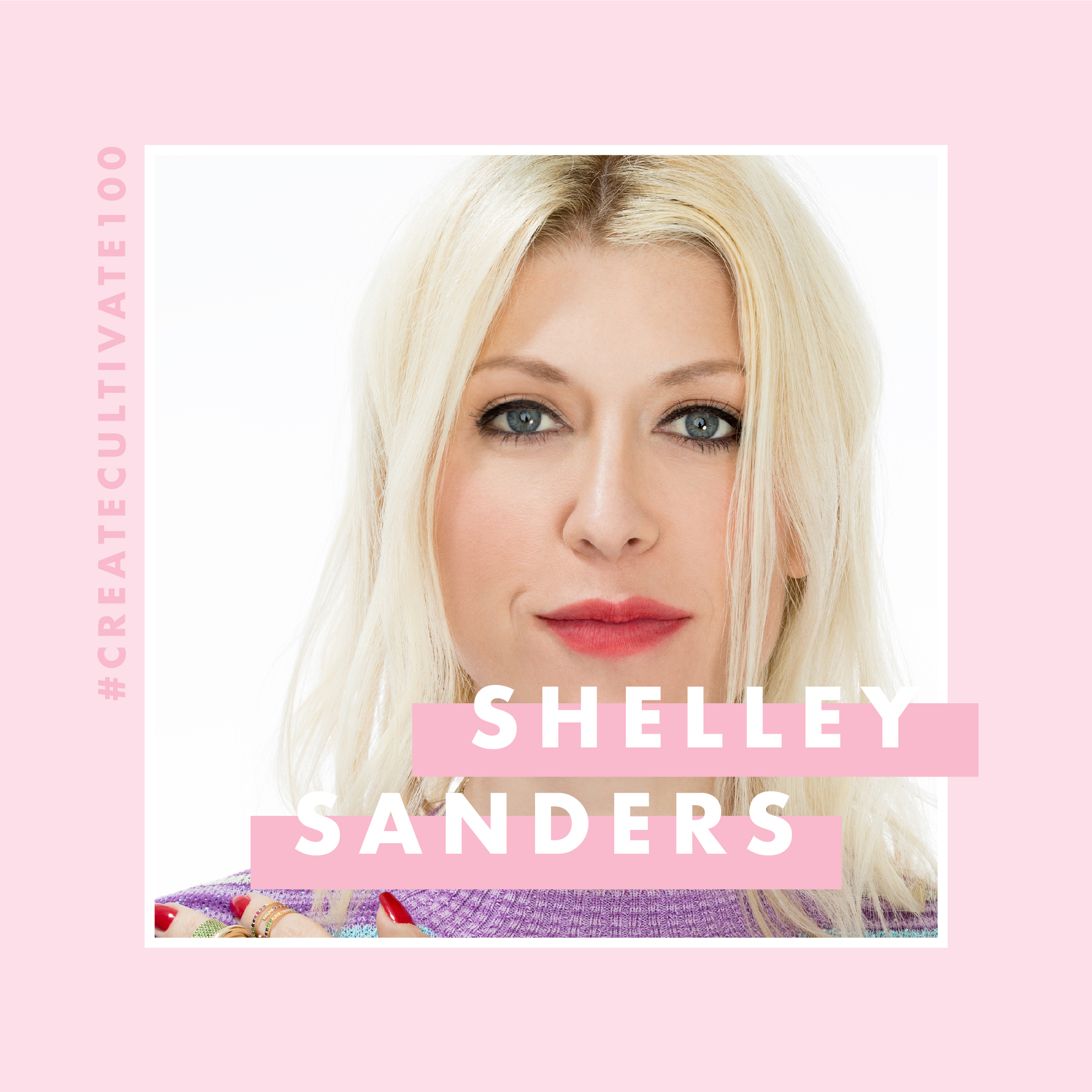
Create & Cultivate 100: Fashion: Shelley Sanders
DTC FTW! How one woman is turning the traditionally-stuffy jewelry on it’s head.


Shelley Sanders designed jewelry for 15 years before she decided it was time to launch her own collection. Enter The Last Line, a direct-to-consumer model that aims to turn the traditionally-stuffy jewelry industry on its head: no walking into a shop full of glass cases, a snobby salesperson giving you a side-eye; no markups; no hassle.
Shelley’s pieces range from classic tennis necklaces and simple studs to bold cocktail rings and zodiac collar necklaces. She’s invested in the creation of every piece, sketching every single item before it goes into production—talk about hands-on.
Below, Shelley gives us the down low on why she chose a DTC model, what she wants to change about the industry, and how she knew it was time to start her own venture.
How did you get your start in the jewelry industry?
I have always been creative, even as a little girl, but truthfully I didn’t understand the capacity of how that trait would play out in my adult life. From super young, I was attracted to jewelry and not just the glamorous, “dress up” side of it but actually the intricacies of a piece–– the shape, the design, the metals, and of course, the stones! I would collect coins and doodle shapes and designs which at that time I didn’t have any clue that I would one day make career of this. Fun fact: I draw every piece we make before we even begin production.
With time my creativity and curiosity to design built and it became more of pursuit for me to see how I could continue to create and maybe make a career of this. I love to design and create and have been known to get sucked into a design because it’s technically interesting or challenging. I studied Fine Arts at Parsons, but they cancelled the Metals program and I was so bummed. A West Coast girl at heart, I ultimately returned home to California to train with Master Jewelers in San Francisco and almost immediately knew I was going to work in jewelry for a living, but I don’t think I ever thought I would do it at this level. And after working on lots of other people’s lines for over 16 years, I decided to launch my own!
You’ve previously said you actually enjoyed working for other people. What made you want to start your own company?
Working for someone else, no matter the industry, is an excellent learning tool, especially if you have any inkling of wanting to be an entrepreneur. I always liked working for other brands because I love the challenge of designing through someone else’s eyes whose style is not identical to mine. I loved interpreting different vibes and becoming their designer and using my knowledge of design to translate their vision. Now designing my line I still design for other people but this time it’s our customers, which is still a challenge to create something that can speak to first-time buyers and all the way up to seasoned collectors. I have always love creating jewelry for all types of people, the wide range is actually what I miss about my old job. I live for a design challenge, constraints are what sometimes what inspire the best creative thinking—push us outside of our comfort level!
What about the direct-to-consumer model that The Last Line employs appealed to you?
Truthfully, before we launched my husband Teddy (who is my business partner) and I went back and forth over being a DTC brand––there is a lot of opportunity, but a lot of risk as the only retailer. Now a year and a half in, I was one of the better decisions we could have made. We have control over how we tell our story as a brand, through our collections, photography, even the pieces we make and our drop schedule. We are telling a story as we intended you to discover it, it’s a designers dream truthfully. Another perk of being direct-to-consumer is there is no middle-man between us and our customer, t’s a more personal approach and it’s service driven, which is important when spending $2,000+ on a piece of jewelry online. We have a whole category of pieces called “you asked, we listened” which has been built off of customer requests.
What’s been the biggest highlight of your career to date?
Ten years ago, I would have never believed that I would have my own brand and definitely not as developed as The Last Line. In my mind, I would have thought I would be more of an artist, maybe produce a few jewelry pieces for my friends or family, but nothing to the scale of what we are looking to accomplish with The Last Line.
The definition of success has changed so much over my career, I’m still defining it! At the beginning of my career when I was designing for other lines, it was seeing a magazine placement of something I designed. When I was in production, I would work so hard on a piece for weeks and if I got a great sample, it was the best, even if we never made it. Currently, I am happy seeing people’s reaction to The Last Line, my muses are real people, the cool women who are wearing The Last Line because they like it, that’s the ultimate success and a real pinch-me moment.
“The definition of success has changed so much over
my career—I’m still defining it.”
What would you change about the jewelry industry if you could?
I love the industry but I think there is still a notion that fine jewelry is reserved for special occasions and those days are (long) gone, especially for the pieces I design. Women are wearing fine jewelry day-to-night and mixing in old and new. For me, it’s how a woman mixes her jewelry collection that is cool and a goal of mine was to make pieces you can wear and not worry about. What’s the fun in buying something beautiful just to keep it away?!
What about your job makes you feel the most fulfilled?
Happy customers.
The genuine feeling of loving what I do.
What’s the best piece of career advice you’ve ever received?
A lot of people told me before launching The Last Line “Decide, go for it and never look back,” but I think it’s really important to look back, that’s how you learn. I am constantly checking in on what I did, what worked, what didn’t work, etc. it’s such an important learning for growth, personally and professionally! Equally important is to establish (and believe) a clear vision of what you are setting out to do, the worst thing you can do is lose authenticity of your goal, your business, your product, whatever it is. That’s not to say that you can’t do new things, but do it with your own lens. I have made a rule that I will only ever produce things that I am happy to present and wear myself, if I don’t believe in it, why would someone else?
Who’s style do you love?
I’ve never been celebrity or model obsessed, for me I’m way more inspired by the real women and men I see living their life—looking rad, making it happen. Literally, I love unique street style on anyone from a child, a peer, a mom, grandma, guy or girl, I respect it and it inspires me in all forms all the time.
I also love classic and antique jewelry, especially Art Deco and retro styles as a source of inspiration. I’m a nerd for it, a true geek and could probably could win a Jeopardy category on jewelry design over the last 200 years.
I know all antique pieces, their designers and their techniques. I look at old renderings and enjoy just taking them in, I appreciate construction and technical function of pieces.
When you hit a bump or hurdle in your career, how do you find a new road + switch gears to find success?
First things first, you learn the most from listening no matter the situation. Then assess what happened, dust yourself off (because you will fall in starting something) and move forward. In a short time I’ve realized how important it is to be perfectly clear about everything and extremely direct, whether its with regards to design, tone of voice, a business relationship or a new hire, I’ve paid hard for times I wasn’t clear. Most importantly, go with your gut and trust yourself.
What’s next for you? What are you most excited for in 2019?
SO much, I feel like we’ve been doing this forever but we’ve only just begun, lots more sparkle to come. . The inspiration behind the name of The Last Line is it is the last place you’ll have need to look for your jewelry and I plan to live up to the name, trust me.
VIEW THE ENTIRE CREATE & CULTIVATE 100 FASHION CATEGORY HERE!


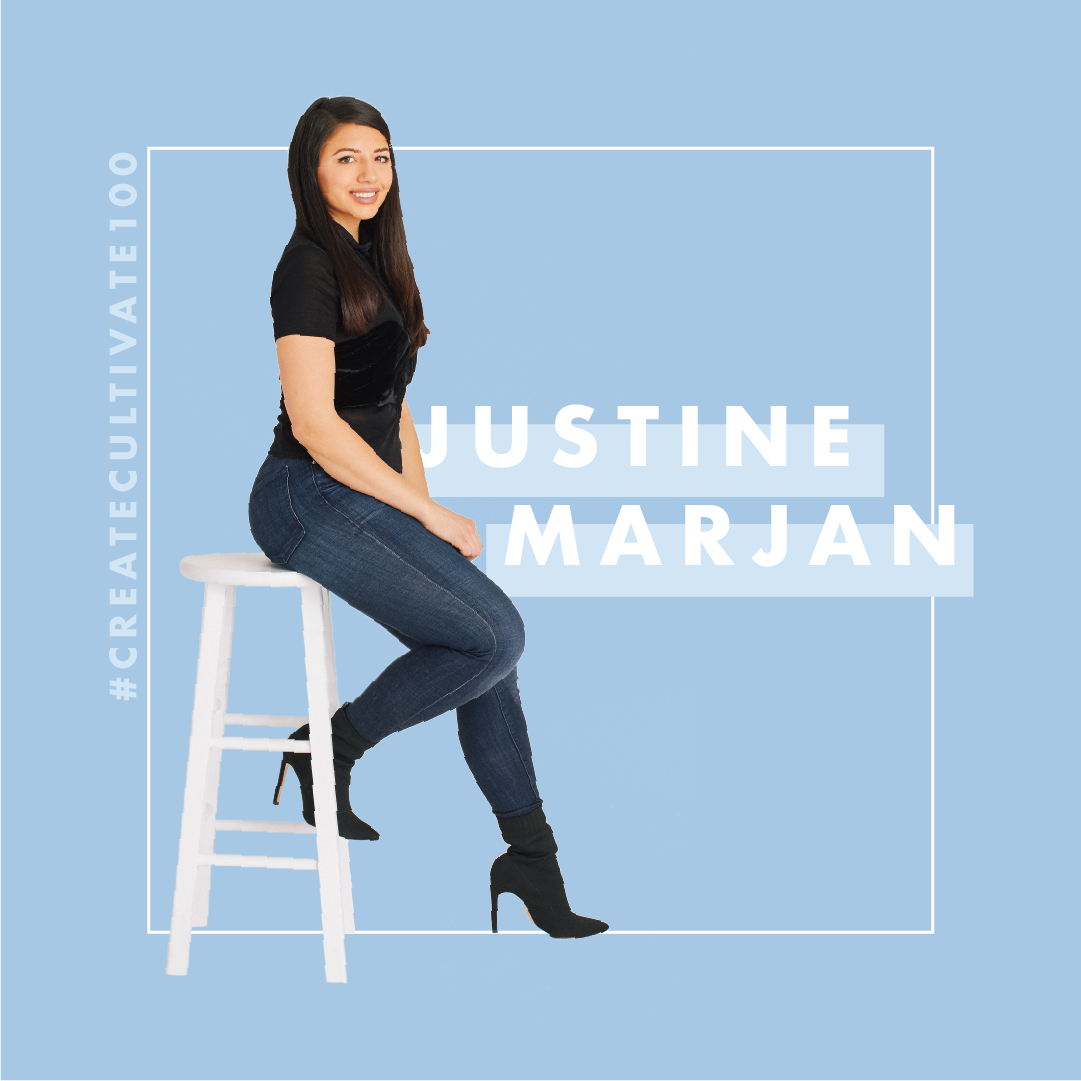
Create & Cultivate 100: Beauty: Justine Marjan
Justine Marjan met her mentors on Instagram and moved to LA with the talent and tenacity to build her own hair and beauty empire.


Justine Marjan met her mentors on Instagram.
She moved to LA with the talent and tenacity to build her own hair and beauty empire. She also had a calculated digital strategy that has established her as one of the industry’s most sought-after artists.
In the early days, Justine published a personal blog and maintained a curated Instagram presence that showcased her work and demonstrated tutorials. This digital portfolio allowed her to create a consumer-facing brand and to act as her own agent, manager, cheerleader, and publicist all at once. New to Los Angeles, sans representation, she drove across the city to salons she loved to drop off resumes every weekend. She blindly reached out to two of the industry’s biggest icons on Instagram - (both C&C100 alum!) - Jen Atkin and Kristen Ess. The best part? They replied.
Years have passed since those initial Instagram interactions, and Justine’s career has been skyrocketing ever since. Her client roster reads like the guest list of a legendary party at the Chateau Marmont. Think Ashley Graham, Olivia Culpo, Shay Mitchell, and America’s royal family, the Kardashians.
She’s also the global stylist for TRESemme (no biggie), the former editorial director of Mane Addicts (which, if you know, you know), and co-parent to Cashew, a mini goldendoodle who loves a strong fashion moment.
How did you get your foot in the door and make your mark in the hairstyling business?
I had been working in a salon in my hometown for eight years when I realized I needed to move to a larger city to meet my goals and continue to grow in my field. I started reaching out to hairstylists I admired in Los Angeles through social media and replied to a few social media ads. I would drive to LA every weekend to drop off resumes and check in to salons I loved. Eventually Kristin Ess and Jen Atkin replied and I worked part-time for both of them until the workload with Jen picked up so much that I ended up working with her full-time. I was one of two employees at the time, so my duties included helping launch Mane Addicts and OUAI. I had experience blogging, so I spearheaded Mane Addicts as editorial director while also acting as a personal assistant and assisting Jen with hair, all while taking my own clients on the side. I felt like I had 5 jobs and was easily working 12-14 hours a day, 7 days a week. When Jen launched OUAI and her empire started to build, she had less time for her clients and, at this point, her clients knew and trusted me, so I would do their hair when she wasn’t available. Eventually things picked up through referrals and word of mouth, and I was able to branch off on my own.
You have such a large presence on social media. How has it impacted your career?
I attribute my entire career to social media. When I first started in LA, I connected with people through social media and they used my social pages like a digital portfolio to verify my credibility. I also had a personal blog I promoted through social, so when Jen was starting Mane Addicts, she knew I had experience not only in hair, but also with writing and photography. I realized early on how powerful social media is in marketing and branding yourself. You no longer need an agent to get your name out there, so I used my Instagram to promote my work and skills and didn’t have an agent for the first couple years of my career as a freelancer. I am constantly using my Instagram to post tutorials, connect with my followers, share my knowledge, build relationships with my peers, colleagues, editors, brands, and find potential new clients. I can easily say that 70% of my job is social media.
Working with celebrities sounds like it can involve a lot of pressure. What’s been the biggest challenge and the biggest reward in having a famous roster of clients?
The biggest challenge is the continuous artist struggle, or the freelance blues. As an artist, our business comes in ebbs and flows, sometimes it’s abundant and sometimes it’s quiet.
When working with high profile clients, it’s important to remember not to take it personally when they work with someone else or when they are having a bad day. It’s imperative that your ego is put aside and you remember that we work in the service industry, and that before anything else, our most important job is taking care of our clients.
The biggest reward is seeing my work make a best beauty list or seeing the finished photos in a campaign or on the red carpet. I love seeing everything come together from head to toe and it feels so good to collaborate with other creatives.
What characteristics make you successful in the beauty industry?
Working with celebrities means there is no room for ego. It’s so important to have an adaptable personality and not to take things personally. More than talent, making sure you are of service to your client and make them feel great will go a long way. There are a lot of wild personalities in the industry and we’re all artists so it’s hard not to get competitive or take things personally, but you have to remind yourself that you will attract clients who are like you, so think about what you are projecting into the world.
What does it take to build a beauty brand from the ground up in today’s world?
Consumers are more educated than ever and want to be involved in the process of what beauty means. It’s no longer about a pro telling you what to do or buy, instead consumers want to feel like they are a part of the conversation. We’re seeing so many amazing social-first beauty brands pop up and it’s created for great communities of conscientious consumers who feel connected to something larger. I love that founders can have a direct form of communication with their audience and address what real people actually want and need. I’m so impressed with how Marianna Hewitt and Lauren Gores have launched Summer Fridays as a social-first company that now is available in major stores like Sephora.
What about your job makes you feel the most fulfilled?
I love partnering with brands and creating something amazing! One of my biggest accomplishments in 2018 was creating a line of hair accessories with Kitsch. It was such a career bucket list moment to be able to design beautiful pieces and see them come to life. I love watching people wear them and getting feedback from real people wearing them!
What’s the best piece of career advice you’ve ever been given?
There’s enough work to go around for everyone. Don’t be threatened by your peers, be inspired by them. There’s always going to be enough work for us all to be successful.
What’s been the biggest surprise or highlight of your career to date?
My amazing partnership with Tresemme which has allowed me to lead the hair backstage for shows like Jonathan Simkhai, Cushnie et Ochs, and Alice and Olivia during New York Fashion Week. I’ve always looked up to the legends who key shows like Guido Palau and Odile Gilbert so being in their company is such an honor.
Where does your passion/drive come from?
I didn’t grow up with a lot of money and I always had to work for what I wanted. My father was an immigrant and worked so hard to support our family. I saw my parents struggle to support 2 daughters and a son with a disability that I’ve always really pushed myself to be my best and accomplish something. I hated hearing ‘we can’t afford that’ or negative connotations around money and success that in my late teens and throughout my 20’s I worked so hard to change my conditioning and mindset. I am constantly pushing myself to be better and grow to build the life I want.
“It’s important to remember that every experience in your life serves a purpose. Although it may seem like one door is closing, another one will always open and we have to be prepared to make space for that in our lives. ”
What are the common challenges you've seen among female hairstylists?
Even in a female-centric industry like the beauty industry, it is still male-led. Among the top tier of talent, there are few women and the boards of many of the major brands are still majority male. The industry can feel like a “boys’ club,” where men look out for each other and the women have to work twice as hard to get noticed and be twice as careful about their actions and appearance. High-profile women can often be threatened by women around them, so they prefer to have male glam squads. Women also have to worry about the impact having children will have on a freelance career. As the breadwinner, it’s hard to think about taking time off to have a child and how that will impact crazy work hours and travel schedule. Overall we’re still working for gender equality in the beauty industry, just as we are in all industries.
When you hit a bump or hurdle in your career, how do you find a new road and switch gears to find success?
It’s important to remember that every experience in your life serves a purpose. Although it may seem like one door is closing, another one will always open and we have to be prepared to make space for that in our lives. It’s hard to let go of what we are attached to, but sometimes our attachments can limit us and we need to make space for growth. I heard a great quote about how worrying about something before it happens only means you worry twice. I try to keep an open mind while taking each roadblock and setback one step at a time.
Whose career really inspires you?
Jen Atkin’s career inspires everyone. I worked for her for years when I first moved to LA and she has been the most significant mentor and influence in my life. I admire her humble beginnings, how hard she works, what a big heart she has, her sense of humor, energy, and confidence! She has been able to expand out of just hair and make a name for herself as a businesswoman, pioneer, innovator, and influencer. I am honored to have her in my corner and will always look at her accomplishments as inspiration!
What’s next for you in 2019? What are you most excited for?
I am stepping into the unknown in 2019. I will be with a new agency January 2019 and it’s a big unexpected change in my life so I am trying to keep an open mind and be ready for what is to come. I also have an exciting TV opportunity that will air in the spring, more hair accessory drops with Kitsch, and hopefully a lot more travel, clients, and surprises in store!
Photography by Annie McElwain Photography
Photoshoot skincare provided by Dermalogica
VIEW THE FULL CREATE & CULTIVATE 100 BEAUTY LIST HERE.


Create & Cultivate 100: STEM & Finance: Ruzwana Bashir
After spending upwards of 20 hours planning a vacation to Istanbul, Ruzwana thought, There has to be a better way to do this.

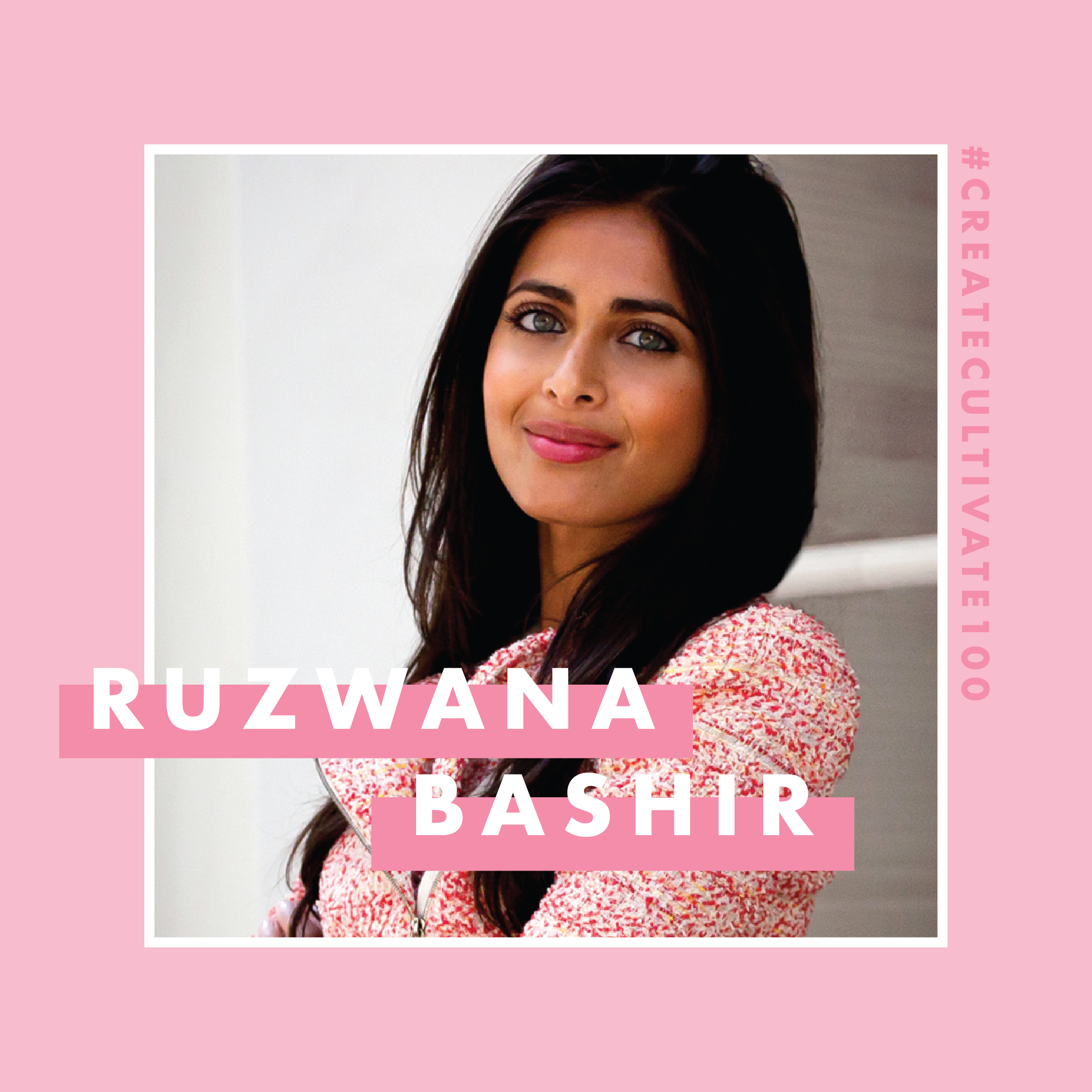
Ruzwana Bashir is bucking tradition. An Oxford and Harvard MBA graduate, she left a successful career in finance to launch Peek, a travel company that makes booking activities and tours easy. After spending upwards of 20 hours planning a vacation to Istanbul, Ruzwana thought, There has to be a better way to do this. So she took a big risk, moving from her stable job at The Blackstone Group to relocate to Silicon Valley and build her dream from the ground up. We caught up with Ruzwana to hear her advice for budding entrepreneurs.
What inspired you to create your travel booking company, Peek? What did you see missing from the market?
I was organizing a birthday trip to Istanbul with my friends. I spent 20 hours researching what the best things to do there were and calling far-flung activities companies to try to book the experiences I'd discovered. The whole process ended up being lengthy and frustrating, so I found myself wishing that there was a one-stop shop to book amazing activities online - but it didn't exist, so I figured it was time to build it!
You’re quite academically accomplished—you have an MBA from Harvard Business School, where you were a Fulbright Scholar, and a BA in Economics from Oxford University. How has your education influenced your career path? What advice would you give to budding entrepreneurs who don’t share your prestigious academic background?
Going to business school was a huge influence in my career. It was in business school that I got my first experience in startups, and it also brought me to the United States. Before that, I had been working in finance and private equity in London for a few years, but I knew I wanted to be an entrepreneur. My experience in business school reaffirmed that I wanted to start a business in America.
The best advice I could give to interested entrepreneurs is to that If you are going to start a business, try to work at a startup first. I learned so much by working at Gilt and Art.sy, mostly that I loved the environment. Go try it out to see if you like the lifestyle before diving in headfirst by starting your own.
When you hit a bump or hurdle in your career, how do you find new roads + switch gears to find success?
Every time that I’ve felt like something is tremendously challenging, or I felt like I couldn't achieve something and then I did, I grew new muscles on how to take on challenges in the future. For me, it’s about not being afraid of failure, and learning from each challenge and obstacle.
What about your job makes you feel the most fulfilled?
It’s so fulfilling to see that we’ve been able to achieve millions of customers, and hundreds of millions of bookings through our platform already. It’s crazy for me to think about the journey that me and my co-founder Oskar Bruening had. We started out eating grilled cheese sandwiches and working incredibly late trying to get something started. Now we get to have this huge team of amazing people, many of whom are more talented than we are, who are all inspired by the same vision. I’m very motivated by learning, so my own personal growth has been fulfilling as well. When we started, I was not as prepared and didn’t know anywhere near as much of what it took to build a company. I’m excited to continue that learning as Peek continues to grow.
You have large corporate teams in both Utah and Silicon Valley. What’s the best advice you can give a new business owner when it comes to scaling up?
When you’re scaling up, you can feel a pressure to try to do it quickly, but my advice is don’t ever rush the hiring process – it’s much better to find the right fit.
What’s been the biggest surprise or highlight of your career to date?
When we first started Peek, we were approaching activities from a consumer perspective trying to create a solution to make booking experiences easier. As time went on, we realized that the small businesses that offer these experiences actually have even more challenges. Lots of the operators we work with had been running their business the same way for a long time, and didn’t know how to bring their business to the digital age where the majority of their customers were. That realization was a big surprise to us, and we ended up focusing a lot of our attention building software tools that would allow these small businesses to provide a great experience for their guests online.
What’s the best piece of advice you’ve ever been given?
To be persistent. Nothing that is worth doing is ever easy.
“It’s really important that we encourage mentorship with women, and acknowledge our own biases when it comes to who we are giving opportunities to. ”
What women do you look up to? Why?
Rather than trying to emulate any one individual, I tend to admire specific attributes in different individuals. They range from the authenticity of someone like Oprah Winfrey to the persistence of Margaret Thatcher or the empathy of my good friend Farrah Jarral, who is a doctor working in inner-city London.
What are the common challenges you've seen among female business owners and entrepreneurs?
Being able to raise capital. Women CEOs typically get about 2% of venture capital which is such a small percentage of what’s available. In the early stages of fundraising, so much of investor’s decisions are based on the entrepreneur themselves. It’s human nature to feel a connection with someone who reminds you of yourself, and in 2018 less than10% of decision-makers in venture capital firms were women. There’s a bigger issue here with women not having the same level of opportunity as men, especially in the workplace. In order to shrink this gap, it’s really important that we encourage mentorship with women, and acknowledge our own biases when it comes to who we are giving opportunities to.
VIEW THE FULL CREATE & CULTIVATE 100 STEM & FINANCE LIST HERE.


Create & Cultivate 100: Content Creator: Candace Reels
“I started Female Collective as my own self love/self care journey and I’m so grateful that it has become that for so many other women.”

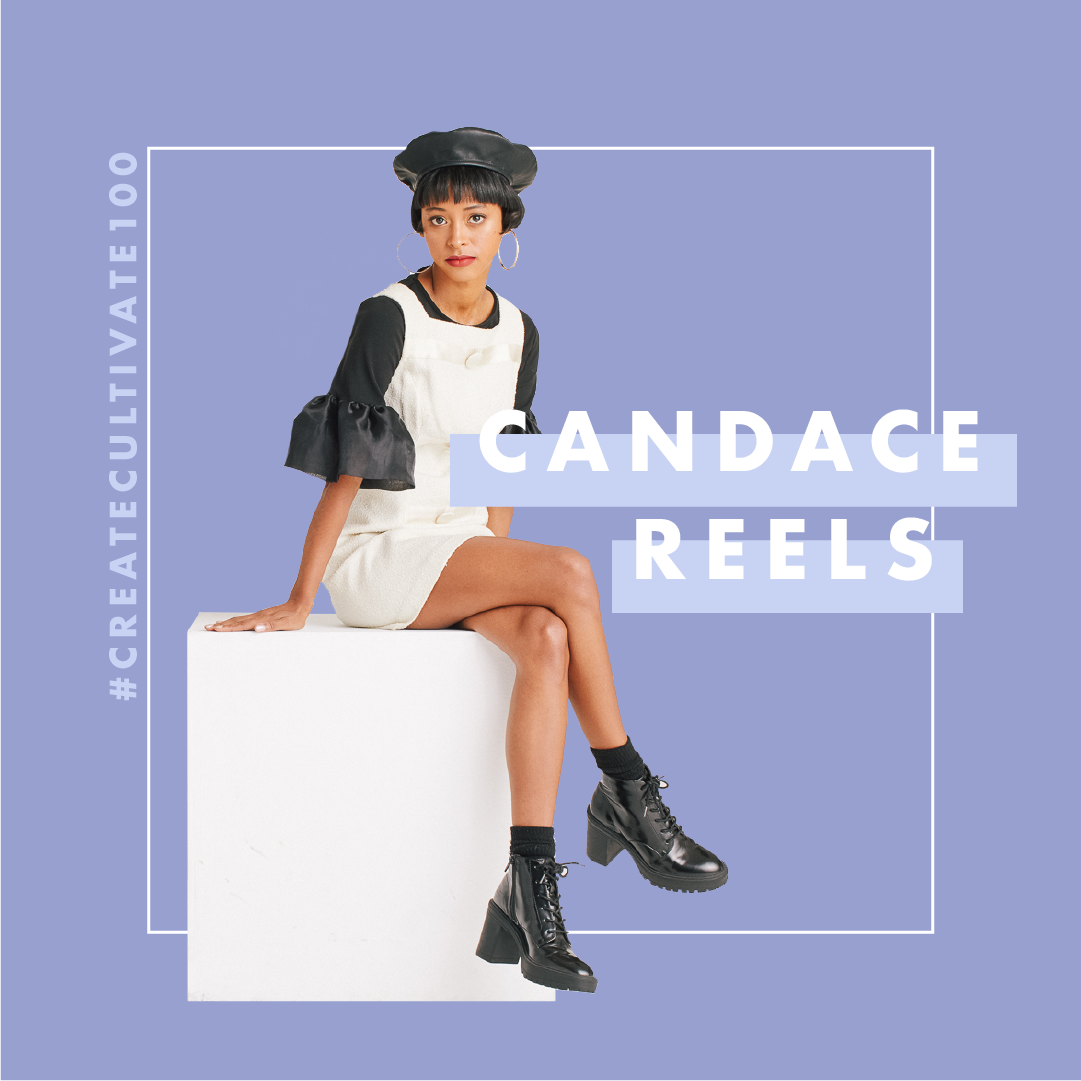
Candace Reels didn’t create The Female Collective for us—but we’re so glad she did it anyway. TFC, an online community and philanthropic organization, aims to help women come together, tell their unique stories, and feel empowered to tackle the missions that matter most to them.
When Candace launched the collective, she didn’t intend for it to be public—she did it for herself as a way to motivate herself and promote self-love. The account grew, and so did Candace’s ambition; she soon launched a clothing line (think “feminist fight club” t-shirts) and pivoted the account to the large-scale community it is today.
We look up to Candace because she parlayed a personal project into a burgeoning space for the women who needed it most. Read more about what motivates her below.
Your company, Female Collective, was founded because you hated your job. Tell us more about how you used that lack of inspiration to build a brand.
I was at a really low point in my life and I needed something to motivate myself to the next step on my life journey. I didn’t know what that would be, but I knew that I needed to create something from my lack of inspiration. That’s when I decided to create an Instagram account where I would post inspiring and motivating content to help get my life together. It’s not always easy to create when you’re not feeling inspired, but it’s definitely what you need to do. It’s important to get how you feel out in your writing, art, or in whatever type of content you create. This release will help you move forward to where you need to go in life.
Who did you have in mind when you created Female Collective?
Honestly, Female Collective started off as my own self love, inspirational, and motivating account. I didn’t tell anyone about the account and didn’t use hashtags; it was literally just a personal account that I created to help me get to the next step in life. What ended up happening was people found it and starting sharing my content. I learned that yes, I started this account to help myself but there were so many other women who were going through the same thing I did and needed this just as much as me.
What has been your biggest opportunity or biggest challenge?
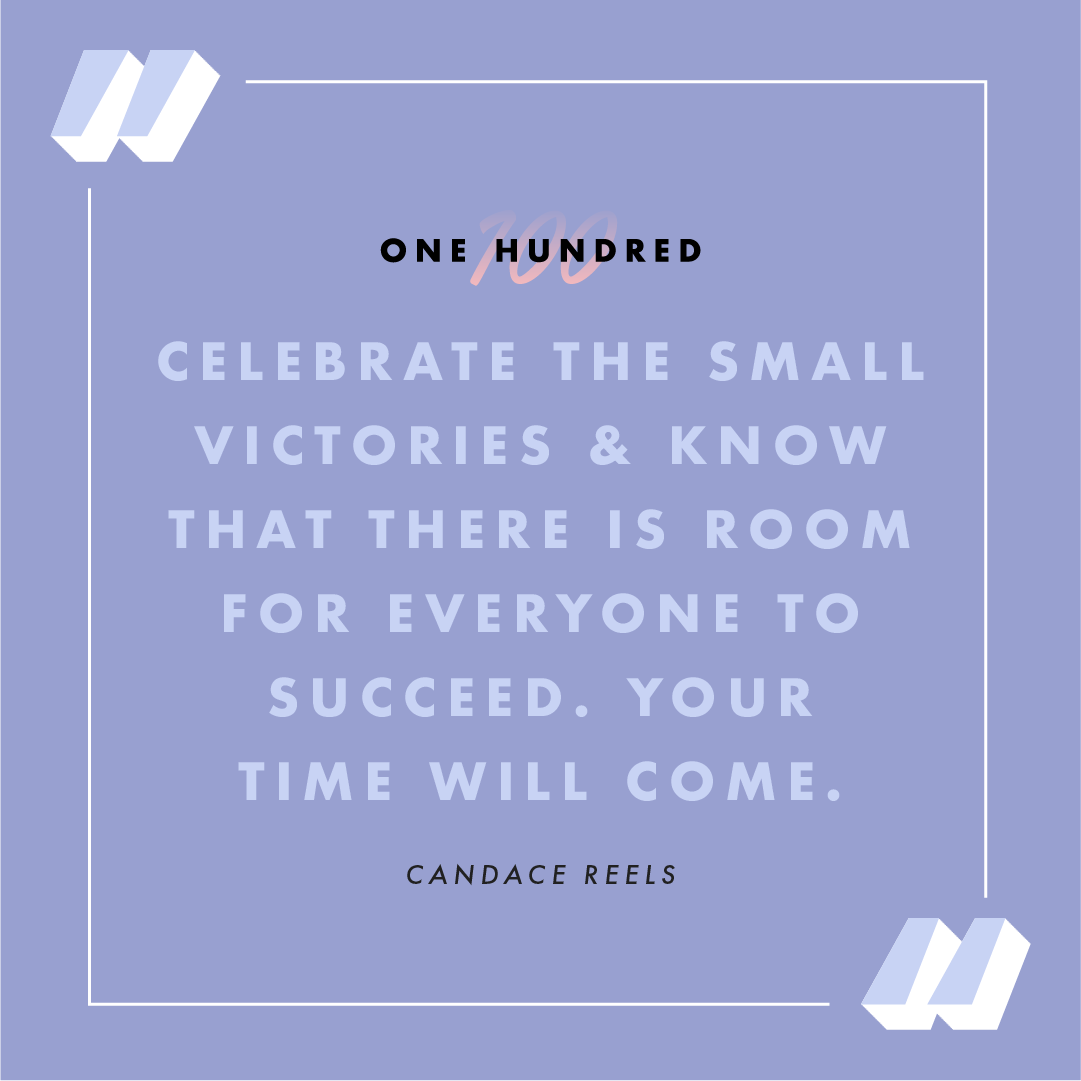
I would say that my biggest challenge has been myself. I tend to talk down on myself and compare myself to others. Which is the number one thing to NOT do when you have your own business or what you shouldn’t do as a human. I found the best way to overcome that is to go within and remember why you started in the first place. The journey is going to be hard, but you must celebrate the small victories and know that there is room for everyone to succeed and your time will come.
What keeps you up at night?
Our current political climate, specifically the GOP and all of the ridiculous things they are doing. Fortunately the Democrats won the House back and that has help me sleep a bit better.
Female Collective isn’t just a community—you also donate to various organizations. What causes has FC helped support in the past, and why do you see giving back as an important part of your business model?
I knew when I decided to create clothing for Female Collective that I wanted to give back to organizations that have been doing great work for years. I find it important to give back because that’s one of the many ways in helping to create the change that we want to see and helping those who are in need. By donating money to these organizations you are helping them stay in business and by helping them stay in business you are helping individuals who desperately need these orgs to live, grow, and learn. Some of the organizations that FC has supported are RAINN, Planned Parenthood, Black Girls Code, Global Fund For Women, Girl Rising, and Everytown.
Who inspires you? Who do you look up to in your industry?
My two biggest inspirations are my parents, they have helped me become the compassionate and passionate human that I am today. My other inspirations also include Angela Davis, Maya Angelou, and Shirley Chisholm. Those three women are ones that inspire the work that I do everyday. What they accomplished in life during an extremely hard time for a black woman helps get me through life challenges today. They were able to do so much in a time they weren’t allowed to. And because of them I have much more opportunity as a black woman to thrive in this society.
What about your job makes you feel the most fulfilled?
Being able to give back to organizations that I love and receiving so many DM’s of women saying how thankful they are that Female Collective exist. They are so thankful for a safe space online were they feel celebrated, supported, uplifted, and empowered. I started Female Collective as my own self love/self care journey and I’m so grateful that it has become that for so many other women.
I started Female Collective as my own self love/self care journey and I’m so grateful that it has become that for so many other women.
What does activism mean to you?
Activism to me means taking a stand for something you believe in or something you’re against. Not just stating it, but taking actionable steps in creating the change you want to see. There are so many ways you can activate in your community, big or small. Marching, volunteering with or donating to organizations that support what you believe in, starting a movement on social media, having courageous conversations with your friends and family, and calling out people when they have done something wrong in your eyes. There are additional ways to go about it, these are just a few.
When you hit a bump or hurdle in your career, how do you find new roads + switch gears to find success?
When I hit a bump or hurdle, I usually take a few steps back and recharge. Sometimes you exhaust yourself to no end and you feel uninspired. I usually talk to my mom, journal, meditate, and read one of my favorite self help books. When you have your own business you’re constantly judging your success to others, feeling lost, and confused. That’s why it’s so important to find ways to get yourself back on track and remember the goal that you set in your mind.
What are you most excited for in 2019?
IMPEACHMENT!! Kidding, not kidding. But the political side of me is excited about the future of the Democratic party. There were so many firsts that happen this year at midterms. This is the first time in American history that we have elected more than 100 women to the U.S House of Representatives and i’m so excited to see what they will do. On the career side I’m excited for the many opportunities that will be coming Female Collective’s way and I hope that more people will learn about what I’m doing and that it continues to be a safe space for ALL women. Last, but not least on a personal side i’m excited to continue my self love journey. The person I was when I started FC is far different from who I am now. I hope I continue to become more confident in who I am and know that I can accomplish anything I set my mind on.
Photography by Annie McElwain Photography
Photoshoot skincare provided by Dermalogica
VIEW THE FULL CREATE & CULTIVATE 100 CONTENT CREATORS LIST HERE.


Create & Cultivate 100: Fashion: Emily Current & Meritt Elliott
The definition of Business BFFs.


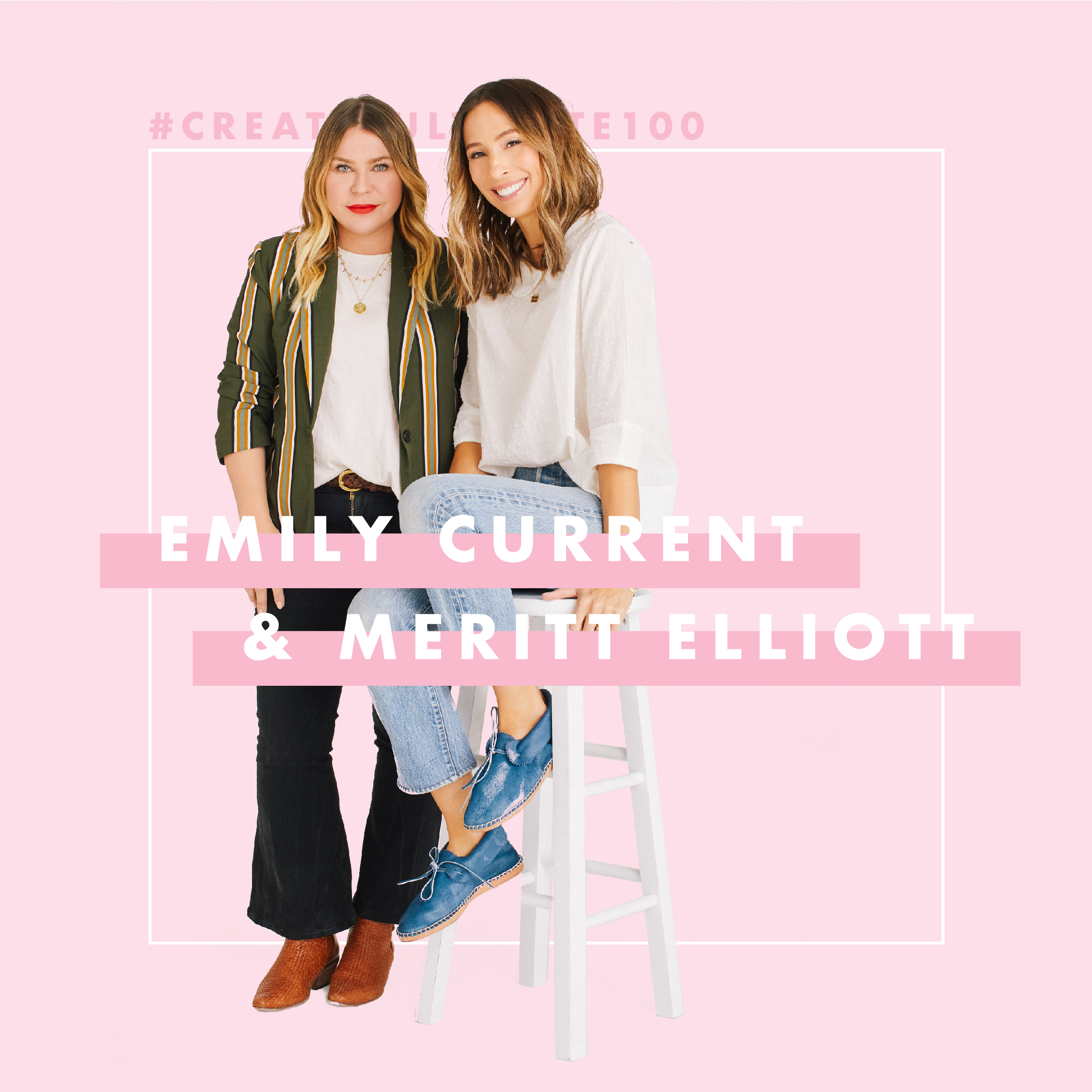
Emily Current and Meritt Elliott are the definition of Business BFFs.
The LA-based design duo founded acclaimed premium denim line Current/Elliott in 2008, and by 2015, proved that lightning can strike twice with the launch of their second brand, The Great. The fully-realized womenswear collection re-approaches American classics in a nostalgic and slightly tomboy fashion. The label is their proudest achievement to date, and a celebration of their two-decade long working relationship. After all, the duo is on a mission to create best friends for your closet.
In a testament to where strong friendship can take you, the duo has evolved beyond the periphery of fashion and into interiors, paper goods, and lifestyle goods. While they are sought after brand builders and celeb stylists, they are also busy as hell. The duo currently design a collection for Pottery Barn (Baby, Teen, Kids, and Home) and just released A Denim Story, a coffee table book, with Rizzoli. They are members of the CFDA, and casually just dropped an entire new friendship-inspired youth brand called Emily + Meritt. While we’re over here wondering how they possibly stay on top of their Google cals, they’re plotting their next business endeavor, partner-in-crime style.
How did you each get your start in fashion? Did you always want to be designers?
We met as students at UCLA and bonded over vintage Levis, our similar Northern California upbringings, and personal style rooted in casual Americana boy- meets-girl ease. Right after college, we worked as magazine assistants and for Los Angeles based fashion brands. We both felt connected and inspired by the process of telling a story, both in visual imagery and through product. A couple of years into our careers, we teamed up and launched our styling and consulting business. Through thousands of fittings and a keen sense of the market, we created a small, vintage inspired and more tom-boyish denim line with the intention to disrupt an industry oversaturated with tight, sexy denim. It was a hit, and our love affair with design was officially sealed.
The Great is the second brand you guys have built and created together. What’s different this time around?
After our first business [Current/Elliott] sold to a private equity firm and we departed, we aimed to create a full lifestyle brand in The Great that was comprised of both denim and army tomboy pieces and its soft and vintage inspired feminine counterparts. For years, we were frustrated with how the fashion and garment industry was run, and how as two young women, we didn’t fit into it. We knew from our experience in a primarily male-run industry that relied heavily on women’s creativity that we could not only set out to make compelling clothing collections, but also to build a business infrastructure that we felt aligned with our morals and that supported women and their creativity. It was our priority, in this next chapter, that we owned both the business part and the creative part, as to succeed, they must hold hands. We wanted to curate a thoughtful and fair working environment. Since our launch we have seen such an incredible build, and cherish our loyal customers. We added shoes and a kids’ line and have opened our flagship store in Los Angeles.
How would you describe The Great’s aesthetic?
In creating this line, we were inspired to design a collection that wasn’t just denim and reflected the way we loved to dress. Perfect versions of classic, boyish pieces like Army pants, denim, tees, sweatshirts, and twill jackets are mixed with feminine silhouettes and pieces like embroidered white cottons, Victorian laces, vintage silk prints, ruffles and unexpected volume. This line is intended to dress a woman for the main event of her life…..which is her day-to-day life.
What’s been the most surprising aspect of starting your own brands?
The most surprising element to starting your own brand has been that the small tasks, the tedium, the physical hard work of being an assistant all those years ago never ends- even when you become the boss. You can be in charge and need to create the big ideas and make the big decisions, but the little details and the small demanding minutiae never ends. It’s ALL important.
You’re friends and co-founders. Why is that a business dynamic that works for the two of you?
We simply love and respect each other. We find that two heads and four hands can juggle multiple projects with much more ease. We celebrate each others’ strengths and nurture each other’s challenges. But at the crux of it, we find each other very creatively inspiring and pretty damn funny.
What do you think people crave when they get dressed in the morning?
People want to feel effortlessly stylish. They want to mix classic pieces that feel loved and worn with pieces that feel either more bold, or more feminine or more fun. They want to tell a story by what they wear, and a woman who wears The Great is saying, “I am cool. I am smart. I have innate style, and I do it ALL.”
What should every woman have in her wardrobe?
Perfectly-worn denim, the perfect crew neck tee in white, grey and black, a flat worn boot, a classic sneaker, a pair of Birkenstocks, a flattering black blazer, a vintage dress that can be dressed up or dressed down, a colorful kimono, a fistful of sweatshirts and sweatpants that can mix and match, and a few special pieces of things that are red, metallic, or animal printed.
“The most surprising element to starting your own brand has been that the small tasks, the tedium, the physical hard work of being an assistant all those years ago never ends—even when you become the boss.”
What about your job makes you feel the most fulfilled?
When we see a customer feel confident in our clothes, living their best lives. When an inspired team member comes in early or stays late because they love their job, and when we can snuggle with our loved ones at the end of a long work week.
What’s the best piece of career advice you’ve ever received?
Be kind, stay laser focused on your vision, and surround yourself with smart, happy people.
What’s been the biggest highlight of your career to date?
We have had a diverse career with so many highlights! We have designed custom looks for the Oscars, we have proudly been inducted into the CFDA. We became authors in our visual ode to denim, aptly named A Denim Story. We have designed nurseries our own children have grown up in and designed a planner and paper line that young women everywhere can plot their dreams in—just like we did. Most recently, we have built our first flagship store for The Great, where our entire collection hangs (peppered with some curated third party and vintage!). We love that this space is not only a jewel box representation of our beloved brand, but a gathering place for so many incredible people in our community to shop and socialize.
Where does your passion/drive come from?
Our parents, our families, and each other.
Whose career really inspires you?
We are inspired by so many people in all different fields. We respect everyone from Michelle Obama to Tory Burch. We admire our business-minded peers Jessica Alba and Reese Witherspoon. We love the grace of Oprah Winfrey, the charitable spirit of Katie Couric and the business minds of Eileen Fisher and Patagonia’s Yvon Chouinard.
Whose style do you love?
Meritt: Emily
Emily: Meritt
What has been your biggest opportunity or biggest challenge?
We have loved having the opportunity to talk about our journey with other young women looking to be entrepreneurs. We love to reflect and mentor! Our biggest challenge has been to find the time to rest and relax and recharge. Good ideas come from rested minds.
What are the common challenges you've seen among female fashion designers?
Just heard a statistic that only 4% of the investment that goes to founder-led companies are given to companies led by women. While we feel empowered by the recent cultural shifts, we still have a long way to go.
What would you change about the fashion industry if you could?
We want to encourage brands to clearly identify their brand pillars and stick with them as opposed to looking sideways and following the same trends. It’s OK to pass on some if they don’t pass through your brands filters. The more points of view and diversity in vision, the better—it is what makes the industry so special.
When you hit a bump or hurdle in your career, how do you find a new road + switch gears to find success?
First, we pow-wow and really dig into what didn’t work. Next, we get to the root of what has inspired us all these years and start again from an authentic, fun place. We have learned to be agile and resilient.
What’s next for you? What are you most excited for in 2019?
We are focused on growing The Great categorically and nurturing our new store in Los Angeles. We are also working on the Emily + Meritt brand as the little sister brand to The Great. with more accessible distribution and price points. You can now shop the Emily + Meritt brands with home décor at Pottery Barn, Pottery Barn Teen, PB kids; our Paper Collection with At-A-Glance at 3000 staples and OfficeMax stores as well as Amazon; and our knits collection on emilyandmeritt.com. More to come!
Photography by Annie McElwain Photography
Photoshoot skincare provided by Dermalogica
VIEW THE ENTIRE CREATE & CULTIVATE 100 FASHION CATEGORY HERE!


Create & Cultivate 100: Entertainment: Catt Sadler
“You aren’t always rewarded for your hard work or talent. Networking is paramount.”


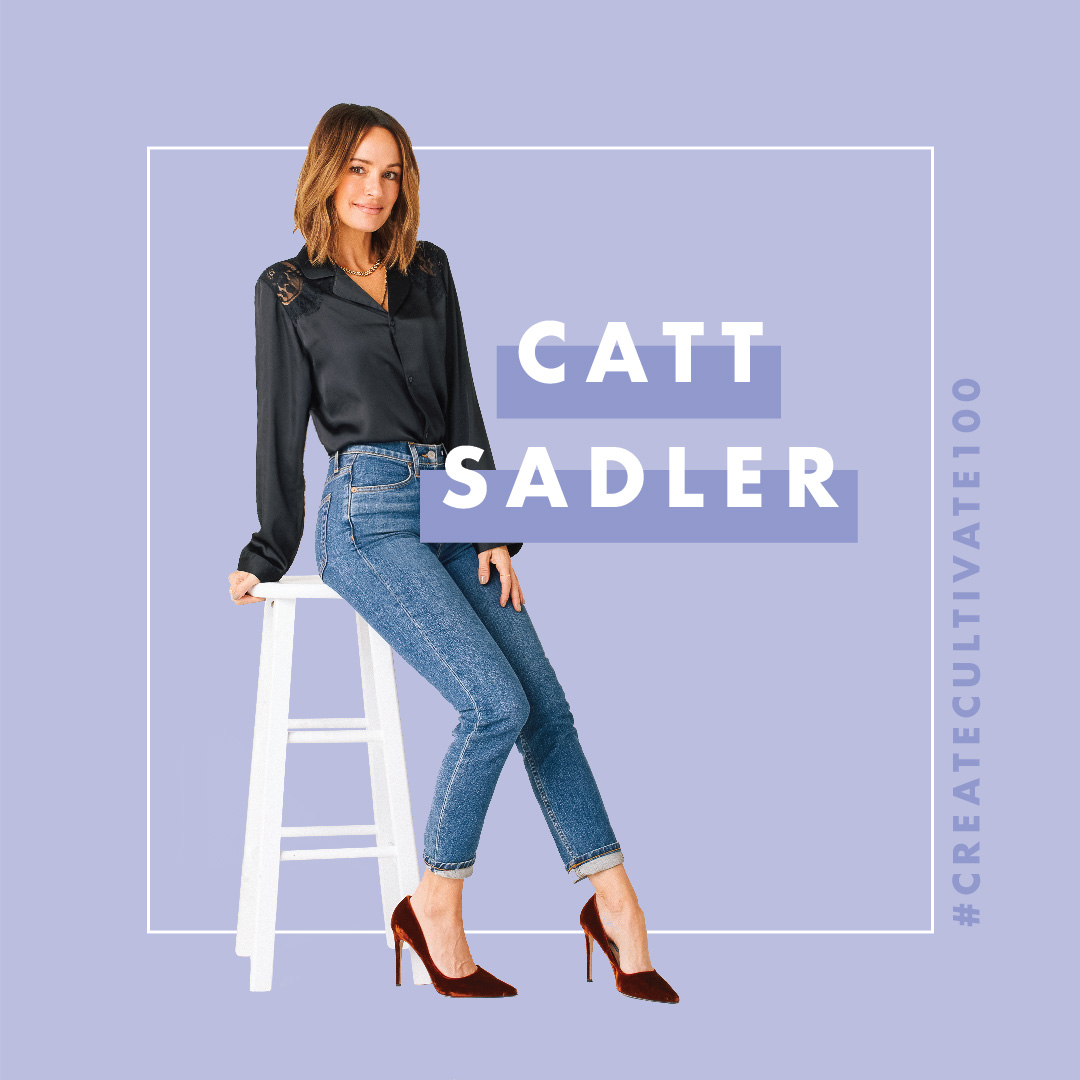
When Catt Sadler found out her male co-host at E! was making double her salary, she did what anyone would do—addressed the problem with her employer, expecting they’d remedy the situation. When they didn’t, she made what can only be called a bold Hollywood move: She quit and took her story public.
In the era of Time’s Up—an era wherein Catt’s job literally entailed reporting women’s #MeToo stories—she felt it was her duty to speak up. She did so unapologetically, publicly demanding an end to the gender pay gap.
In addition to her work for equal pay, Catt launched The Cattwalk, an online media company focusing on fashion, beauty, and health. In NAKED, a powerful series on the site, Catt interviews inspiring greats like Gwyneth Paltrow, Amy Schumer, and dozens more women you should know. The interviews are heartfelt and revealing in a way most journalists can’t evoke; but then again, most journalists aren’t Catt Sadler.
Read on for more on Catt, what she’s been up to since her E! exit, and the sage advice she has for women at work in 2019.
You left E! before the #TimesUp campaign had really gained traction. Tell us about making that decision without the support of a very public movement we didn’t know was coming.
Leaving my job after twelve years over a pay disparity issue was difficult in and of itself. Speaking up about it publicly required a lot of soul searching and courage. But honestly I looked to the brave women before me who in recent months had been speaking up and unapologetically using their voices to share their truths. I had been reporting on the #MeToo movement and again and again was awe inspired by women who had be treated unfairly but came forward anyway. These women opened the door for me to take a stand.
At the Golden Globes this year, several actors were vocal in their support for you and the fight for equal pay. How did it feel to see so many women you’ve worked with stand up with you?
I was shocked and completely humbled. I knew these women actually watched the network so they knew how glaring the disparity was. They were informed so that meant a lot. But mostly, I knew they were using my name as a symbol for something much bigger - for all of the women who aren’t paid in the ball park of their male coworkers doing similar jobs, all of the women getting passed up for promotions when they are deserving, all of the women who don’t have a platform to tell their story and make change.

Studies show nearly 70% of women accept job offers without negotiating pay. What advice would you give women on negotiating their worth?
Know your worth and be prepared to back it up. Come to the table with facts, records, achievements, accomplishments, and numbers. Also, do your research. What are others in your position in your particular industry making? Role play your negation with people you trust beforehand so you’re prepared for anything. Try and get so comfortable with your position and belief of your value that you are able to eliminate the emotion in the negotiation. And lastly, don’t be sorry for making money one of the most important issues to you. Men don’t. It’s often the first thing they discuss. We as women were taught the topic to be taboo. Speak up unapologetically!
What do you wish you’d known when you were first starting your career in entertainment?
That nothing is fair. You aren’t always rewarded for your hard work or talent. Networking is paramount.
When you hit a bump or hurdle in your career, how do you find a new road + switch gears to find success?
Failing is never just that alone. To fail is to learn. It is a teacher. Ask yourself: Why am I experiencing this setback? What does this hurdle teach me? You must dissect where you are before you pivot blindly. Can women really “have it all?” Is that a myth? It’s not about the fairytale house with the picket fence, having clean-faced kids, and a designer closet while doing your dream job anymore. To me, having it all is living on my own terms. That is true freedom.

What about your job makes you feel the most fulfilled?
I have to connect with people. That’s what I love about social media and digital media today. It’s not one-way traffic anymore. I love that I can get up and exchange with people all over the planet - from sharing inspirational quotes, to favorite lipsticks, to revealing interviews with kickass females - for me, it’s the SHARE.
Let’s be vulnerable and Photoshop-free, peel back the onion, and learn from one another.
Through your Cattwalk series, NAKED, you interview women we love in raw, unapologetic profiles. What inspired you to focus the series on vulnerability?
Love this question! I’m so sick to death of the armor everyone wears everyday. We, especially we as women, feel like we have to look a certain way, dress a certain way, and achieve a certain level of success to be fully received and admired. I am also used to interviewing women in a soundbite driven climate where nothing meaningful gets its due. I want women to take it all off! Come as you are! The more naked the better. Let’s be vulnerable and Photoshop-free, peel back the onion, and learn from one another. This brings me true joy and I think my audience appreciates the rarity of these types of discussions.
Which women in your industry do you look up to most? Why?
Oh man. So many. I adore Natalie Portman. She’s so insanely smart and beautiful and aware and strong and delicate. Oprah, the OG. She paved the way. I am currently obsessed with author and motivational speaker Brene Brown. She speaks on leadership and leading with our hearts, not just our minds.
Can women really “have it all?” Is that a myth?
It’s not about the fairytale house with the picket fence, having clean-faced kids, and a designer closet while doing your dream job anymore. To me, having it all is living on my own terms. That is true freedom.
What are you most looking forward to in 2019?
Evolving professionally, helping my son celebrate his 18th birthday - a milestone - and getting to Tokyo. On my bucket list!
Photography by Annie McElwain Photography
Photoshoot skincare provided by Dermalogica
VIEW THE FULL CREATE & CULTIVATE 100 ENTERTAINMENT LIST HERE.


Create & Cultivate 100: Entertainment: Sandra Oh
“I’m here for you. And I’ll continue doing everything I can to fill something that I know you need right now.”


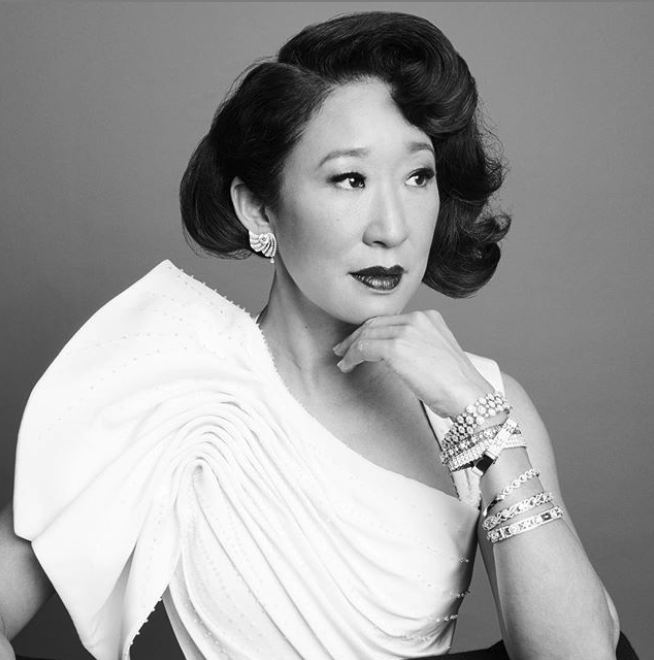
When Sandra Oh won her second Golden Globe earlier this month, we cried right along with her. Known best for her 10-year role as Cristina Yang on Grey’s Anatomy, which she left in 2014, Sandra spent four years playing small roles in film and on stage until she was cast in Killing Eve, arguably one of the most talked-about shows of 2018 (it was already renewed for a second season). The role of Eve is undeniably perfect for Sandra: it’s a psychological thriller that showcases her range, but it also flips the script on stereotypical norms—much like Sandra herself has been doing in Hollywood for years.
Below, Sandra talks representation, her role in Killing Eve, and if she’d ever return to Grey’s Anatomy.
On playing one of the only Asian characters in mainstream TV for years…
Young Asian people who come up to me have a certain vibration, and I receive it, and I understand it, and I feel emotional just talking about it. I’m here for you. And I’ll continue doing everything I can to fill something that I know you need right now, that we don’t yet have as a community.
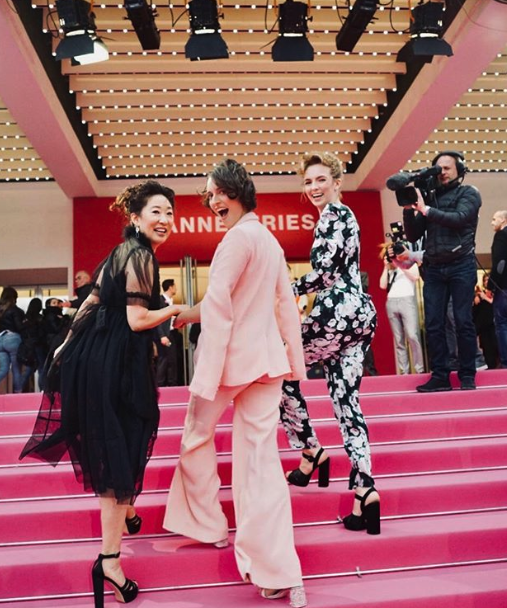
On when she knew Killing Eve was right for her...
As soon as I started reading it, what jumped off the page to me were a few things: the originality of its tone and the fact that I felt like I understood where Phoebe [Waller-Bridge, the show’s creator] was coming from immediately. The idea that it’s a psychological piece between these two women, about the female psyche, was so interesting to me. There’s tons of things that are interesting to me. I love spy stuff—who doesn’t? So to kind of upend that…because this character is not slick. I felt immediately like I could understand Eve. But the two biggest things were what I felt the piece was about, which was an investigation of the female psyche, and the originality of the voice and the tone of Phoebe.
In the books Killing Eve is based on, Eve is white. On filling that role...
Can I just tell you, it’s about f–king time! The character is not Asian, but there are a billion examples of the reverse where the source material or the character in the book was one ethnicity or another and no one blinks an eye when people change it to being a white actor. I really hope that there is more pressure and sensitivity and understanding around it. And that comes from the actors themselves. It really does. When you read the source material — oh, you know, this person, this character is first nations, maybe I shouldn’t play it, right? Hopefully actors are empowered to be able to just make that choice.
On the prospect of returning to Grey’s...
I’m just going to say no. I’m just going to put that down there because it’s been four years since then, and I’ve really got to try and create much more of that separation. Even though I could just talk on and on and on about that show and what I feel like I learned from it and continue learning from it. It was so special, lightning in a bottle that’s lasted for over a decade.
This interview has been edited and condensed from multiple sources (1, 2).
Photos from Sandra Oh’s Instagram.
VIEW THE FULL CREATE & CULTIVATE 100 ENTERTAINMENT LIST HERE.


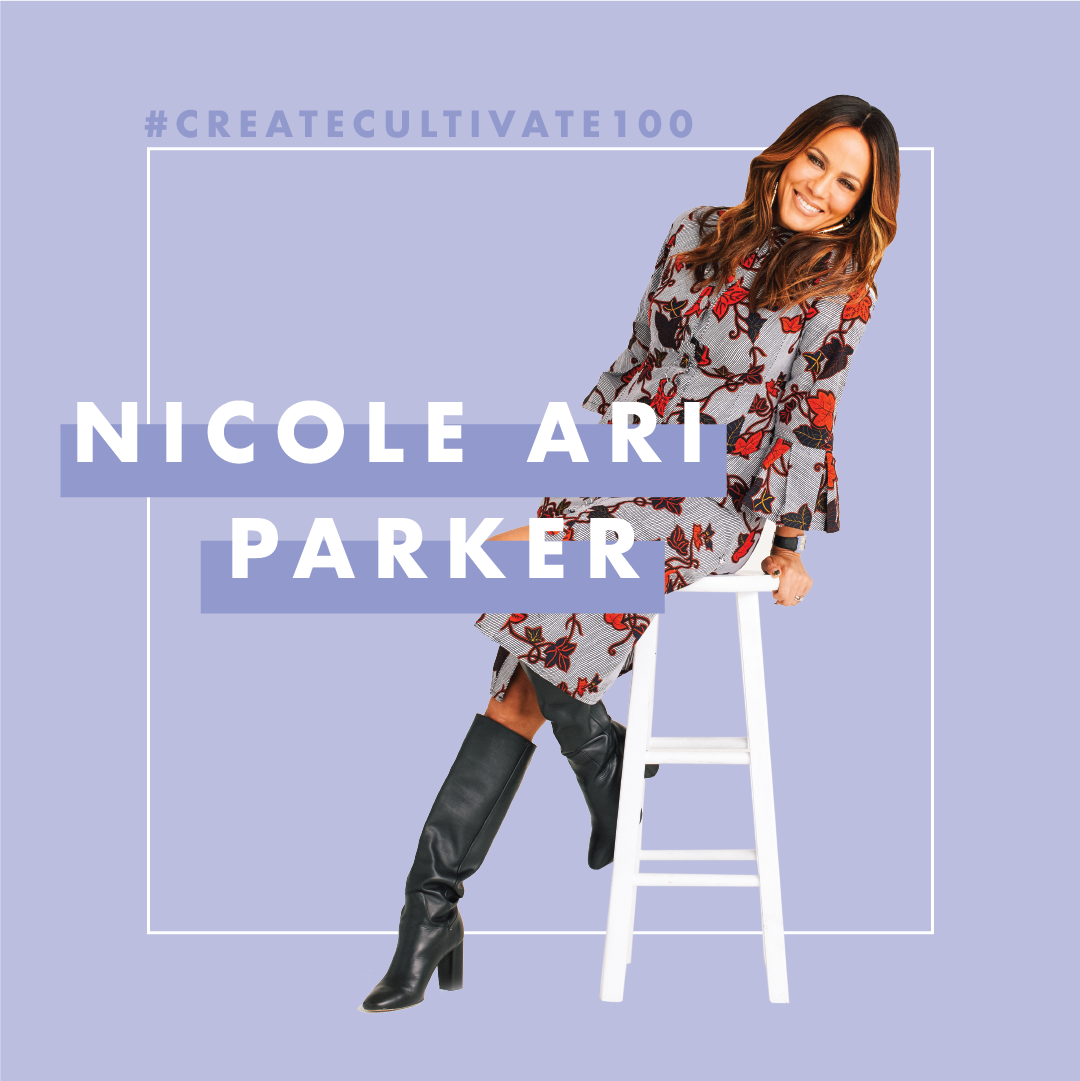
Create & Cultivate 100: Entertainment: Nicole Ari Parker
“Be resilient and get back at it after a no or 100 no’s.”
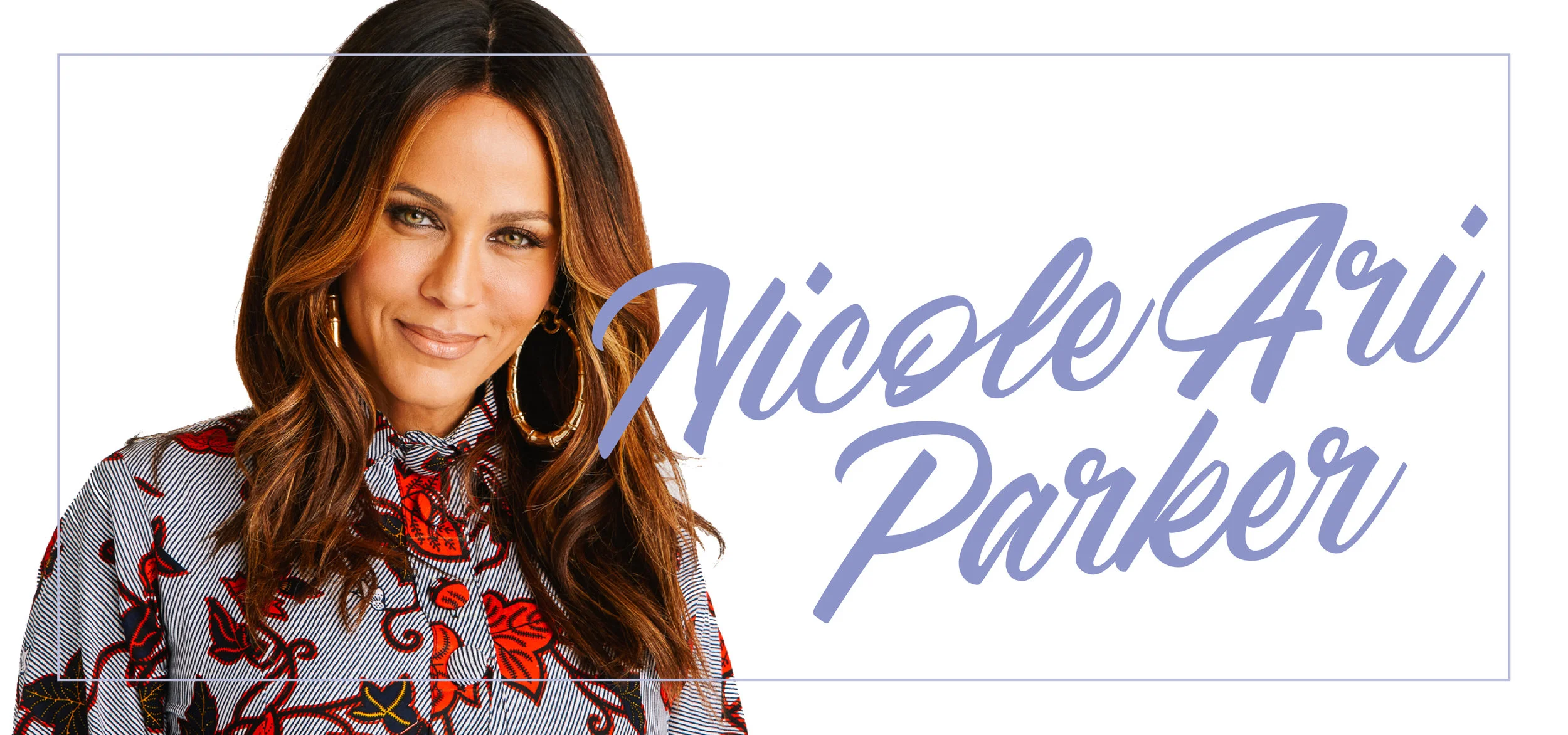
You may know her as Giselle Barker from Empire, but we know Nicole Ari Parker as a powerhouse on screen and off. The Boogie Nights star isn’t just an actor—she’s also the founder and brains behind Gymwrap, a moisture-wicking headband that keeps hair styled between washes and salon visits.
We’ve been big fans of Nicole since her Soul Food days and love how real she’s been since day one. She’s reflective and resilient, but brazen and bold. Read on to hear more about her career path, role models, and envy-inducing relationship with her husband, Boris Kodjoe.
You’ve been working in Hollywood for more than 20 years. How have you seen the industry change? Has it become a more empowering place for women?
I think it’s changed because of what's happening behind the camera and on the executive level. More of the decision makers and image creators look like the real world so it’s only natural that it is reflected on the screen. Women of all backgrounds are in leadership roles and it makes a difference not only in how many female characters are created but also in how they are depicted. The writing and execution of these roles have drastically improved in even the past 10 years. I used to study scenes for an audition to play a doctor for example and somehow all my lines were questions! ALL of them...lol...like no matter what the scene is about, she would say "What do you mean?" "Really?" “What do you think, Robert?" "Is that so?" As if the head of neurology didn’t know what to do. It’s gotten way better… more dynamic… more real.
What do you wish you’d known when you were first starting your career in entertainment?
Well I probably would have practiced more on camera... like on a cell phone or have a friend tape me...to get a sense of what your face does or if you have bad camera habits like tilting your head or scrunching your eyes...I always practiced how to be truthful to the scene only and would never know that I looked down a lot. I would never encourage an actor to abandon their craft, but having it translate on camera is another skill. Most auditions are taped and most jobs are for camera so it’s good to know technically what you're doing.
What advice would you give to women who are hungry to chase their dreams but just starting out in their careers?
Have good friends. Have a fulfilling life. Travel. Fall in love. Be resilient and get back at it after a no or 100 no's. Yes get an agent and go on auditions but also start to work on dreaming then writing creating directing producing the stories you want to tell. It gives you strength in ways you can't imagine. That strength translates when you walk into a room to read for a role.
What’s been the biggest surprise or highlight of your career to date?
Meeting the great director Emily Mann in 2012 which was supposed to be a 30 min coffee but turned into a 2 hour lunch about her production of Streetcar Named Desire on Broadway. Then getting cast as Blanche Dubois. Highlight of my entire life.
You met your husband, Boris, on the set of Soul Food nearly 20 years ago. What’s it like to continue working together all these years later?
The writing and execution of roles for women have drastically improved in even the past 10 years. It’s gotten way better…more dynamic…more real.
Love it. We work really well together. Wish we could do it more often.
What about your job makes you feel the most fulfilled?
Tapping into the part of a character that's universal. Whether it's love or pain or loss or ambition or revenge…finding the humanity in that.
If you weren’t acting, what would you do instead?
I would love to be a literature teacher. Lol. Or an archeologist.
When you hit a bump or hurdle in your career, how do you find a new road + switch gears to find success?
The bump usually comes when there too much chasing..too much output moving too fast without being grounded. So then I sit back and begin to create something myself. Could be as simple as baking a cake with my daughter the old fashioned way..sifting flour..letting butter get to room temp..taking my time doing something I love etc I sometimes take my book idea off the shelf and start writing or write synopsis for movie idea. Follow up. Cultivate ideas i have inside of me. Something really good always comes out of it.
Which women in your industry do you look up to most? Why?
Felicia D. Henderson, Oprah, Cicely Tyson, Meryl Streep, Emily Mann, Channing Dungey, Shari Redstone, Lynn Nottage, Pearlena Igbokwe, Deborah Lee, Rose Catherine Pinkney, Patricia McGregor, Laurie Metcalf, Maria Maggenti and sooo many of my actor peers. You could say they all are excellent and steadfast and maybe even fearless..but i think the thing is..even if they were afraid...they did it and continue to do it anyway..and that makes all the difference.
What are you most excited for in 2019?
I put so many cakes in the oven. I think they're just about ready.
Photography by Annie McElwain Photography
Photoshoot skincare provided by Dermalogica
VIEW THE FULL CREATE & CULTIVATE 100 ENTERTAINMENT LIST HERE.


Create & Cultivate 100: STEM & Finance: Krystle Rowry
“Representation matters and the future is looking bright!”

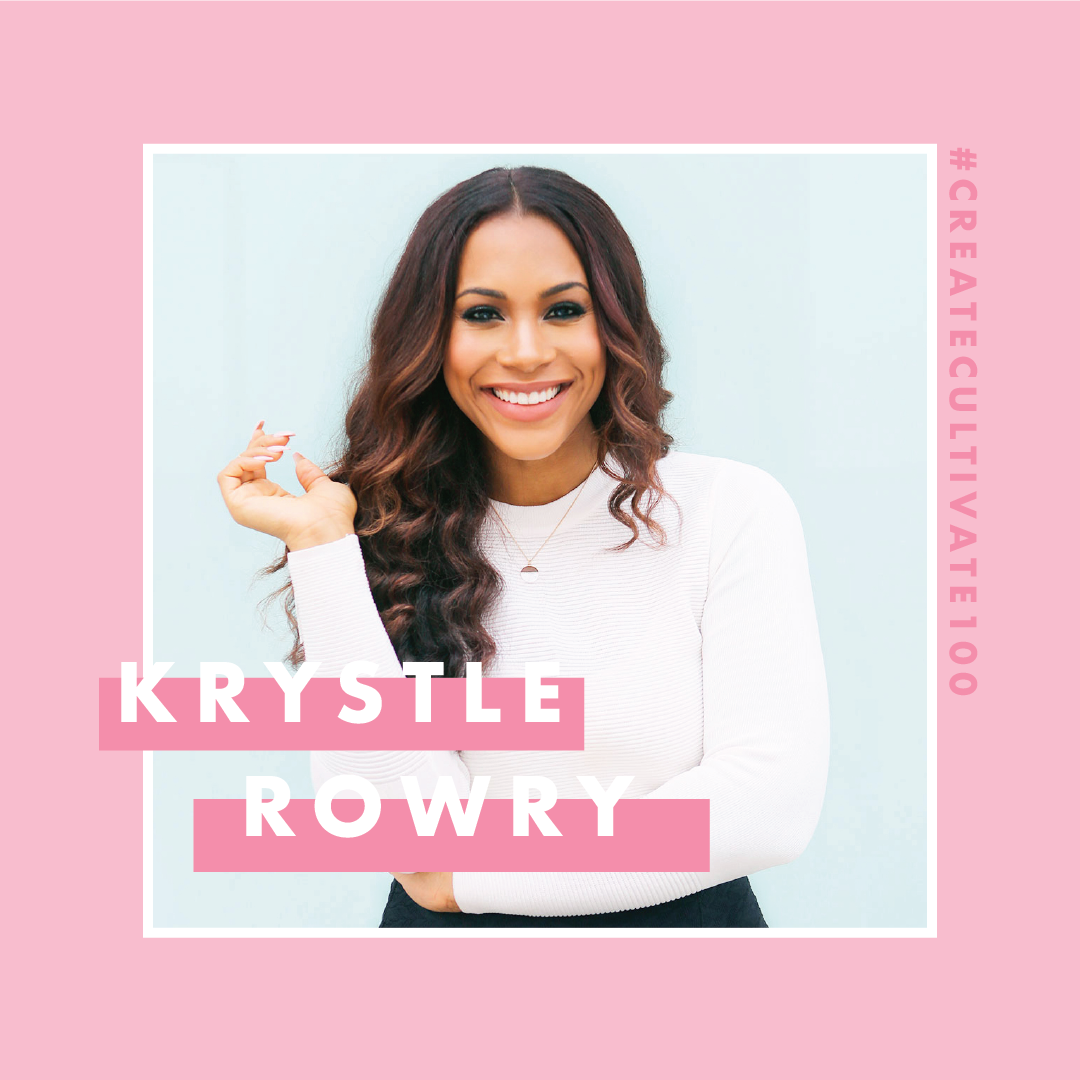
The Food Network. Disney. Cole Haan. Estee Lauder. These are just a few of the clients web designer and digital strategist Krystle Rowry has on her roster, and she’s adding more as we speak. But she’s not just a big-brands designer—Krystle also builds sites for content creators around the world via her business KrissDidIt.com. She saw a need in the community for clean, well-designed sites (or “online homes,” as she calls them) for entrepreneurs, so she filled it—and she went above and beyond to do it. Her work has been featured by BuzzFeed, Essence, Refinery29 and more.
Below, she tells us what makes her tick.
You’ve worked with some very popular brands and content creators helping them bring their vision to life on the internet and beyond. What’s been your favorite project to design and execute?
Oh goodness—that’s like asking which is my favorite child! If I HAVE to choose, I'd say designing the B-School program along with founder, Marie Forleo, and her incredible design team. The program has changed the lives of so many and given them the tools to build a business and life they love. It's been an honor to be apart of something with such an incredible positive impact.
Where do you go for inspiration and fresh ideas?
I find the best ideas when I'm out and about in Los Angeles. Whether it’s seeing the billboards, interior designs of a new jewelry shop, or the menu design at a restaurant, all of it inspires me and fuels my creativity.
What are your top 3 most-used apps at the moment?
Instagram, Pinterest, Spotify
You’ve shared on social media how important mentorship is to you, and you consistently support other creatives on their journeys. Who has been the biggest mentor for you professionally?
Before I started designing for Marie Forleo, she was actually one of my greatest mentors through her online program, B-School. From her lessons and guidance, I learned not only how to grow my business, but also the importance of personal development.
When you hit a bump or hurdle in your career, how do you find new roads + switch gears to find success?
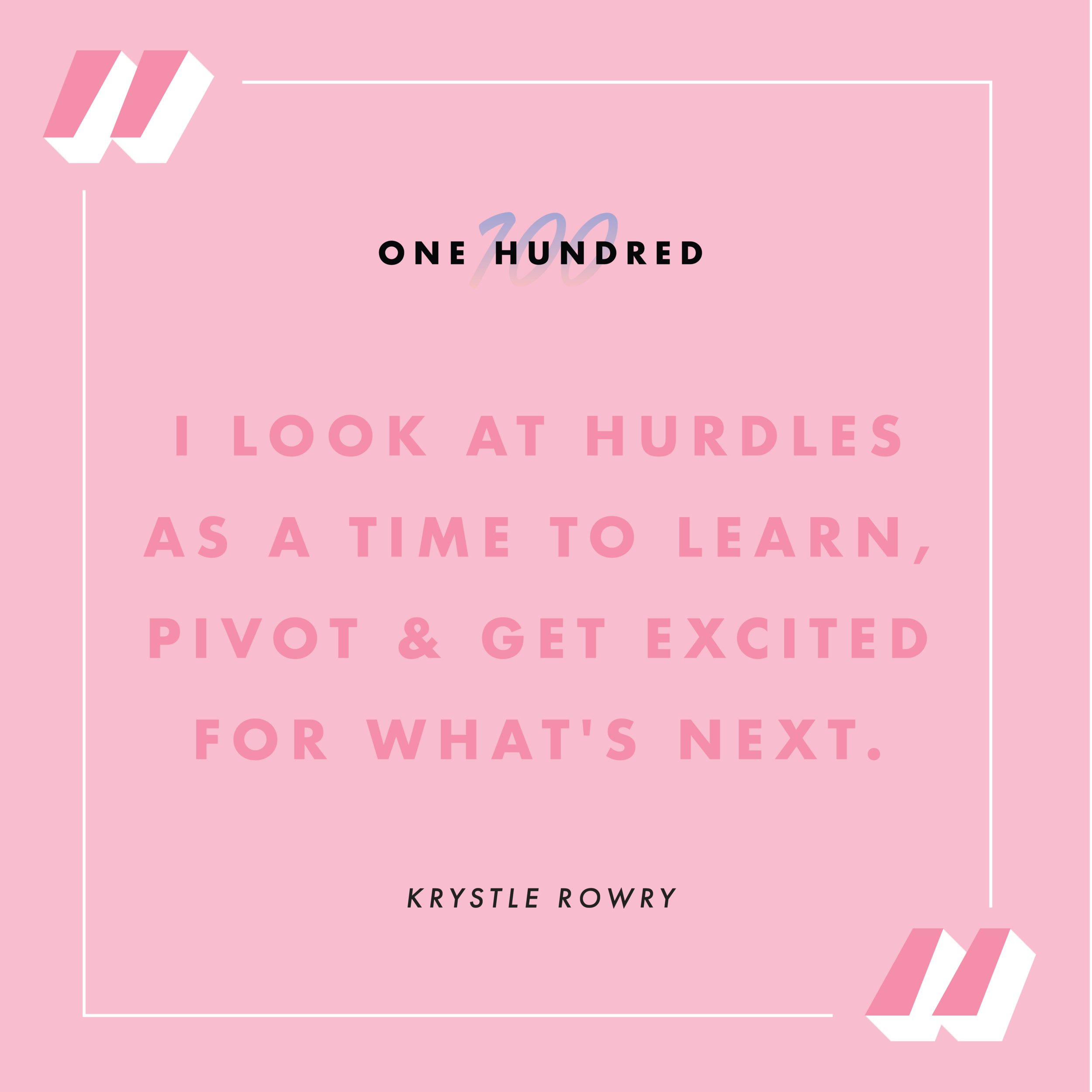
I aim to be very strategic when it comes to my business and career, so when I need to switch gears, I find it's best to take some time for myself. During this time, I take a look at what isn't working and explore how I can be better fulfilled going forward. I look at these hurdles as a time to learn, pivot and get excited for what's next.
What about your job makes you feel the most fulfilled?
For the last 5 years, I have been fortunate enough to mentor over a hundred talented and driven creative entrepreneurs. I try to have a couple of one-on-one calls every week and it’s the highlight of my day. Seeing their businesses flourish and their lives change has been the most fulfilling part of my career.
What’s the best piece of advice you’ve ever been given?
“Done is better than perfect.”
If you could live a day in the life of any other woman, who would it be? Why?
Beyonce. Her talent is unmatched and it would be amazing to know how it feels to move a stadium full of people who have such a deep appreciation for what you do.
“I remember being a teenager who loved coding websites but not knowing who to turn to or where to go for advice because I didn’t see any women succeeding in web development. Representation matters and the future is looking bright!”
What are the common challenges you've seen among female business owners and entrepreneurs?
The most common challenge I've seen is the expectation we put on ourselves to balance it all. We want to be great wives, daughters and mothers while still running a successful business. It can be terribly overwhelming, but I know letting go of the expectation can take a huge weight off.
What do you hope the future looks like for women entering into technical careers and entrepreneurship?
My hope is that women feel empowered and supported when entering into technical careers and entrepreneurship. I remember being a teenager who loved coding websites but not knowing who to turn to or where to go for advice because I didn’t see any women succeeding in web development. Representation matters and the future is looking bright!
VIEW THE FULL CREATE & CULTIVATE 100 STEM & FINANCE LIST HERE.


Create & Cultivate 100: Food: Michelle Tam
Even when I fail, I end up with some lessons learned and a great story to tell.”


At a time when everyone seems to have an opinion on gluten, nut milk, and general nutritional needs, it’s hard to know who to trust as a source of information and inspiration.
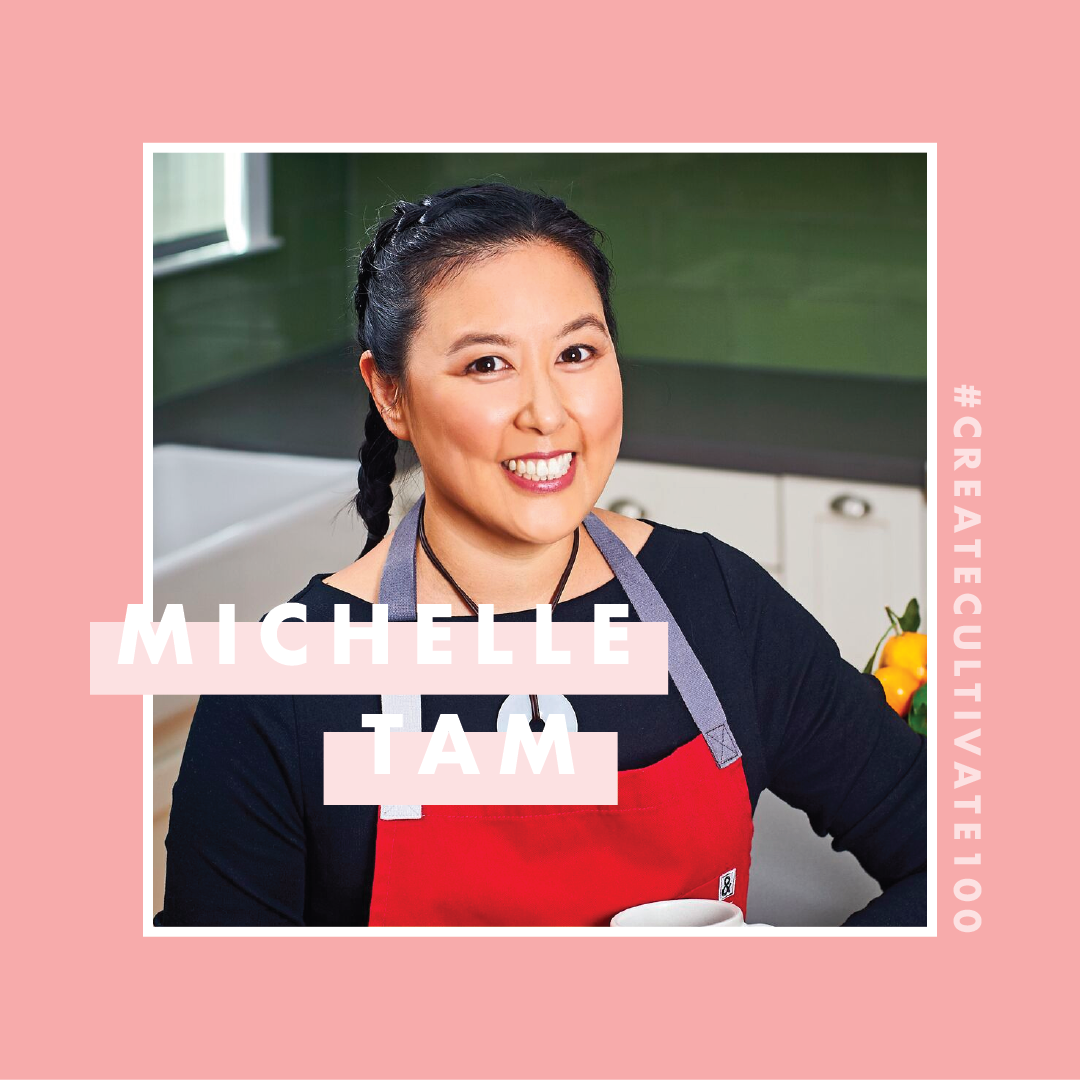
Enter Michelle Tam. The badass behind the Nom Nom Paleo empire started her paleo journey eight years ago with a blog, which quickly escalated into a New York Times bestselling book, a nod from the James Beard Foundation, and an active fanbase of “Nomsters.” The irony here is that Michelle has a degree in nutrition and food science, and her first dream job was to develop chemicals to spray on microwave dinners, giving the illusion that the meal was cooked and browned in the oven.
While her approach to nutrition has certainly changed since the 90s, she still approaches cooking like a methodical scientist. To listen to her speak about food and what fuels her family is to listen to a passionate chef who views health as the ultimate form of wealth.
Your recipes are often California-inspired. What are some of those Golden State touches that make them so unique and special?
I’m a native of the San Francisco Bay Area—an immigrant-rich melting pot of cultures that continues to innovate by fusing together different influences, tastes, and cooking methods, particularly from Asia and Latin America. Combine that with fresh ingredients from some of the best year-round farmers markets in the country, and you’ve got a limitless bounty of flavor. In fact, California cuisine is famous for focusing attention on the incredible flavors of local ingredients, rather than on heavy sauces or fancy techniques.
My recipes take a similar approach. My cooking is all about taking shortcuts to deliciousness, while emphasizing the amazingly fresh flavors of real, whole foods. I also take plenty of inspiration from the dishes I’ve grown up eating here in California, from hearty Cantonese home-cooked classics to spicy specialties from my favorite taquerias.
You majored in nutrition & food science in hopes of becoming a flavor scientist. How have you transferred the things you learned in the classroom to your cookbook recipes?
In some ways, I’m doing the exact opposite of what I learned from my Nutrition and Food Science professors in the ’90s. Back then, it was all about “better living through chemistry”—artificially enhancing cheap foods to be more palatable, pushing empty carbs and low-fat diets, and promoting the agendas of agri-business giants. I totally bought it at the time—so much so that I wanted to move to New Jersey to learn how to develop chemicals to spray onto microwave dinners to make them look like they browned in the oven. Paleo is, obviously, a very different take on food and nutrition.
That said, I still use a lot of what I learned in my studies. With a deeper understanding of how food chemistry works, I feel like I’m better equipped to figure out how to make my recipes work optimally, as well as how to create killer flavor combinations. In addition, I approach recipe development meticulously and methodically, like I’m running a science experiment. After all, just like with lab results, recipes need to be replicable! I use my family and friends as taste-testing guinea pigs, and I write up my methods and results—only in recipe form.
What inspired you to try the paleo lifestyle?
It was ten years ago, after popping out two kids, that I noticed I was tired, cranky, and had a muffin-top poking up out of my waistband. I wanted to ditch the loose flesh—and get stronger, too. So I did what any crazy-busy working mom would do: I subscribed to fitness magazines and ordered a bunch of home exercise videos. For well over a year, I did heart-pounding cardio moves in the garage every night. I counted calories. I lost weight. But I was also starving and miserable. I wasn’t any stronger, yet I was achy all the time. My bathroom scale told me I’d shed some pounds, but my food cravings were off the scale. And my muffin-top didn’t go away.
In the meantime, Henry, my better half, had embarked on a mission of his own to improve his fitness, and stumbled upon the paleo diet. He gradually transitioned to a paleo dietary template, while I sat back and scoffed. I knew better—after all, I’m the one with a nutrition degree! To my surprise, however, he didn’t just survive on the paleo diet—he thrived. My husband exercised three times a week and ate paleo, and was in better shape than he was in college. His blood work and body composition were much improved, and he was savoring all the stuff I secretly wanted to eat.
I had to give this paleo thing a try, so in the summer of 2010, I made the decision to go paleo—and when I decide to do something, I commit all the way. I immediately cut out all grains, legumes, sugar, and processed food from my diet, and read everything I could about the science behind the paleo diet. I quit doing all the crazy cardio and starting doing CrossFit. I was all-in.
And you know what? I feel great! After working graveyard shifts for more than a decade, I’d been mentally and physically lagging—but once I changed my diet, I found that my energy levels improved significantly, and my moods were sunnier, too. I was a nicer mommy. Paleo’s the only approach that managed to improve my body composition and fuel me with enough energy to chase after my two boys, hold down a full-time night shift job (which I quit in 2014 after 12 years of working graveyard shifts at the hospital), cook for a houseful of hungry eaters, lift heavy(ish) stuff in the gym, write cookbooks, and maintain a food blog.
If you could have a meal with someone, living or deceased, who would it be and why? What would you eat?
I grew up in the same house with my grandparents and they helped raise me when my parents were at work. Sadly, they both passed a few years ago. I’d love to share one last meal with my paternal grandfather to thank him for shaping my personality, sense of humor, and outlook on life. We’d dig into some fish and chips (mine would be gluten-free) and papaya because that was his favorite meal.
What do you crave in life?
Experiencing joy in all things—especially when it comes to food and family. Also, I could always use more sleep.
What about your job makes you feel the most fulfilled?
I love the constant interaction and feedback from my readers (a.k.a. Nomsters)—whether it’s immediate comments on new recipes that I post or hugs at book signings. I am really proud of the community I’ve built at Nom Nom Paleo and I really do feel like I’m friends with all my readers!
What’s the best piece of advice you’ve ever been given?
Do stuff that scares you. I used to avoid things that I didn’t immediately excel in or was afraid of failing at, but these days I love tackling scary new projects or experiences because the payoff always outweighs the risks. Even when I fail, I end up with some lessons learned and a great story to tell!
Do stuff that scares you.
What’s been the biggest surprise or highlight of your career to date?
I think the success of our first cookbook, Nom Nom Paleo: Food For Humans, was the biggest surprise of my career to date. At the time my first cookbook was published, I was still working full-time as a night shift hospital pharmacist, and Nom Nom Paleo was just my passion project side hustle. When our cookbook hit The New York Times best seller list and was nominated for a James Beard award, I couldn’t believe it.
Where does your passion/drive come from?
My passion and drive definitely come from my parents. When my parents immigrated from Hong Kong to the U.S. and settled in the Silicon Valley of the 1960s, their shaky grasp of English limited them to blue-collar jobs: my dad worked as a technician in a factory, and my mom took orders at a fast food joint. They shared a house with my grandparents, even after my sister and I were born. All six of us lived squashed together in a little house.
My parents pushed me to work hard at school and pursue a respectable career—and I did that. I was valedictorian of my high school class, got a pharmacy doctorate, and worked as a hospital pharmacist at a teaching hospital. I was happy being a cog in the wheel…until I wasn’t.
For years, I worked nights at the hospital while my husband and I worked on our side hustle, Nom Nom Paleo. Our blog eventually led to a Webby Award winning cooking app and two New York Times bestselling cookbooks. It was enough to bring me to a crossroads: Should I quit my hospital job and embrace Nom Nom Paleo as a full-time gig—giving up the financial stability and predictability that my parents worked so hard for?
That’s when I realized that no matter what immigrant parents tell their kids about the importance of stability and security, they’re actually the biggest risk takers of all.
My mom and dad had the courage to venture to an unknown land, to start a new life not knowing the language or customs, to face discrimination and longing for home—all without a safety net. In comparison, giving up a steady paycheck to write about food isn’t especially daunting.
After working twelve years as a hospital pharmacist, I hung up my lab coat for good, and threw myself into food writing and online entrepreneurship. I now work relentlessly on Nom Nom Paleo because I want my kids to follow my example—I want them to take risks and pursue purpose-driven work.
“I want my kids to follow my example—I want them to take risks and pursue purpose-driven work.”
What keeps you up at night?
Not much, because I’ve done my utmost to hack my sleep! As a recovering night-shift worker, I have to make up for over a decade of horrible sleep habits. These days, I have blackout panels on my windows, orange lights for bedtime reading, weighted blankets, a white noise machine, and strips of painter’s tape covering the little pinprick of light that emanates from the ceiling-mounted smoke alarm. I even have a pad under my sheets that keeps my body at the optimal temperature for sleep, and wear a sleep tracker to make sure I’m getting good ZZZ’s.
Of course, I still sometimes wake up in the middle of the night, dreading some impending deadline or worrying about the effects of climate change.
Whose career really inspires you?
I’m incorrigibly unfashionable, but I really admire Eva Chen’s career. As head of fashion partnerships for Instagram, she’s able to balance being a badass boss, fashionista, working mom, and now children’s book author, too. On top of all that, she remains super funny and relatable.
What has been your biggest opportunity or biggest challenge as a woman in the food industry?
It’s always hard being taken seriously as a woman in the food industry, let alone a woman of color. When you tack on the fact that I’m not professionally-trained and started off as a food blogger focusing on a special diet, I face even more skepticism from those who have come up through more traditional means.
I’ve tried to carve out a space for myself and others like me—home cooks who have something specific to offer, whether it’s comfort food recipes for those with certain dietary needs or cooking tips and techniques for harried working parents. Luckily, the free and open internet allows “my” people to find me. I don’t need to rely on traditional food media to build my brand and make an impact.
What is the most challenging part about writing a cookbook?
All of it! We have a unique agreement with our publisher where my husband and I do just about everything ourselves, from writing and photography to book layout and design. Henry does all the photography, cartoon illustrations, and graphics, while I focus on recipe development and writing. Every square centimeter of each page of our books was designed by us. For us, putting together a cookbook is a lot more involved than turning in a manuscript. Despite all the work, we wouldn’t do it any other way because we love the creative freedom and knowing that the final product is truly “our baby.”
When you hit a bump or hurdle in your career, how do you find a new road + switch gears to find success?
Nom Nom Paleo has given us the opportunity to chase after things that we think are fun and interesting, without worrying too much about challenges or roadblocks. Ten years ago, I would have never thought that we’d have the chance to publish cookbooks, produce a podcast, design a cooking app, or design action figures—so all of this is gravy. Besides, my husband and I run Nom Nom Paleo as a mom-and-pop shop, so we’re nimble and can adapt to changes quickly and pretty seamlessly. Also, Nom Nom Paleo is fairly diversified, in that we don’t rely heavily on a few partners or sponsors for our success. We’re able to dive into things that we’re passionate about, and keep learning and growing in new directions.
What are you most excited for in 2019?
Professionally speaking, I never know what’s around the corner—but I can’t wait to see what’s in store! As for what I’m personally excited for, we’re taking a family trip to Italy this summer to celebrate my parents’ 50th wedding anniversary and my father’s 80th birthday. I’m looking forward to chilling with my whole family in a little town in Abruzzo, taking cooking classes, and eating lots of gelato!
VIEW THE FULL CREATE & CULTIVATE FOOD LIST HERE.


Create & Cultivate 100: Music: Ella Vos
“It was liberating to take control and know that it was up to me to make it happen.“


In a world where “the dream” is being signed by a major label, Ella Vos bucks tradition. When she walked into meetings with labels to find a major lack of female executives, she was inspired to take a risk and strike out on her own.
It’s safe to say the risk of going independent paid off: Ella’s debut album was an instant hit—she’s played big festivals, sold out shows, and had her music featured on Grey’s Anatomy, Life of Kylie, and The Originals. But amidst her rise to fame, Ella wants us to know she’s still a real person. She started her journey in music while pregnant with her only son, and she wrote her hit song White Noise about her struggle with postpartum depression. The song, of course, went viral, but Ella is humble: When someone likes her music, she says, it’s “the best feeling ever.”
This breakout star has done so much in her short musical career, but talking to her gives you the feeling that this is just the beginning. We can’t wait to see what’s next for Ella Vos.
You released your debut album, Words I Never Said, independent of a label. Why did you choose to go solo?
I could write an essay on the reasons I didn’t release my album with a label, but the short answer is that it just didn’t feel right. I had several meetings that left me feeling disappointed in the absence of women at the executive level in the music industry; normally I would have thought “That’s just the way things are,” but instead it inspired me to do something different. I definitely went into this career thinking I would “need” a label to have any type of success. That way of thinking was a big reason why I decided to remain independent—to prove, even just to myself, that there is not one way or path to anything in life. It was liberating to take control and know that it was up to me to make it happen.
What has been your biggest opportunity or biggest challenge?
My biggest challenge has been viewing my career as a business, and that I am the boss. It’s not instinctual as an artist to think that way—at least, not for me. I’ve had to really push myself to speak up for what I want, how I want to do things, and what my goals are, and not what I think someone else thinks my goals should be.
Vulnerability and honesty shine through your lyrics. What message do you want to spread to women through your music?
I hope to spread to everyone, especially women, that it’s okay to be vulnerable. It’s okay to be wherever you are emotionally, or physically, whether you’re happy or not. And it’s important to talk about it. I think for years I feared showing my feminine side for risk of appearing “less than”— less capable, less trustworthy, less attractive, less stable, etc. But that’s a very damaging and dangerous way of thinking that I’ve been working on changing in myself and hope to inspire others to do as well.
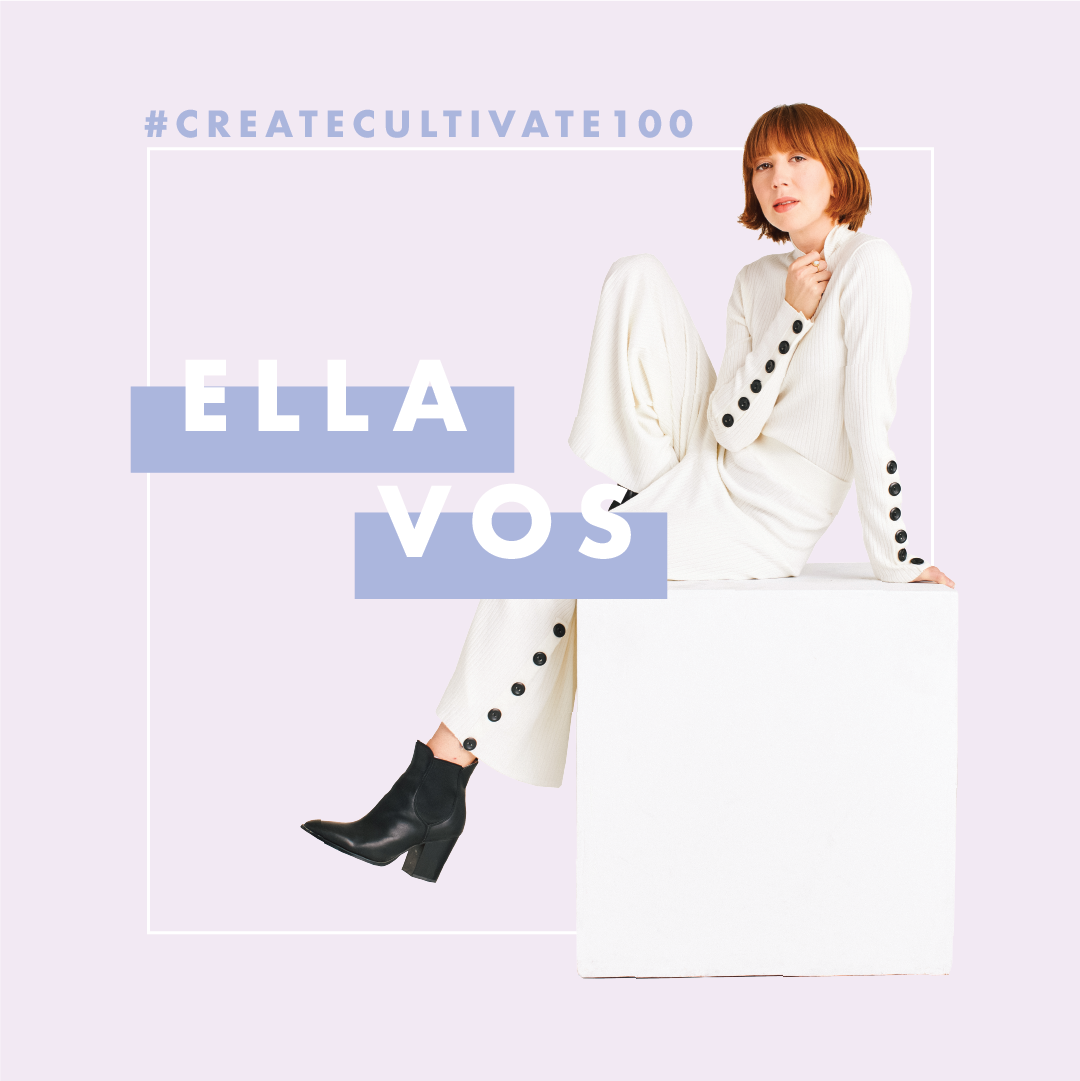
What’s your songwriting process?
I almost always start with a melody over a single instrument, either piano or guitar. I’ll mumble out words in the melody that become building blocks to write the lyrics. Sometimes, not all the time, a word will pop out that inspires the rest of the song. Other times it takes days of writing and journaling and brainstorming to find what the song is about. Sometimes I don’t really know what the song is actually about until I’ve written and recorded it. I like to really “brew” in my lyrics, working on them over the course of days, changing little words here and there. I hate writing lyrics in front of other writers or producers; I get really self-conscious, so I usually write lyrics alone at home in my bedroom.
Whose career really inspires you?
So many of the up and coming female artists right now are SO inspiring to me—like Maggie Rogers, Billie Eilish, Bishop Briggs, Elohim, Verité, Jessie Reyez… the list goes on. Every one really seems like they’re doing it their own way and loving it, and it makes me really excited for where music is headed.
You’ve been open about your battle with postpartum depression after your son was born. How was music a source of comfort for you during that time?
Music has always been a source of comfort, starting with playing the piano when I was young—it was really the first way I learned to express myself. But I didn’t realize how important a tool it could be until I was dealing with postpartum depression—how it could help not only to release emotions, but to also make sense of things and gain confidence to speak up about it.
It was liberating to take control and know that it was up to me to make it happen.
What’s been the biggest surprise or highlight of your career to date?
I’m constantly surprised at the consistency of everything; that even when I couldn’t release music for a year, that people still continue to listen and share and follow. Also, sometimes, I’m just shocked that anyone likes my music at all, which I know is silly, but it’s an honest feeling. You spend all this time making art, alone, caring for it like a little baby, and then you throw it out into the world not knowing what will happen to it—and any time someone grabs onto it and says “i like this!” it feels like the biggest accomplishment ever.
When you hit a bump or hurdle in your career, how do you find a new road + switch gears to find success?
Success is a word I’ve been challenged to redefine for myself constantly. I’ve hit some major bumps—one of the biggest was being diagnosed with cancer while on tour this past year. It was easy to feel like my year career-wise was going to be a failure, but instead I just leaned really hard into what I knew I could accomplish and what I thought would make me happy, letting the less important pieces slip away.
What’s the best piece of advice you’ve ever been given?
Believe in yourself and others will follow.
What’s next for you?
I’m releasing my EP Watch & Wait in January and heading off on a US headline tour end of March. I’ve also been directing my own music videos recently and hope to do quite a few more!
Photography by Annie McElwain Photography
Photoshoot skincare provided by Dermalogica
VIEW THE FULL CREATE & CULTIVATE 100 MUSIC LIST HERE.


Create & Cultivate 100: Content Creator: Alisha Ramos
“Impostor syndrome is real. But let me tell you: no one knows what they are doing.”


Alisha Ramos doesn’t want to go clubbing anymore. She’s in her late twenties, and what she craves most is meaningful connections and friendships that matter—if you’re over 25, you probably feel the same. So Alisha created Girls’ Night In, a newsletter that covers culture, lifestyle, and self-care, for homebodies like us. And it caught like wildfire.
Six months into the venture, Alisha quit her full-time job to pursue opportunities with GNI. In just over a year, Alisha grew her newsletter 400-fold (not a typo!). She knew she was on to something, and has since built a simple newsletter into content that more than 100,000 women look forward to receiving in their inboxes every day.
Below, Alisha talks self-care, imposter syndrome, and the value of “no-screen time.”
Tell us a little about Girls’ Night In. How did it come to fruition?
Girls’ Night In is a self-care community and newsletter. Our mission is to help women relax, recharge, and build more meaningful connections in an overwhelming world. I started it as a side project in January 2017 as a weekly Friday newsletter. We now reach over 150,000+ women around the world, and host monthly gatherings offline in several cities!
What do you hope women take away from your newsletter?
Self-care is however you want to define it. The term gets used a lot these days, but ultimately it’s a very personal experience. At Girls’ Night In, we explore the mental, social, and emotional aspects of self-care, as well as the “fun” stuff like what face masks and skincare products we’re loving. It’s a balancing act!
What has been your biggest opportunity or biggest challenge in creating GNI?
Our biggest challenge has been how quickly we’ve grown and serving our audience’s needs. Our readers are super engaged with us and have so many ideas and requests. The challenge is always in focusing our efforts as a team and serving our audience in the best way possible.

Any plans to expand to real-world face-to-face events?
We are! We’re in cities like SF, NYC, Boston, Philly, Toronto, D.C., and more. We host monthly book club gatherings and larger events.
What are the common challenges you've seen among female business owners and entrepreneurs?
Impostor syndrome is real. But let me tell you: no one knows what they are doing. I’ve learned that everyone is making it up as they go, and that’s given me more confidence. If you’re passionate about your mission, stay true to your values, and listen to your customers and audience, then you’re on your way to success. Stay strong!
You made a conscious choice not to include political news in the newsletter. Why?
Our readers are very smart. We make the assumption that they receive their political news and op-eds elsewhere.
What about your job makes you feel the most fulfilled?
Meeting our community members IRL. It’s so nice when a woman comes up to me and says, “I’m so glad GNI exists. I made a friend through it, and I read your newsletters religiously.”
Impostor syndrome is real. But let me tell you: no one knows what they are doing.
What does your day-to-day routine look like?
We now have an office! I was working from home for the longest time. My workday is pretty typical - 9 to 5pm, although of course as an entrepreneur you put in a “second shift” at night. But I’m trying to live out our values and practice self-care at night, and put into place “no screen nights” on some nights so I can spend meaningful time with my friends, family, or s/o.
When you hit a bump or hurdle in your career, how do you find new roads + switch gears to find success?
I did fail a few times in the beginning of my career. It’s especially hard when you’re new to the workplace. I realized that a job I was in was not the right fit for me. I spent a few months doing a ton of self-reflection and experimentation with different types of work before I could finally figure out what spoke to me the most.
What are you most excited for in 2019?
Growing the Girls’ Night In team and community! We have big things in store!
VIEW THE FULL CREATE & CULTIVATE 100 CONTENT CREATORS LIST HERE.

Create & Cultivate 100: Entrepreneur: Nancy Twine
“Part of success is taking the time to be thoughtful and smart about your approach.“


Before her 30th birthday, Nancy Twine had already left her successful career in finance at Goldman Sachs to pursue her next adventure: starting a hair care company.
Taking that chance paid off. Nancy’s brand, Briogeo (the combination of two words—Italian for “vibrant” and Latin for “of nature”), offers women a plant-based natural hair care and made her the youngest African American woman to launch a line at Sephora. But Nancy’s success wasn’t sheer luck—she’d been working to perfect the recipes for her hair care products since she was a young girl, mixing up natural remedies with her grandmother. Briogeo’s formula is free of sulfates, silicones and parabens, instead incorporating natural oils, vitamins, and antioxidants. It’s a smart move in this era of wellness, and we can’t wait to see where Nancy takes her company next.
Diversity in hair care products has been long overdue. What was the moment you decided to take the leap and break into the industry with Briogeo?
After working in finance and within the same team for 7 years, it felt right (and normal!) to be ready for a change. Ultimately, launching Briogeo was inspired by the experience of making natural products at home with my family and later wanting to have a larger impact on the natural beauty sphere by launching my own plant-based hair care product line. These childhood memories ultimately inspired me to do something greater with the passion for creating and start my own clean beauty line.


What are some daily habits you have that contribute to your success?
One of the major keys to success for Briogeo has been staying true to who we are from the beginning.
Find something you REALLY believe in and that you won't quit until you've succeeded. Some people think that finding success as an entrepreneur is easier than it is. It's the most difficult and challenging undertaking I've ever experienced - but the key is to keep going.
Overtime, I've been able to control the impulse of "freaking out" about most things. After seeing things go wrong hundreds of times, you brain starts to adapt and realize that it's never the end of the world. There's always a solution and no set back is too large to overcome. I do work hard and think about work a lot - and there's got to be balance to that. I try to spend my weekends focused on myself - and not on my business. I allocate a few hours on Sunday night to prep for the week, but other than that, I really focus on unplugging fully to give my mind a break. It's really important. I'm trying to make meditation and yoga a more regular part of my wellness routine, but I still struggle finding consistent time during the week, but I'm working on it!
What does a typical day look like for you?
It greatly depends on whether it's a week day...or the weekend! During the week, I try to get up no later than 7am so I can squeeze in a quick workout or meditation. If I'm lucky, I can get through all of the overnight emails (we have several international retailers and vendors) before I get into the office. I always have my best days when I can manage to be productive before the work day actually starts. I live in Union Square, so my commute is relatively simple - just 3 stops on the 6 train to our NoMad office, where I typically arrive by 8:30am. My mornings typically consist of team meetings, calls, and working my way through e-mails. I typically take a late lunch around 2pm before re-focusing back on projects at my desk. I don't travel as often as some of my other entrepreneur friends. I find that traveling can set me back quite a bit with projects I'm working on, so I only travel if it's absolutely necessary. I'm a very hands-on CEO in a very fast paced business - so there's never a real break during the day! I typically get home between 7:30p - 8:00p and cook dinner before finishing the day with a read.
“Never rush into launching an idea. Part of success is taking the time to be thoughtful and smart about your approach. Often we can get excited and impulsive by our own ideas and feel the need to rush them through. Slow and steady wins the race!”
What was your biggest hesitation when you started Briogeo?
Briogeo has never taken any outside VC investment, and very early on it was difficult funding the various needs of the business, so I was constantly dipping into my personal savings to fund the business until we became profitable.
What are the common challenges you've seen among female business owners and entrepreneurs?
Rushing to get a new product launch underway, which we ultimately had to stall. Sometimes brand's are faced with tight timelines to launch new products, but I learned very quickly that it's not worth sacrificing putting your best foot forward in order to hit a deadline.
Never rush into launching an idea. Part of success is taking the time to be thoughtful and smart about your approach. Often we can get excited and impulsive by our own ideas and feel the need to rush them through. Slow and steady wins the race!
What are two qualities you think every entrepreneur needs in order to be successful?
Perseverance & grit.
VIEW THE FULL CREATE & CULTIVATE ENTREPRENEUR LIST HERE.


Create & Cultivate 100: Beauty: Lauryn Evarts
Kale in one hand, champagne in the other—this is the ethos behind The Skinny Confidential.


Kale in one hand, champagne in the other.
This is the ethos behind The Skinny Confidential, the lifestyle site Lauryn Evarts built in 2009, while she was a student at San Diego State University. She wanted a place where all the women on campus could come together to share tips and tricks for wellness. What she didn’t expect was that her blog would end up reaching women around the world, amassing a cult following.
Lauryn parlayed the success of her blog into an influential IG account (with more than 700k followers!), a namesake fitness book, a YouTube channel, and now, a podcast with more than 25 million downloads. But amid her success, Lauryn humbly reminds us—this empire took work, and she’s not done yet. Read on to hear her thoughts on branding, over-sharing, and the art of execution.
Tell us what prompted you to start The Skinny Confidential.
There was A LOT of untapped white space in the online world. There were a lot of bloggers out there talking about their life, but I didn’t see a lot of sites connecting like-minded women. I was interested in that, you know? I was interested in other people from around the world, what made them tick, what they were doing and what their tips & tricks were too—whether it was a model, an actress, or an everyday girl, I had this desire to connect and talk with other people. Having this sort of resource full of women’s tips & tricks didn’t exist at the time, so I set out to create a brand and blog that was pretty, pink & cheeky.
When launching, I knew that the blog would be the foundation of the brand. How I rolled it out was very thoughtful and strategic—I didn’t just throw up a site without planning. I like a plan.
Being broke (lucky if I had $80 in my bank account to be honest), bartending, teaching Pure Barre & Pilates classes, living at my godparents’ for free & attending San Diego State full time, I knew that if I did this I had to do it right. The Skinny Confidential needed to come out with a bang.
I found a web designer and made a huge poster board with the design I had in my head. The best way was to draw out what I wanted instead of telling him. I had this pink Trapper Keeper (which I still have today) full of ideas and clippings and research that I wanted to share with the world. Lots of questions too.
Talking with doctors & experts and tweeting with models helped me to really get started in creating a space for women to share tips & tricks when it came to health & fitness. Niching down was a no-brainer because I didn’t want to overwhelm the audience.
Also, you should know the name The Skinny Confidential has nothing to do with being skinny. I was writing down all these cheeky words when I was thinking of a name and skinny & confidential kept coming up. It was everything that I wanted because it means “get the skinny.” You know, “get the juice.”
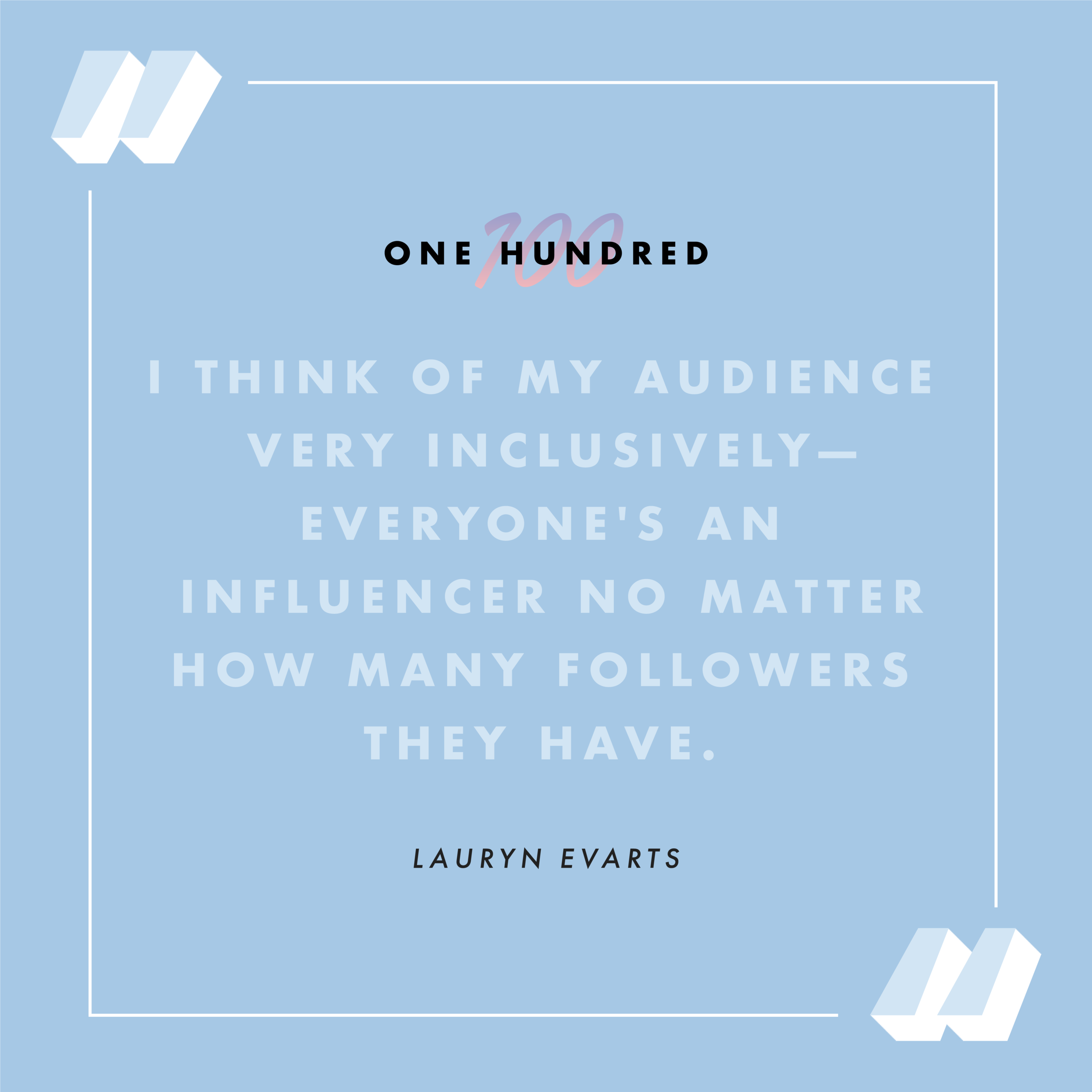
You can pretty much get anyone to buy anything. How did you build that trust with your audience?
When I find something I like, I cannot shut the F up. There’s something in me where I just have to get other people involved, like a natural over-sharer. If I find a great shirt at Forever 21 for $13.99 I have to tell everyone and their mom. TSC readers need to know where it’s from and WHY THEY NEED IT—very specific over here. I’m very much about details & specifics.
If someone is telling me about why I need a Hydro Flask, I want to know what color to get, what to put in it, if it’s for warm or cold drinks, how it’s cleaned, the proper straw to use—every detail is essential. Every single detail has always been important and interesting to me, so I do that with my audience when I talk about products too. It’s just very important to the overall brand.
When I talk about something that I think my readers will love, I want to take them from A-Z. If A-B is talking about something and a reader decides to buy it, then A-Z just goes so much further. Is my reader going to buy it and absolutely love it? Are they going to use it every day? Is that person going to recommend it to 10 of their friends, then those friends are going to recommend it to 10 of their friends? I think of my audience very inclusively—everyone's an influencer no matter how many followers they have.
When I feel that kind of correlation with a product, that’s when I feel comfortable selling something.
When did you realize you could make a business out of your presence online?
Immediately.
The second I had the idea I knew it could be a business. My whole life I’ve known that I’d work for myself. There was no other option. I’m such a horrible employee—the worst of the worst. I like to do things my own way, on my time, so this was always the path I knew I’d take. I like and thrive off being an entrepreneur. There’s never been a plan B. I try to find that confidence from within, because no one else is going to give it to you.
Focusing on propelling forward and 100% believing in yourself is so important. That mentality comes from my childhood. I always had to make things happen for myself because there was no other option. Getting creative and finding angles to get things I wanted was just part of my life. That’s something that has fueled my entrepreneurial side. I believe anyone can do anything they put their mind to with proper execution, patience, consistency, & focus.
Your branding is so on point. Everyone has an image that comes to mind when they hear the words “The Skinny Confidential.” How have you built and maintained your brand so well over the years?
I hope that the image is pink clouds and pink nails and pink cotton candy—LOL but really I like to keep it pink. Every single thing I do is an opportunity to brand. From Instagram captions and the upper and lower-case format I use, to the colors & fonts of Instagram stories, to the “&” that I use in my blog posts—every single opportunity is a branding opportunity. If anything ever went wrong with The Skinny Confidential, I'd probably be a branding consultant. Branding is one of my favorite parts of this career. Nothing is too little to brand.
Keeping the same fonts and colors is crucial (C & C is genius at this by the way!). You also really need to commit and write the way you speak in person. Like I want my readers to feel like we are drinking spicy margaritas at happy hour.
Sometimes that’s hard because you’ll see something someone else is doing and you’ll want to shift your formula, but I think you need to stay true to the brand you’ve built and not stray too much.
To me, a brand should evoke a feeling in the audience. What I want people to feel when they’re on the site is that it’s this cheeky resource where they can get all the juice in this really pretty, pink way. When they leave, I want them to take what they like, leave what they don’t—but ultimately apply anything they like to their own life and feel they had a valuable experience that was worth their time. That’s my goal with everything from the blog to Snapchat and Instagram.
Respecting the audience’s time and making their visit fun, flirty & girly is the goal.
What are some of the biggest challenges and rewards you’ve faced by displaying your life online?
It’s difficult to know when to shut it off. Anyone who works for themselves can tell you that it’s hard to know what to share and what not to share. You gotta know when to put the phone away. I try to do that when I’m at dinner with family and friends. I’m an over-sharer by nature but still, letting people in on your private life feels...bizarre sometimes. I’ve talked about everything from my sister’s heroin addiction to my mom’s suicide and the death of my grandma—which all really affected me. Putting that out there is really scary but I hope it is helpful to the readers.
I’ve rolled out these personal posts over the last 8 years though, over time. I’ve been careful with my content so my audience has gotten to know me gradually and I’ve gotten to know them too. When I decided to share these things, I felt I was in a very comfortable spot. It’s still intimidating though.
The rewards are incredible. When a girl comes up to me on the street, says she was working 9-5 pm and quit her job to start her own business because she was inspired by our podcast, it gets me off. Also, it makes me so happy when I go into TSC secret Facebook group and all these like-minded women are connecting, planning meetups and doing things without me. They’re all hanging out in this non-judgmental space and it’s so fulfilling because that’s why I started The Skinny Confidential in the first place.
How do you decide which brands you do and don’t work with?
Well actually liking the brand is a must. I have to use the product or brand for at least a month and preferably I will have already used it. I think a lot of people don’t talk about the brands they truly use because they don’t want to give out free publicity. What’s worked for me is the opposite. I’m super transparent with what I use, and the best partnerships have come from me finding a product, loving it, talking about it, then being approached by the brand to collaborate. I’ll tag the brand, talk about the product on all my channels first, then some really purposeful, meaningful partnerships come out of it. The best collaboration for me is one that happens very organically.
As far as brands that I haven’t tried that come to me, it really needs to fit with my audience and The Skinny Confidential. Everything I do is for the long-term, not the short-term, so working with a brand I don’t absolutely love, and don’t think my audience will love, isn’t worth it. We all know those brands that can feel “sell out-y.”
“To me, being successful means you’re waking up and creating your own future on your own terms.”
What characteristics make you successful as an influencer?
To me, being successful means you’re waking up and creating your own future on your own terms. It’s liberating to wake up feeling like that and know that you’re in charge of your day. You really are the creator of your own future and once that clicked, I realized that’s what success is for me. The Skinny Confidential has been successful so far because what you see is what you get. We talk about every single subject, there’s no judgement, everyone is just doing them, and the reader is so focused on ideas & growth.
Readers come for the taboo subjects, to hear from experts we bring on the podcast, and the valuable & honest takeaways. It’s not about me. The community is key.
What about your job makes you feel the most fulfilled?
That I can design my own future and the sky's the limit. There are so many different angles that The Skinny Confidential can go and the community that’s come together is now doing things with each other all over the world.
What’s the best piece of career advice you’ve ever been given?
Gary Vee told me: “You have one fucking life do something about it.”
What’s been the biggest surprise or highlight of your career to date?
Nothing has really been a surprise. My growth has been slow and strategic and everything that’s happened has happened because I planned it out carefully.
Some cool highlights have been The Skinny Confidential Book launch, the podcast hitting 23 million downloads, the people I’ve had access to & sharing them with the audience, the meetups of 500+ women & meeting the community in person. The Victoria’s Secret fashion shows have been really fun, and the secret Facebook group has been very rewarding as well.
You have a large presence on social media. How has it impacted your career?
Social media has been everything for The Skinny Confidential. It’s given me access to women all over the world from Japan to Australia to Finland. It has and continues to bring so many people together in a way that we’ve never been able to do before. Without social media I wouldn’t have been able to gain access to a lot of the people I’ve had access to. It’s badass.
“When a door closes or something doesn’t work out, I find another door to go through. If one way doesn’t work, I find another way. Passion is great, but for me, it’s always been about strategy and execution.”
Where does your passion/drive come from?
It definitely comes from when I was little. I grew up in a very wealthy community where kids were getting Ferraris for their birthday and that’s just not where my family was at. We were regular class and not on the same level as the families around us. If I wanted something my parents would say, “go figure it out.” I had to get creative with bargain shopping and finding ways to make it work—whatever it was. I had to do the work, find tips & tricks and creative angles to get what I wanted.
When a door closes or something doesn’t work out, I find another door to go through. If one way doesn’t work, I find another way. Passion is great but for me it’s always been about strategy and execution. I like to go “do” instead of talk about the things I’m going to do.
What are the common misconceptions you’ve heard about influencers?
There’s so many—I feel like it’s a scroll. A lot of people think bloggers just take a picture, write a little post and that’s it. People think we don’t have to do a lot work but it really is like baking a cake. You have all these different elements that you need to make things happen. There’s photos, writing, editing, distribution, execution, promotion, the emails, the organizing, the meetings—there are so many things that go into it to make right.
When you hit a bump or hurdle in your career, how do you find a new road and switch gears to find success?
I’m OBSESSED with bumps and hurdles. People ask me what my failures are and I really don’t look at it like that. You have to go through hurdles to maintain success in any industry—it’s part of the game, and life. I feel like you have to get uncomfortable to get comfortable. I switch gears by going through a different door. If I can’t get in through the front, back or side door then I’m skydiving in through the ceiling. Finding different ways to make things happen is one of my favorite parts of the job. It’s sort of creative if you think about it.
What’s next for you in 2019? What are you most excited for?
Writing another book that really makes sense for my community—something that’s really useful for my audience and it’s not going to be a replica of the blog. It will provide a ton of value that is also entertaining. We’ve also been working on product for the last 2 years so definitely more on the product side.
Hopefully a lot of in-person meetups, maybe a podcast tour, more interesting podcast guests and continued valuable takeaways on all of The Skinny Confidential platforms is what’s coming up in 2019.
Photography by Annie McElwain Photography
Photoshoot skincare provided by Dermalogica
VIEW THE FULL CREATE & CULTIVATE 100 BEAUTY LIST HERE.

Create & Cultivate 100: Fashion: Nicolette Mason & Gabi Gregg
Turning frustration into fuel…and killer fashion.


Representation matters. Just ask Nicolette Mason and Gabi Gregg.
As fashion industry veterans and OG bloggers, Nicolette and Gabi teamed up to address a lack of premium and stylish designs in plus-size retail. The duo has spent their careers in the fashion industry and have repeatedly been frustrated by the lack of plus-size statement pieces inspired by high fashion, streetwear, or seasonal trends. The reality is that without access to stylish wardrobes, there is an implicit message to plus-size women: This is what you can, and cannot, wear. This message is reinforced constantly throughout all facets of culture, and this powerhouse pair decided: Enough was enough.
Enter Premme. The brand brainchild of Mason and Gregg was born out of a love of fashion and the recognition that the industry is still lacking when it comes to the wants and needs of plus-size women. This mission of the brand is to provide plus-size women with bold, fashion-forward statement pieces without compromise. Screw socially-reinforced hegemony—Premme is about embracing who you are and looking fine AF while doing it. Because the thing about capitalism is that if consumers make enough noise and demand increases, the more inclusive the market must become. Keep your eyes peeled as Mason and Gregg take 2019 by storm, advocating for more accessible fashion and plus-size representation.
What was the inspiration behind Premme?
Premme was born out of our frustration at the lack of stylish, quality options in the plus-size market. Our designs are statement pieces that are inspired by trends from the runway and street style.
You’re friends and co-founders. Why does that business dynamic work for you?
We’ve both been leaders in the plus-size community for almost a decade and have very similar career trajectories; we’ve both been fashion editors, influencers, designers, and brand consultants, and we saw similar issues with the status quo. Because we started as close friends, we are able to communicate easily--we also share similar values and aesthetic taste which helps!
How would you describe the Premme aesthetic?
The Premme aesthetic is feminine, bold, and unapologetic. We like to encourage our customers to break fashion rules and provide her the wardrobe to do just that: From prints and colors to crop tops and cut-outs, our designs are about pushing fashion forward.
What do you think people crave when they get dressed in the morning?
A mix of comfort and style, and pieces that make them feel confident as they walk out the door.
What should every woman have in her wardrobe?
We both love moto jackets—they add a little personality to any outfit and work over everything from a tee and jeans to a frilly dress.
What about your job makes you feel the most fulfilled?
Hearing from our customers and community about how our clothing makes them feel good in their skin is definitely the most fulfilling part of our job!
What’s the best piece of advice you’ve ever been given?
Maintain your integrity and trust your gut.
What’s been the biggest surprise or highlight of your career to date?
The first day that Premme launched was such a career high—the feedback and excitement from our followers was palpable, and watching as the clothing we worked so hard on sold out was unforgettable.

Where does your passion/drive come from?
We’re both passionate about social justice and equality, and we’ve chosen to pursue a creative career that affects change: giving plus-size women access to designs and styles they’ve been told (either directly or through what’s currently available for them to shop) that they shouldn’t wear. The lack of options is really astounding—68% of women are plus-size while the plus-size fashion market only accounts for 17% of the womenswear market. It’s not okay and we feel a responsibility to help change things.
What keeps you up at night?
Donald Trump.
Whose career really inspires you?
Emily Weiss.
What has been your biggest opportunity or biggest challenge?
Funding—it’s really sad how little VC funding goes to people of color and/or women.
What are the common challenges you've seen among women in the fashion industry?
Hiring practices are still problematic, not just for models but for all positions, race, size and overall looks still play a huge role. Opportunities are still going to the most “attractive” people by European standards.
“The lack of options is really astounding—68% of women are plus-size while the plus-size fashion market only accounts for 17% of the womenswear market. It’s not okay and we feel a responsibility to help change things.”
What would you change about the plus-size industry?
We’d love if there were more quality, trend driven clothing options, more diverse and size-inclusive casting, and more body positive language and messaging.
Whose style do you love?
Rihanna, Solange, Tracee Ellis Ross.
When you hit a bump or hurdle in your career, how do you find a new road + switch gears to find success?
Being a strong leader is definitely about flexibility and being nimble when you confront problems. We’ve both learned that bumps and hurdles are actually opportunities to grow and become better at our jobs.
What’s next for you? What are you most excited for in 2019?
Growing and scaling Premme to the business we know it can be. We’re a super new brand and have so many ideas that we can’t wait to show the world! Not to mention, we want to body positivity to reach as many people as possible.
Photography by Annie McElwain Photography
Photoshoot skincare provided by Dermalogica
VIEW THE ENTIRE CREATE & CULTIVATE 100 FASHION CATEGORY HERE!


Create & Cultivate 100: Entrepreneur: Payal Kadakia
Spoiler alert: Reading this interview will make you want to stop what you’re doing and start drafting your dream business plan.


Payal Kadakia is a hustler who hardly needs an introduction. The co-founder of ClassPass, the subscription-based fitness platform, launched the service in 2013 to cater to fitness lovers on the go. To date, the company has raised a total of $173 million from outside investors and boasts a valuation of $470 million. And while Kadakia now serves as the executive chairman of the company, her DNA is the foundation of ClassPass. This is evident in her mission-based philosophy the fuels the brand: It’s not about an individual product, it’s about connecting people with activities and pastimes that they’re passionate about. She also knows you can’t be casual about building your dream business—you need to be all in. ClassPass couldn’t have grown into a multi-million dollar business without Kadakia making it her number-one priority.
Kadakia not just an idea woman—she executes on her ideas. It’s what separates her from the pack and has earned her serious recognition and accolades, including spots on Forbes’ Women Entrepreneurs to Watch list and Fortune’s 40 under 40. Spoiler alert: Reading this interview will make you want to stop what you’re doing and start drafting your dream business plan.
What was your “aha moment” when founding ClassPass?
After I graduated from college, I found it challenging to nourish my love of dance while working in traditional jobs. By most standards, these were great jobs, but they weren’t great for me because they prevented me from pursuing my passion for dance. In 2010, I visited San Francisco and met incredible entrepreneurs. My first “aha moment” was meeting them and realizing that I, too, could build a company.
My second “aha moment” came 36 hours later. I was searching for a ballet class to take after school and found the online search process to be cumbersome and miserable. Since I was in the mindset to look at challenges as startup opportunities, I was able to quickly realize that this frustration was a business idea: to create a company that makes it easy for people to try new classes and pursue their passions.
When you get a new idea, what’s the first thing you do with it?
Think about it all day long and dream of its impact.
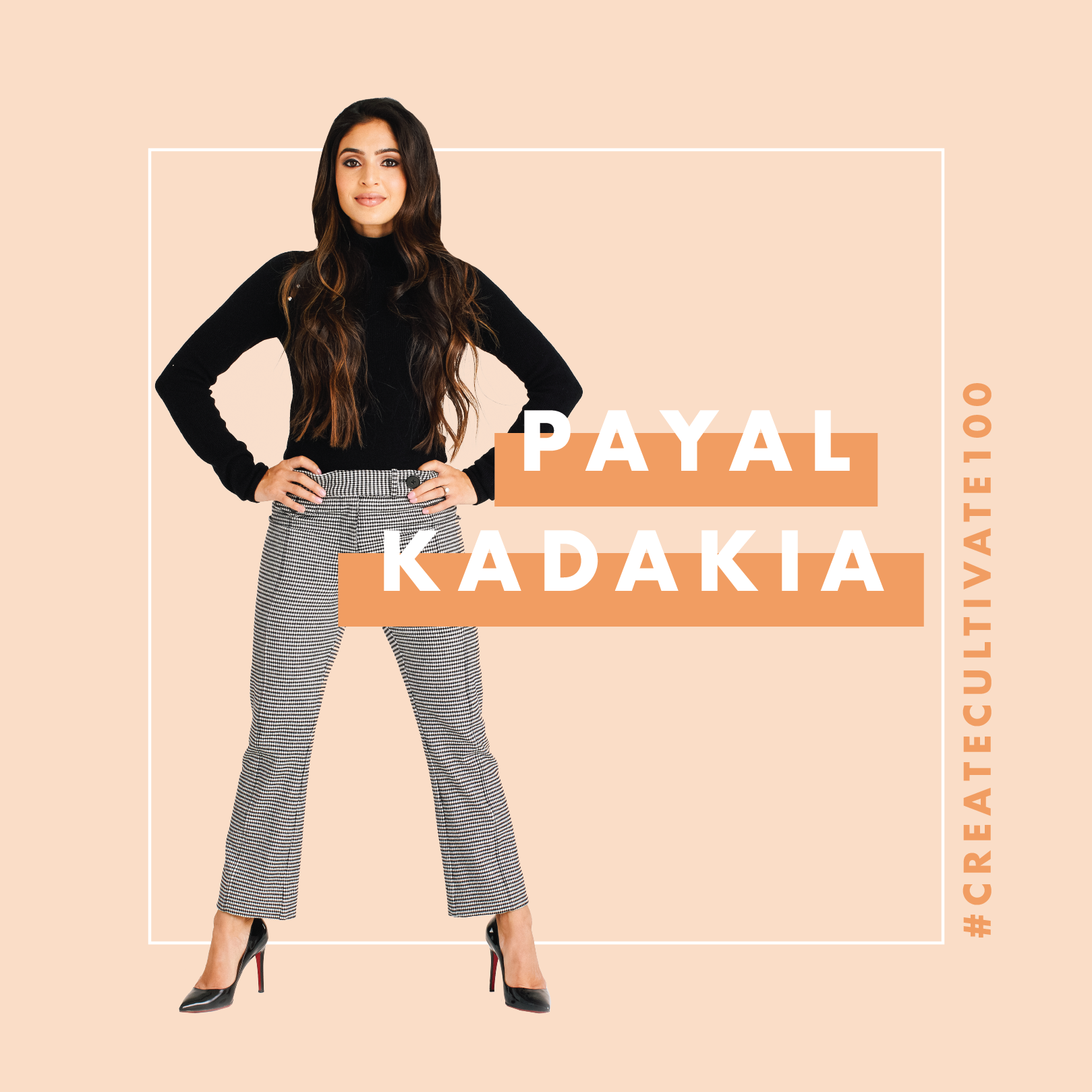
You went through a rebrand in the early stages of starting your business and switched up the business model. Were you confident this was the right decision? How did you navigate any doubts you had?
I was always confident because I was mission-focused, not product-focused. I knew there had to be a way to fulfill our mission of reconnecting people with their passions, so I was willing to keep iterating on our product and business model until we found the right approach. To this day, iteration and a constant quest for even more ways to accomplish our mission remain core to our company’s DNA.
How has fitness and staying active made an impact on your life?
In more ways than I can possibly calculate -- fitness has made me who I am, and it quite literally paved the path for me to found ClassPass! The same way you need to challenge your mind, you have to challenge your body to continue to let yourself know you can achieve anything you put your mind to.
Who was the first person you hired for your business, and how much of a difference did it make?
Soon after I got the idea for ClassPass, I bought a URL, bounced the idea off of friends, secured an angel investment, and was joined by my childhood friend Sanjiv Sanghavi. These early decisions were crucial, especially the decisions that led me to exactly the right angel investor (my mentor Anjula Acharia) and the right co-founder. Early on when your business is little more than an idea, it’s crucial to be joined on that journey with people you trust, with whom you can work well under pressure, and who share your vision.
What are the common challenges you've seen among female business owners and entrepreneurs?
I’d love to see more successful female role models. If more women see other successful women accomplishing their dreams, they’ll dare to aspire to reach their dreams as well.

When you hit a bump or hurdle in your career, how do you find a new road + switch gears to find success?
I don’t fit well in a box, and I’ve often found that I need to question professional norms, such as titles and other artificial notions of prestige, in order to determine what’s best for me. When I reach a hurdle I’m not sure how to cross, I enlist the advice of my trusted mentors, but ultimately I also trust my instincts.
What’s the best piece of #realtalk advice you’ve ever received?
Early on, when I was just getting started, my mentor and angel investor Anjula Acharia told me that if I wanted to make ClassPass work, I had to quit my job. Building your dream can’t be a part-time endeavor; you have to pursue it with everything you’ve got.
What are two qualities you think every entrepreneur needs in order to be successful?
A purpose and a lot of persistence!
Who inspired you the most in your life growing up?
My mother! She approaches every challenge as an opportunity for growth. She’s strong and smart. She raised me to believe that women should reach for their dreams and that hard work pays off.
Whose career is inspiring you today?
My fellow female entrepreneurs, including Jessica Alba, Jenn Hyman, and Katrina Lake, among others. I hope this list just keeps getting longer and longer!
What are you most excited for in 2019?
ClassPass’ international expansion and continuing to perform!
Photography by Annie McElwain Photography
Photoshoot skincare provided by Dermalogica
VIEW THE FULL CREATE & CULTIVATE 100 ENTREPRENEUR LIST HERE.


Create & Cultivate 100: Art & Design: Shantell Martin
It’s easy to be unoriginal in a time where Instagram seems to dictate beauty standards and plagiarism is just one copy-paste away. That’s why Shantell Martin’s art so special.


It’s easier to be unoriginal in a globalized culture, where Instagram seemingly dictates beauty standards and plagiarism is just one copy-paste away.
That’s why Shantell Martin’s art so special. She is a cultural facilitator, forging new connections between fine art, education, design, philosophy and technology. The British-born, New York-based artist is most recognized by her signature stream-of-consciousness physical drawings, which are conceived through her meditative process and uninhibited flow. She’s experimented with textiles, ceramics, circuitry, and embroidery, but her drawings and light projections are what has fueled her rapid ascent into mainstream design. The artist has collaborated with iconic brands like Nike, Vitra, Max Mara, Tiffany & Co., and in 2018, Puma launched a global capsule collection featuring her drawings.
Her work architects a fantastical world wherein the viewer is an essential element. Her love language is a line—where it forms, how it contorts, and how it travels remain undetermined until pen meets paper. Editors at Vogue and New York Magazine have caught the Shantell Martin bug, as well as Kendrick Lamar, who collaborated with the artist on a performance at Art Basel a few years back.
She’s a self-assured “cool girl” with a once-in-a-generation talent, and if there’s one thing we’re sure of, it’s that you’ll be seeing much more Shantell Martin in 2019.
You often do “live art” performances. Tell us a bit about that process and why you think it’s captured the attention of so many people.
Creating in front of an audience has become a fundamental part of my process. I think it is important for artists to share their process with their audience, in a way it demystifies and yet unifies the bond between the work and the audience. This creates more of a personal relationship with the work. As an artist it keeps me very present, there is no place to hide or hesitate and that creates an honesty that the work is then imbued with. I think it’s this honesty that really cements the relationship my audience has with me and the work.
Where does your passion/drive come from?
I can’t really say. It’s a part of who I am.
When you lived in Japan, you drew in a small sketchbook—but in the US, you’re afforded the space to do larger installations. What are some pros and cons of each type of work?
It’s interesting, someone recently said to me that my work has had different line-width periods. This has happened quite naturally without any forethought. I look at my projects as opportunities to evolve as both an artist and a person, the line is a reflection of this growth but also it is a reflection of the space I’m working within and how I am able to use the right tools to create in each unique space.
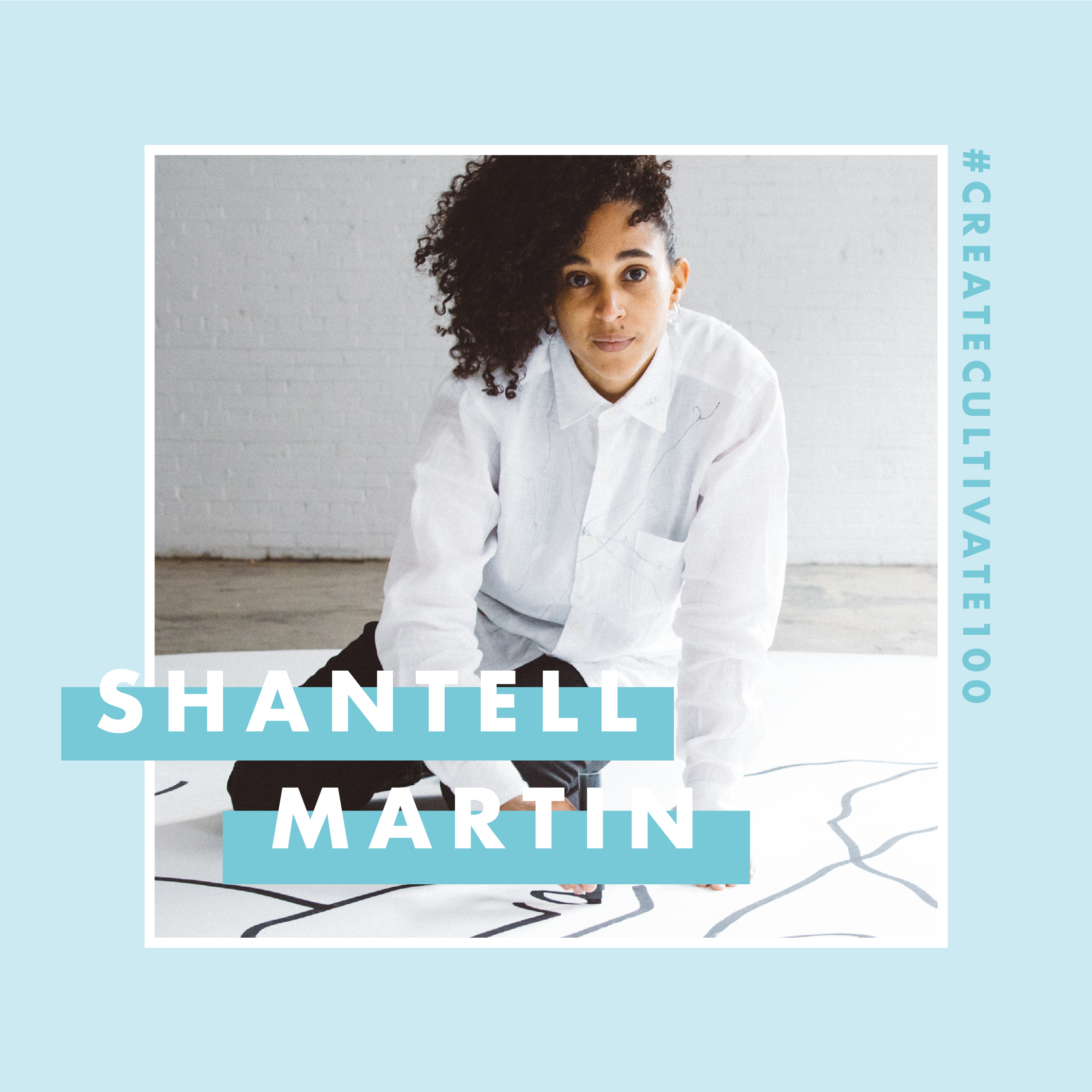
You’ve spoken about how you don’t always know what you’re doing with a drawing, but you come to it with a good intention to make it work. How do you think that theory of thought applies to life, too?
I think it comes back to that point of honesty. Intention is a very powerful aspect of existence. Essentially, and I think many people whether “artists” or not, can relate to being fueled by a purpose or the search for purpose. This purpose is like the internal line which for me becomes something external with the lines of my art. I have a purpose which is very much tied to exploring the essence of humanity and the world… it comes from a place of pure curiosity and empathy and I feel that intention to connect with the deepest part of myself and YOU is a universal feeling.
What’s been the biggest surprise or highlight of your career to date?
I’m still surprised that I get to make my art for a living.
You’ve collaborated with mega brands like Puma and Tiffany & Co. What’s a company you’d love to work with in the future and why?
NASA - it’s been a dream since I was a child. I mean I’d love to see my lines out in space! Also HERMES they’ve been supporting artists for years and I greatly admire the craftsmanship and integrity of their work.
What about your job makes you feel the most fulfilled?
I love seeing the smiles on peoples faces when they see my work. That’s really special. I also love collaborating and exploring other creative spaces with other people who are masters in their fields.
In a world where likes and follower counts are so coveted, how do you stay authentic and true to yourself/your brand?
Keep it simple, be honest. Be YOU.
When you hit a bump or hurdle in your career, how do you find new roads + switch gears to find success?
I keep drawing. I keep working. Staying committed to the work and faithful to the practice is something very important to me. Also, I still practice going out into the world and seeking a “no”. By that, I mean to say that I ask for things expecting to get rejected. I consciously practice becoming more comfortable with rejection, and when you do that you will see that you more often than not will get a “yes” and that it actually feels great to hear “no” which is a sign that you’re growing and aiming higher and higher.
What are you most excited for in 2019?
My collaboration with the New York City Ballet.
VIEW THE FULL CREATE & CULTIVATE 100 ART & DESIGN LIST HERE.


Create & Cultivate: Beauty: Rita Hazan
“There was no plan B. From the time I was 17, I knew this was what I wanted to do and I wasn't going to stop pushing and working for it until I did.”


Rita Hazan doesn’t have bad hair days. She’s also never taken a sick day or missed a day in her namesake salon.
She describes herself as “equal parts colorist, artist, and innovator,” and for good reason. The industry veteran is known for creating a product so genius, it’s hard to imagine life before it: root concealer. As an expert colorist entrusted by the likes of Beyonce, Katy Perry, J-Lo, and Jessica Simpson, Rita is familiar with the agony of visible roots between salon visits. Enter her root concealer—AKA the easy-to-use solution to your root woes (you can thank us later).
The hair guru first made her mark on the industry in the 90s, establishing herself as an authority on colors and trends amidst a male-dominated beauty field (queue eye rolls at the patriarchy). Her first major client was Mariah Carey, everyone’s favorite songstress, diva, and MTV Cribs subject. Word of mouth travels fast: If you’re Mariah’s go-to, you must have some sort of special sauce.
Fast forward to 2018, and Hazan is still on her hair hustle, but with widespread brand recognition. Between her innovative products, A-list client roster, and illustrious 5th Avenue salon, consider Rita Hazan one of your hair fairy godmothers and always take her advice.
Your client roster includes the likes of Beyoncé, Jennifer Lopez, and Madonna. Tell us a little about your journey in the beauty industry. What was your big break?
I was an assistant at Oribe for around 6 years, then I got a promotion to colorist. At the time, my work was a little different from everyone else’s and it caught the eye of one of my stylist friends that happened to be working with Mariah Carey. It was 1997; Mariah had gotten a divorce and was putting out a new album; she needed a new look. My friend referred me to work with her on her new image and the rest was history. Anyone looking for a new look after that would call me.
How do you build trust with such high-profile clients?
First, you have to have confidence and know your craft; you need skills and a vision, which takes time. You must be able to deliver a look that works on stage or in print and also in everyday life. It's important to be precise, and execute what you say you’re going to do. Consistency is key. Another tenet that I’ve always lived by is to be discrete. Discretion is very important, when I work, I say I am deaf and mute; I hear nothing and say nothing.
What’s your number-one essential to keeping color looking healthy?
Well, it has to actually be healthy—looking healthy is not enough. It can look healthy with a simple blow dry. You must know how to use hair color in a responsible way. I know how to manipulate colors and products to give me the result I want. It's taken years of learning, trial and error, to fully understand my craft. I also do tons of research before I do any product in my own line and before every job I get, even today.
What advice would you give to young aspiring colorists?
LEARN. You can’t learn anything about color in one year. It takes years of studying and practicing. You can't learn a vocation like this by watching videos on YouTube or Instagram; it's not real. Everyone has to develop their own style. It seems to me that everyone is doing the same thing these days. You need to get out there, assist, get your hands dirty, and be creative. That's the only way to develop and grow your own color aesthetics, but to do that, you need to be skilled. A lot of people don't realize that hair color is chemicals—it’s chemistry.
What other women in your industry do you admire? Why?
When I was starting out, there were not many women doing what I wanted to do, if any. It was an industry of men. I was one of the first female colorists to open my own salon and to have a product line. I see so many talented women doing it today and it makes me happy because as women, we know our hair, the emotion, and reality that comes with it. When I see women like Marie Robinson, Tracey Cunningham, Riawna Capri, and Nikki Lee doing their thing, it makes me so proud.
“It’s important to be precise, and execute what you say you’re going to do. Consistency is key. ”
What’s been the biggest surprise or highlight of your career to date?
It has to be creating an entire new category in color care: my root concealer. There was no product like it on the market for covering gray roots before mine. Now, of course, several big companies have copied my idea (within an inch of my patent). It's both immensely flattering and annoying at the same time.
If you weren’t a colorist, what career path would you choose and why?
There was no plan B. From the time I was 17, I knew this was what I wanted to do and I wasn't going to stop pushing and working for it until I did.
Where does your passion and drive come from?
Honestly, I’m not sure. I think it comes from my soul. I think I was born this way. I was raised with a really strong work ethic. I’ve never called out sick a day in my life, cancelled a job or day in the salon. I know it’s not normal, but that’s just me.
When you hit a bump or hurdle in your career, how do you find new roads + switch gears to find success?
It happens to everyone! In this social media-driven era, it can look like everyone's life is perfect, but really it’s just a highlight reel. My advice is to never look at what other people are doing. It’s not your path and it's not your vision. Most people never understand my vision until it's done or in progress. My journey is at my own pace. I don't feel the need to be in the same gear as others; when I need time, I take it. I pause, I breathe, I obsess a little and then I take a break. I listen to my soul and then the answer always hits me—I trust my gut!
What are you most excited for in 2019?
I’m working on a new line of styling products for color-treated hair. It’s an innovative way to use ingredients that are protective & nourishing for color-treated hair but are effective at styling. The development process is always a really exciting time; picking colors, designing packing, finding fragrances and testing, testing, testing! I love all that stuff. If I’m putting my name on something it has to work and be the best!
VIEW THE FULL CREATE & CULTIVATE 100 BEAUTY LIST HERE.


Create & Cultivate 100: Food: Amirah Kassem
Amirah Kassem’s personal brand is all about sparkles, smiles, serious business and psychedelic baked goods.


Amirah Kassem’s personal brand is all about sparkles and smiles—but also serious business and psychedelic baked goods. Her bakery, The Flour Shop, has developed a cult-like following since it first opened its doors in SoHo in 2012. Amirah’s creations are out-of-this-world and one-of-a-kind, but don’t take it from us—you’ve probably seen her Insta-famous rainbow cake, which always contains a different sort of candy explosion. This cake, inspired by pinatas, is the perfect analogy for Amirah: it’s multidimensional, playful, and full of sprinkles.
Over the past six years, the entrepreneur has harnessed her contagious energy and love of the color wheel to grow The Flour Shop into a multi-million dollar business. Her business is such a clear product of her personality, and that passion has a distinct DNA—one that plays with nostalgia, loudness, fun, and sugar. So much so that she colloquially refers to her team as the “Sprinkle Squad.” From her early days as an Easy Bake Oven connoisseur, all the way to 2018, Amirah is living proof that you can build a business on fun and flour.
What inspired Flour Shop and how did its branding come about?
Growing up in Mexico and baking with my mom was pretty much where it all started, drawing inspiration from my colorful culture and childhood imagination!
Your cakes are all over social media. What inspired you to create the rainbow cake?
Pinatas! I love birthdays so I decided to combine all of my favorites, cake, rainbows, sprinkles and pinatas!!!!
If you could have a meal with someone, living or deceased, who would it be and why? What would you eat?
Willy Wonka! We would meet at his place and eat wallpaper!
What do you crave in life?
Pizza!
What about your job makes you feel the most fulfilled?
Spreading Joy! One sprinkle at a time.
What’s the best piece of advice you’ve ever been given?
NEVER GROW UP. - Peter Pan
What’s been the biggest surprise or highlight of your career to date?
You’ll find out in April when my book comes out!
Where does your passion/drive come from?
EXCITEMENT! As long as you're excited about something passion and drive will follow
What keeps you up at night?
Tomorrow’s ideas!
Whose career really inspires you?
Rachael Ray
What has been your biggest opportunity or biggest challenge as a woman in the food industry?
My upcoming collection with Williams-Sonoma! It’s so magical and I can’t wait to share it with the world!
Be yourself—there’s only one of you! Don’t look at what others are doing!
The pastry industry is huge. How does Flour Shop constantly stay fresh and relevant?
Easy: Be yourself—there’s only one of you! Don’t look at what others are doing!
When you hit a bump or hurdle in your career, how do you find a new road + switch gears to find success?
Expansion can be difficult, but learning to grow through a magical team was key! Spending a good amount of time teaching and training your team is more important that just filling roles.
What are you toasting to in 2019? What are you most excited for?
More Flour Shop locations, my first book, and my collection with Williams-Sonoma!
