
The Best Money Advice From the Founders of ClassPass, Birchbox, Drybar, and More at the U.S. Bank Women and Wealth Summit
“Know it, manage it, don’t fear it, and don’t let it control you either.”

On Thursday, October 8th, we tapped industry-disrupting entrepreneurs and experts for the private U.S. Bank Women and Wealth Summit, a virtual event exclusive to U.S. Bank clients. Inspired by the recently released U.S. Bank Women and Wealth Insights Study, it’s safe to say we didn't hold back on discussing all the important topics around women and wealth, from exploring how women are making their mark on communities through philanthropic giving to diving into the systems that cause the gender wealth gap and how to dismantle them.
The afternoon of thought-provoking conversations was led by noteworthy female founders including Payal Kadakia, the founder and executive chairman of ClassPass; Katia Beauchamp, the co-founder and CEO of Birchbox; Alli Webb, the co-founder of Drybar and Squeeze, and more. Then, Gunjan Kedia, Vice Chair of Wealth Management and Investment Services at U.S. Bank took to the virtual stage with Jaclyn Johnson, founder and CEO of Create & Cultivate to share her story of immigrating to the U.S. to become one of America's Most Powerful Women in Finance, with her division responsible for more than $7 trillion in assets under management or administration.
Although the event was exclusive to the U.S. Bank audience, don't worry, we wrote down all the most quotable moments for you! Read on for the highlights.
Fireside Chat With U.S. Bank's Gunjan Kedia, Vice Chair of Wealth Management and Investment Services

Panelist:
Gunjan Kedia | Vice Chair of Wealth Management and Investment Services, U.S. Bank
Moderator:
Jaclyn Johnson | CEO & Founder, Create & Cultivate
On being a leader…
“Leadership is fundamentally about everyone but you.”
“I very humbly believe that your title comes with your career, but leadership comes with your point of view.”
On entering a successful company in a high-powered role…
“First, seek to understand, then seek to change.”
On being empowered by your finances...
“Being on top of your money affairs is so empowering. It gives you so much confidence that it’s worth investing in.”
On paying it forward by working in the finance industry…
“It is hugely satisfying personally to see someone smile a little bit because you helped them through a difficult decision.”
On managing your money…
“I’m not going to make you believe it’s the most fun thing you do, but I want you to believe it’s not optional.”
On saving, saving, saving…
“‘I save first, and I spend second’ is a mindset that’s very important.”
On getting started…
“You have to invest in educating yourself.”
“Don’t fear making terrible decisions. Just don’t make huge terrible decisions.”
“Think about what $5 a day does for you 30 years from now if invested wisely.”
On making smart money moves during COVID...
“Right now, interest rates have come down very dramatically so if you have debt you should look at it and see if you can restructure it.”
On maintaining your income…
“Income continuity is very important to building wealth.”
On cultivating a healthy mindset around money…
“Money is a way to achieve what you want to do with your life.”
“Know it, manage it, don’t fear it, and don’t let it control you either.”
On switching industries to spend more time with her family…
“If anyone thinks that motherhood doesn’t disrupt a career, I’d have to respectfully disagree.”
On giving advice to working moms…
“Don’t give up, stay in the game.”
“Life works out, but you never plan it.”
Keynote Conversation With Actor and Entrepreneur Tracee Ellis Ross

Panelist: Tracee Ellis Ross | Actress, CEO, and Executive Producer
Moderator: Jaclyn Johnson, Founder and CEO, Create & Cultivate
On becoming an actor..
“Acting gave me access to everything about myself—everything was at play in the world of acting and I felt completely alive and could use all aspects of myself.”
On how the industry has changed…
“There are so many different ways to discover talent, and to have your gift and talent be seen.”
“There is a democracy in the industry now, that people are able to not just be one thing.”
On aging in Hollywood…
“I have always wanted to get older. I am always excited about birthdays. You get wiser, more comfortable in your skin. I am grateful at this age to be able to have at my fingertips what I have at my fingertips because I know what it means to me and what I want to do with it.”
On starting her business, Pattern Beauty…
“It is a task and a half to be a founder and CEO of a company. A successful company is not based on good intentions or even good ideas, it has to be combined with a really good operational process and strategy.”
“I retain majority ownership, I have full creative control, it is my brand, it is my idea and that means I get to run it the way I want.”
“I believe in shared power. I believe in a table filled with voices, I believe in people bringing their whole selves to work.”
“I believe in a business that doesn’t just make money but also gives back to the community.”
On confidence around money…
“I have always been an outspoken individual but I did not know how to negotiate on my behalf and I did not know how to talk about money.”
“Culturally, women are not taught to talk about money. We have been taught that women are not meant to take up space and not rock the boat. We have also been siloed off from each other particularly as Black and Brown people so we don’t share information with each other and you always think you are alone. And when you think you are alone, it is very scary to show up for yourself because you don’t know; you have nothing to compare it to.”
“Don’t be afraid to ask for support and ask for help. You can be transparent. If you go somewhere to ask for support and they make you feel wobbly, try somebody else.”
“I believe in people being paid fairly and equally for the jobs that they do.”
“I strongly believe in women and WOC fighting for equity—for having a stake in what they create.”
On sharing the table with other women…
“My confidence has come from the collective energy of other women. They have taught me how to navigate my life—not on my own as this siloed individual, but with this collective spirit and information of all of us.”
“You want to have people in your circle who are steps ahead of you and steps behind you.”
On advice she’d give her younger self…
“Things take longer than you think they are going to take.”
“Trust the process.”
“The questions are more important than the answers but there is such a sense of fulfillment when you stop looking for that answer and it just appears on your plate.”
Investing With the Heart: Building Thriving Communities by Combining Social Responsibility With Charitable Giving

Panelists:
Ruby Pediangco | Senior Philanthropic Advisor, U.S. Bank Private Wealth Management
Arian Simone | General Partner & Co-Founder, Fearless Fund
Shiza Shahid | Co-Founder, Our Place
Rebecca Minkoff | Co-Founder & Creative Director, Rebecca Minkoff, and Co-Founder, The Female Founder Collective
Moderator:
Sacha Strebe | Editorial Director, Create & Cultivate
On being a woman and a philanthropist…
“We are nurturers. We are givers. We multiply anything that is given to a woman.” - Arian Simone
“It’s no longer a luncheon activity. It is an activity of smart women who want to maximize their capital and do good at the same time.” - Rebecca Minkoff
On being inspired by your upbringing…
“My parents instilled in me the concept of sadaqah jariyah, which is this idea that you should do something in your life that will live long after you’re gone.” - Shiza Shahid
“I’ve learned from my work what happens when you help a woman earn a dollar: She invests 80-90% back for her family and her community. It is typically 30-40% for men.” - Shiza Shahid
On finding new solutions to old problems...
“Anything that puts you out of the status quo gives you a deeper perspective and allows you to be far more creative in solving challenging issues.” - Shiza Shahid
On using life experiences to inspire giving back …
“Working at a nonprofit is very close to my heart, however, I believe that if we’re to solve the most pressing challenges, we need businesses to step up.” - Shiza Shahid
On providing education, access, and connection to the female founder community…
“I was tired of seeing the same few women being asked to speak on panels and then being asked, ‘What's it like to be a female founder?” as if we were polar bears.” - Rebecca Minkoff
“Founders teach founders best. We've been through it.” - Rebecca Minkoff
On influencing positive change in our communities…
“I'm the answer to my problem.” - Arian Simone
“Black women are the most founded, yet the least funded.” - Arian Simone
“We are the first Women of Color fund that is built by us, for us.” - Arian Simone
On investing your wealth into your personal values, ideas, and perspectives…
“It's very rare that I've invested in anything that's been owned and operated by a man because I am putting my money where my mouth is.” - Rebecca Minkoff
“Take the time to do some self-reflection and think, ‘Why am I passionate about education for children?,’ ‘Who influenced me?’ Once you do that reflection, you begin to have a story to tell and it ignites a fire.” - Ruby Pediangco
“It's that laser focus on what's important that really has flourished all of their endeavors.” - Ruby Pediangco
On finding mentors and providing advice to others…
“It's one thing to give somebody capital. It's another thing to equip them with the skills in order to put that capital to work.” - Arian Simone
“Rather than putting it into Google, you are able to talk to another woman and say, ‘Hey, how did you do this?’ and it doesn’t mean it’s high-to-low, it’s side-by-side.” - Rebecca Minkoff
On ensuring your values align with your philanthropic efforts…
“Take a sheet of paper, draw a line down in the center, and think of three things that are important to you other than your family. And on the other side, think of charities that you have given to or wherever you’ve invested your money to. Look at that sheet to see if there is alignment between the two.” - Ruby Pediangco
On encouraging more women entrepreneurs to consider philanthropy…
“It’s absolutely fine if you can’t give today. You can give in the future.” - Ruby Pediangco
On creating connection, impact, and community…
“Women of Color, by nature, bring to the table an element of social impact. By nature, that is just what is happening.” - Arian Simone
On making charitable giving an active part of one’s life…
“I’m not just handing over my money. I am handing over my time.” - Rebecca Minkoff
On finding a thoughtful approach to help build thriving communities…
“There is no trade-off between deep ambition and trying to do the right thing. It’s more and more complimentary.” - Shiza Shahid
“What we have to do, in this moment, is think hard about what we stand for and then be consistent in it. Not just when it’s fashionable.” - Shiza Shahid
“Speak with someone older than you to inform your perspective.” - Ruby Pediangco
Closing the Gender Wealth Gap: A Conversation About the Multibillion-Dollar Disparity

Panelists:
Divya Gugnani | Co-Founder & CEO, Wander Beauty
Katia Beauchamp | Co-Founder & CEO, Birchbox
Alli Webb | Co-Founder, Drybar & Squeeze
Lindsey Boyd | Co-Founder, The Laundress
Moderator:
Beth Lawlor | President of Private Wealth Management, U.S. Bank
On experiencing the gender gap early on…
“The minute I got out of college, I told myself, ‘I don’t want to be financially dependent on anyone but myself.’” - Divya Gugnani
“Early in my career, I was really naive about the gender gap. In my mind, as a young person just starting a career, I thought, ‘But we’re doing the work, we’re closing the gap.’”- Katia Beauchamp
“I wanted to learn and earn that right [of having a voice in the room].” - Katia Beauchamp
On starting a business despite challenges...
“I surrounded myself with people who are smarter in ways I’m not and can help bridge that gap for me.” - Alli Webb
“You have to follow what you’re excited about doing.” - Alli Webb
On finding the right market to thrive in...
“There was a major void in the market for proper cleaning products seventeen years ago.” - Lindsey Boyd
“I was excited about getting out of the house, getting away from my kids, and doing something for me, which turned into, ‘Oh my god, there is a massive hole in the marketplace,’ and, ‘Why isn't anyone doing that?’” - Alli Webb
On raising money and learning about finances through experience...
“We called on people that we knew and believed in us.” - Lindsey Boyd
On investing in female-founded companies…
“We really have to change the entire ecosystem.” - Divya Gugnani
On empowering your employees…
“Allow people to do what they're passionate about within your organization.” - Lindsey Boyd
On simultaneously being an empowered mother and successful entrepreneur…
“Entrepreneurship prepared me to be a stronger mother and motherhood gave me a perspective that is so needed and useful as an entrepreneur.” - Katia Beauchamp
On working hard to create sustainable growth…
“I was always the person that was working a bit too hard and everyone was like, ‘You’re making us all look bad.’ I expected that from everyone else around me.” -Alli Webb
“A good seven, eight years I worked like a dog. I loved it, but I was exhausted.” - Alli Webb
On empowering other women to overcome financial obstacles…
“We had interns that are now in VP positions.” - Lindsey Boyd
“We’ve done classes for our employees to give them the ability to do more than what they went to school for or what they thought they were able to do.” - Lindsey Boyd
“Get smart [about money] and share it with everyone.” - Divya Gugnani
On taking control over your financial future…
“It’s about figuring out how to be financially fluent and become financially literate.” -Divya Gugnani
“We shouldn't be ashamed of what money can do.” Katia Beauchamp
On having money conversations openly...
“Make it an okay thing to talk about at a girl’s dinner.” - Divya Gugnani
“Socializing the conversation around investment needs to happen!” - Divya Gugnani
On being and finding a mentor…
“[Mentorship] is going the change the landscape on every level.” - Lindsey Boyd
“Men help each other and have each other’s backs, and it’s with money.” - Katia Beauchamp
On being money-savvy in male-dominated spaces…
“Come to the table as strong as a man.” - Alli Webb
“We need to see more female investors writing checks.” - Divya Gugnani
“Always come prepared for any review or employee conversation.” - Lindsey Boyd
The Future Is Female: A Conversation on Building Generational Wealth for Women
Panelists:
Jesse Draper | Founding Partner, Halogen
Sarah Kunst | Managing Director, Cleo Capital
Payal Kadakia | Founder & Executive Chairman, ClassPass
Moderator:
Jaclyn Johnson | Founder & CEO, Create & Cultivate
On empowering women to invest with confidence…
“We need more women creating billion-dollar businesses, then investing back into the ecosystem.” - Jesse Draper
On being an angel investor…
“If you can buy a Birken, you can angel invest.” - Sarah Kunst
On taking ownership of your finances...
“Don’t think you can be smarter than the market.” - Sarah Kunst
“You should only invest in things you understand.” - Jesse Draper
“Money is not something that limits you, but energizes you.” - Payal Kadakia
On bridging the generational wealth gap…
“Investing in women solves all of our problems.” - Jesse Draper
“It’s my job to carry the torch forward to help other women succeed as well.” - Payal Kadakia
“The biggest thing I want to be able to invest in is people and to create wealth for other people.” - Payal Kadakia
On finding female founders to invest in…
“You already have a network and you already know who you want to invest in. I promise you do.” - Sarah Kunst
“I literally just slide into their DMs, and I say, ‘I really want to learn more about your business.’” - Sarah Kunst
On taking risks with money…
“It’s about making those trade-offs about what matters and what doesn’t.” - Payal Kadakia
“Women assess risk at a completely different level from men, so you are already derisking your investments, I assure you.” - Jesse Draper
On working toward financial freedom…
“My thought is always, ‘How do I make more money?’ Not, ‘How do I ask someone to give me more money?’” - Sarah Kunst
On creating wealth that improves the lives of future generations...
“There are organizations like the Los Angeles Ballet that wouldn't exist without female philanthropists at all, so I see that as a major component of what I do: Give back to my culture and performing arts.” - Payal Kadakia
“Invest in stuff you can’t afford to not see in this world.” - Sarah Kunst
On growing with the market…
“Your goal is just to keep money in the market and grow as the world generally grows.” - Sarah Kunst
On learning from the mistakes of others…
“I started studying the Vanderbilt House, they were one of the first formative families in America, and they lost all their money. They tried to hold on to it, and that is a risk.” - Jesse Draper
On building wealth with purpose…
“My main conclusion is that it is a lot harder to oppress people with money.” - Sarah Kunst
MORE ON THE BLOG





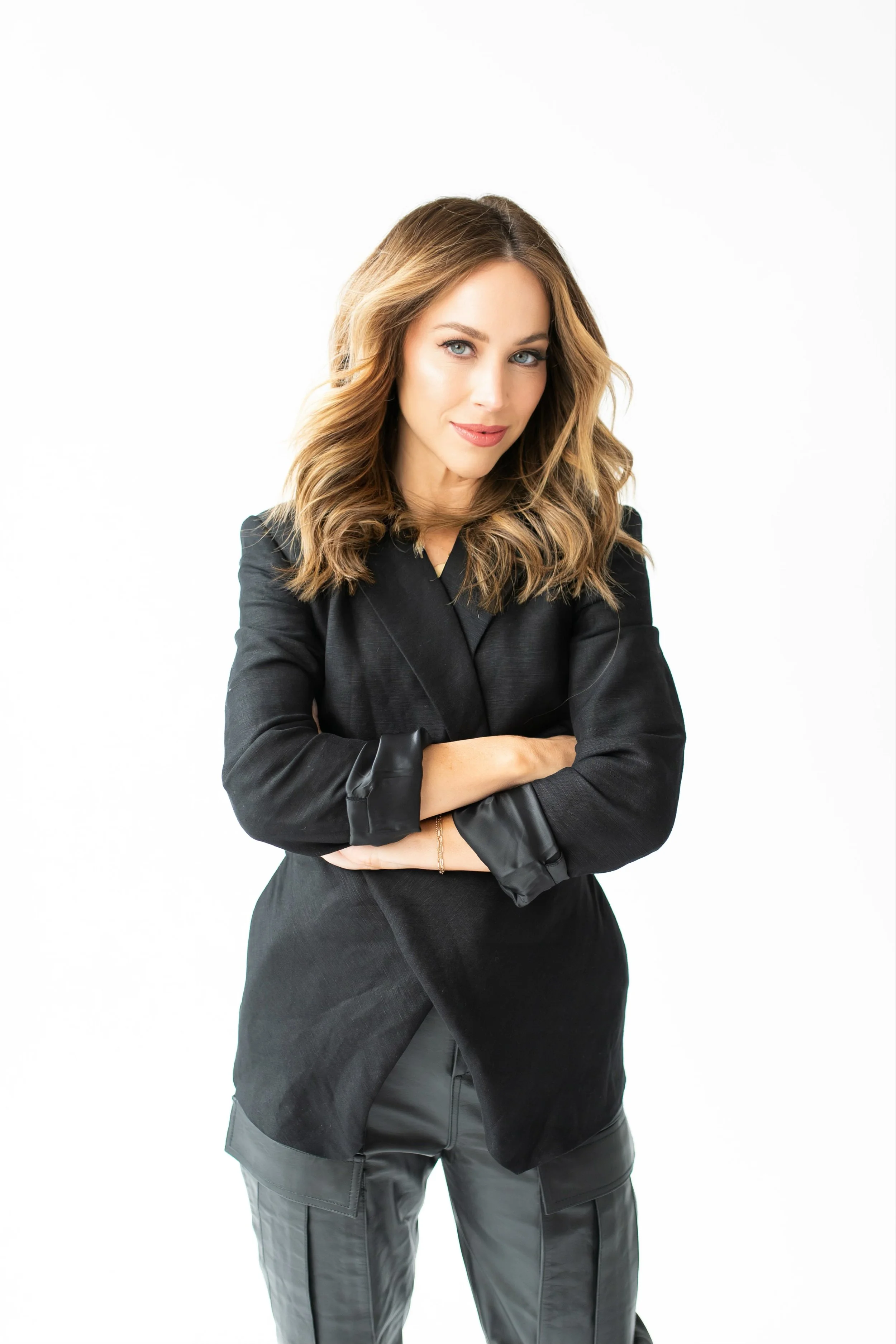

"Treat Every Dollar Like It's Your Last": How My Hispanic Heritage Helped Me Bootstrap and Self-Fund My Business
In this op-ed, Stephanie Montes shares how her upbringing influenced her approach to saving, and starting a company.
Written by Stephanie Montes, Founder and CEO, Nue

When it comes to my finances, I've always been a perpetual saver. Since my first job (as a sales associate at the mall), I started putting money aside. I didn't have a specific goal in mind for my savings, but when it came time to start my brand, I knew just where to turn for funding.
I have this little trick I use to keep myself in line: I keep only what I need and am willing to spend in my checking account and squirrel away everything else in my savings. Of course, when emergencies arise, I transfer funds as needed, but for the most part, that savings account remains as untouched as possible. The illusion of a small dollar amount in my checking account makes me think twice about spending—it actually tricks me into thinking I have less money than I really do.
While I credit my growing savings to this tried-and-true method, I believe I ultimately owe my money-saving ways to my mom. She made a comfortable salary at a job she's held since before I was born but never lived beyond her means. While she and my dad put my two siblings and me through private school until senior year, we lived a fairly frugal lifestyle. We rarely ate out, especially if there was food to be made at home, and we never wore name-brand clothing.

I don't know if it's generally something all first- and second-generation immigrant families experience, but many of my Hispanic friends grew up the same way too. They ate dinners according to a schedule, usually repeat meals that could feed the entire family affordably. (And everyone knew you ate what mom made, whether you liked it or not.) They wore hand-me-downs from older siblings and cousins, none of which were expensive, and those were then passed down to younger relatives.
My mom even drove a beater car when I was in middle school and only upgraded when she absolutely had to—again, not because she couldn't afford it, but because she strongly believed her money was better in the bank. When I asked her why she chose to live so modestly, she told me she believes it came from her own upbringing. With nine siblings (the average size of Hispanic families from her generation) and a widowed mother, she and her brothers and sisters all began working young. At 16, she was finally able to buy her own school clothes and save her money to buy a car one day, but more importantly, she learned the value at an early age. It clearly stuck, not just with her, but with me too.
I'm a 30-year-old woman, and I still hear my mom's voice in the back of my mind asking, "do you really need that?" when considering a big purchase. And while sometimes I want to splurge on an expensive bag without feeling guilty, I'm glad I've inherited this desire to save.

When it came time to fund my brand Nue, I had a healthy amount sitting in my savings account. I wrote Nue Inc. a $10,000 check to get it off the ground debt-free and without outside investment to dilute my stock. The teller practically had to pry it out of my hands, because like with any investment, this was a major gamble, but I slept a lot better at night knowing that I wasn't up against interest rates or, worse, risking the hard-earned money of a friend or family member. When it was all said and done, though, it felt so damn good to say that I was able to do it on my own!
The money went quickly. I spent my initial investment on filings (like trademarks and corporation registrations), product, packaging, web design, graphic work, and Nue's first photoshoot. All along the way, I treated it with the same caution as I do in my personal accounts. I splurged where it was important and penny-pinched when necessary. For example, Nue's packaging is a bit more expensive because it boasts a soft texture on the outside that feels silky to the touch. This was important because it helps give the product a luxury feel, exactly the vibe I wanted to convey from the very beginning. On the other hand, I knew I couldn't afford to launch with additional shades and product offerings. Since manufacturers have such high minimum order requirements, I had no choice but to scale back my original plan to launch with five skin tones and settle for three instead. The truth is, this is the smarter route anyway. As the demand grows, so will the shade and product offerings.
“When it was all said and done though, it felt so damn good to say that I was able to do it on my own! ”
As Nue has gained traction in the last nine months, profits are again, cautiously reinvested into the company. While I initially couldn't afford PR, growing sales have provided a bit of a budget to hire the help of an agency in Q3. I've also made multiple reorders of products to keep our shelves stocked, all at the company's expense and not my own.
I've heard from fellow founders that product-based businesses are a money suck and constantly required further investment. So far, my philosophy of treating every dollar like it's your last is proving to be successful. Think twice about where you spend it, be frugal, know your budget, and don't live beyond your means.
LOVE THIS STORY? PIN IT!

MORE FROM THE BLOG


Cyber Attacks Cost Small Businesses an Average of $200,000—Here's How to Avoid Them
We’ve got you covered.


Even before COVID hit, small businesses were prime targets of costly cyber attacks. On average, cyber attacks cost small businesses as much as $200,000 in 2019. By the numbers, 28% of small businesses experienced a data breach within the last 12 months, of which 37% suffered a financial loss, 25% filed for bankruptcy, and 10% went out of business. Now, as small businesses rapidly shift their brick-and-mortar shops online to accommodate consumers’ accelerated adoption of e-commerce, they’re even more vulnerable to cyber threats.
To learn more about how small businesses can safely and successfully pivot to digital during COVID and beyond, Create & Cultivate partnered with Mastercard as the presenting sponsor to host an eye-opening cybersecurity workshop led by none other than Ginger Siegel, the North America Small Business Lead at Mastercard, at our recent Future of Work Summit. Below, we’re sharing some of the most valuable takeaways from the information-packed session. If you missed the workshop (or just want a quick refresher course!), scroll on—and be sure to grab a pen because you’re going to want to commit this info to memory!
The Trends Pushing Small Businesses to Go Digital
Trend #1: Contactless Payment
With social distancing evolving into a long-term norm, continued reliance on delivery, pick-up, and alternative points of sale will push small businesses to adopt more versatile payment methods, making the market for contactless payment methods such as tap on phone adoption, says Siegel.
“We already expected to see an increase in contactless spend, but COVID-19 has really accelerated this behavior and made consumer demand shift quicker than anticipated,” she explains. “46% of global consumers have swapped out their top-of-wallet card for one the provides contactless functionality, and about 74% of consumers said they will continue using contactless post-pandemic.”
Trend #2: E-Commerce
As consumers increasingly rely on e-commerce solutions, getting the basics of business operations online will be essential for small businesses’ survival, explains Siegel. According to Mastercard SpendingPulse, e-commerce in April and May made up 22% of all retail sales in the U.S., which is up from 11% in 2019.
Put another way? More money was spent online in the U.S. in the span of two months than the last 12 Cyber Mondays combined. If small businesses don’t keep pace, they may lose the opportunity to meet market demands in the future. “82% of small businesses have actually changed the way they send and receive payments and 51% have been transitioning their clients to digital methods,” notes Siegel.
Trend #3: Digital Services
While online card payments have seen an increase of 60% during the pandemic, the use of cash and checks has decreased by 34% and 24%, respectively, according to a recent survey conducted by Mastercard. “67% of small businesses said that one upside to the pandemic is that it prompted them to upgrade their digital payment solutions,” notes Siegel of the trend.
“Small businesses plan to stick with digital business payments, even as the pandemics subsides,” says Siegel, pointing to increased customer satisfaction as the driving factor behind the shift. About 70% of small businesses say that they're willing to invest in the technology required to advance their payment systems and 73% say digital payments are the new normal for their business going forward, she notes.
The Top Cyber Threats to Small Businesses
As small businesses rely on digital payments to serve their customers and digital means to communicate with employees, cyber threats are becoming more and more prevalent in the small biz community. 43% of cyberattacks are aimed at small businesses, but only 14% are prepared to defend themselves, according to Accenture.
Here are two common types of cyber threats to small businesses:
Threat #1: Ransomware
In this scenario, bad actors gain access to data from a small business and demand a ransom payment in order to return the stolen and now-encrypted data.
Threat #2: Compromised email
In this case, a bad actor gains access to a small business employee’s email account and sends an internal email impersonating the employee making an urgent request for funds to be transferred to them.
The Steps for Getting Started With Cybersecurity
If you don’t know where to start with cybersecurity, you’re not alone. According to Keeper Security, 60% of small business owners do not have a cyberattack prevention plan. “81% of small businesses tell us that they really wish that someone would proactively alert them to changes in the cybersecurity landscape and provide best practices for small business,” explains Siegel.
Which is why Mastercard is developing dedicated cybersecurity solutions and educational resources for small business owners through their Digital Doors center, a curated set of resources to help guide, grow, and protect small businesses during these difficult times as well as through recovery. For more information on navigating COVID-19 as a small business, head to Mastercard.com.

“
67% of small businesses said that one upside to the pandemic is that it prompted them to upgrade their digital payment solutions.”
—Ginger Siegel is the North America Small Business Lead at Mastercard
About the Expert: Ginger Siegel is the North America Small Business Lead at Mastercard. Most recently, she was a senior manager in the financial services group in Deloitte where she was a member of the highly ranked payments practice and also focused on fintech and bank partnerships, small business, and commercial banking opportunities in the areas of strategy development, process design, and operation model transformation. She brings 30 years of industry leadership experience as an executive at large multinational and regional banks in the areas of small business, business banking, and retail with a focus on strategy, leading execution, payments, treasury management, SalesForce optimization, branch optimization, and revenue growth.
MORE ON THE BLOG

My First 2 Businesses Failed—Here's How I Turned It Around
"There isn’t a single path to finding your way to success."

Photo: Courtesy of Jonne Amaya
Growing up, I was told that everything is possible. I remember having a conversation with my dad when I was about seven years old. He would ask me to name what I’d like to be when I grew up, and then he would respond with, “How is that a career option?” I told him that I loved plants, and he said, “You’ll own a winery.” When I was young, I was not attached to the idea of a college experience or a common career path. And since my parents encouraged me to follow my passion, I felt free to experiment and explore.
I became intrigued by jewelry when I was just eight years old. My mom would allow me to order pieces from the Jewelry Channel on TV and then return them after I saw the pieces in person. When I was ten, my parents got me a 0.05-carat diamond ring for Christmas. I was always obsessed with jewelry, but it became a career prospect when I started creating pieces myself at bench jewelry classes in Barcelona. Deep down, I always knew that I would have my own company at one point in my life.
I launched my first brand when I was twenty-one years old. It was a Renaissance-inspired, edgy jewelry line. I was working for a young L.A.-based jewelry designer at the time, and her marketing strategy was to take photos of local, It girls wearing her pieces. She was very successful, and I naively assumed that I could emulate this business model and achieve the same kind of success. But in eight months, I sold three pieces and received zero interest from stores or showrooms. I was so confused. I had cool designs, great imagery, and all the right assets.
I started my second company when I was twenty-five while working for Vrai & Oro (now known as Vrai). I was really impressed with their timeless design aesthetic, direct-to-consumer business model, and transparent pricing. I was convinced that the reason Walk the Chapel failed was due to my wholesale approach and the fact that the jewelry was not for “every day.” So this time, I went the D2C route and created modern, unisex pieces.
A year into this venture, I was still not finding success. I was really frustrated. Around this time, I started taking custom orders from clients. When I would pick up the finished pieces from my jewelers in Downtown L.A., I saw all of their other work: it was an endless stream of generic jewelry, largely “replicas” of other designers’ pieces, produced in mass.
When I saw the amount of production the other brands had in comparison to the single, custom-designed pieces I was making, I realized that I didn’t want to contribute to this waste. When I was just starting out in the industry, I equated huge wholesale orders with success. Now, I have started to see mass production as the problem.
Not only did the artistic process of jewelry design get lost through mass production, but it was also extremely unsustainable. I pivoted my brand strategy to demonstrate the value of repurposing and really dove deep into why it was important for consumers to change their buying behavior when it comes to jewelry.
When I found my purpose, that's when I started seeing my luck turn around. Sharing my message and brand became my main priority. I understand now that when starting a business, it’s important to create a foundation around a core vision and purpose. Once you establish that and remain consistent, it all lines up from there.
When I was younger, I undervalued the message behind my brand and overvalued the product itself. I see a lot of start-ups making the same mistakes, and they’re missing the most important part of the puzzle. It’s very clear to me now that there isn’t a single path to finding your way to success. Now, I mainly focus on getting my message heard by the right consumers who share my values.

“When I found my purpose, that's when I started seeing my luck turn around.”
—Jonne Amaya, Fine Jeweler and Founder of Jonne
About the Author: Jonne Amaya is an emerging fine jeweler who hyper-focused on sustainability. Born in Mexico and based in L.A., Jonne creates custom fine jewelry with intention and never designing in bulk. Through a personal, intimate process, she works with her clients, one-on-one, to create new designs or transform existing pieces into the jewelry of their dreams. Jonne began her jewelry design career by learning benchwork and then studying gemology in her native Mexico. She created her first piece by repurposing a family heirloom with sentimental value that had gone unworn. By giving the piece new life, she discovered her love of sustainable, intentional jewelry design.
MORE ON THE BLOG

4 Small Business Owners on How to Pivot to Digital and Navigate the Future of Retail
“Remain agile and have multiple avenues through which you can bring in revenue.”


Photo: Smith House Photography
It’s no secret that COVID is challenging small businesses everywhere to rethink the brick-and-mortar business model. With physical retail locations temporarily closed and e-commerce on the rise, it’s crucial for small businesses to pivot to digital to weather the pandemic.
In a Mastercard study of small businesses across North America, 76% say the pandemic prompted them to become more digital, with 82% changing how their business sends and receives payments. 70% say they are willing to invest in the technology required to advance their payment systems and 73% say digital payments are the new normal for their business going forward.
To learn more about how small businesses can successfully pivot to digital during COVID and beyond, Create & Cultivate partnered with Mastercard as the presenting sponsor to bring together four powerhouse entrepreneurs who are expertly navigating the increasingly virtual future of retail at our recent Future of Work Summit on Saturday, September 12th, 2020.
Ginger Siegel, the North America Small Business Lead at Mastercard, led a conversation with Michelle Cadore, small business owner and designer, Amber Tolliver, founder and CEO of Liberté, Sherly Tavarez, founder of Hause of Curls, and Whitney Rife Becker, fashion influencer and entrepreneur, to delve into the topic. Read on for some of the most noteworthy sound bites from the discussion.
On knowing when to strike out on your own…
“I always said that by the end of the year, I’d be a full-time entrepreneur.” - Michelle Cadore
“Really think about laying out your exit plan. Lay out the steps, lay out the financial foundation, to move forward.” - Michelle Cadore
“I moved without any savings, I just took the leap. I just knew it was going to work out. Just have faith in your business and try.” - Michelle Cadore
On the self-funding and bootstrapping processes…
“It’s really important to show a desire in the market for your product or service.” - Amber Tolliver
“The more you’re able to show proof of concept within your space, the better of you’ll be when you go to bring on outside investment.” - Amber Tolliver
On knowing what to look for in a partnership…
“Bringing on VC and angel investors, it's really like a marriage. You need to have a firm understanding of what they're bringing to the table, and it really should be about more than money.” - Amber Tolliver
“You really have to take a diligent look at the parts of your business that need assistance, and look for a partner that can fill in those gaps.” - Amber Tolliver
“You want to partner with people who will expand your name and help you reach people who you wouldn’t usually be able to reach.” - Amber Tolliver
“The only way to get through this and to come out of it better than we were when we first went in, is together.” - Amber Tolliver
“Bringing new products, bringing something different that their customers haven’t seen yet, as well as expanding our reach.” - Amber Tolliver
On launching your own company…
“I invested just $300 and a dream” - Sherly Tavarez
“Once I realized that so many people related to my story attached to the T-shirt, I knew I had to make it a business.” - Sherly Tavarez
On reaching a wider audience digitally…
“Thinking more digitally, how have we been able to keep our community connected.” - Michelle Cadore
“Hashtag everything, share everything, work with influencers.” - Whitney Rife Becker
“Teaching yourself and doing your due diligence so that everything you’re putting out onto the internet has a direct link back to you.” - Amber Tolliver
On crisis-proofing your business…
“Remain agile and have multiple avenues through which you can bring in revenue.” - Amber Tolliver
“At any moment in time, you can say that doors closed, but we’ve got the window and we’ve got the back door. We’ve always got people to connect with the brand in a way that's still driving revenue and keeping that community connected and engaged with you.” - Amber Tolliver
On money tips for small business owners…
“Only buy products you love, it’s easier to sell those products.” - Whitney Rife Becker
On what COVID-19 has taught them…
“That we are unstoppable. Even when you have to sit down for six months and be on pause as a business, it gave me the space to really plan and grow my business. Taught me to keep going, keep pushing.” - Michelle Cadore
“It taught me to pivot.” - Sherley Tavarez
On the future of work…
“It’s ours. Brands are trusting us, influencers, and businesses are trusting the world. We have everything we want at our fingertips.” - Whitney Rife Becker
“Digitally, you can do anything, there are no limits to what we can do and what we can achieve, I think it's a really incredible time to be an entrepreneur.” - Amber Tolliver
“The future of work is adaptable, you have to be flexible and move with whatever changes are coming and stay innovative.” - Michelle Cadore
Psst… If you’re having serious FOMO, join Create & Cultivate Insiders to get unlimited access to all of our Future of Work Presented by Mastercard content including video recordings of every panel and workshop download in C&C history.
MORE ON THE BLOG

Want to Grow Your Brand on Social Media? This Is Critical
Beat the algorithm.
Written by Sarah Boland, Founder and CEO, Life Lapse

When you consider that 84% of people say that they’ve been convinced to buy a product or service by watching a brand’s video you know it’s time to jump on the new media trend. But for many of us, video content can seem intimidating without professional help. As TikTok continues to gain popularity and Instagram launched Reels, we’re seeing a shift in perceptions of video content.
Gone are the days of polished looking, scripted videos. Instead, we’re seeing platforms provide all the tools for you to create authentic, short videos natively in-app without paying an expert. Instagram is also known to favor video when it comes to their algorithm—a video post on Instagram will see 39% higher engagement compared to a photo post—so that’s all the more reason to start creating video content.
If you’re stumped on how to get started, I did the leg work for you. Read on for some video content ideas that will help to build your brand on social media.
Behind-the-scenes
Take your customers behind-the-scenes of building your business to turn them into your very own cheerleaders. While you might think that no one will care about the not-so-glamorous parts of growing your business, this actually gives you the opportunity to showcase more of your values and personality which resonates with today’s consumers. There’s no doubt that COVID-19 has shifted consumer behavior. In fact, a report found that customers are prioritizing trusted relationships over price when it comes to shopping with brands and “paying closer attention to the social activism, outreach and investments of companies during the pandemic.”
Show them the progress in building your brand, get to know the team that makes up your business or how you create the products or services you are selling. The more you show, the more invested they will be in your journey as a brand. Our behind-the-scenes content on Instagram at Life Lapse are some of our most engaged posts and it is incredibly rewarding that our users are also our cheerleaders. When we make announcements about new product updates or reach new milestones as a business they cheer us on.
Your videos don’t have to be staged or highly produced videos. Shooting on the fly in-app on Instagram for stories or reels or capturing a video with your phone will resonate with your audience—it’s more authentic. A great example is Marissa from @StilClassics. TikTok is also a platform where a number of businesses are blowing up because they are sharing the behind-the-scenes of their business like @ErinnDubs and @xxl.scrunchie.
Types of behind the scenes video you can post:
Show the process of how your products are made
Give an office tour
Introduce team members
Provide sneak peeks of what you’re working on or new products in the pipeline
Show your team packing orders

2. User generated videos (UGC)
Customers are 2.4 times more likely to view user-generated content as authentic compared to content created by brands. Having customers do an unboxing video, give a review, or show it in action is an incredible way to build trust for future customers. So how do you integrate user-generated video into your social strategy? Ask for it. Ask for it on social media, in your email marketing, and if you're a CPG brand, ask for the review in a nicely designed postcard that goes in your mailer.
UGC strategies:
When customers tag your brand in Instastories… restory, restory, restory! The more your followers are seeing you share user content, the more it encourages others to do the same
Get influencers to do a product review on YouTube which will help your search engine optimization because Google owns YouTube and will favor this content
Repurpose videos to different platforms and always be sure to give credit to the original creator. For example, a customer tags you in a video of them trying on your product. You can share this video to your Pinterest and link it to that product on your website while giving credit to your customer
Embed user generated videos to the product pages or throughout your website with customers permission
3. Product videos
Product videos are a great way to show the details behind your product and tell your product story but there are a couple of things to keep in mind when creating your product videos for social media:
1. Does the platform have a sound-on (ex. TikTok) or sound-off (ex. Instagram) environment?
2. You only have 1.7 seconds to capture your audience on social media as they’re scrolling
Our favorite type of video to showcase product is stop motion because the narrative is visual so you can tell your story without relying on sound and the content is short, loopable, and looks like magic to capture your audience within those 1.7 seconds. Plus, they’re easy to learn and create from your phone using this app.
Stop motion is also perfect for creating Facebook or Instagram ads and posting even posting on Pinterest. Yes, I said Pinterest! It is not just for finding recipes and planning your next home décor project. It has become a visual search engine and is a very underrated platform for driving traffic. In the past 30 days at Life Lapse, we had over 3 million impressions and 1.7 million views without any paid spend and our secret is posting stop motion video pins. Video views on the platform have increased more than 3 times in 2020 over the same period in 2019 while Pinners are also 2.6 times more likely to make a purchase after viewing brand video content on the platform too.



4. Educational content
Increase the lifetime value of your customer by keeping them engaged with educational and informative videos. I know you’re thinking, *BORING*, but hear me out. Educational content does not have to be boring. Glossier does this well by showing educational pieces on how to apply different types of beauty products in a fresh, approachable and informative way.
Our business has seen the impact of educational content first hand and the content has helped us grow our business year over year. Showing your customers how to use your product in different ways will leave them feeling confident and happy with their purchase decision. It will keep them coming back for more. Video tutorials are the most engaged pieces of content we have when we post to Instagram and it goes beyond the number of likes on our posts. We’re seeing people share these videos with their followers and bookmarking them to come back to later.
Educational videos perform well on social media but you can also repurpose the content for other uses including:
Email campaigns after your customer has purchased your product or service
On your website (product pages, FAQ’s, landing pages, etc)

5. Video direct messages
I’ve made so many valuable connections with customers, collaborators and even formed friendships through this method. It’s not the most conventional way to do business which is why it stands out among the crowd of DMs. I predict we’ll see more and more of this because of the impact of COVID-19. It’s another way to almost achieve that face-to-face interaction and as the world accelerates to a more digital life with remote everything, surprising and delighting customers and collaborators through video is another way you can inject a human aspect into your brand. An example of using video as a customer service tool is Mejuri and their digital styling appointments through video.

6. Thought Leadership Videos
I don’t know about you, but I personally love learning from people who have succeeded. Everybody has a wealth of knowledge and sharing your learnings from growing your brand can help build your brand story. Now you don’t need to start a YouTube channel, become a business coach, or share all your insider secrets, but keeping your business community up to date with short videos where you share learnings and achievements will keep you on the radar of potential investors, potential hires, mentors, and mentees. Think collaboration over competition! A great place to post this content is on LinkedIn and when you upload videos natively to their platform, it will get you 3 times the engagement compared to a text or link post.
Personally, I share the good, the bad, and the ugly with my entrepreneur journey at Life Lapse. We are living in a world where people are, for the most part, posting only their highlight reels. Even though I know it’s just the highlight reel, it can feel pretty disheartening when you only see other #bosses getting awards, expanding their teams, and living the high life. So I share my failures and I share them often in hopes of helping another entrepreneur prevent the same mistake I made. My vulnerability in sharing my failure on Dragons’ Den when I was humiliated on national television while pitching my business. This has gotten me many opportunities and has become a part of my success story.
7. Video Meetings
Your people make your brand and while this category might not necessarily be for posting on social media, how engaged your employees are will help build your brand on social media especially when it comes to what they’re sharing on their own platforms. I have been managing a remote team of workers for the past three years, so you can say that I was prepared for the shift to working from home. It’ll be hard to replace the in-office atmosphere with hallway and kitchen banter but video meetings will be your next best option for keeping your employees engaged and happy. You’ll know when they aren’t when you start seeing the trickle effect into your product, service, or brand growth as a whole.
About the Author

Sarah Boland is the Founder and CEO of Life Lapse, the easiest stop motion app empowering small business owners, creators and influencers to create eye catching videos for social marketing using their phone. As a former professional videographer and marketer, Sarah helped brands create and integrate video into their social media strategies. She knows firsthand how expensive video marketing can be and set out to help small brands create eye-catching videos using their phone by creating Life Lapse in 2017. Now, Life Lapse has over 1 million users from around the world.
LOVE THIS STORY? PIN IT

MORE FROM THE BLOG

5 Steps Brands Can Take to Survive a Content Shortage During the Pandemic
Bear in mind that the quality over quantity content rule still applies.

Photo: Christina Jones Photography
In a bid to sell their products and services, forward-thinking brands typically identify and leverage passion points that they share in common with their desired audience. For some brands, these passion points could be music, sports, food, design, beauty, or fashion. Brands would often spend thousands or even millions of dollars sponsoring large scale music, fashion, or sporting events in the hope of reaching and connecting with both existing and potential consumers. Many go as far as planning their communication for an entire quarter around such events in order to amplify their brand voice and attract more people.
With the emergence of the COVID-19 pandemic, several businesses witnessed a monumental shift in their operations. Disruptions in supply chain processes, work culture, communication strategies, and brand activities were observed. Furthermore, brands that had made significant investments towards certain sponsorships have had to come to terms with the sudden cancellation of those activities. Not only has this greatly impacted their bottom line, but it has also eliminated a massive opportunity to recruit new consumers and build loyalty with existing ones in real-time.
Picture this: Your entire marketing plan for a whole quarter has been strategically built around an annual sporting event. Each year, your brand activities and content would typically revolve around getting fans to look forward to the event, giving away tickets, live updates during the event, and also a post-event wrap up. Your hope is to utilize the sponsorship to create content that would remain relevant for more than a couple of months, but then suddenly the pandemic hits and that sporting event gets canceled!
Brands who have sponsored major events and conferences often find ways to generate content that keeps the conversation going weeks after the event has ended. The absence of such activities and the halt in operations for businesses within certain industries has definitely resulted in a communication gap.
Even as cities gradually begin to re-open after months of quarantine, some brands are still grappling with the effects of interrupted activities as a result of COVID-19. This has resulted in what I like to call a “content shortage,” which is essentially a lack of content or simply not having much to communicate as a result of unexpected changes in business operations or brand activities.
What do you talk about when the major point of connection with your audience has been broken?
The situation feels a lot like having an acquaintance who you only chat about football with; it might be difficult to have a conversation with such a person when football season is over. In the same vein, it can be challenging to find new ways to start a conversation with potential consumers who could have easily been recruited in the course of that major event.
Content shortage is a real problem that a lot of brands (especially within the travel and entertainment industries) are currently dealing with. You might have seen some brands go completely silent during this period or observed a reduction in the frequency of their content. This is because they frankly do not know what to communicate and the platforms that they once had have been taken away.

Photo: Christina Jones Photography
So how can brands survive this communication crisis?
Stick to your platform: If you’ve chosen to leverage music as a way to reach your consumers, there’s no need to shift gears just yet. Yes, the annual festival has been canceled but you could find new ways to engage your audience. Say for instance part of your sponsorship agreements gave you access to the headlining artist of that music festival, you could still work with those artists to create content that gives your audience a similar level of access. You could host live Q&A sessions or get the artists to share exclusive videos about they prepare for concerts. If your brand was meant to be part of an annual beauty summit, perhaps you could get one of the previously selected panelists to share beauty tips and tricks virtually.
Consider taking your event digital: Who says you can’t go ahead with your event? Currently, several sporting events around the globe are finding new ways to adjust to the effects of the pandemic. Fans are joining major events such as basketball games via Microsoft Teams. Say you were planning to host a huge fitness event as part of your brand activities for 2020; you could consider making it a digital event. Although it might not drive as much revenue for your brand, it will definitely keep the momentum going and stop you from experiencing a content shortage.
Get to know your consumers all over again: Your consumers might have come to you because they shared your love for travel or fashion, but there’s more to them than you know. Now might be a great time to discover what other interests your audience may have that could possibly align with your brand and what it stands for. If you are a beverage brand that only focused on fitness activities, you could explore broadening your content themes to cover how to live a healthy lifestyle in general. It is important to note that you have to be careful as you do this, you shouldn’t steer too far away from what it is your consumers know and trust you for.
Bear in mind that the quality over quantity content rule still applies: It’s tempting to want to post content in the midst of a “shortage.” It’s great to keep the conversation with your consumers going but it’s better to stay silent if you have nothing relevant to say. Focus on offering your consumers valuable resources instead of trying hard to start a conversation that they aren’t interested in having with you.
Be transparent with your consumers: It seems counter-intuitive for brands to come clean about not having any activities, but being transparent is a lot better than turning into an online ghost. If your event has been canceled due to the pandemic or you can only host a virtual event, you should let your consumers know. Be open with your consumers about how the pandemic has caused a shift in your industry or business. This could help open up a new line of conversation. How are your employees adjusting to working from home or how has your business changed? Sharing all this not only gives you things to talk about but it also makes your brand more relatable and creates room for empathy from consumers.
There’s no doubt that the pandemic has revolutionized the way industries operate and the way brands communicate, but your business can rise above the prevalent content shortage problems by adopting the steps above and more importantly by listening to the needs of your target audience.

“
Be open with your consumers about how the pandemic has caused a shift in your industry or business.”
—Elizabeth Ole, Author, Content Strategist, and Creative Director at Storyboard
About the author: Elizabeth Ole is a multi-dimensional storyteller, author, content strategist, and creative director at Storyboard. She has worked with several global brands to develop their content strategy as well as create original content to further drive marketing. She is a lover of travel, photography, and exploring food at cafes and restaurants. You can find out more about her and follow her @elizabethole on Instagram.
MORE ON THE BLOG

The New Way to Shop: Footwear Designer, Sarah Flint on the Power of Peers and Customer-Based Selling During Challenging Times
And build a community based on trust.
Written by Sarah Flint, executive chairman, founder, and creative director of Sarah Flint


I started my namesake brand in 2013, having dreamed my whole life of designing footwear. I studied for seven years at Parsons, the Fashion Institute of Technology, and Ars Sutoria in Milan. After graduating, I pursued investors, drove across the country to host trunk shows, and built relationships with customers until I finally achieved my big break: in 2015, Sarah Flint officially launched at Barney’s.
This was the dream—this, I thought, was it. But when you run a small business, the idea of “it” is constantly changing.
In 2017, I made the leap of faith to pull my shoes out of the major department stores. I took my business direct-to-consumer because it was how I could stay most true to my vision, creating a warm and welcoming customer experience while avoiding the traditional retail mark-up.
I had built my name on creating luxurious shoes that actually felt comfortable to wear. I added features like arch support and extra padding to pumps so that they looked like killer heels without actually killing your feet. This was easy to see and feel when you tried on the shoes in stores. But without having that physical presence, comfort became harder to genuinely convey, and ad copy alone wasn’t quite cutting it.
The Sarah Flint Brand Ambassador program was born out of my belief that people had to feel how comfortable my shoes were to truly believe it. In October 2019, I began inviting Sarah Flint's brand fans to join a new peer-to-peer network we were building, where they could speak about Sarah Flint shoes online or off, and share a discount for first-time purchasers. They would earn complimentary shoes based on customer conversions and have access to various program perks.
I knew that product recommendations were extremely powerful, especially when they came from someone you knew and trusted. My hope was that the brand ambassadors would feel personal, reliable, and relatable—like you were getting great advice from your most stylish friends.
I originally launched the program to get more of my shoes out into the world, but what I didn’t expect was the incredible community—and invaluable lessons—that would spring up around it.

A Community Based on Trust
Customer reviews, loyalty, and word-of-mouth have to be earned. It was important to me to get my shoes in front of real people and have them attest to their quality—the business couldn’t rely on just me saying it. Our brand ambassadors can share their honest opinions and styling tips to the people in their worlds, which makes our shoes feel like an exciting discovery. This is how we love for customers to come to Sarah Flint—from someone trusted, kind, and passionate about our footwear.
A Personal Alignment With the Brand
The program also makes it easier for ambassadors to connect with our values. Through our shoes, and through conversations with our team, they can see how we live out our ideals like 360-degree kindness, uncompromising quality, and empowering women. We invite our ambassadors to exclusive events (now hosted online due to COVID-19), give them early access to our launches, and provide classes on topics ranging from social media tools to meditation. Some have even formed friendships outside of the program, and nothing makes me happier than seeing how they support each other.
More than ever, I believe women want to shop with brands that align with them personally, and so it’s important to keep the lines of communication open with your customers.

A Network for Feedback
In keeping with open communication, the brand ambassador program has also become an incredible resource for feedback. I routinely reach out to ambassadors for design questions, opinions, and fit testing, and their insights are always well-considered. I recently hosted a Zoom call with the ambassadors on materializing my Spring/Summer 2021 collection, and they gave me fresh ideas that I may not have considered otherwise. In aiming to design shoes for real women and their busy lives, it’s vital for me to understand the needs of women from around the country and at different life stages. Especially during these changing times, it’s a privilege to have a smart, caring, and stylish network.
About the Author

Sarah Flint is the executive chairman, founder, and creative director of Sarah Flint. She launched her eponymous footwear collection in 2013 at the age of 25. The company was born out of Sarah's frustration that women had to choose between feeling good in their shoes and looking great in them. Sarah marries artisanal quality and original design with functional elements, improving fit and comfort. Manufacturing in the world’s best factories outside of Milan, Italy, Sarah Flint sells its shoes direct-to-consumer, offering customers the best possible price-to-value ratio in the market.
Prior to launching her collection, Sarah dedicated over seven years to the research and study of shoe design and manufacturing. Studying at Parsons, and the Fashion Institute of Technology, Sarah graduated with a degree in Accessories Design. After FIT, Sarah moved to Milan to obtain a graduate degree at Ars Sutoria, where she learned pattern making and mastered the technical aspects of shoe production.
Sarah has gained significant recognition in the industry. In 2016, she was appointed to the CFDA, the association of America’s most prominent designers, after having been sponsored by Michael Kors and Zac Posen. Her press coverage includes Forbes “30 Under 30” and a 2016 feature in WWD, “Ten of Tomorrow,” which showcased the best new talent in the fashion industry, as well as regular coverage in Vogue, People, InStyle, Town & Country and NY Times. The brand has gained a loyal following of powerful women and influential celebrities, including Cindy Crawford, Amal Clooney, Megan Markle, Lady Gaga, Gayle King, Karlie Kloss, and many more.
Visit sarahflint.com to learn more and follow Sarah on Instagram at @sarahflint_nyc.
Love this story? Pin it!

MORE FROM THE BLOG

What Does It Mean to Be a Minority, Women-Owned Business in the Online Space?
“Your voice and experience matter.”

“A
ll women and girls should have the opportunities to achieve success, whatever it may mean to them, on their own terms.”
—Annie Chang, Brand Strategist and Co-Founder of Olea & Fig
Over the past few years, there has been tremendous growth for women-owned businesses and organizations that empower women. Given that Olea & Fig is a women-owned business that supports other women entrepreneurs, we have experienced notable growth and a surge in demand.
As we move forward in our entrepreneurial journey as minority women, we’ve also experienced the impact and power of coming together with the different communities we are part of—women, women entrepreneurs, Asian women, and Asian American women.
Your voice and experience matters.
With the growth of women-centered communities and conversations that support minority-owned businesses, we have had the opportunity to be part of many of them. As a minority who has experienced both eastern and western culture, education systems, and work environments, I understand the different expectations and perspectives of those who share similar backgrounds as us face. My co-founder and sister, Terrie, and I quickly learned that our voices matter in ways we didn’t expect.
Everyone’s voice does.
It is our responsibility to share our voice, knowledge, and story with other people who are going through similar experiences and who are members of our communities.
Through workshops, events, and conferences, we have shared our perspectives and insights on wrestling with societal expectations as immigrants, women, Asian American women specifically, and how we can challenge and break free of barriers and navigate those waters through the possibilities we create. These meaningful conversations, exchange of ideas, and connections allow us to support and grow with others in our circles.
Join others who also believe empowerment drives growth.
We believe that all women and girls should have the opportunities to achieve success, whatever it may mean to them, on their own terms and this is our Brand Vision since the beginning of Olea & Fig. To help promote equity for minority women, besides all the business resources we provide to women businesses, we have been proactively partnering with nonprofit organizations and businesses that advocate for women and girls, and some specifically for Asian women.
It does not matter which market you are in, define your values and beliefs, and build them into your brand. Then find others who also believe that empowerment drives growth and whose values align with yours, and collaborate creatively to make positive changes together. Multiply your impact through synergy.

Photo: Courtesy of Olea & Fig
Your identity is your superpower.
In our experience and the experience of many women we work with, being a minority often leads to self-doubt and issues with self-esteem. These are battles we’ve struggled with in both the corporate and the entrepreneurial worlds. It is common that we, the minority, choose not to speak our minds and not to draw much attention, but to fit into “the norm” or majority instead. I experienced all of it from my personal experience in school, the corporate world, and during the early stage of my entrepreneurial path. I was working hard to become the majority - the white kids at school, the male colleges who are also working to get that promotion, the high-energy, and glamorous brands that are popular online…
But that’s not who I am.
The community we grew through Olea & Fig gave me an entirely different perspective. I learned that my identity as a minority is actually my strength. I saw that there is a huge community of women around the world who appreciate and share our backgrounds, ideas, and beliefs. I met women who also strive to create mindful businesses, to live intentionally, and to build a life filled with passion, impact, and meaningful conversations.
To unleash your true potential and possibilities, draw from all of your identities, experiences, and story. Turn all of it into your superpower. Turn them into your strengths and the uniqueness of your business, and build your identity and story across your messaging, mission, values, design, content, and beyond!
About the Author: Annie Chang and her sister Terrie “had it all.” Fancy degrees, big corporate titles from the outside they were living the dream, but they were unfulfilled, burnt out, and tired of hustling for someone else’s bottom line. They left their corporate careers to start a business of their own, Olea & Fig. They leveraged their backgrounds in design and marketing and created a company that enables women entrepreneurs to build successful, growth-focused, and mission-driven brands.
MORE ON THE BLOG

4 Reasons Why You Should Hire an Editor and Invest in Quality Content
Plus, how to find the right person for the job.

Photo: Christina Jones Photography
Most bloggers, influencers, and entrepreneurs know the value of regularly updating their website, writing blog posts, and actively sharing content on social media. These communication tools can increase brand visibility and build expertise. However, if your content includes spelling and grammatical errors, incorrect information, or terms and abbreviations that are unrecognizable to your target audience, you may be jeopardizing your credibility. The key to avoiding these damaging mistakes is to work with an editor who can strategically assess and improve your content.
In my experience working at a public relations firm, we often help our clients develop and strengthen their content by writing and editing byline articles, website copy, company news announcements, and social media posts. Editing is so much more than just proofreading. Editors catch overlooked errors and strengthen your writing to help you grow your brand and enhance your presence as an industry leader or influencer. Here are four ways an editor can improve the quality of content to increase brand awareness and gain visibility for your content and website.
1. Ensure your content resonates with your target audience.
Editors help you talk to your audience in a way that resonates with them. They will be able to look through the lens of your audience and potential clients and make sure copy is tailored to their needs. Editors can identify the geographic and demographic characteristics of your target audience and make changes to your content based on who, and where, your readers are.
Readers’ experience levels are important factors that editors will consider. As an industry professional, it may be hard to know what specialized language is not familiar to your readers. Removing jargon and industry abbreviations will improve clarity. Or, if a specialized language is necessary, an editor will include explanations so that the copy is as clear as possible.
2. Position yourself as a thought leader.
Writing an article for an industry publication, blog, or website can help position you as an industry leader or influencer. However, even small grammatical errors or misused terms can chip away at your credibility. Good writers still make the mistake of using “further” when they should have used “farther” or writing “shoe-in” instead of “shoo-in.” Don’t simply rely on built-in spell checkers. Hiring an editor will save you from making avoidable mistakes.
If you are already known as an industry leader or influencer, using an editor can help protect your credibility. Showing attention to detail in written materials says a lot about professionalism, accuracy, and the attention to detail you’ll show your audience or clients.
3. Strengthen your messaging.
Strong messages will help you communicate who you are and what you can do for your clients, partners, or audience. Editors help you maintain a consistent voice to ensure your brand is memorable. An editor, as opposed to just a proofreader, will help you strengthen your writing with new or additional ideas.
Editors identify redundancies, inconsistencies, and areas that need more explanation. They will improve readability and flow, so your writing is clear and compelling. For example, editors will replace unnecessary nouns and adjectives that make a sentence sound vague with succinct verbs. They’ll favor using an active voice to cut down on words and improve strength and clarity. Strong messages are memorable, concise, and include information that is relevant to your audience.
Editors help you respect your readers’ time. As an entrepreneur or blogger, your business or blog is likely one of your favorite topics—one you could talk on for a while. But if you’re communicating with a prospect, you need to keep it short and sweet. Editors can help you get to the point effectively and quickly to get your message across.
4. Drive traffic to your website.
Well-written content can improve SEO, which increases the likelihood a consumer will find your company on the internet. An editor may be familiar with keywords to include in titles, headlines, and body that will be easily picked up by search engines to increase traffic and improve growth. An eloquent blog post is also more likely to be shared and liked on social media.
Improved SEO can make you stand out to brands looking for sponsorships or affiliate marketing partnerships.
Interested in working with an editor? You have options.
Ask fellow bloggers or entrepreneurs who they work with, and see if you can get a referral from someone in your network. You may also want to check out local PR or marketing firms and freelancers and ask if they offer editing services. The key is to choose someone you can build an ongoing relationship with, who understands your goals and helps you take your writing to the next level.
It may be hard to let someone else review your writing out of fear that they may change the meaning or tone. However, editors work for you, not against you. Writing a compelling piece requires objectivity and distance that is hard to acquire on your own.
Working with a skilled editor will help you become a better writer and can help your business, blog, or website grow. Bloggers are expected to keep new content flowing, and an editor will help you speed up the process so you can work on your next project or post. Keep in mind that what you publish is a direct reflection of your brand, your values, and your capabilities—so make your content count.
About the Author: Kara Weller is an account coordinator at Pierce Public Relations.
Love this story? Pin the below graphic to your Pinterest board.

This story was originally published on March 23, 2019, and has since been updated.
MORE ON OUR BLOG

“The Most Success Is in the Ability to Pivot” and More Small Business Advice From Our Mentor Session With Mastercard’s Ginger Siegel
How to rewrite the rule book and map out a new path through this “new normal.”

If there’s anything 2020 has taught us it’s our propensity for resilience and agility as we switch lanes, change plans, and pivot to accommodate this ever-changing landscape. And small business owners are at the forefront of this movement. With over 30 million small businesses in the U.S they create 1.5 million jobs annually (that’s 64% of new jobs created), so it’s critical that we provide the support and resources they need to get through this unprecedented time.
So, how do we rewrite the rule book and map out a new path through this “new normal”? Mentorship is key to helping the small business community to pivot and move forward to not only survive but thrive right now and in the future. To help, we tapped Ginger Siegel, the North America small business lead at Mastercard to answer your questions in real-time during a digital mentor session at our recent Self-Care & Beauty Digital Summit.
In case you missed it, we’re sharing some of her impactful answers from the mentor session below.
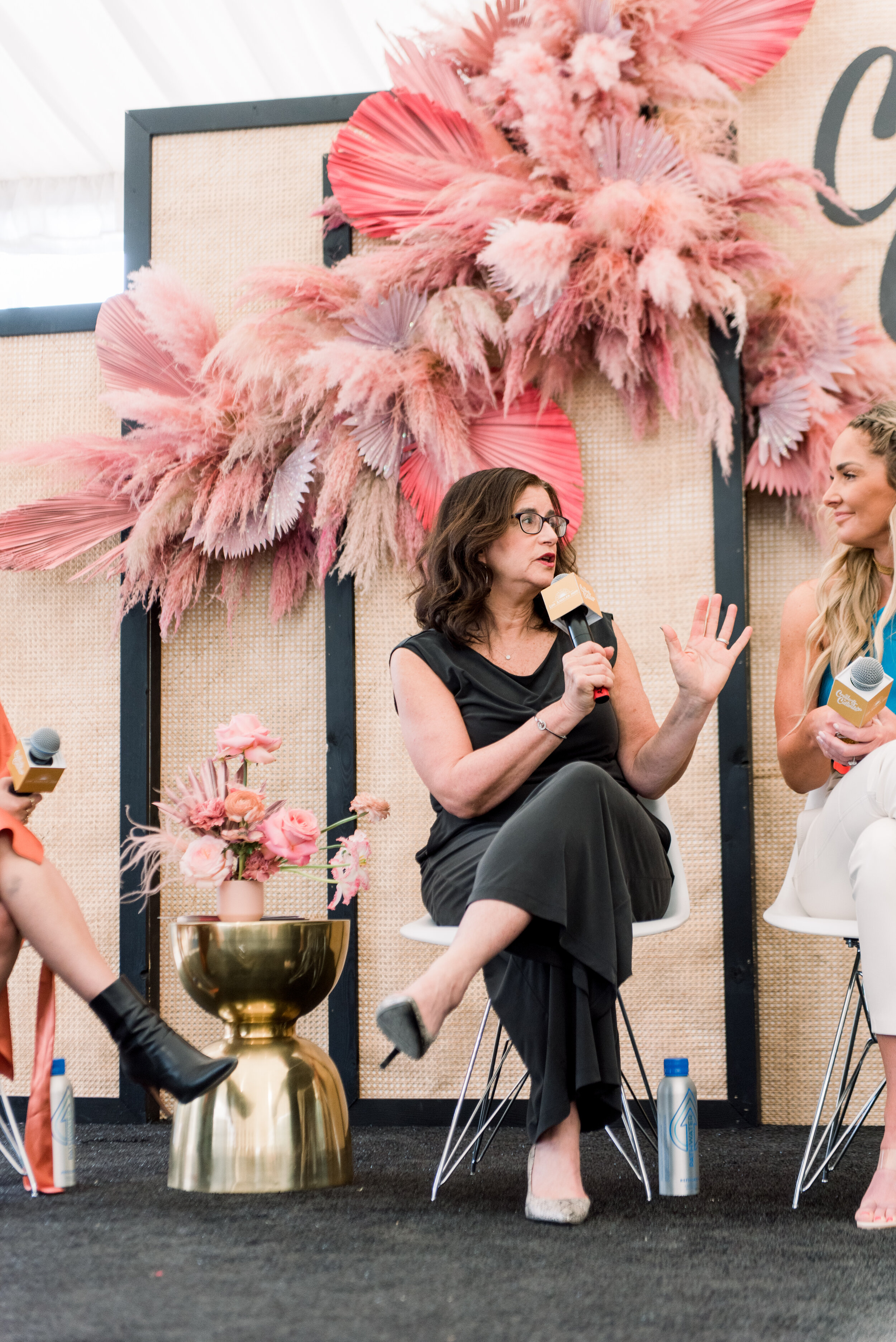
When launching a new brand how do you decide how to allocate your limited financial resources?
I think what's most important here is to have a business plan upfront and really prioritize what you want to do with your brand. That becomes your roadmap for how to spend the financial resources that you have.
One of the most important things these days is to make sure that you can sell your brand, sell your product, or service through the right channels. We know that digital is the way everything's going especially during COVID so having that business plan and prioritizing it will really guide your path.
While some states are allowing restaurants, gyms, and shops to reopen, many small businesses are still struggling financially. What tips can you share on how to stay afloat during this time?
Where we've seen the most success is in the ability to pivot. We know that there's about 30% of small businesses that are not online today. The pandemic has seen more people choosing to do things digitally—to buy things online and sell things online. So number one, make sure you pivot to digital.
Number two, there are a lot of resources out there. There are organizations called Small Business Development councils, and they are available in just about every town and city that most of you are probably in. Contact them! There are more grants available than you would imagine.
There are also community development financial institutions. Google that in your area. Many of those institutions have grant money available. Take a look at your expenses and decide what you absolutely have to keep spending on and the things that are maybe’s. You should curtail those as well.
How do you create a selling strategy for a truly luxury brand and what's the difference between a mass-market strategy and a luxury strategy?
People's definition of what a luxury item is different. So, really understand your market. It's really important to understand how your product and service fit into a number of different groups. Could you make the brand more every day, especially in this environment?
What are the key changes that small businesses will need to make in order to succeed?
The number one thing is to have different channels. We have found that a lot of businesses were just catching the storefront and did not have a way for people to buy online. So, how can you reach your customer base in a number of different ways whether it's online or virtually?
Another thing we are very focused on at Mastercard is how people want to pay. Giving someone the option for checks and cash is not optimal. A lot of people want to stay away from that now. So, focus on contactless payments, and make sure you’re able to take payments over the phone or digitally through something we call “card on file.”
Make sure your customers can keep their card on file so they can make repeat purchases easily. The other thing is contactless payments. If they do come into your store or restaurant, whatever type of business you have, this method allows the customer to keep hold of their card and just tap to pay.
Mastercard just built and rolled out a program called Digital Doors because we want to help businesses get online and digitally transform their business. Through this platform, we’re helping small businesses build and protect their online presence with end-to-end digital resources like cybersecurity vulnerability assessments and digital skills curriculum.. We bundle all that together because we think getting online and being digitally enabled is really going to be the most pivotal change that small businesses need to make.
I want to support my local small businesses. Do you have any tips on how or where can I find out which businesses are open right now near me?
This question is near and dear to my heart. We actually just launched something called “Shop Openings” which is a customer-facing website where you can search geographically for small businesses in your area. It will tell you if it's open and if they accept contactless payments. So we're really proud of it. We think it's a wonderful way to drive people back into small businesses and we absolutely encourage all of you to use it for your local small businesses as well.
Besides loans, what can be helpful or beneficial to small businesses?
Grants. There are a lot of organizations out there. I mentioned the community development financial institutions earlier and the Small Business Development councils, but there are organizations like Hello Alice that we partner with as well.
If you just go online and look in your local area, you will see a lot of organizations that do have grant money available. I happen to live in Westchester, New York. There's a fantastic organization that I'm on the board for called The Women's Economic Development Council and they definitely have grants available and a lot of free resources to help, so I encourage all of you to do that.
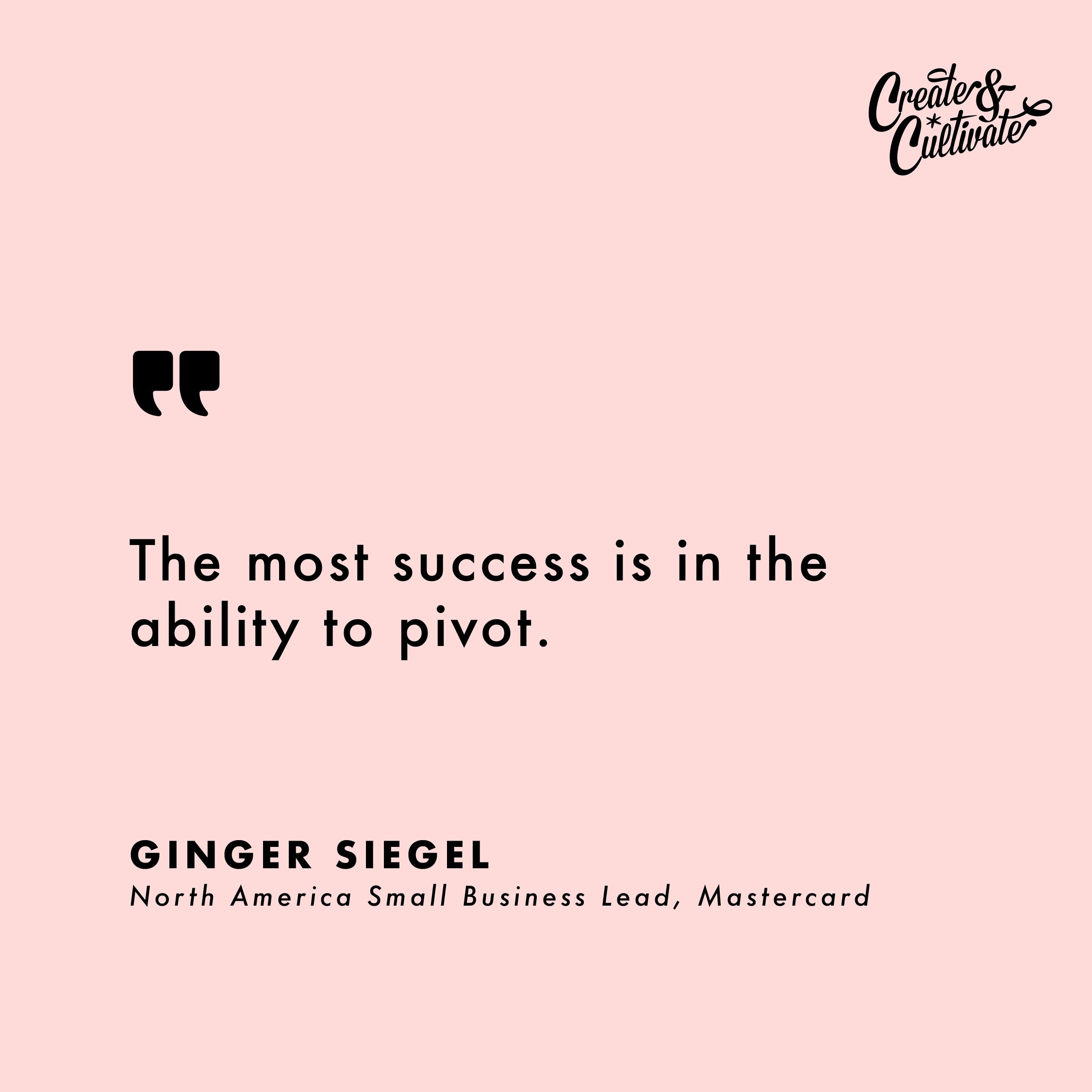
What advice do you have for someone who's thinking of taking their side hustle full-time and or starting their business during this time?
One of my favorite books for people that want to start a business is called The E-Myth Revisited and I'll tell you why I love it. It talks about the fact that if you're someone who has a side hustle—whether it's baking or building apps on the side—there's a tremendous opportunity to take that and make it into a business. But so many entrepreneurs don't get into business to do all the tough stuff. That's not as much fun right? Dealing with the financials, actually managing overall finances and getting customers—those are all things that aren’t as much fun and the E-Myth walks you through that.
Because even though you went into it to do something you love, you have to be willing to like something you don't love and that's the other side of the business. I think it’s really important to make sure that when you go into this, you go into it with your eyes open. When it's a side hustle a lot of times you don't think about that.
What are the top three actions I can take to build a network of other small business owners and advisors to learn from during these times?
This might sound like a broken record, but one of the things that I'm most passionate about is LinkedIn. LinkedIn provides the opportunity to join groups with people who probably have very similar businesses like you and very similar problems. Joining these groups will really provide a very broad support system.
The other thing is associations. Whether you're in the restaurant business or the beauty business, there are a lot of associations out there and not-for-profits that are built to help businesses like yours today. These are both great resources to build a network.
Female entrepreneurs are looking to network with other female entrepreneurs and that's why we're so passionate about the space. We really build communities around this to help further knowledge, advice, and guidance so that people don't feel alone these days.
How can I ensure my evolving brand story resonates with customers as I pivot and reinvest my business?
Create a following of people that love your brand. You're not pivoting away from your brand, you're pivoting the message to your customers. Always stay true to your brand. That’s critically important. Stay true to the things that really made you what you are today. And when you talk about pivoting it's really around the channels, or it might be some of the products you're selling but your brand needs to stay the same because that's what you built yourself on.
If I'm going to reopen, what do I have to do?
There are some very excellent guidelines out there from the CDC around reopening. I had the opportunity to speak with some amazing women in the industry and one of the things that they really hit home is that when they were looking to reopen, they really focused on the safety and health guidelines. That's really important because you want your customers to feel safe. So I think step one is to really make sure you're looking at the recommendations and guidelines that are out there from the scientific community like the CDC.
Secondly, really take a look at your product set. Is everything that you offered before going to be important going forward and do you have to pivot some of the things you were offering? So, again pivoting not necessarily around your story, but around the things that you've offered in the past. I think that's really important.
Do you have any easy, go-to tips on how to improve and manage cash flow as a small business owner?
If cash flow wasn't a problem for you before, then COVID has really created some difficulty. Interestingly enough the average small business owner only has 27 days of cash on hand. The other thing that I would say is that a lot of businesses are still using Excel. So there are a couple of things I want to recommend to you. Number one is to make sure that you have the right financial systems in place.
Now is the time to step back and do some improvements in your business. I encourage you to look at things like QuickBooks and some of the accounting software programs out there. We know that about 70% of small businesses actually send out manual invoices. So there's a great opportunity now with some of the accounting software packages out there to actually digitize your invoices. Because if you can get an invoice out in a day versus a week, imagine how that can really increase your cash flow.
So, understanding your cash flow, understanding what money you have coming in, and getting that money to come in quicker (and also the money you have going out) to make sure you really understand the billing timing. When you match the money coming into the money going out, that's really what cash flow is and there's a great opportunity for many businesses to manage it even better.
What are the biggest financial mistakes you've seen small businesses make since the COVID-19 crisis hit?
There’s a couple; one of them in regards to cash flow. I find that a lot of businesses haven't really gotten their financials in order so when they did need to get loans or some type of credit, they really weren't prepared to tell their financial story. That's why I believe so strongly in making sure that you have the financial tools in order to do that.
A lot of people were hoping that this crisis would just go away. That's why we're really encouraging businesses to look at things like online and creating a digital storefront to get your services and your products online. You have agility as a small business and you can zig and zag much better than some bigger companies so keep that agility moving constantly, make the changes and get the help that you need quickly to make them. When you are willing and able to move quickly lots of things can happen in a really good way.

What advice do you have to plan and pay for a reopening?
Unfortunately, in some areas businesses were allowed to reopen, and then due to a resurgence, they closed again. I believe that for some businesses when things go backward they tend to get paralyzed. Now is the time if you haven't reopened to think about and plan for when you do. What are your safety and security plans? What do you have to do differently in terms of re-setting up your business? It is going to be like opening for the first time but remember, this time your customers already know you so you're not starting from scratch, you’re not starting from square one, you're starting with a brand that people in your community love. I encourage you to use social media. We think that there's a lot of focus on social media.
What resources and publications should I work into my daily routine?
To stay up to speed on trends and pivoting during the pandemic, check out the various online resource centers. We set up one called the Mastercard Main Street Resource Center that really gives you access to a lot of tools and resources. And our partners like Create & Cultivate who has a tremendous resource, Hello Alice, or the SBA. So I would encourage you to Google some of these Resource Centers. They have a wealth of information for free to really help push you through this.
I think one of the best-kept secrets is organizations like the Small Business Development Centers, they all have websites, and if you take a look at those websites and you can actually call them. I think a lot of them are either back in the office or working virtually. So there are a lot of resources available. Sometimes people get paralyzed and think “I'm out here alone” but you are not out here alone.
As a self-funded founder, should I stop paying myself during this time to keep my employees?
That’s a tough question. You have to know what your financial situation is and look at the length of time that you can survive with the cash flow that you have. I think it's a really difficult time and it's hard for me to say without looking at your financials. But I encourage you to work with your bank and work with your CPA to really understand where you are. And if you've been self-funding up till now, and you want to keep operating that way, then you might have to give thought to some additional sources of funding.
Do you think rent forgiveness is going to happen again?
It's easy to focus on the things that you can't control and that's one of them so, I encourage everyone to think about it. If in fact, rent is not forgiving, what will you do then? You have to really look at both sides of the story and be prepared for either one. It goes back to the agility story that I mentioned earlier.
I operate a social impact business that supports living wages for women in Ghana. What is the best way to create corporate partnerships and are there specific departments or job titles I should seek to identify the right person in a company?
I tell you one of the reasons I'm so proud to work for Mastercard is that we are very focused on doing well by doing good and I think that most companies that feel that way will put that out there. We have done a tremendous amount of work for our center for inclusive growth. I think that financial inclusion is two words that you can Google in terms of different corporations.
If you are looking to partner with a company, you want to make sure that they have the same values as you do. That is why we at Mastercard are able to attract such amazing partners, like Create & Cultivate because we all believe in the same thing, which is helping others do well by doing good. So I would encourage you to look through financial inclusion.
Look at some of the major corporations in your area, and really dig in and look through their annual reports. Look at the kinds of things they talk about. These days there are a lot of great companies out there that are doing really great things.
I love your partnership with Create & Cultivate. It feels really authentic. How do you choose your partners?
Mastercard has a very strong focus on doing well by doing good so we look at partners that believe in that, too. It's really important to us. When we partner with organizations like Create & Cultivate we need to know that there's an authenticity, that they do care about small business, that they do care about minority entrepreneurship. It's also important to us to not just have people who say it but also show it and so we look at the work that's being done. We look at how that company represents itself.
We tend to attract really great companies that do that, too. So the partnerships that I mentioned before like Salesforce and Microsoft, are all great organizations that have a very strong approach to financial inclusion and caring. That's why we're really proud to be able to partner with them.
What are the three most important things to remember when first opening a business?
This is one of my favorite questions. Number one is to read The E-Myth book. That's really important because a lot of people when they're looking to open their business are thinking about the thing that they love. So for example, if they love making ice cream or they love making specialty cakes or creating candles at home, think about the other parts that you have to do when you run a business, make sure that you can manage your financials, and create the right business plan.
Making sure that you have a plan B should something happen like the pandemic. Really make sure you have a business plan that has the fullness to it—all the information that you need—and then really think about how you're going to fund it. Is it going to be self-funded? Is it going to be funded through friends and family? Are you going to get an angel investor?
When do you think is the right moment to open a business credit card?
Well, first of all, one of the things that I really encourage is to talk to your bank. And if you don't have a bank, it’s really important to get someone who can give you financial advice. Someone who can look over your financials to really help you decide when it's the right time. You know, we have many small businesses that might have started out with a consumer card, but now they need to separate out their business expenses. So, as soon as you can do that, really think about talking to the right people, whether it's a bank or some other great organizations that can provide credit cards for you.
We encourage people to work through those partners to decide when is the right time. It’s important to know that you’re not in this alone. There are some great credit unions, community financial institutions, and banks. There are many fintechs out there too that are able to provide credit cards. So, I would look at one of them.
Really focus and bring the right questions to the table so that you can decide. It’s probably not a decision that you're going to make alone. You're going to want someone to help you with that assessment of where you're sitting financially.
What are some of the smartest financial moves you've seen small businesses make in the midst of the pandemic?
Number one is this concept of pivoting. You know, how do we pivot during this time? And I think some of the successful businesses that I've seen did not wait. The other thing is having different channels. So, if you know that you deliver your products and services one way today, what are some of the channels that you could build in the future? Online is a very, very important channel. So I think it's really important to pivot and look at differentiated channels.
Any tips on how to embrace positive energy during this time?
I think it comes back to passion. I have been working with small businesses my entire career. I go to sleep at night feeling very sad sometimes because of the trouble and trauma that a lot of small businesses are going through but I wake up every day knowing that I have at least 10 hours to be able to think of something that could make a difference. I think that's where my positive energy comes from—the belief that I can make a difference, that I can spend an hour with all of you and hopefully you can walk away with one or two tips where you'll either feel better or do something different.
Energy is critically important. This has been just a terrible, terrible time, but we will come out of this. We will come out of this on the other side strong because small businesses, all of you, whether you're in a small business or whether you're thinking of a small business, you are here today because you believe there's something more to learn. I would encourage all of you to continue to think positively, to continue to believe in what you're doing because what you're doing will help.
MORE FROM THE BLOG

How Bertha González Nieves Grabbed a Seat at the Table (and a Glass) to Became the First Female Master of Tequila
“I’ve always focused on my ability and my passion instead of my gender.”

How many times have you peered voyeuristically into the lives of people you admire via social media and wondered what it must be like to do their job? We’ve all been down that research rabbit hole on our quest to create and cultivate the career of our dreams, but often we’re still left pondering the realities of their day-to-day—so, what is it really like? In this series, I Want Your Job we uncover the truth by getting into the nitty-gritty details about what it’s actually like to work in your quote-unquote “dream job” and if the reality stacks up to the expectation.

Photo: Ball & Albanese
Bertha González Nieves fell in love with tequila almost immediately. Two days into a three-day trip to Tequila, Jalisco, the heart of Mexico’s tequila industry, she already knew she wanted to pursue a career that involved working with the history-rich, blue agave-derived spirit. In fact, she even went so far as to call up her parents to tell them that she’d discovered what she’d wanted to do for a living.
She landed a dream job at Grupo Cuervo, the oldest tequila producer in the world, but after 10 years, she decided to take a risk and launch her own small-batch premium tequila brand, Casa Dragones in 2009. Fast-forward 11 years, and her passion hasn’t wavered. “I have such passion for tequila and Mexico that it’s an honor for me to be part of an industry that contributes to the cultural relevance of Mexico internationally,“ she tells Create & Cultivate. But being at the helm of an independent, small-batch, tequila producer hasn’t been easy.
Ahead, González Nieves explains how she grabbed a seat at the table to become the first female master of tequila, how she’s paying it forward to other women coming up in the industry, and how she’s pivoting the company in the wake of COVID-19.
On getting her foot in the door in the tequila industry…
I fell in love with the tequila category when I was 22 years old and was selected by the Japanese government to represent Mexico in a global program in Japan.
As part of my training, I traveled extensively throughout Mexico, learning about the country’s economy and various industries in order to represent Mexico as a young ambassador to Japan. My travels included a three-day visit to Tequila, Jalisco, and after the second day, I called my parents and told them that I had found what I wanted to do. I wanted to work in the tequila industry.
After university, I worked for Booz Allen & Hamilton in the marketing intensive group doing consulting for top global packaged goods companies and then received a master’s degree from Northwestern University. Once I graduated, tequila was on mind and in my heart, so I went knocking on the doors of the tequila industry.
I worked for the Beckman family from Grupo Cuervo for 10 years, the oldest tequila producer and an eleventh generation-run company. I fell in love with everything about the tequila production process and its connection to the culture and history of Mexico. While there, I had key roles both in Mexico and globally, but at some point, I realized the brand would never truly be my own.
I’m an entrepreneur at heart (and actually, I come from a family of entrepreneurs, so it’s in my blood!), so I knew I’d never be fully satisfied until I had my own company, which eventually inspired me to start Casa Dragones.

Photo: Courtesy of Bertha González Nieves
On laying the groundwork for starting her own company…
I earned a bachelor’s degree in business administration from Universidad Anáhuac in Mexico City and a master of science degree in integrated marketing communications from Northwestern. I’ve also had the opportunity to take executive courses at Harvard Business School, Wharton Business School, Columbia Business School, and other top schools. I would say that while much of my studies helped me prepare for the business world, nothing has been as valuable as actually working in the industry itself. Taking the time to become an expert in the tequila industry is what has set me and the company apart.
On pursuing entrepreneurial ventures from a young age…
Since my teenage years, I’ve been creating and participating in small entrepreneurial ventures like creating a holiday card business in Mexico City, co-producing a film, and working for Mexico City’s top magazine. I also worked throughout my university years in Mexico City, all jobs that weren’t related to tequila. These combined experiences were an important part of my preparation to become an entrepreneur and enabled me to be able to recognize my passion for the tequila industry. For the generations that are coming up, it’s important that you are curious because finding your passion and purpose will enable you to have the focus to discover your potential.

On becoming the first-ever Maestra Tequilera…
A Maestra Tequilera or Maestro Tequilero are the lead people in charge of the production of tequilas in a tequila company. He or she is the person within a production house that is in charge of defining the brand’s unique formula. I’ve been aware of how male-dominated the tequila industry is from the beginning, but I’ve always focused on my ability and my passion instead of my gender.
I am part of the founding professors that started with the Program of Tecnico Tequilero in the Universidad de Guadalajara that now is a master’s program. It’s important to give back to the tequila’s appellation of origin and make sure that the next generations can have more academic programs so they can take the category further.
I want to help break down barriers and provide a path for other women who are interested in the spirits industry. Women in Hospitality and Women of The Vine & Spirits are important organizations that I’m a part of that empower women in the industry through networking and events. More than half of the Casa Dragones team is made up of women, so this is very important to me.
On being at the helm of her own company…
No day is the same in my role as CEO, which is part of why I love the job. Building a company from scratch you realize very quickly that the only constant is change. I divide my time between Tequila, Jalisco, Mexico City, and New York plus all of the work travel with my team across both the U.S. and Mexican markets and travel for events with wholesalers and customers. Between January and March, for example, I traveled every week at least once, maybe even multiple times a week. Last week, I was in tequila bottling the first batch of a new style we are bringing to market this year, and today I’m in New York, soon to be flying out to Las Vegas. I know now why they say, “running a company.” Running is a verb for a reason—you’re on the run on a permanent basis.

Photo: Courtesy of Bertha González Nieves
On taking the highs and lows of entrepreneurship in stride…
Being an entrepreneur and building a venture is a journey where the highs are high and the lows are very low. It can be glamorous at times, but mostly you need to roll up your sleeves and accept that you are making difficult decisions every day. You have to have thick skin and be quick on your feet to think critically about each decision you make.
On advice for professionals trying to break into the industry…
My best advice is to make sure you have a full understanding of the category, a clear route on how to bring products into the marketplace, and have a unique selling proposition. Surround yourself with the best and most professional mentors you can find and also secure smart capital. Make sure there’s a long-term view because building a venture is not a 5k, it’s a marathon. Perseverance, dedication, passion, and knowledge are the key ingredients to finding success in any industry.
On pivoting in the wake of COVID-19…
As a small-batch producer, we felt the impact of COVID-19 immediately. With bars, restaurants, hotels, nightclubs all closed, we lost a large share of business overnight and had to pivot quickly. It was important for us to stay connected and support our restaurant and bar community, so we started donating a portion of our online sales to the United States Bartenders’ Guild and the James Beard Foundation Open for Good campaign.
We also developed a “Cocktails at Home” program with out-of-work bartenders in the U.S., Mexico, and London, directly supporting them with small grants in exchange for original cocktail content online. One of my favorite initiatives to date has been providing sustainable 375ml Blanco glass bottles for our restaurant partners, such as ATLA, Lola Taverna, and Moby’s to use for their to-go cocktail programs.
In June, we introduced our latest sipping tequila, Casa Dragones Barrel Blend, in Mexico and the U.S., so we’re constantly pivoting and finding new opportunities to engage our loyal customers with extraordinary experiences. As entrepreneurs, change is the only constant. We need to look at every challenge as an opportunity to grow, change, and innovate.

Photo: Courtesy of Bertha González Nieves
On the Casa Dragones project she’s most proud of…
Since we started our company, we’ve had the opportunity to work with some of the most talented artists, chefs, and mixologists in the world. Reflecting back, these collaborations—from special art edition bottles to special pairing dinners to mixology jamming sessions—have been some of the most rewarding for me in my career. In November 2019, we celebrated our ten-year anniversary over Day of the Dead weekend in San Miguel de Allende, Mexico, which is Casa Dragones’ spiritual home. We invited everyone who supported us over the years to celebrate this incredible milestone with us.
Our chef friends Enrique Olvera (Cosme, ATLA, Pujol), Daniela Soto-Innes (Cosme, ATLA), Elena Reygadas (Rosetta, La Panadería, Café NiN), Blaine Wetzel (The Willows Inn), and Donnie Masterton (The Restaurant) created a 100% plant-based dinner for over 360 of our closest friends and partners in the oldest operating bullfighting ring in Latin America. It was a magical celebration, showcasing our journey of craftsmanship, and our commitment to creating exceptional tequila and exceptional experiences. If we hadn’t remained committed to this ideal, we wouldn’t be where we are today.
On getting the most out of every workday…
Productivity is like being on a diet. Sometimes you’re productive and some days you don’t meet your expectations. It takes discipline to deliver at your highest level of productivity on a constant basis and keeping the balance between work and personal is essential to achieving this. Some distance between the two helps give clarity on what your priorities should be. With all of my travel, I have become very efficient at working on planes and figuring out how to be productive even when I’m not in the office.
MORE ON THE BLOG

This Tech Marketing Founder Breaks Down Why Your Business Belongs in the Cloud
Hello, mobile workplaces.

Photo: Christina Jones Photography
Contrary to what you hear, the cloud is safer than ever before with myriad opportunities to scale your business. Years ago, companies had to buy robust data racks and hire IT professionals to handle all the IT needs of a company 24/7/365. It was time-consuming, and a huge expense that small businesses simply couldn’t afford.
Nowadays, the cloud offers security, scale, and more at an affordable price, making it one of the best solutions for businesses of all sizes.
Businesses are often confused about moving to the cloud. It makes sense to feel overwhelmed since the cloud can often seem elusive and mysterious. This confusion can make it hard to make the leap to cloud storage. With that in mind, let’s break it down.
What exactly is the cloud?
The cloud is a central location where you backup and store all data, making it accessible from any location with an internet connection. Cloud providers maintain data centers where the information is stored (and often replicated to another data center) for safekeeping in case a complete meltdown happens.
If your business operates at all online, more than likely you should be considering the cloud. Here’s why:
1. Mobile Workplaces
Accessing files from any location, rapid sharing, and auto backups means the cloud enables you and your team to have the perfect mobile workplace. Store your images, audio, video, and files directly to the cloud instead of spending time and money upgrading hard drive space for every employee.
2. Security & Cyber Criminals
It’s not just financial or healthcare data that cybercriminals want anymore. Any data can be used for ransom, including photos, research, trade secrets, and even your website.
As a business owner, these are real issues to confront as you continue growing your business. You’re not only protecting your data, but you’re also protecting your clients’ data. That means all personal client information, credit card data, passwords, usernames, and emails are your responsibility.
Depending on your cloud provider, they can protect your business from cyber threats, DDoS attacks, and malware. The cloud also enables you to add multiple layers of security like two-factor authentication.
3. Data Storage & Backups
Remember that “Sex & the City” episode where Carrie’s laptop broke down, and she lost all her work?
For businesses, not backing up your data isn’t only risky—it’s irresponsible. Every entrepreneur should take some time to look at their business from a bird’s eye view, and that includes the technology demands of your business. Being in the cloud means that all your work can be automatically backed-up and accessed by your team with little to no effort—and at a more affordable cost than attempting to buy all the infrastructure yourself.
4. Scalability & Growth
Starting your business is one thing. Growing and scaling it is another. Lucky for you, the cloud is incredibly flexible. This means you can start a business with minimal IT requirements and easily expand your cloud storage space as your business grows with little upfront investment.
About the Author: Naly Rice is the founder and CEO of LNCG, a tech branding, marketing, and design agency. She is a blogger at NalyRice.com and is a burgeoning speaker who talks about entrepreneurship, women, and minorities in business and tech marketing.
Love this story? Pin the below graphic to your Pinterest board.

This story was originally published on March 16, 2019, and has since been updated.
MORE ON THE BLOG

This Innovative Female-Founded Travel Company Was Thriving—and Then COVID-19 Hit
Here's why Katalina Mayorga is more positive than ever.

We know how daunting it can be to start a new business, especially if you’re disrupting an industry or creating an entirely new one. When there is no path to follow, the biggest question is, where do I start? There is so much to do, but before you get ahead of yourself, let’s start at the beginning. To kick-start the process, and ease some of those first-time founder nerves, we’re asking successful entrepreneurs to share their stories in our series, From Scratch. But this isn’t your typical day-in-the-life feature. We’re getting into the nitty-gritty details of launching a business, from writing a business plan (or not) to sourcing manufacturers and how much founders pay themselves—we’re not holding back.

Photo: Alina Tsvor Courtesy of El Camino Travel
Katalina Mayorga was busy building a career in international development when a brief conversation with a cab driver in Guatemala changed everything. The chat inspired her to leave her full-time job behind and launch a travel company dedicated to bringing tourism dollars to less-frequented destinations where they could truly make an impact on local economies. Since founding El Camino Travel in 2014, Mayorga has collaborated with local guides to bring intrepid travelers to the palm tree-lined beaches of Colombia, the salt flats of Bolivia, and other off-the-beaten-path places throughout Latin America.
Then COVID-19 hit. The rapidly spreading disease upended the travel industry overnight, and like so many entrepreneurs with businesses rooted in hospitality and tourism, Mayorga suddenly had to reexamine her business model. “While it is daunting, it is also somewhat exciting, because no one really has any idea what the ‘new normal’ will look like in our industry,” the founder tells Create & Cultivate. “This experience has forever changed travel and how it will operate moving forward, which means that despite being a small business, we can still have a large impact on how the industry builds from the ashes of COVID-19.”
Read on to find out how this enterprising entrepreneur built her business from the ground up (without a traditional business plan or a single investor) and how she’s pivoting to ensure El Camino Travel comes out on the other side of the COVID more resilient than ever.
On forgoing a traditional business plan…
“In the early stages of the business, it was important to test out different ideas, revenue streams, and types of trips to see what actually was viable to fill a gap in the market. I needed the flexibility to iterate and change course without being stuck on one way of doing business or feeling like I had wasted time by creating a thorough business plan (which often can be several pages long) that I would not end up using. Instead, I used the Lean Canvas framework, which allows you to start strategically thinking through the most important components of a successful business. I also found the book The Lean Startup by Eric Reis helpful.”
On coming up with the name El Camino Travel…
“It was truly a shower moment. I’d thought of several names (none of which I remember anymore), but when I tested them out on people, I got a lot of hesitation or no reaction at all. I wasn’t very excited about them either and knew in my gut they weren’t a good fit. After several weeks, the name finally hit me in the middle of a shower and I immediately ran out and yelled to my husband (who was downstairs), ‘I think I have it! El Camino Travel!’ He responded with a big smile and said, ‘That’s it Kata!’”
“I went back out into the world with that name and realized how sticky it was. Friends loved it and I loved saying it. I think this is a perfect example of one of the most important lessons that I have learned in business. Go let your ideas live in the wild before fully committing to them. Talk to people about them and immediately start testing their viability and marketability. You do not have to tell everyone everything, but do not be so concerned that someone is going to steal your idea. As someone told me early on with El Camino, ‘That’s a brilliant idea, but don’t think that no one else has ever thought of it. It is all about who runs faster and harder with the idea.’”

Photo: Jennifer Chase Courtesy of El Camino Travel
On setting up the business…
“The most important thing is having a strong operating agreement in place. This was a huge lesson learned for me because our first operating agreement is one we got through Legal Zoom. These operating agreements are not enough to address very common issues many entrepreneurs face early on in their business. The best investment you can spend early on is getting a legitimate lawyer that can help you put together a robust operating agreement. Remember that as your business grows, you may need to change your operating agreement to reflect that growth. We are on our third iteration in six years.”
On standing out from the competition…
“To really set yourself apart in your specific niche or industry, seek inspiration from outside your industry. Look at innovative models and branding that you really admire that have nothing to do with your business and use that creative inspiration to help set you apart in your own industry.”
“Though we are a travel brand, I sought out a ton of inspiration from my work in international development, lifestyle brands that I admired, architecture and design firms, and documentary photojournalism. While the internet makes the world a much bigger place to seek out various resources, it is also very easy to get caught up in your own industry bubbles and to all be drinking the same Kool-Aid and using the same buzzwords. Force yourself to break out of that.”
On finding local guides to partner with…
“When we launched, I was the local host for almost all our trips for the first two years and I still host two very special trips a year, our Community Retreats. I loved being a host, and it was important for me to have that hands-on experience because it made me understand the intricacies and challenges of the most important role of the trip. It also gave me a strong understanding of what qualities makes an excellent local host.”
“Though I think I am a pretty good host, I knew that having someone who was born and raised in the place we are visiting would add a whole other level of insight or value that I knew I (or any other outsider) wouldn’t be able to provide. This was actually somewhat contradictory to the industry model at the time that valued guides from Western countries or who were from the same places as the travelers.”
“Something felt inherently wrong with that model and not true to our own values. We now exclusively only hire guides from the countries we are visiting and who have interesting perspectives and stories to share with our travelers. They also must be incredibly responsible and detail-oriented.”
Photo: Emmy Hernandez Jiminez Courtesy of El Camino Travel
On funding the company…
“We started through a mix of savings, credit card debt (not a ton and I would really only recommend this as a last resort), and a small loan from friends and family. We have not raised any additional capital since then, and I am very happy that we did not end up going that route. Being scrappy made me really think out of the box in order to reduce our costs, while ensuring we were not sacrificing the quality of our service. We came up with some amazingly creative solutions along the way!”
“In addition, it forced me to focus on what works and leave behind what does not as we had less room for error. We are now in a new stage of the business where we are transitioning from scrappy start-up mentality to a robust operation. With that we also need to shift our mentality in three important ways: 1) not saying yes to everything 2) investing in people and resources that may not lead to immediate return but make sense for long term growth, and 3) not try to do everything myself and hire so that I can properly delegate.”
On not paying herself a salary for 6 years…
“The plan was to start paying myself a salary this year. This would have been the first time I would have done that in six years. To be honest, it was still going to be less than what I was paying some employees as we were in a period of growth and I wanted to invest in that growth rather than take on loans. Unfortunately, COVID-19 has changed that as we are in a period of trying to stabilize the business.”
“I do have some flexibility right now because I am currently living in Latin America where the cost of living is much lower than the United States, so I am not in financial duress and still can maintain a good quality of life. Thinking outside the box with COVID in all sorts of ways has been critical right now.”
“However, I was hesitant to even give myself a salary this year (where in past years I just paid myself enough to pay off my credit cards each month) prior to COVID-19, but a fellow entrepreneur turned me onto a new model of accounting called Profit First (there is a book you can read about it). The name is deceiving as it is not focused on profit at all costs, it is just another way of approaching your accounting that allows you to know if you are actually building a viable and healthy business. I have loved it and it has been a game changer for me!”
On scaling the team…
“We are a team of about four right now. I have learned that the most important part of hiring is hiring slowly and making sure you have set up the interviews in a way that gets you to know the candidate from various perspectives. This can be done by asking the right questions. If it makes sense, when you are down to the last candidates, hire them to do a quick task. Yes, pay them during the interview process. It will allow you to see if they are a good fit and how they process feedback, and it could save you much more money in the long run that comes with hiring the wrong person.”
“I did not have a ton of hiring experience, but after a few mistakes, I began to read more about implementing a strong hiring process. I talked to other peers about their lessons learned, best practices, and their favorite interview questions. Finally, this last year we developed an El Camino Professional Values statement that we include in any job announcements and we ask candidates to speak to them directly. This ensures we are being transparent and clear about what we expect from our employees and our company culture from the very beginning.”

Photo: Jennifer Young Courtesy of El Camino Travel
On hiring an accountant…
“We hired an accountant early on, and they have been so important in ensuring we are organized, and we have a system in place to understand our profit and loss statement for each and every trip. That being said, just because I wholeheartedly trust our accountant, that does not mean I walk away from having a deep understanding of our books and our monthly financial statements. I set aside about an hour a week to look at our financials and projections, and block off a full day once a month to deal with all the accounting for the month and reviewing all P&Ls for each trip to see if there are any inconsistencies or if there are opportunities to improve our margins. Know your numbers, margins, and EBIDTA as well as you know your BFF. Knowing this information empowers you as a business owner.
On picking a niche…
“‘Pick a niche audience within the travel industry and be the best at it.’ A successful entrepreneur who had sold his travel company for $80 million gave me this advice early on, and I didn’t take it as seriously as I should have. I thought diversifying my revenue streams across all types of services and products made the most sense in lowering our risk of failure as we would be able to capture a larger audience. If one thing did not work, then I could depend on the other. However, through trial and error, I realized how much of a time suck this was and how distracting it could be. Once we picked our niche lane and stuck with it, we started to see the best results across the board, and not only financially. It made us much more focused as a company and a team, it allowed me to actually pursue work-life balance, and it gave us a clear sense of purpose to rally around.”
On launching during the Golden Age of Instagram…
“I always say that the ‘luck’ part of our business was that we launched in the Golden Age of Instagram, pre-algorithm. We understood that it was going to become a powerful source for discovery and inspiration within the travel industry, so we threw all our eggs in that basket. There were many strategies we took using Instagram as our main sales funnel, but I won’t get into them because I do not think it will work now due to how Instagram has evolved. Like the algorithm, we have had to evolve. We rarely do paid ads (I think we spend less than $100 last year on paid ads), and our most powerful source of marketing continues to be word of mouth and our reviews.”
“We also have a clear sense of our brand voice and values and it involves a lot of passion and knowledge. We are not afraid to show that off through our newsletter and social media platforms. We are not obnoxious about it, but are really excited to share all the amazing things happening in these more edgy destinations that are not on people’s radar (but absolutely should be). Finally, we are also not afraid to get personal about what we do and why we do it. For example, I just shared with our newsletter an intimate reflection on consumerism now that I have been living outside the United States for almost a year. All of this has helped us build a deep sense of trust with our audience.”

Photo: Alina Tsvor Courtesy of El Camino Travel
On seeking advice from mentors…
“I have had quite a few mentors who I reach out to for advice on various aspects of the business. However, I feel that many of these relationships are mutually beneficial. I refer them clients and/or I also share my perspectives and insights into the industry so that it is much more of a conversation where we are learning from each other. I also seek advice from individuals outside of the travel industry to push me to think outside the box.”
“I think I have maintained strong relationships by being grateful and humble with their time and expertise. People love to help, but to be honest, cold-calling has rarely worked for me. I try to find someone that can introduce me to the person I am interested in chatting to and make it very easy for them to do so. I send them three well-written sentences that have our elevator pitch and a clear reason of why I would love to connect and what I would like to discuss.”
On learning lessons along the way…
“I am very lucky because I am actually getting to apply the lessons learned over the past six years to our newest labor of love, Casa Violeta, which is a tropical guest house we opened in Granada, Nicaragua. While not entirely the same, many of the best practices we have identified for El Camino Travel, apply here. My advice would be to be as transparent as possible with your business partners in setting expectations, do thorough market research, and understand the niche you are filling. Build a strong brand with a clear perspective and identity, and let your ideas live in the wild so you can start getting feedback immediately. The latter is the cheapest form of market research.”
On pivoting in the wake of COVID-19…
“COVID-19 has pretty much upended the travel industry over the past few months and everyone has been impacted, no matter your size or reach. We immediately stayed on top of all the government programs for small businesses and took advantage of all of them. We also applied for grants and were awarded a few. This has given us the ability to stabilize the company over the next few months and be thoughtful about the pivots we need to make as international travel will not coming back for several months. We have been realistic from the beginning about the impact this would have on our small group trips, and I wanted our response to be less reactionary and panic-mode and more a series of intentional actions that would add long term value to the company even post COVID-19.”
“We realized that one of the things we do best is build community, so we are in the middle of doing what we do best offline by bringing it to an online community space where we can bring together inherently curious travelers who resonate deeply with our values as a travel company through The Clubhouse. It’s a membership-based community for travelers who approach the act of travel from a growth perspective, and we offer online salons, photography discussions, boutique hotel tours, and other benefits. Unlike many other online travel communities, we are hyper-focused on the quality of the members that join, rather than the quantity, to ensure the conversation is rich and meaningful. In addition, we are adjusting our trips to offer more private services where you can have a more socially distanced type of adventure focused on unwinding and recharging in beautiful natural surroundings. More on both fronts to come soon!

Photo: Alina Tsvor Courtesy of El Camino Travel
On rebuilding the travel industry post-COVID…
“While I hate using this world, it truly has been an unprecedented period of time and everyone from the large corporations to the small mom-and-pop shops are trying to figure out how to move forward. While it is daunting, it is also somewhat exciting, because no one really has any idea what the ‘new normal’ will look like in our industry. This experience has forever changed travel and how it will operate moving forward, which means that despite being a small business, we can still have a large impact on how the industry builds from the ashes of COVID-19.”
“We can actively set the tone with others and be architects of the new normal rather than just bystanders. In this case, we are talking to other companies in the industry who we deeply admire for their creativity and innovation in pushing the mold in the industry even prior to COVID-19. We are seeing how we can best unify and collaborate on building a new normal that is more sustainable and equitable, as well as leverage our respective communities in a unified way to come out of this together stronger. To be honest, it should have not taken a global pandemic to get us all talking in a more collaborative manner, but I am glad that it did.”
On collaborating with your peers and tapping your network…
“Do not try to go at this alone. Lean on your various networks. This is the time to work together with other small businesses and start thinking outside the box collaboratively. I think this type of collaboration will be the way forward for small businesses whose budgets are limited. Mentally, it's also a lot less lonely when working with others who are experiencing similar feelings of uncertainty. You can lift each other up.”
“Lean on your community. You can get some of the best ideas by simply having honest conversations with some of your most active and loyal customers. What do they want to see from you right now? What do they expect from you? Where can you continue to add value to their life even during a global pandemic? Asking these questions and getting their feedback will help not only identify your pivot, but it also gets them invested in ensuring you make it through onto the other side of COVID-19. Again, you feel much less alone as a small business owner.”
MORE ON THE BLOG

What You Need to Know About Design Protection in the Modern Age
An attorney explains.

Photo: Christina Jones Photography
Although counterfeiting and “copycat production” happens around the world on a daily basis, the media has shed light on specific incidents such as the escalating dispute between a small Los-Angeles based illustrator and designer, Tuesday Bassen, and the Spanish retailer, Zara. Young designers should be wary of the lessons learned from this case and would be all the wiser by looking into what unique elements of their clothing can be protected. In addition, knowing how much “inspiration” they can take from other designers without it violating the intellectual property rights of another artist or designer is equally as important.
In the case of Tuesday Bassen, some fans believed that she had been secretly working with the big-time Spanish retailer. However, that was not the case. Tuesday Bassen first realized similarities in her designs and Zara’s later products in early 2016 and attempted to take legal action. However, for someone like Bassen, her funds have taken a hit from just these introductory legal exchanges. What we know from the press is that Bassen has already shelled out thousands of dollars in defense of her accusations. She also took to Instagram to voice her grievances to her followers, resulting in artists and bloggers publicly supporting and sharing Bassen’s, and even sharing their own stints with other alleged copycats. Zara later provided a statement detailing the company’s character as one of the utmost caliber with respect for all creators and the art they produce. The company even went so far as to suspend sales of the products in question when originally notified by Bassen’s legal representation and has stated that it wishes to stay in contact with Bassen to resolve this matter amicably.
In light of the lightning-fast pace of the industries, it seems that designers and artists are constantly copying, reworking, and building on the works of other creatives. Simply trademarking your name or logo only goes so far to protect designers in this day and age.
“Simply trademarking your name or logo only goes so far to protect designers in this day and age.”
So where does the modern artist or designer turn to in an effort to protect their designs?
1. Copyright Protection
Copyright is a legal right that grants the creator of an original work exclusive rights for its use and distribution. This is usually only for a limited time. The exclusive rights are not absolute but limited by limitations and exceptions to copyright law, including what is called “the doctrine of fair use.” A major limitation on copyright is that copyright protects only the original expression of ideas, and not underlying ideas themselves.
Copyright law requires that the work (1) be of a sufficiently permanent nature that it may be reproduced or communicated for more than a transitory period; (2) be independently created by the author, and that it possesses at least some minimal degree of creativity; and (3) not be an “idea, procedure, process, system, method of operation, concept, principle or discovery.” Artwork, photographs, and three-dimensional sculptures are prime candidates for copyright protection. Another great form of protection for designers is to incorporate a unique and copyrightable fabric pattern into their designs.
Copyright protection protects unique designs on accessories and apparel, such as ornamental graphic logos, but not the designs themselves unless the design features sculptural or pictorial features. An entire body of law exists which extends copyright protection to certain unique jewelry designs, as well. While the copyright in and to an original work exists from the moment it is “published,” copyrights should be registered with the U.S. Copyright Office within the first sixty (60) days after publication in order to be able to recover attorneys’ fees and statutory damages from endeavoring copycats.
2. Trademark Protection
A trademark is a recognizable sign, design, or expression which identifies products or services of a particular source from those of others, although trademarks used to identify services are usually called service marks. The trademark owner can be an individual, business organization, or any legal entity. A trademark may be located on a package, a label, a voucher, or on the product itself. Slogans, logos, brand names, and similar all merit trademark protection, however, trademark protection does not protect unique designs in and of themselves, only identifiable signs. That being said, often clothing does not feature any identifiable name brand on the exterior.
“Trademark protection does not protect unique designs in and of themselves, only identifiable signs.”
Most men’s jackets, for example, may feature a label on the inner jacket pocket. Crafty designers have found ways to incorporate their brand into other design features of the clothing such as embroidery or emblazoning their insignia on buttons or lapel pins.
3. Trade Dress Protection
Trade dress, like a trademark, is a legal term of art that generally refers to characteristics of the visual appearance of a product or its packaging that signify the source of the product to consumers. Some of the best examples of trade dress in the fashion industry are Christian Louboutin’s red sole, Bottega Veneta’s intrecciato or “woven” leather designs, the red stripe on the heel of Del Toro’s slippers and the match stick, tucked into the brim of a Nick Fouquet hat. Colors, patterns, symbols, and other similar design features can classify as trade dress.
Section 43(a) of the Lanham Act, 15 U.S.C. § 1125(a), protects the author from infringement of the unregistered trade dress of a product. However, obtaining a registration for trade dress is often a costly and time-consuming process. Generally, trade dress is protectable only under either of two circumstances: (1) the trade dress is inherently distinctive or (2) has acquired “secondary meaning”, such that consumers have come to identify the brand simply by the appearance of the trade dress.
Trade dress protection is generally not available to works where (1) the design element is in any way functional, or (2) the claimed trade dress amounts to nothing more than an abstract image or marketing approach. In most cases, the U.S. Trademark Office only affords full protection to trade dress after five (5) years of use or if a designer can provide sufficient evidence that the industry and the general public recognize the design element as belonging to the designer. (For example, a consumer knows just by looking at the red sole of a high-heeled shoe, that the shoe was made by Louboutin).
4. Design and Utility Patent Protection
In general terms, a "utility patent" protects the way an article is used and works, while a "design patent" protects the way an article looks. Both design and utility patents may be obtained on an article if invention resides both in its utility and ornamental appearance. While utility and design patents afford legally separate protection, the utility and “ornamentality” of an article are not easily separable.
A design patent is a form of legal protection granted to the ornamental design of a functional item. Design patents are a type of industrial design right. While copyright law requires only that a work of expression be sufficiently original to be protected, patent law requires a much higher degree of novelty and “non-obviousness.” Design patent protection is much shorter than the duration of copyright. It provides a complete monopoly so that even if someone independently comes up with your design, your design is protected. The US Patent and Trademark Office will generally grant a design patent if a designer can prove that his or her design is: (1) new, (2) "nonobvious"—a legal term of art; and (3) ornamental only, not solely functional. Elements one and two are hard to meet in the fashion world.
Unlike under copyright protection where the preparers of derivative works based on the original copyright hold no rights, the second-comer who invents a patentable improvement on a design patent may apply for and receive a patent regardless of whether the first inventor authorized the improvement.
Alexander Wang is famous for filing design patents for his fashion items, particularly for his handbags. Many of his items that have been afforded design or utility patents are “hardware heavy”. Earlier this year, Wang successfully obtained a 14-year design patent on several of his "bags with corners"—the official title of the patents on his handbags with metal-covered corners.
In Conclusion:
Designers should not limit themselves to only one of these options but should consult with an attorney who is well-versed in intellectual property protection to prevent the tragedy of having their work knocked off by companies large and small who are "inspired" by their hard work and ingenuity.
About the Author: Christopher Dischino leads Dischino & Company, a Miami-based law firm that provides legal advice and strategic consulting for the modern business, the entrepreneur, the free-thinker, and those looking for something outside the box. With a knack for the creative and an entrepreneurial attitude, Christopher specializes in business law, intellectual property, and corporate transactions, assisting private clients and corporate entities to establish and expand their businesses domestically and abroad. His experience allows him to create value for his clients by using resourceful structuring techniques to help minimize unnecessary costs and risks. Get more info on Christopher and his law firm here.
Love this story? Pin the below graphic to your Pinterest board.

This story was originally published on February 17, 2019, and has since been updated.
MORE ON THE BLOG
“Passion Isn’t Enough” and More Real-Talk From Our Beauty Summit Small Business Roundtable
A Priceless conversation with leading industry disruptors.


Photo: Create & Cultivate
Before COVID-19 hit, the beauty industry was valued at $532 billion and on a rapid upward trajectory. Now, however, in the midst of a global health crisis, experts predict that global beauty-industry revenues could fall by as much as 20 to 30% in 2020. But despite these discouraging stats, the beauty industry is resilient. During the 2008 financial crisis, spending in the industry only fell slightly and fully bounced back within two years.
To gain insight into the current state of small business, specifically within the beauty industry, and to find out what the future holds for the category post-COVID-19, we partnered with Mastercard as the presenting sponsor to bring together four powerhouse founders who are at the helm of next-generation brands and disrupting beauty and wellness verticals at our recent Digital Beauty & Self-Care Summit on Saturday, July 25th. Mastercard recently surveyed the small business community with an eye toward championing diversity and learned that 41% of respondents started their business to set a positive example for other aspiring entrepreneurs.
Ginger Siegel, the North America Small Business Lead at Mastercard, led a conversation with Shontay Lundy, founder of Black Girl Sunscreen,Tai Beauchamp, co-founder and CBO of Brown Girl Jane, Rochelle Graham-Campbell, CEO and co-founder of Alikay Naturals Africa Miranda, author, host, and founder of Beauty by Africa Miranda, to dive into the topic. Scroll on for the most memorable real-talk moments from the conversation, and prepare to write these down because you’re going to want to add them to your vision board, stat.
On disrupting an outdated industry…
“A cosmetic product is supposed to make you feel good and look good.” - Shontay Lundy
“There is a myth that Black people don’t need sunscreen and we’re here to bust that myth.” - Shontay Lundy
On finding whitespace in a market…
“Pivoting is never easy, but oftentimes it’s about recognizing a void in the market and an opportunity to have an impact.” - Tai Beauchamp
On finding your purpose…
“Passion is not enough. Passion is necessary. Passion helps fuel the energy that you need to go at times when you don’t have the resources, capacity, or bandwidth. However, what should inspire you is finding your purpose and being clear about your intention.” - Tai Beauchamp
“The same way that a business has a manifesto and a mission statement, you should have your own personal mission statement, you should have your own personal manifesto, and then align that as you’re looking for opportunities in the market to build.” - Tai Beauchamp
On building a community…
“If you remain authentic with your audience and take them along on the journey with you, I believe that it builds loyalty that cannot be broken.” - Rochelle Graham-Campbell
“I’ve shared my wins, I’ve shared my pitfalls. We’ve cried together, we’ve celebrated together. It’s a “we.” It really is a community.” - Rochelle Graham-Campbell
“If you are a business owner or a brand owner, you have to figure out if you want the responsibility of a community because you owe them more. You have more of a social responsibility to them and you have more of a responsibility to make sure that the actions that your brand is taking are not just a reflection of your own beliefs but also the beliefs of the community as well.” - Rochelle Graham-Campbell
On finding whitespace in the market…
“Create something with your story and your approach. That does not exist. There will always be a space for that if you stay true to that.” - Africa Miranda
On learning along the way…
“Respecting the process is a big part of the entrepreneurial journey. If you don’t respect the process, then being an entrepreneur may not be for you.” - Shontay Lundy
On breaking into a controversial category…
“Being a Black-owned business focused on centering Black and Brown women, there are so many stigmas that exist within our community around CBD and a lack of knowledge and education.” - Tai Beauchamp
“A part of our business model is that a portion of all our proceeds goes to support nonprofit and for-purpose organizations that center women of color around their mental health and wellness and the over-criminalization of Black and Brown people who have been incarcerated because of cannabis and marijuana.” - Tai Beauchamp
On running a business…
“There’s a big difference between starting a business and running a business.” - Africa Miranda
On raising money for your business from your network...
“Utilize your network. There may be someone in your circle of family and friends who has been watching your journey and may be very willing to give you a small loan or a small gift to help you get started.” - Africa Miranda
“We think that we need $10,000 or $100,000 to get started, but sometimes $1,000 or $500 can be the difference between an idea and actually starting a business. Be open to nontraditional sources of support.” - Africa Miranda
On just going for it…
“I didn’t overthink the process and I didn't focus on my launch needing to go the perfect or traditional route, I just went for it.” - Rochelle Graham-Campbell
On running a self-funded business…
“We decided that, instead of focusing on what we couldn’t have, let’s focus on what we were making and just make sure that we manage our business finances just as strictly as we do our personal finances.” - Rochelle Graham-Campbell
“For every dollar that we spend, we have an ROI.” - Rochelle Graham-Campbell
“Every dollar I spend, I need it back.” - Rochelle Graham-Campbell
“If anyone is considering starting a business and self-funding, understanding your cash flow management is something that is extremely important. As early as you possibly can, hire an accountant or a CFO.” - Rochelle Graham-Campbell
On prioritizing e-commerce and DTC channels…
“A mistake that a lot of product-owned businesses make is they focus more on the retail channels and then they neglect their e-commerce. Your e-commerce is your direct connection to your people—to your customers and to your tribe—and you have to make sure that you’re nurturing that because retail can disappear at any time.” - Rochelle Graham-Campbell
On their Priceless money tip for small business owners…
“The first hire is a bookkeeper, accountant, or CFO.” - Tai Beauchamp
“Know what you’re spending and be very intentional about it even as you’re building a business.” - Tai Beauchamp
“You should be very dangerous in every department, so know a little bit about a lot of things.” - Shontay Lundy
“Fire yourself from every position other than CEO. Once you get your company to the point that you’re able to, it’s really important to take a step back and delegate to other people on your team.” - Rochelle Graham-Campbell
“As CEO you need to focus on money-making or brand-building and driving activities and not answering an email or filling out a form.” - Rochelle Graham-Campbell
“Prioritize. If you know you don’t have a large pot to pull from, then really look at where your dollars can go the furthest.” - Africa Miranda

MORE ON THE BLOG

How This Cool Eyewear Brand Won Over Beyoncé—and Became an Instant Celeb Favorite
The co-founders launched with just $1,000 to their names.

We know how daunting it can be to start a new business, especially if you’re disrupting an industry or creating an entirely new one. When there is no path to follow, the biggest question is, where do I start? There is so much to do, but before you get ahead of yourself, let’s start at the beginning. To kick-start the process, and ease some of those first-time founder nerves, we’re asking successful entrepreneurs to share their stories in our series, From Scratch. But this isn’t your typical day-in-the-life feature. We’re getting into the nitty-gritty details of launching a business, from writing a business plan (or not) to sourcing manufacturers and how much founders pay themselves—we’re not holding back.

Photo: Courtesy of Coco and Breezy Dotson
The lightbulb moment for the eyewear brand Coco and Breezy came during the co-founders’ formative years, well before they had the funds to turn the concept into a company. “We originally found our love for eyewear from the personal experience of being bullied as kids,” Corianna and Brianna Dotson, the co-founders (and identical twin sisters) behind the brand, told Create & Cultivate. “We would wear glasses to avoid eye contact with people.” But Corianna and Brianna will undoubtedly have the last laugh.
The entrepreneurs launched Coco and Breezy in 2009 at 19 years old with just $1,000 to their names. Since then, they've grown the brand into a coveted eyewear company with celebrity fans ranging from Beyoncé and Ciara to Nicki Minaj and Lady Gaga. This month, Los Angeles locals can shop the brand’s sought-after frames at Create & Cultivate’s Small Biz Pop-Up. Angelenos can visit the IRL pop-up at Platform for a contactless window shopping experience, thanks to Square, or place an order for contactless pick-up or delivery through Postmates.
Scroll on to learn more about the celebrity-beloved brand Coco and Breezy, including how Corianna and Brianna Dotson learned how to “be comfortable being uncomfortable” during those early founding years.
CREATE & CULTIVATE: Take us back to the beginning—What was the lightbulb moment for your business?
CORIANNA DOTSON: We originally found our love for eyewear from the personal experience of being bullied as kids. We would wear glasses to avoid eye contact with people. It started off super scrappy with DIY glasses; we were taking safety goggles and embellishing them with studs and spikes. When we moved to New York with less than $1,000 at 19, we knew we had something. Once we landed in N.Y. from Minnesota, we had people from Nicki Minaj and Ciara to Kelly Osbourne wearing our glasses within the first three months of us arriving in N.Y. As hot as our DIY frames were, it was as fast as it started to die down.
BRIANNA DOTSON: We then learned how to vertically integrated and how to create original designs from start to finish. Our co-founder, Duane Baker, is an architect and had experience in sourcing and manufacturing. Once we added optical to our collection, that was a lightbulb moment that we started to know our product-market fit and we were creating something that was very scalable.

Did you self-fund the company, and if so, how did you bootstrap it? If not, what financial path did you take to fund the business?
BD: We have been self-funded from the beginning until now.
Did you work full-time at another job while building your business or did you just dive straight into it?
CB: We dove straight in. We started working when we were 15 years old and had three part-time jobs each by the time we were 17 so we always had the hustle mentality. By the time we were 19, we quit those jobs and moved to N.Y. to start our business and have not worked for anyone else. We were very frugal in the beginning, lol.
BD: But we put all of our time into our business and sacrificed a lot of our social life since we were building our business and didn’t have any comfort. We did not have the privilege of asking our family for money if things didn’t work. That was our inspiration to make it work and be comfortable being uncomfortable.
How big is your team now and what has the hiring process been like?
BD: Our team is still pretty small—we have about six main people. We also work with a lot of amazing freelance talent.
Can you share the biggest learning curve or challenge since starting your business and why?
CD: In the beginning, we were so young and unaware of scaling. We had a challenge in the beginning when we were just creating product but we weren’t necessarily creating products with the idea of understanding our product-market fit, our true customer, or how we were going to scale. Now that we know all of that information, we have seen a lot of growth.

Do you have a business coach or mentor? How has this person helped and would you recommend one to others?
CD: We have had some awesome mentors and just amazing people around us. One particular woman is Sharifa Murdock who is such a powerful woman! She saw something in us in the beginning and gave us opportunities but yet was always hard on us and gave us her honest opinion.
BD: When you have a mentor or business coach, always know that no question is a dumb question.
What is your number one piece of financial advice for any new business owner and why?
CD: From a bootstrap perspective, find ways to be creative and scrappy.
If you could go back to the beginning with the knowledge you have now, what advice would you give yourself and why?
BD: To be honest, I wouldn’t go back because the way we learned everything was through trial and error. We are so grateful for all of the challenges we went through as they made us the founders we are today.
To discover, support, and shop all of the brands featured at the Create & Cultivate Small Biz Pop-Up, head to our C&C Small Biz Pop-Up hub.

MORE ON THE BLOG

How This Young Founder DIY'd Her Social Media Business Straight Out of College With Zero Savings
“If you want to build your own dream, you can.”

We know how daunting it can be to start a new business, especially if you’re disrupting an industry or creating an entirely new one. When there is no path to follow, the biggest question is, where do I start? There is so much to do, but before you get ahead of yourself, let’s start at the beginning. To kick-start the process, and ease some of those first-time founder nerves, we’re asking successful entrepreneurs to share their story in our new series, From Scratch. But this isn’t your typical day in the life. We’re getting down to the nitty-gritty from writing a business plan (or not) to sourcing manufacturers and how much they pay themselves, we’re not holding back.
In honor of National Black Business Month, we're shining a spotlight on Black female founders by taking a closer look inside the successful businesses they've built from the ground up.

“I
f you want to build your own dream, you can.”
Natasha Samuel, Founder, Sol Studio
Natasha Samuel was having the usual crisis every soon-to-be college grad has and wondering “what am I going to do for the rest of my life?” But instead of applying for jobs, Samuel thought back to some sage advice from her boss—and now mentor—at the first college internship she took: “If you want to build your own dream, you can.”
From that day forward, the seed was planted and as Samuel tells me via email, started blossoming into the business idea that is now Sol Studio—a social media marketing company that helps small businesses shine.
Read on to learn how Samuel skipped the business plan to take a DIY approach to her business instead, and what she learned about money, hiring, and self-confidence along the way.
On taking the DIY approach…
I didn’t have a business plan at all. I was only thinking of ways I could figure it out off the cusp by DIY’ing my branding, bootstrapping my business set up, and going with my intuition early on. If something didn’t feel right or serve me at that time, I changed it whether it was a client I was pricing for my packages or the services I offered.
On coming up with the name…
I knew I didn’t want to use my own name, but I wanted the business to still feel personal to me. I thought of the things that made me who I am like loving the sunshine and being raised in Florida. I kept thinking of bright, cheery, and yellow when dreaming up my branding. Sol, which means sun in Spanish, seemed like the perfect way to name the bright brand I wanted to create. Sol Studio was the only name I thought of or considered and it just stuck. Like a lot of my early business decisions, I went with my gut. My biggest advice when naming a business is not forcing it, you’ll know the right fit when you come across it.
On the set-up process…
During the winter break before my last semester of college, I bootstrapped my business to get it up and running in a month. I launched a Squarespace website, built out some basic packages and rates, created an account on Upwork for freelance work, and set up the tools I planned to use for my business. I listed my business as an LLC six months after graduating from college.
In hindsight, I wish I would’ve separated my bank accounts and hired an accountant first thing. It may be scary to hire before you start making money, but my first tax season would've been so much smoother with some help.
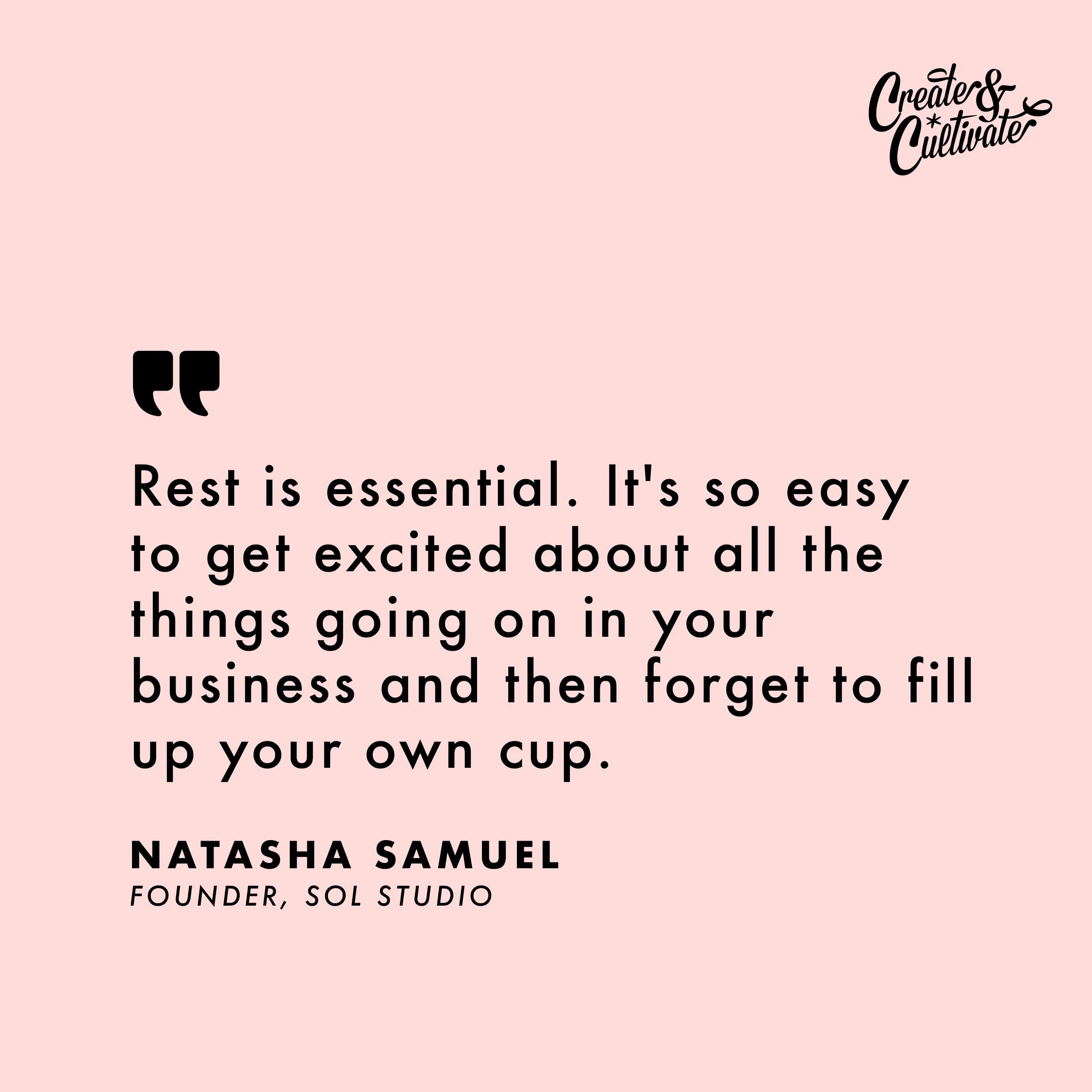
On the research before launch…
The main research I did as an experienced college student (who had never considered starting a business) actually started inside Facebook Group communities. Inside these groups, I would learn from other people’s questions and see what other social media managers were doing. Not only did I make connections in those groups that would eventually become clients, but I learned from the “market research” I observed in the group. It was a great way to understand what my ideal clients wanted while also planning ahead to avoid the mistakes some entrepreneurs were facing.
On self-funding…
I didn’t save any money ahead of time since I was still supporting myself off financial aid and was abruptly let go from my part-time job which prompted me to start Sol Studio sooner than I thought. On one side of the spectrum, I was glad I started when I did. On the other side of that spectrum, I do wish that I had at least a few months of expenses saved up so I wasn't as stressed to take on work that I didn't really enjoy just to make ends meet. I had to make a major sacrifice to move back home six months into my business. I knew I either had to get a part-time job or make other sacrifices to ensure I was building a business that was actually in line with my goals and not just a freelancing business that made ends meet.
On the biggest money mistakes…
Not separating my money earlier. Because of this, I didn't really know how much money I was making or how much money I really should be setting aside for taxes which meant that my first tax season was a low blow financially. I always tell new entrepreneurs the first thing you should do is separate your accounts and be sure that you have a tax accountant on your team who’s handling the finances of your business correctly.
Another tip is to stick to your packages and pricing. In the first few months of my business, I was just excited to be making money from my passion. But that led me to take on work I wasn't passionate about which burnt me out. It's important that you take the time to map out what your hourly rate is to ensure that your package reflects that and stick to it. Even if you don't have a ton of experience and you were young like me, you deserve to be paid enough to support yourself, set aside for taxes, and invest back into your business.
On diving in, head first…
I drove right into building my business after my last long-term internship ended. I didn't have the time to save up or to make a business plan. In a lot of ways, I'm grateful that I didn't have to worry about leaving a job or anything that distracted me from building my business. Since I didn't really have much to lose and I was still early in my career, I knew it was worth a try which really helped me be scrappy during those first few months of the business.
I highly recommend taking the time to map out a savings plan for an emergency fund for those months where you might only be investing what you make back into your business (which is most likely going to be the first full year of business). This is why I had to make a sacrifice to move back home to lower my expenses. I knew that getting a part-time job was just going to distract my energy from building my business and I'm grateful I made that decision. But I also feel like if you're fortunate to have a nine-to-five that can fund your business then that's a great option.
I put a lot of pressure on myself early on to hustle as hard as I could to make ends meet. This led to a lot of burnout early on in my business. If I had been charging enough or had money saved up ahead of time then I could have avoided that.
On how much she paid herself…
Early on, because I didn't separate my accounts, I literally invested whatever I didn't need for my basic needs back into my business. I definitely don't recommend doing this and now I actually do set aside enough to pay myself each month.
On hiring a team…
I have a team of four right now which I've had for about a year. The hiring process has been simpler than I thought it would be. If I couldn't imagine messaging or talking to that person on a regular basis, I knew it wasn't going to be a good fit long-term. My biggest advice for outsourcing is to start with a role that you know will have some type of result or return to your business directly. For example, I knew there's no way I would have started my podcast without investing in a Podcast manager that was going to help me support the show. That's now become such a big part of my brand which made it 100% worth that investment even though it was the biggest retainer I'd ever supported.
During the hiring process, I also realized how important it is to stay organized as a business owner on the back end and track your processes. The more you communicate with your team, the better result you're going to get. And there's going to be a lot of learning. They just can't read your mind overnight. So be patient and also practice your communication skills with them.
On hiring an accountant…
As someone who was an anxious mess just thinking about managing my finances, hiring an accountant and a bookkeeper were two of the best decisions I ever made in my business. Not only do they help me review my expenses and make sure everything was allocated properly, I'm able to be stress-free during tax season knowing that I've already saved the right amount and that everything is where it should be in my books. I use Wave for all my invoicing and for my bookkeeping and I love that it's an all-in-one tool that's easy to use for myself and for my clients.
On the biggest learning curve…
Realizing that rest is essential. It's so easy to get excited about all the things going on in your business and then forget to fill up your own cup. Until I realized that I had adrenal fatigue, I wasn't prioritizing my rest and personal boundaries between my business. Prioritizing rest has been the biggest difference-maker to ensure that I'm pouring into my students and my clients well and not running myself to the point of burnout.
On having mentors…
The woman that inspired my business during my first internship became my mentor as I took on entrepreneurship. She was so incredibly helpful with cheering me on, answering any of my questions, and is still a resource for me to this day.
I waited until I knew I needed a business coach to invest. I think business coaches can be hyped up in the online space. I wanted to make sure I was choosing the right person who was actually a few years ahead of where I eventually wanted to be. Simply by investing in myself, I have seen my biggest months of growth and change just by having a new pair of eyes and a new perspective in my business.
I highly recommend investing in a business coach only when you're ready financially and only when you know you found the right person who also speaks your language.
On marketing and brand awareness…
Since Instagram is what I do for my business, it's been a huge part of how I market my business. My Instagram grid and page is essentially what attracts clients to my work or entices students to invest in my courses. My Instagram account has attracted speaking engagements, help me book clients, and reach major launch goals for my digital products. I use my Instagram account along with my email marketing and podcast to build my brand and markets my audience.
One of the first additions to my team was actually a graphic designer who really helped me get more creative when it came to my Instagram content while also taking some of it off my plate—I manage so many Instagram accounts for my clients. I found that for me the biggest thing is to build a community that I serve well through educational content but also being myself and letting my personality shine.
On the one thing she didn’t do in the setup process…
One of the tools I wish I would have been listed even sooner is a Customer Relationship Management (CRM) platform for my clients. I was so scrappy by using a ton of different free tools for managing the onboarding and offboarding client process. But little did I know, I was wasting so much of my time juggling between different tools. Investing in a tool like Dubsado has helped me streamline my client management, while also ensuring they're getting a better experience as a Sol Studio client. I think it's really important to be smart with what you invest in early on, this is one of the first tools I should have invested in sooner.
On business advice for new entrepreneurs…
Stay in your own lane. Make sure you're not consuming too much of people that are in your own industry. It can be great to get inspired and to learn from others, but be sure that you're making business decisions that feel good to you. You can do any marketing technique, funnel idea, or products the way that feels good for your brand.
Just because it works for a big-name marketing guru, doesn't mean that you have to use it to be successful in business, too. I actually mute a lot of other social media manager and educator accounts. Not because I don't love them, but because I like to stay true to my brand voice and be sure that I'm not being influenced to do what everyone else is doing.
On her #1 piece of financial advice…
Make sure that you have emergency funds for your personal and your business expenses, too. As your business grows and scales, you want to make sure that you can support yourself and your monthly business expenses if anything ever happens.
On advice she’d give herself…
It's okay to say no. It's a lesson that I learned early on, but saying no to opportunities that didn't serve me or just didn't excite me was what opened doors to bigger clients and bigger opportunities. As an early business owner, it's so easy to want to say yes to everything that comes your way. But when you say yes to something that's not a good fit, you're not making space for a better opportunity in the future.
MORE FROM THE BLOG

Why This Successful Founder Wants You to "Persist" Even When Business Looks Bleak
“Things can change at any moment.”
We know how daunting it can be to start a new business, especially if you’re disrupting an industry or creating an entirely new one. When there is no path to follow, the biggest question is, where do I start? There is so much to do, but before you get ahead of yourself, let’s start at the beginning. To kick-start the process, and ease some of those first-time founder nerves, we’re asking successful entrepreneurs to share their story in our new series, From Scratch. But this isn’t your typical day in the life. We’re getting down to the nitty-gritty from writing a business plan (or not) to sourcing manufacturers and how much they pay themselves, we’re not holding back.

It’s not easy to see the silver lining sometimes, especially in times like these, but small business owner, Blair Armstrong has an important message for anyone who’s feeling challenged right now: Persist.
It’s a simple but powerful call to action that has helped her through tough times and she wants to make sure that small business owners hear it too. “Plan for the unexpected—persist,” she tells us. “Things can change at any moment. You may be one moment or one day away from realizing your goals.”
Armstrong knows all about the highs and lows of running a business. The founder of Gilded Body has made plenty of mistakes—her first manufacturer was a catastrophic failure—but she sees them as valuable lessons on the rocky entrepreneurial path. Because as Armstrong explains ahead, “there are no shortcuts or easy routes.”
If you haven’t heard of her luxurious body care line, then you’re in for a pleasant surprise. Her marble body brush, body balm, bath soaks, and candles are beautifully crafted and urge us all to take better care of the skin on our bodies.
So, of course, we’re thrilled to have her brand in the Create & Cultivate’s inaugural Small Biz Pop-Up line-up in Los Angeles. Locals can now safely shop via Postmates or contactless shopping thanks to Square when visiting the IRL pop-up at Platform.
Ahead, Armstrong takes us behind the scenes of her business and tells us how she built it from the ground up, what it really takes to succeed, and why she still hasn’t paid herself.

On the lightbulb moment…
There was not a lightbulb moment per se but a series of events and recurring thoughts and ideas. I’ve always loved skincare and beauty, which led me to become a Dermatology PA. I had an idea for a product that I believed to be unique and that would be well received. During my training and practice, requests for dry skin and body product recommendations were very common. I wanted to create products that I would confidently recommend. It was important to me that they be beautiful and effective.
We spend an inordinate amount of time caring for the skin on the face, often neglecting the skin below the neck. The skin on the face is 3% of the total surface area of the body but receives 99% of our time and focus. I want to encourage a more balanced approach to skincare, one that includes caring for the body with the same, if not more effort than we have for facial skincare.
As I worked on the initial product, I began to develop ideas for more products and after a few months, I had a plan for a complete range. I decided very early in my medical training that I wanted to find a way to improve access to dermatologic care and to reduce disparities in care and creating this business allowed me to get to work on it.
On writing a business plan…
I started without a business plan and created a loose plan after a few months. Creating a business plan proved to be extremely helpful for decision making. It allowed me to work through and articulate my vision, set objectives, and benchmarks. In the process of putting it together, I did a lot of research on the landscape and industry.
On coming up with the name…
This was one of the most important and most difficult aspects of starting the business. I researched the science of naming, made endless lists, surveyed family, friends, and strangers. I inquired with local marketing agencies that offered naming services. Ultimately, I decided on a name that is inspired by my love for art, architecture, sculpture, and history. I considered the history of the words, how they’re used, what the name would imply and how I could build a story around the name that would work well for the brand and product line I wanted to create.
On setting up the business…
I did all the basics of checking the domain, trademark, and social handle availability. Part of the process that I really enjoyed was working with a graphic designer on the brand logo, font, and creating the brand creative guide. The creative and research aspects of building a business are my favorite. I spend a lot of time thinking about how I can improve and refine. It’s through research and my experiences that I find inspiration.
On brand research…
I researched everything I could think of and anything I thought would even be remotely helpful. I read books and articles about entrepreneurship, starting, and growing a business. I love How I Built This podcast by Guy Raz. I highly recommend taking the time to research as much as you can and as quickly as you can to try to avoid some of the more common and costly mistakes. Mistakes are inevitable but there is a lot of guidance and information available.
On finding a manufacturer…
The first manufacturer I found online did not work out at all. As in catastrophic failure. It was a complete waste of time and money but a valuable lesson. I learned the importance of working with a company that will stand behind what they produce. I would advise other founders to ask for recommendations, ask the company for references, and read and understand all aspects of the contract. I was too trusting.

On self-funding…
My company is completely funded by my earnings, savings, and supported by my spouse. I haven't done any rounds.
On money mistakes…
One of the biggest money mistakes I made was paying for services that I didn’t need at that stage of my business. There will always be offers of services that promise to help your business. There are no shortcuts or easy routes.
On working full-time while building Gilded…
Yes. I worked full-time and worked through my graduate program while building the company. It was challenging but I cared enough to persist.
On paying herself…
I did not and have not paid myself. I hope to be able to start to pay myself within the next 12 months.
On building a team…
Gilded is a team of one. I collaborate with experts and freelancers as needed. I’ve attempted to hire a few times. Hiring during the pandemic is proving to be difficult.
On hiring an accountant…
I didn’t have an accountant in the beginning. Choose one of the top online accounting programs and seek advice from an accountant when the time comes.
On the biggest learning curve…
The biggest learning curve is learning to juggle so many things and figure out which ones will actually move the needle for my business. I wear so many hats.
On having a mentor…
I follow some incredibly successful, women that are transparent and share a great deal of information about their journeys. Recently, I had the pleasure of connecting with two experienced and supportive fellow entrepreneurs. I have monthly check-in calls with one and I chat with the other by phone or email. I’m a member of Makelane, a community for women in e-commerce. The opportunity to work with like-minded women and the sense of community has been incredibly helpful.
On allocating budget to marketing…
I’ve tried digital marketing, content marketing, local events, and trade shows to promote the company. I’ve also tried influencer marketing. A significant percentage of my budget goes to marketing because my company is relatively new and I’m still working to build brand awareness. Marketing is obviously critical to business success. A solid marketing strategy cannot be overvalued.

On the importance of email…
I didn’t set up email marketing early and learned how crucial it is for business. I would advise others to not make this mistake.
On her #1 piece of advice for aspiring small business owners…
I would advise people who want to start a business to reach out to and talk with entrepreneurs. Try to learn as much as possible about the challenges, opportunities, and inevitable obstacles.
On her #1 piece of money advice for founders…
My number one piece of financial advice would be to keep proper accounting of all expenses, especially in the beginning—proper record-keeping is important.
On advice for her younger self…
If I could go back to the beginning, I would encourage myself to go faster, commit to the business sooner. To listen to my instinct. That opportunity is often disguised as hard work.
Entrepreneurship is unlike anything you will ever do in your life. Don’t feel pressured to start a business because it’s the thing to do. Take the time to explore your interests and you will uncover your passion.
To discover, support, and shop all of the brands featured at the Create & Cultivate Small Biz Pop-Up, head to our C&C Small Biz Pop-Up hub.


How This Artist Turned Her Love of Product Design Into a Cool Accessories Line That Makes People Smile
Steffi Lynn Tsai just wants you to have a nice day.

We know how daunting it can be to start a new business, especially if you’re disrupting an industry or creating an entirely new one. When there is no path to follow, the biggest question is, where do I start? There is so much to do, but before you get ahead of yourself, let’s start at the beginning. To kick-start the process, and ease some of those first-time founder nerves, we’re asking successful entrepreneurs to share their stories in our series, From Scratch. But this isn’t your typical day-in-the-life feature. We’re getting into the nitty-gritty details of launching a business, from writing a business plan (or not) to sourcing manufacturers and how much founders pay themselves—we’re not holding back.

Photo: Courtesy of Steffi Lynn Tsai
Naming a business is no easy task. The right one is not only memorable but also embodies your values and conveys your distinguishing characteristics to potential customers. For artist Steffi Lynn Tsai, inspiration came from an unlikely source: a plastic take-out bag. “I literally decided on the name the day I decided I wanted to open up my shop and was eating take out from a bag with a have a nice day design on it,” Tsai tells Create & Cultivate. “I thought of Have a Nice Day because I wanted something cheerful, easy to remember, and just overall a happy saying.”
Known for her quirky, colorful work, the name was a perfect fit. Have a Nice Day boasts the artist’s signature smile-inducing designs on everything from stickers and stationery to socks and T-shirts. Although her glass mugs and water bottles are sold out on online, you can snag the sought-after Have a Nice Day Glass Water Bottle at Create & Cultivate’s inaugural Small Biz Pop-Up in Los Angeles where locals can safely shop via Postmates or via contactless shopping, thanks to Square, when visiting the IRL pop-up at Platform. During times like these, who couldn’t use a reminder to “have a nice day?”
Ahead, Tsai takes us behind the scenes of her career as a freelance artist and tells us how she turned her love of product design into a cool accessories line that makes people smile.
On launching her online shop…
“Honestly, it started because I loved seeing my work on items and was experimenting with hand making a lot of my products. It came to a point where I was just hoarding all these handmade goods at home! I posted a bunch of my work online about all the little things I was making and people seemed to like them! So one day, I just decided to start selling them!”
On writing a business plan (eventually)…
“I definitely fell into ‘starting the business’ because my original thought was just to create work and share it with the world! I loved experimenting and just seeing what my illustrations or lettering could look like on a product and selling them helped fund that hobby and it turned into something profitable. I didn’t create a business plan until much later on, when I realized I had to make a plan in order to expand. It definitely helped a lot for me to think and reflect on where I wanted to see the business in five years.”
On coming up with the name “Have a Nice Day”…
“I literally decided on the name the day I decided I wanted to open up my shop and was eating take out from a bag with a have a nice day design on it (the classic plastic bag). I thought of Have a Nice Day because I wanted something cheerful, easy to remember, and just overall a happy saying. It was perfect and simple, and people say it almost every day to at least one person. I loved that. I don’t believe in forcing something to happen. I may be a very persistent person, but I think things should come naturally. Be observant, look at everything around you, listen to everything around you. You might hear or see something that just ‘clicks,’ y'know?”
On setting up the business logistically…
“I had a really hard time with this because I thought everything would be super easy. I started off on Etsy and it was just ‘an Etsy Shop.’ To me, I thought that was good enough. It is really difficult for me to not have control over every aspect of my life, so asking for help was not an option I wanted to explore. That being said, my biggest advice is asking for help and not to be stubborn about it! Your resources are all right in front of you and your biggest resources are your peers. Ask fellow business owners questions!”
On finding the look and feel (and audience!) for the brand…
“I kind of fell into starting a business so I didn’t do this right off the bat. But what I did, later on, was: make a mood board, make lists of your market, and research your demographic.
Mood board: I am a very visual person, so I like to take photos and collect items that I catch my eye. Making a mood board is so important because you can see everything you like in front of you and find the connections between everything. This will help you with your brand colors, aesthetics, etc.
Lists: Make a list of all the shops that you admire, that you shop at, that will be your peers. See what they are doing and what is successful for them
Research your demographic: What kind of age group are you looking to sell to? What are they into? What is trending for them?
On locating the right manufacturers to work with…
“Lots, and lots, and lots of Googling and asking for estimates and quotes. It is super scary and hard to invest money into a product, A) you’ve never made before, and B) from a company that you’ve never worked with before so make sure you look at all your options!”
On self-funding the company…
“I did a lot of freelancing jobs and saved a lot. I have always been super good at saving because I am in constant panic that one day there might be a crazy emergency and I will need a large amount of money for some reason? That paranoia definitely helped with saving. Obviously, this depends on the type of business and the product one is trying to make—because different products cost more or less. I personally think self-funding will always be my go-to because I feel like I am in total control.”

On making the mistaking of stocking too much inventory…
“Most production prices go down when you order in bulk, so it is appealing to order (for example) 1000 stickers at $0.25 compared to 100 stickers at $.75. But the worst thing is to have too much inventory that is not moving. It is basically just sitting money. There was one time where I thought I could move a lot of a specific product, and I didn’t. The product was not selling and just had thousands of dollars worth of products, sitting around in my apartment. And I don’t think I really ended up profiting from it.”
On freelancing from the get-go…
“I actually started freelancing in college and then started the shop right after I graduated. I have always been super eager to work. So I took advantage of all my downtime to freelance and save money because I knew I didn’t want a full-time job ever. And after I graduated, I immediately started my shop.”
On growing a team…
“I have an assistant that helps with some orders, but I personally like fulfilling orders myself. I like that I get to touch every order and add a personal touch. However, as Have a Nice Day grows, I will definitely have to sacrifice that detail since it will end up being not practical.”
On being transparent…
“I think it is important to be transparent and open about what goes on behind the scenes. People want to know the BTS! Show them!”
On her #1 piece of advice for aspiring small business owners…
To be kind of yourself, be open to learning, don’t be discouraged, and make sure you put love into what you are doing—it’ll show.
To discover, support, and shop all of the brands featured at the Create & Cultivate Small Biz Pop-Up, head to our C&C Small Biz Pop-Up hub.

MORE ON THE BLOG