
Links From Our Group Chat: Reese and the WSJ, Art Prints We Love & The Martha Stewart Empire
What up Sunday night. It's us.

Cozy up on your couch for some Sunday night inspo.
Did you know a woman invented forensics?
Martha Stewart. And her 30-year empire.
We love this. "Witherspoon starts and ends her days with her nose in a book, nonfiction in the morning (“something that gives me food for thought,” she says) and fiction in the evening (“escapism!”)." We also love this WSJ profile.
It's live! The Chasing Paper Print Shop, which is an art collection that coincides with Chasing Paper's core mission - design should be for everyone. We happen to agree. They launched Friday with 24 high-quality prints at 30% less then competitors in the space. The goal is to make thoughtful design easier for people to get into their homes. Plus, we've got a discount code for the C&C community. (The code is C&C for 10% off any print-- includes framing.)
Might Harvey Weinstein actually be arrested? Justice might prevail.
We choose you. Who is part of your 'chosen family?'
MORE FROM OUR BLOG





The One Thing That Gives Women Power Over Men
And other GEMS from our #CreateCultivatexMarriott Portland popup.


Portland went off last night. Last night we landed in the PNW for a night of cocktails and conversation! We'll talked all things entrepreneurship, creative & tech with women who are breaking down barriers and actively putting in work to build a better future. Over 300 guests attended the popup at the Portland Marriott Downtown Waterfront, hearing from panelists Grace Mahary, Jessica Naziri, Karen Okonkwo, and Heather Lipner about their life in STEM, their aspirations, and how women are the true superheroes.
Read some of our favorite takeaways below and head to our Facebook to watch the full live stream including our keynote with Sonja Rasula.
FIND YOUR TRIBE
TechSesh founder Jessica Naziri quit her job in the startup world when she felt like she didn’t belong. She told the crowd, “I never want to feel like that again. I want to make it my mission to empower myself and empower others.” So she taught herself to code— well, with a little help from her friends. “I am part of a network called Persian women in tech. We all meet once a month.” One of the women in the group help Jessica learn to code. “I’m not going to say I’m a programmer. I know the basics and that enabled me to understand the foundation. Even if you don’t want to code, just knowing a little bit is so important. These days it’s so easy— you can take an online course and empower yourself.”
Model and Project Tsehigh founder Grace Mahary also brought up that in such a digitally dependent world, there is no way to survive without getting involved in STEM in some way. So get on it.
TURN PASSION IN PROJECTS
Heather Lipner, the founder of then now-closed, but highly popular, Clashist (they made James Franco leggings) and now Drawsta, knew that she wanted to continue in the fashion world, but incorporate tech. “Augmented reality at that point was not really even a word people were talking about.” Before Snapchat even came out with face filters, Heather was doing R&D to figure out how to make Augmented Reality work in the fashion sphere. “If you don’t know what it is, it’s adding a digital layer to a physical thing you can touch and feel, and the digital layer can only be experienced through a device like an iPhone. With Drawsta you can have real time changes to your clothes. With AR you can upload a new animation— you can program your clothes in real time. It’s a powerful tool and a new way to experience wearing something. With Snapchat and Instagram stories everyone is changing their face, but it could be on clothes and surfaces.”
It could also make fashion more sustainable— something that Grace Mahary brought up.
OFFSET YOUR WORK
"I work in an industry that’s one of the most polluting on the planet, so it’s all about offsetting,” the activist told the crowd.
Project Tsehigh (PjT) is a nonprofit organization dedicated to providing uninterrupted energy to impoverished or remote communities around the world via renewable energy sources.
“While I was visiting and living in some of these developing nations I realized, very quickly, I couldn’t charge my phone, I would go to a restaurant and the power would go out. When you live in that condition you’re forced to see how people live and wake up every day. To think that you can't wake up every day and have facilities that run consistently— that’s how I became passionate about it. We’re working with solar panels, and as of this month, we’ll be launching our first project in Eritrea, and we’re donating 101 solar units to households — and then a school, a church, and a mosque.”


PROMOTE INCLUSITIVITY
Karen Okonkwo of TONL, a which seeks to transform the idea of stock photography by displaying images of diverse people and their stories around the world, explained, “For people to feel welcome in any industry, they need to see online that there are other people that look like them, in those particular fields. Imagery, in the form of advertising, is the first step in saying, ‘hey you are welcome and we want you here.’ That angle is very powerful and underutilized.”
“Sometimes, especially in the black community we feel tokenized,” Karen told the crowd. "I’m not trying to act like the spokesperson for the black community. I’m simply someone who is trying to provide change and influence. I may have some missteps along the way. Try to give people grace as they launch their businesses and feedback.”
She also dropped a version of this gem: Be your own Dora the Explorer and teach yourself.
"Be your own Dora the Explorer and teach yourself."
Tweet this.
“If you don’t see what you want— anyone who has a skill set, be that change. Start your own Facebook group or start your own meet up, or agree to mentor one person, that’s how we create that cascade of people who can enter into STEM. There’s nothing wrong with asking for help, either. That knowledge is there for you to take."
WOMEN ARE FREAKIN SUPERHEROES
“A lot of money is controlled by men, and that’s the biggest problem," shared Heather when talking about raising money and going into VC meetings. "When you go and try to raise you’re almost always talking to a man and they don’t understand the female perspective. Until you experience something or have that problem, you’re not going to understand what the solution is. It’s harder for women to get funded, it sucks,” she said frankly. “For me I’ve been jumped into a room and seen a total glaze.” Which is why she says, "The money has to also be diverse in category, gender, race, and everything so you can create companies that are targeted for what your niche is.”
Heather then dropped this AMAZING bomb during the Q&A portion.
“I just had a baby. The baby was in me and then it came out of me. And I feed the baby with my breasts. Men cannot do that. I wish I could go back to all the VC meetings I had and to the men in those rooms say, ‘You have no power.’ I wish I could have a different mind shift and just go for it without being intimidated or being scared. It’s a crazy thing to think about. They might have the money. It’s artificial. It’s contrived. And we can change that. You just need that mind shift.
Any questions?
MORE FROM OUR BLOG

C&C Classifieds No 63: Google, Estee Lauder, sweetgreen & More
The tricks are over.
If you didn't get any candy last night (or don't have any kids to steal it from) we've got a sweet batch of new jobs. No tricks here, just treats.
Something Social - Los Angeles, CA
LabNo25 - Los Angeles, CA
Estee Lauder - NY, NY
Green Matters - NY, NY
Google - Austin, TX
TO RECEIVE OUR FULL LIST OF CLASSIFIEDS SIGN UP HERE.
MORE FROM OUR BLOG

Win Passes to An Intimate Evening In NYC with Create & Cultivate & Daniel Wellington
Get your win on.


New York City we’re coming for you! In partnership with our friends at Daniel Wellington, we'll be co-hosting a night out in SoHo to ring in the start of the holiday season. Christmas jingles here we come!!
Join us for an evening of cocktails and conversation with our very own Jaclyn Johnson and the new face Daniel Wellington, Elsa Hosk! Following the conversation, enjoy champagne and networking at the exclusive influencer cocktail event with with special DJ Harley Viera-Newton!

The evening is invite only but we’re giving away 2 VIP passes to this special night out with Create & Cultivate and Daniel Wellington. Enter to win by filling out the form below.
List Closed
What One Founder Calls the Most Essential Skill to Starting

From the pop-friendly Studio DIY products to Baby Boy Bakery journals to Color Theory Premium Inks by Studio Calico (above), April Foster, CEO and founder of Inked Brands has launched some of the most beloved influencer products. A leader in influencer commerce, you come to Inked with a vision and they do the rest. But do they rest? That's a whole different question.
Which is why we caught up with the entrepreneur and mom of FOUR (!) to find out her thoughts on influencers, hard no's, and where she finds the time.
You’ve said that you’re an entrepreneur at heart. For young women wondering whether or not they should launch a co, what does that mean to you?
If you’re a creator and are constantly curious, inventing new things or if you see better ways of doing things, or a hole in the market that you know how to address; I think it’s just in your blood.
What do you consider the most essential skill when starting?
Paying attention. It’s about learning when the details matter and when they don’t and are just paralyzing you. It’s about paying attention to the numbers, to customer feedback, to your team and fixing what you can and letting go of what you can’t. Being disciplined in this practice and objective is extremely important, too. I can remember times as I was packing boxes I realized weights on them were wrong and I’d have to call back and unpack then repack half our orders for the day. That wasn’t pleasant, but it saved us money and helped us get to the next month. When I haven’t paid attention to the details that matter, mistakes are made, sometimes ones that are incredibly costly.
How do you know when it’s time to hire?
For me, I had to hire right away because I was keeping my day job so the profits could fund the growth of the business. Also, I was hiring for the positions that were most well-defined and easiest to monitor (customer service & fulfillment). This didn’t mean I wasn’t involved. In the early days, I answered customer service daily alongside my employees and packed boxes with them, too. I have strong opinions regarding understanding your business and customers, and the primary way to do that is to get in and get your hands dirty. Many founders of VC-backed companies are robbing their founders of this valuable experience. But, when the duties are compromising your ability to perform tasks that ONLY you can do, that’s when it’s time to hire.
Micro-influencers have played a large part of your strategy in growing your biz. For a long time they were overlooked by bigger brands. What do you think people aren’t paying attention to now that they should be?
There is so much media and investor attention towards fast growth, but it’s the slow and steady brand builders that will win the race. Influencers who become insta-famous, can just as instantly become irrelevant. I’m interested in the people and brands who want to run a marathon, not a sprint; those who want to get it right instead of just getting a quick paycheck.
"Influencers who become insta-famous, can just as instantly become irrelevant."
Tweet this.
What does Inked offer influencers that other companies don’t?
We combine products and content in a way that is meaningful and relevant to the influencer or thought leader and their followers. That’s our main differentiator. We work as a partner to develop, source, and design these products, then display and sell them in a unique and meaningful way whether that’s subscription, traditional ecommerce, or premium content such as online courses.
What do you as CEO offer influencers that other companies don’t?
The main reason I started this model three years ago was because I could see influencers’ desire to have long lasting revenue streams and not be overloaded with sponsorships that devalue and exploit their brands. I’m committed to that and our policies and practices align with that.
You’ve said not to surround yourself to “yes men,” what’s one of the hardest but most useful (in the long run) “no’s” you’ve ever heard?
I hear “no” every day and I’m probably not the only person that hates hearing it. The most useful “no” I’ve heard in my career came at a pivotal time for the business. My CFO/COO was diagnosed with terminal cancer, which was a resounding “no” that I wouldn’t be able to grow the company as I first envisioned. That “no” taught me that I’m not in control (which bugs the fire out of me!), it taught me patience and selflessness, and that my family and spiritual well-being are the most important. That “no” helped me more than any “yes” ever has.
Your pump up jam when you can’t seem to find the inspo?
Ha! I live for silence. With 4 young kids and never any alone time, if I can be by myself with zero noise, that’s the most refreshing thing ever. That’s probably not the answer you were looking for.
RIght so, uou have four kids, so we have to know… where is the time? What’s the most important mom lesson you’ve learned?
I’m forever wishing for more hours in the day! From the time I became a mom, I knew setting a routine would be so important to the well-being of our family. I thrive in a structured environment as does my husband. So, we stuck to a fairly rigid schedule that still works almost 7 years in. Our kids go to bed by 7pm and sleep 12 hours most nights (there’s an occasional potty emergency). That allows me to set a work schedule where I’m home in the evenings for mealtime and bedtime, then I have time after 7 to work on tasks that require undivided attention while it’s relatively early. As for a mom-lesson I’ve learned which is entirely the opposite of my work approach: have low expectations! With four little people each with minds of their own, I expect there to be misbehavior, I expect to wake up during the night, or to have a car that’s not pristine. I expect to not be able to eat organically or healthy all the time. By setting low expectations, I’m not disappointed nearly as often, I’m more patient and understanding, and in general, I’m a happier person and better mom.
MORE FROM OUR BLOG
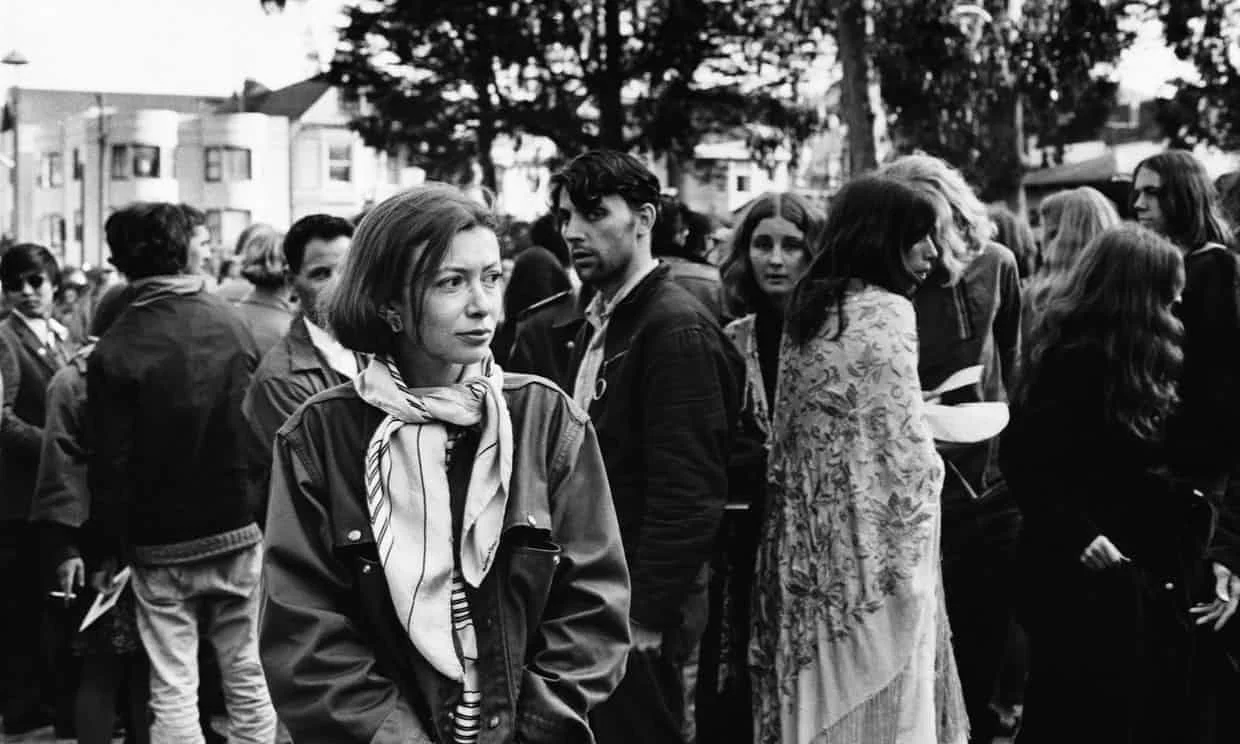
5 Best Career Takeaways from the Joan Didion Doc
Goals. And goals. On goals.
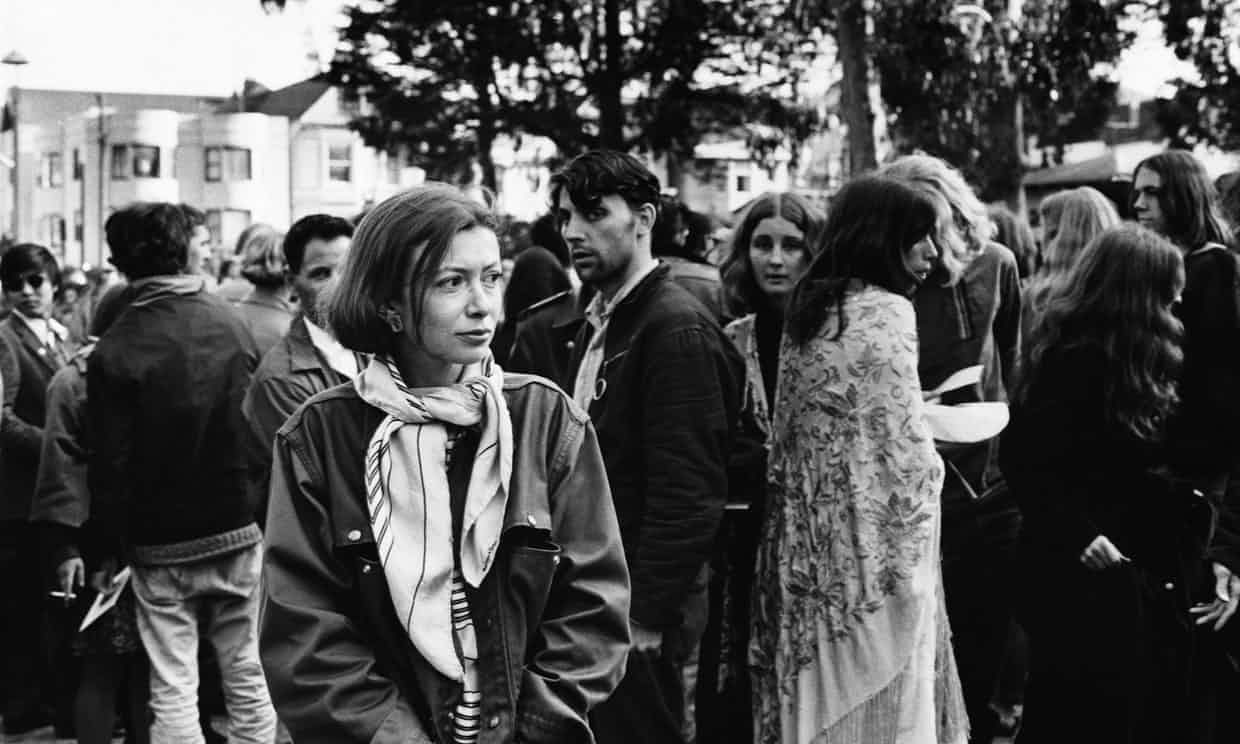
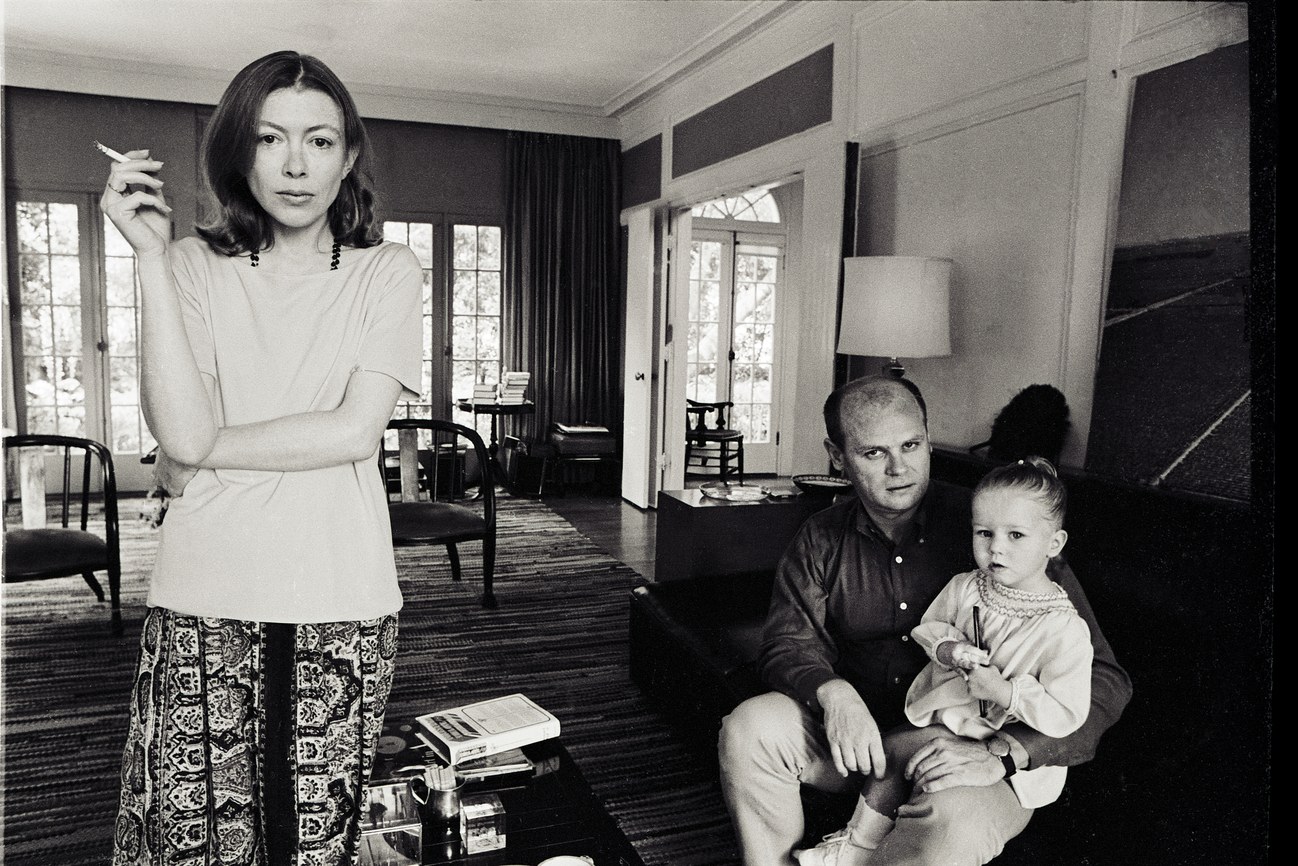
Photograph by Julian Wasser / Netflix
If you tuned into the Netflix Doc, “Joan Didion: The Center Will Not Hold,” there were some tearful moments, some revelations about her relationship to her dad and her husband John Gregory Dunne, but there are also some moments that we took as career inspo.
Here are our five faves.
1. Everyone takes their lumps in the beginning. But those who stick with it persevere.
After graduating from UC Berkeley, Didion traveled to New York to work for Vogue. As fellow editor, Phyllis Rifield, explains in the doc, “it would be exciting because it was the pre-eminent fashion magazine.”
“You didn’t have the luxury of writing and writing and writing,” Rifield shares, bringing up Didion’s editor.
“I remember she would have this big aquamarine ring,” Didion says in the documentary from old C-Span footage. “She’d violently be crossing things out, yelling ‘action verbs, action verbs.’ Everybody that lasted with her,” she continues, “basically learned to write.”
Didion lasted, but not without taking some serious editing.
2. You never know where your shot will come from.
‘Self-respect, its source, its power,’ is the title of Didion’s first published Vogue piece. It had been assigned to a freelance writer, Didion reveals. It never showed up, but the title had already been printed on the that month’s cover.
“No piece came in,” says Didion, “so I had to write it.”
“People with self-respect,” wrote Didion in the piece, “display what was once called character… Character, the willingness to accept responsibility for one’s own life is the source from which self-respect springs.”
“Character, the willingness to accept responsibility for one’s own life is the source from which self-respect springs.”
Tweet this.
She wrote the piece. Got her byline. And the Joan Didion voice officially hit the world.
3. You don’t have to be a breakout hit, but you do have to break out.
Even though Vogue was, as previously stated, the pre-eminent fashion magazine-- and still the spot that so many writers vie to work at, it wasn’t the end-all-be-all for Didion.
She’d work all day at Vogue, come home eat dinner, and work on her novel. “I’d pin up parts on the walls of my apartment. I think ten people read it. I think 11 copies of it were sold,” she laughs. The novel is called “Run River.”
It was not her best work, but it was her first.
4. Sometimes you have to give up the day job to become who you really are.
Despite a burgeoning career, Didion knew that it was time to get out of New York. “It’s easy to see the beginnings of things and harder to see the ends. I could remember now with a clarity that makes the back of my nerves constrict when New York began for me. But I cannot lay my finger on the moment it ended. All I know is that it was very bad when I was 28.”
It was not until she published “Slouching Toward Bethlehem,” in 1968 did she become a cultural phenom.
Nothing happens overnight. The recognition doesn’t happen at the beginning of your career. That’s why it’s called the beginning.
5. The middle part is always the hardest and when you need to dig in.
No matter what the job, there’s always a moment when you have to go straight through the center.
There’s no other way around it.
In the doc, Didion talks about how the beginning of a book is the easiest, but once you dig into the middle that’s where the real work begins— for everyone.
What was your favorite part? Comment below!
MORE FROM OUR BLOG

Weed Need to Talk: I Had an Unconventional & Controversial Job
We chatted with a female grower about the weed biz.

We Need to Talk is a bi-monthly, anonymous series, where contributors share stories about business, life, and the stuff we don't talk about.

Mary Jane. Mother plant. Only female plants make the buds needed to get you buzzed. So it seems natural that women could dominate the billion dollar marijuana industry.
In 1996 California was the first state to allow the medical use of marijuana with the passing of Prop 215. There are now five states, Alaska, Colorado, Oregon, Washington State, as well as Washington, DC which have legalized recreational, as well as medical, marijuana. 20 more states have legalized medical Mary Jane. It's an incredibly lucrative business, both for health and fiscal purposes, but in 2004 there weren't a lot of women working as growers.
We caught up with one of the women in CA who went from grunt to dealing with large volume dispensaries to chat herb and business.
What was your role in the business?
I was green and super young when I started. At the beginning it was all about shadowing my business partners who were very knowledgeable, discreet, and a little intimidating. So like any job I did the grunt work: potting, balancing the PH water levels, feeding, spraying, plant spotting, testing equipment and cleaning water wells.
As we grew into the farm I managed the life-cycle of the plants from babies to curated buds. Every eight weeks we had a new crop but every five weeks we were seeding for the next round. It goes quickly and like any business you're constantly managing what's going out and what's growing up. Plant production is a lot like event production. High stress, lots of moving pieces and equipment, and big pay days!
"Plant production is a lot like event production. High stress, lots of moving pieces and equipment, and big pay days!"
Tweet this.
Six months into the business I was also managing the sales. Our business partner made some initial connections but since we all had the same product I started venturing out. I was eager, young, and a little naive, but it played well into my sales. I hit the pavement hard. I walked into dispensaries showed them samples, gave them notes, and high balled the product. Being a young and attractive lady in a male-dominated industry, I rocked at sales! Before long I did sales trips on my own and negotiated with large volume dispensaries in Oakland, LA, and SF.
How did you get into it?
Love! Love at first sight kind of love. My friend dragged me to a house party and the moment I locked eyes with this man we were hooked. But our romance was suppose to be quick since I was moving to NYC in five weeks. I told him not to fall in love.... I ended up leaving but only got as far as Santa Fe when he sent me an email and a business plan in Excel. He laid out his plan to build a farm, make loads of cash and travel the world with me. He was smitten and I was intrigued.
I put NYC on hold and flew back to him and started what was the beginning of an incredible journey and the story that is my life.
What kept you involved?
Love, money, and seeing the world! I was 22, it was 2004 and I had never considered I could be a self-made woman. I am fiercely independent so the appeal of creating my own lifestyle and product at such a young age was an incredible opportunity.
We both developed side projects throughout our partnership which helped with the stress and anxiety of our business. As a freelance florist I was exposed to a new side of luxury and I was hooked. Flowers and event design were ultimately the driving force to me leaving the farm business.
Was there any point where you were worried about the legality of what you were doing?
Yes and no!
No, because we always stayed within our permit limits when growing. But everything else we dealt with was like living in a constant state of extreme paranoia!
Were there any ‘oh sh*t’ moments? I’m about to get arrested or someone I know just got raided?
Many! I am actually considering writing a book about all of them. We were blackmailed, a few of my buyers got busted, and in a state of utter paranoia my ex partner had me cut down an entire crop. I remember that day thinking to myself this is it. I am done. I had a stash of cash and quickly made plans to leave SF. I had enough and was ready for my NY experience.
"In a state of utter paranoia my ex partner had me cut down an entire crop."
Tweet this.
When people asked you 'what do you do,' how did you respond?
Creative Services! Once we had the garden going I started freelancing as a florist. I really immersed myself and learned everything I could about plants, flowers, and business. I got a few steady freelance gigs that helped me stay connected to the outside world.
There aren’t many women in the weed biz, especially a decade ago, what was that like?
Oh, I love this question. I realized early on that being a women in my position was a huge asset. It was unexpected, surprising, and refreshing. It showed in my sales and gave me an edge. At times it was intimidating when negotiating price per lb. with five guys in a warehouse, a guard and cameras everywhere, but ultimately my product was superb and boutique. Having multiple businesses since then I actually prefer being a minority.
What do you think decriminalizing weed would look like nationwide? is this something that’s important to you?
Absolutely. We have got to pull out all those young men and women who are serving time for non -violent offenses, possession, or who have been targeted because of their socio-economic situation. Our laws surrounding marijuana are archaic, unjust, and need to be amended.
"Our laws surrounding marijuana are archaic, unjust, and need to be amended."
Tweet this.
More from our blog:

Pre-Week Motivation From One of Our Favorite CEOs
She's also the dance party queen.

When Sonja Rasula, CEO & Founder of @UniqueMarkets, @TheUniqueCamp, and @TheUniqueSpace got the #CreateCultivateSEA crowd on the Main Stage AND dancing during our last conference, it was truly something special. As she stated on her personal IG,
"Here's to those willing to take risks, to say yes to the unknown, to be weird in front of hundreds of strangers. A week ago these brave women got up on stage with me, learned their moves in less than one minute, and gave-it-a-go in front of hundreds of women staring back at them. BRAVO TO THE DARING - the difference between most people and these women is that they climbed onto the stage, knew their moves wouldn't be in sync, were faced with judging stares and DID IT ANYWAYS. And when making decisions in meetings, or figuring out a business idea or planning for a presentation, my guess is these ladies will conquer anything you throw at them, instead of being nervous and sitting on the sideline. 🎉 It was an honor seeing you all at my workshop, just look at those smiles and those moves!!!!"
She's also the owner of the above words, which, might be one of our most liked photos on IG-- ever. So in preparation for our Create & Cultivate x Marriott Hotels popup in Portland this week, where Sonja will be taking the stage to keynote and inspired, we had her rework some of our favorite inspirational sayings.
Check out the below for a little pre-week motivation and be sure to RSVP to our Portland event here.
1. Original: Success comes to those who wait. Sonja’d: Success comes over nights.
2. Original: Do one thing every day that scares you. Sonja’d: If it's easy, you're not doing it right.
3. Original: You can do it, put your back into it. Sonja’d: UM I WOULD SAY EXACTLY THAT!
4. Original: People who are crazy enough to think they can change the world, are the ones who do. Sonja’d: All it takes is a big idea and a little crazy.
"If it's easy, you're not doing it right."
Tweet this.
5. Original: Whether you think you can or think you can’t, you’re right. Sonja’d: You are your biggest critic, let go. Become your biggest cheerleader.
6. Original: Done is better than perfect. Sonja’d: Dreamers dream. Doers get shit done.
Have a favorite saying? Share in the comments below!
MORE FROM OUR BLOG

Links From Our Group Chat: Birth Control Time Warps, Joan Didion, Motherhood Myths & More WTFs
Group reading is group therapy.

Who watched the Joan Didion doc on Netflix this weekend?
Did they call it birth control, because they want control of our bodies. CAUSE. What in the actual? It's the freaking Rocky Horror Birth Control Show. Where we're doing time warp again. And again. And again.
Why does it feel like motherhood is so easy to get wrong? Apparently it's called The Goddess Myth.
If you're on the hunt for a new creative manifesto, look no further.
We hope this isn't just to sell book copies. Don't mess with Joe.
Do you think there is a cost to speaking out?
Revisiting this SNL gem right in time for Halloween.
What are you reading this snoozy Sunday? Comment your links below.
MORE FROM OUR BLOG

Here's How to Face Criticism at Work Head On
Think happy thoughts.

Article by Alana Helapitage. Facing Criticism at Work? Here's How to Stay Confident originally appeared on Shine, a free daily text to help you thrive.
Success-driven professionals tend to take our work personally—including the criticism we get for it.
While we have the power to respond to all criticism constructively, there’s some criticism that brings even the most empowered among us to our knees. This is the kind of feedback that challenges our self-worth, our power to serve, and our authority as professionals.
When we get difficult criticism, it’s important to have a practice to lean on so we can bounce back stronger and more assertive than we were before. In fact, according to a graduate study conducted by Mark Reid, assertiveness is one of the key factors of Emotional Intelligence, which research shows is a core part of effective communication at work.
The following three-step assertiveness practice has been a lifeline when I’ve received truly challenging criticism. This practice has allowed me to re-center myself when I feel trapped in the mire of other people’s wants, needs, and expectations—helping me to distill the lessons in the criticism while still standing my ground.
Step 1: Give Yourself Permission to Feel
We carry so many hidden limiting beliefs about certain feelings. The anger, sadness, shame, and other negative emotions that result from receiving criticism can trigger beliefs about what is wrong or lacking in us as human beings. We may believe that having so-called negative feelings reflects our weakness, illness, or badness.
Decide to feel what you feel.
So, we may react by resisting, dismissing, or outright denying these feelings, only to have them grow stronger and more depleting.
The solution? Decide to feel what you feel. Carve out some time alone and undistracted to simply sit still, breathe deeply, and witness the sensations that arise in your body. Scan your body from head to toe and notice what feelings come up in each body part.
Maybe you feel your head swimming in your racing thoughts. Your neck might be aching under the burden of feeling not good enough. Your heart could be pounding with anger at some unjust remarks hurled your way. But amidst the struggle, you may eventually feel some courage mingling with the anger, some peacefulness expanding in your lungs as your deep breathing relaxes you.
As you notice your feelings, choose to relate to them, not as an indication of who you are, but as a sign of what needs your attention so you can respond proactively to the situation at hand.
Step 2: Write It Out, Talk It Out, Work It Out
Once we’ve given ourselves permission to feel, we need to express what we feel. You may have heard the popular definition of emotions as “energy in motion.” In other words, emotions aren’t designed to stagnate. Rather, they’re designed to be fluid, to move through us.
Emotions are energy in motion.
To help shift our feelings from negative and depleted to positive and assertive, we need to put words to what we feel—uncensored—and then talk about them to those we trust to listen to us.
For the first phase of this process, I recommend writing down what you feel. This is the unedited part, for your eyes only. Allow every feeling to spill onto the paper in its raw form, no matter how wrong or even obscene your feelings may seem. If you’re compelled to write an entire page of expletives or a litany that would knock your critic(s) to the ground—so be it.
Then, highlight the key feelings that are especially difficult for you to process. Decide who you want to discuss them with and clarify what kind of feedback you need so you can respond effectively. If you just want someone to listen, that’s completely valid. I’d recommend speaking with someone who isn’t directly involved in your relationship with the person/people who have criticized you, in order for you to get unbiased support.
Another tip: Physically moving our bodies based on how we’re feeling is a key part of healthy self-expression, whether that means dancing, hitting a punching bag, practicing yoga, or doing other forms of exercise. This is one of the fastest and most effective ways I know to keep our emotions moving in a positive direction, especially when we focus on our breathing and how it would feel to be assertive.
Step 3: Use D-E-A-R M-A-N When Talking to Your Critics
D-E-A-R M-A-N was introduced to me by my soul-based business strategist, Kim Page, as a handy mnemonic to practice assertive communication. It was developed by Dr. Marsha Linehan, Ph.D., ABPP, an expert in human psychology. I'll illusrate each letter in the acronym with an example adapted from my experience with writer clients struggling with criticism.
●︎ D stands for describing the facts of the situation at hand. "My understanding is that I was to provide you with ten hours of editing work for $500, and you were expecting a ten page critique in that amount of time."
●︎ E stands for expressing your feelings and opinions using “I” statements, along with a brief explanation. For example: "I feel unclear as to why you expected a ten-page critique, when we agreed that half of your payment (five hours of my time) was to be set aside for a step-by-step editing strategy."
●︎ A stands for asking for what you want and saying no to what you don’t want. Example: "I would like to talk to you over the phone to clarify what your editing needs are, and also what we can do to meet those needs together. I don’t want to write a ten-page critique because I feel it would be overwhelming for you as a novice writer."
●︎ R stands for reinforcing the benefits of getting what you want and need and the consequences of not getting what you want and need. Example: "If you’re open to speaking with me over the phone about our scope of work, I feel we can come to a clearer understanding of what will make your book as effective as possible. If we don’t, I’m concerned that you’ll continue to want more feedback than we can efficiently apply to editing your work."
●︎ M stands for staying mindful of your desired outcome for the communication, without giving into distractions. Example: "I understand that you’re disappointed about not receiving a ten-page critique, but I have to emphasize the importance of breaking down our work into manageable steps."
●︎ A stands for appearing confident, meaning that you maintain direct speech and eye contact. Example: "I have provided editing strategies for dozens of new authors in your field, and I trust that we’ll figure out one that works for you—even if it’s different from what you were envisioning."
●︎ N stands for negotiating a solution with the other person, accepting that there may be alternatives that will allow you to get your wants and needs met. Example: "While a ten-page critique is off the table, how else do you think we can work together to get your editing needs met?"
Success-driven professionals often go through a lot of difficult change to claim our self-worth, our authority, and our power to serve. Part of this change includes responding assertively to criticism.
The three techniques I’ve described can help you to walk resolutely down your chosen path, allowing you to turn criticism into fuel for a successful and fulfilling career.
About Shine:
Shine is a free daily text message experience that makes it easier to live a more intentional life. Each weekday morning, Shine sends curated content and actionable tips across confidence, daily happiness, mental health and productivity. Why? Because we all need a little help to get through the day—and Shine’s got your back. To sign up, text “SHINE” to 759-85 or go to www.shinetext.com to learn more.
Follow Shine on Instagram, Twitter & Facebook: @ShineText
MORE FROM OUR BLOG

Is the Text Message Interview a Scam?
What to know before you accept.

Written by: Makeda Waterman
If you think you know technology, the text messaging interview tops our list. The reality is most job seekers will not be prepared when an unexpected text arrives on the smartphone. With the rapid pace of technology, you need to know more than the most common interview questions.
Before you accept your next text interview, we included the pros, cons and why it is becoming popular across the globe.
Why Text Message Recruiting is Popular
According to a Gallup News article, “sending and receiving text messages is the most prevalent form of communication for Americans younger than 50.”
HR staff at organizations have realized that emails can get lost in spam folders, but people take the time to check their phones a few times a day. Online tools such as Google Voice give recruiters an opportunity to send a text message from their computer.
The Android and iPhone have voice dictation tools that help them to create a text message without the use of their cell phone or keyboard. Sounds like an easy way for employers to find top talent.
SMS Interview Tips
The entire purpose of SMS interviews is for recruiters to screen out applicants without having to spend countless hours on the telephone or play cat and mouse phone tag to connect with applicants successfully. An SMS message may come as a surprise. Here are messages to avoid sending if you receive one.
- CU later!
- XOXO :D
- Thx for the invite!
- Gr8! C U Soon
What to consider when sending a professional SMS message:
- Try to avoid sending long text messages if you have a basic question like directions to find the location of the interview.
- When you need help with a more detailed inquiry, send an email or call the recruiter. Keep your messages within a 140 character tweet limit.
- Emojis are casual but are not professional when communicating with an HR rep. If you can avoid using slang and check for spelling errors, you are well on your way.
- Send your responses during regular business hours. A text to a recruiter at 3 am may not be looked at as professional hours.
The Benefits of Text-based Interviewing
There is a belief that text-based interviewing minimizes bias when recruiters hire top talent. The recruiter is less distracted with personality or accents and can stay focused on how the applicant answers their questions.
It helps to improve the chances of qualifying the right candidates to come in for an interview. The conversation with a recruiter can end quicker if they choose not to move forward. The information can stay on record and text messages can be shared with managers throughout the hiring process.
The Cons of Interviewing via Text
Not all applicants understand the do’s and don’ts of how to be professional when replying to text-based interviews. An applicant that adds an emoji or sends a casual response might be a qualified candidate. Depending on the person that receives the text, he or she may not have an interest in carrying on an interview via SMS. It is fair to say that not all millennials or job seekers appreciate texting over a one on one connection with a live recruiter.
Text Message Recruitment Scams
Doesn’t it sound like a convenient way to communicate? Yes, indeed. The other side of this text-friendly recruitment practice is scammed becoming popular.
On Indeed, job seekers shared their experiences of generic text messages from illegitimate companies. Beware of the text message that asks you to send your full name, date of birth, address and Social Security Number. A recruiter from a real company will not ask you for this information. If this happens to you, we strongly recommend that you hold onto the message and report it to your local authorities.
The next time you receive an SMS from an HR recruiter, think of it like an in-person interview. It takes a few seconds to use autocorrect and think of a pleasant and professional way to answer a question. You most likely are one out of the many people that will receive it. Do your best to wow the recruiter and good luck!
MORE FROM OUR BLOG

Everything You Missed from Our Create & Cultivate Style Summit with Simon Malls
We're letting you in BTS.


Mall life is the great life, if you attended the Create & Cultivate Style Summit with Simon Malls at the Houston Galleria last weekend. From @michelletakeaim sharing great social tidbits with the 300+ crowd like, “It's really important to post in real time and build a connection with your followers," to Houston-based fashion illustrator Rongrong Devoe doodling onsite for attendees, to the non-stop note-taking in Erin Condren custom #foundatsimon notebooks. We had a time.
For a better look into the festivities press play on the full recap below. Includes some Sophia Bush mic-drops.

photo credit: Becki Smith/Smith House Photo
video credit: Salt Water & Chaos
MORE FROM OUR BLOG

Does the Current Administration Want to Control Our Bodies?
Is that why it's called birth CONTROL? help.

Should we rename birth control? To birth mind-your-business. Or birth nunya. Or something that would stop numerous conservatives in DC from crawling up our uterus’?
Seriously.
While the debate over abortion is well-documented, the BTS agenda of the Trump admin when it comes to birth control is less documented.
It started to come to light earlier this month when, according the the NY Times, “the White House argued that one reason for ending Obamacare’s birth control mandate is that it could promote ‘risky sexual behavior’ among women and teens." Under these regulations of the 55 million women with access to free birth control, hundreds of thousands of women would lose the benefits afforded to them under the Affordable Care Act.
So let’s talk numbers. More than 99% of women aged 15–44 who have ever had sexual intercourse have used at least one contraceptive method. Of the contraceptive methods, the pill and female sterilization have been the two most commonly used methods since 1982.
According to the fact sheet from the Guttmacher Institute, four of every five sexually experienced women have used the pill. More so, the pill is the method most widely used by white women, women in their teens and 20s, never- married and cohabiting women, childless women and college graduates.
You get the point. We use the pill. We like the pill. We like not getting pregnant. It’s not as wild or raucous as that “risky sexual behavior” quote would lead conservatives to believe. In fact, access to contraceptives has shown teens to engage in less risky sexual behavior.
And yet, last week, while we were distracted by [enter any number of horrors here] a leaked memo revealed that Trump and his administration intend to cut family planning funding and encourage women—including teenagers—to abandon birth control in favor of the rhythm method.
We wish this was about Janet Jackson.

(One more Rhythm Nation gif for prosperity.)

But it's not. It's still nasty tho.
Said memo was leaked to Crooked, and according to their reporting, “Each of the document’s repeated references to fertility awareness, including as a preferred remedy for teenage pregnancy, can be found in subsections that identify DPC staffers Katy Talento and Alexandra Campau as points of contact for OMB officials. Talento, a former adviser to Sen. Thom Tillis (R-NC), attracted the attention of the health news service STAT earlier this year, after Trump selected her to help shape the administration’s health policy, for expressing ‘strong rhetoric against birth control and abortion.’ In a January 2015 article for the right wing website The Federalist, Talento suggested that “chemical birth control” is “causing miscarriages of already-conceived children,” and, “breaking your uterus for good.”
Science.
Speaking of, here’s a little info on the rhythm method, in which women try to avoid pregnancy by tracking their ovulation. According to Planned Parenthood, these methods are about 76% effective. In other numbers, ““24 out of 100 couples who use FAMS will have a pregnancy each year.”
Talento has to be a hack! You might think. She's not. She studied epidemiology at Harvard (which certainly doesn't make her a vagina expert). Her first job, according to her LinkedIn was as a research instructor at Georgetown University Medical Center, where she helped oversee an unspecified NIH-funded study. She then worked at the Whitman-Walker Clinic, which provides services for HIV/AIDS patients, before moving onto politics. Why would a woman with an extensive scientific background call for such measures?
Why the call to take away our BC?
It’s certainly pre-historic and it has very little to do with your uterus breaking. Or deviant sexual behavior. But a conservative agenda that women should not enter into sexual relations before marriage. This is not politics as usual.
We say, my body, my choice. My Control.
MORE FROM OUR BLOG

C&C Classifieds No 62: WeddingWire, Patagonia & Peloton
Peddle your way to work right over here.

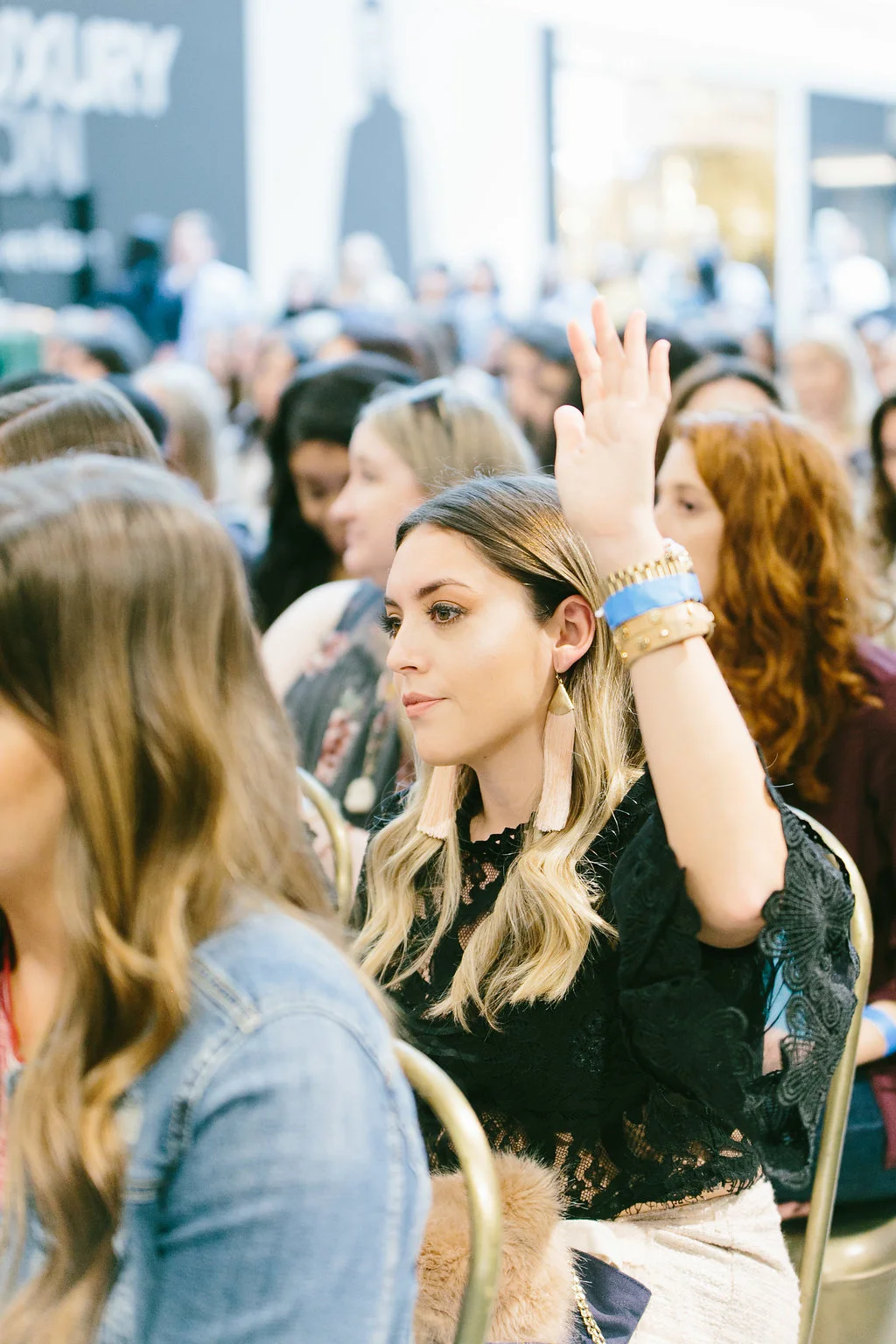
Looking for a job is spooky stuff. But it doesn't have to be.
First you need to figure out what you really want in a job. Then, apply. And next, apply yourself. This week's Create & Cultivate Classifieds below.
WeddingWire - Washington, DC
Patagonia - Ventura, CA
Ellen Digital Ventures - Burbank, CA
Peloton - NY, NY
Mastercard - NY,NY
Girlgaze - LA, CA
Want the full list of our classifieds?
SIGN UP HERE
photo credit: Smith House Photo
MORE FROM OUR BLOG

Why This Emmy Winner Says You Should Flip Off Failure
And the best takeaways from her new book.

Fearless and free. It’s a pretty good place to be when it comes to your career. Which is exactly what Emmy-award winning TV news producer and author Wendy Sachs writes about in her book, Fearless and Free, How Smart Women Pivot— and Relaunch Their Careers.
In the book she discusses the self-imposed barriers that hold women back. The job market’s radical change in recent years. And how we can all take small steps that lead to massive growth.
Here are our 5 favorite takeaways that you can apply to your career today. Free? Fearless? Right this way.
1. “The only career goal you should be focusing on right now, is staying relevant.”
In the book Wendy quotes Karen Shnek Lippman, a managing director at the Sloan-Koller Group. Lippman says, “There is no such thing as a career path now.” It’s scary to think about, but in the last decade we have seen industry change exponentially. Keeping yourself relevant, continuing to advance and develop your skills (ahem, learn new ones), and evolve with the times is a way to make sure you keep your job.
2. Your sorry’s add up.
Wendy references the Amy Schumer May 2015 sketch on Inside Amy Schumer, that documents the female tendency to apologize. It’s satire sure, but that means it’s biting. And it packs some truth. Think of how many times you say “sorry” when someone runs into you. Sorry! It’s innocuous enough in that moment, but the propensity to apologize adds up and seeps into our other behavior.
We suggest testing out actively not saying sorry in instances that aren’t your fault. Someone runs into you? Look them in the eye and wait for their apology. See if it shifts your attitude and self-worth even a smidgen. Because smidgen's add up too.

“Inertia is a confidence killer.There’s no time to get stuck.”
3. Confidence is more important than competence.
Wendy cites research from journalists Katty Kay and Claire Shipman and their book, The Confidence Code: The Science and Art of Self-Assurance, in which they found that we’re either hardwired for confidence or we’re not. “Like blue eyes,” Wendy writes, “this inheritable trait is something we are born with— imprinted in our genetic code. Kay and Shipman found that the correlation between genes and confidence may be as high as 50 percent and may be even more closely connected than the link between genes and IQ.”
Did that make your heart stop? We’ve always been told that we can power pose our way to confidence! (Something Wendy also discusses in the book.) And these women are telling us, maybe not? “The key here,” says Wendy, “is that those with overconfidence weren’t faking it—it simply wasn’t bravado or bluster—they actually believed they were that good.”
So what’s a woman not born with the confidence gene do with this research? We say, allow yourself off the hook for not getting the [insert anything you’ve ever beat yourself up about here] and then rewire your brain to become more confident.
Wendy says, “While confidence may be partly genetic, the good news is that it is also very malleable. It’s like a muscle that can be strengthened.”
She also says that “confidence creation is about taking risks.” So go ahead and make some risky moves.
4. Get Up and Go After It
If you’re making risky moves, you’re going to fail. You’re going to fall. Sometimes that means starting all over again.
Wendy recounts the story of Jill Abramson, The New York Times’s first and only female executive editor, who was fired two and a half years into her job. “Some reported,” writes Wendy, “that Jill was ‘difficult,’ which for a female executive is a word loaded with gender double standards. It was also reported that Jill had hired a lawyer before she was fired to look into compensation issues, believing that she was not paid the equivalent to her male predecessor.”
But Jill didn’t stay down. According to Wendy, “The morning after Jill was fired, she went to a session with her trainer that handed her pair of boxing gloves. She had never boxed before, but hitting the bag was intensely satisfying, Jill asked her trainer to take a picture of her with the gloves and she emailed it to her kids who were worried about her.” The pic went viral after her daughter Cornelia posted it to her Instagram.
It’s a great reminder that no one fall is your end. Only you can decide your professional end.
Which is why we love #5…
5. Flip off failure.
Seriously. Process your failure and then give it the bird. (And the wings so that it may fly away.) You can’t become paralyzed because something doesn't work or survive in the marketplace.
"Process your failure and then give it the bird. (And the wings so that it may fly away.)"
Tweet this.
We’re reminded of this modern day biz facet the whole book through. And it’s a vital Wendy says, “Inertia is a confidence killer, and with the world today moving at the speed of social, there’s no time to get stuck.”
For more career advice and how to fail forward, check out Wendy’s book, available on Amazon here.
MORE FROM OUR BLOG

The Female CEO Who Turned Sophia Bush Down
And the actress' rad response.
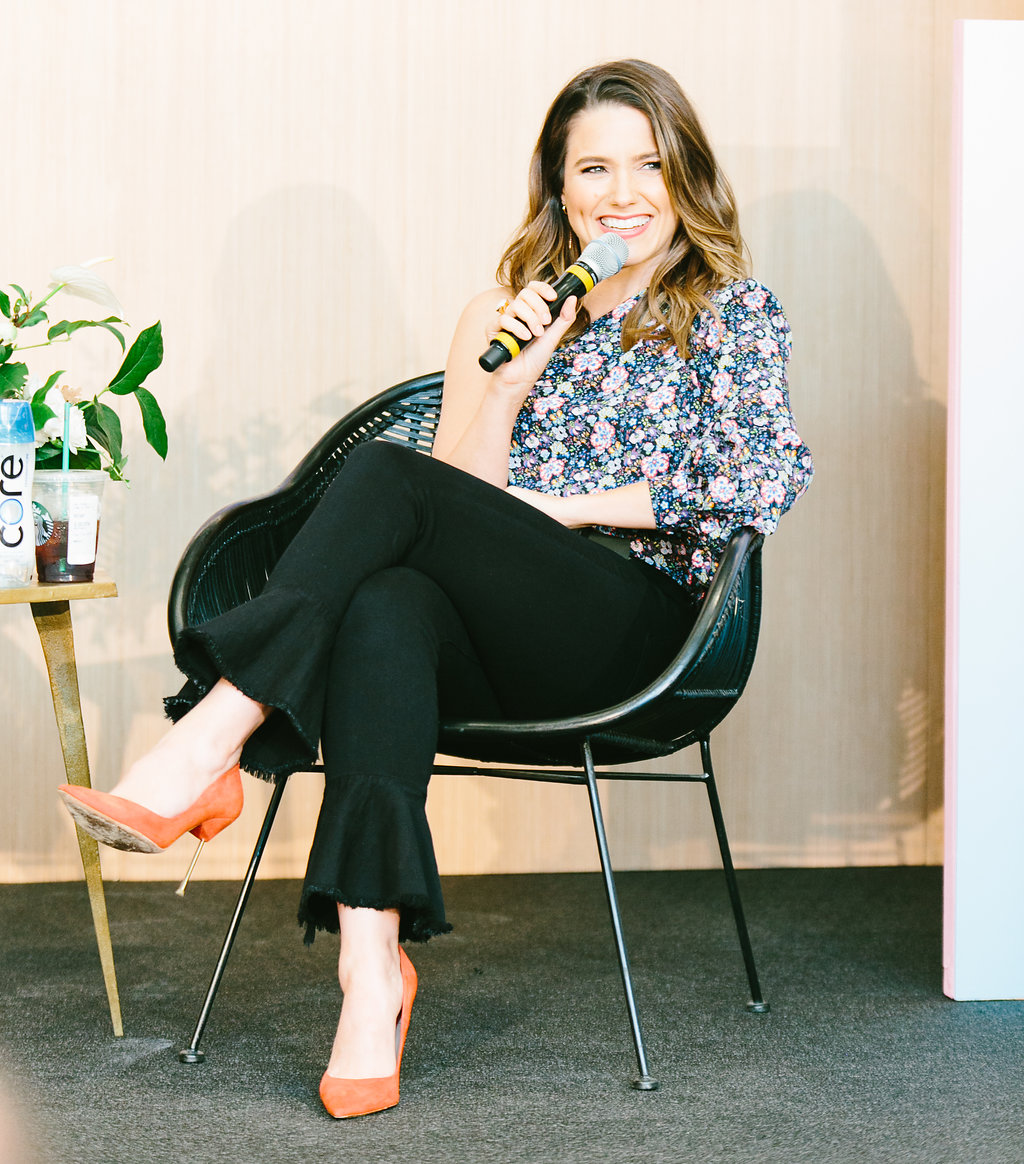
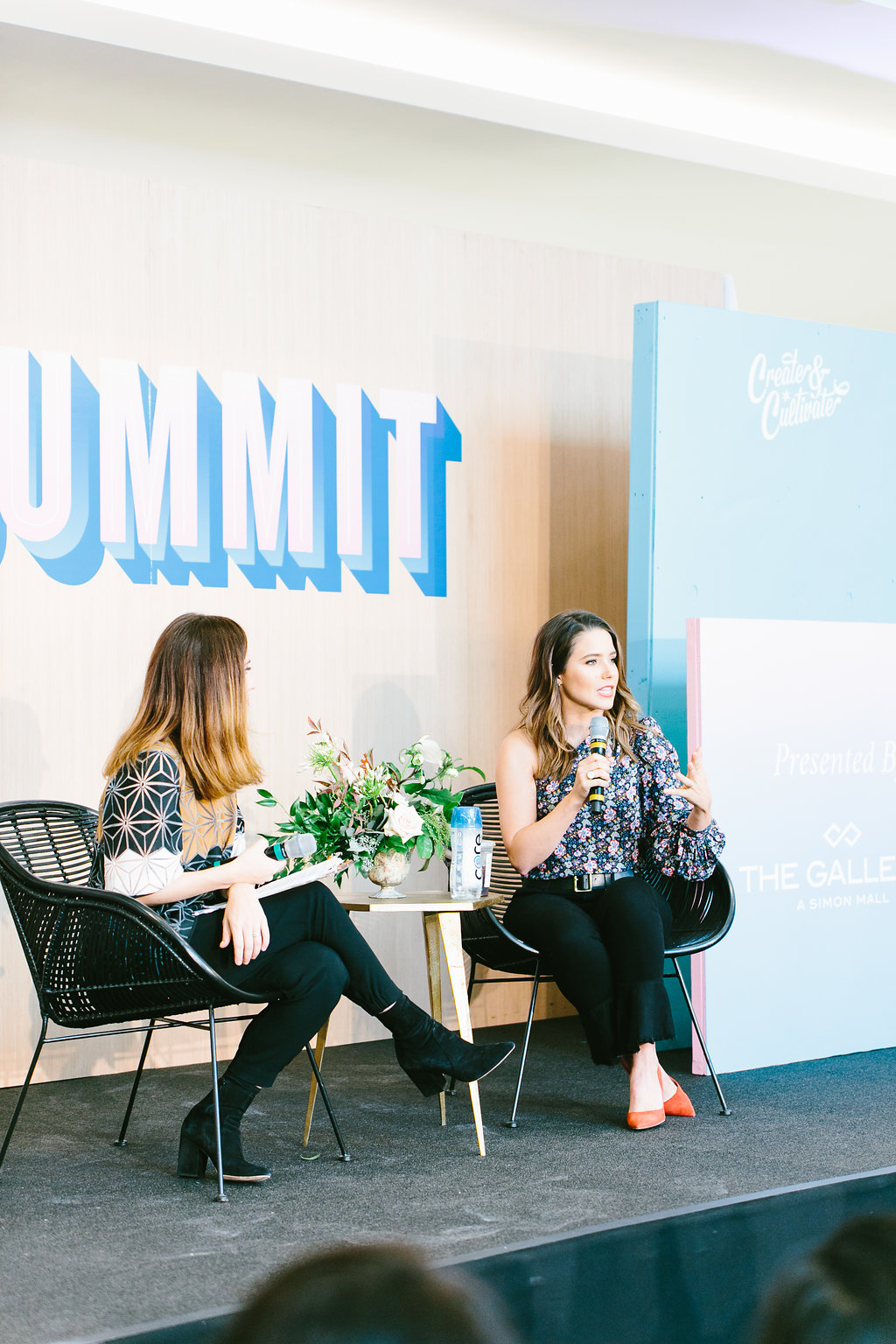
Sophia Bush, actress and activist, keynoted our Style Summit at the Simon Mall Houston Galleria this past weekend, and we're still on a high from the knowledge she intentionally slammed, forget dropped-- this wasn't casual, on stage.
If you missed out, we're sharing 6 of our favorite moments to keep you motivated through your work week.
On being a tender-hearted softie who takes no shit.
I’ve had to learn, sometimes, how to scream and swear at the phone and then not send it. You know, write the draft of the response to the person who deserves it, but then channel Michelle Obama, ‘when they go low, I go high,’ and I delete it. But still I am really learning the art of a good clapback and I deserve that. Simply because I exist in public does not make me a receptacle for people’s garbage.
It’s taken me 15 years, but I think I’m sort of an expert.
"I am really learning the art of a good clapback and I deserve that."
Tweet this.
On activism being a huge part of her story and advice to women
You have to find the thing that lights you up and that can be in a good way, or a bad way. What sets you on fire? What makes you so angry? I read a lot about what’s happening in the world today and I’m pissed, I’m so pissed all of the time, and that FIRE that it calls up in the gut of my gut, I’m like, this is why I can’t be quiet. It’s really easy to turn off the news. And look, today is Saturday. My best friend and I laid in bed all morning and ate french fries and drank iced coffee and watched Fixer Upper-- I needed a day. But we have to pay attention and I think the first and foremost step to becoming a more engaged more active member of society, is to pay attention.
On the internet life.
I would encourage everyone here to make the easiest free investment ever. For the next week, please every day, leave a really lovely compliment on at least one of the accounts of women you follow. Please once a day. Because most of the people who take the time to leave comments are assholes. The really nice together people, are scrolling and liking, but we’re busy. So we can really tilt the conversation by leading it with positivity.
On personal style.
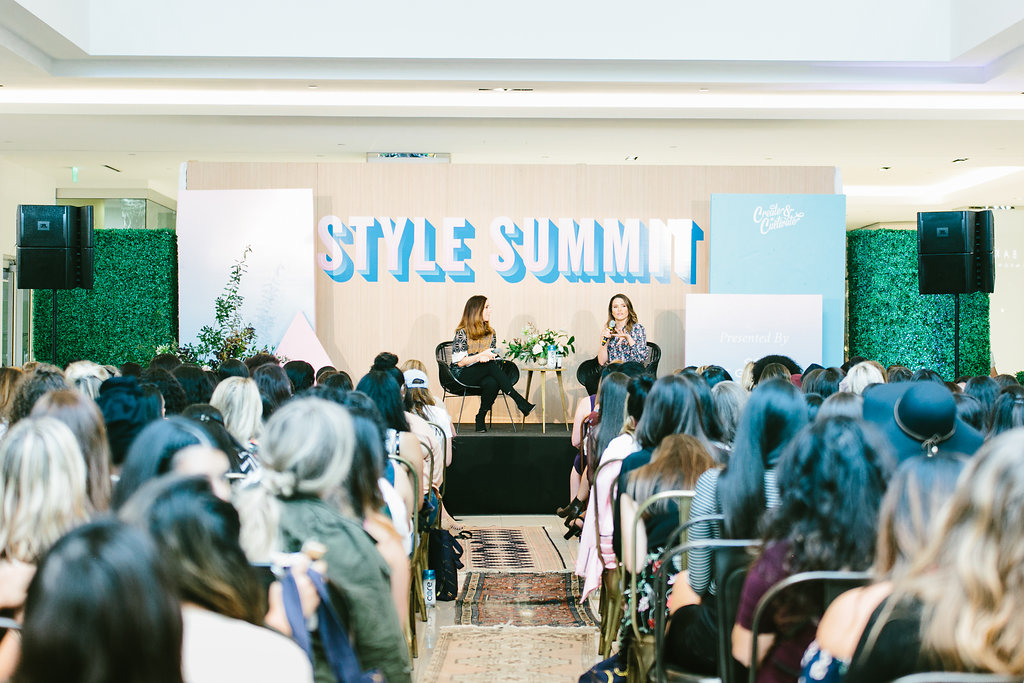
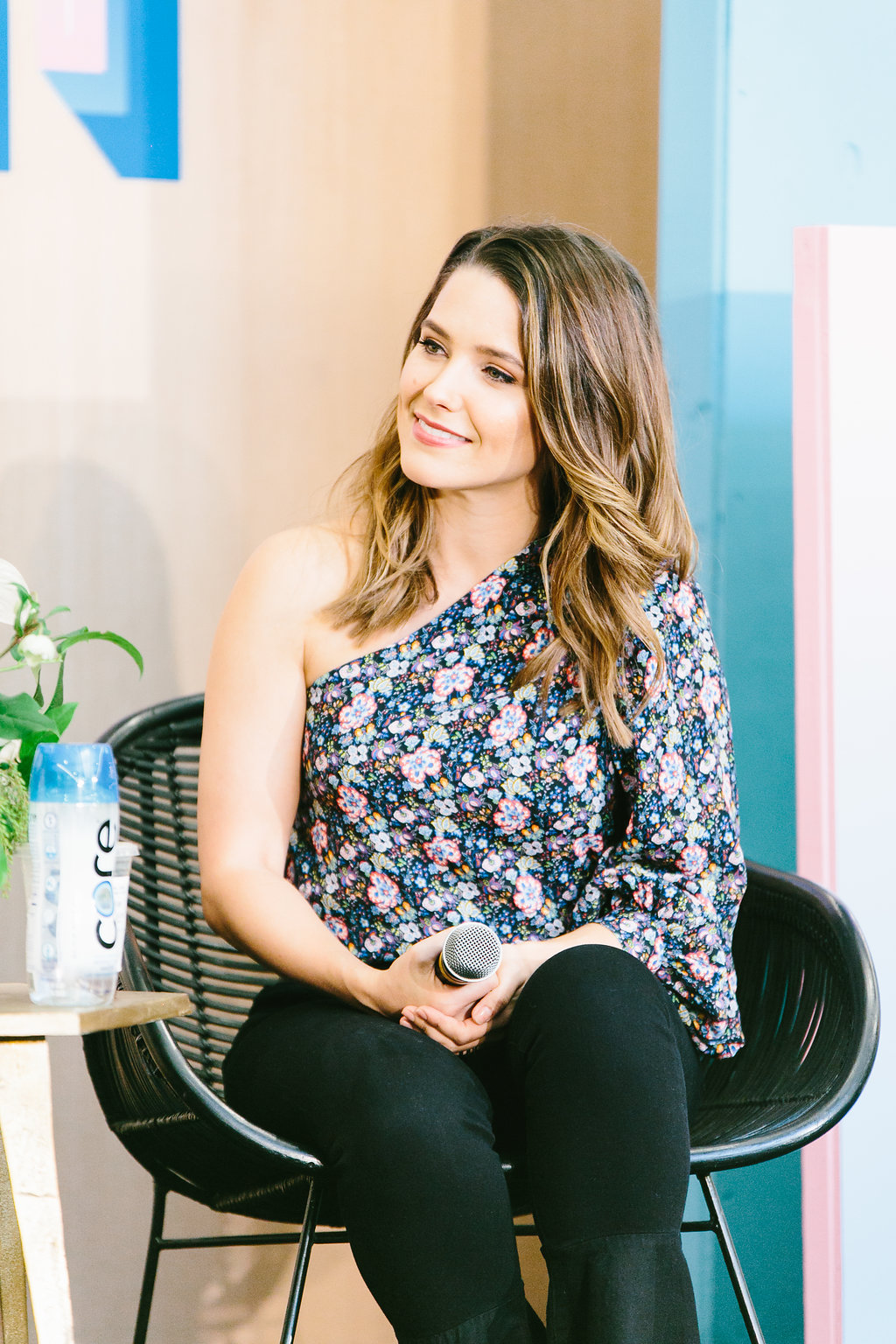
When we look at the ways we express ourselves and the ways each of us still might be feeling like maybe today’s version of expression was a risk? Support each other. Whether that’s girls who tend to dress in menswear or girls who love to show off their bodies or girls who are fully covered and wearing a hijab. Love on women. Love on them and tell them they are beautiful. Tell them that their style is sick, even if it’s different from your own. I can’t wait to be eighty and be like Iris Apfel meets Georgia O'Keeffe. I’m gonna be such a silver-haired old lady wearing crazy shit out in the desert collecting bones and painting them.
Her advice to her 20-year-old self.
I was so nervous about letting people down. I didn’t know that when I was 21 and started working in television that I didn’t have to answer every question journalists asked me to be polite. What is polite anyway? Figure out what’s important to you and you don’t have to open up your life in ways you don’t want to. You don’t have to please other people before you please yourself. You don’t have to stay in a job that makes you unhappy. You don’t have to stay in a relationship that makes you unhappy. If you’re pretty sure that guy you’re dating is lying to you, he is. Let it go. I learned that one the hard way.
"You don’t have to please other people before you please yourself."
Tweet this.
I really wish I could look at her and say ‘you already know, stop worrying about what other people know or think or want from you more than you worry about how you feel in the root of the root of yourself.’
On putting yourself out there.
Women are often so reductive about ourselves. Men don’t say I think. Women say I think. You might write an email and say I just think it would be so wonderful to know you. No you know it would be wonderful to get to know that person. That CEO who you idolize or whoever that person is, say: "It would be such an honor for me to spend a morning with you. I have a couple of questions that I know your expertise would be so valuable." Stop saying I think I could benefit, I think I would like to-- no you know what you’d like. You know what you can do. Just go for it. I’ve done that. Last year, I sent an email to an incredible female CEO who I admire so much basically asking the same question. She was so lovely in response and said I’m incredibly strapped for time as it is and what free time I have goes to my kids but thank you so much for writing this email to me, the compliment that you paid me really means the world, and I do hope that in some point when we’re in the same city we both have some free time and we’ll get together. I was like I’m so sad but you’re so classy. It made me feel so good to know that I made her feel good.
Photo credit: Smith House Photo
MORE FROM OUR BLOG

How to Handle Your Year End Performance Review
Do the right research. Get paid.

Written by: Alexandra Dickson, CEO & Founder, Ask For It
Year end performance reviews are coming up. Maybe you’re looking for a raise or are hungry for a new challenge? Whatever it is that you’re hoping for, you can prepare to ask for it in three simple but powerful steps. You can get clarity and gain confidence to negotiate before that next meeting with your boss.
Gather your evidence.
Evidence can be broken down in two ways — value you’ve created and value you’ve saved your company. Set aside some time to go back through your notes and notable emails from the year to refresh your memory and make it easier to speak to your accomplishments. Then assess: what value have you created for your team or company? Think bigger when it comes to value; it doesn’t necessarily have to mean sales or revenue. Value you’ve created could be launching a new initiative, bringing on a new partner or inventing a new campaign. Do quantify this if at all possible, whether in terms of dollars, number of people impacted, or any other relevant metric, but know that value doesn’t always mean money.
What value have you saved? Again, value you’ve saved could mean financial savings, or it could mean increased efficiencies. If someone on your team left and you’ve been taking on their projects rather than filling the position, there’s an example of value you’ve saved.
Do the right research
How will you know what to ask for if you don’t do some benchmarking? Your goal should be to get data points from both inside your own company and more broadly, in your industry.
You can start your research online using websites like Glassdoor, PayScale and Salary.com, but you need to go further to get really useful information. Make it a priority to speak to half a dozen people: three men and three women. Ask people who would know how much someone in your position typically makes. This could be your own colleagues, if you feel comfortable asking them, or someone who’s doing a similar job to you at another company, or even an industry mentor who hires people at your level. I realize this may make you uncomfortable, but trust me, it’s worth it. You’ll go into your negotiation with much more confidence and it will make it easier for you advocate for yourself.
Feeling tongue tied? Try this simple script:
“I’m doing research because I’m preparing to ask for a raise, and I think you have some information that could help me. Would you be willing to share your ballpark salary with me?”
Practice
Grab a trusted friend or colleague and ask them to do a little practicing with you. If you’ve never asked for a raise before, repeating your request out loud is an easy and effective way to give yourself the best chance of success.
Not sure how to put it all together? Try something like this, and be sure to tailor it to your personal situation: “According to my research, similar positions in our industry pay about X. But I didn’t just take the salary guides I found online as gospel. I went further and spoke with some folks in similar roles, so I know my request is in line with the current marketplace.”
Use your review as an opportunity to cash in on your hard work all year long. Build your case, shore up your confidence, get in there and ask for it.
MORE FROM OUR BLOG
When You Should (or Shouldn't) Work for Free
Perfect Sunday brunch convo. Weigh in.


Working for free. Whew. These are fighting words for some. The concept of being asked to do work for nada (or on spec) has been lampooned in videos, illustrations, and even a dedicated Twitter account. But it’s one of life’s most nebulous gray areas: There’s no clear-cut correct answer to the “should you work for free?” question (sorryyy). Instead, the right-for-you answer is constantly shifting, dependent on your current needs, goals, and availability. What’s right for you might not be right for someone else, and what’s right for you now might not be right for you in five years.
With that in mind, there are some instances in which doing gratis work can actually be just the kick in the pants your burgeoning career or business needs. Below we dig into six situations where it might make sense, and share a look at how some top entrepreneurs feel about taking on a no-pay gig.
Your work will be exposed to a large audience.
You’re just getting started. Your work is rad (RAD), and you knowww the world will love it. (They will!) But you’re a little stuck when it comes to getting the word out, creating in vain—and in a vacuum. One solution: Offering up some freebies to a legit company that can help boost you over the hurdle by letting you tap into their audience. In these situations, though, know that the promise of “exposure” is not enough. Get down and dirty with the details. Ask for attendee numbers for events, probe publications for their readership numbers. Will companies link back to your site? How and where—exactly—will this happen? Will they promote you, along with your work, on their social channels? On related marketing materials? Big companies should have budgets, but sometimes the only way to get that toe in the door (and land a gig that might otherwise go to a more established colleague), is by offering to do it for free. But if a company isn’t forthcoming about their audience or how they’ll promote you, they can take a hike.
You’ll gain an awesome example for your resume or portfolio.
Sometimes one.single.resume.line of you doing amaze work for a credible company can catapult you into the realm of paying jobs for life. The same goes for visual examples of beautiful work, whether you’re a graphic designer, photographer, stylist, or brand consultant. We know an incredible interior designer who decorated a pal’s pad for free (labor, of course, not materials), had it photographed by a profesh, and plastered it all over her site and social-media accounts. Then paying gigs for design work and requests for interviews by shelter magazines started rolling in. Nail one job down, lean on it hard when talking with future clients or companies, and see where it gets you (and, ahem, they don’t need to know you did it for free).
You'll score new, IRL experience.
This is especially important when it comes to career pivots. You’re languishing in middle management at an accounting firm, holding tight to the same cupcake-baking dream you’ve had since you were knee high. But you have no idea how a successful baked-goods biz is run! You know that bakery around the corner? Consider offering to help out for free and you’ll pick up priceless on-the-job experience. Not saying this will be easy. It might mean crazy-early mornings. Scaling back to part-time at your paying job. Your hubs having to pick up major slack with the kiddos for months. But it’s doable. We actually know an inspiring lady who leveraged an unpaid apprenticeship at a hot-town San Francisco restaurant into a paying job there and then bagged a cookbook deal.
The networking is unbeatable.
Sometimes passion projects with little-to-no budgets are attached to influential folks with big names and tons of connections. Getting swept up into their network—being on calls and trading emails with people of note, organizing events with a A-list guest lists or speakers—can land you job after job after paying job down the line. Tons of career breaks have been launched by a friendly “remember me? loved working with you” email after you’ve done solid work and built rapport with a killer new network of people-who-can-hire-you.
Transitioning to a for-pay job is highly likely.
Back in our day, we trudged eight miles barefoot through the snow to intern for free. Welllll, not really, but we logged many an hour at unpaid internships, and several of us flipped them into paying jobs at the company we’d been interning for and at other great companies within the same industry. So, it’s possible, as long as the terms are clearly defined and you let it be known from the get-go that paid work is your ultimate goal. And no, you don’t have to be a 19-year-old college student to make this happen. Imagine striking a deal with a museum or library that you’ll take on grant-writing for free until you’ve secured the grants covering a potential salary for yourself and then some. An airtight contract is key here, but you’ve essentially created a job for yourself out of thin air.
You’ll be doing some good in the world!
Charity or volunteer work! This should really be numero uno on our list! As they say, this one is about giving rather than gaining. It could be anything from acting as treasurer for a nonprofit in need to accompanying your little one to the animal shelter to read to dogs every weekend. The point is that the more you give, the better you’ll feel—recent studies have shown that the secret to happiness is helping others. Just be clear upfront about the amount of time you’re willing to dedicate so that it doesn’t creep into something unmanageable that breeds resentment.
This article first appeared on Alice’s Table, a new woman-founded company that throws flower-arranging workshops and teaches women how to host classes themselves so they can launch a creative career or side gig that’s fun, flexible, and rewarding.
MORE FROM OUR BLOG

5 Women of Color Dominating the Startup Tech Space
Don't hit like. Hit follow.

Esosa Ighodaro, co-founder of COSIGN
The stats on women in STEM and tech are pretty dismal. (About 26% of women hold tech jobs.) Those numbers drop lower when it comes to women of color-- they hold only 3 percent of all tech positions in the U.S. Which is why supporting of women who are doing their damn thing, and doing it well, is crucial.
Here are five amazing women of color in the tech space you need to hit that follow button on.
1. Jessica O. Matthews & Unchartered Play
Jessica O. Matthews is the Founder & CEO of Uncharted Play, an energy company that designs renewable energy technology systems for infrastructure and smart applications. Founded by Jessica when she was 22, Uncharted Play’s flagship product is the SOCCKET ball, an energy generating soccer ball that provides off-grid power for the developing world. Jessica invented the SOCCKET when she was 19 years old.
Jessica’s research and career centers around the intersection of disruptive technology, human behavior, and the psychology of self-actualization. A dual citizen of Nigeria & the U.S., Jessica has a degree in Psychology and Economics from Harvard University, and
an MBA from Harvard Business School.
2. Dawn Dickson & Solutions Vending
Dawn W. Dickson is a serial entrepreneur with over 15 years of experience in marketing and business development. She launched three successful cash flow positive companies since 2002, her most recent venture Solutions Vending International (SVI) in October 2012 after identifying a need develop a software solution to make vending machines more intelligent.
What Solutions Vending International does: Smart vending machines now represent a new breed of machines connected to the internet. Their software helps vending machines not only understand retail customer demographic and sales data, but communicate with one another to understand consumer purchasing behavior, identify venue traffic patterns, and establish a network of connected retail devices. SVI is building a network of connected machines to securely collect and analyze data about consumers and venues across the United States.
3. Maude Okrah and Bonnti
Bonnti is a mobile platform which helps women navigate and simplify their hair experience. The site explains, "We understand ethnic hair is different and we want to empower women to have more choice when it comes to your hair."
Okrah recently told Project Entrepreneur, "I’d love to see more women, especially women of color, dive deeper into the tech world and come up with solutions to solve the unique everyday problems we face. I’ve learned so much throughout this entrepreneurial journey that I’d be remiss not to share it with any other woman who even shows an inkling of interest in this field. I mentor a small group of women from my alma mater and the D.C. area, helping them navigate the challenges I faced when beginning on this journey."
4. Erin Horne McKinney and KissIntel
Passionate about emerging technology and entrepreneurship, Erin Horne McKinney is the cofounder of Black Female Founders (#BFF) and KissIntel. KissIntel is the first mobile application to function as a "CRM for dating" by creating a platform where users can aggregate and track their dating lives, compare and rate dates and get instant feedback from their family and friends in real time. KissIntel’s proprietary date aggregator allows users to compile all their date options in one place. KissIntel revolutionizes the way people make dating decisions and creates an entirely new way to interact with potential partners by providing customized comparison and rating tools that tie into the user’s curated contact list and social network for immediate feedback from family and friends they trust. In addition to the end-user focused capabilities, KissIntel can offer its rating and comparison engines directly to online dating sites.
5. Esosa Ighodaro and Cosign
She's the woman who is making your photos shoppable. COSIGN connects you to your favorite brands and retailers in just one tap. COSIGN is the first app to make products in your photos ready-to-buy, turning your social media followers into customers and your style into a way to earn cash rewards.
After constantly asking herself, "where did she get that?" Ighodaro decided to come up with her own solution, creating an app to solve her shopping issues. CoSign serves as a mobile app that makes any product with an image shoppable on social media. As an added incentive, users can make a commission for every product purchased through the app.
In this new world, women save themselves. Have more amazing women we should be following? Share in the comments below!
MORE FROM OUR BLOG
C&C Classifieds No 61: Netflix, Homeaway & Career Contessa
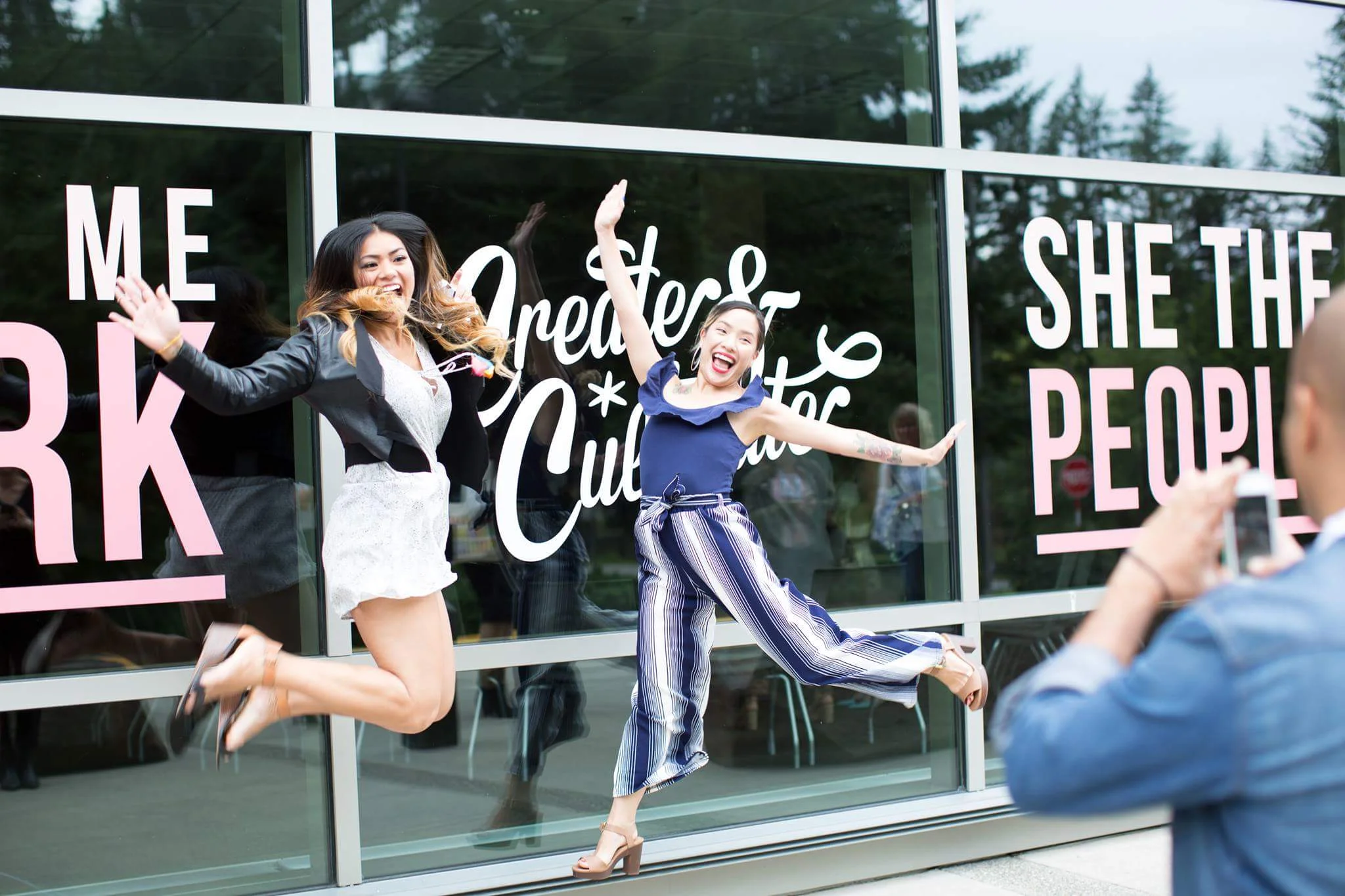
Jump for joy, we got jobs.

photo credit: Smith House Photography
Jump up, jump up to get down with our Classifieds.
We are more than halfway (what?!?) through October and if you want to get your ducks in a row before everyone starts dipping out the office early for holiday season, we suggest you dip into our new job listings.
All below.
Tandem - Santa Monica, CA
Homeaway - Austin, TX
Career Contessa - Los Angeles, CA
Match - Los Angeles, CA
Fitbit - San Francisco, CA
Netflix - Los Angeles, CA