
Create & Cultivate 100: Health & Wellness: Jessie Graff
“When I beat a personal record or exceed my own expectations, I win. Any outside reward is just a bonus.”


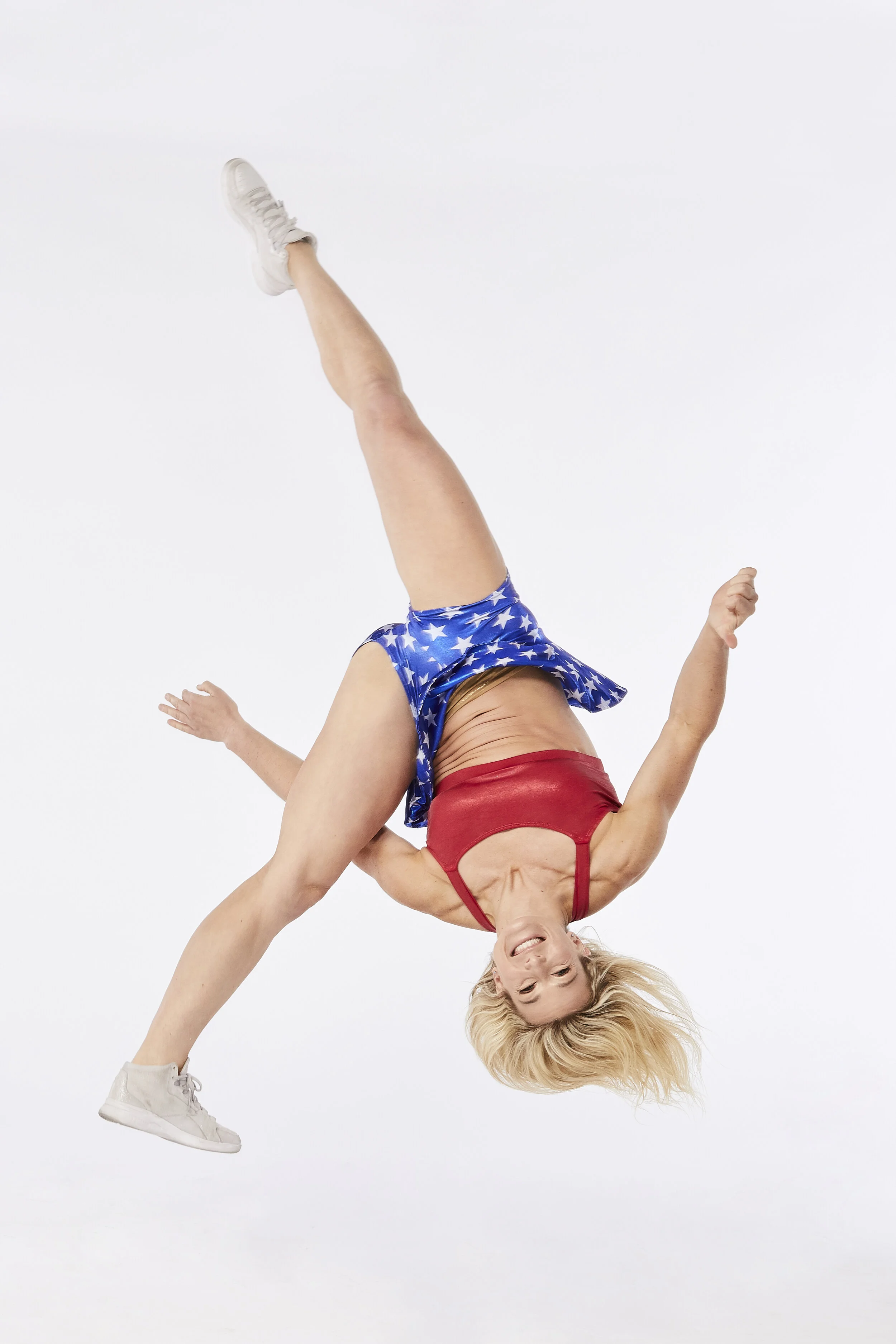
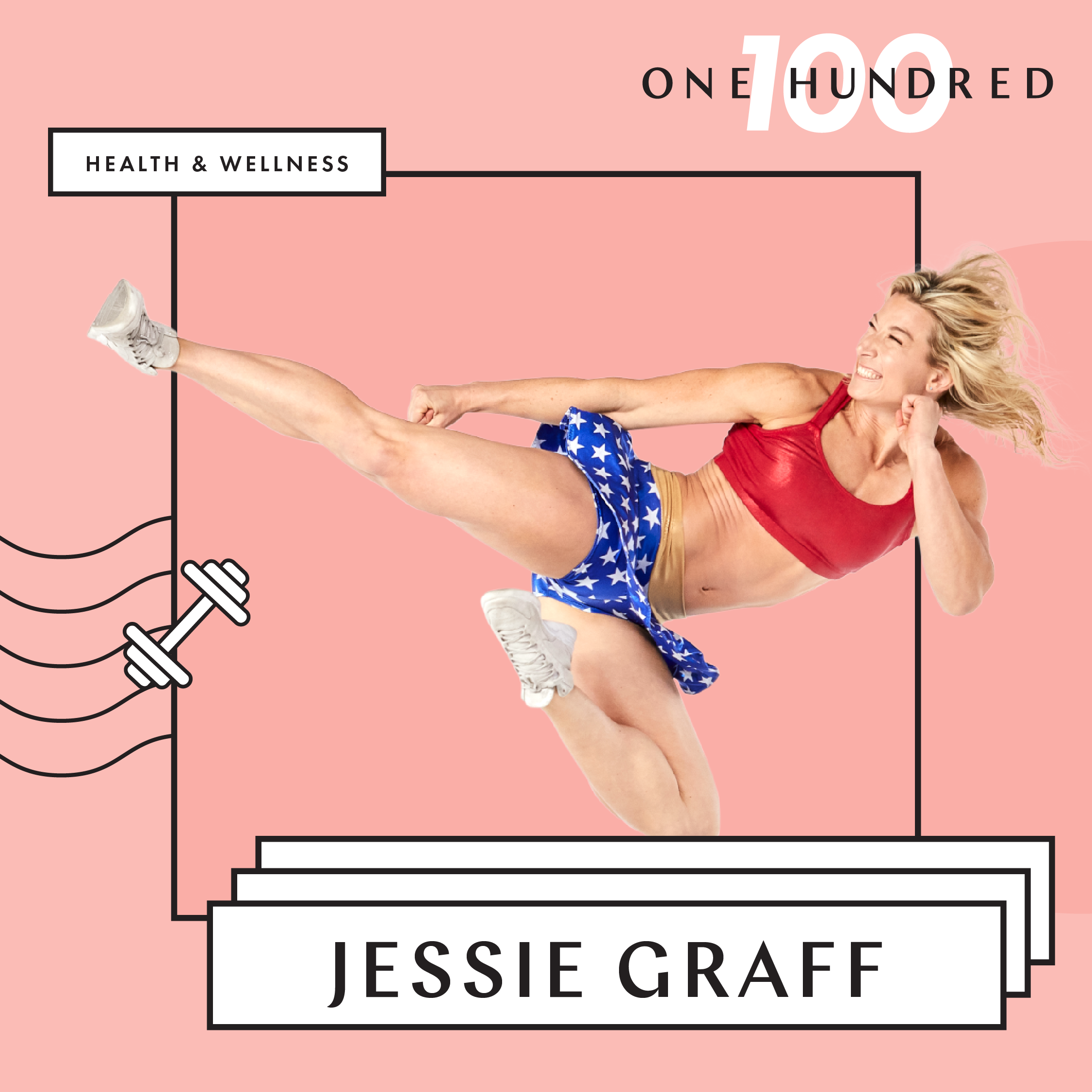
Jessie Graff is a badass. Not only was she the first woman to ever complete stage one of a rigorous American Ninja Warrior course, but she was also a stunt woman for “Wonder Woman.” Not to mention, she’s also a black belt in taekwondo, a black sash in kung fu, and trained in five other styles of martial arts. Like we said, she’s a badass.
Ahead, the professional stunt woman and athletics-based television personality gives us the lowdown on her record-breaking, barrier-breaking career. Keep scrolling to find out how she turned a major career setback into a set-up, what keeps her inspired and motivated on even her most challenging days, and who in the industry is currently crushing it.
C&C: You are a record-breaking Ninja Warrior and the first-ever woman to make it through stage one of the competition (and you've broken even more records since). How does it feel to break new barriers for women in such a competitive field?
JESSIE GRAFF: The most fulfilling aspect of competing has been placing in the top tier, even among the men. Society doesn't reflect how strong women can be, and I've gotten to show that we are capable of more than most thought.
When you hit a bump or hurdle in your career, how do you #FindNewRoads + switch gears to find success?
My old tendency was to repeatedly throw myself face-first at any roadblock in my path and keep banging my head against the wall until I got through. I was proud to be the most determined and the hardest working, and while my tactics sometimes worked, they lead to a lot of injuries. It takes constant work to take a step back and lay out my goals, my options, and the long-term versus short-term consequences. Patience has been my biggest hurdle but, by working on it, I have found a way to move forward healthily.
“When I beat a personal record or exceed my own expectations, I win. Any outside reward is just a bonus.”
You were a record-breaking pole vaulter in college, you are a black belt in taekwondo, a black sash in kung fu, and are trained in five other styles of martial arts and you have a career as a stunt woman—it seems like there is no challenge you can't tackle. What keeps you motivated both mentally and physically? Where does your drive come from? What challenges have you faced in reaching your goals in the sporting world and in Hollywood?
I think I learned it from my mom. I love the feeling of working hard and accomplishing things. So many of our recreational activities were physical challenges like climbing trees, performing shows, riding bikes, and swimming... or more relaxing meditative tasks like gardening, painting the house, or rowing across the lake. My mom always made the most difficult challenges feel like the most heroic adventures. And that attitude keeps me inspired to take on big challenges and helps me keep a positive attitude when things get really hard.
You were a stunt woman for “Wonder Woman” and Gal Gadot shared your Ninja Warrior video on her Instagram with the caption: "She's a wonder indeed." How did that feel? What has the experience been like joining the Ninja Warrior family and having millions of people around the world rally in support of you?
It always feels rewarding when people share or hold up any of my accomplishments, and I never dreamed that there would be such an outpouring of support.
Can you recall a specific time you failed and how you turned that around/into an opportunity?
In 2014, my life revolved around stunts, flips, fights, and falls. When I blew out my knee, I needed an upper-body-based physical activity to keep me motivated while I recovered. I started training for Minja and fell in love with the feeling of getting stronger. Ninja Warrior changed my life and gave me a platform to inspire. That knee injury was the catalyst for the best thing that ever happened to me!
You work with Ninja Nation doing events for aspiring Ninjas, how has teaching and coaching changed the way you view the sport?
I know I won’t be at the top of this sport forever, and there are so many strong, talented kids coming up! It feels amazing to be a part of their journey, as they develop literal superpowers that allow them to surpass our current perception of human abilities.
What advice would you give to people who aspire to your level but don’t know where to start?
Start small, test yourself, beat yourself, and follow progressions. Work with a trainer, so that you don’t get hurt or develop muscle imbalances. If you’re looking for specifics, I post tutorials on my social media @jessiegraffpwr, sharing some of my workouts.
Success is such a broad term, and it means something different to everyone. How do you define success?
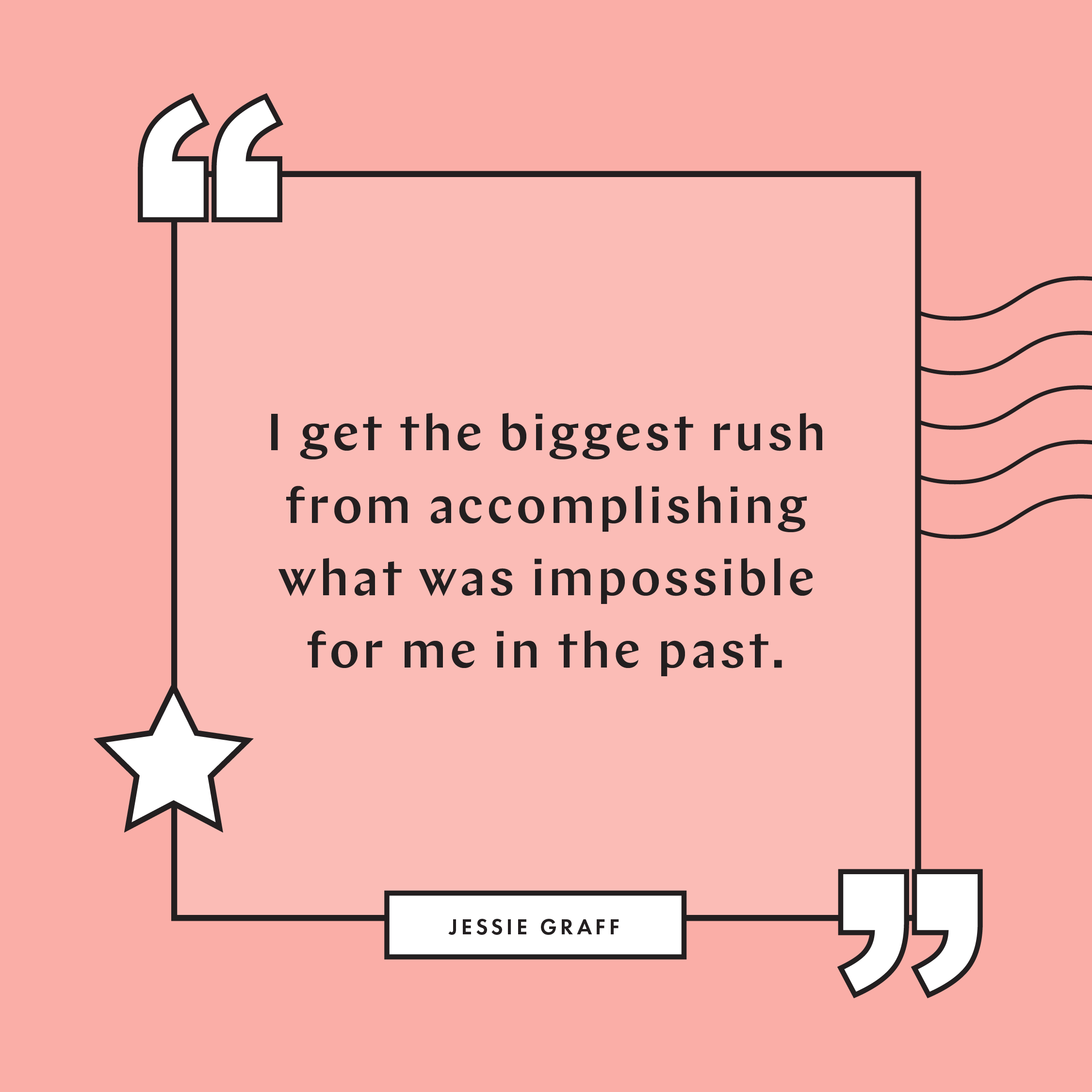
I define success as improvement or beating MYSELF. I get the biggest rush from accomplishing what was impossible for me in the past. When I beat a personal record or exceed my own expectations, I win. Any outside reward is just a bonus.
What do you wish more people knew about your job? What are the biggest misconceptions?
A lot of people see stunt people as crazy daredevils, but every risk is highly calculated. We are responsible for protecting our actors and keeping everyone on set safe.
With success comes opportunity, but that also means you have your hands full. What keeps you inspired and motivated to keep going even on your most challenging days?
When I find myself routinely avoiding an exercise or task, I make a poster with all the reasons that it’s beneficial and hang it on the wall to read every day. When I'm constantly reminded of the positive outcomes of those tedious tasks, it easily motivates me to keep up the routine.
What is the best advice you have been given? Or a favorite piece of #realtalk?
I used to think that being the most intense, hardest worker was the only way to succeed, but all of my past failures could be traced back to overtraining, exhaustion, and injury. If I had a stress fracture, I couldn’t finish practice until my coach noticed that I was limping and forced me to stop. He told me to decide: What’s more important? Being the hardest worker? Or actually reaching your full potential and succeeding? It hadn’t occurred to me that they were two different things. I have redefined “rest” as “intense discipline,” and spend 1 to 2 hours per day on active recovery. It’s made all the difference.
The filtered world of social media often hides a lot of the behind-the-scenes hard work and hustle. What is the reality of being a Ninja Warrior and stunt woman? How hard is it really? Be honest! What are the key traits you need to succeed in your role? Why?
I make a point of sharing my progressions and failures, to remind people that strength and skills take time to develop. When I’m trying new things, they often feel impossible, and I fall over and over until I can’t move and I have to come back to try again another day. And that’s normal, and part of the process. If people think all of my skills come naturally to me, they might assume that they don’t have what it takes and give up before they have a chance to progress. When they see me fall, I think it encourages them to keep trying until they succeed.
Can you name a woman in the business who is crushing it and why?
My mom, Virginia MacColl! When she retired at 62 she became determined to do a pull-up for the first time in her life. It took her two years to get her first one, but now, at 68, she can do 15 and is competing in Ninja Warrior competitions every month! And last summer, she had her first supporting role in a movie called “Poms” with Diane Keaton!
Photographer: Jenna Peffley
Hair: Styled by OGXpert & Celebrity Hairstylist Jillian Halouska
VIEW THE FULL CREATE & CULTIVATE 100 HEALTH & WELLNESS LIST HERE.

Create & Cultivate 100: Fashion: TyLynn Nguyen
“Believe in yourself, don't be afraid of change, and have a perspective.”


TyLynn Nguyen has a number of enviable careers on her résumé. The model-turned-designer is at the helm of her wildly popular namesake lingerie brand, TyLynn Nguyen—which features a curated edit of bras and underwear—she’s a content creator sharing fashion, beauty, and travel on her YouTube channel, and she’s a mother of three. It’s safe to say that Nguyen really knows how to make the most of the 24 hours in a day.
Here, Nguyen shares the ways in which she’s fulfilled by her multi-hyphenate career, the best piece of #realtalk she’s ever heard, and the #1 book she’d recommend to any woman looking to create wealth for herself. (Trust us, you’ll want to get your hands on this book, stat.)
C&C: You're a lingerie designer, a model, a content creator, and, oh, and a mom of three—why did you choose such a non-linear career path? How do each of these roles stimulate you?
TYLYNN NGUYEN: I'm a dreamer. I've always wanted to be a woman who has a family and a career on my own terms. I walked out in faith and took chances and here I am! As a lingerie designer, I am able to express the foundation of self-love and expression through one of the most intimate facets when getting dressed each morning. I love the camera, so modeling is an extension of myself. The more I grow into the woman I want to be, the more I realize there is nothing wrong with acknowledging your strengths. Modeling is a strength of mine. As a content creator, I am also connecting to my audience and showing them my POV of what sexy and confident is. And of course, being a mother is fulfilling on so many levels. But I could not just be a mother. All of these aspects of me fulfill me. Joy and fulfillment are why I do all that I do.
You've purposefully kept your self-titled lingerie brand small with a curated edit of bras and underwear—and you don't adhere to seasons. Why did you take that route? What is your vision for the brand? Where do you want to take it?
My lingerie is a timeless aspect of getting dressed. So I feel that the pieces I have put out into the world contribute to what the modern woman needs in her wardrobe. I have a collection launching early 2020 and those items serve a purpose. I am pushing myself to create and deliver purposeful products that will not contribute to the overconsumption in the fashion space. My vision for my brand is to develop into an all-encompassing brand that delivers superior quality and has lasting beauty. Things that you will cherish forever.
“I try to be as optimistic as I can and have allowed myself to recognize that not every day is a bag of rainbows.”
Your line is very simple and elegant, made with real women in mind. When designing, what is the creative process like? Where do you seek inspiration?
Thank you! When designing, I am thinking about pieces that I gravitate toward the most as a woman with a career and three children in tow. I design with the thought process of: "Should this woman decide to be intimate with someone, she can wear these items as well, but these pieces are for her pleasure and personal purpose."
When you hit a bump or hurdle in your career, how do you #FindNewRoads + switch gears to find success?
I pray. There is so much power in prayer. I've had many visions that I hold on to. I think when a dream is planted in your heart you should never lose that. It was put there for a reason and your contribution to the world is important. I remind myself I am fearlessly and wonderfully made. Speed bumps are bound to happen, but having the right perspective about them increases the chances of something better happening.
From the outside looking in, your life is incredibly glamorous and dreamy, but we all know there is a very different reality beyond the filters. What do you wish people knew about the fashion industry? What are the common misconceptions about your life?
I feel like this question is looking for the negative. I try to be as optimistic as I can and have allowed myself to recognize that not every day is a bag of rainbows. The fashion industry is competitive, and the pressure to perform is as well, but I feel I am built for this world. I have a strong perspective and do not worry about what the misconceptions of me out there are. I think everyone has an opinion, and if you trigger something in someone they can manipulate their way of thinking to create you as a villain in the story of their lives. But I have no control of that so I focus on what I can control.

What is the best advice you’ve been given? Or a favorite piece of #realtalk?
Listen to that still small voice and trust yourself.
Your brand is built around natural beauty and loving yourself, where does this sentiment from? How do you implement this in your brand?
In a world that tells you to be a carbon copy of the people around you, I hope to inspire people to see the beauty in themselves and collaborate with others around them to pull out the best inside.
You appear to be very bold and self-confident. What advice do you have for other women who want to summon that strength but don't know how?
I am bold and confident. I see myself as a vessel to inspire other women to be as such. Some advice I have would be to start saying things to yourself that you want to happen in your life. Start calling yourself beautiful, victorious, strong, intelligent, loving, and lovable... you deserve these things and may have been dealt a tough hand. It may even hurt when you start saying these things to yourself BUT do it so you can begin to thrive. What happens in your mind manifests in your world.
You are a mother of three beautiful children, how has having kids changed your perspective? What is the greatest lesson motherhood has taught you? Why?
Having kids has made me more aware of the legacy I want to leave for them. I am building a foundation for them to catapult off of to their own greatness. You realize the great responsibility of being a good human when you have children. Motherhood has taught me how I am and how I feel about myself is way more important than I once believed because our children find their identity in us.
What advice do you have for other entrepreneurs? How can they achieve the same success you've experienced?
Believe in yourself, don't be afraid of change, and have a perspective.
“Listen to that still small voice and trust yourself.”
With success comes opportunity, but that also means you have your hands full. What keeps you inspired and motivated to keep going even on your most challenging days?
I've been given visions, and until I reach those visions, I will not stop pushing forward.
What is the #1 book you always recommend? Why?
Women With Money by Jean Chatzky. We need to be more confident in our own means and still stop apologizing for having your life together. This is a great book for women who have money or women creating wealth or even women who want to create wealth for themselves. We are in this together. Let's talk more about how to build each other up in all facets.
Photographer: Jenna Peffley
Hair: Styled by OGXpert & Celebrity Hairstylist Jillian Halouska
VIEW THE FULL CREATE & CULTIVATE 100 FASHION LIST HERE.
Create & Cultivate 100: Fashion: Lauren Chan
“Don’t ask anything you can Google.”


Lauren Chan had gotten used to being overlooked by the fashion industry as a plus-size woman. As a magazine editor, the irony of writing about brands that didn’t cater to her size was not lost on her, and she was on the front lines as the social media wave of consumers started demanding more options beyond the current shapeless offerings. So, she quit her job at Glamour to take matters into her own hands.
This past fall, the former model and editor officially launched her contemporary womenswear brand, Henning, boasting high-quality, high-end pieces in sizes 12 through 24, and it’s completely self-funded. The designer line which boasts the message of “fit with a plus-size body in mind” has been incredibly successful with a cult following of women who are championing her every move.
Ahead, the founder and CEO reveals the tough decision to leave her stable job at a major fashion publication to start her own business, the mistakes she’s learned along the way, and the financial advice she’d give to fellow bootstrapping entrepreneurs.
CREATE & CULTIVATE: You took a big career leap and left your job as a fashion editor at Glamour to start your own luxury clothing company called Henning. Why did you decide to make the career shift? What advice do you have for others considering a pivot like yours?
LAUREN CHAN: I started Henning because I spent years as a fashion editor who’d worn everything from a size 12 to a size 20 and I had a hell of a time getting dressed. I was surrounded by designer fashion—whether I was reporting on it or my peers were wearing it—but I never had access to it because of my size. Instead, I wore fast-fashion pieces that made me feel less confident and look less capable. I was sick of being excluded and disadvantaged, as plus-size women have long been made to feel by fashion. So I quit my job to take matters into my own hands, and now Henning makes luxury clothes in sizes 12 to 24. The advice I’d give someone considering a pivot like mine is to make yourself an expert in your field—if you aren’t already—and to make sure the new thing is something you care deeply about.
When you hit a bump or hurdle in your career, how do you find new roads and switch gears to find success?
First: don't panic. There is a solution or a pivot to every problem and spiraling into a tornado of anxiety is not the way to find it. Second: get very creative when brainstorming all of the possible answers—the best ones are sometimes the most atypical. Third: sleep on it, if there’s time.
You didn’t take any venture funding for Henning, why did you decide to self-fund your business? What tips can you give to others who are bootstrapping their business?
We didn’t raise big money for a number of reasons, chief of which was that I needed to be laser-focused on my vision and execute it as quickly and as genuinely as possible.
“There is a solution or a pivot to every problem and spiraling into a tornado of anxiety is not the way to find it.”
Where do you think is the most important area for a business owner to focus their financial energy? Why? What is your best piece of financial/money advice for new entrepreneurs?
A friend of Henning, who happens to be a venture capitalist, told me that when you don’t have multi-million dollar funding you have to be exceptionally thoughtful about solving problems that you could otherwise throw cash at. I take a lot of pride in fixing early issues with the most thoughtful, sturdiest solutions because they lay the best groundwork for the future of the business. My advice would be to first assess all problems as if you don’t have money.
What do you wish people knew about the fashion industry? What are the biggest misconceptions about what you do? Why?
I wish that consumers understood why fashion is priced the way it is—and what we do to people and the earth when we purchase cheap, fast fashion. I think the biggest misconception about Henning is that we have arbitrarily slapped a high price point on our garments. But in fact, nailing fit, using natural fabrics, paying for ethical labor, and not overproducing are expensive—our retail prices simply reflect those costs. We want our customers to have a product that they can feel good about investing in.
Before the launch of your line, you took to social media and did some crowdsourcing to find out what your customers might want. Why did you take this approach and was it effective? Would you suggest it to others? What did you learn?
Some of my advisors thought I was crazy for launching social media and email programming ahead of Henning’s official launch, but it was important to me to foster a strong community before I was to sell anything to them. I wanted to create a space where people thought, “This founder cares about me,” because I do. I wanted to get input on what was missing from our community’s experience with fashion so that I could create change using all of our voices, not just mine. I couldn’t be prouder of the connections we made pre-launch. One person wrote to me to say they’ve never felt more engaged and respected as a customer—so, mission accomplished.


What's a mistake you made and what did you learn from it? How did you turn it into an opportunity?
Most of the mistakes I made were early on in the garment making process. One particular error was that the arms of the blazers were cut to a common industry standard but they looked too big when I saw the “finished” samples on a few women. After calming down, I decided to turn this into a community moment by telling my Henning audience about it. I asked them for their opinions and arm measurements and they responded with incredible support. I learned that with the Henning community, I never have to feel like I'm facing a problem alone.
What’s a piece of advice you’d give to women starting out in your field? Why?
Talk to people who have done it before. Don’t ask anything you can Google. Admit what you don’t know. Send thank you cards.
You are a great example of being the change you hope to see in the world. When high-end fashion was lacking above size 12, you started your own company to fill that gap but there is still more change needed. What has been the response from your community? What are your hopes for the future? What change are you seeing and what more can be done?
The response from the Henning community has been exceptional! We’ve had many kind comments within our groups and platforms about the brand’s mission, but to me, the best ones are about the products, specifically. Hearing women explain the feeling and effects of wearing a luxury item for the first time makes this all worth it. A recent example: “It is not an exaggeration to say that every person I interacted with commented on how great I looked and more importantly on how confident I was acting. Thank you for recognizing how important our body armor is.” My hope for the future is to give that feeling to every woman who has felt devalued because fashion has told her her size makes her a second class citizen.
“Assess all problems as if you don’t have money.”
What traits do you need to succeed as an entrepreneur or founder in the competitive start-up environment? Why?
Ask me in another five years! But from my perspective now: leadership, level-headedness, resourcefulness, tenacity, creativity, and flexibility.
What do you wish you could go back and tell yourself when you were first launching your business? Why?
Don’t make a judgment on one data point, wait to react until you have an idea of the bigger picture. For me, an example of how that manifests is not allowing myself to be upset about one return when sales for the month have been great.
What is the #1 book you always recommend? Why?
The Body is Not an Apology by Sonya Renee Taylor—and I suggest you to listen to the audiobook so that you can hear the author preach.
VIEW THE FULL CREATE & CULTIVATE 100 FASHION LIST HERE.
Create & Cultivate 100: Fashion: Marni Senofonte
The stylist behind Beyoncé's most iconic looks spills all.


From Lauryn Hill and Beyoncé to Diddy and Jay-Z, Marni Senofonte has styled some absolute legends over the course of her decades-long career. So it should come as no surprise that the sought-after celebrity stylist is low-key the mastermind behind some of the most iconic fashion moments in recent memory.
Let’s list a few, shall we? Beyoncé’s entire wardrobe in “Lemonade” (that yellow dress! that wide-brimmed hat!). Queen B’s visually arresting and powerful Black Panther-inspired Super Bowl XLVII halftime show ensemble. Every single Slayoncé outfit for “Homecoming,” her Coachella-performance-turned-Netflix-special, for which the stylist earned a much-deserved Emmy nod. And Kendall Jenner’s black latex floral lewk at the 2019 Emmys.
But Senofonte’s influence extends well beyond red carpets and music videos. She’s also responsible for Jenner’s ultra-cool off-duty looks, Beyoncé’s highly-anticipated IG style drops (ahem, that epic pregnancy announcement), and, as if her resume wasn’t impressive enough, she’s even styled Barbie (!). The mega-stylist has single-handedly inspired so many trends that The Guardian has aptly deemed her the “Anna Wintour of the social media age.” Talk about iconic.
As Create & Cultivate stans already know, we’ve been blessed to have Senofonte share her words of wisdom with us from the stage at Project Women and on the WorkParty pod. Here, Senofonte fills us in on the dream run that is her career, including the #1 lesson she’s learned from working with the one-and-only Beyoncé.
CREATE & CULTIVATE: After meeting Beyoncé, you claimed to have met your match because you both share an insane work ethic. How has your work ethic been important to your career? What do you attribute to that self-discipline?
MARNI SENOFONTE: Sweat equity is really only visible by the like-minded, it attracts them. When you work with artists who are all working in the same realm, the final product is usually pretty good! I think the discipline comes from not knowing any other way. I grew up watching my entrepreneurial parents, grandparents, aunts, and uncles all working really hard.
What is the best lesson Beyoncé has taught you since working with her? How have you applied it to your life and career?
Unbeknownst to her, I think her trust in my creativity gave me greater confidence in myself. I humbly carry it with me in every aspect of my life.
When you hit a bump or hurdle in your career, how do you #FindNewRoads + switch gears to find success?
Usually, I look back at every rough patch and remind myself every time I thought I lost, I inevitably won. Every bump or hurdle in my past has always been the starting point of something unplanned or unimaginably great.
“Ask questions, don’t be afraid to admit you don’t know how something works.”
You were recently nominated for an Emmy for dressing Beyoncé in her Netflix special "Homecoming." What was your favorite memory from making that Netflix special? Did you ever think you would be nominated for an Emmy? How did it propel your career? How was that project different from others you've worked on?
My favorite memory was when it was over, ha! My favorite memories of most projects! I usually never get to see the final performance so having it documented on a platform easily accessible is a dream! Also, more than the Emmy nomination, it’s been especially rewarding running into people at Target or when I’m walking in N.Y.C., having them explain how much that performance meant to them. Also, seeing so many people in the Insta-universe replicate the clothing and performance surpass any statue of recognition!
Still a bit surreal to have “Emmy nominated” in front of my name! I should change my profile name! The cultural impact of “Homecoming” (and “Lemonade”) kinda takes them out of the ability to draw any comparisons to anything I’ve ever done.
You work with some of the biggest celebs, and as their stylist, you must develop close relationships with them. How do you cultivate good working relationships with your clients? What are the key traits you need to be a stylist in such a demanding and competitive environment today?
I think gaining the trust of your clients is most important. Once a client trusts your intentions, it’s much easier to push them to try new things. Integrity is key, always has been!
What do you wish people knew about the fashion industry? What are the biggest misconceptions?
I think that Miranda Priestly's cerulean-blue sweater speech in “The Devil Wears Prada” solidified the credibility and importance of fashion. We are all that cerulean blue sweater personified. The biggest misconception is what goes into turning something into a tangible good. Everyone can make a cool Pinterest board, but to actually create something from nothing? Yes, try that!

What is the best advice you’ve been given? Or a favorite piece of #realtalk?
Five people need to tell me “no” before I even think there’s a possibility it can’t be done.
What is the #1 piece of advice you'd like women to know when starting out or building a business? Why?
Ask questions, don’t be afraid to admit you don’t know how something works. Sometimes "fake it till ya make it" works, and sometimes, when ya fake it, ya break it!
You've achieved phenomenal success, but that didn't come without hard work and determination. What's it really like beyond the highlight reel of social media? What are some of the biggest lessons you’ve learned along the way and what have they taught you?
Honestly, we’re all mess in one way or another. I think we need to show a bit more of the mess! In terms of lessons I’ve learned along the way, just keep your eye on the prize and don't get wrapped up in the bullshit. It applies to all fields, whether you’re in finance, retail, medical, or fast food, the same bullshit occurs, same cast of characters, same personalities... there’s always someone plotting and scheming behind your back, someone taking credit for something you’ve done, someone thinking they can do better, someone who shouldn’t have an opinion giving their unsolicited opinion, blah, blah, blah. Ya just gotta stay focused and keep moving forward. When you get wrapped up in the bullshit, it stops your momentum.
You always seem so bold and self-assured, where do you think this confidence stems from? What advice do you have for people who are feeling self-doubt and want to have more courage?
I was very lucky to have grown up in a “you can do anything as long as you work harder than everyone else” environment. The encouragement and work requirements I had as a kid definitely made me believe I was capable of accomplishing anything. I never felt like I deserved success unless I worked for it, and I certainly never felt I was entitled to anything! If you feel like you need encouragement, give encouragement. Also, even though it sounds like some stupid inspirational meme, you have to move forward in spite of fear; it’s the only way you’ll gain confidence in yourself.
Over the years, you partnered with Barbie to bring fashion to the doll world. What was it like to design for Barbie? What are you hoping to achieve with that partnership? What will Marni bring to Barbie's wardrobe? And are there plans to design for us too?
Working with Barbie was another surreal moment in my life that didn’t hit me until I saw my name on a Barbie box. It’s still very weird. Mattel and those who work on Barbie are truly the coolest people on earth! We’ve definitely formed a bond, I look forward to doing some more projects with them. Barbie is constantly aiming to remain a current role model for young girls. Their outreach is constantly growing, and their encouragement of inclusivity is what’s the most attractive aspect of working with them. Barbie and “us” clothing on the near horizon.
“Sometimes ‘fake it till ya make it’ works, and sometimes, when ya fake it, ya break it!”
You've said you try to make fashion fun, and you certainly show that on your Instagram. Where did this "fun" approach come from? What advice do you have for stylists looking for their unique approach?
Actually, I’m not much fun when I work. When I’m on an intense project, I’m laser-focused and super serious. Once I’m prepped and know I have what I need, I can relax and have a bit of fun. I have a goofball spirit and quick wit, but I think my seriousness is what has kept me unique to this industry.
How has the way you view fashion changed since you first entered the industry? Why?
The accessibility of fashion has changed. Social media has opened up a world of “you can only wear something once” if it’s on a post. It makes it harder to find unique things for your clients, but it also makes a stylist more creative. Social media has also helped make fashion a “branding” device for the masses, so now, unfortunately, there’s a constant race for new, never seen clothing, shoes, accessories which then turns into a sustainability issue.
What is the #1 book you always recommend? Why?
No one ever asks, ha! But if they did, some oldies but goodies—The Seat of the Soul andThe Last Lecture—both still hold their weight.
Photographer: Jenna Peffley
Hair: Styled by OGXpert & Celebrity Hairstylist Jillian Halouska
VIEW THE FULL CREATE & CULTIVATE 100 FASHION LIST HERE.
Create & Cultivate 100: Small Business: Trinity Mouzon Wofford
“I’m not interested in growth for the sake of growth.”


Great ideas are just that—great. The real success comes down to the execution of said great idea along with a lot of hard work, hustle, and sleepless nights along the way. Just ask Trinity Mouzon Wofford. She was only 23 when she launched her wellness line, Golde and now it's stocked at Goop and Urban Outfitters and continues to fly off shelves.
The real beauty of Wofford’s success is in her tenacity. She didn’t let her age or her inexperience in the business world limit her, ever. In fact, these ingredients propelled her to concoct an unbeatable recipe for global domination—well, she’s working on the global part.
And it wasn’t an overnight success either. It’s taken years and “so much love and effort” to figure out how to turn Golde into something that is, in her words, “both fun and profitable.” Read on to hear Wofford’s inspiring career journey and let it be the motivator that helps you turn your idea into the next big success story.
CREATE & CULTIVATE: You were just 23 when you launched your own business, Golde. Can you tell us about your idea for the brand? What sparked it? Why did it feel different to what was out there?
TRINITY MOUZON WOFFORD: The idea behind Golde goes way back to me growing up in New York’s Hudson Valley. I was raised by a single parent with an autoimmune disease—my mom has severe rheumatoid arthritis. It wasn’t until I was in high school that she switched over to seeing a more holistically-minded physician and noticed a massive improvement in her symptoms. That got me totally into the natural health movement, and I decided I was going to be a doctor too. I was pre-med at NYU up until I heard from my mom that she had to stop seeing this doctor because she literally couldn’t afford it—and so I was left at this crossroads as I was finishing school about whether it made any sense to go into that field if it was still so inaccessible to the average person.
After college, I ended up working in marketing at a startup and really loved it. The final missing piece was my life partner Issey—his parents have a family business making candles and he really grew up in that world. Literally, he has memories of sleeping on a futon in the candle factory when his parents were working late. That really gave both of us the visibility into what it could be like to start a business together.
Ultimately, Golde came as a solution to my experiences as a consumer in the wellness space. Everything was either old school, ‘crunchy granola,’ or so ultra-luxe that it felt completely inaccessible to me. We wanted to create something that felt warm and fun and fresh—something that felt golden.
Running a business is so much more than having an idea, it's all about the execution. How did you turn your lightbulb moment into a thriving business? What has that journey looked like for you?
There was no one moment of arrival from ‘crazy idea’ to ‘functioning business’—it’s taken years and so much love and effort to figure out how to turn Golde into something that is both fun and profitable. When we first launched we were focused solely on turmeric because it’s such an incredible superfood, but we found that what people really loved about our brand was the messaging and the approach to wellness, and we felt like it was sort of a shame to limit that conversation to just one commodity. So in 2019 we really shifted our entire brand to speak more to the overarching superfood story, and the response was incredible.
“Being self-funded has made our team incredibly scrappy, and it’s pushed us creatively to lean on engagement and authenticity instead of a big budget.”
When you hit a bump or hurdle in your career, how do you find new roads + switch gears to find success?
Being in business with my life partner makes those moments so much less painful. We usually make time every single day to go on a long walk around the neighborhood and talk through everything. It’s been scientifically proven that you make better, more creative decisions when you’re in a state of movement. You are literally getting yourself un-stuck. It’s a simple trick, but I rely on that heavily. I think also with experience you learn that hurdles are inevitable and to be expected. When I first saw challenges in my business, I would totally freak out and get emotional about it. Now I’m much better at saying ‘okay, here’s this problem, what’s the solution?’
You've achieved so much success, but knowing what you do now, what do you wish you could go back and tell yourself? What have been the pros and cons of starting a business at such a young age?
If I could go back and start Golde all over again, I’d do a million things differently. That said, I don’t think I would choose that opportunity if I could. Golde was built through the experiences of my co-founder and I figuring stuff out day-by-day, which is I think what makes the brand so unique and authentic. We didn’t pay some agency to figure out our identity, we just were what we were. I definitely wish there had been a little more business strategy involved at the beginning, but I’ll always love the fact that this brand was built out of passion and excitement, not just spreadsheets and market insights.
What is one thing you didn’t do in the setup process, that ended up being crucial to the business and would advise others to do asap?
Can you believe that we launched without a financial model? I’m cracking up thinking about this now, but when we first started the business was so small (like, me hand-blending the turmeric) that I didn’t even consider what our revenue goals were. I just knew I was charging enough to cover our (at the time, nearly nonexistent) costs and that I was having fun. Our first year was mostly just like that—hand making the product, selling it, having enough money to make some more. In hindsight, starting with more strategy in place would have saved me a lot of catching up in year two.
There are a lot of people reading this who are inspired by your story. How did you get retailers to start stocking your product? Were you told no? How did you handle that rejection? What advice can you share
With retail, we honestly got very lucky. Within a year of popping up on the scene, we had inbound inquiries from a lot of the biggest names in beauty and wellness. I think we really just timed it right. Big brands were looking to start stocking a wellness assortment, and they needed to find products that didn’t feel so ‘granola’ and also weren’t like $150. We fit that niche perfectly.
That being said, if I could do it all over, I would have been a little bit more selective on who we chose to partner with. We took every opportunity that came to us, which was amazing for forcing us to learn everything really quickly, but also left us feeling a bit unfocused at times. My advice for anyone starting out is to be very intentional with your business model—consider the pros and cons of DTC and wholesale, and how you want to enter those markets.
Being a founder is never a smooth path. What are some of the biggest lessons you've learned through the process of starting Golde? What have been the biggest challenges? Why?
Starting a business has taught me nearly every life lesson I’ve acquired to date. The biggest one is accepting failure. Being an entrepreneur is basically just a series of unending failure—you make the wrong projections, your production run goes wrong, someone’s not happy with your product. You can choose any of these moments to give up, or you can see them as learning curves that will prepare you for the next thing.
Talk us through the bootstrapping process. How did you self-fund your business? Would you recommend that route to other entrepreneurs? Why/Why not? Do you have plans to scale or raise? Why/Why not?
Bootstrapping our business has at times presented us with some pretty serious challenges. It impacts how much you can pay the amazing people on your team and what opportunities you can go after. I really, truly, do not regret saying no to investors so far. That being said, I do wish I had been a little more financially savvy when I made that decision.
When you’re bootstrapped, cash flow is everything, and I don’t think I was 100% prepared for how obsessively I needed to watch it. We definitely intend to keep growing, and we’re open to raising money in the future if we need it. That being said, I’m not interested in growth for the sake of growth. There are enough bloated organizations out there just trying to scale so that they can get their investors the return they need. I’d rather own more of my business and not be beholden to that game.
“Do whatever you have to do in order to get comfortable being in your numbers all the time—you seriously cannot avoid this.”
When you're a small business owner, you have to fall in love with the numbers. What have been some of the hardest money lessons you've learned along the way? What is your #1 money tip for small business owners? Why?
Oh, god, so many hard lessons. I’ve always been a pretty frugal person, but numbers seriously stress me out. I had to acknowledge and unlearn a lot of my bad money habits as Golde started to grow. When I had a regular salary at my last job, I didn’t have to obsess over budgeting to be comfortable and save money. When you have a business, money is constantly flying out the window, so you have to be relentless with managing your cash flow to stay out of trouble. My top tip for small business owners is to do whatever you have to do in order to get comfortable being in your numbers all the time—you seriously cannot avoid this.
Creating buzz so people know about your brand/shop can be challenging for small businesses. How do you market your business? How are people aware of your business? What are some unique social/marketing tools you've used to grow organically?
As a modern brand, we went the sort of unpopular route of really leaning into wholesale, which has been amazing for us. Wholesale is great because you get all this great visibility on the shelf, and you create brand trust by aligning yourself with established retailers. Early on we signed with Urban Outfitters and Goop, and I think both of those really legitimized us despite being so early as a brand. Just because we’re big into wholesale doesn’t mean we’re not obsessed with managing our brand story and experience. Social is a huge one for us, with a ton of our site traffic and awareness coming from Instagram. We don’t really do ads yet and we don’t pay influencers to talk about us—we just try to tell a great story alongside great products.
What has been the toughest business decision you've had to make at Golde? And how did you turn it into an opportunity?
By far, the toughest decision I’ve made so far has been to bootstrap Golde rather than taking investor money upfront. It meant missing out on a lot of opportunities to scale as quickly as possible. That being said, I wouldn’t change it for the world! Being self-funded has made our team incredibly scrappy, and it’s pushed us creatively to lean on engagement and authenticity instead of a big budget.
What advice would you give to young entrepreneurs who have an idea but don’t know where to start to execute it?
Start asking questions—connect with founders you admire who are a couple of steps ahead of you. This is easier than you think! You just need to give people a reason to want to talk to you. Build that network of people who can serve as resources for you, and go from there.
VIEW THE FULL CREATE & CULTIVATE 100 SMALL BUSINESS LIST HERE.

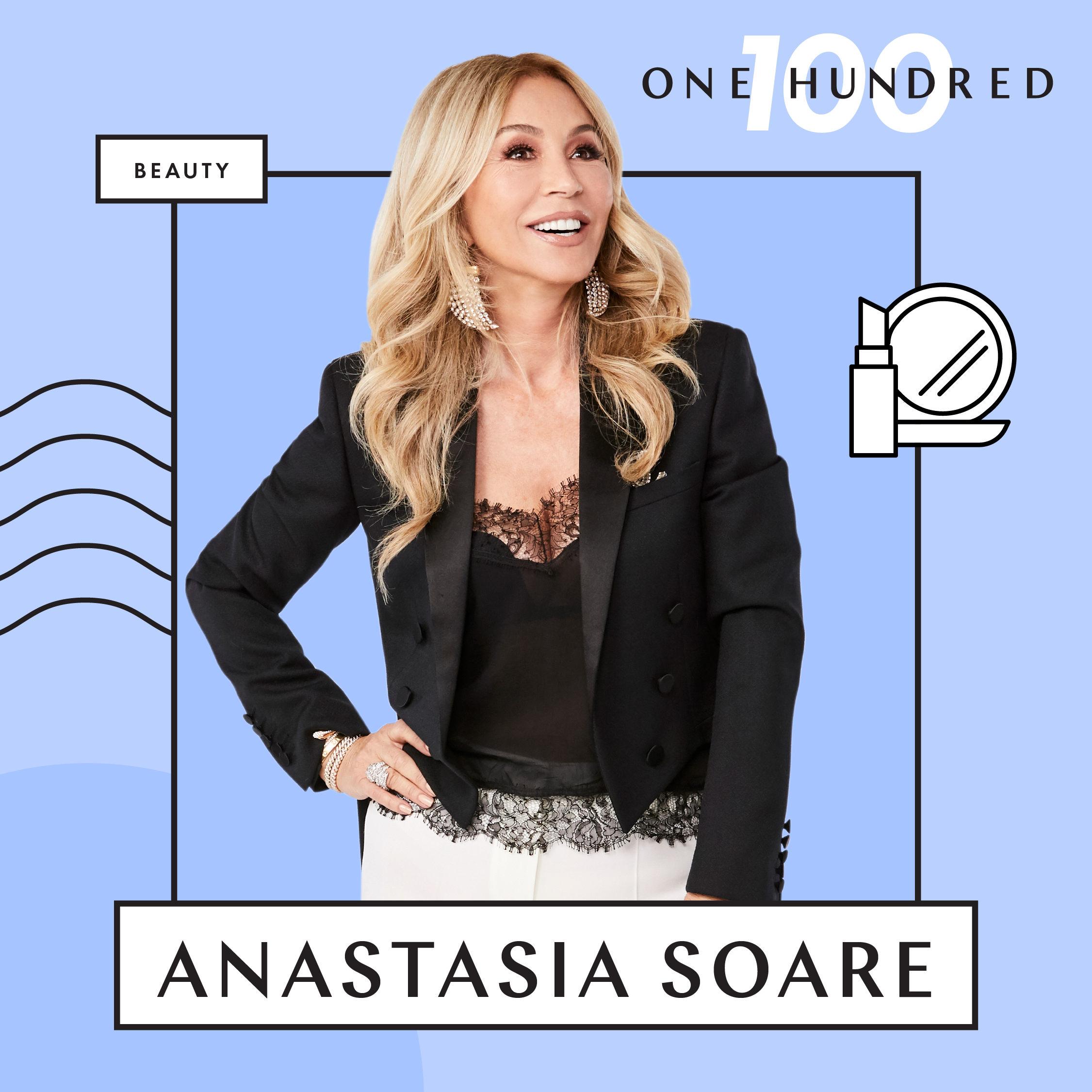
Create & Cultivate 100: Beauty: Anastasia Soare
“I’m deeply inspired by the way makeup has the transformative power to truly affect someone’s life.”


When Anastasia “The Eyebrow Queen” Soare launched her namesake brand, Anastasia Beverly Hills, nearly 20 years ago, there were virtually no brow-specific makeup products on the market. (Something that’s, frankly, impossible to imagine for anyone who’s set foot in a Sephora lately.)
Cut to 2019, and Soare’s seemingly simple idea to produce high-quality brow-shaping products has evolved into a projected $335 million business. Actually, “business” doesn’t really do it justice—Anastasia Beverly Hills is a veritable empire, with products spanning brow pencils, eye shadow palettes, and even foundation. And her celebrity fans have cemented her iconic status. Yes, we’re talking major clients from Michelle Obama to Kim Kardashian and Oprah Winfrey.
Ahead, Soare tells Create & Cultivate the #1 piece of career advice she’d give her younger self today, why she believes entrepreneurs should give their employees the space to spread their wings, and what keeps her motivated on her most challenging of days.
CREATE & CULTIVATE: You launched the first Anastasia Beverly Hills product line almost 20 years ago. How have you been able to create longevity for your brand? What tips do you have for people trying to give their brand lasting power? What's the secret!?
ANASTASIA SOARE: To be authentic, and to be hands-on. Always be in the kitchen. Everyone has a different path that led them to the top, and that’s just what’s worked for me.
When you hit a bump or hurdle in your career, how do you #FindNewRoads + switch gears to find success?
When I moved to the United States, I knew no one and I didn’t know the language. There are certain challenges you encounter while navigating a new country that only other immigrants can truly understand. I was constantly on a mission—to convince the bank to give me a credit card, to convince the landlord to rent me the salon space, to convince detractors that eyebrows could be big business. I believed in my vision, and that is what kept me going. I learned to never give up, to never take no for an answer. Skills you can learn, experience you can gain, but determination and passion will be your guiding lights.
“Skills you can learn, experience you can gain, but determination and passion will be your guiding lights.”
We can only imagine how many lessons you've learned along the way. What do you wish your younger self knew when you were first starting out in the beauty industry? Why?
I wish I had the reassurance that, of course, it’s not supposed to be easy. I can’t tell you the number of evenings I went home ready to give up, not sure I could continue one more day. And then I would wake up in the morning and start it all again. I love this Mahatma Gandhi quote, “Each night, when I go to sleep, I die. And then the next morning, when I wake up, I am reborn.” I sacrificed so much when I left Romania, but I knew that I wanted to create something for myself that would give me purpose each and every day.
You've been very hands-on in your business (especially when it comes to all things eyebrows). Why has it been important for you to take this approach? How do you balance delegation and creative control? What advice do you have for other entrepreneurs navigating this?
The reason I’ve always been so hands-on within the brand is that, for a long time, the brand was just me: one woman, doing eyebrows in a room of a salon. I was singularly responsible for these women’s arches. They trusted me, and we developed a rapport. The business has grown exponentially from the face-to-face exchange it once was, but I still feel that sense of responsibility to my customers. Luckily, I’ve had an incredible team behind me. I’m not an easy boss, but I believe I can spot when someone is good at something and encourage their abilities. My advice for other entrepreneurs is to try to be on the lookout for the same and give your employees the space to spread their wings.
You've seen many trends come and go during your time in the beauty industry. What changes do you hope to see in the future? Why?
Beauty has seen such tremendous growth for the individual in the last decade and a half. For such a long time, there was such a one-size-fits-all mentality for what was considered fashionable, and everyone subscribed to that—even if it meant that it didn’t suit them personally. I think today the definition of beauty carries with it a breath of fresh air, a fluidity, and most importantly, an individuality. Anastasia Beverly Hills was built on the foundation that brows are personalized to each person’s bone structure, and that this individuality is what creates harmony and proportion. People are now making beauty their own — what’s best for their features, their skin tone, their particular aesthetic. The social media effect comes into play because suddenly there’s this access to see and be inspired by so much. There’s a chance to be different, to be better. I love seeing everyone embracing that, and I hope it continues.
Social media only shows us the highlight reel but we know the reality is very different—What's a mistake you made and what did you learn from it? How did you turn it into an opportunity?
When I started shaping brows, it was sort of a revolutionary thing. No one was doing it. The salon was so busy that I was working twelve-hour days, seeing client after client with hardly a break in-between. Each moment that passed was precious, and I noticed that even the seconds it took to switch my tools were wasting valuable time. So I worked with a manufacturer to develop a double-ended tool: a brush on one side, and a spoolie on the other. It was the first of its kind. At the time, I didn’t know that these sorts of things could be patented, and now those brushes are everywhere. Years later, while working with a trademark lawyer, I received an incredible piece of advice. He told me that the best thing I could do for the brand was to make Anastasia synonymous with brows. So that’s what I did, and I’ve never let an opportunity like that go by again.
You were the first to make products just for brows, but now there is a lot of competition (due to your immense success). How do you remain on top as competition grows? How do you set ABH apart from other beauty brands (or even copy-cat brands)?
I try not to spend much time worrying about what other brands are doing. I prefer to stay focused on my own work. It’s important as a business to not look too often out of the corner of your eye. It slows you down. Of course, we don’t exist in a vacuum but stay focused. Over the decades and through the debut and evolution of generations of products, ABH customers can always expect innovation and a commitment to quality. They are the pillars to which we’ve always remained committed. Above all, be consistent.
With success comes opportunity, but that also means you have your hands full. What keeps you inspired and motivated to keep going even on your most challenging days?
I’m deeply inspired by the way makeup has the transformative power to truly affect someone’s life. When we launch products, our customers are essentially inviting us into their homes, their routines, the way they choose to present themselves to the world. It’s a very intimate experience, and I’m so proud that ABH gets to be a part of that for so many people.
You take a very interesting (and pretty unheard of) approach to social media, you manage much of the Instagram yourself and you don't do paid partnerships. Why did you choose this social media tactic? What have you learned by taking control of your brand message in this way? Would you advise this to other entrepreneurs starting out today? Why?
Thanks to my daughter Norvina, the current President of ABH, we were early adopters on the Instagram platform. She saw it as an opportunity for the brand to expand through social media and build a special relationship with users. Knowing that not everyone would use makeup the same way and that it would need to be customized from face to face, we were excited to showcase the diversity of what everyone was creating.
It also hit me just how many more people we could reach. When we would travel to the salons at Nordstrom and spent time speaking with clients about the products, we would maybe reach 100 people a day. It was all we could do with the time constraints. But when we posted those first images, we were soon getting thousands of likes. A woman commented about how she wished she had Brow Wiz where she was. I asked, “What’s your address, I’ll send you one.” But she was in Pakistan! We had a fan all the way in Pakistan, and it was then that I realized the kind of reach social media was going to allow us to have.
“It’s important to remain relevant. I wouldn’t necessarily call it a challenge, but just another part of the business—to stay connected to your customers and consistently meet their needs.”
What is your best advice for someone trying to launch a new beauty line today? Where should they start? Is it possible in such a saturated industry? Why?
Stay committed to quality, and never launch anything you’re not in love with yourself. People remember how you treat them, the quality of what you’ve recommended and created. Put your consumer first and make sure they know that you have their best interests in mind. Give them something they need and love from the beginning because you never get the opportunity for a second first impression. And next, try to find an empty niche and fill it. When I started, no one was creating products for brows, a kit for contouring hadn’t been assembled. Look at what the community may need, and work to give them something innovative.
What traits do you need to succeed as an entrepreneur or founder in the competitive start-up environment? Why?
You need to be able to stay in tune with the fluctuation of your industry. It’s important to remain relevant. I wouldn’t necessarily call it a challenge, but just another part of the business—to stay connected to your customers and consistently meet their needs.
You've been very smart and savvy with your business and it's been incredibly profitable. Where do you think is the most important area for a business owner to focus their financial energy? Why? What money mistakes have you made and learned from along the way?
It’s important to constantly have a 360-degree view of what’s going on in your company. Remember that every penny counts. I was always very conservative and very careful, but of course, I made mistakes. The biggest thing I learned was how not to make the same mistake twice.
How do you define beauty? What makes you feel beautiful?
I believe that what makes you feel powerful is also what makes you beautiful. Running a business, seeing people around the world use my products, hearing from others that I am their inspiration on their own road as an immigrant, as an artist, or as an entrepreneur—that’s what makes me feel beautiful.
What is the #1 book you always recommend? Why?
Never Give In! A collection of Winston Churchill’s speeches that never fails to stir something inside you.
Photographer: Jenna Peffley
Hair: Styled by OGXpert & Celebrity Hairstylist Jillian Halouska
VIEW THE FULL CREATE & CULTIVATE 100 BEAUTY LIST HERE.
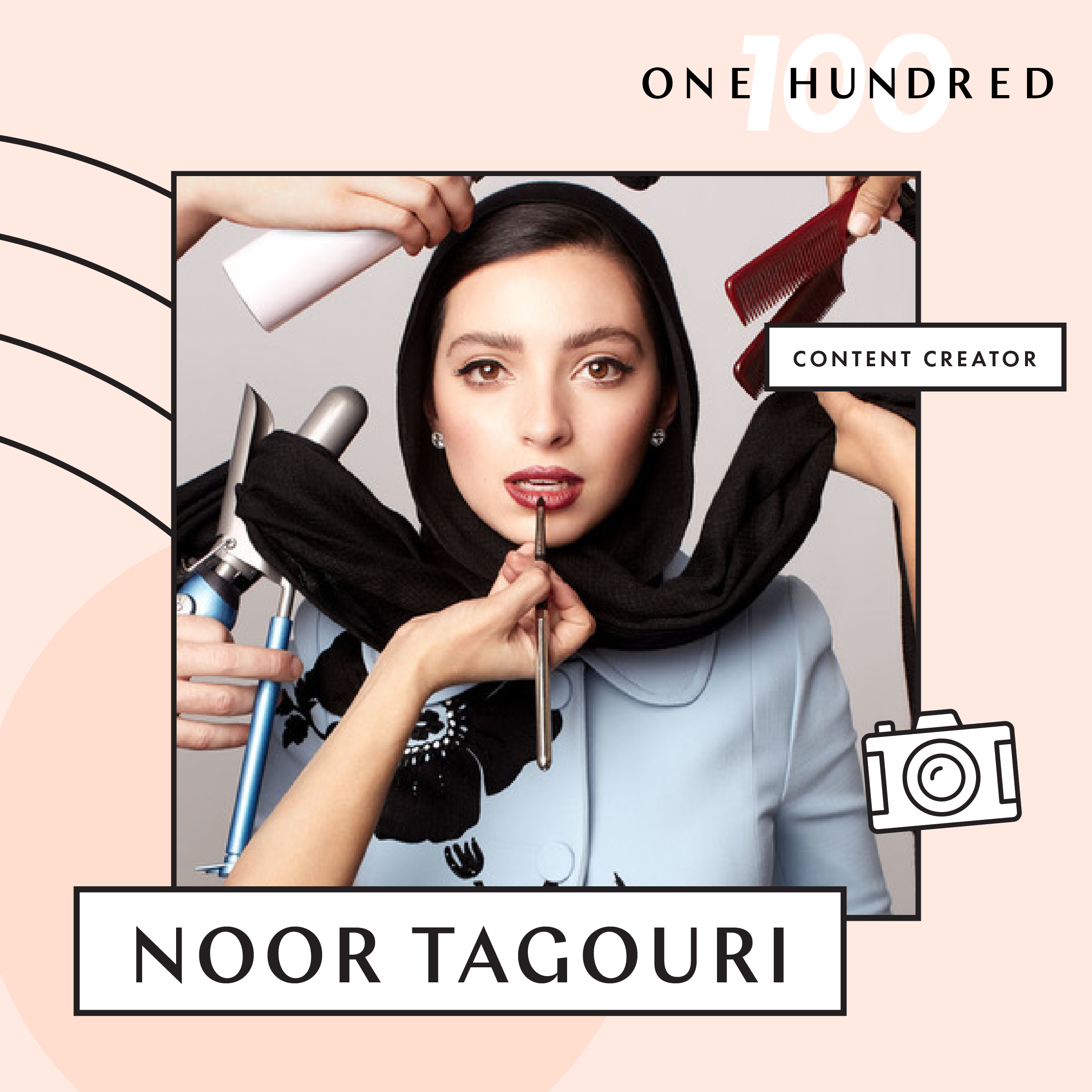
Create & Cultivate 100: Content Creator: Noor Tagouri
“I learned over and over again to trust your intuition.”


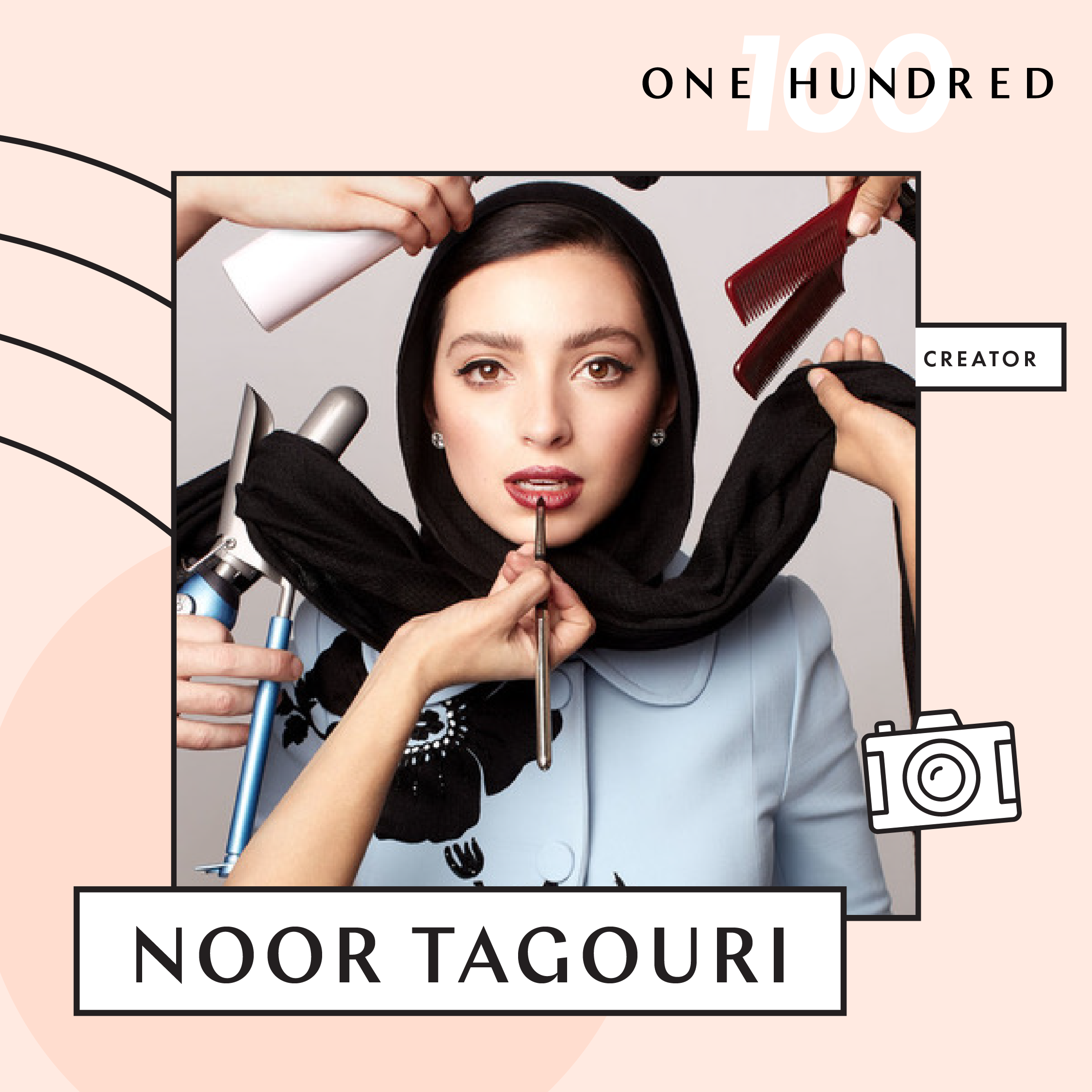
At 25 years old, Noor Tagouri is proving to be one of the most powerful voices of our generation. The Libyan-American journalist and public speaker is rewriting the script, flipping the narrative, and encouraging the next generation to stand up, speak out, and step into their power to be 100% authentically themselves. And the rest of the world is taking notice.
Best known for her grassroots reporting, Tagouri is brining much-needed conversation and representation of the marginalized to the greater community and the world. She put the sex trafficking industry in the U.S. under the spotlight with her podcast, Sold in America, which has now had over 1.5 million downloads; she is bringing her unique approach to storytelling into cinema with her production company, At Your Service; and she is amplifying the voices of the unheard and unseen with her ISeeYou Foundation.
Tagouri is proof that you can fuse ambition with purpose and change the world. Read on to hear her exceptional story, where she draws her confidence from, and why it is so important to tackle the hard conversations if we want to move forward.
CREATE & CULTIVATE: You are one of the most exceptional storytellers of our generation and we are beyond inspired by your culture-pushing interviews and documentaries. When did you know that this journalistic path was for you? Can you share your earliest memory?
NOOR TAGOURI: Ahh, this is so kind of you to say. My earliest memory was at three when my dad would take me to the mosque and I would go up to the microphone and just start breathing into it. LOL. But really, my parents say around six was when I started interviewing people, anyone. I remember my grandmother taking me to her mosaic class, and I started interviewing people. One man, a WWII vet, stood up and said we've been in this class for three months and didn't know more than each other's names and now you got us all to share our life stories! I remember feeling so proud and honored they opened up to me (a kid) and knowing this was exactly what I wanted to do forever.
Thanks to the powerful storytelling you're sharing, you've also been labeled an activist and are considered a social icon. With over half a million followers you are now an influencer in your own right. How do you use your influence? How do you use social media as a tool for your message and awareness?
I've used social media from the very start to try and share *good deed opportunities*—this was before any following just on a personal side. So, my family would do grocery and toiletry runs for local shelters and other ways to alleviate homelessness (that led to the formation of our ISeeYou Foundation). I still use it for these opportunities.
I also try to use it as a way to take people on my journey, I share struggles and bumps along the way as much as I can at the time. I try to lead by example so people know they really can live out their personal legends. Social media has been an incredible way to connect with others, to connect people with each other, and to help amplify other's voices. I've also been able to use it to find sources for stories and story ideas.
“I learned over and over again to trust your intuition.”
One of your projects was a documentary called Sold in America which is an investigative look inside the sex trade in the U.S. What pulled you towards this project and this topic in particular? Why was this such an important documentary for you to make?
The topic started out as just sex trafficking and then as we started reporting, we realized we couldn't tell this story without exploring the full spectrum of the sex trade. This project was so important to me because it was a cause I had been passionate about for years. I had written papers on it, reported on it at local news jobs, worked on a clothing line to combat sexual exploitation, and worked over 10 years with a shelter that housed women who experienced sexual violence (including exploitation.)
You just created your own production company At Your Service—congratulations! What was the catalyst for this decision? What is your vision for the company? What stories do you hope to tell/share?
To be honest, the decision came after a tumultuous year of dealing with media companies, agencies, and people who just didn't want what was best for the stories we were telling. We decided it was time for me to truly own my own work so we could choose exactly how we navigate partnerships and projects.
The vision is in the name—we are a company that truly aims to be At Your Service. I believe storytelling is a form of service and there are so many ways to do it. Right now we are working on documentary series, podcasts, speaking/workshops, and consulting.
When you hit a bump or hurdle in your career, how do you #FindNewRoads + switch gears to find success?
I renew my intentions. My way of setting goals is really setting purpose and intention. If I can do that, I can find a way to execute that in all aspects of work and life. Doors naturally open when you're living in purpose.
You have always spoken up for those who can't and be a figurehead for standing in your truth. Where does this confidence to pursue your own path and not bend to society's expectations and stereotypes come from? What message do you hope this spreads to the generations listening/watching?
I spent a lot of my life trying to be like and look like other people because I thought I needed to in order to pursue my dreams. I later realized the things society deemed as my weakness, or my personal insecurities could be used as my biggest strengths. I decided to embrace it all and it was incredibly freeing. I realized every single person in every single room I walked into had their own insecurities and their own life shit. Why should I compromise my comfort and self for the possible comfort of others? Life is too short, seriously think about that. How fast has this year gone by? The years before? It's not worth it. I promise you it isn't. Just be the truest version of you in every single space. You deserve it.
Following your own path can be scary for many young people so it's helpful to share the good with the bad. What have been some of your biggest challenges this year and what did you learn from them?
Ha! This year was one of my absolute hardest and absolute best years. I was betrayed, used, put down by people I worked with and trusted—so much has happened but wow am I in a better place. I learned over and over again to trust your intuition. I also learned that building a team that believes in the message takes work and effort. It's so, so worth it though. I'll just leave it at that for now.
Muslim women are underrepresented in the media and you have become an inspiration to many who see themselves in you. What advice do you have for those who are struggling to feel seen and represented in their field? How important is visibility? And what more needs to be done?
Look to those who have come before you, who have made it easier for you to be where you are today—even if that is still difficult. We have to learn from other's experiences too. Maya Angelou said, ‘I come as one, but I stand as 10,000.’ Call on your 10,000. Speak up and know you are not doing it for you—you are doing it for everyone who came before you and everyone who is coming after you. Visibility is so important, but it can't just be visibility on the surface. True inclusion is a seat at the decision-making table.
I also recognize that tokenization and surface diversity is often a prerequisite to getting that seat as a minority. The path is never easy, but it is always worth it. We come to the table with perspective, strength, perseverance, empathy, and knowledge.
One of the main things we admire so much about you and your work is that you're not just talking the talk, you take action. You recently started the I See You foundation with your family to alleviate homelessness in local communities. Can you tell us a little more about this organization and why you founded it? What is your message to those who feel helpless and aren't sure what to do to or the steps to take?
Our work in this space actually started in 2007! We made it official a couple summers ago after we asked someone what they needed and she responded, ‘we just need to be seen.’ This was our response to her and the community. My mom started this effort when she first met a woman experiencing homelessness who ran a shelter she lived in. We asked what they needed and she said toiletries, so we held toiletry drives for years. The demands changed and we consistently asked the community what they needed (instead of what we thought they needed.) That is what my mom always taught us when engaging in service.
ISeeYou works to alleviate homelessness in many ways including:
-Creating and distributing monthly hygiene packages, clothing, nutritious snacks, water, meals and more for people experiencing homelessness.
-Coordinating monthly grocery runs for local shelters.
-Distributing grocery gift cards for local families in need.
Right now we are working on our big annual winter care package runs. Our goal is to make 500 packages this year.
“True inclusion is a seat at the decision-making table.”
Looking back since you began your career, what's one thing you wish you could go back and tell yourself? Why?
Know you're freaking worth. I've realized now so many times I was taken advantage of and made to feel like it was a ‘favor’ to me to be in the spaces I was but it was only to make me feel undervalued. KNOW. YOUR. WORTH. PEOPLE.
Also, I would tell myself to show up on time. For people who aren't sure how to get started, simply ask someone in need what you can do to help. Everything counts. In Islam, we have a saying, “smiling is a form of charity." There is always something to give.
You are not afraid to tackle the hard conversations, whether on a podcast, through a documentary, or on your socials. What advice do you have for others hoping to embrace activism in their business or daily life? How can one become part of the conversation?
I hated that people used the term activist with me because I never identified as one. I knew the reason people would call me that was because I was a Muslim woman in a hijab doing shit so all of a sudden it was activism. But I realized the way I ‘do shit’ or tell stories really is a form of activism and service. I still don't personally call myself an activist, but I advocate for many things in every single aspect of my life.
I would say don't focus on the titles or categories or whatever other limitations. Find the conversations that ignite a flame in you. It can be something that has directly affected you so you have your story to connect with others, or it can be allyship by learning about things others are going through. Anything to make others feel seen, heard, and valued.
While there is a lot of positive conversation and community online, there can also be a lot of negativity too—How do you deal with those? What advice do you have for others who are dealing with cyberbullying? What tips do you have for staying positive?
Oh goodness, it's so hard sometimes because you almost want to respond to people and say 'you don't know me! or my intentions! or my heart!.’ But oftentimes you have to just remember if people choose to hurt others online, it's a reflection of them and their insecurities.
And, I mean, many of us know this. It's a matter of truly believing it and understanding it. What people say about you says more about them. Seriously. On the tips, block people—on Twitter, I can only see the tweets from people who actually follow me—this helped a lot. Know and trust yourself. Lead by example. I try to only put out things that I know can help others or inspire them. At the end of it all, I remember that none of this matters. Live in your purpose, in service of humanity, and the rest will be fine.
What is your best advice for people reading this who admire you and aspire to achieve your success in journalism and activism but don't know where to start?
My formula to start or to just realign or reset or just to simply live in purpose is to combine the causes that pain you the most with your skills and your talents—a lot of life is in that answer.
What is the #1 book you always recommend?
Lately, it's been The Originals by Adam Grant.
Photographer: Anthony Maule
VIEW THE FULL CREATE & CULTIVATE 100 CONTENT CREATOR LIST HERE.

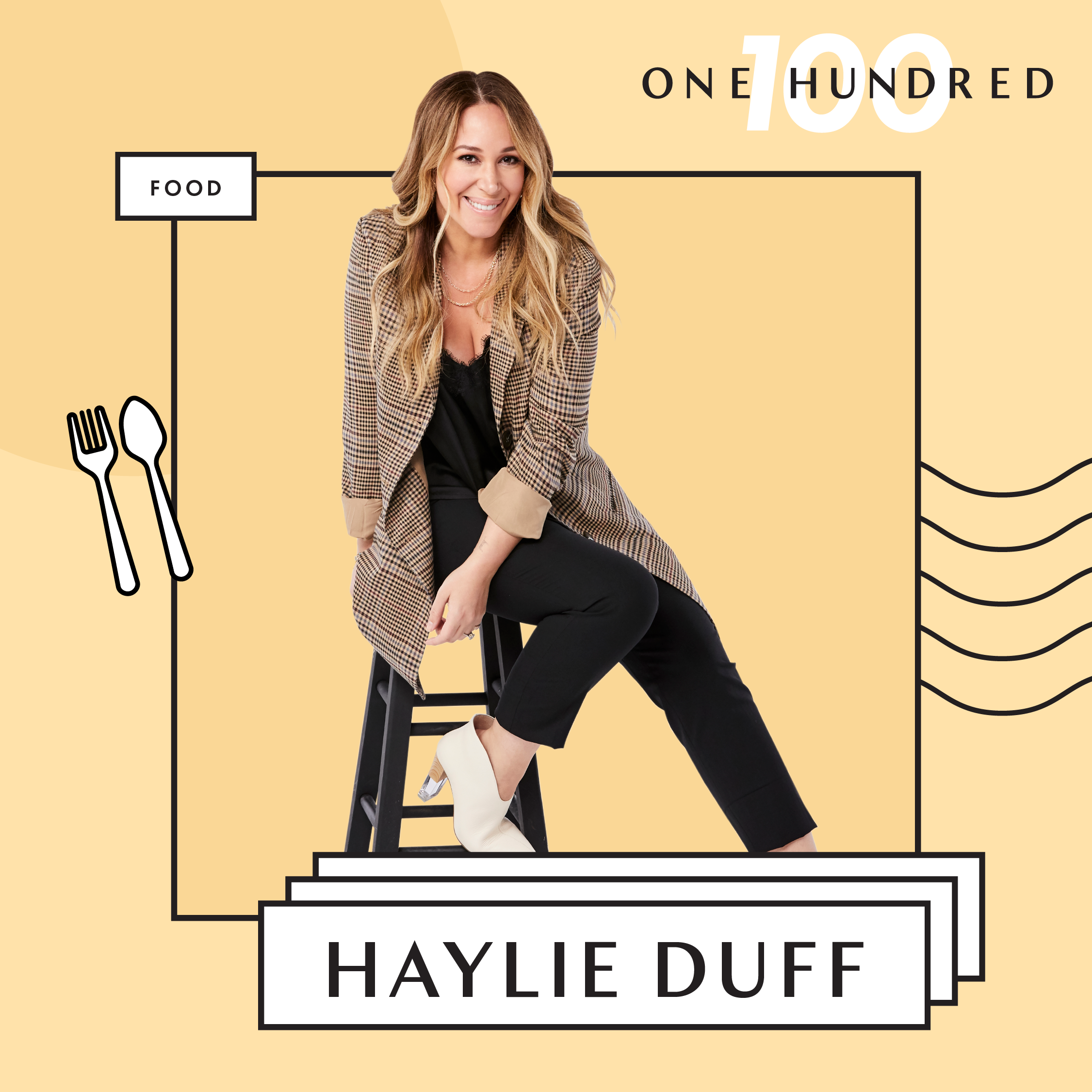
Create & Cultivate 100: Food: Haylie Duff
“Aim high. You are capable of way more than you think you are.”


Although Haylie Duff is best known as an actress, it’s her passion project that has her fan base tuning into her every move. Turns out, Duff has always turned to cooking as a form of self-expression but she never considered it would become a full-time gig. It wasn’t until she started posting recipes, entertaining tips, and cooking advice on her site, Real Girl’s Kitchen that a devoted foodie following, a book deal, and a popular TV show on the Cooking Channel quickly followed—and the star is still pinching herself.
And if that wasn’t enough, the mom of two is also the co-founder of Little Moon Society a clothing line for kids and adults using eco-fabrics that are 100% made in L.A. How many hours are there in a day? Duff is squeezing everything she can get out of those 24 hours. Read on to learn more about Duff’s creative journey, her advice for young women who want to achieve similar success, and how to handle the bumps along the way.
CREATE & CULTIVATE: You started Real Girl's Kitchen as a way to share recipes—did you imagine it would turn into a book and then a TV show? How does that feel? Can you talk us through the vision? Where do you hope to grow the brand next?
HAYLIE DUFF: Truthfully, I didn't imagine it turning in to what it did! It started as a side passion project. A way for me to channel some creative energy between acting projects. I really believe that sometimes the universe takes you in a roundabout way to find what it is you really enjoy doing.
You also launched a kid's clothing line called Little Moon Society. There is a sea of competition in the kid's clothing space, what makes your business stand out? How do you find/create a unique point of view? What do you wish you could go back and tell yourself when you were first launching your business? Why?
I have a fantastic partner, Jessica. We have been best friends since we were 16. I think she helps me keep a unique perspective on things. We really encourage each other to not watch what other kid's brands are doing. Not comparing ourselves to anyone else. I think that is really important. As far as what makes us stand out, we make all of our garments in L.A., using smaller family-owned manufacturers. Our dye team is only two women. We are very focused on the ethical treatment of the people making Little Moon and I really believe that that care seeps into the clothes. You feel good wearing clothing that is putting goodness back into the world.
When you hit a bump or hurdle in your career, how do you #FindNewRoads + switch gears to find success?
We lean on each other. That is when our long history really comes in to play. We trust each other. We can figure it out—together!
“Aim high. You are capable of way more than you think you are.”
You've had an impressive career but not everything is as rosy as it seems on social media. Can you recall a specific time you failed and how you turned that around/into an opportunity?
Haha! That is true. Those are the times I usually stay quiet on social media. Giving myself some time to reset, get my mind right, then charge on!
You've been very smart and savvy with your business and it's been incredibly profitable. Where do you think is the most important area for a business owner to focus their financial energy? Why? What money mistakes have you made and learned from along the way?
I think trying to grow too fast is always a mistake. Slow, organic growth is key. For us, with Little Moon, it has been word of mouth. Not so much "celebrity gifting" or things like that. It's the mom that sees it on the kid at the park and goes "where did you buy that?" Then once your business can afford it, marketing!

You are one of our favorite people to follow on Instagram with over a million followers, what unique social marketing tips do you have for other entrepreneurs to help grow their company online?
I'm still trying to learn these tricks myself. If you find some out, send them my way!
You are the definition of a multi-hyphenate and took a lot of twists and turns in your career, starting as an actress then moving to the food industry and even into clothing. What advice do you have for others looking to make a career shift?
My advice is to follow your passion. Let it be your guide. Keep things genuine. People will go along the journey with you if you keep things REAL.
With success comes opportunity, but that also means you have your hands full—what keeps you inspired and motivated to keep going even on your most challenging days? What drives your passion?
My girls. Their big eyes, always on me. Soaking up my every move. Knowing that one day they will be in the same position as I am with their own families. So every day I try to make the best decisions I can.
Success is such a broad term and it means something different to everyone—how do you define success?
A happy family. Mom and dad feeling creatively fulfilled. And lots of friends and happiness.
“Keep things genuine. People will go along the journey with you if you keep things REAL.”
What is your #1 piece of advice for young women hoping to achieve a successful, multi-hyphenate career like yours?
Go for it! Aim high. You are capable of way more than you think you are.
What is the #1 book you always recommend? Why?
I love Big Magic by Elizabeth Gilbert. Encourages creative regardless of fears! Great read.
Photographer: Jenna Peffley
Hair: Styled by OGXpert & Celebrity Hairstylist Jillian Halouska

Create & Cultivate 100: Content Creator: Lindsay Peoples Wagner
"Do what others won’t dare to do!”

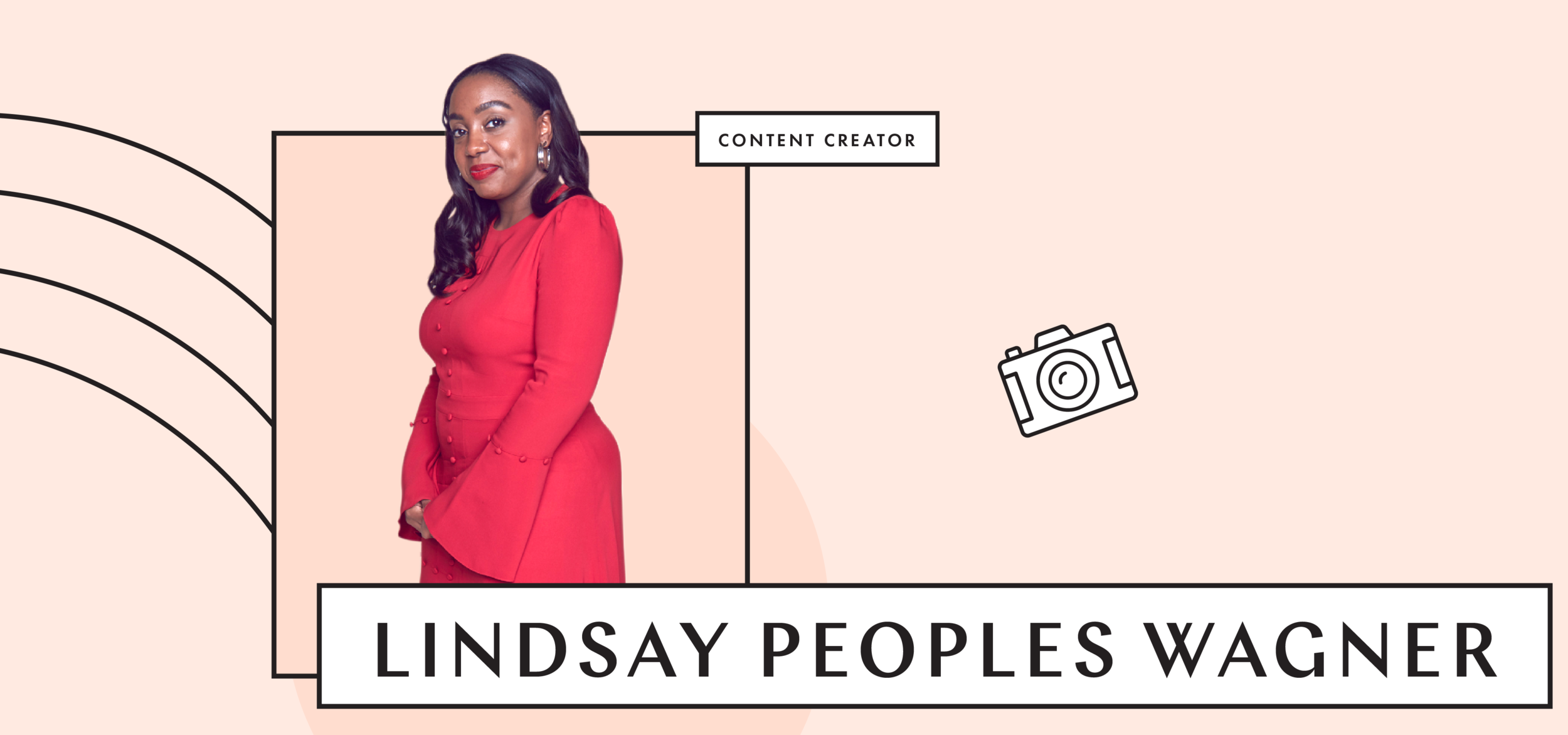
At just 29 years old, Lindsay Peoples Wagner has made waves as an unapologetic force in fashion, leaving the industry positively shaking in its designer boots. The Midwest girl from Wisconsin doesn’t mince words when talking about the challenges she’s faced in an industry that has been slow to put diversity and representation at the top of their style agenda. In addition to serving up serious style as fashion editor at New York Magazine's The Cut, Wagner wrote trailblazing articles about what it's like to be black in fashion and the lack of race and size diversity in street style photography telling Fashionista that she wanted her role to explore conversations about fashion, culture, and race.
And now that she has a platform as the editor in chief of Teen Vogue (she started her career there as an intern in the fashion closets), Wagner is making sure her readers feel seen and heard, both visually and editorially, in the pages of the magazine. And the industry is taking notice. This year she was listed on both Business of Fashion BOF 500 and Forbes 30 Under 30 as one of the youngest and only prominent black editors in the industry who has maintained a strong focus on issues of race, politics, and inclusive representation throughout her career in fashion media. She truly is a force of fashion—the voice of our generation—and she’s just getting started.
CREATE & CULTIVATE: You've worked your way up from closet intern to editor in chief of Teen Vogue—congratulations!—but most people don't know just how much hard work it took to get there. What can you share about your journey to this point? How hard is it to break into the world of fashion and magazines?
LINDSAY PEOPLES WAGNER: I’m very open about the fact that this has been a climb and that it still is every single day! I'm from Wisconsin, in the Midwest, where fashion isn’t really taken seriously, and I had no family connections in the industry or a trust fund to support me, so my experience has been very different than a lot of people in fashion. I've worked hard every day to prove that just because I don’t come from this world doesn’t mean I don’t belong and have something special to offer.
You were just announced as a BOF 500 honoree for your work in shaping the fashion industry today. As one of the youngest and only prominent black editors in the industry, how are you paving the way for other women of color? How do you break through the noise and maintain a strong voice and focus? How has this resonated with your readers and Teen Vogue community?
Everything I do is always through the lens of inclusivity, so whether we’re covering fashion, politics, or anything in between, I want our readers to truly feel seen and heard with the work that we're doing. I try to make sure that we are covering not only what’s culturally relevant, but also topics that others may be too scared to talk about. Being able to toe that line has resonated with our readers and even people who don’t regularly read Teen Vogue because we’re willing to have the necessary conversations.
What do you wish you had known when you were first starting out in the world of fashion? What have been some of the biggest lessons you've learned along the way?
You always hear that, as a black woman, you have to work three times as hard. Sometimes working hard is enough, and sometimes it’s not. That was so hard for me starting out. I come from a very humble and honest upbringing, and it was shocking to me when I moved to New York and started working in fashion because I didn’t realize how many things were based on nepotism, and financial status. I had to learn that I would, in time, make my own connections and build relationships with people, but it took a long time to get to a place where I was confident enough in myself to speak up.
When you hit a bump or hurdle in your career, how do you #FindNewRoads + switch gears to find success?
It’s corny, but whenever I feel like I’m in a rut, I always make a vision board. I write out all the crazy things I’m thinking about doing, write out inspirational quotes and bible verses, and just look at it on my wall every single day and meditate on it.
“Do what others won’t dare to do! We don’t need any more people in fashion who just have good taste and come from money. I’m eager for this industry to embrace people who have innovative ideas and the hunger to hustle.”
You have been the editor in chief of Teen Vogue for about a year now and have been responsible for creating truly groundbreaking content that is pushing our culture forward by bringing issues of race, politics and inclusive representation to the fore. What impact do you think this has had already on inciting change? Where do you hope to take it next? What are some of the stories you are most proud of so far?
I think that when people see how unapologetic I am personally, and how unapologetic we are at Teen Vogue, it incites change and makes other people want to speak up. I hope that we continue to foster a community of changemakers because that’s what this is all about. Nothing makes me more proud than when I get messages from young people saying they’ve read something on Teen Vogue that helped them. That’s truly the best feeling.
For you, the role of fashion editor has never just been about going to shows and writing market stories, can you tell us why? How do you see your role in the industry? How has that changed over the many roles from intern to EIC?
Because I didn't grow up with connections to this industry, I always felt as if I had to find my own lane and a way to make it work for me. It’s never been about the clothes, or celebrities, or clout. My mother once told me that in order to sustain myself in this industry I would need to be what I needed when I was younger, and that’s what I try to hold on to.
From the outside looking in, the leap from market editor to editor in chief seems like a fairly large one. How did you prepare for this role? How did your previous experience in the industry shape you for this opportunity? What do you think you've brought to the role that no-one else could? Why?
I was doing a lot more than traditional market work when I was at The Cut. I used that role to write about a lot of things that I cared about deeply, and in that time I was able to also produce a lot of shoots and create content that had an effect on the industry. Other market editors might not write articles like Street Style Is Killing Itself Focusing on Thin White Women because they’re hoping to become street style stars themselves, but that’s what I think was always different about me. I always needed the role, my work, to be more than surface level.
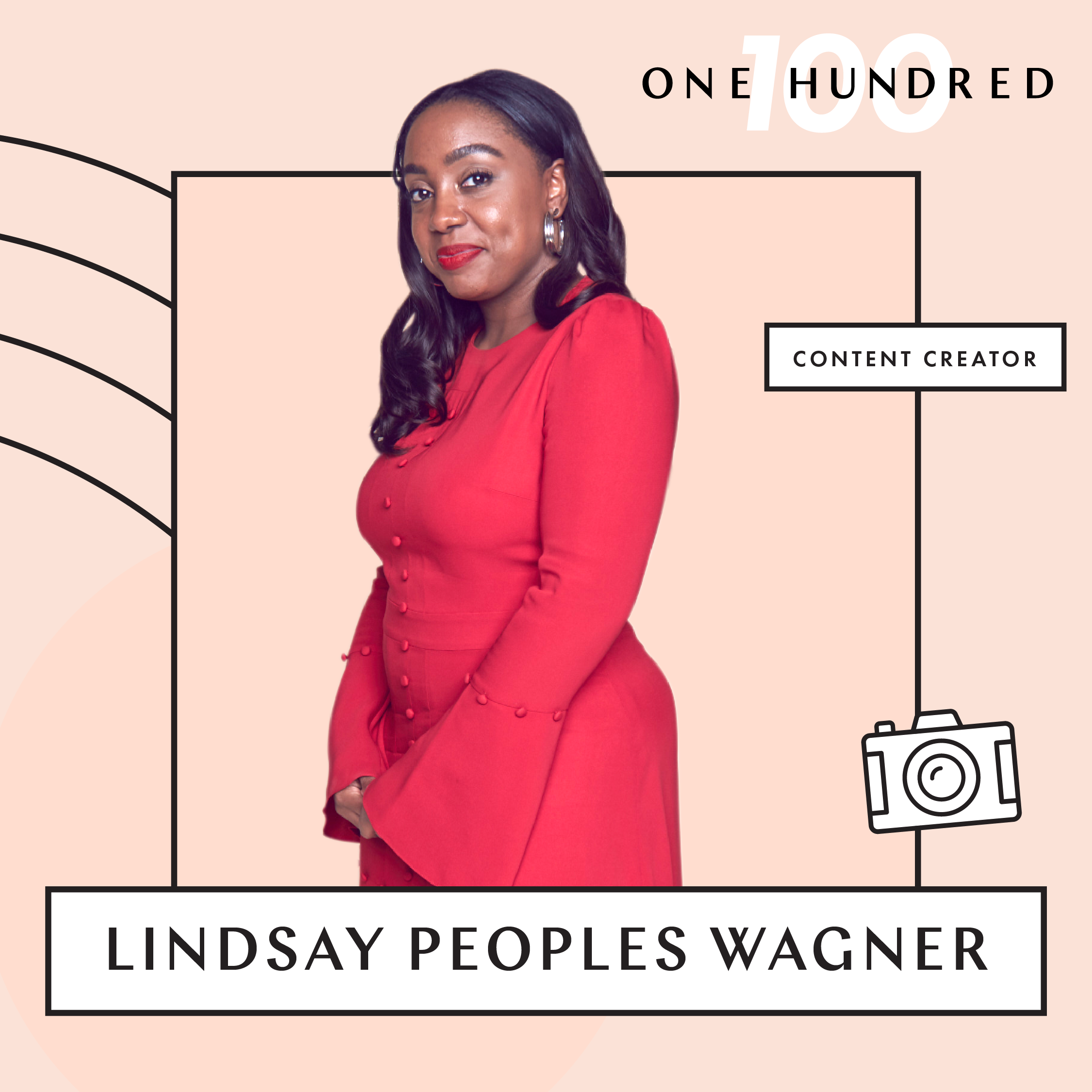

You have a very busy schedule with shows, appointments, and meetings. What does time management look like for you? How do you fit it all in? Can you share any work hacks?
Time management is so important! I've had to learn the hard way that I need to take time for myself. I recently stopped scheduling breakfast meetings, and use that time first thing in the day to meditate, workout, and go through my email. I also don’t make any plans for the weekends. I try to see my friends and people I need to see during the week when I’m already out, so that on the weekends if I feel like leaving the house I can but if not, I don’t feel bad.
You have built a personal brand on social media alongside your successful career as a fashion editor. How do you use social media as a platform for self-expression and to highlight the work you're doing at Teen Vogue and outside of that?
Social media is tough. I try not to take myself too seriously or take my presence on social media too seriously. I don’t curate my Instagram, I don’t plan it out. It’s really just what I feel like sharing in the moment, and it’s usually pieces I’m really proud of or my thoughts on culture.
“You always hear that, as a black woman, you have to work three times as hard. Sometimes working hard is enough, and sometimes it’s not. That was so hard for me starting out.”
With success comes opportunity, but that also means you have your hands full. What keeps you inspired and motivated to keep going even on your most challenging days?
What keeps me going is knowing that my place in this industry is bigger than me. There are so many young black women and femmes who look up to me, and for them, I have to keep going.
What about your job do you wish more people knew? What are some of the biggest misconceptions?
How mentally taxing it is! I have to make so many tough decisions in this role, it can be hard to juggle it all at only 29 years old.
What advice do you have for other aspiring fashion editors who dream of your career success?
Do what others won’t dare to do! We don’t need any more people in fashion who just have good taste and come from money. I’m eager for this industry to embrace people who have innovative ideas and the hunger to hustle.
What is the #1 book you always recommend? Why?
I Know Why The Caged Bird Sings by Maya Angelou is a book that changed my life and can be read over and over again.
VIEW THE FULL CREATE & CULTIVATE 100 CONTENT CREATOR LIST HERE.





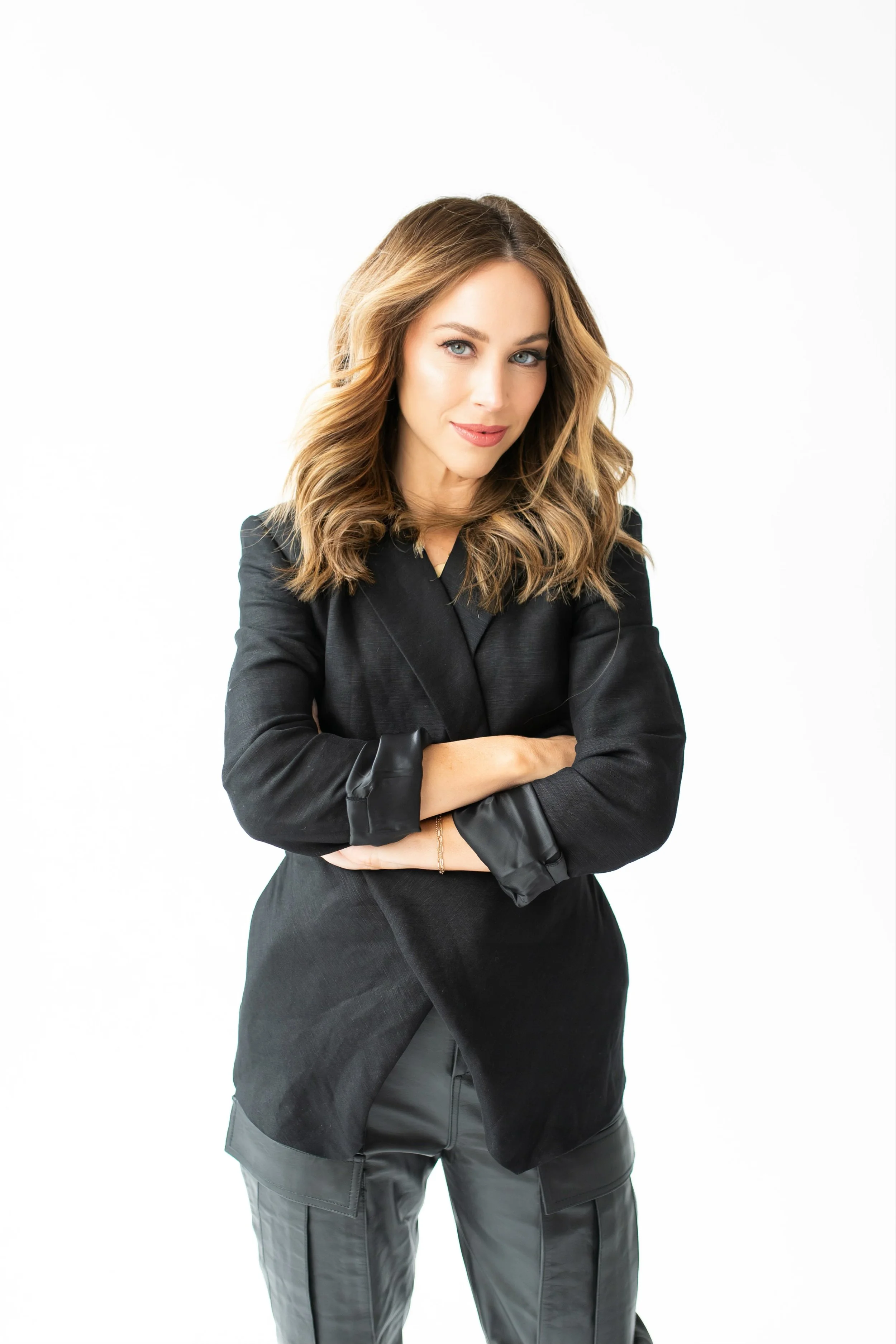


Create & Cultivate 100: Beauty: Miranda Kerr
The original clean crusader on building an empire with integrity.


Miranda Kerr is a face and a name we’re all familiar with. She has fronted campaigns for major luxury brands and walked their designer runways at every fashion week around the world, but now the supermodel has turned her personal brand (and her passion for wellness) into a booming international business, KORA Organics.
But here’s where it gets interesting. Kerr launched the brand back in 2009 way before clean beauty was even a buzz word. Now, the natural beauty market is worth over $13.2 billion of the $532 billion beauty industry and growing rapidly. But for Kerr, it’s not just about being clean and certified organic, it’s also about creating efficacious products that deliver results. And she has the case studies and consumer reviews to prove it.
We tap the clean crusader to reveal her secrets to success, how she made the career pivot to build a global beauty empire, and why clean living has always been a passion close to her heart.
CREATE & CULTIVATE: You've taken the time to slowly build Kora Organics and made sure that every product you launch lives up to your high standards. Why did you choose this approach rather than following trends or doing larger product launches?
MIRANDA KERR: “For me, it’s all about the results and performance—I don’t want a cabinet full of products that don’t produce results. I’m a busy mum, so I need a handful of trusted products that work. In developing KORA Organics, I started with the essentials first and then have added products over time. Each product is very considered. I love learning about new innovative powerful ingredients and formulations that push the boundaries in certified organic skincare, and we work with the best organic chemists in the world.
“We take our time and just work to the beat of our own drum. We conduct all our stability testing and consumer studies and the results speak for themselves—the products really work. I enjoy every aspect of research and development and test all the products on myself. It’s incredible to know you can achieve such powerful results in a healthy way.”
You chose to self-fund Kora Organics. Why was this the right choice for you? What advice would you give to others thinking of doing the same?
“I raised a small amount of money when I first launched KORA to get started. I currently own 95% and still have the original 5% investor. I am fortunate enough that I’ve saved my money over the last 20 years and I’ve been able to invest it into something I’m super passionate about. It was a conscious decision for me because I wanted to be in control of my business. From the beginning, I have had such a clear vision of what I wanted the products to be and I didn’t want someone coming in to alter that or water the products down to try and make a quick dollar. I wanted the products to be efficacious and results-driven, and I knew the way I wanted to present the brand through packaging and marketing. I didn't want it to be diluted in any way with anyone else's ideas.
“To this day I haven’t taken a dollar out of the company, it all gets reinvested back into the business. In saying that there may come a time I will consider working with another investor to further expand the growth of the company. It’s good to have an open mind about these things it’s just I haven’t needed it yet.”
What changes do you hope to see in the beauty industry in the future?
“I would love to see greater education and regulation in the beauty industry to call out the carcinogenic and toxic chemicals contained in products. The message is getting out there which is a positive step, but more can be done. We know that what we put on our skin is absorbed into our bloodstream, so consumers have a right to know what they are putting on their skin, and also the skin of their children and families.
“Clean beauty is a wonderful step in the right direction but certified organic is so much more than clean beauty—there are more antioxidants in the organic ingredients used because the produce is grown on soil that is nutrient-rich which is also why people buy organic food. It’s a no brainer that you are going to have more effective results because you are using a product that isn’t just clean but also contains powerful certified organic ingredients.”
“I feel it’s important to really trust your instincts, empower your team and don’t be afraid to ask questions.”
When you hit a bump or hurdle in your career, how do you #FindNewRoads + switch gears to find success?
“Starting any new business is full of learning curves and I am still learning every day—I see every experience as an opportunity to grow and learn. I feel it’s important to really trust your instincts, empower your team and don’t be afraid to ask questions.
1. Really trust your gut.
”It’s good to listen to that and take it into consideration, but if you still feel that gut feeling about something then go for it. There have been a couple of times where different people we work with told me not to do something because they wouldn’t carry that product. I thought okay, I’m going to do it anyway, then it sells like crazy on our website and they end up taking it later.
2. Being able to empower your team and understand the value of your team as a leader.
”You are only as good as your team so my job is to really nurture and develop that culture and bring out the best in each team member. That includes direct feedback, constructive feedback and challenging them to strive beyond what their goals may be so they don’t plateau in their career or development. It’s also important to let them know that they are appreciated and heard no matter what their position is—everyone is valuable and needed. At the end of the day, teamwork makes the dream work! I couldn’t do it on my own.
3. Don’t be afraid to ask for advice or to ask if you don’t understand something.
”When I am going through the P&L with our CFO that is not my forte but I ask him what do you mean by that? or maybe this is a silly question but can you explain this to me? and I have learned so much. Instead of just pretending to understand I ask him to show me the formula and teach me along the way. I was once afraid to ask for help because I didn’t want to put anyone out, but I’ve realized people love helping when they can.”
How do you define beauty? What makes you feel beautiful?
“I feel beauty comes from within. When you have a kind heart it shows, and people can feel it. That’s what I feel makes someone beautiful—being kind, thoughtful and sincere. For me to feel my most beautiful, it’s about keeping my mind, body, and skin in balance because I believe the health of all three are connected. I try to meditate each morning, choose positive thoughts throughout the day and spend time quality time with loved ones. I exercise daily and eat healthy, organic foods (the majority of the time) to feed my body with the nutrients it needs to function and feel its best. I choose to use products that are healthy for me both inside and out. When I feel my best in the inside it shows on the outside for sure and that’s when I feel the most beautiful.

With Kora Organics you promote "total wellness" that goes beyond your products. Where did this message come from? How has it shaped the direction of your business?
“Our philosophy at KORA is to; Feed your MIND with positive affirmations and self-love; Feed your BODY with the nutrients it needs to function at its best; and Feed your SKIN with products to help detoxify, nourish and revitalize. Our products are not only healthy to use and of the highest quality, integrity, and efficacy, they also aim to inspire and uplift customers. KORA Organics encourages you to take a moment out of your busy day to take care of yourself physically, mentally and emotionally.
“I added the unique vibrations of Rose Quartz to all of the products because I believe in the healing and protective powers of crystals. Rose quartz is a pink-colored crystal gemstone that is believed to carry a very gentle, soothing energy to encourage love and acceptance of ourselves and others. It is also said to have high vibrations that can help heal and protect the heart. During the manufacturing process of our skincare products, the entire formula is touched upon by Rose Quartz crystals, so the vibration of love flows through the crystals, into the products, and onto our customers.
“Another unique aspect of KORA is the use of positive words on the back of each of our products. Positive thoughts create positive energy vibrations within the body, so we have adopted the principles of Dr. Masaru Emoto’s work by applying positive words on the back of each of our products. Our intent in doing this is that the vibrational energy of the word has a positive effect on the user and can inspire positivity.”
You've said that you test every Kora product yourself and it is clear that you are very hands-on in your business. Why is this approach important to you? What advice do you have for balancing a hands-on approach and delegating?
“If I didn’t want to use and trust the product myself, I wouldn’t want to sell it to any consumers. As you say I am very hands-on in my business and I truly believe in my products, that’s why it is important for me to test the products on myself and understand what is in them—I know they are the very best they can be. I think it’s important to understand all aspects of the business and work to your strongest skillset and delegate to team members who are stronger in different areas.”
“Starting any new business is full of learning curves and I am still learning every day—I see every experience as an opportunity to grow and learn.”
Where do you find the most inspiration? What drives your passion?
“I’m inspired every day, everything from nature, art, and music. My husband, family, and friends also inspire me, as does traveling and experiencing different cultures. From a business perspective, my inspiration and passion come from developing products I want to use for myself. I am also constantly inspired by our customers and the testimonials we receive telling us about the positive results they are getting from using our products and how they not only enhance the health or their skin but also their confidence.”
What is next for Kora Organics? What new innovations are coming our way?
“This year has been one of our most exciting years to date in terms of product launches. We launched several new products, including our much loved Noni Glow Sleeping Mask, two new lip products, the Noni Lip Tint and Noni Lip Treatment, our Sun-Kissed Glow Body Oil, plus the recently launched Noni Bright Vitamin C Serum. I’ve been working on new formulations for some exciting new products for next year and I can’t wait to launch them. I hope that KORA continues to pave the way for organic beauty and aids in further educating consumers about the importance of knowing what they are putting on their skin.”
How do you set yourself apart from other major players in the industry?
“To be honest, I didn’t even realize the extent that I walk to the rhythm of my own drum and do my own thing, but the more people I speak to, the more I’ve realized that I really do, do my own thing. Being certified organic is a big deal for my team and me because it requires a lot of work and a lot of auditing, but it ensures our brand has transparency. Customers also have that insurance and confidence they are getting what they are paying for. I think that consumers having this knowledge and KORA Organics being so transparent it sets us apart from most other brands on the market. We’re currently the only certified organic brand that Sephora carries. So to me, there really is no competition.”
Photographer: Nino Munoz for KORA Organics

Create & Cultivate 100: Entrepreneur: Jenni Kayne
“I feel fortunate that I dove in when I was so young and didn’t know any better. I think that sense of naivety gave me the courage to just go for it.”


Jenni Kayne is the perfect embodiment of her namesake California-based brand with her effortless style (think: chunky cashmere sweaters, casual button-downs, and pointed-toe mules), natural beauty (hello, wavy locks!), and laid-back approach to life (and all her retail stores boast a neutral, airy, and comfortable environment to match).
Since launching her eponymous brand at just 19 (!), Kayne’s once fashion-focused label has grown into a thriving lifestyle brand, with seven brick-and-mortar stores (and counting) fully stocked with their covetable wardrobe staples, everyday dining wares, home décor, furniture, and more. Turns out, we all want to live that Jenni Kayne life.
Here, Kayne shares the secret to her brand’s successful brick-and-mortar retail strategy, the biggest lessons she’s learned along the way, and her #1 piece of advice for fellow female entrepreneurs striving to grow their businesses.
CREATE & CULTIVATE: You launched your brand at just 19 years old and it has evolved into an all-encompassing lifestyle brand across fashion to furniture and dining. When you started your namesake line, did you ever think it would be what it is today? What was the vision back then? What do you know now that you wish you had known at 19?
JENNI KAYNE: I launched Jenni Kayne as a traditional fashion brand at the age of 19, but I always had aspirations of building a lifestyle brand. It took time and patience to build the brand and also to assemble the right team to help me get here.
Jenni Kayne has seen tremendous growth in recent years with the expansion into furniture and you're opening five new stores next year. Why do you think brick-and-mortar stores have been such a successful retail strategy for you when we've seen other big brands decline there? What's the secret to your success?
I’ve always believed in retail, and for us, it has been more successful and impactful than wholesale ever was. I opened my first store about 12 years ago and never looked back. I think it’s really powerful to be able to walk into a space that brings the brand to life. A store should be an opportunity for the customer to see what the brand is all about, from the architecture and fixtures to the music and smell and, of course, the beautiful products. It should all make people understand the brand in a way they never could with just seeing the collection in a crowded space among other designers. As the retail landscape has changed, we have adapted by focusing on activations in stores and content to bring the digital experience to life for our customers.
When you hit a bump or hurdle in your career, how do you #FindNewRoads + switch gears to find success?
I’ve hit many bumps along the road. To handle them, I think staying positive and secure in your vision is key. At the same time, you also have to be flexible and adaptable. Staying open and surrounding myself with people who are smarter than me in their areas of expertise has always helped me see new roads and adapt to change.
“I feel fortunate that I dove in when I was so young and didn’t know any better. I think that sense of naivety gave me the courage to just go for it.”
With success comes opportunity, but that also means you have your hands full. What keeps you inspired and motivated to keep going even on your most challenging days?
The growth we have had in the last few years is so exciting and keeps me busy and inspired. My team is incredible and their drive and motivation are infectious.
You have proven your ability to do more than just one thing—you've built a successful clothing brand, a home décor line, and you have a blog Rip & Tan—what advice do you have for other women who want to pursue their many creative interests as you have? What have you learned from taking the multi-hyphenate career path instead of "staying in your lane?"
I see all of these as elements of one thing—it’s a lifestyle. Jenni Kayne is about living well and living beautifully. I want women to come to me for everything from wellness, to what to cook, how to decorate, what to set your table with, what to wear, and everything in between. If you have a clear vision for what you want to create you don’t need to play by the rules.
You've achieved phenomenal success, but that didn't come without hard work and determination. What are some of the biggest lessons you’ve learned along the way and what have they taught you?
I’ve learned that you need to surround yourself with people who are smarter than you. It truly takes a village. I’m also a big believer that balance is key and I believe in the importance of patience.

What is the hardest decision you’ve ever had to make professionally? And how did you get through it?
I’ve had so many but the one that stands out is the decision to close my kids and home store that was adjacent to my clothing store in Montecito years ago. This was my introduction to the world of home before I was making my own pieces. Unfortunately, it was losing money and draining a lot of my team’s time and effort. I was so in love with it and emotionally attached, so it was a very hard decision, but I knew it had to be done. I trusted my team and trusted that one day we would be able to make these categories ourselves successfully. We launched Jenni Kayne Home in 2017 and I’m so proud of it. It was worth the wait.
What do you wish people knew about being an entrepreneur? What are the biggest misconceptions?
How hard it is! I feel fortunate that I dove in when I was so young and didn’t know any better. I think that sense of naivety gave me the courage to just go for it.
What is the best advice you’ve received? Or your favorite piece of #realtalk?
Nature is slow yet everything gets accomplished. It’s a reminder for me to slow down and just be patient.
You recently published your book Pacific Natural: Simple Seasonal Entertaining as a deeper guide to the simple and elegant Jenni Kayne lifestyle, what was the writing process like for you? What can you share some advice to aspiring writers reading this who wants to be an author one day?
Making the book was so fun, but also a lot of work! We shot everything in a four-week period because of how tight timelines were. Planning all of the shoots and executing them took a lot of my time as well as a lot of help from my team. I worked with a copywriter to help me get my ideas on paper, and my little sister Saree also has a hand in editing it along with me. It took a lot of time and revisions to get it right, but I am so proud of the result.
What's a mistake you made and what did you learn from it? How did you turn it into an opportunity?
With the book in mind, if I could go back, I would have pushed for a later launch date so that we could have had more time. The things I am most critical about in the book could have been solved by having more time. Another reminder that patience is key!
“I think it’s most important to believe in yourself, but also to build allies by authentically advocating for other women you respect.”
At C&C we’re always talking about money because we want more women to have financial freedom and be the ones pulling the strings and making the big decisions. You have definitely made some smart choices when it comes to money—can you share the best piece of money advice you’ve learned in your career? What should women be doing with their money now to invest in the future?
Julia Hunter, our CEO, is really the one to credit for the brand’s financial successes and vision. I look to her for advice and insight here. Her approach to building a business is in line with my emphasis on patience. She believes in building from the ground up and also making decisions based on instinctual timing. Of course, financial decisions should be made based on data and strategy, but also by trusting your gut and taking the occasional risk. Our home launch is an example of this. We patiently built the brand and finally launched our home collection when we knew our business was ready for it, but it also felt like it was truly the right time for us to grow in that way.
What is your #1 advice for new entrepreneurs? How can they achieve the same success you've experienced? What advice do you have for women who are trying to grow their businesses?
I think it’s most important to believe in yourself, but also to build allies by authentically advocating for other women you respect. This is important whether they’re industry peers or team members who support you and your vision.
What is the #1 book you always recommend? Why?
Any of Brene Brown’s books. I could read them over and over again and still and take away something new each time.
Photographer: Jenna Peffley
Hair: Styled by OGXpert & Celebrity Hairstylist Jillian Halouska
VIEW THE FULL CREATE & CULTIVATE 100 ENTREPRENEUR LIST HERE.

Create & Cultivate 100: Fashion: Brittany Xavier
“Never lose sight of what drives you.”


Six years ago, Brittany Xavier was a marketing executive in the corporate world when she decided to take the leap and launch a style blog called Thrifts and Threads. What started out as a hobby on nights and weekends quickly proved to be a profitable business and after a year and a half, she was able to quit her full-time job.
Fast-forward to today and that humble website is now a multifaceted platform reaching 1.2 million Instagram followers and 20k YouTube subscribers. Xavier has collaborated with all the high-end brands from Cartier to YSL and in 2018 she partnered with Inspr to launch her very first fashion line.
Ahead, Xavier tells Create & Cultivate how she moved past the fear of leaving steady weekly paychecks to do her own thing, what keeps her motivated and inspired on her most challenging days, and how she stays true to her authentic style when navigating trends or partnering with high-profile brands.
CREATE & CULTIVATE: Take us back to the moment you decided to launch your personal brand and describe the feeling when you left your stable job and paycheck to do your own thing. How did you move past the fear and take the leap? What preparation did you do beforehand?
BRITTANY XAVIER: It was getting to the point where I was much busier with my blog and the jobs coming in, but I was also missing networking opportunities with brands by not being available during the day. I knew that to really grow with my blog, I would need to dedicate more time to it without having to work during the day somewhere else. But for me to come to that realization was a very bizarre feeling because I never intended to work for myself. I always loved the idea of having a safe work environment and a consistent paycheck each week.
I decided to track the jobs I needed to book for the next three months in order to make the same salary at my full-time job, plus the amount I was contributing to insurance and 401k. Once I made that same total amount from my blog three months in a row, I felt that was a good time to quit. My last day at my full-time job was also my daughter Jadyn’s last day at school for the summer, I remember feeling like it was a vacation that would never end. I wasn’t going back to working for someone else— it was an incredible feeling and it made me hustle even more in the time shortly thereafter to ensure I would succeed.
You launched a fashion blog called Thrifts and Threads that highlights both thrift store discoveries and more investment-worthy pieces. How has the site evolved since then? How much is your blog still an important part of your content strategy now that Instagram has taken off for you?
I launched my blog in December 2013 with the idea to highlight finds I found at thrift and vintage stores, but very quickly I realized it wasn’t a sustainable model, I couldn’t offer exact links to anything I found and it was also unrelatable for my readers who didn’t live in L.A. with the best vintage shopping available. I wanted to be a place anyone could come to, regardless of where they lived, to find style inspiration and have the ability to get the pieces I was wearing as well. From then on, I didn’t focus on vintage as much but offering affordable pieces to mix in with my high-end designer favorites. And it worked well for me!
But about two years ago, I got super bored with how things were going—everyone's Instagram photos were all the same: very staged feeling—and I felt like I was in a bit of a rut, lacking inspiration, just going through the motions and doing the same thing I had always done. I had Instagram down as far as followers went, I knew what time and what to post that would help me grow. But honestly, I was bored with that; I felt like I needed to switch from growth mode to more long-term branding. My husband and I researched different cameras that would give more of an editorial feel, I started saving image ideas from Vogue and making mood boards. During this time, I also changed from Thrifts and Threads to Brittany Xavier on my blog and Instagram.
My blog is still a very important part of my content strategy. At the beginning of each month, my team and I have a content calendar planning meeting where we plan each fashion, beauty, travel, and personal post for the month. The “Shop My Instagram” feature on my blog is also updated three days a week so it’s become a convenient place for my Instagram followers to find a resource on my blog as well.
When you hit a bump or hurdle in your career, how do you #FindNewRoads + switch gears to find success?
This is what I was feeling about two years ago and I realized I needed to figure out what was making me crave a change. I wanted the freedom to test and experiment with what else would work for me beyond the typical routine I was so used to. That meant I needed to disconnect from my usual and start brainstorming, researching and planning—getting refreshed is hugely important. Also, keep your focus on your long-term goals as it will help make the short-term decisions easier.
“Keep your focus on your long-term goals as it will help make the short-term decisions easier.”
The influencer space, particularly in fashion, is incredibly saturated. How do you stay true to your own authentic style, despite input from audiences and outside trends? And how do you stand out in a competitive space?
This has always been very important to me. I think it comes down to being strong-willed—there have been times where I’ve felt pressure from a brand to select a style that didn’t feel true to me. I don’t back down with it—if it’s not my style, I won’t wear it. You can easily see when someone doesn’t have their own voice, you can get lost and drowned out very quickly in this industry if you’re wishy-washy. You have to stay focused.
To stand out, I also always want to evolve and be open to trying new content and being a place where my readers/followers find value. I definitely don't want my followers to be bored and expect the same thing from me. I want to be a mix of everyday relatability but also a place that’s aspirational too. I feel that I’m super open and unscripted on my IG stories and you can get to know me from watching those as well. I feel it’s important in this space to allow your readers to feel like they know you and are hanging out daily with you.
You have 1.2 million followers on Instagram now, which can often lead people to believe that your life is perfect and without its struggles. What are some of the biggest misconceptions about your job now? How do you let people know about the realities beyond the filter? Why is that important?
The question I get a lot is, “What do you do for your job?” Sometimes, people don't understand how you can monetize this. Even though I’m very open with how my day is going, I rarely show the constant e-mails, conference calls, briefs, and redline contracts that go into this before a job is in motion. I'm not showing all the behind the scenes 24/7. For the most part, you jump on my page or blog and you’re seeing the final product. I have a manager, an assistant, and two interns—there are so many other things that seem like menial tasks that people would never think that I'm doing all day, but that's what goes into it too. You can’t just shoot one picture and hope for the best, there’s so much more strategy and long-term planning that goes into this and if I shared that all day long I wouldn’t get anything done—I need to zone out and get to work!
You also have to be ok with being vulnerable, I recently shared my story of being a young mom on my YouTube channel and it was crazy the number of other women that had gone through a similar situation and said they connected with me even more because of my story. I’m so thankful that I can use my platform to help others who are going through similar struggles as well!

With success comes opportunity, but that also means you have your hands full. What keeps you inspired and motivated to keep going even on your most challenging days?
There was one time about four months after I quit my full-time job when Jadyn was back in school and my husband hadn’t yet quit his full-time to work with me. I was feeling majorly overwhelmed with too many deadlines and feeling pulled thin without any help. Jadyn told me that she didn’t want me to quit because she loves that I get to pick her up from school and that she no longer had to go to daycare. That melted my heart! I never want to go back to working for someone else, I love being able to be there for my daughter when she needs me—that keeps me motivated.
You are one of our favorite people to follow on social media. What is your best social media advice? How do you make it on social media today? What's the secret?
Aw, thank you! My best social media advice is: having a strong voice. Being consistent is huge, as is having a strategic content strategy. When I first started, I didn’t have Instagram down, but I posted three times a day; two times were blog post promotions and one was my daily outfit. I knew I wanted to grow my blog traffic and I figured if people loved my regular outfits they would want to read my blog too. But I didn’t have any real strategy, I was pretty clueless about how it all worked and just went off what I thought would work (and luckily it did!). But if you can start out more strategic, I think that you can make more of an impact earlier. I also think having a conversation with your followers is really important. Always be engaged with the comments and the DMs. Offer value to your followers, be a resource!
What advice would you give a woman at the beginning of her career in the fashion industry? How hard is it to break out and see success in the way that you have?
Say no to going out with friends and sleeping in on the weekends, give it all you got, and network, network, network! It’s hard work, but I always think if I didn’t start small, I wouldn’t have my business today.
What is the best advice you’ve been given? Or a favorite piece of #realtalk?
Never lose sight of what drives your creativity and curiosity!
What's a mistake you made and what did you learn from it? How did you turn it into an opportunity?
I remember, about a year after I started, I agreed to do a job with a piece that looked different when it arrived than it looked online and I immediately didn’t love it. Instead of letting the brand know that I was misled by the original photo and see what other options they had, I shot the piece and was very unhappy with the result, I knew it wasn’t 100% my style and I said never again. Now I always speak up if something doesn’t feel right from the start rather than backpedaling later.
“Say no to going out with friends and sleeping in on the weekends, give it all you got, and network, network, network! ”
How has the fashion industry changed since you first entered the industry? What are your hopes for the space? What's next for you?
I see digital coverage and advertising as being much more of a focus than when I first started and I hope it continues in that direction because it really means that anyone who loves fashion and has a unique voice for it has the ability to get their foot in the industry.
What’s next for me? My daughter is about to turn 13 (!), so the teenage years? Haha no, many amazing projects are in the works (most I can’t share!), but one of my favorites will always be mom life.
What is the #1 book you always recommend? Why?
Hands down, The 4-Hour Workweek by Tim Ferris. I think it’s a great book for anyone that is considering creating a side-job. You need to start small, and this book will help you if you need a little more inspiration to understand that it’s feasible.
Photographer: Jenna Peffley
Hair: Styled by OGXpert & Celebrity Hairstylist Jillian Halouska
VIEW THE FULL CREATE & CULTIVATE 100 FASHION LIST HERE.

Create & Cultivate 100: Content Creator: Keltie Knight, Becca Tobin, & Jac Vanek
The hosts of the LadyGang podcast get real with C&C.

If you haven’t already subscribed to the LadyGang podcast, drop everything and sign up right now. (Trust us, you won’t regret it.)
Each week, the pod’s trio of hilarious hosts, Keltie Knight, Becca Tobin, and Jac Vanek, deliver a dose of #realtalk alongside celebrity guests by the likes of Sarah Baker, Audrina Patridge, and Jenna Ushkowitz. With over 85 million downloads and a sterling 4.7-star rating on iTunes, it’s safe to say it’s become a must-listen among the pod-obsessed set.
Below, the ladies behind LadyGang tell us how they amassed their empire, touching on how they gained a loyal following of weekly listeners, what it’s like to run a successful brand together as a trio, and how they remain true to themselves in the face of criticism.
CREATE & CULTIVATE: What do you wish you had known when you were first starting out? What have been some of the unexpected challenges along the way? And what are some of the biggest lessons you've learned as a result?
KELTIE KNIGHT, BECCA TOBIN, & JAC VANEK: We couldn't have imagined just how big LadyGang would become and how many businesses we would have inside the brand. One of the biggest challenges for starting was deciding where we should reinvest the money we were making back into the business. We knew we needed help, but it was hard to decide what area would be the most meaningful to our growth. The biggest lesson we've learned is how to pivot quickly after a mistake. We are imperfect and small business owners, and learning to not keep forcing something that isn't working was important.
As a trio running a brand together, what challenges (expected or unexpected) have you run into in terms of balancing leadership and creativity? And how have you worked through them?
Having the right partners is the most important thing. We actually couldn't have dreamed up a more perfect balance of creativity and leadership, we each have our strengths and weaknesses, but overall, the most important thing we've learned is, to be honest (sometimes brutally) with each other. We make every decision together and we have to speak out when something is bothering us so we can work through it. We try not to take these curves in the road personally, and just do what's best for LadyGang.
“We took a major risk and created a table that *WE* get to sit at and find success.”
When you hit a bump or hurdle in your career, how do you #FindNewRoads + switch gears to find success?
Learning to make peace with rejection quickly. Becca has a quote she brought to LadyGang that we live by: "Man's rejection is God’s protection."
How do you remain unique and true to your voice in the face of criticism?
We discuss all of our criticisms and decide if the haters might have a point. If they do and it opens our eyes to a new way of running our business, that’s great! If not, we throw it out with the trash. At the end of the day, we can't possibly make everyone happy so we just focus on keeping our OG LadyGangers happy.
What inspires you to keep evolving your brand? What's next for LadyGang?
Our mission for LadyGang, from the start, has been to make women feel less alone. So everything we do is to make lady life better for our gals and to connect us all. We are thrilled that we have a book coming out in summer 2020! We are working on a line of workwear for ladies that is easy and affordable. We just launched our phone number where we text and chat with our ladies all day long.

On the the LadyGang podcast, you discuss a lot of topics that are often left out by the mainstream. Why is it important to have these raw conversations that some may feel embarrassed or ashamed to talk about?
There are so many things that we find ourselves embarrassed to talk about, even with our closest friends. LadyGang makes it okay to admit that we are all kinda gross, have messy periods, weird hairs, unsure moments, and questionable sex lives… again, we just want women to feel less alone.
What's a mistake you made and what did you learn from it? How did you turn it into an opportunity?
Early on the podcast, when we were in deep debt from starting the show, we took on an advertiser for a diet product. Instantly, we heard back from our listeners that they were NOT okay with this type of ad on the podcast. This learning lesson has made us extremely precious about what brands we chose to partner with. We've had success ever since because we've only brought brands to our ladies that we would actually use ourselves, and those brands also win because our girls end up actually using them. Win/win.

What do you wish more people knew about your jobs? What are the biggest misconceptions?
Probably that our fans think we have some big staff and crew helping us. Sometimes, when we write newsletters or do customer service emails for our LadyBoxes or Mercy Store, people are surprised that they are receiving an email from us. We have one full-time staff member, but the rest of the work, planning, and business are just us working our asses off.
With success comes opportunity, but that also means you have your hands full. What keeps you inspired and motivated to keep going even on your most challenging days?
We are all inspired and motivated that we took a major risk, and created a table that *WE* get to sit at and find success. We don't have to wait for someone else in Hollywood to decide we are "it," we get to control our destiny. It becomes so empowering.
What is the #1 book you always recommend? Why?
Work Party by Jaclyn Johnson because we love to support the ladies who support us!
Photographer: Jenna Peffley
Hair: Styled by OGXpert & Celebrity Hairstylist Jillian Halouska
VIEW THE FULL CREATE & CULTIVATE 100 CONTENT CREATOR LIST HERE.

Create & Cultivate 100: Small Business: Kate Balsis
“I love what I do—that’s a privilege I don’t take for granted.”

With a civil engineer for a father, Kate Balsis admits she grew up knee-deep in concrete, even making concrete cakes as a science experiment. But now she’s putting that passion into her business, Concrete Collaborative and redefining the design and construction industry in the process. Despite working in the space for years now, she still faces challenges as a woman in a traditionally male-dominated arena.
But that has made Balsis and her family even more determined to prove them wrong, paving the way for women who come after her in the process. Read on to hear more about her inspiring story, how she navigates the hurdles, and the reality of running a small business with your family.
With a dad as a civil engineer you basically grew up on the concrete company floor—How did this childhood inspire you to create Concrete Collaborative? Can you share a little about your story and the brand story?
Yes! You could say I grew up knee-deep in concrete in Australia. I remember for my elementary school science experiment I made a concrete cake. Certainly, my dad’s passion for concrete engineering is an integral inspiration to our business and brand today, concrete collaborative. My dad had an entrepreneurial spirit and business mindedness he instilled in us. He always taught my sisters and me the importance of hard work.
Let’s just say I wasn’t the classic textbook study type. Luckily my mum encouraged me to understand that I didn’t have to learn the same way as everyone else in order to be successful. Like helping me make up a rap song to memorize for a test! I crushed it at the debate team, I loved finding new angles to an argument. I was a fairly out-of-the-box thinker, artistic and quite creative growing up. Fine arts came naturally to me and I loved painting and drawing. I could lose myself in the process, particularly the touch and feel of materials. Dancing was another important form of expression. I also traveled a lot growing up, including moving to the U.S. in high school, and that opened my eyes and took me out of my comfort zone.
I received an internship at an architectural firm during university and the principal said I was the least qualified candidate but I stood out because of the way I followed up and made a personal connection. I realized quickly I wasn’t built for sitting behind a computer staring at plans but when I would see the architectural reps come into the office I thought I would crush that! I knew then I was destined for sales. It organically grew from there, using my passion for concrete, sales, and design and I collaborated with my family to start Concrete Collaborative.
In an interview, you said you studied interior architecture at university in Australia and took classes in architecture, photography, and fashion—How did that medium/s inspire your work now? How do you think it differentiates it from anything else in the market?
I am very inspired by Australian architecture and design. I always joke to my friends that everything I like on Instagram ends up being an Australian designer. I loved being a part of the A&D scene for that time in my life and we echo that into our brand and style in many ways. The Australian aesthetic certainly sets us apart in the U.S.
I chose to study interior architecture as a way to merge my passion for fine arts with something that seemed business/career like. It helped shape my unique way of approaching things. Design school was a trip and allowed me to get my hands dirty and experiment a lot, which I love, combined with all-nighters and a lot of hard work. I learned to have a vision, stay true to that, edit and question what doesn’t truly speak to it. I never could have expected how much I would use the skills I learned from the design process more broadly in the day to day of running our business.
Having a keen eye for design helps with product development, presentation, and marketing. It also helps me understand our clients and their needs. We have done everything for the business thus far in-house. I still run Instagram myself. It’s very hands-on and design is always integrated at the forefront.
“Stay true to yourself. Trust your gut. Don’t try to overcompensate or bend for others that aren’t out for your best interests.”
CREATE & CULTIVATE: You partnered with your sister and eventually turned it into a family affair—what is it like working with family? What advice can you share? Would you recommend it?
KATE BALSIS: My experience has been great! We started in my sister’s garage in Brooklyn. Our brand is not just my story but my partners too, we truly are a collaborative. My sister Hailey is an economist and the brains behind the operation, she worked for Morgan Stanley and got her MBA. My brother-in-law Ryan did a mechanics apprenticeship in high school, went onto communications and runs our manufacturing. My husband Chad is an architect, he worked in luxury retail design and moved into general contracting and project management. Other family members are involved too, like my other sister Sally who flies the flag for sales with all our A&D clients and my mum Nina who watches the kiddos and is our rock. It’s crazy to think we have been at it for 16 years now.
My advice would be to give each other the benefit of the doubt, understand each other’s strengths and play to that. Trust your team. We all add value in very different ways and I think understanding that is so important. Fundamentally no-one will think like you. Ultimately they will do other things much better. I’m really confident in where I start and stop and focus on where I can add value. Also, try to be optimistic and celebrate the small wins where you can, we always have. I’m grateful that I got to go on this awesome journey with people I love and trust.
Starting your own company is never a smooth road, can you recall some of the challenges you've overcome and what you learned from them?
Haha, it’s never a smooth road and not without bumps. Overcoming challenges and creative problem solving is par for the course of starting your own business. Cash flow for sure was tough initially, so it took a lot of personal sacrifices, but at that stage, it is also simpler as you are so intimate with every aspect of the business. Then as you grow bigger other challenges present themselves, especially managing staff and entrusting others to run with tasks you have always done.

You've said in an interview that your struggles with Concrete Collaborative were enhanced due to you being three young women from Australia, can you explain why? And has that changed? What hopes do you have for the industry?
While Concrete Collaborative’s architectural finishes are specified by famous designers and architects and often for high-profile clients, ultimately the transaction and support are with a contractor on a job site and construction, like manufacturing, presents its own set of challenges. Fundamentally our product wasn’t like anything the contractors had worked with before so there was a disruption of the industry in terms of unique materiality. The struggle was real.
Doing something innovative while being young means you have to face the comments like ‘I’ve done this for 30 years why should I listen to you/do something differently?’ Being a foreign woman on top of that it makes gaining that trust even harder. Just recently I was on a call with an architect and contractor in New York about installation and when I offered to come to site to oversee a mock-up they asked if someone ‘more technical’ could come like a guy in our company. This absolutely flawed me. It motivates me to prove them wrong.
When you hit a bump or hurdle in your career, how do you #FindNewRoads + switch gears to find success
I’m a fixer and I’m very practical. If something isn’t working or isn’t right it’s in my nature to want a new, clear plan and solution. It’s like tunnel vision for me to have to work through it. I can’t sweep things under the rug. I talk to my business partners to ensure we have a new roadmap to move forward together. Although every now and then I’m learning to let one through the goalie and pick my battles.
Small business owners really need to fall in love with the numbers. Where do you think is the most important area for a business owner to focus their financial energy? Why?
Our business is interesting in that we are truly integrated—we manufacture our own product but then we also run our own distribution and sales for it. Our gross margin is super important in terms of keeping our manufacturing costs in check. But also our expenses for sales and marketing are equally as important in creating demand. So we have to focus on both aspects. It’s a beast to balance.
If you could give financial advice to new small business owners, what would be your #1 money tip? Why?
One thing we’ve been lucky to be able to achieve is to grow using our own cash flow, not taking on big loans, etc. So the growth has been organic and timed out, step by step. We also haven’t had to answer to anyone else besides each other during growth stages. We’ve never done too much at once and always been pretty conservative, reinvesting into different areas of the business as we could.
You've achieved so much with Concrete Collaborative, but if you could go back in time, what do you wish you knew now, back then? Why?
Oh, I love this question! There are so many things I would tell my younger self. First: As hard as the challenge seems at the time, don’t take it personally and you will become better for it. Second: Make sure you create a budget. Things always end up taking twice as long as you expect and costing twice as much. Third: Stay true to yourself. Trust your gut. Don’t try to overcompensate or bend for others that aren’t out for your best interests.
From the outside looking in, you have built a very successful company but we know the reality of running a business is very different from the filtered version on social media. What is it really like to run a small business? Can you outline the realities for those who are considering it? How would you define success?
I love what I do every day. That’s a privilege I don’t take for granted. It’s a daily hustle and it never lets up. I never get to switch off for a workday, even on vacation. There is no off button so you have to have the ability to find new energy for it every day. Sometimes I feel stretched too thin but I just try to tackle priority items. Just when you think you’ve overcome a challenge the next one presents itself, often the one you weren’t at all prepared for.
Sometimes it feels like you are in a set in the surf and as you go under a wave and come up for breath there is always another behind it. I don’t think I’ve ever felt ‘that’s it, I’ve made it... we are now successful.’ In my mind, I’m the underdog always. My husband jokes I always have my foot on the accelerator. Obviously where we are now is vastly different from where we started, but it’s gradual and we keep looking forward and have so much more we want to achieve.
Photographer: Jenna Peffley
Hair: Styled by OGXpert & Celebrity Hairstylist Jillian Halouska
VIEW THE FULL CREATE & CULTIVATE 100 SMALL BUSINESS LIST HERE.
Create & Cultivate 100: Find New Roads: Alyssa Ravasio
“I think success comes as a direct result of bumps, hurdles, and failures, not in spite of them.”

There’s nothing quite like the solace and inexplicable comfort that nature can bring. For Alyssa Ravasio, that childhood obsession turned out to be the impetus behind her new company. With her mission to simply get more people outside, Ravasio founded her company, Hipcamp, in 2013.
The online platform for booking unique camping experiences (basically, the Airbnb of finding campsites, cabins, RV parks, public parks, and more) was incredibly successful very quickly—in 2014, they received $2 million in seed funding. Their biggest turning point was connecting private landowners (including farmers, vintners, and ranchers) with millennial campers. Hipcamp now has over 300,000 campsites, glampsites, and RV sites on the platform on both public and private land. But Ravasio is just getting started. Case in point, the savvy entrepreneur kicked off 2021 by raising $57 million, bringing her startup’s valuation to a staggering $300 million.
Read on to learn what led her to choose an unconventional career path, how she navigates being a female CEO in the male-dominated outdoor industry, and her advice for aspiring entrepreneurs.
CREATE & CULTIVATE: When you decided to start Hipcamp you learned to code and built the original platform yourself. How did you teach yourself? Why did you choose to do it yourself? Would you recommend this route to others?
ALYSSA RAVASIO: I went to a wonderful immersive boot camp program in the Bay Area called Dev Bootcamp, which is, sadly, no longer running. I decided to learn to code on my own largely because I wanted to have direct control over the product I was creating. At first, I searched for a technical co-founder to help me build the site, but found myself running into an awkward problem: rather than wanting to build a company with me, the people I was meeting were more interested in dating than in being business partners. At that point, I figured it would be best to create the first version of Hipcamp myself, and I’m really glad I did. Now, I have a strong technical foundation that has helped me build informed relationships with technical leaders as well as drive our overarching business and product strategy.
When you hit a bump or hurdle in your career, how do you #FindNewRoads + switch gears to find success?
I think success—and this has been my experience, personally—comes as a direct result of bumps, hurdles, and failures, not in spite of them. In fact, I think the worst things often become the best as time goes on if you can stay centered and have the right mindset. Hipcamp, as it exists today, is a direct result of many major bumps and hurdles.
The easiest way to switch gears is by recognizing challenges and setbacks as new, unforeseen opportunities. By embracing setbacks and changing course, you can use failure to propel you, not crush you. I think of creating a company, and living, really, as best done as an act of co-creation with the Universe at large. Sometimes, failure means I need to push harder. Sometimes, it means the Universe has a better idea than I did on how to achieve the impact I set out to create. Listening, and intuiting how to best move forward, is the ultimate meta-skill in my book.
“I think success comes as a direct result of bumps, hurdles, and failures, not in spite of them.”
What inspires you? And what led you to choose an unconventional career path?
What inspires me is doing work that can have a widespread, positive impact on people and the planet. In particular, it became very clear to me in college that the internet was going to radically transform our culture and this impact was going to be largely defined by who learned to use it! When I realized this, I became very passionate about learning how to harness the power of the Internet to create the world I wanted to live in.
I was fortunate enough to grow up camping with my family, and in spending my formative years outside, I realized it was in nature that I connected most with myself, with others, and the world at large. Being outside made me realize my own resilience, strength, and uniqueness. So harnessing the power of the internet to foster the same kind of powerful connections between individuals, communities, and ecosystems is a total dream for me, an endless source of inspiration.
You promote "camping culture" at your company and encourage employees to make use of the site. Why is this mentality important? How did you choose how to shape your company culture?
Our mission is to get more people outside, and I believe that the brands that change the world are the ones that are deeply and truly aligned and authentic, at all levels. The deeper you dive into a great brand, the more real and tangible the way it makes you feel should become. And so to achieve this, of course, it’s essential that our team gets outside! We offer all full-time team members an annual Hipcamping budget so that they can get outside, meet our inspiring hosts across the country, and have fully-immersive Hipcamping experiences.
I’ve found that I’m my most productive and efficient when I’ve gone away on a camping trip: I’m more refreshed, more creative, and more present when I return to work. Thankfully, science overwhelmingly supports how revitalizing being outside is for human health and happiness. And it just so happens that happy, healthy people make for the best colleagues and partners in building a transformative business. It also helps that our business is directly tied to getting more people outside, so having employees who actively live our mission supports them in having a deep, first-hand understanding of our community and our product, which is essential as we’re centered on people and experience.
What is the biggest work challenge or mistake you’ve faced? What did you learn from it?
In its first iterations, Hipcamp was originally a resource to help people find as much information as possible on campsites on public land (that is, state and national parks). We didn’t start working with private landowners until later. In 2015, our access to public campground data was suddenly stripped away and we had to figure out an entirely new business model, seemingly overnight.
By that point, we had repeatedly heard from campers that, although our platform was helpful, it ultimately didn’t solve the biggest problem people were facing, which was that most public campsites were often booked months in advance. And if they weren’t entirely booked, they were intensely overcrowded. There just weren’t enough great places to camp.
This massive challenge ultimately led us to partner with private landowners to unlock access to new, undiscovered places to camp, which turned out to be the most impactful way for us to achieve our mission of getting more people outside—by solving the real underlying problem of a shortage of supply, as well as sustain our business long term. This was a great example of the worst thing, losing access to this data, was actually the best thing, in that it forced us to think creatively about how to really solve the problem.
Some of the best advice I ever received (from the amazing Poornima Vijayashanker) on how to start a startup was to fall in love with a problem, not your solution—the universe might have a better idea for you!
The outdoor industry is still quite male-dominated. How do you navigate being a female CEO in that industry? What advice do you have for other women looking to do the same?
I view it as a competitive advantage in that it’s socially acceptable—socially encouraged, even—for women to express vulnerability, lead with love, follow intuition even when the logic isn’t fully supported by data, and prioritize relationships. And there’s so much power in these qualities.
With more women leaders (generally, and in the outdoors space), I think we are seeing a culture shift toward more empathy, understanding, collaboration, diversity, and community-building. That’s not to say that women are necessarily better in these areas, but we’re supported and expected by society at large to lean into these skills, which may make us more apt to use them. Ideally, I hope our culture continues to evolve in a way that supports men to prioritize vulnerability and relationships in kind. Leaders (and people everywhere) should feel free to expand beyond strict gender norms and embrace the fullness of their humanity.
For women who are looking to lead in male-dominated industries, I think the most important thing to remember is that the ways in which you’re “different” from people’s expectations may very well be your superpower—embrace this.
I also think it’s incredibly important to remember that not all women have access to equal opportunity. Women of color, trans-women, queer women, women of low-income backgrounds, women with disabilities, and more all have unique and in some cases compounded challenges to overcome—as well as strengths to leverage. Learning how to be good allies for each other and not assuming all women face the same type of challenges is essential.
As a tangible example of this, I once attended an inspiring women’s summit hosted by the one and only Teresa Baker, where a well-intentioned CEO encouraged the women in the room to ask for what they’re worth. An African American woman stood up and shared that she felt she, and many women who share her culture, have been taught this from a young age. And the biggest challenge they face in the workplace isn’t fear of asking for what they’re worth, but rather facing punishment and discrimination for being “too aggressive.” It was an uncomfortable but super important and transformative moment. Respecting and seeing this diversity of experience is key, simplifying into simple slogans like “lean in” can be damaging in that they can perpetuate problematic white-centered mindsets.
I also think it’s critical to not demonize “the men.” Considering the reality that men currently hold the vast majority of power and influence in our society, I think it’s also important, essential even, to allow people the space to evolve. Giving people grace, assuming best intentions, and approaching situations with empathy and compassion can help us grow together, and I think are approaches that are too often left out in movements for social transformation. Leave space for others to join you!
With success comes opportunity, but that also means you have your hands full. What keeps you inspired and motivated to keep going even on your most challenging days?
Knowing that the community we’re building has the power to move our culture forward toward a fundamentally different relationship with nature. We’re supporting people to forge stronger relationships with the outdoors, their friends and families, and themselves. We’re supporting people to be happier and healthier. We’re building a community between rural and urban communities through literal common ground. We’re supporting landowners to keep their land undeveloped and infusing much-needed economic capital in rural economies. We’re supporting regenerative agriculture and the protection of habitat and wilderness corridors at scale.
And perhaps most importantly, we’re empowering people to realize they are part of nature, and that to overcome the incredible climate, biodiversity, and environmental crises we’re facing, people must become the solution, not feel bad about how they’re contributing to the problem. That’s why “leave it better” is our most important company value. And on hectic days, it’s helpful to remember that what we’re doing is worth it.
“Take care of yourself! Sleep-deprived, unhappy, unhealthy people rarely achieve great things.”
What advice do you have for other entrepreneurs? How can they achieve the same success you've experienced?
This depends largely on what stage of entrepreneurship you’re at. If you’re just starting out and figure out what to build, I love to share advice that I received from Reddit co-founder Steve Huffman back when I was at Dev Bootcamp grappling with whether I should start Hipcamp or work for another company.
If your answer is “yes” to the following questions, then you should move forward in building your business:
Does your product/company solve a problem that you’ve experienced?
Does your product/company solve a problem that other people have experienced?
Will people pay you to solve this problem?
As far as achieving success goes, aside from “fall in love with the problem, not the solution” which is so key, I’d say take care of yourself! Sleep-deprived, unhappy, unhealthy people rarely achieve great things. While there are, of course, moments that require long nights, sometimes many in a row, remember that if you’re successful you’ll be earning the right to keep doing this for decades. I think Richard Branson’s top advice here is great: exercise! Stay humble. Keep learning. Failures are inevitable and can create incredible opportunities. Prepare to face your shortcomings, fears, and demons, head-on, again and again.
As your company scales, you’ll realize most cultural problems are actually just “you problems” reflecting back at you through the incredibly humbling mirror of your team. In fact, most problems are best solved by first accepting you are playing a role in their creation, accepting and examining this (while not accepting all responsibility when it’s not warranted, of course), can be a massive time-saver.
And then, of course, the most important thing of all—keep going! Never, ever, ever give up. Personally, I believe this is the largest determinant of success of all. It’s basic math—the longer you play, the more turns you get, and the more likely it is that you’ll win. Of course, it’s critical to recognize how this ability to keep going is often dependant on coming from a family with resources. It can be a privilege to be able to keep going—I know it was for me, my parents would have happily housed and fed me if Hipcamp had totally failed. This allowed me to spend all my savings (and then some!) to get it off the ground. So I want to recognize that my success is in some ways, not just a result of my imagination, tenacity, and other skills—it’s also a reflection of my privilege.
What is the #1 book you always recommend? Why?
I am an avid reader with towers of books constantly at risk of falling over, so this is really too hard, especially since it depends so much on the person I’m recommending to.
Here are a few:
Braiding Sweetgrass by Robin Wall Kimmerer. She’s an amazing indigenous leader and teacher, and the book centers on the philosophy that people are part of nature, and how we have a responsibility to play our part in the ecosystem. A tangible example of this is that sweetgrass grows better when it’s responsibly harvested. “Leave it better” is really based on this mindset—at Hipcamp, we believe people can have a positive impact on the planet and believe it’s that kind of framing—versus a limited focus on reducing our negative impact—that will lead us to a healthier, more connected, and more regenerative future.
East of Eden by John Steinbeck. No book I’ve ever read more deeply captures the essence of humanity, in all its beauty and complexity.
The Overstory by Richard Powers. A deep examination of the relationship between people and trees.
Full Moon Feast by Jessica Prentice. A philosophical exploration of the culture around seasonal foods for both European cultures and indigenous American cultures. Plus great recipes.
VIEW THE FULL CREATE & CULTIVATE 100 FIND NEW ROADS LIST HERE.

Create & Cultivate 100: Beauty: Katie Jane Hughes
The Instagram sensation on breaking out on social media and having Rosie Huntington-Whiteley slide into her DM’s.


Katie Jane Hughes, aka the Porefectionist, is ditching the filter and changing the game with her #normalizeskintexture hashtag (it now has over 2000 posts). The celebrity makeup artist is redefining “Instagram skin” by swapping out the photoshopped imagery of beauty’s past to welcome in a new era of natural, unedited realness, and we’re here for it along with almost 400,000 others.
This refreshing take on makeup has inspired an entirely new generation of artists and enthusiasts who are flaunting their flaws instead of covering them and brands are taking notice. Inspired by her movement, Glossier reached out to Hughes to work as a creative consultant on their Play makeup collection, and the collaboration has continued ever since.
In this chat, Hughes shares how her mom inspired her makeup career, her no-filter approach to beauty, and how Rosie Hungtington-Whiteley slid into her DMs.
CREATE & CULTIVATE: How did you get your start in the makeup world? Where did it all begin? Why did you gravitate towards makeup as a career?
KATIE JANE HUGHES: I was a nerdy kid. I wasn’t popular and I was bullied, so makeup was my medium. I would turn myself into a glam version of myself so that I wouldn’t get bullied. I was naturally quite good at it. My mom was a singer and would always put on her black mascara and bronzer and a bright red lip when she went out for a gig, so I was definitely influenced by her and her beauty routine. That is where it started. It all stemmed from my mom. My mom had four kids by day and was a superstar glamazon woman at night.
I don’t have any formal training but I’m not self-taught—I believe we all learn from one another. With the amount of information on the internet to say self-taught is funny. We all learn from one another. I learned from being on set with makeup artists. Whenever I am on set with Rosie (Huntington Whitely) I will learn from her.
I would say Instagram was a propelling factor in the world I am in. When I first started I assisted. Instagram wasn’t a thing. YouTube was becoming apparent. I started to post a little about what I do every day and people were picking up what I was putting down. They would say ‘I love that I can see your pores’ and ‘this is what skin is supposed to look like’ or ‘this is so refreshing’ so I gravitated towards that.
This is what I know and love. I don’t know how to do full coverage and make it look good. I don’t ever really want to, it’s not my preference. That is what propelled me—realism and that freshness and giving people the tap on the shoulder to say it’s okay if your mascara falls. There is a lot of perfectionism—flawless this flawless that—we don’t need any more of this energy—be more accepting of the fact that we have pores and we do age.
You work with so many amazing celebrities and models now—How did you get your work in front of names like Rosie Huntington Whitely? What advice do you have for other artists reading this?
I never had an agent until recently. I have a friend who is managing me now. I am a special case makeup artist hybrid creator, there aren’t many in that category yet. My celebrity work came off the back of social media. Rosie (Huntington Whitely) DM’d me one day and said: ‘I love your makeup when I’m in New York maybe we can work together?’ Instagram really opened up a lot of doors for me. Even though I have frustrations with it from time to time I don’t think many people’s careers would be where they are without Instagram.
“There is a lot of perfectionism—flawless this flawless that—we don’t need any more of this energy—be more accepting of the fact that we have pores and we do age.”
You've now built an incredibly successful personal brand—What advice do you have for people reading this who want to build a presence on social media and career from their passion? What are some unique social/marketing tools you've used to grow your brand organically?
Figure out what it is that people like you for and build a story around that—build content plans around that loosely. I don’t plan my content at all, I build a flow and a cadence. Have a few things to live by like a mantra and use those in your work—then it will become apparent through your work on Instagram that it’s yours.
Being an entrepreneur is never a smooth path—What are some of the biggest lessons you've learned through the process? What have been the biggest challenges? Why?
Because of the space that I sit in, I almost live two lives as a makeup artist and on Instagram. It trips me up because my community wants to see makeup looks on my face because I’m not a supermodel—I’m not one of these insanely alien-like beauties. I have real problems with my face—I have a hooded eye, a soft jawline—they like it on me because it is relatable to them.
However, when a photographer looks at my Instagram for a big campaign or editorial there’s a high chance I won’t get that job based on my Instagram. I haven’t been a photographer request, I’m a talent request. I love what I do on social so much so it doesn’t matter to me and I feel like I want to be on the celebrity side more than the photographer side—I want to shoot with celebrities. That said, of course, I want to do more editorial, so that is where it gets tricky for me.
My advice for people in a similar situation is to mix it up, authentically and organically in the feed with things you are working on—on you, on a subject, for a photoshoot. I want my content to perform, to be seen, I want people to be inspired by it—it’s not about the follower count. That’s why I care more about what goes on my feed and I’m selective about what work I put on my feed. As soon as it looks like it is shot in a studio it performs 50% less (on Instagram). They want to see what is shot with an iPhone and what’s real.
I take everything as it comes and I mold into the situation as best as I can but at the end of the day, I am socially forward. That is my strong suit. I educate on the fly. I’m good at that and I’m not going to forfeit that with my audience for the sake of a job here and there.

You have spoken about wanting to set realistic standards for beauty with your content. How receptive do you feel that audiences have been to this "real-life" take on makeup and beauty? Why was this important to you? Do you think the industry is moving towards this?
Instagram is embracing less of a Paris filter daily—that is so empowering to me. Nobody’s skin has poreless texture, everybody has pores so why are we trying to look like we don’t? If one of my shoots is over-edited, that isn’t going anywhere near my book. The first thing that made me go more in that direction was how much people craved it and the representation. Glossier was the first with that kind of branding and we work so well together. Their community and my community are the same people pretty much.
I get so many DMs (every other day multiple times a day sometimes) with “how do I get rid of pores” or “what is the best primer to fill in the pores” and I would literally say “go and look in the mirror for a while, stare at them and accept them.” I’m always hitting people with the home truths. It irks me to see things over touched or over-edited. I understand it but to compromise any texture feels like a lie, it feels like it should say something at the bottom like “this has been retouched” just like an ad. The more we can show the real beauty, the better.
You work as a product advisor now to Glossier—What does your role look like/what does it entail? How did this opportunity come about? What advice do you have for other artists who want to partner with brands
They found me on Instagram, about two and a half years ago. I had a meeting with Annie Kreighbaum (she was creative on set at the time and always involved in product development) about this new brand coming called Play. A bunch of their inspiration was my eyes, and I thought this is so cool. Emily (Weiss) literally said ‘your work is so inspiring, it’s so cool we want you to be involved in this project.’ So, I worked closely with the team from the pencils to the reformulation of Gen G, the eyeliner, the brow pen.
I’m not obliged to do content but I do because I use their stuff every day and I would absolutely go buy Stretch Concealer and Future Dew. I didn’t want to pigeon hole myself to only work with them, so a creative consultant would be the best way to put a name to it. In a similar way, I work with Elemis and now because of the nature of my world on Instagram, every single job except with Glossier has social components to it. That’s the beauty of my day-to-day, it’s different and so fun.
You've achieved so much success, but if you could go back, what do you wish your younger self knew when you were first starting out in the beauty industry? Why?
To enjoy it all a bit more and not cry. I’m a perfectionist and a neat freak. I like everything to have an order, but I realize I need to enjoy the process a bit more—everything is going to figure itself out. There isn’t much you can do in the moment, so just go with it. Kate Bosworth posted on her Instagram about the 5x5 rule—If it ain’t going to matter in five years, it shouldn’t last more than five minutes in your head. It’s so relevant. Whenever something happens socially that is uncomfortable, I panic because my world is in social media but is this going to be news in five years’ time? Probably not, so forget about it.
“Instagram really opened up a lot of doors for me. Even though I have frustrations with it from time to time I don’t think many people’s careers would be where they are without Instagram.”
The beauty industry is an incredibly saturated one from YouTube tutorials to Instagram IGTV—How do you set yourself apart from other major players in the industry? And how do you maintain confidence in your craft in such a competitive industry?
Being in the position that I’m at, within the league that I’m in, there is always competition. What I’ve learned is that there will always be competition, no matter what level or what league, and there will always be jobs you won’t get. What is meant for you you will have. That is how it works. The point is to remember, there is only one you. If you really think about that, it’s mad. There is only one person that looks exactly like you—it’s important to remember that.
You have to be patient and open, say yes to as many opportunities as you can, work hard and be nice to people, and you will go far. Be mindful of what your output is on the planet. I think we all just have to stop thinking about what anyone else is doing and create. Do stuff that takes your mind off the competition, that makes your creative thirst quenched, and let that show.
Being online means you can build a big following but it also means you're open to criticism—How do you deal with negativity? What is your process? What advice do you have for other artists in the space who care about what others think of their work? How do you not take it personally?
It’s hard not to take things personally and to not be affected by it. I had someone DM me about my chipped tooth. I feel comfortable with my chipped tooth, it adds character but this woman was not letting me have the last word. You’re just never going to win with some people. I try to use it as a learning experience for both people involved. I still get flustered with my words in certain situations, because, by the way, I am real, I have feelings.
When you hit a bump or hurdle in your career, how do you #FindNewRoads + switch gears to find success?
I am a go-with-the-flow kind of person, even when I like to have control I also don’t. I get upset at the moment and react and then it goes away and I focus on what I’m trying to do. Social is in a weird space, everyone’s engagement is low. I gain 6000 and then I lose 3000—it’s a strange time right now and it’s crazy how social media can have an effect on you, your psyche and mental health. I don’t think of it as work because it’s fun, but this is my job. What if this platform disappeared? What would I do tomorrow? Well, I’d move onto TikTok and I would adapt.
What advice would you give to young entrepreneurs who have an idea but don’t know where to start to execute it? What key traits do you need to succeed as an entrepreneur today? Why?
When I was training to be a makeup artist I worked at Space NK. That was my retail world and I would work part-time so I had the flexibility to switch if a job came up. I knew I wasn’t going to be there forever so I would call in sick if a good job came up. I had the hustle. I would work 23 days straight without a day of working as an assistant and at Space NK. I couldn’t take any days off. So my advice would be to build your career alongside what you are currently doing just to see if you even want to do it. Use Instagram and other marketing tools that are free to create buzz and community and collaborate as much as possible. Don’t sell yourself short, don’t give everything up because you need to eat and live but if an opportunity arises and you want to go for it, then yeah be available.
What are you manifesting for 2020? What plans do you have for the year ahead?
I want to start thinking about what I want to do next and the impact I am going to have on the beauty industry—is it a brand or a website? There are a lot of ideas in my head.
Create & Cultivate 100: Health & Wellness: Julia Cheek
Meet the forward-thinking founder who’s taking on the healthcare industry.


Julia Cheek is disrupting an outdated facet of the medical industry that hasn’t had competition in years. After visiting half a dozen different doctors and spending thousands of dollars on lab tests in order to get an accurate diagnosis for chronic pain and fatigue, she knew something had to change.
Enter, Everlywell, a company that’s on a mission to make lab testing easier and more convenient with at-home collection kits that provide digital results in just days (not weeks). And it’s struck a chord. In just two years, Everlywell has experienced 300% year-over-year customer growth delivering tens of millions in sales to hundreds of thousands of people. After being “rejected for funding dozens of times” the company raised $50 million at the beginning of 2019 to continue expanding.
Ahead, we ask the founder and CEO all about disrupting the healthcare industry, including the mistakes she’s learned from along the way, and why she thinks now is the best time to be a female CEO (with kids in tow!).
CREATE & CULTIVATE: You started Everlywell to create a better solution for a problem you faced. Can you outline what that was and how you are hoping to solve it with Everlywell?
JULIA CHEEK: A few years ago, I was struggling with chronic pain and fatigue. I probably visited half a dozen different doctors to figure out what was wrong with me. Even with insurance, I paid thousands of dollars out of pocket for lab tests over the course of many months. Most of the time, I never even received my results. In the end, it turned out I had a simple but debilitating set of vitamin deficiencies and hormone issues. Once I had the right tests, I felt better within weeks.
My experience was frustrating, but I’m actually one of the lucky ones. Lab testing is a $25 billion dollar industry that leaves behind millions of people each year—especially people who are uninsured, lack access to transportation, live in rural communities, or have work schedules that make it difficult for them to visit the doctor. I wanted to modernize the lab testing experience to make it affordable and convenient for everyone, especially people who aren’t being served by the current system. That’s how I ended up starting Everlywell.
Can you recall some of the challenges you felt early on and how you turned that around/into an opportunity?
Some of the challenges I experienced are ones we all face: people lead busy, complicated lives. Almost everyone is short on time and money. It can be hard to be proactive about your health, especially when your symptoms are considered “vague” or difficult to diagnose. My challenges inspired me to create a better lab testing experience: one with clear, affordable prices and digital results; no waiting rooms, and no surprise bills. In 2019, you can get almost anything delivered to your door: eyeglasses, prescription medication, even personalized deodorant. We think lab testing should be just as convenient.
When you hit a bump or hurdle in your career, how do you find new roads and switch gears to find success?
Part of what I’ve learned as a founder is that you can’t be everywhere at once. I’ve worked hard to build an incredible team that I can rely on to handle any bump or hurdle that comes our way.
“I want other women out there to know it’s completely possible to change an industry while being a new parent. It’s not easy, but it is rewarding.”
You have raised over $50 million for Everlywell, appeared on Shark Tank, and invested in companies yourself, so it's safe to say you know a thing or two about funding a business. What is your best advice for small businesses looking to raise capital? What are the most common mistakes people make when raising money? Why?
When I first started Everlywell, I was rejected for funding dozens of times. I was a woman in a male-dominated industry and it was my first time founding a company. I knew it wasn’t going to be easy, but I also knew I only needed one person to say “yes” to me. My advice to other founders: don’t get discouraged. Even if you hear “no” a hundred times, all it takes is the right person eventually saying “yes” to get your business off the ground.
You worked in the corporate world before going out on your own. What was the hardest part about starting your own company? And what was the most rewarding? Did you always see yourself becoming an entrepreneur? Why/why not?
I always knew I wanted to be an entrepreneur, but I didn’t know what kind of company I wanted to start until I had my own frustrating health experience. What I experienced intimately was the frustration of not understanding what was going on with my body, feeling like my doctors were treating me like a number, and never knowing how much my doctor’s visits and lab tests were going to cost. I was inspired to start Everlywell because I know millions of other people have had similar experiences with lab testing, and I saw a clear opportunity to fix that.
What do you wish more people knew about your job? What are the biggest misconceptions?
Not everyone knows that I actually have two jobs—I’m a CEO and a mom! I just had my first baby a few weeks ago. I wish more people knew that it’s possible to give 110% to more than one thing in life. I do think things are changing for the better, though. Just in my industry, the CEOs of Ancestry.com and 23andMe are both moms. And here in Austin, where Everlywell is headquartered, the founders of companies like Bumble and Outdoor Voices recently announced they’re about to become moms too. I want other women out there to know it’s completely possible to change an industry while being a new parent. It’s not easy, but it is rewarding.

The healthcare industry has fierce competition and the at-home testing industry is not immune. How do you set your brand apart and fight through competitors?
Companies don’t decide if they’re disruptors: people do. Disruption happens when people use a service or buy a product that changes their life in some way… then they keep using it. We have customers tell us every day that being able to take affordable lab tests at home has helped them take control of their health and better understand their bodies. We don’t pay too much attention to our competitors because our customers tell us almost everything we need to know. That’s how we stay focused on building the best lab testing experience that we can.
You've achieved phenomenal success but that didn't come without hard work and determination. What are some of the biggest lessons you’ve learned along the way and what have they taught you?
Founders are always up against a wall with hard decisions—starting a company is a roller coaster and it’s not possible to control every variable and situation life throws at you. But the one thing you can always control is your own actions. Being a good person wins every time.
What key traits do you need to succeed as an entrepreneur today? Why? What’s a piece of advice you’d give to women starting out in your fields? Why?
Being an entrepreneur means being inspired by a problem. Take a look at the world around you. What’s wrong? What’s outdated? What could be better? No matter what you’re building, that’s a good place to start.
Everlywell has grown significantly in the last three years. Why do you think it has been so successful? What advice can you share for other entrepreneurs reading this who want to achieve similar success?
Be laser-focused on tasks that help you get closer to your goal. If something doesn’t help you achieve your goal, don’t do it.
“Don’t get discouraged. Even if you hear ‘no’ a hundred times, all it takes is the right person eventually saying ‘yes’ to get your business off the ground.”
With success comes growth, which means you have to figure out how to scale while keeping the culture intact. How have you grown or fostered team dynamics over time? Are there particular meetings, tools, or practices you use to keep people on the same page?
Culture has to be a priority from day one because changing a culture is harder than building one. I always look for people who are transparent, motivated, and inspired by challenges.
What is the best advice you have been given? Or a favorite piece of #realtalk?
The best piece of advice I’ve ever received is to stay true to your principles 100% of the time because it's actually easier than staying true to your principles 99% of the time. Building a business often means making hard decisions. There have been times when we could have done things in an easier way or a faster way. But we wanted to do things the right way—it’s what we owe our customers.
You've brought about so much change in a short time but what more can be done to make healthcare accessible to everyone? What changes do you hope to see in the health industry? Why?
How many times have you gone to the doctor and not known how much your bill was going to be afterward? The lack of price transparency in healthcare is a huge problem. In fact, almost half of Americans who are sick and injured don’t go to the doctor because they’re afraid of how much it will cost. People should never compromise their health because they don’t know how much they’re going to be billed for their lab test, their doctor’s visit—even their surgery. It’s a huge problem in America today, and one we’re trying to fix in the lab testing space.
What is the #1 book you always recommend? Why?
The Hard Thing About Hard Things by Ben Horowitz! It’s an honest look at the ups and downs of building a company. It makes the job a little less lonely to know that all of the best founders have gone through the same rollercoaster.
VIEW THE FULL CREATE & CULTIVATE 100 HEALTH & WELLNESS LIST HERE.

Create & Cultivate 100: Entertainment: Tyra Banks
“I don’t view myself as an entertainer that does business, I view myself as a businesswoman that also happens to be an entertainer.”


Tyra Banks needs no introduction.
The model, entrepreneur, television executive, and business CEO has spent decades in the spotlight, accomplishing everything from walking the runway as a Victoria’s Secret angel to posing on the covers of Sports Illustrated, Vogue, and Elle to hosting her wildly popular TV show “America’s Next Top Model” and teaching as a guest lecturer at Stanford. And that’s just scratching the surface.
Now, she’s bringing modeling to the masses with her latest project, ModelLand, a location-based, experiential attraction where beauty, fashion, entertainment, technology, and food and beverage collide. Below, she talks about why she decided to launch ModelLand, how she navigates being a role model to so many young people, and what gives her the inner confidence she’s known for.
CREATE & CULTIVATE: We're so excited about the upcoming launch of ModelLand. What can you share about this amazing project? What can we expect from ModelLand? How different has this process been to anything else you've done in your career? Why?
TYRA BANKS: The trajectory of my career has changed threefold. At first, it was all about me, me, me. How many covers could I land? How many fashion shows could I book? Then, during America’s Next Top Model (ANTM), it was all about them, them, them. It was about giving this small portion of people who wanted to be models a real chance at achieving their dreams. After “ANTM” I began to wonder how I could help others grow and be the fiercest versions of themselves. I am now answering that question through ModelLand. I have finally arrived at us, us, us. At ModelLand, everyone can be the fantasy versions of themselves and turn every hallway into a runway together.
ModelLand is modeling for the masses. It’s a new, one-of-a-kind experience combining the worlds of beauty, fashion, modeling, and interactive storytelling. ModelLand is a destination where all beauty is discovered and celebrated. Based on the fictional story of the same name, this immersive and permanent attraction will intersect a fantasy version of the modeling world with state-of-the-art interactive entertainment, creative collaborations, curated retail, discovered designers in residence, eventful dining, and special events. ModelLand is not only a brand that brings new talent forward to be discovered, but it’s also a brand that enables you to discover yourself and own it.
Your book Perfect Is Boring is all about lessons you’ve learned from your mom. Can you share the main lesson you learned from her and how it shaped who you are today?
My mama has always—and still—teaches me to never give up. She always compared success to access inside a house. She'd say, “It doesn't matter if you get into the house through a window, a door or through a hole in the roof—you just get in! Doesn’t matter if the front door is closed. You get in!”
“Resilience is not something that’s easy. I do need to pause and lick my wounds.”
When you hit a bump or hurdle in your career, how do you #FindNewRoads + switch gears to find success?
Resilience is not something that’s easy. I do need to pause and lick my wounds. But there is something in me that always desires more. And my mama always told me to get off my butt! My mama trained me well at a young age, and now as an adult, I know that I just have to keep going!
You are a role model for so many young people who are in awe of your career but also of your confidence. What traits do you need to be a successful leader? Why?
Clear vision, confidence, and a badass team that you empower to execute!
You came out of modeling retirement with your Sports Illustrated cover, which focused on body positivity and ditching cookie-cutter notions of beauty. What gives you the confidence to do this? What is your advice to women who are struggling with their confidence?
It’s all about empowering women and using myself as an example. I wanted to help begin a beauty revolution, perfect is boring.
You have been very financially successful in your career. What is the biggest money lesson you've had to learn the hard way? What is your best piece of financial advice for new entrepreneurs?
Yes, I’ve had a lot of success, but I’ve also had losses from investing in my own companies. I never understood why Silicon Valley praised losses, but now I understand there’s always a lesson, even in financial failures.
What’s the biggest challenge you’ve faced in building your business and how did you turn it into an opportunity?
I “Beyoncé” the challenges! It just looks like the sourest lemon, but I always find the sugar and make it delicious again!
You're also a successful investor. If someone, wants to pitch their business to you, what are three crucial elements they should include in their pitch deck? What are you looking for when you invest in a company?
A unique product/service and a founder who eats/drinks/sleep their business and also knows that they can’t do everything and surrounds themselves with others of competency.
“It’s all about empowering women and using myself as an example. I wanted to help begin a beauty revolution, perfect is boring.”
You're on your third year as a guest lecturer at the Stanford Graduate School of Business teaching personal branding. What are your top three personal branding tips? Why is personal branding so important?
For my students, branding is important because they’re graduating and moving into various, highly competitive fields. Within our breakout sessions, my students learn how a strong personal brand can create a competitive advantage, how one can differentiate themselves in their respective fields, how to supercharge their brand, as well as when to pivot and evolve their brand.
There is so much competition out there now, especially in the entertainment industry. What makes you and your business stand out? How do you find/create a unique point of view and stand out from the masses?
I don’t view myself as an entertainer that does business, I view myself as a businesswoman that also happens to be an entertainer. By approaching my business that way, I understand that popularity and relevance are fleeting. I look at my company and businesses from a strategic standpoint and don’t fallback being a “celebrity” or trying to be a cool person with a cool dress going to a cool party.
The filtered world of social media often hides a lot of the hard work and behind-the-scenes hustle. What is the reality of being an entrepreneur today? How hard is it really? Be honest!
One thing my team and I always say is the world only sees 5% of what I do. I go to an office every day. Sometimes I have 3 to 5 hour-long meetings, and I’m constantly having to make quick decisions. It’s no joke—and definitely not for everyone. I, however, LOVE being in meetings and strategizing far more than I like simply holding two photos in my hands…
What is the #1 book you always recommend? Why?
Delivering Happiness by Tony Hsieh. I am obsessed with his company culture. So much that I cold-called him! We were on the phone for over an hour and he shared so many valuable insights (all of which I implemented with my team!). I highly recommend this book for entrepreneurs.
VIEW THE FULL CREATE & CULTIVATE 100 ENTERTAINMENT LIST HERE.

Create & Cultivate 100: Content Creator: Kiitan Akinniranye
“Your quirks are what will set you apart in the end.”


To say that Kiitan Akinniranye has built a successful platform for showcasing her sense of style via social media is a bit of an undersell. By the numbers, the fashion influencer has garnered over 556,000 followers on Instagram and 259,000 subscribers on YouTube—no small feat in the golden era of content creation. And, notably, she’s managed to parlay her social media success into a popular headwrap brand called Atarah Avenue.
So, how exactly has she garnered such an impressive audience? Her style is definitely a reigning factor, but it’s her pearls of realdom that have cultivated a community. Like this recent poem that she shared via Instagram: “You Dear Brown Girl, Don’t be afraid to shine. Your hair is so beautiful. And your skin is divine.” At our Self Care Summit, she reinforced why she’s one of our favorite people to follow on social media by telling us: “I have a job title of being an influencer and I don’t take that lightly… it is my duty to make sure I am spreading positivity.” (Cue applause.)
Ahead, we ask the fashion influencer and entrepreneur to fill us in on how she stands out in such a saturated space, her secret for growing (and maintaining) an engaged social media following, and the mistakes she’s learned from along the way.
CREATE & CULTIVATE: On top of your successful style platform on social media, you are also the founder of Atarah Avenue. Why did you launch this company? What is your brand’s mission? What vision do you have for the company?
KIITAN AKINNIRANYE: Atarah means crown in Hebrew and I created the company to celebrate black women’s beautiful crowns and accentuate them with my accessories. I’m really happy we are entering a period where black women’s hair is being more socially accepted, I grew up at a time when it wasn’t, and so the mission of Atarah is to empower women by showcasing their beauty but also giving them great accessories to support them on their hair journeys.
You are such a successful content creator with more than 259K subscribers on YouTube and 530K followers on Instagram. What makes your content stand out in a very saturated space? How do you break through the noise? What's the secret?
I think my content is unique because it’s coming from me. I think we’re really living in a golden era of content creation where all you need is an idea, some material, and an iPhone to sell your content and build a following. It's a beautiful thing to see. My followers buy from me because I think they like my style, support my vision, and enjoy Atarah, but honestly, there are so many amazing men and women taking leaps in fashion and I am honored to be a part of it!
“We’re really living in a golden era of content creation where all you need is an idea, some material, and an iPhone to sell your content and build a following.”
When you hit a bump or hurdle in your career, how do you #FindNewRoads + switch gears to find success?
Working as an entrepreneur is always a challenge because you are paving your own path and carving your way in what is mostly unknown territory. I really see hurdles as a part of the job, which I think takes the pressure off of me when I hit a bump; to not see it as an extension of myself or the work I put into what I’m doing. My best work and growth comes when I’m most challenged, so even though those moments are hard, I can stick with it by looking forward to what’s coming on the other side.
What advice do you have for other content creators reading this who want to achieve the same success you've experienced? How hard is it to break out today?
I think it was easier when I started because there were fewer people using social media to create personal brands, but I definitely think it’s still possible to do now. The biggest thing I would encourage people to do is be yourself. That’s so cliché, but in this market, nuance is so important. I follow so many accounts for fashion tips but each of them brings something different. Some people are super funny, some people are really detailed with their styles, some pages I just love aesthetically. Your quirks are what will set you apart in the end.
What is your best social media advice?
Be authentic and post frequently. These are two things that can be really hard, especially when you grow a big enough following that companies start reaching out to work with you. My friends really help to remind me why I started my brand, which is to empower black women like us, and I’m constantly assessing my partnerships to make sure they stay true to the authenticity of my brand. Then, you just gotta be consistent with your output, which is really hard, but if people know they are going to get content from you regularly, they are more likely to stay around. Inconsistent posting makes for inconsistent results.

You cover so many content categories on YouTube, but if you had to pick one, which would you say you most enjoy creating content for? Why?
I started Youtube to share my hair tutorials, and it’s definitely still remained my favorite thing to post and watch. I love seeing all of the creative styles and new looks, it’s gives me tips for my own styles, and it’s also just inspiring to see what everyone else is doing.
With success comes opportunity, but that also means you have your hands full. What keeps you inspired and motivated to keep going even on your most challenging days?
First, my friends. I don't know where I would be without them. They encourage me to constantly push myself, and they also provide me with constructive criticism, which I really appreciate. My followers also keep me inspired. I am always looking to put out the best content for them because I know there are people who look up to me and look forward to seeing me grow. I'm really fortunate to be where I am, especially because I never thought that I would make it this far.
How do you remain unique and true to your voice in such a competitive space?
I am my only competition. It’s definitely a hard mindset to keep at all times, but I think society has really tried to push this idea that there’s only so much space in any room for people who aren’t white men, and that’s completely false. I’m unique because I’m me, sharing what I love with people who love it too. I’m always challenging myself to push my limits and try new things, but it’s an internal push, not an external one.

What's a mistake you’ve made and what did you learn from it? How did you turn it into an opportunity?
The biggest career mistake I’ve made, I’d say, is taking on too many projects at once. I did this once at a pivotal moment in my career when I was transiting to a different state. I had already taken on a really big project and was approached by another huge brand for a partnership. I didn’t want to say no to either, so I took them both on. That was a big mistake!! I lost a lot of sleep and energy making sure I got the work done. In the end, the clients were happy, but I was miserable. It was a lesson in saying “no” and realizing that it’s not a "great opportunity if it comes at the wrong time.
What do you wish you’d known when you were first starting out? Why? And what do you wish more people knew about your job? What are the biggest misconceptions?
When I was first starting out, I had no idea what I was doing, and that made me insecure. I was taking in everyone’s opinions, negative or positive, to heart and that just ended up confusing me more. When it comes to content, I am always open to constructive criticism and I love hearing from my followers, but now, I have learned that it is best to not share every aspect of my life. It's best to have a core group to look to for advice and counsel and make sure you’re thoughtfully filtering everything else that’s coming in.
What is the #1 book you always recommend? Why?
Right now, I am reading The Purpose Driven Life and I really love it. I’d recommend it to anyone who is searching for purpose and even people who are already walking in their purpose. It really gives insight into how to do it from a God perspective, which is really important to me.
Photographer: Jenna Peffley
Hair: Styled by OGXpert & Celebrity Hairstylist Jillian Halouska
VIEW THE FULL CREATE & CULTIVATE 100 CONTENT CREATOR LIST HERE.

Create & Cultivate 100: Fashion: Camila Coelho
“Be creative, find an angle that makes you different, and run with it no matter what anyone tells you.”


With 8.4 million followers on Instagram and over four million subscribers across two YouTube channels (one in English, one in Portuguese), it’s safe to say that Camila Coelho is a modern-day style icon. So it was only natural that the Brazilian-born fashion influencer would try her hand at design sooner or later.
Earlier this year, the influencer-turned-designer launched her eponymous fashion label, Camila Coelho Collection, to much acclaim from the stylish set. (Influencers by the likes of Brittany Xavier, Leonie Hanne, and Danielle Bernstein have all been spotted sporting pieces from Coelho’s covetable 60-piece collection.)
Ahead, Coelho talks to us about the launch of her new fashion label, the one thing she wishes more people knew about the fashion industry, and the hard-and-fast rules she tries to live by to separate her work from her personal life.
CREATE & CULTIVATE: You went from working at a Macy's Dior makeup counter to now having 8.4 million followers on Instagram who look to you as a style icon. To what do you attribute your success? Why do you think your voice and style has resonated so much with audiences? What's your secret sauce?
CAMILA COELHO: I originally sought out to have a creative outlet where I could share my passion for makeup with the rest of the world. Down the line, it became a career, but it took true perseverance.
Audiences like consistency and connection; I try to give them as much of that as possible. Through my channels, I'm able to have real conversations with followers in an organic way. I'm also receptive to feedback about my content and collection; what are people liking/disliking, what do they want to see more of, styles they'd recommend, etc.
The influencer industry is incredibly saturated now but you were one of the first—how do you ensure your brand and voice stand out in the competitive market? What advice do you have for people starting out now?
Maintaining my own brand and identity has been key to standing out. Success doesn't happen overnight. I certainly have had challenges and felt unmotivated at times but you just have to stick with it and create engaging content for people to enjoy.
“Be creative, find an angle that makes you different, and run with it no matter what anyone tells you.”
When you hit a bump or hurdle in your career, how do you #FindNewRoads + switch gears to find success?
I'm constantly searching for new inspiration in the cities I travel to, the people I meet, and my followers, because the more that I'm learning and growing, the more I'm able to translate that into my work. I think my work ethic paired with my ability to engage and organically inspire my fanbase has been a driving factor in my success to date.
Your hard work and your success was recognized when you were featured on the Forbes 30 under 30 list—how did it feel to have that stamp of approval from the industry? How did it help your business? What did you learn/take away from the experience?
Being recognized by a top business outlet sheds light on the fact that I'm an entrepreneur. The influencer industry, in general, gets overshadowed by consumer perception that we live a glamorous life traveling and taking selfies all day. What they often don't realize is that there’s an entire backend to brand deals: content creation, editing, design, strategy, financial planning, and more.

Now you have your own fashion brand, what was the experience like moving into product design? What do you wish people knew about the fashion industry?
Launching my own collection has always been a dream of mine, so seeing it come to life this year has been so surreal. I’ve seen a variety of women around the world in my pieces, styled in their own creative ways. It means even more to me because my collection is really an embodiment of my digital community; I’m creating pieces for my followers who have been so supportive of my career and have grown with me as my style has evolved. Ideating so many new styles a month and working with my design team to bring them to fruition is no easy task.
I recently moved to L.A. to be closer to my production team since there are endless rounds of design, fabric selection, fittings, and content shoots. The more support you have, and the team you choose to surround yourself with, will ultimately define your career and help bring your vision to life.
How do you define your personal brand? How has it changed since you started? Why is it important to establish a brand and point of difference?
I was born in Brazil and raised in the U.S. since the age of 14, so naturally, I'm a global brand. I have followers around the world and am often able to connect with them given the amount of work travel I do. My personal brand has always maintained positivity, empowering people to feel their most confident, sexy, and glamorous selves.
You’ve created a very special community online, what is your best social media advice? How can others develop the same rapport?
Maintaining individuality and consistency can be challenging but they’re the keys to success. If you're simply trying to replicate what someone else is doing, that can quickly become transparent to your followers. Be creative, find an angle that makes you different, and run with it no matter what anyone tells you.
What is the best advice you’ve been given? Or a favorite piece of #realtalk?
Back in the day, I came across a saying from the designer Shoshanna Gruss, “Once you know which silhouettes flatter you, filter trends ruthlessly." This opened my eyes that the #1 secret to look good is to know what looks good on your body shape. I’m petite for example, and you will always see me in high waisted pieces, which make me look taller than I really am.
With success comes opportunity, which can mean you have your hands full. What keeps you inspired and motivated to keep going even on your most challenging days?
It's all about balance to me. With work, I'm often traveling so much, especially with my husband, it does get hard sometimes to separate things. I’ve learned that you really have to set rules and separate your work life from your personal life, particularly on the most challenging of days.
When it comes to my husband, after a certain hour we try to disconnect. We have a rule where we don’t talk about work. In the morning we try to talk about work after breakfast so we can have our personal time. When I’m home I try to always see my friends, my godson, my nephew, and my family and spend quality time with them. When I’m with them, I try to disconnect from my phone as well.
I love my job and I love what I do, but I also try to do other things like seeing my friends, setting up family vacations. The simple things in life make me happy, they let me breathe and disconnect from everything that’s going on. I try to separate things and try to disconnect as much as I can when I have time, and that’s how I keep my balance.
“Success doesn’t happen overnight.”
From Instagram, you seem incredibly bold and self-confident, but we all know the reality can be very different away from the filter. What advice do you have for others who want to achieve that confidence? How do you summon that?
Take care of yourself, first and foremost. You want to feel good when you wake up in the morning with no makeup on and continue to feel good throughout your day. I'm at my best when I've gotten enough rest, when I've found time to work out and eat well, and when I've spent time with family. I'm my most confident when I'm healthiest, and all of these things add to my overall health. Then as you begin to layer on makeup or clothes or more to your look and your day, you'll feel better and more confident.
From there, I always recommend that you search for as much inspiration as possible. The more you see a trend or spend time with someone you admire and who makes you feel inspired, the more you will tend to like trying new things and feel comfortable and bolder with your choices.
What's a mistake you made and what did you learn from it? How did you turn it into an opportunity?
Since I’m always following my heart, I try not to have regrets. I look at mistakes as the best learning opportunities enabling me to work smarter and harder. It’s important we all make an effort to be the best versions of ourselves.
What is the #1 book you always recommend? Why?
Outliers—it explores the various differences between us as humans, and why some succeed more than others.
Photographer: Jenna Peffley
Hair: Styled by OGXpert & Celebrity Hairstylist Jillian Halouska
VIEW THE FULL CREATE & CULTIVATE 100 FASHION LIST HERE.