
“The Most Success Is in the Ability to Pivot” and More Small Business Advice From Our Mentor Session With Mastercard’s Ginger Siegel
How to rewrite the rule book and map out a new path through this “new normal.”

If there’s anything 2020 has taught us it’s our propensity for resilience and agility as we switch lanes, change plans, and pivot to accommodate this ever-changing landscape. And small business owners are at the forefront of this movement. With over 30 million small businesses in the U.S they create 1.5 million jobs annually (that’s 64% of new jobs created), so it’s critical that we provide the support and resources they need to get through this unprecedented time.
So, how do we rewrite the rule book and map out a new path through this “new normal”? Mentorship is key to helping the small business community to pivot and move forward to not only survive but thrive right now and in the future. To help, we tapped Ginger Siegel, the North America small business lead at Mastercard to answer your questions in real-time during a digital mentor session at our recent Self-Care & Beauty Digital Summit.
In case you missed it, we’re sharing some of her impactful answers from the mentor session below.
When launching a new brand how do you decide how to allocate your limited financial resources?
I think what's most important here is to have a business plan upfront and really prioritize what you want to do with your brand. That becomes your roadmap for how to spend the financial resources that you have.
One of the most important things these days is to make sure that you can sell your brand, sell your product, or service through the right channels. We know that digital is the way everything's going especially during COVID so having that business plan and prioritizing it will really guide your path.
While some states are allowing restaurants, gyms, and shops to reopen, many small businesses are still struggling financially. What tips can you share on how to stay afloat during this time?
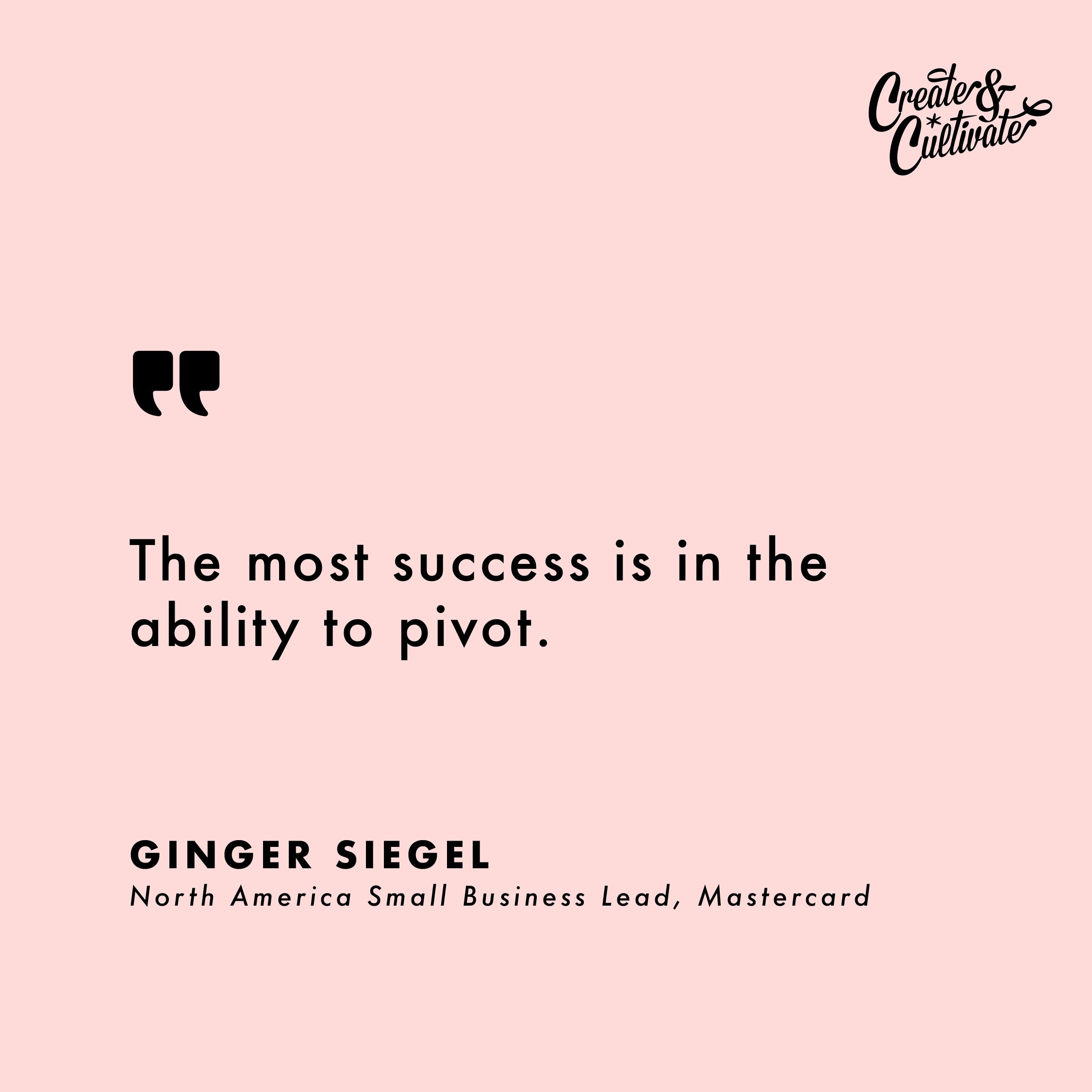
Where we've seen the most success is in the ability to pivot. We know that there's about 30% of small businesses that are not online today. The pandemic has seen more people choosing to do things digitally—to buy things online and sell things online. So number one, make sure you pivot to digital.
Number two, there are a lot of resources out there. There are organizations called Small Business Development councils, and they are available in just about every town and city that most of you are probably in. Contact them! There are more grants available than you would imagine.
There are also community development financial institutions. Google that in your area. Many of those institutions have grant money available. Take a look at your expenses and decide what you absolutely have to keep spending on and the things that are maybe’s. You should curtail those as well.
How do you create a selling strategy for a truly luxury brand and what's the difference between a mass-market strategy and a luxury strategy?
People's definition of what a luxury item is different. So, really understand your market. It's really important to understand how your product and service fit into a number of different groups. Could you make the brand more every day, especially in this environment?
What are the key changes that small businesses will need to make in order to succeed?
The number one thing is to have different channels. We have found that a lot of businesses were just catching the storefront and did not have a way for people to buy online. So, how can you reach your customer base in a number of different ways whether it's online or virtually?
Another thing we are very focused on at Mastercard is how people want to pay. Giving someone the option for checks and cash is not optimal. A lot of people want to stay away from that now. So, focus on contactless payments, and make sure you’re able to take payments over the phone or digitally through something we call “card on file.”
Make sure your customers can keep their card on file so they can make repeat purchases easily. The other thing is contactless payments. If they do come into your store or restaurant, whatever type of business you have, this method allows the customer to keep hold of their card and just tap to pay.
Mastercard just built and rolled out a program called Digital Doors because we want to help businesses get online and digitally transform their business. Through this platform, we’re helping small businesses build and protect their online presence with end-to-end digital resources like cybersecurity vulnerability assessments and digital skills curriculum.. We bundle all that together because we think getting online and being digitally enabled is really going to be the most pivotal change that small businesses need to make.
I want to support my local small businesses. Do you have any tips on how or where can I find out which businesses are open right now near me?
This question is near and dear to my heart. We actually just launched something called “Shop Openings” which is a customer-facing website where you can search geographically for small businesses in your area. It will tell you if it's open and if they accept contactless payments. So we're really proud of it. We think it's a wonderful way to drive people back into small businesses and we absolutely encourage all of you to use it for your local small businesses as well.
Besides loans, what can be helpful or beneficial to small businesses?
Grants. There are a lot of organizations out there. I mentioned the community development financial institutions earlier and the Small Business Development councils, but there are organizations like Hello Alice that we partner with as well.
If you just go online and look in your local area, you will see a lot of organizations that do have grant money available. I happen to live in Westchester, New York. There's a fantastic organization that I'm on the board for called The Women's Economic Development Council and they definitely have grants available and a lot of free resources to help, so I encourage all of you to do that.
What advice do you have for someone who's thinking of taking their side hustle full-time and or starting their business during this time?
One of my favorite books for people that want to start a business is called The E-Myth Revisited and I'll tell you why I love it. It talks about the fact that if you're someone who has a side hustle—whether it's baking or building apps on the side—there's a tremendous opportunity to take that and make it into a business. But so many entrepreneurs don't get into business to do all the tough stuff. That's not as much fun right? Dealing with the financials, actually managing overall finances and getting customers—those are all things that aren’t as much fun and the E-Myth walks you through that.
Because even though you went into it to do something you love, you have to be willing to like something you don't love and that's the other side of the business. I think it’s really important to make sure that when you go into this, you go into it with your eyes open. When it's a side hustle a lot of times you don't think about that.
What are the top three actions I can take to build a network of other small business owners and advisors to learn from during these times?
This might sound like a broken record, but one of the things that I'm most passionate about is LinkedIn. LinkedIn provides the opportunity to join groups with people who probably have very similar businesses like you and very similar problems. Joining these groups will really provide a very broad support system.
The other thing is associations. Whether you're in the restaurant business or the beauty business, there are a lot of associations out there and not-for-profits that are built to help businesses like yours today. These are both great resources to build a network.
Female entrepreneurs are looking to network with other female entrepreneurs and that's why we're so passionate about the space. We really build communities around this to help further knowledge, advice, and guidance so that people don't feel alone these days.
How can I ensure my evolving brand story resonates with customers as I pivot and reinvest my business?
Create a following of people that love your brand. You're not pivoting away from your brand, you're pivoting the message to your customers. Always stay true to your brand. That’s critically important. Stay true to the things that really made you what you are today. And when you talk about pivoting it's really around the channels, or it might be some of the products you're selling but your brand needs to stay the same because that's what you built yourself on.
If I'm going to reopen, what do I have to do?
There are some very excellent guidelines out there from the CDC around reopening. I had the opportunity to speak with some amazing women in the industry and one of the things that they really hit home is that when they were looking to reopen, they really focused on the safety and health guidelines. That's really important because you want your customers to feel safe. So I think step one is to really make sure you're looking at the recommendations and guidelines that are out there from the scientific community like the CDC.
Secondly, really take a look at your product set. Is everything that you offered before going to be important going forward and do you have to pivot some of the things you were offering? So, again pivoting not necessarily around your story, but around the things that you've offered in the past. I think that's really important.
Do you have any easy, go-to tips on how to improve and manage cash flow as a small business owner?
If cash flow wasn't a problem for you before, then COVID has really created some difficulty. Interestingly enough the average small business owner only has 27 days of cash on hand. The other thing that I would say is that a lot of businesses are still using Excel. So there are a couple of things I want to recommend to you. Number one is to make sure that you have the right financial systems in place.
Now is the time to step back and do some improvements in your business. I encourage you to look at things like QuickBooks and some of the accounting software programs out there. We know that about 70% of small businesses actually send out manual invoices. So there's a great opportunity now with some of the accounting software packages out there to actually digitize your invoices. Because if you can get an invoice out in a day versus a week, imagine how that can really increase your cash flow.
So, understanding your cash flow, understanding what money you have coming in, and getting that money to come in quicker (and also the money you have going out) to make sure you really understand the billing timing. When you match the money coming into the money going out, that's really what cash flow is and there's a great opportunity for many businesses to manage it even better.
What are the biggest financial mistakes you've seen small businesses make since the COVID-19 crisis hit?
There’s a couple; one of them in regards to cash flow. I find that a lot of businesses haven't really gotten their financials in order so when they did need to get loans or some type of credit, they really weren't prepared to tell their financial story. That's why I believe so strongly in making sure that you have the financial tools in order to do that.
A lot of people were hoping that this crisis would just go away. That's why we're really encouraging businesses to look at things like online and creating a digital storefront to get your services and your products online. You have agility as a small business and you can zig and zag much better than some bigger companies so keep that agility moving constantly, make the changes and get the help that you need quickly to make them. When you are willing and able to move quickly lots of things can happen in a really good way.

What advice do you have to plan and pay for a reopening?
Unfortunately, in some areas businesses were allowed to reopen, and then due to a resurgence, they closed again. I believe that for some businesses when things go backward they tend to get paralyzed. Now is the time if you haven't reopened to think about and plan for when you do. What are your safety and security plans? What do you have to do differently in terms of re-setting up your business? It is going to be like opening for the first time but remember, this time your customers already know you so you're not starting from scratch, you’re not starting from square one, you're starting with a brand that people in your community love. I encourage you to use social media. We think that there's a lot of focus on social media.
What resources and publications should I work into my daily routine?
To stay up to speed on trends and pivoting during the pandemic, check out the various online resource centers. We set up one called the Mastercard Main Street Resource Center that really gives you access to a lot of tools and resources. And our partners like Create & Cultivate who has a tremendous resource, Hello Alice, or the SBA. So I would encourage you to Google some of these Resource Centers. They have a wealth of information for free to really help push you through this.
I think one of the best-kept secrets is organizations like the Small Business Development Centers, they all have websites, and if you take a look at those websites and you can actually call them. I think a lot of them are either back in the office or working virtually. So there are a lot of resources available. Sometimes people get paralyzed and think “I'm out here alone” but you are not out here alone.
As a self-funded founder, should I stop paying myself during this time to keep my employees?
That’s a tough question. You have to know what your financial situation is and look at the length of time that you can survive with the cash flow that you have. I think it's a really difficult time and it's hard for me to say without looking at your financials. But I encourage you to work with your bank and work with your CPA to really understand where you are. And if you've been self-funding up till now, and you want to keep operating that way, then you might have to give thought to some additional sources of funding.
Do you think rent forgiveness is going to happen again?
It's easy to focus on the things that you can't control and that's one of them so, I encourage everyone to think about it. If in fact, rent is not forgiving, what will you do then? You have to really look at both sides of the story and be prepared for either one. It goes back to the agility story that I mentioned earlier.
I operate a social impact business that supports living wages for women in Ghana. What is the best way to create corporate partnerships and are there specific departments or job titles I should seek to identify the right person in a company?
I tell you one of the reasons I'm so proud to work for Mastercard is that we are very focused on doing well by doing good and I think that most companies that feel that way will put that out there. We have done a tremendous amount of work for our center for inclusive growth. I think that financial inclusion is two words that you can Google in terms of different corporations.
If you are looking to partner with a company, you want to make sure that they have the same values as you do. That is why we at Mastercard are able to attract such amazing partners, like Create & Cultivate because we all believe in the same thing, which is helping others do well by doing good. So I would encourage you to look through financial inclusion.
Look at some of the major corporations in your area, and really dig in and look through their annual reports. Look at the kinds of things they talk about. These days there are a lot of great companies out there that are doing really great things.
I love your partnership with Create & Cultivate. It feels really authentic. How do you choose your partners?
Mastercard has a very strong focus on doing well by doing good so we look at partners that believe in that, too. It's really important to us. When we partner with organizations like Create & Cultivate we need to know that there's an authenticity, that they do care about small business, that they do care about minority entrepreneurship. It's also important to us to not just have people who say it but also show it and so we look at the work that's being done. We look at how that company represents itself.
We tend to attract really great companies that do that, too. So the partnerships that I mentioned before like Salesforce and Microsoft, are all great organizations that have a very strong approach to financial inclusion and caring. That's why we're really proud to be able to partner with them.
What are the three most important things to remember when first opening a business?
This is one of my favorite questions. Number one is to read The E-Myth book. That's really important because a lot of people when they're looking to open their business are thinking about the thing that they love. So for example, if they love making ice cream or they love making specialty cakes or creating candles at home, think about the other parts that you have to do when you run a business, make sure that you can manage your financials, and create the right business plan.
Making sure that you have a plan B should something happen like the pandemic. Really make sure you have a business plan that has the fullness to it—all the information that you need—and then really think about how you're going to fund it. Is it going to be self-funded? Is it going to be funded through friends and family? Are you going to get an angel investor?
When do you think is the right moment to open a business credit card?
Well, first of all, one of the things that I really encourage is to talk to your bank. And if you don't have a bank, it’s really important to get someone who can give you financial advice. Someone who can look over your financials to really help you decide when it's the right time. You know, we have many small businesses that might have started out with a consumer card, but now they need to separate out their business expenses. So, as soon as you can do that, really think about talking to the right people, whether it's a bank or some other great organizations that can provide credit cards for you.
We encourage people to work through those partners to decide when is the right time. It’s important to know that you’re not in this alone. There are some great credit unions, community financial institutions, and banks. There are many fintechs out there too that are able to provide credit cards. So, I would look at one of them.
Really focus and bring the right questions to the table so that you can decide. It’s probably not a decision that you're going to make alone. You're going to want someone to help you with that assessment of where you're sitting financially.
What are some of the smartest financial moves you've seen small businesses make in the midst of the pandemic?
Number one is this concept of pivoting. You know, how do we pivot during this time? And I think some of the successful businesses that I've seen did not wait. The other thing is having different channels. So, if you know that you deliver your products and services one way today, what are some of the channels that you could build in the future? Online is a very, very important channel. So I think it's really important to pivot and look at differentiated channels.
Any tips on how to embrace positive energy during this time?
I think it comes back to passion. I have been working with small businesses my entire career. I go to sleep at night feeling very sad sometimes because of the trouble and trauma that a lot of small businesses are going through but I wake up every day knowing that I have at least 10 hours to be able to think of something that could make a difference. I think that's where my positive energy comes from—the belief that I can make a difference, that I can spend an hour with all of you and hopefully you can walk away with one or two tips where you'll either feel better or do something different.
Energy is critically important. This has been just a terrible, terrible time, but we will come out of this. We will come out of this on the other side strong because small businesses, all of you, whether you're in a small business or whether you're thinking of a small business, you are here today because you believe there's something more to learn. I would encourage all of you to continue to think positively, to continue to believe in what you're doing because what you're doing will help.
MORE FROM THE BLOG







How to Negotiate Benefits at Work
You landed the job, now sweeten the deal.

Photo: Christina Jones Photography
We all know that job hunting can feel like a full-time job. So when you finally get that offer letter? You start celebrating.
But as exciting and enticing as it can be to just sign on the dotted line and go buy yourself something nice, this is actually exactly the moment you need to take a step back. Before you reply to that offer letter, you have to make sure it’s the job you really want. And to do that, you need to take a hard look at the fine print.
Considering a company's offer is like dating—it’s all too easy to focus on whether they like you and want you while losing sight of whether you like them and want them, and just as importantly, whether this could be a partnership that's reflective of your goals and philosophies. That's where communication (in the form of negotiation) is fundamental.
When you open an offer letter, the salary jumps off the page, but what about the benefits? The thing many of us don’t realize is that a company’s standard benefits package is usually negotiable. Perks play a surprisingly powerful role in how you'll feel about the job—in the end, they can make a seemingly average salary offer quite tantalizing.
It’s crucial to take the time to understand the scope of benefits and then to tackle negotiating them wisely and strategically. Here are some tips to help you better negotiate benefits to your advantage.
Don't Be Afraid to Ask
Here’s a simple tenet but one you should never forget: It never hurts to ask. When you’ve received an offer, you have the upper hand. While you may not get the requests you make, this is the one time that your prospective employer is ripe for negotiating. Plus, you may find that while there’s no leeway for negotiating a higher salary, benefits adjustments are easier to accommodate.
Think Outside the Box
Benefits are more than just health insurance and 401K plans. These days, they include perks like extra vacation days and the opportunity to work remotely. Now’s the time to get creative.
When I negotiated my benefits package, I landed a complimentary gym membership and a cell phone. Apparently, I was the first employee prospect to negotiate a free gym membership, but because wellness is important to me, I thought it was a reasonable benefit to request. Interestingly, within a year, my company started offering complimentary gym memberships to all employees. A little part of me hopes I paved the way for others.
“Benefits are more than just health insurance and 401K plans. These days, they include perks like extra vacation days and the opportunity to work remotely. Now’s the time to get creative.”
Also, look closely at your paid time off. Whether it’s vacation, personal, or sick time, you might be in for a surprise if the offer includes fewer days than what you’d expect. Make sure to ask for more if you know that downtime is essential to your mental and professional well-being. No one likes taking a vacation day to cover strep throat.
Make It Titillating With a Better Title
If you really want the job but there's a salary cap, how about asking for a better title? It may be a perk you can’t really quantify, but it can help you in many ways. Having a more marketable and impressive title means you’ll have something to lean on when the time comes to ask for a promotion or when you’re moving onto your next company.
Seek Out Learning Opportunities
Asking about educational opportunities not only makes you look intellectually aware and motivated to your future employer, but it also opens the door for potential opportunities for personal career growth, like conferences, seminars, certifications, and even degree programs that you may not otherwise have access to. If there's a specific conference you want to attend the first year you start, call it out specifically as a negotiation tactic. You'll be surprised at how much asking for professional development will garner you respect and also incredible career and travel opportunities—an education on both fronts.
Get It in Writing
When all is said and done, make sure to take the time to read and understand the offer and agreed-upon negotiations. To that end, save all communications, including emails. This will avoid any after-the-fact misunderstandings and ensure that you're able to enjoy the benefits you worked so hard to negotiate.
By putting aside fears of rejection, negotiating benefits can be an enlightening and fruitful process. Armed with these tactics, you should be able to negotiate the kind of job package that you feel comfortable knowing that you sought out the kind of benefits that will serve you and your future.
An original version of this article appeared on Career Contessa.
Love this story? Pin the below graphic to your Pinterest board.

This story was originally published on April 29, 2019, and has since been updated.
MORE ON THE BLOG

How Bertha González Nieves Grabbed a Seat at the Table (and a Glass) to Became the First Female Master of Tequila
“I’ve always focused on my ability and my passion instead of my gender.”

How many times have you peered voyeuristically into the lives of people you admire via social media and wondered what it must be like to do their job? We’ve all been down that research rabbit hole on our quest to create and cultivate the career of our dreams, but often we’re still left pondering the realities of their day-to-day—so, what is it really like? In this series, I Want Your Job we uncover the truth by getting into the nitty-gritty details about what it’s actually like to work in your quote-unquote “dream job” and if the reality stacks up to the expectation.

Photo: Ball & Albanese
Bertha González Nieves fell in love with tequila almost immediately. Two days into a three-day trip to Tequila, Jalisco, the heart of Mexico’s tequila industry, she already knew she wanted to pursue a career that involved working with the history-rich, blue agave-derived spirit. In fact, she even went so far as to call up her parents to tell them that she’d discovered what she’d wanted to do for a living.
She landed a dream job at Grupo Cuervo, the oldest tequila producer in the world, but after 10 years, she decided to take a risk and launch her own small-batch premium tequila brand, Casa Dragones in 2009. Fast-forward 11 years, and her passion hasn’t wavered. “I have such passion for tequila and Mexico that it’s an honor for me to be part of an industry that contributes to the cultural relevance of Mexico internationally,“ she tells Create & Cultivate. But being at the helm of an independent, small-batch, tequila producer hasn’t been easy.
Ahead, González Nieves explains how she grabbed a seat at the table to become the first female master of tequila, how she’s paying it forward to other women coming up in the industry, and how she’s pivoting the company in the wake of COVID-19.
On getting her foot in the door in the tequila industry…
I fell in love with the tequila category when I was 22 years old and was selected by the Japanese government to represent Mexico in a global program in Japan.
As part of my training, I traveled extensively throughout Mexico, learning about the country’s economy and various industries in order to represent Mexico as a young ambassador to Japan. My travels included a three-day visit to Tequila, Jalisco, and after the second day, I called my parents and told them that I had found what I wanted to do. I wanted to work in the tequila industry.
After university, I worked for Booz Allen & Hamilton in the marketing intensive group doing consulting for top global packaged goods companies and then received a master’s degree from Northwestern University. Once I graduated, tequila was on mind and in my heart, so I went knocking on the doors of the tequila industry.
I worked for the Beckman family from Grupo Cuervo for 10 years, the oldest tequila producer and an eleventh generation-run company. I fell in love with everything about the tequila production process and its connection to the culture and history of Mexico. While there, I had key roles both in Mexico and globally, but at some point, I realized the brand would never truly be my own.
I’m an entrepreneur at heart (and actually, I come from a family of entrepreneurs, so it’s in my blood!), so I knew I’d never be fully satisfied until I had my own company, which eventually inspired me to start Casa Dragones.

Photo: Courtesy of Bertha González Nieves
On laying the groundwork for starting her own company…
I earned a bachelor’s degree in business administration from Universidad Anáhuac in Mexico City and a master of science degree in integrated marketing communications from Northwestern. I’ve also had the opportunity to take executive courses at Harvard Business School, Wharton Business School, Columbia Business School, and other top schools. I would say that while much of my studies helped me prepare for the business world, nothing has been as valuable as actually working in the industry itself. Taking the time to become an expert in the tequila industry is what has set me and the company apart.
On pursuing entrepreneurial ventures from a young age…
Since my teenage years, I’ve been creating and participating in small entrepreneurial ventures like creating a holiday card business in Mexico City, co-producing a film, and working for Mexico City’s top magazine. I also worked throughout my university years in Mexico City, all jobs that weren’t related to tequila. These combined experiences were an important part of my preparation to become an entrepreneur and enabled me to be able to recognize my passion for the tequila industry. For the generations that are coming up, it’s important that you are curious because finding your passion and purpose will enable you to have the focus to discover your potential.

On becoming the first-ever Maestra Tequilera…
A Maestra Tequilera or Maestro Tequilero are the lead people in charge of the production of tequilas in a tequila company. He or she is the person within a production house that is in charge of defining the brand’s unique formula. I’ve been aware of how male-dominated the tequila industry is from the beginning, but I’ve always focused on my ability and my passion instead of my gender.
I am part of the founding professors that started with the Program of Tecnico Tequilero in the Universidad de Guadalajara that now is a master’s program. It’s important to give back to the tequila’s appellation of origin and make sure that the next generations can have more academic programs so they can take the category further.
I want to help break down barriers and provide a path for other women who are interested in the spirits industry. Women in Hospitality and Women of The Vine & Spirits are important organizations that I’m a part of that empower women in the industry through networking and events. More than half of the Casa Dragones team is made up of women, so this is very important to me.
On being at the helm of her own company…
No day is the same in my role as CEO, which is part of why I love the job. Building a company from scratch you realize very quickly that the only constant is change. I divide my time between Tequila, Jalisco, Mexico City, and New York plus all of the work travel with my team across both the U.S. and Mexican markets and travel for events with wholesalers and customers. Between January and March, for example, I traveled every week at least once, maybe even multiple times a week. Last week, I was in tequila bottling the first batch of a new style we are bringing to market this year, and today I’m in New York, soon to be flying out to Las Vegas. I know now why they say, “running a company.” Running is a verb for a reason—you’re on the run on a permanent basis.

Photo: Courtesy of Bertha González Nieves
On taking the highs and lows of entrepreneurship in stride…
Being an entrepreneur and building a venture is a journey where the highs are high and the lows are very low. It can be glamorous at times, but mostly you need to roll up your sleeves and accept that you are making difficult decisions every day. You have to have thick skin and be quick on your feet to think critically about each decision you make.
On advice for professionals trying to break into the industry…
My best advice is to make sure you have a full understanding of the category, a clear route on how to bring products into the marketplace, and have a unique selling proposition. Surround yourself with the best and most professional mentors you can find and also secure smart capital. Make sure there’s a long-term view because building a venture is not a 5k, it’s a marathon. Perseverance, dedication, passion, and knowledge are the key ingredients to finding success in any industry.
On pivoting in the wake of COVID-19…
As a small-batch producer, we felt the impact of COVID-19 immediately. With bars, restaurants, hotels, nightclubs all closed, we lost a large share of business overnight and had to pivot quickly. It was important for us to stay connected and support our restaurant and bar community, so we started donating a portion of our online sales to the United States Bartenders’ Guild and the James Beard Foundation Open for Good campaign.
We also developed a “Cocktails at Home” program with out-of-work bartenders in the U.S., Mexico, and London, directly supporting them with small grants in exchange for original cocktail content online. One of my favorite initiatives to date has been providing sustainable 375ml Blanco glass bottles for our restaurant partners, such as ATLA, Lola Taverna, and Moby’s to use for their to-go cocktail programs.
In June, we introduced our latest sipping tequila, Casa Dragones Barrel Blend, in Mexico and the U.S., so we’re constantly pivoting and finding new opportunities to engage our loyal customers with extraordinary experiences. As entrepreneurs, change is the only constant. We need to look at every challenge as an opportunity to grow, change, and innovate.

Photo: Courtesy of Bertha González Nieves
On the Casa Dragones project she’s most proud of…
Since we started our company, we’ve had the opportunity to work with some of the most talented artists, chefs, and mixologists in the world. Reflecting back, these collaborations—from special art edition bottles to special pairing dinners to mixology jamming sessions—have been some of the most rewarding for me in my career. In November 2019, we celebrated our ten-year anniversary over Day of the Dead weekend in San Miguel de Allende, Mexico, which is Casa Dragones’ spiritual home. We invited everyone who supported us over the years to celebrate this incredible milestone with us.
Our chef friends Enrique Olvera (Cosme, ATLA, Pujol), Daniela Soto-Innes (Cosme, ATLA), Elena Reygadas (Rosetta, La Panadería, Café NiN), Blaine Wetzel (The Willows Inn), and Donnie Masterton (The Restaurant) created a 100% plant-based dinner for over 360 of our closest friends and partners in the oldest operating bullfighting ring in Latin America. It was a magical celebration, showcasing our journey of craftsmanship, and our commitment to creating exceptional tequila and exceptional experiences. If we hadn’t remained committed to this ideal, we wouldn’t be where we are today.
On getting the most out of every workday…
Productivity is like being on a diet. Sometimes you’re productive and some days you don’t meet your expectations. It takes discipline to deliver at your highest level of productivity on a constant basis and keeping the balance between work and personal is essential to achieving this. Some distance between the two helps give clarity on what your priorities should be. With all of my travel, I have become very efficient at working on planes and figuring out how to be productive even when I’m not in the office.
MORE ON THE BLOG

You Made a Mistake at Work, Now What?
Everyone makes mistakes. Here’s how to handle yours with professionalism and poise.

Photo: Christina Jones Photography
We've all been there. That moment when you realize you've made a huge mistake and get that sinking feeling in the pit of your stomach.
Everyone makes mistakes. It's human nature. what matters isn’t that you made a mistake, but how you handle it. If you are perpetually making errors because of a lack of attention to detail or carelessness, that is a separate issue that should be addressed. However, making a rare mistake is totally normal as long as you handle it properly. What does that mean?
Handling a mistake properly means taking the high road, taking responsibility, and making the situation right. Below is a list of steps to take to ensure that you handle your mistake professionally and with poise.
You made a mistake, now what?
TAKE ACTION IMMEDIATELY
The moment you realize that you've made a mistake is the moment you need to take action. Sitting around and dwelling on your error won't make it better, and depending on what the mistake is, moving slowly could make it worse.
In some instances, taking immediate action could actually help you reverse the mistake. For instance, if you realize that you just sent something to print with a typo in it, call the printing press or whoever is in charge and explain the situation immediately. If you get to the right people in time, you may be able to stop the problem before it starts and get them the correct information before anything gets printed incorrectly.
TAKE RESPONSIBILITY FOR YOUR ERRORS AND FESS UP TO THEM
There's nothing worse than a person who won't take responsibility for their error and instead tries to place blame on someone else. When you don’t take responsibility and try to blame the problem on others, it becomes a bigger deal, involves others, and can turn into an office-wide issue.
If you handle your mistake appropriately, you will often be recognized for your quick thinking and your ability to jump on a situation. In this case, the mistake could end up working in your favor in the long run. Most people understand that mistakes happen, so they pay more attention to the aftermath than the mistake itself. Make your mitigation process memorable, and people will remember how you remedied the situation instead of created it.
WORK QUICKLY AND EFFICIENTLY
It’s important to get things sorted out as soon as possible, but if you're not working strategically and efficiently, it's not worth it. No one will care that you're working fast to remedy the situation if your fast work is riddled with errors and carelessness. Quality trumps everything in business, so make sure that your work is efficient and free of errors, especially when you’re trying to fix a mistake that you made.
This is the moment to make sure your next steps are near perfect. That means triple-checking the information you’re putting out and taking note of everything you do. Document your process so you have it on file should it ever come out in the future. That way, if someone does question the mistake you made, you can easily outline the process you took to fix it.
MAKE NOTE OF WHAT WENT WRONG AND TAKE PRECAUTIONS SO IT DOESN'T HAPPEN AGAIN
Part of making mistakes is learning from them, so it’s important that you assess the situation to figure out exactly what went wrong. After you’ve taken care of all of the cleanup and have gotten everything smoothed out, take a few minutes to reflect on what happened. Go through the steps in your head to see what went wrong, where it went wrong, and note how to combat this in the future.
MOVE ON
Take a deep breath and move on. Once you’ve cleaned up the aftermath there is nothing else you can do. Try not to dwell on it, and do your best to move forward. This may be easier said than done, but it’s the truth. Take the high road, take responsibility, work efficiently, document your work, and make sure you don’t make the same mistake twice. After you’ve done this, you’ve done your part. Once it’s over and done, let it go. You’ll live longer.
About the Author: A native San Franciscan, Michele Lando is a certified professional résumé writer and founder of writestylesonline.com. She has a passion for helping others present the best version of themselves, both on paper and in person, and works to polish an individual’s application package and personal style. Aiming to help create a perfect personal branding package, Write Styles presents tips to enhance your résumé, style, and boost your confidence.
Love this story? Pin the below graphic to your Pinterest board.

This story was originally published on August 17, 2016, and has since been updated.
MORE ON THE BLOG

This Founder Started Her Multi-Million-Dollar Business With Just $100 From Her Savings Account
How Rochelle Graham-Campbell built a hair care empire.

You asked for more content around business finances, so we’re delivering. Welcome to Money Matters where we give you an inside look at the pocketbooks of CEOs and entrepreneurs. In this series, you’ll learn what successful women in business spend on office spaces and employee salaries, how they knew it was time to hire someone to manage their finances, and their best advice for talking about money. In honor of Black Equal Pay Day, we're shining a spotlight on Black female founders by taking a closer look inside their successful businesses and how they funded them from the ground up.

Photo: Courtesy of Rochelle Graham-Campbell
In 2008, Rochelle Graham-Campbell paved the way as one of the first natural hair vloggers and quickly amassed a huge following on YouTube. Cut to 2020, and she’s turned those followers into dollars with her line of sought-after natural hair care products, Alikay Naturals. Today, the products Graham-Campbell used to make out of her kitchen are sold on the shelves of major retailers by the likes of Target, Walmart, and CVS.
Believe it or not, this successful business started out with just $100, a tried and true hair care remedy, and an unassuming package of paper labels. “My labels were Avery labels that would wash away after a customer used it the first time,” Graham-Campbell, Alikay Naturals co-founder and CEO, tells Create & Cultivate. “While I wanted the prettiest things, I focused more energy on making sure that the quality of the product that I was providing was good enough to keep my customers coming back, and it worked for me.” We’ll say it worked. Alikay Naturals is now sold in 20 countries, including France, Canada, and Bermuda.
Ahead, Graham-Campbell breaks down how she built a multi-million-dollar hair care empire starting with just $100, including hiring her grandparents as her first official employees, and not paying herself a salary for several years.
On bootstrapping the business…
We decided to self-fund because my husband and business partner, Demond, and I wanted to prove our business concepts before we invested more capital into them. With just an initial hundred dollars, would we be able to grow the business organically if we took every dollar earned thereafter and put it into the business?
We were also raised in very financially conservative households (a.k.a. raised in families that didn’t have a lot of money) so we knew how to stretch a dollar and use it wisely. We used this and applied it to our business as well. We have also heard horror stories of businesses taking on investors too early. The investors then came in and caused the brand to be ruined because the initial idea and concept of the founders had been stripped away. Instead of focusing on investors or shareholders, we decided to focus on serving our customers first.
On self-funding tips for entrepreneurs…
My basic bootstrap tips are to keep your overhead and expenses as low as possible for as long as possible. Some people at the moment, once their business starts to be successful, think they have something to prove by opening a physical location. There are so many companies that have been able to grow into multi-million dollar or even six-figure generating brands that still operate in an apartment or a house.
Also, look into guerrilla marketing; get creative with your marketing dollars in the beginning. We weren’t focused on billboards or magazines, we were focused on how we can get our customers excited by spending as little money as possible. Also, how can we put our time, energy, and effort into creating marketing material that connected to our customers? Which included me doing hair tutorials to spread education and knowledge about our products.
I also taught myself to be in every department in the business, from social media and marketing to customer service and shipping to product development. I did it all, whatever it took because we did not have the capital to hire employees. We waited until the point when hiring was absolutely necessary before we brought employees on and took on a payroll expense. We also kept our beta product as low cost as possible to be able to keep our profit margins healthy so that we can be able to fund cash flow into the business. Eleven years later, we are still a self-funded, bootstrapped, cash-flow operated business.

On getting back to basics…
I recommend that other entrepreneurs start with what they have and start with where they are. Think about the basic things you need in your business to get to your first sale. Don’t over complicate the process. Think about the basic essentials and use your capital on hand to focus on those things. Once you start to generate revenue in your business, you can scale and you can add the additional resources in areas in departments as needed.
While I think branding is extremely important, I believe that at times people get so heavily focused on the aesthetics portion of their business, which at times, requires a lot of initial capital investment. They forget that the basic foundation of building a company, while all that also does require capital, is usually less expensive. Some examples of the basics that are needed are a website, not a full-functioning website. Maybe starting with a two-page website, enough to, again, convert customers into sales.
Your logo and your brand mood board is another basic investment that I think is worth it creating the beta version of your product or service and getting it launched. Then, I recommend taking customer feedback to pivot and improve. Another area worth investing in upon launching is registering your business and having the proper license is also an initial investment that I think is worth it.
On DIY-ing as much as possible…
When I started my brand Alikay Naturals, I started with simple deli containers that literally were being wholesaled at a restaurant supply store down the street from my apartment. I started with labels that I DIY myself, which is also another recommendation for start-up businesses that are bootstrapping and are starting with limited or lack of funding.
Teach yourself as much as you can, DIY as much as you can in the beginning until you have the capital to be able to hire professionals to make it better. My labels were Avery labels that would wash away after a customer used it the first time. While I wanted the prettiest things, I focused more energy on making sure that the quality of the product that I was providing was good enough to keep my customers coming back and it worked for me.
On seeking venture capital to scale and grow…
My husband and I have successfully been able to grow our brand for eleven years. We are the sole owners and started with only $100 that we grew into a multi-million dollar global beauty brand. We are looking at the future and scaling our brand rapidly. I believe we are now at the point where we are considering venture capital and the right-fit investor for our business. We’ve previously been approached by investors but declined because it was not the right fit. I think when the right VC comes around we will know it. We want someone that understands our vision for the brand so we do not lose who we are. If you’re reading this and you think that you’re the right investor for us, definitely make sure you reach out.

On (eventually) putting herself on the payroll…
I actually could not afford to pay myself or my husband for many years. It took probably the first four years before we were officially able to pay ourselves formally on the payroll. Now, I want to be clear, my business has always been profitable, so it wasn’t necessarily that we couldn’t “afford” to pay ourselves, but being a cash-flow operated business, we had to make sure that every dollar that the business made was recycled back into the company. It was hard because it meant that our personal finances took a hit because we could not pull from the business.
However, the way that we looked at it was that our business was a baby, and we could not expect that a baby, although it was working, would be able to sustain us. In the early stages, it was more important for us to make the business stable and financially successful. When we finally put ourselves on payroll, we were the lowest-paid employees in our business for many many years. We paid ourselves just the minimal amount that it took to be able to cover our household expenses. This changed when we had our second child, and we finally gave ourselves the salary that we deserved. To be honest, it was uncomfortable giving ourselves a raise after so many years of barely paying ourselves anything, but it was time.
I would say to the other female founders, please make sure if you can structure some sort of payment for yourself and your business in the early stages, even if it might not be a lot. The sooner that you can pay yourself as the founder, the sooner you will be able to see what you’re working for in real life. It also will give you the motivation to push through the harder days. But remember that your business revenue is not your personal bank account; this is a mistake I see a lot of people make. I talk more about payroll and hiring our first employees in more detail in my book, “90 Days to C.E.O.”
On prioritizing your marketing budget…
I think the most important area for a business owner to focus their financial energy is into marketing. In order for your business to make money, people have to know about you, they have to want what you’re selling or providing as a service. They have to believe in your brand or your story, and you have to get their attention by being creative.
I think that branding is also important because branding is a part of marketing. You can still brand while your dollars may be limited. It is imperative that you understand how to track your ROI ( return on your investment) by having proper KPIs (key performance indicators) and measures of success in place for every single marketing activity that you do. I discuss this more in my book as well.
On hiring her first “official” employees…
My first big expense in our business was hiring our first employees after my grandparents. My grandparents, Yaya and Mr. Ralstan, were our first employees because they are family and they wanted to see us be successful, and we didn’t have to pay them very much. So our first major expense was hiring official employees that we had on the payroll, that we were now financially responsible for every two weeks, talk about pressure as a start-up business!
On investing in what’s really important…
The top three largest expenses in the beginning (and now!) are payroll, overhead expenses, and marketing. In the beginning, we were able to keep our marketing costs very low because we gorilla marketed and focused more on social media and free opportunities, but still, we had to have a budget allocated to get the word out about the products.

Photo: Courtesy of Rochelle Graham-Campbell
On saving specifically for tax season…
Save a minimum of 20% to put towards business taxes. I think that’s a mistake that a lot of early entrepreneurs make. They get excited when they start to make money and generate revenue and forget that at the end of the year you’re going to have to call Uncle Sam. Some advice that I can definitely offer is to pay your business taxes quarterly. It makes the blow at the end of the year a lot softer.
On hiring an accountant (after much trial and error)…
We did not have an accountant when we first started our business. In fact, to be honest, we neglected doing proper accounting for the first couple of years. We were just focused on making products, getting them to our customers on time, keeping them happy, and keeping our business going and growing.
As we began to formalize the business, I taught myself how to do QuickBooks and I was doing our bookkeeping by myself, but I wasn’t very good at it because I really did not have the time as CEO. I was already wearing 50 million hats, which included being the product developer, marketer, shipper, customer service representative, HR, and then bookkeeping?
It was too much so we did hire a small independent accountant who was not the best fit for us. It took us going through three independent accountants before we found our perfect fit, which is a woman-founded and operated firm that we use now.
On wishing that she’d invested in herself sooner…
I wish that I had paid myself earlier on because my personal finances and credit took a huge hit during this time. I wasn’t paying my student loans for the first couple of years as an entrepreneur because I wasn’t paying myself anything. I was only doing what it took to pay our basic expenses such as rent, food, etc. That was it just the basics. My personal finances took a hit that, honestly, was extremely embarrassing and took some years to rebuild.

On talking about money…
I think that it’s extremely important to talk about money. I must be honest, before I became a successful businesswoman, I thought talking money was kind of weird, awkward, and strange. I also thought that the people who talked about money were actually bragging. I realized that as you become more successful and more financially stable yourself, money talk is extremely important. It honestly gives you more insight and transparency into what others are doing. You are able to share advice and tips to be able to help each other as female founders. Business becomes better.
On finding a business mentor…
If you’re seeking a mentor, make sure that you are prepared. Don’t seek mentorship when you are not serious about what you are doing because the person you’re seeking out to become your mentor is probably extremely successful with an extremely busy schedule, so you have to already have something established or have a plan. You have to be dedicated and not waste their time.
Also, when doing outreach, find out what you can offer them as well. Don’t be fooled, just because someone is a successful business owner doesn’t mean that they can’t use support in some form. Figure out how you can offer some sort of support to them as well. Even if they decline, at least it looks like you’re not just going with your hands out with nothing to contribute.
If you are able to get an opportunity to work with a mentor make sure you are really listening when they are talking. I think the worst thing is when someone asks you for advice and they just end up talking over you. I just stop talking at that point. I wish I had business mentors when I was starting my journey but I did not. I think that it possibly could’ve helped me to get further in a faster time. But I have no regrets, it made me extremely self-reliant.
On hiring the wrong employees and paying them too much…
The biggest money mistake I made was paying an employee that I hired based on what they thought they deserved and not necessarily based on the credentials and experience that they had. I allowed them to do a smoke and mirrors on me. The résumé and after being hired their work ethic and performance and results did not match the salary that they had demanded. They no longer work for my company. They only lasted a few weeks but it was a necessary lesson that I needed to learn

On giving financial advice to entrepreneurs…
Always know your numbers and your margins. You are in business to be profitable, not just to be popular, so understand your profit margins. Also, keep your expenses and overhead as low as possible for as long as you possibly can. Even if you have an accountant or CFO, it’s your responsibility to check and monitor your bank account often.
On her #1 piece of financial advice for founders…
Build a relationship with a business banker. As a small business owner, we open a business bank account, and then we think that is it! We don’t realize that there are so many additional resources that are free and available to us but we will never know if we don’t ask. Now, don’t allow people to talk down to you and bully you into getting additional things that you may not need, but it’s really nice to know you can pick up the phone and call a business banker direct instead of having to always call a one 800 line.
On setting high financial goals…
Don’t be afraid to set your financial goals for your business. I remember having a meeting with my sales team last year and they were celebrating that we had met a sales goal, but I wasn’t smiling. I had to explain that my goal was a lot higher and that we needed to raise the bar, which we did and this year we have already exceeded that goal after Q2, which is amazing. Had I kept the goal lower, I don’t know if we would’ve pushed as hard as a team to exceed or to meet that goal.
As a founder, don’t be afraid to set your revenue and sales goals high. You are either going to work and meet it, or if do you fall short, at least you weren’t aiming low. One major goal that I have for my business is a high percentage of growth in revenue year after year. This is what makes me feel like my business is being successful I wrote a book that’s 422 pages that discusses my past 11 years as a CEO in “90 Days To C.E.O.” I hope that everyone is able to pick up a copy because the things that I discuss are extremely transparent.
MORE ON THE BLOG

Hey, Creatives! Here's What to Expect at Our Making It With Madewell Summit
Workshops, studio tours, keynotes, and more!

Photo: Smith House Photography
Calling all artists, creators, dreamers, and makers, we’re teaming up with Madewell on August 15th for our Making It With Madewell Digital Summit. Join us for a super fun afternoon of biz-focused chats, workshops, and studio tours devoted to championing creatives, including artists, small business owners, and Madewell’s own Hometown Heroes.
We’ll be joined by the likes of Blair Armstrong, founder of Gilded, Steffi Lynn Tsai, artist and founder of Have a Nice Day, Danielle Nagel, designer and founder of Dazey L.A., and more makers who will be chatting about the challenges of scaling a biz built on handmade goods, the ever-evolving small business e-comm landscape, and so much more!
Experts from Planoly and Squarespace will be hosting workshops on how to make the most of all their latest tools and resources. Plus, we'll have a community Slack channel where you will have the opportunity to network with fellow creators, artists, and designers all day long! Who knows, you might meet your next business partner!
Last, but certainly not least, Emmy-nominated actress, comedian, and producer Yvonne Orji will take to the virtual stage to chat with C&C founder and CEO Jaclyn Johnson about how she pushed fear aside to follow her creativity, what her creative process looks like, and how she feeds and nurtures her creativity to build a life of passion and purpose.
Scroll on for all the deets, and if you haven’t already, be sure to RSVP for free (yes, you read that correctly, FREE!) ASAP!
THE DATE
Saturday, August 15th, 2020
TUNE IN FROM HOME
First things first! On Saturday, August 15th, you’ll receive an email with the link to access the exclusive Making It With Madewell site. Please note: All content will go live on Pacific Daylight Time (PDT), including the launch of the exclusive Making It With Madewell site. To find out what time a session is happening in your time zone, use this handy time zone converter.
Making It With Madewell is made up of pre-recorded video sessions hosted via Vimeo and live video sessions streaming via Zoom. We recommend that you have a strong WiFi connection and update to the latest version of Zoom for the best experience. Making It With Madwell is optimized for desktop, so it is best viewed via a computer or laptop, rather than a tablet or phone.
While the live content is specifically designed to be watched in real-time, you’ll be able to access and view it until Friday, August 21st at 5 pm PDT (Insiders, you have all-access even after the cutoff via your C&C Insiders dashboard!). You’ll be able to RSVP up until August 19th at 12 pm PDT.
THE SCHEDULE
Making It With Madewell is built just like our in-person conferences, which, of course, you all know and love. We have a stacked schedule with an A-list line-up of speakers so we suggest taking notes along the way.
Want the full lineup? Check out the play-by-play schedule to map out your big day. Please note, all times are listed in PDT (Pacific Daylight Time) and EDT (Eastern Daylight Time). To find out what time a session is happening in your time zone, use this time zone converter.
It’s going to be HUGE so we recommend getting a head start on planning out your day now.
THINGS TO PREP AHEAD OF TIME
Here are a few things to prep before the big day so it goes off without a hitch:
Make sure you have a strong WiFi connection.
Install Zoom on your desktop computer or laptop and test it out.
Zoom tips:
Find a quiet place to tune in. Try to situate yourself in a small room that does not have an echo.
Try and stay away from noisy electronics and silence your cell phone and computer notifications for an optimal experience.
When possible, limit your internet connection to solely the device you’re using for the Zoom conference.
Set your phone to airplane mode, pause your television connection, ask others in your home to pause anything that may require a strong internet connection, etc.
Update to the latest version of Zoom for the best experience
Be sure to download the workshop assets so you can follow along with the expert in real-time. Note: Your exclusive workshop downloads will be available starting Saturday, August 15th via the exclusive Making It With Madewell site.
In the gamified workshop From Telling to Selling: How to Grow Your Brand Online Presented by Squarespace, with Brittany Antoinette, founder of The Idea Girl, your Internet knowledge will be put to the test using the best e-commerce/online practices.
As viewers follow along on this live website audit, they'll be graded on a scoring system where they'll receive points for each practice already implemented.
You’ll leave this workshop more knowledgeable and confident on how to amplify your online presence and convert site visitors into diehard customers.
In the interactive workshop Maker Toolkit: If You Build It They Will Come, Instagram Planning 101 Presented by PLANOLY, co-founder and CCO Brandy Pham will teach you how to utilize storytelling on Instagram to break through the clutter and turn your followers into customers.
Follow along using a worksheet (which will be available to download on the day-of site on August 15th) to brainstorm storytelling techniques, content that drives engagement and sales, and learn planning best practices from the woman who pioneered visual planning on Instagram.
You’ll leave this workshop with a better understanding of how to best position your social media through storytelling by creating captivating stories that are driven with intention along with a clear path to making sure your content stands out.
Join the Mentor Power Hour Slack channel and peruse the list of mentors who will be answering questions in real-time in hour-long Zoom webinars and choose your mentor(s).
We have experts in everything from creating engaging content to growing a dedicated following on social media.
If there’s more than one mentor you want advice from, don’t worry! You can hop from session to session over the course of the hour if you’d like.
Don’t forget to jot down any questions you have for the mentor sessions ahead of time! You’ll be able to ask your Qs in real-time by typing them into Zoom’s Q&A feature.
GET SOCIAL
Stay tuned for exciting announcements and updates by following along on our social at @createcultivate. Don’t forget to tag @createcultivate and @madewell and use the hashtag #MakingItWithMadewell for the chance to be featured in our Instagram Stories throughout the day! (Psst… Search “Create Cultivate” on Instagram to use our custom GIFs.)
NETWORK
Networking is a huge part of our event and our C&C Making It With Madewell Attendees Slack Workspace is a great place to mix and mingle with your fellow Create & Cultivators before, during, and after the big day. We’ve created channels for every workshop and panel, as well as channels for international attendees, networking, and more!
Attendees will receive a link to access our Create & Cultivate Making It With Madewell Attendees Slack Workspace in our What to Expect newsletter on Wednesday, August 12th. This Slack channel will remain accessible until Friday, 21st at 12 pm PDT. Not familiar with Slack? Here are a few tips to get you started:
Download the Slack app to your phone, computer, or both
Complete your account profile with a profile photo, your name, and what you do
Public conversations will happen in the channels (ex: #networking) and are located on the left-hand side of the app. You can also start direct messages with others in the Slack workspace
Hit send too early on a message? Slack has an edit feature! Click the three-dot icon located on the right side of the message to open the drop-down of message options
We’re all about GIFs at C&C! Here are instructions on how to integrate GIPHY into your Slack account.
Our Slack workspace is a busy, happening place on the day of the event. Streamline the notifications you receive by using the “mute” feature on channels that don’t pertain to you. To mute a channel, simply open up that channel, click the three-dot icon labeled “more,” and select the mute option
Most importantly, be kind and respectful of others. If you don’t follow this rule, you will be removed from the Slack group
If you have any questions on the day of the event about navigating the schedule, accessing the workshop downloads, or anything else, you can drop them into the customer service channel in Slack.
C&C INSIDERS’ PERKS
Our Insiders get a ton of perks at all our events—and Making It With Madewell is no exception. As an Insider, you’ll have access to all of the workshops, mentor sessions, panels, and keynotes via your C&C Insiders dashboard. This content will be uploaded by August 24th, 2020. Not an insider yet? Well, don’t miss out—you can sign up here.
VIRTUAL GIFT BAGS
We know you want ‘em! Complete our post-event survey to receive an email packed with promo codes from some of your favorite brands, including Madewell, Planoly, Dazey LA, Schmidt’s Naturals, BYCHARI, Have a Nice Day, Teressa Foglia, Sunwoven, and more. You’ll receive the survey in your inbox on August 21st, 2020.
TECHNICAL DIFFICULTIES?
Live chat with a C&C specialist on CreateCultivate.com. You’ll see a “Chat With Us” pop-up in the bottom right corner of your screen.
WE ARE SO EXCITED TO SEE YOU ONLINE! Who are you most excited to hear speak? Which workshop are you looking forward to most? Tell us in the comments below!
MORE ON THE BLOG

This Tech Marketing Founder Breaks Down Why Your Business Belongs in the Cloud
Hello, mobile workplaces.

Photo: Christina Jones Photography
Contrary to what you hear, the cloud is safer than ever before with myriad opportunities to scale your business. Years ago, companies had to buy robust data racks and hire IT professionals to handle all the IT needs of a company 24/7/365. It was time-consuming, and a huge expense that small businesses simply couldn’t afford.
Nowadays, the cloud offers security, scale, and more at an affordable price, making it one of the best solutions for businesses of all sizes.
Businesses are often confused about moving to the cloud. It makes sense to feel overwhelmed since the cloud can often seem elusive and mysterious. This confusion can make it hard to make the leap to cloud storage. With that in mind, let’s break it down.
What exactly is the cloud?
The cloud is a central location where you backup and store all data, making it accessible from any location with an internet connection. Cloud providers maintain data centers where the information is stored (and often replicated to another data center) for safekeeping in case a complete meltdown happens.
If your business operates at all online, more than likely you should be considering the cloud. Here’s why:
1. Mobile Workplaces
Accessing files from any location, rapid sharing, and auto backups means the cloud enables you and your team to have the perfect mobile workplace. Store your images, audio, video, and files directly to the cloud instead of spending time and money upgrading hard drive space for every employee.
2. Security & Cyber Criminals
It’s not just financial or healthcare data that cybercriminals want anymore. Any data can be used for ransom, including photos, research, trade secrets, and even your website.
As a business owner, these are real issues to confront as you continue growing your business. You’re not only protecting your data, but you’re also protecting your clients’ data. That means all personal client information, credit card data, passwords, usernames, and emails are your responsibility.
Depending on your cloud provider, they can protect your business from cyber threats, DDoS attacks, and malware. The cloud also enables you to add multiple layers of security like two-factor authentication.
3. Data Storage & Backups
Remember that “Sex & the City” episode where Carrie’s laptop broke down, and she lost all her work?
For businesses, not backing up your data isn’t only risky—it’s irresponsible. Every entrepreneur should take some time to look at their business from a bird’s eye view, and that includes the technology demands of your business. Being in the cloud means that all your work can be automatically backed-up and accessed by your team with little to no effort—and at a more affordable cost than attempting to buy all the infrastructure yourself.
4. Scalability & Growth
Starting your business is one thing. Growing and scaling it is another. Lucky for you, the cloud is incredibly flexible. This means you can start a business with minimal IT requirements and easily expand your cloud storage space as your business grows with little upfront investment.
About the Author: Naly Rice is the founder and CEO of LNCG, a tech branding, marketing, and design agency. She is a blogger at NalyRice.com and is a burgeoning speaker who talks about entrepreneurship, women, and minorities in business and tech marketing.
Love this story? Pin the below graphic to your Pinterest board.

This story was originally published on March 16, 2019, and has since been updated.
MORE ON THE BLOG

"I Was Always Broke Trying to Fund My Business"—Why This Successful Founder Wants You to Save As Much As You Can Before Launch
Or as little as $50 a month.
You asked for more content around business finances, so we’re delivering. Welcome to Money Matters where we give you an inside look at the pocketbooks of CEOs and entrepreneurs. In this series, you’ll learn what successful women in business spend on office spaces and employee salaries, how they knew it was time to hire someone to manage their finances, and their best advice for talking about money.
In honor of Black Equal Pay Day, we're shining a spotlight on Black female founders by taking a closer look inside their successful businesses and how they funded them from the ground up.

Kenyata Gant tells me she was “operating on faith” when she bootstrapped her business, Pink Lipps Cosmetics. Turns out the universe was listening because after sending a tweet that she needed an investor, a philanthropic follower gifted her $10,000 to get the company off the ground. “ I had no idea what to spend that money on except that I needed inventory,” she tells Create & Cultivate. “The process was hard because I knew that I would make a lot of mistakes and I did, but I was ready to because I know that mistakes are lessons.”
Once the $10,000 ran out, Gant self-funded the business using money from her full-time corporate job. If she could go back to the beginning, Gant says she would have saved more money before launching the business. “I was always broke trying to fund my business,” she reflects. “I would recommend saving money and building on it because it is the smart thing to do. Being broke is not fun!”
And as for the kind investor? “We are still friends to this day,” reveals Gant. “He congratulates me from time to time and I still thank him for giving me that chance! “ Read on to learn more money advice from Gant, mistakes made along the way, and why she believes all founders should pay themselves 30%.
On raising money…
Three crucial elements to include when pitching to raise money are:
Things that set you apart from your competition
A clear vision of why the world needs your business
A solid plan to achieve your vision
On paying herself…
I think business owners should pay themselves 30% or a minimum of $50 a month. I didn’t do that for five years into my business.
On working full-time while building the brand…
I worked another job for five years before solely going self-employed. I funded my business with the leftovers of my check. My advice would be to save and raise as much money as you can before starting a business.
On the most important area for business owners to focus their financial energy…
Branding and marketing! I chose those two because you can market literally anything and make millions if marketed the right way and to the right customer.
On her first big expense as a business owner…
My first big expense was inventory but I could handle selling that so then it was hiring a social media manager. I would say prepare for that by learning all that you can so you can run social media yourself until it becomes overwhelming, then hire someone to take it up a notch.
On the top three largest expenses every month?
My PR agency, my social media manager, and my influencer relationship manager.
On knowing when to hire…
I knew I was ready to hire when I made the decision to scale my brand. Scaling my brand wasn’t just about having the money to do so but the mindset to do so. I thought I could do everything by myself but I knew that my business just wasn’t going to get bigger that way. I am not an expert at everything and I had to learn that the hard way. The preparation was hard because I had to learn to trust someone else with the operation of my business.
On saving…
Yes, I am able to save revenue and I do that by telling myself that I must practice good business habits to continue to be successful. I spend money on things that are absolutely needed and will give me a good return.

On hiring an accountant…
I hired an accountant after being in business for five years. It was the smartest thing I could have done.
On spending wisely and taking it slow…
For small business owners on a budget, stay on that budget. Spend wisely and make sure you will get a nice return on what you purchase. Take your time with spending and don’t rush the process of becoming successful. Success is loving what you do and doing it every day, so run your business at your pace and wisely.
On what she would do differently…
I wish I had saved more money in the beginning. If I did that then I wouldn’t have needed to use my paycheck from my corporate job to fund the business.
On the importance of talking about money and business…
I think women should be able to talk about whatever they want to talk about as a business owner because we're just as smart as any man in business and we start/run more businesses, too. We also make good money doing it because of our passionate emotional ways.
On the money mistakes she’s made and learned from along the way…
Spending my business money on unrelated business things and business things that weren’t needed. I spent too quickly and didn’t put the money back into the business, so that was one of the hardest money lessons I had to learn. There was a time when I couldn’t afford to expand.
On the best piece of money advice for new entrepreneurs…
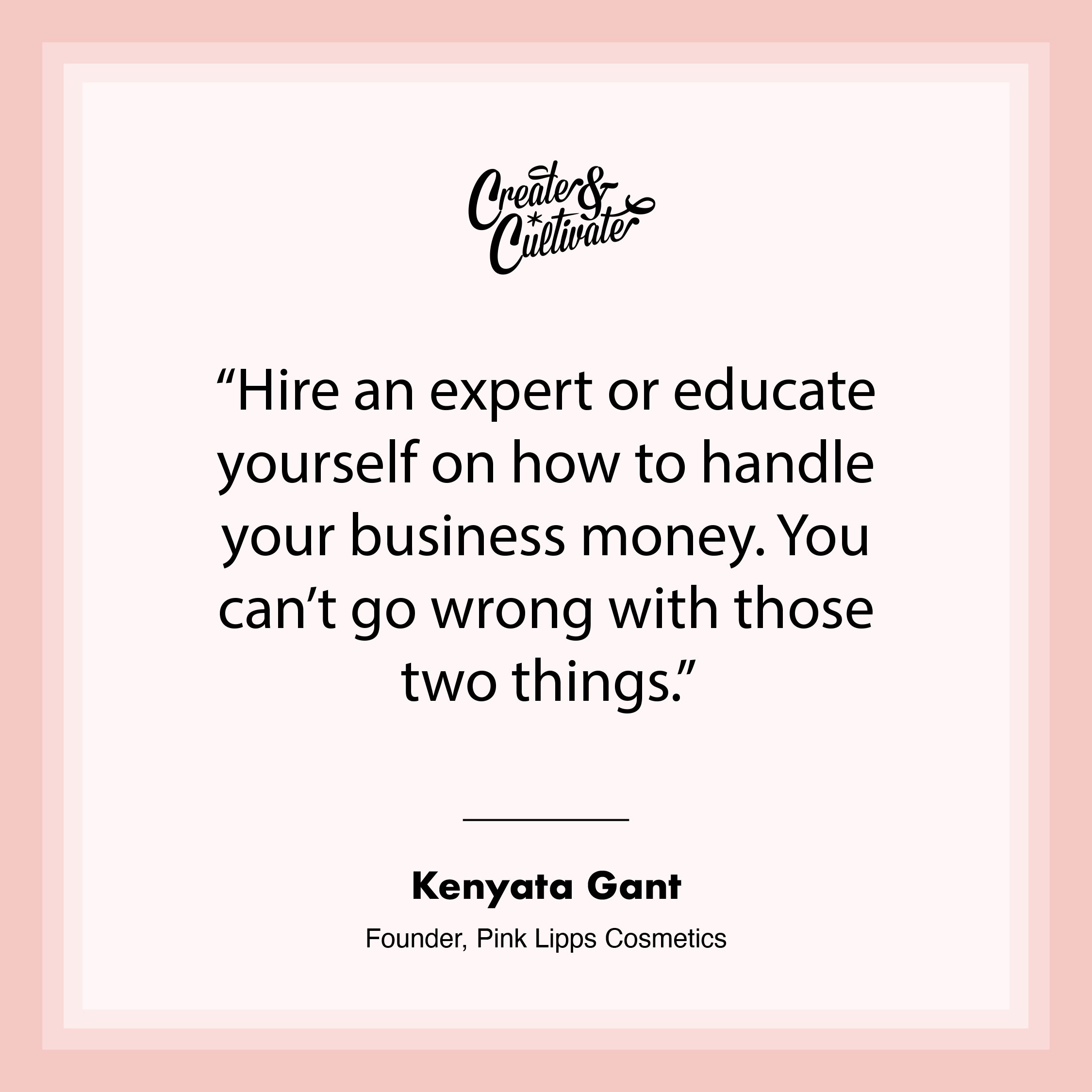
Hire an expert or educate yourself on how to handle your business money. You can’t go wrong with those two things.
MORE FROM THE BLOG

How Courtney Shields Pitched an Innovative Clean Beauty Product Over Dinner and Turned It Into a Reality
“I didn’t want to just white label something, I wanted to be a part of the process.”


“
I didn’t want to just white label something, I wanted to be a part of the process.”
—Courtney Shields, Founder, CourtneyShields.com
Courtney Shields is the definition of a glow-getter.
Six years ago, she was a singer-songwriter looking to break into the music industry when she decided to take the leap and launch a blog to share her beauty and fitness tips. What originally started out as a passion project quickly proved to be a profitable business.
Fast-forward to today and that humble blog is now a multifaceted platform reaching thousands of daily readers and over 680K Instagram followers. It should come as no surprise that Shields has collaborated with all the major beauty brands, and this month, she launched her very first product, Glow Hour, with the innovative clean beauty brand TULA.
Like many of the best beauty products, the idea for Glow Hour was born from a personal need. Unable to find a brightening under-eye treatment she loved, Shields decided to create it herself—and she found the perfect in a brand she’d worked with for years: TULA. One evening while at a work dinner with reps for the brand, she took a sip of her wine, made the pitch, and the rest is history.
At Create & Cultivate’s recent Digital Beauty and Self-Care Summit, Maya Allen, a beauty editor at Marie Claire, virtually sat down with Shields to learn more about her multi-hyphenate career and her latest venture in the competitive clean beauty industry, including the night she summoned the courage to pitch the idea to TULA over tapas and wine.
Scroll on for all of the most memorable moments from the conversation, and be sure to grab a notebook and a pen because you’re going to want to write these quotes down.
On launching a beauty blog…
“I love helping women feel more confident.” - Courtney Shields
On cultivating inner beauty…
“Inside out, outside in.” - Courtney Shields
On partnering with TULA on Glow Hour…
“Choosing TULA was super easy for me.” - Courtney Shields
“I’ve been using their products for 5 years.” - Courtney Shields
“I wanted to work so closely with the team to create something from the ground up.” - Courtney Shields
“I didn’t want to just white label something, I wanted to be a part of the process.” - Courtney Shields
On the importance of getting started...
“You can always pivot as you go, but just start.” - Courtney Shields
On forging ahead during COVID…
“You can look at 2020 two ways. One way is you can choose to complain and feel stuck and frustrated, or you can use 2020 as an opportunity for growth.” - Courtney Shields
“There’s power in our perspective.” - Maya Allen
On not paying attention to the number of followers, likes, or comments…
“If you are seeking outside validation, you’re never going to be happy.” - Courtney Shields
On seeking work-life balance…
“You can have it all, but you can’t have it all at once.” - Courtney Shields
On prioritizing self-care…
“Go for the walk, take the bath, do whatever fills you up, otherwise you’re pouring from an empty cup.” - Courtney Shields


On standing out in a saturated space…
“You have to do what you’re passionate about.” - Courtney Shields
“Standing out in a saturated space is all about being yourself and being authentic.” - Courtney Shields
“If you start trying to emulate what everyone else is doing, you’re on an uphill battle.” - Courtney Shields
“Looking inward, figuring out what feels good to you, and then doing that full-force is so important.” - Maya Allen
On navigating negativity and naysayers…
“I’m not a jar of Nutella, I can't please everyone, no matter what I do.” - Courtney Shields
On the best advice she’s ever received…
“Don’t procrastinate. You’ve got to get it done eventually, so might as well do it now.” - Courtney Shields
On her purpose…
“Walking through hard shit and showing people that you can still do hard things with a positive attitude and come out on the other side.” - Courtney Shields
On not paying attention to the number of followers, likes, or comments…
“If you are seeking outside validation, you’re never going to be happy.” - Courtney Shields
On seeking work-life balance…
“You can have it all, but you can’t have it all at once.” - Courtney Shields
On prioritizing self-care…
“Go for the walk, take the bath, do whatever fills you up, otherwise you’re pouring from an empty cup.” - Courtney Shields
On standing out in a saturated space…
“You have to do what you’re passionate about.” - Courtney Shields
“Standing out in a saturated space is all about being yourself and being authentic.” - Courtney Shields
“If you start trying to emulate what everyone else is doing, you’re on an uphill battle.” - Courtney Shields
“Looking inward, figuring out what feels good to you, and then doing that full-force is so important.” - Maya Allen
On navigating negativity and naysayers…
“I’m not a jar of Nutella, I can't please everyone, no matter what I do.” - Courtney Shields
On the best advice she’s ever received…
“Don’t procrastinate. You’ve got to get it done eventually, so might as well do it now.” - Courtney Shields
On her purpose…
“Walking through hard shit and showing people that you can still do hard things with a positive attitude and come out on the other side.” - Courtney Shields
Shop Glow Hour

TULA Glow Hour
$32

MORE ON THE BLOG

The Definitive List of What to (and What NOT to) Include on Your Résumé
Avoid these common mistakes.

Photo: Ivan Samkov from Pexels
Figuring out what information to include on a résumé can be difficult (psst… don’t make these mistakes) because truth be told, there’s no one answer for everyone. What information you should include on your résumé largely depends on your career, level of experience, industry, and a whole slew of other factors.
With that in mind, there are some general guidelines you can follow to better assist you with gathering the right information. Here are five do’s and don’ts of what to include on your resume.
DO
Use a font that is simple and easy to read. If you want to go with sans serif (more modern) try using something like Arial or Open Sans. If you want a serif font (slightly more traditional) try Garamond.
DON’T
Use some fancy cursive font or a font that is difficult to read. Simple is always better for fonts.
DO
Add your education. Unless high school is your highest level of education, no need to include it. If you’re currently in college, this implies that you’ve completed high school. If you’ve graduated from college and/or post-graduate schools, include all of those degrees.
DON’T
Include dates of education unless you are just out of college or in college and have very little experience. If you’re in college or just graduated, it’s important to include dates of education to give perspective on why you don’t have much experience. Once you’re a couple of years out of school, don’t include dates of education on your resume. It can actually work against you if someone thinks you’re too green or too far out of school.
DO
Add certifications or specialized training (i.e. online courses, on the job training, software training, etc.)
DON’T
List out relevant college classes unless you’re currently in school or just graduated and need to show that you have industry knowledge.
DO
Use job descriptions to your advantage and pull keywords and phrases from the job descriptions to integrate into your resume.
DON’T
Copy job descriptions and use those on your resume. Integrating keywords and phrases is important, but simply copying and pasting a job description you found online won’t benefit you.
DO
Include specific metrics and achievements. Think about how you can quantify your achievements and how you can articulate your value.
DON’T
Use information from your coworker’s resume. They might have similar job duties to you, but you likely won’t have the exact same achievements.
About the Author: A native San Franciscan, Michele Lando is a certified professional résumé writer and founder of writestylesonline.com. She has a passion for helping others present the best version of themselves, both on paper and in person, and works to polish an individual’s application package and personal style. Aiming to help create a perfect personal branding package, Write Styles presents tips to enhance your résumé, style, and boost your confidence.
Love this story? Pin the below graphic to your Pinterest board.

This story was originally published on August 23, 2019, and has since been updated.
MORE ON THE BLOG

This Innovative Female-Founded Travel Company Was Thriving—and Then COVID-19 Hit
Here's why Katalina Mayorga is more positive than ever.

We know how daunting it can be to start a new business, especially if you’re disrupting an industry or creating an entirely new one. When there is no path to follow, the biggest question is, where do I start? There is so much to do, but before you get ahead of yourself, let’s start at the beginning. To kick-start the process, and ease some of those first-time founder nerves, we’re asking successful entrepreneurs to share their stories in our series, From Scratch. But this isn’t your typical day-in-the-life feature. We’re getting into the nitty-gritty details of launching a business, from writing a business plan (or not) to sourcing manufacturers and how much founders pay themselves—we’re not holding back.

Photo: Alina Tsvor Courtesy of El Camino Travel
Katalina Mayorga was busy building a career in international development when a brief conversation with a cab driver in Guatemala changed everything. The chat inspired her to leave her full-time job behind and launch a travel company dedicated to bringing tourism dollars to less-frequented destinations where they could truly make an impact on local economies. Since founding El Camino Travel in 2014, Mayorga has collaborated with local guides to bring intrepid travelers to the palm tree-lined beaches of Colombia, the salt flats of Bolivia, and other off-the-beaten-path places throughout Latin America.
Then COVID-19 hit. The rapidly spreading disease upended the travel industry overnight, and like so many entrepreneurs with businesses rooted in hospitality and tourism, Mayorga suddenly had to reexamine her business model. “While it is daunting, it is also somewhat exciting, because no one really has any idea what the ‘new normal’ will look like in our industry,” the founder tells Create & Cultivate. “This experience has forever changed travel and how it will operate moving forward, which means that despite being a small business, we can still have a large impact on how the industry builds from the ashes of COVID-19.”
Read on to find out how this enterprising entrepreneur built her business from the ground up (without a traditional business plan or a single investor) and how she’s pivoting to ensure El Camino Travel comes out on the other side of the COVID more resilient than ever.
On forgoing a traditional business plan…
“In the early stages of the business, it was important to test out different ideas, revenue streams, and types of trips to see what actually was viable to fill a gap in the market. I needed the flexibility to iterate and change course without being stuck on one way of doing business or feeling like I had wasted time by creating a thorough business plan (which often can be several pages long) that I would not end up using. Instead, I used the Lean Canvas framework, which allows you to start strategically thinking through the most important components of a successful business. I also found the book The Lean Startup by Eric Reis helpful.”
On coming up with the name El Camino Travel…
“It was truly a shower moment. I’d thought of several names (none of which I remember anymore), but when I tested them out on people, I got a lot of hesitation or no reaction at all. I wasn’t very excited about them either and knew in my gut they weren’t a good fit. After several weeks, the name finally hit me in the middle of a shower and I immediately ran out and yelled to my husband (who was downstairs), ‘I think I have it! El Camino Travel!’ He responded with a big smile and said, ‘That’s it Kata!’”
“I went back out into the world with that name and realized how sticky it was. Friends loved it and I loved saying it. I think this is a perfect example of one of the most important lessons that I have learned in business. Go let your ideas live in the wild before fully committing to them. Talk to people about them and immediately start testing their viability and marketability. You do not have to tell everyone everything, but do not be so concerned that someone is going to steal your idea. As someone told me early on with El Camino, ‘That’s a brilliant idea, but don’t think that no one else has ever thought of it. It is all about who runs faster and harder with the idea.’”

Photo: Jennifer Chase Courtesy of El Camino Travel
On setting up the business…
“The most important thing is having a strong operating agreement in place. This was a huge lesson learned for me because our first operating agreement is one we got through Legal Zoom. These operating agreements are not enough to address very common issues many entrepreneurs face early on in their business. The best investment you can spend early on is getting a legitimate lawyer that can help you put together a robust operating agreement. Remember that as your business grows, you may need to change your operating agreement to reflect that growth. We are on our third iteration in six years.”
On standing out from the competition…
“To really set yourself apart in your specific niche or industry, seek inspiration from outside your industry. Look at innovative models and branding that you really admire that have nothing to do with your business and use that creative inspiration to help set you apart in your own industry.”
“Though we are a travel brand, I sought out a ton of inspiration from my work in international development, lifestyle brands that I admired, architecture and design firms, and documentary photojournalism. While the internet makes the world a much bigger place to seek out various resources, it is also very easy to get caught up in your own industry bubbles and to all be drinking the same Kool-Aid and using the same buzzwords. Force yourself to break out of that.”
On finding local guides to partner with…
“When we launched, I was the local host for almost all our trips for the first two years and I still host two very special trips a year, our Community Retreats. I loved being a host, and it was important for me to have that hands-on experience because it made me understand the intricacies and challenges of the most important role of the trip. It also gave me a strong understanding of what qualities makes an excellent local host.”
“Though I think I am a pretty good host, I knew that having someone who was born and raised in the place we are visiting would add a whole other level of insight or value that I knew I (or any other outsider) wouldn’t be able to provide. This was actually somewhat contradictory to the industry model at the time that valued guides from Western countries or who were from the same places as the travelers.”
“Something felt inherently wrong with that model and not true to our own values. We now exclusively only hire guides from the countries we are visiting and who have interesting perspectives and stories to share with our travelers. They also must be incredibly responsible and detail-oriented.”

Photo: Emmy Hernandez Jiminez Courtesy of El Camino Travel
On funding the company…
“We started through a mix of savings, credit card debt (not a ton and I would really only recommend this as a last resort), and a small loan from friends and family. We have not raised any additional capital since then, and I am very happy that we did not end up going that route. Being scrappy made me really think out of the box in order to reduce our costs, while ensuring we were not sacrificing the quality of our service. We came up with some amazingly creative solutions along the way!”
“In addition, it forced me to focus on what works and leave behind what does not as we had less room for error. We are now in a new stage of the business where we are transitioning from scrappy start-up mentality to a robust operation. With that we also need to shift our mentality in three important ways: 1) not saying yes to everything 2) investing in people and resources that may not lead to immediate return but make sense for long term growth, and 3) not try to do everything myself and hire so that I can properly delegate.”
On not paying herself a salary for 6 years…
“The plan was to start paying myself a salary this year. This would have been the first time I would have done that in six years. To be honest, it was still going to be less than what I was paying some employees as we were in a period of growth and I wanted to invest in that growth rather than take on loans. Unfortunately, COVID-19 has changed that as we are in a period of trying to stabilize the business.”
“I do have some flexibility right now because I am currently living in Latin America where the cost of living is much lower than the United States, so I am not in financial duress and still can maintain a good quality of life. Thinking outside the box with COVID in all sorts of ways has been critical right now.”
“However, I was hesitant to even give myself a salary this year (where in past years I just paid myself enough to pay off my credit cards each month) prior to COVID-19, but a fellow entrepreneur turned me onto a new model of accounting called Profit First (there is a book you can read about it). The name is deceiving as it is not focused on profit at all costs, it is just another way of approaching your accounting that allows you to know if you are actually building a viable and healthy business. I have loved it and it has been a game changer for me!”
On scaling the team…
“We are a team of about four right now. I have learned that the most important part of hiring is hiring slowly and making sure you have set up the interviews in a way that gets you to know the candidate from various perspectives. This can be done by asking the right questions. If it makes sense, when you are down to the last candidates, hire them to do a quick task. Yes, pay them during the interview process. It will allow you to see if they are a good fit and how they process feedback, and it could save you much more money in the long run that comes with hiring the wrong person.”
“I did not have a ton of hiring experience, but after a few mistakes, I began to read more about implementing a strong hiring process. I talked to other peers about their lessons learned, best practices, and their favorite interview questions. Finally, this last year we developed an El Camino Professional Values statement that we include in any job announcements and we ask candidates to speak to them directly. This ensures we are being transparent and clear about what we expect from our employees and our company culture from the very beginning.”

Photo: Jennifer Young Courtesy of El Camino Travel
On hiring an accountant…
“We hired an accountant early on, and they have been so important in ensuring we are organized, and we have a system in place to understand our profit and loss statement for each and every trip. That being said, just because I wholeheartedly trust our accountant, that does not mean I walk away from having a deep understanding of our books and our monthly financial statements. I set aside about an hour a week to look at our financials and projections, and block off a full day once a month to deal with all the accounting for the month and reviewing all P&Ls for each trip to see if there are any inconsistencies or if there are opportunities to improve our margins. Know your numbers, margins, and EBIDTA as well as you know your BFF. Knowing this information empowers you as a business owner.
On picking a niche…
“‘Pick a niche audience within the travel industry and be the best at it.’ A successful entrepreneur who had sold his travel company for $80 million gave me this advice early on, and I didn’t take it as seriously as I should have. I thought diversifying my revenue streams across all types of services and products made the most sense in lowering our risk of failure as we would be able to capture a larger audience. If one thing did not work, then I could depend on the other. However, through trial and error, I realized how much of a time suck this was and how distracting it could be. Once we picked our niche lane and stuck with it, we started to see the best results across the board, and not only financially. It made us much more focused as a company and a team, it allowed me to actually pursue work-life balance, and it gave us a clear sense of purpose to rally around.”
On launching during the Golden Age of Instagram…
“I always say that the ‘luck’ part of our business was that we launched in the Golden Age of Instagram, pre-algorithm. We understood that it was going to become a powerful source for discovery and inspiration within the travel industry, so we threw all our eggs in that basket. There were many strategies we took using Instagram as our main sales funnel, but I won’t get into them because I do not think it will work now due to how Instagram has evolved. Like the algorithm, we have had to evolve. We rarely do paid ads (I think we spend less than $100 last year on paid ads), and our most powerful source of marketing continues to be word of mouth and our reviews.”
“We also have a clear sense of our brand voice and values and it involves a lot of passion and knowledge. We are not afraid to show that off through our newsletter and social media platforms. We are not obnoxious about it, but are really excited to share all the amazing things happening in these more edgy destinations that are not on people’s radar (but absolutely should be). Finally, we are also not afraid to get personal about what we do and why we do it. For example, I just shared with our newsletter an intimate reflection on consumerism now that I have been living outside the United States for almost a year. All of this has helped us build a deep sense of trust with our audience.”

Photo: Alina Tsvor Courtesy of El Camino Travel
On seeking advice from mentors…
“I have had quite a few mentors who I reach out to for advice on various aspects of the business. However, I feel that many of these relationships are mutually beneficial. I refer them clients and/or I also share my perspectives and insights into the industry so that it is much more of a conversation where we are learning from each other. I also seek advice from individuals outside of the travel industry to push me to think outside the box.”
“I think I have maintained strong relationships by being grateful and humble with their time and expertise. People love to help, but to be honest, cold-calling has rarely worked for me. I try to find someone that can introduce me to the person I am interested in chatting to and make it very easy for them to do so. I send them three well-written sentences that have our elevator pitch and a clear reason of why I would love to connect and what I would like to discuss.”
On learning lessons along the way…
“I am very lucky because I am actually getting to apply the lessons learned over the past six years to our newest labor of love, Casa Violeta, which is a tropical guest house we opened in Granada, Nicaragua. While not entirely the same, many of the best practices we have identified for El Camino Travel, apply here. My advice would be to be as transparent as possible with your business partners in setting expectations, do thorough market research, and understand the niche you are filling. Build a strong brand with a clear perspective and identity, and let your ideas live in the wild so you can start getting feedback immediately. The latter is the cheapest form of market research.”
On pivoting in the wake of COVID-19…
“COVID-19 has pretty much upended the travel industry over the past few months and everyone has been impacted, no matter your size or reach. We immediately stayed on top of all the government programs for small businesses and took advantage of all of them. We also applied for grants and were awarded a few. This has given us the ability to stabilize the company over the next few months and be thoughtful about the pivots we need to make as international travel will not coming back for several months. We have been realistic from the beginning about the impact this would have on our small group trips, and I wanted our response to be less reactionary and panic-mode and more a series of intentional actions that would add long term value to the company even post COVID-19.”
“We realized that one of the things we do best is build community, so we are in the middle of doing what we do best offline by bringing it to an online community space where we can bring together inherently curious travelers who resonate deeply with our values as a travel company through The Clubhouse. It’s a membership-based community for travelers who approach the act of travel from a growth perspective, and we offer online salons, photography discussions, boutique hotel tours, and other benefits. Unlike many other online travel communities, we are hyper-focused on the quality of the members that join, rather than the quantity, to ensure the conversation is rich and meaningful. In addition, we are adjusting our trips to offer more private services where you can have a more socially distanced type of adventure focused on unwinding and recharging in beautiful natural surroundings. More on both fronts to come soon!
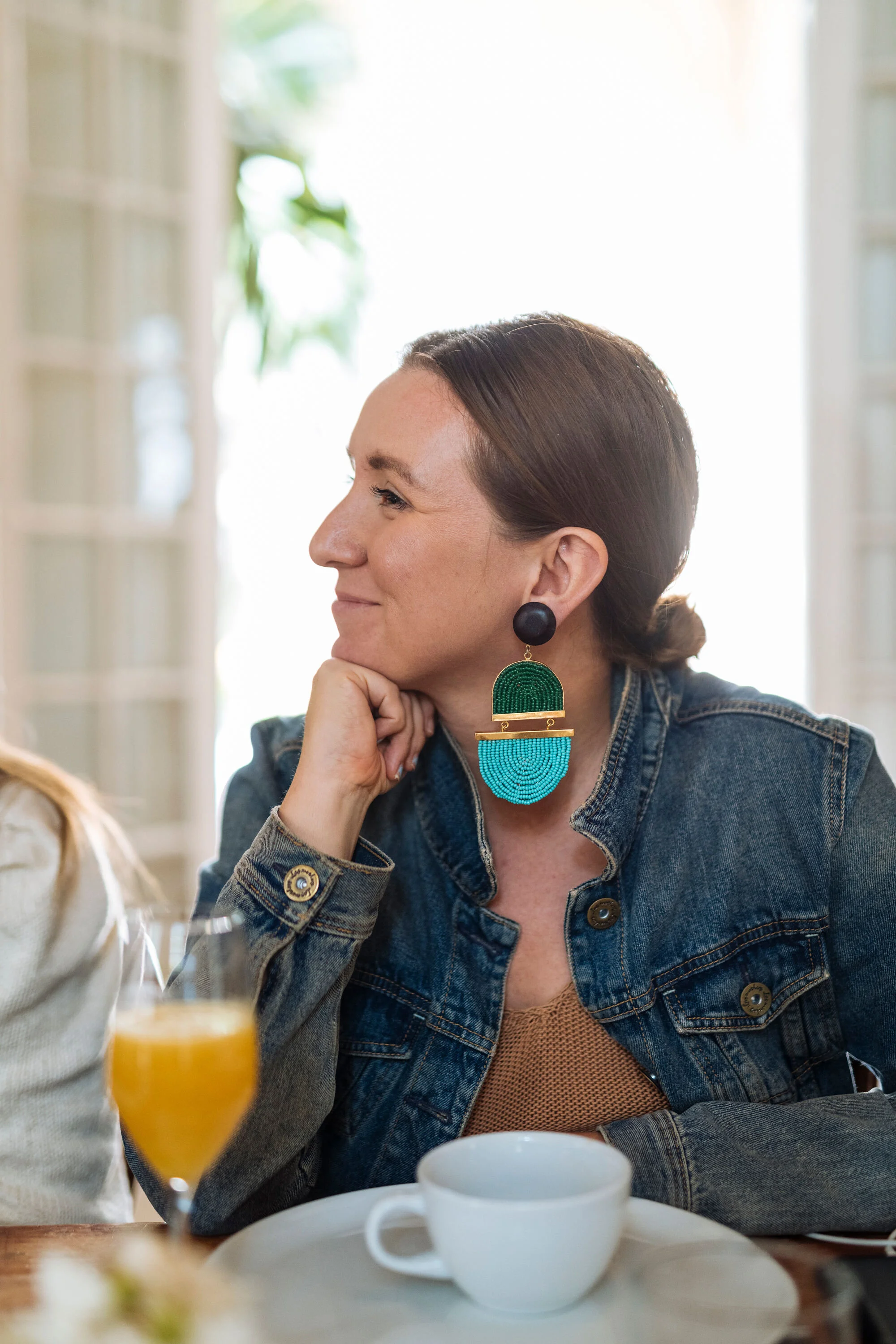

Photo: Alina Tsvor Courtesy of El Camino Travel
On rebuilding the travel industry post-COVID…
“While I hate using this world, it truly has been an unprecedented period of time and everyone from the large corporations to the small mom-and-pop shops are trying to figure out how to move forward. While it is daunting, it is also somewhat exciting, because no one really has any idea what the ‘new normal’ will look like in our industry. This experience has forever changed travel and how it will operate moving forward, which means that despite being a small business, we can still have a large impact on how the industry builds from the ashes of COVID-19.”
“We can actively set the tone with others and be architects of the new normal rather than just bystanders. In this case, we are talking to other companies in the industry who we deeply admire for their creativity and innovation in pushing the mold in the industry even prior to COVID-19. We are seeing how we can best unify and collaborate on building a new normal that is more sustainable and equitable, as well as leverage our respective communities in a unified way to come out of this together stronger. To be honest, it should have not taken a global pandemic to get us all talking in a more collaborative manner, but I am glad that it did.”
On collaborating with your peers and tapping your network…
“Do not try to go at this alone. Lean on your various networks. This is the time to work together with other small businesses and start thinking outside the box collaboratively. I think this type of collaboration will be the way forward for small businesses whose budgets are limited. Mentally, it's also a lot less lonely when working with others who are experiencing similar feelings of uncertainty. You can lift each other up.”
“Lean on your community. You can get some of the best ideas by simply having honest conversations with some of your most active and loyal customers. What do they want to see from you right now? What do they expect from you? Where can you continue to add value to their life even during a global pandemic? Asking these questions and getting their feedback will help not only identify your pivot, but it also gets them invested in ensuring you make it through onto the other side of COVID-19. Again, you feel much less alone as a small business owner.”
MORE ON THE BLOG

What You Need to Know About Design Protection in the Modern Age
An attorney explains.

Photo: Christina Jones Photography
Although counterfeiting and “copycat production” happens around the world on a daily basis, the media has shed light on specific incidents such as the escalating dispute between a small Los-Angeles based illustrator and designer, Tuesday Bassen, and the Spanish retailer, Zara. Young designers should be wary of the lessons learned from this case and would be all the wiser by looking into what unique elements of their clothing can be protected. In addition, knowing how much “inspiration” they can take from other designers without it violating the intellectual property rights of another artist or designer is equally as important.
In the case of Tuesday Bassen, some fans believed that she had been secretly working with the big-time Spanish retailer. However, that was not the case. Tuesday Bassen first realized similarities in her designs and Zara’s later products in early 2016 and attempted to take legal action. However, for someone like Bassen, her funds have taken a hit from just these introductory legal exchanges. What we know from the press is that Bassen has already shelled out thousands of dollars in defense of her accusations. She also took to Instagram to voice her grievances to her followers, resulting in artists and bloggers publicly supporting and sharing Bassen’s, and even sharing their own stints with other alleged copycats. Zara later provided a statement detailing the company’s character as one of the utmost caliber with respect for all creators and the art they produce. The company even went so far as to suspend sales of the products in question when originally notified by Bassen’s legal representation and has stated that it wishes to stay in contact with Bassen to resolve this matter amicably.
In light of the lightning-fast pace of the industries, it seems that designers and artists are constantly copying, reworking, and building on the works of other creatives. Simply trademarking your name or logo only goes so far to protect designers in this day and age.
“Simply trademarking your name or logo only goes so far to protect designers in this day and age.”
So where does the modern artist or designer turn to in an effort to protect their designs?
1. Copyright Protection
Copyright is a legal right that grants the creator of an original work exclusive rights for its use and distribution. This is usually only for a limited time. The exclusive rights are not absolute but limited by limitations and exceptions to copyright law, including what is called “the doctrine of fair use.” A major limitation on copyright is that copyright protects only the original expression of ideas, and not underlying ideas themselves.
Copyright law requires that the work (1) be of a sufficiently permanent nature that it may be reproduced or communicated for more than a transitory period; (2) be independently created by the author, and that it possesses at least some minimal degree of creativity; and (3) not be an “idea, procedure, process, system, method of operation, concept, principle or discovery.” Artwork, photographs, and three-dimensional sculptures are prime candidates for copyright protection. Another great form of protection for designers is to incorporate a unique and copyrightable fabric pattern into their designs.
Copyright protection protects unique designs on accessories and apparel, such as ornamental graphic logos, but not the designs themselves unless the design features sculptural or pictorial features. An entire body of law exists which extends copyright protection to certain unique jewelry designs, as well. While the copyright in and to an original work exists from the moment it is “published,” copyrights should be registered with the U.S. Copyright Office within the first sixty (60) days after publication in order to be able to recover attorneys’ fees and statutory damages from endeavoring copycats.
2. Trademark Protection
A trademark is a recognizable sign, design, or expression which identifies products or services of a particular source from those of others, although trademarks used to identify services are usually called service marks. The trademark owner can be an individual, business organization, or any legal entity. A trademark may be located on a package, a label, a voucher, or on the product itself. Slogans, logos, brand names, and similar all merit trademark protection, however, trademark protection does not protect unique designs in and of themselves, only identifiable signs. That being said, often clothing does not feature any identifiable name brand on the exterior.
“Trademark protection does not protect unique designs in and of themselves, only identifiable signs.”
Most men’s jackets, for example, may feature a label on the inner jacket pocket. Crafty designers have found ways to incorporate their brand into other design features of the clothing such as embroidery or emblazoning their insignia on buttons or lapel pins.
3. Trade Dress Protection
Trade dress, like a trademark, is a legal term of art that generally refers to characteristics of the visual appearance of a product or its packaging that signify the source of the product to consumers. Some of the best examples of trade dress in the fashion industry are Christian Louboutin’s red sole, Bottega Veneta’s intrecciato or “woven” leather designs, the red stripe on the heel of Del Toro’s slippers and the match stick, tucked into the brim of a Nick Fouquet hat. Colors, patterns, symbols, and other similar design features can classify as trade dress.
Section 43(a) of the Lanham Act, 15 U.S.C. § 1125(a), protects the author from infringement of the unregistered trade dress of a product. However, obtaining a registration for trade dress is often a costly and time-consuming process. Generally, trade dress is protectable only under either of two circumstances: (1) the trade dress is inherently distinctive or (2) has acquired “secondary meaning”, such that consumers have come to identify the brand simply by the appearance of the trade dress.
Trade dress protection is generally not available to works where (1) the design element is in any way functional, or (2) the claimed trade dress amounts to nothing more than an abstract image or marketing approach. In most cases, the U.S. Trademark Office only affords full protection to trade dress after five (5) years of use or if a designer can provide sufficient evidence that the industry and the general public recognize the design element as belonging to the designer. (For example, a consumer knows just by looking at the red sole of a high-heeled shoe, that the shoe was made by Louboutin).
4. Design and Utility Patent Protection
In general terms, a "utility patent" protects the way an article is used and works, while a "design patent" protects the way an article looks. Both design and utility patents may be obtained on an article if invention resides both in its utility and ornamental appearance. While utility and design patents afford legally separate protection, the utility and “ornamentality” of an article are not easily separable.
A design patent is a form of legal protection granted to the ornamental design of a functional item. Design patents are a type of industrial design right. While copyright law requires only that a work of expression be sufficiently original to be protected, patent law requires a much higher degree of novelty and “non-obviousness.” Design patent protection is much shorter than the duration of copyright. It provides a complete monopoly so that even if someone independently comes up with your design, your design is protected. The US Patent and Trademark Office will generally grant a design patent if a designer can prove that his or her design is: (1) new, (2) "nonobvious"—a legal term of art; and (3) ornamental only, not solely functional. Elements one and two are hard to meet in the fashion world.
Unlike under copyright protection where the preparers of derivative works based on the original copyright hold no rights, the second-comer who invents a patentable improvement on a design patent may apply for and receive a patent regardless of whether the first inventor authorized the improvement.
Alexander Wang is famous for filing design patents for his fashion items, particularly for his handbags. Many of his items that have been afforded design or utility patents are “hardware heavy”. Earlier this year, Wang successfully obtained a 14-year design patent on several of his "bags with corners"—the official title of the patents on his handbags with metal-covered corners.
In Conclusion:
Designers should not limit themselves to only one of these options but should consult with an attorney who is well-versed in intellectual property protection to prevent the tragedy of having their work knocked off by companies large and small who are "inspired" by their hard work and ingenuity.
About the Author: Christopher Dischino leads Dischino & Company, a Miami-based law firm that provides legal advice and strategic consulting for the modern business, the entrepreneur, the free-thinker, and those looking for something outside the box. With a knack for the creative and an entrepreneurial attitude, Christopher specializes in business law, intellectual property, and corporate transactions, assisting private clients and corporate entities to establish and expand their businesses domestically and abroad. His experience allows him to create value for his clients by using resourceful structuring techniques to help minimize unnecessary costs and risks. Get more info on Christopher and his law firm here.
Love this story? Pin the below graphic to your Pinterest board.

This story was originally published on February 17, 2019, and has since been updated.
MORE ON THE BLOG

13 Successful Business Owners Share the Best Money Books That Changed Their Bottom Line
Turn paper into profit.
In this age of information, we have everything we need to start a new business, create a website, or set up a budget right at our fingertips—Google is a powerful tool. But sometimes you need a deep dive into the topic to truly understand the scope of what’s required from every angle—that’s when we turn to books. In our new series, Turning a Page, we ask successful people to share their go-to tomes that helped transform their business. Whether you listen to them or need to physically flip the pages (and write notes or underline the text like us!), there is so much power in self-educating. Ready to turn a page in your career? These books will help take you there.

Photo: Christina Jones Photography
There are plenty of successful founders who don’t have MBAs or were college dropouts. Building a successful company takes grit, hard work, and determination, oh, and a serious love for what you do—and some are saying you don’t even need a college degree anymore. But the good news is we live in the age of information, so when you don’t know something, Google is your best friend. Or we like to go old school and turn to ye old books. It’s one of the easiest ways to self-educate and train yourself in an unknown area. As an entrepreneur, you have to be scrappy and in the early stages there really isn’t a lot of spare cash to go around—a lot of big companies started with little to no money. Until your business is at a point where you can afford to hire staff, you have to take on that work and wear multiple hats.
Money is one area where you need to be especially savvy. Get familiar with a P&L and make sure you’re not racking up debt that you can’t pay back quickly. If this is a sticky point for you, too then don’t stress, we got you. We asked 13 successful business owners to share the best finance books they’ve read and the financial lessons they learned.
Read on to find out and add them to your cart, stat.

Dr. Iris Rubin
Dermatologist and Co-Founder, SEEN Hair Care
The Book: On My Own Two Feet: A Modern Girl’s Guide to Personal Finance by Manisha Thakor and Sharon Kedar
The Financial Lesson: The book is written by my identical twin sister who is also married to my business partner Greg! Sharon is absolutely amazing, as is her book, which has had multiple printings and helped improve the lives of thousands of women. The best advice I got from the book was:
1. Financial freedom allows for powerful life choices. The strength of our finances impacts the jobs we choose and in some cases the relationships we stay in.
2. Save 10% of my money for the long term no matter what. The book talks about how that’s possible on a $30,000 salary and a $300,000 salary. It’s a state of mind that gets you there.
3. Having money in the bank is the ultimate freedom for when life changes—which it always does. And making choices from a position of financial strength is a power play. Own your finances own your life.

Tracey Hummel
Founder, Bee & Kin Smart Handbags
Book: The $100 Startup by Chris Guillebeau.
The Financial Lesson: I read this book last year around the time I was starting to work on Bee & Kin. This book gives real examples, specifically documenting 50 individual entrepreneurs and how much money each of them started their business with and what they needed along the way to stay up and running.
These examples show that you don’t need a crazy investment to start a business that you are passionate about. All you need is an idea that provides real value to someone else. The two main themes he discusses throughout this book are freedom and value. Freedom is what we're all looking for and value is the way to achieve it.

Jordan Schenck
Co-Founder and CMO, Sunwink
The Books: Secrets of Sand Hill Road by Scott Kupor and Co-Active Leadership by Karen Kimsey-House
The Financial Lesson: Right now we are in the middle of fundraising and growing. The book that really changed everything for us was Secrets of Sand Hill Road by Scott Kupor. While there really is no one-size-fits-all roadmap for fundraising there are critical ways to position and sell yourself that this book helps illuminate. It has helped me and Eliza roadmap our future and strategize our raise/milestones accordingly.
For leadership and how to get through high growth in your business, I absolutely love Co-Active Leadership by Karen Kimsey-House. This was a transformational body of work that allowed me and my co-founder, Eliza, to understand our strengths and how to rely on others during a high-growth moment.
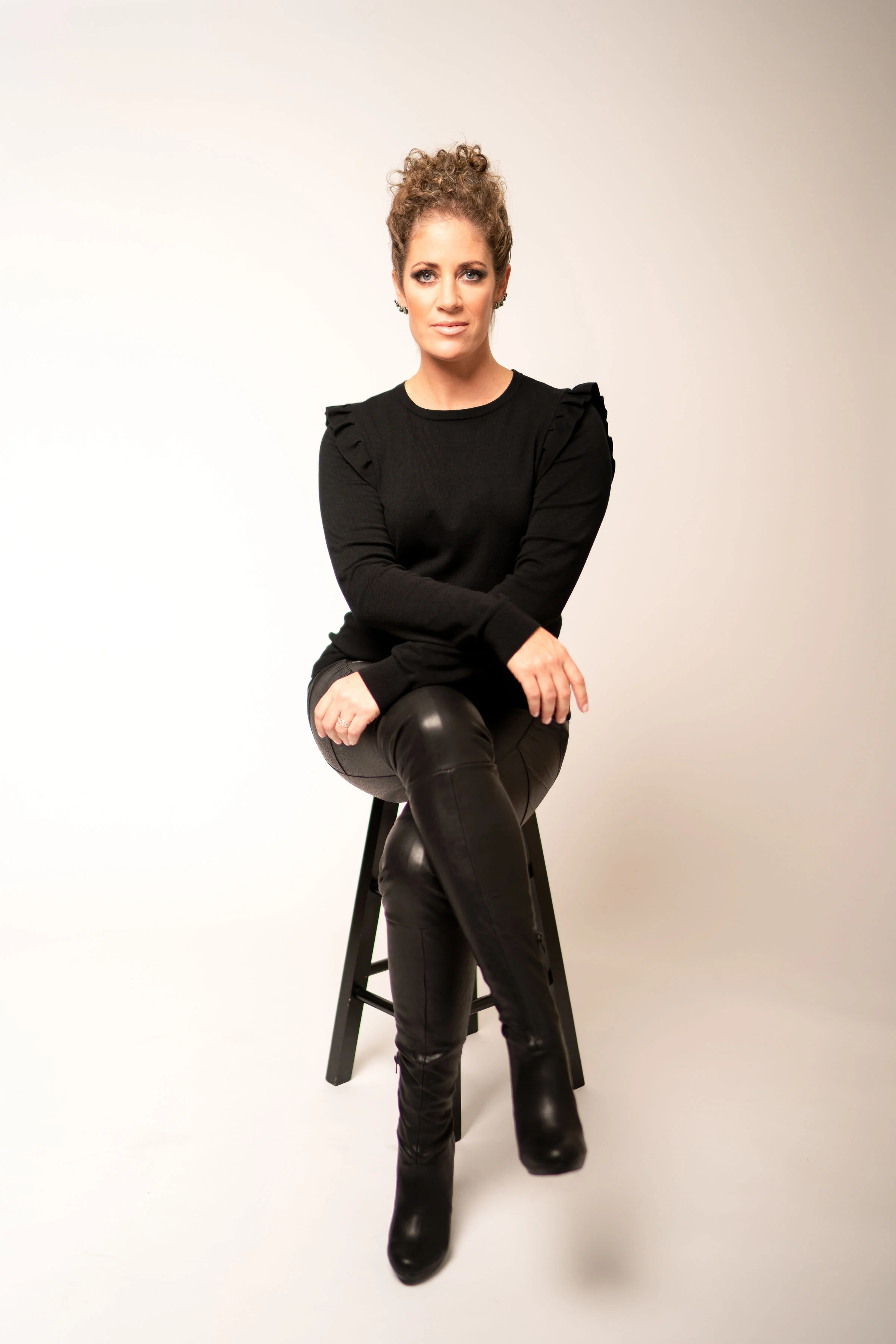
Drea Gunness-Groeschel
Founder and CEO, Beautiac
The Book: An Economist Walks Into A Brothel by Allison Schrager
The Financial Lesson: For anyone looking to make a change in their life, specifically career or as an entrepreneur, should read An Economist Walks Into A Brothel by Allison Schrager. My father, an entrepreneur himself, gave me this book and told me it would be relevant to my life in many ways. He was right! It’s about how we behave with risk and what assessment patterns we tend to fall into. The book shares how to gain financially, when to risk, when to remain in balance and when to push harder, risking more for bigger outcomes through proper mindful thinking about risk behavior.
Often we don’t realize what is truly at stake or what we ultimately want out of a “big risk.” Career defining moments, decisions to start a business, or how to plan for retirement are all important risk-based decisions. Defining goals financially and life balance is a must. I’ve applied this book to many areas of my life, specifically with Beautiac, my new start-up, and how we maneuver the company as we traverse the traction gap into a saturated beauty market. Learning how to properly assess risk is a valuable new tool in my toolkit.

Michele Thomas
Co-Founder, AZIONE
Photo: Tristan Kallas
The Book: Cold Hard Truth by Kevin O’Leary
The Financial Lesson: I’m a big Kevin O’Leary fan. I’d always stumbled upon his articles in Inc. and Entrepreneur. Every time I would read one of them, his philosophy just made sense to me on so many levels. When I wanted to pick up a book last summer, I immediately sought out more of his writing. The Cold Hard Truth details his life and offers a dose of the actual cold hard truth. Kevin highlights numerous methods to run a successful business.
The best advice I gleaned was to know your numbers, how you spend your money, how you use credit, what your margins are, and if you’re spending money to make money. When you first get into business, you’re wearing multiple hats. For my partner and I, we were doing everything from bookkeeping and invoicing clients to payroll. As your company scales, you move responsibilities. However, it’s important not to lose sight of the numbers. Driving this home made me realize I need to painfully stay on top of the numbers.
He also draws a clear distinction when it comes to business, I’m not making friends; I’m making money. Although that sounds harsh, it’s something crucial you must learn early on. You can’t make decisions based on if you might hurt someone’s feelings, or if you really like them outside of work. This is something I learned and continue to remind myself and our executives of.

Kelly Barker
CEO and Founder, Prep Your Skin
The Book: The Total Money Makeover: A Proven Plan for Financial Fitness by Dave Ramsey
The Financial Lesson: I worked in mortgage banking for 15 years in the corporate B2B sector before becoming an entrepreneur. I oversaw large banks and independent mortgage companies, generating in excess of $15 billion in revenue. Throughout this time frame, I learned a deep understanding of each client's business model, sales plan, performance, risk, debt leverage, and cash flow. I took this knowledge and applied it to my business financial plan when creating PREP Your Skin. As a bonus, my husband is a certified financial planner and together we planned for the business years before the idea or the company was started. The company, PREP Your Skin, is self-funded and carries no debt.
For personal finances, I recommend The Total Money Makeover: A Proven Plan for Financial Fitness by Dave Ramsey. I've helped several women get their personal finances straightened out with this book, along with my personal tips and experiences. Start with your personal finances and once you have those organized and in a good place, then you can focus on your business financial plan.

Sarah Paiji
Founder and CEO, Blueland
Book: Lean Startup by Eric Riles
The Financial Lesson: This book really drove home the importance of and framework for fast, iterative product releases. This has enabled us to not only learn and improve continuously but also save money by not over-investing in features before understanding if consumers really value them.

Aly Korchemniy
Founder, Anfisa Skin
Photo: Cory Hultquist
The Book: The Richest Man in Babylon by George S. Clason
The Financial Lesson: My favorite quote from the entire book is: “Advice is one thing that is freely given away, but watch that you take only what is worth having. He who takes advice about his savings from one who is inexperienced in such matters shall pay with his savings for proving the falsity of their opinions.”
The book was written a long time ago, so some of the language is a bit archaic. He is saying be careful whom you take advice from, take advice from those who have what you want, those who are smart with their own money, because you might end up just like them. In this day and age, the overabundance of information we have at our fingertips is actually incredibly overwhelming. Learning to decipher whom to take advice from is key to building a strong foundation for any business owner as taking advice from the wrong person/source can be financially detrimental to a business.

Amy Voloshin
Founder, Printfresh
The Book: Double Double by Cameron Herald
The Financial Lesson: This book has been one of my go-to’s during start-up mode. I used it in my first business as a way to have a clear vision and to double the business—during that time we grew it to our first million. Now in starting up our stationery and lifestyle brand Printfresh, I’ve gone back to using the system in the book. It gives a great outline of efficient meetings you should have, ways to maximize your time off (and that of your employees for better work/life balance), tracking KPI’s (key performance indicators) and creating a dashboard to share with the team of how we are doing with our metrics.
When I was first starting out I didn’t know what to track or why but taking the time to figure out what moved the needle was incredibly important. It helped us understand how many calls we needed to make to schedule sales appointments, how many sales appointments we needed to hit our sales goals, and more. By gathering data and reviewing it on a weekly basis it’s a lot easier to take some of the emotions out of the equation and focus on the facts and if we are tracking for success.
These days we fill out a dashboard weekly and share it at our weekly meetings and the team can view it from anywhere through Google spreadsheets. I love that I can be sitting on the beach somewhere but still know how things are going at a glance.

Joanna Lau
Founder, Designer and CEO, JEMMA
Photo: Lindsay Brown
The Book: Shoe Dog by Phil Knight
The Financial Lesson: Many business and financial books I’ve read about entrepreneurs follow a common, and I believe misleading storyline. It goes like this: A sharp entrepreneur gets a world-changing idea, develops a clear business strategy, recruits a team of people, and together they rocket to fame and riches. No one ever talks about the climb, the brutal challenges in building something from nothing, and most importantly, the financial stress that comes with it all.
Shoe Dog, Phil Knight’s memoir about creating Nike (though not a pure financial management book), is a refreshingly honest reminder of what the path to business success really looks like. It’s a messy, perilous, and chaotic journey riddled with mistakes, endless struggles, personal and financial sacrifice. He was an accountant by training and skillfully demonstrated how to be scrappy in building a business—he paid only $35 to design the Nike swoosh and plowed every dime made in sales back into growing the business in the most strategic way possible.
This is the real deal and something I practice with Jemma as well. In this day and age, it is easy to think that what defines a successful business is how big you look on the outside and that includes having a really large team, fancy office, and very expensive branding efforts. But in reality, is that a business that will stand the test of time or a business that will run out of cash in five years? As Phil Knight has shown us, it really has to be about being frugal, spending wisely to sustain yourself long enough to outlast everybody else, and truly win.

Courtney Claghorn
Founder, SUGARED + BRONZED
The Book: Entrepreneurial Finance by Steven Rogers
The Financial Lesson: I went to an Amex Open event for female entrepreneurs and attended one of Steven Rogers' (a Northwestern MBA professor) breakout session and I thought he was incredibly intelligent, interesting, and passionate about entrepreneurship. He mentioned that he had written a book and wrote it in a more casual manner (he literally said “I write it in the way in which I speak to you all in person”) and immediately I felt as though I had a lot more to learn from him and purchased the book later that day.
I wasn't ready to raise money at the time (this was in 2014) and learned a lot about debt financing from the book, specifically regarding SBA loans. We've taken 3 SBA loans to date, which really bridged the gap for us between constantly reinvesting our own profits and being ready to raise our first round of funding. The SBA loans helped us fund our build-outs for new store openings and grow faster than just reinvesting our profits would allow. I also learned a lot about raising institutional funding, (which was on a long-horizon) and it was extremely helpful to know the basics of raising money, including everything from the basic lingo to the pros and cons of taking on an equity partner.
The biggest takeaway from Rogers' book was that raising money is most certainly not the only option while you're growing a business, which the buzz in the marketplace often suggests. SBA loans have allowed us to grow our business and maintain 100% of our equity until we felt as though it was truly time to raise money and find a strategic equity partner to provide advice and expertise, rather than just capital.

Amy Lacey
Founder, Cali'Flour Foods
The Book: Building a Story Brand by Donald Miller
The Financial Lesson: This book was a game-changer for Cali'flour Foods. I truly believe that when we made the conscious decision to make our customers the hero, our business boomed in e-commerce. This book focuses on building relationships that laid a strong foundation for us both internally and externally. We focused on the customer and our ‘why’ and the finances took care of themselves. We did exactly what the book said in regards to clarifying our message so that the customers will listen, and boy did they. Our sales skyrocketed in 2017 and have continued to grow ever since.

Alix Peabody
Founder and CEO, Bev
The Book: Principles by Ray Dalio
The Financial Lesson: This book has helped me the most as an entrepreneur. It’s full of helpful guidelines in building and running your business, and Ray's view on money is particularly helpful. Numbers are important, numbers are information but they are not objective. What is most important is the application of those numbers, the insights behind them, and how (and when) you let them guide you.
Love this story? Pin the below graphic to your Pinterest board.

This story was originally published on August 29, 2019, and has since been updated.

Find Your Fire: How to Trust Your Gut and Let Your Instincts Lead the Way
“Use your Spidey senses. Trust your gut. Your instinct will lead you along the way.”
It starts off as a faint feeling deep down in your belly. You acknowledge it’s there but you don’t listen, putting it off as butterflies or as a mild case of nerves so you ignore it. But it comes back and this time it’s stronger, deeper, and it rumbles, vibrating through your body. This is your intuition trying to speak to you, signaling that something needs your attention and it won’t go away until it gets its way.
Have you ever experienced this? We all have, whether we recognize it or not. Terri Broussard Williams knows that feeling well and she wants you to trust it too. It’s what led her to write her new book, Find Your Fire —a tome of powerful stories and no-nonsense advice from extraordinary changemakers on a mission to create social good. The groundbreaking lobbyist (and the voice of the popular MovementMakerCollective blog) hopes that the book will kindle more #Firestarters—aspiring politicians, activists, nonprofit professionals, social entrepreneurs, visionaries, and movement makers—to trust their gut and turn their vision for their own movement into a reality.
“The world is ripe for Movement Makers,” she tells Create & Cultivate. “If you feel a calling to help lead change for your community, just jump. Without people who are willing to lead, so much of what we love about the world today is at risk. Even with the obstacles that we face, I remain hopeful. I know that there are Movement Makers ready for the task at hand. I’m honored to be among their ranks.”
Read on to hear more about how this author trusted her own gut to write a book about it and then keep scrolling to read an exclusive chapter from Find Your Fire.

On the process of writing a book….
The process of writing the book was very different than I expected. I went back and forth on whether I wanted to self-publish or traditionally publish. So I interviewed women that had done both—two women that self-published and two that traditionally published.
I wanted to write my book for two reasons. One, to simply inspire and to let people see that they could actually create movements. The second is I want to establish myself. I worked for 16 years at a large organization and created a lot of best practices while I was there. However, people still coupled those ideas, and the execution of those ideas, with the organization, when they were mine. So I wanted to really exhibit what I knew and establish myself as a thought leader that could stand on her own two feet outside of my organization.
When I decided to self-publish, it was a priority to work with as many women as possible. So my entire team was women—with the exception of one, my book coach, Scott. But he was locally based. So I was still contributing to my local economy. Everyone from the cover designer to the editor to the person that helped me write, some of it were women. It was a magical experience.
The book took longer than I thought it would. Everyone said that it would take one to two years from idea to being published, but I thought that because I was self-publishing that it would happen faster. I work really quickly, but what I did not fully account for was just life. I had a concussion during the process. I started graduate school. I switched jobs. Thankfully, everyone on the team was really helpful in telling me that I could do it or in helping me get things done when I didn't have the energy or the bandwidth.
It’s really important that you build a team that will help you through the process. Even if you're self-publishing, invest in that team, because they will become your family and they will make or break the project. For example, I did not want to make the last round of edits to adjust the font size. It would delay my project for two more weeks, as well as cost a substantial amount of money. And someone on my team was like, "Suck it up, buttercup. Spend the money and you will be happier with the product at the end." They were absolutely right.
A book is a huge investment of time and money. You don’t want to waste either of those things. I would encourage authors to think about their book as part of a three-legged stool while writing. Each leg of the stool: 1) brand, 2) lead magnet, 3) brand mission should help you accomplish both your personal and professional goals. I did this throughout the book writing process and it led to new and bold ideas.
On the biggest challenge and the greatest joy in writing this book…
The biggest challenge was really opening up. I cried while writing the acknowledgments. The first time I wrote them, they just weren't enough. My team pushed me to dig deeper while writing. I’m always an open book while blogging but when I began writing my book I found that my default was set to safe. It took a while to rewrite them. And now I cry every time I read them because they capture the spirit of my soul.
Another challenge I had to overcome was questioning why was I the person to tell this story—and in a book. We see people with books as authorities. But sometimes you might not even stop to think that you are an expert. For so long, I was watching other people implement my ideas and say that they were their own that I forgot that power in me. I forgot that I am the expert. So that is the greatest joy: These are my thoughts. These are my ideas. It's a book that was born from my head and my heart. And I can't wait to hear people's thoughts as they read it.

On the message she hopes to convey to readers…
You do not need a pedigree to start a movement. You do not need a pedigree to become a lobbyist. You do not need to come from money to achieve your dreams. Anyone can do these things. Hopefully, by introducing them to changemakers who have done the work and then me explaining how to use the Firestarter Formula, people will begin to say "Yes, I can do it." And they'll raise their hand and say, "If not me, then who?"
On the biggest takeaway…
That they actually put the ideas of the book into practice. That they're not afraid to fail forward and fast. I hope they have the faith every day to believe that is something that is achievable and the fortitude to push through, to get it done. And lastly, leaders turn moments into movements.
On advice for new authors…
Use your Spidey senses. Trust your gut. Your instinct will lead you along the way. I like to do everything with good intentions, a good heart and good work ethic. And putting out that vibe and those sentiments into the universe made them come true.
People that don't respond to your email in a timely manner, as you would? They are not your people. If you meet someone face to face and you don't feel them? They are not your people.
I did originally work with someone that did not share my same core values. We did not have the same spirit and many times I felt they were dishonest. And so I had to end that relationship. It set me back a good three months. But it was the right thing to do. Don’t be afraid to move on when that happens as it is more important to stay true to your project and its mission.
The below passage is an exclusive excerpt from Terri Broussard Williams’ new book, Find Your Fire, available now.
The Activist: Angie Provost ‘We belong to the land here’
A Firestarter’s Beginnings
Angie Provost's movement is one that hits close to home for me. Really close: Angie and I are cousins, twice removed on my mother’s side. Like me, Angie was born in Louisiana. But her path took her to Texas sooner than mine did. She moved from Lafayette to Houston with her family when she was 3. As young, single twenty-somethings, we always told Angie that she would grow old in Louisiana. We knew she was destined to marry a Louisiana man.
While she grew up in a big city, it never felt like a fit for her. Angie always considered the Bayou State to be home. "We belong to the land here," she says.
She spent summers there on her grandfather's farm. And she returned to Louisiana when she became engaged to her now-husband, June Provost. June's family has a long history of sugar cane farming, just as hers did. But her grandparents were forced out of farming around the civil rights movement era of the mid-20th century.
"When I met June, I found it so fascinating that his family was still upholding that legacy," Angie says. "I became really involved in studying what he was doing."
The more she learned, the more she felt drawn toward becoming an entrepreneur and being connected to the land, just as June was. She even created her own farm.
Finding Her Fire
But even as Angie and June worked to uphold their families' legacy in agriculture, others were working just as hard to tear it down.
"We really started experiencing some harsh reprisals and harassment," Angie says. They also had to fight back against institutions. They filed a lawsuit alleging unfair treatment by their bank and another suit against a prominent local mill for breach of contract.
All of this took a heavy toll on them. June and Angie's home was foreclosed on in September 2018. Angie knew that they were hardly first farmers of color to go through an ordeal like this. Such treatment had driven her grandparents and many others from their land.
"You love Louisiana, you love the small town, you love the people in it," she says. "But there's very little opportunity and equitable relief if you are a person of color trying to advance your portfolio or your livelihood."
Amid everything going on, the Provosts were approached with an opportunity that they knew could do good but that was still pretty daunting to consider. A writer who had found out about them through Farm Aid, Center for Community Change and the Economic Hardship Reporting Project asked them to tell their story for an article in The Guardian, a British daily newspaper with a strong international readership.
"We were afraid to speak up and say what was going on with us," Angie says. They felt victimized, violated, and vulnerable, and that was hard to talk about. But they trusted the writer, Debbie Weingarten, and decided to move forward.
The extensive story in The Guardian in October 2018 details the Provosts' long nightmare: Vandalized equipment. Surveillance. Dead cats left on a tractor. This will all sound familiar to fans of the TV show "Queen Sugar," which is about a sugarcane farming family. (It's based on a novel by Natalie Baszile, who has become a friend of the Provost family.) But the mistreatment of the Provosts has actually been worse than what was portrayed on the show, Angie says.
After the article appeared, they were nervous. "We didn't know what the response would be," Angie says. But while there have been ups and downs, the article has led to many blessings for them.
"There are people out there that there are progressive voices,"' Angie says. "There are those who support change and know that change is for the better for everyone."
After the article, she and June became more active with groups such as National Family Farm Coalition, National Black Growers Council, and Farm Aid. And they created Provost Farm LLC, with the two of them as co-owners.
"The mission of that business is to preserve and advocate for the legacy of African-American sugarcane farmers and black farmers in general," Angie says. "We want people to be aware that, as African Americans, we own less than 1% of rural land in the U.S. It is steadily declining; it's been declining since Reconstruction."
Angie draws on deep knowledge of history to put their movement into a larger context. They want to raise awareness of the links that black rural land ownership has to other issues, including criminal justice reform, food equity, voter suppression, and redlining.
As they've grown their moment, they've had more opportunities to share their story. The Provosts were even featured in The 1619 Project, a major initiative by The New York Times to explore the history and consequences of slavery.
“Participating in The 1619 Project was an honor,” Angie says. “June and I believe our voice to be echoes of our ancestors — as if they spoke through us. Their triumphs and defeats, but most of all their strength. I think what (journalist) Nikole Hannah-Jones has accomplished with The
New York Times is equivalent to the tales my grandmother told me as a young adult about our family history: the tales that pull you in, paint a picture, and change your life.”
Besides fighting for their own livelihood, Angie and June are using their visibility to bring together other black and indigenous farmers in Louisiana and strengthen their sense of community. They're heartened by the other farmers who are speaking up, too — "the sugarcane farmers of the past who want platforms but have lost them."
Spreading Her Spark
Angie knows that she and June are taking on a lot, but that's because they know we're at a critical juncture. "We're in a time where we could either go backward or we could move forward," Angie says.
One way the Provosts are moving forward is by training with the Propeller accelerator program. This a New Orleans-based nonprofit supports entrepreneurs who are taking on social and environmental disparities. Propeller found out about the Provosts from The Guardian article and reached out to them to participate. Their lead mentor is Richard McCarthy, creator of Crescent City Farmers Market and former director of Slow Food USA.
Angie and June see something that others have ignored: a need to tell the story of black farmers in Louisiana in the form of a museum. Propeller is helping Angie and June with plans for a nonprofit that would include a museum or memorial to black farmers. The biggest challenge is securing funding. Angie also envisions an educational center where schoolchildren and others could come and learn more about farming. That’s the kind of field trip that I wish I could have taken as a young child. My father’s family is from the area Angie and June call home, yet I have never walked the fields that June so often mentions.
"We need to start educating more about rural life and the benefits of maintaining that rural life," she says. That connection with our rural history is vital.
"If you strip someone of their legacy and their history, if you don't educate a community on how that township or area was developed, you're leaving an entire group of people in an insecure position," Angie says. "And that community becomes vulnerable to oppressive tactics."
She knows that there are people who will say "I didn't own slaves" or "I wasn't a slave" and question why we still need to talk about all of this.
"I believe that not talking about your past is a form of insecurity," Angie says. For our future, we must learn from the past and make a better way.
Another way to build a better future is changing laws and policies that hamper farmers of color, Angie says. For example, right now there are too many roadblocks to accessing USDA programs.
"I think these are our right to be a part of," as families who have owned farms for generations, she says. After all, it was people like their ancestors who "taught Europeans how to farm these tropical crops," she points out.
She'd also like to see more actions by groups like the Urban League and NAACP. "Within our own organizations, we're missing that rural link," she says.
You can help Angie work for change. "Especially if you live in a rural community, you can you can write to your USDA county committeeman or to your city councilperson," she says. "Ask them what are they doing about farm equity and land loss prevention for people of color." If you can donate money, Angie recommends Farm Aid, which "does a lot for helping the working-class farmer," as well as the National Black Growers Council. You can find a list of other organizations to get involved in at www.provostfarmllc.com.
If you are an African American Millennial or Gen Zer who has rural roots but is living in a big city right now, you could have a vital role to play in Angie's movement. "If your parents own land, if your grandparents own land, make sure that it stays within the family — that you uphold that property," she says. Remember, too, that farming can be a lucrative business. "The reason why it's so difficult for us is because there are so few of us out there." More African Americans becoming active in agriculture equals more strength in numbers.
Although the retaliation and harassment continue, Angie and June are committed to their work because they know they're making a difference.
"I don't want to give the impression that Louisiana is the really despicable state that's not worth living in," she says. It's just that "A lot of us have moved away and the resources aren't here. Let's bring that back. Let's educate people. Let's reform. Because it's a beautiful place. It's a magical place."
The resolve she shows is in her DNA. "That comes from my grandmother's side of the family," Angie says. "They are some pretty feisty women. We come from a very strong stock of African and Native American heritage. We have a pretty long history, and one of the things that my grandmother, my great-aunt, my great-grandmother have always instilled in us is pride for our legacy and history."
She knows the stories of the women before her, the difficulties they faced, and how they overcame them. She was taught not to be ashamed of facing difficulties but rather to "always move forward and make a way," Angie says. "Those are the things that they instilled in us: a really strong value of family and knowing your past to inform your future."
Ignite Your Own Fire
What can you take away from Angie's story to catalyze your own movement?
Know where you come from Angie and I both find inspiration in our family history. If you don't know the stories of the people who came before you, now is a great time to ask parents, grandparents, aunts, uncles and cousins to share their recollections with you. Interview them about how they grew up and the changes they’ve seen. Don’t forget to record those conversations: You’ll be forever grateful for that oral history. Whatever you learn from them will shed light on who you are and your unique gifts as a #Firestarter.
Understand your movement's past Along the same lines, educate yourself about the history of your movement. Part of what sustains Angie is knowing that she's part of something bigger. And, no matter what your movement is, so are you. What have others accomplished before you? How can you build on what they've done and honor their legacy?
There's strength in your story Telling her story in the media has changed Angie's life and advanced her movement. This can feel like a big step, but Angie urges you not to shy away from it if the opportunity arises. "Everyone who tells their story should live in their truth," she says. "Give a real representation to whatever you are trying to change, whatever you are trying to maintain."
Before you get in front of the mic there are a couple of things Angie wants you to consider: Just make sure the media outlet or any other source you work with is trustworthy and makes you feel comfortable. You also need a community of support around you during what can feel like a vulnerable time.
If you're having trouble mustering the courage to do an interview or share your story in another way (like writing a blog post), remember that you'll be helping others by doing so.
"When you are a truth teller, when you are a peace speaker, you will find that there are so many people out there that have been waiting to hear your voice," Angie says. "Every single one of us has something to tell. That's why we're here on Earth as human beings. We're here to share our experience and empathize with one another."

Find Your Fire
by Terri Broussard Williams
Book cover art by Jen Pace Duran.
MORE FROM THE BLOG

“Passion Isn’t Enough” and More Real-Talk From Our Beauty Summit Small Business Roundtable
A Priceless conversation with leading industry disruptors.


Photo: Create & Cultivate
Before COVID-19 hit, the beauty industry was valued at $532 billion and on a rapid upward trajectory. Now, however, in the midst of a global health crisis, experts predict that global beauty-industry revenues could fall by as much as 20 to 30% in 2020. But despite these discouraging stats, the beauty industry is resilient. During the 2008 financial crisis, spending in the industry only fell slightly and fully bounced back within two years.
To gain insight into the current state of small business, specifically within the beauty industry, and to find out what the future holds for the category post-COVID-19, we partnered with Mastercard as the presenting sponsor to bring together four powerhouse founders who are at the helm of next-generation brands and disrupting beauty and wellness verticals at our recent Digital Beauty & Self-Care Summit on Saturday, July 25th. Mastercard recently surveyed the small business community with an eye toward championing diversity and learned that 41% of respondents started their business to set a positive example for other aspiring entrepreneurs.
Ginger Siegel, the North America Small Business Lead at Mastercard, led a conversation with Shontay Lundy, founder of Black Girl Sunscreen,Tai Beauchamp, co-founder and CBO of Brown Girl Jane, Rochelle Graham-Campbell, CEO and co-founder of Alikay Naturals Africa Miranda, author, host, and founder of Beauty by Africa Miranda, to dive into the topic. Scroll on for the most memorable real-talk moments from the conversation, and prepare to write these down because you’re going to want to add them to your vision board, stat.
On disrupting an outdated industry…
“A cosmetic product is supposed to make you feel good and look good.” - Shontay Lundy
“There is a myth that Black people don’t need sunscreen and we’re here to bust that myth.” - Shontay Lundy
On finding whitespace in a market…
“Pivoting is never easy, but oftentimes it’s about recognizing a void in the market and an opportunity to have an impact.” - Tai Beauchamp
On finding your purpose…
“Passion is not enough. Passion is necessary. Passion helps fuel the energy that you need to go at times when you don’t have the resources, capacity, or bandwidth. However, what should inspire you is finding your purpose and being clear about your intention.” - Tai Beauchamp
“The same way that a business has a manifesto and a mission statement, you should have your own personal mission statement, you should have your own personal manifesto, and then align that as you’re looking for opportunities in the market to build.” - Tai Beauchamp
On building a community…
“If you remain authentic with your audience and take them along on the journey with you, I believe that it builds loyalty that cannot be broken.” - Rochelle Graham-Campbell
“I’ve shared my wins, I’ve shared my pitfalls. We’ve cried together, we’ve celebrated together. It’s a “we.” It really is a community.” - Rochelle Graham-Campbell
“If you are a business owner or a brand owner, you have to figure out if you want the responsibility of a community because you owe them more. You have more of a social responsibility to them and you have more of a responsibility to make sure that the actions that your brand is taking are not just a reflection of your own beliefs but also the beliefs of the community as well.” - Rochelle Graham-Campbell
On finding whitespace in the market…
“Create something with your story and your approach. That does not exist. There will always be a space for that if you stay true to that.” - Africa Miranda
On learning along the way…
“Respecting the process is a big part of the entrepreneurial journey. If you don’t respect the process, then being an entrepreneur may not be for you.” - Shontay Lundy
On breaking into a controversial category…
“Being a Black-owned business focused on centering Black and Brown women, there are so many stigmas that exist within our community around CBD and a lack of knowledge and education.” - Tai Beauchamp
“A part of our business model is that a portion of all our proceeds goes to support nonprofit and for-purpose organizations that center women of color around their mental health and wellness and the over-criminalization of Black and Brown people who have been incarcerated because of cannabis and marijuana.” - Tai Beauchamp
On running a business…
“There’s a big difference between starting a business and running a business.” - Africa Miranda
On raising money for your business from your network...
“Utilize your network. There may be someone in your circle of family and friends who has been watching your journey and may be very willing to give you a small loan or a small gift to help you get started.” - Africa Miranda
“We think that we need $10,000 or $100,000 to get started, but sometimes $1,000 or $500 can be the difference between an idea and actually starting a business. Be open to nontraditional sources of support.” - Africa Miranda
On just going for it…
“I didn’t overthink the process and I didn't focus on my launch needing to go the perfect or traditional route, I just went for it.” - Rochelle Graham-Campbell
On running a self-funded business…
“We decided that, instead of focusing on what we couldn’t have, let’s focus on what we were making and just make sure that we manage our business finances just as strictly as we do our personal finances.” - Rochelle Graham-Campbell
“For every dollar that we spend, we have an ROI.” - Rochelle Graham-Campbell
“Every dollar I spend, I need it back.” - Rochelle Graham-Campbell
“If anyone is considering starting a business and self-funding, understanding your cash flow management is something that is extremely important. As early as you possibly can, hire an accountant or a CFO.” - Rochelle Graham-Campbell
On prioritizing e-commerce and DTC channels…
“A mistake that a lot of product-owned businesses make is they focus more on the retail channels and then they neglect their e-commerce. Your e-commerce is your direct connection to your people—to your customers and to your tribe—and you have to make sure that you’re nurturing that because retail can disappear at any time.” - Rochelle Graham-Campbell
On their Priceless money tip for small business owners…
“The first hire is a bookkeeper, accountant, or CFO.” - Tai Beauchamp
“Know what you’re spending and be very intentional about it even as you’re building a business.” - Tai Beauchamp
“You should be very dangerous in every department, so know a little bit about a lot of things.” - Shontay Lundy
“Fire yourself from every position other than CEO. Once you get your company to the point that you’re able to, it’s really important to take a step back and delegate to other people on your team.” - Rochelle Graham-Campbell
“As CEO you need to focus on money-making or brand-building and driving activities and not answering an email or filling out a form.” - Rochelle Graham-Campbell
“Prioritize. If you know you don’t have a large pot to pull from, then really look at where your dollars can go the furthest.” - Africa Miranda

MORE ON THE BLOG

How This Cool Eyewear Brand Won Over Beyoncé—and Became an Instant Celeb Favorite
The co-founders launched with just $1,000 to their names.

We know how daunting it can be to start a new business, especially if you’re disrupting an industry or creating an entirely new one. When there is no path to follow, the biggest question is, where do I start? There is so much to do, but before you get ahead of yourself, let’s start at the beginning. To kick-start the process, and ease some of those first-time founder nerves, we’re asking successful entrepreneurs to share their stories in our series, From Scratch. But this isn’t your typical day-in-the-life feature. We’re getting into the nitty-gritty details of launching a business, from writing a business plan (or not) to sourcing manufacturers and how much founders pay themselves—we’re not holding back.

Photo: Courtesy of Coco and Breezy Dotson
The lightbulb moment for the eyewear brand Coco and Breezy came during the co-founders’ formative years, well before they had the funds to turn the concept into a company. “We originally found our love for eyewear from the personal experience of being bullied as kids,” Corianna and Brianna Dotson, the co-founders (and identical twin sisters) behind the brand, told Create & Cultivate. “We would wear glasses to avoid eye contact with people.” But Corianna and Brianna will undoubtedly have the last laugh.
The entrepreneurs launched Coco and Breezy in 2009 at 19 years old with just $1,000 to their names. Since then, they've grown the brand into a coveted eyewear company with celebrity fans ranging from Beyoncé and Ciara to Nicki Minaj and Lady Gaga. This month, Los Angeles locals can shop the brand’s sought-after frames at Create & Cultivate’s Small Biz Pop-Up. Angelenos can visit the IRL pop-up at Platform for a contactless window shopping experience, thanks to Square, or place an order for contactless pick-up or delivery through Postmates.
Scroll on to learn more about the celebrity-beloved brand Coco and Breezy, including how Corianna and Brianna Dotson learned how to “be comfortable being uncomfortable” during those early founding years.
CREATE & CULTIVATE: Take us back to the beginning—What was the lightbulb moment for your business?
CORIANNA DOTSON: We originally found our love for eyewear from the personal experience of being bullied as kids. We would wear glasses to avoid eye contact with people. It started off super scrappy with DIY glasses; we were taking safety goggles and embellishing them with studs and spikes. When we moved to New York with less than $1,000 at 19, we knew we had something. Once we landed in N.Y. from Minnesota, we had people from Nicki Minaj and Ciara to Kelly Osbourne wearing our glasses within the first three months of us arriving in N.Y. As hot as our DIY frames were, it was as fast as it started to die down.
BRIANNA DOTSON: We then learned how to vertically integrated and how to create original designs from start to finish. Our co-founder, Duane Baker, is an architect and had experience in sourcing and manufacturing. Once we added optical to our collection, that was a lightbulb moment that we started to know our product-market fit and we were creating something that was very scalable.

Did you self-fund the company, and if so, how did you bootstrap it? If not, what financial path did you take to fund the business?
BD: We have been self-funded from the beginning until now.
Did you work full-time at another job while building your business or did you just dive straight into it?
CB: We dove straight in. We started working when we were 15 years old and had three part-time jobs each by the time we were 17 so we always had the hustle mentality. By the time we were 19, we quit those jobs and moved to N.Y. to start our business and have not worked for anyone else. We were very frugal in the beginning, lol.
BD: But we put all of our time into our business and sacrificed a lot of our social life since we were building our business and didn’t have any comfort. We did not have the privilege of asking our family for money if things didn’t work. That was our inspiration to make it work and be comfortable being uncomfortable.
How big is your team now and what has the hiring process been like?
BD: Our team is still pretty small—we have about six main people. We also work with a lot of amazing freelance talent.
Can you share the biggest learning curve or challenge since starting your business and why?
CD: In the beginning, we were so young and unaware of scaling. We had a challenge in the beginning when we were just creating product but we weren’t necessarily creating products with the idea of understanding our product-market fit, our true customer, or how we were going to scale. Now that we know all of that information, we have seen a lot of growth.

Do you have a business coach or mentor? How has this person helped and would you recommend one to others?
CD: We have had some awesome mentors and just amazing people around us. One particular woman is Sharifa Murdock who is such a powerful woman! She saw something in us in the beginning and gave us opportunities but yet was always hard on us and gave us her honest opinion.
BD: When you have a mentor or business coach, always know that no question is a dumb question.
What is your number one piece of financial advice for any new business owner and why?
CD: From a bootstrap perspective, find ways to be creative and scrappy.
If you could go back to the beginning with the knowledge you have now, what advice would you give yourself and why?
BD: To be honest, I wouldn’t go back because the way we learned everything was through trial and error. We are so grateful for all of the challenges we went through as they made us the founders we are today.
To discover, support, and shop all of the brands featured at the Create & Cultivate Small Biz Pop-Up, head to our C&C Small Biz Pop-Up hub.

MORE ON THE BLOG

How to Translate Your Résumé Into a Great LinkedIn Profile
Make your dream job come to you.

Photo: Christina Jones Photography
LinkedIn is an amazing tool to keep up with your network, highlight your accomplishments, and search for the job of your dreams, but figuring out how to optimize the platform can be tricky. If you’re struggling with how to create a great LinkedIn profile, keep in mind that your LinkedIn profile should look a lot like your résumé.
Think about your LinkedIn profile as if it is your résumé, but with a little more personality and flair. LinkedIn should always remain professional; however, it allows you to give a little more insight as to who you are as a person. Here’s how to translate your résumé into a great LinkedIn profile:
Make your headline align with the headline of your résumé.
By default, LinkedIn will make your headline whatever your current job title is, but your headline can be a lot more interesting than that! You can manually go in and change your LinkedIn headline.
By updating your headline, you’ll gain two major benefits:
1) Your headline will be more interesting and will be more likely to grab someone’s attention.
2) Integrating keywords into your headline makes you more searchable and will increase your chances of coming up on related keyword searches. (There are recruiters who spend the entirety of their days scouring LinkedIn for potential candidates.) You want your headline to grab someone’s attention and use keywords and phrases so that you come up on keyword searches.
Here’s a great example of a headlining statement:
“Accomplished IT professional offering 20+ years of progressive leadership in technical assistance and expertise in client-facing communication”
This statement uses key phrases such as “leadership,” “technical assistance,” and “client-facing communication” while highlighting this person’s extensive experience (20+ years). The statement is much more effective than simply using the job title “IT Help Desk Manager”.
Add skills to help attract recruiters.
This is an easy way to optimize your profile and improve your search engine optimization (SEO). Add skills to the skills section of your résumé. Figure out what kind of jobs you want to attract and include related search terms.
An easy way to figure out what terms to include on your profile is to look at a job description posted on LinkedIn. Often LinkedIn will show you the keywords that they are looking for and will tell you what terms you have and have not included throughout your profile.
Use these as a guide to figure out what skills to add in the skills section. This will vastly improve your LinkedIn visibility and will help you attract attention from recruiters and hiring managers.
Make sure that your job history and job descriptions align with your résumé.
When you’re working on your LinkedIn profile, it is essential to make sure that your profile aligns with your résumé and shows the same career path. It can differ slightly since it is important to cater to your résumé to each specific job; however, someone should be able to look at your résumé and see essentially the same career trajectory on your LinkedIn profile. Consistency across channels is key, and inconsistency can cause skepticism from recruiters or potential employers.
Creating a cohesive personal brand is extremely important for developing your career, and using consistent branding across channels helps build your credibility. Think about it this way: If you search for a person or business and see multiple platforms and channels come up with the same information and visuals, you can assume that this person has put in the time to create a consistent branding strategy. If you see different visuals, as well as inconsistent verbiage and job history across platforms, it’s harder to believe that the person is professional and trustworthy.
It’s important to present uniform content across LinkedIn and your résumé. The more channels and social platforms you utilize, the more reputable and trustworthy your brand becomes. If someone is unable to find a source of your work, including examples, contact information, and recognition, they’re unlikely to trust you as a professional. If you can’t establish trust among recruiters and/or hiring managers, you won’t be able to land a job.
Ask for a recommendation.
Referrals, recommendations, and testimonials are a huge part of building online trust and maximizing your online footprint. When a trusted friend tells you about a business, you transfer that trust to the company. Similarly, when a trusted industry professional recommends a person, you transfer that trust onto the person to whom they are referring. LinkedIn recommendations are a great way to highlight your expertise and leverage your connections.
If you’re stumped on how to reach out to someone about writing you a LinkedIn recommendation, try phrasing it like this:
“Hi X,
I hope this note finds you well. I’m working on building my online footprint and I’m wondering if you would be willing to share some feedback on your experience working with me? If so, I’d really appreciate it if you could write me a short LinkedIn recommendation.
Thanks, and please let me know if there’s anything I can do to return the favor.
Best,
[Your Name]”
Update your photos.
Having a great LinkedIn profile photo is essential—members who include a profile photo receive 21x more profile views and up to 36x more messages. However, many people don’t realize that including a background photo is an important element of a great LinkedIn profile as well. One of the amazing qualities about LinkedIn is that it lets you put a face to a name, which subconsciously establishes an emotional connection. You’re much more likely to remember someone who you’ve seen a picture of then simply remembering their name out of a stack of résumés. Including a background photo provides further insight as to who you are and what your personality is like. This helps strengthen that connection with the reader.
Your cover photo or background photo gives you the opportunity to highlight your personality and/or your field of work. If you’re feeling stuck on what kind of photo to use, try going with one of these two options: Pick a photo related to your career (my background photo is a photo I took of a keyboard). If you want to show more personality, pick a photo that you connect with. If you like hiking or camping in a certain place, pick a landscape image of that area. If you’re from a specific city that adds to your identity, pick a cityscape. If you do pick a photo without an obvious correlation, be sure to reference it somewhere in your summary.
For example, if you picked a landscape of a hiking location you love, you could say something along the lines of “when I’m not working, you’ll often find me outside either hiking or camping…”
Change your LinkedIn profile URL.
This is one of the easiest ways to make your LinkedIn profile look more professional. When you create a LinkedIn profile, by default your profile URL will be something along the lines of https://linkedin.com/in/firstname-lastname-99765bxkjhjhy with that ugly long string of random letters and numbers at the end of the link. You can change that!
You can actually change your LinkedIn profile URL to almost anything after the linkedin.com/in/ however I recommend sticking with something along the lines of your first name and last name. If your first and last names are taken, try adding a simple number (i.e. birth year, graduation year, etc.), middle initial, or something else fairly neutral. I’ve seen people use city or state initials, which work as well.
The goal is to make your LinkedIn profile URL more simple, clean, and easy to remember. Here’s a step by step guide on how to change your LinkedIn profile URL.
A great LinkedIn profile is an essential element of your personal brand and is a very important tool to utilize when looking for a job. Updating your profile can take time; however, doing so will help you increase your visibility on the platform.
About the Author: A native San Franciscan, Michele Lando is a certified professional résumé writer and founder of writestylesonline.com. She has a passion for helping others present the best version of themselves, both on paper and in person, and works to polish an individual’s application package and personal style. Aiming to help create a perfect personal branding package, Write Styles presents tips to enhance your résumé, style, and boost your confidence.
Love this story? Pin the below graphic to your Pinterest board.

This story was originally published on August 30, 2019, and has since been updated.

How This Young Founder DIY'd Her Social Media Business Straight Out of College With Zero Savings
“If you want to build your own dream, you can.”
We know how daunting it can be to start a new business, especially if you’re disrupting an industry or creating an entirely new one. When there is no path to follow, the biggest question is, where do I start? There is so much to do, but before you get ahead of yourself, let’s start at the beginning. To kick-start the process, and ease some of those first-time founder nerves, we’re asking successful entrepreneurs to share their story in our new series, From Scratch. But this isn’t your typical day in the life. We’re getting down to the nitty-gritty from writing a business plan (or not) to sourcing manufacturers and how much they pay themselves, we’re not holding back.
In honor of National Black Business Month, we're shining a spotlight on Black female founders by taking a closer look inside the successful businesses they've built from the ground up.

“I
f you want to build your own dream, you can.”
Natasha Samuel, Founder, Sol Studio
Natasha Samuel was having the usual crisis every soon-to-be college grad has and wondering “what am I going to do for the rest of my life?” But instead of applying for jobs, Samuel thought back to some sage advice from her boss—and now mentor—at the first college internship she took: “If you want to build your own dream, you can.”
From that day forward, the seed was planted and as Samuel tells me via email, started blossoming into the business idea that is now Sol Studio—a social media marketing company that helps small businesses shine.
Read on to learn how Samuel skipped the business plan to take a DIY approach to her business instead, and what she learned about money, hiring, and self-confidence along the way.
On taking the DIY approach…
I didn’t have a business plan at all. I was only thinking of ways I could figure it out off the cusp by DIY’ing my branding, bootstrapping my business set up, and going with my intuition early on. If something didn’t feel right or serve me at that time, I changed it whether it was a client I was pricing for my packages or the services I offered.
On coming up with the name…
I knew I didn’t want to use my own name, but I wanted the business to still feel personal to me. I thought of the things that made me who I am like loving the sunshine and being raised in Florida. I kept thinking of bright, cheery, and yellow when dreaming up my branding. Sol, which means sun in Spanish, seemed like the perfect way to name the bright brand I wanted to create. Sol Studio was the only name I thought of or considered and it just stuck. Like a lot of my early business decisions, I went with my gut. My biggest advice when naming a business is not forcing it, you’ll know the right fit when you come across it.
On the set-up process…
During the winter break before my last semester of college, I bootstrapped my business to get it up and running in a month. I launched a Squarespace website, built out some basic packages and rates, created an account on Upwork for freelance work, and set up the tools I planned to use for my business. I listed my business as an LLC six months after graduating from college.
In hindsight, I wish I would’ve separated my bank accounts and hired an accountant first thing. It may be scary to hire before you start making money, but my first tax season would've been so much smoother with some help.
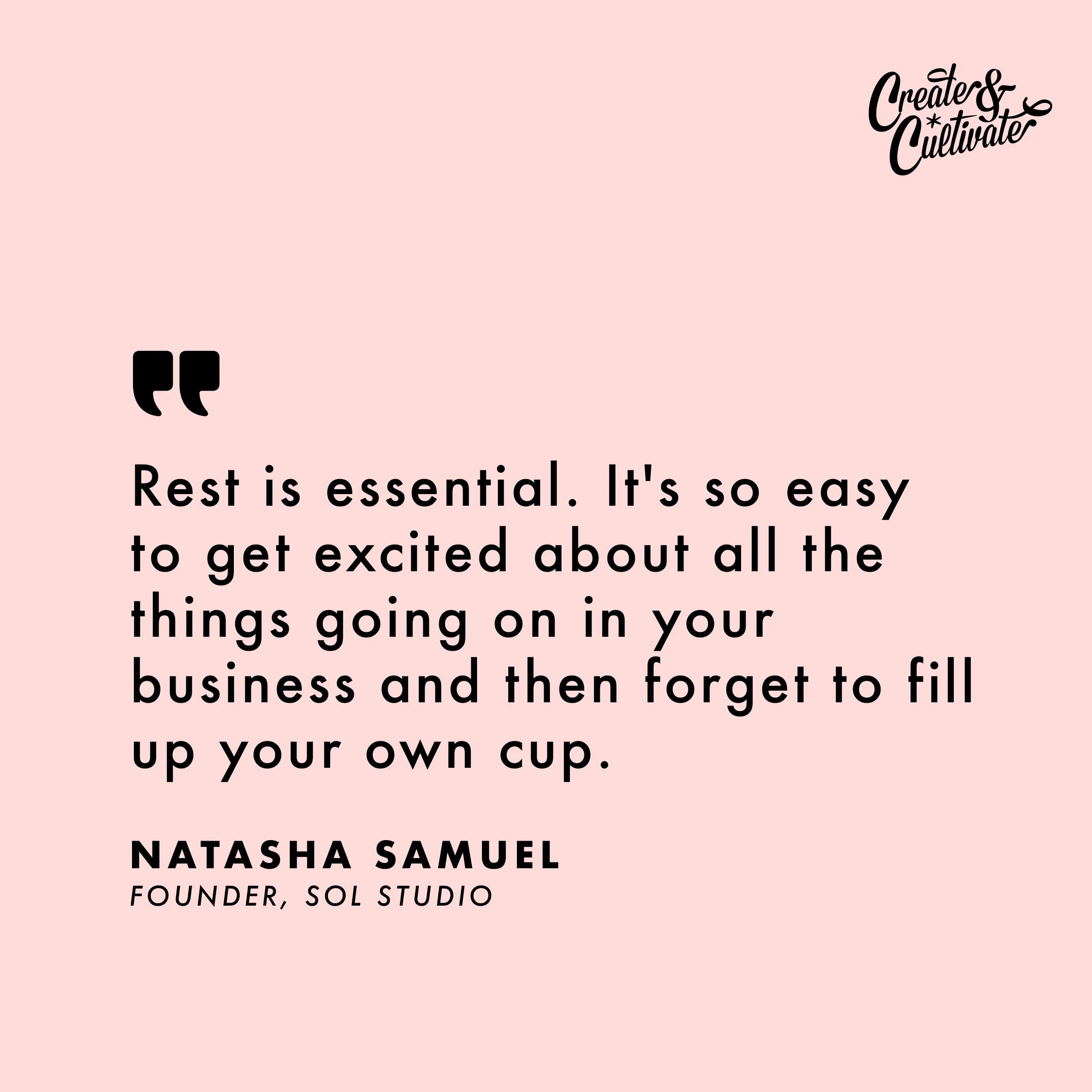
On the research before launch…
The main research I did as an experienced college student (who had never considered starting a business) actually started inside Facebook Group communities. Inside these groups, I would learn from other people’s questions and see what other social media managers were doing. Not only did I make connections in those groups that would eventually become clients, but I learned from the “market research” I observed in the group. It was a great way to understand what my ideal clients wanted while also planning ahead to avoid the mistakes some entrepreneurs were facing.
On self-funding…
I didn’t save any money ahead of time since I was still supporting myself off financial aid and was abruptly let go from my part-time job which prompted me to start Sol Studio sooner than I thought. On one side of the spectrum, I was glad I started when I did. On the other side of that spectrum, I do wish that I had at least a few months of expenses saved up so I wasn't as stressed to take on work that I didn't really enjoy just to make ends meet. I had to make a major sacrifice to move back home six months into my business. I knew I either had to get a part-time job or make other sacrifices to ensure I was building a business that was actually in line with my goals and not just a freelancing business that made ends meet.
On the biggest money mistakes…
Not separating my money earlier. Because of this, I didn't really know how much money I was making or how much money I really should be setting aside for taxes which meant that my first tax season was a low blow financially. I always tell new entrepreneurs the first thing you should do is separate your accounts and be sure that you have a tax accountant on your team who’s handling the finances of your business correctly.
Another tip is to stick to your packages and pricing. In the first few months of my business, I was just excited to be making money from my passion. But that led me to take on work I wasn't passionate about which burnt me out. It's important that you take the time to map out what your hourly rate is to ensure that your package reflects that and stick to it. Even if you don't have a ton of experience and you were young like me, you deserve to be paid enough to support yourself, set aside for taxes, and invest back into your business.
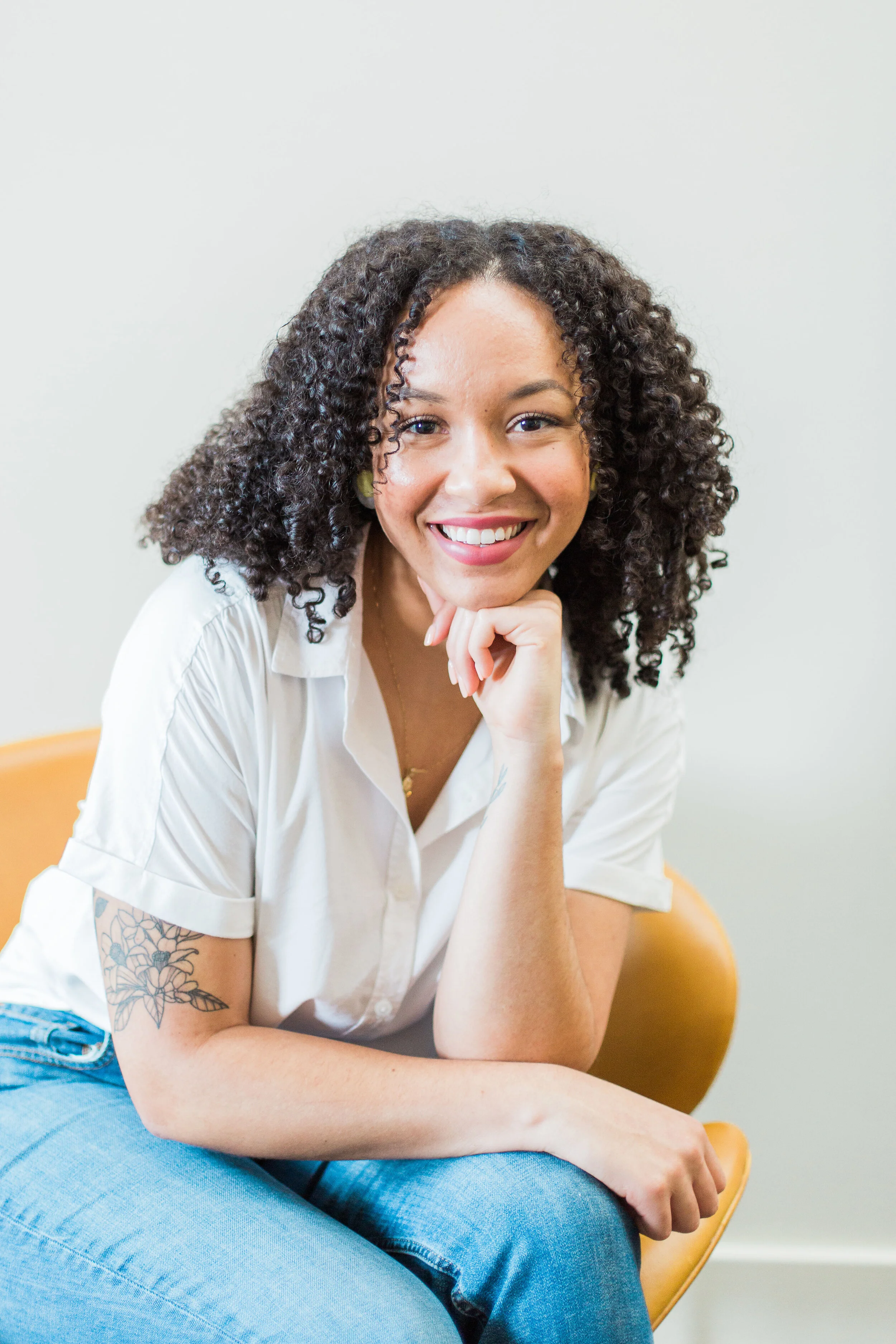
On diving in, head first…
I drove right into building my business after my last long-term internship ended. I didn't have the time to save up or to make a business plan. In a lot of ways, I'm grateful that I didn't have to worry about leaving a job or anything that distracted me from building my business. Since I didn't really have much to lose and I was still early in my career, I knew it was worth a try which really helped me be scrappy during those first few months of the business.
I highly recommend taking the time to map out a savings plan for an emergency fund for those months where you might only be investing what you make back into your business (which is most likely going to be the first full year of business). This is why I had to make a sacrifice to move back home to lower my expenses. I knew that getting a part-time job was just going to distract my energy from building my business and I'm grateful I made that decision. But I also feel like if you're fortunate to have a nine-to-five that can fund your business then that's a great option.
I put a lot of pressure on myself early on to hustle as hard as I could to make ends meet. This led to a lot of burnout early on in my business. If I had been charging enough or had money saved up ahead of time then I could have avoided that.
On how much she paid herself…
Early on, because I didn't separate my accounts, I literally invested whatever I didn't need for my basic needs back into my business. I definitely don't recommend doing this and now I actually do set aside enough to pay myself each month.
On hiring a team…
I have a team of four right now which I've had for about a year. The hiring process has been simpler than I thought it would be. If I couldn't imagine messaging or talking to that person on a regular basis, I knew it wasn't going to be a good fit long-term. My biggest advice for outsourcing is to start with a role that you know will have some type of result or return to your business directly. For example, I knew there's no way I would have started my podcast without investing in a Podcast manager that was going to help me support the show. That's now become such a big part of my brand which made it 100% worth that investment even though it was the biggest retainer I'd ever supported.
During the hiring process, I also realized how important it is to stay organized as a business owner on the back end and track your processes. The more you communicate with your team, the better result you're going to get. And there's going to be a lot of learning. They just can't read your mind overnight. So be patient and also practice your communication skills with them.
On hiring an accountant…
As someone who was an anxious mess just thinking about managing my finances, hiring an accountant and a bookkeeper were two of the best decisions I ever made in my business. Not only do they help me review my expenses and make sure everything was allocated properly, I'm able to be stress-free during tax season knowing that I've already saved the right amount and that everything is where it should be in my books. I use Wave for all my invoicing and for my bookkeeping and I love that it's an all-in-one tool that's easy to use for myself and for my clients.
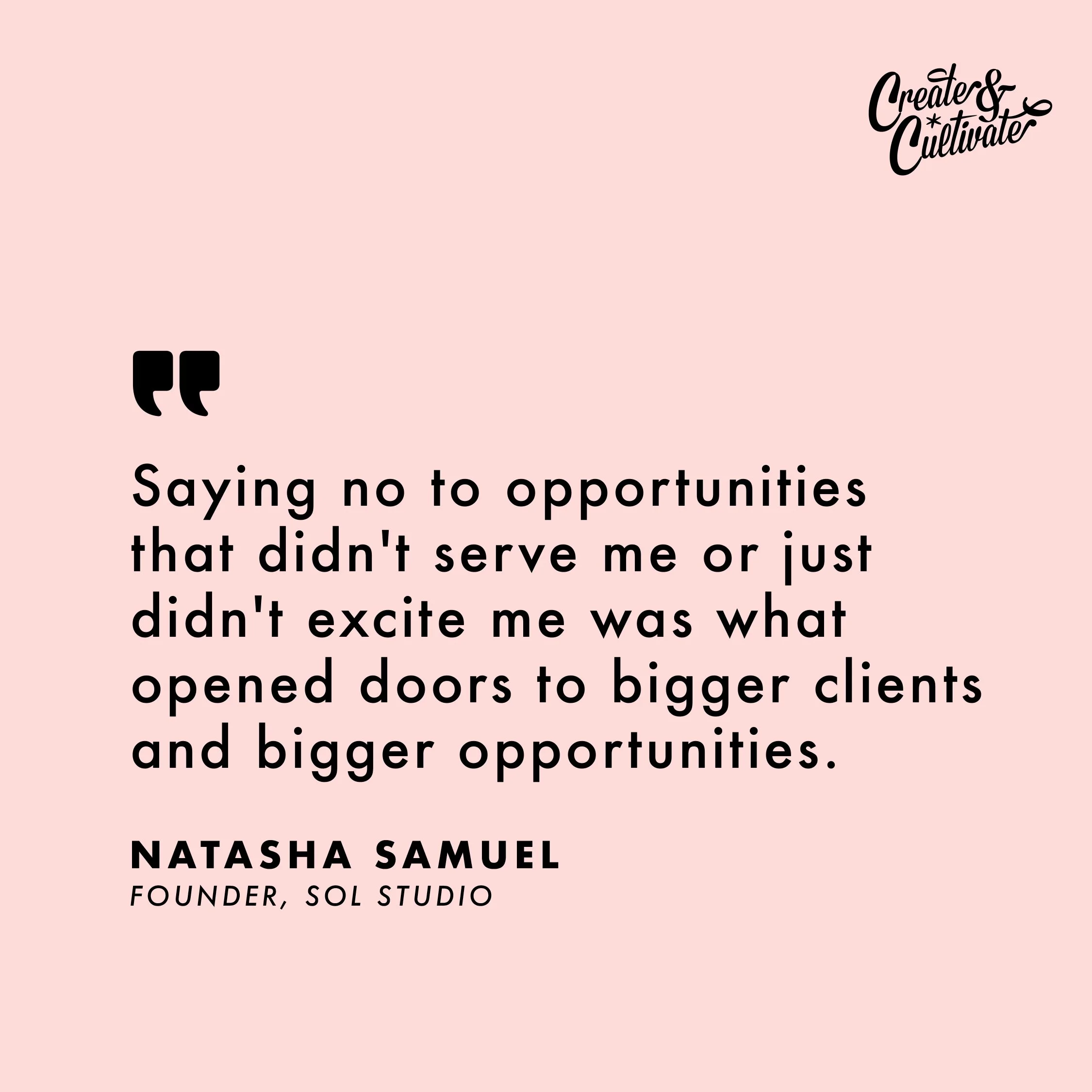
On the biggest learning curve…
Realizing that rest is essential. It's so easy to get excited about all the things going on in your business and then forget to fill up your own cup. Until I realized that I had adrenal fatigue, I wasn't prioritizing my rest and personal boundaries between my business. Prioritizing rest has been the biggest difference-maker to ensure that I'm pouring into my students and my clients well and not running myself to the point of burnout.
On having mentors…
The woman that inspired my business during my first internship became my mentor as I took on entrepreneurship. She was so incredibly helpful with cheering me on, answering any of my questions, and is still a resource for me to this day.
I waited until I knew I needed a business coach to invest. I think business coaches can be hyped up in the online space. I wanted to make sure I was choosing the right person who was actually a few years ahead of where I eventually wanted to be. Simply by investing in myself, I have seen my biggest months of growth and change just by having a new pair of eyes and a new perspective in my business.
I highly recommend investing in a business coach only when you're ready financially and only when you know you found the right person who also speaks your language.
On marketing and brand awareness…
Since Instagram is what I do for my business, it's been a huge part of how I market my business. My Instagram grid and page is essentially what attracts clients to my work or entices students to invest in my courses. My Instagram account has attracted speaking engagements, help me book clients, and reach major launch goals for my digital products. I use my Instagram account along with my email marketing and podcast to build my brand and markets my audience.
One of the first additions to my team was actually a graphic designer who really helped me get more creative when it came to my Instagram content while also taking some of it off my plate—I manage so many Instagram accounts for my clients. I found that for me the biggest thing is to build a community that I serve well through educational content but also being myself and letting my personality shine.
On the one thing she didn’t do in the setup process…
One of the tools I wish I would have been listed even sooner is a Customer Relationship Management (CRM) platform for my clients. I was so scrappy by using a ton of different free tools for managing the onboarding and offboarding client process. But little did I know, I was wasting so much of my time juggling between different tools. Investing in a tool like Dubsado has helped me streamline my client management, while also ensuring they're getting a better experience as a Sol Studio client. I think it's really important to be smart with what you invest in early on, this is one of the first tools I should have invested in sooner.
On business advice for new entrepreneurs…
Stay in your own lane. Make sure you're not consuming too much of people that are in your own industry. It can be great to get inspired and to learn from others, but be sure that you're making business decisions that feel good to you. You can do any marketing technique, funnel idea, or products the way that feels good for your brand.
Just because it works for a big-name marketing guru, doesn't mean that you have to use it to be successful in business, too. I actually mute a lot of other social media manager and educator accounts. Not because I don't love them, but because I like to stay true to my brand voice and be sure that I'm not being influenced to do what everyone else is doing.
On her #1 piece of financial advice…
Make sure that you have emergency funds for your personal and your business expenses, too. As your business grows and scales, you want to make sure that you can support yourself and your monthly business expenses if anything ever happens.
On advice she’d give herself…
It's okay to say no. It's a lesson that I learned early on, but saying no to opportunities that didn't serve me or just didn't excite me was what opened doors to bigger clients and bigger opportunities. As an early business owner, it's so easy to want to say yes to everything that comes your way. But when you say yes to something that's not a good fit, you're not making space for a better opportunity in the future.
MORE FROM THE BLOG

Want to Write? Here Are 5 Prompts to Help You Tell Your Story
Time to dig in a reap the rewards of writing.

Photo: Christina Jones Photography
Writing is a lot like gardening. When we’re willing to get our hands dirty, the blank page becomes a space to cultivate and sustain life. It’s a little plot for growing seeds that, when exposed to just the right slant of sunlight, blossom into nourishing fruit.
But as any gardener can attest, there’s an art, a cadence to growing green things: A season for uprooting, and another for tilling. Next, a time for waiting while the elements work their magic. Then, finally, the harvest. The same rhythm rings true in growing ourselves. Thankfully, unlike actual gardening, storytelling requires no green thumb. You don’t even have to identify as a writer to reap the benefits of writing—you just have to do the work.
Reflective journaling engages us with ourselves. It cultivates self-awareness, exposing what’s beneath the surface so we can uproot what doesn’t belong and tend to what does, so we can find the stories we’re living and, if needed, write better ones. The process may get messy, but isn’t that the nature of all world-changing work?
Let’s dig in with a few personal growth journal prompts.
1. Write a mission statement for your life.
Theologian Frederick Buechner said, “Vocation is where our deep gladness meets the world’s great need.” What makes your soul glad? What needs do you notice around you? Think about how the two overlap. Can you connect the two purposefully to serve your loved ones, neighborhood, or city? Use what you come up with to craft a mission statement, and use it as a filter for decision making.
2. The grass isn’t greener.
What’s the thing in your life you idealize? That milestone you look toward with anticipation that, when you achieve it, you’ll finally “arrive?” Maybe it’s a relationship or a job. Whatever it is, flip the perspective. What are the difficulties that might add to your life? Write yourself a note from the other side of the fence, the thing you think you have to reach before you can live fully. Be honest about the struggles that might accompany this milestone, and remind your retrospective self to treasure where you are now.
3. Root and fruit.
Every action is tied to a belief, like the fruit that blossoms from an unseen root beneath the ground. List a few fruits you see in your life right now—behaviors or emotions on the surface. Then, go to the source. Search for the roots beneath those emotions or actions. Draw it out if you need to. How can you uproot the beliefs causing the behaviors, and what new belief do you want to replace them with?
4. Love yourself.
Write down one area of your life you’re insecure about—the thing you hide from others for fear of being judged or misunderstood. Then, write a letter to the ones you’re worried might judge you, telling them what they’re missing out on when they zero in on your perceived flaws. For example, I’ve felt shame about my body, but it also gave birth to and sustained my son. Bring what you’ve hidden into the light of a new perspective.
5. If your life was a letter, what would it say?
Everything we do and say creates someone else’s reality. For instance, when I live under a cloud of anxiety, I steal the hope you’ve labored hard to live in. When I cringe because of the way the fabric on my dress hits my stomach, I say your body might not be good enough either. What message are you sending to other people with how you live? How can you change the story?
An original version of this article appeared on Darling Magazine written by Ashley Abramson.
Love this story? Pin the below graphic to your Pinterest board.

This story was originally published on June 28, 2016, and has since been updated.
MORE ON THE BLOG

How to Meet Anyone With This 15 Step Strategy
Meeting the biggest of fish is possible.

Photo: Andrew Neel from Pexels
If you've ever wondered how to get out of someone's inbox and into their (virtual) office, then heed the advice from Gillian Zoe Segal’s book, Getting There: A Book of Mentors. Trust us.
From Rachel Zoe to Sara Blakely and even Warren Buffet are just some of the entrepreneurs Gillian features in her book who all dish their top advice, tips, and strategies for building a successful career.
Ahead, Gillian shares her 15 tips for meeting anyone you want using creative networking techniques and the best part is, you can totally do it too. Read on…
1. Understand the lay of the land.
Most luminaries are extremely busy. They receive multiple requests every day for interviews, speaking engagements, new business opportunities, charity functions, you name it, not to mention the obligations they have with their careers, families, and personal lives. Understandably, there are simply not enough hours in the day for them to say yes to everything. And they definitely don’t.
If you are not a big name or don’t have something major to offer, accept that you will not be at the top of anyone’s priority list—no matter how important your request might seem to you.
2. Toss your ego out the window.
You will be ignored and rejected a lot, and you can’t take it personally or allow it to depress or discourage you.
3. Know that you can lead a horse to water, but the biggest hurdle is making sure the horse knows that the water is in front of its face.
You must get your request noticed by the decision-maker.
4. If you have any connection at all, use it.
Your connection doesn’t need to be a big one.
Here’s how I contacted Leslie Moonves, President, and CEO of CBS: My best friend’s husband had a friend who used to work at CBS and was willing to put me in touch with Moonves’s assistant. The assistant, who works closely with him every day, made sure he saw my request.
If you don’t have a connection (and most often I didn’t), here are some ways to get your request noticed:
5. Make yourself as human as possible.
The less human you appear, the easier it is for someone to reject you. Asking in person is the best method; that way it’s obvious you’re human. (It’s a lot easier to say no to a faceless email or tweet.) If you can figure out a way to run into your target in a not stalkerish way, try to do so—for example at a party or event.
But don’t be annoying or take up too much of your target’s time. I usually introduce myself, give a one or two-sentence pitch, and then ask whom I should contact with more details. The luminary usually gives me the name of a point person; then I contact that person ASAP.
6. If you can’t ask in person—and most times you can’t, especially now—try to connect to the person you can reach (your target’s publicist, assistant, etc.).
Always use the name of the person you are corresponding with since it makes for a more personal connection. If you don’t have that person’s name, ask for it. An email to a specific person instead of one addressed “to whom it may concern” is a bit harder for the recipient to ignore.
7. Never accept “no” from someone who can’t give you a “yes.”
My friend (Steve Cohen!) told me this early on, and it really stuck with me. The point is, don’t let a “no” from one employee deter you. If the front door is locked, try the back door; if the back door is locked, try the side door; if the side door is locked, try crawling in a window. If you can’t do that, wait a while then try the front door again. Someone might answer this time!
What does this front door/side door/window bit really mean? I am talking about ways in—avenues—like a publicist, an agent, an employee, someone who once did business with the person, a friend of a friend of a friend….
I rarely dealt with just one employee and one door. When someone ignored me repeatedly or rejected me, I switched to someone else and acted as nothing had ever happened—I never mentioned I was previously ignored or rejected. (A lot of times your target never even saw your request—an employee rejected it instead.)
8. Take responses literally.
If you don’t get a definitive “no” from someone, try again. For example, if you get an, “Unfortunately, he can’t participate in that now,” take “now” literally and follow up later.
9. Never be anything but friendly and pleasant to deal with.
No one reacts well to “attitude” from strangers. That kind of behavior will only get you ignored even more — or axed for good. (It may also earn you a bad reputation.)
If you do get what you consider to be a final rejection, lose graciously and thank the person for considering your request.
10. Never rub anyone’s nose in the fact that they’re ignoring you.
For example, don’t complain that you called five times already. If you send a follow-up email to someone that has been ignoring you, don’t forward the old email. Send a new email (or send your prior email) as it has never been sent before.
This allows your contact to save face if they do choose to respond—and lets that person respond without having to make any excuses for why they previously ignored you.
11. Keep your correspondence simple and clear.
Get to your point quickly. Remember how busy everyone is; no one has time to sift through paragraphs to figure out what your email is about.
12. Once you get a response from someone, grab hold of that person, and don’t let go.
I learned this lesson in the summer of 1993 when I worked as a real estate broker. When clients decided they wanted to rent an apartment I had just shown them, I was instructed not to let them out of my sight until they put down a deposit. Why? Simple: if I let them walk away and “get back to me tomorrow,” they might reconsider their decision. So I literally accompanied my clients to the bank while they took out cash for their deposit.
The same is true with networking. If someone responds to your request, act fast, and respond immediately. You need to get the ball rolling before they forget about you and move on to something else.
13. Take whatever you can get as soon as you can get it.
That means accepting the very first day the person is available—regardless of your schedule.
14. Get your foot in the door any way you can.
One of the most challenging Getting There subjects for me to land was the architect Frank Gehry. I sent a couple of blind requests to the email address listed on his company’s website. The good news is that I was not totally ignored; the bad news is that I was rejected both times.
A few months later I found out my friend’s father’s new girlfriend (read that relationship twice and realize any connection can be a good connection) knew Frank and was willing to pass along my request. She sent him my request twice and was totally ignored both times!
A few months later I figured I would try again (after all, emails are free, and ya never know!), so I sent yet another email to his company’s email address and a miracle happened—I got a response! I can only assume a new assistant was on duty that day.
I immediately emailed her back, got her name, and asked if I could send her some samples of my work to show Gehry. Again, strike while the iron is hot: I was away at the time so I had my cat sitter overnight the material to her.
I called the office to follow up and make sure that she got it; remember, speaking on the phone makes the connection more personal. She showed my material to Gehry, he said yes, and we set up an appointment!
But that’s not the end of the story. Gehry then proceeded to cancel on me for a full year (I was that low on his priority list). During that time I bounced between 4 of his assistants (it seemed like every time I called to follow up a new person needed to be filled in on who I was and what Gehry had agreed to), but I eventually got some time with him and he is now in Getting There!
By the way: when I finally met with Gehry he had absolutely no idea I had ever been hounding him or his office. (In fact, none of my subjects did.)
15. Persistence pays off.
If I learned one lesson from the people who I interviewed for Getting There it is that determination and resilience eventually pay off. Of all my subjects, I think that Ian Schrager sums up this sentiment best in his Getting Thereessay. He says, “In the end, there’s so little that separates people. Those who want success the most and are relentless about pursuing it are the ones who get it.”
Pursuing any goal is much easier if you are truly passionate about what you want; that’s what gives you the fuel to persevere. In my case, I really believed in the concept of my book and felt that readers would truly benefit from what my subjects could share. I also felt sure my subjects would be happy with the finished product; if I hadn’t felt that way it would have been extremely difficult to overcome all the rejection and keep approaching people over and over again.
LOVE THIS STORY? PIN IT!

The original version of this article appeared on Hey Mama. This post was originally published on June 25, 2017, and has since been updated.
MORE FROM THE BLOG