
The Three Steps To Overcoming Creative Burnout
It isn't so much about a lack of creative ideas as it is an overabundance of them.

Let's talk about the dreaded Writer's Block for a moment. Whether you're a freelance photographer, designer, or a writer (who falls into the traditional trap of the "Block" terminology), you're probably all too familiar with the notion of your idea bank running dry. How do you combat it? How do you tap back into the creative juices that got you started on this crazy, wild solo ride to begin with?
Often, it's a whole lot easier said than done, right? You expect more from yourself, and certainly the dozens of clients and brands knocking down your inbox's door expect your peak performance at a moment's notice (no matter how spread thin you are)—so why does it often feel like we're grasping at straws to make those daily creative moments feel truly alive?
In this modern day and age, creative entrepreneurs are feeling burn out harder, faster, and more frequently than comparable counterparts from ten years back. Blogs were only just taking shape back then, plus news and general information was attained at a speed that we could all follow along with. But now, with the advent and exponential growth of social media, it's alarmingly easy to give up on voicing creative ideas altogether because of how quickly it disappears into the masses (raise your hand if you've all but given up on Twitter because of the lightning fast, unceremonious burial of a thought!)
In this modern day and age, creative entrepreneurs are feeling burn out harder, faster.
Tweet this.
Writer's Block, then, isn't so much about a lack of creative ideas as it is an overabundance of them. I can't even begin to list all of the lightbulb moments and ideas I've had this month that were quickly dashed because so-and-so had already done it, or because the trend or motif was already old news. While we were in school, this idea trumping might have cost us a letter grade, but now it costs us a paycheck.
Contemporary creatives are being asked to not only leap ahead of the times and trends, but to be one step ahead of their cohorts, too. To quote myself from my last article: I'm exhausted just thinking about it.
The good news is that, like all things, you can adapt to these changes and you can triumph over your Writer's Block, however it manifests itself in your daily routine as a freelancer. But you have to think—get this—creatively.
Sure, I could spout off a list of ways to jump start this ideation, but it's just not going to be enough. Frankly, chasing the trends in the hopes that you'll miraculously be able to outwit one of your peers with an idea first (said with the utmost respect for my brilliant fellow bloggers, by the way) will only set you up for disaster. Instead, you have to think outside the box—like miles and miles outside of the box.
Writer's Block isn't so much about a lack of creative ideas as it is an overabundance of them.
Tweet this.
MAKE NEW FREELANCE FRIENDS
Start by limiting your check-ins with your peers—at least your professional check-ins. Make social calls and continue to personally build one another up, but the competitive instinct inevitably weasels its way in if you start talking about business ideas.
Instead, consider making friends outside of your industry and add their links to your daily blog roll. If you're a writer, follow along with a successful graphic designer, or if you're a photographer, get your creative inspiration from a writer who puts the same type of life moments into words rather than .JPEGs. Getting a truly fresh perspective from someone who's not even in your box is the first step toward killing Writer's Block.
Consider making friends outside of your industry and add their links to your daily blog roll.
CREATE THE NEXT TREND
Secondly, don't fixate on how you can cash in on the trends. Instead, brainstorm ways to create the next trend. Again, easier said than done, but it is possible. Intentionally ignore Pinterest for a week and travel, talk to new people, shop at a store you don't usually stop into. Slowly but surely, those trend-formulated blinders will slide off and you'll spot something new to build on.
Don't fixate on how you can cash in on the trends.
Tweet this.
TRY, TRY AGAIN
Finally—and this may be the hardest of all—dump those old ideas and run. I sidle right up to Writer's Block for a long, hard cuddle every time one of my ideas falls flat. I fixate and dredge in the disappointment for days and, inevitably, that negative place is where all of my good ideas go to die. The effect is cyclical, repetitive, and heartbreaking. Instead, I'm working to combat the process of going from idea-to-disappointment-to-fixation-to-rebuild to idea-to-discard-to-idea-to-success.
I'm working to combat the process of going from idea-to-disappointment-to-fixation-to-rebuild to idea-to-discard-to-idea-to-success.
As a freelancer and the hub of your entire business, disappointment is inevitable, but wallowing in it doesn't have to be. You've definitely heard this before, but it bears repeating: oftentimes, the very best ideas are born out of failure and the ability to promptly pick yourself back up again.
The best ideas are born out of failure and the ability to promptly pick yourself back up again.
Tweet this.
- - -
Ultimately, the Writer's Block plight has a new face in 2015, and it will have a new one come 2016 (if it's even able to wait that long). But we're freelancers for a reason, and that is because our creativity and our bright ideas are worth tapping into and sharing. Don't give up and don't give in—we'll all make it to the other side with brilliant, original, worthy-of-celebration ideas to show for it.
An original version of this article appeared on Career Contessa. Written by Carrie Waller.

The 4 Rs You Need to Recover From a Mistake
The logistic ninjas of Grow Marketing break it down.

Photo Credit: Musings of a Curvy Lady
By: Cassie Hughes & Gabrey Means, Grow Marketing
Anyone who has dared greatly, innovated or made things better has also known failure. When we first set out to create our own experiential agency, we may not have known what we were doing, but we were crystal clear on what we wanted. Neither of us came from an agency background but we knew what was important from the client’s perspective and that we had something different to offer than what we were seeing in the marketplace. We knew there would be a lot of mistakes along the way and rather than shying away, we faced them head on.
"Anyone who has dared greatly, innovated or made things better has also known failure."
Tweet this.
Everyone makes mistakes. We’re only human. But how you learn and grow from them can help you better prepare for challenges ahead. Whether in your personal or professional life, here are a few tips to help you bounce back from a mistake and walk away stronger and smarter.
RECOGNIZE
Early in the life of our agency we took on a project where there were red flags we didn’t pay attention to because we were so eager to prove ourselves as a new entity, even though we had a long track record of success in our careers. It was a huge national brand in a category we were dying to break into so while our intuitions were screaming no, our egos kept saying yes. The client was unrealistic but we thought we could turn her around. We couldn’t have been more wrong. In addition to grinding us on every budget and continually asking for new ideas (free of charge) eventually she actually became verbally abusive. We got through the project and delivered but at a cost to ourselves and our team, who were left feeling deflated, unappreciated and exhausted.
RECORD
We are big believers in intention and writing things down. When we make mistakes we process them by writing down a list of what we learned and would do differently the next time. This was crucial to our process of avoiding bad project/client matches in the future. While it may sound intimidating to see your mistake recorded in black and white, it's actually quite liberating. When possible, sharing your list with a friend or partner who can keep you from being too hard or easy on yourself helps to keep the process honest and, therefore, most useful.
REPAIR
If you want to create an environment where people are inspired to be their best, they have to feel safe to fail. If they don’t, they’ll engage in all kinds of unproductive behaviors that only compound the mistake, from covering up to placing blame on others. Meanwhile, time ticks away and the impacts are increased. Encouraging people to own their mistake and take an active part in the solution means resolution comes quicker and the individual is left with the empowered feeling of having helped to repair it versus the deflation of screwing up, which only makes people feel and think smaller. To repair the damage to our team from the verbally abusive client, we owned up to letting our eagerness override our instinct and shared how we would avoid such situations in the future.
"If you want to create an environment where people are inspired to be their best, they have to feel safe to fail."
Tweet this.
RESOLVE
One of the most important parts of recovering from a mistake is knowing when to take a deep breath and let it go. Continually reliving mistakes is unproductive and paralyzing. Once you have done the work to repair the mistake and can clearly articulate your learnings, you should trust you have learned what that mistake has to teach you, freeing you to move on.
The mindset of recovery and resolution is an important one to build. It allows people to continue to want to take on new challenges and find new ways of doing things-- which, are really powerful assets. A culture that rewards creativity and trying new things – without punishing the misses – fosters a team of savvy problem-solvers who can think on their feet and are energized, instead of paralyzed, by new challenges.
More from our blog:

What Do Your Jewelry Choices Say About You As an Employee?
You don't need bling to be a boss.
Ever wonder what your jewelry choices say about you as an employee? Whether you’re slaying Keynote proposals in a statement necklace or you’re a simple bangle kind of boss, we’re breaking down jewelry choices and work styles with Simon G. Jewelry.
There is a rapport between what you put on and how you go about your day.
THE STRAIGHT SHOOTER IN THE SIMPLE BANGLE

A simple bangle says you like to get into the office early and clear out your inbox ASAP. It’s a no-fuss approach to business and dressing that says, I bang that drum, but with a bangle that doesn’t get in the way.
With an arresting intertwined design of white and rose gold and white diamonds, you’re also a bit of a dreamer who takes chances by bending the rules a little bit. You’re not afraid to mix metals and you’re certainly not afraid of mixing it up in the conference room, stating your ideas with confidence; two-tone means you’ve got ideas in every hue.
THE GO-GETTER IN THE CLIMBER EARRINGS

Call it a hike, a journey, or a climb, you’re all about getting to the top. But as dedicated as you are about going after your dreams, you also make sure to reach down and to the side as you go.
These climber diamond earrings mean you’re a go-getter, you want to be noticed, and you make a statement with both your earrings and your handshake: firm and no-nonsense.
You know that not everything you do will be a success but that never stops you from trying.
You like talking strategy and growth with your team and you’re constantly brainstorming innovative ideas for expansion. In 18k white gold with floral pattern you’re classic but crafty and nothing will hold you back.
"You’re classic but crafty and nothing will hold you back."
Tweet this.
THE WORKER BEE IN THE SIMPLE DIAMOND PENDANT

You work out at 6am. Are in the office by 8:30, and you’ve corresponded with more people before noon than most people do in a day. You’re practical, fast, and you like jewelry that you don’t have to think about— but know is always looking stunning.
This is the kind of necklace you can wear morning, noon, and night. In part because you’re always heading from the office to work drinks!
You never have to take it off (and you often don’t). Don’t underestimate it’s simplicity for simpleness. This necklace works hard for you and you need something that works like you do: around-the-clock.
Like they say: you want something done, give it to a busy person.
THE OFFICE UNICORN IN THE RIGHT HAND RING

You are always there to jump in, take on a challenge head-on, and come up with ideas that benefit the whole team. If someone is out sick, you’re helping.
If a co-worker is hitting a wall with creative ideas, you’re staying behind to spitball. You’re a true right hand to everyone in the company and it’s an attitude that doesn’t go unnoticed. It has helped you advance your position in the past and will continue to do so.
This spiral ring is comfortable and resilient due to the design of tiny, almost unnoticeable joints in the solid 18k rose gold design. Which mirrors your personality precisely. The diamonds add a bit of sparkle— just like you add to the workplace.
More from our blog:

5 LinkedIn Hacks To Land You A Job Interview
You have your resume up to par, but how are you maximizing your LinkedIn for your job hunt?

Original image by @lisadengler
LinkedIn. A bit of a beast but also the best way forward when you're on the job hunt. Here are some hacks most of the other candidates aren't using.
1. USE THE "SEE WHO'S VIEWED YOUR PROFILE" TOOL TO YOUR ADVANTAGE
We know. It's embarrassing. But you can use that creepy tracking system to get your name on your interviewer or future manager’s radar. When you apply for a job, search for your possible interviewer, future boss, or recruiter's LinkedIn profile. (Make sure your profile viewing settings are set to your name and headline before you do this, otherwise it won’t work.) When your name pops up on their “See Who’s Viewed Your Profile” section and then again in the resume pile, you increase the chance that they'll take a second look because they’ve seen your name before. During my job search, I looked up the recruiter, the HR manager, and my potential superiors. Two of them returned the profile view and a week later I got an email for an interview!
"When you apply for a job, search for your possible interviewer, future boss, or recruiter's LinkedIn profile."
Tweet this.
2. ACTUALLY UPDATE AND POST TO YOUR PROFILE
It’s great and all when that potential interviewer checks out your profile, but if you haven’t updated your experience or changed your profile photo to something more professional, it's not going to matter. Though this isn’t a totally “unknown hack,” it’s definitely something applicants frequently miss on their to-do list. Before applying, update your experience, but leave out any unnecessary jobs—your high school babysitting gig probably isn’t as relevant as some of your more recent experience. {click to tweet} When I started my job search, I had narrowed down what I wanted to do so I removed some of my irrelevant experience—like my bartending and student desk jobs—since they didn’t apply to the jobs I was after.
"Before applying, update your experience on LinkedIn, but leave out any unnecessary jobs."
Tweet this.
3. REWRITE YOUR HEADLINE
“Student at the University of Something” definitely isn’t as appealing as “Digital Communication and Millennial Marketing Specialist.” Make yourself sound intriguing, hireable, and knowledgeable. From my experience, standing out as a student or recent grad can either help or hurt you, so if you leave that out of your initial impression via your headline, you have a better chance of showing off your skills and experience without being prejudged based on your graduation date. (Side note: don’t ever lie about your graduation date.) I chose Media Communication Professional since it rounded up my experience in communication and digital media while also proving that I knew what I was doing without overstating my experience.
4. JOIN GROUPS AND CONNECT WITH RECRUITERS
The best way to connect with other industry professionals and recruiters is to join relevant groups—and actually participate in them. There are hundreds of groups for every industry and even general groups designed for meeting recruiters (see: The Recruiter.com Network). I’ve joined countless groups related to my industry, my interests, and even alumni groups from companies and schools I’ve been involved with not only for networking, but also for research and educational purposes. A lot of people post relevant industry content (of their own and shared) that helps me continue my education and networking post-job search. Go a step further by being one of the people posting content. Position yourself as an industry professional right away and watch those future recruiters come crawling. {click to tweet}
"Position yourself as an industry professional right away and watch those future recruiters come crawling."
Tweet this.
5. ASK FOR RECOMMENDATIONS
You can't just sit around waiting for things to come your way. Don’t get me wrong, it can feel awkward to ask someone to post a ton of nice things about you, but it’s going to get that recruiter to call you in for an interview. When they see a variety of fantastic recommendations from your coworkers and superiors, they’re going to know you’re a superstar and offer you an interview asap. To get around that awkwardness, pay attention to the way you word your request and who you ask! Make sure you only ask someone who has actually worked closely with you and can vouch for your skills. I asked my immediate supervisor and simply said that I valued her opinion and that I would be honored to have her recommendation. It’s that simple! Whatever you do, don’t use the default message provided by LinkedIn—it’s impersonal and comes off quite rude! If your recommender is going to take the time to write something for you, you should take the time to ask kindly.
An original version of this article appeared on Career Contessa. Written by Laura Bauman
More from our blog:






Free Download: Make Your Resume Land You The Job Of Your Dreams
Time to spruce up your resume with Above The Glass' tips.

You are finally ready to make the leap for your next career move, but can you remember the last time that you updated your resume? Does it still have that summer job that you took in your junior year of high school?
If so, it's time to dust off the cobwebs and make sure that your content, language, and presentation are all in line to make an impression. We asked our friends at Above the Glass what business owners look for in candidates, and what makes them stand out.
Enter your name and email below to get access to Above The Glass' Resume Checklist, and get started on having your resume land you the job of your dreams!

How to Use Public Speaking to Build Your Brand
Is this thing on?

Have you ever looked at speakers on a stage and thought – how do I get there? How can I become confident, clear on my message, have the courage to stand in front of so many people and share what I love and what I know?
Well you’re not alone. As we move into the era of what I like to call the ‘Power Personal Brand’ where we follow people who have something to say and who say it so well, the personal brand has become the visual connector that we have to people and content that we love. In this digital age, having something to say and saying it well can be the difference between mega success and getting lost in the crowd.
Now when I talk about public speaking and presenting I think of it as speaking to a group from 2 people to 200,000 people. It doesn’t really matter the size, your ability to impact and connect with 1 person is just as important as the masses.
So if owning the stage is something that you would love to do here are some of my tips on presenting with power and purpose and getting the gigs that you want.
BE CLEAR ON YOUR MESSAGE
One: decide what your message is. This may sound simple, but what will you talk about exactly? If you can decide on 1 – 4 topics that you cover then it makes easy for event managers and hosts to know if you’re right for their business, event, and audience. If you’re able to give a clear outline then it makes for an easy decision. I’m sure that you already have a number of topics that you focus on in your business, so go with those. Consistency of message across all your platforms is what builds brands, so bang that drum!
"Consistency of message across all your platforms is what builds brands, so bang that drum!"
Tweet this.
SHOUT IT OUT
If you want to be a speaker then let people know by creating a speakers page. Creating a speakers page means that it’s easy for those who come to your website or blog to see that you’re a speaker. They can see what you talk about, where you’ve spoken before, and they can see what others have said about their experience with you as a speaker.
TESTIMONIALS
If you’ve spoken before and have testimonials then those are also a great thing to provide event organizers. Knowing that you’re an engaging speaker whose personality is congruous to my brand is really important to me as well as an event organizer. My brand personality is bold, fun, and focused on educational content, so my speakers need to be like that as well. If you’re able to show the type of content you share and the way in which you share it then you’ll appeal to the right event organizers.
GETTING STARTED & FINDING GIGS
So where to start? There are a couple of things you can do to get started. One of the easiest things to do is to run your own event. This means that you could have from 5-50 people, whatever works for you and test your message and talk it out. This could be free or charged. By doing this you’ll get a feel for what works for you when you’re speaking and what doesn’t. It may also mean that you’re able to get testimonials for your speaker’s page.
CONNECT WITH EVENT ORGANIZERS
If running an event sends you into cold sweats then it’s time to connect with others who run events and see if you’re the right type of speaker for them. I’ve spoken in paid and unpaid workshops and events for other women who run networking groups and events and that’s worked well for me. As an international conference speaker I also connect with those who run large scale conferences to ensure that I build a relationship with them for future events.
GOOGLE IT!
I secured a speaking event this year by Googling – ‘speaking opportunities in Melbourne’ and applying when I saw one that I thought was a good fit for me. Not only did I make some awesome connects at this event but I also gained a number of new clients. The event was unpaid but is still benefiting my business today.
PROMOTE YOURSELF
I saw a video on Facebook recently of someone advertising that they are open to speaking at events. It shared some information on where they had spoken before and what they speak about. Now you may not want to go that far (or maybe you do) but like anything in your business, if you want to build up your reputation in a certain area then you need to be out there sharing it. Social proof is always a great way to do that. When I get the professional photos back from places that I’ve spoken then I put them up on my social channels as well as my website to build up the social proof of what I’ve done. I always connect it with a testimonial where I can so that there is a visual as well as praise for a job well done.
HAVE A GOAL
With any speaking gig I do, I have a clear goal. The goal is convey a specific message, to connect with certain people, to entertain, educate or inspire. Know what your goal is and ensure that you set yourself up to be successful in achieving that goal. I’ve worked with women who have no idea what they want to get out of the experience and therefore miss an opportunity.
Speaking is one of the quickest ways to reach a large audience in a single instant, so if it’s something you’re looking to do, I would say go for it.
I’d love to know - what’s your biggest fear, worry or barrier to speaking?
An original version of this article appeared on Blog Society.
Suzanne Chadwick is a Business & Brand strategy coach and the CEO of The Connection Exchange providing coaching, training & events for women in business and supporting them to build their business, brand and bottom line. As an international conference speaker and trainer, Suzanne also coaches women to create the ‘Power Personal Brand’ through public speaking and Owning the Stage. You can find and connect with Suzanne on Facebook and Twitter.
More from our blog:

The Origins of Work/Life Balance & How To Achieve It
It's not a myth, and it can be achieved with 4 small steps.

Work/life balance is the unicorn in every bedroom, kitchen, and desk of the modern working woman.
It is a term used indiscriminately that powerfully affects how we approach day-to-day tasks. How do we find it? Where is it hiding? Is it possibly beneath this desk I want to nap under? (No, it’s not there.)
Most Millennial women report that such a concept is a myth. Or at best, the out-of-key piano soundtrack to our lives that we can’t figure out how to tune. But work/life balance is no whisper campaign that effectively targeted and exploited a vulnerability-- even if it feels as such at times.
We all have the desire to buy into this concept as possible and the want to improve our quality of life. It makes sense that this groundhog day concept keeps appearing.
So how do we reconcile our relationship to work/life balance? How do we make quantitative decisions about what is right for us? How do we, as working women, scale balance?
Our friends at Origins created a new post-workout products that help us refresh after the gym and continue that zen a little longer, and it inspired us to nail down 4 keys ways that help us approach the elusive work/life balance.
REMOVE ONE APP RIGHT NOW!
In an almost astonishing way technology has changed the way we work. But it’s a double-edged sword because we’ve come to rely on said tech in ways that hinder our ability to balance.
If you know that the phone is an issue in your life stop relying on apps to solve all problems. Learn to rely on yourself again.
“Learn to rely on yourself again.”
Tweet this.
Remove one app from your phone right now that you rely too heavily on. You know what it is. It’s disguised as convenience, but has made you all the more entrenched in the work crunch. I.e. Food delivery apps that have made it all the more simple to order lunch straight to our desks. Delete it and walk to lunch tomorrow.
UNBLUR THE LINES BETWEEN WORK AND HOME
One person’s approach should not be another’s. In fact balance is idiosyncratic. Create & Cultivate keynote Rachel Zoe said that when she’s at work, she’s present and when she’s with her kids, she’s present. Which means she’s not scrolling IG at the dinner table. There is separation in her life and it’s important to her well-being and productivity as an entrepreneur.
Create a routine that’s not about work.
INCORPORATE A WEEKLY WORKOUT INTO YOUR ROUTINE
Working out is one of the best motivators, confidence boosters and is proven to increase productivity. But while we often think about pre-workout-- which is often rushing from the office to a class-- and the benefits of the workout itself, there’s also a chance to slow down, and take that post workout high time for yourself. You don’t have to sprint from the gym home. Instead take a little extra “balance” time for yourself and try the following:
Post-sweat session use Origins Shower Off™ Exfoliating Body Wash, a refreshing post-workout scrub cleanser designed to refine and deeply purify the skin by removing perspiration and dirt. Likewise, Origins Warm Down™ Warming Lava scrub, a water-activated heating lava scrub addresses three key needs after a workout – it detoxifies and exfoliates skin, while also promoting relaxation for sore muscles. Activated in the shower, it warms up on contact to help comfort sore muscles, while volcanic ash deeply purifies skin by removing dirt, sweat and perspiration.
You should also take a moment to replenish the skin. An average person sweats the equivalent of two large sports bottles per hour during rigorous exercise. Which means your skin is losing moisture too. With Origins new Hit Refresh™ Cooling Moisturizer with Hawaiian Mineral Water, you’re instantly replenishes skin’s hydration post-workout.
These products leave skin smooth and refreshingly clean, while your brain and body feel balanced and calm.
WHEN YOU GET HOME POST-WORKOUT, PUT YOUR PHONE IN A DIFFERENT ROOM
Check your email and answer anything pressing on the subway ride or walk home. Or if you commute, answer before you leave the gym.
You can make the choice to not let your work cross the threshold with you. When you arrive at home, place your phone in a different room. It’s a simple spatial barrier that will help you break a habit that is detrimental in your quest for W/L. (I.e. checking your email or Insta every five seconds while you enjoy an end of day glass of wine or cup of tea.)
You should also put your phone in a different room when you finally hit the hay, that way you’re not checking your email or putting out fires FIRST thing in the morning.
Simple adjustments allow you to be proactive about your day, instead of reactive, and aid in your desire to find balance.
Simple adjustments allow you to be proactive about your day, instead of reactive, and aid in your desire to find balance.
Tweet this.
And remember: you get to day 500 of balance by starting with day one.
How to Write a Killer Grant Proposal for Small Business
There's no such thing as easy money.

(Credit: Laura Dee Photography)
Grant proposals are similar to business plans, include many of the same elements and have the same purpose: to get that money.
Most grants fall into three categories: federal, private, and corporate grants. There are no federal grants specifically for women, but there are private grants for women from foundations, private organizations, and businesses.
Grantmakers usually distribute funds through Request for Proposals (RFP), concept papers or grant announcements and bidding processes. Committees read, score and make recommendations for funding. But what are they look for when allocating funds? Decisions are based on the applicant's ability to fit their idea or proposal into the grantmaker's area of interest. If your goals are not in line with the grant's goals, it is unlikely that they will fund your program or idea.
So just as a cover letter should be tailored to the job for which you're applying, your grant application needs to be as specific as possible. Writing a competitive grant proposal takes time as well as a thorough understanding of your mission. When we're talking "free" money it's going to take a chunk of your free time.
Here are 5 steps to ensuring you're in the running.
1. BE MORE SPECIFIC
We can't overstate this: Your grant proposal should be finely tailored to the organization offering the grant. For example, the Eileen Fisher Women-Owned Business Grant Program is in its 13th year and support leadership programs for women and girls, women-owned businesses and local communities. It is a grant program offering aid to women in business that are beyond the start-up phase and ready to expand their business, their potential for positive social and environmental impact. The program has very specific eligibility requirements. For example, the business must be in operation a minimum of three years, at the time of application. But is also has more nebulous requirements. Here is where you pull ahead of the pack. There are plenty of female-owned business that have been in operation three plus years. But how many of those align with the Eileen Fisher company mission and leadership practices? Nail this.
Many grant proposals are scanned first so you need to be very clear and have sentences that stand out. Don't be over-flowery and don't try to "sound smart." Jargon is your enemy in this case.
2. DO YOU HAVE TO START ON PAGE ONE?
No. This isn't the SAT. You can start in the middle and jump around. Or start with your strengths and work from the inside out. If there is a section of the proposal you know you can nail, begin there because it will give you the confidence to move into sections you find more intimidating.
Some applicants like to start with the executive summary (always used in business plans) or introduction. It's the highlight reel that will help you develop an outline for the remainder of your proposal. Others like to start with the budget because numbers are easier to crunch (and more concrete) than ideas.
Ask yourself: What are my strengths? What are my priorities? What problem am I solving? Why am I the person to solve it?
3. THE EXECUTIVE SUMMARY IS YOUR FIRST IMPRESSION
If the cover letter is the hello hook, the executive summary is what draws the reader in and commits them to reading the rest of your proposal. It is one of the most crucial pieces of writing and it is your chance to make a powerful first impression and identify yourself clearly. So what do you need to include?
1. The business idea and mission, proposed title, the problem it solves, and why it's needed in the marketplace.
2. Describe not only the need but objectives and deliverables as well.
3. An overview of the key points that match the funder's interest. (Refer to earlier point about the Eileen Fisher grant.)
4. How much the total project will cost.
5. Keep it at one page.
6. Make sure to thank the funder for consideration.
The committees that read grant proposals for a living know when details have been thought out and when they haven't.
4. MAKE YOUR OBJECTIVES SMART
Use the acronym SMART when developing your key objectives to make sure you're on-track.
S - Specific
M - measurable
A - Action oriented
R - Realistic
T - Time oriented
5. REACH OUT TO A FORMER AWARDEE
If you're really stuck most grant programs make former winners public. If you want advice reach out to a company that received funding and ask for guidance. They may be willing to offer it to you, they may not. But if you ask for a 30 minute coffee or phone call and the request is granted, well, you're one step closer to writing a killer proposal.
Remember: this is a complicated and long process. These suggestions are the tip of the iceberg. One of the most important things you can do is give yourself ample time to complete the proposal. As well as give someone you trust ample time to review it.
It can be a game-changer to have someone validate your work, but there's no such thing as easy money.
More from our blog:

The 5 Keys to Creating An International Business
With the internet at your fingertips, why not make your brand international?

Natalie and Dylana Suarez for Luisaviaroma. (Credit: Sara Mautone)
If your brand is online, you automatically have an international brand. Easily accessible to the entire world at just the click of a button, part of your strategy should be capitalizing on marketing your business to the world that’s already at your doorstep. If you’re not, chances are you’re missing out on making your brand internationally viable.
Take LuisaViaRoma, the fashion brand that has been one of the leading luxury retailers for 86 years. From its humble beginnings in in 1930 when Luisa Jaquin and her husband opened their first boutique on Via Roma in Florence to spearheading the worldwide online luxury shopping world in 1999, LVR has made its footprint as an international brand right from Italy. Now with over 600 designer collections and a website that translates to English, Spanish, Italian, German, Chinese, Russian and French, this family owned and operated company is dominating the digital space with their marketing efforts that includes lifestyle content as well as influencer campaigns with some of the world’s most popular fashion bloggers.
We took notes from the international luxury retailer on how to build an international brand. If you are looking to grow your brand beyond borders, we suggest you do the same.
FIND THE INTERNATIONAL COMMON DENOMINATOR
To build a brand internationally, you have to fulfill a need in the worldwide market that isn’t exclusive to your own market. Seek out the international common denominator and find a product or service that is internationally known, as well as needed. The more complex and niche you make your service or product, the more you limit yourself to being received by a worldwide market. Start broad, narrow down your international demographic, and tailor your product or service to them.

UNDERSTAND YOUR MARKET AND ENSURE YOUR MESSAGE TRANSLATES
It is one thing to welcome the worldwide market to your business, but you have to make sure that they welcome you as well. Which means you need to make sure your business strategy speaks to them not in only their language, but in a cultural sense as well. Your message needs to empathize with the markets that you are targeting. You also need to understand values and cultural differences, because what might be acceptable in one market might be frowned upon in another.
It is one thing to welcome the worldwide market to your business, but you have to make sure that they welcome you as well.
BUILD INTERNATIONAL RELATIONSHIPS
To build an international brand, you’re going to need to build your international rolodex. Just like you need an “in” with a celebrity, you need to do the same with the countries you want to do business with. The internet has made it easier to build those key relationships without having to board an international flight. For the 85 years that Luisa Via Roma has been in business, they have been able to create a massive network over the years that ultimately helped them transition to being a digital powerhouse as a luxury retailer. Tap into the people who will help make your brand known, as well as those that have the on-ground resources you need to achieve your professional goals. Everyone from distributors to influencers who can get your product into the right hands.
Additionally, if you onboard your international contacts as a part of your business team, you’ll have a POC on each home base, ensuring that your company is up and running in every touchpoint. You need people on the ground to get your business off it.

BUILD YOUR GLOBAL BRAND AWARENESS WITH INTERNATIONAL INFLUENCERS
Another advantage of building an international brand online is that you can tap into top-tier influencers in each of your markets and have them bring awareness to your growing brand. If you’re not fluent in the languages that your brand is trying to grow in, not only will the influencer speak the language but they will also speak the culture of the market you’re aiming at. In short: that influencers knows how to sell your message. With international influencers, the goal is to make sure that your market knows that as a brand you are willing to understand their language, customs, interests, and culture, and ultimately build a close proximity to them that will translate into sales.
BUILD AN INTERNATIONAL BRAND CULTURE
Selling a product or service is one thing. However, when you want to build a strong dynamic with an international market, selling your product with a brand ethos or culture that translates worldwide gives you leg up against competition. Take Luisa Via Roma for example: they have been able to sell luxury items internationally while investing in their cool factor. They have not only set themselves as an online luxury retailer, but they have set themselves as an online destination for fashion and culture in the world of luxury.

3 Things You Need to Do to Drive Sales on Instagram
Leverage your followers to drive sales.

Photo by: Irida Mete.
Instagram is the number one platform to generate higher sales for your fashion brand. The confluence of aesthetics meets product placement creates a brand identity platform that heavily engages customers, wholesale buyers, editors and influencers. With an average order value of $65, Instagram surpasses Pinterest ($58 AOV) and Facebook ($55 AOV). If you are one of the 95% of fashion brands who use Instagram then leveraging it to make sales is a priority. Note to reader: this post is not about how to get Instagram followers; this is about how to leverage your followers to convert into sales.
Here is what you might be missing:
1. Creating a 360* Instagram conversation that relates to your website. Any marketing expert will tell you: your messaging needs to be consistent and reverberate throughout all aspects of the customer experience.
You should either have Instagram images of your product in the alternate product images on your site, or have a dedicated page for showing Instagram images and the products being sold on them (i.e. “Shop IG”). Side tip: Make sure your popup email acquisition form on your site is sexy so you can capture the leads.
"Make your popup email acquisition form sexy."
Tweet this.
If creating a shop Instagram section on your site isn’t your style, there are a number of platforms that make it easy to sell on Instagram: Soldsie & Curalate are great places to start.
Creating an editorial calendar for product releases, website homepage and Instagram content. Since 78% of consumers make purchases based on a brand’s social media account its important to be consistent in your content production.
2. Get technical. Leveraging data can help you optimize your content to generate more sales. Google custom URLs allow you to track link performance on your Google Analytics. Its super easy to create and will allow you to see if people are coming to your site from specific links. This is different then the URL shortening link where you condense a longer link into something short. Once you create your custom URL run it through the shortener to make it neat and ready for Instagram.
3. Use paid marketing. Neilsen reported that Instagram ads convert 2.8x higher than the norm for online advertising, so if you were thinking about starting a campaign now is the time. Short campaigns that are targeted do the best. Instead of traditional product posts try offering behind the scenes video footage and exclusive content to garner interest. If doing product posts ensure the link goes to the product landing page- not your homepage. Reverberate your ad with strong content on your feed.
Instagram is a long tail marketing strategy. Kicking up your normal posting and engagement schedule (liking, commenting, influencer posting, running contests etc.) takes time and commitment to see results. The best advice is to make Instagram a priority and create a 6-12 month strategy to test, pivot and improve on your sales. With 300M active users monthly and a growing international audience this is the place to market and sell to.
Syama Meagher is the CEO of Scaling Retail, a consulting firm for fashion and retail brands. Her Launch My Brand course, 6-weeks to building your business foundation starts 3/31/16. Watch Syama in action on Scaling Retail TV, The Channel to Grow Your Fashion & Retail Business.
More from our blog:

An Open Letter to Women in the Workplace About Their Fear
Close your eyes and think of a famous CEO. Is it a man?

Close your eyes and think of a famous CEO.
You probably thought of Mark Zuckerburg from Facebook or maybe even Jeff Bezos from Amazon. Both men. And, it’s not that they aren’t great innovators and leaders, but it does raise the question: Why didn’t a woman come to mind first? The answer is that Zuckerberg and Bezos had an idea, and ran fearlessly and confidently with it until they saw success, and that women typically struggle with self-confidence and fear.
At least, I know I have, especially when it comes to the workplace.
But, if confidence in the workplace is so essential to a successful career, then why is it that we women often live behind this mask of a fear to speak up, share opinions or initiate projects? Sheryl Sandberg, in her book “Lean In,” addresses one of the prominent bases of workplace fear. Sandberg, while referencing psychologists’ study of power dynamics, states that those who serve in low-power positions are less likely to share their opinions, and more likely to monitor what they say when they do. “This helps explain why for many women, speaking honestly in a professional environment carries an additional set of fears. Fear of not being considered a team player. Fear of seeming negative or nagging. Fear that constructive criticism will come across as just plain old criticism.”
Fear causes us to stand in the background of the workplace and justify the silence we have grown accustomed to. Fear is the validation of our imaginary, decreased value on the corporate ladder. If we remove fear, then we decrease what holds us back from professional success and find the personal validation that only confidence can provide.
Of course, this is easier said than done. To alter the way we think — by including a healthy portion of confidence — changes the way we look at everything, from the way we walk into a meeting to the way we approach small talk with a higher-up. But, imagine if it we eliminated unhealthy fear and identified and removed ourselves as the obstacle holding us back from limitless professional success. Have you ever met a CEO who cowers in the corner?
Rosa Parks said, “I have learned over the years that when one’s mind is made up, this diminishes fear; knowing what must be done does away with fear.” Although she didn’t go down in history for running a multi-billion dollar company, she went down in history for being fearless, for standing up for herself and for knowing her worth.
Imagine if we all did that; think of where we could be.
Has fear held you back from being the kind of woman you want to be?
An original version of this article appeared on Darling. Written by: Katy Horst
More from our blog:

7 Key Takeaways from Sheryl Sandberg's Powerful Commencement Speech
Lean in gets a revamp.
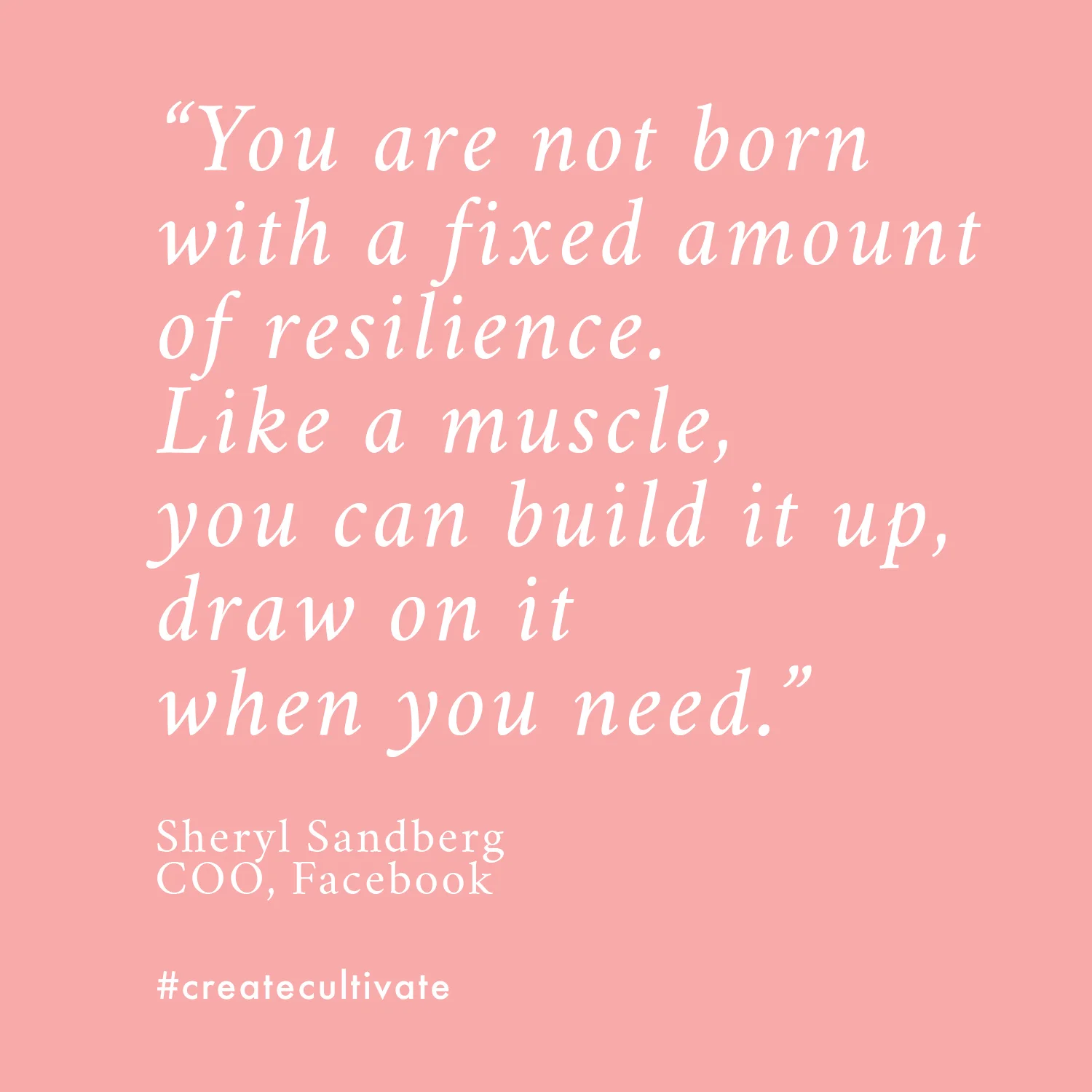
When Facebook COO addressed the 2016 graduating class at UC Berkeley last Saturday May 14th, she delivered an incredibly personal speech that didn't shy away from dealing with her late-husband's death.
Dave Goldberg died suddenly on May 1, 2015, during a trip to Mexico. The commencement speech marked the first time Sandberg spoke publicly about the loss and her experience. She also told that graduates that her work at Facebook helped her focus on something other than her grief and encouraged them to "live as if you had eleven days left." You can watch the incredibly powerful full speech here.
Here are our 7 of our favorite quotes.


More from our blog:
6 Simple Steps to Gallery Wall Your Office Space
For spaces that spark creativity.

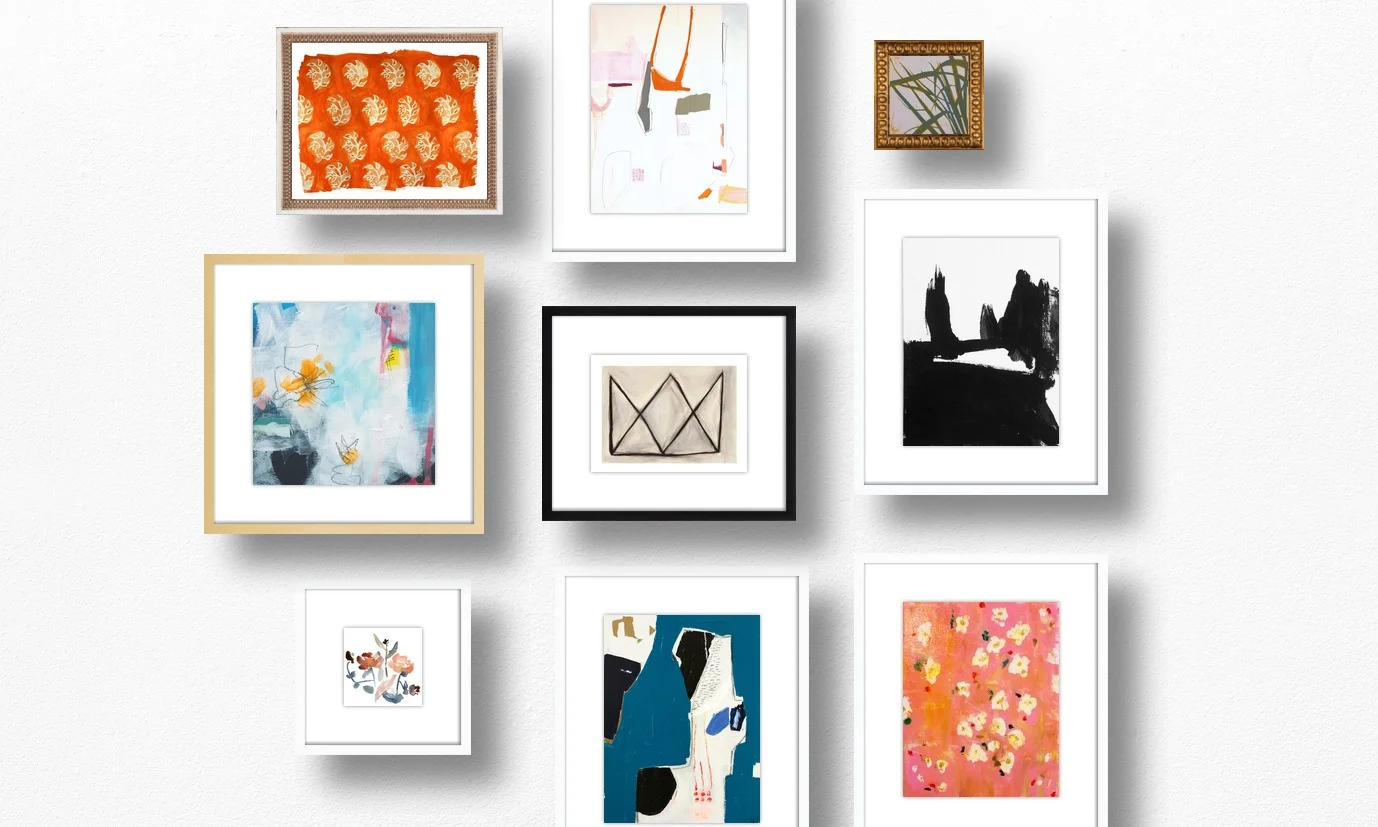
So you want to create an inspiring office nook? A gallery wall that gives you the mid-day spark you need to fire off inventive ideas. A good piece of art in the right spot can do that. Which is why Artfully Walls, an online curated art marketplace that helps you fill your space with affordable art, is breaking down 6 steps to making that happen.
THE SIMPLE HOW-TOS
1. Don't become overwhelmed, really focus on art that makes you happy. This wall, nook, space above your toilet (legit anywhere) is for you. No one else.
2. Combine different types of work. Think: one photograph, one oil/acrylic painting, one portrait, and something geometric. (But there really are no rules.) Color outside the lines if you dare.
3. If you're afraid to put holes in the wall, don't be! You can use 3M Command strips to hang prints - they don't destroy walls and let you play around with positioning.
4. Level up and use one. iHandy Level is an easy app that will make sure you're hanging everything straight.
5. If combining multiple frame colors gives you major art anxiety, start with simple white, black, light wood finishes.
6. A "gallery" wall doesn't have to be top to bottom. It can be three pieces that each speak to you. You don't even have to hang them.
See the below for inspo! And check out the Gallery Wall section on their site where you can rearrange groupings they've picked or get step-by-step instructions on how to hang your choices.
THE MORE THE MERRIER

Herringbone by Kate Roebuck; Arboricola Study by Kiana Mosley; Sea and a Sailboat by Daniela Orlev; Black Arrows by Heather J Chontos; Blackberry by Jorey Hurley; Hermit's Road by Harry Stooshinoff; Beast Coast by Matthew Korbel-Bowers; Flowers by Tali Yalonetzki; Flowers on a Table by Daniela Orlev; Ruth by Tali Yalonetzki.
LEAN INTO IT

Black Glitter Etching by Anna Ullman; Knuba, 2010 by Alex Kostinskyi; Untitled by Anna Ullman.
CORNER VIGNETTES

Forever by Ashley Woodson Bailey; Equine no. 1 by Lisa Golightly; Owl by Karyn Lyons.
More from our blog:

5 Entrepreneurs & CEOs Talk Career Advice They Don't Agree With
From their successful mouths to your ears.

Photo credit: Sarah Natasha, Laura Dee
Career advice. It's everywhere! (Raises hand: totally guilty: that's what C&C is all about.) But we've also talked plenty about how there is no one-size-fits-all for anything and that there are no rules for making it. Success is equal parts passion, hard work, and your personal touch-- the latter of which is the puzzle piece you need to figure out all on your own.
Sometimes we hear advice that doesn't sit well with us. Or apply.
So we asked 5 successful women at various points in their careers what is common career advice that doesn't pass muster with them.
SOPHIA ROSSI, CO-FOUNDER, HELLO GIGGLES thinks you've got the power within.
"I don't agree that asking questions can give you the answers you need. Often we have all the questions within us ready to be answered."
JOAN BARNES, FOUNDER, GYMBOREE, heard the standard financial advice and then did things her own way.
"After growing Gymboree organically into a successful Bay Area franchise business, I had the opportunity to expand nationally and internationally, which would require venture capital. All the advice I received cautioned that this would subject me to investors' financial goals and drastically change my personal life. I went ahead, nonetheless, and Gymboree became one of the most successful consumer IPOs in history!"
EVA GOICOCHEA, CO-FOUNDER TINKER WATCHES & MAUDE, doesn't think you need to stay in a job two years.
"My philosophy has always been that you should treat a job like an education: That is, you should be motivated to do your best because it is providing you with growth and learning opportunities. The moment that this ceases—or the point in which your trajectory is hindered by other BS (think work drama, bad culture, poor pay)—it's time to graduate and move on, even if you're only six months in. Why? Because the value you provide as an employee is your knowledge and your work ethic and if you've learned little and were deflated by your former job just because you waited until the two-year mark, then you're not going to be your best self for the next place."
RACHEL ASHWELL, FOUNDER, SHABBY CHIC, says no to succumbing to commerce trends.
"I have been advised from time to time to sign off on a product or compromise design direction because its deemed to be commercial. But in cases where it’s not authentic and true to my brand, it doesn't sell. In my world of shabby chic there are specific values, qualities and it’s my job to stay true to those values no matter what the rest of the world is doing. "
"It’s my job to stay true to my values no matter what the rest of the world is doing. "
Tweet this.
JEN STITH, VP COMMUNICATIONS AND BRAND DEVELOPMENT, BUMBLE, thinks it takes more than "one person saying yes."
"Most people think that all you need is one person, one opportunity, one door to open to change your entire career-- that's true, to a degree, but it's only a quarter of the equation. If you feel stuck you need to be the one beating down every door you can until someone gives you the opportunity to prove yourself in a new arena. It's on you to go out and find it. And then you have to work equally, if not harder, to hold on to it."
More from our blog:

The Golden Rules for Staffing & Hosting an Event
Producing an event is no small feat, but here are the tips from some of the best event producers to get you on the right foot.

Photo by Arnelle Lozada
Producing an event is no small feat. From the passed apps to how many bottles of wine to buy to staffing there are a million tiny details to get right. Behind-the-scenes is rather different from front of house.
There's a reason "art" is part of the party. Hosting is an art and if you're looking to throw an event or produce one, Quench Staffing is breaking down the logistics and what to expect when you host a 50-100 person event.
1. HAVE FOOD AND DRINKS READY FOR WHEN GUESTS ARRIVE
Passed appetizers are important-- especially if you aren't hosting a sit-down meal. You can keep it simple while remembering the basics.
Napkins, bite-sized tasty morsels, and drinks. You don't want people twiddling their thumbs and thinking about how hungry they are.
People come to events hungry. Feed them.
2. STAFFING, JUST WHAT DO YOU NEED?
The staff will be well versed in serving etiquette and bussing procedures.
This is what Quench recommends for a 50-100 person event.
- 4-6 Mixologist Bartenders
- 4-6 Tray Passers passing both cocktails and food (Who wants to wait?!)
Quench says that occasionally clients don't take them up on their staffing count recommendations or forget to book bussers! Bussers are extremely important. Guests standing around with a dirty napkin or seeing empty plates scattered through the event is not an image you want.
What you do want? Guests with fresh cocktails in hand and the perfect bite within arms' reach at all times. This comes down to staffing right. Which brings us to the next "must":
OPT FOR A STAFF MANAGER
Staff managers are essential for large events. Quench is a well-oiled machine and operate as efficiently as possible! Popular A-list events with packed guests list can be very demanding and staff managers are able to relive the stress the client might be experiencing.
What you want to focus on is entertaining-- not micro-managing the kitchen or the rate at which apps are being consumed. A staff manager pays attention to all of the details so you can pay attention to your guests.
Mix, mingle, and make solid impression, while the staff manager handles the minutia.
A PLAYLIST IS A MUST
Music at an event is a non-negotiable. Radio commercials are a non-starter. It doesn't matter how gorgeous the decor is, how on top of it the staff is, or how tasty the morsels are, without music your event will fall flat, and your guests will u-turn out the door.
EXPECT YOUR HOME LEFT SPIC AND SPAN
There are certain tasks you might not realize a staff is responsible for. These are all deal points that can, and should, be discussed upfront. Quench loves leaving a home or venue perfectly clean so the hosts can kick back and bask in the afterglow of the event rather than worry about an after party mess!
One old hosting rule of thumb: never let your guests see you cleaning. You don't need to worry about dirty dishes in the sink.
Want more tips of how to nail your next event? Check out Quench Staffing and their recommendations while also taking full advantage of their unique staffing services tailored to any event you might have!
About Quench: From corporate events in need of marketing and branding, to weddings and private events, Quench can help you meet your unique entertainment and staffing needs. At Quench we believe in an hands-on staffing experience so we have developed a unique casting software allowing you to hand-pick your team from a selection of available reliable, professional, gorgeous model staff. We are here to exceed your expectations with our amazing team.
More from our blog:

Jessica Alba Has a Crucial Piece of Advice for Your Career
It took getting over this insecurity for Honest to grow.

Photo by Sarah Natasha.
Jessica Alba might be a boss (of a company valued at over $1billion) but she doesn't dress like your average businessman or woman. When she took the stage Saturday at Create & Cultivate she told the audience the story of her first business conference.
"I feel like everyone here will appreciate this. I showed up to my first business conference with my business partner and it was 98% men. I was wearing a Dolce & Gabbana leather mini-skirt-- I had tights on-- and my partner told me, 'This is really inappropriate.' But I said, 'This is my business casual.'"
Jessica being Jessica is a move that paid off. Yet another example of power of authenticity, something that's a through-line of every conference we host.
Interviewed by former Create & Cultivate keynotes Katherine Power and Hillary Kerr the women openly chatted about preconceived notions and how people not taking you seriously fans your flame.
Here are our four favorite takeaways plus one piece of crucial advice every single woman should hear.
NO, THAT'S NOT THE PASSION.
"My journey into entrepreneurship is very similar to a lot of people. I found a need and an opportunity in the marketplace. I wasn't the only one who wanted a healthy, cleaner, high performance product that was beautifully designed, delivered to your door, and was transparent. And had a social mission. I was dreaming up a company I thought should exist and would touch home with a modern person. I went through three years of rejection and running into brick wall after brick wall and everyone in Hollywood looking at me sideways. They all asked me if I could do a perfume, and I said,'No, that's not the passion.'"
MAYBE YOU'RE ON TO SOMETHING
"I went down many different roads. I honed in on the idea. I took a 50-page deck and turned it into 20 pages and asked myself 'What are the essentials you need delivered every month?' The day-to-day stuff."
BUSINESS PARTNERSHIPS ARE LIKE AN ARRANGED MARRIAGE
"I liken getting into business with someone as getting married right away, without ever dating. It's kind of like an arranged marriage, but you're into it. And you have to have respect with whomever you're in business with. You have to communicate. You have to be in it to win it. It's a real partnership."
THEY CAN'T TEACH YOU THAT IN BUSINESS SCHOOL
"There were people who didn't take me seriously-- pretty much everybody. One investor really didn't value me, the way I deserved to me valued. I could have gone with him and given up a huge chunk of the company. But because I really felt like I deserved more than that-- and I don't even know what it was or why I was so stubborn and resistant to that money, access, and distribution, it just didn't sit right. When I started a company I undervalued how important it is to trust your gut. They can't teach you that in business school. You have intuition and you have to listen to it."
SUPPORT YOUR WEAKNESSES WITH OTHERS' STRENGTHS
"I was super insecure about not having a college degree or a conventional education. And I really thought I wasn't smart or didn't deserve to have a seat at the table. I felt like a fraud in business settings. It took me getting over that for the company to get on its feet. It doesn't matter if you don't have a degree or expertise. Surround yourself with people who have done it before and support your weaknesses with their strengths."
More from our blog:

5 Incredibly Useful Tips from Top Startup Founders
"You want people who've watched boats burn."

photo by Irida Mete.
When Create & Cultivate founder Jaclyn Johnson took to the Shopstyle Stage on Saturday for the Startup 101 panel the first question on everyone's mind was, "Who makes that amazing chair?" (Bend Goods for the goods FYI.) The second, of course, was "What can I glean from these founders?"
From Ariel Kaye CEO founder of Parachute telling Cultivators "Being a founder is the best and worst thing ever, all the time," to Carly de Castro co-founder of Pressed Juicery joking, "I didn't know any entrepreneurs. I didn't know anything about business. And I thought well if I can learn to make juice, how hard can it be? It was really hard," there was so much note taking, nodding, and knowledge dropping. So we're recapping the best of the best to encourage and aid you with your entrepreneurial dreams.
YOU HAVE TO BE OBSESSED WITH YOUR COMPANY, OR IT WILL BURN YOU OUT.
Josh Zad, founder of Alfred Coffee told the audience, "Coffee is a timeless beverage. I opened the cafe and I became obsessed with it. I'm focussed 100% on food and beverage."
Gabby Etrog Cohen SVP of Brand Strategy at SoulCycle echoed this sentiment. "I'm not a founder," she told the crowd, "but I am SoulCycle's 5th corporate employee and helped grow the brand from four to 60 studios. We deliver service, we don't sell. It's of utmost importance for our riders to feel like family and to feel like from the moment they walk through our doors to the moment they leave they have someone who cares about them. It's why after six years I'm still so committed to the company."
"My soul," said Carly de Castro, "is part of this brand."
"My soul is part of this brand."
Tweet this.
KNOW YOUR BRAND AND STICK TO YOUR GUNS
If people aren't initially following or engaging, but you have a brand and a social strategy that you believe in, you can use that to carry you through until they do. Get your grid right but also stick to your vision.
"Coffee is infinitely sharable," said Josh Zad, "and the trending coffee shop phase took off at the same time as Instagram. But we had a strong social media strategy from day one. The same way we treated developing our menu and customer service strategy we had a focus on social media that we stuck to. When not that many people were following or engaging with us, we didn't get upset or change it all up. We stuck to the plan."

photo by Sarah Natasha.
CONTINUE TO ASK YOURSELF WHAT PROBLEM AM I SOLVING?
One of the most important questions you can ask yourself is "What problem am I solving?" It's a very simple question, but it's something that goes a long way. And if it's a problem that someone has already solved, ask yourself, "How am I doing it differently?"
There can be many solutions to one problem.
"We are a commodity product at the core of our business," said Ariel Kaye, "but there is also this movement around investing in yourself. One of my biggest ah-ha moments was that I didn't know where to go to buy these products and none of my friends knew where to go either. I had a brand background and I couldn't believe there weren't brands people were loving. You spend a third of your life in bed and yet none of these companies were asking me how I was sleeping at night or suggesting that I could do something differently to enhance my sleep."
"As a brand," Kaye added, "you should keep circling back to that core question."
ACCELERATORS ARE AN AMAZING RESOURCE FOR ENTREPRENEURS
Ivka Adam, founder of Iconery whose company was part of Amplify, one of the top accelerators in Los Angeles, talked about the difference between incubators and accelerators.
"Incubators" explained Adam, "give space and a little bit of money to a company with an idea to get it off the ground. An accelerator is one step beyond that. It's for a company with fully formed idea and most often you get somewhere between $50,000-$250,000 to take your idea to launch. After a year of forming the idea, we had a working prototype and our manufacturing figured out, and we were starting to sell, which is when we got accepted into Amplify. Three months later we were able to raise our seed round."
Ariel Kaye chimed in on the importance of accelerators as well, telling the audience, "I was also in an accelerator and I have to say when you are are a sole founder and you feel like you are an island of one, being with other founders who are in that grind with you is a lifesaver."
THE RIGHT PEOPLE MATTER
Key hires are part of the founder struggle. (Along with "founder depression," something Ivka Adam told the audience "is very real.")
Creating the right team takes time, patience, and sacrifice, but it will also make all the difference in your business. Gabby Cohen shared "We like to say, if you have the right people on the bus, it doesn't matter where the bus is going. You change direction every 90 days." Ariel Kaye said something similar, "With hires you don't always need people to reinvent the wheel. You want people who've watched boats burned."
Hiring practices: "You want people who've watched boats burned."
Tweet this.
"Spend the money on talent," said Josh Zad. "Do not lose that person that's maybe a little more expensive. It will payoff in the long run."
More from our blog:

How to Host a Tasting Party Like a Boss (And Invite Her Too)
Patina Catering gives us the best (and most useful) tips.

Summer is coming! Which means great weather, soirees as the sun goes down, and outdoor gatherings with friends (and yes, sometimes colleagues.) A wine and cheese tasting party is a lovely way to enjoy the season, but if you haven't quite perfected the "art" of the party we have you covered.
Patina Catering, part of Patina Restaurant Group, is dedicated to creating memorable menus and experiences for so we asked for their best tips on how to host a summer wine and cheese party. They know with longer days right around the corner white or sparkling is the way to go-- and they're also spilling best practices for hosting your boss or co-workers.
JUST HOW MANY WINES SHOULD YOU HAVE?
And just how do you serve them? According to Patina, it's best to keep the tasting to around 5 different wines. Any more than that might overwhelm the palette.
It's also OK to mix reds and whites, but you should serve in order from lightest to darkest.
WHAT ARE THE BEST PAIRINGS?
- IF YOU'RE SERVING CHEESE:
- Cabernet Sauvignon with a nutty cheese such as Parmigiano-Reggiano
- Sauvignon Blanc with soft goat cheese or French Roquefort
- IF YOU'RE SERVING CLASSICS
- Champagne with smoked salmon
- Chardonnay with gratin
- Pinot Noir with stone fruits and cured meats

HELP GUESTS IDENTIFY WHAY THEY'RE DRINKING AND EATING
Gold-plated place cards are a simple and chic way to let guests know what they're tasting. You can also choose a theme related to and stating each region/wine available with flavor notes.
Extra tip: Make it pretty because the details matter. If the wine has "notes of cherry," decorate that wine's tablescape with a bowl of Rainier cherries and cheeses like Chevre or Brie that work well with the pitted fruit. Display it with floral arrangements and the notecards. Each little "tasting" section can have its own gorgeous theme.
WHEN IT'S SOCIAL & WORK
It's called a tasting party, not a tipsy party. It's great to let your hair down and enjoy yourself, but if you've invited your boss, clients, or co-workers, make sure that you don't go overboard.
A night out with the girls is much different than socializing with your boss. Quick rule of thumb: the same things that make you stellar at the office, are the same that make you stellar at home. (At least when those higher-ups are present.)
Images courtesy of Patina Catering.
More from our blog:

6 of Rachel Zoe's Most Inspiring Create & Cultivate Takeaways
A truly uplifting convo between friends.

Photo by Irida Mete.
Rachel Zoe may have popularized such phrases as "I die," and "Bananas," but the multi-hyphenate who credited launching The Zoe Report as one of her smartest business decisions this past Saturday at Create & Cultivate DTLA, had much more knowledge to drop. Interviewed by friend, fellow businesswoman, and jewelry designer Jen Meyer, the impeccably dressed maven shared her savvy with the audience of 500. She also blushed crimson when Jen asked her how she works with her husband, Rodger Berman who was in the audience, and still goes home and f*cks him. "I just want you to know my nephew is here, so shh," Rachel laughed. Adding her signature, "I'm going to die right now."
"Rachel," said Jen before getting into the meat of their talk, "is quite possibly one of the most supportive friends, people, business women on the planet. When I started my jewelry company, one of the first people to support me and say 'I'm going to be everything I can for people to see it,' was Rachel."
Here are 6 of the most inspiring takeaways from Rachel and Jen.
They talked work ethic. What keeps her going?
"I love it. As I've grown from stylist to everything else, I am driven by the passion. It started with me wanting to be a great stylist and after that it was following my gut and instinct for what felt right." Later in the talk Rachel said, "I don’t think you can be good at something if you don’t love it."
What resonates through the Rachel Zoe brand?
"At the core of my brand I've always wanted to speak to, empower, and motivate young women. Give them confidence to do whatever they want to do in life. The mantra of my brand has always been: Provide aspiration and inspiration, and always be accessible. Never be intimidating. When someone shows a 20,000 dollar coat on a runway, I'm not ever saying that's what everyone needs to wear in order to look good."

Pre-panel snap in the Green Room. Photo by Irida Mete.
What is she like as a boss?
She has an open-door policy in her office-- but she rarely spends time in it. "Roger keeps threatening to close my office because I never go in it." She likes being in the middle of the creative energy and talking to everyone in the office. "We are so synergistic throughout the company-- everyone talks, and one part of the brand could not exist without the other." As for the members of her team, she had this to say: "Don’t micro-manage people. I think if you hire talented people, you have to let them be. Let them govern their time."
"Don’t micro-manage people. If you hire talented people, you have to let them be. Let them govern their time."
Tweet this.
What are the rules she lives by?
"It's about being honest, kind, and forthcoming. Internally and externally it's what we put out and it's how I govern my business and my life." Also adding, "Follow your gut and your instinct. I know what I know, but I know what I don't know. "
According to Jen, Rachel is a pro a balancing her life. How does she do it?
"Before I had children I felt I was very imbalanced. I was so obsessed with my career that I couldn't see anything else. I missed every birthday. I missed every holiday. I missed everything that mattered outside of work. And then weirdly when I had my first son I feel like I became better at my job. I was better able to focus, prioritize, look at really important things in a different way, and handle them in a much more sane way. I don't get worked up about things the way I used to and that has helped me achieve some balance."
But acknowledged, "Every day is different and a struggle and there is guilt on both sides when you're a working mom. You have to know you can't plan every day. It's never going to turn out the way you think it will. The ultimate goal is to be present when you're with your children and present when you're working."
What are some lessons she learned as a stylist that she's applied to her businesses?
"Really learning about people is the thing in styling that actually overrides all of the styling. You have to have patience, a true understanding that everyone is different; it's not a formula. These are not mannequins, they are people like you and me. They have problems and insecurities. Styling has really taught me that you have to work so hard for what you want in life. That this business is not always glamourous. And it helped me as a designer to know what women want and don't want."
More from our blog:

How To Design Your Day and Plan Well In 4 Steps
Tips to design your life with productivity.

With Monday here, we know how busy life can get. Between meetings, appointments, set commitments, work or school and a social life, it can be hard to find the time to manage it all.
The Best Way to Balance? Plan Well, with Focus and Intention.
Our friends at Blue Sky create dated planners, calendars and notebooks that help people manage their time and organize their lives, effectively and fashionably. They were able to team up with Whitney English, creator of the iconic Day Designer & Create & Cultivate DTLA panelist, to create a collection of planners, calendars and accessories that offer stylish solutions to busy women all over the world. And if you didn’t notice, they brought the buzz to our Create & Cultivate DTLA gift bags too!
Whitney, who spoke this weekend on “She Means Business: The Balancing Act of Mother and Mogul” created the collection in response to her own desire for a planner that was both functional and beautiful.
“I envisioned a planner that would be simple to use yet robust enough to handle the modern woman's busy, chaotic, challenging - yet ultimately rewarding – life,” notes Whitney.
“An efficient planning system was truly the key to helping me, and busy women all over the world, find focus, create balance and live a more inspiring life.
Essential Steps for Living Your Best
Each Day Designer planner offers four easy steps (and special pages) for you to define your values, envision your goals and live your best.
Start with the Big Picture: Your big picture is a combination of your dreams, ideas about the life you want to live, and your vision of what the coming year could be. Use this space to brainstorm. Include thoughts about the people in your life and the kind of people you’d like to surround yourself with. Think about the non-negotiable activities and events in your days, weeks, months and years. Usually, you can start by thinking about what you spend your time and your money on as an indicator of what matters most to you. Challenge yourself to not only dream big on this page, but also to dream better. You can always come back to this page throughout the year and add to it, so don’t feel like you have to fill it out all at once.
Set Your Goals: Looking at your big picture list, ask yourself this question: what do I have the time, money, energy, knowledge, and network to start working on right now? That’s the question that tells you which of those big ideas are the most realistic to move forward on in this moment. Break your goals into categories to achieve a balanced life: family & friends; heart & spirit, business & finance, health & fitness, etc. Finally, assign dates to have your goal achieved by. If one goal feels too big, break it down into lots of little goals and space your milestone dates out to help you create progress and momentum toward achieving your goal.
Design Your Days: Be intentional. Each day is a unique reflection of you. Morning and evening routines should help you start each day energized, and finish with a sense of accomplishment. Your routine needs to work for you, but don’t fear challenging yourself to change it up every now and then.
Your routine needs to work for you, but don’t fear challenging yourself to change it up every now and then.
Stay on Course: Review your goals throughout the year. The checkpoint interval is not important. Some people review their goals daily, some review weekly, some choose the monthly or even quarterly option. The important thing is to remember to review them and make sure you’re on course, as well as celebrate successful milestones along the way.

Your Life, Well Designed
The line of planners, calendars and desk accessories empowers women to manage their busy daily lives with creativity and style.
The collection reflects Whitney’s sophisticated aesthetic with classic patterns, colorful floral accents, stripes and touches of gold to dress up any desk or life space. In addition to planners and calendars, the collection includes pencils, washi tape, a pen and clipfolio.
Each planner in the Day Designer for Blue Sky collection is designed to guide thoughtful, effective planning. Smart page layouts are available in weekly, monthly and daily formats to help you plan according to your needs and preferences.
With use, each Day Designer x Blue Sky planner becomes a reflection of the confident, empowered woman who designs her days and lives in balance.
Happy planning!