
Links We Love: Is YouTube Over? Plus Twitter Gives Users a New Way to Make $
Here's your Labor Day weekend talking points.

Are you ready for the long weekend? Have your talking points ready for those Labor Day BBQs? We've got you covered.
How to prepare yourself for the Apple 7 launch event next week.
These before and after photos from this girl's first day of school will make you say "same."
If you've read enough love horoscopes, you need to read your September career horoscope.
#YouTubeIsOverParty: Is YouTube trying to silence content creators talking about "controversial" topics by taking away their adsense?
#ad #sponsored: The Federal Trade Commission is still struggling with paid advertising rules
Twitter is now offering influencers a new way to make money on the platform.
Guys want to know how to approach women on the street who wear headphones.
Here's your answer.
It's now easier for you to make custom Snapchat geofilters with their new templates.
Frank Ocean already made $1MM by going independent.
"The Worst Career Advice I've Heard Is Also The Most Common"
MORE FROM OUR BLOG

Unpopular Opinion: Why You Should See Others as Competition
Hear us out - it's time to cut the kumbayas.

Credit: @alyssainthecity
Last week we spoke with beauty YouTuber Ingrid Nilsen who shared how she feels about young people and the bombardment of images via social media. "It makes them feel like life is a competition and love is a competition, and that beauty is a competition. It’s not." And she's right.
This is not an uncommon sentiment among women, both in their businesses and personal lives. We've rejected the notion that there is a limited amount of success and we're redefining that success on individual levels. Ingrid echoed this idea as well, telling us that, "I don’t equate being at the top with my success. I felt really successful from the beginning.”
But when it comes to business, especially when it comes to making money or inching someone else out, we've all gotten a little too kumbaya with it. Hear us out.
HEALTHY competition is important. It's vital to the advancement of ideas and breaking through our own limitations. If other people weren't "better," we would never push to be better either.
If other people weren't "better," we would never push to be better either.
Tweet this.
I started thinking about this while watching Simone Biles, gymnast extraordinaire, after her “low-scoring” balance beam routine on August 15th at the 2016 Rio Olympics. During the routine, Biles stumbled and touch the beam with her hand to prevent falling off. Instead of nabbing her fourth gold model, she took bronze (nothing to snuff at). Her teammate Laurie Hernandez, took silver. Simone was over-the-top happy for Laurie and the placement for U.S.A., but in a single blink she also revealed that she saw her teammate as competition-- in this instance the woman who scored higher than her. There was no ill-intent. Nothing malicious or malingering, but rather it was a healthy reaction that reminded Simone (and me) that competition is important, gold is not a given and that work is always necessary.
In this (also important) battle rally cry to support and uplift other women, we’ve forgotten that competition is OK. More than OK really. If we as women are all team U.S.A., happy and supportive when our teammates win, we should also each be the individual athlete, able to compete for the “gold,” in our careers.
We should be fueled by the women who are better— whatever your definition of better may be. There are going to women who get the job we want, who are paid more, who get the book deal, the brand partnership, the gold medal when we don’t even place. This is great news. If the highest wave floats all boats, someone has to be the highest wave.
We should be fueled by the women who are better— whatever your definition of better may be.
Tweet this.
There is, likewise, a building notion, budded by that Madeline Albright quote (‘there is a special place in hell for women who don’t support other women) that Albright herself has said was taken out of context.
The idea that women need to empower each other is correct, but that doesn’t mean that we can’t disagree with each other, or offer opinions that push against the tide. Why is it no longer OK to disagree with another woman without being shut down? Or called out?
Why is it no longer OK to disagree with another woman without being shut down? Or called out?
Tweet this.
Do we not see men as competition? I spoke with a male owner of an events and marketing company to get his take. “Do you see other men as competition?”
“You should see others as competition,” he said “but mix it with a bit of humility. With my company specifically, I know we could hire a Social Media Director and do all parts of a project. Or we could bring in someone else who can do it better. That way there's more for everyone, as opposed to everyone doing more. Everyone has their own limitations. The goal in the beginning of my business was to be so 360 that we took all the money and figured out how to do it afterwards. Now it's about taking the right money and building your business from there."
"At the same time, I'll look to the right or left or me, and there are people doing much better. They are the competition. But I ask myself, how many hours are they putting in? Success and competition is not just about a bank account."
His is what I'd consider a healthy approach to business. "Success to me is to work 50 great hours a week and enjoy 70 percent of my work. If I'm hitting those numbers it's easier to not look to the left or right and be frustrated."
Creating a community does not mean creating homogenization, where we are responsible for agreeing, helping, and supporting all women, all the time. Movements do just that (move) by their ability to pivot and shift. Competition is part of this. It moves us forward.
So let's move forward with a little bit of heat and humility.
MORE FROM OUR BLOG

Meet 8 Young Entrepreneurs That Are Bootstrapping Their Businesses
Sky's the limit when you follow your passion.

Jessica Hamel, FROST’D. Photo by: Josh Vertucci
“Every entrepreneur has the same struggles. It's so hard, but so rewarding and addicting. I don't care anymore that I don't have a life. People are so inspired by it. They see the headway you are making even when you’re not feeling particularly successful. “
-Kaitlin Mogentale, Pulp Pantry
When I set out to interview female entrepreneurs ‘following their passion,’ I thought it would be a fun way to release some creative steam on a topic I am both passionate about and emotionally connected to. However, over the past few months, it quickly transformed into a kind of therapy for me. As an entrepreneur, I’ve always loved to hear the stories of the journeys of successful entrepreneurs. But, to be honest, a lot of the time they left me a bit disheartened. You see, being an entrepreneur is lonely. You’re constantly in a state of up and down and there aren’t many people who understand what you’re feeling. The entrepreneur stories you often hear are so often far from the trenches you are in. That is, unless you surround yourself with other entrepreneurs who are in the new business trenches -- just like you.
Over the past few months, I had the opportunity to listen to the stories (and commiserate with) a handful of amazing female entrepreneurs who have followed their passion and created, and importantly, mostly bootstrapped, their own businesses. I’ve learned a lot during these interviews, but there are a few quotes that keep coming to mind as I wind through my own entrepreneurial journey.

Ginna Ellis, Boulder Acusport. Photo by: Josh Vertucci
“I'm not just following my passion blindly. I've put the work in. At the end of the day, I was just taking this big leap and hoping to God that it would work out.”
-Ginna Ellis, Boulder AcuSport
It’s the classic curse of social media. Every entrepreneur looks like they’re without a care in the world, but here’s the truth: following your passion isn’t glamorous and sometimes it can be downright ugly. The most important thing to remember is that no one is an overnight success. In fact, I believe, the notion of an ‘overnight success’ is a complete myth. ‘Following your passion’ means having the passion to work hard in hopes that something will come out of it. It could be one year, but it could also very well be ten years.
"‘Following your passion’ could be one year, but it could also very well be ten years."
Tweet this.

Shauna Lott, The Long I Pie Shop. Photo by Josh Vertucci
“That's where the tears come. When you own your own business, you are working with your own money and your own debt.”
-Shauna Lott, The Long I Pie Shop
As an entrepreneur, particularly one who is self-funding their business, you have the weight of the world on your shoulders. It’s always good to realize and remember it’s not easy for anyone, but we’re entrepreneurs and we love a good challenge. Right? There were so many moments during these interviews that the women were completely open and honest about their struggles. However, I found that you have to find things that balance out those points of difficulty to survive. Some top tips: find help with certain aspects of the business you are just not good at, focus on what reignites your passion time and time again when things get rough, but most important, hustle through and have faith something amazing is just around the corner.

Jainee Dial, Lindsey Elliott & Gina Peters, Wylder Goods. Photo by: Josh Vertucc
“If we can’t cultivate those values of self-care and mindfulness in ourselves, how can we possibly weave that into our business and the people who will eventually become a part of our community. It’s imperative that we walk our talk. Presence is not easy.”
Time and time again, self-care was brought up by the featured females. It’s one of the most essential tools for an entrepreneur, as well as one of the most neglected. There is always something to be done and, most of the time, if you’re not doing it, it’s not being done. It’s incredibly hard to step away, but so important to realize that when you do step away you’re able bring a lot more back to the table. For me, ultra-running has always been how I decompress. On the trail is where some of my best ideas are created for the business. You need to step away, to be fully there.

Kaitlin Mogentale, Pulp Pantry. Photo by: Josh Vertucci
"I read once that if you have 1,000 true fans, that's all you need to survive as an artist."
-Kaitlin Mogentale, Pulp Pantry
This quote from Kaitlin Mogentale really struck a chord with me. Getting a bit more personal here, quickly after starting FROST’D., and after countless coffee chat with mentors, I got swept up in this notion that I needed to grow my business as quickly as possible if I had any chance at success. To do that, though, it would’ve meant sucking a lot of what I envisioned for the company right out and that’s exactly what began to happen. After a bit of reflection, I realized I needed to let go of this immense dream a little bit, to focus on the present and create the company that I was passionate about.

Kaitlin Mogentale, Pulp Pantry. Photo by: Josh Vertucci
"Follow your gut. One thing I learned through this process is that I was always second guessing myself. If your heart is saying one thing, just go and do it. Don’t put effort somewhere else.”
-Ashlae Warner, Oh, Ladycakes!
Don’t waste your time. If you have an idea or a passion you want to turn into something more, do it. The idea of FROST’D. haunted me for years. I knew I would never be satisfied if I didn’t give it a try. So, do it. Don’t be afraid of failure, because saying you tried is success enough.
Read the rest of each interview at http://www.followyourpassionproject.com/ and stay tuned as we release two more parts over the next few weeks.
MORE FROM OUR BLOG

What to Do When You Feel Stuck in Your Career
The three questions to ask yourself when you feel you've hit a wall.

Sometimes it hits us slowly – you haven’t been promoted or learned anything new in the role. Other times it can be more obvious – perhaps you’ve been seeing new people brought in above your role when you have been working hard to move up in the company.
What do you do when you hit the vocational wall?
Reaching a point where you feel stuck in your career can be very discouraging. It’s important you know when you’re ready to move up the ladder and why you should make the move up.
Are you developing in your current role?
Some careers require you to be constantly working to learn and master more skills. Recently, I was watching the show Grey’s Anatomy and I was so struck by how the doctors had a desire (and a professional need) to continually better their skills and gain more responsibility. It made me notice how important learning is in one’s career if you want to be moving up the ladder.
Consider how lawyers are required to continue their education and pass regular benchmarks in order to retain their licenses. For chefs, artists, and other creative professionals, learning and implementing new tricks is a professional necessity.
Do you know your long-term professional goals?
But even jobs that aren’t as straightforward in their growth requirements still ought to be pushing you forward, and whether your job is or isn’t helping you grow is something you need to take note of. Do you feel you’ve been challenged to be better in your role? What have you learned in your role that has better equipped you to master your current job and face new challenges? Have you been set up to rise to higher roles and new responsibilities in your company, or have you been denied even when you’ve sought out opportunities to learn?
Focus on what your vocational goals are. Where do you want your career to go? Perhaps you like where you work, but the particular role you’re in isn’t satisfying you professionally. Take a look at the other departments in your company and think about whether or not a department change could be the right answer. Can you climb in your current company? If so, try! Show your employer your eagerness to develop and inquire about new opportunities. Be sure to note what you have given the company in your time there. Loyalty is an incredible quality, and good companies value it highly.
Show your employer your eagerness to develop and inquire about new opportunities.
Tweet this.
Is it time to make a change?
If you have reached your peak at your current company and can’t climb any higher there, then make a list of companies you aspire to work for and begin to pursue them. You could take a look at where former colleagues are working now. Do they enjoy their new office? What does Glass Door have to say about companies you’re interested in?
It is important to realize when you have been feeling stuck. It’s easy to fall into a rut professionally without realizing it, but until you do, your day-to-day will continue the same as it’s always been. Remind yourself monthly to take stock of where you are, where you want to be, and what you’re doing to get there. It’s only once you acknowledge the goal that you can work to make the change.
It’s only once you acknowledge the goal that you can work to make the change.
Tweet this.
Have you recently made a career change? What factors influenced your decision? Let us know in the comments below.
This original piece by Leslie Tulip appeared on Darling Magazine.
Everything You Missed From Our CreateCultivatePopUp at the Beverly Hills Marriott
"You can't fail, unless you quit."

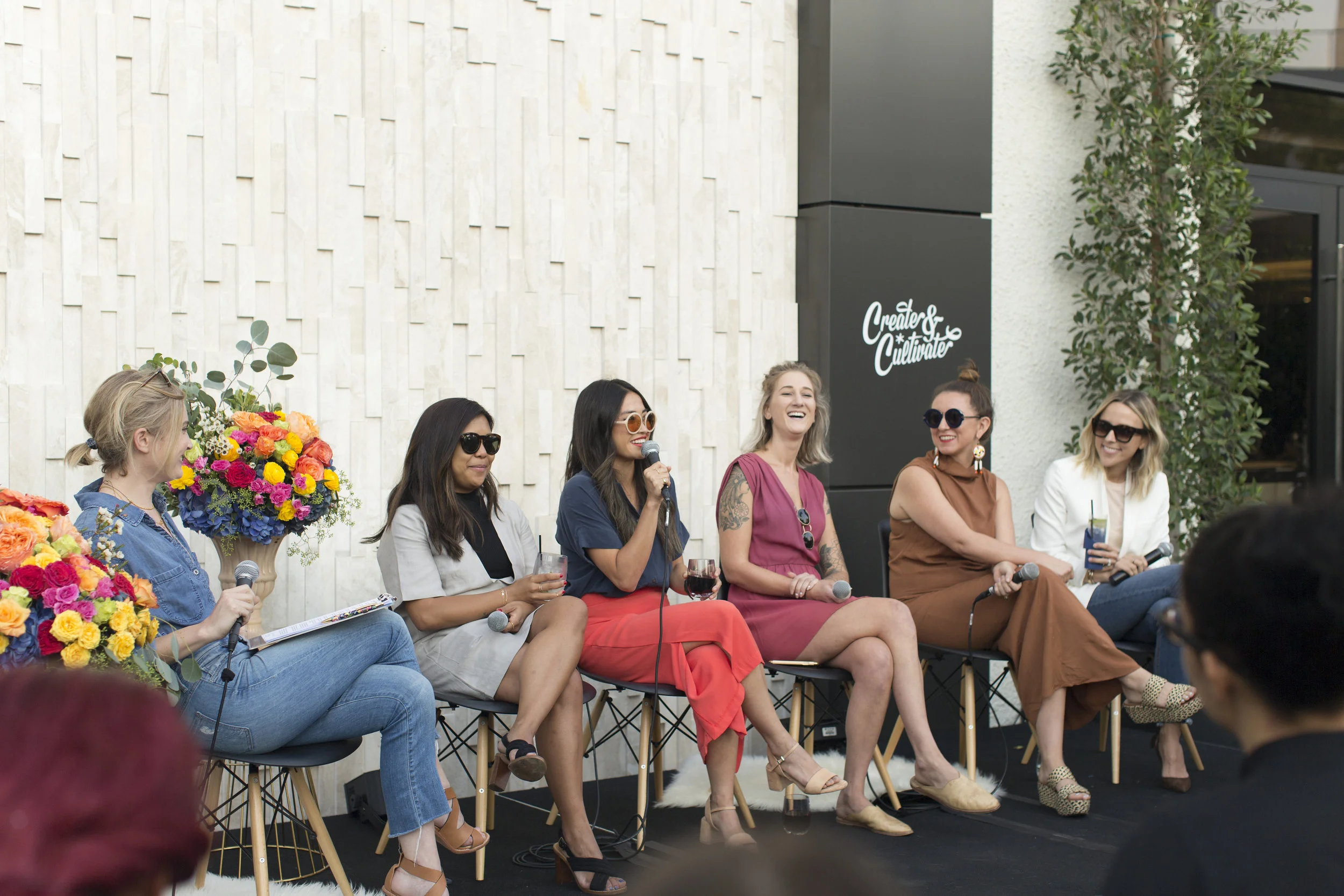
#CreateCultivatePopUp in collaboration with Marriott Hotels

photo credit: Irida Mete
Last night at the Beverly Hills Marriott Hotel over a hundred female entrepreneurs, photographers, and bloggers joined under the setting sun to listen to panelists dish on best biz practices, traveling for work, and how to grow and maintain a following.
We heard from power women like Jacey Duprie of Damsel in Dior, Vanessa Simmons, and Katherine Schwarzenegger, who shared the BTS realities of their jobs and about the importance of uplifting and empowering other women.
Here are some of our favorite and *KEY* takeaways.
MAKE A CASE STUDY
Puno, founder of Made with Map (and creator of #finditliveit) and Drea Sobieski, founder of elsewhere, both told one audience member who asked how they get noticed, to "make a case study."
Drea told the audience about a trip to Morocco that she put on a credit card. It was 3k and she financed the entire trip herself, but what she got from that risk was invaluable. She returned home with a "case study I still use to this day. And those images are still circulating. I knew what I wanted and I went for it."
"Never tell a brand that you 'want to collaborate,'" added Puno. "Show them how you are going to bring awareness to their brand. Explain in detail what you can do for them." A case study is one of the best ways to do so.
IT’S A NUMBERS GAME
Jacey Duprie told the audience that they need to find what they’re good at and approach smaller brands. She explained that you don't need to approach someone with HUGE numbers to get noticed and often times it's about going after smaller people with 8-10k followers who really believe in your brand.
Puno echoed this sentiment, telling the crowd, "micro-influencers are where the conversation with brands are heading. You want people with high engagement and who convert." When she first launched Made with Map, she found and approached 60 new people who made sense for the brand-- per day. Not everyone responded, but not everyone needed to.
Jacey also mentioned how imperative it is to "get creative," when going after your dreams. She told the story of financing a trip to Africa by hosting a party at her house and asking her friends to donate to her cause. It worked. Because she asked.
IT’S OK IF YOU DON’T WANT TO HAVE A BUSINESS
There is a lot of pressure for everyone to be an entrepreneur. Especially with Instagram turning everyone into a brand. But if you don't want to have a business, you don't need to. You can be just as successful working for someone else.
Erica Domesek of P.S. I Made This told the audience, "You feel like you need to keep up with people closing brand deals, but your worth is not about a brand deal. Go for the claps not for the likes— you might not get the campaigns, but you will be true to your strengths."
"Go for the claps, not the likes."
Tweet this.

photo credit: Irida Mete
ASK YOURSELF: WHAT IS YOUR TALENT?
Erica also challenged the audience to focus on "what your talents are," not someone else's. She told told them, "It sounds cheesy but you can really do anything if you do that."
Adding, "You can’t be talent if you’re not talented.”
Piggybacking on that, there was a lot of talk about:
FINDING YOUR TAGLINE & NAILING DOWN YOUR VISION
Vision. It’s a word Vanessa Simmons brought up and it’s so important.
She said people assume that being on TV is going to make your brand “explosive.” It helps, sure, but she also explained that “all TV does is magnify what’s already going on.” If you're not clear about your vision, it will be evident.
She encouraged the audience to hand write their goals and take baby steps, every day, toward those goals.
"You can’t fail, until you quit,” she said.
"You can't fail, until you quit."
Tweet this.
Hilary Williams of DBA told the women in the audience they need to take their commitment to blogging seriously if they want to break into the "overcrowded" space. "Ask yourself, really ask yourself" she said, "is this a real business and am I devoting my entire life to it?"
"The talent I work with," she added, "their vision is super clear and they have a unique spin on it. What makes you different? How do you make noise and get a brand excited?"
LOVE A KICK OFF CALL
It’s not just about the money— it’s about the brand, the messaging, and what will go into the campaign. Hilary Williams told the audience that client and fellow panelist, Erica Domesek, "loves a kickoff call."
Simply because Erica wants to chat through ideas and how to best position her work with a brand. It's not just about a $ in front of number-- it's about the idea, the brainstorming, and the collaboration.
To see more from our collaboration with Marriott Hotels be sure to check out our Create & Innovate series, featuring female entrepreneurs in cities across the United States.
MORE FROM OUR BLOG

How to Gracefully Job Hunt While Still Employed
Not everyone needs to release a YouTube video.

Hunting for a job is not fun under the best of circumstances. And we don’t know which version of events is more tedious. Not having a job and the panic that grows every day while you remain unemployed OR having a job and sneaking out of work early for interviews.
While both scenarios make your yearly well-woman checkup seem like a party in comparison, being able to look for a job while still being employed is a blessing. But that doesn’t mean it isn’t an extremely awkward and difficult situation to manage. Even if you already have one foot out the door, you have to remain the polished, professional employee that you've always been. We know that’s easier said than done when you are ready to make a career move, but when you do land that new job you will be happy you handled your job hunt as gracefully as possible.
BE ON TOP OF YOUR GAME
At some point in their career every employee hits a breaking point that there is no bouncing back from. A day will come when you realize there is nowhere for you to progress within your current company, you are tired of the office politics, or it is simply time for a change of pace. When you realize you are ready to make your next career move, it is going to be difficult to remain invested in your work.
Mentally checking out from your current job is one of the biggest mistakes you can make while job hunting. It can alert to your manager that you are unhappy and looking for a new job, which you may not want.
"Mentally checking out from your current job is one of the biggest mistakes you can make while job hunting."
Tweet this.
You also run the risk of the quality of your work decreasing and harming your reputation. Even if you are ready to walk out and never look back, you never know which connections you may need down the line.
DISCRETION IS KEY
You may be ready to yell from the rooftop of your office high rise that you want to quit, but try to refrain until you give your notice. Be careful about dropping hints to coworkers and your network about quitting, because once you do that news will spread like wildfire. If your boss is reasonable they won’t be offended that you are looking for a new job, but they might be if they find out everyone knew about your plans but them.
BONUS POINTS FOR POSITIVITY
When it comes time to interview, you will inevitably be asked why you are leaving your current company. You might have dozens of blood boiling reasons to share, but that doesn’t mean you should start complaining about your current employer. Or any past employers for that matter. Try to find a diplomatic way of explaining why you are looking for a new opportunity. Your prospective employer will trust you more if they know that you can be discreet. Positivity goes a long way, it is best to focus on the positive aspects of the role you are interviewing for instead of all the reasons you hate the job you are planning on leaving.
A recent graduate of the University of California Irvine’s Literary Journalism program, Jacqueline is passionate about writing, design and visiting as many zoos as possible.
MORE FROM OUR BLOG

Why You Need To Tap Into User-Generated Content Now
There's tons of content at your disposal that you've yet to use.


Every brand has their own social media strategy. If you’ve nailed yours by now, then awesome - you’ve crafted your secret sauce to your digital success.
However, every now and then, you have to try moving outside of your box and add a few more ingredients that not only will make your social strategy better but will open the doors to tons of more content that you can work with without you even having to create any of it.
If you have yet to tap into integrating user-generated content into your social strategy, then it’s time that you do. There are many reasons why brands can be a little hesitant to share content that isn’t produced in-house, but as long as it aligns with your brand, aesthetic, and messaging, you’re in the clear. Here are the three reasons why you need to get on user-generated content STAT.
Trusted More Than OG Content
User-generated content is authentic - plain and simple. When your audience sees people that are just like them and they can relate to sharing content than a staged post directly from the brand, they will instantly feel that they can trust your brand more. While original content is always great, it’s never a bad idea to sprinkle in user-generated content to ensure that your audience can be shown as an integral part of your content.
Don’t believe us? In a study done by Crowdtap, millennials trust user-generated content 50% more than any other media and is 35% more memorable. The numbers show it’s time to switch up your strategy.
User generated content is trusted 50% than any other media and is 35% more memorable.
Tweet this.
Minimal Effort, Maximum Reward
When we say minimal effort, we say that loosely because, in order to make sure that your audience engages with you and creates content for you to share, you have to put just as much effort to engage with them so they can reciprocate the love.
A great way to get started is to regram content from people who follow you that are posting photos that are on brand, and encourage other followers to share their photos with a specific hashtag for a chance to be featured from there on. Once you build traction, you will see more and more people will tag you and use your hashtag, and you will have more user-generated content to work with (none of which required any production from your end to create.) Also, you start building an online community this way, so double whammy.
Encourage your community to share their photos with a hashtag for a chance to be regrammed.
Tweet this.
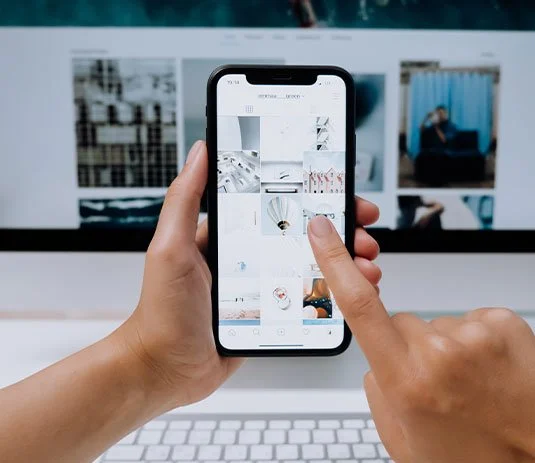
An easy way to keep track of those who use your hashtag on Instagram and regram it without a watermark is using PLANOLY, which will allow you to see how the image will look on your feed even before you post it live.

When developing PLANOLY, founder and Create & Cultivate Dallas alumni Brandy Pham kept the importance of user-generated content in its interface. “Since the launch of PLANOLY’s Discover feature, it’s been so much easier for our users to discover user-generated content from their audience and customers and working regrams into their grids effortlessly. They’ve been utilizing it on the go on our app and also on the web dashboard."
Builds Brand Loyalty
Sharing user-generated content shows your followers that you’re paying attention to them and have created a two-way connection in what is often seen as a one-way connection with a lot of other brands online. The minute that you can turn your brand into a personality and actually connect and engage with your audience, their loyalty towards your brand will grow exponentially.
Have you used user-generated content, and how have you integrated it into your social media strategy? If you haven’t started, are you planning on doing it now? Let us know in the comments below.





Free Download: Map Out Your Business Budget with Above The Glass
Get your business' financial success in line.

Photo by Maria Sosa
When becoming a business owner, a lot of things can seem intimidating when you’re getting started. Do you start your business from your home, or do you start looking for an office space? How many employees should you hire? What supplies should you get for your office? What do you write off for tax season?
There are a million questions that will come up when you get in motions of becoming a business owner, but when you set out a financial map, you’ll be more prepared of what to factor in into your budget. Not only that, it will allow you to have enough cushion for when your business begins to grow or anything unexpected happens.
To get started on the right foot, use Above The Glass’ free download this week for their Budget Checklist template which will help you outline everything that you need and help you prepare properly for the financial future of your business.
To get access to the free download, enter your name and email below.

Your Digital Diet: What Platforms Can You Nix Now?
We're leaving behind a digital graveyard, but what can we bury once and for all?

Call this your digital diet - in today’s digital age, you need to be on social media to stay relevant, but what matters the most is who you stay relevant to. Everyone’s brand is targeted to a certain demographic, so where exactly is your audience?
A lot of brands and companies make the mistake of making sure that they’re on EVERY PLATFORM KNOWN TO MAN (who even keeps up with Ello still anyways?), but the rule of thumb is to never stretch yourself too thin, especially with platforms that aren’t doing anything to grow your brand.
You don't need to create content for platforms that no one is paying attention to. (Which, is why we aren't including Instagram. You need an Instagram.) To figure out where you should focus your efforts and where you can cut back, below is a guide that will help you narrow it down.
"You don't need to create content for platforms that no one is paying attention to."
Tweet this.
DEMO: 20.5% of users are aged 25-34, followed by 16.7% of users who are 18-24
USAGE: 72% of all internet users (77% women, 66% men)
BEST FOR: Video content and news updates
WHO SHOULD BE ON IT: Everyone, especially now that Facebook Live serves as an alternative to reach a wider and established audience, compared to Twitter. The platform, that launched in 2004, is also refocusing on video content as an alternative to YouTube.
Despite the fact that your grandparents are on Facebook, it may surprise you that the main user-base is still under 30.
Oh, and Facebook owns Instagram. Instagram’s per-follower engagement rate for brands is 58 times higher than on Facebook and 120 times higher than on Twitter. Instagram users are two and a half times more likely to click on ads than on other social media platforms.
DELETE IF: You want to move off the grid and say goodbye to the modern world.
DEMO: 37% of users are aged 18 to 29, followed by 25% of users who are 30-49
USAGE: 23% of all internet users (25% men, 21% women)
BEST FOR: News outlets and blogs nabbing readers' attention with a 140-character hook (AKA, getting people to READ)
Twitter has what founder Jack Dorsey called, "of-the-moment brevity." And it's powerful.
Great for live chats to engage with audience and start a real time online conversation with the use of one hashtag.
Perfect for immediate customer service and engaging with followers.
It is also important to note that the gender gap on Twitter is much less pronounced than other social media sites, showing an almost equal number of male and female users.
DELETE IF: There's no reason to "delete" Twitter, but if you haven't yet amassed a following and you're not a news site or a brand looking to convert clicks to sales, you could be saving your energy and using it for something else.
DEMO: 23% of users are aged 18 to 29, followed by 31% of users who are 30 to 49
LinkedIn is the only major social media platform for which usage rates are higher among 30-to 49-year-olds than among 18- to 29-year-olds.
USAGE: 25% of all internet users (25% women, 26% men)
BEST FOR: Business pages who are sharing updates about their company.
Brands that want to built thought-leaders out of their CEOs and top executives.
Businesses that are looking to hire.
Good for businesses that want to be an influencer in their space and be ahead of the curve in news and research.
Businesses looking to publish stories.
DELETE IF: There's no reason to delete your LinkedIn, especially if you are a brand that is looking to built out their reputation as an authority.
If you end up moving jobs or need a reference, it's a great way to connect. (See new site WorkGrades as well for fast and efficient references.) However, if you aren't a "brand," LinkedIn isn't a platform that you need to be active on.
SNAPCHAT
DEMO: 45% of users are aged 13-24 and over 60% are 13-34
Millennials account for 70% of all Snapchat users
USAGE: 18% of all internet users (70% female, 30% male)
BEST FOR: Ideal for behind-the-scenes and exclusive content, Snapchat is "intimacy at scale," and if you want to reach the Millennial audience, this is how you do it.
DELETE IF: Your demographic is 34 and up, especially now that Instagram has launched Stories. The stats are yet to be seen for who engages on IG Stories, but considering the platform's 300 million daily active users, there's a high probability Stories is going to be a major player. Snapchat won't become obsolete, but pick the platform where you have more followers and focus on building that.
TUMBLR
DEMO: 27.7% of users are aged 25-34, followed by 23.5% of users who are aged18-34
BEST FOR: Fashion brands with a demo of teens or millennials
Can be used as a blog outlet for brands, but if you're serious about building your content or blog, there are better solutions, like SquareSpace.
DELETE IF: Your demo is not teens or if you're an established brand. There is no reason to have a Tumblr at this point. People aren't using Tumblr to find new and interesting information or brands. Save the space hit delete.
DEMO: 34% of users are aged 18 to 29, followed by 28% of users who are aged 30 to 49
USAGE: 28% of all internet users (42% women, 13% men)
BEST FOR: Brands with DIY audiences looking to find inspiration for home and lifestyle
Brands looking to drive traffic to their consumer sites-- conversion rates from Pinterest are reported very high among bloggers.
Brands can use this platform to share their blog content in a visual way with “click bait”-like headlines
DELETE IF: If you're a tech brand, there's really no need for you to have Pinterest. Lifestyle, Fashion, Beauty, Food, Design-- this is for you. No one is going to Pinterest to find the newest Silicon Valley updates.
VINE
DEMO: 71% of users are millennials, and 28% of users are 18-24
BEST FOR: Actors, comedians, and social media influencers who are looking to grow their audience
Brands have to make sure that their content is able to compete with Vine influencers who post funny content, or partner with influencers to drive views to their own profile
DELETE IF: Vine is a (somewhat) dying platform, as a lot of Vine influencers are moving to Facebook and YouTube to post longer content and get a higher amount of views on their videos and reach a bigger audience.
Sites that you can say goodbye to for good: Ello, Periscope, MySpace, Flickr, and FourSquare (even if you are the Mayor of Taco Town).
MORE FROM OUR BLOG

5 Ways to Defy Your Career Odds
What ceiling?

Defying the odds. It’s a challenge most of us want to rise to, especially in our careers. We know there will always be setbacks, but we also know it’s what you do when facing down those trials that define success. It’s something that Bai knows a lot about. A 5-calorie beverage without artificial sweeteners that actually tastes great? It’s possible—against all odds.
Here are five ways to defy the odds in your career.
SEEK OUT YOUR LIMITATIONS, DON’T SHY FROM THEM
Great believers are great achievers. When Ben Weiss launched Bai in 2009 he was up against a number of constraints. He had seen the options available in the beverage market. High-sugar, high-calorie options that tasted great but were bad for health. Or low-calorie beverages filled with unnatural ingredients. That didn’t stop him.
"Great believers are great achievers."
Tweet this.
To create success you cannot copy success. Use the limitations and roadblocks to make something that has never before existed. In the case of Bai, Ben knew that if he wanted flavor and goodness to go hand in hand he would have to turn to nature to create a “bevolutionary” product.
WORK HARDER AND SMARTER
If you want to surpass expectations, you need to be willing to do both.
Every founder will tell you that to manifest success you will have to work harder than you have ever worked in your entire life. You also need to work smarter-- this is not a case of either/or.
From idea (October 2008) to first 100,000 case month (April 2013) Bai experienced a long road of hard-won and worked firsts. First case sold (August 2009). First distributor (October 2010). First roadshow (July 2011). First headquarters (October 2011).
BREAK DOWN COMPLEX PROBLEMS INTO SMALLER MANAGEABLE PIECES
Those roadblocks and setbacks? Like we mentioned, they’re inevitable. But how you break down a problem will not only give you an in-road to your own thought process (which, if you pay attention will prove beneficial to creating viable strategies) and how you deal with issues, but it also gives you a much more manageable dilemma.
"How you break down a problem will give you an in-road to your own thought process."
Tweet this.
When it comes to issues the devil is in the details.
INTO EVERY DAY A LITTLE FUN MUST FALL
You wanna beat the odds? You need to be able to have some fun. We’re not talking outside of the office (although, that’s equally as important), but rather, within your day there needs to be something you enjoy that puts a little pep in your step. (Or in the case of Bai, some fizz in your drink.)
Taking yourself too seriously will waterlog your creativity and that boat will sink.
TAKE STEPS FORWARD WITHOUT THINKING ABOUT THE GROUND
What does this mean? Entrepreneurs and successful people always talk about “the leap.” The pivotal moment that they say the edge and flung themselves off, both full of fear and excitement, propelled forward by the belief in their idea.
This is the same notion, on a smaller, daily level. Not every day requires leaps into the abyss, but confidence in the face of the unknown is required to defy the status quo. That means that sometimes you have to take steps forward without knowing if the ground is going to rise up to meet you. Some days it will-- other days, you’ll fall.
But you can’t look down to get ahead.
MORE FROM OUR BLOG

Make Your Plan, Work Your Plan: The Perfect Business Plan Checklist
The essential questions you need to ask yourself to make the best business plan.

A business plan is the heartbeat of your business, and it is what will keep it afloat over time and will save you from anything that would otherwise hinder your business or get you off track. As a wise woman once said, “make your plan, work your plan.”
Thanks to our friend Tina Wells, Founder & CEO of the award winning Buzz Marketing Group, she has gifted us with the questions you need to ask yourself when creating your business plan to ensure that you’re on the right track and that your plan passes the test and answers all of the questions in this week’s download.
Enter your name and email to get access to the business plan checklist and be on your way to create the best business plan tailored for your business’ success.
Tina Wells Started a Company in Her Teens, Today It's an Award-Winning Agency
How this marketing guru has survived twenty years, with aplomb.
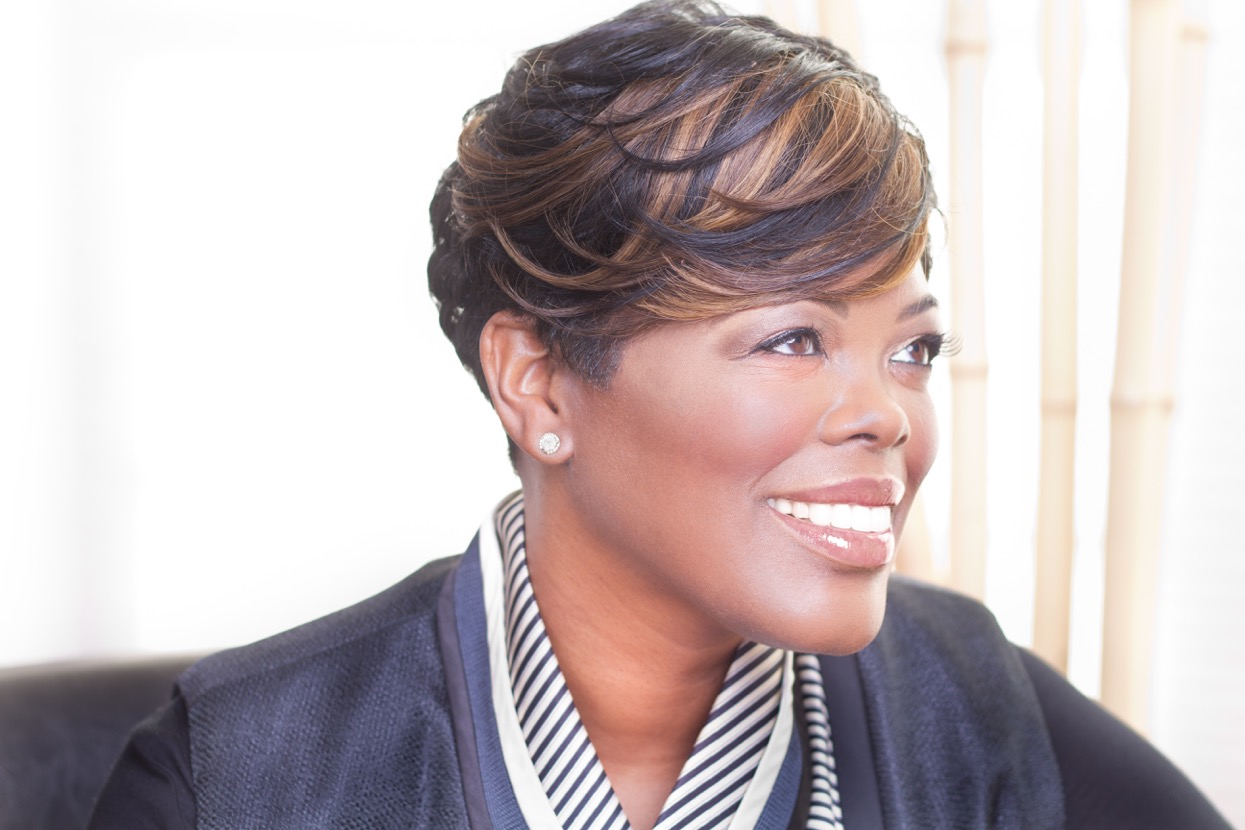
When you start your company at 16, there’s a decent chance you won't be doing the same thing by the time you graduate high school, let alone two decades later. Yet Tina Wells, founder of Buzz Marketing Group, defied that decent chance and remains CEO, founder and captain of the marketing company she started in her teens.
It wasn’t her intention. She didn’t set out to run a company. Rather, the goal was to be a fashion writer, ideally at a Hearst publication. “Seventeen was the dream,” she says.
“Never in a million years did I think I’d run a company or that twenty years later I’d be doing the same thing.” Like the start of many companies, her foray into marketing came from a place a need. As a fashion and beauty loving teen with five younger siblings she knew her parents weren't going to be able to buy her the newest trends. "My parents," she says, "were working their butts off to get us into private school and I knew I needed to come up with a way to make money. That's all it was. I figured out that I could review product and then wear it."
It is a resourcefulness that followed her through high school graduation, into college, and helped her grow BuzzMG's buzzSpotters-- a network of trendspotters that was cast to be a research network. It's a group of those in-the-know "and now and always looking around the next corner." In the beginning the buzzSpotters consisted of Tina and her ten friends. “I remember when we got to 200 people I thought it was too much," she says. There are now 37,000 people worldwide. "Consumers know what they want and want to be part of the process," she says. “That’s something I recognized as a 16 year old. I knew that if my friends and I wanted to be a part of the process of a company making something for us, then other people had to want it too."
"Consumers know what they want and want to be part of the process."
Tweet this.
It's a thought that has paid off. It was during Tina's freshman year at Hood University when someone said to her, “I just paid someone $25,000 to do market research and what you’ve done is ten times better.”
It was perfect timing. When this conversation occurred Tina was taking an Intro to Business class with the head of the Business Department. She went to visit that professor during office hours and told her what she’d been up to the last two years. That professor told Tina to take independent study with her to figure out how to make it a viable business. She did. “That was the launch pad,” she says. “It wasn’t me saying, ‘I have a great idea for a business,’ rather I was being told I was doing something really interesting that could be a business.”
Today, Buzz Marketing Group is an award-winning media communications agency that focuses on Millennials, moms, and multicultural consumers. They deliver data and strategies that drive the marketing approach for clients. “I’ve been doing this so long,” Tina says, “that back when I started it was youth marketing. There weren’t Millennials and there certainly wasn’t the idea of Millennial marketing.”
"So long," gives Tina and her team a certain edge-- even though the technologic landscape around her has moved seismically. “I still reference the business plan I developed with my professor 18 years ago,” she explains. In addition to running her company Tina is the current Academic Director of Wharton's Leadership in the Business World program and is teaching a summer program based on the principles set forth in that business plan. "The basics of building a business are still the same." she says. Adding, "You still need to answer those ten questions every business owner has to answer." (Check back, we'll be sharing those next week!)
What has changed are the tools. She jokes that if she had launched her business now she would have scaled in three months “Technology tools empower us to be better at our jobs every day.” It's technology that allows Buzz to survey people in their network better and provide better results for clients.
“Technology has the ability to do the unbelievable, but my business is built in a very brick-and-mortar way," a foundation she insists has the ability to withstand any tech wave or crunch. "I realized early on build a great business and let the tools empower you. But don’t be so focussed on creating a business for a particular tool."
"Build a great business and let the tools empower you."
Tweet this.
BuzzMG is built in a way that's evergreen-- they are, says Tina, "research first, not creative first, and we're very honest with our clients about that." They develop marketing strategies based on data from consumers of all ages and internally develop original research for the client. "We’ll go to our network of buzzSpotters, conduct an internal survey, and go back to the client with an audit of where their brand is, where it need to be, and what we will do to get to achieve that goal.”
"Because we’re research driven we never go into any situation assuming how a conversation is going to go." It also helps Buzz create campaigns that are likewise evergreen. One of the things Buzz is known for are their lists. They help build the inspiring Levo100 List, which was first released in 2015 and is still being shared today. They worked with American Eagle Outfitters on the aerie beauty and body line, leveraging their proprietary database of influencers to create and educate a curated in-market ambassador program of over 150 ambassadors in every state with an aerie store. Upon re-launch, aerie performed 500% better than projected, generating over $250 million in sales for AE.
It’s an approach Tina believes (and has the results to prove it) gives her a great advantage because her team is always looking at what the consumer will tell them. "We make decisions by looking at all sides. Culture is changing, it’s moving so quickly-- how we’ve survived for twenty years is by sticking to the solid principles of marketing."
“I never want to get caught in hype.” she says. “There are people who say 'this is dead,' 'that is dead,' 'blogging is dead', 'influencer is dead.' 'No.' I’ve said to clients, 'Print is not dead, bad print is dead.' And it should be."
"Print is not dead, bad print is dead. And it should be."
“A great brand is always a great brand," she says. "It’s just the tools that change.”
More from our blog:
Find Out How This Company Is Making It Easier Than Ever to Get Hired
Say buh-bye to the awkward reference phone call.

Photo credit: 9 to 5 Chic
Getting and giving references is a pain. When you need them the most, you anxiously wait for a prospective employer, a recruiter or even a temp agency to get them from your former employers. And you hope your former employers remember you and are in a good mood when they are grading your past performance. Thoughts run through your head like "Will s/he remember me and the work I did?"
On the flip side, your former employer may scratch their head and try hard to remember just exactly all the things you did. So, where does that leave you? Not always in the best place. You may have worked your tail off for a supervisor who left that company before you asked them for a reference.
The whole process is prehistoric. Until now.
LA-based recruiters Emily and Natalie Levine have created Workgrades, an online platform designed to revolutionize the reference checking and giving process.
"Checking references remains an extremely outdated process: people playing phone tag to get in touch with previous employers, references are being checked at the end of an interview process rather than the beginning, and each and every time someone leaves a job" they explain, "their references are being contacted over and over again."
The duo created Workgrades to put the reference checking process in the candidate’s hands.
The way it works is simple:
According the Emily and Natalie they've "made it easy for you to reach out to past employers, verify your work history, and rack up those recommendations." All you have to do is fill out the details of a job you’ve had and click send. "Then your former supervisor can verify that information and even add a reference."
No longer will you need to go back to the same employer over and over again. "If you end up applying for a different job, there's no need to go back and bother your old bosses again. You can save your references and share them with whomever you choose, whenever you choose."
They also acknowledge that "candidates with the best and most transparent resumes and references tend to get hired first." And that "every temporary employee deserves to collect references for assignments well done."
"Candidates with the best and most transparent resumes and references tend to get hired first."
Tweet this.
They say there is a fast, growing trend among temporaries and freelancers to collect routine evaluations about their work performance. It helps build their resumes and stand out from the crowd.
Even for full time candidates, references are an oft overlooked and neglected part of the hiring process. Applicants use the same three people over and over again and they don't always think through who they are using. But references can make or break you landing the position.
A good reference, like a good contact, is invaluable-- especially if it is coming from a person or a company your prospective employer respects. But for job-hoppers or those who stick around in one position for extended periods of time, it's hard to remember the small details that made you a great employee. "No more repetitive calls about someone who worked for you 10 years ago. No more verifications on the same candidate you met last year," Emily and Natalie say. "You might not remember the guy or gal who temped for you last year, but they remember you and they need your reference."
So Workgrades is beneficial to both sides. "Shouldn’t you be able to give references for a former employee’s work when the work they did is fresh in your mind? Imagine being able to give references once – and being done," Emily and Natalie ask. It also provides reference givers the ability to "take their time and write a reference at their pace, instead of simply getting a call from a prospective employer. Imagine applying for a job with your references and recommendations at your fingertips?"
Talk about a reference upgrade.
More from our blog:

Five Ways to Make Your Nonprofit Brand Stand Out
How can you break through the clutter and away from the “me-too” marketing?

by: Julie Cottineau
The world of non-profit marketing has become much more challenging than it ever was. No longer is competition coming from other established non-profit organizations; now, it’s also from individual fundraising resources like Gofundme.com pages and requests on Facebook from friends for support in cause-related marathons, walkathons, etc. In some ways, social media has made it easier for your organization to connect with potential supporters; yet, on the other hand, it’s amplified the noise in the category, making it harder to get noticed and connect.
How can you break through the clutter and away from the “me-too” marketing to get the vital resources your cause needs and deserves?
It starts with better branding. And by brand, I don’t mean a more colorful logo or a catchy slogan. I mean the fundamental story your organization is telling – who you serve, what your promise is, and how you’re different — what I like to call your TWIST.
Here are a few tips you can implement right away for stronger non-profit branding.
1. YOUR BRAND IS THE EXPERIENCE YOU CREATE
Branding has become a buzzword and one of the most overused and least understood terms in marketing lexicon. Many people tend to limit the definition of brand to the logo, name, and website. These are important elements, but the real value of a brand is the experience you create. How you make people feel. It’s this relationship that creates long-term brand ambassadors as they rave about you to friends and family, and even strangers, on social media. How can you provide a better experience to your community? Not just an easier way to donate, but in all aspects of the brand journey. When I was VP of Brand for Virgin, we didn’t just think about the time in the air as the Virgin airline journey. We thought about the whole continuum. From when someone was considering a trip, all the way to when they got home and were telling their friends about the wonderful experience. Where does your brand journey begin and end? And how can you keep your organization top of mind and engage your stakeholders in between core events? Let your brand ambassadors be part of your ongoing story.
"Branding has become a buzzword and one of the most overused and least understood terms in marketing lexicon."
Tweet this.
This could mean providing regular opportunities on social media for them to share their own experiences related to your cause. It could also mean inviting some of your more loyal members in to create the next chapter of your story. What do they hope for the future? What do they love about your brand experience, and what do they wish could be different or better?
2. BRAND BLINDERS GET IN THE WAY. TAKE THEM OFF!
If you printed out the websites of your organization and other non-profits in your sector and covered up the names and logos, could you tell who was who? The answer is probably not. That’s because many non-profits spend too much time trying to look “legitimate” that they end up using the same words and imagery as everyone else. The problem with this is your important message won’t cut through. Take off those blinders and question the “givens” in your category. Look for outside expertise and new perspectives whenever possible.
3. LOOK BEYOND YOUR CATEGORY AND TWIST FOR INSPIRATION
How do you create a brand that has tangible value, is authentic, and stands out? How do you TWIST? It starts with looking at your story from new angles. Cast aside the do’s and don’ts, colors and imagery and so-called best practices of other non-profits in and out of your sector; find fresh ideas by using an out-of-category perspective.
Think of brands that you love in all areas of your life and learn how to use these brands to inform and influence your own branding strategy and execution. Get inspired by a brand like Apple with its empowering Genius Bar, or Starbucks with its focus on customization, or Amazon, who helps customers with suggestions for additional products. How can your non-profit take these lessons and TWIST them for a stronger, more distinctive brand experience? For example, think about the fun moment when you open a Snapple and look under the cap. What kind of inspiring and unexpected message could you include in the flap of your fund-raising mailers that could create a moment of surprise, delight and connection?
4. USE YOUR BRAND AS A DECISION MAKING FILTER
I’ve worked with several large non-profits and one thing I’ve noticed is that many organizations, in an effort to please everyone, take on too many initiatives. Their websites become overwhelming with a hodge-podge of programs and messages and it's difficult to determine what they really stand for. Brand building is not easy. Many organizations have great ideas, but what will make you successful is your ability to bring your idea to life, into the communities you wish to serve. Identifying your brand TWIST can help you say yes to the right opportunities and stay focussed. But just as important, it can also help you say no when necessary to ideas that distract from your core resources and cloud your message.
5. MAKE SURE THE ORGANIZATION "WALKS THE TALK" OF THE BRAND
A clear brand TWIST is also critical for internal alignment and guiding behaviors. Writing and sharing your TWIST within your organization helps ensure everyone from the Executive Director to the part-time helper is presenting a unified vision of the brand. Your employees and volunteers should be able to answer the question, “What does your organization do?” highlighting your unique TWIST. Make the brand story part of the on-boarding of everyone who is a key resource for the organization, including staff, volunteers, and key partners.
"Make the brand story part of the on-boarding of everyone who is a key resource for the organization."
Tweet this.
One of my Brand School graduates makes brand a part of their weekly staff meetings. He repeats the core brand promise and values and leads an interactive discussion on how each individual is living the brand promise in their specific role and what kind of actions they should stop or start doing to make sure their actions, and not just their words, are bringing this promise to life. Your brand promise is not something that should be sitting on a plaque in a conference room. It should be felt in every interaction and every brand touch point.
A strong brand can be a non-profit’s secret weapon. It can help you make the most of limited resources and share your story more effectively with those who can help make your mission a reality.
Julie Cottineau is the bestselling author of Twist: How Fresh Perspectives Build Breakthrough Brands, founder and CEO of BrandTwist, and creator of Brand School Online, an actionable branding class for entrepreneurs, small businesses and non-profits. She is the former Vice President of brand for Richard Branson’s Virgin Group and served in executive positions at Interbrand and Grey Global. She has taught integrated marketing communications at Columbia and Cornell universities, and is a frequent commentator on brand strategy and innovation in top business media.
More from our blog:

The Three Steps To Overcoming Creative Burnout
It isn't so much about a lack of creative ideas as it is an overabundance of them.

Let's talk about the dreaded Writer's Block for a moment. Whether you're a freelance photographer, designer, or a writer (who falls into the traditional trap of the "Block" terminology), you're probably all too familiar with the notion of your idea bank running dry. How do you combat it? How do you tap back into the creative juices that got you started on this crazy, wild solo ride to begin with?
Often, it's a whole lot easier said than done, right? You expect more from yourself, and certainly the dozens of clients and brands knocking down your inbox's door expect your peak performance at a moment's notice (no matter how spread thin you are)—so why does it often feel like we're grasping at straws to make those daily creative moments feel truly alive?
In this modern day and age, creative entrepreneurs are feeling burn out harder, faster, and more frequently than comparable counterparts from ten years back. Blogs were only just taking shape back then, plus news and general information was attained at a speed that we could all follow along with. But now, with the advent and exponential growth of social media, it's alarmingly easy to give up on voicing creative ideas altogether because of how quickly it disappears into the masses (raise your hand if you've all but given up on Twitter because of the lightning fast, unceremonious burial of a thought!)
In this modern day and age, creative entrepreneurs are feeling burn out harder, faster.
Tweet this.
Writer's Block, then, isn't so much about a lack of creative ideas as it is an overabundance of them. I can't even begin to list all of the lightbulb moments and ideas I've had this month that were quickly dashed because so-and-so had already done it, or because the trend or motif was already old news. While we were in school, this idea trumping might have cost us a letter grade, but now it costs us a paycheck.
Contemporary creatives are being asked to not only leap ahead of the times and trends, but to be one step ahead of their cohorts, too. To quote myself from my last article: I'm exhausted just thinking about it.
The good news is that, like all things, you can adapt to these changes and you can triumph over your Writer's Block, however it manifests itself in your daily routine as a freelancer. But you have to think—get this—creatively.
Sure, I could spout off a list of ways to jump start this ideation, but it's just not going to be enough. Frankly, chasing the trends in the hopes that you'll miraculously be able to outwit one of your peers with an idea first (said with the utmost respect for my brilliant fellow bloggers, by the way) will only set you up for disaster. Instead, you have to think outside the box—like miles and miles outside of the box.
Writer's Block isn't so much about a lack of creative ideas as it is an overabundance of them.
Tweet this.
MAKE NEW FREELANCE FRIENDS
Start by limiting your check-ins with your peers—at least your professional check-ins. Make social calls and continue to personally build one another up, but the competitive instinct inevitably weasels its way in if you start talking about business ideas.
Instead, consider making friends outside of your industry and add their links to your daily blog roll. If you're a writer, follow along with a successful graphic designer, or if you're a photographer, get your creative inspiration from a writer who puts the same type of life moments into words rather than .JPEGs. Getting a truly fresh perspective from someone who's not even in your box is the first step toward killing Writer's Block.
Consider making friends outside of your industry and add their links to your daily blog roll.
CREATE THE NEXT TREND
Secondly, don't fixate on how you can cash in on the trends. Instead, brainstorm ways to create the next trend. Again, easier said than done, but it is possible. Intentionally ignore Pinterest for a week and travel, talk to new people, shop at a store you don't usually stop into. Slowly but surely, those trend-formulated blinders will slide off and you'll spot something new to build on.
Don't fixate on how you can cash in on the trends.
Tweet this.
TRY, TRY AGAIN
Finally—and this may be the hardest of all—dump those old ideas and run. I sidle right up to Writer's Block for a long, hard cuddle every time one of my ideas falls flat. I fixate and dredge in the disappointment for days and, inevitably, that negative place is where all of my good ideas go to die. The effect is cyclical, repetitive, and heartbreaking. Instead, I'm working to combat the process of going from idea-to-disappointment-to-fixation-to-rebuild to idea-to-discard-to-idea-to-success.
I'm working to combat the process of going from idea-to-disappointment-to-fixation-to-rebuild to idea-to-discard-to-idea-to-success.
As a freelancer and the hub of your entire business, disappointment is inevitable, but wallowing in it doesn't have to be. You've definitely heard this before, but it bears repeating: oftentimes, the very best ideas are born out of failure and the ability to promptly pick yourself back up again.
The best ideas are born out of failure and the ability to promptly pick yourself back up again.
Tweet this.
- - -
Ultimately, the Writer's Block plight has a new face in 2015, and it will have a new one come 2016 (if it's even able to wait that long). But we're freelancers for a reason, and that is because our creativity and our bright ideas are worth tapping into and sharing. Don't give up and don't give in—we'll all make it to the other side with brilliant, original, worthy-of-celebration ideas to show for it.
An original version of this article appeared on Career Contessa. Written by Carrie Waller.

The 4 Rs You Need to Recover From a Mistake
The logistic ninjas of Grow Marketing break it down.

Photo Credit: Musings of a Curvy Lady
By: Cassie Hughes & Gabrey Means, Grow Marketing
Anyone who has dared greatly, innovated or made things better has also known failure. When we first set out to create our own experiential agency, we may not have known what we were doing, but we were crystal clear on what we wanted. Neither of us came from an agency background but we knew what was important from the client’s perspective and that we had something different to offer than what we were seeing in the marketplace. We knew there would be a lot of mistakes along the way and rather than shying away, we faced them head on.
"Anyone who has dared greatly, innovated or made things better has also known failure."
Tweet this.
Everyone makes mistakes. We’re only human. But how you learn and grow from them can help you better prepare for challenges ahead. Whether in your personal or professional life, here are a few tips to help you bounce back from a mistake and walk away stronger and smarter.
RECOGNIZE
Early in the life of our agency we took on a project where there were red flags we didn’t pay attention to because we were so eager to prove ourselves as a new entity, even though we had a long track record of success in our careers. It was a huge national brand in a category we were dying to break into so while our intuitions were screaming no, our egos kept saying yes. The client was unrealistic but we thought we could turn her around. We couldn’t have been more wrong. In addition to grinding us on every budget and continually asking for new ideas (free of charge) eventually she actually became verbally abusive. We got through the project and delivered but at a cost to ourselves and our team, who were left feeling deflated, unappreciated and exhausted.
RECORD
We are big believers in intention and writing things down. When we make mistakes we process them by writing down a list of what we learned and would do differently the next time. This was crucial to our process of avoiding bad project/client matches in the future. While it may sound intimidating to see your mistake recorded in black and white, it's actually quite liberating. When possible, sharing your list with a friend or partner who can keep you from being too hard or easy on yourself helps to keep the process honest and, therefore, most useful.
REPAIR
If you want to create an environment where people are inspired to be their best, they have to feel safe to fail. If they don’t, they’ll engage in all kinds of unproductive behaviors that only compound the mistake, from covering up to placing blame on others. Meanwhile, time ticks away and the impacts are increased. Encouraging people to own their mistake and take an active part in the solution means resolution comes quicker and the individual is left with the empowered feeling of having helped to repair it versus the deflation of screwing up, which only makes people feel and think smaller. To repair the damage to our team from the verbally abusive client, we owned up to letting our eagerness override our instinct and shared how we would avoid such situations in the future.
"If you want to create an environment where people are inspired to be their best, they have to feel safe to fail."
Tweet this.
RESOLVE
One of the most important parts of recovering from a mistake is knowing when to take a deep breath and let it go. Continually reliving mistakes is unproductive and paralyzing. Once you have done the work to repair the mistake and can clearly articulate your learnings, you should trust you have learned what that mistake has to teach you, freeing you to move on.
The mindset of recovery and resolution is an important one to build. It allows people to continue to want to take on new challenges and find new ways of doing things-- which, are really powerful assets. A culture that rewards creativity and trying new things – without punishing the misses – fosters a team of savvy problem-solvers who can think on their feet and are energized, instead of paralyzed, by new challenges.
More from our blog:

What Do Your Jewelry Choices Say About You As an Employee?
You don't need bling to be a boss.
Ever wonder what your jewelry choices say about you as an employee? Whether you’re slaying Keynote proposals in a statement necklace or you’re a simple bangle kind of boss, we’re breaking down jewelry choices and work styles with Simon G. Jewelry.
There is a rapport between what you put on and how you go about your day.
THE STRAIGHT SHOOTER IN THE SIMPLE BANGLE

A simple bangle says you like to get into the office early and clear out your inbox ASAP. It’s a no-fuss approach to business and dressing that says, I bang that drum, but with a bangle that doesn’t get in the way.
With an arresting intertwined design of white and rose gold and white diamonds, you’re also a bit of a dreamer who takes chances by bending the rules a little bit. You’re not afraid to mix metals and you’re certainly not afraid of mixing it up in the conference room, stating your ideas with confidence; two-tone means you’ve got ideas in every hue.
THE GO-GETTER IN THE CLIMBER EARRINGS

Call it a hike, a journey, or a climb, you’re all about getting to the top. But as dedicated as you are about going after your dreams, you also make sure to reach down and to the side as you go.
These climber diamond earrings mean you’re a go-getter, you want to be noticed, and you make a statement with both your earrings and your handshake: firm and no-nonsense.
You know that not everything you do will be a success but that never stops you from trying.
You like talking strategy and growth with your team and you’re constantly brainstorming innovative ideas for expansion. In 18k white gold with floral pattern you’re classic but crafty and nothing will hold you back.
"You’re classic but crafty and nothing will hold you back."
Tweet this.
THE WORKER BEE IN THE SIMPLE DIAMOND PENDANT

You work out at 6am. Are in the office by 8:30, and you’ve corresponded with more people before noon than most people do in a day. You’re practical, fast, and you like jewelry that you don’t have to think about— but know is always looking stunning.
This is the kind of necklace you can wear morning, noon, and night. In part because you’re always heading from the office to work drinks!
You never have to take it off (and you often don’t). Don’t underestimate it’s simplicity for simpleness. This necklace works hard for you and you need something that works like you do: around-the-clock.
Like they say: you want something done, give it to a busy person.
THE OFFICE UNICORN IN THE RIGHT HAND RING

You are always there to jump in, take on a challenge head-on, and come up with ideas that benefit the whole team. If someone is out sick, you’re helping.
If a co-worker is hitting a wall with creative ideas, you’re staying behind to spitball. You’re a true right hand to everyone in the company and it’s an attitude that doesn’t go unnoticed. It has helped you advance your position in the past and will continue to do so.
This spiral ring is comfortable and resilient due to the design of tiny, almost unnoticeable joints in the solid 18k rose gold design. Which mirrors your personality precisely. The diamonds add a bit of sparkle— just like you add to the workplace.
More from our blog:

5 LinkedIn Hacks To Land You A Job Interview
You have your resume up to par, but how are you maximizing your LinkedIn for your job hunt?

Original image by @lisadengler
LinkedIn. A bit of a beast but also the best way forward when you're on the job hunt. Here are some hacks most of the other candidates aren't using.
1. USE THE "SEE WHO'S VIEWED YOUR PROFILE" TOOL TO YOUR ADVANTAGE
We know. It's embarrassing. But you can use that creepy tracking system to get your name on your interviewer or future manager’s radar. When you apply for a job, search for your possible interviewer, future boss, or recruiter's LinkedIn profile. (Make sure your profile viewing settings are set to your name and headline before you do this, otherwise it won’t work.) When your name pops up on their “See Who’s Viewed Your Profile” section and then again in the resume pile, you increase the chance that they'll take a second look because they’ve seen your name before. During my job search, I looked up the recruiter, the HR manager, and my potential superiors. Two of them returned the profile view and a week later I got an email for an interview!
"When you apply for a job, search for your possible interviewer, future boss, or recruiter's LinkedIn profile."
Tweet this.
2. ACTUALLY UPDATE AND POST TO YOUR PROFILE
It’s great and all when that potential interviewer checks out your profile, but if you haven’t updated your experience or changed your profile photo to something more professional, it's not going to matter. Though this isn’t a totally “unknown hack,” it’s definitely something applicants frequently miss on their to-do list. Before applying, update your experience, but leave out any unnecessary jobs—your high school babysitting gig probably isn’t as relevant as some of your more recent experience. {click to tweet} When I started my job search, I had narrowed down what I wanted to do so I removed some of my irrelevant experience—like my bartending and student desk jobs—since they didn’t apply to the jobs I was after.
"Before applying, update your experience on LinkedIn, but leave out any unnecessary jobs."
Tweet this.
3. REWRITE YOUR HEADLINE
“Student at the University of Something” definitely isn’t as appealing as “Digital Communication and Millennial Marketing Specialist.” Make yourself sound intriguing, hireable, and knowledgeable. From my experience, standing out as a student or recent grad can either help or hurt you, so if you leave that out of your initial impression via your headline, you have a better chance of showing off your skills and experience without being prejudged based on your graduation date. (Side note: don’t ever lie about your graduation date.) I chose Media Communication Professional since it rounded up my experience in communication and digital media while also proving that I knew what I was doing without overstating my experience.
4. JOIN GROUPS AND CONNECT WITH RECRUITERS
The best way to connect with other industry professionals and recruiters is to join relevant groups—and actually participate in them. There are hundreds of groups for every industry and even general groups designed for meeting recruiters (see: The Recruiter.com Network). I’ve joined countless groups related to my industry, my interests, and even alumni groups from companies and schools I’ve been involved with not only for networking, but also for research and educational purposes. A lot of people post relevant industry content (of their own and shared) that helps me continue my education and networking post-job search. Go a step further by being one of the people posting content. Position yourself as an industry professional right away and watch those future recruiters come crawling. {click to tweet}
"Position yourself as an industry professional right away and watch those future recruiters come crawling."
Tweet this.
5. ASK FOR RECOMMENDATIONS
You can't just sit around waiting for things to come your way. Don’t get me wrong, it can feel awkward to ask someone to post a ton of nice things about you, but it’s going to get that recruiter to call you in for an interview. When they see a variety of fantastic recommendations from your coworkers and superiors, they’re going to know you’re a superstar and offer you an interview asap. To get around that awkwardness, pay attention to the way you word your request and who you ask! Make sure you only ask someone who has actually worked closely with you and can vouch for your skills. I asked my immediate supervisor and simply said that I valued her opinion and that I would be honored to have her recommendation. It’s that simple! Whatever you do, don’t use the default message provided by LinkedIn—it’s impersonal and comes off quite rude! If your recommender is going to take the time to write something for you, you should take the time to ask kindly.
An original version of this article appeared on Career Contessa. Written by Laura Bauman
More from our blog:

Free Download: Make Your Resume Land You The Job Of Your Dreams
Time to spruce up your resume with Above The Glass' tips.

You are finally ready to make the leap for your next career move, but can you remember the last time that you updated your resume? Does it still have that summer job that you took in your junior year of high school?
If so, it's time to dust off the cobwebs and make sure that your content, language, and presentation are all in line to make an impression. We asked our friends at Above the Glass what business owners look for in candidates, and what makes them stand out.
Enter your name and email below to get access to Above The Glass' Resume Checklist, and get started on having your resume land you the job of your dreams!

How to Use Public Speaking to Build Your Brand
Is this thing on?

Have you ever looked at speakers on a stage and thought – how do I get there? How can I become confident, clear on my message, have the courage to stand in front of so many people and share what I love and what I know?
Well you’re not alone. As we move into the era of what I like to call the ‘Power Personal Brand’ where we follow people who have something to say and who say it so well, the personal brand has become the visual connector that we have to people and content that we love. In this digital age, having something to say and saying it well can be the difference between mega success and getting lost in the crowd.
Now when I talk about public speaking and presenting I think of it as speaking to a group from 2 people to 200,000 people. It doesn’t really matter the size, your ability to impact and connect with 1 person is just as important as the masses.
So if owning the stage is something that you would love to do here are some of my tips on presenting with power and purpose and getting the gigs that you want.
BE CLEAR ON YOUR MESSAGE
One: decide what your message is. This may sound simple, but what will you talk about exactly? If you can decide on 1 – 4 topics that you cover then it makes easy for event managers and hosts to know if you’re right for their business, event, and audience. If you’re able to give a clear outline then it makes for an easy decision. I’m sure that you already have a number of topics that you focus on in your business, so go with those. Consistency of message across all your platforms is what builds brands, so bang that drum!
"Consistency of message across all your platforms is what builds brands, so bang that drum!"
Tweet this.
SHOUT IT OUT
If you want to be a speaker then let people know by creating a speakers page. Creating a speakers page means that it’s easy for those who come to your website or blog to see that you’re a speaker. They can see what you talk about, where you’ve spoken before, and they can see what others have said about their experience with you as a speaker.
TESTIMONIALS
If you’ve spoken before and have testimonials then those are also a great thing to provide event organizers. Knowing that you’re an engaging speaker whose personality is congruous to my brand is really important to me as well as an event organizer. My brand personality is bold, fun, and focused on educational content, so my speakers need to be like that as well. If you’re able to show the type of content you share and the way in which you share it then you’ll appeal to the right event organizers.
GETTING STARTED & FINDING GIGS
So where to start? There are a couple of things you can do to get started. One of the easiest things to do is to run your own event. This means that you could have from 5-50 people, whatever works for you and test your message and talk it out. This could be free or charged. By doing this you’ll get a feel for what works for you when you’re speaking and what doesn’t. It may also mean that you’re able to get testimonials for your speaker’s page.
CONNECT WITH EVENT ORGANIZERS
If running an event sends you into cold sweats then it’s time to connect with others who run events and see if you’re the right type of speaker for them. I’ve spoken in paid and unpaid workshops and events for other women who run networking groups and events and that’s worked well for me. As an international conference speaker I also connect with those who run large scale conferences to ensure that I build a relationship with them for future events.
GOOGLE IT!
I secured a speaking event this year by Googling – ‘speaking opportunities in Melbourne’ and applying when I saw one that I thought was a good fit for me. Not only did I make some awesome connects at this event but I also gained a number of new clients. The event was unpaid but is still benefiting my business today.
PROMOTE YOURSELF
I saw a video on Facebook recently of someone advertising that they are open to speaking at events. It shared some information on where they had spoken before and what they speak about. Now you may not want to go that far (or maybe you do) but like anything in your business, if you want to build up your reputation in a certain area then you need to be out there sharing it. Social proof is always a great way to do that. When I get the professional photos back from places that I’ve spoken then I put them up on my social channels as well as my website to build up the social proof of what I’ve done. I always connect it with a testimonial where I can so that there is a visual as well as praise for a job well done.
HAVE A GOAL
With any speaking gig I do, I have a clear goal. The goal is convey a specific message, to connect with certain people, to entertain, educate or inspire. Know what your goal is and ensure that you set yourself up to be successful in achieving that goal. I’ve worked with women who have no idea what they want to get out of the experience and therefore miss an opportunity.
Speaking is one of the quickest ways to reach a large audience in a single instant, so if it’s something you’re looking to do, I would say go for it.
I’d love to know - what’s your biggest fear, worry or barrier to speaking?
An original version of this article appeared on Blog Society.
Suzanne Chadwick is a Business & Brand strategy coach and the CEO of The Connection Exchange providing coaching, training & events for women in business and supporting them to build their business, brand and bottom line. As an international conference speaker and trainer, Suzanne also coaches women to create the ‘Power Personal Brand’ through public speaking and Owning the Stage. You can find and connect with Suzanne on Facebook and Twitter.
More from our blog: