
Mentor Monday: 3 Things a Resume Expert Wants You to Know
Get a sneak-peek into our Insiders membership monthly perk.

Photo Courtesy of: Create & Cultivate
Did you know that Create & Cultivate has an Insiders membership program? There are SO many perks to being a member but one of our most popular is the monthly mentor sessions. These monthly digital videos give members some serious facetime with experts across various fields, and the opportunity to get personalized answers to all of their pressing business and career-oriented questions. Members can register for these informative live streams ahead of time and send their own questions to be answered in real-time.
Recently, professional resume writer and personal branding expert Michele Lando hosted a mentor session for our Insiders to answer all of their burning resume questions. As the founder of Write Styles—a provider for personal branding through curating clients’ resumes and self-confidence while navigating the workforce—Lando is very well-versed in the do’s and don’ts of resume drafting.
Here are three key takeaways from the mentor session to apply to your own resume today:
1. Less is More.
“You don’t want your document to be so over-the-top that someone doesn’t actually focus on the information.” In this portion of the Mentor Session, Michele Lando is referring to the design and layout of your resume. When it comes to color palettes or eye-catching graphics, Lando recommends double-checking that your design enhances the information, rather than taking away from the information. After all, you are promoting your own skills, not your aesthetic eye (unless you are applying for a graphic design position, in which case Lando says there are exceptions).
2. Your side hustle may be worth leaving off.
“Anytime you go to include anything on your resume … make sure it sticks within the focus you’re trying to highlight and the skillset that you’re trying to highlight.” Here, Lando honed in on tweaking your resume based upon the position you are applying for. For example, if your side hustle does not support any skills that could be useful to have for your potential new job, it may be better to just leave it off. Additionally, Lando points out that if you’re applying for a job that requires a large time commitment, it may be smarter to remove your side hustle because people may be concerned you do not have room in your schedule to take on another career.
3. Don’t be afraid to step into a new industry.
“Keep an open mind. When you’re trying to switch industries, I think the first thing to consider is that it’s not all-or-nothing. It is one step at a time.” If you’re trying to transition careers but feel like your lack of experience in that field is leaving you feeling less qualified against other candidates, Lando does not feel that this is a cause for serious concern. Instead, she recommends that you start taking informational classes so that you can display on your resume that you have at least a baseline understanding of what you are wanting to transition into. Also, she suggests using your current job to your advantage in the meantime. See what pockets of your current workspace you have yet to explore, and ask to sit in on projects, take on different roles, and try to explore other opportunities.
Be sure to sign up for our program sooner than later to hear who will lead the next mentor session! For more information on our membership program, check out our FAQs page.









"We're Stronger in Numbers" and Other Magical Moments From the First-Ever Polka Dot Summit
Career advice from Alex Morgan, Lindsay Peoples Wagner, Katie Sturino, and more.



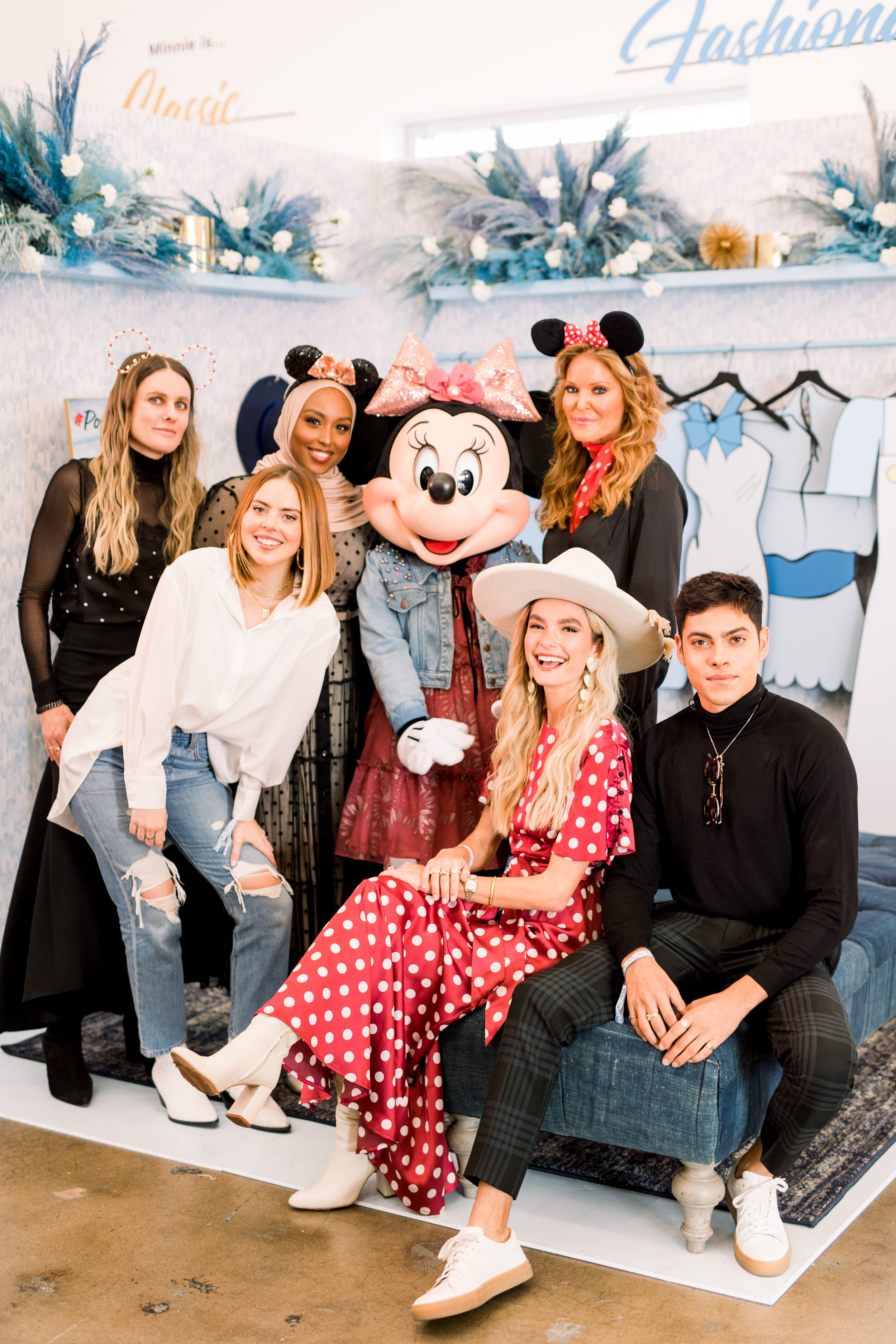
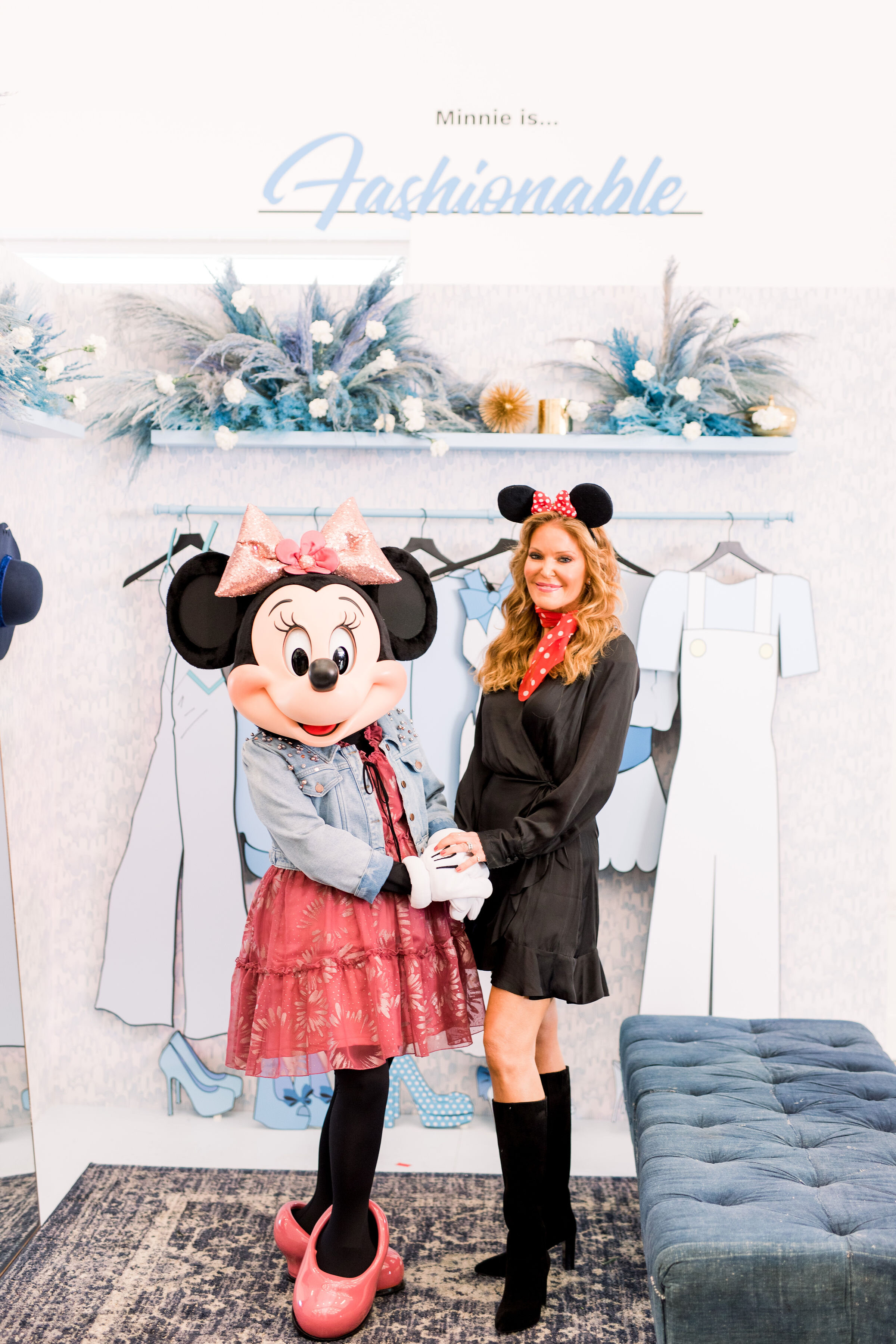
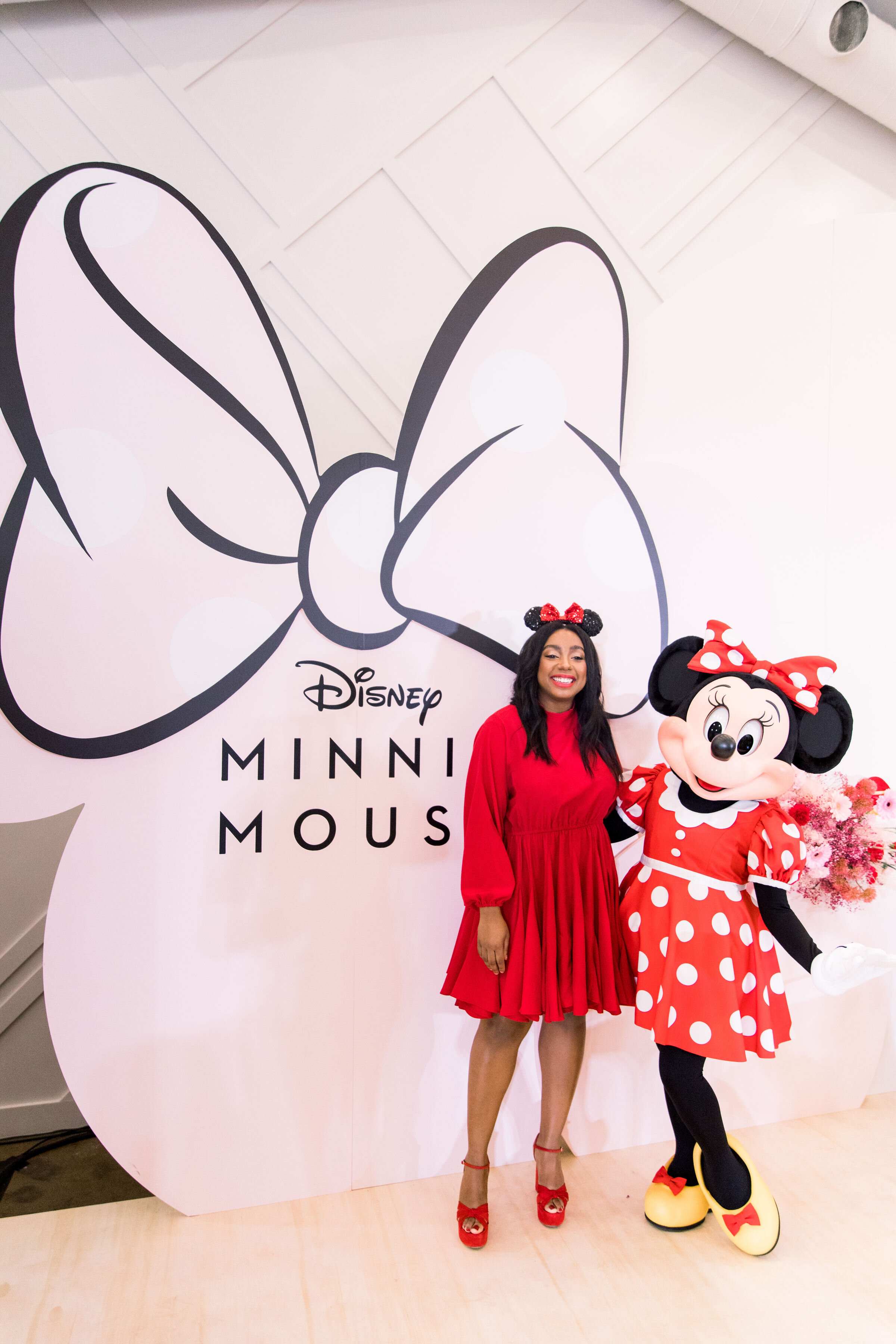
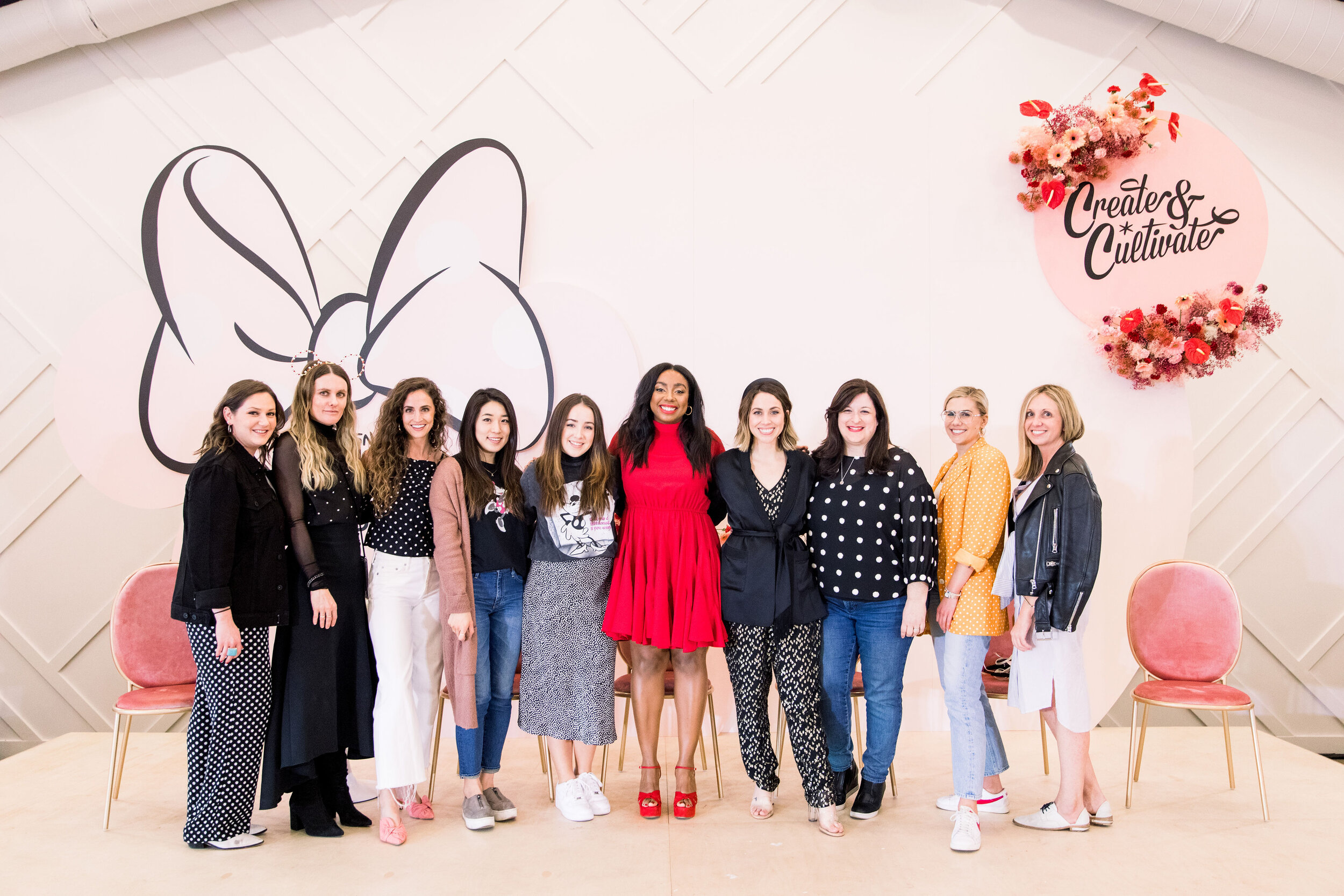
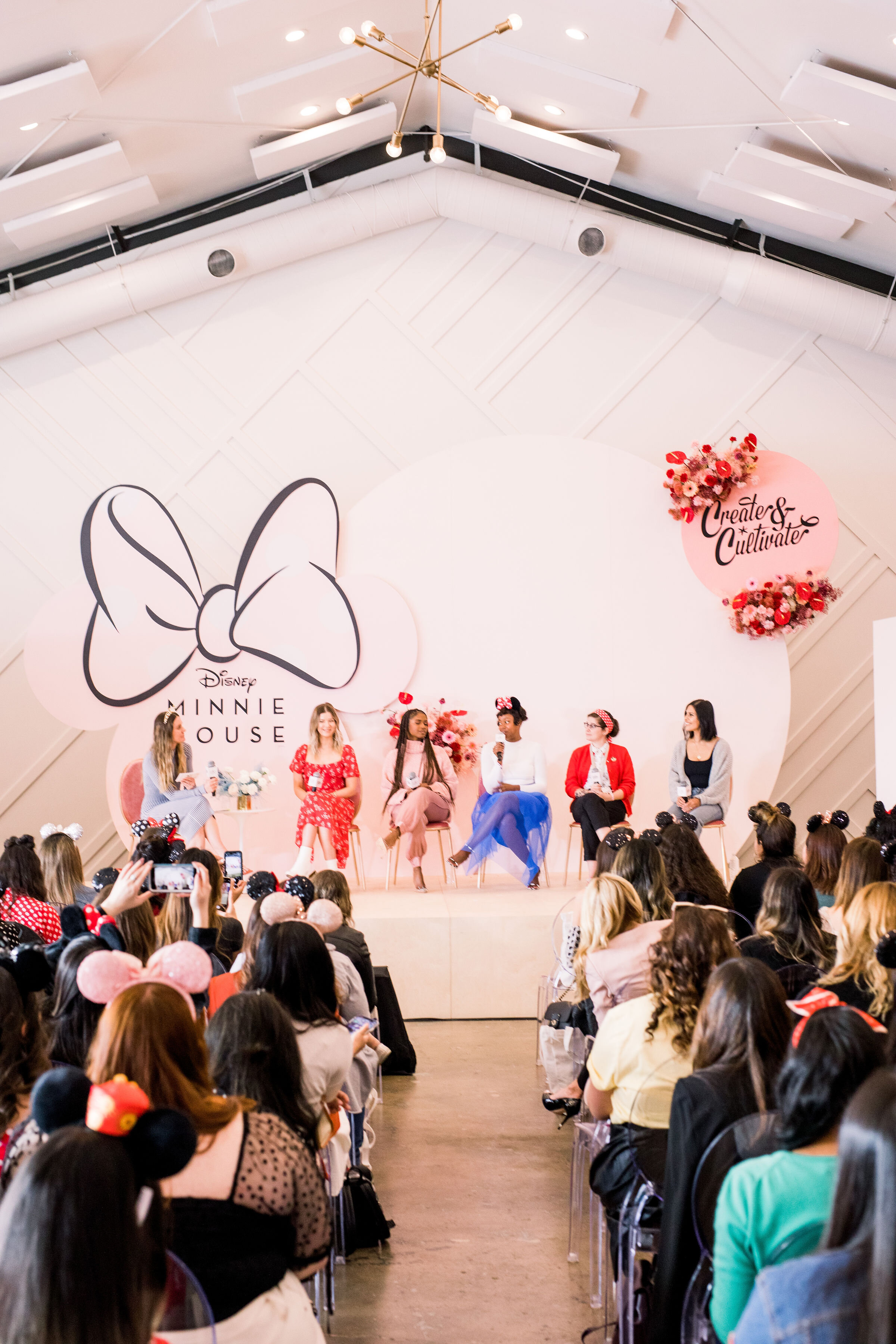
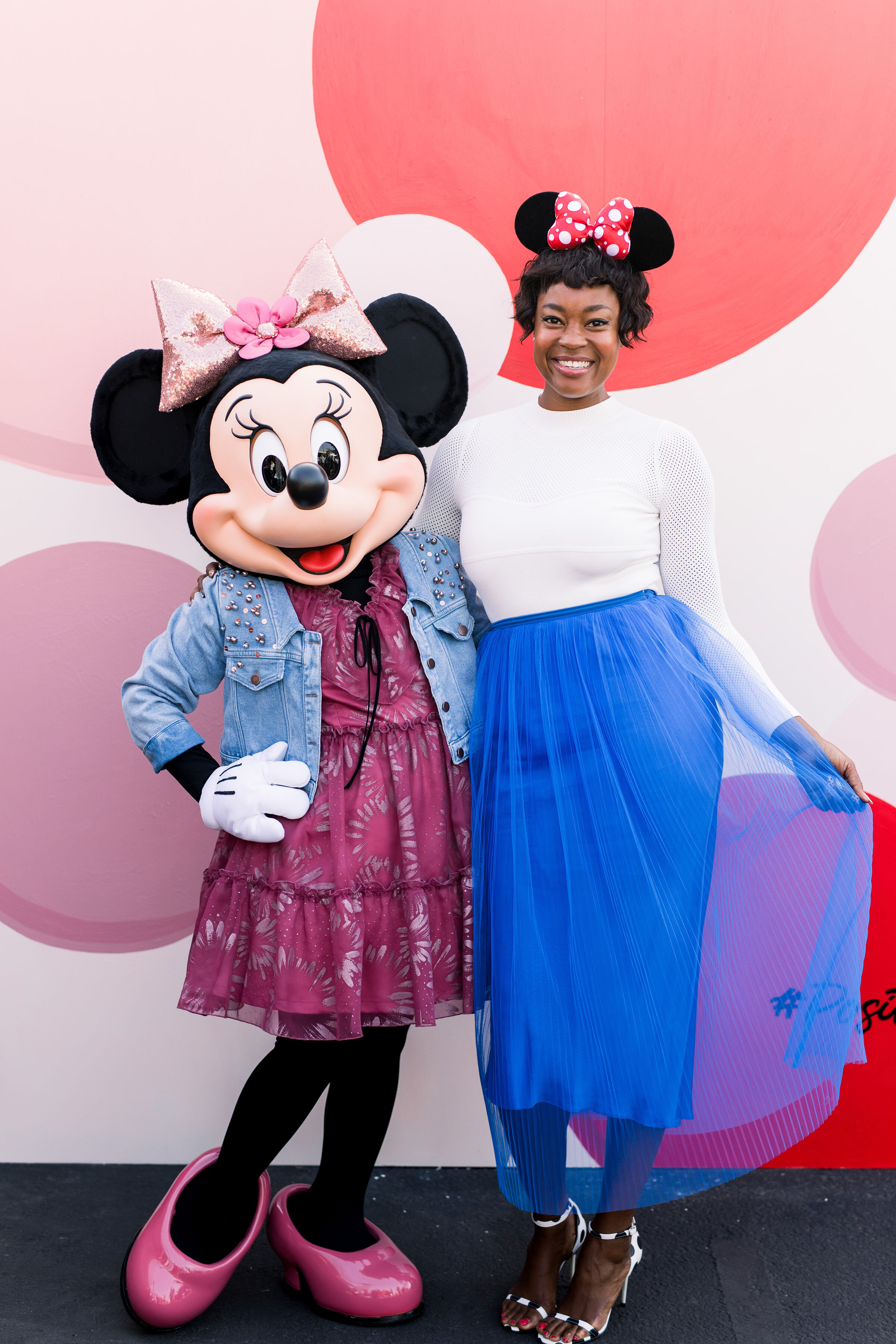
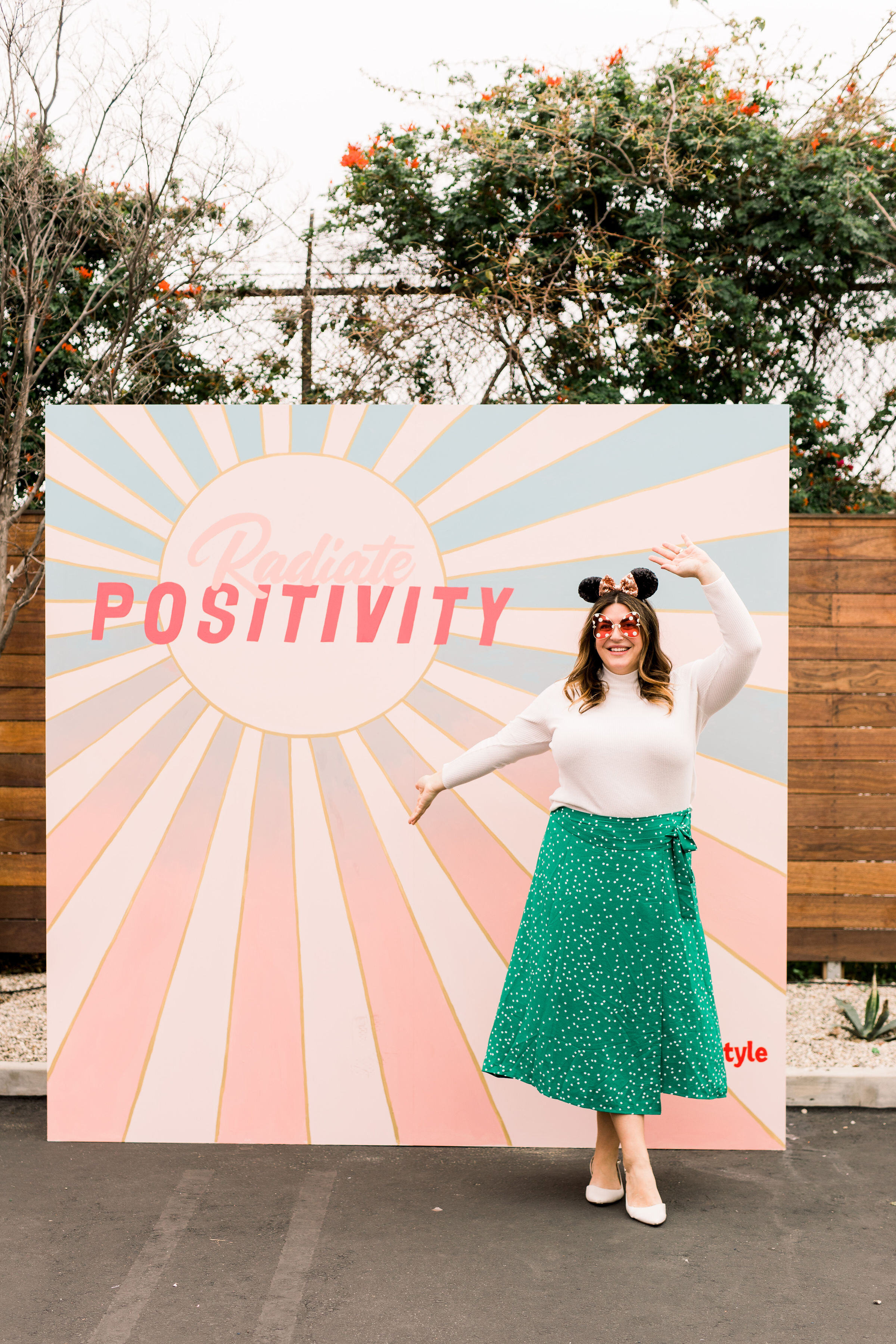
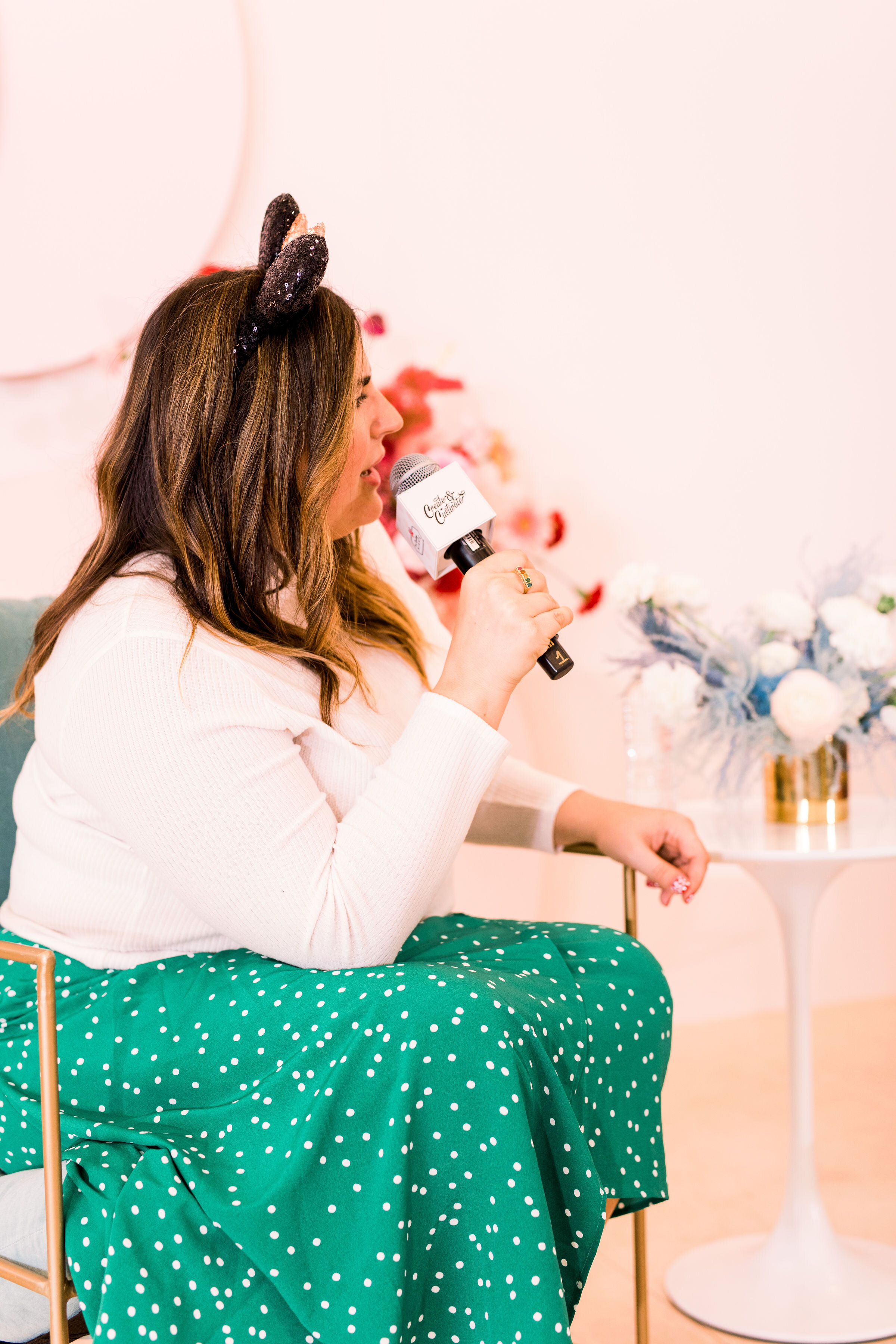
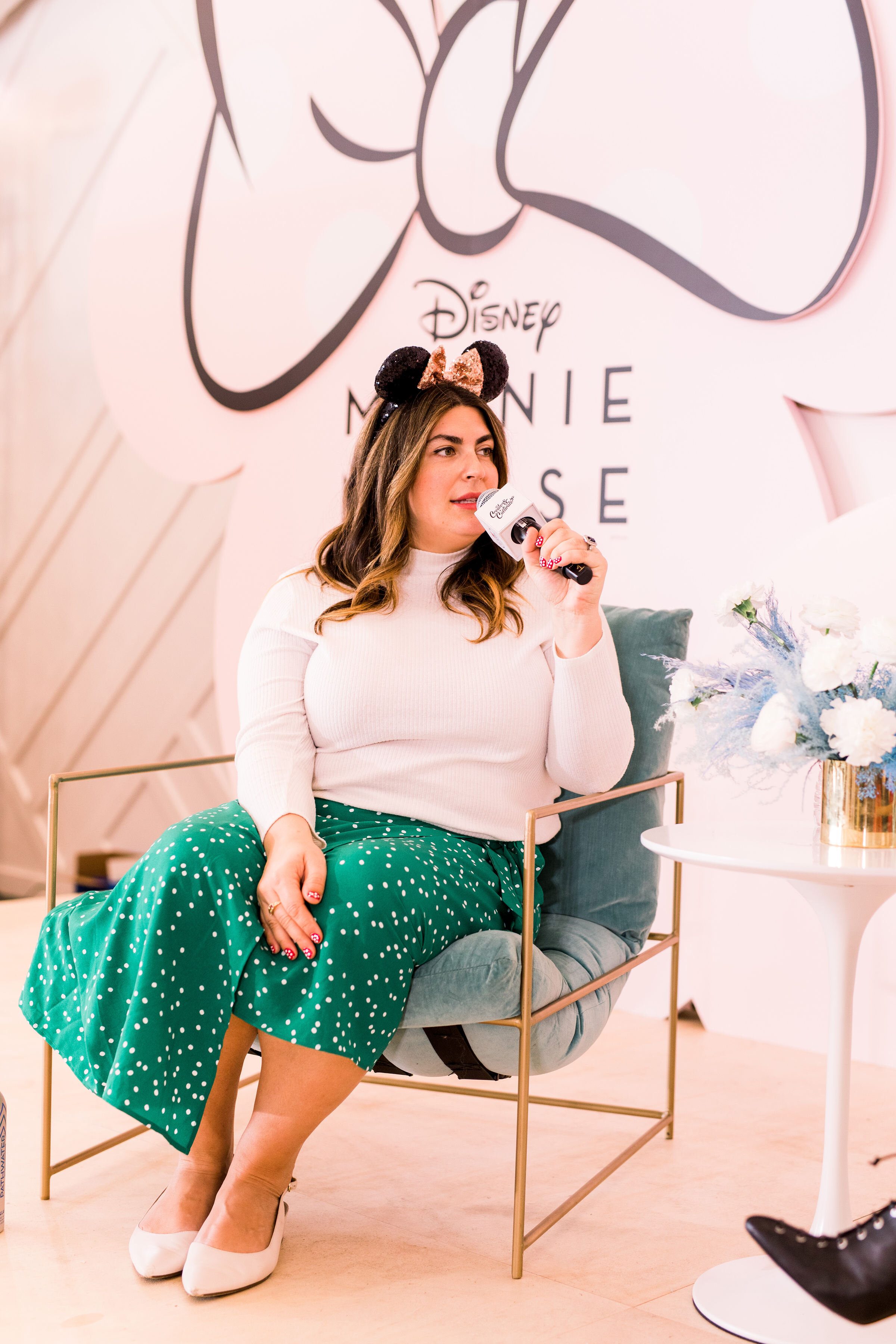
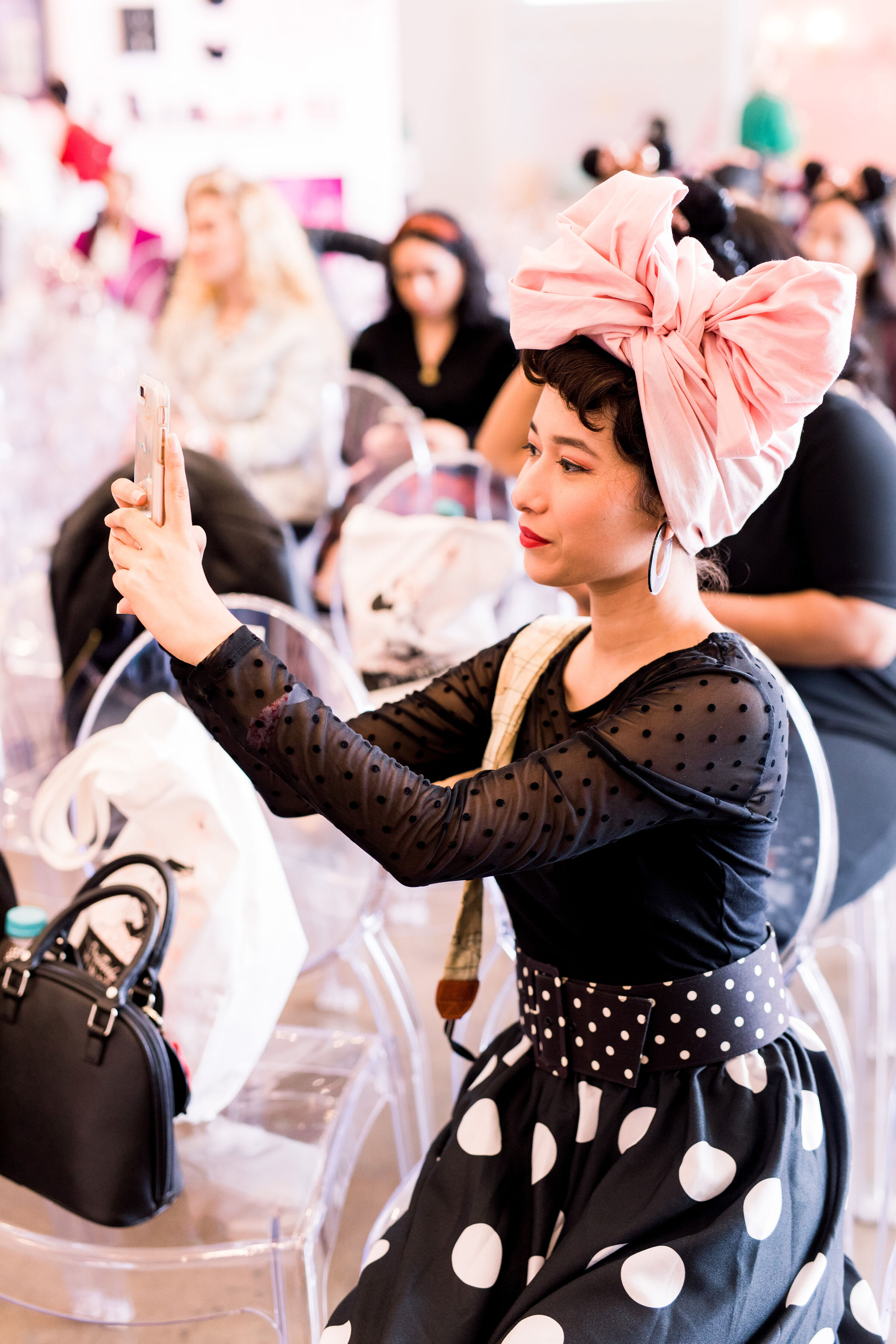
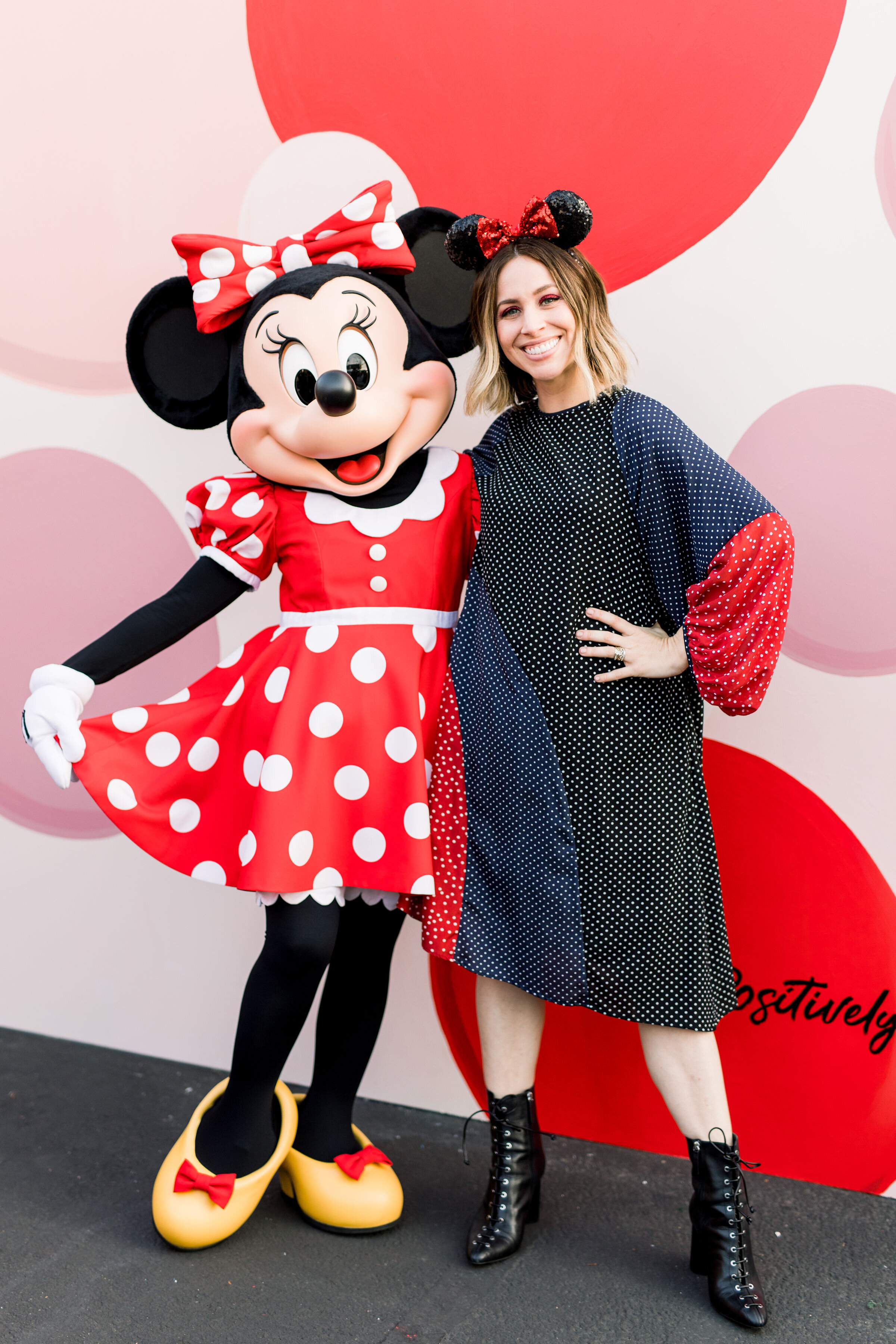
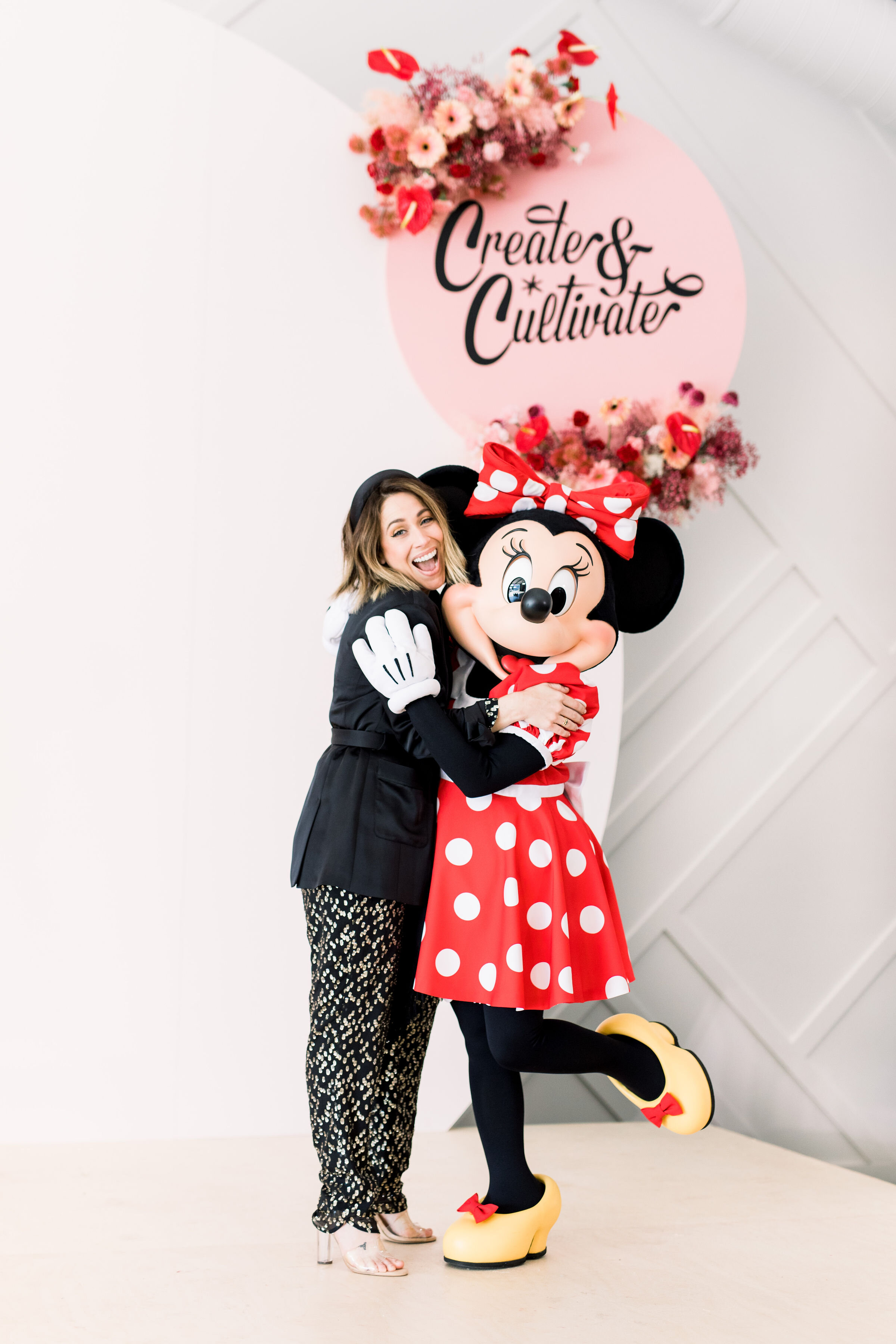
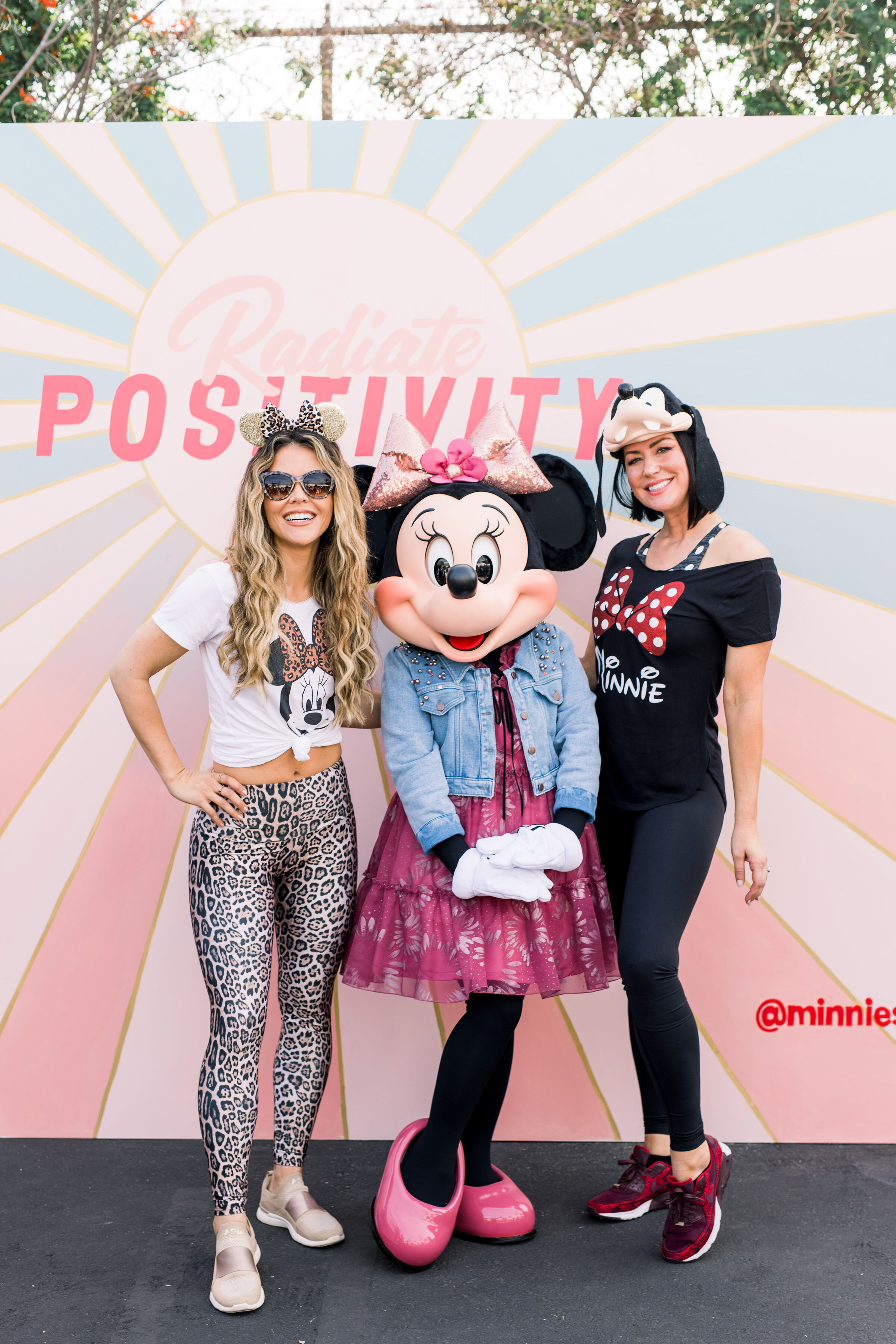
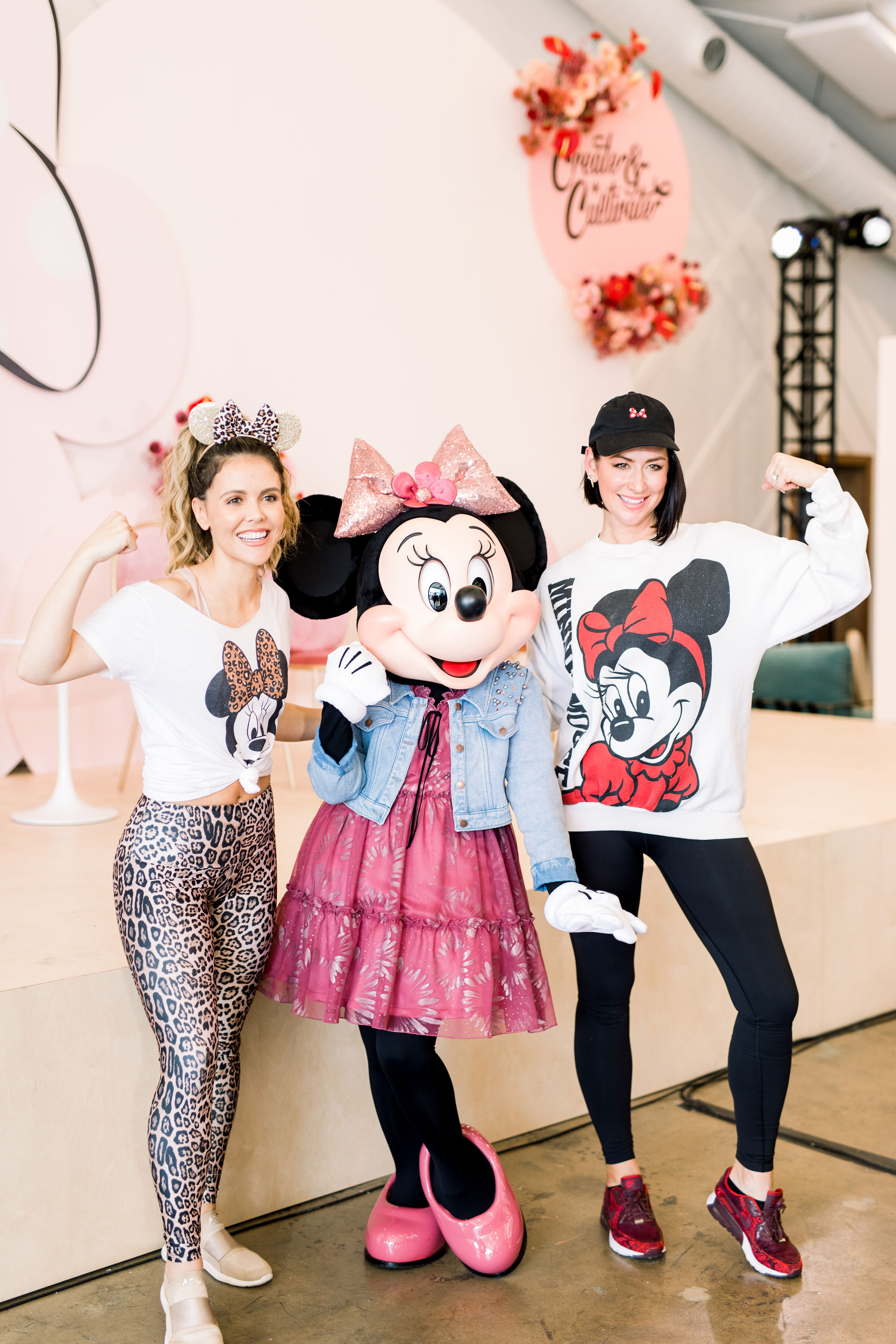
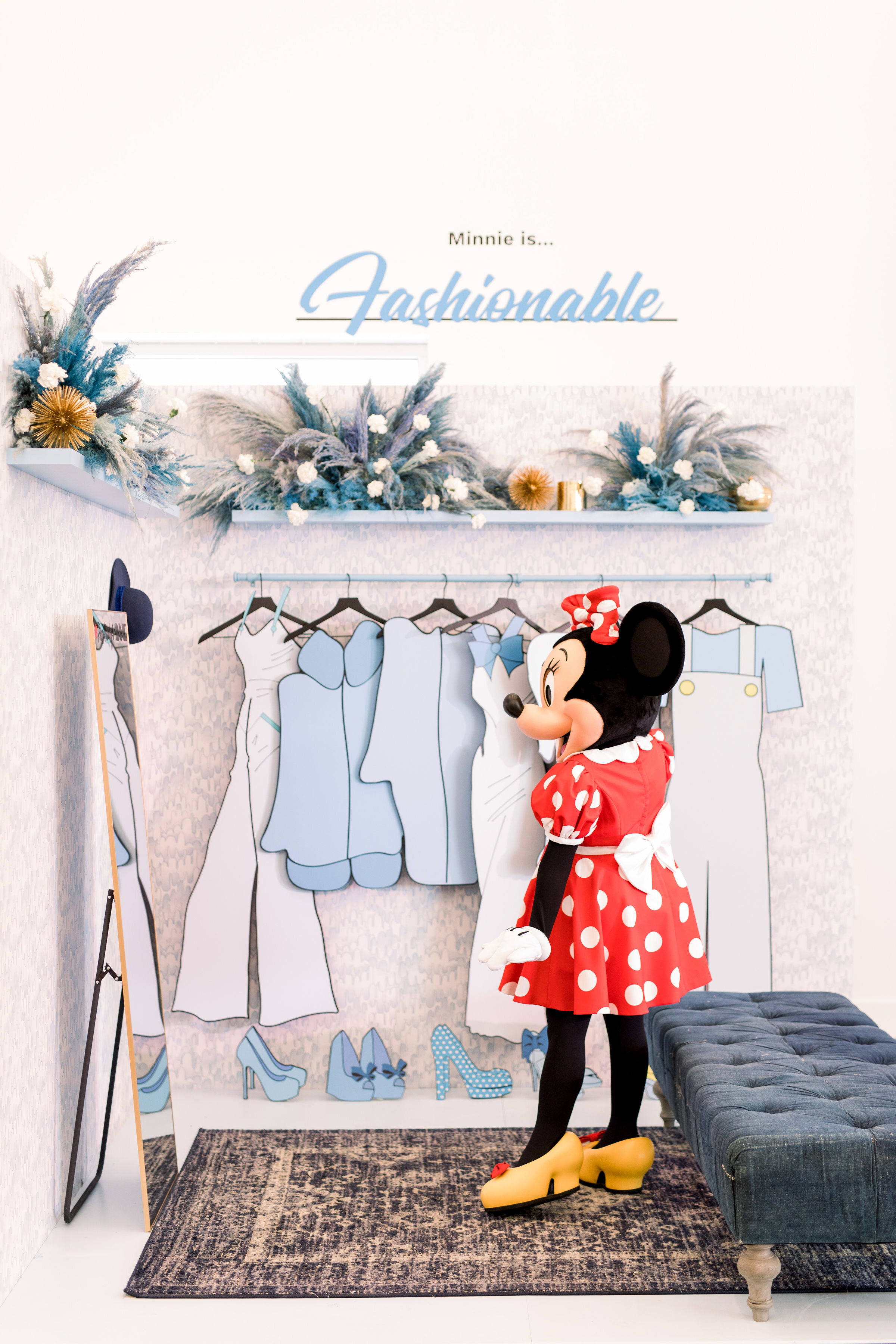
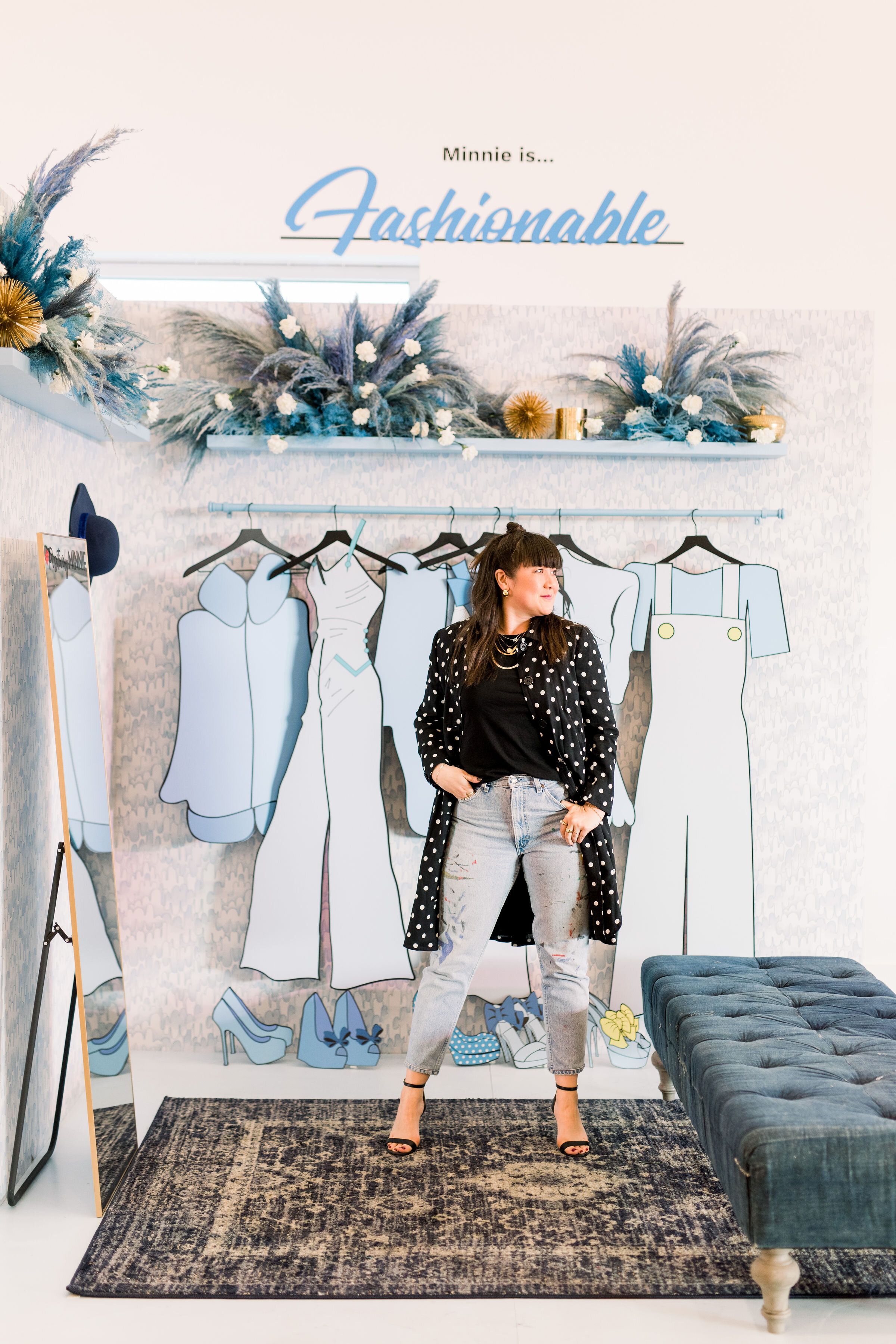
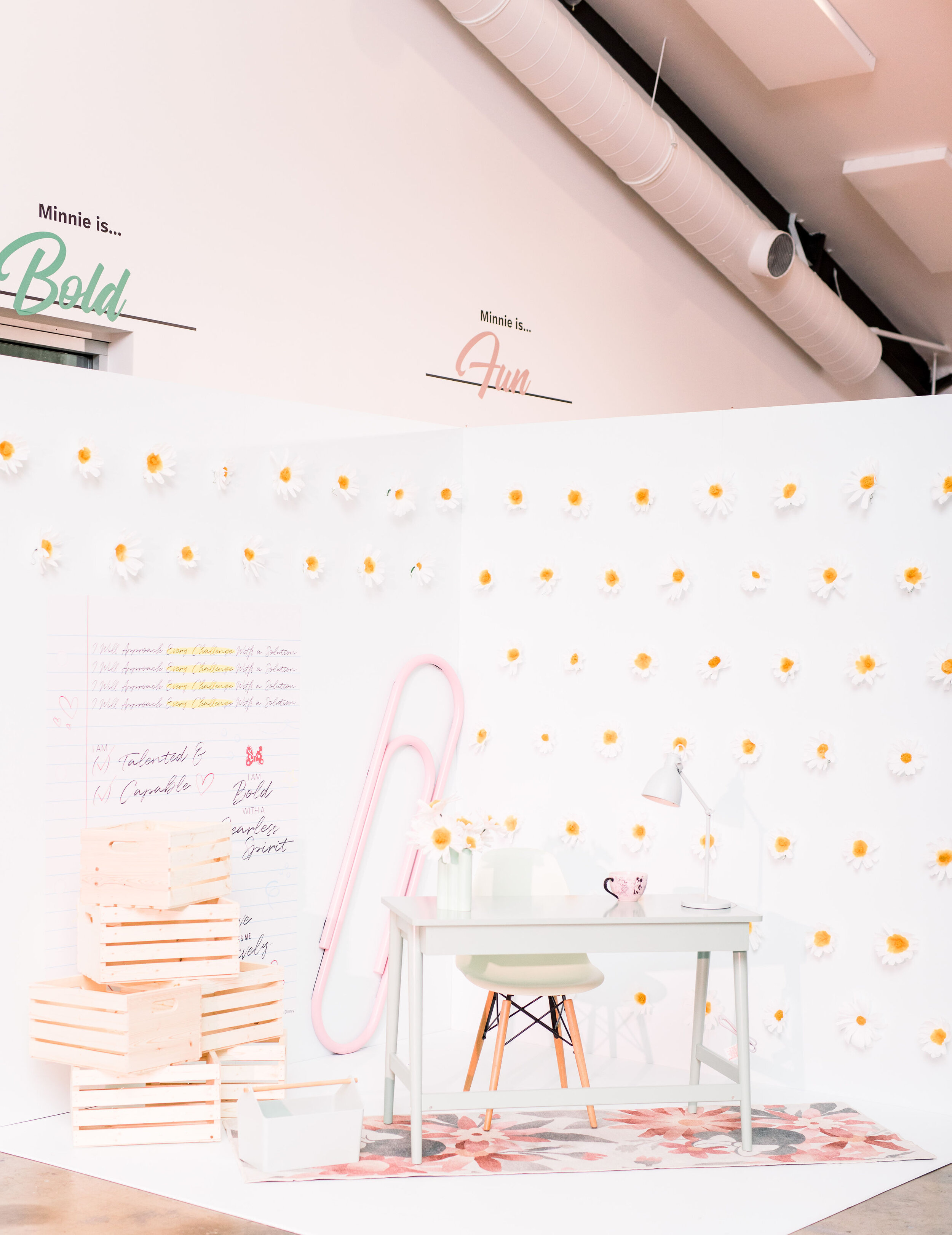
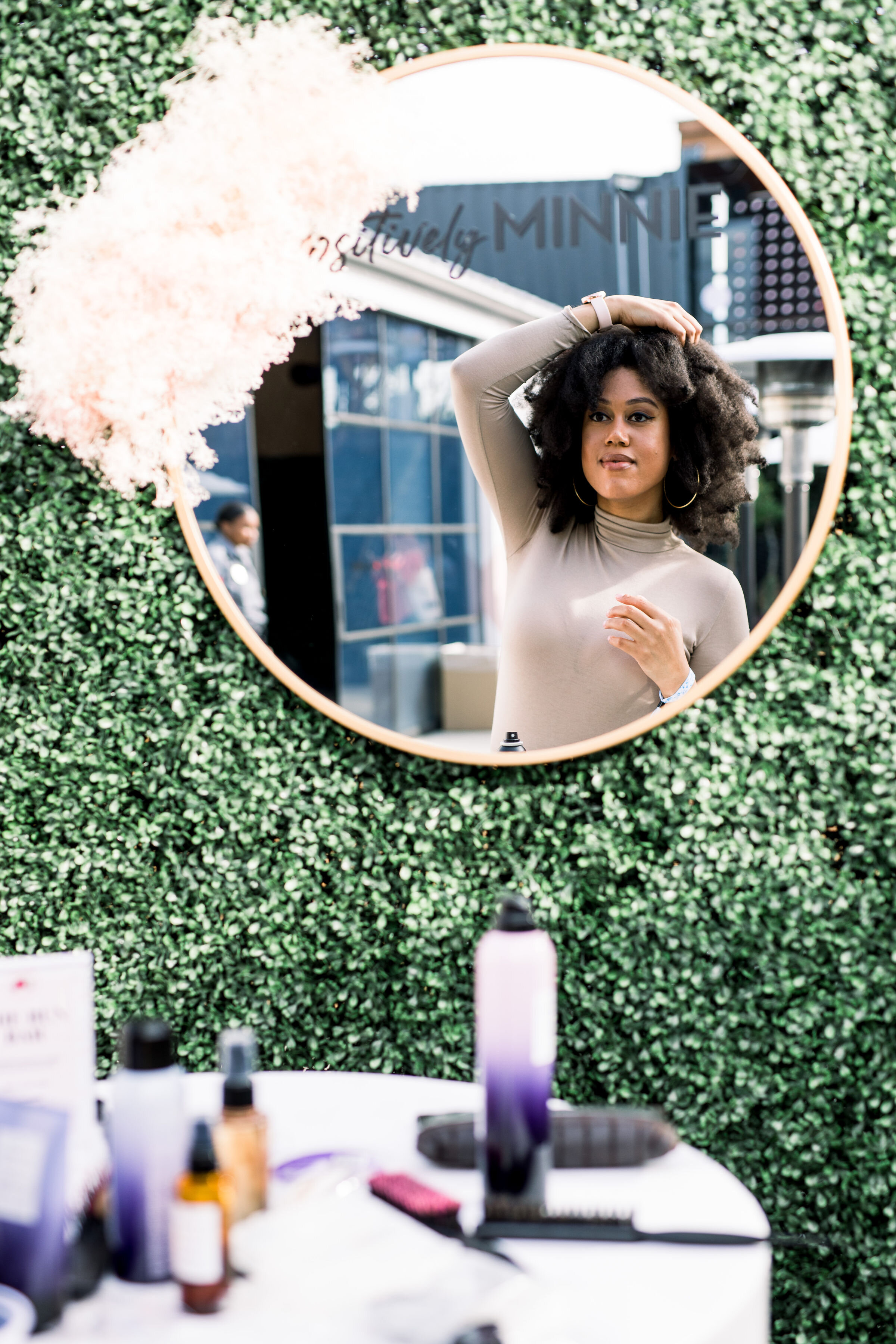
On January 25th & 26th, 2020, Create & Cultivate joined forces with Disney's Minnie Mouse for the first-ever Polka Dot Summit in honor of National Polka Dot Day. We celebrated in true Create & Cultivate fashion by inviting modern-day muses to the stage who, like Minnie, are bold, fun, fashionable, and classic—and, most importantly, inspire people all over the world to be positively themselves.
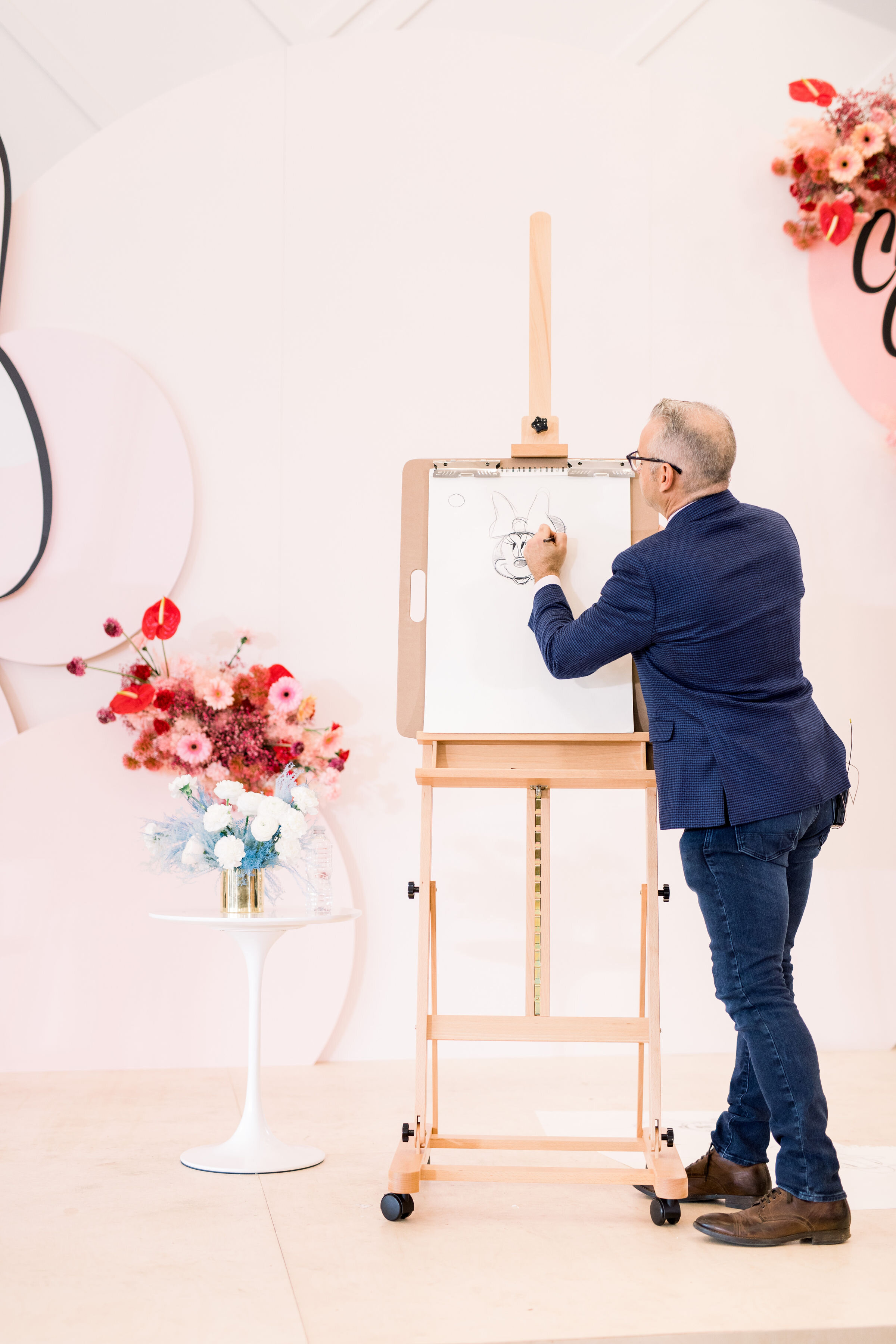
It was a jam-packed two days filled with major mic-drop moments. Karena Dawn and Katrina Scott of Tone It Up kicked things off with a heart-pumping workout, Dr. Deepika Chopra taught us how to cultivate happiness (and led a spontaneous dance party), Disney character artists Jeff Shelly and Miran Kim showed us how to draw Minnie and her other pals, and Minnie herself spread joy everywhere she went. To everyone who came, thank you for joining us—and to those who couldn’t make it, don’t sweat it. Below, we’ve compiled the key takeaways from our positively inspiring weekend with Minnie and the gang.
Read on for the sagest soundbites from our panelists and keynote speakers, including Lindsay Peoples Wagner, the editor in chief of Teen Vogue, Katie Sturino, the founder of The 12ish Style and Megababe, Alex Morgan, the co-captain of the U.S. Women’s National Soccer Team, and more.
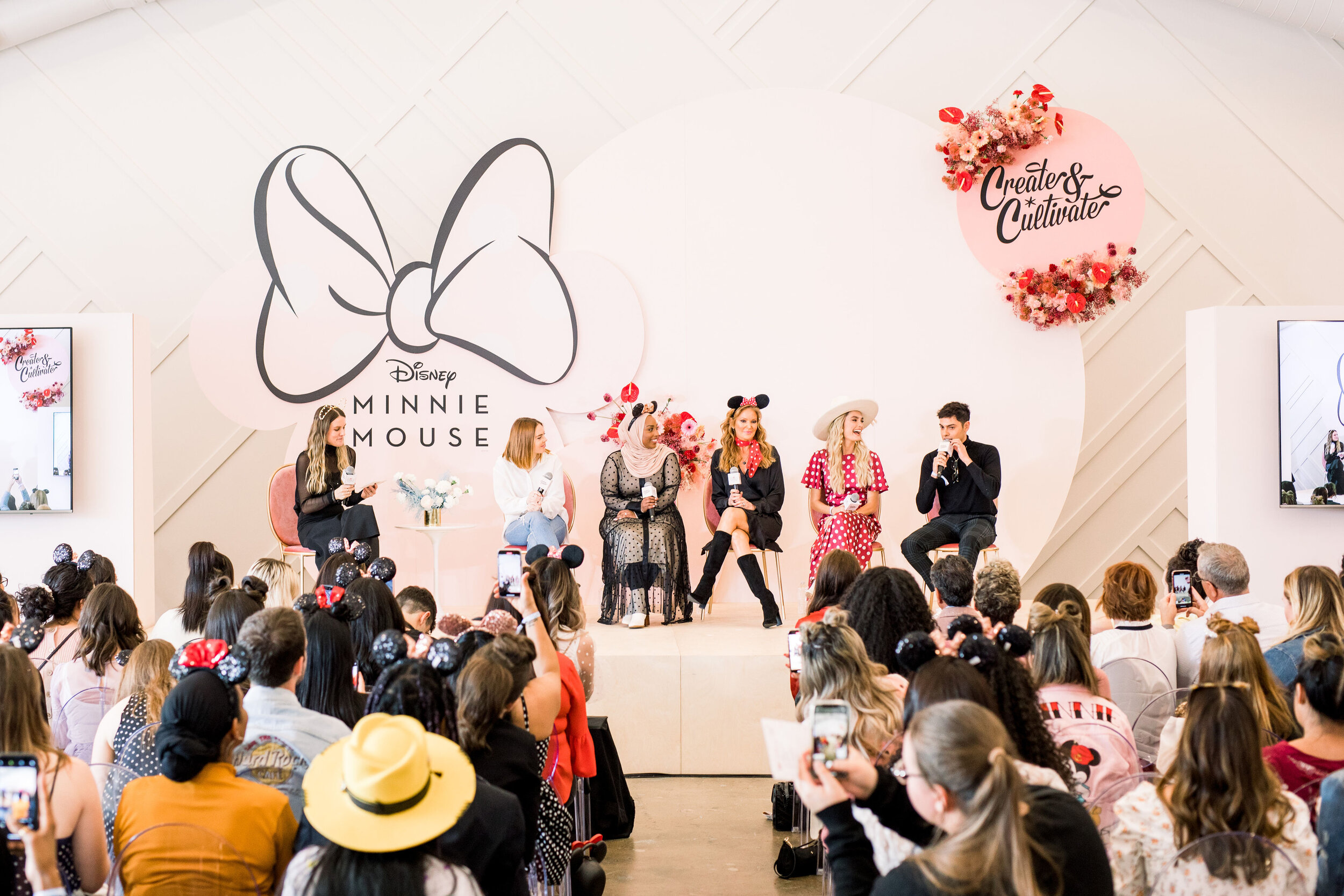
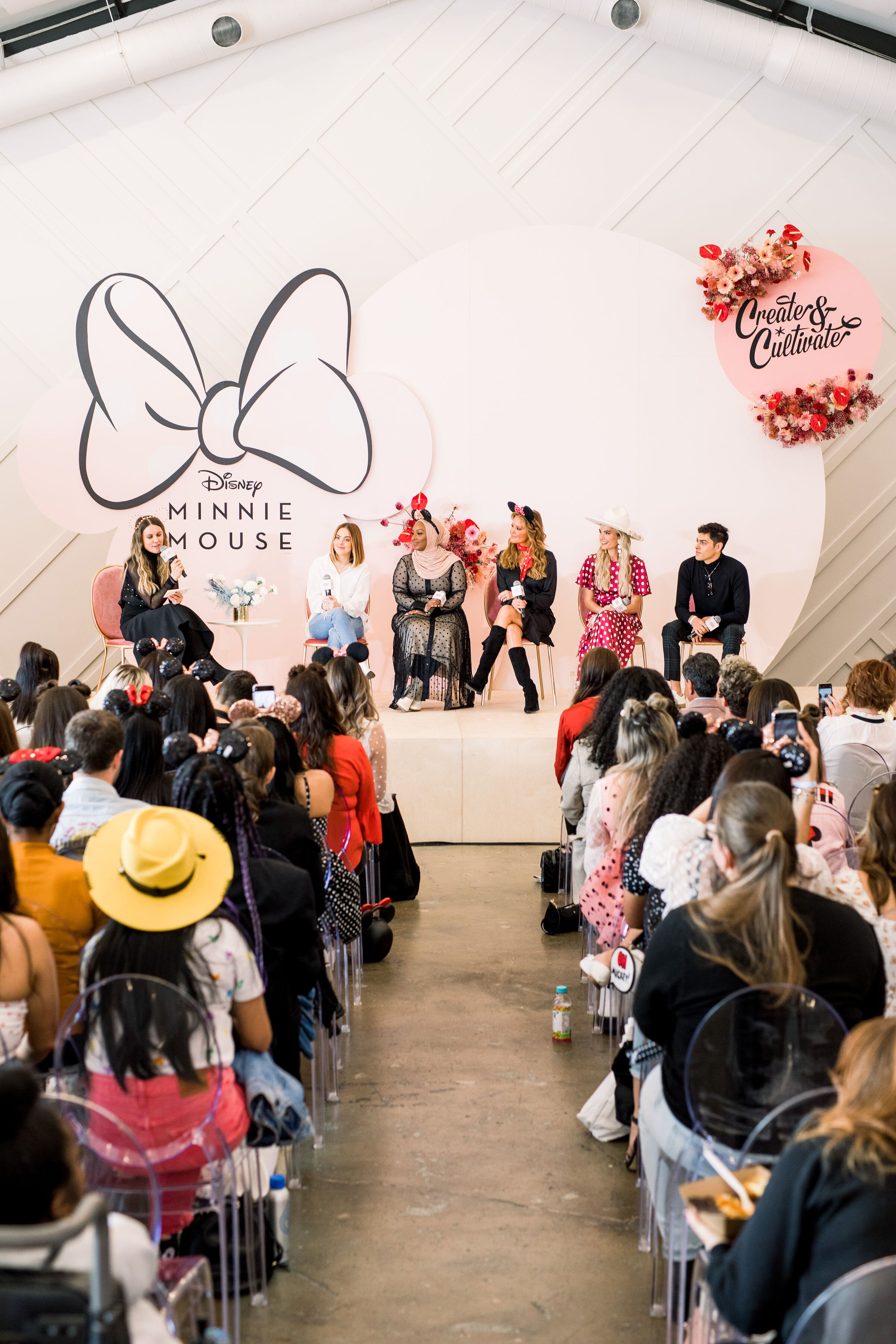
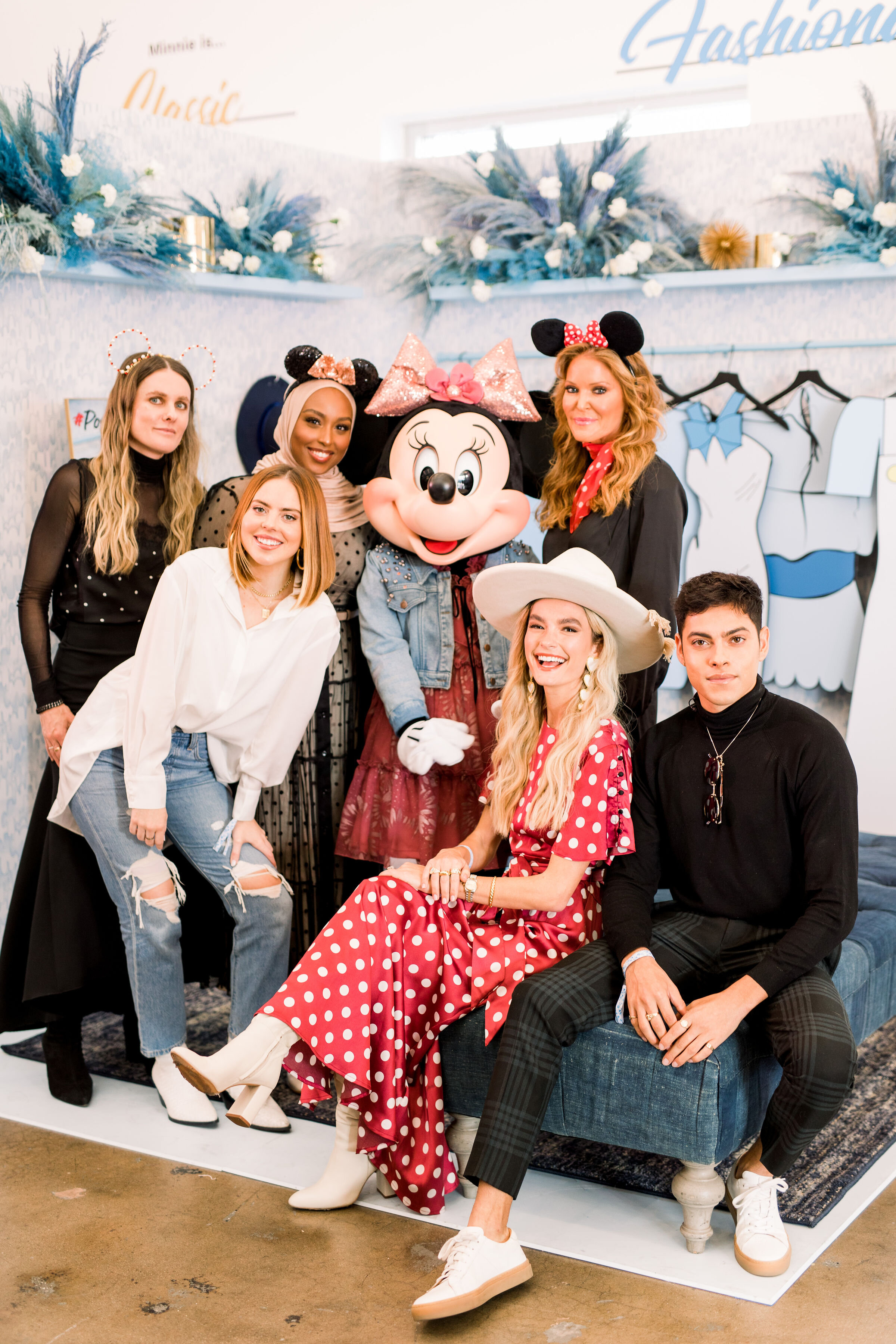
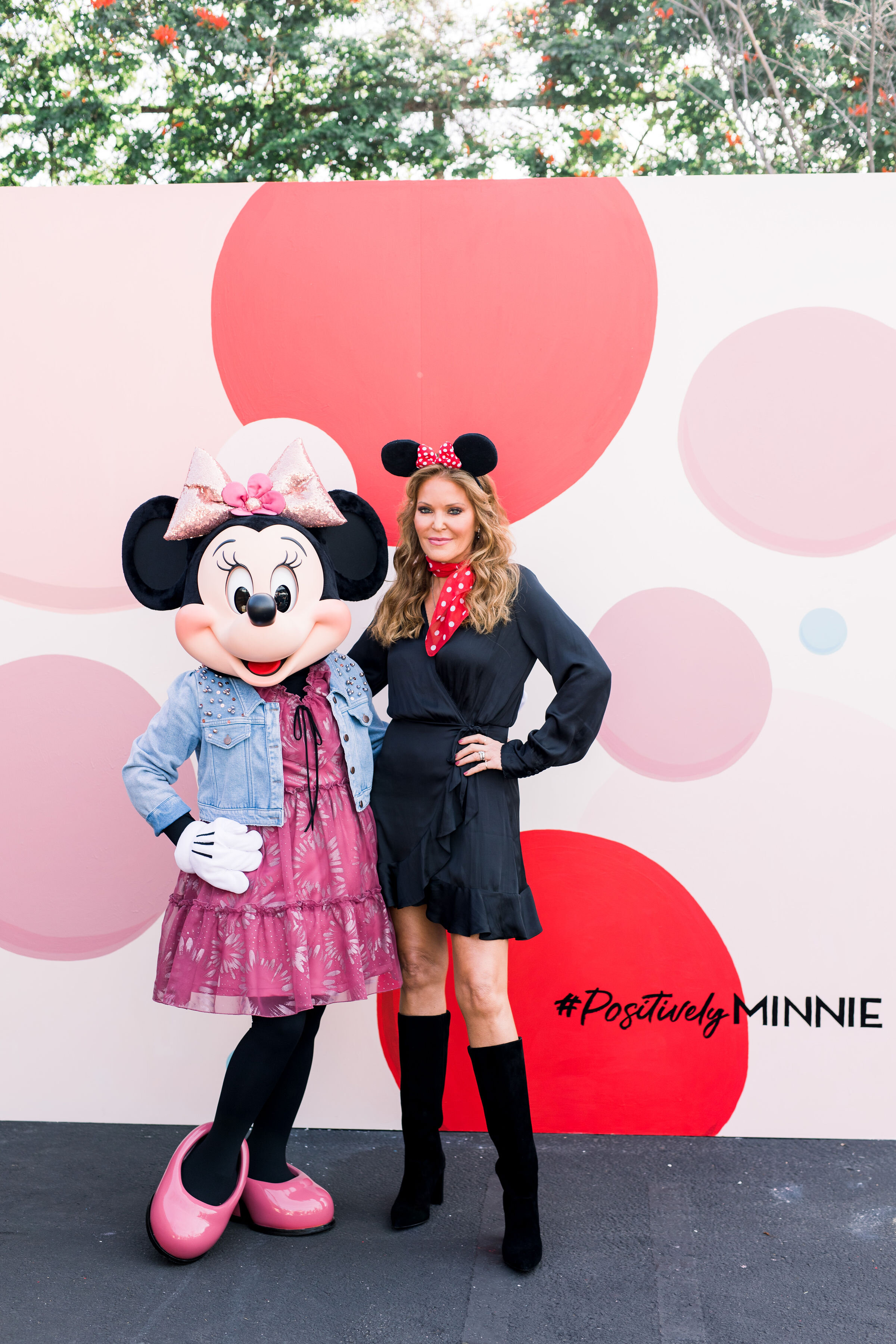



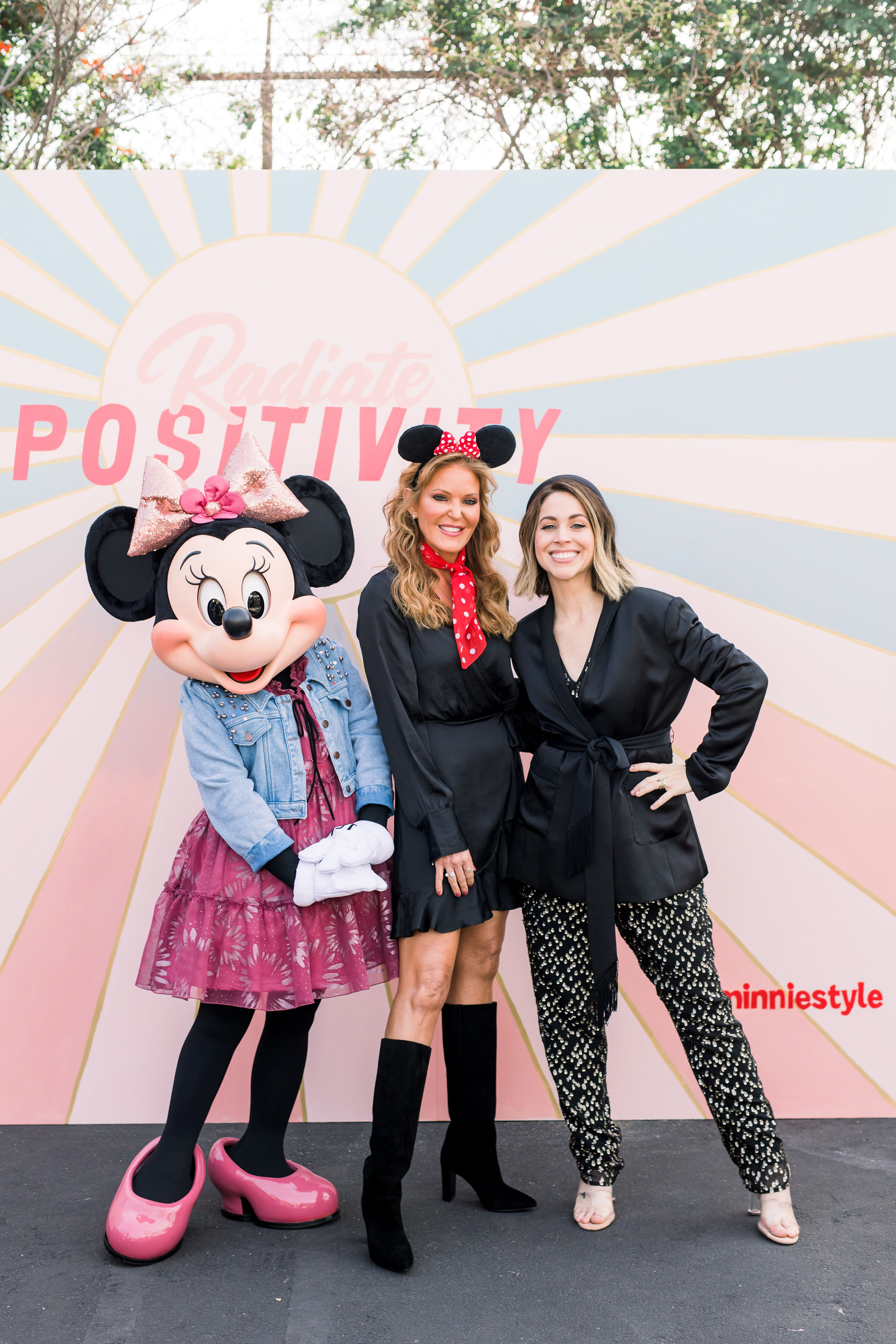

Panel: Positively You—How to Cultivate Confidence Inside and Out
Panelists:
Quigley | Influencer & Content Creator
Aysha Harun | Content Creator
Jaci Marie Smith | Content Creator and Podcast Co-Host, What We Said
Glen "Coco" Oropeza | Celebrity Hair Stylist, Glen Coco for Hair
Paige Adams-Geller | Co-Founder & Creative Director, PAIGE
Moderator:
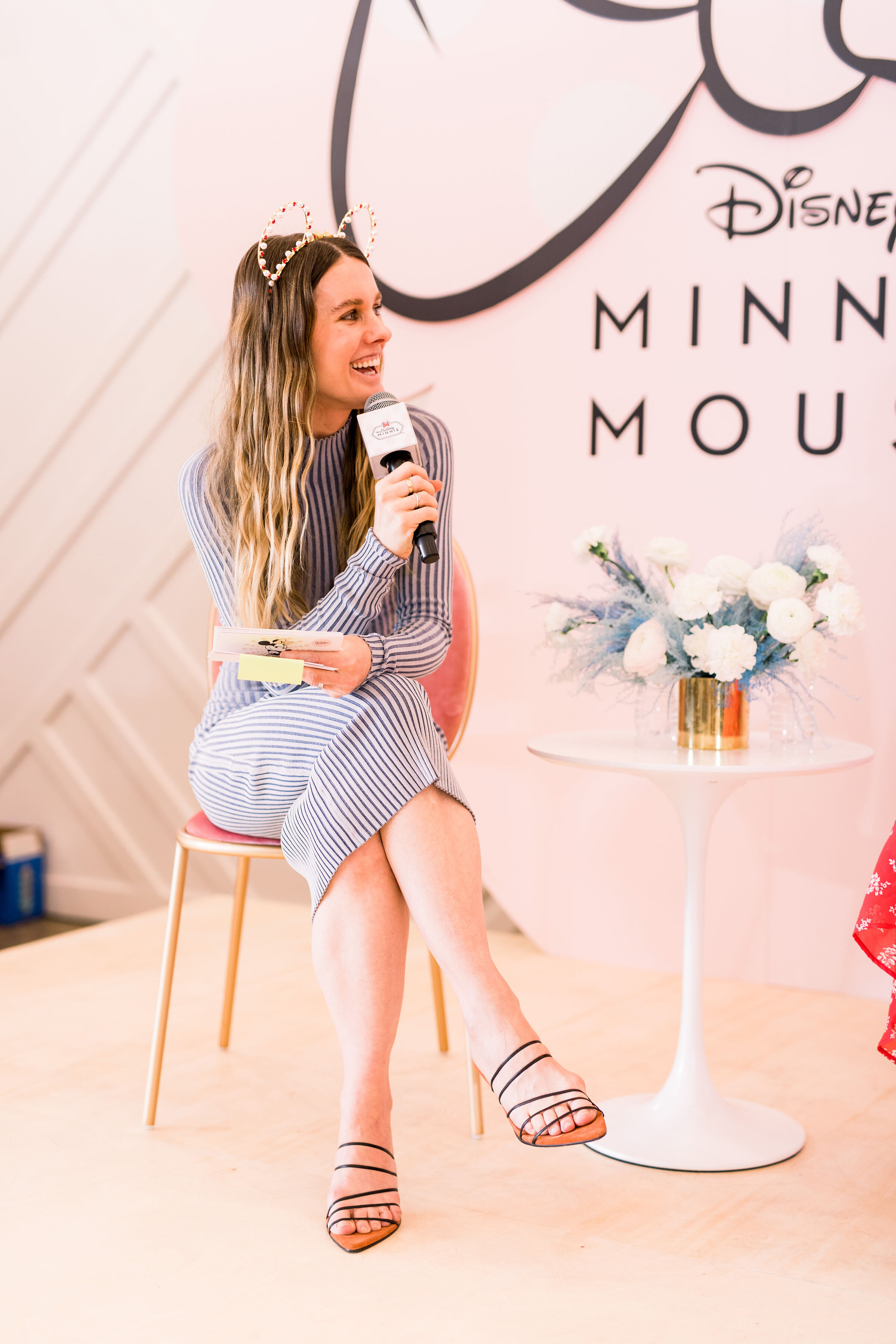
Sacha Strebe | Editorial Director, Create & Cultivate
On overcoming fear…
“One of the biggest things that I had to teach myself is that everything is on the other side of fear.”—Glen "Coco" Oropeza
“That moment when you search inside—and you put on the blinders, and you tune out the noise, and you believe in yourself—that’s when change happens.”—Paige Adams-Geller
“It’s easy for someone to give you an idea, but it takes courage and bravery and momentum to put it into action and make it yourself.”—Paige Adams-Geller
On being positively you…
“With any insecurity, be it with a birthmark, your weight, or the size of your feet it'll be with you until you leave, so embrace it.”—Aysha Harun
“When it comes down to it, I want to share things I love, so people who gravitate to that are the community I’ve built.”—Jaci Marie Smith
On navigating negativity in the comments section…
“Constructive criticism can be helpful, but I only try to take advice and criticism from people I admire and respect and who have my best interests in mind.”—Jaci Marie Smith
“Whoever made the comment is probably suffering or hurting, so I just take a moment to say, ‘I wish you well,’ and then I go on with my day.”—Quigley
“If you know yourself, then negative comments won’t affect you as much.”—Aysha Harun
“I never give it any energy—I think it’s a waste of time. To me, it’s just bad juju.”—Glen "Coco" Oropeza
On knowing your worth…
“One of the best pieces of advice I learned early on was know your worth and don't be afraid to say no to an opportunity.”—Aysha Harun
“Should I do it for that low rate? I don’t think I should because it brings the whole industry down. They’ll keep hunting for someone who will do it for that low rate. If you accept those low rates, then everyone does poorly because of that.”—Glen "Coco" Oropeza
On investing in yourself…
“Investing in yourself is so important. I think it’s so important to set aside a little money to make sure you're going to grow.”—Aysha Harun
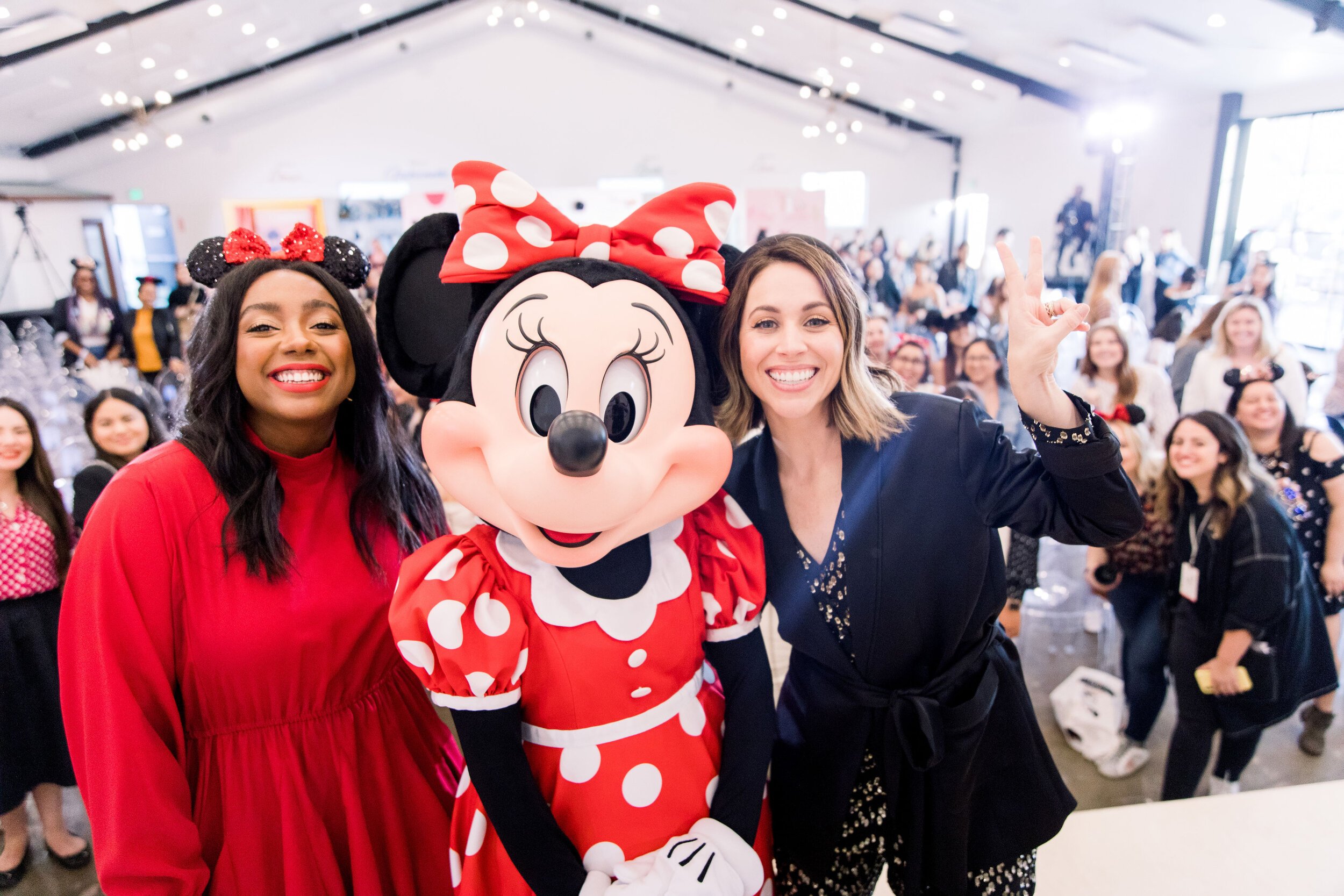
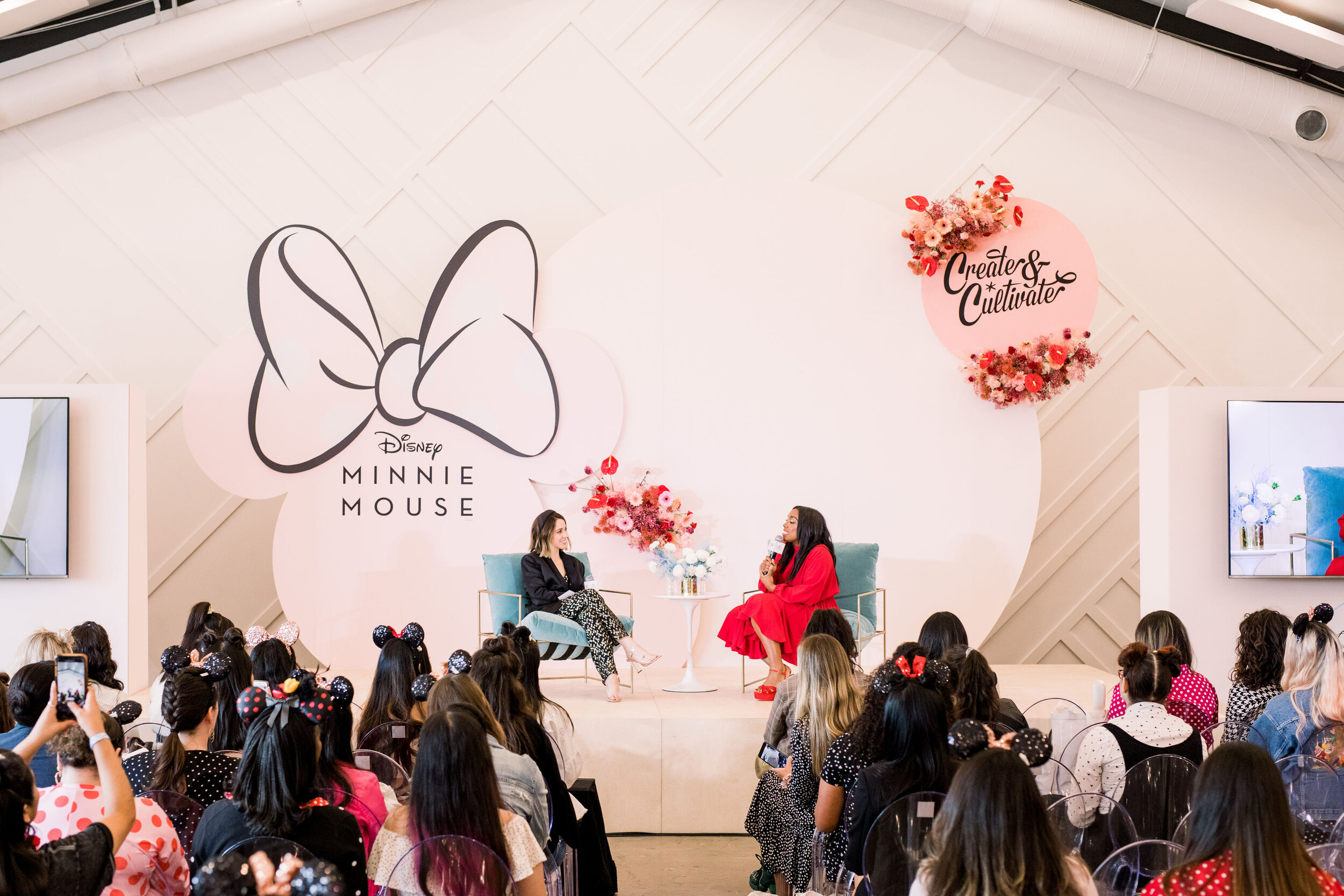
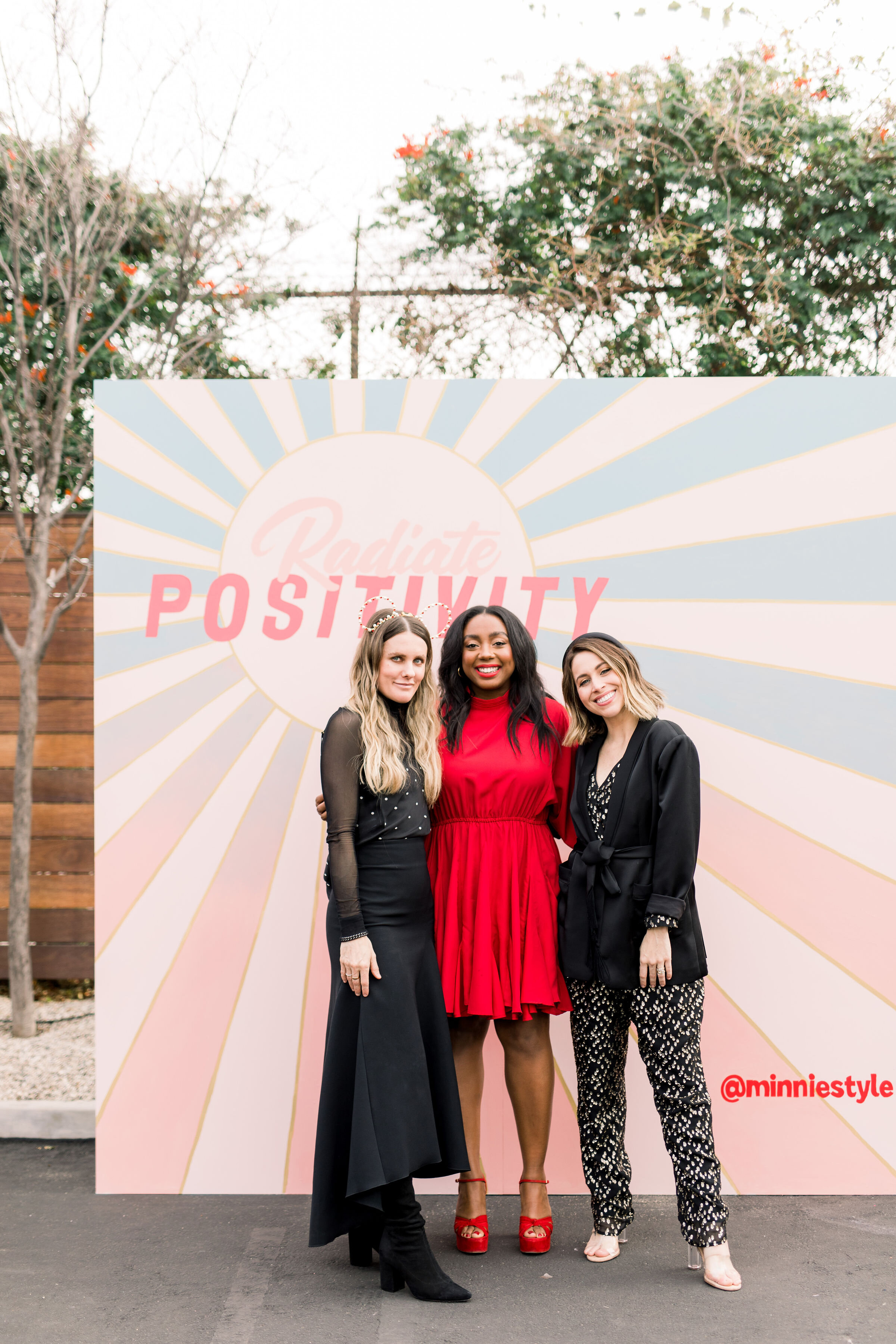
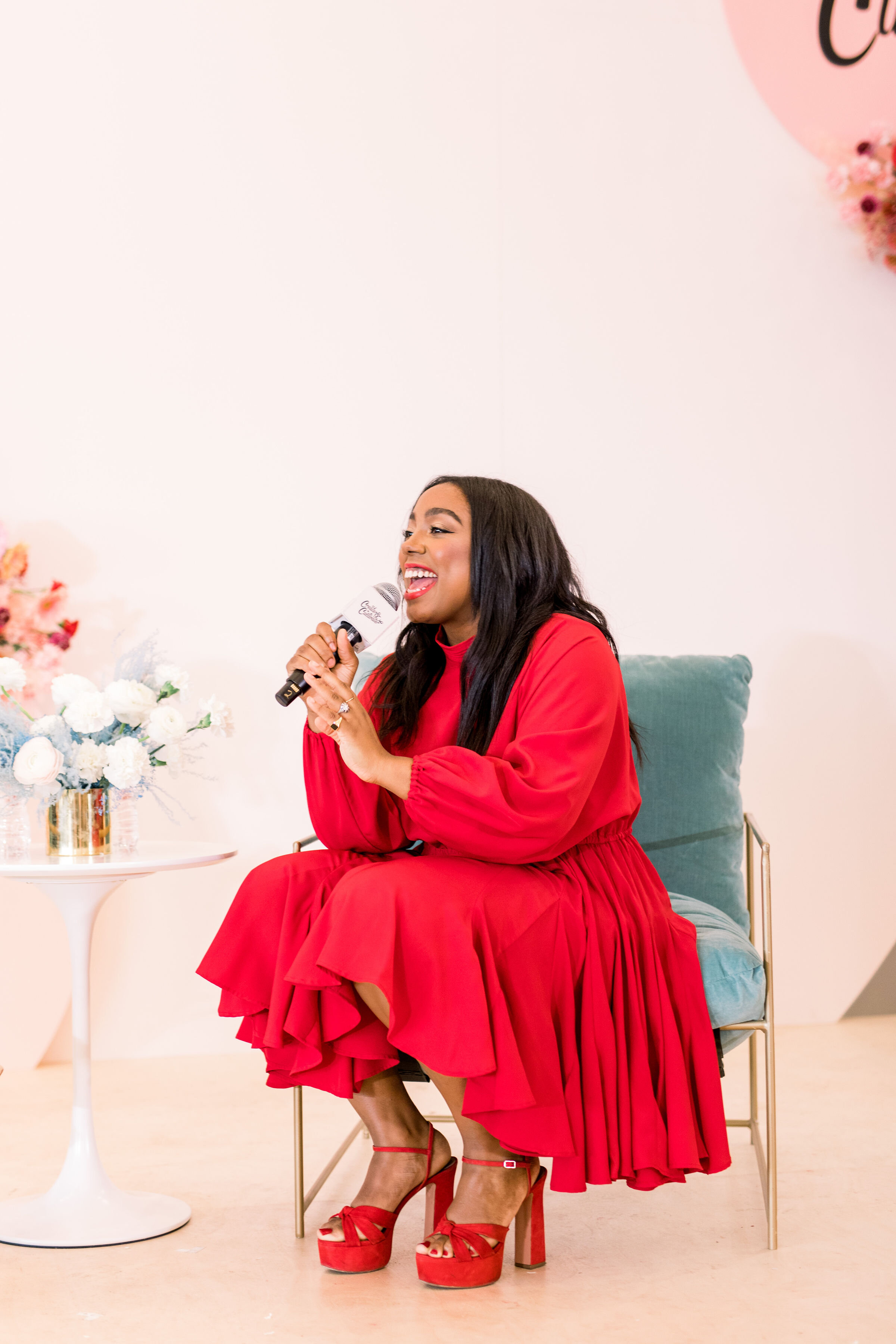
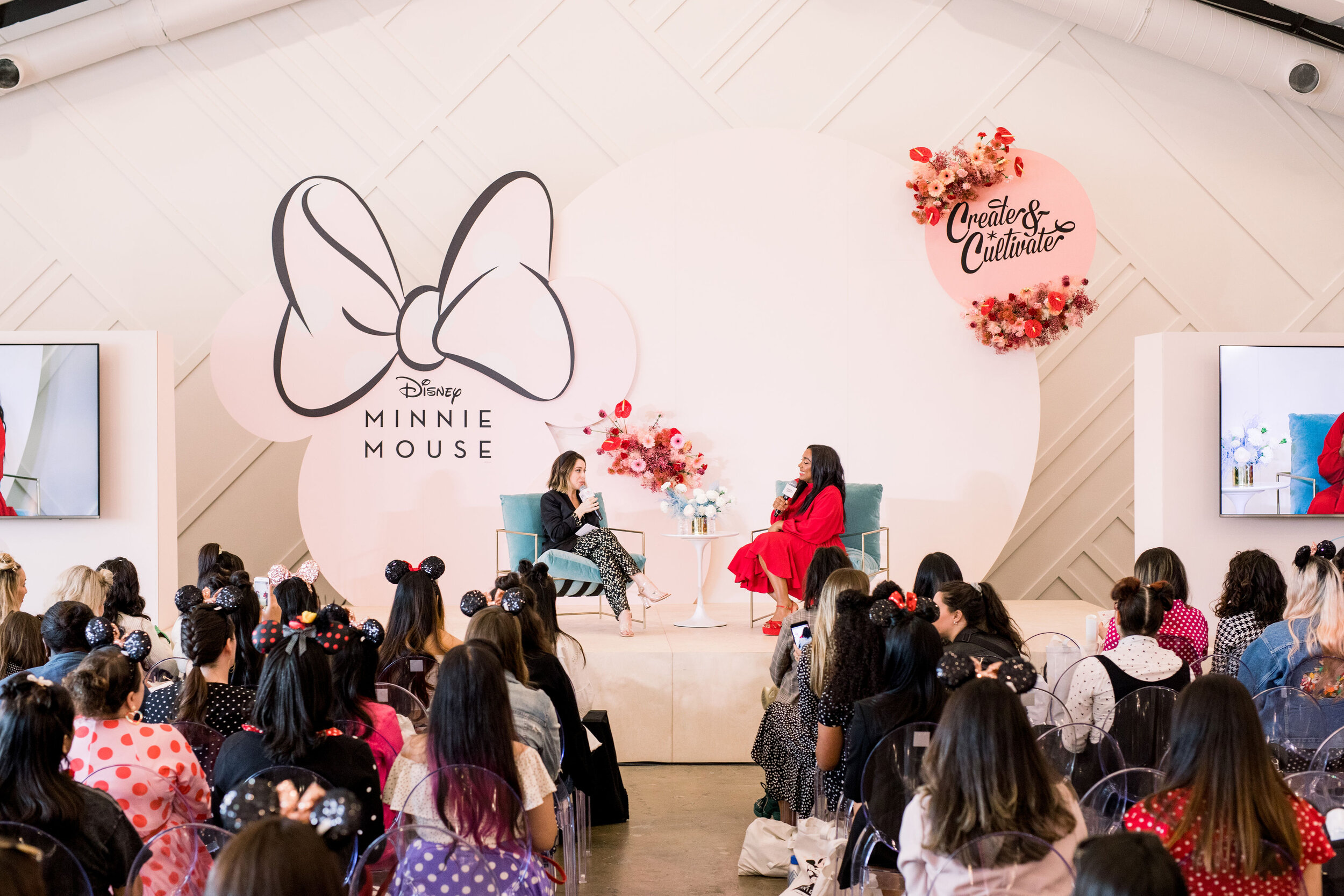
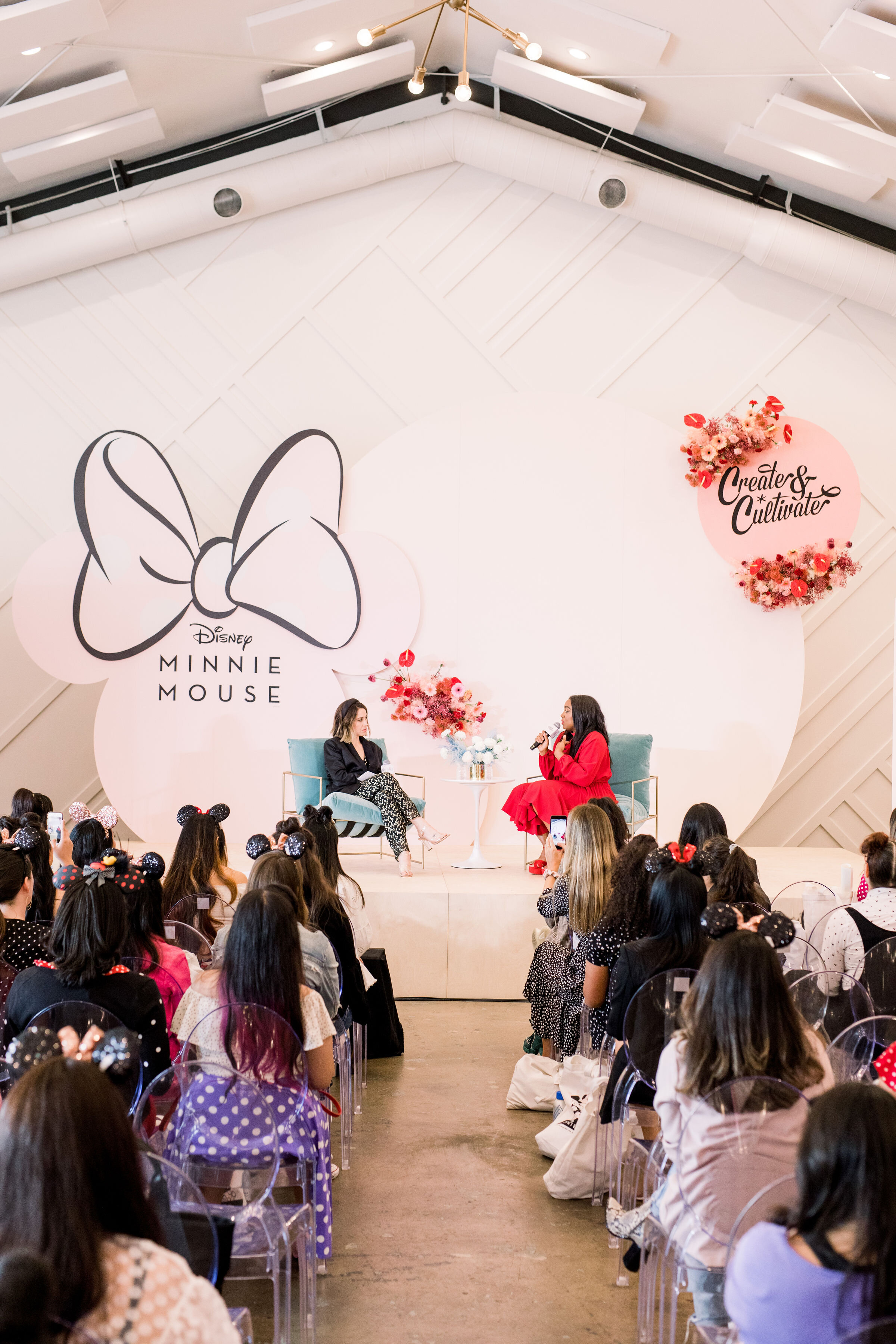
Panel: Keynote Conversation With Lindsay Peoples Wagner
Panelist:
Lindsay Peoples Wagner | Editor in Chief, Teen Vogue
Moderator:
Jaclyn Johnson | Founder and CEO, Create & Cultivate
On achieving success at a young age…
“I still hustle. It is still always a hustle—don’t be fooled.”
On being Teen Vogue’s editor in chief…
“Everything we do is about making young people feel seen and heard.”
“I’ve been careful about giving people chances that other people wouldn’t.”
On seeking out a mentor…
“Don’t wait for someone to save you or give you the keys.”
On finding work-life balance…
“The general rule is that I don’t do anything on the weekends, the only person I see is my husband I watch ‘Law and Order’ and ‘CSI’ and I zone out.”
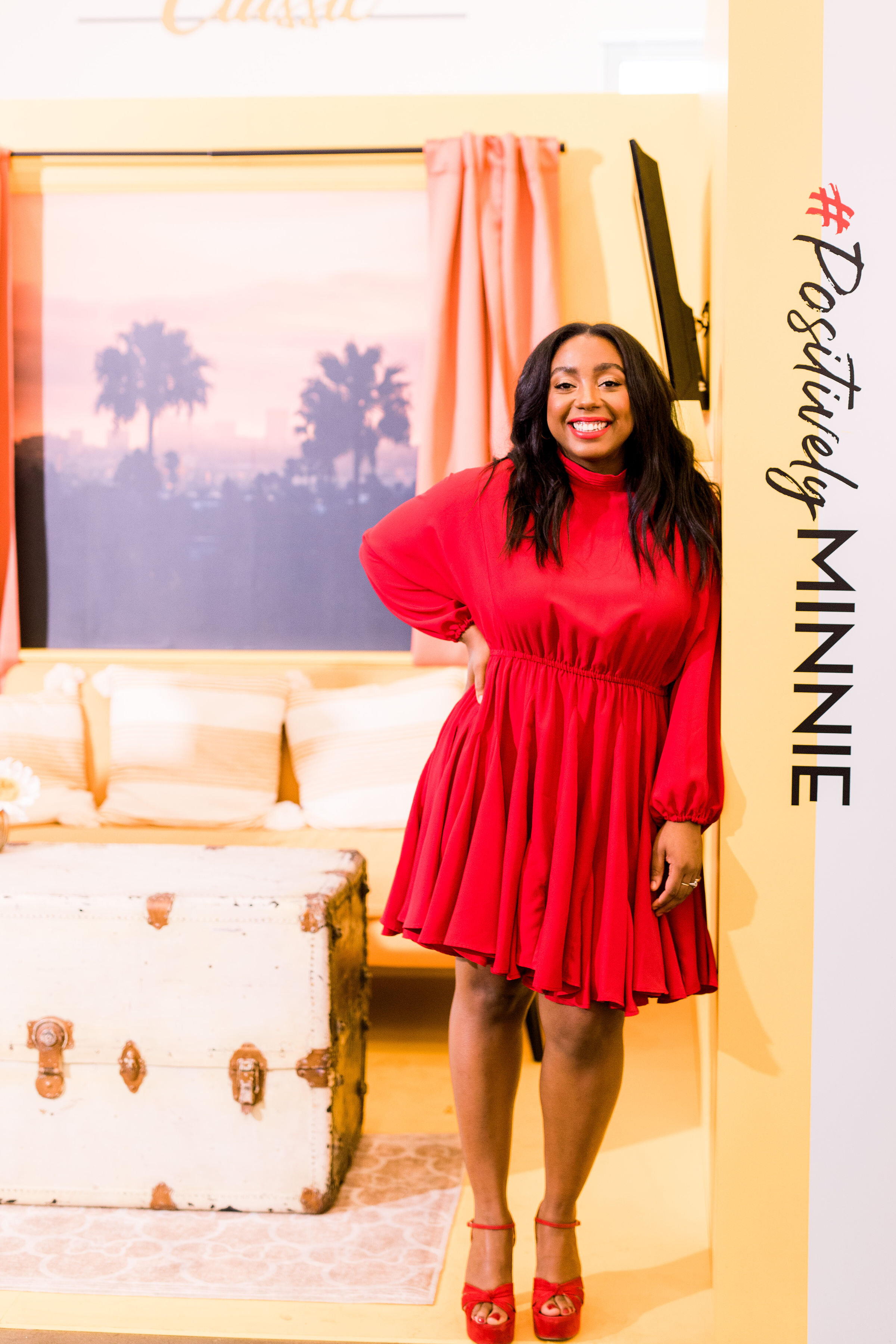
On loving the color red...
“I felt like I needed a boost when I was starting in fashion and I wasn’t wearing head to toe designer.”
On defining your personal style…
“A lot of times, it’s just trying and not being so scared to take a little bit of a risk.”
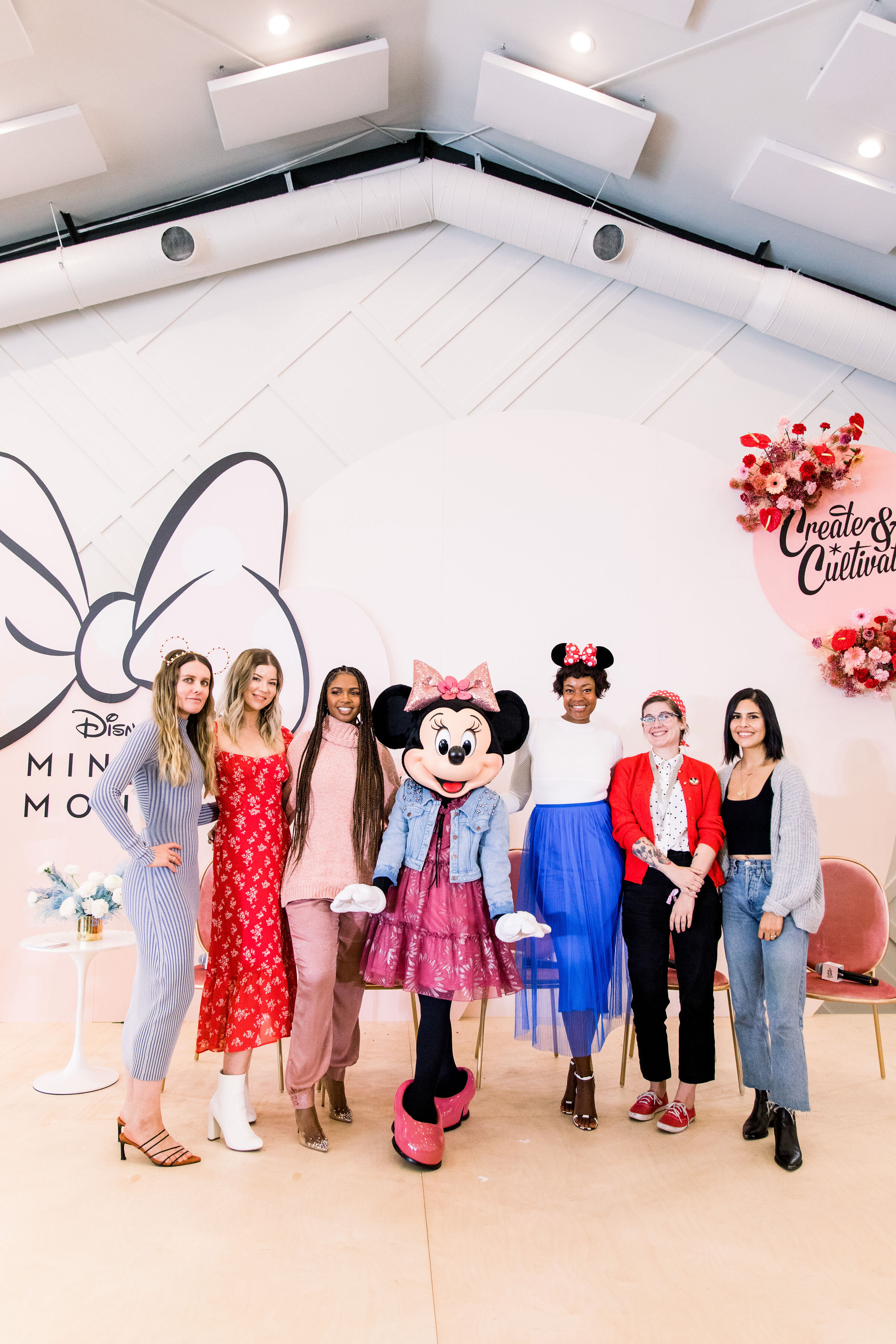

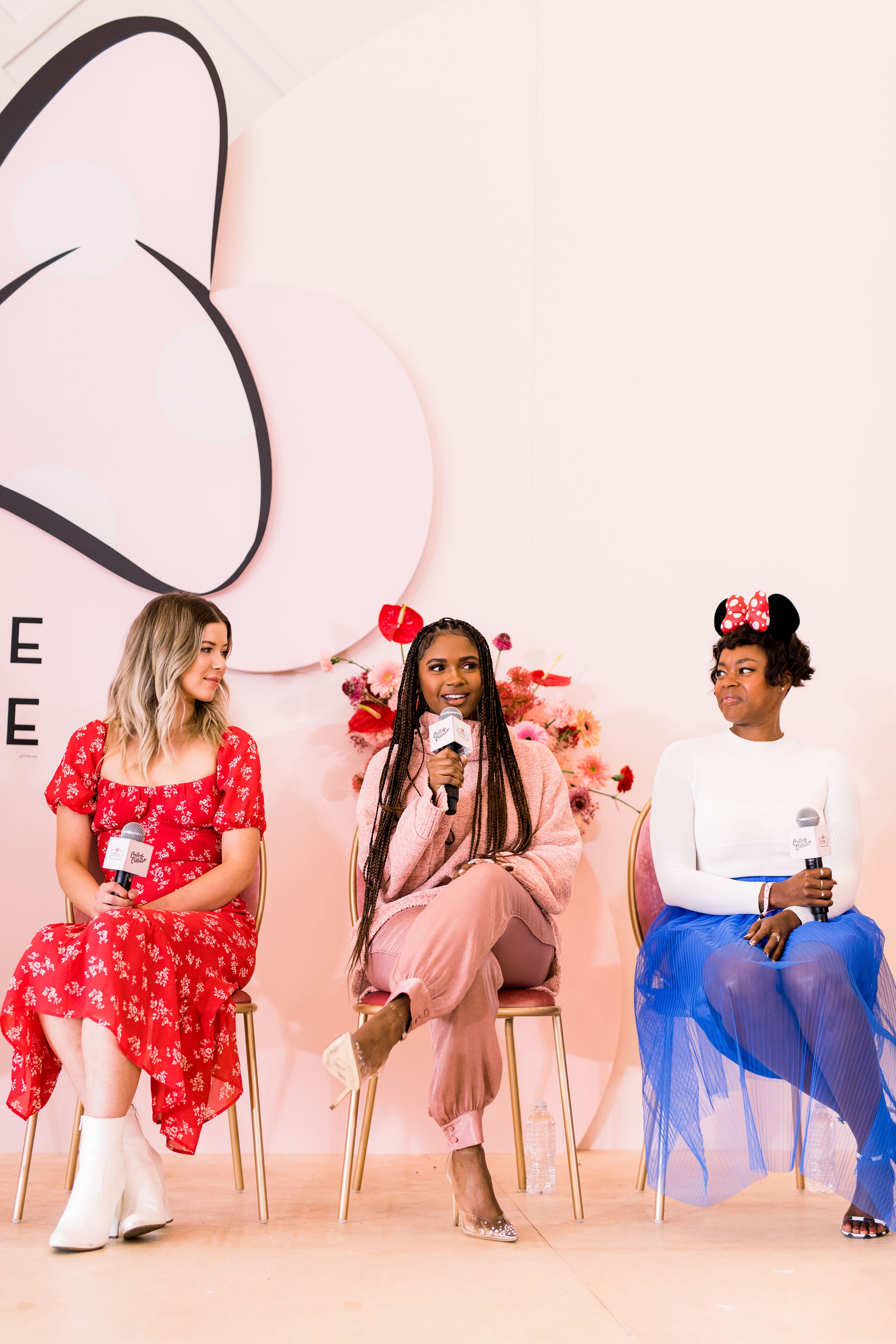
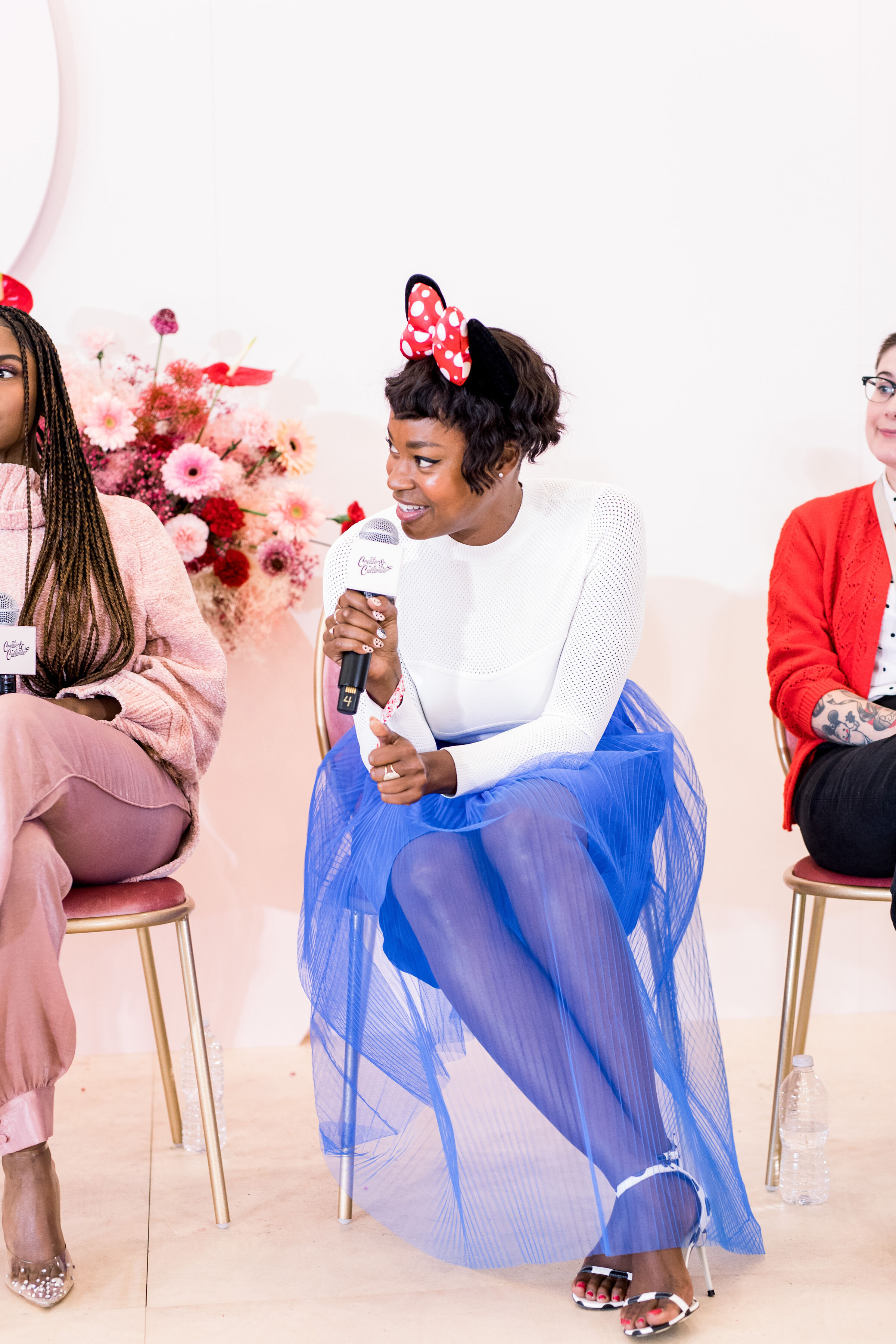


Panel: Bold Moves—How to Fashion the Life and Career You Love
Panelists:
Jeanette Ogden | Founder, Shut the Kale Up
Gemma Correll | Cartoonist, Writer, Illustrator, GemmaCorrell.com
Meghan Rienks | Influencer, Actress, Author, and Podcast Co-Host, Don’t Blame the Pod
Noelle Scaggs | Singer-Songwriter, Fitz & The Tantrums; Food + Travel Influencer, Adventures With Scaggs, LLC.
Brittany Sky | Creator, Artist, DJ
Moderator:
Sacha Strebe | Editorial Director, Create & Cultivate
On building community…
“It’s so powerful to have community because it truly builds you up. We’re all in this together we should all be building each other up.”—Jeanette Ogden
On staying true to yourself and your brand...
"I think you can tell when someone isn’t being authentic with their artwork, there’s just something off about it."—Gemma Correll
"If you really believe in what you’re doing, you’ll find a throughline."—Meghan Rienks
"It’s about allowing yourself to really shine and not be afraid to show that off."—Noelle Scaggs
"I say ‘no’ to a ton of stuff. It’s my favorite word."—Meghan Rienks
On overcoming challenges…
"There are going to be people who punch at you every day, and you have to remember that, at the end of the day, you’re the one who walks in your shoes, not them."—Noelle Scaggs
On taking risks…
"When you're fashioning your career, it's about not being afraid to change your stripes every now and then."—Noelle Scaggs
“If you feel it in your gut and you know what you’re passionate about, just take the leap because what’s the worst thing that could happen?”—Brittany Sky
On dealing with rejection…
"They’re not saying no to you, they’re saying no to your offer, so don’t take it personally."—Brittany Sky
On partnering with brands...
"I want to make a long-term brand, this isn’t just a get rich right now thing. I want to be honest with my followers because they’re my friends, my family."—Jeanette Ogden
"This isn’t ad space, this is my diary."—Jeanette Ogden
"I’m just really upfront and forward and I know what I want and what I like and I know myself and my audience."—Meghan Rienks
On doing what makes you happy…
"As long as you’re doing what makes you happy, you’re going to see the money."—Brittany Sky
On breaking through creative blocks...
"I read, preferably something that has nothing to do with what I’m trying to do."—Gemma Correll



Panel: Keynote Conversation With Katie Sturino
Panelist:
Katie Sturino | Founder of The 12ish Style and Megababe
Moderator:
Jaclyn Johnson | Founder and CEO, Create & Cultivate
On Minnie Mouse as a style icon…
“I love that she is bold with style and fashion and print. She’s a curvy girl and she’s not afraid to rock color.”
On launching 12ish…
“People didn’t understand and still, to a certain extent, don’t understand how to talk about size.”
“This is a blog for people who feel ignored by the fashion industry.”
“I was trying to provide hacks, but it really turned into a body acceptance movement way beyond clothes.”
“Just like myself, people were really desperate to find a fashion blog where they saw a body that looks like theirs.”
On creating #MakeMySize…
“It wasn’t meant to be a callout culture thing, it’s much more about letting the brands know that I want to wear their clothes.”
“It’s the part in ‘Pretty Woman’ where she walks in with the cash. That’s me every time—I have the cash.”
On the importance of diversifying…
“If it wasn’t a job 10 years ago, who’s to say it’ll be a job 10 years from now.”
On hiring the right people…
“I need someone who never looks at me and says, ‘That’s not in my job description.’”
On finding inspiration…
“I really like surrounding myself with inspiring women. It’s very inspiring to just see someone doing it.”
On authenticity…
“It’s important to be the kind of person that people feel like they can be real with.”
On being an entrepreneur…
“People are always trying to put out the success vibe, like #flyingprivate, but I’m like, #iminataxi.”
On her legacy…
“I want to be known for making people feel good.”
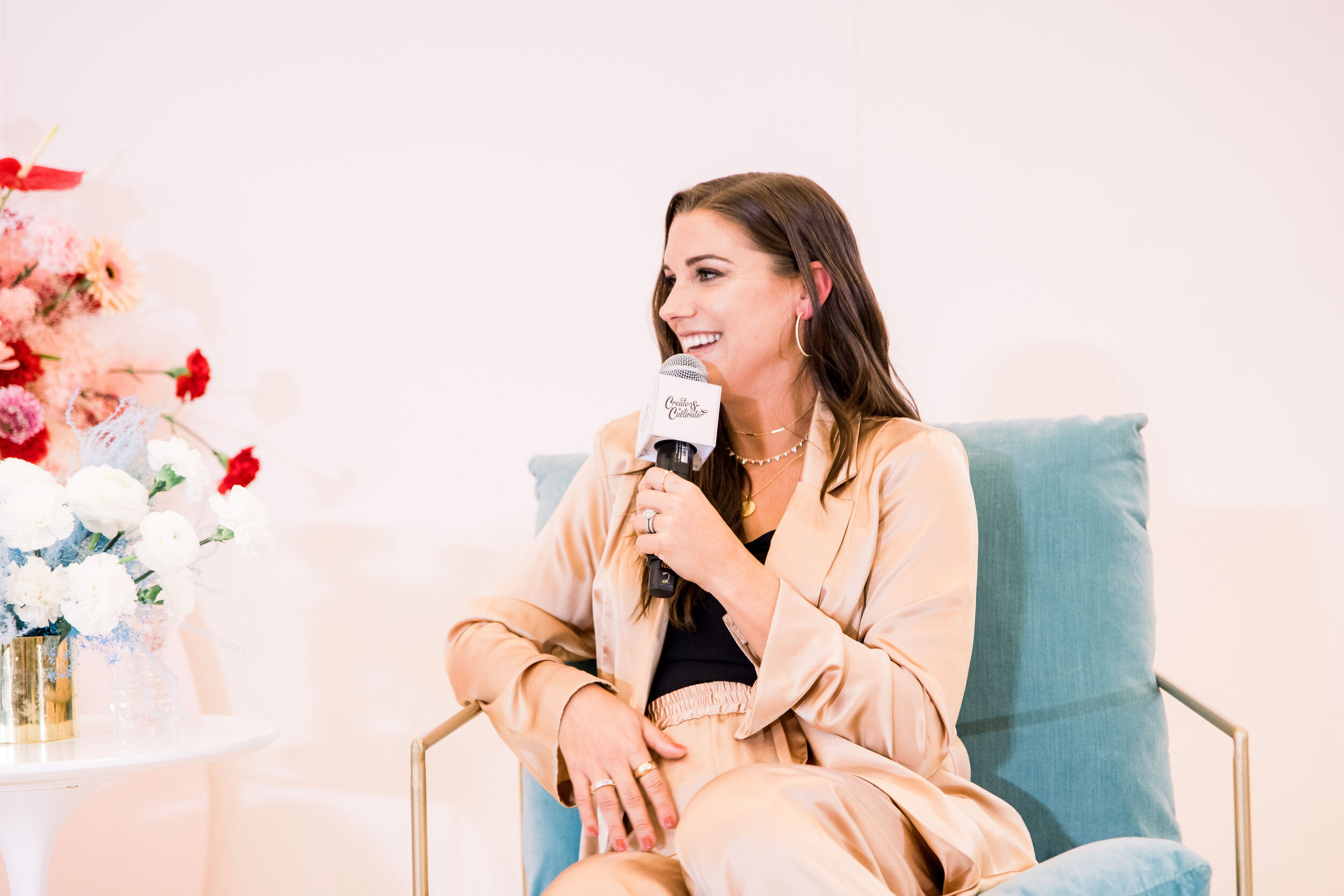
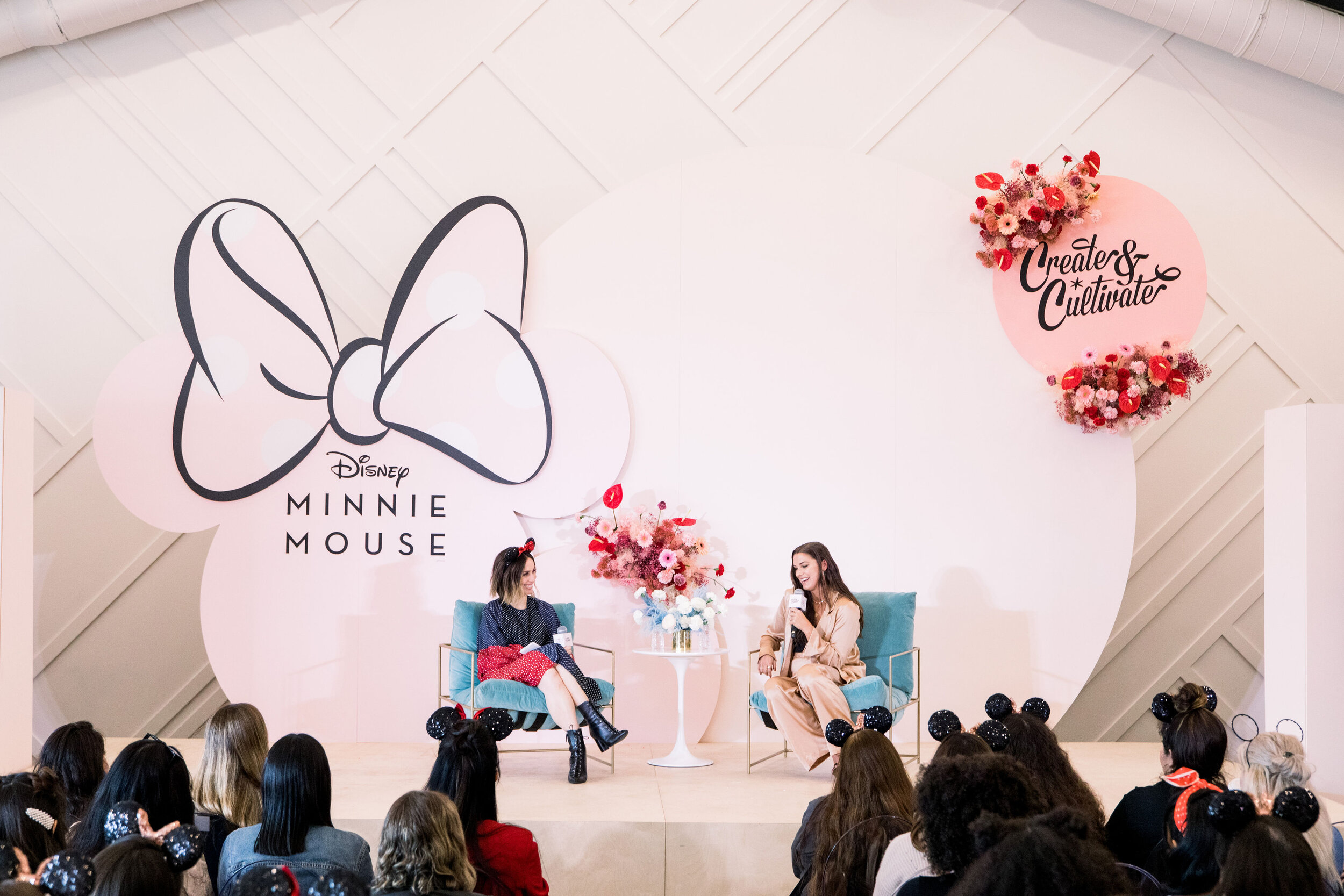
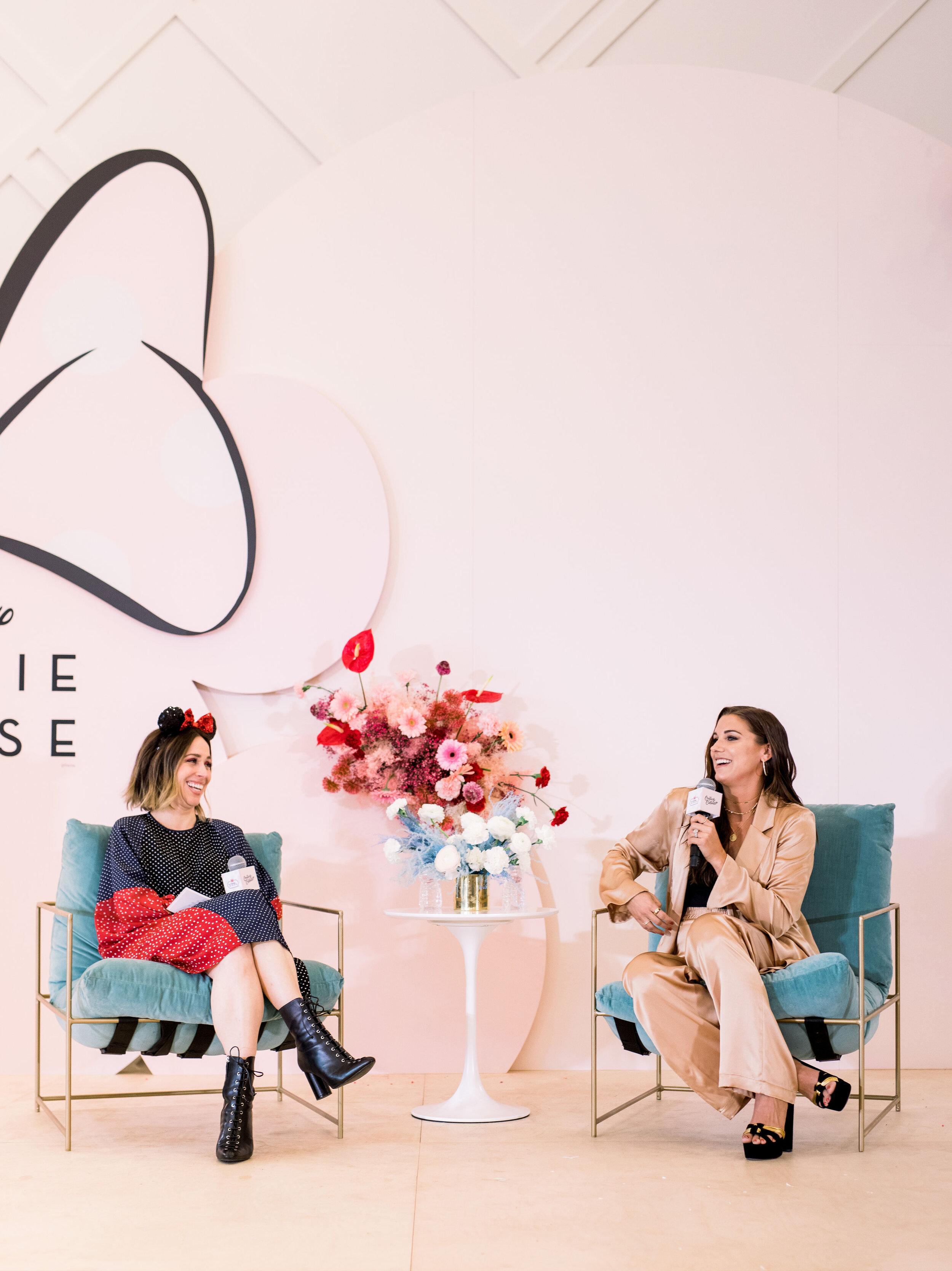
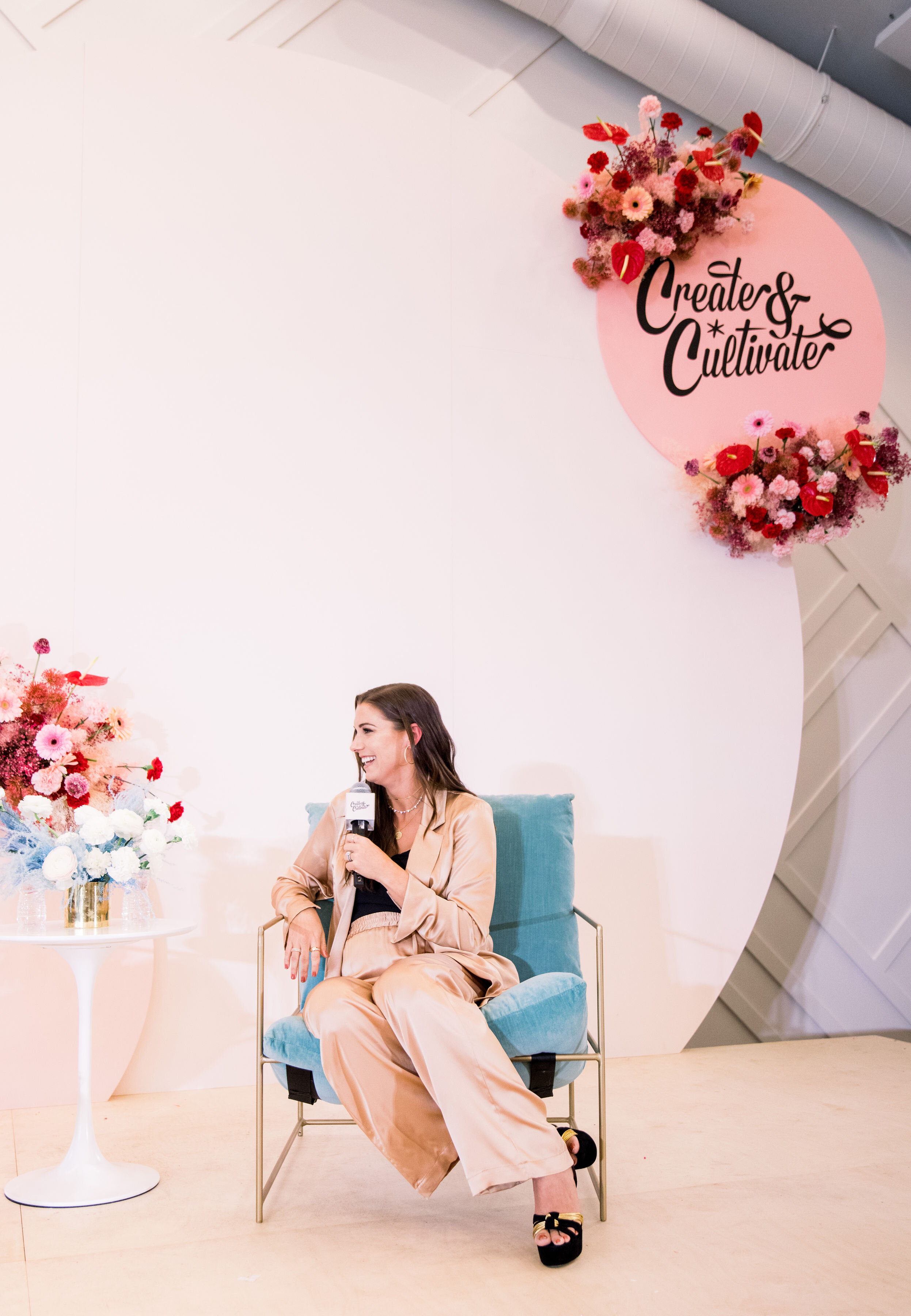



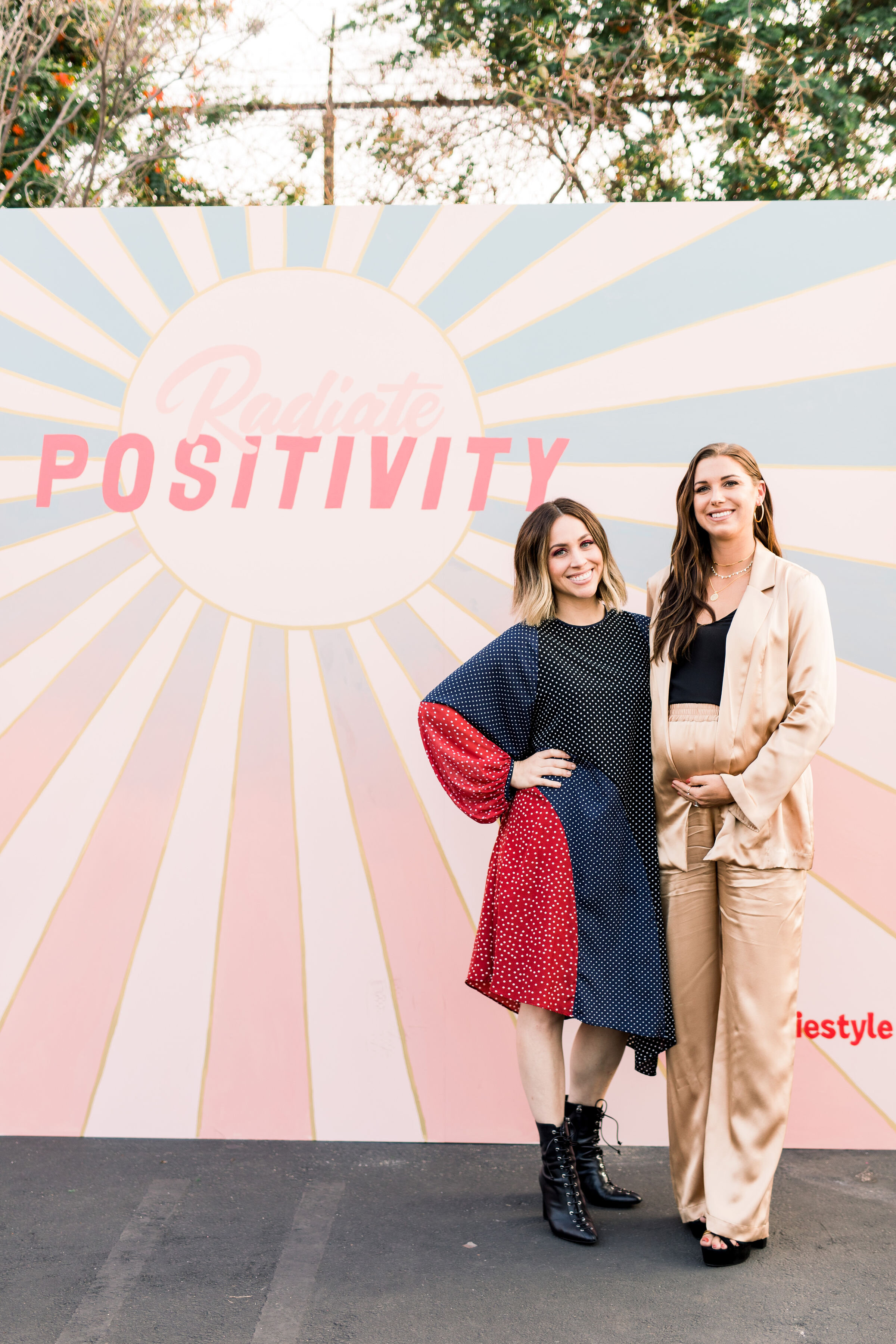
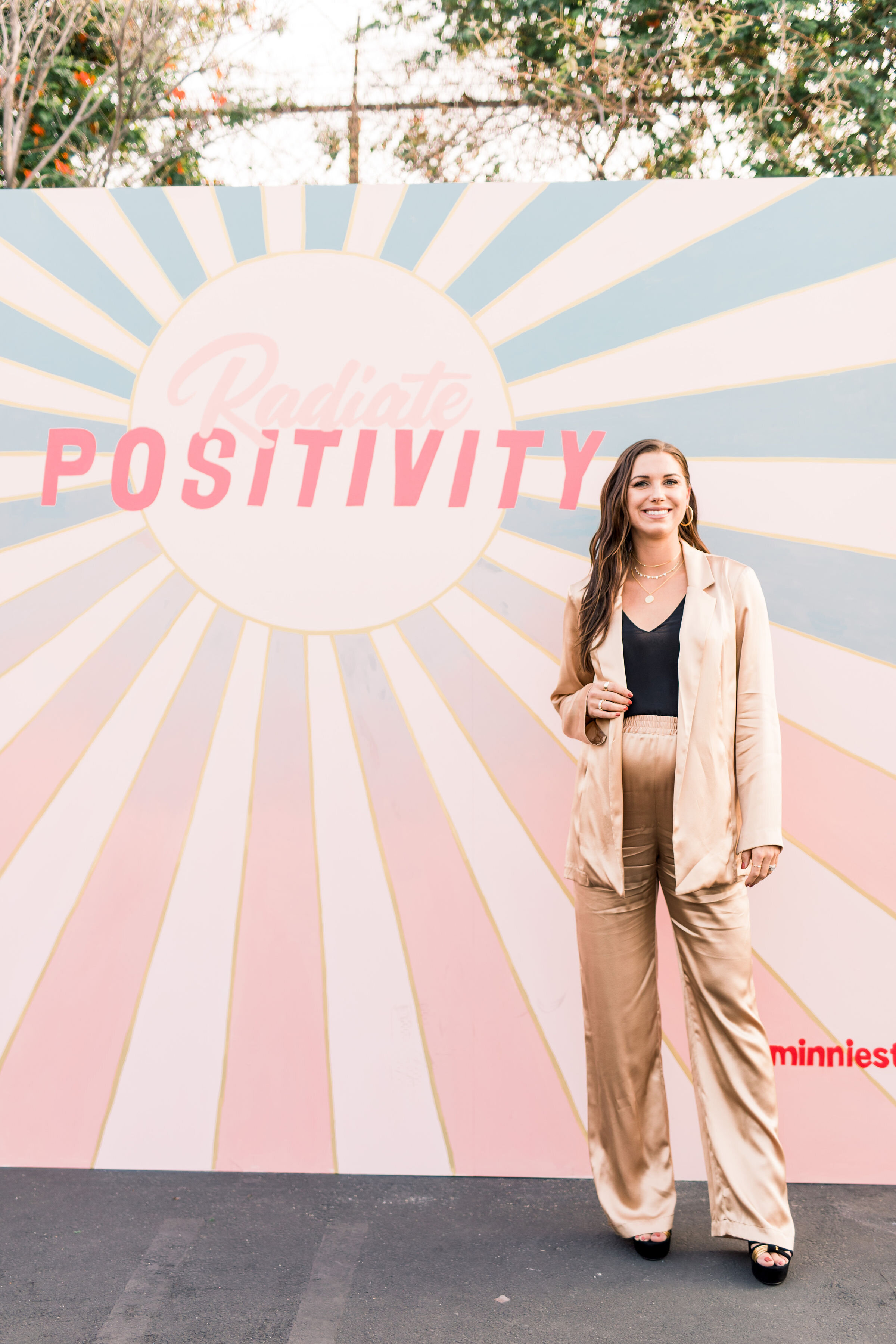
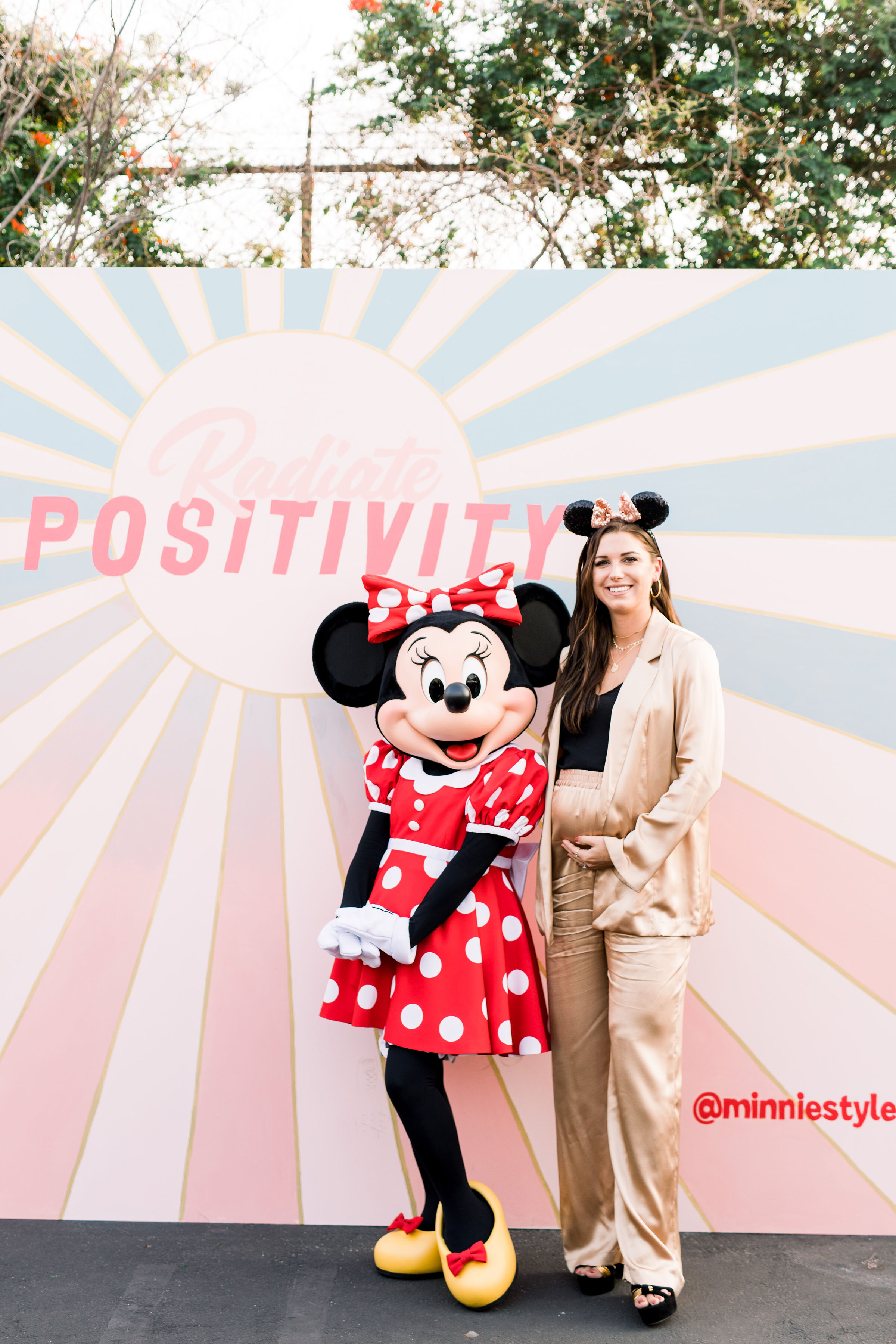
Panel: Keynote Conversation With Alex Morgan
Panelist:
Alex Morgan | Co-Captain, U.S. Women’s National Soccer Team
Moderator:
Jaclyn Johnson | Founder and CEO, Create & Cultivate
On taking risks…
“You’re never going to get the reward unless you take the risk.”
On being a pressure performer…
“What’s really helped me in pressure-intense situations is the self-belief that I have and betting on myself.”
On supporting other women…
"We’re stronger in numbers."
On starting an apparel company with her teammates…
"We wanted to invest in ourselves and it paid off."
On the importance of sports…
"There’s so much that sport can give you that you can’t learn otherwise."
On the state of gender equality in sports…
“We won’t stop until we’re not discriminated against at all. Until we’re given the same opportunity to do what we love and make the same amount.”
“We’ve tried to educate people on the fact that we do make as much revenue, or more, for our employer and that, in turn, means that we should receive the same amount or more, potentially.”
"Progress is good, but it’s never at the rate that you want it to go."
On maternity leave…
"If work is what you love to do, you shouldn’t think that you have to put that on hold to start a family. We can do both."
On surrounding yourself with women who lift you up…
"Having a group of women that support you unconditionally is important."
On being a leader…
"It’s important not to change the integrity of who you are. To change something that you do or say because you’re a captain or a leader is not what leading is all about."
On where her confidence comes from…
"I get my confidence from a lot of my teammates, and I get a lot of confidence from proving myself right."
On the importance of staying grounded…
"Remember where you started and how you got there, and know that the process is more important than the outcome."
On the value of self-care…
"Don’t hold yourself back, make sure that you’re fulfilling yourself."
See more photos from the event!
















Photography: Smith House Photo

Banana Republic's Art Director Says Having a Life Outside of Work Is Critical to Success
“You can’t work at your best if you’re burnt out.”

We often look to the iconic leaders of our time for motivation and wisdom, but for many of us, this is purely inspirational and not as applicable to our everyday lives. We truly believe there is more benefit in looking to your left and seeking out a peer-to-peer mentorship with a colleague or friend you admire. Why? Firstly, they will likely have the time to be your mentor, and secondly, their advice will be relatable and allow you to see your path clearly while keeping your mind open to new ideas, identifying new opportunities, and helping you self-advocate. We call them Everyday Superheroes. In this new series, we talk to the people who are paying it forward, lifting others up and paving a smoother path for the next generation to come.

Photo: Courtesy of Banana Republic.
It’s safe to say that the traditional career model has been completely disrupted. The path to your dream job is no longer linear—it takes many twists, turns, and jumps along the way—and the days of choosing one job for the rest of your life are officially over. Now, it’s a choose-your-own-adventure journey and which way you turn is completely up to you.
Kimara Mitchell’s story is proof that every job, no matter how big or small, all contribute to the end goal. When she was working at her local Macy’s in the Esprit shop-in-shop or studying to be an engineer, she didn’t know that one day she’d end up in her dream job. Fast forward to today, and Mitchell is now working as the associate art director at Banana Republic leading photoshoot art direction, research, and hiring a team of photographers, illustrators, designers and more to bring the brand to life.
Everything about Mitchell’s career path has been non-traditional including how she landed her current role. Read on to hear how the award-winning designer went from the agency side to in-house, what she does to prevent burnout, and why staying true to who you are at work is key to your success (and the business).
And if, like us, this has you feeling inspired and motivated to kick off the new decade with a whole new perspective, then head over to the Banana Republic career’s page to learn more about how you can get involved and embark on a new, and exciting career path for 2020.
CREATE & CULTIVATE: What did you study in school? And what did you want to be when you grew up?
KIMARA MITCHELL: “Initially I was an engineering/urban planning major. I’ve always been obsessed with cities—how they are planned, transit, green spaces, community buildings—and thought it would be the right career path for me. I didn’t realize how technical it was and after taking an illustration class in my sophomore year, my professor told me about something called communications design. I took a summer seminar at Parsons and then switched my major to advertising the next semester.”
What are some of the earlier jobs that helped to shape your career/path?
“One of my first jobs was working in retail at my local Macy’s in the Esprit shop-in-shop. I’ve always loved fashion, especially the marketing side. When I was young, I would have ads on my wall from magazines, not posters of celebrities. I never knew how to get from admiring ads to creating them.”
“I don’t believe in the idea that you need to hide the real you at work.”
What challenges have you faced along the way? What did you learn from them? How did they prepare you for your job now?
“When I graduated from college, I worked at advertising agencies and it was hard to get a job in-house because they wanted someone with in-house experience. Agency life tends to be very fast-paced and you have to be detail orientated and able to juggle multiple jobs, clients, and deliverables at once. Interestingly, it prepares you for working in-house, especially given the shifts we have to make based on business. On the in-house side, you also work much closer with cross-functional teams, like marketing, merchandising, inventory management, finance, and design. There were a lot of acronyms I didn’t know when I first came to Gap, so I studied up.”
Tell us about your role at Banana Republic? What does it entail? Did you work your way up? What were the positions along the way?
“I am currently the art director for Banana Republic Factory and my job is two-fold. First, I come up with the concept and art direct our seasonal photoshoots. I work with the global creative director and senior director of photography for Banana Republic on evolving our photography, model choices, and how we show up as a brand. Secondly, I manage a team of designers who create marketing with photography, like store signage, direct mail, site, emails, and social.
“I started here as a senior designer on the outlet shared services team, then moved over to the Banana Republic side. From there, I started working with the former creative director on shoots until he would let me run them myself. After two years of that, I was promoted to art director.”
What do you love most about your job and why? Does the reality of your career match up to your expectations/why/why not?
“I love the flexibility in my job and that every day is something different. I could be pulling inspiration for an upcoming shoot, art directing someone on my team for a digital editorial or working with our copywriter on an Instagram story. I never imagined that I’d be in this spot, so I didn’t really have an expectation of what it would be like.”

What can you tell us about the culture at Banana Republic? What has encouraged you to stay?
“I’ve stayed because it’s been a challenge and not become stale. People here are very passionate and extremely intelligent, and it makes you want to step up your game. That being said, we also care about each other and like to have fun.”
Talk us through your daily tasks and what a day in the office looks like for you? What’s the most rewarding part of your day?
“One of the things I love is that no two days are the same. I like to check email and get a head start on that on the commute in. Then I’ll come into the office, check-in with my team, probably work on a project or two and attend meetings like project reviews or kickoffs, brainstorm some upcoming initiatives, or work on some image retouching notes.”
What does your morning, pre-work routine look like? What rituals set you up for success?
”I’ve been into sports since I was young, and I started running in high school. I usually start off the day with a three-mile run, then come home, check email, and have breakfast. I’m a bit obsessive about having breakfast every day without fail. I like working out in the morning because I feel it sets me up better for the day; I’m more energized. I also like to write things down. I have two datebooks, a smaller personal one and a larger one to plan out the shoots, milestone meetings, and creative reviews. I have weekly and daily checklists to keep myself organized.”
Your role requires you to be across so many facets of the business—how do you manage your time effectively? What is your greatest productivity hack? How do you get it done?
“It can be challenging for sure! One of the great things about our office is that you can work anywhere. Sometimes in an open floorplan, it can be hard to concentrate, so I’ll work in the café or one of the couches we have around the 8th floor. I’ll also turn off my email for a few hours so I don’t get distracted. I also make priority lists for myself and I always ask business partners when something is needed by—they feel their needs are being met, but I’m not stressing to get everything done ASAP.”
Do you ever reach inbox zero? Do you believe in that? What is your inbox philosophy?
”To me, having an inbox at zero means that I have read and acknowledged everything in my inbox. If I need to reply, then I’ve done that or forwarded it on to someone else who can better answer someone’s question. Having my inbox at zero means those things have been checked off my list and I can move on to other tasks.”

What is one of the biggest misconceptions about your job?
“If you work in fashion, people tend to think it’s very glamorous and your days are spent with samples, on set, or around models. It is a ton of hard work that starts way before the actual photoshoot. It’s the pre-season planning, pulling inspiration, collaborating with styling, marketing and merchandising on stories, working with prop stylists and photographers on getting all the details nailed down, and much more. Once you get to the shoot days, hopefully, everything is ticked and tied and the day(s) will run very smoothly.”
If someone wanted your role specifically, what advice would you give them on how to land their dream job/your current job?
“Be a cultural sponge. Inspiration really comes from everywhere, so it’s not just about going to school and studying art direction. I’m constantly looking beyond fashion and in popular culture, art, music, books, current events, politics, sociology, and more to influence what I’m doing. I also think with the advent of social media, you don’t have to live in a large city to work in fashion or retail. Seek out local photographers or stylists where you live and do test shoots, or collaborate with your favorite local boutique on editorials. Many of them don’t have a huge budget and would love help with marketing or social media.”
“Be a cultural sponge. Inspiration really comes from everywhere.”
Have you seen a consistent standout quality or personality trait of successful people in this industry?
“Be someone who is constantly learning and willing to pivot. The industry is changing so rapidly and it’s the people and the brands that are evolving that will succeed.”
What’s the best piece of advice you’ve been given? And what’s the worst piece of advice you’ve been given?
“The best piece of advice is ‘you are not your job.’ The interests I have outside of work keep me inspired and motivated when I’m in the office, and you need to carve out time for yourself to be with friends, family, travel, etc. You can’t work at your best if you’re burnt out. I don’t believe in the idea that you need to hide the real you at work. I’m a proud African-American woman, and the things I’ve experienced give me a unique viewpoint. As someone who never saw women like myself in fashion growing up, I want to make sure young people know that this is an option for them and you can be uniquely you while doing it.”
If there was one person you admire that you could power brunch with, who would it be?
“I would love to meet Shiona Turini. She started in PR at a high fashion brand and then segued into being a fashion editor and now a wardrobe stylist for television and movies. I’d love to pick her brain about that and also just talk fashion.”
In your mind, what’s a perfect interview outfit? Why? Explain?
“It really depends on your chosen field but at Banana Republic I think it’s something that shows your personality and creativity. It could be a fun midi skirt and leather jacket or sleek denim and a blazer. You should always dress up though and not be too casual, even in a ‘casual’ workplace.”
Visit the Banana Republic career page to learn more about their exciting job opportunities and career options.
MORE FROM THE BLOG

WTF Is a Cap Table and How Do I Read One?
Raisin’ funds and takin’ names.

Photo: Pexels
When you start a new business from scratch, the amount of knowledge you have to acquire can be overwhelming. There is so much to learn and often it’s on the job. And you might be thinking, ain’t nobody got time for that, but even if you plan on hiring someone to handle the paperwork and the financials, as the business owner you should always have your eye across every aspect of the company and know your numbers.
You will come across terms and acronyms you don’t understand but don’t be shy to ask questions or Google them, then take action. If you’re an entrepreneur then it’s likely you’ve already heard about CAP tables, also known as capitalization tables. But for others, you might just be thinking what is a cap table and how do I read one? And if you’re entering the funding stages of your venture, it’s really time to step that knowledge up.
Below, we’re talking more about what a cap table actually shows and how to read, create, and use one in your business.
The basics
First things first: What does capitalization even mean? Capitalization is just a formal way of saying ownership shares (i.e., who owns capital) and includes all of your company’s securities: stocks, preferred shares, options, etc. A capitalization table, then, is a chart that shows who owns how much of each asset type.
In essence, the point of a cap table is to give a quick overview of ownership. When you’re first creating your company, this step is essential to make note of what everyone in the business owns, but it becomes even more important when you’re bringing investors into the mix. They need a clear picture of what they’re buying, and shareholders need to be able to keep track of their stakes in your company.
The nitty-gritty
In the example from Hyde Park Angels below, you’ll see the table includes both a pre-money valuation and a post-money valuation—this just means how much the company was agreed to be valued at before investment, and how much it’ll be worth afterward.

The third column shows shareholder names—early on, this list will be short, but it can get lengthy as the business grows. In the next column, pre-money ownership percentage is denoted. Because Investor A and Investor B are just now buying into the company, their pre-money ownership is listed at zero percent.
The price-per-share noted on the left is determined by taking the pre-money valuation and dividing it by the number of pre-money shares (here, $4 million ÷ 8 million shares = $0.50 per share).
Now that we know how much each share is worth, we can calculate the number of shares each investor is purchasing. Investor A is putting in $750,000, so her post-money shares equal $1.5 million (because $750,000 ÷ $0.50 = $1.5 million). Thus, her post-money ownership percentage is 15% of the new business valuation. Because Investor B put in $250,000, she owns 500,000 shares and 5% of the company. The founders, who just sold 20% of their shares, now own 80% of their business.
Scaling up
As your company continues to scale, your cap table will become more complicated. Not only will the list grow in length, but your level of ownership and control will likely change, too. It’s important to keep your cap table updated and buttoned up—you never know when new funding opportunities will arise, and if you ever sell the company, your cap table will spell out who gets what in the deal.
While the idea of raising money for your business can be daunting, having a well-documented cap table in your pocket will make the process simpler for both you and your investors. Happy funding!
This post was published on February 2, 2019, and has since been updated.
MORE ON THE BLOG

How Much Do You Make? Here's How to Tackle the Uncomfortable Questions
If it don't make dollars, it don't make sense.

Photo: Courtesy of Create & Cultivate
“Do you mind if I ask… ?” These are six little words that almost always preface questions about money, especially among female friends. “Do you mind if I ask how much that cost?” “Do you mind if I ask how much your rent is?” “Do you mind if I ask how much you make?”
Women have traditionally shied away from discussing personal finances, instead choosing to tiptoe rather clumsily around these conversations. But like anything else, if we don’t talk about it, we won’t get good at it. From asking for a raise to investing in a 401(k), there is so much good advice to be gleaned from your friend group.
Keep reading to learn a few ways to broach money talk with friends.
TALK SALARY OPENLY AND HONESTLY
Have an honest conversation with your friends about what they are making and their financial goals. The second part of this is equally as important as the first. Talking salary with friends can boost your financial confidence, which in turn can have a positive impact on your career. It can also highlight if you should be making more.
If you know your friends are making more money than you, use it as motivation to achieve your financial goals. Journalist Moira Forbes once told me, “If you can’t see it, you can’t be it.” See it, hear it, and share it—because the highest wave floats all boats.
ASK FOR ADVICE ABOUT RAISES
The raise conversation is a tricky one to have with colleagues because we don’t generally divulge our salary to our co-workers. If you’ve already had the salary talk with close friends, chatting over the realistic and unrealistic expectations of your raise will prove beneficial to all parties. However, because money is a sensitive topic, try to have the conversation with a friend who is paddling in a similar financial boat. Talking to a friend that makes significantly less than you could potentially strain the relationship. Talking to a friend that makes significantly more than you might have you reaching toward an unrealistic branch on the money tree.
Aim for the middle and be prepared to have a real talk about what you’re worth and why. A true friend will not only help prepare you for the convo, but will steer you in a realistic direction toward your goals. Understanding how to price yourself is paramount, and the more we understand the realities of others’ financial situations, the better we understand our own.
“Sharing salaries: if we don’t talk about it, we won’t get good at it.”
SHARE FINANCIAL MISSTEPS
Our relationship with money can sometimes feel like a bad marriage. We don’t talk about the things that bother us, instead choosing to sweep problems under the rug in the hopes that they might disappear. The great thing about true blue friendship is that you can talk about anything—especially when you’re not in the green.
Our friends are there to remind us that the idea of "keeping up" with others is one of the biggest illusions out there. If you thought you’d be making more, saving more, or wrapping up those student loans, it’s time to assess and call up a friend. Talking through missteps or how much you’re putting on your credit card every month will lend a little financial clarity.
MAKE A PACT TO BUDGET
Oh, the expensive inconvenience of convenience. Are you spending an absurd amount on apps like Uber and Postmates? It’s easy to push a button, but not so easy to stomach the end-of-month tally. If you have a habit of spending money on easy-come services, it’s time to sit down with friends and chat about how they save for their future. Make a pact with your BFF to delete apps like Postmates from your phone. You don’t need everything to be delivered to your doorstep, and doing it together makes it less painful.
BE AWARE OF OTHERS' FINANCIAL SITUATIONS
The friends who are married with kids. The single friend with a disposable income. The one who created an app and is rolling in dough. The reality is that most of your friends will be in very different financial situations. When you're the one trying to make ends meet, a simple dinner can be anxiety-inducing. Your friends may be buying bottles while you can barely afford a glass of the house red. A couple of things: If you know you can’t afford dinner, don’t go. The more transparent route is to make it known from the start of the meal that you can’t simply split the bill evenly. If they are truly your friends, they won’t care one little bit.
On the other hand, if it's your pockets that are heavy and you want to invite a friend to dinner, make sure to suggest a restaurant that you both can afford. What's better than Taco Tuesday? Be realistic and your friendship won’t become tense.
How do you talk about dollars with friends? Share below!
This post was originally published on December 22, 2017, and has since been updated.
MORE FROM OUR BLOG

Slow Stories: How to Set Content Resolutions for the New Year
“The resolve to create content will be rooted in something much more profound than virality and beauty.”

Photo: Courtesy of Slow Stories
As we ease back into our daily workflow and embrace the opportunities that come with a new (albeit uncertain) year, the resolve to create content will be rooted in something much more profound than virality and beauty. Now more than ever before, content creators must consider the current cultural landscape to ignite dialogues that not only further their business goals but inspire widespread change, too.
That's not to say that these efforts haven't culminated in action already. When I look back on 2019 from a business perspective, there was certainly no shortage of inspiring and impactful brand storytelling. Many of the founders and professionals I interviewed in our most recent season of Slow Stories have already doubled down on their efforts to slow down and spearhead thoughtful online narratives.
As a refresher, here are a few key takeaways from our most recent episodes:
Lead with vulnerability.
Vulnerability has become one of those words that can take on multiple meanings. While some may choose to be more forthcoming or vocal about certain experiences than others, our podcast guests argued that taking a more unfiltered or candid approach to storytelling will resonate with modern consumers. How far you want to go is up to you.
Time is money—but it's also much more than that.
Our relationship with time was another recurring theme that arose during these discussions. Our interviewees made the case that slowing down both our content creation and consumption habits creates headspace to be thoughtful about how we spend our time personally and professionally. Adopting this approach also creates a more sustainable cadence in how we engage with our customer communities online.
With interconnectivity comes great responsibility.
Lastly, our interviewees acknowledged that we have a responsibility not only to our customers but to one another as industry professionals. Stewarding responsible discussions within key leadership circles will become even more critical to enact actual systemic change—especially in our current business culture, which has become dependent upon "always-on" communication.
When the podcast season ended in December, these ideas naturally inspired me to think about how to goal-set and create resolutions through a digital/content lens. In many ways, maintaining resolutions of any kind is an ongoing process. So if you're unsure of where to start when it comes to identifying your "content" resolutions, I'm sharing a few pillars to help jumpstart your planning for the year ahead.
“Connect with others beyond the four corners of a screen... strengthening real-life connections can often lead to valuable feedback and new ways of thinking about your online storytelling efforts. ”
Organization: Don't underestimate the power of preparation.
Digital housekeeping is no exception to this. Several tools can help you stay on track with your goals so that you're maximizing your time on checking the boxes of your big- picture content goals and action items. Scheduling and planning apps like PLANOLY (revisit my interview with their founder here) can help with baseline organizational tactics like setting up weekly or monthly content calendars. There are also analog options like Create & Cultivate's career-focused collection of agenda books and calendars, which can help organize your big-picture business goals. Whatever your style may be, getting organized is the best way to free your mind up so that you can create intentional and purposeful content.
Exploration: Explore what motivates you and the stories you want to tell.
Many new businesses often go through exploratory phases to discover key elements about what will make their brand stand out and appeal to their target audience. While this approach can often be time-consuming (and eye-opening), it's a resolution worth pursuing in that it will allow you to think critically about what stories you want to contribute to an already highly-saturated content landscape. To start, try having an exploratory workshop with your team every quarter—if anything, it is an act in remembering to think (and dream) big.
Connection: Get "social" outside of social media.
One of my last recommended resolutions is to connect with others beyond the four corners of a screen. Even if you're an introvert like me, there is immense value in attending events and getting together with peers. You can be discerning about the gatherings or events you attend (remember to honor your time), but strengthening real-life connections can often lead to valuable feedback and new ways of thinking about your online storytelling efforts. Investing in professional relationships can also translate into fruitful professional collaborations, in turn, creating opportunities to make your content that much more dynamic.
While it's difficult to predict future industry trends and the inevitable ebbs and flows of business, I hope this article provides a framework to start thinking about the ways you can implement thoughtful storytelling in your own brand or content for 2020 — and beyond. I'll be touching more on these themes in the coming months, but in the meantime, if you're interested in learning more about how brand builders are approaching slow content in their businesses, check out the Slow Stories podcast along with past articles from my column here.
ABOUT THE AUTHOR
Rachel Schwartzmann is the Founder and CEO of The Style Line LLC. She created The Style Line in late January 2011 via Tumblr and has fostered The Style Line’s brand in its growth since then. Rachel has been featured in esteemed sources including Forbes, Refinery29, and MyDomaine and has also spoken at Create & Cultivate and Columbia University on establishing a unique brand point of view and entrepreneurship. On October 1, 2015, Rachel took The Style Line in a new direction as a boutique content company with the introduction of its slow content agency CONNECT(ED)ITORIAL.
You can follow Rachel at:
The Style Line: @thestyleline (Instagram, Facebook, Twitter)
CONNECT(ED)ITORIAL: @connecteditorial (Instagram)
Rachel Schwartzmann: @rachelschwartzmann (Instagram) @RMSchwartzmann (Twitter)

Domino's Digital Content Director Says Nothing Beats On-the-Job Experience
“If I hadn’t consistently interned while studying, I don’t know where I’d be.”
How many times have you peered voyeuristically into the lives of people you admire via social media, video, or published interviews and wondered what it must be like to do their job? We’ve all been down that research rabbit hole on our quest to create and cultivate the career of our dreams, but often we’re still left pondering about the realities of their day-to-day—so, what is it really like? Well, in this series, I Want Your Job we uncover the truth by getting down to the nitty-gritty on what it’s actually like to work in your quote-unquote “dream job” and if the reality stacks up to the expectation. Up next, Sophie Miura, Digital Content Director at Domino.

“Give yourself time to test and learn before you specialize—it might feel like lost time, but it’ll be worth it in the long run.”
—Sophie Miura, Digital Content Director at Domino.
Photo: Sean Litchfield
When it comes to your career trajectory, there really is no clear path anymore (or a gold watch at the end!). Today, it’s fraught with twists and turns, ups and downs, curves, and sideway maneuvers but that’s what makes it so exciting. Sure, there are challenges along the way, even a few mistakes, and wrong turns, but ultimately, we all land where we’re meant to be. And oftentimes, it’s in a position you never expected to be in either.
This was the case for Sophie Miura. While she had a passion for media, she was unsure of which area to pursue, so she tried them all—from radio to broadcast, print and digital—until she found the one she really loved: magazine publishing. But breaking in and landing a job in the very competitive world of magazines wasn’t easy.
Read on to learn how Miura interned her way to the Digital Content Director at Domino (where she has helped to launch compelling new series, such as New Voices, that spotlight and celebrate women who are shaping the design world), the lessons she’s learned along the way, and why she believes in the importance of on-the-job experience.
I Interned Everywhere to Get My Foot in the Door
As soon as I finished high school, I started interning and worked at almost every type of media outlet, from broadcast radio to television, until I found one I really loved: magazine publishing. When I wasn’t studying media and communications at university, I was interning at Hearst, and, after three months of fetching coffee, organizing the fashion closet, and sourcing rare purebred dogs for a cover shoot (yes, really), I scored a full-time offer as the assistant to the editor in chief—I was ecstatic!
I spent four years working my way up, from picture and production editor to health and features writer. Then, the magazine closed. I was devastated, but ultimately, there was a silver lining: I was invited to join the launch team of Elle Australia. It was a crazy experience, and I learned to be incredibly resourceful and do whatever I could to just get the job done. By age 25, though, I was totally burnt out. I took a giant leap and quit my job, bought a one-way ticket to Bangkok, and spent five months backpacking without a plan. It was so liberating after spending my early twenties working so hard.
I was so worried that it would halt my career but it actually did the opposite. I knew two things by the time I finished traveling: that I wanted to live overseas and that I loved writing about travel. I reached out to every person I knew in publishing, sent a lot of cold emails, and after a lot of hustling, landed a job as a lifestyle editor at MyDomaine in New York. It was a whirlwind. I traveled to far-flung destinations like the Arctic Circle and Bora Bora to write about new hotels and airlines as I cut my teeth as a digital editor.
All in all, I must have done at least six internships before landing a full-time role. It was the best way to figure out what kind of career I actually wanted. Certain media roles sound impressive but are completely different in reality. Interning helped me to fast-track that learning experience and really zero-in on what I wanted to do.
On-the-Job Experience Often Trumps a Degree
I have a Bachelor of Arts in media and communications. It was a great entry course but the best experience I had was on the job. If I hadn’t consistently interned while studying, I don’t know where I’d be.
I Set an Agenda Each Morning and Prioritize Tasks
I’m the digital content director at Domino, which means that I oversee digital editorial as well as the social media and email team. My days are pretty varied, but typically, I’m in the office early and use that first hour of silence to do the most important tasks: I set an agenda for the day (I find that three priority tasks are realistic; any more is a stretch), review our daily content mix, take stock of industry news and competitor coverage, and dive into overnight traffic to make sure I’m across any fluctuations. The rest of the day tends to be dominated by meetings! I manage a team of eight and work with the print and branded content teams so face time is really important.
I Have My Dream Job, But Reality Doesn’t Always Match Expectations
It’s much more strategic and team-facing than my last role, which was a senior editor at MyDomaine. Fortunately, Domino is a pretty flexible workplace and we’re really encouraged to shape our own roles. When I crave a dose of creativity, I jump into a brainstorm or workshop stories with our editors.
There’s much more to my job than overseeing the website. What you see (whether it be on Domino.com, Instagram, or our other social channels) is really a fraction of the role. It’s much more numbers-based than you’d expect.

I Worked in Several Adjacent Roles and Industries Before Landing on This One
My advice is to try as many different roles within media or publishing before you choose a path. The industry has really evolved in the last three years, and chances are, there are roles that you don’t even know exist. The most valuable thing I did was to intern in radio, television broadcast, and publishing, then, within publishing, I tried advertising, brand partnerships, and editorial. Give yourself time to test and learn before you specialize—it might feel like lost time, but it’ll be worth it in the long run.
I Chose Jobs Based on Who I Wanted to Learn From, Not What
Apply for positions based on the people you’re excited to work with. Your manager plays such a formative role when you’re starting out—learn good habits from the best! My first editor in chief, Lizzie Renkert, helped pave the way for me today. She offered me my first job in publishing and consistently challenged and supported me.
I’m Constantly Paying It Forward and Leading With an Outstretched Hand
I’m always impressed when someone cold contacts me, and even though my schedule is packed, I try to grab coffee with students and interns when possible. Unintentionally, it’s also how I’ve found some really talented employees.
I Found Mentors Over Time, But I Didn’t Force It
I think it’s helpful for anyone trying to build a career to have a mentor, but in my experience, it has to happen organically. If you do find someone who you click with on a professional level, be proactive. Reach out regularly (for me, that’s every two months) and always offer to work around their schedule.
“Work Hard and Be Kind” Is My Motto (and It’s Served Me Well)
Work hard and be kind. My mom wrote this simple quote on a chalkboard in our kitchen when I was about 15, and I’ve never forgotten it. It might sound naive, but I really believe that if you do your best and try to act with kindness at work (and in life!) good things will come your way.

I Am Constantly Learning From Other Women in My Field
Stella Bugbee, the editor in chief of The Cut, consistently pushes the boundaries, and I’m so inspired by her work, voice, and point of view. I learned a lot from her interview on Bon Appetit’s Foodcast podcast.
Have an Appetite for Media (and Consume as Much as Possible)
For me, it’s less about career books and more about constantly staying on top of digital articles from publications and writers I admire. The sites I check daily are The Cut, The New York Times, Bon Appetit, Medium, Digiday, and Domino, of course.
I listen to the Digiday podcast to stay up-to-date with industry news, The Daily for current affairs, The Cut on Tuesdays for storytelling, Offline for work-life perspective, and The Minimalists to remind me that less is more.
Never Stop Learning
It’s almost impossible to feel like you’ve truly mastered your craft when you work in media, and you have to learn to be okay with that. There’s always a new platform, a new algorithm, a new way to tell a story. The most successful people are those who like to be kept on their toes.
Digital Media Isn’t Easy, But I Find Inspiration in the Challenge
A healthy dose of reality. Digital jobs can be tough—the 24-hour news cycle is relentless and you’re constantly “on”—so sometimes it helps to take a step back and remember why you started. At its core, Domino aims to inspire readers with beautiful home tours, clever DIYs, and feel-good decorating ideas. I try to remember that when I’m stressed and need to find my center.
I Swear By the One-Touch Rule for Maximum Productivity
Email is the biggest source of stress for me. It’s never-ending and I hate feeling like I’m not on top of it! Lately, I’ve been trying the one-touch rule which means that as soon as I open an email, I have to action it (respond, forward, or archive) and remove it from my inbox. It takes a lot of discipline (I’m guilty of leaving messages unanswered) but it means that I never do the same task twice or let inbox anxiety simmer.
I’m Always Looking for Contributors, So Hit Me Up
I’d love to hear from you! I’m always on the lookout for beautiful home tours and sharp contributors. If you have an idea for Domino or are interested in collaborating with us, shoot me an email at pitches@domino.com.
MORE FROM THE BLOG

Gwyneth Paltrow, Marie Kondo, Tyra Banks, and More on the #1 Book They Always Recommend
Create & Cultivate 100 honorees share the tomes they swear by.

Photo: Daria Shevtsova from Pexels
Just a quick glance at the reading habits of some of the most admired business people of our time is enough to convince you to crack open a book. Bill Gates famously reads 50 books a year, Warren Buffet spends five to six hours a day reading, and the one-and-only Oprah Winfrey credits books for much of her success, which is one of the reasons why she started her influential book club way back in 1996 (!).
In search of a fresh crop of inspiring, motivating, confidence-boosting books to add to our own to-read piles in 2020, we asked this year’s Create & Cultivate 100 honorees to share the #1 book they always recommend—and they did not disappoint. Spanning timeless tomes filled with tried-and-true life lessons to hot-off-the-press books brimming with sage career advice, this list of page-turning reads has it all.
Ahead, 65 badass female founders, entrepreneurs, CEOs, and all-around successful women reveal the books that helped them get where they are today. Prepare to fill your Amazon cart accordingly.

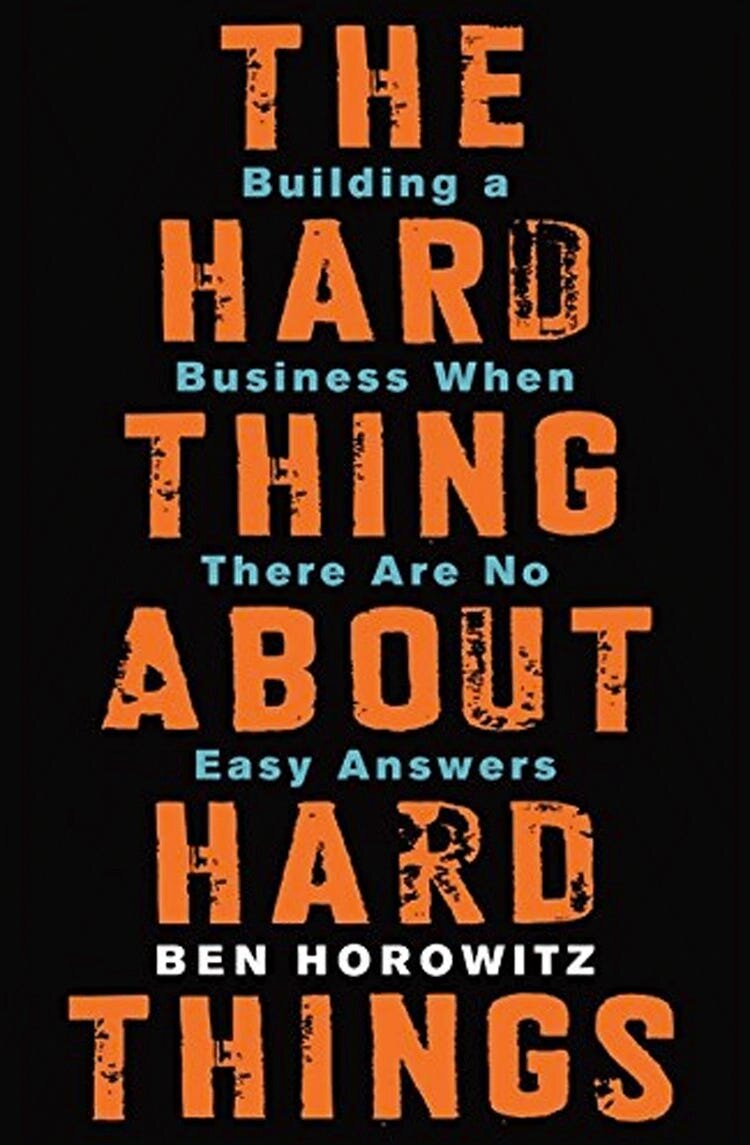
JACEY DUPRIE: “The Hard Things About Hard Things by Ben Horowitz. It gives quick little nuggets of business advice that you can actually apply to your day-to-day.”
MARIE KONDO: “Big Magic by Elizabeth Gilbert. Elizabeth’s approach to work and life celebrates many of the same values as the KonMari Method. I admire her vulnerable path to self-discovery.”
SHAY MITCHELL: “The Four Agreements by Don Miguel Ruiz. It’s an amazing read, pertinent to almost everyone and riddled with pertinent lessons we should take to heart.”
JESSICA KOSLOW: “Journey to the Heart by Melody Beattie. It’s about this woman who lost her son to cancer and her road back to celebrating life. Every day there’s a different mantra based on what she was going through during those 365 days back to finding herself. It’s really special and I read it every morning. Erin—the GM of Onda—gave me the book and it’s really helped me get through this time of opening this restaurant.”
DAISHA GRAF: “Oh, the Places You'll Go! by Dr. Seuss. Keep the wonder in your life. Nothing is impossible. If you can dream it, you can do it.”
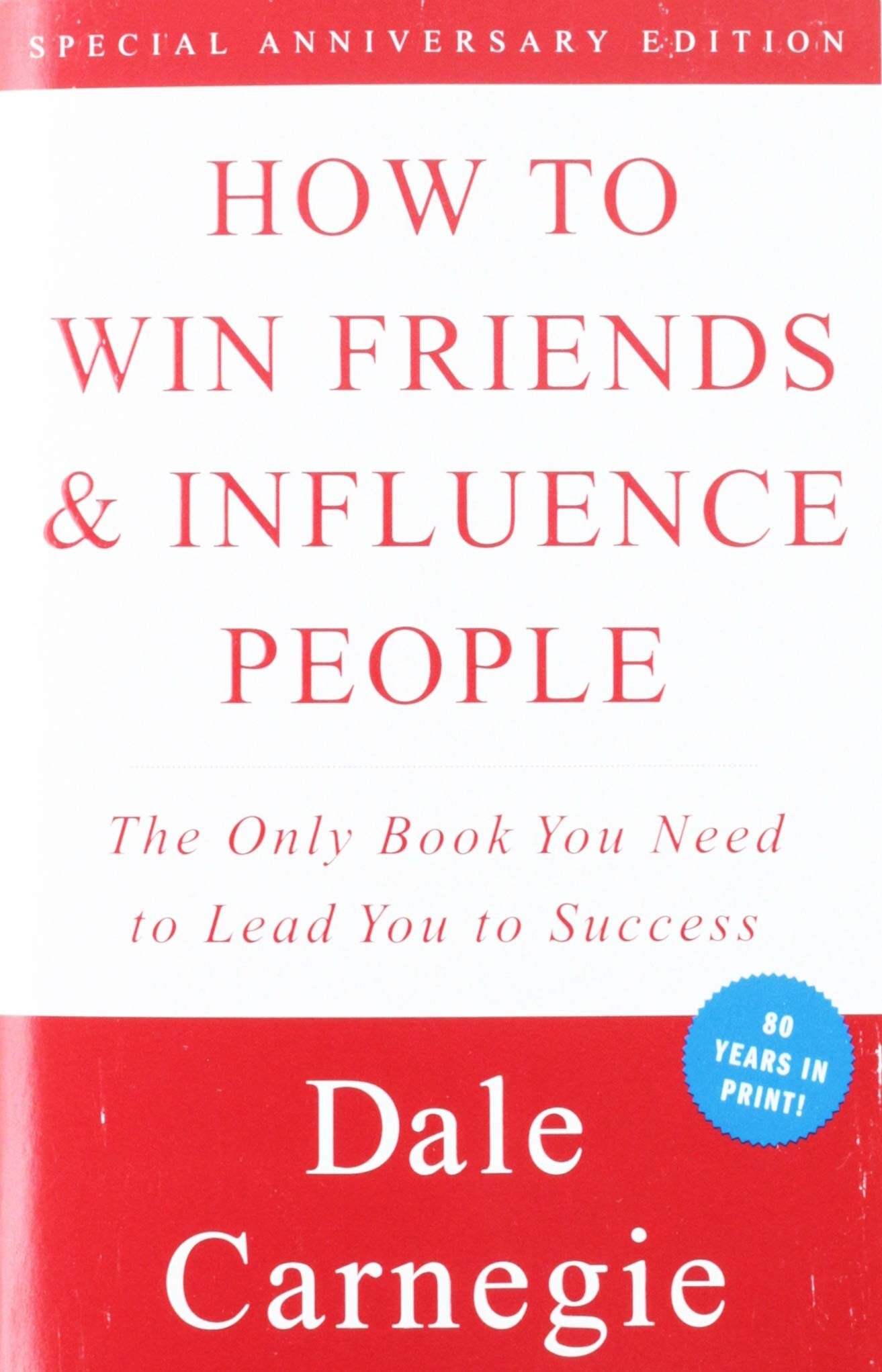

OLIVIA CULPO: “I am a huge bookworm so it’s really difficult to choose one but a few of my favorites are How to Win Friends and Influence People by Dale Carnegie and The Secret by Rhonda Byrne.“
DANIKA BRYSHA: “The Firestarter Sessions by Danielle Laporte. A great way to get clear on what you want and just dig deep into the direction of your life.”
TIA MOWRY: “The Alchemist by Paulo Coelho. This book taught me that whenever you feel like you're alone, you're not. No matter what you believe in, you're always being guided. You just have to be sensitive and open to embracing the omens.“
WENDY LOPEZ & JESSICA JONES: “Health at Every Size by Linda Bacon is a great starting guide to understanding our approach to food, nutrition, and wellness! Linda dives deep into the research surrounding weight science and addresses the history behind some of the prevalent wellness trends we see now.”
ROCKY BARNES: “The Four Agreements by Don Miguel Ruiz. Learning to not take things personally in our industry has helped me more than anything!”

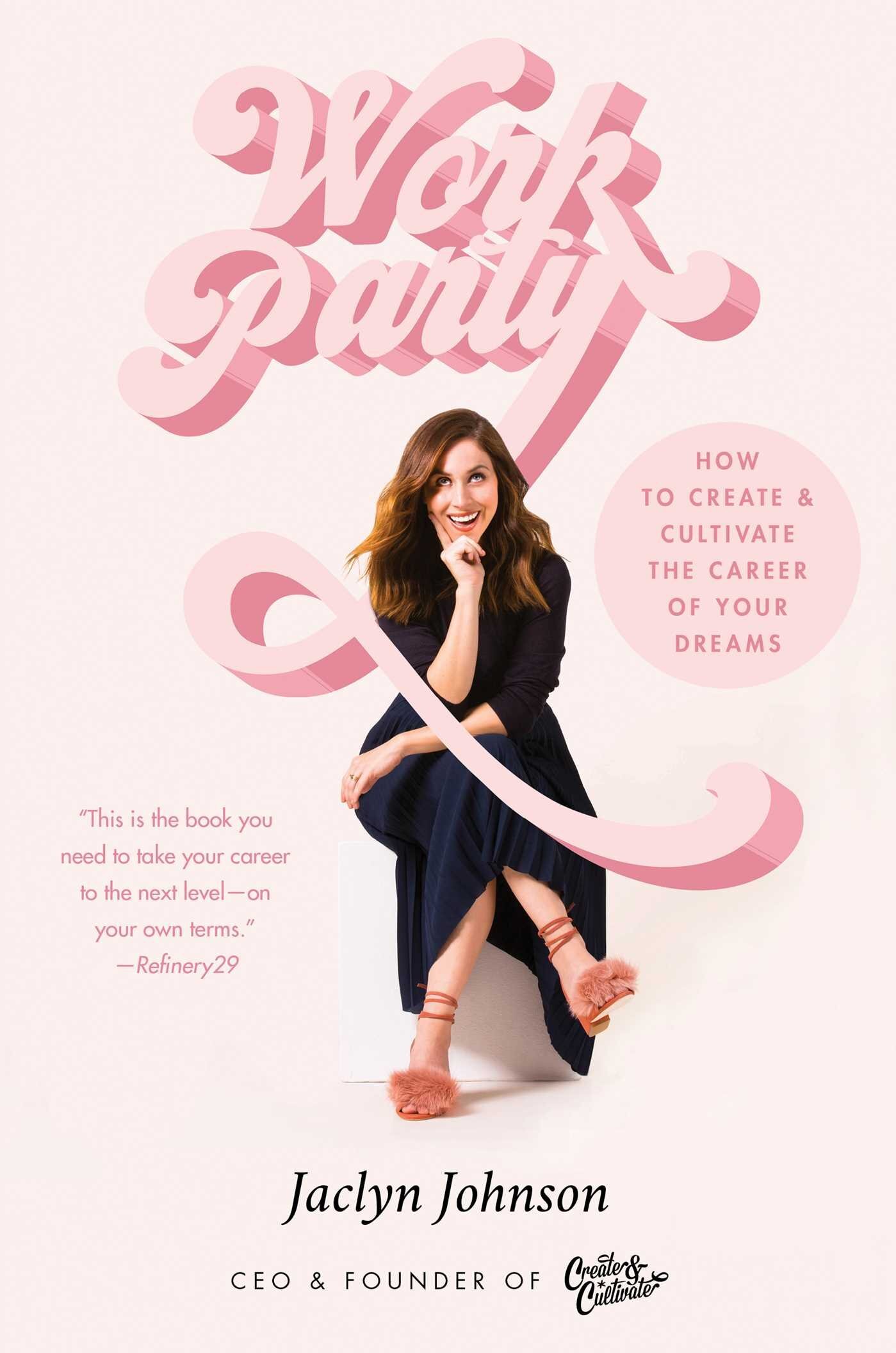
KELTIE KNIGHT, BECCA TOBIN, & JAC VANEK: “Work Party by Jaclyn Johnson because we love to support the ladies who support us!”
GENEVIEVE PADALECKI: “The Four Agreements by Don Miguel Ruiz. It's simple advice that cuts to the core. Especially the ‘don't take anything personally’ message. I also love the Last Child in the Woods by Richard Louv. It reinforces my drive to connect with nature.”
LENNON STELLA: “Astrology for the Soul by Jan Spiller and The Power of Now by Eckhart Tolle. These books really centered me and helped me understand myself and accept myself entirely.“
LALAH DELIA: “The Power of Your Subconscious Mind by Joseph Murphy. This book is essential reading because, until we truly get and honor how our mind operates and how we can take control of it, we live a life that is controlled by external and internal forces, cycles, and thought patterns that don't serve us.”
JUNE DIANE RAPHAEL: “Ah, there are so many books I'd recommend. My current demand is that everyone read Thick by Tressie McMillan Cottom. She is one of the greatest intellectuals we have right now and her thoughts on race/beauty/gender/politics are challenging so much of what I've thought to be true. In the very best of ways.“
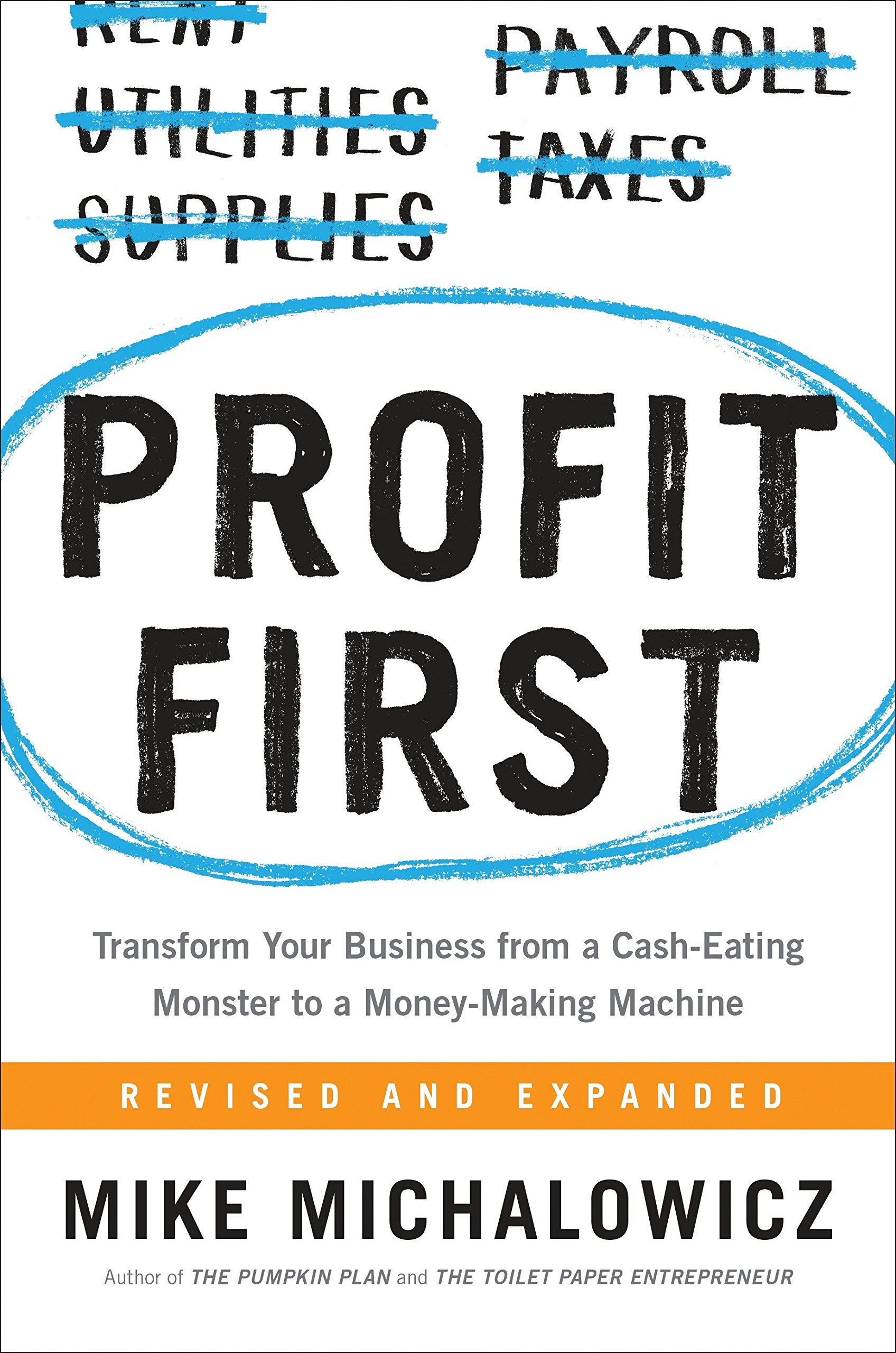

TONYA RAPLEY: “My book! The Money Manual! It's straight to the point, easy to digest and really helpful. Other than mine, Profit First by Mike Michalowiz, it's a must-read for business owners.“
KIITAN AKINNIRANYE: “Right now, I am reading The Purpose Driven Life and I really love it. I’d recommend it to anyone who is searching for purpose and even people who are already walking in their purpose. It really gives insight into how to do it from a God perspective, which is really important to me.”
MELISSA BEN-ISHAY: “I love The Alchemist by Paulo Coelho.”
ISKRA LAWRENCE: “Now that I'm pregnant, I am reading this amazing book that I would definitely have anyone that's pregnant or planning to be pregnant read. It's called Three in a Bed and I find it absolutely fascinating. For me, motherhood has been my biggest goal and dream and something that I want to make sure that I am as prepared as possible. For me, it's the most important job you can do in the whole world. Raising this human to be a good person who is motivated and passionate and embraces all the things that make them special. I think it's a fantastic book in a world where childbirth has a set routine when in reality there are so many options.”
CHRISELLE LIM: “Outliers and The Tipping Point, both by Malcolm Gladwell.”
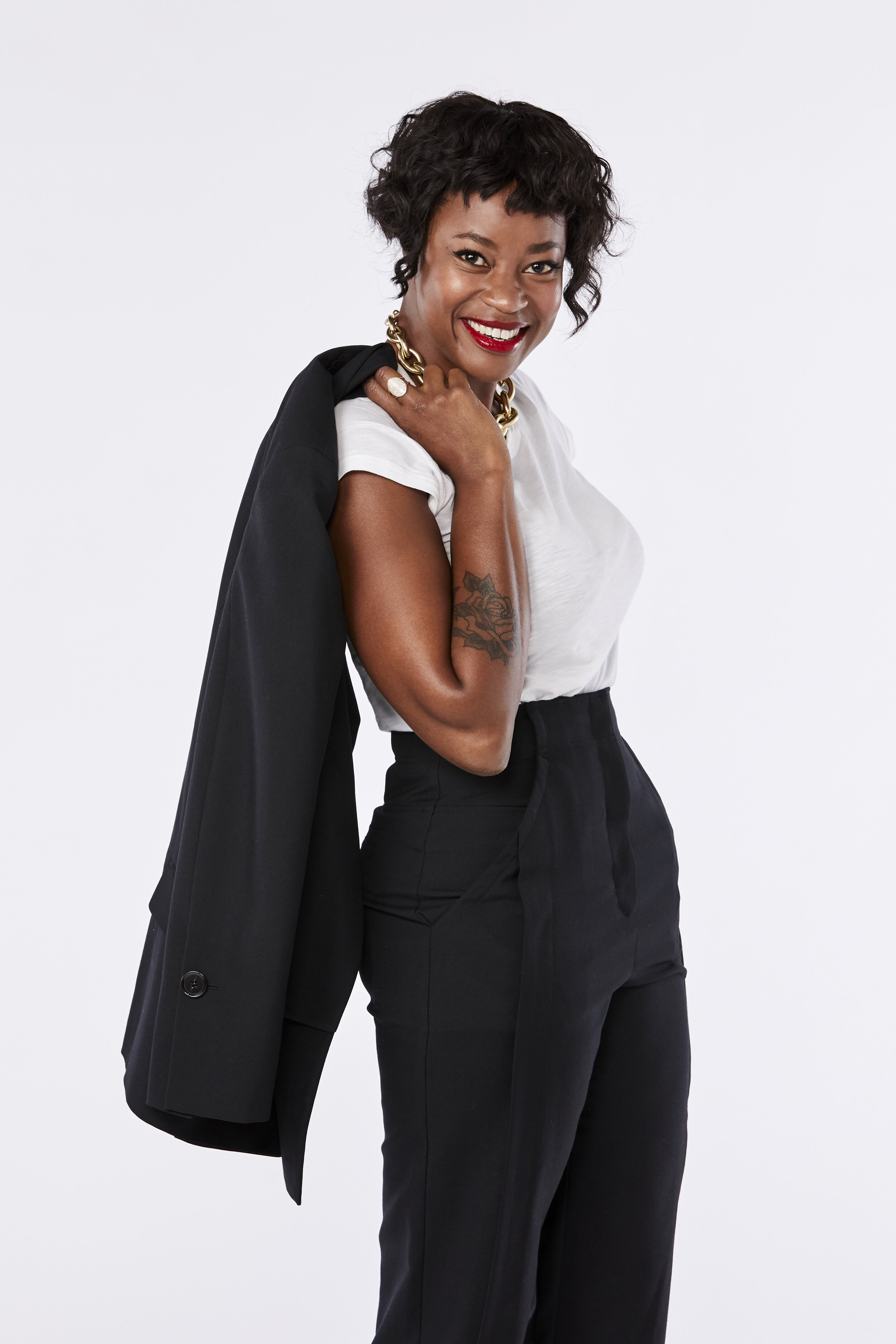
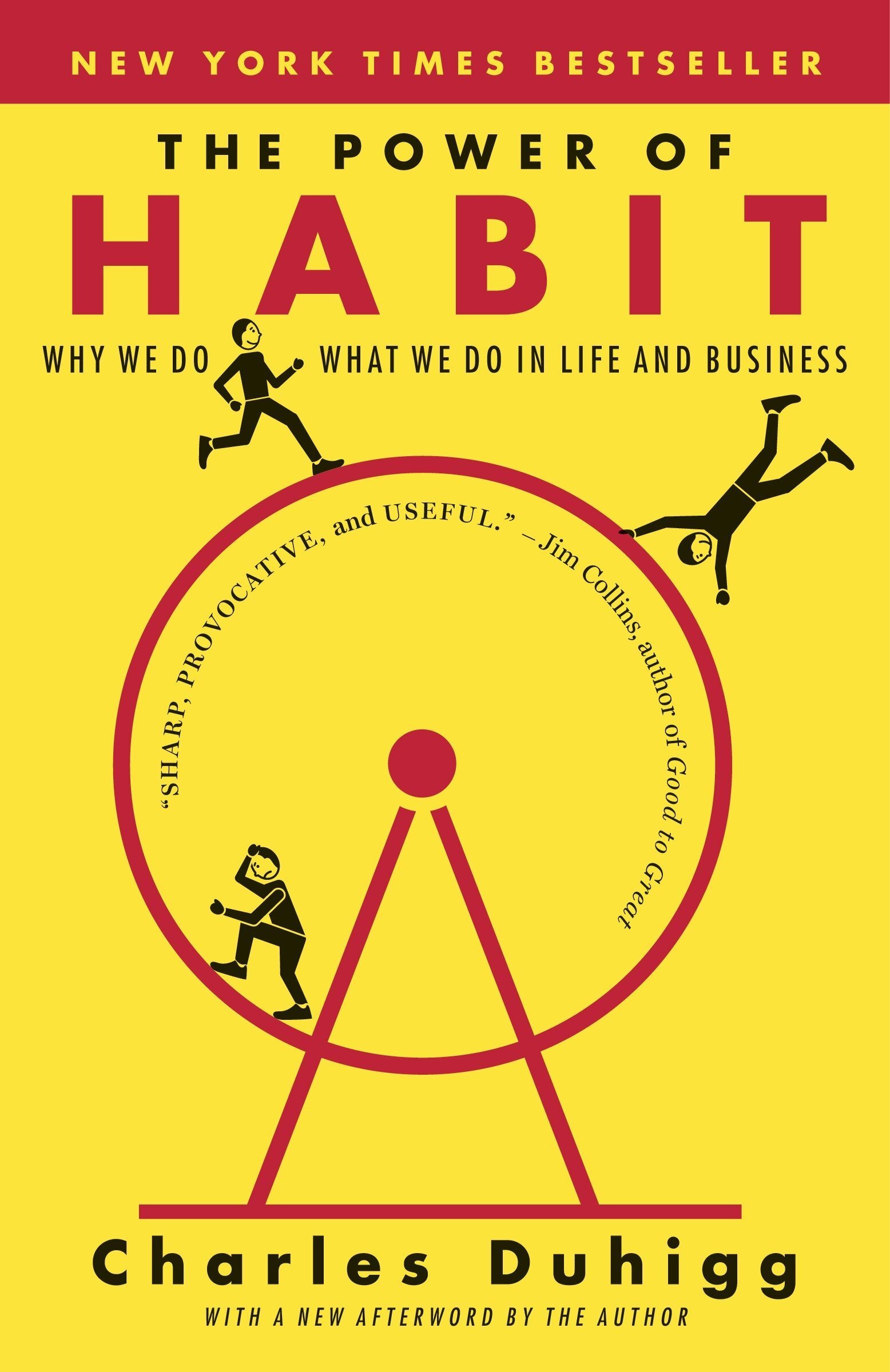
NOELLE SCAGGS: “The Power of Habit: Why We Do What We Do in Life and in Business by Charles Duhigg. It’s my life bible and everyone should have this book by their bedside. It lends a real perspective on human nature when it comes to routine and comfort.“
LINDSAY PEOPLES WAGNER: "I Know Why The Caged Bird Sings by Maya Angelou is a book that changed my life and can be read over and over again.”
JULIA LANDAUER: “Forever by Pete Hamill. It's a novel that's a beautiful love story to New York City, but it's also an example of living life fully, being present, and appreciating our own existence.”
JULIA CHEEK: “The Hard Thing About Hard Things by Ben Horowitz! It’s an honest look at the ups and downs of building a company. It makes the job a little less lonely to know that all of the best founders have gone through the same rollercoaster.”
CINDY ECKERT: “Purple Cow by Seth Godin. Read it. It encourages the powerful idea that you should embrace what is unique to stand out in the sea of sameness. If only Seth would reprint it this year and title it Pink Cow.”
NOOR TAGOURI: “The Originals by Adam Grant.“
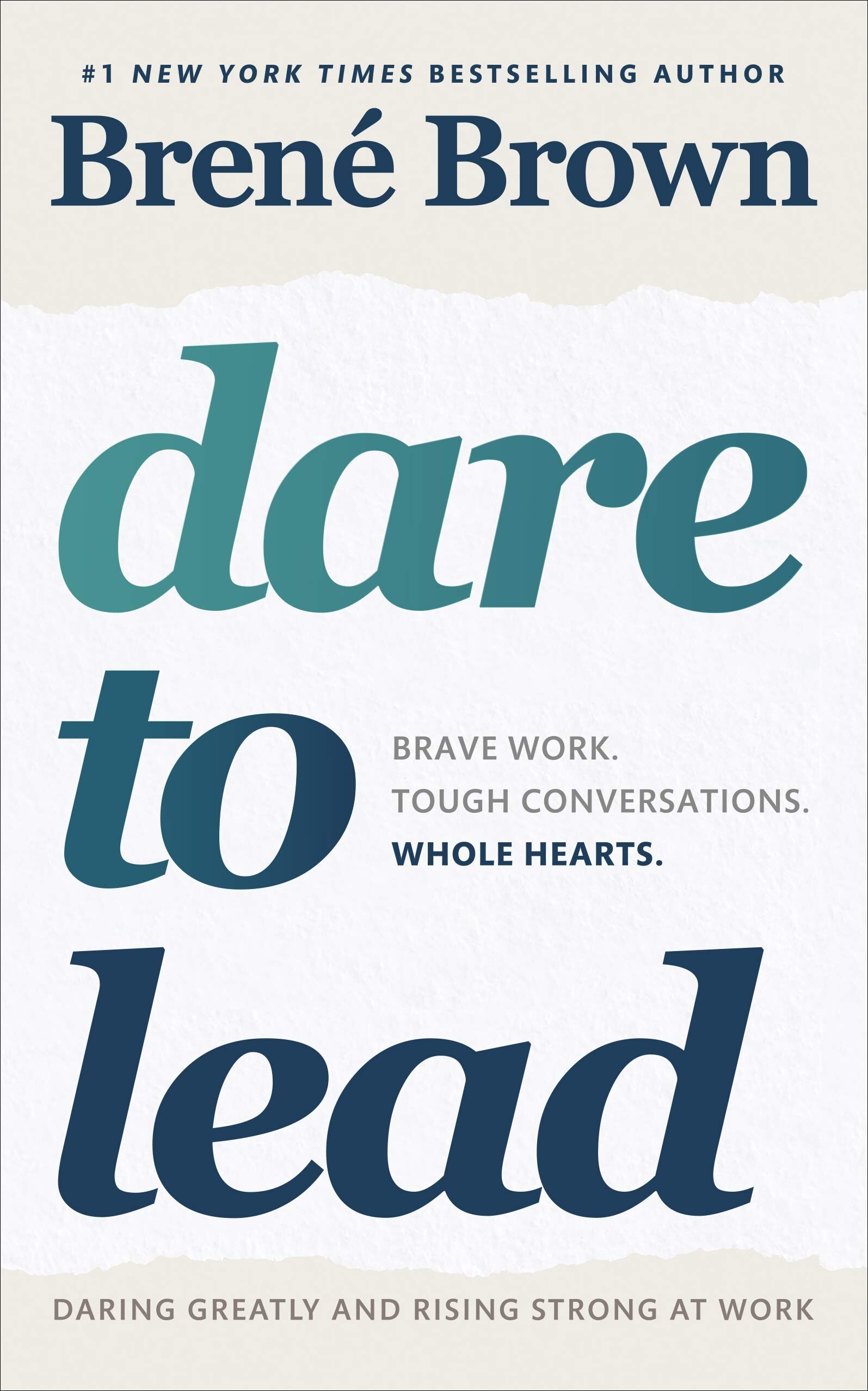

ALLY MAKI: “Anything by Brené Brown. Her words on vulnerability and shame have gotten me through some of my toughest moments.“
BECCA TILLEY: “How to Win Friends and Influence People by Dale Carnegie. It’s basically a book teaching you how to be kind to people and how to treat people you meet for the first time. I always go back and read certain parts because it’s always so eye-opening and being kind to people is never going to go out of style!“
TYRA BANKS: “Delivering Happiness by Tony Hsieh. I am obsessed with his company culture. So much that I cold-called him! We were on the phone for over an hour and he shared so many valuable insights (all of which I implemented with my team!). I highly recommend this book for entrepreneurs.”
JESSIE JAMES DECKER: “I loved The Glass Castle. Jeannette Walls had a wild and unique childhood, but that didn't stop her from achieving her goals and building her character. That's what I always say when things seem messy... it builds character.“
MANDANA DAYANI: “Last year, I read On Tyranny: Twenty Lessons from the Twentieth Century by Timothy Snyder. It was incredibly eye-opening and a critical reminder that we must learn from our mistakes. It also provides context for how critical this time is for democracies across so many countries in the world.”
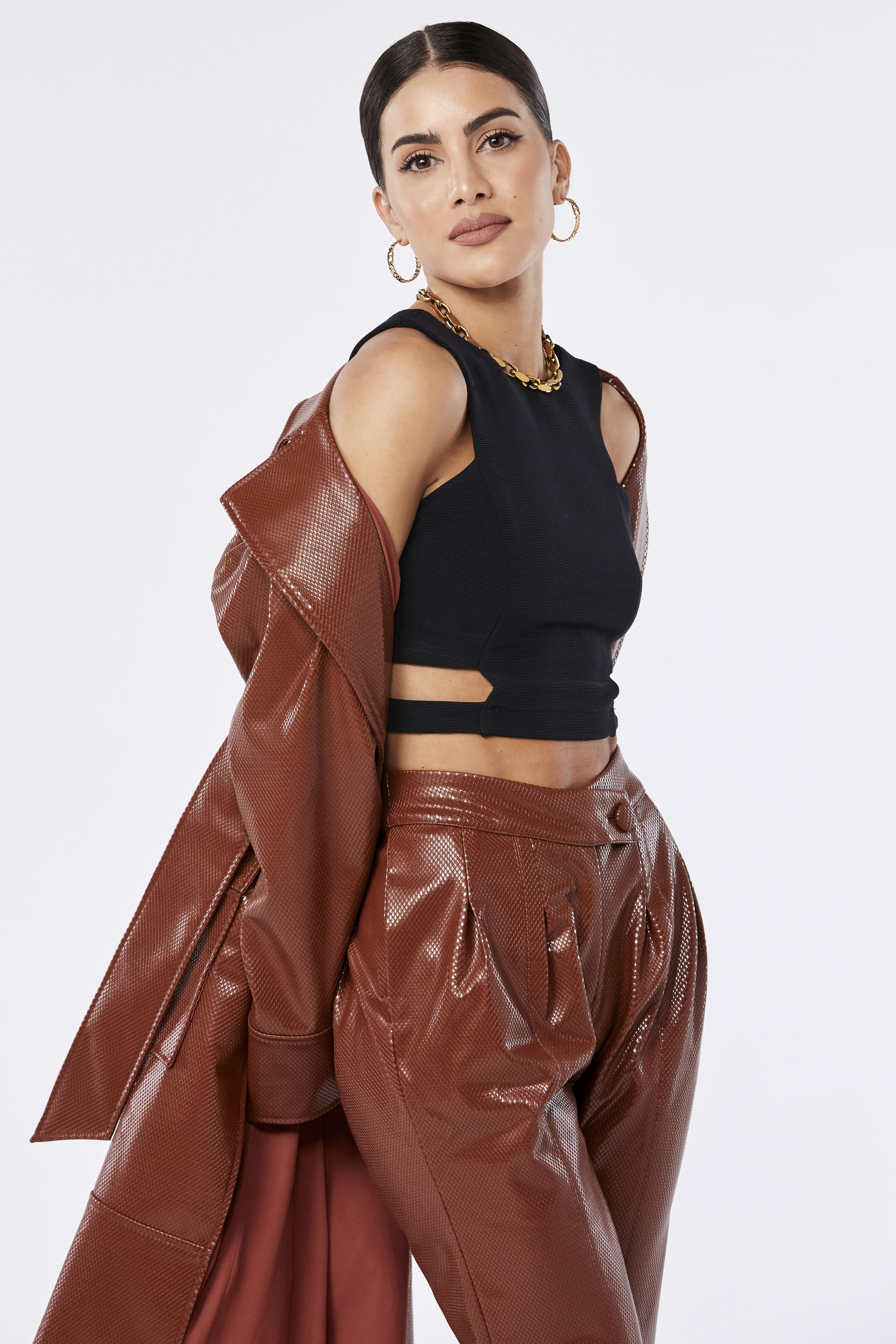
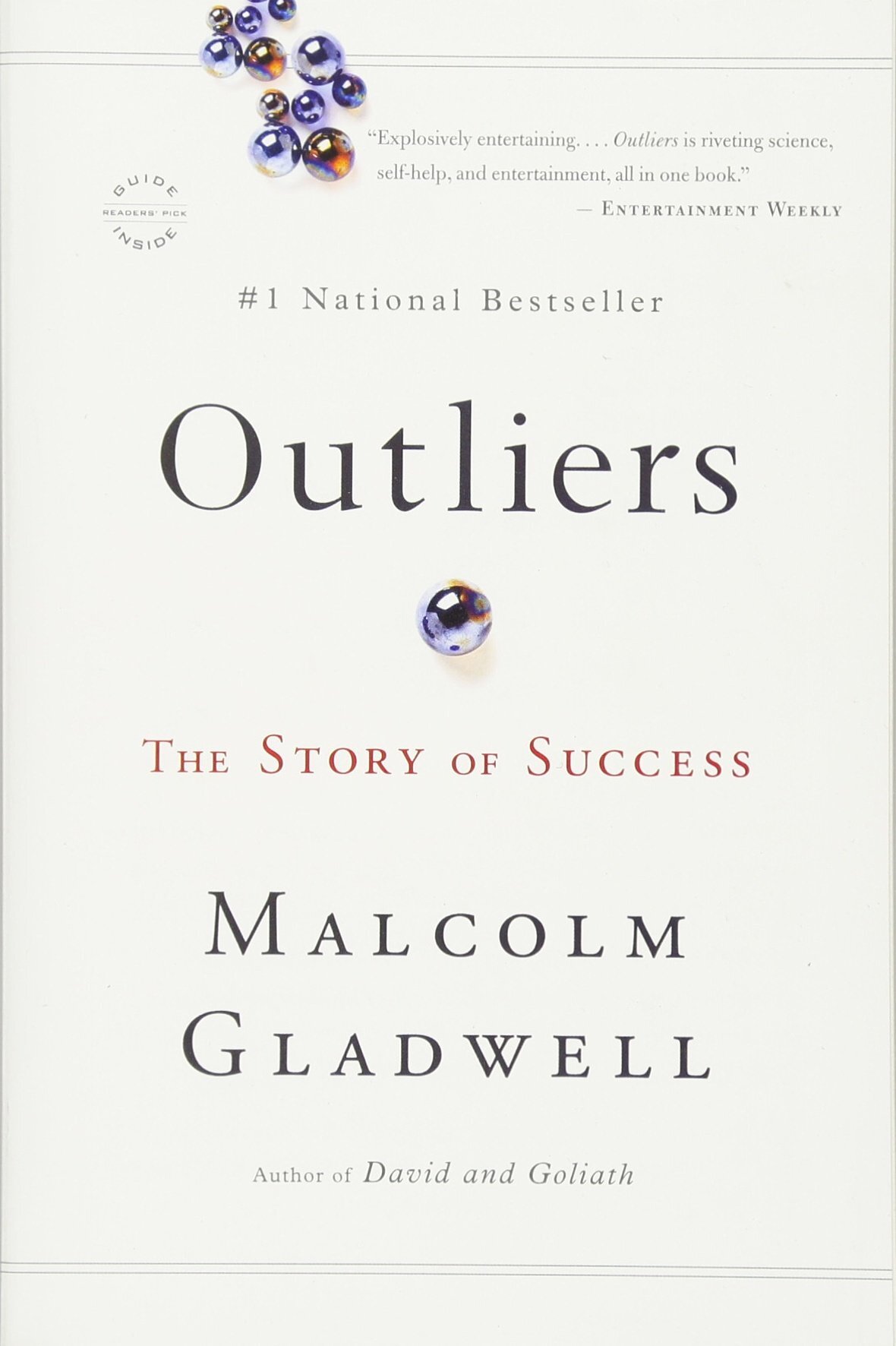
CAMILA COELHO: “Outliers by Malcolm Gladwell—it explores the various differences between us as humans and why some succeed more than others.“
JAIME-LYNN SIGLER: “The Four Agreements by Don Miguel Ruiz. In a way, it takes all the pressure off life. It allows you to really see the world through a different lens. I re-read it every year and even have a tiny copy of it that I carry in my bag.”
MARNI SENOFONTE: “Some oldies but goodies—The Seat of the Soul by Gary Zukav and The Last Lecture by Randy Pausch—both still hold their weight.“
FADIA KADER: “The First 90 Days by Michael D. Watkins. I was given this book when I started a new role and it helps you level-set expectations in your first 90 days in a new company or a new role. I read it as a refresher with each new chapter/role in my career. I often gift it to friends and peers and love seeing them continue that tradition.“
LAUREN CHAN: “The Body is Not an Apology by Sonya Renee Taylor—and I suggest you listen to the audiobook so that you can hear the author preach.”
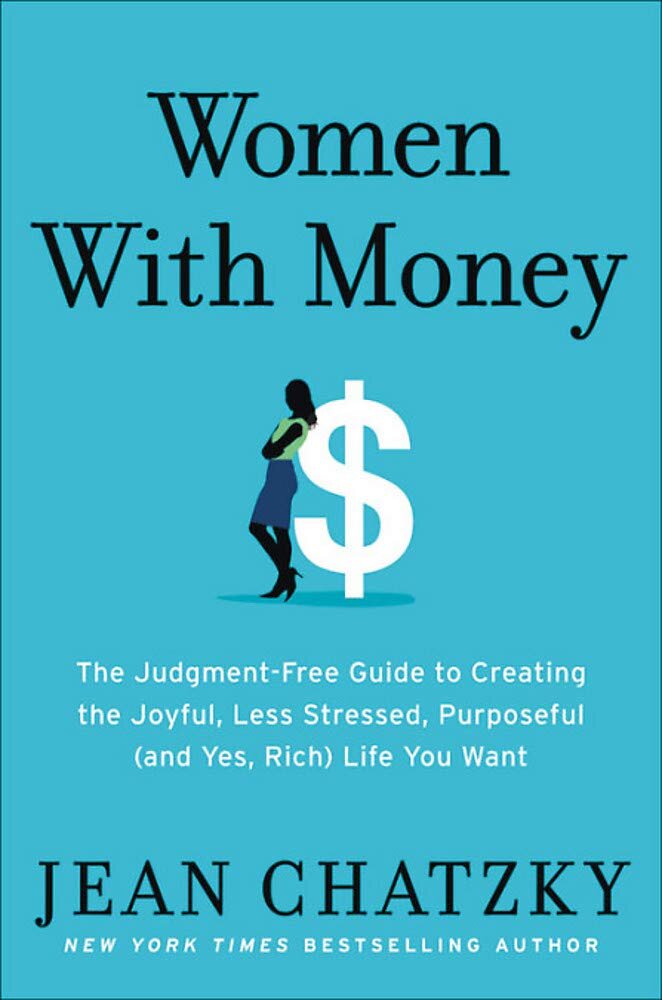

TYLYNN NGUYEN: “Women With Money by Jean Chatzky. We need to be more confident in our own means and still stop apologizing for having your life together. This is a great book for women who have money or women creating wealth or even women who want to create wealth for themselves. We are in this together. Let's talk more about how to build each other up in all facets.”
PAIGE ADAMS-GELLER: “The Four Agreements by Don Miguel Ruiz. This book is a quick read that can be applied not only in business but in all of your personal interactions.”
LILY ALDRIDGE: “The Alchemist by Paulo Coelho is one of my favorite stories of all time! It reminds me that we are on a path in life and that there will be ups and downs, but everything is happening for a reason and to trust the journey!”
SASHA SLOAN: “Ah, it’s too hard to pick! I love to read. I guess my #1 book recommendation would be The Book Thief by Markus Zusak I read it in high school and I’ve loved it ever since.“
KIRSTY GODSO: “Relentless: From Good to Great to Unstoppable by Tim Grover.“

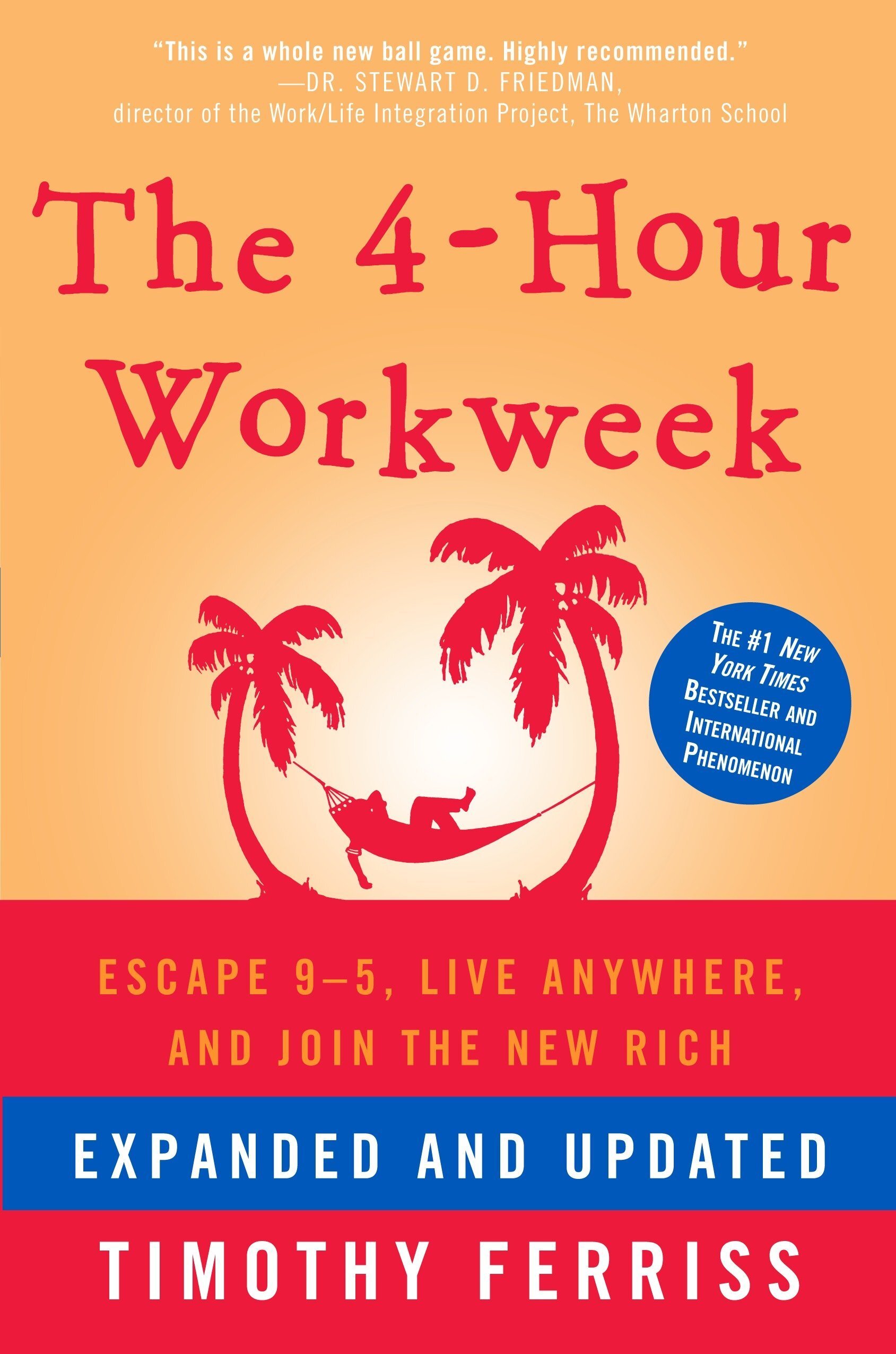
BRITTANY XAVIER: “Hands down, The 4-Hour Workweek by Tim Ferris. I think it’s a great book for anyone that is considering creating a side-job. You need to start small, and this book will help you if you need a little more inspiration to understand that it’s feasible.”
FRANCHELLI RODRIGUEZ: “The #1 book I always recommend is the Bible! The Bible covers everything we could ever ask for. I know not everyone is a believer, but I do believe that there is a message in the Bible out there for everyone. No matter your situation or circumstance, read the Bible and you will find comfort and even answers!“
ESTE, DANIELLE, ALANA HAIM: “Letters to a Young Poet by Rainer Maria Rilke.“
SARAH LARSON LEVEY: “The Monk by Matthew Lewis. It was required reading for one of my lit classes in high school. It was written in the 1700s and is still so relevant today. I come back to it time and time again.”
PRISCILLA ONO: “I love all of the Kevyn Aucoin books! When I was growing up as an aspiring makeup artist, we didn’t have social media or the internet for makeup inspo. Kevyn Aucoin was way ahead of his time when it came to artistry and being a celeb makeup artist. His makeup looks are timeless and his background and story are so inspiring. Any aspiring makeup artist should invest in reading them.”
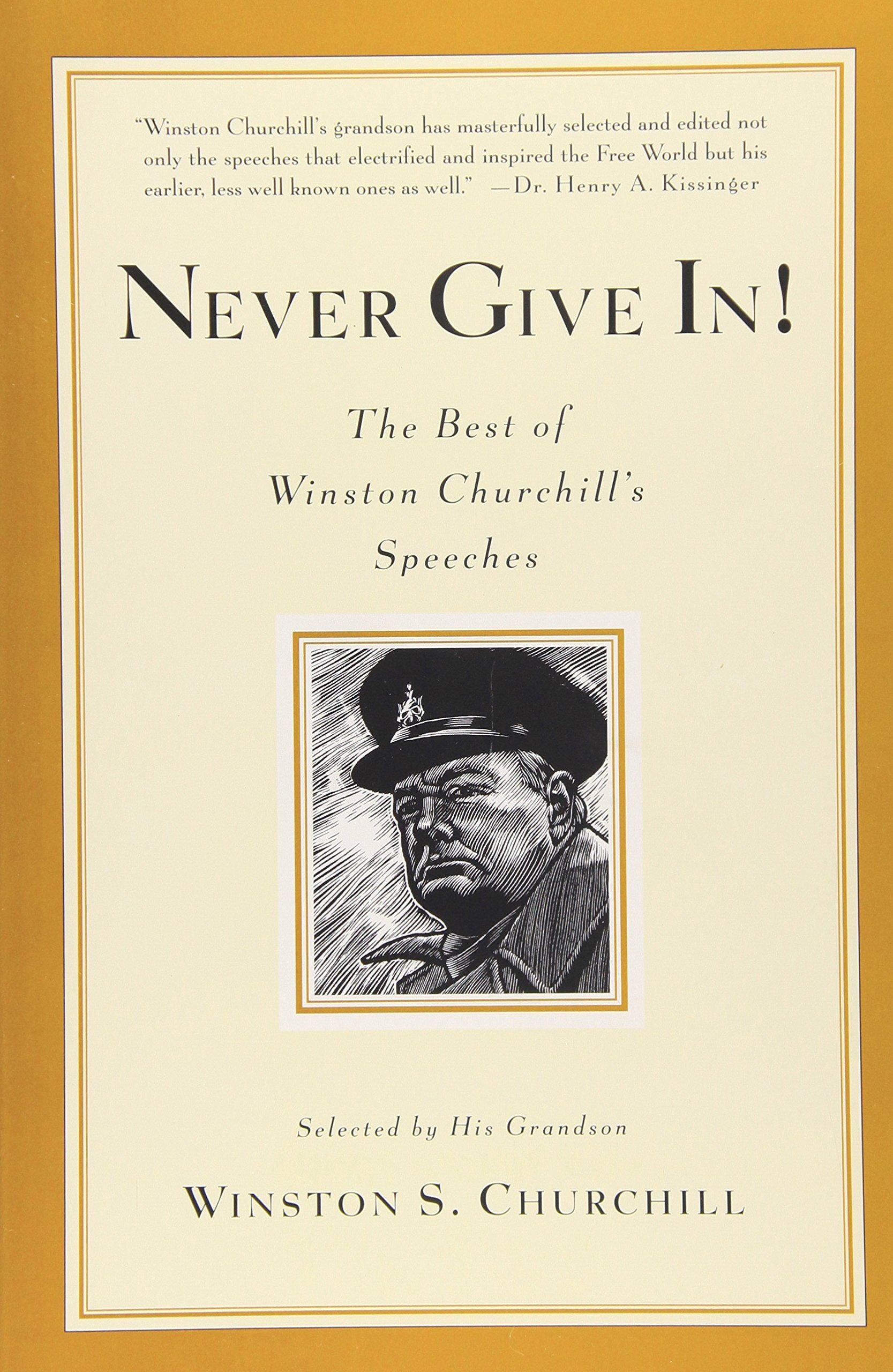

ANASTASIA SOARE: “Never Give In! A collection of Winston Churchill’s speeches that never fails to stir something inside you.”
KARLA WELCH: “The War of Art by Steven Pressfield, Catching the Big Fish by David Lynch, and Just Kids by Patti Smith—because they are all perfect.”
ADRIENNE BOSH: “The Mastery of Love by Don Miguel Ruiz is one of my all-time favorite books. It’s not only about building romantic relationships, but it’s also about learning how to capture the love you have within yourself. As a young woman, I think it’s so important to learn to love yourself first before ever investing yourself in another person, so it was really helpful for me.”
NATASHA CASE: “I read books for pleasure, so 1Q84 by Haruki Murakami or Gone Girl by Gillian Flynn, which you can inhale in one long weekend. For meaningful reads, The New Yorker has phenomenal writing.”
JULIANNE HOUGH: “Oh wow, there have been so many over the years. Most recently I’d have to say Belong by Radha Agrawal. It’s an incredible book about approaching life through the lens of community, being in service, making powerful contributions through collaboration and remembering there is only one you who can make a difference like you can. I also love The Artist’s Way because as a performer my whole life, it's easy to lose sight of the artist within you. This book is really a program that can be supplemented with KINRGY to nurture the artist in all of us.”
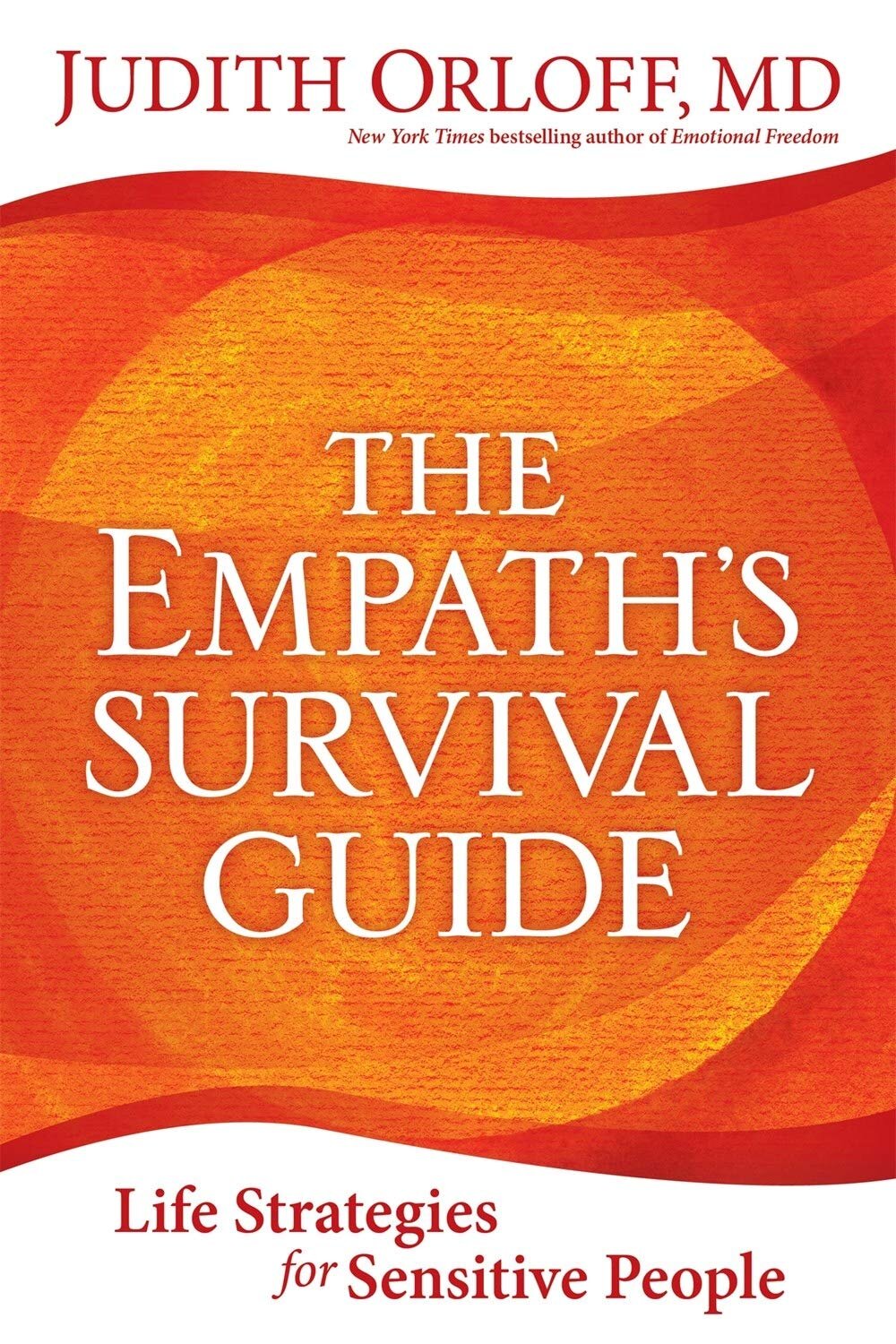
MARIA MENOUNOS: “This is tough. I can’t name just one, so here a few of my favorites:
In business, Money: Master the Game: 7 Simple Steps to Financial Freedom by Tony Robbins, because it inspired me to make necessary financial changes and set me up for the rest of my life.
In health, The Empath’s Survival Guide by Judith Orloff, M.D., because it helped me understand why I am the way I am.
You Are the Placebo: Making Your Mind Matter by Dr. Joe Dispenza, which taught me how the brain can create its own apothecary.
Ask and It Is Given: Learning to Manifest Your Desires by Esther and Jerry Hicks. I learned so much about energy and how to get what you want.”
NANCY SILVERTON: “A good novel to escape into. For the last few years that has been The Goldfinch by Donna Tartt, The Overstory by Richard Powers, The Neapolitan Novels by Elena Ferrante, and Southside by my boyfriend Michael Krikorian.”
RACHEL ANTONOFF: “I will always recommend Mary Karr's Cherry. It's a perfect book.”
JENNI KAYNE: “Any of Brené Brown’s books. I could read them over and over again and still and take away something new each time.”
GWYNETH PALTROW: “Dream Work by Mary Oliver.”
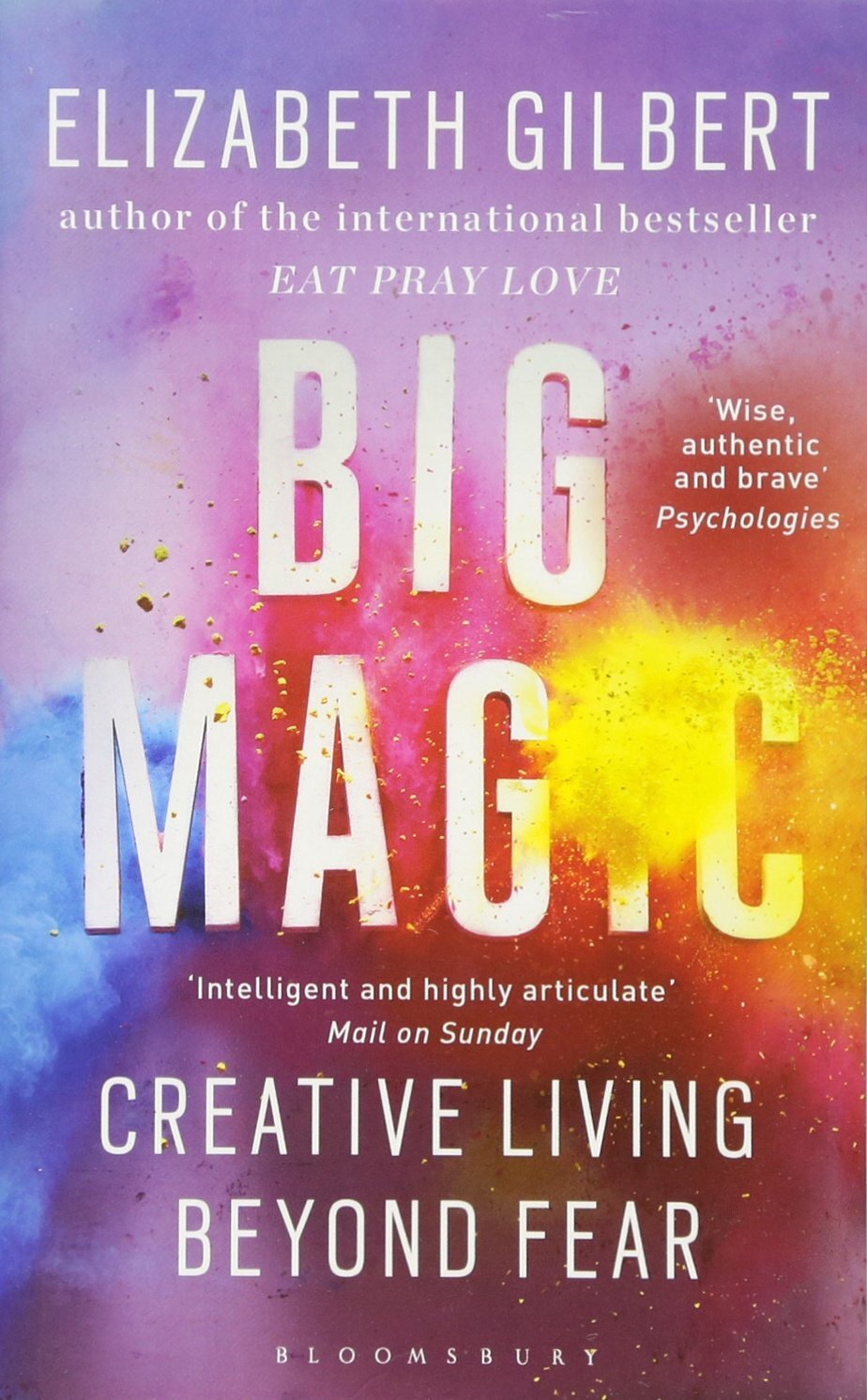

HAYLIE DUFF: “I love Big Magic by Elizabeth Gilbert. Encourages creative regardless of fears! Great read.”
NYESHA ARRINGTON: “The Four Agreements is my all-time favorite book! In The Four Agreements, Don Miguel Ruiz reveals the source of self-limiting beliefs that rob us of joy and create needless suffering. Based on ancient Toltec wisdom, The Four Agreements offers a powerful code of conduct that can rapidly transform our lives to a new experience of freedom, true happiness, and love. My dad gave me this book when I turned 21 years old. He is a very spiritual gentleman and I undoubtedly value his universal perspective of life. This is the most recommended ‘self-care’ book I tell people about and I have read/re-read it at least 20 times.”
LINDSAY ALBANESE: “For entertainment, I loved Bad Blood by John Carreyrou.”
CLEA SHEARER & JOANNA TEPLIN: “This may be an unusual answer to this question but… adult coloring books. They’re like our therapy and help to relieve stress after a long day. Seriously, go buy a coloring book and a pack of crayons and you'll thank us.”
SARAH BARTHEL: “I'm kind of a weirdo when it comes to books—the darker the better—so I'd recommend any Bukowski or Hubert Selby Jr.“

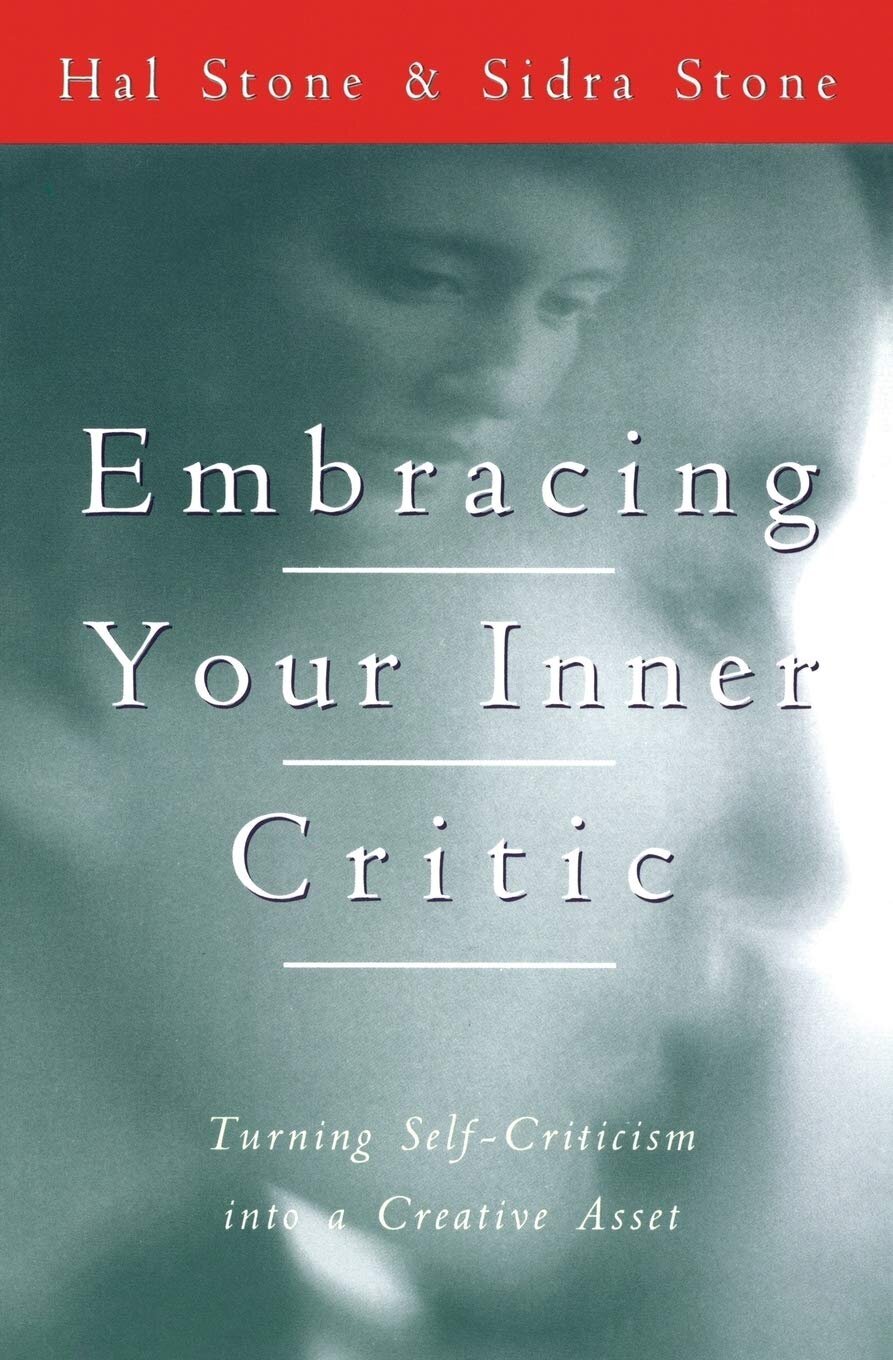
AISHWARYA S. IYER: “Embracing Your Inner Critic by Hal and Sidra Stone. It changed my life by helping me to overcome my own inner critic.“
TANYA RAD: “I just finished Calling in “The One” and I am obsessed with it!! It helped me learn so much about myself, my dating patterns, and helped me patch up some old wounds. Feel like 2020 is my year to CALL IN THE ONE, baby! Also, The Hollywood Commandments by Devon Franklin is soooooo gooood!!!“
MAMRIE HART & GRACE HELBIG: “Probably our own books, Mamrie's I've Got This Round and Grace's Guide. (Sorry, we had to get shameless plugs in.)“
ALYSSA RAVASIO: “I am an avid reader with towers of books constantly at risk of falling over, so this is really too hard, especially since it depends so much on the person I’m recommending to. Here are a few:
Braiding Sweetgrass by Robin Wall Kimmerer. She’s an amazing indigenous leader and teacher, and the book centers on the philosophy that people are part of nature, and how we have a responsibility to play our part in the ecosystem. A tangible example of this is that sweetgrass grows better when it’s responsibly harvested. “Leave it better” is really based on this mindset—at Hipcamp, we believe people can have a positive impact on the planet and believe it’s that kind of framing—versus a limited focus on reducing our negative impact—that will lead us to a healthier, more connected, and more regenerative future.
East of Eden by John Steinbeck. No book I’ve ever read more deeply captures the essence of humanity, in all its beauty and complexity.
The Overstory by Richard Powers. A deep examination of the relationship between people and trees.
Full Moon Feast by Jessica Prentice. A philosophical exploration of the culture around seasonal foods for both European cultures and indigenous American cultures. Plus great recipes.”
Photographer: Jenna Peffley
Hair: Styled by OGXpert & Celebrity Hairstylist Jillian Halouska
Meet this year’s Create & Cultivate 100 honorees and explore all 10 categories below.



Management 101: How to Prepare Your Team for Change in 2020
Prepare for it, implement it, and overcome resistance.
Keeping up with competition and new marketing avenues means that you need to change things frequently. Sometimes you can just make minor tweaks, but other times you have to implement a major process change.
Unfortunately, only about 26% of transformation initiatives succeed. What can you do to make your business one of the places that change sticks? It all has to do with how you prepare for a change, implement it, and overcome resistance.

Photo: Courtesy of Create & Cultivate
Preparing for a Major Change
If you’re in the position to determine what changes need to be made, the best advice is to include employees in the problem-solving process as much as possible. The more involved they are, the more likely they are to embrace and implement the new processes.
For instance, if customers frequently complain about turnaround time, you might create a new process designed to make things more efficient with the input of your staff who can give you an accurate look at what holds up their work. Or, perhaps you need to update a creative workflow to improve quality.
Once it’s time to communicate the change, think about who has the right skills to lead the initiative. Key change management skills include critical thinking, analysis, excellent communication skills, the ability to train people, and a deft touch with diplomacy.
Perhaps the right person is you! Or, it may be another leader in your organization or even a group of employees. The key is to know who will be most effective in leading the charge and to make sure they understand their responsibilities.
Research shows that one of the most common reasons for failure is that a plan is managed too top-down, with upper levels of leadership determining every detail of how change should happen. Experts say that success starts with focusing on every individual.
Implementing Change
The day has come—the change is ready to roll out. Congratulations! There are several steps to successfully introduce a new business process.
One key is to start small if you can. Is it possible to roll out the new initiative to a small group within your company that’s excited to try it? If so, the benefits that the group gets from the innovation may help prove its usefulness to more resistant staff members.
Whether you start large or small, it’s vital to communicate, communicate, communicate! Explain the problem the company was having and how the process modification will make a difference. Help your employees see the vision behind the change. More importantly, realize that all changes – even good ones – include some kind of loss to those involved. Even if the loss is simply that they were the fastest on the team and they might not be anymore, it could be a big deal to that individual. If you acknowledge and talk about those losses openly, it can help people overcome their fears and resistance. Ensure that productivity will likely fall while the team grows accustomed to the new change, and management is anticipating that.
Finally, if possible, walk through the implementation of the adjustment step by step, including a presentation of the intended changes and the timeline, so that employees do not feel caught off guard during any of the process. This will help people change their habits little by little, instead of having to throw everything out and start over. Also, people may have less opposition to small changes compared to large ones.
Overcoming Resistance
Handling resistance is a part of every change, especially significant ones. The good news is that if you do this well, you may build your team into a stronger unit than it was before.
The first step to overcoming concerns is to provide adequate training. Remember that a significant change won’t necessarily “take” on the first overview. You’ll need to train it, remind them, and possibly train it again. Remember that you’re trying to overcome ingrained habits—it takes time and patience.
Secondly, be sure to listen to and address concerns. You can create problem-solving teams to deal with bumps in the road that come up. Get employees to encourage each other to use the new process. Many times people respond better when they hear from a peer rather than a boss. Specifically, according to the Edleman Trust Barometer in 2017, trust in work peers is over 60% while trust in executives is below 38%. Plus, studies show that peer credibility is a key reason messages are heard or ignored.
Rewards or incentives tied to the new process may help as well. Be careful to define these clearly, because once people begin to get something extra it’s hard to take it away. You want to plainly say if the rewards are only available for the first month of the new process, for instance.
Finally, show everyone the positive results as they start to come in so that employees can see the fruits of their labors and fully understand why the change was made for the better. Continue to communicate about the process, concerns, and any problems that crop up. Over time, people will see the benefits and the new process will become much more second nature.
Protecting Your Business During the Change Process
Change isn’t just tough on your employees, it can be tough on your systems and software also. You need to make sure you are protected in case something goes wrong and you experience an interruption in your business.
One thing to do is to make sure you have a complete backup of all your data before the change goes live. You may want to make backups more frequently as the new process takes hold as well, just to be sure that you have what you need if something happens.
Consider getting business income insurance to cover you if you have an interruption in your operations. This coverage can help you with income, relocation expenses if needed, payroll, and more. Hopefully, nothing will go wrong, but it pays to be prepared.
Finally, you might consider slowing down your content production while the change takes hold. It’s a helpful way to reduce your responsibilities so that you can focus on the new process and training your employees to follow through.
Change Is Good—If It Sticks
The key to all change management strategies is that you want your new business process to stick. When you follow the steps outlined above, you’ll have a far better chance of that happening.
Managing change is scary, even for a business owner, but going through the process can make you a better manager. A team that does something challenging together is more cohesive as well.
You don’t have to be afraid of change. It’s a necessary part of being in business, and with these tips, you can navigate change management successfully.
About the Author
Jori Hamilton is a feminist writer from the Pacific Northwest who enjoys discussing social justice, empowerment, and how to improve the workplace. You can find more of her work in her portfolio here.
MORE FROM THE BLOG

5 Solutions to Common Solopreneur Struggles
Make ridin’ solo look easy.

Photo: Godisable Jacob from Pexels
If you’re self-employed, you know how rewarding it can be to work for yourself: You get to do the work you love, take on clients you enjoy working with, and set your own schedule. But, of course, there are also challenges to solopreneurship. We reached out to our Create & Cultivate Facebook community to find out some of our members’ biggest difficulties in working for themselves. Read on to discover a few solutions to the challenges of running a one-woman show.
1. I MISS HAVING COWORKERS
Striking out on your own can be a scary process, especially without the support of HR, accounting, and marketing departments to back you up. “The weight of every decision seems 10x because I don’t have anyone to talk through the pros and cons with,” says Farah D., who owns a vegan bakery. “Trying to be good at everything all at once is a big struggle.”
Thanks to the internet, it’s easier than ever to be a solopreneur who works alone but doesn’t have to feel alone. Facebook groups and online communities (like our Create & Cultivate group!) offer a free place to bounce ideas around, ask for advice, and even build personal and professional relationships with other talented entrepreneurs. You can also consider working a day or two a week from a coworking space (many allow drop-ins and offer off-hours memberships at discounted rates).
But it’s not just a matter of existing in these spaces—you have to be an active member who’s open to meeting new people and starting conversations, even when it’s uncomfortable. By putting yourself out there both IRL and on social, you’ll likely meet like-minded freelancers and solopreneurs who can be a valuable asset to your business.
2. I DON’T KNOW HOW TO PLAN FOR TAXES
Jucel M., a designer and illustrator, says her biggest self-employment struggle is budgeting for freelancer taxes. “I can invoice and keep track of my transactions, but [I need help] on how to translate that into filing my taxes.”
No doubt, taxes are a surprisingly large part of freelance life—especially those pesky quarterly payments. But there are simple online programs like TurboTax that can help. They help you file with confidence with one-on-one expert help and they also do a wide search for industry-specific deductions that others might miss. They also offer several online tools to help manage your taxes throughout the year such as their tax bracket calculator, self-employed expense estimator, and handy documents checklist so you are prepared come tax time.
3. I CAN’T STOP WORKING
Entrepreneurs are known to hustle. But how do you know when it’s time to call it a night? “My biggest struggle is turning myself off from ‘work mode,’” says Sierra M., a digital strategist. “If I’m just hanging out, I figure I can work on some aspect of my business—why not? So I don’t really let myself relax.”
Sound familiar? It can be hard to turn your “work brain” off and chill out when you’re the only one keeping your business running. But in the name of wellness, it’s important to truly shut down every once in a while. We’re not saying you have to enact a rigid 9-to-5 schedule (although that works for some people!), but you can start with “I’m not going to open my laptop on Saturdays” and go from there. Remember that because you are your own boss, nobody is looking out for your health but yourself—take care of your body and mind! And if that doesn’t convince you, know that studies show work-life balance increases productivity and creativity, so you’re really doing yourself a favor by powering down for a bit.
4. I’M NOT SURE IF IT’S TIME TO OUTSOURCE WORK
Deciding when to bring on help can be one of the most stressful parts of running a business. “Growing beyond being a solopreneur is a big topic of conversation within my community,” says Kristen P., brand stylist & creative director. “When is the right time? What is the right first hire? Etc.”
Hire too early, and you’re likely wasting money on a salary for someone you don’t need. But hire too late, and you face a mountain of work you can’t accomplish to your own standards. So when is the golden window of time for hiring? Experts say you should only hire someone when you’re regularly turning down work, you’ve found a new revenue stream (and an addition to your team would make you money), or you don’t have time to focus on important business aspects like customer service or accounting.
If you’re not ready for full-time employees, try hiring a contractor for a single project and see how it goes. You’ll learn how to manage and delegate, your project will move forward, and you’ll get a glimpse into what it’ll be like to make your first hire.
5. I DON’T KNOW HOW TO SHOW MY VALUE
You’ve built a business from the ground up. You’ve tackled finances. Your clients are happy. But how do you create an effective marketing strategy to keep revenue coming in? “My primary struggle is coming up with the best ways to show potential clients the value of what I provide,” says Brandi H., creative director.
To create a marketing plan, write down what you specialize in and who your dream clients might be. This will help hone your marketing strategy to bring in the type of business you’re vying for. Next, get started on the actual content—perhaps this is a blog, an elevator pitch, or a killer portfolio site. Your content will depend on your line of work.
Lastly, find the right space to share your work far and wide. This may be through writing for a publication, sharing your portfolio on career sites or in Facebook groups, being a guest on a podcast, speaking at an event, sending cold emails, or investing in a booth at a conference. Do your due diligence to find out which would be most profitable for your business and go forth confidently like the savvy solopreneur you are.
This post was originally published on January, 8, 2019, and has since been updated.
MORE ON THE BLOG

How to Be a Shameless Self-Promoter (Without Inducing Eye Rolls)
Use poise, always (or risk being blocked from everyone’s social feeds).

Photo: Courtesy of Create & Cultivate
In an era of Kardashians and Kanyes, selfies and borderline obnoxious status updates, it seems like humility is a lost virtue. (RIP, modesty: it’s been real.)
Makes sense, right? Well, kinda. In these Tinder slash, Twitter slash, Instagram times, it’s all about showcasing the best of you with the best visual and in as few characters as possible. It’s also easier to have a certain arrogance when posting on social media because you literally have no filter (not to worry, by “no filter” I mean no reservations).
And even if it means shouting your accomplishments from the rooftops (or in Yeezy’s case, with consecutive ALL CAPS TWEETS), promoting yourself is necessary because if you’re not going to do it, no one else will do it for you. The trouble is, being boastful and plugging yourself constantly on social media and in-person can get annoying AF to your audience—but being humble might cause you to miss out on opportunities. And that’s no fun.
It’s a case of “don’t hate the playa, hate the game.” And it is, indeed, a game. So play by the rules, promote yourself with poise and come out a winner with these five tips:
SHOW, DON'T TELL
Whether you’re selling merchandise or your personal brand, hard facts speak volumes. So instead of posting that “You’re the best PR person in the city” on Facebook, opt for sharing photos of recent sold-out events you’ve organized. LinkedIn is the ideal platform for sharing news coverage about you, awards you might have received or listing recent achievements. Save Twitter as a playground for “quick hits,” such as any media coverage about you, recent articles you’ve written, or upcoming conferences you are speaking at, for example.
“Hard facts speak volumes when you’re your own PR hype.””
You can also leverage platforms like Levo to showcase your experience and your portfolio. Levo is an awesome website for creating personal profiles, where you can “tell your story” by adding all the cool projects you’ve worked on and connecting with your network.
Tip: Focus on the “why?.” So when listing your accomplishments, always demonstrate the value added to your potential clients and why you stand out from the competition. For example, if you’re a publicist, post your client’s media coverage and showcase the buzz your client’s product is receiving.
GIVE PROPS
Shouting out to people on your team, and anyone who helped you “make it happen,” is critical. For starters, the ability to give credit is a huge step toward being a successful manager, leader, or entrepreneur.
The magic of paying it forward on social media is also a key component to earning social capital. So if someone in your network tweets about an accomplishment, “heart” it and comment with a “Slay, girl. Slay!” (Feel free to insert relevant emojis.)
Go a step further and tweet about a female entrepreneur you know who’s killing it in her field, just to spread some love.
Giving credit to others on social media can even work with strangers, not only personal connections. They will appreciate the kindness, and many people might even return the favor. It’s all about social media karma!
BE A CONNECTOR
Knowing how to connect people to business opportunities or jobs is an amazing skill: it proves that you’re resourceful and have a vast network. If you’re the person in your squad who has this skill, use it! Your reputation as a master connector of people and ideas will spread — and it’s not something you need to shout from the rooftops either. Your clout will be clear.
AVOID CORPORATE JARGON
One of my personal pet peeves is when people spew corporate buzzwords in presentations and on their resumes, thinking it makes them sound credible. It goes something like this: “I suggest we deep dive into some blue-sky thinking that's high level so we can take a holistic approach.” It makes you sound like a robot, and more importantly, it takes away all authenticity. (More on this in a minute.)
While it’s key to sound savvy and relevant in your posts and social media presence, it’s also important to sound genuine. And yes, you might think you sound really smart with your corporate buzzwords, but they induce all kinds of eye rolls in my books.
BE AUTHENTIC
Authenticity is the most important part of knowing how to promote yourself with class. Not to get all Dr. Seuss on you guys, but no matter how you’re hustling, there’s a key mantra to keep in mind: no one else is YOUer than YOU. Others might have your skills and your experience, but no one else has your brand DNA: you know, all the things that make you, well, you.
Leandra Medine a.k.a. the Man Repeller is a great example of someone who has stayed true to herself. Her best-selling book Seeking Love. Finding Overalls and Man Repeller blog and brand are direct reflections of her personality, so when she promotes herself, she still seems real and slightly self-deprecating. This is part of her shtick and what has helped her gain celeb status.
So when speaking about yourself and promoting your recent wins, always make sure to stay true to your brand and personality. Authenticity is super valued in this era, so use it to your advantage.
THE RECAP
The truth is, you need to be boastful, confident and plug yourself constantly. Because if you don’t tell your story, someone else will. And in a sea of other bloggers/freelancers /creatives/career women/entrepreneurs, etc., standing out is critical to your success.
Now go forth and self-promote!
About the Author:
Karin Eldor is a coffee-addicted copywriter, with a long-time love for all things pop culture, fashion and tech. Ever since she got her first issues of YM (remember that one?) and Seventeen in the mail, she was hooked on the world of editorial content. After earning her Communications degree, she spent 6 years honing her craft as a Senior Editor for AskMen.com. More recently, Karin enjoyed gramming and strategizing as social media Manager at ALDO. Today, she is Chief Content Writer at 818 Agency and a social media consultant.
This post was originally published on April 28, 2019, and has since been updated.
MORE ON THE BLOG

How to Marie Kondo Your Career and Enter the Next Decade With a Bang
And go from job to joy.

Photo: Smith House Photography; Design: Ginny Macdonald
There’s not much room for debate. Marie Kondo is the Japanese organizing consultant who is transforming lives everywhere and despite her book, The Life-Changing Magic of Tidying Up: The Japanese Art of Decluttering and Organizing launching in 2011, Kondo continues to inspire people around the world to get their spaces in order.
In the book, she breaks down her two-pronged approach to cleaning. Step one: Physically touch your belongings, see if said belongings spark a sense of joy, and if they don’t, toss them. Step two: After you’ve done the dirty work and dumped those joyless items, put everything else back in a place where it’s easy to see, grab, and put back again.
It has brought countless people lasting results—to point, none of her customers are repeats. “In this book,” she writes in the Introduction, “I have summed up how to put your space in order in a way that will change your life forever.”
So we wanted to take her home tidying methods and apply them to work. Because WHY NOT? We want to change our relationship to work forever too! If she can work magic in the home, why can’t she work magic at the office?
Here are four KonMari methods that can be applied to your career, too and kick off the new decade with a bang!
KonMari Method Lesson #1: Tackle Categories, Not Rooms
Tidying by category is Kondo’s first rule. She says to start with clothing, then books and move on to items like documents and old photographs later. The reasoning is that things in like-categories tend to be spread throughout your house, not confined to one space.
How to apply this at work: This will be similar to time-batching, or grouping like activities together. Set aside time the morning for email, time mid-morning for conference calls, and time in the afternoon for writing, creative ideas, and brainstorming. Sure, there will be the odd bits of “clutter” that pop-up during the day-- the email that needs a response while you’re in the midst of your creative jive but batching helps you stay focused and on track.
KonMari Method Lesson #2: Picking Up Each Item and Asking, “Does this spark joy?”
For most of us, minimalism isn’t our strong suit. But from those in power suits to tracksuits, everyone can get on board.
In the book, this method is applied in the literal sense to the home. The clothes that are shoved in the back corner of your closet that you need to lose ten pounds to wear. The pile of books you keep meaning to read. Just because you bought it, doesn’t mean you own it. In fact, if it doesn’t bring you joy, it’s owning you.
“Just because you bought it, doesn’t mean you own it. In fact, if it doesn’t bring you joy, it’s owning you.”
How to apply this at work: The most obvious place you can start is your desk. You can apply the same method to stacks of papers, old receipts, empty bottles of Advil, and that half-eaten Snickers stashed in the back for a 2 pm sugar craving. If your desk is surrounded by “joyless” items that you don’t need for work or taxes, toss them.
Next. There are parts of all jobs that are joyless. From the startup founder who hates Quickbooks to the intern who can’t stand the tedium of stuffing gift bags. However, you can apply a minimalist mindset to your work by understanding what each piece of your work puzzle is contributing to the larger picture. There is a nugget of joy in each task. Even if it's just that at some point, it will be over.
If you’re a freelancer (and can afford to turn down jobs, which, we know is not easy) ask yourself if this project or client will bring you joy and if what you’re contributing will bring joy to other people.
KonMari Method Lesson #3: Put the Kibosh on Nostalgia
Many times through the book Kondo talks about nostalgia and hazardous sentimental attachments to our possessions. Whether it’s boxes of old photographs and birthday cards that lead us down a long and windy path of nostalgia and distraction while cleaning, to items we hold onto for no reason—aka your grandmother’s boots you're keeping even though they’re two sizes too small. Talk about a tropical depression. The nostalgia hurricane is real and it's ruling your life. Feeling strongly about stuff is okay but it can also be the enemy of tidy. Kondo says people keep things out of "fear for the future or attachment to the past.”
“Talk about a tropical depression. The nostalgia hurricane is real and it’s ruling your life.”
How to apply this to work: It's not just stuff kids! We have nostalgia and emotional attachment to ideas. So, what should we do to make space for bigger and better creative thoughts? Kill your darlings. That’s right. The creative ideas that keep falling dead in the water. Every single one of us has that “golden” idea that we can’t escape. The one we reposition and bring up in pitch meetings, the one we’re sure is going to hit with ONE client that simply never does. Accept that. Thank the idea for taking up space in your head and let it go.
Also, those notebooks full of half-baked ideas and sparks (ahem duds) of genius you jotted down and have never looked through—toss them. We know you’re saving them for that one time you’re going to need to reference a page scribbled on in 2007 but just say goodbye. If ideas are really that great, they’ll stick around. You don’t need to create a physical library of your own brain.
KonMari Method Lesson #4: Simplifying and Letting Go Feels Good, So GOOD
Yes! Getting rid of clutter and freeing up your home space feels great. You feel lighter, more free, and less emotionally tied to STUFF! When it comes to closets specifically the Marie Kondo method creates space between stuff. Your clothes have SPACE GLORIOUS SPACE to live and breathe! Dressing all of the sudden becomes easier when you can SEE everything! Decision making is easier when you love everything and therefore you become more efficient with your time! Exclamations abound!! (For real, this is happy, joyous stuff.)
How to apply this to work: You don’t have to do anything here! Once you start letting go of the clutter on your desk and in your head, you will free up space for the next steps. You’ll be giving your career the breathing room it needs to expand. It will also help you become more clear on what projects to say yes to, and which projects to turn down.
You’ll feel relief instead of anxiety, joy instead of a job.
What are some ways you can apply this method to work? Share in the comments below!
This post was originally published on September 15, 2016, and has since been updated.
MORE FROM OUR BLOG

8 Signs You Definitely Need to Dump Your Job
Know your self-worth.

Photo: Create & Cultivate
Spotting the warning signs of a bad relationship can be hard when you’re in the thick of it. Especially when you’re trying to stick it out for the sake of (insert life goal here). But a bad job, like a bad partner or friend, can be just as toxic.
We’ve all had horrible Mondays. Where we feel like crawling beneath our desk and hiding out or napping for a few hours. That’s normal— even if you’re in love with your career, off-days are part of the deal.
However, if driving to work is driving you low-key mental, or if it feels like every time you send an email, you’re sending off a tiny bit of your soul, it might be quitting time. You can suffer for your art, but don’t suffer for a job that’s going nowhere. If you’re looking for signs you should quit your job this may be just that sign.
Here are eight red flags that the milk in your work fridge has gone sour, and it’s time to turn a page. (Hello, mixed metaphors to represent your oh so confusing mixed feelings about your j-o-b.)
“if it feels like every time you send an email, you’re sending off a tiny bit of your soul, it might be quitting time.”
1. You feel creatively lost.
There are days when the ideas aren’t coming no matter how many cups of java you down, but IF you are coming up one espresso shot short every day, you might not be in the right job.
Before you take a dive into unemployment, try to do things that will reignite that spark with your job—like go to a lecture or take a class. If that still isn't working and you're drawing blank after blank, day after day, really consider why you think this job is the right job.
Sometimes things just fizzle out, and the best thing we can do for ourselves is realize that it doesn't have to be horribly wrong, for it not to be right.
2. You have an abusive boss.
Bosses, like partners, can be abusive. People who take advantage of their position of power. But being in charge doesn't give anyone the right to treat employees like animals.
If heading into your boss’ office is something you dread because you know no matter what you do it won’t be good enough, it's time to reevaluate the situation. I once had a boss throw trash at my head (yes, for real). I was out the door shortly thereafter.
Know your self-worth and trust in that.
3. You’ve consulted everyone you know about hating your job.
Happy hour? What’s that? When you meet your friends after work, all you do is complain. About work.
The problem with negative energy is that little by little it starts to infiltrate every other part of your life. Others relationships suffer, and you become um, insufferable to be around.
Don’t let this happen. If your friends are avoiding your phone calls, there’s a good shot your endless complaints about work are dragging them down as well.
“If your job makes you feel legit sad and question everything you’re doing with your life, it’s high time to move on. ”
4. You’re compromising your morals.
If you’ve found that you’re moving toward the Dark Side, without having any desire to do so, it’s either time to stand your ground, or change the ground your standing on.
Sometimes at work we are asked to do things we aren’t entirely comfortable with—but these should be things that advance our careers. For example, you don’t like public speaking, but your boss asks you to give a presentation—this is a step outside your comfort zone that’s beneficial to progress.
However if you’re being put in ethically, morally, or even illegal situations, no job is worth that risk.
5. You can’t come up with five good reasons to stay.
Pro and con this beast. Make a list, check it twice, and if you don’t have five really solid reasons to keep your job—financial security aside—it might be time to start getting your ducks in a row.
6 . Your job gives you every kind of the sads.
You know that feeling when you’re up at night, wondering why your dude is ignoring your calls, and you feel sad, lost, drained, pathetic? If your job makes you feel legit sad and question everything you’re doing with your life, it’s high time to move on.
7. Your mom thinks you should quit.
Let’s consult Justin Bieber on this one. If you can sing, “My mama don’t like you and she likes everyone,” about your job… remember: Mom is always right. She was right about that 10th grade boyfriend, and she’s right about this job.
8. You're letting other opportunities pass you by.
Some people in relationships are never satisfied because they are always on the lookout for the next best thing. That's not what I'm suggesting.
But if the work universe is offering up an out—or a better job, or maybe even a less financially lucrative, but potentially amazing job, and you're not taking it out of fear—close your eyes and take a leap.
More often than we care to admit, it necessary to take a step back in order to alter our course, and start down the more meaningful path.
This story was published on February 18, 2019, and has since been updated.
MORE ON THE BLOG

"We Have Faced Rejection Many Times"—This Dynamic Trio Proves Hard Work (and Persistance) Does Pay Off
You’ll want to write this down.
We know how daunting it can be to start a new business, especially if you’re disrupting an industry or creating an entirely new one. When there is no path to follow, the biggest question is, where do I start? There is so much to do but before you get ahead of yourself, let’s start at the beginning. To kickstart the process (and ease some of those first-time founder nerves) we’re asking successful entrepreneurs to share their story in our new series, From Scratch. But this isn’t your typical day in the life. We’re getting down to the nitty gritty from writing a business plan (or not) to sourcing manufacturers and how much they pay themselves, we’re not holding back. If you want to know how to start a business, you’ve come to the right place.

Kozha Numbers was founded in 2015 by Ilona Gerasimov, Lena Vasilenko-Tsymbal and Carina Gonzales. Photo: Courtesy of Kozha Numbers
Unfortunately, many of us are all-too-familiar with burnout. Too often we keep pushing ahead in a job we don’t love because we refuse to come to terms with the fact that our career just doesn’t serve us anymore. Well, we’re calling time’s up on that. Your health and happiness are way more important. Leaving a job that doesn’t fill you up or motivate you is self-care.
For Kozha Numbers’ co-founders, Ilona Gerasimov and Lena Vasilenko, it was through a mutual feeling of dissatisfaction for their current jobs that inspired them to make a change, together. With their backgrounds in accounting, the duo had no prior experience in production or design but they didn’t let this act as a barrier. Instead, they viewed it as an opportunity to grow, to expand upon their knowledge, and embark into uncharted waters. And, needless to say, the payoff was well worth the journey.
Six years later, Gerasimov and Vasilenko partnered up with beauty expert Carina Gonzales and officially launched Kozha Numbers. Holding to their mutual values of quality and regard to detail, the trio turned an admiration of art and architecture into a handbag and beauty brand that epitomizes the art imitates life motto.
I know what you’re thinking—I don’t have the time to start a business from scratch. Well, the Kozha Numbers founders are here with us today to inspire you to think beyond the confines of your busy schedule. And even if that means staying up until 2 a.m. with your business partner after your 9-to-5 hustle (as these creators did), this company is living proof that hard work pays off.

CREATE & CULTIVATE: Did you write a business plan? If yes, was it helpful? If no, what else did you use instead?
KOZHA NUMBERS: “From the beginning we had a very clear visualization of the kind of company we wanted to create. We took an alternate route and had our passion fuel us instead of creating a standard business plan. This process felt more organic to us and to our brand. Create a plan that works for you—that will provide you with direction going forward and the hustle to make it come to life.”
How did you come up with the name? What was the process like?
“We liked the idea of our products being fundamental, like how the first 10 digits 0-9 are fundamental to create any number sequence. We originally were just going to name the brand “THE NUMBERS 0123456789,” but last minute we changed it to KOZHA NUMBERS 0123456789. We went back to the drawing board and came up with KOZHA NUMBERS 0123456789. Kozha felt like a natural fit since it’s meaning in Russian is leather and skin.
“When we came up with the name Kozha at the time we had no plan to also add skincare to our brand. Looking back we like to think it was a sign that KN BEAUTY was meant to be! Naming our brand came very naturally, It’s important to keep your brand in mind and make sure it looks and sounds how you’d like it, but don’t overthink it.”
What were the immediate things you had to take care of to set up the business?
“After settling on a name for our brand we went straight to building a website. When we were first building this foundation for KN we really were learning as we go. As time progressed we set up trademarks and social channels but before all that we wanted to make sure our brand and the product were how we envisioned it to be. It’s important to build a solid foundation for your brand, but don’t let that be daunting. It’s okay to learn as you go.
What research did you do for the brand beforehand? Why would you recommend it?
“We were actually raised by makers. A leather shoe designer, seamstresses, and woodworker! Watching our parents taught us the art of handcrafting and making wearable art with your hands—a skill that is often forgotten or outsourced by a factory. This background is what KN was founded on but a lot of our knowledge came from practicing it ourselves and learning from what didn’t work.
“A good example is when we first wanted to create a brand we were making leather sandals. Although we enjoyed designing shoes this experience led us to designing handbags which was a better fit for us at the time. The best advice is to keep your mind open and absorb all the information you can get your hands on. Listen to TED talks, read books, watch interviews. The information is out there and you don’t have to go to school to learn it.”
“Not everything works, and the industry is constantly changing so it is key to keep trying things and re-adjusting until something works for you.”
How did you find the manufacturer/production facility that you use? Did you have any bad experiences?
“We have been fortunate enough to produce all of our products in house which has provided us with many benefits throughout the years. When you oversee the manufacturing yourself you’re able to be more involved in the design process and ensure all products are being produced ethically and are the highest quality possible. When we first started KN we had to work with what we had by handcrafting the bags ourselves with the resources we could get our hands-on.
“As we grew we invested everything back into the company and were able to accumulate more materials, machines, studio space, and skilled employees to help with the manufacturing. With KN Beauty we also keep our manufacturing locally in Portland by only producing our products in small batches. This method we’ve found is a lot more sustainable and allows us to maintain the highest quality product that is always fresh. Nothing goes to waste since we oversee production and are so involved in every step.
“We truly love being involved in every aspect of KN and having the creative freedom to create products in-house. This method does take time and patience but the result is always worth it.”

Did you self-fund the company? Did you raise seed money or initial investment money? Why/Why not?
“We are completely self-funded. We were raised on the principle that if you can’t afford it, you shouldn’t buy it and in many ways, this method has really helped us grow. We also loved the idea of being solely responsible for the success of KN and didn’t want to give up any creative freedom which can happen when you bring on investors. Investors can be a great tool but when it comes down to it, your drive and hard work are the most important.”
How much did you pay yourself? How did you know what to pay yourself?
“When we first started KN we all had full-time jobs and were putting everything we could into the brand. For the first two years, we put everything we made back into the business, and only recently we have been paying ourselves. Building that foundation is so important and you will thank yourself later.”
How big is your team now? What has the hiring process like? Did you have hiring experience?
“We are currently operating with a team of seven that is responsible for everything including the design, marketing, and manufacturing process. When we hire we’re looking beyond the resume and are really looking for a great character. Although skills are important, what really stands out is if a person is a problem solver and someone who has the drive and motivation. Especially on a small team like this, we wear many hats and being able to come to work with a can-do attitude is very important. None of us had prior hiring experience, so we’ve definitely had to learn as we go. You have to trust your gut instinct and hire the people that you believe in.”
“Rejection isn’t failure—it’s an opportunity to learn and adjust.”
Did you hire an accountant? Who helped you with the financial decisions and set up?
“In the beginning, we did not have an accountant and had to figure things out for ourselves. It’s important to know your strengths and weaknesses and ask for help when necessary. An accountant isn’t absolutely necessary in the beginning and there are many options out there for managing finances. Quickbooks is a great resource and there are so many other resources out there that you can educate yourself with.”
What has been the biggest learning curve during the process of establishing a business?
“The biggest learning curve for us has been finding efficient ways to put our brand out there. Not everything works, and the industry is constantly changing so it is key to keep trying things and re-adjusting until something works for you. Also, keeping an open mind and continuing to absorb information that you could implement into your business.”
How did you get retailers to start stocking your product? Were you told no? How did you handle that rejection? What advice can you share?
“In the beginning, it was difficult to land retailers. We noticed a big shift when we focused more on our imagery and getting our vision out into the world. Once we were able to convey our brand identity people started to catch on and retailers came to us. Buyers are looking for brands that are unique and have a clear brand vision. Once you start focusing on this, people will notice. We have also faced rejection many times like every brand. Rejection is just part of the industry and it’s more common than not. Rejection isn’t failure it’s an opportunity to learn and adjust.”
“You’re going to have so many setbacks and sometimes it’ll feel like nothing is working. You must hold onto what you believe and adjust as you go because if they can do it so can YOU!”
Do you have a business coach or mentor?
“Our business mentors were really our parents. They taught us so much about hard work and how to handcraft beautiful products. We also indulged in a lot of books, podcasts, and interviews.”
How did you promote your company? How did you get people to know who you are and create buzz?
“Since the beginning, we always believed in the power of great imagery that can tell a story about the brand. KN represents a lifestyle and portraying that in our campaigns has been a big part of our success. We partner with photographers we feel understand our vision and we make it come to life through our campaigns. We also believe that when you create a truly unique product that you believe in and pair it with imagery that represents the message you’re trying to convey it essentially sells itself. We had no prior marketing skills before KN besides instinct.”
What is one thing you didn’t do in the setup process, that ended up being crucial to the business and would advise others to do asap?
“Do your homework and really think hard about what you truly need to push your business forward. Don’t ignore things like trademarking, and don’t be afraid to ask questions.”
For those who haven’t started a business (or are about to) what advice do you have?
“Create a clear vision and a purpose for what you are doing.”
Anything else to add?
“You’re going to have so many setbacks and sometimes it'll feel like nothing is working. You must hold onto what you believe and adjust as you go because if they can do it so can YOU!”

If You’re Looking for Stylish Yet Practical Workplace Solutions, We’ve Got Them
WFH just got a makeover.
For many of us, our home office is a sanctuary for creativity so it needs to be stimulating to get those juices flowing. But there is definitely a fine line between designing a space that’s visually interesting but also has a purpose too. And with more renters in large cities than homeowners, we need to find practical (and pretty) solutions that suit any space.
This also means versatile, multi-functional furniture and décor that can turn any nook or tiny area at home into a productive workspace, because let’s face it, not all of us have room for a designated home office. When Create & Cultivate editorial director, Sacha Strebe works from home her dining room converts into a home office (Bonus: it’s right next to the kitchen for snacks on-the-go).
In this story, we tapped our C&C team to share how they work from home using the stylish, multi-purpose pieces from our friends at Pottery Barn. You too can design a convertible home office that's both inspiring and productive.

Photo: Courtesy of Pottery Barn
Sacha Strebe, Editorial Director, Create & Cultivate
The Home-Office Tip: Don’t overfill it.
Why It Works: “To limit any distractions when you’re working from home, be sure to create an environment that’s both stimulating yet minimal. You want an inspiring space to get those creative juices flowing but you also need to focus and get your work done. So, create a streamlined, clutter-free space in the house (for me it’s my dining room table) and only keep the bare minimum. I love to have fresh clippings from the garden in a vase next to me while I’m burning a candle to enhance the mood. The only other things I keep nearby are my laptop, a bottle of water, pens, and a notepad. Sometimes I will even put my phone away so I can really hunker down.”
How to Get the Look: “This vase is decorative yet minimal and I just know the palo santo scent of this candle will ramp up my productivity.”

Pottery Barn Quinn Ceramic Vase
$39
Carly Johnson, Senior Director, Brand Marketing
The Home-Office Tip: Think outside the box.
How It Works: “You don’t need to settle for the traditional office furniture for your workspace. A credenza can double as a chic storage solution to keep all of your files and papers, while also being a space to decorate with objets d’art and inspiring pieces. Then you can keep your desk very minimal and work-related.”
How to Get the Look: “This credenza from is a practical size with a classic look that will stand the test of time. And while it’s sitting pretty, you can store all of your office essentials without anyone noticing.”

Pottery Barn Dolores Cane Media Console
$999
Caitlin Shier, Vice President, Brand Partnerships
The Home-Office Tip: Use a console table as a desk.
How It Works: “We don’t always have the luxury of space but that doesn’t mean you have to compromise on style or function—turn your console table into your part-time desk.”
How to Get the Look: “Place decorative items on this modern rustic console so it adds to the overall design of the room, but keep a space clear front and center or to the side so you can shimmy a stool underneath when you need to work.”

Pottery Barn Malcolm Console Table
$854
Adry Perez, Social Media Manager
The Home-Office Tip: Use stylish storage to hide your office supplies.
How It Works: “If you have a roaming home office as I do then various furniture throughout your apartment can be turned into a temporary workspace. But that means I need somewhere to store my office supplies. My solution is stylish storage.”
How to Get the Look: “I keep notepads, pens, paperwork, and files in my chic rattan baskets either underneath my console or near my couch in the living room, where ever I typically work from home the most—no one will know the wiser. And when you don’t have a designated space, then I recommend this organization system that can be set up on a wall nearby to keep you on task. Working from home can be filled with distractions so any help is appreciated to stay on track. ”

Pottery Barn Jacquelyne Lidded Barrel Basket
$129
Nairi Najarian, Senior Director, Digital Marketing
The Home-Office Tip: Invest in double-duty furniture.
How It Works: “Customize any space to suit your needs with a modular pop-up desk that doubles as stylish storage.”
How to Get the Look: “Since I only work from home a few days a month I need multifunctional pieces that look like stylish furniture when they’re not being used. This modular system is fully customizable and looks like a compact storage area with a hidden compartment—a popup desk hides all of my cords and even has a place to stash my cell phone and smaller desk accessories when not in use.”

Pottery Barn Mission Modular System Collection Pop-Up Desk
$209
Kylie Tansey, Vice President, Sales
The Home-Office Tip: Light it up.
How It Works: “Lighting at home isn’t always optimized for working—think warm, soft, and moody which isn’t really what you need when it’s time to focus on a project or tackle your inbox. That’s why I love to have a task lamp nearby so I can shed some light on the space I’m working from.”
How to Get the Look: “Opt for a table lamp like this stylish bronze lamp which can be moved around the house from the dining table to the sofa, or wherever you feel inspired that day.”

Pottery Barn Stella Task Table Lamp
$137
To shop more of the stylish, multi-purpose pieces from our friends at Pottery Barn, visit potterybarn.com.
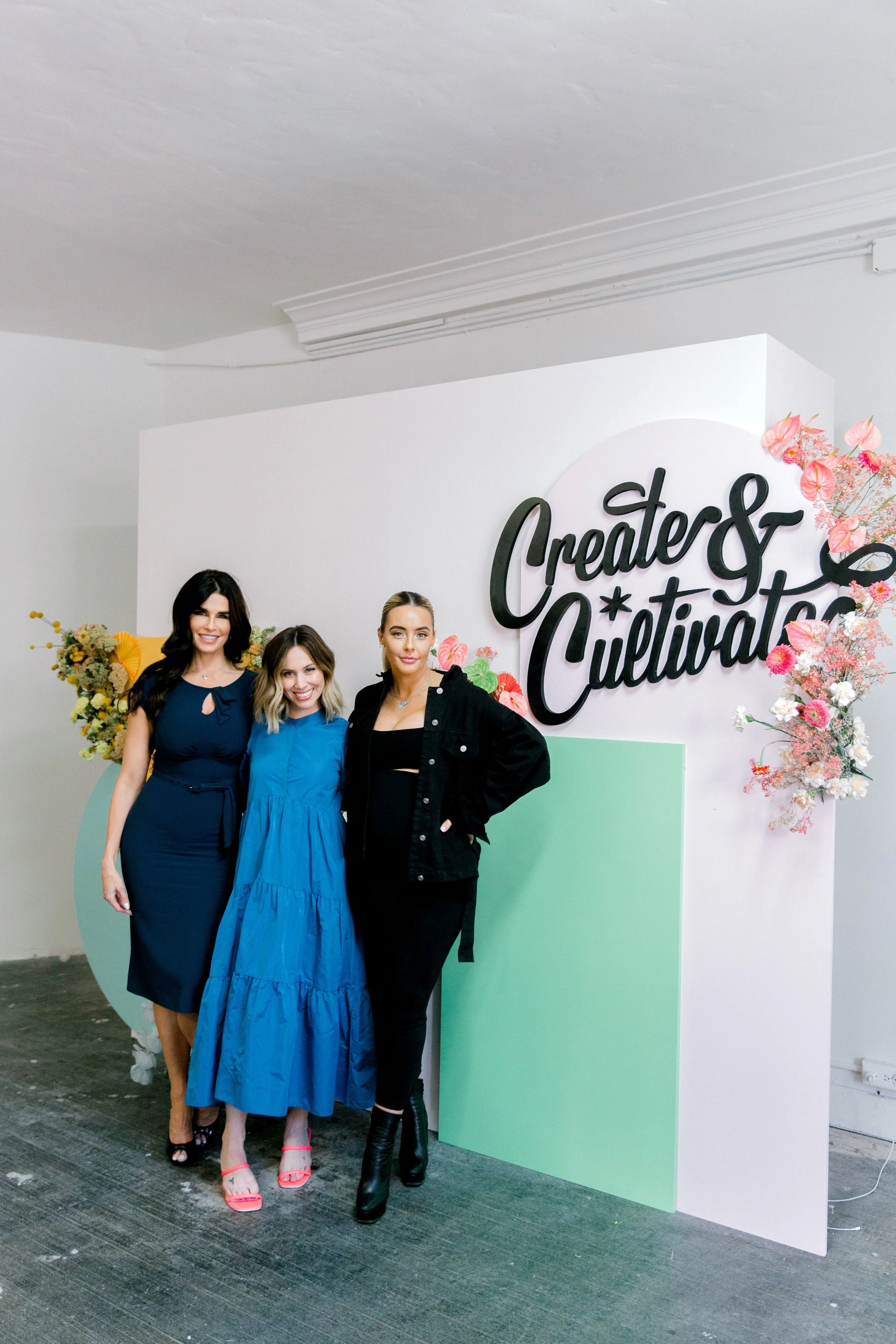
The Truth Serum: 3 Experts on How to Source Trustworthy Skincare Advice in a Click-Bait World
An entrepreneur, influencer, and celebrity dermatologist explain in this week’s episode of WorkParty podcast.
This post is in partnership with RoC Skincare.

Dr. Anna Guanche (left) and Lauryn Evarts Bosstick (right) sat down with C&C founder Jaclyn Johnson at our San Francisco Conference to discuss sourcing trustworthy skincare advice online. Photo: Courtesy of Create & Cultivate
How many of you have tried to Google answers around skincare and anti-aging without success? It can be incredibly confusing and overwhelming to find out what works and what doesn’t. Believe it or not, 3.6 million searches were carried out for phrases related to “anti-aging” over the past 12 months. There is just so much information out there!
Well, RoC Skincare—a brand that was born in Paris in the 1950s and is still here today with game-changing retinol formulas that are clinically proven to treat aging skin and help minimize the appearance of concerns like fine lines, wrinkles and dark circles—wants to help you sort through that clutter. At our San Francisco conference, we sat down with some educated women to find out what people are really looking for, what they’re actually finding, and why they keep searching.
Our founder, Jaclyn Johnson, chatted with Dr. Anna Guanche, affectionately known as “Dr. Beauty,” and Lauryn Evarts-Bosstick, creator of The Skinny Confidential podcast and franchise, about how to source trustworthy skincare advice. The conversation was just as informative as it was hilarious, so be sure to listen in on the podcast below. Then keep reading for some of the most memorable quotes from the interview.
Rapid-fire questions:
My favorite anti-aging hack is…
Lauryn: “A facial massage—it tightens the skin.”
Dr. Guanche: “Using retinol every single night.”
The weirdest home remedy for skin I’ve tried is…
Lauryn: “Ordering olive oil from room service to remove makeup.”
Dr. Guanche: “A bird poop facial. The geishas used to use this. It has enzymes in it to exfoliate your skin.”
Lauryn Evarts Bosstick:

“I think people do have a lot of these questions that they’re embarrassed to ask, so they ask Google… I’m trying to create a space where we can talk about taboo topics.”
—Lauryn Evarts-Bosstick, Founder, The Skinny Confidential
On the craziest topics discussed on her podcast:
“I put myself in the audience’s position. I want to know the nitty-gritty. I want to hear from different walks of life.”
“I think people do have a lot of these questions that they are embarrassed to ask, so they ask Google. I’ve always been an over-sharer, so I feel really comfortable to talk about these taboo subjects. I’m trying to create a space where we can talk about them.“
“I feel like we’ve talked about everything… I feel like there isn’t anything we haven't talked about (on The Skinny Confidential).”
On peer-to-peer beauty recommendations:
“I’m really, really specific and strategic with who I choose to work with. I’ve left a lot on the table because it wasn’t the right fit.”
“I try to use the product for at least a month, sometimes I give it to my husband because he’s really into being dewy right now—he thinks it’s his thing—but I basically manipulated him into it.”
“It needs to be something that keeps showing up in my life… I’m really careful about what I promote. I also like to have a product that I keep going back to and something I know the audience will actually use. “
On finding the right products:
“I sit and watch the French girls. I like to observe and see what they’re doing differently. I feel like Americans have a ‘more is more’ approach. I try to watch and observe and see what other people are doing and then implement it into my routine and then see if it works.”
“I’m really inspired by other countries. I like to observe and see what they’re doing differently—it's a lot of oil, retinol, and facial massage.”
On the rise of skincare:
“People are starting to understand that prevention is key. We’re in a day and age in 2019 where a lot of women don’t want to look like someone else. Everyone wants to be the best version of themselves and self-care is that, investing in the best version of yourself.”
On general skincare advice:
“I am batshit crazy about the sun. I have driving gloves in my car, sunscreen on my hands, chest, and ankles. I am wild with the sun. When I get out of my car to walk to 7/11 I have a giant hat on.”
Dr. Anna Guanche:

“Manage stress, meditate, wear your sunscreen.”
Dr. Anna Guanche, Celebrity Dermatologist
On skin aging:
“You reduce your elastic production over time, your collagen is decreased in your dermis and you start to see your skin no longer compensates the damage done to it over time. Your skin can no longer compensate for the skin damage that has happened to you since you were born.”
On common anti-aging questions:
“Does anything really work?”
“Why is this happening to me?”
“What active ingredients do reverse aging?”
On the benefits of retinol:
“Retinol is a vitamin A derivative and is naturally found. It helps remove old, dull skin cells and reduces pigmentation and the appearance of fine lines/wrinkles. Because of the retinoid reaction, your skin will adjust so start every other night and slowly build up if needed.”
On dark circles:
“I love the RoC Retinol Correxion Eye Cream. It has clinically proven results and helps with dark circles. You can see improvements in 4 weeks and at 12 weeks, fines lines are visibly reduced by 50%—equates to eyes looking 10 years younger.”
On anti-aging:
“You can drink plenty of water, don’t stress out, get lots of sleep, sleep on your back, low-salt diet, wash every single drop of makeup off every night—good skin takes discipline.”
“There is no shame in being beautiful and wanting to be beautiful—putting your best foot forward. Self-care and self-love at a younger age is a great thing to do—actively doing something to overcome those insecurities.”
On general skincare advice:
“Manage stress, meditate, wear your sunscreen.”
“Wash your face completely at night.”
“I try to sleep at the same time every night and wake up at the same time every morning. You need to have a routine and you need to have discipline.”
“A lot of time we take great care of our face but we forget to take care of our neck and hands and chest.”

C&C Founder and CEO, Jaclyn Johnson in conversation with celebrity dermatologist, Dr. Anna Guanche and Lauryn Evarts-Bosstick of The Skinny Confidential for the RoC Skincare panel at the San Francisco Conference.
For more information on RoC SKincare visit, rocskincare.com.

How the Dazey LA Founder Turned $4000 Into a Thriving (and Profitable) Business
Your dream starts here.
We know how daunting it can be to start a new business, especially if you’re disrupting an industry or creating an entirely new one. When there is no path to follow, the biggest question is, where do I start? There is so much to do but before you get ahead of yourself, let’s start at the beginning. To kick start the process, and ease some of those first-time founder nerves, we’re asking successful entrepreneurs to share their story in our new series, From Scratch. But this isn’t your typical day in the life. We’re getting down to the nitty-gritty from writing a business plan (or not) to sourcing manufacturers and how much they pay themselves, we’re not holding back.
Photo: Courtesy of @Dazey_LA
Searching for your dream job is no walk in the park. Sometimes, you can search and search and not find what you were looking for. Or maybe you do land that job you always dreamed of, and it turns out to be something entirely different. That’s why the founder of Dazey LA, Danielle Nagel, thinks “your dream job simply doesn’t exist—you have to create it.” And we are totally on board with that.
Dazey LA is equal parts fashion and feminism all wrapped up into a beautiful small business that consists of graphic tees designed by Danielle herself (and so much more). We love the work and stance on social topics Danielle has made, so much so that we asked her to design our team t-shirts for the San Francisco conference along with the Self Care Summit jumpsuits and murals! Take a read below to see how this go-getter and small business owner got her start in the dream job world—you’ll leave this page just as inspired as we did.

Photo: Courtsey of @DazeyLA
Create & Cultivate: Did you write a business plan?
Danielle Nagel: “I did not! I’m more of a fly-by-the-seat-of-my-pants kind of gal. I didn’t have many expectations, but I did have a lot of big dreams. I was sure to build up my freelance client list before quitting my secure job to start Dazey. I figured I could count on that if the company took a while to turn a profit. I had a lot of ideas but didn’t write down a solid plan. I also knew things always end differently than you imagined (and boy did they!). Plans and ideas are constantly changing and I like holding them loosely and rolling with the punches.”
C&C: How did you come up with the name? What did you consider during that process?
DN: “I love branding and coming up with names. Beyond Dazey LA, I have helped name and brand quite a few of my client’s and friend’s companies. For me, it’s all about creating something unique and unexpected. I like to make up new words if possible—while still being familiar and easy to remember. Plus, that way you’re way more likely to get all the right domains and handles.
“I had originally come up with the name Lovelle, which was a hybrid of my name Danielle and Love. Now I totally hate it. I ordered a bunch of labels and branding assets, only to decide I didn’t like it after all. Then my sister and I were texting back and forth to try and find something new. We started throwing out words we liked ‘golden’, daisy’, ‘days’, ‘daze’, and then one of us (still up for debate) just said what about ‘Dazey’!? We liked it and it just stuck. I also like that with the unique spelling, it can take on a meaning of its own.”
C&C: What were the immediate things you had to take care of to set up the business?
DN: “I immediately set up trademarks and make sure I snagged all the domains and usernames—as a product-based business, that is first and foremost! I had been a full-time t-shirt designer for about six years before launching my brand and had designed a lot of meaningless graphics for corporate companies like Urban Outfitters and Macy’s. I knew when I launched my own brand I wanted to design shirts that stood for something, with designs I was really proud of—I wanted them to be my very best. I spent some time perfecting the collection and worked on finding ways to source the best blanks to print them on. Once I finally had my first little collection, I planned a shoot, threw it on the site, and then hit live.”
C&C: What research did you do for the brand beforehand? Why would you recommend it?
DN: “Having worked in the industry for many years before launching Dazey gave me perspective. I was a bit of a millennial job-hopper, so I got to experience many different workplaces. I was extremely curious about how each company worked and did all I could to figure out the mechanics. My last job before Dazey was with a start-up, Revice Denim. I was basically employee #1 and did everything from naming the brand, designing the clothing to art directing, shooting, styling, social media, and web design.
“Before that, I was just a cog in the corporate wheel, so it was the first time I had the chance to explore my creativity beyond apparel graphics (and I loved it). Working for a startup was an incredible way to research and learn about building a company from the ground up. That’s what gave me the courage to start Dazey.”



C&C: How did you find the manufacturer/production facility that you use? What advice do you have for other founders looking for a trustworthy manufacturer?
DN: “I didn’t find my current production partner until I was six months in. I was basically working with whatever I could find on Google, and it was really limiting my creativity. I went to MAGIC, the big fashion tradeshow in Vegas, hoping to get some freelance clients and bump some shoulders. I ended up being introduced to my production partner, Kelly, through one of my freelance clients. We immediately hit it off and realized we had so much in common.
“We both wanted to make beautiful and creative clothing while doing so as sustainably. We came up with and perfected our made-to-order, no waste model over the past three years. He has helped me go from ‘just a t-shirt brand’ into a full-on clothing line with things like suits, dresses, and even patterned fanny packs. I would say putting yourself out there is key. Go to sourcing shows, networking events, introduce yourself to people, ask questions, send cold emails, let the world know what you’re looking for and go find it.”
“Go to sourcing shows, networking events, introduce yourself to people, ask questions, send cold emails, let the world know what you’re looking for and go find it.”
C&C: Did you self-fund the company?
DN: “Dazey is fully self-funded. I was very careful to save a ton before starting Dazey so I wouldn’t be stressed or chicken out. I had saved enough to launch the brand that I could comfortably live off for a year. It has given me the flexibility to harness my creativity and grow at a pace that felt comfortable to me as a brand new founder and businesswoman. I know all the money I make is mine and I get to make the final call on everything. I think it was the right call for me starting out and we’ve been able to grow a lot from my initial $4,000 personal investment. I don’t know what the future holds, but I may be open to the idea of investment to really help scale in the near future.”
C&C: How did you know how to pay yourself?
DN: “Well, I made the mistake of starting off my business as a sole proprietorship. Which means everything from the business was through my personal bank account. Every expense and every payout. Now I’ve learned that’s not a good practice if you’re really trying to grow a company outside of just freelance work! You really need to keep them separate. Since then, I’ve of course established a C-corp and company account.”
“My personal pay always varies depending on how the company is doing. When things are good, I allow myself to experience the benefits. When they are slow, I pull back. Last year we had an amazing year and I paid myself more than I had ever dreamed of making with my corporate jobs. This year, we’ve had a slower summer. I’ve decided to keep all of the money in the business account and live off of my savings and rental property income for awhile. A lot of founders don’t let themselves enjoy the successes and I think that can be a quick route to burnout. I like going with the flow and staying in-tune with my company.”
C&C: How big is your team now? What has the hiring process been like?
DN: “We have five people in our immediate team now. I had never hired anyone before and remember being so excited to give the first interview. We’ve gotten so lucky with our team and everyone I’ve hired since year one is still here today. Myself as the owner and CEO, Phillip our COO (who is also my amazing boyfriend), Megan who manages our Dazey Lady Shop, Naomi who helps me with content and creative, and our newest Lisa who is doing customer service and shipments. When it came to interviewing, I trusted my gut feeling. I didn’t get too hung up on resumes because I know people can easily learn on the job, just like I had.
“It was more about the conversation and connection I had with them. Things like if I could trust them, get along with them, that they cared about the company, and I think they are a hard worker. So far, it hasn’t steered me wrong. Of course, we have so many other people that are basically apart of the Dazey family, like our production team and sales showroom reps. It really takes a village, even as a super small company.”
“I had saved enough to launch the brand that I could comfortably live off for a year. It has given me the flexibility to harness my creativity and grow at a pace that felt comfortable to me as a brand new founder and businesswoman.”
C&C: Did you hire an accountant? Who helped you with the financial decisions and set up?
DN: “Yes, and I wish I would have sooner. She had to go back pretty far to correct all the unbeknownst co-mingling I did (using both my personal and business account instead of keeping them totally separate). That was totally a waste of time when I could have been working with her all along and without stress. Especially as a business begins to grow, the finances can quickly become hard to track. It’s best to start off with the right person in place so they can grow with you and make sure your books are done right. Accounting is not my forte, so why not focus on what I’m good at—making the money—and then let the professionals handle it.”



C&C: What has been the biggest learning curve during the process of establishing a business?
DN: “As somebody who has always considered themselves good with money, I’ve discovered it’s been a whole different beast as a business. You really have to stay on top of where effort and money are being spent and if the direct return merits that amount. When you start to deal with so many big numbers going in and out quickly, things can get confusing.
“Be sure to stay on track of your finances and know what number you really have in the bank (with expected income and expenses). Make decisions carefully and constantly re-evaluate spending/saving. You really do have to spend money to make money, but make sure you are smart and strategic about it.”
C&C: How did you get retailers to start stocking your product?
DN: “When I first launched Dazey, my focus was on direct to consumer selling and marketing on Instagram. I didn’t think wholesale was important at the time. I wanted to keep my production ethical but also keep my prices reasonable, which made my wholesale margins pretty dismal. I would take wholesale orders here and there if people reached out, but it wasn’t my focus. Fast forward about four years later and it has shifted to be a pretty big chunk of our business. Instagram was everything we needed to start building an engaged and supportive community. Direct website sales were growing like crazy and we thought we had it made in the shade. Then came the dreaded algorithm.
“Additionally, I will say there has been a shift in consumer behavior as more people begin to experience social-media fatigue and distrust. All that dramatically affected our online sales. We pumped up our online ad spend, but it didn’t really help either. I talked to some other entrepreneurs and they all reported the same. Semi-freaking out, I sat down with my production partner to plan our next move. He suggested we give wholesale a proper try. As an industry veteran who had spent most of his career in B2B (business to business as opposed to direct), he thought it could really help us. We had to restructure our pricing to make our margins more fair for us, and then we found a wholesale showroom.
“I walked into the Cooper fashion building in DTLA and grabbed a directory and started sending out cold emails based on the brands the showrooms already carried. We got four meetings, sat down with all of them, and found the right fit—a smaller showroom with a focus on made in USA products. It’s been a game-changer. Dazey now does amazing with wholesale and sells out of boutiques faster than they can reorder. The fact that we built a large social media following and people knew our name has made it easier than starting out with wholesale. We are now even carried by Free People who happened to just find us on Instagram.”
“Be sure to stay on track of your finances and know what number you really have in the bank (with expected income and expenses). Make decisions carefully and constantly re-evaluate spending/saving. ”
C&C: Do you have a business coach or mentor? Would you recommend one?
DN: “Kelly my production partner has been a huge mentor for me. He saw potential when Dazey was nothing and took a bet on me with blind faith. I would also say my community of fellow female entrepreneurs has been one of the biggest driving forces in both mentorship and inspiration. Peer to peer mentoring is amazing because we are all learning and growing together. Outside of Dazey, I co-founded a boutique female co-working space called Biz Babez has been a great connector and space to learn from one another.”
C&C: How did you promote your company? Did you know anything about marketing before this venture?
DN: “I had started fashion blogging in college before Instagram had even existed. I was connected with a bunch of girls via a website called lookbook.nu and when I moved to L.A., we would help each other snap photos of outfits to share on our blogs. I quit blogging when my full-time job got to be too much (this was before you could make money off of it). But many of the girls I knew kept at it and ended up becoming huge successes in the fashion blogging space.
“When I started Dazey, a lot of them were so helpful in shooting content with me and promoting. I would take all the photos myself and also snap pics of whatever they wanted in exchange. This was a great way to get the word out at the very beginning. Then once I built a following myself, I just chose to be very personal and real with my community like sharing the BTS of running a small biz. I would share my design process, my production, and really all the highs and lows of running a business. That’s when things really started to take off from word of mouth.”
“As a hyper-creative person who’s not necessarily the best at all that, I’ve also learned to lean on other people. Know what you are good at and focus on that.”
C&C: What is one thing you didn’t do in the setup process, that ended up being crucial to the business and would advise others to do asap?
DN: “Get everything in order—your bank accounts, contracts, your LLC or CORP. Read a business book and get to know the less glamorous side of small biz. As a hyper-creative person who’s not necessarily the best at all that, I’ve also learned to lean on other people. Know what you are good at and focus on that. Then hire help for the rest. Your efforts will be best spent doing what you love and what you’re good at.”
C&C: For those who haven’t started a business (or are about to) what advice do you have?
DN: “Do the damn dream. That’s printed on a Dazey tee. But honestly, the only regret I have with starting Dazey is not doing it sooner. It’s a rollercoaster but so worth it. Your dream job simply doesn’t exist—you have to create it.
“So many times I thought I knew what my ‘dream job’ was until I actually got it and realized that wasn’t the case at all. With Dazey, I’ve been able to combine all of my passions into one thing. From fashion, art, design, photography to social media, feminism, and sustainability (and even somehow interior design now). I designed Dazey to be true to everything I love and believe in. And my customers can see and feel that. If you build a business that you are undeniably passionate about, it’s damn near impossible for it to fail at it.”
Shop This Way—How 3 Entrepreneurs Are Leveraging Their Websites for Profit
Let’s get down to business.
All successful businesses start somewhere and it takes just scratching the surface of a new idea to get the ball rolling. But with that ah-ha! moment comes a lot of hard work, late nights, and coffee to make your new business venture happen. Oh, and a digital platform to make your new idea look beautiful and profitable, too. Think you’ve got what it takes? Well, we partnered with Squarespace for a three-part series called From Scratch to Success: How to Turn Your Side Hustle Into a Thriving Business to find out what really goes into launching a company from the ground up. To do that, we interviewed three female founders—Michelene Auguste Founder and Owner, Dem; Karen Rose, Owner and Herbalist, Sacred Vibes Apothecary; and Gina Correll Aglietti, Yola Jimenez, and Lykke Li, Co-Founders, Yola Mezcal—to share their story from that lightbulb moment to selling their products online, and everything in between. And don’t forget to keep scrolling to the end to read about our exclusive Squarespace offer for Create & Cultivators.

So, you have this incredible idea to turn your passion into a profitable business—now what? Where are you supposed to begin and who is going to help you reach your end goal? Well, in the beginning, when you don’t have any capital, all you really have is your idea, so the only person you can rely on is you. But the good news is there are a plethora of online tools that can help you get started. Does your new business idea include a product line? If you answered yes, then say hello to the world of e-commerce! To put yourself on the map (and find customers) you’ll need a website that will showcase your unique products in a way people just can’t resist. The rest will come from you, your vision, and your drive for success—but let’s not get ahead of ourselves.
In the first chapter of our three-part series, From Scratch to Success, we introduced you to some incredible women who are crushing their business goals online with the well-known platform, Squarespace. We asked them about their new business venture, how they got started, and why they chose Squarespace to launch online. In part two of this series, we’re diving a little deeper into the commerce side of their business and how these three unique businesses—Dem, Sacred Vibes Apothecary, and Yola Mezcal—use Squarespace to turn their passion into profit. You’ll want to take notes for this one!

Create & Cultivate: Squarespace makes it easy to start a website from scratch. Can you walk us through the process you took when creating yours?
Gina Correll Aglietti: “Anticipating YOLA’s launch, we felt a video was the best way to communicate our brand story to depict our farm and team in Oaxaca. Squarespace gave us the platform to share this story with a new audience and made it easy for us to help curate first impressions of our brand. We've been using Squarespace for over three years now. I especially love the marketing tools we can use to create newsletters, collect emails, and keep our audience engaged.”
C&C: Squarespace has great features for brands that want to introduce e-commerce. What commerce features do you rely on the most and advise others to use too?
GA: “We will soon be launching our merch store through Squarespace. We had initially looked at embedding a third party e-commerce platform on our website, but then realized how simple it was to add e-commerce tabs into our Squarespace without straying from the brand’s aesthetic. We have also had the opportunity to embed a link to sell YOLA direct to consumers, which is often very difficult to do because of strict alcohol compliance laws.”
C&C: There are so many websites online—how do you make your website unique?
GA: “Squarespace allows us to maintain a simple and minimal design that aligns with our brand's aesthetic. We have been able to incorporate our own fonts and imagery to customize the experience.”


Create & Cultivate: Squarespace makes it easy to start a website from scratch. Can you walk us through the process you took when creating yours?
Michelene Auguste: “When I started building my site, it was very easy to navigate. I started with an e-commerce page, a homepage, and basic information—I’ve been adding to that ever since. I love that I can easily move things around and change the site. I also love that I can rearrange the products on the e-commerce page so it looks the way I want it to.”
C&C: Squarespace has great features for brands that want to introduce e-commerce. What commerce features do you rely on the most and advise others to use too?
MA: “I have the Squarespace app which helps me edit on the go when I have to. I’ve found that the app is very helpful.”
C&C: There are so many websites online—how do you make your website unique?
MA: “The Dem site is a curated experience of the clothing and objects I’ve discovered throughout my life. It’s a bit personal and I think that’s what makes it unique. I love taking photographs and updating the site often with new material.”
C&C: Do you have any shortcuts you can share with other users for making their website?
MA: “My advice would be if you can’t figure out something or you’re stuck, don’t stress—all the information and help is there for you on the site which has helped me out a lot.”
C&C: What are some more advanced tools that you use for building out your website?
MA: “My favorite thing about Squarespace is that I don’t need to know any coding tactics or use any advanced tools. Everything is already there for you to create and run a beautiful, successful site.”


Create & Cultivate: Squarespace makes it easy to start a website from scratch. Can you walk us through the process you took when creating yours?
Karen Rose: “I started with Squarespace about five years ago. I saw how beautiful other Squarespace sites were and wanted mine to be just like that.”
“I have come so far. I have an online shop now and in many ways I have grown that on Squarespace. We are currently working on creating an online membership/educational portal utilizing Squarespace’s collaboration, Memberspace to offer global access to our work.”
C&C: Squarespace has great features for brands that want to introduce e-commerce. What commerce features do you rely on the most and advise others to use too?
KR: “I rely on our online shop greatly. It is super easy to track inventory and monthly sales.”
C&C: There are so many websites online—how do you make your website unique?
KR: “We make our website unique by using it to tell the story of our brand. When folks are on our site, we want them to get the whole picture of who we are: not just an online shop but a community.”
C&C: Do you have any shortcuts you can share with other users for making their website?
KR: “I decided to hire a designer familiar with Squarespace for the initial site design. This allowed us to use our time and resources in a way we felt our business could benefit from most. We still work together closely. He was able to show us a lot of what he has done. But now, most of the everyday maintenance we do is on our own.”

Head to squarespace.com and use the offer code CREATE2019 to save 10% off your first purchase. And or more information around Squarespace’s commerce feature and to understand how you can start selling online today, visit Squarespace Support here.
And don’t forget to tune in next week for part three of our From Scratch to Success series for everything you need to know about SEO and ensure your website ranks in Google.

There Was No Plan—This Founder Started a Side Hustle to "Make a Few Extra Bucks" and Now It's a Thriving Business
From scratch to success.
This post is in paid partnership with Bootaybag.
We know how daunting it can be to start a new business, especially if you’re disrupting an industry or creating an entirely new one. When there is no path to follow, the biggest question is, where do I start? There is so much to do but before you get ahead of yourself, let’s start at the beginning. To kickstart the process (and ease some of those first-time founder nerves) we’re asking successful entrepreneurs to share their story in our new series, From Scratch. But this isn’t your typical day in the life. We’re getting down to the nitty gritty from writing a business plan (or not) to sourcing manufacturers and how much they pay themselves, we’re not holding back. If you want to know how to start a business, you’ve come to the right place.

“Failure is part of the journey and the reward doesn’t come without a lot of dark, scary moments. We’ve all been there, and we’re in this together.”
—Ellyette Gheno, CEO and Founder, BootayBag
When you’re looking to start your own business, most of us have a five to 10 year timeline in mind before we start making money. Of course, the end goal could be to build an empire but no-one expects for that to happen quickly. But it seems like Ellyette Gheno’s company, BootayBag was an overnight success.
Having grown up with entrepreneurial parents, Gheno was practically born with founder genes in her DNA. So it comes as no surprise that within a day of thinking up BootayBag—a monthly underwear subscription that delivers right to your door—Gheno created a website and launched a side hustle. What started as a way to “earn a few extra bucks” has successfully disrupted the $52 million underwear market (which is expected to grow annually by 3.5%) in just five years and her little aha! moment is changing the game.
So, we tapped the CEO and founder to learn more about her incredible journey from lightbulb moment to starting an undie revolution.
Be sure to keep reading until the end for our exclusive discount code that gives Create & Cultivators 20% off their first month when signing to any monthly subscription.
Did you write a business plan? If yes, was it helpful? If no, what else did you use instead?
“I definitely could have used a business plan. I started BootayBag as a total side hustle to make a few extra bucks, there was no plan. However, if I could go back in time I would have started with a clear vision of what I wanted to create, and what the end goal was. At the very least I would have liked to set intentions, even if it wasn’t a business plan. This would have helped me to later understand my ‘why’.”
How did you come up with the name? What was the process like? How did you know it was the right name?
“So this is my story and I’m sticking to it—guaranteed a laugh. I grew up in the Bay Area obviously listening to rap music. I had seen and heard ‘booty’ spelled as ‘bootay’ and that is the creative genius behind the spelling of BootayBag. After the name was born I had a domain within 24 hours. Looking back I maybe should have run it by someone beforehand."
What were the immediate things you had to take care of to set up the business?
“First came the website and then social channels shortly after. All of the legal stuff came later due to the limited funding I had for the business at the time.”
“A big moment for me was learning to never let myself get too comfortable. I now enjoy being uncomfortable because I know this is how I grow and where positive change comes.”
What research did you do for the brand beforehand?
“My research came at the extent of my self desires. I was solving my own issue of hating digging through sale bins and not wanting to shop for underwear (because what young woman does)? I had undies in my drawer that I am embarrassed to say were beyond their intended life span. I knew that if this was the case for me it had to also be the case for most of my girlfriends. Lucky for me, it ended up being the case for most young girls outside of my inner circle, and that helped me discover my ‘why’ behind the brand.”
How did you find the manufacturer/production facility that you use? Did you have any bad experiences? What did you learn?
“This is a hard one. I have learned what I know now about manufacturing because, unfortunately, of many bad experiences. I would advise to always ask questions, seek insight and advice from others, and basically trust no one. Ha, ha! Be sure to check references, run small tests and batches, and never give them all your money upfront.”
Did you self-fund the company? Did you raise seed money or initial investment money?
“BootayBag has been totally self-funded. Looking back, I am actually so thankful for this as I was able to make mistakes with my own money versus someone else. I had the advantage that I didn’t need funding to bring my vision to life in the beginning stages. However, it is definitely more of a step-by-step, slow-moving process when you’re bootstrapped.”

Photo: Courtesy of BootayBag
How much did you pay yourself? How did you know what to pay yourself?
"In the beginning when it was just a side hustle the whole point was to pay myself. But when I decided that this wasn’t going to just be a revenue stream for myself but that I wanted to make hires and build a brand, I came last on the payroll scale. It still always goes back to what I am trying to do—if I need to make a hire and I can’t afford to do it, I take a pay cut.”
How big is your team now? What has the hiring process been like for you?
“Hiring is hard because your team is seriously so important. I love the saying, ‘You can’t have an A team with B players.’ I’ve failed a lot in this department, especially in the beginning. I just felt lucky to have anyone work for me at the time which I later learned was the totally wrong approach. The best way to learn how to hire is to be prepared as if you’re the one being interviewed. Know who you are interviewing, ask all the hard questions, call the references, and give a training period for you to work alongside them.”
“It always goes back to what I am trying to do—if I need to make a hire and I can’t afford to do it, I take a pay cut.”
Did you hire an accountant? Who helped you with the financial decisions and set up? What do you recommend?
“No, I didn’t at first however, I quickly learned it is so critical to do so—that was a big ‘omg’ moment. Please, for the love of God, get an accountant. At the very least get someone who you pay as a consultant to help you set it all up. Cash is key, and how you set up terms, cash flow modeling, payroll, budgets, and tax compliance is so important. You have to have a professional in the field to guide you through it. We can’t be good at all the things—get help.”
What has been the biggest learning curve during the process of establishing a business?
“A big moment for me was learning to never let myself get too comfortable. I now enjoy being uncomfortable because I know this is how I grow and where positive change comes. Every moment that I think I have everything figured out, I don’t! Lol. Reality settles in and all of a sudden everything I thought I knew is wrong and it’s a whole new perspective. I almost fear the comfort level because I know something is around the corner. I can now thrive being uncomfortable because I know this how I grow and how good change comes.”
“No one should know your numbers better than you.”
How did you get retailers to start stocking your product? Were you told no? How did you handle that rejection? What advice can you share?
“We are our own online retailer as of now, however, rejection comes more likely than not in other directions. Every time we drop a new style that not everyone likes and it feels like rejection. I know we can’t cater to everyone, but you still try to and think you just might one of these times. The only advice I have is that they aren’t rejecting you, it’s not personal and it happens to everyone.”
Do you have a business coach or mentor? How has this person helped? Would you recommend one?
“Mentors are key. My favorite (and most shocking) discovery with entrepreneurs is they will most likely help you if you ask for it. The key here is to be very direct with what you want from them and be respectful of their time. Utilize your network and continue to grow it with every opportunity you get.”

Photo: Courtesy of BootayBag
How did you promote your company? How did you get people to know who you are and create buzz?
“I knew what felt like absolutely nothing, about anything. In the beginning, I started with a concept that I knew I needed and felt like other girls might need too. I tested locally first with pop-ups and events, and put it out there on social media to see if the concept stuck before I put any money behind it. Being very open to everyone’s opinions, ideas, and feedback is what helped me grow the idea into a brand.”
What is one thing you didn’t do in the setup process, that ended up being crucial to the business and would advise others to do asap?
“I wrote myself off in the finance section right away—I don’t do excel, I am not good with numbers. Well, tough luck to me. No one should know your numbers better than you. So with that I learned how to manage and own that even though I didn’t want too."
“We can’t be good at all the things—get help.”
For those who haven’t started a business (or are about to) what advice do you have?
Do it! But do it the safe and smart way... where you can test the waters without putting your whole life savings into it from the get-go. If this all went away tomorrow, I’ve grown so much and learned more about myself, managing people, and business than any other course of life could have taught me.
Anything else to add?
I would love to touch on how important it is to support one another in our individual journey’s, both professional and personal! This is why I love love love and am continuously inspired by Create + Cultivate so much. It can feel so lonely and scary, but you are not alone in it - someone has already paved the way for you. Ask for help, learn from other peoples failures who did it before you. Failure is part of the journey and the reward doesn’t come without a lot of dark, scary moments. We’ve all been there, and we’re in this together.

Photo: Courtesy of BootayBag
EXCLUSIVE DISCOUNT CODE FOR CREATE & CULTIVATOR’S
If you’re interested in getting 20% off your first month, then use our exclusive discount code CC20 when you sign up to any monthly subscription at their website, bootaybag.com
"I Never Use the Words Win or Failure Anymore"—and Other Boss Lady Quotes From Our First-Ever Small Business Summit
Get out your notepads.

Big city, bright lights! We made the trek from one coast to the other this fall for our first-ever Small Business Summit in partnership with Mastercard. NYC greeted us with incomparable energy and we were so excited to hit the ground running with endless opportunities for networking, knowledge dropping, and so much more.
At C&C, we make a point of supporting small businesses and their founders—as does Mastercard. So, it only made sense that we would join forces with the best-in-the-game to create a new summit for our community. We set the stage for attendees by offering some incredible awe-inspiring panels, workshops, and photo moments—but don’t jump the gun just yet if you’re feeling that wave of FOMO.
Not only did we talk hustle, but we got to see it IRL. We were excited to partner with Mastercard and spotlight a few boss-ladies who set up shop in the Mastercard Small Business Marketplace for attendees to shop, talk and network with—talk about shopping with purpose!
But we will say, if there was one thing to have total FOMO over, it was the Bumble Bizz Headshot Studio. We were honored to carve out a special place for attendees to have professional headshots were taken (not to mention it was a killer Instagrammable moment, too). Be sure to download the app for a chance to try the best networking tool at your fingertips.
Follow along for some snapshots and key learnings that will make you feel like you were there in the Big Apple with us. Don’t forget—if you’re an Insider—you too can access the live recordings of these business-savvy panels from the comfort of your own home (or smartphone).
Take a look below for the best of our Saturday in the city.
Keynote: Sophia Bush and Stacy London
Panelists:
Sophia Bush | Actress, Activist, and Host of Work in Progress podcast
Stacy London | Style Expert and New York Times Best-Selling Author
Stacey London
On pivotal points and realizations...
“All the things that I thought were failures were what propelled me to the next thing.”
“I never use the words win or failure anymore—they are just ‘value judgements’.”
“Expectation is the enemy of forward movement—it is the enemy of progress. “
“Age is no longer an indicator of giving good advice—experience is no longer how we measure advice.”
“Being clear on what your goals are, saying ‘no’ when something doesn’t serve you or your company is essential.”
On getting through hardship and disappointments in your career...
“I'm going to look at whatever that roadblock was, I'm going to figure out how to get around it or I’m going to build a different road.”
“For people in your generation, the more options you have— being a multi-hyphenate—it’s looked at as such a positive thing. In my generation, not only did you have to stay in your lane, you don’t check any boxes.”
”We’ve all been met with dead ends. You never think you are going to meet the problems you’re going to be met with. You have to believe that everything happens for a reason. You have to become a problem solver in your own life.”
On saying ‘no’...
“Once I named what it is that really motivates me, it made it easy to say ‘no’ when it didn't fall under that umbrella.”
Sophia:
On words of wisdom...
“If the world isn't ready for your good idea, that doesn’t mean it wasn’t a good idea.”
“Don’t compare your insides to someone else’s outsides.”
“Humans need eight hugs a day to survive in their bodies—twelve hugs a day for optimal performance.”
On connection:
“You must connect with your people in real-time, in real life. Whether it’s your company, your clan, it’s not enough to just connect through social.”
“It is not okay, ever, to feel less than.”
On self-worth:
“Don’t compare your insides to someone else’s outsides.”
On setting goals:
“We set goals, great but we achieve that goal and set new goals so, we’re always chasing something on the horizon—we need to be able to look at the life we’re living today and say that it's pretty cool.”
“The idea is to not be so hard on yourself but to stay motivated. You are always going to be moving. The idea is to think of there is no finish line until your ashes are in the ground.”
“The point of living is to keep going.”
“Instead of that high and that low, see it as one more step.”
On saying no:
“Once I named what it is that really motivates me, it made it easy to say no when it didn't fall under that umbrella.”
“Get clear what the pillar is that all your verticals fall in. Say no if it doesn’t fall under that pillar.”
“I really want for all of us to figure out what serves us and lets us serve the world.”
Venture Forth: Building, bootstrapping or bringing on capital for your business
Panelists:
Vanessa Dew | Co-Founder and Chief Sales Officer, Heath-Ade
Molly Hayward | Founder and Chief Brand Officer, Cora
Hilary McCain | Founder and CEO, Sweet Reason CBD
Arielle Loren | Funding Expert for Women and Founder, 100K Incubator
Jaclyn Johnson | Founder and CEO, Create & Cultivate
Moderator:
Sacha Strebe | Editorial Director, Create & Cultivate
Jaclyn Johnson
On the big picture...
“A lot of these big companies that you love don’t make any money, but they make a lot of the headlines.”
“Fall in love with the numbers.”
Vanessa Dew
“When we were raising our first round, let me paint the picture of eating ramen every day—we were beaten down, we were getting up early in the morning to go to the farmers market—so we eventually needed money to supplement the business.”
On the money conversation...
“As females, we often don't negotiate or bring up taboo topics. For example, founder pay, founder liquidity. These topics were never brought up because we were afraid.”
On how to raise money...
“We called in a whole village: a finance professor, brought lawyers on deck—we had a whole group to gain their insights. You get insights from people, but at the end of the day you need to follow your gut and do what is right for your business.”
On raising money or bootstrapping it:
“We are responsible for our teams lives. There is an emotional side to it.”
“As a founder and leader your job is a fiduciary responsibility to increase holder value—we are not robots. You are a human leading the company. At some point your agendas don’t match. It is always good to align with your executive team and your investors around what the plan is for the next three to five years.”
Molly Hayward
On the why behind Cora...
“You know for me it started from a place of pure inspiration. I was travelling in Kenya and found out that all the girls were missing school during the month of their period because they couldn’t afford period products. How fucked up is that?”
“When I looked into the industry I was shocked at how unconscious we were when it came to the impact of the products we were using.”
On creating and growing her business...
“For me, the disruptive piece came from not knowing any better. Not feeling like there was a rule I had to follow, not feeling like there was something I had to differently.”
“It was clear to me that I wanted to create a brand that represented the values of the modern woman. It’s sad that that is considered disruptive, but it is.”
“It is taking the attitude of: ‘I’m going to let who I am lead this process’ and following your gut.”
“Best Advice: Make more than you spend. At the end of the day if you can you do that in as lean of a way as possible, you put yourself in the strongest position.”
On raising money...
“In the first 18 months from idea to raising money, I have gone through every type of funding—self-funded at first and from there I did a crowdfunding campaign.”
“There’s no wrong way to do this.”
“Be conscious of your cash flow.”
“I was by no means an expert and I leaned on other investors and other entrepreneurs I know and asking what I need to do next.”
“Finance and investing is still a male-dominated industry—women are still breaking in.”
“You're not alone, let it be a learning experience. Don’t be afraid to ask questions. Don't feel like you're not worthy of that answer and that money in the end.”
Hilary McCain
On the importance of working with others...
“Sell the dream. Convince the people around you to build something with you.”
“One way we have found to get good people involved is giving equity to every person involved in the company, from the top down to the bottom.”
On raising money...
“The second you raise money, the clock starts ticking. There is enormous pressure, but I might not have completely appreciated how much you are held to those numbers.”
Arielle Loren
On raising funds...
“There are so many options and for us, it's about educating people about their options. Know where you fall in the process, then you can set yourself up for success.”
“How can you show proof of concept as early in your business as possible? What can you do in the meantime to position yourself and your company as something with potential?”
“Raising money doesn’t mean you have a profitable and viable business yet.”
Mastering the Three C's: Content, community, and commerce
Panelists:
Marie Forleo | Marie Forleo, author of the instant #1 NY Times Bestseller, Everything is Figureotuable
Courtney Quinn | Founder, Color Me Courtney
Leann Livingston | Brand Manager, Square
Ginger Siegel | North America Small Business Lead, Mastercard
Claire O’Connor | Editorial Director, Bumble
Mallory Blair | CEO, Small Girls PR
Moderator:
Reesa Lake | Partner, EVP of Brand Partnerships, Digital Brand Architects
Marie Forleo
On content...
“Content, when you create it right, gives you the opportunity to create trust and confidence long before you ask anyone for a sale.”
“Consumers understandably have a lot of skepticism—content is the most important signal for us to show what we stand for.”
On community...
“It's about paying attention to people and making them feel seen, heard, acknowledged.”
On social media followers…
“If you go holy shit, 300 people care about what I say and you treat those people like gold, you make them feel loved seen heard, that's what matters.”
“People’s bullshit-meters are so high, so you have to be rooted in your heart and a genuine caring.”
On commerce…
“No matter what business you're in, you have got to become masterful in marketing and sales—it is the lifeblood of your business— understand the people you’re serving.”
Courtney Quinn
On community...
“If you’re focusing on people who don't follow you, it's a waste of time. You have people who are already here, focus on them. My community is the reason I grow.”
“I create content for the people who are following me. I invest in them.”
On commerce...
“People want to promote what I stand for.”
“I think if people care about you as a creator, they will want to buy what you're selling.”
“I have to fall in love with the story before I fall in love with the product.”
“Have people fall in love with you and what you do, the money will follow and it is an easy way to bridge the gap between content and commerce.”
“When you create a clear brand, it helps you differentiate early on.”
On being authentic in what you show...
“You can't fake the things that are you.”
“I picked five things that were me to a tee. I put my top five everywhere and looked at those five things whenever I was producing any content and if it didn’t check the box, then it doesn’t get seen.”
Leann Livingston
On content…
“60% of consumers are looking for brands that have values and use that to make purchase decisions.”
On community...
“If we want to be about small business owners, we need to be about the community.”
“Find out how you can partner with the communities that are already built and thriving.”
On women-owned businesses that are crushing it...
“Your business can represent so much more than just what you sell.”
Ginger Siegel
On content...
“Planning everything out isn’t going to work in this real-time marketing environment. What you need is agility.”
On community…
“Particularly with female entrepreneurs, we are much more apt to be drawn into a community.”
Mallory Blair
On content...
“Rise above the clutter—How do you stand for more?”
On community...
“Make a list of brands you feel are in the same universe and reach out, offer to cross promote their brand.”
Re-Imagined Retail: From brick & mortar to DTC we explore how the future of the shop is being shaped
Panelists:
Lisa Price | Founder, Carol’s Daughter Inc.
Ali Kriegsman | Co-Founder and COO, Bulletin
Dianna Cohen | Founder, Levitate
Jessica Kahan Dvorett | SVP at CaaStle and General Manager, Haverdash and Gwynnie Bee
Lisa Mastela | CEO, Bumpin Blends
Moderator:
Christine Michel Carter | Writer and Global Marketing Strategist
Lisa Price
On holding your own self back...
“I had to stop blaming me, and get out of my own way.”
On conversation with the customer…
“The thing that is most important is your storytelling and your authenticity. When I started I didn't need to worry about what am I going to post about today, I could just create products. Today, you have to have a dialogue.”
Lisa Mastela
On guilt...
“Letting go of the guilt of failure has been the hardest for me. I would be overwhelmed by those feelings and want to quit. When you experience failure over and over and over again, which you do, be able to bounce back and learn from it.”
Maker Economy: A Conversation With Madewell’s Hometown Heroes and Nest on Building Your Handmade Biz From the Ground Up
Panelists:
Lacie RZ Porta, Founder, Framed Florals
Natalie Borton, Founder, Natalie Borton Jewelry
Virginia Sin, Founder, SIN
Amanda Lee, Director of Brand Strategy & Sourcing at Nest
Moderator:
Sacha Strebe | Editorial Director, Create & Cultivate
Lacie RZ Porta
On press impacting the business...
“If you know you're going to have more traffic to your site, plan for it, prep for it. Even if you don't, learn from it.“
On life learnings...
“I learn the most from the things I wasn't prepared for.”
“If it's not a ‘hell yes’ it's a no.”
Natalie Borton
On Hometown Goods with Madewell...
“There was legitimacy that came with Madewell being willing to sell my goods.”
Virginia Sin
On goals…
“For any goal, you have to have detailed steps on how you get there and look back at your values and make sure you're not compromising as you get there.”
On best advice...
“Authenticity. Being able to tell a story that's differentiating. There is only one you—if you can share your story and make it compelling, it will go a long way. Never give up.”
Amanda Lee
Best advice for women...
“Key in on your values and brand values. In a quickly changing world, things change but if you hone in on who you are and your values that will always stay true.”
Teamwork Makes the Dreamwork: How to scale your business and take it to the next level [POWERED BY MASTERCARD]
Panelists:
Morgan DeBaun | Founder and CEO, Blavity (WSBAC)
Sonja Rasula | CEO and Founder, Unique Markets (WSBAC)
Katie Rosen | Co-Founder, FabFitFun (WSBAC)
Jordan Jones | Founder and CEO, Packed Party
Cheryl Guerin | EVP North America Marketing & Communications, Mastercard
Moderator:
Jaclyn Johnson | Founder and CEO, Create & Cultivate
Cheryl Guerin
On best advice...
“I think you have to be scrappy with all of the tools at your disposal”
Sonja Rasula
On money...
“I took all of my savings, every penny that I had, and I started the business.”
“I’ve never lost a penny. I never took a loan. I’ve never needed investment in 11 years.”
On best advice...
“Female entrepreneurship is now being given the light that it deserves.”
“If you believe that you have a good idea and you believe in yourself, and you have the confidence, there is no reason why you shouldn’t invest in yourself.”
“If you believe in yourself, why the fuck wouldn’t you put everything you have into it?”
“If you believe in yourself, do it. Risk it. Time is not a luxury we have.”
On what the world wants…
“People are craving human, in-person connection again.”
Katie Rosen
On nothing is perfect…
“We have re-written our mission 6000 times.”
“Invest in what works and throw away what doesn’t.”
Jordan Jones
On strengths...
“I knew my strengths and I played to them”
Morgan DeBaun
On investing...
“The point of investment is to grow the business. You have to maintain what you’re doing and also get return 10x.”
On diversifying…
“Content is the cheapest way to build a business—we leveraged content.”
“The black community is so underserved, so we were creating content for them.”