
An Intro to Using Credit Cards for Your Business
Put that plastic to good use.

Photo: Anna Shvets from Pexels
We all know that credit cards can wreak havoc on budgeting, but when managed correctly, they can actually benefit your finances and help you organize your business. Building good credit can help you when it comes to a variety of things such as buying or leasing a car, starting a business, and renting or buying office space. You can even score some really beneficial perks, depending on what card you choose! With that in mind, read on for four tips on using credit cards for your business.
Step 1: Determine which card is best for you.
Many cards have benefits like cashback, travel points, or money to spend at retail locations. Do your research and see what option is best for your lifestyle.
Here are some questions to ask yourself:
Do you fly on a particular airline often?
Do you shop at a particular store often or have to make bulk purchases for your business?
Do you prefer straight cashback?
If you are someone who frequently flies on one airline, perhaps getting one of their credit cards would be most beneficial. If you don’t fly with one airline in particular but want to get travel points you can use everywhere, consider the Chase Sapphire Reserve or Venture Card from Capital One.
If you shop at one store a lot, get one of their cards. Amazon, Target, and Nordstrom in particular have fantastic credit options that give you a percentage off and/or points towards money to spend in the store with every purchase. If you have to make bulk purchases for business, Costco is a great option because you get a credit card, Costco membership, and store credit points bundled into one, creating even more bang for your buck.
If you don’t travel often or frequent any store in particular, cashback is a safe bet. This can be deposited in either your checking or savings account and is an easy way to increase your savings. Maybe challenge yourself to put all of the cashback you get directly into your savings account!
The best way to go about choosing a card is to educate yourself. There are websites completely devoted to comparing credit cards to help you make your decision. Don’t be afraid to ask around to get information on the different options out there, and choose what works best for you. See what your friends, family, or peers use or like.
Step 2: Maintain consistency with your expenses.
A great way to maintain consistency with your expenses is to put a few of your recurring charges on autopay. I suggest picking bills like your phone, cable and/or internet, utilities, and monthly care insurance payments on autopay with your credit card.
These types of expenses often don’t fluctuate much (if at all), which makes them a great option to put on your credit card. If you consistently get the same monthly charge, you’ll know what to expect. A lot of cards now will actually notify you if a consistent monthly charge changes, which is really helpful to keep tabs on your expenses.
If you do choose to do this, just be sure to pay your card on time! Set a monthly reminder on your phone or email calendar a few days ahead of time to ensure that you always get your payments in and allow for processing times.
Step 3: Make tax season easier.
Believe it or not, using a credit card can make your tax preparation so much easier! As an entrepreneur (especially if you’re a solopreneur), it can be difficult to navigate expenses and determine what you can write off and how to pay for different things. The easiest way to separate things out is to get a credit card that you use just for business. It doesn’t necessarily have to be a business credit card, but it should be a credit card that you only use for business purchases. This way you can easily differentiate business purchases from personal purchases.
This next piece of info is what will really save you during tax season: Your annual summary. If you do a good job of only using your business credit card for business purchases, your annual card summary will make calculating your expenses way easier. Your annual summary breaks all of your expenses down by category, and depending on your credit card, will even include a list of purchases within each category. This way, at the end of the year, you can just look at your annual summary and note what you spent on medical, gas/auto, advertising, food/dining, etc.
A business-only credit card can be a huge benefit to your finances as an entrepreneur. Have a particular card you love? Share it in the comments below!
About the Author: A native San Franciscan, Michele Lando is a Certified Professional Resume Writer and founder of writestylesonline.com. She has a passion for helping others present the best version of themselves, both on paper and in person, and works to polish an individual’s application package and personal style. Aiming to help create a perfect personal branding package, Write Styles presents tips to enhance your resume, style, and boost your confidence.
This story was originally published on April 13, 2019, and has since been updated.
Love this story? Pin the below graphic to your Pinterest board.

MORE ON THE BLOG








Read This Before You Sign That Contract, Advises an Attorney
Don’t pick up your pen just yet.
Photo: Vlada Karpovich from Pexels
The Professional: Mary C. G. Kaufman, Attorney in Los Angeles, CA
The ladies over at Create & Cultivate asked if I could write a column providing some basic and general advice regarding contracts. I thought this was an excellent idea given that many otherwise accomplished creative entrepreneurs lack experience with negotiating and understanding contracts.
So first, some not necessarily legal advice: There’s always room for negotiation. Take a cue from Cher Horowitz in “Clueless”—even bad grades are negotiable. Until it’s signed, the terms of a deal are not set in stone just because someone sent you over a proposed agreement. For example, maybe there’s no wiggle room in raising your fee, but can the other side give you units of product, a discount for their goods, a special credit, or something else besides cold hard cash? There’s no harm in asking. Think about creative ways to benefit from the deal, even if you can’t get more money. As always, this is a do-your-research and know-your-audience situation.
Second, familiarize yourself with a few oft-overlooked standard legal provisions that can make a big difference. Let’s get into a few of them.
Indemnity Clauses
In short, these allow parties to seek reimbursements or damages for certain conduct or occurrences. For example, if you are creating content (i.e. an Instagram takeover) for someone else, that party may want reimbursement from you in the event that the content you created causes them to be involved in a copyright infringement lawsuit. These clauses can be mutual (going both ways) or unilateral (just going to one party).
Arbitration Provisions
These authorize a private judge to determine a dispute between the parties. Meaning, instead of going to court, the case could be mediated by a private judge instead. Arbitration has pros and cons. For example, it can be more expensive to go with a private judge, as you will be paying for the judge’s time (outside of arbitration, you are merely paying filing fees), however, it can be quicker and the dispute will not necessarily be made public (normally, all filings in a lawsuit are a matter of public record).
Forum Selection & Choice of Law Clauses
These determine where and which laws will apply to any disputes. Say, you’re in California but the company you’re working with is based in Texas, this clause would determine which state law would apply and where any disputes will be handled. Generally, you would want to have your state’s law apply and be able to handle any disputes in a place that is easily accessible to you to keep costs down. However, there may be reasons that you would want another state’s law to apply. For example, California law prohibits employers from using non-compete clauses for employees.
Integration Clauses
These make any pre-contract discussions irrelevant if the contract outlines different terms. For example, say that during negotiations, there was some discussion that you would be paid extra for any work you did on weekends. However, the contract simply states one standard rate. The integration clause would prevent those prior discussions from being considered by a judge if there was a dispute that went to court.
If you find yourself lost in legal jargon, make sure to do your research on the web, or even grab a book that introduces you to basic contract provisions. And better yet, if you can, consult a lawyer. Fees to have a professional look over a contract range, but it may be worth looking into, especially for big jobs. These are just a few types of clauses that are often overlooked by non-lawyers, but as I see every day in my work, they can have big consequences when you get into a dispute. Bottom line: Know what you’re signing, even if you think it’s not important!
Finally, if you’re not completely comfortable with the agreement, then don’t sign it. Always know what you’re getting yourself into, and never be too intimidated to ask questions (or if you are, send your question to us)! A good contract should spell out exactly what is expected of both parties (deliverables, deadlines, usage rights, etc.) and will protect both sides in the event of a dispute.

About the Author: Mary C.G. Kaufman is an attorney based in Los Angeles, CA, counseling clients in the entertainment, fashion, and financial industries, and occasionally translating Legalese for Create & Cultivate. She handles a wide range of strategic and commercial legal matters for clients including emerging companies and notable social media personalities. On her off-days, she likes to garden, find the best workout classes on Classpass, and cook Sunday suppers for friends. Get more info on Mary here.
This story was originally published on March 3, 2019, and has since been updated.
Love this story? Pin the below graphic to your Pinterest board.

MORE ON THE BLOG

Starting My Business Was One of the Biggest Risks I’ve Ever Taken—But I Don’t Regret It
The founder of the luxury candle company Lit Brooklyn gets real about entrepreneurship.
This article was originally published by Mogul Millennial on March 24, 2020, and has been shared with consent.

“
No matter what, you have to stay the course, even when you’re not making a lot of money in the beginning.
”
—Denequa Williams-Clarke, Founder Lit Brooklyn
At Mogul Millennial, we believe that when we avoid the important conversation around money, it becomes a silent tool for oppression for the Black entrepreneurial community. It’s hard to learn about something when you’re discouraged or scared to talk about it, and as a result, cannot really learn in order to grow.
In our series, All About the Benjamins, we’re challenging Black entrepreneurs to give us the tea on their financial reality—how much money they’re making (or not making) if they are profitable, how they were really able to launch their business, and so much more.
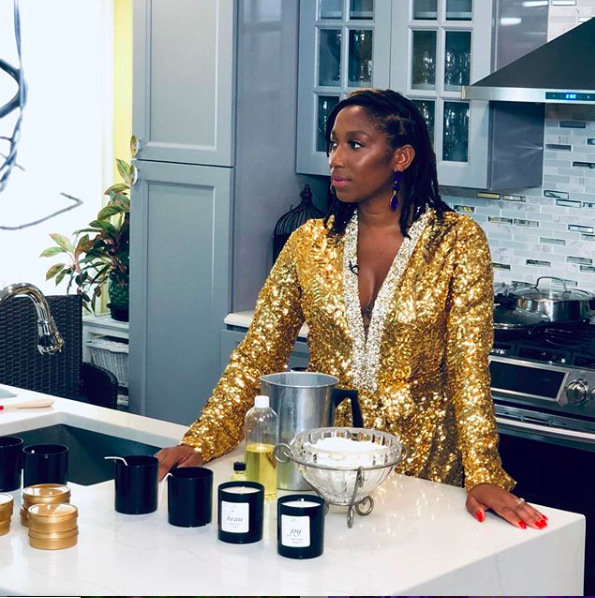
In this edition, we were able to catch up with Denequa Williams-Clarke, the founder of LIT Brooklyn, a luxury, eco-friendly candle company. After deciding she wanted to launch a candle company, Denequa taught herself how to make candles, and since then, has been able to partner with top brands and has grown her passion into a profitable business. In our chat, we learn more about how Denequa launched LIT, and her financial experiences in the early days as a new entrepreneur.
An entrepreneur at heart.
One of my first jobs was actually my start in entrepreneurship. When I was 12 or 13, I had a printing company with one of my cousins and I was selling greeting cards. There was this CD ROM, when they were a thing, called “Create a Card,” and I used that to create greeting cards around the holidays and business cards for people. The biggest thing that I learned from this experience was customer service. Even at that young age, I treated my business very seriously from how I packaged it, and even the time frame of how I delivered my products. But I think other than that, I have to credit my parents for teaching me about business. They were immigrants and a lot of things that I’ve learned in business came from them. As an immigrant, you have to be super-resilient, and that’s definitely a trait that you need in business. Also, you need to be reliable, trustworthy, and a person of your word. No business could have taught me what I’ve learned from watching my parents.

Photo: Courtesy of LIT Brooklyn and Mogul Millennial
For Denequa, it was all or nothing.
I’ve always loved candles and I think my love for candles and my love for making people feel good about themselves, inspired LIT. The lighting of candles and the ambiance that it provides, I love being a part of that experience. Back in 2015, I was literally in the living room watching TV, and I told my husband, who was my boyfriend at the time, “Yo, I think I want to start making candles.” The idea came easy to me because I love candles so much and I wanted to do what I loved.
When I decided to launch my business, I was doing it full-time. The money that I had saved from my last job helped me start my business. I literally just went all in. I know I had a lot of balls to do it. Looking back, I had a lot of balls and a lot of bills. Starting this business was probably one of the biggest risks that I’ve ever taken in life, but I don’t regret it.
I will say a disclaimer and note that there is definitely a certain kind of love that you have to have for starting any type of business but especially a business when you’re investing your own money into it because you have to have a mind frame of all or nothing and that’s not easy. You have to automatically go into it without even thinking that there’s going to be any loss at all; you have to fully believe in it 100%. I definitely experienced that a lot of that when I first started my business. I know people around me didn’t understand the importance of candles, but I didn’t let it stop me.
It took spending money to make money.
My business was very expensive to start. Honestly, I never really calculated how much money I used when I first started. I do remember that there was a lot of trial and error and testing involved. There was a lot of spending on things like tumblers, wicks, glassware, waxes, and several other things. I never really took the time to think about the money aspect. Early on, I was so obsessed and invested in the final product that I never really thought about everything else that was going on.
In my first year of business, I did do a lot of sponsoring products and that was an expense. I also did a lot traveling to make sure I was at different pop-ups and events in the city, which was a huge expense too. In the early days, it was definitely a lot of money that was spent, but I wasn’t tracking it like that.
Plant your seed, and then watch it multiply.
When I first launched my business, my price points were a lot higher, and that was, of course, all with trial and error. About six months into my business, I did a whole rebranding, where I offered a travel-sized candle and I offered a different color jar. I found that the person that I was getting my supplies from was able to offer me a cheaper cost, so then in return, I was able to offer my customer’s a cheaper price. Once I did the whole rebranding, that’s when I started to see an increase in sales. My customers were getting the same quality product but just in different packaging.
I didn’t really see any real, consistent sales coming in until like a year or a year and a half later in my business. Keep in mind though, that’s a part of the game. No matter what, you have to stay the course, even when you’re not making a lot of money in the beginning.
“
You don’t become a self-made millionaire overnight and people have to know this coming in. Entrepreneurship is hard.”
—Denequa Williams-Clarke, Founder Lit Brooklyn
In every success story, there’s a gap of trials and errors that is untold.
To be honest, in the beginning, there was definitely no paying of a salary. I sustained myself because I was lucky to be able to still live at home with my mom.
After my first year of business, my mom started seeing people and brands writing about my business. For example, I was featured in Essence and got to be in a Budweiser commercial. I think for an immigrant parent, my mom was like “I don’t know exactly what the hell you’re doing, but it has to be something because people are talking about you.” From there once the traction started to pick up, belief started to come in. She knew that I wasn’t just sitting around and that my business was a real thing. Being able to stay at home was a huge help because I was also able to save money.
Often times, people don’t really talk about things like this, and I think that’s why success stories are so jaded. It’s so many loopholes in everyone’s story. The reality is that when you have a business, what you make goes back into the business. Even if you have a $5,000 day, you don’t really have $5,000, sis. That money goes back into supplies, back into your product, your tech, etc.
There is a lot of factors that go into the money that’s made as an entrepreneur, and I don’t think people are honest when having that conversation. You don’t become a self-made millionaire overnight and people have to know this coming in. Entrepreneurship is hard.
Started from the bottom now we’re here.
After all of the trials and long nights, I’m profitable now, but it didn’t happen until after the year and a half mark. Most of my revenue, and my profitably, has come from the help of my consumers, and their word of mouth marketing. The awareness that I’ve been getting since I launched from people that love my brand has been huge and impactful.
To keep up with Denequa or LIT, follow them on Instagram here, or visit the site to pick up your candle!
Photo credit: Courtesy of Denequa Williams-Clarke and Mogul Millennial
Mogul Millennial, Inc. a media-tech platform curating actionable resources for Black entrepreneurs and corporate leaders #forusbyus. Follow @mogulmillennial on Instagram and Twitter, and check out our website at www.mogulmillennial.com.
MORE ON THE BLOG

Meet the Young Entrepreneur Breaking Barriers in the Highly Competitive Cannabis Industry
What grass ceiling?
This article was originally published by Mogul Millennial on May 25, 2020, and has been shared with consent.

“
We're very proud to be minority-owned and are trying to help other minorities get into the industry as well.”
—Hope Wiseman, founder Mary & Main
In the competitive cannabis industry, Hope Wiseman is a boss amongst bosses. By the age of 26, she made history as the youngest Black woman dispensary owner in the U.S.
Beyond entrepreneurship, she is looking to break down stigmas, raise awareness and educate about the positive impact cannabis can have on America’s economy and communities. She has often said that once the dismissive connotation of cannabis has been dissolved, communities will have the opportunity to heal and economically prosper.
The Spelman graduate and co-founder of Mary & Main spoke with Mogul Millennial to help us learn more about her journey from finance to entrepreneurship and making money moves in the cannabis industry.
MOGUL MILLENNIAL: In launching Mary & Main, you entered a billion-dollar market where there are bigger players and a lack of diversity. What have you learned from entering this competitive space?
HOPE WISEMAN: I have learned that it is really all about performance rather than your race, age, and gender. All those things definitely play a role and you know subconsciously people cannot help what they've been conditioned to support. If your company is operating under a system of excellence, then that allows you to still succeed in this industry. I feel like this industry craves sophisticated leaders, [because] people can form businesses that can sustain all different types of environments, especially right now with coronavirus.
Before you launched Mary & Main, you had a career in investment banking. What were some of the transferable skills that allowed you to make the transition to entrepreneurship?
I gained hard and soft skills from investment banking that helped me be successful in my quest to obtain a license as well as in my operational side. First, I believe from a soft skill perspective, it taught me how to be tenacious, as well as how to figure things out on my own. My problem-solving skills are great because when I was working in investment banking as an analyst, if you didn't know how to do something, you had to figure it out on your own or you'd have to seek your own help. [You have to be] able to troubleshoot, figure things out quickly, and keep a level head while working through issues.
I used to work in equity institutional sales, so I was interpreting stock research. We would have analysts internally that would completely turn the company inside out to study it and give a stock recommendation. As a result, I understand how companies and their finances work. For me, that makes it a lot easier going into my entrepreneurial journey. I know where I want to go and where I want to take the company. I understand the inner workings of how companies should be run to get to a certain point, and I think it has been a tremendous help.
For the more tangible, hard skills, I’m good at financial modeling. Also, the resources and connections in my network are probably a little bit more expanded than your average person because I was working at the top investment bank on Wall Street as a sophomore in college. I definitely feel like investment banking played a big part in giving me the confidence and the actual tools I needed to be successful in the cannabis industry.
When you launched Mary & Main, how did you determine your revenue share model with your product partners?
The three founders bootstrapped the entire process in the beginning, so there was no revenue share. We have since raised some money, but it's all equity. There's no revenue sharing going on as of right now. We have a few small owners, but about 90% of the company is owned by the three founders.
We know you like to partner with brands that are in line with your company's values and offer their products as well. What are some of the lessons you've learned during that journey of building out partnerships and maintaining those relationships?
Because of federal irregularities of cannabis, we are only allowed to purchase products that are grown and processed in the state of Maryland. As a result, we are limited to 10, maybe 20 companies, total. We don't have a big variety because there are not a lot of options. We pretty much work with everyone in the market. And with everyone in the Maryland market, it's so regulated. Everybody has high-quality products, some higher quality than others, but we have every type of patient that comes to our store so we need to have lower-cost products and super high-quality products that have a higher price point.
[Moving forward], we will definitely work with companies that have a strong focus on minority participation within their organization and high-quality standards. However, in states like Maryland and New Jersey, states that are highly regulated, every single producer will be high quality. It'll be more about the relationships you have with people and the types of deals you're able to negotiate with.

“
I want to focus on promoting female entrepreneurship, period.”
—Hope Wiseman, founder Mary & Main
How have you been able to build and sustain a brand and customer loyalty in such a crowded competitive space?
For us, we have built a community of people that support us mainly because we give great service and it's really like a family. But too, they are supporting a minority-owned company. We receive a lot of support simply because of that. We're very proud to be minority-owned and are trying to help other minorities get into the industry as well. We want [our patients] to feel comfortable with shopping in a dispensary. People always enjoy working, shopping, and doing things with people they feel they can relate to. We are offering that space within the cannabis industry and I believe that's where a lot of our loyalty comes from—knowing and having a feeling of a safe environment to do something that is still very sensitive to a lot of people. They want to feel comfortable and have a lot of questions. It's easier to talk to someone who you feel can relate to you.
Transitioning from investment banking into entrepreneurship, what would be one lesson that you learned that you wish you would have known going into that transition?
That's something I regret from early on. I wish I had been doing that. But I'd say those are the two main things: maintaining connections and looking at ancillary services from the beginning.
Do you feel that your experience at Spelman, and also just the experience of being enrolled at an HBCU, contributed anything to your success?
I was very strategic when I realized companies’ recruiting teams were looking for black women. The first place they’re going to go to is Spelman College. They’re not going to go to the University of Maryland or Harvard and look for me there. As prestigious as both those schools are, I felt I had the best chance at being where they would look for me rather than the [other way around]. Investment bank recruiters like Goldman Sachs and JP Morgan don’t even recruit at schools like the University of Maryland. So for me, it felt like a no-brainer if I wanted to land the best possible job after school. I also really enjoyed becoming a woman and adult around other Black women who were going through the same thing as me. It’s empowering and gives you the confidence to be able to walk out into the world and be proud of who you are, at the core.
I’m proud to be part of that sisterhood. Everywhere I go, every time I meet another Spelman sister, we connect and support each other. That’s something I also couldn’t get from a school that wasn’t an HBCU.
Has mentorship been helpful to your career? Also from having mentors or becoming a mentor, is that a role that you would hope to take on at some point?
I feel like [mentorship] is something that will continue throughout my life as I move to different levels. I’ll continue to find allies and mentors that can help me navigate that stage, and I plan to do that for other people. Although I’m still early in my journey and still establishing myself, I do it as much as I can for others in the cannabis industry. I plan to be able to do a lot more for others in the cannabis industry and entrepreneurship.
I was telling someone how I want to focus more on women entrepreneurs. That’s really what’s at my core. I love the cannabis industry and think it’s awesome, but I want to focus on promoting female entrepreneurship, period. I feel like that’s something I’ll do as a mentor.
What makes you a Mogul Millennial?
I feel that the more you give, the more you receive. The more you give, the better the world is. That’s what promotes expansion in a person. I make myself a better person, then I help others do the same.
Photo credit: All About-It, LLC courtesy of Hope Wiseman and Mogul Millennial
Mogul Millennial, Inc. a media-tech platform curating actionable resources for Black entrepreneurs and corporate leaders #forusbyus. Follow @mogulmillennial on Instagram and Twitter, and check out our website at www.mogulmillennial.com.
MORE ON THE BLOG

I Left a Steady Paycheck in Corporate America to Start My Own Future Fortune 500 Company
“Sometimes you need to jump off the cliff and build your wings on the way down.”

We know how daunting it can be to start a new business, especially if you’re disrupting an industry or creating an entirely new one. When there is no path to follow, the biggest question is, where do I start? There is so much to do, but before you get ahead of yourself, let’s start at the beginning. To kick-start the process, and ease some of those first-time founder nerves, we’re asking successful entrepreneurs to share their stories in our series, From Scratch. But this isn’t your typical day-in-the-life feature. We’re getting into the nitty-gritty details of launching a business, from writing a business plan (or not) to sourcing manufacturers and how much founders pay themselves—we’re not holding back.

Photo: Courtesy of Dorian Morris
As you may have gathered from the headline, Dorian Morris is ambitious. The Harvard Business School alumnae was busy climbing the corporate America ladder with her sights set on becoming one of the first Black female CEOs of a Fortune 500 company when she decided to take the leap and launch her own inclusive beauty startup instead. With an impressive résumé—which includes stints at CoverGirl, Sundial Brands, and Kendo—she was more than prepared to take on the competitive multi-billion dollar beauty industry.
Determined to disrupt the space, she founded Undefined Beauty, a clean, conscious, inclusive brand focused on democratizing beauty and destigmatizing what Morris calls "plant magic.” From manufacturing to marketing, she uplifts oft-overlooked communities by partnering exclusively with female-founded, minority-owned, or LGBTQ businesses. Needless to say, this is just one of the many reasons we’re proud to partner with Morris and Undefined Beauty for our inaugural Small Biz Pop-Up in Los Angeles where locals can safely shop the brand’s limited edition Glow Detox bath soak via Postmates or via contactless shopping, thanks to Square, when visiting the IRL pop-up at Platform.
Ahead, Morris talks us through her impressive career journey, from climbing the corporate America ladder to bootstrapping her own future Fortune 500 company. Trust us, you’re going to want to keep an eye on this space and add Undefined Beauty’s Glow Detox to cart, if you haven’t already.
On establishing a solid résumé…
“My background is a beautiful mosaic of retail, consumer packaged goods, and beauty, ranging from merchandising at Macy's, classical brand building at General Mills to learning the ins and outs of the beauty business while at Kendo, and continuing to evolve and master other beauty categories while at Sundial Brands and leading CoverGirl U.S.”
On building a future Fortune 500 company…
“While at Harvard Business School, I honestly thought my purpose was to lead a large Fortune 500 as one of the first Black female CEOs, but now, as I embark upon this startup journey, it's quite a different yet exciting adventure to be building my own future Fortune 500 company, from scratch. Each experience on my professional journey has built key tools that I can now leverage as an entrepreneur, including how I want to operate as well as how I do not want to operate, because actions are what determine your company values and culture.”
On leaving corporate America…
“After leaving corporate America, having built successful brands for other people, I felt it was my time to create something special and powerful for myself. As a beauty junkie, I'm always dissecting ingredient lists and realized there are a lot of less-than-ideal ingredients in our everyday products that aren't necessary. As the industry shifts towards greater transparency, I felt there was an opportunity to focus on clean, non-toxic beauty but do so in an accessible, approachable way.”
On discovering the benefits of cannabis…
“I discovered the beautiful benefits of cannabis, specifically CBD, via a former colleague. As I started my product development research in 2018, I found there wasn’t an efficacious yet fun and accessible CBD brand, focusing on the destigmatiation of cannabis while elevating conscious capitalism in the process. I created Undefined Beauty to fill this void: clean beauty meets adaptogens (CBD) meets social impact.”

On democratizing beauty…
“Undefined Beauty is a lifestyle brand focused on changing the narrative around clean, nontoxic living, democratizing beauty and infusing social impact in the process. I believe in plant power and the role adaptogens play in helping us individually become our best self, both inner and outer beauty, with CBD being for the first adaptogen I chose to highlight in my first collection, Indigo Rose. I want to empower women and men everywhere to explore, embrace, and celebrate their own unique beauty while also giving back to the community: purposeful beauty, unleashed.”
On tapping into conscious capitalism…
“I expanded the concept of conscious capitalism by launching Undefined Collective, a disruptive retail platform that is focused on elevating female-founded, minority-owned, LGTBQ, local and CBD brands because one plus one can equal five when indie brands come together. I have over 50 brand partners that have come together around this aligned vision and have executed a successful physical brick-and-mortar pop-up in Oakland, California, and more importantly, we have been able to educate the community on the amazing benefits of cannabis and demystify its internal and external benefits. Undefined Collective is continuing to evolve and I'm working on something special in the Arts District of Downtown Los Angeles that will launch very soon.”
On destigmatizing and elevating CBD…
“The cannabis industry was built off the backs of the Black and Brown community, which are being denied access to the commercialization opportunity now that the regulatory landscape has shifted. Undefined is focused on destigmatizing and elevating CBD and taking it one step further. My goal is to infuse social good and purposeful impact into my business model to drive sustainable impact.”
“First, across my supply chain, I exclusively partner with female-founded, minority-owned, or LGBTQ businesses, from my labs to my warehouse to my designer—it’s all about business empowering business. Secondly, once I scale, I would like to focus my social impact lens on female incarceration, given the unfortunate situation that many in jail are there because of cannabis. As the daughter of law enforcement (my mom is one of the first Black female California Highway Patrol sergeants and is now a cannabis evangelist as the store manager of Undefined Collective Oakland), I’ve seen the broken law enforcement system and have family members that have been incarcerated for drug offenses (and some that are still in jail), so I’ve seen first-hand how difficult it is to reacclimate post-release.”
“I want to bring positivity from something that once was negative. I operate by the model ‘do good, be good,’ and Undefined can be the bridge by providing employment opportunities and forging strategic partnerships to be part of the solution. As one of the few bootstrapping, Black female-founded CBD brands, I feel representation matters both in showcasing we are here in the space as leaders and also in helping write the future of this dynamic, evolving industry.”
On taking the leap without a business plan…
“I didn’t create a formal business plan because I felt that in the ever-changing, evolving beauty space, sometimes you need to jump off the cliff and build your wings on the way down. Where many founders stumble is getting caught up in analysis paralysis and you hesitate and miss key moments to drive the trend. Timing is everything. In addition, you have to be adaptable, fluid, and flexible because, ultimately, it’s the consumer who decides what brands win and what brands flop. I think you will never have all the answers and the best approach—especially when building a bootstrapped brand like Undefined—its to embrace an ‘iterate the great’ mindset, be strategic about staging risk, and continue to listen and evolve based on learnings and consumer shifts.”

On landing on the name Undefined Beauty…
“Finding the right name was a fun process. I traveled to Atlanta to have an ideation sesh with my best friend who is a former indie beauty founder as well (she has a successful beauty line in Ulta) and has been an invaluable confidant on my startup journey. We went old school, with large poster boards and markers, brainstorming words and ideas that captured the vision I had for Undefined. The concept is really about challenging the status quo, changing the narrative, breaking the rules, and approaching beauty and wellness through a clean, conscious, inclusive lens. It’s about redefining, reframing, and rejecting what beauty and wellness have historically stood for; there’s more than one way to be, live, love, consume, appreciate, vibrate. It’s about celebrating the beauty of choice.”
“In ideating names, Undefined was the clear winner. I personally hate rules and being told what to do and Undefined embodies this mindset that rules are meant to be broken, especially when the rules were set up by a patriarchal system that did not (and still does not) want diverse and underrepresented community to thrive. It’s about taking our power back. Not conforming. Embracing individuality, quirkiness, duality, fluidity, and uniqueness. Not putting limits on yourself and moreover, recognizing you are not alone and you are more than enough.Beauty starts in your head, not in the mirror, and Undefined is about reinforcing and celebrating this new and important approach to beauty and wellness.”
“As a Black, queer, female founder, leading with purpose is part of my brand DNA, and it shows up in how I personally lead—focused on radical transparency—and it also shows up in how I communicate, inspire and educate my community, a.k.a. my Undefined Crew. My advice would be to find a name that represents your vision but also ensure from a business perspective, you can secure a URL—mine is a bit nonconventional since the basic version wasn’t available so I use un-definedbeauty.com—as well as social handles that embody the name. Sometimes you have to get creative and that’s ok. For example, my socials are @UndefinedBeauty_Co and @Undefined_Collective given some iterations were already taken.”
On setting up the business…
“My first step was selecting a brand name then securing URLs, social handles, applying for trademark protection. Next, I started to build the Instagram community—since I was starting from scratch months ahead of brand launch, it was about setting a tone for the type of content and community I wanted to create. Next, I started to build out briefs on the product parameters and innovation I felt was missing in the marketplace, which helped inform which types of manufacturing partners made sense to engage. Next, I started to work on the brand DNA which included creating a logo, color palette, and communication tonality. Closer to launch, I created an e-commerce site—very scrappily—using WIX and eventually moved to Squarespace—but if I was to start over, I would build off Shopify from the beginning which has a lot of integral functionality built-in.”
On differentiating the brand in the market…
“Understanding your unique value proposition is important because this will help clarify your differentiation in the market as well as provide parameters and boundaries as you build and grow. You have to understand who you want to target because if you want to target everyone, you’ll end up actually connecting with no one. Understand and research your category, competitors, ingredient benefits and trends and understand where the whitespace is that you can authentically compete.”
On finding the right manufacturers and production partners…
“This has been an important learning. Given I was a corporate beauty vet, I understood who the large manufacturers players were across categories but most have a very large minimum order quantity (MOQ), so I opted to work solely with female-founded, minority-owned, LGBTQ-founded suppliers which actually ended up being a competitive advantage as they typically have lower MOQs, allowing me to move faster to test innovative concepts.”
“It’s a win-win as conscious capitalism model is close to my heart and I’m helping empower communities that have been historically left to the fringes. Honestly, finding the right partners is a bit of trial and error but tapping into events and forums like Indie Beauty Expo, CosmoProf, MakeUp in LosAngeles, and Expo West, which bring together the business-to-business (B2B) suppliers has been invaluable. It will be interesting to see how these in-person events evolve in the post-COVID world.”

On building a financially stable foundation…
“As a bootstrapped founder, I self-funded launch and leveraged pitch competitions to help provide some financial fuel to the business. It’s definitely a slower build, but for me, it felt right, and I can build a sustainable foundation instead of driving growth to appease investors. I was lucky to own real estate in San Fransisco that I purchased while at Sephora and Kendo which allowed for Airbnb income to help me cover my living expenses, but I’m still in a place where I don’t pay myself so every dollar of profit is invested back into the company.”
On being strategic and getting creative…
“I’ve been very strategic with every dollar I spend, and I actually don’t think of things as mistakes; they are all learnings to help you do things better going forward. My advice is to stage your risk by keeping your MOQs low and find creative solutions if you end up with packaging overstocks, which actually given the current supply chain disruptions, for me, has been actually a blessing in disguise.”
On working another job while building the business…
“I was consulting for a previous employer, General Mills, in the beginning of the Undefined exploration process, but as it started to take over my mindshare, I gracefully bowed out of the consulting engagement to fully commit to Undefined.”
On getting out of your own way…
“Self-doubt and imposter syndrome are real—don’t believe it, get out of your own way, and remember that the universe always has your back.”
On valuing collaboration over competition…
“I lean heavily on my network of fellow startup founders to find creative solutions to challenges, information share, and help uplift one other. It’s truly collaboration over competition.”
To discover, support, and shop all of the brands featured at the Create & Cultivate Small Biz Pop-Up, head to our C&C Small Biz Pop-Up hub.
MORE ON THE BLOG

How This Co-Founder Broke Through the $532 Billion Beauty Industry With "No Money Saved"
And now she can’t keep their game-changing product in stock.
We know how daunting it can be to start a new business, especially if you’re disrupting an industry or creating an entirely new one. When there is no path to follow, the biggest question is, where do I start? There is so much to do, but before you get ahead of yourself, let’s start at the beginning. To kick-start the process, and ease some of those first-time founder nerves, we’re asking successful entrepreneurs to share their story in our new series, From Scratch. But this isn’t your typical day in the life. We’re getting down to the nitty-gritty from writing a business plan (or not) to sourcing manufacturers and how much they pay themselves, we’re not holding back.

Their mission was simple: to create easy skincare for oily and combination skin types while helping women feel comfortable in their skin. And they achieved it. Base Butter—co-founded by She’Neil Johnson, CEO of Base Butter and Nicolette Graves, VP of Product—is a lightweight moisturizer that yield results through simple formulas to safely improve the overall health of the skin.
Their revolutionary product is so good, they sold out but we know where you can snag a jar—the Create & Cultivate Small Biz Pop-Up. This experiential space was designed to help people discover, connect, support, and shop curated Women of Color-owned small businesses from across the country. If you’re local to LA, you can shop the products now via Postmates and choose delivery or pickup. You can also purchase via contactless shopping thanks to Square when you visit the Small Biz Pop-Up at Platform. We hope to expand on this idea and bring it directly to you across the country so stay tuned!
Want to learn more about Base Butter and the founders who built this game-changing business from scratch? Well, keep reading to hear from co-founder She’Neil Johnson to discover why they swapped a business plan for a lean business canvas, how their Skin Struggles survey helped to hone their mission, and how they broke through a $532 billion industry with “no money saved.”

Be prepared to self-educate.
During our unofficial skincare journey, my co-founder Nicolette and I found ourselves self-educating and actively piecing together information to create solutions for our oily, combination, and acne-prone skin types and concerns because we were continuously running into barriers as a result of the gaps that exist for Black women to gain access to safe and effective skincare formulas.
For years we would share new knowledge, experiences, and more with each other and our larger group of friends. After reflecting, we realized it was a similar experience for our counterparts. We had been identified as the ones in our community excited to always share our findings, go the extra mile to read and research, and reluctantly push through our trial and error process. Soon we began discussing and becoming transparent about our skincare journey and struggles through not only our friend groups but a larger community online. So we decided to use the feedback from our community, knowledge gained, unique skills, and work experiences to build our own formulated solution, BASE BUTTER.
Consider swapping a business plan for a “lean business canvas.”
I tried to write a business plan, but I was stuck. So I spent time outlining our concept and goal setting on a whiteboard, then I came across a lean business canvas while taking an entrepreneurship class at Columbia University. The lean business canvas allowed for flexibility, because, let’s be honest, a full business plan can be intimidating when you are starting out.
Don’t rush the name, stay focused on the product.
BASE BUTTER was actually the name of our first product, a multi-purpose body butter. I was on the phone with my older sister Tashah brainstorming ideas and then the word BASE came to me. BASE represented the foundation and I wanted to create products that were the foundation of your skincare routine. We have since then phased out the product, but the company stuck. My suggestion would be not to get hung up on the name. Start working and building your prototype. Get inspired and it will one day come to you.

“I unexpectedly was let go from my 9-5 job due to my role being eliminated. I had no money saved, but I was still eager to jump into entrepreneurship full-time.”
— She’Neil Johnson, Co-Founder and CEO, Base Butter.
Once you have a name, trademark it!
Once we named our company, we secured it on all social media platforms, incorporated our business, and purchased the domain. At the time one of my close friends from undergrad was in law school at Howard Law. She was a part of the trademark clinic on campus and their assignment for the year was to choose a small business to consult and trademark free of charge. She chose us! Protect your business as soon as you can and legally set it up.
Never stop researching your customer and the market.
I did general research on the industry and opportunities within the market but my most valuable research came from studying other founders, their companies, and speaking with potential customers. We launched called Skin Struggles that is still on-going to this day.
The Skin Struggles survey has captured the profiles of over 3,000 Black women highlighting their specific skin wants, needs, and frustrations. The data captured in this research gave birth to our hero product Radiate Face Jelly, our mission which states we help make skincare easy for oily and combination skin types, and continues to be our guiding light.
Don’t rush.
We actually still produce everything in-house. We are currently in the process of finding a manufacturer in order to increase production capacity.

Be prepared to work a full-time job while you build your business.
I was working full-time when I started to build BASE BUTTER. I did not dive straight in until I was let go from my job at the time in NYC. I was only three years out of college at the time and that was my first job. This was a risk I took that I was not prepared to take, but I do not regret it. It allowed me to understand what the full-time entrepreneurship journey would look like, so when I went back to work a 9-5 I was more intentional about setting up a foundation that would support the growth of my business.
I left NYC and moved to Philly because the cost of living was lower and I had the support of my fiance there, I changed my lifestyle completely and focused on paying down personal debt and saving. Only then, after I felt like I had a solid foundation, did I decide to take the full-time leap again.
Don’t forget to pay yourself!
I put all my money into the business and did not set myself up for success early on. I had the mindset that I would sacrifice until we hit it big and only then would I pay myself. This was a big mistake. I unexpectedly was let go from my 9-5 job due to my role being eliminated. I had no money saved, but I was still eager to jump into entrepreneurship full-time.
For about two years I was mentally and financially drained to the point I no longer wanted to run the business. Thankfully I decided to take on a temporary 9-5 to set myself back up for success. For those six months, I paid off the majority of my debt, saved for a rainy day, and changed my relationship with money. My co-founder recommended the book Profit First to me and it's changed our business and my life. Our company is profitable and I am able to pay myself, something I thought was impossible to do until that day we hit it big.
Now, our company is profitable and I am able to pay myself and my co-founder. Since it’s just us two we take 50% from income to pay ourselves and still have enough to cover expenses, taxes, and keep a profit. As our team grows and business grows this will change.

Photo: Courtesy of Base Butter.
Caption: Nicolette Graves, Co-Founder and VP of Product, Base Butter.
Choose the best funding path for you but get financial advice.
In the beginning, I self-funded the business. I took a percentage from my check every payday and put it into the business account. In 2017, we raised $10,000 in a six-week crowdfunding campaign with an initiative to re-brand BASE BUTTER and develop our hero product Radiate Face Jelly.
Since then we’ve been able to bootstrap the company. I would recommend any path that is best for you, I would just suggest getting good with financial management and get ready to shake any old/bad money habits.
Keep it small.
Currently, it's just my cofounder, our intern, and myself. We are looking to grow our team by two by the end of the year.
Hire an accountant.
We took a four-hour accounting training with her so that we can manage day to day and consult with her on a quarterly basis. Working with her and reading Profit First has helped so much!

Take care of yourself and lean on other founders.
The biggest challenge was adjusting to the lifestyle of an entrepreneur. It was very uncomfortable to be a struggling founder while watching classmates get promoted and go on to business school. See, my original plan was to work two years corporate and then attend a top ten business school, but God had other plans. In my gut, I continuously followed the path of BASE BUTTER, but at times when it seemed like we weren't going anywhere, I questioned myself and my decisions.
I had to quickly form a support group of other founders and add rituals into my days such as intention setting and journaling. Entrepreneurship is not glamorous and you truly need to be strong-willed and within the right mindset to be successful. Small things like exercising, sleep, and eating healthy are vital to my performance as CEO and co-founder.
Consider hiring a life coach.
I do have a life coach and a network of mentors I have met throughout my journey. I truly believe in working smarter not harder. Having this support system in my corner helps me stay out of my head for too long and continuously stretch/challenge me to become a better leader each day.
Discover, support, and shop all of the brands at the Create & Cultivate Small Biz Pop-Up Hub.

MORE FROM THE BLOG


So, You’ve Started Your Business—Now What?
A fashion founder breaks it down.
We’ve been spending a lot of time at Create & Cultivate HQ discussing how we can best show up for and support our community during this uncertain time. Community is at our core, and connecting with others through one-of-a-kind experiences is what we love to do. While the world has changed, our mission has not. We’re committed to helping women create and cultivate the career of their dreams, which is why we’re proud to announce our new Ask an Expert series. We’re hosting discussions with experts, mentors, and influencers daily on Instagram Live to cure your craving for community and bring you the expert advice you’ve come to know and love from C&C. Follow Create & Cultivate on Instagram, check out our Ask an Expert highlight reel for the latest schedule, and hit the countdown to get a reminder so you don’t miss out!
Navigating your way through the many challenges, ups, and downs of a small business is a daunting experience but one that many of us are willing to take to pursue our passion and realize a dream. But when you do hit the green light, many of us are left wondering, what now? What next?
Thankfully, Amber Tolliver founder of Liberté revealed some of the basics in her recent IG Live for the Create & Cultivate Ask an Expert series. Ahead, we share some of her tips from the workshop to help you in your process as a small business owner.
Business Basics
Take a Moment
This is the start of a marathon and the hard work is just about to start. However, it’s important to celebrate every win and acknowledge your steps forward.
Make Sure You’re On a Strong Foundation
First things first—a lot of the time we focus all our energy on the product or service side of the business but the business side of business is your foundation and needs to be strong if you are going to succeed.
How has COVID shifted your market landscape?
Are there changes that need to be made to better serve your business goals?
Is your business established in a way to support those goals?
Get Organized and Protect Your Business
Be proactive about what you’ll need in the future. Do you have the necessary legal docs for business operations?
Fun Fact:
A lot of founders don’t know this but law firms will advance you billable hours to help you properly establish your business and provide you with standard legal docs you’ll need to properly run your business.
Make sure you are protecting your assets.
Is your intellectual property protected?
If you’re using consultants or speaking with anyone regarding confidential information, make sure you have them sign a consulting agreement or an NDA.
Learn to Delegate
As brand founders, our business is our baby which makes it hard to hand over tasks and entrust others with work. With that being said though it’s imperative for you to do so.
I can do my books but that doesn’t mean I should.
Hire experts in those areas that are the most important
Navigating the Day-to-Day
Do Not Beat Yourself Up
Mistakes are bound to happen in start-ups, it’s a part of the growing process. Do not beat yourself up over it or dwell on the mistake. Acknowledge it, learn from it, and move on.
Personally speaking, I have experienced this first hand. When I first started on my entrepreneurial journey I wanted to be perfect and precise but when I wasn’t, I would shift my focus to the mistake I made instead of what the lesson was.
Focus on the lesson and be grateful you can keep learning
Master the Pivot
Now more than ever it’s important to be flexible and agile. We have now an idea of what to expect as we move into the second half of 2020 or what the markets will do in response.
Stay focused on what your goal is while remaining flexible on how you’ll achieve it.
If you allow yourself to remain open to alternative routes you may find yourself in a space you never could have imagined.
Avoid Operating in a Vacuum
It’s quite easy to develop blinders as a founder, especially in early-stage businesses.
Make sure to build a team that will support you in the areas you need help
Develop an advisory board whether it’s an official one or not it’s important to get advice from people who know more than you.
Have a mentor or career coach you can go to for support. Business advice is one thing but support for you and the business leader to working to become is another.
Park Your Ego
Being a founder doesn’t mean you’re an expert in all areas of business. If you think you know everything then you end up closing yourself off to new ways of thinking or doing things
As you grow your team, remember to inspire them through your leadership and collaborative mindset.
Never Stop Being a Student
You know what you know, you know what you don’t know but you don’t know what you don’t know. Be open to learning!
New perspectives will give you more viewpoints on your business which means fewer blind spots. The goal is to get a 360-degree perspective so you can see all sides and achieve success.
About the Author
A former fashion student, lingerie model, and frustrated 32E bra shopper, Amber Tolliver is the founder of Liberté, a luxury lingerie brand made for the modern woman. With an extensive 17-year career as a standard and plus-size model, Amber has worked for numerous lingerie brands and was also the face of Aerie’s “Real” campaign in 2013.
While garnering accolades for being a relatable inspiration to young women, her work as a model ultimately fueled her desire to create a brand that meets the needs of women who were ignored by the traditional American lingerie market. Most important to Amber is shifting the perspective of what is possible in bra manufacturing by providing size-inclusive collections, in comfortable and beautiful styles women deserve.
Raised just outside of Chicago and a former student of Columbia College Chicago and FIT, Amber makes New York City her home. In addition to running Liberté, she is actively involved with Girls Inc. of New York and is a dedicated plant mom.
MORE FROM THE BLOG

The Anatomy of a Killer "About" Page
Because you have less than three seconds to grab someone's attention.

Photo: Christina Morillo for Pexels
If you think about the pages on your blog or business website like the squares of a Monopoly board, your about page would be Boardwalk. This piece of virtual real estate is so valuable, people come barreling through your front door like it’s a never-ending open house, whether you invited them in or not. They’re intrigued! They’re curious!
So what have you planted on your about page?
Remember, you’ve got approximately three seconds to seduce your Mr. or Mrs. Right (customer) before they jump ship to the instant gratification of another shiny domain. They’re instinctively going to head to your about page. When they get there, this is what they need to see: clear content, with a hook, that answers questions, and has an element of surprise.
How are you faring in these five areas? Let’s take a look.
The Hook
There’s a clever little tool in writing you’re going to need to get to know intimately if you don’t already.
It’s called the hook.
It’s your angle. Your “bingo!” Your “aha” moment. Your “slap me down and call me Suzy, this person really gets me” statement. And the writers who produce the most memorable work are masters of the hook.
It’s all about infusing the theme of your message with the emotion that will reach right into the belly of your readers, make them spit out their muesli and pay attention to what you’ve got to say.
It takes in the worldview and assumptions of your reader and challenges them with a new idea.
Hit them right between the eyes with a powerful intro statement or heading to your about page that does exactly that. Surprise them, shock them, and most of all… become a master of intrigue through words.
The Language
Nobody ever made a lasting impression by thinking, “I hope I sound professional.” Be bold in your language choices and work hard to ensure you don’t sound like everyone else.
Go through your copy with a big red pen and underline any words or sentences that feel too generic or cliched. If you think you’ve heard it all before, so will your readers, which means you’re not capturing their attention (refer back to the hook and try again)!
The Photography & Design
You may be a word nerd through and through, but if your about page doesn’t look pretty (or work well on mobile) it’s going to be pretty easy for potential customers and clients to left swipe you right outta there.
Invest in design. Use subheadings to break up chunks of text. And for the love of WordPress, do not publish your page without a photo that shows the world who you are (eye contact and smile, people!).
You wouldn’t buy anything from a shopkeeper if you walked in and they were wearing a paper bag on their head, so don’t be shy. Show yourself!
The Personal Touch
Don’t be afraid to stamp your personality on the page, but don’t feel you have to tell the world your ENTIRE life story, either.
Think back to your connectors, to your audience, and don’t get too caught up. They want to know your story but they also want to be able to relate.
Give them just enough of what they need to know about you, but ultimately keep the page all about them (uh-huh, that’s right… this page is all about THEM).
If you’re still chomping at the bit to tell more of your story, why not write a blog post called “10 things you never knew about me,” or tell your story in an emotion-fueled post?
The Call to Action
Once you’re satisfied your copy is alluring, interesting, informative, and tells your customers everything they need to know, you’re ready to rock!
Think about what call to action you want to include on the page? What’s your priority?
Is it...
Directing people to your services page so they can book to work with you?
Asking them to contact you to make a booking?
Getting them to sign up to your email updates?
Sending them onto the blog posts you’re most proud of so they can immerse themselves in your brand?
Don’t overwhelm your customers with multiple links – keep it clean and simple so your about page can perform at its best.
This piece originally appeared on BlogSociety and has been reproduced with permission.
Love this story? Pin the below graphic to your Pinterest board.

This story was originally published on April 16, 2019, and has since been updated.
MORE ON THE BLOG

An Exclusive Look Inside Kendra Scott's Jaw-Dropping Austin HQ
It’s so dreamy.










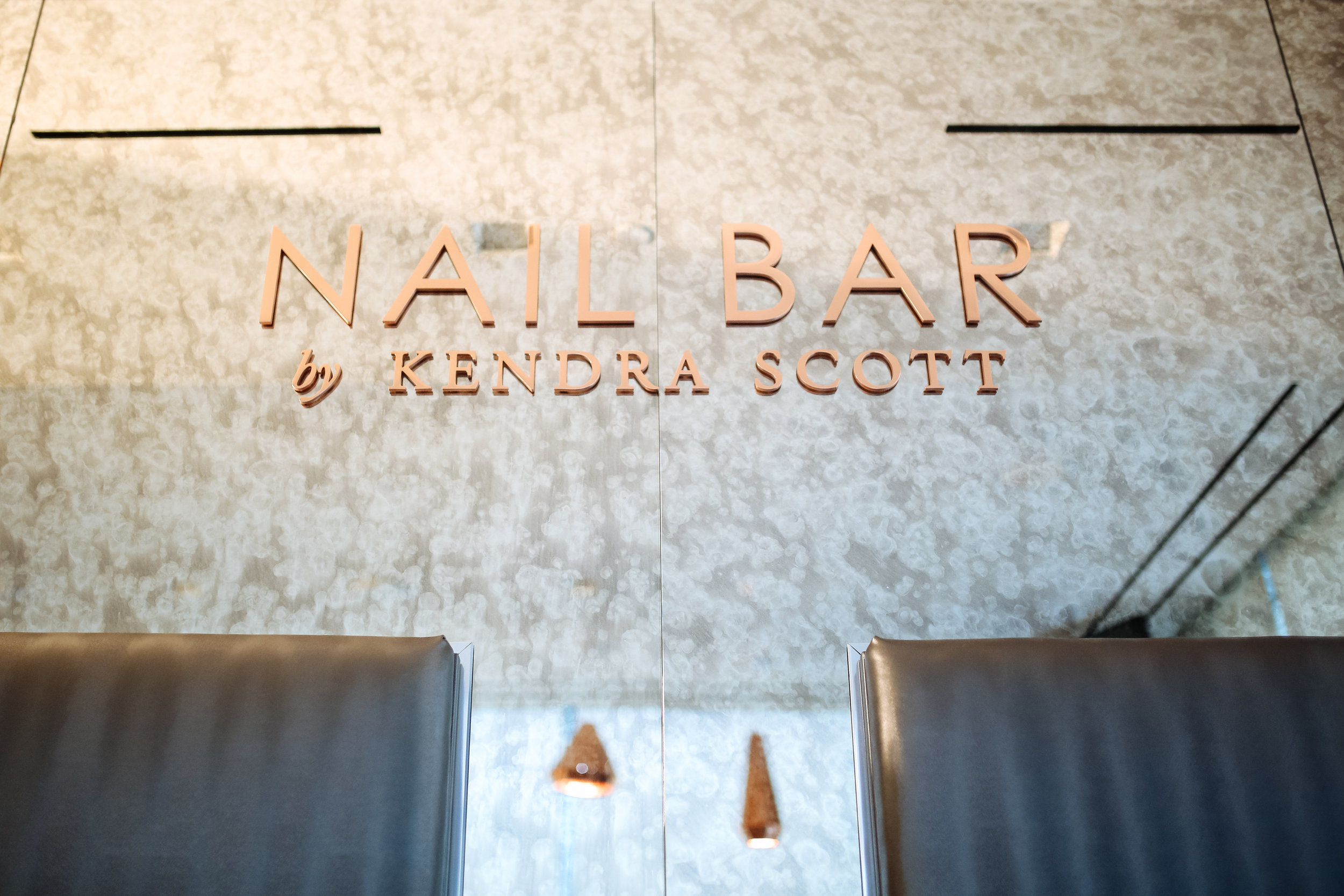



























Many of us may be working from home right now due to COVID-19, but what if we told you there was a magic place where you could work, workout, get your nails done (for free!), huddle up in a huddle room with co-workers, grab snacks from a FULLY stocked snack room, and also, if you're a new mom, pump in private?
Well, guess what? For the 98% female employees at the Kendra Scott HQ in Austin, Texas that is (or was) their every day. Don't believe us? Take a quick peruse through the amazing gallery above (including shots of Scott's gorgeous office as well). If, or when, we have to go back to commuting to an office again, this is the only workspace that will make that lost hour worthwhile.
Consider this space proof that dream jobs are real. As Scott told us during our #CreateCultivateSXSW 2017 dinner, which was hosted in her gorgeous office space, “You’re having dinner inside my dream. I was told ‘no’ so many times— that you can’t be a brand out of Texas. But,” she said with a smile, “I love it when someone tells me I can’t do something.” Same, Scott. Same.
This story was originally published on April 6, 2017, and has since been updated.
MORE ON THE BLOG

How Small Businesses Can Create and Maintain Meaningful Connections With Customers While Remote
Staying apart, together.


Photo: Create & Cultivate
Small businesses everywhere are stepping up and doing their part to help flatten the coronavirus curve, temporarily shutting the doors of their brick-and-mortar shops, pivoting to curbside pick-ups, implementing contactless deliveries, and setting up in-store social distancing guidelines to help contain the rapid spread of COVID-19. Of course, by now, we all know that pivoting a brick-and-mortar business strategy to an online one in the midst of an ever-evolving global health crisis is easier said than done.
To help small business owners enhance their online presence and stay connected with their customers remotely during these challenging times, we’ve partnered with Messenger from Facebook to share simple tips for keeping the lines of communication open. Not only is messaging convenient, but it can also help your small business build relationships and inspire trust with customers. In fact, a Facebook-commissioned study found that 69% of people reported that being able to send a message to a business made them feel more confident in the brand.
Ahead, we’re sharing ways to create and maintain meaningful connections with your customers, bring new customers to your virtual storefront, and more. In the coming weeks and months, we’ll be sharing more ways for small business owners to boost their business with Messenger, so be sure to keep an eye on this space for the next installment in the series. (Psst… if you missed the first story in this series, discover three zero-cost ways for businesses to stay connected with customers during COVID-19.)

According to Facebook data, over 90% of Facebook business admins currently use Messenger to connect with their friends and family. In an effort to help small business owners manage all their messages in one place, Messenger recently launched the business inbox feature, which allows you to toggle between your personal and business accounts within the Messenger app. In other words, you don’t need to download and manage multiple apps in order to chat with your loved ones and your customers. (Win win!) ICYMI, Messenger’s business inbox is already available via the Messenger app on iOS and will be coming to Android soon.
According to a Hubspot survey, 90% of customers rate an "immediate" response as important or very important when they have a customer service question. Right now, in the midst of COVID-19, many customers have timely questions about updated store hours, product availability, no-contact delivery and pick-up options, and much more.
Messenger’s new business inbox feature makes it easy and convenient for you to respond quickly and easily to your customer questions, which is imperative when you consider that 60% of customers define "immediate" as 10 minutes or less. You can also choose to receive notifications in the Messenger app to help remind you to get back to customers.
In Messenger’s press release for the new tool, small business owner Matt Volpert of Kern River Outfitters shared his experience with business inbox: “We are currently seeing a 250% increase of messages from guests who need to reschedule their trips due to COVID-19. This makes it difficult for my small team to get back to these guests in a timely fashion. The business inbox in Messenger is a fantastic tool that will help me quickly respond to each and every one of my guests, whether I’m in the office or on the river.”
Pro tip: Messenger’s business inbox tool also complements the Page Manager App, where you can manage your Facebook posts, create ads, and view Page insights to help you make informed decisions as you continue to pivot and adapt your business during this time.

Once you’ve established your business online, of course, attracting potential customers to your virtual storefront is just as crucial to your success as bringing them into your IRL brick-and-mortar location. With Click to Messenger ads, you can reach potential customers virtually while maintaining social distancing measures.
Within the app, you can choose between two ad templates: Start Conversations or Generate Leads. The Start Conversations template provides a menu of prompts within a Messenger thread for a potential customer to choose from to start a conversation with you, while the Generate Leads template offers a question-and-answer style conversation to help you better identify potential customers.
According to a study conducted by Messenger, a small business based in Thailand called Organicwa created a successful Click to Messenger ad campaign when they decided to offer a delivery option during the COVID-19 pandemic. After 30 days, they received 11,000 orders and a 6X increase in return on ad spend with ads that click to Messenger, compared to previous campaigns.
Click here for more information about Organicwa’s successful campaign and here to learn more about getting started with Click to Messenger Ads.
For additional resources, head to the Marketing with Messenger page and Business Resource Hub where you can learn more about our business tools, grants, and other ways to keep your business running during this time.
Are you currently using Messenger for your business? If so, let us know how it helps your business in the comments section below for a chance to be featured in one of our upcoming spotlight posts.
MORE ON THE BLOG

Hey, C&C Campers! Here's What to Expect at Our Digital Summer Camp
Welcome to our version of a “working vacation.”

Photo: Create & Cultivate
Here at Create & Cultivate, we know the importance of some good old-fashioned fun—but we also know that you’re always looking for ways to further your career and build your business, whether you’re soaking up the sun on the beach or leading a meeting in the boardroom. That’s why we’re redefining the meaning of a working vacation with a jam-packed digital summit filled with real-talk panel discussions, impactful workshops, virtual networking with fellow C&C campers, and a mentor power hour with the best in the biz.
As you know, we always bring our A-game but our lineup for Saturday, June 13 is stacked. BK Yoga Club is kicking off the morning with a live yoga session, Danielle Fishel Karp is taking the virtual stage to talk about switching lanes from entertainer to clean beauty entrepreneur, Chloé Watts of cholédigital is leading a must-watch workshop on building content marketing funnels, Farnoosh Torabi is sharing tips for leveraging a podcast to build a brand, and Brad Goreski is pulling back the filter on the fashion industry. Not to mention, nostalgia-inducing workshops that’ll enable you to stretch those creative muscles, real-time digital networking opportunities, and so much more. You don’t want to miss this one!
Read on to discover everything we have in store for this jam-packed day, and if you haven’t already, be sure to buy your ticket ASAP!
THE DATE
Saturday, June 13, 2020
TUNE IN FROM HOME
First things first! On Saturday, June 13, you’ll receive an email with your link and password to access the exclusive Summer Camp site. Please note: All content will go live on Pacific Daylight Time (PDT), including the launch of the exclusive Summer Camp site. To find out what time a session is happening in your time zone, use this handy time zone converter.
Summer Camp is made up of pre-recorded video sessions hosted via Vimeo and live video sessions streaming via Zoom. We recommend that you have a strong WiFi connection and find a comfortable place to tune in from home. Summer Camp is optimized for desktop, so it is best viewed via a computer or laptop, rather than a tablet or phone.
While the live content is specifically designed to be watched in real-time, you’ll be able to access and view it until Friday, June 19 at 5pm PDT (Insiders, you have all-access even after the cutoff via your C&C Insiders dashboard!). Tickets will be available to purchase until June 19 at 5pm PDT.
THE SCHEDULE
Summer Camp is built just like our in-person conferences, which, of course, you all know and love. We have a stacked schedule with an A-list line-up of speakers so we suggest taking notes along the way.
Want the full lineup? Check out the play-by-play schedule to map out your big day. Please note, all times are listed in PDT (Pacific Daylight Time), as C&C headquarters is located in sunny Los Angeles. To find out what time a session is happening in your time zone, use this time zone converter.
It’s going to be HUGE so we recommend getting a head start on planning out your day now. Download this handy checklist to keep track of the pre-recorded video sessions and this checklist to keep track of the LIVE video sessions to make sure you don’t miss anything.
THINGS TO PREP AHEAD OF TIME
Here are a few things to prep before the big day so it goes off without a hitch:
Make sure you have a strong WiFi connection.
Install Zoom on your desktop computer or laptop and test it out.
Zoom tips:
Find a quiet place to tune in. Try to situate yourself in a small room that does not have an echo.
Try and stay away from noisy electronics and silence your cell phone and computer notifications for an optimal experience.
When possible, limit your internet connection to solely the device you’re using for the Zoom conference.
Set your phone to airplane mode, pause your television connection, ask others in your home to pause anything that may require a strong internet connection, etc.
Set aside your athletic gear and your mat (or towel) and fill up your water bottle for our morning moves session with BK Yoga Club. No equipment needed!
Gather the ingredients you’ll need to make an immunity-boosting smoothie during the breakfast workshop with Weelicious. Get the ingredients list and the recipe here!
Purchase the supplies you’ll need in order to follow along with the workshops in real-time if you’d like! You can find shoppable supplies checklists for each workshop here. Scroll down to The Schedule and click on the “Supplies Checklist” below each workshop to open up PDFs with shoppable links.
Download the workshop downloads so you can follow along with the expert in real-time. Note: Your exclusive workshop downloads will be available on Saturday, June 13 via the exclusive Summer Camp site, which you will gain access to on the day-of.
Take the What Is Your Instagram Content Creator Type Quiz prior to the Content Coordination: How to Plan Your Content and Build Instagram Workflows for Your Creative Type workshop powered by Tailwind.
Peruse the list of mentors who will be answering questions in real-time in hour-long Zoom webinars and choose your mentor(s).
We have experts in everything from raising money to creating engaging content to growing a dedicated following on social media. If there’s more than one mentor you want advice from, don’t worry! You can hop from session to session over the course of the hour if you’d like.
Don’t forget to jot down any questions you have for the mentor sessions ahead of time! You’ll be able to ask your Qs in real-time by typing them into Zoom’s Q&A feature.
GET SOCIAL
Stay tuned for exciting announcements and updates by following along on our social at @createcultivate.
To access our custom Summer Camp IGS filters, head to @createcultivate on Instagram and click on the smiley face icon beneath our bio, or open your camera in Instagram and click on “browse effects” and search with keyword “createcultivate.” You can also search “ccsummercamp” on Instagram to use our custom GIFs.
Don’t forget to tag @createcultivate and use the hashtag #CCSummerCamp for the chance to be featured in our Instagram Stories throughout the day!
NETWORK
Networking is a huge part of our event and our Create & Cultivate Summer Camp Attendees Slack Workspace is a great place to mix and mingle with your fellow Create & Cultivators before, during, and after the big day. We’ve created channels for every workshop and panel, as well as channels for international attendees, networking, and more!
Attendees will receive a link to access our Create & Cultivate Summer Camp Attendees Slack Workspace in our What to Expect newsletter on Wednesday, June 10. This Slack channel will remain accessible until Friday, June 19 at 5 pm PDT. Not familiar with Slack? Here are a few tips to get you started:
Download the Slack app to your phone, computer, or both
Complete your account profile with a profile photo, your name, and what you do
Public conversations will happen in the channels (ex: #networking) and are located on the left-hand side of the app. You can also start direct messages with others in the Slack workspace
Hit send too early on a message? Slack has an edit feature! Click the three-dot icon located on the right side of the message to open the drop-down of message options
We’re all about GIFs at C&C! Here are instructions on how to integrate GIPHY into your Slack account.
Our Slack workspace is a busy, happening place on the day of the event. Streamline the notifications you receive by using the “mute” feature on channels that don’t pertain to you. To mute a channel, simply open up that channel, click the three-dot icon labeled “more,” and select the mute option
Most importantly, be kind and respectful of others. If you don’t follow this rule, you will be removed from the Slack group
If you have any questions on the day of the event about navigating the schedule, accessing the workshop downloads, or anything else, you can drop them into the customer service channel in Slack.
C&C INSIDERS’ PERKS
Our Insiders get a ton of perks at all our events—and our Digital Summer Camp is no exception. As an Insider, you get free admission and you’ll have access to all of the panels and keynotes after Friday, June 19 at 5pm PDT via your C&C Insiders dashboard. Not an insider yet? Don’t miss out—you can sign up here.
VIRTUAL GIFT BAGS
We know you want ‘em! Get your inbox ready for gift bags and promo codes from some of your favorite brands, including The Sill, Janessa Leoné, Golde, Be Free by Danielle Fishel, Weelicious, Atarah Avenue, Style Rituals, and more.
TECHNICAL DIFFICULTIES?
Live chat with a C&C specialist on CreateCultivate.com. You’ll see a “Chat With Us” pop-up in the bottom right corner of your screen.
WE ARE SO EXCITED TO SEE YOU ONLINE! Who are you most excited to hear speak? Which workshop are you looking forward to most? Tell us in the comments below!
MORE ON THE BLOG
This Founder's Curly Hair Salon Is Helping Women and Girls Love Themselves Just As They Are
“Our goal is to change the world one curl at a time.”

We know how daunting it can be to start a new business, especially if you’re disrupting an industry or creating an entirely new one. When there is no path to follow, the biggest question is, where do I start? There is so much to do, but before you get ahead of yourself, let’s start at the beginning. To kick-start the process, and ease some of those first-time founder nerves, we’re asking successful entrepreneurs to share their stories in our new series, From Scratch. But this isn’t your typical day in the life profile. We’re getting into the nitty-gritty details—from writing a business plan (or not) to sourcing manufacturers and how much they pay themselves—we’re not holding back.

“
Marketing is important, but not more than the quality of what you’re offering and the customer service experience. Word of mouth is GOLD.
”
—Carolina Contreras, Founder and CEO, Miss Rizos
Disrupting an industry isn’t easy.
Just ask Carolina Contreras, who decided to open a curly hair salon in New York City the very same year that New York state legally banned discrimination based on hair texture at work and in schools. The law, which went into effect in 2019, marked a long-overdue step in defining mistreatment based on hair texture or style as racially discriminatory, especially when you consider that Black women are 1.5 times more likely to be sent home from the workplace because of their hair.
“Miss Rizos is a curly hair salon that helps women and little girls love themselves just as they are,” the founder and CEO explained during our Digital Money Moves Summit pitch competition, which awarded a $10,000 grant to the deserving small business owner. “We use not only our curly hair salons but also our social media presence to redefine beauty standards and create a more inclusive picture of what it means to be beautiful. Our goal is to change the world one curl at a time."
In this installment of From Scratch, Contreras shares the nitty-gritty details behind what it really takes to get a business off the ground, including what it took for her to self-fund the company at the beginning (spoiler alert: all her savings) and how COVID-19 has impacted her brick-and-mortar business.
CREATE & CULTIVATE: Did you write a business plan?
CAROLINA CONTRERAS: When I first started my business, I wasn’t sure what I was doing. I knew we needed a mission, vision, and values, so my little tiny team of two (my best friends, btw) and I took a two-hour car ride to our favorite beach town in the Dominican Republic, Las Terrenas. There, we hashed out all of our ideas and goals for a curly hair haven in a place where our hair wasn’t validated or celebrated. Before the salon, Miss Rizos was a blog, so we used this online platform as an inspiration for our space. I’ve written long- and short-term strategies for the business, but we are just now—five and a half years after opening—actually putting a real business plan together. I say, do it early if you, can because it will help you strategize and reach all of your business dreams.
How did you come up with the name Miss Rizos?
Originally, I named my blog Miss Rizos for a few reasons. First, there weren’t any curly hair beauty pageant winners, so calling it Miss Rizos (Miss Curls) was satirical. I also felt like my curls were adorning my head and making me feel powerful, sort of like a crown, and misses wear crowns at these pageants. The name Miss Rizos embodies this idea that I can make my own rules and define my own beauty.
What were the immediate things you had to do to set up the business? What would you recommend to new founders reading this?
I definitely trademarked the name first so that no one would use it. I registered the website the moment I thought of the name and created a social media handle I thought we could potentially use. Finally, defining the mission, vision, and values of a company is so important, and I recommend people actually spend time doing this because these principles will guide the way and help you make the best decisions.
What research did you do for the business beforehand? Would you recommend it?
I recommend benchmarking within and outside of your field. I love watching videos about digital marketing and really understanding the importance of the digital space in this very digital era. Finally, I would look at all of the administrative details of your company like permits, licenses, and tax information. Don’t let this stuff intimidate you from starting, just start!
“Insecurities, doubts, and fears will always exist, don’t let them paralyze you. Do it afraid. ”
How did you find the first hairstylists that you partnered with? Did you have any bad experiences? What did you learn and what advice do you have for other founders looking for trustworthy partners?
Omg, I’ve had my fair share of terrible experiences with business partners. USE CONTRACTS! Make sure agreements are legally binding and that you are incredibly transparent with all of the terms. Hire slow, fire fast. This means take your time hiring, do several interviews, and invite other people in the team or in your community to do interviews with you. Finally, hire and fire based on the values you defined for your company. It’s nothing personal, if someone doesn’t align with the values of your company, they will bring down team morale and potentially ruin a relationship with a client.
How did you fund the company?
I used a lot of my savings, actually all of my savings! I also pre-sold appointments and apparel using crowdfunding platforms. I have bootstrapped mostly, but a year ago, we acquired a new partner who also an angel investor. Again, this person’s values aligned with ours and our relationship has been incredible.
How did you determine how much to pay yourself?
I still struggle with this so much and hope to be able to make peace with it soon. I actually didn’t pay myself until like two years in. It’s really a symbolic payment more than an actual salary. I do have the business cover a lot of my expenses like phone, transportation, etc., and this is super important because it allows me to live a decent quality of life and be more present for my business.
I say, if you’re just starting, make sure you have savings that will support you for three to six months, so that you’re not putting a financial burden on the new venture. Then, it’s definitely important to create a salary or arrangement that will allow you to have peace of mind and concentrate on running the company. Finally, I say create a plan to get to that dream salary and work your way there.
How big is your team now, and what has the hiring process been like?
We started with the team of two, and now we are a team of nearly 40 people. As I mentioned before, hire slow, fire fast and let your values guide the way. I had lots of experience hiring from being a project manager in the nonprofit world for many years. Interviews should be a two way conversation and not an interrogation process.

Did you hire an accountant?
I hired an accountant late in the game and it cost me thousands if not hundreds of thousands! Get a CPA early in the game, learn the taxation system in your state and country. Get an online bookkeeping platform and keep all receipts and the books organized. When you can afford it, get a financial advisor who has experience with small businesses and can help you make sure your prices are right and identify what new strategies need to be implemented. Learn early what your point of equilibrium is, this is how much you need to make to break even. This will help you come up with a number of what you need to make a month, a week, a day, and even per hour. Be comfortable and in control of the numbers. It will empower you to make better decisions.
What has been the biggest learning curve during the process of establishing a salon business?
Definitely human resources. It’s not easy putting a dream team together.
How did you promote your company? How did you get people to know who you are and create buzz?
I created a community before I had a business and this helped tremendously. I also created a lot of buzz surrounding my activism, which got me a lot press. Social media has been instrumental, but more for my community-building than the actual random reach. Create good free content, give value to your potential clients. I’ve had a marketing team since the beginning. She worked for free for a while, now she owns 20% of the company. Hire a publicist as a consultant even if just for an event to get you in the media or for one to three months, if you can’t afford it. Marketing is important, but not more than the quality of what you’re offering and the customer service experience. Word of mouth is GOLD.
Do you have a business coach or mentor?
I didn’t for years. Get one when you can afford it, in the meantime there is Youtube.
“It’s important to have purpose and define it so that when things get really hard, you can always visit that “why.” ”
How has COVID-19 impacted your business operations and financials? What tactics and strategies have you put in place to pivot and ensure your business is successful through this period?
We had to close our stores. We pivoted by moving sales online and doing online consultations. We were very intentional about applying to as many grants and financial opportunities as possible, including pitch competitions, and I am grateful to have won the pitch competition for Create & Cultivate.
What short-term changes will be crucial to your business strategy long-term post-COVID-19 and what plans are you making for when we get back to “normal?”
We are definitely going to invest more on our online e-commerce experience. We plan on making sure we are generating revenue in lots of different ways and not just the salon experience.
What advice can you share for small business owners, founders, and entrepreneurs who are also reeling in response to COVID-19?
APPLY to everything! See what aspects of the business can be done online. Create a new product or revamp an old one that could be sold online. Give your community lots of free important content, with this you’re communicating how important they are to you. Check up on clients. Call your landlord and let them know what you’re doing to pivot and think of ways to negotiate the rent payments without being defensive. Honey pulls more bees.
For those who haven’t started a business (or are about to) what advice do you have?
Be curious. What do you love doing and would do for free because you love it so much? Now find a way to make this, or an aspect of this, your business.

“
Hire slow, fire fast, and let your values guide the way.”
—Carolina Contreras, Founder and CEO, Miss Rizos
What is your number one piece of financial advice for any new business owner and why?
Scale slowly, not too slowly, and listen to your clientele. Don’t get into a bigger store or buy a ton of inventory you don’t need. Cash is king, so don’t just go crazy on making your overhead bigger if you don’t know how it’s going to get paid. It’s not magic, it’s strategy and planning. Robin Sharma says vague planning equals vague results. Strategizing and planning in advance, allows you to make the best decisions about growing your business. Take risks, but smart risks.
If you could go back to the beginning with the knowledge you have now, what advice would you give yourself and why?
Get a CPA and make sure to always use contracts!
Anything else to add?
Being a business owner is scary! There are so many responsibilities. So it’s important to have purpose and define it so that when things get really hard, you can always visit that “why.” Insecurities, doubts and fears will always exist, don’t let them paralyze you. Do it afraid. The worst thing that can happen is that the business fails, but you’ll learn in the process and will gather tools, resources, and networks to do it better the next time.
Enter to win a $10,000 grant for your small business
We're dedicating proceeds from our Digital Beauty Summit ticket sales toward a $10,000 grant for a small business owner in the health and wellness industry, including beauty, health and wellness, and self-care. We'll be selecting three finalists to pitch their businesses LIVE to a panel of judges for a chance to win the grant. Want in? Click here to check out the official rules and apply by Friday, July 17, 2020 at 11:59 PM PDT.
Up next: 32 Black Female-Owned Brands and Entrepreneurs to Support Now and Always
MORE ON THE BLOG

Ask an Expert: The Three P's of Launching a Beauty Brand
The founder of Elle Johnson Co. breaks down what you need to know.
We’ve been spending a lot of time at Create & Cultivate HQ discussing how we can best show up for and support our community during this uncertain time. Community is at our core, and connecting with others through one-of-a-kind experiences is what we love to do. While the world has changed, our mission has not. We’re committed to helping women create and cultivate the career of their dreams, which is why we’re proud to announce our new Ask an Expert series. We’re hosting discussions with experts, mentors, and influencers daily at 9 am, 12 pm, and 3 pm PST on Instagram Live to cure your craving for community and bring you the expert advice you’ve come to know and love from C&C. Follow Create & Cultivate on Instagram, check out our Ask an Expert highlight reel for the latest schedule, and hit the countdown to get a reminder so you don’t miss out!

“When you cannot speak directly to the buyer, your product speaks for you.”
—Elle Johnson, Founder of Elle Johnson Co.
So you have a great business idea—now what? Between identifying a void in the market that you can fill, developing a quality product that you’re proud of, and defining your brand’s mission, aesthetic, and voice, getting from concept to launch can be overwhelming—especially when you’re entering a category as crowded as beauty.
To get into the nitty-gritty details of what it really takes to launch a brand in the beauty industry, we tapped Elle Johnson, founder of the botanical-based luxury skincare line Elle Johnson Co., for insight. In the latest installment of our Ask an Expert series, she breaks down the complicated process into the three p’s: purpose, product, and packaging.
Scroll on for some of the highlights, as told to Create & Cultivate by Johnson via IG Live. If you missed the conversation, you can watch it in full here, and be sure to tune into our next Ask an Expert conversation on Instagram Live.
Purpose
What is the fuel that is pushing you to launch this brand? What is the story behind your brand? Is there a void that you’re filling? Who are you helping? What need are you meeting?
The best beauty brands are the ones that are addressing a need for their consumer base. So, who are you targeting your product to? You want to know: Who are these women? Where do they work? Do they have children. Do they travel a lot? All of these things will help you learn how to market to your demographic and meet their needs.
Product
What is your product? What is it made of?
When it comes to creating a product, there are two options: Private label or manufacturing. With a private label, you go to a lab or a developer and they have an array of products that have already been created, deemed safe, and are ready to package. With a manufacturer, you have complete creative control, which can be extensive and expensive.
A few things to consider when developing your product:
Is it safe?
Is it clean?
Who are you selling to?
Is it a lifestyle?
Is there room for growth?
Packaging
How do you want to package and sell your product?
The packaging is so key. As you go into retail placement, you have to think about so many things: What does your packaging look like on the shelves? How does it compare to your competitors? Does it have an educational element?
When you get to retail, you are going to be on the shelf next to your competitors, and when you cannot speak directly to the buyer, your product speaks for you.
About the Expert: LaVonndra "Elle" Johnson is the founder of the botanical-based luxury skincare line Elle Johnson Co. She has a formal background in branding and became a skincare enthusiast after witnessing so many women struggle with skin conditions, oftentimes leading to lowered self-esteem and confidence, and a reliance on artificial beauty. Follow her on Instagram.
Tune in daily at 9 am, 12 pm, and 3 pm PST, for new installments of Ask an Expert.
Follow Create & Cultivate on Instagram, check out our Ask an Expert highlight reel for the schedule, and hit the countdown to get a reminder so you don’t miss out. See you there!
MORE ON THE BLOG

5 Ways Brands Can Show Up for Their Stakeholders Right Now
Time to double down on your values.

Photo: Retha Ferguson for Pexels
Brands across the globe are in the midst of deep values recalibrations due to the COVID-19 crisis. Voluntarily or involuntarily, they’re being challenged to look at why they exist and who they exist for in order to find ways they alone are positioned to serve.
It’s crucial that brands recognize that what matters has little to do with simply incorporating giveback missions and promoting sales and is more about providing what your core stakeholders (customers, teams, suppliers, etc.) need while being mindful of context, tone, and transparency. The brands that double down on their values in order to add value are most likely to find their way through the painful decisions they’ll have to make during this and any future crisis.
While the opportunities to contribute are endless, below are a few ways brands can think about showing up, strengthening loyalty, and building toward the future.
Through Information
Every individual with access to the internet is inundated with information at the moment, even without beginning to consider paid marketing. At a time when anxiety is running high, misinformation or poorly timed information can be damaging to your brand. Sometimes showing up means saying less.
Here are questions to ask:
How does your brand currently contribute to the spread of information? Is this information timely or necessary to share?
Can your brand contribute positively by distributing sound information that’s useful (ex. resources, guidance, activities, recipes)?
Do your paid ads feel disingenuous? Can you adapt the tone for relevancy?
Through Compassion
With empathy taking over the marketing lexicon in the past couple of years, now is the opportunity for brands to truly put it into action. Ditching a need for polished perfection in preference for vulnerability can bring your brand closer to all of its stakeholders.
Here are three questions to ask:
Which of your stakeholders is most affected at this time? How can you support them?
Is it possible to be honest with your customers about where your brand stands and how that’s evolving as time goes by?
How can you reimagine your services, adjust your pricing model, or launch campaigns to serve your audience where they are?
Through Action
We’ve seen brands around the world pivot almost overnight to digital offerings, transform their factories, and more. Taking what’s core to your brand mission into account and then expanding that reality to continue to adapt is paramount. There’s more opportunity for experimentation and iteration than ever, but brands need to be willing to take their audience along for the journey.
Here are three questions to ask:
What’s a single action would your brand regret not taking right now?
Can you reformat your offering to help on a macro level? Who can you collaborate with to touch new people and spread awareness?
What content and experiences can you create that your audience is craving at this time?
Through Ideas
It’s no surprise that innovation comes in times of deep pressure. The uniquely human capacity for imagination that’s born out of constraints is what’s allowed us to evolve and survive for thousands of years. More than ever this is an opportunity for our biggest ideas to emerge to help us navigate the seismic shifts appearing in our world today.
Here are three questions to ask:
What can you do now that has never felt possible before?
Can you serve an additional audience that you may never have thought of reaching?
What can you begin creating now that the world will continue to need when we emerge from this? Who can you collaborate with to bring these new ideas to life, in order to maximize impact?
Through Optimism
Our strength as a global community relies on our ability to stay determined and hopeful that we can guide ourselves out of this. That doesn’t mean we should approach reality with a sense of naiveté or pretend we aren’t going through a global crisis, but it does mean we need the determination and faith that something brighter awaits in order to forge forward.
Here are three questions to ask:
What silver linings have appeared for you and your brand? How can you galvanize around them?
What problems have appeared that your teams can dream up ideal solutions for?
How can your brand cultivate and share messages of hope without undermining the gravity of the situation?
There’s no certainty in how long this pandemic will last, or what the true impact on our global community and economy will be, but the more determined brands are to keep asking tough questions the more new ideas will start to appear. Commitment and courage from every leader in sharing ideas out loud—first with themselves, then to colleagues, to audiences and the world will allow us to shape and enhance the evolved reality we want to live in. It’s the only thing that ever has.

About the Author: Lori is the founder of a big idea, a home for thoughtful brand building based in LA, where she works with emerging and growing mission-driven brands. She has a decade of experience working with legacy brands, media companies, startups, and social enterprises to develop and optimize marketing strategies. An idealist and a builder at heart, she began a big idea with a desire to give identity to the undeniable ideas we all have inside of us and create new brands that are built to last generations. She's currently offering free 1:1 strategy sessions to brands affected by COVID-19 - you can schedule by reaching out at lori@abigidea.com.
MORE ON THE BLOG

Ask an Expert: How to Get Legal Protection for Your Small Business
An attorney explains.
We’ve been spending a lot of time at Create & Cultivate HQ discussing how we can best show up for and support our community during this uncertain time. Community is at our core, and connecting with others through one-of-a-kind experiences is what we love to do. While the world has changed, our mission has not. We’re committed to helping women create and cultivate the career of their dreams, which is why we’re proud to announce our new Ask an Expert series. We’re hosting discussions with experts, mentors, and influencers daily at 9 am, 12 pm, and 3 pm PST on Instagram Live to cure your craving for community and bring you the expert advice you’ve come to know and love from C&C. Follow Create & Cultivate on Instagram, check out our Ask an Expert highlight reel for the latest schedule, and hit the countdown to get a reminder so you don’t miss out!

“
Although we’re in the middle of a pandemic, there is going to be a large wave of new businesses. If you don’t take the time to protect your business now, you will end up spending 10-20x more money in the long run defending yourself.”
—Andrea Sager, a small business attorney
As a small business owner, or someone wanting to start a small business, there’s one part of your business you can’t ignore: LEGAL. In reality, it doesn’t matter what size business you are. No matter what stage you’re in, there are legal protections you must take into consideration if you want to keep the money you make.
Enter: Andrea Sager, a small business attorney shaking up the legal industry with her Legalpreneur plan which provides all-access to her firm for small businesses. Every day, she works with business owners who are on the verge of losing everything because they don’t have the right legal protections in place. Don’t let that be you.
Below are three ways you can protect your business during this pandemic and beyond, according to Sager.
Entity Protection
Sole Proprietor
It’s important for your business to operate as some type of legal entity. If you have not created a legal entity for your business, then by default, you are a sole proprietor. Sole proprietors get no legal protection for their business.
A sole proprietor is personally liable for the debts and obligations of their business. Personally liable means if your business owes a debt or is sued, then creditors can come after your personal bank account and personal assets. Operating as a sole proprietor is risky. It’s scary to be in a position where your personal assets are on the line. The good news is that setting up a legal entity will provide you with the protection you need. And it doesn’t have to be expensive or complicated.
Unlike a sole proprietor, legal entities provide personal liability protection for business owners. When you operate under a legal entity, if your business owes a debt or is sued, the creditors can only come after the business’s bank accounts and assets, not your personal bank accounts and assets. It’s nice to know that you’re not at risk of losing your house because your business fell behind on some payments.
Limited Liability Company (LLC)
The most common legal entity small businesses operate under is a Limited Liability Company, a.k.a. an LLC. Operating under an LLC is usually the best legal business entity your business can operate under, because it is easy to setup and it provides great liability protection to its owners.
To set up an LLC, you must file paperwork with your state and pay a filing fee. Before you file the paperwork, you need to have a few things figured out so you’ll be able to complete the paperwork. Some of the things you need before filing your LLC are the name, a registered agent, and how it is going to be managed. Once you’re approved through your state, the LLC does not give you any federal trademark rights. Trademarks are discussed further below.
Corporations
A corporation is typically not the best fit for a small business. Corporations have more fees and maintenance involved. However, if you plan on having investors, a corporation may be the best choice.
Contracts
I’m sure you have heard the term “get it in writing.” That is always a good rule of thumb in business. Contracts essentially define a relationship between parties. Contracts are important whether your business sells goods or services. With goods, contracts define price, delivery, the refund policy, shipping, when and how payment is due, and quantity. Issues can arise in any of those areas so it’s important to have them defined in writing.
Services contracts may need additional terms to help protect you. Service contracts can define what exact services will be provided. Some services are dependent on client response. Service contracts can allow you to terminate the contract if the client isn’t being responsive. Sometimes the result of a service can be subjective. Service contracts can protect you from a client saying, “I’m not satisfied with the service and I’m not paying.”
Why It’s Important to Have Terms and Conditions
If you run a website for your business, you’ll want to make sure you include terms and conditions. Terms and conditions are not required by law, but they’re are something you will want to include because it’s the contract between you and the visitors of your site. Terms and conditions can protect you if someone uses your website to make defamatory comments or infringe on someone else's intellectual property rights. Those are things you are not going to want your business to be liable for. There are lots of sample terms and conditions on the internet, however, it is best to have a licensed attorney draft terms and conditions for your website to fit the specific needs of your business.
Why It’s Important to Have a Privacy Policy
If you collect any kind of personal information from your customers/clients then you will need to have a privacy policy in place. Personal information includes names, addresses, mobile telephone numbers, email addresses, and so forth. A lot of states have privacy laws that require you to disclose what personal information you store and how you use it. There can be big penalties for not complying with privacy laws. Like terms and conditions, there are lots of sample privacy policies on the internet, however, it is best to have a licensed attorney draft a policy that fits your business.
Intellectual Property
There are three types of intellectual property: trademarks, copyrights, and patents. It’s important to understand the difference between these because they protect different aspects of your business. And whether you know it or not, many times intellectual property is the most value part of your business.
Trademarks
A trademark is a word, symbol, or combination thereof that is intended to identify and distinguish one merchant from another. Essentially, trademarks allow consumers to distinguish who is offering what goods or services. You can apply for a federal trademark registration for goods or services that let consumers know your goods and services come from you, such as your business name, logo, slogan, podcast name, service name, product name, and many more.
In order to obtain federal protection, meaning you are the only one that can use that term or logo throughout the United States, you must apply with the United States Patent and Trademark Office. The trademark application process takes at least six months, and the average amount of time is nine months. Filing a trademark application can be difficult, so it’s best to work with a licensed trademark attorney when filing.
Copyrights
Put simply, copyrights protect original works of authorship (content): podcast episodes, photos, videos, this blog post, books, songs, movies, and many more. The purpose of copyrights is to award creators for their creations by protecting the expressions of their ideas.
The neat thing about copyrights is that you don’t have to obtain a registration to have rights. Once you create a work, and it meets the qualifications, it’s automatically protected by copyright law. However, you can register your copyright with the United States Copyright Office, which does have its benefits. First, having a copyright registration allows you to sue someone for copyright infringement in federal court. Additionally, a registration allows you to recover attorney’s fees in a copyright infringement lawsuit. Meaning, if you win an infringement lawsuit, the other side will probably have to pay for the cost of legal fees.
Although we’re in the middle of a pandemic, there is going to be a large wave of new businesses. If you don’t take the time to protect your business now, you will end up spending 10-20x more money in the long run defending yourself. Do what you can now to protect yourself.
About the Expert: Andrea Sager is a small business attorney shaking up the legal industry with her Legalpreneur plan that provides all-access to her firm for small businesses. After working for a large law firm working with large businesses, Andrea realized her true passion was helping small businesses embrace and protect their business and intellectual property. In just under 2 years, Andrea has become the go-to attorney for entrepreneurs, protecting everything from their brand names to their courses and blog posts.
Tune in daily at 9 am, 12 pm, and 3 pm PST, for new installments of Ask an Expert.
Follow Create & Cultivate on Instagram, check out our Ask an Expert highlight reel for the schedule, and hit the countdown to get a reminder so you don’t miss out. See you there!

Is the Price Right? We Help You Figure It Out
Your product’s value = sorted.

Photo: Smith House Photography
Innovation often comes out of the darkest times. Uber is just one example of the super successful businesses that launched just after the financial crisis of 2008, and we have no doubt that the next big thing will come out of the COVID-19 crisis.
Has your brain been swirling with ideas during quarantine? Have you found whitespace that you know you can fill? Has being laid off given you the courage you need to finally launch that business you’ve been dreaming of? Create & Cultivate is here to help get your business idea off the ground.
Quarantine is the perfect time to lay out the plans for your dream. While your friends are learning to bake bread, knit, or do yoga, you are laying the foundations for your future (you go, girl!).
Once you’ve got that product idea all figured out, you’ve started your business plan, and you came up with a killer brand name; you’re going to face a super difficult question: Is the price right? Ask people to pay too much for your product or service and they will stop buying. Ask too little and your profit margin slides or customers assume your product is poor quality.
An “optimum price” factors in all your costs and maximizes your margins while remaining attractive to customers. Here’s how to set your prices, and be sure to scroll to the end to shop our Create & Cultivate Marketplace The Launch Your Business Bundle with a step-by-step guide to trademarking your business, a legal checklist for startups, panel videos from past C&C events, and so much more!
KNOW THE MARKET
You need to find out how much customers will pay, as well as how much competitors charge. Simply matching a price is dangerous, though - you need to be sure all your costs - both direct and indirect - are covered.
CHOOSE THE BEST PRICING TECHNIQUE
Cost-plus pricing involves adding a mark-up percentage to costs; this will vary between products, businesses, and sectors. Value-based pricing is determined by how much value your customers attach to your product. Decide what your pricing strategy is before making a calculation.
WORK OUT YOUR COSTS
Include all direct costs, including money spent developing a product or service. Then, calculate your variable costs (for materials, packaging, etc). Work out what percentage of your fixed costs (overheads such as rent, rates, and wages) the product needs to cover. Add all of these costs together and divide by volume to produce a unit break-even figure.
CONSIDER COST-PLUS PRICING
You will need to add a margin or mark-up to your break-even point. If the price looks too high, trim your costs and reduce the price accordingly. Be aware of the limitations of cost-plus pricing, because it works on the assumption you will sell all units. If you don’t, your profit is lower.
SET A VALUE-BASED PRICE
You’ll need to know your market well to set a value-based price. For example, the cost to bring a hairdryer to market might be $10. But you might be able to charge customers $25 if this is the market value.
THINK ABOUT OTHER FACTORS
Can you keep margins modest on some products in order to achieve higher margin sales on others? You might need to calculate different prices for different territories, markets, or sales you make online.
STAY ON YOUR TOES
Prices can seldom be fixed for long. Your costs, customers, and competitors can change, so you will have to shift your prices to keep up with the market. Keep an eye on what’s going on and talk to your customers regularly to make sure your prices remain optimal.
Starting a business and need more guidance?
Add the Create & Cultivate Marketplace The Launch Your Business Bundle to your cart, or get unlimited access to our entire library of downloads and videos when you join Insiders.

Ask an Expert: What to Do When Your Revenue Is Significantly Slashed, According to a CEO
“I haven’t taken a paycheck since February.”
We’ve been spending a lot of time at Create & Cultivate HQ discussing how we can best show up for and support our community during this uncertain time. Community is at our core, and connecting with others through one-of-a-kind experiences is what we love to do. While the world has changed, our mission has not. We’re committed to helping women create and cultivate the career of their dreams, which is why we’re proud to announce our new Ask an Expert series. We’re hosting discussions with experts, mentors, and influencers daily at 9 am, 12 pm, and 3 pm PST on Instagram Live to cure your craving for community and bring you the expert advice you’ve come to know and love from C&C. Follow Create & Cultivate on Instagram, check out our Ask an Expert highlight reel for the latest schedule, and hit the countdown to get a reminder so you don’t miss out!

“
I haven’t taken a paycheck since February, its more important to me to think about the company long term.”
—Dr. Heather D. Rogers, founder and CEO, Doctor Rogers RESTORE
In this edition of our Ask an Expert series, Dr. Heather D. Rogers, the founder and CEO of Doctor Rogers RESTORE, joined us on Instagram Live to chat about everything from how to keep your business alive to how to get your best at-home skin.
For the uninitiated, Dr. Rogers is a dermatologist and CEO who is managing both her practice and her business in the midst of this crisis. She is seeing patients, hand packing orders, and wearing more hats than ever before—all while giving up her salary.
Scroll on for some highlights from the conversation—including why you should focus on your mission—and follow Create & Cultivate on Instagram to tune into the next one.
Your Brand Pillars Matter
“Being a brand right now, you really have to have very clear ideas of what your pillars are. Don’t start a company unless you can say why you are different and what you bring to the marketplace in three sentences. If you’re trying to bring something better to market and help people, that is something there is always space for.”
Less Is More When It Comes to At-Home Skincare
“When you’re at home, don’t overdo your skincare. Don’t do 15 masks a week, don’t over-exfoliate. Make sure you wash your face, moisturize your face, and wear sunscreen.”
“You should wear sunscreen even if you don’t go outside. When you’re inside, if you’re by a window, you will get UVA, which will break down collagen and give you brown spots—I always recommend a zinc-based sunscreen.”
“When your skin is agitated, less is more.”
Give and Get Support (We All Need It)
“I haven’t taken a paycheck since February, its more important to me to think about the company long term.”
“The really big banks are not going to help you here, you need to find the small banks that you can build a relationship with who will really go to bat for you.”
“We started a campaign called Help the Healers to give our products to healthcare workers. It feels good for us to do it, it helps the healthcare workers, and its also creating content.”
“I’ve been working really hard to be responsive to needs without being reactive because everyone needs a little more help right now. You need to thank your staff every day and recognize what they are doing every day.”
Tune in daily at 9 am, 12 pm, and 3 pm PST, for new installments of Ask an Expert.
Follow Create & Cultivate on Instagram, check out our Ask an Expert highlight reel for the schedule, and hit the countdown to get a reminder so you don’t miss out. See you there!

Pro Tip: 3 Ways to Land Your Dream Clients Online When You Decide to Go Freelance
We all have to start somewhere.

Photo: Vlada Karpovich from Pexels
“I’m fully booked out with clients — I can’t believe I’m now making more than my 9-5 job!”
This was the email I received from one of my students who had recently completed our online courses and made the leap into freelancing full-time. It’s an incredibly exciting moment in your freelancing career when you’ve figured out how to land your dream clients while doing work that you’re truly passionate about.
Five years ago, I made that same leap myself, starting my own online graphic design studio. It’s also allowed me to travel the world full-time while running my business remotely (15 countries and counting!), and I’ve now taught thousands of women how to do the same.
One of the things I always tell my students is that the key to a financially thriving freelancing business is maintaining a strong client base so that you can generate consistent income. But are you wondering how to get clients as a freelancer?
Aside from the financial freedom of being your own boss, freelancing also allows you the flexibility to work remotely from anywhere: whether that’s from your adorable home office, your favorite local coffee shop, or a co-working space in an exotic location like Bali. Sounds dreamy, right?
If you’re considering freelancing full-time, here are three ways you can find your dream clients online and finally have that financial freedom that has you craving to work from anywhere!
1. Build a Client-Magnetizing Website
Let’s imagine that your dream is to be a successful cupcake baker. Your cupcakes are incredibly delicious, so you decide you want to start a business selling them. It would be a little unprofessional to sell your cupcakes straight out of your home kitchen, right? To have a thriving cupcake business, you need a bakery to showcase your brand and a place for customers to make their orders.
The same goes for your freelancing business. Instead of needing a physical storefront though, you need what I like to call a “virtual storefront.”
This is your client-magnetizing business website, and it’s one of the most crucial elements to attracting your dream clients.
Your website should showcase the following:
The services you offer
Who you’re offering them to (who are your dream clients?)
The benefits and value of working with you
Your portfolio (any examples of your work)
It’s extremely important to have a website before you begin trying to find clients, and I can’t stress this enough. This is a business you’re building, which means it’s important for you to look like one!
“Aside from the financial freedom of being your own boss, freelancing also allows you the flexibility to work remotely from anywhere: whether that’s from your adorable home office, your favorite local coffee shop, or a co-working space in an exotic location like Bali. Sounds dreamy, right?”
2. Use Social Networks to Get Clients... For Free!
I want to bust a common myth here: Once you launch your website, you’ll instantly have an influx of clients begging to work with you. FALSE.
If nobody knows about your website (and your amazing business!), how are they supposed to find you? The key to finding your dream clients as a freelancer is to tap into your own network, then utilize social networking platforms to drive free traffic to your website.
Some of my favorite social networking platforms for finding clients are:
Facebook (specifically Facebook groups)
Instagram
Networking apps like Bumble Biz
You want to make sure that you have your website linked in your profile and that your profile and content clearly showcases your business. Engage authentically with your dream clients like commenting with insightful answers, offer up bits of your expertise, and finally, inquire about working with them.
3. Create a Sales Funnel to Turn Potential Customers into Raving Clients
Now that you’ve got eyes on your business website, it’s time to turn those visitors into paying clients! This is your client sales funnel—and it’s important that this process is professional and efficient so that clients actually want to work with you. That is the goal after all.
Start with a complimentary consultation call, which will allow you to understand what results your potential clients are looking for. This gives you the opportunity to pitch your services as the solution!
It’s also much easier to get a feel for a potential client’s personality and communication style to make sure this person is, in fact, your dream client.
Next, is following up your call with a formal proposal, which will include things like the project timeframe, cost, and a detailed breakdown of the services that are included. Finally, have your client sign a contract to lay out the legal terms and conditions of the project. Boom—dream client officially landed!
Guess what? By utilizing these steps, you’ll be taking the proactive and professional approach to landing your dream clients that most newbie freelancers shy away from doing. I guarantee you’ll soon find yourself saying, “I’m fully booked out with clients!” in your freelancing business too. We all have to start somewhere in our client-finding search, and that somewhere for you? It starts today.

About the Author: Cassie Torrecillas is the CEO and co-founder of the Bucketlist Bombshells, an online educational community that equips millennial women with the confidence, skills, and business foundation to start a service-based online business, giving them the freedom to work remotely from anywhere in the world. She’s been featured on Forbes and CNBC as she and her business partner lead their community of over 70,000 location-independent female entrepreneurs. If you’re curious about starting your own online business, sign up for their free course here.
This post was published on May 21, 2019, and has since been updated.
MORE ON THE BLOG

3 Free Online Classes Every Business Owner Could Benefit From
Time to hit the books.

Photo: Christina Morillo for Pexels
As a small business owner, what are your resources? Do you feel like you have everything you need by way of information or inspiration? What if you simply want to be better at business? More nuanced. Or learn a new skill?
We all could stand to take a course or two, to keep ourselves on track and create the optimal business paths for ourselves, especially now that most of us are staying home to flatten the coronavirus curve. After all it was Albert Einstein who said, "We can't solve problems by using the same kind of thinking we used when we created them." Luckily, there are a number of free online courses to enroll in to continue learning, growing, and honing your skills.
With many top universities—including Duke and Northwestern—offering free courses online right now, you can gather insights from the experts who are at the forefront of innovation with courses that can take you, your team, and your organization to the next level. They are making it super simple to connect to the future of business—and open yourself up to a transformative experience.
Here are three online courses any business owner would benefit from taking right now.
University of California, Berkley: The Foundations Of Happiness At Work
We all know that happier employees are more productive and innovative. But, what does happiness mean? How can we create it at work? And how can we analyze the effects of happiness on our businesses? This course is here to answer those questions. Whether you’re hiring your first employee or want to make sure you have the best possible company culture, this course is a must for any business owner. Learn from the very best on how to bring happiness into the workplace.
Enroll for free. Course starts April 29, 2020.
Northwestern University: Social Media Marketing Specialization
Social media is essential to marketing these days, but it turns out many businesses don’t use this tool effectively. Whether you are struggling to gain followers, not sure what content to post, or don’t understand how to read the analytics, this social media course will help you grow your business. From content to engagement, this 6 part series covers it all. Step your marketing game up and make your time spent on Instagram worth your while.
Enroll for free. Course starts April 29, 2020.
Duke University: Entrepreneurial Finance: Strategy and Innovation
Creating a financial strategy for your business can feel really overwhelming if you lack the right tools. If you are looking to raise capital, need help build a cap table, or analyze market risk, this course pack is for you. This will give you real tools you can use in every phase of your business. A good founder should have their finger on the pulse of the financials of their business, regardless of the help you hire. Make sure you have all the tools you need from the best minds at Duke University.
Enroll for free. Course starts April 29, 2020.
This post was published on March 3, 2018, and has since been updated.
MORE ON THE BLOG

How Brick-and-Mortar Businesses Can Pivot to Sell on Social Media During COVID-19
Ready to get online?

Photo: Lisa Fotios for Pexels
Just because your physical doors are closed doesn’t mean your virtual ones aren’t open.
Instead of sitting back, kicking your feet up while binge-watching Netflix, consider making some changes in your business right now. The best part? If you go online now, you’ll be ahead of the game for the future and set your business up for success as we further enter the digital world.
Ready to get online? Here are the five things every brick-and-mortar business could be doing right now—and no, you don’t need to discount every product just to make ends meet!
1. Make It Personal
First, make sure your marketing materials include creative, thoughtful, and personalized touches. Uncertain times call for personal connection, right? So be sure to include something that will stand out to your customer.
Here’s an example: My fiance and I ordered takeout from a local Greek restaurant. When they came to the car with our food, they gave us a squirt of hand sanitizer so we could eat some fries on the way home. Who doesn’t want to dig in while they’re still warm and not have to worry about getting sick?!
2. Go Virtual
Second, the one that should be a bit more obvious, go online! Everyone’s showing up virtually, so you should be, too. This is the time to get hooked on Zoom, Instagram, and Facebook Live. If you’re offering a service, now’s the time to get creative and provide virtual support. If you’re offering a product, start showing, selling, and shipping using live video.
If your events keep getting pushed back, instead of canceling, switch them to online events. Own a clothing boutique? Perfect. Host a “live” fashion show. Or maybe you sell stationery, crafts, or flowers—why not sell your items live, but make it even more interesting with a three-day challenge where everyone crafts at home with you? Get your community involved not only to try to drive sales but also to give something back to your community!
3. Discounts, Anyone?
Third, discounts. I know I said don’t discount every product in your inventory, but that doesn’t mean you shouldn’t do any discounts at all. This is a time when many people aren’t making money, so they’re typically not wanting to spend money. What better way to convince them than special (and strategic) offers?
You can do this in a way where you’re selling more but not seeing a dip in profit—meaning, don’t discount just for the sake of offering discounts. Instead, you can bundle items, make a major flash sale with “almost out-of-season” pieces, or offer to match a credit. If someone pays you $30, match them 50% of their payment in credit towards future purchases. Just don’t forget to set a maximum.
If you want to make it even more appealing, you can switch things up and offer a give-back program. Donate a portion of all proceeds, match purchase prices, or accept donations. And remember, if you’re passionate about something, the better it will do. I donated $100 from every course sale in March 2020 to a woman in need, totaling over $6,000 in donations.
4. Time to Advertise
Fourth, surprise, surprise! Many don’t know this, but online advertising costs are cut in half right now. Two words: take advantage. If you don’t have an online offer that you can get creative with right off the bat, consider just running ads for your quality content and focus on building your email list for when this is over.
5. Cut Through the Noise
Last but not least, cut through the noise. Offer an element of fun to help get people through these difficult times.
Try doing a social media scavenger hunt and ask your followers to find a post where you talked about XYZ, or encourage them to watch today’s story and answer a riddle. Facilitate a little “playtime,” your audience will appreciate it.
The best thing you can do during this time is to be human. One thing we truly need to survive is connection, and that’s what’s missing for many right now. So get online, offer weekly video segments around trends and pop culture, make quizzes, introduce your staff in fun ways, and be a beam of positivity. Remember, there’s always an opportunity to help those in need.

About the Author: Shannon Lutz is the owner of The Social Bungalow, and the go-to marketing strategist for female entrepreneurs devoted to making a purpose-driven impact while earning a wildest-dreams-status income. The Social Bungalow is a clever, creative, and collaborative online education space dedicated to helping women market their expertise and structure their businesses for big-picture profit. She said “peace out” to a 10-year corporate marketing career where she assisted in building multi-million-dollar businesses and marketing A-list celebrities (*cough* ARod & JLo *cough*). Now, she uses this marketing-prowess to turn solopreneurs into 6- and 7-figure CEOs.