
How to Keep Calm About Money When You Start a Business
#1 Be prepared. Be very prepared.

Photo: Christina Jones Photography
Funding your business is like re-enacting the first scenes of a Bond film. It’s fast-paced, dramatic, and highly unpredictable. But in the end, you know you’re at the beginning of the story, and M(s)r. Bond (that’s you) is very likely to prevail. S/he overcomes the first of the saga’s challenges by acting nimbly and exhausting even the most obscure options. You’ve got this.
Here’s how to suit up, fight on, and tackle any financial challenge (whether it be personal or entrepreneurial) with that calm, cool, and collected charm that only Bond can balance. Because after all, aren’t we all aiming to fight financial obstacles with precision and grace in a beautiful British sports car?
#1 Be prepared. Be very prepared.
Ask any of your more tech-centric friends who their favorite Bond character is and they’ll likely say, “Q, of course.” That’s because Q prepares Bond for any high-speed chase or “sticky” situation. Here’s how to prepare yourself (and your wallet) to be financially ready to take the leap (or free-fall) into entrepreneurship. (Let’s be honest, these are all great for personal money management too).
Build up your credit score if it’s less than 700. You’ll want a good score to open your business account, which can open up some credit lines when you’re strapped for cash. Believe us, this isn't a matter of if, it’s a matter of when.
Secure a little nest egg. While we know some bada$$ founders who had very little sitting in the bank, having an emergency fund to fall back on personally can seriously help with your stress levels.
Know your next 3 steps. Before even publishing your website, know what you need to 1. Start your business, 2. Get your first client and/or 3. Build a community of loyal, paying customers. Stress reduction is all about knowing where you’re headed and how you’ll get there. Think of these as your GPS coordinates to locate that beautiful Aston Martin. You need them to slide into that leather seat and zoom through the road ahead.
#2 List out your priorities (and everything else).
Lists are our best friends. BEST FRIENDS. We have lists for to do’s, to don’t’s, how to do’s, etc., etc. Listing out your priorities might be less of your on-camera Bond persona, and more like your very real, Money Penny (equal bada$$) reality. That’s ok. Your lists will help reassure you at the end of a very long day that you did some good, you defeated some evil, and you know what’s left to accomplish.
Here’s how to get your financial priorities set:
Find the right team. As much as you may think your Bond alter-ego can go it alone, you can’t. He doesn’t. Why would you try? Determine what your weaknesses are early and hire someone better suited to manage that aspect of the business. Even better, find a co-founder. They invest, they’re likely to take as little-to-no income as you, and they work just as hard. (Plus, you then have someone to talk to about all the obstacles that arise).
Negotiate everything. Set a projected cost for all of your assumed expenses. Then mark down where you think you can save 10, 20, 50%. If you’re working with contractors, remember they need your logo just as much as you need their work.
Build SMART (specific, measurable, achievable, relevant, time-based) goals and milestones. List out your necessary milestones for the next year and then set reasonable goals to help you hit those targets. This will help you decide what you should spend money on now and where you can press pause if needed.
Always ask yourself, “What will investors think?” If you’re going to rely on outside investment to help you hit your goals, make sure you’re developing a financial plan that’s aligned with your market, your audience size, and your investment goal. Try and learn how investors think (which is different than business owners!) to craft your messaging and pitch. You can be debonair as all hell, but if your gadgets don’t help you defeat the bag guy, you’ll be left vulnerable.
#3 Be kind to yourself.
After a long, grueling defeat of the villain, what does Bond do? He takes a vacation. And as you’re building up your Bond-like entrepreneurial persona, you should try to too (have you decided on your code name yet?). Taking time away from your business no matter what stage it’s in is always going to be hard. There will always be emails to answer, ideas to craft, missions to crush. And yet, you will never be your full Bond-self if you don’t take the time to recover.
Here’s how we prioritize kindness and self-care even after the most trying days:
Find something to pay attention to after a long day, that isn’t a screen. Nature, anyone?
List your fears and come back to the list often to assess and reframe. At the end of the day, you’re not fighting some evil foreign power who wants the world to end. Try reframing each fear into an opportunity. For instance: “I’m afraid we’ll fail.” Turns into, “If we fail, I’ll only be disappointed if I haven’t given this f&cker my all. If I have, I’ll know I’ve done something great.”
Ask for help. We never do this enough and often by the time we have it’s too late and we’re already drowning in stress. Don’t wait. Find your support network of entrepreneurs, advocates, advisors, colleagues who can help you navigate even the darkest or most uncertain situations.
Build your Bond Backbone with a daily mantra. Here are some thought starters: “I am strong. I am capable. I am right for this. I am wise. I manifest my abundance.”
And there you have it. Taking that entrepreneurial leap can be scary, but when you have the right mindset, a good plan of action, and enough certainty that at the end of your story, you’ll be stronger, more resilient, and ready for anything, you’ll find a feeling of empowerment that far outweighs any obstacle or villain that might stand in your way. Now go out there, embrace your inner secret agent, and become the titan of industry you were born to be.

“H
aving an emergency fund to fall back on personally can seriously help with your stress levels.”
—Maia Monell, Co-Founder and CMO, Nav.it
About the Author: Co-founder and CMO Maia Monell has experience in growth marketing and brand strategy for developing software firms as well as in global women’s development. Prior to Nav.it, Maia worked with sports technology brand Bridge Athletic and holds an M.S. in Marketing Strategy & Innovation from Cass Business School. Maia's background in developing programs for professional female athlete campaigns and Brand Ambassadors gives her the unique experience to develop Nav.it’s authentic voice and brand promise.
About Nav.it: Nav.it is a banking app that helps you build healthy financial habits. Pay down debt, automate savings, track spending, and learn how to more optimistically navigate your financial future with Nav.it's financial roadmap. Nav.it changes behaviors around money by providing personalized tools that build confidence in your money moves. Financial wellness starts here!
Love this story? Pin the below graphic to your Pinterest board.

This story was originally published on September 10, 2020, and has since been updated.
MORE ON THE BLOG






"If You Aren’t Growing in a Role—Whether That's Your Title, Salary, or Responsibilities—Leave ASAP!"
Cassandra Dittmer makes the case for quitting.


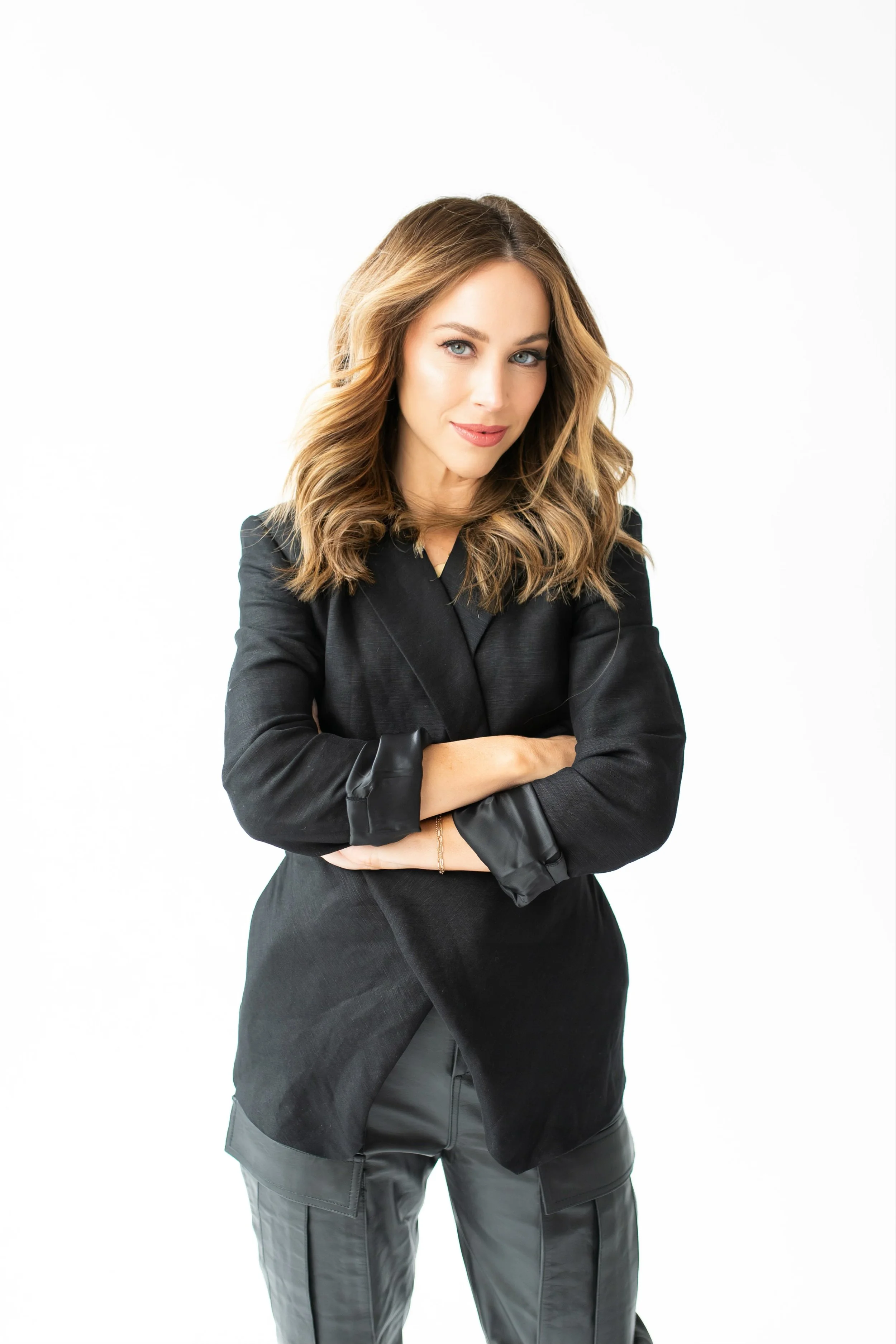
Photo: Courtesy of Cassandra Dittmer
Walking away from a 9-to-5 job with a steady paycheck and health benefits to start your own business isn’t easy. To help you to take the plunge, we’re introducing a new monthly editorial series The Case for Quitting where we ask self-employed women all about how they successfully struck out on their own, from how they balanced their side-hustle with their full-time job to how much money they saved before handing in their two-week notice. This month, we caught up with fashion stylist Cassandra Dittmer who has not once but twice left a full-time job to start her own venture. Here are her tips for when it's time to put in your two-week notice.
What was your major in college and what did you want to do when you graduated?
Apparel merchandising and design with an emphasis on international relations. I wanted to be a fashion designer or work in trend forecasting.
What did you actually do after you graduated? What types of jobs did you apply to and what industry were you looking to break into?
I graduated and 48 hours later drove out to Los Angeles. I was looking to break into the fashion industry and definitely wasn’t looking to be in entertainment. I had interned the previous summer for a celebrity stylist and she offered me an unpaid gig while I was looking for paid work. I took the opportunity so that I could be boots on the ground in L.A. looking for work and taking freelance styling jobs. I fell in love with the styling industry and, at the time, was only interested in styling gigs.
How did you get into fashion?
I was always interested in fashion from a very young age. I grew up in rural Iowa and always loved how dreamy and artistic the fashion industry appeared. It seemed so glamorous and foreign to me. My mom got me really interested in personal style and runway shows very early on. She was always dressed to the nines and instilled in me the mindset to dress for yourself and cultivate a deep sense of personal style. Where I grew up had absolutely nothing related to the fashion industry. Every internship started with a lot of cold emails. Instagram didn’t exist at the time and I would exhaust myself emailing every stylist in the industry for an interview. Eventually, I flew out to L.A. one weekend my junior year of college and literally knocked on doors until I could convince someone to hire me as an intern.
What was it like balancing your full-time job with your passion? Do you recommend starting a side-hustle while you have a full-time job?
I barely know any other way at this point because I am constantly piling on my projects and keeping myself really busy. I think starting a side hustle when you have a full-time job is the most responsible way to start. Side hustles are important to staying agile and open-minded. I find that I access different parts of my brain when there is less pressure attached to the outcome and that brings out a whole other side of my creativity.
How did you know when it was time to make the transition from side-hustle to full-time? What was your strategy for making the transition?
When you can make the economics make sense it is definitely the right time to leave a full-time job. Starting any new company or venture always takes more time and capital than anticipated. The strategy is to create a schedule and stick to it. It sounds simple, but it takes a lot of discipline to put in that after-hour work and source that reserve brain energy. I started with a lot of exploratory calls and coffee dates. I would reach out to everyone I knew who had experience related to my side hustle and start to build the research out. Don’t sleep on the research and product development portion of starting a new company. This foundation should be solid before you take a leap.
How did you prepare for the transition before quitting your full-time job? What, if anything, do you wish you’d done differently?
Twice I have left a full-time job to start my own ventures. The first time, I left a full-time styling gig to start my own styling company. Styling is a unique industry because it’s very difficult to grow your clientele while maintaining full-time employment. At times, I wish I had waited longer and had more clients so that I didn’t have to bootstrap so hard. Other times I wish I hadn't stayed so long (almost five years) in an assistant role. If you aren’t growing in a role—whether that’s your title, salary, or responsibilities—leave ASAP! I had very little business experience and spent most of my time working directly with artists. I wish I had prioritized my business acumen as acutely and with as much emphasis as I focused on the creative.
Were you worried about money? What advice can you share for people who are worried about leaving a steady paycheck to start a new career?
Money was my #1 concern when leaving my job. I was luckily in zero debt but had very little savings when I changed careers. There is a lot of legwork and preparation that can be done while maintaining a full-time job. I used to make 3-month, 6-month, and year-long projections and work backward from that. I have started many collaborations and designed projects by working only 3-5 additional hours per week. Set that schedule and commit to it. It’s easy to get overwhelmed, paralyzed, and not know where to begin. The hardest part for me is starting and staying organized. I always like to approach any new venture in bite-sized chunks. Start small and accomplish things weekly so that you are giving yourself positive reinforcement.

“You will find more fulfillment and joy out of becoming the best version of yourself.”
—Cassandra Dittmer
Did you save up first or did you just jump in headfirst?
I wish I had saved more, but I just jumped in headfirst! I think it’s hard to find the balance between boldly betting on yourself and being naive. I only saved about 15% of my annual income at the time I quit and would not recommend starting a new venture with that little savings.
What's the most important thing you have learned from making a big change in your career life?
I have found cultivating and maintaining a set of ethics and standards is crucial. If you can create a business that truly reflects who you are as a person and maintains high standards you will be successful. It is crucial to add real value to your customer or client. When you have cultivated a community of people and you are truly listening to their needs, you will add far more value, and therefore be indispensable.
It’s easy to celebrate the wins, but how do you handle failure or when something hasn’t worked out for you?
I try to meet failure with a humbled mindset. I work hard to remove my ego from the situation as failure often feels so personal. At the end of the day, in business, you have to have resilience and persistence. It’s important to keep evolving and realizing that everything isn’t personal. Failure is an opportunity to grow stronger as well as be more strategic in your decision-making. It’s also nice to take a bit of time and recharge yourself when you are forced to restart. I can’t create anything meaningful when my brain isn’t clear.
What’s the biggest mistake you’ve made and learned from along the way?
Working without contracts and making business decisions based on a handshake. I have been burned many times before, typically financially, by later realizing there is not an alignment in terms. It sounds simple, but get everything in writing and take the time to do it right the first time!
When you look back and reflect on your previous career do you have any regrets or are you still really happy with your decision?
At times, I have reflected on leaving a cushy job to leap into the highs and lows of self-employment, but I wouldn’t have it any other way. I find immense joy in poking holes and finding gaps in the industry and market. Being my own boss and having my own company allows me to be more agile, take bigger risks, and therefore have greater rewards and fulfillment.
Going after what you deserve in life takes confidence and guts. Does confidence come naturally to you or did you have to learn it? What advice can you share for women on cultivating confidence and going after their dreams?
I am naturally confident, but also very self-deprecating and critical. I oftentimes wish I wasn’t so hard on myself, but I have big goals and know that requires being uncomfortable and taking calculated risks. It isn’t productive to compare yourself to others, especially other women. Everyone is dealt a different hand and has different lived experiences. All you can do is focus on your capabilities and work within those constraints. You will find more fulfillment and joy out of becoming the best version of yourself.
What is the #1 career or money book you always recommend and why?
It’s been years since I have read Seth Godin’s “Linchpin,” but the title sticks out to me because I remember reading it right around the time I left my first job to start my own styling company. I remember thinking that becoming indispensable and learning how to add real value as a critical mindset to embody.
What advice can you share for someone who is thinking about leaving their current gig to pursue their side-hustle or passion?
Make sure that you are providing a service that adds value and making decisions that are solutions-based. I have made many decisions in my ego and based on what I thought was cool and that doesn’t always translate. It’s important to take a step back and build a community around the product or service you are looking to sell. Entrepreneurship and the fashion industry are both highly glorified, and it really isn’t that glamorous 99% of the time!
MORE ON THE BLOG

From Brand Story to Brand Guidelines: All of Your Branding Needs, Covered
Make the brand of your dreams a reality.


When you’re launching a business today, there’s one crucial element you can’t afford to leave out: your brand’s identity. In fact, businesses who focus on building a strong identity around their brand have a higher credibility, integrity, and loyalty among customers.
Branding is essential to successfully market your business, but at first attempt, shaping a brand identity can be an overwhelming task. Traditional branding agencies can be expensive, especially for a modest start up budget.
Thankfully, ZeBrand is removing the traditional barriers to branding and putting the reins in your hands to take the first step. The platform’s AI-powered algorithm learns your preferences and goals, providing a more agile and streamlined approach that allows anyone to brand their way—regardless of skills, budget, or expertise. With ZeBrand, emerging businesses can find their brand voice for a fraction of the time and cost than when hiring a branding agency.
From building your brand story to crafting brand guidelines, and everything in between - ZeBrand offers accessible tools that eliminate the barriers that stand in the way of making the brand of your dreams a reality.
So what elements constitute a strong brand identity? The checklist below contains the essentials to get you started.

Mission Statement – A strong brand identity is anchored in an enduring mission statement. A brand mission statement determines your brand’s purpose, and explains WHY you exist. It’s the essence of your business’s goals and the underlying philosophy. This is the foundation of building a brand that truly represents your organization.

Vision Statement – Simply put, vision statements are an extension of your company mission statement, which describes what you want to do and achieve in the long run. Whether that’s five, ten, or even fifteen years ahead, your vision statement sets a definitive direction of what your company will look like in the future.

Core Values – Like a person, a company has a set of guiding principles that help you connect with your target audience and build trust. These are the values that you uphold and emulate through your brand and business. They are the heart and the soul behind your ‘WHY’ and help govern decisions – small and large – across every facet of the business.

Positioning Statement – In order to help your customer realize your brand’s value, you must identify and amplify what is uniquely distinct about your brand and offering. This is often referred to a positioning statement, which tells your customer, either explicitly or implicitly, what they can expect from your product or service.

Brand Story – Summarize your brand personality, what your mission statement is, and the vision of your brand. Define where you are and where you want to go. By reading this, users will feel inspired and have a deep understanding of the essence of your brand and what makes your business unique.
ZeBrand just launched their brand story module which takes users on a journey to craft their brand story and narrative, including background, mission, vision, core values, and solutions or offerings.

Brand Guidelines – As your business grows and you start to interact with more stakeholders, it’s important for everyone to be on the same page as you when it comes to communicating your brand identity. Brand guidelines instruct others on how your brand should be presented to the world. In addition to your brand story and some or all of the terms above, brand guidelines also include visual components such as your brand’s logo, color palette, typography, photography and specific use cases for other styles of content.
Start with this free 5-minute questionnaire to discover how ZeBrand can help turn your vision into a reality.
MORE ON THE BLOG

How to Take Control of Your Finances and Cultivate Confidence Around Money
Your budgeting game is about to change.


Welcome to this special episode of WorkParty titled Money Talks, a Budget Broadcast Series in partnership with You Need a Budget (YNAB), designed to educate everyone on the power of building a budget.
Whether your financial goals are aimed at booking the vacation in Europe you’ve been dreaming about pre-lockdown, paying off your high interest credit card debt, or simply starting to save for the future—a budget (of all sizes) can help you accomplish those dreams.
To kick off our first of three Money Talks episodes, Jaclyn is joined by Jesse Mecham, the founder of YNAB, the app designed to be your best money-saving friend.
Get your notepad ready and press play on episode one! Your budgeting game is about to change.
Try YNAB Free for 34 Days
Subscribe to WorkParty and never miss an episode.

"For Years, I Struggled With Mom Guilt"—These 3 Things Helped Me Pursue My Passion Guilt-Free
And “balance” isn’t one of them.

“You can be a mother and have a successful career or business, but you have to let go of perfectionism.”
—Tanya Dalton, Productivity Expert, Bestselling Author, and Speaker
The perfect mom always picks her kids up from school. The perfect mom always bakes homemade cookies for the class bake sale. The perfect mom never misses her kid’s game.
Chances are you’ve said a version of one of these sentences to yourself at one time or another. Perhaps it’s a regular occurrence, plaguing your thoughts with intense feelings of guilt with every move you make.
I have been there. In fact, at my breaking point, I found myself turning around in circles in my kitchen, unsure of where to begin on my mile-long to-do list—a to-do list that I believed would make me into a failure of a mother if I did not check off every single box. Needless to say, overwhelmed and guilt-ridden, I crumbled to my kitchen floor. It was in that moment I realized there had to be a better way. I realized I loved my children more than anything, but I would not be of any value to them if I was unhappy.
I had to remind myself that going after my own passions did not make me a terrible mother. And I am here to tell you it doesn’t make you one either.
In reflecting back on the day I sat on my kitchen floor 10 years ago, there are three major shifts I made in my life that changed the way I think forever. By doing so, I was finally able to relinquish the hefty side helping of guilt and shame that came with my favorite role in life: mother to my two children. Learning to finally let go of those feelings, and give myself the freedom to pursue other roles in my life—like business owner and CEO—has made me an even more present mother.
You can be a mother and have a successful career or business, but you have to let go of perfectionism. Perfection is the monster I’ve grappled with my entire life, and no matter what, I have always lost. Perfect does not exist, and the sooner you realize it, the sooner you can get out there living your life. In fact, I challenge you to stop using the word “perfect” in your life. Yes, things can be “ideal,” but if you are waiting around for perfection, then I hope you’re ready to wait for quite a long time.
Here are the three steps I took to get to where I am today. I hope by sharing these, many of you will decide it is time to do the work and kick “mom guilt” to the curb for good. Because you only have one life to live and it's yours.
#1: I uncovered the limiting beliefs I had that were holding me back.
We all have limiting beliefs that hold us back. Some common ones I hear are: “I will never be a morning person. I just cannot start my day early like some people.” Or maybe it’s something like: “I’m so bad with numbers, so there is no way I can handle the finances for my business.” Okay, now just add on being a mother to those statements and you can see how these beliefs really just begin carrying on a life of their own…
“I will never be a morning person. I just cannot start my day early like some people...and maybe if I actually could I would have time to pack lunch for my kids every day like a good mom should.”
See where I am going with this? Out of nowhere, we made up a rule in our own head that does not even exist in the real world! As I like to say, we have to stop telling ourselves these old stories.
If you are having trouble uncovering what your limiting beliefs are, allow me to share the “fifth why” exercise, something I use with both the women I coach, as well as my own kids!
The first step is to focus on the areas of your life that feel challenging right now—there is no wrong answer here. Don’t think, just write your thoughts down. Start by looking at the painful parts of your past—the things you regret or perhaps feel remorse for not doing. Where are the places where shame blooms and grows, the parts of your past you don’t want to repeat?
As a next step, you’re going to start the fifth why exercise, and yes, it is as easy as it sounds. Like any three-year-old you’ve been around recently, it really is as simple as asking yourself “why” until you uncover the true meaning behind your limiting belief. As an example, let’s say you wrote down “I am afraid to start my own business.” The next question would be, you guessed it: Why? From there, I find it is usually right around the fifth why that you get to the true root feeling, such as, “I am afraid to fail.” “I am afraid my family will go broke.”
After doing this exercise, I think you will find that your limiting beliefs aren’t as scary as you think they are when you put them down on paper and get them out of your head. Only when you acknowledge that they exist can you actively make choices to disrupt those patterns and make strides in the direction you really want to move. After all, the first step to overcoming our limiting beliefs is to first recognize what they even are!
#2: I got really clear on my core values so that setting boundaries and saying “no” became easy.
What you value in life needs to be the North Star of your business or career. Every single move you make in your career should be in alignment with your guiding values.
Once you get clear on your values, it is amazing how much easier the word “no” becomes, a word that used to trigger that feeling of guilt inside of me, which is the theme of this article.
For example, one of my core values is family, which is a deciding factor in each and every business decision my husband and I make for our company. If I am invited to speak at an event that conflicts with a family event or doesn’t really resonate with the message I am trying to bring to the world, then the answer really becomes crystal clear: No.
#3: I permanently removed the idea of “balance” from my life because balance is bogus.
Here’s a secret many productivity experts won’t tell you: balance does not exist. Trying to achieve balance will inevitably lead to you feeling like a failure. It is all about achieving harmony and leaning into what I like to call “counterbalance.” There is never going to be a time in your life where you can perfectly balance all of the important roles you carry. Remember, we are avoiding the word “perfect” because it too does not exist.
Instead, I encourage you to lean into your different priorities when the time comes. If I have a huge launch to prepare for at work, then I make a point to tell my family that mom is going to be focused on work for the week. But that doesn’t mean the following week won’t look completely different. There are weeks where my entire focus is college trips with my son or volleyball games for my daughter. In fact, last week I went on a much-needed vacation with my family and did not turn my phone off of airplane mode for 10 glorious days. Why? Because the priority I was leaning into for those 10 full days was my family. Nothing else.
If I had “balanced” then my kids would have risked waking up to mom sitting at the breakfast table, beautiful beach scenery and fresh air be damned, clutching her cell phone and furiously typing, wasting away the precious moments we have left before my son goes off to college and begins his future.
Balance is bull. Let’s achieve harmony together. I know we can.
About the author: Tanya Dalton is a nationally recognized productivity expert, best-selling author, and speaker. Tanya serves as a growth strategist for female leaders in the corporate and entrepreneurial sectors. Her 12-month mentorship program, The Intentional CEO, helps entrepreneurs grow thriving businesses and thriving personal lives. Tanya is also the founder and CEO of inkWELL Press Productivity Co., a company that provides tools that work as catalysts to help women do less while achieving maximum success.
MORE ON THE BLOG

How I Launched an Online Business During Covid-19 While Pregnant
No big deal right?

Photo: Courtesy of Liz McVoy
While safely huddled under a thick cozy blanket in my home office, smackdab in the middle of the stay-at-home orders, I hit the figurative launch button on my online video and marketing business. Oh, and I was 37 weeks pregnant with baby number two.
Yep, due in a matter of weeks and launching a business in the middle of a pandemic. No big deal right?
Some backstory: A few years ago while on a walk with my hubby, I started to dream about what life might look like if I could work less, be more present with my family and yet somehow have a greater impact. At the time, I was taking on intermittent video and web design projects with a small number of corporate clients, but I’d hoped 2020 would be my year to grow my side hustle into a full-time job. And then COVID hit.
I’d love to say that I had this brilliant business plan from the get-go, but in reality, I just listened and responded to the needs I was seeing. Businesses were moving online as fast as they could and people were relying on video and social media now more than ever, but something seemed to be missing. I saw a gap. I saw incredible women business owners trying to scale to that next milestone and coming up short. I knew that adding video and storytelling to their marketing strategy was the answer.
That’s when I realized I could leverage my 10+ years of experience working as a video producer, designer, and storyteller to help other women build premium brands through video, branding, and marketing. It was the perfect opportunity to combine my passions and skills.
Long story (that should be told over a bottle of wine) short, I launched an online course to teach entrepreneurs how to create great video content for their business in April, I had my son in May, and then I began coaching other women in July.
Talk about a whirlwind of a few months.
Thinking back, what began as a desire to have more freedom and flexibility quickly morphed into something else, something much bigger and more meaningful. Not only do I get to support my family but I have the joy of coaching other powerful, kind, amazing female entrepreneurs on their video, branding, and marketing. And I’m not just coaching these women on visibility strategies or the how-to aspects of video, but we’re tackling what it means to lead with authenticity and a posterity of service. I’ve watched my clients go from overwhelmed and insecure to boldly showing up as the leaders that they are and making positive waves along the way.
I used to discount myself thinking that my background and skills were too broad to ever lead to a successful corporate career. I loved video editing, storytelling, and design but I never identified as that super creative person who could come up with groundbreaking ideas. Rather, every personality and career test pointed me to relationship-driven work like teaching, managing and basically being the person to build everyone else up.
But now those “soft skills” are the heart of my business. I took my technical knowledge and industry experience and created a business that helps other women thrive and I wouldn't change it for the world.
If you are a mom or mom-to-be looking for another way to support your family or get unstuck from a dead-end 9-5, here is my advice to you.
1. Start before you’re ready.
Take the risk. It’s amazing how many reasons and excuses you’ll come up with if you’re waiting for the perfect time or opportunity. Becoming an entrepreneur is scary and it is not for the faint of heart. But you just have to start. Every success story has a starting point, don’t compare your day 5 to someone else’s year 5.
2. Connect with a community.
When I had my daughter, people said it takes a village. They were right and the same thing can be said of entrepreneurship. Find your core people, support them with all you’ve got, and lean on them too. Don’t be afraid to ask for help, celebrate the wins, and journey through life together. You’ll get farther together than on your own. Leave competitiveness and ego at the door.
3. Have faith and focus.
There will be hard days. There will be days when you are like, “Holy smokes, I can’t do this.” There will be days when you cry to anyone who will listen that you made a mistake. You have to have faith and focus on what you can control. There’s so much power in hope. Entrepreneurship is a lot of work. It’s both super hard and super rewarding. Stay focused on those needle-moving tasks and trust the rest to work out how it should.
But beyond any of the advice above you have to believe in yourself. You have to remember, you are worthy of the big, amazing, beautiful life you’ve been dreaming of. Dream big and dream often.
About the author: Liz McVoy founded her creative marketing agency to help entrepreneurs and brands have greater visibility and impact in their field. Her mission is to help entrepreneurs build premium brands through video, branding, and marketing so they can position themselves as the authority, tell stories that convert, and scale their income to gain financial freedom. Liz is a west-coast native living in Grand Rapids, Michigan with her husband and two kids. For more tips, training, inspiration, and resources, sign up for her newsletter on www.lizmcvoy.com and follow her on Instagram @lizmcvoycreative.
MORE ON THE BLOG

How the Founder of Hike Clerb Is Reclaiming Space for WOC in the Outdoors, One Trail at a Time
"Everything we strive to do is for our community."

We know how daunting it can be to start a new business, especially if you’re disrupting an industry or creating an entirely new one. When there is no path to follow, the biggest question is, where do I start? There is so much to do, but before you get ahead of yourself, let’s start at the beginning. To kick-start the process, and ease some of those first-time founder nerves, we’re asking successful entrepreneurs to share their stories in our new series, From Scratch. But this isn’t your typical day in the life profile. We’re getting into the nitty-gritty details—from writing a business plan (or not) to sourcing manufacturers and how much they pay themselves—we’re not holding back.

Photo: Courtesy of Evelynn Escobar
Whether she was hitting her local trails or road tripping through a national park, Evelynn Escobar couldn’t help but notice how homogeneous the outdoors were—and she decided to do something about it. In 2017, she started Hike Clerb, an intersectional women’s hiking group, to reclaim space for women of color in the outdoors. By sharing photos of the group’s excursions on Instagram, it didn’t take long for Escobar to cultivate a diverse and inclusive community of women who also wanted to see themselves represented on the trails—and in other outdoor spaces like beaches, parks, and pools.
Once Hike Clerb reached over 20,000 followers on Instagram, it was clear Escobar had a movement on her hands. And, although the club has always been dedicated to serving the community, last year, she officially registered Hike Clerb as a 501c(3) nonprofit organization. “Everything we strive to do is for our community,” she tells Create & Cultivate about the decision. “Not to turn big profits. Not to make an organization that must run the capitalistic rat race. Something for us, by us.” And her mission has attracted the attention of publications by the likes of Teen Vogue and Condé Nast Traveler, as well as major brands such as Nike and Free People Movement.
Ahead, Escobar shares how she’s paying it forward to her community, partnering with brands to do good, and leveraging social media to start a movement.
Can you tell us a bit about your career background and what you were doing professionally before launching Hike Clerb?
Before I launched Hike Clerb, I worked in the fashion and beauty industries as a social media marketer.
What was your “lightbulb moment” for Hike Clerb and what inspired you to pursue this path?
My experience as an outdoorsy Black Latina inspired me to create Hike Clerb. Whether it was hiking alone or realizing just how homogenous the outdoors were on road trips, I wanted to create a solution to the issues I noticed out there.
How did you come up with the name Hike Clerb? What are some of the things you considered during the naming process?
To be honest, it was something that came very intuitively without much mental exertion. Clerb is just a funny word that I and many friends use when talking about clubs of all types, so it was just a natural fit to go with something that felt familiar and lighthearted.
Last year, Hike Clerb registered as a 501c(3) nonprofit organization. Can you tell us about that process and why you decided to take this route?
It was actually a decision that I sat with a bit. For us, it was between creating a social enterprise or a nonprofit. Ultimately, the nonprofit won because everything we strive to do is for our community. Not to turn big profits. Not to make an organization that must run the capitalistic rat race. Something for us, by us.

Photo: Courtesy of Hike Clerb
What were the immediate things you had to take care of to set up the organization?
When I started the organization, a little over three years ago now, the only place we existed was Instagram. I’d post all of our events, recaps, etc. there. Later I created our site and secured our handle on other channels. We are currently in the legal process of securing our trademarks etc.
What research did you do for the organization beforehand? Why would you recommend that due diligence to other nonprofit founders?
Before embarking on our 501c(3) journey, I took a look at the way other nonprofits in the industry were set up from a financial perspective just to give us a sense of direction. Things like, what type of donation platforms are commonly used? What types of programs and grants exist that we could apply for? Etc.
Did you write a business plan? If so, was it helpful? If not, what did you use to guide your organization instead and why did you take that approach?
Yes and no. Yes because I do have a business plan in a very nontraditional sense, and no because the bulk of this has been learning as I go. I have a sense of direction and bigger goals, dreams, collaborations, etc. that we are actively pursuing, but at the end of the day, where our strength lies is that we are very much intuitively led and it has allowed us to transcend and innovate in the space like no other.
How did you fund Hike Clerb? What were the challenges and what would you change? Would you recommend that route to other founders?
It has been a mix of self-funding and donations from our community. Now we are receiving bigger corporate donations from time to time for collaborations etc. I think it can be hard at first for people to want to invest and buy-in when you’re just getting the funds to get off the ground. Nonprofits don’t magically churn out content, events, etc. out of thin air. There is always a team behind the scenes that needs to be compensated for their labor and creativity that brings the vision to life and a lot of people forget that. The operational costs have to be covered before you can move on to plan b and c, but most people want to invest in the shiny event or program, etc., not the non-sexy organization costs of what’s needed to even be able to run.
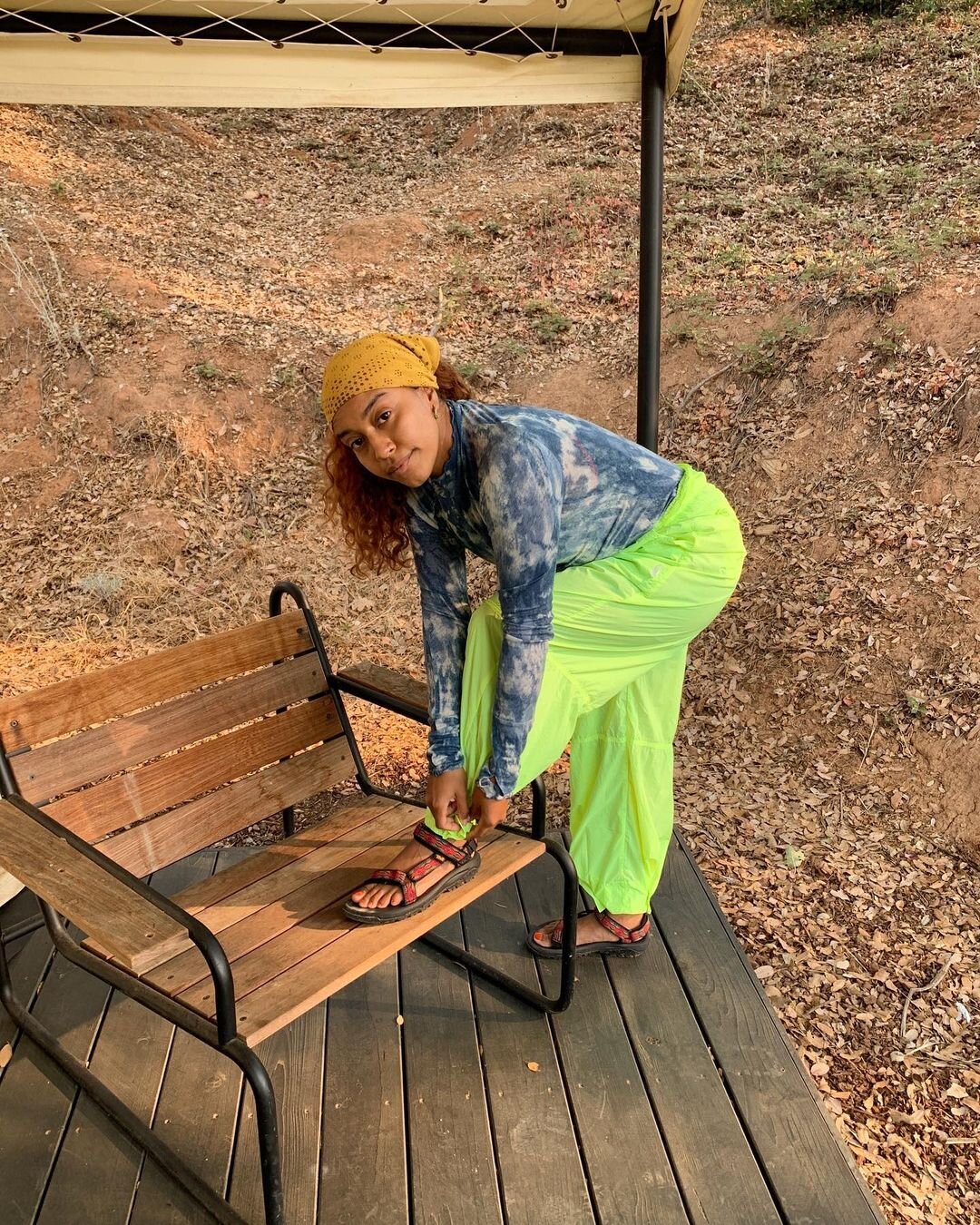
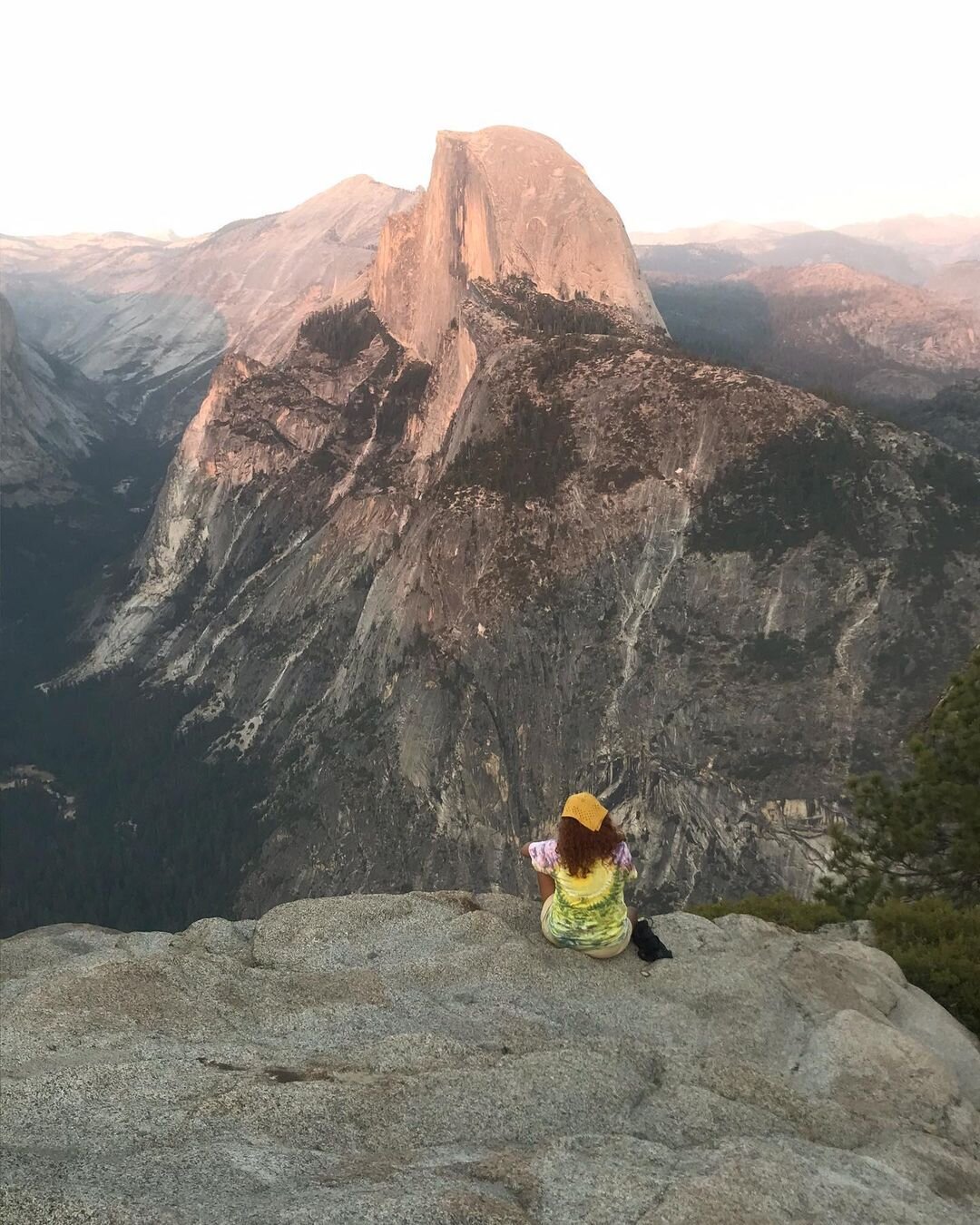
Do you pay yourself, and if so, how did you know what to pay yourself?
I do not pay myself from any of the funds we have raised for the organization and it is a very intentional effort to not do so. I value my team and the initiatives and programs that we are trying to get off the ground. As long as I’m able to sustain them, I’m happy to finance myself through my own platform, etc. It was really a no-brainer for me to proceed this way.
How big is your team now, and what has the hiring process been like?
We are a team of three! Me, as the founder and executive director, Jennifer Martinez as our director of operations who also assists with collaborations and partnerships, and Stephanie Sleiman who is our art director and designer at large. At first, accepting help was difficult for me because I didn’t really know where to start. I had been running things by myself for the first two and a half years before they came on. Both Jen and Stephanie were Hike Clerb members who volunteered their skills and time in any way that I needed and that’s how it all started. There was no formal call to hire. Now that we have a small but mighty team, we are looking to bring on a few more members to really help make our bigger plans come to life.
Did you hire an accountant? Who helped you with the financial decisions and setup?
We do have an accountant who was already someone I had a relationship with because of my personal finances. They didn’t come along until after the 501c(3) status was solidified.
What has been the biggest learning curve during the process of establishing Hike Clerb and running a 501c(3) nonprofit organization?
The biggest learning curve has been finding the resources needed to really legitimize everything. When it comes to legal and financial recommendations, they can be hard to come by. These things aren’t widely spoken about, but they should be! Just getting everything needed to run smoothly has been a process!
You’ve been featured in Teen Vogue, Condé Nast Traveler, Women’s Health, and many other notable publications. How did you promote Hike Clerb in the beginning? How did you get people to know who you are and create buzz?
Our main source of news, promotion, etc. was our Instagram! We created content from all of our hikes to promote what we were doing, who our members were, etc., and it organically grew from there.

Photo: Courtesy of Hike Clerb
Hike Clerb has also partnered with major brands by the likes of Nike and Free People Movement. How do you choose which companies to work with and how have they helped you grow and spread Hike Clerb’s mission?
We are very intentional about the brands that we choose to partner with. They not only must align with our mission and vision but play a role in helping our community in a tangible way. Whether that’s making a donation, donating items to help BIWOC get outdoors, or all of the above! They’ve helped us introduce our work to new sets of eyes which has only strengthened our platform.
Do you have a business coach or mentor? If so, how has this person helped, and would you recommend one to a fellow founder?
I do have many mentors, but not a dedicated business coach per se. I am thankful to all the women of color who have invested their time and efforts in helping me along my business journey. I would absolutely recommend that everyone have at least a mentor or someone in their corner they can turn to about these things.
What is your number one piece of advice for any new founder in the nonprofit (and/or for-profit) space and why?
Be married to your mission. If your mission is not a natural extension of you—something that comes so naturally to you that you can talk about it in your sleep—then sit on your idea until it becomes that. You should be so clear on why you’re doing what you’re doing that there is no question in anyone’s mind of why what you’ve created exists. When you create out of an authentic place, you’re setting yourself up for ultimate success.
What’s next for you and for Hike Clerb? What are your plans for 2021 and beyond?
World domination! But really, bigger in-person events, more programs, a new way to consume our editorial content, ways to participate across the country, and, for me, a new little addition to my growing team and family.

Photo: Courtesy of Hike Clerb
MORE ON THE BLOG

This Founder Has Raised Over $4 Million in Venture Capital From the Backers of Warby Parker, Casper, Peloton, and More
Here's why she wants you to be picky about the investors you choose.

You asked for more content around business finances, so we’re delivering. Welcome to Money Matters where we give you an inside look at the pocketbooks of CEOs and entrepreneurs. In this series, you’ll learn what successful women in business spend on office spaces and employee salaries, how they knew it was time to hire someone to manage their finances, and their best advice for talking about money.

Photo: Courtesy of Nicole Gibbons
In 2018, Nicole Gibbons launched a brand like no other: direct-to-consumer paint company Clare. After navigating the outdated paint industry on behalf of her clients for years, the longtime designer made it her mission to disrupt the space. “Frankly, shopping for paint has always been a huge hassle,” Gibbons tells Create & Cultivate. “There are thousands of overwhelming colors, too many product lines, the store environments are completely uninspiring, and there’s a lack of design guidance throughout the process.” So she set out to take the guesswork out of decorating by founding DTC paint brand Clare, which carries a curated selection of 56 designer-approved swatches.
But it’s not just about reinventing the fan deck. “At Clare, developing paint formulas that are healthier for our customers and the environment has been a priority since day one,” the founder explains. Clare’s paints are zero VOC, meaning they’re free of toxic carbon-based solvents that pollute the air and pose health risks, and Greenguard Gold-certified, meeting rigorous emissions standards, which is significant when you consider air indoors can be up to ten times more polluted than the air outdoors, according to the EPA. “People care now more than ever about the products they consume and the impact those products have on their health, their home, and the environment,” notes Gibbons.
Ahead, the founder shares how she’s raised over $4 million in venture capital funding for her clean and conscious DTC paint brand (including funding from the backers of DTC darlings by the likes of Warby Parker, Casper, Peleton, and more) and offers her best fundraising advice for aspiring entrepreneurs who want to replicate her success.
Can you tell us a bit about your background and what you were doing professionally before launching Clare?
Prior to launching Clare, I was an interior designer, running my own design firm and also doing a lot of work in the media as a design expert, including appearing for three seasons on a DIY home makeover show on the Oprah Winfrey Network. Before that, I spent 10 years working as a PR executive for a large retailer while dabbling in interior design on the side. I’ve always been passionate about the home space and about helping people create beautiful spaces.
What was the “lightbulb moment” for Clare? What inspired you to start your business and pursue this path?
Frankly, shopping for paint has always been a huge hassle. There are thousands of overwhelming colors, too many product lines, the store environments are completely uninspiring, and there’s a lack of design guidance throughout the process. After realizing that the paint shopping experience was broken and outdated and that no legacy paint brands were focused on delivering a seamless shopping experience for their customers, I had the lightbulb moment for Clare. We’ve reimagined an entirely new paint shopping experience that’s easier, faster, more inspiring, and more convenient. Our mission is to help people everywhere create a home they love and to become the go-to paint brand for a new generation of consumers who are passionate about their homes.
Clare’s paints are zero VOC and Greenguard Gold-certified. Can you tell us why was it important to you to create non-toxic paints?
At traditional paint brands, this is generally an afterthought, but at Clare, developing paint formulas that are healthier for our customers and the environment has been a priority since day one. People care now more than ever about the products they consume and the impact those products have on their health, their home, and the environment. The cost associated with achieving our Greenguard Gold certification for indoor air quality, which is a top tier, EPA-endorsed green certification, was not inexpensive for us as a small startup. However, we felt this was an important step to take in order to give our customers confidence in our products.

You’ve raised over $4 million in funding for Clare to date, no doubt you’ve learned a lot along the way. What are three crucial elements everyone should include in a pitch deck when raising money and why?
First, tell a great brand story. Investors see hundreds of deals, if not more, so it’s important to present your brand in a way that grabs their attention and tells a compelling story. You want investors to immediately have a clear sense of your brand, your mission, what sets your company apart, and why they should get excited about both you as a founder and your company.
Second, tell a great numbers story. Your business model, or how you’ll make money, should be clear, as should the basic unit economics of your business and your growth projections. And these numbers need to be super compelling. A favorite line from one of our biggest investors is: There’s nothing like bad numbers to f*ck up a great story!
Lastly, do all of the above with conciseness, clarity, and a laser focus on the most important takeaways that you want the investors to remember.
Your investors include First Round Capital (an investor in Warby Parker), Imaginary (Net-a-Porter founder Natalie Massenet's fund), and Bullish (a Casper, Peloton, and Harry's razors backer). What advice can you share for entrepreneurs on partnering with the right investors?
At the beginning of your journey, the power dynamics feel very much in favor of the investors. They have the money you need and, especially when you’re a first-time founder, you tend to believe they also have the secret sauce that’s going to help your business get to the next level, especially if they’re a bluechip fund with a lot of cachet. In reality, that is typically not the case. Most investors aren’t super hands-on, will never know as much about your business or category as you do, and often they don’t add a ton of value beyond the check. Founders often feel pressure to take whatever money you can get, but the investors YOU choose and the energy and influence they bring to the table can make or break your success. So the best advice I can offer is to be picky about the investors you choose and bet on yourself over betting on any individual investor being the key to your success.
Startups led by Black women receive less than 1% of venture capital funding. Why do you think there is still so much inequality in the venture capital world, and what advice can you share for BIPOC entrepreneurs who are currently seeking funding?
The venture capital world is incredibly homogenous. I’ve met a ton of venture capitalists and, overwhelmingly, they’re white men who are already rich and often born into privilege as well. So when it comes to deal sourcing, they’re focused on their own insular network of people who come from similar backgrounds which naturally leads to an extreme lack of diversity.
VCs are also taught to “pattern match,” which is to look for patterns in founders that mirror previous founders who have been successful, but there’s an inherent bias in this approach when all of their founders come from similar backgrounds. Data proves that diverse teams lead to higher returns yet it’s still difficult for VCs to get out of their insular bubbles and actually invest in diverse founders and teams. In order to create more equality in terms of who gets funded, funds need to diversify their own teams, especially at the partner level since partners are who ultimately make the investment decisions. This will lead to a more diverse pool of deals to source from, and in turn, more BIPOC entrepreneurs seeing their ventures get funded.
For entrepreneurs of color seeking funding, I’d say to first focus on funds that have a track record of funding diverse founders. This might mean funds that have a specific diversity focus, or simply who have a more balanced representation of founders in their portfolios. Next, don’t be intimidated by any data that shows the odds may be stacked against you. Instead, let your passion and confidence in what you’re building guide your process. Finally, be relentless and don’t get discouraged by the “no’s.” Raising venture capital is an incredibly difficult and draining process for any founder and even those who are very successful at raising capital face a lot of rejection. Trust that the right investors will be aligned with your vision.
What was your first big expense as a business owner and how should small business owners prepare for that now?
My first big expense was building out our website. I was lucky enough to find a team who really believed in me and the business and agreed to help start the high-level conceptual and creative direction work for the site without pay before I raised capital. Once I closed our financing, I was able to pay them properly. We started working on that before I actually put any physical product into production.

Photo: Courtesy of Clare
What are your top three largest expenses every month?
We don’t replenish inventory monthly, but during the months we do, that by far is our biggest expense. Payroll and marketing are our next biggest expenses.
Do you pay yourself, and if so, how did you know what to pay yourself?
Most people assume that being a CEO of a highly publicized company means you’re rich or you have a hefty salary, but most startup founders, especially at the early stage are grossly underpaid because everyone is incentivized to put as much value as possible into the business. I’m lucky that because we had an influx of capital from venture investors I was able to pay myself a modest salary, but the salary I’m paid is around a 60-70% decrease from what I was making before Clare and a huge short-term sacrifice. I basically pay myself enough to cover my monthly expenses and not much more. The hope when you’re building a company is that the upside will be significant so any initial sacrifice or temporary discomfort are both necessary but also well worth it in the long run.
Would you recommend other small business owners pay themselves?
Absolutely. To the extent that you can pay yourself a liveable salary, you should absolutely do so. Running a business is incredibly stressful, and it will be difficult to stay focused on the business if you’re also highly stressed about your personal finances and don’t have enough money to cover your basic necessities. The only exception is that if you’re lucky enough to have someone else taking care of you financially (i.e., family support, a spouse, etc.) then, depending on your situation, you might be better served not taking a salary and investing everything you have into growing your business. It all boils down to your goals, your plans for growth, and what you need to get you to your next milestone.
How did you know you were ready to hire and what advice can you share on preparing for this stage of your business?
With Clare, as a venture-backed company, the goal is to build a venture-scale business, so I knew there was no way I could do this on my own. I hired people as soon as I possibly could to help fill expertise gaps and also increase my bandwidth. When I started out, key hires included a digital marketer and head of supply chain since those were areas that needed a lot of attention and where I lacked the skills and expertise.
What are some of the tools you use to stay on top of your business financials? What do you recommend for small business owners on a budget?
We have an outsourced CFO and an accounting firm who manage all of the day-to-day finances but keep a close eye on everything. In terms of tools, we use Quickbooks to manage our accounting. Google Sheets and Excel are tools of choice for building out reports to look at trends and gain deeper insights into how we’re doing.

Where do you think is the most important area for a business owner to focus their financial energy and why?
This really depends on your goals. If your goals are growth then investing in marketing is probably going to be the most important area to focus on. If you have a highly technical product with a big innovation roadmap, you might invest in hiring engineers. If you have a capital-intensive supply chain, investing in building efficiency there might make the most sense.
Do you think women should talk about money and business more? Why?
Absolutely. Having collaborative discussions around business, finance, and sharing best practices with peers is often the best way to learn and grow.
Do you have a financial mentor? If so, how did you find one and do you think all business owners need one?
I’m lucky now that I do have people around me who I can go to for guidance, but I haven’t always. This is unfortunate because I feel like I could have prevented a lot of costly mistakes in both my business and personal finances if I had someone guiding me. I’ve had to figure a lot out of my own over the years, so if you have access to a mentor, lean on them to help you navigate all the things you don’t know.
What is your best piece of financial advice for new entrepreneurs?
Ruthlessly prioritize what’s most important to your business and what’s in the best interest of your brand mission. When you’re running a young company, everything feels like a priority and so many opportunities come up that seem worthwhile, but when bandwidth is slim, you have to prioritize like a boss. Focus both your dollars and your human capital on the initiatives and opportunities that will propel your business forward and deliver the most value.
MORE ON THE BLOG

8 Million Tons of Plastic End Up in Our Oceans Every Year—This Entrepreneur Is on a Mission to Change That
How the co-founder of Blueland is ending single-use plastic.

We know how daunting it can be to start a new business, especially if you’re disrupting an industry or creating an entirely new one. When there is no path to follow, the biggest question is, where do I start? There is so much to do, but before you get ahead of yourself, let’s start at the beginning. To kick-start the process, and ease some of those first-time founder nerves, we’re asking successful entrepreneurs to share their stories in our new series, From Scratch. But this isn’t your typical day in the life profile. We’re getting into the nitty-gritty details—from writing a business plan (or not) to sourcing manufacturers and how much they pay themselves—we’re not holding back.

Photo: Courtesy of Sarah Paiji Yoo
When Sarah Paiji Yoo became a new mom, she was shocked to learn the water she was using to make baby formula contained hundreds of pieces of microplastics. She discovered that most of our everyday products, from toothpaste and lotion to household cleaners, come packaged in plastic that, when discarded, finds its way into our waterways and oceans and leads to it showing up in our drinking water and food. “That’s when I decided to cut back on my own plastic consumption, but I quickly realized there were so few non-plastic choices as a consumer,” Yoo tells Create & Cultivate.
Yoo, who started her career in finance at McKinsey, Goldman Sachs, and Berkshire Partners before becoming a serial retail entrepreneur, decided she could have a positive impact on the environment if she built a business that offered everyday products in reusable packaging, which is how Blueland was born. Founded with the goal of ending single-use plastic, the brand pairs reusable glass bottles with revolutionary refill tablets of either hand or dish soap, household cleaner, or laundry detergent, eliminating the need for plastic spray bottles, refillable containers, and the like.
Ahead, the entrepreneur tells Create & Cultivate how she built Blueland from scratch, including why she didn’t write a business plan, how she knew VC funding was right for her company, and what the future holds for the brand post-COIVD.
Can you tell us a bit about your background and what you were doing professionally before launching Blueland?
I’ve been a serial retail entrepreneur for the past 10+ years. I started my journey in startups after I “dropped out” of Harvard Business School and founded Snapette, the largest mobile platform for local fashion shopping at the time, and was eventually sold to leading e-commerce platform Pricegrabber in 2013. I was then a founding partner at a startup studio LAUNCH and helped launch a range of brands including M.Gemi and Rockets of Awesome. Prior to jumping into start-ups, I built my career in finance at McKinsey, Goldman Sachs, and Berkshire Partners.
How did you come up with the name Blueland? What was the process like, how did you know it was the right name, and what are some of the things you considered during that process?
The name Blueland derives from the idea that our planet is all our collective home. We thought of it through the realization that we may rid all this single-use plastic from our houses, but it continues to exist for centuries on this planet, our collective home. It encompasses the notion that our home does not stop at our doorstep, or even the water’s edge, and embodies our hope to return the oceans to their natural, pristine state. We also wanted a name that was very simple and strong, easy to spell, and for which we could own the domain name.
Did you write a business plan? If so, was it helpful, and if not, what did you use to guide your business instead?
I didn’t write a business plan. In fact, while I’ve launched several businesses in my career, I’m actually not exactly sure what a “business plan” is! My co-founder and I did lay out for ourselves the problem we wanted to solve (single-use plastic packaging), our mission, vision, and potential solutions. We weren’t attached to a single way or path of solving this problem and instead wanted to make sure we had the flexibility to change our plans based on testing, learning, and iterating.
What were the immediate things you had to take care of to set up the business?
Secure the domain name, trademark, and social media handles and incorporate the business.
What research did you do for the brand beforehand, and why would you recommend it?
I scoured the internet for publicly available information related to sustainable consumer products and cleaning products. I spoke with over 50 different scientists, industry experts, and manufacturers. Starting a brand new business is really hard, so do your research and whatever you can to become an expert on the space and products.

How did you find the manufacturers you work with? What advice can you share for fellow business owners on finding the right partners?
We had to be incredibly creative in finding a manufacturer since these products simply did not exist, and traditional cleaning product manufacturers do not have tablet-making capabilities. We spoke with over 50 different potential manufacturers, across a range of industries (even candy manufacturers) before finding the perfect set of partners. My biggest advice would be to make early strategic hires who can help you with the process. One of ours was our head of product development, who was formerly the director of formulation at Method. He’s been a critical part of finding the best manufacturers and developing the cleanest, effective formulas.
How did you fund Blueland? What were the challenges and what would you change? Would you recommend that route to other entrepreneurs?
My co-founder and I did bootstrap it for the first year of our work and self-funded our idea and product development. Eventually, we raised a $3 million seed round led by a VC firm. Venture capital is likely not the best type of funding for most businesses. Ultimately you need to understand what the expectations are with the form of funding that you are taking and if that matches how you want to build your business over time. VC investment often comes with expectations of high, fast growth, getting to a large valuation, and giving up some control in the form of board seats.
How much did you decide to pay yourself, and how did you determine what to pay yourself?
We paid ourselves a fraction of what we were making in salary at our previous roles. For us, we wanted to be able to use as much of the capital to build the business.
How big is your team now, and what has the hiring process been like?
Currently, we have 24 employees. Hiring has always been one of my highest priorities. Some weeks I still spend hours on LinkedIn looking for and reaching out to interesting talent, for both current open roles as well as roles that we may not be hiring for right at the moment. I’ve learned to start hiring early and be patient because it can take a long time to find the right person, but the right person is absolutely worth searching and waiting for.
Did you hire an accountant? Who helped you with the financial decisions and setup?
I actually started my career in finance and management consulting. I really loved and valued my experiences at places like Goldman Sachs and McKinsey, as they helped me develop a strong foundational understanding of business and also enabled me to go deep in areas like accounting and finance, which I still lean on today.
My advice would be for founders to really know their numbers. Always hire great talent in the fields you need help with, but when it comes to finances, make sure you know critical numbers like your costs and customer economics in detail.
What has been the biggest learning curve during the process of establishing your business?
I would say my biggest learning curve and takeaway has been don’t see problems, see opportunities. In all my past failures, I had to stop and realize there was little-to-no value in being stressed or upset, and a lot of value in learning from them and pushing myself to be better the next time around.
How did you promote your company? How did you get people to know who you are and create buzz?
Marketing is incredibly important because it’s all about figuring out and delivering what matters most to consumers, and how to do it profitably and at scale. At the very start, we were focused purely on organic growth and wanted to focus on achieving product-market fit before investing in any paid marketing. Today, we are more active in running paid social ads, search ads as well as TV commercials. Social media has also become one of the most important marketing channels for us—we grew to almost 200K Instagram followers in just one year. It allows us to both reach new customers organically as well as engage with our existing customers every single day.
Do you have a business coach or mentor? How has this person helped, and would you recommend one?
I feel very fortunate to have a range of people that I consider as both mentors and friends who I can turn to with my biggest business, career, and life questions. They include former bosses, current and former investors, and even a former professor. I’ve never asked someone formally, “Will you be my mentor?,” but rather these relationships have all developed organically out of close working relationships and genuine connections.
How has COVID-19 impacted your business operations and financials? What tactics and strategies have you put in place to pivot and ensure your business is successful through this period?
Demand for our cleaning products and hand soaps increased by over 300% within the first few months of COVID hitting the U.S. as effectively and frequently cleaning down surfaces and hands became a priority for many consumers. Many conventional brands were also sold out both online and in-stores, and many consumers were hesitant to venture into physical retailers and opted to shop online. We’ve continued to focus on how to make it increasingly convenient to purchase online, including our subscription offering, which we introduced during the pandemic.
We’ve continued to see the elevated level of sales remain through today. For us, despite the pandemic, we’re finding that our environmental mission continues to resonate with and attract new consumers who are still cleaning and washing their hands at elevated levels.
What short-term changes will be crucial to your business strategy long-term post-COVID-19 and what plans are you making for when we get back to “normal?”
We believe we are well-positioned for long-term success beyond this pandemic as we continue to focus on building a strong foundation and fundamentals for the business that will continue to benefit us in a post-pandemic world. This includes our robust portfolio of effective but money-saving products, defensible innovation with over 40 patents pending, an authentic mission-driven brand with a large and engaged community, and a financially sustainable business model. We’ve also increased our focus on highlighting the efficacy of our products and showcasing the test results we have from third-party labs that show our products work extremely well. Previously, we were much more focused on our eco messaging, but believe that going forward, consumers will be equally interested in efficacy.
What advice can you share for small business owners, founders, and entrepreneurs who are also reeling in response to COVID-19?
Brands that can prove that they are providing an essential or desirable good/service, even during a pandemic, will emerge stronger. It’s also critical for brands to also make it increasingly convenient to purchase online and not focus energy purely on brick-and-mortar for the foreseeable future.
For those who haven’t started a business (or are about to), what advice do you have?
Break down your big goals into small steps. For example, with Blueland, the initial goal to tackle creating cleaning tablets seemed massive. We needed an amazing chemist with relevant experience, we needed to find a manufacturer that could make dry tablets, we needed to find a way to package them in paper instead of plastic, etc. We started breaking the problem down into daily actions that we could take to keep moving forward towards our goal (i.e. we got on LinkedIn one night and literally messaged hundreds of chemists to see who would speak with us). You also really need to hold yourself accountable for the things you commit to doing each day. It ensures important steps are moving forward and at a good pace.
What is your number one piece of financial advice for any new business owner and why?
Shop around and sign up for a high-interest savings account. After raising funding, we had millions of dollars that were now in the bank and could be earning interest. We looked around for savings and money market accounts to find which banks offered the higher interest rates. The difference in annual income we could earn just from interest rates could support one to two full-time hires, so it definitely was an area worth spending time on and only took about 5-6 hours in total.
If you could go back to the beginning with the knowledge you have now, what advice would you give yourself and why?
I would tell myself to stay tenacious and relentlessly optimistic. It’s going to be a long, iterative path, and most of the time you’re not going to feel 100% ready, or 100% prepared, but there will be breakthroughs when you least expect it and you can’t let doubt thwart progress.
MORE ON THE BLOG

79% of Women Are Feeling Weighed Down by Money and Stress—The Millennial Money Expert Is Here to Help
On the WorkParty podcast, Tonya Rapley shares her top money tips.

Photo: Courtesy of Tonya Rapley
One year into the COVID-19 crisis, women are more financially stressed than ever.
Studies have shown that women typically suffer from more money stress than men, but the coronavirus pandemic has put even more of a strain on women. In fact, a recent survey by Fidelity Investments revealed 79% of women are feeling weighed down by money and stress, which is up from 67% last fall.
To talk about practical ways to take control of your finances, manage your money anxiety, and make smart money moves during these trying and stressful times, Jaclyn Johnson sat down with Tonya Rapley, a.k.a “The Millennial Money Expert” and founder of My Fab Finance, on this episode of WorkParty.
Tonya has completely changed the game, turning the once stuffy financial industry into a fun, familiar, and, dare I say, cool space. She’s been named the “New Face of Wealth Building” by Black Enterprise magazine, lauded as a modern “history maker,” and honored on Create & Cultivate’s CC100 List.
Scroll on to tune into the episode (and grab a pen because Tonya drops some serious knowledge!) and read on for just a few of the many, many mic-drop moments.
Subscribe to WorkParty and never miss an episode.
On setting your financial goals…
“Your financial goals should be based on what’s most important to you. Is it important to you to retire early and travel the world? Is it important for you to continue to work and build passive income and then retire? What’s most important to you?”
On assessing your unique financial situation…
“A lot of people want to do things the ‘right’ way because they’re afraid of doing things the wrong way, but right looks so different for so many people.”
On managing COVID-induced money anxiety...
“First, we have to question where that anxiety comes from and if it’s own or if it’s external or environmentally induced anxiety when it comes to our finances.”
“A lot of times it’s helpful to just go sit and look at the numbers. Sit down and look at your bank account, look at your expenses. Really face the numbers.”
On leaning on your support system…
“If you are dealing with things like a loss of income, then really lean on your support network. Be honest and transparent and ask for what you need.”
“Ask for what you need and don’t be ashamed to do it because everyone has seasons when they need support and help.”
“No one is going to judge you for what you’re going through. It’s a collective experience.”
On investing your money as a beginner…
“Start small. Use that money to learn. Don’t put it all in one place at one time and don’t go out and buy what is trending, such as Game Stop.”
“Don’t be afraid to hire someone else to do it. If you don’t feel comfortable doing it on your own or if you don’t have the space to learn.”
On her top three money tips for WorkParty listeners…
“Make sure that you’re saving. You always want to make sure you’re saving so you can be your own emergency fund.”
“Don’t overcomplicate your finances. Start with what’s simple and try to keep things simple for as long as possible.”
“If you don’t know how to do it, find someone who does.”
MORE ON THE BLOG

The Fashion Industry Accounts for 4% of the Globe’s Greenhouse Gas Emissions—So These Founders Are Doing Things Differently
Proving sustainable fashion can be profitable.

You asked for more content around business finances, so we’re delivering. Welcome to Money Matters where we give you an inside look at the pocketbooks of CEOs and entrepreneurs. In this series, you’ll learn what successful women in business spend on office spaces and employee salaries, how they knew it was time to hire someone to manage their finances, and their best advice for talking about money.

Photo: Courtesy of Londre Bodywear
It’s no secret that fashion has a sustainability problem. But while the industry currently accounts for 4% of all global greenhouse gas emissions, consumers are advocating for change and spending their dollars accordingly, investing in brands that are committed to reducing their impact on the environment. Londre is the latest sustainable fashion brand to catch our attention at Create & Cultivate, and we’re not the only ones. The Canadian fashion brand recently received a $208K investment on “Dragons’ Den” (a.k.a the “Shark Tank” of Canada) and we’re eager to share the story behind the brand before you see it all over your Instagram feed (because trust us, you will).
Based in Vancouver, Ainsley Rose and Hannah Todd launched Londre in reaction to the startling amount of plastic pollution in the world's oceans. To date, the brand has recycled 100,000 plastic bottles off of the streets and beaches of Taiwan into their sustainable swimwear offering. But sustainability isn’t just about the planet for Rose and Todd, it’s also about the people. “Our products represent 360-degree sustainability, and this is something we heavily invest in,” Rose tells Create & Cultivate. “We believe that you can’t take care of the planet without taking care of its people, so ensuring our internal and external teams are treated fairly is critical,” Todd adds.
Here, the co-founders share how they bootstrapped the brand with an initial investment of just $15,000 and turned it into a business that generates seven-figure revenue.
Talk us through your bootstrapping process. How did you self-fund Londre, and would you recommend that route to other entrepreneurs today?
AINSLEY ROSE: We took an initial $15,000 CAD investment from a close friend to help with our first round of samples. Since then, we’ve completely bootstrapped our business and have been self-sustaining. As a sustainable mission-driven brand our finances have to be looked at strategically to ensure that we can make choices that enact positive change and benefit both the planet and our business.
HANNAH TODD: Since inception, Londre has seen a 300% year-over-year growth, and a big reason why is that we’ve been scrappy. This has helped us develop clarity in our business because sometimes having too much cash allows you to put a bandaid on a problem instead of fixing the issue from the start. This has also allowed us to grow organically, putting community first and ensuring market need. Not being beholden to a VC or large stake investor also has allowed us to work without an additional layer of pressure, and better tune into our intuition about what is best for our business.
Can you share three crucial elements everyone should include in a pitch deck when raising money?
HT: Because we were pitching to someone we have a strong personal relationship with, our pitch was super simple. We didn’t even have a sample made yet. Ultimately, they chose to invest in us because they had faith in the values and ethics we hold as people, and less so in the product offering itself. Being empathetic, speaking from the heart, and having a good understanding of market trends helped us in our pitch.
AR: The person who invested in us originally is still a trusted advisor and has been able to provide incredibly helpful insights over the years.
What are some of the most common mistakes people make when raising money?
AR: I think the most common thing we see is valuing skills over the relationship. In choosing an investor, or business partner for that matter, ensuring that you feel comfortable communicating honestly and have a strong foundation of trust is key.
HT: We also see people asking for too much too soon. If you are creative enough, you can likely get by with less than you think, and having too many controlling voices involved can complicate things.
How much do you pay yourselves, and how did you know what to pay yourselves?
AR: Londre started out as a side hustle for Hannah and me that eventually became our main gig and source of income. I was working as a photographer, which allowed me to set my own schedule and develop a great network. I eventually stopped taking on new clients once Londre had reached a point where I felt comfortable taking a meaningful salary.
HT: I was working as a yoga instructor so also was able to make my own schedule. We chose how much to pay ourselves based on our lifestyle. To decide on our salaries we budgeted how much we needed each to live comfortable, satisfying, and sustainable lives in Vancouver and worked backward from there! We also allocated a bonus structure to celebrate when sales goals are hit.

How did you decide what to pay employees?
HT: Currently, we work with a team of contractors who are all small business owners in their own right. We find that this gives both parties more flexibility and freedom. We collaboratively decide on compensation and offer performance-based incentives. We believe that you can’t take care of the planet without taking care of its people, so ensuring our internal and external teams are treated fairly is critical.
AR: We look to third-party certifications like Oeko Tex 100 for our fabric and work with Vancouver-based companies with an A+ Better Business rating to ensure that our ethical and sustainable mandate is met. Although working this way is more expensive than using a more traditional fashion model, ensuring value alignment in our brand has made our business thrive, generating seven-figure revenue and feels deeply rewarding.
Where do you think is the most important area for a business owner to focus their financial energy?
AR: Our products represent 360-degree sustainability, and this is something we heavily invest in. We notice more brands are using more recycled materials and it’s something we love to see! However, if sustainability isn’t looked at from a holistic lens, it may easily be greenwashing.
HT: For example, even if a product is made from recycled materials but isn’t functional and high quality, packaged using sustainable materials, and without a plan for the end of its life cycle, it ultimately will end up in a landfill contributing to further waste. We’ve focussed most of our financial energy on product development and quality control. Ensuring that our products are high quality and long-lasting is our first concern, not only from a customer satisfaction standpoint but also from a sustainability perspective. We just launched our first loungewear collection, The Essentials, and a lot of research went into finding fabrics and components that stay true to our 360-degree approach.
What was your first big expense as a business owner?
HT: Our first round of samples. What we thought was going to be a $5000, two-month project turned into a $16,000 venture, nine months later. The first suit we created, the Minimalist in Matte Black, is still our biggest seller, so ultimately the hundreds of revisions were worth it.
What are your top three largest expenses every month?
AR: Production costs (ethical manufacturing and sustainable materials); shipping and compostable and recyclable packaging; and digital ads (we actually only started running them in the last year).
How much do you spend on office space?
HT: $0. We are fully remote.
How much do you spend on employee salaries?
AR: Contractors and our salaries: ~$25,000 a month
How much are you saving, and when did you start being able to save some of your income?
HT: We as co-founders save about $1,000 a month each. We’ve only started paying ourselves enough to save within the past year.
Did you hire an accountant? Who helped you with the financial decisions and setup of the business?
AR: Yes! We have an accountant who supports our year-end and we use QuickBooks for day-to-day accounting.
HT: Ainsley’s fiance is a CPA and he’s stepped in to help us with inventory forecasting and budgeting when we need support with more complex financial modeling

What are some of the tools you use to stay on top of your business financials?
AR: We use QuickBooks for our accounting. We also have a detailed model which helps us plan our inventory, forecasting, and budgeting. Additionally, we have a recurring calendar event monthly to go over inventory and budgeting.
What do you wish you’d done anything differently in your financial journey as business owners?
HT: We overspent on in-person events. The most successful event we held was actually the least expensive, as connection trumps extravagant details every time.
Do you think women should talk about money and business more?
AR: Absolutely! There is so much stigma around gaining wealth, particularly for women. We’ve both taken courses by Lacy Phillips to break down any blocks and baggage we may hold around money and learn how to move into abundance.
HT: We feel privileged to have a community of entrepreneurial womxn who we can talk candidly about finances and this has helped us immeasurably.
Do you have a financial mentor, and do you think all business owners need one?
HT: Our investor, who still has a small stake in Londre Bodywear, is our financial mentor. This relationship works for us because we can communicate openly with them and have been able to lean on their entrepreneurial experience. We check in every two months so we can ask general questions.
AR: We don’t think you necessarily need a mentor because your intuition is best, but having a mentor who you can trust to gather advice from and see if it fits has been helpful for us.
What is your best piece of financial advice for new entrepreneurs?
HT: Get super clear on your values. There are tons of shiny things to be distracted by but when you have a foundation of nonnegotiable sustainability (or whatever your chief value is) it allows for further clarity.
AR: Also, don’t be afraid to negotiate and see what transactions you can do as trade instead of monetarily. Get creative with your trades! We asked for tons of help and in exchange would not only offer store credit, but also services that lined up with our skills. For example, Hannah was a yoga instructor and would offer a private yoga session in exchange for someone helping us build a financial model.
What have been some of the hardest money lessons you've learned along the way?
AR: We originally wanted to start our business in Bali. Our fabric and samples were stolen, and I was left waiting at the airport at 1 A.M. for the sample maker, who never showed up, and had nothing to show for a two-week-long trip. We ended up restarting in Vancouver (where we live), and now are able to have eyes on production. Keeping things close to home so you can directly oversee everything gives you more control over how your money is used.
HT: Wait until you have clear market approvable before creating a huge run of your product. We’ve always valued organic growth and doing small runs and which has contributed to increased demand and zero wasted product.
What is your #1 money tip for small business owners?
HT: Be scrappy, don’t be afraid to ask hard questions, and negotiate in a kind and empathetic way.
AR: Keep your values at the forefront of all of your financial decisions.
MORE ON THE BLOG

This Founder Left a Steady Paycheck at Microsoft to Pursue Her Side Hustle Full-Time
And she has no regrets.

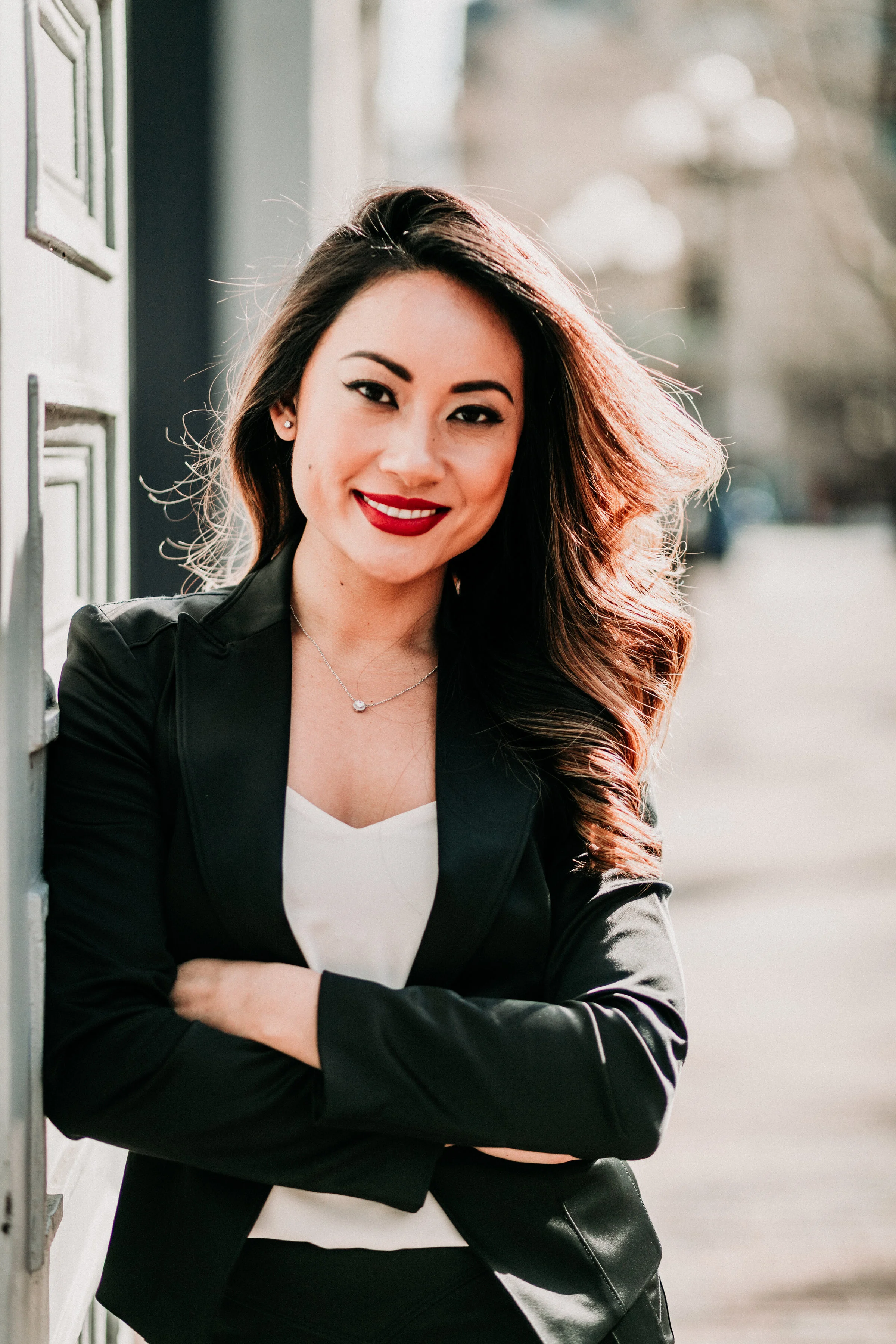
Photo: Courtesy of Diana Nguyen
Walking away from a 9-to-5 job with a steady paycheck and health benefits to start your own business isn’t easy. To help you to take the plunge, we’re introducing a new monthly editorial series The Case for Quitting where we ask self-employed women all about how they successfully struck out on their own, from how they balanced their side-hustle with their full-time job to how much money they saved before handing in their two-week notice. This month we caught up with Diana Nguyen, a senior finance manager turned fashion designer who quit her job at Microsoft to launch her own workwear label, Madison / Savile. Read on to learn how she broke into an entirely new industry, saved up to make the transition, and successfully turned her side hustle into a successful startup.
What was your major in college and what did you want to do when you graduated?
My major was in accounting with a minor in marketing. When I graduated, I wanted to go into marketing or advertising.
What did you actually do after you graduated? What types of jobs did you apply to and what industry were you looking to break into?
My stepfather was very strict and adamant that I should pursue a career in accounting, not marketing. I ended up applying to public accounting firms and graduated with five offers to work at the top five accounting firms at the time. I spent 15 years as a consultant, auditor, finance manager, and data analyst serving public and privately held companies in industries spanning from manufacturing and technology to retail.
How did you get into fashion?
During my corporate career, I noticed a lot of women around me at work and in my network (including myself!) that would talk about how much they love blazers, but how hard it was for them to find the right one with the right fit and design. Fit is everything, not only can it make a garment look amazing, but it allows for comfort and mobility. I saw a gap in the market. I love how a suit with the right fit looks on a man, so sharp and powerful and I wanted the same for women!
All my life I knew I wanted to do more and that I had a higher purpose or calling. It kept getting louder, but I didn’t have clarity on what that was earlier in my life. I got a career coach that helped me narrow it down to being an entrepreneur, which eventually led to the idea of reinventing and redesigning the blazer based on the gap in the market I observed. However, that still wasn’t enough for me to take the leap until it aligned with my passion and purpose to help and empower others and to inspire a more beautiful world inside and out. Thus, the name Madison / Savile came to be. It is the definition of two worlds I’m combining; Madison means gift of God and warrior (inspiring others to bring out their inner warrior, reminding them of the gift that only they can bring to the world) and Savile is for Savile Row in London known for its bespoke suiting.
What was it like balancing your full-time job with your passion? Do you recommend starting a side-hustle while you have a full-time job?
I definitely recommend starting a side hustle while you have a full-time job. You are at a stage of exploring, experimenting, and building. I talk about this in one of my podcast episodes “Taking That First Step in Pursuing Your Dreams.” As my podcast guest Jessica Johnson, the CEO of Buzzworthy Content, put it: “It’s chasing your curiosities” and testing out if you even like your side-hustle. Having a full-time job helps to provide the security and funding to spend on exploring and building out your side hustle.
However, it took prioritizing and discipline to balance my full-time job and my side hustle. How much do you want this in order to re-arrange your schedule and make sacrifices to spend the time needed on exploring and growing your passion/side-hustle? It takes planning and a commitment to yourself of how many hours a day or week you want to allocate to it. Only you can make it happen and only you can move the needle on your passion.
How did you know when it was time to make the transition from side-hustle to full-time? What was your strategy for making the transition?
Working at Microsoft, I was blessed to have a great manager and team where I was able to be fully transparent with them about my endeavors and my plan to quit. I kept my manager informed of my progress and timeline so I could transition my role with plenty of time and make sure the team was set when I leave. They were supportive of me every step of the way and still are.
I was working on Madison / Savile on the side until it got to a point where it became a full-time job and I needed more hours during the day for meetings and research. I honestly thought if I can get 40 hours a week back and spend that additional 40 hours on Madison / Savile I could launch in six months. I was wrong and it was one of the first lessons I learned.
How did you prepare for the transition before quitting your full-time job? What, if anything, do you wish you’d done differently?
I wish I had stuck with my full-time job or explored working part-time until I actually officially launched. With product development and looking for the right fabric, factory, and suppliers it took much longer than six months and more like 2-3 years. It is all part of the entrepreneurial journey of learning and growing… you don’t really know until you are actually in it.
Before quitting, I did a lot of financial planning personally and for the business. I had two plans for my personal finances; one if things go according to plan and one if they don’t. Let’s just say with COVID, I am very glad I planned for two different scenarios.
Were you worried about money? What advice can you share for people who are worried about leaving a steady paycheck to start a new career?
Money was definitely a worry, especially as I was in a comfortable position for so long and had become accustomed to a certain lifestyle. Jumping into the unknown and not knowing where money was coming from was definitely scary.
My advice is to plan for a long runway and then plan for a longer one for yourself, your family, and the business. Apply for a line of credit, loan, or whatever you need while you have a steady paycheck as it would be challenging to apply for financing, loans (home/auto) without that. Save the money you need to live and finance your business and then take that leap because if you don’t you will always be wondering—and I always say, don’t live a life of “what ifs.”
Did you save up first or did you just jump in headfirst?
Being in a role for 15 years that was all about managing risk, I definitely saved up money before jumping. It was the hardest leap to make going from a very risk adverse role to being an entrepreneur which is all kinds of risk. I calculated all my expenses each month, evaluated where I can cut the unnecessary expenses (but still live comfortably), and calculated that out for the year and the next three years. I also set aside the money needed to get Madison / Savile going as it takes a lot of capital upfront to launch a fashion/retail brand.
What's the most important thing you have learned from making a big change in your career life?
When you are working on something that aligns with your purpose and passion, the days and hours go by fast and you learn you have to have a very strong will to keep going and to bring it to life. It was definitely hard to go from a comfortable position at Microsoft to being a budget-conscious entrepreneur. To be honest, I felt that I lost my identity that was tied to my career and my position, but that’s where the learning and the growing happens. You discover who you really are, what you really stand for, and you redefine yourself as who you truly are as you become more aligned with your purpose.
It’s easy to celebrate the wins, but how do you handle failure or when something hasn’t worked out for you?
Great question! Because it happens often especially as entrepreneurs and in life. You definitely have to learn to accept, to let go and pivot. It’s important to reflect back to learn and understand why things happened the way they did. I believe in things happening for a reason. Obstacles stand in your way to redirect your path or because it wasn’t the right time yet. Trust in the process, trust in the timing, and trust in yourself.
I always say your will will get you back up and your why will pull you forward. You have to have your WHY, meaning why are you doing this, and if it’s for money only it’s not going to take you far when you do run into bumps in the road. What if you were only days or weeks away from your business turning the corner, you were so close, but you stopped?

What’s the biggest mistake you’ve made and learned from along the way?
Not listening to my gut right away would have saved me some money along the way, but again, it’s all part of the journey of learning and growing. Whether it is an idea or a solution suggested for your business or someone that is not the right fit for your team, sometimes it doesn’t sit right with you and you have to listen to that, and eventually, you’ll understand why.
When you look back and reflect on your previous career do you have any regrets or are you still really happy with your decision?
I wouldn’t change a thing. My experience in finance has helped me tremendously. Knowing the numbers and being able to put together your own financial model helps to see where your costs are, your profitability, and set expectations for growth and long-term projections. Understanding business processes and procedures helps you to see where things can be improved and the pure discipline behind deadlines helps you to stay on track and be a self-starter. The people I’ve met along the way who are now my mentors, friends, and future customers are priceless.
Going after what you deserve in life takes confidence and guts. Does confidence come naturally to you or did you have to learn it? What advice can you share for women on cultivating confidence and going after their dreams?
Yes and no. I’m confident in the things I know from experience, confident in my values and principles, and a fish out of water when it comes to things I’m learning. Going from finance to fashion, I had to build my confidence on the fashion side. It’s about surrounding yourself with people you trust, with mentors that you can learn from, surrounding yourself with like-minded people to help you. I’ve learned that there are so many skeptics out there, and also people that project their own failures or fears onto you and what you are doing. That knowing and confidence in what you are doing and what you are bringing to the world is so important. You don’t have to have everything perfect to start, just start.
What is the #1 career or money book you always recommend and why?
I have a tendency to start books and not complete them, so I have seven books on my nightstand to finish! The one book that I finished pretty quickly was “You Are a Badass” by Jen Sincero. It’s an easy and fun read. I read it in the summer of 2020 after we were supposed to launch in March 2020 and had to put everything on pause due to COVID. I was so devastated having to postpone everything and was in an unmotivated, depressed state. I read “You Are a Badass,” a book one of my mentors gifted me, and it helped change my mindset around. It was a reminder to get up and keep going.
What advice can you share for someone who is thinking about leaving their current gig to pursue their side-hustle or passion?
I have so many pieces of advice, but if I have to narrow it down it is to know what your why is and what your north star is for what you are building. There will be many times when you are so in the weeds or have been pulled in so many different directions that you will lose your vision and knowing your why will bring you back. Your will ensures you get back up, your why will pull you forward. Be patient with yourself, you are learning. Stay true to your values, your core, who you are, and your vision.
Anything else to add?
No one is like you. If not you, then who? Everyone is different, everyone works differently, everyone’s situation is different. Don’t beat yourself up if you hear this person worked 100-hour weeks or got funded in x months because everyone is on a different journey. At the end of the day, if you know you put your best in for where you are, that’s winning because it’s progress. My favorite quote is: “Don’t fear failure, fear being in the exact same place next year as you are today.” One step at a time.
MORE ON THE BLOG

Made by Women–Discover, Shop and Support Women-Owned Restaurants in Los Angeles
We saved you a seat at the (virtual) table.


On March 25, 2021, Create & Cultivate joined forces with DoorDash for an entirely *virtual* dinner event to champion women-owned businesses and experience Made by Women, DoorDash’s new in-app features that make it easier to discover and support local independent women-owned businesses and entrepreneurs.
The intimate digital event was an evening filled with inspiring stories, great food, and important conversations on resiliency, vulnerability, community, and the state of the future, led by influential hosts including Rebecca Minkoff, Shiza Shahid, Ally Maki, and Good Clean Wine co-founders Michelle Feldman and Courtney Dunlop.
Women-owned businesses disproportionately feel the impacts of COVID-19. The road to recovery for small businesses post-COVID is long, and data from The U.S. Chamber of Commerce shows that women-owned small businesses have an even longer road ahead of them. DoorDash considers this commitment to supporting Women-owned businesses an ongoing effort that demands action through its product, voice, and resources, such as Made by Women.
Hundreds of Women-owned, independent restaurants across more than 40 US states have opted into Made by Women and are now searchable on DoorDash by keyword “Women owned”, including local Los Angeles favorites such as Kismet, Guelaguetza, Interstellar, Botanica and Lady & Larder, with more to come in the coming months.
Discover, shop and support more women-owned restaurants in Los Angeles, then join us at the table to tune into the conversations below–we saved you a seat.
WELCOME DRINKS: NEW RITUALS
Event Host / MC
Maxie McCoy, Host & Executive Producer of WOMAN ON
Guests
Michelle Feldman and Courtney Dunlop, Co-Founders of Good Clean Wine
“We never take our wine for granted and we love the ritual of getting together to experience a wine for the first time.” – Courtney Dunlop
“Our wine is wine that you can afford to share or enjoy on a Tuesday night. Especially given what we've all gone through in the past year, wine can be a ritual to celebrate everyday moments.” – Michelle Feldman
FIRST COURSE: RESILIENCY
Host / MC
Maxie McCoy, Host & Executive Producer of WOMAN ON
Guest
Rebecca Minkoff, Co-Founder, Creative Director of Rebecca Minkoff | Co-Founder Female Founder Collective
“When faced with a challenge, try to look back and remember every time you have found success and remember the feeling. The happiness you felt was because you overcame a barrier that was not insurmountable.” – Rebecca Minkoff
“Vulnerability is important–– it doesn't mean we are weak, it means we are honest.” – Rebecca Minkoff
If you were standing in the shoes of your future self, would you be okay looking back and knowing that you gave up, or would you rather know that you did everything possible to endure, regardless of the outcome.” – Maxie McCoy
“We have to get over the idea that being an entrepreneur or a founder should be easy – it’s never been that way.” – Rebecca Minkoff
SECOND COURSE: COMMUNITY
Host
Sonja Rasula, Founder, Unique Markets
Guest:
Ally Maki, Actor & Founder of Asian American Girl Club
“There were few, if any, shows featuring Asian American women as the lead, so we decided to create our own-–together. They will be so much more powerful, united, strong and authentic because the stories are coming directly from us.” – Ally Maki
“In this day and age of social media, we're able to use our voices like never before and with that comes an opportunity to find our tribe, wherever they may be in the world.” – Ally Maki
“Create content with authenticity and the community will grow organically.” – Ally Maki
“Community, female friendship and collaboration are absolutely essential––I would not be where I am today; I would not be as full and as happy.” – Ally Maki
THIRD COURSE: THE FUTURE
Host
Katie Daire, Senior Director, B2B Marketing at DoorDash
Guest
Shiza Shahid - Cofounder, Our Place and Malala Fund
“Food media for a long time had sort of ignored a lot of the cuisines, cultures and traditions that so many of us celebrate.” – Shiza Shahid
“Home cooking is about so much more than food––it's about connection to your culture, your identity, your traditions––and each other.” – Shiza Shahid
“As we re-acclimate to public spaces and gatherings, there is a noticeable hunger for connection, along with an intentional desire to not take these moments for granted anymore.” – Shiza Shahid

When She Was 12, She Started a Cookie Company—Now She’s the Founder of Two Major Organic Food & Bev Businesses
Her appetite for entrepreneurship is insatiable.

You asked for more content around business finances, so we’re delivering. Welcome to Money Matters where we give you an inside look at the pocketbooks of CEOs and entrepreneurs. In this series, you’ll learn what successful women in business spend on office spaces and employee salaries, how they knew it was time to hire someone to manage their finances, and their best advice for talking about money.

Photo: Courtesy of Nicole Bernard Dawes
It’s safe to say Nicole Bernard Dawes knows a thing or two about the food industry. Raised among the aisles of her mother's natural food store in Chatham, Massachusetts, and on the factory floor of her father’s company, Cape Cod Potato Chips, she was surrounded by CPGs and P&Ls from a young age. And it didn’t take long for her parents’ passion for food and entrepreneurial drive to make an impression on her. When she was twelve, she started a cookie company with her best friend, and although the business was short-lived, lasting just one summer, her appetite for entrepreneurship was not.
In 2003, after a search for organic crackers left Dawes empty-handed, she teamed up with her father to launch Late July, a snack food company to fill the gap in the market for delicious, organic options. Known for its range of delectable crackers, popcorns, and tortilla chips, the brand has quickly grown into a multi-million dollar business with stockists ranging from CVS and Bevmo to Whole Foods. Now, Dawes is applying her business acumen and skill for bringing superior-tasting organic options to market to the beverage industry with Nixie, a certified organic, non-GMO sparkling water brand.
Ahead, the serial entrepreneur tells Create & Cultivate all about how she’s built two successful food and beverage companies, what really it takes to see a business through tough times, and why every entrepreneur should prioritize investing in their team.
How did you make your first dollar and what did that job teach you that still applies today?
When I was twelve my best friend and I started a cookie company. By some miracle, we actually convinced two delis in our small town to sell our homemade chocolate chip cookies all summer long. Twice a week from June to September, we baked our cookies, wrapped them individually, labeled them, and walked to each location dropping them off. We had a blast! In addition to the importance of pricing your product correctly and crafting a good sales pitch, I experienced the joy that comes from loving your job.
Take us back to the beginning—what was the lightbulb moment for Nixie and what inspired you to pursue this path?
With Late July, I was pregnant with my oldest son and couldn’t find an organic saltine anywhere in New York City. I realized that I had discovered an opening into the multi-billion dollar snack market. For Nixie, similarly, I desperately wanted a delicious, refreshing, and certified organic sparkling water to satisfy my family’s significant daily sparkling water habit. I was shocked that none existed that checked all those boxes.
One of the things that drives me the most with both Late July and Nixie, is proving that certified organic products can sell as well as their conventional counterparts. I also love being a business owner because we’re able to make an impact in areas that are important to me personally and also for our planet—for example, I have a goal of helping to eliminate single-use plastic beverage containers and Nixie is committed to never using them.
Entrepreneurship is all about taking calculated risks. What’s the most pivotal financial risk you’ve taken, and how did it change your path?
Deciding to launch Late July’s tortilla chips during the recession of 2009, the same year my father died and our bank used his death to put our multimillion-dollar loan in default, was the biggest risk I’ve taken as an entrepreneur. We essentially pivoted our whole company with a very expensive product launch during the most uncertain time in our company’s history. Those tortilla chips went on to become the number one tortilla chip in natural foods, and changed the whole trajectory for Late July, making us an overnight success, seven years in the making. When we made this pivot our sales were at $8M, afterwards, we quickly grew to $100M.

Where do you think is the most important area for a business owner to focus their financial energy and why?
Definitely their team. Hiring the right people is expensive and time-consuming, but your team is everything.
What was your first big expense as a business owner and how should small business owners prepare for that now?
For both Late July and Nixie our first big expense was our initial production run which is very often the case for consumer product companies. Most factories have pretty significant minimum order quantities, which in addition to the cost of producing the finished goods, also means significant upfront costs for raw materials, packaging, and corrugated all before you have any customers. You have to spend the money without any guarantee that you’ll ever make it back. First production runs are expensive and terrifying for a million reasons, but also exciting.
What are your top three largest expenses every month?
Outside of the cost of goods, freight, and promotional expenses, our three biggest monthly spends are on payroll, trade marketing, and sales support (brokers, merchandisers, etc.).
In the beginning, how much did you pay yourself and how did you know what to pay yourself?
I didn’t take a salary for a long time at Late July and when I did it was $60,000 per year. It wasn’t until a board member in my eighth year suggested it was time to stop underpaying myself based on the company’s success that I finally increased it to a market rate. For that, I used comps for my industry as compiled by our payroll provider. I’m not currently taking a salary at Nixie.

Photo: Courtesy of Nixie
Would you recommend other small business owners pay themselves?
It really depends on the source of your funding and the amount of your ownership. If you are the primary source of funds and own a significant majority of stock, then it doesn’t really make sense to pay yourself until the company is ready. If you are giving up ownership to bring in investors, then you should absolutely budget for your own salary at a market rate.
How did you know you were ready to hire and what advice can you share on preparing for this stage of your business?
I hired a part-time accounting person almost right away at Late July and budgeted for a full team for Nixie. So much depends on your funding and how fast you intend to grow. One piece of advice I’d suggest—especially if this is your first venture—is to be hyper-aware of what areas are your strengths and which are your weaknesses so you know what roles to hire first and what qualities to look for in any given role.
Did you hire an accountant? Who helped you with the financial decisions and setup?
I did have an accountant from the beginning of both companies. He helped me choose the right type of company formation (i.e., LLC vs corporation). For Nixie, we also used an outside accounting person to help our VP of finance with day-to-day accounting in lieu of bringing that function in-house.
What apps or software are you using for finances?
I highly recommend the following financial and software programs that we use at Nixie: Xero for accounting, Bill.com for bill pay, Gusto for HR, Unleashed for purchase orders, Crisp for sales forecasting, and Expensify for expense reports. We also use Office 365 and Microsoft Teams. I love our current software setup. It’s not expensive and allows for easy reporting from anywhere.

Do you think women should talk about money and business more? Why?
Absolutely! If you stop for a minute and realize that until the Equal Credit Opportunity Act passed in 1974, married women were denied credit cards and loans in their own name. It wasn’t much easier for single women. It takes generations of change to normalize new behavior, and encouraging open communication on the topic of money and business among women is a vital part of that. I have a network of fellow women CEOs who I frequently and openly talk to about issues affecting our businesses. I also love when business magazines, podcasts, and websites utilize women CEOs to answer everyday business questions.
Do you have a financial mentor? Do you think business owners need one?
Not specifically, but I was raised in a family business and grew up around P&Ls, income statements, and balance sheets. When I started that cookie company at twelve, my father taught me how to calculate our cost of goods and properly price our products. I don’t think having a specific financial mentor was essential for me because of my background and the fact that I was an economics major so I had a high degree of comfort and familiarity with finance, but if finance and accounting are outside of your comfort zone, then yes.
What is your best piece of financial advice for new entrepreneurs?
Deeply understand your cost of goods, P&L, and balance sheet. Never let anyone else tell you the financial state of your company. If there’s something you don’t understand, learn it.
MORE ON THE BLOG

How This Stylist Turned Designer Launched a Business During COVID—and Attracted A.O.C and J.Lo’s Attention in the Process
Crowdfunding was key.

You asked for more content around business finances, so we’re delivering. Welcome to Money Matters where we give you an inside look at the pocketbooks of CEOs and entrepreneurs. In this series, you’ll learn what successful women in business spend on office spaces and employee salaries, how they knew it was time to hire someone to manage their finances, and their best advice for talking about money.

Photo: Courtesy of Karen Perez
Karen Perez never saw herself designing masks. But when the fashion stylist of 15 years was tasked with finding chic, high-end face coverings for her clients during the pandemic and couldn’t find any, she decided to make her own. “I wanted to create a mask that was feminine and chic by highlighting our cheekbones,” Perez tells Create & Cultivate. “A mask that empowered us to still look and feel amazing when we needed to go outdoors.” And the demand for her products has been staggering from the start.
Leading up to the launch of her business, Second Wind, she announced a pre-sale on Instagram, anticipating 100 orders—not 10,000. The overnight success was overwhelming but also posed a major problem: finding the funds to fulfill thousands of orders. “Right after our launch, I decided to create a GoFundMe to raise capital,” Perez explains. “Within a matter of a week, I raised more than $4,000 which made me realize how many people wanted to support my business, my dream.” Including A.O.C. and J.Lo who are just a few of the high-profile women who’ve been spotted wearing her designs.
Ahead, Perez shares her best advice for scaling a business quickly and sustainably, raising capital through crowdfunding, and building a dedicated team.
What has been the biggest challenge in scaling so rapidly, and what advice can you share for fellow small business owners on how to scale quickly and sustainably?
The biggest challenge was finding the right manufacturers in the U.S. so that I can oversee the work. My advice for those thinking of launching a business or fellow small business owners is to always have a targeted budget to work with and set up contracts with your vendors.
Would you recommend raising capital through crowdfunding to other entrepreneurs today?
The GoFundMe was very helpful and I recommend others to look into this or other crowdfunding platforms. I know some of us are scared to ask for money, let alone apply for loans, but you’d be surprised how many people out there want to see small businesses thrive.

Photo: Courtesy of Karen Perez
What was your first big expense as a business owner and how should small business owners prepare for that now?
My first biggest expense was supply—and still is. For big expenses, you have to save. It’s hard for me to give this advice because I gave every penny of my savings to launch the business. I don’t advise everyone to do that because I have a different story than others. While it might not be the best advice, if you feel like you have something special and you want to do it right, go all in.
What are your top three largest expenses every month?
Product, materials
PR/marketing
Payroll
Do you pay yourself, and if so, how did you know what to pay yourself?
Technically I don’t pay myself (yet) because every dollar that I make, I put it back into the business. Second Wind still hasn’t even met its first year, and I have to recognize that I still have more expenses to make in order for this business to grow before I can see personal revenue.
Would you recommend other small business owners pay themselves?
Absolutely! I think it’s important that you pay for the necessities that you need. You really need to learn how to manage your budgets and how to manage your business and personal expenses. Always stay realistic with yourself.
How did you know you were ready to hire and what advice can you share on preparing for this stage of your business?
I knew I had to hire right away—as soon as I saw the 10,000 orders! I physically can’t do all of this by myself. I realized I had to take into consideration what I am investing in when hiring staff. When hiring your team, don’t just look at someone who’s going to make your job easier. You need to invest in building a team that is going to be dedicated to building the business with you.
Did you hire an accountant? Who helped you with the financial decisions and setup? Are there any tools or programs you recommend for bookkeeping?
I hired an accountant and bookkeeper that I work with on a monthly basis. My accountant is also like my financial advisor and has guided me with managing budgets and expenses. My go-to program is Quickbooks.
Where do you think is the most important area for a business owner to focus their financial energy?
Your financial energy should definitely be put towards your product (materials, supply) and PR/marketing. This is the core of my business and it’s what helps us to continue to grow.

"No matter how much money you are making, how much money you have to spend, if you stand by your product and business you will see financial gain."
—Karen Perez, Founder of Second Wind
Do you think women should talk about money and business more?
Yes! I think it’s so important. For a long time, women were never thought to be included in these conversations. I think it’s important for us to come together and be open and share advice. I have my go-to circle of friends that are also small business owners and they share advice with me all the time.
Do you have a financial mentor? Do you think business owners need one?
I have several financial mentors—a mix of both men and women. I think it’s important for others to have one. Don’t be shy to network and ask around/meet with your local business owners. You’d be surprised as to how many small business owners in your area would be willing to chat with you and give you some advice.
What money mistakes have you made and learned from along the way?
As a new small business owner, you are eager to get things done and sign off on contracts without reading them properly, and when there are problems, you realize you didn’t read the contract correctly. My advice is to READ everything carefully and protect yourself.
What is your best piece of financial advice for new entrepreneurs?
The best advice is to love what you do. No matter how much money you are making, how much money you have to spend, if you stand by your product and business you will see financial gain.
Your business has garnered the support of high-profile women by the likes of Alexandria Ocasio-Cortez and Jennifer Lopez. No doubt, major retailers are asking to carry your products as a result. What’s next for you and your brand? Can we expect to see Second Wind products at Bloomingdale’s or Nordstrom in the future?
We are excited to announce that we have a confirmed retailer commitment from Saks Fifth Avenue. Our products will be sold online until further notice. This is just the first step to growing into a global brand.
MORE ON THE BLOG

Projector is the Collaborative Graphic Design Tool We’ve Been Searching For
With a robust selection of templates, tools and features, Projector is the collaborative graphic design tool we’ve been searching for.


The power of visuals in modern communication is undeniable. In the world of social media, 63% of content is made up of images, and according to Quicksprout, content with quality visuals receive 94% more views and engagement than those without. Strong visuals play an important role in all facets of business, helping you connect with an audience faster, and with more emotion, than words alone.
If you own or operate a business, you’re in the business of visual communication. From Instagram and TikTok to pitch decks, presentations and print materials, visual language filters into all channels and mediums of your business. The right designs can help bring your brand to life–and thankfully, tools like Projector make it easy for teams to create professional-looking visual content, regardless of whether you have a design background or not.
With a robust selection of templates, tools and features, Projector is the collaborative graphic design tool we’ve been searching for. It’s an entirely browser-based platform that helps teams work efficiently and in real-time. (Think: Google Docs for graphic design). From launching a social channel from scratch, to crafting a deck for your next campaign, in Projector, it's fast (and fun!) for anyone to create multimedia stories for any channel or medium. Keep reading to learn more about Projector, our favorite new design tool, and discover all the ways it can help you build and scale your business.
What is Projector?
Projector is an entirely-browser based, collaborative tool for designing visual content. It’s powerful enough to support advanced multimedia layout and editing, but accessible and approachable for someone who’s never used professional design software before.

Who is it for?
Anyone who creates content for work. In Projector, people from all different kinds of skill sets–– writers, brand strategists, community managers, executives, marketers, creatives and designers –– can work together in one space that feels approachable and powerful for each of them.
What can you make with it?
Presentations, social posts and stories, email banners, zines, zoom backgrounds, digital flyers, pdfs, videos, and GIFs to name a few... Start from scratch, or get inspiration from a curated library of modern templates that can easily be customized in any way you want. Whether you’re running an Instagram channel for a brand, trying to launch a creative-side hustle, crafting a proposal deck or looking to spruce up your own portfolio and feed, Projector gives you one space to create everything.

How does it work?
Browse a curated library of professionally-designed templates (i.e. Instagram templates for highlighting your product or community, presentations for planning your editorial calendar, etc)
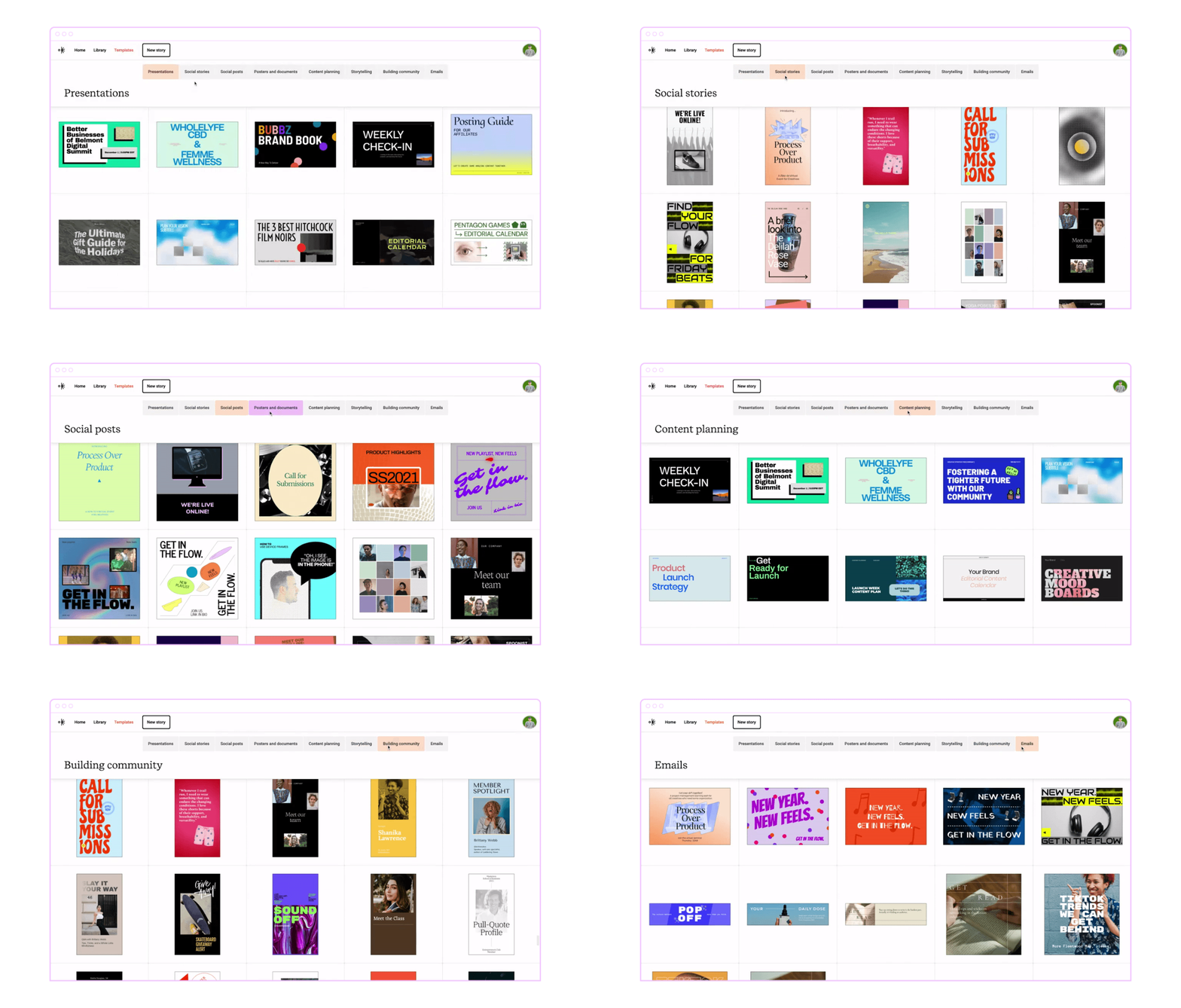
Stylize text and add movement with special media effects. Fill letters with videos, images, or GIFs, and add gradients, shadows, or outlines to create your own unique text styles.
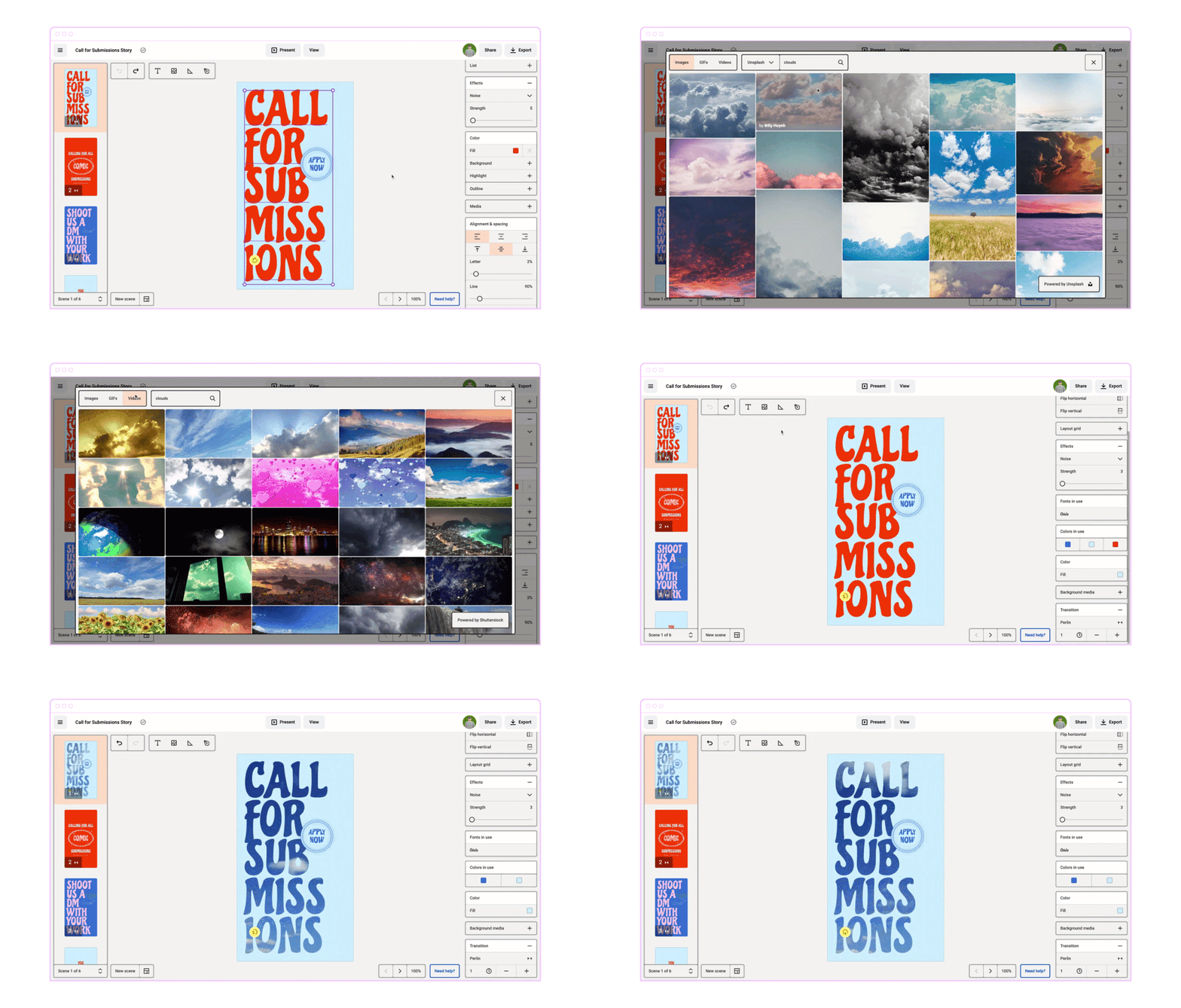
Discover imagery, icons and more with the best content integrations via Unsplash, Shutterstock, Giphy, and Noun Project (for free!)
Share your story with a link to comment, collaborate, and present in real-time.

Why should you try it?
If you're looking for a more efficient and collaborative way to create visual content, Projector can help. They're making it easier for more people to connect with their audience through modern, multimedia design — and we all know good design is good business, after all.

This Is How Hustle Culture Can Destroy Your Business
Work smarter, not harder.

Photo: ColorJoy Stock by Christina Jones Photography
There’s a scam out there that I’ve fallen for, and I’m not the only one. It has cost people their marriages and their businesses, it has cost them financially, emotionally, and mentally. It's brutal. And it may surprise you to hear that this scam? It’s the hustle culture.
As an entrepreneur, I know what it means to hit that mental fatigue point. When it happened to me, I didn’t want to ask for help. I didn’t think that’s what successful entrepreneurs do, and I didn’t want to appear weak. Unfortunately, it landed me in the hospital. You can say it won’t happen to you, but you need to know what to look out for and keep yourself in check because if it does happen, it can be incredibly hard to recover.
If you want to avoid falling victim to hustle culture, here are a few things worth remembering.
1. Be Intentional About the Content You Post
As humans, when we are exhausted, we look for external stimulation. The use of social media has made it incredibly easy to find validation, but—unfortunately—It’s dangerous. We get this hit of dopamine when people are liking and commenting on our posts, and that leads to us wanting more. As a result, it creates this noise effect online where everybody is basically shouting to get space because they need to feel validated. If you do that for long enough, you just tend to burn yourself out because it's not humanly possible to create high-quality content every single day.
You don't have to be posting every day on social media to be relevant, impactful, and helpful. Instead, focus on being intentional about the content you create—not just contributing to the noise in order to generate leads and customers. Ultimately, it’s about the quality of your followers, not the quantity. Just because you have a million followers doesn't mean you have a million buyers, and there are tons of broke influencers out there to prove it.
2. Don’t Compete With Influencers Who Have a Huge Team Behind Them
There’s a good chance that if you come across someone who is constantly posting content, they’re not flying solo. In fact, they probably have a huge team of 30+ people behind them. There is absolutely no way for a solopreneur or even someone with a small team to ever start to compete with that much creative energy.
Remember the influencers I mentioned before? You know the ones that have the followers, but nothing else to show for it? The real reason they're constantly creating content and building their audience is that they really aren't sure how to monetize it, or they are promoting products that really aren’t very good. Just focus on creating profitable content that has purpose and intention and you’ll end up on top.
3. Be Mindful of the Law of Diminishing Returns
We are not built to work all the time, and we're not built to push all the time. It’s not healthy for us. When you hit a certain point where you want to just power through a task because in your mind, being busy means you’re worthy, you need to take a break.
You see, the law of diminishing returns is that if you're constantly pushing, you’ll build momentum and see results at first. But when you peak? The quality of what you are putting out decreases. Eventually, you get to a certain point where your brain just shuts off and you start to actually do yourself a disservice and do yourself harm. When you’re tired—and when you hit that point of diminishing returns—you’re very vulnerable to making bad decisions. You’re likely to do things reactively and make short-term decisions for something that you're trying to build into a long-term business.
A metaphor I like to use is that you can’t go to the gym and lift weights for 24 hours straight. You are going to injure yourself—but this is how people are approaching business and entrepreneurship. They're trying to keep going no matter how irrational it is to stay at the highest level of energy and capacity. It’s just not normal. And it's not humanly possible. Instead, think about the long game. Try to be less reactive, and focus on understanding why you're doing what you're doing.
4. Figure Out How to Make Your Business Model Easier
The moment when I figured out how to simplify my business and do less was when my business started to grow. When I was hustling my face off, didn't have a team, and ultimately landed in the hospital with burnout, my business wasn’t even benefitting from my hard work. I was trying to do everything myself, and I didn’t even stop long enough to even wonder, why am I doing this? Did I want my version of success to be in a hospital bed, tired all the time, feeling like I'm sacrificing my sanity, my relationships, and my health?
After my burnout, I became obsessed with the most successful entrepreneurs, and I realized that the ones I admire most didn’t work all the time. They are laser-focused with their priorities and time. They stay in their genius zone, they stay in their lane, and they focus on the basics. Make a great product, innovate, constantly test it, and become customer-obsessed. They embrace failure and they embrace joy. They define their worth by their contribution to the world, their quality of life, and the relationships that they build. Because—if you want to be successful—you need to build your business to work for you, not against you.

"If you want to be successful, you need to build your business to work for you, not against you."
—Sunny Lenarduzzi, Social Media Consultant and Business Growth Coach
About the author: Sunny Lenarduzzi is a social media consultant and business growth coach who has earned eight figures in the past four years teaching people how to elevate their brands using video marketing, Sunny’s YouTube channel has amassed over 27 million views and her expertise has been featured in outlets including Entrepreneur, Forbes, Fast Company and Inc—and she's incredibly passionate about sharing her message around entrepreneurship, generosity, and success with the world. She has enrolled over 8,000 clients from around the world into her online programs, YouTube for Bosses and The Authority Accelerator. Connect with her on Instagram @sunnylenarduzzi.
Love this story? Pin the below graphic to your Pinterest board.

MORE ON THE BLOG

This Copywriter Quit Her 9-to-5 Job at Nike to Start Her Own Storytelling Studio
Journaling helped her overcome the fear.


Photo: Courtesy of Rachel Leslie
Walking away from a 9-to-5 job with a steady paycheck and health benefits to start your own business isn’t easy. To help you to take the plunge, we’re introducing a new monthly editorial series The Case for Quitting where we ask self-employed women all about how they successfully struck out on their own, from how they balanced their side-hustle with their full-time job to how much money they saved before handing in their two-week notice. This month we chatted with copywriter Rachel Leslie who quit her job as a digital copywriter at Nike to start her own storytelling studio. Read on as she shares how she broke into the field, when she knew it was time to leave her corporate job, and why she recommends saving up a six-month safety net before quitting.
What was your major in college and what did you want to do when you graduated?
I majored in journalism and minored in business administration. When I graduated, I wanted to become an arts and culture journalist. Think, William Miller in “Almost Famous” going on tour with bands, covering the latest shows and album drops.
What did you actually do after you graduated? What types of jobs did you apply to and what industry were you looking to break into?
I moved to Santa Barabara, California, for an unpaid internship at an indie newspaper called, The Santa Barbara Independent, where I was their arts and culture intern. In addition to my internship, I worked at a local restaurant as a host to pay the bills.
Before getting that internship, I applied to any and all jobs and internships in writing for news publications, media organizations, and the list goes on. I was determined to write for a newspaper or magazine where they had a substantial section in music, events, art, and feature stories. It was a tough time to be applying for jobs in print journalism in 2013 as there were whispers that journalism was dying, print specifically.
How did you get into copywriting?
When my internship came to a close in Santa Barbara, I started looking for other opportunities to continue writing. I contributed to the newspaper and got paid for my articles, but it was nowhere near enough money to get by, so I began exploring marketing and PR agencies.
I was hired as a paid intern at a PR and marketing agency working with nonprofits and social impact businesses in the Santa Barbara area. I found this type of work interesting because I could still exercise my journalistic skills in a way, but on behalf of our clients. Plus, I could get behind what they were marketing as they were often community events, organic products, and so on.
My experience at that agency was my first foray into copywriting, and the rest is history; from booking a one-way ticket to Vietnam and working as a freelance writer for magazines and copywriting for five-star luxury hotels and businesses to moving back to the U.S. to join the agency world here in Portland, Oregon, and most recently, working at Nike as a digital copywriter.
What was it like balancing your full-time job with your side-hustle? Do you recommend starting a side-hustle while you have a full-time job?
For as long as I can remember, I was always doing something on the side of my full-time job. Whether it was freelance writing for the indie newspaper on the side of my full-time internship or taking on copywriting projects here and there alongside agency work. It can be time-consuming if you let it. Like giving up your weekends and evenings to stay on top of your side hustle, but if the passion is there and you want to see if it’ll work, you’ll do it.
I recommend starting a side hustle while you have a full-time job because it gives you a chance to experiment with what works and what doesn’t as you work out the kinks and see if it’s really something you want to pursue full-time without the added stress of making rent.
How did you know when it was time to make the transition from side-hustle to full-time? What was your strategy for making the transition?
Starting my own business was something I always knew I would do. It was just a matter of when. I found this desire grew stronger and stronger to a point where I knew if I didn’t try now, I’d always regret it.
I was in two group coaching programs while in my 9-5 that gave me the tools, education, and resources to hone in on my copywriting service to expand that into a full-blown business. In addition to those programs, I began building up my client roster while marketing my copywriting and storytelling services to others online and through word of mouth. I wanted to prove that there was a demand for my expertise and services before saying goodbye to my 9-5. After juggling both for over a year, my business grew to a point where the time I was working in my 9-5 actually took away precious time from growing my business.
Another big part of this strategy was focusing on repositioning my mindset for entrepreneurship. Accepting and being open to the challenges, learnings, and failures that may come along the way while embracing them and keeping pressing forward is crucial to running a successful business. I’d have to say that this was (and still is!) one of the most challenging tasks in starting your own business. There’s a great deal of fear that comes with saying goodbye to what we’re taught to consider safe and secure (i.e., a stable salary, benefits, etc.). But once I realized that I’m in control of what happens and that I can do anything I set my mind to, that made the decision easy.
How did you prepare for the transition before quitting your full-time job? What, if anything, do you wish you’d done differently?
I spoke to my husband, who’s been my biggest supporter throughout all of this. We set a date and made it official! That felt so amazing to have a fantastic support system to back me up and to put a date in place.
Since starting my business, I kept track of my business’ income and expenses to see how much I needed each month to survive, and I did the same for my personal finances. I also hired an accountant for my business right before I left my full-time job to help me manage everything and have someone on hand I could turn to for questions as I navigated this new chapter. This helped put things in perspective for me as to what I needed not just to survive but to thrive in my day-to-day, as I had done before with a secure paycheck.
I also utilized my network of mentors and coaches during this pivotal time. As you can imagine, lots of what-ifs, thoughts, and fears came up in making this transition, and they were crucial in helping me get through this rollercoaster of emotions.
Lastly, I continued to market myself, show up and serve my online community every day. I had a few ongoing client projects in the works and a few lined up for the following month, so I knew I had some guaranteed income coming in for at least a few months after quitting my full-time job.
Were you worried about money? What advice can you share for people who are worried about leaving a steady paycheck to start a new career?
Of course. As I was making the transition, I had many fears and worries about money, like, What if I don’t get any more clients after leaving my job? What if I don’t make any money next month? What if I fail?
That is where that mindset work came into play again! I had to focus on rewiring my scarcity mindset to one of abundance and assurance. Instead of focusing on the what-ifs, I began writing affirmations and mantras like, “Clients come to me with ease,” and “What I focus on grows” and so on.
Journaling also helped me work through these fears and feelings about money. By asking myself, what do I need to feel safe and secure and what do those words mean to me, I was able to address these thoughts.
On the more technical side, proving that my service was in demand before leaving my 9-5 and signing clients for future projects helped alleviate those worries about no money coming in.
Did you save up first or did you just jump in headfirst?
I had a six-month safety net in place before I quit my job. This reassured me that if I didn’t make any money in my business, I had six months of savings in place to keep me going. So what I did was calculate my existing expenses to understand how much money I needed to make each month to pay my mortgage, bills and get by each month.
What's the most important thing you have learned from making a big change in your career life?
I’ve learned that I’m in control of what I want to do in my life and in what makes me happy. And that there’s no point in waiting for something to tell you what to do next. It’s up to you. When I was making the transition from my corporate job to building my own business, I kept waiting for a sign. For something or someone to tell me, “Rachel, it’s go-time!” But I kept waiting, waiting and waiting and that sign never came. I realized that I just needed to take the leap and do it because there would never be a “perfect” time.
It’s easy to celebrate the wins, but how do you handle failure or when something hasn’t worked out for you?
I treat it as an opportunity to learn and grow. As an entrepreneur, I’ve realized that things don’t always work out as planned, and that’s okay. When something doesn’t work out, I try to understand why and where I could have done better so that when I’m faced with a similar situation, I know how to approach it and hopefully, there’s a different outcome.
What’s the biggest mistake you’ve made and learned from along the way?
When I first started, I created too many copywriting services. I quickly realized I was trying to do too many things at once. I overcommitted and under-delivered and I wasn’t able to produce top-quality services. I realized I could better serve my ideal client by focusing on what they specifically need and how my one or two niche services could best serve them.
When you look back and reflect on your previous career do you have any regrets or are you still really happy with your decision?
Every step of my career has prepared me to do what I’m doing today. I’m immensely grateful for the opportunities I’ve had and the people I’ve met along the way because it’s all shaped my values, beliefs, and my vision for the future of my studio.
Going after what you deserve in life takes confidence and guts. Does confidence come naturally to you or did you have to learn it? What advice can you share for women on cultivating confidence and going after their dreams?
Funnily enough, I have a fraternal twin sister, and she’s definitely the more confident and outgoing one! So no, confidence did not come naturally to me. It took me a while to learn it and to embrace it.
One aspect that helped me gain confidence was surrounding myself with other leaders, mentors, and coaches who embodied the confidence I wanted for myself. Being around these people lit something inside of me that I could tap into and infuse in my own business. I also journaled (a lot!). A helpful exercise that helped in embracing my CEO mindset and imposter syndrome was writing out all of my accomplishments onto a piece of paper. It helped me realize that I was a skilled entrepreneur and that there was no reason why I couldn’t do this. I still go back and look at that list when I’m having an off day.
What is the #1 career or money book you always recommend and why?
I love” You Are a Badass At Making Money” by Jen Sincero—especially the audible version! This book is raw, real, and eye-opening as to what is genuinely possible not just in your career but in your life. It gave me a whole new perspective into the power of your mindset and money and how the two can be truly life-changing.
What advice can you share for someone who is thinking about leaving their current gig to pursue their side-hustle or passion?
As my former employer’s tagline says… Just do it. Give it a try! And do your due diligence beforehand. First, determine if there’s a demand for your product or service; then, rally a community of mentors and friends you can lean on for support and get your finances in order so you can understand not just what you need to live, but to thrive, too (because if brunch with the girls makes you happy that should be factored in, too).
MORE ON THE BLOG

This Entrepreneur’s Journey to France is an Invitation to Discover Your Own Joie de Vivre
“Embrace Life. Dream Big. Accept all Invitations”


Fueled by a passion and a belief, Tawnya Falkner gave up her real estate development and design career, took a leap and moved to France to create her French sparkling wine brand, Le Grand Courtâge and Provence style still wine, Très Chic Rosé.
Translated to mean “the Great Courtship”, Le Grand Courtâge signifies the courtship between French and American wine culture, grapes from different regions and the old and new world wine styles. For Tawnya, food & wine are the great common denominator of all cultures and the foundation for meaningful connection. The wines were created to embody the French spirit of ‘Joie de Vivre’ (“joy of life”) and remind people to elevate and celebrate the everyday and “Live Joyously”.
Today, Le Grand Courtâge is an award-winning national brand, but for Tawnya, success is much more than accolades and prestige. She is equally concerned with the brand’s purpose and social impact, and aims to spread positivity through her wines, through community, and through giving back.
This year they launched a new dedicated grant and mentorship program called ELEVATE, in collaboration with Ladies Who Launch, to bring the unique challenges facing women in business to the forefront, while helping to grow, mentor, and support women-owned businesses and entrepreneurs across the country.
By teaming up with like-minded partners and pooling financial resources, intellectual capital and networking communities, the aim is to provide meaningful immediate and long-term support. As an entrepreneur herself, Tawnya Falkner is career-driven, passionate, ambitious, and determined—and small businesses are often born from a small idea backed by someone with these traits.
For Tawnya, it was important to offer a platform to elevate and support female entrepreneurs, especially given the current state of work for women and the implications of this past year. Women receive less than 3% of Capital $ in the US despite owning 40% of businesses and controlling 85% of all consumer purchases. Furthermore, over 25% of female owned businesses have closed since March 2020 due to the fallout of COVID-19.

“Embrace Life. Dream Big. Accept all Invitations” is written on the back of each Le Grand Courtâge bottle and it embodies who they are at the core. Sometimes, destiny’s interventions take form in unexpected invitations. Such is the case for Tawnya, whose small leap of faith led her to discover something far greater. Le Grand Courtage is offering une invitation to discover your own joie de vivre.
We invited Tawnya to share the catalyst for her move to France, and what’s next for the brand. She also shared some sage advice for young entrepreneurs, who are looking to cultivate the confidence to go after their dreams. In the words of Tawnya herself, “Cheers to dreaming big and elevating the visionaries!”
What inspired you to leave your real estate development and design career, and move to France to start Le Grand Courtâge?
I grew up in a 3-street farming town across from the general store and some of my fondest memories are Sunday dinners and backyard barbecues. Those small town beginnings evoked a wanderlust and a passion for travel; and after seeing different parts of the world, and living in Asia and Europe, I realized that food & drink are the common thread that bring friends and family together.
Le Grand Courtâge was built on the premise of meaningful connection and reminding people to find the joy in life’s simple pleasures, like a meal shared or a relaxing bubble bath with a book.
I ultimately took the leap and moved to France to create wines which embody the French spirit of ‘Joie de Vivre’ after seeing a gap in the category on price, palate and packaging. As most French wine is traditionally branded, packaged and styled, I saw an opportunity to re-envision the category and offer something with a French cachet and elegance combined with an American appeal and price point. Since champagne is expensive, I wanted to create balanced, fruit forward wines that delight the palate and offer an affordable luxury to celebrate the every day.
What can you tell us about the history/origins of sparkling wines?
Champagne can only come from the region bearing its name about one hour northeast from Paris. All other bubbles produced anywhere else in the world (inc France) must be called “sparkling wine”.
Rumor has it that champagne was invented accidentally due to an error of excess pressure built up during fermentation causing bottles and corks to explode. Though Dom Perignon apparently said, “I’m seeing stars”, others called it the "the devil's wine" (le vin du diable).
I love this story because it shows that a mistake led to a product that has captured the imagination around the world. It shows that sometimes mistakes or failures can be happy accidents. As a society we need to be a little more open to the fact that failings can create the path for the greatest growth or lead to fantastic outcomes.
Le Grand Courage was built on the premise that food & wine are the great common denominator of all cultures to foster meaningful connections. What are some of your favorite creative food pairings to enjoy different Le Grand Courtâge wines?
Fried Chicken and bubbles are my favorite! Also fun are spicy Asian, sushi, BBQ, popcorn, and potato chips. They call sparkling the ‘scrubbing bubbles’ for the palate as it truly cleanses the tongue between bites and the acidity in the wine is a great balance point for various cuisines and cocktails. As such, anything rich, salty, fried and spicy is an excellent pairing.

Have the audacity to believe and never let reality get in the way of your imagination.
– Tawnya Falkner, Founder, Le Grand Courtâge
What do you love most about your job and why? Does the reality of your career match up to your expectations/why/why not?
I am grateful to be able to work to build this dream. As someone who is equally right and left brained, I love that I am able to focus on strategy while getting to create and be creative. I am constantly meeting people and I appreciate that I get to infuse positivity into someone’s day with our brand. For me Le Grand Courtâge, and our French Provence style Très Chic Rosé are less about drinking than what having a glass of wine signifies. It’s taking a few minutes to enjoy a delectable bite, laugh with a friend or raise a glass to celebrate your small wins.
Owning a wine company is not nearly as glamorous or romantic as it seems. There is a lot of production, supply chain, compliance and logistics that aren’t fun or sexy! The reality is that because my business requires so much of me that I do not get to spend the time connecting with family and friends that I would like. Building a business and a brand is hard, but the issues of raising capital and trying to break into a massive industry dominated by men, has been challenging to say the least.
Going after what you deserve in life takes confidence and guts. Does confidence come naturally to you or did you have to learn it? What advice can you share for women on cultivating confidence and going after their dreams?
My advice is to not discount your ideas or abilities and act confident even if you are shaking in your shoes.
From a young age I have always dreamed big and been willing to take risks. In truth while I am extremely confident that I can handle virtually anything, I believe it is equally a component of a) believing in myself and b) pushing past the fear.
Sometimes I simply have to bulldoze through the fear and think to myself, “I can do this!” I’ve also learned to live with a great(er) amount of uncertainty and constantly remind myself that I’m not going to die if something fails. When struggling, I dissect the fear, analyze it, re-frame it and then it’s sometimes just taking the leap and trusting your gut.
The bottom-line is to live your fear and face it knowing that what you are doing is for something bigger, better, greater.

With success comes opportunity, but that also means you have your hands full. What keeps you inspired and motivated to keep going even on your most challenging days?
I am inspired by the current wave of women's empowerment and females who are paving their own way and achieving success in pursuit of their passions. Women are (re)defining or breaking the rules. I believe we can impact some of the systemic issues as more of us challenge the dynamics and help balance out the dismal stats. Those before us challenged the status quo and paved the way, but there is still much to do.
Owning Le Grand Courtâge has been surreal, exciting, scary…. Every time I see a bottle on a shelf or in a restaurant, I still smile. It’s hard to believe that this dream has turned into a reality. With any success comes a lot of work and perseverance. There will be days even when you collapse in exhaustion or cry or want to pack it up and call it quits. The hustle, sweat and tears make the successes even sweeter in the end.
Also, it’s important to remember that if it was easy, everyone would be doing it. Paris wasn’t built in a day, and while we must focus on the present, it’s important to have the long game in mind.
I am appreciative for every experience because it is part of the journey and without the good and bad, I wouldn’t have this exact life and the perspective I’ve gained.
If you could go back to the beginning of your career journey—with the knowledge you have now—what advice would you give yourself?
Have the audacity to believe and never let reality get in the way of your imagination.
Know that how you handle yourself in adversity is what really defines you.
To be successful you need confidence, a thick skin and an inner circle to exchange ideas, help with the pain points and be a shoulder to cry on occasionally.
Be kind to yourself. Believe in yourself. Learn to diffuse ‘no.’ And never, ever let anyone dull your sparkle.

We believe this shift in women-centered innovation will have wide-sweeping implications for the role women will play in the future of business, leadership and the economy - therefore, it is in all our best interests to be part of the change.
– Tawnya Falkner, Founder, Le Grand Courtâge
Le Grand Courtâge founded a dedicated grant and mentorship program created to support female entrepreneurs. What were your goals going into this initiative, and what are you hoping consumers take away?
Having started three companies, raised capital, and dealt with a partnership dissolution, economic downturns, and now the effects of Covid, I have a lot of insights and perspectives on building companies.
The path isn’t easy and we want to help to mentor and empower the next generation of business owners while being a more active participant. Through my experiences in real estate development, finance, consulting and now building a wine brand and company, I have tried to approach building a business differently and believe in collaboration over competition and the power of the community.
With this in mind, I created “ELEVATE” with the intent of pooling resources, using the power of the crowd, and providing mentorship to help the next class of aspiring entrepreneurs. I believe that each of us has special gifts and we can make an impact by investing a little time &/or money to pay it forward and help support others.
We encourage everyone to think about where/how they deploy dollars, and to realize that supporting female or minority owned businesses is helping affect the course of the future and supporting someone’s dreams.
With the massive IPO successes of companies like Bumble, Glossier, Rent the Runway - the list goes on, we’re seeing a rise of women-centered innovation: products and services designed by women for women. The investment ecosystem (still) seems unprepared to understand this opportunity, much less identify, invest in, and nurture this next generation of entrepreneurs. We believe this shift in women-centered innovation will have wide-sweeping implications for the role women will play in the future of business, leadership and the economy - therefore, it is in all our best interests to be part of the change.
Share your best advice, in two words or less.
“Live Joyously”


About the Grant & Mentorship Program:
Le Grand Courtâge’s ELEVATE is a 3-part program that will provide financial grants, curated mentorship & company amplification for up to 25 selected applicants. Up to $25,000 is available for grant awards in partnership with Ladies Who Launch and White House Black Market. Individual mentorship programs will run for 6 months. Ladies Who Launch is a mission driven, membership based 501(c)3 that empowers women entrepreneurs to thrive by providing access to educational resources and capital programs. For more information https://legrandcourtage.com/giving-back/ Applications open March 29th.

Pro Tip: How to Approach a Client About a Late Payment
If you‘ve continually met your deliverables, then it’s time to take a stand.

Photo: ColorJoy Stock by Christina Jones Photography
We’ve all more than likely been through this particular situation but I’m curious: how many of you reading this are happy with the way it was handled? In my experience, people are typically afraid to approach a client about late payments because they’re afraid of annoying or upsetting the client.
Your clients do not hold all of the power.
They should be just as concerned with annoying or upsetting you by being late with their payments. And more likely than not, these situations can be easily solved with some good ole fashioned communication. So let’s break down how to approach and communicate with your clients about a late payment.
Why it’s important
You need to get paid, that’s why.
Scenario #1
You’ve been working with a new client and after the first month of service, submitted your invoice. Another month of work has gone by and you’re about to submit your second invoice but haven’t been paid for the first invoice you submitted. You originally agreed to payment schedule terms with your client at the start of your working relationship and put a “net 30” payment deadline in your scope of work and invoice.
If the terms have been agreed upon and this is the first time you and your client are working together, it may take time to get the first payment process into rotation with Human Resources (HR) and Accounts Payable (AP).
While this isn’t ideal for any situation, it’s one of the many hurdles of freelance life and it’s better to prepare for it than not; but that doesn’t mean you shouldn’t say anything when a payment is late either.
Say this
“I’m getting ready to submit my second invoice and wanted to let you know I still haven’t received payment for last month’s services. Do you have everything you need from me to get this processed? If so, can you please let me know when payment is expected to come through?”
Don’t say
“….”
The breakdown
When it comes to talking to your client about getting paid, more people opt for saying nothing over something. It’s imperative you keep an open dialogue about payment processing so you can better manage your personal finances.
Freelancers don’t have the luxury of bi-monthly paychecks and your clients will understand this. Remember, your services are an investment and they should respect your time and business by actively communicating when payment may be late.
If you approach your client about a late payment and they’re able to share why it’s running late and when it will be processed, that’s a great first step. Take note and document it in a follow-up email with the information that was shared if the conversation is held in person or over the phone.
From there, hold your clients accountable. If the date comes that they said you’d receive payment and it doesn’t process, follow up with another email. Chances are, there’s another department that handles payments and your client will do their due diligence to make sure you get paid.
Scenario #2
You’ve submitted not one, but two invoices that have not been processed. You’ve approached your client about the first late payment and they gave you a timeline for when it would be processed. Now you have two late invoices and it’s time to submit invoice number three.
Say this
“I’m getting ready to submit my third invoice and have still yet to receive payment for my first or second invoices. The terms we agreed upon have not been met and I’ve followed up several times to try and resolve this matter together. With respect, I will have to cease my services if these late invoices aren’t processed by one week from today. I hope you can understand the difficult circumstance this puts me in and that we can work together to reach a solution.”
I have a feeling this is going to cause some mouths to drop.
What? Cease services?
YES. You need to get paid!
Freelancers, hear me! This is business 101.
Clients and freelancers create a circle. You should be getting just as much value from the relationship as your client is getting from you. This isn’t just measured in dollars. This is measured in reliability and respect. If you have continually met your deliverables and communicated your expectations for payments and they’re not being met, then it’s time to take a stand.
It will be difficult but it is necessary. And it will light the fire under your client’s butt because if you’re doing your job right, having you around makes their work-life easier and they should want to keep you happy and ultimately, paid.
What financial situations have you found yourself in that you wish you had communicated better? Share them in the comments or send me an email at hello@thescopeblog.com.

“Clients and freelancers create a circle. You should be getting just as much value from the relationship as your client is getting from you.”
—Audrey Adair, Founder of The Scope
About the author: Audrey Adair is a seasoned freelance communications professional and founder of The Scope, a platform providing resources and community to freelancers and the self-employed. Connect with The Scope on Instagram and join their email list to receive your free resource, The Freelancer Starter Kit.
This post was originally published on April 30, 2019, and has since been updated.
Love this story? Pin the below graphic to your Pinterest board.

MORE ON THE BLOG