U.S. Women's Soccer Team Files Historical Wage Complaint
Playing like a girl is badass according to Obama. Not getting paid an equal wage? The opposite.

UPDATE 5/26/16: The USWNT gained another ally in the fight for equal pay today, as the US Senate animously approved a non-binding resolution calling on the U.S. Soccer Federation to “immediately end gender pay inequity and to treat all athletes with the respect and dignity those athletes deserve.” (via Huffington Post)
This is a great first step in setting a precedent for equal pay across the United States, and goes to show that taking a stand and fighting for equal pay does pay off.
-
Today, the New York Times published a piece outlining an official complaint filed by five players from the U.S. women's national soccer with the Equal Employment Opportunity Commission. The complaint states that the U.S. Soccer Federation pays women-- current reigning World Cup champions far less than their male counterparts.
Five players-- Carli Lloyd, Becky Sauerbrunn, Hope Solo, Alex Morgan, and Megan Rapinoe-- signed the filing, arguing that every player on the women's nation team is paid thousand of dollars less than the men.
Although it was only these five high-profile members that signed the complaint, Sauerbrunn Tweeted, "Five players signed the complaint, but the decision to file was whole-heartedly supported by the entire team. #equalplayequalpay#thegals.”
According to the filing despite the fact that women generated 20 million dollars more in revenue than the men in 2015, they still earn four times less than the men. If they make the World Cup roster, female players make just 44% of what their male counterparts earn in bonus earnings: $30,000 to $68,750. Also included in the filing is the requirement for women's and men's teams to play a minimum of 20 "friendly" games per year. However, while the women get a bonus of $1,350 if they win a friendly match, the men are guaranteed $5,000 even if they lose, and can make up to $17,625 if they win, depending on their opponent's FIFA ranking.
It's a complicated issue, some citing that revenue disparity is not accurate. Others saying that if pay should be revenue based, then it's important to address the discrepancies that happen from the gate-- like field disparities between teams. "You must ask yourself why the potential for revenue generating is less?" wrote one commenter. "Why isn't the revenue pouring in when you have the highest viewed soccer game period? There is more going on here than people just like men's sports better."
During an interview on NBC's Today show, Lloyd, the 2015 FIFA women's player of the year said, "I think that we've proven our worth over the years. Just coming off of a World Cup win, the pay disparity between the men and women is just too large."
"I've been through numerous CBA negotiations, and honestly not much has changed,'' Solo told Matt Laeur. "We believe now the time is right because we believe it's a responsibility for women's sports, specifically women's soccer, to really do whatever it takes for equal pay and equal rights and to be treated with respect."
Laeur then raised an interesting question asking the four players who appeared on camera if they'd heard from any of the male players. It was met by uncomfortable laughter until Alex Morgan answered: "I'm sure they are in support of us. My husband plays professional soccer and he's very much in support of me." Lauer also asked the women if they were willing and prepared to boycott games or strike. The issue was skirted.
What unfolds will be interesting, potentially history-making, and serves as an important microcosm to address the pervasive sexism and wage gaps that affect all women.

Olive & June Founder Sarah Gibson Tuttle's Number One Concern
It's about more than changing polish, the swoon-worthy salons are changing the whole nail game.

Sarah Gibson Tuttle, founder of Vogue-and-celeb-approved nail salon Olive & June, worked in finance for a decade before quitting Wall Street and setting on her sights on something a bit more hands-on. A self-professed mani/pedi obsessee— she considers her initial career “bootcamp,” having come across mentors and bosses who taught her how to interact in business, and how to treat a client’s time and space.
“Everyone assumes that I’m a nitty gritty numbers person, I’m not,” she says laughing. “I just hired a CFO, but I grew up within finance, and I couldn’t be doing this without that training. No grad school could have done that.”
The first Olive & June opened in 2013, appealing to a predominantly female clientele looking for a warmer, more community-based nail salon. “One of our clients likes to say we’re the Cheers of manicures,” she says. “I wanted to get into a career that enhanced lives, and nails are one of the least expensive ways to change your look, especially in the beauty business.”
In the beginning, Sarah admits to being nervous about opening a brick-and-mortar. “They are the hardest to make profitable, but there will never be a machine that does your nails." She was terrified but also so confident in the idea, feeling, "so clearly that this was a hole in the market. I had that blind entrepreneurial spirit.”
"I had that blind entrepreneurial spirit."
Tweet this.
Founded on the idea that a manicure should be “downright lovely,” Olive & June was designed by the team behind at TenOverSix, and quickly attracted customers looking for something beyond the typical nail experience. Something a little brighter, boutique-ier, with non-toxic polishes and creams, the salons are both a getaway oasis and somewhere you can pop-in, get a quick mani and head to a meeting. The salons keep your preferences on file— round, square, favorite colors, and just how you like your cuticles.

There are currently three Olive & June locations, flagship Beverly Hills, Pasadena which opened almost two years after the first, and the latest of the bunch, Santa Monica, which opened about a month ago. The response has been overwhelming and tremendous. “I feel incredibly grateful,” she says, “that the Westside has embraced us so fully.”
Sarah is currently looking to open a fourth salon, scouting possible locations on a weekly basis. “I really want to have Olive & June in every neighborhood that it makes sense,” Sarah says, “but I am extremely cautious about fast and wide we extend our footprint.”
"I am extremely cautious about fast and wide we extend our footprint."
Tweet this.
Studio City, Manhattan Beach, and Orange County are on the radar, but she insists that Olive & June is a “slow and steady company.” Explaining that, “Every time we open a space we want the time to make it perfect. Because we are both a people business and we give service to people, it’s extremely important that every location can stand on its own.”
The next spot has to be the right spot.
There have been incredible opportunities to open in New York and Austin, but Sarah knew the team wasn’t there. “I was certain that as an organization we were not ready to support a New York location.” She admits the offer was “devastating” to turn down, but creating a strong foundation is more important to the business than expanding.
“I try and get into a least one salon every day,” she says. “It’s very important to me to communicate with the managers and the manicurists, and make sure that the people who work for Olive & June feel a part of the community as well.” That means connecting with the manicurists and management team, connecting with customers, sometimes going to two locations in a day. “It is extremely important to me that everyone that we hire is placed in a position of success.”
She calls this her “number one concern,” refusing to put anyone in a position where the client’s aren’t there. “Manicurist receive commission,” she says, “so I don’t want to open where they can’t be busy.” Currently there are approximately 80 people working for the company.
Beyond expanding locations and taking care of the team, Olive & June is looking toward the future on other fronts— product development and continuing to partner with brands that make sense.
Though her now-husband thought that she “might be a little crazy,” for following her instinct, Sarah knows that there are certain things the digital world will never take away: breaking bread, for one, and nails. “Hands-on is so important. We become these women’s therapists, their friends, the ones they turn to in the midst of a divorce.”
In short: A manicure has never been about the polish-- that's just the beautiful bonus, and something that Olive & June understands from top coat, down.
Be sure to check out Sarah speak on panel at Create & Cultivate DTLA this May 7th.
Images courtesy of Olive & June.
Arianna Schioldager is Create & Cultivate's editorial director. You can find her on IG @ariannawrotethis and more about her at www.ariannawrotethis.com

8 Snapchat Hacks You Need To Use With The New Update
Just in time for Snapchat's newest update, here's some hacks to make your snaps more fun.

Yesterday, Snapchat released a new update that further pushes itself to be the main communication app that you need. While the new update has tons of new features that make the app even more exciting to use, there are some hacks that you might not even be aware of that were available way before the update was introduced.
To give you a quick 101 on what are some other ways that you can make your snaps even better, check out the tips below.
1. Change the colors of your font + drawings.
You can customize the colors you’re using when typing or drawing with the rainbow palette. When drawing, touch and hold on the rainbow palette and move it across the screen to find other colors to use.
The same goes for text: just tap on the text you’ve written after you’ve made it bigger by touching the Text icon, and hold on the rainbow palette and move around the screen to find the color you want to use.

Rule of thumb: white is always at the top left corner, and black is at the bottom.
2. Video chat
Not only can you text your friends on Snapchat, but if you and your friend have the chat opened a blue pulsating icon will show up on the screen. If you hold it, your front facing camera will show up, and if your friend wants to video chat too, they will eventually show up on the screen as well.
3. Make your own color filter
Snapchat has a few color filters that make your photo look better, but if you’re looking to add a more vibrant or dreamy feel to your snap, tap the sticker icon at the top right, and choose from any emoji that is close to the color that you want your snap to have.
Choose which emoji you want and make the emoji as big as you can making sure you focus a corner on the frame and zoom in as much as you can. Zoom in all the way and place the translucent part on your snap and ta-da!

4. Have multiple filters on your snap
If you want to add more to your filters than just having a location filter, you can. First, swipe to filter that changes the color of your snap. Hold on it and swipe to show the time or temperature. If you want to show it, hold on to the time or temperature while swiping to the left to put a location filter. The only downside is that if you want to take off one filter, you’re going to have to start all over and take off all the filters.

5. Add multiple lines of text to your snap
On your notes app on your phone, have an empty note saved with a couple of empty lines that you can always copy and paste on to your snap. Copy about three lines onto your snap, and type away. You can always go more than three lines, but don’t put your followers through the pain of reading an essay in 10 seconds.
6. Zoom in on the details of your snap
If you have a knack for illustrating on your snaps and think of yourself as more as a Picasso type, using the zoom feature on your IOS phone is useful. Under Settings, go to General, and under Accessibility, turn on the Zoom feature under Vision. This will apply a magnifying class to your phone while you navigate it, but just turn it on for when you need to use it for Snapchat. This will help you with illustrating more detail to your snaps, making them a wonderful piece of art.

7. Make your own filter for your event
Holidays or big sponsored events aren't the only ones that can have a Snapchat filter. Make your event have its own Snapchat filter, starting at just $5. Just make your own filter design, submit it to Snapchat, add your own geofence, time that you want your filter live, and wait for Snapchat to give you the green light. To find out more information about creating your own Snapchat filter, click here.
8. Show the date on your snap and change from Fahrenheit to Celsius
You don’t have to be stuck on just showing the time on you snaps. If you tap the time when you’re choosing a filter, it will turn into a date, and if you tap the temperature filter, you can change it from Fahrenheit to Celsius.
Now if you’re still new to Snapchat’s newest updates from yesterday, you can now video call your friends (rather than waiting for them to show up on the same chat), send reaction GIFs of yourself, and use their new collection of stickers in their chat similar to Facebook Messenger. You can see the whole rundown here on Snapchat’s blog.
And if you haven't followed us on Snapchat, make sure you start following us now @CreateCultivate!

Priscilla Castro is Create & Cultivate's Director of Social Media and Community in Los Angeles. Born and raised in Los Angeles, she got her degree in Journalism from Cal State Long Beach, and pursued a career in marketing. She has worked with FILTER Magazine, LA Canvas, and was previously Editorial Director at BeautyCon. Follow her @kodeofkondukt.

Pushing Boundaries with Andy Torres of StyleScrapbook
Here's how going with your gut and moving to a whole new country can make you an international blog powerhouse.

For 7 years Andy Torres has been dominating the international blogosphere. And it’s not based on luck.
In 2008, Andy made the leap to move from Mexico, where she was born and raised, to Amsterdam to start an entire new life in the hopes of becoming a Fashion Editor. After many magazines denied her, she transformed rejection into fuel to start StyleScrapbook and the rest is history.
Andy’s story is one of going beyond one’s boundaries, making it work despite language barriers, and starting off from scratch. So to catch up with Andy before she takes the stage at Create & Cultivate DTLA this May, we picked her brain a little on how she was able to overcome her challenges in a whole new country and becoming an international blog powerhouse with StyleScrapbook.
Can you tell us about your background and what got you into blogging?
I was an Interior Design student in Mexico but I have always dreamt about studying Fashion and Music. On my 4th semester I decided to move to Amsterdam and pursue that. My best friend was living in Amsterdam which made everything so much easier as he was extremely supportive. After 2 years of living in Amsterdam, I took a couple of courses in Fashion Styling and my main goal was to become a fashion editor. I really wanted to go into styling and work for one of the Dutch fashion magazines, even if I had to start from the bottom.
I have always been very driven and hardworking, so I was ready to work hard to get my foot in the industry. I applied to every magazine I could think of and they all said no because I didn't speak Dutch. I was extremely disappointed but I had moved here all the way from Mexico. I wasn’t going to let that stop me, so I started StyleScrapbook. I started itnot because I thought people were going to follow it (I had no idea that was possible), but to use it as a platform to exercise my writing and hopefully one day use it as a CV to send to magazines.
When the blog started to get some traction and receive comments and followers, I had no idea where these people were finding me. It all grew so organically and fast, it’s almost like a blur now.
I feel so lucky to have started so long ago. I’ve always been fascinated that what started as a side project since I couldn't get a job in the industry, gained me an even bigger spot that I could have ever imagined . Always follow your gut feeling, that’s what I keep telling myself.
Following your gut to make the move from Mexico to Amsterdam proved to be very successful for your blogging career. What would you say to anyone who is not sure about moving? But thinks it might be lucrative for their career?
I moved to Amsterdam 2 years before I started my blog, so in reality, the connection between the blog and Amsterdam had very little to do with each other. I wanted to study Fashion Design and my plan all along was to study at the Amsterdam Fashion Institute. I think moving to a different country is a huge risk, but I always had a good gut feeling about it.
The key is to just listen to your gut and have a good plan set in place. I am not the type of girl that wakes up in the morning to do crazy spontaneous things, but I have always taken risks and try to stay very positive about the outcome. It's also comes down to having a good support system of friends and family around you to be there pushing you through and motivating you. The beauty of everything is that it doesn't have to work the first time and you can always try again.
The beauty of everything is that it doesn't have to work the first time and you can always try again.
How do you build relationships in a foreign country?
That is sometimes is the hardest part. You need to try to get out of your comfort zone and be social, meet up with people and network, but it sounds easier said than done. For me moving from a Latin country to a Nordic country was a huge culture shock, because cultures and personalities couldn't be any more different. It took me a while to get used to it but in the end. It’s been a huge learning experience for me as it has helped me improve some areas about my character that I always wanted to work on.

What was the biggest challenge you faced moving to Amsterdam? How did you learn to adapt?
I think the biggest challenge was getting used to the weather. It sounds simple but I come from Mexico, from a state where we pretty much get perfect weather all year round (Think of LA weather). Amsterdam has a very similar climate to London and it rains most of the time. It was extremely difficult to get used to grey days one after the other for months, and it took me quite a few years to get used to it. My escape route has always been that I get to travel so much, so I don't have to deal with it as much as I used to.
How has your style evolved over the years?
I have always been very true to my personal taste and I go for what I love to wear as opposed to just following trends. A few years ago I used to be a lot more feminine in my style, meaning you would probably catch me wearing skirts, dresses, florals and so on. The past few years have been a lot different, and recently I have been trying to explore mixing androgynous with a bit of a sexy touch. I believe in keeping it classy and I have never been the girl that dresses super sexy. That’s not my jam, however, I have been very drawn to lace and things that are a little more risky.
The blogosphere is highly competitive. What do you do to distinguish yourself from the rest and how to do stay ahead of the curb?
I was in very early in the game (almost 9 years ago), before this whole fashion blogging boom exploded, so I have learned to evolve with the industry but most importantly, keep true to myself. I think that has attracted my readers from the beginning because they know I am a true voice. They feel like they can trust what I say and I have always tried to keep a close relationship with them by answering messages, emails and what not. Also, I think that starting my blog in Amsterdam as a Mexican girl made me have a strong global reach from the beginning.
Keep a close relationship with your readers by answering messages, emails and always engaging.
In what ways would you like the blogging industry to evolve?
I'm very interested to see how much more traditional media (magazines, television etc) and bloggers can work closer together, and more specifically, how we can bridge the different industries in a way that neither side has to compromise their own ways of working, nor what makes them successful. There are huge opportunities that bloggers and magazines can collaborate on, and I know we will start to see some of the true potential and direction our industries will collaborate on over the coming years.
What’s your social platform of choice?
Ironically enough (and I say ironically because I was resisting it from the beginning), I love using Snapchat! Instagram has become so curated and I love seeing peoples real personalities shine through Snapchat. There you can really be yourself, so you get to connect with people in a more personal level. Still one of the platforms that I use the most as well is Facebook, as I get the most reach and where I have the most following (1.7 million), so Facebook has always been a very powerful tool for me.
How to Navigate the New Instagram
Just say no-tifications.

When Facebook behemoth acquired Instagram for a cool $300 mil, it was inevitable that sometime in the near future, the social media giants would swap the chronological feed for a business-savvy algorithm. That day has come.
It's tomorrow.*
It was first announced via blog post from IG founder Kevin Systrom. The majority of the web reacted just as expected. It was a lot of, Who Does IG Think They Are? Who Is Instagram To Say What's Important To Me? Give Me Chronological Or Give Me Death! What Do We Want? Chronology! When Do We Want It? Right Now! (get it?)
"What Do We Want? Chronology! When Do We Want It? Right Now! (get it?)"
Tweet this.
It's kind of funny, no? That given the rate at which technology changes and advances, we take serious offense to any change within the tech. However, now that we've had a week to calm down, un-bunch our initial hunch, we've assessed the Instagram fiasco of 2016 and have some pointers.
1. DON'T ENCOURAGE FOLLOWERS TO TURN ON PUSH NOTIFICATIONS
It's tempting, but disastrous. Imagine if you turned on Push Notifications for everyone you follow-- that would mean that anytime someone posted anything, you'd get a text. That's crazy. Before long those followers are going to unfollow you out of sheer annoyance. Instead a better approach...
"Everyone wants you to turn on push notifications. Don't panic. And don't do that."
Tweet this.
2. START COMMENTING AND LIKING
Instagram is supposed to be a community. One of the biggest voiced complaints about the new model is that IG is making a top-down decision about what your community will look like. What the switch requires is real engagement from brands and users to stay "Top 30." (You had to earn your top 5 spot on MySpace, didn't you?) Comment, like, engage, heart it out-- you have followers because they are interested in your unique perspective. So bring it to the rest of the IG community. If you're simply posting for likes but not sharing the love, think about it: Do you deserve to be in someone's top 30 percent?
THINK ABOUT IT: DO YOU DESERVE TO BE IN SOMEONE'S TOP 30 PERCENT?
3. UP YOUR CONTENT GAME
If what you want is to grow your followers, you need to be continuously evolving and getting better as a brand. You're supposed to grow within your work-- the same is now true to grow and retrain your followers.
Before you post, ask yourself: Do I love this? Would I heart this? Does this ADD to someone's day? Will it bring about new ideas? Spark imaginations? Are you making useful contributions? Sharing important information? Inspire? It's not just the photo either. Your caption is not an afterthought. Refine your words. Do better.
Or prepare to be IG vanquished forever.
*Instagram released a statement today via Twitter, "We're listening and we assure you, nothing is changing with your feed right now. We promise to let you know when the changes roll out broadly."
Arianna Schioldager is Create & Cultivate's editorial director. You can find her on IG @ariannawrotethis and more about her at www.ariannawrotethis.com

5 Steps To Creating Charitable Content For Your Brand
90% of Americans are more likely to trust brands that back social causes. What’s your social cause?

90% of Americans are more likely to trust brands that back social causes. What’s your social cause?
If you think that your brand is going to run on just the product or service that you’re selling, you need to expand beyond being one-dimensional and tap into a social cause that you can bring attention to.
Take it from our friends at EMU Australia. They specialize in premium footwear using the best natural materials and offer beautifully simple, innovative and luxurious products, however, they’ve made sure to also be the brand that has attached itself to a social cause.
They recently teamed up with WaterAid, a global non-profit, to support access to safe water, sanitation and hygiene in the world's poorest and most marginalized communities. To kick off their partnership and create buzz among the blogger community about their partnership, they focused on building #Blue4Water, a global campaign for World Water Day last week (March 22), one of the largest fundraising days of the year for WaterAid.
If your brand is looking to tap into a social cause to bring attention to a global social issue, take notes from EMU Australia on how to dip your toes into charity work and make the campaign work for your brand successfully.
1. Find a cause that aligns with your brand’s goals and visions.
When collaborating with other companies, make sure that your goals and visions align. WaterAid and EMU Australia were able to come together in helping 15 communities across Papua New Guinea and Timor-Leste, two locations that are near and dear to EMU’s HQ in Australia. Not only that, EMU Australia and WaterAid were able to come together in a clear vision of what their campaign’s messaging and look needed to be, which helped make the campaign more impactful.
When collaborating with other companies, make sure that your goals and visions align.
2. Team up with social media influencers, and make it easy for them.
EMU Australia created a #Blue4Water blogger kit, which included DIY elements to allow bloggers to create customized, blue boots for World Water Day. These kits were sent to several influencers in the US, Canada and Europe and all posts went live the morning of March 22nd for a bigger impact. Also, they outlined everything down in a fact sheet that included key messages, social media handles and hashtags as well as some social copy for their Twitter, Facebook and Instagram accounts. This ensured a consistent message was delivered across the globe.

3. Keep it simple and consistent. use your resources.
EMU used the same DIY kit in each region and used the same hashtags so they didn’t their followers were not confused by the message. Regardless if your audience is in Australia or the U.S., your message will always stay consistent the minute you publish it, so make sure that stays consistent across the globe, especially if the message is a global effort.
4. Set your goals.
With every campaign, you should always set your goals and make sure that the campaign was effective for you and your collaborators. Set your web traffic goals, newsletter signups, sales and donation goals, and follower goals and regroup at the end of the campaign to see successes and losses, and see how you can make your next charitable campaign better than the last.
With every campaign, set your goals and make sure that the campaign was effective for you and your collaborators.
5. Have fun with it and engage inclusivity.
While charities are done in all seriousness, engage your audience and followers into participating by letting them get creative and having them show how they support the cause on their social channels. Although Emu had a campaign set with 10 bloggers to ensure they were getting enough traction on their campaign, they made sure that the followers felt included as well just like the 10 influencers.

Forget Shattered Ceilings, These Co-Founders Want You Above the Glass
Female entrepreneurship is growing 1.5x faster than male entrepreneurship.

If Heather Serden and Danielle Yadegar, co-founders of Above the Glass, were to poll 1,000 women, these are the top five questions they'd ask:
WHAT IS YOUR MAIN SOURCE OF MOTIVATION?
WHAT DOES SUCCESS LOOK LIKE TO YOU?
WHO IS YOUR BUSINESS ROLE-MODEL?
WHICH BUSINESSES DO YOU WISH EXISTED OUT THERE?
WHAT DO YOU WANT TO SEE FROM ABOVE THE GLASS?
Recently launched, Above the Glass is setting out to empower and mobilize young women and female founders by removing the fear around the financial and business aspects of a startup. While the class of 2017 at top business schools reported record numbers of female enrollees, there are not enough resources for women who are not afforded similar opportunities. But that's exactly what we can expect from Above the Glass: business resources and downloads, interviews with women paving the way, and career advancement advice.
We checked in with the partners ahead of Create & Cultivate DTLA where they will be joining us as mentors.
We talk about understanding the who of your brand, but also the why. What’s your why?
We started Above the Glass to fill what we saw as a huge void in the market – a lack of formal business training amongst creative female professionals. We knew from time spent with private clients what types of questions these women were asking, and what services and information they were looking for.
The real turning point came when Heather experienced sexism at work. She was working in tech, which is notoriously a boys club, and honestly didn’t realize discrimination in the work place was still an issue. We think that as women get older, get married and have families, that a lot of the dynamics change, and we often get stereotyped to be on the “mommy track,” or taken less seriously as we climb the corporate ladder. She knew she could go start a business with the tools she had, but so many other women didn’t have the background or the knowledge to take that leap - so we started Above the Glass to give that opportunity to all women.
And why is now the right time to launch?
There is so much inspiration out there right now for female entrepreneurs. It is a really great time for female empowerment, and women are stepping up to help other women. Women have the ideas, and are inspired to take that next step – often they just don’t know how to do it. We think that Above the Glass can give them the information and the resources that enable them to execute on their ideas.
What is Above the Glass doing to close the gender gap?
Women are under-represented in business school and in leadership positions in corporate America. We are definitely as smart as men, but the numbers show we don’t have the same formal business training. By creating Above the Glass, we provide women with access to information and tools that can empower them to start businesses. This equal access to information and resources to take that leap can allow us all to be our own boss, regardless of gender.
"We are definitely as smart as men, but the numbers show we don’t have the same formal business training."
Tweet this.
April 12th is Equal Pay Day. A year from now what do you hope has been achieved?
Starting a business isn’t necessarily about making money overnight, it’s about building a future. We hope everyone has the opportunity to start their own business, if that is what they really want to do. Being your own boss means you have a say in what you get paid, or the success of the business dictates it, not someone else.
What women do you admire?
We admire all women who have built and scaled businesses, despite the challenges they faced. We also admire the women who have taken the time out of their busy schedules to give us their feedback and advice. Kindness has made the greatest impact on us – we will always aspire to be like the kind women who have been so generous with us.
Who is your dream interview? What would you want to know?
Our dream interview would be Alexa Von Tobel. She started her company, Learnvest, to help women manage their personal finances, and turned it into this incredible investment platform - she transformed an entire male-dominated industry. She was young, hungry, and just got it done. Being an entrepreneur is so hard - an emotional roller coaster - and we would want to know all of the challenges she faced and how she got through them. We would want to know everything about her journey.
What are some skills you want to help women in business hone?
Women are often intimidated by a lot of the numbers and abstract concepts in business. We think that by just talking about it more, and breaking some of these topics down into simpler terms, we can make all of it approachable. Whether it is the financial side of starting a business, the legal side, or just the ability to discuss business in casual conversation, we think the best thing we can do for women is to make it more familiar.
Do you ever feel the pressure to perform both genders in the workplace?
When you start a business, you are every role and every gender. It can be hard, as a woman, to negotiate deals that are in your best favor. Men would push harder for the lower prices on contract services, and higher fees for their own services, but women can come off as “bitchy” or “high maintenance.” At Above the Glass, we just try to continue to do what is in the best interest of our business, despite the traditional gender roles others may want us to play.
"When you start a business, you are every role and every gender."
Tweet this.
How do you think women are taking up space differently than they were a decade ago? Both at work and at home?
We think women are starting to see some creative options on how to have both a family and a career. Statistically speaking, the rate of female entrepreneurship is growing 1.5X faster than male entrepreneurship – and the types of businesses that women are starting tend to be smaller, lifestyle businesses. There are fewer boundaries between work and life, and if you can create a business for yourself, then you control your own hours. A tradeoff of in having your own business is that you never officially turn off. If there is a work emergency, you are responsible for it, not matter what the hour is!
What does ‘Having it All’ mean to you, respectively, and how do you think this differs from your mother’s generation?
These days, so much about having it all is about timing. You can have it all, but not necessarily all at once. Our parents’ generation focused on having a family early and fitting a career into that family life, no matter what sacrifices they had to make. These days, people are so focused on a career that they often wait until later in life, once they are successful, to have children. For some people that timing works out better, but we don’t think it has to be that way. We can still have families and careers simultaneously, we just need to be aware that there are trade-offs. If you are scaling your business with an infant at home, you may not be able to spend as much time with your baby as you want. If you want to be a full-time mom, you are going to have to wait to scale your business.
These days we know we have more options, in terms of timing, for how to have it all.
Answer Heather and Danielle's questions in the comments below to give us more insight!
What If You Could Only Work 35 Hours a Week?
If the French can do it, can we?

The idea of a 9-5 is laughable for most of us. The Great 40-Hour Work Week Myth. A concept adapted after the Great Depression in efforts to stimulate the job market, 40 hours was considered a shorter work week. It was the Fair Labor Standards Act of 1938 passed, which established the five-day, 40-hour work week for everyone, which is still observed today.
In France however, a 35-hour work week is the current law. The cap, introduced in 1999 was flagship reform of the Socialist government in power in efforts to fuel job creation.
In January of this year, in what is likely to be one of the final big policy initiatives of President Francoise Holland's government, Holland and Socialist prime minister Manuel Valls proposed an overhaul of the policy. It was not met with welcome arms. Quite the opposite, working to divide an already fractured Socialist party. Of the country's 3,400 page labor code, 125 are dedicated to working hours-- hours many citizens see as a major tenet of the Socialist party.
On the 9th of this month, protestors took to the streets as Holland and team presented draft reform of the labor code to cabinet.
All of this uproar got us thinking. Surely we're better off than the 1800s when it was standard for men, women, and children in the U.S. to work 14-hour days thanks to the Industrial Revolution. But with the average worker in the US clocking 47 hours per week, what would a 35-hour work week even look like?
And when, if ever, would you be in the prime position to pitch it to your boss?
THE FAIRYTALE THAT NEVER CAME TRUE
This one has nothing to do with princes, and everything to do with market principles.
Once upon a time in the '30s, influential economist John Maynard Keynes predicted that as technology advanced and made us more productive, the work week for man would become much shorter. In an essay called, "Economic Possibilities for Our Grandchildren," Keynes anticipated a 15-hour work week. Today, we are working longer hours than ever, though one part of Keynes theory came true.
Technology has made us faster, more connected, and in effect more productive. We link up with international clients with the click of a button. We can upload and market from our phones. Yet advancements have increased our workload, blurring the boundaries between on-the-clock hours and off.
Technological progress also fueled a consumerism boom, so instead of working less, people started buying more. The easier it became to market and distribute goods, the more we bought, and the more bought the more we had to work to bankroll our consumer tendencies.
THE BENEFITS FOR YOU, YOUR BOSS, & THE ECONOMY
The Indeed Job Happiness Index 2016 scrutinized data to rank job satisfaction in 35 countries as well as major cities in the US and Europe. The study, released earlier this month, revealed that the happiest workers in the US live in Los Angeles. According to Indeed the happiest workers in LA are those with “personal assistant, creative director, production assistant, and teaching assistant” roles. Might this have something to do with the non-typical work hours of those jobs? Perhaps.
According to the study, "Compensation consistently ranks as the least significant factor when it comes to considering what makes people happy at work. However, although the work-life balance correlates closely with overall job satisfaction." In other words: shorter hours.
"The work-life balance correlates closely with overall job satisfaction."
Tweet this.
There are other potential benefits. Shorter hours for one worker means more hours for another. Which is why some economists believe that a shorter work week is a job creation tool.
Shorter hours might also mean a reduction in stress, anxiety, be better for your overall happiness, and reduce child care costs if applicable. It would mean less money, but if the saying is true, money can't buy happiness.
To deliberately work less would mean that you would also have to deliberately buy less.
SO IS A CONDENSED SCHEDULE RIGHT FOR YOU?
Hard to say. If you want to broach the subject with your employer, the best argument for a shorter work week is that it has been proven to increase productivity. But you also need to consider that the adage of working smarter, not harder applies to the case of the 35-hour week.
If you have only four days to complete assignments you would typically finish in five days, it's economical for the company, beneficial to your mental health, potentially giving you the opportunity to find happiness and live-work balance.
Is that, and a reduced pay check, worth the extra day off to you? Because you can't have your cake and eat it too in this case-- no matter what the French do.
Or you could simply move to LA, where we might have the happiest workers and the angriest drivers.

Get to Know the Colorful Creative World of Oh Joy
Building a brand, one colorful idea at a time.

"Oh Joy! is a community as much as it is a brand."
NAME: JOY CHO
CURRENT CITY: LOS ANGELES
HOW YOU KNOW HER: CREATIVE DIRECTOR AND BLOGGER AT OH JOY
STARTED BLOGGING: 2005
SOCIAL PLATFORM OF CHOICE: INSTAGRAM
Over a decade ago Joy Cho had just moved from New York to Philadelphia with her fiancé, now husband. She began blogging as a place to store inspiration during the transition. Oh Joy! was full of color and patterns, attracting the eyes of both designer and enthusiasts, but, there was no silver bullet success. In the beginning it served as a great marketing tool for her client-based design business, but it was a few years until she felt confident that the site found its world wide web sea legs.
A lot has changed in the last ten years-- geographically, she's now LA-based with two kids, and she wears multiple business hats, all of which inform the other: graphic designer, blogger, and entrepreneur offering specialty services in portfolio development and brand brainstorming. She's also published three books, worked with hundreds of brands, and continues to inspire creatives around the world. NBD.
How does she do it? We chatted with the lifestyle maven to find out.
Describe to us the ah-ha moment of when you knew your blog wasn't just a creative outlet anymore and started to evolve into a brand?
Within 6-12 months of starting my blog, it began to serve as an incredible marketing tool for my then client-based design business. But I didn’t really feel like the blog itself was anything that could stand on its own until a few years later. When Time Magazine featured Oh Joy! as one of the top websites in the “Design 100” issue in 2008, I really felt like it might be more legit. It was truly an honor. Getting that kind of recognition really made me realize that more than just a handful of people were reading it.
How has your business strategy shifted from when you first started your blog in 2005 to today?
When I first started my blog, it was very much just a place for me to keep all my inspiration and design work in one place (Pinterest didn’t exist yet!). Once my readership grew, I was able to create a design business from people who read my blog that then turned into design clients. I made it a goal to work with and design for brands that I love, like Anthropologie, Urban Outfitters, and eventually, Target. Now, we’re able to focus on mostly Oh Joy! projects and I have more flexibility to really choose the work I love most to move forward with. I think your business strategies grow with you as your business grows and evolves.
"Your business strategies grow with you as your business grows and evolves."
Tweet this.
You have made the best of such an amazing collaborations with Target and Urban Outfitters. What piece of advice would you give someone who is looking to collaborate with big brands?
My biggest advice for anyone is to keep putting yourself out there and show work that you want to be making (even if no one is hiring you to do that work yet). I think the biggest misconception is that these things fall into my lap, and that’s not true. 90% of the bigger projects I’ve worked on were from me reaching out and pitching my work and ideas to a brand.
When you work with larger clients and companies, it can be really exciting because you get to reach a bigger audience. I started my business and career working with boutique companies—who I love and continue to enjoy working with. So larger companies just provide a nice change and a wider customer base to interact with. Another tip is to just do your thing and be true to your style. It's easy to try and change your style in the hopes that a certain customer or client will come your way. But every brand—whether big or small—is looking for you to be uniquely you and will hire you for that reason.
The Oh Joy! brand has thrived off of collaboration, yet there are many other brands that refrain from collaborating to keep their brand linear. What would you say to those brands that have yet to introduce collaborations in their strategy?
Collaborations aren’t for everyone. For me, I want to design so many different things that licensing collaborations make the most sense because I can partner with a retailer who already is an expert at producing and selling certain items, and by working together we can create Oh Joy! items that fit well with their customers. For me, collaborations are a great way to expand your audience and partner with someone who has a different expertise other than your own. And together, you can make something new and wonderful.
"Collaborations aren’t for everyone."
Tweet this.
The design world is very crowded, and yet Oh Joy! manages to stay ahead of the pack when it comes to branding and product. What strategies have you implemented to make sure the competition doesn't catch up to you?
The Oh Joy! brand is all about adding happiness and inspiration to your everyday life. It's colorful, fun, and happy. But what I’ve realized most recently is that in order to succeed, you need to know who you (and your brand) are and stay true to your gut. I don’t really think about competition because we are all just trying to make it and do our thing. I just think about what I and what my team at Oh Joy! can do to keep providing amazing ideas, wonderful products, and ideas and images to inspire people and add a bit of joy to their day.
Let’s talk about trends outside of the design world. 2014 was disruption, the word was everywhere. 2015 was innovation. And now culture and community are the new hot button words. How are you working to build community?
Being an online brand, building community with our readers is so important. We work hard to make certain our readers and fans are heard and answered. Oh Joy! is a community as much as it is a brand. For me, this job wouldn’t nearly be as fun without all the amazing people I get to connect with both in real life and virtually. I attempt to inspire them with a small slice of Oh Joy but they also inspire me by sharing moments from their lives with us as well.
Finally, what is your social platform of choice?
Instagram! It allows me to mix various parts of my life and my brand. And community there is more intimate and immediate than any other social media right now. But I’m also really getting into Periscope right now, too. I love the conversations that can happen there and the interactivity of it.

How to Craft a Resume That's Full of Flavor
Taste is temporary. Flavor is forever.

In the last fifty years the way we do business has evolved exponentially. One, the Internet: we work on-the-go and on planes, from the back of our Ubers and on Sundays. Traditional work hours have become a relic of the past. There is no office normcore. Nor do we want their to be.
Yet despite the changes we’ve seen-- even in the last ten years alone-- there is one antique that keeps hangin’ on: THE RESUME.
If business has changed, why hasn’t the resume?
So, we asked Bai, the better-for-you beverage company that believes “taste is temporary, flavor is forever,” how to create a resume that's full of forever flavor. Flavor is the promise to not be dull. And let’s be real: when you’re sending your resume to a company that receives hundreds of applicants, you need to stand out to gain the competitive edge.
In short: you need to ditch the dull. Here’s how to make yours a forever resume with these 6 tips from Bai.
1. KEEP IT ONE PAGE.
You’ve had a lot of jobs, but your career resume is different than what you cobbled together to land your first job. Internships or summer jobs you held in college, those can go. Bulk is not better in the case of your resume.
“Bulk is not better in the case of your resume.”
Tweet this.
Listing jobs that are not directly related to the position you’re applying for is fine, but you don’t need to laundry list Every. Single. Position. you’ve ever had. Edit your resume so that it’s ONE PAGE ONLY and highlights your best work.
2. DEVELOP YOUR POINT OF DIFFERENTIATION, BUILD OUT YOUR STRATEGY FROM THERE.
Speaking of your best work, have you ever sat down and asked yourself what you want your resume to accomplish? WE KNOW! A job, that much is a given, but beyond a job. What do you what your resume to communicate about you?
Most applicants don’t think of their resume in terms of strategy. They think that starts after they snag the position-- but that’s a dated way of thinking. To bring your resume into 2016, make sure that every line counts and that you can answer the ‘why’ as to why you’re including it.
3. USE KEYWORDS
Employers are optimizing across the board. Most Fortune 100 companies use something known as the Applicant Tracking System. Doesn’t sound sexy, but it’s critical to understand in the current job market. Even small companies who don’t have the bandwidth for hiring departments are relying on software that searches job-seeker databases for keywords related to the position they are a looking to fill. Skill-related nouns are one of the most searched keywords. Think: marketing campaigns and special events— i.e. nouns related to the skills the employer wants in a candidate. However, don’t front-load the top of your resume with a list of words. They should be integrated into your resume to show how you’ve best used that skill.
“Integrate keywords into your resume to optimize your chances of being seen.”
Tweet this.
4. NO MORE REFERENCES, INCLUDE SOCIAL MEDIA HANDLES AND LINKS
You know they are going to be looking, so make it easy and include your social handles at the top of your resume. They are equally as important (if not more) than your phone number. Companies want to see who you are, how you engage on social media, and yes, how many followers you have.
5. CALL-OUT BOXES
You see this on blog posts— call-outs of the most interesting quotes or content. There’s good reasoning behind it: it’s the most interesting. Also, it breaks up what you’re looking at. You don’t need to InDesign your resume, but bullet points and line breaks are so 1998. Really want to show that you have resume flavor? Call-out your strengths. If you grew a brand’s Instagram following from over the course of a year with social programming, highlight those numbers. Give them stats. Companies love stats. You know what they don’t like...
6. HEADSHOTS -- BE GONE
Research shows you have six seconds to snag a potential employer's interest. So you should use this opportunity for them to focus on your skills, not your new haircut. That’s why you’re including your social media handles.
A lot of people think that a photo is a great addition to a resume— adds a personal touch, but what it’s really adding is a distraction, and stealing precious seconds away from you accomplishments.
A 10-Minute Workout for Your Busy Career
Plus a playlist to boost your mood.

THE AVERAGE WORK WEEK IS 47 HOURS LONG.
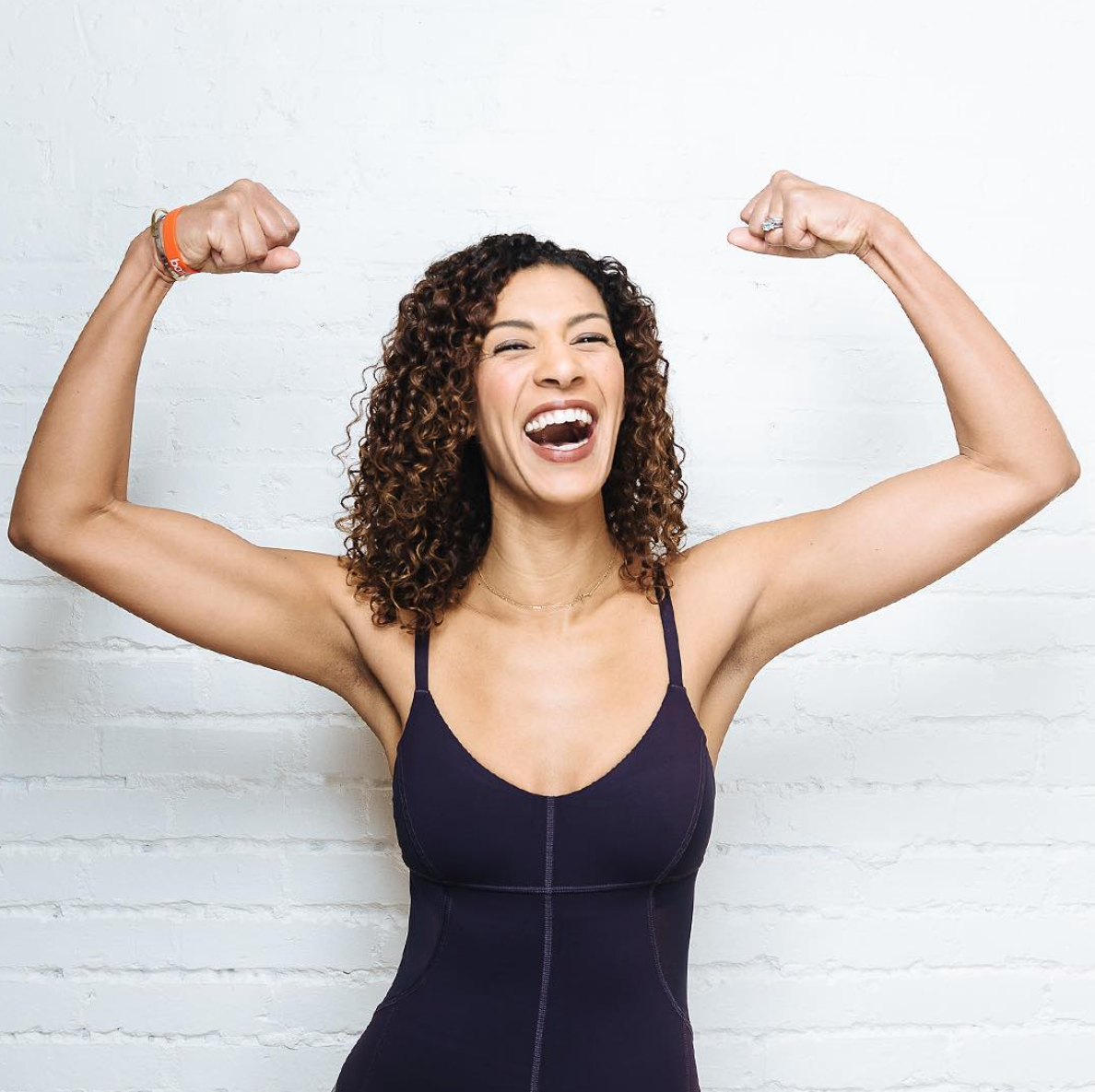
Which means there are plenty people clocking hours that don’t allow for an after work barre or yoga class or spin session. So where does one find the time to fit in a workout while working toward their dreams? Anywhere. Your office, your living room, in a hotel room. Whether you work from home, meet with clients coast-to-coast, or hold court daily at an office, you’ve got to move while you make moves.
Working out is proven to improve your mood and increase productivity. And can help fend off everything from jet lag to post-lunch crashes. So grab some water, a co-worker, and maybe that free conference room, and follow along with this ten-minute workout from barre3 Founder Sadie Lincoln. It's one of our favorite do-anywhere workouts. Oh, and if you still need to put some bass in your day, click through to the barre3 x Create & Cultivate Playlist.
If you love this workout as much as we do, there are over 200 more videos available online. Enter promo code barre3CC here to start your 15-day free trial.
Your Blog Is Money and You Don't Even Know It
Affiliate marketing is the gateway to $ marketing.
SO YOU'VE GOT A BLOG.
Your analytics are telling you that people are reading your content. Now you know you want to make the leap into monetization on your website without losing your authentic voice. What’s next?
AFFILIATE MARKETING.
I know it doesn’t sound sexy, but I can assure you, it is. This is your gateway to $$$!
Affiliate marketing at its core is simply placing trackable links within your content to get paid when your users shop. Aside from the obvious benefit of getting paid for promoting products you already love, affiliate marketing will give you data around your shoppers’ behaviors. This data will be crucial for you as you learn about your demographic. You’ll gain insights into what products and brands your readers respond to. You can then use these statistics and success stories as part of your media kit and story when speaking to brands and marketing yourself. You’ve just armed yourself to become an insanely professional, money-making machine.
[define it: Affiliate Marketing: At its core this practice is simply placing trackable links within your content to get paid when your users shop.]
You are probably wondering where you go to get these mysterious monetizable links. If you haven’t already, create an account on ShopStyle Collective, ShopStyle’s influencer network. You’re going to be able to access links, data on your link performance, and insights into your shoppers’ behaviors in one handy login. There’s even an app so you can monetize on the go!
Now that you’ve got your ShopStyle Collective account, there are a variety of ways to create links. You can do so within the interface, use the toolbar link generator, or create widgets for your blog. It’s fairly self-explanatory.
Now that we’ve discussed why and how, let’s talk about the most important issue: where.
You don’t want your site to look like one big advertisement, nor do you want to miss out on opportunities to earn revenue. The goal with affiliate marketing is to build upon content you are creating organically and simply add another layer of visual interest, while driving your readers to brands and products you love.
"The goal with affiliate marketing is to build upon content you are creating organically."
Tweet this.
Affiliate marketing also gives you a lens through which to think about your content calendar — do you want to create entire style guides for a season with looks for every occasion? Link those products! Create gift guides for holidays and special occasions. I personally love content where bloggers create how-tos and share ideas for how to wear trends or incorporate statement pieces. One of my favorite bloggers, The12ish Style, does a series where she re-creates celebrity looks in her own unique style. I actually just bought a sweater today from one of these posts (proof they actually work!).
KEY TIPS FOR PLACING LINKS
Make sure you are hyperlinking any photographs on your blog to the primary item you are showcasing.
Always use text and hyperlink, describing your products right underneath the top photo of your post — many readers won’t scroll down to read your entire post.
Hyperlink any text that describes a product throughout your post.
Provide alternatives — if you are showing a $2,000 Chloé bag, you can contrast that with a more affordable bag in a similar style as an added opportunity to drive traffic and convert your readers into shoppers.
Another great spot for links is within a scrolling widget beneath your post. ShopStyle Collective’s widget helps you generate a scrolling visual where you can add multiple product options beneath each post. These products can be directly related to your content or they can be another place to get fun and creative. Let’s say you are posting an amazing recipe for truffle french fries or a crazy-cool birthday cake. You can include your favorite cooking tools, new apron, dishes, or serving pieces in the widget beneath the post to impart additional visuals, stylish objects, and drive more traffic to shopping partners. The idea here is to give your readers access to your aspirational lifestyle, which they already want to re-create for themselves (and their own Instagrams).
One more idea: use the widgets for vacation packing lists — so necessary (and shoppable) with all the summer travel opportunities right around the corner!

Hilary Sloan leads ShopStyle’s North American business development team and works with top brands like Net-a-Porter.com, Saks Fifth Avenue, and Barneys New York to monetize via affiliate and creative partnerships. In building relationships with brands and working with ShopStyle and ShopStyle Collective’s blogger community, she realized that many young bloggers don’t quite have the tools to get started on building their business. She’s spoken in the past at Create + Cultivate, IFB, and other blogger conferences on the topic of monetization, revenue, and brand partnerships. When not at ShopStyle, Hilary can be found applying all her skills to her own mini influencer, her dog, Ella Bean.

3 Mantras You Need to Say in the Morning
Mantras you need to remember to live beyond your 9-5.

Repeat after me: you are more than your job, more than your 9-5, more than that paycheck.
It’s not uncommon to get caught up in the whirlwind of work. There are meetings and coffee dates, presentations to buildout, Keynotes to edit, and brands to partner with. Are you still there? Have we lost you in your coffee cup? We know it takes hard word, determination, and more than a handful of late nights and early AMs.
Sometimes the need to keep up can get us down. Especially when we feel like we’re falling behind and losing sight of work-life balance. But Michelle Wahler, co-founder and CEO of Beyond Yoga encourages women to embrace who and what they are right in this moment-- “perfect.”
We’re using a few of Beyond’s core values as mantra to remind ourselves to stay balanced, positive, and that we are more than what it says on our LinkedIn profile.
MANTRA #1: I WILL PERFORM
Beyond Yoga’s mission is to empower and celebrate women, just as they are. Which means having the confidence that you can handle whatever lands on your desk or in your inbox.
There is power in simply telling yourself you can do it. Whether in the morning before heading out the door, or taking a mid-day break to breathe in these words.
MANTRA #2: I CAN MAKE A GENUINE DIFFERENCE
What you do matters, both in the office and out. More often than not, we put our interests andhobbies on the back-burner when we are consumed by work life. But when you feel better, your ideas are better.
The energy you bring into your job seeps into your work. Taking care of yourself and nurturing who you are as an individual is just as important as taking care of business at work. Not only will it help you be more productive, but by taking time from your day to celebrate the things that make you who you are outside of the office will keep you inspired as well.
MANTRA #3: MY WORK IS TACTILE AND REWARDING
This is not a chicken and egg issue. When you bring good vibes into your work, you will feel rewarded by the end result. You will look at what you’ve produced and feel excited to share and carry it out into the world. You are beyond your work, because that when that work makes a difference, it goes into the world.
So, as you're reading this now, take some time to go to that spin class you've been meaning to hit up for weeks. Pick up the hobby you haven't practiced since you started your new job. Schedule your Sunday as family time.

Resource Roundup: Ignite Your Business With These Four Tools
Start the fire with these amazing resources.

When you’re starting a business, you’re going to need an arsenal of tools to help you make all the right connections and teach you the tricks to get your business off the ground. You could go on LinkedIn and reach out to your entire network and pick everyone’s brains on their best marketing tips, or cold email a few founders and see what were their biggest hardships when they started their company, but you still have to go beyond that.
We’ve rounded up a few of our favorite resources that take you away from hours of online research and let you make IRL connections that are meant to make a lasting impact.
General Assembly
General Assembly (GA) is a global educational company on a mission to empower a global community to pursue work they love. Focusing on the most relevant and in-demand skills across data, design, business and technology, GA is confronting a skills gap through best-in-class instruction and providing access to opportunities.
GA works with students online and in person across 15 campuses in 4 continents. GA also works with companies as partners in course development and graduate placement as well as helps companies stay competitive in today's digital landscape. Additionally, GA’s focus on affordable and accessible education combined with their education-to-employment approach is helping to create a diverse talent pipeline.
If GA sounds like the place where you want to start taking notes to apply to your business asap, you’re in luck! If you’re in Los Angeles this Monday, March 21st, our founder Jaclyn Johnson will be having a keynote as a part of GA’s #OffCampus festival. Find out all the details and RSVP here!
Creative Mornings
Created in 2008 by Tina Roth Eisenberg, aka Swissmiss, Creative Mornings came to life out of a desire for an ongoing, accessible event for New York’s creative community. The concept was simple: breakfast and a short talk one Friday morning a month. Every event would be free of charge and open to anyone.
Today, Creative Mornings has grown far beyond its New York border and has taken over 137 cities worldwide and has brought some of the most creative minds from music, business, design, marketing, advertising and so many more. Not only that, Creative remains free thanks to the support of their generous sponsors and partners. Anyone is welcome to attend, just RSVP to their events, and you’re all set.
The Book Shop
If you work in marketing or advertising and are still looking to sharpen up your skills in the field, The Book Shop is for you. The Book Shop offers you the chance to work harder than you’ve probably worked at anything in your life with some of the biggest creative professionals to create big ideas that change companies. With the one-on-one interaction that they offer, not only are you getting knowledge from some of the biggest head honchos in the biz, but you’re making amazing connections that will help you career in the long run. The Book Shop works to be one of the most rewarding experiences in your life that will ultimately land you the career you’ve been dying for.
ThinkLA
If you’re based in Southern California, thinkLA is a non-profit association founded to promote LA as a network of creativity and innovation in media, marketing, and advertising. With their memberships, you’re able to tap into their unparalleled networking and social activities, year-round knowledge-building through their events and programs, and be able to volunteer at their industry-related charities like Ad Relief and MAT Program. ThinkLA has been able to bring in some of LA’s biggest visionaries, dreamers, innovators, and creators into their network, so if you want to hang with the cool kids in LA, join ThinkLA.
What the Seed Fund Boom Means for Raising Series A
If it don't make dollars it don't make sense. Right?

TIME TO RAISE.
It's not uncommon to hear from founders about the time-consuming nature of fundraising. Katherine Power, co-founder of Clique Media Group told Create & Cultivate Dallas audiences that as a founder you should expect to spent at least six months of your fundraising year dedicated to only. Leura Fine, Founder of Laurel & Wolf told Create & Cultivate that, "Fundraising can be an enormous time suck. It’s not a waste of time. Because bringing in great investors is really important part of building your business and the dollars are there to help you grow."
Echoing this is the fact that there has never been a better time to be an entrepreneur, or a female at the wheel of a startup. The number of seed-funded companies has quadrupled over the last four years. Top line data from Crunchbase reports that in 2009, 9.5% startups had at least one woman founder, but by 2014 that rate had almost doubled to 18%. However, Crunchbase also found that female founders are most heavily represented in seed and angel financed companies — 19% of that total. Yet their participation rate drops to 13% during the Series A or B stage of financing.
So what gives? Why the drop? And why are companies finding a harder time in their second round of funding? There are a couple reasons that you, as a founder or entrepreneur, should consider.
THE 'SIGNALING' ISSUE
It used to be uncommon for VCs to invest first (or seed) rounds. However, with tech startups its more common to see VCs come in during the seed round. There is an old saying in venture capital, “Fill your canteen when you are by the river and not when you are thirsty.”
To a new company, this initially sounds great -- you get the money you need to launch, and can move the needle forward on your business. However, if a VC that invested in your seed round does not invest in you future rounds, a thorough investor will look into why that VC decided to pull out. It signals to other investors that if VC Company X was not interested or willing to invest in the next round, something must be wrong within the company.
The first VC investor is seen as someone with insider information. Whether it's true or not, it doesn't look good for you or your business.
That's why getting to know your investors and building a relationship and terms that you're comfortable with is crucial. FROM DAY ONE. Taking a check to take a check can screw you down the line.
There is an old adage in venture capital, “Fill your canteen when you are by the river and not when you are thirsty.”
Tweet this.
THE OVERCONFIDENT ISSUE
Many seed rounds are super fast. Laurel & Wolf was oversubscribed in their seed round within a month and a half. Their target goal was $500k. They raised $650.
[define it: Oversubscribed: Situation where a new stock (share) issue has more buyers than there are shares to satisfy their orders.]
On paper, that paper sounds great, and it worked well for Leura. However, there are plenty of startups that launch, but have a problem performing, executing, and raising money when it comes to Series A. Why? With crowd-funding and the boom of VCs raising Series Seed many entrepreneurs are heading into meetings with big VCs overconfident that they can raise. They don't understand their business model, their metrics, or their data, and according to Leura, they don't understand as founder how vital it is for them to control their fundraising process.
This makes the fundraising process significantly longer, and young startups are finding it much harder to secure a term sheet. Plus, the longer it takes to raise, the more you're prolonging the long-term goal: building a successful business. The goal should be to spend the minimum amount of time required to raise your funding goals.
[define it: Term Sheet: A bullet-point document outlining the material terms and conditions of a business agreement. After a term sheet has been "executed," it guides legal counsel in the preparation of a proposed "final agreement".]
THE WAY, WAY MORE COMPETITION ISSUE
Simply put, the more companies that raise their seed funding, the more companies that are going to be looking to raise Series A. Even though their is a influx of funds at the seed level, the same can't be said for Series A. So if five companies secure seed funding, and five companies go into Series A, the competition is that much harder.
In part, many entrepreneurs require less money to hit their first round targets, so this is also over-saturating the market.
The safest bet is to know exactly what you want, how you want to do it, and understand your metrics. That way when you go to raise Series A, you have a leg-up on the competition, and are more likely to give your company the legs it needs for the journey.
If a seed round is the sprint, you should still be prepared to go the distance. Ready, set, raise.
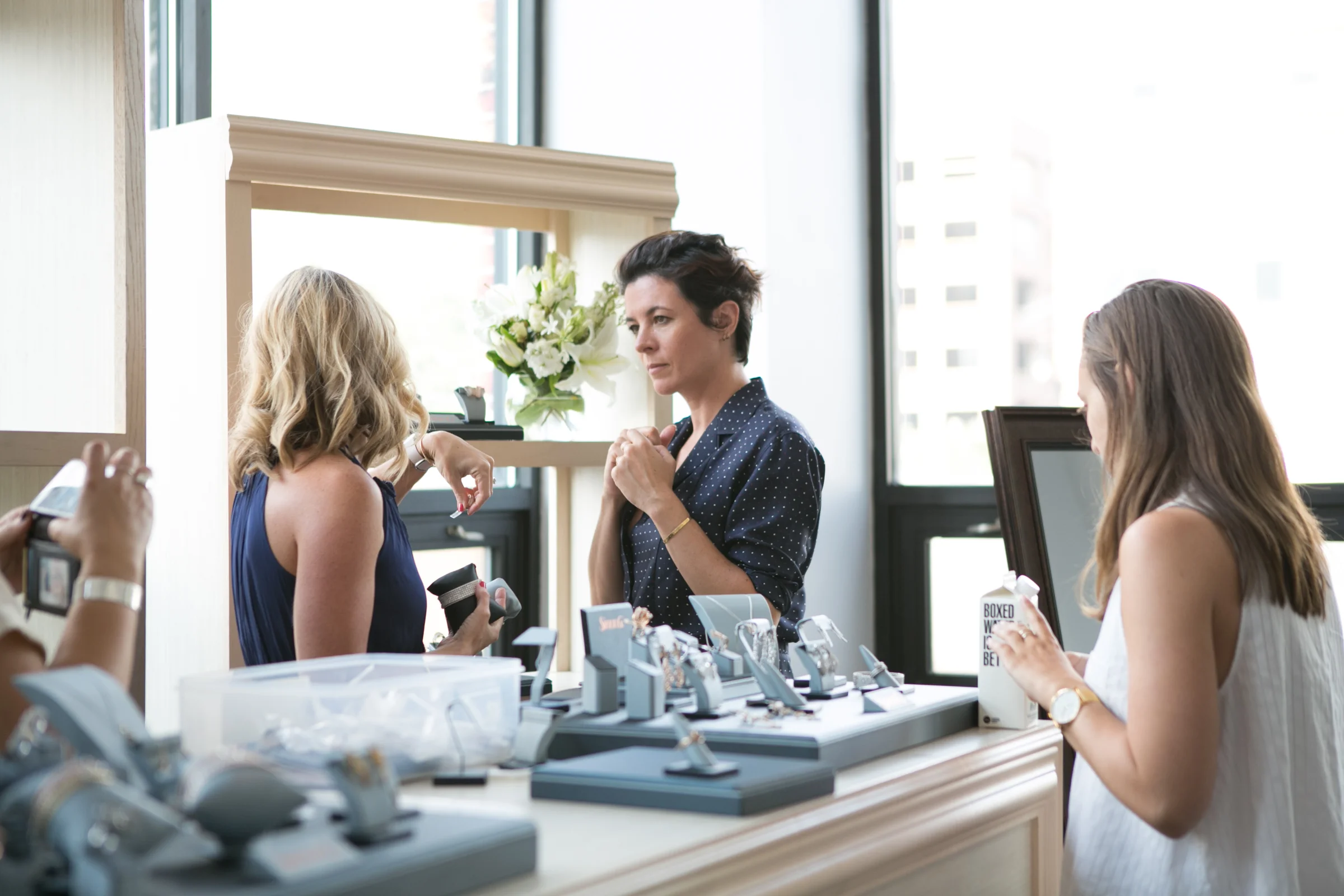
Making Statements: Your Guide to Being Bold in the Office
Power dressing leads to power moves.

STANDING OUT IN THE WORK CROWD.
It's a tricky balance, because what you want is to be a team player while also advancing your career and showing that you're bold as brass. Or perhaps diamonds, in the case of Simon G. The jewelry company knows all about making statements-- from pieces that celebrate achievements and love, to brilliant necklaces that elevate an entire outfit.
We're breaking down the 6 ways you can be bold in the office.
1. POWER POSING IS GOOD FOR THE BRAIN AND BODY
Online, content in king. In person, it’s confidence. One of the best ways to “fake it till you make it” is with your stance. Your body language has been proven to shape who you are, affecting everything from the way people view you and your intelligence to the way you speak. The most common power pose is “opened up” and indicates a position of control. Instead of a closed off body language that communicates a more meek personality.
A power pose can actually change the way you view yourself, even change your body chemistry. Posing for just two minutes can increase your risk tolerance, which makes for bolder and more executive office decisions.
2. POWER DRESSING, WELL THAT ALSO MATTERS
When you look good, you feel good. And making a statement when getting dressed to go before the board or you boss can be as simple as adding a Simon G. necklace that says, my outfit is boss, and so are my ideas. A successful work uniform saves time, energy, and also lets people know what kind of work you do.
There’s a reason it’s called dressing to impress: it works. You project confidence and earn the trust of people entrusting you to get the job done.

Fabled Collection Pendant, 18K Rose Gold - $3,740 USD
3. ESTABLISH YOUR CONFIDENCE EARLY
Everyone claims to love the story of the girl who came into her own, but in truth, it’s much more impressive to own the room or a job without being primped. If you’re about to host a meeting, set an agenda, talk about priorities, and ideas moving forward in order for your team to work most efficiently.
If you have expectations or if goals are changing, put those on the table. The tone you set is crucial for not only establishing confidence but also getting the results you want.
You are in charge. So act like it.
4. DON’T FORGET WHERE YOU CAME FROM
This may feel counterintuitive but it’s so important to bring your past into your present, and allow it to inform your future. In fact, confident but humble is the way to go when it comes to power moves. Being bold doesn’t mean having an ego about what you do, and it certainly doesn’t mean that it’s an excuse to belittle your team or workmates.
You’re only as good as your team, whether you’re at the top of the ladder or the bottom. Sparkle and shine in the office or at a meeting in a piece like this from Simon G., while remembering your roots.

Caviar Collection Pendant, 18K White Gold - $5,280
5. SHOW, DON’T TELL THE WHY AND HOW YOU’RE A UNIQUE ASSET.
Like a gorgeous piece of statement jewelry that speaks for itself, you need to make sure that you are engaging your peers with tangibles without telling them why you’re great at your job.
Show them with success. Meeting booked. Partnership deals in the works. A cold call that proves you have the stomach to be fearless.
6. LOOK AHEAD, INSTEAD OF AROUND YOU
This is simple: comparison is the thief of joy, but it’s also the buzzkill of confidence, and ultimately success. Own the position you’ve found yourself in and you’ll find that all of the sudden you’re no longer faking it.
(And when in doubt or you feel yourself feeling not so bold, ring up a mentor who will tell you next steps.)

Never Make It Perfect: Laurel & Wolf CEO Breaks Down How to Launch
Leura Fine gave us 30 minutes. And we're giving you all her advice.

LAUREL & WOLF IS THE FUTURE OF DESIGN.
At least if Leura Fine, CEO and Founder of the interior design company that offers its services online only, has a say.
An innovator in the online design space, Laurel & Wolf has developed a platform and software to allow for easy communication between a client and a designer, from anywhere. The entire service takes place in the digital world, and has opened the industry of interior design to people who never thought they could afford such services.
We put 30 minutes on the clock with the busy entrepreneur to pick her brain on everything from bootstrapping your business to the future of tech.
IN THE BEGINNING YOU MAKE IT WORK & GET IT DONE, NO EXCUSES
In January 2014 Leura began concentrating full-time on Laurel & Wolf. The first version of the site was up that month.
"I was the algorithm" she says about the company's beta site, a very bare-bones version of what exists today. Instead of spending 100k on a website build out, she paid a local LA-based developer 5k to build out eight pages with no backend. "I started spreading the word through friends and friends of family, putting it out on social media, saying, 'Hey who is looking for interior design services that only cost 300 dollars?'"
She had about 1,500 people signup over the course of six weeks. The first iteration of Laurel & Wolf took users through a "style quiz,"-- that had no outcome. What Leura was testing was the public's interest. The BIG question: Would people be willing to pay for an interior design service online?
"It was many, many long nights, of me staying up, calculating and emailing people their style quiz results. If you had this many As and this many Bs, you were 'Contemporary Eclectic.' It was terrible to demo, but between the MVP and servicing actual paying clients, we validated that not only there was a demand for the market, but what it would be like to acquire customers."
By the time they were ready raise money the company (which was two people at that point) also had a good, working idea of what the basic functions of the platform needed to do.
[define it: Minimum Viable Product (MVP): In product development, the minimum viable product (MVP) is a product which has just enough features to gather validated learning about the product and its continued development.]
By June 2014, just six months later, they had launched the site.
WHEN RAISING MONEY, YOUR RESPONSIBILITY AS FOUNDER IS TO CONTROL THE PROCESS
The interior design world provides a service that typically 1 percent of the population can afford. People like venture capitalists and those with money to invest in the business. In the beginning, there was a little pushback-- angel investors who didn't understand the service, but what Leura had was proof: the basic function of what the service needed to provide. With that proof she had the confidence to control her fundraising. The goal of Laurel & Wolf's seed round was $500k. They hit $650k in a month and a half.
[define it: Seed Round: The initial capital used to start a business. Seed capital often comes from the company founders' personal assets or from friends and family. The amount of money is usually relatively small because the business is still in the idea or conceptual stage.]
"I received this advice early on and tell every founder I meet who is fundraising the same thing," Fine explains. "You as the founder, your job is to control the fundraising process."
"You as the founder, your job is to control the fundraising process."
Tweet this.
She was resolute, telling potential investors: "'This is the amount we’re raising, this is the day we’re closing, you’re either in or you’re out.'" And she got it done that way. "I couldn't continue to chase people in circles, it was crazy towns. I had to build a business."
In both Series A and Series B she took a similar approach. She was strategic and thoughtful, meeting with VCs when it made sense and getting to know them. When it came time to raise, it was go time. She took meetings, had term sheets by the end of those meetings, and then made decisions very quickly.
[define it: Series A: Series A is usually the first level of fundraising where VCs get involved. The name refers to the class of preferred stock sold to investors in exchange for their investment. Usually in this round you will see the company's first valuation.]
Another part of controlling the process she says, is taking all of the multifaceted variables into account. "There are questions," she explains, "that you need to ask yourself when you talk about why you're raising money. Are you raising money to accelerate growth? Could you build this business without raising money? Do you know what your business model is? Do you know the metrics that you’re trying to hit?"
That's your job as founder: to have a business model and monetization strategy in place from day one.
Your job as founder is to have a business model and monetization strategy in place, from day one.
Tweet this.
TAKE A SERVICE ONLY AVAILABLE TO 1% AND DEMOCRATIZE IT
It's a simple, but brilliant idea-- take a service that only a small percentage of households can afford, and open it up to more people. More people=more work=more revenue.
"You’re talking about taking a small pool of people in the U.S. who could afford to hire interior designers. We’ve opened up the market to 30% of the U.S."
This represents enormous opportunity for growing a consumer base, while offering designers the ability to extend the arm of their business. It's simple supply and demand, where both parties benefit. People get spaces they loves; interior designers get to do the work they love.
"Design is more of a science than I think people realize," Fine says. "You don't have to be in a space to make it impactful. As long as you have good assets in place— whether that’s photos, video, and obviously dimensions, then you have the opportunity and ability to design just as well as if you were in person. And most importantly, make an impact in someone's life."

CHICKEN OR EGG? DOESN'T MATTER, JUST LAUNCH
"I’ve been meeting with a lot of female founders," Fine says, "and I’ve had the same conversation the last three meetings. They tell me they want to wait to launch until they feel that they’re ready."
There is however, no such thing as ready. Sometimes the founders don't want too many eyeballs on an unfinished product. Sometimes they are worried about letting down a customer or not being able to deliver.
But, Fine notes, "When you’re building a company from the ground-up there is always the chicken and the egg. You have to go for it. You have to put it out there and see what it does."
"When you’re building a company from the ground-up, you have to go for it. You have to put it out there and see what it does."
Tweet this.
In the beginning Laurel & Wolf was far from perfect, but that didn't matter. "The last thing you want to do as a tech company is go out and build the entire working product from A to Z," says Fine. "You really have no idea what it needs to do and what it's going to look like."
Adding, "There is no such thing as perfect."
THE FUTURE IS MAN & MACHINE, WORKING TOGETHER
"Our software," she says, "represents the best combination of humans and technology working together to really transform people’s lives. Our clients get to live a better way through the spaces that they spend time in."
At the end of the day, she realizes that all the product recommendation and algorithms can’t predict how someone will feel in their space. But that’s where the designer comes in.
“A designer,” says Fine, “really understands, beyond the aesthetics of the space, the aesthetics of the person."
Arianna Schioldager is Create & Cultivate's editorial director. You can find her on IG @ariannawrotethis and more about her at www.ariannawrotethis.com

Instagram Just Pissed Off the Entire Internet
FILTER THIS KEVIN SYSTROM.

Update 6/3/16: After months of delaying the update that has caused a social media uproar and has been petitioned against to keep the popular social media platform chronological, Instagram's new algorithm is now live to all users starting today.
FILTER THIS.
The eighth most popular app in America is piloting a non-chronological feed. In a move that already has a Change.org petition to stop its rollout, Instagram announced the biggest change in its history since adding the video feature in 2013.
Of the change IG's CEO, Kevin Systrom wrote, “You may be surprised to learn that people miss on average 70 percent of their feeds. This means you often don’t see the posts you might care about the most.”
And then, the Internet exploded. (Sorry, Yeezy, we'll get back to talking about Kim K. mañana.)
“To improve your experience,” he continued, “your feed will soon be ordered to show the moments we believe you will care about the most.”
Therein lies the problem: “We believe.” (Also, newsflash: live band videos are actually the worst, please don't put that at the top of my feed.)
Facebook implemented this strategy first with News Feed, a feature that was introduced seven years ago. The backlash was palpable then as well, until everyone simmered down-- and started spending more time on Instagram, where their feed was still an of-the-moment, choose-your-own-adventure tale. In an over-saturated tech world, where consumers know they are constantly being marketing to, IG still felt authentic. (Plus or minus a Valencia filter or two.) It was curated, not by a team with a computer program crunching out an algorithm, but by you. It was yours.
In an over-saturated tech world, where consumers know they are constantly being marketing to, IG still felt authentic.
Tweet this.
At our recent pop-up at SXSW there was a lot of talk about putting the “humanity” back into the machine. It’s a reason why Facebook Live is a platform that people are betting on.
What IG is doing, is the opposite. Chronological works because it feels real, even if it is filtered. There is a sense of ownership in what you’re seeing. We don’t need another app optimizing the order in which we see things. Real life isn’t like that. Let us explore for ourselves.
Putting personal aside however, you might be wondering what this means for your business? Just like Facebook, the likelihood of a pay to play option for brands to spend the dollars to land at the top of your feed, is high. Valuation based on engagement is still hard to quantify, and money needs to be made. (Figure that out yet Snapchat?)
How the algorithm will effect how brands interact with followers is clearly yet to be seen, but we can be certain that companies will have to evolve their social strategy to keep up with changing platforms. Brands will need to engage their followers more in order to stay at the top of their feeds, and possibly, work harder for their attention. In a way, this could do for brands what people feel so strongly against: a matching brand-to-consumer algorithm means that company will have to engage on a human level. If nothing else, it certainly keeps social strategy directors on their toes.
In a New York Times interview announcing the change Systrom stated: “What this is about is making sure that the 30 percent you see is the best 30 percent possible.”
Which sounds pretty, but some days you don’t want to see the best. Some days you want the worst 10 percent. You want to see the sh*t photo of your friend’s breakfast and feel better about your life.
Some days you want to see the sh*t photo of your friend's breakfast and feel better about your life.
Tweet this.
Arianna Schioldager is Create & Cultivate's editorial director. You can find her on IG @ariannawrotethis and more about her at www.ariannawrotethis.com
Best Practices: How to Engage Users with Facebook Live
And why you should be using it now.

IN 2015 FACEBOOK VIDEO AND FACEBOOK LIVE WERE ONLY AVAILABLE TO CELEBRITIES.
But the Facebook floodgates have been opened to the masses, and the kings of social in Silicon Valley have noticed that the content that performs the best is interactive.
Facebook Live enables users to share experiences and opinions in real time, from broadcasting events to friends and family, to connecting a brand to people around the world. Consumers are engaged by events happening in real time, and Facebook has seen that on average people will watch a video more than three times longer if it's live, compared to when it is not. Which might be the best reason to start using the platform.
On average people will watch a video more than three times longer if it's live.
Tweet this.
THE BASICS: HOW TO GET STARTED

To start using Facebook Live, simply click "What's on your mind?" on the top of your News Feed. Select the Live Video icon.
BEST PRACTICES: DO IT RIGHT, DO IT RIGHT NOW.
1. Announce ahead of time when you'll be using Facebook Live: Build anticipation and excitement by letting people know when to tune in.
2. Encourage followers to subscribe so that they get notifications the next time you go live.
3. Don't go live without a point. There should be a rhyme, reason, and strategy behind your Live. Whether you're answering questions, showcasing how to use a new product, or giving a 360 fashion sneak peek, your audience should understand what the broadcast will be about. An engaging and compelling description is a useful tool for this.
4. Shoutout to people in real time with their real names. The more involved you make people feel, the stronger the sense of community you build, and the more likely people are to stick around.
5. Don't go live without a strong connection. People tend to think that using Facebook Live is perfect when they're on-the-go, but a "Broadcast Paused" message can be fatal to the success of your convo.
6. The longer the broadcast the more people you're likely to reach. People will tune in and drop off, but give an audience the opportunity to discover you. Facebook recommends going live for a least five minutes .
7. Be as creative as you can. If you're CEO of a company, host "Office Hours" where entrepreneurs can ask you questions. If you're a lawyer with a great law practice, host "Beyond the Bar," where law students can ask you about life after law school. If you're a fashion brand, take fans on a tour of your factory and show them your best practices. Maybe you're responding to backlash your brand has experienced. There are so many ways to use Facebook Live and connect it to your other social programs. So start throwing ideas at the wall.
WHY IS THIS GOOD FOR YOU BRAND?
Fractured attention spans have made capturing and engaging an online audience incredibly difficult. But Facebook Live is real time feedback. You'll see the number of live viewers, the names of people tuning in, and you can respond to real-time stream of comments. It's as close as you'll come to your audience, and they'll appreciate the effort.
It's putting the humanity back into an online and fabricated "personal" experience. Though you will most likely use strategy, it's showing that there are people behind the machine. There's a reason people tune in longer to real time video-- they want life, personality, and off-the-cuff truth that doesn't come with curated content.
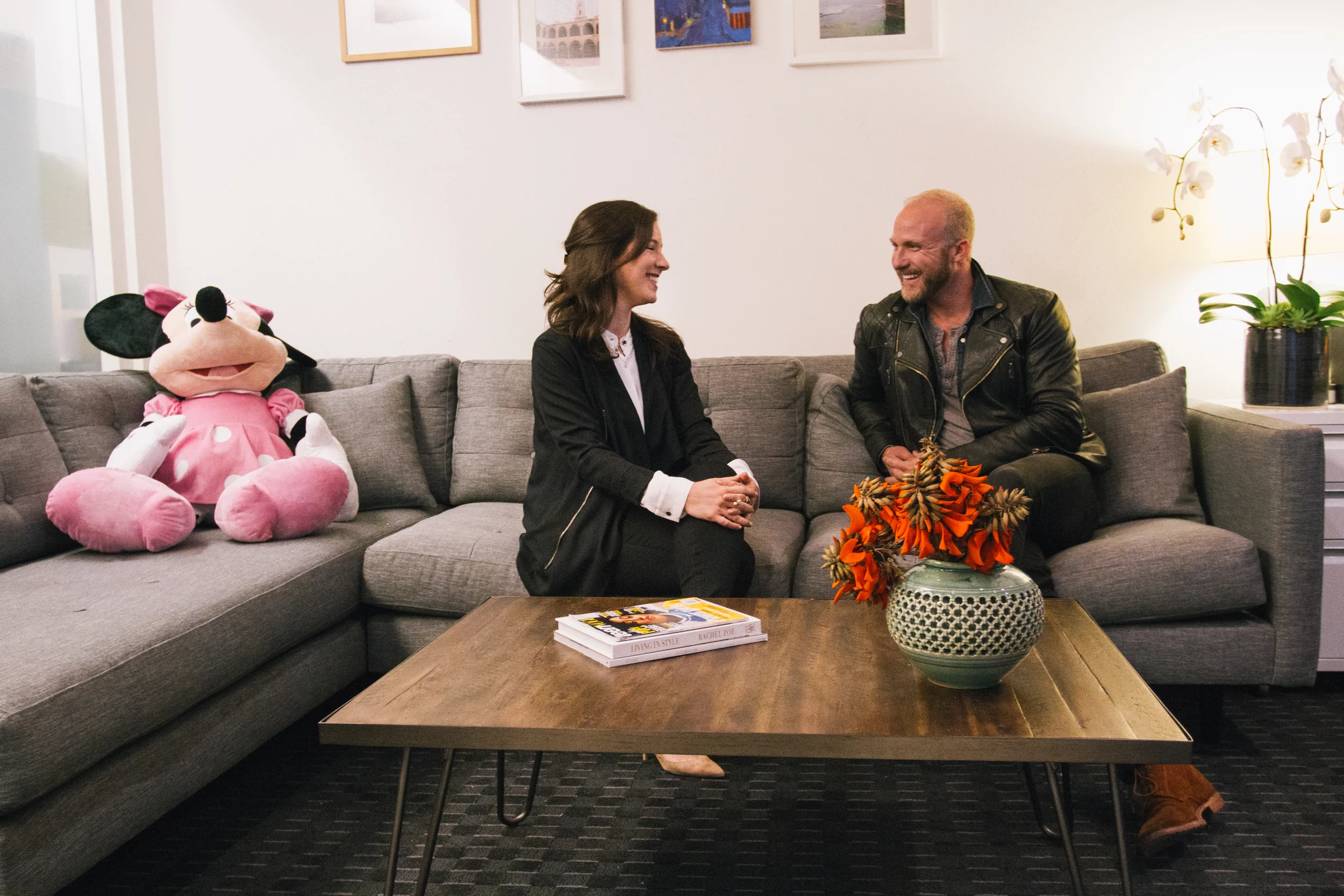
Building Your Audience: Two Maker Studios Executives Share the Secrets
"There are a lot of things we do, that content creators can't do on their own."
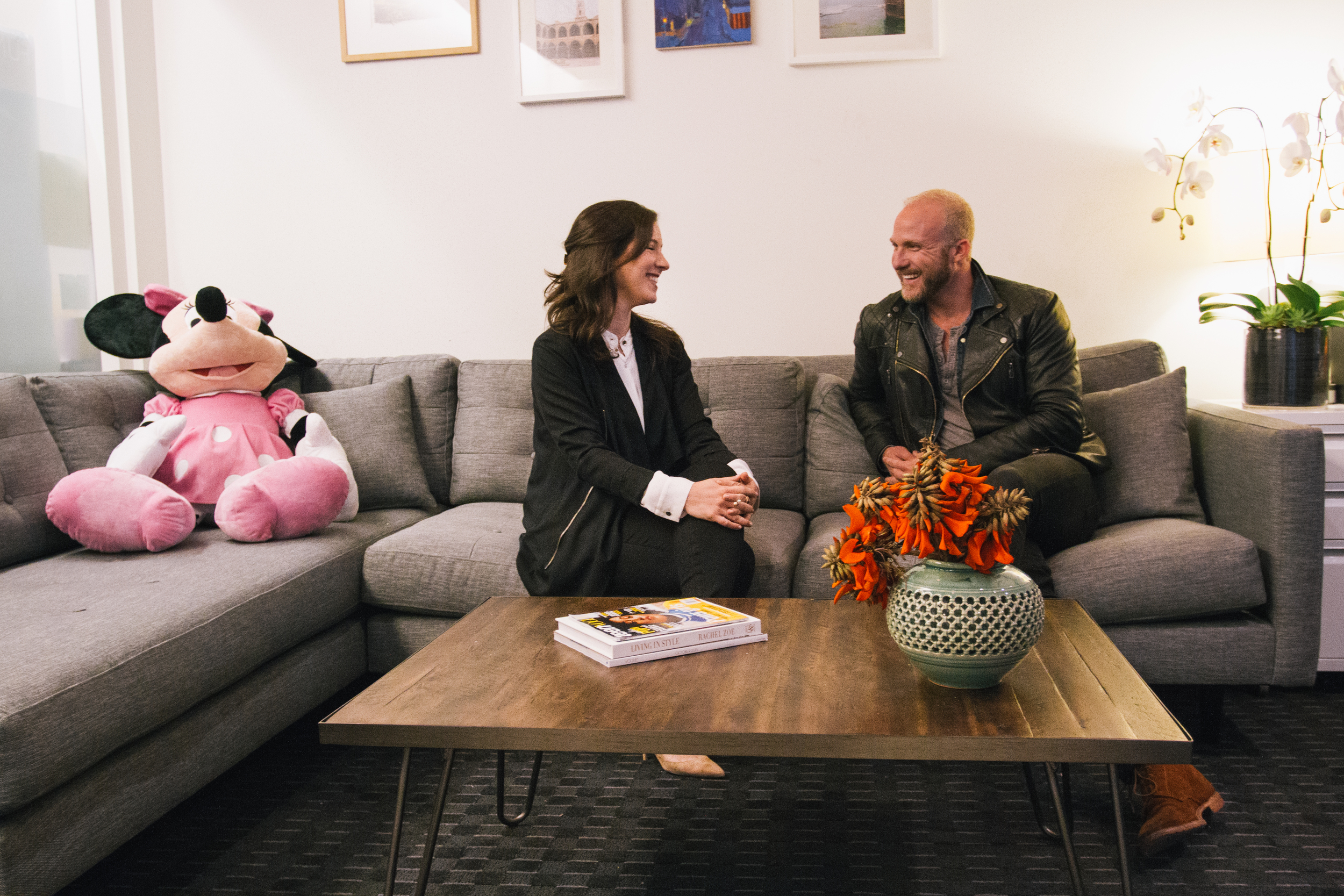





THE YEAR IS 2009. JUSTIN BIEBER IS 15 AND HAS BEEN CAPITALIZING ON THE POWER OF YOUTUBE FOR JUST ONE YEAR, HAVING BEEN DISCOVERED ON THE PLATFORM.
You might not remember it, but Maker Studios, the now largest content network on YouTube which attracts more than 10 billion views every month with over 650 million subscribers, certainly does.
In 2009 a group of dynamic content creators joined together to drive audiences to a single destination–The Station. Maker is now home to top digital stars, multiple channels, and content, where programming is organized by genre. Court Petrie, Head of Audience, and Rona Moser, Director of Programming, spearhead Life + Style, developing content for The Platform, Maker's global beauty and fashion destination. With shows like The Fashion Statement with LA DJ and trendsetter Amy Pham, The Platform has over 37M views on YouTube.
But with ever-changing platforms, why is YouTube and Maker still relevant?
"With ever-changing platforms, why is YouTube and Maker still relevant?"
According to Court it doesn't hurt that Maker is, "one of the oldest multi-channel networks. We’re the pioneers," he says, "the OGs if you will." But even OGs have to pivot and change. "We’re moving past being a multi-channel network and into being a true media company," explains Court, "with a focus on original programming and intellectual property. We want our creators to constantly be creating and pushing their brand, and that is where we are really strong."
Strong they are, at least if Disney's nearly 1 billion dollar March 2015 acquisition is proof for the Maker pudding. In a deal that raised a few eyebrows and got comment sections shaking, Maker received 500 million upfront, cementing the company's belief in the massive opportunity that short form digital video holds.
It's strategically-enhanced storytelling with plenty of room for growth and expansion. In 2016 Court and Rona are focusing on pushing their current audience, trying to get new audiences, and thinking about what will do well in distribution with Maker's 20 plus distribution partners in the US and worldwide, maintaining that content creators should be thinking about this in the same way.
As for retaining an audience in an over-saturated market both content and platform-wise, it's a two-part strategy: "Audience is based on listen and learn," explains Rona. "You have audience comments- listen to those. Learn their habits. When are they dropping off? When are they tuning in? For instance, with The Fashion Statement we know if they don't see the looks upfront in some kind of a montage, they aren’t going to stay to watch."
"Audience is based on listen and learn."
Tweet this.
Adds Court, "You have to look at the algorithms and the numbers to figure out how to bubble your content up."
In terms of new platforms, they think betting on Facebook Live is a pretty safe. And over the next year audiences can expect a rebrand from The Platform as well as Court's strategy for social programming that involves Snapchat and Instagram working together.
“We know what we do really well. As long as we create strong brands, we can change platforms easily. You can't just be on YouTube anymore. This is the time where you can experience and grow your brand and grow your audience,” heartens Court.
"As long as we create strong brands, we can change platforms easily. You can't just be on YouTube anymore."
Tweet this.
“Women are looking for inspirational, but relatable content,” says Rona. “That’s what we want to develop, and that’s not always a ten-second clip.”
The biggest mistake they see with new talent is inconsistency. "You have to figure out a system," explains Rona. "Whether that's Tuesday, Thursday, Saturday, or something else, but you have to have a schedule."
"There's a reason it's called social programming," says Court. "It needs to be consistent. But early on you should be taking risks and trying new things. I've had a lot of conversations with green content creators who say, 'This is my brand,' but they're not established enough yet, so taking risks is paramount."
Which means breaking from the pack. "Everyone is doing 'What's in my Bag' and smokey eye tutorial," Rona points out. "Don't do that. You do you boo."
"Everyone is doing 'What's in my Bag' and smokey eye tutorial. Don't do that. You do you boo."
Tweet this.
The talent Maker wants to get in bed with are those with an original POV-- because what Court and Rona are looking for are the possibilities beyond short-form. For instance, developing a television show that's unique to that person, merchandise that's special, and brand partnerships that live online and off. They need to understand the 'why' behind the talent before they can start a conversation with a brand. You can post a photo that everyone else is posting, but if there isn’t intention or your voice behind it, “You’re just another follower,” says Rona.
Two such Maker talent with an understanding of their respective brands are Chriselle Lim and Alisha Marie. "Chriselle is one of those rare talents that has mastered her brand on every platform, says Court. "Her brand carries out across platforms in a very fluid way. There are large brands that don’t do it as well as she does."
"Luck," vocalizes Rona, "has nothing to do with it. The most successful talent in the content game understand the numbers and analytics." Something Court and Rona say the Create & Cultivate audience will glean from listening to Maker's roster talk about harnessing the power of digital platforms this coming May 7th.
As Rona says, "Be a beginning." Which is clearly something Maker has been doing since 2009.
Images shot by Joshua Escueta.