3 Top Fashion Bloggers Dish on the Behind-the-Scenes Reality
Don't be fooled by the blogs that they got.
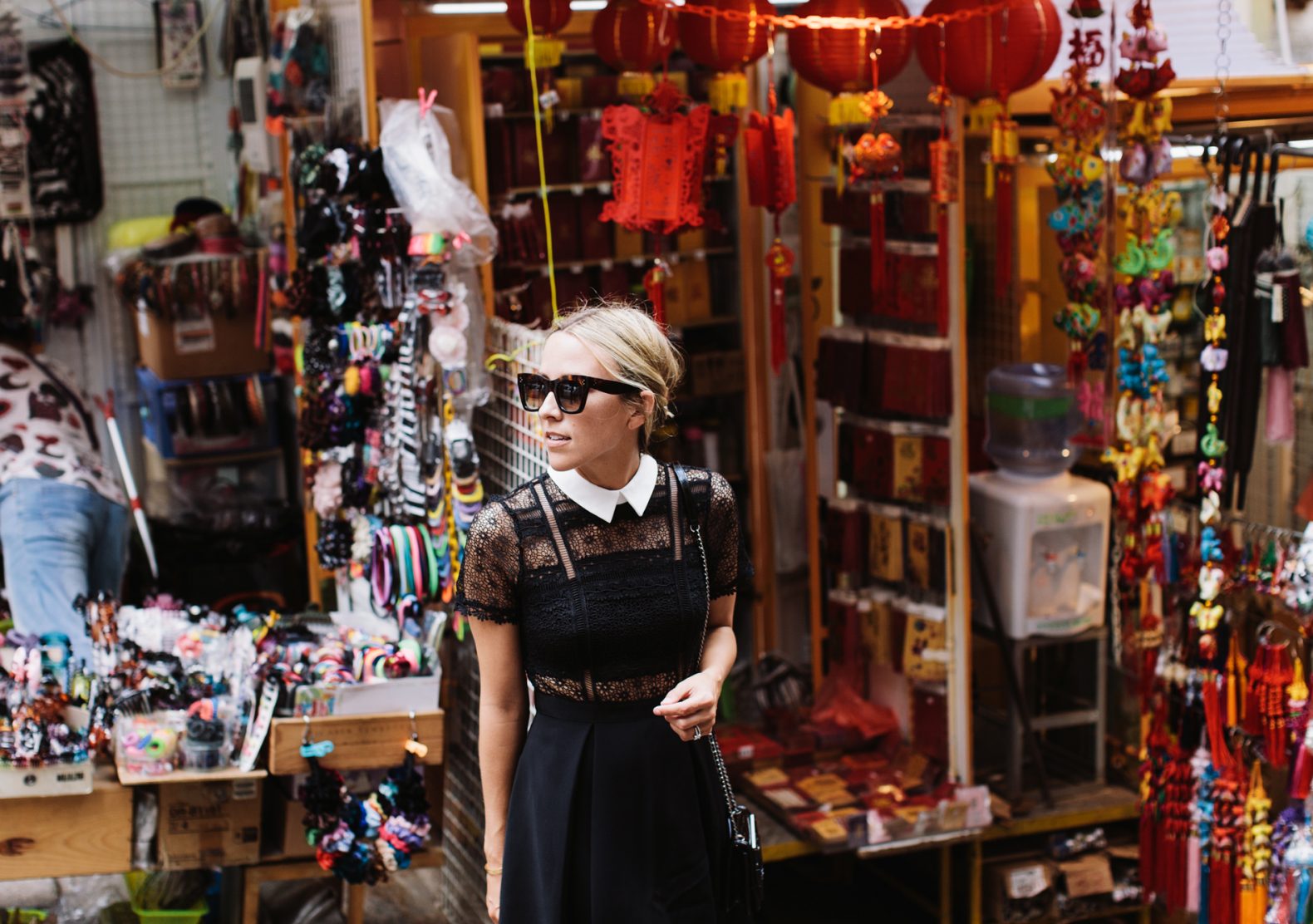
Jacey Duprie of Damsel in Dior (photo credit: Alexandra Gibbs)
Blogging has come under scrutiny every which way to Sunday over the last five years. From those wondering about the longevity of the career, to sticker shock at six-figure endorsement deals between top bloggers and brands, like the recently reported $500,000 paycheck between Aimee Song and Laura Mercier, to those harsher critics who question if blogging is a career at all.
The shade, thrown from all corners of the www, is partially due to the shrouded nature of blog life. Is it real? Is it authentic? Just how much are people making for a photograph? For a long time bloggers were hush hush about their income and sponsored posts. Only recently has disclosure emerged as a trend-- from bloggers wanting to get out in front of the story and those who truly believe in transparency.
From the other side of the keyboard, bloggers appear to have it all. Work from home. Freebies. Invites all of the wold and the fancy events. But top-tier bloggers— those making over $10k/month only account for about 4% of the industry, and on the low-end, they aren't making anything at all. 42% of bloggers work full-time or part-time in a non-blogging job and are committing nights and weekends to the endeavor hoping that hard work, time, and determination will pay off.
Jacey Duprie, journalist turned blogger, started her blog Damsel in Dior in 2009. Two years later, in 2011, she left her job to pursue blogging full-time, and the switch from traditional media to blogging was no cake walk. “To anyone who says blogging is easy and is all about simply taking pretty pictures,” she says, “I challenge them to try doing it for one month, or just follow me around for a week and I’ll prove you wrong.”
It’s a sentiment echoed by many in the blog world.
Amanda Holstein who runs the popular modern-day advice column, Advice From a 20-Something says, “Most of blogging consists of sitting behind a computer and running your own business. I spend a lot more time than I anticipated managing the business side of things, like tracking and projecting revenue, securing campaigns, tracking expenses, etc..”
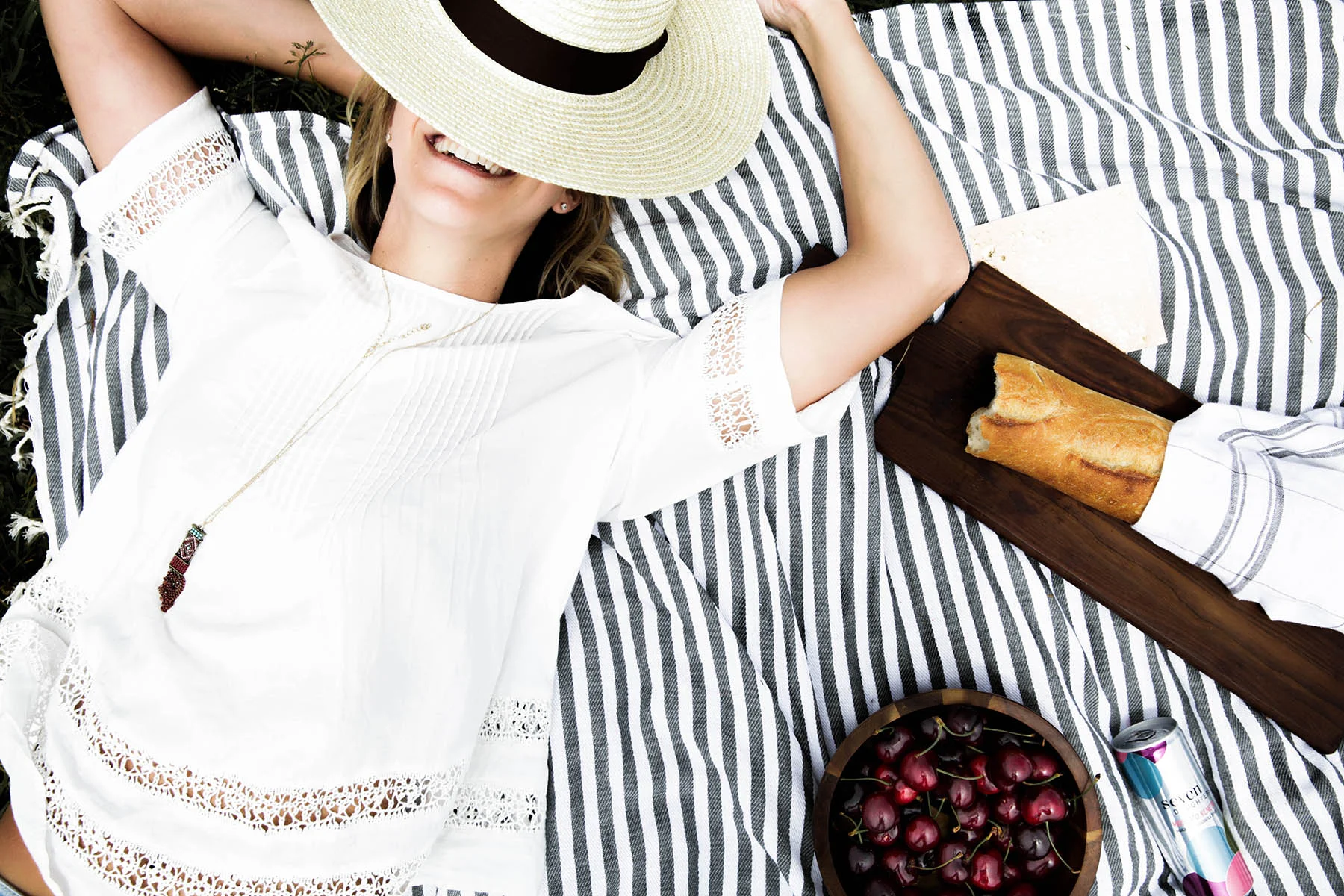
Amanda Holstein of Advice from a 20-Something (photo credit: Andrea Posadas)
She also brings up the difficulties of freelancing. To be your own hype person is a strange job and while Instagram and Snapchat show the fun side of blogging, AKA “the photoshoots, the trips, the events,” Amanda says, “most of blogging consists of sitting behind a computer and running your own business.”
Jacey sums it the difficulties as such: “In a nutshell: Invoicing and accounting is hard. Losing friends is harder. Hate forums suck (especially when they rip on your parents). Traveling alone is lonely. Fashion week is worse than figuring out which lunch table to sit at in high school. And it’s reshooting product because the brand didn’t want you to wear the color pink but they didn’t tell you not to wear the color pink until after you scheduled time with a photographer, waited out the rain to finally get the picture perfect sunset shot of an outfit you spent weeks planning…”
“Fashion week is worse than figuring out which lunch table to sit at in high school.”
Tweet this.
Amanda says another difficult aspect of running a blog is the solo time. “ It's tough not having someone around to bounce ideas off of. Even just having someone to listen while I talk through some of my thoughts and ideas would be so helpful.”
Daniela Ramirez who runs the Miami-based English/Spanish fashion blog Nany’s Klozet says that by the time she’s done explaining her job to someone, “they don’t have any words.”
“I do a lot more than take pictures. Taking blog photos is just a portion. I don’t have a manager, I don’t have an assistant. I answer at least 50 emails a day- from brands/PR companies wanting to work together and readers asking style/blog advice. I do all my management: negotiating with brands, invoices, follow-ups, etc. Every shoot is half planned (we do a lot of improvising), but since there are deadlines, we have to stay organized on what needs to be shot and were. We are also journalists; we write, we research. Some blogposts need graphics. When I do Youtube videos: planning, producing, editing…it’s a lot.”
“I do a lot more than take pictures. Taking blog photos is just a portion."
Tweet this.
That doesn’t even include the actual blogging she says. “Putting the post together, editing the photos, arranging the html in both languages, linking to each store.” The final cherry on top is the social media. You have to make sure “you update all networks with relevant content on each one.”
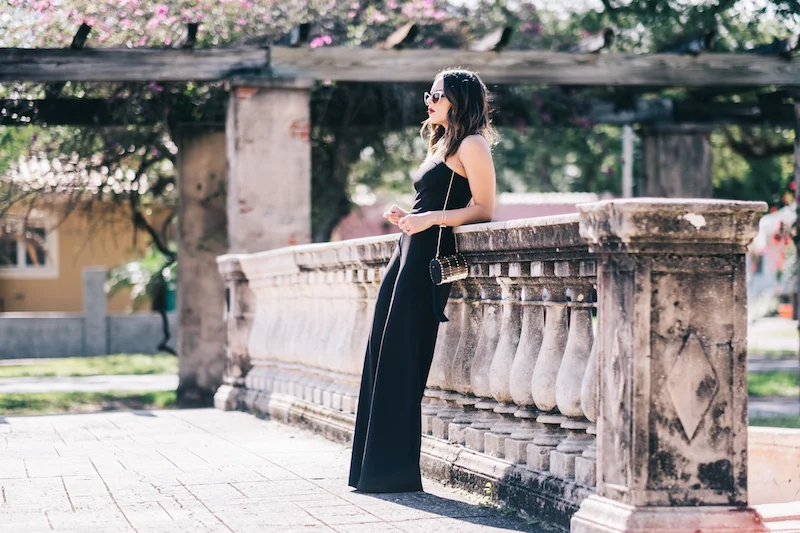
Daniela Ramirez of Nany's Klozet
If you take into consideration the rate at which someone scrolls past an Instagram photo, casually making the decision to like or not to like (that is the question of this digital age), the amount of BTS work that goes into curating and crafting is almost crazy.
Throw in the competition and the number of new fashion bloggers that get added to the sphere daily, and it’s amazing there aren’t more stories of blogger burnout. The pressure to be on top of trends and be early adapters mounts with every passing day. Bloggers constantly have to give their fan base what they want, stay authentic, and at the same time, keep content from getting boring. Many of them are also paying their photographers out of pocket.
Daniella says she likes to travel with a photographer because the shoots end up more natural, however, when she’s home she says, “I have to shoot about 3-4 outfits at a time because I am scheduling— and paying for— a photographer’s time.”
There are countless sites telling bloggers just how to make money. Focus on content that other outlets ignore. Make sure that you develop your photography and social media skills— AKA become the queen of appropriate hashtagging and engaging your audience— and focus on quantity and quality. As a blogger you are both king of the social media jungle as well as its most vulnerable prey. If you aren’t producing, you’re losing. There aren’t many professions that require such a constant outpouring of content, and it is exhausting.
"As a blogger you're both king of the social media jungle as well as its most vulnerable prey."
Tweet this.
And yet, it's a career that most fashion bloggers are reluctant to give up at this point. For Jacey she sticks with it because, quite simply, "it works." And there are few modern jobs that don't require more than a 40-hour work week commitment.
But if you think blogging is taking a photo and that "anyone can do it," think again friends.
Arianna Schioldager is the editorial director of Create & Cultivate. She has never once thought she could be a blogger.
More from our blog:

Damsel in Dior Shares Her Secret to Success
From journalist to blogger, she's sticking with the latter.

Photo credit: Frankie Marin via Damsel in Dior
Jacey Duprie is a journalist turned blogger who started Damsel in Dior in 2009. Two years later she turned the creative project into a full time job. The name is not "a misnomer" as her site explains, but rather "symbolic of a lifestyle --to never feel like a damsel in distress."
With a B.A. in Communications {Journalism} with a minor in Professional Writing from DePaul University, Chicago, her background gives her a certain edge over other bloggers. Creating interesting and engaging content is a skill and hers has attracted the attention of brands like Saks, GAP/Old Navy, and Levis. She's also contributed to Vanity Fair and Forbes among other publications.
We caught up with Jacey ahead of #CreateCultivateATL where she'll be joining us panel. Read through to learn about her transition from journalism to blogging, finding her true calling, and the very simple place she finds the secret to success.
How was your transition of growing up next to cotton fields in Texas and then transitioning to the city as a journalist?
Outside of the heartbreaking homesickness for my family, the transition was a seamless one. Because I have always kept a journal and have considered myself an aspiring writer early on in my life, moving to Chicago just after high school came easy. Yes, there were times when the city annoyed me. The honking horns and fast paced lifestyle were much different than life on the farm. However, it wasn’t a big transition for me because I was simply moving to a city that suited my personality and career path more than living in Taft, Texas.
You have mentioned that at one point, you felt lost while exploring your personalities. How did you find clarity in who you wanted to be?
I find that it is very obvious when you discover what it is that you are meant to do in life. Prior to discovering my true love for writing and working on Damsel in Dior, I didn’t see the writing on the wall. The clarity came when I realized and accepted that this was something I wanted to wake up and do each and every day. My dad always told me to find a career that made me want to get out of bed feeling happy every day. This is that thing for me. I believe that I found clarity when I was excited to jump out of the bed day after day to rush to my laptop and get to work.
Your resume has the likes of NBC, WGN, and E! News, which is pretty impressive. What is your advice to girls that want to follow the journalistic route?
First, I would ask them to take a close look at why they want to become a journalist. Writing for NBC or WGN is no cake-walk. You’ll need to study journalism in college and hit the internships early and hard. I had so many internships in college that I stopped receiving credit for them, but I worked for free because I was so eager to learn. It was actually due to these experiences that I realized I did not want to be a traditional journalist, but a writer and creator. Just because you start walking down one path doesn’t mean you will not end on another, but that is what is fun about exploring careers.
"Just because you start walking down one path doesn’t mean you will not end on another."
Tweet this.

Photo credit: Frankie Marin via Damsel in Dior
Everyone is always given a sugarcoated piece of advice for their career. What is one piece of career advice that you wish you had gotten that you ended up learning the hard way?
Say “No.” Also, the secret of success is found in your daily routine.
What things did you learn in the world of journalism that you have applied to your business with Damsel in Dior (both with skillets and business strategies)?
In my college courses, journalism ethics and standards were heavily enforced. This is a code of integrity that Damsel in Dior has adopted. Damsel in Dior does not accepts products of sponsored posts from companies that would not otherwise post about and all of my opinions are my own. Also, I learned to always proof read an e-mail before sending it and to never underestimate the power of picking up the phone and making a cold call.
"The secret of success is found in your daily routine."
Tweet this.
Do you think the blogging world will remain more lucrative than journalism?
The unfortunate reality of the journalism industry is that the sources are having a harder and harder time holding readers’ attention. Journalism and blogging are both supported by advertising and advertising dollars go where the readers are, which are blogs and social feeds. I think this will remain true because people want reliable and easy information quickly which is what blogs offer.
What makes you stick with it?
It works.
More from our blog:


The Three Steps To Overcoming Creative Burnout
It isn't so much about a lack of creative ideas as it is an overabundance of them.

Let's talk about the dreaded Writer's Block for a moment. Whether you're a freelance photographer, designer, or a writer (who falls into the traditional trap of the "Block" terminology), you're probably all too familiar with the notion of your idea bank running dry. How do you combat it? How do you tap back into the creative juices that got you started on this crazy, wild solo ride to begin with?
Often, it's a whole lot easier said than done, right? You expect more from yourself, and certainly the dozens of clients and brands knocking down your inbox's door expect your peak performance at a moment's notice (no matter how spread thin you are)—so why does it often feel like we're grasping at straws to make those daily creative moments feel truly alive?
In this modern day and age, creative entrepreneurs are feeling burn out harder, faster, and more frequently than comparable counterparts from ten years back. Blogs were only just taking shape back then, plus news and general information was attained at a speed that we could all follow along with. But now, with the advent and exponential growth of social media, it's alarmingly easy to give up on voicing creative ideas altogether because of how quickly it disappears into the masses (raise your hand if you've all but given up on Twitter because of the lightning fast, unceremonious burial of a thought!)
In this modern day and age, creative entrepreneurs are feeling burn out harder, faster.
Tweet this.
Writer's Block, then, isn't so much about a lack of creative ideas as it is an overabundance of them. I can't even begin to list all of the lightbulb moments and ideas I've had this month that were quickly dashed because so-and-so had already done it, or because the trend or motif was already old news. While we were in school, this idea trumping might have cost us a letter grade, but now it costs us a paycheck.
Contemporary creatives are being asked to not only leap ahead of the times and trends, but to be one step ahead of their cohorts, too. To quote myself from my last article: I'm exhausted just thinking about it.
The good news is that, like all things, you can adapt to these changes and you can triumph over your Writer's Block, however it manifests itself in your daily routine as a freelancer. But you have to think—get this—creatively.
Sure, I could spout off a list of ways to jump start this ideation, but it's just not going to be enough. Frankly, chasing the trends in the hopes that you'll miraculously be able to outwit one of your peers with an idea first (said with the utmost respect for my brilliant fellow bloggers, by the way) will only set you up for disaster. Instead, you have to think outside the box—like miles and miles outside of the box.
Writer's Block isn't so much about a lack of creative ideas as it is an overabundance of them.
Tweet this.
MAKE NEW FREELANCE FRIENDS
Start by limiting your check-ins with your peers—at least your professional check-ins. Make social calls and continue to personally build one another up, but the competitive instinct inevitably weasels its way in if you start talking about business ideas.
Instead, consider making friends outside of your industry and add their links to your daily blog roll. If you're a writer, follow along with a successful graphic designer, or if you're a photographer, get your creative inspiration from a writer who puts the same type of life moments into words rather than .JPEGs. Getting a truly fresh perspective from someone who's not even in your box is the first step toward killing Writer's Block.
Consider making friends outside of your industry and add their links to your daily blog roll.
CREATE THE NEXT TREND
Secondly, don't fixate on how you can cash in on the trends. Instead, brainstorm ways to create the next trend. Again, easier said than done, but it is possible. Intentionally ignore Pinterest for a week and travel, talk to new people, shop at a store you don't usually stop into. Slowly but surely, those trend-formulated blinders will slide off and you'll spot something new to build on.
Don't fixate on how you can cash in on the trends.
Tweet this.
TRY, TRY AGAIN
Finally—and this may be the hardest of all—dump those old ideas and run. I sidle right up to Writer's Block for a long, hard cuddle every time one of my ideas falls flat. I fixate and dredge in the disappointment for days and, inevitably, that negative place is where all of my good ideas go to die. The effect is cyclical, repetitive, and heartbreaking. Instead, I'm working to combat the process of going from idea-to-disappointment-to-fixation-to-rebuild to idea-to-discard-to-idea-to-success.
I'm working to combat the process of going from idea-to-disappointment-to-fixation-to-rebuild to idea-to-discard-to-idea-to-success.
As a freelancer and the hub of your entire business, disappointment is inevitable, but wallowing in it doesn't have to be. You've definitely heard this before, but it bears repeating: oftentimes, the very best ideas are born out of failure and the ability to promptly pick yourself back up again.
The best ideas are born out of failure and the ability to promptly pick yourself back up again.
Tweet this.
- - -
Ultimately, the Writer's Block plight has a new face in 2015, and it will have a new one come 2016 (if it's even able to wait that long). But we're freelancers for a reason, and that is because our creativity and our bright ideas are worth tapping into and sharing. Don't give up and don't give in—we'll all make it to the other side with brilliant, original, worthy-of-celebration ideas to show for it.
An original version of this article appeared on Career Contessa. Written by Carrie Waller.

Adrianna Adarme of A Cozy Kitchen Talks Cooking Anything She Wants
The kitchen is her oyster.

Got an appetite for hearing from the leading boss women that are calling the shots in the culinary world? Get ready to grub hard on our new#CreateCultivate series: Counter Culture, where we'll be talking to prominent women in the food industry about good eats, food trends, and making it in the cutting edge cooking world.
Don't put a fork in it, because we're not close to done.
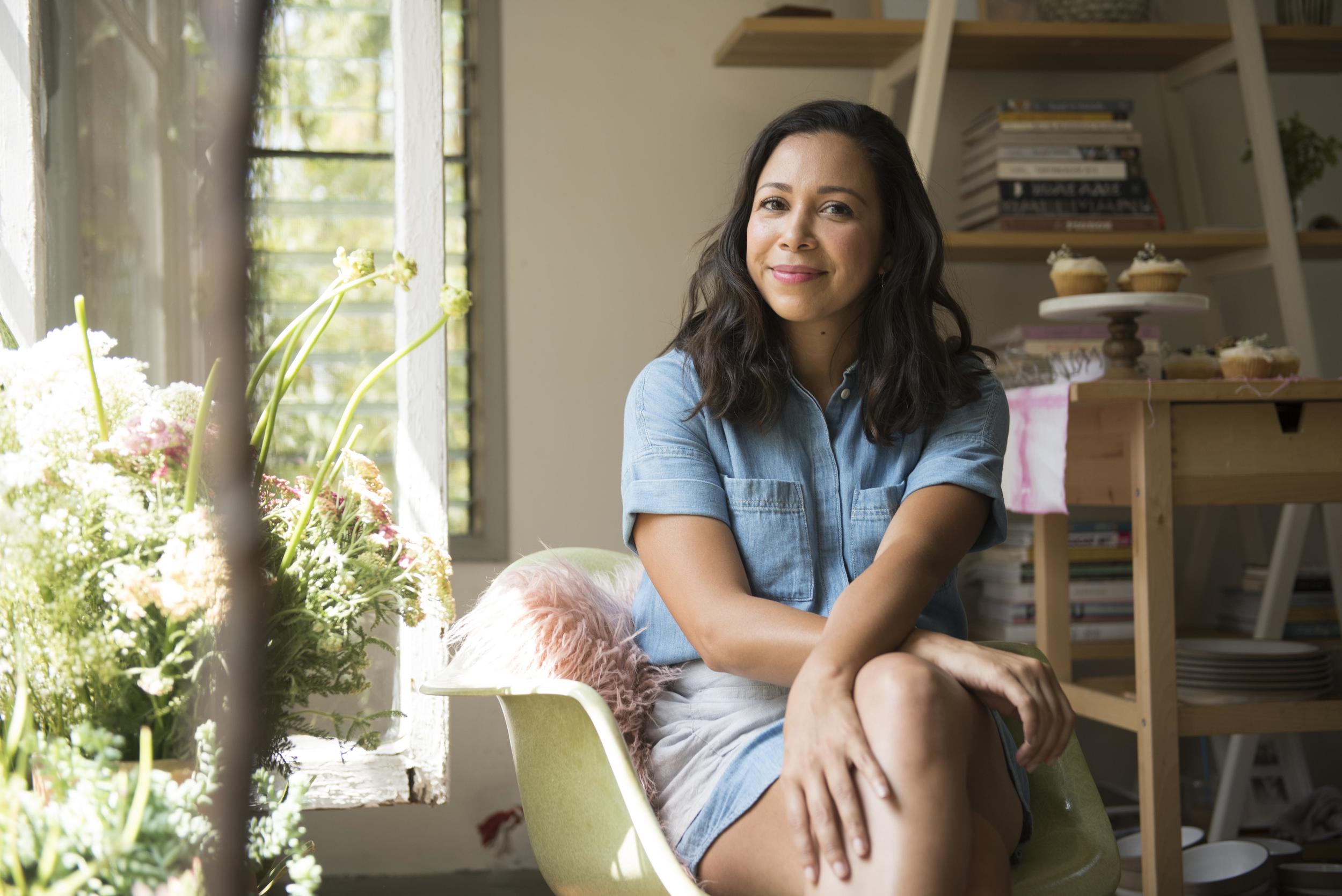
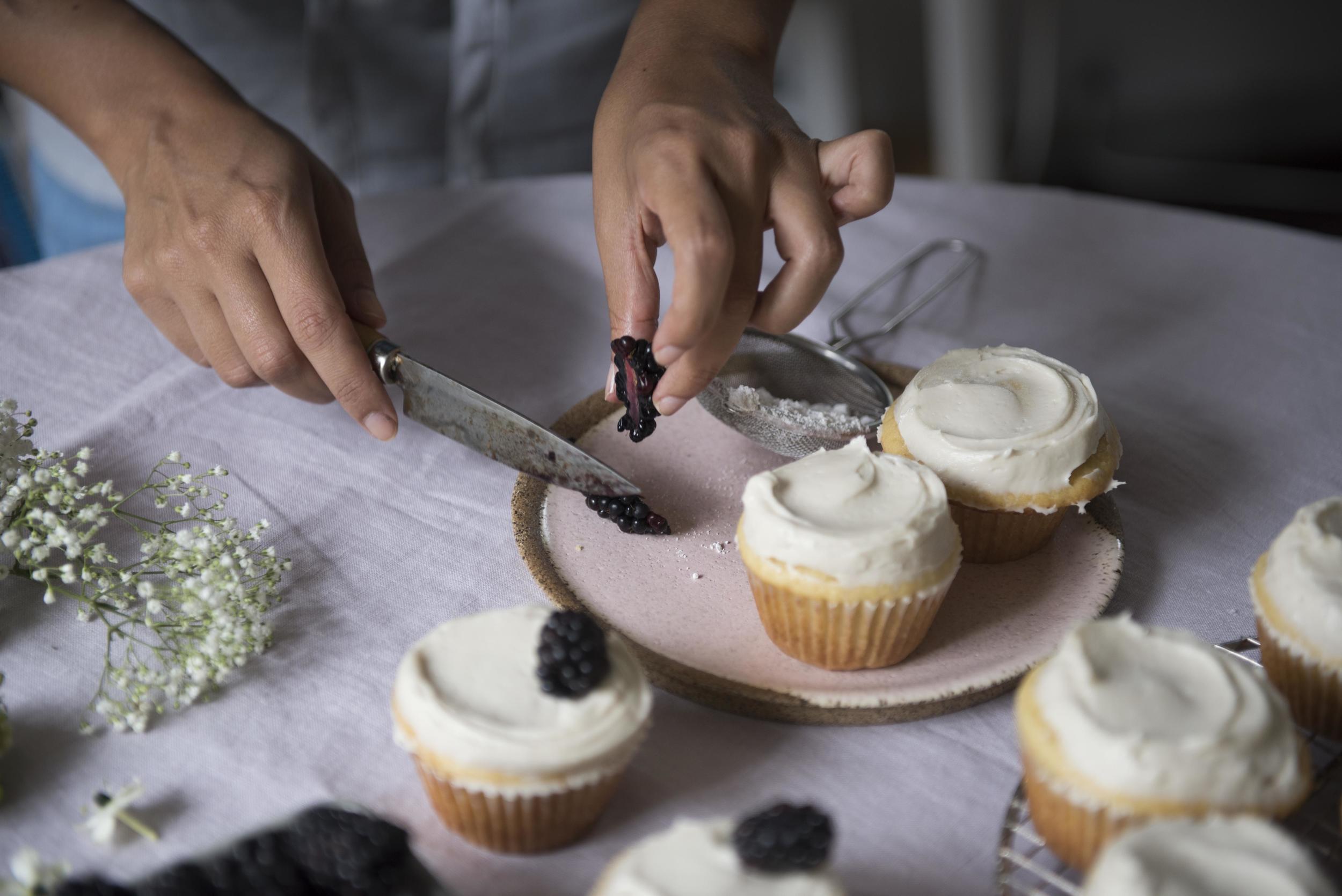
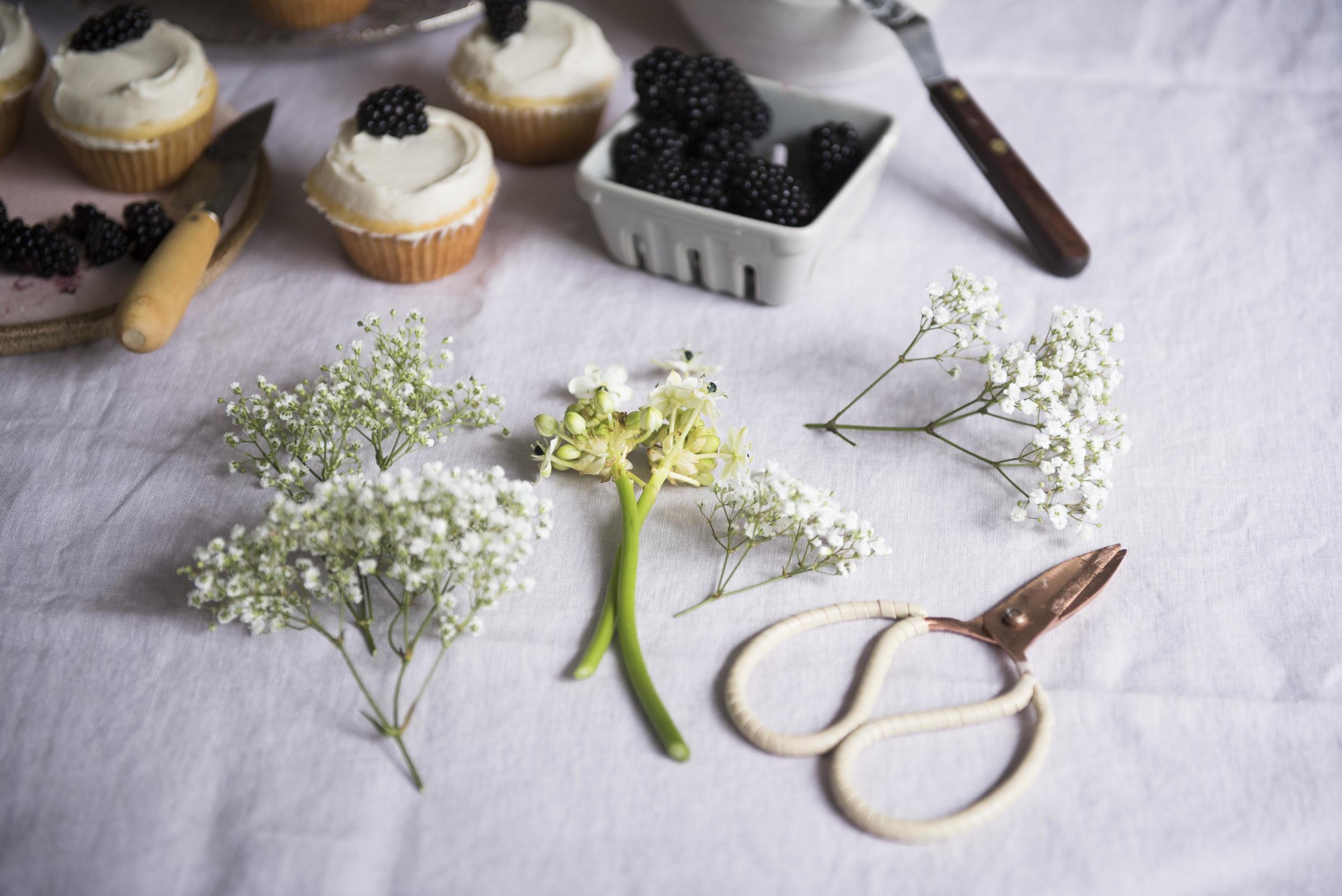
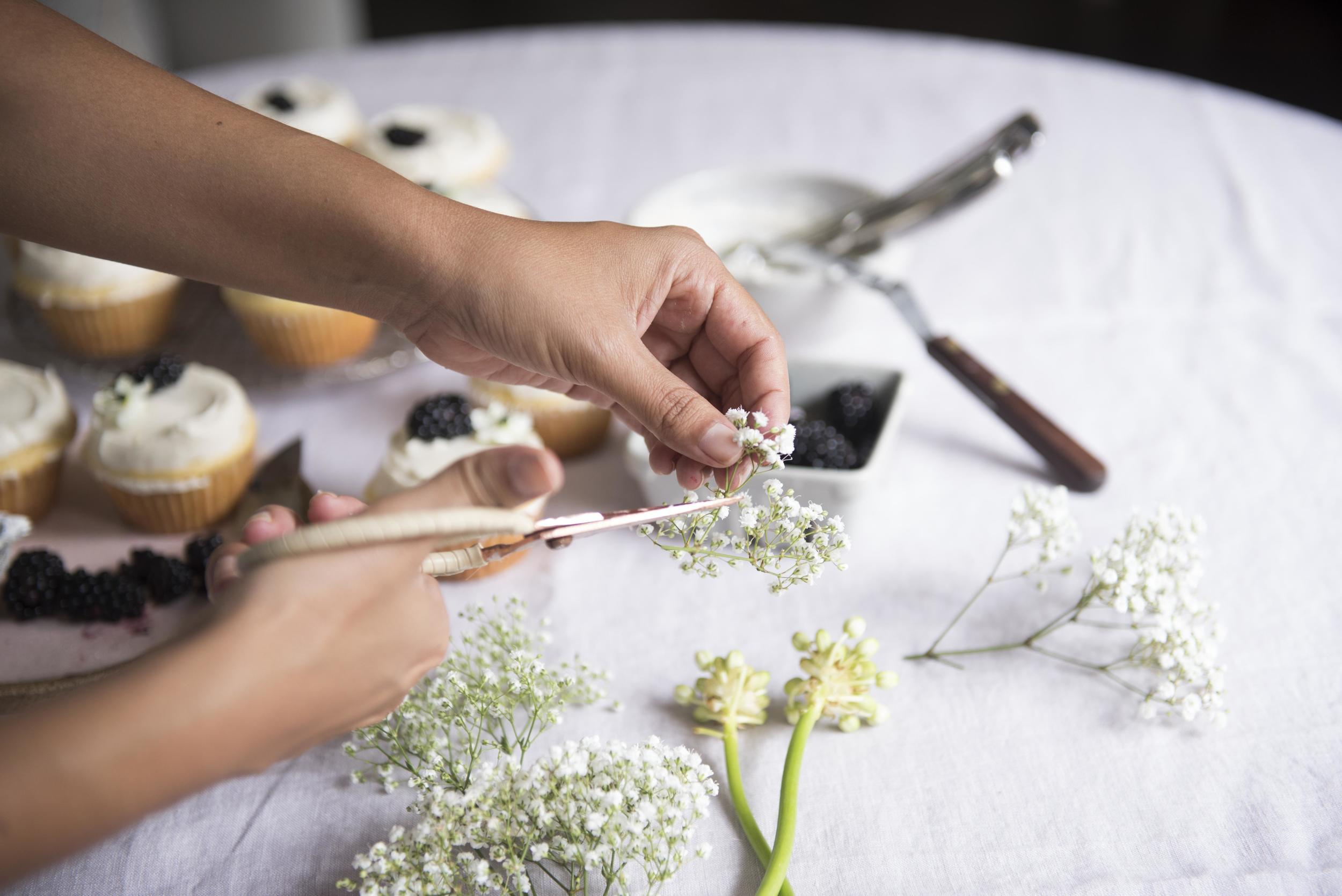
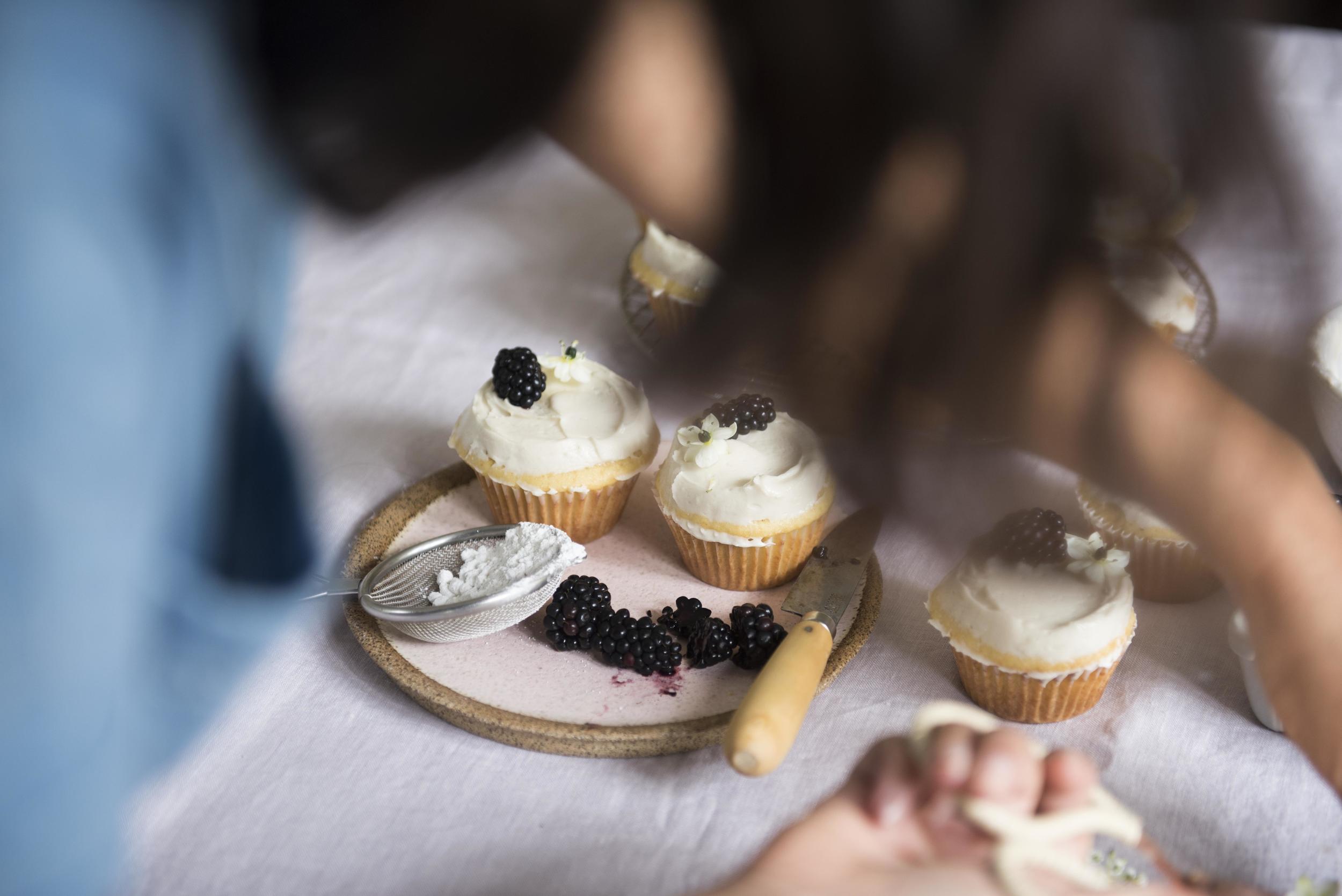
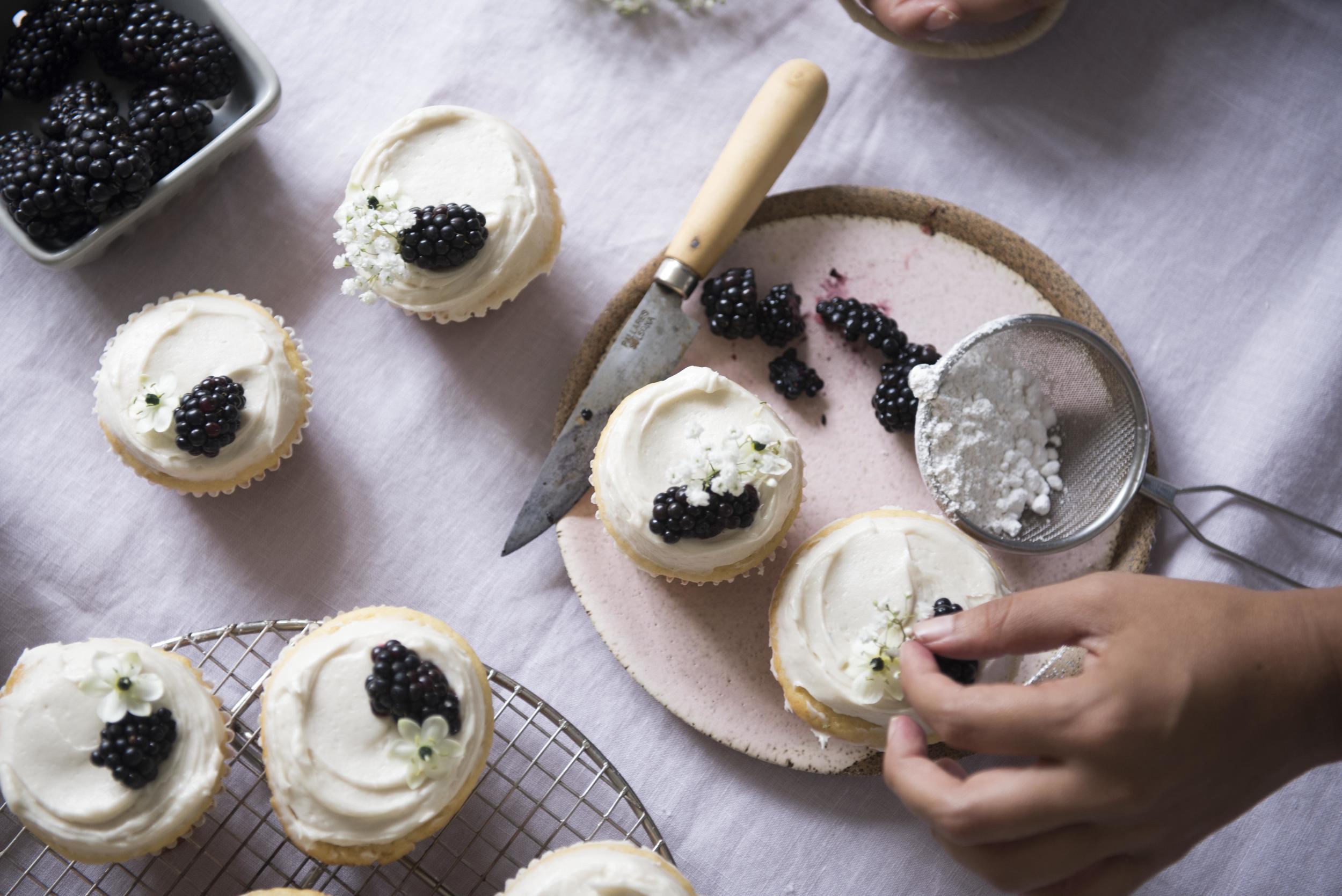
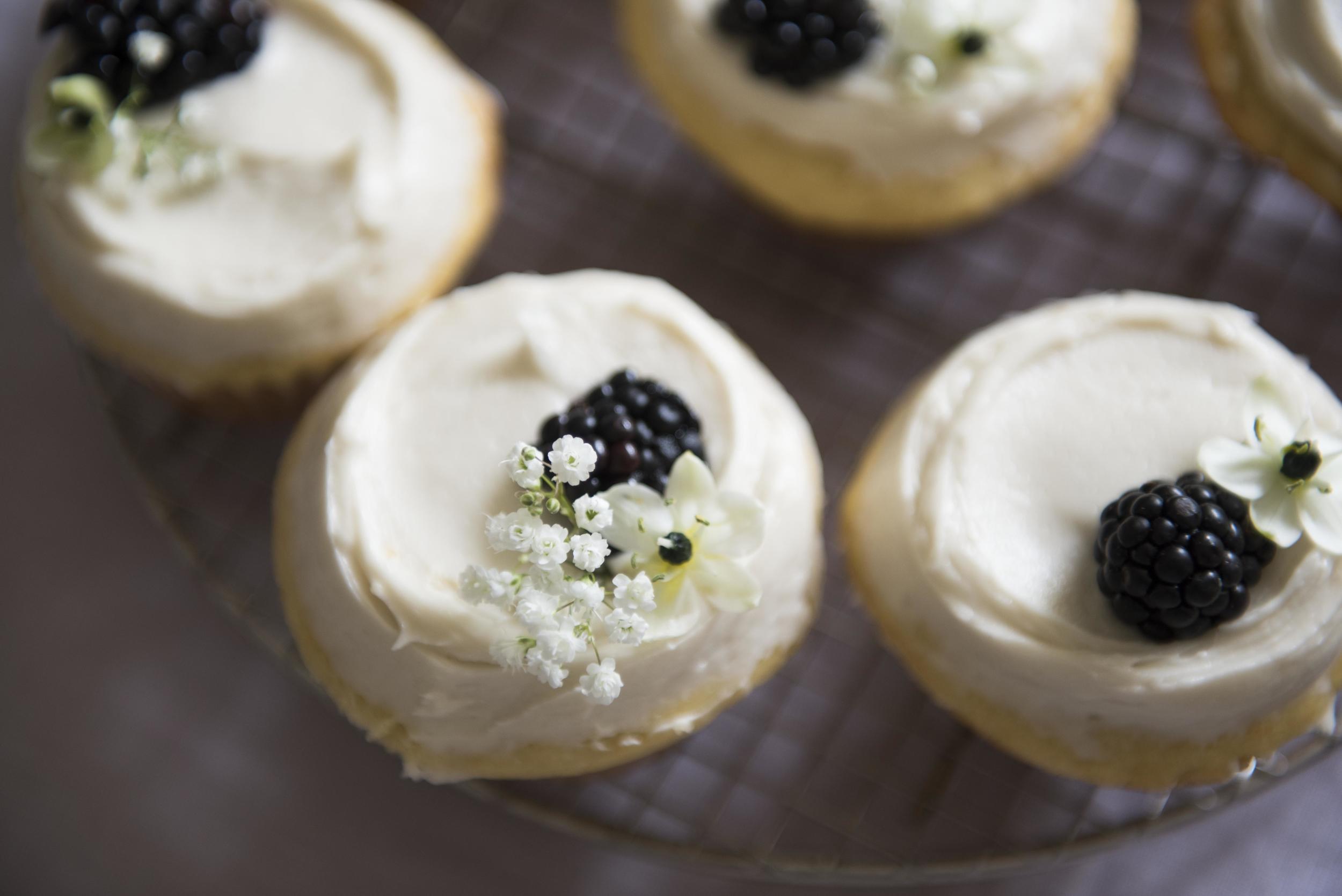
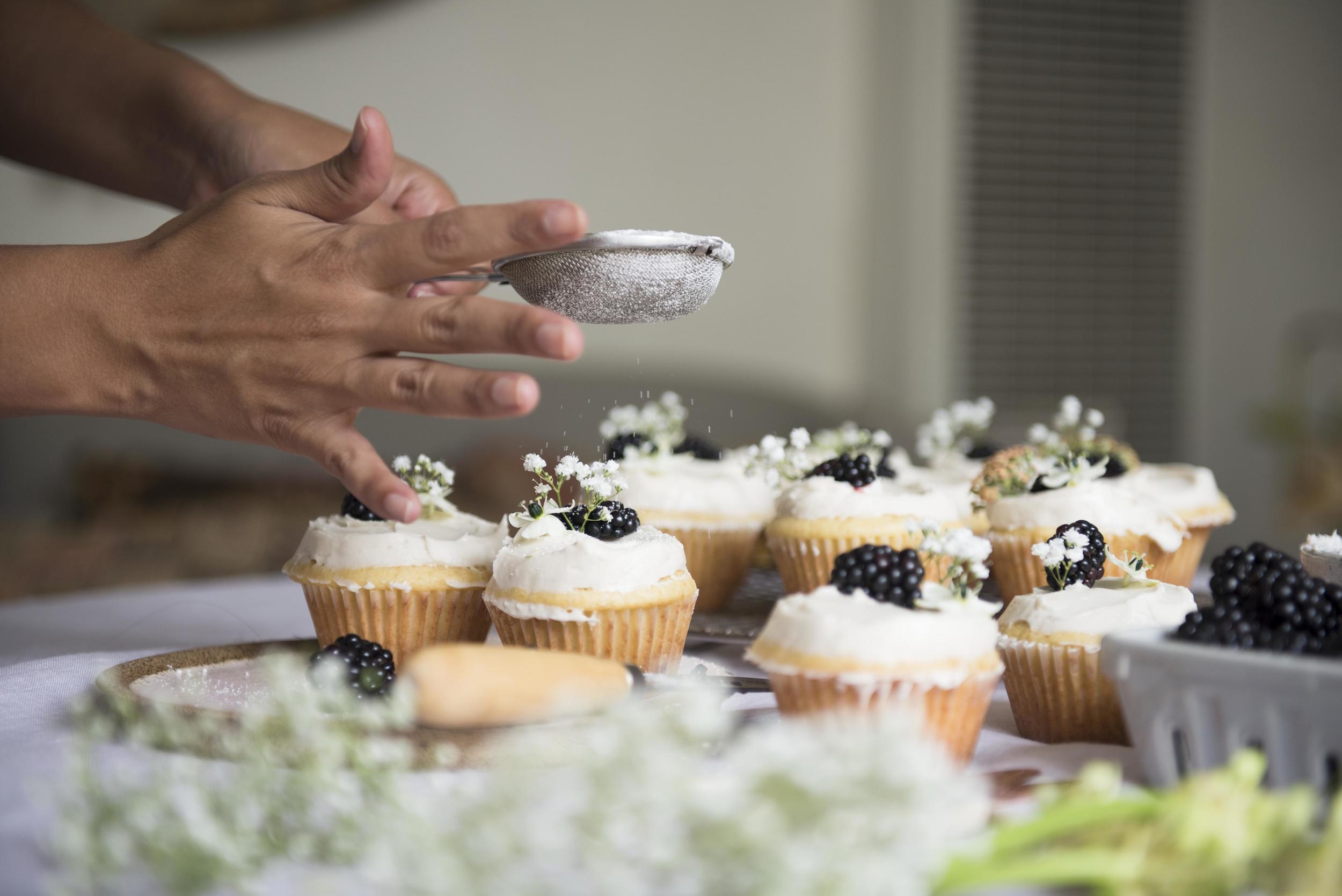
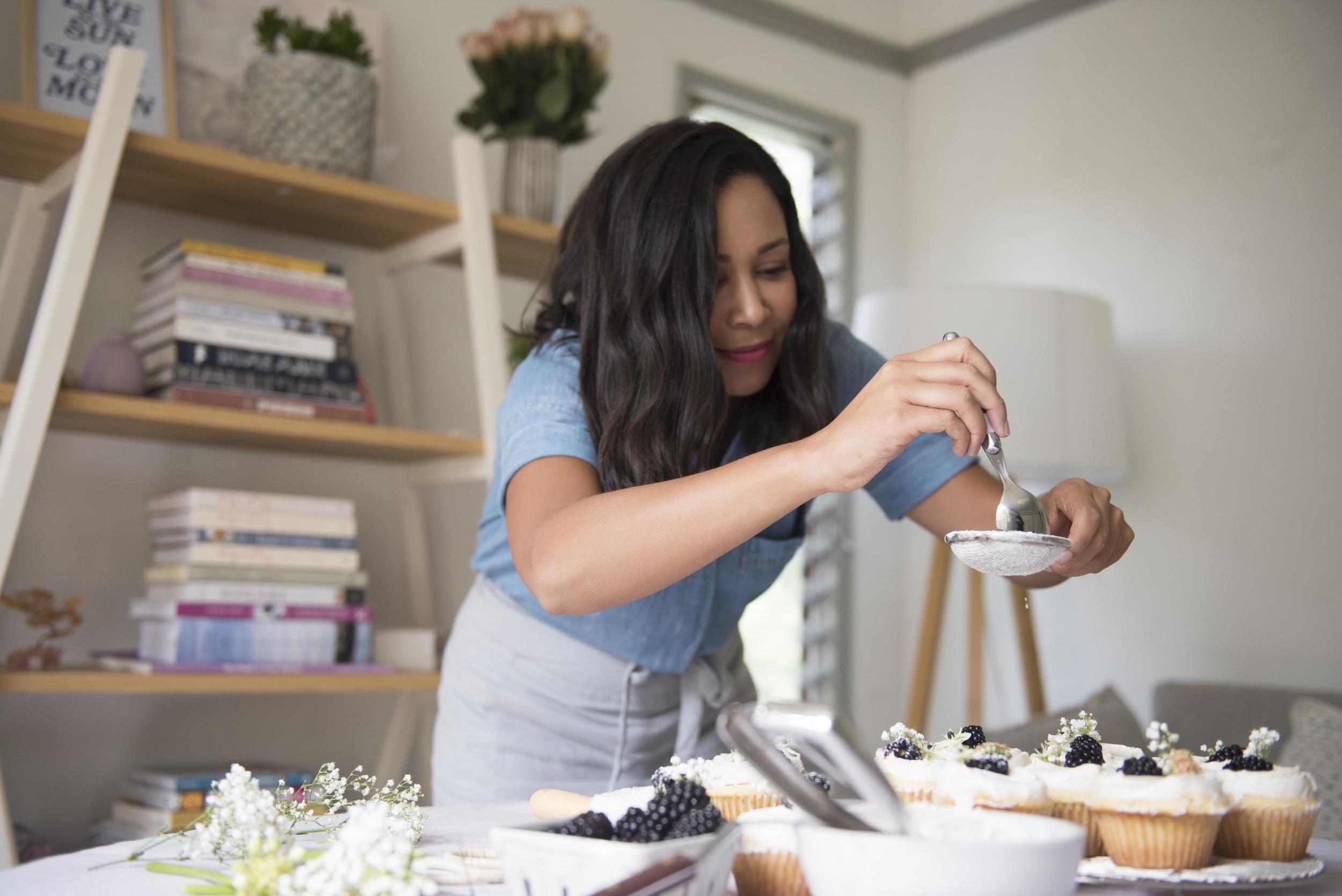
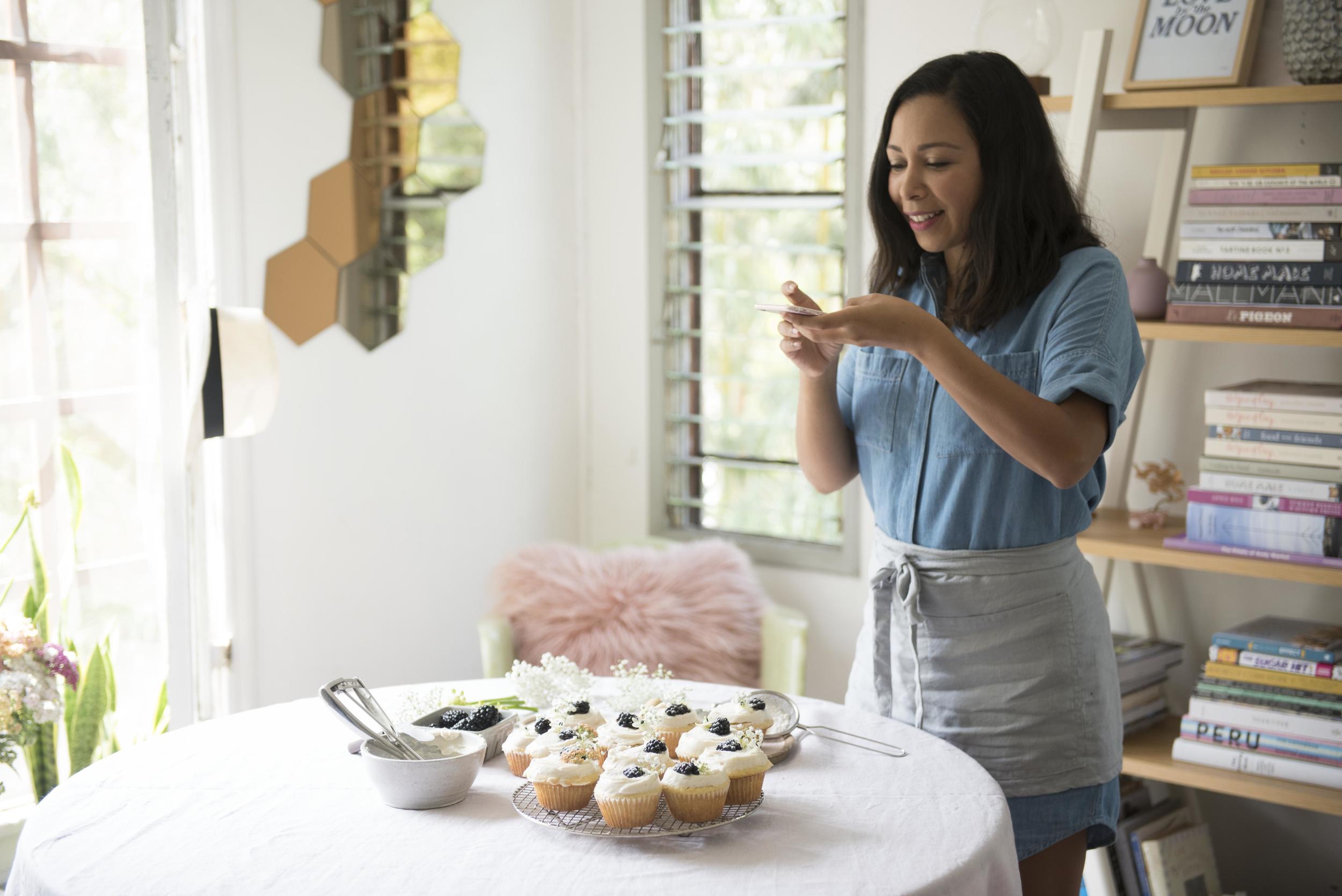
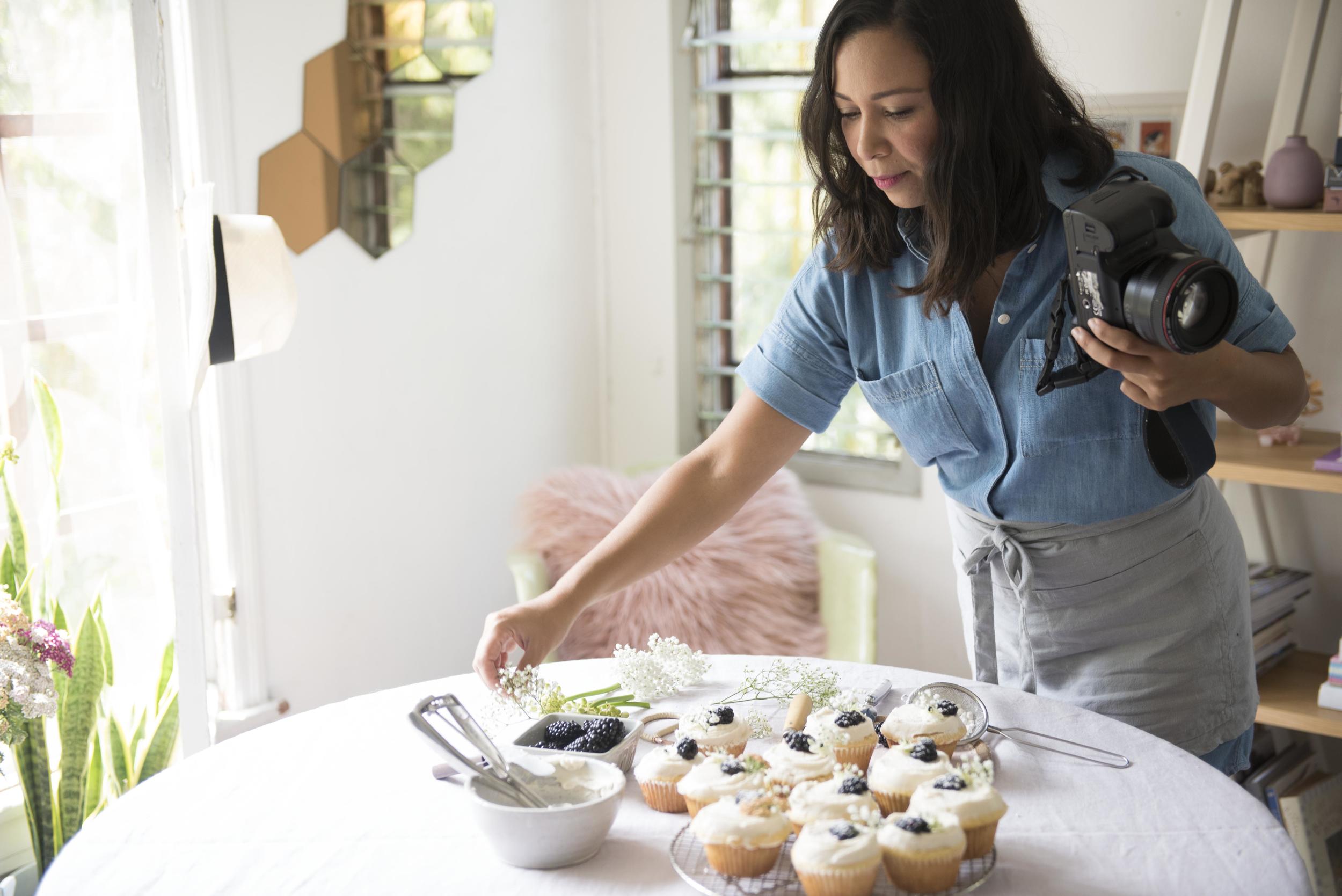
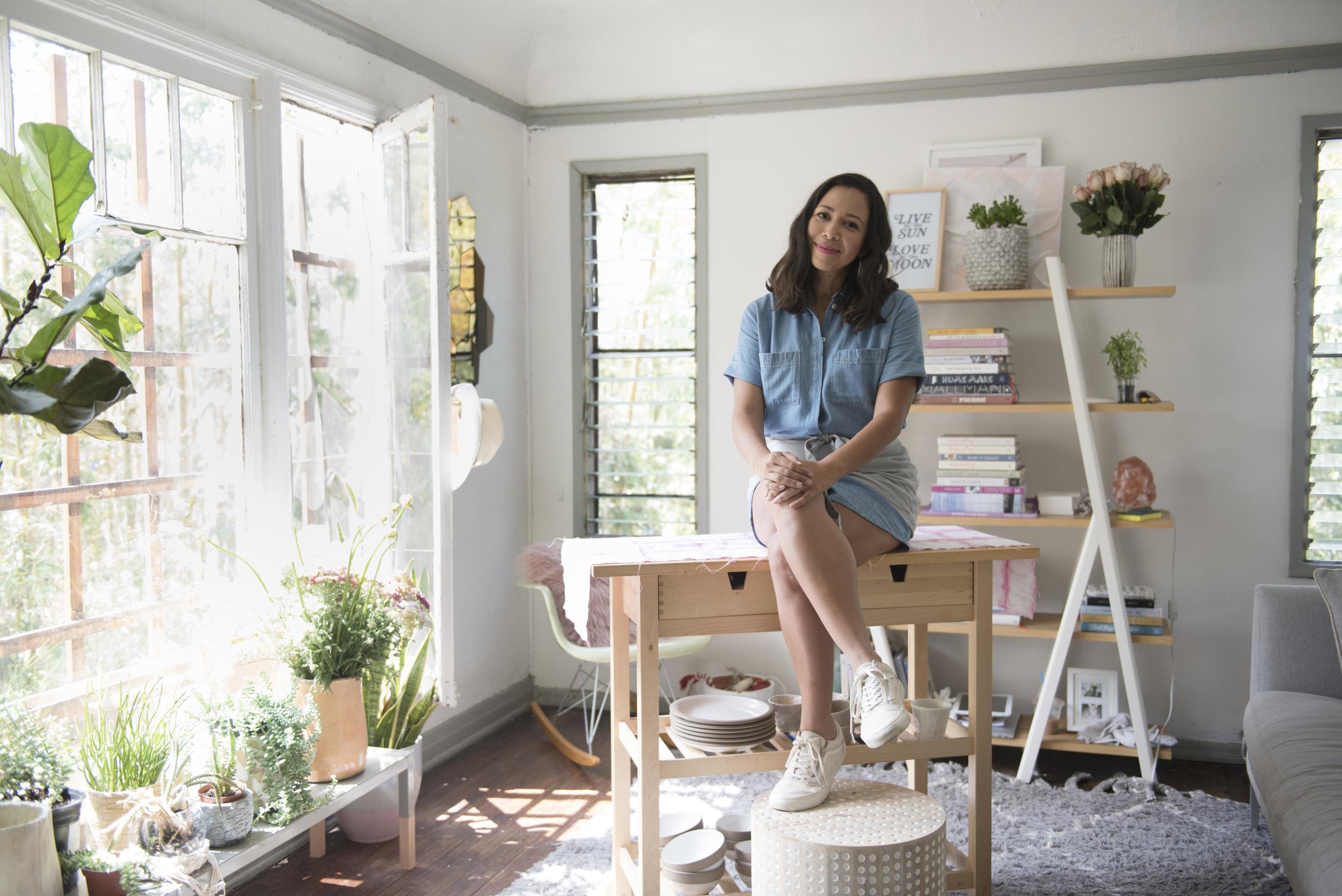
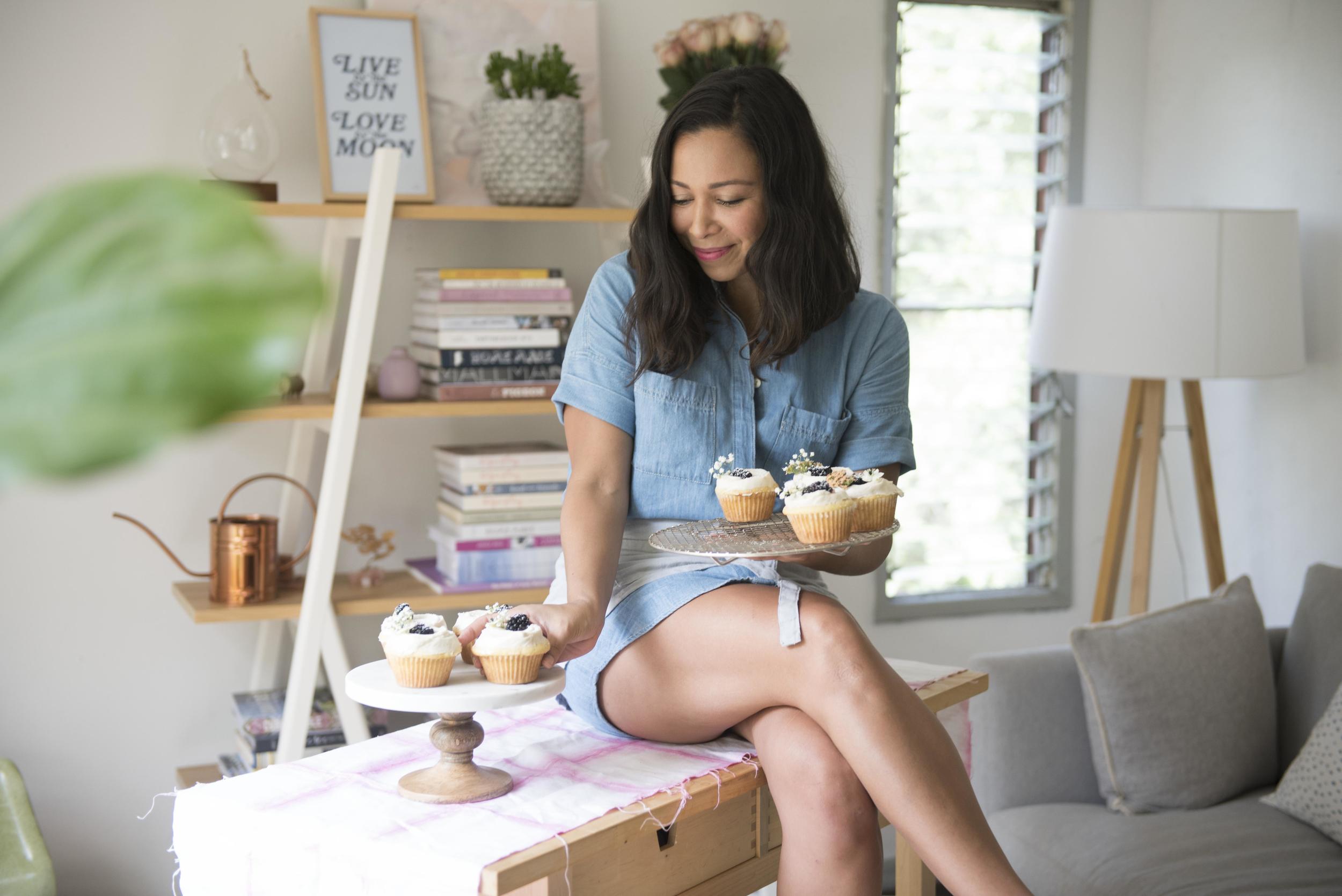
We're watching food blogger Adrianna Adarme of A Cozy Kitchen decorate cupcakes in the gorgeous light of her LA living room. There's a setup of icing, baby's breath, and blackberries. She spreads the icing on the vanilla base, baked earlier, the knife creating perfectly smooth swirls. It's Pinterest heaven.
Adrianna didn't set out to be a food blogger. "When I first started my blog," she says, "I was working as a producer at a trailer house. We made trailers and promotional materials for studios. When people hear this they think it’s really fun but in actuality it doesn’t require a ton of creativity."
It was a work environment that left her feeling disconnected from art or creative work and searching for something else.
"I wasn’t inspired by the films we were promoting nor was I inspired by the content I was creating there. Looking back I think if I was working on films I did love, I might not have ever started my blog." But she did.
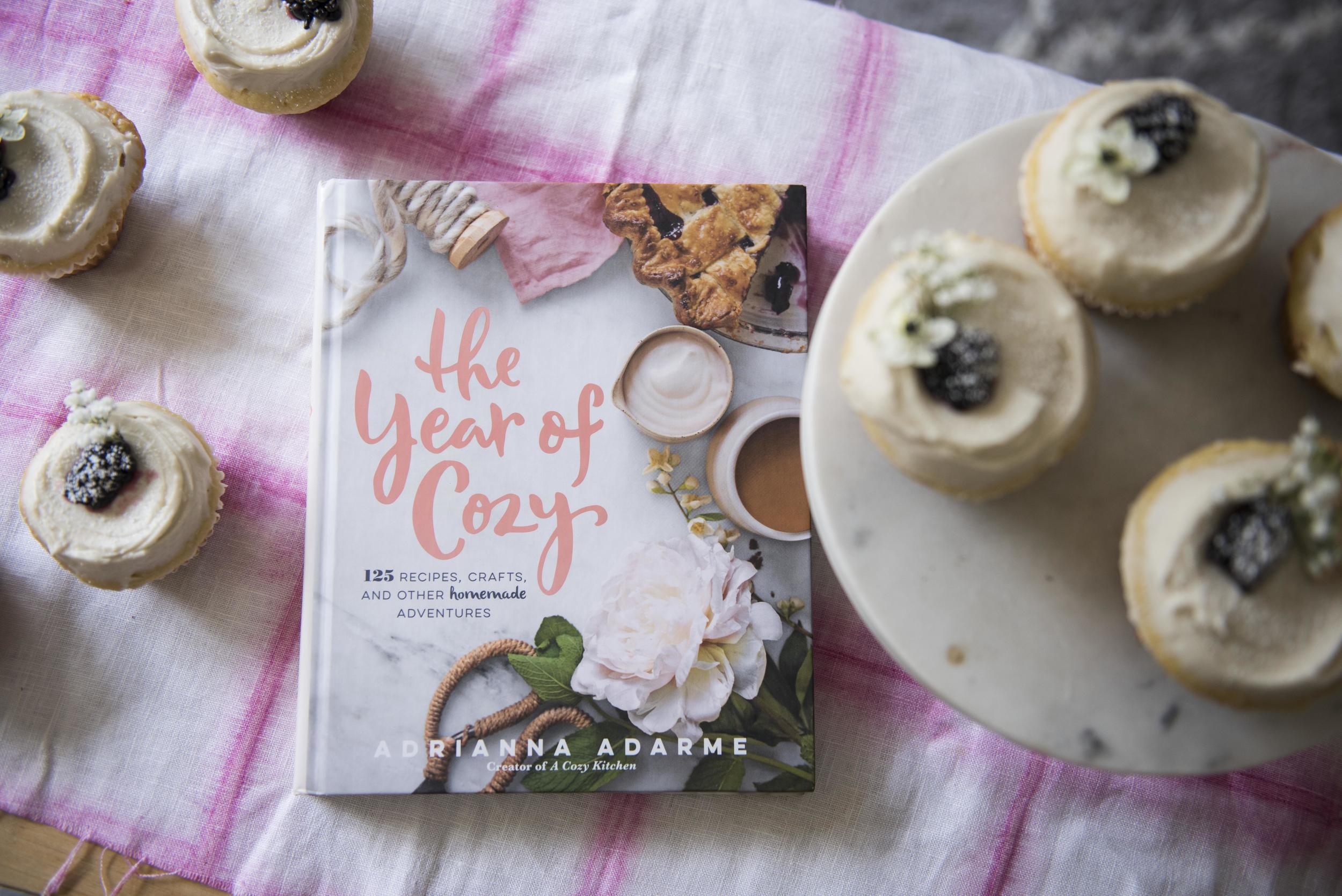
In 2009 she started A Cozy Kitchen. In the fall of 2015 she published The Year of Cozy, her step-by-step book of recipes and projects. She also has a new coloring book A Cozy Coloring Cookbook, designed with illustrator Amber Day, to be released November 2016.
It's cozy because it's a grown-up take on comfort food, like pie, the smell of which she says will always bring a smile to her face. It's a modern-meets-nostalgia approach to cooking and baking that she says is more about a feeling than anything else. "It’s not necessarily one that is in the middle of winter or one that has snow outside of the windows."
When I think of a kitchen that's "cozy," she says, "I like to think of it as a warm place you never want to leave. Maybe music is playing, the oven is baking up something awesome, and your dog is at your feet. And maybe it’s right before your friends are coming over. It’s that safe feeling that everything is OK, even though it’s usually not."
"Cozy--it’s that safe feeling that everything is OK, even though it’s usually not."
Tweet this.
We chatted with Adrianna about the power of good food, what "Cozy" means to her, and the one food she'd choose to eat for the rest of her life. ("Easy," she says, "Pasta.")
Why food? Beyond the obvious of it bringing people together? What special meaning does it hold for you?
Unfortunately there isn’t some big story that drew me to food other than just the desire to be creative in my spare time. I majored in filmmaking in college and with film, unlike food, you need a lot of people involved and a ton of resources in order to create the work that’s in your brain. But with food you can sort of just do it by yourself. You don’t need much. I like ceramics for that very reason, too.
How did you land on blogging as the answer to a creative void?
I arrived at blogging when I was bored at work reading blogs. I found them really entertaining, a great way to procrastinate. So, I started cooking at home a lot more because of them. I really liked that there wasn’t that much production between the person/writer and what you were reading. It felt super immediate and fluid.
How much of cooking is instinct and how much is following a recipe?
I think that sort of depends what you’re making (laughs). I think cooking is very much about instincts but you don’t really get those instincts until you’ve cooked a lot. I don’t think people are born with those instincts; I do think people are born with good palates but those instincts you speak of are ones that are learned over time. Being a good cook is all about doing and experience, like a lot of other things in life.
But that’s ok. I think a lot of people don’t have those instincts yet so that’s why recipes were created.
Is there a moment in the kitchen you can remember from your youth that has stuck with you?
Not necessarily a moment but more like a feeling. It’s the feeling of how our Sundays felt growing up. Salsa or merengue or jazz was usually playing, and my parents were cooking with my grandfather. My grandfather would usually be lecturing my dad about the importance of “tuco” (which means tomato sauce in Spanish). There were lots of heated arguments about using water vs. chicken broth (laughs). That feeling is a super warm feeling to me when I look back on; it felt safe and comfortable—like a hug.
"Salsa or merengue or jazz was usually playing, and my parents were cooking with my grandfather."
Tweet this.
What is your favorite part about being a food blogger?
My favorite part about being a food blogger is waking up and being able to cook anything I want. I have a platform that allows me to cook anything I’d like-- and still make money. I mean, that’s a dream. There are challenges in any job but I can tell you that there aren’t that many with food blogging, or at least I don’t think so.
What are some unexpected challenges? From creating something from scratch to making sure it’s photographed just right?
For me, the biggest challenge is just not being basic and boring. I sometimes think, 'Oh this is just my style,' but sometimes I’m just being boring (laughs). It’s so hard. That’s probably my biggest struggle, just coming up with ideas that I think are worthy of being shared.
Do you ever run into a recipe rut? Kind of like writer’s block but with food?
Yes, totally. It’s the worst. There are times when I feel like every idea that I can think of is so basic (laughs). During times like that I usually just go on Instagram and look up restaurants that I know are doing really inspiring work. I look at their food on Instagram, try to imagine the flavors together and think of something else completely so I’m not totally ripping them off AND transform it into something real people in real non-professional kitchens can recreate.
What do you hope your readers get from A Cozy Kitchen?
I hope they get a place that is fun and cozy. I hope it’s a place that inspires them to maybe make something they were slightly intimidated by. I hope that they find something to bake with their friends. I like to think that a lot of my recipes are perfect for that lazy Saturday when you want a project to bake .
What’s the long-term goal for A Cozy Kitchen? How do you see your brand expanding— including your book, etc.?
I like to tell people that I want to wake up and cook every single day for the rest of my life. How that exactly looks and where my money comes from might change, especially since digital media is always rapidly changing. The large picture isn’t easy to see since no one has really blogged for twenty years. All I know is that I want to keep making and creating food for a really long time. Hopefully people will be interested in what I make for that long.
"The large picture isn’t easy to see since no one has really blogged for twenty years."
Tweet this.
In the fall I’m coming out with a new cookbook. It’s a coloring book called A Cozy Coloring Cookbook. I’m SO excited. It’s full of illustrations of some really simple recipes that are colorful and fun to color. I worked with a really amazing illustrator named Amber Day. She’s ridiculously talented. I like to think of it as hyper-reality. It’s full of sprinkles falling from the sky, a pattern of pizza slices and Amelia (my dog) dreaming about all the things she wishes she could eat. I can’t wait to share it with the world.
Be sure to catch Adrianna on panel when she joins us for Create & Cultivate ATL. Get your tickets now!!
More from our blog:

YouTube Star Shares Her 3 Essential Tools for Creating Video Content
Melissa Alatorre is giving us 1-2-3 steps.

Self-taught professional makeup artist and YouTuber Melissa Alatorre clearly has a knack for figuring things out for herself. The San Diego born has amassed over 250,000 subscribers in a little over a year, having only joined the platform in 2015.
That's right. The first-generation Mexican-American MUA joined YouTube April 21, 2015. So for those of you who think it's too late to start, Melissa is living proof that if you put your mind to something, you will get it done. (And perhaps look drop dead gorgeous while doing so.)
We caught up with Melissa ahead of Create & Cultivate Atlanta, where she'll be joining us on panel, to talk tips, learning the basics of videography, and the one thing she really "sucks" at.
In a little over a year, you have gotten over 250k subscribers on YouTube. For some content creators, it's almost impossible to get that many followers in that short amount of time - what do you credit your success to?
I would have to say that passion, persistence and consistency are what really helped me gained a following. I had been wanting to start a YouTube channel for over 3 years but never had the right tools in order to get started so as soon as I did I knew that I had to hit the ground running. This is something that I am not only passion it about, but I also knew it was what I wanted be doing with my life full time. So I began producing 2-3 videos a week and putting my all in to them to make them the absolute best I could at the time. I also made sure that my videos weren’t just there to watch for entertainment, I wanted to really teach my viewers how to improve their makeup skills having been a freelance makeup artist for years. I think my subscribers have noticed that and for that reason my videos have resonated well with not only them but with everyone they share my videos with!
"Passion, persistence, and consistency are what really helped me gained a following."
Tweet this.
You created your YouTube channel after already having built an Instagram following. How was your transition from just posting on Instagram to creating video content?
What’s interesting is that you think everyone from Instagram would immediately just follow you on to YouTube, but that wasn’t the case for me. I would say about 30-40% of my followers actually went over and subscribed to my channel, so my thoughts were “Dang, this is going to be so HARD!” Then miraculously my YouTube channel managed to surpass my Instagram following... by a lot! I think that my Instagram has now become a platform for promoting my videos, whereas before it was more so just creating beautiful images that weren’t linked to any other external content. I tell everyone Instagram has become your magazine/TV Guide that is simply there to visually please the human eye on a daily basis, whereas YouTube is your TV show that people are more actively engaged with and more emotionally connected to.
What are your keys to creating a great video?
Great lighting…just kidding, but not really. Great lighting, camera set up and all the technical production aspects are obviously keys to a great video but what matters most is the content you are producing. Like I mentioned, in the beginning my videos were NOT a great quality, production wise (even though I thought they were at the time) but people, my subscribers still loved my videos because the content was great - they could care less that the tungsten bulbs I was using were making me look a pale shade of yellow. A great video/content has to have substance, it needs to provide your viewers with something that will benefit them. In my case, it’s showing my viewers my “ secret” little tips and tricks on how to make your makeup look its best.
Since you started your YouTube channel, what are some of the things that you've learned along the way about creating video content?
Plan your content in advance, again, think of your channel as a TV show. Don’t just throw content out there for the sake of having to upload a video weekly. Take the time to plan out what videos you will be uploading on what dates and around trends that are current. The more you carefully plan and strategize your content the better response your videos will get. Also, use all the other tools available to you in order to promote your channel - Snapchat, Instagram, Twitter, etc.. It makes a HUGE difference #snapchatfam.
"The more you carefully plan and strategize your content the better response your videos will get."
Tweet this.
What are three essential tools to creating your video content?
1. Familiarize Yourself with Some Basic Videography Knowledge
I get SO many emails from aspiring YouTubers that simply say, “What are your camera setting and lighting, please tell me.” I encourage everyone to watch some YouTube videos on basic videography skills because you are going to have to tailor your filming setup to what you are working with. My setup might be completely different from yours. What if I film in a dark dungeon with no lighting? You'd never know! Haha. Same thing goes for editing software and lighting, just watch some YouTube videos on it and learn the basics, after that it’s all trial and error!
2. Utilize Your Audience
Really listen to them and take into account what their needs are and what they want to see you do next on your channel, after all without them there is no us!
3. Be Active on Your Channel
Don’t just upload and disappear, engage with your audience in the comment section and on your other socials, it makes a difference!
How do you create a content calendar to make sure you have a new video every week?
To be honest, I suck at this so, next question… hahahaha. I’m in the process of planning out a 3-month system so I have my videos planned out strategically.
What are your tips on creating collaborations with other content creators?
Try to meet other content creators organically versus just emailing them first. If you can go to events where other content creators will be at and engage with them in that way first. Then spark up a conversation about a potential collaboration. Also, collaborate with creators that have a similar style to yours so that the collaboration has a great response from both of your audiences, not just one or the other.
What are three strategies that you abide by to make sure your content is always getting traction and your channel is always growing?
1. Utilizing ALL the social media channels that are out there to my full disposal - when a video is freshly uploaded tell your Snapchat fam to go watch, post on Instagram that it’s live, and have Twitter automatically tweet out your new video.
2. Upload videos on the same days each week - I still struggle with this from time to time but I try to stick to every Tuesday and Friday. My subscribers LOVE Quick Tip Tuesday videos!
3. Stay creative - Don’t just upload the same thing one after the other, after the other. People get bored easily and will drop off, keep everyone entertained with new and fresh content that will get shared and attract new subscribers!
Tickets for #CreateCultivateATL are going fast! To catch Melissa on panel be sure to snag your ticket now.
More from our blog:

What Does Augmented Reality Mean for the Future of Business?
Future's made of virtual Pokémon insanity.


“There is a Pokémon in our office right now. Right by my desk. He’s pretty aggressive and I can’t catch him.” So says Create & Cultivate Director of Social, Priscilla Castro, who is attempting to explain the phenomenon that is Pokémon Go. I have virtually-- augmented or otherwise-- no idea what she’s talking about. She’s spinning the ball and throwing it “as a curve ball” so it’s easier. I have more questions than answers at this point.
I grew up in the generation of Beanie Babies and Pogs (neither of which I collected) and missed the Pokémon boat entirely, so this Augmented Reality game that has taken the world by storm and has taken over Twitter in terms of active daily users, is new to me. The best current estimated number of Poképeeps? 9.5 million active players. There are hazard signs on highways telling drivers not to Pokémon and drive. There are people rushing about, catching these little dudes, and forming new bonds and making new friends.
There is a Poke stop about half a block from our office at Momed Cafe in Atwater. “The way it works is so smart,” explains Priscilla. “Even though this stop is right next door, I still have to walk outside and down the street to collect it. It’s forcing people out of their homes and more so, out of their comfort zones.”
This sentiment is being echoed by the 9+million users players. I've overheard some LA-based residents say it’s making LA feel like a small town. Others applaud the game’s ability to forge community and get the generation of people who don’t leave their houses, to pound the pavement in search of the Pokémon.
“It’s easy for someone to say, I’m going to drive around and catch Pokémon,” says Priscilla, “but there are tricks built into game. If you catch an egg, for example, you have to walk to hatch said egg.” Makes sense?
But beyond the Pokémon phenomenon, what does Augmented Reality mean for the future of business? Will it really help foster community, or will the “choose your own adventure” aspect only further isolate people?
"Beyond the Pokémon phenomenon, what does Augmented Reality mean for the future of business?"
Tweet this.
Here are some ways AR is going to change the future.
BEYOND GAMING, BEYOND POKEMON
If you want to get your business in the game, you need to think of AR outside of the realm of video games. Augmented Reality is already being used by many professionals who see the benefits of the technology. Construction and design is one such field that jump on the trend of the future.
Architect Yan Krmsky of Yazdani Studio uses VR/AR to showcase design work to clients. Last year he built out the structural frame for a dorm project, but the “finished” product was viewed and experienced by the client through the Oculus.
(To note: the Oculus Rift is considered Virtual Reality technology where the user interacts with a virtual experience-- nothing is of the “real” world, but rather everything the wearer sees and and experiences is virtual. AR is slightly different in that the user is interacting with an “augmented” version of reality. In the case of Pokémon GO, the character appears in your world via screen. You’re not entering a different world.)
Design is no longer experienced as a 3D model but as a fully realized structure. This approach benefits business in multiple ways. It saves on product development and prototyping. “AR allows you to market a product without a fully tactile prototype,” he says. “It’s really an amazing marketing tool.”
Heather Lipner of Drawsta sees business moving in a similar direction. “AR provides a digital layer of visual content. For fashion bloggers I can imagine them wearing and sharing the content - for example if it’s on the tee like Drawsta.”
“For beauty” she says, “I can imagine video bloggers and makeup artists working with AR makeup apps like Loreal’s Makeup Genius to create looks to try on and let the audience quickly wear and share. Once we have AR glasses there won’t be as strong of a need to wear the tactile look - it will faster and more fun to change, explore and wear digital looks.”
In the future, will be all be naked?
A FEW BRANDS THAT HAVE ALREADY MADE THE JUMP
This is not brand new tech. In 2013 Ikea launched an app within iOS where shoppers could place IKEA furniture in their home with the help of AR.
Volvo created an AR experience where consumers could “test drive” their new S60 model. Volvo said the results were “outstanding,” with a 9.6% interaction rate, 192,319 clicks on the masthead ad and a traffic increase of 293% to volvocars.com.
Clothing giant ASOS has also used AR to bring its magazine to life. With the use of Blippar, a leading AR app, ASOS used click-to-buy icons that allows readers to purchase outfits right off the page. With this tech head-to-toe dressing and purchasing is made that much easier, as is capturing and banking on the curse of instant gratification.
In 2015 when Rihanna released her eight album, ANTI, she did so in conjunction with a virtual reality experience that brought you into the room seen in the trailer for her video. Samsung called the project "the beginning of an unforgettable exclusive journey through Rihanna's life story" that took "fans inside the mind of an iconic artist while blurring the lines between the digital and physical world."
Using AR as a marketing technique not only captures the consumer in a new way but it also gives the consumer more control, answering some of the questions marks in the online buying process before committing to a purchase.
"Using AR as a marketing technique not only captures the consumer in a new way but it also gives the consumer more control."
Tweet this.
EXIST WITHIN A DIFFERENT REALITY THAN REALITY
If it sounds too sci-fi, it’s not. The ability to exist within a different reality opens the door to a myriad of worlds (literally) for businesses.
Let’s say you want to open a restaurant. Rather than design and construct a single restaurant you can build out a very basic raw framework in the “real” world while giving your patrons multiple options to choose from with the aid of wearables. Everyone in the restaurant could have a different experience within the space. If you hate modern design, you could chose a Spanish villa setting. Someone else could be immersed in a French classicism dining experience. The possibilities are endless.
The space becomes less important as the tech becomes better. Within one raw space you’ve created an infinite number of restaurants while limiting the labor that goes into making it. Does this create a better dining experience? It's tricky to say whether this will only further isolate and create bubbles around people, but it's not a reality too far off.
It has already been scientifically researched that if you “see” sushi on your plate (while wearing a headset or other wearable) your brain will think it’s sushi and taste it accordingly, even if it’s just tofu. In this new world, the brain is the reality and everything else is just window dressing.
The ability to exist within a different reality opens the door to a myriad of worlds (literally) for businesses.
Tweet this.
AR and VR aren’t able to trick your brain in terms of tactility yet-- a bed, for example, still needs to be physically soft, but the technology moves business in a much different direction.
The same concept can be applied to physical attributes and clothes. Wearables already exist and scientists are experimenting with implants. (Google Glass is a form of AR.) What you get with AR is more information than is visible.
Imagine you want blue hair, so you push a few buttons and everyone around you with a wearable or AR/VR glasses sees your hair as blue. In the near-future you become an avatar in the real world, not just on a screen. Think of what this means for virtual plastic surgery.
Brands will be able to create experiences unlike anything seen before. The touchpoints of a business would be infinitely more tactile and capable of penetrating a consumer’s “world” without the barrier of a screen. New jobs will be created. There will be huge markets for digital-physical content.
It’s a brave, new AR world out there. Pokemon GO is only confirming we want it.
More from our blog:

The 4 Rs You Need to Recover From a Mistake
The logistic ninjas of Grow Marketing break it down.
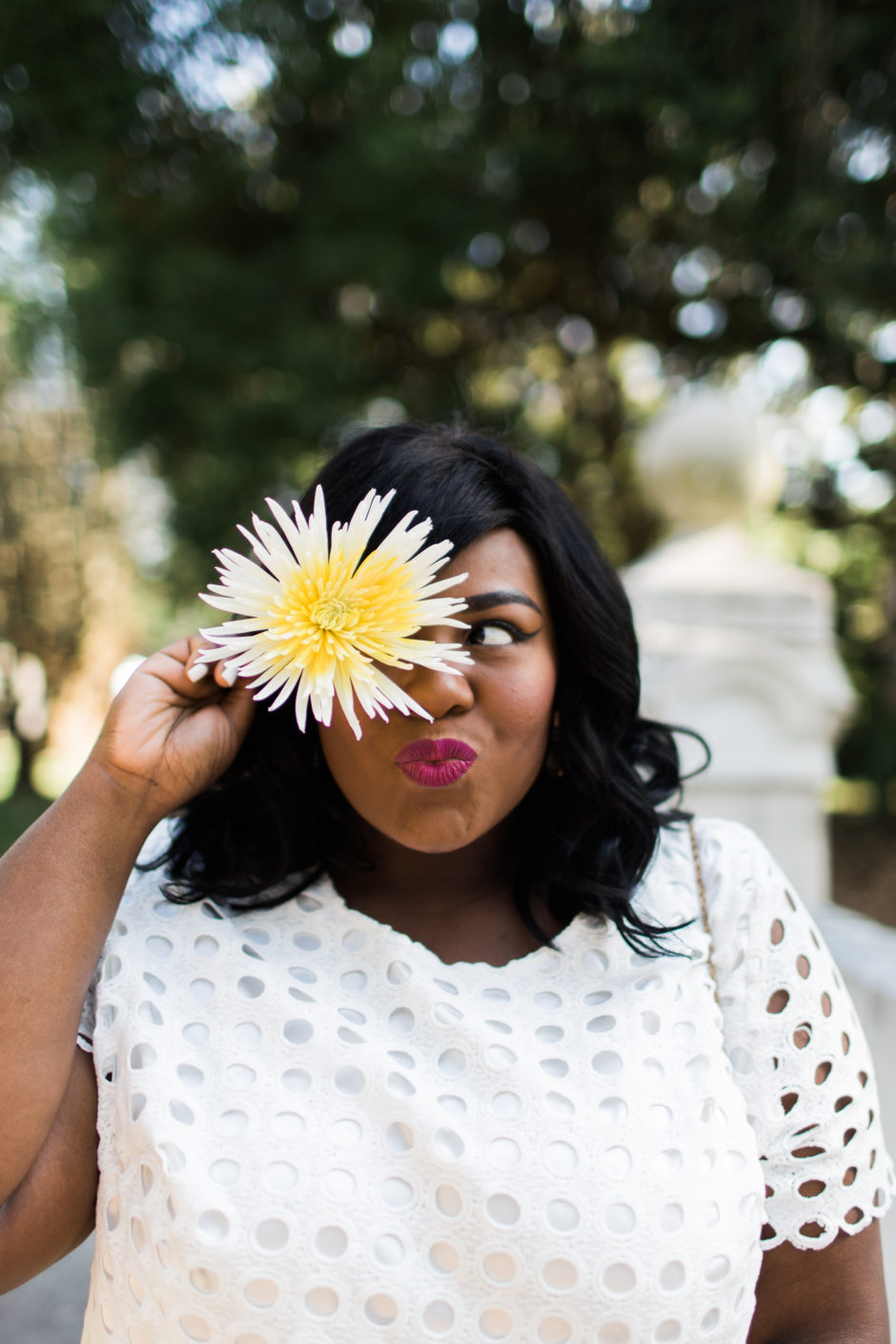
Photo Credit: Musings of a Curvy Lady
By: Cassie Hughes & Gabrey Means, Grow Marketing
Anyone who has dared greatly, innovated or made things better has also known failure. When we first set out to create our own experiential agency, we may not have known what we were doing, but we were crystal clear on what we wanted. Neither of us came from an agency background but we knew what was important from the client’s perspective and that we had something different to offer than what we were seeing in the marketplace. We knew there would be a lot of mistakes along the way and rather than shying away, we faced them head on.
"Anyone who has dared greatly, innovated or made things better has also known failure."
Tweet this.
Everyone makes mistakes. We’re only human. But how you learn and grow from them can help you better prepare for challenges ahead. Whether in your personal or professional life, here are a few tips to help you bounce back from a mistake and walk away stronger and smarter.
RECOGNIZE
Early in the life of our agency we took on a project where there were red flags we didn’t pay attention to because we were so eager to prove ourselves as a new entity, even though we had a long track record of success in our careers. It was a huge national brand in a category we were dying to break into so while our intuitions were screaming no, our egos kept saying yes. The client was unrealistic but we thought we could turn her around. We couldn’t have been more wrong. In addition to grinding us on every budget and continually asking for new ideas (free of charge) eventually she actually became verbally abusive. We got through the project and delivered but at a cost to ourselves and our team, who were left feeling deflated, unappreciated and exhausted.
RECORD
We are big believers in intention and writing things down. When we make mistakes we process them by writing down a list of what we learned and would do differently the next time. This was crucial to our process of avoiding bad project/client matches in the future. While it may sound intimidating to see your mistake recorded in black and white, it's actually quite liberating. When possible, sharing your list with a friend or partner who can keep you from being too hard or easy on yourself helps to keep the process honest and, therefore, most useful.
REPAIR
If you want to create an environment where people are inspired to be their best, they have to feel safe to fail. If they don’t, they’ll engage in all kinds of unproductive behaviors that only compound the mistake, from covering up to placing blame on others. Meanwhile, time ticks away and the impacts are increased. Encouraging people to own their mistake and take an active part in the solution means resolution comes quicker and the individual is left with the empowered feeling of having helped to repair it versus the deflation of screwing up, which only makes people feel and think smaller. To repair the damage to our team from the verbally abusive client, we owned up to letting our eagerness override our instinct and shared how we would avoid such situations in the future.
"If you want to create an environment where people are inspired to be their best, they have to feel safe to fail."
Tweet this.
RESOLVE
One of the most important parts of recovering from a mistake is knowing when to take a deep breath and let it go. Continually reliving mistakes is unproductive and paralyzing. Once you have done the work to repair the mistake and can clearly articulate your learnings, you should trust you have learned what that mistake has to teach you, freeing you to move on.
The mindset of recovery and resolution is an important one to build. It allows people to continue to want to take on new challenges and find new ways of doing things-- which, are really powerful assets. A culture that rewards creativity and trying new things – without punishing the misses – fosters a team of savvy problem-solvers who can think on their feet and are energized, instead of paralyzed, by new challenges.
More from our blog:

C&C Classifieds Nº10: The Heat Is On - Find Your New Career Move
May the odds be ever in your favor.

Photo by @pistol_sf
You’ve thought about it too long, and the time has come for you to put the pen to paper and fill out some job applications. If you were skeptical before about making the next career move, don’t worry. Your next career move is yours for the taking.
Check out this week’s listings from YouTube, Netflix, Reformation, Edelman, BloomThat and so many others for you to take a look at.
Good luck! May the odds be ever in your favor.
If you have signed up for access to the C&C Classifieds before, click here.
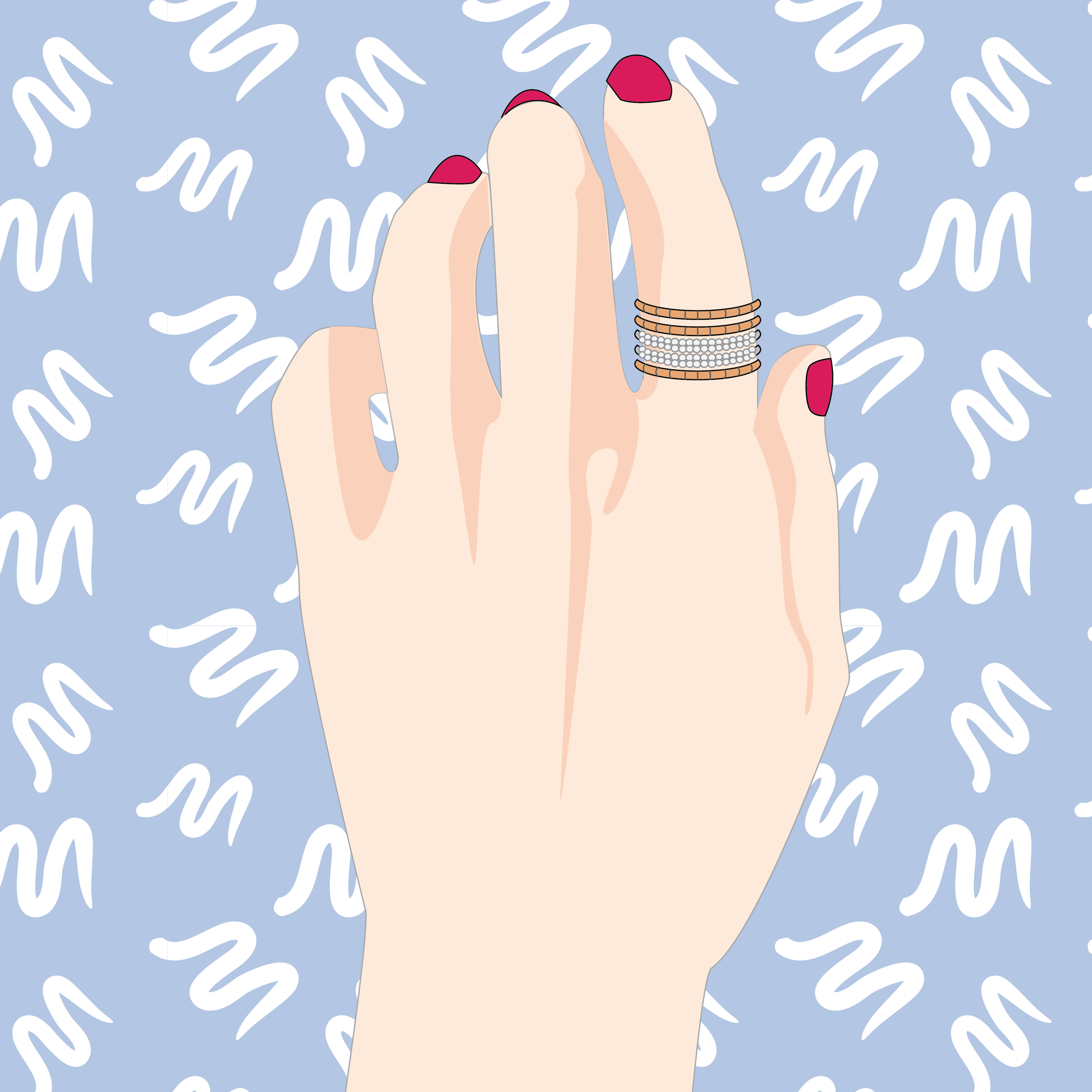
What Do Your Jewelry Choices Say About You As an Employee?
You don't need bling to be a boss.
Ever wonder what your jewelry choices say about you as an employee? Whether you’re slaying Keynote proposals in a statement necklace or you’re a simple bangle kind of boss, we’re breaking down jewelry choices and work styles with Simon G. Jewelry.
There is a rapport between what you put on and how you go about your day.
THE STRAIGHT SHOOTER IN THE SIMPLE BANGLE

A simple bangle says you like to get into the office early and clear out your inbox ASAP. It’s a no-fuss approach to business and dressing that says, I bang that drum, but with a bangle that doesn’t get in the way.
With an arresting intertwined design of white and rose gold and white diamonds, you’re also a bit of a dreamer who takes chances by bending the rules a little bit. You’re not afraid to mix metals and you’re certainly not afraid of mixing it up in the conference room, stating your ideas with confidence; two-tone means you’ve got ideas in every hue.
THE GO-GETTER IN THE CLIMBER EARRINGS

Call it a hike, a journey, or a climb, you’re all about getting to the top. But as dedicated as you are about going after your dreams, you also make sure to reach down and to the side as you go.
These climber diamond earrings mean you’re a go-getter, you want to be noticed, and you make a statement with both your earrings and your handshake: firm and no-nonsense.
You know that not everything you do will be a success but that never stops you from trying.
You like talking strategy and growth with your team and you’re constantly brainstorming innovative ideas for expansion. In 18k white gold with floral pattern you’re classic but crafty and nothing will hold you back.
"You’re classic but crafty and nothing will hold you back."
Tweet this.
THE WORKER BEE IN THE SIMPLE DIAMOND PENDANT

You work out at 6am. Are in the office by 8:30, and you’ve corresponded with more people before noon than most people do in a day. You’re practical, fast, and you like jewelry that you don’t have to think about— but know is always looking stunning.
This is the kind of necklace you can wear morning, noon, and night. In part because you’re always heading from the office to work drinks!
You never have to take it off (and you often don’t). Don’t underestimate it’s simplicity for simpleness. This necklace works hard for you and you need something that works like you do: around-the-clock.
Like they say: you want something done, give it to a busy person.
THE OFFICE UNICORN IN THE RIGHT HAND RING

You are always there to jump in, take on a challenge head-on, and come up with ideas that benefit the whole team. If someone is out sick, you’re helping.
If a co-worker is hitting a wall with creative ideas, you’re staying behind to spitball. You’re a true right hand to everyone in the company and it’s an attitude that doesn’t go unnoticed. It has helped you advance your position in the past and will continue to do so.
This spiral ring is comfortable and resilient due to the design of tiny, almost unnoticeable joints in the solid 18k rose gold design. Which mirrors your personality precisely. The diamonds add a bit of sparkle— just like you add to the workplace.
More from our blog:

3 Reasons Women Are Needed in STEM Now More Than Ever
Because to have gender diversity in the workspace gives way for thought diversity as well.
STEM: Science, Technology, Engineering, Mathematics. STEM doesn’t mean you’ll be working in a lab your whole life. It could result in speeding around a race track for your job or working on the next mobility frontier, or it could result in being the CEO of a Fortune 500 company.
I started my career in the auto industry because I like fast cars. A well-crafted fast car is the ultimate marriage between form and function. There is something very exciting about sitting in a beautiful car with flowy, swoopy lines and pushing it to the limit. For a chance to work on making them even faster, I went into electrical engineering and joined the Society of Automotive Engineers. I found being involved in engineering and co-op programs to be extremely helpful and valuable jumping off points for my career and expanded my views of what I can be capable of with my degree.
I would like to paint a small picture of just some of the opportunities that STEM has to offer and share three reasons why women are needed in the STEM fields: Creativity, Diversity, and Curiosity/Skepticism. Hopefully, my experience will inspire other women to pursue the art of STEM.
Reason #1: Women have a unique sense of creativity.
Most people associate art and creativity with paintings, literature and music. Engineering and mathematical formulas typically aren’t the first thing to pop in your head. That is a miss. Success within engineering is often achieved through creativity. It’s achieved by looking at a problem differently and more creatively than anybody else and using math and technology to present the solution.
At first glance, that may not be obvious to a lot of young women, and young professionals considering going into STEM. STEM isn’t just numbers by-the-book. A career in STEM will provide an opportunity to use your unique way of looking at the world to identify and solve problems. If you can do that, there’s no limit to where your career can go and fun you can have on the way.
I still am a lover of arts and literature, and it has never been an either/or decision between arts and STEM or STEAM. I incorporate and practice art in my job on a regular basis. In the same way that artists may use paint or a camera to communicate their unique vision, open your eyes and expand your experience, I use math and science. I create with numbers and formulas and other cool tools technology affords me. There is quiet satisfaction in identifying an unrecognized opportunity and implementing solutions that hundreds of millions of people will use. Today, my tools are software and code.
And now that Chevrolet has gone one step further in creating this connected car ecosystem, it’s my job to determine where to paint next.
STEM isn’t just numbers by-the-book. A career in STEM will provide an opportunity to use your unique way of looking at the world to identify and solve problems.
Reason #2: Diversity in the workspace among men and woman is crucial.
Diversity in this field is crucial. That’s where I think the STEM industry doesn’t always do itself justice. Success in this field won’t be determined simply by who can solve an equation the fastest, but by who solves a problem creatively. Beyond diversity of gender or diversity of race, the more important aspect is diversity of thinking. Ability to look at the world a little differently lets you see opportunities that other people may have missed. You can then express your creativity in providing a solution using technology and science as a medium.
I saw this practice first hand, when Chevrolet rolled out Apple CarPlay and Android Auto through its vehicle lineup. When we first embarked on this project, some people questioned whether a large global automaker can be nimble enough to work successfully with established tech companies like Apple and Google. There was the also added challenge in rolling out this new feature across the entire Chevy lineup, from a Chevy Cruze to the Malibu, because we believe this is something all our consumers would value.
The quiet steady work that GM has put into nurturing diversity of talent paid off in this instance. Today, Chevrolet offers these technologies on more models than any other automaker in the industry. This was possible because of engineers and developers with different opinions, poking holes and advocating passionately for the best ways to deliver customer experience in implementing CarPlay and Android Auto.
Reason #3: Women are encouraged to have a healthy sense of curiosity and skepticism.
My career in the industry started out with a co-op position that eventually turned in to a full-time position with General Motors where I was fortunate enough to indulge my curiosity in all different aspects of engineering and more. My insatiable curiosity kicked again. I got my MBA and jumped in with both feet on the business side of the automotive industry, leading to various stints in internal consulting, corporate strategy and business development. Today I’ve been given the challenge of leading innovation and strategically figuring out where to take OnStar and our connected car ecosystem.
In addition to working in different areas of engineering, I was lucky that GM offered me a chance to indulge my curiosity and work in the business side of the automotive industry after my MBA, leading to various stints in internal consulting, corporate strategy and to business development and new technology. Working at GM exposed me to opportunities beyond traditional STEM activities that I did not know I really needed to understand in order to excel in business, but I am grateful that I was exposed to them.
I would also advise women that a healthy amount of skepticism is not a bad thing. You should be asking questions, and trying to find ways to solve a problem differently. Don’t let others dictate what you should think – you have a unique way of thinking for a reason, use it. A career in engineering and technology will provide an opportunity to use your unique way of looking at the world to identify and solve problems. If you can do that, there’s no limit to where your career can go and fun you can have along the way.
An original version of this article appeared on Darling Magazine. Written by Saejin Park

5 LinkedIn Hacks To Land You A Job Interview
You have your resume up to par, but how are you maximizing your LinkedIn for your job hunt?
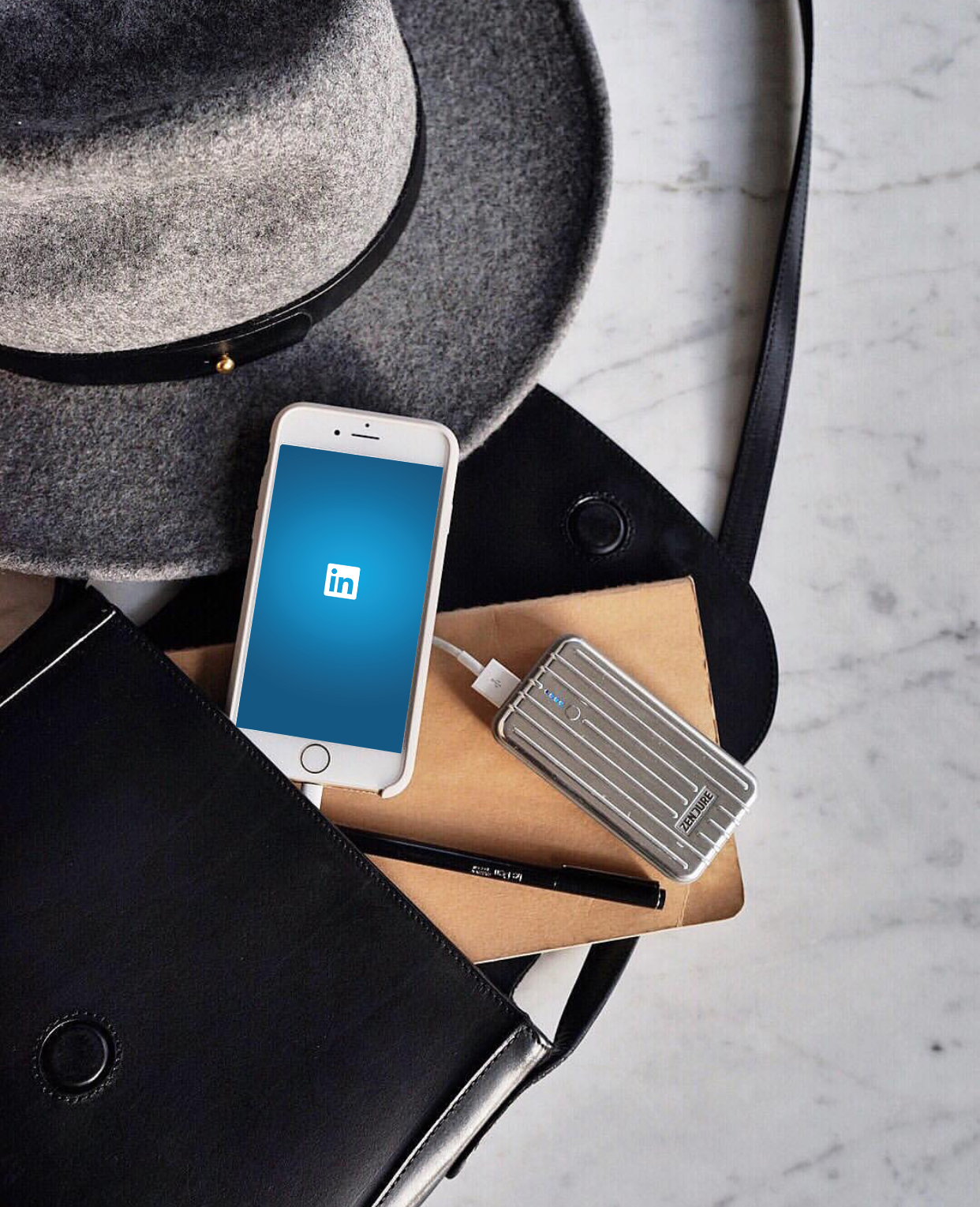
Original image by @lisadengler
LinkedIn. A bit of a beast but also the best way forward when you're on the job hunt. Here are some hacks most of the other candidates aren't using.
1. USE THE "SEE WHO'S VIEWED YOUR PROFILE" TOOL TO YOUR ADVANTAGE
We know. It's embarrassing. But you can use that creepy tracking system to get your name on your interviewer or future manager’s radar. When you apply for a job, search for your possible interviewer, future boss, or recruiter's LinkedIn profile. (Make sure your profile viewing settings are set to your name and headline before you do this, otherwise it won’t work.) When your name pops up on their “See Who’s Viewed Your Profile” section and then again in the resume pile, you increase the chance that they'll take a second look because they’ve seen your name before. During my job search, I looked up the recruiter, the HR manager, and my potential superiors. Two of them returned the profile view and a week later I got an email for an interview!
"When you apply for a job, search for your possible interviewer, future boss, or recruiter's LinkedIn profile."
Tweet this.
2. ACTUALLY UPDATE AND POST TO YOUR PROFILE
It’s great and all when that potential interviewer checks out your profile, but if you haven’t updated your experience or changed your profile photo to something more professional, it's not going to matter. Though this isn’t a totally “unknown hack,” it’s definitely something applicants frequently miss on their to-do list. Before applying, update your experience, but leave out any unnecessary jobs—your high school babysitting gig probably isn’t as relevant as some of your more recent experience. {click to tweet} When I started my job search, I had narrowed down what I wanted to do so I removed some of my irrelevant experience—like my bartending and student desk jobs—since they didn’t apply to the jobs I was after.
"Before applying, update your experience on LinkedIn, but leave out any unnecessary jobs."
Tweet this.
3. REWRITE YOUR HEADLINE
“Student at the University of Something” definitely isn’t as appealing as “Digital Communication and Millennial Marketing Specialist.” Make yourself sound intriguing, hireable, and knowledgeable. From my experience, standing out as a student or recent grad can either help or hurt you, so if you leave that out of your initial impression via your headline, you have a better chance of showing off your skills and experience without being prejudged based on your graduation date. (Side note: don’t ever lie about your graduation date.) I chose Media Communication Professional since it rounded up my experience in communication and digital media while also proving that I knew what I was doing without overstating my experience.
4. JOIN GROUPS AND CONNECT WITH RECRUITERS
The best way to connect with other industry professionals and recruiters is to join relevant groups—and actually participate in them. There are hundreds of groups for every industry and even general groups designed for meeting recruiters (see: The Recruiter.com Network). I’ve joined countless groups related to my industry, my interests, and even alumni groups from companies and schools I’ve been involved with not only for networking, but also for research and educational purposes. A lot of people post relevant industry content (of their own and shared) that helps me continue my education and networking post-job search. Go a step further by being one of the people posting content. Position yourself as an industry professional right away and watch those future recruiters come crawling. {click to tweet}
"Position yourself as an industry professional right away and watch those future recruiters come crawling."
Tweet this.
5. ASK FOR RECOMMENDATIONS
You can't just sit around waiting for things to come your way. Don’t get me wrong, it can feel awkward to ask someone to post a ton of nice things about you, but it’s going to get that recruiter to call you in for an interview. When they see a variety of fantastic recommendations from your coworkers and superiors, they’re going to know you’re a superstar and offer you an interview asap. To get around that awkwardness, pay attention to the way you word your request and who you ask! Make sure you only ask someone who has actually worked closely with you and can vouch for your skills. I asked my immediate supervisor and simply said that I valued her opinion and that I would be honored to have her recommendation. It’s that simple! Whatever you do, don’t use the default message provided by LinkedIn—it’s impersonal and comes off quite rude! If your recommender is going to take the time to write something for you, you should take the time to ask kindly.
An original version of this article appeared on Career Contessa. Written by Laura Bauman
More from our blog:





Snapchat Adds The Old With The New In Its Recent Update
Maybe some snaps were meant to last forever.


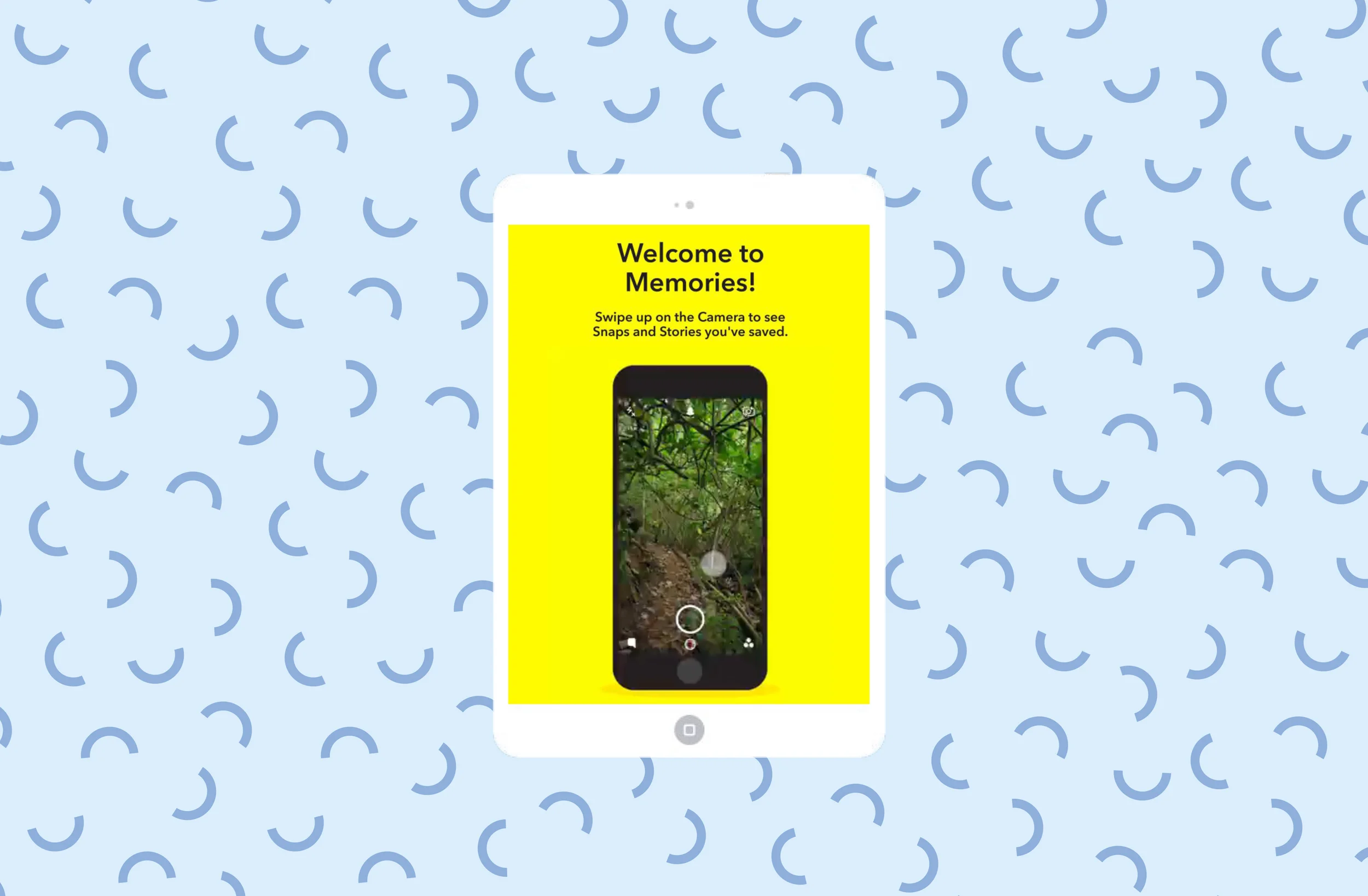
We’ve only known Snapchat as an app that only lives off of what’s going on in the now, only to be erased after one view or the span of 24 hours. As of yesterday, Snapchat is changing that.
Snapchat has introduced its newest feature Memories, which allows you to collect all of your saved snaps and stories in one memory bank for you to look back at. Not only that, you’re able to add older snaps to your story and send it to friends as well for them to look back on, and even add stickers and geofilters to the snaps even if you’re not in the area. These older snaps will appear with a time stamp when they’re viewed by your friends if added to your story.
However, this new update is a game changer for the real-time based app.
SCHEDULED INSTAGRAMS
If you want to make sure your Snapchat followers are able to see something that’s confidential til a certain date, you will now be able to post it at a later date instead of having to not post on Snapchat at all.
When the day comes that you want to snap something on a scheduled day, just take the snaps you are going to take, but instead of posting them to your story, save them to your memories.
From there, you can pull any snaps that you have saved and post them all to your Snapchat story.
WEAVING IN OLD WITH THE NEW
Snapchat storytelling for brands and influencers is becoming more and more important each day, and storytelling is all based on the narrative you build for your audience to watch.
If you are adding snaps to your story and want to allude to an older snap, you can weave it in to your Snapchat story for a more substantial and longer narrative.
Also, the Memories feature allows you to share memories with certain people, and even hide other memories you rather not show to anyone else. You can place these in a section called “My Eyes Only,” which are only accessible after you enter a pin for privacy.
So no more screenshooting snaps onto your camera roll and having it take up all of your phone’s memory. Safe to say that this new update to Snapchat will redefine its dependency on real time content and its expiring snaps.
Maybe some snaps are meant to last forever.

How Rachel Martino Moved From Corporate to Full Time Blogger
And how she's been able to build an international brand before 25.
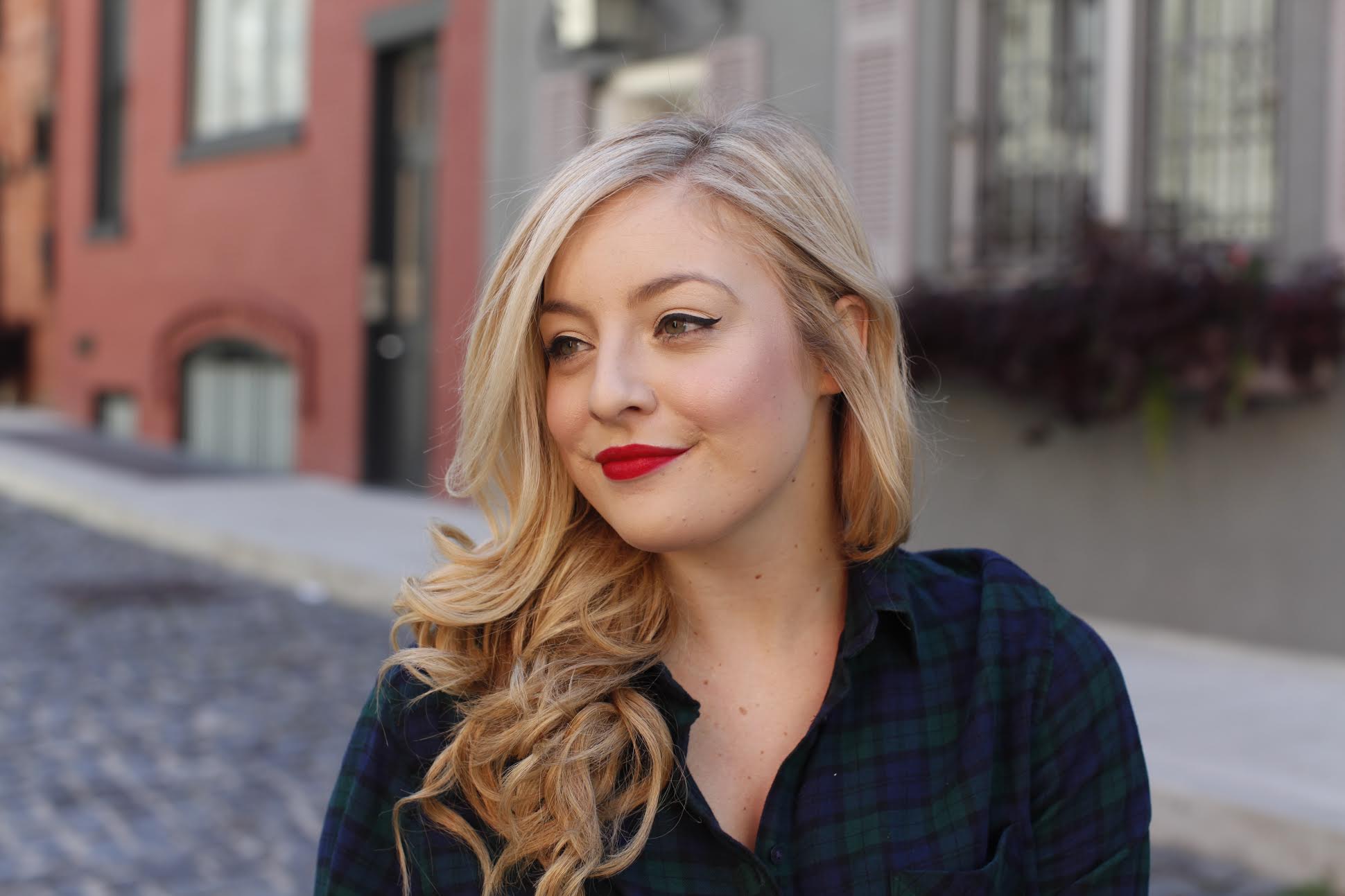
Rachel Martino isn't your typical blogger. She recently became a full time blogger after working corporate as Origins' community manager, and she has created an international brand with over 384k followers all before 25. For Rachel, age ain't nothing but a number.
Now, Rachel is putting all her focus on making sure her blog continues to thrive and living her true calling to the fullest. We caught up with Rachel as we get ready to have her at Create & Cultivate ATL this fall, and had her tell us a little about her experience moving from the corporate world to a full time Francophone blogger.
Make sure to catch Rachel on panel this fall - get your tickets now here!
Francophone American YouTubers are a very rare kind to run into on the internet. What was the ah-ha moment where you thought, "I’ll do both an English and French YouTube channel"?
Yes we certainly are a rare breed! When I was in college I had started my US YouTube channel and was loving the interactions with girls all over the country. As a French major gearing up to study abroad I thought to myself, "I wonder if French girls make beauty videos?" And of course they do. I started watching French YouTubers to practice my French learning and listening skills. I decided to try out a video, and I was hooked! For me it was such a fun way to engage with girls on the other side of the ocean!
You mentioned you studied abroad in France for a while. What are some of the lessons that you learned abroad that you have applied to your brand today?
Taking chances! I first studied abroad in high school and that experience changed my life. I felt I could step outside my comfort zone and try new things. Studying abroad forces you to push yourself! I can't recommend studying abroad enough. In college I was able to spend 9 months on France really learning the language and culture and it really changed my life.
From a young age, you were creating your brand while helping Origins develop their digital footprint as well. What are some of the things you have learned as a digital influencer and a strategist for a corporate environment that have translated into your own business strategy? What are some of the differences?
Working in a corporate environment for a large beauty brand was an incredible experience that helped shaped my business and my life. While at Origins, I learned how a brand operates on every level. Launching and growing the @OriginsUSA Instagram was a highlight of my professional career. I leveraged my knowledge of Instagram from my experiences growing my own audience @RachMartino to help propel our brand's IG to success. Through running a corporate IG I learned the importance of consistency, quality and engagement.
"Through running a corporate IG I learned the importance of consistency, quality and engagement."
Tweet this.
Last year you made the decision to leave Origins as their community manager, to become a full time blogger. How did you come to this decision?
It wasn't an easy one! There were so many things that I loved about my job at Estée Lauder. Working with a team, a daily routine, feeling like a part of a bigger goal not to mention a steady paycheck and benefits. But as more and more exciting projects started to come in, especially travel projects I realized I was at a crossroads. I could continue to dedicate myself to my full-time job and move up in the company, or I could forge a different path and focus on my blog and YouTube channels. I thought about it for a long time but once I made the decision I knew it was the right one. It was certainly scary, but worth it! I gave a long notice, 6 weeks, so I could wrap up loose ends and help find a good replacement, which was so important to me after three years in the position. Now it's been a year and I've never looked back!

What is a piece of advice would you say to anyone who is in a corporate setting who is aspiring to be a full time blogger?
Learn everything you can! Working full time in a very corporate setting taught me so much about business and helped me become the successful blogger I am today. It can be really hard to focus on your blog and a full-time job! It's important to make a schedule for yourself to stay organized. I would often film videos early in the morning before work and shoot blog looks on the weekend, it's all about maximizing your time. If you truly have the passion for blogging that work won't seem so tedious. Also save, save, save! If you want to go full-time freelance you will be in much better position financially if you save money while at your corporate job. It's tempting to buy thousands of dollars worth of clothes, I know, but becoming a blogger can be stressful because you're not getting the weekly paycheck anymore. I saved all the money from my blog and a percentage of my corporate salary when I was working 9 to 5, so when I did decide to make the move to freelance I still felt secure.
"If you truly have the passion for blogging that work won't seem so tedious."
Tweet this.
The brands that you partner with are always in line with the brand that you have created for yourself. And as you have grown as an influencer, you surely get tons of requests to collaborate. How do you know which brands to decline and which to say yes to to maintain the integrity of your brand?
This is always difficult. As a blogger it is so important to stay true to yourself and your brand but as a business it can be hard to say no to incoming offers that pay the bills. I always try and think "would I buy this?" IF it's something I would pay the money and buy, then it's a good fit. And sometimes it's about infusing your own style into a brand you may not have considered before. They have chosen you because they think your look can align with their brand! But always, always be true to who you are.
What are some of the challenges that you have run into while creating an international brand?
Working at an international level is so exciting for me! I love having an audience all over the world, especially in my beloved France. It can be difficult, however, when working with international teams. There is a language barrier, different customs and sometimes opposing work styles. I always make sure to get everything in writing because calls can be stressful in another language.
Even at an audience level I have made some mistakes. For example, a few years back I made a few Halloween tutorials on my French YouTube channel including a 'Lana Del Ray' costume makeup. I got all these really negative comments and it really upset me. It wasn't until later that I realized in France, if you're going to dress up, it's really only as something scary. For them I was making a mockery of Lana Del Ray! So you have to learn as you go and do research when you can.
"Learn as you go and do research when you can."
Tweet this.
Can you let us in a blogger secret that all bloggers know but their audiences are unaware of?
We do have lots of secrets! People always ask me 'how are you so photogenic in photos?' Look at my camera roll and for one photo posted on IG there are 100 that I didn't post! Getting the perfect photo is a bit of an art that required patience, proactive and great filters. Also most bloggers shoot maybe 3 looks in one session - I'll meet with a photographer and have 2 more outfits in my backpack and then change in a public bathroom (very sexy, I know) One time I met with my friend Noelle, who is also a blogger and we each packed 6 swimsuits and a pop-up tent and headed to Rockaway Beach! We changed in the tent which was blowing around like crazy in the wind! But by the time we were done we each had 6 different swimsuits photographed!
"Getting the perfect photo is a bit of an art that required patience, proactive and great filters."
Tweet this.
If you weren't a digital influencer or community manager for a beauty brand, what would you be doing today?
That's a tough one. As a kid I always wanted to be an actress. I think I've always had that urge to 'out myself out there' which is probably why I ended up as a blogger/YouTuber.
Can you teach us french, sil-vous plait?
Oui! :)

Free Download: Make Your Resume Land You The Job Of Your Dreams
Time to spruce up your resume with Above The Glass' tips.

You are finally ready to make the leap for your next career move, but can you remember the last time that you updated your resume? Does it still have that summer job that you took in your junior year of high school?
If so, it's time to dust off the cobwebs and make sure that your content, language, and presentation are all in line to make an impression. We asked our friends at Above the Glass what business owners look for in candidates, and what makes them stand out.
Enter your name and email below to get access to Above The Glass' Resume Checklist, and get started on having your resume land you the job of your dreams!

Ayesha Curry Explains The Major Key To Her Business Strategy
Steph Curry may make the shots on the court, but Ayesha is the MVP for motherhood and entrepreneurship.

Motherhood and being a business woman isn't any easy feat, but for Ayesha Curry, it's a challenge she was born ready to tackle. Today, the wife and mother of two has her YouTube channel Little Lights of Mine with over 435k subscribers, is getting ready to launch her first cookbook The Seasoned Life this fall as well as launch her own meal-kit company GATHER.
We caught up with Ayesha as we get ready to have her on panel this fall at Create & Cultivate Atlanta, and got to hear about how she balances motherhood, the importance of transparency in her brand, and what her strategy is when making important business decisions.
You've created a brand that puts family and wellness at the forefront - how do you make sure that yours stands out among other culinary and family brands?
I think for me personally when I started my journey in the culinary world, I wanted to be accessible. I think that is what’s missing a lot these days in food. People love transparency and so I wanted to be honest, easy and approachable when it came to the way that I presented myself and the way that I cook. Nothing is perfect, and I want people to know that it's okay and that we're all in this together.
"Nothing is perfect, and I want people to know that it's okay and that we're all in this together."
Tweet this.
100 recipes is a LOT for a cookbook. We're sure you had a lot of inspiration to create The Seasoned Life - where did you find it?
I found inspiration through my family and just everyday life. Most of the recipes are things I've created over the years through trial and error, some are family recipes that have been passed down. I even have recipes in there that I recreated from my favorite restaurants. I simplified them for the home chef.
Fans know you as a supportive wife and devoted mother, but how do you assert your sense of self within and outside that role? How do you make sure that your brand stands alone?
I think for me it's been a matter of staying true to myself. I don't compromise and I've learned to say no... a lot. Again, it's the transparency. When I stay true to myself, I am automatically staying true to my brand. I only hope that people can see that.
"I don't compromise and I've learned to say no...a lot. It's all about transparency."
Tweet this.
What’s the first dish you ever created?
The first dish I created was a sweet and savory mango shrimp dish on my 13th birthday! I had a cooking party and invited all of my friends and cousins over. It was a blast!
What is one of the toughest challenges being a culinary entrepreneur and being a busy mom and wife?
Balancing it all has been the toughest challenge for me. I seem to be in a constant state of mom guilt. It’s hard. I am lucky that I have a supportive husband who encourages me and wants me to succeed. It keeps me going.
Your blog touches on food, wellness, and family. Are there any other topics that you think you might delve in later on the blog?
Food is definitely the focus. I love splicing in bits of family and wellness because it's the biggest part of my life and just makes sense. In a dream world I'd love to dive into more lifestyle and home decor. Unfortunately I am quite possibly the most disorganized person on the planet.
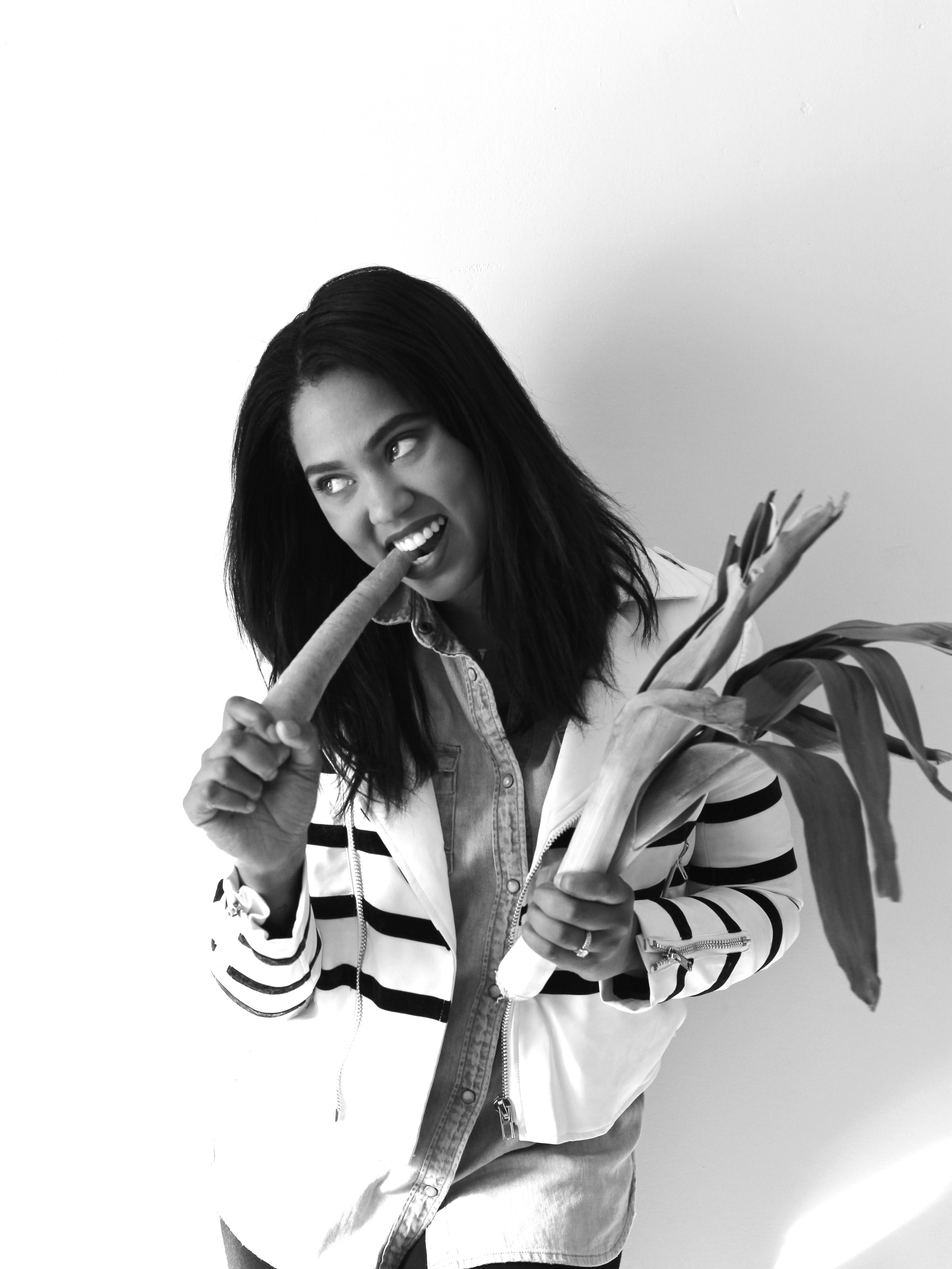
In two years, you have been able to grow Little Lights of Mine's YouTube channel to 435K. What has been your growth strategy from day one? How has it evolved?
My growth strategy has been quality over quantity. I never want to put out content just because "it's been a while". Everything I put out needs to make sense and be true to myself and my brand.
"I never want to put out content just because 'it's been a while.'"
Tweet this.
You share a lot about your life on your social channels, but do you feel there's a need for privacy within the media and the digital world? Are there things that you make sure to keep to yourself and your family?
I think the biggest thing for me and learning process has been knowing when to involve my girls and husband and when not to. People are so quick to take advantage and it's been difficult deciphering what makes sense and what doesn't. I'm getting better at it. For me, I feel like the media is quick to take small irrelevant matters and turn them into big false beasts. It's tough at times but it comes with the territory. We just make sure we don't bring the outside noise into our home. It keeps everyone happy and normal.
Aside from your book release this fall, what else is in the pipeline?
There’s lots of things in the works that i’m super excited about. Aside from the book release, this summer, I’ll be launching my very own meal-kit company, GATHER. GATHER will be delivering fresh ingredients based around my favorite recipes right at your doorstep. I’m also currently working on rebranding my olive oils and aprons. I also recently partnered with ZÜPA NOMA which is soup in bottle - soup reimagined.
So exciting to hear that you'll be launching GATHER soon! What are some of the things that you have learned in building a subscription business from the bottom up?
It’s been such a fun process. The main thing I’m trying to infuse is real world solutions. I set out to create a meal kit that I would use myself to make putting a delicious, nourishing meal on the table easier and less stressful. I’m learning that my ability to customize that experience is what’s going to really set it above and beyond what’s being offered by other meal kit companies. That’s where I’m really focusing my efforts. I can’t wait to share it with everyone.
What is your funniest parenting story to date?
My husband and I went to our daughters parent teacher conference and one feedback was that she needed to work a little bit on her listening skills (like any 3/4 year old). When we got in the car, we explained to her what we had learned and what she needed to do. She threw her hands on her head and said "I just can't handle this anymore." We had no words. We definitely have a drama queen on our hands.
What’s one thing completely unrelated to what you do now that you want to do or learn?
I would LOVE to learn how to ride English Style and compete. It's always been a dream of mine.
What is your process when making crucial business decisions, whether it involves your career or your family?
I always do a pros and cons checklist. I look at it from a time and financial standpoint, and if I'm passionate about the opportunity. It's really hard to turn down opportunities, but again, quality over quantity. If I don't feel moved and passionate about the project, I pass. I'm a firm believer in intuition and gut instinct. It has to feel right.
"If I don't feel moved and passionate about a project, I pass. It has to feel right."
Tweet this.

How Jessi Malay Took Her Creative Power Back With Her Blog
How she become a multi-hyphenate business woman since age 8.

From a young age, Jessi Malay is no stranger to hard work and dedication. It has been engrained into her daily life since she began performing at 8 years old, which has ultimately led to her success now as a musician, dancer, and blogger today.
But working in the music industry has been no easy ride, especially when you want to make sure that your brand and creative vision stays true to you. We caught up with Jessi to see what she has learned from being in the music industry from such a young age, how it has led her to take back her creative power with her blog mywhiteT and have her become the ultimate multi-hyphenate creative business woman she is today.
Also, make sure to catch Jessi on panel this fall at Create & Cultivate Atlanta! Click here to get your tickets now!
You started working at a very young age. Can you talk a bit about your different path and why this was the right move for you?
From the time I could walk, I was begging my mom to take me to dance classes. At 2 years old, I started studying ballet, jazz, and tap, and by 8 years old had joined a performing group, started singing, and was touring internationally. At 14 years old, I auditioned to be in a girl band, and by that evening, recorded my first song. Within weeks we were signed to Jive Records (Britney Spears, Justin Timberlake, Chris Brown) as ‘No Secrets’ and spent the next three years recording, rehearsing, performing, and touring. We put out a self-titled album that sold 300,000 copies and were #1 on the Billboard Heatseeker charts.
After 3 years, the group broke up and I went on to signing a solo deal with Warner Bros Records. My time at WBR was a completely new experience for me. I went from a world of pop and relatively quick and easy success with my girl band, to having to learn how to hustle more for myself and play the politics of the music industry. I toured from radio station to radio station, working the mix show market and negotiating with DJ after DJ for airtime. It was grueling, and definitely a man’s world that I had to learn how to conduct myself in a way that could be taken seriously and respected.
"Working in man’s world that I had to learn how to conduct myself in a way that could be taken seriously and respected."
Tweet this.
At Warner, there was no pop division at the time. They were pretty Rock heavy and had a budding Hip-Hop and R&B department, which is where they placed me. I had very little say in the production of my project. I collaborated with people like Young Joc, E40, opened up for Three Six Mafia, and Wiz Kalifah used to open for me. Needless to say, the branding was a bit off…
The label used to also get on my case all the time about my look, telling me I had no style and wanting me to be more eccentric like Nicki Minaj or Lady Gaga, and that’s just not me. I always appreciated more pedestrian style, streetstyle, and it was this time that spawned the desire to start a fashion blog, a bit to show and prove and explain my personal aesthetic in a way that could be understood and appreciated.
"I started a blog show and prove and explain my personal aesthetic in a way that could be understood and appreciated."
Tweet this.
We talk about work/life balance a lot. Is there anything you learned being signed as a teen and touring the world that has helped you with work/life balance as an adult?
Work/life balance will always be a struggle for me because I love working so much and grew up understanding how much work and sacrifice goes into anything that is worthwhile. I think that in itself was the lesson through all of my years of being signed as a teen and touring, just knowing what to expect. I’ve made sure to surround myself and work with the people I love most so we can be in each other’s lives on a regular basis, and we really love what we do. We’ve managed to figure out a way to make a living off of what we’re passionate about, and because we all have a common goal, we keep each other balanced. We work really hard so we can play harder, and set benchmarks and big picture goals for ourselves so we can keep everything in perspective, which can be hard to lose site of when working for yourself.
Despite your early success you made the choice to get a college degree? Why was this important to you?
Getting a college degree was really important to me, especially after all of my years spent focusing on my music career as a teen because I just wanted to be a more well rounded person. I had other interests, talents, questions I wanted to explore and develop. Everything I learned during school really helps me to adapt quickly and think outside of the box which is vital in a job where you have to create and share new content every day, multiple times a day, in a way that is authentic and true.
"We work really hard so we can play harder."
Tweet this.
How do you balance your creative side with your entrepreneurial side?
I have to compartmentalize time for each because they come from very different places. If I’m focused too much on the business aspect of the blog or music industry, it’s hard to be creative because I start to only think of my work from a marketing standpoint, of what’s going to sell or get the most likes, and that’s not where great art stems from. So if I’m going to do something creative like sit down and write a song, get in the studio and choreograph, or location scout and shoot something really beautiful for a brand I’m working with, I have to separate myself from that business side of me, let loose, and let my mind flow. I get myself there usually by doing physical activities like taking a dance class, going for a run, browsing through my dad’s old art books, or going out and hearing live music.

Let’s break down the behind-the-scenes of the blog. How much time are you putting into it? What goes into crafting your editorial calendar?
The blog is my LIFE! Lol. It’s my business, my diary, a forum for my readers and I to share ideas and comments, and just my place to document my daily life, travels, and passions, so I spend most of my time either conceptualizing, shooting, or writing for the blog. At the beginning of the month, I sit down and fill my calendar with all of the brand collaborations I’m working on, which days I’ll be shooting them, which days I’ll be editing them, their 1st draft due dates, final assets due dates, and posting dates for both blog and socials. If I don’t lay this all out at the beginning of the month it’s impossible to keep track of. It’s also very important to stick with your deadlines because if you’re late for a brand, you could really screw up their whole marketing strategy.
Because I also create and post about music, travel, now food, and soon to be fitness, I work those posts into my editorial calendar as they come. Those categories are a bit more free form and at the moment, passion projects that I just enjoy doing and sharing with my viewers.
How are you coming up with content that’s both authentic and monetize-able?
It starts with really having a strong understanding of your brand, what kind of products and other brands are in line with yours, and only accepting jobs that fit and you believe in, otherwise your audience won’t trust your voice anymore. From there, it’s easy.
What is your biggest current concern as a blogger?
Because blogging is so much more than just a job, it’s truly a lifestyle and all encompassing, I’ve started to become concerned with how I will eventually balance kids and a family and still accomplish all I’m doing now and everything I still want to do professionally. It was really encouraging to hear women like Rachel Zoe and Jessica Alba at CreateCultivate DTLA this past May speak about how they became ultimately more focused and productive after having children. I also have great friends who are bloggers that have kids and are making it look easy…so much respect for those ladies!
What is your approach to business? Slow and steady or jump in and go for it?
Jump in and go for it, absolutely! I know no other way. When I want to do something, I become obsessed and don’t think too much about how I’m going to do it, just that I want to do it, and I’ll figure it out along the way. The hardest part of business is just starting.
"The hardest part of business is just starting."
Tweet this.
What sets you apart?
I think my music is definitely what sets me apart. I’m an artist first and singing, dancing, and performing will always be my heart. I think people really connect with me that way because I’m a lot more vulnerable and open through my music.

Nany's Klozet Shares the Four Hard Lessons of Blogging
And why Latina women need to support each other more.

Daniela Ramirez is a dreamer who started her blog to create an inspiring space for Latinas and WOC in fashion an beauty. The Miami-based influencer now has over 150k followers on Instagram.
But she doesn't think blogging should be an end goal. We caught up with the woman behind Nany's Klozet to chat hard lessons, blog evolution, and why Latinas and WOC should support each other more.
You've been blogging for 5 years now - how has your blog Nany's Klozet evolved since?
I actually started blogging in 2009. Back then it was called Fab Chic and Fit and it was only in Spanish- it had absolutely no personal style and was almost anonymous. I opened Nany’s Klozet in 2011 as a way to separate “magazine-ish” content from personal outfits.
Blogging has changed in so many ways. At the time most bloggers were either in school or working- few saw it as a business career, most of us were sharing content simply because had a need to share our passion or knowledge. I find it amazing how brands slowly started to realize the influence bloggers have, and we definitely have changed how brands market to their audiences. Also it is interesting to see how people have shifted from reading online to instant gratification with social.
What is one thing you used to do in 2011 for your blog, that you will never do again?
Never say never! But we (my now-husband takes all my photos) used to take outfit pictures in abandoned streets in the middle of nowhere. I was super shy about taking pictures with people around me, so I guess that’s why I liked it. Now I'll look at them and it didn’t make sense. I think that the outfit has to match what you are doing and where you are going.
What would you say are some of the hard lessons of blogging?
There have been many hard lessons along the way:
- Be very careful with contracts. Have a lawyer look at them. Some brands want to take advantage of you.
- Never lose yourself for money. Never take opportunities because of a good pay. It’s important to stay true to yourself. Your audience notices.
- Also don’t change for your audience. I’ve seen people change the direction of their content. I understand thinking about what content they need, but blogging is about sharing your passion, not pleasing others.
- We need to stop obsessing over numbers and followers….and focus in quality content (and quality of heart and soul)- with that, the following will come organically.
"Never take opportunities because of a good pay. It’s important to stay true to yourself. Your audience notices."
Tweet this.
Everyone has their one growth hack or strategy to help their blog grow - what is yours that you stick to religiously?
I try to interact with my readers as much as I can. To always answer their comments and keep the engagement high. Blogging is a two-way form of communication. It’s not only a “come, read me” but also listen back to what they have to say and answer. I always go to my reader’s profiles and comment on their photos. I’ve met so many amazing girls and I’ve found amazing blogs that way too.
"Blogging is a two-way form of communication. It’s not only a 'come, read me' but also listen back to what they have to say and answer."
Tweet this.

In a way your blog is a testament to making it look easy, while also looking polished and perfectly composed. However, we know that are BTS stressors that all bloggers deal with. What are some aspects of blogging that your audience doesn't see?
I don’t even know where to start…there are so many! My husband and I have had countless fights while taking pictures…I don’t even remember why but I get frustrated easily (and often!).
I also think we don’t wear heels as often as seen on the blog- I always have another extra pair on the car. Sunglasses are always great to increase the chance of a good picture. Plus sunglasses mean you don’t necessarily have to wear makeup!
Sometimes I think readers don’t know the amount of work we do and it all looks super flawless. Recently I did a nail polish campaign in Mexico where I had to change polish twice a day for three days and run around doing specific activities at the hotel. It was a blast, but it definitely wasn’t as polished and composed as it looked.
"Sometimes I think readers don’t know the amount of work we do [as bloggers]…and it all looks super flawless."
Tweet this.
As a Latina, you have been able to encourage other WOC to start their own blogs and become a part of the digital space in fashion. What else do you feel needs to be done for representation of Latinas and other WOC in the digital space?
Being 100% honest, I think Latinas and WOC need to start supporting each other MORE. I absolutely love my Latina community and I’m so proud to be Hispanic. However, I think Latina readers still prefer the tall/skinny/blonde/European looking blogger.
I also have been in many situations where I know I was filling the “Latina spot”- like campaigns with a blonde, a brunette, an African-American, and me. Brands need to stop looking at us as a space to fill, and instead acknowledge that we are a BIG part of U.S society.
What is one piece of advice that you have for anyone that is looking to start a blog today?
I would tell them to see a blog as a step to a reaching a bigger goal. I don’t think being a blogger should be the end-goal. For example: if you want to be a personal stylist….share your tips, do make overs, share your work. If you want to be a magazine editor, imagine you are already doing the job and treat your blog like it. Treat your blog as your portfolio…a passionate portfolio. Enjoy every second of it and genuinely network…you are going to meet some amazing people along the way!
"Treat your blog as your portfolio…a passionate portfolio."
Tweet this.
Make sure to see Daniela on panel this fall as she joins us at Create & Cultivate Atlanta. Click here to get your tickets now!

How to Use Public Speaking to Build Your Brand
Is this thing on?

Have you ever looked at speakers on a stage and thought – how do I get there? How can I become confident, clear on my message, have the courage to stand in front of so many people and share what I love and what I know?
Well you’re not alone. As we move into the era of what I like to call the ‘Power Personal Brand’ where we follow people who have something to say and who say it so well, the personal brand has become the visual connector that we have to people and content that we love. In this digital age, having something to say and saying it well can be the difference between mega success and getting lost in the crowd.
Now when I talk about public speaking and presenting I think of it as speaking to a group from 2 people to 200,000 people. It doesn’t really matter the size, your ability to impact and connect with 1 person is just as important as the masses.
So if owning the stage is something that you would love to do here are some of my tips on presenting with power and purpose and getting the gigs that you want.
BE CLEAR ON YOUR MESSAGE
One: decide what your message is. This may sound simple, but what will you talk about exactly? If you can decide on 1 – 4 topics that you cover then it makes easy for event managers and hosts to know if you’re right for their business, event, and audience. If you’re able to give a clear outline then it makes for an easy decision. I’m sure that you already have a number of topics that you focus on in your business, so go with those. Consistency of message across all your platforms is what builds brands, so bang that drum!
"Consistency of message across all your platforms is what builds brands, so bang that drum!"
Tweet this.
SHOUT IT OUT
If you want to be a speaker then let people know by creating a speakers page. Creating a speakers page means that it’s easy for those who come to your website or blog to see that you’re a speaker. They can see what you talk about, where you’ve spoken before, and they can see what others have said about their experience with you as a speaker.
TESTIMONIALS
If you’ve spoken before and have testimonials then those are also a great thing to provide event organizers. Knowing that you’re an engaging speaker whose personality is congruous to my brand is really important to me as well as an event organizer. My brand personality is bold, fun, and focused on educational content, so my speakers need to be like that as well. If you’re able to show the type of content you share and the way in which you share it then you’ll appeal to the right event organizers.
GETTING STARTED & FINDING GIGS
So where to start? There are a couple of things you can do to get started. One of the easiest things to do is to run your own event. This means that you could have from 5-50 people, whatever works for you and test your message and talk it out. This could be free or charged. By doing this you’ll get a feel for what works for you when you’re speaking and what doesn’t. It may also mean that you’re able to get testimonials for your speaker’s page.
CONNECT WITH EVENT ORGANIZERS
If running an event sends you into cold sweats then it’s time to connect with others who run events and see if you’re the right type of speaker for them. I’ve spoken in paid and unpaid workshops and events for other women who run networking groups and events and that’s worked well for me. As an international conference speaker I also connect with those who run large scale conferences to ensure that I build a relationship with them for future events.
GOOGLE IT!
I secured a speaking event this year by Googling – ‘speaking opportunities in Melbourne’ and applying when I saw one that I thought was a good fit for me. Not only did I make some awesome connects at this event but I also gained a number of new clients. The event was unpaid but is still benefiting my business today.
PROMOTE YOURSELF
I saw a video on Facebook recently of someone advertising that they are open to speaking at events. It shared some information on where they had spoken before and what they speak about. Now you may not want to go that far (or maybe you do) but like anything in your business, if you want to build up your reputation in a certain area then you need to be out there sharing it. Social proof is always a great way to do that. When I get the professional photos back from places that I’ve spoken then I put them up on my social channels as well as my website to build up the social proof of what I’ve done. I always connect it with a testimonial where I can so that there is a visual as well as praise for a job well done.
HAVE A GOAL
With any speaking gig I do, I have a clear goal. The goal is convey a specific message, to connect with certain people, to entertain, educate or inspire. Know what your goal is and ensure that you set yourself up to be successful in achieving that goal. I’ve worked with women who have no idea what they want to get out of the experience and therefore miss an opportunity.
Speaking is one of the quickest ways to reach a large audience in a single instant, so if it’s something you’re looking to do, I would say go for it.
I’d love to know - what’s your biggest fear, worry or barrier to speaking?
An original version of this article appeared on Blog Society.
Suzanne Chadwick is a Business & Brand strategy coach and the CEO of The Connection Exchange providing coaching, training & events for women in business and supporting them to build their business, brand and bottom line. As an international conference speaker and trainer, Suzanne also coaches women to create the ‘Power Personal Brand’ through public speaking and Owning the Stage. You can find and connect with Suzanne on Facebook and Twitter.
More from our blog:
Find Out Why the Male-Dominated Tech Industry Won't Stop This Creative
She's adding dimension to the fashion and tech spaces.

Heather Lipner, tech maven, has worked in the dude-heavy industry for "at least 13 years." As the former creative director of MySpace, co-founder of Uncovet, and founder of Clashist, that oh-so-pop-culture-meme-tastic apparel line approved by James Franco, she has a few tricks up her techie sleeve.
Drawsta is her newest venture. An augmented reality fashion concept that adds an unexpected layer to your shirt [like the above panda (panda, panda, panda #broadsinatlanta)]. Augmented reality doesn't work without a tech device. In Drawsta's case, it's an iPhone app that allows for virtual designs to appear on a t-shirt. There are currently two screen-printed graphic unisex shirts ($48) each of which comes with 3-5 animations, with a new one released weekly.
We checked in with Heather to talk the industry's 'boys club,' how Drawsta is fighting against the need for fast and disposable fashion, and (read all the way to the end peeps) if we're becoming machines.
Let’s chat a little about your background. How did you arrive at the intersection of fashion and tech?
I have been in it for around six years, but prior I was doing tech/media. I worked as the Creative Director of Marketing as well as the Art Director of Product for Myspace and prior to that worked at a couple interactive design agencies for over six years. So been doing tech for at least 13 yrs.
How did the idea for Drawsta come about?
I wanted to take fashion to a new level, literally add a dimension to it. I felt stuck in a traditional world doing my previous brand Clashist. While it was a pretty viral line and lots of people loved it - I always had to make new - which, is very costly and often environmentally wasteful. So Drawsta solves the problem of wanting something new in the moment, but in a digital manner so we don't have to literally make so many physical goods. I think it’s more fun too. :)

How does it work?
It’s so simple - you just open up the app and point it at your tee and a layer of animated graphics pop and lock on the tee. You get the experience of wearing something new (you get new animations weekly) and you can also share yourself wearing the animated tee via social media, email, text - anything digital. (See below demo video.)
Social media made fashion shareable. Why is now the right time to take it a step further?
We’re going start losing the screen in a year or so and digital graphics will appear on, in front of, and around physical objects. Knowing that, I wanted to do something fun that can represent the individual’s ever-changing identity via something we’re all used to - fashion and social media.
Wearable tech is a billion dollar market, do you think we are going to see more augmented reality wearables?
Yes - from me for sure! :)
What is the most exciting part about being in the tech space right now?
I’ve always been obsessed with self-expression via fashion, social media, art, design, interior, etc and I think tech lets us explore our own identities in a faster manner. I get really excited when I see people (mostly younger generation on Snapchat) freely post without caring how perfect the image is. To me, that is freedom to explore and share our momentary thoughts, feelings, everything without caring about being judged. When you give people a way to do that in an acceptable manner, we can find our true passions and feelings in a more raw, real and evolutionary manner. THAT IS AMAZING AND EXCITING TO ME. MAKES ME CRY.
What’s been your experience in the tech world as a woman?
I hate it actually. It’s so annoying - sometimes I don’t care and sometimes I have this overwhelming rebellious feeling where I just want to roll my eyes, spit, and go in the opposite direction. LOL, but I love tech and I am also not sure if it is 'man vs woman' or there’s simply a club that is mostly male. You put a bunch of VCs in a room that are literally competing to see who will make more cash and it’s douchebag central. There’s a lack of creativity, sensitivity, understanding, depth, etc. I went to school and studied Economics at the UW Madison and it was the same - a room of mostly dudes asking each other who’s got higher grades. It’s lame - but not all VCs and guys in tech are like that - just a lot of ‘em. Heh. I just try to focus on the product, customers and creating a path towards what I believe is success. And hopefully in years to come the room will even out with less ego and more diversity, compassion, and care. :)
"I love tech and I am not sure if it is 'man vs woman' or there’s simply a club that is mostly male. "
Tweet this.
Is wo/man becoming machine?
Maybe we are already machines. We’re kinda at a high point right now in which we are really figuring out how to reverse engineer our DNA (coding) to manipulate our genes to live longer, to kill off diseases, to even alter our IQ. Once we can ingest nano robots to change our destiny then it will probably feel more and more like we are machines after all.
Arianna Schioldager is Create & Cultivate's editorial director. She's also a machine, in the best way possible.
More from our blog:

Food Intentions: How Sarah Michelle Gellar Went From Hwood to Foodie
The co-founders of Foodstirs are sharing the business of baking.

Food is one powerful force. It's tied to memory. It's hands-on. And it connects people. It's something 1/3 of the Foodstirs co-founders Galit Lebow knows well. "I remember the homemade cinnamon raisin kugel that grandmother would make for us on special holidays," she says. "I remember running into the house and we knew grandma was over. She passed away last year and it’s one of my goals to learn how to make it! I miss the smell."
The other 2/3 of the e-commerce baking company that delivers creative baking kits and mixing to your home are Sarah Michelle Gellar and Gia Russo.
Each woman brings something different to the table of the company that is "reinventing the baking category" and "intends to give consumers an opportunity to be creative and share their experience." We caught up with Foodstirs to talk all things baking and business in anticipation of #CreateCultivateATL where all three will be keynoting in conversation with Self magazine's entertainment director Rebecca Sinn.
Founders and CEOs often talk about the “problem” their company will solve. What “problem” is Foodstirs trying to solve?
Foodstirs is reinventing the baking category. We are offering a clean and green better tasting baking experience that is high quality, tastes amazing, and most importantly is accessible. There is nothing in the marketplace like us that exists right now. We see a huge opportunity to revolutionize the baking aisle and re-traditionalize home baking.
Moreover what is the ‘why’ of your brand?
Most of us are consumed by our digital devices, we're always on and always connected. Yet somehow because of this we often feel disconnected with our loved ones. We are so busy in our everyday lives that we are doing more but experiencing less. We wanted to create a product that gives you that time to spend with your family and friends - connecting, sharing and experiencing. We believe the act of preparing and enjoying food together has incredible power. Foodstirs allows us to connect effortlessly and create meaningful memories.
You were part of Mucker Lab, an accelerator based in Santa Monica. We’ve talked to female entrepreneurs before about the benefits of being in an accelerator. What was your experience?
We have had a great experience. We knew we wanted to launch an e-commerce site with a subscription component but we did not have a tech background. We decided to surround ourselves with e-commerce advisors and investors that could help. Our good friend of ours had been part of Mucker accelerator and recommended we take a meeting. We have a ton of respect for the founders of Mucker capital, Erik Ranalla & Will Hsu. They are smart investors who saw a unique opportunity that was a little out of their wheelhouse. They took a chance on 3 female entrepreneurs with an idea for a baking brand and we will be forever grateful for their early support. They have been super helpful to our business by offering resources, advice and mentorship. We have also met fellow start up founders in the program who are very collaborative. It’s a fun environment.
Why was it the right decision for Foodstirs?
We had big ideas and a big plan that involved an e-commerce subscription business that none of us had experience in. We believed that an accelerator would help guide us through the initial start up process and get us focused on the right things. We have been able to gain access to a network of amazing entrepreneurs and executives who we have built great relationships and have helped us execute more effectively.
"There is nothing in the marketplace like us that exists right now."
Tweet this.
Have you heard of the Rule of Three? It’s a concept in writing that says things that are presented in threes are more interesting, enjoyable, and memorable. Any thoughts on this as it pertains to having three founders?
We all have different strengths that compliment each other. Galit is the operator and visionary, Gia is the product innovator, and Sarah is our brand ambassador and creative officer. We share the same vision and passion. We sometimes agree to disagree but that's what makes it special. We respect each other. I have the best job in the world because we get to work with my close friends.
For female founders looking to raise capital, when you walk into a room of investors what are you thinking? How would you say your first meeting went compared to a later one?
Well first, we usually walk into a room of all male investors and we are 3 females selling a baking mix company. We knew it was going to be a challenge to sell them on this vision but luckily we have found amazing investors who believe in what we are doing and see the opportunity to disrupt a sleepy category. Sarah and I had our first investor meeting at a coffee house back in March and it was a disaster. We didn’t really know what to expect and probably weren’t as prepared as we should have been but it was a great lesson. We keep in contact with the investment fund and recently got a second chance to pitch them as we are currently in the process of raising another round. It was a much better presentation and we all laugh about it now.
With Sarah as the brand ambassador what challenges are you facing? People assume having a celebrity as the face of a company makes it easier, but in what ways is this not the case?
Having a celebrity as part of the start up comes with great advantages but also challenges. We have found that people sometimes don’t believe that Sarah is as involved in the day-to-day. She actually does come into the office everyday and even answers customer service calls. We are focused on producing the highest quality product and best experience. We take pride in what we have created and having an amazing partner who is also a celebrity allows us to amplify our message and get our story out there.
I’m pretty useless in the kitchen, but have a three-year-old and would love to bake with her. Why does Foodstirs make sense for me? Why does it make sense for her?
We created Foodstirs to make it simple and convenient for the modern parent to create a traditional home baking experience with their families and friends. We were inspired by our children and longing for a product that’s high quality made up of simple and delicious ingredients that allows us to spend quality time with family. Our mixes and baking kits are less than 6 easy steps - we call it quick scratch baking.
Among the three, who is the best chef? Who is the worst?
Gia is definitely the best chef, she grew up in an Italian household. She has also written three cookbooks! We go to her house when we want an amazing homemade meal.
What is a meaningful experience you each remember in the kitchen?
Galit: I have three sisters and both my pretend worked full time. We did not spend a lot of time in the kitchen, although we had dinner as a family every night. We had this amazing recipe for a sugar cookie with homemade frosting. Every Valentine’s Day we would make these cookies together - it was one of the few times we did not fight, we just had fun! We would frost, decorate and share them with the neighborhood. They were the best tasting cookies and more importantly, the inspiration for our amazing organic sugar cookie mix and frosting. Now I get to make it with my kids every weekend!
Why do you think there is such a tie between food and good memories?
Food just brings people together - it makes us happy. Everyone has a memory of favorite dish or recipe from when they were young. We hope to provide a product that gives you that opportunity to easily create your own food memories with your family and friends.
Why do each of you want to be a part of Create & Cultivate?
We believe in the power of collaboration and creativity. We believe that creativity leads to innovation. It’s important as women business leaders that we support each other and learn from each other. Our website has tons of recipe inspiration using our base mixes and we encourage our Foodstirs community to share their own. We love looking at the thousands of social posts of customers sharing their creations.