Roundtable Talk: How We Really Feel About Additional Social Platforms
Is it over yet? Just beginning? Are we machines yet?

Source: @felixcartal
The addition of Instagram Stories raised a few eyebrows last week, not only because the newest arm of the photo-sharing app looked like a carbon copy (minus the dog filters) of Snapchat, but because it was yet another piece of the social layer cake that has many already feeling stuffed. Thanksgiving style.
There are now a total of five major social players: Instagram, Facebook, Snapchat, Twitter, and Pinterest. Add in the characters that are brand specific-- YouTube if you're in the beauty space, Vine if you're in comedy, and LinkedIn if you're a business, and your social Rolodex is on constant spin. Update one. Then the next. Tweet this. Pin that. Share. Share.
SHARE.
It's OK to be tired and over it and at the same time want to keep up. Making the decision to stay off a social media platform can come back to bite you, especially if you're a brand. And for those whose JOB it is to keep up, the job description is as shaky as a fault line.
For social directors and bloggers the ever-shifting landscape is not only difficult to navigate, but the addition of new platforms can feel completely overwhelming. For some, the challenge is exciting, keeping them on their toes and at constant warp speed. "If you want to work in social," says Priscilla Castro, Social Director here at Create & Cultivate, "you know what kind of a beast you're going to battle. It's not a secret that new platforms are added or that one day, a platform you worked really hard to build up, could all of the sudden become obsolete. But that's the great thing about this space-- regardless of your background, you learn as you go because it's constantly evolving. It's safe to say that it's quite different from when I started working in it 3 years ago."
That's not to say it's not disheartening. "There's definitely an 'all that work for what?' feeling to it sometimes, but that's also the challenge and where the exciting part of the job is. How to stay relevant. How to be an early adaptor. How to be social, but for business. It's the new communications major."
Artist Tania Debono who runs the popular Instagram @thewriting also makes a living as a social media strategist. Tania says that "the influx of content is drowning us all."
"The influx of content is drowning us all."
Tweet this.
Regarding Instagram Stories she believes, "brands with a strong community on Instagram have been trying to find their ‘voice’ on Snapchat for some time, but with the new update many brands and personal brands that haven’t properly broken into Snapchat will abandon the platform to invest time into Instagram as a whole."
For her, "Snapchat has become an after-thought, I want to share more meaningful content on the fly with my Instagram community only. I’ve noticed a decline in updates from people and brands too, and those in my real life community that didn’t invest time in Snapchat are creating brilliant content through Instagram stories."
So how do you decide what your social strategy should be if it's always changing? Or when and if you can KO a platform?
Adrianna Adarme who founded the food blog A Cozy Kitchen says, "I haven't explored Instagram Stories a ton but I do think think it can be really beneficial for people who already have a strong following on the platform; it's sort of nice that it's all in one place."
And that's the general current sentiment. It is "nice" that it's all in one place because shifting gears through the apps is exhausting, for both content creators and consumers. Adds Adrianna, "I don't think it's the end of Snapchat though, I think its core audience was and always will be a teen, early twenty-something audience and I believe they'll continue to use it. I'm testing out both to see what works for me but I already miss the dog filter and stuff." Therein lies the rub. We all fall prey to "testing out both," and before we know it, we've added them all.
It's something that colleges have taken note of as well. Social Media degrees are becoming more popular than ever, teaching students how to engage audiences through creative content and impactful messaging.
University of Southern California offers a master's program in digital social media from its journalism school. The degree, according to the program's website, "teaches you leadership and management of social media, digital media, and online communities," so that student, "develop expertise in the practice, theory, and strategies that are essential for success in today's business and social landscape."
But what is impactful one semester, might not be the next. The same goes for your social strategy.
"While a degree in social media is amazing and useful," says Priscilla, "the curriculum you learned in a semester in college will be obsolete by the time you enter your work field. There is no way to 'do' social media 'by-the-book,' because it's always evolving."
"There is no way to do social media 'by-the-book,' because it's always evolving."
Tweet this.
"To do it right," she adds, "you have to move with the ebbs and flows of the space and not dismiss new platforms that will change your day one strategy. Just get with it, get your hands dirty, and create amazing content that you know your audience will love."
MORE FROM OUR BLOG

Your Digital Diet: What Platforms Can You Nix Now?
We're leaving behind a digital graveyard, but what can we bury once and for all?
Call this your digital diet - in today’s digital age, you need to be on social media to stay relevant, but what matters the most is who you stay relevant to. Everyone’s brand is targeted to a certain demographic, so where exactly is your audience?
A lot of brands and companies make the mistake of making sure that they’re on EVERY PLATFORM KNOWN TO MAN (who even keeps up with Ello still anyways?), but the rule of thumb is to never stretch yourself too thin, especially with platforms that aren’t doing anything to grow your brand.
You don't need to create content for platforms that no one is paying attention to. (Which, is why we aren't including Instagram. You need an Instagram.) To figure out where you should focus your efforts and where you can cut back, below is a guide that will help you narrow it down.
"You don't need to create content for platforms that no one is paying attention to."
Tweet this.
DEMO: 20.5% of users are aged 25-34, followed by 16.7% of users who are 18-24
USAGE: 72% of all internet users (77% women, 66% men)
BEST FOR: Video content and news updates
WHO SHOULD BE ON IT: Everyone, especially now that Facebook Live serves as an alternative to reach a wider and established audience, compared to Twitter. The platform, that launched in 2004, is also refocusing on video content as an alternative to YouTube.
Despite the fact that your grandparents are on Facebook, it may surprise you that the main user-base is still under 30.
Oh, and Facebook owns Instagram. Instagram’s per-follower engagement rate for brands is 58 times higher than on Facebook and 120 times higher than on Twitter. Instagram users are two and a half times more likely to click on ads than on other social media platforms.
DELETE IF: You want to move off the grid and say goodbye to the modern world.
DEMO: 37% of users are aged 18 to 29, followed by 25% of users who are 30-49
USAGE: 23% of all internet users (25% men, 21% women)
BEST FOR: News outlets and blogs nabbing readers' attention with a 140-character hook (AKA, getting people to READ)
Twitter has what founder Jack Dorsey called, "of-the-moment brevity." And it's powerful.
Great for live chats to engage with audience and start a real time online conversation with the use of one hashtag.
Perfect for immediate customer service and engaging with followers.
It is also important to note that the gender gap on Twitter is much less pronounced than other social media sites, showing an almost equal number of male and female users.
DELETE IF: There's no reason to "delete" Twitter, but if you haven't yet amassed a following and you're not a news site or a brand looking to convert clicks to sales, you could be saving your energy and using it for something else.
DEMO: 23% of users are aged 18 to 29, followed by 31% of users who are 30 to 49
LinkedIn is the only major social media platform for which usage rates are higher among 30-to 49-year-olds than among 18- to 29-year-olds.
USAGE: 25% of all internet users (25% women, 26% men)
BEST FOR: Business pages who are sharing updates about their company.
Brands that want to built thought-leaders out of their CEOs and top executives.
Businesses that are looking to hire.
Good for businesses that want to be an influencer in their space and be ahead of the curve in news and research.
Businesses looking to publish stories.
DELETE IF: There's no reason to delete your LinkedIn, especially if you are a brand that is looking to built out their reputation as an authority.
If you end up moving jobs or need a reference, it's a great way to connect. (See new site WorkGrades as well for fast and efficient references.) However, if you aren't a "brand," LinkedIn isn't a platform that you need to be active on.
SNAPCHAT
DEMO: 45% of users are aged 13-24 and over 60% are 13-34
Millennials account for 70% of all Snapchat users
USAGE: 18% of all internet users (70% female, 30% male)
BEST FOR: Ideal for behind-the-scenes and exclusive content, Snapchat is "intimacy at scale," and if you want to reach the Millennial audience, this is how you do it.
DELETE IF: Your demographic is 34 and up, especially now that Instagram has launched Stories. The stats are yet to be seen for who engages on IG Stories, but considering the platform's 300 million daily active users, there's a high probability Stories is going to be a major player. Snapchat won't become obsolete, but pick the platform where you have more followers and focus on building that.
TUMBLR
DEMO: 27.7% of users are aged 25-34, followed by 23.5% of users who are aged18-34
BEST FOR: Fashion brands with a demo of teens or millennials
Can be used as a blog outlet for brands, but if you're serious about building your content or blog, there are better solutions, like SquareSpace.
DELETE IF: Your demo is not teens or if you're an established brand. There is no reason to have a Tumblr at this point. People aren't using Tumblr to find new and interesting information or brands. Save the space hit delete.
DEMO: 34% of users are aged 18 to 29, followed by 28% of users who are aged 30 to 49
USAGE: 28% of all internet users (42% women, 13% men)
BEST FOR: Brands with DIY audiences looking to find inspiration for home and lifestyle
Brands looking to drive traffic to their consumer sites-- conversion rates from Pinterest are reported very high among bloggers.
Brands can use this platform to share their blog content in a visual way with “click bait”-like headlines
DELETE IF: If you're a tech brand, there's really no need for you to have Pinterest. Lifestyle, Fashion, Beauty, Food, Design-- this is for you. No one is going to Pinterest to find the newest Silicon Valley updates.
VINE
DEMO: 71% of users are millennials, and 28% of users are 18-24
BEST FOR: Actors, comedians, and social media influencers who are looking to grow their audience
Brands have to make sure that their content is able to compete with Vine influencers who post funny content, or partner with influencers to drive views to their own profile
DELETE IF: Vine is a (somewhat) dying platform, as a lot of Vine influencers are moving to Facebook and YouTube to post longer content and get a higher amount of views on their videos and reach a bigger audience.
Sites that you can say goodbye to for good: Ello, Periscope, MySpace, Flickr, and FourSquare (even if you are the Mayor of Taco Town).
MORE FROM OUR BLOG

The Female Forbes: Why Moira Forbes Is More Determined Than Ever
"If you can't see it, you can't be it."

Moira Forbes, EVP of Forbes Media and Publisher of ForbesWoman, has the kind of last name that immediately makes you tilt your head back and raise your eyebrows. Forbes. Yes. Heard of it.
Moira Forbes, journalist and knowledge seeker, makes you tilt your head to the side and listen intently as she speaks, curious as to what knowledge nugget she’ll drop next.
Growing up in one of the most powerful and influential families in publishing, Moira is one of five daughters of Steve Forbes, current Editor-in-Chief of the publication, and Sabina Beekman. Her great-grandfather B. C. Forbes founded the media company, releasing the first issue in September 1917. The inaugural 52 pages featured the business of “Doers and Doings,” as well as a section called “Women in Business.” This might not seem revolutionary now, but it would be three more years before the 19th Amendment was ratified, granting women the right to vote. “My great-grandfather,” says Moira, “was interested in telling great stories in business. The huge successes and the big misses,” regardless of gender. The core mission of the media company “has remained the same,” she says, and is an exploration of humanity that captured her attention as a young girl.
On Moira’s ninth birthday, her grandfather gave her a leather briefcase, which she filled with any office supplies she could get her hands on and lots of pens. The same year, her father bought her a name plaque for her desk. “I loved playing office. Office and store were my two favorite things. I loved interviewing people growing up. We’d play newspaper. It was a natural interaction and curiosity.” She was always interviewing family members, asking questions, questing after the story.
At the moment that story is ForbesWoman. The platform launched in 2008. ‘It was a time in our business,” she says, “where we were really looking for growth and opportunity, and looking for a deeper commitment to audiences that are important to Forbes.” She believes that the content in the magazine is just as relevant to women as it is to men, however, “we felt the opportunity to go a level deeper and engage with the community about the unique dynamics of women in business.”
The focus of ForbesWoman is on female entrepreneurship and sharing stories from female movers and shakers (AKA the doers), in an environment that offers practical advice, and creates “a community of women who are striking out on their own, making unconventional decisions, and looking to see how others are charting their course.”
Moira was directly involved in this decision, calling it a passion of hers. After looking around the media landscape and not finding content that she wanted -- from career to leadership to more soft story elements around lifestyle, she narrowed in. “There was a void of content that we felt was authentic to our brand and that our audience was eager to consume.”
***
“It is a very exciting time for those who didn’t have a voice before,” Moira says.
Digital has created an extraordinary path for women to contribute in the business world. Entrepreneurship is on the rise for women. There is more access than ever. A sea change for women professionally, socially, and politically, came with the Democratic nomination of Hilary Clinton for president.
“When you see women reach the highest levels of power,” she explains, noting that the person in the White House is the most influential person on the planet, “and they’re at the helm of the most powerful nation in the world, that’s a very powerful sentiment. If you can’t see it, you can’t be it.”
“If you can’t see it, you can’t be it.”
Tweet this.
It’s an incontrovertible notion. “As women continue to break through these last glass ceilings, it makes for a powerful statement that these opportunities are possible.” She makes quite clear that change will never be quick or easy, but it is nonetheless important. If digital is a fast-paced, quick animal (content is fast, stories are 140 characters) change is its tail, dragging behind. There are two ways to view this. Frustrating sure, specifically in a nation that Moira says, “prides itself on opportunity and access.” But no change or success has ever come without setback and failure. Opportunity knocks often on the heel of disappointment, it’s simply unfortunate that some of us are too busy wailing to hear the call.
“I think change is slow,” she says, “because the business ecosystem is much larger than just female entrepreneurs. You look at access to capital-- that remains a huge challenge. You look at opportunities that influence policy and government that are inextricably linked to business, which are still areas where women don’t have the same level of representation.”
Ecosystems and sectors outside of business are also still in the midst of giant shifts. They are all parts of the massive, slow moving machine that is equal representation, though as the parts become better oiled, there will be less friction, more motion. “It’s very hard to steer those parts in a different direction,” she says, “so you do have to work to drive change in all the different sectors and realize that it isn’t as simple as we portray it to be. There isn’t a CEO who is saying ‘I don’t want more diverse boards,’ or ‘I don’t want more women at the table,’ but how you do that and how you go about that change can be difficult for a variety of different reasons.”
She lists a few including: socioeconomic, political, cultural -- particularly issues with unconscious bias. “Something,” she notes, “that each of us holds, but are those small things that can have big repercussions.” She thinks it’s positive that culture can change faster than ever before -- social media and the shifting idea around influence and power certainly being precipitant factors, but creating what she calls lasting change and gender parity, even with “the greatest enthusiasm, effort and commitment, will take time.”
“Lasting change and gender parity, even with the greatest enthusiasm, effort and commitment, will take time.”
Tweet this.
In a way, lasting change is like piecing together a good story: the parts come together in bits, you work for them, seek them out, and sometimes you get hung up on or ghosted, but for the sake of the story, you never give up. The is the crux of where Moira finds her own calling: the hard parts and the “curveballs you’d never expect.”
“Understanding the stories of how people keep moving forward, what inspires them to continue to act and gives them a sense of mission, day in and day out, to fight the fight when many people would throw up their hands and say it’s just not worth it,” that’s what she wants to share.
So what is a reasonable timeline for the current fight toward gender parity? Even with the potential of a female POTUS, she says that even in the next 3-5 years there will not be true 50/50 representation.
This isn’t single-file success, but not everyone can get through an open door at the same time. A front door opens to a small hallway, a hallway leads into a dining room, and slowly more people gather at the table. “We need to create great pipelines for talent, understand how to identify and source great talent,” she says. It’s also vital to acknowledge that while we’re talking about women starting occupy the highest positions in a company, not that many positions are open; turnover at the top is slower. “We spend a lot of time,” she says, “talking about corporate boards and public companies and needing women on these boards, which is very important, but the flip side is that there are only 100-120 of those spots that open up each year. I think we have to be ambitious with our goals and be realistic about what are the challenges and opportunities to get there.”
Noting, “You can’t hit fast-forward on experience but the next best thing is to learn from the experience of others.” She sees ForbesWoman as the storyteller, sourcing and sharing the relevant content with an audience that can thrive on the information parlayed. And she wants “to be able to scale and amplify these great stories, to inspire people to act, and think differently.”
The content she is most interested in is comeback stories. “When we talk about success we talk about it as a destination and think about the heroes of entrepreneurship and business. We think about the context of where they are now,” she says, “but no great success or achievement occurred without setbacks and failure along the way.” This was a mission of her great-grandfather from the beginning, who penned the following words in that first September issue:
“The most notable winners usually encountered heartbreaking obstacles before they triumphed. They won because they refused to become discouraged by their defeats.”
“No great success or achievement occurred without setbacks and failure along the way.”
Tweet this.
Despite the movement toward gender equality, Moira believes “women still face the challenge of a narrower band of acceptable behavior. You have to walk a much narrower line to communicate confidence in a way that others will be receptive to and not turned off by.”
She says hard work and great work are number one, but women should also pick their heads up and let people know what work they're doing. “Let people know what your ambitions and aspirations are,” she says.
It’s impossible to have this conversation without mentioning Hillary Clinton again, a case study of both an ambitious, unapologetic woman who has broken through one of the final glass ceilings, who has also been subject to immense criticism of that unabashed determination. “Women are still subject to [biases],” Moira says. “There is a crisis of confidence sometimes where [women] feel badly and ashamed of that and want to hide.” She adds, “I’ve never met a man who has impostor syndrome.”
Irrespective of party politics, she celebrates Clinton’s achievements and nomination as “a historic moment in this country. You have to recognize that and celebrate whether you support Hillary Clinton or not.”
The sense of possibility is great. “The fact that we haven’t seen a female president in our lifetime, yet -- you can’t underestimate the power of those cultural messages. You need to have the role models of what’s possible because then it’s no longer questioned.”
“You need to have the role models of what’s possible because then it’s no longer questioned.”
Tweet this.
She brings up the Roger Bannister effect. “For hundreds of years they said no one could break the four-minute mile. It was always said it was impossible and there were articles written that you would die. Roger Bannister broke the four-minute mile and then within months of that five more people did. It’s a great reminder that when the impossible is made possible the powerful effect that has.”
We ask what she would have in her leather briefcase today. She laughs. “Nothing. It’s all on my phone. Shows how times have changed.”
Yes, times have changed, but the Forbes commitment to its roots has not. “We’ve always been rooted in telling the story, empowering our audience to not only achieve success in business but achieve success in life. That has been our core, fundamental guiding principle, so how we tell that story and the way we tell that story-- the platform may change but the core mission has remained the same,” she says.
And that is hardly nothing.
Arianna Schioldager is editorial director of Create & Cultivate.
MORE FROM OUR BLOG

5 Ways to Defy Your Career Odds
What ceiling?

Defying the odds. It’s a challenge most of us want to rise to, especially in our careers. We know there will always be setbacks, but we also know it’s what you do when facing down those trials that define success. It’s something that Bai knows a lot about. A 5-calorie beverage without artificial sweeteners that actually tastes great? It’s possible—against all odds.
Here are five ways to defy the odds in your career.
SEEK OUT YOUR LIMITATIONS, DON’T SHY FROM THEM
Great believers are great achievers. When Ben Weiss launched Bai in 2009 he was up against a number of constraints. He had seen the options available in the beverage market. High-sugar, high-calorie options that tasted great but were bad for health. Or low-calorie beverages filled with unnatural ingredients. That didn’t stop him.
"Great believers are great achievers."
Tweet this.
To create success you cannot copy success. Use the limitations and roadblocks to make something that has never before existed. In the case of Bai, Ben knew that if he wanted flavor and goodness to go hand in hand he would have to turn to nature to create a “bevolutionary” product.
WORK HARDER AND SMARTER
If you want to surpass expectations, you need to be willing to do both.
Every founder will tell you that to manifest success you will have to work harder than you have ever worked in your entire life. You also need to work smarter-- this is not a case of either/or.
From idea (October 2008) to first 100,000 case month (April 2013) Bai experienced a long road of hard-won and worked firsts. First case sold (August 2009). First distributor (October 2010). First roadshow (July 2011). First headquarters (October 2011).
BREAK DOWN COMPLEX PROBLEMS INTO SMALLER MANAGEABLE PIECES
Those roadblocks and setbacks? Like we mentioned, they’re inevitable. But how you break down a problem will not only give you an in-road to your own thought process (which, if you pay attention will prove beneficial to creating viable strategies) and how you deal with issues, but it also gives you a much more manageable dilemma.
"How you break down a problem will give you an in-road to your own thought process."
Tweet this.
When it comes to issues the devil is in the details.
INTO EVERY DAY A LITTLE FUN MUST FALL
You wanna beat the odds? You need to be able to have some fun. We’re not talking outside of the office (although, that’s equally as important), but rather, within your day there needs to be something you enjoy that puts a little pep in your step. (Or in the case of Bai, some fizz in your drink.)
Taking yourself too seriously will waterlog your creativity and that boat will sink.
TAKE STEPS FORWARD WITHOUT THINKING ABOUT THE GROUND
What does this mean? Entrepreneurs and successful people always talk about “the leap.” The pivotal moment that they say the edge and flung themselves off, both full of fear and excitement, propelled forward by the belief in their idea.
This is the same notion, on a smaller, daily level. Not every day requires leaps into the abyss, but confidence in the face of the unknown is required to defy the status quo. That means that sometimes you have to take steps forward without knowing if the ground is going to rise up to meet you. Some days it will-- other days, you’ll fall.
But you can’t look down to get ahead.
MORE FROM OUR BLOG

Sugar & Cloth's Ashley Rose Talks DIY, Dream Collabs, and Dedication
Sugar and cloth and everything boss.

photo credit: Sugar & Cloth
Ashley Rose of Sugar & Cloth is all about serious DIY. So much so that she got to create a Sugar & Cloth color wall in Houston (see above) that has been the site of some serious 'gramming.
One look at the website that she launched in September 2011 after leaving Marshall University where she studied Art & Design, moving to Houston and following her dreams, you'll quickly find the injection of color she's put into the blogosphere was much needed. The blogger self-admittedly takes a lot of coffee and macaroon breaks, but she's also the proof in the blog pudding that committing to an idea is sometimes the best idea of all.
We caught up with Ashley in anticipation of Create & Cultivate ATL where she'll be joining us on panel to chat all things craft, creativity, and DIY-why not.
Was there a project where you thought, this is impossible but I’m going to try! And it turned out?
Being a DIY blog, I have A LOT of these, haha! It’s a good mix of trying to reinvent the wheel but it either turns as: a literal pile of trash, pretty but much harder than I anticipated, or it turns out amazing and I even surprise myself!
What lessons have you learned from DIY’ing? That apply to life?
That you’ll win some, you’ll lose some, and everyone is going to have an opinion. What really counts is that you’re honest and true to yourself about the outcome, whatever it is.
"You’ll win some, you’ll lose some, and everyone is going to have an opinion."
Tweet this.
DIY is more than a craft-- it’s a choice, a frame of mind-- to do it yourself. What other parts of your life are about “doing it yourself?”
I think in general DIY is simply a frame of mind that speaks independence for whatever you’re creating, doing, or achieving.
What parts of your life do you let go of the reigns a little bit?
Outside of work decisions, I’m actually much more go with the flow, ha! When it comes to where we eat, who drives, what our weekend plans are. I’m pretty much game for whatever as long as deadlines have been met. We definitely make it a point to spend time with friends and family each week.
When you first got started you were working on your blog full time and had a full time job. What have you learned about balance and pursuing your passion?
It’s funny how working multiple jobs seems super exhausting to some people, but once you’ve done it, you learn really quickly how to process through what absolutely needs to get done first. It really helps you prioritize, because you essentially have no choice not to if you’re going to do two jobs well. In some ways I’d say I was even more productive with my time back then. It’s easy to get lost in little details when time allows.
What would you say to women in the same boat right now? Even as simple as how many hours is reasonable to put in?
My best advice is to say — Don’t sweat the small stuff. Whether that means not letting an unkind comment get to you, moving on from a failed DIY, or letting go of the struggle to get it all done before bedtime. It’s not worth spending your energy on worrying about things unnecessarily.
What’s your favorite part of working in a creative field?
Always getting to dream up the next new thing!
Do you ever run out of DIY-ideas? What happens when you’re coming up empty?
I definitely struggle in A LOT of small business areas (hello, accounting and all things taxes), but running out of ideas thankfully isn’t one of them. When I do start to feel complacent with some ideas, I try to just move on to one I am excited about to get the good juju flowing again.
When you live a Pinterest-looking lifestyle, it can be hard to keep up appearances, or have everything look curated all of the time. What are some of the BTS difficulties?
First world problems, am I right?! Ha! It’s definitely super easy for me to get burnt out on social media for that reason, or even just have the constant feeling of keeping up with the Joneses because it’s my entire job basically. I think every online personality feels that at some point, but at the end of the day I think the most important reminder is to not think more highly of yourself than you ought to.
Where do you see the blog world evolving?
It’s basically a new generation of free reality TV! Or at least I keep pretty entertained by it ;)
I don’t think the blog world has hit it’s prime yet, but it’s definitely getting quickly saturated. To keep up at this point, you really have to hustle and be a forward thinker to make it a longstanding career move instead of becoming an overnight, internet one-hit-wonder.
Dream collab?
A product line with Target or Amazon!
How important is your Instagram game? Is Snapchat part of your social strategy and how are you using it?
Instagram has become a huge part of our business. Within the last year it’s come super close to being our highest earning platform, and we’ve now started focusing a lot more on Snapchat for the sake of feeling more real. It may or may not take off like IG, but it’s a great tool for followers to see a real, everyday you without the Pinterest-esque smoke and mirrors.
What’s the messiest room in your house/What is your favorite?
Messiest is definitely my closet! My favorite would be my bedroom, I LOVE a good Saturday sleeping in.
"You know it’s a passion project when you’d be there regardless of your circumstances."
Tweet this.
What does Sugar & Cloth mean to you?
It’s an attainable place for everyday inspiration. And even if I won the lottery tomorrow, I’d still be making pretty things to share there. You know it’s a passion project when you’d be there regardless of your circumstances.
MORE FROM OUR BLOG
Why Otherwild Founder Wants to Uplift and Support Small Business Any Way She Can
And who she doesn't want to work with.
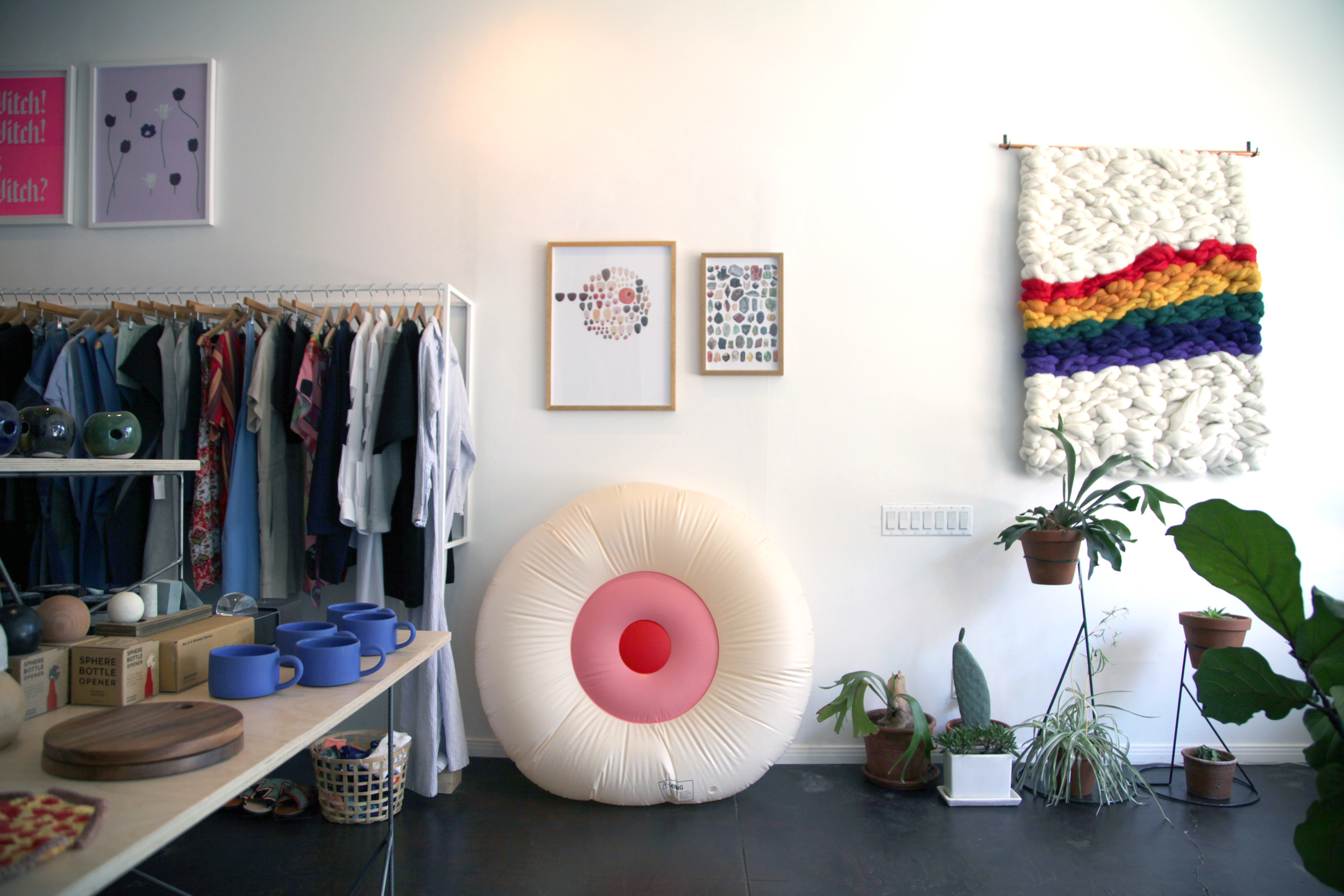
photo credit: Gilda Davidian
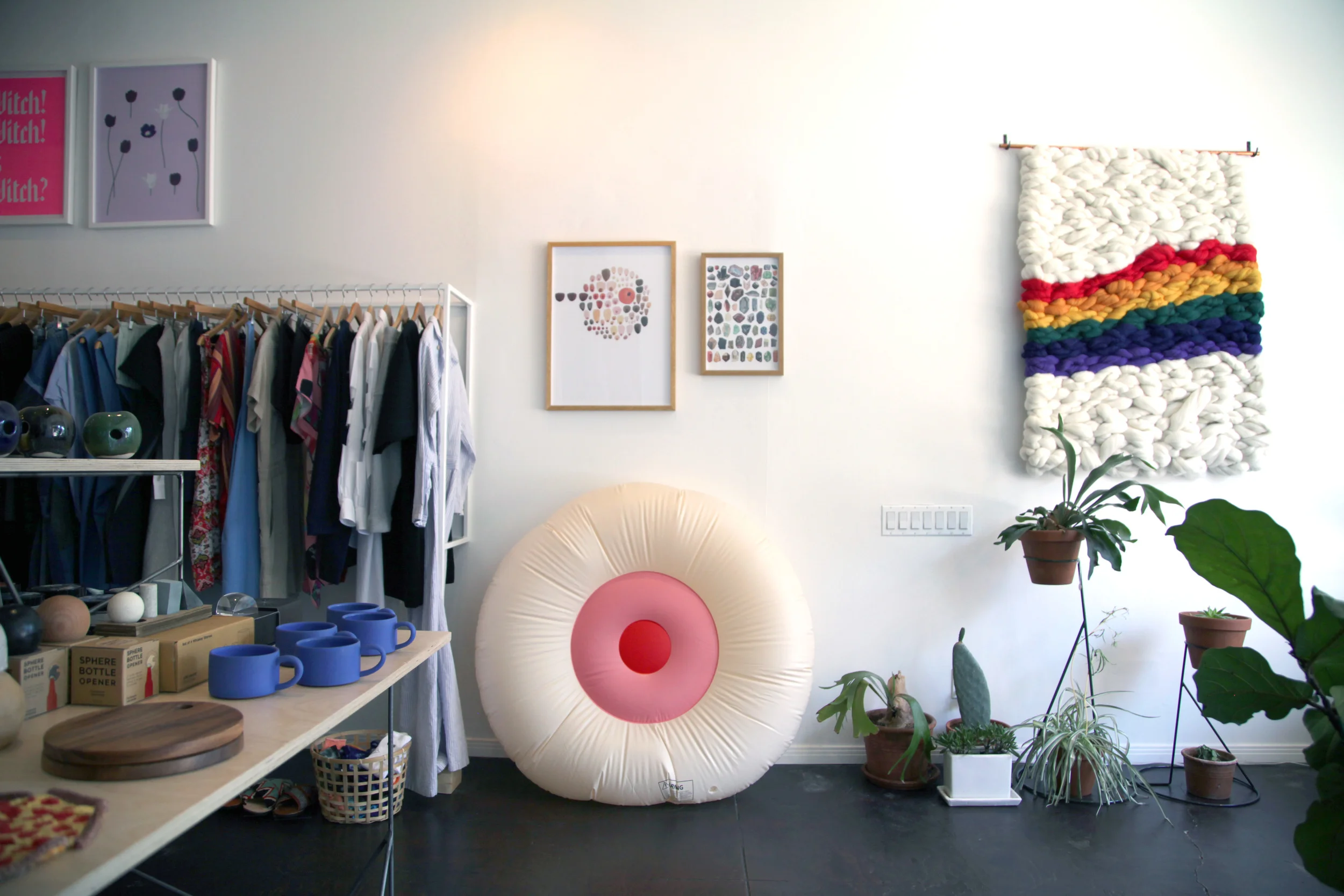
Otherwild Founder Rachel Berks didn't set out to open a boutique shop slash graphic design studio (making her an official slashie), but when the graphic design world and a brief stint at William Morris designing presentations for fast food companies didn't align with the vision she had for her future, she shifted gears. Otherwild was born in LA in 2012 and just opened a second location in New York this past May.
Now she's focussed less on fast and more on building community and offering an inclusive space for the LGBTQ population. It's the glue that binds Otherwild's followers together and also sets her apart as a business owner. You might recall Rachel as the unapologetic force that brought back "The Future is Female" shirt after seeing the image on HerStory's Instagram, which focusses on the herstory of lesbian imagery. She's also committed to representing the multi-dimensional and expansive queer community.
We caught up with Rachel to talk the importance of reputation, what working with like-minded individuals means to her, and women she admires.
What’s your background? How do you end up owner of a brick-and-mortar/graphic design studio?
I studied modern dance, printmaking and gender studies at Sarah Lawrence College, and after a brief stint as a professional dancer/waiter in NYC, I went to work with my friend Stacey Mark, who was the photo editor of NYLON Magazine. While there, I assisted in photoshoot production and contributed collage, illustration and writing. After about a year, I was recruited to join Ford Models’ newly established New York-based in-house art department in 2004, promoted to Art Director for the company’s international corporate network in 2006, and appointed Creative Director through 2011. In the fall of 2011, I followed my girlfriend, artist A.L. Steiner to Los Angeles. I imagined I would build a freelance design business out in LA. During my first couple of months there, I was very inspired by the DIY spirit of LA, and befriended my former business partner, Marisa Suarez-Orozco, who was also a graphic designer. In early 2012, we conceived of Otherwild, a hybrid retail store, that would sell work by our artist + designer friends, as well as a graphic design studio.
Can you talk a bit about how NOT getting a (series of) job(s) lead you to where you are today?
When I first landed in LA, a creative freelance agency immediately placed me at William Morris, designing PowerPoint presentations for fast food companies. I was the only woman on the team, where I had to endure misogynist conversations all day in a windowless office. I lasted about a week and a half. From there, I interviewed at a slew of production companies and ad agencies, where in one interview, I found myself defending my ability to design work that was less creative, and more appropriate for corporate clients. I freelanced for a few of these agencies, until I met Marisa and we decided to open Otherwild.
Is it important to you that female founders support each other? Why?
In the Summer of 2014, I received a random email from two female shop owners, Marlee Grace from Have Company in Grand Rapids, MI and Courtney Webb of Hey Rooster General Store in Nashville, TN, inviting me to "SHOP : KEEP - - a retreat for shop owners." It was shortly after Mari and I had parted ways and even though I didn't know anything about these women, I booked a ticket the day I got the email. The retreat was an incredible life-changing moment, where we discovered through our total transparency that we could help each other grow our businesses. Since that moment, I've tried to uplift and support small business owners as much as I possibly can. Some of my closest friends are other female and genderqueer business owners... we have a truly unique connection and understanding.
You talk about working with like-minded individuals. What mindset is that? Do you think it’s important to work with non-like-minded people sometimes?
I think taken out of context, that sounds like I'm part of an exclusive clique, which isn't the case. I'm referring to craftspeople, the handmade, feminisms, and social justice organizations. I don't want to work with racists, homophobes, misogynists, gun enthusiasts or multinational corporations, for instance.
"I don't want to work with racists, homophobes, misogynists, gun enthusiasts or multinational corporations, for instance."
Tweet this.
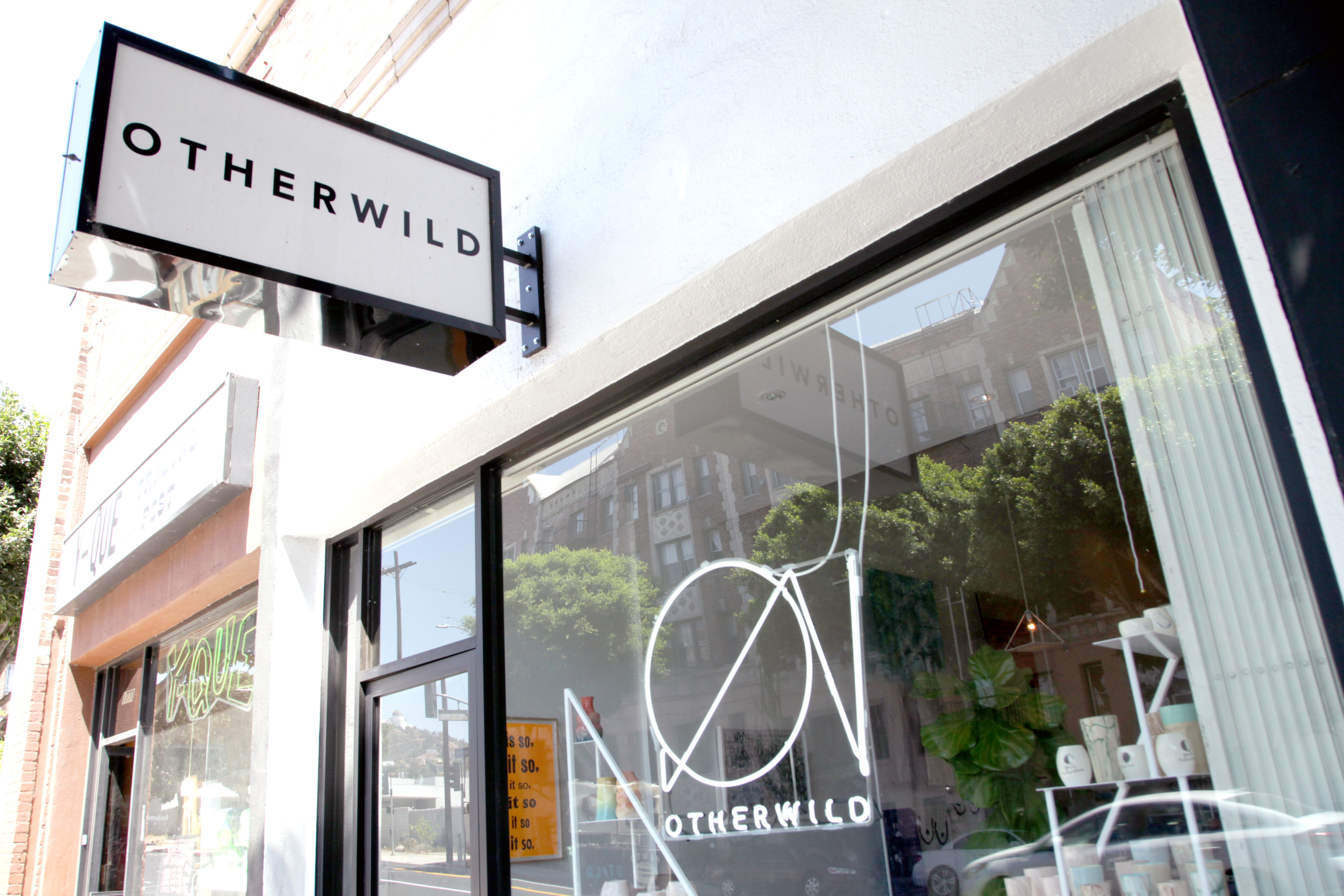
photo credit: Gilda Davidian
You’re surrounded by a pretty stellar creative squad. Who is a woman in your life who is doing something you’re proud and amazed by?
My partner A.L. Steiner is an incredible artist and activist, and her work is endlessly inspiring to me. You can see more at hellomynameissteiner.com.
Also my friend and collaborator Kelly Rakowksi, who runs the Instagram account @h_e_r_s_t_o_r_y, mines various sources for archival lesbian imagery. Together we've been working on a clothing line that reinterprets some of these images. See more here.
Invest as little as possible-- how did that work as a business plan?
It was really about playing it safe and working with the resources that we had. Initially, everything in the shop was brought in on consignment. The original Otherwild was down an alley on Hollywood Blvd - it was under 300 square feet and cost $500 a month. We were determined not to fail, and not being in debt was crucial to that plan. Once we felt a little more secure, we moved to a bigger space on a residential stretch of Echo Park Ave. and continued to slowly and carefully build the business. Recently, Otherwild moved once again to Vermont Ave in Los Feliz where the storefront finally has foot traffic!
To a degree you built a business on reputation-- do you think this is rare? To promise something and deliver on said promise?
I think this is rare, but I think it is often true of small businesses. My dad is a small business owner and my grandfather was too, and I think through that lineage, I learned to build something that had integrity and generosity at it's core. I think being unapologetic in Otherwild's embrace of all things queer, feminist and small-scale shows a certain truth in who we are and what we believe in as well.
"Otherwild's embrace of all things queer, feminist and small-scale shows a certain truth in who we are and what we believe in as well."
Tweet this.

photo credit: Gilda Davidian
What other ways do you think you do business differently?
Otherwild has evolved from being a retail/design studio to being a social space that hosts music, comedy, performance, readings and classes in herbalism, craft, tarot and more. I've always wanted Otherwild to be an active space.
Additionally, Otherwild donates money from the sales of specific products to Planned Parenthood, The National Center for Transgender Equality, The Lesbian Herstory Archives and Black Lives Matter. This is an important aspect of living our politics beyond a slogan on a t-shirt.
What have you learned through the ups and downs? Breaking up with your partner, for example?
It's not easy having your own business, you basically work all the time. When you start a business, everyone always says it takes 3-5 years, and you don't want to believe that at the beginning, but it's absolutely true, and you need to be willing and able to put in the time. Breaking up with my partner felt like a tremendous setback at the time, but ultimately it was the right thing for both of us.
Two stores-- is that something you ever imagined? Any further plans for expansion?
I had only just left NYC when I opened Otherwild, and so I always imagined that I might come back to NY and launch a NY store. Otherwild had to be born in LA, it was very much product of LA's cultural climate in that moment, but NY seems really excited to embrace us now. As of right now, the NY shop is a longterm pop-up which will be installed through March 2017. I've yet to decide what will happen after that!
Otherwild carries the work of Tuesday Bassen who just called out Zara for ripping her off. What are your thoughts on big corporations taking advantage of small biz? And how does Otherwild work against this?
I love Tuesday Bassen and her work, and I am excited to watch this particular situation continue to unfold. I feel like Tuesday actually has the power and possibility to set new precedents. I've always been outspoken about big corporations and their cruel treatment of artists, as well as terrible labor practices. After this latest example of IP theft, I made a personal vow to boycott multinational corporations, as wholly a possible. For me, it was not such a stretch but I recognize for some that might feel impossible. I am dedicated to supporting small businesses, artists and designers in all aspects of my life.
What do you want the legacy of Otherwild to be?
Legacy denotes history -- or herstory as I might read it -- and I don't know what our herstory as humans will be. I just hope to provide those interested with inspiration, knowledge or objects that they love and cherish by being as conscious, kind and caring as possible, and by supporting the people who want to produce in this way. It's a continual learning process. There's book that came out in 1973 called Small Is Beautiful: A Study of Economics As If People Mattered by British economist E. F. Schumacher, which is the antithesis of our current ethos of growth and exploitation. Although I participate in a form of capitalist exchange, I challenge myself to figure out ways to find ethics and humanity within this model, and continually transition where necessary.
OTHERWILD LA 1768 N. Vermont Avenue, Los Angeles, CA 90027
OTHERWILD NY 37 Orchard St. Basement New York, NY 10002
MORE FROM OUR BLOG

Make Your Plan, Work Your Plan: The Perfect Business Plan Checklist
The essential questions you need to ask yourself to make the best business plan.

A business plan is the heartbeat of your business, and it is what will keep it afloat over time and will save you from anything that would otherwise hinder your business or get you off track. As a wise woman once said, “make your plan, work your plan.”
Thanks to our friend Tina Wells, Founder & CEO of the award winning Buzz Marketing Group, she has gifted us with the questions you need to ask yourself when creating your business plan to ensure that you’re on the right track and that your plan passes the test and answers all of the questions in this week’s download.
Enter your name and email to get access to the business plan checklist and be on your way to create the best business plan tailored for your business’ success.

Boobs and Business: Why the Great Breastfeeding Debate Isn't a Debate At All
What it means to the newest crop of young female professionals in the workforce.

photo credit: El Camino Travel
In this post we hear both from media intern Briana Pearl (who is also a mom) and CEO of El Camino Travel, Katalina Mayorga (who is not) on the subject of breastfeeding in the workplace and what it means to the work environment for the newest crop of young female professionals in the workforce.
BRIANA'S PERSPECTIVE
When my son turned two weeks old, I decided it was the perfect time to start an internship with El Camino.
Actually, it went like this: I’d been excited about the possibility of working for El Camino for several months. I was already taking time off from the long days and heavy equipment involved in running my videography business. I learned from my first kid that having an outlet for creativity and problem-solving during the bleary, blissful early days with a newborn is key for me to maintain my sanity and my identity outside of “mom.” So when the opportunity to work part time from home for El Camino arrived, I took it.
"Having an outlet for creativity and problem-solving during the bleary, blissful early days with a newborn is key."
Tweet this.
Since January, I’ve been completing my tasks for El Camino during the holes in my schedule. When baby is awake at 3am, instead of bemoaning the lack of sleep, I’ve enjoyed the snuggle time and the opportunity to review an email. When he sleeps during the day, I write blog posts from my couch. When we hop on Google hangout for a cross-country team meeting, I can stealthily stay in my PJs from the waist down. Much of my time isn’t my own, but I’ve learned how to utilize every precious quiet, alone moment I have. I type at an impressive speed with one hand, and I help projects leap forward when I’ve got ten minutes free. I instantly slide from mom mode or play mode into work mode, and I bring my unique perspective to a team that values new ideas, distinct backgrounds, and a mix of voices.
During one afternoon filled with El Camino-related phone meetings, my husband/partner-in-child-wrangling peeked into my room with a hungry baby in his arms. I had another hour left of topics to discuss with Katalina. I could either tell Kata I’d have to call her back or make my hungry baby wait it out.
Work or kids?
While it might seem like I have to choose one or the other, the answer is: both. I told Katalina I needed a moment to readjust. I flipped our call to speakerphone, moved my laptop to one side to continue taking notes, and started feeding my baby. It wasn’t a big deal.
Breastfeeding so often is an act deemed inappropriate for women out in public just doing their everyday mom thing. Breastfeeding in a professional context is something I haven’t even heard of. I’m grateful that the El Camino work culture embraces my mom status and gives me the space to say something like, “Hey, my kid is hungry. Give me thirty seconds to get him in place, and then we’ll continue brainstorming marketing strategies.”
What would happen if more bosses (and employees!) embraced moms in the professional world as empathetic, power multi-taskers who can accomplish anything in an hour, even if that means a baby must make an occasional appearance?
I’m a busy, diaper-changing mom. I also possess valuable skills, in spite of my mom status and because of it. Though sometimes the El Camino team and I must bear the momentary interruptions and slight inconveniences that all young children generate, we also get to utilize a partnership that wouldn't have been possible if either of us couldn’t make space for motherhood and professional expertise to coexist.
"I’m a busy, diaper-changing mom. I also possess valuable skills, in spite of my mom status and because of it."
Tweet this.
KATALINA'S PERSPECTIVE
El Camino is an unconventional business environment in several ways. We are small and scrappy, we travel a lot, and we have team members who are located thousands of miles a way. We are a young team that embraces virtual collaboration and does not fully accept the typical 9-5 work schedule as the best schedule that leads to the most productivity. The El Camino office needs not to always be defined by the same set of four walls. One day Joshua Tree may play host to our office or another day Bogota, Colombia. The standard conventions of what is deemed an appropriate work environment is not of interest to us, as it is not of interest to much of our millennial generation. If you are concerned about the the happiness of your employees than you need to take this seriously as an employer. 74% want flexible work schedules and 84% say that helping to make a positive difference in the world is more important than professional recognition. We do not measure our happiness by the same yardstick as our parents’ generation.
"We do not measure our happiness by the same yardstick as our parents’ generation."
Tweet this.
Furthermore, our team is mainly comprised by a strong squad of millennial female professionals who are also approaching societal norms such as motherhood, relationships, and professionalism with a new lens. Just like male professionals have been able to do for several decades, we are eager to do and “have it all,” but the reality is that most young female professionals are reconsidering motherhood all together because of the lack of organizational support. In fact, only 42 percent of women graduating from the Wharton School of Business in 2012 said they planned to have children, compared to 78 percent in 1992 for these reasons.
I do not have kids, but we do have team members that are mothers or are planning to have kids in the future. That in no way should hinder their ability to be both the ambitious professionals and good mothers they strive to be. I have had countless discussions with my female friends about the many anxieties connected to these two topics. It should not have to be a choice, it should be a duality that can happily coexist. We are frequently told that it is one or the other and as a women it is hard to balance both. It is a choice we have to deal with that our male counterparts often do not even have to think twice about.
One clear example of this is with breastfeeding in the work place.
The story is pretty simple. I was on a call, with Briana our brilliant media intern/resident mama and we had a lot to get through. There was a whimpering baby in the background, and she asked for a few seconds to adjust. Within minutes the baby was on the boob and cooing and sucking away. Though you could hear the baby eating, it didn’t mean we couldn't power through our agenda. It was not a distraction, but instead a natural act that seamlessly fit into the rest of our call. We just needed a few seconds to accommodate and we were immediately back on track.
"Though you could hear the baby eating, it didn’t mean we couldn't power through our agenda."
Tweet this.
Once we hung up, I had a moment of strong feminist pride. A biological need that has unnecessarily become a contentious issue in the workplace really was not a big deal or inconvenience. That phone call provided a peak into what could become the new normal for female professionals and I got excited imagining how much life and work would be easier for so many women if moments like this were more frequently accepted. The reality is that the typical workplace norms are the same that have been around for decades. They are the same norms that have accommodated a workplace that has been dominated by men (and fathers) in leadership positions who have not had to face the same hurdles as working mothers. That face of leadership is clearly changing and with that we need to reconsider and redevelop the constructs of what is considered normal in the workplace. We need to adjust more and more to leadership that has two boobs and sometimes those boobs got to feed a hungry baby whether there is a team meeting or not.
I am interested in hearing from all of you. As we grow our business, the work environment we are providing all our colleagues is of high importance. As a mother or female professional that would like to have kids, what do you wish was a reality in the your work environment so the choices often made between motherhood and career did not have to seem so stressful? What do you want to see more of? Less of? How can more workplaces empower their employees who are also mothers?
Katalina is the CEO and founder of El Camino Travel. El Camino was featured in AFAR in their 2015 Vanguard Issue under, "Surprise Is the New Luxury" category, as well as Mashable, the Guardian, Marie Claire and Forbes for their innovative approach to travel. El Camino works closely with local tastemakers to curate off-beat experiences for small groups of people to unique locations. The trips all come with a creative photographer in tow, so that their travelers can thoroughly enjoy their experiences while ensuring that their memories are captured and that they will have great social media content. In addition, a percentage of profits are donated to a local social entrepreneur working to better his or her country.
MORE FROM OUR BLOG

Find Out How This Cookie Maven Turned a Teenage Recipe Into a Million Dollar Business
From mom's kitchen to storefront.

Got an appetite for hearing from the leading boss women that are calling the shots in the culinary world? Get ready to grub hard on our new#CreateCultivate series: Counter Culture, where we'll be talking to prominent women in the food industry about good eats, food trends, and making it in the cutting edge cooking world.
Don't put a fork in it, because we're not close to done.
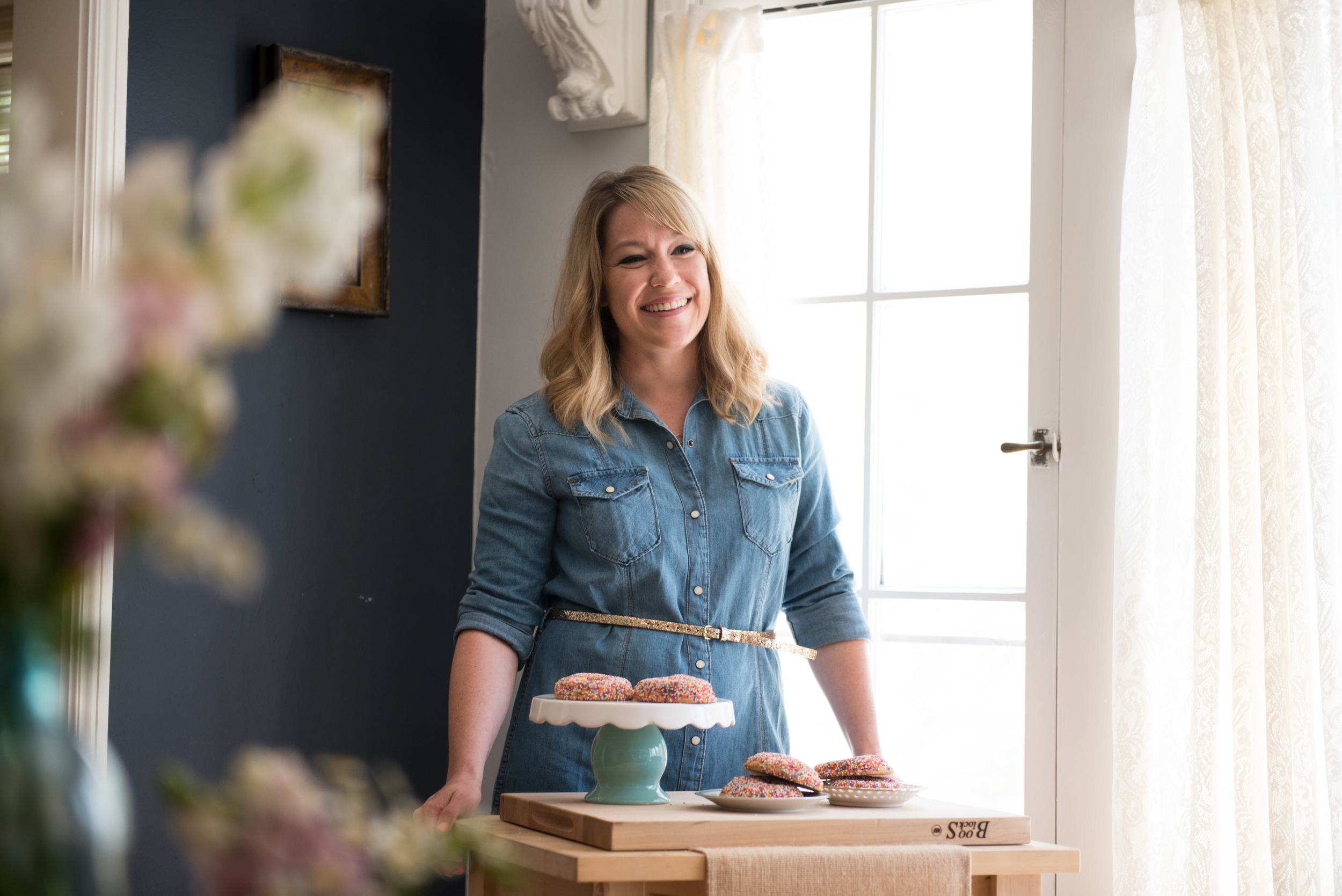
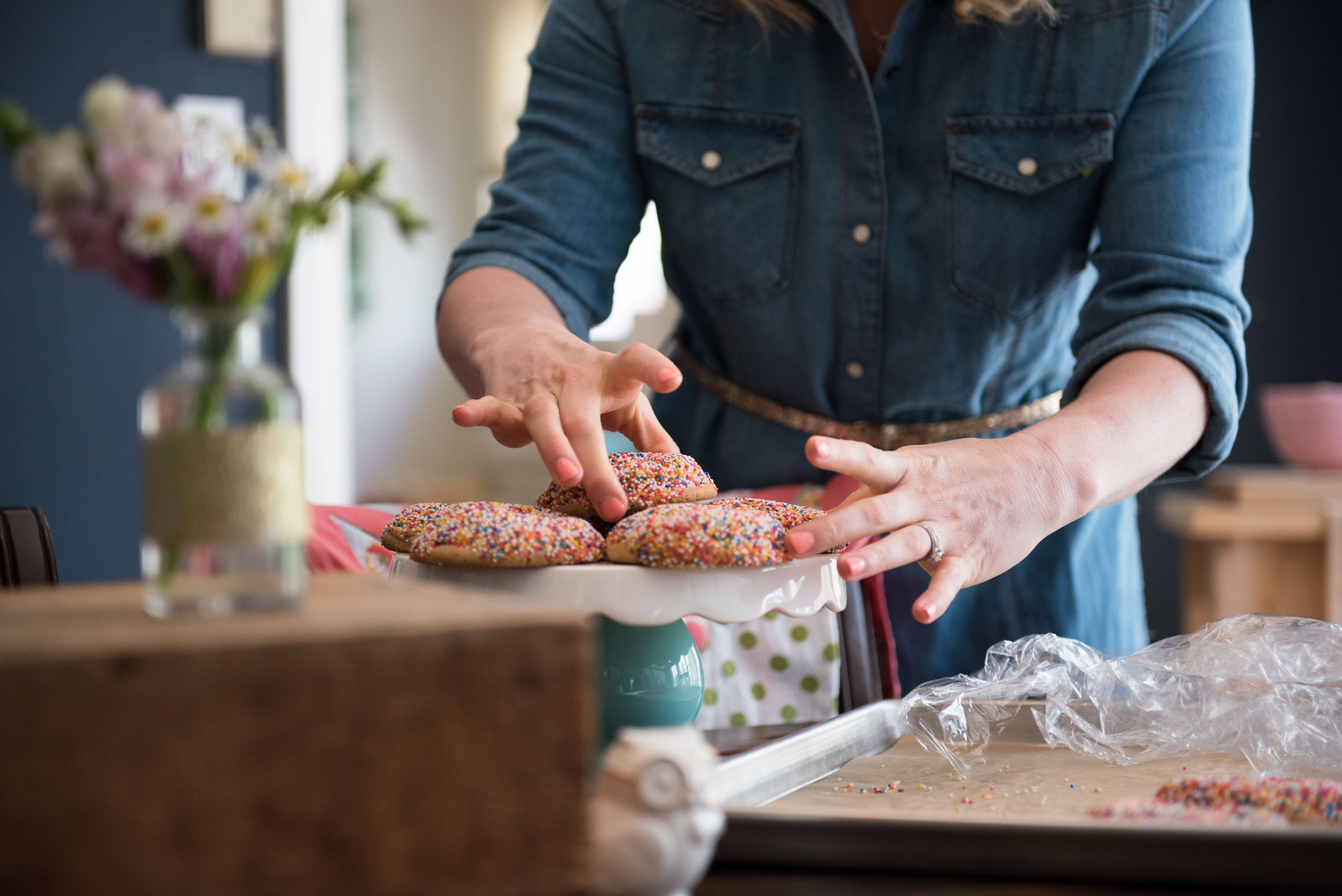
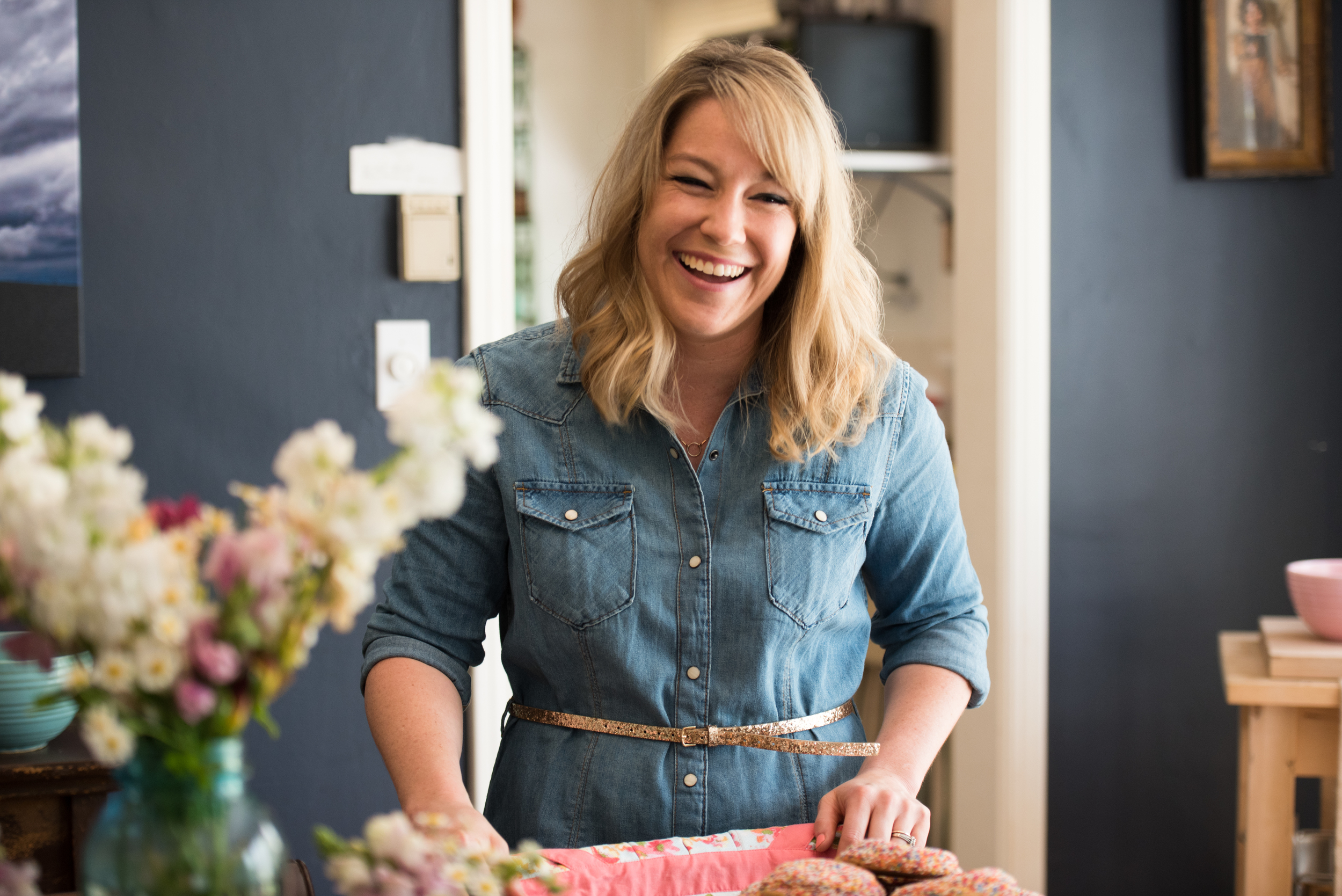
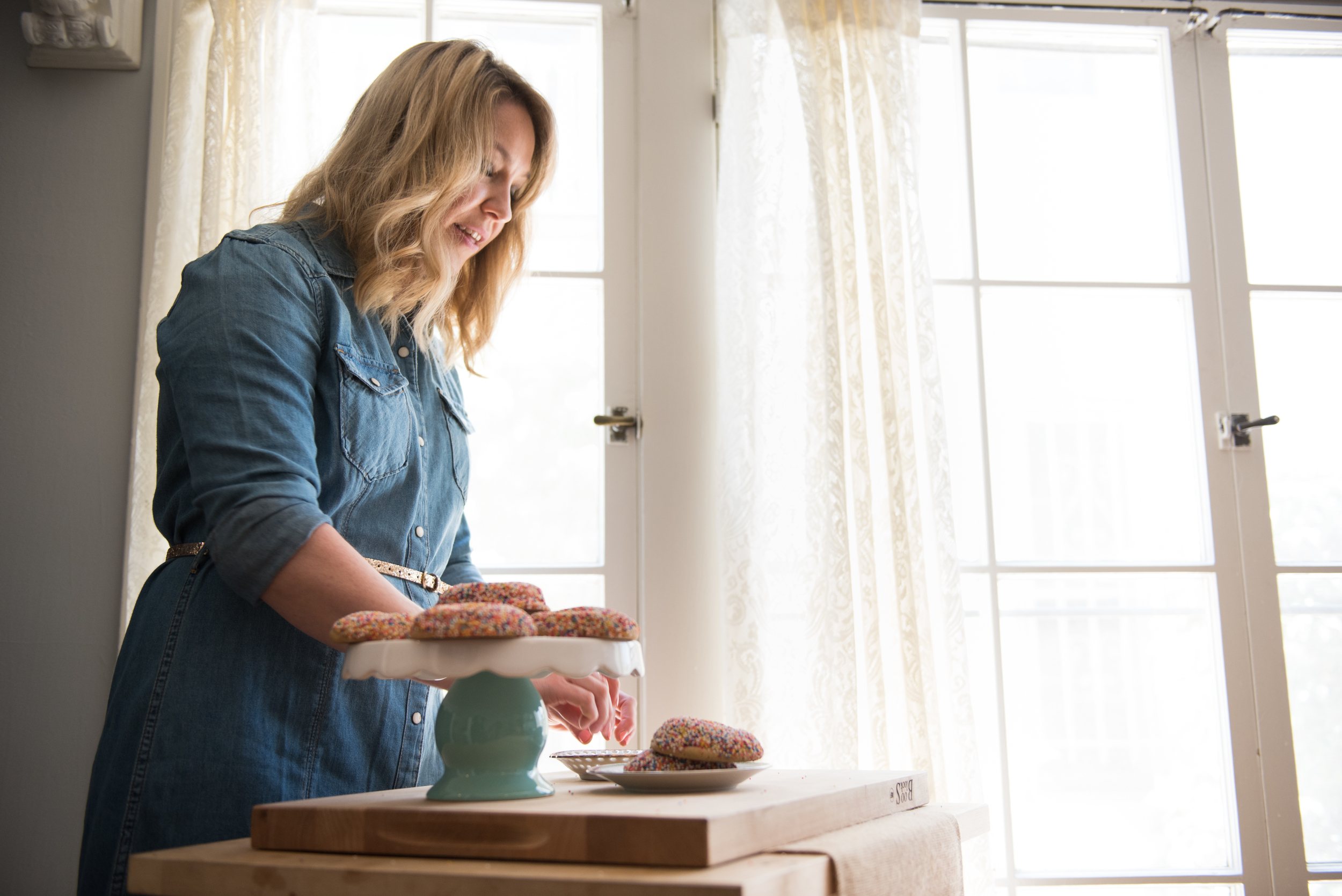
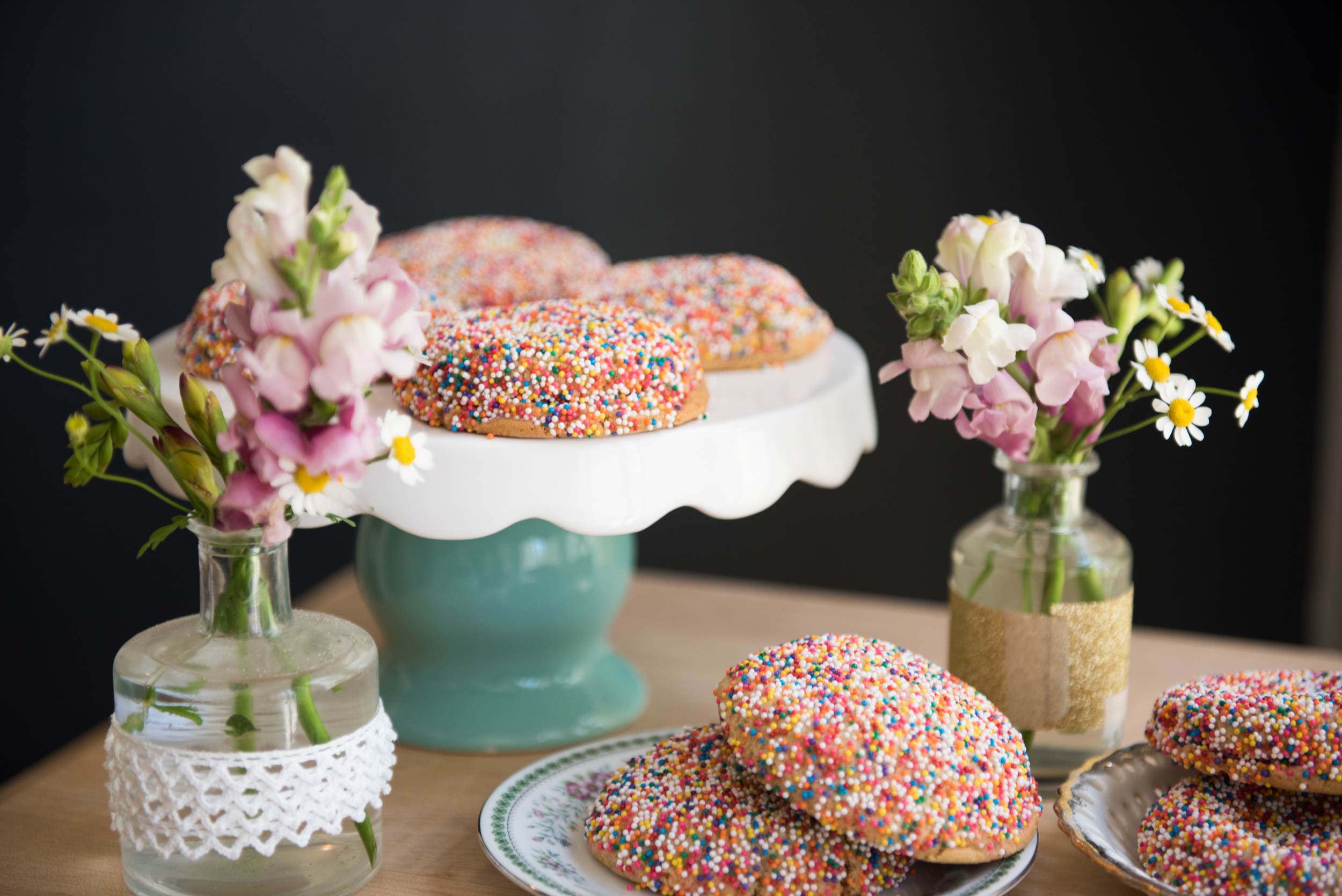
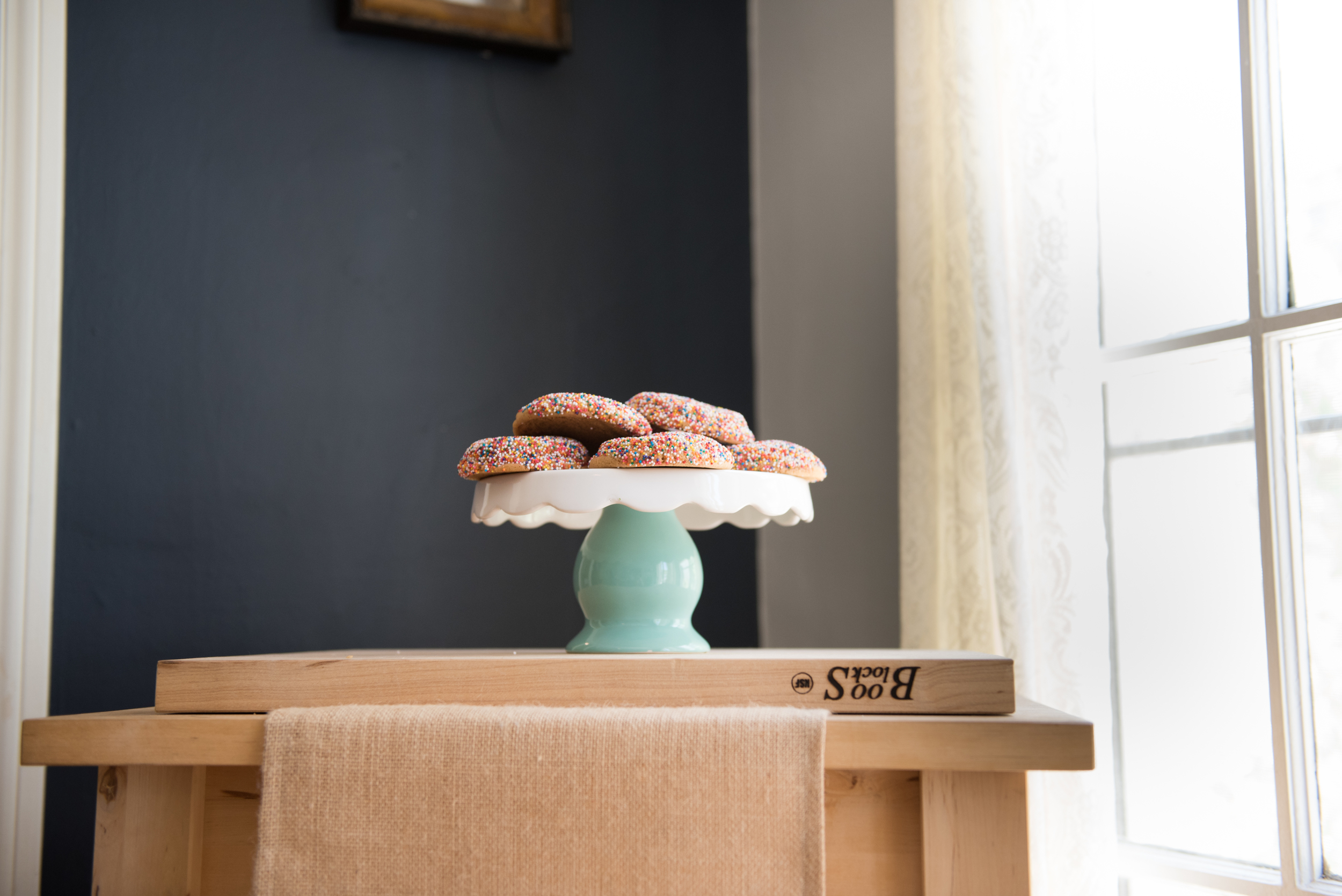
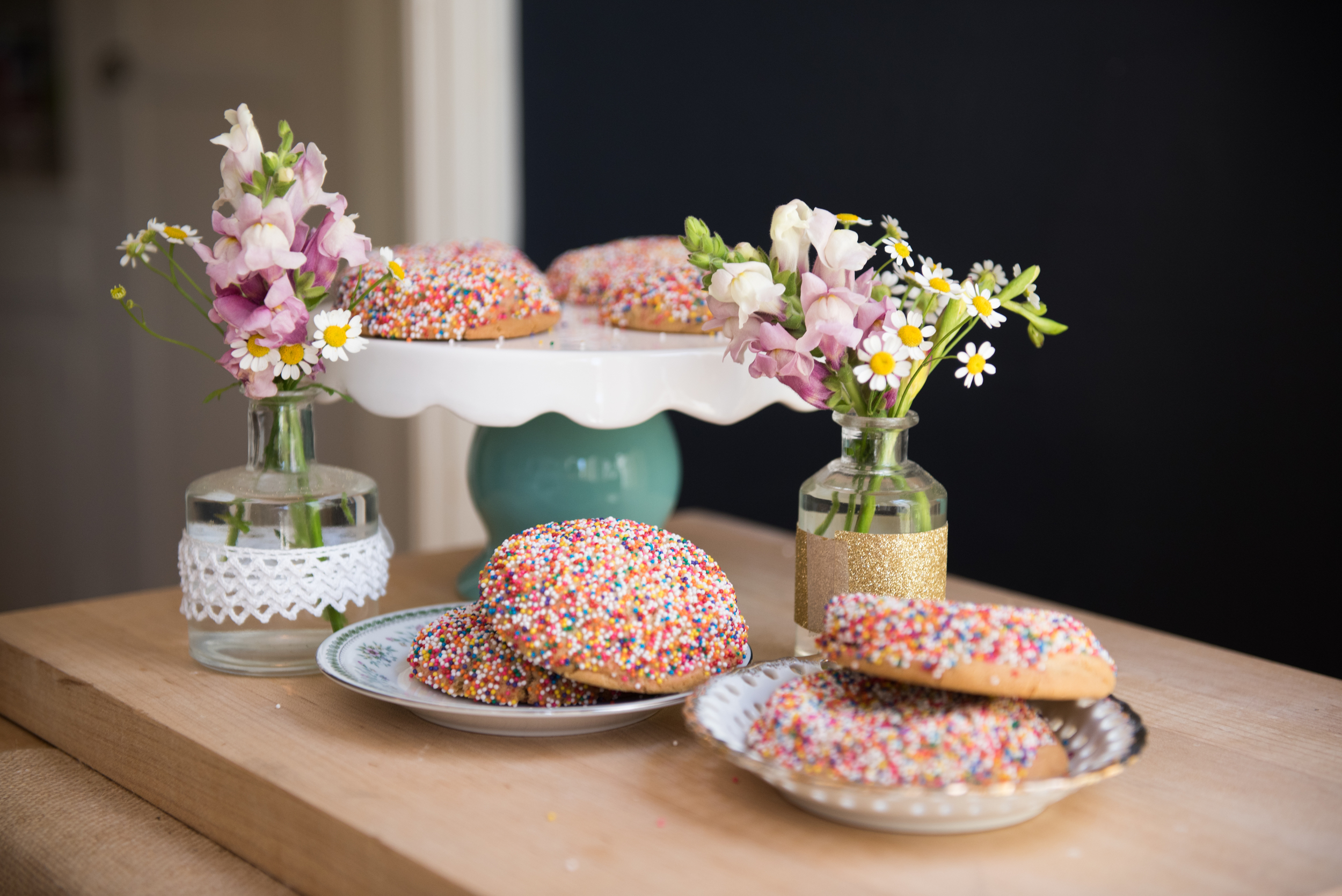
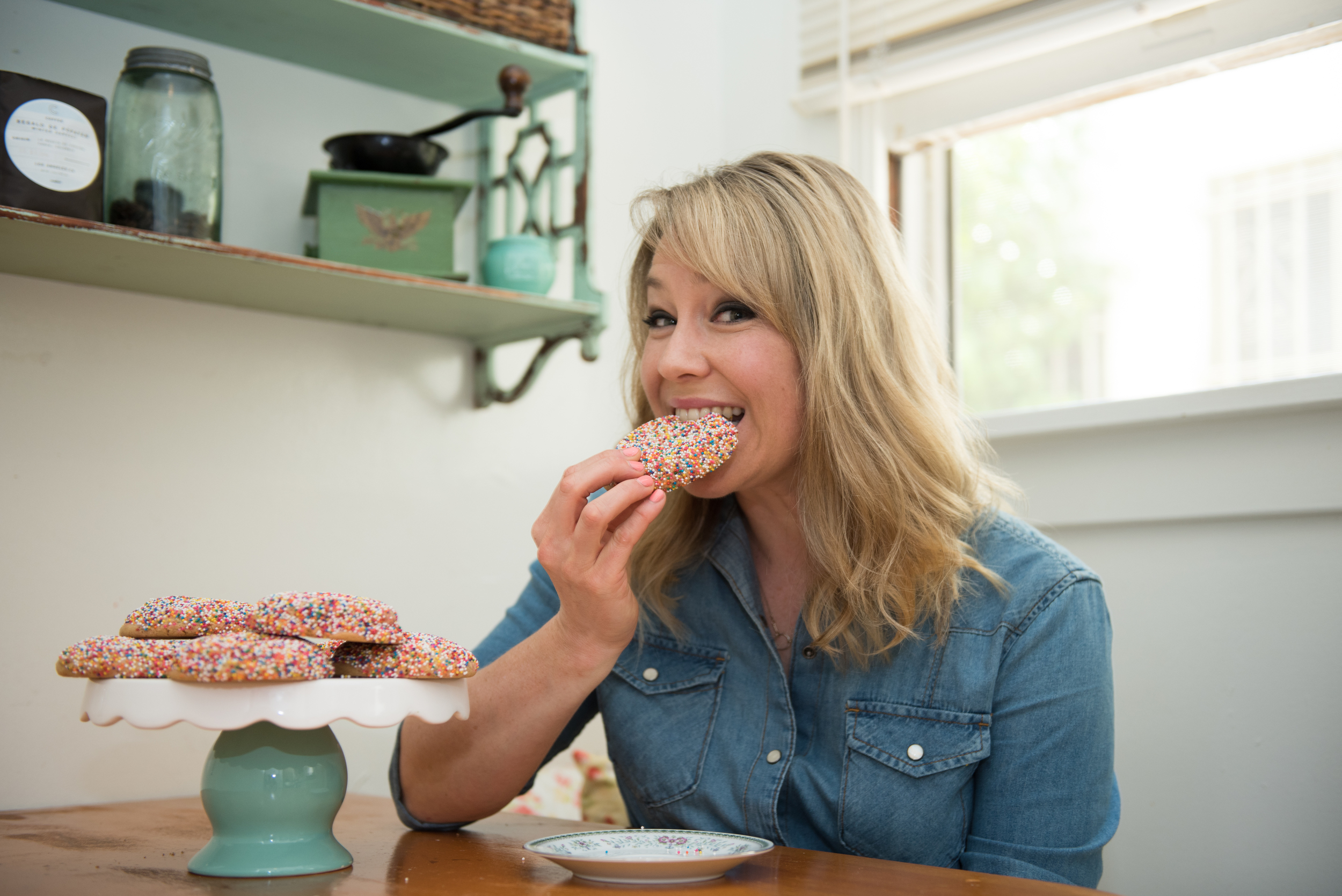
Someone once asked Courtney Cowan, founder of Milk Jar Cookies what her secret ingredient was. Her answer?
"The salt from my tears," she joked.
But it's a little more complicated than that. "The context of that statement was that, as I was preparing to open, my dad was diagnosed with lymphoma and shortly thereafter, my mom was diagnosed with breast cancer. So, between the exhaustion and stress of opening the shop, keeping the train moving forward, and worrying about them, it was a pretty tough time that was definitely accompanied by some tears."
She had also left her job in the television industry, deciding to put her whole heart, soul, and focus into Milk Jar Cookies.
"I’m a fighter for whom failure isn’t an option, so even though I had to dig deep at times, the commitment to make it work never escaped me."
"I’m a fighter for whom failure isn’t an option."
Tweet this.
Today she is casual, (dare we say?) relaxed even. "Do you think I should put shoes on?" she asks when we arrive to shoot. There are donuts waiting and a batch of fresh cookies. It's like walking into your favorite aunt's home. The one who tells you bad jokes while baking up a storm. The one you have real talk with. And we do. We talk about 20-hour days and pivotal business moments. We talk about the decision to put off having kids. We talk about the reality of writing a business plan when you have no idea how to write said plan. And we talk about her beginnings.
"When I was a kid— my mom taught me the Tollhouse Recipe," she explains. "I found myself making cookie dough anytime I could-- like every Friday night." It was in a suburb of Indiana during her teens that she started futzing with that recipe, landing on what become the base for her famous Milk Jar Chocolate Chip cookies. Her tried-and-true-and-tested by all friends and family recipe. Everyone knew, no matter the occasion, Courtney was going to show up with cookies.
It's a trait that followed her to LA and her job as a post-production supervisor in one-hour TV dramas. Per her M.O. she was bringing cookies into work, leaving them in the kitchen, and people kept mistaking them for bakery purchased cookies. At that point she was still relying on her trusty go-to chocolate chip recipe. Milk Jar now bakes 15 flavors daily.
In 2005 she stared an online cookie company (originally named Sweet Cheeks Cookies), hustling on the the side while she worked full-time in TV production. For seven years she shifted back and forth between cookies and her day job, using industry hiatus' between shows to her benefit.
In 2012 while laid up after a back surgery she realized she could either go back to TV or she could focus on baking full time. During the 8 weeks she wrote her business plan. She committed.
"I went through probably twenty iterations of a business plan," she says. "I didn't know where to start."
"I had a really hard time was putting into words why I wanted to do it and why I felt it was important. It’s just cookies. But my whole goal was to provide more than just cookies- I knew the experience was as important as the cookies themselves."
She says a resource that was immensely helpful was the Small Business Administration located in Glendale. "They have a small business development center— and it’s free," she says. "They have seminars and counselors you can have one-on-one meetings with and their connections were critical in helping connect us to a bank that would give us a small business loan."
It was on December 4, 2012 -- which, she points out, happens to be National Cookie Day— is the day they got approved for the loan. January 1, 2013 they moved into what would become the Milk Jar Cookie flagship-- "a former Quiznos," says Courtney, "that left everything. We had a Quiznos party the night we got the keys and started tearing everything off the walls. We sold everything," she says, "down to the meat slicer."
Today that shop keeps her immensely busy, but she wouldn't have it any other way. "As crazy as it sounds" she says, "my favorite time to bake is extremely early in the morning. I thrive on the busy times that require me to be at the shop at 3:30am, jamming to some music, and doing my thing. My life will never be as simple as it was before I opened the doors of Milk Jar Cookies, so those mornings when it’s just me and my cookies are special to me and remind me why I love this."
"I thrive on the busy times that require me to be at the shop at 3:30am, jamming to some music."
Tweet this.
She says it's a "cool combo" of remembering the simplicity of the days when cookies were still a hobby and relishing in how far she's come. How far she's come currently does not include kids, which, was a conscious decision she made with husband Adam when they first launched. He also worked in television (to which he has returned) and took time off to get the business up and running. "It was a solid year and a half where we worked together— and we talked about nothing but the shop. World events and then cookies."
“I’ve never worked so hard in my life," she says. "Every book says 'be ready for 12-hour days,' but we’re talking 20-hour days.” But it was something she knew she had to do. "I didn’t know if I would ever get around to doing it if I had kids. You’re not eating, not sleeping, you’re worrying all the time-- this is my baby."
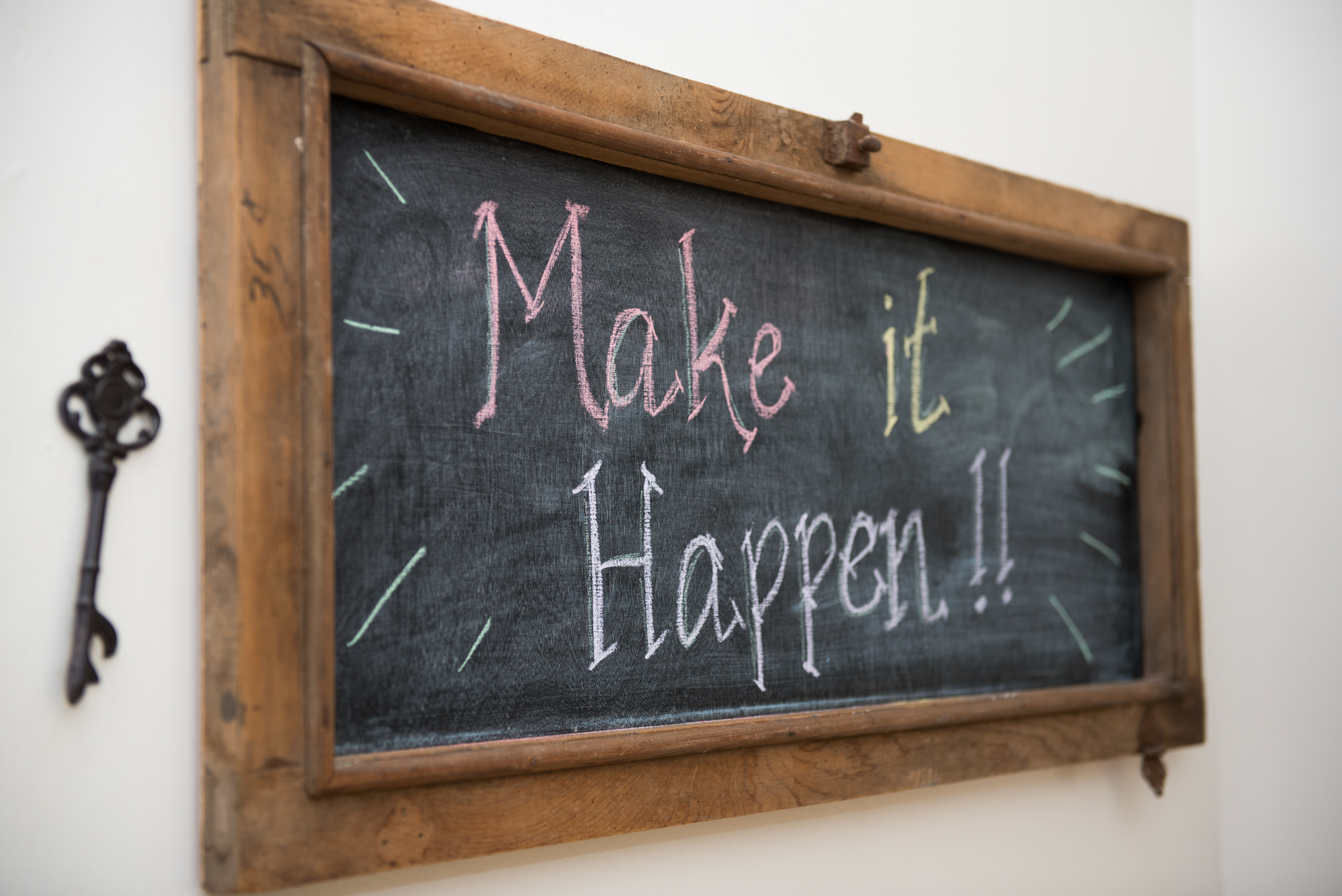
Her life mantra is "if you want it make it happen." (See the chalkboard in her kitchen nook.)
"If you want it, make it happen."
Tweet this.
Next steps for making it happen for MJC is preparing for growth beyond 5466 Wilshire. They've surpassed $2million in sales in less than three years. They are focussing on shipping and delivery "which," she notes "is in high demand and requires the least amount of additional overhead." They are also currently overhauling their website to make it more user-friendly and streamline the process on their end.
And Courtney says, "I’ve begun laying the ground work for an additional baking space, which is very exciting and a new challenge to tackle."
Upcoming challenges will include the month of December. Not surprisingly the holidays are their busiest time and they joke that "Winter is coming..." Last December was Milk Jar Cookies' biggest month to date. In one day they "baked, packaged, and delivered over 3,500 cookies. It’s intense," she says, "but truly so much fun." They've also shown 20% growth in sales every month, compared to that same month the year before.
Despite growth it's vital to Courtney that "Milk Jar magic is in each cookie and every interaction."
She seems to have nailed that recipe.
Milk Jar Cookies is located at 5466 Wilshire Blvd, Los Angeles, CA 90036
More from our blog:

C&C Classifieds Nº11: Your New Job Is Calling You
New job, who dis?

August is here, summer is almost over, and opportunity is a'knockin. Are you going to answer it's call?
We've got a fresh new batch of job listings to start off the month right with Microsoft, TOMS Shoes, TED, Buzzfeed, The NY Times, and many others to give you a head start on your job hunt this month.
Just enter your name and email to see the full list below!
If you have signed up for access to the C&C Classifieds before, click here.

Instagram Just Released Snapchat-Like Feature, But Here’s Why You’ll Use It
Carbon copy cat? Maybe. But it's in the prime position to work.


Gather 'round, it's story time kids.
This morning Instagram introduced Instagram Stories, a new feature that lets you share all the moments of your day, not just the ones you want to keep on your profile. As you share multiple photos and videos, they appear together in a slideshow format: your story.
In a blog post the app announced, "With Instagram Stories, you don’t have to worry about over-posting. Instead, you can share as much as you want throughout the day — with as much creativity as you want. You can bring your story to life in new ways with text and drawing tools. The photos and videos will disappear after 24 hours and won’t appear on your profile grid or in feed."
Instagram has long been the "curated" social media. It's where users, brands, and influencers give the public a highlight reel of their life. No more. TechCrunch scored an interview with IG CEO Kevin Systrom who admitted to publication, “They deserve all the credit,” while insisting, “This isn’t about who invented something. This is about a format, and how you take it to a network and put your own spin on it.”
Stories is the spot where you can upload all of the stuff that isn't great for your grid-- because from a brand and gaining follower perspective we've heard over and over again how important it is to "get your grid right."
With Stories you can doodle, draw, and like Snapchat, they'll disappear after 24-hours.

At the top of your feed there will be a bar featuring stories from your best friends and favorite accounts. When the user adds something new to their story the profile will have a colorful ring around it. To see said story you tap the profile photo.
The feature follows the privacy settings on your account. You can also hide Stories from followers you don't want checking in.
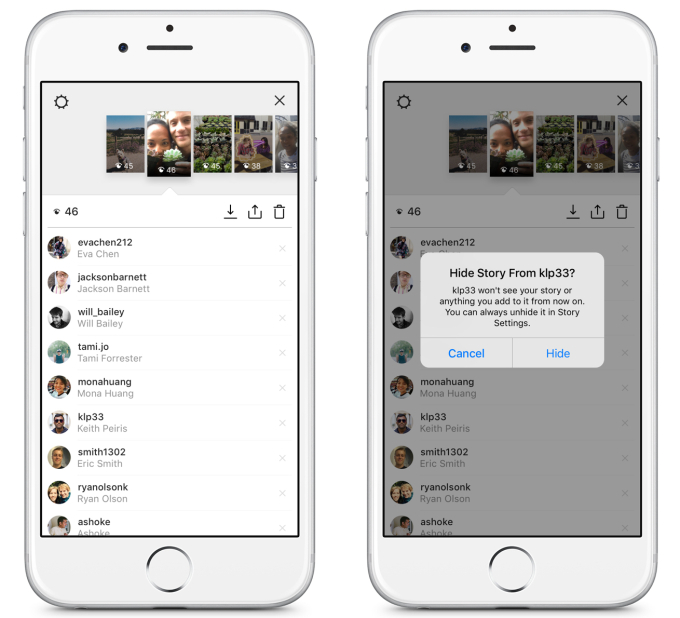
According to the post, "Instagram has always been a place to share the moments you want to remember. Now you can share your highlights and everything in between, too."
It also solves the "too many apps, NO MORE!" crisis that many people have expressed anxiety over. Instagram Stories is the first useful attempt to consolidate the overwhelm of social. Clone or not, people will use it simply out of convenience. Snapchat showed that people wanted more than a highlight reel-- IG followed the crowd.
"Instagram Stories is the first useful attempt to consolidate the overwhelm of social."
Tweet this.
It will also prove useful for brands hiring influencers for campaigns to engage followers in BTS footage or event photos. Bloggers and influencers wont have to switch back-and-forth between apps and they'll be able to share moments on their IG without overcrowding the feed.
However, unlike regular posts there are no likes or public comments, so for the time being it might be difficult to measure engagement. But that's not going to stop the social platform's 500 million users from jumping on board.
Instagram Stories will be rolling out globally over the next few weeks on iOS and Android. Your move Evan Spiegel.
More from our blog:
Flatlay The Right Way with Bar III
The 5 keys to help you nail down your flatlay.
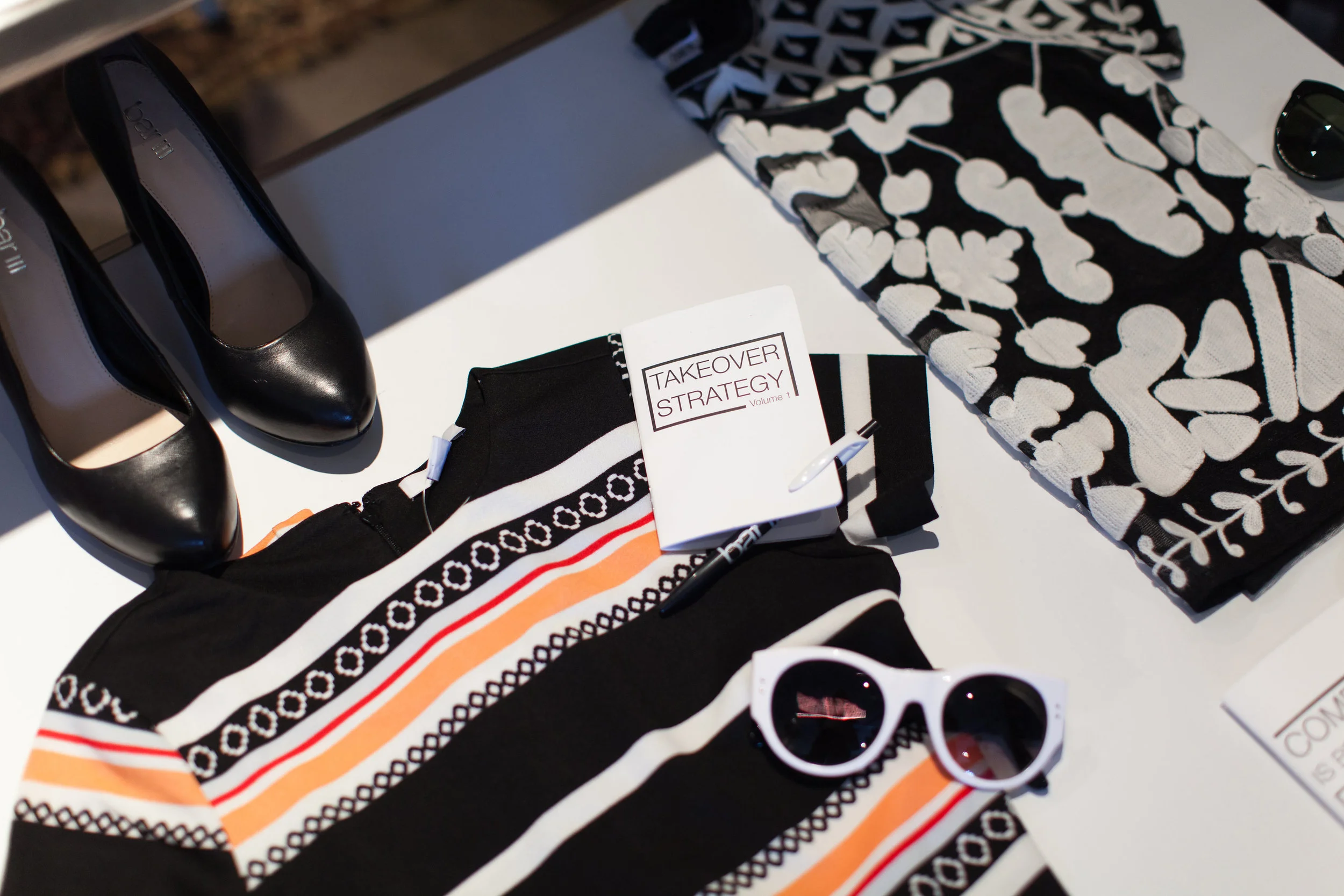
Behind every outfit flatlay, there is a simple science to follow to make it the best styled flatlay you can create. More often that not, flatlays either include WAY TOO MANY OBJECTS, objects aren’t placed symmetrically or have a rhythm, have too many colors going on, or just looks like a closet threw up.
Just in the way you would get yourself Instagram ready for a photo, give the same love to your clothes when styling a flatlay. We took a few styling tips that we’ve learned from Paola Alberdi of Blank Itinerary and Bar III’s Instagram feed, that will amp up your flatlay game 100%.
STYLE YOUR OUTFIT AND SET THE THEME.
Before you start styling your flatlay, first style your outfit. Once you have your whole ensemble ready and have set what the theme it is that you want for your outfit. Is it a daytime outfit, or something a little more elegant? Do you want to stick to two or three colors to give your outfit a cool feel, or so do you want to show that it’s a perfect summertime outfit?
Whatever theme you choose, keep that in mind and start framing your flatlay around that.
CHOOSE A PLAIN CLEAN BACKGROUND.
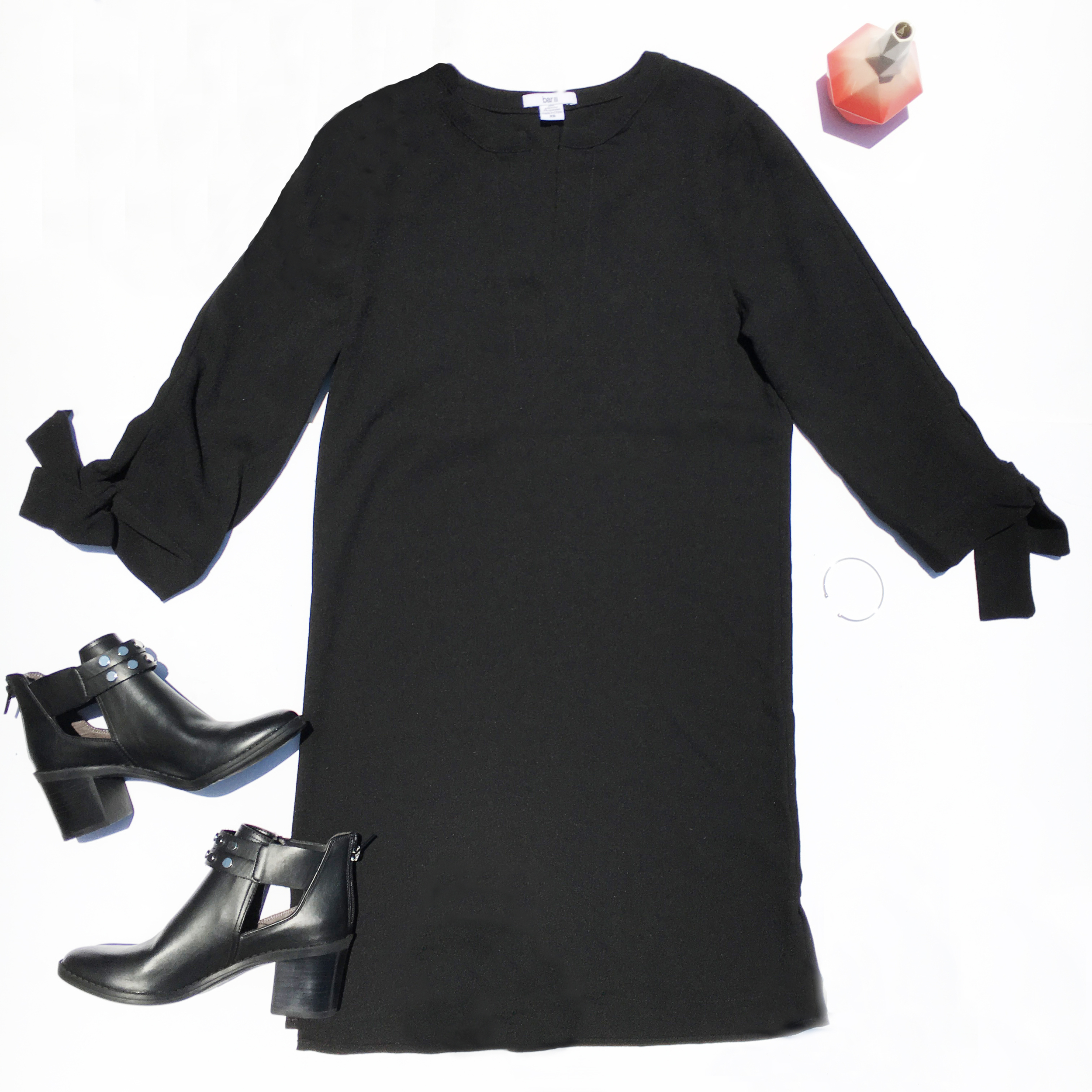
TGIF
Dress: Bar III Three-Quarter-Sleeve Split-Neck Shift Dress
Shoes: Bar III Wiley Cutout Ankle Booties
You already have your outfit set, so the second most important factor is your background. You want to make sure that it’s clean, bright, and won’t distract your flatlay with the background. It’s best to stay away from pattern backgrounds, so if possible, use a plain background, a wood or concrete floor, or even a marble top.
DECOR & ACCESSORIZE.
Just because you’re styling a clothes flatlay, it doesn’t mean that you have to decorate your flaylay with just clothes and accessories. Remember to stick to the theme of your flatlay and decorate with pieces that bring out certain colors in the flatlay, and complete the look.
For this look, which is a daytime office piece perfect for a client meeting, we added a planner to bring out the blue hues of the heels, along with some blue marble coasters because #whynot.
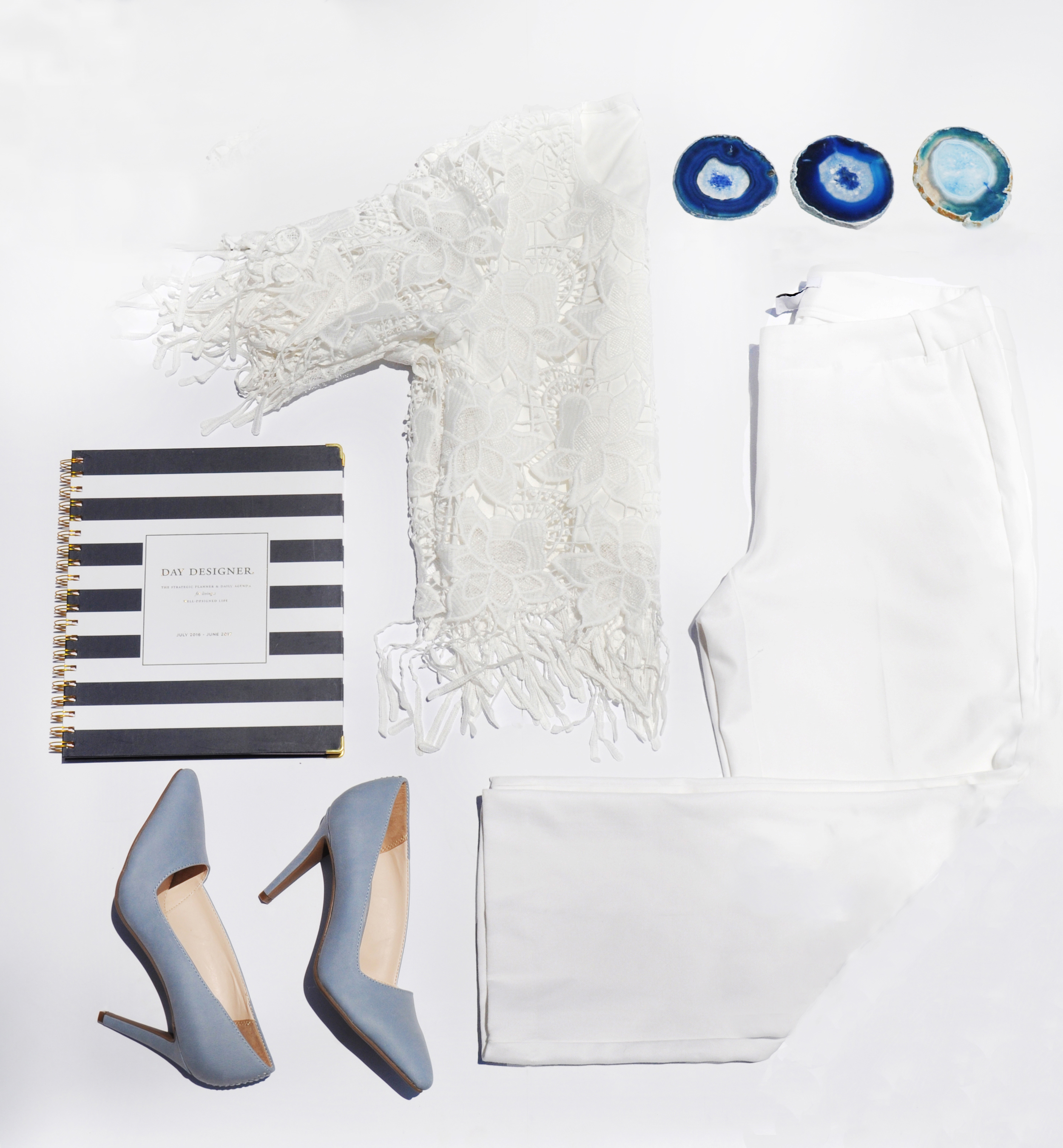
Client Meeting
Top: Bar III Lace Fringe Crop Top
Bottoms: Bar III Culotte Pants
Shoes: Bar III Suede Pumps
STYLE TO FRAME YOUR INSTAGRAM FEED
Since most flatlays are restricted to squares and portrait frames to fit your Instagram feed, feel free to play around with the space and fold your clothes in a way that still show how the outfit will look. Play with the shapes of the clothes and set it up like a Tetris block so everything fits on a 4x4 or 4x6 frame.
If your outfit is only a dress or jumper with shoes, feel free to add more props and accessories to fill in space to the frame to still make it look balanced. However, make sure to not overload your flatylay with too many props any products. You always want to make sure there’s a safe amount of space that doesn’t leave the flatlay looking too busy and chaotic.
For example, this outfit and shoes are all black, so don’t be afraid to pop in one prop that sticks to the theme and has a pop of color that will make the look even more dynamic.

Cocktails After Work
Jumpsuit: Halter-Top Wide-Leg Jumpsuit
Shoes: Hillary Ankle-Strap Asymmetrical Dress Sandals
USE NATURAL LIGHTING & THE OVERHEAD SHOT
For the perfect shot, always use daylight natural lighting if the photography Sun Gods allow. Make sure that’s the lighting isn’t too blown out, and if you do decide to use artificial lighting, try to use other sources of light than than the flash from your phone.
Also, always make sure to get an overhead shot. For a flatlay, you want to make sure that every piece is visible from one POV, so if you’re doing an angle, it might obstruct from the details of other pieces within the shot.
Now you’re ready to style and shoot your flatlay! If you have any other tips, or have used these tips for your own flatlay, let us know below!





Tina Wells Started a Company in Her Teens, Today It's an Award-Winning Agency
How this marketing guru has survived twenty years, with aplomb.
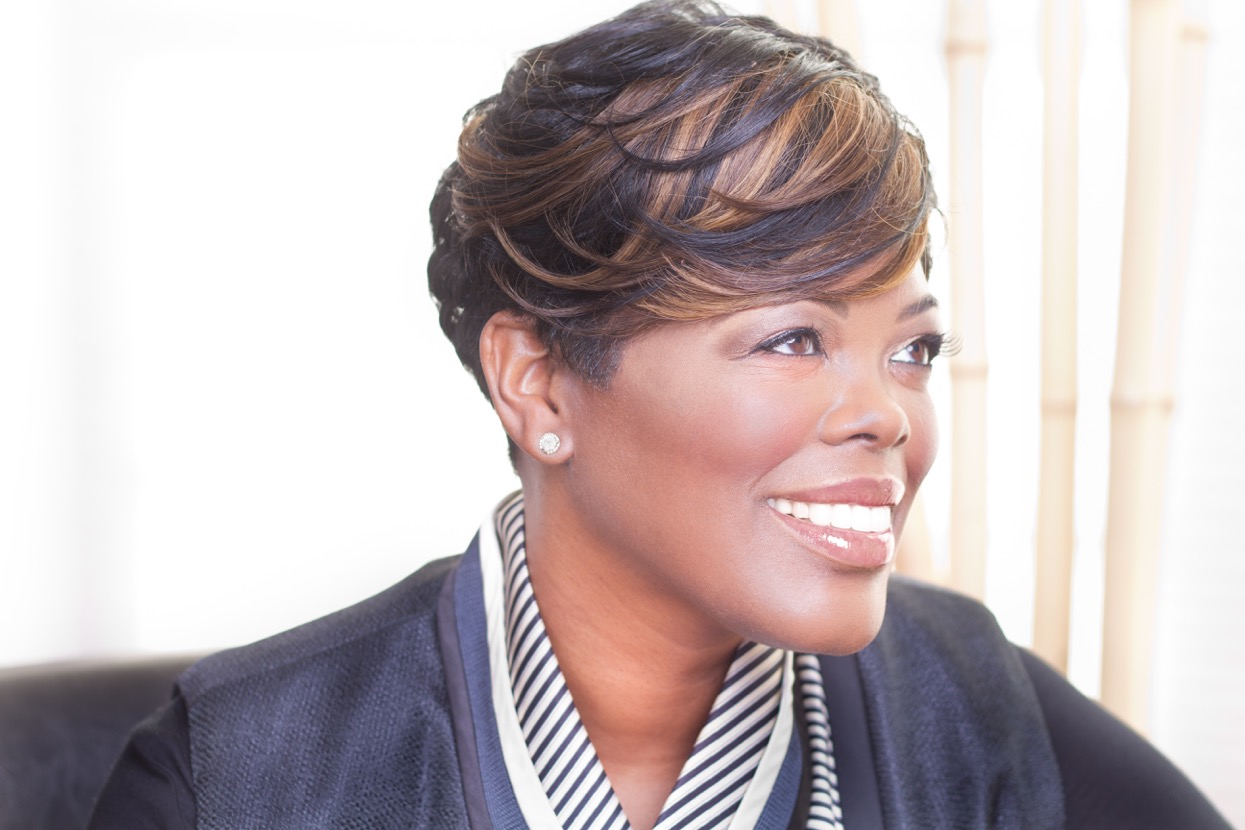
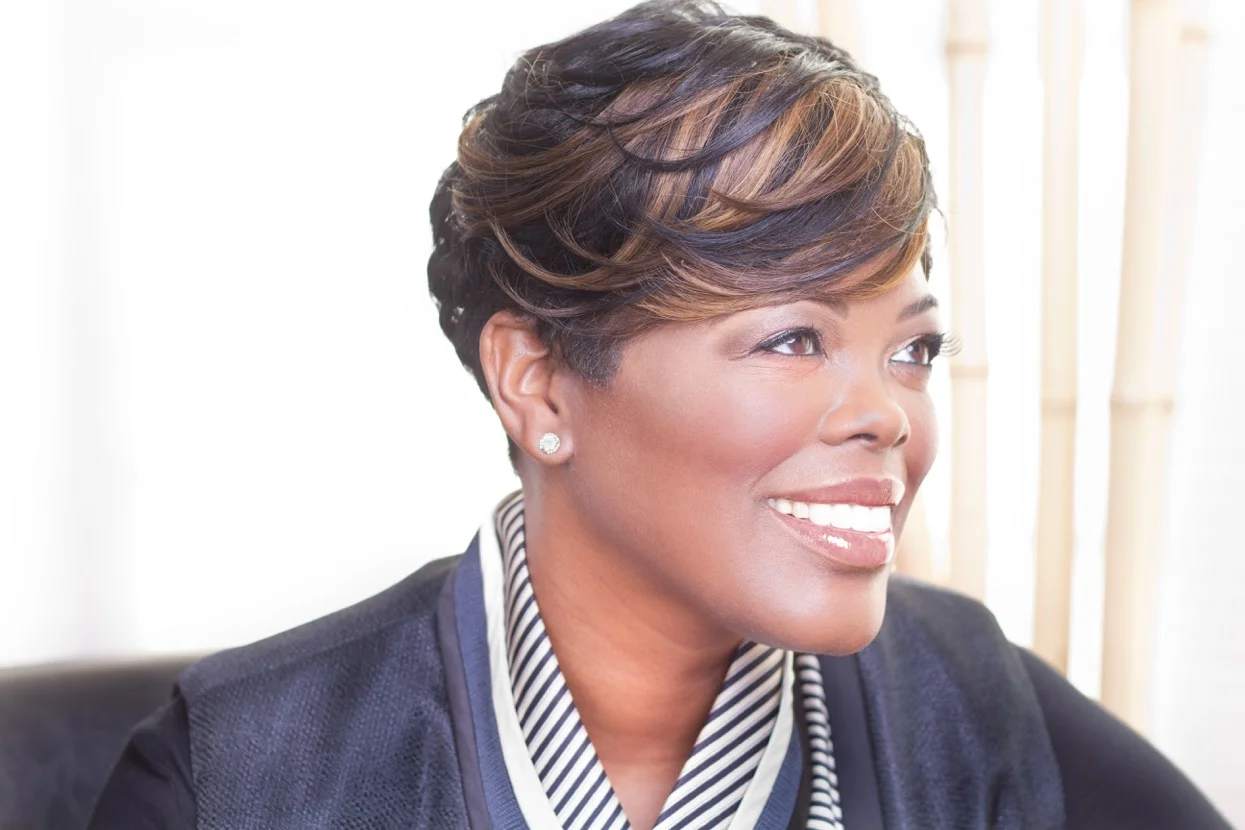
When you start your company at 16, there’s a decent chance you won't be doing the same thing by the time you graduate high school, let alone two decades later. Yet Tina Wells, founder of Buzz Marketing Group, defied that decent chance and remains CEO, founder and captain of the marketing company she started in her teens.
It wasn’t her intention. She didn’t set out to run a company. Rather, the goal was to be a fashion writer, ideally at a Hearst publication. “Seventeen was the dream,” she says.
“Never in a million years did I think I’d run a company or that twenty years later I’d be doing the same thing.” Like the start of many companies, her foray into marketing came from a place a need. As a fashion and beauty loving teen with five younger siblings she knew her parents weren't going to be able to buy her the newest trends. "My parents," she says, "were working their butts off to get us into private school and I knew I needed to come up with a way to make money. That's all it was. I figured out that I could review product and then wear it."
It is a resourcefulness that followed her through high school graduation, into college, and helped her grow BuzzMG's buzzSpotters-- a network of trendspotters that was cast to be a research network. It's a group of those in-the-know "and now and always looking around the next corner." In the beginning the buzzSpotters consisted of Tina and her ten friends. “I remember when we got to 200 people I thought it was too much," she says. There are now 37,000 people worldwide. "Consumers know what they want and want to be part of the process," she says. “That’s something I recognized as a 16 year old. I knew that if my friends and I wanted to be a part of the process of a company making something for us, then other people had to want it too."
"Consumers know what they want and want to be part of the process."
Tweet this.
It's a thought that has paid off. It was during Tina's freshman year at Hood University when someone said to her, “I just paid someone $25,000 to do market research and what you’ve done is ten times better.”
It was perfect timing. When this conversation occurred Tina was taking an Intro to Business class with the head of the Business Department. She went to visit that professor during office hours and told her what she’d been up to the last two years. That professor told Tina to take independent study with her to figure out how to make it a viable business. She did. “That was the launch pad,” she says. “It wasn’t me saying, ‘I have a great idea for a business,’ rather I was being told I was doing something really interesting that could be a business.”
Today, Buzz Marketing Group is an award-winning media communications agency that focuses on Millennials, moms, and multicultural consumers. They deliver data and strategies that drive the marketing approach for clients. “I’ve been doing this so long,” Tina says, “that back when I started it was youth marketing. There weren’t Millennials and there certainly wasn’t the idea of Millennial marketing.”
"So long," gives Tina and her team a certain edge-- even though the technologic landscape around her has moved seismically. “I still reference the business plan I developed with my professor 18 years ago,” she explains. In addition to running her company Tina is the current Academic Director of Wharton's Leadership in the Business World program and is teaching a summer program based on the principles set forth in that business plan. "The basics of building a business are still the same." she says. Adding, "You still need to answer those ten questions every business owner has to answer." (Check back, we'll be sharing those next week!)
What has changed are the tools. She jokes that if she had launched her business now she would have scaled in three months “Technology tools empower us to be better at our jobs every day.” It's technology that allows Buzz to survey people in their network better and provide better results for clients.
“Technology has the ability to do the unbelievable, but my business is built in a very brick-and-mortar way," a foundation she insists has the ability to withstand any tech wave or crunch. "I realized early on build a great business and let the tools empower you. But don’t be so focussed on creating a business for a particular tool."
"Build a great business and let the tools empower you."
Tweet this.
BuzzMG is built in a way that's evergreen-- they are, says Tina, "research first, not creative first, and we're very honest with our clients about that." They develop marketing strategies based on data from consumers of all ages and internally develop original research for the client. "We’ll go to our network of buzzSpotters, conduct an internal survey, and go back to the client with an audit of where their brand is, where it need to be, and what we will do to get to achieve that goal.”
"Because we’re research driven we never go into any situation assuming how a conversation is going to go." It also helps Buzz create campaigns that are likewise evergreen. One of the things Buzz is known for are their lists. They help build the inspiring Levo100 List, which was first released in 2015 and is still being shared today. They worked with American Eagle Outfitters on the aerie beauty and body line, leveraging their proprietary database of influencers to create and educate a curated in-market ambassador program of over 150 ambassadors in every state with an aerie store. Upon re-launch, aerie performed 500% better than projected, generating over $250 million in sales for AE.
It’s an approach Tina believes (and has the results to prove it) gives her a great advantage because her team is always looking at what the consumer will tell them. "We make decisions by looking at all sides. Culture is changing, it’s moving so quickly-- how we’ve survived for twenty years is by sticking to the solid principles of marketing."
“I never want to get caught in hype.” she says. “There are people who say 'this is dead,' 'that is dead,' 'blogging is dead', 'influencer is dead.' 'No.' I’ve said to clients, 'Print is not dead, bad print is dead.' And it should be."
"Print is not dead, bad print is dead. And it should be."
“A great brand is always a great brand," she says. "It’s just the tools that change.”
More from our blog:
Find Out How This Company Is Making It Easier Than Ever to Get Hired
Say buh-bye to the awkward reference phone call.

Photo credit: 9 to 5 Chic
Getting and giving references is a pain. When you need them the most, you anxiously wait for a prospective employer, a recruiter or even a temp agency to get them from your former employers. And you hope your former employers remember you and are in a good mood when they are grading your past performance. Thoughts run through your head like "Will s/he remember me and the work I did?"
On the flip side, your former employer may scratch their head and try hard to remember just exactly all the things you did. So, where does that leave you? Not always in the best place. You may have worked your tail off for a supervisor who left that company before you asked them for a reference.
The whole process is prehistoric. Until now.
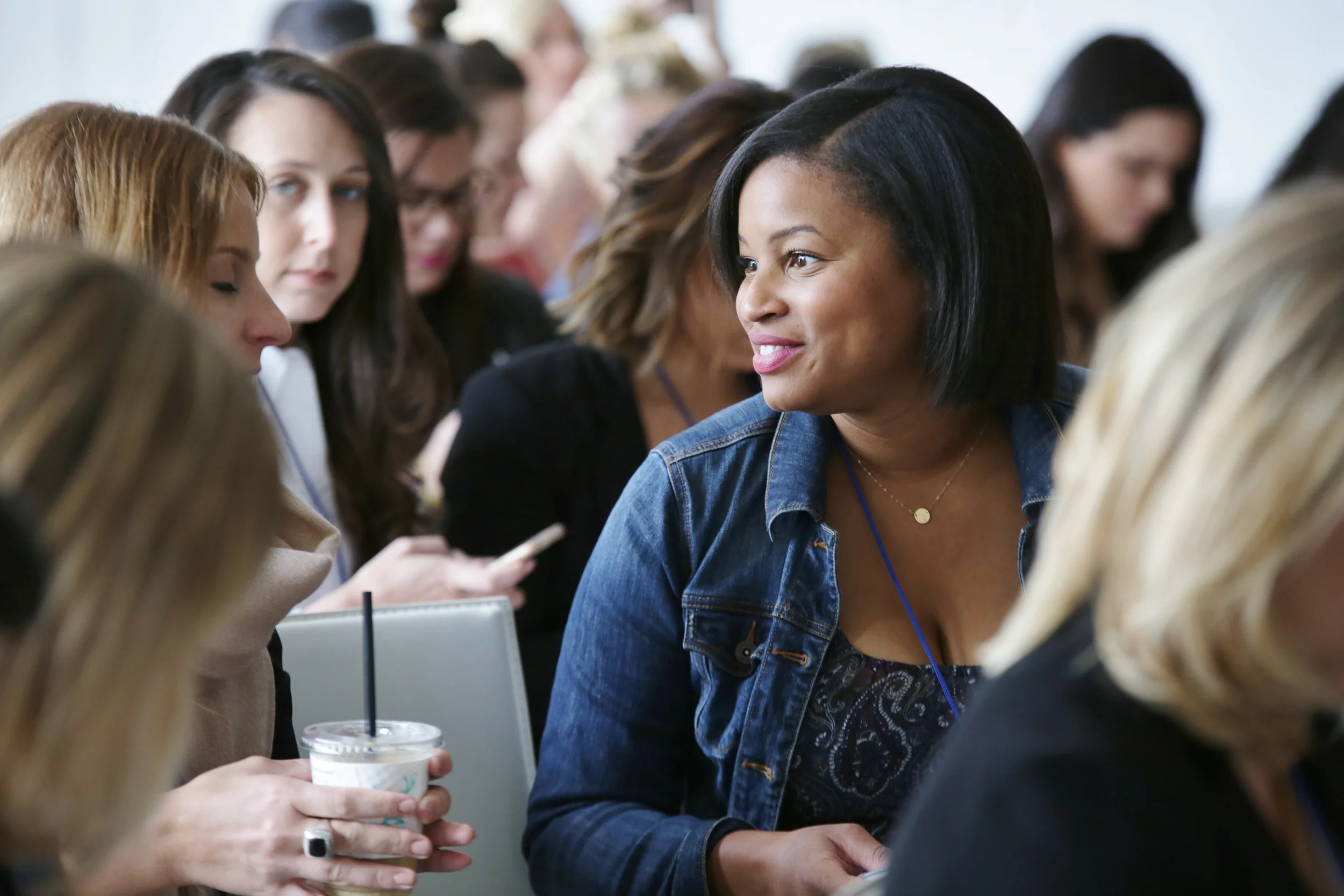
LA-based recruiters Emily and Natalie Levine have created Workgrades, an online platform designed to revolutionize the reference checking and giving process.
"Checking references remains an extremely outdated process: people playing phone tag to get in touch with previous employers, references are being checked at the end of an interview process rather than the beginning, and each and every time someone leaves a job" they explain, "their references are being contacted over and over again."
The duo created Workgrades to put the reference checking process in the candidate’s hands.
The way it works is simple:
According the Emily and Natalie they've "made it easy for you to reach out to past employers, verify your work history, and rack up those recommendations." All you have to do is fill out the details of a job you’ve had and click send. "Then your former supervisor can verify that information and even add a reference."
No longer will you need to go back to the same employer over and over again. "If you end up applying for a different job, there's no need to go back and bother your old bosses again. You can save your references and share them with whomever you choose, whenever you choose."
They also acknowledge that "candidates with the best and most transparent resumes and references tend to get hired first." And that "every temporary employee deserves to collect references for assignments well done."
"Candidates with the best and most transparent resumes and references tend to get hired first."
Tweet this.
They say there is a fast, growing trend among temporaries and freelancers to collect routine evaluations about their work performance. It helps build their resumes and stand out from the crowd.
Even for full time candidates, references are an oft overlooked and neglected part of the hiring process. Applicants use the same three people over and over again and they don't always think through who they are using. But references can make or break you landing the position.
A good reference, like a good contact, is invaluable-- especially if it is coming from a person or a company your prospective employer respects. But for job-hoppers or those who stick around in one position for extended periods of time, it's hard to remember the small details that made you a great employee. "No more repetitive calls about someone who worked for you 10 years ago. No more verifications on the same candidate you met last year," Emily and Natalie say. "You might not remember the guy or gal who temped for you last year, but they remember you and they need your reference."
So Workgrades is beneficial to both sides. "Shouldn’t you be able to give references for a former employee’s work when the work they did is fresh in your mind? Imagine being able to give references once – and being done," Emily and Natalie ask. It also provides reference givers the ability to "take their time and write a reference at their pace, instead of simply getting a call from a prospective employer. Imagine applying for a job with your references and recommendations at your fingertips?"
Talk about a reference upgrade.
More from our blog:

Five Ways to Make Your Nonprofit Brand Stand Out
How can you break through the clutter and away from the “me-too” marketing?

by: Julie Cottineau
The world of non-profit marketing has become much more challenging than it ever was. No longer is competition coming from other established non-profit organizations; now, it’s also from individual fundraising resources like Gofundme.com pages and requests on Facebook from friends for support in cause-related marathons, walkathons, etc. In some ways, social media has made it easier for your organization to connect with potential supporters; yet, on the other hand, it’s amplified the noise in the category, making it harder to get noticed and connect.
How can you break through the clutter and away from the “me-too” marketing to get the vital resources your cause needs and deserves?
It starts with better branding. And by brand, I don’t mean a more colorful logo or a catchy slogan. I mean the fundamental story your organization is telling – who you serve, what your promise is, and how you’re different — what I like to call your TWIST.
Here are a few tips you can implement right away for stronger non-profit branding.
1. YOUR BRAND IS THE EXPERIENCE YOU CREATE
Branding has become a buzzword and one of the most overused and least understood terms in marketing lexicon. Many people tend to limit the definition of brand to the logo, name, and website. These are important elements, but the real value of a brand is the experience you create. How you make people feel. It’s this relationship that creates long-term brand ambassadors as they rave about you to friends and family, and even strangers, on social media. How can you provide a better experience to your community? Not just an easier way to donate, but in all aspects of the brand journey. When I was VP of Brand for Virgin, we didn’t just think about the time in the air as the Virgin airline journey. We thought about the whole continuum. From when someone was considering a trip, all the way to when they got home and were telling their friends about the wonderful experience. Where does your brand journey begin and end? And how can you keep your organization top of mind and engage your stakeholders in between core events? Let your brand ambassadors be part of your ongoing story.
"Branding has become a buzzword and one of the most overused and least understood terms in marketing lexicon."
Tweet this.
This could mean providing regular opportunities on social media for them to share their own experiences related to your cause. It could also mean inviting some of your more loyal members in to create the next chapter of your story. What do they hope for the future? What do they love about your brand experience, and what do they wish could be different or better?
2. BRAND BLINDERS GET IN THE WAY. TAKE THEM OFF!
If you printed out the websites of your organization and other non-profits in your sector and covered up the names and logos, could you tell who was who? The answer is probably not. That’s because many non-profits spend too much time trying to look “legitimate” that they end up using the same words and imagery as everyone else. The problem with this is your important message won’t cut through. Take off those blinders and question the “givens” in your category. Look for outside expertise and new perspectives whenever possible.
3. LOOK BEYOND YOUR CATEGORY AND TWIST FOR INSPIRATION
How do you create a brand that has tangible value, is authentic, and stands out? How do you TWIST? It starts with looking at your story from new angles. Cast aside the do’s and don’ts, colors and imagery and so-called best practices of other non-profits in and out of your sector; find fresh ideas by using an out-of-category perspective.
Think of brands that you love in all areas of your life and learn how to use these brands to inform and influence your own branding strategy and execution. Get inspired by a brand like Apple with its empowering Genius Bar, or Starbucks with its focus on customization, or Amazon, who helps customers with suggestions for additional products. How can your non-profit take these lessons and TWIST them for a stronger, more distinctive brand experience? For example, think about the fun moment when you open a Snapple and look under the cap. What kind of inspiring and unexpected message could you include in the flap of your fund-raising mailers that could create a moment of surprise, delight and connection?
4. USE YOUR BRAND AS A DECISION MAKING FILTER
I’ve worked with several large non-profits and one thing I’ve noticed is that many organizations, in an effort to please everyone, take on too many initiatives. Their websites become overwhelming with a hodge-podge of programs and messages and it's difficult to determine what they really stand for. Brand building is not easy. Many organizations have great ideas, but what will make you successful is your ability to bring your idea to life, into the communities you wish to serve. Identifying your brand TWIST can help you say yes to the right opportunities and stay focussed. But just as important, it can also help you say no when necessary to ideas that distract from your core resources and cloud your message.
5. MAKE SURE THE ORGANIZATION "WALKS THE TALK" OF THE BRAND
A clear brand TWIST is also critical for internal alignment and guiding behaviors. Writing and sharing your TWIST within your organization helps ensure everyone from the Executive Director to the part-time helper is presenting a unified vision of the brand. Your employees and volunteers should be able to answer the question, “What does your organization do?” highlighting your unique TWIST. Make the brand story part of the on-boarding of everyone who is a key resource for the organization, including staff, volunteers, and key partners.
"Make the brand story part of the on-boarding of everyone who is a key resource for the organization."
Tweet this.
One of my Brand School graduates makes brand a part of their weekly staff meetings. He repeats the core brand promise and values and leads an interactive discussion on how each individual is living the brand promise in their specific role and what kind of actions they should stop or start doing to make sure their actions, and not just their words, are bringing this promise to life. Your brand promise is not something that should be sitting on a plaque in a conference room. It should be felt in every interaction and every brand touch point.
A strong brand can be a non-profit’s secret weapon. It can help you make the most of limited resources and share your story more effectively with those who can help make your mission a reality.
Julie Cottineau is the bestselling author of Twist: How Fresh Perspectives Build Breakthrough Brands, founder and CEO of BrandTwist, and creator of Brand School Online, an actionable branding class for entrepreneurs, small businesses and non-profits. She is the former Vice President of brand for Richard Branson’s Virgin Group and served in executive positions at Interbrand and Grey Global. She has taught integrated marketing communications at Columbia and Cornell universities, and is a frequent commentator on brand strategy and innovation in top business media.
More from our blog:

Women Report Needing Half as Much as Men to Launch Business
So, women can do more with less? Who knew?

Photo credit: Sarah Natasha
What could you do with 10k?
If you’re a woman, you could start a business.
According to a report released by U.S. version of the Global Entrepreneurship Monitor, an annual survey that tracks entrepreneurial activity worldwide, female entrepreneurs in the U.S. reported needing only half as much as their male counterparts to start a new business.
In 2015, entrepreneurs needed a median level of $17,500 to start their businesses, and financed 57 percent of funding needs themselves.
Women reported needing half as much funding to start companies as men -- $10,000 and $20,000 respectively -- suggesting that women felt they could accomplish what they needed with fewer resources, or that they simply have fewer resources to apply to their businesses.
"Women felt they could accomplish what they needed with fewer resources."
Tweet this.
“Globalization, changes in technology, and social awareness have provided an impetus to develop capital flows from diverse sources,” said Babson College Professor of Entrepreneurship Donna Kelley, the GEM Report’s lead author. “Startup activity benefits from widespread recognition of the role entrepreneurship plays in increasing employment and improving the economic health of the nation.”
The findings align with the latest survey on business ownership by the Census Bureau, which found that 42.9 percent of female business owners reported using less than $10,000 to start their ventures, compared with just 38.4 percent of men. The Census report also found that 12.1 percent of men who owned businesses said they needed at least $50,000 to launch their companies, more than double the 5.5 percent of women who reported needing at least that much.
The GEM study also found that nationwide, there are more than 60 percent more men than women entrepreneurs. California and Florida have male rates equal to or greater than the overall U.S. level. New York and Ohio show an equal mix of both men and women engaged in entrepreneurial activities. Texas is close to equal and also has the highest rate of women entrepreneurs.
So, women can do more with less? And Texas female entrepreneurs are kicking-ass? Good up.
More from our blog:
Meet The Mentors: #CreateCultivateATL

As we’re gearing up for Create & Cultivate ATL this October, we’d like to introduce you to the amazing women that will part of our mentor sessions this fall.
Our mentor sessions are perfect for those of you who are looking for advice on how to manage your blog or business from some of the best female entrepreneurs in the digital space today.
If you're wondering what mentor is the best fit for you, check out of the ladies below that will be sitting down with you this October. Also, if you haven't gotten your ticket yet, what are you waiting for? Get your ticket now here.
Stay tuned as we add more mentors to our lineup too!
Nicolette Mason, Creator of NicoletteMason.com
Best for: Social Media, Blogging, Writing, Strategic Partnerships
Nicolette is a Los Angeles native who lives and works in NYC & LA . She is a freelance creative consultant, contributing editor at Marie Claire, and pens her blog nicolettemason.com, where she shares personal style snaps, travel, and the many things she loves.
Since launching her blog and graduating from Parsons School of Design, she’s contributed to dozens of publications including Marie Claire, Vogue Italia, Brooklyn Magazine, The L Magazine, Refinery29, Glamour Italy, and more, and has partnered with brands like ModCloth and Addition Elle, where she has a cocktail dress collection launching this spring, to design collections. She has also partnered with Target on the heralded launch of their plus-size brand, Ava & Viv.

Maxie McCoy, Creator of MaxieMcCoy.com
Best for: Life Coaching, Soul Searching, Career Development

An inspiration luminary, Maxie’s work is a new framework for using inspiration to create a life you’re jazzed to be living. It’s an experience that will put inspiration in your driver’s seat and shine a spotlight on your escape route from mediocrity. Her website provides weekly soul-busting writings, videos, and more inspiration than you know what to do with.
Maxie has also written for the Create & Cultivate blog and you can find her pieces here:
Professional Opinion: Maxie McCoy on Cultivating Inspiration
Professional Opinion: Maxie McCoy on When -and How-To Take a Sabbatical
Professional Opinion: How to Take a Leap of Faith in Your Career
Screw the Cue Cards: 5 Tips for Mastering a Live Audience
Don’t be a Bore: 4 Ways To Engage Your Audience in a Meaningful Wa
Jessy Fofana, Founder of LaRue PR
Best for: PR, Marketing, Social Media
Jessy Fofana is our go-to for all things PR. With her PR agency LaRue PR, she has a wealth of knowledge when it comes to utilizing PR to strategically grow brands and get them on the right radar. Not only that, she is our seasoned PR correspondent for the Create & Cultivate blog.
Jessy founded LaRue PR over seven years ago after successfully directing public relations initiatives for an impressive list of well-known fashion, lifestyle and cosmetics brands and retailers. She brings a unique perspective of understanding what every player in the PR game needs. Having worked in magazine publishing, she knows what editors are looking for, and as the co-creator of Femme Arsenal, an indie cosmetic brand, she understands what business owners need to grow to the next level. Get her advice in-person at Create & Cultivate Atlanta!

Mandy Kellogg Rye, Founder and Creative Director of Waiting On Martha
Best for: Blogging, Entrepreneurship, Creative Directing

It all started with a blog and a desire to unite all of the things Mandy loves the most in one place. From how-tos for setting the perfect table and custom crafted cocktails, to what Mandy’s wearing and the beloved “currently coveting” roundup, a glimpse of what’s on her ever-expanding want list, readers know that when they’re in need of a little inspiration, Mandy is just a click away.
Soon after the blog took off and Mandy could no longer keep up with the “where can I buy that?” requests, she decided it was high time to expand the brand. With that, the Waiting On Martha shop was born. On any given shopping day, you can find a variety of products spanning the home décor, tabletop, entertaining, paper, gift, men’s, women’s, kids and even pet categories.
Courtney Kerr, Founder of Kerrently.com and TV & Radio Personality
Best for: Blogging, Strategic Partnerships

Courtney’s life took an interesting turn when she was cast on Bravo’s 2011 docudrama, “Most Eligible Dallas,” which eventually led to a 2013 spinoff show, “Courtney Loves Dallas.” Female viewers were eager to know everything about Courtney’s wardrobe, which was her lightbulb moment to leave her longtime, successful career as a retail shopgirl and venture into the world of style blogging. For two years, Dallas woke up to her every morning on the panel of opinionated women on KTXD’s 2-hour morning show, “The Broadcast.” In 2014, CBS Radio also scooped up Courtney to co-host afternoon drive show, “UNcorked with Leigh Ann & Courtney Kerr,” which airs on their Dallas hot adult contemporary station, 103.7 KVIL. In January of 2016, “UNcorked” went nationally syndicated and began as a weekly online podcast for Play.It.
After 5 years of juggling it all & going 100mph in designer heels, Courtney recognized that it was time to elevate “What Courtney Wore” into a online magazine, appropriately named “KERRently.” In January 2016, “KERRently” was launched and it is where Courtney shares her thoughts on fashion, beauty, travel and just life in general.
You can read our Q+A with Courtney here on our blog.
Cailli & Sam Beckerman, Creators of Beckerman Blog
Best for: Blogging, Strategic Partnerships, Fashion Design, Creative Directing
Sam and Cailli Beckerman have been showcasing their fashion sense and outfits of the day since 2009. Living out the ultimate millennial dream, these twins flew to Dubai just to check out Chanel’s new collection for their blog. The twins’ bold styles revolve around bright colors, eclectic designs, and edgy ensembles. Even their ridiculously adorable Pomeranians dress to impress. From being designers to becoming bloggers, these twins have seen it all and have accumulated a following of over 163,000.
You can read our Q+A with Cailli and Sam here on our blog.

Daniela Ramirez, Creator of Nany’s Klozet
Best for: Blogging, Fashion, Strategic Partnerships

Daniela launched her fashion blog Nany’s Klozet in 2011 to be a fashion diary. Now five years later, she has gained 270,000 followers and over 43,000 YouTube subscribers in both the English speaking and Hispanophone spaces. Some of her partnerships have included Guess, Pantene, Lucky Brand and TRESemmé.
You can read our Q+A with Daniela here on our blog.
Jessi Malay, Creator of mywhiteT and Recording Artist
Best for: Blogging, Fashion, Music, Strategic Partnerships
Jessi Malay, a Los Angeles native, doesn’t just document her her daily outfit inspiration on her blog My White T, but she also has a successful music career. With over 100,000 followers on Instagram Jessi has successfully merged her love of music, fashion and beauty and turned it into a full-time career. Check our Q+A with her here.
You can read our Q+A with Jessi here on our blog.

Keiko Lynn, Creator of KeikoLynn.com and Founder of Brooklyn Brigade
Best for: Blogging, Creative Directing, Entrepreneurship, Strategic Partnerships

Since 2009, Keiko Lynn has shared her fashion, beauty, and lifestyle musings that have served as inspiration to her followers. Not only that, the Brooklyn based blogger has gone beyond the realm of being a blogger and turned into a creative entrepreneur when she founded Brooklyn Brigade creative studio with follow blogger Helena Glazer.
She is constantly creating and looking for inspiration, and shares a peek into her daily life, style, and beauty tips on keikolynn.com.
Kelly Mindell, Founder and Creative Director of Studio DIY
Best for: Entrepreneurship, Creative Directing, Strategic Partnerships
Kelly Mindell, a modern-day artisan and professional celebrator, launched her blog, Studio DIY, during her senior year of college. Her clever, colorful creations has attracted a growing audience of over 306,000 followers that has caught the attention Pocky, Tic Tac, Method Home, and Grease Live. Based in Los Angeles, Kelly pulls inspiration from the West coast culture and has been expanding Studio DIY’s scope by experimenting with fashion, travel, and drool-worthy food, like donut burgers!

Rachel Martino, Creator of RachMartino.com
Best for: Blogging, Strategic Partnerships, Fashion

Rachel Martino is a Francophone fashion and lifestyle blogger based out of Brooklyn that has been able to create an international brand right from her home, with over 384k followers. Not only that, she is 25 and just last year became a full-time blogger after leaving Esteé Lauder Brands as Origins’ Community Manager.
Now, Rachel is fully focused on creating amazing content for her blog, making strategic partnerships that make sense for her blog, and travelling “across the pond” to market to her French audience as well.
You can read our Q+A with Rachel on our blog here.
Adrianna Adarme, Creator of A Cozy Kitchen
Best for: Blogging, Book Writing, Cooking, Crafts
Atlanta-native Adrianna Adarme started her blog in 2009 as a place to celebrate pies and corgis - more specifically, her corgi Amelia. However, her blog has been a haven for countless of recipes and projects that have inspired her 230k followers online.
Following the growth of her blog and social channels, Adrianna launched her first book called The Year of Cozy which has various original recipes and projects for the perfect “cozy” home, and is getting ready to release her second cookbook, A Cozy Coloring Cookbook.
You can read our Counter Culture feature with Adrianna on our blog here.

Carrie Morey, Founder of Callie’s Charleston Biscuits & Callie’s Hot Little Biscuit
Best for: Entrepreneurship and Food

Carrie Morey became a culinary entrepreneur when she founded Callie’s in 2005 and from then on, she expanded the southern biscuit making tradition by making her brand Callie’s Charleston Biscuits accessible across the country, along with another restaurant in Atlanta’s vibrant Virginia Highlands neighborhood.Today, Callie has authored a cookbook that also includes her entrepreneurial narrative, and also is a guest lecturer at the College of Charleston School of Business, presenting the program’s Entrepreneurship Class.
Jeni Britton Bauer, Founder of Jeni's Splendid Ice Creams
Best For: Entrepreneurship & Food
Jeni has been making ice creams professionally for two decades. Before that, she studied art, worked in a bakery, and had a serious hobby blending perfumes and collecting essential oils. Jeni founded Jeni’s Splendid Ice Creams in 2002. Her ahead-of-the-trend vision—using whole ingredients and dairy from grass-pastured cows, rather than synthetic flavorings and commodity ice cream mix—coupled with inspired flavors sparked the artisan ice cream movement more than a decade before it would become a top food trend. Jeni is a James Beard Award-winning author of two cookbooks and has been recognized by Fast Company as one of the most creative people in business.


We Need to Talk: The Realities of Working While Sick


I don’t talk about this often, because as it is with many disabled or sick people, it’s not what you want to be defined by. Your disability is you and, it’s also not. You feel less than, but you also don’t. And in many ways you feel more capable of taking on challenges because every day presents a new challenge that you overcome. My “disability” is something most people can’t see and I am resistant and to even call it such because compared to those Americans who truly cannot work, I am lucky.
I have full mental capabilities, both arms, legs, the use of all of my senses, and am in many respects a very healthy person, who simply happens to be very sick. My body is a walking contradiction. I do, however, have an auto-immune disease that I will have for the rest of my life. And as a Type 1 brittle diabetic, there are infinite complications that anyone looking at me is unable to see.
I am, I should point out, still capable of gainful employment. The Social Security Administration considers “gainful” $1,040 a month for a disabled individual and $1,740 a month for a blind individual. According a report from the U.S. Bureau of Labor Statistics released June 21, 2016, in 2015 17.5 percent of persons with a disability were employed. 32 percent of workers with a disability were employed part time (compared to 18 percent of those without a disability.) Persons with a disability are less likely to work in management, professional, and related occupations than those without a disability.
I know I am lucky to be employed full-time in professional position.
However, it is a complication that roars during moments when I need it to be silent. It’s a disease that has landed me in the ICU three times over the last year. And it’s something that, at times, makes working feel impossible and makes me feel like a failure.
Your disease doesn't care how hard you hustle. It doesn't care if you have a deadline or a flight to catch.
"Your disease doesn't care how hard you hustle. It doesn't care if you have a deadline or a flight to catch."
Tweet this.
Case in point: I was packed, ready, and supposed to be in Texas for work on a Monday earlier this year. My flight left at 8am. At 5am that morning, I was rushed to the ER and admitted to the ICU for four days. Unable to talk, my mom had to call my boss and let her know I wouldn’t be on the flight. I remember even in that moment, screaming in pain and gasping for air, thinking, I can’t miss my flight. I have to be in Texas. I have to get there somehow. I had only been at my job about a month and I was devastated. I was frustrated. There is the logical part of a person who knows they are useless if dead. There is the other side of me that hates feeling useless when alive even more.
All I wanted was to get to work. I had no option but wait. And the reality of working while sick is that sometimes waiting is all you can do.
But that doesn’t mean it’s easy. And it certainly doesn’t mean that I don’t cry or get frustrated or fear that one day, it might cost me my job.
There are days when my blood sugar is so high that I find it impossible to get work done. Days when my blood sugar is low that I sit at my desk and shake and sweat for twenty minutes. Sometimes this happens in the middle of an important conference call. Sometimes it happens when I’m up against a deadline.
There are always going to be parts of my job that don’t align with a health plan. Stress raises your blood sugar. Not eating consistent meals makes it go crazy. And as much as I try to manage stress or stay consistent, there are days where I’m up against the clock, or have a million and one things to do, and I’m stressed. My blood sugar spikes. I’ll feel confused, less capable, and disoriented.
There are moments when you’re afraid you’ll lose your job because of the number of doctor’s appointments you have, or the unexpected trips to the ER that take you out for four whole days. You feel guilty that you get more allowances than your co-workers. You try to make up for it by making sure you don't miss deadlines, that you power through the pain, and show up for your team. But you cannot forget to show up for yourself.
What I’ve learned is that taking care of my health is number one. I’ve also learned that no matter how regimented I keep it, there are going to be off days. It is during those moments that being patient with myself is more important that soldering through.
As an employee the best thing I can do is my best. On most days that is more than enough. On my worst day, it might not be. But I've come to learn that I don't need to justify my job.
I've earned it based on merit and hard work-- something no sickness or disability can take away.
More from our blog:
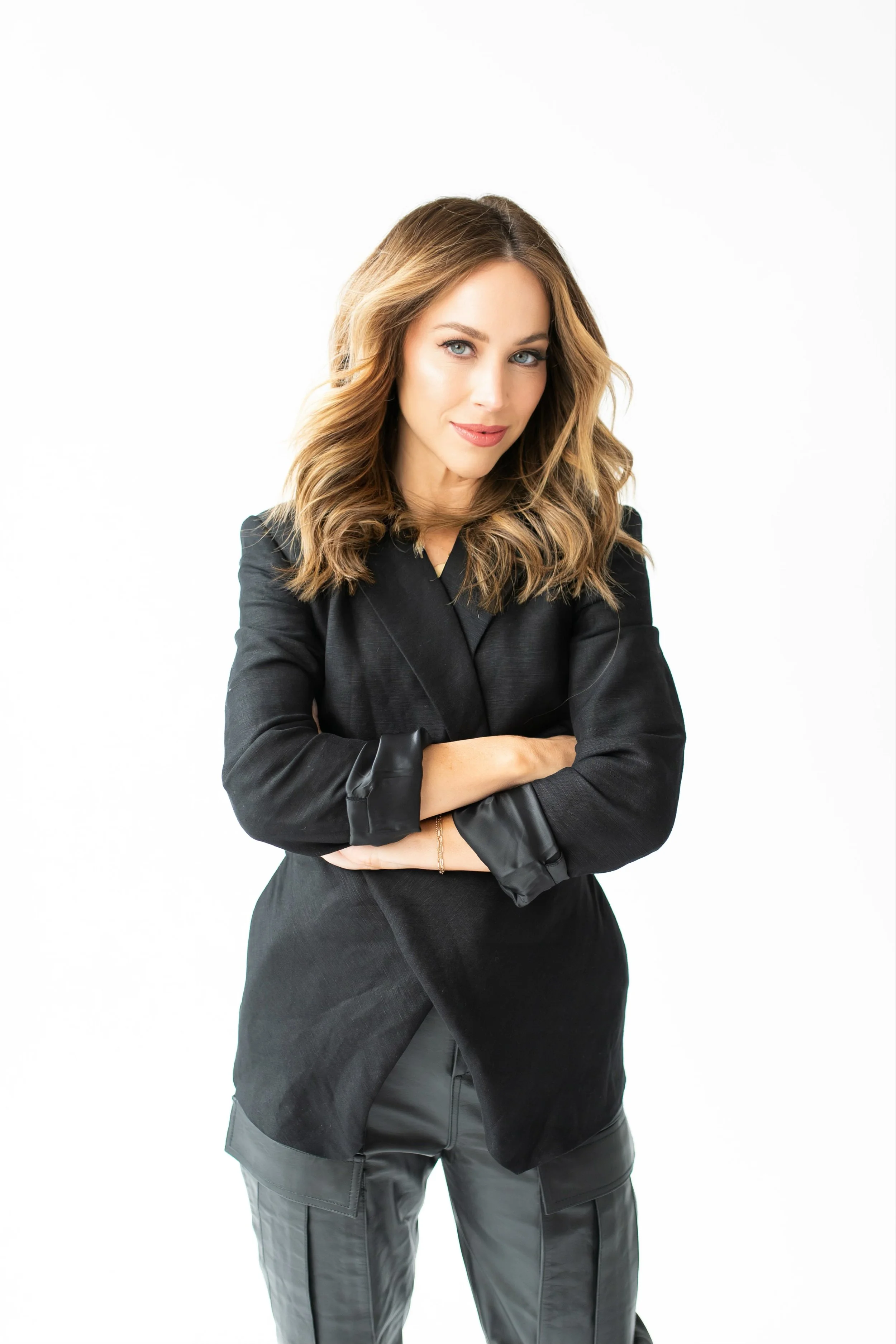


RSVP Now For The Create & Cultivate ATL Happy Hour
Never too early to start planning for a good time.

Create & Cultivate ATL is only a few months away, but that doesn’t mean that you have to wait until the last minute to get your plans ready for the big day!
Starting this week if you have a VIP ticket, you will be able to start selecting your mentors, and you can already get a head start on RSVP’ing for the Create & Cultivate ATL attendee happy hour on October 14th!
The attendee happy hour is a great way for you to network and mingle with all the attendees that will be joining you at our conference the day before, and can also be a way for you to start setting your wolfpack for the big day so you’re not alone!
RSVP below for our happy hour and we will send you full details come closer to October 16th!
We can’t wait to see you all this fall, and get ready to have the best time at Create & Cultivate ATL!
DETAILS:
Lenox Square, Neiman Marcus Wing
3393 Peachtree Road NE, Atlanta, Georgia 30326
6PM - 7:30PM
Beer, wine, and light snacks will be provided
Please be sure to bring your conference badge or order number/confirmation number from your Create & Cultivate ATL ticket purchase to confirm your entry into the happy hour!
RSVP CLOSED

Google Finally Introduced These 11 New Much-Needed Emojis
Giving us something to smile about.

Illustration by Chloe White
Since the dawn of the emoji, we've seen a fairly restrictive approach gender stereotypes. More often than not, we see more male emojis that tend to describe general everyday actions and certain jobs, while female emojis are restricted to reactions, princesses, brides, and even that spicy salsa lady dressed in red (because, truth, sometimes you need to send someone a cha, cha, chaaaa, but sometimes you want to show someone you're cha, cha, ching the boss).
It’s 2016 - and women are holding down jobs in STEM, the C-Suite, and HRC is running for POTUS. So our digital emoji world was running a little behind up until last week.
Thanks to Google, women are now represented not only as pretty princess emojis. Earlier this year, Google proposed to Unicode to introduce 11 new emoticons that represented women in diverse work fields to promote gender equality. This week for World Emoji Day, Google announced that they’re coming to life as part of 300 new Google emojis that are being introduced with Unicode.
Sometimes you need to send someone a cha, cha, cha, but sometimes you want to show someone you're cha, cha, ching, the boss.
Tweet this.
“While there’s a huge range of emoji, there aren’t a lot that highlight the diversity of women’s careers, or empower young girls,” wrote Nicole Bleuel, Marketing Lead & Diversity Champion, Emoji, in a recent blog post.
The 11 new emoticons include: doctor, policewoman, cook, coders, a female David Bowie-esque rockstar, farmer, mechanic, construction worker, and many more. The only two emojis that did not make the cut: tech line worker and a nurse.
“We proposed a set of new emoji to the Unicode Technical Committee that represent a wider range of professions for women (as well as men), and reflect the pivotal roles that women play in the world.,” said Google in their announcement on their blog. The new emojis will “make emoji more representative of the millions of people who use them.”

However, of course you can’t have progress, even in the emoji world, without a few haters.
“Why don't we get emoji's to represent humans/ mankind? Why women in particular? Then men also need some emojis like father, son etc.,” said one Twitter user in response to the announcement.
“I can't believe you let feminists get to you. Where is our Demi-queer Bi-gender disco pony day????,” said another user.
However, the fact that a conglomerate like Google was the first to campaign for more emoji representation of women in diverse work fields speaks volumes to the movement that continues to create equality for women in the workplace in the past century. (Even though there is a whole group of boys who see Anna and Elsa from Frozen as the new superheroes. More on that here.)
If Google, a powerful Silicon Valley-based tech company that is notorious for it’s lack of gender and racial diversity, is calling out for more representation within the world of tech itself, it's a step we can throw some love at. (Include all happy emojis here.) And it's a move that will hopefully influence the rest of Silicon Valley to recognize women for tech jobs.
We commend you Google, and we thank you. Because finally, we can show via text that we’re businesswomen, and we don’t have to substitute with a male emoji. Heart. Smiley. Thumbs up.
More from our blog: