
6 Questions You Should Ask When Your Dream Job Turns Into a Total Nightmare
Don't give up your swivel chair just yet.

Photo: Smith House Photo
You worked hard to get this job. You scored a meeting, nailed the interview, and landed yourself in a seat you've been dreaming about since graduation. But then something horrible happened: you realized that the inner workings of the company didn't line up with your expectations. Or you've encountered a workplace foe. Or maybe you and your boss, not matter how well you initially hit it off, are forever at odds.
The problem with dream jobs turning sour is that we tend to hold on to them because of how sought-after the positions are. But surely you've heard the saying one man's trash is another's treasure. This job might be the bees knees for someone else and the wrong hive for you. However, before you bounce, ask and answer these six questions honestly.
Are Your Expectations Too High?
The small prob with "dream" anything, is that there's always an underside. The dream hangover, if you will. No job is perfect, and if the expectation was that it would be, you need to check your battery and your priorities.
No job is brunch and selfies and fashion! all the time, and if you were expecting a front-row seat to fun and fancy-freebies, remember that late nights, tough moments, doing it wrong and getting called out for it, are all part of the dream.
Are You Part of the Problem?
This is hard for most people to answer, because it's impossible to see the tornado's destruction when you're swirling around inside of it. But if you and a co-worker are really butting heads and leaving a trail, paper or otherwise, of destruction in your wake, there's a good chance it's not only on her. Sit yourself down and give yourself a proper pep talk about relationships in the workplace, and your hand in the issue.
If you are truly attempting to make an impossible situation work, and it's really not panning out (and driving you to tears on the way home) it might be time to walk away.
Were You Hand Held at Your Past Job?
Maybe you've been thrown in with the sharks and you weren't ready for it. Dream jobs are typically highly competitive, hard knock environments, and you need to be able to hold your own—not someone else's hand.
This has a bit to do with expectation as well. If your former employers weren't as "tough," because they gave you outs, or let you go home early, or didn't expect more, it's time to try harder.
In short, you need to kill it, and kill it every day. If you are unhappy because you're in over your head, swim UP. No matter how strong the current, you can be stronger, and that just might shift your nightmare back into a dream.
It's foolish to think the "dream" will be simple.
Do You Feel Undervalued? Maybe You Are. But Have You Done Anything About It?
Are you feeling frustrated because you ARE KILLING IT, and no one's noticing? First, realize that to make a company run well and effectively, everyone is going above and beyond; you're not the only one. You are supposed to be doing everything. (Or everything you can to be the best at your job.) If you're expecting heaps of praise, re-read question #1.
But if you're truly feeling undervalued and as a result are considering bouncing, ask for a meeting with your supervisor and express your frustrations. If you're bottling everything up, you may end up blowing what really is a dream. Have the convo before you opt out of a great opportunity.
Are You Just Being Sensitive?
Controversial word, sensitive. It implies that you're too emotional, and emotional in the workplace is usually directed at women. So how does one determine whether if they need a thicker skin, or it really is the job? One, no job should come at the expense of your health or well-being.
However, if you're crying at work, before you give up, run what you're feeling by someone else who can be objective (i.e. don't take this to your boss). Ask your business bestie's (if you don't have one, find one) advice, and actually listen to their input. If they say you're overreacting, take their word for it and give your dream job another shot.
Like any relationship, a healthy work relationship won't be perfect all the time.
Are You Unable to Read Your Boss' Mind?
BIG problem. As an employee you should be a psychic and ten steps ahead of your boss all the time. JK BABES. But part of being a good employee, and therefore a happy one, is anticipating what your boss wants. If you aren't great at doing so, find out how to get on your boss' good side.
This post was published on March 8, 2019, and has since been updated.





We Scrubbed the Internet for the Best Advice for Startup Founders During the COVID-19 Pandemic
Adapting to the ever-changing circumstances of the crisis is key.

Photo: Smith House Photo
The COVID-19 outbreak is impacting communities—canceling events, shuttering offices, and suspending classes—around the globe. Of course, the focus is (and should be!) on preventing the spread of the disease, but the economic effects of the outbreak are impossible to ignore as companies large and small adapt to the ever-changing circumstances of the crisis.
In the last few weeks, the OECD cut global economic growth projections in half, the JPMorgan Global Manufacturing Purchasing Manager’s Index (PMI) fell to its lowest level since 2009, and U.S. stocks had their worst day since the 1987 stock market crash. Needless to say, supply chain disruptions, facility closures, and staffing deficits can put extra strain on startups.
Here are three things that startup founders can do now to adapt to the ever-changing circumstances, according to the Harvard Business Review.
Set up business tracking and forecasting.
Fluctuations are inevitable in the midst of a crisis. "Put in place rapid-reporting cycles so that you can understand how your business is being affected, where mitigation is required, and how quickly operations are recovering," notes Harvard Business Review. "A crisis doesn’t imply immunity from performance management, and sooner or later markets will judge which companies managed the challenge most effectively.”
Plan for remote work.
With the CDC recommending social distancing and zero-tolerance sick policies to prevent the spread of COVID-19, planning for remote work is essential. “Be clear on your policies—where they apply, how they will work, and when they will be reviewed,” advises Harvard Business Review for the best results.
Microsoft, Google, and Cisco Webex are among a number of tech companies providing free remote working tools during the coronavirus outbreak. Additionally, Slack’s Guide to Working Remotely, Gitlab’s Guide to Remote Work, and Google are all great resources for setting up a successful remote work strategy.
Be a part of the broader solution.
“As a corporate citizen, you should support others in your supply chain, industry, community, and local government,” notes Harvard Business Review. “Consider how your business can contribute, be it in health care, communications, food, or some other domain. Focus on the intersection between acute social needs and your specific capabilities—in other words, live your purpose.”
Head over to Harvard Business Review for more advice on how to lead your business through the coronavirus crisis.
For up-to-date information on the COVID-19 outbreak, we recommend referring to the Centers for Disease Control and Prevention or the World Health Organization.

15 Headache-Preventing Tax Tips You Can Use Right Now
Tackle tax season like a pro.

Photo: Smith House Photo
Overwhelm. Cold sweats. Glazed-over eyes.
Every year, these are the emotions felt by many of us come April 15, a.k.a when it’s time to file our tax returns. It seems like tax season sneaks up on us every year, and no matter how hard we try to be proactive, to plan and prepare, most of us are left doing everything at the last minute.
So to help you get a handle on your taxes this year—and better prepare for tax season next year—we asked Natalie Asghari, a CPA at NA Business Advisors and CPAs, Inc. (NABA), to share tax tips that we can all implement into our financial life. Whether you’re employed full-time, self-employed, or working several side hustles, scroll on to find out how to get your 2019 taxes in order.
Tips for Everyone
1. Gather all your records in advance.
Gather all documents or forms you’ll need when filing your taxes: receipts, canceled checks, and other documents that support income or deductions you’re claiming on your return.
Always keep originals. Make copies of all valid documents that you will provide for filing.
Group together documents regarding mortgage interest payments, property taxes, charitable gifts, medical bills, and any other items that may count as deductions.
2. Keep track of important records.
The best way to do this is by staying organized throughout the year. Don’t wait until the end of the year to consolidate your documents. Gathering information at the beginning of the year will save you time and reduce the chance of omitting information and amending tax returns when it actually comes time to file.
Keep track of your expenses on a quarterly or monthly basis by record keeping, especially if you are self-employed.
Keep a record of tuition, books, computers, and fees that you pay because you may be able to claim an education credit or deduction for the amounts you pay.
Records need to be kept for at least three years (four for state of CA) from the date you filed the related income tax return. You should keep a copy of your actual tax returns, W-2s, 1099s, etc.
3. Decide how you’re going to file.
Be sure to consider different tax statuses if you are eligible for more than one. For example, if you’re married and can file either jointly with your spouse or separately, be sure to consider both options. This might be something for you to investigate throughout the year, especially if your circumstances change.
4. Review! Review! Review!
Don’t rush. We all make mistakes when we rush. Mistakes will slow down the processing of your return. Be sure to double-check all Social Security numbers and other personal information on your return. Remember, you are the taxpayer signing the return and you are responsible for any missed information.
5. Keep up-to-date on tax laws.
While it might be a good idea to get expert advice regarding tax law, you should also keep an eye on the news for anything that might affect you or your business. A well-informed client can often help an accountant give the best advice, so make sure you know about any changes in tax provisions that could apply to you. Ask questions if you believe something you read or heard may affect you.
6. Hire an accountant or professional tax preparer to do your taxes.
Because constant changes make the tax code more complex each year, you may be more comfortable–and able to use tax savings strategies, pay fewer taxes or receive a bigger refund–if you have a professional prepare your returns.
Tips for the Self-Employed
7. If you are self-employed, you may have to make estimated tax payments.
This applies even if you also have a full-time or part-time job and your employer withholds taxes from your wages. Estimated tax is the method used to pay tax on income that is not subject to withholding. If you fail to make quarterly payments, you may be penalized for underpayment at the end of the tax year.
8. Keep a good record of income and expense for your business.
To be deductible, a business expense must be both ordinary and necessary. An ordinary expense is one that is common and accepted in your field of business. A necessary expense is one that is helpful and appropriate for your business.
9. Set up a retirement plan.
A retirement plan not only benefits you later in life, but it is also a method of reducing your current tax liability, and often reducing taxable payment on a set amount of money at any point in time. Your taxable income at retirement will most likely be a lower bracket than your working income.
10. Don’t miss the health insurance deduction.
The deduction is for medical, dental or long-term care insurance premiums that self-employed people often pay for themselves, their spouse and their dependents.
11. Deduct transportation costs.
You should be able to fully deduct any transportation costs (plane tickets, taxis, airport parking, etc.).
If you’re driving to meet a customer or conducting business travel, you will need to keep a schedule/log with dates, mileage, etc. If your trip was primarily for business purposes, you can deduct certain expenses, such as hotel costs for any business days; if you combine work and play, you can’t deduct lodging and meals for your personal days.
12. Deduct meals and entertainment for clients.
Paying for meals and entertainment for current or potential clients can be deductible, as long as the meals or entertainment was directly related to and associated with the business. Be sure to keep records such as the date, the purpose of the meeting, and the parties involved.
Tips for Employees/Employed Individuals
13. Collect all your W-2s and 1099s.
You’ll need these to file your tax return. Check and make sure your withholdings from paychecks are correct based on your situation–especially if you had life changes such as purchasing a primary residence, getting married or having a child.
14. Pay estimated taxes.
If you do not pay your tax through withholdings or do not pay enough tax that way, you might have to pay estimated taxes or you may have additional tax liabilities when it comes time to file your tax returns. You may have to pay estimated tax if you receive income such as dividends, interest, capital gains, rent, and royalties.
15. Deduct job-related expenses.
If you paid for expenses related to your job during the tax year, many of these expenses may be eligible to be deducted on your return if they are unreimbursed by your employer. Deductible unreimbursed employee expenses generally fall into one of two categories: job-specific expenses and travel-related expenses. Some examples of job-specific expenses are protective clothing required in your work, such as hard hats, safety shoes, and glasses; physical examinations required by your employer; dues to professional organizations and chambers of commerce; licenses; and regulatory fees, to name a few.
Don’t let tax season scare you into an anxious state this year. Instead, spend some time, plan ahead and follow the tips outlined in this article. I believe you can make it through tax season without pulling out your hair. Now, I ask you, what tip will you be following this tax season?
This story was originally published on February 12, 2016, and has since been updated.

Brittney Castro is the Founder & CEO of Financially Wise Women, an LA-based financial planning firm for women. She specializes in working with busy, established professional and entrepreneurial women who are passionate about life and want to finally understand money—how to manage it, save it, invest it, and protect it—in a fun and simple way.
Brittney has been featured in the Wall Street Journal, New York Times, CNBC, Glamour.com, Entrepreneur.com, KTLA, CBS, and more. Away from the office, you can find Brittney working out, drinking coffee with steamed almond milk, reading, playing with her fur baby Arya, and of course dancing!
Sign up to receive your Financially Wise Toolkit jam-packed with great tools and resources to help you on your financial journey at financiallywisewomen.com. Follow Brittney @brittneycastro.
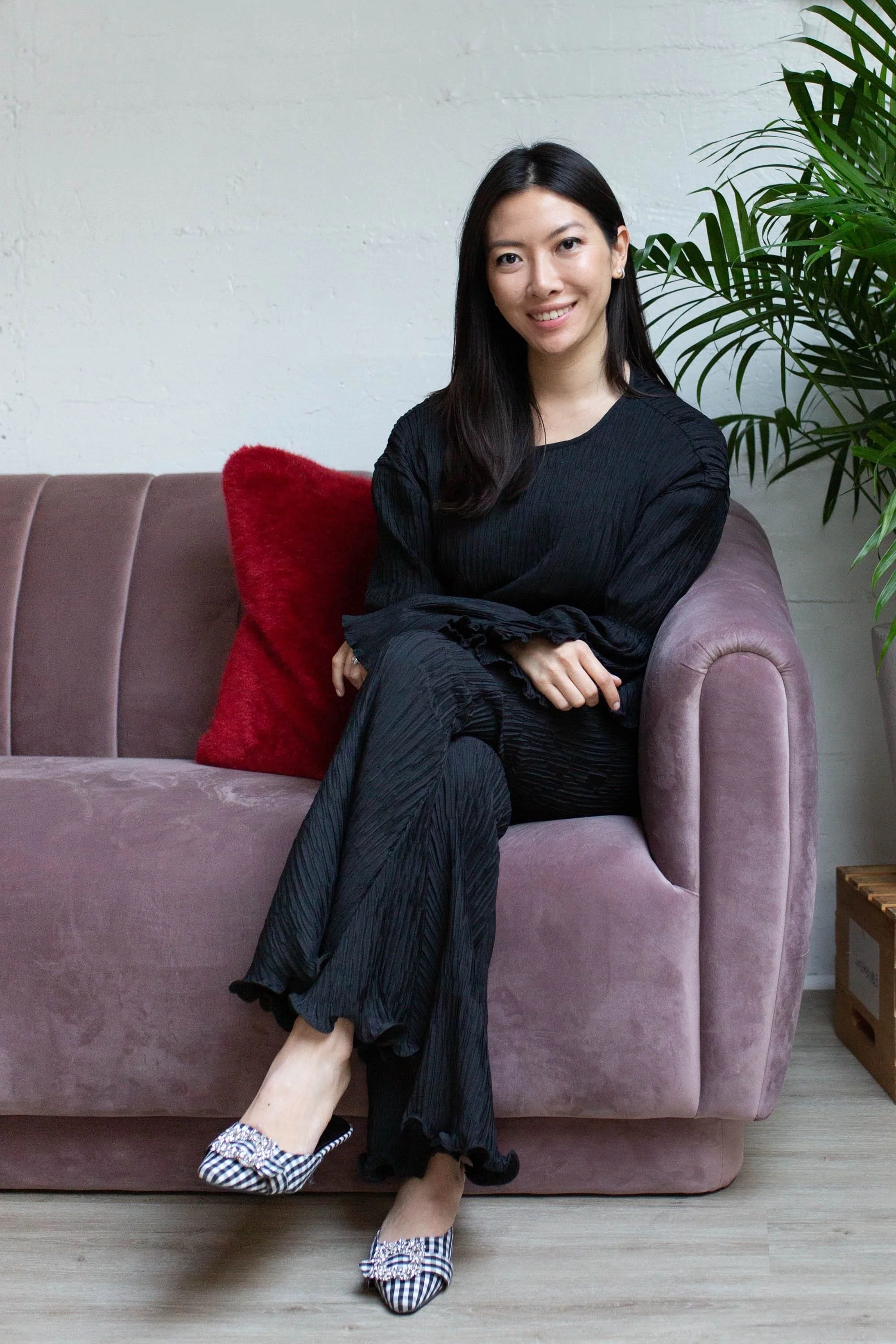
This Founder Walked Away From a Steady Wall Street Job to Bootstrap a Clean Beauty Brand
And the risk paid off.

You asked for more content around business finances, so we’re delivering. Welcome to Money Matters where we give you an inside look at the pocketbooks of CEOs and entrepreneurs. In this series, you’ll learn what successful women in business spend on office spaces and employee salaries, how they knew it was time to hire someone to manage their finances, and their best advice for talking about money.

Photo: Courtesy of Cocokind
Leaving a steady job and switching lanes isn’t easy.
Just ask Priscilla Tsai, who was climbing the Wall Street corporate ladder when she decided to shift gears and launch Cocokind, a clean, conscious, sustainable skincare brand. "The first years were tough,” the founder and CEO tells Create & Cultivate. “I was only 25, considered successful in my career, and about to leave it all behind to start a company in an industry that I had very little experience in."
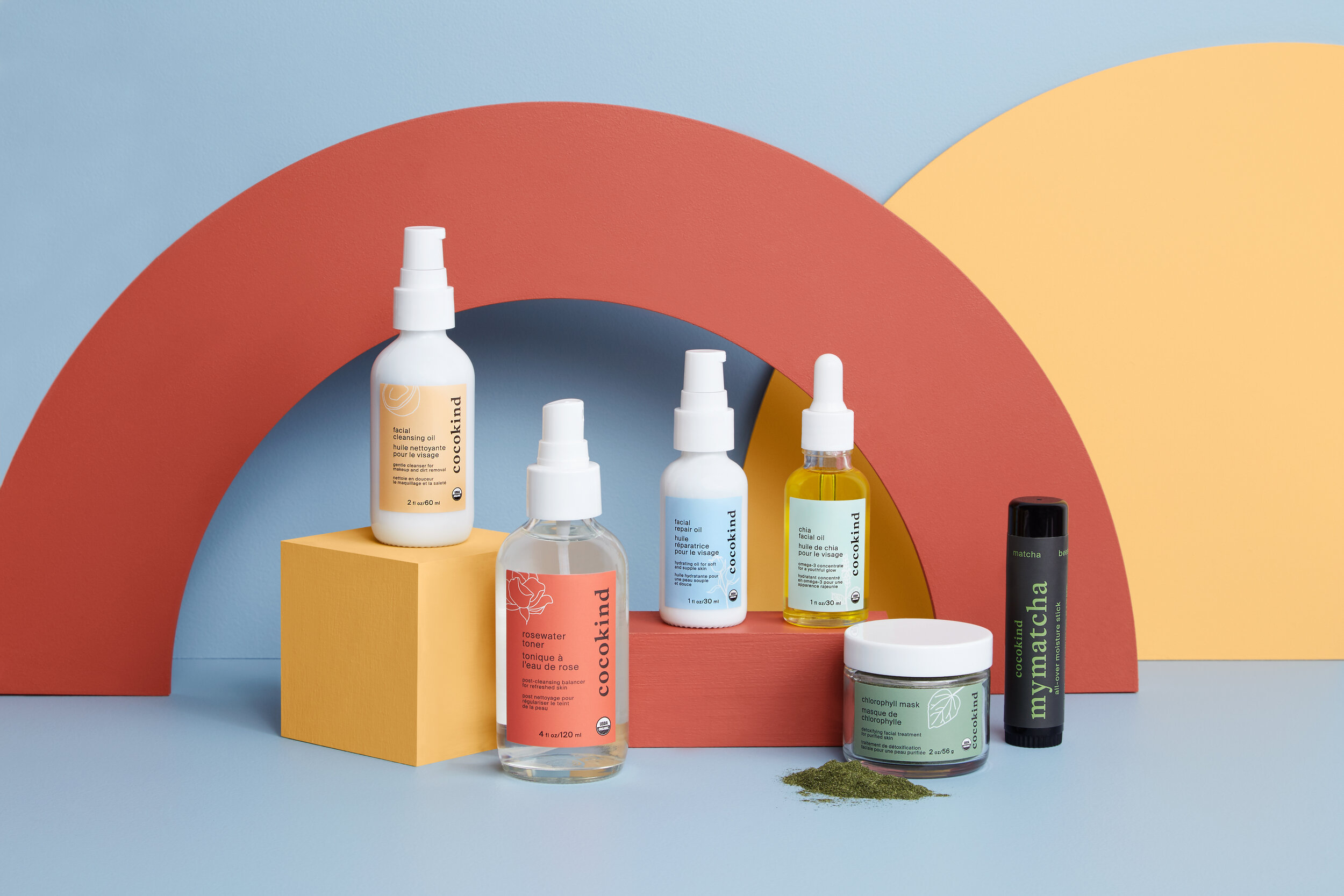
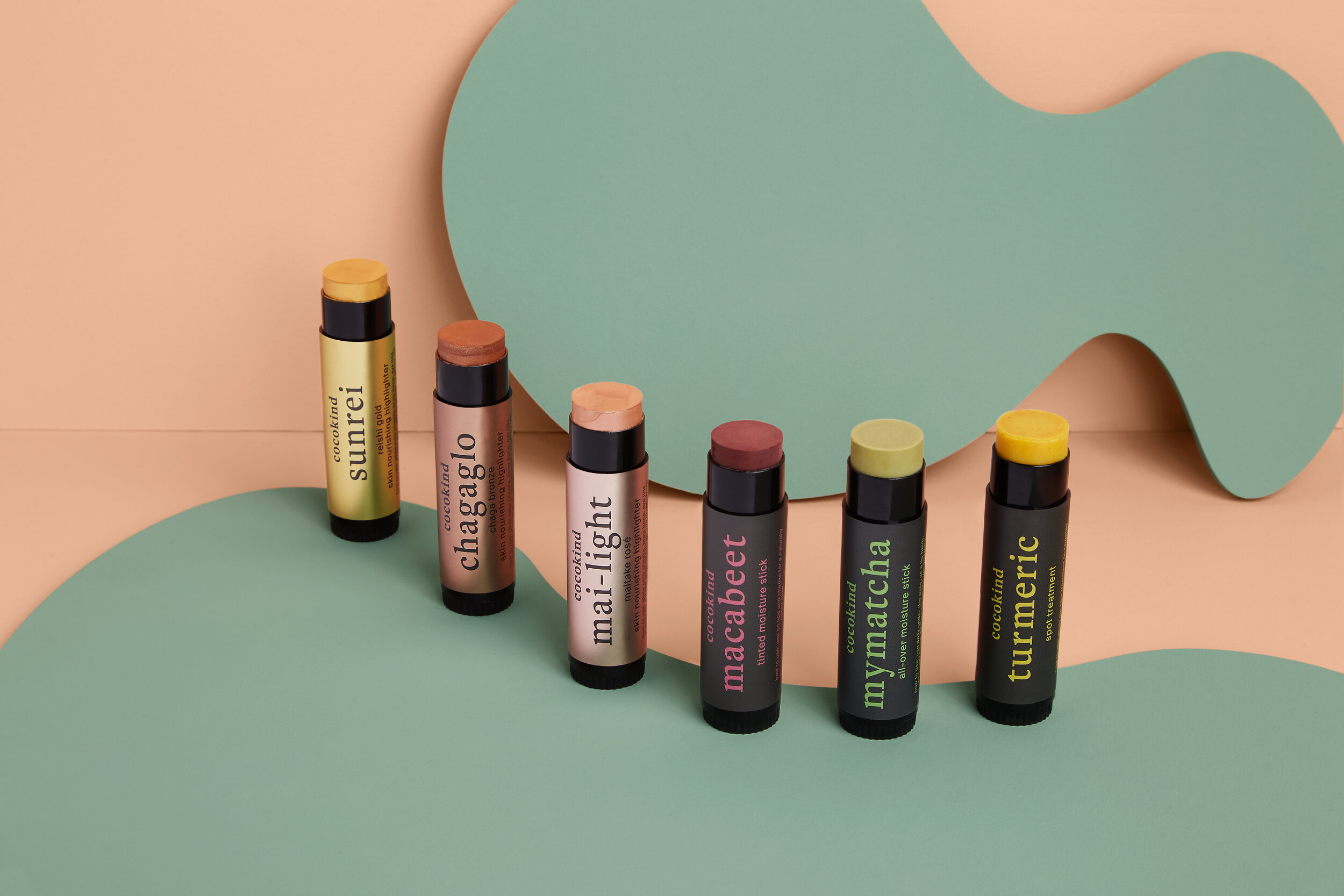
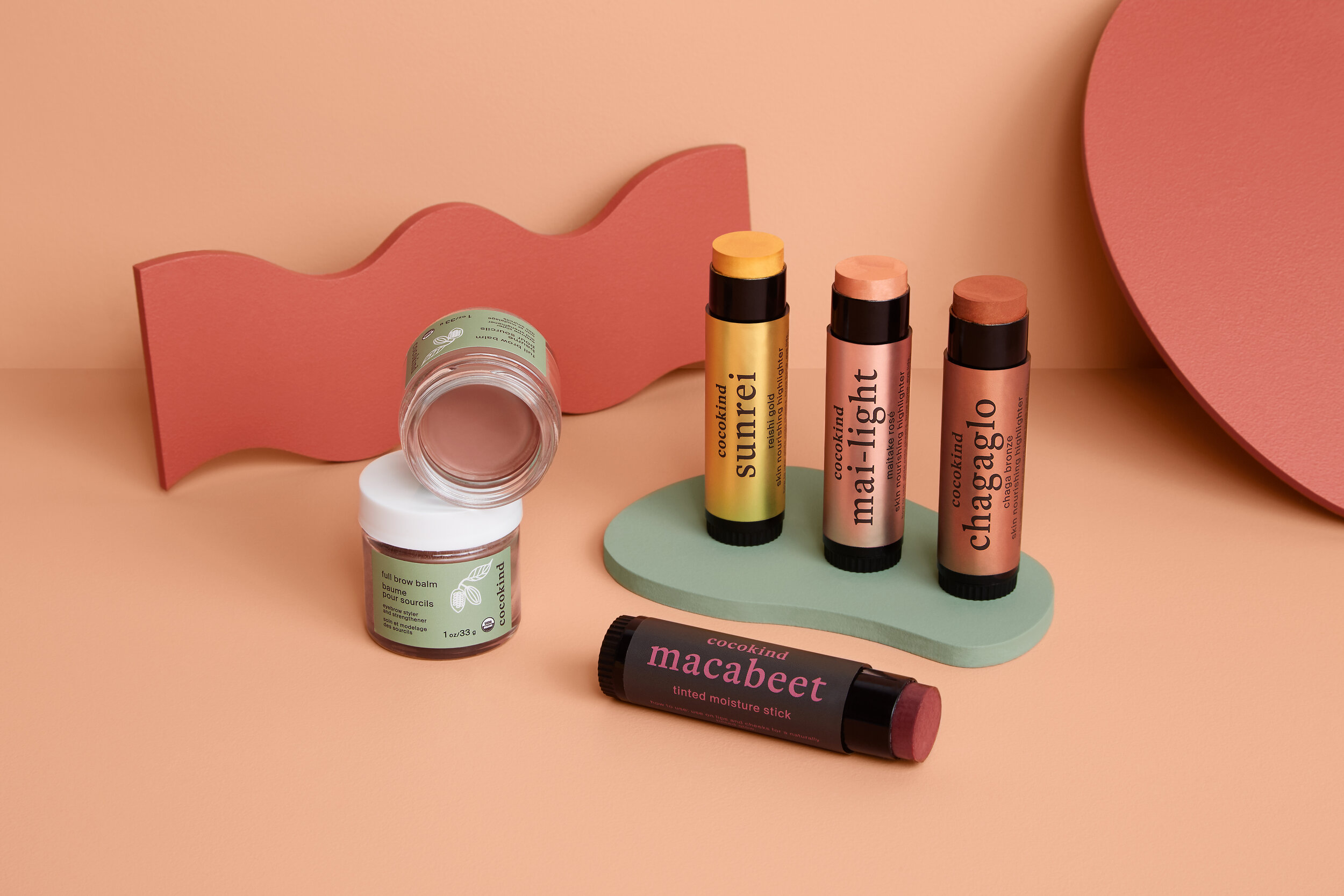
Disappointed by the lack of transparency in the beauty industry and sparked by her own struggles with hormonal acne, Tsai felt compelled to ditch her high-paying job in finance to launch an accessible clean-skincare company. Of course, it’s safe to say that Tsai’s risk has more than paid off—Cocokind is now stocked in every Whole Foods store in the U.S.—but all that success didn’t come without hard work and determination.
In this installment of Money Matters, Tsai shares the nitty-gritty financial details behind what it really takes to get a business off the ground.
CREATE & CULTIVATE: You walked away from a career on Wall Street before bootstrapping your business. What led you to leave a steady paycheck and switch lanes from finance to beauty?
PRISCILLA TSAI: I always knew I wanted to start my own company. My mom is an entrepreneur and watching her career progress definitely inspired me. Separately, my hormonal acne was my biggest insecurity, and I hated the harsh medications and pills that my dermatologist prescribed me. They kept my skin technically clear, but they also totally stripped it of moisture and gave me digestion issues. Ultimately, I decided to explore more holistic remedies for my skin and body, and when I’d created something that worked and that I was proud of, I knew I needed to share it. As a consumer, I was also disappointed at the lack of clean ingredients and transparency in the beauty industry, and I felt compelled to offer a better, more accessible option.
Can you explain what those founding years were like financially?
The first years were tough. I was only 25, considered successful in my career, and about to leave it all behind to start a company in an industry that I had very little experience in. I hustled in every way possible. I made full batches of products by myself. I created our first labels on Photoshop instead of hiring a designer.
I think many founders think that they need a ton of capital to start a company. Obviously, capital is important, but for me, time was almost as important as money. It took a lot of time for me to get Cocokind’s formulas to meet my standards, and it took a lot of energy and persistence to get our products into brick and mortar stores. I went door to door to Whole Foods’ in northern California to demo my products to the regional buyers, which led to building great relationships with them. Today, Whole Foods is one of our biggest retailers—we’re actually stocked in every single store in the United States.
“Knowledge is power. Knowing as much as you can about your financial situation is essential to feeling financially empowered and independent.”
Talk us through your bootstrapping process. How did you self-fund your business? Would you recommend that route to other entrepreneurs?
I really just tried to take things one step at a time, but I also worked quickly once I had a product concept and samples. I started going door to door to get my product out there and to start bringing in revenue as quickly as possible. Finding retail partners like Whole Foods helped me get Cocokind off the ground pretty immediately.
These days, it’s much more common to raise than to bootstrap and I think that either strategy can be effective. It’s really just about what the founder wants and which approach makes more sense for their work style and personality. I personally loved bootstrapping, but I definitely don’t think it’s for everyone.
How did you know the brand was ready to scale and introduce new products?
At Cocokind, we’ve always been big on social media because it makes it easy to build relationships with customers and hear their opinions and feedback. We’re able to use this feedback to decide what our community and what the market, in general, wants.
In the beginning especially, we funded new products by starting with really small batches—that way, we were never taking huge risks with inventory. On top of that, I thought it’d be better to sell out of a product and have a waitlist than it would be to overproduce a product and potentially run the risk of not selling enough of it.
I guess my main point here is that entrepreneurs should always recognize that their product will most likely change to improve, so over-investing in early iterations can be a bad idea.

“I hustled in every way possible. I made full batches of products by myself. I created our first labels on Photoshop instead of hiring a designer.
”
-Priscilla Tsai, CEO and founder of Cocokind
What was your first big expense as a business owner?
Either insurance or inventory!
How did you decide what to pay yourself?
I didn’t! I didn’t pay myself for the first two years of my business, but I was lucky enough to be able to live off of savings during that time.
How did you decide what to pay employees?
Research. I always want my employees to be paid fairly but as competitively as possible.
What are your top three largest expenses every month?
Payroll, inventory, and rent for our office and warehouse.
How much do you spend on office space?
We’ve always tried to spend 4% of our sales or less on rent. We did recently just relocate to a larger office space so we can continue to grow our staff.
How much are you saving? When did you start being able to save some of your income?
It varies. Saving has always been important to me, even more so when I had a regular job, before starting Cocokind. When I was in college, my parents helped me with my tuition and living expenses as long as I sent them an itemized list of all of my expenses every month. That experience helped me learn how to budget and it also taught me that when you know your numbers, you save more.
“Cash is everything. No matter how much profit your company is bringing in, you need to adhere to a tight cash flow model.”
What apps or software are you using for finances?
I actually just use Excel to track all of my expenses. I don’t have a financial advisor at this time.
Do you wish you’d done anything differently in your financial journey as a business owner?
Nope! I’m really proud of Cocokind and how far we’ve come, and I think we’ve always been responsible with capital.
Why should we all be talking about money?
I think everyone should talk about money. Knowledge is power. Knowing as much as you can about your financial situation is essential to feeling financially empowered and independent.
Do you have a financial mentor?
I don’t. But my parents did and do a great job of teaching me strong values when it comes to my finances and how I think about them, and I’m grateful for that.
What is your best piece of financial advice for new entrepreneurs?
Again, knowledge is power! Knowing your numbers and staying on top of them is crucially important to starting and running a sustainable business.
What is the biggest money lesson you've learned since starting Cocokind?
Cash is everything. No matter how much profit your company is bringing in, you need to adhere to a tight cash flow model. It’s something I’m still learning and always trying to improve upon.


PAIGE Celebrates the Women Who Are Walking It Forward With Intimate L.A. Dinner—See the Photos!
“I want every woman to grow up seeing themselves in places they can dream to be.”

No matter how many times you hear it, “step into your power” can be an intimidating phrase to initiate on your own. Summoning the courage to boldly leap into the unknown isn’t a simple task, even for the most confident person. So, what does it take to make that first step?
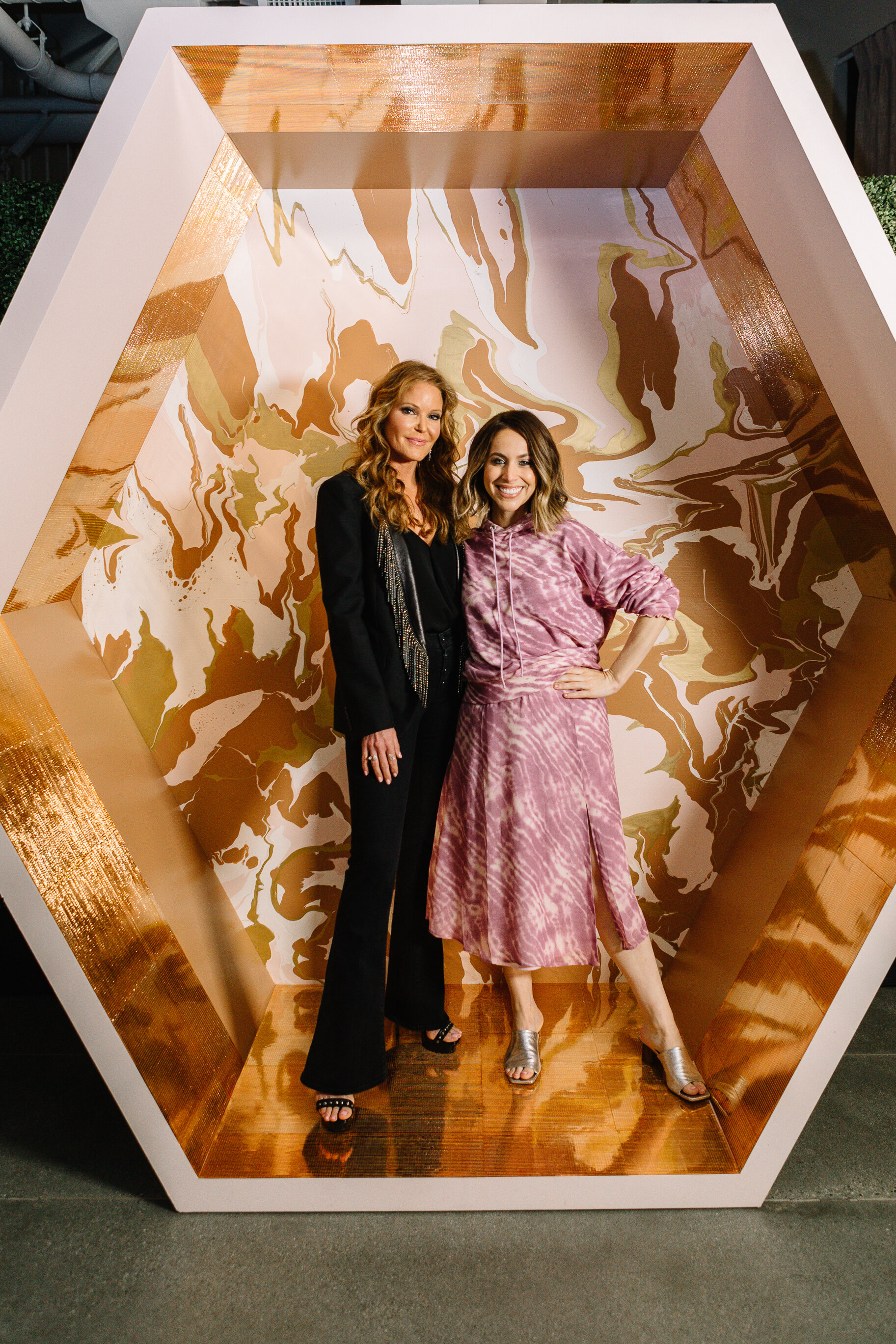
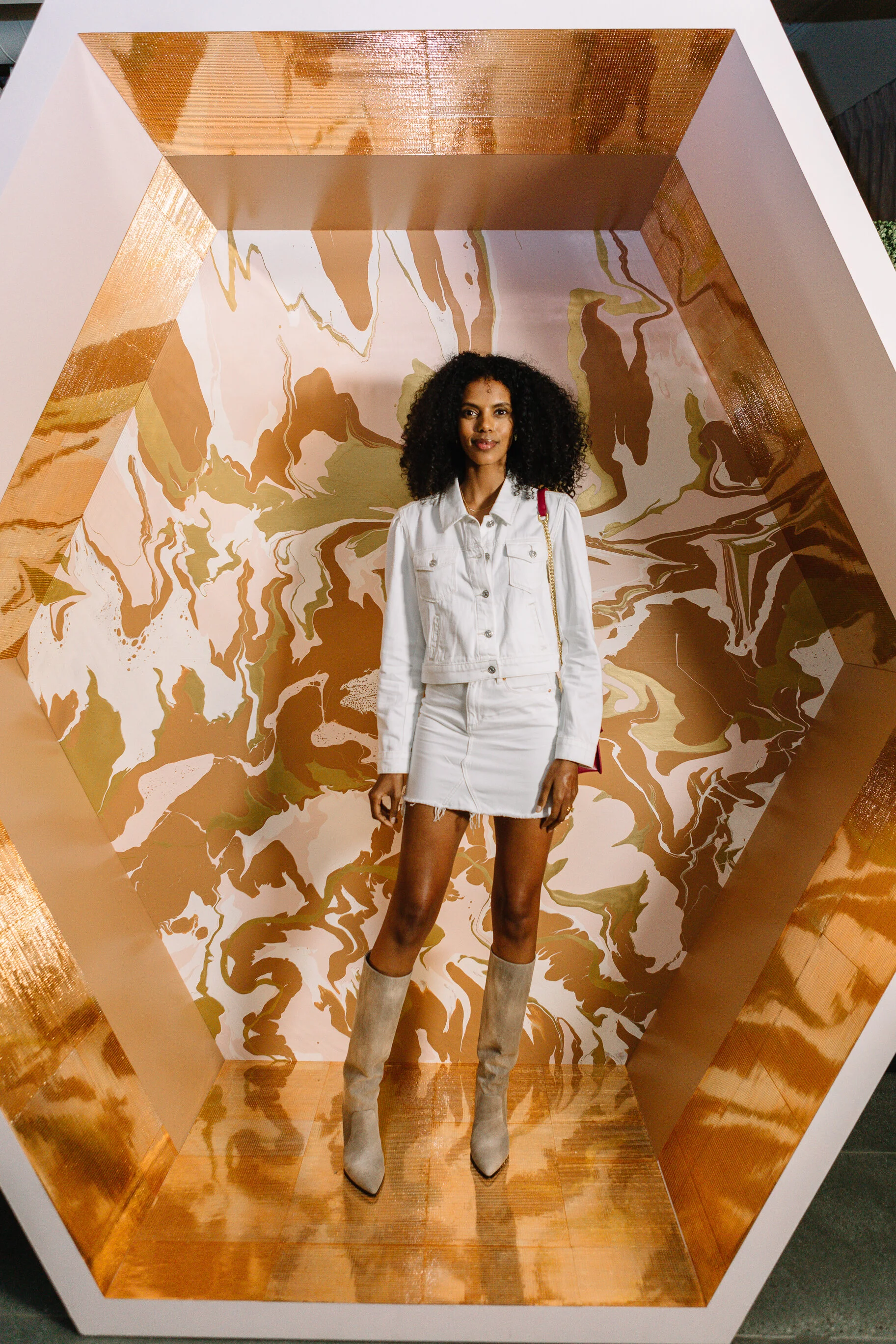
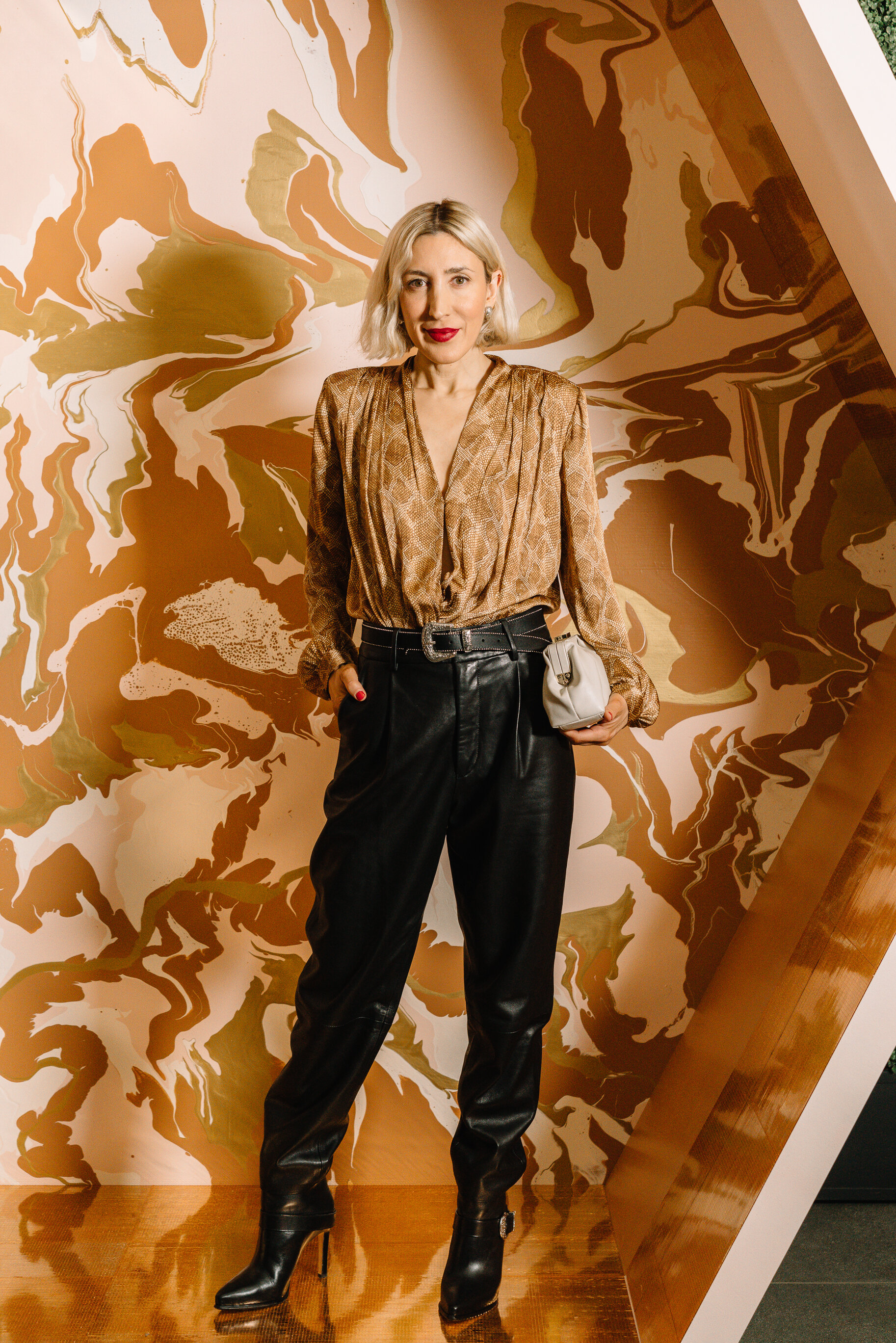
Visibility is so important. There is so much power in seeing someone you identify with, pave the way before you. That’s why we joined forces with PAIGE to launch the Walk It Forward initiative which shines a light on the modern disruptors—Chrissy Rutherford, Poppy Jamie, Dani Austin, Angela Fink, and Gracy Mahary—who are paying it forward with an outstretched hand behind them, beckoning us to walk this way, too.
To celebrate our fearless five, we held an intimate dinner in Los Angeles for International Women’s Day where PAIGE co-founder and CEO, Paige Adams-Geller paid tribute to those who step out of their comfort zone to challenge the status quo and lift each other up along the way. After all, every journey starts with a single step.
Click through the photo gallery below to see all the photos from the special night.





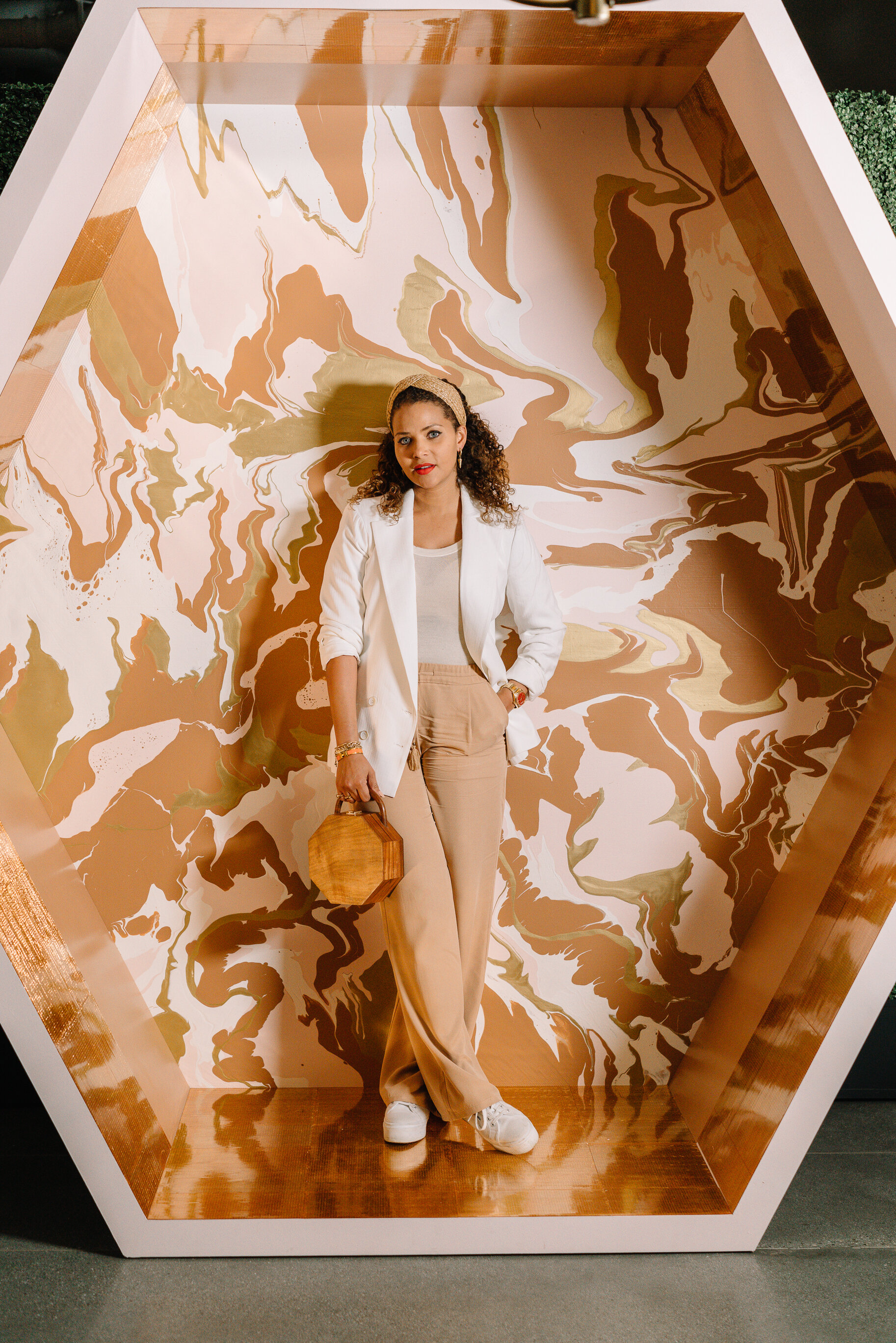



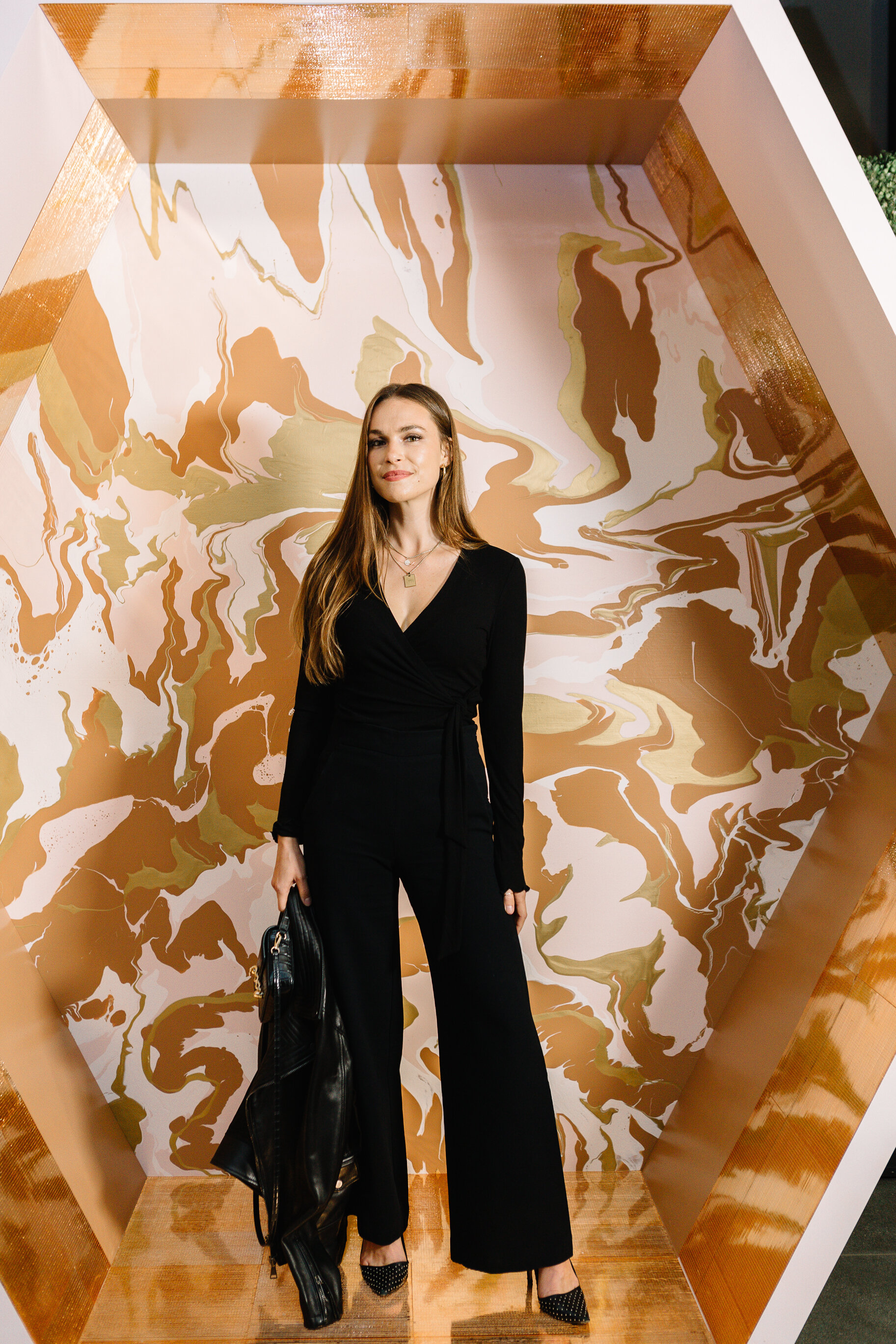
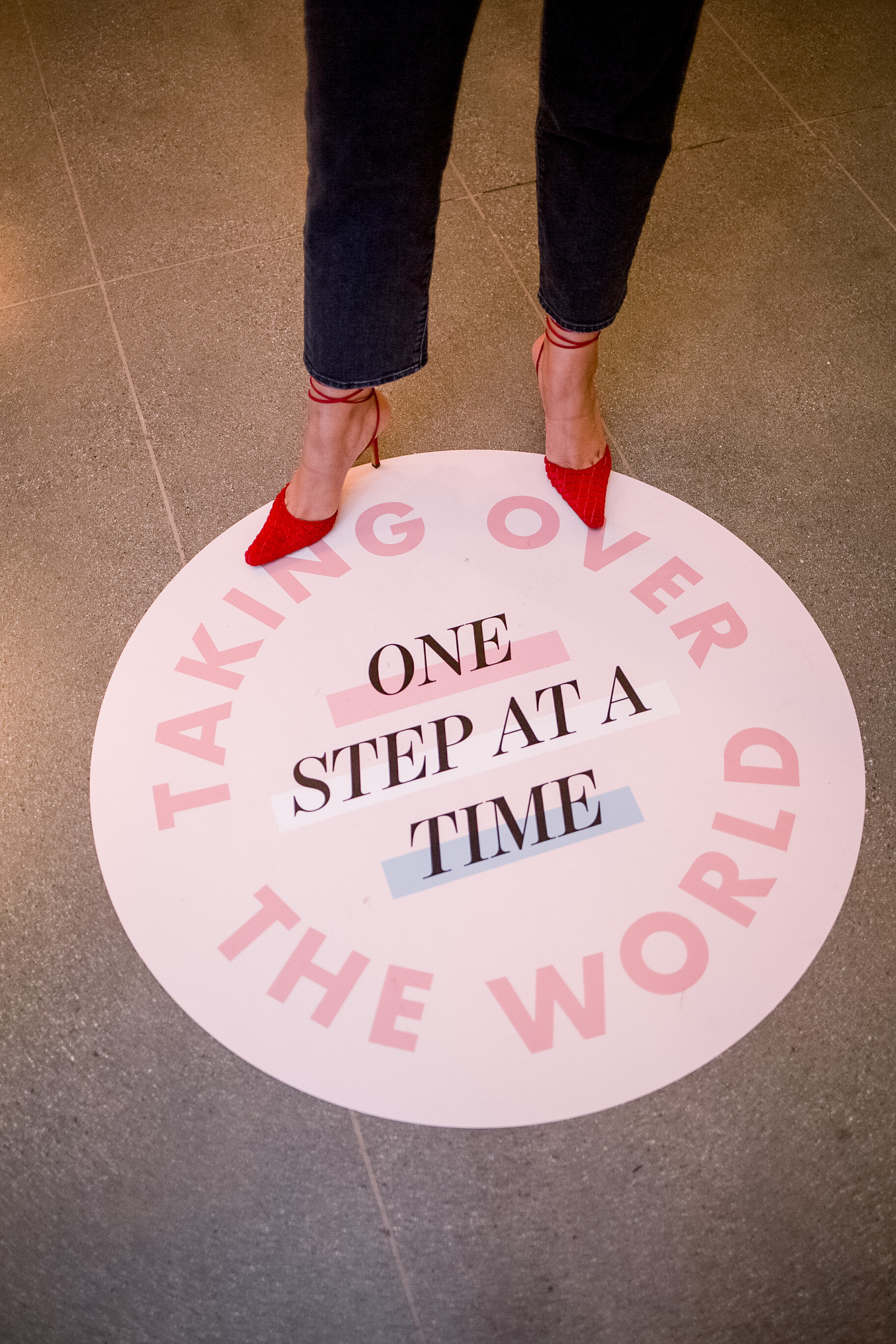


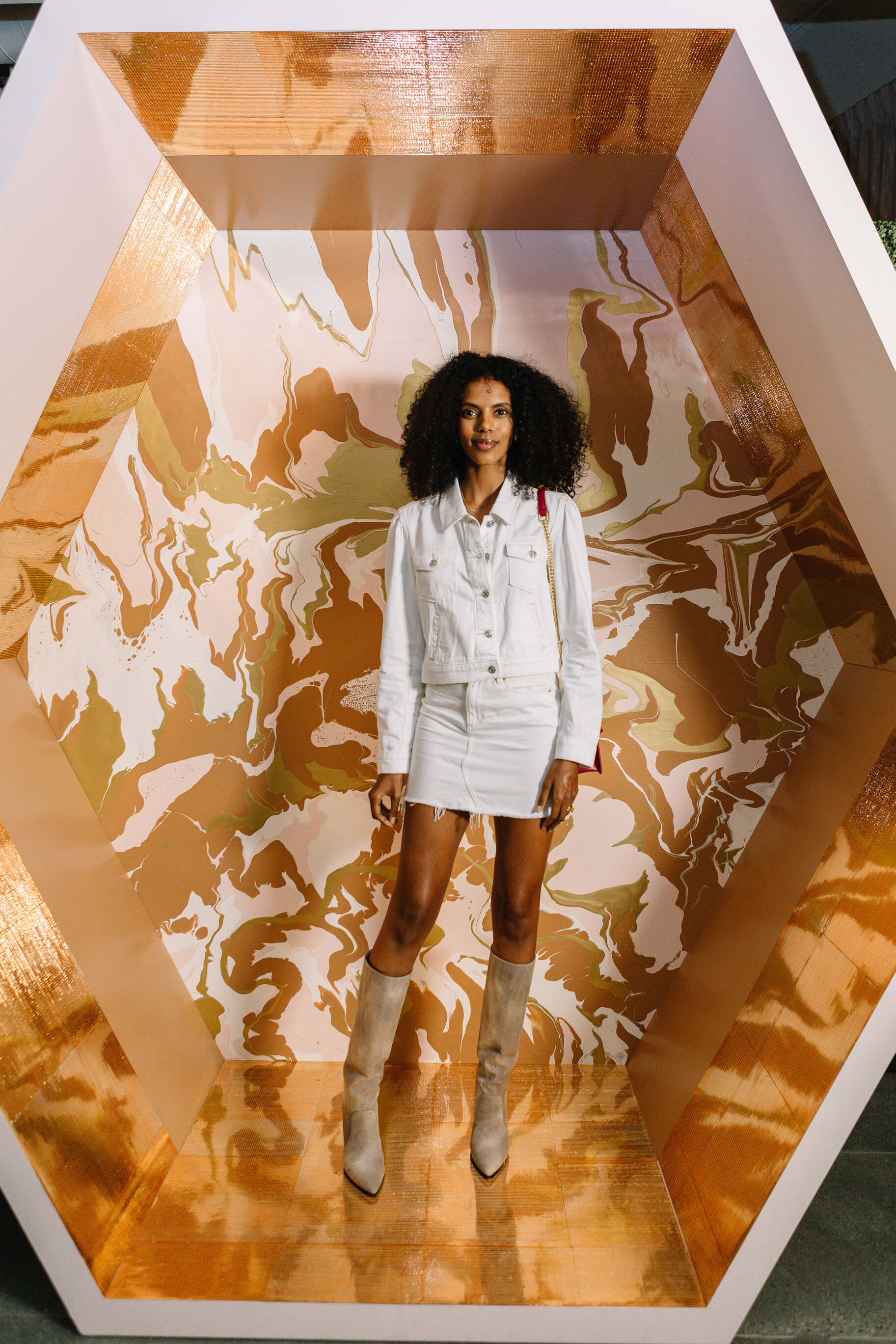

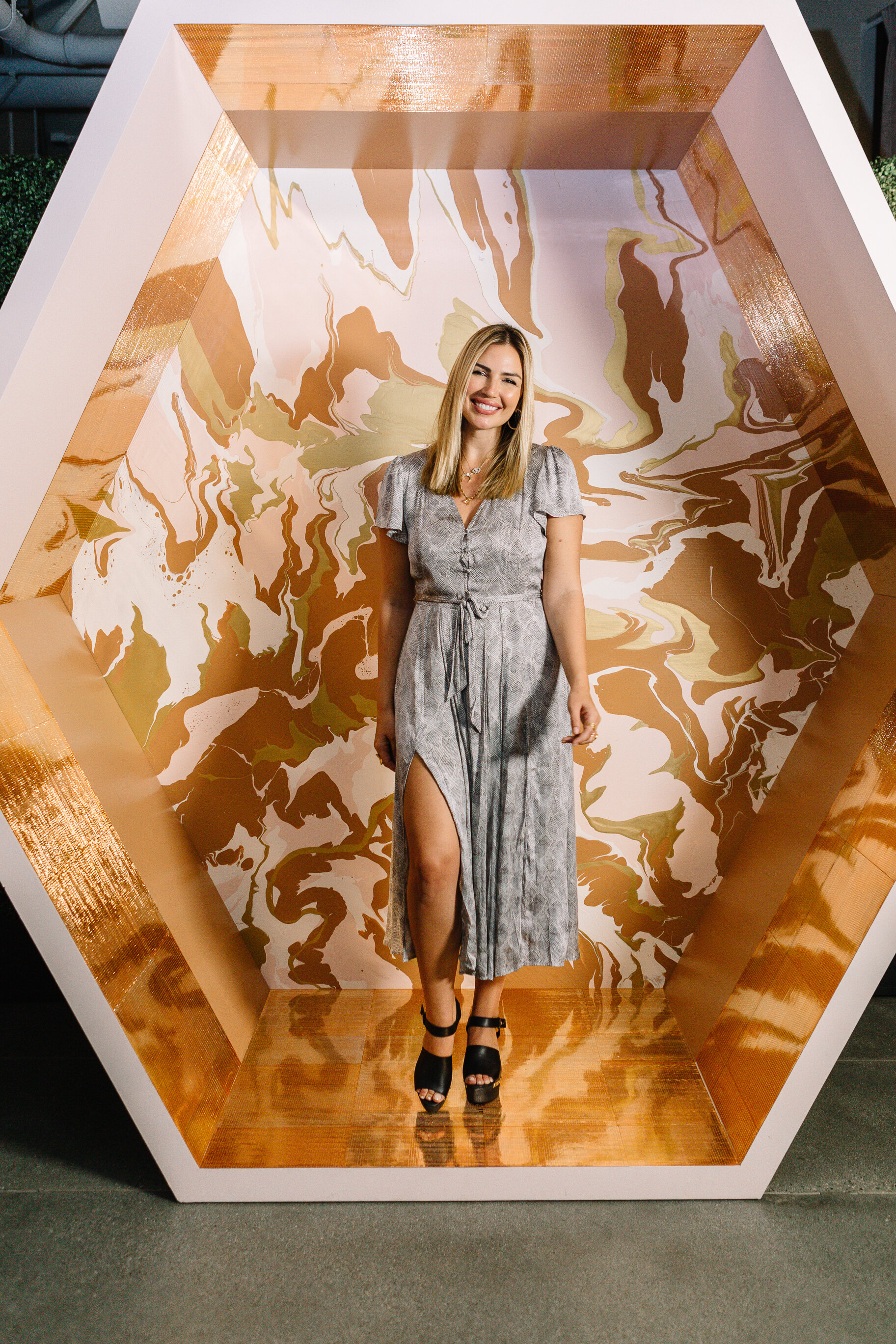
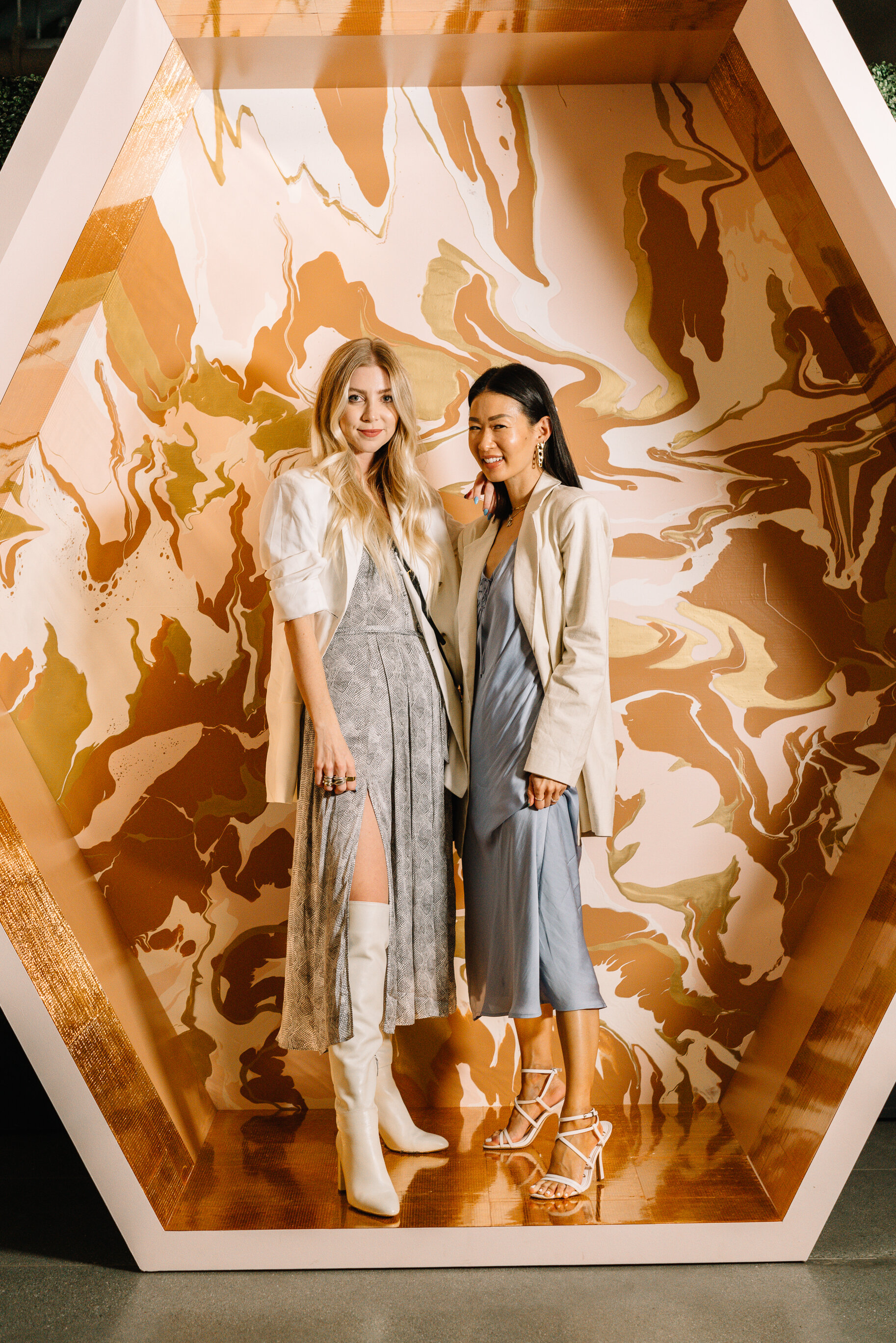
Read all of the Walk It Forward interviews HERE then comment below with the person who has paved it forward for you and given you the courage to step into your power, too.


C&C Classifieds: Goop, The RealReal, MagicLinks, & More!
Hey, L.A. and remote job seekers! Apply to these hot new jobs.

Hey, L.A. and remote job seekers! Apply now to these hot new jobs.
Amy Porterfield Inc - Carlsbad, CA or Remote
MagicLinks - Venice, CA
KT Merry - Remote
Telegraph Road - Los Angeles, CA
FRAME - Los Angeles, CA
Goop - Santa Monica, CA
The Cheesecake Factory - Calabasas, CA
Red Canary - Remote
The RealReal - Los Angeles, CA
City of Burbank - Burbank, CA
Create & Cultivate - Los Angeles, CA

Can You Afford to Take an Entry-Level Salary?
But seriously, how low should you go?

Photo: Polina Zimmerman for Pexels
When it’s your first job offer, salary negotiation might not be the first thing on your mind—and you’re not alone. In fact, just 38% of recent college graduates negotiate with their employer upon receiving a job offer, despite the fact that three-quarters of employers saying they typically have room to increase their first salary offer by 5 to 10%, according to a study by the personal finance site NerdWallet.
Of course, when it comes to negotiating salary, there is no one right solution for everyone, and in this case, the answer depends on which of two major career groups you fall into—people starting out at the bottom and working their way up in their career and people starting at a higher level or specialized position and working up from there. Regardless of where you start, determining your entry-level salary requirements is a must!
Scroll on to find out if you can afford to take an entry-level salary and what that number should mean to you.
People Starting at the Bottom and Working Their Way Up in Their Careers
In many industries, you’ll find yourself starting at the very bottom working your way up the ladder of authority. Such industries include marketing, design, and some forms of IT (among many others). In these industries, people often start as an intern, assistant, or in admin which are known for lower pay grades.
If you are starting out with a low authority or unspecialized job, your first salary isn’t very important because you will most likely move on (and up) from there, however, you do need to see how low you can go to still be able to live within your means. Salary negotiation here means figuring out what you need to survive while you find your way.
Determining How Low of a Salary You Can Afford to Take at Your First Job
Map Out How Much Money You Spend: If you’re new at creating a budget, there are a lot of great apps such as Mint that let you input your information so you can see your total spending. This app will also give you tips and notifications to make sure you’re on top of your finances.
Determine How Much You Want to Save: Once you’ve determined how much you spend, you can then determine how much you want to save. Mint can help you do that, or you can always set up an appointment with a financial advisor at your bank. Consultations and advice are usually free of charge, so this is a great option if you want to speak with someone face to face when discussing your finances.
Determine What the Average Salary Is for Your Job and Region: It is important to be aware of the average salary for your position based on location in order to ensure you are not being underpaid or taken advantage of. A great tool for this is the Bureau of Labor Statistics where you can see average wage data based on job, state, and metropolitan area. While your first salary may not be very important in determining your salary throughout your career, it is important to make sure you are being fairly compensated for your time and effort.
Consider All of the Numbers: Once you’ve done the three steps above, you can now consider all of the numbers to determine the realistic lowest salary you can accept. While experience is important, the bottom line is that you need to be able to pay your bills. If you need to cut back here and there, (i.e. take public transportation instead of Uber, or start packing your lunches) so be it, but you must be able to afford necessities such as food, housing, and medical expenses with a little extra to spare in case of emergency.
The most important aspect of your first job is to gain necessary industry experience (and "get your foot in the door), but make sure you accept a salary that is realistic for you—one that you can survive on. Companies are often open to negotiation, so don’t feel pressure to take the first number offered to you. No one started out as a marketing exec or magazine editor without doing a lot of grunt work prior to it, so no one will expect you to be the highest-paid person in the company when you’re first starting out.
“No one started out as a marketing exec or magazine editor without doing a lot of grunt work.”
People Starting Out With Specialized Skills and/or Training
On the opposite end of the spectrum, there are a lot of people who go into a specialized career, or one that requires extra schooling, (i.e. the medical field, engineering, coding/programming, etc.). People with postgraduate degrees often start out with a relatively high level of authority, meaning that you couldn’t just jump into the position and learn as you go. You need to know what you’re doing and have specialized training or education in order to be in that role.
For these kinds of jobs, your first salary does matter. The reason behind this is that you are coming in at a higher level than other people, therefore you have less room to grow. Think of it this way: If you start out as an administrative assistant but work your way up to an executive or CEO, you’ve basically gone from zero to one hundred. However, if you start off as a doctor, engineer, or manager, you really can only become more experienced in your role and be given more authority, so instead of going from zero to one hundred in your career, you’re starting off at sixty-five or seventy and moving up to one hundred.
Because there is less growth in specialized careers, your first salary sets the tone for all the jobs to come. Companies often ask what your previous salary is so that they can give you a proportional salary increase, and sometimes save themselves a little bit of money. In a specialized career, your first salary does matter, but if you do find yourself underpaid and overachieving, there is a way to remedy the situation. It all comes down to knowledge and confidence.
How to Negotiate Salary If You’ve Been Underpaid
This actually goes for both specialized and unspecialized positions: let’s say you find yourself severely underpaid based on statistics and your accomplishments. When you go to interview for other positions, make sure you are armed with facts and evidence to support your desired pay increase.
A great way to explain your situation to an interviewer is as follows:
“I am aware that I am being underpaid at my current job, however, I have learned x, y, and z from this experience/job, and based on information posted by The Bureau of Labor Statistics, the average pay for this position in this area is x. Due to my accomplishments of a and b, I’m aiming for a salary of $x.”
If you give a statement like this, you will come off as knowledgeable, confident, and motivated. Having evidence of your achievements and statistics will also make you appear researched and show interviewers that you have put effort into getting fairly compensated.
The Salary Requirements Checklist
If you’re sitting there wondering, “How important is my first salary?,” think about the many different factors that go into it. Make a checklist and answer the following questions:
Is your position specialized/did you need special training to qualify for the position?
If you’re not in a specialized position, is there room for growth in your career?
How much money do you need to make to pay off your current expenses?
How much money do you want to be able to save each month/year?
How much money does the average person in your job/region make? (consult the Bureau of Labor Statistics)
Are you willing to take a lower salary (that’s still realistic) to take a job that you love or one that will provide you a lot of experience?
And, if so, are there areas that you can cut back on your spending in order to accommodate for this?
If you’re already past the point of a low first salary, do your research, itemize your accomplishments, and show people why you deserve the higher pay!
The original version of this article appeared on Career Contessa, written by Michele Lando.
This post was originally published on September 18, 2016, and has since been updated.
MORE FROM OUR BLOG

C&C Classifieds: Hulu, Daily Harvest, PBS, & More!
Attn: LA, NY, & Washington D.C. job seekers!

Attn: LA, NY, & Washington D.C. job seekers! Peep these new intern, manager, and senior level positions
Style House - Brooklyn, NY
Crown + Conquer - Los Angeles, CA
United States Holocaust Memorial Museum - Washington, D.C.
Deputy Director, Museum Experience & Digital Media
PBS - Arlington, VA
Communications & Social Media Intern
U.S. News & World Report - Washington, D.C.
The Hustle - Washington, D.C.
Hulu - Los Angeles, CA
space150 - Los Angeles, CA
KIND - New York, NY
Daily Harvest - New York, NY
Soft Is Strong: How Taking a Softer Approach Can Have a Powerful Impact on Your Career
NIVEA is leading the charge in challenging the “soft” stereotype.
This post is in paid partnership with Nivea.

Being soft gets a bad rap and is all too often associated with being weak, especially in the workplace. In fact, according to a recent survey conducted by NIVEA, 59% of people view "being soft" as a negative and 49% of people define the word "soft" as being "weak." That’s why NIVEA—a brand that’s been dedicated to giving us all soft, beautifully nourished skin for over 100 years—is on a mission to challenge this negative perception of 'being soft' with their #RethinkSoft campaign. That’s right, in partnership with Kindness.org, NIVEA is destigmatizing softness.
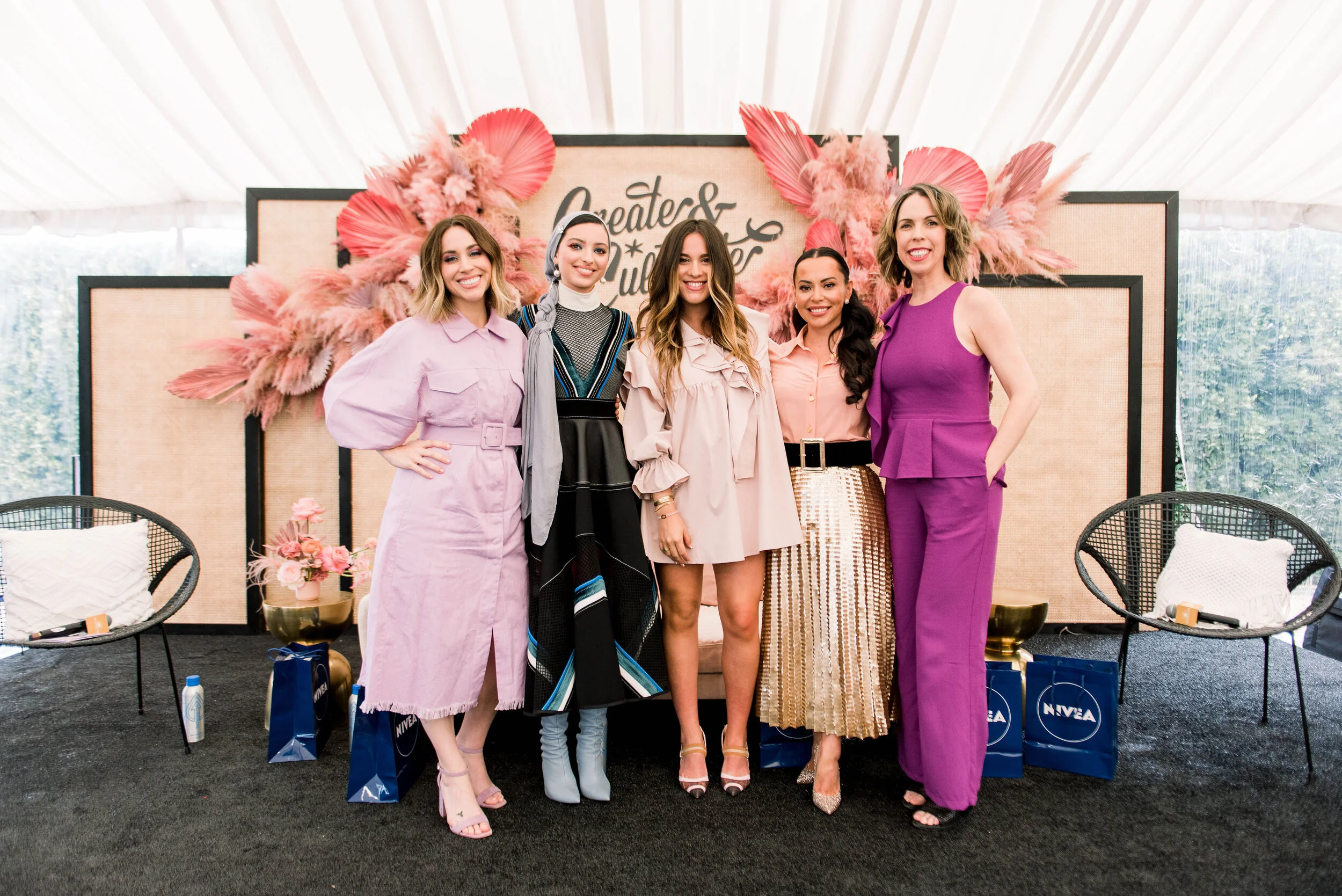
At our annual LA 2020 conference, we sat down with successful women who, like NIVEA, are challenging the negative perception of soft and celebrating its power. During the Soft Is Strong panel powered by NIVEA, our founder, Jaclyn Johnson, chatted with Noor Tagouri, renowned journalist, activist, and motivational speaker, Jaclyn Lindsey, co-founder and CEO of Kindness.org, Adrienne Bosh, activist, CEO, entrepreneur, and philanthropist, and Gina Ybarra, creator of Hunt for Styles, about how softness has had positive, long-lasting impacts on their careers.
Spoiler alert: The conversation was just as enlightening as it was entertaining, so be sure to scroll on for all the most memorable moments from the conversation. Trust us, you’re going to want to commit these mic-drop quotes to memory.

Soft Is Strong: How Taking a Softer Approach Can Be Positive and Have a Powerful Impact on Your Career—Powered by Nivea
Panelists:
Noor Tagouri | Rethink Soft Storyteller, Journalist, Touring Speaker and Entrepreneur
Jaclyn Lindsey | Co-Founder & CEO, Kindness.org
Adrienne Bosh | CEO, Activist, Philanthropist, & Entrepreneur
Gina Ybarra | Content Creator, Hunt for Styles
Moderator:
Jaclyn Johnson | Founder & CEO, Create & Cultivate
On leading with kindness…
“When you are leading in a kind capacity, you are more respected. There is an effect on employee engagement and wellbeing when you lead with kindness.” - Jaclyn Lindsey
On positivity on social media…
“I like to share positivity and good energy because I believe it comes back to us.” - Adrienne Bosh
On navigating negativity on social media…
“I see the negative comments as a positive thing.” - Gina Ybarra
“It’s about understanding that there is another person on the other end of the screen.” - Noor Tagouri
“We have to learn how to lean into compassion.” - Noor Tagouri

On not letting negativity in…
“What people say about you is none of your business.” - Noor Tagouri
“Our opinions do not define other people.” - Noor Tagouri
On being vulnerable on social media…
“I like to share vulnerable, tough moments because I think, to inspire people, they need to be able to see themselves in your pain to see themselves in your success.” - Adrienne Bosh
On taking a soft approach in the boardroom…
“I’ve had to let many people go over my career. I was encouraged to show no compassion. It was awful for me. I told my HR department that I won’t do this anymore, and I need to do this with softness and compassion.” - Jaclyn Lindsey
On strength…
“Use what makes you vulnerable as your strength” - Noor Tagouri

On a strength that’s seen as a weakness…
“I am extremely patient and my blood runs slow. People think it's a bad thing, but I just try to think before I talk so I don’t hurt anyone.” - Gina Ybarra
On the power of storytelling…
“Different people see themselves in my story, and I am able to soften their hearts by being myself” - Noor Tagouri
On adding softness to the world...
“We have to frame softness into an image of strength.” - Noor Tagouri
Learn more about the Nivea Rethink Soft campaign and shop their popular product categories across Nivea Body Care, Creme, Lip, and Body Wash products.
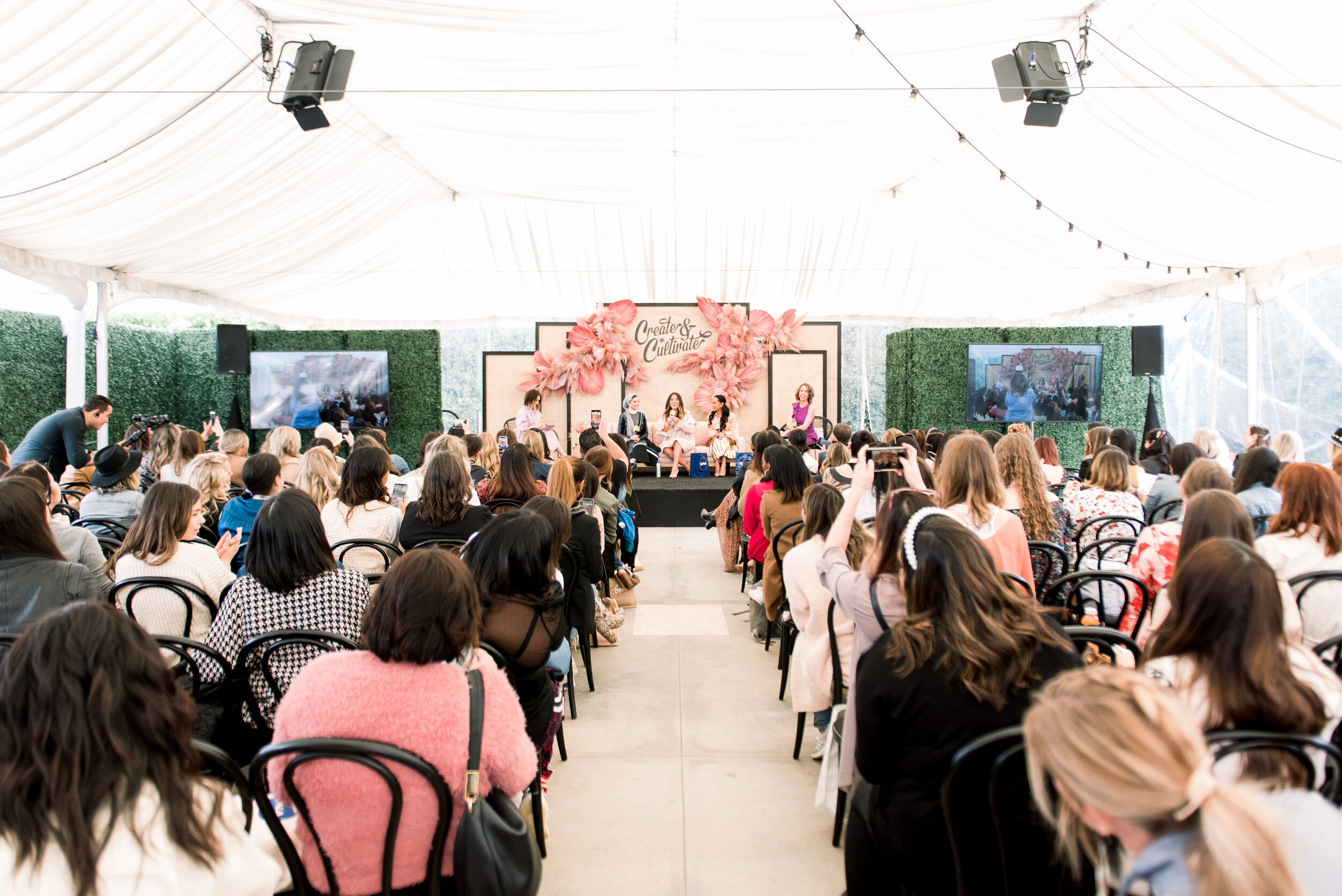
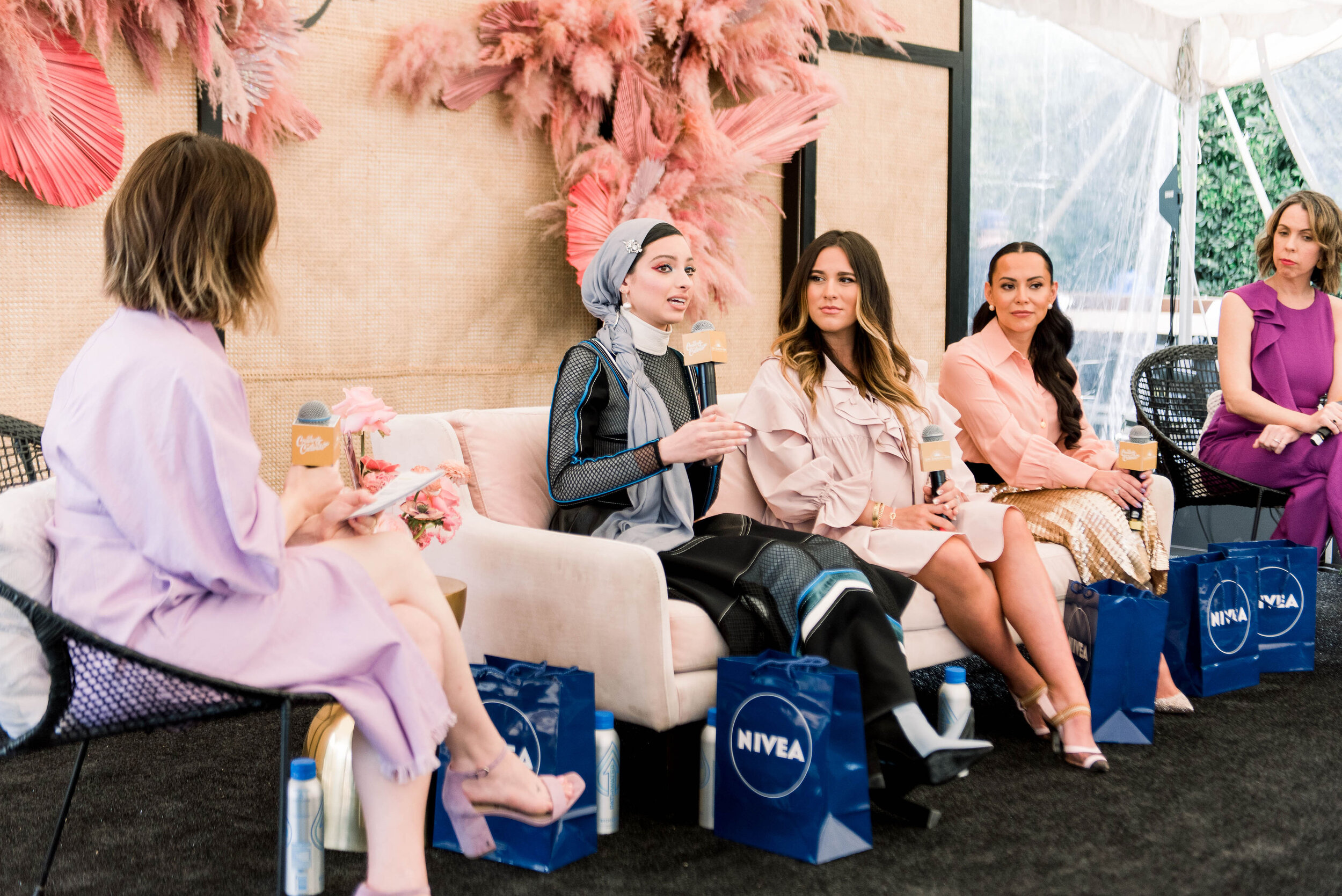
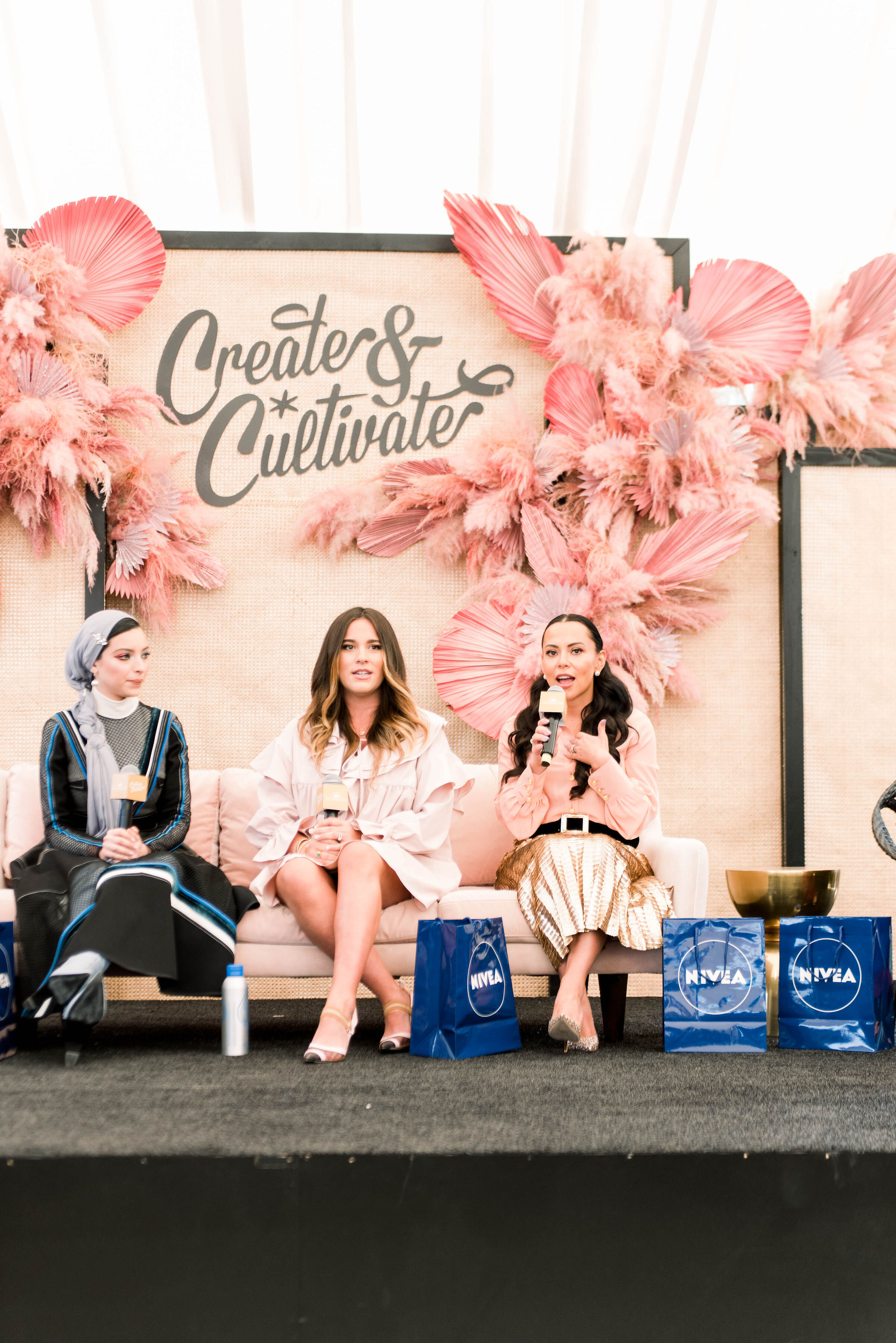
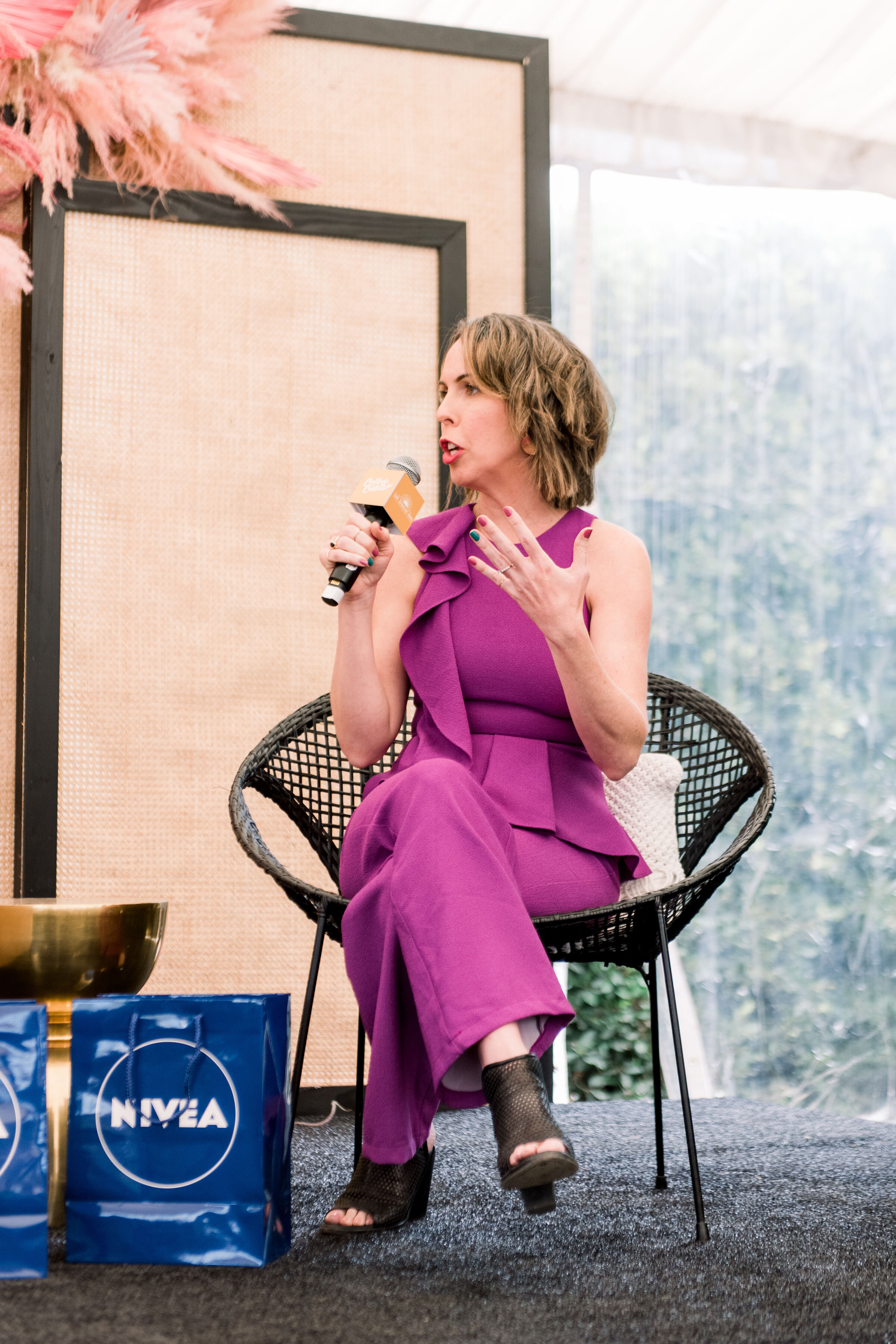
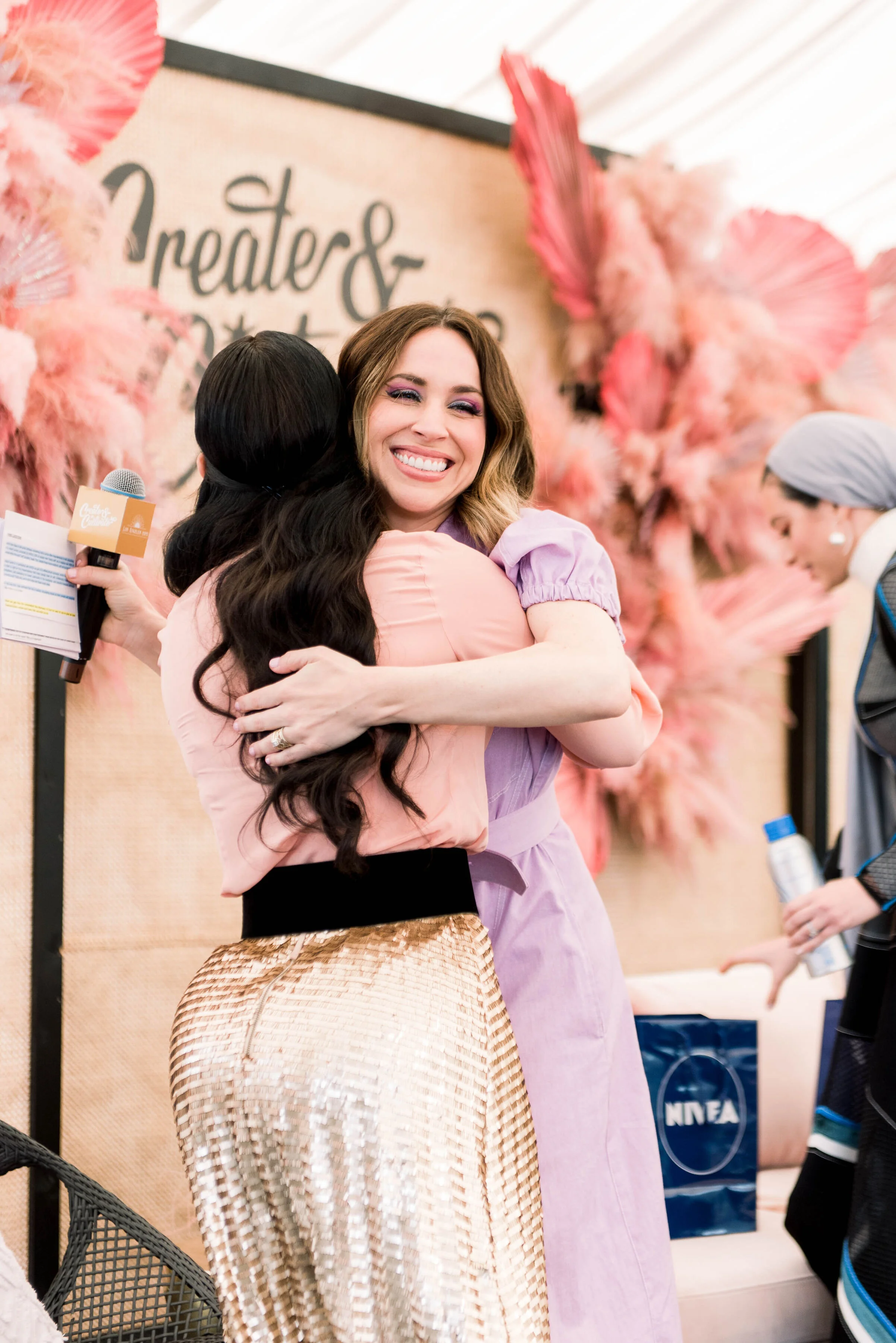
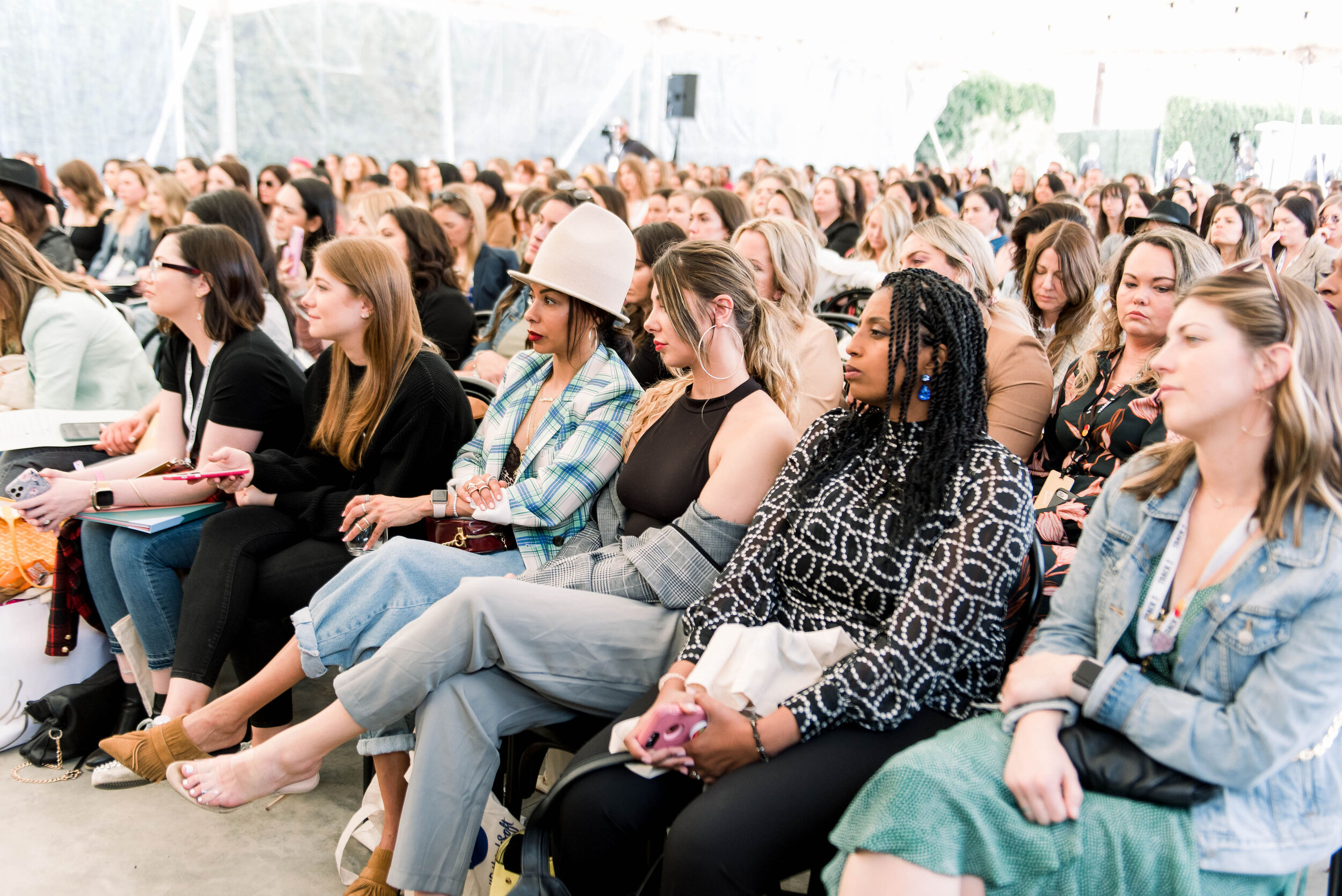
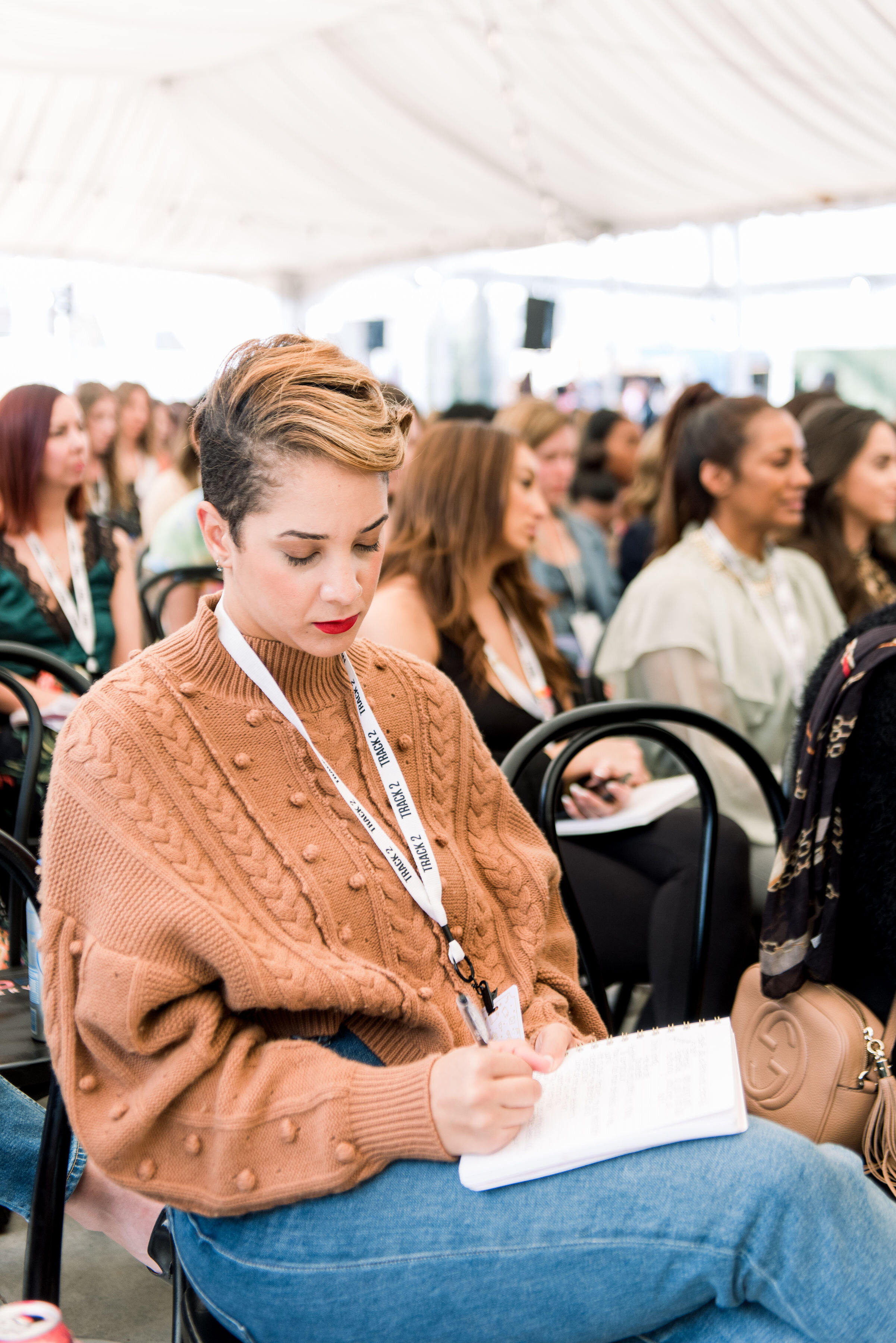
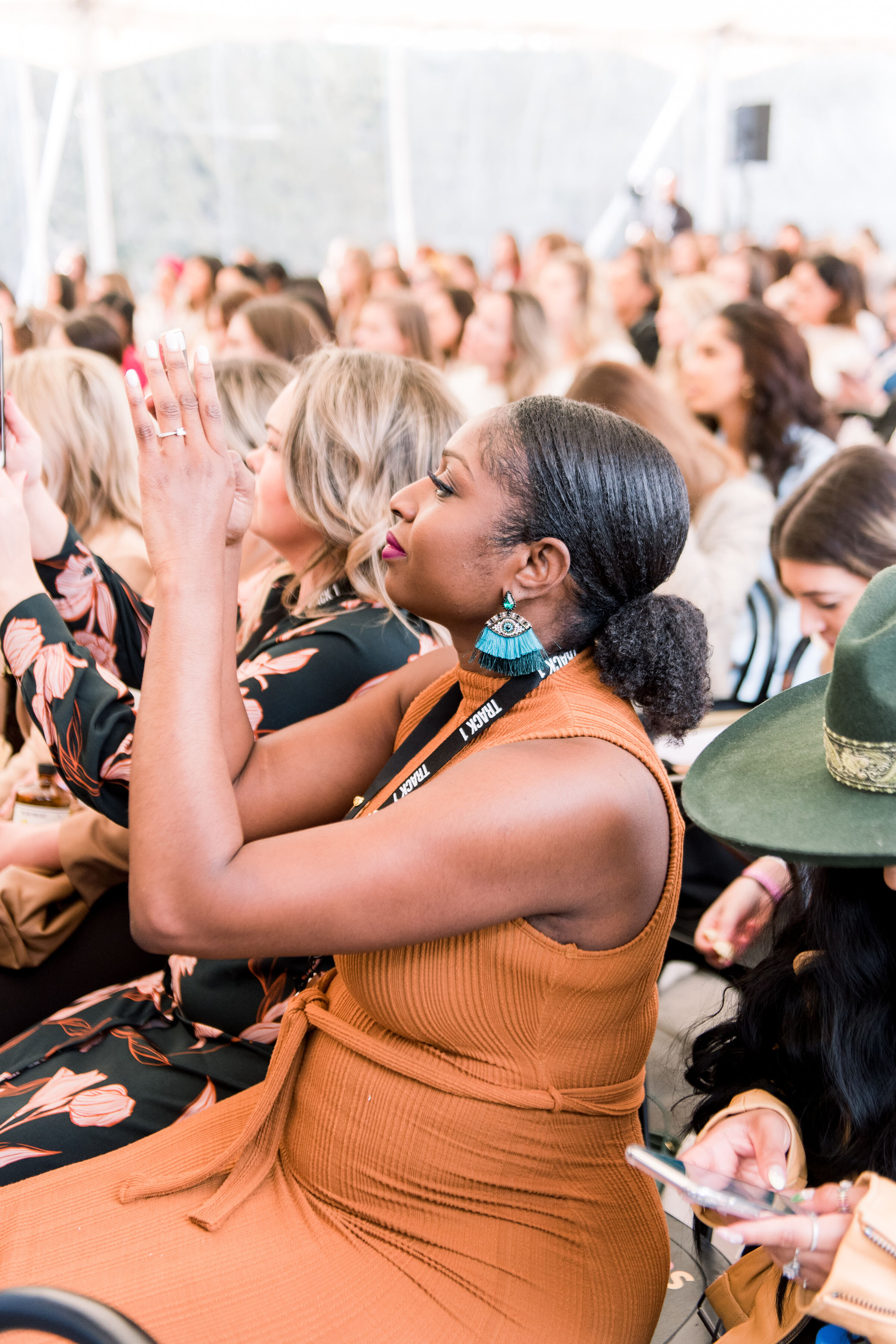
Photography: Smith House Photo

The C&C Team Swears By These Wellness Products for Staying Healthy and Focused at the Office
Calling all cubicle-bound.
This post is in paid partnership with OLLY.

Photo: Smith House Photo
Most of us work too hard—it’s just a fact. According to a recent study, the average full-time employee works 47 hours a week (yes, that’s 7 hours more than the standard 40). On top of that, four out of five of us eat our lunch at our desks without stepping away from our screens. And, to top it all off, we only put 54% of our paid vacation days to good use. Look, we get it—it can feel near impossible to prioritize self-care when you’re trying to get to inbox zero, reply to every Slack message, and hit those tight deadlines.
So, in the interest of multi-tasking and seeking ways we can take a moment for ourselves without leaving our desks (hey, baby steps, right?), we partnered with our friends at OLLY and asked our Create & Cultivate team to share the wellness products they swear by for staying healthy and focused at the office—and our colleagues did not disappoint. Spanning stress-reducing gummies to glow-inducing collagen peptides, these are the products that our co-workers here at C&C HQ keep stocked in their desk drawers at all times.
Keep scrolling to find out how you too can squeeze in a moment of self-care during your 9-5.
Maeve Casey, Account Manager
My Office Self-Care Staple Is: OLLY Daily Energy
It’s My 9-to-5 Go-to Because: I’m not a coffee drinker and sometimes I need a little pick-me-up to give me that extra boost of energy. I take this every morning for sustained energy throughout the day. Olly Daily Energy gummies do just that while tasting amazing.

OLLY Daily Energy
$13.99
Alyssa Sage, Marketing Manager
My Office Self-Care Staple Is: OLLY Goodbye Stress
It’s My 9-to-5 Go-to Because: Who isn’t stressed out these days? These gummies are my go-to during an especially busy work week, or when I’m traveling for an event. They’re extremely calming and help me crush through my heavy workload days.

OLLY Goodbye Stress
$13.99
Carly Johnson, Sr. Director, Brand Marketing
My Office Self-Care Staple Is: OLLY Collagen Gummy Rings
It’s My 9-to-5 Go-to Because: I am always open to testing different skincare regimens that could potentially help prevent aging and these Collagen Gummy Rings are my newest obsession. They do their part to eliminate fine lines and wrinkles but if I am being completely honest, they are absolutely delicious, too.

OLLY Collagen Gummy Rings
$19.99
Sacha Strebe, Editorial Director
My Office Self-Care Staple Is: OLLY Active Immunity Berry Brave
It’s My 9-to-5 Go-to Because: We are always on the go—when one show ends another one begins. This delicious gummy vitamin is my savior because it keeps my immunity in check so that when life gets tough, I get even tougher.

OLLY Active Immunity Berry Brave
$13.99
Nairi Najarian, Sr. Director, Digital Marketing
My Office Self-Care Staple Is: OLLY Sleep
It’s My 9-to-5 Go-to Because: Our team clocks a lot of miles when traveling coast-to-coast to all the amazing cities that graciously host our conferences and summits. We have the ATX Pop-Up in March and our Beauty Summit in New York this May, so packing my OLLY Sleep gummies inside my carry-on is my must before a flight. They definitely mellow and calm my mind down, so I can rest up and catch some much-needed zzzs before the next stop!

OLLY Sleep
$13.99
Cierra White, Talent & Sales Coordinator
My Office Self-Care Staple Is: OLLY Glowing Skin
It’s My 9-to-5 Go-to Because: Every day is the perfect day to put your best face forward. OLLY’s Glowing Skin helps me do just that with its perfect mixture of hyaluronic acid, collagen, and sea buckthorn. I not only feel good but my skin looks good! That’s why Glowing Skin is my go-to!

OLLY Glowing Skin
$13.99
Megan Beauchamp, Managing Editor
My Office Self-Care Staple Is: OLLY Goodbye Stress
It’s My 9-to-5 Go-to Because: When I’m on deadline, these stress-relieving gummies help bring down my cortisol levels without compromising my ability to focus, which is exactly the mindset I need to be in to get the job done. Plus, they taste just like berries (always a plus!).

OLLY Goodbye Stress
$13.99
Neha Kumar, Chief Operating Officer
My Office Self-Care Staple Is: OLLY Undeniable Beauty
It’s My 9-to-5 Go-to Because: A few months after having my baby, I experienced extreme hair loss. I started taking these supplements and I now swear by them. My hair is much fuller and radiant.

OLLY Undeniable Beauty
$13.99

I Beat the Algorithm With This Video App and Gained 680K Followers—Here's How You Can Too
Pro skimboarder and Adobe Ambassador, Amber Torrealba shares her tips.
This post is in paid partnership with Adobe.

Photo: Amber Torrealba
The word algorithm can send shivers down the spines of even the most successful brands, but as the classic phrase goes, if you can’t beat em’ join ‘em. And by that we mean, beat the algorithm code by creating the content it’s looking for. Sounds easier said than done but one person who has done that is pro skimboarder Amber Torrealba. The California native started out in basketball (she played for seven years) before realizing her passion for skimboarding, and eventually taking it pro.
But while she truly has carved out a successful career in the skimboarding world, Torrealba has also made a splash as a videographer. She creates and edits her own videos for Instagram, garnering 120,000 followers and 440,000 on TikTok, too. Her passion is clear. You can tell she loves what she does and it gives a visual window into her world. It’s why Adobe asked her to be an ambassador for the brand. As an Adobe Premiere Rush Ambassador, Amber was involved in the early stages of Premiere Rush, beta testing the app and providing feedback on features and the direction of the product.
Now, she travels to conferences like Create & Cultivate (where she hosted an exclusive workshop) to share her knowledge on building a brand, growing a following, and social media content creation. Amber also hosts workshops and training on how to use Premiere Rush and is a member of the Rush Insiders. And while Instagram hasn’t officially said that video is prioritized over photos, since it auto-plays in your followers’ feeds, it definitely grabs their attention over a static image while they’re aimlessly scrolling. In short, videos compel people to stop and look.
Ahead, Torrealba talks us through her career trajectory, how she built a personal brand on Instagram using video, her partnership with Adobe, and her tips for creating compelling videos for social media.
On turning her passion into a profession…
I realized my passion for skimboarding after changing paths from skateboarding and basketball where I grew up in Florida. After practicing every opportunity I could in college and after work, I eventually turned pro. I didn’t know at the time how I was going to make a living off of it, but I knew I wasn't going to give up. Just as much as I would train, I was building my brand through photo and video edits using programs such as Premiere Rush for social media. I gave up everything I had to drive to California and pursue this career, and my life changed from there.
On the key to her success…
It’s always been about how much work I put in, and how patient I am through the process. Everything has taken persistence and time to develop, and I just had to stay strong through the ups and downs, believing in who I am and what I love. My key to success was that money was never a driver for me, I just want to do what makes me happy every day.
On turning a personal brand into a business…
During and after college at UCF, I was working on a lot of digital design, ads, and really loved photography. But after making my first edit on Instagram, I was hooked on how many different aspects of creativity went into making a video—it was like surgery on the timeline. I taught myself everything based on what made me stoked and the type of vibe I wanted others to get from my videos.
I didn’t see many girls making videos of action sports, and I was always the only girl at the skatepark or skim spot, so I wanted to throw some media out there. I would film everything and travel solo to different parts of the world for sponsors, which helped me learn how to develop my flow with editing. I then realized how impactful video could be, not only for my brand but for others as well.
On creating content that stands out online…
The best tip I can give is to find your own style and continue to grow with it. What’s helped me stand out is the type of editing, transitions and feel my videos give. This I could only learn through years of practicing and learning from my own work. I always value feedback from many different perspectives to help me continue to see how the market is changing as well.
On making mistakes…
Some of the biggest mistakes I’ve made are where to invest time. Time is one of the only things we can’t get back, so where and what brands you spend it with has been vital for my career. There have been times where I didn't invest enough time in a brand or relationship when I should have. But it’s also taught me to never give up and there’s always another opportunity around the corner if you create it.
On being an Adobe Ambassador…
I’ve been creating videos on-the-go with Adobe now for two years, and Premiere Rush has been a huge addition to my workflow. I was involved in the early stages of Rush while filming the video release, providing feedback for the features, and now hosting workshop presentations and working with the Rush insiders group. It’s been awesome to partner on videos that fit with both of our brands and inspire more people to get into video editing through workshops and passion projects.
On using Adobe Premiere Rush for editing videos on-the-go…
Using Premiere Rush is by far the most fluent and efficient way to create video on-the-go for me. I’ve been able to turn around projects for my clients and events within hours because I have everything I need to edit a quick project in Rush. Having multiple tracks, aspect ratio, titles, speed control and other features I’d usually need my computer to do, helps me get things done right on the spot. This has allowed me to have more time to do what I need on my trips and to get started on a project that I could finish later in Premiere Pro. The fact that I can work on the same project on my phone and then finish it on another device, is extremely helpful. I also love using it for vlogs, creative vertical videos, stories, and sharing directly to apps like TikTok and Instagram.
On growing a social following of 680K…
It really comes down to branding and valuing the community. Using Rush I’ve been able to keep my branding consistent across social media platforms such as using its titles and transform features. There has to be a reason for people to spend their time watching your work, and I try to make sure I think about that when creating videos to keep people engaged. I love giving others a perspective that they might have not seen or thought about when it comes to video or a vibe, such as using audio, voiceover, and color grading features in Rush. If you find your own style and be consistent, it can start to resonate with your audience.
On the secret to making a viral video…
I think a post on any platform is more transparent than some realize. Social media has been around for a while so everything is saturated. What attributes to the success of the post is more of a well-rounded concept. Is it so relatable, or so far unrelatable that it draws attention? The keyword is attention. If you can unlock the secret to gain someone’s attention through the proper presentation, going viral is more in the picture.
On her top five tips for creating viral videos…
Uniqueness, creativity, vibe, story, and authenticity. There are so many different ways to edit your timeline of a video, but it comes down to the final export, and how you would feel if you were someone else that just scrolled to your video, given there are a million other ways to spend their time instead. What makes them want to watch yours?
The best way to get started in video editing is to just start, and learn through your work. Rush has been the easiest way for me to grab and go, import to a timeline and quickly get started.
To learn more about Adobe Premiere Rush, visit adobe.com. For more information on Torrealba, visit:

From Scratch: How This Founder Turned Her Passion for Fashion Into Financial Success
“We’ve always self-funded our ventures—I like the freedom of being able to find our own way.”
Written by Jackie Sedley.
We know how daunting it can be to start a new business, especially if you’re disrupting an industry or creating an entirely new one. When there is no path to follow, the biggest question is, where do I start? There is so much to do but before you get ahead of yourself, let’s start at the beginning. To kickstart the process (and ease some of those first-time founder nerves) we’re asking successful entrepreneurs to share their story in our new series, From Scratch. But this isn’t your typical day in the life. We’re getting down to the nitty-gritty from writing a business plan (or not) to sourcing manufacturers and how much they pay themselves, we’re not holding back. If you want to know how to start a business, you’ve come to the right place.

Photo: Courtesy of Printfresh
The world of fashion is ever-changing. Just ask Amy Voloshin, the creative director and co-founder of Printfresh; she has been immersed in the world of style and design since early childhood. After studying textiles and fine arts in college, Voloshin took her knowledge of design and her eye for aesthetics and turned it into a stylish and über-successful textile company.
Rome wasn’t built in a day, and neither was Voloshin’s design company. While she makes it look easy, putting out fashionable accessories, cozy sleepwear, and beautiful stationery is hard work but Voloshin has mastered the art of leadership through years of experience in her field.
Thankfully, Voloshin let us pick her brain and learn more about how her company came to fruition, what she’s learned along the way, and how important it is to keep up with the constant shifts in the world of business.
CREATE & CULTIVATE: Did you write a business plan?
AMY VOLOSHIN: I’m a planner so I always write a business plan for my new ventures. It helps me think through a lot of the details that I’ll need to tackle to get going. I think it’s important to jot down the basic outline of what you are selling, how and where it will be sold, who will be on your team and what roles you will need to fill in your first year. If you self-fund like I’ve done, it’s really just whatever will be helpful to you and to those helping. I also use the business plan as a place to store a lot of research—I love researching, so it’s a great place to collect ideas and thoughts on how other companies are executing similar businesses.
How did you come up with the name? What was the process like?
Our name came from our first business, Printfresh Studio. That business is all about designing prints for the fashion industry. As that business matured and everyone kept asking us “Where can we buy your prints?” we always had to shrug and tell people we don’t know or couldn’t tell them due to the non-disclosure agreements we signed. So when we decided to take the plunge and start our brand, we brought the name along. When we started out we thought we could put crazy prints on everything but instead decided to stay focused around our love of textiles - hence all the sumptuous velvet journals. Now that we are expanding into pajamas, I’m really excited to use more prints in our collections.
What were the immediate things you had to take care of to set up the business?
Getting the name sorted out was really the first part since so much of the branding and design can’t begin until that is set. In this day and age of social media, having a good handle is important for social marketing. Getting the domain is important too, but with the new suffixes that are out there now, there’s more flexibility than there used to be when everything was only .com. Trademark is something we worked on as well, but that can wait till you get things into the market. Definitely get your website up and a fun splash page and start collecting emails. You never know when things will change with social media, but email has been a really consistent place for us to get information to our customers about new products and sales.
What research did you do for the brand beforehand? Why would you recommend it?
I’m what my business partner would describe as ‘an exhaustive researcher,’ which is funny since he worked in clinical pharmaceutical research before teaming up with me. I sometimes research something to a point that might be inadvisable! But, there is so much product out there and so many companies, so it’s important to find ways to stand out in a positive way. It’s important to answer some questions—is someone out there already doing what I want to do? Is what I’m going to do providing something different and exciting that doesn’t exist already at a good price? It’s also important to know when to stop researching. With all the online resources out there it can be easy to research too much and delay the fun parts like designing.
“I’ve learned that listening to the expertise of others can help you avoid making costly mistakes and can also help open doors that may otherwise have taken forever to get open. ”
How did you find the manufacturer/production facility that you use? Did you have any bad experiences?
Being alumni of Urban Outfitters and calling Philadelphia home, we are blessed with a great network to tap into. We had a lot of friends that were able to make connections to some fantastic factories in India and China. There are so many factories out there but it’s important to find ones that have experience making the type of product we are looking to develop, and that their ethics in terms of labor and environmental concerns are the same as our own. I travel to India and spend a lot of time meeting new partners, working in factories, and ensuring that the partnerships are the right ones. For example, we were able to find a factory for our pajamas that do so many great things environmentally, like use solar power and recycle gray water for use in their garden.
Did you self-fund the company? Did you raise seed money or initial investment money? What would you recommend?
We self-funded the company and had some help from our family. We’ve always self-funded our ventures—I like the freedom of being able to find our own way. It’s something I’m open to in the future, but I wanted to develop the company independently and experiment. If we pursue investment money in the future, it would probably be to invest in advertising and marketing to help expand the brand and become more known in the US market.
How much did you pay yourself? How did you know what to pay yourself?
Haha, yeah, that’s a tough one. In my first business, I started, it took about six months to be able to pay myself a small income. We’ve reinvested all of the money that we are making back into the company. Fortunately, we have some real estate ventures that help us live modestly while the business grows a bit bigger. It’s one of those things where it’s just a moment in time and hopefully, through working really hard we will see a return in a few years on our investment of time, energy, and money.
How big is your team now? What has the hiring process like?
Printfresh is a small team of five and we all work across some of the other companies we operate (like the fashion line Voloshin). We’ve been hiring for over a decade for Printfresh Studio, so I feel like I’ve learned a lot along the way. One book that helped me figure out how to hire better is The Who Method by Geoff and Randy Smart—it really helped us set up our hiring process and we use that methodology all the time. It’s helpful to have a set way of interviewing for the team to follow.
For a start-up especially, hiring those who have skill sets I don’t have has been important. Also, hiring for work ethic and the ability to finish projects independently has been critical for our start-up. When hiring, I like to spend a really long time getting to know applicants—typically, I’ll meet with them for 1-2 hours and really try to understand why they are leaving their current job, why this company is the right place for them, do our values synch up. I want to make sure that we will work well together since we will be spending so much time together.

Photo: Courtesy of Printfresh
Did you hire an accountant? Who helped you with the financial decisions and set up?
We’ve been using QuickBooks for 13 years and have had our accountant for almost the same length of time. When we first started, we used the accountant that my grandmother, and then my father, used in their businesses. Then, we got to the point where we needed someone who could come in and review the P&L with us on a quarterly basis. This has helped us really understand the numbers and trends in a way that allows us to make changes as necessary.
What has been the biggest learning curve during the process of establishing a business?
With this business, the greatest learning curve has been really learning to listen to our customers. We have never had the opportunity to work with consumers directly and seeing how people interact with our products and the reactions they have has been really informative. Really understanding why the consumer likes certain items has helped us continue to develop new and innovative products (like our upcoming mindfulness morning rituals and night time reflections guided journals).
How did you get retailers to start stocking your product? Were you told no? How did you handle that rejection?
I decided to take the plunge and signed us up for the National Stationery Show two years ago. We built an amazing booth with the help of our friend Luren and showed up at the show to try and get as many customers as possible. We printed a ton of tote bags and gave them away at the show and it got everyone talking about it. We picked up 30 stores at that show. But more importantly, we met our real-life fairy godmother, Tara Riceberg, who has this amazing store in L.A. called TWEAK and she introduced us to Karen Alweil, who is now our wholesale sales rep. She’s gotten us into over 300 stores over the last few years. Rejection, though, is a daily constant for anyone in our business. As we go after bigger retailers, we just need to remember that ‘no’ usually just means ‘not now.’
“We’ve always self-funded our ventures—I like the freedom of being able to find our own way.”
Do you have a business coach or mentor? How has this person helped?
We have had some sort of mentor from the very early stages of starting our business. I’ve learned that listening to the expertise of others can help you avoid making costly mistakes and can also help open doors that may otherwise have taken forever to get open. Early on we used SCORE, which is a national organization with chapters all over the country. We have also used the SBDC (Small Business Development Center) at the University of Pennsylvania with a lot of success. Over the last few years we have been working with our mentor Steve Smolinsky—he has years of experience and a great perspective that helps us avoid obstacles before we even see them.
I was also able to find mentors through doing the Philadelphia Fashion Incubator, which connected me to some amazing industry veterans who have been very instrumental in helping me navigate areas of the business that I lack experience in. I highly recommend having a mentor—it’s amazing to have a life-line to reach out to during some of the challenges that arise when running a small business. There’s lots of information on the web, but not all of it’s perfect or right for your business. Having great mentors with real-life experience and who know you personally can really help you find solutions that you may have not arrived at otherwise.
How did you promote your company? How did you get people to know who you are and create buzz?
We are definitely still learning! Marketing has changed so much in the last couple of years and I think all businesses are challenged by keeping up with the changing technology and the way it’s being used. Printfresh Studio is so B2B (business to business) that we never had to market to the consumer. But we are slowly starting to figure it out. We spend a lot of time on getting great photos of our products and try to stay in touch with blogs and people who share our interests. Sending small gifts to people who you want to use your product and have a platform to share them on has been working as well.
What is one thing you didn’t do in the setup process, that ended up being crucial to the business and would advise others to do ASAP?
If you are sure you have a great product, then getting it out to the media is important. Whether you find the time to do it yourself or you hire a great PR company (like Push the Envelope PR), it’s something that needs to happen ASAP. We only recently focused our energy on it and are kicking ourselves for not doing it earlier. We didn’t really know how to go about finding the right PR company and didn’t know what to look for.
For those who haven’t started a business (or are about to) what advice do you have?
My top tips would be to: write a business plan, read as many books as you can about the industry you’re getting into, figure out how you’ll be different, and get yourself in an incubator or something similar as soon as possible to start growing your network.
View the new Printfresh collection at printfresh.com and throughout the U.S. in specialty boutiques.

Photo: Courtesy of Printfresh
Money Matters: "Make a Profit So You Have the Space to Experiment and Make Mistakes."
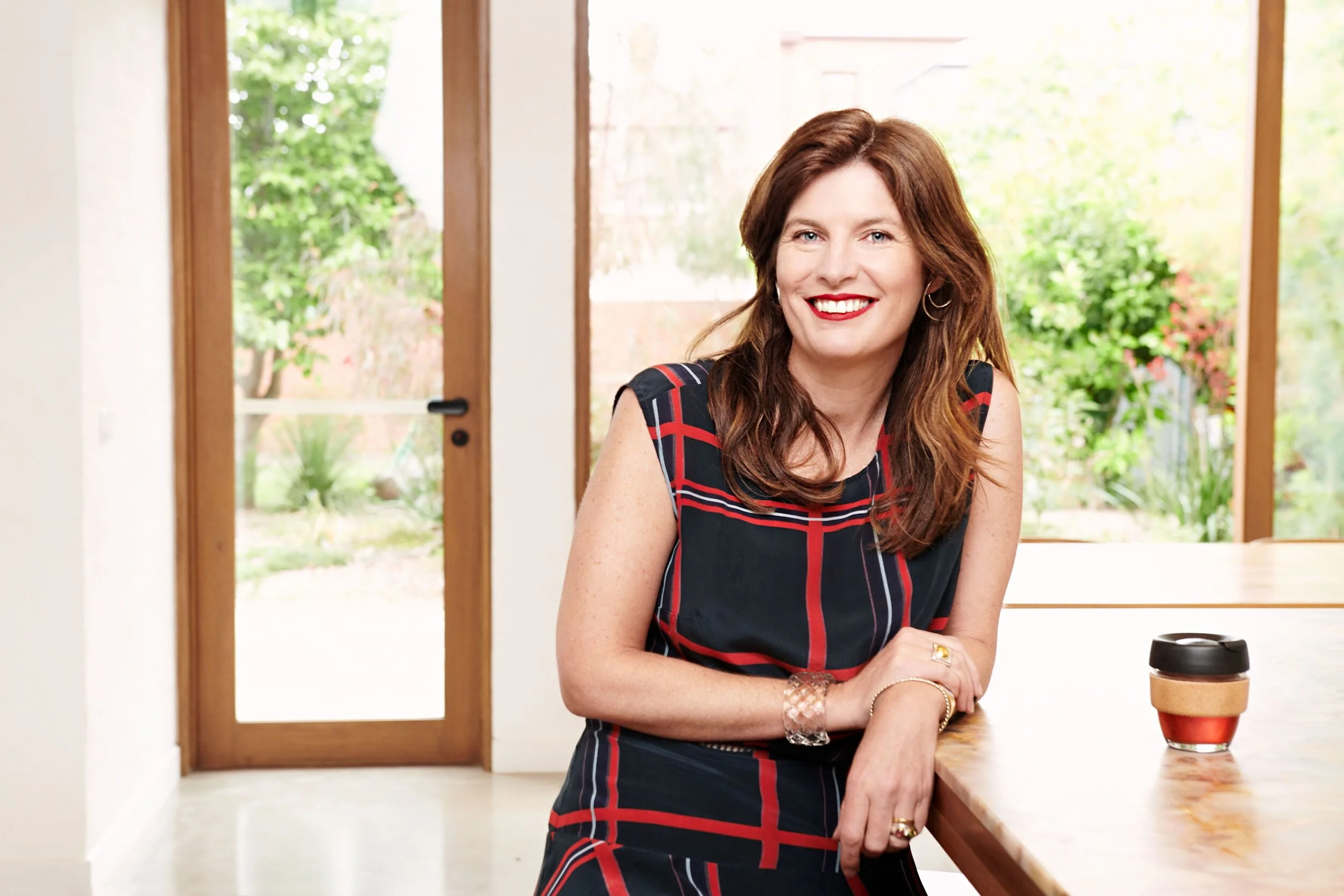
The co-founder of KeepCup spills the (financial) tea.
You asked for more content around business finances, so we’re delivering. Welcome to Money Matters where we give you an inside look at the pocketbooks of CEOs and entrepreneurs. In this series, you’ll learn what successful women in business spend on office spaces and employee salaries, how they knew it was time to hire someone to manage their finances, and their best advice for talking about money.

Photo: Courtesy of Keep Cup
When Abigail Forsyth launched her reusable coffee cup 10 years ago in a bid to eradicate disposable single-use cups, she had no idea it would become the global brand it is today. Now, KeepCup has sold over 12 million reusable cups, is used in over 65 countries and their customers have diverted an estimated 8 billion disposable cups from landfill each year—not to mention she’s kickstarted the global movement to eradicate disposable coffee cups. Forsyth is a leader in the global movement to inspire reduce and reuse, with a passion to reduce the use of single-use items.
But her career didn’t start off this way. Forsyth actually had a successful career as a lawyer before joining forces with her brother to launch Bluebag cafe. This is where her awareness around single-use coffee cups was heightened and soon after, KeepCup was born. But despite the global growth, Forsyth has managed to stay completely self-funded without taking any outside investment (which she recommends to fellow entrepreneurs, too.
Read on to hear her money advice, mistakes, and financial lessons learned along the way. You’ll want to write these down.
On why she self-funded the business…
We had a small loan, some grants from the City of Melbourne and Design Victoria, cash flow from our café business Bluebag, and presales off of the KeepCup product prototype. Yes, I would recommend other entrepreneurs to self-fund their businesses. We are fortunate enough to sustain our business and grow without taking on outside investment, which means we have been able to remain nimble, iterative and independent. You need to make money to stay in business, so be wary that outside funding can compromise your ability to have a vision beyond shareholder value.
On how much she pays herself…
We are a certified B Corporation which means that, as a business, we have to meet certain standards of verified social and environmental performance, public transparency, and legal accountability and balance profit and purpose. In line with this, my earnings are capped at 10x the lowest-paid employee.
On how much to pay employees…
We have looked at payscale, similar job descriptions, and have occasionally worked with recruiters to determine appropriate living wages for all our employees. Last year, we recruited a people and culture manager, and took the time to benchmark salaries and review our remuneration structure. Things can change as the business grows, and you have a mix of old and new employees, so we had to revisit our structures and processes.
“You need to make money to stay in business, so be wary that outside funding can compromise your ability to have a vision beyond shareholder value.”
On the most important area for business owners to focus their financial energy…
Right now, all businesses must focus on carbon neutrality: decarbonizing and dematerializing their operations, use their business to make a positive contribution. There’s no business on a dead planet.
Focus your financial energy in places that align with your company’s mission. At KeepCup, our mission is to inspire the world to reduce and reuse, and we’re committed to championing the cause for a more sustainable future. In everything we do, we adopt sustainable business practices from manufacturing to our office space, all the way down to the actual product.
We’re really focused on adopting and setting best practices in sustainable product design and business, even if this means it is at an additional cost to our business. For example, we donate 1% of global revenue to environmental causes and are a certified B Corporation, as we are committed to driving the transition to the circular economy and promoting reduced consumption, reuse and repair.
On the first big expense as a business owner…
Our first big expenses were committing to tooling and the endless road of website development.
On how much they spend on office space…
Too much! We have just spent a year refitting our HQ in Melbourne, Australia to make it consistent with our company values and vision for a more sustainable future. It is a very well insulated solar-powered building with plenty of natural light and green space. Most of the furniture is second hand, and is beautiful, but does not use new resources.
“Build your business from the ground up on purpose beyond profit.”
On when she was able to start saving income…
The savings wax and wane depending on where we are at with things like product development, website updates, and premises etc. I like to have something set aside for opportunities or issues that might come up. As well as committing to providing 1% of our revenue to environmental causes, we are committed to being carbon neutral by 2025. We will see where that journey takes us. I’m also really interested in rehabilitating the natural landscape, particularly in Australia. We have just donated $100,000 for bushfire relief and commit 1% of our revenue, as opposed to profit, to environmental causes.
On setting up the business financials…
When we set up our accounting system I made a lot of noise about how it was overcooked for the simplicity of the business 10 years ago, and that decision has held us in good stead. We always had an external accountant, and our internal accountant was one of our first hires. There is a story about me paying the invoices and throwing them into a tomato box as a filing system, which may or may not be true!
On the tools, she uses to stay on top of the business financials…
In my view, the most valuable tool is a great finance team, and a great set of reports to check the ongoing health of the business. In terms of software, we use Microsoft Navision and Power BI.
On what she wishes she’d done anything differently financially…
I wish we had created a better structure at the outset in partnership with my brother. When we started the business, we were young singles—priorities shifted as the business grew. We also progressed in our personal lives, started families and our individual priorities shifted. Separating business ownership from your role in the business at the beginning is really important.
“Make a profit so you have the space to experiment and make mistakes.”
On why she thinks women should talk about money and business more…
Women should absolutely talk about money and business more. I feel a real sense of responsibility to do right by people and the planet, but it’s really important to acknowledge and talk about the fact that this has not been at the cost of financial success. It creates the space for change.
It’s been really important to me as a woman, to be commercially successful and financially independent, this gives me a voice to talk about the values I believe in and press for change.
On having financial mentors…
No. I don’t have a financial mentor, but I think business owners may very well need one depending on their circumstances. There is an endless parade of people who will line up to tell you what to do and how to do it, and whilst relying on expertise is very important, it’s equally important also ask whose interests they serve. No one will care about or think about your business more than you.
On the money mistakes she’s made along the way…
Throughout our 10 years in business, the biggest lessons I’ve learned have been around understanding margin, understanding the cost impact of waste, balance sheets, and profit and loss and having the right insurance. I would not say these are mistakes, I would say it has been a journey in deepening my understanding and balancing the internal needs of the business with the external environment in which we operate.
On her best money advice for new entrepreneurs…
Build your business from the ground up on purpose beyond profit. I truly believe businesses ought to serve a purpose that is of benefit to people and the planet. Businesses must serve the communities in which they operate, respect the natural resources (which in my view belongs to everyone), respect their employees and protect the natural world.
If you aren’t in business to dematerialize and decarbonize the economy, you are in the wrong business. I think the world is hopefully waking up to the futility of balanced books on a dead planet. We are all in this together.
On the hardest money lessons she’s learned…
Make a profit so you have the space to experiment and make mistakes.

2020 Vision: How 4 Women Are Approaching Wellness in the New Decade
Self-care isn’t just a buzz word.
This post is in paid partnership with iHerb.
It’s hard to believe that a decade ago, Google search interest in “self-care” was at its lowest. Now, the most popular buzz word of 2019 is feeling, well, a little burnt out. Ironic, isn’t it? But just because the word is a little overused, doesn’t mean the physical act of it is. In fact, self-care has largely contributed to the wellness market boom which is now valued at a whopping $4.2 trillion, having grown 12.8% in the last two years. And it’s not just outside of work either. The global corporate wellness market is also estimated to reach $66 billion in 2022 because news flash: healthier workers are more productive. Who knew?
Thanks to more people choosing to pursue activities that promote physical and mental well-being, self-care is now being seen as a form of necessary healthcare and not a selfish behavior as it was once viewed in the past. After all, if you don’t put your oxygen mask on first, you can’t help others.
But it’s not always easy to find the time and wellness can be expensive. iHerb understands the challenges that come with navigating the winding road of wellness. That’s why they provide wellness solutions for all the key aspects of your life, including supplements and vitamins, sports nutrition, herbs and homeopathy, and self-care essentials like skincare and body care, at prices we can all afford.
We partnered with iHerb for our 2020 Vision panel at the recent Los Angeles Conference and asked four women—Britney Vest, Dr. Deepika Chopra, Lauren Kleban, and Kirbie Johnson—to share their thoughts on wellness in the new decade.
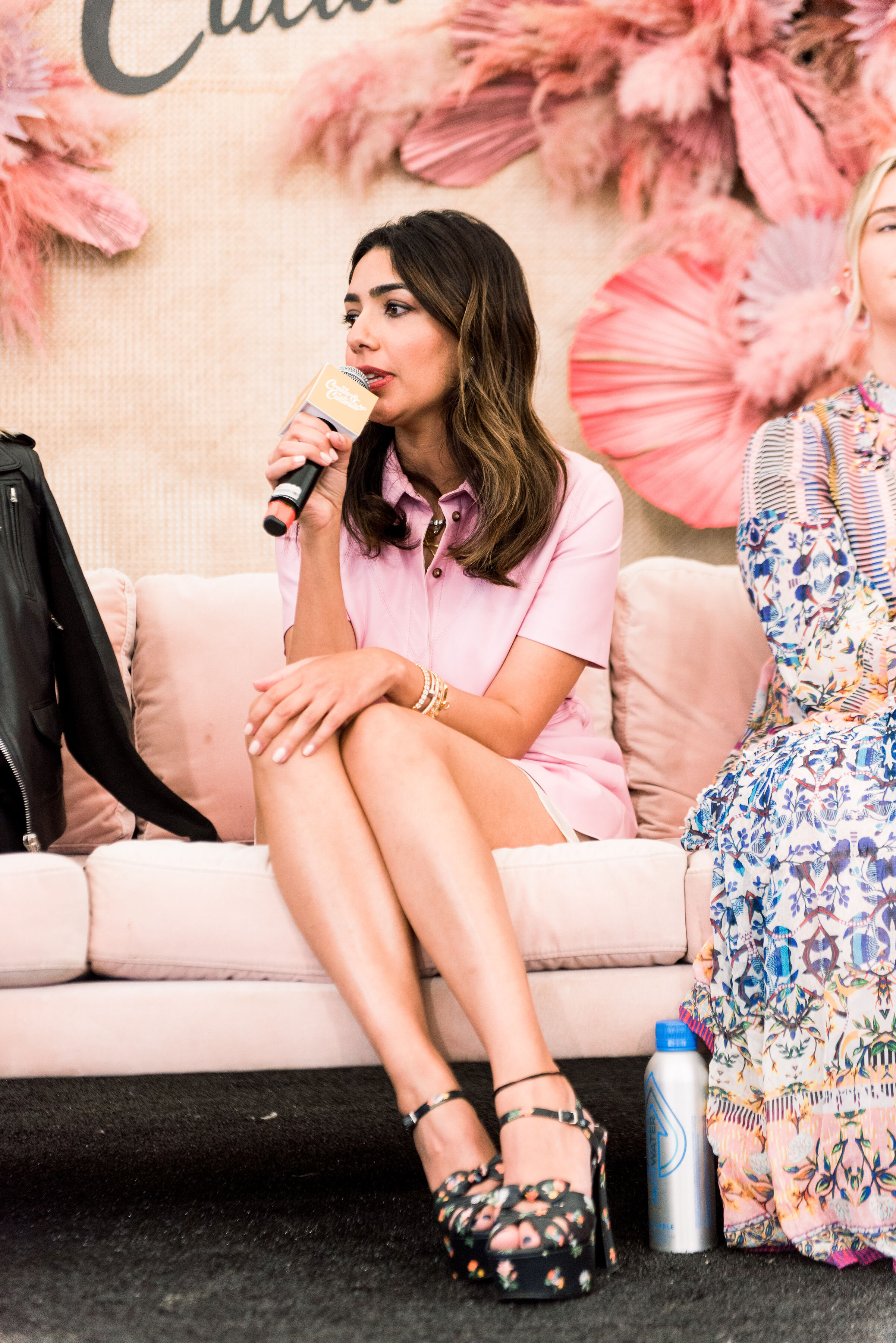
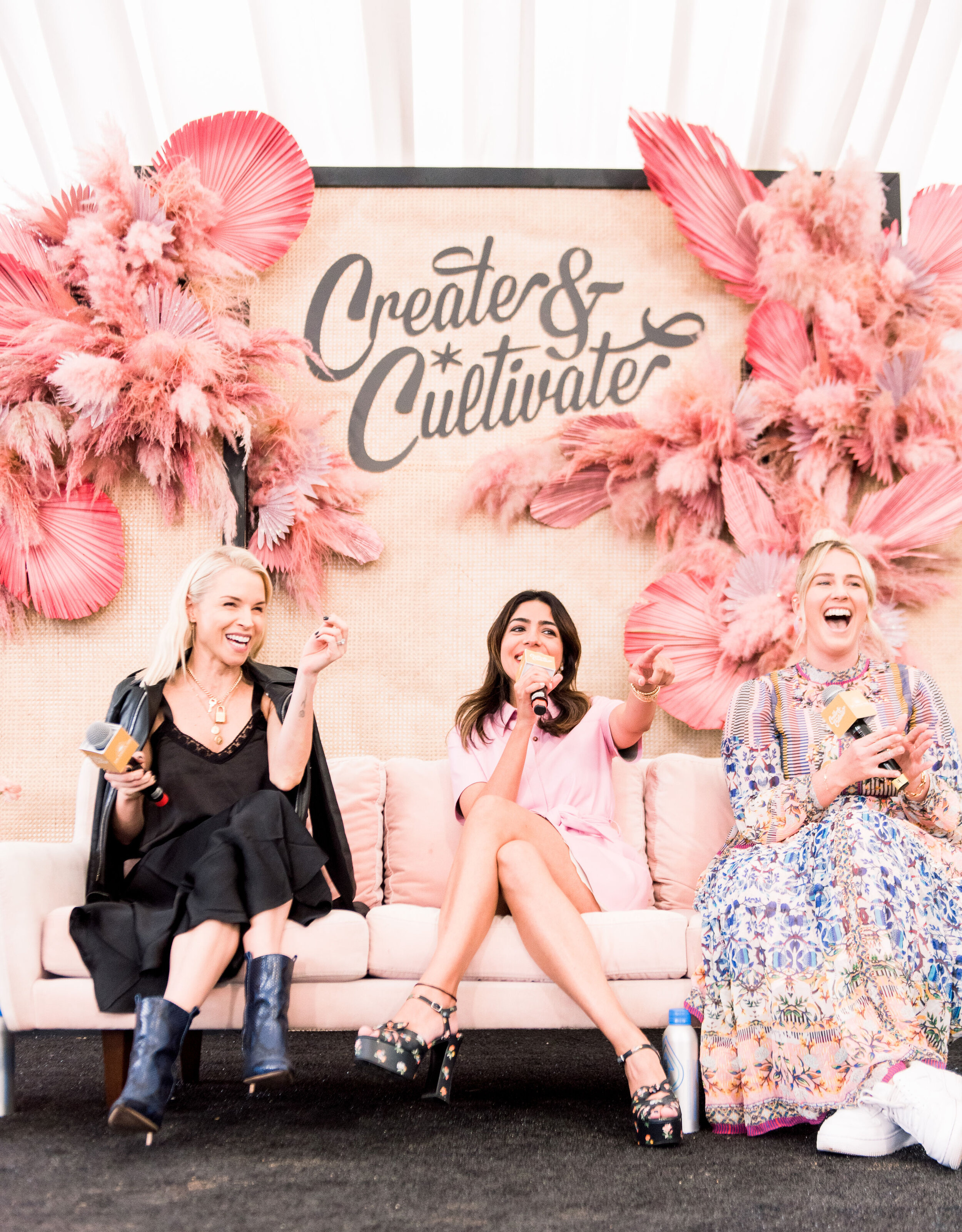
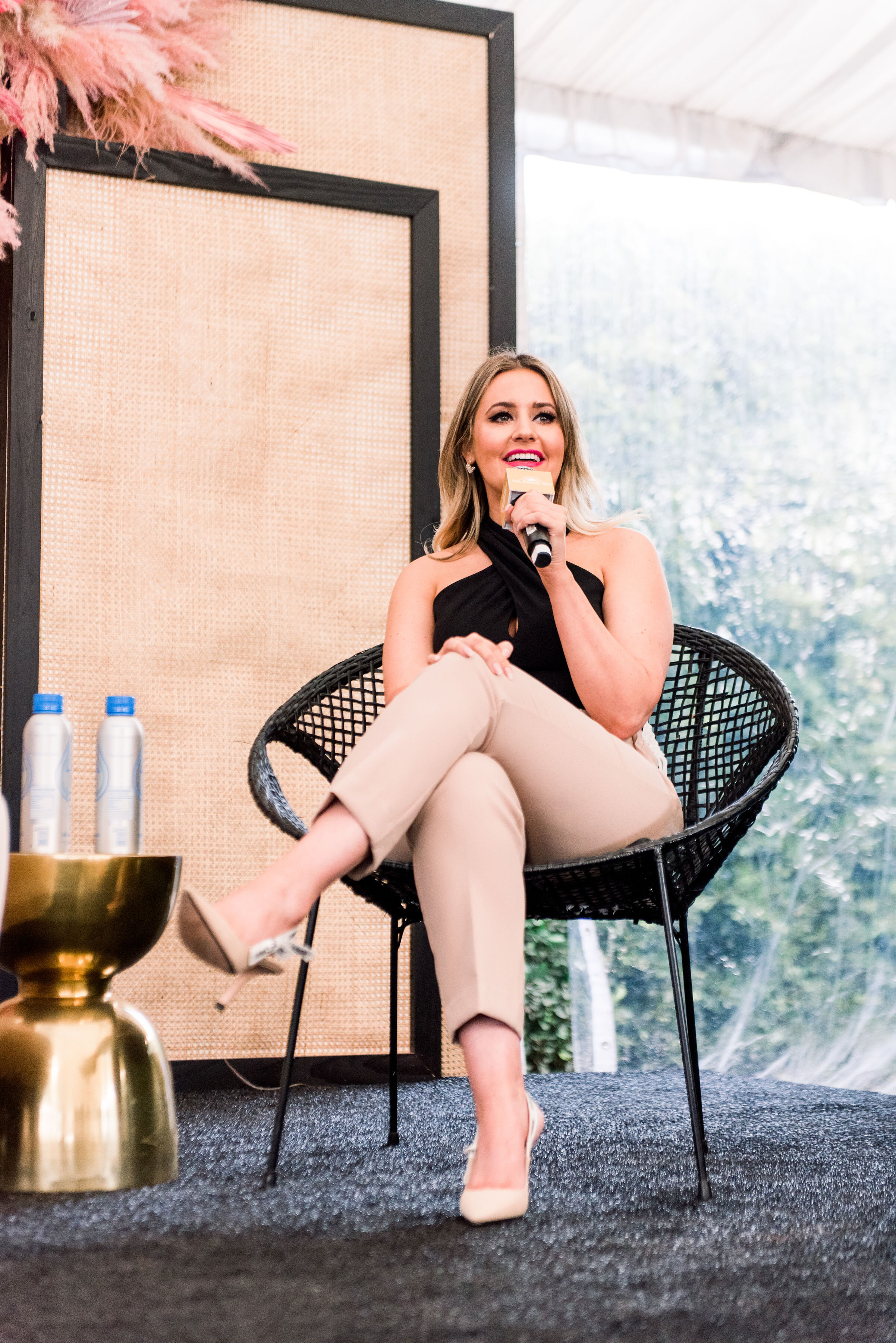
Read on to hear some major realness from the conversation and be sure to comment below to share your thoughts on wellness in 2020, too.
2020 Vision: A Conversation on Wellness in the New Decade Powered by iHERB
On body positivity…
“For me, body positivity is truly learning to love yourself every day exactly as you are in this moment” - Britney Vest
“The movement has really blown up, but there is still so much to be done.” - Britney Vest
On weight loss and body positivity...
“They can exist together, it is not a bad thing to want to improve and want to change.” - Britney Vest
On work as self-care…
“Work, for me, is self-care. It makes me feel valued and valuable.” - Kirbie Johnson
On taking work home...
“You're devaluing yourself because you are only paid to work from 9 to 5.” - Kirbie Johnson
On change in the beauty industry...
“We’re switching from, ‘You need this to look beautiful,’ to, ‘This will make you feel good or will help someone in need.’” - Kirbie Johnson
On partnering with brands authentically...
“No matter what it is, I typically only work with brands that I already have in my home that I am already using that I am authentically connected to.” - Britney Vest
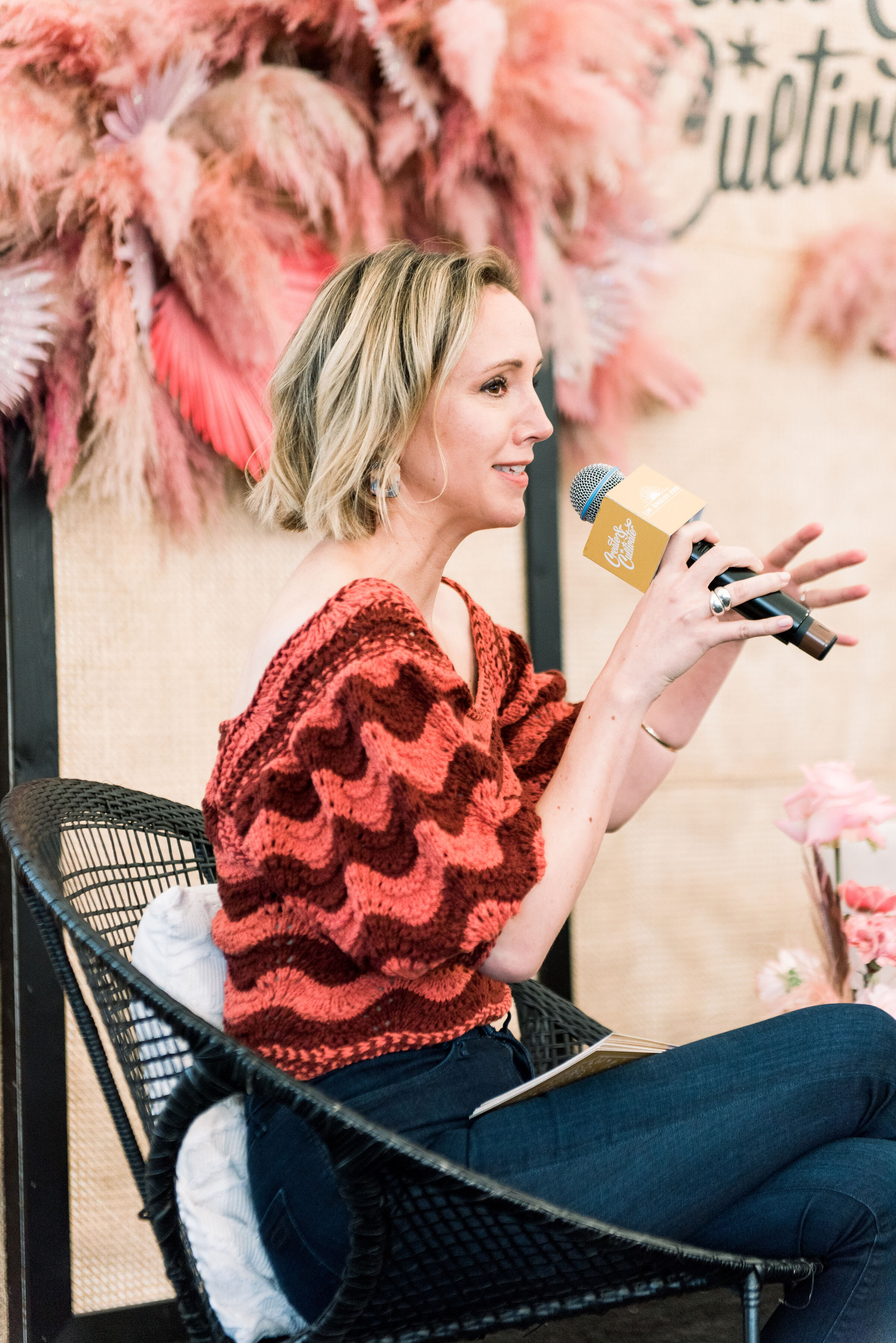
On wellness on social media…
“Being able to celebrate yourself on social media is so important.” - Britney Vest
On improving…
“Remember: It is not a bad thing to want to improve yourself and want to change.” - Britney Vest
On not taking on too much...
“The way you can achieve wellness is by realizing that you can’t do everything at once.” - Dr. Deepika Chopra
On being an optimist…
“Being an optimist doesn’t mean skipping around fields or always having a perfect day, it’s about being someone that sees setbacks as temporary and knowing you have the power to overcome them.” - Dr. Deepika Chopra
On mental health…
“I learned very quickly to keep blinders on—don’t be in a position where you compare yourself to others.” - Lauren Kleban
“We have our physical health and our mental health to take care of. It's what makes us all human.” - Dr. Deepika Chopra

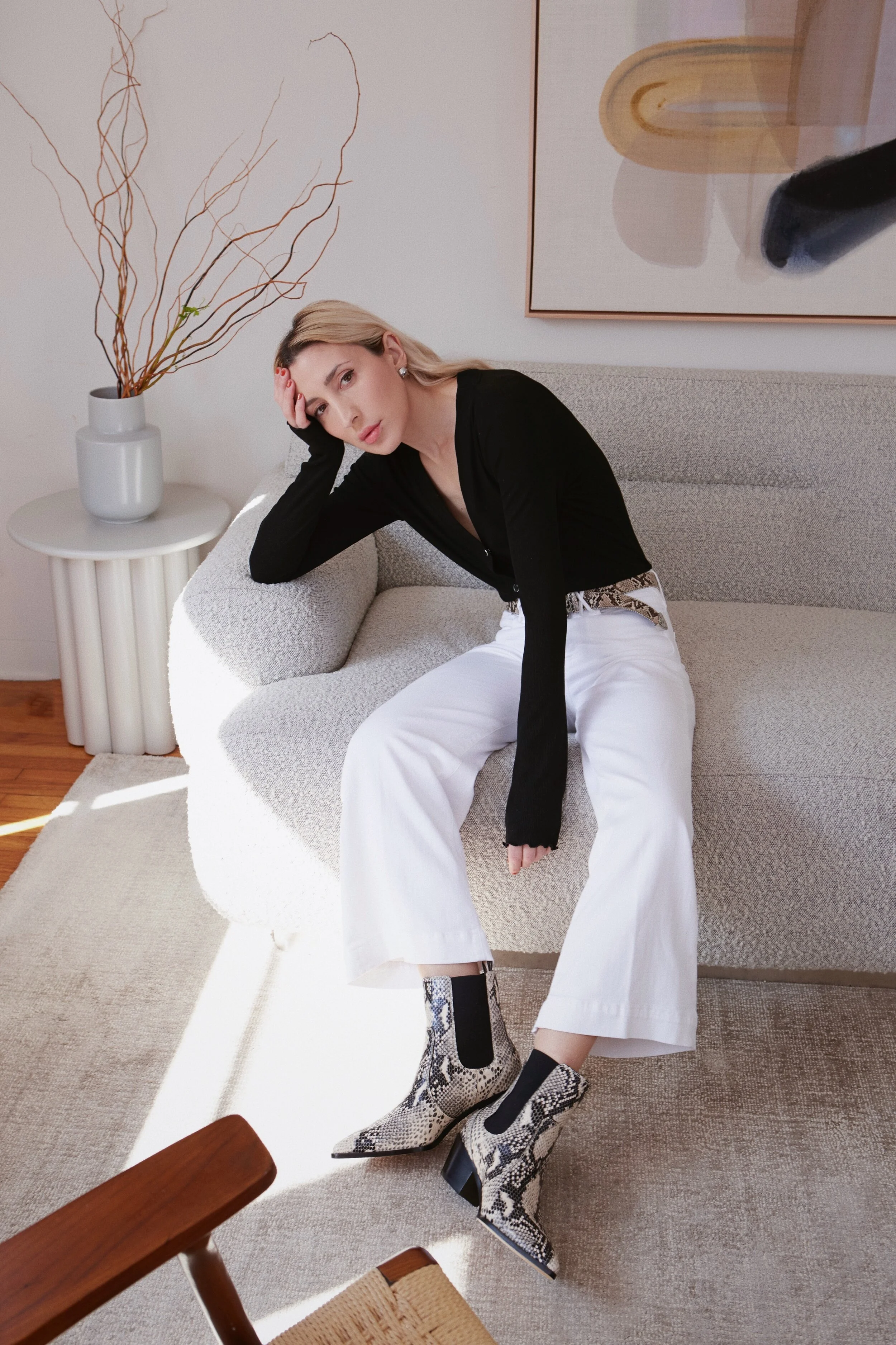
Angela Fink Looked Fear in the Face to Follow Her Intuition—She Hasn't Looked Back
"Don’t do it alone.”


You know the feeling. It starts as a soft whisper, calling you from deep within. You push it to the side and it pauses for a moment until eventually, your spirit turns up the volume dial and the noise is too hard to ignore anymore. This is your intuition talking. You can only push her aside for so long before she makes herself known and you are forced to confront her call.
Angela Fink clearly recalls this calling a few years ago. “I was driving in the car with my husband, and I said I'm ready to start something for myself,” Fink recalls. “I was working as a stylist and felt boxed in by a few of my then clients. I knew that I needed a space where I could create without restrictions and then the next day I started a blog called The Fashion Sight.”
Fink is so glad she looked fear in the face to follow her intuition because, today, she is pursuing her passion for a living collaborating with her husband, Kelly Bolton to create editorial-style imagery for her 116K plus followers. Last year they launched their branding, creative, and content consultancy We Are Dumont where they help other brands bring their stories to life. And if that wasn’t enough to keep her busy, Fink is also a mom to her daughter, Lola and an ambassador for No More Plastic.
In honor of International Women’s Day, we partnered with our friends at PAIGE to put the spotlight on five incredible women who are marching to the beat of their own drum and walking it forward with an outstretched hand bringing the rest of us along for the ride.
So, read on to hear more about Fink’s many creative pursuits, how she uses clothing to step into her power, and her advice so you can too.

CREATE & CULTIVATE: You launched your own creative agency last year—What is it all about?
ANGELA FINK: Dumont is about working with people, brands, and designers to create something special for them. Each project is catered to that brand. We do everything from branding to creative direction, strategy, and full-service production.
We are different because of our point of view. You come to us because of who we are and what we can produce. Our work speaks for itself. I wasn't scared. I had been a stylist and creative director in the past, and it felt like a natural progression for me.
You are an ambassador for No More Plastic. When did you join this movement?
I joined last summer. My family and I travel a lot; we mostly drive to remote locations that are visually out of this world. We would find trash littered everywhere, plastics sitting in the most beautiful sand dune you have ever seen, and that's when I said no more plastics and reached out on how I could help make a difference.
My daughter has started at a plastic-free school, and we limit our plastic intake in our own home.
Going plastic-free is a huge undertaking in a world where so many things we purchase, including food and necessities are covered in it—How have you navigated that path?
Going plastic-free is a huge undertaking—it’s everywhere. I try my best to be aware of what I purchase and what comes into our home. A few small changes I made were replacing plastic vegetable bags with reusable ones and swapping zip locks with silicone versions.

What does International Women’s Day mean to you?
International Women's day should be every day. We should honor friends, mothers, grandmas, daughters every day for how special we are and what we create in this world.
You seem so bold and self-assured—what advice do you have for others who want to summon that courage too?
Practice kind self-talk. We all are so hard on ourselves. Give yourself a break. We are all doing the best we can—reminding myself of that makes the pressure melt away and I can become my best self.

How we appear on the outside can impact how we feel on the inside. As a fashion icon, we look to you for style advice so, what do you wear to feel confident?
Finding what works best on your body and what feels right is the two tells for an empowering wardrobe. I found myself buying into trends, but it wasn’t right. Through much trial and error, I went towards pieces that made me feel confident and secure. It's about testing out what you feel good in.
How does clothing make you feel self-assured and ready to take on the world? Why?
My clothing is apart of me—it shows people around me how I feel about myself. If I feel confident, I dress like it; when I feel daring, I take unexpected pieces and mix them if I'm having an off day and don't feel like myself I find pieces that make me feel strong, empowered and confident.

How do you shake off the fear and doubt to pursue your innovation/dream?
Wow, this is hard. I am not going to say I don't have fear or I seamlessly go through life. I battle with this. That monkey mind creeps in and it creeps in often. I know where I want to go is not where I am currently, and in order to get there, I need to put my boots on and walk through the mud as my mom would say. It works, one step in front of the other and then before you know it you are through it to the other side.
What’s a piece of advice you’d give to women starting out in your field?
Listen to podcasts, read books, speak to other women in your field. Don’t do it alone. Build a team, grab coffee with someone you admire. I learn every day from my friends.
What is the hardest decision you’ve ever had to make professionally?
Asking for what I am worth. Wow, oh wow, this took me a while to get down but you are worth it so ask for it!
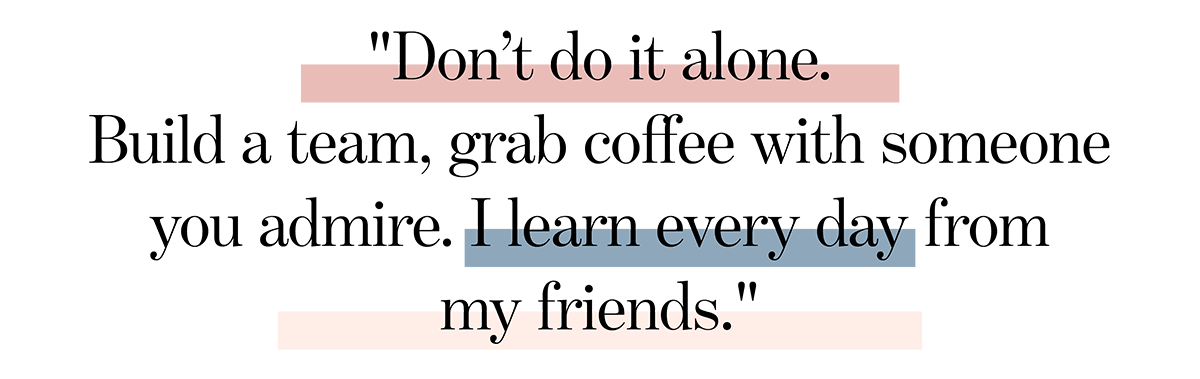
What traits do you need to succeed as an entrepreneur or founder in the competitive start-up environment?
Write down exactly where you want to go and who you are—follow it, read it often and don't veer too much from it.
The filtered world of social media often hides a lot of the hard work and hustle behind-the-scenes—What’s a lesson we can all learn from your mistake/s?
Don't overthink things.
What does it take to be the first and pioneer a new space?
Radical passion.

You can’t be it if you can’t see it. Why are representation and visibility so important to you?
Social media is such a powerful tool. It's a space where we can be ourselves and share it with the world. When I first started shooting editorial style shoots with my husband, we would travel to remote places. I was nervous about how it would be received, but the more I did it, the more I felt like I was showing who I truly am. This space is about who you are and who you want to be, it's a visual timeline of growth and change, and there is real beauty in that.
Seeing people pave the way can give us the confidence to do it too. Name someone who walked it forward and inspired you to step up too?
My sister Jillian Dempsey. She showed me to think outside the box and never give up on your path.
Click here to learn more about the other fearless women who are walking it forward this International Women’s Day.

Mentor Monday: 3 Things a Resume Expert Wants You to Know
Get a sneak-peek into our Insiders membership monthly perk.

Photo Courtesy of: Create & Cultivate
Did you know that Create & Cultivate has an Insiders membership program? There are SO many perks to being a member but one of our most popular is the monthly mentor sessions. These monthly digital videos give members some serious facetime with experts across various fields, and the opportunity to get personalized answers to all of their pressing business and career-oriented questions. Members can register for these informative live streams ahead of time and send their own questions to be answered in real-time.
Recently, professional resume writer and personal branding expert Michele Lando hosted a mentor session for our Insiders to answer all of their burning resume questions. As the founder of Write Styles—a provider for personal branding through curating clients’ resumes and self-confidence while navigating the workforce—Lando is very well-versed in the do’s and don’ts of resume drafting.
Here are three key takeaways from the mentor session to apply to your own resume today:
1. Less is More.
“You don’t want your document to be so over-the-top that someone doesn’t actually focus on the information.” In this portion of the Mentor Session, Michele Lando is referring to the design and layout of your resume. When it comes to color palettes or eye-catching graphics, Lando recommends double-checking that your design enhances the information, rather than taking away from the information. After all, you are promoting your own skills, not your aesthetic eye (unless you are applying for a graphic design position, in which case Lando says there are exceptions).
2. Your side hustle may be worth leaving off.
“Anytime you go to include anything on your resume … make sure it sticks within the focus you’re trying to highlight and the skillset that you’re trying to highlight.” Here, Lando honed in on tweaking your resume based upon the position you are applying for. For example, if your side hustle does not support any skills that could be useful to have for your potential new job, it may be better to just leave it off. Additionally, Lando points out that if you’re applying for a job that requires a large time commitment, it may be smarter to remove your side hustle because people may be concerned you do not have room in your schedule to take on another career.
3. Don’t be afraid to step into a new industry.
“Keep an open mind. When you’re trying to switch industries, I think the first thing to consider is that it’s not all-or-nothing. It is one step at a time.” If you’re trying to transition careers but feel like your lack of experience in that field is leaving you feeling less qualified against other candidates, Lando does not feel that this is a cause for serious concern. Instead, she recommends that you start taking informational classes so that you can display on your resume that you have at least a baseline understanding of what you are wanting to transition into. Also, she suggests using your current job to your advantage in the meantime. See what pockets of your current workspace you have yet to explore, and ask to sit in on projects, take on different roles, and try to explore other opportunities.
Be sure to sign up for our program sooner than later to hear who will lead the next mentor session! For more information on our membership program, check out our FAQs page.

“Don’t Be Scared to Fail—Failure Is a Part of Life" and Other Empowering Quotes From C&C's PROJECT WOMENS' Event
The future of the fashion industry is here.
In paid partnership with PROJECT WOMENS.
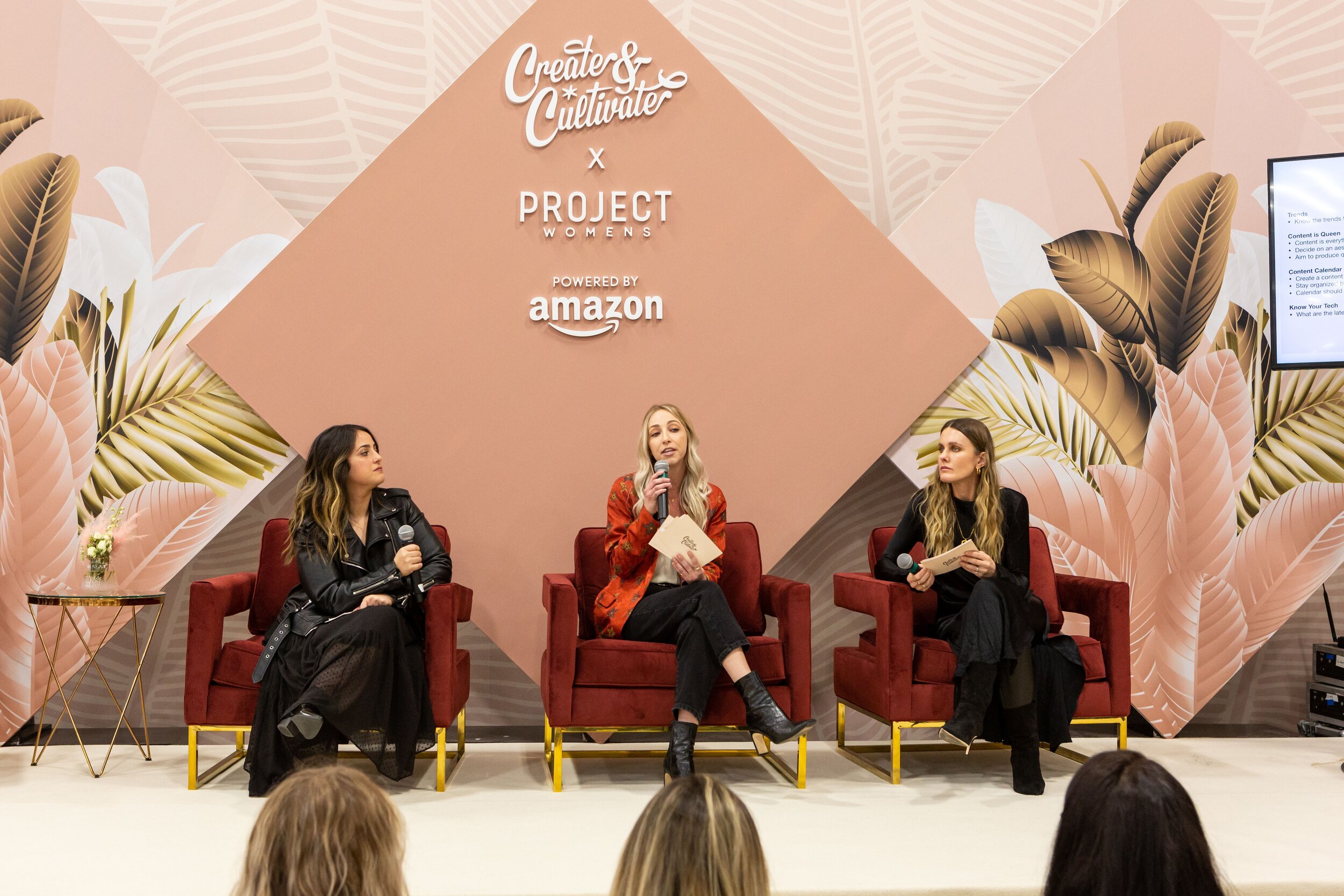
Photo: Courtesy of Create & Cultivate
We’ve all felt the transformative power of fashion. Whether it’s wearing a power suit to that important meeting or finding the perfect dress for your best friend’s wedding, what we wear has a huge impact on how we feel.
This has seen a huge demand for clothing and shoes in recent years. In fact, the global apparel market is projected to grow in value from 1.3 trillion U.S. dollars in 2015 to about 1.5 trillion dollars this year. But the question is, how are we evolving the industry to stay ahead of the curve and not just in terms of trends but the business of fashion from the manufacturing to marketing?
We joined forces with the country’s largest fashion trade show, PROJECT WOMENS to ask those questions and more. Held twice a year, MAGIC is filled with rows upon rows of fashionable booths filled with the next season’s must-have clothing and trends before they hit the boutiques. Project Women’s is one of the events held within the show and we were thrilled to partner with them this August to host four eye-opening panels with boundary-pushing founders and leaders in the space.
Read on to learn more from our panelists including how to generate online buzz around your brand, what it takes to be sustainable (and profitable), why the inclusivity movement is more than just good marketing; and how Camila Coehlo turned her Instagram followers into buyers.
Workshop title—The Buzz Kit: How to Generate Online Buzz Around Your Brand
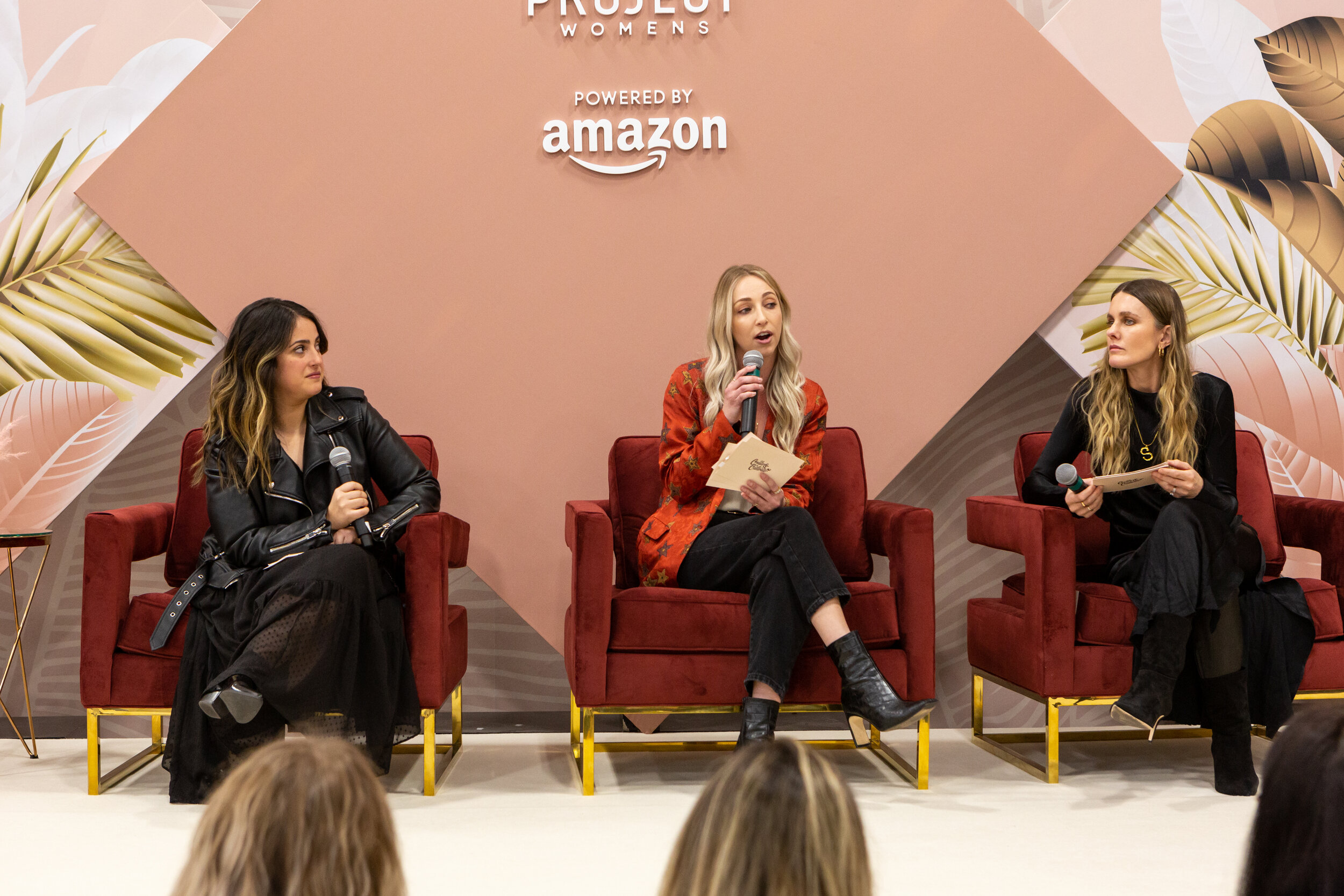
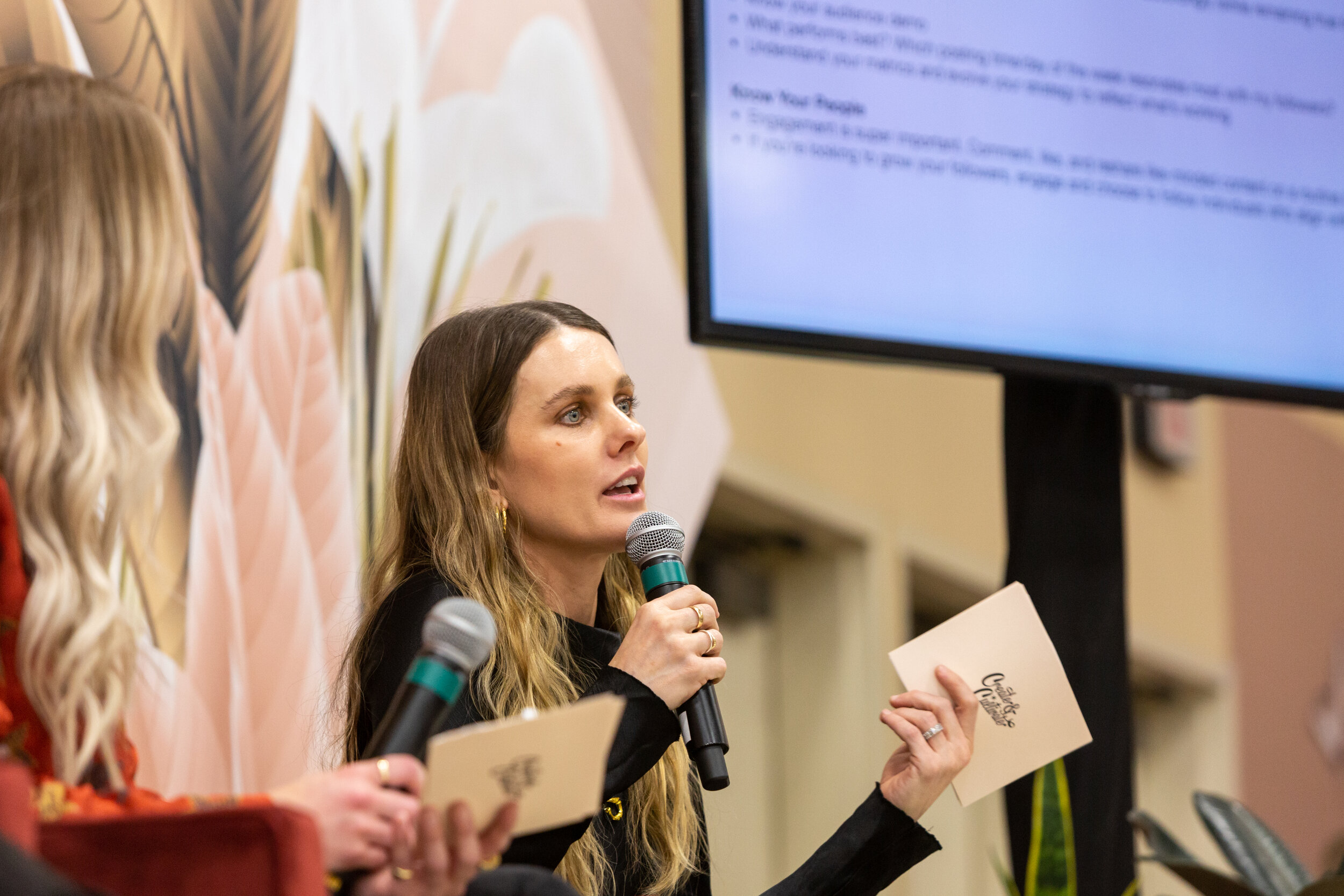
Nairi Najarian, Senior Director, Digital Marketing
“Establishing your brand identity is the first step.”
“A true marketing campaign is more than just an advertisement. A campaign is a series of marketing-related activities that work to support a predetermined goal. And your goals are two things: defining or reinforcing your brand and lead that into conversions.”
“When you’re bringing your campaign to life it’s important to have your target customer at the forefront of things.”
“Don’t try to emulate another brand’s business or campaign or identity.”
“At the end of the day, your brand belongs to the customer.”
“A negative review is also a good review because people are talking to you.”
Carly Johnson, Senior Director, Brand Marketing
“Instagram is very, very saturated so the first thing to identify is where is there a white space. How will you be able to stand out so that people will continue to follow you and engage with you.”
“As a general rule of thumb, we like to do one paid content post for every three or four organic posts in your feed.”
“People really do appreciate transparency, so when you pair up with another brand, explain to them why.”
“To build an organic following you need to clean up your account and get rid of the fluff.”
“Know the trends that are making the rounds on Instagram and make them a part of your strategy.”
“Instagram is constantly changing its algorithm, so you need to understand what kinds of content that the algorithm is looking for. Currently, that algorithm is looking for what’s trendy.”
Sacha Strebe, Editorial Director
“Don’t be intimidated by there being so much saturation in the space because you can find your own point of view and differentiate yourself.”
“You can try to beat the algorithm by engaging—commenting, liking, and sharing. It creates almost a subculture of conversation and community within a post.”
“The first priority of a pitch is to grab their attention.”
“Don’t write clickbait. Keep it simple.”
“Tailor your pitch. Don’t send everyone the same thing. Think about who you’re writing it to.”
“Editors are people too, so tap into that human element.”
“Pitch yourself. Have a bio at the bottom of each pitch and tap into that personal element.”
“Double-check everything. It is super critical to avoid even the smallest spelling errors. This is for an editor; they write for a living.”
Want this presentation in your inbox? Enter your details at the below address to get the free Buzz Kit Download HERE.
Why going green will get you in the black—How sustainability is good for the planet and your bottom line
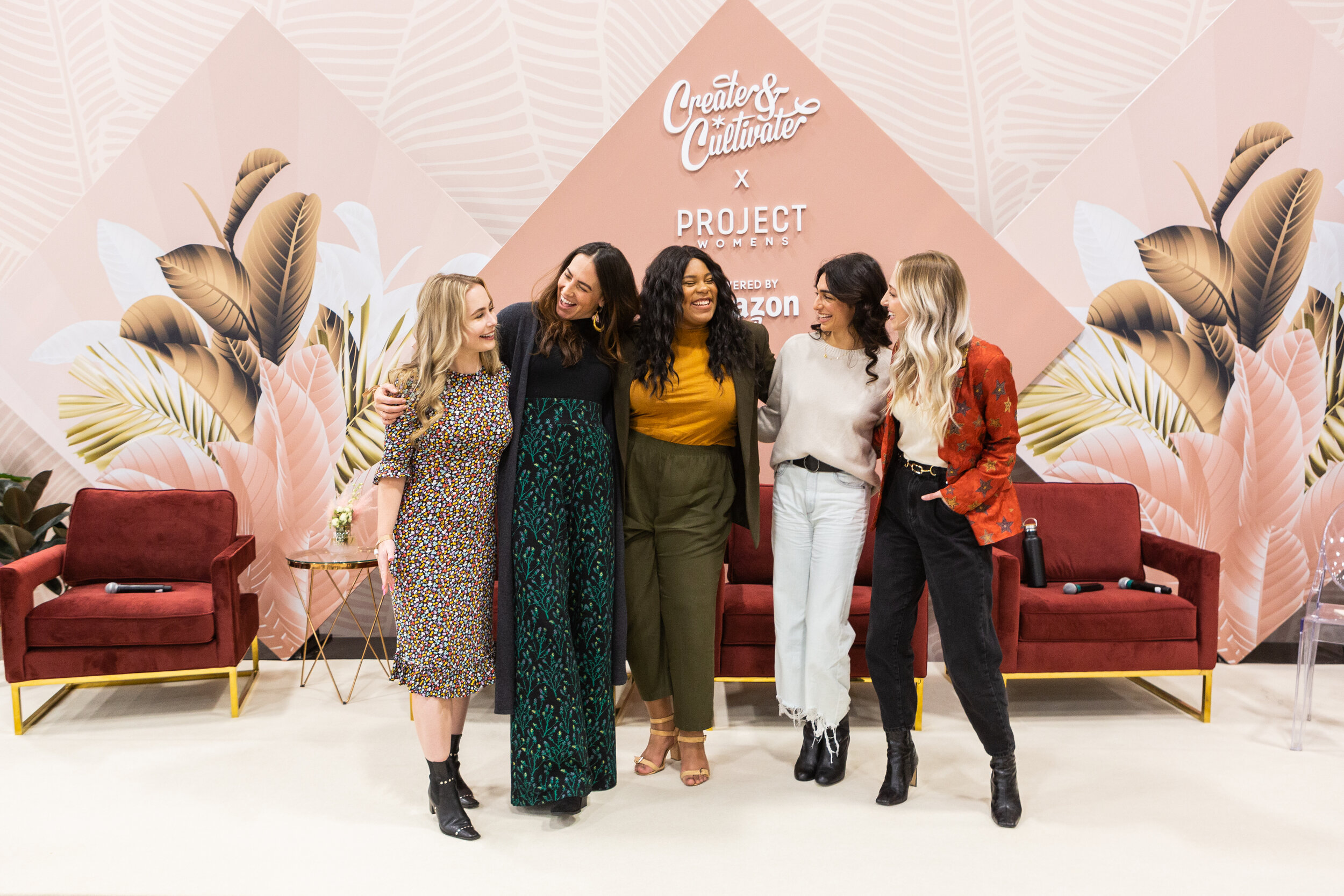
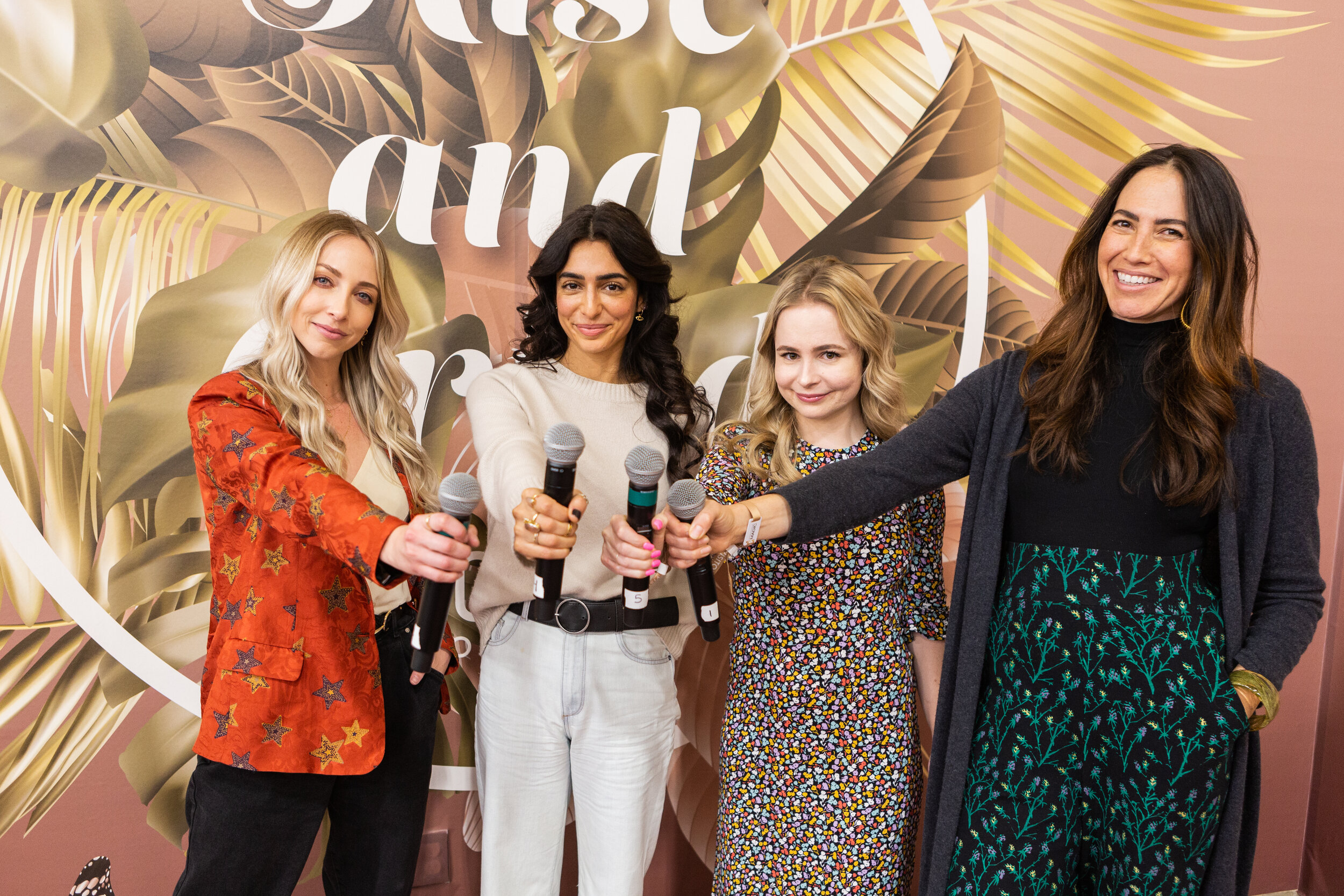
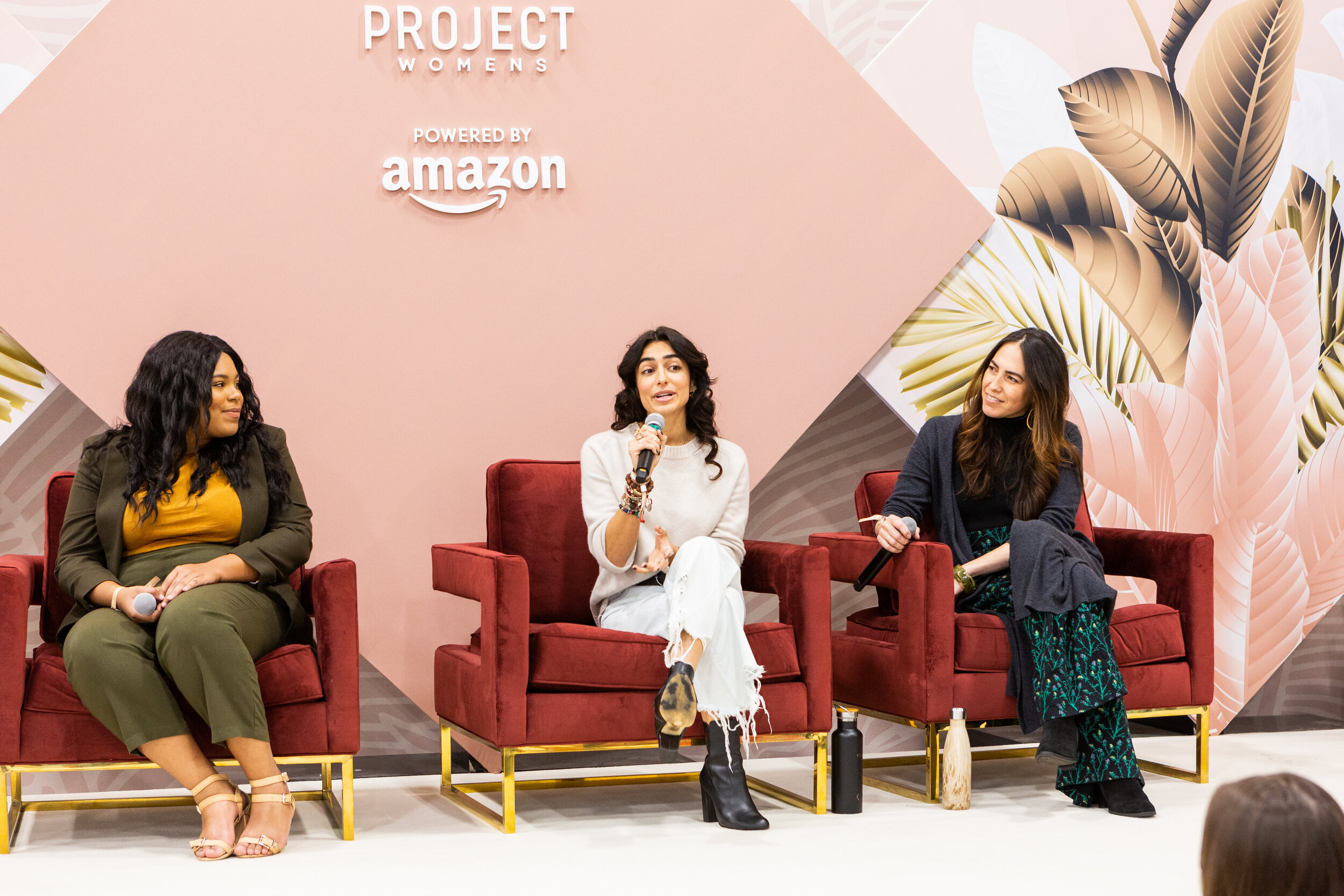
Karen Housel, Sustainable fashion and lifestyle blogger, Sustainable Daisy
“I had an ‘ah-ha"‘ moment one day when I was looking at my closet and realized that about 80% had been worn by someone before me.”
“It can be difficult to implement all these layers of sustainability. When you’re first getting into the movement it can almost seem very impossible to achieve. It takes time.”
“Just because something is old, or has been worn before, doesn’t mean it’s any less than something brand new.”
“Ask yourself, who made my clothes? That really enforces accountability.”
Deb Shepherd, Founder, Clothed in Abundance
“The more I was getting into debt (and the more ashamed I was getting of my shopping) the more I realized, why am I doing this? What am I trying to prove? I really had to look inward and see what is this façade I am trying to create and why does this matter?”
“I started thinking why don’t I become more intentional about things and how I’m spending my money which got me into thrifting. It got me thinking about the impact when I buy a $20 dress: who’s making that and are they having a livable wage within a safe work environment and ethical conditions?”
“When you’re starting out, the easiest thing you can do is to wear what you already have in your wardrobe, getting things repaired or even exchanging with friends.”
“I try to shop slowly, and think do I really want this piece? Then I will save up for it slowly.”
“I look for brands that align with my values and that I can afford.”
Valeria Hinojosa, Sustainable and Eco-Friendly Influencer
“I wanted to be a better human and be more connected. I literally Googled ‘how to be a better human being.’ I started researching and seeing all these things about sustainability. That’s what allowed me to transform my connection with nature with my lifestyle.”
“Sustainability makes you a better person and a happier person.”
“Here are three tips that actually helped me tremendously: The first one is we’re in a society that is used to consuming and then throwing away, that is what we need to avoid. We produce four pounds of waste on a daily basis and that is not biodegradable, so just having that in mind. Second, whenever something breaks have it fixed. Third, vegan leather is not sustainable, and silk is not cruelty-free. Reading labels is crucial.”
“Before you start your business, sustainability has to be in the core and heart and soul of your company.”
“It doesn't matter how sustainable a product is when it comes in plastic packaging.”
“Of course we all want to make money, but at the same time sustainability, community, respect, compassion need to be deeply rooted in the mission of everything you do.”
“The most important thing is to realize your power as consumers.”
“If brands see that the money is sustainability, they will start going green.”
“If you see that a brand is using too much plastic, send an email. They actually listen and they want to become better. Stop being a robot who buys things wears them and throws them away and start asking questions.” Valeria
Whitney Leigh Morris, Creator, Tiny Canal Cottage
“Reading more and learning more about the climate crisis gave me no other choice but to go down this path. You can’t learn about what’s going on and not give a shit if you’re human.”
“I ask myself a checklist of questions before I buy anything. And it’s amazing, depending on what you have in your checklist, how few items make the cut. If you actually hold to your standards there’s not a lot you can buy. When you ask was it ethically produced, were the materials sustainably sourced, and what is going to happen to it when I’m done with it, the decisions will be made for you.”
Let’s Represent: Why the inclusivity movement is more than just good marketing
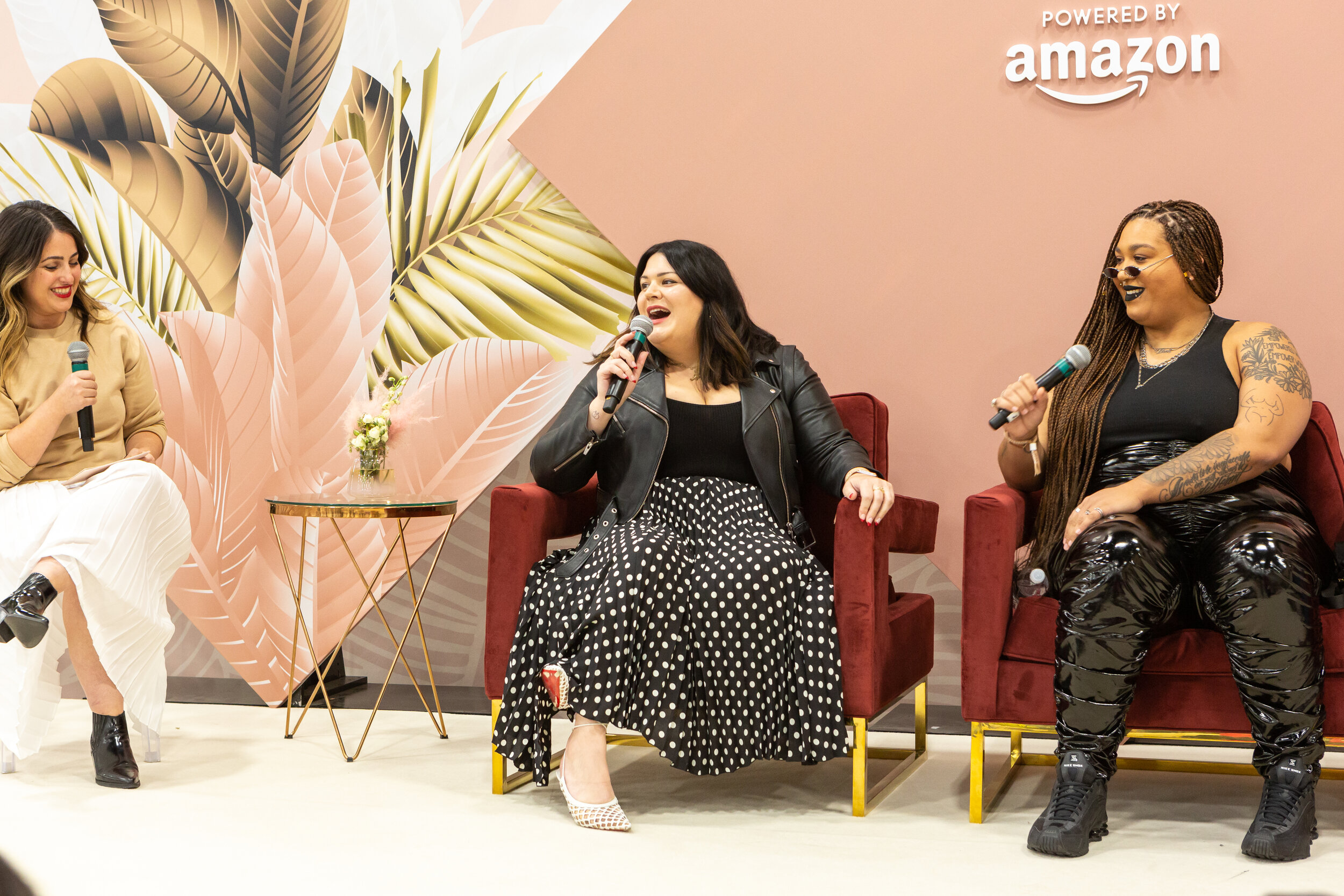
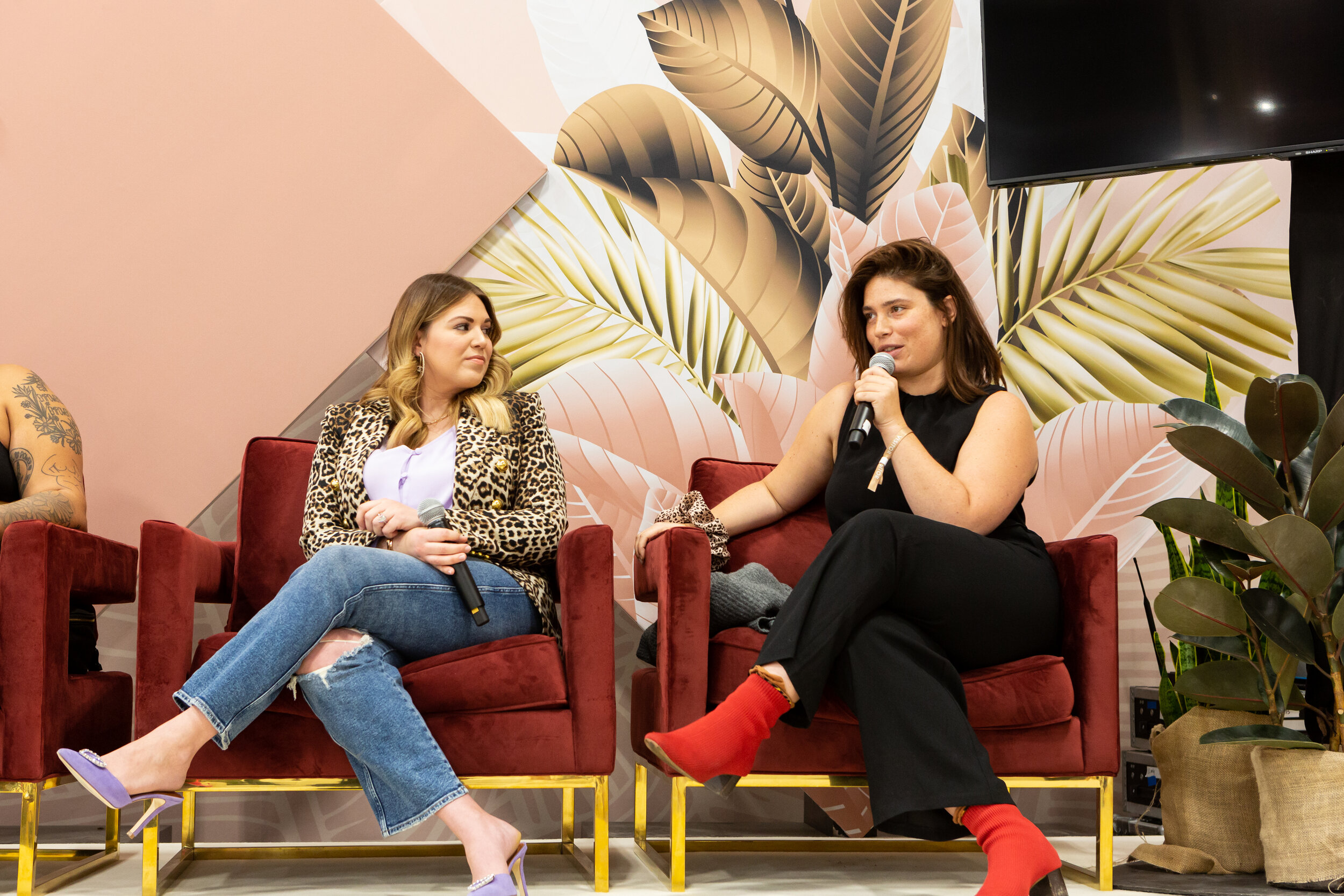
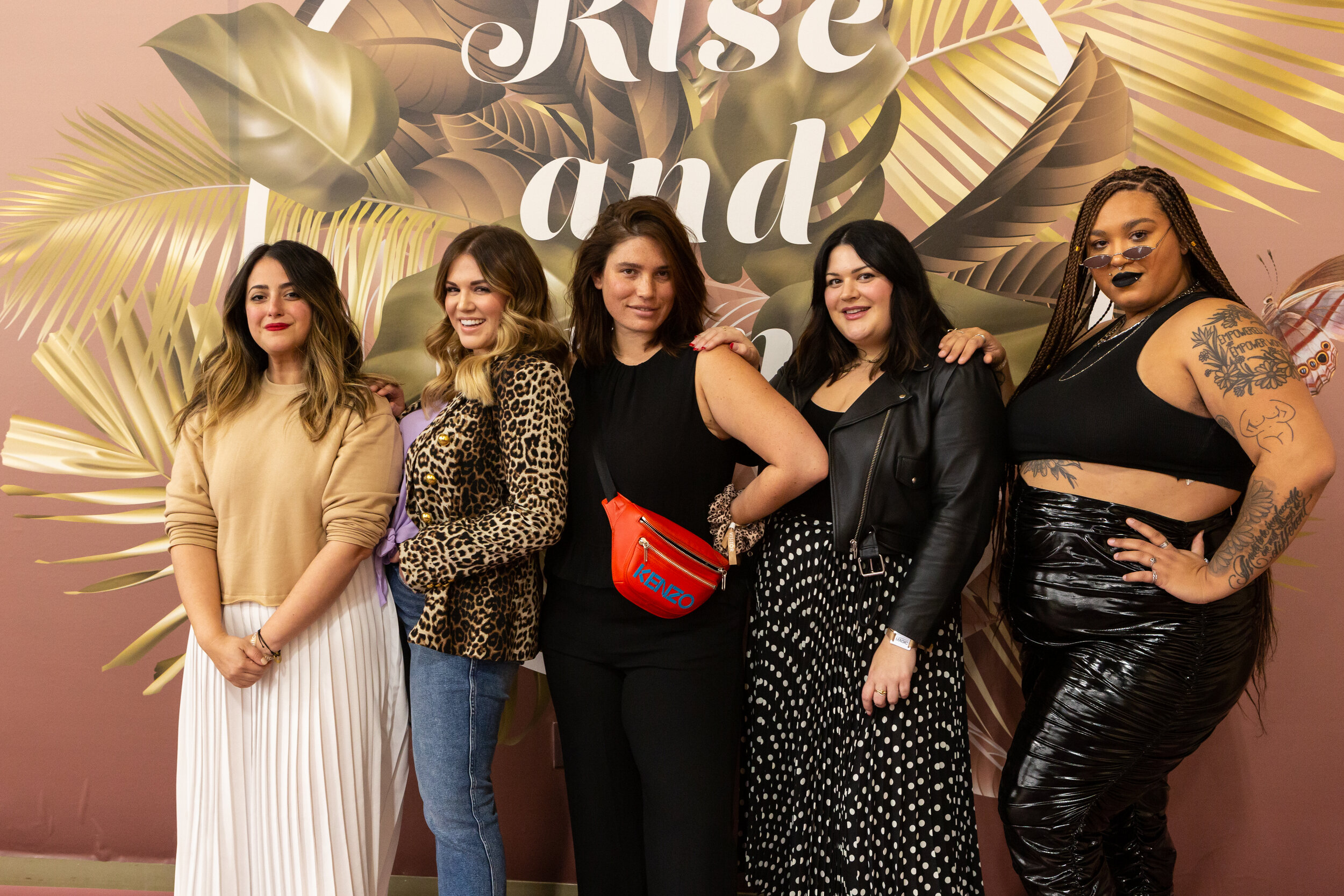
Nicolette Mason, Designer, Fashion Writer, and Creative Consultant
“I don’t have a problem with the word plus size, I think it’s necessary as industry language, that means something for sizing. I have a problem when it is used as a qualifier or a way to tokenize people.”
“What we have to shift, is our associations with the term plus-size and take away the stigma.”
“If you want to get around language; if you don’t want to say plus-size or curve or you’re afraid of offending people, employ people like us who truly represent the size range and demographic you’re trying to reach and make it part of the visual language.”
“Make sure that within brands and the people making decisions that there is diversity represented there. It’s not enough to have diversity in marketing; your office and place of work need to be diverse.”
“We have to think really critically around issues of privilege and access and who is given opportunities. When I was in school it was a given that we would all take unpaid internships in fashion, which isn’t realistic for most students trying to support themselves. So getting rid of unpaid internships entirely so people outside economic privilege can get relevant experiences in their field and taking chances on people who might not have relevant experience and trusting their vision and investing in their growth is key. Also looking outside our immediate networks for applicants.”
“Hire from the people who are engaging with your brand already.”
“About 68% of women in America wear a size 14 or larger but 17% of the product offering is available in plus-sizes. That 68% of women are desperate to shop and are looking for brands. But it’s not enough to just offer inclusive sizing and assume they will sell themselves. It is the responsibility of the brand to build trust and resonance and make awareness part of their mission. There must be a follow through with marketing.”
“Nobody wants to feel like the step-sister hidden in the other room—we want to be part of the conversation and front and center.”
“Something I’ve heard for years is that brands have to uphold this idea of what’s aspirational. I think it’s really time that we think about what this means. This idea that there is only one body type or one presentation or one look that people universally aspire to is actually really toxic and is really missing an opportunity.”
Jazzmyne Jay, Plus size content creator and body activist
“Before I do anything, including this panel, I ask right away am I the only plus-size person, am I the only black woman, am I the only anything? I’m not trying to be a token anymore.”
“You can teach people how to do things but you can’t teach people how to be passionate about something or how to stand up for your brand. Tap into those people you know already love you.”
Clementine Desseaux, model, and entrepreneur
“Plus-size models and straight-size models weren’t really modeling together so we decided to call on our friends and put together an all-women team and show the fashion industry that it is possible to put all those women together and still look good. Because people had always told us it didn’t look good and wasn’t ‘Vogue-worthy’. Then it debuted in Vogue and we proved it was ‘Vogue-worthy’.”
“A lot of brands are claiming they are diverse when they really arent, so it’s doing the extra work to see if it’s just their thing now or if it’s always been their thing and they’re really gonna follow through with inclusivity.”
“You don’t have to represent everyone at once. Throughout one campaign you can’t represent everyone but as you change and grow it’s about consistency and making sure as you go you’re pulling from pools of everyone out there.”
Sarah Tripp, Content Creator, and Founder, Sassy Red Lipstick
“Growing up we didn’t see people like us in the media, being dressed for shows or simply shopping in stores, or as a mannequin or online model. That’s why this is so important. We want ourselves and future generations to have the representation and to feel like they’re included and worthy and that they can look fabulous and amazing and dope.”
“We are demanding it now as consumers. You need to make our sizes and you need to include us.”
“Being authentic and real is best the way to create a community on social media. That’s it, that’s the secret.”
“This idea that this plus-size market isn’t shopping, they won’t buy, you won’t sell out, is so wrong. We want to buy from you, let us buy from you.”
“I really appreciate brands that take the time, the money, and the effort to show different models for one product online.”
Under the Influence: Why Camila Coehlo Built Her Community First and Her Business Followed
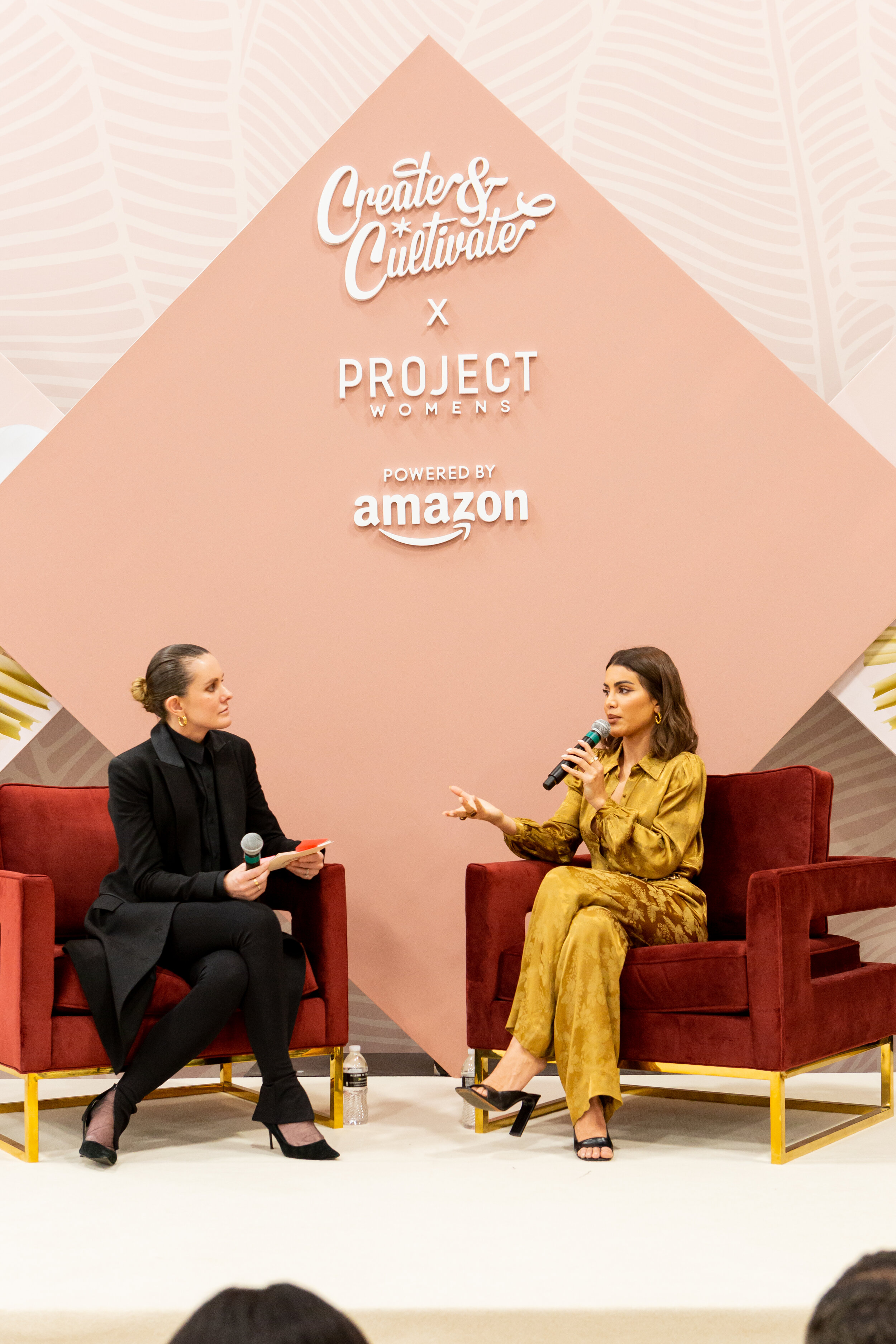
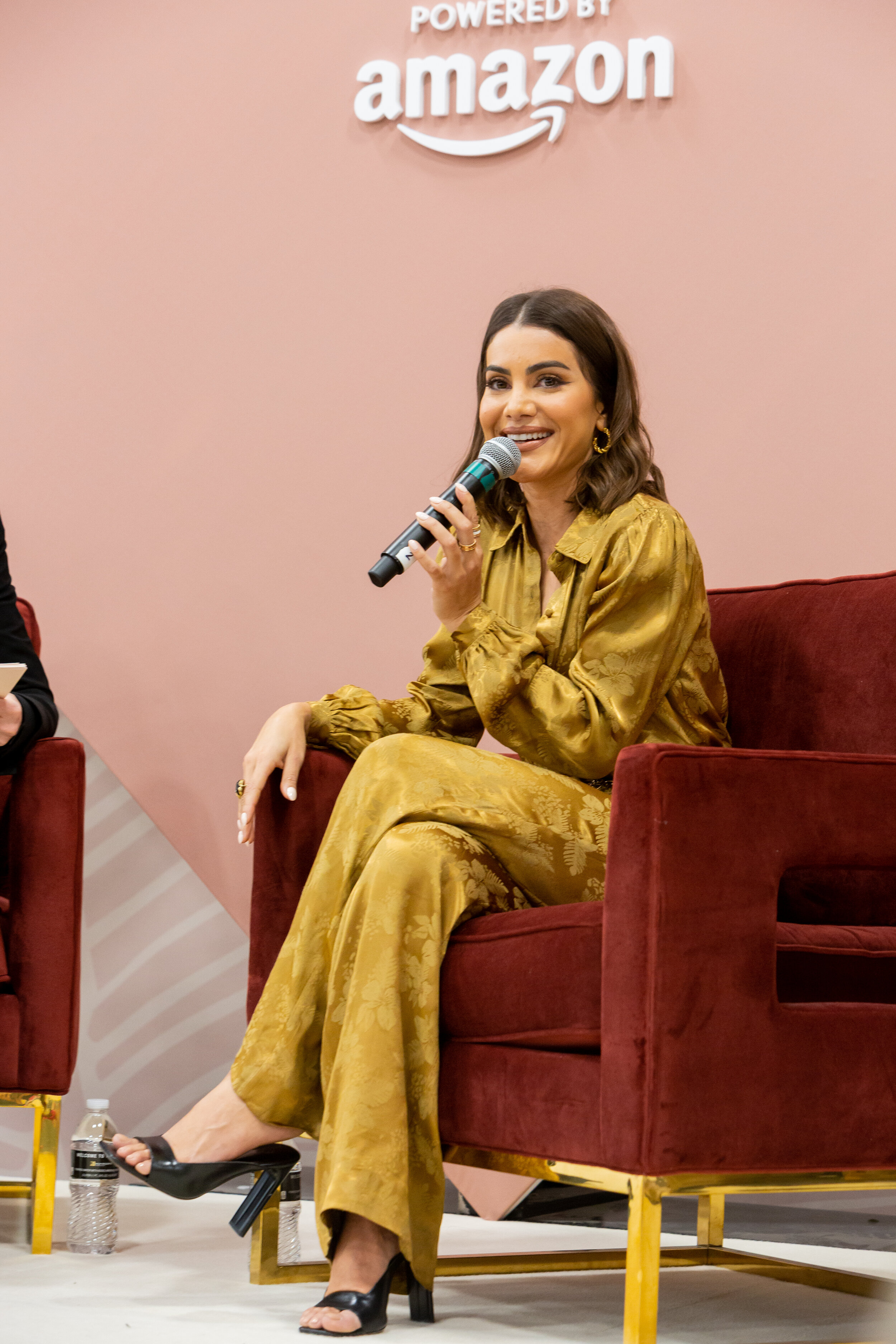
Camila Coelho, Brazilian-American fashion and beauty entrepreneur and founder of the hit Camila Coelho Collection
“In high school, I felt very different and I didn’t fit in. That affected me back then but also made me stronger.”
“My mom said, “Camilla, you will stand out by being different.” and that stuck with me.”
“I’ve always been super proud of my Brazillian heritage and I always wanted people to accept my culture.”
“The less production you do the better a video performs. People want more real-life and less edited content. All you need is an iPhone and good light.”
“One thing that really helped me, in the beginning, was that I was on every platform, even if I was sharing the same content on all of them. It is very important to be on everything. I just joined TikTok.”
“As long as you’re happy and having fun with social media, do it. If it’s stressing you out don’t.”
“I have never paid for any boosting. I’m really proud to say that I never have. I really believe in good content and it’s better to prioritize content rather than to pay for it.”
“The first and most important part of achieving our goals is to write it down, say it out loud, and look yourself in the mirror and say I am going to achieve this. You have to believe in what you’re saying. Our words have so much power, so much more than we think. You really have to believe in it.”
“As a brand, especially in the beginning, you have to listen to everyone, because you want your brand to be for everyone.”
“We can always grow by listening to our consumers.”
“If you’re doing something that you’re passionate about its going to be worth every second. You are going to be stressed but if you love what you do you will be thankful every day that you are doing it.”
“As a boss, I’ve learned how to express myself more. In the beginning, I had a hard time expressing myself especially things I wasn’t happy with. I think I’m a kind boss but now I know how to express myself without hurting someone’s feelings or being ignorant.”
“Don’t be scared to fail. Failure is part of our life. If you really are passionate, do it. It won’t be easy and you will have struggles but if you believe in something, do it.”
“I would say to myself in the early stages, don’t have FOMO or feel less than anyone else. With social media, you’re constantly seeing everyone doing everything and you’re feeling like you have to do what everyone else is doing. Focus on yourself more than other people. That’s a great way to be more unique and more creative.”
“The biggest sacrifice I’ve made for my career is giving up weekends and nights with my friends.”
“I feel the most fulfilled when I accomplish a goal.”
“My best life hack is to be positive even when everything is going wrong.”

"Be That Shoulder to Lean on for the Next Woman" and More Empowering Moments From Our LA 2020 Conference
Mic-drop moments courtesy of Jessica Alba, Eva Mendes, Lauren Conrad, and more.
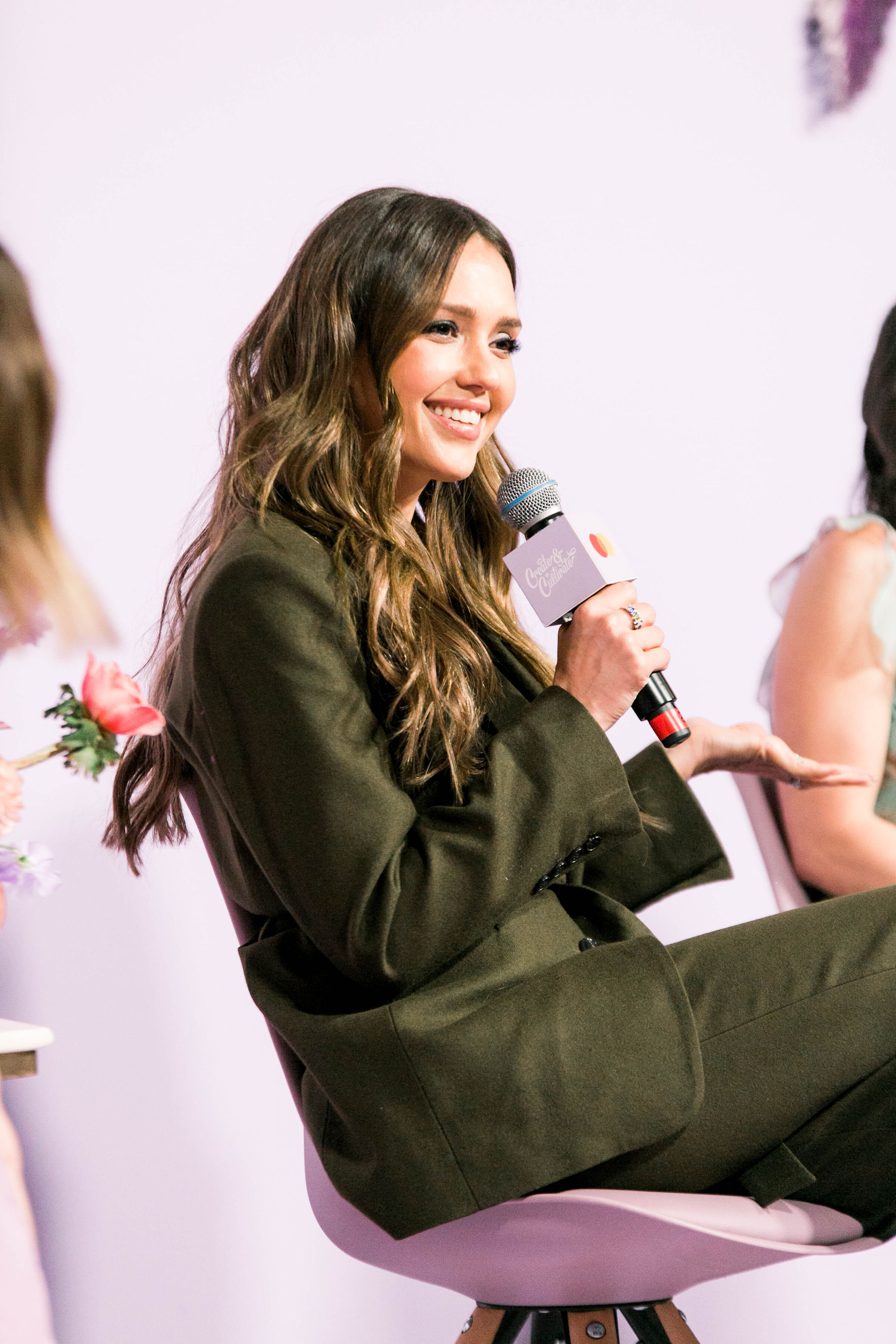
On February 22nd, we brought our biggest conference of the year to our hometown, Los Angeles. Attendees were armed with their boss babe energy and ready to be inspired by all the panels, keynote, and pop-ups that rocked our socks off. Over a thousand amazing women (and a few men) joined us at the transformed Rolling Greens Nursery downtown for all the mic-drop moments.
We learned from the greatest about everything from how to build billion-dollar businesses (yes, with a capital B) to the future of the wellness industry to what true inclusivity in the boardroom looks like, and so much more. Between hearing from our heroes (hello, Jessica Simpson, Eva Mendes, and Jessica Alba), eating delicious food, sipping on oat milk lattes, shopping the pop-up market, and, of course, snapping the most Instagram-worthy photos, the day was certainly one to remember.
If you missed this one, don’t stress, we captured it all for you. Read on for all the inspirational moments and quotes worth adding to your vision board.

Morning Keynote: On Building a Billion-Dollar Business With Jessica Simpson
Panelists:
Jessica Simpson | Author, Entertainer, and Entrepreneur
Moderator:
Jaclyn Johnson | CEO and Founder, Create & Cultivate
On making mistakes…
"We are all figuring it out and that’s okay—figuring it out is the fun part. It is through the mistakes that we can find the leader within us."
On asking for help...
"It’s important to put ego aside and look to someone who can help guide you who’s really passionate about what they do."
On being generous with compliments...
"I know how good a compliment feels—it can really change your day."
On designing for women of all sizes…
"I don’t ever want to exclude a customer. I’ve been every size there is, and in those moments, I felt I deserved a nice outfit."
On leading a team...
"I have a team of just eight women, and these ladies are all so unique and effortlessly themselves, and in every approval meeting, everyone leaves their ego at the door."
"I don’t look at myself as the boss. In so many ways, they teach me."
On wearing heels...
"The taller I feel, the more confident I feel."

Mirror Mirror: An In-Depth Dive Into the Ever-Evolving Business of Beauty, Health, and Wellness
Panelists:
Monica Veloz | Content Creator
Stephane Colleu | President and CEO, Dr. Brandt Skincare
Sarah Kieny | Senior Director of Marketing, Not Your Mother’s Haircare
Karilyn Anderson | Vice President, Digital, Bliss
Kiana Reeves | Chief Brand Educator, Foria
Moderator:
Sara Tan | Senior Fashion and Beauty Editor at Bustle
On taking risks…
“Sometimes you lose, but you learn.” - Stephane Colleu
On marketing strategy...
"One of our main focuses this year is to create more of an emotional connection with our customers." - Sarah Kieny
On the next generation of shoppers...
“She wants to know the brands and she wants the brand to know her.” - Karilyn Anderson
On building a brand with purpose…
"If you’re making products that are profoundly impacting people's lives in really deep ways, you’ll be successful." - Kiana Reeves
On partnering with brands...
"I’ve been extremely grateful to work with people and brands who want me to be myself." - Monica Veloz

Secure the Bag: How to Pitch for Profit, Raise Money for Your Business, and Land Six-Figure Deals
Panelists:
Lori Harder | Author, Speaker, Podcast Host, and Founder & CEO
Kosha Shah Eisenberg | Licensing and Ventures, UTA Ventures
Shiza Shahid | Co-Founder, Malala Fund, Our Place, & Now Ventures
Raina Penchansky | Co-Founder & CEO, Digital Brand Architects
Sherry Jhawar | Co-Founder, Blended Strategy Group
Ginger Siegel | North America Small Business Lead, Mastercard International
Moderator:
Bhavagna Bhattiprolu | Vice President, Blended Strategy Group
On networking…
“Everyone has access to a network, there isn't a magical one that others have and you don't, you just have to go out and build it” - Kosha Shah Eisenberg
“Everything in my life has come from cold emailing. My business partner cold emailed me and now we own a business together” - Sherry Jhawar
On finding investors…
“Once the big funds miss out on deals with women, they realize they need to start investing in women and take them more seriously.” - Shiza Shahid
On not having it all figured out...
“Something that has freed me recently, and I wish I knew when I first had this idea, was how little people actually know when they launch their ideas.” - Lori Harder
On failing...
“Failure can come in if you only focus on passion. Because even if you have great passion, you still need to get up every day and do the dishes.” - Ginger Siegel

But Make It Fashion: How to Sell Style and Make a Splash in the Fashion Industry
Panelists:
Anine Bing | Founder & Chief Creative Officer, Anine Bing
Clare Vivier | Founder & CEO, Claire V
Emily Jackson | Founder and Creative Director, IVL Collective/Influencer/Ivory Lane
Rachel Pally | Founder and Designer, Rachel Pally
Denise Vasi | Digital Entrepreneur and Founder, Maed
Lindsay Albanese | Founder & Inventor
Moderator:
Natalie Alcala | Founder, Fashion Mamas
On taking the leap...
“If you know your passion, you can’t fight it. At a certain point, you have to take the leap.” - Clare Vivier
"What’s the worst that can happen? Someone says 'no?' Ask someone else." - Rachel Pally
On building a brand/launching a business...
"You have to have a really good idea and be ready to roll your sleeves up because it’s really fucking hard to build a brand." - Anine Bing
"I just knew that I wanted something that wasn’t out there. I wanted my activewear to be fashion-focused and I didn’t want to compromise." - Emily Jackson
2020 vision…
“I’m constantly reminding myself to enjoy the journey. It’s not always celebrating the shining moments.” - Lindsay Albanese
On self-care…
“Self-care is just as important as that client meeting.” - Denise Vasi
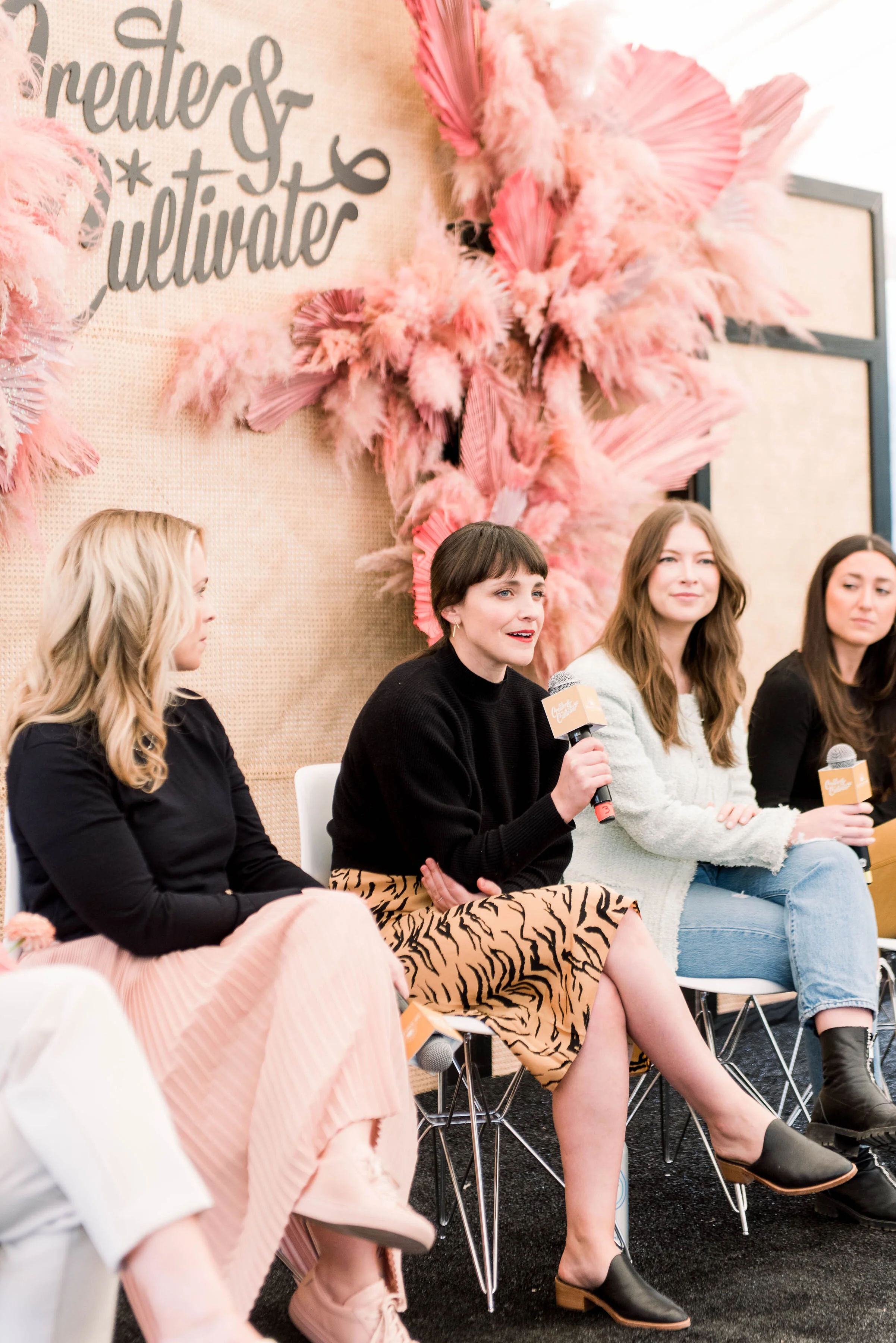
Bossing Up: How to Build a Brand, Market, and Create a Culture That Consumers Love While Making Money
Panelists:
Rachel Curry | Director, Marketing Owned Channels, Volvo
Emily Zwerner | Director, Marketing Communications, OLLY
Dianna Cohen | Founder & CEO, Crown Affair
Kristyn Clark | Director of Brand Communications, Shake Shack
Kim Walls | CEO & Co-Founder, Furtuna Skin
Becca Tilley | Content Creator & Podcast Host, “Scrubbing In”
Colleen Stauffer | Global Business & Creator Marketing, Pinterest
Moderator:
Ali Grant | Founder, Be Social Group
On overcoming the fear of asking for help…
“Ask for help. There are so many people in the industry that seem intimidating, but if you ask for help, they are so willing to give it to you. Don’t be scared to ask for help” - Becca Tilley
On trusting in your own abilities…
“I’ve realized how important it is to trust in your own abilities. You realize no one really knows what they're doing, so when you get comfortable with your skills and start trusting yourself it changes the game.” - Kristyn Clark
On building a brand with purpose…
“Things happen when you know you have an idea you are passionate about.” - Dianna Cohen
On when you feel like a boss…
“When my team gets recognized, I feel like a boss. When the credit goes to them, it makes me feel so good.” - Rachel Curry
On launching Olly in a crowded market…
“Yeah, the category is saturated, but there had been no change. It was a market that was ripe for disruption.” - Emily Zwerner
On transparency…
“Transparency really means having standards and defining standards so you can communicate it in a way that people get immersed in it.” - Kim Walls
On telling your story…
“Tell your origin story. That’s really important when building a brand. It makes it really human and brings the human element to the brand.” - Colleen Stauffer

Triple Threat: Meet the Multi-Hyphenate Moguls Making It Happen
Panelists:
Keltie Knight | ET Correspondent & Co-Creator LadyGang Podcast
Stassi Schroeder | New York Times Bestselling Author, Reality TV Star, & Podcast Host
Gabi Gregg | Body-Positive Designer & Influencer
Mamrie Hart | Comedian, Author, & Co-Host This Might Get Weird Podcast
Rachel Parcell | Fashion Blogger & Designer, Pink Peonies
Alyson Stoner | Actress, Dancer, and Podcast Host, Simplexity
Katrina Scott | Co-Founder, Tone It Up
Moderator:
Reesa Lake | Executive Vice President of Brand Partnerships, Digital Brand Architects
On choosing a multi-hyphen career path…
"A hobby isn’t a hustle, they’re not the same thing." - Keltie Knight
On being patient…
“The glamorous moment is at the end. Don’t feel bad that it will take a long time to get anything made.” Mamrie Hart
On building a team…
"I love to do everything myself, but that is one of the biggest weaknesses of an entrepreneur." - Katrina Scott
“Network, put yourself out there, connect with people. You can’t do it alone, you need to utilize incredibly talented people to get to the next level." - Rachel Parcell
On navigating self-doubt…
“It takes time and patience to make money.” - Stassi Schroeder
On simplexity…
“It was about creating a middle ground. To give a microphone to people doing the real work, I wanted to be able to shift the attention to greater issues.” - Alyson Stoner
On building a community-first brand…
"If you’re looking to be the next Instagram influencer, creating your vision first and letting people get to know you, and launching your product much later, is the best way to go." - Gabi Gregg
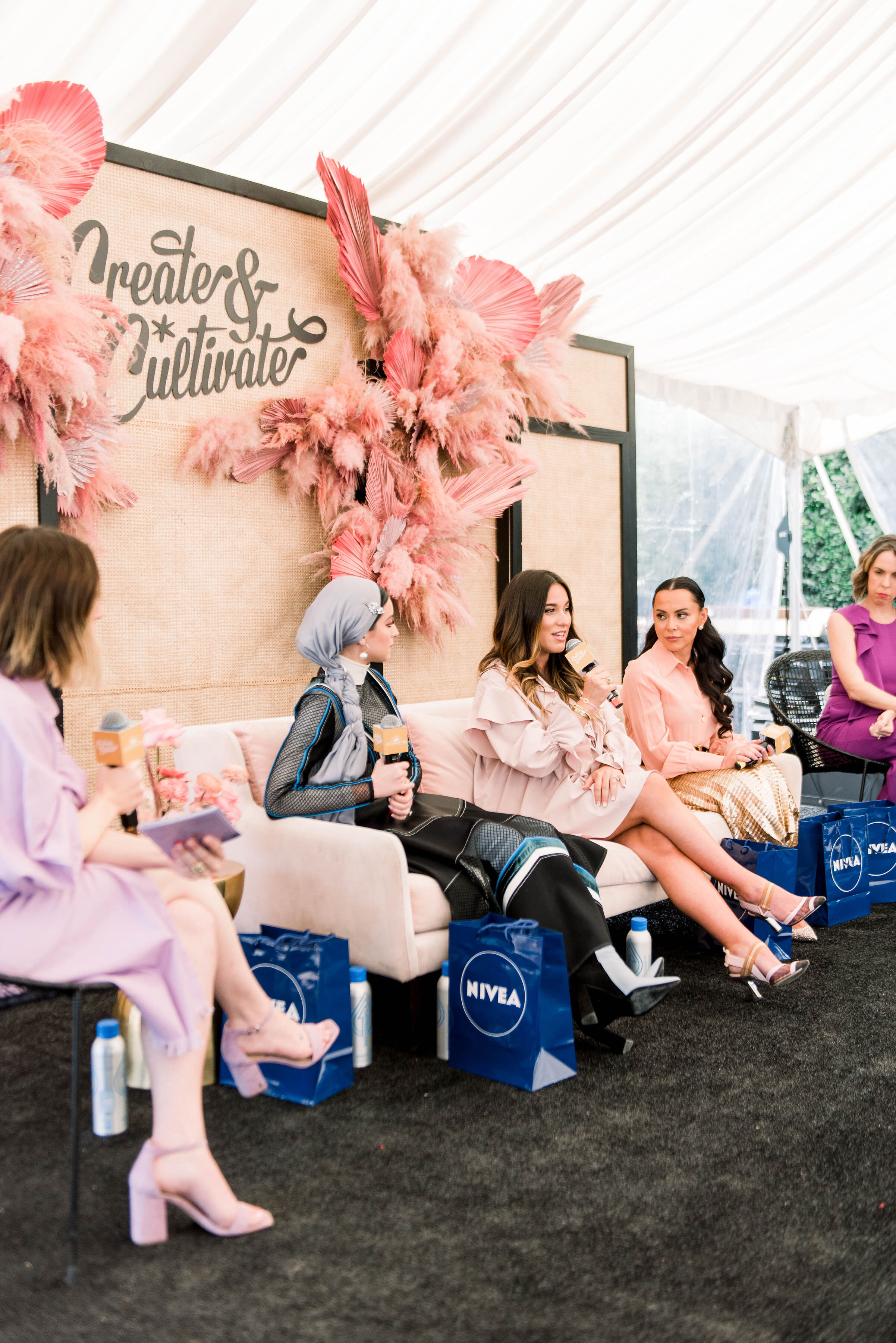
Soft Is Strong: How Taking a Softer Approach Can Be Positive and Have a Powerful Impact on Your Career—Powered by Nivea
Panelists:
Noor Tagouri | Rethink Soft Storyteller, Journalist, Touring Speaker and Entrepreneur
Jaclyn Lindsey | Co-Founder & CEO, Kindness.org
Adrienne Bosh | CEO, Activist, Philanthropist, & Entrepreneur
Gina Ybarra | Content Creator, Hunt for Styles
Moderator:
Jaclyn Johnson | Founder & CEO, Create & Cultivate
On leading with kindness…
“When you are leading in a kind capacity, you are more respected. There is an effect on employee engagement and wellbeing when you lead with kindness.” - Jaclyn Lindsey
On positivity on social media…
“I like to share positivity and good energy because I believe it comes back to us.” - Adrienne Bosh
On a strength that is seen as a weakness…
“I am extremely patient and my blood runs slow. People think it's a bad thing, but I just try to think before I talk so I don’t hurt anyone.” - Gina Ybarra
On the future of media…
“Media shapes the way we view people, culture, and society. Because of this, we have a huge responsibility.” - Noor Tagouri

OLLY Office Hours With Antoni Porowski
Panelist:
Antoni Porowski | TV Personality, Actor, Author, and Home Cook
Moderator:
Kirbie Johnson | Reporter and Co-Host, Gloss Angeles Podcast
On pursuing your passion...
"Even if you don’t believe in yourself, know what you’re interested in."
"Work is important but our lives are so fucking short. You’ve got to be passionate about it."
On organically partnering with OLLY…
“We were heading to Tokyo to film Queer Eye and I picked up a sample of the OLLY Sleep gummies because I’m a terrible plane sleeper, and I posted an Instagram story and they ended up contacting me about it because that’s how social media works.”
On meditating each day…
“It’s a little moment with myself where I try to get centered. Five minutes are better than no minutes.”
On social media…
“When you put yourself out there, that part of you is no longer yours. But at the same time, people who are watching want you to be organic.”
On mental health…
“I think pursuing mental health is just connecting with other people and having an empathetic approach.”
My 2020 vision is ...
“Taking what I’ve learned from Queer Eye, in that being of service to others is what my purpose is and trying to implement that in my personal life, working life and making sure that 90% of what I do has meaning and that I’m contributing to the world.”

2020 Vision: A Conversation on Wellness in the New Decade, Powered by iHERB
Panelists:
Britney Vest | Founder, Fitty Britttty, and Co-Founder, Confident Collective
Dr. Deepika Chopra | Optimism Doctor, Happiness Researcher, and Founder, Things Are Looking Up
Lauren Kleban | Founder and CEO, LEKfitKirbie Johnson | Reporter, Producer, & Podcast Co-Host, Gloss Angeles
Kirbie Johnson | Reporter and Co-Host, Gloss Angeles Podcast
Moderator:
Suzanne Hall | Co-Founder and Editor in Chief, The Chalkboard
On body positivity…
“For me, body positivity is truly learning to love yourself every day exactly as you are in this moment” - Britney Vest
On taking work home...
“You're devaluing yourself because you are only paid to work from 9-5.” - Kirbie Johnson
On mental health…
“I learned very quickly to keep blinders on—don’t be in a position where you compare yourself to others.” - Lauren Kleban
On being an optimist…
“Being an optimist doesn’t mean skipping around fields or always having a perfect day, it’s about being someone that sees setbacks as temporary and knowing you have the power to overcome them.” - Dr. Deepika Chopra

Inspired Inclusivity: Creating Cultures and Companies Where Everyone Belongs
Panelists:
Nyma Tang | Beauty Influencer & Inclusivity Advocate
Adrienne Houghton | Singer, Actress, Talk Show Host, Lifestyle Personality, & Entrepreneur
Shahd Batal | Model, YouTube Star, & Influencer
Arnell Armon | YouTuber & Influencer
Sunita V. | Influencer
Moderator:
Randi Bryant | Sista-Intendent, Diversity and Inclusion Strategist
On the future of inclusivity...
"We need to stop taking baby steps. I want to jump, I want to leap. I want to see everyone represented." - Shahd Batal
On having the courage to make your voice heard…
“Anytime that I’ve done something that was genuine, kept it real, that’s when doors would open for me.” - Adrienne Houghton
On representation...
“I think brands really need to look internally and ask, ‘Why haven’t we created these shades? Why are they ashy? And do we have people in boardrooms who can speak up?’” - Nyma Tang
"It definitely helps when you see another person with their confidence and how they represent themself." - Sunita V.
On representation in work culture…
“You’re hiring black influencers but there are no black people on your team. Actually hire us and work with us.” - Arnell Armon
From Side Hustle to CEO: How to Quit Your Day Job and Start Your Biz
Panelists:
Ellyette Gheno | CEO & Founder, BootayBag
Hillary Kerr | Co-Founder & Chief Content Officer, Who What Wear
Marianna Hewitt | Co-Founder, Summer Fridays
Tera Peterson | Esthetician & Co-Founder of NuFACE
Jesse Margolis | Founder, Overheard
Tiffany Paul | Founder & CEO, Slept
Moderator:
Yola Roberts | Host of I Suck at Life Podcast and Senior Contributor, Forbes
On taking risks…
“Taking the risk isn’t always pretty or safe.” - Tiffany Paul
“Don’t sit and ponder too long about what you’ll do, otherwise you’ll never get off the ground.” - Tera Peterson
On raising money...
“When raising money, you should do it slowly—it’s like dating, you have to meet as many people as possible and really get to know who will work for you.” - Marianna Hewitt
On putting in the time…
“You owe it to yourself to make the time for your business and see where it goes.” - Hillary Kerr
On advice for hiring…
“Don’t hire your best friends.” - Ellyette Gheno
On social media saturation…
We are fatigued by all the content we see, but it becomes clearer when it is authentic. -Jesse Margolis

Powerhouse Panel: Meet the Women Shattering the Glass Ceiling and Owning the C-Suite
Panelists:
Suzanne Lerner | Co-Founder & President, Michael Stars
Katie Jackson | Senior Vice President of Corporate Social Responsibility, Jackson Family Wines
Elizabeth Chambers Hammer | Founder & CEO of BIRD Bakery
Daria Burke | CMO, Just Fab
Sona Gasparian | Founder, Persona Cosmetics
Deepica Mutyala | Founder & CEO, Live Tinted
Julie Smolyansky | CEO, Lifeway
Moderator:
Sacha Strebe | Editorial Director, Create & Cultivate
On sending cold DMs…
“You never know who will respond and what it will lead to. That’s how Bobbi Brown became an investor in my company, I just DM’d her.” - Deepica Mutyala
On challenges...
“Every challenge and every lesson is getting you where you’re going.” - Elizabeth Chambers Hammer
On tapping into your community...
“We have ‘Meet the VIP’ events all the time, we bring women into our office all the time and ask them what they want.” - Daria Burke
On self-funding a business…
“We used our savings, we actually had just gotten married and we were saving money for a house, and decided to use that money to launch the business instead.” - Sona Gasparian
On sustainability…
“The reason we do it is because we believe it is the right thing to do.” - Katie Jackson
On building a social conscious brand…
“Think about something you care about, think about something your customers care about, that will be the start of what you can do.” - Suzanne Lerner
On vision for the company…
“The gut is having a moment and there is a party happening in the gut.” - Julie Smolyansky

From Influence to Industry: How These Women Are Turning Their Platforms Into Profit
Panelists:
Tia Mowry | Actress, Chef, Producer, Author, Wife, & Mother
Chriselle Lim | Influencer & Entrepreneur
Heather Dubrow | Performer, Author, Entrepreneur, & Podcast Host, Heather Dubrow's World
Desi Perkins | Digital Content Creator
Jera Foster-Fell | Content Creator
Moderator:
Zuri Hall | Entertainment Reporter, TV Personality, and Actress
On connecting with followers…
“Letting your guard down is when you create magic with your community.” - Jera Foster-Fell
On evolving…
“I don’t like when people say ‘stay in your lane,’ you can be in every lane as long as it’s who you are.” - Heather Dubrow
On where to focus your financial energy…
“Invest your energy and money into the people around you. It’s probably one of the only reasons why I’m still here.” - Chriselle Lim
On staying true to yourself...
“I've never been the person to follow trends, I just stay true to who I am. Everyone is telling you to be a certain way to make money, and I've never bought into that.” - Tia Mowry
“Sharing things that aren't picture perfect is important.” - Desi Perkins

WorkParty Live: Gail Becker, Caulipower Founder & CEO
Talent:
Gail Becker | Founder & CEO, Caulipower
Moderator:
Jaclyn Johnson | Founder and CEO, Create & Cultivate
On raising money…
“Just because you can raise more money doesn’t mean that you should. It’s just going to make you more beholden and tie more constraints on you.”
On hiring...
“One mistake that entrepreneurs often make is that they think they have to know everything. You know what you know and you hire people to fill in the gaps.”
On betting on yourself...
“I took a risk and bet on myself. That’s the hardest part. If you don’t bet on yourself, no one else will.”
On working a side hustle and a 9-5…
“I was working in corporate America and worked my way up to the top of the firn and didn't like the view.”
“I left my job and hired consultants, and basically, I paid them to teach me. I knew enough to hire people who knew more than me.”
On double standards...
“One thing I can assure you is there’s no man standing up and saying, ‘I’m worried about being too pushy’.”
On loyalty…
“Loyalty early on means everything.”

Keynote: Eva Mendes & Greg Scott
Panelists:
Eva Mendes | Actress and Fashion Designer of the Eva Mendes Collection in Partnership With New York & Company
Greg Scott | Chief Executive Officer, RTW Retailwinds Inc.
Moderator:
Sacha Strebe | Editorial Director, Create & Cultivate
On career dreams...
“My dream wasn't to be an actress or a designer but to be financially independent.” - Eva Mendes
On failing…
“I don’t believe in failed businesses. When a project isn’t successful, that’s when I learn the most” - Eva Mendes
On affordability...
“I grew up here in L.A., very, very lower-middle-class, and that’s still in me. I’m not a spender, I look at price. I will always be that girl, and I like that about myself.” - Eva Mendes
On finding a niche...
“Do something that you love and do one thing really well. Solve a problem. Don’t make stuff to make stuff, make stuff to solve an everyday issue.” - Greg Scott
“The challenge is to look for something that fills a niche and do it really well. Don't go too wide.” - Greg Scott
On ambition...
"The word ‘ambition’ to me has never been a dirty word. I’m very ambitious but what I am ambitious about changes. It’s always there, it ebbs and flows.” - Eva Mendes
On inclusivity...
"I’ve always thought the fashion industry was a bit archaic in that way. I never understood why there was only one form of beauty." - Eva Mendes
On sustainability...
"In the future, customers will not be buying clothes upon clothes upon clothes." - Greg Scott

Passion, Purpose, & Profit: A Roundtable Conversation on Building Businesses With Love With Lauren Conrad, Hannah Skvarla, & Jessica Alba
Panelists:
Lauren Conrad | Designer, New York Times Best-Selling Author, Philanthropist, & Co-Founder of the Nonprofit The Little Market
Hannah Skvarla | CEO & Co-Founder of the Nonprofit The Little Market
Jessica Alba | Founder, The Honest Company
Moderator:
Jaclyn Johnson | CEO and Founder, Create & Cultivate
On building a team...
"We always look for mission-driven employees. Skill and experience can be learned but attitude and mindset can’t." - Hannah Skvarla
"If you’re really good at your job but you have a bad attitude and you’re not fun to be around the whole office can feel that." - Hannah Skvarla
"Hire someone you'd want to be stuck in an airport with for five hours." - Jessica Alba
On social entrepreneurship...
"If you do care about any social entrepreneurship, it has to be part of your concept from day one." - Jessica Alba
On paying it forward to fellow female founders...
"All you can do is work really really hard to get in a position where you can show kindness to other women." - Lauren Conrad
"Be that shoulder to lean on for the next woman." - Jessica Alba
On being a leader...
"There is no right way. I can tell you I fell on my face many times. I continue to try and learn about how to be a good leader." - Jessica Alba
On opting for a nonprofit business model...
"From day one, we just went after this as a nonprofit. Our main goal was to help women and reach as many as possible." - Lauren Conrad
See more photos from the event!
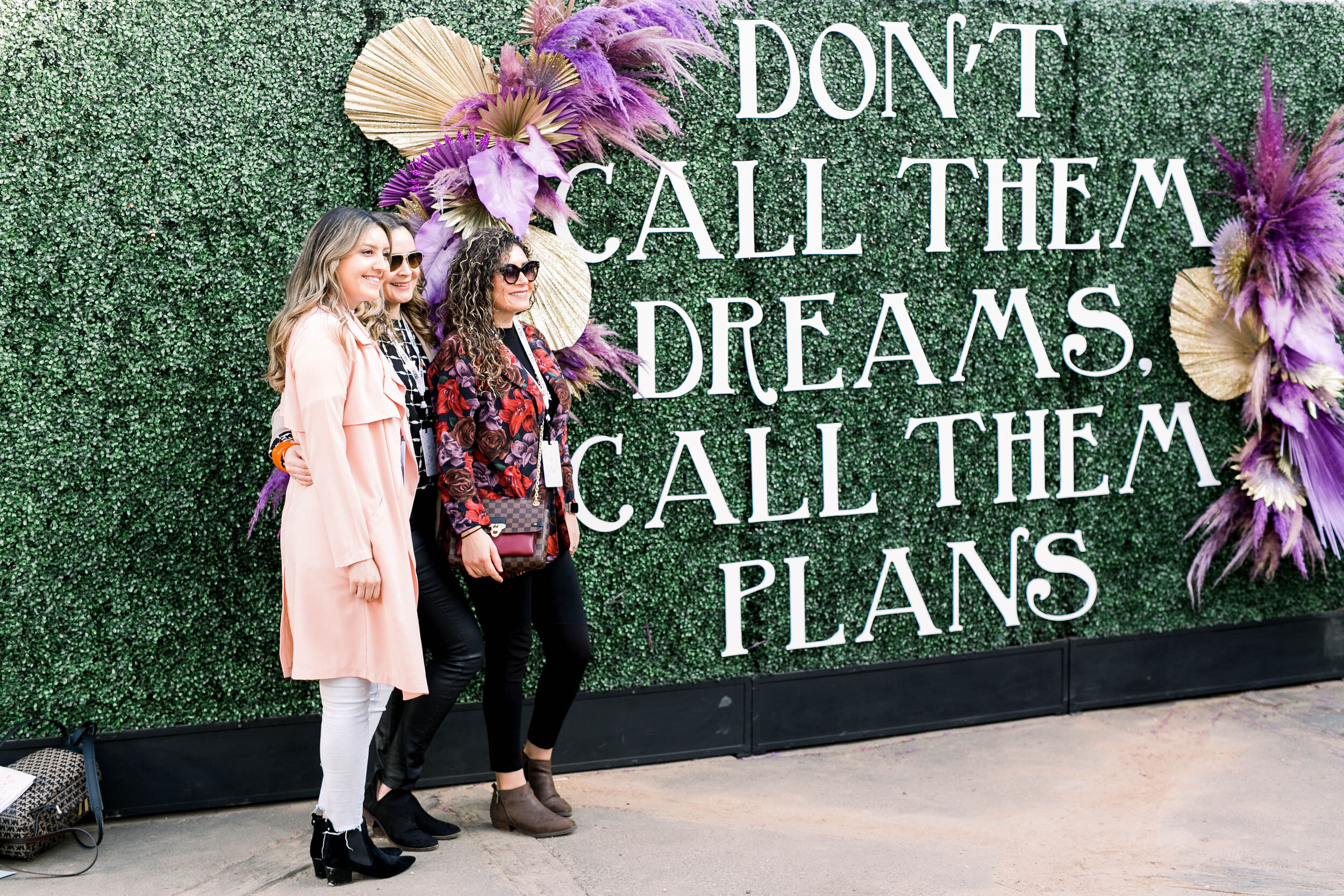

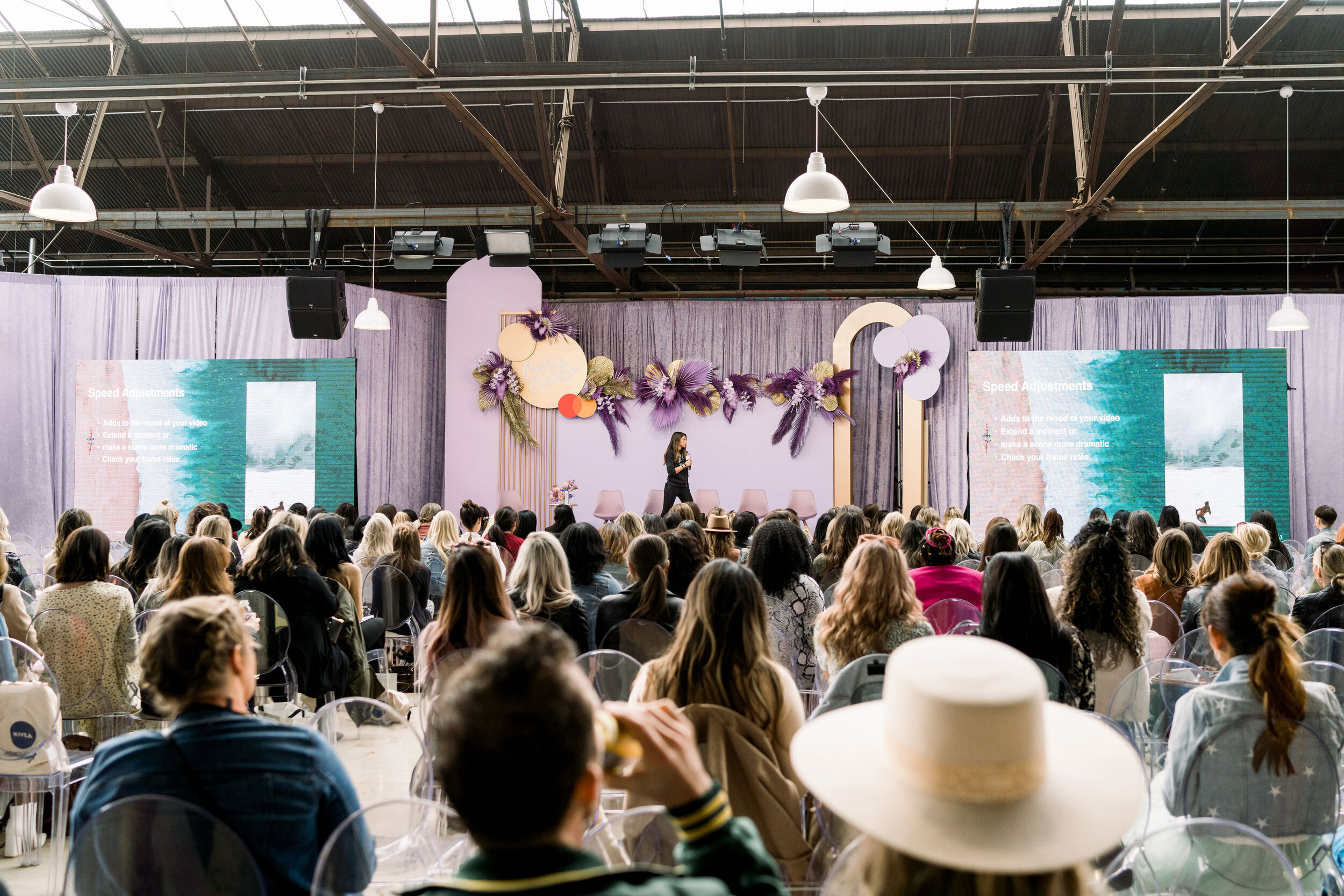
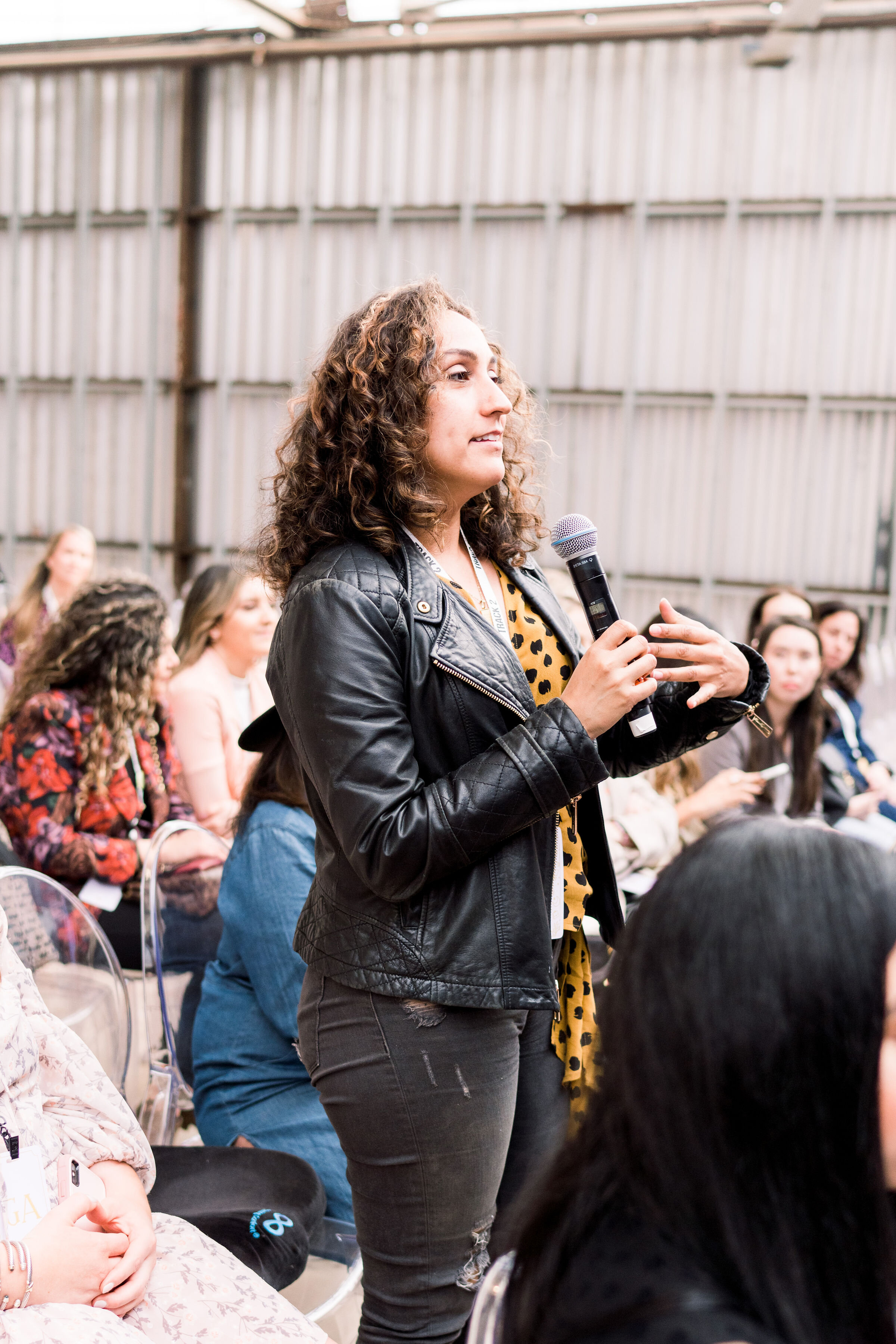
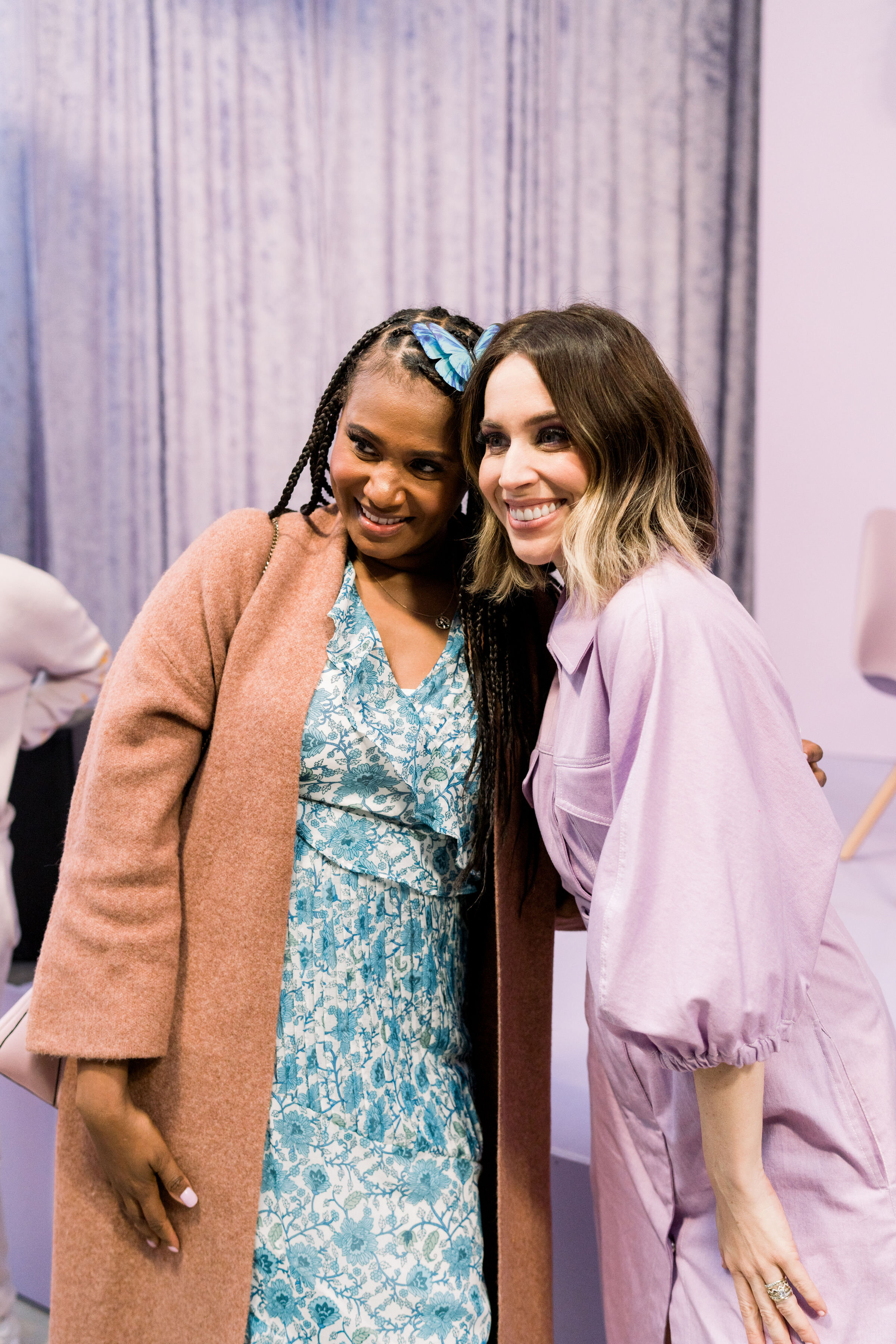
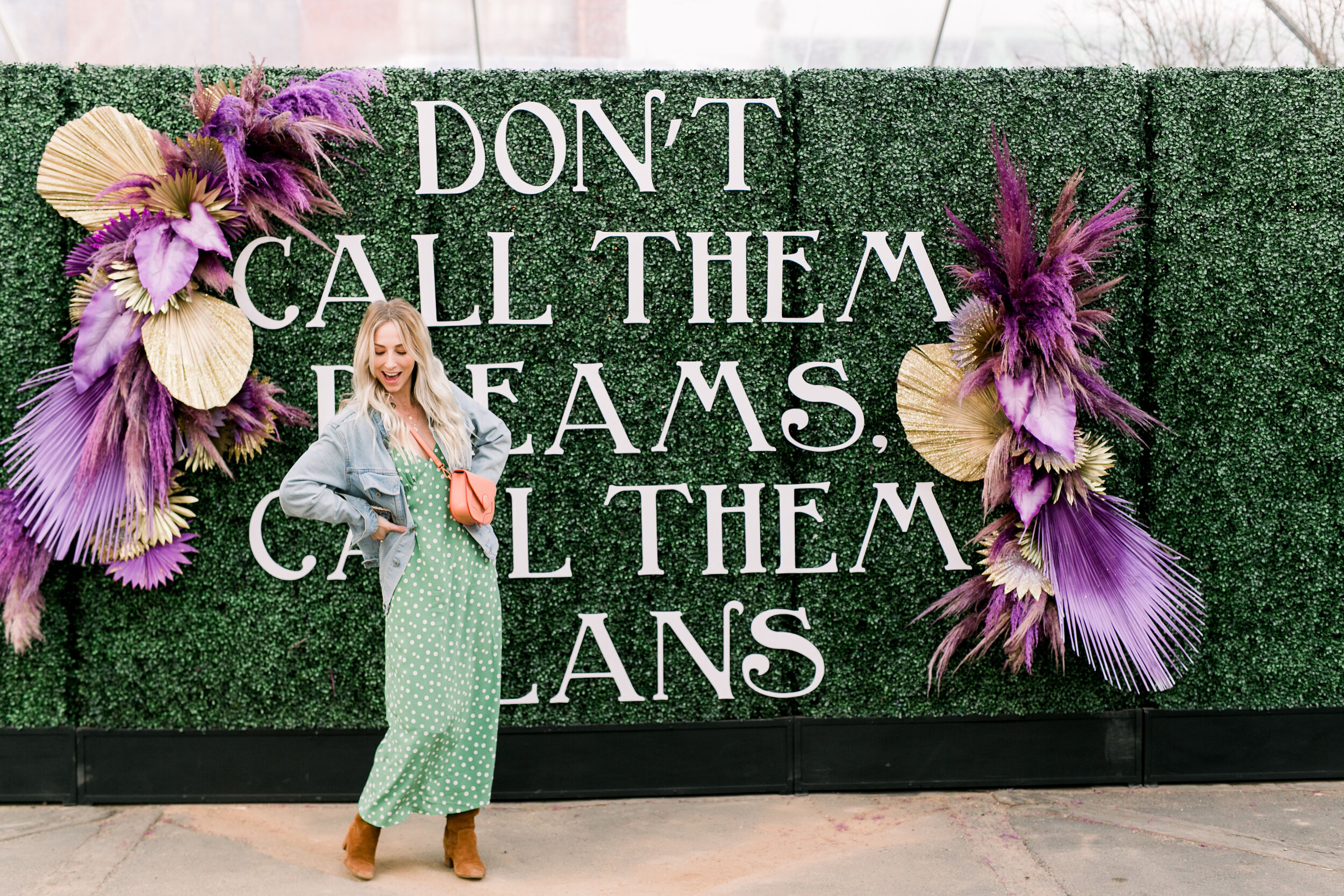
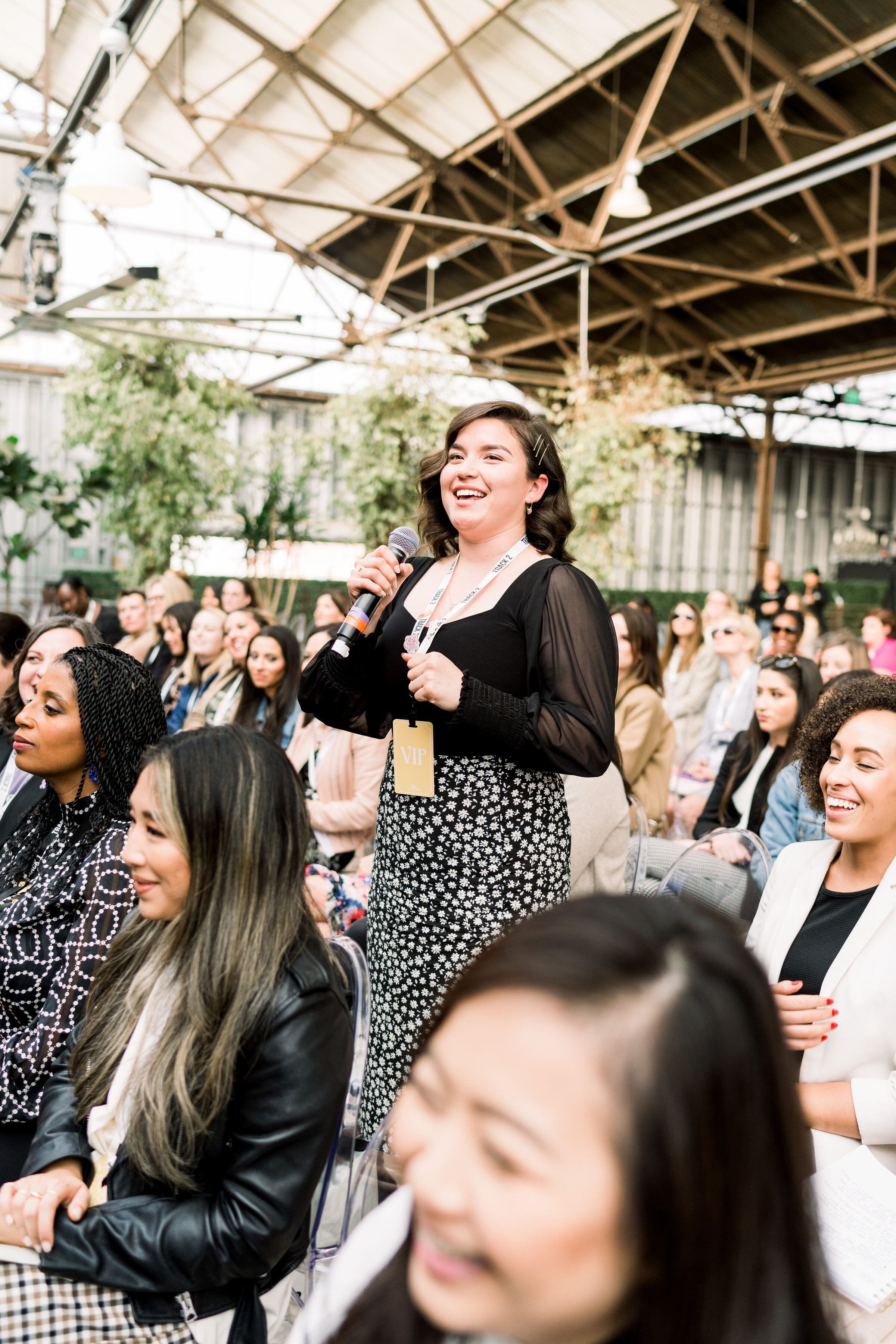
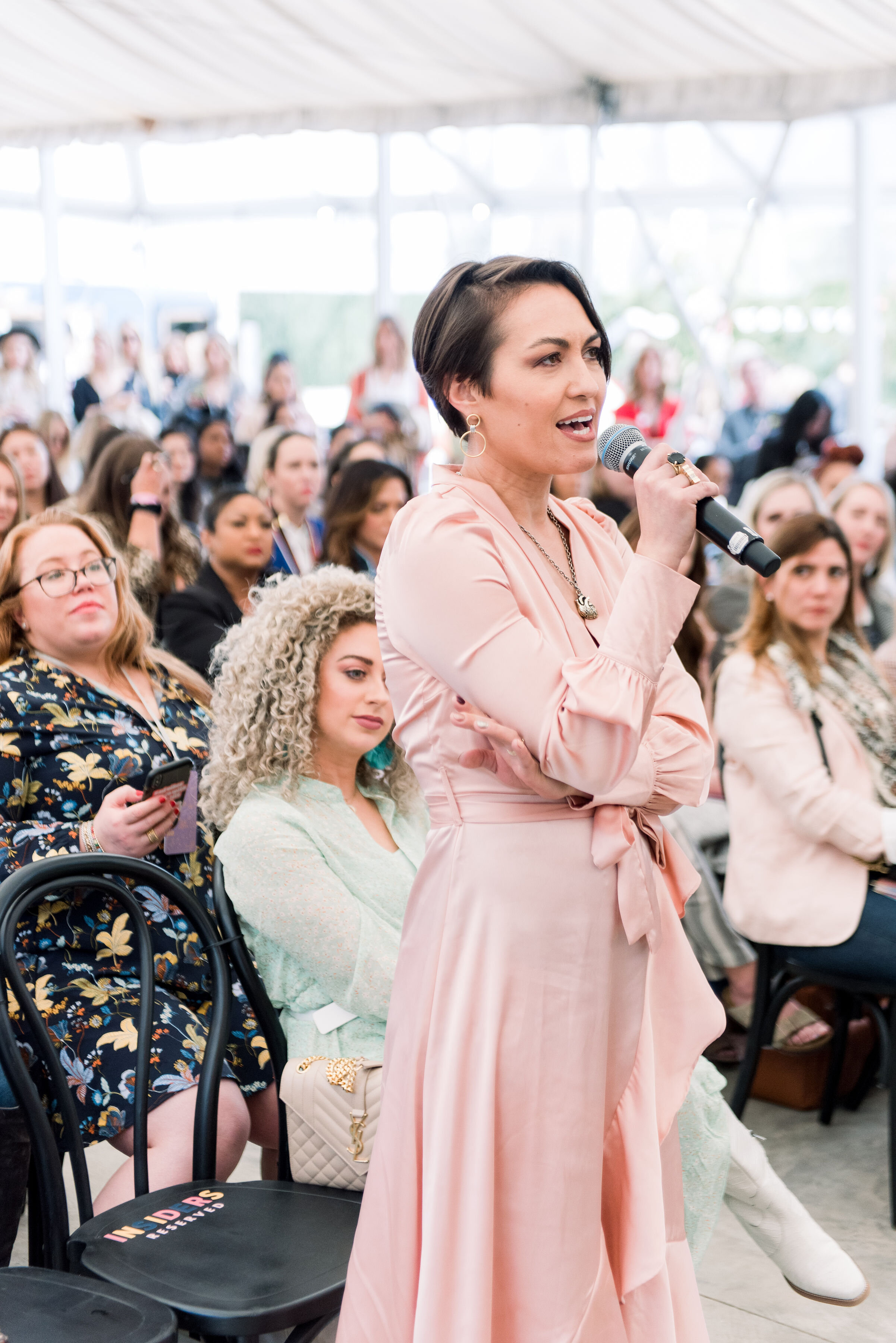
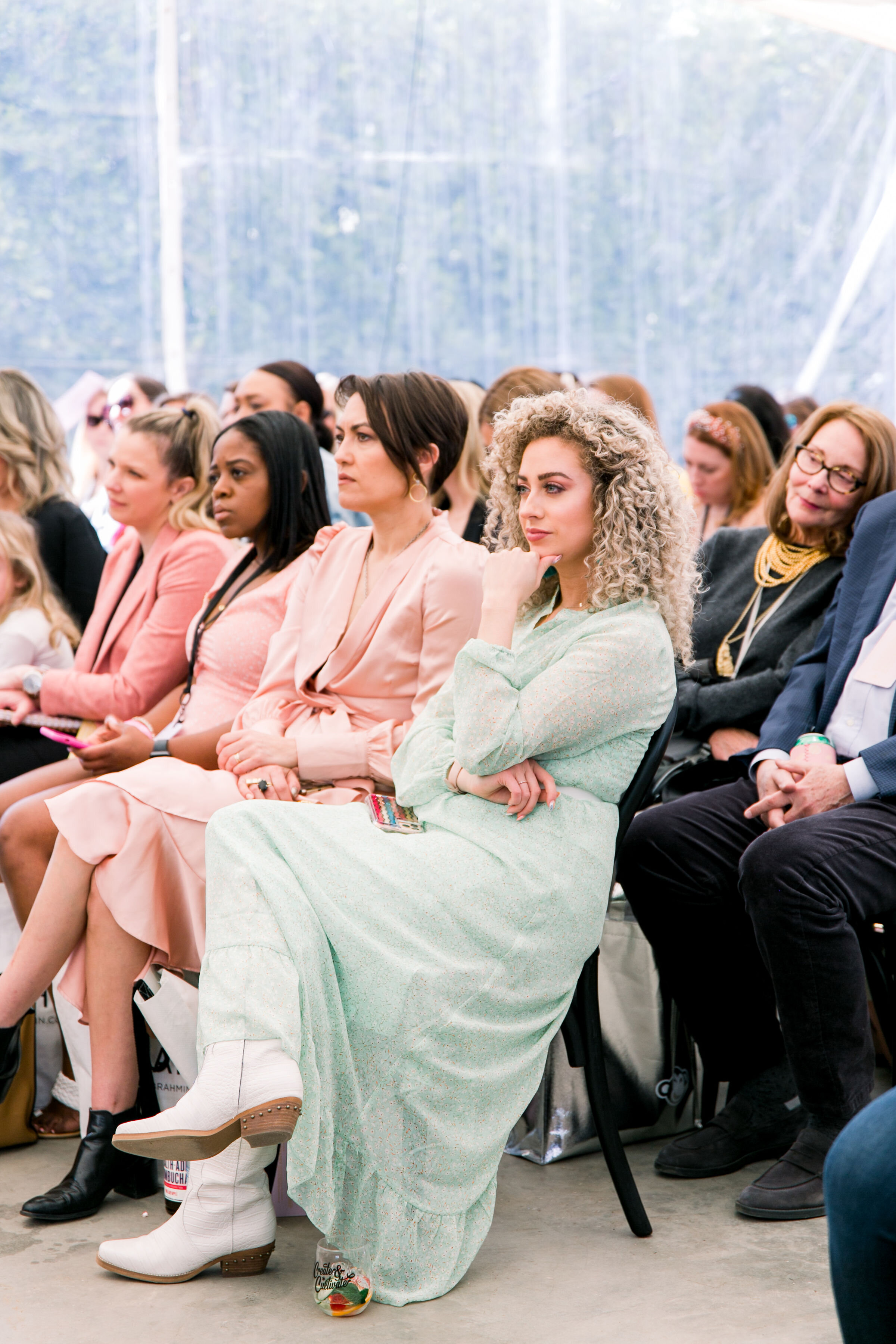
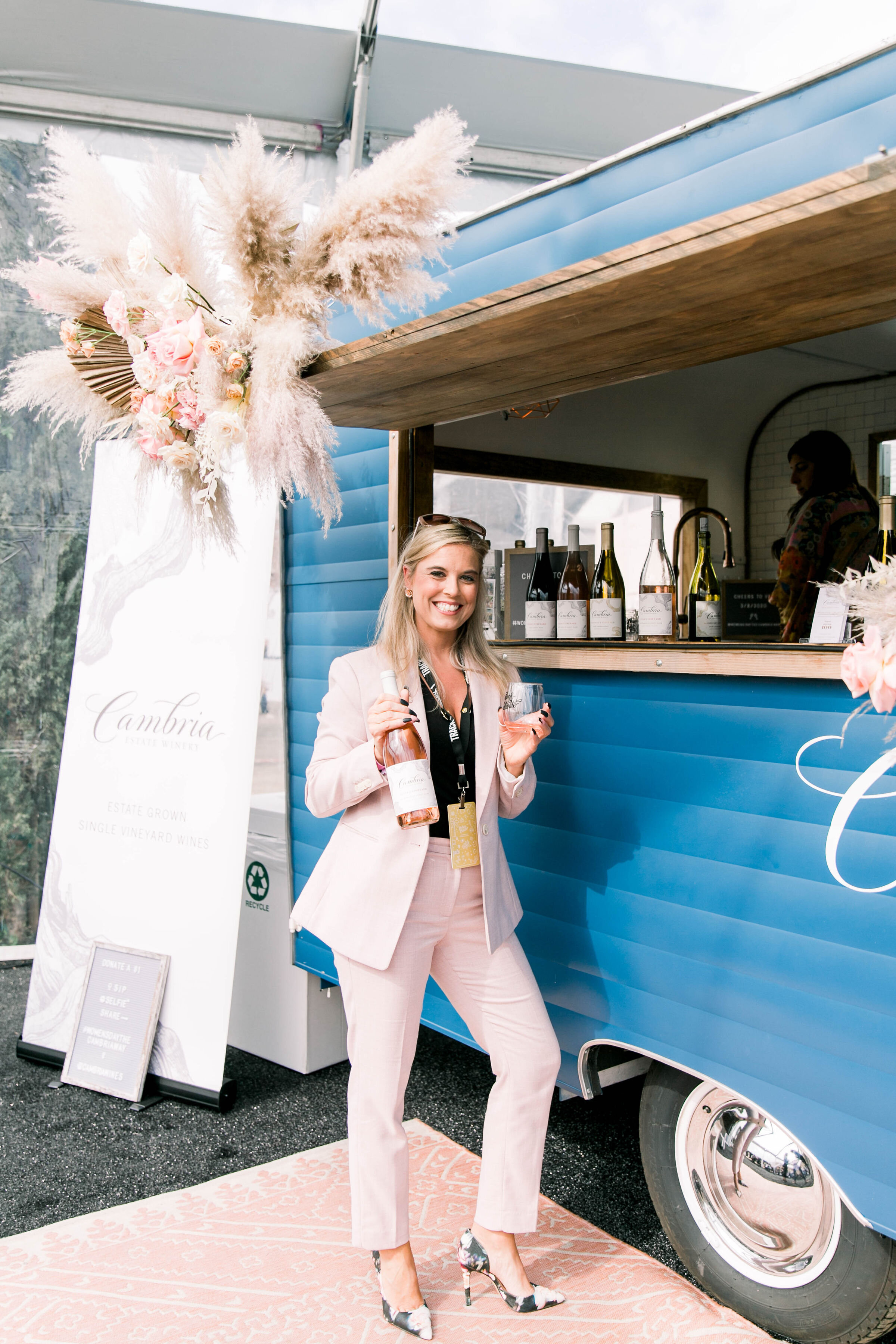


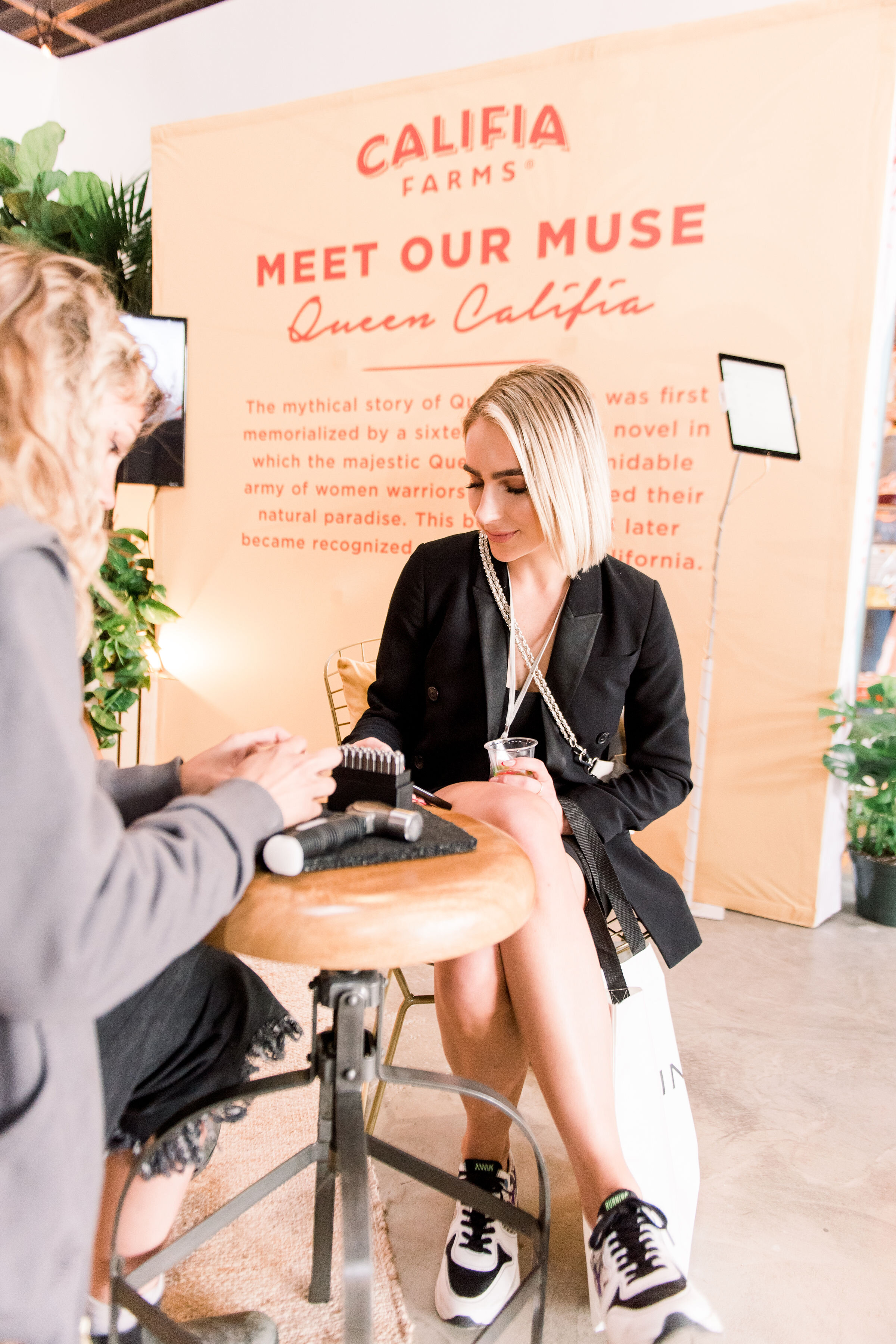
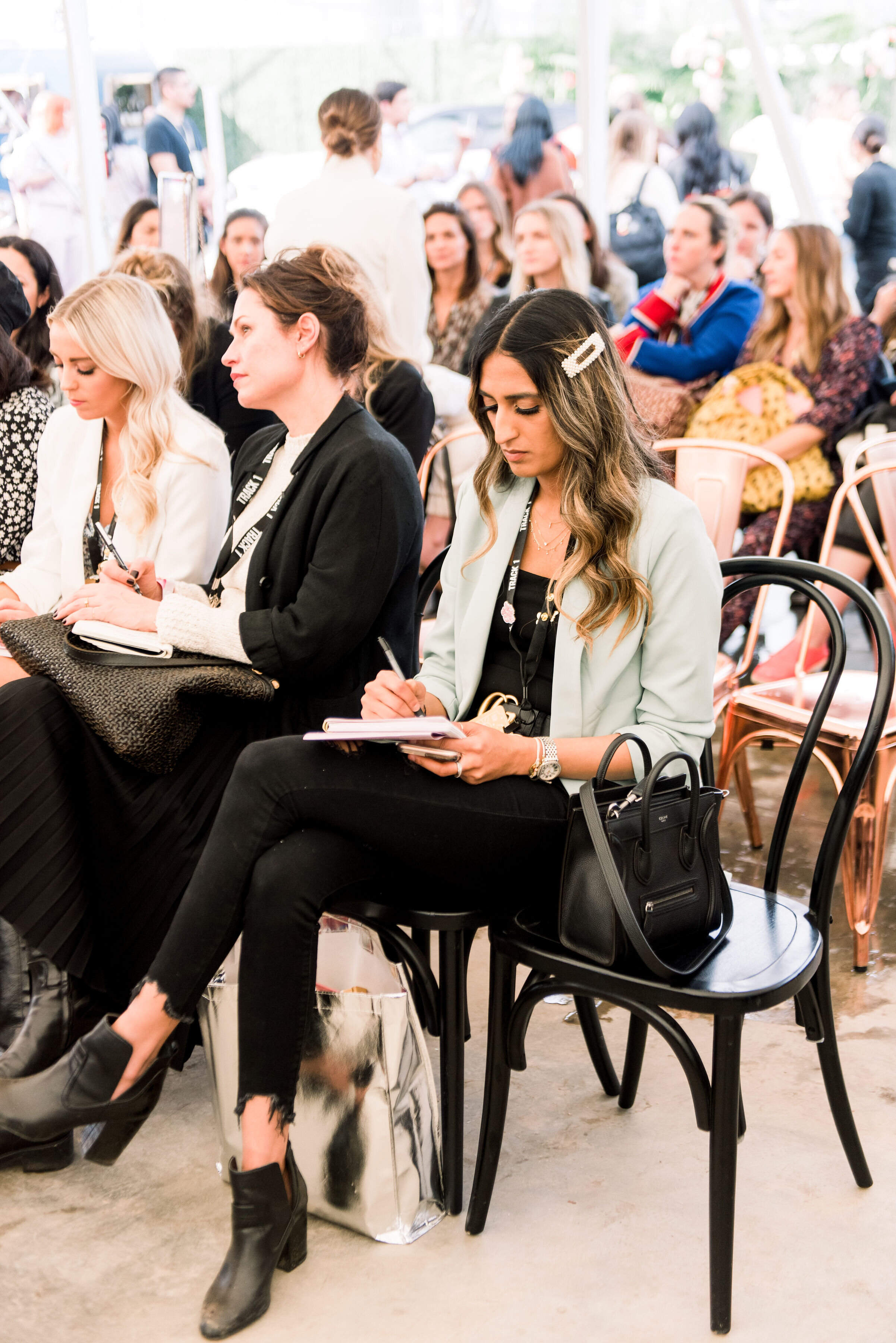




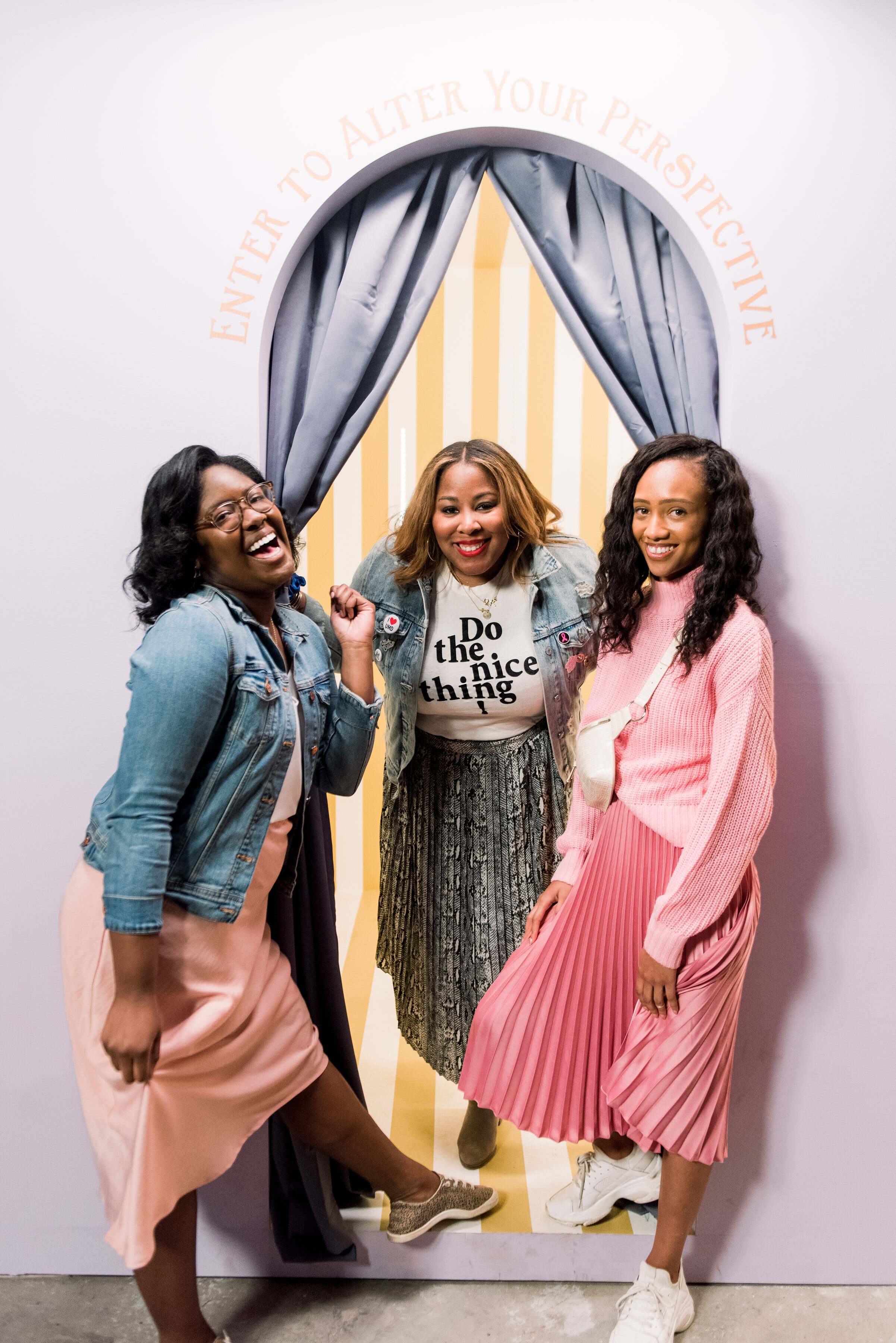
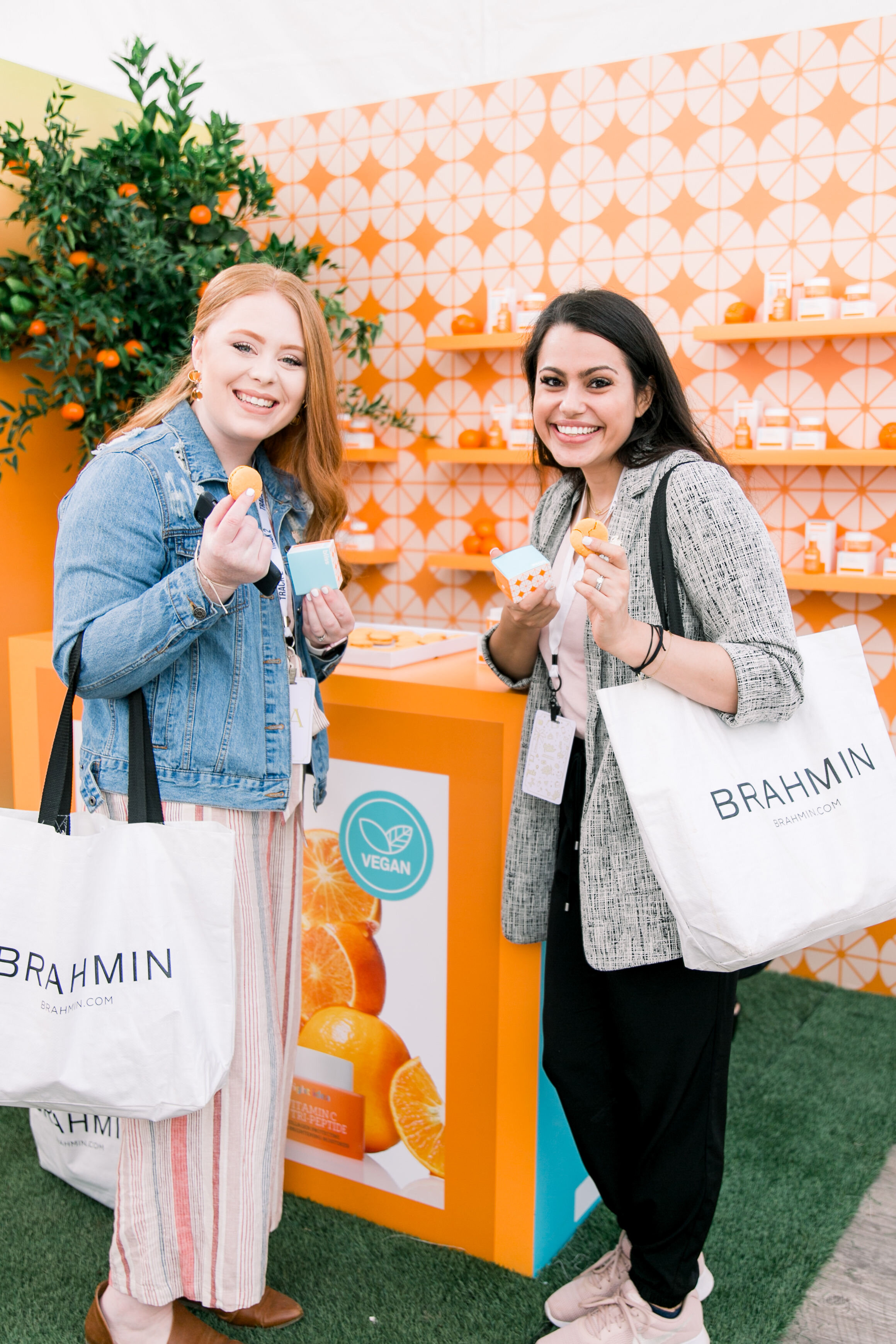
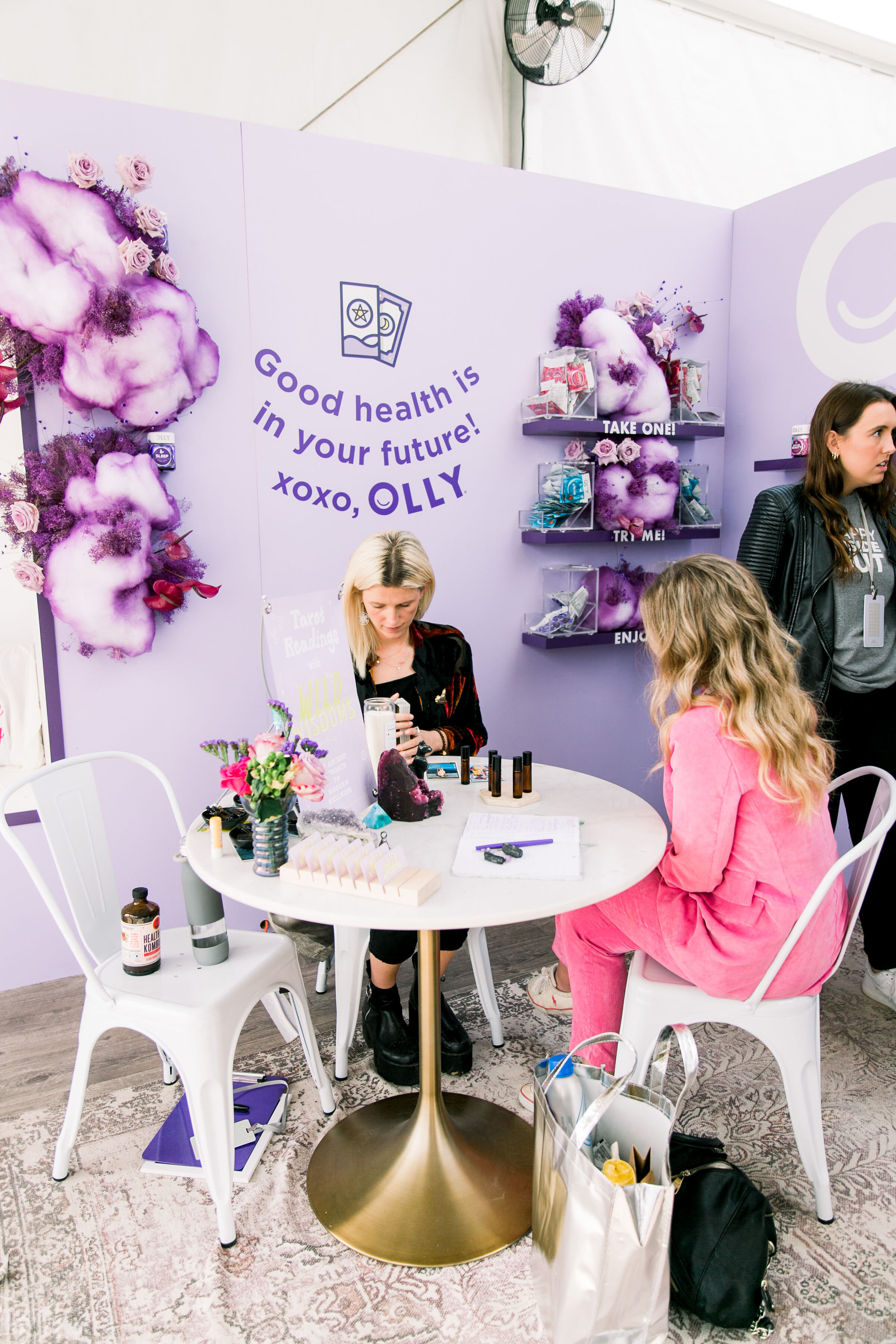

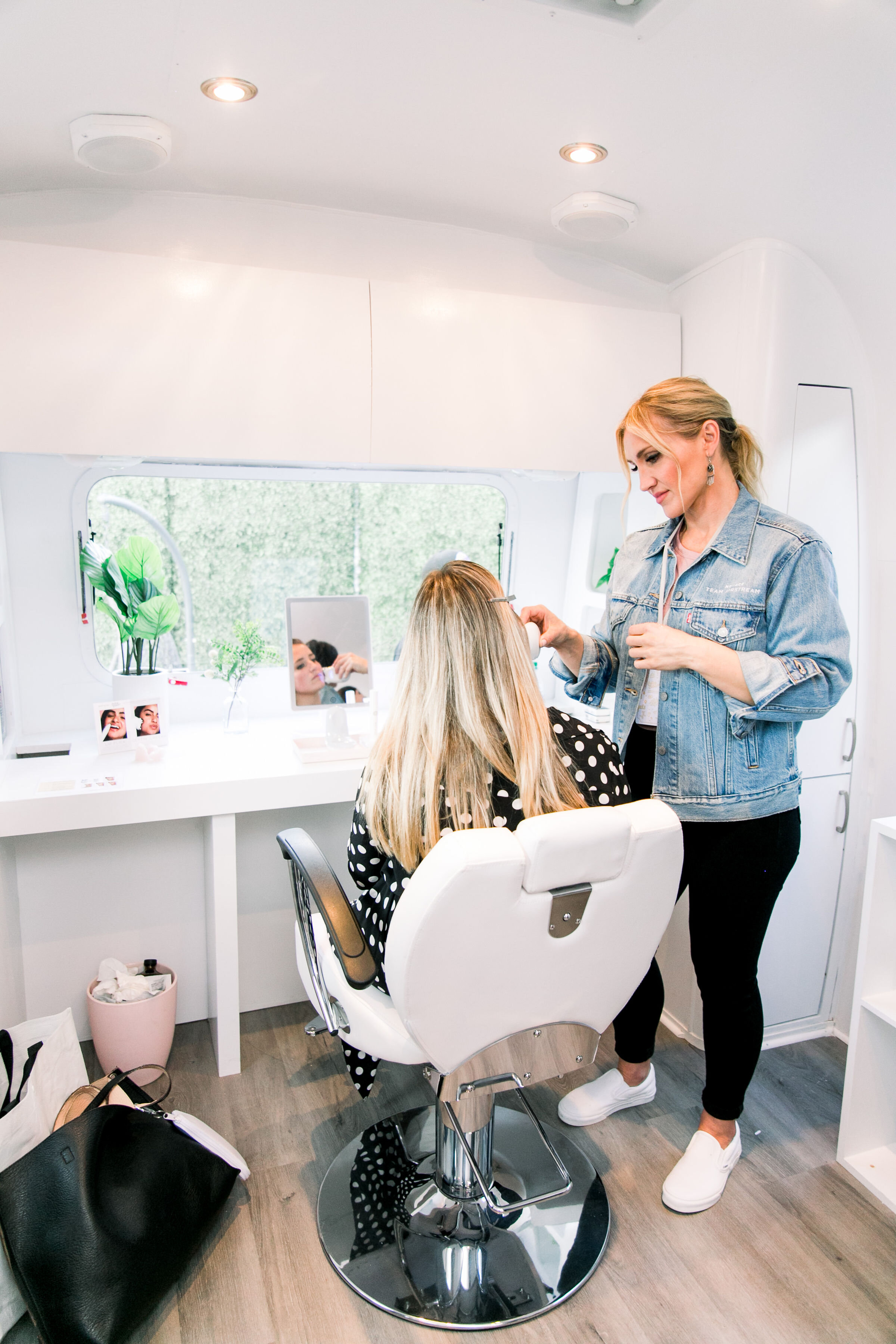


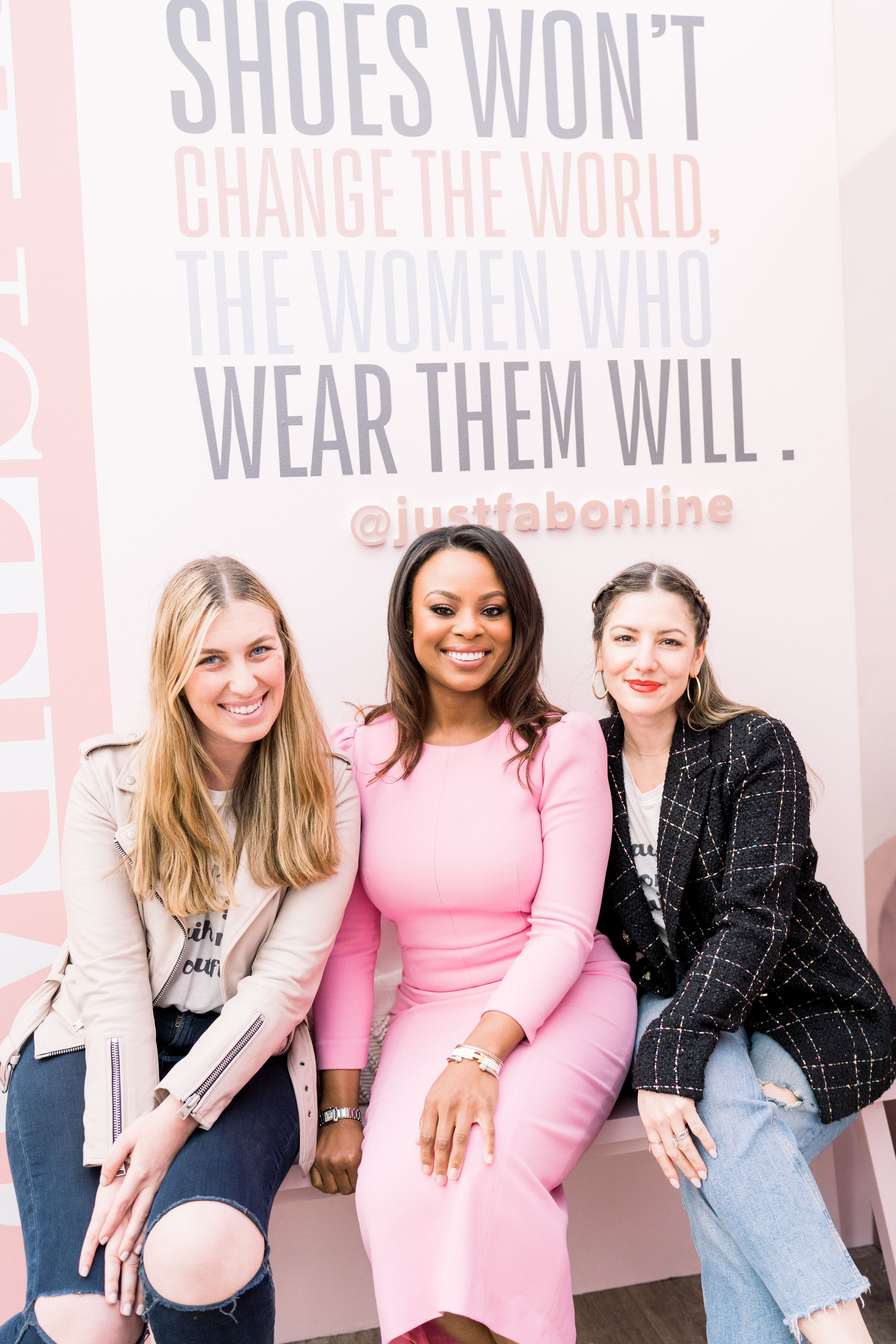

Photography: Smith House Photo

"We're Stronger in Numbers" and Other Magical Moments From the First-Ever Polka Dot Summit
Career advice from Alex Morgan, Lindsay Peoples Wagner, Katie Sturino, and more.


On January 25th & 26th, 2020, Create & Cultivate joined forces with Disney's Minnie Mouse for the first-ever Polka Dot Summit in honor of National Polka Dot Day. We celebrated in true Create & Cultivate fashion by inviting modern-day muses to the stage who, like Minnie, are bold, fun, fashionable, and classic—and, most importantly, inspire people all over the world to be positively themselves.
It was a jam-packed two days filled with major mic-drop moments. Karena Dawn and Katrina Scott of Tone It Up kicked things off with a heart-pumping workout, Dr. Deepika Chopra taught us how to cultivate happiness (and led a spontaneous dance party), Disney character artists Jeff Shelly and Miran Kim showed us how to draw Minnie and her other pals, and Minnie herself spread joy everywhere she went. To everyone who came, thank you for joining us—and to those who couldn’t make it, don’t sweat it. Below, we’ve compiled the key takeaways from our positively inspiring weekend with Minnie and the gang.
Read on for the sagest soundbites from our panelists and keynote speakers, including Lindsay Peoples Wagner, the editor in chief of Teen Vogue, Katie Sturino, the founder of The 12ish Style and Megababe, Alex Morgan, the co-captain of the U.S. Women’s National Soccer Team, and more.
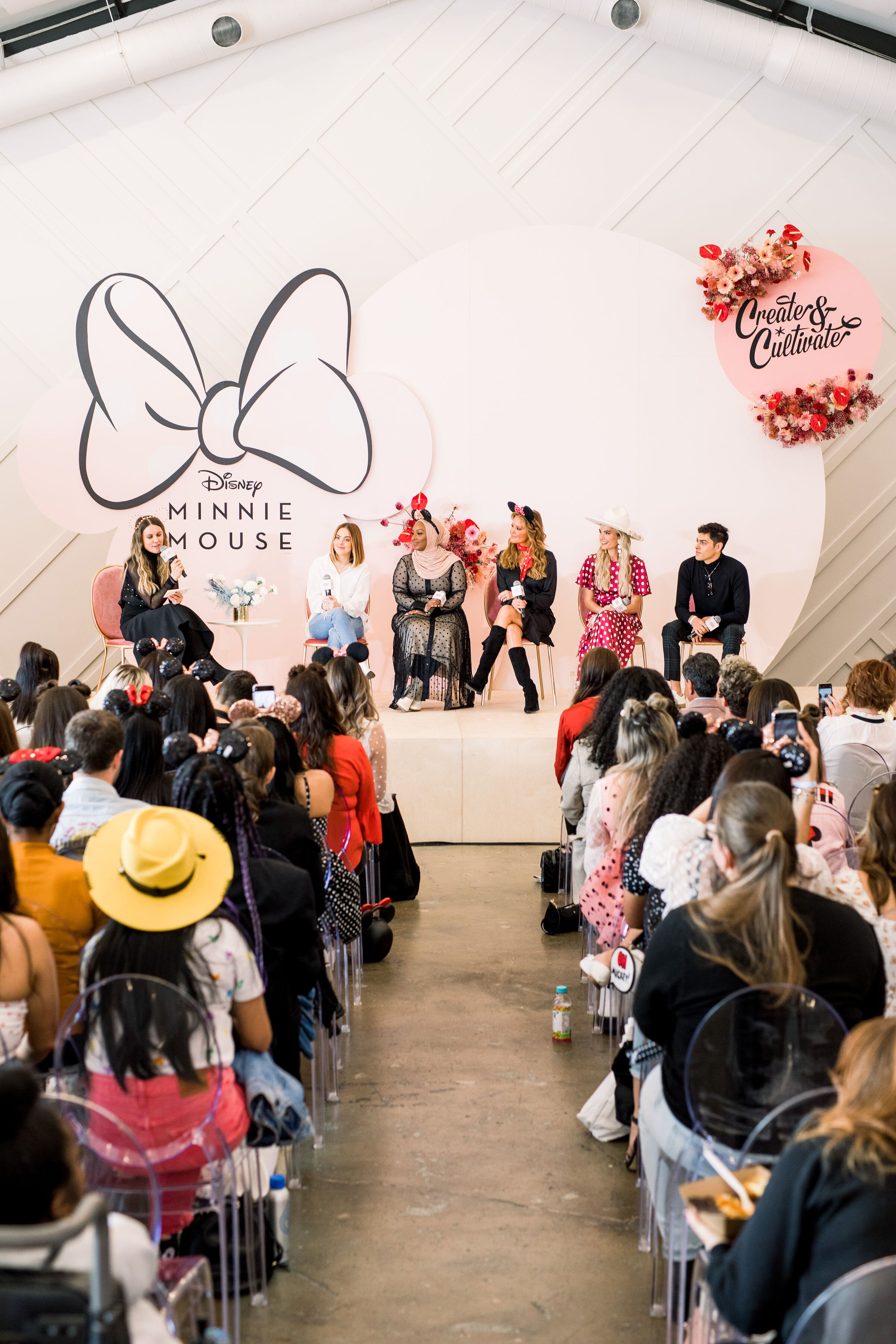

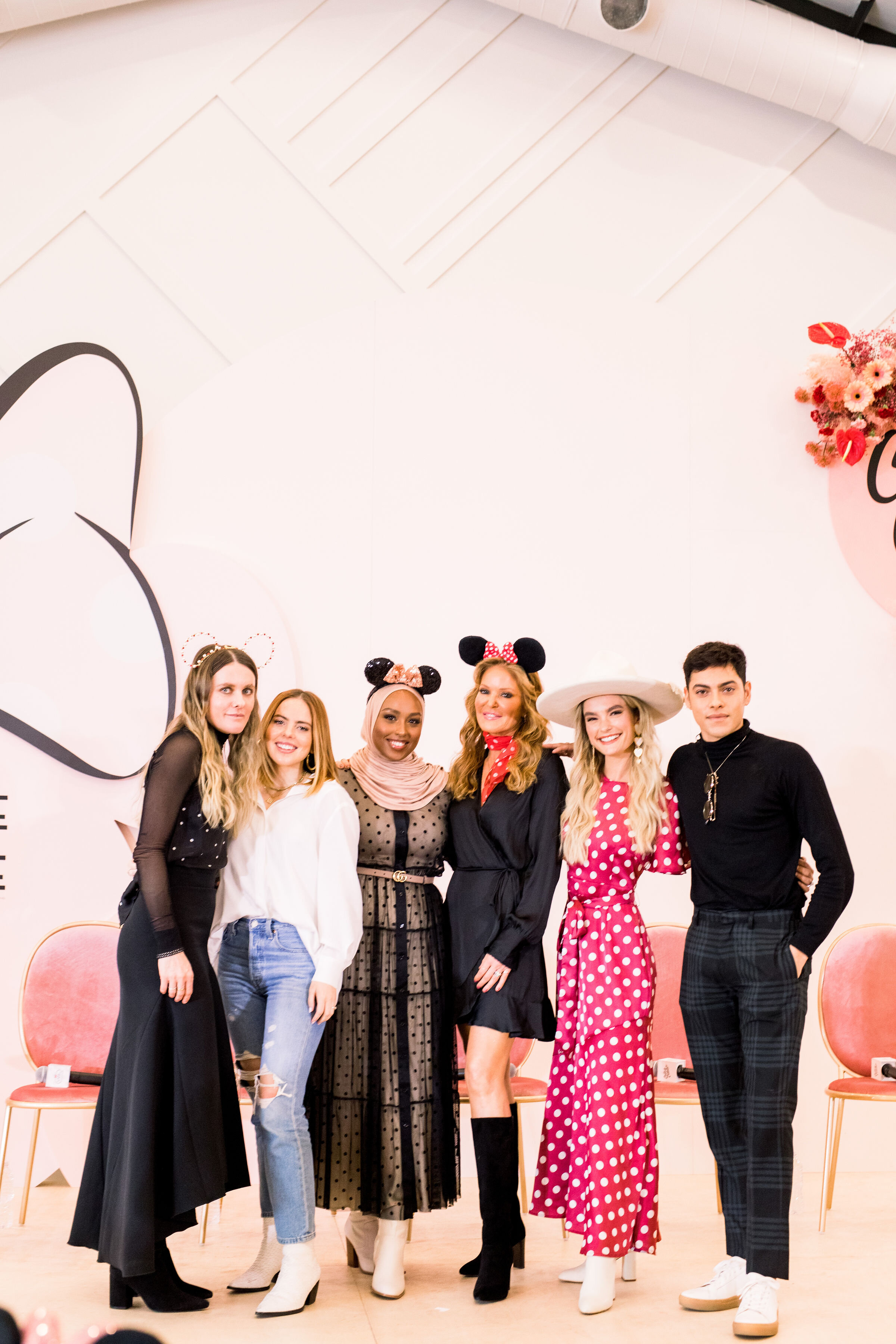
Panel: Positively You—How to Cultivate Confidence Inside and Out
Panelists:
Quigley | Influencer & Content Creator
Aysha Harun | Content Creator
Jaci Marie Smith | Content Creator and Podcast Co-Host, What We Said
Glen "Coco" Oropeza | Celebrity Hair Stylist, Glen Coco for Hair
Paige Adams-Geller | Co-Founder & Creative Director, PAIGE
Moderator:
Sacha Strebe | Editorial Director, Create & Cultivate
On overcoming fear…
“One of the biggest things that I had to teach myself is that everything is on the other side of fear.”—Glen "Coco" Oropeza
“That moment when you search inside—and you put on the blinders, and you tune out the noise, and you believe in yourself—that’s when change happens.”—Paige Adams-Geller
“It’s easy for someone to give you an idea, but it takes courage and bravery and momentum to put it into action and make it yourself.”—Paige Adams-Geller
On being positively you…
“With any insecurity, be it with a birthmark, your weight, or the size of your feet it'll be with you until you leave, so embrace it.”—Aysha Harun
“When it comes down to it, I want to share things I love, so people who gravitate to that are the community I’ve built.”—Jaci Marie Smith
On navigating negativity in the comments section…
“Constructive criticism can be helpful, but I only try to take advice and criticism from people I admire and respect and who have my best interests in mind.”—Jaci Marie Smith
“Whoever made the comment is probably suffering or hurting, so I just take a moment to say, ‘I wish you well,’ and then I go on with my day.”—Quigley
“If you know yourself, then negative comments won’t affect you as much.”—Aysha Harun
“I never give it any energy—I think it’s a waste of time. To me, it’s just bad juju.”—Glen "Coco" Oropeza
On knowing your worth…
“One of the best pieces of advice I learned early on was know your worth and don't be afraid to say no to an opportunity.”—Aysha Harun
“Should I do it for that low rate? I don’t think I should because it brings the whole industry down. They’ll keep hunting for someone who will do it for that low rate. If you accept those low rates, then everyone does poorly because of that.”—Glen "Coco" Oropeza
On investing in yourself…
“Investing in yourself is so important. I think it’s so important to set aside a little money to make sure you're going to grow.”—Aysha Harun
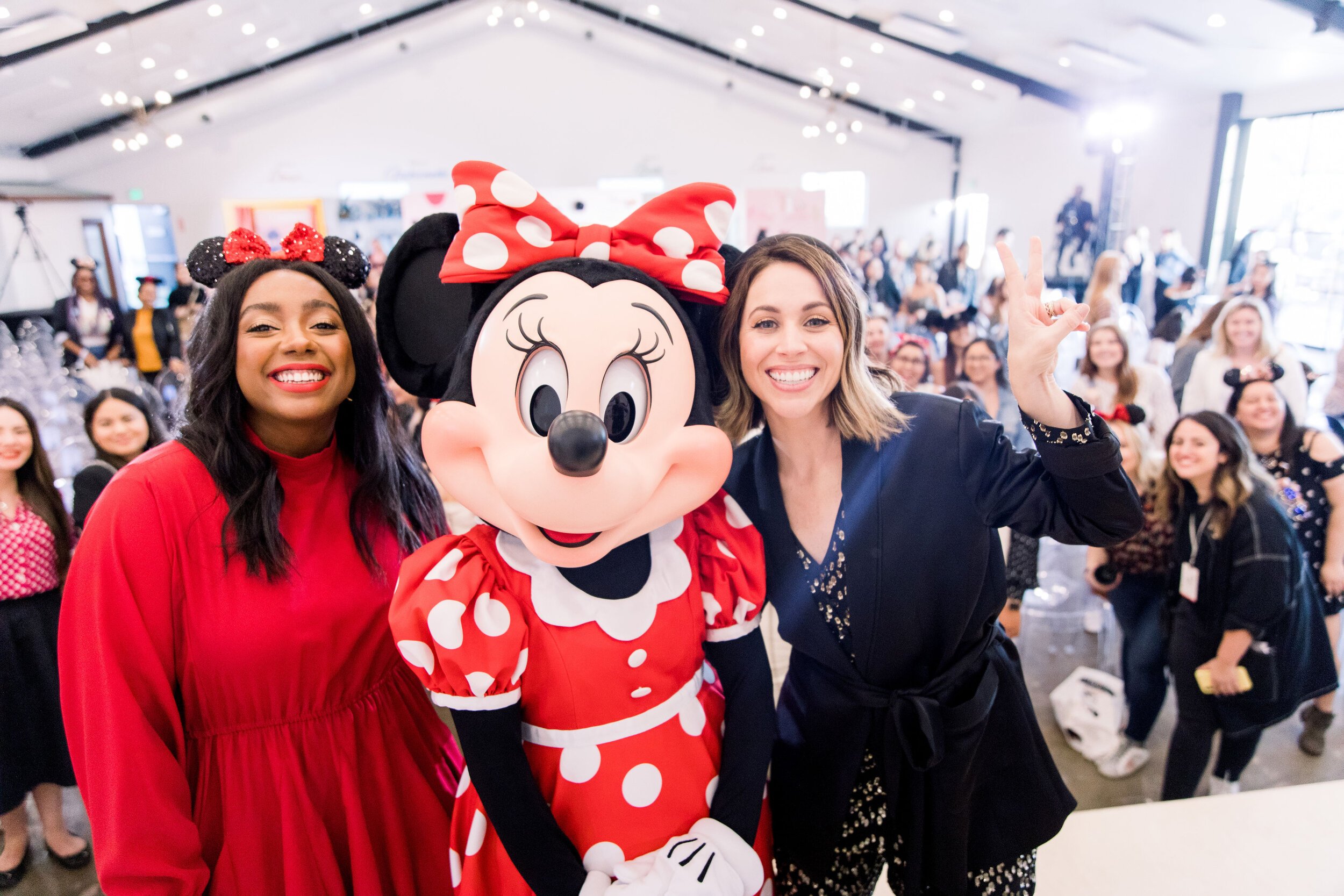
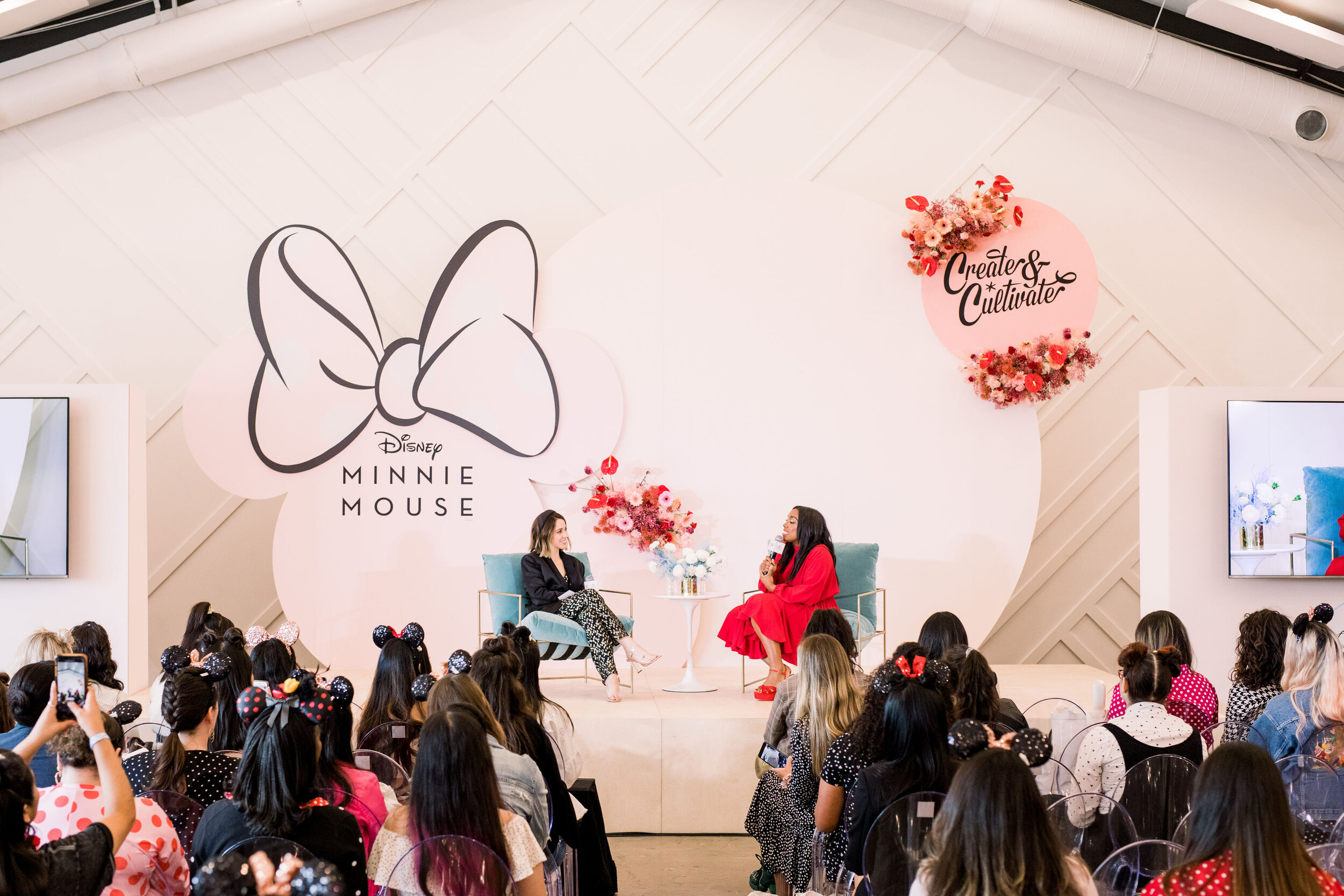
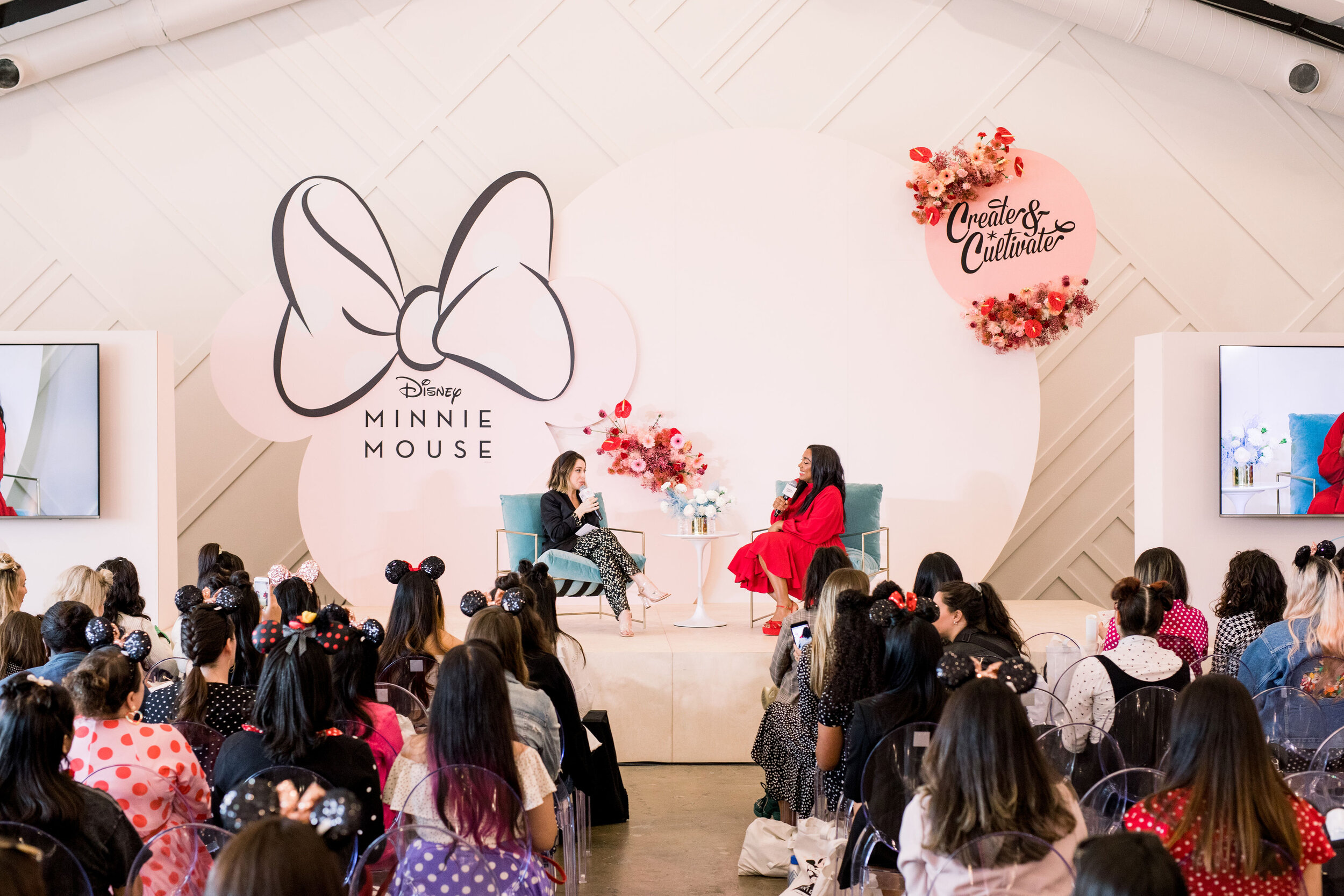
Panel: Keynote Conversation With Lindsay Peoples Wagner
Panelist:
Lindsay Peoples Wagner | Editor in Chief, Teen Vogue
Moderator:
Jaclyn Johnson | Founder and CEO, Create & Cultivate
On achieving success at a young age…
“I still hustle. It is still always a hustle—don’t be fooled.”
On being Teen Vogue’s editor in chief…
“Everything we do is about making young people feel seen and heard.”
“I’ve been careful about giving people chances that other people wouldn’t.”
On seeking out a mentor…
“Don’t wait for someone to save you or give you the keys.”
On finding work-life balance…
“The general rule is that I don’t do anything on the weekends, the only person I see is my husband I watch ‘Law and Order’ and ‘CSI’ and I zone out.”
On loving the color red...
“I felt like I needed a boost when I was starting in fashion and I wasn’t wearing head to toe designer.”
On defining your personal style…
“A lot of times, it’s just trying and not being so scared to take a little bit of a risk.”
Panel: Bold Moves—How to Fashion the Life and Career You Love
Panelists:
Jeanette Ogden | Founder, Shut the Kale Up
Gemma Correll | Cartoonist, Writer, Illustrator, GemmaCorrell.com
Meghan Rienks | Influencer, Actress, Author, and Podcast Co-Host, Don’t Blame the Pod
Noelle Scaggs | Singer-Songwriter, Fitz & The Tantrums; Food + Travel Influencer, Adventures With Scaggs, LLC.
Brittany Sky | Creator, Artist, DJ
Moderator:
Sacha Strebe | Editorial Director, Create & Cultivate
On building community…
“It’s so powerful to have community because it truly builds you up. We’re all in this together we should all be building each other up.”—Jeanette Ogden
On staying true to yourself and your brand...
"I think you can tell when someone isn’t being authentic with their artwork, there’s just something off about it."—Gemma Correll
"If you really believe in what you’re doing, you’ll find a throughline."—Meghan Rienks
"It’s about allowing yourself to really shine and not be afraid to show that off."—Noelle Scaggs
"I say ‘no’ to a ton of stuff. It’s my favorite word."—Meghan Rienks
On overcoming challenges…
"There are going to be people who punch at you every day, and you have to remember that, at the end of the day, you’re the one who walks in your shoes, not them."—Noelle Scaggs
On taking risks…
"When you're fashioning your career, it's about not being afraid to change your stripes every now and then."—Noelle Scaggs
“If you feel it in your gut and you know what you’re passionate about, just take the leap because what’s the worst thing that could happen?”—Brittany Sky
On dealing with rejection…
"They’re not saying no to you, they’re saying no to your offer, so don’t take it personally."—Brittany Sky
On partnering with brands...
"I want to make a long-term brand, this isn’t just a get rich right now thing. I want to be honest with my followers because they’re my friends, my family."—Jeanette Ogden
"This isn’t ad space, this is my diary."—Jeanette Ogden
"I’m just really upfront and forward and I know what I want and what I like and I know myself and my audience."—Meghan Rienks
On doing what makes you happy…
"As long as you’re doing what makes you happy, you’re going to see the money."—Brittany Sky
On breaking through creative blocks...
"I read, preferably something that has nothing to do with what I’m trying to do."—Gemma Correll
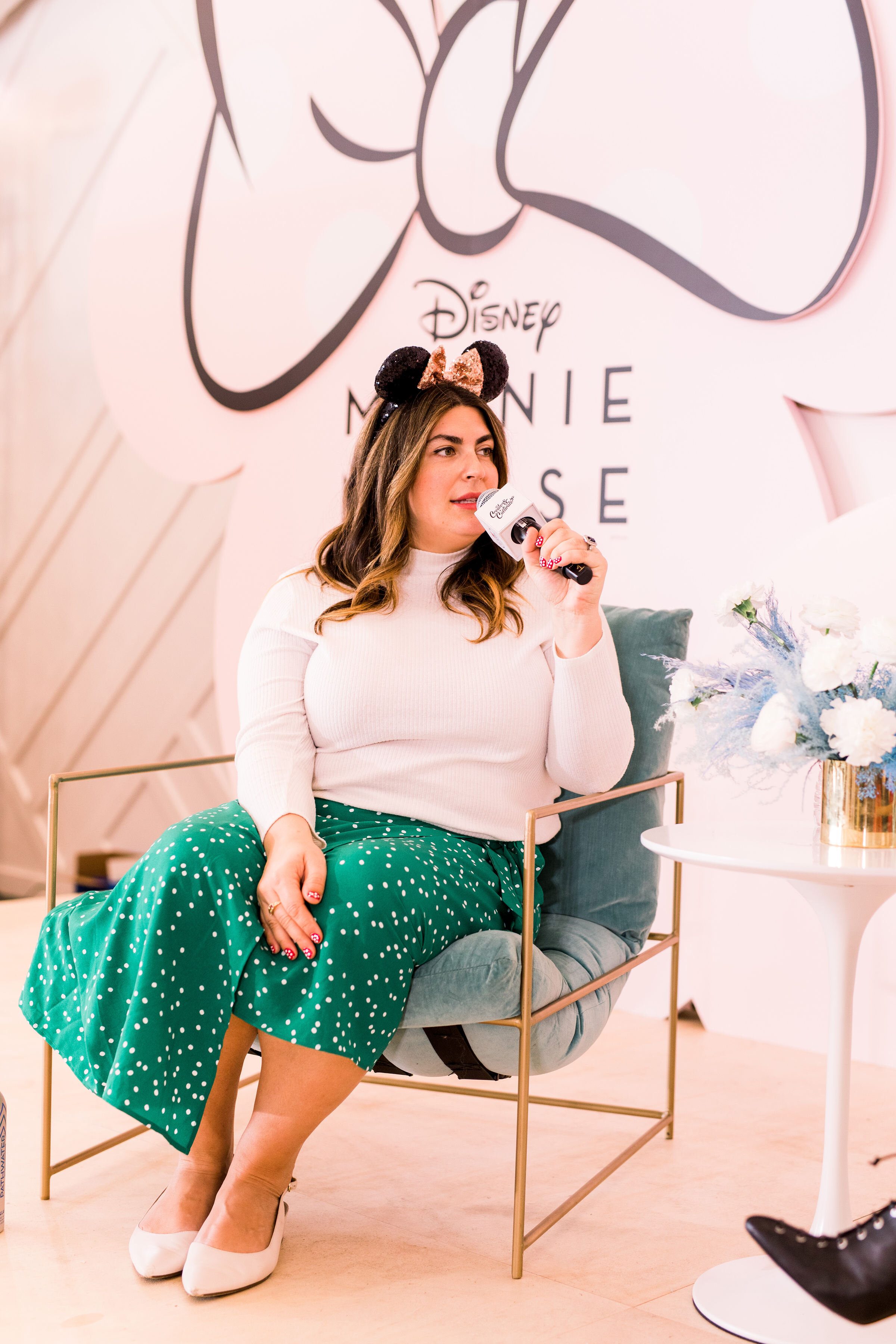
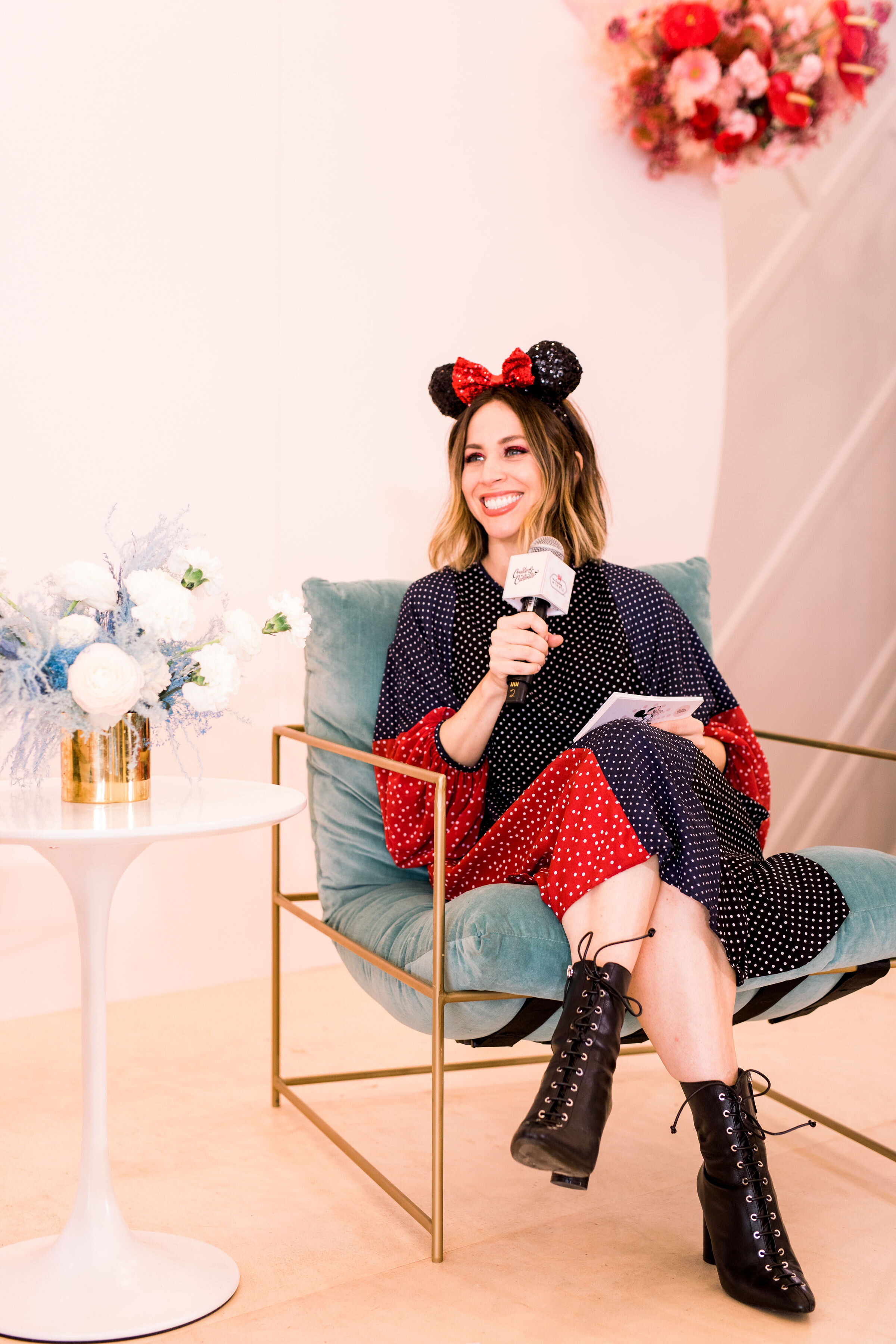
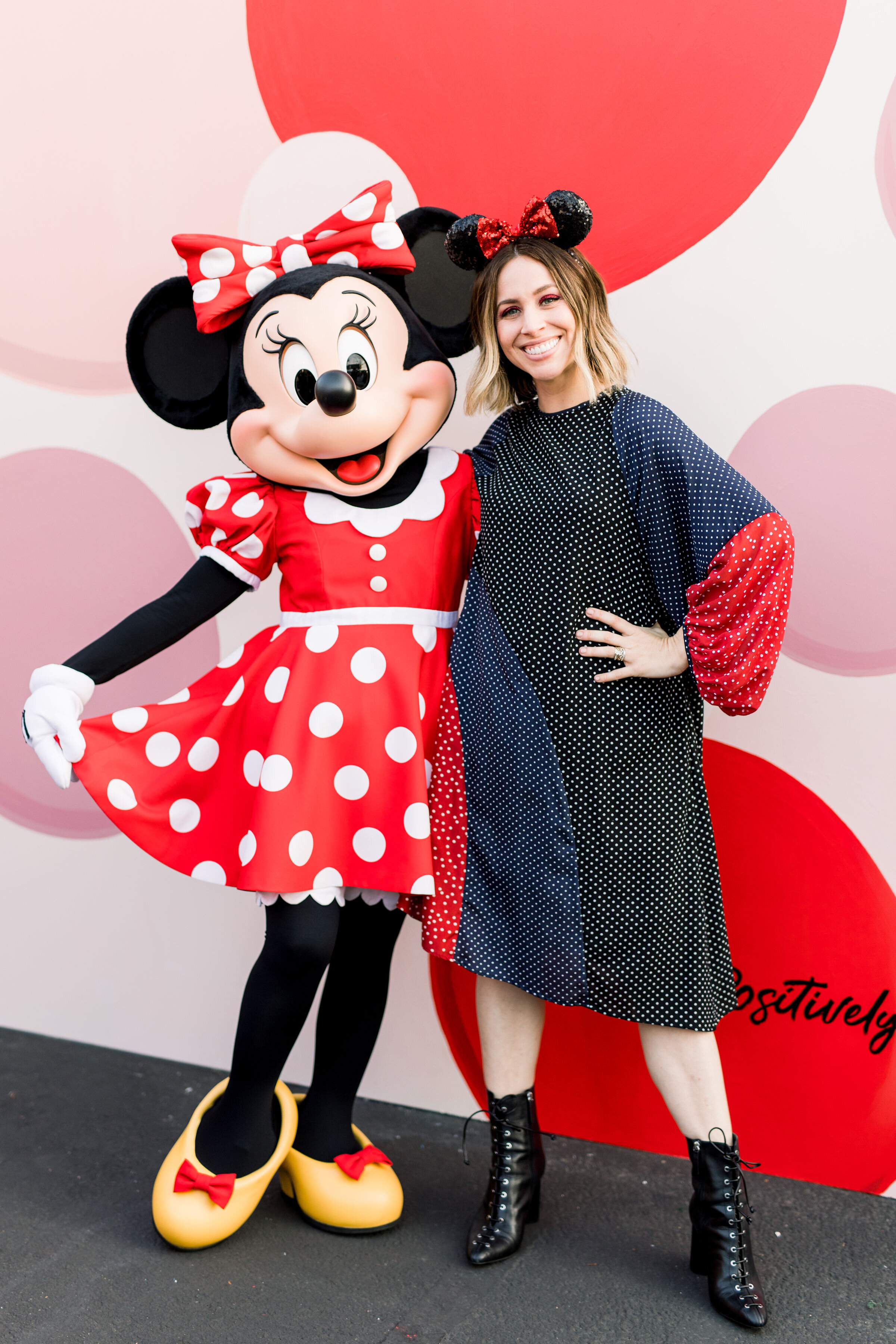
Panel: Keynote Conversation With Katie Sturino
Panelist:
Katie Sturino | Founder of The 12ish Style and Megababe
Moderator:
Jaclyn Johnson | Founder and CEO, Create & Cultivate
On Minnie Mouse as a style icon…
“I love that she is bold with style and fashion and print. She’s a curvy girl and she’s not afraid to rock color.”
On launching 12ish…
“People didn’t understand and still, to a certain extent, don’t understand how to talk about size.”
“This is a blog for people who feel ignored by the fashion industry.”
“I was trying to provide hacks, but it really turned into a body acceptance movement way beyond clothes.”
“Just like myself, people were really desperate to find a fashion blog where they saw a body that looks like theirs.”
On creating #MakeMySize…
“It wasn’t meant to be a callout culture thing, it’s much more about letting the brands know that I want to wear their clothes.”
“It’s the part in ‘Pretty Woman’ where she walks in with the cash. That’s me every time—I have the cash.”
On the importance of diversifying…
“If it wasn’t a job 10 years ago, who’s to say it’ll be a job 10 years from now.”
On hiring the right people…
“I need someone who never looks at me and says, ‘That’s not in my job description.’”
On finding inspiration…
“I really like surrounding myself with inspiring women. It’s very inspiring to just see someone doing it.”
On authenticity…
“It’s important to be the kind of person that people feel like they can be real with.”
On being an entrepreneur…
“People are always trying to put out the success vibe, like #flyingprivate, but I’m like, #iminataxi.”
On her legacy…
“I want to be known for making people feel good.”
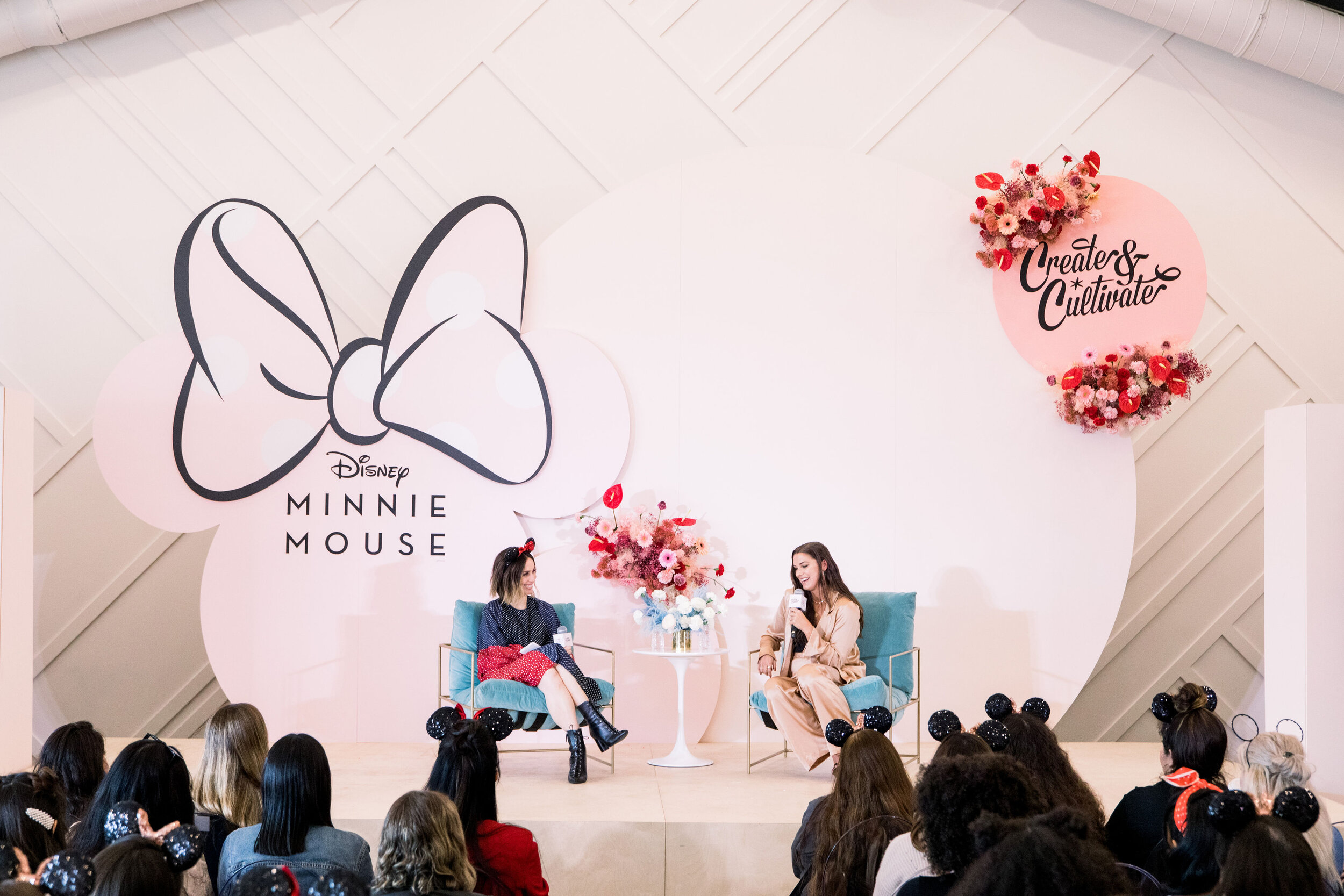
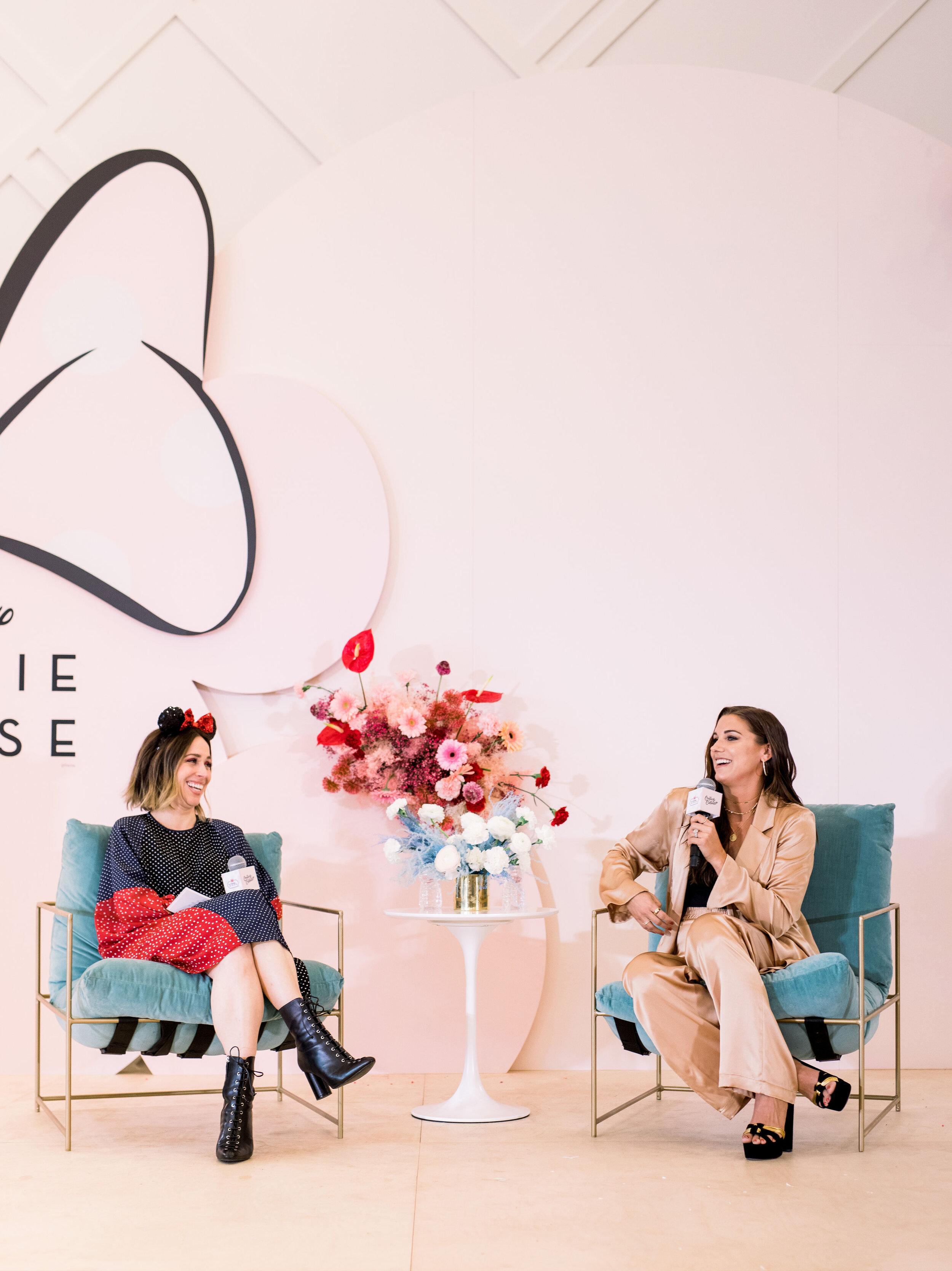
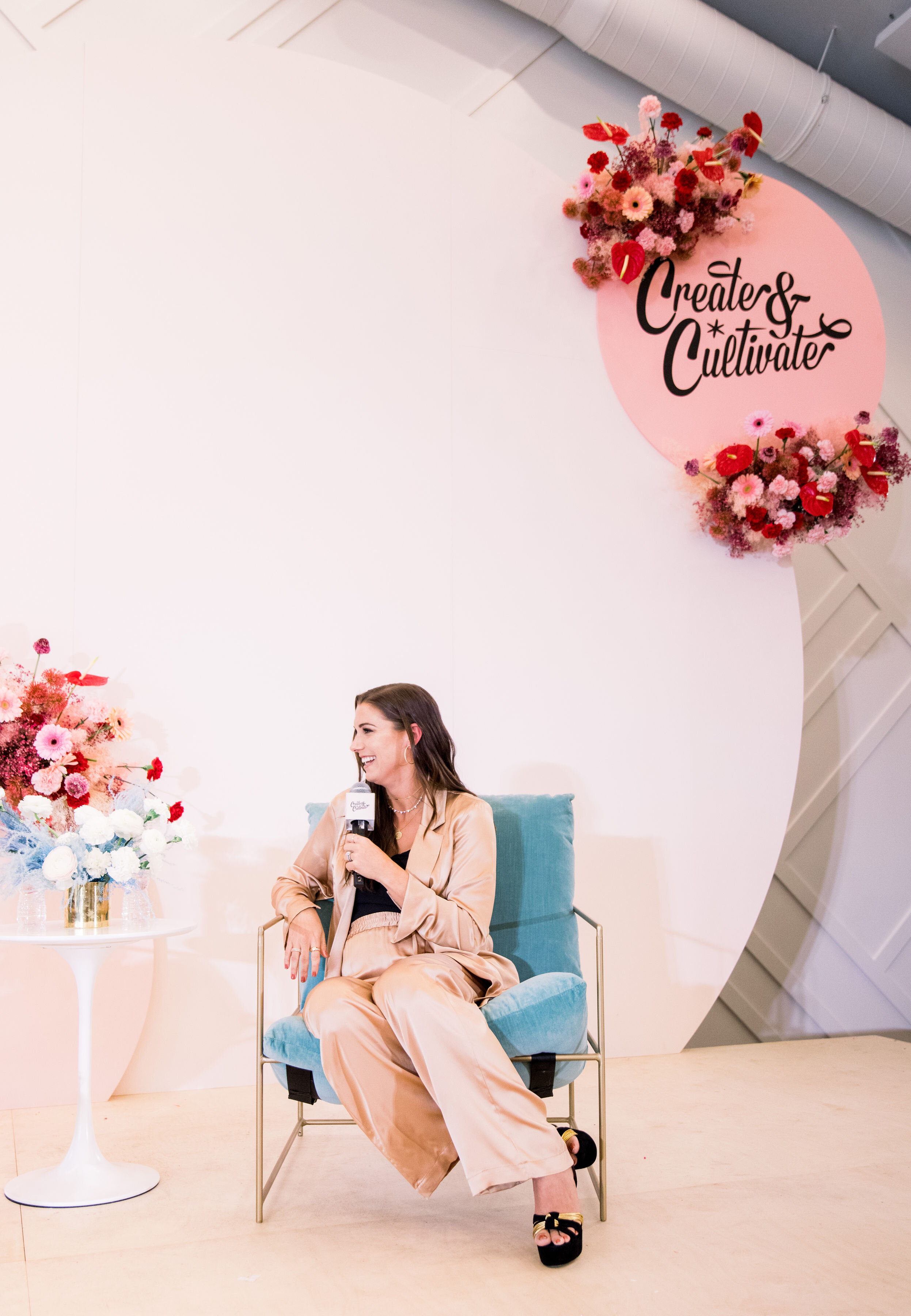
Panel: Keynote Conversation With Alex Morgan
Panelist:
Alex Morgan | Co-Captain, U.S. Women’s National Soccer Team
Moderator:
Jaclyn Johnson | Founder and CEO, Create & Cultivate
On taking risks…
“You’re never going to get the reward unless you take the risk.”
On being a pressure performer…
“What’s really helped me in pressure-intense situations is the self-belief that I have and betting on myself.”
On supporting other women…
"We’re stronger in numbers."
On starting an apparel company with her teammates…
"We wanted to invest in ourselves and it paid off."
On the importance of sports…
"There’s so much that sport can give you that you can’t learn otherwise."
On the state of gender equality in sports…
“We won’t stop until we’re not discriminated against at all. Until we’re given the same opportunity to do what we love and make the same amount.”
“We’ve tried to educate people on the fact that we do make as much revenue, or more, for our employer and that, in turn, means that we should receive the same amount or more, potentially.”
"Progress is good, but it’s never at the rate that you want it to go."
On maternity leave…
"If work is what you love to do, you shouldn’t think that you have to put that on hold to start a family. We can do both."
On surrounding yourself with women who lift you up…
"Having a group of women that support you unconditionally is important."
On being a leader…
"It’s important not to change the integrity of who you are. To change something that you do or say because you’re a captain or a leader is not what leading is all about."
On where her confidence comes from…
"I get my confidence from a lot of my teammates, and I get a lot of confidence from proving myself right."
On the importance of staying grounded…
"Remember where you started and how you got there, and know that the process is more important than the outcome."
On the value of self-care…
"Don’t hold yourself back, make sure that you’re fulfilling yourself."
See more photos from the event!









Photography: Smith House Photo

5 Simple Ways to Supercharge Your Career This Leap Day
Is it time to update your LinkedIn profile?
This post is in paid partnership with LinkedIn.

Photo: Smith House Photo
Find a job you love and you’ll never work a day in your life.
It might be an old cliche but we can honestly say that after the thousands of interviews we’ve conducted on stage or online at Create & Cultivate, this one actually rings true. Camila Coelho affirmed it during her recent keynote conversation; “You are going to be stressed but if you love what you do, you will be thankful every day that you are doing it.”
When you consider the average person spends 8.8 hours per day at work—that’s a little more than 9,000 hours per year or one-third of your life—it becomes pretty clear that you should choose a job that you really love. If you’re reading this nodding your head in agreement, then it might be time to kickstart yours – whether that’s brainstorming ideas for your side hustle or improving your skills to get that promotion, there are so many ways to further your professional journey and take it to the next level.
And with Leap Day this Saturday, February 29, you now have a full day to put that plan into action. But the question is, what would you do to boost your career if you had an extra 24 hours? Now’s your chance to write down your goals and make it happen.
Not sure where to begin? Don’t stress. We partnered with our friends at LinkedIn to help you get started. They have millions of jobs and the community to help find the one meant for you. No matter what stage you’re at in your job journey from just starting out to pivoting onto a different path or leaving a job, LinkedIn is here to support you every step of the way. From updating your LinkedIn Profile to connecting with people in your field and listening to career-focused podcasts, ahead we share some simple ways you can boost your career in 24 hours. Let’s go!
Freshen up your LinkedIn profile
In many cases, your LinkedIn profile serves as your first impression with hiring managers and recruiters, so it’s a good idea to make sure it’s up to date and best represents you as a professional. According to LinkedIn, 65% of people believe that the impression you make online is just as important as the one you make in person. This first impression can be key to landing your next opportunity.
1. Add a Profile Photo
According to LinkedIn, people who have a profile photo get up to 21 times more profile views. Your profile photo should be both professional, but also approachable, so people can get a true sense of your personality. Pro tip: Use a simple background and try to make sure your face fills up 60% of the frame, so the focus is all on you.
2. Location
LinkedIn found that members who have locations listed on their profiles receive up to 19 times more profile views and are up to 23 times more likely to be discovered in searches. Adding your location makes it even easier for you to be connected to your next opportunity.
3. Summary
This is your career snapshot. Think of it as your personal “elevator pitch.” List your skills and highlight your strengths. Pro tips: try to sum up your experience in about 40 words and include keywords that you’ve seen featured in descriptions for jobs you’re interested in. Lose the jargon. And be your authentic self.
4. Experience
Start with your current position. According to LinkedIn, professionals who have their current positions listed on their profiles are discovered up to 60 times more in searches. You can also write about projects, accomplishments, and the value you bring to your team and organization. Keep it clear and concise. Bullet points work great here.
5. Pictures and Videos
Showing your accomplishments is a great way to share more about yourself. LinkedIn is introducing Featured, a new section on your profile where you can showcase posts or articles you’ve published on LinkedIn, as well as media like images, links, and documents. Highlighting your work helps you demonstrate your expertise to your network, grow your audience and build your brand.
6. Education
Be sure to include where you went to school and what you studied. According to LinkedIn, adding your education leads up to 17X more messages from recruiters.
For more information, visit Rock Your Profile and discover how to create a LinkedIn profile that brings your personal career story to life, whether you’re just starting out, seeking to advance, or making a career change. Instructor Lauren Jolda, head of the "Rock Your Profile" team at LinkedIn, offers tips on tailoring each section, starting with the key insight that a LinkedIn profile is unique and shouldn’t be approached exactly like a resume.
Tap into your network
Today, networking is an essential part of the job search. Even if you’re not hunting down a new job, having connections in your field is incredibly valuable. Through your LinkedIn network, you can get introduced to someone you might like to connect with which increases your chances of getting hired by nine times. When it comes to networking, make it easy on yourself. Make sure you've added the people who you interact with in your everyday life. You never know if a friend is connected to someone who works at your dream company.
Take an online course
Whether you’ve been eyeing that corner office and want to step up into a managerial role, or you’re launching a side hustle and need to know the basics of SEO, there are so many online courses now that can help you get there. Even if you’re happy in your role, you should always be open to learning and improving so your skills don’t stagnate. Then you’ll be ready for that promotion or job change when the opportunity strikes. The beauty of online is that you have an entire catalog of courses at your fingertips. Most of us are too time-strapped to attend a physical college, but online courses bring the education to you.
LinkedIn Learning is a great place to start and can help you bridge the gap between the career you want and the skills you need. Their personalized learning experiences and courses are taught by real-world professionals and there is a massive library of more than 15,000 topics for you to choose from that span every level, industry, and profession including creative, business, and technology courses. Access free LinkedIn Learning course, like this one titled “Making Recruiters Come to You” with tips and tricks to attract recruiters, such as how to make yourself more easily discoverable and connect with recruiters.
Listen to career podcasts
No one can deny the rise in podcast popularity and it’s easy to see why. These digestive sound bites can open up a world of possibilities, deliver endless inspiration, and motivate us to take those crucial next steps in our careers. The best part is you can tune in and learn while you’re commuting to work, taking your lunch break, or walking the dog. So why not use your 24 hours to tune into the new LinkedIn podcast Hello Monday with Jessi Hempel where she explores the changing nature of work, and how that work is changing us. What does work mean to us? Should we love what we do? How can we switch it up? Her guests, including Anna Faris, Seth Meyers, and Elizabeth Gilbert, share the many lessons they learned on their own career journey that apply to your own, too. A few others we recommend are WorkParty, GoldDigger, Second Life, WSJ Secrets of Wealthy Women, Glossy, Boss Files, NPR’s How I Built This, and The Influencer Podcast.
Reorganize your workspace
It might not seem like organizing your desk can boost your career, but here are some compelling stats that might change your mind. Firstly, clutter is surprisingly hard on our brains. Your brain is constantly processing visual information, and this study found that too much clutter can make it hard for it to be efficient. So reducing unnecessary stimuli aka clutter can reduce stress and help you to stay focused on your goals.
Secondly, an unorganized space can decrease your sense of self-worth and make you feel depressed. A 2010 study from the University of California revealed that women who described their homes as being cluttered or filled with unfinished projects were more likely to be depressed and fatigued than women who characterized their living spaces as being restful and restorative. They also found that women who lived in cluttered environments had higher levels of the stress hormone cortisol.
Plus, decluttering and organizing actually releases those feel-good chemicals called endorphins. So we really can see no reason not to clean up your desk. It’ll reduce stress, help you hit your goals, and put you in a better mood.
Here are some ways to shape-up your workspace:
—Put time on your calendar. If you don’t schedule it, it won’t happen. Go through your desk drawers and throw away what you no longer need and file what you do.
—Buy chic trays and filing systems to organize your paperwork, pens, and notebooks.
—Clean out your email inbox.
—Add a vase with fresh clippings and flowers or a low-maintenance succulent (science says it’ll make you happier and more productive).
So make this year’s Leap Day count and choose one or more of these activities to boost your career.