
Bills, Bills, Bills: How to Stop Procrastinating and Organize Your Money
Get your finances in check.

Photo: Anna Shvets from Pexels
Gradually making the transition from side hustler to full-time self-employed freelancer is a great plan to be sure that you’re able to support yourself with your new business. That said, it can often lead to a bit of a messy overlap between personal and business funds.
You may keep pushing off getting organized until “tomorrow” and let the task of figuring it out, fall to the bottom of your to-do list. That was my story until I realized that I was losing money because of missing receipts and not planning for tax deadlines.
Follow my four steps below to make getting organized easier, painless, and dare I say it, maybe even a little fun. Let’s get started!
Step 1: Open a separate bank account for your business ASAP.
Is this something that you legally need to do for your business? Maybe. Is this something that you financially need to do for your business? Absolutely.
Even if you’re starting out as a sole proprietor, which is the default structure for anyone who earns income from self-employment, you should set up a separate bank account. Why? Because even if that’s the only thing that you do to get your money organized, you’ll be miles ahead of everyone else in the organization game. You won’t need to sift through a bunch of personal transactions to find business deductions and you won’t lose precious time looking through all of those same personal transactions to see if your client has paid you.
Don’t overcomplicate your business or waste any more time looking at a hodgepodge of transactions, hoping that you’re not missing something. Take 15 minutes to set up a separate account and you’ll be one big step closer to organized money management (congratulations!).
Step 2: Create a list of deductions you can take.
My mom is also a CPA, but unlike me, she actually does taxes for a living. She’s constantly sending me little reminders about deductions I can take because I often don’t catch everything. It’s awesome, but since she’s not with me every day to keep me on track, I’ve created a list of things I can deduct to make sure I’m not missing anything. I keep this list taped to the outside of a folder and store my receipts in there until I can get them entered into my bookkeeping system.
Everyone will have different expenses, but a good list to get started with is:
• Web hosting
• Vehicle mileage
• Work travel
• Courses, seminars, licensing, business-related books
• Shipping, packaging
• Office supplies and equipment
• Health insurance premiums
Step 3: Know what tax forms you need to file, and when.
During my first year in business, I wasn’t too concerned about filing my taxes because I had made no money. Well, it felt like no money. But technically in the eyes of the IRS, it was enough that I needed to file and pay quarterly estimated tax payments.
I think most people have the same cavalier attitude that I did because they don’t know the IRS rules and it’s just something they feel like they can take care of later. I can tell you from personal experience that those first few months of starting a business will fly by and you’ll be left scrambling the night before filing deadlines if you don’t pay attention to some key forms and dates.
To get this started here is some basic information for sole proprietors:
• Who has to file? Generally, anyone who has net earnings from self-employment of $400 or more needs to report this income at the end of the year. And anyone who is expected to owe more than $1,000 in taxes at the end of the year needs to make quarterly estimated income tax payments.
• What form to file? Most people start their business as a sole proprietor, and the forms that you need to file at the end of the year are Schedule C or Schedule C-EZ (profit and loss from business) and Schedule SE (self-employment tax).
• When to file quarterly estimated tax payments? If you’re rational, you would probably think these payments would be made quarterly. Well the IRS throws in just a little change-up, so your payments are actually due on an odd schedule. The non-quarterly, quarterly schedule that they’ve come up with is:
Jan 1 - March 31: estimated payment due by April 15th
April 1 - May 31: estimated payment due by June 15th
June 1 - August 31: estimated payment due by September 15th
September 1 - December 31: estimated payment due by January 15
Step 4: Set a weekly money date.
This won’t be your most fun date, but it’ll probably your most profitable. Set a time to check in every week and make sure that your money is on track. If you do this weekly, it’ll become so easy and quick. I save my money date for Friday afternoons when I’m at my least productive. Once I have this done, I know I’ve earned a glass of wine and a good weekend.
Some things that I do weekly are:
• Send any invoices that are due
• Look at who hasn’t paid me and send reminders (+ cash any checks!)
• Pay any outstanding bills
• Pay myself my weekly salary/stipend
Bonus step: Set up a bookkeeping system.
Oh, look at you, overachiever! You’ve got this organization thing down and you want a bonus step? You can feel even more legit and in control of your money by setting up an easy bookkeeping system. This doesn’t have to take a long time and it doesn’t need to cost a lot. There is a range of easy to use programs out there (some are even free!) that are better than that excel sheet you’re using. If you don’t need many bells and whistles but are looking for something free, try Wave. It’s pretty simple to use, and it’s free.
Now, set aside 30 minutes a week to work through this list and start feeling in control of the business you are creating.

About the Author: Erica Gellerman is a small business strategy and finance expert who has a passion for helping creative entrepreneurs start, launch, and grow their business. After getting her CPA and MBA and spending a decade working at some of the best finance and marketing companies in the world, she started her own small business. Realizing that there weren’t enough resources dedicated to helping solopreneurs build profitable, small businesses, she set out to share everything she’s learned through her site. Follow her on Twitter @ericagellerman.
Love this story? Pin the below graphic to your Pinterest board.

This post was originally published on March 2, 2019, and has since been updated.
MORE ON THE BLOG






Why This Successful Founder Wants You to "Persist" Even When Business Looks Bleak
“Things can change at any moment.”
We know how daunting it can be to start a new business, especially if you’re disrupting an industry or creating an entirely new one. When there is no path to follow, the biggest question is, where do I start? There is so much to do, but before you get ahead of yourself, let’s start at the beginning. To kick-start the process, and ease some of those first-time founder nerves, we’re asking successful entrepreneurs to share their story in our new series, From Scratch. But this isn’t your typical day in the life. We’re getting down to the nitty-gritty from writing a business plan (or not) to sourcing manufacturers and how much they pay themselves, we’re not holding back.

It’s not easy to see the silver lining sometimes, especially in times like these, but small business owner, Blair Armstrong has an important message for anyone who’s feeling challenged right now: Persist.
It’s a simple but powerful call to action that has helped her through tough times and she wants to make sure that small business owners hear it too. “Plan for the unexpected—persist,” she tells us. “Things can change at any moment. You may be one moment or one day away from realizing your goals.”
Armstrong knows all about the highs and lows of running a business. The founder of Gilded Body has made plenty of mistakes—her first manufacturer was a catastrophic failure—but she sees them as valuable lessons on the rocky entrepreneurial path. Because as Armstrong explains ahead, “there are no shortcuts or easy routes.”
If you haven’t heard of her luxurious body care line, then you’re in for a pleasant surprise. Her marble body brush, body balm, bath soaks, and candles are beautifully crafted and urge us all to take better care of the skin on our bodies.
So, of course, we’re thrilled to have her brand in the Create & Cultivate’s inaugural Small Biz Pop-Up line-up in Los Angeles. Locals can now safely shop via Postmates or contactless shopping thanks to Square when visiting the IRL pop-up at Platform.
Ahead, Armstrong takes us behind the scenes of her business and tells us how she built it from the ground up, what it really takes to succeed, and why she still hasn’t paid herself.

On the lightbulb moment…
There was not a lightbulb moment per se but a series of events and recurring thoughts and ideas. I’ve always loved skincare and beauty, which led me to become a Dermatology PA. I had an idea for a product that I believed to be unique and that would be well received. During my training and practice, requests for dry skin and body product recommendations were very common. I wanted to create products that I would confidently recommend. It was important to me that they be beautiful and effective.
We spend an inordinate amount of time caring for the skin on the face, often neglecting the skin below the neck. The skin on the face is 3% of the total surface area of the body but receives 99% of our time and focus. I want to encourage a more balanced approach to skincare, one that includes caring for the body with the same, if not more effort than we have for facial skincare.
As I worked on the initial product, I began to develop ideas for more products and after a few months, I had a plan for a complete range. I decided very early in my medical training that I wanted to find a way to improve access to dermatologic care and to reduce disparities in care and creating this business allowed me to get to work on it.
On writing a business plan…
I started without a business plan and created a loose plan after a few months. Creating a business plan proved to be extremely helpful for decision making. It allowed me to work through and articulate my vision, set objectives, and benchmarks. In the process of putting it together, I did a lot of research on the landscape and industry.
On coming up with the name…
This was one of the most important and most difficult aspects of starting the business. I researched the science of naming, made endless lists, surveyed family, friends, and strangers. I inquired with local marketing agencies that offered naming services. Ultimately, I decided on a name that is inspired by my love for art, architecture, sculpture, and history. I considered the history of the words, how they’re used, what the name would imply and how I could build a story around the name that would work well for the brand and product line I wanted to create.
On setting up the business…
I did all the basics of checking the domain, trademark, and social handle availability. Part of the process that I really enjoyed was working with a graphic designer on the brand logo, font, and creating the brand creative guide. The creative and research aspects of building a business are my favorite. I spend a lot of time thinking about how I can improve and refine. It’s through research and my experiences that I find inspiration.
On brand research…
I researched everything I could think of and anything I thought would even be remotely helpful. I read books and articles about entrepreneurship, starting, and growing a business. I love How I Built This podcast by Guy Raz. I highly recommend taking the time to research as much as you can and as quickly as you can to try to avoid some of the more common and costly mistakes. Mistakes are inevitable but there is a lot of guidance and information available.
On finding a manufacturer…
The first manufacturer I found online did not work out at all. As in catastrophic failure. It was a complete waste of time and money but a valuable lesson. I learned the importance of working with a company that will stand behind what they produce. I would advise other founders to ask for recommendations, ask the company for references, and read and understand all aspects of the contract. I was too trusting.

On self-funding…
My company is completely funded by my earnings, savings, and supported by my spouse. I haven't done any rounds.
On money mistakes…
One of the biggest money mistakes I made was paying for services that I didn’t need at that stage of my business. There will always be offers of services that promise to help your business. There are no shortcuts or easy routes.
On working full-time while building Gilded…
Yes. I worked full-time and worked through my graduate program while building the company. It was challenging but I cared enough to persist.
On paying herself…
I did not and have not paid myself. I hope to be able to start to pay myself within the next 12 months.
On building a team…
Gilded is a team of one. I collaborate with experts and freelancers as needed. I’ve attempted to hire a few times. Hiring during the pandemic is proving to be difficult.
On hiring an accountant…
I didn’t have an accountant in the beginning. Choose one of the top online accounting programs and seek advice from an accountant when the time comes.
On the biggest learning curve…
The biggest learning curve is learning to juggle so many things and figure out which ones will actually move the needle for my business. I wear so many hats.
On having a mentor…
I follow some incredibly successful, women that are transparent and share a great deal of information about their journeys. Recently, I had the pleasure of connecting with two experienced and supportive fellow entrepreneurs. I have monthly check-in calls with one and I chat with the other by phone or email. I’m a member of Makelane, a community for women in e-commerce. The opportunity to work with like-minded women and the sense of community has been incredibly helpful.
On allocating budget to marketing…
I’ve tried digital marketing, content marketing, local events, and trade shows to promote the company. I’ve also tried influencer marketing. A significant percentage of my budget goes to marketing because my company is relatively new and I’m still working to build brand awareness. Marketing is obviously critical to business success. A solid marketing strategy cannot be overvalued.

On the importance of email…
I didn’t set up email marketing early and learned how crucial it is for business. I would advise others to not make this mistake.
On her #1 piece of advice for aspiring small business owners…
I would advise people who want to start a business to reach out to and talk with entrepreneurs. Try to learn as much as possible about the challenges, opportunities, and inevitable obstacles.
On her #1 piece of money advice for founders…
My number one piece of financial advice would be to keep proper accounting of all expenses, especially in the beginning—proper record-keeping is important.
On advice for her younger self…
If I could go back to the beginning, I would encourage myself to go faster, commit to the business sooner. To listen to my instinct. That opportunity is often disguised as hard work.
Entrepreneurship is unlike anything you will ever do in your life. Don’t feel pressured to start a business because it’s the thing to do. Take the time to explore your interests and you will uncover your passion.
To discover, support, and shop all of the brands featured at the Create & Cultivate Small Biz Pop-Up, head to our C&C Small Biz Pop-Up hub.




Classifieds: Hopper, Birchbox, and The Everygirl Are Hiring!
New roundup of jobs in marketing, graphic design, sales, social media, and more

Photo by Christina Jones
New roundup of jobs in marketing, graphic design, sales, social media, and more!
FEATURED JOBS
Community Manager, Ampjar- Remote
Public Relations Associate, Creative Label- Remote
Graphic & Web Designer, Creative Label- Remote
Social Media Coordinator (Part-Time), The Everygirl- Remote
Social Media Manager, Amy Porterfield Inc.- San Diego County
Social Media & Brand Manager, The Southern Influence- Austin, TX
LOS ANGELES
Media Planner, Albert
Marketing Manager, Verishop
Influencer Partnerships Manager, MagicLinks
Sr. Account Executive, Brand Sales, MagicLinks
Operations Manager, Yellow Leaf
Sr. Social Media Manager, Create & Cultivate
NEW YORK CITY
Marketing Associate, Suzy
Growth Marketing Manager, Birchbox
Email Marketing Manager, Babbel
Creative Project Manager, Flashtalking
Community Manager (Part-Time), Banza
Diversity, Equity, & Inclusion Manager, Hootsuite
REMOTE
Content Marketing Manager, Shogun
Customer Service Manager, Hopper
Sr. Director, Growth Marketing, Medium
Growth Marketer, Raven + Lily
Growth Marketing Manager, Hasura
Copywriter & Editor, The Humane League

How This Artist Turned Her Love of Product Design Into a Cool Accessories Line That Makes People Smile
Steffi Lynn Tsai just wants you to have a nice day.

We know how daunting it can be to start a new business, especially if you’re disrupting an industry or creating an entirely new one. When there is no path to follow, the biggest question is, where do I start? There is so much to do, but before you get ahead of yourself, let’s start at the beginning. To kick-start the process, and ease some of those first-time founder nerves, we’re asking successful entrepreneurs to share their stories in our series, From Scratch. But this isn’t your typical day-in-the-life feature. We’re getting into the nitty-gritty details of launching a business, from writing a business plan (or not) to sourcing manufacturers and how much founders pay themselves—we’re not holding back.

Photo: Courtesy of Steffi Lynn Tsai
Naming a business is no easy task. The right one is not only memorable but also embodies your values and conveys your distinguishing characteristics to potential customers. For artist Steffi Lynn Tsai, inspiration came from an unlikely source: a plastic take-out bag. “I literally decided on the name the day I decided I wanted to open up my shop and was eating take out from a bag with a have a nice day design on it,” Tsai tells Create & Cultivate. “I thought of Have a Nice Day because I wanted something cheerful, easy to remember, and just overall a happy saying.”
Known for her quirky, colorful work, the name was a perfect fit. Have a Nice Day boasts the artist’s signature smile-inducing designs on everything from stickers and stationery to socks and T-shirts. Although her glass mugs and water bottles are sold out on online, you can snag the sought-after Have a Nice Day Glass Water Bottle at Create & Cultivate’s inaugural Small Biz Pop-Up in Los Angeles where locals can safely shop via Postmates or via contactless shopping, thanks to Square, when visiting the IRL pop-up at Platform. During times like these, who couldn’t use a reminder to “have a nice day?”
Ahead, Tsai takes us behind the scenes of her career as a freelance artist and tells us how she turned her love of product design into a cool accessories line that makes people smile.
On launching her online shop…
“Honestly, it started because I loved seeing my work on items and was experimenting with hand making a lot of my products. It came to a point where I was just hoarding all these handmade goods at home! I posted a bunch of my work online about all the little things I was making and people seemed to like them! So one day, I just decided to start selling them!”
On writing a business plan (eventually)…
“I definitely fell into ‘starting the business’ because my original thought was just to create work and share it with the world! I loved experimenting and just seeing what my illustrations or lettering could look like on a product and selling them helped fund that hobby and it turned into something profitable. I didn’t create a business plan until much later on, when I realized I had to make a plan in order to expand. It definitely helped a lot for me to think and reflect on where I wanted to see the business in five years.”
On coming up with the name “Have a Nice Day”…
“I literally decided on the name the day I decided I wanted to open up my shop and was eating take out from a bag with a have a nice day design on it (the classic plastic bag). I thought of Have a Nice Day because I wanted something cheerful, easy to remember, and just overall a happy saying. It was perfect and simple, and people say it almost every day to at least one person. I loved that. I don’t believe in forcing something to happen. I may be a very persistent person, but I think things should come naturally. Be observant, look at everything around you, listen to everything around you. You might hear or see something that just ‘clicks,’ y'know?”
On setting up the business logistically…
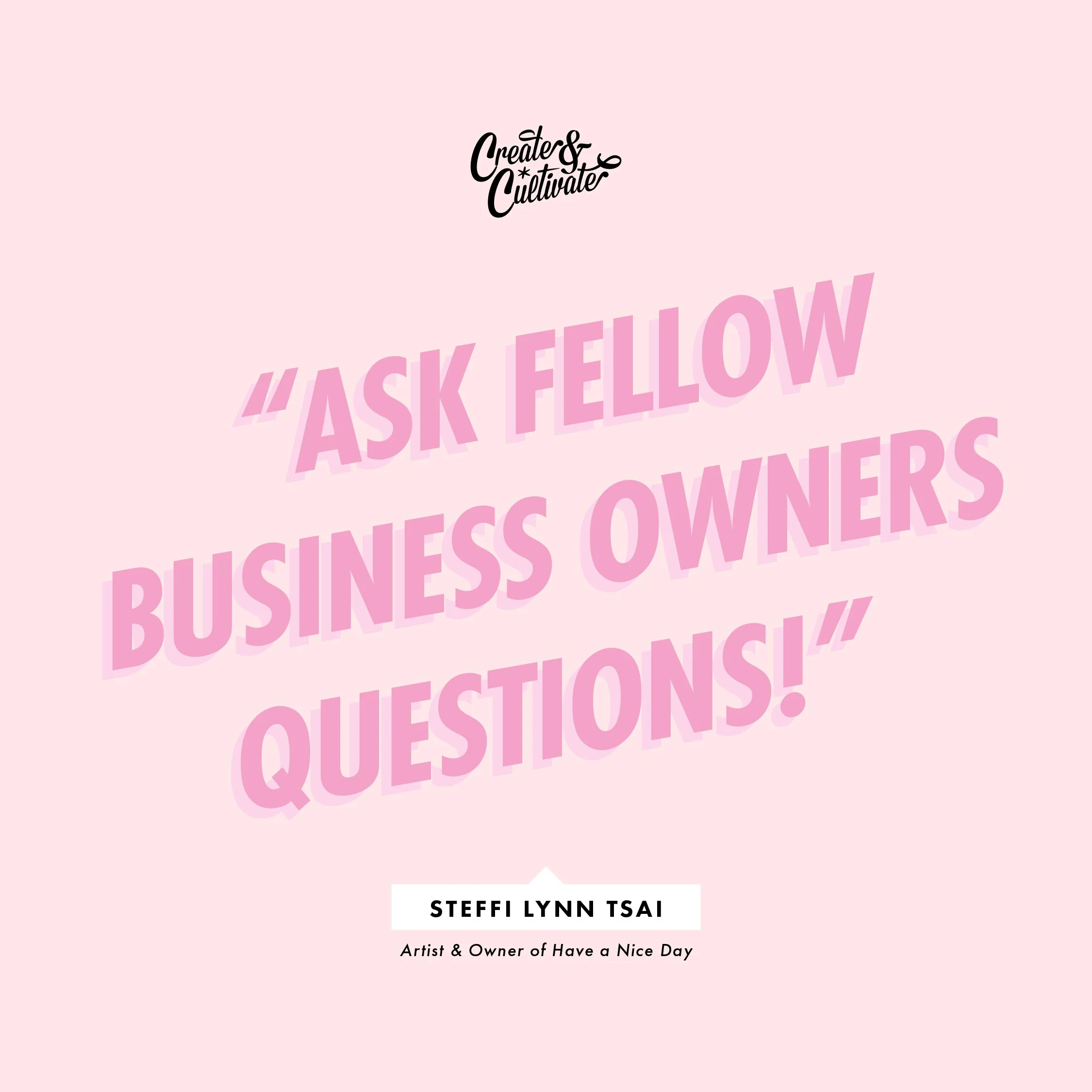
“I had a really hard time with this because I thought everything would be super easy. I started off on Etsy and it was just ‘an Etsy Shop.’ To me, I thought that was good enough. It is really difficult for me to not have control over every aspect of my life, so asking for help was not an option I wanted to explore. That being said, my biggest advice is asking for help and not to be stubborn about it! Your resources are all right in front of you and your biggest resources are your peers. Ask fellow business owners questions!”
On finding the look and feel (and audience!) for the brand…
“I kind of fell into starting a business so I didn’t do this right off the bat. But what I did, later on, was: make a mood board, make lists of your market, and research your demographic.
Mood board: I am a very visual person, so I like to take photos and collect items that I catch my eye. Making a mood board is so important because you can see everything you like in front of you and find the connections between everything. This will help you with your brand colors, aesthetics, etc.
Lists: Make a list of all the shops that you admire, that you shop at, that will be your peers. See what they are doing and what is successful for them
Research your demographic: What kind of age group are you looking to sell to? What are they into? What is trending for them?
On locating the right manufacturers to work with…
“Lots, and lots, and lots of Googling and asking for estimates and quotes. It is super scary and hard to invest money into a product, A) you’ve never made before, and B) from a company that you’ve never worked with before so make sure you look at all your options!”
On self-funding the company…
“I did a lot of freelancing jobs and saved a lot. I have always been super good at saving because I am in constant panic that one day there might be a crazy emergency and I will need a large amount of money for some reason? That paranoia definitely helped with saving. Obviously, this depends on the type of business and the product one is trying to make—because different products cost more or less. I personally think self-funding will always be my go-to because I feel like I am in total control.”

On making the mistaking of stocking too much inventory…
“Most production prices go down when you order in bulk, so it is appealing to order (for example) 1000 stickers at $0.25 compared to 100 stickers at $.75. But the worst thing is to have too much inventory that is not moving. It is basically just sitting money. There was one time where I thought I could move a lot of a specific product, and I didn’t. The product was not selling and just had thousands of dollars worth of products, sitting around in my apartment. And I don’t think I really ended up profiting from it.”
On freelancing from the get-go…
“I actually started freelancing in college and then started the shop right after I graduated. I have always been super eager to work. So I took advantage of all my downtime to freelance and save money because I knew I didn’t want a full-time job ever. And after I graduated, I immediately started my shop.”
On growing a team…
“I have an assistant that helps with some orders, but I personally like fulfilling orders myself. I like that I get to touch every order and add a personal touch. However, as Have a Nice Day grows, I will definitely have to sacrifice that detail since it will end up being not practical.”
On being transparent…
“I think it is important to be transparent and open about what goes on behind the scenes. People want to know the BTS! Show them!”
On her #1 piece of advice for aspiring small business owners…
To be kind of yourself, be open to learning, don’t be discouraged, and make sure you put love into what you are doing—it’ll show.
To discover, support, and shop all of the brands featured at the Create & Cultivate Small Biz Pop-Up, head to our C&C Small Biz Pop-Up hub.

MORE ON THE BLOG

An Intro to Using Credit Cards for Your Business
Put that plastic to good use.

Photo: Anna Shvets from Pexels
We all know that credit cards can wreak havoc on budgeting, but when managed correctly, they can actually benefit your finances and help you organize your business. Building good credit can help you when it comes to a variety of things such as buying or leasing a car, starting a business, and renting or buying office space. You can even score some really beneficial perks, depending on what card you choose! With that in mind, read on for four tips on using credit cards for your business.
Step 1: Determine which card is best for you.
Many cards have benefits like cashback, travel points, or money to spend at retail locations. Do your research and see what option is best for your lifestyle.
Here are some questions to ask yourself:
Do you fly on a particular airline often?
Do you shop at a particular store often or have to make bulk purchases for your business?
Do you prefer straight cashback?
If you are someone who frequently flies on one airline, perhaps getting one of their credit cards would be most beneficial. If you don’t fly with one airline in particular but want to get travel points you can use everywhere, consider the Chase Sapphire Reserve or Venture Card from Capital One.
If you shop at one store a lot, get one of their cards. Amazon, Target, and Nordstrom in particular have fantastic credit options that give you a percentage off and/or points towards money to spend in the store with every purchase. If you have to make bulk purchases for business, Costco is a great option because you get a credit card, Costco membership, and store credit points bundled into one, creating even more bang for your buck.
If you don’t travel often or frequent any store in particular, cashback is a safe bet. This can be deposited in either your checking or savings account and is an easy way to increase your savings. Maybe challenge yourself to put all of the cashback you get directly into your savings account!
The best way to go about choosing a card is to educate yourself. There are websites completely devoted to comparing credit cards to help you make your decision. Don’t be afraid to ask around to get information on the different options out there, and choose what works best for you. See what your friends, family, or peers use or like.
Step 2: Maintain consistency with your expenses.
A great way to maintain consistency with your expenses is to put a few of your recurring charges on autopay. I suggest picking bills like your phone, cable and/or internet, utilities, and monthly care insurance payments on autopay with your credit card.
These types of expenses often don’t fluctuate much (if at all), which makes them a great option to put on your credit card. If you consistently get the same monthly charge, you’ll know what to expect. A lot of cards now will actually notify you if a consistent monthly charge changes, which is really helpful to keep tabs on your expenses.
If you do choose to do this, just be sure to pay your card on time! Set a monthly reminder on your phone or email calendar a few days ahead of time to ensure that you always get your payments in and allow for processing times.
Step 3: Make tax season easier.
Believe it or not, using a credit card can make your tax preparation so much easier! As an entrepreneur (especially if you’re a solopreneur), it can be difficult to navigate expenses and determine what you can write off and how to pay for different things. The easiest way to separate things out is to get a credit card that you use just for business. It doesn’t necessarily have to be a business credit card, but it should be a credit card that you only use for business purchases. This way you can easily differentiate business purchases from personal purchases.
This next piece of info is what will really save you during tax season: Your annual summary. If you do a good job of only using your business credit card for business purchases, your annual card summary will make calculating your expenses way easier. Your annual summary breaks all of your expenses down by category, and depending on your credit card, will even include a list of purchases within each category. This way, at the end of the year, you can just look at your annual summary and note what you spent on medical, gas/auto, advertising, food/dining, etc.
A business-only credit card can be a huge benefit to your finances as an entrepreneur. Have a particular card you love? Share it in the comments below!
About the Author: A native San Franciscan, Michele Lando is a Certified Professional Resume Writer and founder of writestylesonline.com. She has a passion for helping others present the best version of themselves, both on paper and in person, and works to polish an individual’s application package and personal style. Aiming to help create a perfect personal branding package, Write Styles presents tips to enhance your resume, style, and boost your confidence.
This story was originally published on April 13, 2019, and has since been updated.
Love this story? Pin the below graphic to your Pinterest board.

MORE ON THE BLOG

Read This Before You Sign That Contract, Advises an Attorney
Don’t pick up your pen just yet.
Photo: Vlada Karpovich from Pexels
The Professional: Mary C. G. Kaufman, Attorney in Los Angeles, CA
The ladies over at Create & Cultivate asked if I could write a column providing some basic and general advice regarding contracts. I thought this was an excellent idea given that many otherwise accomplished creative entrepreneurs lack experience with negotiating and understanding contracts.
So first, some not necessarily legal advice: There’s always room for negotiation. Take a cue from Cher Horowitz in “Clueless”—even bad grades are negotiable. Until it’s signed, the terms of a deal are not set in stone just because someone sent you over a proposed agreement. For example, maybe there’s no wiggle room in raising your fee, but can the other side give you units of product, a discount for their goods, a special credit, or something else besides cold hard cash? There’s no harm in asking. Think about creative ways to benefit from the deal, even if you can’t get more money. As always, this is a do-your-research and know-your-audience situation.
Second, familiarize yourself with a few oft-overlooked standard legal provisions that can make a big difference. Let’s get into a few of them.
Indemnity Clauses
In short, these allow parties to seek reimbursements or damages for certain conduct or occurrences. For example, if you are creating content (i.e. an Instagram takeover) for someone else, that party may want reimbursement from you in the event that the content you created causes them to be involved in a copyright infringement lawsuit. These clauses can be mutual (going both ways) or unilateral (just going to one party).
Arbitration Provisions
These authorize a private judge to determine a dispute between the parties. Meaning, instead of going to court, the case could be mediated by a private judge instead. Arbitration has pros and cons. For example, it can be more expensive to go with a private judge, as you will be paying for the judge’s time (outside of arbitration, you are merely paying filing fees), however, it can be quicker and the dispute will not necessarily be made public (normally, all filings in a lawsuit are a matter of public record).
Forum Selection & Choice of Law Clauses
These determine where and which laws will apply to any disputes. Say, you’re in California but the company you’re working with is based in Texas, this clause would determine which state law would apply and where any disputes will be handled. Generally, you would want to have your state’s law apply and be able to handle any disputes in a place that is easily accessible to you to keep costs down. However, there may be reasons that you would want another state’s law to apply. For example, California law prohibits employers from using non-compete clauses for employees.
Integration Clauses
These make any pre-contract discussions irrelevant if the contract outlines different terms. For example, say that during negotiations, there was some discussion that you would be paid extra for any work you did on weekends. However, the contract simply states one standard rate. The integration clause would prevent those prior discussions from being considered by a judge if there was a dispute that went to court.
If you find yourself lost in legal jargon, make sure to do your research on the web, or even grab a book that introduces you to basic contract provisions. And better yet, if you can, consult a lawyer. Fees to have a professional look over a contract range, but it may be worth looking into, especially for big jobs. These are just a few types of clauses that are often overlooked by non-lawyers, but as I see every day in my work, they can have big consequences when you get into a dispute. Bottom line: Know what you’re signing, even if you think it’s not important!
Finally, if you’re not completely comfortable with the agreement, then don’t sign it. Always know what you’re getting yourself into, and never be too intimidated to ask questions (or if you are, send your question to us)! A good contract should spell out exactly what is expected of both parties (deliverables, deadlines, usage rights, etc.) and will protect both sides in the event of a dispute.

About the Author: Mary C.G. Kaufman is an attorney based in Los Angeles, CA, counseling clients in the entertainment, fashion, and financial industries, and occasionally translating Legalese for Create & Cultivate. She handles a wide range of strategic and commercial legal matters for clients including emerging companies and notable social media personalities. On her off-days, she likes to garden, find the best workout classes on Classpass, and cook Sunday suppers for friends. Get more info on Mary here.
This story was originally published on March 3, 2019, and has since been updated.
Love this story? Pin the below graphic to your Pinterest board.

MORE ON THE BLOG

7 Tips for Working With Influencers, According to a Top Talent Agency
Help them help you.

Photo courtesy of Aimee Song
Working with influencers is an essential part of growing your brand. They can help spread awareness, garner press, and introduce you to a whole new audience. Here, our partner Digital Brand Architects (a.ka., DBA), a digital talent agency that reps some of the top talent in the influencer sphere, put together some tips for building great partnerships and successful relationships that will keep everyone happy.
1. Identify goals for your campaign.
Setting goals is one of the easiest ways to ensure your brand’s relationship with any influencer is a smooth one, and most importantly, a productive one. Be it brand awareness, product sales, or heightened engagement, make sure you have a clear outline of what it is you are trying to accomplish before the start of any campaign.
2. Investigate before you take the leap.
Do your homework. Ask for media kits, and consider influencers and content creators who have a track record of helping brands reach their goals.
3. Mind the details.
When you do your initial outreach, have as many details ready to share as possible. This helps avoid surprises and keeps all parties on the same page.
4. Set a timeline.
Timing is everything and that is especially true when working with influencers. Always be sure that your contract outlines set times for content previewing and posting. And don’t forget to be specific about which time zone the deadline lives in.
5. Provide a briefing document.
A brief creates sets the guidelines so creativity can flourish and it’s a very necessary tool when working in the influencer space.
Make sure your brief includes:
All image requirements (do assets need to be in portrait or landscape?)
Styling directions
Copy guidelines (key messaging, hashtags/tags, FTC disclosures)
Do’s and Don'ts (do they need to avoid competitive products? Does the outfit need to be head-to-toe? Can talent use affiliate links?)
6. Understand your influencer’s creative lens.
When you work with influencers, you do so to capture their unique spin on your product or service, so keep in mind their voice and the types of content they are known to produce. Most importantly be sure to identify the style of post you are envisioning (a collage board, a personal-style post, etc.)
7. Set up a kick-off call.
This should be done before any work is done by the influencer.
Love this story? Pin the below graphic to your Pinterest board.

This story was originally published on March 4, 2019, and has since been updated.
MORE ON THE BLOG

Pro Tip: How to Convince Your Boss to Let You Go Freelance
Loving WFH?

Photo: Karolina Grabowska from Pexels
If you’ve been putting together a plan for leaving your 9-to-5 job and venturing into the brave new world of freelance, there’s a potential client I bet you haven’t stopped to consider yet: your current employer.
When I started my freelance career, my first client was the same PR agency I’d been working for over the last two years. There were things outside of work I needed to be able to dedicate my time to but I was committed to my job and team. I loved what I was doing, but I also craved the freedom of flexibility and autonomy.
If this sounds like you, keep reading because in today’s Pro Tip I’m going to share my step-by-step process for how to convince your boss to let you go freelance.
Pinpoint Your Value
The most important factor in convincing your current employer to let you switch from full-time to freelance is to pinpoint the unique value you bring to their business.
For me, it was my knowledge of and connections within the video game and esports industries. Beyond my expertise, my proven loyalty and track record for being a high performer also helped contribute to my cause. I had just been promoted about six months prior and worked well with my team and clients.
Once you have your unique value identified, gather important milestones you’ve hit throughout your time with the company. I like to focus on quantifiable milestones because numbers are the best way to communicate results to your boss. For my situation, this was the amount of new business I helped secure for the company, additional retainers I negotiated with existing clients, high-profile news hits I secured for product launches, etc.
Do Your Research
Freelancing is far from a new concept, but nowadays, more and more businesses are embracing this change in the workforce. Before you approach your boss with your freelance plan, do your research to make sure that freelancing is actually something you can afford to take on.
When you’re a freelancer, you’re forfeiting your company-provided benefits like healthcare, 401K matching, and paid vacation days. So take time to do some research and make sure that you’re ready for the change.
You also want to make sure that the jump from full-time to freelance is sustainable within the company you’re working for. Meaning to say, that you can continue to not only show your value but identify areas where you can continue to pick up additional work when projects end.
If you’re looking for more guidance on things to take into consideration before starting your freelance career, get your hands on my freelancer starter kit.
Create a Plan
The last thing you want to do is pitch the idea of freelancing to your boss without a plan in place. You’re asking for a significant change and in order to get the best outcome, you’ll need to prove that going freelance is the best route for not only you but your employer’s business goals.
Start by looking at the next six to twelve months and identify key moments where you regularly play a significant part in the business. For me, this was around client conferences and product launches. Once you have those key moments in place, think of the value you add to those occasions and the amount of time it typically takes to complete the necessary work-related tasks.
Freelancing is about hourly rates. Even if you negotiate a monthly retainer, you want to make sure you’re being compensated for the amount of work you agreed to for the amount of time estimated so you don’t fall back into what could feel like a 9-to-5 grind.
After you identify your value and key business moments, list the types of tasks you want to do as a freelancer to help support them. Then look at what you’ve written out to determine if it’s too little or too much work to support your freelance goals. From there, adjust where you need to and start to imagine how you’d like to bring this up to your boss.
The Pitch
Let’s recap before you schedule a time to sit down and pitch the idea of freelancing to your boss you want to have the following:
A clear understanding of the unique value you bring to their business.
Confidence through the research you’ve done that you’re ready for freelance life.
A plan of action for how you will transition to and execute freelancing so effortlessly, they’ll hardly notice the difference.
Once you have these three factors in place, ask your boss to schedule a time for a one-on-one conversation. It’s important this meeting be scheduled for a time with minimum distractions. For example, if you know your boss is particularly busy in the mornings, aim for the afternoon.
Start the conversation with confidence. This is a proposal you’re pitching, not a favor. Switching to freelance is a business-related request so don’t go into the meeting thinking that you’re going to appear weak or less-than for asking for something that you want.
Start with something like this:
“I would like to discuss the opportunity of transitioning to a freelance employee with you today. I’ve created a plan of action that I’d like to share for how I can continue to add value to your business in this new capacity. I enjoy working with you and hope this is something you will take into consideration.”
This messaging is clear, to-the-point, and friendly. From here, share your plan and ask for feedback along the way.
Be prepared to answer questions like:
Why do you want to switch to freelance?
What hourly rate are you expecting?
How many hours a week can you commit to?
Are you willing to come into the office?
How long do you want to freelance for?
Every individual’s answers will be different so it’s important to think of what you want from the setup. Be prepared for where you’re willing to compromise and where you are firm. Having clear answers will make the decision-making process much easier for you and your boss.

About the Author: Audrey Adair is a seasoned freelance communications professional and founder of The Scope, a platform providing resources and community to freelancers and the self-employed. Connect with The Scope on Instagram and join the email list to receive your free resource, The Freelancer Starter Kit.
This post was published on March 19, 2019, and has since been updated.
Love this story? Pin the below graphic to your Pinterest board.

MORE ON THE BLOG

Starting My Business Was One of the Biggest Risks I’ve Ever Taken—But I Don’t Regret It
The founder of the luxury candle company Lit Brooklyn gets real about entrepreneurship.
This article was originally published by Mogul Millennial on March 24, 2020, and has been shared with consent.

“
No matter what, you have to stay the course, even when you’re not making a lot of money in the beginning.
”
—Denequa Williams-Clarke, Founder Lit Brooklyn
At Mogul Millennial, we believe that when we avoid the important conversation around money, it becomes a silent tool for oppression for the Black entrepreneurial community. It’s hard to learn about something when you’re discouraged or scared to talk about it, and as a result, cannot really learn in order to grow.
In our series, All About the Benjamins, we’re challenging Black entrepreneurs to give us the tea on their financial reality—how much money they’re making (or not making) if they are profitable, how they were really able to launch their business, and so much more.
In this edition, we were able to catch up with Denequa Williams-Clarke, the founder of LIT Brooklyn, a luxury, eco-friendly candle company. After deciding she wanted to launch a candle company, Denequa taught herself how to make candles, and since then, has been able to partner with top brands and has grown her passion into a profitable business. In our chat, we learn more about how Denequa launched LIT, and her financial experiences in the early days as a new entrepreneur.
An entrepreneur at heart.
One of my first jobs was actually my start in entrepreneurship. When I was 12 or 13, I had a printing company with one of my cousins and I was selling greeting cards. There was this CD ROM, when they were a thing, called “Create a Card,” and I used that to create greeting cards around the holidays and business cards for people. The biggest thing that I learned from this experience was customer service. Even at that young age, I treated my business very seriously from how I packaged it, and even the time frame of how I delivered my products. But I think other than that, I have to credit my parents for teaching me about business. They were immigrants and a lot of things that I’ve learned in business came from them. As an immigrant, you have to be super-resilient, and that’s definitely a trait that you need in business. Also, you need to be reliable, trustworthy, and a person of your word. No business could have taught me what I’ve learned from watching my parents.

Photo: Courtesy of LIT Brooklyn and Mogul Millennial
For Denequa, it was all or nothing.
I’ve always loved candles and I think my love for candles and my love for making people feel good about themselves, inspired LIT. The lighting of candles and the ambiance that it provides, I love being a part of that experience. Back in 2015, I was literally in the living room watching TV, and I told my husband, who was my boyfriend at the time, “Yo, I think I want to start making candles.” The idea came easy to me because I love candles so much and I wanted to do what I loved.
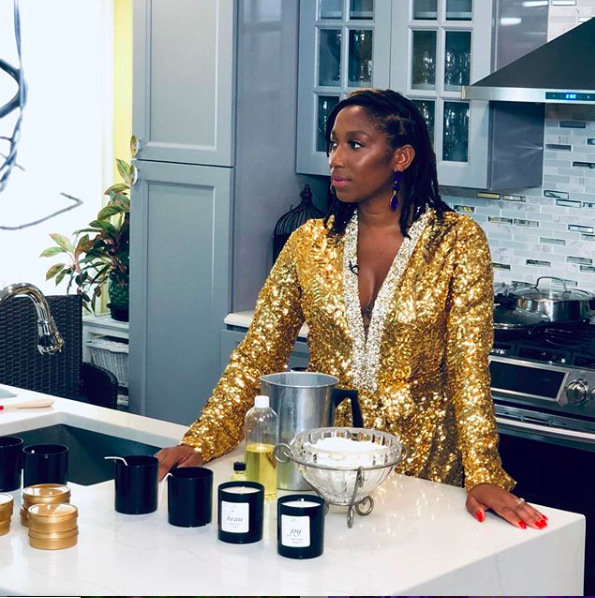
When I decided to launch my business, I was doing it full-time. The money that I had saved from my last job helped me start my business. I literally just went all in. I know I had a lot of balls to do it. Looking back, I had a lot of balls and a lot of bills. Starting this business was probably one of the biggest risks that I’ve ever taken in life, but I don’t regret it.
I will say a disclaimer and note that there is definitely a certain kind of love that you have to have for starting any type of business but especially a business when you’re investing your own money into it because you have to have a mind frame of all or nothing and that’s not easy. You have to automatically go into it without even thinking that there’s going to be any loss at all; you have to fully believe in it 100%. I definitely experienced that a lot of that when I first started my business. I know people around me didn’t understand the importance of candles, but I didn’t let it stop me.
It took spending money to make money.
My business was very expensive to start. Honestly, I never really calculated how much money I used when I first started. I do remember that there was a lot of trial and error and testing involved. There was a lot of spending on things like tumblers, wicks, glassware, waxes, and several other things. I never really took the time to think about the money aspect. Early on, I was so obsessed and invested in the final product that I never really thought about everything else that was going on.
In my first year of business, I did do a lot of sponsoring products and that was an expense. I also did a lot traveling to make sure I was at different pop-ups and events in the city, which was a huge expense too. In the early days, it was definitely a lot of money that was spent, but I wasn’t tracking it like that.
Plant your seed, and then watch it multiply.
When I first launched my business, my price points were a lot higher, and that was, of course, all with trial and error. About six months into my business, I did a whole rebranding, where I offered a travel-sized candle and I offered a different color jar. I found that the person that I was getting my supplies from was able to offer me a cheaper cost, so then in return, I was able to offer my customer’s a cheaper price. Once I did the whole rebranding, that’s when I started to see an increase in sales. My customers were getting the same quality product but just in different packaging.
I didn’t really see any real, consistent sales coming in until like a year or a year and a half later in my business. Keep in mind though, that’s a part of the game. No matter what, you have to stay the course, even when you’re not making a lot of money in the beginning.
“
You don’t become a self-made millionaire overnight and people have to know this coming in. Entrepreneurship is hard.”
—Denequa Williams-Clarke, Founder Lit Brooklyn
In every success story, there’s a gap of trials and errors that is untold.
To be honest, in the beginning, there was definitely no paying of a salary. I sustained myself because I was lucky to be able to still live at home with my mom.
After my first year of business, my mom started seeing people and brands writing about my business. For example, I was featured in Essence and got to be in a Budweiser commercial. I think for an immigrant parent, my mom was like “I don’t know exactly what the hell you’re doing, but it has to be something because people are talking about you.” From there once the traction started to pick up, belief started to come in. She knew that I wasn’t just sitting around and that my business was a real thing. Being able to stay at home was a huge help because I was also able to save money.
Often times, people don’t really talk about things like this, and I think that’s why success stories are so jaded. It’s so many loopholes in everyone’s story. The reality is that when you have a business, what you make goes back into the business. Even if you have a $5,000 day, you don’t really have $5,000, sis. That money goes back into supplies, back into your product, your tech, etc.
There is a lot of factors that go into the money that’s made as an entrepreneur, and I don’t think people are honest when having that conversation. You don’t become a self-made millionaire overnight and people have to know this coming in. Entrepreneurship is hard.
Started from the bottom now we’re here.
After all of the trials and long nights, I’m profitable now, but it didn’t happen until after the year and a half mark. Most of my revenue, and my profitably, has come from the help of my consumers, and their word of mouth marketing. The awareness that I’ve been getting since I launched from people that love my brand has been huge and impactful.
To keep up with Denequa or LIT, follow them on Instagram here, or visit the site to pick up your candle!
Photo credit: Courtesy of Denequa Williams-Clarke and Mogul Millennial
Mogul Millennial, Inc. a media-tech platform curating actionable resources for Black entrepreneurs and corporate leaders #forusbyus. Follow @mogulmillennial on Instagram and Twitter, and check out our website at www.mogulmillennial.com.
MORE ON THE BLOG

4 Times You’re Allowed to Say No at Work
Don’t let career FOMO lead to burnout.

Photo: Christina Morillo from Pexels
FOMO (fear of missing out) is real, and it happens in both our work and personal lives. Because of the fear of missing an opportunity in your career, it’s easy to find yourself on the “yes” train, only to feel overexerted and spread too thin. While taking advantage of opportunities that can help your career is great, it’s important to realize when saying no is in your best interest. Here are four times you’re allowed to say “no” at work.
1. When your calendar is already crammed.
When your schedule is jam-packed, saying no is probably the way to go. While you may be able to fit in a quick meeting or take on one extra project, it’s important to assess the obligations you’ve already committed to before saying yes to something else. Would taking on this extra task take a lot of time? How much would it cut into your current projects?
If saying yes to a new opportunity would hinder your ability to complete tasks you’ve already committed to, just say no. This can be hard, especially if you’re a people pleaser, but at the end of the day, taking on more is not always better. Instead, focus on putting your best foot forward on your current commitments.
2. When you’d be covering for someone else who’s always slacking.
Are you constantly covering for a coworker who can’t seem to be bothered to lift a finger? When your boss recognizes you for your ability to pick up the pieces, it can be hard to put an end to things—but there’s a point when it’s not worth it.
If you continually cover for someone or finish the work that they were supposed to, you’re showing that person that, A) you don’t mind that they’re slacking, and B) they can continue to slack off because you will finish what they don’t. In this case, you’re doing yourself and the other person a disservice. Try talking to them directly, and if that doesn’t work, discuss the situation with your boss. Point out that you’re taking on someone else’s role and it’s impeding on your ability to get your own work completed to your standards.
Try approaching the subject like this:
“I’ve been doing x, y, and z to help [Name], but it’s getting difficult to get everything done to my standards. I’m happy to help, but it seems to be more of an ongoing issue than a one-off situation, and I don’t want it to affect responsibilities I’ve already committed to. Is there a better way we can delegate responsibilities or create more accountability as a team?”

3. When it’s a last-minute request and you already have other obligations.
We’ve all had that last-minute work request that makes our stomach sink, whether it’s an after-hours event or a last-minute meeting. Sometimes, you just suck it up and deal with it (yes, it’s part of being an adult), but it’s okay to say no if it will impede on other obligations.
If you’ve already made other commitments, explain the situation. Show that you would like to make it work but it’s not an option since it’s last-minute. You can say something like this:
“Unfortunately, I’m not able to make that work because of the timing. I’ve already made another commitment I can’t cancel; however, I’m happy to work with you to figure out another time that works better.”
If your manager can’t appreciate that you’ve made commitments and you want to stick with them, you may not be in a work environment where you can thrive.
4. If it makes you uncomfortable (morally or physically).
This is simple: If something makes you uncomfortable, morally or physically, just say no.
If you feel like something isn’t right, trust your gut. You can always say “I’m not comfortable doing that,” or simply decline and say that you’re working on another project. Assessing the situation, your needs (both mental and physical), and how the request will affect you is essential to figuring out if the project is in your best interest.
If something makes you physically uncomfortable, get yourself out of that situation immediately, and contact someone of authority. Whether it’s HR or legal authorities, if there is misconduct in the workplace, use your voice, and be confident that no one should make you uncomfortable.
About the Author: Michele Lando is a certified professional résumé writer and founder of Write Styles. She has a passion for helping others present the best version of themselves, both on paper and in person, and works to polish an individual’s application package and personal style. Aiming to help create a perfect personal branding package, Write Styles presents tips to enhance your resume, professional style, and boost your confidence.
Love this story? Pin the below graphic to your Pinterest board.

This story was originally published on March 7, 2019, and has since been published.
MORE ON THE BLOG

Here’s How to Make a “To-Do” List to Actually Achieve Your Professional Goals
Don’t let your to-do list become a to-don’t list.

Photo: Ivan Samkov from Pexels
Time for a little to-do list audit. Grab yours and scan the first five tasks listed. If you don’t have one, then we have a bigger problem—skip the next two paragraphs and dive right into the most effective tool at your fingertips right this very minute!
What’s prioritized at the top of your list? Doing laundry, returning calls or emails, running errands? Chances are your list is a blend of your personal and professional life—what it takes just to stay on top of everything—and not a plan to achieve the longer-term goals you’ve set.
With the daily responsibilities of adulting—staying on top of work deadlines, being a parent and a spouse, and trying to have a social life—you’re left with a whole lot of chaos and not a lot of time. It’s easy to be sidetracked from your dreams and the “someday” plans that fight for your attention. That’s why I live and die by my daily to-do list—and make sure it’s working for me beyond simply keeping me afloat.
When I take the time to plan out my day and week, I’m more productive, focused, and proactive. I find more time for personal activities and accomplish goals that actually move my business forward. In my post, “7 Sanity-Saving Tips for Busy Mompreneurs” the tip that seemed to resonate most with readers was to make your To-Do List actually work for you. Here are my tips on how to do just that.
C'MON GET "APP-Y"
Using an app on your smartphone to manage your to-do list makes things extremely easy and convenient since, let’s be honest, your phone is with you all the time. I love the Wunderlist app, and Evernote, for managing my to-do list because I can keep several running lists of things that need to get done and update them whenever a thought pops into my head.
Plus, I can:
Set up a daily to-do, weekly list, and long-term goals, and simply move these tasks around as they become a priority
Set up reminders to alert me when tasks or lists must get done. (As I was finishing up this article, I got an alert from Wunderlist telling me that it was time to finish this article. So “meta!”)
Quickly add an item to my list as I think of it, clip an article to read later, add a grocery item to my running list and share it with my spouse or assistant (collab! delegate!) and sync to my desktop seamlessly.
Use my smartphone’s dictation feature —just press the little microphone and talk. What could be easier?
PLAN (AHEAD) TO SUCCEED
Now that you know where you’ll make and keep your list, you can set aside 10-15 minutes in the evening to create your action list. In the morning, we tend to grab a cup of coffee, sit down, and tackle never-ending email, right? But at night, when things are quiet and distractions are at a minimum, you can take some time to focus on how to be most productive the following day. Planning your list at night allows you to get everything out of your head and onto your action list. You’ll sleep better after you’ve cleared your mind and can hit the ground running in the morning.
KEEP IT (CHRONO)LOGICAL
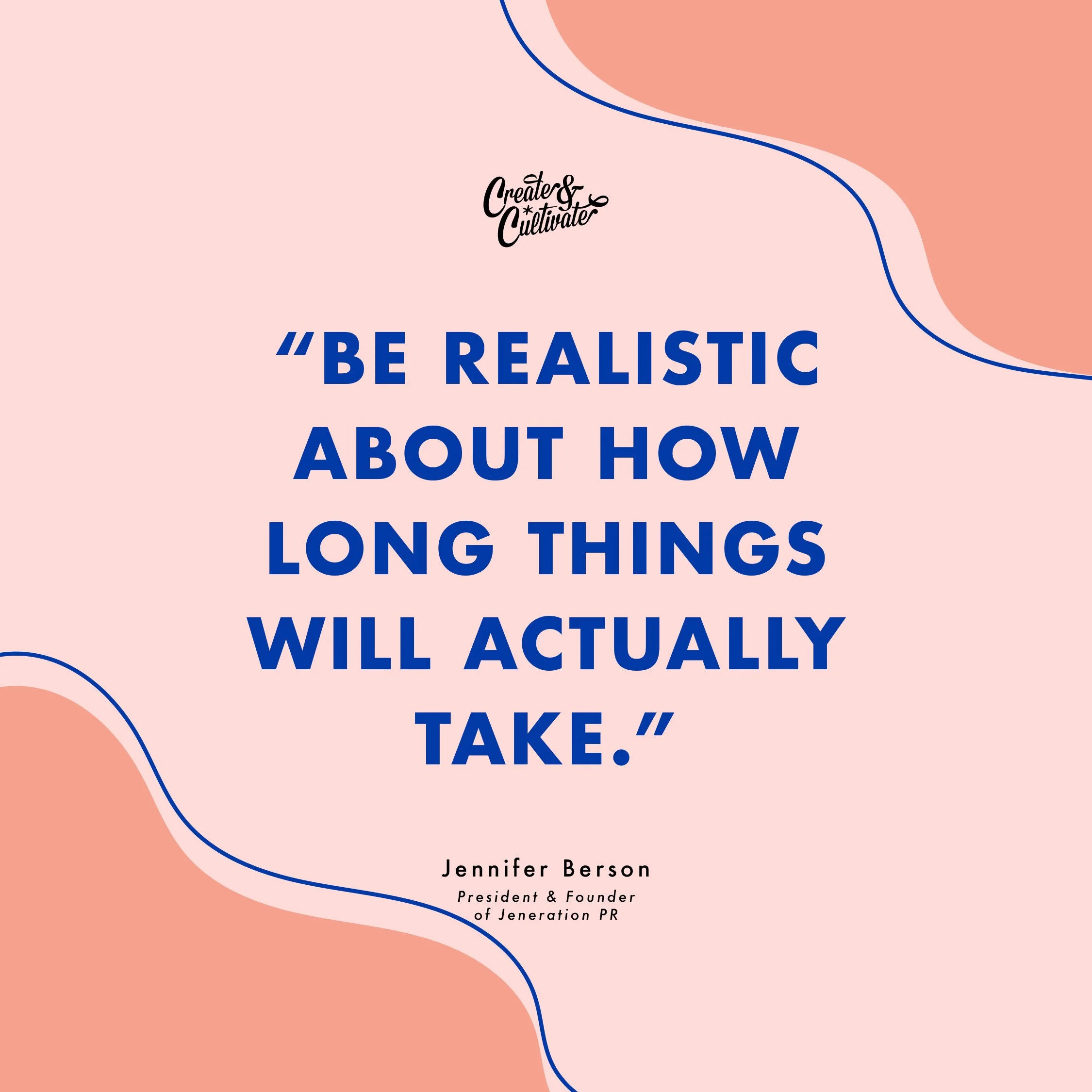
This seems obvious, but as you’re planning your day, be realistic about how long things will actually take, what your absolute “must-do” items for the day are (top of the list and starred!), and how organizing your tasks and errands chronologically and geographically makes the most sense. For example, if you have a lunch meeting that is near a grocery store, plan an extra 15 minutes to run in and save a second time-consuming trip. Make a sub-list of the things you need to get so you can run in and out without forgetting anything. By arranging your day properly, you’ll be amazed at how much more efficient you can be!
EMPLOY THE 3 "Ps": PROJECTS, PEOPLE, PRIORITIES
High-performance expert Brendon Burchard stresses the importance of organizing your day by considering the projects, people, and priorities that matter most. Thinking this way is key to really moving your business forward and finally accomplishing your bigger goals.
Here’s how it’s done by category:
Projects
List the top 3-5 projects you have going right now. Include three simple things you need to do to advance these projects, beyond your daily to-dos. Chip away at the bigger goals through smaller, actionable tasks you can tackle each day.
People
Ask yourself, “Who am I waiting on?” or “Who is waiting on me?” If you need a decision, information, or data to complete your part of the task, reach out to the people who can give you what you’re waiting on to move forward on your bigger goals.
Priorities
List the 5-10 urgent things that you absolutely must get accomplished today. List it, do it, cross it off. If it takes less than 5-10 minutes, just do it now. Be specific. A task like “answer email,” or “organize desk,” is too broad and will remain on your list forever. Instead, “return client email re: press plan” or “file papers on desk for 5 minutes” is more specific and attainable. You may not achieve “inbox zero” or organize your whole office, but even answering a few pressing emails or sorting for 5 minutes a day will add up.
GET FIRED UP
Start your day in the right mindset, then dive in! Wake up earlier, even 10-15 minutes can make all the difference. The goal is to eventually wake up a whole hour early, by starting with 10 minutes each day until you’re adjusted. Before you jump into work head first, get in the right mindset: Meditate for 10 minutes. Try apps Calm or Headspace for easy, guided meditations), stretch or exercise, take a shower and drink lots of water. Ask yourself, “What am I most fired-up about today?!” and start from a place of passion and purpose.
Now you know how to use your time to your advantage to really rock your goals! Challenge yourself to see how many spare minutes can you find in your day, and make them count! And tell me, do you have any surefire tips to share about how you organize your to-do list?
About the Author: Jennifer Berson is the president and founder of Jeneration PR, a public relations and social media marketing firm specializing in promoting beauty, baby, and lifestyle brands. Prior to founding Jeneration PR in 2005, Jennifer was a civil litigation attorney in Los Angeles. Jennifer has been featured in the New York Times, Forbes, Inc., Business Insider, Yahoo!, Entrepreneur Magazine, PR Week, Huffington Post, Fox 11 News, TV Guide Network's "Hollywood 411," PR Web and was profiled on Apple.com. Jennifer was also selected by Babble.com as one of the 10 “Mompreneur’s Who Made it Big!”
Love this story? Pin the below graphic to your Pinterest board.

This story was originally published on April 7, 2016, and has since been updated.
MORE ON THE BLOG

Classifieds: Casetify, Hootsuite, & Banza Are Hiring!
Hey, job seekers! New roundup of jobs in marketing, operations, social media, and more

Photo by Pexels
New roundup of jobs in marketing, operations, social media, and more!
FEATURED JOBS
Growth Marketer, Raven + Lily- Remote or Austin, TX
Operations Manager, Yellow Leaf- Los Angeles, CA
Sr. Account Executive, Brand Sales, MagicLinks- Venice, CA
Influencer Partnerships Manager, MagicLinks- Venice, CA
Social Media Manager, Amy Porterfield Inc.- San Diego County
Social Media & Brand Manager, The Southern Influence- Austin, TX
LOS ANGELES
Sr. Social Media Manager, Create & Cultivate
Marketing Manager, Casetify
Copywriter, HAUS
Manager, Content Operations, The Athletic
Sr. Associate, Email Marketing, MeUndies
Account Manager, Fanjoy
NEW YORK CITY
Creative Project Manager, Flashtalking
Community Manager (Part-Time), Banza
Diversity, Equity, & Inclusion Manager, Hootsuite
Community Manager, GEENIE
Media Sales Planner, Blue Bite
Product & Brand Marketing Manager, Helix
REMOTE
Growth Marketing Manager, Hasura
Copywriter & Editor, The Humane League
Creative Director, CatalystCreativ
Director, Business Development, CatalystCreativ
Sr. Copywriter, Aesthetic
Internal Audit Manager, Twilio

Considering a Career Change at 30? Here's Why It Could Be Your Best Move Ever
Listen to the urge.

Photo: Create & Cultivate
The urge to make a career change at 30 (and during your 30s) is extremely normal. In fact, a whopping 73% of 30-somethings say they want to change careers (up by 10% compared to 2013), according to a 2015 study. What’s holding you back? 43% of those interested in making a career change cited the lack of financial security as a major barrier, and 36% said they worried about a lack of experience or education.
Being passionate (and happy) at work is critical, so those barriers shouldn’t stop you—or anyone else—from pursuing a career change at 30. Yes, as a 30-something, leaving an established career behind is an uncomfortable thought, but your dream career is worth a few months or so of unease, i.e. battling “the unknown.” (And think about it this way: You’ll always have that field to fall back on if things don’t work out.)
Career advice expert and spokesperson for TopResume, Amanda Augustine, has stellar advice for making a thoughtful career pivot. Is it time for you to take the leap? Here’s how to do it.
1. Understand the industry speak.
When you’re looking to make a pivot, something that will give you an advantage—and boost your confidence—is being able to talk about the industry as though you already work in it. Look through job ads on career boards specific to your new industry, and study how hiring managers describe those positions. What keywords are you seeing over and over? Take note, and make sure you know what they mean.
Augustine recommends doing some productive social media stalking, too. “You can follow industry leaders and influencers on social media to get a better handle on the industry buzzwords and catch up on the latest news that’s affecting target employers,” she says.
Then, apply those keywords to your resume and professional profiles. “You’d be surprised how many of your skills can be translated into a new industry—you just may need to change the terminology you use to describe them,” Augustine says. So, let’s say you used to analyze data in the finance industry—now you’re an expert in using that data to forecast trends in the marketing world. Done and done.
2. Make your connections count.
Just because you don’t know a ton of people in this new field doesn’t mean you can’t leverage the strong network you’ve already spent years building. It’s all about tapping those second- and third-degree connections.
If you’re hesitant to make an ask, consider how you can help the other person first. “As with any networking relationship, the goal should be to provide value before you start asking for favors,” says Augustine. “If you’re considering a change and want to leverage a contact’s expertise or resources, begin by re-establishing the relationship. Never call someone out-of-the-blue and start asking for help. Look for opportunities to pay it forward—this can be as simple as offering to make an introduction to someone else in your network or sharing a resource you found.”
Consider this approach: make a list of the people you want to reach out to, with a second column about how you provide something valuable to each person simultaneously.
3. Decide what compromises you’re willing to make.
In Steve Jobs’ 2005 Stanford commencement address, he said, “I didn’t see it then, but it turned out that getting fired from Apple was the best thing that could have ever happened to me. The heaviness of being successful was replaced by the lightness of being a beginner again, less sure about everything. It freed me to enter into one of the most creative periods of my life.”
Steve Jobs is always good for an inspirational quote, but it’s okay if you’re apprehensive about being a beginner again. Especially if it means looking for positions that have less seniority than the one you currently have, taking a pay cut, or taking a community college class in a room full of 18-year-olds. Acknowledge how you feel, but remind yourself that you’ve had the courage to course-correct (as those 18-year-olds will do one day, too) and follow the path toward your dream job. “Remember that sometimes it’s necessary to make a lateral move, or even a step-down, in order to move up on the right path,” says Augustine. “Accept this fact, and you’re already in better shape.”
In terms of cold, hard numbers, “re-evaluate your finances and identify areas where you can cut back your expenses to make the transition less jarring,” says Augustine. This might also mean thinking ahead of time about your negotiation needs once an offer is on the table. Say you have to take a small pay cut; you could ask to work from home one day a week to reduce commuting costs.
“It won’t always be easy, but keep your eye on the prize,” says Augustine. “If you’re passionate about this new direction, all this hard work will be worth it.”
An original version of this article appeared on Levo.
Love this story? Pin the below graphic to your Pinterest board.

This post was originally published on January 24, 2016, and has since been updated.
MORE ON THE BLOG

Meet the Young Entrepreneur Breaking Barriers in the Highly Competitive Cannabis Industry
What grass ceiling?
This article was originally published by Mogul Millennial on May 25, 2020, and has been shared with consent.

“
We're very proud to be minority-owned and are trying to help other minorities get into the industry as well.”
—Hope Wiseman, founder Mary & Main
In the competitive cannabis industry, Hope Wiseman is a boss amongst bosses. By the age of 26, she made history as the youngest Black woman dispensary owner in the U.S.
Beyond entrepreneurship, she is looking to break down stigmas, raise awareness and educate about the positive impact cannabis can have on America’s economy and communities. She has often said that once the dismissive connotation of cannabis has been dissolved, communities will have the opportunity to heal and economically prosper.
The Spelman graduate and co-founder of Mary & Main spoke with Mogul Millennial to help us learn more about her journey from finance to entrepreneurship and making money moves in the cannabis industry.
MOGUL MILLENNIAL: In launching Mary & Main, you entered a billion-dollar market where there are bigger players and a lack of diversity. What have you learned from entering this competitive space?
HOPE WISEMAN: I have learned that it is really all about performance rather than your race, age, and gender. All those things definitely play a role and you know subconsciously people cannot help what they've been conditioned to support. If your company is operating under a system of excellence, then that allows you to still succeed in this industry. I feel like this industry craves sophisticated leaders, [because] people can form businesses that can sustain all different types of environments, especially right now with coronavirus.
Before you launched Mary & Main, you had a career in investment banking. What were some of the transferable skills that allowed you to make the transition to entrepreneurship?
I gained hard and soft skills from investment banking that helped me be successful in my quest to obtain a license as well as in my operational side. First, I believe from a soft skill perspective, it taught me how to be tenacious, as well as how to figure things out on my own. My problem-solving skills are great because when I was working in investment banking as an analyst, if you didn't know how to do something, you had to figure it out on your own or you'd have to seek your own help. [You have to be] able to troubleshoot, figure things out quickly, and keep a level head while working through issues.
I used to work in equity institutional sales, so I was interpreting stock research. We would have analysts internally that would completely turn the company inside out to study it and give a stock recommendation. As a result, I understand how companies and their finances work. For me, that makes it a lot easier going into my entrepreneurial journey. I know where I want to go and where I want to take the company. I understand the inner workings of how companies should be run to get to a certain point, and I think it has been a tremendous help.
For the more tangible, hard skills, I’m good at financial modeling. Also, the resources and connections in my network are probably a little bit more expanded than your average person because I was working at the top investment bank on Wall Street as a sophomore in college. I definitely feel like investment banking played a big part in giving me the confidence and the actual tools I needed to be successful in the cannabis industry.
When you launched Mary & Main, how did you determine your revenue share model with your product partners?
The three founders bootstrapped the entire process in the beginning, so there was no revenue share. We have since raised some money, but it's all equity. There's no revenue sharing going on as of right now. We have a few small owners, but about 90% of the company is owned by the three founders.
We know you like to partner with brands that are in line with your company's values and offer their products as well. What are some of the lessons you've learned during that journey of building out partnerships and maintaining those relationships?
Because of federal irregularities of cannabis, we are only allowed to purchase products that are grown and processed in the state of Maryland. As a result, we are limited to 10, maybe 20 companies, total. We don't have a big variety because there are not a lot of options. We pretty much work with everyone in the market. And with everyone in the Maryland market, it's so regulated. Everybody has high-quality products, some higher quality than others, but we have every type of patient that comes to our store so we need to have lower-cost products and super high-quality products that have a higher price point.
[Moving forward], we will definitely work with companies that have a strong focus on minority participation within their organization and high-quality standards. However, in states like Maryland and New Jersey, states that are highly regulated, every single producer will be high quality. It'll be more about the relationships you have with people and the types of deals you're able to negotiate with.

“
I want to focus on promoting female entrepreneurship, period.”
—Hope Wiseman, founder Mary & Main
How have you been able to build and sustain a brand and customer loyalty in such a crowded competitive space?
For us, we have built a community of people that support us mainly because we give great service and it's really like a family. But too, they are supporting a minority-owned company. We receive a lot of support simply because of that. We're very proud to be minority-owned and are trying to help other minorities get into the industry as well. We want [our patients] to feel comfortable with shopping in a dispensary. People always enjoy working, shopping, and doing things with people they feel they can relate to. We are offering that space within the cannabis industry and I believe that's where a lot of our loyalty comes from—knowing and having a feeling of a safe environment to do something that is still very sensitive to a lot of people. They want to feel comfortable and have a lot of questions. It's easier to talk to someone who you feel can relate to you.
Transitioning from investment banking into entrepreneurship, what would be one lesson that you learned that you wish you would have known going into that transition?
That's something I regret from early on. I wish I had been doing that. But I'd say those are the two main things: maintaining connections and looking at ancillary services from the beginning.
Do you feel that your experience at Spelman, and also just the experience of being enrolled at an HBCU, contributed anything to your success?
I was very strategic when I realized companies’ recruiting teams were looking for black women. The first place they’re going to go to is Spelman College. They’re not going to go to the University of Maryland or Harvard and look for me there. As prestigious as both those schools are, I felt I had the best chance at being where they would look for me rather than the [other way around]. Investment bank recruiters like Goldman Sachs and JP Morgan don’t even recruit at schools like the University of Maryland. So for me, it felt like a no-brainer if I wanted to land the best possible job after school. I also really enjoyed becoming a woman and adult around other Black women who were going through the same thing as me. It’s empowering and gives you the confidence to be able to walk out into the world and be proud of who you are, at the core.
I’m proud to be part of that sisterhood. Everywhere I go, every time I meet another Spelman sister, we connect and support each other. That’s something I also couldn’t get from a school that wasn’t an HBCU.
Has mentorship been helpful to your career? Also from having mentors or becoming a mentor, is that a role that you would hope to take on at some point?
I feel like [mentorship] is something that will continue throughout my life as I move to different levels. I’ll continue to find allies and mentors that can help me navigate that stage, and I plan to do that for other people. Although I’m still early in my journey and still establishing myself, I do it as much as I can for others in the cannabis industry. I plan to be able to do a lot more for others in the cannabis industry and entrepreneurship.
I was telling someone how I want to focus more on women entrepreneurs. That’s really what’s at my core. I love the cannabis industry and think it’s awesome, but I want to focus on promoting female entrepreneurship, period. I feel like that’s something I’ll do as a mentor.
What makes you a Mogul Millennial?
I feel that the more you give, the more you receive. The more you give, the better the world is. That’s what promotes expansion in a person. I make myself a better person, then I help others do the same.
Photo credit: All About-It, LLC courtesy of Hope Wiseman and Mogul Millennial
Mogul Millennial, Inc. a media-tech platform curating actionable resources for Black entrepreneurs and corporate leaders #forusbyus. Follow @mogulmillennial on Instagram and Twitter, and check out our website at www.mogulmillennial.com.
MORE ON THE BLOG

I Left a Steady Paycheck in Corporate America to Start My Own Future Fortune 500 Company
“Sometimes you need to jump off the cliff and build your wings on the way down.”

We know how daunting it can be to start a new business, especially if you’re disrupting an industry or creating an entirely new one. When there is no path to follow, the biggest question is, where do I start? There is so much to do, but before you get ahead of yourself, let’s start at the beginning. To kick-start the process, and ease some of those first-time founder nerves, we’re asking successful entrepreneurs to share their stories in our series, From Scratch. But this isn’t your typical day-in-the-life feature. We’re getting into the nitty-gritty details of launching a business, from writing a business plan (or not) to sourcing manufacturers and how much founders pay themselves—we’re not holding back.

Photo: Courtesy of Dorian Morris
As you may have gathered from the headline, Dorian Morris is ambitious. The Harvard Business School alumnae was busy climbing the corporate America ladder with her sights set on becoming one of the first Black female CEOs of a Fortune 500 company when she decided to take the leap and launch her own inclusive beauty startup instead. With an impressive résumé—which includes stints at CoverGirl, Sundial Brands, and Kendo—she was more than prepared to take on the competitive multi-billion dollar beauty industry.
Determined to disrupt the space, she founded Undefined Beauty, a clean, conscious, inclusive brand focused on democratizing beauty and destigmatizing what Morris calls "plant magic.” From manufacturing to marketing, she uplifts oft-overlooked communities by partnering exclusively with female-founded, minority-owned, or LGBTQ businesses. Needless to say, this is just one of the many reasons we’re proud to partner with Morris and Undefined Beauty for our inaugural Small Biz Pop-Up in Los Angeles where locals can safely shop the brand’s limited edition Glow Detox bath soak via Postmates or via contactless shopping, thanks to Square, when visiting the IRL pop-up at Platform.
Ahead, Morris talks us through her impressive career journey, from climbing the corporate America ladder to bootstrapping her own future Fortune 500 company. Trust us, you’re going to want to keep an eye on this space and add Undefined Beauty’s Glow Detox to cart, if you haven’t already.
On establishing a solid résumé…
“My background is a beautiful mosaic of retail, consumer packaged goods, and beauty, ranging from merchandising at Macy's, classical brand building at General Mills to learning the ins and outs of the beauty business while at Kendo, and continuing to evolve and master other beauty categories while at Sundial Brands and leading CoverGirl U.S.”
On building a future Fortune 500 company…
“While at Harvard Business School, I honestly thought my purpose was to lead a large Fortune 500 as one of the first Black female CEOs, but now, as I embark upon this startup journey, it's quite a different yet exciting adventure to be building my own future Fortune 500 company, from scratch. Each experience on my professional journey has built key tools that I can now leverage as an entrepreneur, including how I want to operate as well as how I do not want to operate, because actions are what determine your company values and culture.”
On leaving corporate America…
“After leaving corporate America, having built successful brands for other people, I felt it was my time to create something special and powerful for myself. As a beauty junkie, I'm always dissecting ingredient lists and realized there are a lot of less-than-ideal ingredients in our everyday products that aren't necessary. As the industry shifts towards greater transparency, I felt there was an opportunity to focus on clean, non-toxic beauty but do so in an accessible, approachable way.”
On discovering the benefits of cannabis…
“I discovered the beautiful benefits of cannabis, specifically CBD, via a former colleague. As I started my product development research in 2018, I found there wasn’t an efficacious yet fun and accessible CBD brand, focusing on the destigmatiation of cannabis while elevating conscious capitalism in the process. I created Undefined Beauty to fill this void: clean beauty meets adaptogens (CBD) meets social impact.”

On democratizing beauty…
“Undefined Beauty is a lifestyle brand focused on changing the narrative around clean, nontoxic living, democratizing beauty and infusing social impact in the process. I believe in plant power and the role adaptogens play in helping us individually become our best self, both inner and outer beauty, with CBD being for the first adaptogen I chose to highlight in my first collection, Indigo Rose. I want to empower women and men everywhere to explore, embrace, and celebrate their own unique beauty while also giving back to the community: purposeful beauty, unleashed.”
On tapping into conscious capitalism…
“I expanded the concept of conscious capitalism by launching Undefined Collective, a disruptive retail platform that is focused on elevating female-founded, minority-owned, LGTBQ, local and CBD brands because one plus one can equal five when indie brands come together. I have over 50 brand partners that have come together around this aligned vision and have executed a successful physical brick-and-mortar pop-up in Oakland, California, and more importantly, we have been able to educate the community on the amazing benefits of cannabis and demystify its internal and external benefits. Undefined Collective is continuing to evolve and I'm working on something special in the Arts District of Downtown Los Angeles that will launch very soon.”
On destigmatizing and elevating CBD…
“The cannabis industry was built off the backs of the Black and Brown community, which are being denied access to the commercialization opportunity now that the regulatory landscape has shifted. Undefined is focused on destigmatizing and elevating CBD and taking it one step further. My goal is to infuse social good and purposeful impact into my business model to drive sustainable impact.”
“First, across my supply chain, I exclusively partner with female-founded, minority-owned, or LGBTQ businesses, from my labs to my warehouse to my designer—it’s all about business empowering business. Secondly, once I scale, I would like to focus my social impact lens on female incarceration, given the unfortunate situation that many in jail are there because of cannabis. As the daughter of law enforcement (my mom is one of the first Black female California Highway Patrol sergeants and is now a cannabis evangelist as the store manager of Undefined Collective Oakland), I’ve seen the broken law enforcement system and have family members that have been incarcerated for drug offenses (and some that are still in jail), so I’ve seen first-hand how difficult it is to reacclimate post-release.”
“I want to bring positivity from something that once was negative. I operate by the model ‘do good, be good,’ and Undefined can be the bridge by providing employment opportunities and forging strategic partnerships to be part of the solution. As one of the few bootstrapping, Black female-founded CBD brands, I feel representation matters both in showcasing we are here in the space as leaders and also in helping write the future of this dynamic, evolving industry.”
On taking the leap without a business plan…
“I didn’t create a formal business plan because I felt that in the ever-changing, evolving beauty space, sometimes you need to jump off the cliff and build your wings on the way down. Where many founders stumble is getting caught up in analysis paralysis and you hesitate and miss key moments to drive the trend. Timing is everything. In addition, you have to be adaptable, fluid, and flexible because, ultimately, it’s the consumer who decides what brands win and what brands flop. I think you will never have all the answers and the best approach—especially when building a bootstrapped brand like Undefined—its to embrace an ‘iterate the great’ mindset, be strategic about staging risk, and continue to listen and evolve based on learnings and consumer shifts.”

On landing on the name Undefined Beauty…
“Finding the right name was a fun process. I traveled to Atlanta to have an ideation sesh with my best friend who is a former indie beauty founder as well (she has a successful beauty line in Ulta) and has been an invaluable confidant on my startup journey. We went old school, with large poster boards and markers, brainstorming words and ideas that captured the vision I had for Undefined. The concept is really about challenging the status quo, changing the narrative, breaking the rules, and approaching beauty and wellness through a clean, conscious, inclusive lens. It’s about redefining, reframing, and rejecting what beauty and wellness have historically stood for; there’s more than one way to be, live, love, consume, appreciate, vibrate. It’s about celebrating the beauty of choice.”
“In ideating names, Undefined was the clear winner. I personally hate rules and being told what to do and Undefined embodies this mindset that rules are meant to be broken, especially when the rules were set up by a patriarchal system that did not (and still does not) want diverse and underrepresented community to thrive. It’s about taking our power back. Not conforming. Embracing individuality, quirkiness, duality, fluidity, and uniqueness. Not putting limits on yourself and moreover, recognizing you are not alone and you are more than enough.Beauty starts in your head, not in the mirror, and Undefined is about reinforcing and celebrating this new and important approach to beauty and wellness.”
“As a Black, queer, female founder, leading with purpose is part of my brand DNA, and it shows up in how I personally lead—focused on radical transparency—and it also shows up in how I communicate, inspire and educate my community, a.k.a. my Undefined Crew. My advice would be to find a name that represents your vision but also ensure from a business perspective, you can secure a URL—mine is a bit nonconventional since the basic version wasn’t available so I use un-definedbeauty.com—as well as social handles that embody the name. Sometimes you have to get creative and that’s ok. For example, my socials are @UndefinedBeauty_Co and @Undefined_Collective given some iterations were already taken.”
On setting up the business…
“My first step was selecting a brand name then securing URLs, social handles, applying for trademark protection. Next, I started to build the Instagram community—since I was starting from scratch months ahead of brand launch, it was about setting a tone for the type of content and community I wanted to create. Next, I started to build out briefs on the product parameters and innovation I felt was missing in the marketplace, which helped inform which types of manufacturing partners made sense to engage. Next, I started to work on the brand DNA which included creating a logo, color palette, and communication tonality. Closer to launch, I created an e-commerce site—very scrappily—using WIX and eventually moved to Squarespace—but if I was to start over, I would build off Shopify from the beginning which has a lot of integral functionality built-in.”
On differentiating the brand in the market…
“Understanding your unique value proposition is important because this will help clarify your differentiation in the market as well as provide parameters and boundaries as you build and grow. You have to understand who you want to target because if you want to target everyone, you’ll end up actually connecting with no one. Understand and research your category, competitors, ingredient benefits and trends and understand where the whitespace is that you can authentically compete.”
On finding the right manufacturers and production partners…
“This has been an important learning. Given I was a corporate beauty vet, I understood who the large manufacturers players were across categories but most have a very large minimum order quantity (MOQ), so I opted to work solely with female-founded, minority-owned, LGBTQ-founded suppliers which actually ended up being a competitive advantage as they typically have lower MOQs, allowing me to move faster to test innovative concepts.”
“It’s a win-win as conscious capitalism model is close to my heart and I’m helping empower communities that have been historically left to the fringes. Honestly, finding the right partners is a bit of trial and error but tapping into events and forums like Indie Beauty Expo, CosmoProf, MakeUp in LosAngeles, and Expo West, which bring together the business-to-business (B2B) suppliers has been invaluable. It will be interesting to see how these in-person events evolve in the post-COVID world.”

On building a financially stable foundation…
“As a bootstrapped founder, I self-funded launch and leveraged pitch competitions to help provide some financial fuel to the business. It’s definitely a slower build, but for me, it felt right, and I can build a sustainable foundation instead of driving growth to appease investors. I was lucky to own real estate in San Fransisco that I purchased while at Sephora and Kendo which allowed for Airbnb income to help me cover my living expenses, but I’m still in a place where I don’t pay myself so every dollar of profit is invested back into the company.”
On being strategic and getting creative…
“I’ve been very strategic with every dollar I spend, and I actually don’t think of things as mistakes; they are all learnings to help you do things better going forward. My advice is to stage your risk by keeping your MOQs low and find creative solutions if you end up with packaging overstocks, which actually given the current supply chain disruptions, for me, has been actually a blessing in disguise.”
On working another job while building the business…
“I was consulting for a previous employer, General Mills, in the beginning of the Undefined exploration process, but as it started to take over my mindshare, I gracefully bowed out of the consulting engagement to fully commit to Undefined.”
On getting out of your own way…
“Self-doubt and imposter syndrome are real—don’t believe it, get out of your own way, and remember that the universe always has your back.”
On valuing collaboration over competition…
“I lean heavily on my network of fellow startup founders to find creative solutions to challenges, information share, and help uplift one other. It’s truly collaboration over competition.”
To discover, support, and shop all of the brands featured at the Create & Cultivate Small Biz Pop-Up, head to our C&C Small Biz Pop-Up hub.
MORE ON THE BLOG

10 Things You Should Never Do in an Interview (and How to Avoid Them)
Be prepared.

Photo: Create & Cultivate
Did you know that it takes the human brain less than one second to pass judgment on someone’s character? This means that within a tenth of a second of you walking into your interview, the hiring manager has already conducted an evaluation of your initial character based on your presence and appearance alone.
Your interviewer has been trained to identify key signals to help them determine if you have the skill set and appropriate temperament to fit in with the organization and execute your job. The company will most likely have several other applicants interviewing for the role, and limited time to fill the position, so it’s essential for them to take all things into consideration during the interview process.
That’s why, if it comes down to you and another candidate, one thing as minuscule as a buzzing phone can hurt your chances of securing the role. While you are prepping with mock interviews and researching the company, Career Group Companies’ president and founder, Susan Levine recommends these top 10 things you should avoid during the interview.
1. Never Fail to Prepare
Reading the “about us” section on the company website while you’re on the way to the interview will not give you the full scope of what the company does. Now, almost every company has multiple social media pages, an official website, and a LinkedIn profile. Check them out.
How to avoid it: Insta-stalking isn’t just for snooping on exes. Do your research on the company, its founders, and your department.
2. Never Be Late
Showing up late to your interview sets a bad precedent before your potential new job even starts. If you can’t make it on time to your first meeting with your prospective employer, how can they be confident that you’ll show up on time once you get the job? More importantly, being late shows a lack of respect and consideration for other’s time regardless of the reason.
How to avoid it: Take a trip to the interview location if you can to calculate traffic and timing. If you can’t make the trip, type the address into Waze or Google Maps at the approximate time you’ll be traveling over the course of a few days to get a sense of traffic and how long it will take you to arrive. Always give yourself a 15-minute cushion in case of any unusual traffic.
3. Never Forget Your Resume (Bring Extra Copies!)
Your interviewer may already have a printed version of your resume on hand when you arrive, but you still need to be prepared in the event they ask you for a copy. Often, employers will ask you for a copy as a test.
If they don’t have a resume printed before your arrival, rather than have them comb through a sea of digital applications or stacks of resumes on their desk, you can easily hand over a copy to them. You’ll also be prepared if you have to meet with any other department team members.
How to avoid it: Place your resumes neatly in a folder and pack it the night before your interview.
4. Never Interrupt Your Interviewer
Interviews can be nerve-wracking causing some people to appear and become overly enthusiastic. Regardless of how excited you are to list off your accomplishments and ideas for the company—which you should do at some point—it’s important to listen intently and pay close attention to what your interviewer is saying.
How to avoid it: The best kinds of interviews flow naturally. In order for this to occur, it’s critical for you to listen carefully. Take a moment to process his or her words before answering so you can craft a meaningful response. When it’s your turn, feel free to share any ideas, or revisit any of the points the interviewer brought up that will help position you as the perfect candidate.
5. Never Dress Casually
Never judge a book by its cover? Your book cover is most likely always being judged as you walk into an interview. That’s why dressing professional no matter the organization’s dress code ensures a better “safe than sorry” approach. Yes, even dressing casually for an interview at a company with an informal dress code can still be frowned upon. Your interviewer may be wearing sneakers and leggings, but he or she already has the job—you do not!
How to avoid it: For companies with a strict dress code, you can’t go wrong with slacks/skirt, a button-down, and a blazer. If the companies a bit more on the casual side, opt for business casual. Utilize Who What Wear and Refinery29 for appropriate outfit ideas ahead of the big day.
6. Never Wear Sunglasses on Top of Your Head
Now that summer is in full effect, you might be sporting shades every day. Out of natural habit, most people subconsciously push their glasses on top of their heads when they come out of the sun. Don’t make this mistake. Similar to dressing casually it will give off the impression that you’re not well-polished or taking this interview seriously.
How to avoid it: Keep your sunglasses at home or leave them in your car.
7. Never Forget to Turn Off Your Phone and Smart Watch (Because It’s 2020)
Putting your phone or smart watch on vibrate will not suffice because a buzzing device can be distracting. You’ll have to excuse yourself while you dig in your bag to silence your phone, or constantly look down at your watch as the notifications roll in. Any type of unnecessary interruption is distracting and can make you come across as unprofessional and unprepared. When choosing between two nearly perfect candidates, this type of incident could be the reason you don’t make the cut.
How to avoid: Turn your phone or watch completely off before you enter the office and leave it in your bag.
8. Never Lose Eye Contact
Maintaining consistent eye contact during an interview makes you appear confident, in-tuned and trustworthy. It is widely believed that avoiding eye contact during a conversation can be an indication that you are disconnected or uninterested in the conversation, or could potentially be lying. You may have the usual interview jitters, but your actions could be perceived otherwise if you’re staring up at the ceiling, out the window, or down at the floor.
How to avoid it: Practice mock interviews with friends or family members. Ask them to take notice of how often your eyes drift during the conversation. Record yourself with a camera so you can find and correct any bad interviewing habits.
9. Never Walk in With a Beverage
Unless your interview is in a coffee shop, don’t walk into it with a beverage. It shows a lack of business etiquette, it can be a distraction, and it may give off the wrong impression.
How to avoid it: Hydrate beforehand.
10. Never Project Negativity
Whether you’re having a bad day due to something out of your control or you’re suffering from imposter syndrome, leave it at the door. Everyone has occasional bouts of negative self-talk but don’t sabotage your own success. A negative attitude can be easily detected and everyone from the receptionist to the CEO will be evaluating your performance during the pre-hiring phase.
How to avoid: You landed the interview, right? So, you’ve clearly already impressed them. Use that confidence and take a few minutes to meditate and clear your head before you go in, if needed. Replace the negative thoughts with positive affirmations. You got this—be your true, confident self.
Now that you are well-prepared on what to avoid, remember that you received an interview request for a reason. Your prospective employer is confident that you’re just as impressive in person as you are on paper, but you’ll need to prove them right. It’s easy for an eager candidate to overlook the aforementioned gaffes but no amount of experience or education can make up for these critical mistakes. Be sure to double-check our list before your interview and remain positive. Good luck!
About the Author: Susan Levine is the president and founder of Career Group Companies—a leading recruiting firm based in Los Angeles, with offices in New York, San Francisco, Orange County, and Greenwich. Their divisions, comprised of Career Group, Syndicatebleu, Fourth Floor, Avenue Pacific, and events span a variety of industries. They specialize in executive and administrative support, marketing and design, fashion, events, and C-Level placements. As a widely recognized industry name, they pride themselves on placing top-tier direct hire and freelance talent in their dream jobs. They use their expertise to impact the lives of their candidates and improve the company culture of their clients, one exceptional match at a time.
Love this story? Pin the below graphic to your Pinterest board.

This story was originally published on July 5, 2019, and has since been updated.
MORE ON THE BLOG

How This Co-Founder Broke Through the $532 Billion Beauty Industry With "No Money Saved"
And now she can’t keep their game-changing product in stock.
We know how daunting it can be to start a new business, especially if you’re disrupting an industry or creating an entirely new one. When there is no path to follow, the biggest question is, where do I start? There is so much to do, but before you get ahead of yourself, let’s start at the beginning. To kick-start the process, and ease some of those first-time founder nerves, we’re asking successful entrepreneurs to share their story in our new series, From Scratch. But this isn’t your typical day in the life. We’re getting down to the nitty-gritty from writing a business plan (or not) to sourcing manufacturers and how much they pay themselves, we’re not holding back.

Their mission was simple: to create easy skincare for oily and combination skin types while helping women feel comfortable in their skin. And they achieved it. Base Butter—co-founded by She’Neil Johnson, CEO of Base Butter and Nicolette Graves, VP of Product—is a lightweight moisturizer that yield results through simple formulas to safely improve the overall health of the skin.
Their revolutionary product is so good, they sold out but we know where you can snag a jar—the Create & Cultivate Small Biz Pop-Up. This experiential space was designed to help people discover, connect, support, and shop curated Women of Color-owned small businesses from across the country. If you’re local to LA, you can shop the products now via Postmates and choose delivery or pickup. You can also purchase via contactless shopping thanks to Square when you visit the Small Biz Pop-Up at Platform. We hope to expand on this idea and bring it directly to you across the country so stay tuned!
Want to learn more about Base Butter and the founders who built this game-changing business from scratch? Well, keep reading to hear from co-founder She’Neil Johnson to discover why they swapped a business plan for a lean business canvas, how their Skin Struggles survey helped to hone their mission, and how they broke through a $532 billion industry with “no money saved.”

Be prepared to self-educate.
During our unofficial skincare journey, my co-founder Nicolette and I found ourselves self-educating and actively piecing together information to create solutions for our oily, combination, and acne-prone skin types and concerns because we were continuously running into barriers as a result of the gaps that exist for Black women to gain access to safe and effective skincare formulas.
For years we would share new knowledge, experiences, and more with each other and our larger group of friends. After reflecting, we realized it was a similar experience for our counterparts. We had been identified as the ones in our community excited to always share our findings, go the extra mile to read and research, and reluctantly push through our trial and error process. Soon we began discussing and becoming transparent about our skincare journey and struggles through not only our friend groups but a larger community online. So we decided to use the feedback from our community, knowledge gained, unique skills, and work experiences to build our own formulated solution, BASE BUTTER.
Consider swapping a business plan for a “lean business canvas.”
I tried to write a business plan, but I was stuck. So I spent time outlining our concept and goal setting on a whiteboard, then I came across a lean business canvas while taking an entrepreneurship class at Columbia University. The lean business canvas allowed for flexibility, because, let’s be honest, a full business plan can be intimidating when you are starting out.
Don’t rush the name, stay focused on the product.
BASE BUTTER was actually the name of our first product, a multi-purpose body butter. I was on the phone with my older sister Tashah brainstorming ideas and then the word BASE came to me. BASE represented the foundation and I wanted to create products that were the foundation of your skincare routine. We have since then phased out the product, but the company stuck. My suggestion would be not to get hung up on the name. Start working and building your prototype. Get inspired and it will one day come to you.

“I unexpectedly was let go from my 9-5 job due to my role being eliminated. I had no money saved, but I was still eager to jump into entrepreneurship full-time.”
— She’Neil Johnson, Co-Founder and CEO, Base Butter.
Once you have a name, trademark it!
Once we named our company, we secured it on all social media platforms, incorporated our business, and purchased the domain. At the time one of my close friends from undergrad was in law school at Howard Law. She was a part of the trademark clinic on campus and their assignment for the year was to choose a small business to consult and trademark free of charge. She chose us! Protect your business as soon as you can and legally set it up.
Never stop researching your customer and the market.
I did general research on the industry and opportunities within the market but my most valuable research came from studying other founders, their companies, and speaking with potential customers. We launched called Skin Struggles that is still on-going to this day.
The Skin Struggles survey has captured the profiles of over 3,000 Black women highlighting their specific skin wants, needs, and frustrations. The data captured in this research gave birth to our hero product Radiate Face Jelly, our mission which states we help make skincare easy for oily and combination skin types, and continues to be our guiding light.
Don’t rush.
We actually still produce everything in-house. We are currently in the process of finding a manufacturer in order to increase production capacity.

Be prepared to work a full-time job while you build your business.
I was working full-time when I started to build BASE BUTTER. I did not dive straight in until I was let go from my job at the time in NYC. I was only three years out of college at the time and that was my first job. This was a risk I took that I was not prepared to take, but I do not regret it. It allowed me to understand what the full-time entrepreneurship journey would look like, so when I went back to work a 9-5 I was more intentional about setting up a foundation that would support the growth of my business.
I left NYC and moved to Philly because the cost of living was lower and I had the support of my fiance there, I changed my lifestyle completely and focused on paying down personal debt and saving. Only then, after I felt like I had a solid foundation, did I decide to take the full-time leap again.
Don’t forget to pay yourself!
I put all my money into the business and did not set myself up for success early on. I had the mindset that I would sacrifice until we hit it big and only then would I pay myself. This was a big mistake. I unexpectedly was let go from my 9-5 job due to my role being eliminated. I had no money saved, but I was still eager to jump into entrepreneurship full-time.
For about two years I was mentally and financially drained to the point I no longer wanted to run the business. Thankfully I decided to take on a temporary 9-5 to set myself back up for success. For those six months, I paid off the majority of my debt, saved for a rainy day, and changed my relationship with money. My co-founder recommended the book Profit First to me and it's changed our business and my life. Our company is profitable and I am able to pay myself, something I thought was impossible to do until that day we hit it big.
Now, our company is profitable and I am able to pay myself and my co-founder. Since it’s just us two we take 50% from income to pay ourselves and still have enough to cover expenses, taxes, and keep a profit. As our team grows and business grows this will change.

Photo: Courtesy of Base Butter.
Caption: Nicolette Graves, Co-Founder and VP of Product, Base Butter.
Choose the best funding path for you but get financial advice.
In the beginning, I self-funded the business. I took a percentage from my check every payday and put it into the business account. In 2017, we raised $10,000 in a six-week crowdfunding campaign with an initiative to re-brand BASE BUTTER and develop our hero product Radiate Face Jelly.
Since then we’ve been able to bootstrap the company. I would recommend any path that is best for you, I would just suggest getting good with financial management and get ready to shake any old/bad money habits.
Keep it small.
Currently, it's just my cofounder, our intern, and myself. We are looking to grow our team by two by the end of the year.
Hire an accountant.
We took a four-hour accounting training with her so that we can manage day to day and consult with her on a quarterly basis. Working with her and reading Profit First has helped so much!

Take care of yourself and lean on other founders.
The biggest challenge was adjusting to the lifestyle of an entrepreneur. It was very uncomfortable to be a struggling founder while watching classmates get promoted and go on to business school. See, my original plan was to work two years corporate and then attend a top ten business school, but God had other plans. In my gut, I continuously followed the path of BASE BUTTER, but at times when it seemed like we weren't going anywhere, I questioned myself and my decisions.
I had to quickly form a support group of other founders and add rituals into my days such as intention setting and journaling. Entrepreneurship is not glamorous and you truly need to be strong-willed and within the right mindset to be successful. Small things like exercising, sleep, and eating healthy are vital to my performance as CEO and co-founder.
Consider hiring a life coach.
I do have a life coach and a network of mentors I have met throughout my journey. I truly believe in working smarter not harder. Having this support system in my corner helps me stay out of my head for too long and continuously stretch/challenge me to become a better leader each day.
Discover, support, and shop all of the brands at the Create & Cultivate Small Biz Pop-Up Hub.

MORE FROM THE BLOG

Why It's OK If Your Passion Is Your Part-Time Job RN
Because we know you need that paycheck.

Photo: Retha Ferguson for Pexels
While we wish it were otherwise, most of us don’t have the luxury of pursuing our creative passion as a full-time job. Whether we love painting or pouring candles, writing or dancing, event planning, or photography, the truth is that we don’t often make a living from those passions. Instead, we find pockets of time to shadow those desires on the weekends, the evenings, and often when we could be sleeping. We read articles and books about our hobbies and spend our money on the passion we love so dearly. But we aren’t waking up every morning to head to a studio or the craft room or the keyboard. Instead, we get up and work at jobs that don’t set our hearts aflame.
There were a lot of years where I bemoaned my lack of time to pursue my passion. I’m a writer at heart, a woman who comes alive with the tap of keys on the keyboard, a woman who could spend hours each day whittling down a paragraph until it sings with the vibrancy of power and precision. But for most of my adult life, I’ve been a writer in the margins, pulling out my laptop in the evenings or on the weekends, taking twenty minutes over lunch or an hour after work to finish an article or pen a chapter.
And for a while, I thought I was missing out. I spent my best hours, I believed, working as an administrative assistant, and later as a teacher—for ten years. I gave those “normal” work hours to jobs that I deeply valued but that didn’t necessarily hit the sweet spot of all of my dreams and passions. I supposed that because I wasn’t a full-time writer—a full-time creative—I wasn’t doing the beautiful, meaningful work that I could be doing if only I had the time.
I was wrong.
I can say that because, in many ways, I’m on the other side of the proverbial fence now; I work as a writer and writing coach. I’m a full-time creative—well, as full-time as I can be while also being a wife and mother, and being primarily at home with my toddler. But I’m making a living as a writer, and when I’m working at my job, it’s (mostly) in my creative sweet spot.
And I have learned that I’m not more creative because I have more time. I’m not even convinced that I’m producing “better” work because I have more hours to work in.
In fact, what I’m realizing now is that the necessary boundaries that most of us live in—our jobs, our responsibilities, the hours we give to mothering and laundry-folding and meal-making and grocery shopping—those boundaries are actually gifts to us if we will receive them that way. Having to squeeze our passions into the margins of our lives is a good, good thing.

Because when we don’t have endless amounts of time to do what we deeply love, the hours that we do have become more precious. We see that time to chase our creativity as the gift that it is—as an opportunity and not as a right. And so those hours in the margins are often charged with the electricity of a soul on fire, a soul finally getting to release her passion onto the canvas, or on the page, or into the dance. Deep creativity is born in that place.
When the margin for our deepest passions is small, then the pull and stretch of time and longing can actually birth something new in us—an urgency and ingenuity that might not be found otherwise. It is the tension of wanting to do more of what we love and simultaneously not being able to always do it that often stokes the fires of passion for our craft.
So let us re-frame how we see our responsibilities and our jobs throughout the day. The time away from the explicitly creative side of our brain—at our jobs or in the daily tasks at home—these “normal” routines give our imagination time to rest and bubble in other ways. Let us see that our responsibilities aren’t necessarily keeping us from our creative work. Instead, they might actually be helping us by stretching our skills of analysis and interpretation and repetition, things that will also help us as we pursue our “passion in the margins.”
Ultimately, the amount of time that we have to do our creative work isn’t the most important part of any formula for being productive and inventive. It’s the heart behind it that matters.
Because if we can faithfully live well in our other jobs and roles, then when we come back to our creative endeavors we can attend to those desires with the intensity of a mind working to pour all of its energies into a small space. Because, for the creative spirit, ideas and insights are always churning beneath the surface, and they will spark beautifully in whatever time we can offer them.
What are you working on “in the margins” right now?
An original version of this article appeared on Darling and has been reposted with permission. Written by Ann Swindell.
Love this story? Pin the below graphic to your Pinterest board.

This story was originally published on April 25, 2016, and has since been updated.
MORE ON THE BLOG

Hey, Glow Getters! Here's What to Expect at Our Digital Beauty, Self-Care, and Wellness Summit
Psst... Miranda Kerr, Nabela Noor, and Tia Mowry are taking the virtual stage.

Photo: Smith House Photography
Taking care of your mind, body, and spirit has become a trillion-dollar industry, and we’re coming straight to your home to tackle it all. From energy healing and acupressure sessions to informative workshops and inclusive conversations with leading industry disruptors, our Digital Beauty Summit presented by Mastercard has it all—and we’re not holding back. Prepare yourself for a jam-packed day full of panels, keynotes, live podcasts, wellness experiences, and everything else you’ve come to know and love about our Create & Cultivate digital events.
As always, our lineup for Saturday, July 25 is stacked. Pound Fitness is kicking off the day with a heart-rate-raising cardio class, then Miranda Kerr (yes, THE Miranda Kerr!) is taking the virtual stage to talk about switching lanes from supermodel to clean beauty entrepreneur, Nabela Noor is taking the mic to share how she’s redefining beauty and launching a self-love movement, and Tia Mowry is sitting down with Jaclyn Johnson to discuss managing a multi-hyphenate career for a live episode of WorkParty. Trust us, you won’t want to miss out!
Read on to discover everything else we have in store for this jam-packed day, and if you haven’t already, be sure to buy your digital pass ASAP!
THE DATE
Saturday, July 25th, 2020
TUNE IN FROM HOME
First things first! On Saturday, July 25th, you’ll receive an email with your link and password to access the exclusive Digital Beauty Summit site. Please note: All content will go live on Pacific Daylight Time (PDT), including the launch of the exclusive Digital Beauty Summit site. To find out what time a session is happening in your time zone, use this handy time zone converter.
Digital Beauty Summit is made up of pre-recorded video sessions hosted via Vimeo and live video sessions streaming via Zoom. We recommend that you have a strong WiFi connection and find a comfortable place to tune in from home. Digital Beauty Summit is optimized for desktop, so it is best viewed via a computer or laptop, rather than a tablet or phone.
While the live content is specifically designed to be watched in real-time, you’ll be able to access and view it until Friday, July 31st at 5pm PDT (Insiders, you have all-access even after the cutoff via your C&C Insiders dashboard!). Tickets will be available to purchase until July 29th at 5pm PDT.
THE SCHEDULE
Digital Beauty Summit is built just like our in-person conferences, which, of course, you all know and love. We have a stacked schedule with an A-list line-up of speakers so we suggest taking notes along the way.
Want the full lineup? Check out the play-by-play schedule to map out your big day. Please note, all times are listed in PDT (Pacific Daylight Time), as C&C headquarters is located in sunny Los Angeles. To find out what time a session is happening in your time zone, use this time zone converter.
NETWORK
Networking is a huge part of our event and our Create & Cultivate Beauty & Self-Care Summit Attendees Slack Workspace is a great place to mix and mingle with your fellow Create & Cultivators before, during, and after the big day. We’ve created channels for every workshop and panel, as well as channels for international attendees, networking, and more!
Attendees will receive a link to access our Create & Cultivate Beauty Summit Attendees Slack Workspace in our What to Expect newsletter on Monday, July 20th. This Slack channel will remain accessible until Friday, July 31st at 12pm PDT. Not familiar with Slack? Here are a few tips to get you started:
Download the Slack app to your phone, computer, or both
Complete your account profile with a profile photo, your name, and what you do
Public conversations will happen in the channels (ex: #networking) and are located on the left-hand side of the app. You can also start direct messages with others in the Slack workspace
Hit send too early on a message? Slack has an edit feature! Click the three-dot icon located on the right side of the message to open the drop-down of message options
We’re all about GIFs at C&C! Here are instructions on how to integrate GIPHY into your Slack account.
Our Slack workspace is a busy, happening place on the day of the event. Streamline the notifications you receive by using the “mute” feature on channels that don’t pertain to you. To mute a channel, simply open up that channel, click the three-dot icon labeled “more,” and select the mute option
Most importantly, be kind and respectful of others. If you don’t follow this rule, you will be removed from the Slack group
If you have any questions on the day of the event about navigating the schedule, accessing the workshop downloads, or anything else, you can drop them into the customer service channel in Slack.
THINGS TO PREP AHEAD OF TIME
Here are a few things to prep before the big day so it goes off without a hitch:
Make sure you have a strong WiFi connection.
Install Zoom on your desktop computer or laptop and test it out.
Zoom tips:
Find a quiet place to tune in. Try to situate yourself in a small room that does not have an echo.
Try and stay away from noisy electronics and silence your cell phone and computer notifications for an optimal experience.
When possible, limit your internet connection to solely the device you’re using for the Zoom conference.
Set your phone to airplane mode, pause your television connection, ask others in your home to pause anything that may require a strong internet connection, etc.
Set aside your athletic gear and your mat (or towel) and fill up your water bottle for our morning moves session with Pound Fitness.
Be sure to download the workshop assets so you can follow along with the expert in real-time. Note: Your exclusive workshop downloads will be available starting Saturday, July 25th via the exclusive Digital Beauty Summit site.
Dance along with the NetWerk Dance Movement instructors during a special NetWerk Dance Movement Session. Don’t forget to network with your fellow Create & Cultivators via our exclusive Digital Beauty Summit Attendees Slack Workspace.
Don’t miss the opportunity to get real-time advice from small business owners, venture capitalists, and other experts during Mentor Power Hour presented by Mastercard.
Join the Mentor Power Hour Slack Channel and peruse the list of mentors who will be answering questions in real-time in hour-long Zoom webinars and choose your mentor(s).
We have experts in everything from raising money to creating engaging content to growing a dedicated following on social media. If there’s more than one mentor you want advice from, don’t worry! You can hop from session to session over the course of the hour if you’d like.
Don’t forget to jot down any questions you have for the mentor sessions ahead of time! You’ll be able to ask your Qs in real-time by typing them into Zoom’s Q&A feature.
GET SOCIAL
Stay tuned for exciting announcements and updates by following along on our social at @createcultivate.
To access our custom Digital Beauty Summit IGS filters, head to @createcultivate on Instagram and click on the smiley face icon beneath our bio, or open your camera in Instagram and click on “browse effects” and search with keyword “createcultivate.” You can also search “ccselfcarebeautysummit” on Instagram to use our custom GIFs.
Don’t forget to tag @createcultivate and use the hashtag #CCSelfCareBeautySummit for the chance to be featured in our Instagram Stories throughout the day!
C&C INSIDERS’ PERKS
Our Insiders get a ton of perks at all our events—and our Digital Beauty Summit is no exception. As an Insider, you get discounted ticket rate of $29.99 and you’ll have access to all of the panels and keynotes after the Friday, July 31st 5pm PDT cutoff via your C&C Insiders dashboard. Not an insider yet? Well, don’t miss out—you can sign up here.
VIRTUAL GIFT BAGS
We know you want ‘em! Complete our post-event survey to receive an email packed with promo codes from some of your favorite brands, including OLLY, Codex, GOODFISH, NetWerk Movement, House of Lashes, The Perfume Bar, Vie Healing, the Honey Pot Co., and more. The survey will be sent out to all attendees on Friday, July 31st.
GIFT BOXES
Plus, the first 250 ticket purchasers will receive a gift box the week of event date featuring the following products:
Pound Fitness RIPSTIX
Juvéderm Lipstick Kit
SheaMoisture 100% Virgin Coconut Oil Body Lotion & Body Wash
Purely Elizabeth Strawberry Cauli Hot Cereal Cups
Enavant Active Sports Bra
House of Lashes Lash + Glue Set
ECO Therapy CBD Mint Box
J.R. Watkins Cleansing Hand Elixir
Each & Every Lavender & Lemon Deodorant
Juna Hemp Drops
Mane Club Dry Shampoo
Lora DiCarlo promo card
Califia Farms Nitro Latte Oatmilk
Note: If you are one of the first 250 ticket purchasers, the C&C team will reach out to you prior to the event.
TECHNICAL DIFFICULTIES?
Live chat with a C&C specialist on CreateCultivate.com. You’ll see a “Chat With Us” pop-up in the bottom right corner of your screen.
WE ARE SO EXCITED TO SEE YOU ONLINE! Who are you most excited to hear speak? Which workshop are you looking forward to most? Tell us in the comments below!
MORE ON THE BLOG

So, You’ve Started Your Business—Now What?
A fashion founder breaks it down.
We’ve been spending a lot of time at Create & Cultivate HQ discussing how we can best show up for and support our community during this uncertain time. Community is at our core, and connecting with others through one-of-a-kind experiences is what we love to do. While the world has changed, our mission has not. We’re committed to helping women create and cultivate the career of their dreams, which is why we’re proud to announce our new Ask an Expert series. We’re hosting discussions with experts, mentors, and influencers daily on Instagram Live to cure your craving for community and bring you the expert advice you’ve come to know and love from C&C. Follow Create & Cultivate on Instagram, check out our Ask an Expert highlight reel for the latest schedule, and hit the countdown to get a reminder so you don’t miss out!
Navigating your way through the many challenges, ups, and downs of a small business is a daunting experience but one that many of us are willing to take to pursue our passion and realize a dream. But when you do hit the green light, many of us are left wondering, what now? What next?
Thankfully, Amber Tolliver founder of Liberté revealed some of the basics in her recent IG Live for the Create & Cultivate Ask an Expert series. Ahead, we share some of her tips from the workshop to help you in your process as a small business owner.
Business Basics
Take a Moment
This is the start of a marathon and the hard work is just about to start. However, it’s important to celebrate every win and acknowledge your steps forward.
Make Sure You’re On a Strong Foundation
First things first—a lot of the time we focus all our energy on the product or service side of the business but the business side of business is your foundation and needs to be strong if you are going to succeed.
How has COVID shifted your market landscape?
Are there changes that need to be made to better serve your business goals?
Is your business established in a way to support those goals?
Get Organized and Protect Your Business
Be proactive about what you’ll need in the future. Do you have the necessary legal docs for business operations?
Fun Fact:
A lot of founders don’t know this but law firms will advance you billable hours to help you properly establish your business and provide you with standard legal docs you’ll need to properly run your business.
Make sure you are protecting your assets.
Is your intellectual property protected?
If you’re using consultants or speaking with anyone regarding confidential information, make sure you have them sign a consulting agreement or an NDA.
Learn to Delegate
As brand founders, our business is our baby which makes it hard to hand over tasks and entrust others with work. With that being said though it’s imperative for you to do so.
I can do my books but that doesn’t mean I should.
Hire experts in those areas that are the most important
Navigating the Day-to-Day
Do Not Beat Yourself Up
Mistakes are bound to happen in start-ups, it’s a part of the growing process. Do not beat yourself up over it or dwell on the mistake. Acknowledge it, learn from it, and move on.
Personally speaking, I have experienced this first hand. When I first started on my entrepreneurial journey I wanted to be perfect and precise but when I wasn’t, I would shift my focus to the mistake I made instead of what the lesson was.
Focus on the lesson and be grateful you can keep learning
Master the Pivot
Now more than ever it’s important to be flexible and agile. We have now an idea of what to expect as we move into the second half of 2020 or what the markets will do in response.
Stay focused on what your goal is while remaining flexible on how you’ll achieve it.
If you allow yourself to remain open to alternative routes you may find yourself in a space you never could have imagined.
Avoid Operating in a Vacuum
It’s quite easy to develop blinders as a founder, especially in early-stage businesses.
Make sure to build a team that will support you in the areas you need help
Develop an advisory board whether it’s an official one or not it’s important to get advice from people who know more than you.
Have a mentor or career coach you can go to for support. Business advice is one thing but support for you and the business leader to working to become is another.
Park Your Ego
Being a founder doesn’t mean you’re an expert in all areas of business. If you think you know everything then you end up closing yourself off to new ways of thinking or doing things
As you grow your team, remember to inspire them through your leadership and collaborative mindset.
Never Stop Being a Student
You know what you know, you know what you don’t know but you don’t know what you don’t know. Be open to learning!
New perspectives will give you more viewpoints on your business which means fewer blind spots. The goal is to get a 360-degree perspective so you can see all sides and achieve success.
About the Author
A former fashion student, lingerie model, and frustrated 32E bra shopper, Amber Tolliver is the founder of Liberté, a luxury lingerie brand made for the modern woman. With an extensive 17-year career as a standard and plus-size model, Amber has worked for numerous lingerie brands and was also the face of Aerie’s “Real” campaign in 2013.
While garnering accolades for being a relatable inspiration to young women, her work as a model ultimately fueled her desire to create a brand that meets the needs of women who were ignored by the traditional American lingerie market. Most important to Amber is shifting the perspective of what is possible in bra manufacturing by providing size-inclusive collections, in comfortable and beautiful styles women deserve.
Raised just outside of Chicago and a former student of Columbia College Chicago and FIT, Amber makes New York City her home. In addition to running Liberté, she is actively involved with Girls Inc. of New York and is a dedicated plant mom.
MORE FROM THE BLOG