
12 Busy Women Reveal the WFH Hacks That Help Them Tackle Everything on Their To-Do List
You’re going to want to write these down.

Photo: Anna Shvets for Pexels
As we enter yet another week of coronavirus-induced telecommuting, it’s certainly no secret that working from home takes a surprising amount of self-discipline. After all, crossing things off your to-do list is made all the more difficult when breaking news alerts, piles of laundry, and reruns of “The Office” are competing for your attention.
In search of proven ways to boost productivity while working from home, we turned to some of the busiest women we know to find out what tips, tricks, and tools help them eliminate distractions and tackle everything on their to-do list. Scroll on for tried-and-true WFH hacks from the founder of Parachute, the digital content director of Domino, the CEO of Ritual, and more. Trust us, you’re going to want to write these down.

Sarah Paiji Yoo
Co-Founder & CEO, Blueland
The WFH Hack: “I have scheduled, regular breaks that I put on my calendar. For me, it's so I can spend time with my three-year-old son, who I am also currently watching full time as I also work from home full time.”
Why It Works: “For the first week of WFH, I didn't schedule these, and found myself either over-scheduling and feeling guilty that he'd have to go through long stretches without attention. Or I would spend too much time switching back and forth from work and spending time with my son. But I think scheduling breaks (for tidying, Instagram, reading about the latest on COVID-19) would be helpful for people who are not watching a child because it sets aside designated time to allow for distractions and allows for more productive stretches of work time.”

Catharine Dockery
Founding Partner, Vice Ventures
The WFH Hack: "I do a fair bit of work from home even in non-crisis times, so I'm well prepared! My intention is always to set an especially clear schedule when I work from home—if I get distracted at home, I've probably lost a few hours. As much as possible, I really like to vary my workspace and try to keep different areas of the apartment for different tasks. I'm usually at a desk or table to look at financial models/projections, walking around if I'm on the phone, or on the couch if I'm writing.”
Why It Works: "It works for me because I need extra reminders to break the conditioning in my mind that being home means work is over. Moving around helps keep my mind fresh and avoid distractions that might otherwise creep in. This tip really works well for me because my work has an incredible amount of variety without many breaks in between."

Katerina Schneider
Founder & CEO, Ritual
The WFH Hack: "While working from home can be more productive for some, it can also result in more work and less balance as personal and professional time blend together. I've added eating breaks into my calendar to make sure I am scheduling and adding consistency to meals."
Why It Works: "Trying to reduce ordering in, I prep my meals the night before and make sure they are well-balanced with micro and macronutrients. In addition, I'm using Apple's Health tracker to make sure I'm getting at least 10,000 steps a day. Calls that are not on video, tend to include me walking around the block. I also keep a set of three-pound weights on my desk to balance cardio with arm exercises during the occasional video conferencing.”

Jo Davenport
Owner & Designer, La Porte
The WFH Hack: "Listen to yourself, get to know what you need to feel good.
When I'm not in our New York office, I'm working from home in Chicago. As someone who works from home a lot, I learned over time that I thrive with structure of set daily meetings, physical activity, and dedicated quiet time.
If you're used to being in a larger office, use this as a time to take inventory of what you need in order to feel successful in your day. Everyone has different needs, and that's okay. Mornings that used to start with a workout class and coffee dates might mean more leisurely walks outside or virtually meeting up with friends, you can get creative.
Take advantage of the opportunity to listen to yourself and know you can create a framework that works best for you.”
Why It Works: “During times like this, when we are forced to make changes big or small, it can push us outside our comfort zone. Knowledge is power, and by using these moments to notice and take stock, you set yourself up to create a new normal that you can feel great about.”

Brittany Kozerski Freeney
Owner & Designer, JADE Swim
The WFH Hack: “I'm obsessed with Trello (the website and the app). Imagine a virtual to-do list/bulletin board for you and your team with moveable and editable "post-it" like task boxes.”
Why It Works: “I'm a very visual person, so I love using Trello to make and update to-do lists. I create a business task list (but also a personal task list and a home task list as well). What's great is that you can give others access so they can add tasks, make updates (showing what status tasks are in) and then also leave comments for you to review. It saves a lot of time because I don't have to check in with every team member to see what they're working on or if it’s been completed. All I do is open the app and I can see the status of everything in detail that’s well organized and even color-coordinated.”

Ariel Kaye
Founder & CEO, Parachute
The WFH Hack: “I’ve been trying out time blocking to keep my days more organized and manageable. Much of my day is full of calls and virtual meetings, so when I have a break I take a look at my to-do list, and quickly get down to business. I set a timer, remove distractions and focus on the task at hand to make progress as efficiently as possible.
I also am scheduling breaks. Whether that is a quick walk around the neighborhood or some light stretching. Fresh air and movement are two things that always make me feel energized.”
Why It Works: “Time blocking is a great way to get focused and eliminate distractions. It’s easy to lose tracking of time responding to messages on Slack, checking in on social media or taking a break to watch the news. As a mom, now all of a sudden sharing my workspace with a 14 month old, it is especially important to be as efficient and productive with my time so I can concentrate, get things done and be able to give my little cutie some deserved attention.
Scheduling breaks helps me work better. On the days I don’t prioritize breaks, I get lethargic and it’s harder for me to work smart. Physical activity helps to boost endorphins and takes your mind off your stresses. I highly recommend getting some vitamin D and stepping outside to walk and/or do a sun salutation in between tasks.”

Sophie Miura
Digital Content Director, Domino
The WFH Hack: “Time disappears when I'm working from home (it can feel like all the days blur into one), so I rely on a tight nighttime to-do list more than ever. Every evening before bed, I write down three projects I want to finish the next day. They're tasks that really move the needle—responding to emails or doing usual weekly jobs don't make the edit. In the morning, I book out time on my calendar to action each point so I don't get side tracked by meetings or calls. It really helps me manage my own time and make sure that the important stuff actually gets done!”
Why It Works: “Slack and email are great for staying in touch with a remote team but they can also be really distracting. Blocking out my own calendar and limiting my to-do list to just three important tasks helps minimize out any 'manufactured emergencies' so I can see what really matters.”

Mallory Solomon
Founder, Salam Hello
The WFH Hack: “I try to stick to what my ‘normal’ morning routine would be. Wake up, drink coffee while reading The New York Times, set aside 45 minutes for an online workout (thank you IG live virtual workouts), shower, and get to work. All that said, with such uncertainty in the world, being patient with yourself is the number one key. If some days you wake up and all you can do is brush your teeth, make a coffee and work that is OKAY. You just have to know some days will be better than others.”
Why It Works: “Knowing you're going to be home all day, it's easy to feel the urge to sleep in, stay in bed, and get a slow start. I find when you do your best to keep a routine in the morning similar to one when we didn't live under such restrictions it puts you in a better, more centered mindset to try and conquer the day ahead.”

Tanya Zuckerbrot
Founder, F-Factor
The WFH Hack: “Set yourself up for success! Create a designated workspace for yourself at home. Set up a seat at your dining room or kitchen table and create a desk environment as you would if you just got a new desk at work. Plug in your chargers and put out a cup with pens and highlighters, a notepad, and anything else you need to do your job. You will be much more productive with everything set up rather than working from the couch or your bed with the TV on in the background.
I'd also say to set a work schedule for yourself. The same way you have office hours at the office, create them for your workday at home. You can be a bit more generous with your lunch break or ending the day earlier. Decide to work from 9 to 12 and then 2 to 5. Use the break to catch up on the news, eat a nourishing lunch, stretch, go for a walk, or call a friend or family member. The break will allow you to recharge and return to your afternoon work with more energy.”
Why It Works: “Creating a workspace increases productivity. When you sit down at your ‘desk’ it signals, this is my time to work: it’s business time. Away from all other distractions and with everything you need set up around you, you will be able to focus and get your work done.
Designating hours that are for work will help keep you on task. It gives you two blocks of time to be productive and ample time in between for you to clear your head and recharge for the afternoon. This will help prevent you from getting burnt out. Creating a schedule for your day will also help keep you organized and provide structure to your day. This will also help prevent you from getting bored.”

Michelle Cordeiro Grant
Founder & CEO, LIVELY
The WFH Hack: “Maintaining my schedule of waking up at 6:30 in the morning has been key. One hack that also really helps with productivity and creativity is taking a walk while taking calls. And lastly, given we are all social distancing, over-communicating via Zoom and Skype has been a game changer for my team.”
Why It Works: '“Trying my best to maintain the schedule I normally operate on has helped me create a structure in my day-to-day. I still get up and workout at the same time, the only difference is I now dedicate my commute time to playing with my kids, which has been an amazing way to start my day.
I truly believe that walking while I'm taking calls is the best way for me to be extremely present and the movement helps create energy in my mind and boost my overall creativity.
When it comes to communicating with my team, I encourage video over audio because it gives us some sort of human connection and it's really nice to see the team smile and see emotion. One thing I'm really encouraging on these video calls is checking in on what our priorities are to ensure we are all on the same page.”

Shea Marie
CEO & Creative Director, Same Los Angeles
The WFH Hack: “I work from home half of the time, so at this point, I have gotten really used to it. It’s not for everyone because it requires serious self-discipline. It’s much easier to be distracted, lazy, and procrastinate when working from home. Call me old-school, but something I always do is handwrite to-do lists and cross them off as I go through them.”
Why It Works: “There’s something with hand-eye coordination and memory that’s definitely connected. Writing something down rather than typing it not only helps me remember it better, but also seeing everything on a physical list in front of me every day and crossing it off gives me a satisfying feeling of accomplishment. At the end of the week when I look at the list and see everything crossed off, it’s like, ‘Yes! Look what I’ve accomplished!’”

Seema Bansal
Co-Founder, Venus ET Fleur
The Tip: “Working from home can often be hard to adjust to. In order to create a more calming and creative environment, I suggest finding a designated space to “work” in outside your normal seating areas. Rather than sitting on your bed or on the couch, which can lessen productivity, create a space that keeps you inspired. I keep my to-do list nearby, books that I can look back through for inspiration, candles, flowers, as well as daily affirmations and reminders to stay positive.”
Why It Works: “It creates the perfect environment for you to stay focused. Creating rules is important when working from home as you can easily get off task and distracted doing other things. Creating a designated work space has helped me tremendously stay on track and feel good about what I’ve accomplished throughout the day.”
Up next: I Have Been Working From Home for Years—This Is How to Do It Successfully
MORE ON THE BLOG







5 Steps to Handling Professional Failures Like a Pro
Onward and upward.
Photo: Smith House Photography
It's our LEAST favorite “f” word: failure.
And yet, it happens to the best, most seasoned, and buttoned-up of us. When a deal goes wrong, we don't get the money we expected, when someone says “no,” or worse, when we get laid off or fired—it's all part of climbing the professional ladder.
Such failures are rough. We doubt ourselves, our abilities, and what we are doing with our lives. So how do we take these bumps in the road in stride? Here are five ways to make sure that we can move forward in the face of career failure.
And remember, you have to fail to be great.
1. Take a minute, or two. (A week if need be. As long as you get back up.)
When something goes wrong in our personal lives we tend to give ourselves more wiggle room, fewer guilt trips. We aren't as hard on ourselves when we fight with a friend or end a relationship, but with work, when the only person we have to blame is ourselves, we tend to take it a little harder. So give it a minute (or a day, or a week). A time frame where you're allowed to feel "bad" about the loss, whatever it might be, and then move on to step number two.
2. Look at the failure with a fresh set of eyes.
Sometimes this means asking for someone else to assess what went wrong. Sometimes the time we take away from the issue at hand allows us to address the situation in a manner that's productive. Even though we're talking about failure, rejection doesn't actually mean that you've failed. It means that you need to find a new in-road. Or a new job.
There are very few successful business people where "failure" is not a part of their story. J.K. Rowling was penniless when writing Harry Potter. At thirty years old Steve Jobs was removed from the company he started—Apple. Oprah was fired after she was deemed not "suitable for television." They flopped and then they got back up.
There's opportunity in defeat, but you need to be able to look at it with clarity.
3. Talk to those who have failed before.
OK, maybe you can't call up Oprah, but you most certainly know people who have lost money, who have been unceremoniously fired, and who have suffered professional embarrassments that probably trump what you're going through.
Here's what they'll tell you: you have survived every single one of your worst days so far and every time you've emerged stronger, more capable, and better prepared for the next ring around the non-rosy situation.
Lean on those who've gone through it, and then lean in (à la Sheryl Sandberg) to your next career move.
4. Watch this TED Talk about being wrong.
Kathryn Schulz is a writer and public speaker who claims to be "the world's leading wrongologist." She is also the author of Being Wrong: Adventures in the Margin of Error. Wrongness, according to Schulz, is the stuff of life.
In the talk, in regards to our mistakes, she reminds us: "The good news: Owning up to them and coping with them forces us to come up with new ideas and strategies that just might work… or not."
Which leads us to the final point...
5. Accept responsibility for where you went wrong, and then let it go.
If you are unable to see what happened or take responsibility, return to step number one. Blaming your boss or your co-workers is not a step in the right direction. Let your failure refocus your directives. You will never move on without acceptance.
Onward and upward we say!
This post was originally published on January 2, 2016, and has since been updated.
MORE ON THE BLOG

Ask an Expert: How to Create a Morning Routine to Maintain Your Sanity While Self-Quarantined
It’s all about finding little moments of joy.
We’ve been spending a lot of time at Create & Cultivate HQ discussing how we can best show up for and support our community during this uncertain time. Community is at our core, and connecting with others through one-of-a-kind experiences is what we love to do. While the world has changed, our mission has not. We’re committed to helping women create and cultivate the career of their dreams, which is why we’re proud to announce our new Ask an Expert series. We’re hosting discussions with experts, mentors, and influencers daily at 9 am, 12 pm, and 3 pm PST on Instagram Live to cure your craving for community and bring you the expert advice you’ve come to know and love from C&C. Follow Create & Cultivate on Instagram, check out our Ask an Expert highlight reel for the latest schedule, and hit the countdown to get a reminder so you don’t miss out!

Photo: Courtesy of Lauren Gores Ireland
Now, more than ever, a consistent morning routine can help establish a sense of stability and control. But while we’re all social distancing and, in many cases, self-quarantining, establishing am A.M. ritual can be easier said than done (especially for all those working parents out there—we see you!)
For the latest installment of our Ask an Expert series, we tapped Lauren Gores Ireland, an established lifestyle content creator and the co-founder of the clean skincare line Summer Fridays, to chat through the benefits of having a solid morning routine amid the coronavirus crisis. Read on for her go-to supplements to ease anxiety, skincare, and fitness tips, then keep scrolling to find out how to tune into our next Ask an Expert conversation on Instagram.
1. Kick Off the Day With Feel-Good Supplements
Of course, you should review any supplements that you take with your doctor, but here are some of the supplements that are currently helping Ireland stay calm in these uncertain times:
Moon Juice Magnesi- Om Powder. ”If you’re feeling some anxious feelings, which are very normal, I love this magnesium powder,” she divulges.
Moon Juice SuperYou. “I usually take two tablets in the morning,” Ireland notes.
8 Green Effervescent Tablet. “These are amazing, you get all your greens in one tablet,” she says. “I started taking these when I was pregnant with my son because eating greens would make me feel ill and I’ve been taking them ever since.”
Sovereign Silver Drops. “These are really good for immune support, but they’re not the tastiest things ever,” she cautions.
2. Indulge in a Multi-Step Skincare Routine
“It’s a good time to take advantage of those face mask or hair masks you’ve always been wanting to do,” advises Ireland. Below, is the morning skincare routine she’s currently following:
First things first, she cleanses her face with Summer Fridays Super Amino Gel Cleanser.
Then, she applies Summer Fridays CC Me Serum to clean skin. “This is amazing for hyper-pigmentation and gives you an instant glow,” says Ireland.
“Summer Fridays Jet Lag Mask is amazing for hydration,” she notes. “One of my tricks is to keep one of my Jet Lag Masks in the fridge so it’s cooling and I’ll put a little bit on under my eyes in the morning which is great for puffiness.”
Next up is Summer Fridays Lip Butter Balm. “This is our new lip balm,” she shares. “It’s buttery, not greasy; I’ve been lathering this on several times a day.”
To top it off, she adds a touch of Glossier Cloud Paint to her cheekbones. “It adds a little color and feels like a happy boost,” notes Ireland.
3. Get Your Body Moving With a Mini-Workout
“I’ve been trying to do a mini-workout every day,” says Ireland. “Each morning, I’ve been sharing three exercises that are really easy to do at home and don’t require any equipment on my Instagram.”
If you’re looking for a more comprehensive workout, Ireland highly recommends the following fitness apps and programs:
Even if you don’t have time for a workout, just stretch to move your body a little bit, advises Ireland. “For me, workouts offer a sense of escape, and it’s important to do some kind of workout every day,” she notes. “Whatever it is that makes you move your body and feel like you’ve got a little bit of energy.”
About the Expert: Lauren Gores Ireland is a female business owner, entrepreneur, wife, and mother—sharing her passion behind what it means to imperfectly juggle her roles both at work and at home. She is an established lifestyle content creator and the co-founder of the successful, clean skincare line Summer Fridays.
Tune in daily at 9 am, 12 pm, and 3 pm PST, for new installments of Ask an Expert.
Follow Create & Cultivate on Instagram, check out our Ask an Expert highlight reel for the schedule, and hit the countdown to get a reminder so you don’t miss out. See you there!

Don't Burn Out, Babe: 8 Signs You're Seriously Overdoing It
Don’t let burnout get the best of you.

Photo: Smith House Photography
Today, the modern woman juggles a busy household, a demanding job, an endless to-do list, and, if time permits, a social life (gasp!). We as women… let me rephrase…we as superwomen, often get so busy that we miss signs that our body sends us to tell us it might be time to slow down.
Below are eight signs that you may be overdoing it. If you continue going at the pace you’re going, there may be serious complications down the road. It’s best to detect these signs as early as possible so you can prioritize and evaluate what needs to be done now, and what can wait until later. Without your health, the endless to-do lists and deadlines may not only be completed inadequately, they may never get done.
It’s vital for us superwomen to take care of ourselves so that we can be the superheroes that we are. Don’t miss the signs of burnout so you can keep your flame alive!
1. “I’m feeling on edge and keyed up.”
We all get stressed, overwhelmed, and anxious as a result of daily demands.
Although these feelings are often a normal reaction, it is important to keep a very close eye on these emotions as they can shift from normal to disordered. Anxiety is often hard to put into words, but those who experience anxiety describe it as feeling “on edge” or “keyed up.”
In addition to endless worries, those with an anxiety disorder may experience muscle tension, disrupted sleep, recurrent headaches and symptoms of panic (short of breath, chest tightness, sweaty and tingling in fingers and toes). It’s important to identify if there is a change in the way you are reacting to stress and to seek help before it impairs your ability to function.
2. “I’d prefer to be alone tonight”
When we get busy at work, our social lives can sometimes take a hit. That’s ok temporarily, but it’s important to distinguish if it’s because you just can’t fit in a cocktail with the girls this week, or that you’d genuinely rather be alone. Isolation and withdrawing from previous pleasurable activities and relationships can be a symptom of depression.
3. “Sorry, what did you say, again?”
Have you ever been so overwhelmed that when you’re sitting in a meeting you can’t seem to focus on what is being discussed? Is that because your mind is taking you back to the amazing concert you attended over the past weekend, or is it because regardless of how hard you try, you just can’t seem to concentrate? If it’s the later (and a change from your baseline) then it’s time to reflect on your current level of stress and your current mood; a change in concentration can be affected with both anxiety and depression.
4. “I can’t come into work today….”
An increase in absenteeism from work can be a sign that you’re feeling overwhelmed. People call in sick for both the physical, cognitive, and emotional manifestation of anxiety or depression. Work avoidance can also be a sign of depression.
As important as it is to make the time to care for your mental health, and increase in frequency of work absenteeism is a sign that you may not coping as well. It may be time to ask for help and reprioritize.
5. “….I can’t remember”
When our responsibilities become overwhelming it is normal to have difficulty remembering what your boss wanted done, or what you were asked to bring to your friend’s dinner party. If you start noticing that you’re having more difficulty remembering previously formed memories, you may be experiencing a symptom of depression.
6. “If only I had more sleep”
Whether or not you’re up late perfecting every last detail from the previous day of work, or you’re tossing and turning in bed worrying about everything you need to get done during the following day, it’s vital to get on average 6-8 hours of sleep per night (each individual is different when it comes to the amount of sleep you need, but you will know best).
Consider tracking your sleep on your smart phone or go old school by recording it with pen and paper. When we are overworked, overwhelmed or stressed, our sleep is often one of the first clues that it’s time to slow down. It’s also important to track if you start waking up early (really early, like 4-5 am….and without an alarm clock) as early morning wakening can be a symptom of depression.
7. “No, thank you, I’m not hungry”
When we are stressed, overwhelmed, or just plain busy, we may not just forget to eat, but we can start to lose our appetite. In order for us to be healthy and efficient we need to eat nourishing food throughout the day.
Pack snacks and meals the night before (or the week before) to ensure you get the vitamins and fuel your body needs. If you start noticing a change in your appetite (your desire to eat), it may be a clue that you’re overworked and that your mood could be affected.
8. “I can’t stop crying”
When we get overwhelmed, our body can react to such stress by taking it out on our mood. Some people may not describe their mood as sad per se, but instead they may find themselves tearful without a strong stimulus. It can be normal to be tearful following a stressful day at work, after a disagreement with a co-worker, or upon discovering you didn’t get the promotion you sought all year. If you find yourself more tearful than normal and you’re experiencing some of the signs above, it’s important you let someone know and seek professional help.
This post was published on February 25, 2019, and has since been updated.

About the Author: Blare June is a lifestyle blogger from Halifax, Nova Scotia. What makes Blare June's blog unique is that in addition to fashion she writes about mental illness, empowerment, and overall wellness. When Blare June isn't blogging, she is working as a physician specializing in psychiatry in Halifax. You can find Blare June online at www.blarejune.com or on Instagram: @blarejune.
MORE ON OUR BLOG

Ask an Expert: 5 Tips for Dealing With COVID-19 Anxiety From a Financial Therapist
Respond, don’t react.
We’ve been spending a lot of time at Create & Cultivate HQ discussing how we can best show up for and support our community during this uncertain time. Community is at our core, and connecting with others through one-of-a-kind experiences is what we love to do. While the world has changed, our mission has not. We’re committed to helping women create and cultivate the career of their dreams, which is why we’re proud to announce our new Ask an Expert series. We’re hosting discussions with experts, mentors, and influencers daily at 9 am, 12 pm, and 3 pm PST on Instagram Live to cure your craving for community and bring you the expert advice you’ve come to know and love from C&C. Follow Create & Cultivate on Instagram, check out our Ask an Expert highlight reel for the latest schedule, and hit the countdown to get a reminder so you don’t miss out!

Photo: Courtesy of Amanda Clayman
COVID-19 has upended our lives in every possible way. Socially, emotionally, physically, and certainly financially. With many of us losing our livelihoods, facing medical bills, or simply enduring a disruption to our regular life, anxiety can seem more omnipresent than ever before. But even in these trying times, money anxiety does not have to take over our mental health.
To find out how to better manage our financial fears for the sake of our mental health, we tapped Amanda Clayman, a financial therapist and Prudential Financial’s wellness advocate, for the latest installment of our Ask an Expert Instagram Live series. She (rightfully) reminded us that, by being mindful, we can use this crisis as an opportunity to become more self-aware, examine our situation and tendencies, and practice prioritizing our financial and emotional wellbeing.
Scroll on for five tips for coping with COVID-19 anxiety, and head to the Create & Cultivate Instagram to tune into our next live Ask an Expert segment.
1. Feel All the Feels
Begin by taking a moment to acknowledge your emotions. This may seem unnecessary, but too often we try to think our way out of feeling problems, brushing over the core of the issue. If you are anxious about your recent lifestyle shift or financial security, let those feelings come forward, and identify them without judgment.
Are you scared? Sad? Experiencing loss? Bottling up these sensations can lead to burnout and exhaustion, but examining them will help you move forward. You may find this exercise will reveal how your feelings don’t always tell you the truth—by naming your emotions, you can calmly compare them to the facts at hand and gain a more balanced perspective on the situation.
2. Get Comfortable With Uncertainty
Overcoming any type of anxiety means learning to tolerate uncertainty. Much of the financial effects of COVID-19 are out of your hands, and when we focus on those externals, we increase our sense of helplessness.
Instead of ruminating on what the market will do tomorrow or when certain businesses will reopen, try to honestly determine what you can and can’t control at this moment. Derive safety and purpose from the things that are within your power, like your attitude, your purchasing behavior, and your daily activities.
It also helps to not project too far into the future. If you are going to anticipate anything, anticipate the need to be flexible, and save your energy so that you can be effective as the situation evolves.
3. Bring It Back to the Basics
Your “new” lifestyle may bring changes to your spending and earnings compared to “normal life.” Take a look at your credit card and bank statements to determine how much you need to keep yourself fed, connected and safe. This is the time to protect the essentials: medical, housing, and food. This isn’t a time to make drastic changes, but instead, hone in on which of these basic needs will provide financial peace of mind and build good habits for the future. If you begin to feel anxious about this pared-down way of life, remember this budget addresses your needs right now, and when circumstances change you will change your money choices with them.
4. Respond, Don’t React
Anxiety can prompt you to create busywork that will keep you distracted from your feelings but do not confuse activity with productivity. It’s natural to want to pounce on every anxious feeling, but these impulsive decisions rarely line up with strategic needs, and can actually lead to big regrets where finances are involved. Staying grounded, present and aware under pressure is key for your overall well being.
Be purposeful, not impulsive; cautious, yet hopeful. To practice, try making a list of your anxious thoughts as they arise, then step away and allow your mind room to breathe. Return to the list at a later time and review it with fresh eyes. Also, when faced with financial decisions, take the time to gather information and analyze your options before you act. Thinking about money is important, but it can be toxic if it takes over every hour of the day.
5. Remember, You are Not Alone
Anxiety can arise from not being able to rely on your normal problem-solving methods (hello, planners!), so this is the time to get creative. COVID-19 is a collective problem, not an individual issue, and while it is physically isolating, it still allows for open communication with those around you.
Personal finance can be private, but it’s also universal. Everyone deals with it, and in these times of crisis, we can be civic-minded and united in our support for one another. Step outside of your typical routine and reach out to friends to talk about your financial anxiety. Host a virtual happy hour to share knowledge, fears, and money ideas. Nothing seems as scary when you face it together.
After all, combating financial anxiety is not just about feeling zen and balanced, it takes consistent self-care and discipline of mind, especially during a crisis. We are all concerned about our ability to provide for our loved ones, but remember to also take care of yourself.
Fostering mental health, examining your emotions, connecting with those around you, and slowing things down will help you make financial decisions you can feel good about. We have the ability to engage with our money beyond the surface level and remain calm and collected no matter what the world throws at us. We will get through it together.
About the Expert: Amanda Clayman, financial wellness advocate for Prudential Financial, is a widely recognized leader in the field of financial therapy. She helps her clients decode how thoughts, feelings, and associations shape their financial choices, and identifies how those patterns serve and limit them in their lives. For over a decade Amanda has been helping people move beyond shame and frustration to find opportunities for personal growth embedded in the financial challenges they face.
Tune in daily at 9 am, 12 pm, and 3 pm PST, for new installments of Ask an Expert.
Follow Create & Cultivate on Instagram, check out our Ask an Expert highlight reel for the schedule, and hit the countdown to get a reminder so you don’t miss out. See you there!

3 Unexpected Ways Self-Expression Can Help You Achieve Your Career Dreams
It’s all about communication.

Photo by Daria Shevtsova from Pexels
As we move further into the 21st century, communication is becoming more diluted, reliant on technology, and devoid of actual human interaction. Whether in personal relationships or in the job atmosphere, nowadays we often communicate using the evolved version of AOL Messenger: relying heavily on emojis, text messages, and assumptions. But all of these are inefficient ways of conveying a clear message.
Though communicating through emojis may be acceptable with your BFFs, in the workplace, it’s a bit different. Your career persona is the direct result of the words you use. Maybe you’re seeking a raise that will truly make you feel valued at the job you love, or you’re ready to take your big idea to the next level and want to secure an investment from a venture capital firm. Whatever your current career goal, the result you desire is on the other side of powerful, efficient, and effective communication.
Implement the following tips into your conversational conversation at work to make your career dreams a reality.
Speak with authenticity.
Speaking authentically is the most powerful way to communicate, because there’s no conflict with our intrinsic being. In your most authentic state, you will be able to clearly communicate why you deserve a raise, why your idea will fulfill your purpose as a human being, and get others to see the potential of your dream.
Ask yourself the following questions to reveal the authentic answers that will support you in moving powerfully in your conversation:
“What do I want to accomplish through this conversation?”
“What is my purpose?”
“Is this idea in alignment with my beliefs and the organization's goals?”
Be vulnerable with your ideas.
By choosing vulnerability, the message you communicate is not colored by the thoughts and opinions of others. You’re able to confidently expose your ideas and beliefs, which in turn gives others on your team the permission to contribute and expand upon them.
Through your vulnerability, other people feel empowered to act on what fulfills them and is consistent with who they truly are. This creates a connection that will lead to tangible results that grow the organization and accomplishes the greater goal.
Ask yourself the following questions to remain vulnerable in your communication:
“What am I firm believer in?”
“Why does this matter to me?”
“How can the contribution of others help me win?”
Get curious.
By choosing curiosity, you allow listening to be a major part of your communication. Through listening, you allow others to share their valuable ideas, thought processes, and opinions while giving yourself the opportunity to learn something new. Curiosity is the place where a feeling of empathy becomes alive, results become possible, ideas become tangible, and success becomes inevitable.
Ask yourself the following questions in order to expand your knowledge and develop your ideas:
“How can my idea become better?”
“What don’t I know that others may know?”
“If this idea is to become successful, what is the possible overarching impact on me, my team, and the world?”
What’s possible when communication is clear, concise, and curious?
Everything that you have in life is the result of your communication. The things you dream of, the ideas you cultivate, and the tangible results you create become real through the profound ability to express yourself, make clear requests and convey a concise, yet powerful message. When used effectively, you can enroll others in your ideas and create the relationships that will take your businesses to the next level.
“Communication - the human connection - is the key to personal and career success.” - Paul J. Meyer
About the Author: Sarah Harrigan is a Confidence & Relationship Expert and the founder of Design My Vibe, an international life coaching & events service that helps individuals accomplish their personal & business goals through mindset transformation. Through one-on-one & group events, she helps aspiring leaders and entrepreneurs get off the beliefs that are preventing them from reaching higher heights. She frequently writes about confidence, relationships and effective communication for today’s leaders.
This post was published on March 24, 2019, and has since been updated.
MORE ON THE BLOG

Ask an Expert: How Influencers Can Keep Their Business Thriving While Social Distancing
The key? Serve a bigger purpose.
We’ve been spending a lot of time at Create & Cultivate HQ discussing how we can best show up for and support our community during this uncertain time. Community is at our core, and connecting with others through one-of-a-kind experiences is what we love to do. While the world has changed, our mission has not. We’re committed to helping women create and cultivate the career of their dreams, which is why we’re proud to announce our new Ask an Expert series. We’re hosting discussions with experts, mentors, and influencers daily at 9 am, 12 pm, and 3 pm PST on Instagram Live to cure your craving for community and bring you the expert advice you’ve come to know and love from C&C. Follow Create & Cultivate on Instagram, check out our Ask an Expert highlight reel for the latest schedule, and hit the countdown to get a reminder so you don’t miss out!

Photo: Courtesy of Idalia Salsamendi
If the coronavirus crisis has taught us anything, it’s that no business is immune from COVID-19’s far-reaching economic impact—even one that’s predicated on social media. To find out how influencers can keep their businesses thriving while social distancing, we tapped business strategist and social media consultant Idalia Salsamendi whose client list includes Chriselle Lim, Brittany Xavier, and Jacey Duprie, to name a few.
If you joined us for her Ask an Expert Instagram Live conversation this week, you know that the influencer world is spinning with one critical question in these difficult times: What happens now? Scroll on for the business strategist and social media consultant’s top three tips for how to manage not only your career and business but also your stress, and find out how to tune into our next Ask an Expert segment on Instagram Live.
1. Time to Influence
In today’s society, the word “influencer” is tossed around so frequently that perhaps we’ve lost focus on what the word actually entails. Our minds are instantly transported to those men and women posing in their latest outfit by a hot pink wall, and/or promoting their favorite skincare brand saying how “obsessed” they are with it. That’s all fine and dandy. I mean hello, I’m the one booking those deals.
However, since the dawn of the arrival of social media (yup, I’ve been managing influencers, talent, and models for over a decade now), I’ve always instilled in my clients one main thing: serve a bigger purpose. Now more than ever we are truly seeing the rise of the innate meaning of “influencer.” We are seeing men and women around the world donating their resources, voice, and money to the pandemic at hand and guess what, it’s making a difference. I’m noticing a beautiful shift in the paradigm to use this “influence” to do more than to sell an object, but rather to serve a cause. Here’s a beautiful thing though, you could actually do both. Hence point #2...
2. Pitch Smart
A common question I get asked is, “Idalia, should I even be pitching to brands right now?” My answer as of today, March 26, 2020, is: YES. Please pitch. Please support your small business (remember you are one!). Here’s the clincher though: You have to pitch smart and not be tone-deaf to the global pandemic. Like I mentioned in the first point, you have to use your influence for good, and so do brands. Now is the time to think about how you could make a difference and ask your favorite brands to join you on that journey.
If you’re self-quarantined, think about brands that speak to that situation... is it your favorite snacks, wine, sweatshirt, book, etc.? Then reach out and tell them you’d like to unite forces and raise awareness around a charity, organization, hospital, etc. Donate a part of your rate to a charity. You can even ask them to chip in, too! You both could raise funds to support your local food drive or raise awareness to a cause... possibilities are also endless here. Encourage the brand, and show them your passion and education about the subject.
One extremely crucial point to take into consideration when doing this: it has to be genuine. Please do not link yourself to a brand or charitable cause if you feel nothing for it and are doing it to look good. It will bleed into your work, and people can sniff a fraud from a mile away. So really sit yourself down and consider what you care about.
Pssst... If you need a helpful nudge, here are a couple which I’m personally donating and raising awareness for:
And if you’re scratching your head wondering how you can properly even pitch, definitely check out the Powerful Pitch Kit for Influencers, and enjoy 50% off with promo code: CULTIVATELOVE.
3. Say Buh-Bye to Your Comfort Zone
The chances of you reading this while self-isolating are pretty high, so I’m going to be your cheerleader right now and encourage you to step out of your comfort zone. I get it, we are all locked up and it’s human that at moments we feel disillusioned, hopeless, stuck, confused, angry, sad... the list really could go on and on. Here’s the thing though, you have to push through. Keywords: HAVE TO.
Influencers that have been able to take the quarantine and show different sides of themselves are the ones that are not only the happiest (mental health check) but are also the ones that are getting reached out to by brands (pay-check). Simply taking a pretty photo is no longer the status quo, but rather something that may turn off your followers if you do it too frequently. So I’ll ask you what I ask everyone I work with: what sets you apart as a human being (forget business)? Do you play the piano? Do you paint? Do you do funny impersonations? Do you dance? Do you love to work out? The answers are endless, and what’s imperative to understand here is that there is no right or wrong answer. The end-game is the same: show it to your followers.
Since the rise of TikTok, I’ve seen influencers that are much more polished and serious on Instagram, let loose and have some fun on the ‘Tok. I’ve seen them without makeup in their sweatpants trying to a crazy dance move. And people are going nuts over it, even when syndicated on Instagram! Moral of the story: people want to see all your wonderful, quirky, funny, inspiring dimensions and now is the time to show them.
I genuinely hope these three tips inspired and empowered you in one way, shape, and form. From the bottom of my heart, thank you for stopping by and reading this. If you’re curious about more of what I’m up to, feel free to check out my website and my podcast.
About the Expert: Idalia Salsamendi is an industry-leading business strategist and social media consultant. With over 16 years of experience in PR and top-tier talent management, Idalia opened her company in 2016 with strategy for both brands and influencers at its core. Known for being selective towards the types of projects and clients she engages, the mantra for her company is to inspire, inform, and empower. Her roster includes Chriselle Lim, Brittany Xavier, and Jacey Duprie, to name a few.
Tune in daily at 9 am, 12 pm, and 3 pm PST, for new installments of Ask an Expert.
Follow Create & Cultivate on Instagram, check out our Ask an Expert highlight reel for the schedule, and hit the countdown to get a reminder so you don’t miss out. See you there!

Ask an Expert: How to Jump on Digital Even If Your Business Isn't Online
It’s all about pivoting.
We’ve been spending a lot of time at Create & Cultivate HQ discussing how we can best show up for and support our community during this uncertain time. Community is at our core, and connecting with others through one-of-a-kind experiences is what we love to do. While the world has changed, our mission has not. We’re committed to helping women create and cultivate the career of their dreams, which is why we’re proud to announce our new Ask an Expert series. We’re hosting discussions with experts, mentors, and influencers daily at 9 am, 12 pm, and 3 pm PST on Instagram Live to cure your craving for community and bring you the expert advice you’ve come to know and love from C&C. Follow Create & Cultivate on Instagram, check out our Ask an Expert highlight reel for the latest schedule, and hit the countdown to get a reminder so you don’t miss out!

Photo: Courtesy of Vanessa Lee
Needless to say, the COVID-19 crisis is having a major impact on brick-and-mortar businesses. With everyone responsibly staying home and practicing social distancing in order to do their part and help flatten the coronavirus curve, businesses that typically rely on in-person sales (think: fitness studios, salons, restaurants, etc.) are needing to pivot in order to stay profitable during these uncertain times.
If there’s one thing we’ve learned from our Ask an Expert series, it’s that jumping on digital is essential for brick-and-mortar businesses to come out of the coronavirus pandemic stronger than ever. Which is why we tapped Vanessa Lee, the owner of the beauty concept bar, The Things We Do, for the latest installment of the series. (Spoiler alert: Lee’s creative use of social media to grow her business in these unpredictable times is a masterclass on how to successfully pivot to digital.)
Read on for her top three tips for pivoting to digital even if you’re business isn’t online. If you missed the conversation, you can watch it in full here, and be sure to tune into our next Ask an Expert conversation on Instagram Live.
Tip #1: Ask your customers what they what.
“Make sure you’re giving your audience and customers only what they want. Reach out to your followers on social media and ask them what they need from you. They will tell you what they'll appreciate and what they need from you as a company. We’re living in a special time where we have social media and have the ability to have that dialogue.”
Tip #2: Focus on educational content.
“People are on social media more than ever. Right now, what people are sharing is a lot of educational videos. They’re so powerful because not only are you informing your audience about what you do but there’s an attachment to an experience afterward.“
Tip #3: Think beyond social media.
“It’s important to capture email lists through social media. Making your own email list is super important because right now we’re seeing that so much can change so quickly—you need something solid outside the social media realm.”
About the Expert: Vanessa Lee is a world-renowned medical aesthetic provider sought after for her dedication to the look of natural beauty and known for her contribution to training and educating in the cosmetic/medical field. She is a best-kept celebrity secret, skincare expert, and the owner of a beauty concept bar, The Things We Do.
Tune in daily at 9 am, 12 pm, and 3 pm PST, for new installments of Ask an Expert.
Follow Create & Cultivate on Instagram, check out our Ask an Expert highlight reel for the schedule, and hit the countdown to get a reminder so you don’t miss out. See you there!


Ask an Expert: 5 Tips for How to Use Social Media to Grow and Scale Your Business During COVID-19
Yes, the way people are using social media right now is different, but that doesn’t mean they aren’t consuming your content at all.
We’ve been spending a lot of time at Create & Cultivate HQ discussing how we can best show up for and support our community during this uncertain time. Community is at our core, and connecting with others through one-of-a-kind experiences is what we love to do. While the world has changed, our mission has not. We’re committed to helping women create and cultivate the career of their dreams, which is why we’re proud to announce our new Ask an Expert series. We’re hosting discussions with experts, mentors, and influencers daily at 9 am, 12 pm, and 3 pm PST on Instagram Live to cure your craving for community and bring you the expert advice you’ve come to know and love from C&C. Follow Create & Cultivate on Instagram, check out our Ask an Expert highlight reel for the latest schedule, and hit the countdown to get a reminder so you don’t miss out!

Photo: Courtesy of Kayla Ybanez
Despite the high volume of people online, it can be easy to think that nobody will be interested in you or your online business, but business strategist Kayla Ybanez says that couldn't be farther from the truth. Yes, the way people are using social media right now is different, but that doesn’t mean they aren’t consuming your content at all. It just means they are consuming it differently and at different rates.
So, how can you grab their attention and continue to grow your business? To find out, we tapped Ybanez for an informative segment of our Ask an Expert Instagram Live series. Read on for five practical tips from Ybanez on how to use social media to grow and scale your business during COVID-19. If you missed the conversation, you can watch it in full here, and be sure to tune into our next Ask an Expert conversation on Instagram Live.
1. Remember, Your Current Clients Are Number One
In times of uncertainty, it can be easy to get distracted by wanting to only focus on how to generate new income streams or launches. I want to challenge you that one of the most important things with growing your online business right now is over-delivering to your current clients.
But first things first, your current clients are going to need you more than ever. Checking in with them more often will ensure client satisfaction and will continue to help them get the best results from your product or service.
The second piece is that testimonials and social proof are SO important for your online business. When you give your clients more than what they expected, they will over-deliver on their social proof for you.
How can you over-deliver?
Offer extra calls to your clients.
Go LIVE more often in your paid communities for face-to-camera time.
Offer discounts on evergreen courses/programs.
Be a listening ear when they need it.
2. Grab Your Audience’s Attention
Now more than ever, people will be consuming different types of social media as a form of distraction from what is going on in the world. Yes, it will be a lot like the early 2000s when the internet will become an escape from reality. Remember those days?
Your audience is growing sick of the news and they are ready to consume content that is going to be valuable to them. First, you need to be able to grab their attention.
Using powerful hooks on social media posts is going to be key to stopping people from scrolling past your content. What is a hook? It is the very first line of a post; the one that tells the reader exactly why they need to stop and consume the whole thing!
Hook suggestions:
My 3 tips to do _____. (Tell them what they’re about to learn.)
If you’re anything like me, then you know _____. (If they can relate, they’ll read on.)
You won’t BELIEVE what just happened. (Click-bait to spark curiosity.)
If you just jump into the story without telling us why we should care and why it’s important that we know, we will keep on scrolling.
3. Stay Top-of-Mind
Even when social media tends slightly change, your audience isn’t dropping their love of scrolling Instagram and Facebook completely! I recommend staying in a CREATION mode as much as possible for a second priority behind OVERDELIVERING on serving your current clients. The more your audience notices you showing up on social media even if they aren’t consuming your content, they are more likely to think of YOU when a need for your product or service arises. The best part? Your content doesn’t (and honestly shouldn’t) have to only relate to your business.
Examples:
Sharing a tutorial for your signature braid hairstyle.
Your hacks for organizing your closet.
Your secret to the perfect hard-boiled egg.
How frequently should you be showing up on social media? To some degree, you want to be showing up face to camera daily.
4. Demonstrate Your Essential Value
The next thing you want to pay attention to is making sure that you are positioning your brand and products to align with your ideal client’s perception of essential value.
At times when you worry that your audience is changing their buying behaviors, the best way to adapt to this is to show them that you are meeting their essential needs. For a lot of us, those needs include Solving known problems, community/support, providing certainty.
Whether you’ve had to think about these in your business before or not, how can you shift your content to reflect that you are making it your mission to meet these needs?
Examples:
Tell us about your community and how it will enrich our lives.
How are you solving problems that we have RIGHT NOW?
How are you/your products making us feel sure of our decisions and protected?
5. Get Scrappy With Your Resources
With social media, the ability to grow your business and generate revenue are ENDLESS! I know you may have certain routines and launch plans that you’re set in, but sometimes we need to be adaptable and ready to meet people where they’re at.
Bonuses and “extra stuff” isn’t getting people to get off the fence and make buying decisions as much at this current time. What is? Discounts!
Recommendations for increasing cash flow into your business right now:
Running a flash sale on an existing evergreen offer.
If you provide an in-person service such as photography, offer a discount if they buy “sessions” upfront.
Creating a low ticket baby-offer that provides INSANE value (to build your email list as well).
Beefing up your affiliate program for offers so you can partner with loyal members of your community for a mutually-beneficial launch.
What with everything that is going on, I wanted to outline the main areas of your business you should focus on to continue to grow your impact on social media. At the end of the day, SHOWING UP is always going to be the most important thing. Leaders will rise and you’re here because you are a leader who’s making a change!
About the Expert: Kayla Ybanez is a business strategist for network marketers and online coaches and service providers who want to build a sustainable and scalable personal brand online. Ybanez built her business from her daughter's hospital room, where her daughter fought for her life, and where she and her family lived with her for 436 days straight, waiting for answers for her medical mystery diagnosis and watching her daughter undergo a bone marrow transplant in January 2019.
Tune in daily at 9 am, 12 pm, and 3 pm PST, for new installments of Ask an Expert.
Follow Create & Cultivate on Instagram, check out our Ask an Expert highlight reel for the schedule, and hit the countdown to get a reminder so you don’t miss out. See you there!

Sallie Krawcheck's Top 3 Smart Money Moves to Make During the COVID-19 Crisis
The CEO and co-founder of Ellevest assuages our financial fears.
We’ve been spending a lot of time at Create & Cultivate HQ discussing how we can best show up for and support our community during this uncertain time. Community is at our core, and connecting with others through one-of-a-kind experiences is what we love to do. While the world has changed, our mission has not. We’re committed to helping women create and cultivate the career of their dreams, which is why we’re proud to announce our new Ask an Expert series. We’re hosting discussions with experts, mentors, and influencers daily at 9 am, 12 pm, and 3 pm PST on Instagram Live to cure your craving for community and bring you the expert advice you’ve come to know and love from C&C. Follow Create & Cultivate on Instagram, check out our Ask an Expert highlight reel for the latest schedule, and hit the countdown to get a reminder so you don’t miss out!

The coronavirus crisis has taken a serious toll on the economy, causing the U.S. stock market to have it's worst day since the 1987 stock crash and the OECD to cut global economic growth projections in half. Needless to say, money anxiety is at an all-time high as a result. In fact, according to a recent study, 67 million Americans anticipate they’ll have trouble paying their credit card bills due to coronavirus.
In an effort to help ease our financial fears during these uncertain times, we hosted a special Fireside Chat edition of our Instagram Live series, Ask an Expert, with Sallie Krawcheck, co-founder and CEO of Ellevest, a digital investment platform built by women, for women. Our founder and CEO Jaclyn Johnson virtually sat down with Krawcheck to answer all your most pressing money questions in the wake of the coronavirus, including how to cut unnecessary spending from your budget and how to fund your small business during quarantine closures.
Read on for three key takeaways from the conversation and head to the Create & Cultivate Instagram to tune into our next Live Ask an Expert segment.
Tip #1: Don’t stop investing.
“The question we get the most at Ellevest, is, Should I be buying? The second is, Should I be selling?,” explains Krawcheck. “The answer is you should be investing steadily for your longterm goals. You should be investing a bit of your paycheck, after you pay off debt, because if you try to time the market you will fail.”
Tip #2: Watch your expenses.
“Watch your expenses,” Krawcheck advises small business owners who are doing everything they can to keep the lights on. “Use your values to determine what expenses are important, protect your company culture, and trim where you can without hurting your core business.”
Tip #3: Contribute to an emergency fund.
Krawcheck's rule of thumb for a healthy financial future includes breaking down each paycheck (a.k.a your take-home pay) following these general guidelines:
50% of every paycheck should go toward paying for things you need (think: rent, utilities, car insurance, etc.)
30% should go toward fun (think: those extras that bring you joy, like that outfit your dying to buy or you’re favorite workout class)
20% should go toward future you (i.e., your emergency fund, 401k, IRA, etc.)
However, before you start contributing to an emergency fund, “get your credit card debt paid off because it’s leeching out wealth from you,” cautions Krawcheck.
Ellevest is answering any and all money questions that come in from the community on their blog. It's an amazing resource in these uncertain times.
Sign up for Sallie Krawcheck’s weekly newsletter, Money Monday, to stay up to date on all things women and money.
About the Expert: Sallie Krawcheck is the CEO and co-founder of Ellevest, a digital-first, mission-driven investment platform for women. Ellevest is one of the fastest-growing digital investment platforms and has been named a #24 on CNBC’s top 50 "Disruptor" list and #14 on LinkedIn’s 50 “Most Sought-After Startups” (#2 in New York). Krawcheck is also Chair of the Ellevate Network, a 135K-strong global professional women’s network, and Pax Ellevate Global Women’s Leadership Fund, a fund that invests in the top-rated companies for advancing women. Before launching Ellevest, Krawcheck built a successful career on Wall Street: She was the CEO of Merrill Lynch, Smith Barney, US Trust, the Citi Private Bank, and Sanford C. Bernstein. She was also Chief Financial Officer for Citigroup.
Tune in daily at 9 am, 12 pm, and 3 pm PST, for new installments of Ask an Expert.
Follow Create & Cultivate on Instagram, check out our Ask an Expert highlight reel for the schedule, and hit the countdown to get a reminder so you don’t miss out. See you there!

Know Your Worth, Then Add Tax: The Multi-Hyphenate's Stress-Free Guide to Doing Your Taxes
“There are talkers and doers, and people respect action the most.”



With the current COVID-19 situation, we know these are difficult times for both self-employed individuals and small businesses. In an effort to support and empower our self-employed community, we’re sharing step-by-step guidance on how to easily and affordably file your self-employed taxes with TurboTax.
The rise of the gig economy has given us multi-hyphenates, a.k.a. people who’ve built successful careers out of juggling more than one job at a time. In fact, more than eight million people—about 5% of the workforce—have more than one job. And, fun fact, the average self-made millionaire has at least three streams of income—65% have three streams of income, 45% have four, and 29% have five or more.
Of course, being a solopreneur with multiple side hustles is exciting—after all, you’ve mastered the art of multiple streams of income!—but that means tax time can be a bit complex (hello, 1099s galore).
In anticipation of the new extended tax deadline, July 15th (a.k.a. this year’s Tax Day), we sat down with Lindsay Luv, a multi-hyphenate DJ, influencer, sommelier, and more, to find out how TurboTax Self-Employed can help multi-hyphenate solopreneurs file their taxes with confidence. With the changing COVID-19 situation, these are unprecedented times. Find out all the new tax changes and understand what the Coronavirus relief bill means for self-employed taxpayers by visiting the TurboTax blog.
Be sure to keep reading until the end for the chance to win a FREE TurboTax Live Self-Employed product code (valued at $250, includes ad-on services).
Join the solopreneur tax conversation by using the hashtag #solopreneurtaxtips. Don’t be shy! We all have questions about taxes (especially now), share yours on social too!
CREATE & CULTIVATE: As a DJ, music supervisor, influencer, and sommelier, you're a modern multi-hyphenate with many careers intersecting at the same time. What advice do you have for those reading this who don't have their eyes on one career path and feel split into different areas? How do they go about it?
LINDSAY LUV: I believe expanding your brand should feel natural. If you find yourself drawn to another potential career path, perhaps think about what you’re already doing and how it can lend itself to the other. I never say I am “switching gears” because that sounds like you are closing the door on what you have already done; rather I say I am “expanding my brand” because that simply opens more doors. You never lose the skills you have already built, so why not develop and share more as you go!
Also, the difference between those who say they are going to do something and those who actually take the plunge is vast. Sometimes you need to just rip the bandaid off! When it came to getting certified as a sommelier, I simply signed up and paid for the class and then showed up: that's half the battle! Wine goes hand in hand with music and events and sharing my finds (i.e., influence) so I am always thinking of ways to overlap my skill set. There are talkers and doers, and people respect action the most.

With your many careers, it’s safe to say that you’ve mastered the art of multiple revenue streams—and we here at Create & Cultivate love a woman who isn’t afraid to shy away from wanting to build a profitable business—So, can you tell us, why is it important to diversify?
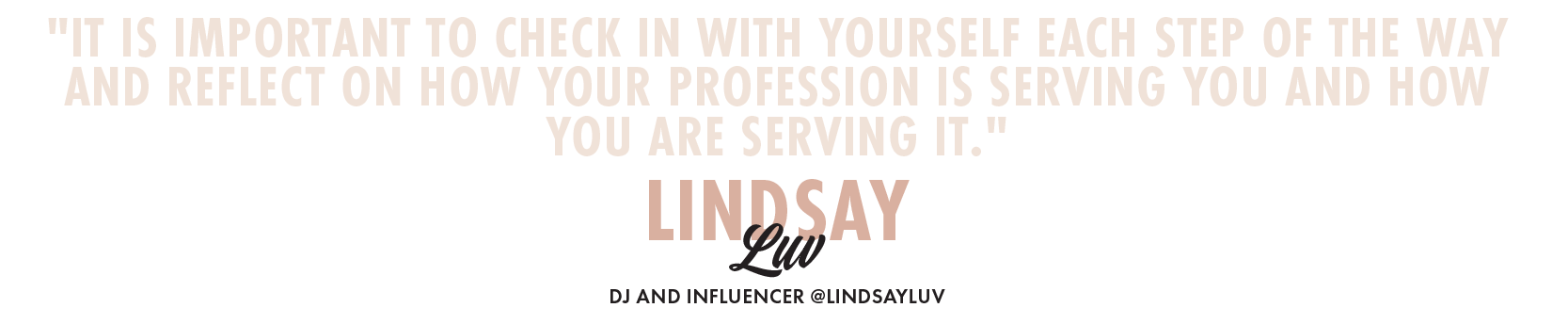
With humans living longer lives they are actually predicting many of us will indeed have multiple professions across a lifetime! Just like relationships change and grow over time so do our interests and skill sets, and it is important to check in with yourself each step of the way and reflect on how your profession is serving you and how you are serving it.
I am someone who always loves to be steps ahead. If I see a door starting to close (whether by choice or otherwise), I am thinking of which ones I can open: which parts of my career, relationships and learnings can I utilize for a new profitable task.
Working for yourself means you have to hustle and keep up with both your own goals and the demands of the market. Since I started working for myself, so many elements keep changing from social media to client’s needs and unless you are evolving with them you are lagging behind (and losing money in doing so.)
As we’re sure you can attest, you have to fall in love with the numbers when you’re running your own business, especially when that involves managing multiple income sources—What are some of the hardest money lessons you've learned along the way? And what are some of the tools you use to stay on top of your business financials?
As my own agent, sometimes it is awkward to chase down payments due. You run that line between wanting to seem relaxed with clients, but also simply needing to be paid for work done. Sadly, sometimes clients will put you in an awkward spot with pay delays or trying to pull out of things last minute, etc. I find it is helpful to have an assistant oversee the communication about payment with clients so you don’t always have to be the face of the tedious back and forth that can occur.
I also leverage technology to remind myself of when payments are due and space out reminders to follow up. I use resources and tools such as QuickBooks Self-Employed to keep myself organized year-round, keeping track of my personal and business expenses as well as receipts. I can import all my business expenses to TurboTax Self-Employed making taxes a breeze! I like their Live product since it brings the best of both worlds, the ease of technology plus the human touch and expertise of a real tax expert. At the end of the day, you want to make sure you feel confident you are getting your self-employed taxes done right and are getting every dollar you deserve.
You've been very smart and savvy with your business and it's been incredibly profitable—Where do you think is the most important area for a solopreneur or small business owner to focus their financial energy? Why?
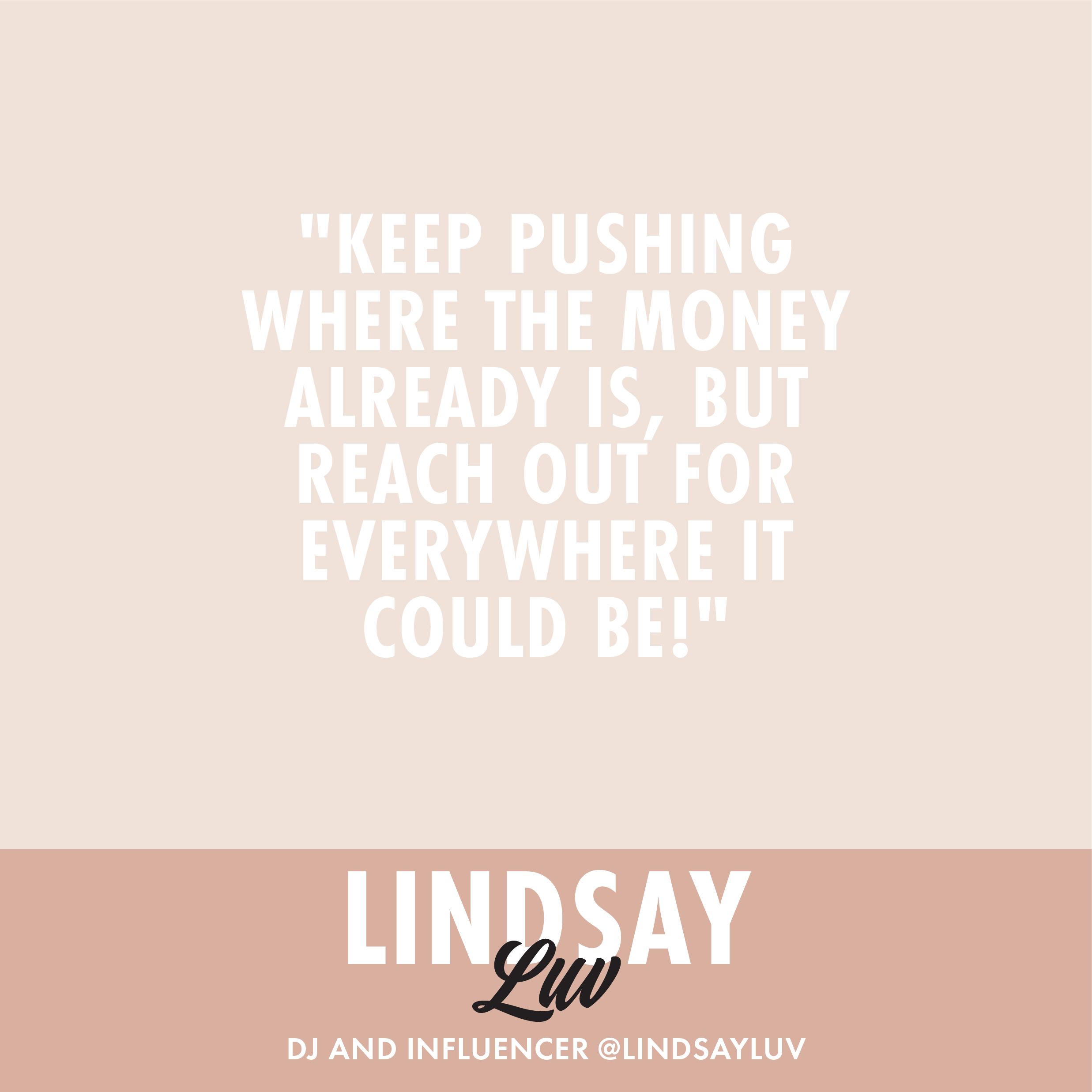
The reality is you should focus your heaviest energies on hustling and maintaining work wherever you are gaining the most momentum. For me, that has always been DJing, but now, with my social media growth, I am seeing new profitable opportunities arise in a variety of areas outside of the decks, so it has my wheels spinning on how to grow those. Keep pushing where the money already is, but reach out for everywhere it could be!

Do you think you have achieved financial freedom? If not, what is preventing you as a self-employed professional to get there? What would you need to get there?
Yes! I have been self-employed and my own agent for over ten years, which feels like freedom to me. I am able to comfortably afford a lifestyle I feel good about and contribute to my family, which is the best you can hope for. I also balance between being a full-time mom and a working mom by accepting quality over quantity job opportunities.
With that being said, human nature is to want more, so in some ways, working for yourself is always complicated and you never can fully relax into a full feeling of freedom. It is important to never get too comfortable because being self-employed always means the onus is on you to hustle and grow. While a lot of work does come to me after having established myself over a decade, it is important for me to touch base with all my clients regularly and share my successes; plus, remind them of all we have done and what we can do going forward!
What are you most excited about for your business in 2020?
I have been putting feelers out for so many possible brand expansions and seeing which ones stick. I am never afraid to reach out to great contacts or throw out ideas and see which ones materialize, as I believe both my business acumen and skillset can lend themselves to a variety of areas, from public speaking, hosting, podcasts, music supervision, influencer collaborations, consulting, sommelier opportunities, and more. Not every one of these will become the next big (or most profitable) part of my brand, but without opening up to a multitude of ideas and putting some muscle behind them you won’t know which one could and will!
Our friends at TurboTax were nice enough to share a giveaway with Create & Cultivate readers so you can file your taxes for FREE this season—all from the comfort of your own home!
30 readers will receive a FREE TurboTax Live Self-Employed product code (valued at $250, includes ad-on services). Simply fill out the form below to enter to win. The winners will be chosen randomly and contacted via email. Good luck!
TurboTax Live combines the ease and technology customers know and love about TurboTax with on-demand credentialed CPAs, Enrolled Agents, or Tax Attorneys, for ultimate convenience and confidence. You can connect live to a team of real credentialed tax experts in English or Spanish, for unlimited tax advice and a final review before you file.
Giveaway now closed, thank you for entering! We will email the winners directly.

There's a Better Way to Say "No" to People
It’s important to create boundaries out of respect for yourself, your time, and your energy—we truly can’t do it all.

Photo credit: Smith House Photography
You have three outstanding assignments sitting on your desk, your phone is lighting up with texts from your friend reminding you that you’re scheduled to have a check-in call, and then your boss Slacks you to ask if you can work late to help out on seven other tasks that need finishing.
Before you can stop yourself, “Uh, sure! I mean, of course,” tumbles out of your mouth. You know full well that you're unable to handle another thing, but there’s just something about saying “no” that’s almost impossible to do. Here’s how to say “no” in a way that’s beneficial to you and your boss.
Have “No” Fear?
If the above situation sounds familiar, it's not surprising—many of us are afraid to say no. Psychology Today offers two main reasons why: We fear conflict and we don’t like to disappoint others. Because of this, we often say yes even if taking on something else isn’t in our best interest. We want to make others feel better—but we sacrifice our own feelings and time in return.
For many, saying no can feel... harsh. But learning to turn down a request is a crucial skill to master. It’s important to create boundaries out of respect for yourself, your time, and your energy—we truly can’t do it all.
So, how do we get better at saying “no?” The answer involves swapping that word for something else entirely. Let us introduce you to your new magic words: “I don’t.”
The Power of “I Don’t”
When we're skittish around the word “no,” we often try to decline requests with an “I can’t”—but “I don’t” is actually the best phrase to use. The reason is this: “I can’t” implies that you want to do something but an external factor is stopping you from doing it. It suggests you could do that task—and it leaves room for people to push back. For example: Saying “I can’t go to the party tonight” leaves lots of room for someone to respond with a “Why not?”
“Saying ‘I don’t’ turns a rejection into an affirmation of how you live your life.”
“I don’t,” on the other hand, reclaims your authority over your actions. When you say that you don’t do something, it's an iron-clad refusal—you as a human don’t do what's being asked of you, and you don’t do it for your own sake. “I don’t go to parties on weeknights” is much more impactful than “I can’t go tonight.” The phrase turns a rejection into an affirmation of how you live your life, making it powerful and something you own.
Another example: If you have a coworker asking you to step in on the office party planning committee—but you already have the responsibility of organizing the company’s retreat plus 10 outstanding work assignments—you can reply with a simple, “Although I wish I could help further, I don’t take on other projects when I’m behind on my existing assignments.” That statement is a lot harder to argue with than, “I can’t do that right now,” and it’s more thoughtful than a plain “no.”
How to Use “I Don’t” to Motivate Yourself
“I don’t” is also a powerful tool you can use when working towards your goals. If you incorporate it into your self-talk, it can increase your willpower.
When researchers at Boston College and The University of Houston conducted a small study looking into the use of “I don’t” and “I can’t,” they found that participants who said “I don’t skip exercise” rather than “I can’t skip exercise” ended up working out more often than the “I can’t” group. “Using the word ‘don’t’ serves as a self-affirmation of one’s personal willpower and control ... leading to a favorable influence on feelings of empowerment, as well as on actual behavior," the researchers wrote.
Take Control of “No”
Bottom line: “I don’t” puts the ball back in your court. It gives you authority over your no and leads to a powerful but respectful decline—or, an empowering motivational phrase.
It’s a lesson in framing, and it’s an easy way to turn dreaded “no”s into something empowering. Give it a try next time you need to say no but feel yourself about to say yes.
Article by Anna Meyer. There's a Better Way to Say “No” originally appeared on Shine, a free daily text to help you thrive.
About Shine: Shine is a free daily text message experience that makes it easier to live a more intentional life. Each weekday morning, Shine sends curated content and actionable tips across confidence, daily happiness, mental health and productivity. Why? Because we all need a little help to get through the day—and Shine’s got your back. To sign up, text “SHINE” to 759-85 or go to www.shinetext.com to learn more.
Follow Shine on Instagram, Twitter & Facebook: @ShineText
This post was originally published on December 26, 2017, and has since been updated.
MORE FROM OUR BLOG

Ask an Expert: How to Build Your Matriarchy and Support System During COVID-19
“When we give business to female-founded companies, we’re contributing to our own economy.”
We’ve been spending a lot of time at Create & Cultivate HQ discussing how we can best show up for and support our community during this uncertain time. Community is at our core, and connecting with others through one-of-a-kind experiences is what we love to do. While the world has changed, our mission has not. We’re committed to helping women create and cultivate the career of their dreams, which is why we’re proud to announce our new Ask an Expert series. We’re hosting discussions with experts, mentors, and influencers daily at 9 am, 12 pm, and 3 pm PST on Instagram Live to cure your craving for community and bring you the expert advice you’ve come to know and love from C&C. Follow Create & Cultivate on Instagram, check out our Ask an Expert highlight reel for the latest schedule, and hit the countdown to get a reminder so you don’t miss out!

In the midst of the COVID-19 pandemic, female founders are giving us hope. They’re forging new support systems and offering up their expertise, knowledge, and, in some cases, even their funds to their communities and to each other. They’re proving to us that we truly are all in this together and that we’re stronger when we lean on one another.
For insight on how to build a matriarchy and support system during these uneasy times, it only seemed fitting for us to tap the Jennifer Justice, a music attorney who found her passion for advocating for women while working with major artists like Jay-Z, Beyoncé, and Rihanna, for the latest installment of our Ask an Expert Instagram Live series.
Read on for a few highlights. If you missed the conversation, you can watch it in full here, and be sure to tune into our next Ask an Expert conversation on Instagram Live.
You’ve worked with some of the hardest working women in the business including Beyoncé. What did you learn from representing such a powerful female?
“Women, especially business owners and creatives, do better when they’re represented by women. We assess risk differently, we understand our challenges and our strengths, it’s important that we support each other. As hard-working women, we have to put in 110% to get what when men have to put in 75% to get.”
Have you ever been blatantly discriminated against at the negotiation table because you (not your client) is a woman?
I still am. I’m a woman. I get mansplained to all the time when I’m negotiating against men. It’s all day long. Unfortunately, misogyny and sexism have not changed. But I don’t’ care. I don’t let it affect me or how I negotiate for my clients. Advocating for yourself is the hardest thing to do, and advocating for women is for the greater good.
How can we be supporting each other in business right now and helping each other rise?
“We can help each other right now by buying each other’s stuff, in a responsible way. We can also be promoting each other on social media, connecting via live video chats or podcasts to help fellow female founders spread the work about who they are and what they do. But most importantly, you can check-in and listen to other people and what they’re needs are. You can be a rock for somebody else.”
About the Expert: Jennifer Justice is an entertainment and live-experience executive known for her expertise in building artists’ careers and business portfolios by marrying art with commerce. In 2019, JJ founded The Justice Dept. – a management, strategy, and legal firm that works with female (and woke male) entrepreneurs, executives, talent, brands and creatives to build and maximize their value focusing in the areas of tech, consumer product, finance, media, entertainment and fashion. JJ has been named a “Game Changer” by Goop, one of the 50 Badass Women Changing the World in 2020 by InStyle, and on Billboard's Women in Power list three times. She has been featured on the TODAY Show and is a regular contributor on NBC News.
Tune in daily at 9 am, 12 pm, and 3 pm PST, for new installments of Ask an Expert.
Follow Create & Cultivate on Instagram, check out our Ask an Expert highlight reel for the schedule, and hit the countdown to get a reminder so you don’t miss out. See you there!

Ask an Expert: 5 Practical Marketing Tips for Staying Profitable During the COVID-19 Pandemic
“Right now is when you need to be communicating with your audience on every platform possible.”
We’ve been spending a lot of time at Create & Cultivate HQ discussing how we can best show up for and support our community during this uncertain time. Community is at our core, and connecting with others through one-of-a-kind experiences is what we love to do. While the world has changed, our mission has not. We’re committed to helping women create and cultivate the career of their dreams, which is why we’re proud to announce our new Ask an Expert series. We’re hosting discussions with experts, mentors, and influencers daily at 9 am, 12 pm, and 3 pm PST on Instagram Live to cure your craving for community and bring you the expert advice you’ve come to know and love from C&C. Follow Create & Cultivate on Instagram, check out our Ask an Expert highlight reel for the latest schedule, and hit the countdown to get a reminder so you don’t miss out!

Photo: Courtesy of Laurel Mintz
It’s safe to say the COVID-19 pandemic has radically shifted how businesses both large and small need to approach their marketing strategies. With the sudden rise of the stay-at-home economy, it’s imperative that brands pivot swiftly to digital in order to stay profitable because, now more than ever, consumers are turning to social media as a source for content, comfort, and even creativity.
In fact, social media views and engagement have increased by over 30% in the last two weeks, according to Laurel Mintz, CEO and founder of the digital marketing and live events agency Elevate My Brand. We tapped the marketing pro to find out how brands can support their communities and remain profitable in these uncertain times for the latest installment of our Ask an Expert Instagram Live series.
Read on for five practical marketing tips for staying profitable and coming out of the coronavirus crisis stronger than before. If you missed the conversation, you can watch it in full here, and be sure to tune into our next Ask an Expert conversation on Instagram Live.
1. Double Down on Your Digital Spend
“A lot of businesses are scared, and they should be. Because they’re scared, they’re questioning their marketing and advertising spend. Don’t be one of those companies.
Now is the best time EVER to double down your dollars so that you can capture more market share. It may sound a bit callous, but we saw the same thing happen in 2008/2009, and the smarter companies that survived and thrived turned a challenging time into an opportunity to grow.
It will be good for you long-term and is the right thing to do to keep the economy going.”
2. Get More Social (Online)
“I don’t know about you, but I’ve canceled most of my social and business plans. This has left me feeling totally disconnected and frankly a bit lonely. That’s why now is a great time to start or increase your social media content. Act as if things are as normal as possible and talk to your community through your social channels.
More than just talking at them, start a dialogue and use these challenging times to truly engage your community in honest conversations about what you’re doing to support them and how you’re working towards business as usual. Make them feel the love even if it’s only online. (P.S. Social media views and engagement have increased by over 30% in the last two weeks, so give the people what they want where they want it.)”
3. Put Your People First
“I know this sounds like a no-brainer, but there are still a lot of companies out there that don’t have emergency protocol around this virus. Worse yet, there are a lot of employees who, if they don’t show up physically to work, don’t get paid. There’s no other way to say this than don’t be a d*&k!
Like us, I’m sure many of your employees have kids and, with the recent school shutdowns, are feeling the pressure more than ever before. We live in amazing times where a ton of work can be done remotely. When you treat your employees with respect and let them put their health and families first, they will be more loyal and committed to the work and will likely maintain productivity and service levels, and that’s good for business and morale alike.”
4. Convert, Don’t Cancel
“Brands that rely on fundraising efforts like non-profits are, rightfully, freaking out right now. Many events and galas have been canceled and the teams behind them don’t know how they’re going to raise the working capital they need to maintain their staff and support the work they’re doing in the community.
We have seen smart companies both in the for- and non-profit worlds quickly convert events and fundraising to digital. Whether it’s micro-donations through social media or crowdfunding platforms, there are tons of great digital tools, if done right and quickly, that can slow the decline of fundraising efforts.
There are also tools out there such as Zoom that can supplement the intimate connections between donors, keep meetings on track, and keep communities and communication flowing. So don’t cancel that meeting, just convert it to a Zoom and keep things moving forward as normally as possible.”
5. Content Is (Still) Critical
“Let’s be honest, with everything canceling and everyone wondering what to do next, most businesses have a lot of unexpected time on their hands right now. Look at it as an opportunity to develop quality content for your digital channels and to set yourself up for a successful future.
Use Google Docs to collectively ideate ad concepts. Use Zoom to interview employees for human-interest story vlogs. Use a project management platform to make a more robust marketing plan. We know how hard it can be for brands to devote time to building out their content calendar, so take this time to write blogs and prepare email campaigns and audit your content.
Because when you come out on the other side of this thing, we’ll all have to hit the ground running.”
About the Expert: Laurel Mintz, J.D., M.B.A. is the CEO and founder of award-winning, Los Angeles-based digital marketing agency Elevate My Brand. Laurel’s gift is connecting with people and their stories. After all, companies are made up of people, and stories are just narratives that are the foundation of great marketing. Laurel’s energy has been the driving force behind the agency’s growth since it launched in 2009. Her awards include the 2017 Patrick Soon-Shiong Innovation Award, the 2016 Goldman Sachs 10,000 Small Businesses Company award, the Los Angeles Business Journal 2016 Women In Business Award, and more.
Right now, Elevate My Brand is offering complimentary strategy sessions to any brands in need. Shoot them an email at info@elevatemybrand.com or ping them on Instagram or Facebook.
Tune in daily at 9 am, 12 pm, and 3 pm PST, for new installments of Ask an Expert.
Follow Create & Cultivate on Instagram, check out our Ask an Expert highlight reel for the schedule, and hit the countdown to get a reminder so you don’t miss out. See you there!

We Found 7 Resources to Provide COVID-19 Financial Relief for Small Businesses
You’ve got this.

Photo: Smith House Photography
We know every small business is being affected by the COVID-19 crisis right now, and our team at Create & Cultivate is here to help. Our mission—and our passion—is to help people create and cultivate the careers of their dreams, so quite frankly, there’s no better opportunity for us to be of service than right now.
In order to help small business owners navigate this uncertain time, we’ve compiled a list of relief resources and basic information for how to confront the COVID-19 pandemic. If you’re seeking a low-interest loan, needing to pause your student loan debt, or looking to apply for a small business grant, we’ve tracked down resources to help you do just that.
If You’re Seeking a Low-Interest Loan…
The Resource: U.S. Small Business Administration SBA Disaster Assistance
The Details: “The U.S. Small Business Administration is offering low-interest federal disaster loans for working capital to small businesses suffering substantial economic injury as a result of the coronavirus (COVID-19) in all U.S. states and territories.
These loans may be used to pay fixed debts, payroll, accounts payable and other bills that can’t be paid because of the disaster’s impact. The interest rate is 3.75% for small businesses. The interest rate for non-profits is 2.75%.
SBA offers loans with long-term repayments in order to keep payments affordable, up to a maximum of 30 years. Terms are determined on a case-by-case basis, based upon each borrower’s ability to repay.”
How to Apply: Apply for assistance here.
The Resource: Kiva
The Details: "Kiva lenders have shown their commitment to providing financial assistance to all by making 0% interest loans to entrepreneurs in the U.S. on Kiva.org for the last 10 years.
In today's difficult circumstances, we'd like to make it as easy and impactful as possible for small businesses in the U.S. to have access to affordable capital on the Kiva platform—capital that may be the difference between shutting down and keeping their doors open.
Effective immediately, U.S. applicants for a Kiva loan will have access to the following: Expanded eligibility: More businesses in the US will be eligible for a Kiva loan; Larger loans: The maximum loan on the Kiva platform will increase from $10,000 to $15,000; Grace period: New borrowers may access a grace period of up to 6 months for greater financial flexibility.”
How to Apply: Apply for a loan here.
If You Want to Pause Your Student Loan Debt…
The Resource: Department of Education Federal Student Loan Relief
The Details: “If you’re having trouble making payments, contact your loan servicer as soon as possible. If you have a Federal Perkins Loan, contact your school. You can easily avoid the consequences of delinquency or default by staying in touch with your servicer or school.
Your servicer or school can provide information about deferment or forbearance options that allow you to temporarily stop making payments on your loans. You may also be able to change to a different repayment plan that would give you a lower monthly payment.”
How to Apply: Contact your loan servicer, or your school if you have a federal Perkins Loan.
If You Want to Apply for a Small Business Grant…
The Resource: Facebook Small Business Grants Program
The Details: “Facebook is offering $100M in cash grants and ad credits for up to 30,000 eligible small businesses in over 30 countries where we operate. We’ll begin taking applications in the coming weeks. In the meantime, you can sign up to receive more information when it becomes available.“
How to Apply: Sign up to get updates about Facebook’s Small Business Grants Program here.
The Resource: Zapier Small Business Assistance Program
The Details: “Zapier is creating a $1 million small business assistance program for businesses to heavily impacted people who meet some combination of these criteria: You work in a business with 10 employees or fewer, or you're a solo entrepreneur, your business is privately owned, your business is impacted by "social distancing" in an outsized way (the tourism, food service, hospitality, salon and spa, fitness, and education industries are some examples), and you're a paying Zapier customer as of 3/20/2020. Small businesses in need can qualify for a free 3-month credit for a starter plan.”
How to Apply: Fill out this form.
The Resource: Bumble Loves Small Businesses
The Details: "Bumble is granting a number of small businesses up to $5K to help during this trying time. At this time, we are only accepting requests from small businesses and will verify all company registration numbers. If you’re not a small business owner, you can fill out this form to nominate a small business (or forward this link to them!).”
How to Apply: Fill out this application form.
The Resource: The GoFundMe.org Small Business Relief Fund
The Details: “The Small Business Relief Fund will provide one-time matching grants to qualifying small businesses to help alleviate the financial burdens during these pressing times. To qualify for a matching grant from the Small Business Relief Fund, the GoFundMe fundraiser must raise at least $500 and verify that your small business has been negatively impacted by a government mandate due to the COVID-19 pandemic. Your small business must be independently owned and operated, and must not be nationally dominant in your field of operation. Each recipient of the matching grant must intend on using the funds to help care for your employees or pay ongoing business expenses."
How to Apply: There are a few ways for small business owners to apply:
“Claim your fundraiser. Many small businesses will have a fundraiser automatically created for them through the Yelp platform. To claim this fundraiser and donations made to it, you can submit a request through the form above.”
“Start a new fundraiser. If you do not have a fundraiser already created for your business, you can start one now. In your fundraiser description, please make sure you add the hashtag #SmallBusinessRelief. Then fill out this form to confirm your small business.”
For more information and resources on how to navigate the coronavirus crisis as a small business:
Calculate how much you’ll get from the $1,200 (or more) coronavirus checks being provided by the U.S. government with this calculator tool from The Washington Post. Plus, learn when your check will arrive, and more.
Consider scrolling through this list of national and state-specific funds, grant, and resources for business owners grappling with coronavirus compiled by Forbes.
For rent assistance, scroll through this comprehensive list of how to get COVID-19 rent relief compiled by Investopedia.
It’s important to note, however, that even if your state has taken action to pause or suspend evictions, anywhere from 30 to 90 days, it does not relieve you of your obligation to pay your rent. It just forbids your landlord from evicting you during that period for late payment.
Subscribe to a special edition of Deloitte’s Resilient podcast series all about how businesses can confront the COVID-19 crisis.
Subscribe to Forbes free daily newsletter, Outbreak, for stories on the coronavirus pandemic and its impact on global business.
And head to our COVID-19 Content hub and follow Create & Cultivate on Instagram to tune in as we go live daily with experts in business, finance, and more in our Ask an Expert series daily at 9 am, 12 pm, and 3 pm PST.
MORE ON THE BLOG

10 Glaring Contract Red Flags You're Not Paying Attention To
A lawyer breaks it down.

Photo: Smith House Photography
Unless you’re a lawyer, navigating a contract is a veritable minefield. Reading the fine print can be daunting, to say the least, especially for content creators who are hustling for every dollar. That’s why we tapped Christopher Dischino, a lawyer who specializes in business law, intellectual property, and corporate transactions, to break down some of the most common mistakes for us.
“Drafting contracts for freelancers often requires a delicate balance of terms, which both protect you and your intellectual property but are not overly onerous to your client,” Dischino tells Create & Cultivate. “When we discuss creating standard form contracts for many of our freelance clients, we discuss not only how they operate but who they are doing business with.”
While it’s important to note that everyone’s particular business operations are unique, below are ten of the most important items Dischino takes into consideration when drafting contracts for freelancers.
Business or Personal
“In order to insulate yourself from personal liability, consider forming a small business corporation or limited liability company and signing all contracts in your company’s name as opposed to individually. Operating through a company may have tax benefits, asset protection benefits, and adds a flair of professionalism to your business.”
Work for Hire
“If you are being hired to create a project or product, it is important to understand who owns it upon completion. Specifically, you should discuss with your client the extent of ownership by both parties upon completion. The U.S. Copyright Act provides that, as an independent contractor, copyright to the work product you create belongs to the creator of the work, unless otherwise agreed in writing. While most clients will expect ownership to be transferred, pay particular attention to any references to “Work for Hire.” If your client expects to receive ownership of the work product, make sure that it is expressly conditioned on payment in full.”
Indemnification Clauses
“Liability is always a concern when completing a project or product for a client. Whenever you see an indemnification clause, read it carefully. Many agreements state that if the work product created infringes on the intellectual property rights of a third party, the party creating the work remains liable for any damages. Likewise, a freelancer should make sure they are indemnified by their client and held harmless if the client utilizes the work in a way, which creates liability due to their own negligence or willful misconduct.”
Choice of Law and Venue
“Almost all contracts will have a clause that establishes where legal proceedings take place, should a dispute arise, and the law that governs the dispute. Make sure that the contract is not governed by laws that you and your lawyer are unfamiliar with and doesn’t require you to show up to court in a faraway land, especially if the dispute is over non-payment.”
Payment Method and Schedule
“Payment terms are often the elephant in the room when negotiating a contract. All too often, individuals or companies neglect to set a payment and deliverable schedule which leads to controversies as time goes on. Moreover, always consider requesting an initial deposit to bill against. Many contracts now require clients to sign a credit card authorization.”
Force Majeure
“Force majeure, which means superior force in French, is often an important red flag to be attentive of when drafting a contract. A force majeure or “unavoidable circumstance” prevents one or both parties from fulfilling their obligations under the contract. In practice, most force majeure clauses do not excuse a party's non-performance entirely, but only suspend it for the duration of the event. For example, a freelance photographer who setups for a beach photoshoot only to find himself in middle of a hurricane, would benefit from a force majeure clause that excuses his non-performance of the contract due to a circumstance beyond his control.”
Expenses
“Who covers the expenses of creating a work and when will they be paid? It is important to differentiate between payment for your services or work and the added expenses that were necessary for the completion of a project or product. From the beginning, establish if hard costs are included within your fee (and if so, consider a larger upfront deposit) or if costs are up and above your fee (if this is the case, establish what costs must be approved or which are pre-approved). Finally, make sure to define if the expenses will be paid upfront or if you will be paying out-of-pocket and requesting reimbursement.”
Scope of Work
“When do you start and where do you finish? Often times, projects are taken on or products begin with no true direction or trajectory. This lack of organization and parameters may lead to situations where a client continues to request work beyond the scope of what was originally contemplated. It is important to set parameters regarding the project or product so that you comply with what is requested, but also so that you are properly compensated for your work. The more specific and objective the scope, the better.”
Revisions, Drafts and Changes
“Just as important as the scope of your work is the amount of times you will go back to the drawing board, make changes, edits and revisions. For the sake of compensation (and your sanity), it is important to agree upon the amount of changes a client is able to request prior to the start of your work and the rates (whether a flat fee or hourly) at which additional work is billed.”
Termination Clauses
“It is important to set out the exact reasons or basis for which your agreement can be terminated. Termination clauses should not only consist of the client’s basis to terminate you but also considerations for when you need to terminate your client. It’s especially important to make sure that your client cannot terminate you for any reason or no reason without compensating you in full for the work you completed.”
About the Expert: Christopher Dischino leads Dischino & Company, a Miami-based law firm that provides legal advice and strategic consulting for the modern business, the entrepreneur, the free-thinker and those looking for something outside the box. With a knack for the creative and an entrepreneurial attitude, Christopher specializes in business law, intellectual property, and corporate transactions, assisting private clients and corporate entities to establish and expand their businesses domestically and abroad.
DISCLAIMER: The materials contained in this article has been prepared for informational purposes only and are not intended to provide, and should not be relied on for, tax, legal or accounting advice.
This story was originally published on April 10, 2016, and has since been updated.
MORE ON THE BLOG

4 Unexpected Ways to Make Mondays Less Manic and More Productive
It’s less about getting just anything done, and more about getting the RIGHT things done.

Photo: Plush Design Studio for Pexels
Too often we have that dreaded feeling of obligation on Sunday about all of the things we have to do, should do, or don’t want to do at work the next morning. Some people refer to them as the Sunday scaries or the Sunday blues, but no matter what they’re called, feeling anxious and stressed—especially when you’re not working—is no fun.
While Mondays can be notoriously manic, and ending the day with no real work accomplished is definitely a possibility, it doesn’t have to be that way.
In fact, they can be quite productive, which is less about getting just anything done and more about getting the RIGHT things done—the stuff that will help you grow your expertise, your brand, your career, and your business’s bottom line.
So if the weekend has been feeling five days too short, here are some tips to get you excited for your work week.
1. A PRODUCTIVE MONDAY STARTS ON FRIDAY.
Instead of shutting down your laptop early on Friday and daydreaming about how you’ll spend all of your free time, take 10 minutes to debrief how your week went.
Make a list of:
Your wins. What went really well? Make sure you celebrate these and enjoy them.
Unaccomplished tasks. Are they important enough to be carried over to next week? Does it make more sense to delegate them to a team member? Or is it no longer important at all?
Which situations/tasks feel challenging. A great starting point when writing this list is to think about what you’ve been procrastinating on. Oftentimes, just by writing it down, you’ll see why it’s been so difficult and will be able to understand what you need to move forward.
Who you want to connect with next week? The success of a small business is all about the community you surround yourself with, so make a note of who you want to reach out to next week and cold-email.
By taking time to review what worked and what didn’t, you can be mindful of your priorities, understand how you can improve your workflow, and get a better idea of what’s been standing between you and that big goal you want to achieve.
2. HIT THE PAUSE BUTTON.
In the early days of my business, I remember being at war with my need for sleep and my ambition to grow my business. I know that many of you feel that same way, especially if you love what you do—but the number one thing you need to have if you want to create meaningful work in this world is endurance. The most effective way to build that is through hitting the pause button.
Take the weekend to practice self-care in whatever form is best for you—go for a walk, reconnect with family, or read that novel that’s been collecting dust on your nightstand.
3. DEFINE HOW YOU WANT TO FEEL.
Ask yourself these two questions:
How do I want to feel on Monday?
How do I want to feel on Friday when the week is over?
When you take some time for this kind of self-inquiry, you can get crystal clear on what you need to make your week work for you. Visualize your Monday morning with you feeling whatever emotions you chose—excited, focused, passionate—and then visualize what you’ll feel like Friday afternoon.
Visualization is a proactive way to help you have more control over your workweek instead of allowing you to passively get by in a stress-induced state.
4. SAY “NO.”
While many of us struggle with saying “no,” it’s a critical component of increasing productivity. Think about what tasks you dread come Monday morning or during the week and figure out how you can stop doing them.
You can split this list into two sections:
What you are able to stop doing today?
What are you going to stop doing in the future?
Some things take a little more work to let go, delegate, or outsource. But when you commit to no longer doing things out of obligation, you’ll find that you have more free time to spend on work that actually matters.
Mondays don't have to be manic. They can be our most productive day of the week if we plan for them. Instead of spending your Sundays dreading Monday, take these 5 steps and put them into practice. You'll be amazed at how quickly your view on Mondays turns around!
About the Author: Tara Newman is a Leader of Leaders. Through her podcast, The Bold Leadership Revolution as well as her association, The BRAVE Society, she supports leaders as they embrace their ambition and leave the grind behind. Using decades of entrepreneurial experience and a Master’s in Organizational Psychology, Tara is uniquely qualified to teach leaders to run businesses without sacrificing their health, relationships, or integrity by establishing behaviors, habits, and rituals aligned with their vision of success. Connect with Tara on Instagram @thetaranewman and listen to the Bold Leadership Revolution Podcast on her website.
This story was originally published on May 12, 2019, and has since been updated.
MORE ON THE BLOG

Ask an Expert: How to Unite a Remote Team During the COVID-19 Crisis as a Small Business Owner
“Do what you can, where you are, with what you have.”
We’ve been spending a lot of time at Create & Cultivate HQ discussing how we can best show up for and support our community during this uncertain time. Community is at our core, and connecting with others through one-of-a-kind experiences is what we love to do. While the world has changed, our mission has not. We’re committed to helping women create and cultivate the career of their dreams, which is why we’re proud to announce our new Ask an Expert series. We’re hosting discussions with experts, mentors, and influencers daily at 9 am, 12 pm, and 3 pm PST on Instagram Live to cure your craving for community and bring you the expert advice you’ve come to know and love from C&C. Follow Create & Cultivate on Instagram, check out our Ask an Expert highlight reel for the latest schedule, and hit the countdown to get a reminder so you don’t miss out!

Photo: Courtesy of Sonja Rasula
Small businesses everywhere are stepping up and doing their part to help flatten the curve, canceling events, shuttering offices, and implementing work-from-home policies in order to help contain the alarmingly rapid spread of the coronavirus. Of course, by now (read: week two of #WFHlife) we all know that the transition between working from the office to working from the home office (a.k.a. the dining table, the couch, or even the bed) is easier said than done.
For helpful tips on how to unite a remote team while working from home during the COVID-19 outbreak, we tapped none other than small business owner and serial entrepreneur Sonja Rasula, the founder of Unique Markets and The Unique Space, for the latest installment of our Instagram Live series, Ask an Expert. Read on for Rasula’s tried-and-true tips for boosting morale as well as productivity while managing a WFH team. If you missed the conversation, you can watch it in full here, and be sure to tune into our next Ask an Expert conversation on Instagram Live.
How can I unite my remote team digitally and keep them inspired?
“The first thing that you have to do is implement structure. If you have daily meetings or check-ins, those still need to happen. Now more than ever, it’s important to check-in and have face-to-face meetings through Zoom, Face Time, and Google Hangouts to stay connected.
The socializing aspect of work is so important. If you use Slack as a communication tool, create a channel called ‘The Break Room’ or ‘The Water Cooler’ for your team to share stupid memes to share photos of their desk as a way to create a social human connection beyond work. Because it’s not all about work.”
How should I adapt my leadership style to help my team feel positive and optimistic?
“Being positive and optimistic yourself is really important. You set the bar. Even if you are freaking the eff out on the inside, you need to be as cool, calm, and collected as you can for your team.
That said, full transparency is important. Once in a while, letting your team see how you’re feeling is really important because they need to know you are not a robot, you are a human being.”
My business is really hurting financially right now and I’m struggling to see the silver lining. How can I thrive as a founder and keep the lights on?
“Figure out your digital presence. There are no excuses now, it’s all about your digital footprint, so start that podcast, send that newsletter, start that blog. Utilize the free technology that’s available (social media, blogs, etc.) to expand your digital footprint.
We’re all at home, we’re trying to make shit work with what we have, and we are not superhuman. We can only do what we can do, and then you have to let go. Try your hardest, but recognize that now, potentially, might not be the time. Just relax, pause, reevaluate, and think about business differently.”
About the Expert: In 2008 Sonja Rasula self-funded her first business, Unique Markets, by risking her entire 401k retirement savings. Thankfully it worked! Her innovative, modern pop-up marketplaces have taken place around the country including Los Angeles, San Francisco, N.Y.C., and Austin! Nike, Airbnb, Madewell, and Adobe are some of the many brands to tap into Sonja’s entrepreneurial mindset and creative consulting. She was named “1 of 30 Women Entrepreneurs Changing the World” by fashion mogul Eileen Fisher, and Los Angeles Magazine awarded her 1 of 10 of L.A.'s Most Inspiring Women in their annual issue about women in Los Angeles.
Tune in daily at 9 am, 12 pm, and 3 pm PST, for new installments of Ask an Expert.
Follow Create & Cultivate on Instagram, check out our Ask an Expert highlight reel for the schedule, and hit the countdown to get a reminder so you don’t miss out. See you there!

Ask an Expert: How to Get Buzz-Worthy Press Right Now, According to a Publicist
It's all about the R.I.C.H. formula.
We’ve been spending a lot of time at Create & Cultivate HQ discussing how we can best show up for and support our community during this uncertain time. Community is at our core, and connecting with others through one-of-a-kind experiences is what we love to do. While the world has changed, our mission has not. We’re committed to helping women create and cultivate the career of their dreams, which is why we’re proud to announce our new Ask an Expert series. We’re hosting live discussions with experts, mentors, and influencers daily at 9 am, 12 pm, and 3 pm PST on Instagram Live to cure your craving for community and bring you the expert advice you’ve come to know and love from C&C. Follow Create & Cultivate on Instagram, check out our Ask an Expert highlight reel for the latest schedule, and hit the countdown to get a reminder so you don’t miss out!

Photo: Courtesy of Heather DeSantis
There is a huge opportunity for entrepreneurs and small business owners to show up, share their message, and be a source of positivity right now. With the COVID-19 crisis impacting communities, businesses, and people across the country and the world, there’s a great need for positive news. So, how do you make your message really matter in a time that feels so dark to fill that void?
In this installment of our wildly popular Instagram Live series, Ask an Expert, we tapped Heather DeSantis, a media expert and the CEO of Publicity for Good, to answer all your burning publicity questions in the wake of the coronavirus crisis. Read on for DeSantis’ tried-and-true R.I.C.H. formula for getting buzz-worthy press and creating content that resonates right now, and be sure to tune into our next Ask an Expert conversation on Instagram Live.
R: Reflect on who you are as an entrepreneur and a person.
“Ask yourself, Who are you as an entrepreneur? What key things have you gone through to become the entrepreneur you are today? What things have you gone through that you can share? What can you teach to others? How can you be of service? Use these answers to make a list of the core topics that you want to talk about in the media.”
I: Investigate.
“Figure out how to bridge the gap between what you want to talk about and what’s going on in the world right now to make your pitch relevant to the media.
Step 1: Go to Google and type in a topic that’s relevant to your business; a topic that you’re an expert in.
Step 2: Go through the results in the “News” section. Sift through the first three pages of results for inspiration on how to pitch yourself to media outlets.
Step 3: Search for your competitors via Google to see where they’ve been featured and start reaching out to those media outlets to get featured by those publications, networks, etc.
As a business owner, it’s really important to make your message relevant to what’s going on in the world. Search what’s trending in the media so that your content solves a problem and serves what people are interested in today.”
C: Connect with the media.
“First and foremost, post on your own social media channels. Go to your Facebook, Instagram, and Twitter and create a call to action post to let people know you want to get your message out there.
Then, authentically connect with members of the media before you pitch them. Engage with their content and create relationships and friendships with them. When you do reach out to them with a pitch, be sure to follow up three days later. Ask them how you can help and always come from a place of service.
If you want to pitch local/regional press, start watching the morning news to see what the flow of the show is, and then call the morning producer. You can go to Google and type in “news tips” to search for the direct email address of the producer and reach out.”
H: Help & hunt.
“Help. It’s all about service. You’re filling the need of the media, so come from a place of service. The media needs content to inspire people to keep them motivated and learn how to adjust during these times. Ask, What are you working on and how can I help?
Hunt. Show up every day and pitch yourself to the media.”
About the Expert: Heather DeSantis is the SHE-O of Publicity For Good and a Forbes 30 Under 30 nominee. Heather is the leading female millennial publicist of her generation with a fresh take on life which translates to a disruptive approach to PR, as evident with her choosing to run her agency nomadically from an Airstream. Together with her fiancé, she goes around the U.S. spreading the word about the unique way and mechanism PFG does PR.
Tune in daily at 9 am, 12 pm, and 3 pm PST, for new installments of Ask an Expert.
Follow Create & Cultivate on Instagram, check out our Ask an Expert highlight reel for the schedule, and hit the countdown to get a reminder so you don’t miss out. See you there!

I Have Been Working From Home for Years—This Is How to Do It Successfully
“I totally use my phone as a procrastination crutch—it's incredibly helpful to just have it out of sight, out of mind.”

Photo: Lisa Fotios for Pexels
Given that many companies are implementing work-from-home policies to help flatten the curve and prevent the spread of COVID-19 (Create & Cultivate included!), we decided to reach out to some real work from home-office pros to find out how it’s done. Because, as enticing as working from home sounds in theory, it takes a surprising amount of discipline to stay productive and on-task with all the distractions that come with being at home (we’re looking at you, Netflix, pile of laundry, and sink full of dishes).
Ahead, six full-time WFH experts—spanning a senior fashion and beauty editor who’s been working from home for 7 (!) years to an editorial director who’s been working from home for 2 1/2 years to an acclaimed author who’s been working from home for just 8 months—share their tips and tricks for staying motivated and productive while working from home. Keep scrolling to find out how to establish a morning routine that will set you up for success and how to wind down and disconnect at the end of the day.

What time do you wake up? What’s the first thing you do upon waking?
I usually wake up between 6:15 and 6:30 am, depending on how many times I hit the snooze button. It's a habit I'm trying to break, but the first thing I do when I wake up is check my phone. My office's HQ is in New York, so by the time I get up, I've gotten a handful of emails and messages already.
Can you walk us through your morning routine? How does it set you up for a successful and productive workday?
I'll have my morning coffee, turn on NPR to listen to the news, and continue checking my emails and, yes, Instagram. I aim to get to the gym by 7:30 am unless I sign up for an earlier Barry’s or SoulCycle class. Checking my emails and my schedule and fitting in a workout in the morning put me in the best mindset for a successful and productive day. If I don't get a workout in, I'll spend the whole day thinking about how I'm going to squeeze it in later. I feel like it's my way of meditating and having "me" time before what's usually always a busy day.
“When you work from home, it’s easy to just plop onto the couch with your laptop, but I make it a point that the couch and the TV are off-limits during the workday.”
Do you have a dedicated workspace in your home? What helps you stay on task and protect your time from cleaning the house, doing laundry, or running errands while you're WFH?
I do and I think that's really important! When you work from home, it's easy to just plop onto the couch with your laptop, but I make it a point that the couch and the TV are off-limits during the workday. Making a to-do list and a rough schedule keeps me on task, as well as scheduling in breaks because realistically, I'm going to throw some laundry in or pick up some lunch. But as long as I allot myself a small window of time to do those things, then I don't feel guilty about it — it's just part of my schedule.
How do you prevent work burnout? How do you stay motivated and productive throughout the day?
After working from home for 7 years, I still struggle with this. It's really hard to disconnect at the end of the day from work because I work where I live! I really try to make an effort to turn my laptop off and not check my work emails after 6 pm, but I have to say, it's really impossible in the line of work that I'm in. But something I have gotten a lot better at is not working or responding to work emails during the weekend. That has really helped me avoid work burnout.
How do you wind down and log off at the end of the day? How do you separate your work time from your free time?
I make sure my laptop is out of sight! I take my dog for a walk, I cook, I have a nice, phone-free dinner with my husband, I call a friend. Separating work time from your free time is really about making a schedule for yourself and sticking to it, including when to stop working.

Nicole Lesmeister, Writer & Editor
WFH Experience Level: 3 years
What time do you wake up? What’s the first thing you do upon waking?
I wake up around 6:30 am. During this uncertain global situation, I’ve been trying to let myself wake up naturally and get all the sleep I need, but I go to bed around 10:30/11 pm, so my internal clock still gets me up at that time. The first thing I do is (avoid my phone for 30 minutes to an hour) scrape my tongue and do 5-10 minutes of oil pulling to deep cleanse, Ayurveda-style. Wellness truly begins in the mouth!
Can you walk us through your morning routine? How does it set you up for a successful and productive workday?
I then have a tall glass of warm water with lemon, because when you dehydrate overnight, your brain actually shrinks by 20%! Gotta lube up the ol’ noggin. I brew a pot of hibiscus tea or make a matcha if I’m feeling groggy and have a little quiet time with a book or just with my thoughts while I sip it, before I do some movement.
Depending on the day, I might do a HIIT or some yoga. I have a go-to flow, but when I feel like mixing it up, I’ll look up a Yoga With Adriene video on YouTube. She has a ton of really great free videos, and there are always video workouts on ClassPass you can do at home, too!
Moving in the morning is really crucial to me for feeling energized throughout the day and avoiding a wandering mind as soon as I open my computer. It gets the blood pumping and something about a good sweat first thing just makes me feel strong and powerful.
I do some vigorous dry brushing afterwards, hop in the shower, and make a simple breakfast– my favorite is soft scrambled eggs with some sautéed greens like dandelion and kimchi.
“I schedule little breaks, so I try to do a significant amount of work on something before I make an afternoon snack, or go to pilates, take a walk, or run to the grocery store. It’s all scheduled in, so I’m not wandering away from work on a whim.”
Do you have a dedicated workspace in your apartment? What helps you stay on task and protect your time from cleaning the house, doing laundry, or running errands while you're WFH?
I have a desk where I always start work, but after I take a pause for lunch I always find myself rotating to sitting at the higher bar area of my counter. I love the afternoon sun that seat gets; it’s a comfy perch and I feel productive there.
I rely on my daily planner from Oh Deer so much. It’s organized perfectly for me with an objective section, urgent section, list section, notes, and even a little space for doodles (!). I reference my Google calendar to see if I have any calls or meetings scheduled, and make a detailed list here right away, listing them in order from top priority to lowest priority of the day. I do this because I like to make an ambitious list that is still realistic, so if my day doesn’t go as perfectly streamlined as planned (they rarely do, right?) then at least the major objectives are taken care of.
One thing I make sure to do so that I avoid being distracted by errands and house tasks is to add them to my list if I need to do them. I decide what day I can squeeze them into or what day it makes the most sense, and stick to a day and time that I do them.
How do you prevent work burnout? How do you stay motivated and productive throughout the day?
I set tiny goals for myself, or little deadlines throughout the day. Like, “Let’s do a chunk of this client until noon, and get it done” (or a ¼ of the way done, depending on the project size and deadline, etc). I also schedule little breaks, so I try to be done with something or do a significant amount of work with something before I make an afternoon snack, or go to pilates, take a walk, or run to the grocery store. It’s all scheduled in, so I’m not wandering away from work on a whim.
I also cut myself off from working too late if I have a day in which I start work early, which is ideally most days. When you WFH, it’s easy to feel like you work a 15 hour day when you don’t account for or schedule in the typical distractions… but even in an office no one works eight full hours. About five true, solid, productive hours a day is typical for the average human.
If I have a deadline that day, I might work a little later, but essentially I give myself a cut-off time to make dinner and that lights a fire under my own a$$ to get what I need done at a decent time (5 or 6 pm) so I’m not burning out my retinas with blue light into the evening. No one is producing pure gold after dilly-dallying on their computer all day and into the evening anyway. My clients deserve my best self.
How do you wind down and log off at the end of the day? How do you separate your work time from your free time?
Carving out that cut-off time to prepare a nutritious but thoughtfully tasty meal is my ultimate act of self-care (and love language to my S.O.). It’s meditative, resetting, and gives me unwind time after to rest and digest so I can sleep well and be productive again the next day! Sometimes I’ll start my to-do list for the next day in my planner if I’m feeling juiced about it, but most often I just prep the kitchen for the next morning, set out my tea, fill the kettle. Stuff like that.
Depending on the intensity of the movement I did in the morning, I’ll usually try to take a little walk after dinner or some light stretching or foam rolling. Being a writer requires a lot of sitting, so making sure I move my body in intervals throughout the day keeps me from feeling tight and weighed down by my own poor posture (lol working on it) and gravity.
Because my S.O. and I have our shows we like to watch together for some cuddle time on the couch, I always make sure to read a little before bed in some warm light. Gotta allow the eyeballs some non-screen time so that my circadian clock can recalibrate! About 30-40 minutes is lovely, but sometimes it only takes me 15 to drift off.

Kelly Dawson, Freelance Writer and Editor & Editorial Director, Semihandmade
WFH Experience Level: 2 1/2 years
What time do you wake up? What’s the first thing you do upon waking?
I wake up around 7:00 am. My alarm is on my phone, which has been a habit I've been meaning to break for a while. But I do keep my phone on the opposite wall, away from my bed, so I have to get up to turn the alarm off. The first thing I do when I wake up is open my blinds, open the window, breathe in the fresh air, and make my bed. Yes, I make my bed every morning, and I do think it helps me start the day on a good note.
Can you walk us through your morning routine? How does it set you up for a successful and productive workday?
Ideally, my morning routine goes like this: I have breakfast, which is shorthand for I drink a strong cup of coffee with food. I watch a few minutes of CBS This Morning while I eat, change, and then do about a half-hour or so of stretches, weights, or cardio—I alternate the days to make it more fun. After that I get dressed, which is always an interesting topic for people who work from home. I know that it's usually perfectly fine if I wear sweatpants, but for the most part, I pick out an outfit, do my hair, and maybe put on makeup. It's nothing that doesn't take 10 minutes or so. I find that if I don't get dressed, I'm not as focused.
Do you have a dedicated workspace in your home? What helps you stay on task and protect your time from cleaning the house, doing laundry, or running errands while you're WFH?
I have a desk that I work at every day, and I work between 8:30 am and 6:30 pm, give or take. I think the thing that really helps me stay on task is a day planner. Every night before shutting work down I write a to-do list of all the things I need to accomplish for the next day, and I split it into columns. The left side is for the big stuff I have to do—write a story, do an interview, whatever—and the right side is for all the smaller things to get out of the way, like emails to send. I do the hardest ones on the list first, while the caffeine is still flowing, and then move on to the easier ones. I try to keep the list reasonable so that I don't feel panicked about completing everything. And to be fair to myself, whatever doesn't get done carries on to the next day. The goal is to keep from scrambling on Friday, which thankfully hasn't happened yet. I should say that most of my work-from-home schedule is on a weekly basis, which is why I can play with things a little.
As for email, I only check it at the start of the day, before lunch, and then right before I close up shop. I usually pretend I don't have a TV after breakfast, and I keep my phone either off or out of sight unless I'm using it for work. If I didn't do this it would be a slippery slope into Bravo and Instagram binges.
I don't necessarily think it's a bad thing to do laundry at home during "work hours" if you can swing it. I sometimes use it as a great gauge of time. For instance, like most people, my inbox is a never-ending black hole of notifications. But, I know that my washer takes about an hour to do a standard load. So that's how much time I give to answering emails before throwing things in the dryer and moving on to actual work. The same thing goes for cleaning and errands. If I'm stuck on something, I clean for a bit, run a fast errand, or go for a quick walk. That helps me think things through without staring blankly at my computer or scrolling some site. I still do that, I'm not a robot, but I try to be very aware of how I spend my time.
When you're in charge of your own work schedule, you can—and should—be flexible. But that flexibility has to have boundaries so that you don't get distracted. If you're more of a morning person, then get up earlier: It'll mean every afternoon can feel like a weekend. If you're more of a night owl, sleep in: It'll mean you can have slower mornings. But tell yourself that you're working, you're not just hanging out at home, and you need to plan accordingly. Of course, I'm saying all of this without children to worry about, which will obviously add a layer of complication to everything. As far as my universal advice goes, just try to be kind to yourself as you figure it out, and do your best to be intentional. I started my work-from-home life as a morning person, spent some time as a night owl, and now I'm in the middle. There are some days that completely get off track, and that's fine too. You'll get back on track tomorrow.
“The thing that has really helped me successfully work from home, minus a day planner, is my community of office and freelance friends. I check in with them daily, and we either tackle a work problem together or just send funny things to each other. ”
How do you prevent work burnout? How do you stay motivated and productive throughout the day?
The thing that has really helped me successfully work from home, minus a day planner, is my community of office and freelance friends. I check in with them daily, and we either tackle a work problem together or just send funny things to each other. That helps me feel like I'm not in a little bubble, even if the messages come in little bubbles. On the good days, I'm motivated and productive because I'm really into the work I'm doing and it's all coming together. On the bad days, I motivate myself with things like, "Ok, if I finish this task then I can have some candy or read the new magazine that came in the mail." There's also something to be said about not checking something off my to-do list. Only I would know, but that's enough of a motivator for my type-A personality. If you need someone to hold you accountable, my community also has "motivation buddies." We pair off, and our buddy knows what we need to accomplish and our ideal timeline. Then we check in with each other on how the project's coming along and what kind of support we need to make it happen.
Work burnout is a real possibility when instead of an in-the-flesh boss, there's just this omnipresent feeling of a boss. That feeling can give you the idea that you have to answer all the emails and do all the things right this second, because this omnipresent "boss" can feed off the guilt and anxiety you have about being at home. First off, working from home is still working, and it doesn't need to be qualified. Working from home is worthy of respect, and it's how a third of the American workforce made its living before the pandemic. At this moment in time, joining our ranks is keeping everyone safer. If you look at working from home as "less than," then you run the risk of wearing yourself out because you're trying to prove that you're just as productive as someone in an office. And we all know a certain someone in an office who makes that thought untrue.
When feelings of burnout happen to me, I've learned to just let it happen. I try to do the things I have to do for the day, but the rest, I put on pause. No one is going to get mad at you if you don't respond to their email right away, and when you do, it will still find them well. Shut your computer down, keep your phone off, and lay down for a while. Then, call a friend and tell them how you're feeling. Then, make some nachos. Then, listen to a happy song. Maybe two happy songs, depending on what you need. If it's small-scale burnout, it'll pass. If it's big-time burnout, don't be afraid to seek professional help, if you can.
How do you wind down and log off at the end of the day? How do you separate your work time from your free time?
This is a tough one for me, because if I'm writing and in a groove then I don't want to stop. But the honest answer is: I get hungry. I usually stop working when I need to eat dinner. I make a note of where I wanted to go with whatever thought I was working on, and then sign off. Sometimes I'll write after dinner, usually if I'm on a deadline. But usually once I leave my desk at night the work day is over. Lately I've been trying to separate work and dinner with a cool-down walk in between, so we'll see how that plays out in the coming weeks.
Another honest truth is that it's tough for me to balance work with free time! I've tried to be better about it since the start of this year, but I fail at it a lot. If there's a quote that's in my head whenever I do fail, it's what Toni Morrison's dad told her when she was struggling at her first job. He said, "Go to work, get your money, come home." Home is where the work is, so it's complicated. But home is where life is, too. And right now, when everything feels uncertain, I'm trying to remember to "come home" to my life mentally and physically. I need the balance probably more than ever.

Kamari Chelsea, Strategic Media Consultant
WFH Experience Level: 1 1/2 years
What time do you wake up? What’s the first thing you do upon waking?
Typically, I tend to wake up around 7:30 am. If you're working from home with your partner (as I am), it's essential that you try to get on the same page with wake up times to avoid feeling envious or lazy when you see your partner sleeping in.
The first thing I do when I open my eyes (or sometimes even before) is repeat an affirmation of gratitude to myself. When you're self-employed and always hustling to make things happen, mental health is more important than ever. It's critical to start your day being thankful for what you already have so that you aren't overcome with a "lack" mentality (especially during these times).
Can you walk us through your morning routine? How does it set you up for a successful and productive workday?
8 am: My morning routine firmly begins at 8 am because any later makes me feel like I've missed opportunities. I start the day with a hot shower, skincare routine, and picking out a cozy work-from-home look that is presentable enough for any video conferences I may have scheduled. Then, I make a two-minute commute to my office.
9 am: I created a mediation and yoga corner in my office for when I need breaks, but I also use this corner to do a morning meditation and stretch. I set a timer for 10 minutes or play Jhene Aiko's Trigger Protection Mantra for its sound healing qualities; after this, I typically feel safe and ready for what the day may bring.
9:10 am: I make a quick protein-packed breakfast for myself and my husband (usually eggs and a Vanilla Super Coffee). On Fridays, I used to cheat and drive straight to the Starbucks drive-through. Lately, I've been making my own "Starbucks" moment at home using my favorite plant-based coffee mixes.
9:30 am: I log on and feel ready to take on the day!
Do you have a dedicated workspace in your home? What helps you stay on task and protect your time from cleaning the house, doing laundry, and running errands while you're WFH?
One of the best investments I have made since I began working from home is converting one of the rooms in my house into a dedicated office space! It allows me to feel like I have a place to go every day to work and a place to leave when I need to separate work from my home life. I close the door to my office when I'm done for the day or on weekends, and I get to have my own life, away from the energy of work.
This way, during my business hours, I am unable to see laundry, the kitchen, television, or any other distractions. And, when I'm watching Netflix or unwinding with a glass of wine, I don't have my laptop and work notes beckoning me to come back to work.
Separation is a huge aspect of maintaining your mental health when working from home. Even if you find a corner that's set apart from your personal space (not in your bedroom), it will make all the difference by creating structure.
“When you’re self-employed and always hustling to make things happen, mental health is more important than ever. It’s critical to start your day being thankful for what you already have so that you aren’t overcome with a “lack” mentality (especially during these times).”
How do you prevent work burnout? How do you stay motivated and productive throughout the day?
Admittedly, when I first started my business, I burned out pretty hard. I was continually working because I felt the pressure to be "on" since my life was now intertwined with my work. Then, I had a conversation with my Dad and he gave me great insight. He said, "If you earn $100,000 in business, but work 100 hours a week, you're essentially making less than $20 an hour with no benefits." I realized then that I have to value every hour of my life because time is our most precious commodity. It was then that I realized to start capping my hours on specific projects based on the rates I was charging. If you're a full-time salaried employer, this should be even easier—set a rule to shut the computer by 6 pm at least three days a week. You'll be giving yourself an instant hourly raise!
To stay motivated and productive, I use standard systems, including a whiteboard with my daily to-dos. I break them up and task myself with achieving half before lunch and half after lunch. I'm strict about being on “Do Not Disturb” during peak working periods, and I'm BIG into not checking email constantly. Inbox zero be damned!
How do you wind down and log off at the end of the day? How do you separate your work time from your free time?
I love a glass of wine and a trashy reality show as much as the next girl! But first, as soon as I log off, I try to do something physical like spinning, walking, or lifting. This helps burn all the energy of my workday off my body.
Then (and this is admittedly a bit counterintuitive), I guzzle water, take another shower, and wind down (or shall I say, wine down) with my husband by cooking dinner. We rarely eat out, and cooking is a creative task that allows me to feel like I have moments in my day to look forward to doing whatever I want and being super inventive!

Amanda Montell, Writer & Author of Wordslut: A Feminist Guide to Taking Back the English Language
WFH Experience Level: 8 months
What time do you wake up? What's the first thing you do upon waking?
Really late. I've become a night owl in this WFH phase of my career (it's like I'm on Hawaii's time zone now) so I find myself working best between the hours of 3 pm and 10 or 11 pm. I don't get to bed till maybe 2 am. I wake up around 10:30 am, peel myself out of bed, brush my teeth, wash my face and hands (!!!), and guzzle a coffee.
Can you walk us through your morning routine? How does it set you up for a successful and productive workday?
My morning is pretty leisurely. Because my job (writing books) is very solitary with little collaboration and few hard deadlines, I get to set my own pace. As it turns out, that pace requires a lot of warming up. Unless I have to interview a source early in the morning, I start my day with coffee, a small breakfast, hanging out with my dog and two cats, and checking my email/socials. Then, I put on a fresh set of clothes (still loungewear, it's more of a symbol that the day has begun), plug my laptop into my monitor, and review the day's tasks.
I'm not big into fancy to-do list apps or color-coded schedules—I keep track of everything I need to do for the day in my Google calendar, and I keep my to-do list really streamlined, so I have maybe two or three big work tasks for the day (e.g., write pages 10-13 of the book, pull quotes from the latest interview transcription, call my agent). I never crowd my to-do list, because that feels like I'm setting myself up to fail. My morning routine is all about creating this sense of "I can handle today, today is going to be chill," and approaching it from that relaxed place rather than an anxious one, and usually I wind up being way more productive than I meant to.
“I never crowd my to-do list, because that feels like I’m setting myself up to fail.”
Do you have a dedicated workspace in your apartment? What helps you stay on task and protect your time from cleaning the house, doing laundry, or running errands while you're WFH?
My porch, my couch, or my dining table, where I have a big monitor that I can easily set up and takedown. I never work from bed. I'm embarrassed to say I'm kind of messy and hopeless around the house, so the urge to procrastinate by doing laundry or dishes is pretty easy to resist, haha. I'm lucky to have my dream job—I'm genuinely obsessed with writing books—so to my great fortune, self-motivating isn't all that hard. Long before I was getting paid to do this work, I was doing it anyway.
How do you prevent work burnout? How do you stay motivated and productive throughout the day?
I'm very gentle with myself! If I need a break, I take it. Just like I know eating junk food in moderation won't ruin my body because I generally eat pretty healthy, I know that in the end, having "lazy" workdays will get balanced out by having spurts of hyper-productive days. If I have really terrible writer's block, I get up and take a walk or read a few pages of a great book (in the same genre as the one I'm writing, so I don't cross-contaminate) as a palate cleanser.
When you transition to working from home, there's an awkward period where you're always questioning if you should be getting more done, but after a week or so (sometimes more, sometimes less), you start to find your groove. And of course, it's different for everyone. My old roommate who worked from home was most productive between the hours of 7 am and noon. My partner has all these time management apps he swears by. At a point, you just have to ignore the prevailing wisdom and figure out what works for you.
How do you wind down and log off at the end of the day? How do you separate your work time from your free time?
I normally see friends at the end of the day for happy hour or dinner. Wine typically marks the end of the day for me, haha. But again, I'm fortunate that my work is something I love and would be doing either way, and I actually think that in our current age, strict work-life boundaries aren't necessarily the most realistic or productive for everyone. I'm 28 and have no kids... why should I stop working at 6 pm if I'm on a roll? If I'm motivated to write for an hour at midnight, I let myself. I know my work situation won't be so flexible forever, so for now, I just let myself be sort of loosey-goosey. So far, it's working out well.

Kelsey Clark, Freelance Writer & Content Strategist
WFH Experience Level: 5 months
What time do you wake up? What’s the first thing you do upon waking?
Despite my best efforts, I am still not a morning person. I usually wake up around 8 or 8:30 am (unless I'm going to a morning workout class) and check my email first thing. Coffee and water are immediate seconds!
Can you walk us through your morning routine? How does it set you up for a successful and productive workday?
I've only been freelance for five months now, so I'm still perfecting my morning routine. There's definitely an art to it—it can be incredibly difficult to maintain self-discipline when you're WFH.
Right now, I wake up, check my email, and drink coffee in bed or on the couch, then either shower or complete some sort of small grooming routine (i.e. wash my face, brush my teeth, brush my hair, etc.) depending on when I'm planning to workout that day. I think it's important to stick to a grooming ritual, even if it's as simple as brushing your teeth and splashing cold water in your face. In my experience, this signals to my body and brain that it's time to wake up.
From there, I apply my skincare/makeup and get dressed. If I'm staying at my apartment, I usually skip makeup and apply some fancy skincare—I've really enjoyed treating my skin to serums, masks, etc. during the day since I don't have to worry about layering makeup on top.
As far as my outfit goes, it's honestly leggings and a sweater, which is something I want to work on—I very much believe that what you wear influences your mood! If I'm going to a coffee shop (not right now, obviously), I usually wear very light makeup (i.e. tinted moisturizer, boy brow, mascara) and my standard jeans, ankle boots, and a sweater/T-shirt/turtleneck. I'm based in Detroit now, but most of my work is still based in New York, so in-person meetings are few and far between (i.e. I rarely have to worry about dressing up).
Routine aside, I aim to be actively working and starting the day's tasks by 9 am with the rest of the world! As much as my night owl self would love to work a 10-7 or 8, I think it's important to be online with everyone else; I feel anxious otherwise.
“I totally use my phone as a procrastination crutch—it’s incredibly helpful to just have it out of sight, out of mind.”
Do you have a dedicated workspace in your apartment? What helps you stay on task and protect your time from cleaning the house, doing laundry, or running errands while you're WFH?
Unfortunately, my apartment is too small for a dedicated workspace (I'm moving in a month and can't wait to have a desk!). I do find that I'm more productive if I'm able to head out to a coffee shop, even for just a few hours, but obviously that isn't an option right now. Keeping myself on-task is an ongoing battle, but I have found a few tricks that keep procrastination at bay:
I generally leave Netflix/music off, unless I'm doing something more visual like sourcing imagery where I'm not bothered by distracting sound.
Reward myself with small treats, i.e. when you finish this piece or send all these emails, you can make tea or check Instagram. Small victories!
Allot a certain amount of time for each task, i.e. I'll do email outreach until 11 am, then work on this piece from 11 am to 3 pm and the source market from 3 pm to 6 pm, etc. Even if you don't finish each task, it's important to move onto the next or else you can quickly feel overwhelmed/behind. If you stay on task #1 all day, it's easy to feel like your day was a failure.
Reserve certain time slots for any errands or small chores you want to do, i.e. at noon I'll take a lunch break and do the dishes. Or when I commute home from this meeting or outing, I'll stop and grab groceries, etc.
Honestly, hide your phone. I will literally put it in another room or throw it on the other side of the couch, as crazy as that sounds. I totally use my phone as a procrastination crutch—it's incredibly helpful to just have it out of sight, out of mind.
Change your scenery after a while, even if it's just moving from your couch to a chair, or your bed to the couch, or your couch to your friend or significant other's couch.
How do you prevent work burnout? How do you stay motivated and productive throughout the day?
It's definitely hard to separate work from your personal life when you work for yourself. While I do work the occasional Sunday, I try my best to enjoy my weekends to the fullest and allow myself to take time off and relax just like everyone else. I also have direct control over how much work I take on and which projects to prioritize from a financial perspective, which is really nice. I've had a few months where I was drowning, and the next month, I was able to tweak my schedule a bit to avoid total overwhelm.
For me, just knowing that everyone else is still working and grinding it out is strangely motivating. I made the choice to go off on my own, and I want to hold myself to the same standards as everyone else in the traditional workforce. It's important to me and my self-esteem to work hard and still feel like an equally productive member of society, even if I'm working from my couch. I want to succeed at my own venture, and I have direct control over that outcome. There's no part of me that decided to go freelance so I could be lazy or sleep in, you know? If anything, the pressure and motivation to succeed are amplified.
How do you wind down and log off at the end of the day? How do you separate your work time from your free time?
This can be difficult depending on workload, but I think having an after-work activity definitely forces you to log off and signals the end of the workday. For example, my significant other usually comes over after work, so I'm forced to log off and begin my evening wind-down. This can even be as simple as going to a workout class, going to the grocery store, hanging with your roommates, grabbing a drink with a friend, making dinner for yourself, etc. Just some sort of hard stop. These post-work activities also serve as motivation to get your work done throughout the day—i.e. I want to be able to grab drinks with this person, so I'm going to make sure I get all my work done.