Shop This Way—How 3 Entrepreneurs Are Leveraging Their Websites for Profit
Let’s get down to business.
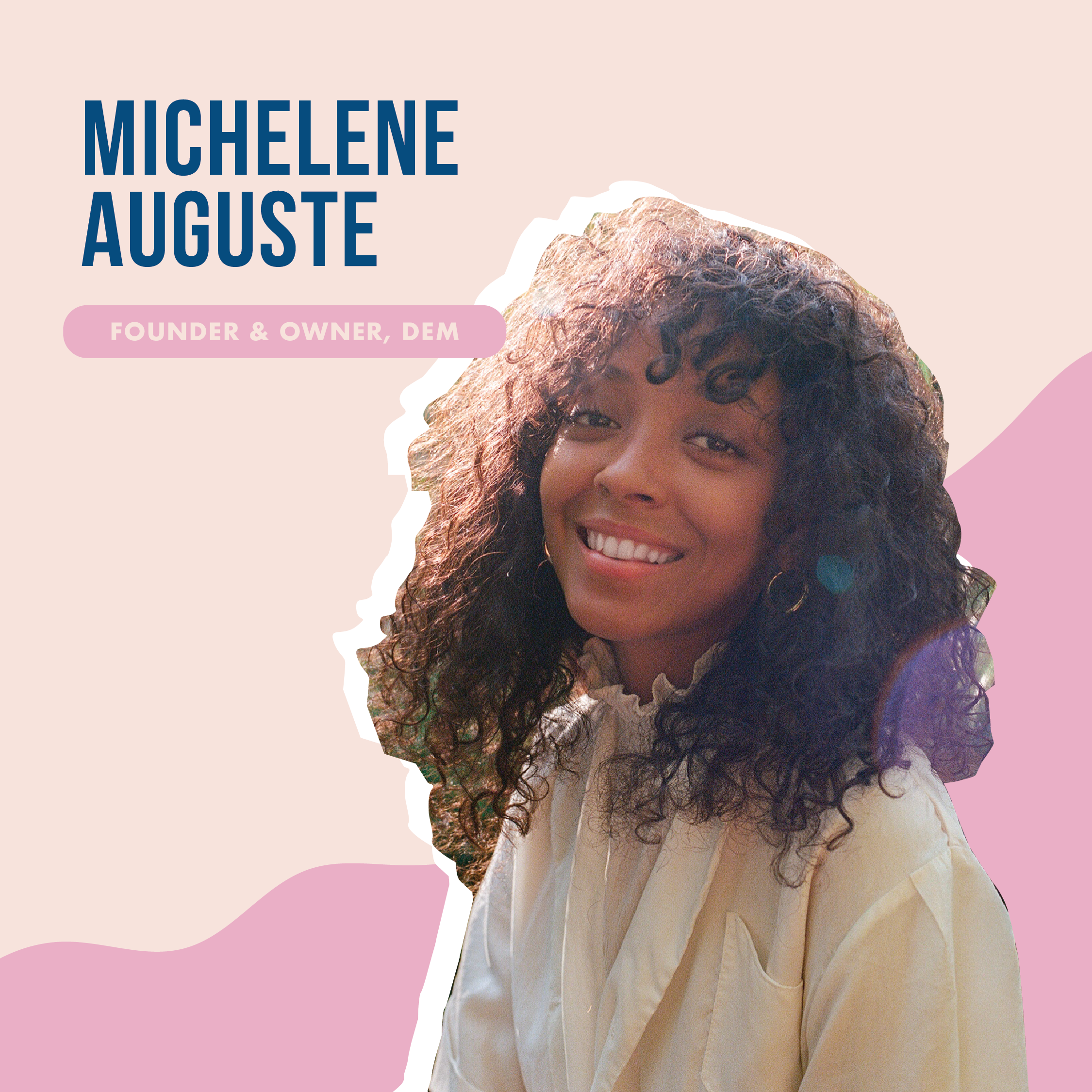
All successful businesses start somewhere and it takes just scratching the surface of a new idea to get the ball rolling. But with that ah-ha! moment comes a lot of hard work, late nights, and coffee to make your new business venture happen. Oh, and a digital platform to make your new idea look beautiful and profitable, too. Think you’ve got what it takes? Well, we partnered with Squarespace for a three-part series called From Scratch to Success: How to Turn Your Side Hustle Into a Thriving Business to find out what really goes into launching a company from the ground up. To do that, we interviewed three female founders—Michelene Auguste Founder and Owner, Dem; Karen Rose, Owner and Herbalist, Sacred Vibes Apothecary; and Gina Correll Aglietti, Yola Jimenez, and Lykke Li, Co-Founders, Yola Mezcal—to share their story from that lightbulb moment to selling their products online, and everything in between. And don’t forget to keep scrolling to the end to read about our exclusive Squarespace offer for Create & Cultivators.

So, you have this incredible idea to turn your passion into a profitable business—now what? Where are you supposed to begin and who is going to help you reach your end goal? Well, in the beginning, when you don’t have any capital, all you really have is your idea, so the only person you can rely on is you. But the good news is there are a plethora of online tools that can help you get started. Does your new business idea include a product line? If you answered yes, then say hello to the world of e-commerce! To put yourself on the map (and find customers) you’ll need a website that will showcase your unique products in a way people just can’t resist. The rest will come from you, your vision, and your drive for success—but let’s not get ahead of ourselves.
In the first chapter of our three-part series, From Scratch to Success, we introduced you to some incredible women who are crushing their business goals online with the well-known platform, Squarespace. We asked them about their new business venture, how they got started, and why they chose Squarespace to launch online. In part two of this series, we’re diving a little deeper into the commerce side of their business and how these three unique businesses—Dem, Sacred Vibes Apothecary, and Yola Mezcal—use Squarespace to turn their passion into profit. You’ll want to take notes for this one!

Create & Cultivate: Squarespace makes it easy to start a website from scratch. Can you walk us through the process you took when creating yours?
Gina Correll Aglietti: “Anticipating YOLA’s launch, we felt a video was the best way to communicate our brand story to depict our farm and team in Oaxaca. Squarespace gave us the platform to share this story with a new audience and made it easy for us to help curate first impressions of our brand. We've been using Squarespace for over three years now. I especially love the marketing tools we can use to create newsletters, collect emails, and keep our audience engaged.”
C&C: Squarespace has great features for brands that want to introduce e-commerce. What commerce features do you rely on the most and advise others to use too?
GA: “We will soon be launching our merch store through Squarespace. We had initially looked at embedding a third party e-commerce platform on our website, but then realized how simple it was to add e-commerce tabs into our Squarespace without straying from the brand’s aesthetic. We have also had the opportunity to embed a link to sell YOLA direct to consumers, which is often very difficult to do because of strict alcohol compliance laws.”
C&C: There are so many websites online—how do you make your website unique?
GA: “Squarespace allows us to maintain a simple and minimal design that aligns with our brand's aesthetic. We have been able to incorporate our own fonts and imagery to customize the experience.”


Create & Cultivate: Squarespace makes it easy to start a website from scratch. Can you walk us through the process you took when creating yours?
Michelene Auguste: “When I started building my site, it was very easy to navigate. I started with an e-commerce page, a homepage, and basic information—I’ve been adding to that ever since. I love that I can easily move things around and change the site. I also love that I can rearrange the products on the e-commerce page so it looks the way I want it to.”
C&C: Squarespace has great features for brands that want to introduce e-commerce. What commerce features do you rely on the most and advise others to use too?
MA: “I have the Squarespace app which helps me edit on the go when I have to. I’ve found that the app is very helpful.”
C&C: There are so many websites online—how do you make your website unique?
MA: “The Dem site is a curated experience of the clothing and objects I’ve discovered throughout my life. It’s a bit personal and I think that’s what makes it unique. I love taking photographs and updating the site often with new material.”
C&C: Do you have any shortcuts you can share with other users for making their website?
MA: “My advice would be if you can’t figure out something or you’re stuck, don’t stress—all the information and help is there for you on the site which has helped me out a lot.”
C&C: What are some more advanced tools that you use for building out your website?
MA: “My favorite thing about Squarespace is that I don’t need to know any coding tactics or use any advanced tools. Everything is already there for you to create and run a beautiful, successful site.”


Create & Cultivate: Squarespace makes it easy to start a website from scratch. Can you walk us through the process you took when creating yours?
Karen Rose: “I started with Squarespace about five years ago. I saw how beautiful other Squarespace sites were and wanted mine to be just like that.”
“I have come so far. I have an online shop now and in many ways I have grown that on Squarespace. We are currently working on creating an online membership/educational portal utilizing Squarespace’s collaboration, Memberspace to offer global access to our work.”
C&C: Squarespace has great features for brands that want to introduce e-commerce. What commerce features do you rely on the most and advise others to use too?
KR: “I rely on our online shop greatly. It is super easy to track inventory and monthly sales.”
C&C: There are so many websites online—how do you make your website unique?
KR: “We make our website unique by using it to tell the story of our brand. When folks are on our site, we want them to get the whole picture of who we are: not just an online shop but a community.”
C&C: Do you have any shortcuts you can share with other users for making their website?
KR: “I decided to hire a designer familiar with Squarespace for the initial site design. This allowed us to use our time and resources in a way we felt our business could benefit from most. We still work together closely. He was able to show us a lot of what he has done. But now, most of the everyday maintenance we do is on our own.”

Head to squarespace.com and use the offer code CREATE2019 to save 10% off your first purchase. And or more information around Squarespace’s commerce feature and to understand how you can start selling online today, visit Squarespace Support here.
And don’t forget to tune in next week for part three of our From Scratch to Success series for everything you need to know about SEO and ensure your website ranks in Google.

There Was No Plan—This Founder Started a Side Hustle to "Make a Few Extra Bucks" and Now It's a Thriving Business
From scratch to success.
This post is in paid partnership with Bootaybag.
We know how daunting it can be to start a new business, especially if you’re disrupting an industry or creating an entirely new one. When there is no path to follow, the biggest question is, where do I start? There is so much to do but before you get ahead of yourself, let’s start at the beginning. To kickstart the process (and ease some of those first-time founder nerves) we’re asking successful entrepreneurs to share their story in our new series, From Scratch. But this isn’t your typical day in the life. We’re getting down to the nitty gritty from writing a business plan (or not) to sourcing manufacturers and how much they pay themselves, we’re not holding back. If you want to know how to start a business, you’ve come to the right place.

“Failure is part of the journey and the reward doesn’t come without a lot of dark, scary moments. We’ve all been there, and we’re in this together.”
—Ellyette Gheno, CEO and Founder, BootayBag
When you’re looking to start your own business, most of us have a five to 10 year timeline in mind before we start making money. Of course, the end goal could be to build an empire but no-one expects for that to happen quickly. But it seems like Ellyette Gheno’s company, BootayBag was an overnight success.
Having grown up with entrepreneurial parents, Gheno was practically born with founder genes in her DNA. So it comes as no surprise that within a day of thinking up BootayBag—a monthly underwear subscription that delivers right to your door—Gheno created a website and launched a side hustle. What started as a way to “earn a few extra bucks” has successfully disrupted the $52 million underwear market (which is expected to grow annually by 3.5%) in just five years and her little aha! moment is changing the game.
So, we tapped the CEO and founder to learn more about her incredible journey from lightbulb moment to starting an undie revolution.
Be sure to keep reading until the end for our exclusive discount code that gives Create & Cultivators 20% off their first month when signing to any monthly subscription.
Did you write a business plan? If yes, was it helpful? If no, what else did you use instead?
“I definitely could have used a business plan. I started BootayBag as a total side hustle to make a few extra bucks, there was no plan. However, if I could go back in time I would have started with a clear vision of what I wanted to create, and what the end goal was. At the very least I would have liked to set intentions, even if it wasn’t a business plan. This would have helped me to later understand my ‘why’.”
How did you come up with the name? What was the process like? How did you know it was the right name?
“So this is my story and I’m sticking to it—guaranteed a laugh. I grew up in the Bay Area obviously listening to rap music. I had seen and heard ‘booty’ spelled as ‘bootay’ and that is the creative genius behind the spelling of BootayBag. After the name was born I had a domain within 24 hours. Looking back I maybe should have run it by someone beforehand."
What were the immediate things you had to take care of to set up the business?
“First came the website and then social channels shortly after. All of the legal stuff came later due to the limited funding I had for the business at the time.”
“A big moment for me was learning to never let myself get too comfortable. I now enjoy being uncomfortable because I know this is how I grow and where positive change comes.”
What research did you do for the brand beforehand?
“My research came at the extent of my self desires. I was solving my own issue of hating digging through sale bins and not wanting to shop for underwear (because what young woman does)? I had undies in my drawer that I am embarrassed to say were beyond their intended life span. I knew that if this was the case for me it had to also be the case for most of my girlfriends. Lucky for me, it ended up being the case for most young girls outside of my inner circle, and that helped me discover my ‘why’ behind the brand.”
How did you find the manufacturer/production facility that you use? Did you have any bad experiences? What did you learn?
“This is a hard one. I have learned what I know now about manufacturing because, unfortunately, of many bad experiences. I would advise to always ask questions, seek insight and advice from others, and basically trust no one. Ha, ha! Be sure to check references, run small tests and batches, and never give them all your money upfront.”
Did you self-fund the company? Did you raise seed money or initial investment money?
“BootayBag has been totally self-funded. Looking back, I am actually so thankful for this as I was able to make mistakes with my own money versus someone else. I had the advantage that I didn’t need funding to bring my vision to life in the beginning stages. However, it is definitely more of a step-by-step, slow-moving process when you’re bootstrapped.”

Photo: Courtesy of BootayBag
How much did you pay yourself? How did you know what to pay yourself?
"In the beginning when it was just a side hustle the whole point was to pay myself. But when I decided that this wasn’t going to just be a revenue stream for myself but that I wanted to make hires and build a brand, I came last on the payroll scale. It still always goes back to what I am trying to do—if I need to make a hire and I can’t afford to do it, I take a pay cut.”
How big is your team now? What has the hiring process been like for you?
“Hiring is hard because your team is seriously so important. I love the saying, ‘You can’t have an A team with B players.’ I’ve failed a lot in this department, especially in the beginning. I just felt lucky to have anyone work for me at the time which I later learned was the totally wrong approach. The best way to learn how to hire is to be prepared as if you’re the one being interviewed. Know who you are interviewing, ask all the hard questions, call the references, and give a training period for you to work alongside them.”
“It always goes back to what I am trying to do—if I need to make a hire and I can’t afford to do it, I take a pay cut.”
Did you hire an accountant? Who helped you with the financial decisions and set up? What do you recommend?
“No, I didn’t at first however, I quickly learned it is so critical to do so—that was a big ‘omg’ moment. Please, for the love of God, get an accountant. At the very least get someone who you pay as a consultant to help you set it all up. Cash is key, and how you set up terms, cash flow modeling, payroll, budgets, and tax compliance is so important. You have to have a professional in the field to guide you through it. We can’t be good at all the things—get help.”
What has been the biggest learning curve during the process of establishing a business?
“A big moment for me was learning to never let myself get too comfortable. I now enjoy being uncomfortable because I know this is how I grow and where positive change comes. Every moment that I think I have everything figured out, I don’t! Lol. Reality settles in and all of a sudden everything I thought I knew is wrong and it’s a whole new perspective. I almost fear the comfort level because I know something is around the corner. I can now thrive being uncomfortable because I know this how I grow and how good change comes.”
“No one should know your numbers better than you.”
How did you get retailers to start stocking your product? Were you told no? How did you handle that rejection? What advice can you share?
“We are our own online retailer as of now, however, rejection comes more likely than not in other directions. Every time we drop a new style that not everyone likes and it feels like rejection. I know we can’t cater to everyone, but you still try to and think you just might one of these times. The only advice I have is that they aren’t rejecting you, it’s not personal and it happens to everyone.”
Do you have a business coach or mentor? How has this person helped? Would you recommend one?
“Mentors are key. My favorite (and most shocking) discovery with entrepreneurs is they will most likely help you if you ask for it. The key here is to be very direct with what you want from them and be respectful of their time. Utilize your network and continue to grow it with every opportunity you get.”

Photo: Courtesy of BootayBag
How did you promote your company? How did you get people to know who you are and create buzz?
“I knew what felt like absolutely nothing, about anything. In the beginning, I started with a concept that I knew I needed and felt like other girls might need too. I tested locally first with pop-ups and events, and put it out there on social media to see if the concept stuck before I put any money behind it. Being very open to everyone’s opinions, ideas, and feedback is what helped me grow the idea into a brand.”
What is one thing you didn’t do in the setup process, that ended up being crucial to the business and would advise others to do asap?
“I wrote myself off in the finance section right away—I don’t do excel, I am not good with numbers. Well, tough luck to me. No one should know your numbers better than you. So with that I learned how to manage and own that even though I didn’t want too."
“We can’t be good at all the things—get help.”
For those who haven’t started a business (or are about to) what advice do you have?
Do it! But do it the safe and smart way... where you can test the waters without putting your whole life savings into it from the get-go. If this all went away tomorrow, I’ve grown so much and learned more about myself, managing people, and business than any other course of life could have taught me.
Anything else to add?
I would love to touch on how important it is to support one another in our individual journey’s, both professional and personal! This is why I love love love and am continuously inspired by Create + Cultivate so much. It can feel so lonely and scary, but you are not alone in it - someone has already paved the way for you. Ask for help, learn from other peoples failures who did it before you. Failure is part of the journey and the reward doesn’t come without a lot of dark, scary moments. We’ve all been there, and we’re in this together.

Photo: Courtesy of BootayBag
EXCLUSIVE DISCOUNT CODE FOR CREATE & CULTIVATOR’S
If you’re interested in getting 20% off your first month, then use our exclusive discount code CC20 when you sign up to any monthly subscription at their website, bootaybag.com








Passion Turned Profit—Entrepreneurs Share Their Small Business Success Stories
From women who did it.
All successful businesses start somewhere and it takes just scratching the surface of a new idea to get the ball rolling. But with that ah-ha! moment comes a lot of hard work, late nights, and coffee to make your new business venture happen. Oh, and a digital platform to make your new idea look beautiful and profitable, too. Think you’ve got what it takes? Well, we partnered with Squarespace for a three-part series called From Scratch to Success: How to Turn Your Side Hustle Into a Thriving Business to find out what really goes into launching a company from the ground up. To do that, we interviewed three female founders—Michelene Auguste Founder and Owner, Dem; Karen Rose, Owner and Herbalist, Sacred Vibes Apothecary; and Gina Correll Aglietti, Yola Jimenez, and Lykke Li, Co-Founders, Yola Mezcal—to share their story from that lightbulb moment to selling their products online, and everything in between. And don’t forget to keep scrolling to the end to read about our exclusive Squarespace offer for Create & Cultivators.

At Create & Cultivate, we love to support small businesses that not only started from scratch, but from passion. We love seeing people who totally crush at their side hustle and turn it into their main hustle—who doesn’t love a passion to profit story? With the rise of digital and DTC brands, we’re seeing more small businesses thrive than ever before and with the increased demand comes a new arsenal of tools at their disposal to help bring it to life. These new online platforms are easy to use, affordable, and quick to set up. With Squarespace, for example, new founders can design a website, upload their products, and be selling within hours. We know because we, too, use the savvy, intuitive platform for Create & Cultivate and have seen the benefits firsthand.
So, we partnered with our friends at Squarespace to bring you a series that dives deeper into how to set up a business online, how to make sure people find it in a sea of competition (SEO 101 coming right up), and how to scale it through the stories of women who’ve done it themselves.
Meet Michelene Auguste, the Founder and Owner of Dem, Karen Rose, the Owner and Herbalist behind Sacred Vibes Apothecary, and Gina Correll Aglietti, Yola Jimenez, and Lykke Li, the Co-Founders of Yola Mezcal. These ladies are sharing their stories with us on how they started their businesses, the passion that ignited it, and how Squarespace weaves into their success stories. Follow along for some killer advice and don’t forget to catch the other two chapters in this series coming soon—you won’t want to miss it.

Create & Cultivate: Let’s begin with you telling us about your business and its mission.
Michelene Auguste: “Dem is a Vintage Caribbean Contemporary design store. It’s a platform to showcase Caribbean talent, creatives, a form of storytelling, and a piece of my personal and cultural heritage.”
C&C: At what point in building your brand did you start your website?
MA: “I built my site from the very beginning. Squarespace has been a very instrumental tool in helping me grow and manage my business online. I had no idea how to build a site, especially an e-commerce one. Squarespace has made it all much more intuitive and approachable. I was able to upload products, choose the layouts I liked and make a very beautiful site so easily.”
C&C: What are some of the biggest lessons you’ve learned along the way?
MA: “This might sound cliche, but I think the biggest lesson I’ve learned is to never give up. If you want something, go after it. I think it’s important to write things down. I’ve done that ever since I was a little girl in Trinidad. Everything I want to accomplish and improve I put on paper. It has helped me get all my ideas out and focus my thoughts. Putting your ideas on paper is like planting a seed: it’s only the beginning. By putting those thoughts on paper, things materialize and energy forms.”

C&C: Let’s begin with you telling us about your business and its mission.
Karen Rose: The idea of Sacred Vibes has been constant. I grew up in a community that depended on its healers and held them in reverence. I knew I wanted to create a place where we could heal together. Herbalism was the commonality among us that would create a vital community. Sacred Vibes came out of the need for an herbal apothecary in Brooklyn.”
C&C: At what point in building your brand did you start your website?
KR: “I think from the moment I thought of my work, I knew I needed a website for people to find me. I describe my website as a place where people can feel what/who Sacred is and not just a place to shop. Squarespace has helped with that a ton! I love their templates and how easy it is for me to edit things. Though I work with a designer, I can do many tasks on my own with little effort.”
C&C: Can you identify some challenges you faced when starting your business?
KR: “Being a solo entrepreneur is rewarding and hard. Sometimes you struggle to work through your ideas and visions alone. Sometimes you have to go from concept to execution all by yourself.”
C&C: What are some of the biggest lessons you’ve learned along the way?
KR: “The biggest lesson is to make time for the other aspects in your life. I’m a mom and I’ve had to learn that balancing my work with the rest of my life is key to my personal happiness. The best advice I received was ‘avoid thinking that you are your business’ and I want to pass that on. There is Karen and there is Sacred Vibes and when both are functioning well they have more of an opportunity to be successful.”

C&C: Let’s begin with you telling us about your business and its mission.
Gina Correll Aglietti: “The three of us met at different times in Mexico City over the last decade, and started a wonderfully deep friendship filled with many long dinner parties and deep talks. Yola would come to visit in L.A. bringing different mezcals and we would host our friends, telling them the story of the spirit. She inherited our farm from her grandfather and it's important to us that we use his traditional method of making mezcal. We want to preserve the artisanal nature of the product as we grow.
“At the time that this brand was incepted, we were disappointed that the liquor industry was so male-centric. Men were the target of marketing and they were in charge of operations at so many liquor brands and distribution companies, so we felt strongly about creating a company that supported women across borders. We want to empower the women in Oaxaca that work on our farm, and make sure to provide direct payment and allow them to create their own hours. We don't have a conventional approach to anything that we do which we feel makes our brand unique and helps us stay true to our mission of exposing a heritage product to a new audience.”
C&C: How did you conceptualize and develop your brand?
GA: “We noticed that there was a lack of quality mezcal, and no strong brand identity that catered to our idea of a modern woman. We wanted to create a brand that reflected our vision of what a liquor company owned and operated by women would look like. We align with a lot of social impact organizations, like the ACLU and Planned Parenthood, and feel strongly that our platform should be used to empower other women.”
C&C: At what point in building your brand did you start your website?
GA: “We started using Squarespace when we started selling our product. We would recommend it to other founders because it’s intuitive and user-friendly.”
C&C: Can you identify some challenges you faced when starting your business?
GA: “At the beginning, we were limited in our funding and did everything ourselves. This ended up being a blessing and helped us grow organically. It also allowed us to make a lot of our own choices, which really strengthened our brand identity.”
C&C: What are some of the biggest lessons you’ve learned along the way?
GA: “The biggest lesson is to really believe in what you are creating. The community will build as the brand continues to grow, if the mission is clear and the founders are all in agreement.”
Head to squarespace.com and use the offer code CREATE2019 to save 10% off your first purchase. And or more information around Squarespace’s commerce feature and to understand how you can start selling online today, visit squarespace.com/ecommerce-website.
And don’t forget to tune in next week for chapter two of our From Scratch to Success series for a deeper dive into building your website online.
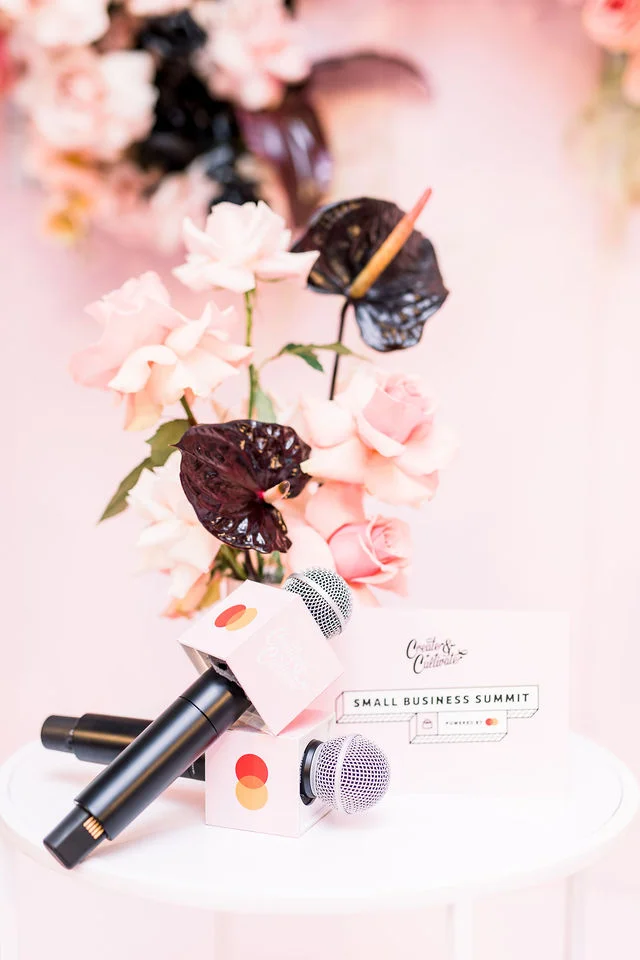
"I Never Use the Words Win or Failure Anymore"—and Other Boss Lady Quotes From Our First-Ever Small Business Summit
Get out your notepads.
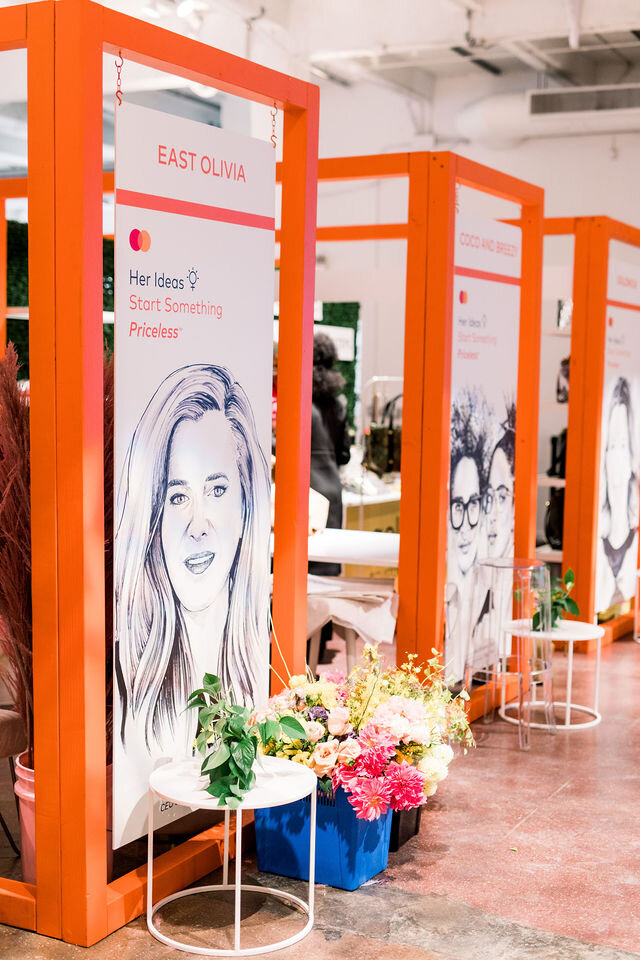

Big city, bright lights! We made the trek from one coast to the other this fall for our first-ever Small Business Summit in partnership with Mastercard. NYC greeted us with incomparable energy and we were so excited to hit the ground running with endless opportunities for networking, knowledge dropping, and so much more.
At C&C, we make a point of supporting small businesses and their founders—as does Mastercard. So, it only made sense that we would join forces with the best-in-the-game to create a new summit for our community. We set the stage for attendees by offering some incredible awe-inspiring panels, workshops, and photo moments—but don’t jump the gun just yet if you’re feeling that wave of FOMO.
Not only did we talk hustle, but we got to see it IRL. We were excited to partner with Mastercard and spotlight a few boss-ladies who set up shop in the Mastercard Small Business Marketplace for attendees to shop, talk and network with—talk about shopping with purpose!
But we will say, if there was one thing to have total FOMO over, it was the Bumble Bizz Headshot Studio. We were honored to carve out a special place for attendees to have professional headshots were taken (not to mention it was a killer Instagrammable moment, too). Be sure to download the app for a chance to try the best networking tool at your fingertips.
Follow along for some snapshots and key learnings that will make you feel like you were there in the Big Apple with us. Don’t forget—if you’re an Insider—you too can access the live recordings of these business-savvy panels from the comfort of your own home (or smartphone).
Take a look below for the best of our Saturday in the city.


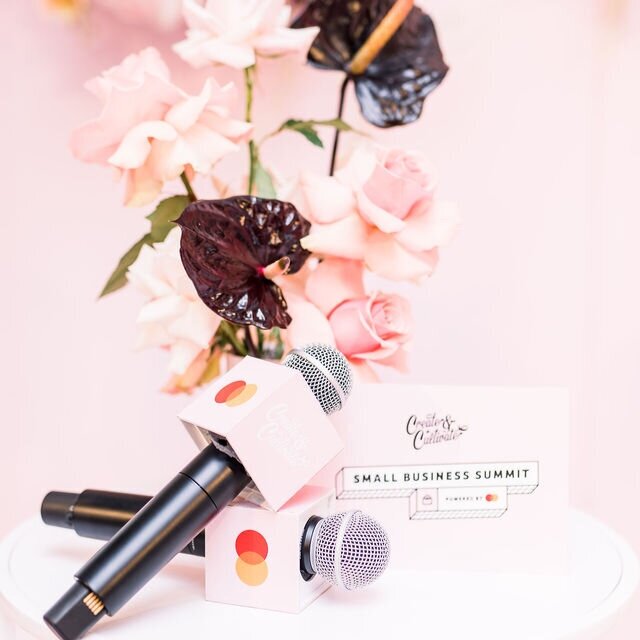
Keynote: Sophia Bush and Stacy London
Panelists:
Sophia Bush | Actress, Activist, and Host of Work in Progress podcast
Stacy London | Style Expert and New York Times Best-Selling Author
Stacey London
On pivotal points and realizations...
“All the things that I thought were failures were what propelled me to the next thing.”
“I never use the words win or failure anymore—they are just ‘value judgements’.”
“Expectation is the enemy of forward movement—it is the enemy of progress. “
“Age is no longer an indicator of giving good advice—experience is no longer how we measure advice.”
“Being clear on what your goals are, saying ‘no’ when something doesn’t serve you or your company is essential.”
On getting through hardship and disappointments in your career...
“I'm going to look at whatever that roadblock was, I'm going to figure out how to get around it or I’m going to build a different road.”
“For people in your generation, the more options you have— being a multi-hyphenate—it’s looked at as such a positive thing. In my generation, not only did you have to stay in your lane, you don’t check any boxes.”
”We’ve all been met with dead ends. You never think you are going to meet the problems you’re going to be met with. You have to believe that everything happens for a reason. You have to become a problem solver in your own life.”
On saying ‘no’...
“Once I named what it is that really motivates me, it made it easy to say ‘no’ when it didn't fall under that umbrella.”
Sophia:
On words of wisdom...
“If the world isn't ready for your good idea, that doesn’t mean it wasn’t a good idea.”
“Don’t compare your insides to someone else’s outsides.”
“Humans need eight hugs a day to survive in their bodies—twelve hugs a day for optimal performance.”
On connection:
“You must connect with your people in real-time, in real life. Whether it’s your company, your clan, it’s not enough to just connect through social.”
“It is not okay, ever, to feel less than.”
On self-worth:
“Don’t compare your insides to someone else’s outsides.”
On setting goals:
“We set goals, great but we achieve that goal and set new goals so, we’re always chasing something on the horizon—we need to be able to look at the life we’re living today and say that it's pretty cool.”
“The idea is to not be so hard on yourself but to stay motivated. You are always going to be moving. The idea is to think of there is no finish line until your ashes are in the ground.”
“The point of living is to keep going.”
“Instead of that high and that low, see it as one more step.”
On saying no:
“Once I named what it is that really motivates me, it made it easy to say no when it didn't fall under that umbrella.”
“Get clear what the pillar is that all your verticals fall in. Say no if it doesn’t fall under that pillar.”
“I really want for all of us to figure out what serves us and lets us serve the world.”
Venture Forth: Building, bootstrapping or bringing on capital for your business
Panelists:
Vanessa Dew | Co-Founder and Chief Sales Officer, Heath-Ade
Molly Hayward | Founder and Chief Brand Officer, Cora
Hilary McCain | Founder and CEO, Sweet Reason CBD
Arielle Loren | Funding Expert for Women and Founder, 100K Incubator
Jaclyn Johnson | Founder and CEO, Create & Cultivate
Moderator:
Sacha Strebe | Editorial Director, Create & Cultivate
Jaclyn Johnson
On the big picture...
“A lot of these big companies that you love don’t make any money, but they make a lot of the headlines.”
“Fall in love with the numbers.”
Vanessa Dew
“When we were raising our first round, let me paint the picture of eating ramen every day—we were beaten down, we were getting up early in the morning to go to the farmers market—so we eventually needed money to supplement the business.”
On the money conversation...
“As females, we often don't negotiate or bring up taboo topics. For example, founder pay, founder liquidity. These topics were never brought up because we were afraid.”
On how to raise money...
“We called in a whole village: a finance professor, brought lawyers on deck—we had a whole group to gain their insights. You get insights from people, but at the end of the day you need to follow your gut and do what is right for your business.”
On raising money or bootstrapping it:
“We are responsible for our teams lives. There is an emotional side to it.”
“As a founder and leader your job is a fiduciary responsibility to increase holder value—we are not robots. You are a human leading the company. At some point your agendas don’t match. It is always good to align with your executive team and your investors around what the plan is for the next three to five years.”
Molly Hayward
On the why behind Cora...
“You know for me it started from a place of pure inspiration. I was travelling in Kenya and found out that all the girls were missing school during the month of their period because they couldn’t afford period products. How fucked up is that?”
“When I looked into the industry I was shocked at how unconscious we were when it came to the impact of the products we were using.”
On creating and growing her business...
“For me, the disruptive piece came from not knowing any better. Not feeling like there was a rule I had to follow, not feeling like there was something I had to differently.”
“It was clear to me that I wanted to create a brand that represented the values of the modern woman. It’s sad that that is considered disruptive, but it is.”
“It is taking the attitude of: ‘I’m going to let who I am lead this process’ and following your gut.”
“Best Advice: Make more than you spend. At the end of the day if you can you do that in as lean of a way as possible, you put yourself in the strongest position.”
On raising money...
“In the first 18 months from idea to raising money, I have gone through every type of funding—self-funded at first and from there I did a crowdfunding campaign.”
“There’s no wrong way to do this.”
“Be conscious of your cash flow.”
“I was by no means an expert and I leaned on other investors and other entrepreneurs I know and asking what I need to do next.”
“Finance and investing is still a male-dominated industry—women are still breaking in.”
“You're not alone, let it be a learning experience. Don’t be afraid to ask questions. Don't feel like you're not worthy of that answer and that money in the end.”
Hilary McCain
On the importance of working with others...
“Sell the dream. Convince the people around you to build something with you.”
“One way we have found to get good people involved is giving equity to every person involved in the company, from the top down to the bottom.”
On raising money...
“The second you raise money, the clock starts ticking. There is enormous pressure, but I might not have completely appreciated how much you are held to those numbers.”
Arielle Loren
On raising funds...
“There are so many options and for us, it's about educating people about their options. Know where you fall in the process, then you can set yourself up for success.”
“How can you show proof of concept as early in your business as possible? What can you do in the meantime to position yourself and your company as something with potential?”
“Raising money doesn’t mean you have a profitable and viable business yet.”
Mastering the Three C's: Content, community, and commerce
Panelists:
Marie Forleo | Marie Forleo, author of the instant #1 NY Times Bestseller, Everything is Figureotuable
Courtney Quinn | Founder, Color Me Courtney
Leann Livingston | Brand Manager, Square
Ginger Siegel | North America Small Business Lead, Mastercard
Claire O’Connor | Editorial Director, Bumble
Mallory Blair | CEO, Small Girls PR
Moderator:
Reesa Lake | Partner, EVP of Brand Partnerships, Digital Brand Architects
Marie Forleo
On content...
“Content, when you create it right, gives you the opportunity to create trust and confidence long before you ask anyone for a sale.”
“Consumers understandably have a lot of skepticism—content is the most important signal for us to show what we stand for.”
On community...
“It's about paying attention to people and making them feel seen, heard, acknowledged.”
On social media followers…
“If you go holy shit, 300 people care about what I say and you treat those people like gold, you make them feel loved seen heard, that's what matters.”
“People’s bullshit-meters are so high, so you have to be rooted in your heart and a genuine caring.”
On commerce…
“No matter what business you're in, you have got to become masterful in marketing and sales—it is the lifeblood of your business— understand the people you’re serving.”
Courtney Quinn
On community...
“If you’re focusing on people who don't follow you, it's a waste of time. You have people who are already here, focus on them. My community is the reason I grow.”
“I create content for the people who are following me. I invest in them.”
On commerce...
“People want to promote what I stand for.”
“I think if people care about you as a creator, they will want to buy what you're selling.”
“I have to fall in love with the story before I fall in love with the product.”
“Have people fall in love with you and what you do, the money will follow and it is an easy way to bridge the gap between content and commerce.”
“When you create a clear brand, it helps you differentiate early on.”
On being authentic in what you show...
“You can't fake the things that are you.”
“I picked five things that were me to a tee. I put my top five everywhere and looked at those five things whenever I was producing any content and if it didn’t check the box, then it doesn’t get seen.”
Leann Livingston
On content…
“60% of consumers are looking for brands that have values and use that to make purchase decisions.”
On community...
“If we want to be about small business owners, we need to be about the community.”
“Find out how you can partner with the communities that are already built and thriving.”
On women-owned businesses that are crushing it...
“Your business can represent so much more than just what you sell.”
Ginger Siegel
On content...
“Planning everything out isn’t going to work in this real-time marketing environment. What you need is agility.”
On community…
“Particularly with female entrepreneurs, we are much more apt to be drawn into a community.”
Mallory Blair
On content...
“Rise above the clutter—How do you stand for more?”
On community...
“Make a list of brands you feel are in the same universe and reach out, offer to cross promote their brand.”
Re-Imagined Retail: From brick & mortar to DTC we explore how the future of the shop is being shaped
Panelists:
Lisa Price | Founder, Carol’s Daughter Inc.
Ali Kriegsman | Co-Founder and COO, Bulletin
Dianna Cohen | Founder, Levitate
Jessica Kahan Dvorett | SVP at CaaStle and General Manager, Haverdash and Gwynnie Bee
Lisa Mastela | CEO, Bumpin Blends
Moderator:
Christine Michel Carter | Writer and Global Marketing Strategist
Lisa Price
On holding your own self back...
“I had to stop blaming me, and get out of my own way.”
On conversation with the customer…
“The thing that is most important is your storytelling and your authenticity. When I started I didn't need to worry about what am I going to post about today, I could just create products. Today, you have to have a dialogue.”
Lisa Mastela
On guilt...
“Letting go of the guilt of failure has been the hardest for me. I would be overwhelmed by those feelings and want to quit. When you experience failure over and over and over again, which you do, be able to bounce back and learn from it.”
Maker Economy: A Conversation With Madewell’s Hometown Heroes and Nest on Building Your Handmade Biz From the Ground Up
Panelists:
Lacie RZ Porta, Founder, Framed Florals
Natalie Borton, Founder, Natalie Borton Jewelry
Virginia Sin, Founder, SIN
Amanda Lee, Director of Brand Strategy & Sourcing at Nest
Moderator:
Sacha Strebe | Editorial Director, Create & Cultivate
Lacie RZ Porta
On press impacting the business...
“If you know you're going to have more traffic to your site, plan for it, prep for it. Even if you don't, learn from it.“
On life learnings...
“I learn the most from the things I wasn't prepared for.”
“If it's not a ‘hell yes’ it's a no.”
Natalie Borton
On Hometown Goods with Madewell...
“There was legitimacy that came with Madewell being willing to sell my goods.”
Virginia Sin
On goals…
“For any goal, you have to have detailed steps on how you get there and look back at your values and make sure you're not compromising as you get there.”
On best advice...
“Authenticity. Being able to tell a story that's differentiating. There is only one you—if you can share your story and make it compelling, it will go a long way. Never give up.”
Amanda Lee
Best advice for women...
“Key in on your values and brand values. In a quickly changing world, things change but if you hone in on who you are and your values that will always stay true.”
Teamwork Makes the Dreamwork: How to scale your business and take it to the next level [POWERED BY MASTERCARD]
Panelists:
Morgan DeBaun | Founder and CEO, Blavity (WSBAC)
Sonja Rasula | CEO and Founder, Unique Markets (WSBAC)
Katie Rosen | Co-Founder, FabFitFun (WSBAC)
Jordan Jones | Founder and CEO, Packed Party
Cheryl Guerin | EVP North America Marketing & Communications, Mastercard
Moderator:
Jaclyn Johnson | Founder and CEO, Create & Cultivate
Cheryl Guerin
On best advice...
“I think you have to be scrappy with all of the tools at your disposal”
Sonja Rasula
On money...
“I took all of my savings, every penny that I had, and I started the business.”
“I’ve never lost a penny. I never took a loan. I’ve never needed investment in 11 years.”
On best advice...
“Female entrepreneurship is now being given the light that it deserves.”
“If you believe that you have a good idea and you believe in yourself, and you have the confidence, there is no reason why you shouldn’t invest in yourself.”
“If you believe in yourself, why the fuck wouldn’t you put everything you have into it?”
“If you believe in yourself, do it. Risk it. Time is not a luxury we have.”
On what the world wants…
“People are craving human, in-person connection again.”
Katie Rosen
On nothing is perfect…
“We have re-written our mission 6000 times.”
“Invest in what works and throw away what doesn’t.”
Jordan Jones
On strengths...
“I knew my strengths and I played to them”
Morgan DeBaun
On investing...
“The point of investment is to grow the business. You have to maintain what you’re doing and also get return 10x.”
On diversifying…
“Content is the cheapest way to build a business—we leveraged content.”
“The black community is so underserved, so we were creating content for them.”

How a Former Exec Channeled Her Frustration Into a Multi-Million Dollar Company
The Caulipower founder inspires as she sets the freezer aisle on fire.
This post is in paid partnership with Caulipower.
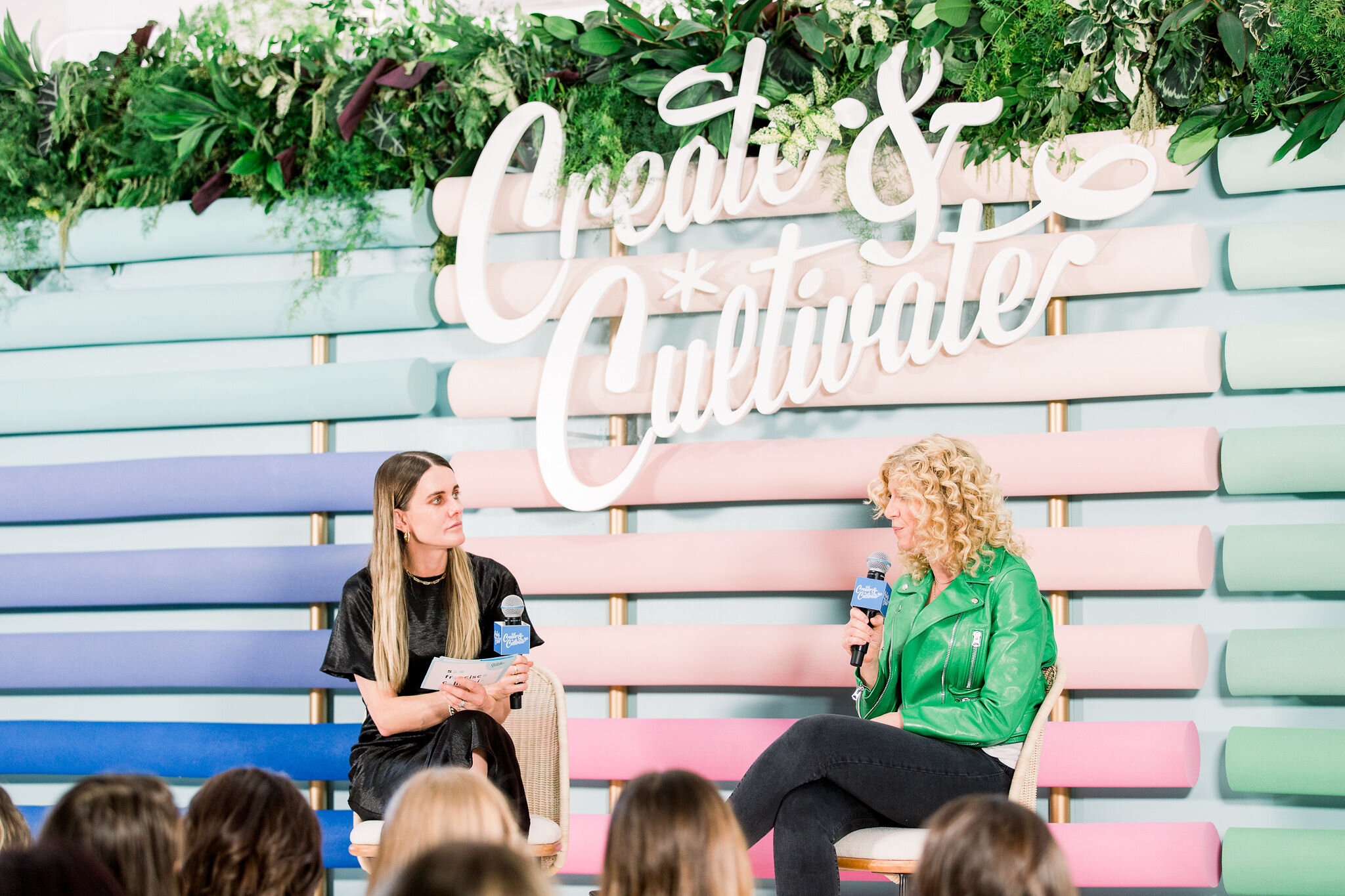
Gail Becker, founder and CEO, Caulipower chats with Create & Cultivate editorial director, Sacha Strebe at the San Francisco Conference. Photo: Smithhouse Photo
Have you ever considered leaving your cushy, well-paying corporate career for a completely different line of work? It’s hard to put aside a steady paycheck (and benefits) to take a leap into the unknown but that’s exactly what Gail Becker did. She is real-life proof that following your gut and leaving your comfort zone can actually pay off—literally! At our San Francisco conference this year, we had the pleasure of hosting a fireside chat with the founder and CEO of CAULIPOWER and we were blown away by her incredible entrepreneurial story.
Not only did she leave her high-flying position as president of strategic partnerships and globalization at Edelman to pursue a business in frozen food (who would have thought?)—she made a product that everyone can enjoy, that is nutritious, convenient and tastes good. But where did it all begin? After discovering both of her sons had celiac disease, Becker was desperate for nutritious gluten-free food options. When she couldn’t find any healthy (or tasty) choices, she did what every mom would—she made her own. She found hundreds of thousands of recipes for cauliflower-crust pizza online and decided to try it. Her sons loved it, but it took 90 minutes—time she didn’t have as a working mom—so she figured she could find it in stores, but it was nowhere to be found.
Becker channeled her frustration with the lack of gluten-free options and the industry’s slowness to innovate into a groundbreaking idea to make cauliflower-crust pizzas available in stores. She quit her job to start CAULIPOWER and now, a little over two years later, her company is on track to generate $100 million in revenue this year—that’s the power of a frustrated mom! In that time CAULIPOWER pizzas have become the #1 better-for-you pizza and #8 frozen pizza brand in the U.S., and the company has expanded their family of better-for-you products, with a mission to reinvent our favorite foods, one healthy meal hack at a time.
Drawing from what consumers are meal hacking at home, their products now include cauliflower tortillas, sweet potato “toast” and their most recent innovation: baked not fried chicken tenders, the healthiest tenders on the market at only 490 calories for the whole bag (seriously!).
Follow along for a deeper look into why Becker started her business, what it takes to be successful, and so much more.
On not hiding the healthy ingredients…
“We’re so proud of being a vegetable, we put it in our name”
“We like to celebrate the magic of vegetables.”
On starting CAULIPOWER…
“Why did I wait so long to do what my heart wanted me to do?”
“CAULIPOWER was born out of the convergence of this realization that I needed something more meaningful, and my own frustration of trying to find more foods that are gluten-free.”
“Why can’t we all share from the same plate? That’s the ethos behind CAULIPOWER.”
“When you care about something so much that you’re willing to risk everything for it, there’s nothing you wouldn’t do—there’s no amount of hours of sleep you wouldn’t give up.”
“It’s (CAULIPOWER) more rewarding than anything I could’ve ever dreamed.”
“It does take a toll. I want to be super honest about that. There’s a lot of blood, sweat, and literal tears behind all of that. People never talk about that part.”

“When you care about something so much that you’re willing to risk everything for it, there’s nothing you wouldn’t do—there’s no amount of hours of sleep you wouldn’t give up.”
—Gail Becker, Founder and CEO, Caulipower
On how to hire the right people...
“Every single person at CAULIPOWER today feels like it’s their company, and that’s how it should be. Those are the kind of people you should hire.”
“You need people that are going to be as passionate and care as much as you—I hired people who wanted to take a leap, too.”
”They have to really have the passion to try to make the world a little bit better.”
On raising capital...
“To grow a business, you have to have money, and you have to have some sales before you raise money, ideally.”
“Don’t let the thought of raising money get in the way of actually building your business.”
On the brand...
“Everything about the brand is accessible—accessible in the way it looks, the way it tastes, the stores it’s sold in, and the fact that we donate to teaching gardens.”
Sign up to be a Create & Cultivate Insider and watch the video of Gail Becker in conversation with our editorial director, Sacha Strebe at the San Francisco Conference, and so much more from our video vault.

"We’ve Learned By Doing"—How to Launch a Skincare Line From Scratch (From Someone Who Just Did It)
It’s only fair.
We know how daunting it can be to start a new business, especially if you’re disrupting an industry or creating an entirely new one. When there is no path to follow, the biggest question is, where do I start? There is so much to do but before you get ahead of yourself, let’s start at the beginning. To kickstart the process (and ease some of those first-time founder nerves) we’re asking successful entrepreneurs to share their story in our new series, From Scratch. But this isn’t your typical day in the life. We’re getting down to the nitty gritty from writing a business plan (or not) to sourcing manufacturers and how much they pay themselves, we’re not holding back. If you want to know how to start a business, you’ve come to the right place.

Onekind co-founder Madison Ruggieri believes in offering luxurious and quality skincare at a fair price
Photo: Courtesy of Create & Cultivate
Why do good wellness products always seem to hurt your wallet? Madison Ruggieri has a very simple answer to this question: they shouldn’t. Frustrated by the lack of choice in the skincare aisle that felt luxurious and affordable, Ruggieri decided to do something disruptive and start her own. She joined forces with her brother Matt to launch a luxury men’s grooming e-tailer called TheMotley.com and a dedicated men’s skincare line, Port Products available in Nordstrom, Neimans, and Lord & Taylor.
Through working in men’s grooming for the past decade, they became aware of how unnecessarily marked up skincare aimed at women can be. Because of their backgrounds, the duo was able to produce quality products that were more affordable than those sold by their beauty competitors. And so the idea for Onekind was born—luxurious skincare made accessible for all.
Today, Ruggieri sits down with us to share her words of wisdom that can only be gained from years in the world of business. From talking about how to stand out in a saturated industry, to the importance of teamwork, to the most difficult parts of building your own brand (the name being one of them.) You’re not going to want to skip out on this segment of From Scratch.

“I love that it (the brand name) brings to mind both ‘one of a kind’ and ‘humankind.’ It’s really important to me that the brand feels, first and foremost, human and honest.”
—Madison Ruggieri
Did you write a business plan? If yes, was it helpful?
“We did put together an informal business plan with a plan for growth and revenue projections. Our projections were based on our previous experience running a men’s grooming brand, and it's been helpful to have some kind of framework on which to establish goals.”
How did you come up with the name? What was the process like?
“Coming up with the brand name was one of the absolute most difficult parts of developing the brand. We had product formulas finished before we had a brand name. We wanted a name that would feel inclusive and that we could take in whichever direction the brand might eventually grow into. We also wanted a name that expressed our values without being cheesy.
“We spent weeks shooting ideas back and forth around the office. We even went to a naming expert. We had a few false starts and then would check trademarks or social to find those names were taken already or would be confusing to the consumer. Onekind ended up being absolutely perfect. It checked all of our boxes and I love that it brings to mind both “one of a kind” and “humankind”. It’s really important to me that the brand feels, first and foremost, human and honest.”
What were the immediate things you had to take care of to set up the business?
“While trying to come up with a brand name, we were constantly checking to make sure the name would be available across all the necessary channels from the website domain to social. Once we had the name Onekind, we just hit the ground running to secure a website domain, social accounts, file for a trademark, etc.”
“My advice when looking for a trustworthy manufacturer is to ask around. If you know other brands who have a non-competing customer demographic or focus, ask them who they’ve worked with.”
What research did you do for the brand beforehand? Why would you recommend it?
“My brother Matt and I have been running a men’s grooming brand for the last 10 years so we had plenty of experience with all of the steps needed to launch Onekind. We already had experience with sourcing, product development, marketing, etc. We also know how important it is to speak with your customers and ask them what they actually want you to make. That’s why prior to any development, I surveyed a few hundred people on their skincare routines. I was specifically interested in hearing what types of products they were currently spending the most money on and which ingredients they were looking for in those products.
“It became very clear that anti-aging and targeted treatments (specifically night cream, serums, eye cream, etc) were where people were splurging the most, and we decided to tackle bringing consumers those products at a much more affordable price point first. I highly recommend doing some market research, both reading up on industry reports and just talking to as many people in your customer demographic, before investing in production. You may think you know what consumers are looking for, but you really don’t know until you ask.”
How did you find the manufacturer/production facility that you use?
“For Onekind, we knew exactly who our all-star team of manufacturers would be because we’ve been developing products for our men's brands for a decade. When we first delved into product development years ago, we reached out to tons of local Los Angeles labs only to be turned away because we were too small. We finally found a few willing to work with us at a low minimum, and we’ve built those relationships over the years. We’ve learned how important it is to educate yourself on raw materials, packaging, testing, all the elements that go into production and then always ask your manufacturers the details: What exactly does this ingredient add? Do we really need it?
“We’ve found that a lot of ingredients are added to formulas in minuscule amounts just so a brand can make a label claim, and it was important to us with Onekind to only include ingredients that actually provide efficacy. If the only purpose is hype, we take it out of the formula. My advice when looking for a trustworthy manufacturer is to ask around. If you know other brands who have a non-competing customer demographic or focus, ask them who they’ve worked with. It also can be worth hiring a development consultant because they know the ins and outs of the industry, can open doors and will likely end up saving you a ton of money and mistakes in the long run.”
Did you self-fund the company? Did you raise seed money or initial investment money?
“We are currently self-funded, although we will likely raise money in the near future. There are definite pros and cons to both approaches. By being self-funded for so long, we’ve been forced to do everything in the most efficient way possible which is definitely a skill set. It also has allowed us to learn without being beholden to anyone else. On the flip side, there’s only so much you can do on a tight budget. There have been opportunities that we’ve had to pass up because we haven’t had the bandwidth to pursue them.”

Photo: Courtesy of Onekind
How much did you pay yourself? How did you know what to pay yourself?
“I'm currently not paying myself as we’ve just launched Onekind. For a while, everything will be reinvested into the business.”
How big is your team now? What has the hiring process like? Did you have hiring experience? If not, how did you learn and what have you learned about it along the way?
“Our team is still really small. We’re a total of five on a daily basis. I didn’t have prior experience hiring or managing people, and it’s definitely a learning curve. It takes a lot of practice to be a good leader and to know who’s actually going to be the right fit for your team. We’ve learned by doing, and we’re still learning. One thing I think is really important when hiring is making sure you give the person you’re looking to bring on an honest look at what working with you will be like.
“It’s so easy to want to make the job sound super fun and glamorous, but you really shouldn’t shy away from sharing the down and dirty. Startup life isn’t for everyone. It’s a lot of work, and everyone wears multiple hats. You want anyone you hire to know exactly what they’re signing up for and still be excited about it.”
Did you hire an accountant? Who helped you with the financial decisions and set up?
“My brother and business partner Matt handle our accounting. If you’re not accounting savvy, which I’m definitely not, I’d recommend definitely bringing on someone who is.”
What has been the biggest learning curve during the process of establishing a business?
“Starting a business is in itself a huge learning curve. I’d say the most challenging aspects for me have been those things that you probably would learn if you went to business school—corporate structure, fundraising, etc.”

“Startup life isn’t for everyone. It’s a lot of work, and everyone wears multiple hats. You want anyone you hire to know exactly what they’re signing up for and still be excited about it.”
—Madison Ruggieri
How did you get retailers to start stocking your product? Were you told no?
F”or Onekind, our focus is actually direct-to-consumer so we aren’t looking for retail partners. Our only retail partner at launch is Heyday and that’s because we’ve had a long relationship with them. Their staff is extremely knowledgeable about product, and we wanted one trusted place for people to be able to try Onekind in person.”
Do you have a business coach or mentor?
“I don’t have a coach or mentor but I do have a network of founder friends who I can go to with questions. One thing I’ve learned along the way is how important it is to have those people who you can go to for advice, feedback or just to commiserate with. I’m lucky to have my brother as a business partner, but running a business can be really lonely and you’re constantly just trying to figure things out, so having other people who know what you’re going through and can maybe offer their support is key.”
“I highly recommend doing some market research and just talking to as many people in your customer demographic, before investing in production. You may think you know what consumers are looking for, but you really don’t know until you ask.”
How did you promote your company? How did you get people to know who you are and create buzz?
“We’re doing a lot of gifting to micro-influencers, particularly other female founders, and we're also hosting a few events in Los Angeles to create some buzz and get people excited about the launch. Advertising will be a big component of how we promote the brand, and we are also working with a great PR agency to help get press for Onekind.
“It’s a lot to focus on, but I think it’s important to try to get in front of people from multiple angles because if they hear about you once, they just forget. You need them to see your brand over and over to the point where they think, “I keep hearing about this new brand. I should really check them out."
What is one thing you didn’t do in the setup process, that ended up being crucial to the business and would advise others to do asap?
“It’s too early to tell because we’ve just launched but check-in with me in a year. I’m sure I’ll have some mistakes to report then.”
For those who haven’t started a business (or are about to) what advice do you have?
“Make sure you’re really ready to do a massive amount of work and know you’re probably going to make a bunch of mistakes. It’s just part of the process.”
Read more from small business founders and how they launched their brand from the ground up in our From Scratch series.
20 Successful People Share the Books That Transformed Their Business
*Add to cart.
In this age of information, we have everything we need to start a new business, create a website, or set up a budget right at our fingertips—Google is a powerful tool. But sometimes you need a deep dive into the topic to truly understand the scope of what’s required from every angle—that’s when we turn to books. In our new series, Turning a Page, we ask successful people to share their go-to tomes that helped transform their business. Whether you listen to them or need to physically flip the pages (and write notes or underline the text like us!), there is so much power in self-educating. Ready to turn a page in your career? These books will help take you there.

Photo: Courtesy of Create & Cultivate
Even if you do go to school for an MBA, there really is no better education than the school of life. Even when you plan (and you should be prepared as much as possible) there comes a time when you just have to press go and figure it out along the way. Luckily, everything is figureoutable (thanks Marie Forleo) and making mistakes is all part of the process (in fact, some of the best learnings and improvements are made as a result of mishaps or missteps so don’t be afraid of failure).
While you’ll always have Google, we wanted to find out from people who’ve been down that road and read a few books along the way to share their favorites with us. So, turn a page and discover some of the best business books from 20 successful people and how it changed their business.

Amanda Greeley
Founder and designer, Thelma
The Book: The Diamond Cutter by Michael Roach
The Business Takeaway: “We are operating in a world where we are constantly made to feel that we need to push ourselves and others harder, that we need to fight or be loud to be heard, and that we should put the health of our business ahead of our own personal health. We seem to wear stress, exhaustion, and 'being busy' as a badge of honor. This book disproves all of it.
”This book proves that being generous and kind isn't only about feeling like a good person but it also leads to creativity, innovation, ultimately financial success. I don't think it's possible to start a business where absolutely everything goes as planned—and so, in those instances, how you respond and how you treat others is critical.”

Alyce Tran
Co-founder and creative director, The Daily Edited
The Book: The Dual Purpose Playbook by Julie Battliana, Anne-Claire Pache, Metin Sengul, and Marissa Kimsey
The Business Takeaway: “I am so inspired by the Veja (sneaker brand) business model and ethos and am working out how my business can play a better role in the community. It is changing the way I look at opportunities and issues in my business to ensure I am taking the most environmentally sustainable path possible in creating our product and getting that to our end users.”

Olivia Carr
Founder, SHHH SILK
The Book: The Universe Has Your Back by Gabrielle Bernstein
The Business Takeaway: “This is a book I read again and again as the messages within prove a constant reminder that crystal-clear thinking and focus (otherwise known as manifestation) has the unbelievable ability to change your world. This book changed our business! We use it as a daily tool to practice manifesting what we’re working on or the strategic goals we have for the business. This is definitely a book I would recommend for business owners.”

Kelly Barker
CEO and founder, Prep Your Skin
The Book: Essentialism: The Discipline Pursuit of Less by Greg Mckeown
The Business Takeaway: “I read Essentialism because the company was growing so fast that we could not take on any more collaborations, products or projects unless I changed how I was prioritizing our team, our resources and our time. This book taught me how ‘less is better,’ how to say no so I can focus on the big goals, and how to really prioritize decisions and tasks. Often, females are taught to say yes as if they are obligated to be socially accepted and not let others down. As a result, we all become over-committed and exhausted. This book is super easy to digest, and really helped me simplify the decision-making process.”
Alexandra Baker
Founder, Féroce
The Book: Principles: Life and Work by Ray Dalio
The Business Takeaway: “I decided to read Ray Dalio's book, Principles after a close friend recommended it to me. The book has enabled me to set up and implement guiding principles to live by personally and in my business. When running a company, especially a start-up, your personal and life principles are very much intertwined with your business outcomes. Egos, lack of decision-making experience, not wanting to disappoint anyone—these are just a few examples of how poor financial business decisions can be made.
“That being said, this book has helped me form principles for seeing and interpreting things as they are not as you would like them to be. Understanding this helps make the most precise educated decisions. I recommend this book to any entrepreneur, especially a start-up, as Ray Dalio has taken years of his own life and business experience and gone the extra mile by creating a method that anyone can replicate and apply.”

Kat Hantas
CEO and founder, 21 SEEDS
The Book: Shoe Dog: A Memoir by the Creator of Nike by Phil Knight
The Business Takeaway: "On the low hanging fruit side, he is a maniac about brand which I appreciate. But the bigger lessons have more to do with his honesty and his humility—a lot of these books tend to be brag-y and this book allows you to see the common denominators in yourself and this iconic brand builder—a real inspiration. In addition he does a great job of showing us how he weaved the power of relationship into the building, which is so important as you grow from project to company. Great beach read as you’re sipping on a 21seeds margarita this summer.”

Alix Peabody
Founder and CEO, Bev
The Book: Principles: Life and Work by Ray Dalio
The Business Takeaway: “While the book itself is full of helpful guidelines in building and running your business, Ray's view on money is particularly helpful. Numbers are important, numbers are information but they are not objective. What is most important is the application of those numbers, the insights behind them and how (and when) you let them guide you.”

Simona Rozhko
Founder, Evna Media
The Book: Leaders Eat Last: Why Some Teams Pull Together and Others Don’t and Start With Why: How Great Leaders Inspire Everyone to Take Action by Simon Sinek
The Business Takeaway: "I loved it because Simon takes a digestible approach to business, leadership, and human behavior. He makes it easy but informative to understand why we do the things we do as a leader and how to be great, not just better. He’s a big believer in being a good, kind, and compassionate human and when I decided to start my business I felt the exact same way—that if I was leading people or consulting clients, it had to be mutually beneficial and feel good from the inside out. We spend most of our lives working and I want to live a life that’s fulfilling and positive emotionally, mentally, and physically.”

Mariah K. Lyons
Founder, ASTARA
The Book: The Surrender Experiment by Michael Singer
The Business Takeaway: “I find a fascinating dance between surrendering to the experiences and opportunities that organically show up in business, and setting goals and working diligently to manifest new opportunities and hit target goals.
“This is not a traditional business book, however, it is a really great book for helping business owners let go of stringent expectations of how things should be and build a business more intuitively. Michael Singer discusses how he built a billion-dollar public company by staying present, surrendering to a larger flow and allowing synchronicities to unfold into larger manifestations of great proportions.”
The Book: The Travels of a T-Shirt in the Global Economy : An Economist Examines the Markets, Power, and the Politics of World Trade by Pietra Rivoli
The Business Takeaway: “I read this book in college and it was one of those books that greatly expanded my understanding of the global interconnectedness we all share. It fully shifted the way I look at the world, especially in regard to manufacturing, production, shared natural resources, and the global economy. It has stuck with me for many years and certain key concepts presented in this book were integral in launching my company ASTARA. It helped me understand the impact of my decisions from seemingly small decisions to larger ones such as production and manufacturing, to packaging, to materials to shipping.
“This book gives an insight into the complexities and politics of world trade. It is a great book for any business owner that manufactures, produces, or distributes physical goods in that it gives both a macro and micro view on the many levels of environmental, political and historical impacts of global trade. The author presents information and data on ‘free trade’ to inform the reader and gives space for the reader to develop their own opinion on the subject matter.”

Jodie Fried
Co-founder and director, Armadillo & Co
The Book: The Art of an Idea and How it Can Change Your Life by John Hunt
The Business Takeaway: “I was gifted a copy by a dear friend, and I was captivated not only by the concept of a book based on the power of an idea, but also the very poignant quotes, gorgeous paper, and beautiful illustrations. I could pick this book up any day of the week and read it with a different situation in mind. It taught me to trust my instincts and made me realize that you don’t always need to have all the answers—something I’ve applied creatively to my work as a designer, but also to our business and team.
“Every time I read this book I feel beyond inspired. It triggers me to open my mind to a new perspective. Over the years it has given me the courage to follow my own ideas and perhaps run a business in a non-conventional way, to take risks on change, and to challenge logic that often kills good ideas.
“The best advice I took away from it was: ‘When things are going well, taking no risks seems like a very smart strategy. When times are tough, though, you’ll notice expediency, which is meant to create all those happy, smiley faces, is suddenly wearing a smirk.’”

Sally Pottharst
Owner, Terrace Floors + Furnishings, and co-founder and director, Armadillo & Co
The Book: 12 Rules for Life: An Anecdote to Chaos by Jordan B. Peterson
The Business Takeaway: “I read this book a couple of years ago when I was looking for some clarity in my life, and it resonated with me both personally and professionally. It imparts a set of practical and enduring principles that were easily applicable as our business has metamorphosed into a larger, more sustainable operation. I am a very practical person, so I valued the real-life anecdotes—they are also super entertaining to read. His old-school truths provide a great framework for us to live by and make decisions with.
“The biggest lesson I learned was, ‘compare yourself to who you were yesterday, not to who someone else is today’—the perfect reminder for anyone who feels self-criticism. It has really helped me to view our business journey with great context and optimism for what I can bring to the table. As Armadillo & Co now celebrates its 10th anniversary, each of these rules has made me stop and think about how we can bring incremental improvements to the way we run our business.”

Shel Pink
Founder, Sparitual
The Book: Blessed Unrest: How the Largest Movement in the World Came into Being and Why No One Saw It Coming by Paul Hawken
The Business Takeaway: “The book is about the environmental movement and how great movements don’t have one charismatic leader they are led by a multitude of voices, of people who are passionate, resilient and disciplined about doing things daily to express their concerns and works towards change. I was inspired to read it to see how this concept could apply to the green beauty movement.
“Use your brand as a platform for change. That we all need to and can do something to do our part to contribute to the greater good. We are citizens of the world and we have a responsibility to live responsibly. Many people think that their single voice does not matter. It does. One voice, when joined with many others who are passionate about a particular issue, matters greatly. This is what defines a movement that can make a huge difference. This book is very exciting.”

Dr. Shuting Hu
CEO and co-founder, Acaderma
The Book: The Lean Startup: How Today's Entrepreneurs Use Continuous Innovation to Create Radically Successful Businesses by Eric Ries
The Business Takeaway: “It’s a book for entrepreneurs, and I learned a lot about how to develop and manage a startup business, which is quite different from a standard business. It reminds me of the importance of innovation, as a core value of our business. This book helped me look at Acaderma from a different perspective.
“Before, I would look at larger businesses as a model for how to build and operate my brand, but I now realize that we should focus on bringing disruptive technologies and products to market more efficiently and maximize our advantages in ingredient innovation which would eventually help to maximize my business financially. A lot of times we spend too much time looking at what we're doing wrong and trying to improve upon it, this book taught me to focus on what I'm doing well right now and strengthen that further.”

Mignonne “Maggie” Gavigan Smith
Founder, Mignonne Gavigan
The Book: The Most Powerful Woman in the Room Is You: Command an Audience and Sell Your Way to Success by Lydia Fenet
The Business Takeaway: “By reading this book, I’ve learned through Lydia’s personal situations, how to take hold of situations and make the most of them. Her book has helped me identify situations within the business that could be handled the best way possible. Women today are juggling so much— jobs, kids, life—and she enables the reader to know they can do all these things well.
“Lydia’s book has shown me that I’m not alone. She has given me the support to continue to run my business efficiently, be as creative as possible, organize my child and personal life and feel like I’m doing a good job. There are so many women out there in a similar situation as I am and they need her advice as well. She pushes you to keep going, to work harder, to maybe sleep a little less sometimes but to also take some time for yourself when you can. It’s an amazing book.”

Nancy Pellegrino
Owner, NP Aesthetics and co-founder, The Route Beauty
The Book: Survival of the Prettiest: The Science of Beauty by Nancy Etcoff
The Business Takeaway: “Survival of the Prettiest is not your typical business book but it impacted my views about the medical aesthetics industry, gave me a new understanding of patients and their cosmetic concerns and the clear notion that my business was not just about vanity but more about biology. We are hardwired to gravitate towards those who are deemed more attractive and we ourselves, in turn, want to be and look more attractive.
“This was the first time I learned that people who are attractive can more easily find mates, get better jobs and potentially live happier lives. My business—the business of making people look better—also makes people feel better about themselves. I have seen this over and over in my practice—unemployed patients will spend their last dime on Botox to help them feel more confident when going in for that interview. Older patients need that competitive edge—I could go on and on.
“It solidified my feeling that beauty is extremely important to my patients and is a serious business. To quote from the book: ‘Beauty influences our perceptions, attitudes, and behavior toward others.‘“

Nicci Green
Founder, Articolo
The Book: The 7 Habits of Highly Effective People: Powerful Lessons in Personal Change by Stephen R. Covey
The Business Takeaway: “This book made me more mindful of how I make decisions and grow and form Articolo. It also made me realize that I've always been operating with a forward-thinking approach rather than a subconscious one.
“The biggest lesson I learned from the book was ‘sharpen the saw.’ This is all about looking after yourself and making sure you have a balance in significant areas of your life; emotional, physical (haven't managed this yet), mental and spiritual. It made me aware that downtime is as important as the ‘push.’”

Amanda Baldwin
President, Supergoop
The Book: Blue Ocean Strategy: How to Create Uncontested Market Space and Make Competition Irrelevant by W. Chan Kim and Renée Mauborgne
The Business Takeaway: “The president of Clinique gave me this book when I first started at the brand. The entire premise is why try to compete in ‘bloody red waters’ when you can find the ‘blue ocean’ aka be different, be unique, find your white space. I have always thought about this advice in every business I have worked on, and most especially at Supergoop!. When it comes to innovation, we like to say, if someone has done it before, why bother? It's a mantra that runs through everything we do, and you can't change the world by thinking any other way.
“I'd also be remiss if I didn't mention that I think it applies to a career too-—find what makes you stand out and harness that. The best career advice I ever got was to stop worrying about fixing what I wasn't good at and to start focusing on what I did uniquely well. Kind of like swimming in your own blue ocean.”

Yolanda Cooper
Founder, We Are Paradoxx
The Book: Creativity, Inc.: Overcoming the Unseen Forces That Stand in the Way of True Inspiration by Ed Catmull
The Business Takeaway: “I read this book as it's my goal to build a brand with creativity and innovation at its core so I wanted to learn how Pixar scaled the company to the heights it did whilst maintaining an inclusive, creative culture along the way. It didn’t so much ‘change my business’ rather it has helped me bear in mind some philosophies as we continue to grow.
“For example, Catmull believes that a company’s organizational structure should not mirror its communication structure and that true creativity and potential can come from everyone. So, there should be an open communication structure across the whole business to support ideation. The biggest piece of advice I took and would recommend to others is that the cost of preventing errors is more than the cost of fixing them so don’t be afraid to be bold and take risks as they just might pay off!”

Raisa Mirza
Founder, Rella Beauty
The Book: Girl Code: Unlocking the Secrets to Success, Sanity, and Happiness for the Female Entrepreneur by Cara Alwill Leyba.
The Business Takeaway: “At first, I was a little apprehensive to read this book because I felt like I had read a few female-focused entrepreneurial books that all sounded very similar to each other. I didn’t want to read something that was cheesily motivational. As I started reading, I realized that Cara hit on so many things that I often dwell on in my own mind—negative thoughts, fear of failure, female connections, competition, backhanded compliments, the list goes on. I read her book at a time where I was second-guessing myself, what did I get myself into?!. There were moments where I questioned our brand's beautiful mission: for every lipstick purchased, we give one to a woman in need. Cara blatantly says so many things that I needed to hear (and still need to hear).
“While some might be obvious, it affected me to hear it from someone who wasn’t my husband or my friend or my mom. I needed to hear from a fellow female entrepreneur that everything I think and feel is normal and it’s okay. So much of what she says pop up like little lit up billboards in my head when I’m veering down a path of self-doubt. There have been the weeks where I’ve sent hundreds of emails and gotten no response—those have been moments where I’ve wanted to throw my hands up. Cara says, ‘[female entrepreneurs] send that email. They make that phone call. They follow up a thousand times. They don’t take rejections to heart; in fact, it only makes them work harder… successful women don’t wait for an invitation. They invite themselves to the party.’
“I strive to be that woman, I want to carve out my success and reading this pushed me to believe that it’s okay if I send 100 emails and hear nothing, and it’s okay if I follow up 1000 times. I have nothing to lose, only to gain. As she says, if I persevere from a place of passion, failure won’t reach me—this keeps me going, every day. The idea of bringing the gift of beauty to women who don't have access to it excites and motivates me, I have to keep that passion alive.”

Sarah Belzer
President, Coconu
The Book: Come as You Are: The Surprising New Science That Will Transform Your Sex Life by Emily Nagoski.
The Business Takeaway: "Though I appreciate all the business and self-help books out there, I'm not talking about either. The book that changed my business is about the female experience of sex! Emily Nagoski wrote Come as You Are: The Surprising New Science That Will Transform Your Sex Life, and reading it really helped me understand the nature of and challenges to feminine sexuality. Even though I am a woman with my own experience, understanding the science behind it and the variety of experience was a game-changer for focusing on my customer and aligning my company's mission.
“The book informed our goal to empower women and make it easier for them to be self-directed in their intimate relationships. Coconu sells all-natural, safe and effective personal lubricants, but our business is really about helping women increase their confidence and capacity for connection, intimacy, and pleasure in all areas of life."

Amy Lacey
Founder, Cali'Flour Foods
The Book: Building a Storybrand by Donald Miller
The Business Takeaway: "This was a game-changer for Cali'flour Foods. I truly believe that when we made the conscious decision to make our customers the hero, our business boomed in e-commerce. This book focuses on building relationships that laid a strong foundation for us both internally and externally. We focused on the customer and our ‘why’ and the finances took care of themselves. We did exactly what the book said in regards to clarifying our message so that the customers will listen, and boy did they. Our sales skyrocketed in 2017 and have continued to grow ever since.”

Jordana Kier
Co-founder, LOLA
The Book: Work Rules! by Laszlo Bock
The Business Takeaway: “Laszlo Bock, the author of Work Rules!, previously ran Google's people organization and shares a lot of wisdom in this book. Bock provides actionable insights on how to build, develop, and maintain the culture of a company. He says, ‘Culture eats strategy for breakfast’ and after building the team at LOLA for the past five years, I can't emphasize enough how true that is! The people you hire to help you grow your business should be smart and talented, but tantamount to those traits is the ability to live up to the company's core values and contribute in ways that go above and beyond a functional skillset. This book reaffirmed my aspiration to build our company deliberately and meaningfully and to prioritize and nurture our culture of community and empathy as we grow.”

From Scratch: How One Founder Is Giving the Beauty Biz a Makeover, One Natural Ingredient at a Time
“If you don’t truly love your own product or believe in your own brand, people will know.”
We know how daunting it can be to start a new business, especially if you’re disrupting an industry or creating an entirely new one. When there is no path to follow, the biggest question is, where do I start? There is so much to do but before you get ahead of yourself, let’s start at the beginning. To kickstart the process (and ease some of those first-time founder nerves) we’re asking successful entrepreneurs to share their story in our new series, From Scratch. But this isn’t your typical day in the life. We’re getting down to the nitty gritty from writing a business plan (or not) to sourcing manufacturers and how much they pay themselves, we’re not holding back. If you want to know how to start a business, you’ve come to the right place.

“Always be your own biggest fan. If you don’t truly love your own product or believe in your own brand, people will know.”
Lauren Jin, Founder, CLE Cosmetics
In the highly saturated industry of cosmetics, there is an abundance of brands that sell makeup to look good but, what about makeup that is designed to feel good, on both the skin and the mind? Sounds groundbreaking but disruption wasn’t part of the plan for CLE Cosmetics founder Lauren Jin. Her objective was simple: to create quality beauty products that nurture your skin and enhance your natural beauty, not hide it—disruption was a side effect.
Using all naturally-sourced and cruelty-free ingredients, Jin’s brand mission is based upon the concepts of universal beauty, transparency, and the allure of individuality. Initially pursuing a career in fashion, Jin switched gears and started from scratch, setting out on a mission to redefine beauty with a brand that celebrates all facets of femininity.
Among the many factors of CLE that set it apart from other beauty companies, the cosmetics brand derives inspiration from Korean Beauty technology and prides itself on the quality of its unique ingredients. Jin aims to make CLE’s products dual-purpose, creating makeup that looks great while making your skin feel great.
By selling products that invite customers to embrace their inner feminine, Jin has created a brand that stands out among a sea of more conventional cosmetic brands. In this feature of From Scratch, Jin clues us in on the unconventional beauty of taking the road less traveled.

Photo: Courtesy of CLE Cosmetics
Did you write a business plan? If yes, was it helpful? If no, what else did you use instead? Why did you not take that approach?
“I’m not sure if it counts as an official business plan, but I created a yearly goal and a list of things that I wanted to achieve. From there, I worked backward to solidify a step-by-step plan to execute these goals. Of course, over the years, I’ve had to tweak the plan as I went along. However, I’ve found that creating a concrete list of goals and plans has not only given me a strategy forward but also confidence in myself.
“I had to chart out each specific quarter of the business—one of my goals was to break even within five years through retail partnerships and sales. Though this felt daunting given that my background wasn’t in business, I felt that I had the right intuition to move forward. So, I honed in on that intuition instead of taking on a more conventional approach. Previously, I studied womenswear at Parsons and the Royal College of Arts in London, then went on to work for brands such as 3.1 Phillip Lim and VPL, where I learned about business infrastructure. I saw the inner workings of their business operations, as well as what it takes to create a company’s culture. I had the experience of working at VPL, which was quite a niche, as well as Phillip Lim, an international brand. Though the companies’ goals were mainstream, experiencing each department at these companies like it was its own individual design house was invaluable to me.
“VPL folded in the mid-2000s because the founder/designer and the financial advisor didn’t share the same vision. After that experience, I’ve been extremely careful to create a brand that seamlessly marries both the creative vision and business goals. My goal now is to lead the brand for ten years, then revisit the overall business later on, especially if there are possible acquisitions. I believe that ten years will give us enough time to build a strong brand.
“My vision for CLE Cosmetics is not to be “the best,” then suddenly die out. I’d rather focus on slowly building the right foundation for the company—creating a true namesake brand, as well as a cult following. I’d like for CLE to stand as its own solid figure in the beauty industry. And honestly, it’ll take time to achieve that. Instead of any aggressive campaigning, such as billboard ads, I’d like to move the company forward in a strategic way. I also don’t want to be burdened by any external finances, so ideally, we’d work with angel investors and break even later on. Amidst the onslaught of beauty brands and the saturation in the industry, I believe that slow and steady wins the race.”
How did you come up with the name? What was the process like? How did you know it was the right name? What are some of the things you considered during that process?
“The name CLE occurred to me while I was walking around London. At the time, I was playing around with abstract words—I wanted to create something that didn’t have a specific definition and that wasn’t too complicated. Ideally, it’d be something light, airy, and quick to say. No fuss. I knew that CLE was the right name when I realized how easy it was to pronounce. It just rolls off the tongue and feels nice to hear out loud.
“However, it doesn’t mean anything—the brand, as a whole, embodies the name and meaning. Also, it’s not an acronym, but more of a representation of the community of people who use our products for its functionality and beautiful design.”

Photo: Courtesy of CLE Cosmetics
What were the immediate things you had to take care of to set up the business? (Website domain/setup, trademark, name, business name listing social channels, etc)
“Once I settled on the name, I immediately checked to see if it was legally available to use. Thankfully, it was. I then signed up for a business license in Los Angeles, then secured the website domain and social media handles (Instagram, Facebook, and Twitter). After that, I worked with an attorney to set up the trademark, the corporation, and then the necessary infrastructure to hire a team.”
What research did you do for the brand beforehand? Why would you recommend it?
“The idea of CLE was actually a continuation of a concept that I’ve developed over the years as a womenswear designer. I’d highly recommend putting in the necessary prep work with extensive research, planning, and simply even letting yourself marinate on your concept. There’s value in taking a step back and revisiting your ideas with fresh eyes. By doing so, you’ll be able to back up your brand and its ethos that you’ve developed.
“Over the course of seven years, CLE was an ongoing idea of a certain woman that I envisioned in my mind. I didn’t research any competitors because the brand was an extremely personal concept for me. I think I’m better off for doing so, because it was only me, and there’s only one of me. Ultimately, I was able to keep the brand true to who I am, instead of being influenced by any other competitors in the industry.“

Photo: Courtesy of CLE Cosmetics
How did you find the manufacturer/production facility that you use? Did you have any bad experiences? What did you learn? What advice do you have for other founders looking for a trustworthy manufacturer?
”Luckily, I haven’t had any bad experiences. I’ve had some hiccups on production timelines, but that came about more from unforeseen circumstances. The best advice I can give is to make sure that you find people with excellent communication within their company structure. By doing so, they’ll be able to relay information and updates as quickly as possible to you. Efficient communication is definitely the key to working with others.
“In South Korea, the manufacturers are very open to working with new businesses. They’ll try anything you want, so long as you’re able to clearly communicate with them. Of course, it helped that I’m fluent in Korean!
I’ve learned that the product development phase is crucial. Our Melting Lip Powder was our first product, and it took over one year to make. While the technology was there from the start, we had to ensure that the product launched with the correct shades.”
Did you self-fund the company? Did you raise seed money or initial investment money? Why/Why not? What would you recommend?
”Luckily, I was able to raise funding for the company with an angel investor, who’s been very supportive from the start. There wasn’t any seed money involved. The difference between both is that an angel investor allows for freedom by being pretty hands-off. As CLE’s CEO and creative visionary, I’m thankful that we started off in this way because it’s enabled me to build a brand on my own terms. Venture capitalists would’ve wanted to take control of the brand, so I’m thankful that I can maintain autonomy over it.”
How much did you pay yourself? How did you know what to pay yourself?
”Based on my past freelance work experiences as a student, I came to a conclusion of what my pay per hour should be. I then calculated that on a monthly and yearly basis, which gave me a good idea of how much I should be paid.”
“Lately, we’re interested in the women who aren’t just conventionally beautiful, but are unique. We want to reach a specific demographic of women who were real—your everyday girl.”
How big is your team now? What has the hiring process like?
”Our team is still very small—we have two full-time employees and two freelancers. I was fortunate to meet some bold individuals who actually reached out to me about an opportunity at CLE first. I’ve seen that hiring can be very organic, where the right people will come onto the brand at the right time.
“I’ve also had the previous experience of trying to hire through a recruiting site but would get discouraged by some candidates who weren’t right for our company culture. Ultimately, it’s about finding the individuals that align with your brand ethos. I’ve found the best candidates when I’ve tapped into my own network of contacts. And as I mentioned earlier, one of my employees reached out to me organically, and we eventually hired her to join the team full-time. So, a lot of it falls on the right timing and a bit of luck.”
Did you hire an accountant? Who helped you with the financial decisions and set up? What do you recommend (programs etc) / advice do you have for that?
”Yes, hiring a third-party accountant was one of the first steps I made. I also made some financial decisions from simply learning as I went and researching as much as I could into any relevant topics. My advice would be to have a clear budget, but not be completely bound to it. I’d also be very cognizant of it while planning out the rest of the business. Also, just start anywhere! I used Excel.”
What has been the biggest learning curve during the process of establishing a business?
“The biggest learning curve has not only been managing my team but also myself. I’ve often neglected my own personal needs while trying to establish this business. I became so focused on building this brand that I started to put my own self on the back burner for the majority of my time.”

Photo: Courtesy of CLE Cosmetics
How did you get retailers to start stocking your product? Were you told no?
”Since I changed industries by starting CLE Cosmetics, it was difficult to find stockists at first because I didn’t have the right connections for it. So, I took the traditional route of going to trade shows and forging my own connections from the ground up. We’ve definitely gotten our fair share of no’s, but have learned from them and have moved onto other opportunities. Overall, I try to keep a positive outlook on these things—if a retailer says no, I believe that it wasn’t meant to be.”
Do you have a business coach or mentor? How has this person helped? Would you recommend one? How do you get one?
”I don’t have a business coach. Instead, I look up to women such as Stella McCartney, who has found success despite all the preconceived notions about her. Phoebe Philo is another example of someone who’s stayed true to herself. At the height of her career at Chloé, she took time off to be with her kids, then came back to take the helm at Céline. There shouldn’t be fear around spending time with your family, then reentering the workforce. I admire these qualities in these two women—how they carry themselves, how genuine they seem, and how they’ve excelled in both their career and personal lives.”
“Overall, I try to keep a positive outlook on these things—if a retailer says no, I believe that it wasn’t meant to be.”
How did you promote your company? How did you get people to know who you are and create buzz? Did you know anything about marketing before this venture?
”Our main source of press and marketing was Instagram, at first. I quickly came to understand that Instagram was the best platform to spread brand awareness. Fortunately, I was able to work with freelancers and third-party agencies to help me with this marketing, as I didn’t know much about it in the beginning.
“Lately, we’re interested in women who aren’t just conventionally beautiful but are unique. We want to reach a specific demographic of women who were real—your everyday girl. The type of woman who’s natural, effortless, and doesn’t want or need to pile on the makeup. We want to speak to the working woman who wears makeup for all-day wear, as well as the fun, quirky woman who appreciates more of the creative aspects of makeup. We also honed in on micro-influencers, who, on their own, are big influences in their own communities. We’ve never gone for top-tier influencers.”
What is one thing you didn’t do in the setup process, that ended up being crucial to the business and would advise others to do ASAP?
“I’d advise any new business owners to always think two steps ahead—whether that’s in planning, product development, press schedules, as well as any foreseeable speed bumps along the way. I also wish that we had focused more on brick and mortar opportunities for our consumers to experience our products in a tactile way. You just don’t get the same experience on an e-commerce website. I also wish that we had a better video strategy—we’ve focused on educational video content, but we’re not seeing the lift from it yet.”
For those who haven’t started a business (or are about to) what advice do you have?
“My advice would be to always be your own biggest fan. If you don’t truly love your own product or believe in your own brand, people will know.”

Day in the Life: How a Modern-Day Philanthropist Runs Her Purpose-Driven Company
The founder of ALMA gives us a glimpse into her day-to-day life at a philanthropic startup.
Ever wondered what people do at work? If you’re a voyeur like us, then you’ll love our series A Day in the Life where we get a real behind-the-scenes glimpse into the professional lives of CEOs, business owners, and entrepreneurs we admire. From their morning routine to the rituals that set them up for success and questions such as “do you ever reach inbox zero?” because we all want to know how to streamline our lives.

“As most entrepreneurs will probably tell you, there’s no ‘average day’ in startup life. In the last year since starting ALMA, I’m no longer surprised by the daily surprises.”
—Michelle Rittenhouse
We’ve all heard the quote, “be the change you wish to see in the world” but if you want to see what this can actually look like when put into practice, check out ALMA. The co-founders Michelle Rittenhouse and Dan Hill are pretty perfect examples. The pair met while working at Airbnb and after realizing that they shared mutual passions for change-making and empowering others, they decided to create ALMA.
It’s not every day that you hear stories of people wanting to see a change in the world and actually taking initiative to make it happen. Rittenhouse and Hill have a very specific vision for their mission-based organization. In Latin, ALMA means “nourishing,” and that is exactly what this company intends to do: nourish and empower a new generation of philanthropists.
The organization is a platform that brings together nonprofits and donors, with an emphasis on transparency and collaboration. We sat down with Rittenhouse to walk us through a day in the life of the successful philanthropist, and to give us insight into what it takes to run a purpose-driven organization.
What does an average day in your life look like?
“As most entrepreneurs will probably tell you, there’s no ‘average day’ in startup life. In the last year since starting ALMA, I’m no longer surprised by the daily surprises. In a typical day, I might meet with a couple of nonprofit partners, launch an Instagram campaign to support the pro-choice movement, then test our new donation flow designs. I’m constantly switching gears.
“That said, I love routines to help me stay organized, so I build routines into my week whenever possible. Monday morning starts with a weekly planning meeting, and Friday ends by recapping the week with a PPF (Progress, Plans, and Fires). The day-to-day work changes constantly, but anchoring my week with those routines helps me to stay focused on the top priorities.”
What time do you get up? What’s the first thing you do upon waking?
“On a good day, I’ll get up at 6 AM and run, but realistically, most days it’s closer to 7 AM. I’m guilty—the first thing I do is check my phone. Since our product is very closely tied to trending topics, I always check a few news sources to see what issues people are starting to stand behind, and think about how ALMA might help be part of the conversation. I also read emails but don’t respond to any until I’m in the office in front of my computer. Glancing through emails, my schedule, and catching up on the news helps me prepare for the day ahead.”
Are you a night owl or a morning person? When do you do your most important work and why?
“I’ve always been a night owl. If I have hard problems to solve, particularly if it requires going deep into the data, I find that I’m able to focus better late at night. Workdays can be too filled with distractions and competing priorities, but at night I can clear everything off my plate and go deep on a single idea. “
What does your morning, pre-work routine look like? What rituals set you up for success?
“First, breakfast! I need a good healthy breakfast before heading to the office. Lately, I’ve been prepping and freezing ingredients for smoothies to easily make throughout the week. I currently have an hour-long commute on a metro (with no wifi!), so I’ve been listening to podcasts or reading on the way to work which is a great way to ease into the day.”
Being a founder means you are wearing so many hats and across so many facets of the business. How do you manage your time effectively?
“I’m a ruthless list person, and I need to actually write things down. Nothing is quite as satisfying as crossing something off my list and I don’t get the same thrill from checking it off online. I’ve also learned when to ask for help or outsource certain areas of the company. I’m never going to be an expert in every aspect that’s required to build a business, so we lean on the experts when it makes sense.”

I’ve learned when to ask for help or outsource certain areas of the company. I’m never going to be an expert in every aspect that’s required to build a business, so we lean on the experts when it makes sense.”
—Michelle Rittenhouse
Do you ever reach inbox zero? How do you handle the constant influx of inquiries and communication entrepreneurs are so familiar with?
“Yep, though not too often. Since most of my team communication happens in real-time over Slack, email is less time-sensitive than it used to be. I tend to batch my email and crank through it in bursts, rather than constantly monitoring it all day. I don’t like to let emails dangle, so I’ve gotten better at quick replies, even if it’s letting the recipient know I’ll get back to them later. “
What are some work habits that help you stay healthy, productive, and on track to reach your goals?
“Talking to our customers is one of the most energizing and productive things I can do. It helps me see ALMA through their eyes, and they often have great ideas. I can’t tell you the number of strangers I’ve approached in coffee shops to ask them about their perspectives on donating to charity. It’s awkward at first, but oh-so-productive.
“Outside of work habits, it’s the self-care routines I’ve built that keep me balanced. I’ve always been a runner, and it’s critical for me to find the time and space for long runs on the weekends. It clears my head and sharpens my focus.”
When do you go to bed? What’s your “optimal” # of sleep hours?
I” aim for 11 PM. I recently set up Downtime on my iPhone it’s been a game-changer (Settings > Screentime > Downtime). At 11:15 pm, all my apps automatically lock. That’s my signal to put the phone down and grab a book.
“My other tip is keeping a journal. I’ve been writing in a five-year-journal for the last few years, which helps me unwind and clear my mind before bed.”
What’s the most rewarding part of your day?
“Hearing from happy customers is always the best part of my day. My company, ALMA, is a donation platform empowering a new generation of philanthropists, mostly younger, everyday donors giving $20 a month or so to the causes they care about. We hear constantly from donors that they’re much more satisfied with this type of intentional giving compared to just donating reactively to friend’s fundraisers or whenever there’s a natural disaster. We’re sending $1,000s of dollars to our nonprofit partners each month, including many small, local nonprofits, so this support is very impactful for them already.”
When did you know you wanted to start your own company? What was your journey like?
“I’ve had the itch for a long time, and last year the timing was right for me both personally and professionally. I was an early employee at LivingSocial, then worked at Airbnb for years, so I’ve been lucky to twice experience once-in-a-career type startup growth. When I was thinking about my next steps after leaving Airbnb, I knew I didn’t want to go work for a large company, nor was I eager to join someone else’s start-up. I had plenty of ideas and was eager to build something from scratch.”
What are some exciting projects you’re working on this month? What are you most excited for in 2019?
“It’s been great to see how active and passionate our generation is to drive change. In the first six months after launching ALMA, we raised over $500K for charity, with the average donation around $50. We’re connecting everyday people with really important causes. We’ve recently launched a number of big product updates, including the ability to donate to any verified nonprofit in the U.S. I can’t wait to see how much impact our community is able to drive over the next six months.”
MORE ON THE BLOG

Money Matters: Why "Being Close to the Financials Is Key" for Every Entrepreneur
Tech CEO, angel investor, and bestselling author, Kim Perell gives us the 101.
You asked for more content around business finances, so we’re delivering. Welcome to Money Matters where we give you an inside look at the pocketbooks of CEOs and entrepreneurs. In this series, you’ll learn what successful women in business spend on office spaces and employee salaries, how they knew it was time to hire someone to manage their finances, and their best advice for talking about money.

“Great people make great companies, so you need to invest in people first and foremost. No one is successful alone!”
—Kim Perell
When Kim Perell sold her first company, the cash file was so big, it exceeded the space on the receipt at the ATM. But it took a lot of hard work and grit to get to that point. In fact, Perell’s first company actually went bankirupt and she fully self-funded her first startup so it’s humbling to know that not every success story has a fairytale beginning.
Now Perell is helping other women join the billion-dollar club as an angel investor but that doesn’t mean she has slowed down her own entrepreneurial pursuits. The reality is quite the opposite. A serial entrepreneur at heart, Perell is now a tech CEO, and author of the national best-seller, The Execution Factor which offers practical (and real) advice for the next generation of entrepreneurs.
In this edition of our popular Money Matters series, Perell gives all budding entrepreneurs a reality check with her best money advice and financial tips to get your passion project off the ground. Just be ready to dream big and hustle hard.
Where do you think is the most important area for a business owner to focus their financial energy?
“As my first company went bankrupt, and I self-funded my first startup, I relentlessly focused on the bottom line. As a business owner, you have to pay very close attention to all financials—incoming, outgoing, collections, cash flow—all the financial fundamentals, including growth and profitability.
What was your first big expense as a business owner?
“Great people make great companies, so you need to invest in people first and foremost. No one is successful alone! We all bring different strengths, talents, knowledge, and experience to the proverbial table. The more we can recognize, nurture, bridge, and leverage these differences, the more effective, productive, successful—and, ultimately, the happier we will be.”
How did you decide what to pay yourself?
“When I first started my company, I didn’t pay myself and I continued on that trend for a very long time, and continued to re-invest in the company.”
How did you decide what to pay employees?
“We would pay competitively based on market value in addition to equity, and I’m also a big believer in goals and paying on the achievement of goals. Setting specific financial goals for people and teams and the company creates a win/win. Everyone is successful and aligned.”
“As an entrepreneur, being close to the financials is key.”
What are your top three largest expenses every month?
1. People
2. Rent (we have 21 offices)
3. Technology infrastructure investment
How much do you spend on office space?
“My first office was my kitchen table and from there I moved up to a windowless storage room as our first official office. It’s a wonder anyone worked for us. We were extremely scrappy when we started. Big office leases have bankrupted many start-ups, so I encourage entrepreneurs to be conservative on big overhead commitments. Today, many years later, as a global tech company, the amount we spend on office space is significant, as we have 21 offices across the globe. Cost varies greatly by city and the number of people in a specific office. Our offices in the bay area, NYC, London, and Singapore are particularly expensive.”
How much do you spend on employee salaries?
“People make up the largest % of our overall budget.”
“For women to reach the highest levels of leadership, the ability to understand the numbers and metrics of a business (and the sector you operate in) is key, and women are generally exposed to this less. ”
How much are you saving? When did you start being able to save some of your income?
“I remember when I sold my first company in 2008. I was, ironically, in Vegas for a conference when the buyer wired the money into my account. I remember going to the ATM, and the cash file was so big, it exceeded the space on the receipt. I started jumping up and down just thinking, Oh, my gosh. I can’t believe this actually happened.’
“Then I went back to work. I worked so hard to get to that point and am so appreciative and grateful for the opportunity that I’ve been given, that I must ensure that I continue to live a very responsible lifestyle. That was really the biggest turning point in my life. Up until that day, I was investing every dollar back into my company and I was finally able to see the reward from all my hard work.”
What apps or software are you using for finances? How did you decide when to hire a financial advisor?
“When I first started the company in 2003, I used Quickbooks and I ran all the financials myself. As an entrepreneur, being close to the financials is key, and I was especially aware as the company I was with previously went bankrupt. The keen understanding of the business metrics is also what enabled me to successfully sell the company later.”
Do you wish you’d done anything differently in your financial journey as a business owner?
“Dream bigger. While caution can be a good thing, don’t let it stop you from reaching your full potential. Allow yourself to dream bigger and reach for greater success. Now I think bigger and dream bigger in every aspect of my life. When you dream, dream big!
“Follow the two by two rule: it’s going to take twice as long as you think to achieve your goals, it’s going to cost twice as much, and you are not the exception. ”
Why should women talk about money?
“Everyone should talk about money, and especially women who tend to talk about it less. I would encourage women to ask more. Often times, success starts with an opportunity, and then delivering great results leads to more opportunities. If you’re stuck and don’t know how to get that first opportunity, the best way to start is by asking for what you want.
“Ask for the promotion. Ask for the raise. Ask for the opportunity. If you don’t ask, you won’t get. The worst thing that will happen is you don’t get it, but I’ve found that most of the time just the simple act of asking opens up the door to even more possibilities.
“For women to reach the highest levels of leadership, the ability to understand the numbers and metrics of a business (and the sector you operate in) is key, and women are generally exposed to this less. Understanding the numbers lets you speak the same language as everyone else, especially in management and leadership.
“Objective metrics also reduce the potential of gender bias because they are data-driven. I would encourage women to run towards the opportunity to gain exposure and understand the P&L and the financial fundamentals of your business and the sector you want to work in. Focus on how to improve and impact it in your role and in your team. Every role has some financial or key metric impact—how are you helping to drive revenue/growth, or profitability, i.e. reducing cost or allowing the business to gain greater leverage or increase efficiency.”
Do you have a financial mentor?
“My Dad. My dad was an entrepreneur who often struggled and he taught me the concept of having “F YOU” money, which means you should strive to always have enough money (at least six months worth of savings) so that you never have to rely on a job that doesn’t suit you. If you are financially in a position where you are not dependent on each paycheck, it will allow you to make better life decisions that are more aligned with the vision you want for your life.”
What is your best piece of financial/money advice for new entrepreneurs?
“I’ve become an active angel investor and I tell all entrepreneurs and the companies I invest in to follow the two by two rule: it’s going to take twice as long as you think to achieve your goals, it’s going to cost twice as much, and you are not the exception. To this day, I continually remind myself of this in whatever I’m doing financially, professionally, and personally whether I’m going to remodel a house and it’s going to cost me twice as much and take twice as long. If I’m going to buy a business at a certain amount, it’s going to cost me twice as much. Just knowing that it is going to cost more and it is going to take more time than anticipated helps create both the financial framework and the mindset.”
What was the biggest money lesson you learned since starting your company?
“How true the 2x2 rule is. Everything is going to take twice as long and cost twice as much as you originally thought.”

From Scratch: How This Founder Turned the Gut Health Trend Into a Best-Selling Beauty Brand
It’s an inside job.
We know how daunting it can be to start a new business, especially if you’re disrupting an industry or creating an entirely new one. When there is no path to follow, the biggest question is, where do I start? There is so much to do but before you get ahead of yourself, let’s start at the beginning. To kickstart the process (and ease some of those first-time founder nerves) we’re asking successful entrepreneurs to share their story in our new series, From Scratch. But this isn’t your typical day in the life. We’re getting down to the nitty gritty from writing a business plan (or not) to sourcing manufacturers and how much they pay themselves, we’re not holding back. If you want to know how to start a business, you’ve come to the right place.

Photo Courtesy of: Create & Cultivate
Of all the interviews we’ve conducted at Create & Cultivate, one of the main messages we hear from successful founders is find a need, figure out the white space, and turn it into a business. But here’s the thing, finding your niche or that untapped market can be tricky: You could list all of your interests and passions and still come away feeling as if you haven't hit upon the singular thing you were meant to do.
When you do find it, you’re often faced with anxiety-inducing panic because you now realize you have to execute it and if you don’t move fast enough, someone could copy it! But the question is—is it better to get up and running and be the first to market, or wait around and do it right?
For Carla Oates, it was always about doing it right. Her entrance into the startup world was ignited by her desire to see change. During her time as a beauty editor, Oates felt frustrated by the industry’s lack of transparency about the potentially harmful effects of their products and couldn’t stand idly by while people used ineffective chemicals to treat their skin. This is how she came to start The Beauty Chef, a company revolving around the concept that “beauty begins in the belly.”
Oates is no stranger to struggles with health and skincare. Dealing with eczema and allergies since childhood, she learned from an early age the strong connection between one’s mind and body. Oates is a firm believer that taking a holistic approach to skincare and wellness will make your skin brighter and healthier than any cosmetic product could achieve.
We had the pleasure of sitting down with Oates to share her journey from blogger and stylist to beauty guru and author of best-seller Feeding Your Skin, The Beauty Chef Gut Guide, and The Beauty Chef recipe book.
Did you write a business plan?
“When I first started out I didn’t have a business plan. I had no idea about the business. I had created the product now known as GLOW™ Inner Beauty Powder and developed a simple website where customers could purchase the product online. From there the business grew very organically, and it wasn’t until the third year when I saw a substantial increase in demand across various different retail channels that I felt it necessary to create a strategy and business plan to support the additional growth.”
How did you come up with the name? What was the process like?
“In 2009, when I brought my first product, GLOW™ Inner Beauty Powder to market, the business was actually called Carla Oates Beauty. At the time I was also giving a lot of talks at various organic and beauty expos around how to make natural recipes for skin health using raw ingredients. I’d been deliberating on whether I wanted my name to be the brand name or to keep it separate. Around this time I started titling my talks—as well as my regular column in Australia’s Sunday Telegraph—as The Beauty Chef.
“As the business grew it made more and more sense to streamline my talks, the brand, and the products to this name. My very first product that launched in 2009 was called Carla Oates Beauty Inner Beauty Powder and in 2012 I decided to change the name of the brand to The Beauty Chef as I felt it was a strong, more cohesive representation of what I was doing. This decision also helped in separating me from my brand—our mission to help people be the healthiest, happiest versions of themselves has always been bigger than one person.”
What were the immediate things you had to take care of to set up the business?
“All of the above! Website domain, business name, and trademark. Setting up our socials didn’t come until a little later.”
“I knew looking after your skin properly was an inside out job.”
What research did you do for the brand beforehand? Why would you recommend it?
“Research came in the form of my personal journey to creating The Beauty Chef, which really stems from my own skin and gut health issues and that of my family’s. As a child, I suffered from eczema and allergies and my mum took me to see a naturopath who dramatically changed what I ate, removing processed foods as well as allergens such as gluten and dairy from my diet. My allergies and eczema subsided, so I experienced firsthand the connection of food as medicine—that what we eat can affect our skin and health.
“As a journalist in my early career, I landed a job as a beauty editor for a mainstream newspaper and was inundated with lots of beauty products from mass-market brands. My excitement soon dissipated, after researching the ingredients and becoming increasingly concerned about the many toxic chemicals in skincare products. Women from all over Australia were writing into my column asking for advice on what products to use for their eczema, psoriasis, acne and other chronic skin issues. I knew looking after your skin properly was an inside out job from my own experience with eczema, and knew that none of these chemical-laden products would actually help, heal or regenerate their skin.
“I decided to make it my mission to help change the paradigm in the beauty industry and help educate women on how to look after their skin in a healthier and more holistic way. So I left the newspaper, wrote a book with Penguin books in 2004 called Feeding Your Skin and became the natural beauty writer for Wellbeing magazine, who I still write for today. I also penned a natural beauty column called DIY Beauty for the Sunday Telegraph newspaper for eight years, and during that time wrote hundreds of articles on natural health and beauty. I was the ambassador for organic skincare for the Biological Farmers of Australia for nearly two decades and am currently an ambassador for Australian Organic.
“Interestingly, when my daughter also experienced eczema and allergies, around 12 years ago, when she was about ten, I eliminated trigger foods like dairy and gluten from her diet, but I also started researching the link between gut health and skin health and found some of the studies very interesting. As I explored this link more closely, I decided to put my family on a gut-healing protocol which included eliminating certain foods from our diet but also introducing lots of Lacto-fermented wholefoods teeming with beneficial bacteria aka probiotics into our diet. These included foods like sauerkraut, kefir, and kimchi. As I began to experiment in my kitchen at home, Lacto-fermenting a variety of whole foods, I realized I was onto something.
“Friends and family also took notice, asking what I was doing differently as my skin was glowing and I quickly became the local beauty pusher and supplier of these fermented foods as they became in high demand from everyone from neighbors, friends, and family. They found they had better energy, happier tummies, and healthier, more radiant skin. From here in 2009, the first iteration of GLOW™ Inner Beauty Powder was born, my first inner beauty product containing 24 bio-fermented superfoods with prebiotics and probiotics for gut health, glowing skin, and wellbeing.”
How did you find the manufacturer/production facility that you use? Did you have any bad experiences? What did you learn?
“Like a true journalist, I found our manufacturer through research. I did have some interesting experiences, to begin with as I was just starting out. The orders and quantities I was placing were modest and not in line with their usual requirements for minimum runs so I had to convince them and gain their buy-in that the business would grow. A key piece of advice I would pass on to anyone starting out is to ensure you have all correspondence in email so that there’s a record of the conversations. Also, be very clear about what you will and will not accept in your products.
“The processes and ingredients must be compliant with your brand philosophy; it’s important to be persistent, strong and dogged with your manufacturer from the onset as you don’t have the buying power and protection of bigger brands. Ensure that you obtain a solid, rigorous supply agreement from them early on to guarantee best practice is maintained between both parties.”
““I began the company with a few thousand dollars.””
Did you self-fund the company? Did you raise seed money or initial investment money? Why/Why not?
“The Beauty Chef products came from a genuine need rather than the approach of setting out to start a business, so I began the company with a few thousand dollars—$5000 to be exact. My first big break in a commercial sense came when I was approached by an agent at TVSN, the TV home shopping network here in Australia to sell GLOW™. In order to facilitate this opportunity, I funded the first run of products myself. GLOW™ was received very positively, meaning I needed more money to up the quantities that were being produced, so my sister and a best friend invested in the business and are still shareholders. To this day, GLOW™ is the number one seller in TVSN’s health category—and the continued success helped inject capital into my business.
“My biggest piece of advice to those starting out would be to do as much as you can yourself and remember that debt is always cheaper than giving away equity in your business. For me, keeping control of the brand in order to execute the vision without it being diluted has been paramount. That said, it really depends on the individual brand. Variables like growth and capital requirements can be important for attracting investors from a strategic and funding perspective, but it must be the right person(s) who can further amplify your growth and share the vision. The right partnerships are very important—PR, manufacturing, investors, etc.”

How much did you pay yourself? How did you know what to pay yourself? (You don’t have to give the $ value, just the percentage)
“Nothing for the first year. Following that, I paid myself $600 AUD a week for another year, and it went up incrementally from there. I supplemented this income by doing writing work for magazines.”
How big is your team now? What has the hiring process like?
“We now have 30 full-time staff at our head office in Sydney, Australia. Up until about two years ago when I brought on an external HR company, I did it all myself. I had no experience but knew I needed to find the right people with the right skillset. Do not compromise to fill a headcount. Be sure to follow your gut and to ensure that the person is the right cultural fit for the company. It also helps if the person has an interest in the brand mission, as their passion will run deeper if they have that personal interest that pulls them towards the product and philosophy.”
Did you hire an accountant? Who helped you with the financial decisions and set up?
“Yes. I hired an external accountant to help with taxes but I made all the financial decisions to begin with, which was a huge learning curve. I hired my first in-house account two years ago which helped alleviate the pressure from me enormously. One of the most important things I’ve learned when you start a business is to find a good accountant. In my experience, this is not easy. It is really important to understand the finances of your company and have a good understanding of taxes, tax concessions, grants, etc. So even if you are not all over the small details, you can pick up if something doesn’t look right. My advice is to ask questions! Continue learning and use your common sense. I ran a lean ship at the beginning, and kept overheads really, really low checking on cash flow and production flow charts each week and often on a daily basis.”
“Do not compromise to fill a headcount. Be sure to follow your gut and to ensure that the person is the right cultural fit for the company.”
“Look after your gut, be gutsy and follow your gut instinct!”
How did you promote your company? How did you get people to know who you are and create buzz?
“I had worked as a fashion stylist and beauty editor for several years so I had exposure to PR and marketing but no direct experience. I remember when I first launched GLOW™, beauty editors, while being baffled, were also intrigued, so it received a lot of attention from the media. As a result of a piece written on the product in Vogue Australia, the buyer from the Farmers department store in New Zealand called me and said that she had seen a story on the product in a magazine and bought it from my website. She was amazed by the results and said she would love to stock it but there was nowhere to put it on the shelves—no category for it, and that it was way too ahead of its time.
“As you can imagine, pioneering a category means you need big marketing spend to educate people about a new concept. So with very limited marketing spend, and no awareness of the category, how was I to market this new product and concept? With no shelves to put it on?
“You can’t ever underestimate the power of word of mouth! Our product worked—and people talked about it— they told their neighbors who told their aunts, their work colleagues, their cousins. And then once TVSN caught wind of it and asked me to sell it on live television this gave me national reach and a fantastic platform to educate the customer about the concept and it resonated with them.”
What is one thing you didn’t do in the setup process, that ended up being crucial to the business and would advise others to do ASAP?
“Not creating a business plan from the outset and not having a deeper understanding of margins and profitability. I had picked the most expensive raw ingredients and chosen a fermentation process that takes 6-8 weeks. Neither of these things is commercially viable yet ultimately has set the brand apart. Funnily we haven’t been able to partner with a distributor as our products cost so much to manufacture however it has worked in our favor, as The Beauty Chef has become known for quality and efficacy and I wouldn’t have it any other way.”
For those who haven’t started a business (or are about to) what advice do you have?
“Look after your gut, be gutsy and follow your gut instinct!”
Shop some of our The Beauty Chef favorites:

Collagen Inner Beauty Boost
$50

Body Inner Beauty Powder
$70

Well Spray Inner Beauty Support
$29
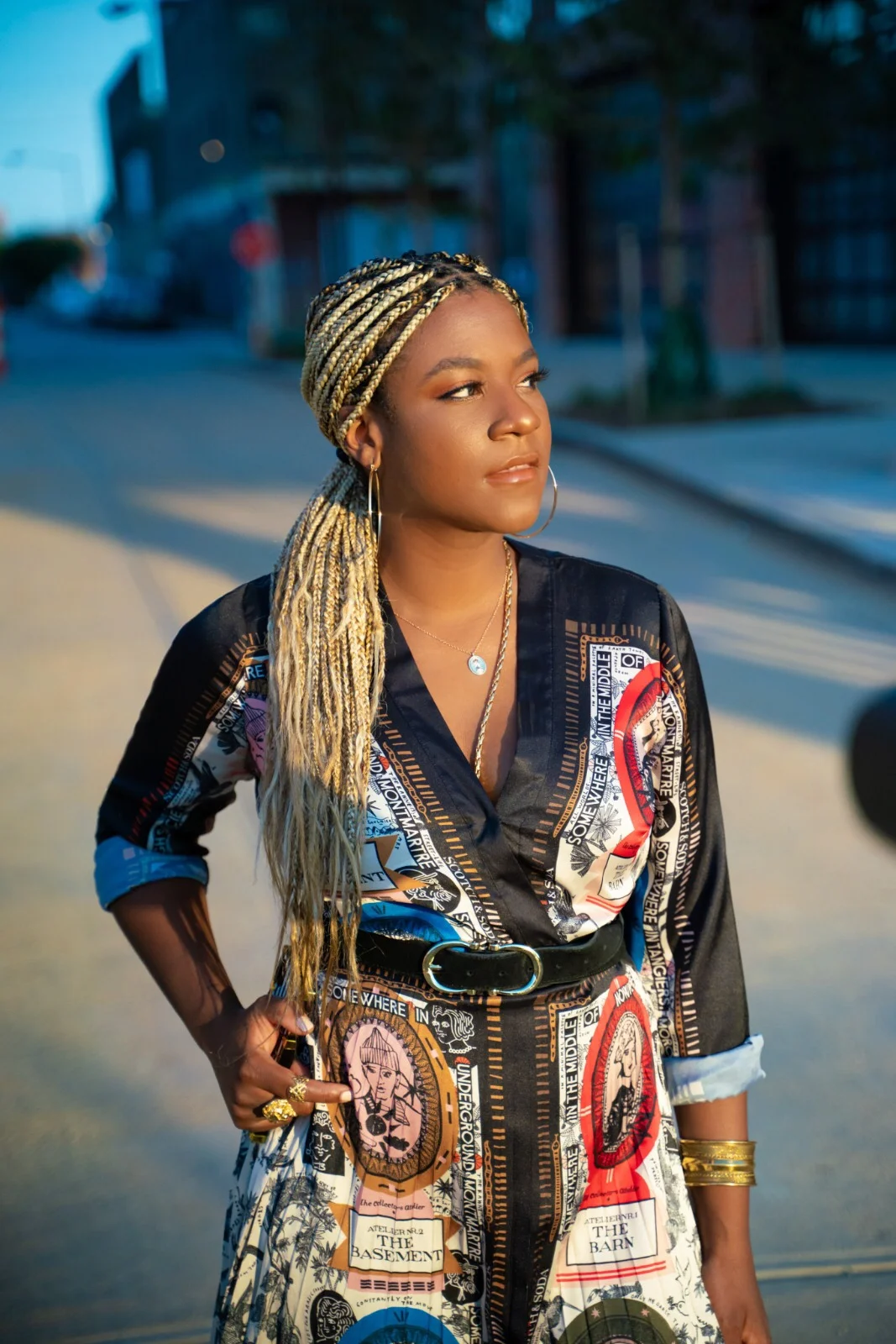
Day in the Life: A Freelance Publicist Shares What It's Really Like to Go Out on Your Own
Truth bombs this way.
Ever wondered what people do at work? If you’re a voyeur like us, then you’ll love our series A Day in the Life where we get a real behind-the-scenes glimpse into the professional lives of CEOs, business owners, and entrepreneurs we admire. From their morning routine to the rituals that set them up for success and questions such as “do you ever reach inbox zero?” because we all want to know how to streamline our lives.

“Most of my daily activities are intentional, which makes me feel in control (like a real boss).”
—Kamari Chelsea
Photo: Courtesy of Kamari Chelsea
Confession: Sometimes I scroll through my own Instagram page (when I’m fighting late-night insomnia) and I reflect on old memories and how far I’ve come. When I scroll back to May 2016, I’m surprisingly nostalgic for the then 30-year-old me, staring away from the camera with bright-eyed expectation perched on a violet velvet couch inside the Mondrian Hotel lobby, Los Angeles.
The real context of that moment was even more alluring. In only a few minutes, I would be whisked away in an Uber to attend my first-ever Create & Cultivate conference. I envisioned myself rubbing shoulders with badass founders like Jaclyn Johnson and hearing megastars like Jessica Alba and Rachel Zoe share the secrets to building a wildly profitable yet chic business.
Needless to say, I was not disappointed by my experience (the VIP gift bag full of beauty products was a cherry on top of a surreal day). In fact, I attended the next two subsequent conferences in Atlanta and New York, soaking up all the business advice I could possibly get. It was a millennial pink whirlwind of networking, knowledge, and endless perks. By the end of a year, I was on a complete high.
As all highs do, though, mine slowly dissipated when I found myself sitting back at a desk job in late 2017, depressed because I had no idea how to create my own entrepreneurial lifestyle. I also had no perception of what that lifestyle actually looked like. Between the Insta-glam moments and breath-of-fresh-air conferences, I thought to myself, What does it actually take?
To answer the questions I once had—and to give an insider’s POV for those reading this who are also asking similar questions—I’m going to break down what my day-to-day life looks like now, three years into my journey. Since then, I’ve signed three major communications consulting clients, took a leadership role at a non-profit, and got married!
While this may feel far off for you, take a glimpse at what it takes, and you may realize in only a few steps, you’ll be on your way, too.
7:00 AM: Wake at Your Own Pace!
Listen, most business owners rave about waking up between 4:00 AM and 5:00 AM to take on the day. So, I’ll be brutally honest: No freaking way!
Unless I have a flight to Los Angeles or a train to New York (in which case, consider this quick tip: always travel early AF in the morning, so you can have a full day in the city you’re arriving in), I try to stay in bed with my husband until at least 7:00 AM. That means more time to playfully nudge each other and whine about who is taking up more space or comforters. There’s true value in being someone who gets eight hours of sleep a night; the benefits show up in everything from your skin to your attitude. I’ve learned to listen to my body and not what other people do, and it’s worked out gloriously for me.
So by 7:00 AM, I get up and give myself two full hours of peace. I try to leave the house within 25 minutes of waking up to go for a nice long walk in a local park. The fresh air, music (I play Jhéne Aiko on my headphones because she’s so pleasant in the morning), and the time spent moving slowly and intentionally is a luxury I won’t take for granted. It also allows my body to fully wake up on its own.
Ok, well, coffee also helps, so I religiously dash into the Starbucks by the park before heading home to shower and prep for the day. Basic, I know. So sorry.
9:30 AM: Finances, First!
Now it’s time to get down to business. I start with the most important thing: my finances. I recently hosted Kristin Lee, a celebrity financial planner, on my podcast and she emphasized the importance of checking your accounts and actually looking at your money. Literally everyone, with every size bank account, from Kylie Jenner to a 21-year-old intern, should be checking their accounts regularly.
I do just that. I review my personal and business bank accounts one-by-one, every day. This even includes my savings and stocks. Mainly, I do this to ensure there are no major surprises (the more you invest, though, the more you’re inclined to sometimes see good surprises like dividends).
Then, I review my business books. I start by opening up my accounting software, to ensure I don’t have any outstanding invoices or invoices that need to be sent to existing clients. Then, I check the ratio between my business expenses and my business income. This will help me keep a pulse on whether I should cut costs, pursue more client work, or set aside more money for quarterly taxes.
For some people, books can be boring; trust me, I used to be “some people.” Today, I’ve learned that a little pump-you-up music (Megan Thee Stallion, anyone?) plus some financial moments to look forward to (again: dividends!) can actually make this part of the day fun.
10:30 AM: Emails; I Make My Own Rules!
Once the money is squared away, I dive head-first into emails for legitimately two-and-a-half whopping hours. Since I work in PR and media, a lot of my time is spent pitching. I pitch partnerships; I pitch stories; I pitch for new business; I pitch potential podcast guests… I’m a pitching machine.
To be clear, “pitching” is a fancy way of saying “selling.” Any entrepreneur will tell you that selling is essentially the key to a successful business. You always need to be on your toes, making a sale and connecting people to what they need.
Inbox zero is not a goal (remember, I try not to do things just because other people do it). Instead, I pride myself in making sure I have at least five opportunities (pitches) going out every day, and five opportunities coming in. In my book, an opportunity can be anything from someone wanting to have a coffee date to an offer to be a guest on a new podcast.
Setting an email rule that makes sense for me and my goals is one of the best things I’ve done in my business.

“Inbox zero is not a goal.”
—Kamari Chelsea
1:00 PM—6:00 PM: Meetings, Meetings, More Meetings, and Surprise Meetings!
By 1:00 PM ET, I’m geared up and ready to relinquish my day to the whims of others. The minutes leading up to 1:00 pm are usually like the nerve-racking few seconds one feels when they’re riding a rollercoaster and it’s creeping up toward the edge of the tracks, begging to careen over into topsy-turvy mayhem.
Ok, maybe that’s dramatic, but I usually need to take 10 minutes to exhale (or inhale a salad) before the day of meetings begins. Most of my clients are on the West Coast, while I’m in the East, so having my mornings to myself is a God-send. However, this is the moment when everyone is wide awake, caffeinated, and working, which means… I am up to my ears in meetings, calls, and surprise issues.
6:00 PM: Networking: Required for Entrepreneurs!
By “quitting time” on the East Coast, I’m technically still knee-deep in meetings. However, by this time, I’m rolling into a different type of meeting.
I exclusively block off evenings in my calendar for networking meetings. The only way to grow a business and keep new opportunities in your inbox is to nurture your network. That’s why I try to take at least four nights a week to meet up with someone in my professional circle.
These meetings can include anyone from media to mentors and mentees, to cold-invites I send to people I really want to get to know. Actively networking (which is really just fancy language for “making new friends”) has become one of the most foundational building blocks of my business.
If you’re just starting out, begin by setting aside four hours a week to meet new people in your industry. Plus, it doesn’t hurt to have an excuse to go out for a drink or appetizers in new spots around your city.

“The only way to grow a business and keep new opportunities in your inbox is to nurture your network.”
—Kamari Chelsea
8:30 PM: Dinner and Educational Leisure: A Book, Documentary, or Course
While the day is far from over, by 8:30 PM most of my clients are winding down, which means I can finally leave my phone in my bag for more than five minutes at a time. Since I try to commit one day on the weekend to being completely work-free, I maximize my evenings to do more work-adjacent activities.
The biggest myth of being an entrepreneur is that once you work for yourself, you’re completely free from anyone’s demands. But the truth is, the most successful entrepreneurs demand a lot of themselves.
For me, that means whipping up a 30-minute healthy dinner for me and my husband (vegan tacos are my specialty). And immediately after eating, I kick my feet up to crack open a new business book (right now, it’s Ted Talks by Chris Anderson), turn on a documentary (my current fave is Netflix’s The Black Godfather), or catch up on an advanced-skills course (today, I’m learning more about Facebook ad-buying).
Overall, it can sound like a gruesome day, but most of my daily activities are intentional, which makes me feel in control (like a real boss). My routine is a result of years of trial-and-error (no, I can’t wake up early to save my life; yes, I can eat healthier). It’s also centered on doing what is right for my unique business.
So, the real lesson is, once you know what industry you want to go into, get out there and network and then build your time around the goals that matter most to you. Before you know it, you’ll be building something of your own.
About the Author
Kamari Chelsea Guthrie is a multi-hyphenate media consultant, specializing in PR and content creation. Past and present clients include Coca-Cola, Parkwood Entertainment, Vote.org, DJ Spinderella, and TheKnot. She is also the host of The Truth Report podcast. Find her on Instagram @kamarichelsea.

So, You're Building Your First Team—Here's 5 Things to Know Before You Do
Take your company to the next level.

Photo: Angie McPherson
Building your first team as a startup entrepreneur is one of the most exciting parts about starting your own business. At last, the time has come for you to delegate responsibilities and get assistance. Let’s be real: you’ve probably needed more help for a while—now you get to actually hire the talent.
Human capital is what makes your business go (and grow) forward. For startups, the first 10 employees hired are crucial to the success or failure of the business. The hiring decisions you make will shape your company’s culture, and your employees will represent and express your brand to the world.
Want to know how to build a team? Here are five critical things to consider when you’re recruiting your first team.
1. You’ll Attract What You Project
When it comes to hiring, you’ll attract the job candidates your postings appeal to. Finding qualified candidates is one thing, but discovering applicants who truly connect with your messaging requires branding yourself with this purpose in mind.
Think about it as a second layer to your brand: there’s what everyone sees, then there’s a look at the corporate culture beneath the brand. Is your startup all about the beer fridge and billiards, or are you more focused on fair pay and benefits? The values and purpose you espouse on your careers page via your social media presence and in your job postings are crucial to finding the right fit.
Forty-seven percent of surveyed recruiters believe that social media is the best way for you to establish and promote your employer brand. Plus, your general audience will also enjoy the transparency; consumers love a peek behind the curtain.
2. Choose From Full-Time Employees and Gig-Economy Masterminds
In lean startup culture especially, it’s customary to harness freelance talent during a growth phase. You can hire freelancers on a per-project basis and you don’t have to contribute to their benefits, though generally their hourly or per-project rates will be higher. Freelancers are independent; they can come and go as they please and as you need them, and they won’t have the loyalty to your business that a full-time employee might.
Your full-time employee, however, has a vested interest in stabilizing and growing your startup. This employee’s livelihood, and most, if not all, of their working hours are devoted to the success of your venture. However, your investment is more concrete.
Your business, and its needs, will best determine this decision; most startups get a core team of full-time employees and freelance as they grow. Some of your best freelance employees may become full-timers eventually.
Whatever you decide, ensure you abide by IRS guidelines about contract workers vs. full-time employees. Many startups make the mistake of confusing the two, leading to potential penalties.
3. Save Money with Virtual Workspaces
Traditional, physical office locations bring a sense of community to your team, but they also contribute to a lot of overhead. As a startup, you can likely use some of your funding elsewhere.
Unconventional workspaces are nothing new to startups, long lauded for beginning in garages, basements and at Starbucks locations across the nation. Before you fill your workspace with people, think about what it looks like. Experts predict that the majority of the American workforce will be remote by 2027. If you’re hiring remote employees, consider candidates who have worked for startups before, people who have worked remotely, and those who indicate they’re self-starting and self-directed.
Tools like time-keepers, Trello, Asana, meeting-free Mondays, and carefully scheduling calls can also help you and your employees, whether virtual or ever-present in a physical location.
4. Recruit Online and by Recommendation
As a startup founder filling a specific niche, you’re probably already acquainted with many people in related industries. These connections are a rich resource. Harness your network to find top talent, especially when it comes to recruiting those initial core team members.
In a survey of over 3,800 recruiters, 43% indicated their primary source for quality hires was from social professional networks, followed at 42% by internet job boards and 32% from employee referrals. Therefore, recruiting online and asking your existing network for direct referrals can support your success.
When it’s time to find your core team, consider these methods. Don’t be afraid to ask a more advanced industry connection questions like, “If you had extra budget, who would you hire?” and “Where did your top entry-level candidates go to school?”
5. Focus on Analytics
As you build your team, it’s imperative to consider the importance of tracking your success. Metrics provide data that can inform your decisions to grow and expand your team, and if you’re planning to receive outside funding, proving your success is mandatory.
It’s also about your customers and clients. Regardless of your industry, every customer you serve is interested in at least one of two things: recommendations and/or metrics. Think about your average e-commerce customer. Shaped by online shopping experiences provided by the likes of Amazon, they’re used to receiving recommendations based on their browsing history and previous purchases.
Providing those recommendations means having a handle on browsing history and customer behavior data. If you want to compete in e-commerce, you’ll need employees who are skilled at working with big data to ensure customer and client success.
In a B2B (business-to-business) market, your customers will be interested in metrics. Their investment in your tool or service may not be useful to them if you can’t prove ROI (return on investment), meaning analytics are also essential components of what you do.
Additionally, there’s the success of your growing business to think about, and that will require productivity and financial analyses. Your core team members must address how to organize, finance and market your organization, and those high-level tasks require detail-driven analytics.
When you hire an analytical mind, consider how they will work with your most creative marketer or your dedicated developer. While “synergy” is a buzzword of the past, the concept still applies; especially in the early stages, you need a team ready to collaborate and weather startup challenges. On opening day, you have the best sense of what your business needs, so trust the data, qualified recommendations, and your business needs. Trust yourself to assemble the best team possible.
ABOUT THE AUTHOR
Jori Hamilton is a feminist writer from the Pacific Northwest who enjoys discussing social justice, empowerment, and how to improve the workplace. You can find more of her work in her portfolio here.

Slow Stories: Introducing the Slow Stories Column
“For all intents and purposes, I was busy—but I sacrificed the energy and resources that I needed to implement sustainable systems for my business long-term.”

Phoebe Cheong for The Style Line
They say that time flies when you're having fun (and getting a lot done in the process), but as I look back on the years of building The Style Line from a Tumblr blog to a website to a boutique content company, I've only just started to realize how fast my life accelerated as a result of this path. And even with all of the boxes I've checked over the years, sometimes it's hard to shake off the feeling that things just aren't growing or moving quickly enough.
As a small business owner, I know that I'm not alone in feeling overwhelmed by the constant inundation of articles, content, and expectations set forth for female founders to "make moves" (and move quickly) in the workplace. For a while, I understood this as something that's just part of the game and I followed the unwritten rules of modern entrepreneurship. I networked, I applied for the accolades and awards lists, I secured press, I built my personal brand, I hired and evolved my team, and I created SO MUCH content for both The Style Line and our CONNECT(ED)ITORIAL agency clients. For all intents and purposes, I was busy — but even as I continued to fill the "slower" periods with projects or events to demonstrate the company's continued momentum, I sacrificed the energy and resources that I needed to truly implement sustainable systems and expectations for my business long-term. And as a content business, this obviously played a role in thinking about how to continue approaching storytelling in a deeply meaningful way.
If you're familiar with The Style Line, you know that we pride ourselves on producing thoughtful, original content. Inevitably, the stories we publish on the site catalyzed us to pivot the company into a service-based business with the introduction of our agency CONNECT(ED)ITORIAL. Since we started the agency in October 2015, we've been discerning about working with brands who value quality, longevity, and creativity in their storytelling — all things that are part of what is now being called the slow content movement. This idea is something that we've taken a position on here at CONNECT(ED)ITORIAL through our client work and also internally with the introduction of our new podcast Slow Stories which deep dives into this movement through candid conversations with brand builders and founders.
With all of that said, I'm so thrilled to be able to bring this important topic to the Create & Cultivate community in Slow Stories' namesake column here on the C&C blog. Each month, we're going to be assessing slow content's important role in our constantly changing business climate along with exclusive insights from industry innovators who share their take on "slow content," exclusive snippets of our Slow Stories podcast, and much more. It is my hope that these stories equip you with the tools and guidance you need to create content with longevity. Because if I've learned anything from adopting this thoughtful approach, it's that slowing down our content doesn't mean we're missing out on opportunities, but instead, creating the space we need for creativity, innovation, and happiness to help us tell the stories that matter.
Ahead of our next article, here are a few things to look at when thinking about what slow content means to you and your business.
1. Establish What Slow Content Means to You
Terms like "slow" or "sustainable" don't necessarily have a uniform definition, and are often put into practice in unique ways depending on individual circumstances. We'll explore this idea more in our upcoming stories, but in this context, it's good to think about how to incorporate slow content into your marketing strategy so that you don't overextend yourself and your company's resources. If you're unsure where to start, ask yourself questions such as: Is it about slowing down and creating a realistic posting schedule that your brand's current team can handle? Is it a matter of only sharing content that fits within a particular theme, color palette, or medium? Thinking about these things can help identify the critical pillars around the kind of content that aligns best with your brand, which in turn, can shape a content strategy that is thoughtful, consistent, and focused for the long haul.
2. Plan a Content Calendar
Once you've established the above details, logistically one of the most effective ways to slow and streamline your day-to-day content tasks is to plan ahead. Implementing a content calendar three, six, and even twelve months in advance can help create a bigger picture around what you're trying to say through your content and storytelling efforts. Having this framework mapped out will also allow you to make more informed decisions about what resources you'll need to bring that content to life. By doing this, you and your team now have a sustainable system in place which creates more time and energy to create the content itself with clearly defined goals and timelines.
3. Create a Content Budget
Finally, when talking about slow content in the past, the idea of quality vs. quantity has arisen more times than I count. So, when considering the above two points, one other important factor in crafting a slow content strategy is to think about the production and creative costs associated with creating "quality" content. Implementing this will ultimately force you and your team to be strategic when it comes to budgeting for these resources — and if anything, engaging in this is an exercise in slowing down and thinking big picture in itself. Stay tuned for more on all of this in next month's article!
Rachel Schwartzmann is the Founder and CEO of The Style Line LLC. She created The Style Line in late January 2011 via Tumblr and has fostered The Style Line’s brand in its growth since then. Rachel has been featured in esteemed sources including Forbes, Refinery29, and MyDomaine and has also spoken at Create & Cultivate and Columbia University on establishing a unique brand point of view and entrepreneurship. On October 1, 2015, Rachel took The Style Line in a new direction as a boutique content company with the introduction of its slow content agency CONNECT(ED)ITORIAL.

5 Things You Should Never Delegate
Sometimes DIY is best.

Small business owners, do you have a hard time giving up control? We understand the fear. If you do it wrong, it can lead to expensive mistakes, damaged brands, and poorly-managed teams...but do it right, and there are tons of benefits to gain: You’ll free up your calendar and have more energy to focus on high-level, big-picture tasks. You’ll also quickly achieve goals, while allowing your small business to scale.
That said, there are some tasks that should never be taken off your plate. As a small business owner, you should be laser-focused on creating the best business plan, workplace, and community that you can. Here are five things you should never delegate:
1. Call the shots for every major business decision
It’s your company. Never assign high-level moves or major business decisions (significant changes to the business, investments, partnerships, etc.) to anyone but yourself. Even when you hire a strategist or consultant, you’re still the person who should have the final say. It’s your business—own it.
2. Don’t delegate anything you don’t understand
You can’t effectively manage what you don’t comprehend. One area where business owners often fail is understanding finances. Many think it’s time-consuming and tedious and therefore want to hire it out right away—but how can you make important decisions for the future without knowing how and why to allocate resources? How can you make informed business moves without comprehending the state of your finances? Understand your finances and the scope and extent of each of their roles, then consider hiring an accountant, bookkeeper, controller or other support.
3. Do all of the hiring and firing yourself
The strength of any small business lies in the strength of its team. When you do all of the hiring on your own, you’ll be sure prospects fit with your vision. After hiring, build relationships with all key personnel and take charge of motivation, inspiration, and employee morale. Make sure employees feel like important contributors to your team.
It’s equally vital to handle firing. Of course, a manager can fire an employees on your behalf, but it’s your job to share the value of their contributions and to make sure their exit is a fair and professional one. Your business’ reputation lies in your hands.
4. Create a strong company culture
It’s imperative that the boss personally cultivates and sets the tone for their company’s culture. If they don’t, it will organically come into being by way of the words and actions of their employees. Set a culture that encourages others to speak up, share ideas, and voice concerns; motivate others to “own” their areas of the business; and look for the right fit (in terms of personality and in values) in every new hire you bring aboard.
5. Personally welcome all new employees
No matter how great your managers may be, nothing can replace the feeling of being personally welcomed by the CEO on day one. Your employees will start on the right foot and have an easier time acclimating to your company’s culture when standards and expectations come straight from you.
When you’re a small business owner, it can be tempting to want to do it all alone. It’s crucial to spend time on these five vital strategies and tasks, but when it comes to the rest of your work, take a step back and think about how you can delegate to make it easier to focus on the big picture. What can you delegate this week?
Syama Meagher is CEO and chief retail strategist of Scaling Retail, a boutique retail consulting firm working with clients around the globe. The agency advises startup, growth stage and enterprise CEOs on everything from the art of negotiation and industry best practices to mental frameworks and capacity building for new hires. Discover what Scaling Retail can do for you at www.ScalingRetail.com.
MORE ON THE BLOG

5 Preventable Startup Culture Mistakes
Hustle hard, but don’t make these common mistakes.

Every founder knows that culture is crucial to a startup’s success — as Fred Wilson says, “If you want to be in business forever, you need to build a culture that sustains the business” — but there are a few common mistakes that startups make when creating their culture:
1. YOU THINK CULTURE JUST "HAPPENS."
Running a startup means your burn rate is always in the forefront of your mind, and as a result, everything takes a backseat to getting to MVP. Culture can be fixed later, right? The truth is that “culture” is just another way of saying “how we work here,” and by the time you get to your MVP, it will be deeply entrenched.
FiveStars’s founder Victor Ho never took the time to officially define the culture— he felt it was too “cheesy.” But as they grew from 40 to 80 employees, their culture got diluted and as people clashed over ways of getting work done. As quoted in Fast Company, Ho described it as “one of the hardest periods of the company.” Rather than waiting to define your culture, consciously shape your culture while you build your MVP. You don’t have to go on an expensive company retreat, or write an elaborate culture deck. It can be as simple as writing down five words that describe your culture and once a month, as a team, discussing whether they’re still appropriate.
2. YOU THINK HIRING MORE PEOPLE MEANS SUCCESS.
Celebrating is so important because success at a startup can be so rare in the first months. It’s comforting to be able to point something that’s a clear sign it’s all working. And as Buffer’s founder noted, “Team size is easy to understand. Sometimes it impressed people when I told them how big the company was, and I was proud to share it.” But the company brought on too many people, too fast, and was forced to lay off 11% of the company. Protect team morale by tracking more accurate measures of success, and find ways to celebrate small wins regularly.
3. YOU SPEND TOO MUCH ON PERKS.
Bribing employees is a common Silicon Valley practice — what else are meals by gourmet chefs, meditation classes, and laundry service but attempts to get more work out of employees? And those bribes don’t come cheap: shrinking VC funds forced Dropbox to cancel its free shuttle and and limit free meals a few years ago.
If you really want your team to do their best work, regardless of your compensation budget, give them meaningful work. Show them how their work is directly impacting the organization, and how the organization is making a difference in the world. In other words, give them purpose. Oh, and don’t worry — “purpose” doesn’t necessarily have to be a product or service that saves the world (though that’s a plus); it just means that you have a compelling vision and mission.
4. YOU OVERWORK PEOPLE IN PURSUIT OF THE PRODUCT.
Signing up for a startup is a commitment; long hours and outrageous goals are part of the bargain. But push too hard, and you’ll flare out. At Zynga, for instance, long hours, “aggressive” deadlines, and an obsession with performance metrics led to a talent drain, and even hampered its ability to acquire companies. To prevent burnout, hold regular check-ins with your team to help them manage workload and stress levels. And don’t forget to check-in with the founder: 30% of founders report being depressed, as opposed to only 7% of the general population.
Again, we’re not saying you won’t spend some long nights and weekends at this office, but don’t make it a cultural norm.
5. YOU DON'T FIRE JERKS BECAUSE THEY'RE SMART.
Hiring the best talent is highly competitive, but ignore the “no asshole” rule at your own peril. Despite their superior skill set, their personality will destroy your team culture, not to mention their productivity. In one of our engagements, we worked with an executive whose attitude turned the rest of the team against him. This led him to protect his own job by guarding his data more and more closely, leaving the startup completely in the dark when making crucial decisions.
The best way to avoid this problem is to carefully screen for jerks during the interview process, listening for self-centered answers and trash talking past employers. (As Raylan Givens of Justified noted, “If you run into an asshole in the morning, you ran into an asshole. If you run into assholes all day, you’re the asshole.”) But if one has slipped past your radar, talk to them and make it clear how you expect their behavior to change. If they don’t shape up, then it’s time to go your separate ways — the rest of the team will thank you.
Written by Paula Cizek, Director of Knowledge & Editorial at NOBL. NOBL is an organizational and team design consultancy that unleashes the creativity and capability of teams through new ways of working.
MORE FROM THE BLOG
Poppin' By: In the Gorgeous Venice Studio of Designer Sophie Monet
Sundays are for champagne talks.

Introducing "Poppin' By" a Create & Cultivate profile series in Partnership with Chandon. Every month this year we're profiling a female entrepreneur, popping by their work space and enjoying a bit of bubbly. Here's a cheers to amazing, working women!

SOPHIE MONET.
For designer Sophie Monet, business is a family affair.
The jewelry maker, who currently designs all pieces out of wood, works out of a former gas station, purchased and remodeled by her sculptor father in the '80s. There is a full woodworking shop. The family dog roams about. And her father's work hangs on the walls.

It was during a break home from college that Sophie asked her dad to teach her the ways of the workshop. Though she spent time in the shop as a kid, it was during her college years that she started to really hone her own skills, sanding and cutting pieces that would soon become recognizable as Sophie Monet pieces. She handcrafts each one, spending quiet mornings in the workshop by the sea-- ocean sunsets only blocks away from the space in Venice, CA. Using wood, stone, and metal, Sophie continues the process she began in 2009, when she crafted her first ring while playing around with her dad's drill press.
Today, her office is upstairs-- a space she also shares with her sister, who runs a recruiting business. Currently, Sophie runs her entire operation, from production to inventory to sales to all photoshoots, out of the space. 'It's really amazing to have our family under one working roof," she says. "We all help each other out." One of her bigger clients is Anthropologie.
After graduating from The New School, Sophie learned the fashion ropes while working at a fashion tech startup in Santa Monica. At the time, she was side hustling on her jewelry line and specifically worked it into her contract that she'd have every other Friday off to fulfill orders. "I think," she says," when we pop by the studio, "it's because my boss was a woman, and really understood the need." That boss, was Erin Falconer, half the duo of Leaf TV and an entrepreneur in her own right. "I was so inspired by her," says Sophie, explaining that Erin and her business partner Geri Hirsch were the first two to convince her to get on Instagram. Erin and Sophie still connect at least once a week.
In 2013 Sophie decided to take the leap, leaving her role at the fashion startup, but taking the know-how learned on the job about fashion and marketing with her. Though she knows it was a risk, she's committed to growing and expanding the Sophie Monet brand.

"If you want it all, you can do it all," says Sophie. We agree.
More from the designer below.
What is the most exciting part of your job?
I get the biggest smile on my face when I see someone wearing a piece of jewelry I made. Knowing they appreciate the art of it and meeting people face-to-face is the best part of what I do.
Do you like/love/hate when people pop by the studio?
I absolutely love it. My studio is always open to creative friends and neighbors. I think it’s really important to take breaks and enjoy the space we work in. Our family art studio is a place we can all get together, talk about our ideas, and share the tools we have.





What your favorite part of your workspace?
We just finished our roof top deck. My dad made a beautiful table for it to watch the beachy sunsets from.
"Sometimes the most rewarding part is having patience and letting things come slowly."
Tweet this.
How long did it take you to learn all the machinery and how to use it?
I’m constantly learning. It never stops. I have mastered a few of the tools we have but would love to work more with a lathe.
Who is your biggest influence?
My family. They are my foundation from which I get all my inspiration.

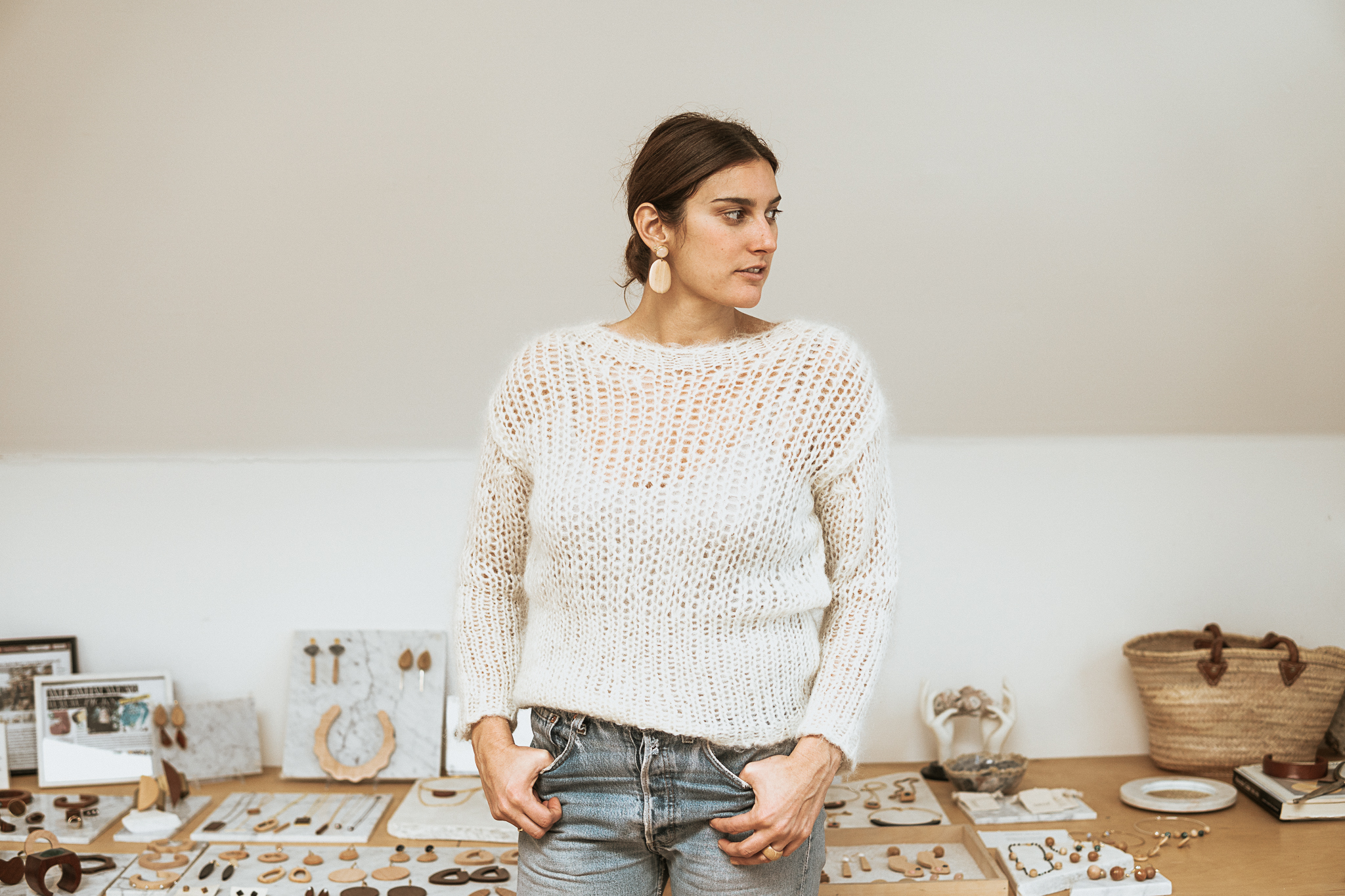
What do you want women to feel when they wear a Sophie Monet piece?
I want women to feel empowered, successful and comfortable when they wear my jewelry. Accessories are meant to stand out and feel special because they add something to your outfit. When I put on a pair of earrings with a simple pair of jeans they instantly make me feel happy and a little more confident.
What has been the most surprising element of entrepreneurship for you?
Having your own business there are surprises and new learning experiences almost every day. Sometimes it’s hard to make time for yourself when you’re juggling a lot of different roles. I’ve learned how hard it is say no when you really really, really want to say yes to everything. Sometimes the most rewarding part is having patience and letting things come slowly.
For more of Sophie's work click here.
Be sure to check back next month for the next installment of Poppin' By.
Photo credit: Anna Maria Lopez
MORE FROM OUR BLOG

Why LA-Based Christy Dawn Is About So Much More Than Cool Dresses
It is super cool tho.
Everyone in the digital fashion space has deemed LA-based fashion label Christy Dawn the “It,” the “Cool Girl,” the “Dress Every Girl in LA Is Wearing.” And they’re not wrong.
But they’re not entirely right.
That’s not the whole picture.


It'd be hard to flub your fashion in a Christy Dawn dress or sweater (recently launched!!), from both a fashion POV to an ethical one to yes, even a spiritual one.
The breezy Cali brand sources deadstock fabric, manufacturing is done locally, they pay their sewers a living wage (15+ an hour), host a ping pong lunch everything Friday at 3pm, and just got everyone who works for them health insurance. “Christy Dawn isn’t just me,” the founder and lead designer says. “It’s every person who puts energy into the garment.”
This is the pulse that beats through the company. “It’s not hard to find good people,” she says, “ if you treat them well.” As a business owner she says treating her workers well is a “non-negotiable.”
One such person is Pedro Trujillo, the company’s production manager who has been Christy Dawn’s sewer and sounding board from the beginning. Christy and Aras Baskauskas, her husband and biz partner, used to work from his couch. He used to tell them, “Most of my clients don’t usually come down here.” But working from Pedro’s couch gave Christy insight into the people side of production. “Pedro paid people so well,” she says, “it was a priority for him.”
Years of modeling also gave her insider info into her priorities. “I knew how to make an e-commerce site survive. I gathered so much data from jobs,” she says. “I asked so many questions.” She also gathered information ”No one ever mentioned the artisans,” she says of doing e-commerce every single day for four years. “There was no respect.”
"Abundance is about so much more than money.”
Tweet this.
As Christy Dawn grew, so did the need to find a space. Last January Christy and Aras made the decision to really go for it— they signed a lease in the Arts District, but shortly thereafter they knew it wasn’t right. “For us, the space is super important,” she says. And they made the decision to forfeit their deposit, instead moving into the 12,000-square-foot factory in downtown Los Angeles. It’s bright, clean, with a fully built out kitchen, and on tap kombucha and coffee.


It’s a place you’d be proud to work at. To show your fam. And it is a family affair at Christy Dawn.
Pedro’s daughter Valeria is the company’s production coordinator, whom they recently gave her first raise. “We told her, we’re going to give you what you ask for.” And they were true to their word. Last year Christy and Aras also called up Pedro one day and told him and Valeria to meet them at a Toyota dealership. They bought the father and daughter matching Rav 4s, so they could get to work safely. “Our company is growing,” Christy says, “but we don’t need 20 million dollars. We want every one of our sewers to be able to afford what they’re making. Money is just multiplication. It’s just numbers. It’s just energy.”
It’s an energy in each dress, blessed by Pedro’s wife Teresita, who does all the finishing work. “She’s the last person who has her hands on every garment,” shares Christy. A little while back she saw Teresita talking over the garments. She asked Pedro what his wife was doing. “She was blessing each dress,” says Christy. “We had no idea.”
What she does have an idea about are her hopes for the brand's longevity, commitment to deadstock, and sustainability. “There’s nothing timeless about a trend,” she shares of her hopes for the brand’s longevity. “I’m not afraid anymore if it’s a ‘success’ or not. Abundance,” she shares, “is about so much more than money.”
Photography: James
MORE FROM OUR BLOG

How This LA Business Owner Tries to Live a Zero Waste Life
Waste not, want not.

We’re making zero waste toothpaste in the kitchen of Meryl Pritchard of Kore Kitchen. She’s using an olive wood spoon made from branches; no trees were cut down in the name of the spoon. She uses aloe instead of Bandaids. Her water jug is filled with spring water a friend delivers. Even her TP is made with wheat straw and requires no deforestation.
“Why would we cut down trees so we can wipe our butts?” she asks me as she mixes the concoction of coconut oil, baking soda, turmeric, peppermint, and cinnamon. She scoops it into a glass jar for me to take home.
“The turmeric makes the toothbrush orange,” she tells me, “so don’t get weirded out.”
What’s weird is how little I know about recycling; a blue bin is hardly a perfect solution. “Less than 10 percent of plastic that gets thrown in blue bins is recycled,” she explains. The reasons for this are multifold: people don't sort, rinse, or really know what can and cannot be recycled.
[Unfun fact: In Los Angeles alone nearly 10 tons of plastic fragments-- think parts of plastic bags, straws, and soda bottles-- are carried into the Pacific Ocean, every day.]
Meryl hasn’t always been about that zero waste lifestyle. For a minute she was about that life. In her early twenties she was working for a well-known Hollywood celebrity stylist. “We’d spend days picking dresses, fitting these beautiful women, and then they’d get torn to pieces in the press.” It made her feel terrible about herself and her body. “At the end of the day,” she tells me, “I’d think, if people are saying this gorgeous woman looks terrible, how am I supposed to feel about myself?” It lead her down a dark road rife with body image issues: “I was trying every fad diet out there, not eating,” she says. “Feeling bad in your own skin is the single worst feeling.”
[Define it: Zero Waste is a philosophy that encourages the redesign of resource life cycles so that all products are reused. No trash is sent to landfills or incinerators.]
“Feeling bad in your own skin is the single worst feeling."
Tweet this.

“This is my trash from the past three months!” she exclaims. "I’ll keep it and I’ll analyze it. I like to keep it because then I can go through it and find a solution.We don’t have a relationship to trash. People just don’t know where it’s going-- someone picks it up, takes it away, so how are you supposed to care when you don’t see it?”
But then she came across a book, “The Kind Diet,” by Alicia Silverstone. Meryl says she had so many ah-ha moments while reading, from coming to understand aspects of the food industry to what she was putting in her body, she knew it was time for a change. She emailed “every single holistic nutritionist in LA who had a website and seemed legit,” and was surprised when they all responded nicely. “I was so used to dealing with people not getting back to me or being nice,” she says in reference to her styling career, “that the energy immediately felt different and promising.”
She began working with a holistic nutritionist who let her sit in on all client sessions. “That’s when I saw healing first hand. I watched as people would cancel surgeries doctors told them were 100% necessary, and they’d go on to live life healthy.” With a little experience and a lot of enthusiasm she went back to school at 23. What she says is a “great age to make a shift.”
She attended The Institute for Integrative Nutrition, which teaches over 100 different dietary theories. As she was learning them, she’d try them. “You are the best doctor you can have— you live in your body, you feed it, you feel what doesn’t work.” The hitch was that Meryl had no idea how to cook. “I would go on Google or talk to Siri and ask really basic things like, ‘Siri, how do I cook a chicken breast?’ But it taught me that I can do anything. If you want to, you can figure it out.”
Kore Kitchen evolved naturally from this mindset. Kore is a “curated and nutritionally designed, meal delivery service and cleanse offering based in Los Angeles.” The intention is to help clients adapt a healthier lifestyle through simple nutritional philosophies: eat whole, organic foods, that are local and sustainably sourced.

There's no packaging in her pantry. She fills reusable glass jars with foods from the bulk bins.
With these Kore values in mind she began cooking for friends and delivering meals. “It would take me forever.” she says. “What would take a chef 20 minutes would take me 3 hours, but with food you’re transferring energy into the meals.”
“I was planning the menu, doing the shopping, the cooking, the delivery, and right after I finished I’d get up and do it all over again.”
She had a few clients during this time, but it was when friends and clients Donovan and Libby Leitch recommended her to Gwyneth Paltrow, the business took an unexpected turn. “I delivered her meals and heard nothing for a few months,” she says. Until Goop’s food editor reached out in December 2014, saying they loved her recipes and would she contribute a few to the site. She shared some recipes for Goop’s 2015 Detox Guide and the email floodgates opened.
“It was just me with one pan, in this kitchen, and I had all these orders.” She hunkered down, found a chef, Anna Lagura, whom she met through a happenstance convo with her neighbors across the hall, and signed a lease for a commercial kitchen space. Anna and Meryl now work out of L.A. Prep.
Of Anna, Meryl says, “She’s the person I’m most inspired by. I can send her a photo of any dish and she can make it with our philosophy. And she knows all of the clients and their food preferences by name and memory.” The meals Kore offers are organic and made from local ingredients whenever possible. They use no processed foods, no additives, no antibiotics or hormones, no preservatives, and no refined cooking oils or refined sugars. They are 100% gluten-free and dairy-free.
The business has been running for about a year and a half, and Meryl acknowledges the difficulties of being a self-funded, small business, but insists that she prefers it this way. "No funding required us to be more creative with our marketing," she says, adding "and I think we have a stronger connection to our clients."
“It’s difficult, but it’s also really fun. Business is like life, there shouldn’t be an end goal— you should be learning and growing all the time.”
"Business is like life, there shouldn’t be an end goal— you should be learning and growing all the time.”
Tweet this.
Growth for Kore however, does not include meal delivery services outside of Los Angeles. It is important to Meryl that they stick to their values of staying local. “We’re not a corporation, we’re a small business.”
“I don’t want to grow outside of LA. Local is really important to me because of the carbon footprint. With other meal delivery programs, you have to wonder, why are you in California eating food from North Carolina?”
It’s also why they have partnered with LA Compost, a local compost with four hubs, one of which is five minus from the commercial kitchen space. “All of the food that you’re eating, the scraps are going directly to the compost. Not trucked out of the city and brought back to be sold as soil.” They also now have a plot at the Elysian Valley Community Garden where Meryl is trying out her green thumb.
“We’re not trying to feed everybody,” she says, “we’re trying to feed our community.”
Click through the below gallery to see more of Meryl's zero waste lifestyle and see our toothpaste!

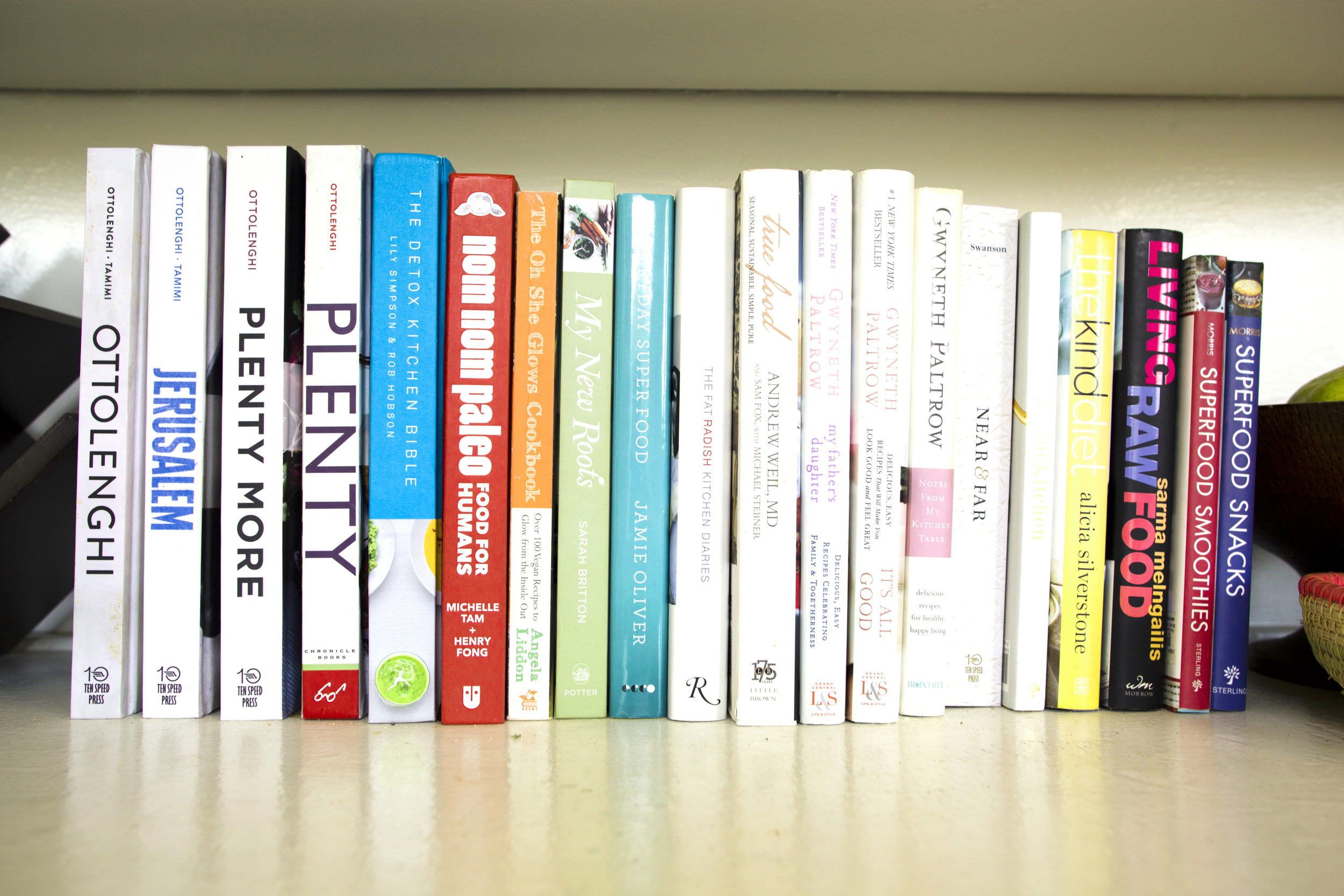



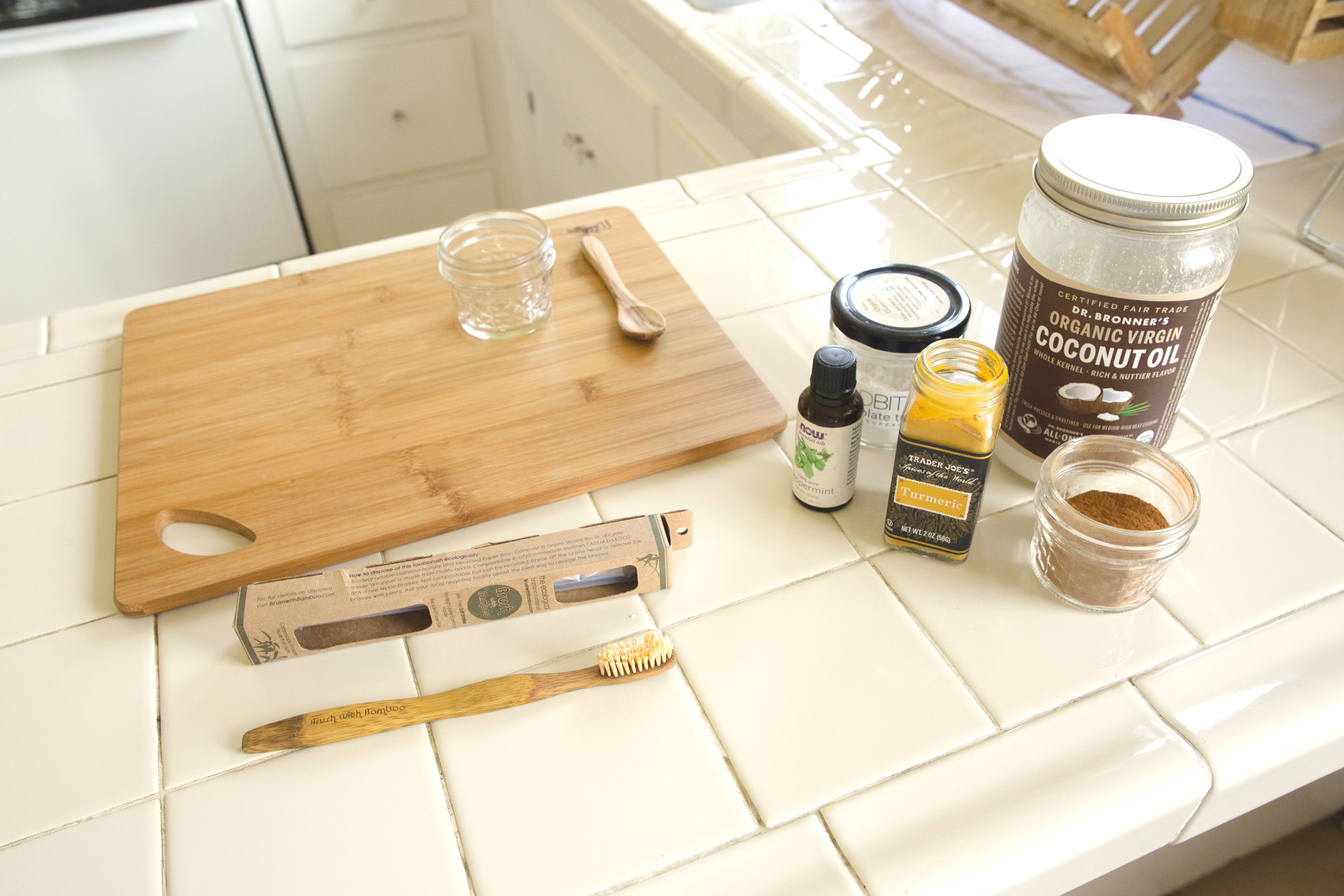


More from our blog: