
What to Do When You Feel Stuck in Your Career
The three questions to ask yourself when you feel you've hit a wall.

Sometimes it hits us slowly – you haven’t been promoted or learned anything new in the role. Other times it can be more obvious – perhaps you’ve been seeing new people brought in above your role when you have been working hard to move up in the company.
What do you do when you hit the vocational wall?
Reaching a point where you feel stuck in your career can be very discouraging. It’s important you know when you’re ready to move up the ladder and why you should make the move up.
Are you developing in your current role?
Some careers require you to be constantly working to learn and master more skills. Recently, I was watching the show Grey’s Anatomy and I was so struck by how the doctors had a desire (and a professional need) to continually better their skills and gain more responsibility. It made me notice how important learning is in one’s career if you want to be moving up the ladder.
Consider how lawyers are required to continue their education and pass regular benchmarks in order to retain their licenses. For chefs, artists, and other creative professionals, learning and implementing new tricks is a professional necessity.
Do you know your long-term professional goals?
But even jobs that aren’t as straightforward in their growth requirements still ought to be pushing you forward, and whether your job is or isn’t helping you grow is something you need to take note of. Do you feel you’ve been challenged to be better in your role? What have you learned in your role that has better equipped you to master your current job and face new challenges? Have you been set up to rise to higher roles and new responsibilities in your company, or have you been denied even when you’ve sought out opportunities to learn?
Focus on what your vocational goals are. Where do you want your career to go? Perhaps you like where you work, but the particular role you’re in isn’t satisfying you professionally. Take a look at the other departments in your company and think about whether or not a department change could be the right answer. Can you climb in your current company? If so, try! Show your employer your eagerness to develop and inquire about new opportunities. Be sure to note what you have given the company in your time there. Loyalty is an incredible quality, and good companies value it highly.
Show your employer your eagerness to develop and inquire about new opportunities.
Tweet this.
Is it time to make a change?
If you have reached your peak at your current company and can’t climb any higher there, then make a list of companies you aspire to work for and begin to pursue them. You could take a look at where former colleagues are working now. Do they enjoy their new office? What does Glass Door have to say about companies you’re interested in?
It is important to realize when you have been feeling stuck. It’s easy to fall into a rut professionally without realizing it, but until you do, your day-to-day will continue the same as it’s always been. Remind yourself monthly to take stock of where you are, where you want to be, and what you’re doing to get there. It’s only once you acknowledge the goal that you can work to make the change.
It’s only once you acknowledge the goal that you can work to make the change.
Tweet this.
Have you recently made a career change? What factors influenced your decision? Let us know in the comments below.
This original piece by Leslie Tulip appeared on Darling Magazine.
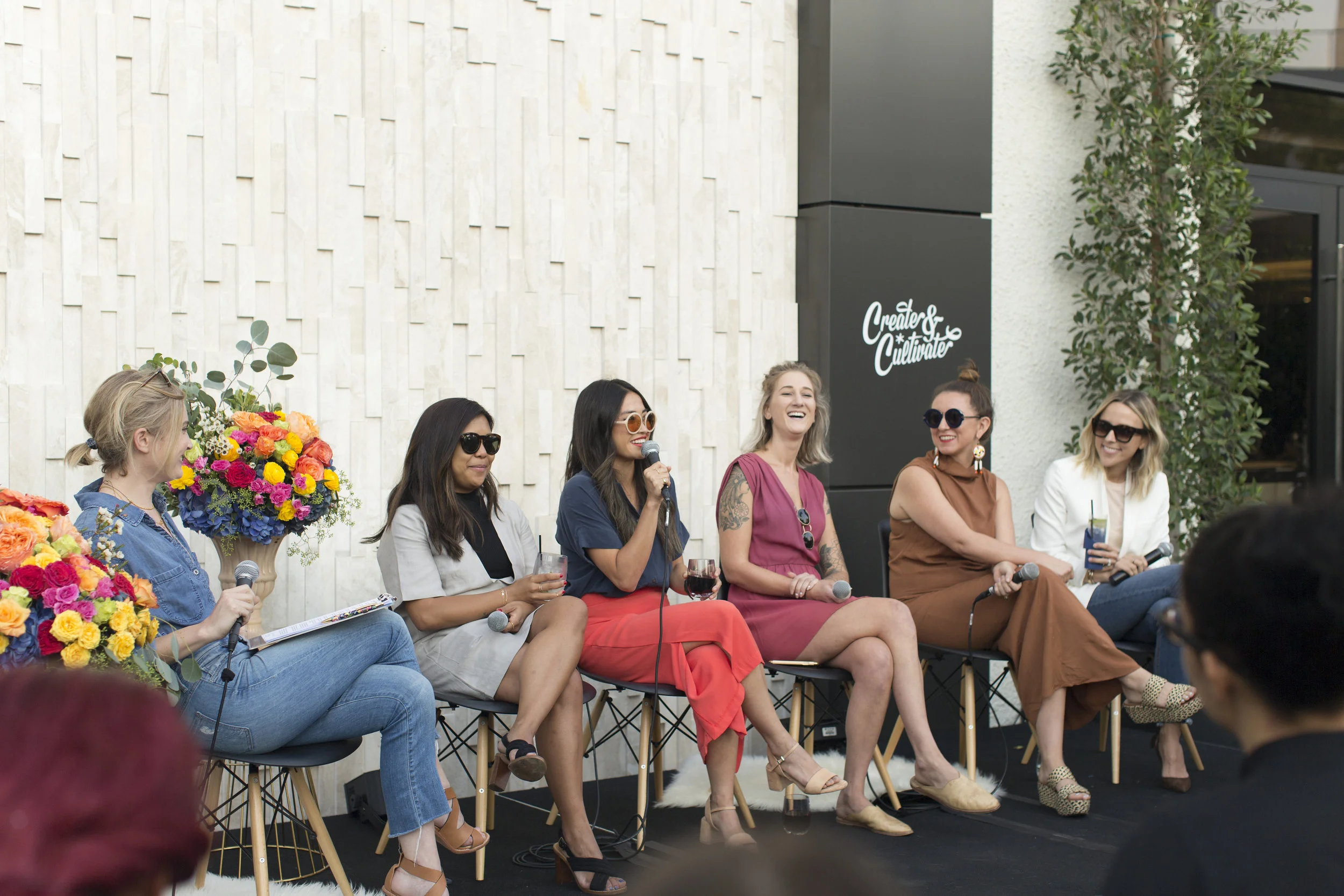
Everything You Missed From Our CreateCultivatePopUp at the Beverly Hills Marriott
"You can't fail, unless you quit."

#CreateCultivatePopUp in collaboration with Marriott Hotels

photo credit: Irida Mete
Last night at the Beverly Hills Marriott Hotel over a hundred female entrepreneurs, photographers, and bloggers joined under the setting sun to listen to panelists dish on best biz practices, traveling for work, and how to grow and maintain a following.
We heard from power women like Jacey Duprie of Damsel in Dior, Vanessa Simmons, and Katherine Schwarzenegger, who shared the BTS realities of their jobs and about the importance of uplifting and empowering other women.
Here are some of our favorite and *KEY* takeaways.
MAKE A CASE STUDY
Puno, founder of Made with Map (and creator of #finditliveit) and Drea Sobieski, founder of elsewhere, both told one audience member who asked how they get noticed, to "make a case study."
Drea told the audience about a trip to Morocco that she put on a credit card. It was 3k and she financed the entire trip herself, but what she got from that risk was invaluable. She returned home with a "case study I still use to this day. And those images are still circulating. I knew what I wanted and I went for it."
"Never tell a brand that you 'want to collaborate,'" added Puno. "Show them how you are going to bring awareness to their brand. Explain in detail what you can do for them." A case study is one of the best ways to do so.
IT’S A NUMBERS GAME
Jacey Duprie told the audience that they need to find what they’re good at and approach smaller brands. She explained that you don't need to approach someone with HUGE numbers to get noticed and often times it's about going after smaller people with 8-10k followers who really believe in your brand.
Puno echoed this sentiment, telling the crowd, "micro-influencers are where the conversation with brands are heading. You want people with high engagement and who convert." When she first launched Made with Map, she found and approached 60 new people who made sense for the brand-- per day. Not everyone responded, but not everyone needed to.
Jacey also mentioned how imperative it is to "get creative," when going after your dreams. She told the story of financing a trip to Africa by hosting a party at her house and asking her friends to donate to her cause. It worked. Because she asked.
IT’S OK IF YOU DON’T WANT TO HAVE A BUSINESS
There is a lot of pressure for everyone to be an entrepreneur. Especially with Instagram turning everyone into a brand. But if you don't want to have a business, you don't need to. You can be just as successful working for someone else.
Erica Domesek of P.S. I Made This told the audience, "You feel like you need to keep up with people closing brand deals, but your worth is not about a brand deal. Go for the claps not for the likes— you might not get the campaigns, but you will be true to your strengths."
"Go for the claps, not the likes."
Tweet this.

photo credit: Irida Mete
ASK YOURSELF: WHAT IS YOUR TALENT?
Erica also challenged the audience to focus on "what your talents are," not someone else's. She told told them, "It sounds cheesy but you can really do anything if you do that."
Adding, "You can’t be talent if you’re not talented.”
Piggybacking on that, there was a lot of talk about:
FINDING YOUR TAGLINE & NAILING DOWN YOUR VISION
Vision. It’s a word Vanessa Simmons brought up and it’s so important.
She said people assume that being on TV is going to make your brand “explosive.” It helps, sure, but she also explained that “all TV does is magnify what’s already going on.” If you're not clear about your vision, it will be evident.
She encouraged the audience to hand write their goals and take baby steps, every day, toward those goals.
"You can’t fail, until you quit,” she said.
"You can't fail, until you quit."
Tweet this.
Hilary Williams of DBA told the women in the audience they need to take their commitment to blogging seriously if they want to break into the "overcrowded" space. "Ask yourself, really ask yourself" she said, "is this a real business and am I devoting my entire life to it?"
"The talent I work with," she added, "their vision is super clear and they have a unique spin on it. What makes you different? How do you make noise and get a brand excited?"
LOVE A KICK OFF CALL
It’s not just about the money— it’s about the brand, the messaging, and what will go into the campaign. Hilary Williams told the audience that client and fellow panelist, Erica Domesek, "loves a kickoff call."
Simply because Erica wants to chat through ideas and how to best position her work with a brand. It's not just about a $ in front of number-- it's about the idea, the brainstorming, and the collaboration.
To see more from our collaboration with Marriott Hotels be sure to check out our Create & Innovate series, featuring female entrepreneurs in cities across the United States.
MORE FROM OUR BLOG

#Breadwinners: Women Changing the Face of Top Household Earners
Get to know the new female breadwinners.
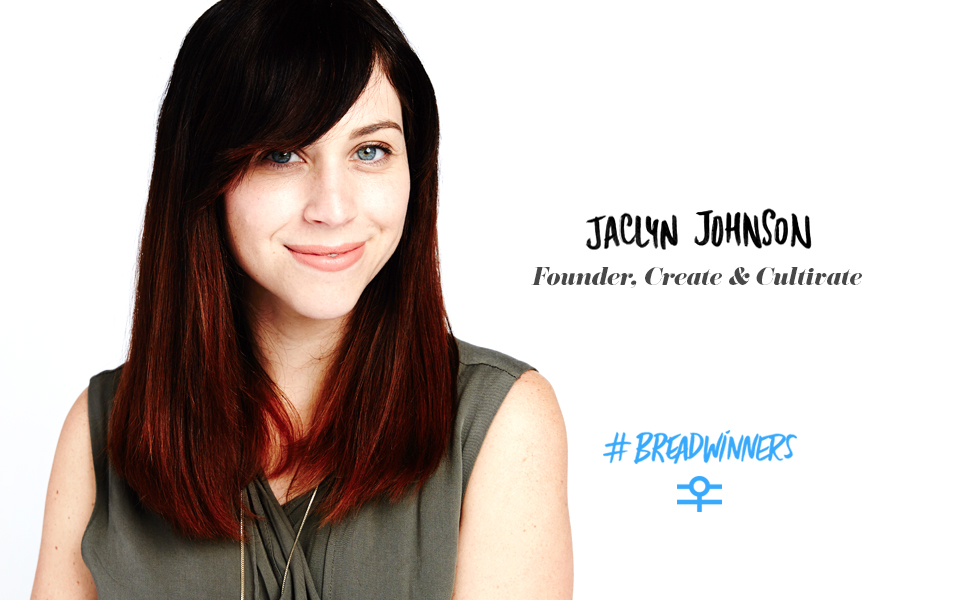
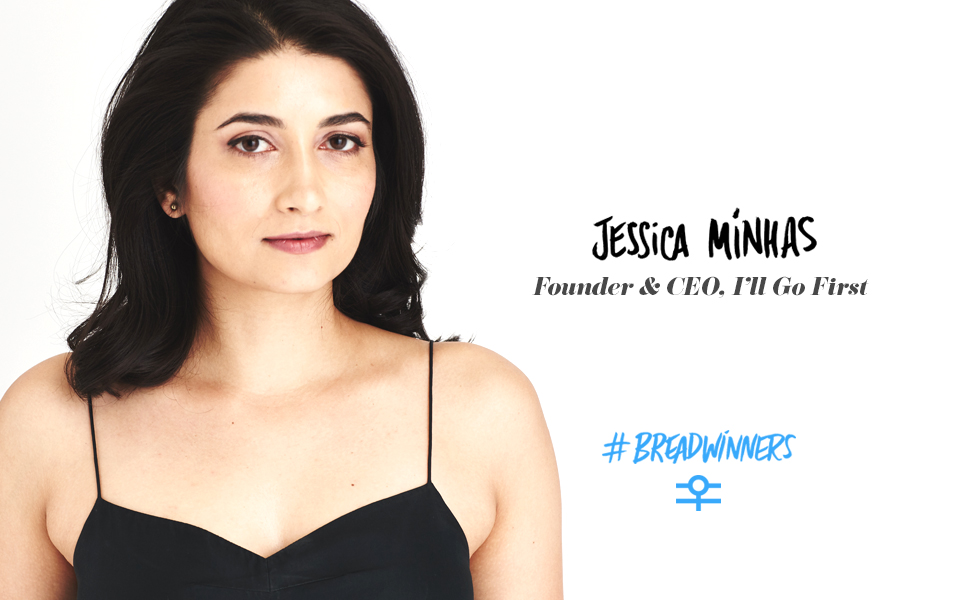
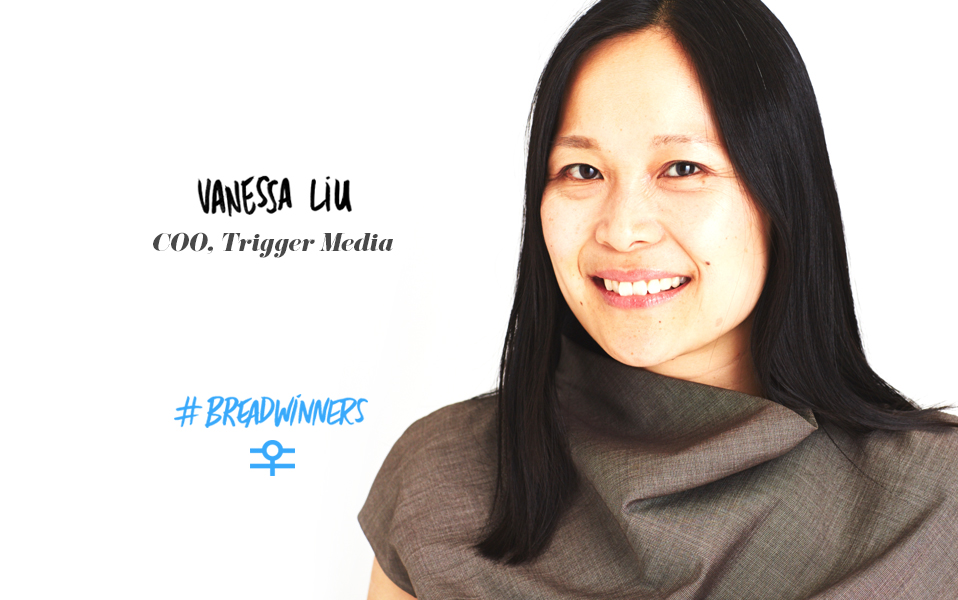
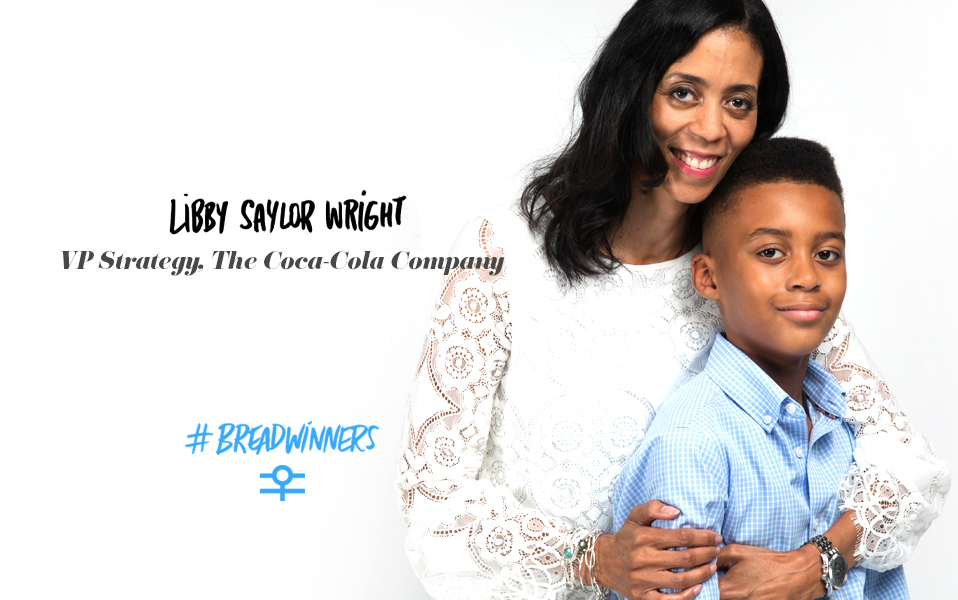
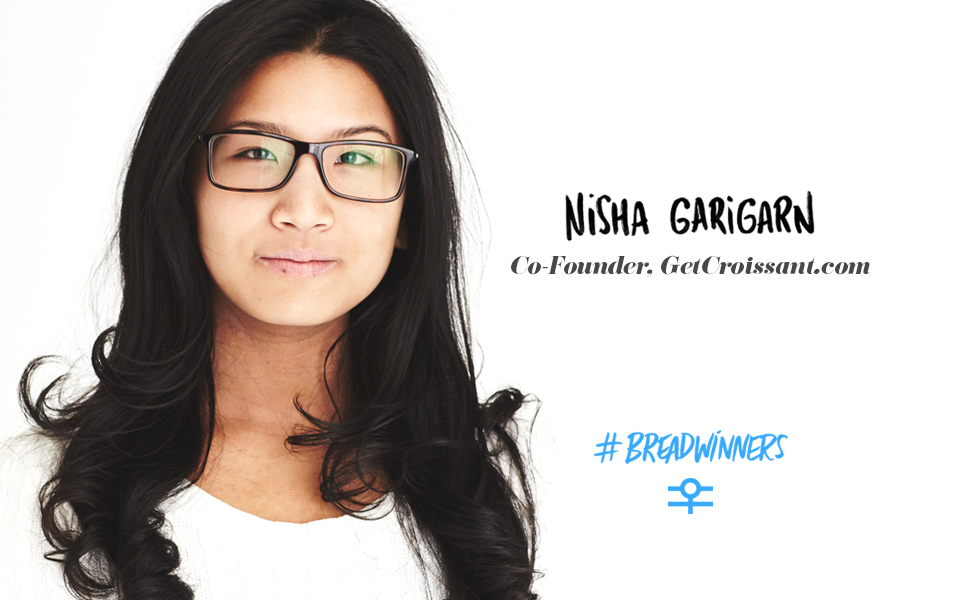
Today marks Women’s Equality Day. A date selected to commemorate the 1920 certification of the 19th Amendment to the Constitution, granting women the right to vote. Today also marks the launch of the first ever Breadwinners Campaign.
Breadwinners was conceived to highlight women who are redefining success-- women who are the primary household earners and who are changing the landscape and conversation around what it means to bring home the bacon.
The passion and project of Alisa Leonard, founder of Hello-Q, Leonard says, "The highest wave floats all the boats - as female Breadwinners we need to be that wave. I believe our greatest achievements can be to lift up other women, and in turn everyone."
"The highest wave floats all the boats - as female #Breadwinners we need to be that wave."
Tweet this.
Make no mistake. This is powerful. Female enfranchisement is no longer a demand, it’s a reality. And the female breadwinner is on the rise...
In 2013 the US Census released data showing that 40% of household breadwinners were women-- specifically mothers. According to a 2015 McKinsey report (Power of Parity), closing the gender pay gap and increasing opportunities for women would add $2.1-4.3 TRILLION to the US economy.
Women, like Create & Cultivate founder Jaclyn Johnson who has earned her success through dedication and tireless work. “If it was easy,” says Johnson, “everyone would do it. Just know to keep moving, keep pushing forward and don’t be scared to ask for help.”
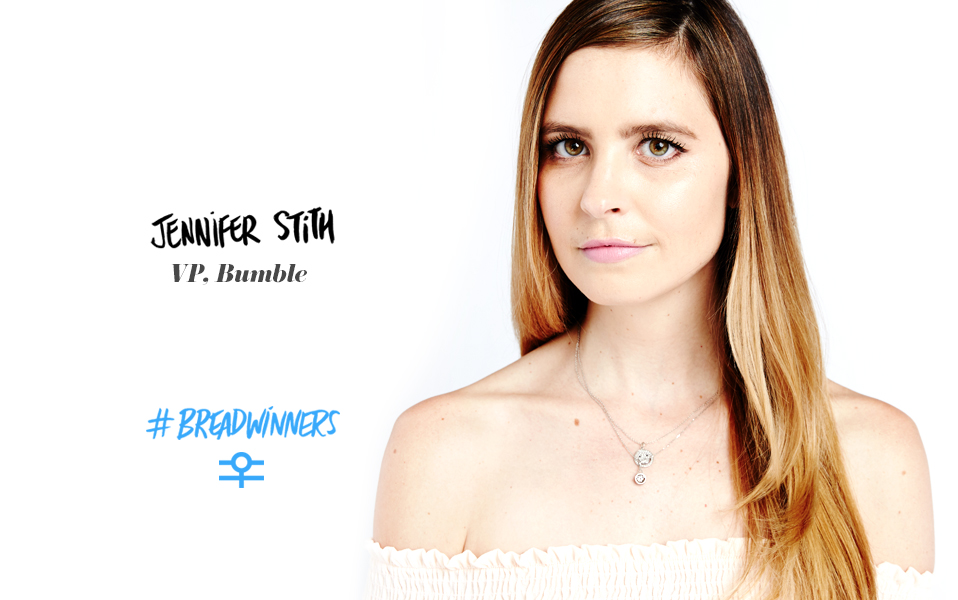
Women like Jennifer Stith, VP of Bumble who says, “My entire adult life I have sought total financial independence. And though traditionally the term breadwinner has had a predominantly male connotation, today I know many couples with two people contributing as equals to the livelihood of their homes and families. In 2016, I don’t think a breadwinner needs to stand alone in a home anymore.”
A wise woman once told us, “If you can’t see it, you can’t be it.” Now you can do both. Our founder was featured, along with 34 other influential, game-changing women. Women entrepreneurs and executives across media, tech, art, finance. Those that run Fortune 500 companies and those at the helm of startups. There is no limit to who a #Breadwinner can be and we are committed to changing the conversation.
We are proud to collaborate with Hello-Q on this initiative. View the full list of Breadwinners and check out their stories and follow #Breadwinners on Instagram!
To participate in the #Breadwinners Project Survey click here. The #Breadwinner Project Survey is kicking off an ongoing research initiative into the needs and challenges of American female breadwinners. The mission of this initiative is to further our understanding of the rapidly growing female breadwinner population and use these insights shape innovative, strategic solutions for both the private sector and public sector that empower equality and inclusion for women in the work force.
We are committed to driving innovative change that empowers women in the workforce. By taking a few minutes to participate in this survey, you are helping inform and shape that change. This survey was created in partnership with Hello-Q.com, Create + Cultivate and theTACTILE.co
MORE FROM OUR BLOG

How to Gracefully Job Hunt While Still Employed
Not everyone needs to release a YouTube video.

Hunting for a job is not fun under the best of circumstances. And we don’t know which version of events is more tedious. Not having a job and the panic that grows every day while you remain unemployed OR having a job and sneaking out of work early for interviews.
While both scenarios make your yearly well-woman checkup seem like a party in comparison, being able to look for a job while still being employed is a blessing. But that doesn’t mean it isn’t an extremely awkward and difficult situation to manage. Even if you already have one foot out the door, you have to remain the polished, professional employee that you've always been. We know that’s easier said than done when you are ready to make a career move, but when you do land that new job you will be happy you handled your job hunt as gracefully as possible.
BE ON TOP OF YOUR GAME
At some point in their career every employee hits a breaking point that there is no bouncing back from. A day will come when you realize there is nowhere for you to progress within your current company, you are tired of the office politics, or it is simply time for a change of pace. When you realize you are ready to make your next career move, it is going to be difficult to remain invested in your work.
Mentally checking out from your current job is one of the biggest mistakes you can make while job hunting. It can alert to your manager that you are unhappy and looking for a new job, which you may not want.
"Mentally checking out from your current job is one of the biggest mistakes you can make while job hunting."
Tweet this.
You also run the risk of the quality of your work decreasing and harming your reputation. Even if you are ready to walk out and never look back, you never know which connections you may need down the line.
DISCRETION IS KEY
You may be ready to yell from the rooftop of your office high rise that you want to quit, but try to refrain until you give your notice. Be careful about dropping hints to coworkers and your network about quitting, because once you do that news will spread like wildfire. If your boss is reasonable they won’t be offended that you are looking for a new job, but they might be if they find out everyone knew about your plans but them.
BONUS POINTS FOR POSITIVITY
When it comes time to interview, you will inevitably be asked why you are leaving your current company. You might have dozens of blood boiling reasons to share, but that doesn’t mean you should start complaining about your current employer. Or any past employers for that matter. Try to find a diplomatic way of explaining why you are looking for a new opportunity. Your prospective employer will trust you more if they know that you can be discreet. Positivity goes a long way, it is best to focus on the positive aspects of the role you are interviewing for instead of all the reasons you hate the job you are planning on leaving.
A recent graduate of the University of California Irvine’s Literary Journalism program, Jacqueline is passionate about writing, design and visiting as many zoos as possible.
MORE FROM OUR BLOG

Why You Need To Tap Into User-Generated Content Now
There's tons of content at your disposal that you've yet to use.


Every brand has their own social media strategy. If you’ve nailed yours by now, then awesome - you’ve crafted your secret sauce to your digital success.
However, every now and then, you have to try moving outside of your box and add a few more ingredients that not only will make your social strategy better but will open the doors to tons of more content that you can work with without you even having to create any of it.
If you have yet to tap into integrating user-generated content into your social strategy, then it’s time that you do. There are many reasons why brands can be a little hesitant to share content that isn’t produced in-house, but as long as it aligns with your brand, aesthetic, and messaging, you’re in the clear. Here are the three reasons why you need to get on user-generated content STAT.
Trusted More Than OG Content
User-generated content is authentic - plain and simple. When your audience sees people that are just like them and they can relate to sharing content than a staged post directly from the brand, they will instantly feel that they can trust your brand more. While original content is always great, it’s never a bad idea to sprinkle in user-generated content to ensure that your audience can be shown as an integral part of your content.
Don’t believe us? In a study done by Crowdtap, millennials trust user-generated content 50% more than any other media and is 35% more memorable. The numbers show it’s time to switch up your strategy.
User generated content is trusted 50% than any other media and is 35% more memorable.
Tweet this.
Minimal Effort, Maximum Reward
When we say minimal effort, we say that loosely because, in order to make sure that your audience engages with you and creates content for you to share, you have to put just as much effort to engage with them so they can reciprocate the love.
A great way to get started is to regram content from people who follow you that are posting photos that are on brand, and encourage other followers to share their photos with a specific hashtag for a chance to be featured from there on. Once you build traction, you will see more and more people will tag you and use your hashtag, and you will have more user-generated content to work with (none of which required any production from your end to create.) Also, you start building an online community this way, so double whammy.
Encourage your community to share their photos with a hashtag for a chance to be regrammed.
Tweet this.
An easy way to keep track of those who use your hashtag on Instagram and regram it without a watermark is using PLANOLY, which will allow you to see how the image will look on your feed even before you post it live.

When developing PLANOLY, founder and Create & Cultivate Dallas alumni Brandy Pham kept the importance of user-generated content in its interface. “Since the launch of PLANOLY’s Discover feature, it’s been so much easier for our users to discover user-generated content from their audience and customers and working regrams into their grids effortlessly. They’ve been utilizing it on the go on our app and also on the web dashboard."
Builds Brand Loyalty
Sharing user-generated content shows your followers that you’re paying attention to them and have created a two-way connection in what is often seen as a one-way connection with a lot of other brands online. The minute that you can turn your brand into a personality and actually connect and engage with your audience, their loyalty towards your brand will grow exponentially.
Have you used user-generated content, and how have you integrated it into your social media strategy? If you haven’t started, are you planning on doing it now? Let us know in the comments below.






The Importance of Making Time for Your Skin
Don't let the complexities of a career ruin your complexion.

photo credit: Laura Dee Photography
This post is in partnership with Cetaphil.
Your approach to career is simple: every day you bring enthusiasm and dedication to your work. Two simple and effective practices that streamline your process.
But can the same be said for your skin? When we get caught up in the hustle of our careers we tend to fall into a couple of bad habits. A great skincare routine isn’t one that should fall by the wayside. No matter how hectic work gets you can achieve great skin with a few gentle yet powerful products from Cetaphil.
Here’s how to get on the good side of great skin.
THE NIGHT BEFORE IS CRUCIAL
You wouldn’t walk into an AM presentation without preparing. That’s just bad form.
While your skin doesn’t need a thorough color-coded Keynote, a refreshed looking face starts with night before prep.
Dermatologists have been advising clients for decades that cleansing their face before sleep is one of the best steps to take for health and beauty. Skin has the ability to be replenished while you’re asleep.
The best-selling, mild, non-irritating Cetaphil Gentle Skin Cleanser is designed to work on all skin types, gentle and soothing enough for even the most sensitive skin. It removes the residue that can clog pores without stripping your skin of its natural protective oils.
It’s so simple you have no reason to not opt for healthy and beautiful skin.
If you’re in a rush, or working on your computer in bed, you can apply a liberal amount and remove excess with a soft cloth. You don’t even need water, it’s that gentle. That’s a skin routine that works for those of you who are constantly working it.
GET A MOISTURIZER THAT DOES MORE THAN ONE JOB
If you want a moisturizer that’s pulling double duty like you, Cetaphil Moisturizing Lotion is ideal for use on your body and face. It contains a blend of 6 moisturizers plus skin-essential Vitamins B5 and E to provide long-lasting hydration for healthy-looking skin.
Moisturizing your skin helps keep it looking refreshed and it also helps keep makeup from looking cracked. Look, dryness and irritation can be distracting. You don’t want to waste time worrying about your skin. By incorporating a simple moisturizer into your day-to-day you’ll spend less time looking in the mirror and more time staring straight into your very bright future.
"Spend less time looking in the mirror and more time staring straight into your very bright future."
Tweet this.
Don’t underestimate the power of a healthy glow. Confidence is directly correlated to productivity.
WHEN YOU’RE REALLY ON-THE-GO, WE GOT YOU
If you’re the sort to squeeze in an AM spin class before hitting your email, or you have a tendency to go straight from the office to after work drinks, it can do a number on your skin.
Take a few moments in between dashing to wipe down the day’s dirt, impurities, and makeup with Cetaphil Gentle Skin Cleansing Cloths. These ultra-soft and gentle cloths are based on the classic award-winning Cetaphil Gentle Skin Cleanser. They're super convenient and will leave skin feeling fresh and clean in all situations-- even when you’re hustling through a 12-hour day.
We’ve all been there, we know that sometimes the hustle doesn’t sleep, but we also know you can still look good while chasing your dreams.
MORE FROM OUR BLOG

Erica Domesek of P.S. I Made This Talks Crafting the Career of Your Dreams
Good with a glue gun and life advice.
photo credit: Amy Bartlam
Let’s talk for a moment about crafting a career. Sure, maybe Erica Domesek founder of P.S. I Made This can pom pom trim the pouf out of a hat (and best believe, she did), but how did she turn it into a business? One, years of hard work. Two, the simple act of being a good person-- something, we’d like to note takes zero DIY "skill."
Crafty since she was a kid, Erica says she always had a paintbrush or crayon in hand and was constantly creating. “I was blessed to have people around me who were also interested in moments of creative living,” she says, “and I got that DIY in my DNA early on. But DIY isn’t necessarily about picking up a glue gun, it’s a way of life and living creativity.”
“I believe anybody can craft the career they want,” Erica says. “Not to sound cheesy, but I truly believe it.”
“I got that DIY in my DNA early on.”
Tweet this.
After graduating from school in Florida where she studied business and fashion merchandising, she set out into world. “I had a jewelry line before I could even have an adult beverage and I was doing trunk shows at Saks Fifth Avenue and all over the Eastern seaboard,” she says. She didn’t necessarily know that she would be a “serial entrepreneur,” but she knew she “enjoyed makings things and making people happy.” That, and the entrepreneurial spirit of trying new things. “I didn’t have a roadmap, I met nice and interesting people and I believe when you’re nice and like to help people, well, it’s called karma.”
From helping out the fashion director at Golf Digest when she was in college to then meeting “every editor at Condé Nast when I was 21 years old,” Erica was naturally curious and had a willingness to get involved-- to work. She wanted to learn. She wanted, to do-it-herself. These are all traits that helped her along that unpaved road.
“It was a very different world when I rose up,” she said, “but you can’t compete with being a good person.” Her career moved in the direction of prop stylist and design consultant, which allowed her to work with brands like Kate Spade, Anthropologie, and Bloomingdale's, as well as major fashion magazines. It was during a moment when she was creating wire sculptures for Anthropologie that she realized, “I was just happy-- I was happy making and creating, but ultimately I knew that there was a goal from the business side.”
P.S. I Made This launched in 2009. Shortly thereafter, Elle deemed Erica “Fashion’s Queen of DIY.” She did some "heavy lifting" in the DIY space, spending 11 years in New York, the city where she says her hustle “sparkled and shined.” Coming off the hamster wheel of the city however, she knew she had to ask herself, ‘Wait, where do I see myself in five years?’”
She doesn’t have a specific answer to that five-year question, but is looking into how virtual reality will play into her work. “I’m really interested in VR,” she says. “I’ll always be a storyteller, but pressing on to find the next round of innovation is always going to tickle my curious bone.”
She knows that “Gen Z is going to be the power user,” so she’s thinking about how they will interact with tech and what that side of the business will look like. She also knows that there are key ingredients for success, those that don’t shift or change even as tech does. “Hustle, confidence, desire, keeping true to your integrity and being a good person along the way,” are her standouts.
Having grown up in the business pre-social days she says “numbers don’t define you. I think people are so focused on a number. Social media is a blessing in so many ways, but self-worth is not based on the number of likes received on a post. I was definitely conflicted about the ‘we’ vs. ‘me,’ and the ‘I’ vs. ‘us.’ I was torn what to share-- the narrative was confusing and I struggled.”
This is not an uncommon feeling among bloggers juggling platforms, what to share and what not to share. (That is the modern question.) To alleviate part of that stress Erica has a personal Instagram account for friends and family, what she calls “a small, private space on the internet.”
She advises young entrepreneurs to do the same. “Find a place on the internet-- should you want to,” she says, “that’s just yours.” It’s how to believe you can attempt balance in the midst of the hustle. “I give advice to a lot of people and I think it’s really important for younger generations to have separation,” she says. “If you want to craft the career you want, you have to be happy inside. And that’s the hardest DIY project in life.”
“If you want to craft the career you want, you have to be happy inside. And that’s the hardest DIY project in life.”
Tweet this.
Erica’s current hustle depends on the day. When we talk she’s in the midst of prepping for multiple shoots the following week, as well as joining us on stage at our Beverly Hills #CreateCultivatePopup. She tells us, “I’ve always gone for what I’ve wanted and always took the road less traveled.”
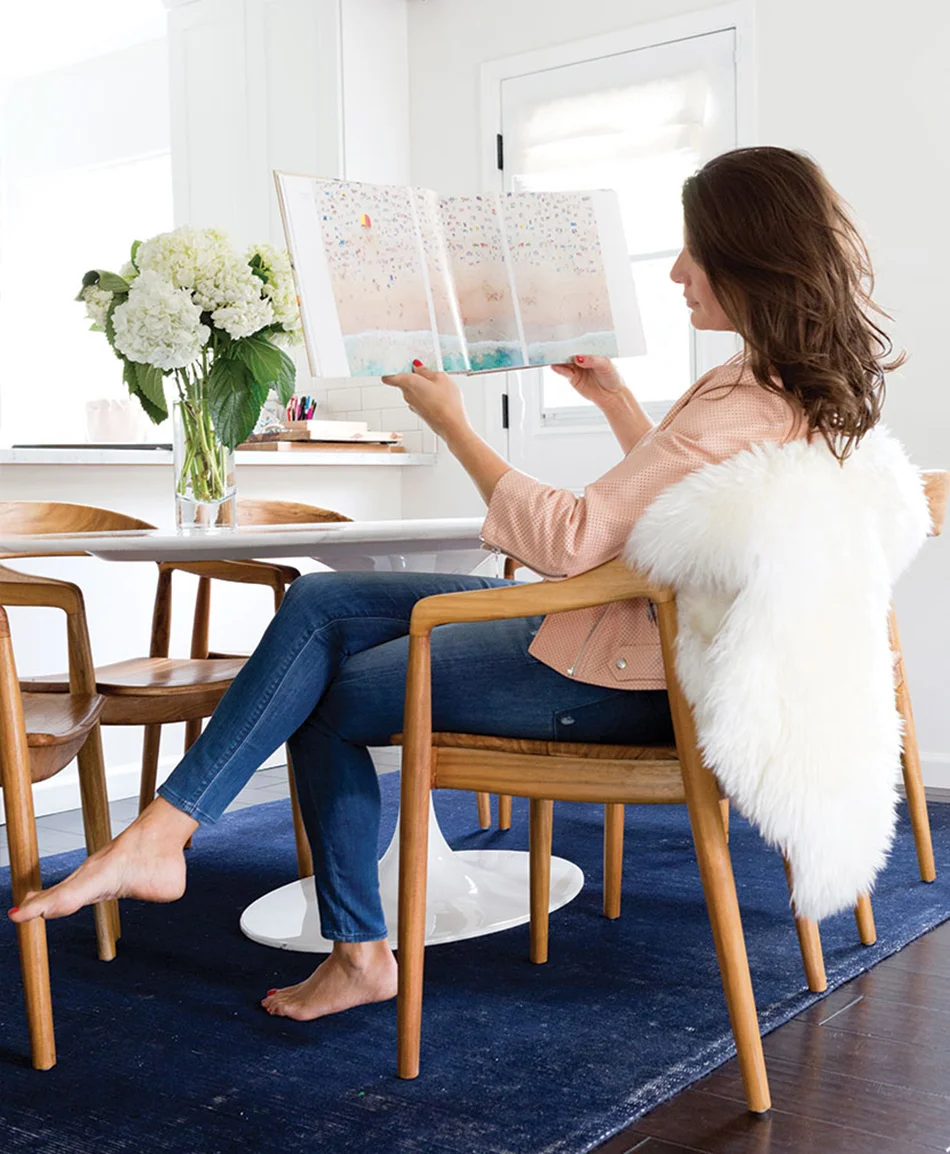
photo credit: Amy Bartlam
In addition to her blog and brand, she has a new TLC series, “Erica in the House,” where she's sharing her DIY and lifestyle expertise with viewers. In a video introducing the series Erica says, life is “like the monkey bars, you gotta let go of one to get to the next.”
Last year Erica let go of New York and headed west to Los Angeles. Since moving the entrepreneur says she now “cooks more than she crafts.”
“I love entertaining and having people over-- doing things where I’m able to put my phone down. I might pick my phone up and Instagram a pretty plate but weekends are not about work for me. I had to make a separation because I did hustle so hard.”
“I think hustling is great,” she adds, “but it’s also great to be able to enjoy life.” She quotes friend (and fellow TLC-ite) Stacy London, saying, “One of her favorite words is ‘almost.’ She loves it because it means that we haven’t arrived, that we can always reach for more.”
"Hustling is great, but it's also great to be able to enjoy life."
Tweet this.
“We’re still evolving. Everybody who says they’ve figured it out, is wrong. They’re lying. We all have that 'almost' inside of us.”
MORE FROM OUR BLOG

Hey Lauren: Can You #Hustle Your Way to Happy
The positive psychology movement wants to improve normal lives.
"Hey, Lauren" is our new bi-monthly column from licensed psychologist Dr. Lauren Hazzouri. Dr. Hazzouri is a TV show host and founder at Hazzouri Psychology, where she’s carved out a successful niche treating women who are psychologically healthy—but trying hard and not getting satisfaction in various aspects of their lives. Through her life experience and training, Lauren’s developed a program that allows women to live meaningful lives and feel fulfilled doing it. Lauren is founder of HeyLauren.com, a project for women, where she provides evidence-based insights on job stress, relationship woes and everything in between.

photo credit: Moriah Ziman Photography
To submit questions to Lauren follow the prompt at the bottom of the article. She'll be responding to your needs every month! In her first post, Hey Lauren addresses the issue of "the hustle."
FOR DECADES, psychology focused on ill-being—providing scientifically-driven treatments to help miserable people be less miserable. More recently, the positive psychology movement set out to determine how to improve normal lives. Much research has been done to answer the ultimate question: What makes us happy? Everyday I have women (just like you!) trying super hard and not getting any satisfaction, rolling with the 'Can’t Stop, Won’t Stop' mentality and coming into my office saying, “I just want to be happy!” The problem is NOT that no one is talking about happiness—an Amazon search for books on happiness results in 22,083 differing opinions and tips, and to date, there have been 544 ideas worth spreading about happiness at TED. The problem is that no one seems able to define the word happiness. Happiness is defined by Merriam-Webster as the state of being happy. I don’t know about you, but one of the first things I learned in Fourth grade vocabulary class is that it’s not acceptable to define a word, using that word or any variation of that word in the definition. The only students, who tried to get away with that were those who hadn’t studied the vocab list.
"No one seems able to define the word happiness."
Tweet this.
In this case, it’s not that simple. Happiness is hard to objectively define. I remember (back in my doctoral training days when I studied happiness) having to split the happiness variable into positive and negative affect ( mood) and life satisfaction. The problem— and, I’m sure you’ll agree!— is that you can have a ton of positive feelings, like your life a whole lot and yet, not feel blissfully happy. Many times, the missing factor is that we still don’t like ourselves!
It’s been said that the key to happiness is healthy self-esteem. People often confuse confidence and self-esteem. While correlated, they’re not one in the same. You can be confident in many areas—your skill-sets, your appearance, your ability as a tennis player—and still have very low self-esteem. Confidence is a feeling of self-assurance that arises from appreciation of one’s own abilities or qualities, while self-esteem is confidence in one’s own worth or value. In an attempt to feel good about ourselves, we often improve our tennis game, lose those five extra pounds, or #Hustle, #Hustle, #Hustle. While good for a confidence boost, there are many champion tennis players and experts in their respective fields, who’s self-esteem remains very low. However, confidence and self esteem are correlated, and self-esteem and happiness are correlated, too.
Recent literature points to three levels of happiness. There’s The Pleasant Life—a life filled with fun and positive experiences; The Good Life—the life of one, who’s identified her signature strengths and uses them to access Flow; And, The Meaningful Life— the life of one, who uses her strengths and abilities to make a contribution to the bigger picture, the world. It’s said that people who live The Good Life and/or The Meaningful Life are happier than The Pleasant Life livers, but the whole is greater than the sum of it’s parts. Adding pleasant experiences and fun to the other two seemingly renders the best results. I know, shocking!
Here’s the deal— We can use this insight to make our #Hustle work for us, rather than against us! Get off the proverbial hamster wheel and #Hustle to use your signature strengths ( areas in which you have high confidence levels) to live The Good Life, losing yourself in Flow. This way, working hard can feel good! If you’re lucky, you’ll discover that those same strengths can be used to make the world (—even your community) a better place to live The Meaningful Life. The best part—doing so will allow you to feel your worth and value, and in turn, increase self-esteem.
"Get off the proverbial hamster wheel and #Hustle to use your signature strengths to live The Good Life."
Tweet this.
In the words of Gloria Steinem, “Self-esteem isn’t everything; it’s just that there’s nothing without it.” Apparently, not even happiness! So, let’s get started.
IDENTIFY YOUR SIGNATURE STRENGTHS
Take this brief survey at authentichappiness.com! Knowing your individual strengths is the most important part.
PRACTICE FLOW
Flow, a term coined by Mihály Csíkszentmihályi, is the result of being so engaged in an activity that your awareness of time disappears, and you are almost one with what you are doing. I’m sure you’ve heard an artist talk about losing herself in her art. She’s describing flow. To achieve flow, you need to be able to do three things: engage for an ample amount of time on one task, focus wholeheartedly and with intensity, and finish the task to completion. Ready, set, flow!
GIVE BACK
The trick to fulfillment is to make the shift from self-centered to others-centered. Use your strengths to get outside yourself and do things in your community to make your world a better place. Remember, giving back is an integral part of your personal growth and development, and the bonus is that you’re doing great things.
HAVE FUN!
Take breaks and get social. In reality, we are social beings having a human experience, not visa versa. When we spend too much time mastering our craft, we get a little bit squirrelly! Have pleasant conversations. See amazing places. Do fun things. For this one, think — You only live once!
With a commitment to honing your #Hustle toward the life you deserve ( —which at times means to #AntiHustle!) and have fun, too, you might be the one to finally define happiness for us all.
###
Dr. Lauren’s on a mission to bring psychology to the public. She contributes to a variety of online publications, provides candid talks to women’s organizations across the country, and was recently cited in Forbes. Lauren’s next appearance is on September 9, when she will deliver a Ted Talk entitled Life Works. Her talk is said to highlight various aspects of the book she’s currently writing on “how to do the human-being thing really well.”
Dr. Lauren is the 2016 recipient of The Psychology in the Media Award from The Pennsylvania Psychological Association and is a member of The American Psychological Association. For more from Lauren, visit @dr_lauren and sign up for her weekly newsletter at HeyLauren.com.
TO SUBMIT QUESTIONS:
MORE FROM OUR BLOG

Katherine Schwarzenegger Shares Key Moments From Her Life-Changing Road Trip
She went on the Road to Real, and found herself.

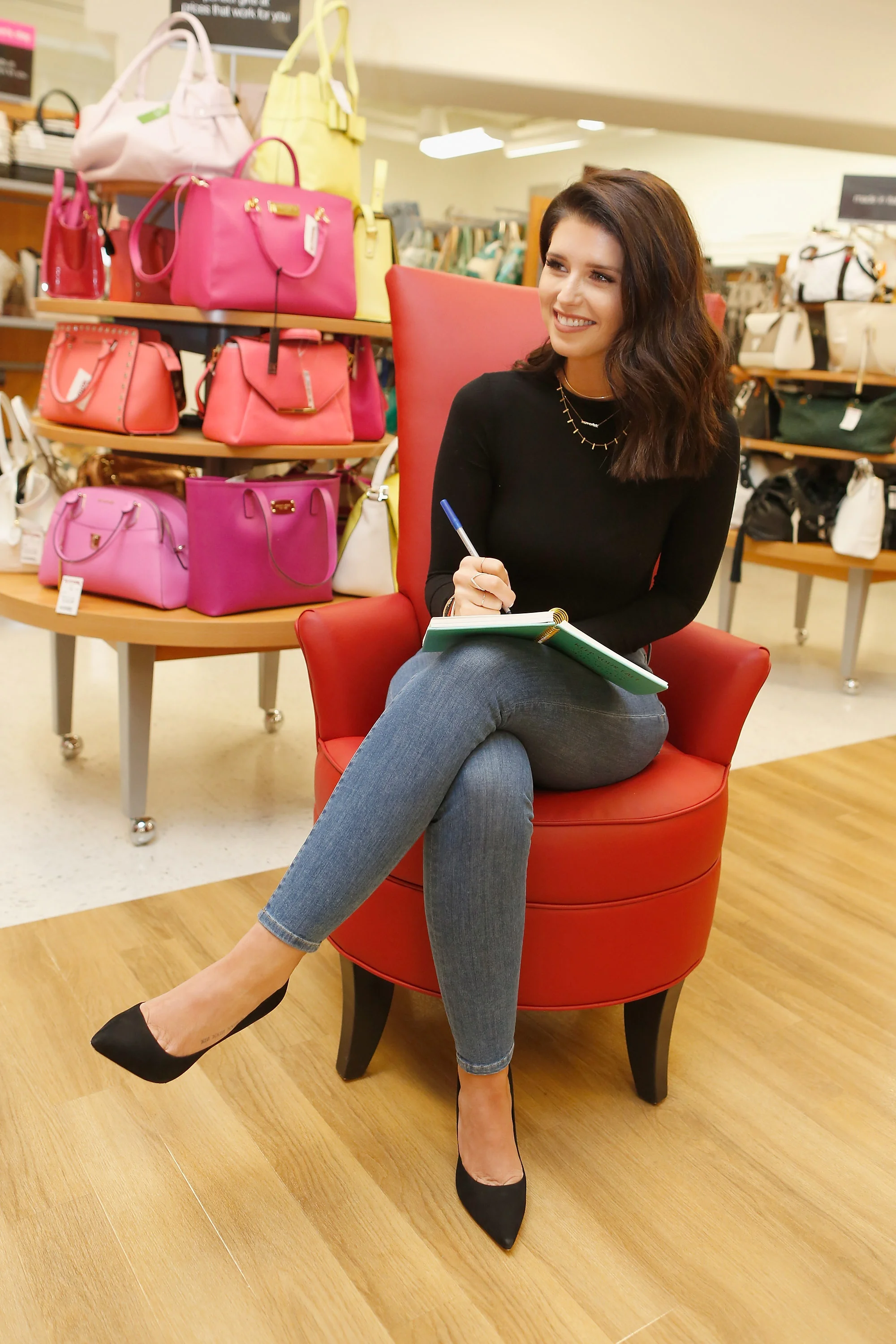
With mother Maria Shriver as inspiration, Katherine Schwarzenegger has always known that women do it all. This past May Katherine embarked on a road trip across the country. She met and interviewed over 500 women in collaboration with T.J. Maxx, aiding their mission in highlighting women who live life on their own terms. After three moths of traveling across 16 cities, Katherine finally headed home with a head and heart full of inspirational stories.
We caught up with Katherine to chat what she learned from the collab, how her mom helped her prep, and the six common traits she found in every single woman.
You just finished up the “Road to Real” 16 city tour where you were interviewing real women about living life on their terms. What was the most surprising part of the journey?
When I started the Road to Real tour, I didn’t know what to expect. But I think the most surprising part of this journey was how open and honest each woman was, and how their stories have truly made an impact on my life, and how I want to live life moving forward. The purpose of the tour was to show others that you don’t have to look far to be inspired. And what I have learned and hope others have too, is that everyone has a story to tell, we are all on this journey of life, we are all doing our best and that inspiration really is all around you – it’s in our friends, family, neighbors, and even the woman shopping next to you in a T.J.Maxx store. When you hear so many amazing, real and inspirational stories each day, you cant help but walk away changed. So the next time someone yells or snaps at you for no reason, just know that you never know what’s going on in peoples lives; they could be going home to a sick child or parent, they could’ve just lost a loved one, they could be going through a divorce. Bottom line is, we are all just trying to do our best so the most important thing is treat one another with love and kindness and the world will be a much better place.
"You don’t have to look far to be inspired."
Tweet this.
Your mom is a journalist, did she share any tricks to getting people to open up before you embarked on the tour?
My mom helps me with everything and she is definitely my number one supporter. When I first learned about the Road to Real tour, I was so excited and I told her right away. I grew up watching her interview people in her professional life and personal. She used to interview everyone around us, even in the line at the coffee shop, and that all rubbed off on me, so this experience felt very natural to me. I am a very curious person and I ask a million questions, but before the tour launched, she did help to coach me on my interview skills and gave me advice on talking with people I didn’t know. The most important thing she taught me was the importance of listening and on this tour I realized that one of the greatest gifts you can give someone is listening to them. We don’t realize how many people just don’t have someone to talk to or to listen to them, and a really good listener is a huge gift. Every time I finished a interview, most women would thank me for listening to them. I was so surprised by this because for me, to be able to listen to their stories was such a gift, and knowing that just sitting and listening to them made a difference, was so rewarding for me.
"One of the greatest gifts you can give someone is listening to them."
Tweet this.
How did the collaboration initially come about? What was the conversation?
T.J.Maxx actually approached me to be a part of the Road to Real tour, and I was immediately obsessed with the whole concept of the tour. When I learned more about the campaign I couldn’t say no – to have the opportunity to travel the country (to some places I had never been before), and connect with real women and hear their inspiring stories is what really peaked my interest. I love talking with people, asking questions and learning from others so it was a natural fit. I am always eager to learn and to grow and I knew this tour would not only be an amazing career experience, but it would be a life changing experience that I wouldn’t be able to get anywhere else. I am all about talking to people, learning from their life experiences, and being able to take a nugget of wisdom from each person I spoke to. Plus, the fact that my website is all about “living life on your own terms” was a natural tie to the brand and the Road to Real campaign.
It’s easy to see the Road to Real as an internal journey we all take as women. What has your own road to real looked like?
I think my Road to Real is a journey that I am on and continue to be on and one I am very excited about. We are all on this journey of life; sometimes it’s great, other times it’s more challenging, but as long as you look at life as a growing and learning process that never stops, you will be able to live a fulfilling life. This tour has completely changed me; I am not the same woman today, than I was when I started this tour in May and I will forever be grateful to T.J. Maxx for allowing me to be a part of this experience. I learned so much about life, about myself, about how I want to live my life moving forward, and how I deal and interact with people. This tour was a journey for me in my personal, spiritual, and mental well-being; I went out of my comfort zone, traveled to new places, met new people, formed new friendships, and experienced new things. I laughed with strangers, I cried with strangers and I listened and learned from them. These are the kinds of things you only learn by having the kind of experiences I was lucky enough to have on the Road to Real.
"I laughed with strangers, I cried with strangers and I listened and learned from them."
Tweet this.
What parts of your journey as a business woman and entrepreneur are you most proud of?
What I’m most proud of is that I have had the opportunity to work on projects that I’m truly passionate about, like my two books and website. I’ve been able to do so many amazing things, and I always want to try to make a difference and do work that I’m proud of. That said, I am definitely proud of my partnership with T.J.Maxx, because the Road to Real campaign speaks to something I truly believe in, which is that women are living life on their own terms, in their own unique way. I feel lucky to have worked on such a meaningful campaign by celebrating women all over the country, and by sharing their inspiring and amazing stories with the world.
When are you your most real/authentic version of yourself?
I try to be real and authentic all day every day because that’s just how I want to live my life. It took me awhile to get there but I have come to realize that whenever I am not my real self, nothing good comes from that. It’s much easier said than done but staying true to who you are is the greatest gift you can give yourself and you only get there by going through the ups and downs of life. I still haven’t mastered it and I do make mistakes of course, but I always try to remind myself the importance of being YOU because there is no one else like you.
You spoke with over 500 women. How do you process that amount of information? That number of stories?
Throughout the course of the tour we visited sixteen different cities and spent two days in each store location, so I spoke with about 15-20 women per day, sometimes more! The experience was amazing but at times the conversations lead me to feel overwhelmed by my own emotions. The women really opened up to me and some of the stories shared were extremely personal, open and raw. It’s crazy to believe that each story was more inspiring then the next, but it’s true. Although I talked with over 500 women, there was a commonality among the stories I heard, like the strength to persevere and live life on their terms, and just an overall sense of the women wanting to do good, and give back to others. I would be lying to you if I said that I wasn’t overwhelmed by some of the stories I heard, but I decided to look at this experience like I wanted to take at least one nugget of wisdom from each person I spoke to and be able to grow from their stories.
Why do you think storytelling is important?
I have always been interested in learning and hearing from real women, it helps you to not only grow and learn as a person, but to see things from a different perspective. I think storytelling is important because it connects people everywhere. Everyone has a story to tell and inspiration is all around us. We just need to take a moment to open our eyes, maybe ask a few questions and really see the people around us.
What was a universal truth among all of the women you spoke with?
After speaking with all of these women, I learned that strength, perseverance, courage, love, kindness and the desire to do good, lives in the women walking amongst us daily. Every woman I spoke with, no matter her background or personal struggle, wanted to help those in need and leave the world a better place. It can be easy to focus on negativity, especially with recent events our country has faced, but you have to remember to never lose sight of what’s important. The need to love one another, treat each other with kindness, compassion, and understanding is what every woman agreed our world needs most.
"Strength, perseverance, courage, love, kindness and the desire to do good, lives in the women walking amongst us daily."
Tweet this.
The tour culminates in a gallery event this fall in NYC. What do you hope people see in the work?
The stories that these women shared both touched and influenced me, not only in the way I view life, but in the way that I want to live my life each day moving forward. So my hope is that this same raw emotion, these inspiring stories of struggle and perseverance and vulnerability, are conveyed within the gallery portraits. I hope people see that women are playing many different roles in their lives and that no matter what, they make it work in their own way. I hope that these pictures impact people in the same way that I was impacted.
MORE FROM OUR BLOG
We Need to Talk: What It Feels Like to Go Back to Work at 40
Def not over the hill, but not quite under it either.

We Need to Talk is a bi-monthly, anonymous series, where contributors share stories about business, life, and the stuff we don't talk about.

photo credit: Andrea Posadas
The decision not to go back to work after having kids is a perilous one for most women.
There area so many factors to consider. Do you go back to work after six weeks so you don’t lose traction at your job? Do you stay home with your newborn and really soak in the first year of your child’s life? Do you wait longer? The scenarios are endless and there is no playbook; it is a personal choice for each and every working mother.
And there's no right way to do it. That’s the most important bit to remember. What is right for one woman is not necessarily right for you. What works for your twin sister may not work for you. In fact, it probably won't.
I decided to stay home. I gave up a career in a newsroom. I hit pause on my career dreams and aspirations because I thought those dreams had shifted— and they did shift, for about ten years. For ten years I focussed on morning routines, nap time, bath time, bed time, and every other moment in between. I considered myself a working mom, but I was working for my children, not a company. For ten years my kids became my career.
"What is right for one woman is not necessarily right for you."
Tweet this.
And then something happened— I grew increasingly less satisfied. (We're not conditioned to say that or this next bit.) Reading to my kids at night began to feel tedious. I wanted out of this routine and into another— the daily grind of email and brainstorming and late night deadlines that had nothing to do with making sure lunch was packed, that was appealing to me. I wanted a challenge. I wanted my career back. But my career didn’t want me. It had moved on to better and younger things, the women who had worked straight through their thirties and even those in their twenties who were climbing the rungs faster than my legs move at this stage in my life.
I knew I wanted to return to work, but, like many women who take time off after baby, I had no idea where to start. I felt defeated before I began and I faced the all to common obstacle of a ten year gap in my resume. The entire landscape of my career had changed. Instagram wasn’t a thing when I left work and what on earth did Snapchat have to do with the news? A lot apparently. So does Twitter. It's not like riding a bicycle. It felt like everything had changed in the last decade.
As I started to do more research I read about The Enternship, a program developed to help women over 40 reenter the workforce. Launched this summer, it is a four-week program aimed to aid women in the 40s, 50s, and 60s learn crucial, modern workplace skills. They chose 8 women, one of whom was a former CNN producer. Others included a stay-at-home mom and a lawyer. I felt relieved to learn that the program received over 600 applications. That meant that there were at least 600 women in the same boat— women not sure which wave was the right one, but they weren’t afraid to start over. And for many women 40 plus starting over after kids is the only option, but that doesn't make it a bad option. I still had the know-how and common sense and practical skill learned during the early parts of a career. I now needed to learn new skills with the humility and hunger of a green employee. In some ways, this was the youngest move I'd ever make. Maybe, starting over would keep me young.
"For many women 40 plus starting over after kids is the only option, but that doesn't make it a bad option."
Tweet this.
I knew I had a choice to make: approach this next phase of my life with the humility and work ethic that I had in my early twenties, or fight an uphill battle, one I was sure to lose. One where I let my ego and age take center stage. Or one where I accepted that this was the path I chose, willingly, ten years ago. Did I want to have to choose? Not really. But did I? Yes. And now I wanted to go back to work and that, in and of itself, was going to be work.
It’s not easy to be older than your superiors, nor is it easy to feel like you’ve reversed even as your age has progressed. But instead of using motherhood as the excuse, I used it to my advantage. I knew nothing about being a mom or how to care for an infant during those early years. I had to be humble and ask for help. I had to look to those who had gone before. Sometimes they were older, and sometimes they were younger.
If I could take this same lesson and apply it to my career, surely, I would be OK. Surely, step by step, I could climb once more because over the course of your life, you're allowed to live more than one.
MORE FROM OUR BLOG

Free Download: Map Out Your Business Budget with Above The Glass
Get your business' financial success in line.

Photo by Maria Sosa
When becoming a business owner, a lot of things can seem intimidating when you’re getting started. Do you start your business from your home, or do you start looking for an office space? How many employees should you hire? What supplies should you get for your office? What do you write off for tax season?
There are a million questions that will come up when you get in motions of becoming a business owner, but when you set out a financial map, you’ll be more prepared of what to factor in into your budget. Not only that, it will allow you to have enough cushion for when your business begins to grow or anything unexpected happens.
To get started on the right foot, use Above The Glass’ free download this week for their Budget Checklist template which will help you outline everything that you need and help you prepare properly for the financial future of your business.
To get access to the free download, enter your name and email below.

It's National Ice Cream Day! Meet the Woman Who's Changing the Ice Cream Biz One Flavor at a Time
"You get really, really tough blazing the path through the forest."

Photo Credit: Jeni's Splendid Ice Creams
Founder of Jeni's Splendid Ice Creams, Jeni Britton Bauer, says that if her business was a flavor it would be Dark Chocolate: "Complex and game-changing, hard to replicate."
With over two decades dedicated to the scoop game, Jeni knows a thing or two about packing a pint, but hitting the sweet spot didn't come easy. There were learning curves, major lessons and hard, trailblazing work.
We checked in with Jeni who shared about ups, downs, her entrepreneurial vs. business spirit (yes, there is a difference), and which pint she would choose to eat fooooreevvver.
Can you tell us a little about your background and how you got into the scoop business?
I grew up wanting to be an entrepreneur. My grandmother is an art teacher and because of her, I learned to constantly create and make things. Yet, we have two very different views on how to best craft an item. As an artist, she never wants to make the same thing twice, but I relish in it. When I hit upon something I love, I want to replicate, build a process and perfect the item until it’s flawless. And as a child, I started more businesses than I could count. So, it was inevitable that I would find something that I loved to make and run with it. I studied Art and Art History at The Ohio State University. I was also interested in pastry-making and working for a French bakery. I very seriously considered switching over to perfuming. I have always been led by my sense of smell so I wanted to go to Grasse, France and become a nose or find a way to incorporate scent into art.
One day I had the idea to use ice cream to carry scent, and that moment changed my life. It was precisely where all of my interests intersected and I knew in an instant that American ice cream could get a lot better and more interesting. So I set sail -- and the rest is a crazy ass history of ups and downs and hustle like nobody's beeswax.
Ups and downs. You were living out of your car during the first months of operating your first ice cream stand, Scream. You’ve come a long way. What’s some advice you have for a scrappy entrepreneurial spirits?
I'm an adventurer. I wasn't bothered a bit by living out of my car or hustling. I have so much energy and excitement for what's possible and very very few resources to make it happen -- I have found that my hands, feet, brain, and friends have been my greatest resource.
Every entrepreneur has a very different experience, but one thing is always true: you get a wacky idea that becomes a vision and then you start working toward that vision and never quit. No matter what. Entrepreneurship can be extraordinarily isolating; the better your idea is, the more people will be repelled by it. When I started, no one wanted spicy ice cream, or flower petal or herb ice cream. It’s about getting help from anyone you can and proving yourself over time. You are the only one who will champion your idea, and in some ways, that never ends. It's always about seeking great people to help. And to do that, you have to get really fucking good at what you do. You have to earn your teammates because they make all the difference.
"Entrepreneurship can be extraordinarily isolating; the better your idea is, the more people will be repelled."
Tweet this.

Interior St. Louis location. Photo Credit: Jeni's Splendid Ice Creams
What kind of learning curve did you experience between opening shop number 2 and shop number 10? [Ed note: there are currently 23 scoop shops.]
Suuuuuch a huge learning curve. But again, it's about my teammates. They would never take on something they can't knock out of the park - give or take a few snafus. We always push ourselves to try something new in each store and we learn from that experience.
We must get used to seeing great companies embarking on controlled growth. It's impossible to survive and truly build demand for the ingredients we want or build a safe and secure community of jobs without the resources to sustain it. The 21st century is very different from the 20th century, where we saw great little companies explode and just go downhill. It's not only possible to grow and get better, it should be expected. We look up to trailblazing companies like Patagonia for this reason. We will get better as we grow, not the other way around.
"We will get better as we grow, not the other way around."
Tweet this.
Is every pint still hand packed? How do you scale and business while remaining committed to local and quality?
We haven't hand packed every pint for a long time. And we determined that it’s no longer a safe way to pack pints, by our safety standards. It took us a long time to figure out how to get our ice cream to work on a pint packing machine because our ice cream is more viscous than others as it comes out of the ice cream machine.
We're building our company as a community of people and many are not local to our kitchen. We work with a 5th generation peach farm in Georgia, a vanilla farm in Uganda, and various makers and producers locally, nationally, regionally and internationally. We believe in each other and we believe that by coming together we make better ice cream. That’s how we’ve approached it from day one.
Quality is a choice every company makes every single day. And it begins with your values. There is no reason a company can't grow and maintain quality, but we also know that as we grow we can actually improve quality from the perspective of ingredients, molecular science, safety and direct partnerships. In many ways it’s the only argument for growth at all. Scale is important in ice cream unlike some other food products. You can't even begin to impact dairy quality unless you have scale to support it - which is why we love Ohio so much. But the same is true of direct trade vanilla or fair trade cocoa. We can all order ingredients from a catalog, but we want to be more than that.
"Quality is a choice every company makes every single day. And it begins with your values."
Tweet this.
You’ve talked about the difference between entrepreneurs and business people. Have you grown to understand and be more interested in the business side of things?
The short answer is no. I retain too much “artist” in my heart. In fact, I have less and less interest in the business stuff as I learn more about it. I like to create experiences, and to do that I need resources and a great team. That's what motivates me. The older I get the more comfortable I am in admitting that.
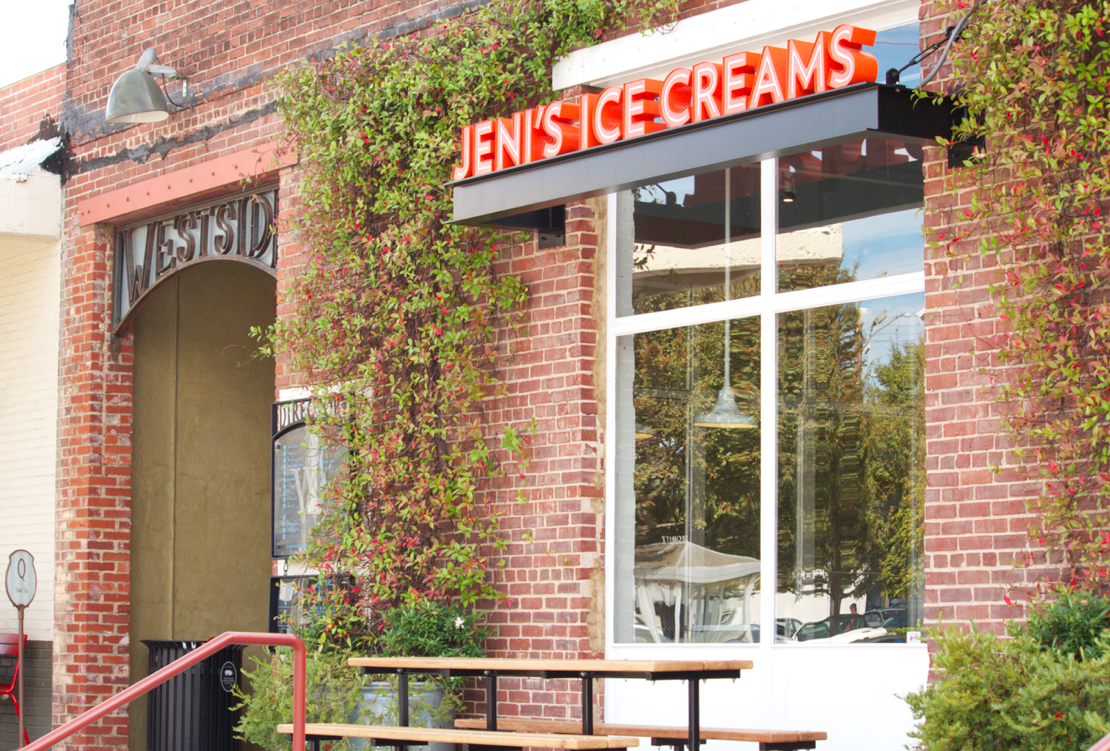
Exterior Westside Provisions, Atlanta. Photo Credit: Jeni's Splendid Ice Creams
"I have less and less interest in the business stuff as I learn more about it. I like to create experiences."
Tweet this.
The long answer is yes. I am inspired by my teammates who are so flipping brilliant at everything from leadership and org stuff, HR, R+D, Art and Design, and our finance team kills me—some of the most creative people I know. They find stories where I see a paper full of digits.
The truth is that I have so much belief and trust in these people and our talents work really really well together. I have the luxury of being able to purposefully remain blind to many business details. Not to say that I don't keep up, I absolutely do, I just keep my head very squarely on creating the best ice creams I can imagine and making great places to eat them in, but always with great reverence for the resources we've built and how to do the most with them.
What are some lessons you’ve learned about rapid growth?
We have 23 stores. I've been at this for 21 years (I have had two ice cream businesses). Jeni's is almost 15 years old. We've stepped out our growth. As we get more great people and knowledge and dairy we apply it. Every single day is challenging in business. That's what makes it fun.
Still, if you want to do something new it's often difficult to know how to do it. You can hire the top consultants in the world and you'll still fuck up somehow. You get really really tough blazing the path through the forest.
----And you make it a lot easier for the copycats who benefit from your blood, sweat and tears.

Scoop pros. Photo Credit: Jeni's Splendid Ice Creams
If you had to eat one of your pints from now until forever, which would you choose?
Lemon buttermilk frozen yogurt. It's perfect. And I say that after making it for 20+ years - with tweaks along the way. Perfect texture, body, and flavor. I think this is one of a handful of our flavors that really sets us apart from all others in terms of know-how. Plus, it's so simple: fresh lemon, cultured buttermilk, bio-dynamically raised yogurt, grass-pastured milk and a nice dose of cream. You can't ever tire of it. It would sustain you for forever, too - the right combo of protein, fat, carbs.
OK. Truth: Is the dessert business sweet? What parts are more like veggies?
The highs are really high. The lows are really low. But they balance each other to become a great adventure.
But I have a very strict policy: if I'm going to eat ice cream daily (which I do) then I have to balance that with lots of veggies (which I do).
It works the same way.
MORE FROM OUR BLOG

Why Poetess Rupi Kaur Follows Zero People on Instagram
No, she's not pulling a Beyoncé.

photo credit: Rupi Kaur
Like most writers, Rupi Kaur, the 23-year-old Toronto-based poet, illustrator, and photographer thinks she’s better at putting pen to paper than she is at giving an oral interview. “I’m a better writer than I am a speaker,” she tells us.
On one hand, we believe her. Her work is biting and soft. She twists language in a way that makes you want to walk into a forest and stare up at the sky through the trees. Her words allow you the space to see the world a little differently.
On the other, we don’t. Not really. Especially when the author/mother of “milk and honey,” her debut book of poetry and prose which shot to the New York Times Bestseller List says this: “We navigate the world, come across so many people, but at the core of our experience is love. I think that’s the message I’m trying to consistently share, without even really realizing that I’m sharing it.” The message that, “you deserve to be here and you’re welcome here and allowed space.”
"You deserve to be here and you’re welcome here and allowed space.”
Tweet this.
A native of the Punjab region in India, Kaur spent her formative years in Toronto, where she currently resides. She is a modern day storyteller, using her poetry and social handle @rupikaur_ to explore beauty standards, violence, love, injustice, the female body, and more. “my issue with what they consider beautiful/is their concept of beauty/centers around excluding people,” she wrote in an Instagram post on July 11th of this year. It's the same platform that deleted a photo of Kaur's sister, Prabh Kaur on a bed, her gray sweatpants and bed sheet stained by (fake) period blood. Instagram claimed the post violated their community guidelines. Kaur reposted the photo, which was part of a photoseries project for a visual rhetoric course with a caption challenging the decision. "i will not apologize for not feeding the ego and pride of misogynist society," she wrote on August, 25, 2015, "that will have my body in an underwear but not be ok with a small leak. i bleed each month to help make humankind a possibility." Instagram recoiled, apologized; the community clapped loudly. And they kept clapping. Her approach to language and honesty has captured the attention of nearly 600k Instagram followers.
****
When she first started sharing her work online there was no intention of a book. “It’s still such a personal experience for me. I’m not writing for anyone else," she says. "At times I don’t understand the interest. But all of the sudden I was building this online community and they were the ones that would comment, ‘Where can I buy your book?’”
Consider that Kaur's first reaction to the idea of a book was, “I’m me, I can’t." She was 20 at the time, thought of writing as her “hobby,” and had just started university. Her thoughts were, “I need to finish my degree, I’m paying thousands of dollars to be here.” We’ve all experienced this tug of war-- the one between our head and our heart, our reason and our dreams. But Kaur slowly warmed to the idea. Between the encouragement of friends and the enthusiasm of the online community she began piecing together what would become ‘milk and honey.’
“It was a very difficult moment in my life,” she says, “and I just strapped down. It was the summer of 2014 and I didn’t think I was going to get through it. I couldn’t see myself and I couldn’t imagine my life after this moment. I needed it.”
She wrote the pieces and crafted the book by listening, she says, “to what my body said.” She designed everything from front to back, the font, the pictures, and then put it into the world. “I don’t think anything I ever do will feel as holistic as that,” she says. “It was deeply grassroots, on the budget of zero dollars. When you give birth to something like that and see it blossom, it’s so incredible."
Now consider that her debut paperback, self-published book of poetry and prose sold over 18,000 copies in the first 8 months. "milk and honey" flowed into the world November, 2014 and kept moving.
Around the 8 month mark publishers started calling. Andrews McMeel (AMP) became her publisher. “They’re very agile,” she says. “My biggest worry was someone coming in and saying, ‘Oh, we want to remove these pieces about body hair, or 'We want to change the cover.'”
“It’s not a product to me, it’s my heart.”
Currently, she is working on the release of a hardcover. “It’s very important to me that people have something to hold,” she explains. “That’s what gets passed down from hand to hand and moves across the world. A hardcover is the version that refuses to be ruined. The paperback version is going to fold, its matte black is going to stain, but the hardcover is beautiful and elegant. You keep the hardcover on your bookshelf and you keep the paperback under your pillow or in your purse.”
Throughout this journey, she has remained the creative leader of her work, though there has been pressure to create more, both from herself and industry pros. Earlier this year she tried writing for the audience. An experience she describes simply as “bad.”
“I was holding a knife to the neck of my writing,” she says, and it wasn’t working. There were people who told her she needed to release a second book. That by next year the industry would try and replace her. It didn't deter her. It only annoyed her. “I have to be honest with myself, " she explains. "It’s a very Adele approach. You have to remember why you started and stay true to that.”
She'll tell herself, "You brought yourself here, not the industry. I think that’s a huge source of my power. My inability to see how people perceive my work also allows me to see how powerful I am. I have my insecurities, but I feel powerful. I’m here and I’m doing what I love.”
“It’s not a product to me, it’s my heart.”
Tweet this.
She knows social media has a lot to do with her success, but Kaur currently follows zero people. However, she’s not pulling a Beyoncé. “Like most people I have my own personal, multi-dimensional battles with social media.” But without it she says, “the publishing world wouldn’t have cared about this young, brown woman. Social media was a free tool that I used to create my own community. It can also swallow you up.”
At the moment she has deleted all social media from her phone. She tweets from her laptop. She’ll download Instagram, log into her account, post, and log back out. She doesn’t read any of the comments. “It’s helped me feel more rooted again. I’m a very sensitive person and I don’t want the thousands of eyes pouring over my work to change the way I’m going to write in the future.”
The way she writes, is magnetic, sticking to all lower case as her words stick to her audience. It’s almost a way of ensuring that no one letter is left in the shadow of another. And it's human.
"When I first started writing it was about getting my voice back and finding my voice,” she says. Now, she has a “loose idea of three to five books that I will write in the next ten years. So I’m going to keep writing and listening to what my body tells me.”
“The recipe for my success, if any,” she notes, “is that I’ve always been honest with myself. I’ve always written what I’ve needed.”
This Friday, August 19th, Rupi Kaur will be delivering a Ted Talk at the Kaufman Center for the Performing Arts in Kansas City. She will be performing a new spoken word piece followed by a talk called “My First Home.” Via Instagram this past week she told her followers, “I think the piece I’ve written is some of my best work.” Tickets have sold out, but you can tune in and watch it live at 6 pm central time at tedxkc.org.
Arianna Schioldager is editorial director at Create & Cultivate.
MORE FROM OUR BLOG

Why You Need a #CreateCultivateATL Ticket
We're sharing success stories from past attendees.

We’ve always said that Create & Cultivate is unlike any other conference series and we believe it. No woman is an island and a large part of both creating and cultivating the career of your dreams is connecting with like-minded creatives.
You should take advantage of being in a room with that much creative energy and entrepreneurial spirit. Past attendees who have done just that have made moves.
As we get closer to October 15th we want to make sure you get the most out of the conference. The first step is a ticket, but the next step is all you.
WHEN WE SAY, COME TALK TO US. WE MEAN IT
These aren’t empty words. We put on the conference because it means something to us and we don’t take it lightly that you’re attending. Attendees who catch us in a down moment or come up to us to chat about what they're doing tend to stay top of mind.
Michelle Lando is a is a Certified Professional Resume Writer and founder of writestylesonline.com. She has a passion for helping others present the best version of themselves, both on paper and in person, and works to polish individual's application package and personal style. She attended Create & Cultivate DTLA and approached our editorial director to talk opportunities. She now contributes to the blog, doling out the best tips to enhance your resume, style, and boost your confidence.
We have attendees who become interns and those who now do graphic design for Create & Cultivate. Getting attendees involved beyond the day of is part of the secret to our success. You want people who are enthusiastic about your message. And we want to be able to promote you as well. It's a win-win.
CONNECT WITH YOUR OTHER ATTENDEES
We love hearing from past participants who share their success stories.
Like Melissa Urfirer who also attended Create & Cultivate DTLA this past May. Melissa is a handbag designer with a unique product. She created Riley Versa bags which have removable covers so you can easily change the look of your bag. However, Melissa told us, “the concept is hard to convey.”
But at the past DTLA Melissa met Lizz of Rantze + Raves production. “We exchanged cards. Followed up,” Melissa says, “And she created an incredible stop-motion video that explains the bag and is now the homepage of my website RileyVersa.Com.”
It’s small, but important successes like these that make a ticket a no-brainer. Connections are hard to come by, but not at Create & Cultivate.
CREATE EVERY OPPORTUNITY
It's not just for CEOs. It's for you and the person next to you. It's also why we have mentor sessions.
Kamari Guthrie was in C&C mentor extraordinaire Maxie McCoy's session and had this to say: "The mentor session at Create & Cultivate gave me the moment I'd been hoping for all day: the moment when I made deep, real connections that were bound to extend well into my professional future. By the end of the session, I found a photographer that would take my social media to the next level and an amazing friend (Maxie, of course). It's only been a few months since that session, and both of them have already collaborated with me on projects that helped make my latest PR project a major success. And, I was thrilled to be able to give them new business opportunities through my network. It was a total win/win, and I cannot wait for Atlanta where I'm now 100% sure I'll build more game-changing relationships."
So. What are you waiting for? There are only a few VIP tickets left.
MORE FROM OUR BLOG
Roundtable Talk: How We Really Feel About Additional Social Platforms
Is it over yet? Just beginning? Are we machines yet?

Source: @felixcartal
The addition of Instagram Stories raised a few eyebrows last week, not only because the newest arm of the photo-sharing app looked like a carbon copy (minus the dog filters) of Snapchat, but because it was yet another piece of the social layer cake that has many already feeling stuffed. Thanksgiving style.
There are now a total of five major social players: Instagram, Facebook, Snapchat, Twitter, and Pinterest. Add in the characters that are brand specific-- YouTube if you're in the beauty space, Vine if you're in comedy, and LinkedIn if you're a business, and your social Rolodex is on constant spin. Update one. Then the next. Tweet this. Pin that. Share. Share.
SHARE.
It's OK to be tired and over it and at the same time want to keep up. Making the decision to stay off a social media platform can come back to bite you, especially if you're a brand. And for those whose JOB it is to keep up, the job description is as shaky as a fault line.
For social directors and bloggers the ever-shifting landscape is not only difficult to navigate, but the addition of new platforms can feel completely overwhelming. For some, the challenge is exciting, keeping them on their toes and at constant warp speed. "If you want to work in social," says Priscilla Castro, Social Director here at Create & Cultivate, "you know what kind of a beast you're going to battle. It's not a secret that new platforms are added or that one day, a platform you worked really hard to build up, could all of the sudden become obsolete. But that's the great thing about this space-- regardless of your background, you learn as you go because it's constantly evolving. It's safe to say that it's quite different from when I started working in it 3 years ago."
That's not to say it's not disheartening. "There's definitely an 'all that work for what?' feeling to it sometimes, but that's also the challenge and where the exciting part of the job is. How to stay relevant. How to be an early adaptor. How to be social, but for business. It's the new communications major."
Artist Tania Debono who runs the popular Instagram @thewriting also makes a living as a social media strategist. Tania says that "the influx of content is drowning us all."
"The influx of content is drowning us all."
Tweet this.
Regarding Instagram Stories she believes, "brands with a strong community on Instagram have been trying to find their ‘voice’ on Snapchat for some time, but with the new update many brands and personal brands that haven’t properly broken into Snapchat will abandon the platform to invest time into Instagram as a whole."
For her, "Snapchat has become an after-thought, I want to share more meaningful content on the fly with my Instagram community only. I’ve noticed a decline in updates from people and brands too, and those in my real life community that didn’t invest time in Snapchat are creating brilliant content through Instagram stories."
So how do you decide what your social strategy should be if it's always changing? Or when and if you can KO a platform?
Adrianna Adarme who founded the food blog A Cozy Kitchen says, "I haven't explored Instagram Stories a ton but I do think think it can be really beneficial for people who already have a strong following on the platform; it's sort of nice that it's all in one place."
And that's the general current sentiment. It is "nice" that it's all in one place because shifting gears through the apps is exhausting, for both content creators and consumers. Adds Adrianna, "I don't think it's the end of Snapchat though, I think its core audience was and always will be a teen, early twenty-something audience and I believe they'll continue to use it. I'm testing out both to see what works for me but I already miss the dog filter and stuff." Therein lies the rub. We all fall prey to "testing out both," and before we know it, we've added them all.
It's something that colleges have taken note of as well. Social Media degrees are becoming more popular than ever, teaching students how to engage audiences through creative content and impactful messaging.
University of Southern California offers a master's program in digital social media from its journalism school. The degree, according to the program's website, "teaches you leadership and management of social media, digital media, and online communities," so that student, "develop expertise in the practice, theory, and strategies that are essential for success in today's business and social landscape."
But what is impactful one semester, might not be the next. The same goes for your social strategy.
"While a degree in social media is amazing and useful," says Priscilla, "the curriculum you learned in a semester in college will be obsolete by the time you enter your work field. There is no way to 'do' social media 'by-the-book,' because it's always evolving."
"There is no way to do social media 'by-the-book,' because it's always evolving."
Tweet this.
"To do it right," she adds, "you have to move with the ebbs and flows of the space and not dismiss new platforms that will change your day one strategy. Just get with it, get your hands dirty, and create amazing content that you know your audience will love."
MORE FROM OUR BLOG

Your Digital Diet: What Platforms Can You Nix Now?
We're leaving behind a digital graveyard, but what can we bury once and for all?

Call this your digital diet - in today’s digital age, you need to be on social media to stay relevant, but what matters the most is who you stay relevant to. Everyone’s brand is targeted to a certain demographic, so where exactly is your audience?
A lot of brands and companies make the mistake of making sure that they’re on EVERY PLATFORM KNOWN TO MAN (who even keeps up with Ello still anyways?), but the rule of thumb is to never stretch yourself too thin, especially with platforms that aren’t doing anything to grow your brand.
You don't need to create content for platforms that no one is paying attention to. (Which, is why we aren't including Instagram. You need an Instagram.) To figure out where you should focus your efforts and where you can cut back, below is a guide that will help you narrow it down.
"You don't need to create content for platforms that no one is paying attention to."
Tweet this.
DEMO: 20.5% of users are aged 25-34, followed by 16.7% of users who are 18-24
USAGE: 72% of all internet users (77% women, 66% men)
BEST FOR: Video content and news updates
WHO SHOULD BE ON IT: Everyone, especially now that Facebook Live serves as an alternative to reach a wider and established audience, compared to Twitter. The platform, that launched in 2004, is also refocusing on video content as an alternative to YouTube.
Despite the fact that your grandparents are on Facebook, it may surprise you that the main user-base is still under 30.
Oh, and Facebook owns Instagram. Instagram’s per-follower engagement rate for brands is 58 times higher than on Facebook and 120 times higher than on Twitter. Instagram users are two and a half times more likely to click on ads than on other social media platforms.
DELETE IF: You want to move off the grid and say goodbye to the modern world.
DEMO: 37% of users are aged 18 to 29, followed by 25% of users who are 30-49
USAGE: 23% of all internet users (25% men, 21% women)
BEST FOR: News outlets and blogs nabbing readers' attention with a 140-character hook (AKA, getting people to READ)
Twitter has what founder Jack Dorsey called, "of-the-moment brevity." And it's powerful.
Great for live chats to engage with audience and start a real time online conversation with the use of one hashtag.
Perfect for immediate customer service and engaging with followers.
It is also important to note that the gender gap on Twitter is much less pronounced than other social media sites, showing an almost equal number of male and female users.
DELETE IF: There's no reason to "delete" Twitter, but if you haven't yet amassed a following and you're not a news site or a brand looking to convert clicks to sales, you could be saving your energy and using it for something else.
DEMO: 23% of users are aged 18 to 29, followed by 31% of users who are 30 to 49
LinkedIn is the only major social media platform for which usage rates are higher among 30-to 49-year-olds than among 18- to 29-year-olds.
USAGE: 25% of all internet users (25% women, 26% men)
BEST FOR: Business pages who are sharing updates about their company.
Brands that want to built thought-leaders out of their CEOs and top executives.
Businesses that are looking to hire.
Good for businesses that want to be an influencer in their space and be ahead of the curve in news and research.
Businesses looking to publish stories.
DELETE IF: There's no reason to delete your LinkedIn, especially if you are a brand that is looking to built out their reputation as an authority.
If you end up moving jobs or need a reference, it's a great way to connect. (See new site WorkGrades as well for fast and efficient references.) However, if you aren't a "brand," LinkedIn isn't a platform that you need to be active on.
SNAPCHAT
DEMO: 45% of users are aged 13-24 and over 60% are 13-34
Millennials account for 70% of all Snapchat users
USAGE: 18% of all internet users (70% female, 30% male)
BEST FOR: Ideal for behind-the-scenes and exclusive content, Snapchat is "intimacy at scale," and if you want to reach the Millennial audience, this is how you do it.
DELETE IF: Your demographic is 34 and up, especially now that Instagram has launched Stories. The stats are yet to be seen for who engages on IG Stories, but considering the platform's 300 million daily active users, there's a high probability Stories is going to be a major player. Snapchat won't become obsolete, but pick the platform where you have more followers and focus on building that.
TUMBLR
DEMO: 27.7% of users are aged 25-34, followed by 23.5% of users who are aged18-34
BEST FOR: Fashion brands with a demo of teens or millennials
Can be used as a blog outlet for brands, but if you're serious about building your content or blog, there are better solutions, like SquareSpace.
DELETE IF: Your demo is not teens or if you're an established brand. There is no reason to have a Tumblr at this point. People aren't using Tumblr to find new and interesting information or brands. Save the space hit delete.
DEMO: 34% of users are aged 18 to 29, followed by 28% of users who are aged 30 to 49
USAGE: 28% of all internet users (42% women, 13% men)
BEST FOR: Brands with DIY audiences looking to find inspiration for home and lifestyle
Brands looking to drive traffic to their consumer sites-- conversion rates from Pinterest are reported very high among bloggers.
Brands can use this platform to share their blog content in a visual way with “click bait”-like headlines
DELETE IF: If you're a tech brand, there's really no need for you to have Pinterest. Lifestyle, Fashion, Beauty, Food, Design-- this is for you. No one is going to Pinterest to find the newest Silicon Valley updates.
VINE
DEMO: 71% of users are millennials, and 28% of users are 18-24
BEST FOR: Actors, comedians, and social media influencers who are looking to grow their audience
Brands have to make sure that their content is able to compete with Vine influencers who post funny content, or partner with influencers to drive views to their own profile
DELETE IF: Vine is a (somewhat) dying platform, as a lot of Vine influencers are moving to Facebook and YouTube to post longer content and get a higher amount of views on their videos and reach a bigger audience.
Sites that you can say goodbye to for good: Ello, Periscope, MySpace, Flickr, and FourSquare (even if you are the Mayor of Taco Town).
MORE FROM OUR BLOG

The Female Forbes: Why Moira Forbes Is More Determined Than Ever
"If you can't see it, you can't be it."

Moira Forbes, EVP of Forbes Media and Publisher of ForbesWoman, has the kind of last name that immediately makes you tilt your head back and raise your eyebrows. Forbes. Yes. Heard of it.
Moira Forbes, journalist and knowledge seeker, makes you tilt your head to the side and listen intently as she speaks, curious as to what knowledge nugget she’ll drop next.
Growing up in one of the most powerful and influential families in publishing, Moira is one of five daughters of Steve Forbes, current Editor-in-Chief of the publication, and Sabina Beekman. Her great-grandfather B. C. Forbes founded the media company, releasing the first issue in September 1917. The inaugural 52 pages featured the business of “Doers and Doings,” as well as a section called “Women in Business.” This might not seem revolutionary now, but it would be three more years before the 19th Amendment was ratified, granting women the right to vote. “My great-grandfather,” says Moira, “was interested in telling great stories in business. The huge successes and the big misses,” regardless of gender. The core mission of the media company “has remained the same,” she says, and is an exploration of humanity that captured her attention as a young girl.
On Moira’s ninth birthday, her grandfather gave her a leather briefcase, which she filled with any office supplies she could get her hands on and lots of pens. The same year, her father bought her a name plaque for her desk. “I loved playing office. Office and store were my two favorite things. I loved interviewing people growing up. We’d play newspaper. It was a natural interaction and curiosity.” She was always interviewing family members, asking questions, questing after the story.
At the moment that story is ForbesWoman. The platform launched in 2008. ‘It was a time in our business,” she says, “where we were really looking for growth and opportunity, and looking for a deeper commitment to audiences that are important to Forbes.” She believes that the content in the magazine is just as relevant to women as it is to men, however, “we felt the opportunity to go a level deeper and engage with the community about the unique dynamics of women in business.”
The focus of ForbesWoman is on female entrepreneurship and sharing stories from female movers and shakers (AKA the doers), in an environment that offers practical advice, and creates “a community of women who are striking out on their own, making unconventional decisions, and looking to see how others are charting their course.”
Moira was directly involved in this decision, calling it a passion of hers. After looking around the media landscape and not finding content that she wanted -- from career to leadership to more soft story elements around lifestyle, she narrowed in. “There was a void of content that we felt was authentic to our brand and that our audience was eager to consume.”
***
“It is a very exciting time for those who didn’t have a voice before,” Moira says.
Digital has created an extraordinary path for women to contribute in the business world. Entrepreneurship is on the rise for women. There is more access than ever. A sea change for women professionally, socially, and politically, came with the Democratic nomination of Hilary Clinton for president.
“When you see women reach the highest levels of power,” she explains, noting that the person in the White House is the most influential person on the planet, “and they’re at the helm of the most powerful nation in the world, that’s a very powerful sentiment. If you can’t see it, you can’t be it.”
“If you can’t see it, you can’t be it.”
Tweet this.
It’s an incontrovertible notion. “As women continue to break through these last glass ceilings, it makes for a powerful statement that these opportunities are possible.” She makes quite clear that change will never be quick or easy, but it is nonetheless important. If digital is a fast-paced, quick animal (content is fast, stories are 140 characters) change is its tail, dragging behind. There are two ways to view this. Frustrating sure, specifically in a nation that Moira says, “prides itself on opportunity and access.” But no change or success has ever come without setback and failure. Opportunity knocks often on the heel of disappointment, it’s simply unfortunate that some of us are too busy wailing to hear the call.
“I think change is slow,” she says, “because the business ecosystem is much larger than just female entrepreneurs. You look at access to capital-- that remains a huge challenge. You look at opportunities that influence policy and government that are inextricably linked to business, which are still areas where women don’t have the same level of representation.”
Ecosystems and sectors outside of business are also still in the midst of giant shifts. They are all parts of the massive, slow moving machine that is equal representation, though as the parts become better oiled, there will be less friction, more motion. “It’s very hard to steer those parts in a different direction,” she says, “so you do have to work to drive change in all the different sectors and realize that it isn’t as simple as we portray it to be. There isn’t a CEO who is saying ‘I don’t want more diverse boards,’ or ‘I don’t want more women at the table,’ but how you do that and how you go about that change can be difficult for a variety of different reasons.”
She lists a few including: socioeconomic, political, cultural -- particularly issues with unconscious bias. “Something,” she notes, “that each of us holds, but are those small things that can have big repercussions.” She thinks it’s positive that culture can change faster than ever before -- social media and the shifting idea around influence and power certainly being precipitant factors, but creating what she calls lasting change and gender parity, even with “the greatest enthusiasm, effort and commitment, will take time.”
“Lasting change and gender parity, even with the greatest enthusiasm, effort and commitment, will take time.”
Tweet this.
In a way, lasting change is like piecing together a good story: the parts come together in bits, you work for them, seek them out, and sometimes you get hung up on or ghosted, but for the sake of the story, you never give up. The is the crux of where Moira finds her own calling: the hard parts and the “curveballs you’d never expect.”
“Understanding the stories of how people keep moving forward, what inspires them to continue to act and gives them a sense of mission, day in and day out, to fight the fight when many people would throw up their hands and say it’s just not worth it,” that’s what she wants to share.
So what is a reasonable timeline for the current fight toward gender parity? Even with the potential of a female POTUS, she says that even in the next 3-5 years there will not be true 50/50 representation.
This isn’t single-file success, but not everyone can get through an open door at the same time. A front door opens to a small hallway, a hallway leads into a dining room, and slowly more people gather at the table. “We need to create great pipelines for talent, understand how to identify and source great talent,” she says. It’s also vital to acknowledge that while we’re talking about women starting occupy the highest positions in a company, not that many positions are open; turnover at the top is slower. “We spend a lot of time,” she says, “talking about corporate boards and public companies and needing women on these boards, which is very important, but the flip side is that there are only 100-120 of those spots that open up each year. I think we have to be ambitious with our goals and be realistic about what are the challenges and opportunities to get there.”
Noting, “You can’t hit fast-forward on experience but the next best thing is to learn from the experience of others.” She sees ForbesWoman as the storyteller, sourcing and sharing the relevant content with an audience that can thrive on the information parlayed. And she wants “to be able to scale and amplify these great stories, to inspire people to act, and think differently.”
The content she is most interested in is comeback stories. “When we talk about success we talk about it as a destination and think about the heroes of entrepreneurship and business. We think about the context of where they are now,” she says, “but no great success or achievement occurred without setbacks and failure along the way.” This was a mission of her great-grandfather from the beginning, who penned the following words in that first September issue:
“The most notable winners usually encountered heartbreaking obstacles before they triumphed. They won because they refused to become discouraged by their defeats.”
“No great success or achievement occurred without setbacks and failure along the way.”
Tweet this.
Despite the movement toward gender equality, Moira believes “women still face the challenge of a narrower band of acceptable behavior. You have to walk a much narrower line to communicate confidence in a way that others will be receptive to and not turned off by.”
She says hard work and great work are number one, but women should also pick their heads up and let people know what work they're doing. “Let people know what your ambitions and aspirations are,” she says.
It’s impossible to have this conversation without mentioning Hillary Clinton again, a case study of both an ambitious, unapologetic woman who has broken through one of the final glass ceilings, who has also been subject to immense criticism of that unabashed determination. “Women are still subject to [biases],” Moira says. “There is a crisis of confidence sometimes where [women] feel badly and ashamed of that and want to hide.” She adds, “I’ve never met a man who has impostor syndrome.”
Irrespective of party politics, she celebrates Clinton’s achievements and nomination as “a historic moment in this country. You have to recognize that and celebrate whether you support Hillary Clinton or not.”
The sense of possibility is great. “The fact that we haven’t seen a female president in our lifetime, yet -- you can’t underestimate the power of those cultural messages. You need to have the role models of what’s possible because then it’s no longer questioned.”
“You need to have the role models of what’s possible because then it’s no longer questioned.”
Tweet this.
She brings up the Roger Bannister effect. “For hundreds of years they said no one could break the four-minute mile. It was always said it was impossible and there were articles written that you would die. Roger Bannister broke the four-minute mile and then within months of that five more people did. It’s a great reminder that when the impossible is made possible the powerful effect that has.”
We ask what she would have in her leather briefcase today. She laughs. “Nothing. It’s all on my phone. Shows how times have changed.”
Yes, times have changed, but the Forbes commitment to its roots has not. “We’ve always been rooted in telling the story, empowering our audience to not only achieve success in business but achieve success in life. That has been our core, fundamental guiding principle, so how we tell that story and the way we tell that story-- the platform may change but the core mission has remained the same,” she says.
And that is hardly nothing.
Arianna Schioldager is editorial director of Create & Cultivate.
MORE FROM OUR BLOG

5 Ways to Defy Your Career Odds
What ceiling?

Defying the odds. It’s a challenge most of us want to rise to, especially in our careers. We know there will always be setbacks, but we also know it’s what you do when facing down those trials that define success. It’s something that Bai knows a lot about. A 5-calorie beverage without artificial sweeteners that actually tastes great? It’s possible—against all odds.
Here are five ways to defy the odds in your career.
SEEK OUT YOUR LIMITATIONS, DON’T SHY FROM THEM
Great believers are great achievers. When Ben Weiss launched Bai in 2009 he was up against a number of constraints. He had seen the options available in the beverage market. High-sugar, high-calorie options that tasted great but were bad for health. Or low-calorie beverages filled with unnatural ingredients. That didn’t stop him.
"Great believers are great achievers."
Tweet this.
To create success you cannot copy success. Use the limitations and roadblocks to make something that has never before existed. In the case of Bai, Ben knew that if he wanted flavor and goodness to go hand in hand he would have to turn to nature to create a “bevolutionary” product.
WORK HARDER AND SMARTER
If you want to surpass expectations, you need to be willing to do both.
Every founder will tell you that to manifest success you will have to work harder than you have ever worked in your entire life. You also need to work smarter-- this is not a case of either/or.
From idea (October 2008) to first 100,000 case month (April 2013) Bai experienced a long road of hard-won and worked firsts. First case sold (August 2009). First distributor (October 2010). First roadshow (July 2011). First headquarters (October 2011).
BREAK DOWN COMPLEX PROBLEMS INTO SMALLER MANAGEABLE PIECES
Those roadblocks and setbacks? Like we mentioned, they’re inevitable. But how you break down a problem will not only give you an in-road to your own thought process (which, if you pay attention will prove beneficial to creating viable strategies) and how you deal with issues, but it also gives you a much more manageable dilemma.
"How you break down a problem will give you an in-road to your own thought process."
Tweet this.
When it comes to issues the devil is in the details.
INTO EVERY DAY A LITTLE FUN MUST FALL
You wanna beat the odds? You need to be able to have some fun. We’re not talking outside of the office (although, that’s equally as important), but rather, within your day there needs to be something you enjoy that puts a little pep in your step. (Or in the case of Bai, some fizz in your drink.)
Taking yourself too seriously will waterlog your creativity and that boat will sink.
TAKE STEPS FORWARD WITHOUT THINKING ABOUT THE GROUND
What does this mean? Entrepreneurs and successful people always talk about “the leap.” The pivotal moment that they say the edge and flung themselves off, both full of fear and excitement, propelled forward by the belief in their idea.
This is the same notion, on a smaller, daily level. Not every day requires leaps into the abyss, but confidence in the face of the unknown is required to defy the status quo. That means that sometimes you have to take steps forward without knowing if the ground is going to rise up to meet you. Some days it will-- other days, you’ll fall.
But you can’t look down to get ahead.
MORE FROM OUR BLOG

Sugar & Cloth's Ashley Rose Talks DIY, Dream Collabs, and Dedication
Sugar and cloth and everything boss.

photo credit: Sugar & Cloth
Ashley Rose of Sugar & Cloth is all about serious DIY. So much so that she got to create a Sugar & Cloth color wall in Houston (see above) that has been the site of some serious 'gramming.
One look at the website that she launched in September 2011 after leaving Marshall University where she studied Art & Design, moving to Houston and following her dreams, you'll quickly find the injection of color she's put into the blogosphere was much needed. The blogger self-admittedly takes a lot of coffee and macaroon breaks, but she's also the proof in the blog pudding that committing to an idea is sometimes the best idea of all.
We caught up with Ashley in anticipation of Create & Cultivate ATL where she'll be joining us on panel to chat all things craft, creativity, and DIY-why not.
Was there a project where you thought, this is impossible but I’m going to try! And it turned out?
Being a DIY blog, I have A LOT of these, haha! It’s a good mix of trying to reinvent the wheel but it either turns as: a literal pile of trash, pretty but much harder than I anticipated, or it turns out amazing and I even surprise myself!
What lessons have you learned from DIY’ing? That apply to life?
That you’ll win some, you’ll lose some, and everyone is going to have an opinion. What really counts is that you’re honest and true to yourself about the outcome, whatever it is.
"You’ll win some, you’ll lose some, and everyone is going to have an opinion."
Tweet this.
DIY is more than a craft-- it’s a choice, a frame of mind-- to do it yourself. What other parts of your life are about “doing it yourself?”
I think in general DIY is simply a frame of mind that speaks independence for whatever you’re creating, doing, or achieving.
What parts of your life do you let go of the reigns a little bit?
Outside of work decisions, I’m actually much more go with the flow, ha! When it comes to where we eat, who drives, what our weekend plans are. I’m pretty much game for whatever as long as deadlines have been met. We definitely make it a point to spend time with friends and family each week.
When you first got started you were working on your blog full time and had a full time job. What have you learned about balance and pursuing your passion?
It’s funny how working multiple jobs seems super exhausting to some people, but once you’ve done it, you learn really quickly how to process through what absolutely needs to get done first. It really helps you prioritize, because you essentially have no choice not to if you’re going to do two jobs well. In some ways I’d say I was even more productive with my time back then. It’s easy to get lost in little details when time allows.
What would you say to women in the same boat right now? Even as simple as how many hours is reasonable to put in?
My best advice is to say — Don’t sweat the small stuff. Whether that means not letting an unkind comment get to you, moving on from a failed DIY, or letting go of the struggle to get it all done before bedtime. It’s not worth spending your energy on worrying about things unnecessarily.
What’s your favorite part of working in a creative field?
Always getting to dream up the next new thing!
Do you ever run out of DIY-ideas? What happens when you’re coming up empty?
I definitely struggle in A LOT of small business areas (hello, accounting and all things taxes), but running out of ideas thankfully isn’t one of them. When I do start to feel complacent with some ideas, I try to just move on to one I am excited about to get the good juju flowing again.
When you live a Pinterest-looking lifestyle, it can be hard to keep up appearances, or have everything look curated all of the time. What are some of the BTS difficulties?
First world problems, am I right?! Ha! It’s definitely super easy for me to get burnt out on social media for that reason, or even just have the constant feeling of keeping up with the Joneses because it’s my entire job basically. I think every online personality feels that at some point, but at the end of the day I think the most important reminder is to not think more highly of yourself than you ought to.
Where do you see the blog world evolving?
It’s basically a new generation of free reality TV! Or at least I keep pretty entertained by it ;)
I don’t think the blog world has hit it’s prime yet, but it’s definitely getting quickly saturated. To keep up at this point, you really have to hustle and be a forward thinker to make it a longstanding career move instead of becoming an overnight, internet one-hit-wonder.
Dream collab?
A product line with Target or Amazon!
How important is your Instagram game? Is Snapchat part of your social strategy and how are you using it?
Instagram has become a huge part of our business. Within the last year it’s come super close to being our highest earning platform, and we’ve now started focusing a lot more on Snapchat for the sake of feeling more real. It may or may not take off like IG, but it’s a great tool for followers to see a real, everyday you without the Pinterest-esque smoke and mirrors.
What’s the messiest room in your house/What is your favorite?
Messiest is definitely my closet! My favorite would be my bedroom, I LOVE a good Saturday sleeping in.
"You know it’s a passion project when you’d be there regardless of your circumstances."
Tweet this.
What does Sugar & Cloth mean to you?
It’s an attainable place for everyday inspiration. And even if I won the lottery tomorrow, I’d still be making pretty things to share there. You know it’s a passion project when you’d be there regardless of your circumstances.
MORE FROM OUR BLOG
Why Otherwild Founder Wants to Uplift and Support Small Business Any Way She Can
And who she doesn't want to work with.
photo credit: Gilda Davidian
Otherwild Founder Rachel Berks didn't set out to open a boutique shop slash graphic design studio (making her an official slashie), but when the graphic design world and a brief stint at William Morris designing presentations for fast food companies didn't align with the vision she had for her future, she shifted gears. Otherwild was born in LA in 2012 and just opened a second location in New York this past May.
Now she's focussed less on fast and more on building community and offering an inclusive space for the LGBTQ population. It's the glue that binds Otherwild's followers together and also sets her apart as a business owner. You might recall Rachel as the unapologetic force that brought back "The Future is Female" shirt after seeing the image on HerStory's Instagram, which focusses on the herstory of lesbian imagery. She's also committed to representing the multi-dimensional and expansive queer community.
We caught up with Rachel to talk the importance of reputation, what working with like-minded individuals means to her, and women she admires.
What’s your background? How do you end up owner of a brick-and-mortar/graphic design studio?
I studied modern dance, printmaking and gender studies at Sarah Lawrence College, and after a brief stint as a professional dancer/waiter in NYC, I went to work with my friend Stacey Mark, who was the photo editor of NYLON Magazine. While there, I assisted in photoshoot production and contributed collage, illustration and writing. After about a year, I was recruited to join Ford Models’ newly established New York-based in-house art department in 2004, promoted to Art Director for the company’s international corporate network in 2006, and appointed Creative Director through 2011. In the fall of 2011, I followed my girlfriend, artist A.L. Steiner to Los Angeles. I imagined I would build a freelance design business out in LA. During my first couple of months there, I was very inspired by the DIY spirit of LA, and befriended my former business partner, Marisa Suarez-Orozco, who was also a graphic designer. In early 2012, we conceived of Otherwild, a hybrid retail store, that would sell work by our artist + designer friends, as well as a graphic design studio.
Can you talk a bit about how NOT getting a (series of) job(s) lead you to where you are today?
When I first landed in LA, a creative freelance agency immediately placed me at William Morris, designing PowerPoint presentations for fast food companies. I was the only woman on the team, where I had to endure misogynist conversations all day in a windowless office. I lasted about a week and a half. From there, I interviewed at a slew of production companies and ad agencies, where in one interview, I found myself defending my ability to design work that was less creative, and more appropriate for corporate clients. I freelanced for a few of these agencies, until I met Marisa and we decided to open Otherwild.
Is it important to you that female founders support each other? Why?
In the Summer of 2014, I received a random email from two female shop owners, Marlee Grace from Have Company in Grand Rapids, MI and Courtney Webb of Hey Rooster General Store in Nashville, TN, inviting me to "SHOP : KEEP - - a retreat for shop owners." It was shortly after Mari and I had parted ways and even though I didn't know anything about these women, I booked a ticket the day I got the email. The retreat was an incredible life-changing moment, where we discovered through our total transparency that we could help each other grow our businesses. Since that moment, I've tried to uplift and support small business owners as much as I possibly can. Some of my closest friends are other female and genderqueer business owners... we have a truly unique connection and understanding.
You talk about working with like-minded individuals. What mindset is that? Do you think it’s important to work with non-like-minded people sometimes?
I think taken out of context, that sounds like I'm part of an exclusive clique, which isn't the case. I'm referring to craftspeople, the handmade, feminisms, and social justice organizations. I don't want to work with racists, homophobes, misogynists, gun enthusiasts or multinational corporations, for instance.
"I don't want to work with racists, homophobes, misogynists, gun enthusiasts or multinational corporations, for instance."
Tweet this.
photo credit: Gilda Davidian
You’re surrounded by a pretty stellar creative squad. Who is a woman in your life who is doing something you’re proud and amazed by?
My partner A.L. Steiner is an incredible artist and activist, and her work is endlessly inspiring to me. You can see more at hellomynameissteiner.com.
Also my friend and collaborator Kelly Rakowksi, who runs the Instagram account @h_e_r_s_t_o_r_y, mines various sources for archival lesbian imagery. Together we've been working on a clothing line that reinterprets some of these images. See more here.
Invest as little as possible-- how did that work as a business plan?
It was really about playing it safe and working with the resources that we had. Initially, everything in the shop was brought in on consignment. The original Otherwild was down an alley on Hollywood Blvd - it was under 300 square feet and cost $500 a month. We were determined not to fail, and not being in debt was crucial to that plan. Once we felt a little more secure, we moved to a bigger space on a residential stretch of Echo Park Ave. and continued to slowly and carefully build the business. Recently, Otherwild moved once again to Vermont Ave in Los Feliz where the storefront finally has foot traffic!
To a degree you built a business on reputation-- do you think this is rare? To promise something and deliver on said promise?
I think this is rare, but I think it is often true of small businesses. My dad is a small business owner and my grandfather was too, and I think through that lineage, I learned to build something that had integrity and generosity at it's core. I think being unapologetic in Otherwild's embrace of all things queer, feminist and small-scale shows a certain truth in who we are and what we believe in as well.
"Otherwild's embrace of all things queer, feminist and small-scale shows a certain truth in who we are and what we believe in as well."
Tweet this.

photo credit: Gilda Davidian
What other ways do you think you do business differently?
Otherwild has evolved from being a retail/design studio to being a social space that hosts music, comedy, performance, readings and classes in herbalism, craft, tarot and more. I've always wanted Otherwild to be an active space.
Additionally, Otherwild donates money from the sales of specific products to Planned Parenthood, The National Center for Transgender Equality, The Lesbian Herstory Archives and Black Lives Matter. This is an important aspect of living our politics beyond a slogan on a t-shirt.
What have you learned through the ups and downs? Breaking up with your partner, for example?
It's not easy having your own business, you basically work all the time. When you start a business, everyone always says it takes 3-5 years, and you don't want to believe that at the beginning, but it's absolutely true, and you need to be willing and able to put in the time. Breaking up with my partner felt like a tremendous setback at the time, but ultimately it was the right thing for both of us.
Two stores-- is that something you ever imagined? Any further plans for expansion?
I had only just left NYC when I opened Otherwild, and so I always imagined that I might come back to NY and launch a NY store. Otherwild had to be born in LA, it was very much product of LA's cultural climate in that moment, but NY seems really excited to embrace us now. As of right now, the NY shop is a longterm pop-up which will be installed through March 2017. I've yet to decide what will happen after that!
Otherwild carries the work of Tuesday Bassen who just called out Zara for ripping her off. What are your thoughts on big corporations taking advantage of small biz? And how does Otherwild work against this?
I love Tuesday Bassen and her work, and I am excited to watch this particular situation continue to unfold. I feel like Tuesday actually has the power and possibility to set new precedents. I've always been outspoken about big corporations and their cruel treatment of artists, as well as terrible labor practices. After this latest example of IP theft, I made a personal vow to boycott multinational corporations, as wholly a possible. For me, it was not such a stretch but I recognize for some that might feel impossible. I am dedicated to supporting small businesses, artists and designers in all aspects of my life.
What do you want the legacy of Otherwild to be?
Legacy denotes history -- or herstory as I might read it -- and I don't know what our herstory as humans will be. I just hope to provide those interested with inspiration, knowledge or objects that they love and cherish by being as conscious, kind and caring as possible, and by supporting the people who want to produce in this way. It's a continual learning process. There's book that came out in 1973 called Small Is Beautiful: A Study of Economics As If People Mattered by British economist E. F. Schumacher, which is the antithesis of our current ethos of growth and exploitation. Although I participate in a form of capitalist exchange, I challenge myself to figure out ways to find ethics and humanity within this model, and continually transition where necessary.
OTHERWILD LA 1768 N. Vermont Avenue, Los Angeles, CA 90027
OTHERWILD NY 37 Orchard St. Basement New York, NY 10002