
Nothing Could Get This Busy Mom's Kids to Sleep Through the Night—Until She Tried This
We’re talking four nights of uninterrupted sleep!


If there’s one thing every mom has in common it’s sleep deprivation. In fact, nearly half of all parents with children six months or younger get just one to three hours of uninterrupted sleep a night. For lifestyle influencer, entrepreneur, and mom of two girls—Ayda (5) and Luca (2) (with one on the way)—Mikayla Shocks, sleep just seems like an extension of her day. “My kids aren’t the best sleepers so I am usually awoken by one or both of them one to two times per night,” she tells Create & Cultivate. “Even on the few lucky nights that they do sleep all night long, my mom-brain automatically wakes me up around the times they typically wake!”
Sound familiar? Practicing good sleep hygiene is just as important for mom as it is for baby which is why a good routine always helps—sticking to it though is another thing entirely! But if like Mikayla, you’re having trouble with that, perhaps the secret to unlocking a full 8-hours of uninterrupted sleep is less about how they’re sleeping and more about what they’re sleeping on.
We’re all familiar with the famous comfort-gel Grid technology of the Purple mattress, well now there’s finally a Purple for kids. We sent the new mattress for Mikayala’s two young girls to test out and the results were life-changing. Read on to hear more about their experience along with Mikayla’s sleep tips, bedtime routine (including her nightstand must-haves), and how she’s teaching her kids about the health benefits of a good night’s sleep.

Sleep, or lack of it, can contribute to many health concerns including mental health, productivity, weight, immunity—the list goes on! Getting good sleep is all about how you wind down before bed. Can you share your nighttime routine or pre-sleep ritual and how that sets you up for sleep success? Why does this enhance a more restful night’s sleep?
Whether my kids wake me at night or not, I always sleep better when I follow my own routine after my kids go to bed. This includes: taking a long hot shower, stepping into my robe, putting a good smelling lotion all over my body, doing my skincare routine, listening to my podcast, and making sure my bed is made and my pillows are fluffed right before I get in!
What are your nightstand must-haves for a good night’s sleep?
A tall glass of ice-cold water
A humidifier
Chapstick
What are your hacks for getting through the day after a bad night’s sleep?
Coffee and lots of deep breaths!
What does your kid/s sleep ritual look like? Can you share the challenges of getting your kids into a healthy sleep routine—what’s worked/what hasn’t?
My kids’ sleep ritual (on a good day) goes a little something like them taking a bath and putting lots of lotion and warm pajamas on. Then they each choose a healthy snack to eat in bed (usually a few carrots or some apple slices.) While they eat them, we read two books of their choice. They get a glass of water for their nightstand and get into bed. Then we turn on their noise machine, humidifier, and nightlight.
The biggest challenge with this is that we have a very sporadic schedule, and every day tends to be different than the last. This sometimes pushes their bedtime back which gets them out of their good habits. Some nights also just don’t go as planned and they end up sneaking out of their room three to four times before finally giving in and going to sleep.

Can you recommend any books that helped?
The ABC’s of Sleep by Taking Cara Babies is AMAZING and helped us so much when our youngest was a baby.
How much have your sleep patterns and rituals changed since quarantine? Why?
Quarantine has actually helped improve our sleep patterns and rituals. I attribute this to the fact that this time has really caused us to slow down during the day and free up our schedule of running in and out of the house all day and really focus on creating a routine that we can follow every night.
How much does your mattress impact your and your kid/s sleep and why?
Our mattresses greatly impact our sleep as a family. My husband and I have a pretty nice and comfortable mattress that we invested a lot of money into. The girls’ on the other hand are “as hard as a rock” as my five-year-old puts it. The few times I have laid with her in her bed, I actually thought the same thing (ha!) I would imagine that having a high-quality, comfortable mattress would help my kids’ sleep patterns tremendously.
Now, your favorite mattress brand, Purple just launched for kids and yours have been testing it. What were your kid/s first impressions—how has it enhanced their sleep, what changes have you noticed, would you recommend it—tell us everything!
THIS MATTRESS HAS OFFICIALLY CHANGED THE GAME! We are on night four of sleeping with the Purple kid’s mattresses and my kids have consecutively gone to sleep and stayed asleep in their own beds every night so far! I don’t know why it never dawned on me that the reason why they were terrible sleepers was that their mattresses were terrible! I 100% recommend this Purple kids mattress for wild sleepers who have trouble staying asleep. I have never slept better in my life because they have never slept better in their lives!

How are you teaching your children about the importance of sleep hygiene and rituals for a good night’s sleep? Can you recommend any books?
I try to make them excited about their routine and teach them to love it. I try to emphasize how much better they feel when they’re clean and get into a bed that’s made and has clean sheets.
What advice do you have for sleep-deprived parents reading this who are struggling to find a routine that sticks and gets their kids into a routine?
Keep it simple! Don’t overwhelm yourself (or your kids) with trying to get into a complicated routine. Set clear boundaries like telling them they can only come out of their room when the sun comes up, and communicating to them how much happier mom and dad are and how helpful it is when everyone gets a good night's sleep in their own beds. Kids love to please their parents so if they have a great night then make a big deal about it and celebrate so they want to do it again, and again!
Sentence finishers:
When I make time for self-care, I... take a hot shower, put on my favorite facemask and podcast, and curl up in my nice, warm bed!
My go-to tip for a good night’s sleep is... making sure your bed is made before getting in and leaving your phone on the other side of the room!
If there were more hours in the day I would... sit alone outside and watch the sunrise with a hot cup of coffee and a cozy blanket.
Moms know best because... we always want what’s best.
A good night’s sleep feels like... hitting a reset button on life!
I’d give up coffee for an uninterrupted 8 hours of sleep.
The silliest thing I’ve done while sleep deprived is... forget to attach the bottle to my breast pump while pumping—oops!
Click here to learn more from other moms on their sleep tips, nighttime routine, and experience with the new Purple Kid's Mattress.
MORE FROM THE BLOG








8 Signs You Definitely Need to Dump Your Job
Know your self-worth.

Photo: Create & Cultivate
Spotting the warning signs of a bad relationship can be hard when you’re in the thick of it. Especially when you’re trying to stick it out for the sake of (insert life goal here). But a bad job, like a bad partner or friend, can be just as toxic.
We’ve all had horrible Mondays. Where we feel like crawling beneath our desk and hiding out or napping for a few hours. That’s normal— even if you’re in love with your career, off-days are part of the deal.
However, if driving to work is driving you low-key mental, or if it feels like every time you send an email, you’re sending off a tiny bit of your soul, it might be quitting time. You can suffer for your art, but don’t suffer for a job that’s going nowhere. If you’re looking for signs you should quit your job this may be just that sign.
Here are eight red flags that the milk in your work fridge has gone sour, and it’s time to turn a page. (Hello, mixed metaphors to represent your oh so confusing mixed feelings about your j-o-b.)
“if it feels like every time you send an email, you’re sending off a tiny bit of your soul, it might be quitting time.”
1. You feel creatively lost.
There are days when the ideas aren’t coming no matter how many cups of java you down, but IF you are coming up one espresso shot short every day, you might not be in the right job.
Before you take a dive into unemployment, try to do things that will reignite that spark with your job—like go to a lecture or take a class. If that still isn't working and you're drawing blank after blank, day after day, really consider why you think this job is the right job.
Sometimes things just fizzle out, and the best thing we can do for ourselves is realize that it doesn't have to be horribly wrong, for it not to be right.
2. You have an abusive boss.
Bosses, like partners, can be abusive. People who take advantage of their position of power. But being in charge doesn't give anyone the right to treat employees like animals.
If heading into your boss’ office is something you dread because you know no matter what you do it won’t be good enough, it's time to reevaluate the situation. I once had a boss throw trash at my head (yes, for real). I was out the door shortly thereafter.
Know your self-worth and trust in that.
3. You’ve consulted everyone you know about hating your job.
Happy hour? What’s that? When you meet your friends after work, all you do is complain. About work.
The problem with negative energy is that little by little it starts to infiltrate every other part of your life. Others relationships suffer, and you become um, insufferable to be around.
Don’t let this happen. If your friends are avoiding your phone calls, there’s a good shot your endless complaints about work are dragging them down as well.
“If your job makes you feel legit sad and question everything you’re doing with your life, it’s high time to move on. ”
4. You’re compromising your morals.
If you’ve found that you’re moving toward the Dark Side, without having any desire to do so, it’s either time to stand your ground, or change the ground your standing on.
Sometimes at work we are asked to do things we aren’t entirely comfortable with—but these should be things that advance our careers. For example, you don’t like public speaking, but your boss asks you to give a presentation—this is a step outside your comfort zone that’s beneficial to progress.
However if you’re being put in ethically, morally, or even illegal situations, no job is worth that risk.
5. You can’t come up with five good reasons to stay.
Pro and con this beast. Make a list, check it twice, and if you don’t have five really solid reasons to keep your job—financial security aside—it might be time to start getting your ducks in a row.
6 . Your job gives you every kind of the sads.
You know that feeling when you’re up at night, wondering why your dude is ignoring your calls, and you feel sad, lost, drained, pathetic? If your job makes you feel legit sad and question everything you’re doing with your life, it’s high time to move on.
7. Your mom thinks you should quit.
Let’s consult Justin Bieber on this one. If you can sing, “My mama don’t like you and she likes everyone,” about your job… remember: Mom is always right. She was right about that 10th grade boyfriend, and she’s right about this job.
8. You're letting other opportunities pass you by.
Some people in relationships are never satisfied because they are always on the lookout for the next best thing. That's not what I'm suggesting.
But if the work universe is offering up an out—or a better job, or maybe even a less financially lucrative, but potentially amazing job, and you're not taking it out of fear—close your eyes and take a leap.
More often than we care to admit, it necessary to take a step back in order to alter our course, and start down the more meaningful path.
This story was published on February 18, 2019, and has since been updated.
MORE ON THE BLOG
"We Have Faced Rejection Many Times"—This Dynamic Trio Proves Hard Work (and Persistance) Does Pay Off
You’ll want to write this down.
We know how daunting it can be to start a new business, especially if you’re disrupting an industry or creating an entirely new one. When there is no path to follow, the biggest question is, where do I start? There is so much to do but before you get ahead of yourself, let’s start at the beginning. To kickstart the process (and ease some of those first-time founder nerves) we’re asking successful entrepreneurs to share their story in our new series, From Scratch. But this isn’t your typical day in the life. We’re getting down to the nitty gritty from writing a business plan (or not) to sourcing manufacturers and how much they pay themselves, we’re not holding back. If you want to know how to start a business, you’ve come to the right place.

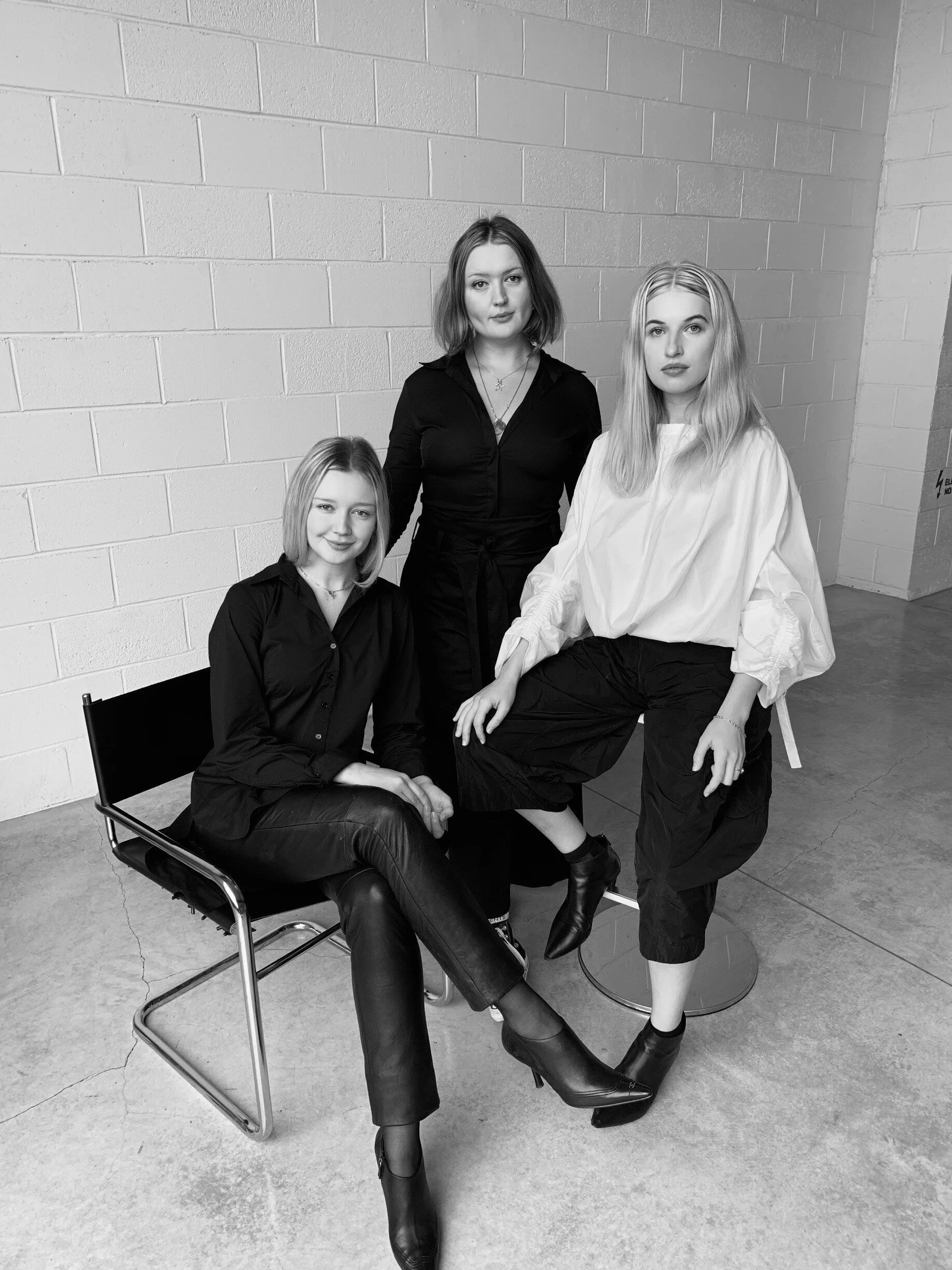
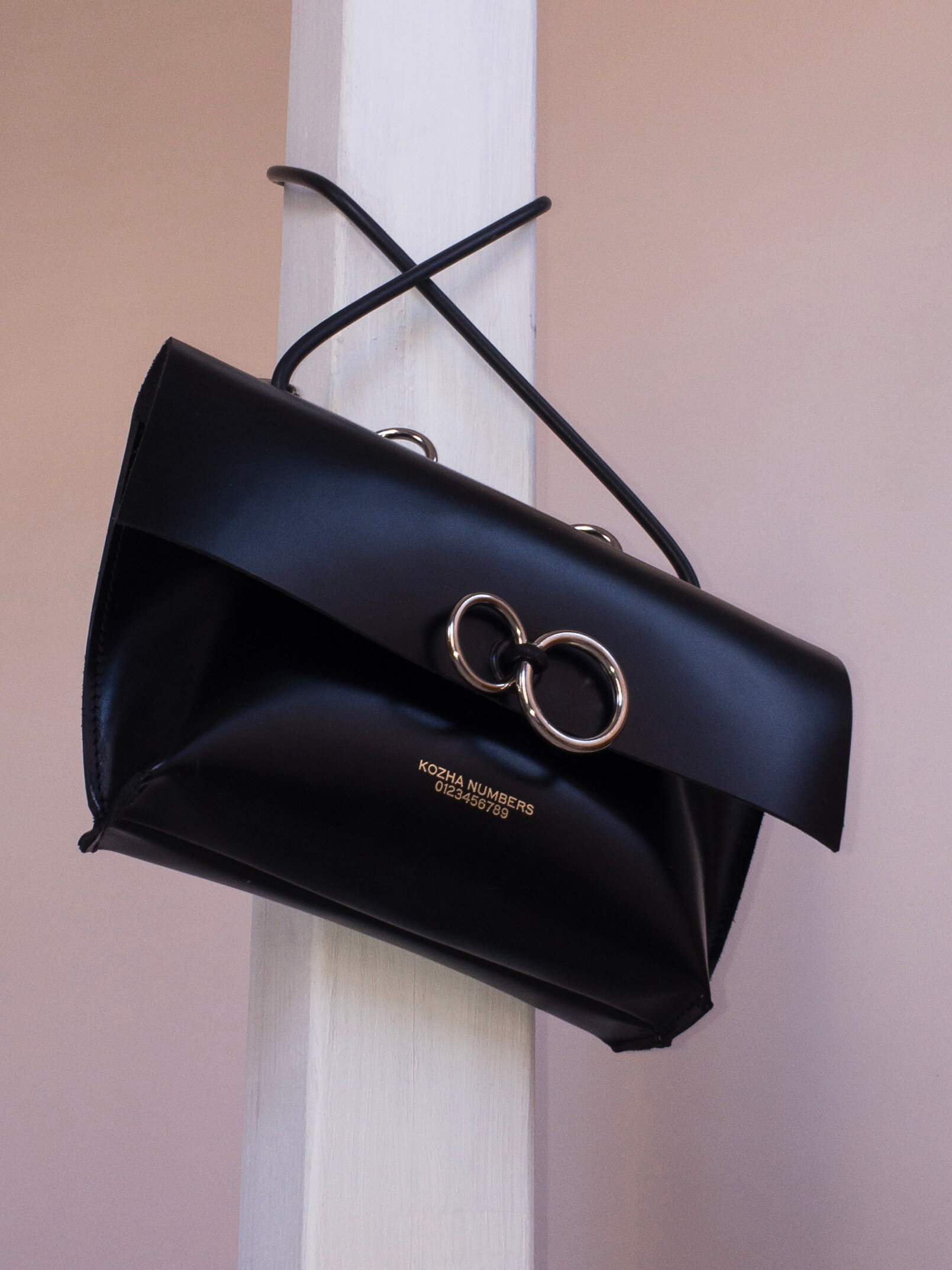
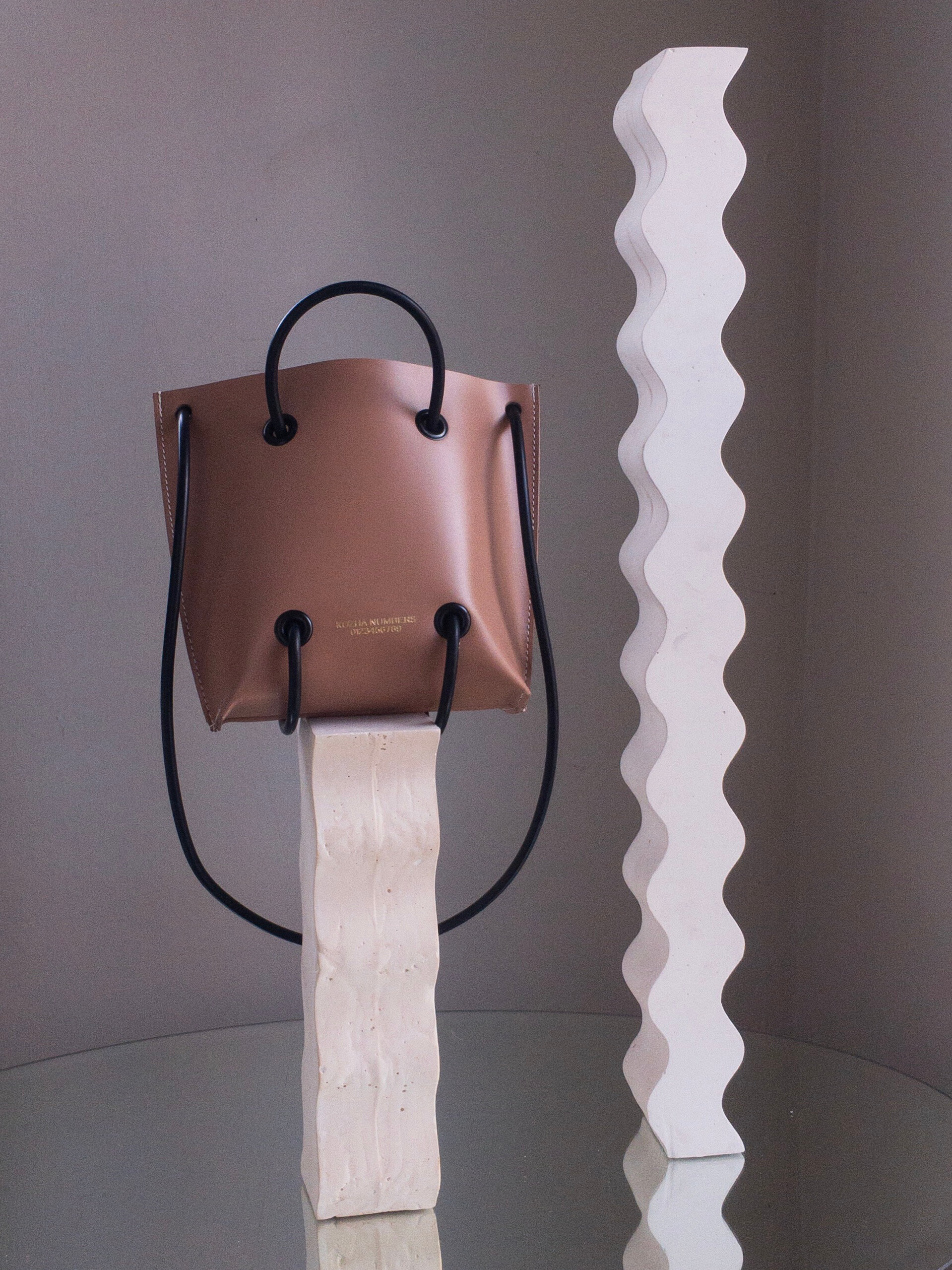
Kozha Numbers was founded in 2015 by Ilona Gerasimov, Lena Vasilenko-Tsymbal and Carina Gonzales. Photo: Courtesy of Kozha Numbers
Unfortunately, many of us are all-too-familiar with burnout. Too often we keep pushing ahead in a job we don’t love because we refuse to come to terms with the fact that our career just doesn’t serve us anymore. Well, we’re calling time’s up on that. Your health and happiness are way more important. Leaving a job that doesn’t fill you up or motivate you is self-care.
For Kozha Numbers’ co-founders, Ilona Gerasimov and Lena Vasilenko, it was through a mutual feeling of dissatisfaction for their current jobs that inspired them to make a change, together. With their backgrounds in accounting, the duo had no prior experience in production or design but they didn’t let this act as a barrier. Instead, they viewed it as an opportunity to grow, to expand upon their knowledge, and embark into uncharted waters. And, needless to say, the payoff was well worth the journey.
Six years later, Gerasimov and Vasilenko partnered up with beauty expert Carina Gonzales and officially launched Kozha Numbers. Holding to their mutual values of quality and regard to detail, the trio turned an admiration of art and architecture into a handbag and beauty brand that epitomizes the art imitates life motto.
I know what you’re thinking—I don’t have the time to start a business from scratch. Well, the Kozha Numbers founders are here with us today to inspire you to think beyond the confines of your busy schedule. And even if that means staying up until 2 a.m. with your business partner after your 9-to-5 hustle (as these creators did), this company is living proof that hard work pays off.

CREATE & CULTIVATE: Did you write a business plan? If yes, was it helpful? If no, what else did you use instead?
KOZHA NUMBERS: “From the beginning we had a very clear visualization of the kind of company we wanted to create. We took an alternate route and had our passion fuel us instead of creating a standard business plan. This process felt more organic to us and to our brand. Create a plan that works for you—that will provide you with direction going forward and the hustle to make it come to life.”
How did you come up with the name? What was the process like?
“We liked the idea of our products being fundamental, like how the first 10 digits 0-9 are fundamental to create any number sequence. We originally were just going to name the brand “THE NUMBERS 0123456789,” but last minute we changed it to KOZHA NUMBERS 0123456789. We went back to the drawing board and came up with KOZHA NUMBERS 0123456789. Kozha felt like a natural fit since it’s meaning in Russian is leather and skin.
“When we came up with the name Kozha at the time we had no plan to also add skincare to our brand. Looking back we like to think it was a sign that KN BEAUTY was meant to be! Naming our brand came very naturally, It’s important to keep your brand in mind and make sure it looks and sounds how you’d like it, but don’t overthink it.”
What were the immediate things you had to take care of to set up the business?
“After settling on a name for our brand we went straight to building a website. When we were first building this foundation for KN we really were learning as we go. As time progressed we set up trademarks and social channels but before all that we wanted to make sure our brand and the product were how we envisioned it to be. It’s important to build a solid foundation for your brand, but don’t let that be daunting. It’s okay to learn as you go.
What research did you do for the brand beforehand? Why would you recommend it?
“We were actually raised by makers. A leather shoe designer, seamstresses, and woodworker! Watching our parents taught us the art of handcrafting and making wearable art with your hands—a skill that is often forgotten or outsourced by a factory. This background is what KN was founded on but a lot of our knowledge came from practicing it ourselves and learning from what didn’t work.
“A good example is when we first wanted to create a brand we were making leather sandals. Although we enjoyed designing shoes this experience led us to designing handbags which was a better fit for us at the time. The best advice is to keep your mind open and absorb all the information you can get your hands on. Listen to TED talks, read books, watch interviews. The information is out there and you don’t have to go to school to learn it.”
“Not everything works, and the industry is constantly changing so it is key to keep trying things and re-adjusting until something works for you.”
How did you find the manufacturer/production facility that you use? Did you have any bad experiences?
“We have been fortunate enough to produce all of our products in house which has provided us with many benefits throughout the years. When you oversee the manufacturing yourself you’re able to be more involved in the design process and ensure all products are being produced ethically and are the highest quality possible. When we first started KN we had to work with what we had by handcrafting the bags ourselves with the resources we could get our hands-on.
“As we grew we invested everything back into the company and were able to accumulate more materials, machines, studio space, and skilled employees to help with the manufacturing. With KN Beauty we also keep our manufacturing locally in Portland by only producing our products in small batches. This method we’ve found is a lot more sustainable and allows us to maintain the highest quality product that is always fresh. Nothing goes to waste since we oversee production and are so involved in every step.
“We truly love being involved in every aspect of KN and having the creative freedom to create products in-house. This method does take time and patience but the result is always worth it.”

Did you self-fund the company? Did you raise seed money or initial investment money? Why/Why not?
“We are completely self-funded. We were raised on the principle that if you can’t afford it, you shouldn’t buy it and in many ways, this method has really helped us grow. We also loved the idea of being solely responsible for the success of KN and didn’t want to give up any creative freedom which can happen when you bring on investors. Investors can be a great tool but when it comes down to it, your drive and hard work are the most important.”
How much did you pay yourself? How did you know what to pay yourself?
“When we first started KN we all had full-time jobs and were putting everything we could into the brand. For the first two years, we put everything we made back into the business, and only recently we have been paying ourselves. Building that foundation is so important and you will thank yourself later.”
How big is your team now? What has the hiring process like? Did you have hiring experience?
“We are currently operating with a team of seven that is responsible for everything including the design, marketing, and manufacturing process. When we hire we’re looking beyond the resume and are really looking for a great character. Although skills are important, what really stands out is if a person is a problem solver and someone who has the drive and motivation. Especially on a small team like this, we wear many hats and being able to come to work with a can-do attitude is very important. None of us had prior hiring experience, so we’ve definitely had to learn as we go. You have to trust your gut instinct and hire the people that you believe in.”
“Rejection isn’t failure—it’s an opportunity to learn and adjust.”
Did you hire an accountant? Who helped you with the financial decisions and set up?
“In the beginning, we did not have an accountant and had to figure things out for ourselves. It’s important to know your strengths and weaknesses and ask for help when necessary. An accountant isn’t absolutely necessary in the beginning and there are many options out there for managing finances. Quickbooks is a great resource and there are so many other resources out there that you can educate yourself with.”
What has been the biggest learning curve during the process of establishing a business?
“The biggest learning curve for us has been finding efficient ways to put our brand out there. Not everything works, and the industry is constantly changing so it is key to keep trying things and re-adjusting until something works for you. Also, keeping an open mind and continuing to absorb information that you could implement into your business.”
How did you get retailers to start stocking your product? Were you told no? How did you handle that rejection? What advice can you share?
“In the beginning, it was difficult to land retailers. We noticed a big shift when we focused more on our imagery and getting our vision out into the world. Once we were able to convey our brand identity people started to catch on and retailers came to us. Buyers are looking for brands that are unique and have a clear brand vision. Once you start focusing on this, people will notice. We have also faced rejection many times like every brand. Rejection is just part of the industry and it’s more common than not. Rejection isn’t failure it’s an opportunity to learn and adjust.”
“You’re going to have so many setbacks and sometimes it’ll feel like nothing is working. You must hold onto what you believe and adjust as you go because if they can do it so can YOU!”
Do you have a business coach or mentor?
“Our business mentors were really our parents. They taught us so much about hard work and how to handcraft beautiful products. We also indulged in a lot of books, podcasts, and interviews.”
How did you promote your company? How did you get people to know who you are and create buzz?
“Since the beginning, we always believed in the power of great imagery that can tell a story about the brand. KN represents a lifestyle and portraying that in our campaigns has been a big part of our success. We partner with photographers we feel understand our vision and we make it come to life through our campaigns. We also believe that when you create a truly unique product that you believe in and pair it with imagery that represents the message you’re trying to convey it essentially sells itself. We had no prior marketing skills before KN besides instinct.”
What is one thing you didn’t do in the setup process, that ended up being crucial to the business and would advise others to do asap?
“Do your homework and really think hard about what you truly need to push your business forward. Don’t ignore things like trademarking, and don’t be afraid to ask questions.”
For those who haven’t started a business (or are about to) what advice do you have?
“Create a clear vision and a purpose for what you are doing.”
Anything else to add?
“You’re going to have so many setbacks and sometimes it'll feel like nothing is working. You must hold onto what you believe and adjust as you go because if they can do it so can YOU!”
Slow Stories: Why Combining a Conscious Business With Slow Content Is a Recipe for Success
Mindfulness matters.

Photo: Courtesy of Slow Stories
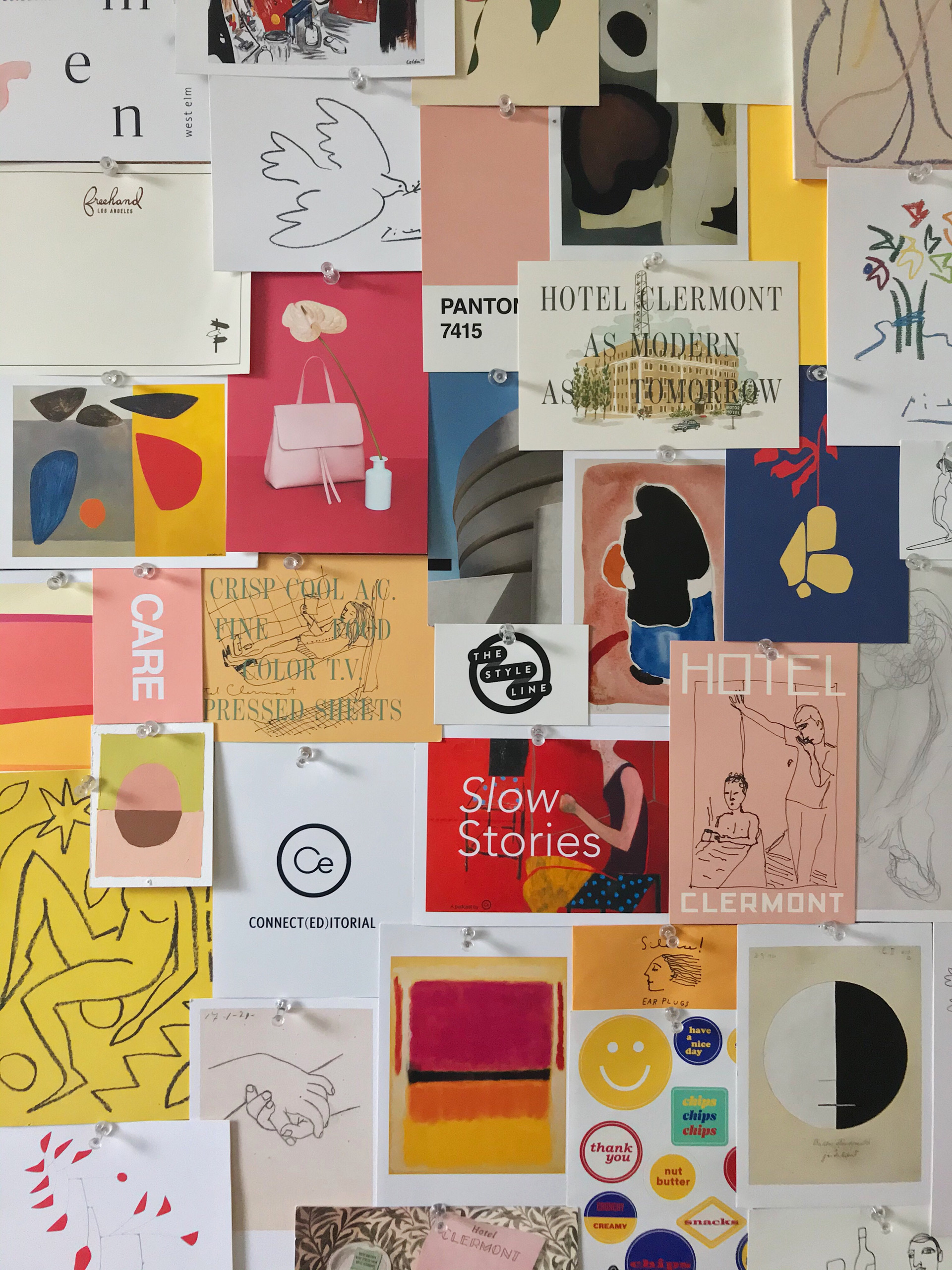
By now, it's clear that content is an incredible tool to establish brand awareness, build authentic customer relationships, and generate sales. But as content has become more embedded in our daily lives, coupled with the tumultuous cultural climate we're all navigating, I've recognized the shift that many individuals have taken by utilizing their platforms to challenge the current landscape—one that often prioritizes quick turnarounds and maximum visibility. In turn, this has played an immense role in catalyzing the slow content movement.
As the founder of a service company, I'm no stranger to the challenges that come with addressing the business goals of our clients, while also remaining true to our company values. And as we head into the holiday season, I've been thinking more about how slow content can inspire conscious storytelling (and business practices) that is inspiring and impactful.
Recently, our Slow Stories interviewees have also been practicing mindfulness in their own storytelling efforts and considering how their efforts influence the world at large. Some highlights from these conversations include the following:
Embrace the power of the pause.
Nichole Powell of Kinfield (check out my follow-up interview with her here on C&C!) said it best: "There is tremendous power in the pause." Taking a moment to slow down and create the necessary headspace will enable individuals to think clearly about their intentions, and in turn, how to effectively translate that into dynamic content that ties back to overarching business values.
Ask questions with sincerity.
As I mentioned in my first article in this column, creating a content calendar is essential in seeing a long-term strategy through to its fullest potential—but that doesn't mean there isn't room to ask questions along the way. While consistency is crucial, the best content often comes from a place of honesty and curiosity. And at times, this means it's essential to ask ourselves—and one another— the important questions.
Be considerate of one's time.
Perhaps one of the most critical pillars of slow content is that it ties back to the idea of providing value and purpose. When creating content, it is vital to have consideration of one's (lack of) time, both short-term and big picture. With that said, consciously-minded brands should think about when customers will be consuming this content, and as a result, understand the best way to engage with them during key periods.
With these ideas in mind, if you're looking to strike a balance in blending conscious business with quality content creation, here are a few thought-starters to jumpstart these efforts:
Practice self-awareness.
The best way to create anything that is culturally conscious is to take a step back and understand your brand's role on an individual scale. Maintaining a level of self-awareness about your values, industry positioning, and product or service offering will help create a more realistic roadmap of how you can create content that is considerate of your followers' needs. Whether you're launching a product that benefits a charitable cause or spearheading a content series that features change-makers in your community, understanding how you exist within the broader industry landscape will establish a conscious approach to how you create content that will resonate more profoundly.
Conscious content and conscious collaboration go hand-in-hand.
Identifying and working with like-minded partners can help establish new ways of thinking about unique brand storytelling in our saturated digital environment. As I mentioned above, questions lead to compelling content opportunities, and developing a dialogue in which multiple perspectives are considered can inspire innovative approaches to content that consider important conversations that an industry holistically needs to address. Consider this column, for example. When I started Slow Stories, I wanted to get to the heart of why we're doing what we're doing from a business perspective. In addition to the podcast itself, I felt the best way to do this would also be to explore the topic in new arenas. So after years of collaborating with Create & Cultivate on content and event opportunities, I approached them to be our partner in launching this extension column. As such, we've been able to round-out the way users experience Slow Stories, and also introduce Create & Cultivate's entrepreneurial audience to a new way of thinking about their own storytelling efforts.
Turn inspiration into action.
To turn an inspiring story into something actionable, taking a slow content approach will ensure that proper time and planning is spent just as much on the distribution of the content as much as the actual production. Understanding where a piece of content will live and how it will serve an audience is a crucial part of how a consumer engages with it further. For instance, if a brand collaborates on a fundraising initiative with a like-minded organization, both parties' audiences will not only discover the content itself but will have an opportunity to engage with one another around the effort, and in turn, create a more in-depth narrative or way to engage with the cause.
Conscious storytelling is something that will transcend the holiday season. However, as we head into the most wonderful time of year, I hope these themes inspire you to slow down and think about how your content can make the world—or at the very least, someone's day—a little bit better. For more about slow content, be sure to check out the Slow Stories podcast and check out past articles from my column here.
About the Author:

Rachel Schwartzmann is the Founder and CEO of The Style Line LLC. She created The Style Line in late January 2011 via Tumblr and has fostered The Style Line’s brand in its growth since then. Rachel has been featured in esteemed sources including Forbes, Refinery29, and MyDomaine and has also spoken at Create & Cultivate and Columbia University on establishing a unique brand point of view and entrepreneurship. On October 1, 2015, Rachel took The Style Line in a new direction as a boutique content company with the introduction of its slow content agency CONNECT(ED)ITORIAL.
Links + Handles:
The Style Line: @thestyleline Instagram, Facebook, and Twitter.
CONNECT(ED)ITORIAL: @connecteditorial
Rachel Schwartzmann: @rachelschwartzmann and @RMSchwartzmann

If You’re Looking for Stylish Yet Practical Workplace Solutions, We’ve Got Them
WFH just got a makeover.
For many of us, our home office is a sanctuary for creativity so it needs to be stimulating to get those juices flowing. But there is definitely a fine line between designing a space that’s visually interesting but also has a purpose too. And with more renters in large cities than homeowners, we need to find practical (and pretty) solutions that suit any space.
This also means versatile, multi-functional furniture and décor that can turn any nook or tiny area at home into a productive workspace, because let’s face it, not all of us have room for a designated home office. When Create & Cultivate editorial director, Sacha Strebe works from home her dining room converts into a home office (Bonus: it’s right next to the kitchen for snacks on-the-go).
In this story, we tapped our C&C team to share how they work from home using the stylish, multi-purpose pieces from our friends at Pottery Barn. You too can design a convertible home office that's both inspiring and productive.

Photo: Courtesy of Pottery Barn
Sacha Strebe, Editorial Director, Create & Cultivate
The Home-Office Tip: Don’t overfill it.
Why It Works: “To limit any distractions when you’re working from home, be sure to create an environment that’s both stimulating yet minimal. You want an inspiring space to get those creative juices flowing but you also need to focus and get your work done. So, create a streamlined, clutter-free space in the house (for me it’s my dining room table) and only keep the bare minimum. I love to have fresh clippings from the garden in a vase next to me while I’m burning a candle to enhance the mood. The only other things I keep nearby are my laptop, a bottle of water, pens, and a notepad. Sometimes I will even put my phone away so I can really hunker down.”
How to Get the Look: “This vase is decorative yet minimal and I just know the palo santo scent of this candle will ramp up my productivity.”

Pottery Barn Quinn Ceramic Vase
$39
Carly Johnson, Senior Director, Brand Marketing
The Home-Office Tip: Think outside the box.
How It Works: “You don’t need to settle for the traditional office furniture for your workspace. A credenza can double as a chic storage solution to keep all of your files and papers, while also being a space to decorate with objets d’art and inspiring pieces. Then you can keep your desk very minimal and work-related.”
How to Get the Look: “This credenza from is a practical size with a classic look that will stand the test of time. And while it’s sitting pretty, you can store all of your office essentials without anyone noticing.”

Pottery Barn Dolores Cane Media Console
$999
Caitlin Shier, Vice President, Brand Partnerships
The Home-Office Tip: Use a console table as a desk.
How It Works: “We don’t always have the luxury of space but that doesn’t mean you have to compromise on style or function—turn your console table into your part-time desk.”
How to Get the Look: “Place decorative items on this modern rustic console so it adds to the overall design of the room, but keep a space clear front and center or to the side so you can shimmy a stool underneath when you need to work.”

Pottery Barn Malcolm Console Table
$854
Adry Perez, Social Media Manager
The Home-Office Tip: Use stylish storage to hide your office supplies.
How It Works: “If you have a roaming home office as I do then various furniture throughout your apartment can be turned into a temporary workspace. But that means I need somewhere to store my office supplies. My solution is stylish storage.”
How to Get the Look: “I keep notepads, pens, paperwork, and files in my chic rattan baskets either underneath my console or near my couch in the living room, where ever I typically work from home the most—no one will know the wiser. And when you don’t have a designated space, then I recommend this organization system that can be set up on a wall nearby to keep you on task. Working from home can be filled with distractions so any help is appreciated to stay on track. ”

Pottery Barn Jacquelyne Lidded Barrel Basket
$129
Nairi Najarian, Senior Director, Digital Marketing
The Home-Office Tip: Invest in double-duty furniture.
How It Works: “Customize any space to suit your needs with a modular pop-up desk that doubles as stylish storage.”
How to Get the Look: “Since I only work from home a few days a month I need multifunctional pieces that look like stylish furniture when they’re not being used. This modular system is fully customizable and looks like a compact storage area with a hidden compartment—a popup desk hides all of my cords and even has a place to stash my cell phone and smaller desk accessories when not in use.”

Pottery Barn Mission Modular System Collection Pop-Up Desk
$209
Kylie Tansey, Vice President, Sales
The Home-Office Tip: Light it up.
How It Works: “Lighting at home isn’t always optimized for working—think warm, soft, and moody which isn’t really what you need when it’s time to focus on a project or tackle your inbox. That’s why I love to have a task lamp nearby so I can shed some light on the space I’m working from.”
How to Get the Look: “Opt for a table lamp like this stylish bronze lamp which can be moved around the house from the dining table to the sofa, or wherever you feel inspired that day.”

Pottery Barn Stella Task Table Lamp
$137
To shop more of the stylish, multi-purpose pieces from our friends at Pottery Barn, visit potterybarn.com.
The Truth Serum: 3 Experts on How to Source Trustworthy Skincare Advice in a Click-Bait World
An entrepreneur, influencer, and celebrity dermatologist explain in this week’s episode of WorkParty podcast.
This post is in partnership with RoC Skincare.

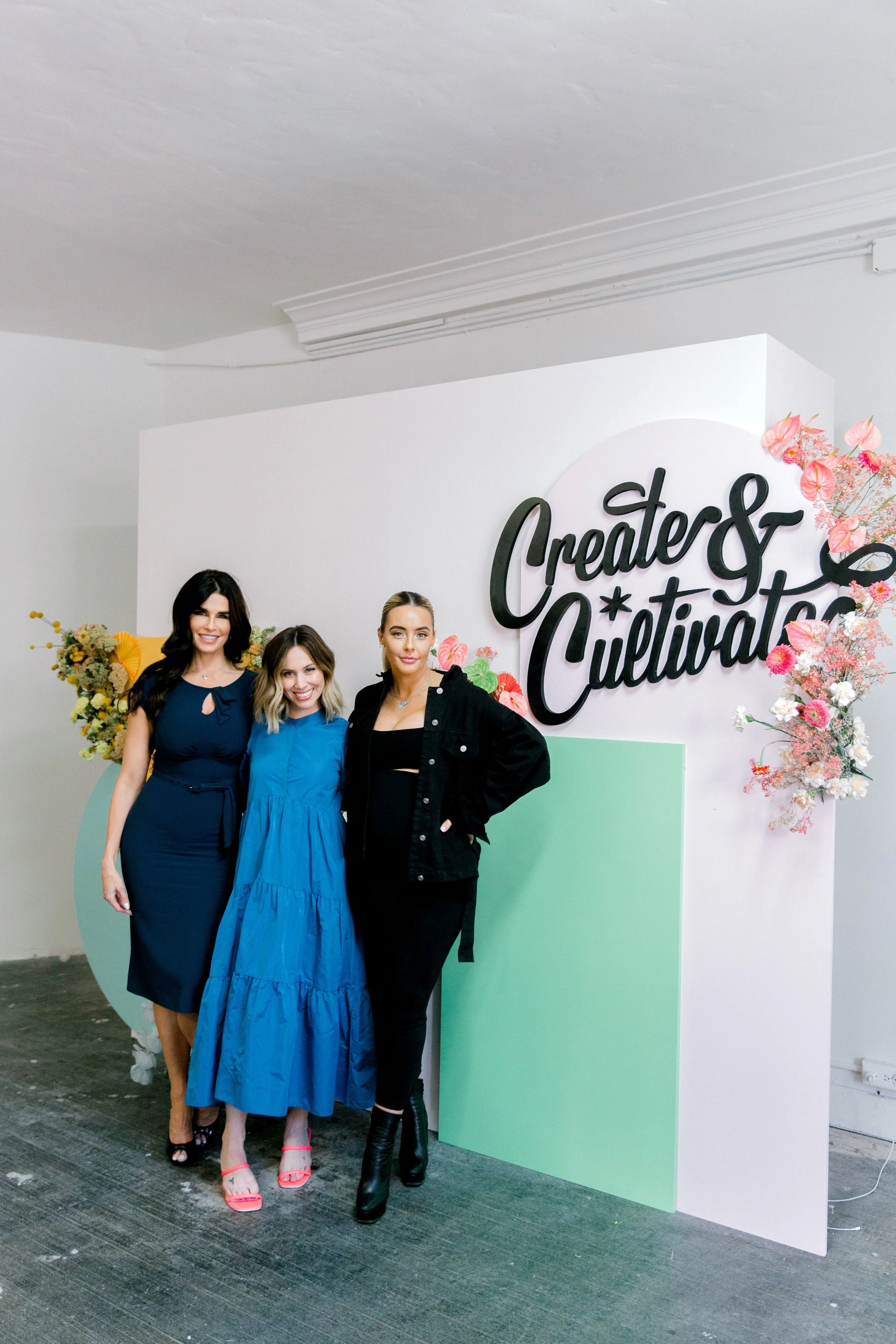
Dr. Anna Guanche (left) and Lauryn Evarts Bosstick (right) sat down with C&C founder Jaclyn Johnson at our San Francisco Conference to discuss sourcing trustworthy skincare advice online. Photo: Courtesy of Create & Cultivate
How many of you have tried to Google answers around skincare and anti-aging without success? It can be incredibly confusing and overwhelming to find out what works and what doesn’t. Believe it or not, 3.6 million searches were carried out for phrases related to “anti-aging” over the past 12 months. There is just so much information out there!
Well, RoC Skincare—a brand that was born in Paris in the 1950s and is still here today with game-changing retinol formulas that are clinically proven to treat aging skin and help minimize the appearance of concerns like fine lines, wrinkles and dark circles—wants to help you sort through that clutter. At our San Francisco conference, we sat down with some educated women to find out what people are really looking for, what they’re actually finding, and why they keep searching.
Our founder, Jaclyn Johnson, chatted with Dr. Anna Guanche, affectionately known as “Dr. Beauty,” and Lauryn Evarts-Bosstick, creator of The Skinny Confidential podcast and franchise, about how to source trustworthy skincare advice. The conversation was just as informative as it was hilarious, so be sure to listen in on the podcast below. Then keep reading for some of the most memorable quotes from the interview.
Rapid-fire questions:
My favorite anti-aging hack is…
Lauryn: “A facial massage—it tightens the skin.”
Dr. Guanche: “Using retinol every single night.”
The weirdest home remedy for skin I’ve tried is…
Lauryn: “Ordering olive oil from room service to remove makeup.”
Dr. Guanche: “A bird poop facial. The geishas used to use this. It has enzymes in it to exfoliate your skin.”
Lauryn Evarts Bosstick:

“I think people do have a lot of these questions that they’re embarrassed to ask, so they ask Google… I’m trying to create a space where we can talk about taboo topics.”
—Lauryn Evarts-Bosstick, Founder, The Skinny Confidential
On the craziest topics discussed on her podcast:
“I put myself in the audience’s position. I want to know the nitty-gritty. I want to hear from different walks of life.”
“I think people do have a lot of these questions that they are embarrassed to ask, so they ask Google. I’ve always been an over-sharer, so I feel really comfortable to talk about these taboo subjects. I’m trying to create a space where we can talk about them.“
“I feel like we’ve talked about everything… I feel like there isn’t anything we haven't talked about (on The Skinny Confidential).”
On peer-to-peer beauty recommendations:
“I’m really, really specific and strategic with who I choose to work with. I’ve left a lot on the table because it wasn’t the right fit.”
“I try to use the product for at least a month, sometimes I give it to my husband because he’s really into being dewy right now—he thinks it’s his thing—but I basically manipulated him into it.”
“It needs to be something that keeps showing up in my life… I’m really careful about what I promote. I also like to have a product that I keep going back to and something I know the audience will actually use. “
On finding the right products:
“I sit and watch the French girls. I like to observe and see what they’re doing differently. I feel like Americans have a ‘more is more’ approach. I try to watch and observe and see what other people are doing and then implement it into my routine and then see if it works.”
“I’m really inspired by other countries. I like to observe and see what they’re doing differently—it's a lot of oil, retinol, and facial massage.”
On the rise of skincare:
“People are starting to understand that prevention is key. We’re in a day and age in 2019 where a lot of women don’t want to look like someone else. Everyone wants to be the best version of themselves and self-care is that, investing in the best version of yourself.”
On general skincare advice:
“I am batshit crazy about the sun. I have driving gloves in my car, sunscreen on my hands, chest, and ankles. I am wild with the sun. When I get out of my car to walk to 7/11 I have a giant hat on.”
Dr. Anna Guanche:

“Manage stress, meditate, wear your sunscreen.”
Dr. Anna Guanche, Celebrity Dermatologist
On skin aging:
“You reduce your elastic production over time, your collagen is decreased in your dermis and you start to see your skin no longer compensates the damage done to it over time. Your skin can no longer compensate for the skin damage that has happened to you since you were born.”
On common anti-aging questions:
“Does anything really work?”
“Why is this happening to me?”
“What active ingredients do reverse aging?”
On the benefits of retinol:
“Retinol is a vitamin A derivative and is naturally found. It helps remove old, dull skin cells and reduces pigmentation and the appearance of fine lines/wrinkles. Because of the retinoid reaction, your skin will adjust so start every other night and slowly build up if needed.”
On dark circles:
“I love the RoC Retinol Correxion Eye Cream. It has clinically proven results and helps with dark circles. You can see improvements in 4 weeks and at 12 weeks, fines lines are visibly reduced by 50%—equates to eyes looking 10 years younger.”
On anti-aging:
“You can drink plenty of water, don’t stress out, get lots of sleep, sleep on your back, low-salt diet, wash every single drop of makeup off every night—good skin takes discipline.”
“There is no shame in being beautiful and wanting to be beautiful—putting your best foot forward. Self-care and self-love at a younger age is a great thing to do—actively doing something to overcome those insecurities.”
On general skincare advice:
“Manage stress, meditate, wear your sunscreen.”
“Wash your face completely at night.”
“I try to sleep at the same time every night and wake up at the same time every morning. You need to have a routine and you need to have discipline.”
“A lot of time we take great care of our face but we forget to take care of our neck and hands and chest.”

C&C Founder and CEO, Jaclyn Johnson in conversation with celebrity dermatologist, Dr. Anna Guanche and Lauryn Evarts-Bosstick of The Skinny Confidential for the RoC Skincare panel at the San Francisco Conference.
For more information on RoC SKincare visit, rocskincare.com.

How the Dazey LA Founder Turned $4000 Into a Thriving (and Profitable) Business
Your dream starts here.
We know how daunting it can be to start a new business, especially if you’re disrupting an industry or creating an entirely new one. When there is no path to follow, the biggest question is, where do I start? There is so much to do but before you get ahead of yourself, let’s start at the beginning. To kick start the process, and ease some of those first-time founder nerves, we’re asking successful entrepreneurs to share their story in our new series, From Scratch. But this isn’t your typical day in the life. We’re getting down to the nitty-gritty from writing a business plan (or not) to sourcing manufacturers and how much they pay themselves, we’re not holding back.
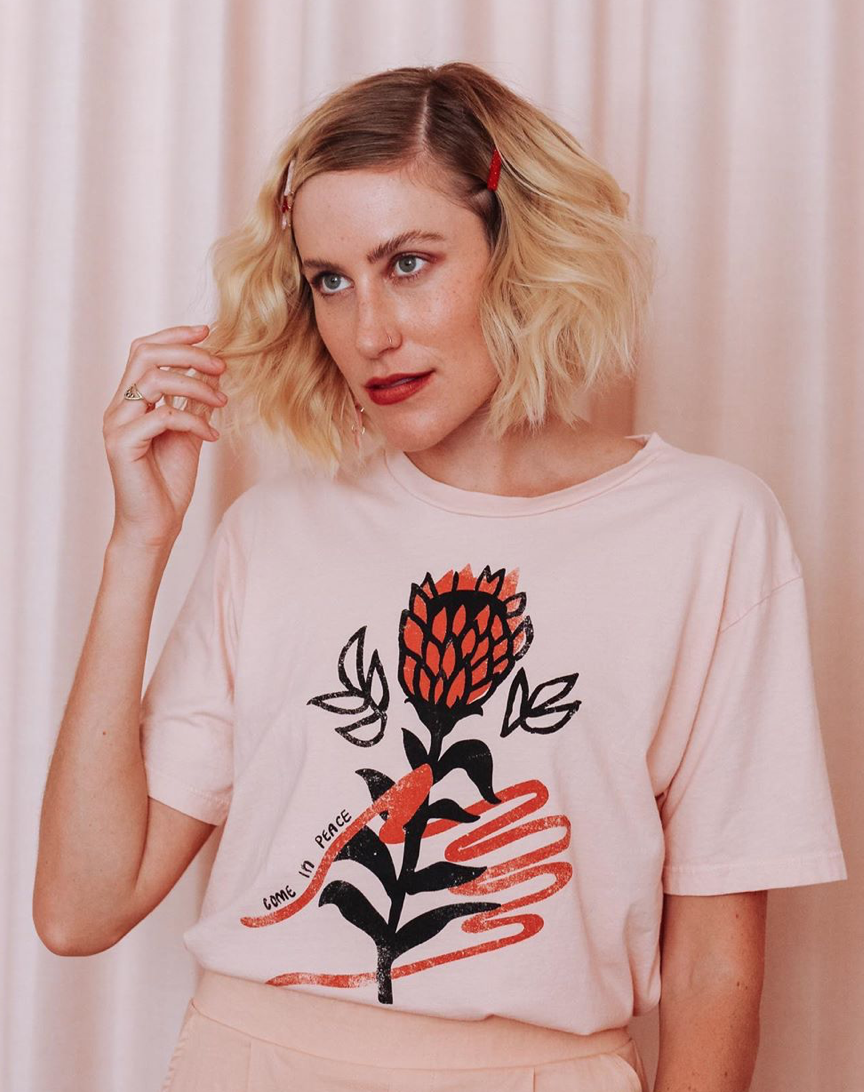
Photo: Courtesy of @Dazey_LA
Searching for your dream job is no walk in the park. Sometimes, you can search and search and not find what you were looking for. Or maybe you do land that job you always dreamed of, and it turns out to be something entirely different. That’s why the founder of Dazey LA, Danielle Nagel, thinks “your dream job simply doesn’t exist—you have to create it.” And we are totally on board with that.
Dazey LA is equal parts fashion and feminism all wrapped up into a beautiful small business that consists of graphic tees designed by Danielle herself (and so much more). We love the work and stance on social topics Danielle has made, so much so that we asked her to design our team t-shirts for the San Francisco conference along with the Self Care Summit jumpsuits and murals! Take a read below to see how this go-getter and small business owner got her start in the dream job world—you’ll leave this page just as inspired as we did.
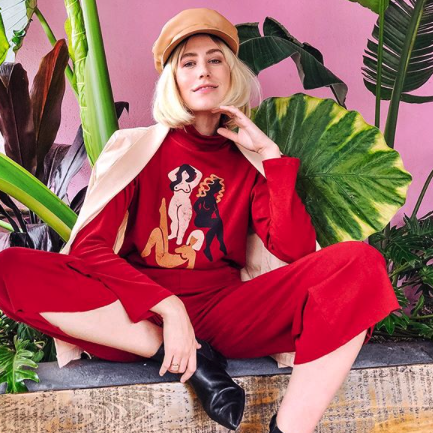
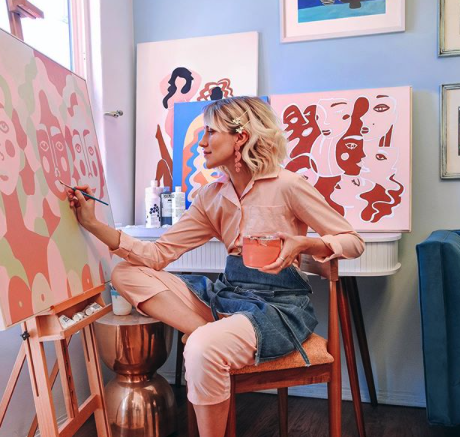
Photo: Courtsey of @DazeyLA
Create & Cultivate: Did you write a business plan?
Danielle Nagel: “I did not! I’m more of a fly-by-the-seat-of-my-pants kind of gal. I didn’t have many expectations, but I did have a lot of big dreams. I was sure to build up my freelance client list before quitting my secure job to start Dazey. I figured I could count on that if the company took a while to turn a profit. I had a lot of ideas but didn’t write down a solid plan. I also knew things always end differently than you imagined (and boy did they!). Plans and ideas are constantly changing and I like holding them loosely and rolling with the punches.”
C&C: How did you come up with the name? What did you consider during that process?
DN: “I love branding and coming up with names. Beyond Dazey LA, I have helped name and brand quite a few of my client’s and friend’s companies. For me, it’s all about creating something unique and unexpected. I like to make up new words if possible—while still being familiar and easy to remember. Plus, that way you’re way more likely to get all the right domains and handles.
“I had originally come up with the name Lovelle, which was a hybrid of my name Danielle and Love. Now I totally hate it. I ordered a bunch of labels and branding assets, only to decide I didn’t like it after all. Then my sister and I were texting back and forth to try and find something new. We started throwing out words we liked ‘golden’, daisy’, ‘days’, ‘daze’, and then one of us (still up for debate) just said what about ‘Dazey’!? We liked it and it just stuck. I also like that with the unique spelling, it can take on a meaning of its own.”
C&C: What were the immediate things you had to take care of to set up the business?
DN: “I immediately set up trademarks and make sure I snagged all the domains and usernames—as a product-based business, that is first and foremost! I had been a full-time t-shirt designer for about six years before launching my brand and had designed a lot of meaningless graphics for corporate companies like Urban Outfitters and Macy’s. I knew when I launched my own brand I wanted to design shirts that stood for something, with designs I was really proud of—I wanted them to be my very best. I spent some time perfecting the collection and worked on finding ways to source the best blanks to print them on. Once I finally had my first little collection, I planned a shoot, threw it on the site, and then hit live.”
C&C: What research did you do for the brand beforehand? Why would you recommend it?
DN: “Having worked in the industry for many years before launching Dazey gave me perspective. I was a bit of a millennial job-hopper, so I got to experience many different workplaces. I was extremely curious about how each company worked and did all I could to figure out the mechanics. My last job before Dazey was with a start-up, Revice Denim. I was basically employee #1 and did everything from naming the brand, designing the clothing to art directing, shooting, styling, social media, and web design.
“Before that, I was just a cog in the corporate wheel, so it was the first time I had the chance to explore my creativity beyond apparel graphics (and I loved it). Working for a startup was an incredible way to research and learn about building a company from the ground up. That’s what gave me the courage to start Dazey.”
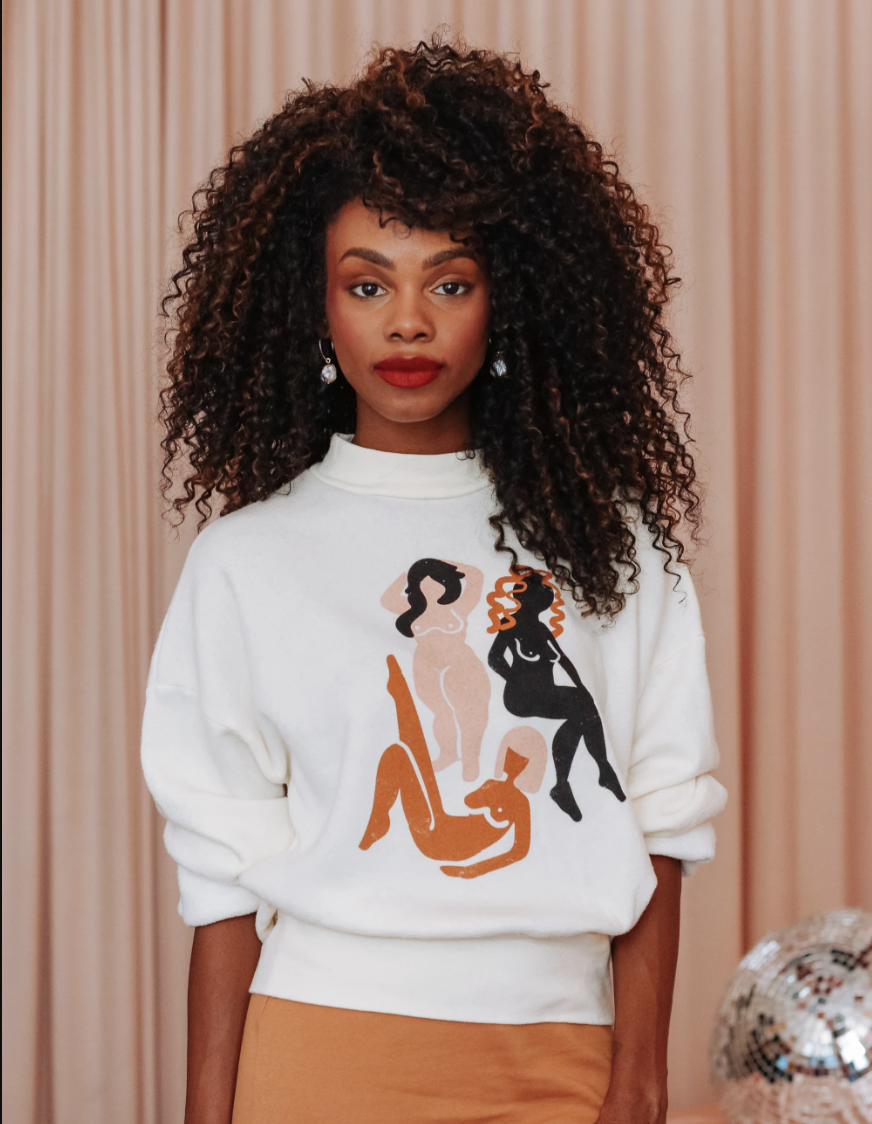


C&C: How did you find the manufacturer/production facility that you use? What advice do you have for other founders looking for a trustworthy manufacturer?
DN: “I didn’t find my current production partner until I was six months in. I was basically working with whatever I could find on Google, and it was really limiting my creativity. I went to MAGIC, the big fashion tradeshow in Vegas, hoping to get some freelance clients and bump some shoulders. I ended up being introduced to my production partner, Kelly, through one of my freelance clients. We immediately hit it off and realized we had so much in common.
“We both wanted to make beautiful and creative clothing while doing so as sustainably. We came up with and perfected our made-to-order, no waste model over the past three years. He has helped me go from ‘just a t-shirt brand’ into a full-on clothing line with things like suits, dresses, and even patterned fanny packs. I would say putting yourself out there is key. Go to sourcing shows, networking events, introduce yourself to people, ask questions, send cold emails, let the world know what you’re looking for and go find it.”
“Go to sourcing shows, networking events, introduce yourself to people, ask questions, send cold emails, let the world know what you’re looking for and go find it.”
C&C: Did you self-fund the company?
DN: “Dazey is fully self-funded. I was very careful to save a ton before starting Dazey so I wouldn’t be stressed or chicken out. I had saved enough to launch the brand that I could comfortably live off for a year. It has given me the flexibility to harness my creativity and grow at a pace that felt comfortable to me as a brand new founder and businesswoman. I know all the money I make is mine and I get to make the final call on everything. I think it was the right call for me starting out and we’ve been able to grow a lot from my initial $4,000 personal investment. I don’t know what the future holds, but I may be open to the idea of investment to really help scale in the near future.”
C&C: How did you know how to pay yourself?
DN: “Well, I made the mistake of starting off my business as a sole proprietorship. Which means everything from the business was through my personal bank account. Every expense and every payout. Now I’ve learned that’s not a good practice if you’re really trying to grow a company outside of just freelance work! You really need to keep them separate. Since then, I’ve of course established a C-corp and company account.”
“My personal pay always varies depending on how the company is doing. When things are good, I allow myself to experience the benefits. When they are slow, I pull back. Last year we had an amazing year and I paid myself more than I had ever dreamed of making with my corporate jobs. This year, we’ve had a slower summer. I’ve decided to keep all of the money in the business account and live off of my savings and rental property income for awhile. A lot of founders don’t let themselves enjoy the successes and I think that can be a quick route to burnout. I like going with the flow and staying in-tune with my company.”
C&C: How big is your team now? What has the hiring process been like?
DN: “We have five people in our immediate team now. I had never hired anyone before and remember being so excited to give the first interview. We’ve gotten so lucky with our team and everyone I’ve hired since year one is still here today. Myself as the owner and CEO, Phillip our COO (who is also my amazing boyfriend), Megan who manages our Dazey Lady Shop, Naomi who helps me with content and creative, and our newest Lisa who is doing customer service and shipments. When it came to interviewing, I trusted my gut feeling. I didn’t get too hung up on resumes because I know people can easily learn on the job, just like I had.
“It was more about the conversation and connection I had with them. Things like if I could trust them, get along with them, that they cared about the company, and I think they are a hard worker. So far, it hasn’t steered me wrong. Of course, we have so many other people that are basically apart of the Dazey family, like our production team and sales showroom reps. It really takes a village, even as a super small company.”
“I had saved enough to launch the brand that I could comfortably live off for a year. It has given me the flexibility to harness my creativity and grow at a pace that felt comfortable to me as a brand new founder and businesswoman.”
C&C: Did you hire an accountant? Who helped you with the financial decisions and set up?
DN: “Yes, and I wish I would have sooner. She had to go back pretty far to correct all the unbeknownst co-mingling I did (using both my personal and business account instead of keeping them totally separate). That was totally a waste of time when I could have been working with her all along and without stress. Especially as a business begins to grow, the finances can quickly become hard to track. It’s best to start off with the right person in place so they can grow with you and make sure your books are done right. Accounting is not my forte, so why not focus on what I’m good at—making the money—and then let the professionals handle it.”



C&C: What has been the biggest learning curve during the process of establishing a business?
DN: “As somebody who has always considered themselves good with money, I’ve discovered it’s been a whole different beast as a business. You really have to stay on top of where effort and money are being spent and if the direct return merits that amount. When you start to deal with so many big numbers going in and out quickly, things can get confusing.
“Be sure to stay on track of your finances and know what number you really have in the bank (with expected income and expenses). Make decisions carefully and constantly re-evaluate spending/saving. You really do have to spend money to make money, but make sure you are smart and strategic about it.”
C&C: How did you get retailers to start stocking your product?
DN: “When I first launched Dazey, my focus was on direct to consumer selling and marketing on Instagram. I didn’t think wholesale was important at the time. I wanted to keep my production ethical but also keep my prices reasonable, which made my wholesale margins pretty dismal. I would take wholesale orders here and there if people reached out, but it wasn’t my focus. Fast forward about four years later and it has shifted to be a pretty big chunk of our business. Instagram was everything we needed to start building an engaged and supportive community. Direct website sales were growing like crazy and we thought we had it made in the shade. Then came the dreaded algorithm.
“Additionally, I will say there has been a shift in consumer behavior as more people begin to experience social-media fatigue and distrust. All that dramatically affected our online sales. We pumped up our online ad spend, but it didn’t really help either. I talked to some other entrepreneurs and they all reported the same. Semi-freaking out, I sat down with my production partner to plan our next move. He suggested we give wholesale a proper try. As an industry veteran who had spent most of his career in B2B (business to business as opposed to direct), he thought it could really help us. We had to restructure our pricing to make our margins more fair for us, and then we found a wholesale showroom.
“I walked into the Cooper fashion building in DTLA and grabbed a directory and started sending out cold emails based on the brands the showrooms already carried. We got four meetings, sat down with all of them, and found the right fit—a smaller showroom with a focus on made in USA products. It’s been a game-changer. Dazey now does amazing with wholesale and sells out of boutiques faster than they can reorder. The fact that we built a large social media following and people knew our name has made it easier than starting out with wholesale. We are now even carried by Free People who happened to just find us on Instagram.”
“Be sure to stay on track of your finances and know what number you really have in the bank (with expected income and expenses). Make decisions carefully and constantly re-evaluate spending/saving. ”
C&C: Do you have a business coach or mentor? Would you recommend one?
DN: “Kelly my production partner has been a huge mentor for me. He saw potential when Dazey was nothing and took a bet on me with blind faith. I would also say my community of fellow female entrepreneurs has been one of the biggest driving forces in both mentorship and inspiration. Peer to peer mentoring is amazing because we are all learning and growing together. Outside of Dazey, I co-founded a boutique female co-working space called Biz Babez has been a great connector and space to learn from one another.”
C&C: How did you promote your company? Did you know anything about marketing before this venture?
DN: “I had started fashion blogging in college before Instagram had even existed. I was connected with a bunch of girls via a website called lookbook.nu and when I moved to L.A., we would help each other snap photos of outfits to share on our blogs. I quit blogging when my full-time job got to be too much (this was before you could make money off of it). But many of the girls I knew kept at it and ended up becoming huge successes in the fashion blogging space.
“When I started Dazey, a lot of them were so helpful in shooting content with me and promoting. I would take all the photos myself and also snap pics of whatever they wanted in exchange. This was a great way to get the word out at the very beginning. Then once I built a following myself, I just chose to be very personal and real with my community like sharing the BTS of running a small biz. I would share my design process, my production, and really all the highs and lows of running a business. That’s when things really started to take off from word of mouth.”
“As a hyper-creative person who’s not necessarily the best at all that, I’ve also learned to lean on other people. Know what you are good at and focus on that.”
C&C: What is one thing you didn’t do in the setup process, that ended up being crucial to the business and would advise others to do asap?
DN: “Get everything in order—your bank accounts, contracts, your LLC or CORP. Read a business book and get to know the less glamorous side of small biz. As a hyper-creative person who’s not necessarily the best at all that, I’ve also learned to lean on other people. Know what you are good at and focus on that. Then hire help for the rest. Your efforts will be best spent doing what you love and what you’re good at.”
C&C: For those who haven’t started a business (or are about to) what advice do you have?
DN: “Do the damn dream. That’s printed on a Dazey tee. But honestly, the only regret I have with starting Dazey is not doing it sooner. It’s a rollercoaster but so worth it. Your dream job simply doesn’t exist—you have to create it.
“So many times I thought I knew what my ‘dream job’ was until I actually got it and realized that wasn’t the case at all. With Dazey, I’ve been able to combine all of my passions into one thing. From fashion, art, design, photography to social media, feminism, and sustainability (and even somehow interior design now). I designed Dazey to be true to everything I love and believe in. And my customers can see and feel that. If you build a business that you are undeniably passionate about, it’s damn near impossible for it to fail at it.”
Shop This Way—How 3 Entrepreneurs Are Leveraging Their Websites for Profit
Let’s get down to business.
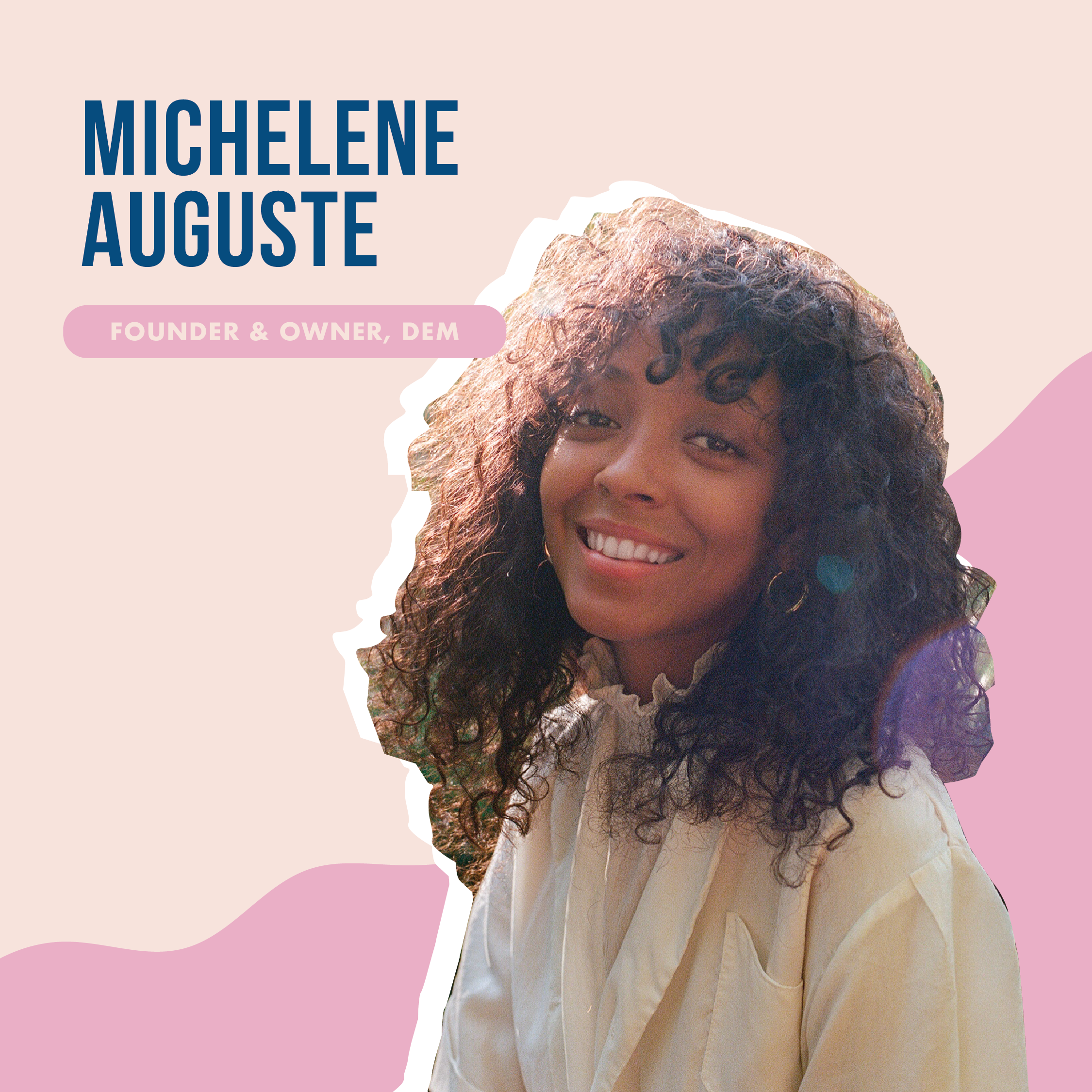
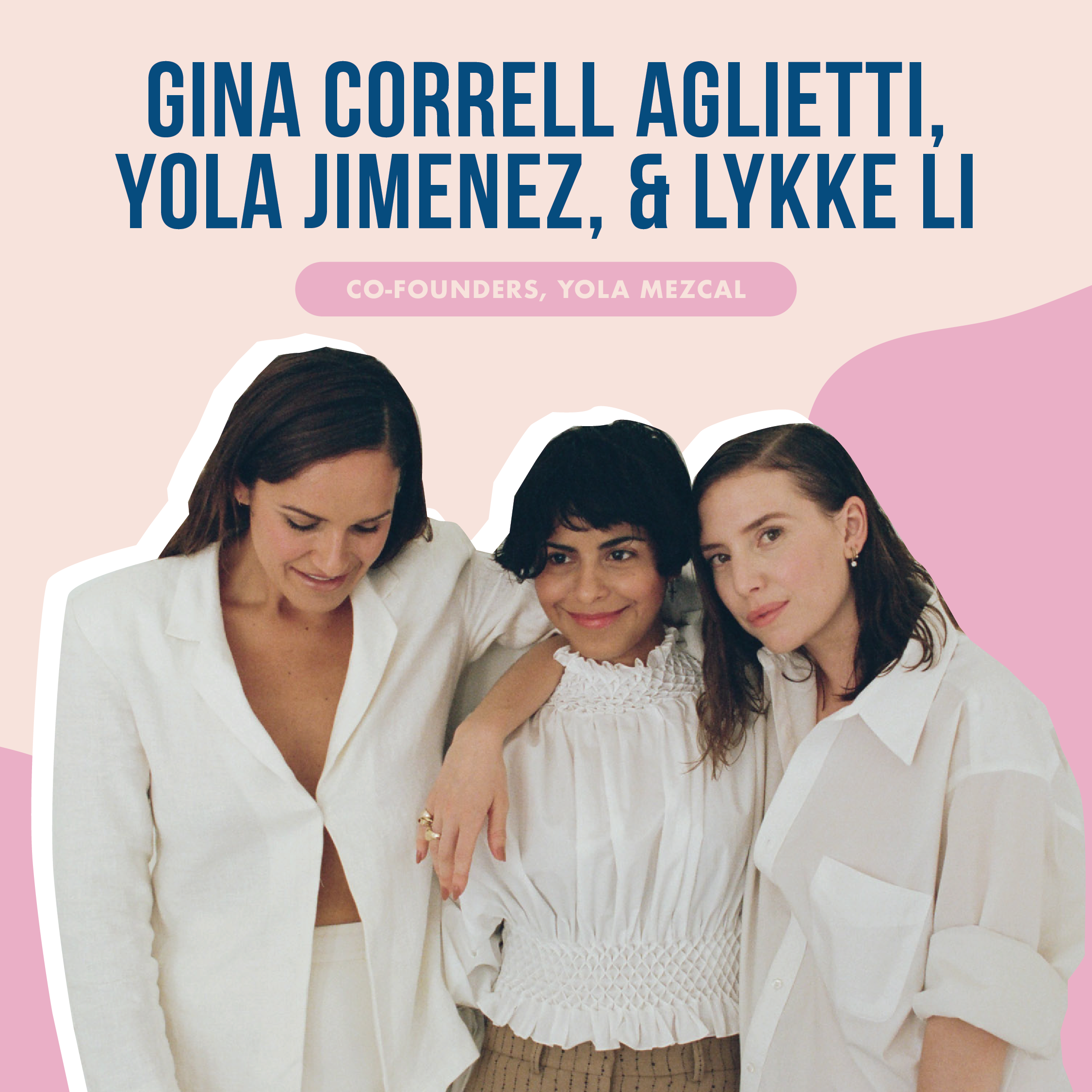
All successful businesses start somewhere and it takes just scratching the surface of a new idea to get the ball rolling. But with that ah-ha! moment comes a lot of hard work, late nights, and coffee to make your new business venture happen. Oh, and a digital platform to make your new idea look beautiful and profitable, too. Think you’ve got what it takes? Well, we partnered with Squarespace for a three-part series called From Scratch to Success: How to Turn Your Side Hustle Into a Thriving Business to find out what really goes into launching a company from the ground up. To do that, we interviewed three female founders—Michelene Auguste Founder and Owner, Dem; Karen Rose, Owner and Herbalist, Sacred Vibes Apothecary; and Gina Correll Aglietti, Yola Jimenez, and Lykke Li, Co-Founders, Yola Mezcal—to share their story from that lightbulb moment to selling their products online, and everything in between. And don’t forget to keep scrolling to the end to read about our exclusive Squarespace offer for Create & Cultivators.

So, you have this incredible idea to turn your passion into a profitable business—now what? Where are you supposed to begin and who is going to help you reach your end goal? Well, in the beginning, when you don’t have any capital, all you really have is your idea, so the only person you can rely on is you. But the good news is there are a plethora of online tools that can help you get started. Does your new business idea include a product line? If you answered yes, then say hello to the world of e-commerce! To put yourself on the map (and find customers) you’ll need a website that will showcase your unique products in a way people just can’t resist. The rest will come from you, your vision, and your drive for success—but let’s not get ahead of ourselves.
In the first chapter of our three-part series, From Scratch to Success, we introduced you to some incredible women who are crushing their business goals online with the well-known platform, Squarespace. We asked them about their new business venture, how they got started, and why they chose Squarespace to launch online. In part two of this series, we’re diving a little deeper into the commerce side of their business and how these three unique businesses—Dem, Sacred Vibes Apothecary, and Yola Mezcal—use Squarespace to turn their passion into profit. You’ll want to take notes for this one!

Create & Cultivate: Squarespace makes it easy to start a website from scratch. Can you walk us through the process you took when creating yours?
Gina Correll Aglietti: “Anticipating YOLA’s launch, we felt a video was the best way to communicate our brand story to depict our farm and team in Oaxaca. Squarespace gave us the platform to share this story with a new audience and made it easy for us to help curate first impressions of our brand. We've been using Squarespace for over three years now. I especially love the marketing tools we can use to create newsletters, collect emails, and keep our audience engaged.”
C&C: Squarespace has great features for brands that want to introduce e-commerce. What commerce features do you rely on the most and advise others to use too?
GA: “We will soon be launching our merch store through Squarespace. We had initially looked at embedding a third party e-commerce platform on our website, but then realized how simple it was to add e-commerce tabs into our Squarespace without straying from the brand’s aesthetic. We have also had the opportunity to embed a link to sell YOLA direct to consumers, which is often very difficult to do because of strict alcohol compliance laws.”
C&C: There are so many websites online—how do you make your website unique?
GA: “Squarespace allows us to maintain a simple and minimal design that aligns with our brand's aesthetic. We have been able to incorporate our own fonts and imagery to customize the experience.”


Create & Cultivate: Squarespace makes it easy to start a website from scratch. Can you walk us through the process you took when creating yours?
Michelene Auguste: “When I started building my site, it was very easy to navigate. I started with an e-commerce page, a homepage, and basic information—I’ve been adding to that ever since. I love that I can easily move things around and change the site. I also love that I can rearrange the products on the e-commerce page so it looks the way I want it to.”
C&C: Squarespace has great features for brands that want to introduce e-commerce. What commerce features do you rely on the most and advise others to use too?
MA: “I have the Squarespace app which helps me edit on the go when I have to. I’ve found that the app is very helpful.”
C&C: There are so many websites online—how do you make your website unique?
MA: “The Dem site is a curated experience of the clothing and objects I’ve discovered throughout my life. It’s a bit personal and I think that’s what makes it unique. I love taking photographs and updating the site often with new material.”
C&C: Do you have any shortcuts you can share with other users for making their website?
MA: “My advice would be if you can’t figure out something or you’re stuck, don’t stress—all the information and help is there for you on the site which has helped me out a lot.”
C&C: What are some more advanced tools that you use for building out your website?
MA: “My favorite thing about Squarespace is that I don’t need to know any coding tactics or use any advanced tools. Everything is already there for you to create and run a beautiful, successful site.”


Create & Cultivate: Squarespace makes it easy to start a website from scratch. Can you walk us through the process you took when creating yours?
Karen Rose: “I started with Squarespace about five years ago. I saw how beautiful other Squarespace sites were and wanted mine to be just like that.”
“I have come so far. I have an online shop now and in many ways I have grown that on Squarespace. We are currently working on creating an online membership/educational portal utilizing Squarespace’s collaboration, Memberspace to offer global access to our work.”
C&C: Squarespace has great features for brands that want to introduce e-commerce. What commerce features do you rely on the most and advise others to use too?
KR: “I rely on our online shop greatly. It is super easy to track inventory and monthly sales.”
C&C: There are so many websites online—how do you make your website unique?
KR: “We make our website unique by using it to tell the story of our brand. When folks are on our site, we want them to get the whole picture of who we are: not just an online shop but a community.”
C&C: Do you have any shortcuts you can share with other users for making their website?
KR: “I decided to hire a designer familiar with Squarespace for the initial site design. This allowed us to use our time and resources in a way we felt our business could benefit from most. We still work together closely. He was able to show us a lot of what he has done. But now, most of the everyday maintenance we do is on our own.”

Head to squarespace.com and use the offer code CREATE2019 to save 10% off your first purchase. And or more information around Squarespace’s commerce feature and to understand how you can start selling online today, visit Squarespace Support here.
And don’t forget to tune in next week for part three of our From Scratch to Success series for everything you need to know about SEO and ensure your website ranks in Google.

There Was No Plan—This Founder Started a Side Hustle to "Make a Few Extra Bucks" and Now It's a Thriving Business
From scratch to success.
This post is in paid partnership with Bootaybag.
We know how daunting it can be to start a new business, especially if you’re disrupting an industry or creating an entirely new one. When there is no path to follow, the biggest question is, where do I start? There is so much to do but before you get ahead of yourself, let’s start at the beginning. To kickstart the process (and ease some of those first-time founder nerves) we’re asking successful entrepreneurs to share their story in our new series, From Scratch. But this isn’t your typical day in the life. We’re getting down to the nitty gritty from writing a business plan (or not) to sourcing manufacturers and how much they pay themselves, we’re not holding back. If you want to know how to start a business, you’ve come to the right place.

“Failure is part of the journey and the reward doesn’t come without a lot of dark, scary moments. We’ve all been there, and we’re in this together.”
—Ellyette Gheno, CEO and Founder, BootayBag
When you’re looking to start your own business, most of us have a five to 10 year timeline in mind before we start making money. Of course, the end goal could be to build an empire but no-one expects for that to happen quickly. But it seems like Ellyette Gheno’s company, BootayBag was an overnight success.
Having grown up with entrepreneurial parents, Gheno was practically born with founder genes in her DNA. So it comes as no surprise that within a day of thinking up BootayBag—a monthly underwear subscription that delivers right to your door—Gheno created a website and launched a side hustle. What started as a way to “earn a few extra bucks” has successfully disrupted the $52 million underwear market (which is expected to grow annually by 3.5%) in just five years and her little aha! moment is changing the game.
So, we tapped the CEO and founder to learn more about her incredible journey from lightbulb moment to starting an undie revolution.
Be sure to keep reading until the end for our exclusive discount code that gives Create & Cultivators 20% off their first month when signing to any monthly subscription.
Did you write a business plan? If yes, was it helpful? If no, what else did you use instead?
“I definitely could have used a business plan. I started BootayBag as a total side hustle to make a few extra bucks, there was no plan. However, if I could go back in time I would have started with a clear vision of what I wanted to create, and what the end goal was. At the very least I would have liked to set intentions, even if it wasn’t a business plan. This would have helped me to later understand my ‘why’.”
How did you come up with the name? What was the process like? How did you know it was the right name?
“So this is my story and I’m sticking to it—guaranteed a laugh. I grew up in the Bay Area obviously listening to rap music. I had seen and heard ‘booty’ spelled as ‘bootay’ and that is the creative genius behind the spelling of BootayBag. After the name was born I had a domain within 24 hours. Looking back I maybe should have run it by someone beforehand."
What were the immediate things you had to take care of to set up the business?
“First came the website and then social channels shortly after. All of the legal stuff came later due to the limited funding I had for the business at the time.”
“A big moment for me was learning to never let myself get too comfortable. I now enjoy being uncomfortable because I know this is how I grow and where positive change comes.”
What research did you do for the brand beforehand?
“My research came at the extent of my self desires. I was solving my own issue of hating digging through sale bins and not wanting to shop for underwear (because what young woman does)? I had undies in my drawer that I am embarrassed to say were beyond their intended life span. I knew that if this was the case for me it had to also be the case for most of my girlfriends. Lucky for me, it ended up being the case for most young girls outside of my inner circle, and that helped me discover my ‘why’ behind the brand.”
How did you find the manufacturer/production facility that you use? Did you have any bad experiences? What did you learn?
“This is a hard one. I have learned what I know now about manufacturing because, unfortunately, of many bad experiences. I would advise to always ask questions, seek insight and advice from others, and basically trust no one. Ha, ha! Be sure to check references, run small tests and batches, and never give them all your money upfront.”
Did you self-fund the company? Did you raise seed money or initial investment money?
“BootayBag has been totally self-funded. Looking back, I am actually so thankful for this as I was able to make mistakes with my own money versus someone else. I had the advantage that I didn’t need funding to bring my vision to life in the beginning stages. However, it is definitely more of a step-by-step, slow-moving process when you’re bootstrapped.”

Photo: Courtesy of BootayBag
How much did you pay yourself? How did you know what to pay yourself?
"In the beginning when it was just a side hustle the whole point was to pay myself. But when I decided that this wasn’t going to just be a revenue stream for myself but that I wanted to make hires and build a brand, I came last on the payroll scale. It still always goes back to what I am trying to do—if I need to make a hire and I can’t afford to do it, I take a pay cut.”
How big is your team now? What has the hiring process been like for you?
“Hiring is hard because your team is seriously so important. I love the saying, ‘You can’t have an A team with B players.’ I’ve failed a lot in this department, especially in the beginning. I just felt lucky to have anyone work for me at the time which I later learned was the totally wrong approach. The best way to learn how to hire is to be prepared as if you’re the one being interviewed. Know who you are interviewing, ask all the hard questions, call the references, and give a training period for you to work alongside them.”
“It always goes back to what I am trying to do—if I need to make a hire and I can’t afford to do it, I take a pay cut.”
Did you hire an accountant? Who helped you with the financial decisions and set up? What do you recommend?
“No, I didn’t at first however, I quickly learned it is so critical to do so—that was a big ‘omg’ moment. Please, for the love of God, get an accountant. At the very least get someone who you pay as a consultant to help you set it all up. Cash is key, and how you set up terms, cash flow modeling, payroll, budgets, and tax compliance is so important. You have to have a professional in the field to guide you through it. We can’t be good at all the things—get help.”
What has been the biggest learning curve during the process of establishing a business?
“A big moment for me was learning to never let myself get too comfortable. I now enjoy being uncomfortable because I know this is how I grow and where positive change comes. Every moment that I think I have everything figured out, I don’t! Lol. Reality settles in and all of a sudden everything I thought I knew is wrong and it’s a whole new perspective. I almost fear the comfort level because I know something is around the corner. I can now thrive being uncomfortable because I know this how I grow and how good change comes.”
“No one should know your numbers better than you.”
How did you get retailers to start stocking your product? Were you told no? How did you handle that rejection? What advice can you share?
“We are our own online retailer as of now, however, rejection comes more likely than not in other directions. Every time we drop a new style that not everyone likes and it feels like rejection. I know we can’t cater to everyone, but you still try to and think you just might one of these times. The only advice I have is that they aren’t rejecting you, it’s not personal and it happens to everyone.”
Do you have a business coach or mentor? How has this person helped? Would you recommend one?
“Mentors are key. My favorite (and most shocking) discovery with entrepreneurs is they will most likely help you if you ask for it. The key here is to be very direct with what you want from them and be respectful of their time. Utilize your network and continue to grow it with every opportunity you get.”

Photo: Courtesy of BootayBag
How did you promote your company? How did you get people to know who you are and create buzz?
“I knew what felt like absolutely nothing, about anything. In the beginning, I started with a concept that I knew I needed and felt like other girls might need too. I tested locally first with pop-ups and events, and put it out there on social media to see if the concept stuck before I put any money behind it. Being very open to everyone’s opinions, ideas, and feedback is what helped me grow the idea into a brand.”
What is one thing you didn’t do in the setup process, that ended up being crucial to the business and would advise others to do asap?
“I wrote myself off in the finance section right away—I don’t do excel, I am not good with numbers. Well, tough luck to me. No one should know your numbers better than you. So with that I learned how to manage and own that even though I didn’t want too."
“We can’t be good at all the things—get help.”
For those who haven’t started a business (or are about to) what advice do you have?
Do it! But do it the safe and smart way... where you can test the waters without putting your whole life savings into it from the get-go. If this all went away tomorrow, I’ve grown so much and learned more about myself, managing people, and business than any other course of life could have taught me.
Anything else to add?
I would love to touch on how important it is to support one another in our individual journey’s, both professional and personal! This is why I love love love and am continuously inspired by Create + Cultivate so much. It can feel so lonely and scary, but you are not alone in it - someone has already paved the way for you. Ask for help, learn from other peoples failures who did it before you. Failure is part of the journey and the reward doesn’t come without a lot of dark, scary moments. We’ve all been there, and we’re in this together.

Photo: Courtesy of BootayBag
EXCLUSIVE DISCOUNT CODE FOR CREATE & CULTIVATOR’S
If you’re interested in getting 20% off your first month, then use our exclusive discount code CC20 when you sign up to any monthly subscription at their website, bootaybag.com
Passion Turned Profit—Entrepreneurs Share Their Small Business Success Stories
From women who did it.
All successful businesses start somewhere and it takes just scratching the surface of a new idea to get the ball rolling. But with that ah-ha! moment comes a lot of hard work, late nights, and coffee to make your new business venture happen. Oh, and a digital platform to make your new idea look beautiful and profitable, too. Think you’ve got what it takes? Well, we partnered with Squarespace for a three-part series called From Scratch to Success: How to Turn Your Side Hustle Into a Thriving Business to find out what really goes into launching a company from the ground up. To do that, we interviewed three female founders—Michelene Auguste Founder and Owner, Dem; Karen Rose, Owner and Herbalist, Sacred Vibes Apothecary; and Gina Correll Aglietti, Yola Jimenez, and Lykke Li, Co-Founders, Yola Mezcal—to share their story from that lightbulb moment to selling their products online, and everything in between. And don’t forget to keep scrolling to the end to read about our exclusive Squarespace offer for Create & Cultivators.

At Create & Cultivate, we love to support small businesses that not only started from scratch, but from passion. We love seeing people who totally crush at their side hustle and turn it into their main hustle—who doesn’t love a passion to profit story? With the rise of digital and DTC brands, we’re seeing more small businesses thrive than ever before and with the increased demand comes a new arsenal of tools at their disposal to help bring it to life. These new online platforms are easy to use, affordable, and quick to set up. With Squarespace, for example, new founders can design a website, upload their products, and be selling within hours. We know because we, too, use the savvy, intuitive platform for Create & Cultivate and have seen the benefits firsthand.
So, we partnered with our friends at Squarespace to bring you a series that dives deeper into how to set up a business online, how to make sure people find it in a sea of competition (SEO 101 coming right up), and how to scale it through the stories of women who’ve done it themselves.
Meet Michelene Auguste, the Founder and Owner of Dem, Karen Rose, the Owner and Herbalist behind Sacred Vibes Apothecary, and Gina Correll Aglietti, Yola Jimenez, and Lykke Li, the Co-Founders of Yola Mezcal. These ladies are sharing their stories with us on how they started their businesses, the passion that ignited it, and how Squarespace weaves into their success stories. Follow along for some killer advice and don’t forget to catch the other two chapters in this series coming soon—you won’t want to miss it.

Create & Cultivate: Let’s begin with you telling us about your business and its mission.
Michelene Auguste: “Dem is a Vintage Caribbean Contemporary design store. It’s a platform to showcase Caribbean talent, creatives, a form of storytelling, and a piece of my personal and cultural heritage.”
C&C: At what point in building your brand did you start your website?
MA: “I built my site from the very beginning. Squarespace has been a very instrumental tool in helping me grow and manage my business online. I had no idea how to build a site, especially an e-commerce one. Squarespace has made it all much more intuitive and approachable. I was able to upload products, choose the layouts I liked and make a very beautiful site so easily.”
C&C: What are some of the biggest lessons you’ve learned along the way?
MA: “This might sound cliche, but I think the biggest lesson I’ve learned is to never give up. If you want something, go after it. I think it’s important to write things down. I’ve done that ever since I was a little girl in Trinidad. Everything I want to accomplish and improve I put on paper. It has helped me get all my ideas out and focus my thoughts. Putting your ideas on paper is like planting a seed: it’s only the beginning. By putting those thoughts on paper, things materialize and energy forms.”

C&C: Let’s begin with you telling us about your business and its mission.
Karen Rose: The idea of Sacred Vibes has been constant. I grew up in a community that depended on its healers and held them in reverence. I knew I wanted to create a place where we could heal together. Herbalism was the commonality among us that would create a vital community. Sacred Vibes came out of the need for an herbal apothecary in Brooklyn.”
C&C: At what point in building your brand did you start your website?
KR: “I think from the moment I thought of my work, I knew I needed a website for people to find me. I describe my website as a place where people can feel what/who Sacred is and not just a place to shop. Squarespace has helped with that a ton! I love their templates and how easy it is for me to edit things. Though I work with a designer, I can do many tasks on my own with little effort.”
C&C: Can you identify some challenges you faced when starting your business?
KR: “Being a solo entrepreneur is rewarding and hard. Sometimes you struggle to work through your ideas and visions alone. Sometimes you have to go from concept to execution all by yourself.”
C&C: What are some of the biggest lessons you’ve learned along the way?
KR: “The biggest lesson is to make time for the other aspects in your life. I’m a mom and I’ve had to learn that balancing my work with the rest of my life is key to my personal happiness. The best advice I received was ‘avoid thinking that you are your business’ and I want to pass that on. There is Karen and there is Sacred Vibes and when both are functioning well they have more of an opportunity to be successful.”

C&C: Let’s begin with you telling us about your business and its mission.
Gina Correll Aglietti: “The three of us met at different times in Mexico City over the last decade, and started a wonderfully deep friendship filled with many long dinner parties and deep talks. Yola would come to visit in L.A. bringing different mezcals and we would host our friends, telling them the story of the spirit. She inherited our farm from her grandfather and it's important to us that we use his traditional method of making mezcal. We want to preserve the artisanal nature of the product as we grow.
“At the time that this brand was incepted, we were disappointed that the liquor industry was so male-centric. Men were the target of marketing and they were in charge of operations at so many liquor brands and distribution companies, so we felt strongly about creating a company that supported women across borders. We want to empower the women in Oaxaca that work on our farm, and make sure to provide direct payment and allow them to create their own hours. We don't have a conventional approach to anything that we do which we feel makes our brand unique and helps us stay true to our mission of exposing a heritage product to a new audience.”
C&C: How did you conceptualize and develop your brand?
GA: “We noticed that there was a lack of quality mezcal, and no strong brand identity that catered to our idea of a modern woman. We wanted to create a brand that reflected our vision of what a liquor company owned and operated by women would look like. We align with a lot of social impact organizations, like the ACLU and Planned Parenthood, and feel strongly that our platform should be used to empower other women.”
C&C: At what point in building your brand did you start your website?
GA: “We started using Squarespace when we started selling our product. We would recommend it to other founders because it’s intuitive and user-friendly.”
C&C: Can you identify some challenges you faced when starting your business?
GA: “At the beginning, we were limited in our funding and did everything ourselves. This ended up being a blessing and helped us grow organically. It also allowed us to make a lot of our own choices, which really strengthened our brand identity.”
C&C: What are some of the biggest lessons you’ve learned along the way?
GA: “The biggest lesson is to really believe in what you are creating. The community will build as the brand continues to grow, if the mission is clear and the founders are all in agreement.”
Head to squarespace.com and use the offer code CREATE2019 to save 10% off your first purchase. And or more information around Squarespace’s commerce feature and to understand how you can start selling online today, visit squarespace.com/ecommerce-website.
And don’t forget to tune in next week for chapter two of our From Scratch to Success series for a deeper dive into building your website online.
OLD NAVY's Kim Brennecke Doesn't Believe in Inbox Zero—Here's Why
And for that, she’s our everyday superhero.

We often look to the iconic leaders of our time for motivation and wisdom, but for many of us, this is purely inspirational and not as applicable to our everyday lives. We truly believe there is more benefit in looking to your left and seeking out a peer-to-peer mentorship with a colleague or friend you admire. Why? Firstly, they will likely have the time to be your mentor, and secondly, their advice will be relatable and allow you to see your path clearly while keeping your mind open to new ideas, identifying new opportunities, and helping you self-advocate. We call them everyday superwomen. In this new C&C series, we talk to the women who are paying it forward, lifting other women up and paving a smoother path for the next generation to come.

Photo: Courtesy of Old Navy.
It might seem from the outside looking in that the career paths of people you admire are linear, but when you take a magnifying glass to their trajectory, you quickly realize that it’s not straight at all. In fact, it’s full of false starts, sharp turns, and winding roads—some even have turn-back signposts. Knowing that can provide a sense of relief to all of us who are still navigating a particularly challenging fork in the road. When you’re unsure which direction to take, take comfort in the fact that even the most successful people have all been there too, and that it’s all part of the journey.
Kim Brennecke’s path hasn’t been straight and narrow, either. She might hold the esteemed position of Senior Director Design of OLD NAVY Active now, but she actually started her studies in drawing and painting before moving into a fine arts degree in fashion and working her way up—but growing up she wanted to be an architect or an archeologist!
So, read on to learn more about her non-traditional career path, how to get out of “being stuck,” and why inbox zero is a myth.
CREATE & CULTIVATE: What did you study in school and what did you want to be when you grew up?
KIM BRENNECKE: I sort of went to college twice. My first degree was in fine arts with an emphasis in drawing and painting, then I decided I wanted to study fashion so I returned for another fine arts degree in fashion design. All-in, it was seven and a half years of a college education. Growing up I wanted to be either an architect or an archeologist.
What are some of the earlier jobs that helped to shape your career/path?
In between my degrees I took a job working retail at Urban Outfitters. I’d always loved clothes and fashion, but this was my first exposure to thinking about trends, the commerciality of product, and visual merchandising as it relates to the consumer. I was completely fascinated by how placement and adjacencies in-store impacted the sales. It was really around this time that I began to understand that a career in fashion was a thing, and I began researching and applying to design schools.
What challenges have you faced along the way? What did you learn from them? How did they prepare you for your job now?
I think one of the biggest challenges I faced, that I didn’t realize until I was out of it, was being stuck. Sometimes when you are in the same position for a long time, you start to build up a lot of walls that you don’t realize are there. I remember making a position move that I wasn’t initially excited about, but what I found was moving into a new role that I knew nothing about, re-energized me and engaged me in a way I hadn’t realized I had stopped being in my previous role. That experience opened me up to trying new positions when they presented themselves and being self-aware of when I feel stuck and may need to make a change.
Tell us about your role at Old Navy? What does it entail? Did you work your way up? What were the positions along the way?
My current role is the Senior Director of Old Navy Active, which essentially means I lead the Active Design Team for all active product for the family. In this role, I identify the active design strategies by division and work with my team to bring them to life through the lens of seasonal trends. I have been with Old Navy for nearly 13 years, and have worked my way up from Designer, Women’s Woven Bottoms and Outerwear. I have held many different positions during my time with the brand, including Senior Designer of Old Navy Outlet and Design Director of women’s knits, sweaters, and fleece. I also briefly led the Athleta Girl’s design team, before returning to Old Navy for my current role.
“I haven’t had inbox zero since 2007.
”
What do you love most about your job and why? Does the reality of your career match up to your expectations?
I love the collaboration, problem solving, and building something with a team. It’s always a great feeling to have an idea, see it through production, setting in stores, to then seeing people react to it, whether wearing it on the streets or posting on social media #oldnavyactive! The reality of my career looks much different from what I thought a career in fashion would be when I was in school, but I get so much satisfaction from what I do, that I can’t imagine it any other way.
What can you tell us about the culture at Old Navy? What has encouraged you to stay?
I think Old Navy has a really unique position amongst apparel brands as being a place of true collaboration. I really think it is fundamental to how we work. I continue to stay because I feel I am a valued member of the team and my contributions are welcomed and accepted, and as a team, we are constantly evolving and improving.
Talk us through your daily tasks and what a day in the office looks like for you? What’s the most rewarding part of your day?
Really no two days are alike, which I love. Some days are spent researching or building color palettes or putting together a trend point of view to inspire the team and sell ideas to our cross-functional team. Some days are spent reviewing sketches with my team or reviewing proto samples or troubleshooting a production issue. There are some days that I never see my desk. But the most rewarding part is always the time I spend brainstorming and building ideas together with my team.

What does your morning, pre-work routine look like? What rituals set you up for success?
My morning routine generally revolves around food! I try to eat pretty clean, and in order to do that I usually try to fix my breakfast and coffee at home, as well as pack snacks and a water bottle (with mint and lemon) to get me through the day. And if I’m really on top of things, I’ll pack my lunch too! I also dedicate a few minutes to checking my schedule for the day and scanning my email to see if anything urgent has come up since the previous day. It’s nice to be prepared for what the day will bring before arriving in the office.
Your role requires you to be across so many facets of the business—how do you manage your time effectively? What is your greatest productivity hack? How do you get it done?
I really couldn’t do my job without my Outlook calendar and the means to access it from my phone. I have to stay on top of my calendar, especially because I oversee active for all divisions and there are times that milestone meetings are happening simultaneously. I am constantly trying new ways to stay on top of everything, some stick, some don’t, but my phone continues to keep me on track.
Do you ever reach inbox zero? Do you believe in that? What is your inbox philosophy?
I haven’t had inbox zero since 2007. But I generally try to read every email by the end of the day and respond if needed, in as timely a manner as possible. My inbox philosophy is to save everything that I might need someday.
“You really have to remember that everyone’s opinion is valid, including your own.”
What is one of the biggest misconceptions about your job?
That all I do is create and draw clothes all day long. I haven’t actually physically designed anything in years! Most of my job is strategizing and problem solving. It’s kind of like doing puzzles all day long, which is hugely creative, but in a different way than pen to paper sketching.
If someone wanted your role specifically, what advice would you give them on how to land their dream job/your current job?
I would suggest getting as much design experience, in as many different areas as possible. What is unique about designing active product is that it covers a wide range of products, from knits to wovens, outerwear to baselayer, and true performance to lifestyle. And this role specifically covers mens, womens, girls and boys.
Have you seen a consistent standout quality or personality trait of successful people in this industry?
I think flexibility is really important in this industry. This is one of the most dynamic businesses you can be in, and you have to be able to change course as needed. This doesn’t mean that you should be a pushover with no point of view, but in the long run, there is strength in flexibility and weakness in rigidity.
What’s the best piece of advice you’ve been given? And what’s the worst piece of advice you’ve been given?
I think the best piece of advice I’ve been given is to trust myself and trust my instinct. The beauty of this business is that it's subjective and there is no wrong answer. The challenge with this business is that it’s subjective and everyone has their own opinion. You really have to remember that everyone’s opinion is valid, including your own. Luckily, I don’t think I’ve been given bad advice.
“The best piece of advice I’ve been given is to trust myself and trust my instinct.”
If there was one person you admire that you could power brunch with, who would it be?
I’ve always admired Richard Branson, and how he has built his brand through failures and successes. He is incredibly supportive of entrepreneurship and mentoring, so I see him as someone that could offer a unique perspective from an innovation point of view, as well as how to be an effective leader. I also love that he prioritizes his family and living life to its fullest.
In your mind, what’s a perfect interview outfit? Why? Explain?
The perfect interview outfit is anything that you feel comfortable in that also looks like you’ve done your research into the brand/company you are interviewing with. This is the first impression for your interviewer to see you in the role, and as much as you can look like you belong there, the better off you will be. And there’s no better time to be comfortable in your clothes than in an interview, as you want to be focused on your conversation, and not distracted by an outfit that feels forced or contrived.
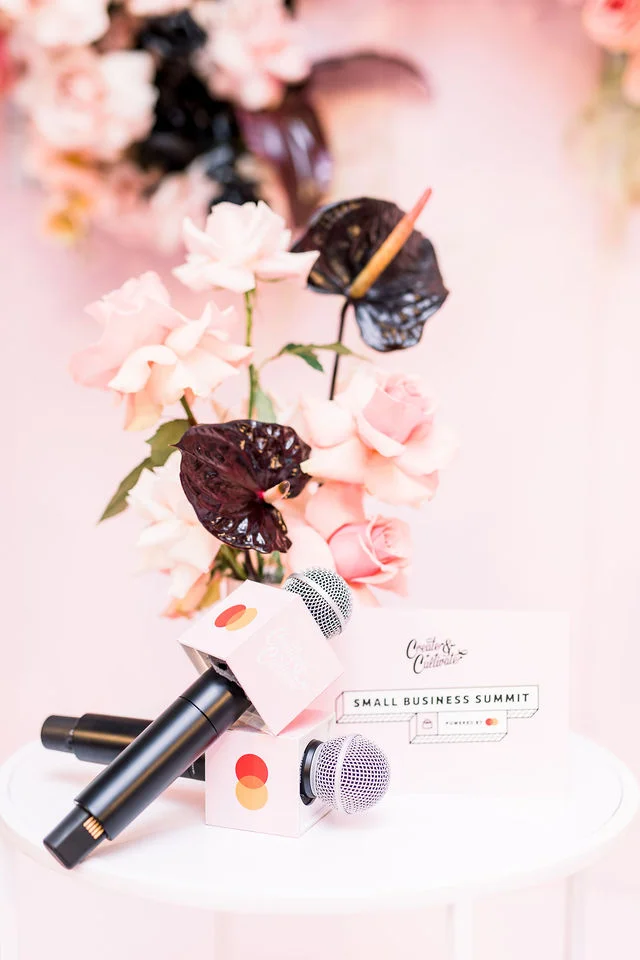
"I Never Use the Words Win or Failure Anymore"—and Other Boss Lady Quotes From Our First-Ever Small Business Summit
Get out your notepads.

Big city, bright lights! We made the trek from one coast to the other this fall for our first-ever Small Business Summit in partnership with Mastercard. NYC greeted us with incomparable energy and we were so excited to hit the ground running with endless opportunities for networking, knowledge dropping, and so much more.
At C&C, we make a point of supporting small businesses and their founders—as does Mastercard. So, it only made sense that we would join forces with the best-in-the-game to create a new summit for our community. We set the stage for attendees by offering some incredible awe-inspiring panels, workshops, and photo moments—but don’t jump the gun just yet if you’re feeling that wave of FOMO.
Not only did we talk hustle, but we got to see it IRL. We were excited to partner with Mastercard and spotlight a few boss-ladies who set up shop in the Mastercard Small Business Marketplace for attendees to shop, talk and network with—talk about shopping with purpose!
But we will say, if there was one thing to have total FOMO over, it was the Bumble Bizz Headshot Studio. We were honored to carve out a special place for attendees to have professional headshots were taken (not to mention it was a killer Instagrammable moment, too). Be sure to download the app for a chance to try the best networking tool at your fingertips.
Follow along for some snapshots and key learnings that will make you feel like you were there in the Big Apple with us. Don’t forget—if you’re an Insider—you too can access the live recordings of these business-savvy panels from the comfort of your own home (or smartphone).
Take a look below for the best of our Saturday in the city.

Keynote: Sophia Bush and Stacy London
Panelists:
Sophia Bush | Actress, Activist, and Host of Work in Progress podcast
Stacy London | Style Expert and New York Times Best-Selling Author
Stacey London
On pivotal points and realizations...
“All the things that I thought were failures were what propelled me to the next thing.”
“I never use the words win or failure anymore—they are just ‘value judgements’.”
“Expectation is the enemy of forward movement—it is the enemy of progress. “
“Age is no longer an indicator of giving good advice—experience is no longer how we measure advice.”
“Being clear on what your goals are, saying ‘no’ when something doesn’t serve you or your company is essential.”
On getting through hardship and disappointments in your career...
“I'm going to look at whatever that roadblock was, I'm going to figure out how to get around it or I’m going to build a different road.”
“For people in your generation, the more options you have— being a multi-hyphenate—it’s looked at as such a positive thing. In my generation, not only did you have to stay in your lane, you don’t check any boxes.”
”We’ve all been met with dead ends. You never think you are going to meet the problems you’re going to be met with. You have to believe that everything happens for a reason. You have to become a problem solver in your own life.”
On saying ‘no’...
“Once I named what it is that really motivates me, it made it easy to say ‘no’ when it didn't fall under that umbrella.”
Sophia:
On words of wisdom...
“If the world isn't ready for your good idea, that doesn’t mean it wasn’t a good idea.”
“Don’t compare your insides to someone else’s outsides.”
“Humans need eight hugs a day to survive in their bodies—twelve hugs a day for optimal performance.”
On connection:
“You must connect with your people in real-time, in real life. Whether it’s your company, your clan, it’s not enough to just connect through social.”
“It is not okay, ever, to feel less than.”
On self-worth:
“Don’t compare your insides to someone else’s outsides.”
On setting goals:
“We set goals, great but we achieve that goal and set new goals so, we’re always chasing something on the horizon—we need to be able to look at the life we’re living today and say that it's pretty cool.”
“The idea is to not be so hard on yourself but to stay motivated. You are always going to be moving. The idea is to think of there is no finish line until your ashes are in the ground.”
“The point of living is to keep going.”
“Instead of that high and that low, see it as one more step.”
On saying no:
“Once I named what it is that really motivates me, it made it easy to say no when it didn't fall under that umbrella.”
“Get clear what the pillar is that all your verticals fall in. Say no if it doesn’t fall under that pillar.”
“I really want for all of us to figure out what serves us and lets us serve the world.”
Venture Forth: Building, bootstrapping or bringing on capital for your business
Panelists:
Vanessa Dew | Co-Founder and Chief Sales Officer, Heath-Ade
Molly Hayward | Founder and Chief Brand Officer, Cora
Hilary McCain | Founder and CEO, Sweet Reason CBD
Arielle Loren | Funding Expert for Women and Founder, 100K Incubator
Jaclyn Johnson | Founder and CEO, Create & Cultivate
Moderator:
Sacha Strebe | Editorial Director, Create & Cultivate
Jaclyn Johnson
On the big picture...
“A lot of these big companies that you love don’t make any money, but they make a lot of the headlines.”
“Fall in love with the numbers.”
Vanessa Dew
“When we were raising our first round, let me paint the picture of eating ramen every day—we were beaten down, we were getting up early in the morning to go to the farmers market—so we eventually needed money to supplement the business.”
On the money conversation...
“As females, we often don't negotiate or bring up taboo topics. For example, founder pay, founder liquidity. These topics were never brought up because we were afraid.”
On how to raise money...
“We called in a whole village: a finance professor, brought lawyers on deck—we had a whole group to gain their insights. You get insights from people, but at the end of the day you need to follow your gut and do what is right for your business.”
On raising money or bootstrapping it:
“We are responsible for our teams lives. There is an emotional side to it.”
“As a founder and leader your job is a fiduciary responsibility to increase holder value—we are not robots. You are a human leading the company. At some point your agendas don’t match. It is always good to align with your executive team and your investors around what the plan is for the next three to five years.”
Molly Hayward
On the why behind Cora...
“You know for me it started from a place of pure inspiration. I was travelling in Kenya and found out that all the girls were missing school during the month of their period because they couldn’t afford period products. How fucked up is that?”
“When I looked into the industry I was shocked at how unconscious we were when it came to the impact of the products we were using.”
On creating and growing her business...
“For me, the disruptive piece came from not knowing any better. Not feeling like there was a rule I had to follow, not feeling like there was something I had to differently.”
“It was clear to me that I wanted to create a brand that represented the values of the modern woman. It’s sad that that is considered disruptive, but it is.”
“It is taking the attitude of: ‘I’m going to let who I am lead this process’ and following your gut.”
“Best Advice: Make more than you spend. At the end of the day if you can you do that in as lean of a way as possible, you put yourself in the strongest position.”
On raising money...
“In the first 18 months from idea to raising money, I have gone through every type of funding—self-funded at first and from there I did a crowdfunding campaign.”
“There’s no wrong way to do this.”
“Be conscious of your cash flow.”
“I was by no means an expert and I leaned on other investors and other entrepreneurs I know and asking what I need to do next.”
“Finance and investing is still a male-dominated industry—women are still breaking in.”
“You're not alone, let it be a learning experience. Don’t be afraid to ask questions. Don't feel like you're not worthy of that answer and that money in the end.”
Hilary McCain
On the importance of working with others...
“Sell the dream. Convince the people around you to build something with you.”
“One way we have found to get good people involved is giving equity to every person involved in the company, from the top down to the bottom.”
On raising money...
“The second you raise money, the clock starts ticking. There is enormous pressure, but I might not have completely appreciated how much you are held to those numbers.”
Arielle Loren
On raising funds...
“There are so many options and for us, it's about educating people about their options. Know where you fall in the process, then you can set yourself up for success.”
“How can you show proof of concept as early in your business as possible? What can you do in the meantime to position yourself and your company as something with potential?”
“Raising money doesn’t mean you have a profitable and viable business yet.”
Mastering the Three C's: Content, community, and commerce
Panelists:
Marie Forleo | Marie Forleo, author of the instant #1 NY Times Bestseller, Everything is Figureotuable
Courtney Quinn | Founder, Color Me Courtney
Leann Livingston | Brand Manager, Square
Ginger Siegel | North America Small Business Lead, Mastercard
Claire O’Connor | Editorial Director, Bumble
Mallory Blair | CEO, Small Girls PR
Moderator:
Reesa Lake | Partner, EVP of Brand Partnerships, Digital Brand Architects
Marie Forleo
On content...
“Content, when you create it right, gives you the opportunity to create trust and confidence long before you ask anyone for a sale.”
“Consumers understandably have a lot of skepticism—content is the most important signal for us to show what we stand for.”
On community...
“It's about paying attention to people and making them feel seen, heard, acknowledged.”
On social media followers…
“If you go holy shit, 300 people care about what I say and you treat those people like gold, you make them feel loved seen heard, that's what matters.”
“People’s bullshit-meters are so high, so you have to be rooted in your heart and a genuine caring.”
On commerce…
“No matter what business you're in, you have got to become masterful in marketing and sales—it is the lifeblood of your business— understand the people you’re serving.”
Courtney Quinn
On community...
“If you’re focusing on people who don't follow you, it's a waste of time. You have people who are already here, focus on them. My community is the reason I grow.”
“I create content for the people who are following me. I invest in them.”
On commerce...
“People want to promote what I stand for.”
“I think if people care about you as a creator, they will want to buy what you're selling.”
“I have to fall in love with the story before I fall in love with the product.”
“Have people fall in love with you and what you do, the money will follow and it is an easy way to bridge the gap between content and commerce.”
“When you create a clear brand, it helps you differentiate early on.”
On being authentic in what you show...
“You can't fake the things that are you.”
“I picked five things that were me to a tee. I put my top five everywhere and looked at those five things whenever I was producing any content and if it didn’t check the box, then it doesn’t get seen.”
Leann Livingston
On content…
“60% of consumers are looking for brands that have values and use that to make purchase decisions.”
On community...
“If we want to be about small business owners, we need to be about the community.”
“Find out how you can partner with the communities that are already built and thriving.”
On women-owned businesses that are crushing it...
“Your business can represent so much more than just what you sell.”
Ginger Siegel
On content...
“Planning everything out isn’t going to work in this real-time marketing environment. What you need is agility.”
On community…
“Particularly with female entrepreneurs, we are much more apt to be drawn into a community.”
Mallory Blair
On content...
“Rise above the clutter—How do you stand for more?”
On community...
“Make a list of brands you feel are in the same universe and reach out, offer to cross promote their brand.”
Re-Imagined Retail: From brick & mortar to DTC we explore how the future of the shop is being shaped
Panelists:
Lisa Price | Founder, Carol’s Daughter Inc.
Ali Kriegsman | Co-Founder and COO, Bulletin
Dianna Cohen | Founder, Levitate
Jessica Kahan Dvorett | SVP at CaaStle and General Manager, Haverdash and Gwynnie Bee
Lisa Mastela | CEO, Bumpin Blends
Moderator:
Christine Michel Carter | Writer and Global Marketing Strategist
Lisa Price
On holding your own self back...
“I had to stop blaming me, and get out of my own way.”
On conversation with the customer…
“The thing that is most important is your storytelling and your authenticity. When I started I didn't need to worry about what am I going to post about today, I could just create products. Today, you have to have a dialogue.”
Lisa Mastela
On guilt...
“Letting go of the guilt of failure has been the hardest for me. I would be overwhelmed by those feelings and want to quit. When you experience failure over and over and over again, which you do, be able to bounce back and learn from it.”
Maker Economy: A Conversation With Madewell’s Hometown Heroes and Nest on Building Your Handmade Biz From the Ground Up
Panelists:
Lacie RZ Porta, Founder, Framed Florals
Natalie Borton, Founder, Natalie Borton Jewelry
Virginia Sin, Founder, SIN
Amanda Lee, Director of Brand Strategy & Sourcing at Nest
Moderator:
Sacha Strebe | Editorial Director, Create & Cultivate
Lacie RZ Porta
On press impacting the business...
“If you know you're going to have more traffic to your site, plan for it, prep for it. Even if you don't, learn from it.“
On life learnings...
“I learn the most from the things I wasn't prepared for.”
“If it's not a ‘hell yes’ it's a no.”
Natalie Borton
On Hometown Goods with Madewell...
“There was legitimacy that came with Madewell being willing to sell my goods.”
Virginia Sin
On goals…
“For any goal, you have to have detailed steps on how you get there and look back at your values and make sure you're not compromising as you get there.”
On best advice...
“Authenticity. Being able to tell a story that's differentiating. There is only one you—if you can share your story and make it compelling, it will go a long way. Never give up.”
Amanda Lee
Best advice for women...
“Key in on your values and brand values. In a quickly changing world, things change but if you hone in on who you are and your values that will always stay true.”
Teamwork Makes the Dreamwork: How to scale your business and take it to the next level [POWERED BY MASTERCARD]
Panelists:
Morgan DeBaun | Founder and CEO, Blavity (WSBAC)
Sonja Rasula | CEO and Founder, Unique Markets (WSBAC)
Katie Rosen | Co-Founder, FabFitFun (WSBAC)
Jordan Jones | Founder and CEO, Packed Party
Cheryl Guerin | EVP North America Marketing & Communications, Mastercard
Moderator:
Jaclyn Johnson | Founder and CEO, Create & Cultivate
Cheryl Guerin
On best advice...
“I think you have to be scrappy with all of the tools at your disposal”
Sonja Rasula
On money...
“I took all of my savings, every penny that I had, and I started the business.”
“I’ve never lost a penny. I never took a loan. I’ve never needed investment in 11 years.”
On best advice...
“Female entrepreneurship is now being given the light that it deserves.”
“If you believe that you have a good idea and you believe in yourself, and you have the confidence, there is no reason why you shouldn’t invest in yourself.”
“If you believe in yourself, why the fuck wouldn’t you put everything you have into it?”
“If you believe in yourself, do it. Risk it. Time is not a luxury we have.”
On what the world wants…
“People are craving human, in-person connection again.”
Katie Rosen
On nothing is perfect…
“We have re-written our mission 6000 times.”
“Invest in what works and throw away what doesn’t.”
Jordan Jones
On strengths...
“I knew my strengths and I played to them”
Morgan DeBaun
On investing...
“The point of investment is to grow the business. You have to maintain what you’re doing and also get return 10x.”
On diversifying…
“Content is the cheapest way to build a business—we leveraged content.”
“The black community is so underserved, so we were creating content for them.”

C&C Classifieds: Kendra Scott, Instagram, Pandora, & More!
Job hunting in Austin, LA, NYC, or Washington D.C.? Peep these 🔥 new jobs.

Job hunting in Austin, LA, NYC, or Washington D.C.? Peep these 🔥 new jobs.
Kendra Scott - Austin, TX
Graphic Designer, Retail Visuals
The Hollis Company - Austin, TX
The Brand Guild
Marketing Manager- Washington, D.C.
Marketing Director- New York, NY
Something Social - Los Angeles, CA
twelveNYC - Brooklyn, NY
Create & Cultivate - Los Angeles, CA
Bumble - Austin, TX
RetailMeNot - Austin, TX
Pandora - Austin, TX
Instagram - Washington, D.C.
The Washington Post - Washington, D.C.

How a Former Exec Channeled Her Frustration Into a Multi-Million Dollar Company
The Caulipower founder inspires as she sets the freezer aisle on fire.
This post is in paid partnership with Caulipower.
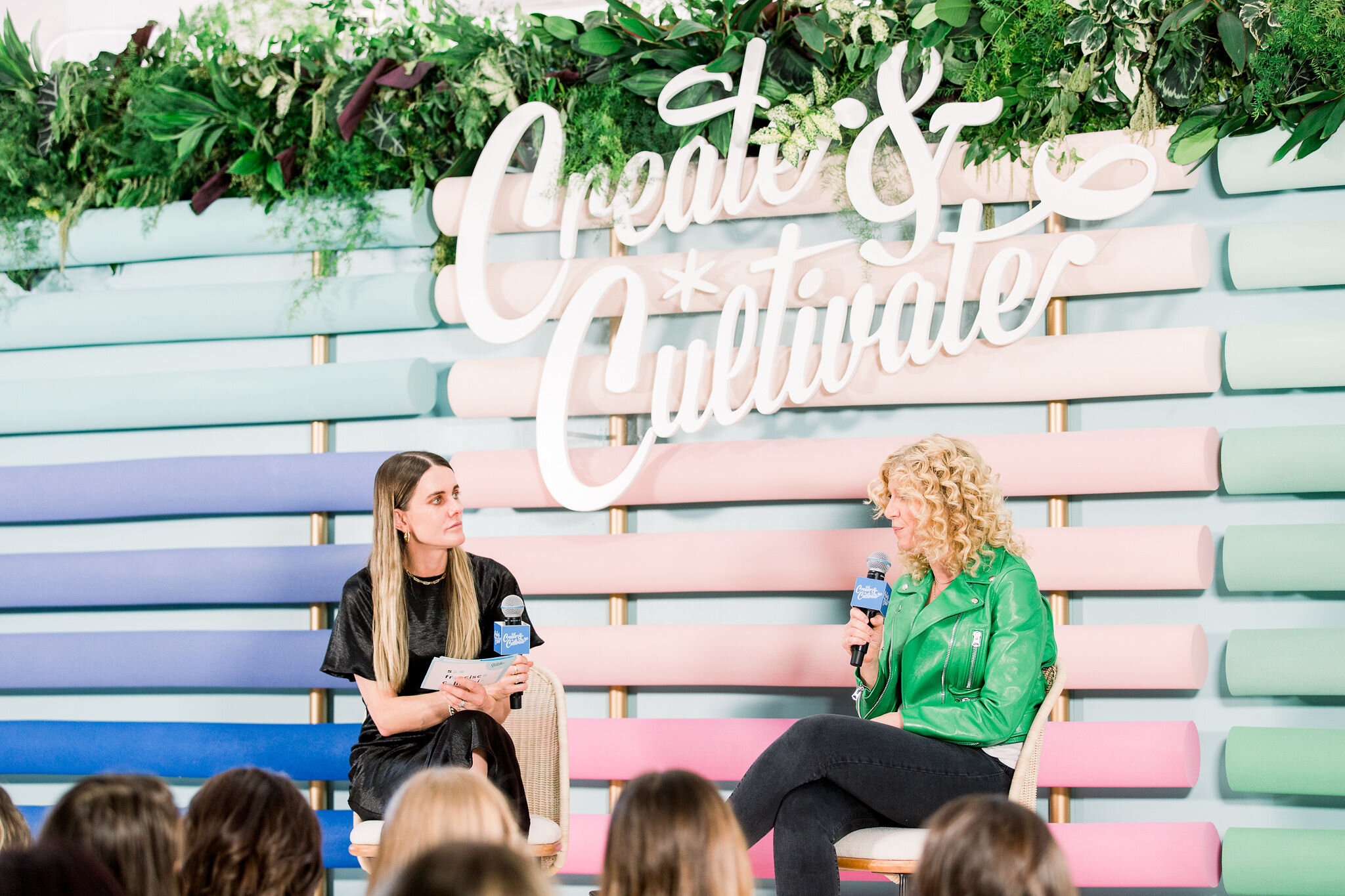
Gail Becker, founder and CEO, Caulipower chats with Create & Cultivate editorial director, Sacha Strebe at the San Francisco Conference. Photo: Smithhouse Photo
Have you ever considered leaving your cushy, well-paying corporate career for a completely different line of work? It’s hard to put aside a steady paycheck (and benefits) to take a leap into the unknown but that’s exactly what Gail Becker did. She is real-life proof that following your gut and leaving your comfort zone can actually pay off—literally! At our San Francisco conference this year, we had the pleasure of hosting a fireside chat with the founder and CEO of CAULIPOWER and we were blown away by her incredible entrepreneurial story.
Not only did she leave her high-flying position as president of strategic partnerships and globalization at Edelman to pursue a business in frozen food (who would have thought?)—she made a product that everyone can enjoy, that is nutritious, convenient and tastes good. But where did it all begin? After discovering both of her sons had celiac disease, Becker was desperate for nutritious gluten-free food options. When she couldn’t find any healthy (or tasty) choices, she did what every mom would—she made her own. She found hundreds of thousands of recipes for cauliflower-crust pizza online and decided to try it. Her sons loved it, but it took 90 minutes—time she didn’t have as a working mom—so she figured she could find it in stores, but it was nowhere to be found.
Becker channeled her frustration with the lack of gluten-free options and the industry’s slowness to innovate into a groundbreaking idea to make cauliflower-crust pizzas available in stores. She quit her job to start CAULIPOWER and now, a little over two years later, her company is on track to generate $100 million in revenue this year—that’s the power of a frustrated mom! In that time CAULIPOWER pizzas have become the #1 better-for-you pizza and #8 frozen pizza brand in the U.S., and the company has expanded their family of better-for-you products, with a mission to reinvent our favorite foods, one healthy meal hack at a time.
Drawing from what consumers are meal hacking at home, their products now include cauliflower tortillas, sweet potato “toast” and their most recent innovation: baked not fried chicken tenders, the healthiest tenders on the market at only 490 calories for the whole bag (seriously!).
Follow along for a deeper look into why Becker started her business, what it takes to be successful, and so much more.
On not hiding the healthy ingredients…
“We’re so proud of being a vegetable, we put it in our name”
“We like to celebrate the magic of vegetables.”
On starting CAULIPOWER…
“Why did I wait so long to do what my heart wanted me to do?”
“CAULIPOWER was born out of the convergence of this realization that I needed something more meaningful, and my own frustration of trying to find more foods that are gluten-free.”
“Why can’t we all share from the same plate? That’s the ethos behind CAULIPOWER.”
“When you care about something so much that you’re willing to risk everything for it, there’s nothing you wouldn’t do—there’s no amount of hours of sleep you wouldn’t give up.”
“It’s (CAULIPOWER) more rewarding than anything I could’ve ever dreamed.”
“It does take a toll. I want to be super honest about that. There’s a lot of blood, sweat, and literal tears behind all of that. People never talk about that part.”

“When you care about something so much that you’re willing to risk everything for it, there’s nothing you wouldn’t do—there’s no amount of hours of sleep you wouldn’t give up.”
—Gail Becker, Founder and CEO, Caulipower
On how to hire the right people...
“Every single person at CAULIPOWER today feels like it’s their company, and that’s how it should be. Those are the kind of people you should hire.”
“You need people that are going to be as passionate and care as much as you—I hired people who wanted to take a leap, too.”
”They have to really have the passion to try to make the world a little bit better.”
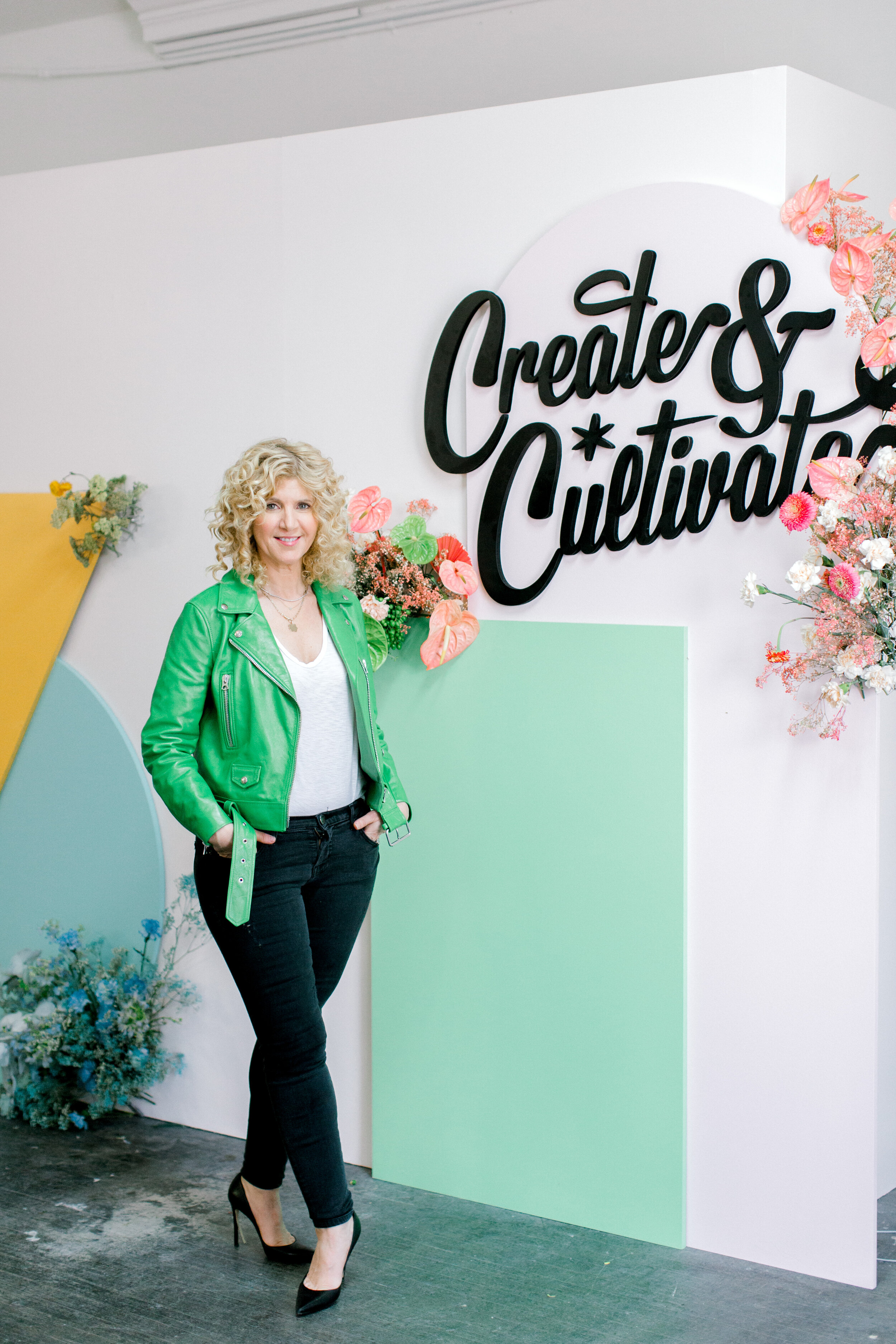
On raising capital...
“To grow a business, you have to have money, and you have to have some sales before you raise money, ideally.”
“Don’t let the thought of raising money get in the way of actually building your business.”
On the brand...
“Everything about the brand is accessible—accessible in the way it looks, the way it tastes, the stores it’s sold in, and the fact that we donate to teaching gardens.”
Sign up to be a Create & Cultivate Insider and watch the video of Gail Becker in conversation with our editorial director, Sacha Strebe at the San Francisco Conference, and so much more from our video vault.
"We’ve Learned By Doing"—How to Launch a Skincare Line From Scratch (From Someone Who Just Did It)
It’s only fair.
We know how daunting it can be to start a new business, especially if you’re disrupting an industry or creating an entirely new one. When there is no path to follow, the biggest question is, where do I start? There is so much to do but before you get ahead of yourself, let’s start at the beginning. To kickstart the process (and ease some of those first-time founder nerves) we’re asking successful entrepreneurs to share their story in our new series, From Scratch. But this isn’t your typical day in the life. We’re getting down to the nitty gritty from writing a business plan (or not) to sourcing manufacturers and how much they pay themselves, we’re not holding back. If you want to know how to start a business, you’ve come to the right place.

Onekind co-founder Madison Ruggieri believes in offering luxurious and quality skincare at a fair price
Photo: Courtesy of Create & Cultivate
Why do good wellness products always seem to hurt your wallet? Madison Ruggieri has a very simple answer to this question: they shouldn’t. Frustrated by the lack of choice in the skincare aisle that felt luxurious and affordable, Ruggieri decided to do something disruptive and start her own. She joined forces with her brother Matt to launch a luxury men’s grooming e-tailer called TheMotley.com and a dedicated men’s skincare line, Port Products available in Nordstrom, Neimans, and Lord & Taylor.
Through working in men’s grooming for the past decade, they became aware of how unnecessarily marked up skincare aimed at women can be. Because of their backgrounds, the duo was able to produce quality products that were more affordable than those sold by their beauty competitors. And so the idea for Onekind was born—luxurious skincare made accessible for all.
Today, Ruggieri sits down with us to share her words of wisdom that can only be gained from years in the world of business. From talking about how to stand out in a saturated industry, to the importance of teamwork, to the most difficult parts of building your own brand (the name being one of them.) You’re not going to want to skip out on this segment of From Scratch.
“I love that it (the brand name) brings to mind both ‘one of a kind’ and ‘humankind.’ It’s really important to me that the brand feels, first and foremost, human and honest.”
—Madison Ruggieri
Did you write a business plan? If yes, was it helpful?
“We did put together an informal business plan with a plan for growth and revenue projections. Our projections were based on our previous experience running a men’s grooming brand, and it's been helpful to have some kind of framework on which to establish goals.”
How did you come up with the name? What was the process like?
“Coming up with the brand name was one of the absolute most difficult parts of developing the brand. We had product formulas finished before we had a brand name. We wanted a name that would feel inclusive and that we could take in whichever direction the brand might eventually grow into. We also wanted a name that expressed our values without being cheesy.
“We spent weeks shooting ideas back and forth around the office. We even went to a naming expert. We had a few false starts and then would check trademarks or social to find those names were taken already or would be confusing to the consumer. Onekind ended up being absolutely perfect. It checked all of our boxes and I love that it brings to mind both “one of a kind” and “humankind”. It’s really important to me that the brand feels, first and foremost, human and honest.”
What were the immediate things you had to take care of to set up the business?
“While trying to come up with a brand name, we were constantly checking to make sure the name would be available across all the necessary channels from the website domain to social. Once we had the name Onekind, we just hit the ground running to secure a website domain, social accounts, file for a trademark, etc.”
“My advice when looking for a trustworthy manufacturer is to ask around. If you know other brands who have a non-competing customer demographic or focus, ask them who they’ve worked with.”
What research did you do for the brand beforehand? Why would you recommend it?
“My brother Matt and I have been running a men’s grooming brand for the last 10 years so we had plenty of experience with all of the steps needed to launch Onekind. We already had experience with sourcing, product development, marketing, etc. We also know how important it is to speak with your customers and ask them what they actually want you to make. That’s why prior to any development, I surveyed a few hundred people on their skincare routines. I was specifically interested in hearing what types of products they were currently spending the most money on and which ingredients they were looking for in those products.
“It became very clear that anti-aging and targeted treatments (specifically night cream, serums, eye cream, etc) were where people were splurging the most, and we decided to tackle bringing consumers those products at a much more affordable price point first. I highly recommend doing some market research, both reading up on industry reports and just talking to as many people in your customer demographic, before investing in production. You may think you know what consumers are looking for, but you really don’t know until you ask.”
How did you find the manufacturer/production facility that you use?
“For Onekind, we knew exactly who our all-star team of manufacturers would be because we’ve been developing products for our men's brands for a decade. When we first delved into product development years ago, we reached out to tons of local Los Angeles labs only to be turned away because we were too small. We finally found a few willing to work with us at a low minimum, and we’ve built those relationships over the years. We’ve learned how important it is to educate yourself on raw materials, packaging, testing, all the elements that go into production and then always ask your manufacturers the details: What exactly does this ingredient add? Do we really need it?
“We’ve found that a lot of ingredients are added to formulas in minuscule amounts just so a brand can make a label claim, and it was important to us with Onekind to only include ingredients that actually provide efficacy. If the only purpose is hype, we take it out of the formula. My advice when looking for a trustworthy manufacturer is to ask around. If you know other brands who have a non-competing customer demographic or focus, ask them who they’ve worked with. It also can be worth hiring a development consultant because they know the ins and outs of the industry, can open doors and will likely end up saving you a ton of money and mistakes in the long run.”
Did you self-fund the company? Did you raise seed money or initial investment money?
“We are currently self-funded, although we will likely raise money in the near future. There are definite pros and cons to both approaches. By being self-funded for so long, we’ve been forced to do everything in the most efficient way possible which is definitely a skill set. It also has allowed us to learn without being beholden to anyone else. On the flip side, there’s only so much you can do on a tight budget. There have been opportunities that we’ve had to pass up because we haven’t had the bandwidth to pursue them.”

Photo: Courtesy of Onekind
How much did you pay yourself? How did you know what to pay yourself?
“I'm currently not paying myself as we’ve just launched Onekind. For a while, everything will be reinvested into the business.”
How big is your team now? What has the hiring process like? Did you have hiring experience? If not, how did you learn and what have you learned about it along the way?
“Our team is still really small. We’re a total of five on a daily basis. I didn’t have prior experience hiring or managing people, and it’s definitely a learning curve. It takes a lot of practice to be a good leader and to know who’s actually going to be the right fit for your team. We’ve learned by doing, and we’re still learning. One thing I think is really important when hiring is making sure you give the person you’re looking to bring on an honest look at what working with you will be like.
“It’s so easy to want to make the job sound super fun and glamorous, but you really shouldn’t shy away from sharing the down and dirty. Startup life isn’t for everyone. It’s a lot of work, and everyone wears multiple hats. You want anyone you hire to know exactly what they’re signing up for and still be excited about it.”
Did you hire an accountant? Who helped you with the financial decisions and set up?
“My brother and business partner Matt handle our accounting. If you’re not accounting savvy, which I’m definitely not, I’d recommend definitely bringing on someone who is.”
What has been the biggest learning curve during the process of establishing a business?
“Starting a business is in itself a huge learning curve. I’d say the most challenging aspects for me have been those things that you probably would learn if you went to business school—corporate structure, fundraising, etc.”

“Startup life isn’t for everyone. It’s a lot of work, and everyone wears multiple hats. You want anyone you hire to know exactly what they’re signing up for and still be excited about it.”
—Madison Ruggieri
How did you get retailers to start stocking your product? Were you told no?
F”or Onekind, our focus is actually direct-to-consumer so we aren’t looking for retail partners. Our only retail partner at launch is Heyday and that’s because we’ve had a long relationship with them. Their staff is extremely knowledgeable about product, and we wanted one trusted place for people to be able to try Onekind in person.”
Do you have a business coach or mentor?
“I don’t have a coach or mentor but I do have a network of founder friends who I can go to with questions. One thing I’ve learned along the way is how important it is to have those people who you can go to for advice, feedback or just to commiserate with. I’m lucky to have my brother as a business partner, but running a business can be really lonely and you’re constantly just trying to figure things out, so having other people who know what you’re going through and can maybe offer their support is key.”
“I highly recommend doing some market research and just talking to as many people in your customer demographic, before investing in production. You may think you know what consumers are looking for, but you really don’t know until you ask.”
How did you promote your company? How did you get people to know who you are and create buzz?
“We’re doing a lot of gifting to micro-influencers, particularly other female founders, and we're also hosting a few events in Los Angeles to create some buzz and get people excited about the launch. Advertising will be a big component of how we promote the brand, and we are also working with a great PR agency to help get press for Onekind.
“It’s a lot to focus on, but I think it’s important to try to get in front of people from multiple angles because if they hear about you once, they just forget. You need them to see your brand over and over to the point where they think, “I keep hearing about this new brand. I should really check them out."
What is one thing you didn’t do in the setup process, that ended up being crucial to the business and would advise others to do asap?
“It’s too early to tell because we’ve just launched but check-in with me in a year. I’m sure I’ll have some mistakes to report then.”
For those who haven’t started a business (or are about to) what advice do you have?
“Make sure you’re really ready to do a massive amount of work and know you’re probably going to make a bunch of mistakes. It’s just part of the process.”
Read more from small business founders and how they launched their brand from the ground up in our From Scratch series.

I Was Drowning in Self-Doubt Until Create & Cultivate Shifted My Mindset
Gems to keep with you forever.
Written and submitted by Patrice Boswell after attending her first-ever C&C conference in San Francisco.

Photo: Courtesy of Patrice Boswell
Like most Create & Cultivate first-timers, I did my homework to prepare for the big day. I scoured C&C's site for articles on networking, what to pack in my purse, and what to wear. Anything that would give me insight on what to expect.
Even so, I arrived at the conference feeling anxious and out of my depth. The hours of note-taking, online shopping, and designing business cards didn't boost my confidence.
Because my problem wasn't unpreparedness, it was self-doubt. Believing I didn't belong in the same space as creators, inventors, and entrepreneurs. The same self- doubt that has kept me from doing the one thing I desire the most, writing.
They say you should surround yourself with people you want to be like. Create & Cultivate allowed me to surround myself with other storytellers.
And here's how the conference shifted my mindset.

“The little wins matter because they make the big victories more attainable.”
—Patrice Boswell
Sense of Community
I attended the event solo, but I had so many event buddies. I met my first buddy in the entrance line, and we, of course, became each other's photographers. I learned about the history of the venue by talking with someone over breakfast and I had honest conversations about inclusivity between panel discussions and lunch. From the beautiful interior design to the bomb playlist, C&C curated an experience that set the tone for a good time. And you make friends when you're having a good time.
Most Inspirational Moment
The spotlight conversation highlighted the journey of a boss woman, Cindy Eckert who broke down barriers for a cause that was bigger than herself. She fought so that women could have options when it came to sexual desire. She illuminated a problem that was being ignored and provided a solution.
Women are often taught to compete against one another, which leads to independent success. But we're at our best when we're working together for the betterment of one another.
"Speak up, stand up, and lock arms."
Her efforts will transform the lives of many. That's a humbling revelation. The best work is the work where we're in service to others.

“Women are often taught to compete against one another—which leads to independent success—but we're at our best when we're working together for the betterment of one another.”
—Patrice Boswell
Biggest Takeaways
The keynote speakers, panel discussions, and mentor sessions provided the best advice.
"Refine your intention for why you want to do what you want to do."
To create authentic content, you have to stand for something and let it be the center for everything you do. You're less likely to get distracted by shiny fads when you remain true to your purpose.
"Connect unexpected dots that cross your path, at different times in your life."
You must pay attention to what's going on around you. There's inspiration everywhere, and a great idea can come from anything. Experience life with fresh eyes and ears wherever you go. In everything that you do.
"Go where the momentum is."
When you focus on the trees, you lose sight of the forest. This tunnel vision makes it hard to take inventory, reevaluate, and pivot. If something's not working, you're allowed to stop and ask why. You're allowed to try new things and go a different way. Even if it's not the path, you intended.
"If you want to be interesting; be interested."
Just because things are a certain way, doesn't mean you can't deviate. Do what's exciting for you. Whatever makes you tick, focus on that. That's what sets you apart from the person in front and behind you.
"Make and keep promises to yourself. It will build your confidence."
We're busy; things get pushed aside and never get done. But if we make small goals for ourselves, we're more likely to accomplish them. The little wins matter because they make the big victories more attainable.
Victory Moment
For me, being a contributing author for Create & Cultivate's blog is a big victory. After attending the conference, I devoured the pages of my journal. I then promised myself to pitch an idea to the editorial director. And I did. I wasn't sure where things would lead, but the small victory of sending the email was enough. Enough to build my confidence, which put me in the right frame of mind to create.
That's what the Create & Cultivate conference did for me. It inspired and motivated me.
Join us on February 22 for our Los Angeles Conference! It’s going to be one of our biggest ever with panels, experiences, networking, workshops, and so much more. Buy your tickets today because this one is going to sell out!

2 Four-Letter Words That Will Annihilate Your BS Excuses (Are You Ready for This?)
“The biggest barriers are often in our own minds.”—Marie Forleo.
Excerpted from Everything is Figureoutable by Marie Forleo with permission of Portfolio, an imprint of Penguin Publishing Group, a division of Penguin Random House LLC. Copyright Marie Forleo, 2019.

“No matter what we’re trying to figure out, the biggest barriers are often in our own minds.”
—Marie Forleo
Chapter 4: Eliminate Excuses
The worst lies are the lies we tell ourselves - Richard Bach
Don’t feel sorry for yourself - Only assholes do that. Haruki Murakami
Ever had a morning like this? You went to bed with every intention of getting up early. You were going to work out, meditate, write—you know, finally become that incredibly productive human you know you can be. Now the phone is vibrating next to your head. Already? Noooo! It’s so dark. It’s so cold. Sleep is really important for my health, right? Just five more minutes. Five minutes pass. Okay, maybe ten more. By the time your feet hit the floor, you’re chasing the day. The dog is begging to be walked. Your phone is blowing up from an unexpected meltdown at work. You notice a stain on your shirt after you’ve walked out the door. Cue David Byrne: Same as it ever was, same as it ever was.
Now, what about a morning like this? Your eyes pop open in the dark. You turn your head and grab the phone. Really, only 4:30 a.m.? The alarm isn’t set to go off for another hour. Your flight doesn’t leave until 8:45 a.m., but you’re so pumped for this trip that you can’t sleep another minute. You hop out of bed, work out, and head off to the airport—early.
What’s the deal? How is it that sometimes we’re able to effortlessly get ourselves to do exactly what we need to do, but other times it’s a struggle? What holds us back from consistently performing at the levels we’re capable of?
To find the answer, we have to look inside. No matter what we’re trying to figure out, the biggest barriers are often in our own minds:
I need to start working out again, but I’m just so busy with work and the kids. Can’t do it—no time.
My finances are a mess. No matter what I do, I can’t seem to get ahead. I’m just not a numbers person.
I really want to take that design class. It could open up a whole new career! But it’s too expensive—I can’t afford it.
I wish I could meet someone special. But I don’t have the time for dating, I’m too old, and besides, all the good ones are already taken.
Sound familiar? My hand is raised because I’ve said things like this to myself. Many times. But here’s the truth: One of the biggest obstacles that hold us back are those excuses. The little lies we tell ourselves that limit who we are and what we ultimately accomplish.
Everybody makes excuses from time to time, so don’t feel bad. But if you’re committed to figuring things out, all excuses have got to go. It’s time to call yourself out and uncover all the ways you bullshit yourself. Once you get honest about how flimsy your excuses really are, you’ll reclaim not only enormous stores of energy but also your power to change.
Two Four-Letter Words That Will Annihilate Your BS Excuses
Let’s start by looking at your language and two common words that blur your ability to be honest with yourself. Those two four-letter words are “can’t” and “won’t.” Think about how often people say some version of the following:
I can’t get up and work out every day.
I can’t find the time to get writing done.
I can’t forgive her for what she’s done.
I can’t take that job, it’s across the country.
I can’t ask for help.
I can’t ask for a promotion because I’m not good enough yet.
I can’t launch this project because the boss didn’t approve.
I can’t __________ [take the class, learn the language, start the venture, etc.] because I can’t afford it.
Here’s the problem: 99 percent of the time when we say we “can’t” do something, “can’t” is a euphemism for “won’t.” What does “won’t” mean? “Won’t” means we’re not willing. In other words . . .
You don’t really want to.
You don’t want to do the work.
You don’t want to take the risk.
You don’t want to get uncomfortable or be inconvenienced. It’s simply not a big enough or important enough priority.
Before you disagree or find exceptions (which there are), humor me for a moment.
If you consider how this might be true in your life, even a portion of the time, you’ll break free from the vast majority of self-deceptive crap that holds you back. For example, go back to all those statements and replace “can’t” with “won’t.” You’ll discover something much more honest:
I won’t get up and work out every day.
I won’t find the time to get writing done.
I won’t forgive her for what she’s done.
I won’t take that job, it’s across the country. I won’t ask for help.
I won’t ask for the promotion.
I won’t launch this project because the boss didn’t approve.
I won’t __________ [take the class/learn the language/start the venture] because I won’t afford it.
In my life, whenever I say, “I can’t,” most of the time what I really mean is, “I won’t.” I don’t want to. I have no desire to make the sacrifice or put in the effort to get that particular result. It’s not something I want badly enough, or something I want to put ahead of my other priorities. Saying that you don’t want something (or don’t want to put in the work or sacrifice to get it) doesn’t make you bad or lazy. It makes you honest.
Here’s why this distinction is important, especially when it comes to leveraging the figureoutable philosophy. Often, when we use the word “can’t,” we start to behave like victims—powerless against our circumstances. It’s as though we have no control over our time, energy, or choices. We take no responsibility for our lives.
When you use the word “won’t,” you feel and behave more powerfully. You remember that you’re in charge of your thoughts and actions. YOU get to determine how to spend your time and resources. You’ll feel more alive and energized and free because you’re taking full responsibility for the state of your life.
Speaking of taking responsibility, a quick reminder about an essential universal principle:
You are 100 percent responsible for your life.
Always and in all ways. It’s not your parents. It’s not the economy. It’s not your husband or your wife or your family. It’s not your boss. It’s not the schools you went to. It’s not the government or society or institutions or your age. You are responsible for what you believe, how you feel, and how you behave. To be clear, I’m not saying you’re responsible for the actions of others or injustices that have happened to you—but you are responsible for how you respond to the actions of others. In fact, lasting happiness can only come when you take 100 percent responsibility for yourself.
Now you might say, “Marie, you don’t know my story. So many horrific things have happened to me that aren’t my fault, that are outside my control, and that I didn’t choose. How can I be responsible for that?” Or you might say, “But, Marie, things are happening to me right now that I have no control over because of the culture and society I was born into. How am I responsible for those things?”
You’re right. There are external forces, situations, and social constructs that affect us all. What’s crucial to understand is that no matter what happened in your past or what’s happening now, if you’re not at least willing to take full responsibility for your life—which includes your thoughts, feelings, and behavior—you give up the power to change it.
Tiffany, a psychotherapist in San Francisco, wrote to me and said:
“It’s easy for those of us who come from modest backgrounds or have generational histories of social trauma and disenfranchisement to be bogged down by the weight of despair. As the daughter of my once impoverished African American dad, I inherited the hopelessness that comes from a legacy of being beaten down, having rights removed, fighting and then having one’s land, home, family wrenched away no matter what you do. In tiny ways, that mentality would defeat my efforts. I’d start something, come upon an obstacle, and grow sad, not realizing that I could figure it out. I DO have the resources to make something happen. Marie, you taught me this! As someone who has struggled for YEARS with how to know how to move forward and then do it, one thing you said changed my life. EVERYTHING IS FIGUREOUTABLE.”
To be clear, taking responsibility doesn’t mean staying silent about injustice. It doesn’t mean blaming or shaming yourself. It doesn’t mean beating yourself up or living with constant guilt. Instead, taking 100 percent responsibility for your life means recognizing that you’re in charge of deciding how you feel and who you wish to be in response to what happens now and in the future.
Could you imagine if Malala Yousafzai felt she wasn’t old enough, privileged enough, or strong enough to champion girls’ education? Remember, Malala was a preteen at just eleven years old when she began to fight for girls’ rights to go to school. She was only fifteen when she was shot in the head by the Pakistani Taliban during an assassination attempt. Remarkably, she survived and addressed the United Nations on her sixteenth birthday. At seventeen, she was the youngest person to ever receive the Nobel Peace Prize. Malala refused to allow a bullet to the head to become an excuse to stop advocating for education.
The best years of your life are the ones in which you decide your problems are your own. You do not blame them on your mother, the economy, or the president. You realize that you control your own destiny - Albert Ellis
Love what you’ve read? Then shop the book below and start figuring our your life, stat:

Everything Is Figureoutable
by Marie Forleo—$18

Pack This, Not That: The Carry-On Essentials a Beauty Executive Won't Board a Plane Without
Supergoop! handcream—check!
This post is in partnership with Supergoop!
Traveling is fun but it can also be taxing on your body, especially when your job requires you to be on a plane every other week—because let’s be honest, planes are breeding grounds for bacteria. So, how do you stay healthy and make your flight more enjoyable? In our new series, Pack This, Not That we ask regular jet setters—from CEOs to entrepreneurs—to share the carry-on essentials they won’t board a plane without.

“As a working mom, I never have a lot of time to think about what I pack, so I pretty much always wear the same thing and I know the few healthy things I can find to eat at the airport.”
—Amanda Baldwin, President, Supergoop!
As the president of Supergoop!, it’s safe to say Amanda Baldwin spends a lot of time on a plane. In the past two years, sun care has officially surpassed the growth of skincare and this game-changing line has been at the forefront of that movement—they make SPF look cool. For context, Supergoop! took in over $40 million in revenue in 2018, twice as much as the year prior. And with Baldwin at the helm, the company is on track to triple in size.
Naturally, we were curious as to what her carry-on essentials are when she flies and apparently her plane routine is super simple—just how we like it. “As a working mom, I never have a lot of time to think about what I pack so I pretty much always wear the same thing and know the few healthy things I can find to eat at the airport,” she says. “I’ve also learned that while work travel can be tiring (and I certainly miss my little guy when I am away) I still enjoy the adventure of seeing someplace new, catching up with a friend who lives in another city or simply getting in a peaceful workout and breakfast before the day begins (not my usual routine at home!).”
Read on to discover the 7 things this jet-setting exec never boards a plane without.

T. Anthony Wheeled-1 Suiter $695
“My parents bought me my first piece of this luggage when I graduated from high school and I have been adding to it ever since. I still have pieces from over 20 years ago so that says something about the quality. And it’s red so it sticks out on the baggage claim for the times when I have to check.”

Supergoop! Forever Young Hand Cream $14
“Did you know that UVA rays can come right through plane windows? I always wear SPF no matter what, and our Supergoop! Hand cream and lip balm keep my skin from getting too dry.”

Apple EarPods with 3.5 mm Headphone Plug $29
“A long plane ride is always a good time to catch up on big projects—thinking through a board deck, a big new opportunity for our business, or even just the endless piles of emails and slacks that never seem to get smaller. I also have learned that plane rides are my only chance to see movies so earphones are a must to sneak one in.”

Z: A Novel of Zelda Fitzgerald $10
“My kindle app is my favorite for take off and landing—back to that whole working mom thing—to get in those precious minutes of reading time. Right now I am loving Z and next up for me is a business book called Radical Candor recommended by my YPO group. I usually try to flip back and forth between fiction and something educational as I love both.”

Vince Raglan Sleeve Cardigan $465
“I have lost count of how many black sweaters I have. They are the best universal to throw on whenever you are in transit. Add basic black leggings from Nordstrom plus a white Madewell T-shirt and a black wrap—I’m done.”

Rothy’s Sneaker $125
“Like everyone else, I’ve gotten into sneakers. Who knew that one pair would never do? My latest this summer were these from Rothy’s. And I always love a classic pair of Converse.”

Bare Baked Crunchy Simply Banana Chips $4
“Snacks! I learned this lesson the hard way once getting on what I thought was a quick flight with no food and then getting stuck for hours. I can’t think straight if I am hungry so I always have some Bare Banana Chips and RX Bars in my bag, and a Hint Flavored Water.”
To discover more of our favorite Supergoop! products, visit supergoop.com

I Want Your Job: How OLLY's Marketing Manager Landed Her Dream Role (and How You Can Too)
Make it happen.
This post is in partnership with OLLY.
How many times have you peered voyeuristically into the lives of people you admire via social media, video, or published interviews and wondered what it must be like to do their job? We’ve all been down that research rabbit hole on our quest to create and cultivate the career of our dreams but often we’re still left pondering about the realities of their day-to-day—so, what is it really like? Well in this series, I Want Your Job we uncover the truth by getting down to the nitty-gritty on what it’s actually like to work in your quote-unquote “dream job” and if the reality stacks up to the expectation.


"You will never know unless you try and if it doesn’t work out or wasn’t what you expected, you have to look at it as a step forward to get you where you’re meant to be."
—Mari Mazzucco, Marketing Manager, OLLY
Passion. We all have it, but so many of us feel as though we can’t dive into what brings us joy because it doesn’t entirely align with our career goals. Well, what if we told you that pursuing your passions could actually strengthen the skills you need for your career?
Nobody is greater living proof of this than OLLY marketing manager, Mari Mazzucco. After falling in love with art history in high school, Mazzucco majored in the subject in college and pursued internships at museums and galleries before getting her first job. While she didn’t realize it at the time, studying art history actually granted her the foundational skills needed to enable her career in marketing. How, you ask?
This may sound far-fetched, but our interview with Mazzucco proves that when it comes to pursuing both your personal and professional goals, you can have your cake and eat it, too. And that every job along the way, no matter how big or how small, are all cumulative towards your end goal.
Don’t believe us? Read on and see for yourself.
On her career journey…
“I originally had accepted an offer after graduating at a contemporary art auction house, but when a friend introduced me to the founders of a soon-to-be-launched basics brand, I put the art world on hold and joined their team. I really lucked out. The company was small and leadership was supportive, allowing me to explore and take ownership of different roles. I quickly learned that I was passionate about marketing, and worked my way up to managing everything from social media to copywriting and editorial. Influencers were just starting to emerge as an alternative marketing channel and I soon realized this was something I wanted to pursue further.
“I met the founders of Collectively and was impressed with how they humanized the brand-influencer relationship. It wasn’t about being transactional, but rather a true mutual creative endeavor. I joined their team as a community manager, and then took roles in campaign and account management. Agency life is fast-paced and you work with a diverse range of brands, so you’re constantly met with new challenges. It can be stressful but rewarding to see innovative partnerships come to life.
“I had been following OLLY since launch, and when I saw they were hiring I immediately jumped on the opportunity. I was looking for roles that would allow me to work cross-functionally and to expand my knowledge of marketing and general business. I originally started as the influencer lead, and since then, the role has expanded to PR and partnerships. It’s been amazing to be a part of the OLLY journey, from startup through Unilever acquisition.”
On what she studied…
“I majored in art history. It was a required course in high school and I instantly fell in love with the subject, knowing that I wanted it to be an academic focus for me in college. Not only do you obtain a solid understanding of design and aesthetics, you learn how to be an analytical and creative thinker, and a strong writer, public speaker, and researcher. I didn’t realize it then, but I was creating the foundation I needed to have a career in marketing.”
On interning before she landed the job…
“Leading up to my first job, I had only interned at museums and galleries, so I never had traditional marketing or communications work experience. One of my most memorable internships was at the Legion of Honor Museum in San Francisco. I spent the summer working with the lead curator of the Achenbach Foundation for Graphic Arts, assisting with research and curation for the Impressionist Paris: City of Light exhibition, featuring works on loan from the Musée D’Orsay. It was incredibly tedious and it taught me that no task is ever too small.
“Finding ways to gain experience within particular roles or fields of interest is the best way to determine what you want professionally. You will never know unless you try and if it doesn’t work out or wasn’t what you expected, you have to look at it as a step forward to get you where you’re meant to be.”

“When you’re looking for a job, make sure you research the people, not just the role or the company.”
—Mari Mazzucco, Marketing Manager, OLLY
On what her day-to-day looks like…
“If I’m honest, it’s a lot of emails, meetings, and calls (and many coffee breaks in between). But if I were to break it down, really my day-to-day consists of everything from campaign planning and ideation, contract negotiations, budget management, content reporting and analytics, content review and creative briefing, and every once-in-a-while, events, meetings with editors, and photoshoots. I work closely with brand, social, and e-commerce to ensure we’re executing a true 360 approach.”
On the common misconceptions of her job…
“It’s definitely not as glamorous as it may seem and there’s no one set approach or formula to influencer marketing. Because these are true relationships, you have to be flexible and agile. I’ve found that the strongest performing content is often a result of brand trust—if you feel like you need to be heavily involved in the content creation process, then it probably isn’t the best fit.”
“I’d say that when you’re looking for a job, make sure you research the people, not just the role or the company.”
On advice for young professionals…
“Take the time to reach out to people who work in the field or role you’re interested in. Whether you find them on LinkedIn or meet at events like Create & Cultivate, never be afraid to ask for time to connect. People are more eager than you realize to discuss their own career experiences and to help out. Be direct about what you’re hoping to gain from your meeting, do your research, and prepare questions.”
On the importance of mentors…
“Absolutely. Mentorship affords you the opportunity to reflect on your own professional practices and to seek that of others. Personally, the relationships I’ve developed within and outside our organization have been key to my professional growth. In some instances, it’s actually directly led me to my next job.”
On career podcasts to tune into…
“How I Built This with Guy Raz is my favorite podcast. It tells the stories behind some of the most well-known companies and innovators. I tend to listen whenever I feel like I’m in a bit of a creative rut.”

On what keeps her motivated on challenging days…
“Working with such an intelligent and driven group of people. Anytime I feel a sense of doubt, I know I have a network I can turn to for advice and input. I’d say that when you’re looking for a job, make sure you research the people, not just the role or the company.”
On the OLLY initiative, she’s most proud of…
“It’s hard to choose just one! We’ve worked with Makeup by Mario for the past few years, and in the spring launched a co-branded product, which was a really exciting evolution to our partnership. In general, though, it’s been so rewarding to see how awareness and sentiment have changed over time, particularly via engagement with our long-term ambassadors. At first, many had not heard of OLLY or tried our products, but now when you scroll through the comments you see people say how obsessed they are, how it’s improved their health, and really changed their quality of life.”
On her best work hack…
“There is great power in the art of list-making. I make lists for everything, and especially on the days or weeks that I have a lot going on, it really helps keep my mind sorted, which is half the battle to get things done. Sometimes this can get daunting, so I break it down by day or even hourly. I find that when you complete even the most simple task, that sense of accomplishment helps keep you motivated. When I really need to head down, I put my phone away (easier said than done), block off time on my calendar, and find a quiet space.”
To discover more about OLLY visit, olly.com.
MORE FROM THE BLOG

We’re Raising a Glass to Celebrate the Future of Women Who Lead the Way
Yes, she can.
One of our core beliefs at Create & Cultivate is “collaboration over competition” and in challenging times like these, we need to join forces, support one another, and be champions for each other’s causes. At our first-ever Small Business Summit honoring the future of women who lead the way, we were proud to join forces with Jane Walker by Johnnie Walker—an icon that celebrates the many achievements of women, all who support them, and the shared journey towards progress in gender equality.
The launch of Jane Walker by Johnnie Walker supported Monumental Women—an organization dedicated to bringing more representations of women to public spaces—and She Should Run—a platform that encourages women of all political leanings, ethnicities, and backgrounds to explore political opportunities. At the event, guests enjoyed specialty Johnnie Walker cocktails and raised a glass in honor of these two groups.

Photo: Smithhouse Photo
After her keynote conversation with Stacy London, actress, author, and podcaster, Sophia Bush shared why she is proud to work with Jane Walker by Johnnie Walker to promote the spirit of progress and the women leading the way. “After our panel tonight, I gave a toast to attendees and the incredible work of She Should Run,” shared Bush on her Instagram stories. “Thank you to my partners at Johnnie Walker for raising funds for their work. I am so grateful to be your partner and thank you for our delicious conference cocktails.”
As these important cultural conversations continue, we are glad that brands like Johnnie Walker are taking a step in the right direction and acknowledging the many achievements of women and those on the shared journey toward gender equality and equal representation.

Join us in raising a glass at home with these three whisky cocktails we served at the Small Business Summit.
The Jane Walker Cocktail
Ingredients:
1.5 oz. Johnnie Walker Black Label
1 oz Grapefruit juice
2 oz Ginger Ale
1 dash Angostura Bitters
Garnish: Grapefruit Slice
Directions:
Pour Scotch, grapefruit juice, and ginger ale into ice-filled Collins glass. Add 1 dash of Angostura bitters. Gently stir and garnish with a grapefruit slice.
The Yes, She Can Cocktail
Ingredients:
1.5 oz. Johnnie Walker Black Label
1.5 oz Elderberry Soda
1.5 oz Ginger Beer
Garnish: Lemon wedge, squeezed and dropped
Directions:
Pour Scotch, elderberry soda, and ginger beer into an ice-filled glass. Squeeze in a lemon wedge and stir gently. Enjoy!
The Spring in Her Step Cocktail
Ingredients:
1.5 oz. Johnnie Walker Black Label
0.75 oz Blood orange juice
0.5 oz Lemon juice
0.75 oz Earl Gray and lavender honey syrup
Garnish: Blood orange half-moon slice, and a lavender sprig if available.
Directions:
Pour all ingredients into a shaker tin and shake vigorously with ice for eight seconds. Strain into an ice-filled rocks glass and garnish with a blood orange slice and fresh lavender sprig (if available). Enjoy!
Directions for Earl Grey, Lavender, honey syrup:
Steep equal parts water to wildflower honey with Earl Grey lavender tea bags (1 tea bag per 5 oz liquid). Let cool. Serve.
For more information about Jane Walker by Johnnie Walker initiatives visit, johnniewalker.com.