
Why Crafty Entrepreneurs Are Using This New Trick
Your network is your net worth.

Photo credit: Smith House Photography
Bartering of services = where karma and collaboration collide. Each party pays it forward by helping a fellow entrepreneur, while getting something in return.
When you're both at the same level, this can be an awesome way to cross some business needs off your list, and take it to the next level. (You know, like a logo for your brand, killer headshots, or even some sponsored Facebook ads to promote your biz.)
If managed correctly, this bartering strategy can bring new meaning to “your network is your net worth.” After all, when you’re a new entrepreneur hustling out of the gate, every saved penny counts, especially when your “to do” list is growing in tandem.
For two entrepreneurs more or less at the same “level,” exchanging services can be part of your secret weapon. And if done strategically, it can be a totally boss move.
Spoiler alert: it can take a turn to disaster territory if you’re not on the same page. So if you do decide to straight-up exchange services with a fellow she-entrepreneur, you need to make sure you’re not only scratching each other’s backs, but helping each other rise.
Here are 5 ways to make swapping a key to your success.
KEEP AN OPEN MIND
Don’t dismiss the work you’re doing as part of the trade as “free work.” Seeing the big picture is key. So if the opportunity strikes and you connect with someone proposing a service exchange, hear her out. While following your gut is always sound practice (and recommended if someone is acting shady), it’s important to keep an open mind and listen to the proposal. If it simply doesn’t make sense for you -- perhaps timing isn’t right at this point or you’re unsure about the fit -- then pass and consider it in the future. But if there is potential for you to help someone else while they offer you something in return, then the sky’s the limit.
This new approach to a business relationship needs to happen organically and naturally. The connection might strike up at a female conference or networking event, while hustling at a communal workspace (all the better if it’s a “female-only” one), or even as part of a “members only” Facebook group.
Side note: We don’t recommend tweeting out that you’re looking for “a service exchange,” for any rando to reach out to you. It helps when you’re in a circle of like-minded people, in a *somewhat* vetted community. It’s one of those magical things that can happen in convo, while making connections.
So now that this is on your radar, you’re more likely to spot a potentially awesome opportunity. (You’re welcome.)
MAKE YOUR TERMS CRYSTAL CLEAR
Transparency: Get that on lock. Have a candid conversation about each other’s needs and the terms of your “agreement.” This can mean the scope of work on each side and the conditions of your turnaround time (it’s not fair to email your collaborator and demand something ASAP). Put simply: what each of you is offering needs to be fair and on a level playing field. As much as you might like the person you’ve partnered up with for this exchange, if the person has zero chill, then you’ll need to put the agreement “on ice” and stop it then and there.
Your self-care, work-life balance, reputation, and peace of mind should never be a tradeoff. So if the other person isn’t respecting your boundaries, you need to peace out.
"Your self-care, work-life balance, reputation, and peace of mind should never be a tradeoff."
Tweet this.
TREAT IT AS A PAYING, 'REAL' CLIENT (AKA GO ABOVE & BEYOND)
Tbh, this can be challenging when the paying gigs start to pile on, so make sure to manage expectations and block off your calendar accordingly when you have incoming requests. (Super important: ensure you have time to commit to the ask, even if it’s not for actual income).
As tempting as it might be to prioritize paying customers, you need to shift your mindset and realize that your “trade” is a paying customer. It’s not fair to put off those requests or not give them the same quality and attention you would for anyone else.
You are as good as your word and your final product, so be respectful of timelines, deadlines and boundaries. And of course, this is a two-way street.
Also, since you do have bills to pay, be logical and balance your barter agreements with paying clients. As lovely as it is to help each other out by exchanging services, you need to be practical and earn those dollaz.
#Protip: "You are as good as your final product."
Tweet this.
PSA: like regular income, there can be tax implications when bartering services (even if no actual monetary transaction occurs). Ask your accountant about this to avoid any surprises.
CONSIDER IT CONTENT FOR YOUR PORTFOLIO
Going above and beyond will ensure you produce quality content, which can in turn be used as part of your portfolio (if she agrees). This is what we mean by big picture: yes, when a ton of deadlines are on your plate, you might feel resentful that you committed to the “service exchange”; but remember that the person you’re supporting is a client, who likely has a network of potential clients in turn. So impress her, and your client base can grow exponentially as well.
Tip: Ask the person you’re exchanging services with to write a testimonial for you on your site and LinkedIn, and do the same for her.
KNOW WHEN TO MOVE ON, CHARGE & PAY
The point is to help each other rise -- and once you earn the revenue stream you need, it's time to empower the other person and start compensating them.
The trick is to know when to move on from the “barter” relationship, to the “big time.” Because once you both make it big, it’s time to pay for each other’s services -- and soar together.
Karin Eldor is a writer specializing in career, fashion and lifestyle. After several years in the corporate world as the Social Media Manager and Copywriter at ALDO, she took her side hustle full-time and is now living out her dream as a contributor for COVETEUR, Levo, Shopify, 818 Agency, and of course Create & Cultivate. Her mission is to offer guidance and mentorship to women by aligning with brands that value self-expression, integrity and impact. Follow her on Insta @alwayskarin.
MORE FROM OUR BLOG






3 Ways to Get Over 'Busy-itis' and Chill This Weekend
In it to win it.

The feeling of being busy is quite common but does it just actually mean that you’re tired or feeling overwhelmed or burnt out? Do you often answer the question: “How are you?” with “soooo busy” or “things are crazy busy at the moment!”
We’ve all heard the saying, “If you want something done, ask a busy person.” And there is truth to that. However, there’s a difference between working with purpose and intent vs. squeezing as much in as possible.
"Your work is your own and you define your own success."
Busy makes people feel important. It feels good to be busy and there’s a connection to feeling accomplished or successful and wanting to share that with others. Everyone wants to be heard and appreciated. But “Busy-itis” can come from wanting the approval of others and it’s exhausting trying to keep up which can prevent you from doing work you love and being your most efficient and productive self.
It's less about actually being busy with a full calendar and more about how a person wants to be perceived. “Busy-itis” can also come from not being comfortable or wanting to sit with yourself alone. Making the time to slow down can actually take a lot of work. Sounds easy to “sit down” but quieting the mind and looking inward to discover that true confidence comes from within and you don’t need the approval of others. Your work is your own and you define your own success.
Getting over “busy-itis” can be a process but well worth it – there is a chance for you to enjoy every single day to the fullest AND feel proud of your work.
You manifest change and the opportunity for you to enjoy every single day instead of running around like crazy, trying to check everything off your to-do list, see your friends and family and make time for yourself - this doesn't mean taking a workout class to check another thing off your list but truly making time for self care and rest. There will be a moment when you realize that you’re spread too thin and that you chose this busy lifestyle. I’ve been there – you are just completely exhausted and left feeling drained. I wanted to keep pushing myself and kept coming up with the question, when will it ever be enough?
A very common symptom of "busy-itis" is brain fog. Brain fog can be as simple a forgetfulness, confusion or lack of mental clarity. Sometimes we move so fast throughout the day, we are on auto pilot and don't remember how we got from point A to point B. High levels of stress hormones can cause brain fog - feelings of stress, anxiety, anger, fear and frustration. When your mind is fuzzy, you can't retain knowledge as well.
Another common symptom is exhaustion. This is not the same as feeling tired but total depletion which can be caused by stress. Often times we manage our stress with keeping busy and distracting ourselves or trying to completely ignore what is actually going on. If you are frequently getting sick, this is another sign of stress overload or "busy-itis." Do you feel like you are coming down with a cold more often than your friends? Those who suffer from "busy-itis" especially need to listen to their bodies and not power through the day when they are feeling under the weather. If you don't break the cycle, "busy-itis" can snowball into a long term health condition such as depression or heart disease. Just remember that the mind and body are intrinsically connected.
"When we learn to slow down, we begin to truly connect with our work and with others."
Getting over “busy-itis” can be a process but well worth it – there is a chance for you to enjoy every single day to the fullest AND feel proud of your work.
3 Tips for Those Suffering From “Busy-itis”
1. Create a morning routine: Enjoy your morning and wake a little earlier to make some extra time for yourself. This can mean journaling, reading or cooking breakfast. Having a morning breath work or meditation practice can be extremely beneficial and will prepare to take on the day!
2. Redefine your to-do list: Instead of creating a long list, make your to-do list more of an exercise and ask yourself why next to each item. This will help you set your intentions for the day and remind yourself to acknowledge the tasks that you love doing.
3. Remove the word busy from your vocabulary! Come up with another response for when people ask, “how are you doing”. Stop telling people how busy you are. Take a moment to confidently share the work you are doing which will have you build stronger relationships and have deeper connections in the long run!
After many years of “busy-itis” it may be tough to change your thought patterns and automatic responses. But, it is totally doable with these 3 simple steps. When we learn to slow down, we begin to truly connect with our work and with others.
The original version of this article appeared on Shine. Sign up for free, daily advice from Shine.
MORE FROM OUR BLOG
Need to Read Now: ABC Shark & Investor Calls Out Men Big Time
Send this to your dad. Tell him to thank you later.

What else do women have to do to be taken seriously?
Seriously.
We're still battling egregious sexism in tech and finance. This week made the blatantly clear. And earlier today, Chris Sacca, a former American venture investor (he was an early investor in Twitter and Uber), and ABC Shark Tanker with a front-seat to the happenings in Silicon Valley published the following essay on Medium. (We encourage everyone to click and read the whole thing.)
A crucial except reads:
“In my mind, because I hadn’t acted in a way that exploited an imbalance of power or vulnerability in a VC-founder relationship, I’ve generally considered myself one of the “good guys.
But’s that’s the crucial lesson I am learning right now in real-time: It’s the unrelenting, day-to-day culture of dismissiveness that creates a continually bleak environment for women and other underrepresented groups. I contributed to that, and am thus responsible for the unfairly harder road that everyone other than white men must travel in our industry.
I am sorry.
It’s also become clear to me that I didn’t consistently use my power and influence to call out bad behavior by industry peers. The passive acceptance of exclusionary words and deeds is not okay.”
To this we say YES, but we also want to know why? Is it something we said? Or wore? Or didn’t. Does misogyny and gender-biased investing really run that deep? Yeah, it does and a vital element of what Sacca is saying is that even well-meaning men are part of the sexist hamster wheel. To this we say: work harder. The investor is going on record that “As a white guy, even before I made any money, I benefitted from extensive privilege.”
A privilege not afforded to women or any minority.
"Even well-meaning men are part of the sexist hamster wheel."
Tweet this.
Outspoken entrepreneur, founder and CEO of MakeLoveNotPorn and self-professed “Michael Bay of Business,” (she blows shit up) Cindy Gallop took to her Twitter in praise of Sacca’s words. Gallup tweeted: “Tech world has missed out on many female-founded potential unicorns bc of systemic bias + sexual harassment.”
It’s a bias that runs through almost every single meeting. Even though, as Austin mayor Steve Adler pointed out at the beginning of June in response to an angry letter about a female-only screening of Wonder Woman, “What if someone thought you didn’t know that women invented medical syringes, life rafts, fire escapes, central and solar heating, a war-time communications system for radio-controlling torpedoes that laid the technological foundations for everything from Wi-Fi to GPS, and beer?”
Yeah, what if. Again, is there something else we need to do to be taken seriously? More beer? Better GPS to steer you away from your sexism?
Earlier this month, Neil Blumenthal, co-founder and CEO of Warby Parker, told the crowd at inaugural Vanity Fair Summit that as his wife, Rachel Blumenthal, was securing funding for her company Rockets of Awesome her experience was vastly different than his. “When my wife was raising money,” the CEO shared with the crowd, “every male VC would ask, ‘How do you spend your time?’ She would say, ‘What do you mean?’ What they meant was, ‘You have kids.’” This was always a deterrent for male investors. Neil went on to say, “When I raised money VCs would use kids as a reason to bond with me. ‘Oh I have a great nanny recommendation.’ It’s insanity.”
Here’s ONE of the many problems woman face: it’s the every damn day micro-aggression (like those that Sacca refers to) that make women question their own competence. Micro-aggressions grind slow, but they grind fine. And they make us wonder if we truly do deserve a seat a the table. Or the money. Or the position. (Yes, we do.) But it’s hard to continually pump yourself up, when the world around you wants to bring you down. Or when we have a sitting President calling out a woman’s supposed freakin’ facelift on his Twitter. Talk matters.
"Micro-aggressions grind slow, but they grind fine."
Tweet this.
So does putting your money where your mouth is. Investing in female-led and diversified companies IS the future. Those who aren't on board are welcome to fall off the ship. Men aren’t owed a life-preserver at this point.
Women like 52-year-old former Wall Street maven, Sallie Krawcheck know this. Krawcheck who once ran such elite institutions as Merrill Lynch, Bank of America, and Smith Barney, is leveraging her 30 plus years of professional expertise to help women build and invest wealth and “unleash women’s financial power.” With Ellevest, Krawcheck is on a mission to close what she calls the “gender investment gap,” an extension of better-known disparities such as the gender pay gap and the gender debt gap. “I have become truly convinced that getting more money into the hands of women is a positive for everyone,” explains Krawcheck, asserting that the “gender investment gap” costs professional women hundreds of thousands of dollars, if not more, over their lifetimes. “Closing this gap helps the women themselves, but also their families, society, and businesses. It also solves a lot of society's problems: for example, the retirement savings crisis is actually a women's crisis, given how much longer we live then men (and that we retire with less money than they do).”
Cindy Whitehead, CEO and founder of the Pink Ceiling is on the same mission. “What rips the sheets off in the morning for me is fighting injustices," the CEO shares. "It is an injustice that women get 2% of funding. It’s a ridiculous idea that half of the population only has 2% of the good ideas.”
They say a woman’s work is never done. But not this time. This time men should heed the words of Sacca and put in the work.
MORE FROM OUR BLOG

Women Apologize for Their Answers More, But They Also Do This
And it's time to nix it.

photo by Brittni Mehlhoff
Though Siri will tell you that she's genderless, there is a distinctly female quality to her voice (at least in her US version). There's a business reason for that: people tend to react more positively to female voices. And yet, women are less likely to speak up in meetings than men. Why would this be? In his book Wired for Speech, Stanford communications professor Clifford Nass wrote that people prefer for our technology to help us, but we want to still be its boss. In other words: even in tech, the female voice is interpreted as more subversive.
In January 2015, Lean In founder Sheryl Sandberg and Wharton business school professor Adam Grant published an op-ed in the New York Times titled "Speaking While Female." The piece outlined multiple pieces of research showing that in the workplace, women speak less, are "manterrupted" more, and have their ideas more closely scrutinized.
Well, it's time for a change. It's time to speak up. Here are five ways to chime with confidence in your next meeting.
KNOW THAT YOUR THOUGHTS ARE WORTH SHARING
We're not talking garden-variety comments that don't contribute to the task or meeting at-hand, but it is important to speak up at least once in a meeting. Otherwise your colleagues and higher-ups will start to think you have nothing to add.
The biggest hurdle is speaking up for the first time, and if you're not quite ready, next time you’re in a meeting and you have an idea, write it down.
Go home and practice saying that idea out loud in multiple different tones. Find the one that resonates with you, that feels like most authentic. Next time you’re in a meeting draw on that at-home experience and be heard!
ENUNCIATE
If you’re pitching a business or trying to sell your boss on an idea, you need to be articulate and concise.
Attention to the small details of your speech can actually give you with a sense of confidence that you didn’t know you had. Elocution may not be taught in school anymore, but vocal clarity brings vocal confidence. And nothing derails a confidence train like being asked to speak up or to stop mumbling mid-sentence.
"Vocal clarity brings vocal confidence."
Tweet this.
So, work on enunciation, clarifying all of your consonant sounds and varying your vowel length— these small changes can make a significant difference in how you’re heard.
SPEAK SLOWLY
There is a difference between being excited about what you’re sharing and rushing through your idea. When you speak too quickly what you are conveying is that you’re nervous or that what you have to say is not valuable.
If you’re speaking, hold the room’s attention, slowly and confidently. If you’re making them wonder whether you believe in what you’re saying, there is a good chance they aren’t going to believe in it either.
EXPAND YOUR VOCABULARY
We’re reading less. There’s no way around it. However with dropping book sales comes a dropping vocab. One of the best ways to make sure that you’re ever-expanding your word base is by reading. This can be as simple as reading a page out loud every night when you get home. It can be any kind of written word, from fiction to newspaper. Not only will this exercise help you practice enunciation, but you’ll start to learn words without even trying.
The next time you speak up in a meeting, you’ll find there is much greater fluidity to your speech and you’ll be drawing on a bigger vocabulary base.
DON'T DISQUALIFY YOURSELF AT THE END OF YOUR STATEMENT
We hear a lot about women apologizing for their answers in advance and how we should nix this from our speech. What we hear less about, is discrediting yourself at the end of a statement or an idea.
This can be as simple as ending a presentation with one of the following colloquialisms: I guess, I don’t know, I think. Make sure that you are ending as strong as you start. Be certain beginning, middle, and end.
Sometimes when we get to the end of what we say, and it isn’t resonating quite right with a room, we get nervous and qualify it with a, "does that make sense?" Stick to your verbal guns, even if the room doesn’t agree. You can still sit back down with as much gusto with which you stood up.
Have tips for speaking up in meetings? Share in the comments below!
Arianna Schioldager is Editor-in-Chief at Create & Cultivate. You can follow her @ariannawrotethis.
MORE FROM OUR BLOG

Rad Art for Your Office That Sparks Creativity
Look at greatness. Be great.
Why does it always seem like our best ideas come to us in the middle of the night? And then when we need it most, we lose our creativity? Like when we’re building out a proposal for a huge client? Or sitting down for a meeting with our boss? It happens to the best of us. And we’re here to say, don’t let creativity blues get you down. Opt for artwork instead.
Because once you hit that slump there is a way to get back on track. Minted’s design marketplace connects you to unique products from the world’s best emerging artists. It’s where you find work from independent artists and make it your own. These pieces of art can help cultivate your creativity in the workplace and get you back on track.
With limited edition art from the world’s best emerging artists, styled uniquely for you, Minted will bring it to life with personalized art styling services starting at $79. That’s what we call bang for your creative buck.
Here are some of our favorites.
BRING A LITTLE OUTSIDE TO YOUR INSIDE
Being locked inside the office all day can be tedious. Peeking outside your window, and seeing the shining sun can make you feel even more eager (hello official start of summer).
Studies have shown that people who get up and move are more productive and more creative. So why not dance? Inspired by these “Dancing Palms,” who knows what you’ll think of mid arms-in-the-air wave? And if you’re feeling fond of the frond theme, this is another great option: a Cali-inspired print to bring you back to a state of good creative vibes.


Dancing Palms by Gray Star Design.
Art yields tranquility. Feeling stressed in the office can leave us lacking motivation. Gazing up at a calm picture can help bring us back to a state of relaxation and the ability to clear our minds. If you are looking for tranquil vibes, this may also work for you. And according to Google, blue is the most productive color.


Blue Cactus by Wilder California.
Sitting at your desk dreaming of summer? Well, there is a way to bring some sunshine into your office.This serene art deco picture of a “Guard Chair, Santa Monica” will motivate you at work, making you feel like you are outside enjoying a nice summer day.


Guard Chair, Santa Monica by Jacquelyn Sloane Siklos.
ART CAN ALSO INSPIRE CLIENTS (& CLOSE DEALS)
Put yourself in your client’s shoes: you walk into an office and you’re greeted it’s austere white walls. Do you feel at home? Do you feel your most creative? You might feel a little uncomfortable, like you can’t touch anything. Which, as the client, is exactly the opposite of how you want to feel.
Art can also help connect you to your clients on an emotional level. Don’t get dragged into stagnant and uncomfortable meeting. Escape to a dreamlike place with Undertow.


Or opt for abstract.
Abstract art can spark abstract thinking-- a must for when you’re spitballing idea with a prospective or current client. Bonus: yellow is an energetic color that is an instant mood lifter. So go ahead and elevate your office space.


Abstract Layers 1 by Kelly Nasuta.
GET OUT-OF-THE-BOX & OUT OF YOUR OWN WAY
Out of ideas? Feel like you hit a dead end? All it takes is one flash of an idea to get the rest flowing. Typewriters inspire creativity. Writers creativity comes from a keyboard, so what better way to spark your ideas than looking at one?


Ever catch yourself day-dreaming, wishing your were somewhere other than your office? Well, these Parisian Windows will make you feel a little more a part of that dream. Taking you to a world of fantasy for a minute will help kick-start your creativity in the office.


Parisian Windows by Annie Montgomery.
Wanting to escape work for a little? The sky’s the limit with this piece. Having an image that excites your imagination will help you take a step back and expand your mind in the office.


Confidence is the key to success. “Magnifique” staring at you in big gold letters instills will self-esteem in oneself and helps get those ideas flowing. If you like this vibe, you may want to group a few of these together to shake things up.

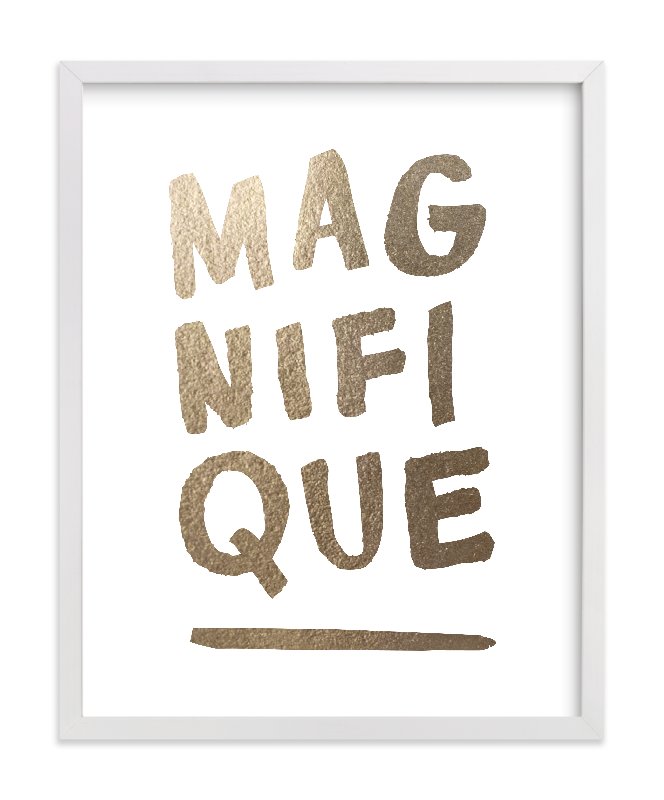
Or make it a mantra. Displaying calm, motivating, and inspiring quotes in your office will help bring back your free flowing thoughts of creativity. Seeing is believing. Sometimes we simply need the words right in front of us.
Nice Work; Humble Word both by Heather Francisco.
MORE FROM OUR BLOG

Startup 101: How to Build Brand Trust from Scratch
Started from the bottom. Now... what?


I was inspired to talk about how to engage potential customers and build trust after a recent search on LinkedIn. I was searching for a sales funnel and email marketing specialist, and I came across several people who claimed to be consultants or specialists for hire. When I wanted to learn more, I couldn’t find anything about them online. No reviews, no website, and no information about why or how someone could hire them. This is an immediate red flag for me, but when I thought more about it, I realized that maybe people just don’t know how to engage potential customers and build trust.
As a personal branding expert, I often discuss why it’s important to cultivate a personal brand and optimize platforms like LinkedIn, so I was astounded that so many people who want to be hired as a consultant or expert don’t know how to create an online footprint. If you do not know how to maximize your online footprint, you are hurting your career and losing business. When you’re not a heritage brand, your online footprint is even more important when you’re trying to engage potential customers and build trust.
Optimize your LinkedIn profile
This is the first step of engaging potential customers. If you’re not on LinkedIn currently, create an account now. This is one of the most widely used platforms in career development, so underutilizing LinkedIn could be detrimental for your career. You’ll want to make sure your profile is fully optimized, but on top of that, make sure that your contact information is prominent, especially if you’re interested in getting hired for your services.
"If you don't know how to maximize your online footprint, you're hurting your career and losing business."
Tweet this.
Highlighting your expertise and how you can help others is also one of the most important aspects of engaging potential customers. Show examples of your work and your professional achievements to show potential customers exactly what you can do for them.
If you are offering professional services and are a registered business, create a company page on LinkedIn where people can learn more about your business and see that it is legitimate. Creating a company page on a trusted platform like LinkedIn helps build trust in your own brand.
Demonstrate a professional brand
If you’re offering professional services, you’ll want to demonstrate a professional brand that’s consistent across all channels. This means creating uniform content and being present on a company website, LinkedIn, Google, Yelp, and social media. The more channels and social platforms you utilize, the more reputable and trustworthy your brand becomes. If someone is unable to find a source of your work, including examples, contact information, and recognition, they’re unlikely to trust you as a brand and a professional. If you can’t establish trust among consumers, you won’t have a successful business.
Utilize referral marketing
Referrals, recommendations, and testimonials are a huge part of building online trust and maximizing your online footprint. When a trusted friend tells you about a business, you transfer that trust to the company. Use LinkedIn recommendations, Yelp reviews, and customer testimonials on your website to help build trust and highlight your achievements. If real customers can attest to your quality of work and what you have accomplished for them, you will be able to establish yourself as a reputable resource.
As a side note, building up your presence on sites like Yelp will immensely help you because consumers trust that you cannot buy good reviews on that platform. Yelp uses algorithms which test and verify the reviews before posting them, which creates another level of consumer trust. When you’re using a trusted platform, it can appear more legitimate than simply writing down a customer testimonial with no verification.
Cultivate a consistent personal brand across channels
Creating a cohesive personal brand is extremely important for developing your career, and using consistent branding across channels helps build your credibility. Think about it this way: If you search for a person or business and see multiple platforms and channels come up with the same information and visuals, you can assume that this brand has put in the time to create a consistent branding strategy. If you see different visuals, as well as inconsistent verbiage and service offerings across platforms, it’s harder to believe that the brand is professional and trustworthy.
________________
When considering how to optimize your online footprint, you want to focus on a few main factors:
- Providing resources such as contact information and examples of work
- Creating a consistent brand across channels
- Creating trust through reviews and testimonials to establish yourself as a reputable source of work
The more information about yourself as a business professional you can put out there, the more trusted you will become. Note that this is not personal information, but information about business like business contact information, business information, services offered, etc.
A native San Franciscan, Michele Lando is a Certified Professional Resume Writer and founder of writestylesonline.com. She has a passion for helping others present the best version of themselves, both on paper and in person, and works to polish individuals' application package and personal style. Aiming to help create a perfect personal branding package, Write Styles presents tips to enhance your resume, style, and boost your confidence.
MORE FROM OUR BLOG

Ask the CEO: Would You Pay an Executive Coach?
Where do you spend the money when you're struggling?


Daina Trout, CEO and co-founder of Health-Ade Kombucha, AKA the fastest growing kombucha company in the United States, spends her free (ahem, what?) time mentoring younger entrepreneurs. She says it’s an important part of the process that she didn’t have when starting her company in 2012.
Trout explains that often, after speaking with younger entrepreneurs, she'll “discover that they’re trying to have their cake and eat it too. The whole thing about being a successful entrepreneur is that there is some major risk you have to take. That’s the price of the game. Whether it’s a financial or personal risk, whatever it is, you’re taking a risk. I don’t think you’ll meet any successful entrepreneur who didn’t have the moment where they thought, ‘Oh shit, everybody is telling me this is stupid, I’m the only one who thinks this way. I have to quit my job. I have no money.’ Everybody has those stories. So when I talk to the entrepreneurs who are trying to mitigate that risk by keeping their job and their apartments, I tell them, ‘We had to live out of our car, what do you think this is?’”
Not for the faint-hearted, that’s for sure. “When they talk to me like that, I say, ‘OK, you’re not ready to start a business. Give up your apartment for four years. You can’t live the life you have from a corporate, steady and sturdy job, and also start a business. That’s the whole point.”
"You can’t live the life you have from a corporate, steady and sturdy job, and also start a business."
Tweet this.
You can however, make an investment in people who can help you. Early on Trout made the decision to pay an executive coach to guide her. She says the first two years felt like, “physical labor against all odds." She also felt incredibly alone. "I never knew what the next step was. I didn’t reach out to anyone because I didn't know who to reach out to.”
But in 2014, when the company got its first investment, Trout shares that they took $15,000 to invest in leadership. There was an understanding she explains, that “If we expected to build this into a billion dollar brand and have hundreds of employees we were going to have to get way better at managing people. We were complete cowboys. So I said, ‘We can each have 5,000 dollars, do what you want with it, but it has to somehow build your leadership.’ I put together a coaching program and I’m with that coach still to this day and talk to her every two weeks. I don’t think I would be where I am today without her.”
Health-Ade now has 100 employees. “Meeting those 100 employees is a personal milestone. It’s one thing to lead five people, 25 and then 50, but 100 feels different and I’m being forced to tap into a stronger version of myself every year. This year especially.”
Of her coach, Trout says, “She hasn’t ‘taught’ me anything. That’s the thing. She's kind of like a really good therapist. She’s an independent sounding board. By the time you have investment you usually have a Board of Directors, but you can’t share every little thing with them. Also, I don't know if this is a gender thing, but most women I know have to get to their answer. That requires talking it out. And it’s usually right, but you have to get there. So having a coach is awesome. She knows everything that’s happening. She knows about my board members and who my employees are. We’ve talked every two weeks for three years. In that hour that I spend with her I’ll come out with a strong action plan to avoid problems I see coming.”
You don't have to pay to play. There are free mentors out there she shares (like at Create & Cultivate Seattle-- tix on sale NOW!). “My experience has been that when you ask somebody for help, they almost always say they have time.” Noting that there has only been one instance when someone said no. “You get on the phone, talk to people, they’ll answer all of your questions. They’ll share models, structure, the mistakes they’ve made, they’re happy to talk about it.”
She’s self-reflective on this point. “I probably didn’t have to go through those first two years alone. I would recommend finding people who you think did it right and would define as successful, email them. It’s not that hard to find anybody. Just write info@company and say, ‘I’m trying to get some time on the books with blank,’ it will almost always find the CEO, unless it’s Oprah. That might be hard.” However she laughs, “I haven’t tried.”
She explains that she made a pact with herself, that if she ever got past that stage, “the worst one to be in,” she admits, that she would go back and help fledgling entrepreneurs. “I really try to offer myself as a mentor to women in the first two years who need a little push. The people who really have it in them, they really only need a little push.”
Would you pay a coach? Chime in below.
MORE FROM OUR BLOG

#Careergoals + #Hairgoals: Find Out Why This Celeb Stylist Is Both
beauty boss.


Kristin Ess has been doing hair for more than half of her life. Since she was 15, the hairstylist whose roster includes Lauren Conrad, Lucy Hale, and Halle Berry, has said “yes to anything and everything” that came her way. The stylist and her trademark vibrant redhead has done the salon thing, the editorial jobs, the freelance route, as well as assisting hairdressers she admired for free “a lot.” In 2011 she launched The Beauty Department, aimed at bridging the divide between the glam squad and the every-girl, work she has continued as founder of Kristin Ess Hair.
Taking on the role of founder it’s only natural that her workload has gotten “more intense,” as there is now “more to see, more to create,” as well as “more to dream up.” But don’t expect her to start slacking as a result. With a new Target collab, she's only getting started.
“I try to be as original as possible,” says the mane guru. “I don't go on Pinterest and just copy whatever pretty visuals I see. I don't creep other hairdressers and copy what they do. I do my research and try to bring something inspiring to the table.”
Despite her superhuman hair prowess and boss ass hair flips (see: above photo), the mane goddess is mortal. Over the holidays Kristin says she was walking about her house crying, wondering if she would ever sleep again. Between The Beauty Department relaunch, Kristin Ess Hair, the steady stream of content creator, travel, and being down two assistants, she had averaged between three to four hours a night for four days. “I actually googled, ‘Can you die from exhaustion?’”
She didn’t.
The hairstylist doesn’t set goals, something she says may be “a big no no according to some, but so far it’s worked for me.” She also doesn’t have habits or routine. “The one and only habit I have is brushing my teeth.”
As for her relationship to herself and career she’s keeping it real. “I think I've started to judge myself a little bit more in the last five years,” Kristin openly shares, “which I never did before. I thought I would have launched my line sooner, I thought I would have traveled more, I thought I would have lost weight, I thought I'd be more organized, I thought I would have a bigger team. I never would have thought those things about myself 10 years ago. But you get into your 30s and you start being a little harder on yourself. I catch myself in the moment, almost every time. I stop, mentally step back and look at what I am/do/have experienced and I remember I'm doing fucking great.”


When her clients feel good, she feels good. And her number one takeaway for them when they leave her chair is that “That they've been heard. That I get what they want and that I can deliver on what they've asked for.” It’s simple, but powerful and is in harmony with what she sees as one of the next big trends in beauty. “We're breaking down the walls of overpriced beauty!” she exclaims.
In an industry not known for being soft, rather one that Kristin says “can be very competitive and sometimes nasty,” she’s focused on a positive future. Encouraging “women, both friends and people I haven't met, via social media and throwing down all the YAS KWEENS I can. We’re all in this together and no one woman is better than the rest.”
While it may seem that the follicular feminist's career is on fire ('cause it is), Kristin remembers a past and “very wise” client who told her, "You never want to be on fire. Fires burn out. You always want to be smoking."
"You never want to be on fire. Fires burn out. You always want to be smoking."
Tweet this.
Sound advice that has stayed with her. “I’ve never desired to be the most famous hairstylist on earth. I never needed to have every single celebrity in my chair. I just want to do my job really well for a long time, and hopefully people will love it whether they're famous or not.”
Kristin will be joining us in Seattle for Create & Cultivate Seattle on September 9th. Nab a ticket now, before they sell out (they always do).
MORE FROM OUR BLOG

We Asked 5 Incredibly Motivated Women One Very Important Question
See for yourself.


Do you feel like you’re in the driver’s seat of your career? Even if you work for someone else, you don’t have to be an unwilling passenger. You have the chance every day to create something great.
So we wanted to know: What Drives You?
What are you motivated by? How do you remain encouraged in cut-throat, 9-9 all-the-time working world?
Read through and then go ahead— take the wheel. You career is all about the journey.
“My biggest motivation is remembering that it’s not all about me, but the people who may view my work. It’s easy to get caught up in the selfishness of creating something because at the root of it all, it *is* my name attached to the piece, but ultimately, i’m doing everything for those that don’t know how to use their voice and talent just yet. i also have to remind myself that this path was the only path that i wanted to take when i was a teenager and if 14-year-old Courtney woke up everyday knowing she’d eventually photograph musicians for a living, then the least I could do is fulfill that dream. even when life gets a little rough.” — Courtney Coles, photographer
“I don’t know how to slow down so I am driven by the desire to create something bigger and better every single time we produce a conference. That comes in many forms. Panels that push the conversation further, mentor power hours that really deliver, and cultivating relationships with brands onsite. There is so much that happens over the phone or email, that when you’re actually able to build relationships with a brand in person, it’s amazing. For instance, Volvo drove their new XC60 into our NYC event but they also provided VIP transport for our panelists and speakers in their XC90. And after seeing ways to integrate in New York – now they are planning something cooler for Seattle. Integration can happen on so many levels and figuring out how creative a brand is willing to be is so much fun. You just never know what a brand will bring to the table and every single moment brings a chance for opportunity. It’s up to me (and you) to grab ahold of the wheel.” —Jaclyn Johnson, CEO Create & Cultivate

“Past professional (and personal) experiences, each with its own lesson, have an amazing way of building on each other and coming together over time. Seeing big ideas come to life by making unexpected connections (and a lot of hard work), drive me to keep on going and see what’s next.” —Emily Atlier, Marketing Associate, Goop
“What drives me is the knowledge that the state of the world today was caused by men and women who were not engaged enough in their communities and political processes. That somewhere along the line the narrative of “powerless” was believed, that we still hear the statement of “my vote or voice does not count” when in fact that same vote (or lack thereof) is what got us here today. It is a mere belief that stops most of us from taking our future and lives into our own hands. To change that, I don’t have to cause a mass movement, have millions of dollars, lobby in Washington or convince a senate and the 1% to all of a sudden start looking out for me. No. All I have to do is go into my own family and community and have an empowering conversation, and then another one, and another one...and what’s a simpler solution than that? To make people realize that the future, their future, is not in some politicians hand, but that it is truly and only up to us. Just like it always has been.” —Ann Kleinhenz, co-founder & executive director, Up To Us
"I always ask the people I meet what they're passionate about, what makes them wake up in the morning; I've found that this is a better indicator of who someone is versus asking what they do for a living. The thing that drives me with my work is the fact that I get to do what I'm passionate about: support artists, build community and use the arts to give back. I recognize that it may not be possible for me to change the whole world, but if I focus on what's in my hands each day (instead of getting bogged down by superfluous details and the "what ifs" of the future), I can make an impact in the world around me; and ripple effects are real.”— Michelle Young, Founder of The Box Presents
So what drives you? Tell us in the comments below!

6 Things You Should Do If You Seriously Want To Buy A House in Two Years
Like, seriously though.

Photo credit: Brittany Ambridge for Surf Shack
Fact. Millennials represent the largest generational group of homebuyers, according to the National Association of Realtors 2017 Trends report. So if you’ve got #Homegoals and aspire to join the club of homeowners in the foreseeable future, it’s definitely within your reach but not without having a strategic plan to get you there. Here are six things you should do right now if you’re seriously looking to buy a house in the next couple of years.
1. Get your credit score right:
When it’s time to shop for a home loan, the best interest rates will go to those with the highest credit score. Make sure your credit score is in its best shape and review your credit report to make sure nothing looks out of the ordinary. When you’re closer to shopping for a home loan, avoid making any huge purchases (ie. buying a new car or new furniture for your dream house) that could affect your score at a pivotal time.
2. Get preapproved:
The first step in the process is getting an honest look at what you can really afford. That starts with meeting with a lender and getting pre-approved for a home loan. You can start talking to a lender a year out from when you you’re ready to buy to start understanding what you’ll need to provide to qualify for a loan. I’d recommend talking to at least three lenders and shop around to compare each rate they offer. Researching a lender is just as important if not more important than researching the type of house you want. In a competitive market like we’re in today, most sellers won’t even look at an offer without a buyer’s pre-approval letter attached. The better prepared and researched you are to understand what you can actually afford, the more leverage you’ll have as a buyer.
3. Get smart about your finances:
If you’re seriously committed to buying a home in the next couple of years, it’s time to get smart about your spending. Start a special savings account just for your down payment fund and set it on auto to contribute monthly to it. Having money saved for a down payment and closing costs is typically the largest barrier to entry in buying a home and most people don’t know that there are over 400+ Down Payment Assistance Programs in California that they can easily apply for and essentially get free money. Start researching and see if you qualify.

Photo credit: Brittany Ambridge for Surf Shack
4. Be realistic
You may not get everything on your wish list so it’s important to prioritize your list of can’t-live-withouts. Most people are drawn to homes that are completely move-in ready but sometimes there are gems to be found with homes that need a little fixing that you can really make uniquely yours. Don’t max out your budget and spend every dollar of your savings on your dream home. With homeownership comes closing costs, added bills, and maintenance expenses that you want to make sure you have money leftover in savings.
5. Have an open mind
Searching for the perfect home in your perfect neighborhood in your ideal price point can get tricky, so it’s good to have an open mind throughout the search process. Work with a real estate agent that’s local to the area and well connected who might introduce you to a nearby area you may not have thought to look in. Try to look past things that can be easily changed or renovated over time like fixtures, paint color and even floorplan and consider those factors that you can’t change like location, school district and lot size when making your decision.
6. Think about the future
When making the step to buy a home, do think about your future plans and whether you see yourself living in that home for at least the next two years. After living in a home as your primary residence for a minimum of two years, you’ll be able to take advantage of the capital gains exemption which lets you deduct up to $250,000 of your capital gains from tax (up to $500,000 for married couples) when you are ready to sell. Most people don’t live in one house all their life so as you make renovations or updates to your home, it’s good to keep the future resale value of your home in the back of your mind when making design choices. A good practice is to keep track of how much you’ve spent on renovations and improvements over time which could all be deductible to your home’s original cost basis when it’s time to move on and sell.
(and p.s. editor's note: if you're stressing that you can't afford to decor your home-- yes, we just made that a verb-- please check out C&C fave Emily Henderson's post on how to do Cali-casual look on a budget. She breaks down the realness here.)
Audrey Leoncio is a Los Angeles real estate agent with Compass who’s lived all over LA’s east, west and downtown neighborhoods. Have #homegoals or questions about buying a home? Email me at audrey.leoncio@compass.com
MORE FROM OUR BLOG

Create Your Own Dream Job: Meet the Woman Who Taught Herself Graphic Design
And entirely turned her life around.


photo credit: Anelise Salvo & Hey Mama
Anelise Salvo not only left an unfulfilling career behind to follow her dream of becoming a graphic designer, but she is completely self-taught. So don't ditch out on your dreams quite yet. Remember what mom used to say? Where there's a will, there's a way.
Anelise is here to tell you it is possible and breaking it down in six easy steps that anybody can follow. Her story below.
Like most people, I received an undergraduate degree in a field I ended up doing nothing with post-graduation. I studied Political Science, and while it enchanted me with dreams and aspirations of saving the world while living in a United Nations compound in a remote village in a far-away land, “real life” hit me with student loans that needed tending to that the non-profit world was, needless to say, not cut out for. I took any job I could get for the majority of my mid-twenties just to make some significant dent in my education-turned-debt. I learned a lot, but most importantly, I learned what I wanted from a career and what I could not stand another day of. I needed to be able to pick my ideal location and have independence and I would never again work for a cause I had no passion for.
Flash forward to today. I own a boutique graphic design studio, specializing in crafting custom WordPress websites and designing brands for outrageously superb humans and I’m happy to report I. LOVE. MY. JOB.
You may be wondering, how?! How did I go from knowing literally nothing about design to running my own design business. Well ladies …I’m here to share what I did and how you can do it too:
1. Absorb: Learn as much as you possibly can and seek out the masters
A: Start by learning the founding principles of design – what makes good design, what is the history? This is vital to understanding where graphic design is today and it’s also critically important to know the rules first, so then you can break them later (not the other way around). Good design can look so simple, but trust me, it doesn’t just happen. It takes intention, practice and critiques. To do this, read books (this is a fave, as is this) and take online courses through sites like Skillshare.
I did take an InDesign 101 course at my local city college the second I quit my cubical job, but the pace of learning dragged on, so I resorted to 100% online learning.
B: When you feel you have a good understanding of step A, then start to find other graphic designers who are doing their craft reeeaallllyyyy well. Learn from them. Email them and ask questions. Study them and their work. Chances are, if you surround yourself with well-crafted design, you will start to emulate it in your practice and then eventually, you will start to create original practices because you now know the founding principles.
2. Practice: Bring your knowledge into the Adobe Suite
A. Sign up for the Adobe Suite (at this point you only need InDesign, Illustrator and Photoshop) and, wait for it…yep, take more classes. This is the time to practice what you just absorbed and that can be done by committing to taking X amount of classes per week. I learned most of what I know through Skillshare graphic design and web design classes (with some hand lettering classes sprinkled in the mix) and Nicole’s Classes; Illustrator, InDesign and Branding 101.
B. Hire yourself to create something. Anything. By doing this you will struggle to figure out how to achieve what you are looking to achieve and through this process you will learn so much. At this point, utilize YouTube like it’s your best friend. Don’t know how to use the pen tool? No problem. YouTube it. This cycle is such an important part of learning on your own, so don’t rush it.
3. Don’t Say No: No job is too small. Do them all
Put your skills out there to your friends and family! Offer your services and you will be amazed at the things people ask you to do. You will learn a lot. Fast. When you get a request to make a flyer for a retirement home’s 10th annual pot-luck, trust me…don’t say no (even if you want to). You never know what that opportunity will bring; from learning a new skill, meeting a potential new friend, or a client with a job that may be more up your alley.
4. Find Your Niche: Do one thing really well
They say it takes 10,000 hours and yea, they are probably right. But in the meantime, start to hone-in on what you get excited about doing and do more of that. I firmly believe it is better for you and your future clients to do a few things really well instead of doing a bunch of things kinda well. By making your offerings short and concise, you are able to work on the things you dream about instead of things you dread. Don’t worry, this has taken me years to figure out.
5. Take an Hour: The learning never ends
Set aside one hour a week dedicated to learning. Be it learning by reading design-related articles or taking a class on a design element you have yet to tackle. Even when you feel you have it down, chances are you could benefit from refining your skills and soaking up new inspiration. Whether you’re taking graphic design on as a profession or not, this mindset will help you keep current.
6. Collaborate: PR is your best friend
A very fun and effective way to get your name and craft into the world is to collaborate with other creatives. Reach out to people whom you admire and make some magic. Styled photoshoots are a great way to show off your hand lettering talents, or your skills in invitations or print design. At this point, you will quickly realize that whatever you put out into the world you will get back, so choose your collaborations wisely so you are staying true to your niche and don’t find yourself being hired for jobs outside of your “love zone.”
The original version of this post appeared on Hey Mama.
MORE FROM OUR BLOG

How This CEO Plans to Make Other Women Really Rich
If it don't make dollars, it don't make sense.
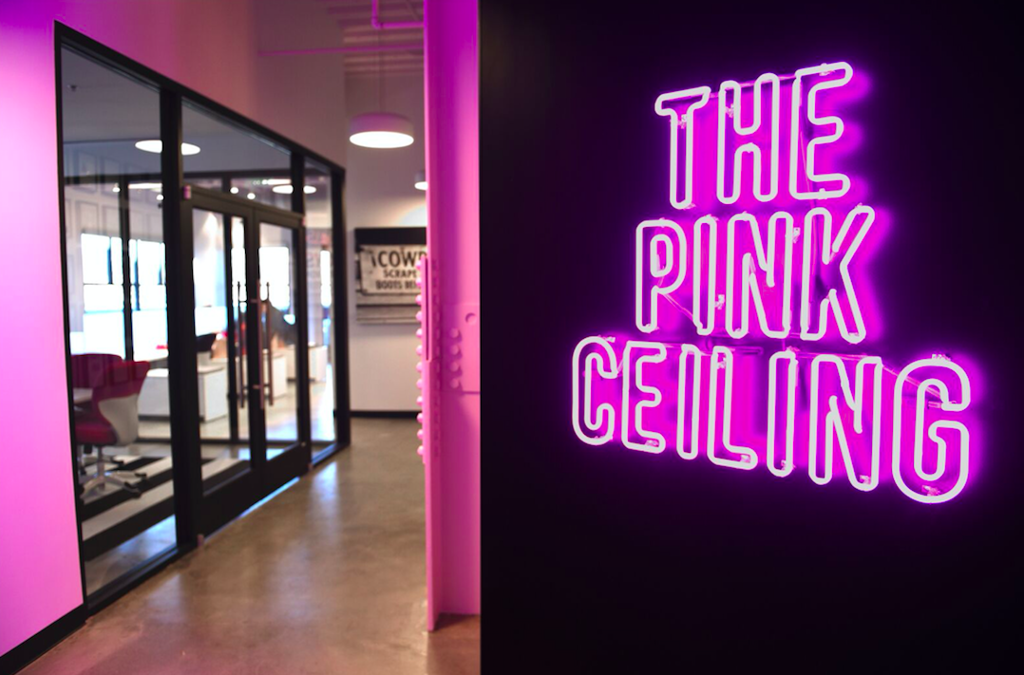

With the unofficial tagline “Make other women really rich,” Cindy Whitehead, CEO of The Pink Ceiling, the business she founded in 2016 focused on mentoring and investing in female-focused startups, expects the pay it forward model to work. “Money is in many ways power,” Whitehead says. “And it’s a power women need for the next stage of the entire women’s movement.”
Cindy Whitehead has spent 20+ years at the helm of companies. Most notably, her third venture, Sprout Pharmaceuticals was responsible for breaking through with the first FDA-approved drug for women with low libidos. This little pink pill, known to Whitehead as Addyi and to the media as “the female Viagra,” gave the entrepreneur “a front row lesson on what it means for women to advocate for themselves and each other.” It sold for a whopping $1 billion upfront payment.
She’s a businesswoman. A force. And a breakthrough artist in the field of health tech. Though Addyi’s trajectory didn’t play out as Whitehead expected (that story can be found here) and she says there isn’t a day that goes by that she doesn’t think about the company, she took away an understanding of how to champion for others, the way many supporters have done for her along the way.
Having always built companies from scratch, many people expected her to jump into the next operating role. She surprised them. “What rips the sheets off in the morning for me is fighting injustices. It is an injustice that women get 2% of funding. It’s a ridiculous idea that half of the population only has 2% of the good ideas.” It’s also statistically incorrect-- and Whitehead likes data. She also likes pink. For her, these are not incongruous notions. “I like pink,” the CEO explains. “I like being a woman. I think women have unique strengths to bring to the table and by god nobody is going to make me lose my pink.”
"It’s a ridiculous idea that half of the population only has 2% of the good ideas.”
Tweet this.
When she says people use “pink” and the stereotype it conjures as a means to dismiss an idea, those are conversations she tends to run towards, as breaking preconceived notions is what will ultimately create change. “It’s why I showed up in blazing pink to the FDA. Every time. Unmistakably I was there to have a conversation about women because we weren’t listening to them.” She’s had her critics, sure. But thinks women embrace an unapologetic approach. “When I showed up [to the FDA] talking about sex in all pink, there was a healthy dose of underestimation. And then I’d surprise them with all the data I know.” This piggybacks on her favorite piece of advice: “Prepare to be underestimated. And then show up and kill them with competence. I say it over and over again because underestimation as a woman in business is inevitable. It is going to happen. That can either force you to retreat or you can harness it and surprise them.”
The Pink Ceiling is not a classic VC. It is Whitehead’s own investment post Sprout.
Inbound proposals abound and Whitehead and her team take an active role in the companies they choose to move forward with. “We make decisions based on bandwidth and our ability for real impact.” Can she help a woman in fashion tech as much as she could help someone in the health tech? With the fundamentals of business, yes. With her rolodex, no. She thinks “below the belt for women” is an untapped area. “It is the last taboo in health. Even as women we don’t talk about the things we haven’t been ‘given permission’ to. If it’s below the belt it comes to me.” However, she says The Pink Ceiling teams works really hard with the companies that make it through the vetting process to find them a home. Admitting, “It’s not always with us. We have 11 companies that we actively work with every day. About another 4 that we’re about to go into. And we’ve taken 50 women through the 3-month mentorship program thus far.”
"Underestimation as a woman in business is inevitable. It is going to happen."
Tweet this.
The company’s battle against injustice is happening on two fronts. First, the lack of access to capital.“It requires an extra step and requires them [investors] to do their own homework with the audience that [the product] effects,” she says of why male investors aren’t funding female-focused companies or female founders. “My career has taught me the unconscious bias runs deep. I don’t think when [men] are sitting across the table that they’re intentionally thinking, ‘oh well this is for women I’m not going to fund it,’ but they’re sitting there not connecting to it.
She continues, “If I’m going to go up for investment dollars tomorrow, I have the highest probability that the entire table seated across from me will be men. And if I’m pitching an idea that is uniquely suited to women, I’m talking to an audience that fundamentally doesn’t relate. And I think the human nature component of that is that I’m less likely to invest in things that do not particularly impact me. Hopefully we’re catching up. But it’s why at the Pink Ceiling I equally look at men doing great work for women.”
To point: Undercover Colors, founded by four men. It is a nail polish intended help wearers detect the presence of date-rape drug. For Whitehead, that company is the sweet spot. “It’s not just a tool, it’s a conversation,” she says. “I’m always going to love health tech. I like the geeks that are innovating, creating a real tool-- one that creates a social conversation.” At the time we speak, she’s got at least one eye on Lauren Weiniger's “The Safe Sex” app. “We’re not yet invested, but I’m closely watching." SAFE let's you show your verified STD status on your phone, and know your partner's status.
The company is also fighting injustice with the “Pinkubator” program, The Pink Ceiling's way of addressing the lack of access to female mentors. It’s an integral part of the business that tackles the need for more straight-talk amongst female entrepreneurs. "The conversation that I’m going to have woman to woman is different," Whitehead says. "There’s nothing wrong with a climate of encouragement, I agree with that wholeheartedly. But we have to be careful that we balance that with candor,” she says.
And while she marks the powers of observation and empathy as a “superpower” of women, particularly when applied to business, she believes "data, in particular, is informed differently through the lens of empathy.” When combined the two have immense power and potential. Totally solo however, they might make for risky business.
“Oftentimes we’re delivering news that people don’t want to hear,” she explains. “But here’s my worry: If I’m a young woman coming out of college today and I know by the numbers that my chances aren’t as good in a classic corporate world and I have this idea of entrepreneurship from Shark Tank, which has given me the moxy to go out and start on my own, that’s great." The danger lies in blind encouragement. “If nobody talks about the scalability or sustainability of her business, here’s what’s going to happen: she’s going to fail. And when she fails, I fear that we are going to reinforce a narrative that women don’t have what it takes.”
Mentorship is so crucial to the process that it’s part of her team’s investment consideration. If you look at the numbers, she says, women are not only starting businesses faster than men, they're also often starting businesses alone. "One truly is the loneliest number in entrepreneurship. When we look at investments, I’m looking to see if they’ve been resourceful enough to find that network of other women who are going to help propel them.” She says resourcefulness is as easy as Google, where you can find conferences (*cough cough*), programs, accelerators, and the access to people who will push you. “Sometimes we have a paralyzing fear when it’s not going the way we expected that there’s no fallback. There’s always a fallback. And I hope that when women feel that way they can push through the moments of the deepest fear of entrepreneurship."
MORE FROM OUR BLOG

ITK: How to Use Affiliate Links the Right Way
The money is out there. Do you know how to get it?


Where do content and commerce collide? “In a beautiful space,” said Amazon Fashion Director Kate Dimmock to a crowd of hundreds of women at Create & Cultivate NYC at the Knockdown Center in Brooklyn. “What’s important for you to know is that every piece of content that you create is shoppable and able to be linked to affiliate links,” she added.
And then the influencers took to Amazon Fashion’s "Content Meets Commerce" panel to share their tips on affiliate linking, how to navigate the content world, and what it means to be a successful blogger.
First they broke down some myths. The blogging world is “overcrowded.”
Or is it?
This is something we hear time and again, and what many members of our audience ask-- how do they break into an overcrowded market? How do they stand out from the pack?
Mary Orton, creator of Memorandum and co-founder and CEO of Trove, took a moment to break down the “so crowded” myth of the blogger world. “There are a lot of bloggers and content creators,” she shared, but then mentioned how many new restaurants open up in Manhattan. “Every time a restaurant opens on your block, you don’t say, oh no annoooother new restaurant. If you are being yourself. If you are presenting a unique POV, people will find it compelling. There is room for everybody. That’s important to keep in mind and don’t be discouraged by.”
Cynthia Andrew of SimplyCyn added, “Content is king. It’s really about what you bring to the conversation. “Every day I’m finding someone new and I’m following them and adding them. I wouldn’t say that it’s too saturated. But you have to understand that there is competition and it is harder to get eyes. Which is why you have to be consistent. You have to care about quality, more than quantity. There are people who post four times a day who aren’t adding anything to the conversation.”
Courtney of Color Me Courtney got her MBA young, at 21, but says she looked like “a numbers nerd on paper.” So she started her blog to break into the fashion industry in a less nerdy way. She told the audience, “Have true intent. The blogging game has changed in the last two years-- it has become a major monetization opportunity. But you shouldn’t start out to hit a bottom line. You should start to create content and to create community.”
"Have true intent. The blogging game has changed in the last two years-- but you shouldn’t start out to hit a bottom line."
Tweet this.
Lauryn Evarts of The Skinny Confidential advised the audience to “Think of a niche. I see a lot of girls get into blogging and they’ll email me and say, ‘I wanna be a lifestyle blogger.’ But that’s not where I would start. It’s so broad. Lifestyle blogger is the long-term play. Start niche. Like farming sea-monkey niche. And expand from there. You need to think about your niche as an upside-down triangle. The tip is your niche and the wide-part that you grow to is ‘lifestyle blogger.’ I think that is the trick to being a successful blogger.”
Content meets commerce-- it’s a relationship that goes hand-in-hand, but how do you do it?
This was the main question of the day: How do platforms work together to drive sales and earnings?
Mary Orton took on the big picture. “A lot of social platforms started out as a place that allowed quality content to thrive and content creators to be discovered. We’re seeing a lot of people struggling with that because these social platforms follow a similar life cycle. So ownership of your content is critically important,” she shared. “Be smart about where your content lives and that your business is diversified. You don’t want to become too dependent on a social media platform whose algorithm can change on a dime.”
So while you can make $ on sponsored IG posts, monetizing content on your platform with affiliate links and programs like Amazon Fashion’s are vital to the longevity and success of your business.
“My Instagram can go away tomorrow,” Evarts noted. Which is why she continually works on growing her audience on channels that aren’t beholden to someone else’s platform. “I didn’t go into blogging solely to monetize,” the outspoken blogger explained. “I went in to provide value. That’s one of the most important things. You need to establish value and trust with your readership before you think about money.” Orton echoed this sentiment saying, “Monetization opportunities will come. Any time you focus on monetization opportunities only, that’s when it comes across as commercial. It’s not only important to know this in the beginning, but throughout your journey.””
It was three years into blogging for Cynthia Andrew, who is attorney by day, blogger by night, when someone mentioned to her, “You should be using affiliate linking.” Andrew said it sounded like a “headache,” but then realized how much earning potential there is. Today she tries “not to overlink. I link to things I like. But I use it as an additional tool because brands want to see the information.”
“No one knows if you’re actually able to drive sales,” said Courtney, “but with affiliate linking you can show proof of concept to brands who want to see those numbers.” The colorful blogger also shared, “Now if I wear anything over a hundred dollars, I also link to something similar that is under a hundred dollars.”
"With affiliate linking you can show proof of concept to brands who want to see those numbers.”
Tweet this.
It all ties back to providing the most value and creating community among your followers. It’s not about selling out. “No one wants to be sold to,” said Lauryn. “Talking about something organically on your platform is so powerful.” Don’t forget it.
To learn more and sign up for the Amazon Fashion Influencer Program, please email fashion-influencer-program@amazon.com.
photo credit: Becki Smith/ Smith House Photography
MORE FROM OUR BLOG

Sign Language: How to Deal with a Gemini Boss
Twin bosses! Twin problems!

graphic credit: Chloe White
Does your boss leave you to figure it out on your own? But then also, not…? Does she feel like a moving target that you can’t seem to hit? But wouldn't want to because she’s also the sweetest, most fun-loving boss you’ve ever had? Oh girl. Your boss must be a Gemini.
The twin sign that is both quick-witted and sociable but can switch on a dime to her more serious side. For a worker bee, it’s hard to know which boss you’re going to get come Monday (or any day) morning, so we’re breaking down a couple ways to deal.
Date range: May 22-June 21
Element: Air
Lucky Numbers: 5 - 14 - 15 - 18 - 26 - 31
Strengths: Enthusiastic, witty, intellectual, great communicator
Weaknesses: Lack of consistency, superficial, anxious, lack of decision making
The best part of a Gemini is that she is considered the best at seeing both sides of the situation. Highly-intelligent and communicative, she is ruled by the motto “I communicate,” which means she is going to want to talk things out. She is ruled by logic, but since she is able to see both sides, she can also argue both sides. When people say don’t fight with a Gemini, you’ll lose— they’re often right. In the workplace this can be hard.
The safest way out of a disagreement is to use the fact that “the twins” of the Gemini sign are never idle. Use this to your advantage and don’t expect to take up too much time belaboring one issue. When talking to your boss, know what you want to say, present it, and move on. You’ll both be in a better headspace.
Ruled by Mercury, the Gemini boss has a first rate mind with unique and original ideas— probably what landed her in the boss seat. However, a fast mind often leads to an “on-to-the-next” approach. She can get bored if she’s not being WOW’d and needs to be challenged. If you see her eyes glazing over during a presentation, chances are you’ve lost her. This can feel like a blessing and a curse. Use this trait to you're advantage and present out-of-the-box ideas. We bet she’d be willing to take a risk on an idea you think is too out there. She’s a little impulsive. Not always great when it comes to feedback… but more fun when it comes to saying ‘yes.’
A little wild in the working world can be difficult. Inconsistency is part of her nature, so if she loves an idea one moment and hates it the next, don’t feel discouraged. Find a way to update it. Expand it. What she’s doing is challenging you to make it better. So you always need to be game. Don’t get too attached to one idea, because it may very well not play.
The Gemini boss can get a little restless, so you need to keep her in the loop on what you’re doing. It may feel like overkill to always be sending updates, but it’s a way to give her peace of mind and also keep her off your back. The best way to avoid feeling micromanaged is to stay one foot ahead of the email. Quick bullet-point updates at the end of the day are a good way to let her know, you’re on top of your tasks.
MORE FROM OUR BLOG

Dream Big, But Abandon These 4 Dangerous Expectations
Aim a little lower, would ya?

image credit: Jenna Peffley
There's nothing wrong with holding onto your dreams and doing your damnedest to make them a reality, but expectations are the root of all failure. Mainly because there is no way for reality to hold up against them. Reality is messier. Reality is murkier. Reality keeps you real.
This year, we want you to dream big. But we want you to ditch these expectations that only lead you down the rabbit hole.
1. THAT YOU'RE OWED SOMETHING
You're not "owed" anything.
It's tough to accept that simply because you work hard, hard work doesn't always pay off-- at least in the immediate. But it's true.
There are plenty of other busy bees working equally if not harder than you. It's why every creative or successful entrepreneur we speak to tells us the same thing: work, work harder, and then by golly! work some more.
You're not owed a raise, a promotion, or a job. It's hard to argue with hard numbers. But in order to get a raise or advance your standing, you need proven metrics. You need case studies. You need to be able to not only show but prove your worth. Don't work for the congratulations, but because you enjoy it.
2. NEEDING TO "WIN"
Never take a deal you can't afford to lose. If you're expecting that your career or business rests entirely on closing ONE deal or making ONE sale, it is a one-way ticket to failure. Why? The energy you bring to the table will likely not be one of composure or clear-headedness, but they'll be able to smell that insecurity on you. People don't like insecurity because it makes them question not just you, but themselves as well.
"Never take a deal you can't afford to lose."
Tweet this.
More so, an obsession with winning can prevent you from doing so. You become so focused on advancing that you don't pay attention to what's in front of you: the small, over-looked details that will trip you up and allow others to get ahead. And when you do get tripped up... it's time to ditch this next expectation.
3. THAT YOU ARE THE SMARTEST
Self doesn't always know best. And most successful people will tell you to surround yourself with people smarter than you are. There is always something to learn, and if you think that you're the smartest person in the room, either look harder or find another room.
The expectation that you will be the smartest, the fastest, the [insert any est here], can actually be more detrimental than beneficial to your well-being. This article on women who regained their confidence after graduating to Harvard speaks to this. The three women describe the daily difficulties and high expectations as such: “Succeeding was the baseline. There were fewer opportunities to excel and do something praiseworthy.” It gave each of them a complex to get over, before they were able to get ahead.
4. THAT YOU NEED TO WRITE A "WAY WAY TOO LONG" GOAL LIST
Tina Wells, CEO and founder of Buzz Marketing Group says, "Know what you're going to do," and that "goals are important and you need to set targets that also have deadlines associated with them."
However, the marketing guru warns, "You should not have more than three goals." The why of these goals are equally as important. "For every goal you set, you should have a reason for why you want to accomplish that goal," say Tina. "If you don’t have a reason, then it shouldn’t be one of your goals!"
If we set too many goals, we have the expectation that we will and can achieve all of them. But overreaching is the first step in over expecting. You don't have to aim low, but aim just slightly about where you want to go. That way, if you fall slightly below your expectation, which is common, it doesn't feel like a failure that stops you from moving forward.
You can land on your feet and your dreams stay alive.
MORE FROM OUR BLOG

Exclusive Tour: This Company President Just Completely Revamped Her Office
Can we say #officegoals?






Michelle Newbery, who leads the team at online home furnishings retailer The Mine (née ATGStores.com), is fast becoming a recognizable player in a very competitive market niche. In the fast-paced world of interior design, where bright ideas often burn out as fast as they’re born, the new President's star is on the rise.
And, thanks to this experience, Newbery’s got some amazing tips on how to navigate the executive arena. (Find those here.)
But she also knew that when it was time to take on her new role, new office digs were in order as well. We chatted about the redesign and the most productive color (according to Google).
Q: What was the design plan for Michelle’s office?
A: We were really trying to achieve a space that had multiple “zones” that felt more like a home office than a business suite. We wanted to create a calming place with soft blues and greenery.
Q: Tell us about the zones.
A: We organized zones by use. We wanted to create two separate workstations; one stand-up area to facilitate movement and action, and a tech-free seated area to serve as a more contemplative, creative space. The former is outfitted with Michelle’s computer, phone, etc., and the latter offers open desk space where she can spread her work out, look over documents or just take a break from the flicker of the monitor.
Q: Is there a meeting space or lounge area?
A: We chose a lovely conference table that anchors the room where Michelle can host meetings, but it’s also a great place to enjoy a casual lunch, which is in keeping with Michelle’s inclusive leadership style. And yes, there’s also a lounge area with comfy chairs and a coffee table that also promotes a relaxed vibe.
Q: Was promoting a “relaxed vibe” really important?
A: Definitely! Like most of us, Michelle appreciates a serene environment, so we incorporated calming blue hues to create a more soothing atmosphere. And, blue is “the most productive color” – according to Google, anyway – so it feels like a win-win.
Q: So, the room is blue?
A: Ha ha! No, not all. The dominant color is white, and we accented with blues. We also added greenery into the mix, to offset that cold tech feel that seems to come standard in every office building. We think staying connected to nature helps dial down the static in our otherwise tech-obsessed lives.
Click on the photos to shop some of our favorite pieces from the story below!




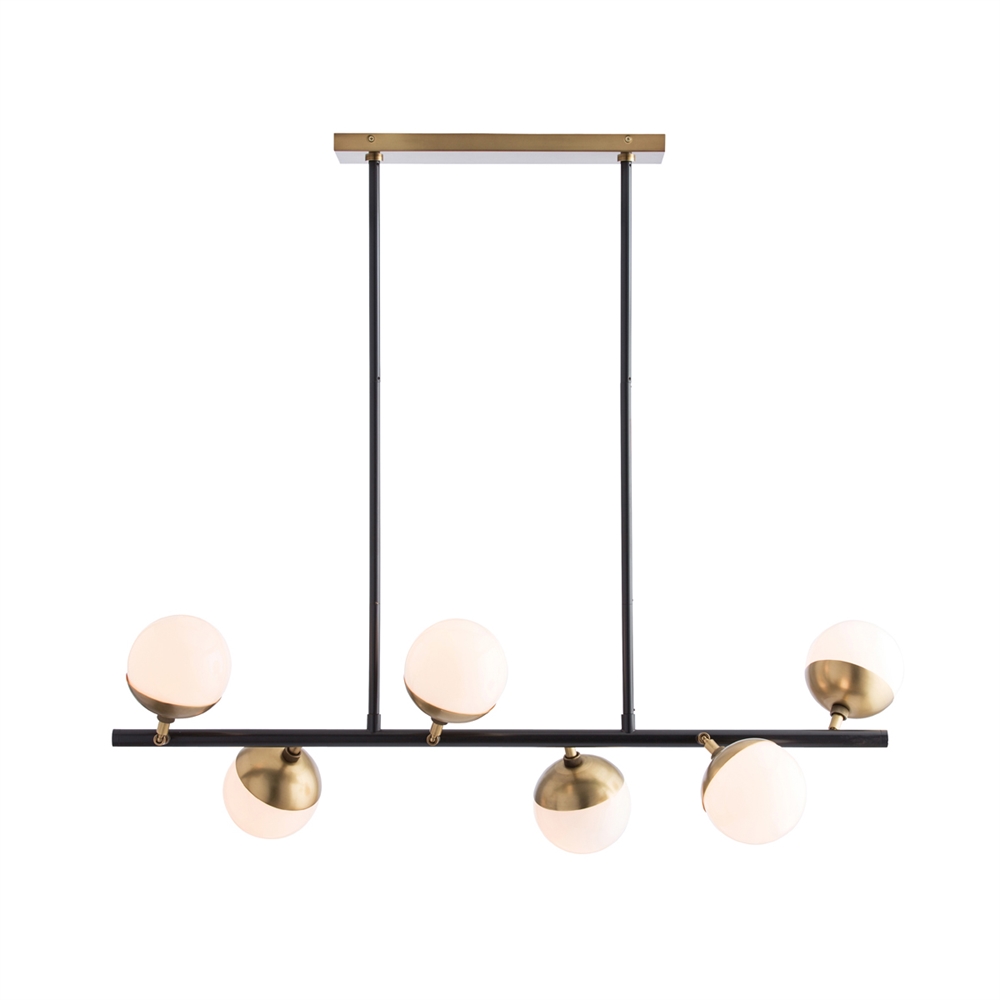
MORE FROM OUR BLOG

How to Build the Ultimate Support Network
It's 2017. Where's your support squad?

C&C is all about hugs, not mean mugs. And if you want to build out your support squad in 2017, we tapped major marketing boss and founder of BuzzMG Tina Wells to give us insight on how to do so.
JOIN LOCAL SOCIAL CLUBS
It’s important to build your personal network, and joining social clubs is a great way. Not only will you be exposed to great events, you’ll also meet potential clients, employees, and friends. Check out clubs like the Union League for “Young Friends” memberships, as well as the Young Friends clubs at your local museums, orchestra, and ballet.
JOIN ASSOCIATIONS
If you’re a female entrepreneur, look into local chapters of the National Association of Women Business Owners. If you are starting a plumbing company, check out the local chapter of a national plumbers association. You’d be surprised how many fields have associations. You can receive great product discounts, invitations to great conferences, and a network of peers. Entrepreneurship can be lonely, so cultivating a group of peers is important. And of course, there is the newly formed Young Entrepreneur Council (I’m a board member!).
CREATE A SMALL GROUP OF 5 LIKE-MINDED ENTREPRENEURS
You may have already heard of these “mastermind” groups. But what do you call a group for those who haven’t yet mastered something? Call it whatever you like, but build one – quickly. Make sure that the four other people you engage don’t have competing businesses, and think of ways you can help each other. I know of groups that meet monthly and each member has to come to the meeting with at least one lead for another member of the group. Also, be mindful of time. You’re all very busy entrepreneurs, so don’t schedule more than 60 to 90 minutes once each month.
HOST A DINNER/HAPPY HOUR EACH MONTH & INVITE NEW PEOPLE
Consider this your start-up marketing expense! Host an event for a select group of people you want to get to know. Be strategic in your invitations, and make sure you personally meet and greet each person who’s on your list. Allow each person to bring a guest if it’s a happy hour. If you’re hosting a dinner, it’s OK to extend the invitation just to that person. Also, make sure that the people you’re inviting can benefit from getting to know your other guests, not just you! I love to cook and entertain people in my home, so I usually host dinner parties once a month. At this point in my career, my parties are more about hanging out with my friends and mutual support. But they’re always fun! So don’t make it all about business!
DON'T MAKE WITHDRAWALS WHERE YOU HAVEN'T MADE DEPOSITS
It’s really unfair to email people asking them to mentor you when you have nothing to offer them. I know it sounds harsh, but it’s true! I get hundreds of requests for mentorship each year, and the ones I normally respond to (outside of the tip sheet I give to everyone) are the people who say, “can I take you to coffee?” The reason is, that small gesture shows that the person believes in a mutually beneficial relationship.
"Marketing #Protip: Don't make withdrawals where you haven't made deposits."
Tweet this.
I have a good friend who built his entire business off of taking people for lunch – even when he barely had the money to do so. And he was able to convince some pretty important people to have lunch with him and eventually fund his business. If you ask him his secret to success, he’ll tell you it was simply asking people to lunch.
GIVE BACK
My most important contacts professionally have been a result of my philanthropic work. I tend to join the marketing committees of non-profits I work with, and meet other people and collaborate on ideas. They get to see my skills firsthand and evaluate me as a colleague. You shouldn’t join an organization you’re not passionate about just to meet people, because that will backfire. But if you have an opportunity to partner your skills with a deserving organization, generating new business will be a nice result.
PARTICIPATE IN CONFERENCES & PANELS
I really like to spend time working – whether it’s at home or in the office. And while I love to travel, I don’t like being away from the office during the week. But I will make the exception for the right speaking engagement. Panels have been a great way for me to make new friends and expand my professional network. I’ve met some of my best friends on panels, and it makes sense. The best organizers work to place people with synergies on panels together. If you can have an hour conversation together on a stage, you probably will want to spend more time getting to know those people.
Tina Wells, founder and CEO of BuzzMG, earned her B.A. in Communication Arts graduating with honors from Hood College in 2002. Currently a Wharton School of Business student for marketing management, Tina continues to create innovative marketing strategies for numerous clients within the beauty, entertainment, fashion, financial, and lifestyle sectors. Tina has worked with clients including: Dell, Girl Scouts of the USA, Maidenform, SonyBMG, PBS, P+G, Sesame Workshop, and American Eagle Outfitters.
MORE FROM OUR BLOG

ITK: Tips for Co-Founder Success
Finding your ideal mate in business.

Many of us have a vision of launching a business with co-founder who is the perfect compliment to our right brain or left-brain selves. Strong creatives tend to seek business strength and vice versa, but actually finding the perfect fit can be more difficult than we like. This is largely because we 1. Travel in circles that tend to be more like us 2. Don’t understand our own personalities, weaknesses and core competencies 3. Are eager to find someone that when we do we say “YES” too quickly. There is a formula to finding the right partner and setting yourself up for success. Lets dive in.
YOUR INNER GAME
Your capacity to understand your traits as a leader is essential. Are you passive aggressive? Can you hire people well, but struggle with firing? Do you think you are always right? Maybe you have self-worth issues. Or, like me, maybe you are a work-a-holic and treat your business like it’s your first-born. No matter what your unique personality type, it's critical to understand how you work and to be honest about it. Launching a business is not the time to work through your personal baggage, but you are the center of your business so these things do come up. You need to square away personal obstructions and work through anything that might keep you from performing at your optimum. I suggest making a list of how you like to work, what types of personalities you have worked well with in the past, and what might someone else need to know about you to know if you are a good fit for them. Do you like to do things last minute but never miss a deadline? Your potential co-founder will need to know not to worry about your commitment.
"Launching a business is not the time to work through your personal baggage."
Tweet this.
WHAT YOU BRING TO THE TABLE
Aside from bringing a great idea to the conversation you need to stack up your skill sets. I always ask my clients to make lists: what are they really good at, what would they like to learn, and what is something that they would have to hire out/have zero interest in learning. If you are a creative that struggles with business matters or vice versa it's important to itemize the specifics. I work with a lot of clients that are creatives and need a business backbone, and let me tell you, you can be successful doing it on your own, but its definitely easier when you are working with someone who loves MS Excel if you hate it.
MATTERS OF MONEY
Who pays for what? With a biz partnership it's cleaner if both parties can equally split liability and expenses. Not only does this keep things feeling balanced, but there is true shared ownership. If going 50/50 is not a possibility and you are looking for a co-founder to fund the operation, you might actually be looking for an investor. In my experience having a co-founder that's really an investor can muddy decision-making processes. A co-founder should be able to bring something beyond money to the table. They should have skills and expertise that will relate directly to the day-to-day operations. If your co-founder is unable to invest as much money as you are or nothing into the business it’s critical that you stipulate in your operating agreement how your investment gets paid back over time and if/when the company dissolves. At the end of the day this is about playing fair, doing what’s right for the business and yourself.
"Having a co-founder that's really an investor can muddy decision-making processes."
Tweet this.
DOING BUSINESS WITH FRIENDS & LOVERS
In theory it’s a wonderful idea to start a business with a friend or romantic partner. Working with someone you know you already like and have things in common can be very rewarding, but it does require knowing yourself very well to pull this off successfully. Before launching into a business idea with someone you care about make sure to ask yourself and him or her- why now? Why would you two be the best to do this together? What complimentary traits do you have? Discuss how long you want to test the process and have a trial period together before committing to a contract. And yes, you will want a contract! Business amongst friends/lovers can still get ugly and you want to have a contract out of respect for you and them. The goal is to preserve the relationship and possibly launch an amazing business!
TINDER FOR CO-FOUNDERS
I wish there was Tinder for Co-Founders (kind of like Bumble BFF...). But as of now there are only co-founder sites that really focus on technology. Sites like CoFoundersLab, FounderDating, and Angellist are a few places to look if you are looking to start an ecommerce site, otherwise I suggest good old fashion LinkedIn and reaching out in Facebook groups, friends and family. As you would on a first date, you need to make sure to meet your potential co-founder for coffee or a drink and not just trust the phone or email. You wouldn’t marry someone without really knowing him or her right? So why would you risk your financial investment working with someone you don’t know well. (Jessica Alba jokes that partnering up with her co-founder is like an arranged marriage.) I suggest dating around. Dating around means having lots of coffees and working on small projects with someone to test out the personality styles and core competencies. Think of it as an experiment. You could sign an NDA, but really, it's not necessary unless you have a patent pending. Ideas are easy come, easy go, but execution is hard. You need a partner you can execute with that has a shared vision. Don’t expect your first couple dates will yield a co-founder! Be patient.
"Ideas are easy come, easy go, but execution is hard."
Tweet this.
Some people are not co-founder types and that can be as useful to know about yourself as is finding the right partner. Business owners who fly solo must take it upon themselves to find the right help to get things done. It's impossible to think you can run a business all by yourself- you simply won’t scale. You need support, someone to challenge you, and someone to fill the holes.
Syama Meagher is a retail strategist for brands and retailers. She helps entrepreneurs launch and grow fashion business through ecommerce, wholesale and brick & mortar. Syama is a former at Barneys New York, Gucci, AHAlife and Macy’s. To build your brand and create a profitable business check out www.ScalingRetail.com and email hello@scalingretail.com
MORE FROM OUR BLOG

Refresher Course: You Need These 3 Networking Reminders
Never stop improving.

photo from Who What Wear
In a recent interview, Scott Uhrig at Agile.Careers explained that “Roughly 80% of jobs are never posted–probably closer to 90% for more senior jobs. The competition for posted jobs is insane…the best jobs are almost never posted.” If a job isn’t posted, you’re going to have a pretty hard time applying for it online. So how do you get to the jobs that aren’t ever posted? The answer is simple: networking.
Recent studies done by LinkedIn show that nearly 85% of people have used networking to find or obtain a job. If jobs aren’t posted online, you’ll need to leverage your connections to get inside knowledge about positions pertaining to your career. This task sounds daunting, but if you take initiative, it’s a fairly simple process.
Surround yourself with industry professionals whom you enjoy
While you might find friends at work, that isn’t always the case, so it’s important to put yourself in situations where you can meet others and build new friendships (or at the very least, make new connections).
Attending networking events in your field of work is a great way to meet people in your field and gather inside knowledge on potential jobs. While you may not be connecting with the people at your office, industry events give you the opportunity to find others in your field who you mesh with. If you enjoy what you do, finding others who enjoy it as well will hugely benefit you.
No idea how to find networking events in your area? Check out the links below to figure out what’s right for you!
- Create + Cultivate (we host local pop up events on top of our conferences!)
- Six Degrees Society
- Career Contessa
- Levo League
Often networking organizations have local chapters so you get to know people in your area. This is a bonus if you’ve recently made or plan to make a big move and are trying to meet new people!
Join a professional organization
This doesn’t just mean attending networking events. Joining a professional organization that is specific to your line of work gives you access to networking events, industry insights, job opportunities, and gives you up to date information about the job market. As an added bonus, professional affiliations look great on your resume! Finding an organization might take a bit of research, but almost every industry has an organization which has huge benefits for members.
Here are a few examples:
- PIHRA- Professionals In Human Resources Association
- National Student Nurses Association
- Professional Association of Resume Writers and Career Coaches
- American Marketing Association
There are associations and memberships for almost every profession you can think of. It might take a little digging, but just utilize your google search skills and you’ll easily find something that works for your needs. If you do become a member/affiliate, make sure you take advantage of all the perks. Join online or in person groups, connect with others in your industry, and sign up for newsletters so you can get the latest industry information.
Ask for an introduction
This can seem awkward if you’re not used to it, but asking someone for an introduction to a mutual connection or friend can benefit you greatly. Browse LinkedIn for people who work at a company you’re interested in or hold a position that you’d like to gather more information about and see if you have any mutual friends. I recently had a friend ask for an introduction on LinkedIn, which led to a great conversation about a potential job opportunity. Recent studies show that as humans, our first impulse is to help others, so introducing two connections with the goal of helping one party will likely pan out well.
More specifically, people often are more likely to help those that they have a connection with, so acknowledging a mutual friend or acquaintance will help with that as well. There’s a reason that the saying “squeaky wheel gets the oil” is so common. Asking for an introduction may force you out of your comfort zone, but the worst thing that can happen is that someone will say “no.” In the long run, the benefits of asking for an introduction far outweigh the potential downside.
________________
Networking is has always been important, but as the online job search becomes more and more daunting, networking is more crucial than ever before. This simple skill is something that will help you further develop your career, make new connections, and potentially land you the job of your dreams. If you’re not currently networking to help with your job search, use these three tactics to help you get in the game and improve your networking skills for the better.
A native San Franciscan, Michele Lando is a Certified Professional Resume Writer and founder of writestylesonline.com. She has a passion for helping others present the best version of themselves, both on paper and in person, and works to polish individuals' application package and personal style. Aiming to help create a perfect personal branding package, Write Styles presents tips to enhance your resume, style, and boost your confidence.
MORE FROM OUR BLOG

The Most Inspiring Advice from Octavia Spencer's 2017 Commencement Speech
Nothing hidden here.

photo credit: Pexels
Octavia Spencer, the actress and author who starred in the monumental film Hidden Figures, and who was named Woman of the Year by Harvard University’s Hasty Pudding Theatricals, addressed the Kent State graduating class of 2017 earlier this month.
Taking to the stage, the Oscar winner told the class, "Many of you are filled with relief, exhalation, and perhaps a bit of anticpation for what tomorrow brings."
"Your work to this point is far from unnoticed," she said of the celebration. "It's an achievement that not everyone receives. Remember this feeling... You. Have. Earned. It."
So what was her best advice for the new graduates?
"Keep chasing those moments where you discover something new about your voice. Don't ever let that end. Keep your minds and hearts open to life's endless and unforeseeable possibilities," she said. Explaining that, "the best years are very much ahead of you and they can be whatever you want them to be. Your work, your life, your week days and weekends can all be filled with as much meaning as you dictate."
The actress also warned the crowd against the comparison game, noting that if she had read a list of "25 actresses who broke through by 25," she would have stayed in bed. “I guarantee you that none of them looked like me –none of them,” she said.
“Ignore the silly ’30-under-30′ list that the internet throws at you before you’ve even had your morning cup of coffee,” she said. “Those will be the bane of your existence post-graduation, trust me. Trust me. Comparing yourself to other’s success only slows you down from finding your own.”
"Comparing yourself to other’s success only slows you down from finding your own.”
Tweet this.
As for the fear of the unknown that comes creeping in post-graduation? You're joining a world where there "are no more graduations," she said. "The journey you take now will be lead by you alone. Don't let that scare you. Let that liberate you. No one came here the same way, and you won’t all achieve success the same way.”
She also maintained: "Don't let anyone define you generation for you. Think big. Show up early. Stay late. And bust your asses. But stay focussed so that your change and growth is intentional. As well as to not let success or failure define their lives. Treat triumph and disaster "just the same," she shared.
MORE FROM OUR BLOG