
Desk-Side: This Successful Style Influencer Shares What It Takes to Build a Full-Time Blogging Career
“Sometimes I wish that I had a superpower where I snap my fingers and everything is organized.”


If you’re looking for a new style muse, look no further than Sheryl Luke. As the voice behind Walk in Wonderland, she’s made her blog her full-time venture—something many of us only dream of doing. That’s why we partnered with Glade® Essentials Room Mist to hear Sheryl’s advice on what it takes to become a blogger and influencer full-time. See her sage wisdom below!
Q: How long has LA been your home?
A: I’ve lived in Los Angeles for about 13 years. I live with my husband and my puppy.
Q: How long have you been a blogger? What’s your favorite thing about being a blogger?
A: I’ve been blogging for about five years now. The most rewarding part about being a full-time blogger is that I get to make my own work schedule.
Q: How do you start your day?
A: To start my day I love a fresh cup of coffee, and I love a clean scent.
Q: What tips do you have for someone looking to be a blogger?
A: For anyone starting in the industry, my tip would be to have a good, strong work ethic. I think that’s gotten me to where I am.


Q: What is the most challenging aspect of being an influencer?
A: Because I live and work in the same space, I have to find new ways of staying productive, so my productivity hack is actually getting ready. It keeps me in my work mode all day long. I’m super blessed to be doing what I’m doing, but if there’s one thing that I find challenging is constantly staying creative. But the fun part is I get to dress up every day and work with a ton of amazing friends from fashion to beauty and lifestyle. My typical work day is answering my emails, scouting locations, prepping looks. But if there’s one thing I wish I had more time for is actually shooting.
Q: How do you create an inspiring workspace even when you’re working from home?
A: Through scent. I use Glade Essentials Room Mist Mandarin & Mimosa and the bright scent keeps me going all day long. I wish you could smell it; it reminds me of Capri Blue’s Volcano candle!
Q: How do you finish your day?
A: After a long day, I love to unwind. So I shut my computer down, set aside my phone, spend time with my husband, and take my puppy for a walk. One other thing I’ve also been enjoying is also cooking. I’ve been cooking a lot of Indian food lately.
“For anyone starting in the industry, my tip would be to have a good, strong work ethic. I think that’s gotten me to where I am.”
Q: What’s your favorite fashion piece you own?
A: The one thing I cherish most is my mom’s vintage earrings. They’re from the ’80s, and they stay really close to my heart.
Q: What’s one question you always get asked?
A: People always ask, “Why Walk In Wonderland?” I’ve always wanted a huge, walk-in closet where I walk in and feel like I’m in Wonderland.
Q: Do you have any habits you wish you could break?
A: I hit snooze a lot. I snooze between 30 minutes sometimes to even an hour. And I’m a bit of a mess. Sometimes I wish that I had a superpower where I snap my fingers and everything is organized.
Q: If you weren’t blogging, what would you do?
A: If I wasn’t blogging, I’d probably have a clothing store.
See Sheryl’s full interview below:

MORE ON THE BLOG






Desk-Side: This Fashion Blogger Shares The Best Part of Being Her Own Boss
The opportunity to create, to write, to dream—it just never stops.


Jessi Afshin is no stranger to success. With 300k Instagram followers, Jessi spends her days working on her fashion blog, The Darling Detail, and her new clothing line, Shop Darling, which supports victims of trafficking. We partnered with Glade Essentials Room Mist to find out what inspires Jessi and makes her feel most at home. Read on to get to know Jessi!
Q: How long have you been in Austin?
A: So I’ve lived in Austin since 1999, that’s almost 20 years. I actually went to the University of Texas, that’s where I studied fashion and business. Hook ‘em!
Q: What do you love most about fashion?
A: My favorite part of fashion is just all the positive emotions it evokes, like self-confidence and encouragement. So many good feelings just through comfort.



Q: We heard you just launched a clothing line, congrats! Can you tell us about it?
A: I just launched a clothing line, and I’m so excited about it because this has been a dream of mine since I was a little girl. They’re soft, cozy sweatshirts and they have joyful messages on them. Every single one of our products is actually shipped and fulfilled by survivors of trafficking in Austin. So we’re actually employing women who are recovering from trafficking.
Q: Where do you draw your inspiration from?
A: I get almost all my inspiration from dreams. I have like 10 dreams a night. I wake up and I write them down, and I instantly have so many new ideas. I also LOVE to Pinterest, and mood board, and collage.

Q: What do you love most about your office space?
A: I like to keep this space feeling so fresh and inspiring. We’ve been using Glade Essentials Room Mist Mandarin & Mimosa and it seriously smells like an Anthropologie store in here!
Q: What’s the best part about being your own boss?
A: I love my job. The opportunity to create, to write, to dream—it just never stops. One of my favorite parts about working for myself is the flexibility and the hours. It’s amazing. So much of what I do happens right at my desk. But most of all, my very favorite part about what I do is writing my faith-based account, it’s called My Darling Diary and it’s where my heart is.
See Jessi’s full interview here:

MORE ON THE BLOG

"An Overnight Success is 10 Years in the Making" & Other Mic-Drop Moments You Missed From Our Desert Pop-Up
Palm Springs, you did it again.

There’s nothing like coming together with hundreds of women in the middle of the desert to mingle, share knowledge, and hear from some of the best in the fashion, beauty, and entertainment industries. Saturday’s Desert Pop-Up was all that and more, with jaw-dropping keynotes from Jameela Jamil, Rocky Barnes, and Karena Dawn and Katrina Scott. They shared the priceless advice they’ve gained over the years, and we couldn’t take notes fast enough! Don’t worry if you weren’t there—we’re bringing you all the key takeaways below…and if you’re a C&C Insider, you can watch videos of every speaker & panel here!



The New Standard: Influencers Reshaping the Beauty & Fashion Industry
“I want to be on the field playing, not on the bench.” - Annie Lawless, Lawless Beauty
“Everything you post is an online resume.” - Jill Wallace, Little Black Boots
“I’m not going to do a job I’m not 100% about. I will never compromise my style.” - Brittany Xavier, global style influencer
Don’t do it for the likes or the comments. Post what you’re passionate about. - Carolina Lindo, I’m Not Sorry Darling
On starting a new venture: “There really is no true five year plan. Everything you do should be short-term planning.” — Jessica Franklin, HeyGorJess
““The only person I’m in competition with is myself. Where was I three months or six months ago, and where I am now?” ”
On being an influencer in a rapidly-changing digital landscape: “It’s a bit like the wild wild west. We’re making the rules up as we go.” - Jill Wallace
“There’s never a right time to start a company, so you might as well start now. Just have faith.” - Annie Lawless
“You don’t need to know exactly where you’re going. Just be really focused and passionate about what you do and everything will fall into place.” - Jessica Franklin
“The only person I’m in competition with is myself. Where was I three months or six months ago, and where I am now?” - Jill Wallace
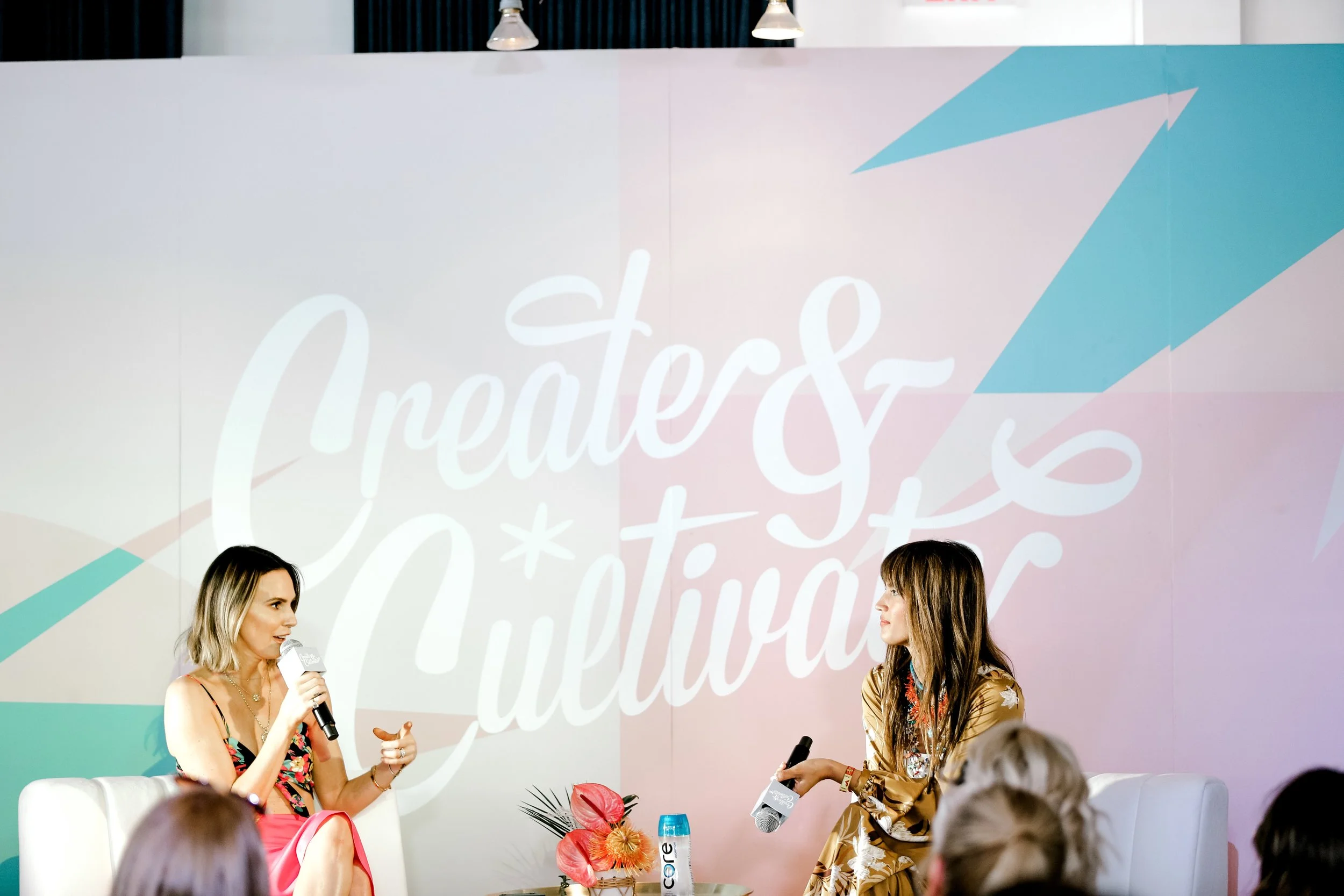
Fireside Chat: Rocky Barnes
“An overnight success is 10 years in the making.”
“I think it’s so important to find the right person or brand to collaborate with. Don’t be afraid to say no and find the right match. It’s like finding a boyfriend.”
“I don’t want anyone to think there’s a quick easy shortcut to success — It may look like there is, but it’s all about hard work.”
“Make time for face-to-face interactions, taking the time to have coffee, say hello—make a personal connection. You have no idea how far that will go in this industry.”
“The best advice I’ve ever received is to never take anything personally.”
“No one is bigger or better than anyone else. Everyone started in the same place.”
“Instead of focusing just on that dream job, focus on the way you want to feel. That’s where you should put your focus.”

Keynote: Katrina Scott & Karena Dawn, Founders of Tone It Up, in conversation with Jaclyn Johnson
“The secret to being business partners is to allow each other to be who you are and find your strengths.”
“There’s never enough time in the day—don’t try to do everything. If you can choose to do one big thing once a day, think of how much you can achieve in a month, or a year, or 10 years.”
“Be in tune with the community you have, even when you think you know what’s best for your business.”
“For us, because we’re so focused on relationships, hiring is really about culture. Hire smarter than you are. Hire people who know what you don’t know.”
“Life isn’t all about work. You have to set boundaries—we’ll go on vacation together and spend the whole week not talking about work. Life is meant to be enjoyed.”



“You have to OK with change. Evolution is great. You’re not the same person you were 10 years ago, and your brand should evolve as well.”
“We’re really guilty of doing every job ourselves. You shouldn’t do that—you should be creating and connecting with your community.”
“Hiring is an investment of time, but think about how it will pay off in the long run.”
“From the very beginning, you’ll never find any Tone It Up workouts about ‘problem areas.’ We’ve always been very body positive. We have before and afters, but we’ve highlighted women who’s gained weight, who’ve gotten stronger, who’ve gone from being not confident to confident.
“Live in the moment and learn. When we’re younger, we’re so concerned about what other people are thinking about you. Just live.”



We Mean Biz: The Content Creators Building Buzz & Businesses
“There’s a reason people sit around the table and talk about their invention ideas and don’t follow through on them—because doing them is no joke. If you have that idea and there is something in you pulling you to do it, figure it out because I have to say, going forward with TOPTOTE, I would have regretted not making it happen.” - Lindsay Albanese, TOPTOTE
“Whoever is paying you is always going to say there’s no money available. There is always money available. Be difficult. Ask for the big money.” - Keltie Knight, TV Host & Founder, Ladygang
Focus on your niche. Focus on what your friends ask your advice on. What are you getting questions about? What are you really good at? Focus on that. - Jaci Marie Smith, Influencer & Founder, What We Said
“If it’s not something I would wear myself, I won’t put it into production.” - Nicole Williams English, Nia Lynn Collection
““Some of the biggest opportunities I’ve gotten are because I’ve asked for it. If I’m not asking, someone else is.””
“Hard workers only. If you’ve got it, you’ll make it happen.” - Lindsay Albanese
“Tap into your resources. You know more people than you realize that can help you take that next step in making something happen.” - Lindsay Albanese
“Ask for what you want, because you are worth it. It is so hard to find a passionate, smart woman to work for you—and you are that. Get that money.” - Keltie Knight
“I’m at the point now where I’d rather level up on everything I’m doing than doing something new.” - Jaci Marie Smith
“A lot of people are so nervous to ask for what they want, but some of the biggest opportunities I’ve gotten are because I’ve asked for it. If I’m not asking, someone else is.” - Lindsay Albanese
“Take ‘just’ out of your vocabulary. Not ‘just following up.’ Say, ‘Hey. I’m following up. I’m fucking awesome. Reply to me.’” - Keltie Knight



Keynote: Jameela Jamil in conversation with Jaclyn Johnson
“If you’re going to be an activist or feminist, you have to be willing to take an L and know that we don’t know everything. We have to be willing to shut up, listen, and learn, and not be too proud about it.”
“The next generation is f*cking done being excluded and looking up to a white straight thin version of what we are supposed to be. We’re done with the dinosaurs…and I’m here to kill the last of them.”
“I weigh the sum of all my motherf*cking parts.”
“Stop being so worried about being fucking likable—it’s not your responsibility to make people happy.”
“This is now a time of sisterhood. Seeing how high my activism has risen, seeing how I’ve been embraced for being so outspoken, so rude—-by even the media and men—-is a sign that change is here.”


Shoutout to Kelley Anderson for creating these gorgeous fern walls for our video backdrop! We loved seeing all of your creative OMBooth vids!
Next up: Our New York conference! Didn’t get tickets in time? Hop on the waitlist. We can’t wait to see you there!
MORE ON THE BLOG

17 Steps to Leading a Mind-Blowing Meeting
Don't succumb to bad meeting fate.

Once upon a time, I worked for a woman who was known as a star meeting facilitator. CEOs would call left and right, asking her to organize strategy sessions and management off-sites, and she would prepare for these sessions meticulously and down to the last detail. Frequently, as I helped her prep for a meeting, she would remind me in an ominous voice: “Romy, if the room is too hot or too cold, people are going to blame you for it.”
While room temperature is sometimes tough to control, her broader point stands: if you’re going to lead a successful meeting, you have to think constantly about the participants. What’s going to make them feel good about the experience? How can you make sure everyone is engaged and heard? How do you make your participants a part of the meeting process, instead of just an audience? Fortunately, there's a process for that.
Here are some ways you can steer your meetings in a positive (dare we say, exciting?) direction.
1. Have a clear objective
Make sure everyone knows what you’re there to accomplish. If you can come in with a single item you want to achieve and then achieve it, everyone will leave feeling good about the meeting.
2. Have an agenda — and make it obvious
Make sure everyone knows what you're going to cover and in what order. It helps you keep the meeting on track, and gives your attendees a sense of inclusion in the process.
3. Keep it short
Don’t bite off more than you can chew. Everyone has lots to do and a short attention span. The more you can keep the meeting brief, the more people will thank you. That means you need to keep the scope of the meeting highly focused.
4. Book a comfortable room
...with chairs at the table for everyone. Seriously. If people feel uncomfortable or are marginalized to “back row seats,” they're not going to be receptive — and what they’ll remember later won't be the great discussion, but how uncomfortable they felt.
5. Choose the right seat
If it’s a meeting that’s around a long table, as the leader, you should sit in the middle, not at the head. That way, you are closer to everyone, sending a message that says, “this is a discussion.”
6. Bring bribes — EHM, snacks
Everyone likes food. Especially not completely unhealthy food.
7. Phones down, heads up
At the start of the meeting, ask everyone if they wouldn’t mind setting aside their phones for the duration of the meeting so everyone can have a better experience.
“Send a message that says, ‘this is a discussion.’”
8. Make sure all key stakeholders can and will attend
Nothing's worse than assembling a group without a key decision-maker so then nothing gets decided. Confirm RSVPs for everyone, and send a meeting reminder the day before.
9. Keep the tone purposeful but light
Inject humor wherever possible. If you can find any way to make the meeting fun, people will thank you. But please: no dad jokes.
10. Keep on track
If someone tries to take the meeting in another direction (and they always do), say, “that’s a great thought. Let’s schedule a separate meeting to discuss it."
11. Make everyone heard
Pay attention to people's reactions to the discussion. Often you'll spot someone trying to speak up but missing their shot. If someone is being drowned out, call attention to them and give them the floor.
12. Elicit participation from everyone
If someone seems quiet or thoughtful, ask them directly for their input. And if someone is not paying attention, call them out on it!
13. Take group notes on a whiteboard
If you jot down people’s thoughts, it gives them weigh t— and it also helps bring participants along to a conclusion or solution with you.
14. Blatantly wrap up
Recap key findings and next steps. Reiterate how the group has successfully accomplished the task at hand. The mental “checking of the check-box” will make everyone feel good.
15. Thank everyone for their time
These days, time is the most precious commodity anyone has. Thank them for making time to join you.
16. End five minutes early
If you can wrap up the meeting five minutes before the scheduled time, people will LOVE you. These days, so many people’s schedules are so booked, they will be forever grateful if you give them five extra minutes to catch up on email or — God forbid — take a bathroom break.
17. Send a meeting recap, notes, and follow-up
THAT DAY or the next day at the very latest. Make sure it is clear who is responsible for what follow up and by when. And if you need a follow up meeting, send the invite for it immediately too. It gives people a sense that the project is progressing.
Ultimately, it’s all about anticipation. If you can think through the purpose and the flow of the meeting in advance, and map out the participants’ experience, you are sure to have meeting that is no less than mind-blowing. And if all else fails, for God’s sake, check the thermostat!
An original version of this article appeared on Career Contessa.
MORE ON THE BLOG

Motivation Monday: 10 Quotes to Awaken Your Inner Beyonce
We're out here making Monday our B.
Oh Bey. You brought all your lady-boss power to the Super Bowl and Coachella, and since someone once reminded us that we have just as many hours in the day as you, we're kicking off the week with ten quotes to keep us motivated and feeling good. (And shoutout to that all female drum line. #ladyboss.)
MORE ON THE BLOG
Screw the Cue Cards: 5 Tips for Mastering a Live Audience
Channel your inner Adele and go for it.

There's a reason public speaking is feared more than death.
It’s scary as hell! So many eyeballs staring at you. A crowd of faces reacting to you. People are paying attention to your every word, all of your movements, and they’re all vibin’ your energy. HI PRESSURE!
If you’re nervous just thinking about that possibility, you’re not alone. Even the most well-versed stage goddesses still get nervous and still want to know they did OK (lookin’ at you Queen Bey). Knowing that nerves are part of the process is a little encouragement to keep pushing through. I’ve spent the past four years in front of groups as small as ten and as big as 500. Whether it was a workshop in Paris, a small presentation in Miami or a massive conference in NYC, I’ve learned a few things through screw-ups, mentorship, and simply getting on stage and doing it that have helped make public speaking easier.
Because you and I both know your success depends on you summoning those 5th grade diorama presentation skills in order to build thought leadership and visibility. You want that panel seat at Create & Cultivate one day. You most definitely want the hot seat on a morning show. Or the viral Ted talk. Dreaming big requires starting small and mastering the moments with live audiences. Eventually they’ll be the big ones and you’ll crush it, and your business will follow suit.
Power pose ahead of time
The position of your body can literally affect your mind. If you’ve never watched Amy Cuddy’s Ted Talk, do it now.
If you’re feeling so physically nervous you do not know what to do – power pose in the bathroom stall, in a corner, or back stage. What's a power pose? Stand like superwoman. I always make it a point to be moving before I go on stage. The physical movement lets the nerves flow through me instead of getting so jammed up I start shaking. Sometimes I’ll dance. Other times if eyes are on me before I have the mic, I’ll stand in a half power pose with my feet wider, my chest out, but overall relaxed and ready to take the spotlight.
Minimize unknown variables
There’s nothing that will throw a wrench in your public speaking game like a variable you didn’t know about. We’re talking audio, clickers, live streams, timing, props, and beyond. The best thing you can do is get a feel for the space before you go in to crush it. Stand in front of the room. Walk the stage. Click the clicker. Talk to the A/V guys. Know the positioning of your slides and who’s managing them. The more you understand all the tiny variables, the more comfortable you’ll be. And the better chance you’ll have at a home run.
Remember: you know something they don’t
As in...your material. Your content. Your script. Your presentation. If you skip a section, forget a word, or flip flop the sequence, the only person who will ever know that is you. So when it happens, and it most definitely will, don’t immediately stop, apologize and freak out. Your audience was none the wiser until you brought attention to it. So just channel your inner Adele during the 2016 Grammys and KEEP GOING.
Tell stories
The woman and mentor who has gotten my public speaking to where it is today (Oh, Hi Tiffany!) gave me one of the greatest pieces of advice when it comes to leading an audience: People will not remember the information you give them but they will always remember the stories you tell. So if you’re being interviewed for a webinar or giving the first big keynote of your life, create an emotional connection with your content by telling stories to prove your point. These stories can be harvested from your own life experiences or the journeys of others. It’ll provide a memorable experience for everyone involved.
Start small. And set the date.
When I used to be in broadcasting, they’d tell us newbies to go make our mistakes in small market gigs first. It makes sense, and luckily those small opportunities aren’t hard to find. Pitch your local community group to host a workshop, Q+A, or talk. Women’s groups, networking groups, and communities are always looking for amazing people with strong content. You can get a feel for the spotlight which will push the momentum and your comfort level for the “big” stuff.
If you get an invitation to speak, say yes. If you get nervous, you’re not alone. Command that spotlight and have fun while you do! There’s no greater thrill than one from rocking out with a live audience.

Maxie McCoy is the energy designer of Maxie, where she shares soul wisdom on the digital video series #maxie and her weekly writings. If you want your spiritual and emotional IQ shooting to the stars, Maxie is the place to be.
Let Maxie be your guide to unlocking your brilliance by following along at maxiemccoy.com. Maxie offers soul sessions, workshops, one-on-one coaching, and words of wisdom you really shouldn't miss. And get tickets to #createcultivateCHI to land a seat a our Mentor Power Hour with Maxie.
MORE ON THE BLOG

How the C&C Team Finds Inspiration in the Everyday
From long walks to team bonding, here’s how we get inspired each day.

Here at C&C, our team is constantly on the go. Down time is rare, so when we’re able to relax, we really make the most of it. Many of us like to do a little digital detox time and step away from our phones, while others chill out with a good Netflix binge. Regardless, we know recharging is integral to getting inspired for when we step back into the office. That’s why we partnered with Glade® at our ATX popup to bring you an immersive self-care experience complete with a manicure bar—and now, we’re bringing you some of our favorite ways to find inspiration in the everyday. Glade Essentials Room Mist is the perfect way to wind down after a long day (psst…the Mandarin & Mimosa scent smells like the inside of an Anthro store!).
Below, our team shares their favorite ways to get inspired each day.
“Reading the news always helps put things in perspective for me. I feel inspired by people overcoming great (or awful) things and it helps to level-set my worries about problems I'm facing so they feel more manageable.”
- Heather Records, VP of Marketing


“I get my inspiration from my team and their hard work!”
- Alyssa Torma, Junior Producer
“I find inspiration by taking a few minutes to myself in the morning to stretch, spray my favorite fragrance (it’s currently Glade’s Mandarin & Mimosa Essentials Room Mist!), and try to clear my mind to prepare for the day ahead.”
- Chelsea Evers, Editorial Director
“I find inspiration by having an innovative approach to my work. I ask myself, ‘How can I cut budgets and do something new and different for half the cost? How do I solve this logistical issue and find a way for 1000 attendees and 200 sponsors to move through one space seamlessly?’ It’s like a puzzle and I get inspired by solving it!”
- Lainey DePompa, Senior Producer
“Turning off my phone and going for a walk with no distractions, just some me time, lets me actually look around at what’s going on in beautiful LA.”
- Elyse Wasserstrom, Account Manager




“Pinterest inspires me in so many ways, from my personal style to design inspiration to meal prepping ideas. I love a good Pinterest scroll when I need some inspiration during my day.”
- Tyeal Howell, Marketing Manager
“Taking my dog for a walk around the neighborhood gives me a chance to disconnect and think clearly.”
- Caitlin Shier, Director of Accounts & Brand Marketing
Your turn: How do you find inspiration in the everyday?
MORE ON THE BLOG

Blog Better Have My Money: From Blogger to Entrepreneur
Hilary Sloan of ShopStyle talks monetizing your blog and more!

The best part about being a successful entrepreneur and influencer is not the freebies or VIP access; it’s being able to use your creativity to share your passion with the world. Arguably, one of the biggest measures of success is to take your creative output and turn it into a business. Our successful colleagues in this industry who are savvy about monetization wear so many hats! Photography, styling, editing, PR, and sales, to name a few skills. So . . . how are you going to get from blogger to entrepreneur?
BE AUTHENTIC
It sounds easy, but it’s going to get much harder when the prospect of a much-needed paycheck is dangled in front of you. We all have been fans of a favorite blogger, only to watch her scale in following and then see her content become one irrelevant ad after another. It feels inauthentic. It alienates your hard-earned user base.
Don't be afraid to say no when a proposed partnership feels off-brand. Be polite, and if you choose, perhaps keep the door open for the future. Focus your brand partnership outreach where partnerships feel organic and where you know you can really create fun and compelling content. Here’s an example from my own social media platform (actually it's my dog's platform, but she's truly fabulous): I passed on a partnership with a brand because it didn't feel like it made sense with Ella Bean’s luxury persona, and I later saw the brand partner with some of the biggest names in social media. The campaign TOTALLY worked on those social channels, but it wouldn't have worked on mine. I was excited for my colleagues, and the agency actually told me they respected that I was so honest (polite, of course!). The flip side is we partnered with a luxury vacuum cleaner to make a fun video, and it was one of my top-performing posts in terms of likes and comments. The content was fun, on brand, and relatable. Engagement that is aligned with your organic content should be a benchmark of success for your business as you negotiate deals.
ORGANIC INCOME
Monetizing your platform(s) isn’t all about giant deals and big paychecks.
Are you using affiliate links? No? Then stop what you are doing and go sign up for ShopStyle Collective. No, really. It's hands down the easiest way to monetize your content from day one. The open platform makes it easy to sign up no matter where you are in your blogging career, and the tools make it simple to create tracking links on all your favorite products, enabling you to monetize all the content you are creating anyway. Vloggers and Instagrammers: you can optimize with these tools, too. We've got you covered. Don't wait until you've got a certain amount of followers or think because you might be newer to blogging that affiliate monetization isn't for you. Starting to consistently create affiliate links from day one ensures you'll grow your revenue as you scale your following. Bonus: you’ll also have insights into products and brands your users click and purchase. You can use this information to help guide some of your content and glean insights into consumer trends. You’re now empowered to be a consumer expert AND you are making money.
OPTIONS, OPTIONS, OPTIONS
While you are creating content with all those affiliate links, don't forget to give your readers options. We all obviously want the gorgeous Chloé crossbody bag you are rocking in your post, but your readers may have budgets that fall on the lower end of the spectrum. Use widgets to create options at the bottom of each post to give options at multiple price points. This is also a great tool when you are showcasing something from a past season or if you focus on vintage. Experts tell me that the rule of thumb is to have three to five options on the primary focal piece in your post. That amount of product is digestible for readers and manageable for you. Plus, you can just plug in your search term into ShopStyle and voilà! Options galore. You are welcome.
THINK MOBILE
We all know that converting users to make purchases on mobile is challenging, and that really is a bummer considering more and more users are spending time consuming your content on mobile. It’s time to get creative. One idea could be to create a newsletter signup so you can email users links to what you've worn. Make sure you stay up to date as new innovations roll out to get your users shopping on their smartphones. Challenge your affiliate partner to give you mobile monetizing options. Don't forget your mobile ad placements. If you've got banners and widgets on your site, optimize some of those placements for mobile, and don't miss out on that audience. Prepare yourself — mobile money is going to be all of our BFF.
THINK BEYOND THE BLOG (AND INSTAGRAM)
Your properties are incredibly important, and you should be creating content that drives users across your various channels. That said, maybe your photos are incredible. Have you thought about marketing your photography to your clients and time as a photographer for brands to use on their content? Are you a killer stylist and could crush the styling on your favorite brand's next lookbook? Can you edit a closet or stage an insane vignette? Brands crave unique content ideas. Get experience doing something that sets you apart from the pack as you grow your business. Offer those services to small brands or powerful influencers that you align with, build your portfolio, and barter for social and blog post mentions while you grow. You'll make deep relationships that will last a lifetime. You’ll benefit from editorial features and social mentions that will help you scale and gain experience that makes you totally unique.
Bonus tip: not all payments happen to be made via money. Social currency is incredibly valuable when scaling your presence online. If a brand doesn't have a budget to work with you but you know that brand is an ideal partner, think about how to make it worth your while. Trade content for features on their various channels. Make the content and social exchange a recurring feature.
Through all of this, don’t forget to have fun. You got into this world to create your own business, so enjoy the process and remember to savor the wins and view challenges as opportunities to push your skill set and learn. Cheesy but true: in my experience, the hardest challenges I’ve come up against have made me smarter, made me faster, and allowed me to score higher revenue opportunities than before.

Hilary Sloan leads ShopStyle’s East Coast business development team and works with top brands like Net-a-Porter.com, Saks Fifth Avenue, and Barneys New York to monetize via affiliate and creative partnerships. In building relationships with brands and working with ShopStyle and ShopStyle Collective’s blogger community, she realized that many young bloggers don’t quite have the tools to get started on building their business. She’s spoken in the past at Create + Cultivate, IFB, and other blogger conferences on the topic of monetization, revenue, and brand partnerships. When not at ShopStyle, Hilary can be found applying all her skills to her own mini influencer, her dog, Ella Bean.
MORE ON THE BLOG

Work Habits to Say Buh-Bye to in April
Let 2016 be your most amazing year yet.

Like bad relationships, bad habits (looking at you late night fridge runs), and bad hair days, there are some work habits you should leave behind at the beginning of a new month. The sometimes small, sometimes large, decisions you make day-to-day aren't beneficial to making big moves.
Let April be your most amazing month yet.
1. Complaining about Monday.
Sometimes the weekend is so good that going back to ole office Monday AM feels like you're being sent to school. But Monday's are equally hard on everyone. Think positive and the day will follow. Make this the year of amazing Mondays.
2. Checking Instagram on the clock.
We all do. WE ALL DO IT. Instagram has almost become like a nervous tick. But it's also a deep, dark hole of non-productiveness. If part of your jobs requires you to be on social media, that's fine, but for the rest of us it's time to stop the continuous scroll.
3. Leaving the coffee pot empty.
If you drain the pot, make a new one. That's bad coffee karma, and no one wants that.
4. Comparing yourself to your co-workers.
Don't compare yourself to others because here's the hard truth: you aren't as good as everyone. However, that doesn't mean that you can't be amazing. Comparison is the thief of joy, but it's also going to keep you from finding where you excel.
5. Settling with your job.
Your career should be something you love. If you feel like you're stuck in a rut, this is the time to reevaluate the professional choices you've made.
6. Showing up hungover.
This is big leagues now. Stop behaving like you just got out of college. A glass of wine or two the night before work is fine, but showing up painfully hungover isn't a good look. Not now. Not ever. Don't do the walk of work shame.
7. If you freelance, get out of the house.
Working from home is blessing and a curse. Inevitably, working in your PJs every day is going to bum you out. To get the creative juices and flowing, you need to be a part of the world, see other adults, and have a conversation.
8. Overtasking yourself.
What does this mean? Multitasking is fine, but when you're jumping around from email, to project, to cell phone, to social media, to conference call, you're overtasking yourself out of productivity. You end up not getting nearly as much done. Focus on one task at a time, cross it off, and move on. By the end of the day you'll find you have more time focus on.
9. Showing up late.
Maybe you Netflix-binged until the wee hours of the morning, but it doesn't matter. You need to show up ready to work when you're supposed to be there. Showing up late makes you look unprepared and like you don't respect others' time. If your co-workers are showing up on time, so should you.
10. Stop procrastinating.
The bad habit of all bad habits. Putting something off, saying you'll handle it tomorrow, moving it down a to-do list. These are all excuses that keep the task at hand from getting done. It also takes up valuable space in your brain. Even if you aren't doing it, you're still wasting energy thinking about it. The sooner you can cross it off, the more time you're giving yourself for a project you really care about.
MORE ON THE BLOG

Five Ways to Find Career Compatibility with Your Life Partner
Don’t choose between a career and a relationship.

In 2019, more men and women are entering the workforce than before, pushing many of society’s antiquated norms. Just a few decades ago, men were often the only ones to venture into the workforce, leaving women to tend growing families and other household responsibilities. Now that many couples are pursuing simultaneous careers, the dynamics of their relationship have begun to shift in a major way.
There are many ways that two individual career paths can affect and ultimately harm a relationship if issues are not identified head-on. If you find yourself recently exhausted with both your career and your relationship, here’s how you can balance the scales.
Discuss the expected “division of labor” in the home.
It’s easy to slip into society’s pre-set roles where somehow the woman feels responsible for cleaning the house and making dinner, even after working her own shift in the field. In order to avoid the frustration that the infamous “second shift” can bring, sit down with your partner and have an honest conversation about what needs to be expected of both of you. By setting expectations, it will be easier to know what you need to accomplish at the end of the day and will ward off those exhausting fights that pop up when you’re both hungry!
Invest in one another’s goals and dreams in the workplace
While you’re each on a different path in your careers, it’s important to take time to support the other’s career and interests as often as possible. This could include going to a networking event with them that may be outside of your comfort zone, or giving them an online class that touches on something they’ve said they want to get better at. By just showing your partner that you support their career—and vice versa—your relationship will naturally grow stronger.
Use one another as a sounding board for career advice
Not too long ago, my significant other and I sat down with a glass of wine and discussed my upcoming performance review. I was going to ask for a title and pay increase, and I was so nervous. After going through scenarios and explaining lessons we’ve each learned in the past, I felt much more confident about my meeting. While it doesn’t always need to be a sit-down discussion, asking one another's opinions about issues that are coming up at work really helps to draw a team mentality that is very healthy for your relationship.
Find ways to include your partner at work when they physically can’t be present
There’s nothing I find shadier than not knowing when a coworker I am close with has a significant other that they never discuss. It’s important to introduce your partner to your coworkers, even before they can physically meet. By sharing tidbits of your life outside of work, you are not only solidifying your relationship with your coworkers, but also making sure that your partner feels welcome when they come to your work functions.
Schedule time to invest in your relationship without work distractions
Whether or not you have conflicting schedules, make a point to set aside time where the two of you are able to reconnect without the distractions of a work phone or even “shop talk.” Spend these moments completely present with one another. Use this opportunity to bring up things that may need to be fixed in the relationship, or discuss ways you appreciate one another’s efforts during especially hectic times. These designated dates will be the crucial part to being 100% on board with your partner’s career while still feeling as though they are also putting the effort into your relationship.
Implementing even just one of these ideas on a regular basis can begin to reshape not only your individual relationship and career, but also push against what was once the “status-quo.” As the years roll by, generational change is inevitable—and so are the tactics we need to employ against having to choose between our love lives and a fulfilling career.
Samantha Rosenfeld spends 40-some hours a week working to promote the study of surface science as the head of North American Marketing for a German-based manufacturing company. Outside of that (and any time in between) she creates content and marketing campaigns for her freelance clientele and professional development website, Samantha Rosenfeld Marketing. Follow her at @FormativeStory on Twitter or @FormativeStoryteller on Instagram.
MORE ON THE BLOG

6 Ways To Use Copywriting To Build Your Personal Brand
Write the right way.

Doesn’t it feel like advice about building a personal brand is everywhere lately? It’s true that a big part of building your personal brand is showing up on social media and maintaining an aesthetically pleasing, strategic website. But the thing that really makes or breaks your personal brand is your messaging. From blog posts to newsletters (and even Instagram captions), you’re the one shaping how others view you through words.
When you’re struggling to bring it all together, the best place to start is on your website. Social media platforms will come and go, but website copywriting is one of the seven pillars of your personal brand as an entrepreneur since brand clarity— how you want to be perceived by others— is where it all starts after you define the purpose of your business.
Writing your website might totally freak you out, but it doesn’t have to be such an undertaking. Keep reading for six ways you can use copywriting to build your personal brand and have confidence that what you want to say matches up with how you say it.
Start by writing your website.
Going through the steps of writing your website copy and then moving outwards towards other communications like blogs, newsletters, social posts, and even podcasts is a solid strategy for finding the brand voice that fits you.
Before you start writing, make sure you’ve given plenty of thought to what you’d like to be known for. Which topics are you an expert in? Which services or products are you selling, and who are you selling them to? These are the questions you should answer before digging into your homepage. If you’re lost, look back on your social media posts. How did you use these posts to communicate with your ideal client or reader?
To make the process of bringing it all together a little less scary, try writing the homepage headline first. A typical format is “I help [ideal client] with [specific goal] by [list or one-liner of what you do.” Yours might look a little like this: I help creative service-based businesses shore up their marketing strategies through SEO and social reach.
But this isn’t the only way to write a homepage headline. Feel free to get creative here!
Find the intersection between your voice and audience.
As you’re writing the pages of your website, you’ll want to bank words, lingo, and stories you find yourself using a lot. While you’ll want to avoid repetition, it’s definitely a good idea to know which words work with your personal brand. But you’re not the only one reading your site.
When writing, you should always remember to speak to your ideal client. If you’re unclear about who that is, pause the writing process and poll them. If you don’t have readers yet, pop into a Facebook group in your niche and ask for feedback. Genuinely, of course.
You’ll want to know what their pain points are so that your offerings will be much more specific to them. Plus, you may get some ideas for what to write straight from your audience.
Make a brand guide with core values.
If you make a brand guide before you write anything, it’s all too easy to fall into analysis paralysis. Instead of banking all your words and ideas beforehand, a better way to solidify what you want to write is by quantifying what’s unique about your service in the form of core values.
What do you believe and how is that absolutely necessary to run your business? What is unique about what you offer? These are questions you should ask yourself and write down, especially in a saturated niche.
Look at unique words for inspiration.
An important element of writing your website is characterizing the tone and style of your brand. Is it exuberant? Bookish? Classy? If you’re stuck describing what you want to write as fun or nice, get inspiration from out-there or untranslatable words on Pinterest or the thesaurus. You may not be packing your copy with these words, but you’ll definitely benefit from the fresh ideas.
Learn from voices outside your industry to really stand out.
Staying in your lane and not interested in the competition? While it may seem like a good idea to avoid looking at the competition at all costs, it’s a good idea to see where your competitors stand so your pricing and offers match up with the industry. It’s also a great way to see how your website copy can present you as a unique and separate solution from your competition. Still, you don’t want this to drive your entire strategy.
Look to those slightly outside your industry.
As a copywriter, I would not want to pay too close attention to a fellow writer, but I love looking to designers’ websites to see how other creatives present themselves.
When you’re writing, don’t look at their webpages. Try to focus on what you want to do. Take notes on what works, and use those to guide you instead.
Don’t rely on design to tell you if your copy is good.
When you have a pretty website, it’s all too easy to get swept away by design. That’s why you should avoid writing your website words directly into your template. Open up Google Docs and type away. Check for errors, read aloud, and don’t let your design tell you that the copy is working when it isn’t. Wording should come first, and then you can beta test it in the live preview.
Kayla Dean is a website copywriter and content writer for visual creatives helping entrepreneurs say what they mean with confidence and strategy. Her byline has appeared in publications like Bustle, The Believer, and Darling. When she’s not writing, you’ll find her planning her next big trip or marking a book as “Currently Reading” on Goodreads.
MORE ON THE BLOG

The Ultimate Guide to Being a Better Manager
You’re impacting the lives of your direct reports... this is bigger than just “work.”

Photo: Smith House Photo for Create & Cultivate
Have you ever dreamed of being in charge and then realized, “Holy crap... I’m in charge?” Maybe you finally got that promotion and now people report to you. Maybe you’ve started your side-hustle and have a gaggle of interns helping you move the dream forward. Or maybe you’ve been rocking your own business, and it’s time to hire your first few employees. Being the boss comes in all different formats, especially in our modern-day workforce.
While the structure of your team might look different than someone else’s, what makes a great manager can be understood, systematized, and executed. If you want to have a killer work culture, you’ve got to operationalize it. Every great boss understands the importance of how to manage people effectively, build teamship, and move everyone closer to a common goal. Taking the time to understand how to be a better manager will not only ensure the success of your business but will help elevate the careers and experiences of the humans working for you. You’re impacting the lives of your direct reports... this is bigger than just “work.”
If this is your first time in charge (or you want a refresher in how to be a better manager), read on—we’ve teamed up with Microsoft Teams to make sure you’re covered. Because, you’re not just a teammate now, you’re a leader and a manager. So, we’ve put together everything you need to know to make the most of management, whether it’s a team of one or a team of many! Let’s make some big things happen! Together.
Set Communication Best Practices
This might be a no-brainer, but you’d be amazed at how important it is to create best practices for how you communicate with your team, how they communicate with you, and with each other. And how you communicate is just as important. In a 2010 study by the Corporate Executive Board, they found that a culture that encourages open communication performed 270% better on long-term total shareholder return. Pretty significant. Here’s something to think about when it comes to your communication:
What mediums will you use to communicate?
Do you use email for most things or a chat platform to keep all your communication in one place? Do you manage most of your work back-and-forth on collaboration software? Do you group chat or conference call or use something specific for online meetings? Decide what types of software you will use for what types of communication, so that you can train your team in this and so that there’s some method to the madness. These collaboration tools are important for the effectiveness and efficiency of communication. And you should decide it upfront.
Pro Tip: There are so many collaboration tools out there, but what’s great about Microsoft Teams is its ability to integrate chat, project management, video conferencing, and calendaring. It’s one hub for teamwork.
What are communication on/off times?
As in, do you expect your employees to always respond, or are there general working hours that you expect timely responses within? Deciding and communicating this ahead of time will help keep everyone on the same page, and it will help determine what type of culture you have.
How should someone get in touch when things go wrong?
Make sure the people you’re managing know when and how to get in touch if they get sick or there’s a fire with a client or there’s something that needs to be communicated immediately. That way, there’ll be fewer issues where there’s an issue already.
Is your communication style effective?
Make sure you’re always giving specific due dates, clear with your expectations, and direct with your feedback. This will ensure your employees (and you!) don’t have to read between any lines. Also, rather than always telling your reports what to do, try asking specific questions to see if they can get to their own wisdom and strategy themselves (without you having to tell them).


Be a Master of Great Meetings
While meetings are the bane of many people’s existence, they don’t have to be. You simply need to be intentional and cognizant of what your meeting strategy is before you go into leading a team. Think about what the word meeting even means—the coming together of two or more people by arrangement—so you can make the most of them. In order to determine how you’ll best manage, ask yourself these questions and plan your meetings accordingly:
When will you meet (together as a team and 1:1 with your reports)?
It’s best to determine a meeting cadence for individual meetings and for team meetings. It’s likely that these are each weekly, but sometimes even twice-weekly, or every other week, depending on the nature of your work, your team structure, and the projects at hand. Great managers decide this cadence upfront, have a meeting planner, book the time on calendars so there’s a hold, and stick to the schedule (barring extenuating circumstances).
How do you meet?
Decide and communicate if meetings are held by default in person (post-COVID, of course), over the phone, or via online meetings. Making sure everyone knows what type of remote or IRL culture you have is necessary. If you’re doing a phone or online meeting, ensure your team knows the technology you expect to use when and if people are remote.
What is your meeting format?
Having a format for both your 1:1s and your team meetings will create consistency and an understanding of what everyone should expect to come with, to be prepared for, and what to share. If you want some cool ideas for group and 1:1 formats, do a little research and you’ll find great ideas like these!
Pro Tip: Videoconferencing and online meetings are easy with Microsoft Teams. Up to 250 people can join per meeting from your computer, phone, or tablet.
Figure Out What Makes Each Teammate Tick
If you want to experience the flow and productivity of true teamwork, you’ve got to understand the different personalities on your team. You can’t manage each person the exact same way (well, you can but it may not work out so great). In a survey of 80,000 managers conducted by the Gallup Organization, the single quality that made managers better than others was their ability to know what made the people on their team unique and how to capitalize on that. You can ask yourself these questions to help figure that out and have better team collaboration:
What motivates them?
Do they like external recognition, words of affirmation, meaningful work, quiet appreciation, continuous feedback, or maybe nothing at all? Pay attention and you’ll find clues, otherwise have a discussion about it. Ask!
What type of personality are they?
There are so many tests out there to help you better understand the individuals on your team. Whether that’s Clifton StrengthsFinder, or the MyersBriggs, or DISC assessment, it may be worth having everyone on your team take the same test so you know what makes each of you unique (and you can determine how to better manage them with that information).

Operationalize Your Goals
The point of a team isn’t for each person to play the exact same position. The point is to differentiate what the strengths, weaknesses, priorities, and goals are of your team. Each individual needs to understand not only what the biggest goal of your team is as a whole, but what their individual goal is and how that ladders into your big vision. You as a boss have to determine what your team’s north star is, and what each individual person is expected to prioritize on a weekly, monthly, and yearly basis in order to get there. (And in some cases, your team’s north star maybe be one decided by higherup powers that be.) Figure out if you’ve done the following…
Have you decided and communicated the goals and priorities of your team?
These priorities should ladder into the overall goals of your business. Your team needs to know where they are at, both at an operational level and a vision level. And don’t forget, if you’re not delegating the work to your team, you’re probably not able to get the really big things done. You’re just one person!
Does each person know what their overall priorities are for their role, and thus how to prioritize?
The Create & Cultivate team uses an amazing system for understanding and communicating their priorities to each other called “Hot Lists” where each manager requires their reports to send what their top priorities are each day with what they’re working on and general updates. As a manager, this gives you direct transparency into what your team is working on without having to micromanage and constantly ask or wonder. You could even communicate these hot lists in chat groups if you wanted.
Are you measuring?
As they say...they don’t respect what you don’t inspect... so make sure you have a system for measuring the progress you’re making with these priorities and goals, both at an individual and team level. A great book for the process and execution of this is “Traction” by Gino Wickman.
And...Lighten Up!
When you become the boss, you not only have the chance to be an incredible leader who impacts the people around you and influences the direction of a vision, but you get to make people feel valuable. If you can create a positive environment for your team, you’re literally contributing to their health (according to a huge study that showed the link between leadership behavior and heart disease. AKA, if you cause people stress, you’re causing them health problems). So have fun with your newly found bossdom. There are a few ways you can contribute to the good vibes of your team, that not only improve morale but make those working for you feel seen. Here are a few things to reflect on to lighten up the mood:
What small things will improve employee morale?
Maybe it’s having everyone’s birthday on the calendar so you can embarrass them with your terrible (or amazing) vocal abilities, or a team chat where you get to instant message funny things throughout the week that don’t have to be work-related.
Do you have an employee recognition system?
Find something that might work for you and your culture and your budgets. Recognition doesn’t have to be grand, it just has to be sincere. Here are some cool ideas if you’re looking!
Can you provide professional development?
Even if you don’t have budgets for killer conferences like C&C or expensive trainings with executive coaches, providing a great book or audible credits could go a long way.
Can you create fun offsites?
Sometimes we all just need a change of scenery. Maybe you tell everyone to meet you at the local Farmer’s Market, or you do a working team lunch by the water, whatever you choose... find meaningful ways to change it up. Sometimes, it’s just what’s needed to solve a hard problem together.
This is NOT everything you need to know about managing a team (not even close!), but hopefully, it’ll be a great place for you to start. Because everything gets better when we don’t try and go at it alone. That’s how you can make some seriously big magic come to life in your career...with a team!
About the Author: Maxie McCoy is a writer and speaker obsessed with giving women the tools they need to believe in themselves. Her book, “You're Not Lost: An Inspired Action Plan for Finding Your Own Way,” is one of the top motivational guides for professional women and is carried at Urban Outfitters, Barnes & Noble, and everywhere books are sold. Maxie specializes in creating meaningful offline experiences that provide practical action in workshop and group formats. She's worked with top brands, conferences, and companies to create original events that engage their target audiences both online and off. Her work has been featured on Good Morning America, TheSkimm, Forbes, Fortune, INC, Bustle, Business Insider, MyDomaine, Women’s Health, Marie Claire, Billboard, CNN, and many more as an expert in women’s leadership.
We’d love to know: What are your best tips for being a great manager? Let us know in the comments below.
This story was originally published on March 28, 2019, and has since been updated.
MORE ON THE BLOG

6 Ways to Reinvest Your Tax Refund and Make Your Business Profitable
Make your money work for you.

Photo: Polina Zimmerman for Pexels
If you're investing in yourself this year, you should take a minute to think about what that means for your taxes. Don't fret, this is the good kind of tax post. Early bird catches the IRS worm, after all.
And with tax season just around the corner, it's never too soon to give pause on how you're going to spend a refund. While everyone will tell you that year one of being a small business owner is the hardest, during tax season, there are multiple credits you can take.
If you’re in the position to get refund from the IRS, the best decision you can make as a business owner is to put that money to work.
Here is how to reinvest your tax refund. Use these six ways to make sure that year two is golden (or at least in the green).
You’re only as good as your team.
You hear this again and again because the numbers do not lie. It costs you time and money to employ workers who do not work at optimum capacity. According to a study conducted by ADP, engaged employees are 57% more effective and 80% less likely to leave your company. Employee turnover or a disengaged employee can cost you $2,246 per year. To power your bottom line you need to make sure your team is happy and appropriately paid. It might be hard to see the payout to pay your employees more, but it is a long term investment.
The goal shouldn’t be expansion (unless you really do need to add to your team), but reinforcing the team from within.
Know When You Need to Delegate and Let Those Reigns Go
If your tax refund gives you the flexibility to outsource tasks that are eating away at your time, it might be the right time to consider doing so. For instance, if as a business owner you’re attempting to cut corners for the sake of funds, but you’re wasting time in the office sorting, organizing, answering customer support emails, or you’re losing hours in QuickBooks, figure out what you’re costing yourself.
An easy way to do this is decide what (if you were profitable) would you be paying yourself. If paying someone else is cheaper hourly than what you are worth, you’re losing money. Delegate and open up your schedule to focus on other parts of the business that only you can handle.
You’re a valuable asset to yourself, don’t diminish that by refusing to hire or delegate.
If You're Doing It Good, Tech Will Help You Do It Better
Are you a small business without a website? Do you need to update your photography equipment? Investing in foundational elements of your business is key and will take you to the next level.
Beyond the basics, there is life-changing tech for every business. The primary reason most new small businesses fail in the first two years is generally attributed to a lack of marketing savvy.
Companies that make it past the two year mark have found a way to streamline marketing and social media experience- it’s nearly impossible to engage customers without them. And for a time-strapped new business owner
Investing in the right automated marketing tools is one of the best decisions you can make. Research the different options that best fit your business.
Simply Measured, Keyhole, and Sprout Social are three great options worth looking into. There are multiple plans that offer everything from brand monitoring to reporting tools. This tech will also help you analyze where you’re performing best, so you can direct attention into areas that make the most sense to make that money.
Pay Off Business Debt
If you’re racking up points on that AMEX, you might be tempted to take a vacation, but what you should do is pay off your bill. When you pay off your credit cards you are basically making at 13 to 20% ROI, depending on your APR.
Become a Lean, Green, Tax Rebate Machine
If you have the ability to install solar panel, you can lower your future tax bill. The government offers tax incentives for businesses that invest in green technologies.
Businesses can deduct 30% of their solar install cost on their federal taxes. Not a bad break for giving Mother Nature one.
Don’t Be a Drip, Invest in One
One of the secrets of wealthy people is that they don't expect to make all their money in one place. They have multiple investments that bring them cash. If all of your 2018 ducks are in a row, you might consider an investment as a way to double down on your financial security.
A dividend reinvestment plan (DRIP) allows individuals to buy shares directly from a company and to reinvest dividends from those shares automatically. It’s a plan that takes advantage of the power of compounding. Simply put, compounding is the process of earning dividends on reinvested dividends.
With a DRIP, instead of receiving cash from a declared dividend, participating investors receive shares and fractional shares of company stock of equivalent value.
It’s sort of the magic wand in finance, because it is one of the easiest ways to build wealth with a small amount of effort. Check out what DRIPs might deserve your investment dollars here.
This post was originally published on April 5, 2018, and has since been updated.
MORE FROM OUR BLOG

5 Reasons Why Moving Abroad Is The Professional Shift You Need
Why work from home, when you can work anywhere?

Digital nomad. Expat. Location independent. Remote worker.
These aren’t just buzzwords. They’re a way of life that lead to both personal and professional growth. Over the past few years, we’ve been hearing more and more stories of women choosing to move to different countries to build lives they love. Now, it’s less about just being able to “work from home,” and instead about being able to live and work anywhere in the world.
Most people choose to move abroad because they’re looking for a lifestyle change, but when you do it the right way, moving to a different country can benefit you professionally in more ways than one.
Since I took the leap to move to Spain five years ago, I’ve reached professional heights I would have never imagined if I had stayed in the U.S. From TEDx talks, to becoming an international speaker, and even scoring my dream job (without applying!), I’m here to share 5 reasons why moving abroad is the professional shift you need.
New Experiences = New Breakthroughs
Hands up if you’re tired of the same routine day in and day out! When you’re living in a new country, you’re often surrounded by new and stimulating experiences, and that changes your mentality regarding the way you view the world and the work you do.
When you’re constantly experiencing new things, it pushes you to think outside of the box and have insights you wouldn’t normally have. Living abroad doesn’t just benefit your IG feed, it also allows you to be inspired and engaged on a daily basis to help bring a global point of view to your work.
Your (International) Network Is Your Net Worth
We all know the power of having a strong network, especially when you’re looking to grow professionally. In the digital age, we are exposed to so many amazing people through social media. But when you’re living and working in a different country, your network almost triples in size. You’re able to tap into communities of like-minded people from all over the world.
Living in New York my entire life, I thought it was the best place to network...until I moved to Spain and realized that I had an advantage. Being an expat or living in a different country doesn’t just give you a “wow factor,” it also allows for you to bring something meaningful to the table for all parties. Whether it’s through local meetups, being involved with the coliving and coworking movements, or traveling to different conferences, you’re able to quickly connect with international professionals that you may not have been able to run into back home.
Como se dice?... Better Communication Skills
Let’s be real. When you’re in a new country, odds are, you’re going to need to learn how to communicate differently. Whether we’re talking about language barriers, different word usage (British vs. American English anyone?), or just having to slow down your speech, living abroad forces you to become a better communicator.
It’s an essential skill to have whether you’re thinking about working with people from different countries or just getting better skills for the boardroom. Living abroad forces you to be clear about what you want, intentional with your words, and know how to empathize with others as they explain their needs. Anyone else ready to start using these same skills for work negotiations?
Less Stress, More Success
Burnout is real, and we all know it. One of the biggest benefits of living in a different country is truly finding work/life balance. It’s about learning to work smarter, not harder, and to make time for what really matters.
When you’re less stressed, you don’t just feel happier, you’re also able to perform better at work, and it will show. Living abroad will teach you that professional success also means having your work life support your personal aspirations.
Which brings me to our last point…
Design Your Life
I truly believe that once you’re clear on the type of lifestyle you want, you’ll be able to find a career that supports that. Having worked with hundreds of women helping them build a life they love abroad, I’ve found that once they know what they’re looking for—with options like entrepreneurship, remote work and even working for international companies—the opportunities are endless. When they’ve designed a life that fits their personal aspirations, they’re able to thrive professionally because their motivation goes hand in hand.
Whether you’re looking to move abroad for three months or three years, you don’t need to fear that it will hinder you professionally. Instead, it’s time to start viewing life abroad as the catalyst to the career of your dreams.

Sienna Brown is an entrepreneur and expat thriving on the coast of Spain. Her mission is to teach others how build a life that they love. She’s the founder of Las Morenas de Espana, a platform teaching women of color how to move abroad and thrive. She also leads business development at Sun and Co., one of the leading coliving spaces in Europe. Follow her on Instagram @siempregirando and reach out sienna@siempregirando.com
MORE ON OUR BLOG

Do You Really Need to Be a Full Stack Employee?
Is being a full stack employee more impressive and efficient, or is it a recipe for spreading yourself too thin?

If you really want to land that dream job, you need to be sure that you’re making yourself as marketable as possible to a potential employer. Obviously, if you are more experienced and have a wide variety of skills you already have a leg up on the competition and are one step closer to getting hired. However, is catering to a broader spectrum of tasks in order to impress an employer more efficient, or is it a recipe for spreading yourself too thin?
Being a full stack employee doesn’t mean that you need to be able to do every job there is to do under the sun. By allotting yourself a list of tasks that are catered to the position that you’re looking to get, you’re able to give yourself and your employer/client a better understanding of what you’re able to do rather than promise to do tasks that you might not be able to do to their full capacity.
IS BEING MULTIFACETED MARKETABLE?
There is no doubt you should find the ways to get a leg up on the competition and stand out to your potential employer. If you’re a marketer, and your potential employer hears that you know how to produce content, edit, write RFP’s, know how to manage social, know how to edit a website, and even walk their dog; there’s a pretty good chance that you’ll get the job. However, there’s a difference in being able to cater to your employer/client’s needs and over-promising on things that you won’t be able to fully execute.
We won’t argue that there is a large demand for full-stack employees today, especially in the startup world, but the more your over-promise the more you run the risk of running into situations where your attention is pulled into so many directions your work is suffering and you are not getting tasks completed to their full potential.
THE MORE TASKS YOU HANDLE, THE LESS FOCUSED YOU CAN BE.
Think about it you’re writing and being your own editor, running meetings, taking notes, creating content, shooting photos, creating graphics, handling events, running production and now you're at the point where you’re not even sure what your title is anymore. Are you even a marketing director anymore, or are you more along the lines of a creative director? Or are you something completely different then what you began as? You don’t even know what to label yourself as.
Sure tackling on all these tasks can look impressive on paper, but you might be doing yourself a disservice by having your attention divided on so many different tasks that you less focused on the more important ones. Not only that, but if your employer may start to see that you are not able to fully dedicate yourself to the tasks you promised; they might start to think that you lied on your resume to get the job. If you want to truly make yourself a full-stack employee, you have to start off with prioritizing and focusing on the most important task and then see how you can branch off into the specifics.
NARROW IT DOWN.
Even if you’re a full stack employee, you still need to set your limitations, while understanding that you can still be niche and specific. For example: if you’re an editorial director you can also say that you write content, handle an editorial team, edit content, shoot content, pitch sponsorships, and even edit content for your social media manger. Know yourself, your limits, your capabilities and be confident in them.
At the end of the day, you want to be able to do your job to its full potential and still be able to wear a lot of hats. That’s what will make you truly marketable and will ultimately land you that dream job.
MORE ON THE BLOG

FYI: How to Kill it at Kickstarter
Kick start your Kickstarter.

Thompson Street Studio by Robin Stein
In 2014, I funded the launch of my magazine, Knit Wit, via Kickstarter (it actually went almost $10k over my goal). I’m happy to share with you a few ideas and revelations I have had about how to do it—and successfully.
There are plenty of ways to fund a project or business, right? You can dig into your wallet or credit rating, look for an investor (or several), build the business slowly and organically over time, or you can, like I did, turn to crowdfunding. I happen to like the last two ways best, especially if your product, service or whathaveyou doesn’t require a ton of up-front capital in its essence (like a startup, restaurant, real estate, etc.). Both strategies allow for the market to immediately prop up and drive your success. Plus, you won’t be beholden to anyone (which rules!).
But, what can be stressful about turning to the masses is that your 1.0, your Beta, needs to be pretty spotless. You need to be ready for Prime Time at 8 in the morning. You have, in the eternal words of Eminem, one shot (one opportunity). A lot of Kickstarting a project successfully relies on your ability to leverage your network—and believe me, these people don’t want to hear from you twice. Make sure this is The One and then hustle to make it happen. Below are some of the ways I made sure my project was successfully Kickstarted. There are a number of different crowdsourcing options out there. I chose Kickstarter because its a household name, which means I could safely assume everyone I know (and everyone they know) already understands what it is. Also: I’m just really into how high stakes it is. But that’s a personality thing.

Shearling round-up by Tony Accosta
1. Start early.
I started Kickstarting Knit Wit a year before the campaign launched. Not literally, but going out and finding our audience on social was crucial. I invited followers behind the scenes and created excitement around the magazine well before I had even figured out how much money we would need. I started our social accounts October 2013, our campaign ended September 2014, and when we finally did hit “go” on our campaign, our early adopters were already waiting for us. (And excited to spread the word, as well.)
2. Broadcast your process.
If you’re doing high quality work and it’s gaining momentum, people will want to be a part of that. Talented people start appearing, looking to join in. Friends make crazy-helpful introductions. For example, a friend knew two people who work at Kickstarter and got me in touch. They answered lots of my questions and gave some valuable advice (see #3, below). Plus, when we finally launched, they were well aware of our campaign, saw it doing well, and ended up featuring it on the site.
3. Do exhaustive comps… And then take it a step further.
Make sure you really understand what has worked well for similar projects—and then figure out how you can improve. Originally, we weren’t going to do a video. Cherry Bombe didn’t do one and besides, I figured, aren’t Kickstarter videos pretty boring and not super shareable anyway? Our friendly Kickstarter contacts had some convincing stats about videos and funded projects, and urged me to do whatever I could to give my project the best chance of success (remember: one opportunity, right?). I ended up pushing our launch date and putting together a video that felt more true to the projects, like an advertising spot (with heavy influence from late ‘90s Nickelodeon, doi).
4. Check out Kickstarter’s resources.
Kickstarter’s Handbook is extremely helpful and is a great primer to figuring out how the whole thing works. It even tells you some successful strategies to try. And those two helpful Kickstarter employees I spoke to? Little known fact, but every section has a “community manager” and they are available to answer your questions. No insider friend-intro actually needed.

Ambika Conroy by Daeja Fallas
5. Really know your money.
This is the most important one. Making sure that you’ll have enough money to fund your project and fulfill your supporter gifts is one thing (don’t forget shipping!). But if you really, truly only want to do this once, you’ve also got to figure out how much you’ll need to sustain your project moving forward. If you’re having trouble crunching the numbers, I deeply recommended finding a friend, colleague, advisor, someone to help you sort it out. (But remember, don’t ask for too much! People can be turned off by if they perceive the amount as extravagant.)
6. Leverage your network.
If you followed my advice in #1, by the time you launch your campaign, you’ll already have a devoted pack of followers ready to campion you. That’s a great first step. Next is your personal contacts. Divide them into groups (the smaller the subset, the more you’ll keep their attention) and make your pitch via email. Here’s the golden rule of leveraging your personal network: Don’t ask for their money. Not only does it make everybody feel weird, but it’s not what you want. What you want is for them to help you find and broaden your audience, so ask your friends, family and colleagues to share your project on their social accounts (or via email or via carrier pigeon, whatever). It’s free for them, they’ll be happy to do it (see #2) and it won’t be weird. Don’t be weird.
7. Get great press.
To reach lots of people really quickly, you’ll need some targeted and strong press. Make a list of every site that’s relevant to your project and find out if you share any mutual friends with editors, writers, etc. You probably do. Don’t include those people in the mega-ask above. Instead, see if they’re comfortable with an introduction and make sure you thank your friend with a free whatever-your-making later (cost depending, of course).
8. Don’t forget where you came from.
Once your project is funded, you’ll be overflowing with gratitude and warm-fuzzies. Don’t lose that feeling. Completed Kickstarter campaign pages have been recently redesigned to look like blogs because your supporters want—they deserve—some special treatment. Write them updates on your project, exclusive behind the scenes, even some discounts. Your supporters are your people—they turned out when you needed them and they helped you get your project (remember, The One) off the ground.
All images from Knit Wit issue 3, available this month.

Zinzi Edmundson is a Los Angeles-based insufferable multihypenate. In 2014 she co-founded Knit Wit magazine. She is a freelance writer and creative consultant; she is also in a band called Kisses.
MORE ON THE BLOG

5 Networking Event Tips for Introverts
Being an introvert is a networking strength!

Photo by Canva Studio from Pexels
What do you do if the mere mention of networking makes you cringe?
Know that you’re not alone. Up to half of Americans are introverts, according to Susan Cain, author of Quiet: The Power of Introverts in a World That Can’t Stop Talking.
As someone who used to struggle with social anxiety, here are six tips that have helped me go from being too intimidated to ask where the ladies’ room is to establishing long-lasting professional relationships.
Networking is essential for thriving in your career and no matter who you are these networking tips for introverts will help!
1. Get to the networking event early.
Picture two scenarios: In the first, you arrive midway through a large networking event to find a room full of people deep in conversation. In the second, you’re one of the first people to arrive, so you meet the hosts, who then introduce you to the other few people there. An introvert might like the anonymity of blending into the crowd in the first scenario, but the second offers a less stressful opportunity to connect.
When you arrive early to an event, you’re less frazzled and can get the lay of the land. You’re also more likely to meet the organizers, who will serve as great contacts. They’ll want to see people mingling at their event, so they’ll be apt to introduce you to others. Even if the hosts don’t personally introduce you, it’s easier to enter a small group than to break into a larger one. That small group is probably looking for a new person to meet—and that person is you!
2. Give yourself permission not to talk to the entire room.
There’s usually at least one person in the crowd who makes it their mission to meet every single person in the room. Sometimes these people are social butterflies who are eager to truly connect with people and may even help introduce you to other people in the process. Usually, though, they’re more like vultures, circling the perimeter and then “preying” on people by interrupting conversations to talk about themselves.
Focus on introducing yourself to the people you actually want to meet. It’s more valuable to make genuine connections with four people who will remember you and what you can offer as a colleague than it is to meet forty people who won’t remember you at all. People you’ve had authentic conversations with will be more invested in helping you achieve your career goals.
3. Use the buddy system.
An extroverted wing-woman can offer support and help introduce you to new people. Just make sure you don’t latch on to this person. Instead, occasionally check in on each other. Let them know what type of people you’re hoping to meet. If they happen to encounter someone in that position or with that opening, they know to introduce you.
If you decide to fly solo at an event, you can still work the buddy system. Once you’ve established a connection with someone who may also be attending alone, you can take turns introducing each other to new people. This makes introductions much more natural. It also allows you to potentially double the amount of people you meet.
4. Don’t worry about talking about yourself.
It may sound counterintuitive to focus on someone else when networking, but shifting your focus to the person you’re talking with has psychological and business benefits. Asking the other person what their needs allows you to build a rapport, and by listening to their answers, you’ll be able to discern how your skill set can best help their business. It’s a win–win. They no longer have to use their imagination to figure out if your cold-pitch matches their business needs. Instead, you’ll be able to offer them the solution they’ve been looking for because you’ve actually listened to their needs.
5. Get the other person’s business card.
Ever meet someone whose sole goal seems to be to get rid of every last one of their business cards? Anyone who does this is the human equivalent of a pop-up ad: intrusive and insincere. Only once you’ve established a meaningful connection with someone should you exchange business cards.
Flatter others by asking for their cards. This not only ensures you can keep the conversation going afterward, it also means that when you follow up, you come across as confident, proactive, and organized. This allows you to operate from your position of strength: from your quiet home, you’ll be able to take your time as you write an email to your new contact. Drop them a line letting them know you enjoyed the conversation, bringing up something you talked about together. Then, let them know if there’s a specific way you can offer help, before making your polite request—whether it’s to meet for coffee or if they could introduce you to their hiring manager for the job opening they’d mentioned.
Being an introvert is a networking strength!
Stephanie Nikolopoulos is the coauthor, with Paul Maher Jr., of Burning Furiously Beautiful. For more information, visit: StephanieNikolopoulos.com.
This post was published on March 2, 2019, and has since been updated.
MORE ON THE BLOG

Instagram 101: 5 Quick Ways To Grow Your Following
From 0 to 100k, real quick.

When it comes to social media for brands and influencers, it's fair to say its all a numbers game. But let's face it: if you don't have a proper plan in place to grow your Instagram, you can't expect your profile to have 1000+ followers from one day to another, and it definitely isn't a matter of posting on Instagram just to post something. By having a strategic plan in place and following these quick 5 tips to boost your engagement, you can expect a steady growth in your following and a much more engaged audience!
1. Engage and comment!

Engaging and commenting is a given when it comes to growing your social media numbers. This is how you keep the followers you have, and also attract new ones by putting yourself on their radar. The purpose of social media is to stay connected, so make your followers and audience feel like you're accessible rather than just posting a photo and waiting for the likes to come through.
2. Unfollow the fluff

Sometimes, who we follow is a strategic part of how you maintain your account, so always be sure to follow people or brands that are in line with what your brand represents. Unfollow profiles that are irrelevant to what your brand is about, inactive profiles, or even brands that are your competition. If you're following your 4th grade classmate that you haven't talked to in 20+ years and the last time they posted was in 2016, might just need to hit that unfollow button.
3. Participate in popular hashtags

Thanks to the Instagram search page, you can immediately see what's trending on Instagram. If you see something trending that's relevant to your brand, go crazy and ENGAGE ENGAGE ENGAGE. Not only that, but use the hashtags with your own content and end your captions with 3-5 hashtags that are most important to what your content is about. However, make sure to keep your hashtags to a minimum. There more you add can seem a bit spammy, and if you have to add more, make sure to add it in a second comment aside from the caption in order to avoid distracting your followers with 30+ hashtags that will probably make them unfollow you.
4. Put your photography skills into practice with the use of props, great angles, and good lighting!

Think of your Instagram as a perfect opportunity to do some styling in order to get the perfect shot. For the perfect Insta, use the best lighting, the right angles, the right props, and make sure that the shot is cohesive to what the rest of your Instagram looks like. The more thought out and aesthetically pleasing your Instagram is, the more more you can expect new followers coming in on the daily. To build the perfect feed, check out some of our tips here!
5. Plan ahead with a content calendar!

So you haven't posted in two days, and now you're left thinking "oh man, what should I post today?" Avoid the drama of figuring out what you're going to post and plan out your content ahead of time! Spend a day collecting photos to post throughout the week, and use tools like Planogr.am to schedule your posts ahead of time and also to style how you want your feed to look ahead of time! That way you can focus more of your week on other important things that constantly wondering what you're going to post next!
What tactics have helped you grow your platforms? Let us know below!

Priscilla Castro is Create & Cultivate's Director of Social Media and Community in Los Angeles. She also does social media client work at (No Subject), and was previously Editorial Director at BeautyCon. Follow her @kodeofkondukt.
MORE ON THE BLOG

Pro Tip: How to Get the Most out of a Slow Season
Don’t panic—get productive.

It’s no secret that being a freelancer is a lot like riding a rollercoaster. Some days are fast and fun while others feel like a punch to the gut while you cascade down into a dark, unknown tunnel as you inch along wondering which turn will happen next. For freelancers, this is what we typically refer to as a slow season. While this part of the rollercoaster can vary from field to field, for most of us it does happen.
For me, it's usually around the holidays. For others, it's the summer. No matter when it happens for you, the best thing you can do is be prepared for it and don't let it get you down. It's inevitable when you’re freelancing and when you find yourself in a slump, so in today’s Pro Tip, we’re sharing a few ways to get the most out of your slow season.
Learn A New Skill
Professional development is something we freelancers have to hold ourselves accountable for. Use the slow season to learn a new skill via an online class or even summer courses at a local university. For videographers it may be learning a new editing platform or getting your drone pilot's license. For copywriters, taking a class to learn better SEO/SEM writing habits. Whatever your trade, there's always something to learn and who knows? What you learn during your slow season may be what helps secure your next client.
Research New Business
It's my personal belief that twenty-five percent of your time as a freelancer should always be spent on networking and new business so that you hopefully never run into a slow season. If you do experience a slump in business, use this time to research and outreach to clients you see a potential working with. Identify a need for your services, find the right person to contact and secure an introductory call.
If you want additional guidance for creating an effective pitch letter, download my Freelancer Starter Kit.
Work For Fun
When was the last time you used your skills for fun? You more than likely started freelancing in your field because it's something you're not only good at, but you enjoy doing. Be your own client for a change and use your slow season to work on something that makes you happy.
Develop Your Brand
Chances are you've spent so much time working with your clients lately that you haven't updated your LinkedIn in a year or created those case studies you wanted to show off on your website or any other you-related task that's been pushed to the bottom of your to-do list. Spend your down time to grow your personal brand. Maybe this is a social media refresh or researching potential speaking opportunities or going to a local networking event. Whatever it is, do it!
Start Your Side Hustle
We should always be side hustling and if you're short for cash during your slow season, this is the time to do it. Mine is going through my closet and selling things on Poshmark. For others, it might be hitting up yard sales and flipping things on eBay (thanks, Gary Vee), signing up as an Uber and Lyft driver or selling personal designs on Society6 and Etsy. There are so many ways to make extra cash these days and what's great about most of these is that they can be done on your own schedule so once your slow season comes to an end, you can keep the side hustle going.
Indulge in Some Self-Care
I can't speak for everyone but when it comes to me and the freelancers I know, we are not the best at putting ourselves first. Use your slow season to work on YOU. Get a massage, read a book, spend your mornings meditating, go for a hike, do whatever makes you happy and helps clear your mind. This can also be a good time to look at the year ahead and start setting goals so when a slow season happens to you again, you’ll be prepared.

About the author: Audrey Adair is a seasoned freelance communications professional and founder of ‘The Scope’ - a platform providing resources and community to freelancers and the self-employed. Connect with The Scope on Instagram and join their email list to receive your free resource, The Freelancer Starter Kit.
MORE ON THE BLOG

Influencer Pricing Guide: How Much To Charge For Brand Partnerships
Know your worth.

“How much do I charge?” is arguably the most asked question in influencer marketing, and for good reason—the world of influencer content is still relatively new. But if you have set rates and a plan in place, you’ll eliminate a lot of the stress of partnerships and brand outreach.
When it comes to pricing for brand collaborations, there’s no perfect equation. As much as we wish there was a go-to price that works for content across the board, there just isn’t. That said, there are a few best practices you can follow to eliminate the confusion quite a bit.
The Industry Standard Equation:
For social posts: $0.01 x number of followers*
*if “like” engagement is over 2.5%, charge $0.02 or more per follower.
For blog posts: $0.10 x monthly site sessions
Before giving a final fee, run through the requirements for the partnership. Consider an add-on fee if...
You have to include more than 10 images in your blog post
You're giving the brand image rights
You're posting an Instagram Story that drives to your blog post
You’re required to share your blog post on Facebook, Twitter, or Pinterest
You have a manager with an overhead fee
You're working with a brand that requires certain verbiage
You have to travel
You have to buy props
You have to outsource any work (e.g., a photographer or makeup artist)
The project requires a lot of pre- or post-production
The brand requests more than one round of approval, extra images, additional links, or an unusual timeline

Consider the value of each of those asks. When finalizing pricing, think about how much time each task will cost you. Don’t be afraid to charge more if you see yourself putting a lot of extra time into the project!
When should I start charging?
The short answer? Now! If you’re able to offer a brand value, then you deserve to be paid. And the numbers above aren’t hard and fast rules: If you only have 5k followers but your work fits into a certain special niche, you don’t have to stick to the industry standard. If you believe your work is valued at a higher cost, charge what it’s worth.
Too many people think you have to wait until 30k or 50k followers to start charging for partnerships, but when you offer value to a brand, you should be getting paid. Think of it this way: Professional photographers charge thousands of dollars for social imagery, and many of them only have a few thousand followers on Instagram.
How do I have “the money talk?”
Talking about fees is uncomfortable—we get it. But if you have a strong media kit that shows analytics from your social platforms and website, it’ll do the talking for you. Data is the best way to prove a point.
If you’re partnering with a brand you really love and want to build a relationship with, consider being flexible the first time you work with them. Name your price, but don’t be afraid to offer a slightly discounted rate for more posts if you want to build a rapport and make it an ongoing partnership.
Do I need a manager?
Is it time to hire representation? That depends on several factors. Answer the following questions if you’re considering hiring out:
Do you spend the majority of your day answering emails?
Have you hit a wall when it comes to partnerships and outreach?
Do you feel like you just don’t have the right connections?
Do you hate handling contracts?
Do you feel like you know your branding well enough to relay that information to a manager to pitch to brands?
Do you have the financial stability to give up a portion of your commission to a manager?
If the answer to most of these questions is yes, then a manager might be worth considering. They’ll find potential collaborations, handle client back-and-forth, and have those difficult money conversations for you. But that doesn’t mean you’re entirely off the hook: Successful brand partnerships start with showing the value you can bring to a brand, so you still have to come to the table with strong branding, high audience engagement, or unique blog content as selling points.
How do I sell myself?
Consider your brand guidelines, website design, SEO, email and overall content planning. If you're constantly winging it, it’s going to be difficult to set goals for content and partnerships. At Flocke hq, we work on influencer growth through brand and marketing strategy. The best way to feel confident in your content is to have data that shows growth and a larger strategy that outlines your long term goals.
At the end of the day, your personal brand is yours. You call the shots and get to pick how you handle brand partnerships. Remember: Your pricing comes down to the worth of your work and the time you're putting into everything you do. Ultimately, you're the voice of your brand, and no industry standard is perfectly crafted to you.
As you take on this year, we recommend that you create a 30-, 60-, and 90-day content plan and a growth strategy that ensures brand partnerships are always within reach. If you need a little guidance or want to learn more about what performs best, head over to Flocke hq and find out what we can do for your brand!
Tyler Grove and Rachel Broas are co-founders of Flocke hq, a digital marketing consultancy geared solely to help influencers build and scale their personal brands. As influencers themselves (@rachellaurenlucy and @tytygrove), they know the hard work that goes into creating a successful empire off of your own personal brand.
MORE ON OUR BLOG