
Influencers Share How to Celebrate Confidence and Beauty
Plus more from our Best Face Forward #CCxClinique Miami Pop-up.

photo credit: Jessica Bordner Photo
How do your beauty and confidence line up?
It was a hot topic of the day when we gathered in Miami for our Create & Cultivate x Clinique “Best Face Forward” panel. Attendees received makeovers and tried out the Beyond Perfecting Foundation + Concealer, enjoyed drinks and had new headshots taken before sitting down to get inspired by our panelists.
Joining C&C founder Jaclyn Johnson on panel were an awesome array of women in the beauty space in Miami.
Annie Vazquez, is a fashion, travel and beauty expert and journalist who has been coined as one of the pioneers of Miami’s fashion blogging community. She is the founder of The Fashion Poet and was voted Miami’s Top Fashion Blog by the New York Times.
But that doesn’t mean that she went into the her career fully confident.
“When I first started, I was a journalist,” Annie shared on panel. “When I moved over to blogging I asked myself, ‘Do I really want to do this? Do I really want to put myself out there for criticism?’” Her internal answer was, “Let me just do it.”
You learn to do what you want and not worry about who is going to leave you a comment. It’s a business. And even at the end of the day, if this isn’t your business it’s important to have self-love.
Martha Graeff, is a former model, stylist and Womenswear buyer for Harvey Nichols. Fashion and beauty are in her blood.
But she also had to work on building confidence.
“When I was a model,” she shared, “I would go to twenty castings and hear no. There are so many other beautiful girls. And you’re always hearing no. No. No. No. You’re not good enough. That girl has better skin. It’s always rejection. Modeling breaks you. But it also makes you stronger because you deal with rejection constantly. When I stopped modeling and started blogging I felt a hundred kilos off my shoulders.”


When it comes to negative comments online, they all agree that there have to be boundaries. Hugette Montesinos, is the Editor in Chief and Creative Director for DISfunkshion Magazine. She is also a trained life coach and college professor.
“With this mega-digital era, we don’t set boundaries any more,” Hugette shared. “For me, I have to set boundaries with what I consume-- and what I allow into my life, mentally, emotionally, and spiritually.” When it comes to social media, the EIC explained, “I’m not going to aimlessly browse. I’m going to connect and share.” She furthered, “You obviously don’t have control over what comes into your inbox or private messages but you do have control over whether you chose to entertain that thought or not. We have so much more power over our thoughts. For me, every time something negative comes it, I’m able to say, ‘I’m not going to entertain this thought and I’m going to bounce it out.”
It’s one of the reasons she started DISfunkshion. “I started the mag because there was nothing out there that I could enjoy and read,” she explained. “The motto and thought-process was to create a movement that looked at beauty from the inside out. Than from the outside in-- which is what culture teaches us.”

photo credit: Jessica Bordner photo
Martha piggybacked on this idea a bit explaining, “We post our best photo on Instagram. We use five different apps before we post it. Maybe we’re not really happy, but we’re smiling.” She says meditation has changed the way she feels about everything-- and before she wakes up and checks her phone, she meditates. ‘It’s really changed the game for me and the way I see other people’s lives.”
“We need to celebrate how we’re born,” Annie added. “And that’s it.”
Daniella Ramirez, is a Miami-based blogger and the founder of Nany’s Klozet. She was born in Caracas, Venezuela, moved to Miami to attend college and hasn’t left! “When I was growing up it was all about perfection,” she said. “I remember being 9 and in my ballet class. My teacher told me, if you’re not skinnier by tomorrow, you’re not dancing.” She says it’s not the same anymore. “If you had told me 12 or 13 year old self that I would be working with brands and having this careers, I would have said, ‘I’m not tall enough for that, or I’m not skinny enough for that.’ But the world is changing and we’re accepting different body types and beauty and it’s what we should continue to do.”


“It’s also super important for us to normalize, ‘normal,’” Hugette added, to the nods of everyone on panel.
How do you feel about beauty? And how do your beauty and confidence line up? Share in the comments below!
MORE FROM OUR BLOG
Green Queens: How Anja Charbonneau Is Changing Cannabis Culture
Just what does it mean to be a Green Queen?

Photography by Shola Lawson: www.shotbyshola.com
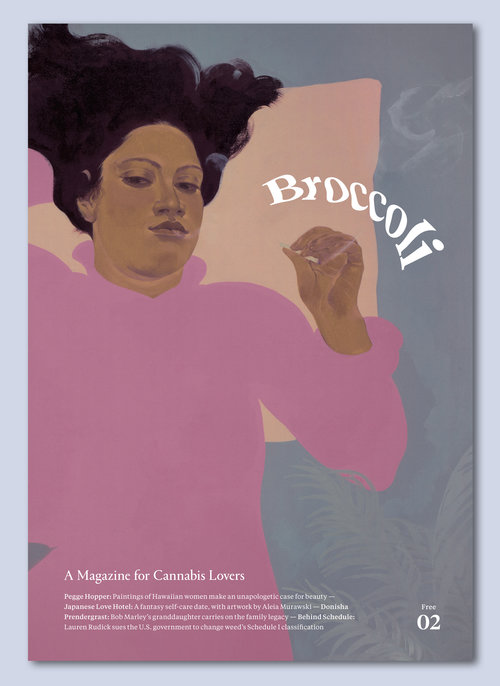
For Anja Charbonneau cannabis is still uncharted territory. And her crowning achievement, the print mag Broccoli, is at once a sensory experience and a fresh look at cannabis through the lens of art, culture, and fashion. Anja and her team are reinventing the stoner image. The pothead image. The smoker.
Toss what you know about weed out the window and consider this a full paradigm shift. Shipped free with a Broccoli subscription the first issue trained its eye on features such as weed ikebana arrangements, hand-blown produce pipes from Humble Pride, and Yacht singer Claire Evans.
The second, fresh off the stacks, newly released issue, features grower-turned creative Mennlay, artist Aleia Murawski, the lawyer Lauren Rudick, and the activist and filmmaker Donisha Prendergast. To name a few.
It also happens to be a magazine created and run entirely by a team of women and non-binary people. “Broccoli’s focus on women is two-fold. Behind-the-scenes, we’re a woman-owned business with an all-female team, and our contributors are all women or non-binary people,” Anja says.
Read more from the Green Queen below.
Tell us about how Broccoli magazine came to life…
Prior to starting Broccoli I was the creative director at Kinfolk, making books and magazines for the brand. I fell in love with publishing, and as the legal cannabis market was growing around me I noticed there was a gap for a beautiful, forward-thinking magazine in the space. After three years at Kinfolk I was ready for a new project, and I wanted to run my own business, so Broccoli is now my full-time gig. We’ve had an overwhelming response to launching the first two issues-- it’s incredibly motivating to suddenly be part of a massive community of women around the world who are interested in weed.


Today more than ever, legalizing marijuana seems to be at the top of the list in most political debates. Why do you feel weed should be legalized?
Cannabis isn’t as divisive as one might expect, in terms of political viewpoints in America. In fall 2017 a new poll was released that shows a majority of Republicans are actually in favor of legalization. Legal cannabis creates a lot of jobs, generates a lot of tax revenue, and there’s more and more proof that cannabis can be a very effective tool for reducing opioid use and provides new treatment options for many different medical conditions. The real work has to happen after legalization, when states are creating laws around who can get into the business. Cannabis prohibition has majorly harmed communities of color for decades, jailing people over the most minor offenses, and then in many cases these people are prevented from getting into the legal industry because of having a criminal record or not having access to the same financial resources that an investment group might have. Every step in legalization is a change to make up for this, to do better as we move forward. We believe in legal weed because it’s just a plant, and it’s one that helps a lot of people. Everyone deserves the right to have safe access to cannabis, without being judged.
Anja says,"
It’s incredibly motivating to suddenly be part of a massive community of women around the world who are interested in weed.
The magazine is directed specifically towards women, why did you choose women as your target audience?
Broccoli’s focus on women is two-fold. Behind-the-scenes, we’re a woman-owned business with an all-female team, and our contributors are all women or non-binary people. This is really rare in media, and we’re proud of it. Through our content, we are highlighting women and their relationships to cannabis, featuring women who work in the cannabis industry and those who don’t. We want to see women taking up as much space as possible in the cannabis space, so that we can grow the industry and culture in a positive way.
“We want to see women taking up as much space as possible in the cannabis space, so that we can grow the industry and culture in a positive way.”
Broccoli is free and will be distributed only three times a year, how were you able to make this available for no charge? Can you explain your business model?
We believe strongly that cannabis should be accessible, and this belief carries over to media as well. By offering a free magazine we’re encouraging more people to interact with Broccoli, which in turn will spark more conversations about cannabis. The magazine is funded entirely by brand partnerships, so we’re aligning with companies (both within and beyond the cannabis space) who share our vision to normalize cannabis. There’s a lot of creativity and innovation coming from cannabis entrepreneurs as the industry blossoms, and we’re excited to provide a platform for sharing their stories.


You chose to showcase the art and culture of cannabis, how does this differ from other weed-friendly publications?
Most existing cannabis magazines focus on the industry and feel very male-dominated, which can be alienating to a more casual user, or someone who’s just curious about weed. Broccoli celebrates cannabis while also acknowledging that it’s just part of our reader’s life, and it fits in to a whole constellation of creative interests. By connecting cannabis to art, fashion, science, food, wellness, design (or a myriad of other topics), we’re reframing weed overall, and showing that it’s already connected to many beautiful and necessary parts of life.
“Cannabis prohibition has majorly harmed communities of color for decades, jailing people over the most minor offenses.”
Who is a woman in your life you admire?
Lately I have been thinking a lot about Bjork. She is a creative powerhouse, and while she’s primarily a musician her magic transforms across mediums so easily. I have a lot of respect for how outspoken she is about her experience as a woman in the creative industry, and for how open she is to experimentation and weirdness. She also has an amazing, bizarre sense of humor and it comes through in everything she creates. I love that! She’s a genius but also hilarious.
Want more from the cannabis culture? Check back on our Green Queens series in partnership with MISSBISH. We'll be featuring a woman in weed per week!
Want even more? Register to participate in the Slack Session co-hosted with MISSBISH. Green Queens in the Cannabis Industry is going down April 25th at 6:30 PST, mark your calendars and sign up here.
MORE FROM OUR BLOG

Life Doesn't Wait for Allergies
And other takeaways from our ZYRTEC® panel.

More than 50 million people in the U.S. suffer from allergies! And that’s why we gathered in New York with the makers of ZYRTEC® to talk about spring beauty, and how to put your best face forward, even if you suffer from allergies. Panelists included: actress Jordana Brewster, Create & Cultivate founder Jaclyn Johnson, College Prepster founder Carly Heitlinger, and Alex Thomas, a trained cosmetologist and the founder of Learning to Be Fearless.
Relying on the expertise of moderator and celeb makeup artist Jamie Greenberg, the crew chatted everything from their spring beauty trends to allergy symptoms and biggest allergy challenges.
Shared Jamie, “I started working with ZYRTEC® five years ago to talk about ALLERGY FACE® - you know what I mean - watery eyes, the red nose and the puffiness that come along with allergy symptoms. Women – and men – face these beauty challenges all across the country during allergy season and we want to help. Over the years, I’ve created many tips and tricks to combat ALLERGY FACE® beauty challenges – such as using waterproof mascara to combat watery eyes. I’m excited to share some of those with you today, alongside my fellow panelists.”
“Plus,” Jamie added, “I am digging everyone’s lipsticks.” *A bonus for all.*
Now, the overall consensus was that life doesn’t wait for allergies. Nor does work.
Jaclyn shared “I’m on a flight every other week, in a different city with a different climate.” She’s always battling the elements, if you will. “With Create & Cultivate, we do so many events and a lot of those are outside and they are six to eight hours long.” Jaclyn said that for her, “it’s really about what’s going to stay the course for the entire day.” Her go-to is concealer under the eyes to hide the exhaustion during event weeks and ZYRTEC® to keep the her allergy issues at bay.
Actress Jordana Brewster, is also someone who knows the perils of traveling for work, but, as she shared, she also has to keep up with her kids. “I have two sons and my youngest does not stay inside ever, especially as soon as spring hits,” she said. “We go to the farmer’s market every week, we love going on hikes-- we’re always outside. That means I need my ZYRTEC® for relief. ZYRTEC® relieves my symptoms and makes me feel so much better. It starts working hard at hour one and works twice as hard when I take it again the next day, staying consistently strong day after day.”


The women also talked about tricks they use to stay on top of their game, even on their worst days.
Alex shared her tricks for putting her best face forward. “I get super watery eyes when my allergies are acting up. I pile on the falsies to make my eyes appear more open,” the YouTuber explained. “Now with magnetic lashes, its super easy to apply without the mess! When all else fails, also love a bold red lip – it really helps distract from any ALLERGY FACE® challenge you’re experiencing!” Alex also shared what trends she’s excited about for spring. “I am very into a glowing look lately. This spring, let’s go with the glow and some color.”
Carly had her own take on tips. “I'm all about letting your natural beauty shine through! So, when I'm suffering from allergies, I try to keep my beauty routine simple and effortless, while still correcting some of the things I'm self-conscious about. Waterproof mascara is a must for watery eyes, tinted moisturizer helps even out redness, and a dab of green corrective concealer around my nose helps me return to my normal look!”
The College Prepster founder also joked that she was sick of snow and excited to see “the light at the end of the tunnel.” However, that doesn’t mean that she’s out looking for a tan. “I have to make sure that all my products have SPF. It’s the one think I look for in everything I use from powders to foundation.”
Jordana admitted that since she can’t put on false eyelashes, she, like Carly, loves piling on the mascara. “But if I don’t use waterproof it ends up everywhere.” The actress also shared her “beauty musts.”


“My biggest challenge is puffiness and there are a few ways I deal with that,” the actress and mom shared. “I enjoy a quick steam on days when my skin is looking especially puffy. My favorite trick is to boil a bowl of water, cover my face with a washcloth and then hold my face over the bowl to let the steam reduce puffiness. I also love a good eye mask!”
What are your tips and tricks for dealing with ALLERGY FACE®? Share in the comments below!
MORE FROM OUR BLOG





3 Tennis Champions Talk On and Off Court Competition
Oh, we talking teams.

Getty Images, Matthew Stockman
They’re not waiters but boy, can they serve.
And thanks to the WTA, The Women’s Tennis Association, they’re getting paid for it. Right now, these women are doing it at the Miami Open. Just last month they were at the BNP Open in Palm Springs.
The WTA was founded by Billie Jean King, and her group of eight other renegades were revolutionary by 1970s standards. A full two years ahead of the passage of Title IX in the United States, they envisioned a better future for women's tennis.
In September 1970, the birth of women's professional tennis was launched when nine players signed $1 contracts with World Tennis publisher Gladys Heldman to compete in a new women's tour, the Virginia Slims Series. This story was recently saluted in Battle of the Sexes, the Emma Stone movie that followed the rise of the WTA and life of Billie Jean King. The Original 9, as they were called, included Billie Jean King, Rosie Casals, Nancy Richey, Kerry Melville, Peaches Bartkowicz, Kristy Pigeon, Judy Dalton, Valerie Ziegenfuss and Julie Heldman.
Now, the WTA is the global leader in women’s professional sport with more than 2,500 players representing nearly 100 nations competing for a record $146 million in prize money. It’s been a groundbreaking organization from the beginning.
Australian tennis champ Samantha Stosur is one of the players on tour with WTA. After receiving a racquet for Christmas at age 8, she became a former world No. 1 in doubles, a ranking which she held for 61 weeks. Stosur is also a former world No. 4 in singles.
"Look outside of your bubble and see where things are right now. Learn about the past. See where we were."
“Since I was 9 I’ve been competing against other girls, and now women,” Stosur says of the idea that women don’t compete, they empower. “We’re trying to grow everything as a whole, but at the end of the day we have to compete against each other in this sport that’s just the way it is.” Stosur says that it is still entirely possible to compete and root for the progression of all women. “Oh, absolutely. Definitely,” she says. “The WTA is all about that. All the girls on tour feel that. We want to be the best in the world, as a collective, as a whole.” And at the end of the match? “You shake hands and the better person wins on the day. As long as you give your best, what else can you ask for?” she asks. And people are tuning in to watch their best. In 2017, the WTA was watched around the world by a total TV audience of 500 million.
But it's not simply for show.
Stosur is also on the Player’s Council for the WTA. The Australian, who has been a member of the council since 2013, is one of four players elected as part of the “top 20” category of players. She mentions Venus Williams, another "top 20" player. “Venus was big on equal prize money and equality.” It's what they're always working toward. Stosur says it’s always a matter of “striving for bigger and better things for the tour as a whole.” The 2018 WTA competitive season includes 54 events and four Grand Slams in 30 countries. Stosur says, “Whether it’s about empowering women in our sport, or being the biggest sport in the world for women, or making tournaments better,” no stone is unturned. “Even the smaller details like how many nights you get at a hotel during a tournament,” are discussed.

Her advice to the younger players is smart, simple. “Look outside of your bubble and see where things are right now. Learn about the past. See where we were. See where you are now. Think about where we want to get to. Everyone is here together. I think it’s really easy when you’re young to think you’re out here on your own.”
One of those younger players is Swedish player Belinda Bencic. In 2012, Bencic made her debut for the Switzerland Fed Cup team. The following year, she won the French Open and Wimbledon girls' singles titles. And then, at the Premier 5 event in Toronto in 2015, Bencic won the biggest title of her career, besting the World No. 1 at the time, Serena Williams, who had won the last four Grand Slams in a row. Bencic was surely on her way to greatness. Then the unthinkable happened-- the teen was sidelined with a back injury that kept her off the court for two months in 2016. She then suffered a wrist injury that required surgery and kept her out for five months in 2017.
But Bencic is back. “It’s been difficult,” she says. “When I was younger, I was winning. Happy to be here. Everything went up, everyone started paying attention, but I was only 18. People expected me to act like I was 25.”

Getty Images, Clive Brunskill
“I felt the pressure. I felt the expectations, but I was doing it to myself as well. It was not easy.” Today she says she’s grateful for her injuries. It allowed her to take a step off the court, literally and figuratively, and get her mind right. “Now, my perspective has changed. I’m enjoying being back. I’m playing because I love it, not because I’m playing for someone else. I’m happy to be healthy on the court.”
“I felt the pressure. I felt the expectations, but I was doing it to myself."
As for those someone else’s, Bencic is not here for the body shaming or the haters. She says for instance, “My body was changing from a girl’s to a woman’s. You hear comments about yourself. People telling you how you should look. What your weight should be.” Her downtime allowed her to build up the confidence to block out the haters,l. “I realized when you’re up, everyone is cheering you on. But when you’re down, they love to say, ‘Oh, your career is over.’”
Bencic says she’s happy to make a “comeback” but she’s not doing it for anyone but herself. “I don’t care so much what others think of me anymore. When you’re young you care, and you can get caught up.” In all the ups and downs of the sport-- including the competitive side. These are World Champs we're talking about.
But Bencic is all about that mentorship life. “Some players are not friends, it’s true. But some players really try to help each other and be supportive of each other. I appreciate the players who were trying to help me. I want to do the same for younger players when I’m older. When you come on tour at 16 you don’t know anyone. For someone to be nice to you and want to practice with you, it makes you feel good. I hope to be the same person.”
“We are pretty good at knowing the difference between on and off the court,” she says. “I can face my best friend on the court and I’m going to try and beat her. You can’t be mad. On the court, I’m trying to beat her as a tennis player. Not as my friend.”
“I can face my best friend on the court and I’m going to try and beat her. You can’t be mad. On the court, I’m trying to beat her as a tennis player. Not as my friend.”
Maria Sharapova shares this “on court” and “off court” mentality as well, explaining,“I firmly believe that there are never too many opportunities for women to be supporting other women - both on- and off- the court. Just recently I announced a women's entrepreneur program that I've partnered on with NAWBO, the National Association of Women Business Owners. At the core, it’s about helping female business owners who are starting from the very beginning of their journey get to the very top, through mentorship, education and professional guidance. And it’s a chance for me to share my passion for helping other women business owners thrive.”
MORE FROM OUR BLOG

7 Reasons to Start a Podcast for Professional Gain
Pod save us all.

Written by: Ahyiana Angel
This year, the share of Americans who report being familiar with the term “podcasting” is now 60 percent (or 168 million) and the share of American women listening has increased year-over-year: coming in at 24 percent this year, which is up from 21 percent the year before (2017).
Go women, go!
U.S. podcast listeners earn on average $10,000 more than the average American and podcast consumers tend to be more tech savvy as well as more likely to use social media than the average American, but if you’re still on the fence about creating a podcast, I'll give you a few more practical reasons to podcast.
Establish a Brand or Industry Presence
There are plenty of digital marketing options available now when looking to make your mark online. However, entering a space where the cost of entry is low and the competition for attention is not at its peak can serve you well when you’re just getting started. Podcasting allows you to begin establishing your brand without even launching a website because initially you can drive all of your traffic to the page created for you by your podcast host.
Further An Existing Business or Brand
A podcast can help provide direction and offer a way to streamline content for an existing business or brand. If you already have a brand established, a podcast is a strategic way to make an extension for your brand, blog, product or website. When I started podcasting the bulk of my audience engaged with my brand via Instagram. When I launched the Switch, Pivot or Quit podcast it offered a way for me to provide more content and create ways for the audience to stay engaged off of social media. You can crate audio content via your podcast that compliments the messaging you are publishing through other mediums. Think about the way that your current audience consumes your content. Can you capture their attention in a more effortless way with a podcast by meeting them where they already are, perhaps on their phone? A podcast is another way for you to speak to your audience and potentially provide more depth and a stronger connection.
Connections are key to professional expansion and your podcast can be the through-line.
Become An Expert
If you are looking for ways to expand your presence within your industry, it is quite reasonable for someone to develop into an expert in their space by being the host of a podcast. By consistently talking about a specific topic, reporting on it and interviewing people regarding said topic, you can become engrained in the conversation by default. Your name will become more searchable with relation to the subject matter as well. You may then find yourself being invited to be a guest on other podcasts, participating in other media interviews as well as speaking engagements. Maybe you'll even get a book deal from it like the ladies of Being Boss podcast.
Develop a Community
Since podcasting is known to be a medium of media that creates an intimate environment for you and your listener, you can create a strong connection between you and your audience. You have the opportunity to speak directly to your audience using a voice that is just as authentic as when you engage with your friends. For this reason, among others, your listener begins to really feel like they know you as a person. They like you as a host, which then turns into a feeling like you're a friend in their head. This creates an affinity and when enough listeners feel this way you naturally begin to see a community of like-minded people forming. To take it a step further you can establish routine ways to engage online via social media as well as offline via live podcast meet-ups. By exploring relatable personal journals the You Had Me at Black podcast has done a fantastic job of creating a loyal community of listeners which has resulted in sold out live shows and even a podcast tour to meet the listening communities demands.
Become An Early Adapter
Although podcasting has been around for years, it is still a rapidly growing space. In the current climate of advanced technology at your fingertips, creating a podcast just feels more accessible to the masses at this point. There is a very low barrier to entry. Most of us can create a successful podcast if we just put our mind to it and add a little effort and work.
I like to think that podcasting will operate similar to the growth and popularity of YouTube. There was a time when the world looked at people creating video to upload to YouTube as a silly hobby, but now some of the early creators have audiences in the millions and they are generating just as much in revenue. The early adapters and early creators will see a large amount of success as more and more people start to become podcast listeners. Currently, only a fraction of the possible listening population is tuned in so there is tremendous room for growth.
Let Your Ideas and Voice Be Heard
Many people just want to be heard, they have something to say and they are just waiting for an audience to listen, that is why we create. Developing a podcast where you can speak about topics of interest to you can be a great way to flex your knowledge, understanding and voice with regard to a specific industry or social topic. Your podcast will allow you the opportunity to become a part of the conversation. You can establish your content as a go-to source for those interested in your industry or topic.
Your podcast is now a form of media, media that can serve as a platform for guests to gain publicity.
Build Professional Relationships
Creating a podcast with a show format that incorporates guests will allow you the opportunity to reach out to peers and industry professionals that you admire in an effort to invite them to be a guest on your podcast. In thinking strategically, you can reach out to people that you would like to build a relationship with. Your podcast is now a form of media, media that can serve as a platform for guests to gain publicity. Most people love publicity for their work or cause. Now you are in a position to offer something of value, which can result in the making of a valuable connection with industry colleagues. Connections are key to professional expansion and your podcast can be the through-line.
Just like starting anything new, podcasting can seem intimidating at first. In an effort to make your entry into podcasting as smooth as possible, you can check out an in-depth course via Mediabistro called “Tools, Tips and Tactics for Creating a Killer Podcast” and I created the “Beginner's Guide to Creating, Launching + Marketing a Podcast” in which you can learn everything you need to know to enter the world of podcasting in 60 minutes or less!

Ahyiana Angel is traditionally published author and host of the Switch, Pivot or Quit podcast, who is affectionately known as the Chief Encourager. She is a seasoned executor who eventually blocked out the world’s ideas of success, quit her highly coveted position at the NBA, moved to London and traveled the world for a stint, then followed her passion in writing to find her purpose in encouragement. Mastering the art of note-worthy ideation, Ahyiana taps into her more than 12 years of professional business marketing experience to lend her thoughts on professional development, digital marketing, contemporary brand styling and more. However, Ahyiana enters her zone of genius when speaking to audiences about her 4 Ps: publicity, publishing, personal development and podcasting.
SPQ PODCAST | SPQ WEBSITE | INSTAGRAM | TWITTER
MORE FROM OUR BLOG

Seven Questions to Ask Yourself When You Need Courage to Say Yes to Life
What if we fail vs. what if we fly?
Written By: Enuma Okoro
We’ve all been there. Faced with an exciting decision that could alter our daily and professional lives in a big way but daunted by what saying YES could mean. We wanted it sure but not right NOW! Are we really up for the task? Is it biting off more than we can chew? What if we fail? But then again, as the saying goes, “What if we fly?”
Courage isn’t just required in dangerous situations. Saying yes to big potentially amazing life experiences also require courage. And it’s perfectly normal to be afraid in the face of even big decisions that could help you move towards your goals. Change can be scary, even beautiful change. But once we acknowledge that it’s alright to be scared we have to keep moving from there and make the best decisions towards living our best lives. We have to find the courage to say yes in the face of our fears.
WHAT IF WE FAIL? WHAT IF WE FLY?
When an opportunity comes along that could take us to the next level in our career or in our personal lives it will usually require facing down those fears and having to release something in our lives to make room for what’s being offered. When I find myself with a major life opportunity in front of me it can be tempting to spin into over analyzing and worry about whether or not to step out of my comfort zone and into this new space full of so much potential but also so much of the unknown. So I’m learning to ask myself some key questions to help me make the best decision and to move forward towards what I imagine could be my best life. I start by getting to the heart of anything that could keep me from saying yes to my life.
What am I afraid of?
When I really ask myself this question and have to answer aloud I usually find that my fears, if I can even articulate them, are sort of irrational. They don’t make sense when spoken aloud. And as a result, they are forced to diminish in size. If I am able to articulate fears that make sense then I try turning the fear around to see what’s on the other side. I often think that our fears offer us clues to what we really want.
I often think that our fears offer us clues to what we really want.
How is saying “yes” to this invitation in line with the kind of life I want to live?
It’s basically another way of asking if this option on front of you is in sync with your sense of purpose and the intention for your life. Asking this question forces me to reassert my values, the non-negotiables, what I believe my overall purpose is (which can play out in different ways over the course of my life,) and the life I want. It’s always powerful to speak aloud the particular things I desire and need for the particular season of my life. If, for instance, I know I’m ready to channel my love for storytelling through travel writing then I also know I need and desire the freedom to travel and curate travel stories. I’d have to keep that in mind when trying to make a big life shifting decision.
Three years from now what would I regret if I turned this invitation down?
I use 3 years because I’ve found in my own life experiences that it takes about that long for a major life decision to show its seasoned fruits. Taking a new job, moving to a new city or country or starting a business or venture.
Is there anyone in relation to this decision that I’m trying to please or that I’m afraid of disappointing?
This can be a tough question to ask because often the answer is yes. Very few of us, especially women, are raised to do things solely for our own benefit or desire. We’ve been falsely taught that is selfish and bad. We subconsciously carry other people along with us and make decisions based on their potential responses to us. Whether it’s a parent or partner or even strangers we think we have to compete with or impress. We owe it to ourselves (and to all those waiting for the amazing things we’ll do when we live from our grounded honest selves) to make the best decisions for ourselves regardless of what anyone else thinks.
We owe it to ourselves to make the best decisions for ourselves regardless of what anyone else thinks.
What added advantages or opportunities could come from saying yes?
Sometimes we forget that life is not static. Every decision we make sets in motion a slew of other things in our lives. One of my favorite quotes about decision-making is from the book, The Alchemist by Paulo Coelho. “Making a decision was only the beginning of things. When someone makes a decision, he is really diving into a strong current that will carry him to places he had never dreamed of when he first made the decision." One yes can lead to a million other beautiful yeses.
What could I learn from this new opportunity?
If we’re not learning in life we’re not growing. I think every big invitation in life that I say yes to should not just be an opportunity for me to shine and flourish but also for me to learn and grow.
And finally I ask myself, “Will I be happy?”
Could I wake up every morning and be content and happy about saying yes and going forward with this choice and this change? Life is too short and full of too many other possibilities for anything else.
MORE FROM OUR BLOG

Poppin' By: Why A Rebrand Was the Best Choice for This Popular LA Florist
Her vase is definitely half-full.

Introducing "Poppin' By" a Create & Cultivate profile series in Partnership with Chandon. Every month this year we're profiling a female entrepreneur, popping by their work space and enjoying a bit of bubbly. Here's a cheers to amazing, working women!

Kelsey Harper, the creative brain, founder and florist behind one of LA's most sought-after floral and event design companies, had to do the impossible.
After years of going by FLOWER GIRL LOS ANGELES, Kelsey was given an option: battle it out legally for the name or change it.
For many entrepreneurs the thought of a rebrand is a nightmare. For Kelsey, it represented opportunity. *Note, this is the frame of mind common amongst successful entrepreneurs. There are no doors, only windows.* Of the opp, Kelsey says, "I decided that I would rather invest the money I would have spent on a lawyer, into a beautiful cohesive rebrand. I had outgrown the name, it felt young and tired and I also felt confined by the words "Flower Girl" and “Los Angeles."
In other words: Kelsey's flower vase is half full.
So, inspired by her fortitude-- April showers bring May flowers after all-- we popped by Kelsey's new space Matriarch Floral in the newly launched Fred Segal LA to chat new beginnings, old names, and the flower that she's just not that into.
You trained as a special effects makeup artist. Then moved to Maui. And your love of florals grew. What was the point you knew you wanted to shift careers?
I started doing flowers as a hobby for the families I nannied for and assisted. After almost 8 years of being on someone else schedule, I knew my next step would be to work for myself. I did not have any formal flower training, but my love for taking a raw material, combining it with others texturally and color wise really made me so happy. In the back of my mind my dad always told me, "Do something that makes you happy, and you’ll never work a day in your life,” and flowers were that for me. While it is a lot of physical labor, I still wake up excited about my career.
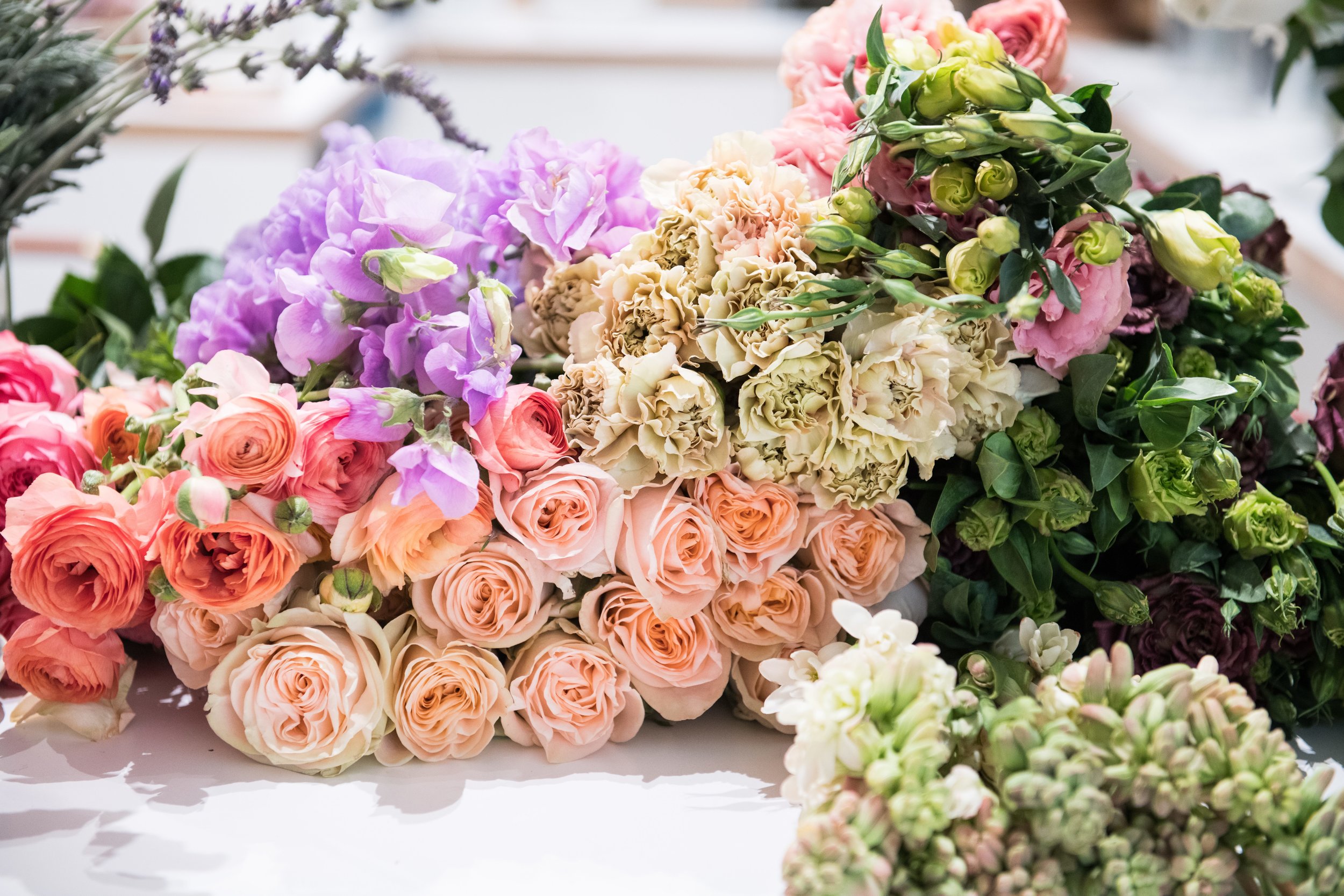
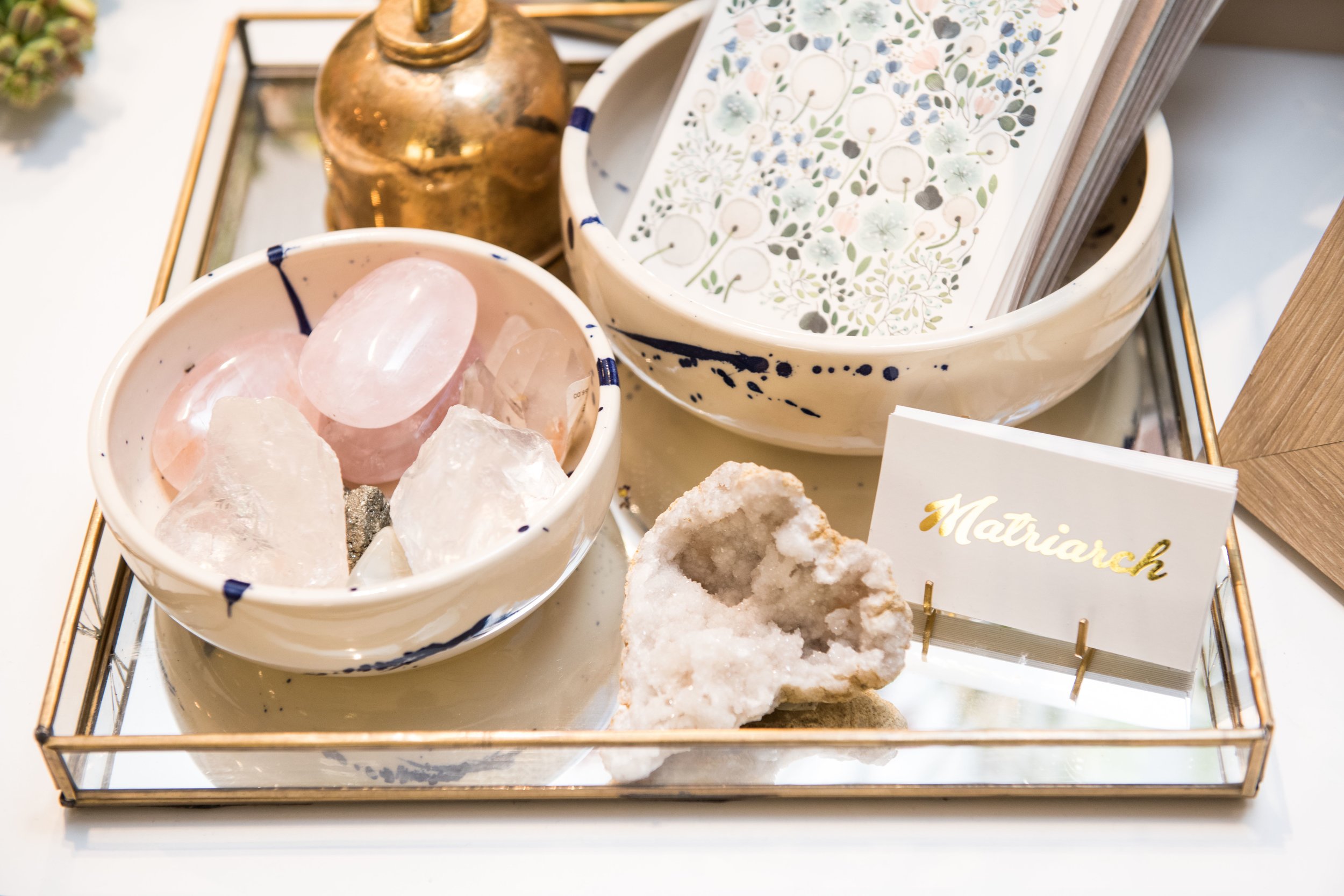
"Do something that makes you happy, and you’ll never work a day in your life.” Flowers were that for me."
Were you prepared to launch your own biz?
I was not at all prepared. I was inspired by my two best girlfriends who had both started their own businesses in the fashion industry and I learned from making many mistakes and being careful not to repeat them. I still feel like I would benefit from taking a business class or two.
At what point did you decide to rebrand to Matriarch?
After a potential legal battle for the name “Flower Girl” I decided that I would rather invest the money I would have spent on a lawyer, into a beautiful cohesive rebrand. I had outgrown the name, it felt young and tired and I also felt confined by the words "Flower Girl" and “Los Angeles". I wanted to redefine my brand in a way that didn’t restrict me from working in different creative areas or places and also use a name that really resonated with me, something that was strong and feminine, and something that wouldn’t cause brand confusion with many of the other “Flower Girl” brands that were popping up in different cities, further diluting it.
What influenced the decision to take out a retail space?
After having an online shop for so many years, I wanted to take the opportunity to really get out in the field and meet some of my loyal clients who I had never met in person. Also, I wanted to offer same day delivery and pick up for those who needed something sooner than the next business day. After 6 months in the space, I’ve realized that people still prefer to shop online, so we have transitioned the space into a beautiful plant and gift shop during the week and are there creating fresh bouquets and arrangements on the weekend when it's a bit busier, to avoid waste.
Is it beneficial to be in a space with other retailers?
It’s really amazing feeling like a one stop shop for people who are looking for a gift and want to incorporate fresh flowers. The family like environment is inspiring, and a lot of the shops in Fred Segal are female run.
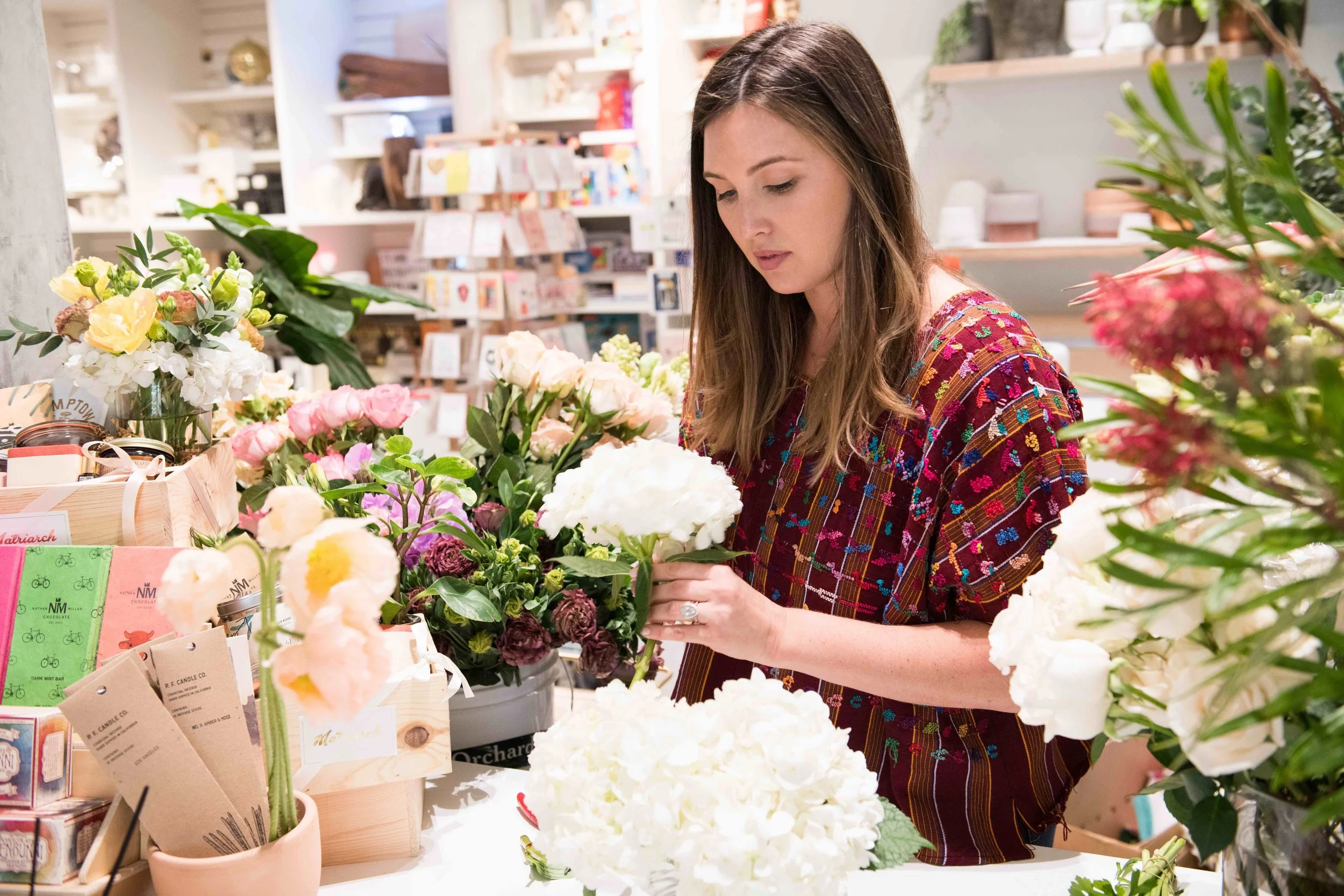
What would you call the most fun/exciting aspect of your business?
It’s really fun executing my clients' visions in my own interpretation. Each arrangement is custom made to order so that we can really capture what we think our recipient might enjoy. The large scale installations are my favorite part of what I do. It forces me to think outside-the-box, as sometimes we are creating/executing things that haven’t ever been made before.
"Each arrangement is custom made to order so that we can really capture what we think our recipient might enjoy."
What’s the hardest part?
Balancing work life and family life is always a challenge. I want to be a present mother but also a good business owner and sometimes I’m needed in both areas at the same time. Also, managing accounting and emails has always been a challenge. This last year I brought on an accountant and studio manager to help in both areas and it has definitely positively affected business.

For those who want to work with big companies, how do you get in with names like Chateau Marmot and Sunset Towers?
Being an LA native, I am lucky enough to call some of the large businesses I work with friends. I think working with people who you know and people who trust your vision, whether the business is large or small, is my best advice. Sending free/ promo arrangements or work is also a nice gesture to say hello and give a client an idea of what you’re capable of.
What’s been the craziest request you’ve ever received?
The installation we did for Depeche Mode earlier this year was pretty insane. We installed in the window of Fred Segal, over 3,000 red roses that floated across the 18ft window and were suspended from the ceiling. We had creative freedom but the installation was definitely difficult to assemble. Each rose had a water tube attached to keep them alive for a full week.


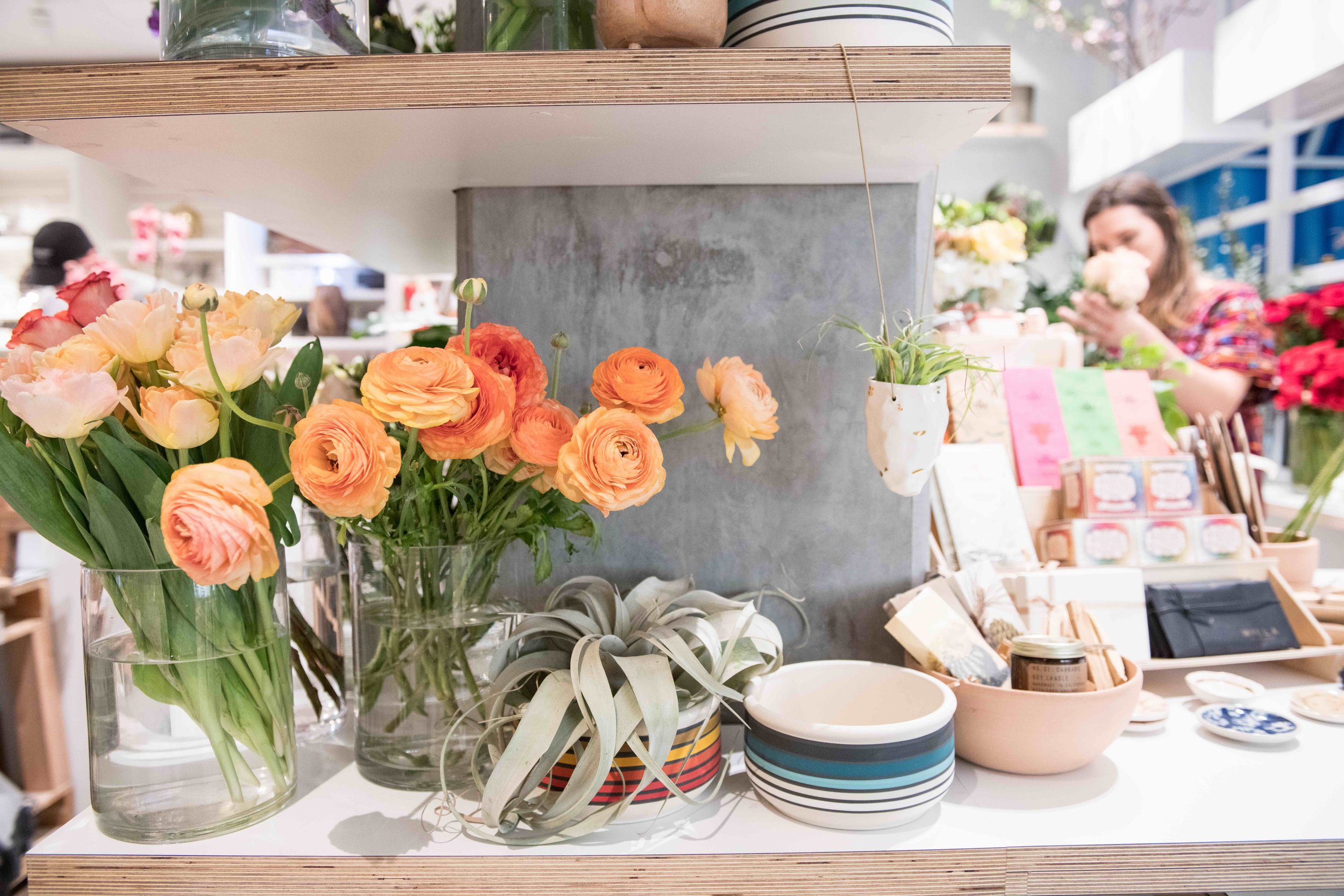
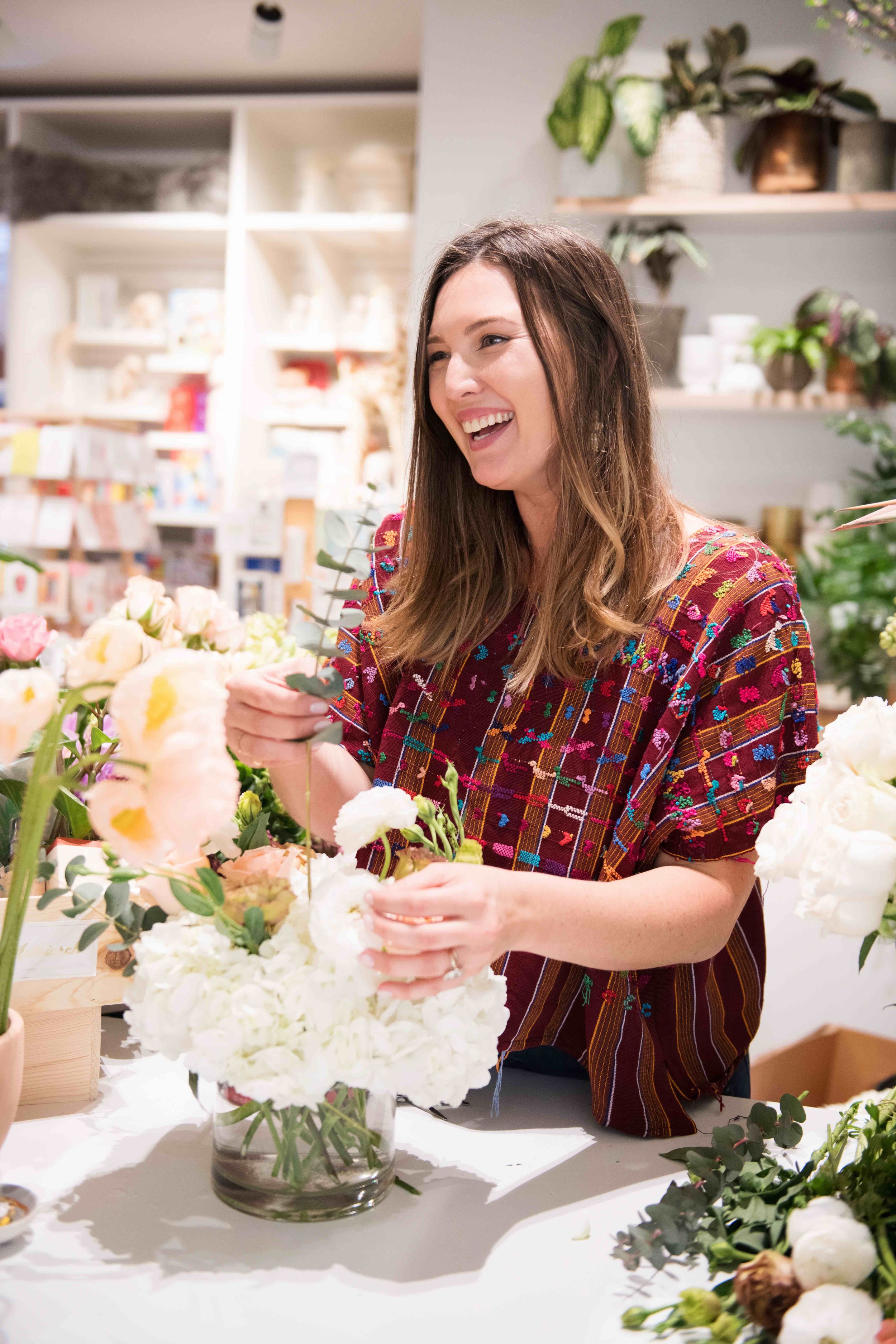
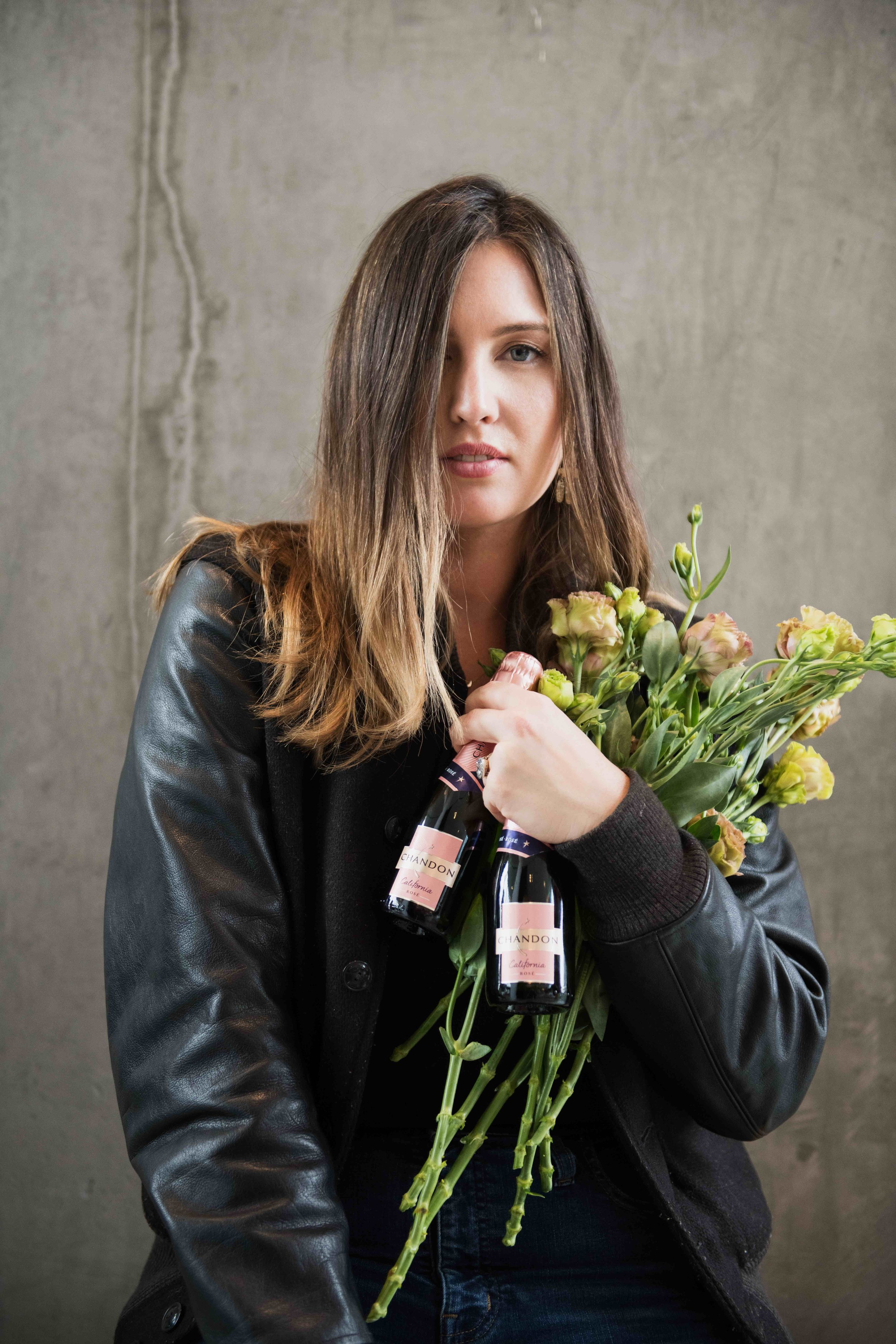

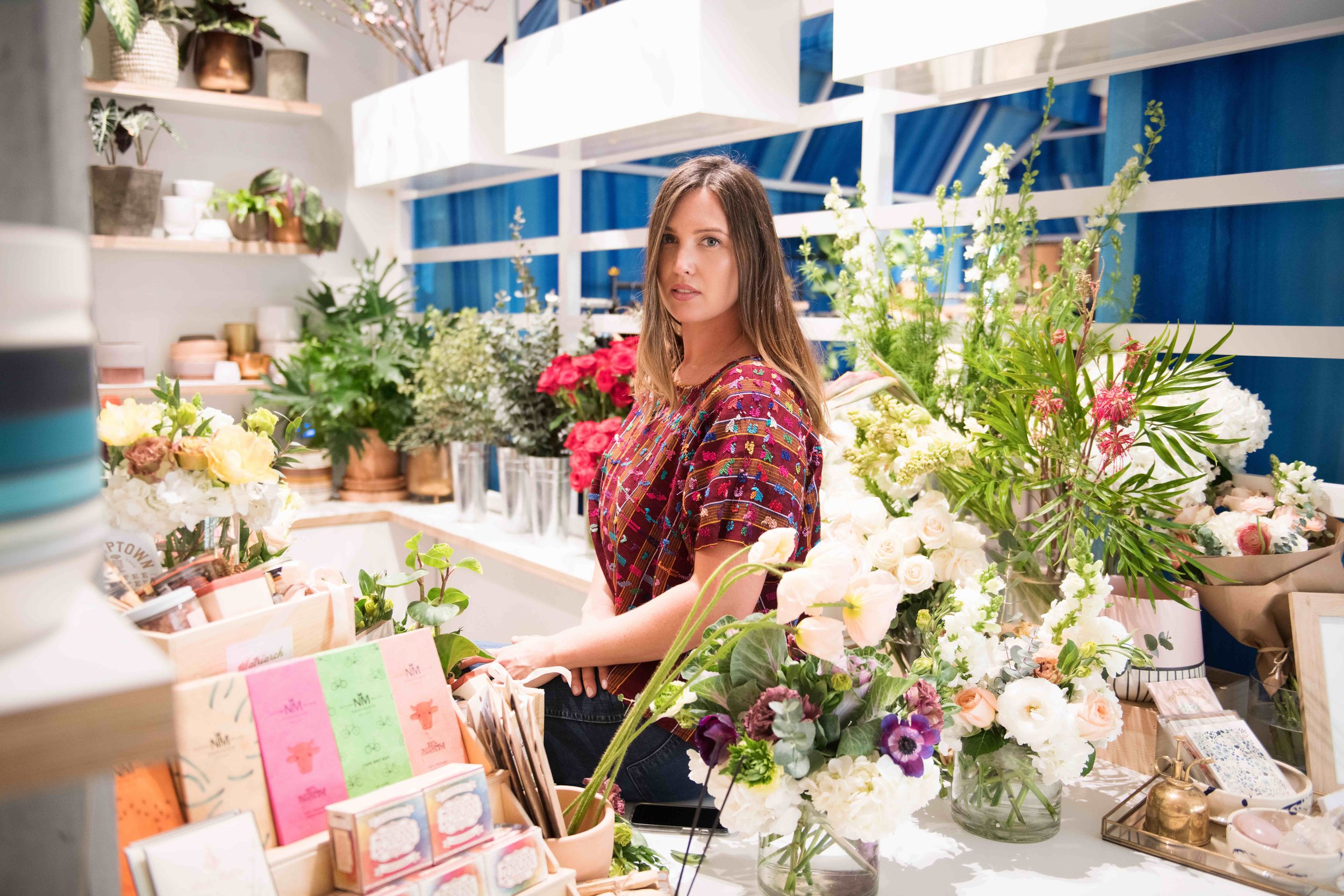
Favorite floral of the moment:
Spring is definitely here early this year and I am loving a greenery called Spirea. It is such a beautiful color and the little white blossoms are so dainty and have beautiful motion.
Flower that you’d like to see put on pause:
Gerber daisies are definitely at the bottom of my list.
Your turn! Be sure to Pop BY and visit Kelsey at Matriarch Floral in store at Fred Segal Sunset:
8500 Sunset Blvd.
West Hollywood, CA 90069
Check her out here: www.matriarchla.com
And follow along on her floral adventures here @flowergirllosangeles
Be sure to check back next month for the next installment of Poppin' By.
Photo credit: Tyler William Parker
MORE FROM OUR BLOG
Why Beauty Is About Inclusivity on Every Level
And other inspired moments from our TINTED x CoverFX beauty panel.

Photos by Klarisse Gepilano
Makeup can make you feel empowered.
That was the topic of conversation at the CoverFX “Power Play” panel held tonight in Los Angeles at the Bumble Hive. Hosted by TINTED founder, Deepica Mutyala, the women *and man* with mics talked everything from diversity in beauty to their favorite feature. It's all about loving yourself! With her platform and YouTube channel, Deepica has always been a champion of bringing change to how we see beauty.
As such, a core part of the TINTED mission is to push the conversation forward around diversity and inclusion in the beauty space. For their part, CoverFX has always showcased range in their shades and has consistently shown that they appreciate the #TintFam in their message, espeically with their newest Power Play foundation launch. And that's exactly what they chatted about.
To find out what all the buzz was about, keep reading for some of our favorite quotes from the evening and be sure to watch the above Live video!
First up: "Beauty is about inclusivity on every level. Supporting and empowering all the shades in between,” explained the TINTED founder. “It’s not about a race or ethnicity. It’s about making sure everyone know there’s a space for them.”
ON BEAUTY STANDARDS
"I really want them to admire other people’s beauty without questioning their own. There is space for everyone. -- Ami Desai on how she wants her kids to see beauty
“The beauty industry's responsibility is to eliminate the standard of beauty. There is no standard. We need to stop putting a standard to beauty. Being a male in beauty is definitely a different experience. When it comes to beauty it’s always ‘girls, girls, girls.’ I want to eliminate standards and stereotypes. Any guy can wear makeup if they want it. Do what you want if it makes you happy." -- Influencer Victor Ramos

Photos by Klarisse Gepilano
"There is no standard. We need to stop putting a standard to beauty.”
ON 'THE WORK'
“Stop the mindset of the ‘token’. It’s not just black or white or something in middle. There is a whole spectrum in between. Don’t just put someone in and check a box because it’s very obvious.” -- Deepica Mutyala on encouraging brands to end tokenism.
"We have an opportunity to speak out. That’s what encourages change. When I’m on set, I’ve found that my skin tone is very hard to match. There’s always been a struggle. It’s a big problem. It’s so important to have brands like CoverFX because people will just slap whatever they want on your face and get you out there." -- Actress Ajiona Alexus on being on set in Hollywood
“Sometimes all people see is the beauty. But deep down, it’s important to know, beauty is only one thing-- the work you do behind the scenes, needs to be a beast. Show the world your true worth and talent.” -- Ajiona Alexus on her Tweet, "Sometimes you gotta be a Beauty and a Beast."
Sometimes you gotta be a Beauty and a Beast.
“I remember telling myself OK if no one is gonna be at Sephora, I’m gonna be at Sephora.” -- Victor Ramos on not waiting for someone else to be "the first."
“We’re not going have brands tell us what we need. I think we’re the first generation that’s saying 'We’re calling the shots and we’re gonna celebrate everybody.'” -- Victor Ramos on the importance of his work.
"I’ve always been passionate about animal rights. I’ve spent so much time creating resource for people. CoverFX is cruelty-free and completely vegan. In every area consumer voices are huge. It’s so exciting to see how many people are putting their truth out there." -- Tashina Combs
ON SELF- ACCEPTANCE & SELF-LOVE
“You should feel great how you are, exactly how you are.” -- Deepica Mutyala
“As a kid, beauty was my way of fitting in. Now it’s my way of standing out.” -- Deepica Mutyala
“As a kid, beauty was my way of fitting in. Now it’s my way of standing out.”
“Here I am. You’re going to have to accept me as I am.” -- Victor Ramos
“I love my skin tone. When I was younger I went through ‘that phase.’ You’d always see the blonde guy, but I’ve learned to appreciate myself so much it’s almost weird.” -- Victor Ramos
“I love my nose, even though I don’t. It’s my paternal grandfather’s. Everything on your face is a roadmap to where you’ve been and where you’re going.” -- Ami Desai

Photos by Klarisse Gepilano
Did you tune in? What were your favorite quotes of the night?
MORE FROM OUR BLOG

What One Teacher Says Is the Real Job of Educators
And her hopes for her former students.

I was a school librarian in a DC public elementary school for six and a half years until I resigned in January of this year. On October 17, 2017, we thought we had an active shooter in our building and went into a frenzied lockdown. Five seconds after I received a text message from my colleague that said ACTIVE SHOOTER double doors opened and a line of 22 second graders came through, headed to me.
For everyone who is not a teacher, you can imagine this moment: rushing them into the classroom, putting paper over the windows, locking the door. You can imagine what it means to be this kind of adult — one responsible for the lives of 22 children.
Teachers are aware of this responsibility every day. Specialists, like I was as the school librarian, are aware of what it means to be responsible for every student in the building for at least 45-minutes once or twice a week. We know all of them.
What you can’t fully imagine, if you are not a teacher, is the information that will rush through your brain.
Their parents’ faces. The beautiful things these children have said to you over the last few years (the horrible things, too). Every holiday and Teacher Appreciation Day card, every post-it they stole from your desk to write that they love you, the books and authors they like best, their favorite outfits, their favorite read aloud, the bad things that have happened to them that are in case files in the main office, the good things they want to share the moment they see you. The ones who still can’t tie their shoelaces. The strength of each of their hi-fives. Which kids they play with at recess, who eats school lunch and who brings it from home, which ones take the bus, which ones have baby siblings they can’t wait to kiss on the foreheads at the end of the day, which ones have older siblings that they try, hilariously, to emulate, and on and on and on and on.
Non-teachers don’t know what it means to be the keepers and protectors of that beautiful information.
Non-teachers don’t know what it means to recognize in one horrible instant that you are all that stands between them and a bullet if the gunmen makes it to you.
But I never wished for a gun that day. I never wished I had a gun to fight back with.
I thought about how many of them my body could cover. I thought about where would be best to hide them and which angle they would be most visible from. I thought about how thick the bookcases were and if they could take a bullet. I thought about the strength of a deadbolt. I thought about the weakness of glass. I thought about what size body could fit through a broken window.
I never wanted to kill whomever might have been on the other end.
Because teachers, more than most others, can recognize a child in anyone. They’re uniquely interested in understanding what might have happened to them to bring them here, from the six-year-old with anxiety, to the teenager with a gun, to the adult with a gun. And I hate that person, that person with a gun, but I also think about how we failed them. Society, parents, schools, mental health providers, child protective services. I think about how someone, or many someones, failed them.
I won’t be able to say this the way I want to, but: until we fix all of the very, very fucked up pieces in our society, the best defense we have is stricter gun laws. And for anyone to deny that is absurd. And to arm teachers, to even suggest arming teachers, is such a horrible example of where we’re at.
The situation that day ended up being a terrible miscommunication, based in fear and news that there was an active shooter in the building behind us. After many hours of searching, this turned out to be false information. We didn’t know this until the school day was nearly over. I have never been more scared and exhausted in my life.
I work with adults now in a public library and I have a whole other perspective on how awful the world can be, but I also see the children in every single adult that comes in that door. I see how society failed many of them.
But if the students in Florida are an example of our future, I have to believe some of this can change. If my former students are an example of our future, I have to believe some of this can change.
MORE FROM OUR BLOG

The 10 Best Quotes from #CreateCultivateLA
Hello #MondayMotivation.
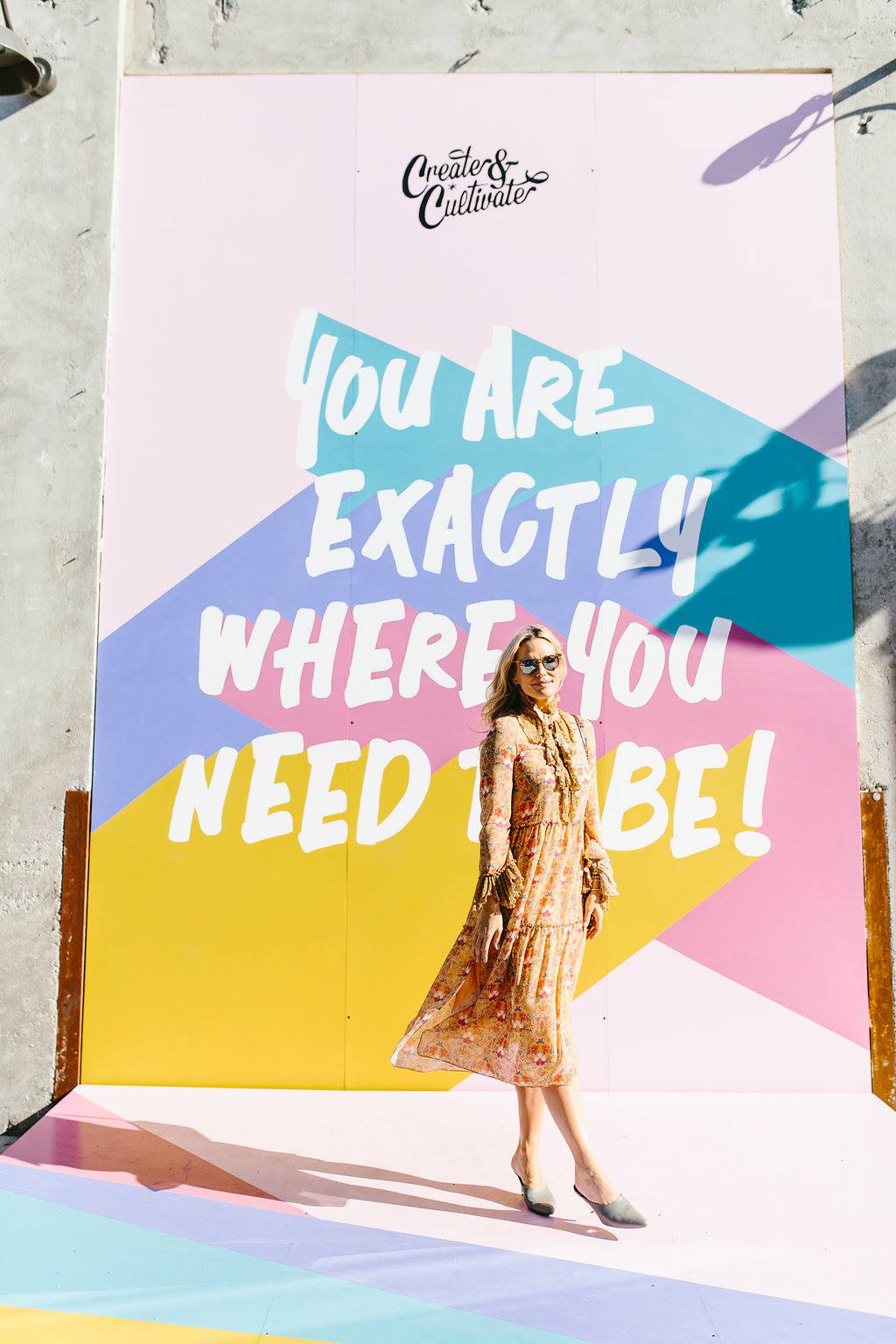
We're not your typical conference.
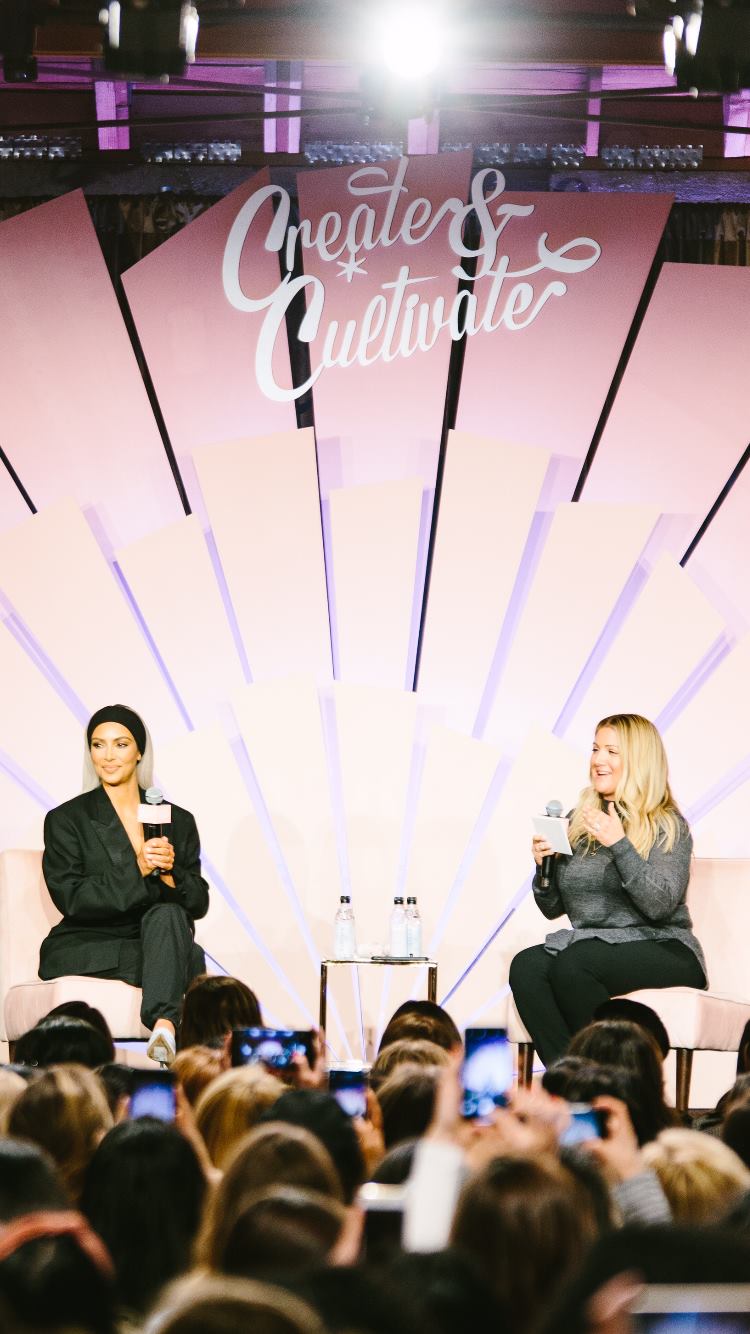
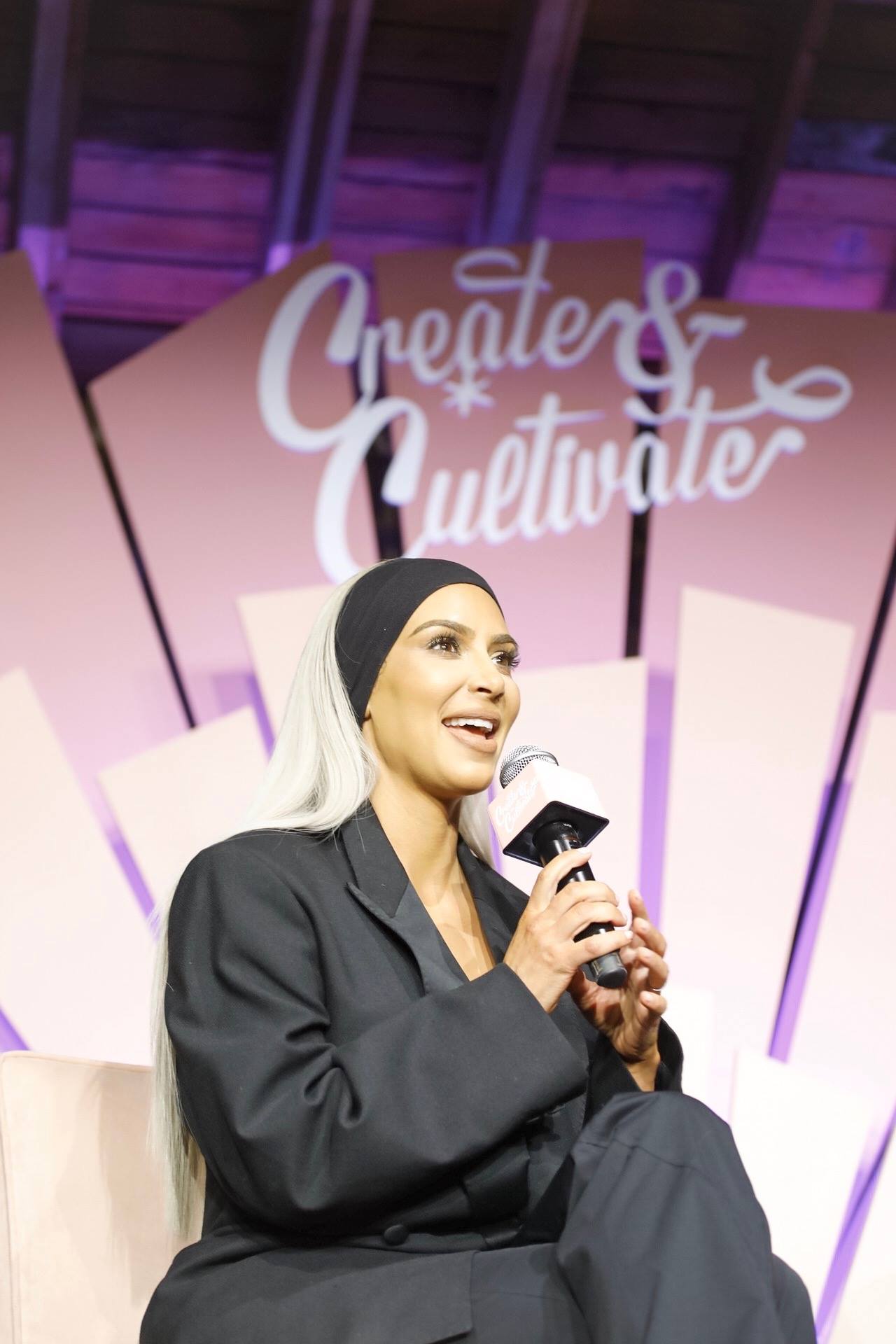
We have magical shit that happens. From keynote Kim Kardashian dishing her best career advice to our audience (she's not into lazy) to Chrissy Teigen real talking going back to work with postpartum depression, we're sharing some of our favorite mic drop moments from the day.
Chrissy Teigen: It’s important to do something you love on a daily basis.”
Kim Kardashian: “Show up. Do the work. Don’t be lazy. There’s no short cut.”
Aimee Song: "You should find joy in just creating and posting content, not the numbers. If you don't, then you should do something else."
Kim Kardashian: “You have to have your shit together mentally, to put out great product.”
Lauren Conrad: “Whatever you do, you’re going to have tough days. So make sure you have as many great days as you can.”
Nina Dobrev: "I stop following people if it looks like they're just posting because they're getting paid to do something."
Traci Inglis of ShoeDazzle & JustFabOnline: “Being a business owner is a status, being an entrepreneur is an attitude.”
Anine Bing: “If you surround yourself with great people then you can achieve higher goals.”
Kimmie Greene of Quickbooks: “What comes easy to you is still a gift. Don’t feel bad when you charge what you're worth.”
Jen Gotch of Bando: “Take connection over transaction.”
Have favorites from the day that you want to share? Comment below!
MORE FROM OUR BLOG

WorkParty Fireside Chat: How Refinery29 Co-Founders Actually Met
Plus more from #CreateCultivateLA.

Refinery29 started out of a 750 sq. ft apartment with a $5,000 dollar investment. Today it's a global empire. And at Saturday's Create & Cultivate LA, co-founder Piera Gelardi shared with a crowd of over a thousand women about the brand's roots and it's commitment to inclusiveness.
In a WorkParty fireside chat with C&C founder Jaclyn Johnson, the two got down to brass tacks
On Starting
“I started Refinery about 13 years ago with three co-founders.” Though Piera studied art, she knew she didn’t want a solitary career. “I grew up in a family business. There were always people around. So I knew I wanted to start looking at careers that would bring the artistic side of me out, but that would also bring out my entrepreneurial spirit and love of collaboration.”
She got an internship at a publication called City Magazine. “It was a great experience because it was very small and hands-on. I learned about the design side, about styling, and I also learned a lot from my boss, the executive editor, Christene Barberich, who is also my co-founder at Refinery.”
“I worked there for a couple of years but I started to feel fatigued by the magazine cycle. I wanted to start something on my own.” When she and her other two co-founders, her then-boyfriend, now husband, Philippe von Borries and Justin Stefano, needed an editor, she told the two to call up Christene and ask if the brilliant editor knew anyone. Christene surprised Piera by her desire to get involved in the idea.
“She called me up and said, ‘I think this is an amazing idea, I want to get involved, but I can only get involved is you’re actually committed,” Piera explained, crediting Christene as the person who really convinced her to take the jump. “That was the moment I decided I was really going to commit myself to it.”
On Cultivating the Career of Her Dreams
“Some people have a long-term vision of where they want to be and they make the plan.” Piera explained. “But I’ve been someone who’s needed to try something and respond to it. Really give whatever I try I full shot.”
“Bringing joy, satisfaction, and leaning into your own strengths at work is so necessary,”
“I think bringing joy, satisfaction, and leaning into your own strengths at work is so necessary,” the co-founder shared.
On the Birth of 29Rooms
Piera knew she wanted to do something big for the ten-year anniversary of the brand.
#WorkParty. Right?!
“We wanted to celebrate ten years as a brand. We wanted to honor our roots and style. But also celebrate all the different topics that Refinery now covers. We wanted to create an experience that would disrupt fashion week by being inclusive.”
29Rooms Is Refinery29's funhouse Of Style, Culture, And Technology. Fans get to experience Refinery29’s imaginative spirit IRL through an interactive funhouse of style, culture, & technology, brought to life by a group of global artists and visionaries across mediums.
Bringing fashion, culture, and style to the people has been their goal from the get-go.
“Fashion is very exclusive, very didactic, and designed to make you feel bad about yourself and make you feel insecure,” shared Piera. “We wanted to create a space that celebrated self-expression and individuality. In the beginning we didn’t feel like part of the fashion world, but we loved what style represented as a form of expression. We’re always looking at what’s missing and how we can better serve our audience. Always looking at who we can create space for.”
Elevating different voices is built into the R29 ethos. ‘It’s always been important to listen to our audience and listen to our team. The Refinery team is our audience.”
MORE FROM OUR BLOG

4 Quick Ways to Upgrade Your Work Look
Brrr-ing. That’s our mix of brr and boring. How we feel about our winter wardrobe.
Brrr-ing. That’s our mix of brr and boring, and TBH it’s how we’re feeling about our winter wardrobe right about. Layers are chic and all, but we’re ready to bring our outfit vibes out of hibernation. Because look, winter will be over before you know it and we need a few looks to match our spring feeeel-ings. Everything's coming up!
Yes. We’ve collectively made it through the long chilly haul. But if you’re like us, and wondering how to upgrade your winter/spring transition, without making a major dent in your paycheck, we’ve got tons of great ideas.
EAR BLING.


Throwing on a pair of earrings to match your top can make a huge difference for your look. Bright earrings are also a great distraction to a not-so-glamorous hair day. What goes better with an Excel spreadsheet than a bold earring? Nothing.
JUST SAY NO TO COMPUTER BAGS.


Leave the plain colors for your tech. Carrying a bold bag that demands attention is a surefire way to upgrade a casually chic office look. Besides, you don’t need to lug your laptop to lunch. Leave it on your desk and bring one of the above instead.
GET IN CHARACTER.
It’s still a little frosty outside, so layering your outfit with mix matching textures adds some character to your look. Some of our office favorites are denim paired with linen or cotton.
BOLD NATION.


Color blocking or just throwing on some bold patterns is one of the simplest ways to spice up outfit for the day. Just grab a simple colored top and pair it with a bold printed bottom and you got it girl!
All products featured can be found on YOOX
What are your favorites ways to rock your look at work? Share below!
MORE FROM OUR BLOG

Remember The Poet Behind Beyoncé's 'Lemonade' Interludes?
Here's what she's up to now.


“I tried to make a home out of you/But doors lead to trapped doors.”
So goes the beginning of the first interlude for "LEMONADE," Beyoncé's new "visual album" released on April 23rd last year on HBO. While many critics have noted the deeply personal aspect of the hour long special, a rare glimpse into the artist's innermost feelings and thoughts, especially in relation to hubby Jay-Z, some of the most personal language is not hers. It's Warsan Shire's, a Somali-British poet who takes second billing in "LEMONADE's" production credits for 'Film Adaption and Poetry." That's right, her name appears before the directors. Shire's words reframe the entire album, making the tribulations that Queen B calls out the struggles of all women.
How the relationship between the poet and Beyoncé came to be is not known, but "Lemonade" would not be the same without the poet's work.
Here are 7 things to know about the young poet.
1. In 2014 she was named Young Poet Laureate for London. Of the honor Shire has said, “Being Young Poet Laureate for London has been an incredible experience. It has been challenging, humbling and rewarding. I’ve had really beautiful moments connecting with Londoners over the transformative power of poetry. It has been truly inspiring and I’m excited about the way it has informed and accelerated my work as a poet.”
2. She's been working on a full collection of poetry since 2012. It is set to be published this year. In 2011, Shire published “Teaching My Mother How to Give Birth,” a collection of poems. She has published one other pamphlet, "Her Blue Body."
3. She was born in Kenya in 1988 to Somali parents and immigrated to the UK at the age of one. She writes primarily of her experience as an immigrant, but is also deeply focussed on love, the human experience, and telling the stories she sees unfold before her. "Character-driven poetry is important to me," she said.
4. In "LEMONADE" Beyoncé recites adaptations of her poems including: "For Women Who Are Difficult To Love," "The unbearable weight of staying," “How To Wear Your Mother’s Lipstick,”“Dear Moon,” “Grief Has Its Blue Hands In Her Hair,” and “Nail Technician As Palm Reader.”
5. Where does she get her inspiration? Shire usually writes at night, with music and film are crucial to the process. “My writing is always inspired by film,” she told africainwords.com. “If I don’t watch a film, I won’t write. I watch about 10 films a week.”
6. Her name almost seems like foreshadowing for her career. Warsan means ‘good news’ and Shire means ‘to gather in one place.’ Her parents named her after her grandmother of her father's side. Of her name she has said, "It is not easy to pronounce, it takes effort to say correctly and I am absolutely in love with the sound of it and its meaning.”
7. Writer's tip: She uses a Dictophone when recording the experience of her relatives, so that she has authentic and true accounts before turning their stories in poetry.
MORE FROM OUR BLOG

Meet Three Enterprising Women Who Make Their Own Hours
And have the career of their dreams!

Three women from three different cities with different backgrounds and dreams have all discovered a career they can control—where they’re in charge and defying the rules of today’s workplace.
How? Cabi. These three cabi Stylists turn homes into “alternative stores,” changing the way women shop for fashion—and the way they work. But beyond providing a solution to the frustration of modern day shopping, and earning a meaningful income while doing so, cabi Stylists are all about lifting women up, inspiring them to look and feel great, and becoming their best selves.
We’re dishing more.
Hannah Tomlin from Franklin Tennessee joined cabi as a Stylist in 2015. “I’d always dreamed of having a career in fashion,” Tomlin says, but admits, “Internally, I battled how to be part of this industry without getting engrossed in a culture that makes women feel like they aren’t enough.” That is, until she found cabi.
Katrin Brown, from Long Beach, CA has been a cabi Stylist for four years. Brown says, “As a young girl, I watched my mom build a sustainable business from home.” It was through that lens, as well as her mom’s mentorship and leadership, that Brown realized why building a cabi business was such a smart move for her future plans. She began her cabi career in 2014 and hasn’t looked back. She also has a full-time corporate career. Talk about hustle.
Archina Kumar, known to her friends and family as Cheena, also became a cabi Stylist in 2014. It was a decision the Northern Californian came to after pursuing multiple jobs and career paths that left her feeling unfulfilled. “I wasn’t passionate about my work, nor did I have the flexibility I needed.” For Cheena, cabi was a perfect solution. Given the flexibility to make her own hours, while also maintaining the ability to connect with people and transform women’s lives, Cheena found her passion.
Created as a way for women to live the life they’ve always wanted, cabi has changed the way women shop and work during the last 16 years. As more and more women grow frustrated and overwhelmed with the traditional shopping experience, cabi offers a solution that, amongst a digitally connected age, is grounded in human connection and relationship through independent Stylists who present the seasonal collections at home shows for groups of friends.
As a company dedicated to helping women create & cultivate the career of their dreams, we wanted to hear more from the women creating their dream careers with cabi.
More below.
Why was it important for you to take your career into your own hands?
Hannah Tomlin: After working 7+ years as a dental assistant (and countless other jobs), I realized the best I could hope for the future of my career was a small raise, if or when my boss would allow it. I also quickly realized I had a limit on my personal growth potential and I struggled to stay motivated. I felt like I was living to work without time for friendships, relationships, and the things that meant the most to me. When considering cabi, I thought, “Wow. This might be a really good opportunity for me to support myself.” I took the leap, and within a year and a half, I was able to quit my other jobs and just do cabi.
Katrin Brown: I remember I’d tell my friends my mom didn’t work because, in my eyes, she was always with me and my two siblings…whether she was cheering us on at our sporting events, helping out in our classrooms, chauffeuring us around from one activity to another, or getting dinner ready.
I came to learn that cabi provided her an opportunity to be a professional businesswoman doing something she loved with the flexibility to be a full-time mom. As I started my professional career, it was important for me to be part of a company that was more than just clocking in and out. I wanted to find a career that excited me, challenged me, and allowed me to do meaningful work. Most importantly, I wanted to maintain a work-life balance that allowed me to be fully present in my family, just like my mom. Cabi has given me the opportunity to do exactly this—and it’s fun!
Cheena Kumar: Before cabi, I held many different jobs, from a speech therapist on a Native American reservation to admin support and even a Zumba instructor. I was left in a challenging place where I needed a job and needed to connect with people since I was miles away from home. I also knew I needed the freedom and flexibility to pursue my passions that fulfill me, which is music ministry at my church. Cabi has given me all of this and provided the flexibility for me to do both.


Above: Katrin and her fave-- the Amour Dress.
In what ways does cabi allow you to redefine the rules of the workplace?
CK: As my own boss, I’m able to decide my hours, as well as the amount of time and effort I put into my business. More importantly, my work is meaningful and fulfilling—serving women and helping them feel confident in their own skin, letting their true beauty shine. For me, it’s not all about the clothing, it’s about the connection with each of my clients. We really get to personally know our clients, and what works and doesn’t work for their lifestyles and bodies. It’s not a relationship purely based on digital connection, it’s a personal relationship where I can become their go-to-fashion resource.
As a cabi Stylist, I have the privilege of working alongside incredible women who encourage, motivate, and inspire me. We’re always helping each other grow personally and sharing ways to grow our business. I’m so proud to be part of a company that’s transforming women’s lives through relationships.
KB: I’ve been able to completely redefine the traditional workplace through my cabi business because I get to manage it from home (sometimes in my pj’s!), call my own shots, set my own hours, and be my own boss! I have the freedom and flexibility to take my business with me wherever I go. That’s not the structure of a typical corporate job. When I’m not managing my business from home, I’m enjoying ladies’ night out with incredible women of all backgrounds and giving them an opportunity to build their wardrobe without having to go to the mall or shop online.


Above: Hannah and her fave-- the High Slim Jean in white.
HT: Cabi allows me to be my own boss, make my own schedule, and earn a substantial income with no ceiling, all while uplifting and serving women. I don’t know of another career or job that allows even two of those things at once! Starting a cabi business comes with all the rewards of being an entrepreneur without the risks and cost of starting a traditional retail business. We are making women look and feel good every day, helping them discover their personal style and building their confidence, which translates into every part of their daily life. You can see that change on the inside for women.
What’s been the most exciting part of working for yourself?
KB: The most exciting part of working for myself is knowing I’m investing in myself and there’s no cap on my earning potential. I work to live and don’t live to work. I feel fortunate to build this business over time alongside my full-time career and know effort over time will set me up for success as my family grows.
I WORK TO LIVE AND DON’T LIVE TO WORK.
Tweet this.
CK: I love that I’m my own boss! I have the freedom to be true to who I am. I enjoy the flexibility of being in control of my work hours, time, and effort I put into the business, giving me time for other passions of mine. There is no one else putting pressure on me and that’s a beautiful thing.
HT: My cabi business has been so rewarding and amazing—better than I could have dreamed! I never thought I would be my own boss and now I know there is so much freedom in that. I’m able to make time for what is most important to me. I feel more confident and content saying “no” to things that are unnecessary so I can focus on the things that matter. It’s such a blessing to have the ability to be my own boss! I can work as much or as little as I want in a way that allows me to balance all of the other responsibilities in my life.
What makes the cabi entrepreneurial opportunity unique and different from other businesses?
CK: Together, we’re changing the way women shop and work. The cabi opportunity lets us turn homes into what we call “alternative stores” without the overhead of a storefront. And, there isn’t the risk of a traditional entrepreneurial business—cabi has my back every step of the way and I’m surrounded by a community of like-minded women who support me at every turn. I’ve always felt that cabi is so much more than just a clothing brand. It’s a community of women that empowers other women to look and feel confident inside and out. I haven’t found this anywhere else.
HT: The most unique thing about cabi is the way cabi Stylists are all independent, yet we are in this together. We often say “You’re in business for yourself, but not by yourself,” and that’s because I’m surrounded by nearly 3,500 cabi Stylists who are here to support me and a Home Office that gives me the tools and training to be successful in my own business. We each run our businesses in a way that fits our personal lifestyles and work toward our own personal goals, yet there is not an ounce of competition between Stylists. I can’t imagine attempting this business without the love and support of my cabi community. It makes my life and my business so much richer and helps me to be a better Stylist.


Above: Cheena and her fave-- the Franklin Blouse.
How has your cabi business brought you financial security?
CK: As a single woman, it’s great to know I’m substantially contributing to my savings and building my future. When the time comes to get married, I know I can contribute financially and that’s such an empowering feeling. I see unlimited financial growth opportunities in my cabi business and I feel great assurance that I’m in control of my financial plan. As I continue to build my team and expand my business, my income can become sufficient for my needs for many years to come. But beyond just financial security, I get to do this business in a supportive and collaborative community of strong entrepreneurial women.
KB: I run my cabi business alongside my corporate career, which has brought me and my husband financial security in so many ways. Through my added cabi income, I was able to offset some of our wedding costs this past fall, I’m contributing to the down payment on our soon-to-be first home, and it helps fund the vacations we value so much!
How do you time manage when you don’t have a “boss” or “office?”
HT: It definitely takes discipline and organization. This is still a learning curve for me, but I’m always getting better and sharing ideas and tips with fellow cabi Stylists! In fact, we have regular calls with our teams so no one is ever left on their own; it’s our time to collaborate, get new ideas, and support one another. I try to keep a steady sleep schedule and routine to create the feel of getting up and going to the “office” and to maintain productivity.
KB: Cabi has given me the tools and training I need to be my own boss lady! I’m on top of my calendar to stay organized and manage my time. Setting “business hours” is key to making time for my husband and hobbies. My planner helps me prioritize my to-do list, achieve my goals, and stay focused on what’s most important.
And of course. We need to know. What’s your favorite fashion piece for this spring season and why?
KB: I’m loving the Heavy Petal trend and I adore florals in every variety—especially mixing florals and stripes. My favorite fashion piece is one-and-done dressing seen with the Amour Dress and the Simple Playsuit. I often tell my clients you can’t go wrong with dresses and playsuits all day, every day!
CK: I love the Franklin Blouse. The pop of red and the intricate detailing of the horizontal and vertical red, white, and blue pinstripes makes this such a flattering top for all shapes and sizes!
HT: Hands down, The High Slim jean in white. I LOVE white jeans because they make any outfit pop, and The High Slim has all of the best design elements: a higher rise (HELLO comfort in the waistline!), the perfect amount of destruction, and a stretchy yet gutsy fabric that’s comfortable and not sheer!
To learn more about a career with cabi, please visit cabionline.com
MORE FROM OUR BLOG

The Importance of Putting Pen to Paper in the Digital World
It’s the write stuff.

To prove the title of this post true… ya know, that we’re really not joking around about the importance of this post, I wrote it out by hand before I typed it. It felt tedious at first. A little finger crampy. Do I even know how to spell words like committee or entrepreneur on my own, I wondered. (Not a proud thought.) It was tricky, tricky, but yes.
Because look, the irony of typing a post about the importance of putting pen to paper, was not lost on me. Typing is definitely faster, easier to share with colleagues, but it’s not necessarily better.
Here are some reasons why, and our friends at Blue Sky are no stranger to this concept:
Slow Down, You Crazy Child.
If you caught on to our Billy Joel reference, you might also know that Vienna waits for you. What does that have to do with writing, pen and paper? A lot! We are TIED to our computers and our screens. No matter what kind of “healthy” relationship you have with your tech, humans aren’t meant to always move this fast. It’s crazy. The internet can wait for you while you make notes *gasp* in a notebook.
Writing slows you down, makes you think about what you really want to say, instead of what comes flying off your fingertips at 90 WPM.
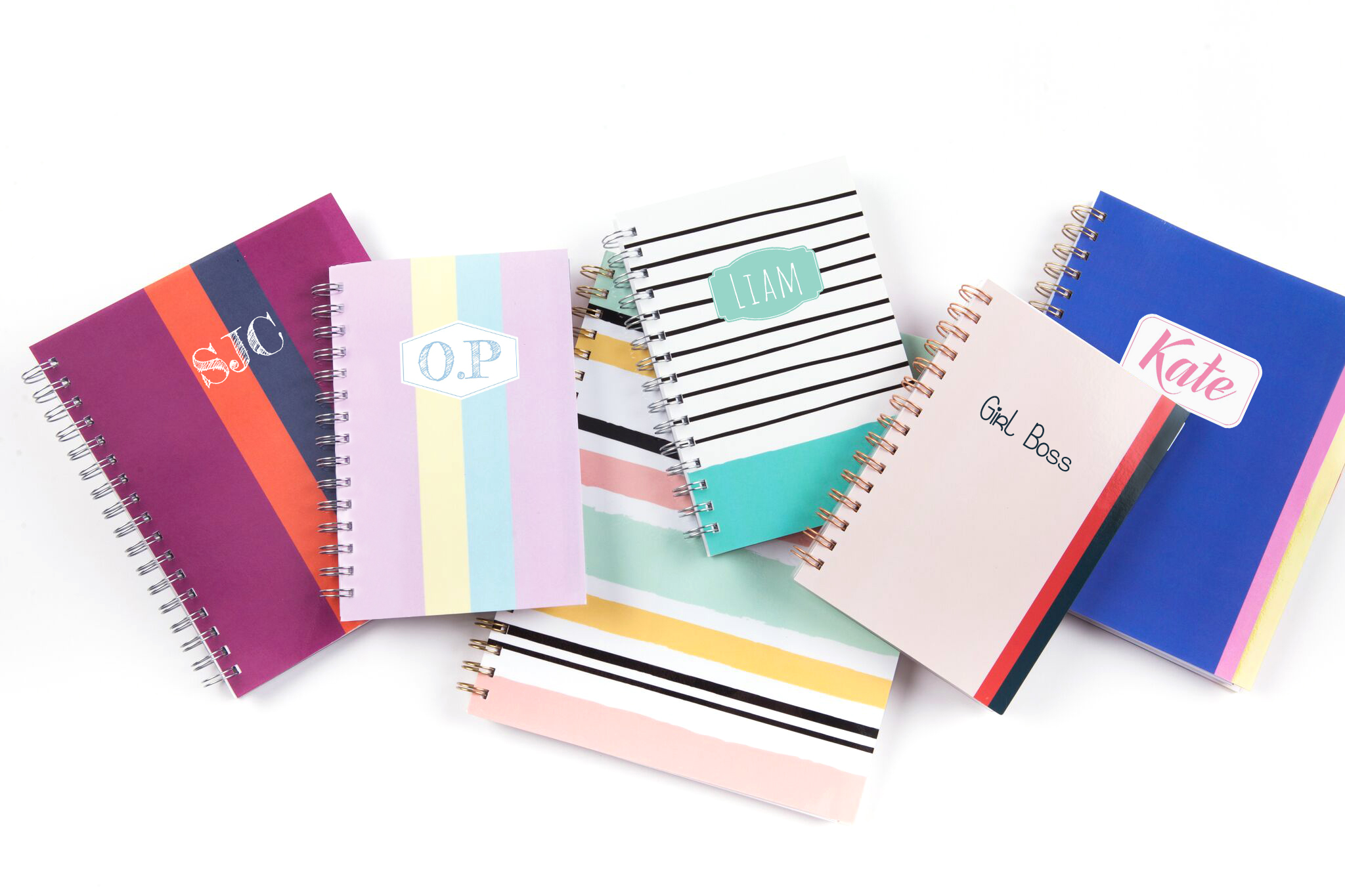
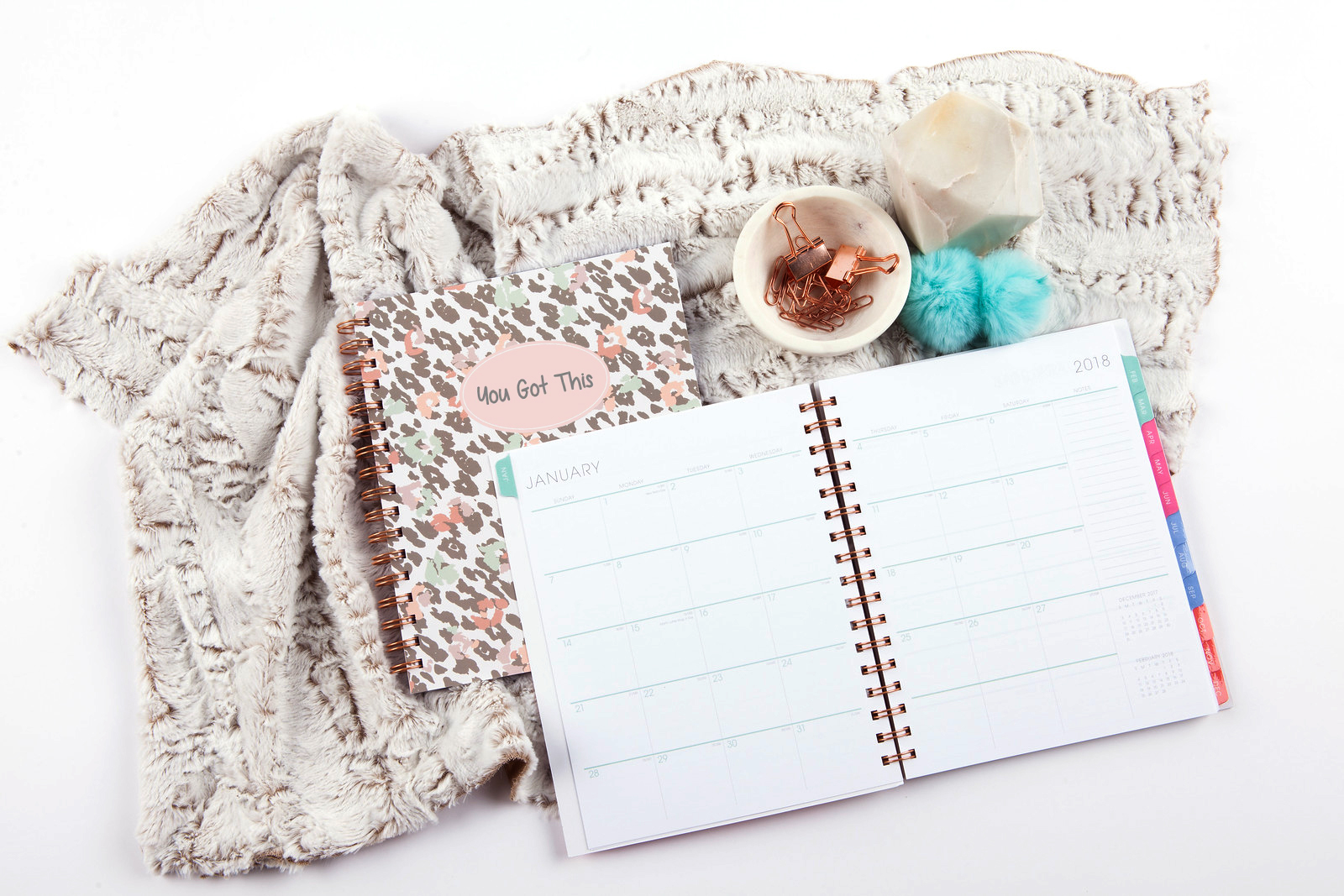
The challenge: Next time you go into a brainstorming meeting, leave your computer closed. Take notes with your colleagues on paper and see what kind of magic you come up with. There’s so much note-taking variety out there – from personalized notebooks (in small, medium, and large sizes depending on your preference), to grid notes, lined notes and more. The options are virtually ENDLESS. (And if you don’t believe us, virtually (literally) personalize your very own here.) The ease of planning can start online – but the act of writing, pen to paper, is where you’ll see the benefit.
The Mid-Sleep Ah-HA!
It used to be common to wake up in the middle of the night and scribble an idea down on a piece of paper by your bedside. In the morning, when you awoke, it would be there, staring you in the face. More and more we hear of people doing this with their phones. However, there are two reasons this isn’t the *best* way to 2am brainstorm.
First, all of the science proves that the blue light from your phone disrupts good sleep. Opening your phone in the middle of the night to jot something down, is way more disruptive to sleep than a pen and paper.
Second, a note taken in your phone in the middle of the night is essentially buried. It’s buried beneath texts, IG scrolling, checking the news and your email. However, a note on your bedside table smacks you right in the face in the morning. That idea gets to be the first thing you consider upon waking. It might be the best consideration you have all day.
The challenge: Instead of writing a note on your phone and disrupting your sleep, write in on a pad of paper or notebook beside the bed. The personalized To-Do notebook by Blue Sky makes this feel like second nature for those thoughts that just need to be jotted down – at any hour, any day. Literally: just write your to-dos, must-dos and have-tos all in one reliable spot, and stop. your. worrying.
There’s a reason we like notes on the fridge.
A handwritten note or goal gives us clarity and focus. Typing goals is fine, dandy, and speedy, but by handwriting goals, you might slow down (see point #1) and find new insight. Writing down goals gives you a kind of direction that a laptop can’t.
The challenge: free write your goals--speed write if possible, and see what ends up on the bottom of the page. It might totally surprise you! The benefit of a Blue Sky personalized notebook? You have tons of white writing space for all of the goal-setting and forward-thinking you want. And the best part? Don’t just hit the ‘delete’ button when you’ve reached a milestone. Cross off each goal (literally) when you’ve accomplished it. And remember, Blue Sky was with you on the journey to that moment.
Have reasons you like handwriting vs. typing? Share in the comment section below!
MORE FROM OUR BLOG

Create & Cultivate 100: Philanthropy: Grace Mahary
LIGHTING THE WAY.

LIGHTING THE WAY.

Grace Mahary, model and philanthropist, is all about bringing love and light to the world.
A first generation Canadian of Eritrean descent, Grace has walked in Victoria Secret shows and graced the pages of Vogue, but over the last four years, she has been researching renewable energy solutions, especially for countries lacking electrical and mechanical infrastructure
Drawing from her global network, Grace compiled a team to create tangible clean energy solutions for communities around the world, turning her sights to something near and dear to her heart: Project Tsheigh.
Project Tsehigh ( (pronounced se-hai, PjT for short) was established in New York City in 2015. It is a nonprofit organization dedicated to providing uninterrupted energy to impoverished communities around the world via renewable energy sources. Tsehigh, translated as “sun” in English, is determined to bring uninterrupted clean energy to impoverished communities around the world, Grace launched the non-profit in Eritrea, home to her family and a place in desperate need of sustainable clean energy.
That’s what we call beauty on the inside. Keep shining Grace.
More below.
Name: Grace Mahary
Instagram: @gracemahary
Business Instagram: @ProjectTsehigh
Where do your drive and passion come from?
My parents, as they are extremely passionate people who exemplify hard work and perseverance.
How do you feel as a woman in tech?
I’ve never thought to consider myself “a woman in tech” because I don’t have formal STEM education. However, as I learned more about the sciences through my work with Project Tsehigh, I realized that I’m passionate about advancing technologies in the renewables space that will improve the quality of life for so many people. The traditional definition of technology is expanding, and I’m honored to be surrounded by these intelligent, strong women who are changing the world.
It’s great to see the numbers of women in stem rise, but it’s also important for young girls and adult women to know that if you don’t want to go into a career in tech or math or sciences, it doesn’t make your career less meaningful. As someone who has two careers, can you talk a bit about this?
I’ve had to deal with defending my job throughout my entire modeling career. Some people think that the fashion industry is completely frivolous and that modeling is as easy as standing in front of a camera and smiling. That’s definitely untrue, and now modeling has opened so many doors for Project Tsehigh. And even though I’m developing my STEM skills, that doesn’t devalue my career as a model. If you follow your passion, there is always room to incorporate purpose.
Would you say modeling gave you a thicker skin to deal with the STEM field?
Modeling has taught me a lot of valuable skills like confidence, independence, and the importance of humility. All of those skills are transferable to running a business or nonprofit. Project Tsehigh is still very new, and I compare it to a startup tech company that is building its infrastructure, reiterating processes and fundraising. This year we launched our first project and donated 105 solar power units to households and establishments in Maaya, Eritrea. It was one of the most challenging -- and rewarding -- projects I have ever worked on in my entire career. There were set-ups, setbacks, and comebacks, but my confidence, independence and humility helped me persevere.
What are your hopes for young women who are interested in STEM?
My hope is that young women who are interested in STEM are never discouraged because society says that tech is for men, or that working in tech “makes you less feminine” -- which is just ridiculous! Growing up I wanted to be a basketball star, but I was conditioned to think that women were either athletes or they were “girly girls” -- we couldn’t be both. As I grew older, I quickly learned that wasn’t true at all. I was able to play ball and walk the Victoria’s Secret Runway Show. The great thing about STEM is that you can combine multiple passions to make your career. If you love coding and reading, you could create an app for finding the best books. If you love the math and fashion, you could manage the finances for the biggest fashion houses. The possibilities are endless!
What is your biggest pet peeve?
My biggest pet peeve is when people chew with their mouth open. The sound of their lips smacking drives me off the wall!
What are your biggest fears about running a business?
My biggest fear about running a business is failing the people that work with me. I try to be transparent and honest with everyone I work with, and I take obligations to others seriously. I regularly ask for their feedback on how our organization is doing and how I’m doing as a leader, like a reverse employee evaluation.
What's something you'd like people to know about your job that they probably don’t?
Working as a model is very unpredictable, and opportunities can be super last minute. Some mornings I’ll wake up with my day planned in my mind, and then I’ll receive an email or call about flying to another city that same evening for a job!
IYO-- How can we stay original when we are so saturated with other people's work?
"Be authentic. You’ll break through the static when you find your secret sauce and share it with the world."
Tweet this.
What about your career makes you feel the most complete?
Knowing that Project Tsehigh is creating lasting change on a global level.
If you had to trade jobs with anyone else in the world, who would it be and why?
A performer! If I could sing well, I would be on tour igniting the stage and sharing my energy with everyone. Also an actor because I like challenging myself to play different characters, and then I could act out additional dream careers like working with professional athletes in sports medicine, working with Elon Musk on eliminating fossil fuels and powering the world with 100% renewable energy, or a character who lives minimalistically in the tropics teaching yoga or some type of exercise to the local community.
At what point in your career did you find the confidence to really take charge and become the woman you are today?
That is still an ongoing effort for me. Over the last couple of years, I really started embracing my talents more and being less fearful. I’ve grown so much after starting Project Tsehigh. As a model, I’ve always had an agent guide me to make the best decisions, so running Project Tsehigh has pushed me out of my comfort zone. I’m usually speaking directly to partners and potential donors, which was daunting at first, but now has become second nature.
What's the best advice you've ever been given? Or your favorite piece of #realtalk?
You need to make mistakes in order to grow and learn. Don’t overthink -- take the first step and then figure out how to execute the rest of your goal. Specifically pertaining to modelling: don’t take things personally.
When you hit a big bump in the road, how do you find a new road or a detour?
I will admit that I am a bit stubborn at times, but it becomes a positive character quality here because once I have my mind set on achieving something, I’ll literally do whatever it takes to accomplish it. If that means financial sacrifice, so be it. Hard labor and exhaustion, I’ll do it. I refuse to feel defeated because I believe in myself and know I can accomplish anything with hard work.
What song do you sing in the shower when you’ve had a bad day?
"Closer" by Goapple because it inspires and reminds me that no matter what happens, I’m closer to achieving my dreams and goals!
TO SEE THE FULL CREATE & CULTIVATE PHILANTHROPY LIST CLICK HERE.


Your Mom Thinks You Should Quit
And other reasons you might want to leave your job.

Photo: Becki Smithhouse Photo
Spotting the warning signs of a bad relationship can be hard when you’re in the thick of it. Especially when you’re trying to stick it out for the sake of (insert life goal here). But a bad job, like partners and friends, can be just as toxic.
We’ve all had horrible Mondays. Where we feel like crawling beneath our desk and hiding out or napping for a few hours. That’s normal— even if you’re in love with your career, off-days are part the deal.
However, if driving to work is driving you low key mental. Or it feels like every time you send an email, you’re sending off a tiny bit of your soul, it might be quitting time. You can suffer for your art, but don’t suffer for a job that’s going no where.
Here are eight reg flags that the milk in your work fridge has gone sour, and it’s time to turn a page. (Hello, mixed metaphors to represent your oh so confusing mixed feelings about your j-o-b.)
"If driving to work is driving you low key mental, it might be time to quit."
Tweet this.
1. You feel creatively lost. There are days when the ideas aren’t coming no matter how many cups of java you down, but IF you are coming up one espresso shot short every day, you might not be in the right job. Before you take a dive into unemployment, try to do things that will reignite that spark with your job-- like go to a lecture or take a class. If that still isn't working and you're drawing blank after blank, day after day, really consider why you think this job is the right job. Sometimes things just fizzle out, and the best thing we can do for ourselves is realize that it doesn't have to be horribly wrong, for it not to be right.
2. You have an abusive boss. Bosses, like partners, can be abusive. People who take advantage of their position of power. But being in charge doesn't give anyone the right to treat employees like animals. If heading into your boss’ office is something you dread because you know no matter what you do it won’t be good enough, it's time to reevaluate the situation. I once had a boss throw trash at my head (yes, for real). I was out the door shortly thereafter. Know your self worth and trust in that.
3. You’ve consulted everyone you know about hating your job. Happy hour? What’s that? When you meet your friends after work, all you do is complain. About work. The problem with negative energy is that little by little it starts to infiltrate every other part of your life. Others relationships suffer, and you become um, insufferable to be around. Don’t let this happen. If your friends are avoiding your phone calls, there’s a good shot your endless complaints about work are dragging them down as well.
"Happy hour? What's that?"
Tweet this.
4. You’re compromising your morals. If you’ve found that you’re moving toward the Dark Side, without having any desire to do so, it’s either time to stand your ground, or change the ground your standing on. Sometimes at work we are asked to do things we aren’t entirely comfortable with— but these should be things that advance our careers. For example, you don’t like public speaking, but your boss asks you to give a presentation— this is a step outside your comfort zone that’s beneficial to progress. However if you’re being put in ethically, morally, or even illegal situations, no job is worth that risk.
5. You can’t come up with five good reasons to stay. Pro and con this beast. Make a list, check it twice, and if you don’t have five really solid reasons to keep your job— financial security aside— it might be time to start getting your ducks in a row.
6 .Your job gives you every kind of the sads. You know that feeling when you’re up at night, wondering why your dude is ignoring your calls, and you feel sad, lost, drained, pathetic? If your job makes you feel legit sad and question everything you’re doing with your life, it’s high time to move on.
7. Your mom thinks you should quit. Let’s consult Justin Bieber on this one. If you can sing, “My mama don’t like you and she likes everyone,” about your job… remember: Mom is always right. She was right about that 10th grade boyfriend, and she’s right about this job.
8. You're letting other opportunities pass you by. Some people in relationships are never satisfied because they are always on the lookout for the next best thing. That's not what I'm suggesting. But if the work universe is offering up an out-- or a better job, or maybe even a less financially lucrative, but potentially amazing job, and you're not taking it out of fear... close your eyes and take a leap. More often than we care to admit, it necessary to take a step back in order to alter our course, and start down the more meaningful path.
MORE FROM OUR BLOG

You Are a Walking Billboard (And That's A Good Thing)
We promise.

Billboards are meant to be simple, engaging, and creative. Even though advertising has become largely digital, billboard space is still highly valued, as it is a golden opportunity to do groundbreaking, impactful work. Most people don’t think much about it, but you are a walking billboard. Everything you do and every piece of information you put out there is part of your personal brand, and it’s important for everything to reflect the same image and vibe. Create a successful personal brand through your clothing, your confidence, your elevator pitch, and your ability to establish rapport with others. Never forget that you have the power to change how people see you. It’s really empowering when you realize that you control everything you put out there including how people see you and what perception you give off.
Create an image for your billboard
Think about how often we judge people almost immediately based on their appearance. Clothing is a tool which can help you take control of how people see you and manipulate their viewpoint. Do you want to appear as a strong, knowledgeable, and confident individual? Your clothing can help with that!
Think about how a brand is cohesive in every aspect of marketing and aesthetics. What would a brand put on a billboard to enhance brand awareness? Decide how you want other people to see you and the brand you represent, and dress accordingly. If you want to be seen as a professional, wear professional clothing. It won’t only affect how people see you, but there’s something empowering about dressing "up." It changes your demeanor and studies have shown that it influences the way we think.
Communicate with confidence
Part of being a walking billboard is being confident in who you are, what you believe in, and what your personal brand represents. Have you ever noticed that some people communicate with confidence and command respect when speaking while others don't? When you communicate with confidence, it is the difference between telling your boss that you need the day off and asking if it would be possible to take the day off. While it's not okay to act self-righteous and show a lack of respect others, it is important to act on what you need.
It can be a hard to communicate with confidence, and even harder to implement if you aren’t used to actively telling people how you feel and what you need. However once you do learn how to utilize this concept, there will be an immediate and noticeable difference in how others react to you.
Perfect your elevator pitch
An elevator pitch is a short and persuasive speech that summarizes who you are, what you do, and why you’re unique. You should know it by heart and be able to say your elevator pitch at any time, from a casual conversation with friends to a job interview. Your elevator pitch is one of the most important parts of pitching yourself to others whether it’s at a party, for a job, a writing opportunity, or to gain experience. You’re pitching yourself any time you met someone or try to further develop your career, so getting confident in your elevator pitch is essential.
A great way to practice is to give your elevator pitch to a friend and ask them to give you feedback on three main aspects:
· What they learned
· What they wish they learned/what information you should include
· Where they think you could improve
This exercise will help you figure out where you are with your elevator pitch and how you can improve it to perfect this important part of your personal brand.
__________
When you think about your personal brand, what perception do you want to give off? You are a walking billboard and have the ability to put any perception or image about yourself into the world. You have the power to affect how people see you based on your confidence, your appearance, your communication skills, and your online footprint.
A native San Franciscan, Michele Lando is a Certified Professional Resume Writer and founder of writestylesonline.com. She has a passion for helping others present the best version of themselves, both on paper and in person, and works to polish individuals' application package and personal style. Aiming to help create a perfect personal branding package, Write Styles presents tips to enhance your resume, style, and boost your confidence.
MORE FROM OUR BLOG

What If We Had a Solution to the High Cost of College
Listen up learners.

Smith House Photography
You want an education. You’re told you need an education. But at what cost should that education come? Last year for our inaugural Create & Cultivate 100 list, where we honored 100 women across 10 categories, we found a fairly even split amongst our 100 honorees, when it came to their thoughts on college. About half said that a college education was still important, but the other half said that college, in its traditional four-year form, was growing less important.
In part, that has to do with the cost. It is BANK to attend college. According to the College Board, the average cost of tuition and fees for the 2017–2018 school year was $34,740 at private colleges, $9,970 for state residents at public colleges, and $25,620 for out-of-state residents attending public universities.
That’s a whole lotta dollars for students who aren’t yet employed and paying their own way. More so, the Federal Reserve Bank of New York found "only 27% of college grads had a job that was closely related to their major." And though some grads work all of college to secure their dream jobs, most have no clue what field they even want to be in. And they waste precious time and money trying to figure it out.
Like so many, Lee S. attended a four-year college. And like so many she found herself asking big questions. Life questions are often complicated by options. “Throughout my time at school,” she says. “I got more and more confused with my own personal expectations post-college. I did not know what I wanted to do. I could not envision where I belonged in this massive industry that is carved out for post-grad college kids. All I knew was that I wanted to be in a field that allowed me to interact with people. I love people; talking to different people, connecting with people, learning from as many people as I could. Yes, I would describe myself as a ‘people person,’ which to some might be a cop out, but for me it's my truth.”
She ended up landing a job at a company that allows her to interact with people as well as satisfy her creative needs. But what if there was a solution that was cost effective and helped her narrow her focus? What if she didn’t need to be so confused along her journey?
Strayer University is helping driven students do just that.
Strayer is helping students with personalized learning solutions. To help increase attainment and improve student engagement rates – a fundamental component of success – Strayer introduced Strayer Studios, an entirely revolutionary platform featuring enhanced online content that blends Emmy Award-winning film production with real-life, engaging stories.
In an initial pilot, 10 percent fewer students dropped courses that included Strayer Studios content – a critical data point given drop rates are higher among the non-traditional student population.
By the end of 2017, Strayer estimates that 52,000 classes will have been delivered in the Studios format.
Moreover, according to Strayer, “Too many students take on debt, but do not finish their degrees. As a result, many fail to reap the rewards of postsecondary attainment: meaningful employment, higher salary and improved quality of life.”
"Too many students take on debt, but do not finish their degrees."
Tweet this.
Instead of stressing students out MORE, Strayer wondered if it could build an approach that rewarded students for their continued progress towards a degree.
Enter the Strayer Graduation Fund, which allows students to earn a course at no-cost for every three classes they complete and has the potential to reduce the total cost of a student’s degree by up to 25 percent as long as they stay continuously enrolled. Since the program launched in 2013, student persistence from the first to second year of instruction has improved by 45 percent. And among at-risk students, first-to-second year retention rates increased by 80 percent. These are important markers because first-to-second year retention is a key indicator of a student’s likelihood of progressing towards a degree.
And isn’t that what we all want? Progress? Yes. Progress. And progress ensures that you’ll meet your goals, whatever they may be.
Every person starts somewhere. Everyone has their own journey. Perhaps the solutions offered by Strayer will be a first step in yours.
This is sponsored post, created in collaboration with Strayer University.
MORE FROM OUR BLOG

Stars of The Teachers Talk Writing Process & Working with Friends
Crushing on women who are crushin' it.

The Cast of TV Land's The Teachers
TV Land's Teachers is an irreverent ensemble comedy about six elementary school teachers based on a web series created by The Katydids and Matthew Miller. The Katydids, a comedic troupe of six women from Chicago whose names are all derived from Katherine, wrote, executive produced, and star in the show (C&C fave Alison Brie is an executive producer), which is entering its third season.
We were able to grab the attention of 2/6, which is an F by school standards, but def an A in content.
Kate Lambert & Kathryn Renée Thomas chat with us on everything from the writing process to being scared to audition to superpowers.

On the writing process:
What does the writing process look like for the six of you?
Kathryn Renée Thomas: We generally spend the first 10 to 15 minutes talking about garbage. We have to get it out. We all arrive in the morning and have to gossip about what horrible things Trump tweeted last night or whatever Real Housewives did-- we cover all the really important things. Then we just dive right in.
Which means?
KRT: It depends on where we are in the process with the script to be honest. Sundays we come in and there are times where we’ll have to brainstorm a plot for an episode. But sometimes we just jump right in and start throwing out ideas. In the beginning we have a couple weeks of brainstorming. Sometimes a plot gets thrown out by the network and we’ll have to come up with something new to plug into a current script. There’s one script that we’re going to table read together for the first time. There’s another script that already has been table read that we’ve gotten notes on. Everyone has written their punch-ups and we bring them in and we sit around a monitor with our writers' assistants and we all pitch for different lines.
Kate Lambert: Going into Season 3 we’re looking to explore our characters on a deeper level. So that’s something we’ve been doing as well.
On having tough convos with the team:
You work together on so many levels and have known each other for a long time. Is it hard to be honest or tell someone you don't like their idea?
KRT: We’re pretty open and honest with each other. It was a hard transition at first. We’ve been together for over 9 years. It started with improv and it started as a joke. This group started as, “Hey we all have the same name. Isn’t that funny? Let’s do a show.” 9 years later we’re executive producing and writing our own show. The transition happened slowly, but we started treating the improv as a business early on and getting pretty serious. Then when we were actually getting paid for what we were doing as a business, we had to shift gears. At first, it was hard for me a to hear a “No” or have my pitches rejected in the room. Especially from people who were my friends and my sisters. We had to learn pretty quickly that that is just part of the process and part of the writer's room process. Any writer's room you go into, you’re going to have to pitch one thousand ideas and maybe none of them get chosen that day. I had to separate friends from business and say “You know, these are just my business partners,” for a while. Then once I got comfortable enough to understand,we’re doing what’s best for the show, I was able to go, “Oh yeah these are my friends!"
On the turning point for the business:
You mention a turning point-- when it all changed. When was that?
KL: It originally started as a one-off show. It was a lot of fun. Then it ran at a small black box theater in Chicago and that was so much fun and so exciting. I think it was the highlight of everyone’s week, and we had a great time and there was such an interesting chemistry between everyone that we thought we should explore. We ended up hiring a coach and getting a run on IO which was a huge deal. From there, we decided to make videos. It's such a great way to get your comedy out there. We made a video promoting the run and we thought that if people didn’t know our name or names of people in the group, they could watch these videos and that would entice them to come to the show. From there it turned into more of a business. We got a website, a Facebook fan page, we took professional photos, and we had a friend design a logo for us. We decided that we wanted to pursue this together, put our best foot forward and try to get to the next step.
KT: I wanna give a shoutout to Kate Lambert because she was really awesome about leading the charge with a lot of that stuff. I think it was Lambert's idea to create a press release for our show and some of the videos we started to make. Which, at the time, I didn’t know a lot of people in the improv community that were doing press releases about their show runs. I think that was a step above what other people were doing.
KL: Aww, thanks!
KT: It’s true! You really lead the charge on some of that stuff and I think it was incredibly helpful and lucrative for us.

On relationships and culture shock in Hollywood:
You've obviously got your tribe and support each other. What was in like moving from Chicago to Hollywood?
KL: Well, I think when you move to Los Angeles, like anything business and Hollywood related aside, the weirdest thing is that the weather never changes. And you lose all sense of time. I can't tell you whether I’ve lived here a hundred years or four. Living Chicago, you remember experiences according to weather and what people were wearing. I really can’t tell if something happened 3 years ago or two months ago.
KT: I’m so Midwestern and I think all the women in the group are really. My idea of LA was a very stereotypical -- douchey managers and fakey-fakey everything. Boob jobs and coke, you know? I was thinking, I’m this nice Midwestern girl, I’m not going to fit in there. But I love it out here. I think what helps with moving from the midwest to LA is the fact that we had a team of people whom we'd been working with and that support system was amazing. We were also really, really lucky to work with TV Land-- I'm not saying that because they’re our boss but they were really willing to take a risk with our voice and our vision. We anticipated that if we did sell this show, we would have to change it a lot to make it mainstream or that we’d be let go in creative aspects, and maybe just get creator credit. We truly found the love of our lives with TV Land because they let us keep all the same cast, all the same producers, all same writers, and they say yes to a lot of the crazy stuff we come up with. So my idea of this bad boss, people being douchey, was really squashed as soon as we started working with them. Not only that, but they’re just the nicest, warmest people so we felt like we were being brought into a family. That was such a great surprise.
KT: Also, on the business side, we came from a sketch background and all of our characters in the web series were different. But they were different by shades of gray and we tried to really blow them out for the show. We had to differentiate the characters and make their differences even more apparent. We also had to make them freer and move into their histories more. We weren’t just exploring them for two minutes anymore-- it was 22 minutes now. It was all a process of developing the characters to a further extent.
"Our success, in the end, came out of a lot failure."
Tweet this.
How did your backgrounds in sketch comedy prepare you for the successes you've seen?
KT: We failed a lot. Our success, in the end, came out of a lot failure. We’re 6 weird quirky girls from Chicago who were auditioning for a lot of things-- not all for weird quirky girls though. We weren't getting cast but instead of taking that as “Forget it, you’re worthless,” we collectively thought, “Forget it, we’ll do our own thing.” So being told no so many times, getting rejected, doing a show to an audience of one, or a hundred who aren’t laughing, we took all that and we learned from this and said how can we just keep going? And we managed to succeed anyway with our own trajectory and our own voices and we have more creative control than a lot of people do.

Early group shot. photo credit: TOM MCGRATH
On dealing with uncomfortable moments:
What’s worse, doing a show with an audience of one who is laughing hysterically or audience of a hundred who are silent?
KL: I always think it’s more uncomfortable to perform for one person. I’d much rather be in front of a crowd of one hundred people. To be honest, sometimes it’s pretty hilarious when nobody laughs. You just have to focus on what you think is funny. If an audience feels like you’re trying to be funny, they get uncomfortable for you as a performer because they can feel your nervousness. You just have to be comfortable and pretend it’s a huge audience.
But you were scared of auditioning...and didn't do it for a long time...
KL: I was lucky. I was working at a department store and the people I worked with knew all about my dreams and what I wanted to do. They were incredibly encouraging and they honestly really pushed me and helped me get over my fear. It was when I was working there that I took my first improv class for actors and I was there when I got cast in my first sketch show. I think it was a combination of support from friends and family, my parents obviously. And also just realizing life's short and I need to do what I want to do. Working jobs like that was good for me in some ways because it made me realize just how bad I wanted the job that I have now.
KT: For me, it can go either way. You can definitely kind of get in your head like Lambert was saying. You can even let go a little more than you would with a crowd of a hundred people. If you’re in a crowd of four people in the audience, it’s kind of like “Well maybe I can take more risks this way. I’m not gonna blow it in front of one hundred people.” I might take a risk and let go a bit in an audience of 4 people and I might play more lightheartedly and have more fun, that often times happens. It just takes a minute to get out of your head to move from “Fuck this, no one came to my show,” to “Okay, well let’s make the best of it.”
On their superpowers:
KL: I can love any dog on sight. And anytime I see a dog I get extraordinarily excited. I think dogs are the best thing.
KT: Oversharing. Girl, I’m an open book. It’s gonna get me in trouble some day.
Teachers is on TV Land. Catch up with the series here.