
1 in 7 Millennials Favor Company Values When Purchasing—Here's How to Build a Brand With a Purpose
Yes, a company can be profitable and purposeful.

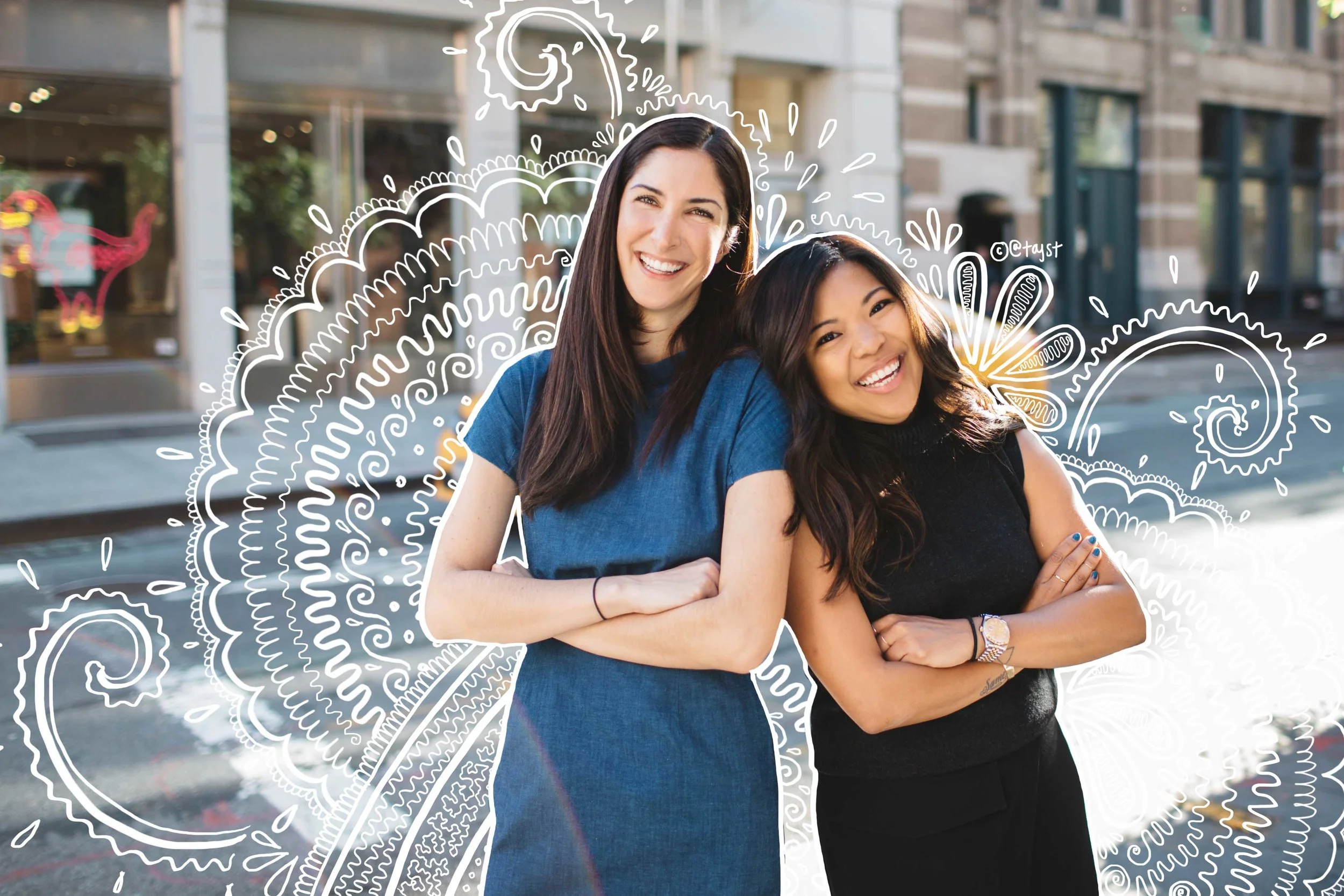
Photo: Michael Kutach
When we buy into a brand today, we want to head home with so much more than just the physical product. We want the added knowledge that we’re also investing in the future of our world from reducing global waste to helping those in need. If this sounds like your buying habits too, well, you’re not alone. Data shows that “nearly seven in 10 U.S. Millennials actively consider company values when making a purchase.” We truly believe that brands who build purpose into their business plan are the future.
That’s why we were thrilled to hear about Yvonne Niami. The former real estate mogul (her father owned a construction company) turned fashion designer has been donating 10% of net proceeds from her brand n:philanthropy to Children’s Hospital Los Angeles (CHLA), the ASPCA, SPCALA, and other local animal charities for the past 15 years. Not only that, their entire office volunteers at the CHLA several times a year. “We close up the office and bring toys to the kids on the cancer floor,” she tells me. “It’s so rewarding. The lovely children, parents, and nurses are always so grateful. We are grateful to be able to volunteer and donate the way we do because of our customers who buy our product. We are so thankful for our consumers. We couldn’t do this without them.”
So, how do you build charity into your brand and still make a profit? We tapped Niami to get a behind-the-scenes glimpse into how it’s done and why she felt driven to create a brand with a philanthropic mission.
How did you come up with the concept for n:philanthropy?
I donated to Children’s Hospital Los Angeles, SPCALA, and ASPCA for many years before I started n:philanthropy. When I decided to start a fashion brand, I knew it had to have a give-back aspect and that its name should say this loud and clear. n:philanthropy gives back 10% of net proceeds to pediatric cancer research and animal abuse prevention.
Why did you feel driven to create a brand with a philanthropic mission?
I think every brand should give back to whatever cause they are passionate about. If they can’t give funds, they should volunteer their staff’s time. Close up shop for half a day once a month and go volunteer somewhere you feel strongly needs your help.

Source: Michael Kutach
Do you think there is a movement in the marketplace now? Have you seen the change in consumer behavior towards supporting brands with a purpose?
I definitely have and am so happy to see this movement. I think great brands like TOMS, Patagonia, and others have paved the way, but I love that n:philanthropy is the first edgy-cool brand to follow this trend. Our consumer likes to live their life, party a bit, drink tequila with their friends, but has a big heart and cares about the mission behind the brands they buy. They shop consciously and educate themselves on what these companies do to better our world.
How different is it creating a brand with a purpose?
For us, it was easy. Our entire team truly cares about giving back. Creating n:philanthropy with its give back component was a no brainer for us, we were already living that life, we just added fashion to it.
What were some of the initial struggles/challenges you had to overcome when building n:philanthropy?
Just like any new brand, there’s always a stage where you’re working to really get your company out there. In our first year, I couldn’t get people to stop calling us Philosophy. I love that beauty brand, but I was constantly reminding people that our brand is n:philanthropy not Philosophy.
How did you structure your margins to include the charitable part and still be competitive?
We always try and hit 65% margins. This gives us room to sell to stores and have enough to donate.
What would you recommend to other brands/founders who want to make this part of their plan too?
Find the charities you are passionate about. It has to start from there. It can be giving back to animal abuse and cancer, like us, or maybe it’s helping our veterans (another important and worthy cause) or helping to stop hunger, donating to environmental causes, etc. Find what’s near and dear to your heart and align with an organization you can give to, volunteer with, or both like we do.
What advice do you have for young founders starting a business today?
The most important thing is the base of where your business starts from. It has to be from your heart. If it starts from a super authentic place, you are already many steps ahead.
What mistakes did you make along the way that you learned from or even benefited from?
Oh yes, many mistakes and tons of learning curves. Anyone that tells you they started a business and there were no downfalls is lying. There’s always some struggles but hopefully nothing you can’t come back from. Just learn from it and move on.
Do you think every brand moving forward should have a philanthropic purpose? Share your thoughts and favorite value-driven brands below.
MORE ON THE BLOG






C&C Classifieds: Hot new jobs in beauty, events, media + more!
For those looking to use your holiday break wisely!

For those looking to use your holiday break wisely!
Brand Assembly - NY, NY
Create & Cultivate - LA, CA
Buko LLC - NY, NY
StarChefs - BK, NY
Los Angeles Rams - LA, CA
Multicultural Marketing Manager
CAA - LA, CA
Lawless Beauty - LA, CA
Poosh - LA, CA
Hypebeast - NY, NY
Politico - Arlington, VA
Content & Experiences Director
Brainjolt - Remote
Best Friends Animal Society
Campaign Director - Remote/Arkansas
Sh*t Talk: The Politics of Office Pooping
Behind closed stalls.

photo credit: @ohbabuska
By Jane Helpern
Everybody poops. Yes, even your impossibly chic, Comme des Garçons-clad CFO who has never worn the same blouse twice even though each is basically indiscernible from the next in all its starchy-white-glory (I mean, who knew a top could have such an overt air of superiority?). Yes, even she hits her rock-ribbed-yet-stylish mid-century modern couch after a long day of donning judgmental ensembles, and with a pair of Outdoor Voices joggers and a bottle of red, farts gleefully along to the bachelorette before lavishing at least four different serums unto her face before bed.
Sure *logically* we know that evacuating one’s bowels is a normal, healthy, and detoxifying part of the morning routine (and sometimes afternoon and/or night, depending on schedule/green juice intake). And yet, when it comes to doo-doo-ing the deed at the workplace— where so many of us devote 8-12 hours of our day—women are crippled by anxiety and shame, and guilty of holding it to the point of agony, constipation, toot trails (you know, the kind that seep out en route to the toilets), or worse.
“Holding in your poo on the rare occasion is fine, but [shouldn’t be] done all the time,” says Alison Chen, N.D., and author of What Your Poo Says About You. Chen notes that among the unwanted side effects of keeping clenched are constipation, colon damage, and unnecessary strain when the urge inevitably strikes again in a more familiar setting. Furthermore, by burying the urge deep inside you risk missing out on the euphoric sensation gastroenterologist Dr. Anish Sheth refers to as "poo-phoria”— an exultant trifecta of chills, sweating, and lightheadedness triggered by a particularly rewarding bowel movement stimulating the vagus nerve, which Sheth says can cause a feeling of “sublime relaxation.”
Despite chasing the ever-elusive poo-gasm, between unpleasant acoustics, the fear of having your new Gucci's spotted beneath poorly engineered stalls that leave more room for snooping than actual pooping (cue George Costanza’s infamous Seinfeld rant), and the nightmare that is getting stuck at the sink alongside your manager to whom you owe an email (when the only reason you’re even going through the motion of washing your hands in the first place is so she doesn’t think you’re an unsanitary cavewoman), the communal office bathroom can cause even the most open-minded sphincter to snap shut.
To get to the bottom (hehe) of this widespread workplace phobia, we chatted with professional women across several career trajectories to get their poo-cents on office pooping protocol: why it’s sh*tty, how to hack it, and why secret bathrooms are a feminist issue!
Cindy Gallop, Founder and Former chair of the US branch of advertising firm Bartle Bogle Hegarty, and founder of the IfWeRanTheWorld and MakeLoveNotPorn
Now, I'm actually fortunate in that I work for myself and I work from home, so I don't encounter this issue as much as I used to in corporate life, but as and when I do in a shared female bathroom environment, I have to admit that even I am prone to doing all those things we do as women in this context:
Putting toilet paper in the bowl first so no 'plopping' sounds are heard
Flushing the toilet during so no sounds are heard
If there is someone else in the bathroom or the neighboring stall, waiting in the hope they will leave the bathroom first
Flushing several times in the course of the operation to reduce odor
I'm assuming men do none of these things (not least because of their proclivity to treat this as a real occasion deserving of lingering, reading, being on their phone, playing games etc - and yes, I mean in the office as much as at home) and I think our behavior is as much us being considerate of other women/people, as embarrassment we feel ourselves.
An editor at a Condé Nast style publication
I have a secret pooping bathroom. That's basically how I handle pooping at work. Obviously not every workplace has this luxury but when you work in a building with 90 floors and have access to pretty much all of them, you find yourself a relatively underutilized/secret, private restroom. I actually discovered mine on my first day — it's on a different floor from my office and reserved for fancy executive board room meetings, which rarely ever happen on this particular floor and these fancier bathrooms have stalls that are way more private, so even if someone does enter the space you're still way more secluded. I personally do not care if someone else is pooping in a public restroom while I'm in it — that's literally what bathrooms are for — but I feel like other people get weirded out and then I get stage fright. So even though traveling to poop is longer, it takes less time overall since it's much more relaxing to go in near complete privacy and comfort.
"I have a secret pooping bathroom. That's basically how I handle pooping at work."
Tweet this.
An IT Senior Associate
You know how in a shared bathroom, sometimes you know who is in there? Or like when people want to talk to you when you’re on the toilet? My manager does that sometimes. And I remember needing to poop and she’s talking to me and I had that moment of ‘“do I drop this or try to hold it in there.” Like, we’re in our stalls. It’s not for talking about work. It’s for personal business. So, I pooped. And it wasn’t quiet. And she stopped talking.
Kejal Macdonald, VPee of Marketing, Icon
At Icon HQ we don't believe in TMI, so nothing is taboo, including poo. While I have no problem talking about my bowel to bowl movements, I do need privacy to actually do the doo. Our shared bathroom is a little too high traffic for my colon, so I retreat to a more private commode two floors up. To avoid sphincter stage fright my ideal setting is a completely empty bathroom and a full Instagram feed.
Arianna Schioldager, Editor-in-Chief, Create Cultivate
After childbirth, nothing is embarrassing. And TBH, I don't have time to play the I'm pretending to throw out a tampon even though I'm not on my period game. Just poop and get over it. You're calling more attention to yourself rustling around in there. Plus, it is a construct of the patriarchy that women don't poop. If you really want to resist, start pooping everywhere.
"It's a construct of the patriarchy that women don't poop. If you really want to resist, start pooping everywhere."
Tweet this.
Jane Helpern, Freelance Writer and Editorial Director
Pooping affects my mood, productivity, and energy. Which is why overtime (and after many in-house jobs) I’ve learned that the pros of pooping when you gotta outweigh the cons of being put on blast, while you blast. I used to work for a fashion brand where everyone always wore super distinct, designer shoes. The bathrooms—as nice as they were with their incense diffusers, plants, and artisanal soaps—still had those giant gaps under the stalls and you could identify everyone by their fancy footwear.
For a while, I tried to keep my feet elevated so as to maintain anonymity, but literally my abs would tremble and I couldn’t relax. I’m a big proponent of the courtesy flush to drown out as much noise and odor as possible, and I’ll admit that I’m probably single handedly responsible for the California drought by leaving the sink running to conceal any embarrassing sounds if I’m in a stall that’s precariously located in close proximity to where others are hanging out. I think girls pooping is one of the last remaining taboos, now that we've dealt with bleeding and body hair. It’s okay to be polite—no need to start ripping rancid farts in public—but don’t let the patriarchal expectations of female hygiene come at the expense of your gastrointestinal well-being.
"I’ve learned that the pros of pooping when you gotta outweigh the cons of being put on blast, while you blast."
Tweet this.
Jacqueline Frances, Author, Comedian & Stripper
As far as going number two, man, I've never really put much thought into it. I'm one of those lucky ones who can go anywhere (didn't know that was a thing until Broad City). I just try to have some solid reading material with me, and set up a little crown of TP along the seat and go for it. Like most comedians, I'm pretty sure my best jokes were developed on the shitter.
Zarna Surti, Founder, Tonal Magazine
Ahh, the office poo. Here's the deal: I'm actually very regular—the morning is like clockwork for me, so I'm usually able to handle my business before my morning commute. But, like everyone else, I'm only human and sometimes things get a little tricky.
I used to work in an office where I could set up the amazing 'sneaky worky poop.' What does that mean exactly? There was a secret Pepto-Bismol-colored haven that only had 4 stalls, so if I timed it out perfectly, I would end up in a state of solo bliss. But my new workplace? Not so much. We work in an open loft with one bathroom right next to the CEO's office. Needless to say, that shit (sorry, my humor resembles that of a 13-year-old teenage boy) can get really weird, really quickly. Also, the only couch and refrigerator are right outside of the restroom, so any weird smells leave you as the only culprit.
What do we want? Secret bathrooms. When do we want them? NOW, please, for your sake and mine. Also, an assorted magazine rack wouldn't hurt either.
"What do we want? Secret bathrooms. When do we want them? NOW, please, for your sake and mine."
Tweet this.
An Associate Creative Director at a New York Agency
Pooping is the first thing I do every morning. I have trained myself to do that, so I don’t really have to go during the day. I’ve always had so much anxiety about going in public stall style bathrooms. I would hold it in and be uncomfortable all day. My friend told me she had a scheduled pooping time in the morning, so one day I tried it and realized you can actually train yourself to do it. Luckily, if I have to go at work, we have single stalls with real doors....so I'm ok to go in those. But I usually won’t go in shared stalls with the walls not to the floor. Unless it’s an airport, I don’t mind there.
Have any tales from the toilet you want to share? Chime in below!
Jane Helpern is a freelance writer, copywriter, and founder of Jane Says Agency. She enjoys helping brands find their voice, writing about fashion and feminism, and walking-at-an-incline-with-wine™
This story was originally published on December 17, 2017 and has since been updated.
MORE FROM OUR BLOG

These 5 Resume Mistakes Are the Worst—Here’s How to Fix Them
You only have six seconds to impress a recruiter—make yours memorable.
When is the last time you updated your resume? Months ago? Years ago? Whether you’re actively looking for a new job now or are considering making a career change in the future, keeping your resume in tip-top shape is crucial. In order to differentiate yourself from other applicants, you’ll want to avoid making these five mistakes on your resume so you stand out to recruiters. Knowing from personal experience in the recruiting world, recruiters only give about six seconds to review a resume—ten if they’re feeling generous. All this to say: you need a stellar resume, and we’re here to help.
Read on to learn about five resume mistakes we see all the time and how to fix them.
Resume mistake: Typos and grammatical errors
Quick Fix: I’m going to be frank with you here—there is no excuse for having typos and grammatical errors on your resume. But that’s easy to fix. Especially with GoogleDocs corrections and the plethora of extensions that you can add to your browser. Just install the Grammarly extension in your Chrome browser and it will check all of your documents including emails and give you suggestions. All of our editors at C&C use it. It’s just nice to know that someone’s got your back.
Resume mistake: Not customizing your resume
Quick Fix: Ever heard of a burrito? Typically made with beans, rice, cheese, salsa, and the like? Your resume shouldn’t look anything like that. Let me explain. There are two types of resumes that you should have—a burrito resume and a targeted resume. The burrito resume is, often times, only for you. It lists every career experience you’ve had with as much detail about each experience as you see fit. This resume should not be sent with a job application, that’s where your targeted resume comes in. Your targeted resume should be customized to the job that you’re applying for—for example, if I’m applying for a job in influencer marketing, I should list experience that involves analytical, creative, and customer service experience. Everything else should be kept out. And now who’s hungry for a burrito?
Resume mistake: Lack of detail
Quick Fix: Instead of simply stating what you did, explain in more detail the work that you have accomplished.
For example:
1. Ran influencer campaigns on YouTube.
2. Executed over 200 YouTube influencers by sourcing, negotiating, and launching campaigns with talent directly, resulting in over 1,000+ new customers and $200,000 in product sales.
Number one doesn’t provide enough information to get a recruiter interested, whereas number two is equal parts quality and quantity. You want to explain what you did and quantify your work as much as possible.
Resume mistake: Too long
Quick Fix: If your resume is targeted for the job that you’re applying for, chances are, you should be able to keep it to one page. And one page is truly the ideal length for your resume. Especially when a recruiter is shifting through hundreds of resumes a day, you don’t want them to immediately see that your resume is two or three pages long and dismiss it. Short and sweet, while simultaneously detailed and effective.
Resume mistake: Overly visual (or not visual at all)
Quick Fix: The design and layout of your resume is just as important as the quality of your statements. And while I typically would encourage you to showcase your personality through design, when it comes to your resume, you’ll want to lean towards a more minimalist look. I’d recommend capping your resume to three colors—black, white, and something of choice. This is only if you absolutely feel the need to show color, your resume will stand out without color too. You can, and should, explore some of the templates that Microsoft word or Google offer.
About the Author
Syama Meagher is the Chief Retail Strategist at Scaling Retail. They have launched brands around the world, through a combination of expert advice and creative marketing strategy. Scaling Retail believes in the power of hard work to grow and build your businesses. Discover Scaling Retail at ScalingRetail.com.
MORE ON THE BLOG

Pack This, Not That: The Travel Items a Seasoned Jetsetter Won't Board a Plane Without
Ally Betker, editorial director of Away luggage and editor-in-chief, Here Magazine shares her travel must-haves.
Traveling is fun but it can also be taxing on your body, especially when your job requires you to be on a plane every other week—because let’s be honest, planes are breeding grounds for bacteria. So, how do you stay healthy and make your flight more enjoyable? In our new series, Pack This, Not That we ask regular jetsetters—from CEOs to entrepreneurs—to share the carry-on essentials they won’t board a plane without.


As the wafts of warm air slowly start to make their way in to replace the cool breeze of season’s past, we can almost taste the adventure that summer promises—’tis the season after all. Even if you’re not planning a trip to the Italian coast, summer beckons us to voyage outside of our comfort zone and explore new terrain off the beaten track.
Regardless of what escapade you’re planning for the summer, you’ll need to pack your bag but for us, perhaps the most important is the carry-on items. These airplane essentials can make or break a long-haul flight and save us when we’re sandwiched in for hours with zero leg room. So, to find out what to pack in your carry on, we asked seasoned traveler, Ally Betker. As the editorial Director of Away luggage and the editor-in-chief of Here Magazine she is constantly packing her bag for a new adventure and we’re so excited to share the carry-on items she won’t board a plane without.
Nature’s Way Activated Charcoal Pills

“These have saved me time and time again, especially in places where the cuisine is tough on the gut, like India and Mexico.”
Jurlique Rosewater Balancing Mist

“I discovered this product inside the Cathay Pacific toiletry kits and now I’m a convert. It’s super light and smells great, while also being super hydrating.”
The Everywhere Bag from Away

“I’m not an over packer but I definitely stuff this guy full. It fits everything: laptop, toiletries, snacks, water, library books. Plus, it fits perfectly under the seat.”
MacBook

“I love working on planes, especially if there’s no Wi-Fi—it’s often the only time I’m completely uninterrupted.”
RX Bars

“These are my favorite snacks to bring with me when I travel—they’re super filling, so they work for an afternoon pick-me-up or for breakfast on mornings when I just want to get up and go.”
Blistex Medicated Lip Balm
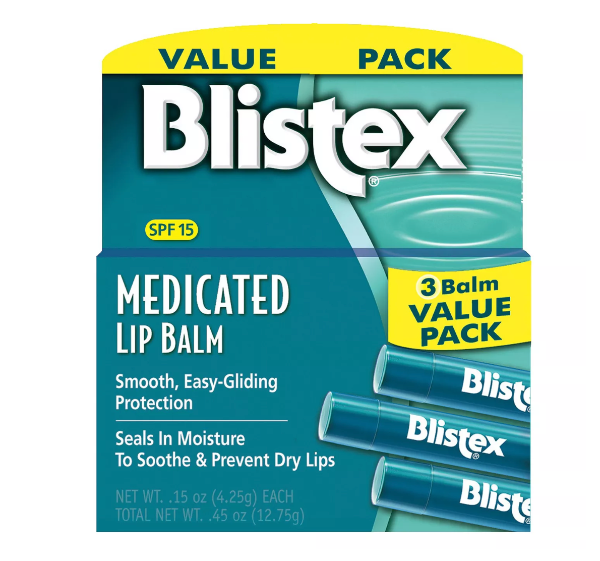
“This is my #1 beauty essential no matter where I am. There’s nothing worse than having chapped lips.”
Vintner’s Daughter Active Botanical Serum

“It’s expensive but it’s worth it, especially after long flights. I haven’t found a better product to restore and nourish your skin after a flight. It seriously seems to moisturize from the inside out.”
que Bottle

“The most recent addition to my travel arsenal. I never go anywhere without a water bottle, and this one collapses for ease of transportation.”
Shinola Hard Linen Journal

“Picture me at 36,000 feet, journaling and quietly weeping.”
What are your carry-on essentials? Share them with us below.
Are you coming to Self-Care Summit? Limited tickets are available now. Don’t miss out!

Slow Stories: Using Slow Content to Build Important Communities and Conversations
Creating content that can be a source of happiness, value, and community.

When I first launched Slow Stories last October, the reason was two-fold: to further refine my agency CONNECT(ED)ITORIAL's point of view as a service provider, and more importantly, to create space for the conversation around slow content to not only be present but to be put into practice too. The response from our first season motivated me to build upon the themes in our original episodes and extend the Slow Stories initiative into a namesake column here on Create & Cultivate.
Since then, the last six months have been an eye-opening experience in learning about how modern professionals from all walks of life have responded to the idea of slow content's role in our marketing and storytelling efforts. And as I close out another season of the podcast (and practice what I preach by slowing down and taking a break from the column for the summer), I want to kick off this seasonal send-off with a few highlights from some of our more recent episodes:
1. Slow content inspires presence and encourages self-care.
The consensus throughout the entire show indicated that by honing in on the content that resonates with us most, we are left with more time to be fully aware and present in the spaces that inspire us to create this content in the first place. And when it comes to slow content itself, many of my guests also spoke about the content they gravitate to the most advocates for self-care, digital detoxing, and community-building.
2. Slow content is of heirloom quality.
Tactically speaking, when deep diving into the logistics of content ideation and production, slow content prioritizes quality, originality, and humanity beyond the standards of fast, and often fleeting, content. With that in mind, many of our guests also referred to slow content in relation to terms like "heirloom" reinforcing a thoughtful piece of content's preciousness and ability to outlast a single content platform or trend.
3. Slow content can create impact and facilitate essential conversations.
Finally, the above two ideas culminated in another vital theme that our interviewees continually touched on: From modern healthcare to design, the different brand-builders I spoke with this season alluded that the best content is something that is created in collaboration with not only their teams but with their customers or members of their brand's community. By slowing down and opening the door to a sense of partnership with different stakeholders, slow and thoughtful content has the opportunity to shape communities and ignite vital business, social, and political discussions.
The latter point is something that I've realized to be the heart of what this movement is all about. Earlier in the season, one of our podcast interviewees reflected on an instance where they read "content" (as in "happy") as content in the context of marketing. That strikes a chord. With social and digital's increasingly powerful influence on the way we perceive things, the slow content movement is forcing our hand to collectively create more content that can be a source of happiness, value, and community. So, if you're wondering how to build community (either on the customer or collaborator side) here are a few of my tips for utilizing slow content to take the first step.
1. Work with collaborators to create and cultivate powerful stories—and relationships.
As storytellers, we know the most memorable content derives from our ability to marry our unique perspectives, skill sets, and talents. I touched on this in my most recent article, but the power of coming together over a common goal to create something that genuinely resonates can't be understated. Use slow content as a starting point to create something lasting, as well as a foundation to work with like-minded collaborators to continue keeping that story, and conversation, going.
2. Spend time on developing systems for content that inspires consumers both visually and conversationally.
Whether you're a content creator or brand founder, the current digital climate has proven time and time again that content must provide holistic value for modern consumers. The best way to capture the attention of and maintain a relationship with your community is to take the time to create content that checks the box in visual inspiration and transparent communication. This is where tools like brand books and content calendars come in handy when developing a long-term strategy to sustain both of these elements—rediscover more tips from my industry Interview with Brandy Pham.
3. Use your platform to start a conversation—and take it offline.
Many of the world's most respected influencers and brands have mastered the delicate balance in having quality content translate into quality experiences. I've often said that I look at slow content as a gateway to capturing someone's attention via compelling content and building on this in ways that provide value for people in more intimate settings. While online storytelling is the best way to build a global community, taking this one step further in an IRL venue (whether it's a dinner party, meeting or panel) is the best way to nurture relationships in our fast-paced landscape.
If I've personally learned anything from building Slow Stories so far, it is that slow content transcends industries and professions. It is a universal framework that many of us are craving in our content and marketing endeavors—and that alone is something that fosters conversation and community no matter what our individual stories are. I hope this article provides insight into how to utilize slow content as a vehicle for community-building in your work. And in the spirit of slowing down, I invite you to revisit the articles in this column and enjoy all episodes of seasons one and two of Slow Stories on Apple Podcasts and Spotify. Have a great summer.
About the Author:

Rachel Schwartzmann is the Founder and CEO of The Style Line LLC. She created The Style Line in late January 2011 via Tumblr and has fostered The Style Line’s brand in its growth since then. Rachel has been featured in esteemed sources including Forbes, Refinery29, and MyDomaine and has also spoken at Create & Cultivate and Columbia University on establishing a unique brand point of view and entrepreneurship. On October 1, 2015, Rachel took The Style Line in a new direction as a boutique content company with the introduction of its slow content agency CONNECT(ED)ITORIAL.
Links + Handles:
The Style Line: @thestyleline Instagram, Facebook, and Twitter.
CONNECT(ED)ITORIAL: @connecteditorial
Rachel Schwartzmann: @rachelschwartzmann and @RMSchwartzmann
MORE ON THE BLOG


"Work Has a Bigger Purpose"—How Motherhood Has Influenced the Professional Lives of 6 Women (for the Better)
We ask the question: Is becoming a mom an advantage at work?

Photo: Jenna Peffley
If I’m being totally honest, the idea of being a mom took me at least the first year of my son’s life to come to terms with. I really grappled with the lack of independence and mourned for my old life. But fast forward 11 years and I couldn’t be more thankful for the many blessings our son, Neon has given me and our extended family. He is, without a doubt, my biggest teacher. Not only that, I know that motherhood has helped me to grow spiritually too, I feel more connected to the people I love, to my family and unexpectedly, to my work. I am a much stronger, more confident person which has directly transferred into my professional life too and influenced the way I lead. All of the virtues a mother has—patience, compassion, empathy, efficiency—now carry over into my work.
And I’m not alone. LOLA—the first lifelong reproductive brand for women, rooted in the values of ingredients transparency, high quality, simple design, and modern convenience— also asked the question recently with their post, “Work after motherhood: do moms have an advantage?” where the author had a similar, positive experience as myself at work since becoming a mom. She writes, “For some moms, including myself, my roles as mother and worker are complementary. I am better in each role because of what the other offers me.”
The post also cites a Harvard report that found children with working moms have “better careers, higher pay, and more equal relationships” and that sons will have more empathy and be more helpful in managing their own households if they grow up with a mother who worked. Just like their dedication to providing an ever-expanding portfolio of trusted products, LOLA is also devoted to helping people make deliberate decisions about their reproductive health with candid information—from their first period to the last hot flash and beyond.
So, in light of this mission, we reached out to some of the working moms in our community to find out if motherhood had indeed changed their relationship with work for the better and given them an advantage. Because it’s through these honest conversations that we can truly connect and understand that we’re all in it together, especially when it comes to navigating new life stages. Read on to hear what these eight moms had to say.
Sarah Yates Mora, Creative Director, A House in the Hills
“Motherhood created a massive shift in my priorities which has served me both professionally and personally in so many ways. When my son was born I made the decision to slow down my business until he reached school age so that I could be the primary caretaker for his earliest years. This came with many sacrifices of course, but was undoubtedly the best decision for our family.
“Now when I work I am far more conscious and deliberate with my hours, I only take projects that really speak to me and I say no far more than I used to. I think that having scarcity in time has ultimately been beneficial in helping me narrow my focus and hone in on what is truly serving my business, myself and my family. Slowing down forced me to evaluate the hamster wheel of work I’d been on and realize that I could pivot from the path I was on and forge a new one with a business model that didn’t involve being all-consumed.”

Photo: Sarah Yates Mora
“Now when I work I am far more conscious and deliberate with my hours, I only take projects that really speak to me and I say no far more than I used to. — Sarah Yates Mora”
Stella Simona, Founder of Amarilo and Haati Chai
“I think motherhood has given me a great advantage. I used to get worried, before having my son, when I would hear parents say that kids ruined their lives. It’s actually the complete opposite. I’ve grown more into my skin and who I am after motherhood. Similarly, I’ve only grown in my career, and I having more clarity on what my values are. I think this really stemmed from understanding that yes motherhood is a pivotal point in my life and it’s only going to be the way I make it. The minute I knew I was having a boy I wanted to be able to give my son Noah the best environment to grow up in. I knew that in order to be the best mom for him I had to be the best version of me for myself first.”

Photo: Courtesy of Stella Simona
“I’ve grown more into my skin and who I am after motherhood. Similarly, I’ve only grown in my career, and I having more clarity on what my values are. — Stella Simona”
Julie Van Daele, Creative Director and Interior Designer, Well Received
“Before baby, work felt like an annoying chore that didn’t stimulate my brain. After becoming a mom, I found that work was a must for me to continue stimulating my creativity. I realized I needed to have a life outside of just taking care of the baby and to ensure that I brought intelligent conversations to my husband, friends and those around me. Since having my son this is what is non-negotiable:
1. I must work for my own sanity.
2. I set my own terms for when and whom I work with.
3. My family trumps all work opportunities and obligations.
“In regards to if working gives me any advantages, right now I’m in the thick of balancing the desire to grow my business with the desire to be at home with my son for the few years before he starts school. Today, I would say having a kid doesn’t give me an advantage, as I feel pulled in more directions and that my time is much more limited. But having a kid give does have some perks:
1. A new way to relate with so many of my clients that are also working moms.
2. A constant reminder of what’s important in this life.
3. The ultimate trump card for any work situation. No one is going to tell me that they/their home are more important than whatever is going on with my kid. So it really helps me to set boundaries.”

Photo: Courtesy of Well-Received
“(Motherhood is) a constant reminder of what’s important in this life. — Julie Van Daele”
Angela Fink, Creative Director
“Motherhood has allowed me to gain more perspective on my life and my choices. It's given me the confidence to love the person I am and seek balance in my life. I want to lead by example and show Lola that she can sculpt her life the way she sees it. The line between work and life is thin in our house, and it would be near impossible for me to keep her away from my work. That's why I take her with me on shoots, pulls, and even (specific) meetings.
“Motherhood has really shown me that work is no longer a bad word, and when you are true to yourself, good things come. I'm absolutely stronger in who I am, too. Before Lola, I felt lost in a way. Motherhood has given me a more defined purpose, and with harnessing that energy, I feel like I can push myself 10 times further. I feel smarter about my decisions and brave because I want to lead by example.“

Photo: Kelly Bolton
“I feel smarter about my decisions (as a mother) and brave because I want to lead by example. — Angela Fink”
Tracy-Ann Frazier, Founder of Knowing Tracy
“Motherhood made me fearless in my work by giving me the courage to pursue my dream of being a full-time entrepreneur. I want my son and future children to know that they can pursue their dreams. So instead of working for an employer and nurturing their dreams, I've branched out into what most would term "the unknown" to do what I love. Being a mom has given me a stronger why and motivation. My desires for my children: financial freedom, have leadership qualities, an abundance of joy and navigate life knowing they can achieve all things despite what society may think because of the color of their skin. I'm no longer working for myself but to change the life of my family and future generations.”

Photo: Anthony Frazier
“Being a mom has given me a stronger why and motivation. — Tracy-Ann Frazier”
Erin Hiemstra, Creative Director and Founder of Apartment 34
“I find I often have a slightly different struggle with being a working mom then quite a few ladies I talk to. You see, I didn’t cry when I left my son and went back to work. I cried on my last day before maternity leave when I said good-bye to my office. Sure, I don’t always love that I spend less than three hours a day with my baby but I’m not racked with guilt by it. I refuse to be.
“Why? Because I really love what I do. I get a lot of self-satisfaction, and to be perfectly candid, self-worth out of my work. My frustration with being a working mom does not lie in how it limits me at home. It lies in how career-limiting being a woman with children can be or at least I have found it to be thus far. For starters, my efficiency has totally decreased. Between getting to work much later than I used to and having to be out the door to relieve the nanny, I manage to check one, maybe two things off of my daily to-do list. Emails? At least a 72-hour minimum response time. The deluge is endless. This leaves me feeling totally ineffective.
“I’ve also found that all of the professional momentum I was building prior to having a baby has stalled and I haven’t quite figured out how to get that engine revving again. The strict schedule, the sleep deprivation and all the time spent being the one in charge of all things domestic eats into your traditional workday. And working freelance is great, but when you don’t have to be “in the office” by 8 a.m. it can be challenging to structure a productive day.
“I see some other moms for whom motherhood has been a boon of inspiration a and crash course in multitasking and efficiency. But I still struggle with feeling highly inefficient. While these challenges really had me down on myself in my first couple of years as a mom, now that my son is four I realize how fleeting these first years are and I’ve tried to be easier on myself. I work as hard as I can in all aspects of my existence and that’s all I can give. Before I know it my son will be in school full time and won’t need me nearly as much. And I may have finally gotten over the sleep deprivation by then.”
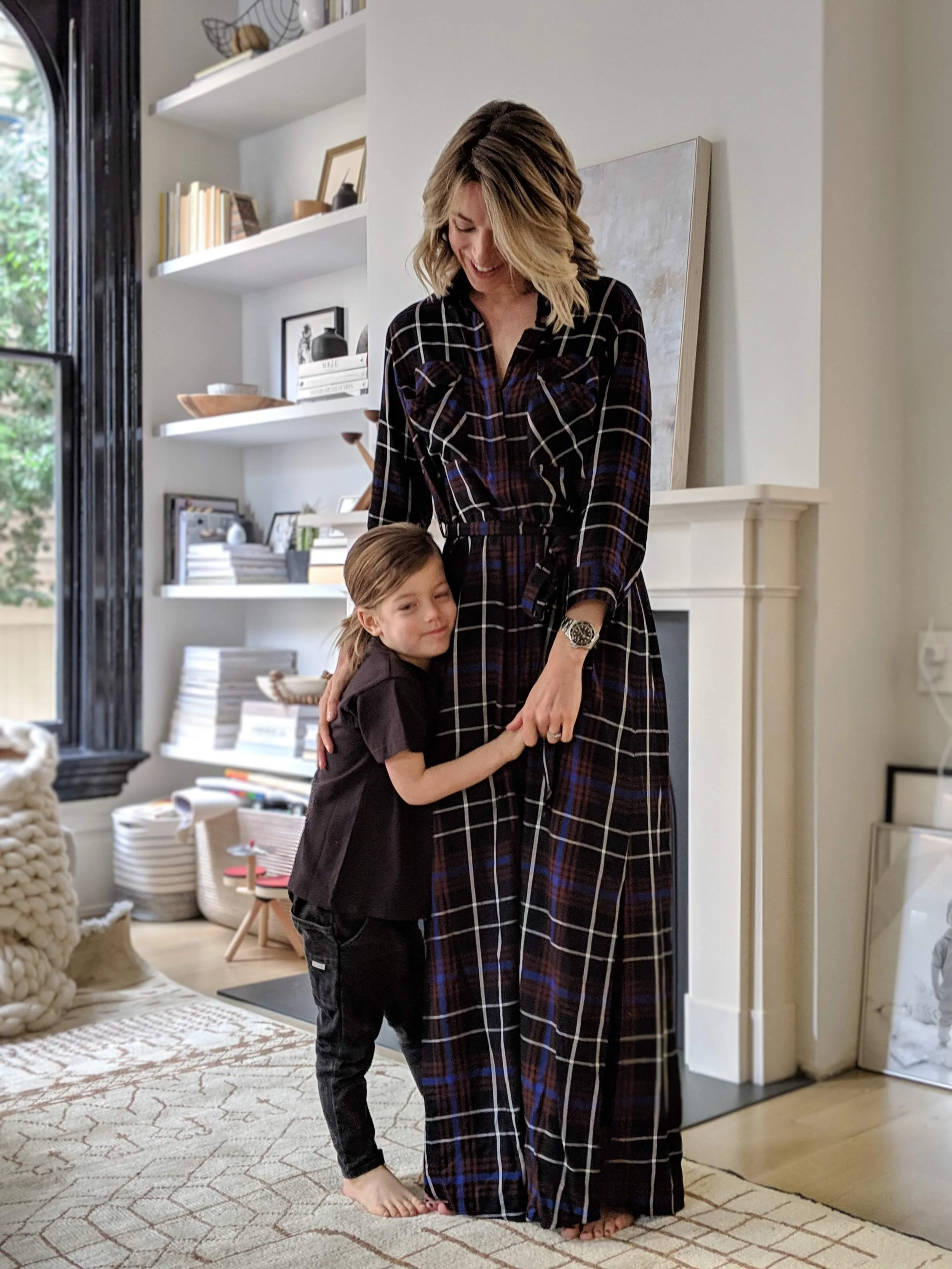
Photo: Courtesy of Apartment 34
“My frustration with being a working mom does not lie in how it limits me at home. It lies in how career-limiting being a woman with children can be. — Erin Hiemstra”
Do you agree? Has motherhood changed your relationship with work and even become an advantage? Share your thoughts with us below!
This post was sponsored by LOLA.

“People Over Everything”—5 Small Business Owners Share Their Best Advice
You can’t put a price tag on success.
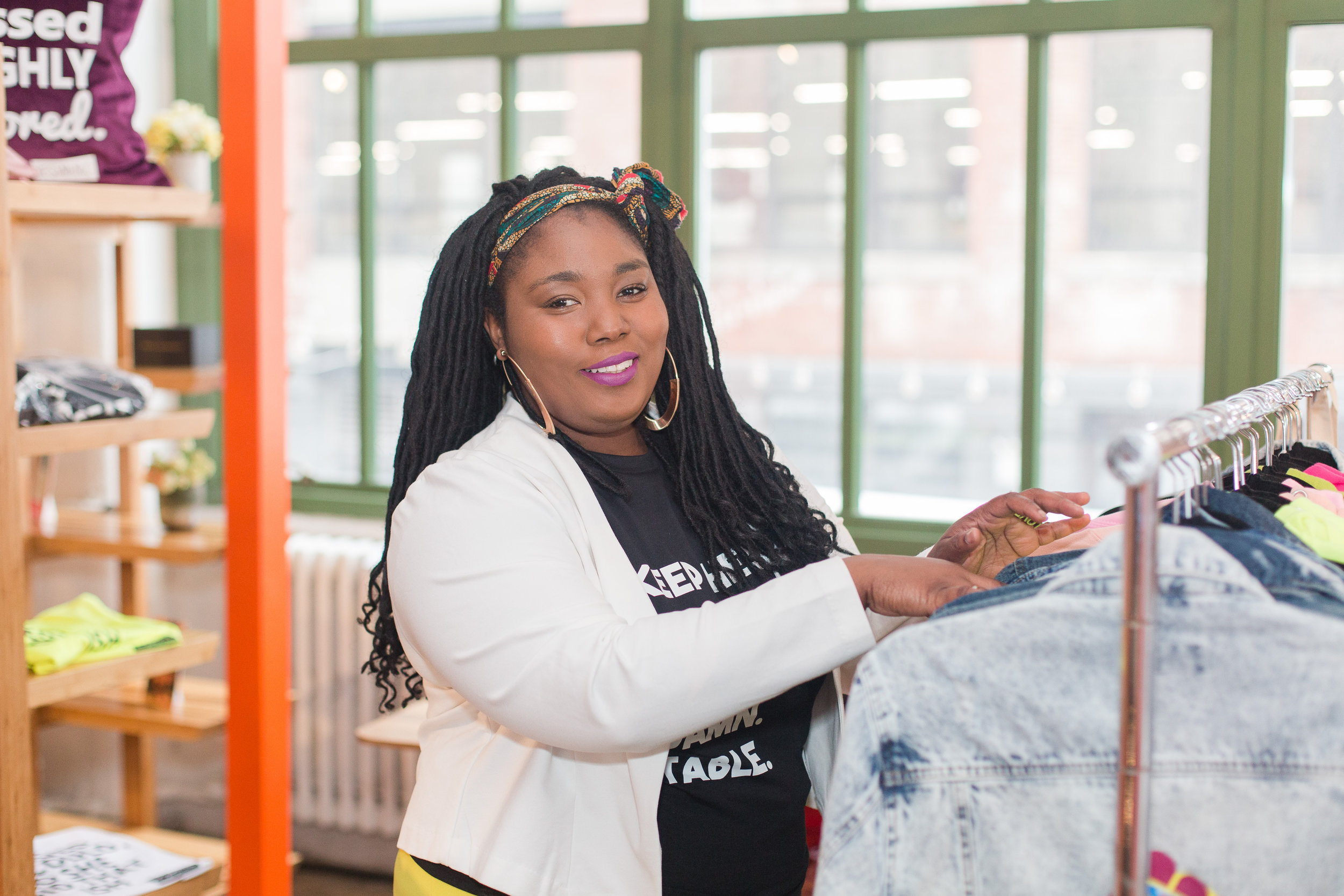
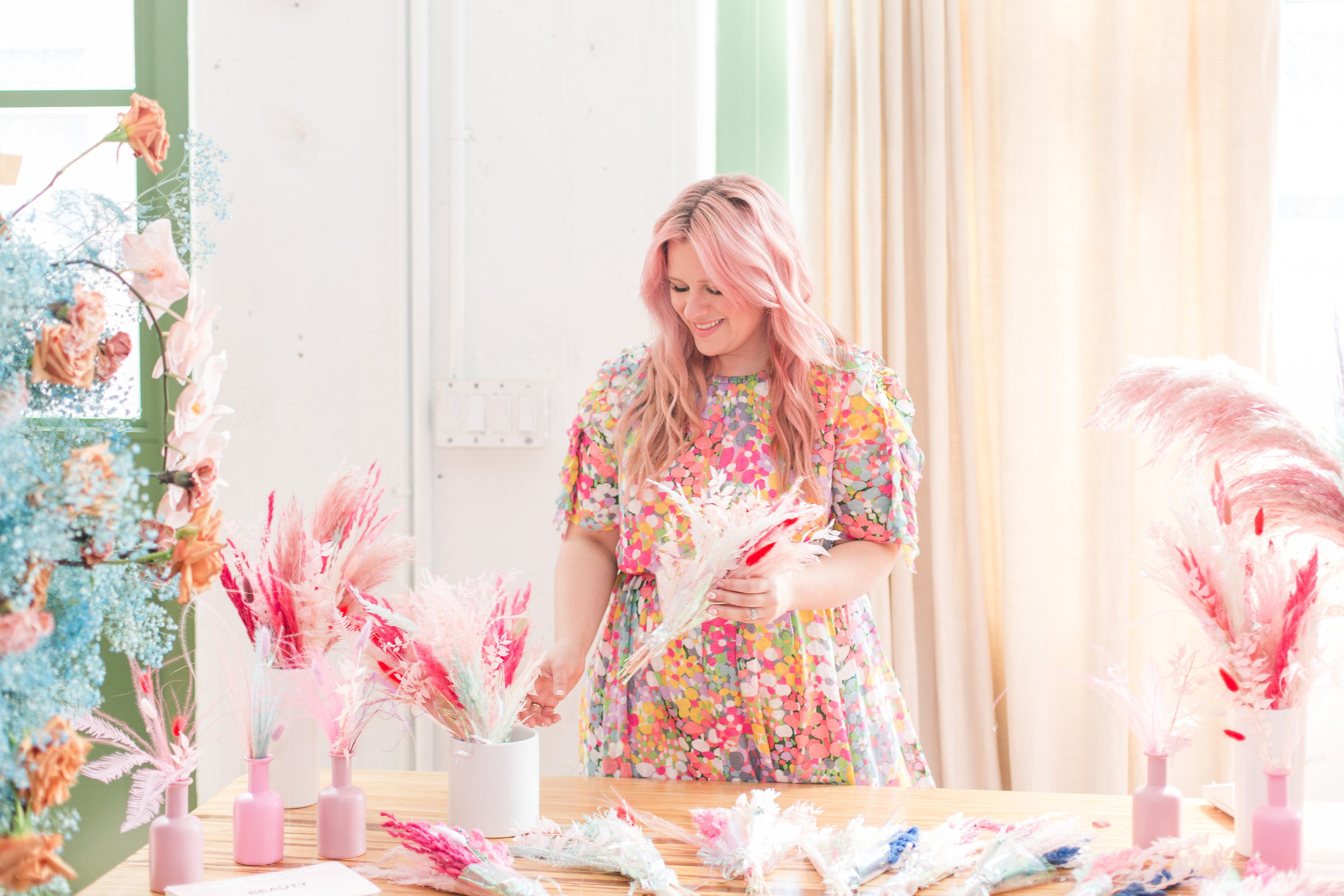
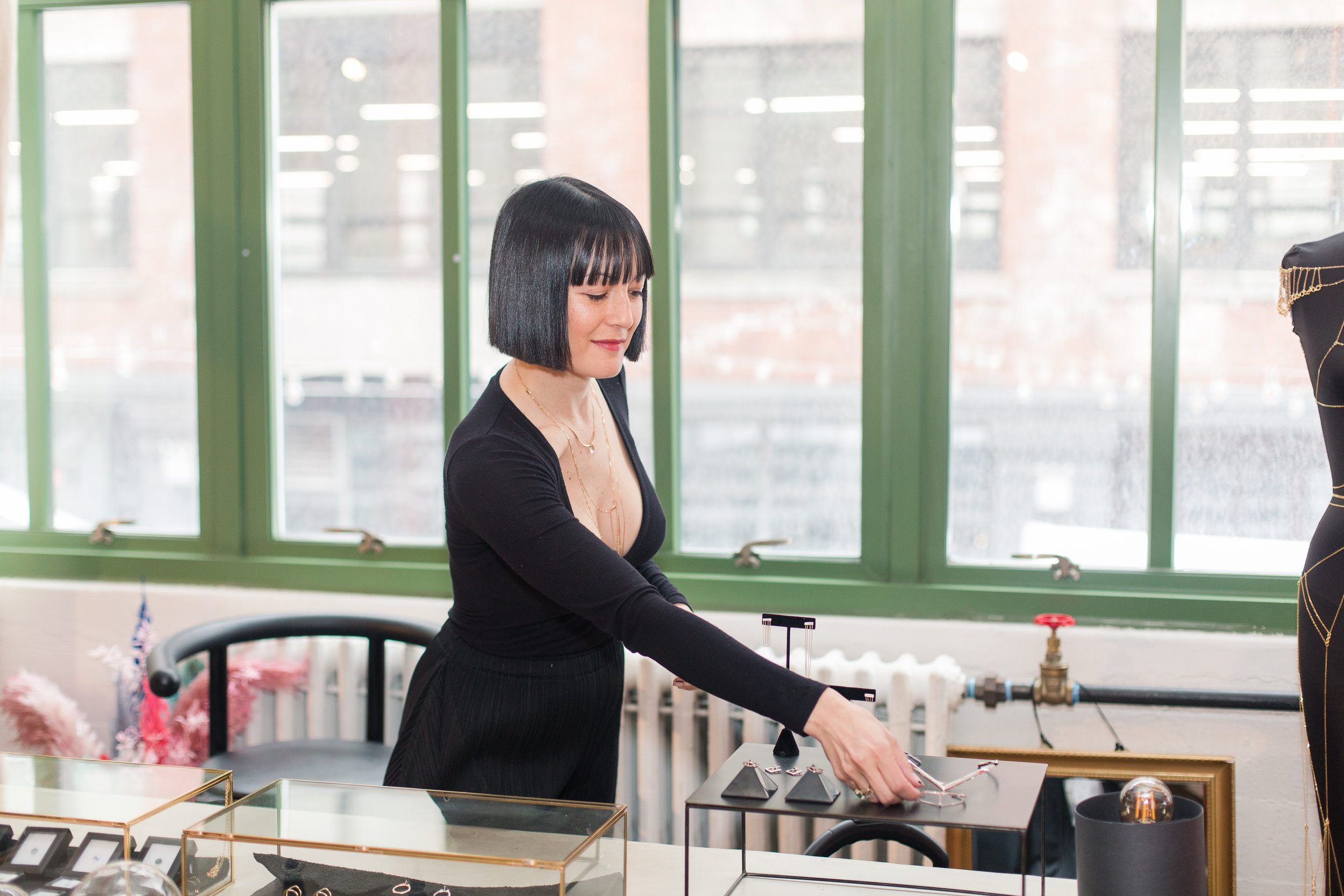
In a world where pretty much anything can be monetized—AKA your passions, dreams, and talents turning into your latest career venture—it’s easy to forget the things that don’t have a price tag. Things like community, motivation, and advice. When you’re thinking of throwing in the towel or u-turning away from your goals, it’s the people who support you unconditionally that help you reconsider. It’s also the people that have been through similar scenarios who give the best advice. Starting a business can be daunting and thinking of where to begin can be exhausting.
So, we tapped the shoulders of five women who showcased their passion-turned small businesses at our Mastercard Small Business Marketplace in New York. We have been dying to know what their best piece of priceless advice is—read on for the inside scoop.
Q: What were some resources you found super helpful in launching your business?
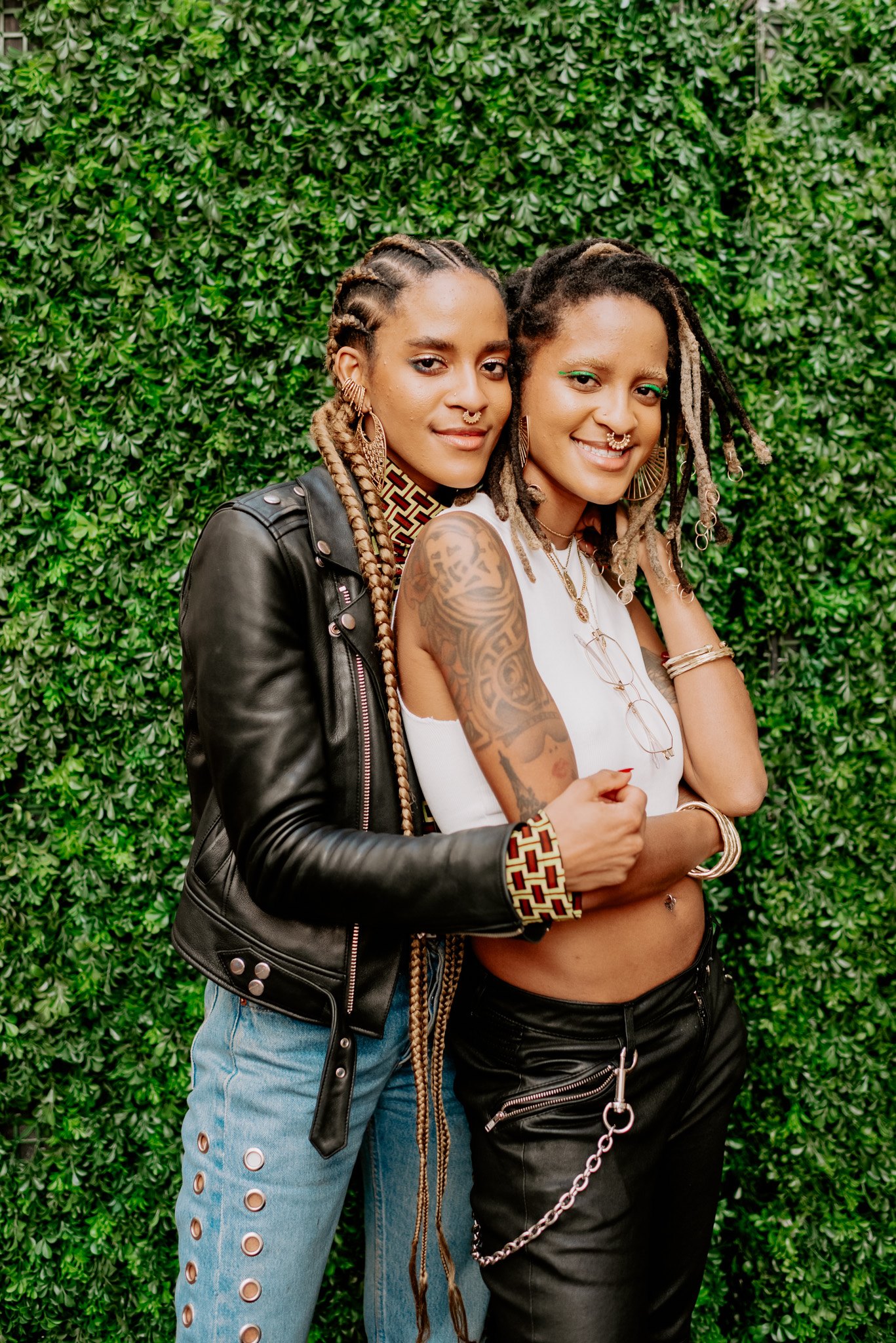
Coco Dotson and Breezy Dotson, Founders of Coco & Breezy: “When we launched our business we started with less than $1000 dollars. We had just moved to New York to launch. Since we didn’t have any access to capital our biggest resource was the internet and sharing our brand story in the rawest and authentic way.”
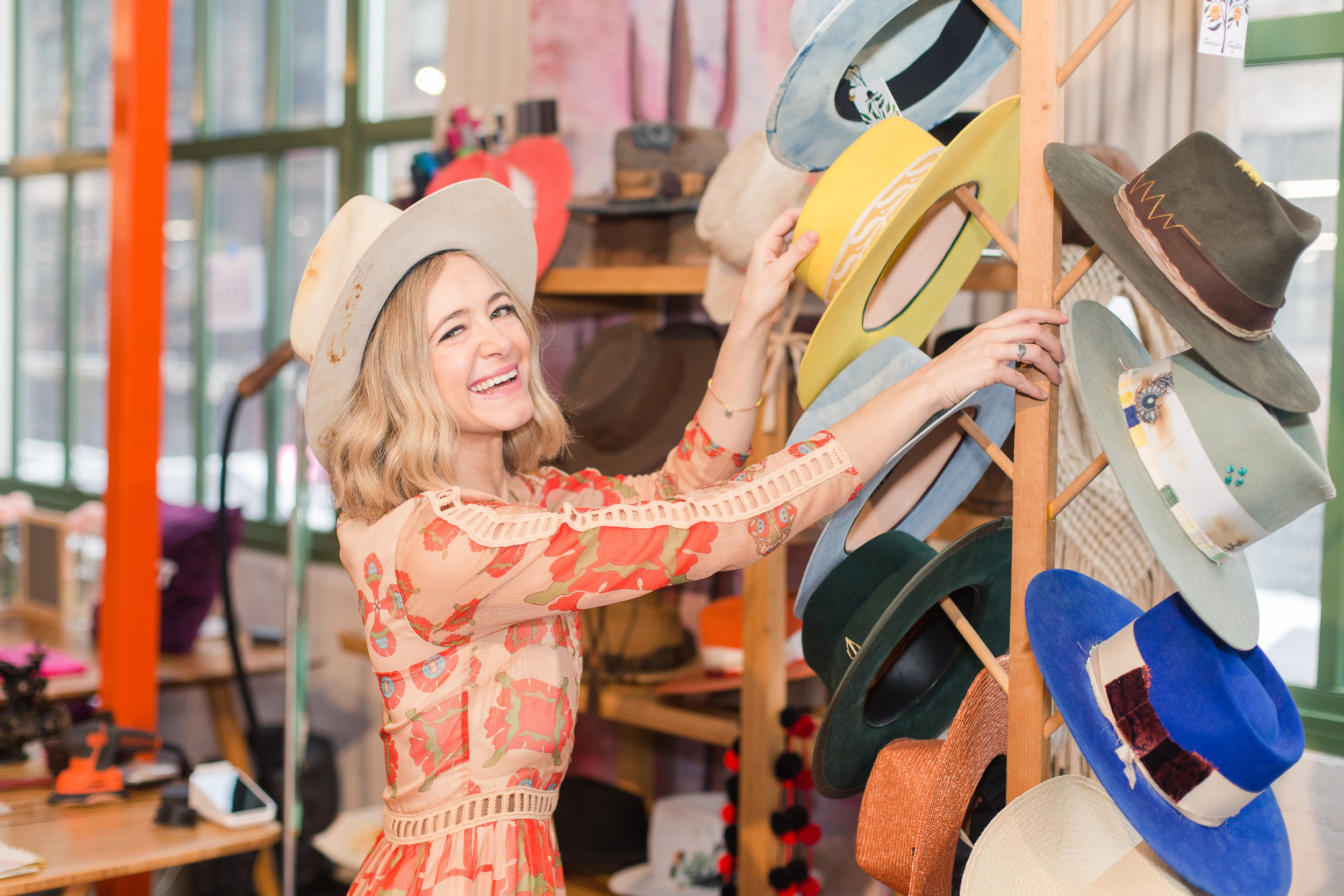
Teressa Foglia, Founder of Teressa Foglia: “My branding agency, Scout Lab. Finding an attorney and accountant who works with small businesses: Paco De Leon. A strong network for friends and agencies who can support you and be a sounding board for strategic planning. A community of like-minded brands to collaborate and co-promote with. I also attended and continue to attend workshops, panels, retreats and any events that can be educational or inspiring with industry leaders. Some of my favorites are hosted by Create & Cultivate, Soho House, The Assemblage, FashRev, Habitas, Neuehouse, The Wing, HER USA and Industry City.”
Kelsea Olivia Gaynor, Founder of East Olivia: “My most vital resources have consistently been women who I’ve either worked for previously or alongside launching my business. I believe in supporting one another as women, and surround myself with a community of peers and mentors who value sharing their successes and failures. This has continued to be a core priority as I grow my business. I have a tribe of people who hold me accountable for being the leader I've committed to beingbe, and consistently have to be willing to ask for support from that group when I move into unfamiliar areas, which happens quite often in growing a business.”
“When I heard Ginger Siegel, Head of North America Small Business, speak at Create & Cultivate—I knew immediately that she was someone I wanted to connect with. She was someone who I felt could provide insight as I financially planned East Olivia's future. I come from a background with limited financial education and experience, so asking for financial advice can feel daunting and intimidating. For me, it all feels like uncharted territory. However, each time I’ve pushed past my fears to ask important questions or for support in an area that felt overwhelming to me, I am always grateful I did.”
Bliss Lau, Founder of Bliss Lau: “When I first started my business I had no credit, so I had trouble getting financing to buy the supplies needed to fill my orders. I built my credit by getting a Mastercard, using the max and paying it off in full almost every month. Eventually, I was able to get a small business loan and a higher balance. Ultimately utilizing my credit allowed us to develop new products seasonally and expand without a huge financial risk or taking on investors.”
Michelle Cadore, Founder of YES I AM, Inc.: "My BBA in Entrepreneurship and Small Business Management helped me in many practical ways, and I also learned about plenty of resources while working for NYC's Department of Small Business Services, but nothing beats real life experience. At the end of the day, you need capital to grow your business and thankfully my Mastercard helped pay for those start-up expenses.”
“Many people would never dare take this risk, but if you believe in what you have, and you pour your all into your business then no matter what happens you are already a success.”
Q: What’s your biggest business goal for the next year?
CD and BD: “Our biggest business goal is that we will raise our first round of funding to help scale our company and DTC business model. We are really excited to grow our team and to bring on great talent that can help build our big ideas. We’ve been bootstrapping since day one of our business.”
TF: “Sales growth. We’ve cultivated an amazing community and develop partnerships that are invaluable— that’s where our focus will always be and this year we’re adding wholesale growth and direct to consumer growth through our online experience.”
KOG: “My biggest goal for this year is to sustain our growth in a consistent and financially healthy way. Building our team of full time and part-time staff is a major part of this goal. As we grow our staff, my responsibilities to our staff grow exponentially. I am committed to hiring talented creatives and offering them the things they deserve like great salaries, quality health insurance, 401k's, and an amazing work environment. In order to accomplish and maintain those standards for my employees I am prioritizing profitable growth above and beyond those hard costs.”
BL: “I am working with all of my gemstone vendors and manufacturers to help them understand the value of respect to the environment and people especially women who are impacted by our products. Transparency is no longer an option it is a must, and I want to help my industry move forward with honesty and respect. It is not about disruption for us it’s about the partnership, shared goals and evolution.”
MC: “By next year, I want YES I AM Clothing to be the signature clothing brand for empowerment and inspiration while earning $1M in sales.”
Q: What’s the most priceless piece of advice you could give to a new business owner?
CD and BD: “Continue to get to know yourself. In order to be a great leader and founder, you have to make sure you give yourself time to breathe, learn and grow as an individual. We all spend a lot of time working hard but it’s easy to burn out. I know the word self-care can be a little cliché and overused, but it is truly important. Also, don’t be afraid to ask questions. Sometimes people have fears that people may just you from not knowing an answer. But always remember that everybody doesn’t know everything—you learn as you go.”
TF: “Do everything with passion,define your values, mission, and purpose in your brand strategy. Have the right team and agencies aligned with you? Once you have your vision set, don’t compromise your product or service for opportunities that deviate from who you are.”
KOG: “People over everything. Meaning. I believe that the success of my business, while in large part fueled by my passion and hard work, is dependent on the people who stand alongside me. I can only do so much myself. I am the spark, but in order to see my vision, goals, and dreams come to life I need the right people in my corner. Whether it's your first hire, your mentor, or the freelancers you bring on project-by-project— the people you surround yourself with will directly impact the quality of your work, your ability to grow, and ultimately, the success of your business.”
BL: “Know yourself first. Truly diving into what your independent ideology is, is paramount to staying true to your vision.”
MC: “You have to believe in your business and in yourself. Being a business owner is not for the faint of heart or the easily discouraged. It is your baby and no one is going to love your baby more than you do. You have to eat, sleep, breathe your business with a passion to grow it to a successful level. It can take as long as 10 years to hit your stride and you better be willing to sacrifice. You may lose friends/relationships. You may not have work/life balance. You will have failures or missteps. You will have high highs and you will have lows that will make you want to give up. Many people would never dare take this risk, but if you believe in what you have, and you pour your all into your business then no matter what happens you are already a success.”

I Wasn't Really Qualified But I Applied Anyway and Landed My Dream Job—Here's How
It’s not a fairytale story, but it does have a happy ending.

Photo: Jenna Peffley
When I was a young girl, I had a voracious appetite for books. From the age of five, you could find me nose deep in a book—my mom even has a photo of me holding a giant hardback copy of Roald Dahl's Matilda that was the size of my head. I’ve always had a passion for prose—I hope to pen my own NYT best-seller one day—so becoming a writer was an inevitable career path.
Fast-forward 20 years or so (with a bachelor's degree and some soul-searching travel in between), and I eventually found myself back at university studying a post-graduate diploma in journalism and mass communication. It was time to make it happen. Of course, by this stage, I was considered a little late to the game (aka old). Most of my peers had started fresh out of high school, working as cadets for the local newspaper while they studied. But I wasn't going to let that stop me. I called the paper's editor-in-chief every week (I ignored the rejection letter in the mail) until he gave me a job. Within four years, I had worked my way up to fashion editor, curating the weekly style magazine. Oh, and I had a baby during that time too. But that's another story.
It's safe to say a lot has happened along the way, and the course of my career has been far from smooth. But as I typed away on a computer in Melbourne, I often peered out the window and dreamed of the day I would be working in my dream job. After all my hard work, career setbacks, and fierce determination (not to mention the thousands of miles I'd just flown to be there), I feel like I have finally arrived.
Now I have the insane privilege of working among some of the most talented women as the editorial director at Create & Cultivate (previously I was the editorial director of MyDomaine, former sister site to Who What Wear). So how did I do it? Ahead, I share a few simple things that worked for me.
CREATE A VISION BOARD
There's one thing all female leaders do to achieve their goals every year: create a vision board. I swear by it. But don't take my word for it, even science agrees. Studies have shown that pictures and self-affirmations do in fact have the potential to make us feel more positive and “buffer stress.”
According to Harvard University researchers, an optimistic outlook helps people cope with disease and recover from surgery. So imagine having a board with all your most powerful phrases, motivational mantras, and inspiring imagery to empower you and propel you into a positive headspace every day? It might sound a little far-fetched for those who are uninitiated, but I am proof that it works.
I like to cut and paste images of the place I want to live (including the neighborhood or city) and the office I want to work in, along with the words that define how I want to feel when I get there (and along the way). So get out the scissors and glue gun, have fun, dream big, and make it happen.
WRITE DOWN YOUR GOALS
While it's generally linked to the beginning of the year, I rewrite and reassess my goals all year long. Defining the major milestones and accomplishments you want to achieve is key to making them happen. Just ask the incredibly successful celebrity hairstylist Jen Atkins. She's a self-professed goal-writing devotee. "I'm a huge believer in writing down your next year's goals and have done it since I was little," she wrote on Instagram. "Personal, professional, health, etc. Check in with yourself every three months and I promise you really will thank yourself."
The key is to be specific about what you want, where you want to be, what you want to achieve, the health changes that need to take place, how much money you want to make, and what will make you truly happy. Then mark a time in your calendar every month to go over it and see what's been actioned and how to move others along. The co-founder and CEO of Clique and Versed, Katherine Power checks in with hers once a week.
CONNECT WITH THE FOUNDERS ON SOCIAL
While it might seem intimidating at first, following the founders or CEO at the company of your dream job is crucial. Displaying a vested interest and passion for their business publicly goes a long way toward being taken seriously when you do get that interview.
I was a long-time follower of Clique co-founder Hillary Kerr on Twitter while I was still living in Australia. We often exchanged tweets back and forth, and it was always a thrill. When I did eventually move and score the job at MyDomaine, she was so excited to see me, and we immediately connected, chatting about Australia and how I was settling into my new L.A. life.
Of course, if you are going to follow and converse with your potential employers and mentors on social, be sure to keep things fairly professional and consider having separate profiles for your personal life that are private. Because if you're looking at theirs, it's very likely they'll peek at yours too. So make a good first impression, because it will be a lasting one and could set the tone for any future relationships.
APPLY FOR EVERY JOB YOU QUALIFY FOR
Even though I lived in Australia and didn't have a visa yet, I would still apply for every job I felt qualified for. I knew the likelihood of me getting it was slim, as was the chance of them offering me a visa and flying me out for an interview, but I did it anyway. It's all part of the process and gets your name in front of the people you want to work with. I never lost track of my goal and continued to apply, no matter the odds. Sometimes, a little blind faith helps push past any self-imposed negative barriers; it certainly helped me. It's also a good education in filling our different application types.
Eventually, our small family moved to the U.S., and the first thing I did was apply for the job of lifestyle editor at MyDomaine. I received an email response almost immediately, and within two weeks (after a couple of interviews), we relocated to L.A. and I got to work. All those applications paid off.
DON'T BE AFRAID TO START AT THE BOTTOM
When I finished my post-graduate in journalism, I was unsure how I would get my foot in the door. In my mid-20s at this stage, I didn't have any published work, bar a few local rags, and I desperately needed to hone my skills. But I knew I was capable, and I was prepared to work hard; I just needed to swallow my ego and start from the ground up. So I got on the phone and started calling the editors at the newspaper. They didn't have any interest in me at first (well, I had zero experience and wasn’t really qualified) but it was my job to make them believe they did. And after weeks of calling and a rejection letter, I got a call that a position on the copy desk had opened up.
The salary was dismal, and I wasn't even writing (it was mostly an errand-runner position), but I took it eagerly. It was electrifying being a part of a newsroom. Seeing how the well-oiled machine of print works in real time was exciting, and I got the bug immediately. I was quickly offered a cadetship working in news before being moved to the features department and eventually writing fashion articles for the paper's style magazine. I was even flown to Sydney to report on Mercedes-Benz Australian Fashion Week, where they featured my coverage in a two-page spread. Life, made.
INCREASE YOUR SKILL SET WHERE POSSIBLE
While I worked at the paper, I never stopped learning. They offered online courses in sub-editing, which I happily took on, and each week we learned the skill of shorthand (although I completely forget it all now). I also started teaching myself about online publishing and the power of social media in distributing content (now I'm really showing my age). With the rate at which online media was moving (and bloggers causing a scandal by being invited to sit front row at fashion week), I knew the future of print was in jeopardy, and with it my job. This is where my next tip comes into place.
KEEP A SIDE HUSTLE
Knowing that online was only going to grow, I started my own blog on Blogspot (remember those?) and taught myself how to navigate this new digital landscape. It was during this time of experimentation that I first discovered Who What Wear and eagerly awaited its weekly newsletter with stylish collages and celebrity news. It was so exciting. I fell in love with this new-media approach and went to work finding a job in it. This passion project on the side actually helped me get a job as an online editor after I left the paper. So fire up your inner hustler, and turn your hobby from a side gig into a full-time dream job. You never know where it will take you.
DITCH THE FEAR
Fear plagues all of us at some stage of our lives, and while it's a normal human reaction, there comes a time when you have to decide if it's at a healthy level or if it's holding you back and hindering your success. For most of us, it's the latter, and we'll prefer to stay inside the comfort zone then step into the unknown.
But the leap, in reality, isn't as scary as it seems in your mind. At some point, you need to realize that and ditch the fear once and for all. One phrase I learned a long time ago that not only stops it in its tracks but also helps me to propel forward is "I'll handle it." It's simple but effective, and it's true. At the end of the day, whatever happens, I'll handle it. And you will too!
If I didn't let go of my fears, I would never have left Australia to live in L.A., and I wouldn't be surrounded by this incredible group of women who truly inspire me every day. #Blessed.
Would you ever apply for a job you weren’t qualified for? Share your experience below.

"To This Day I Haven’t Taken a Dollar Out Of the Company"—Miranda Kerr Is Building an Organic Empire on Her Own Terms
Her gut has been her greatest mentor.
It’s one of those majestic L.A. days where the breeze is exactly 72 degrees and the sky is an auspicious cerulean blue. It’s the only thing that makes my drive to Malibu worth the hour and half from the East side (if you know, you know) and as I sit in traffic on the freeway my mind harks back to the first time Kerr and I met. It was 2009, I was a young, bright-eyed journalist for a local newspaper in Australia and I’d flown to Sydney to report on the David Jones (it’s the Nordstrom of Down Under) seasonal fashion show of which Kerr was the ambassador and runway star. Post-event I was invited to an intimate brunch (I’m talking myself and three other journalists) with her mom in her private hotel room at the Sheraton Hotel to experience her new certified organic skincare line over tea and scones. That line was Kora Organics. Fast forward to 2019, and Kerr’s line is now sold in 25 countries and available at Sephora stores nationwide.
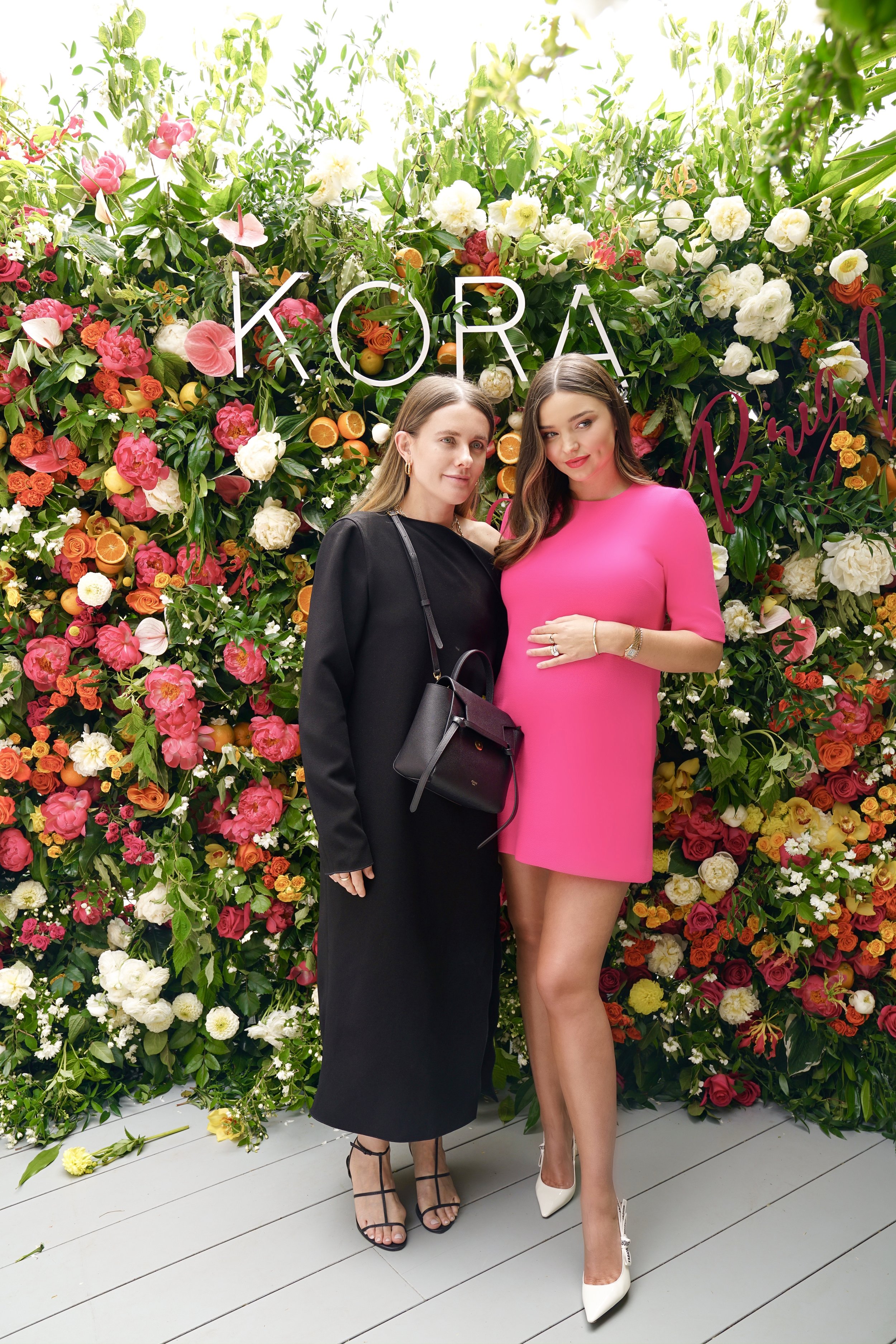
Suddenly, Google maps shocks me out of my nostalgic throwback with its “you’ve arrived” and I’m greeted by valet who escort me to a golf cart and told to “hold on tight” as it takes myself and other guests up the winding private driveway to Kerr’s abode. I feel like I’ve come full circle as I walk through the gates of her picturesque beachside residence or as she calls it “my tree house” for the exclusive launch party of the model turned mogul’s Noni Bright Vitamin C Serum. The view at the top is breathtaking, literally, the air is different up there. Combined with the ocean views it’s definitely a sanctuary for Kerr and her young family.
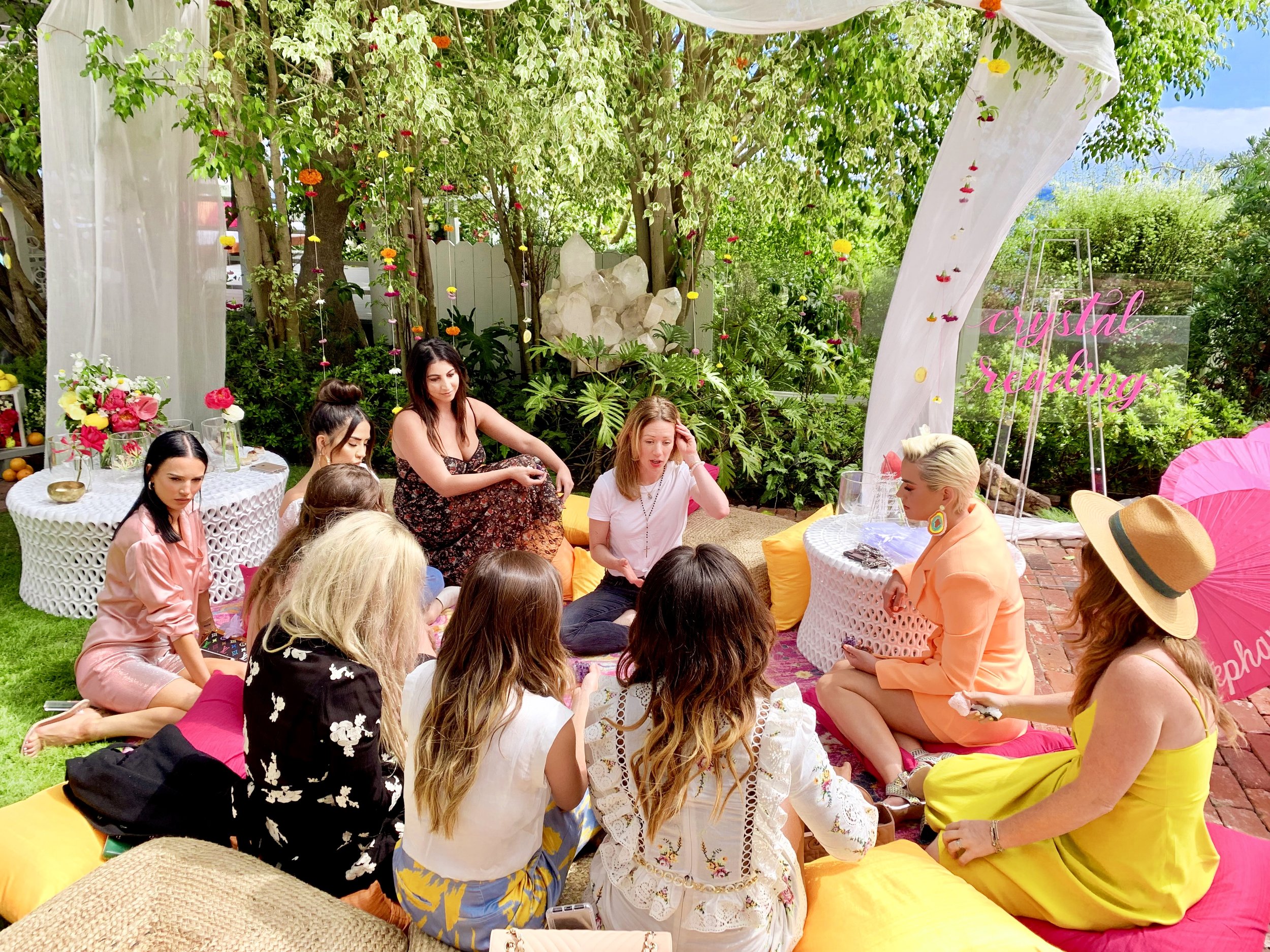
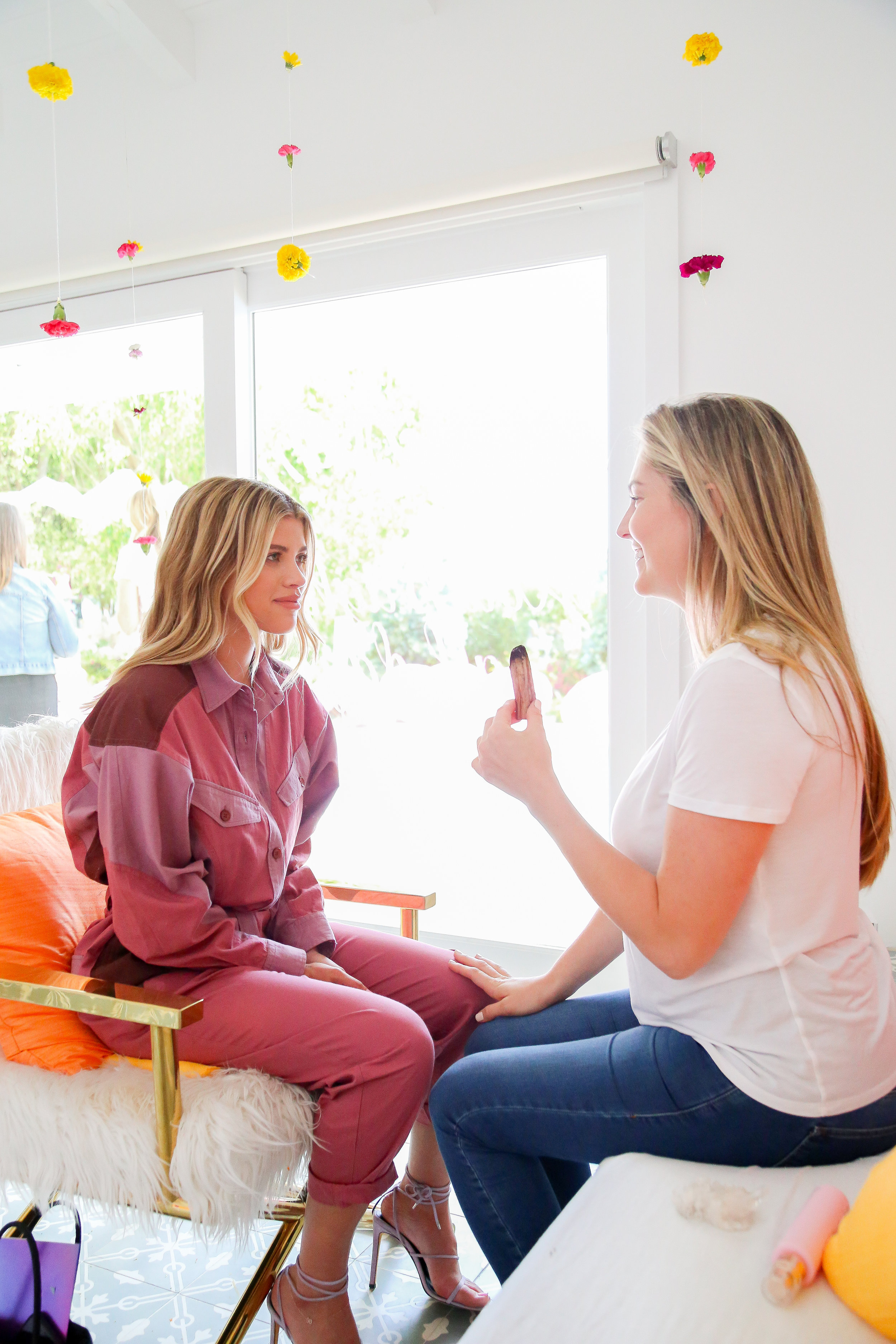
Pregnant with her third child, Kerr is all smiles in a flamingo-pink mini dress (which conveniently matches the Noni Bright packaging) and opens her arms upon seeing me for a warm embrace. She is positively radiant—glowing from the inside out—and after a quick catch-up she ushers me to experience one of the many healing modalities she’s organized for the event including crystal readings, reiki healing, and aura photography. While I have my aura photographed with Steph Shepherd (Kim Kardashian’s former assistant), I look around to see Katy Perry in a circle with guests enjoying a crystal reading with Kelsey Patel and Sophia Richie heading in for her reiki session with Kerr’s favorite, Nousha—surreal is an understatement.
After the event, I hopped on the phone with Kerr to discuss her journey from high-fashion model to successful entrepreneur, what she’s learned along the way, why she opted for a slow approach to new launches, and why trusting her gut has been her greatest mentor.
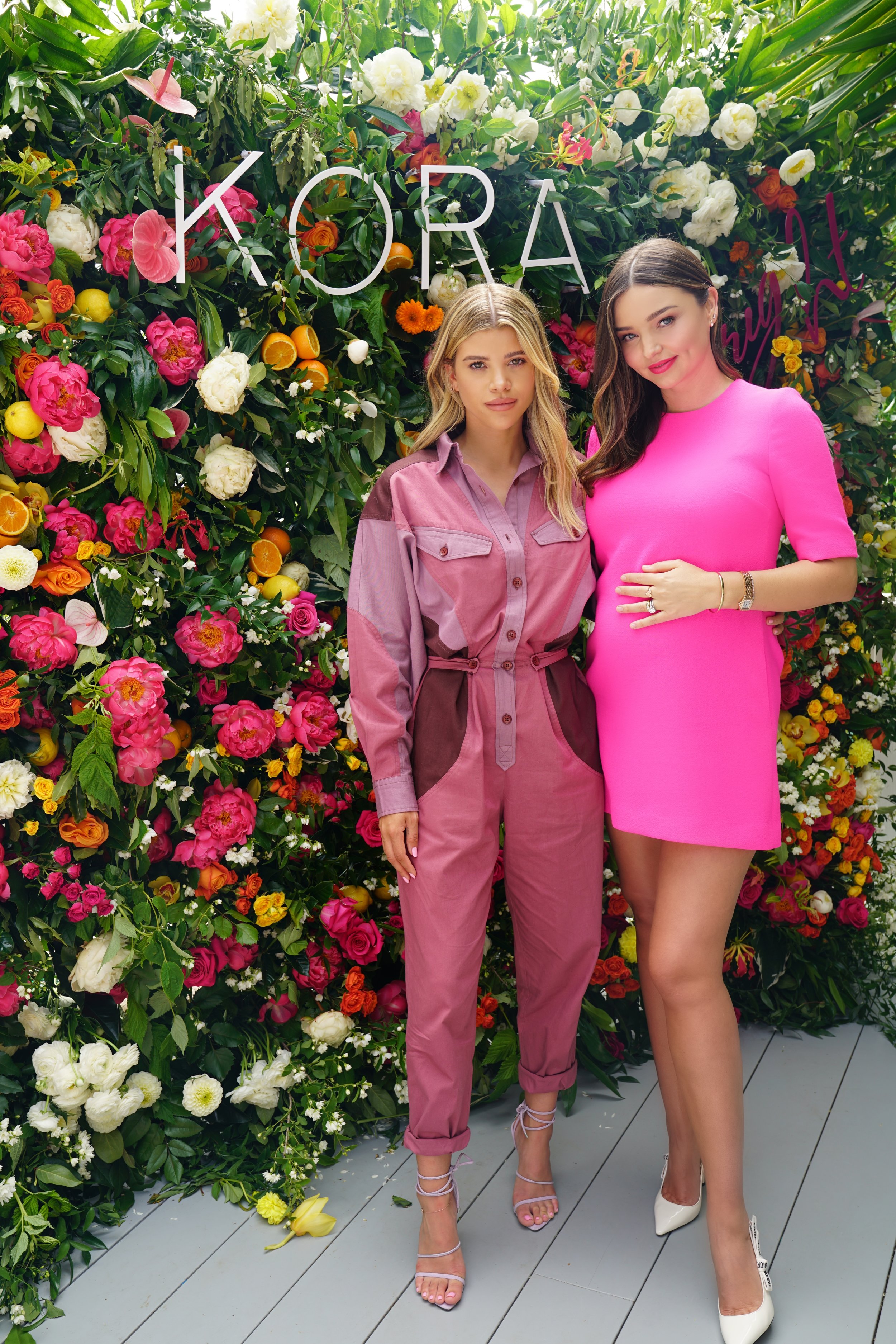

You created Kora in 2009 by yourself with a small team and now the brand is available worldwide—what has been the biggest learning curve?
Starting any new business is full of learning curves (and I am actually still learning every day) but these are some of the biggest:
1.Really trust your gut. Don’t be swayed by what other people might suggest is better for the company. It’s good to listen to that and take it into consideration, but if you still feel that gut feeling about something then go for it. There have been a couple of times where different people we work with told me not to do something because they wouldn’t carry that product. I thought okay, I’m going to do it anyway, then it sells like crazy and they end up taking it later.
2. Being able to empower your team and understand the value of your team as a leader. You are only as good as what your team is so my job is to really nurture and develop that culture and bring out the best in each team member. That includes direct feedback, constructive feedback, and challenging them to strive beyond what their goals may be so they don’t get comfortable. But also let them know that they are appreciated and heard no matter what their position is—everyone is valuable and needed and I always say teamwork makes the dream work because I couldn’t do it on my own.
3. Don’t afraid to ask for advice or to ask if you don’t understand something. When I am going through the P&L with our CFO that is not my forte but I ask him what do you mean by that? or maybe this is a silly question but can you explain this to me? and I have learned so much. Instead of just pretending to understand I really ask him to show me the formula and teach me along the way. I was always afraid to ask for help because I didn’t want to put anyone out but people love helping out when they can.
You've always taken a very thoughtful and considered approach to launch new products, making sure to test them rigorously first, not giving into buzzy beauty trends—why did you decide to do that?
I didn’t even realize the extent that I beat to the rhythm of my own drum and do my own thing, but the more interviews I do the more I realize, I just want to do my own thing. We are the only certified organic brand in Sephora. It is a big deal for me and my team because it requires a lot of work and it is a lot of auditing but it really ensures customers and brands have integrity. Customers have that insurance they are getting what they are paying for.
Clean beauty is a wonderful step in the right direction but certified organic is so much more than clean beauty—there are more antioxidants in the ingredients because the produce is grown on soil that is nutrient rich which is also why people buy organic food. It is a no brainer that you are going to have more powerful results because you are using a product that isn’t just clean but also certified organic.
For me, results and performance are everything. I don’t want a closet full of lots of products. I am a busy mom, I want a handful of products that work and deliver results that I need. I love research and development. We work with the best organic chemists in the world. I love learning about new innovative ingredients and formulations that push the boundaries in certified organic. So each product is very considered. We do take our time. We do all our stability testing and consumer studies and the results speak for themselves—the products really work.
Tell us about your new Vitamin C serum? How long did it take to develop it from concept to product?
On average it takes about a year with each product. We go back and forth with the labs, then it’s tested on me and my family, then we do consumer studies, we get the results and then we can launch it. This is my third pregnancy so I wanted to create something that was super powerful but at the same time wasn’t harsh on my skin. I wanted something I could use every day and also gave me the results I needed for pigmentation, anti-aging, firmness, and enhanced elasticity in the skin. I am 36 so I really wanted to target those fine lines and wrinkles too.
Even when you’re not pregnant we should all be aware of what we’re putting on our skin. My pigmentation looks better now than it ever has. It wasn’t very good. That’s the only reason I wear makeup, I’m trying to blend in the pigmentation. This product combined with the turmeric scrub mask has really helped. I don’t go a night without my sleeping mask—that really helps too.
You decided not to raise money for Kora and self-fund instead. Why was this important to you? What was the reason behind that decision? Would you recommend this to other women starting a business? Why/Why not?
It was a conscious decision for me because I wanted to be in control of my business. I wanted to make sure I could create a skincare company built on values and integrity. From the beginning I have had such a clear vision of what I wanted the products to be so I didn’t want someone coming in to alter that or water the products down or try to make a quick buck. I wanted the product to be efficacious and results driven and I knew the way I wanted to present it with the packaging and the marketing. I didn't want that to be diluted with anyone else's ideas.
To this day I haven’t taken a dollar out of the company, it all gets reinvested back into the business. I am doing it because I believe in it because it is helping people around the world. I am fortunate enough that I’ve saved my money over the last 20 years and I’ve been able to invest it in something I’m super passionate and involved in—it is my first baby.
Every job is an opportunity to learn something new and each skill contributes to the next role. What are some of the skills you've taken over to Kora from being a model?
Whether I was a spokesperson or an ambassador for another brand (as a model) I was equally interested in the business not just as the face, but the demo and the goals too so I could do the best job for them when I was working for them. I have met and dealt with so many large global corps and different CEOs. I have been on a constant learning curve and that serves me well now when creating my own business. I feel very lucky that my career gave me the platform to have a voice so I could launch my own brand and help educate the importance of using certified organic skincare. I’m not saying just use my products, I’m asking people to read the labels and make an informed decision.
What advice do you have for other women who want to pivot from their current career into something completely different?
You have to have a long term vision because it doesn’t happen overnight. It is really is a lot easier to work for someone else—you have consistent cash flow because you get paid once a week—but when you have your own business I am the last person that I think about. I have to make sure that my team is taken care of and my inventory is taken care of, there is so much to manage. Be sure to do your research and really be prepared for hard work because success won’t come overnight.
Even when your business is super successful the hard work is still there if not more. It is daunting and scary but at the same time, it is the best thing I have ever done.
To learn more about Kerr and her certified organic skincare line, visit Kora Organics.


C&C Classifieds: Away, Rael, Miss Grass & more
Did you know: Summer is a great time to transition!

Did you know: Summer is a great time to transition!
Covet Public Relations - NY or SD
Create & Cultivate - LA, CA
Best Events - LA, CA
Betches Media LLC - New York, NY
Associate Account Manager Account Executive
Away - NY, NY
Director, Acquisition Marketing
The Skimm - NY, NY
Client Services Manager
The BOSS Group - ATL, GA
Mailchimp - ATL, GA
Executive Creative Director, Brand Studio
Rael - LA, CA
Miss Grass - LA, CA
Braintrust - Remote
Director of Strategic Accounts
The Good Food Institute - remote
MORE ON THE BLOG
"Pricing Is An Equation It’s Not An Emotion"—Jenna Kutcher Wants Every Woman to Realize Their Worth
The business woman and new mom doesn’t hold back.

If we were asked to attribute dictionary definitions to people we believe embody them, Jenna Kutcher would be filed under powerhouse. She is the definition of a multi-hyphenate with many talents that include photographer, podcaster, and more recently, mom. Kutcher has proved that she is so much more than an influencer, she’s a verified business woman who prides herself on creating multiple streams of revenue.
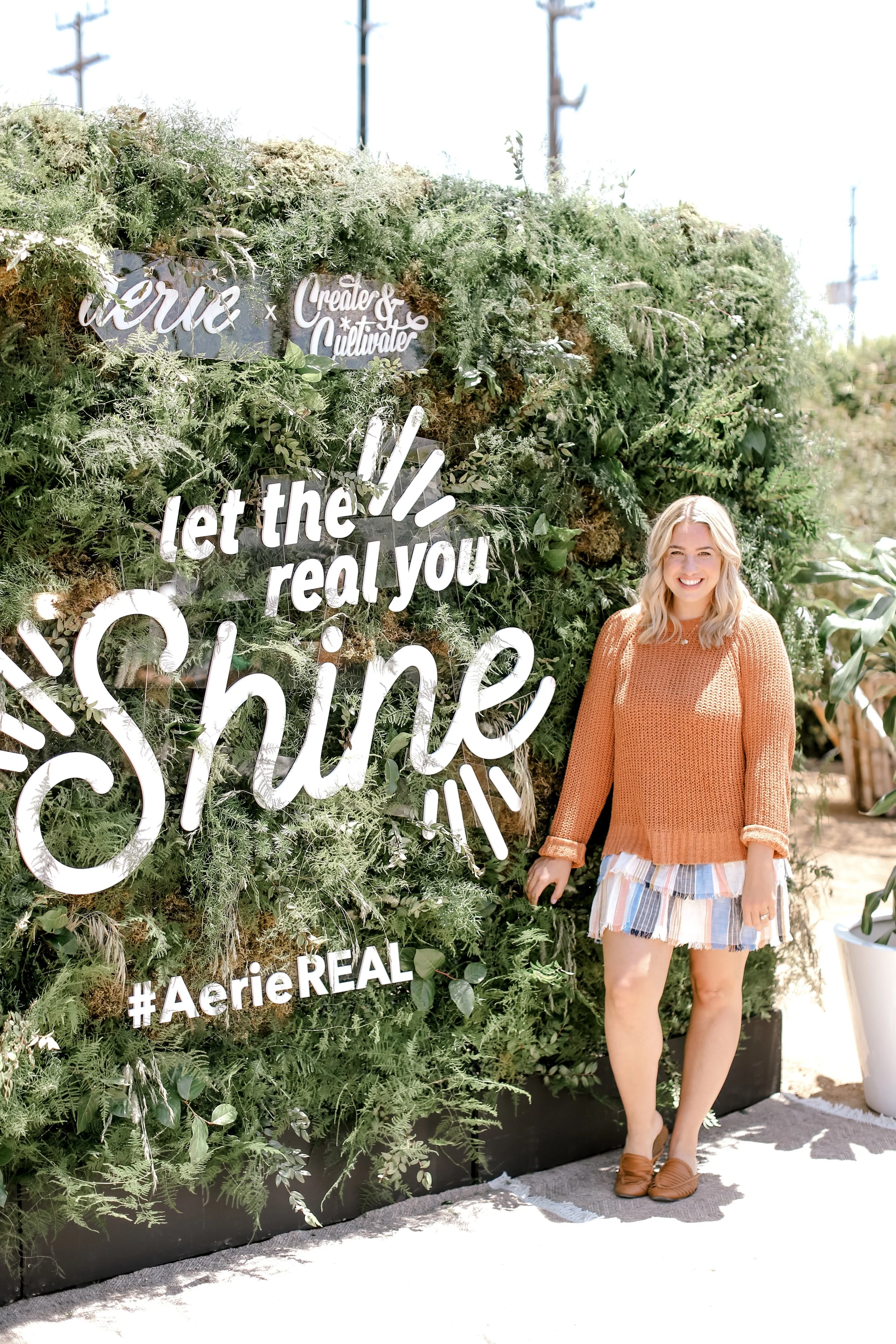
In fact, when she found out that the average millionaire has seven revenue streams, she made it her mission to make eight in one year. Now you can see why she deserves the powerhouse title, right? It’s also why we were thrilled she could join us as our keynote speaker for the recent Aerie REALtreat which we recorded as an exclusive episode on the WorkParty podcast. We wrote down some of her realest quotes from the chat with our CEO Jaclyn Johnson below but be sure to download it asap and soak in all of her wisdom. Be sure to have a pen and paper ready too.
Panelist:
Jenna Kutcher, Photographer, Podcaster, and Mom.
Moderator:
Jaclyn Johnson, CEO of Create + Cultivate
On mistakes that entrepreneurs make:
“Not believing that they have something to bring to the table. We (women) have a hard time recognizing our super powers.”
“Selling just sounds awful. It feels like we’re asking somebody for something instead of giving something to someone. I’ve reframed selling. I’m thinking about the gift I am giving someone. I felt this colossal shift when I reframed selling as I’m not asking someone for money, I’m giving them something of value.”
On money:
“The average millionaire has seven revenue streams so I made it my mission in one year to make eight.”
“I don’t want to show up because I’m getting paid I want to show up because I want to be in the room. I do everything out of my desire to create impact not income.”
On pivoting:
“I think the problem a lot of the time is that we are focused on building a business and not building a brand.”
“I’m so passionate about encouraging women to build a true brand that is based on the fact that you are a multi-passionate human. You don’t have to pick a lane and stay in it.”
“Build a brand based around you and the fact that you are a multi-passionate human and don’t be one-dimensional.”
On defining your worth:
“For the first time in my life I am feeling free and my time is what is most important to me.”
“If you are on the side hustling hard, you are killing it and your time is worth something fierce.”
“Now I’m at this place where I can show up because I want to.”
“Pricing is an equation it’s not an emotion. For women, often times it is emotional but pricing is based on your goals, your gifts and your way of showing up.”
“The biggest hurdles are mindset and I think that’s true for most women.”
On motherhood:
“I feel like society tells us we can only do one or the other well and I am just done with that messaging. I am an amazing mom and I am running an amazing company.”
“I’m always feeling torn. When I’m working I’m thinking of my baby and when I’m with my baby I’m thinking about work. For me I really want to break the barrier and double standard of fathers and mothers. When I traveled and my child was 12 weeks old, people were shaming me for leaving her for three days. Would anyone say that about a father leaving?”
On her “Imperfectly empowering women” motto:
“We hold people to a different standard than we hold ourselves to, especially leaders.”
“Criticism impacts me deeply because I care so much about what I’m doing.”
“I want to bring people back down to earth. We hold our mentors to higher standards, but those paths never become well-paved if we are really leading out into the unknown.”
“You have to be the leader you want in other people. It’s up to you.”
On her best advice for women:
“My creator created me without any mistakes.”
“You are whole you are perfect you are capable, you are empowered, you are impactful, you are important, you are enough—when I can speak to myself the way I speak to my daughter I can show up in a whole new capacity.”
“Are you loving yourself the way you love others?”
On social media:
“I approach social from the place that I have to get your attention for you to listen to me. My words matter so much more to me than the photos I share but the photos are the delivery for me to share my message.”
“There is so much worth in you. People want to connect with you. I want to see you. I want to know why I should care. I want to know why I should vote with my dollars for you.”
Being real means to me… Showing up in whatever season you’re in.
What does being real mean to you? Share it with us in the comments below.
Jen Rubio—Co-Founder of the Billion-Dollar Start-Up, Away—Covers Inc. Magazine
Going the distance.
The new disruptors.
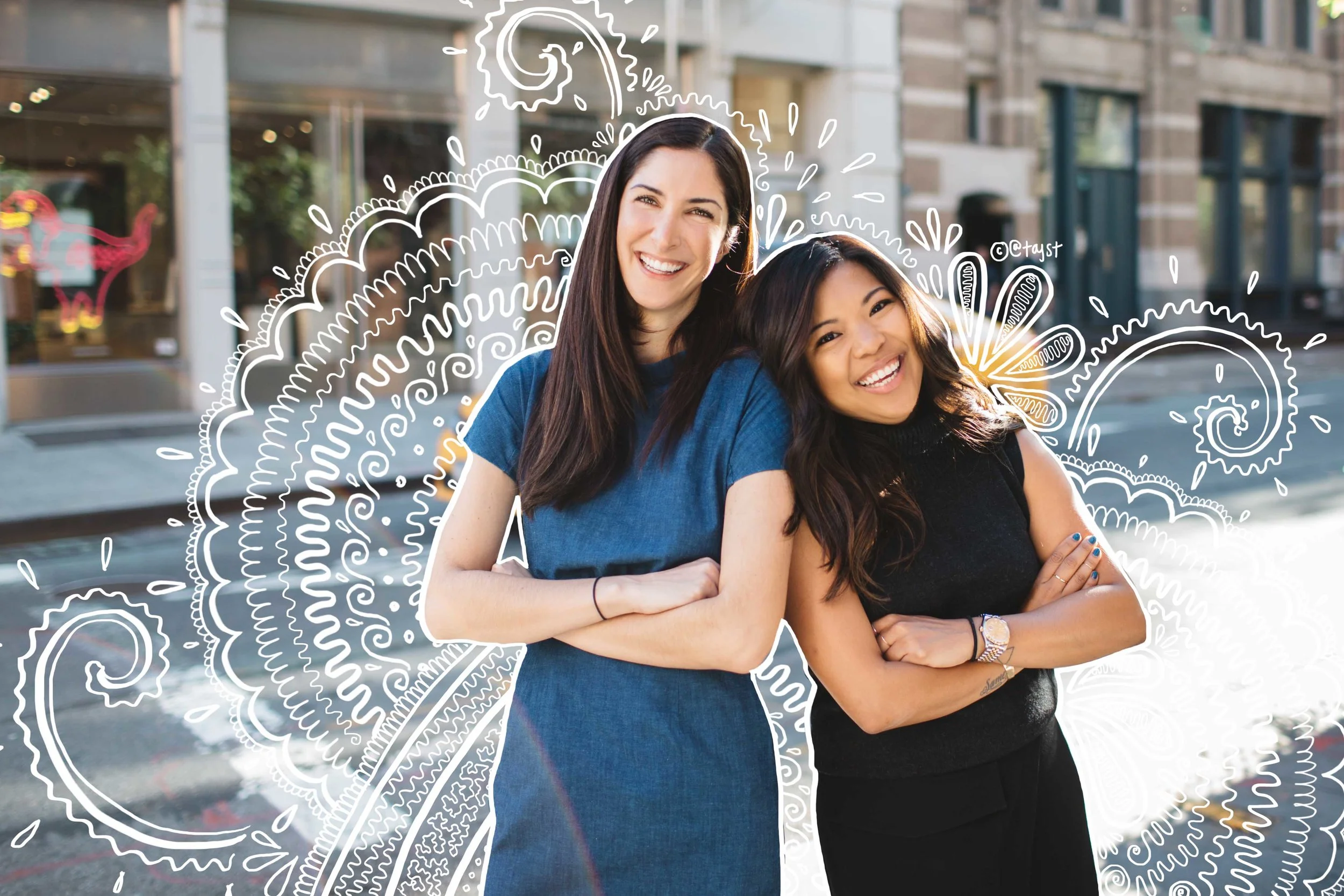
Jen Rubio, co-founder and creative director of Away says that “When you're starting a business for the first time, you're doing everything for the first time.” It’s a perfunctory explanation as to why startup founders struggle. The ins, the outs, the ups and downs; it’s turbulent. But Rubio along with her co-founder Steph Korey have weathered the storm and come out on top.
The company (which made the Forbe’s 2018 Next Billion-Dollar Startups list) was recently valued at $1.4 billion after raising $100 million. Last year, the company was on track to do $150 million in revenue and was valued at roughly $700 million. So it only makes complete sense that Rubio would be on the cover of Inc. Magazine today.
She shared the exciting news on her Instagram, graciously congratulating the team at Away for the achievement.
“This cover is for @stephkorey, team @away, all of our customers who rolled with us through the airline battery ban and continue to spread the love, everyone who said we couldn’t do it, everyone who said we could obviously do it, my mom, my dad who would’ve driven all over NJ to buy all the copies, and for every single entrepreneur out there—regardless of your background or pedigree or MBA or no MBA—who is busy doing the work and making things happen. Grateful to the wonderful team at @inc and @youfoundchristine. Cover photo by @tawnibannister”
But when Jen and her co-founder, Korey, both former execs at Warby Parker, left to launch Away, they knew that luxury travel accessories needed retooling and they were ready for a bumpy ride. Dedicated to a piece of luggage for the way "people really move" that didn't come with a first class price tag, the first product was a beautiful, high-end minimalist carry-on without the zeros. Away made traveling in style a whole lot easier. Vogue called it, “the perfect carry-on.” Forbes 30 Under 30 took notice. They had accolades in the bag, but they didn't stop there.
Away now offers varied sizes and chic travel accessories. Steph says the goal is to “be a part of the company that’s the first thing anyone thinks of when they have travel needs.” They're changing how we travel, one charged up suitcase at a time.
Read a little about their journey below.
What is the most important step you took this far?
Steph: I made it a point at every step in my career to always look for opportunities to go above and beyond. That mentality really prepares you for all the unexpected challenges that come your way when starting a business.
Jen: Having conviction in an idea and committing to seeing it through all the way.
What keeps you going?
Steph: Coffee? Just kidding, the biggest thing that keeps me going is the excitement for the game changing travel company we're building and the mind-blowing members of the Away team who constantly inspire me.
Jen: Relationships. I'm energized by people and conversations and am at my most creative when I find myself really connecting with those around me.
What is the best piece of "real talk" advice you've received?
Jen: "You will never be great on your own if you don't learn how to work with other people." That snapped me out of my early 20s "I can do it all" hubris and got me thinking about how to be a team player and people manager.
Steph: "Hire slow, fire fast. Better have a hole than an a-hole." - Neil Blumenthal, Co-Founder and Co-CEO of Warby Parker
What are some challenges you’ve encountered along the way?
Steph: The list goes on and on. If you push yourself in your career, you're constantly being challenged because you're always taking on things that push your boundaries. I wouldn't have it any other way.
What is your favorite life advice?
Jen: "Ships are safe in harbor, but that's not what ships are built for." Take the risk!
What is a habit or routine you swear by?
Steph: My clothes all look pretty similar to each other: black, white, grey, denim. Taking out the day-to-day thinking about clothes frees up brain space for other things.
Jen: Every night before bed, I think of five things from the day that I'm grateful for. Gratitude is a practice.
International Women’s Day is coming up. It's a global day celebrating the social, economic, cultural and political achievements of women. If you could steer the conversation around International Women’s Day, what would that dialogue be about?
Jen: I'd want to highlight the disparity between the opportunities of women in different places around the world and bring attention the the incredible, resilient women I've met in the Democratic Republic of Congo, Rwanda, Haiti, etc. and their stories.
Steph: That the goal should be to one day stop celebrating it because men and women are so equal across the whole world that there would be no need.
What does female empowerment mean to you?
Steph: Historically, women haven't always had the same legal rights as men. It's really in the last generation that it became socially acceptable for women to have the same career potential. To me, female empowerment means reminding women that if any person can do something, so can they.
Jen: Being open, honest, and vulnerable with the women I call my friends, and as a result, encouraging each other to do better and enjoy the process.
What do you do to support other women, either professionally or personally?
Steph: I treat them the same as men, both personally and professionally. The whole point here is that people are people, so when it comes to hiring, promotions, or supporting your friends, everyone should get the same great support.
Jen: I try to be active in mentorship, panels, and discussions that help women, and while doing so, try to be as transparent as possible about my own experiences.
This article is part of our Create & Cultivate 100 List created in collaboration with KEDS, you can view the full Entrepreneur List Here. This post was originally published on January 23, 2017, and has since been updated.

Start Something Priceless: An Inside Look at the Small Business Marketplace at Our NYC Conference
We’re celebrating the women start more than 1800 new businesses every. single. day!

Did you know: Women start more than 1800 new businesses every. single. day. And we’re not just launching companies, we’re scaling them—women employ nearly nine million people and have generated $1.8 trillion in sales. We’re here, we’re building businesses, and we’re making that money! That’s why we partnered with Mastercard to bring you the Small Business Marketplace at our New York conference. Check out the vendors below!


Each of our small business owners set up shop in the beautiful loft of our conference venue and were able to meet and greet attendees in addition to selling their products. We were thrilled to have the following vendors on site:
Kelsea Olivia Gaynor of East Olivia
Michelle Cadore of YES I AM Clothing
Teressa Foglia of Teressa Foglia
Coco Dotson & Breezy Dotson of Coco and Breezy
One of the most powerful parts of Mastercard’s marketplace was the “idea wall.” Together we asked attendees to share the priceless ideas that sparked their business, and it was incredible to read some of the responses. From inspiring vacations to words of wisdom from mentors and everything in between, it’s clear that business inspiration sparks just about everywhere!

The Small Business Marketplace is part of a larger small business program by Mastercard and Create & Cultivate. Through our Women’s Business Advisory Council, we’re bringing the experience and insight of five amazing entrepreneurs to you throughout the rest of the year. Check out the council here, and be sure to stay tuned for their words of wisdom at future events!


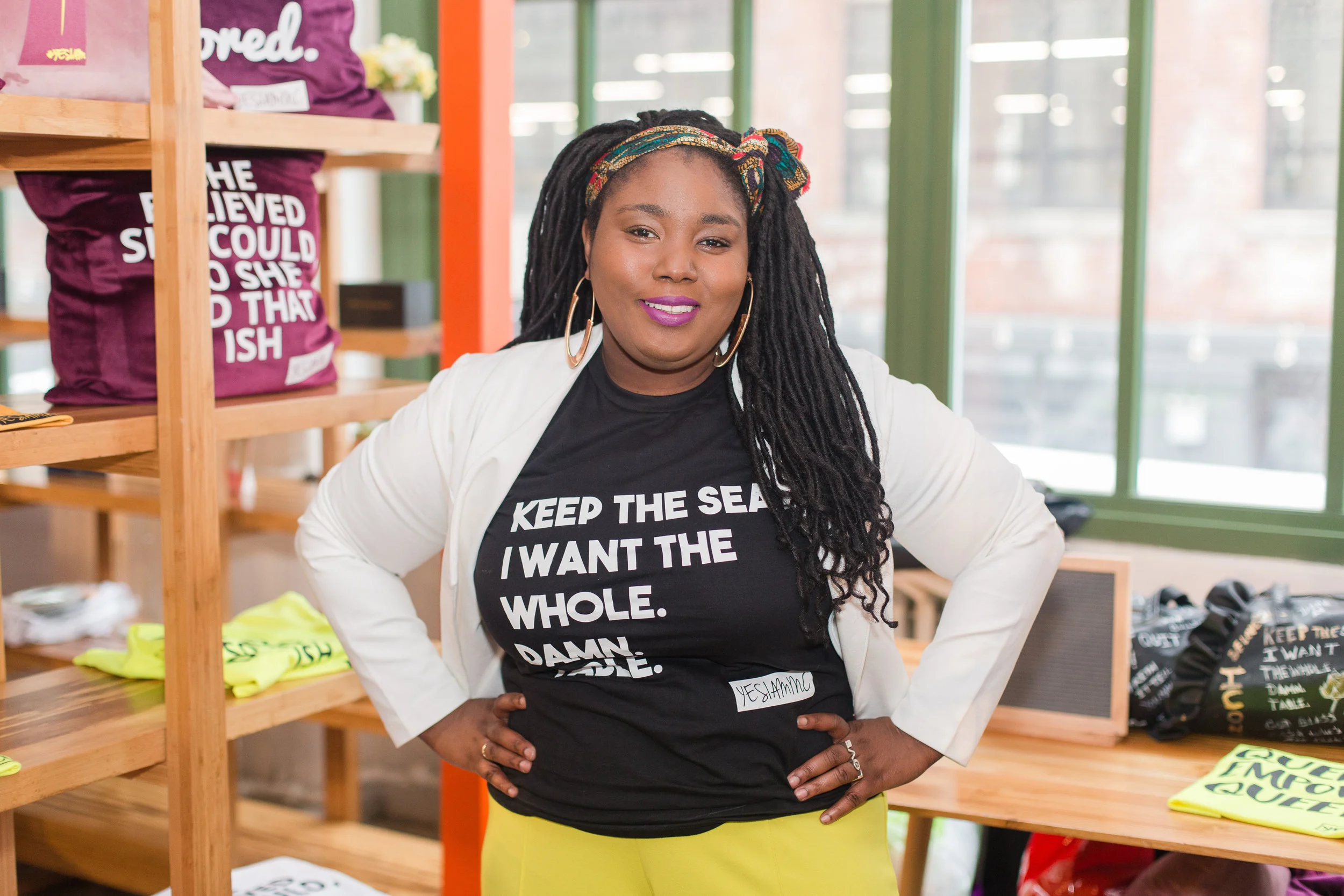
What’s the priceless idea that sparked your business? Share in the comments below!
This post is sponsored by Mastercard.
MORE ON THE BLOG

The Biggest PR Mistakes Entrepreneurs Make (and How to Fix Them)
Jennifer Bett, the top publicist in start-up PR, is schooling us on how to pitch with success.

Photographed by Andrea Calo for Jennifer Bett Communications
So, you’ve gone through the process of building a business—wrote a plan, trademarked a name, and developed a product—but now that you’ve hit launch, you’ve missed one important part, getting people to hear about it. If pitching to media is a foreign concept and you have no idea where to start, don’t stress. We know how hard that initial push can be but your hard work deserves to be seen and the public should know about your amazing new business or product.
But, before you start cold emailing journalists, let’s take a look at some of the things you shouldn’t do and how to course correct so you’re on the right track to begin with. To do this, we tapped one of the top publicists’ in start-up PR, Jennifer Bett Meyer, founder and president of Jennifer Bett Communications along with her managing director and partner, Melissa Duren Conner to share the most common PR mistakes entrepreneurs make, and how to fix them. You’re welcome.
PR Mistake #1: Skipping the Storytelling
The Fix: You might have a great product, but it is the deeper part of storytelling aka “The Why” behind your business that will land the meaningful, brand-building features that startups need to get off the ground. Now more than ever, consumers care about the story behind the brands they buy from. They are looking to understand the larger mission of the companies, and the impact their purchases will have.
When speaking to journalists about your brand, think about: What problem does your business solve? What is the founder’s story, and what drove them to launch this business? How is the product made and is there a sustainability or craftsmanship story to tell? How does this business fit into the wider cultural landscape?
PR Mistake #2: Having a Face-Less Brand
The Fix: In our experience, brands who have passionate founders, CEOs, or even CMOs who are willing to put themselves out there in the press are the brands that dominate the media conversation. This goes beyond being quoted in an article here and there, it means speaking at industry conferences, appearing on podcasts, and speaking candidly about the struggles for entrepreneurship columns. These thought-leadership opportunities are crucial to getting you, and your message, out there to a wider community.

Photographed by Andrea Calo for Jennifer Bett Communications
PR Mistake #3: Only Having 1 Pitch
The Fix: Do your research. We mean this in a few ways:
1) Find out who your target customers are and what they’re reading - those online sites, newspapers, magazines, podcasts and events will inform where you want your story to be told.
2) Note that you can’t communicate to every publication in the same way. If you want your pitch to stand out in an editor’s overcrowded inbox, you need to first make sure your story fits their beat and personalize each and every pitch to highlight the aspect of your business that will appeal to them most.
PR Mistake #4: Not Valuing Qualitative + Quantitative ROI Equally
The Fix: The traditional way to measure the value of press is through a publication’s circulation—how many subscribers they have or how many clicks a site gets per month. While we do think this measurement is important in understanding reach, it’s not the end-all, be-all for evaluating impact. Other qualitative details to consider include:
—messaging: does the feature accurately tell your story and communicate your mission?
—tone: is the feature positive?
—share of voice: is your brand mentioned just once or do you lead the story?
There will be press placements that drive sales and there will be placements that drive brand awareness—you need both to move the needle.
PR Mistake #5: Bad Timing
The Fix: Keeping a pulse on the news cycle is extremely important when building out timelines for launch or major brand announcements. Pay attention to wider cultural moments that will compete for media attention, such as election day, major holidays or breaking news, as well as specific moments within your industry, like fashion week or award shows, that will be an extra busy time for your target reporters.
What lessons have you learned from pitching to media? Was it easier or harder than you thought? Share your experience in the comments below.
MORE ON THE BLOG

Our C+C Community Can’t Get Enough Of This Game Changing Haircare Line—Here’s Why
Changing lives, one curl at a time.
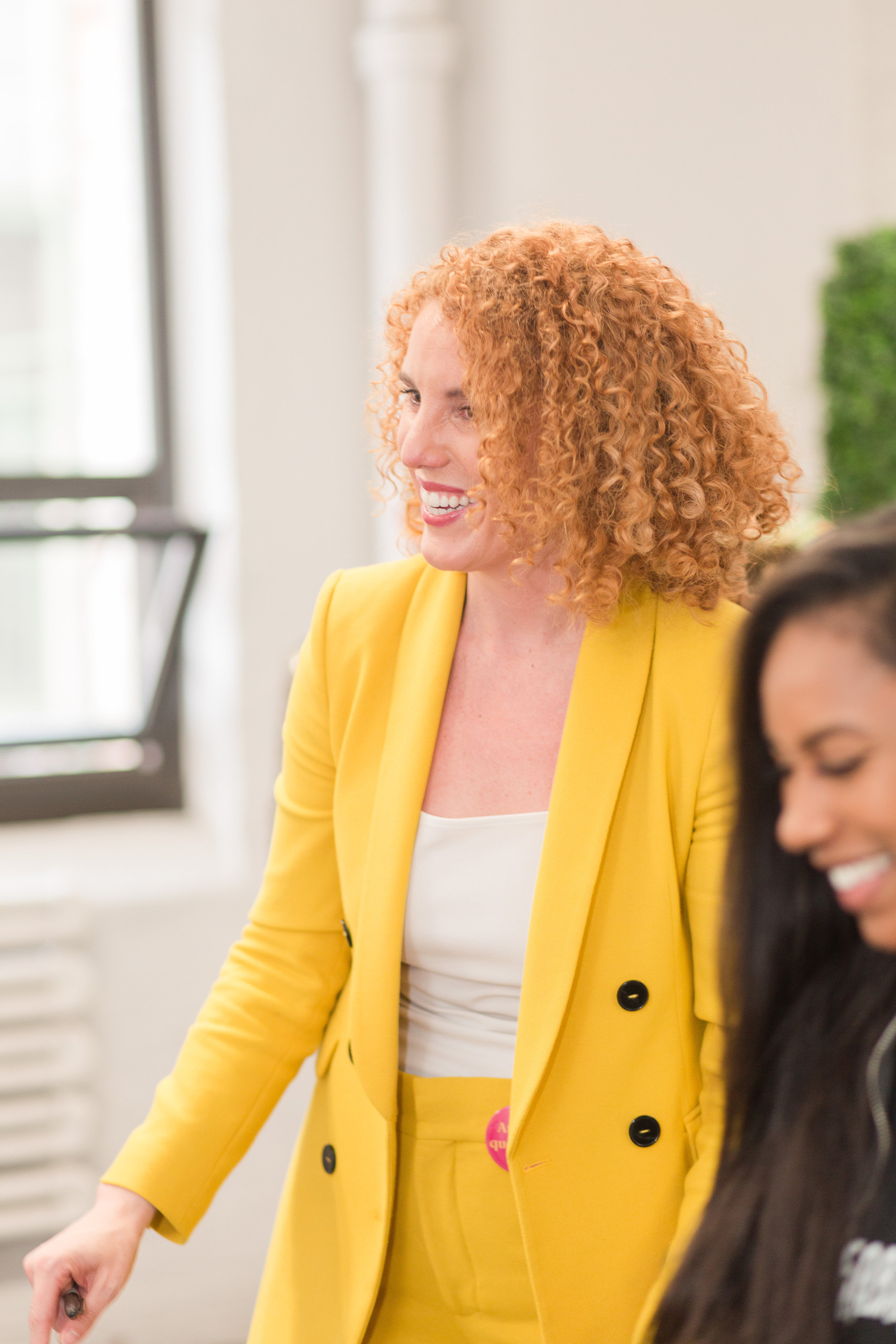
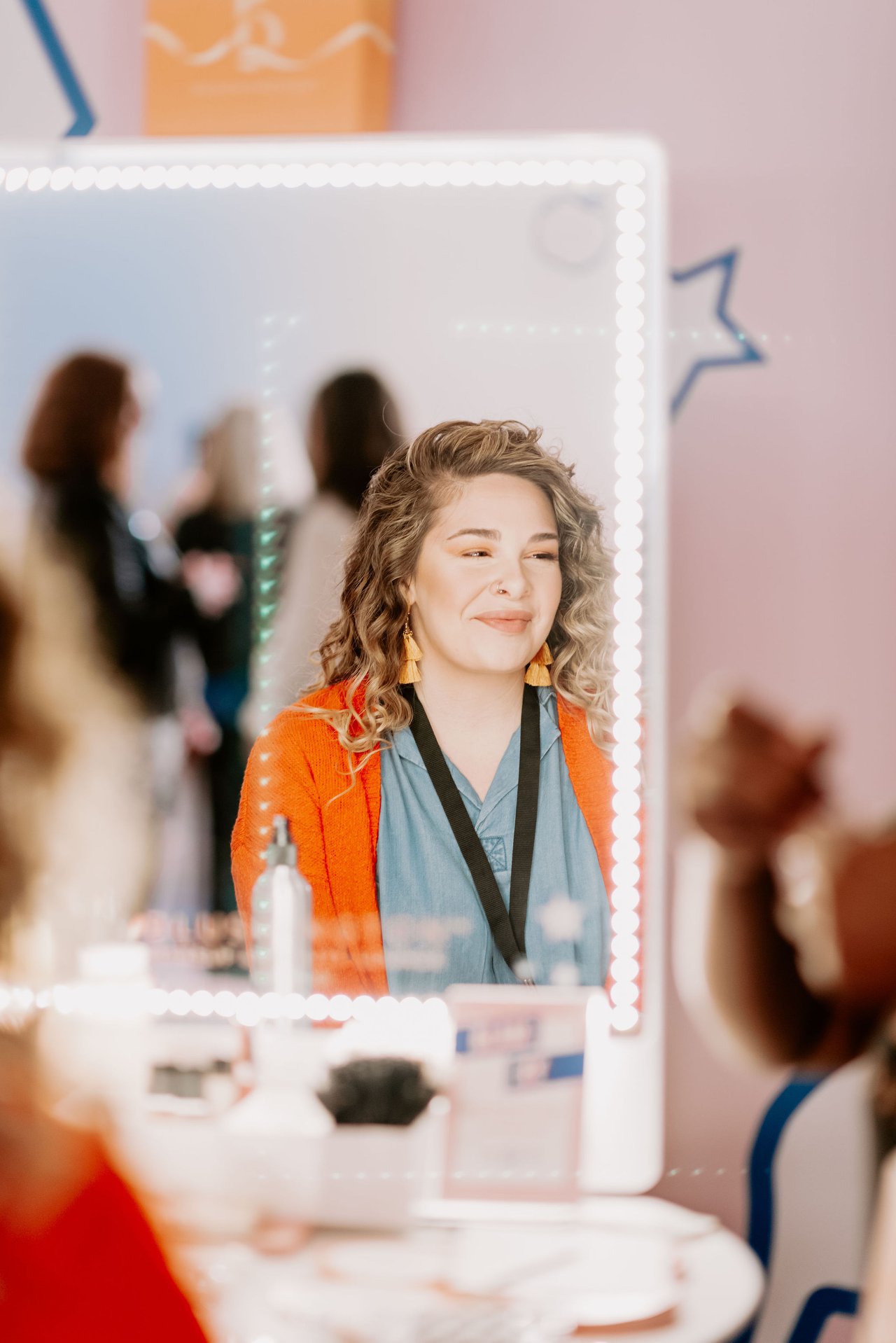
We get it. Facing a situation that seems to have no solution can be frustrating. Just like when something doesn’t go your way—feeling a lack of solution and control is not ideal. But with a little bit of knowledge-dropping and female support, we can really take on anything. The female community we pride ourselves on being a part of is all about support, confidence, and education. And hair care company, DevaCurl, identifies with the same philosophies.
In 1994, DevaCurl provided the hair care industry with long-awaited solutions for curls. Women with seemingly stubborn, curly hair, were finally able to embrace their beautiful locks with these curl-enhancing products. We love strong, confident women who embrace their natural selves and brands that do too.
But we aren’t the only fans of DevaCurl—our C&C community can’t seem to get enough of these products. How do we know that? Well, we went ahead and asked how DevaCurl helps them to embrace their hair—you’ll love their responses. Read on to see for yourself how people feel beautifully confident just the way they are.
Lynzie Marie
“I love DevaCurl, as a consumer and as a professional. I’m a hairstylist working with clients in the salon, specializing in natural texture, as well as an educator for DevaCurl. It’s an amazing brand.”
Safia Alice
“DevaCurl has not only helped my curls feel healthy and moisturized, but they have me looking like a million bucks.”
Phylicia Anne
“Their products have helped me embrace my natural hair. My curls can be so unpredictable but DevaCurl has helped tame the frizz and create more definition in the curl for more bounce.”
Shannon Varcoe
“I had straight white blonde hair growing up and then in middle school it started to get wavy and is now full on curly. It took years (and some really unfortunate haircuts) but I finally have frizz free but still soft and not crunchy curls because of DevaCurl products. My curly hair has definitely become my signature now. I fully embrace my curly mane and love how easy it is to style my hair each day.”
Amanda Thibodeaux
“DevaCurl has definitely helped my hair stay hydrated and I love the travel packs for when I jetset.”
Sasha Rincon-Camacho
“DevaCurl is a godsend. I’ve always loved my naturally curly hair, but so many of the products I’ve used in the past always made my hair too crunchy, sticky or heavy. Then entered DevaCurl and just like that I had found the perfect formula from shampoos and conditioners to the serum and hair oils, etc. They have been a #gamechanger for my hair, keeping it shiny, light and looking absolutely flawless; no other products on the market have even come close.”
Alexandra Hill
“Growing up, no one I knew had curly hair. My dad had curls but he wasn't much help when I needed to tame my hair. Once he even took me to get a perm in the hopes that it would help with frizz (it didn't do anything, like anything at all). In college, I finally started seeing women with curly hair in magazines and hearing about salons dedicated to curly hair. They all used DevaCurl. I got my own bottles and over 10 years later, I'm still a fan. My current favorite is the DevaCurl SuperCream.I always get compliments on my curls and the scent.”
Maia Alejandro Arcella
“Omg I loooove DevaCurl. After my postpartum shedding I started wearing my hair curly again after 10+ years of straightening only. The first products I bought were DevaCurl and I’ve never loved my natural curls more.”
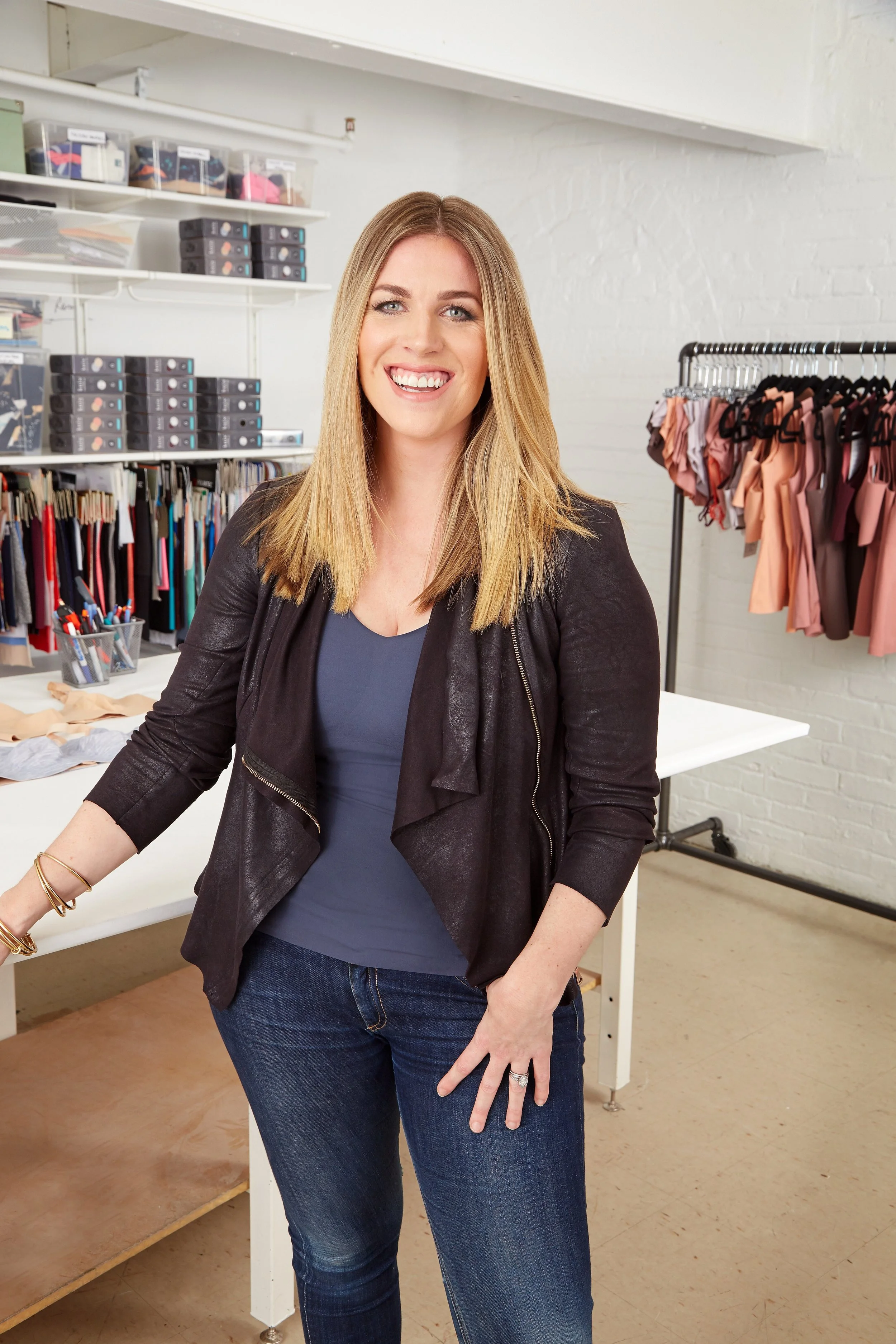
"I Don't Check My Emails"—How a Successful Founder Starts Her Day (We're Taking Note)
Founder and CEO of intimates brand Knix, Joanna Griffiths is all about striking a balance.

It’s easy to do. We’ve all fallen privvy to it—waking up in the morning and checking our inbox first thing. It may feel like you’re being productive by clearing out some emails before you hit the office, but just that simple act of checking your phone could be making you unhappy. In fact, email notifications have been linked to higher feelings of anxiety. It’s for this reason that Joanna Griffiths, founder and CEO of intimates brand, Knix decided to remove it from her morning routine altogether. “It gives me an hour or two of clarity before seeing what is coming through my inbox,” she tells us.
We tapped Griffiths to take us through a day in her life before she hits the stage for our Lenovo Pop-Up in Toronto. Read on to find out what other pearls of wisdom she has for us.
What does an average day in your life look like?
Honestly it’s been changing a lot lately. I just had my first baby eight weeks ago and so am settling into the whole mom and entrepreneur thing. I typically spend a couple of hours at home and then head into the office around 10 with Cole (my baby) and Rebecca, our nanny. I do a mix of meetings that usually cover brand marketing (dreaming up our next big campaigns), product design (dreaming up our next big products), operations and finance. We are hiring at a pretty rapid rate and so I’ll often squeeze in a candidate interview here or there (my team does the vetting but I still meet with every hire to ensure culture fit). I build in short breaks so I can breastfeed Cole and try and be out the door at around five.
What time do you get up? What’s the first thing you do upon waking?
Pre-baby I would wake up at 8 a.m. (I need my sleep). Post baby it is more like 7 a.m. I love to spend my first hour with Cole. He’s so smiley in the mornings and it really sets my day off on the right foot.
Are you a night owl or a morning person? When do you do your most important work and why?
I am absolutely a night owl. I find that some of my best work and most creative thinking happens at night—often over a glass of wine while sitting in my backyard chatting with Dave my husband who is also our creative director. I need the space and time to chat through concepts without the confines of a scheduled meeting. Plus, the wine helps.
What does your morning, pre-work routine look like? What rituals set you up for success?
To be honest, lately my mornings have been pretty hectic. My main focus has shifted to getting Cole fed and changed, a coffee in hand, and all of us out the door. I am a long time fan of what I have deemed “car makeup”. It’s when you put your makeup on in the car (while someone else is driving). My days are so jam-packed that I try and make use of every minute that I can. I do have one rule though, I don’t check my emails until I am set up and settled for the day. It gives me an hour or two of clarity before seeing what is coming through my inbox.

Being a founder means you are wearing so many hats and across so many facets of the business. How do you manage your time effectively?
I am a big fan of weekly meetings where I can check in on all facets of the business and we’ve got a pretty great reporting system set up where everyday I can get a pulse check on how things are going. I also have learned to block off three chunks of time throughout the day that work as flex time for that urgent last minute situation that emerges or that phone call that you just have to squeeze in. I have these first thing when I get into the office, so I can map out what I want to accomplish for the day, 30 minutes at lunch so I can eat and check in on emails and then again for the end of the day. Keeping this reserve time has really helped me stay on top of things.
Do you ever reach inbox zero? How do you handle the constant influx of inquiries and communication entrepreneurs are so familiar with?
I think my days as an entertainment publicist have trained me to stay on top of emails and to respond to things as they come in. It’s a slippery slope once you start falling behind and so I try to be proactive as much as possible.
MORE ON THE BLOG

From Scratch: How a Successful Entrepreneur Built Her Beauty Brand From the Ground Up
And we mean every single detail, from business plan to branding (and what to pay yourself!).
We know how daunting it can be to start a new business, especially if you’re disrupting an industry or creating an entirely new one. When there is no path to follow, the biggest question is, where do I start? There is so much to do but before you get ahead of yourself, let’s start at the beginning. To kickstart the process (and ease some of those first-time founder nerves) we’re asking successful entrepreneurs to share their story in our new series, From Scratch. But this isn’t your typical day in the life. We’re getting down to the nitty gritty from writing a business plan (or not) to sourcing manufacturers and how much they pay themselves, we’re not holding back. If you want to know how to start a business, you’ve come to the right place.

Allison McNamara shares all the details on how she built her successful beauty brand, Mara.
Sometimes you just never know when a new business idea will spark. For Allison McNamara it was during a trip to Istanbul. She’d just left her role of six years as producer and host of entertainment at Popsugar when the vision for MARA (a clean algae skincare line) was born. So she took the leap and self-funded the creation and manufacture of her first hero product, Algae + Moringa Universal Face Oil. Not surprisingly, the nutrient-rich oil developed a cult following within a few short months of its release and McNamara has been building an empire ever since.
While her father has been a mentor and business coach along the way (he has decades of experience in the beauty industry) the founder process has been a huge learning curve for the former TV host and and digital influencer. But despite the many hours she’s logged deep in research and mistakes made along the way, the key has been trusting her intuition and letting your gut guide the way.
We’re so grateful to McNamara for sharing her story on how to start a business and using her lessons as a masterclass for all of you reading this who are on the founder journey or about to take the plunge. Read on to hear exactly how she did it from a business plan to the research, finding a manufacturer, and what she pays herself (hint: it’s nothing).
Did you write a business plan? If yes, was it helpful? If no, what else did you use instead?
I did not write a formal business plan for MARA and to this day I still don’t have one. My brand is really focused on ingredients and efficacy, so all of the early brainstorms focused around sourcing key ingredients to use and those I wanted to stay away from. Being in the beauty world, I already had a pulse on the market and did know I wanted MARA to be a pillar in the clean beauty space. I did take a stab at writing a formal business plan but it didn’t feel right to me to define all of those key points without the brand having any shape. So much of MARA was built off of intuition and I felt that creating a formal business plan right off the start would hinder the authenticity by defining too much at the beginning, which could have potentially hindered any variation from the initial plan.
How did you come up with the name? What was the process like? How did you know it was the right name? What are some of the things you considered during that process?
The idea for the line and the name MARA came to me at the same time. I had been itching to make a career switch and always knew I wanted to do something in beauty focused on face oils with sea ingredients. The name MARA came to me on a family vacation in summer 2015 when we were on the Sea of Marmara in Istanbul. My last name is McNamara and MARA also means sea in Gaelic (I’m an Irish citizen) so the story took shape almost instantly. I didn’t consider any other names and luckily we were able to get MARA registered.
What were the immediate things you had to take care of to set up the business?
Beyond the basics of registering the name MARA and securing the social handles and website, I had to find a lab and a direction for my products as well as a contract manufacturer and all of the small parts in between like boxes, shippers and inserts. There are so many pieces to the puzzle when you manufacture a product, especially if you don’t use a turnkey service or a white label company, which we chose not to do. Operations and production are still the two biggest challenges I face still today.
What research did you do for the brand beforehand? Why would you recommend it?
I did hundreds of hours of research on oils while developing our Universal Face Oil and Algae Retinol Face Oil. I started out identifying ingredients I didn’t care for as much, creating my own list of more commonly used oils I wanted to stay away from. I defined a checklist of what I wanted in my product: I wanted a face oil that sank into the skin quickly, was super hydrating, had all of the major vitamins and essential fatty acids and layered well with other products and makeup. I was also an avid face oil user prior to starting my line and well before face oils were mainstream, so I had a pretty good idea of the texture, the feel, smell and results that I was looking for. I would recommend Universal Face Oil to everyone, it’s incredible and will transform your skin thanks to its powerhouse ingredient profile of moringa, baobab, and Kalahari melon.
“Listen to advice but rely on yourself the most.—Allison McNamara, Founder, MARA”
How did you find the manufacturer/production facility that you use? Did you have any bad experiences? What did you learn? What advice do you have for other founders looking for a trustworthy manufacturer?
My contract manufacturer was recommended to me through my lab. I trust my lab 1000% and actually wanted them to initially manufacture it. However, with our volume, it made more sense to go with a contract manufacturer. My advice is always to do a full walkthrough/tour of your contract manufacturer before having them create your product, even if you have to travel to see it. You want to see the cleanliness and conditions of the place and how they store materials and ingredients. Also, make sure they are GMP certified. I wanted somewhere in California to make it easy for me to routinely visit during manufacturing, I’m actually heading there today.
Did you self-fund the company? Did you raise seed money or initial investment money? Why/Why not? What would you recommend?
We have family-funded MARA as of now. I recommend this route if possible because it gives you total creative control over what you are developing. Down the line, we do see ourselves potentially taking outside investment. I know it’s not feasible for everyone to self-fund a beauty business (because let me tell you, it’s expensive) but if you are able to make it work it’s very liberating not having anyone to report to.
How much did you pay yourself? How did you know what to pay yourself?
Nothing! The money can better be used put back into the business. I am lucky that I also have other work, including being the editorial director at Mane Addicts and work frequently as a digital content creator with brands. Juggling everything is stressful at times but I’m grateful to be in the position that I’m in. Not paying myself gives us the flexibility to have PR and work on product development as well as scale the business and up our quantities without worrying about cash flow.
Do you have a business coach or mentor? How has this person helped? Would you recommend one?
I am so lucky, my dad worked in beauty for decades so he coaches and advises me for free. Although half the time it turns into arguing (jk, sort of.) We talk about everything from pricing on components to brand messaging and creating/editing the concepts for future products. We have the great plastic versus glass debate at least once a week (we use glass for all MARA products thus far.)
More importantly, it’s nice not to do this entirely alone and it’s great that he has so much experience and knowledge in beauty and skincare. But I also rely heavily on my intuition and ultimately make my choice based on what feels instinctually right for the brand. I don’t think you necessarily need a mentor, but I do think it’s important to have someone that you trust to talk to and bounce ideas off of.

Allison McNamara decided not to pay herself and put all of the profits back into the business.
How big is your team now? What has the hiring process been like?
Besides me and my part-time assistant (I’m actually looking for a new assistant if you know if anyone), everyone else is contracted. I have a wonderful PR team Evna Media who works hard on our media relations and events. I have a graphic designer, a web designer, and many different components suppliers. I’ve never been afraid to do the crappy tasks which are great because I now spend a lot of my time doing things I did as an assistant. I’m really good at time management which is key to wearing as many hats as I do in my business.
Did you hire an accountant? Who helped you with the financial decisions and set up?
I have a great business manager who I started working with last year who does both of my businesses (MARA Beauty LLC and AMcNamara Inc) as well as my personal. I still do all of the monthly bookkeeping myself via Quickbooks. I liked doing the accounting at the beginning so I could see my cash flow, but now it’s time to hire someone on more routinely to keep everything in check.
What has been the biggest learning curve during the process of establishing a business?
Honestly, everything. Every day I’m learning or doing something new that I’ve never done before which is an exciting change of pace. My previous career was working as a television host and writer, so running a business is entirely new to me. Production and lead times proved to be the biggest learning curve because I (still) always underestimate how long it’s going to take to make something. I also am rather impatient and come from the media world where you have an hour to get a breaking story up or 15 minutes to shoot a video segment so having to wait sometimes 3 plus months for our unique ingredients to be harvested and delivered was/is really hard for me to wrap my head around.
How did you get retailers to start stocking your product? Were you told no? How did you handle that rejection? What advice can you share?
I launched MARA direct-to-consumer but always knew I wanted to get into retailers. We chose our retail partners very carefully, first launching with Credo Beauty to really validate our brand in the clean beauty space. Clean is a word that’s thrown around by everyone these days but launching with a true clean beauty retailer was vital in establishing our commitment and integrity to nontoxic skincare. We then went international with Cult Beauty and more recently went into Space NK and select Bloomingdales. There are some key retailers I have my eye on that I think MARA would do brilliantly at. I personally emailed all of the retailers I wanted to have MARA at, and of course, did get some “not right nows” along the way. However even the stores that have told us “not at the moment” have all been very complimentary about my products, so I don’t really think of them as rejection.
My advice is to not give up and stay on their radar. I make sure to attend events and stay in contact with people who work at the stores I envision MARA at, to help the brand stay top of mind. It’s also important to keep the buzz going around your brand, so whether it’s gifting influencers or meeting with editors getting your brand talked about is ultimately what gets you on the shelf. Looking back, our retailer launches have been perfect and I wouldn’t change any of it.
“Don’t start a business just to make money, because you probably won’t for a very long time.—Allison McNamara, Founder, MARA”
How did you promote your company? How did you get people to know who you are and create buzz? Did you know anything about marketing before this venture?
Being in media prior to launching my brand was really helpful. I already had a direct connection with many L.A. beauty editors and have loads of influencer friends who I’ve met through work and events who have been so incredibly generous sharing my product on their channels. I also had a decent following on social media when I launched my brand which definitely helped initially. Marketing comes pretty naturally to me and I knew I wanted to take a slow approach for MARA.
With beauty, there is this amazing discovery element—people love finding new products on their own and sharing their secrets with their circles, which is powerful. I still to this day believe the power of sharing between friends far outweighs the influence of social media in the long run. We’re not making products you buy once and then forget about it. I’m (hopefully) gaining customers for life. My goal is to build a brand that feels just as relevant 15 years down the line, with power SKUs that people purchase over and over again.
What is one thing you didn’t do in the setup process, that ended up being crucial to the business and would advise others to do asap?
If you plan on selling globally, go through EU Compliance before you print your components. Also, I did this unwillingly, but don’t beat yourself up over missed deadlines. I 100% can guarantee almost all of your timelines will get messed up, just go with it. Unless a retailer is putting pressure on you, don’t put crazy pressure on yourself if things are running behind. And mark your calendars now for Chinese New Year because nothing is getting done during then.
For those who haven’t started a business (or are about to) what advice do you have?
Listen to advice but rely on yourself the most. Don’t start a business just to make money, because you probably won’t for a very long time. I didn’t use a branding agency to create my product, which I think was such a wonderful choice. The devil is in the details and only those personal touches can truly be added in by creating something yourself, instead of having a team present you with options. Authenticity is key so if it doesn’t feel right, don’t do it.

Allison McNamara shares her advice on starting a business from scratch.

The Affirmation Boss Babe Hunter McGrady Repeats Daily
“We often forget that we are enough just as we are, where we are.”

Hunter McGrady is the girl crush of 2019. With her third Sports Illustrated Swimsuit shoot, a cameo in Hulu’s Shrill, and a new fitness venture under her belt, she’s showing no signs of slowing down. And for this plus-size model, body confidence is a key factor in her success. That’s why we’re partnering with Bio-Oil® to share how Hunter does it all in style. Read on to find out how she’s changing the industry, how she’s learned to love her marks, and the positive affirmations she’s repeating these days.
Q: First of all, congratulations on your third consecutive year being in Sports Illustrated Swimsuit. What does it mean to you to be leading the charge in media in the way you have?
A: Thank you. You know, it has been a wild ride. Essentially I put myself out there and I never know what I’m going to get. Sometimes it’s a lot of hate or sometimes it’s a lot of praise. Either way, I know what’s needed in media right now and that is diversity and inclusivity. I won’t stop fighting for that.
Q: You’ve teamed up with blogger Katie Sturino to launch BabeBody, an Instagram page dedicated to fitness at all sizes. What inspired the page, and what do you hope to achieve through your work on the venture?
A: Yes. We are always being asked for our go-to tips on working out and how to overcome the fear of going to classes. Because maybe you aren’t the best at it or you want to try something without feeling like all eyes are on you. So we created BabeBody as a safe space where women of all shapes and sizes can workout and really authentically support each other. We always lay out modifications and always encourage you to do exactly what you can, nothing more. We have sold out every class with wait lists and it has been incredible. We’re hoping we can take this into other states. We have received tons of asks for that.
“I know what’s needed in media right now and that is diversity and inclusivity. I won’t stop fighting for that. ”
Q: Bio-Oil® is on a mission to help women #LoveYourMarks. What advice would you give to women who might have a hard time embracing the skin they’re in?
A: I got my first stretch mark when I was 16 years old and 114 pounds. It was because I shot up to 6 feet tall by high school. It doesn’t matter your size or height, almost everyone has stretch marks. I learned to love them because to me they signify growth and strength. One of the tools in my self-care arsenal that helps me to love my marks is Bio-Oil®. The skincare oil helps nourish and hydrate my skin, while the act of putting it on gives me a few minutes every day to reflect on the journey that me and my “marks” have been on. It’s just not something media talks about and that’s why we’ve learned not to love them. It’s time to change that.
Q: Body positivity has taken huge strides these past few years, but it has a long way to go. What do you think needs to happen next for things like plus-size SI covers and starring roles to become even more mainstream and normalized?
A: I think it takes people like SI to continue the incredible conversation. They have done such a great job with it and I think a lot of brands could take a cue from them. We must get to a place where it’s not so shocking to see a plus size woman. It should be normal. I want to be able to walk down 5th ave in Manhattan and feel like I can relate to at least someone in the advertisements in store. A lot of people are afraid of change as well. It’s scary but it’s needed.
“I learned to love my stretch marks because to me, they signify growth and strength. It’s just not something media talks about, and that’s why we have learned to not love them. It’s time to change that!”
Q: You’re a fan of positive affirmations. What’s your go-to affirmation right now?
A: My go-to affirmation since I was 16 years old is “you are enough.” I will say this to myself about 20 times a day. We often forget that we are enough just as we are, where we are.
Q: What’s next for you?
A: I have some exciting stuff coming up in 2019/2020. A possible clothing line is in the air.
This post is sponsored by Bio-Oil.
MORE ON THE BLOG

Supercharged: How Our Team Stays On-Point at C&C Events
We’re going from 0 to 100 and staying there.
Like all the badass women in the workforce, our Create & Cultivate team is always operating at 100 miles per hour with a to-do list that never seem to end—that’s how we like it. Beyond our conferences, we juggle account management, editorial, graphic design, and so much more on the daily. And when we’re on-site for our events, those tasks continue at maximum speed and our frequencies reach an all-time high.
Our team stays supercharged in every sense of the word. From physically to technologically, we make sure we are able to function all day long. That includes having our laptops, walkie-talkies, and cell phones fully charged so that we don’t miss a beat. At our most recent conference in New York, our friends at STAMBA made sure that attendees stayed supercharged, too—you can’t post a shoe-fie if your phone is dead!
So how do we manage all that and enjoy it at the same time? Well, we asked our team at C&C headquarters how they stay supercharged—specifically on days of events.
Jaclyn Johnson, CEO
Responsible for _________ at our events…
“Everything.”
Favorite thing about your role…
“That no day is the same.”
I stay supercharged on days we have events by…
“Definitely sleep. I need eight hours or I cannot function.”
Alyssa Torma, Associate Event Producer
Responsible for _________ at our events…
“Mostly keeping an eye on all things food and beverage but any other event production related tasks that come up.”
Favorite thing about your role…
“I love contributing to and helping craft our amazing events. The production team works hard to make sure that the attendees have an awesome experience.”
I stay supercharged on days we have events by…
“With the help and support of my team. We really feed off of each other's energy and keep each other focused.”
Caitlin Shier, VP Brand Partnerships & Accounts
Responsible for _________ at our events…
“Making sure all our brand partners’ experience onsite is as flawless and fun as our guests. “
Favorite thing about your role…
“That every day I get to know and work with so many different inspiring people and companies that support women.”
I stay supercharged on days we have events by…
“Checklists and snacks. On event days, we’re always on our feet all day so I make sure to hydrate and have lots of little healthy snacks on hand to keep me energized.”
Adry Perez, Social Media Manager
Responsible for _________ at our events…
“Social media coverage and content.”
Favorite thing about your role…
“I love making our Instagram audience feel included at our events when they aren't able to attend.”
I stay supercharged on days we have events by…
“Drinking lots of water throughout the day is very important. Our attendees at events help to keep my energy up too.”
Heather Records, VP Marketing
Responsible for _________ at our events…
“Planning the ways we bring our event to life to our larger digital audience.”
Favorite thing about your role…
“Seeing the way the team fulfills their individual roles to bring together our best-in-class social, video, press and blog coverage.”
I stay supercharged on days we have events by…
“Meditating before each day. It helps clear my mind, create clarity around priorities and brings calmness to sometimes urgent items so they feel more manageable.”
Elyse Wasserstrom, Account Manager
Responsible for _________ at our events…
“Working with our brand partners to create event activations that get them excited and are impactful to our guests at events.”
Favorite thing about your role…
“Working with so many inspiring partners and learning the story behind their brand.”
I stay supercharged on days we have events by…
“Eight hours of sleep, lots of water and wearing sneakers on event days.”
MORE ON THE BLOG