
3 Mantras You Need to Say in the Morning
Mantras you need to remember to live beyond your 9-5.

Repeat after me: you are more than your job, more than your 9-5, more than that paycheck.
It’s not uncommon to get caught up in the whirlwind of work. There are meetings and coffee dates, presentations to buildout, Keynotes to edit, and brands to partner with. Are you still there? Have we lost you in your coffee cup? We know it takes hard word, determination, and more than a handful of late nights and early AMs.
Sometimes the need to keep up can get us down. Especially when we feel like we’re falling behind and losing sight of work-life balance. But Michelle Wahler, co-founder and CEO of Beyond Yoga encourages women to embrace who and what they are right in this moment-- “perfect.”
We’re using a few of Beyond’s core values as mantra to remind ourselves to stay balanced, positive, and that we are more than what it says on our LinkedIn profile.
MANTRA #1: I WILL PERFORM
Beyond Yoga’s mission is to empower and celebrate women, just as they are. Which means having the confidence that you can handle whatever lands on your desk or in your inbox.
There is power in simply telling yourself you can do it. Whether in the morning before heading out the door, or taking a mid-day break to breathe in these words.
MANTRA #2: I CAN MAKE A GENUINE DIFFERENCE
What you do matters, both in the office and out. More often than not, we put our interests andhobbies on the back-burner when we are consumed by work life. But when you feel better, your ideas are better.
The energy you bring into your job seeps into your work. Taking care of yourself and nurturing who you are as an individual is just as important as taking care of business at work. Not only will it help you be more productive, but by taking time from your day to celebrate the things that make you who you are outside of the office will keep you inspired as well.
MANTRA #3: MY WORK IS TACTILE AND REWARDING
This is not a chicken and egg issue. When you bring good vibes into your work, you will feel rewarded by the end result. You will look at what you’ve produced and feel excited to share and carry it out into the world. You are beyond your work, because that when that work makes a difference, it goes into the world.
So, as you're reading this now, take some time to go to that spin class you've been meaning to hit up for weeks. Pick up the hobby you haven't practiced since you started your new job. Schedule your Sunday as family time.

Resource Roundup: Ignite Your Business With These Four Tools
Start the fire with these amazing resources.

When you’re starting a business, you’re going to need an arsenal of tools to help you make all the right connections and teach you the tricks to get your business off the ground. You could go on LinkedIn and reach out to your entire network and pick everyone’s brains on their best marketing tips, or cold email a few founders and see what were their biggest hardships when they started their company, but you still have to go beyond that.
We’ve rounded up a few of our favorite resources that take you away from hours of online research and let you make IRL connections that are meant to make a lasting impact.
General Assembly
General Assembly (GA) is a global educational company on a mission to empower a global community to pursue work they love. Focusing on the most relevant and in-demand skills across data, design, business and technology, GA is confronting a skills gap through best-in-class instruction and providing access to opportunities.
GA works with students online and in person across 15 campuses in 4 continents. GA also works with companies as partners in course development and graduate placement as well as helps companies stay competitive in today's digital landscape. Additionally, GA’s focus on affordable and accessible education combined with their education-to-employment approach is helping to create a diverse talent pipeline.
If GA sounds like the place where you want to start taking notes to apply to your business asap, you’re in luck! If you’re in Los Angeles this Monday, March 21st, our founder Jaclyn Johnson will be having a keynote as a part of GA’s #OffCampus festival. Find out all the details and RSVP here!
Creative Mornings
Created in 2008 by Tina Roth Eisenberg, aka Swissmiss, Creative Mornings came to life out of a desire for an ongoing, accessible event for New York’s creative community. The concept was simple: breakfast and a short talk one Friday morning a month. Every event would be free of charge and open to anyone.
Today, Creative Mornings has grown far beyond its New York border and has taken over 137 cities worldwide and has brought some of the most creative minds from music, business, design, marketing, advertising and so many more. Not only that, Creative remains free thanks to the support of their generous sponsors and partners. Anyone is welcome to attend, just RSVP to their events, and you’re all set.
The Book Shop
If you work in marketing or advertising and are still looking to sharpen up your skills in the field, The Book Shop is for you. The Book Shop offers you the chance to work harder than you’ve probably worked at anything in your life with some of the biggest creative professionals to create big ideas that change companies. With the one-on-one interaction that they offer, not only are you getting knowledge from some of the biggest head honchos in the biz, but you’re making amazing connections that will help you career in the long run. The Book Shop works to be one of the most rewarding experiences in your life that will ultimately land you the career you’ve been dying for.
ThinkLA
If you’re based in Southern California, thinkLA is a non-profit association founded to promote LA as a network of creativity and innovation in media, marketing, and advertising. With their memberships, you’re able to tap into their unparalleled networking and social activities, year-round knowledge-building through their events and programs, and be able to volunteer at their industry-related charities like Ad Relief and MAT Program. ThinkLA has been able to bring in some of LA’s biggest visionaries, dreamers, innovators, and creators into their network, so if you want to hang with the cool kids in LA, join ThinkLA.
What the Seed Fund Boom Means for Raising Series A
If it don't make dollars it don't make sense. Right?

TIME TO RAISE.
It's not uncommon to hear from founders about the time-consuming nature of fundraising. Katherine Power, co-founder of Clique Media Group told Create & Cultivate Dallas audiences that as a founder you should expect to spent at least six months of your fundraising year dedicated to only. Leura Fine, Founder of Laurel & Wolf told Create & Cultivate that, "Fundraising can be an enormous time suck. It’s not a waste of time. Because bringing in great investors is really important part of building your business and the dollars are there to help you grow."
Echoing this is the fact that there has never been a better time to be an entrepreneur, or a female at the wheel of a startup. The number of seed-funded companies has quadrupled over the last four years. Top line data from Crunchbase reports that in 2009, 9.5% startups had at least one woman founder, but by 2014 that rate had almost doubled to 18%. However, Crunchbase also found that female founders are most heavily represented in seed and angel financed companies — 19% of that total. Yet their participation rate drops to 13% during the Series A or B stage of financing.
So what gives? Why the drop? And why are companies finding a harder time in their second round of funding? There are a couple reasons that you, as a founder or entrepreneur, should consider.
THE 'SIGNALING' ISSUE
It used to be uncommon for VCs to invest first (or seed) rounds. However, with tech startups its more common to see VCs come in during the seed round. There is an old saying in venture capital, “Fill your canteen when you are by the river and not when you are thirsty.”
To a new company, this initially sounds great -- you get the money you need to launch, and can move the needle forward on your business. However, if a VC that invested in your seed round does not invest in you future rounds, a thorough investor will look into why that VC decided to pull out. It signals to other investors that if VC Company X was not interested or willing to invest in the next round, something must be wrong within the company.
The first VC investor is seen as someone with insider information. Whether it's true or not, it doesn't look good for you or your business.
That's why getting to know your investors and building a relationship and terms that you're comfortable with is crucial. FROM DAY ONE. Taking a check to take a check can screw you down the line.
There is an old adage in venture capital, “Fill your canteen when you are by the river and not when you are thirsty.”
Tweet this.
THE OVERCONFIDENT ISSUE
Many seed rounds are super fast. Laurel & Wolf was oversubscribed in their seed round within a month and a half. Their target goal was $500k. They raised $650.
[define it: Oversubscribed: Situation where a new stock (share) issue has more buyers than there are shares to satisfy their orders.]
On paper, that paper sounds great, and it worked well for Leura. However, there are plenty of startups that launch, but have a problem performing, executing, and raising money when it comes to Series A. Why? With crowd-funding and the boom of VCs raising Series Seed many entrepreneurs are heading into meetings with big VCs overconfident that they can raise. They don't understand their business model, their metrics, or their data, and according to Leura, they don't understand as founder how vital it is for them to control their fundraising process.
This makes the fundraising process significantly longer, and young startups are finding it much harder to secure a term sheet. Plus, the longer it takes to raise, the more you're prolonging the long-term goal: building a successful business. The goal should be to spend the minimum amount of time required to raise your funding goals.
[define it: Term Sheet: A bullet-point document outlining the material terms and conditions of a business agreement. After a term sheet has been "executed," it guides legal counsel in the preparation of a proposed "final agreement".]
THE WAY, WAY MORE COMPETITION ISSUE
Simply put, the more companies that raise their seed funding, the more companies that are going to be looking to raise Series A. Even though their is a influx of funds at the seed level, the same can't be said for Series A. So if five companies secure seed funding, and five companies go into Series A, the competition is that much harder.
In part, many entrepreneurs require less money to hit their first round targets, so this is also over-saturating the market.
The safest bet is to know exactly what you want, how you want to do it, and understand your metrics. That way when you go to raise Series A, you have a leg-up on the competition, and are more likely to give your company the legs it needs for the journey.
If a seed round is the sprint, you should still be prepared to go the distance. Ready, set, raise.
Making Statements: Your Guide to Being Bold in the Office
Power dressing leads to power moves.

STANDING OUT IN THE WORK CROWD.
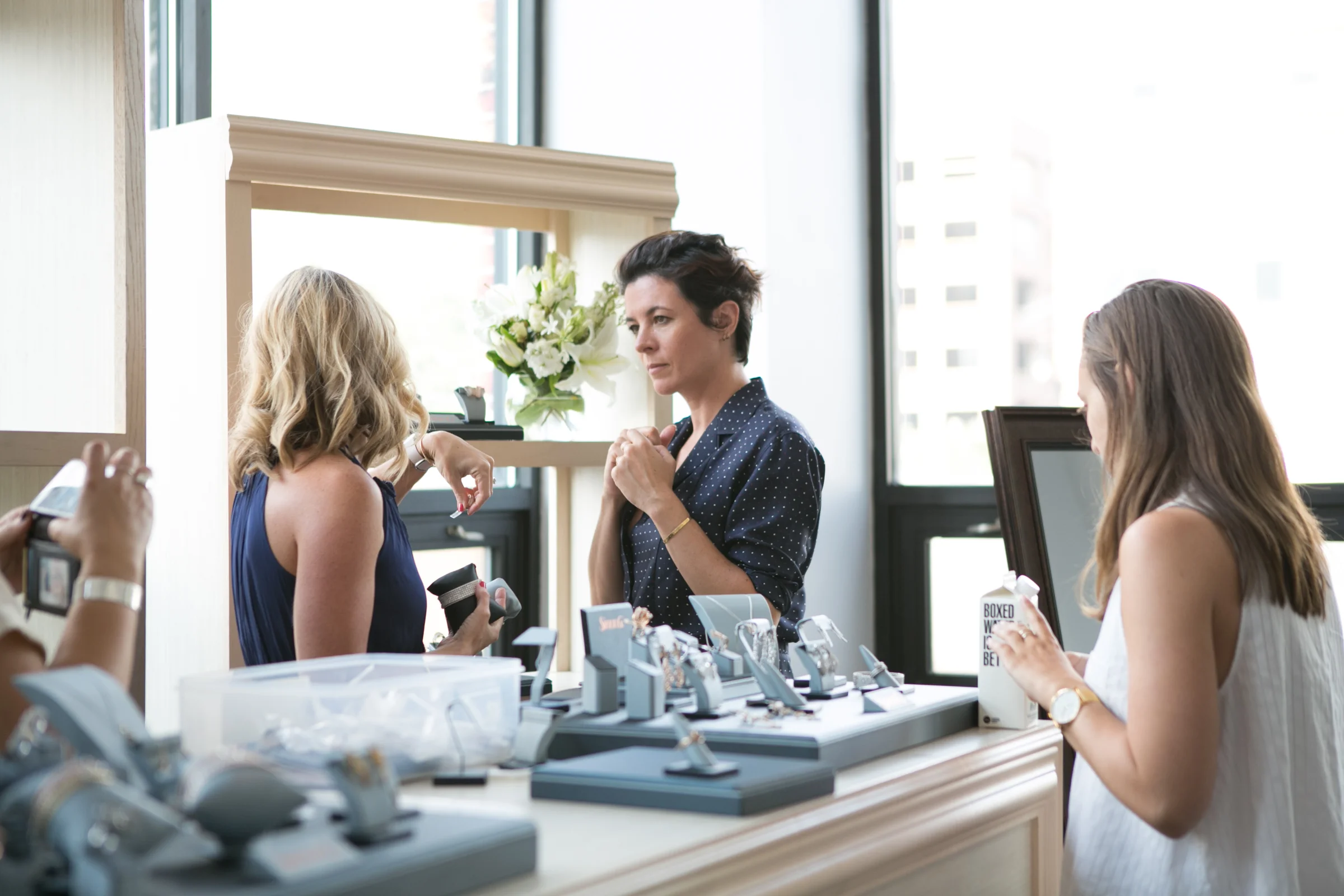
It's a tricky balance, because what you want is to be a team player while also advancing your career and showing that you're bold as brass. Or perhaps diamonds, in the case of Simon G. The jewelry company knows all about making statements-- from pieces that celebrate achievements and love, to brilliant necklaces that elevate an entire outfit.
We're breaking down the 6 ways you can be bold in the office.
1. POWER POSING IS GOOD FOR THE BRAIN AND BODY
Online, content in king. In person, it’s confidence. One of the best ways to “fake it till you make it” is with your stance. Your body language has been proven to shape who you are, affecting everything from the way people view you and your intelligence to the way you speak. The most common power pose is “opened up” and indicates a position of control. Instead of a closed off body language that communicates a more meek personality.
A power pose can actually change the way you view yourself, even change your body chemistry. Posing for just two minutes can increase your risk tolerance, which makes for bolder and more executive office decisions.
2. POWER DRESSING, WELL THAT ALSO MATTERS
When you look good, you feel good. And making a statement when getting dressed to go before the board or you boss can be as simple as adding a Simon G. necklace that says, my outfit is boss, and so are my ideas. A successful work uniform saves time, energy, and also lets people know what kind of work you do.
There’s a reason it’s called dressing to impress: it works. You project confidence and earn the trust of people entrusting you to get the job done.

Fabled Collection Pendant, 18K Rose Gold - $3,740 USD
3. ESTABLISH YOUR CONFIDENCE EARLY
Everyone claims to love the story of the girl who came into her own, but in truth, it’s much more impressive to own the room or a job without being primped. If you’re about to host a meeting, set an agenda, talk about priorities, and ideas moving forward in order for your team to work most efficiently.
If you have expectations or if goals are changing, put those on the table. The tone you set is crucial for not only establishing confidence but also getting the results you want.
You are in charge. So act like it.
4. DON’T FORGET WHERE YOU CAME FROM
This may feel counterintuitive but it’s so important to bring your past into your present, and allow it to inform your future. In fact, confident but humble is the way to go when it comes to power moves. Being bold doesn’t mean having an ego about what you do, and it certainly doesn’t mean that it’s an excuse to belittle your team or workmates.
You’re only as good as your team, whether you’re at the top of the ladder or the bottom. Sparkle and shine in the office or at a meeting in a piece like this from Simon G., while remembering your roots.

Caviar Collection Pendant, 18K White Gold - $5,280
5. SHOW, DON’T TELL THE WHY AND HOW YOU’RE A UNIQUE ASSET.
Like a gorgeous piece of statement jewelry that speaks for itself, you need to make sure that you are engaging your peers with tangibles without telling them why you’re great at your job.
Show them with success. Meeting booked. Partnership deals in the works. A cold call that proves you have the stomach to be fearless.
6. LOOK AHEAD, INSTEAD OF AROUND YOU
This is simple: comparison is the thief of joy, but it’s also the buzzkill of confidence, and ultimately success. Own the position you’ve found yourself in and you’ll find that all of the sudden you’re no longer faking it.
(And when in doubt or you feel yourself feeling not so bold, ring up a mentor who will tell you next steps.)
Best Practices: How to Engage Users with Facebook Live
And why you should be using it now.

IN 2015 FACEBOOK VIDEO AND FACEBOOK LIVE WERE ONLY AVAILABLE TO CELEBRITIES.
But the Facebook floodgates have been opened to the masses, and the kings of social in Silicon Valley have noticed that the content that performs the best is interactive.
Facebook Live enables users to share experiences and opinions in real time, from broadcasting events to friends and family, to connecting a brand to people around the world. Consumers are engaged by events happening in real time, and Facebook has seen that on average people will watch a video more than three times longer if it's live, compared to when it is not. Which might be the best reason to start using the platform.
On average people will watch a video more than three times longer if it's live.
Tweet this.
THE BASICS: HOW TO GET STARTED

To start using Facebook Live, simply click "What's on your mind?" on the top of your News Feed. Select the Live Video icon.
BEST PRACTICES: DO IT RIGHT, DO IT RIGHT NOW.
1. Announce ahead of time when you'll be using Facebook Live: Build anticipation and excitement by letting people know when to tune in.
2. Encourage followers to subscribe so that they get notifications the next time you go live.
3. Don't go live without a point. There should be a rhyme, reason, and strategy behind your Live. Whether you're answering questions, showcasing how to use a new product, or giving a 360 fashion sneak peek, your audience should understand what the broadcast will be about. An engaging and compelling description is a useful tool for this.
4. Shoutout to people in real time with their real names. The more involved you make people feel, the stronger the sense of community you build, and the more likely people are to stick around.
5. Don't go live without a strong connection. People tend to think that using Facebook Live is perfect when they're on-the-go, but a "Broadcast Paused" message can be fatal to the success of your convo.
6. The longer the broadcast the more people you're likely to reach. People will tune in and drop off, but give an audience the opportunity to discover you. Facebook recommends going live for a least five minutes .
7. Be as creative as you can. If you're CEO of a company, host "Office Hours" where entrepreneurs can ask you questions. If you're a lawyer with a great law practice, host "Beyond the Bar," where law students can ask you about life after law school. If you're a fashion brand, take fans on a tour of your factory and show them your best practices. Maybe you're responding to backlash your brand has experienced. There are so many ways to use Facebook Live and connect it to your other social programs. So start throwing ideas at the wall.
WHY IS THIS GOOD FOR YOU BRAND?
Fractured attention spans have made capturing and engaging an online audience incredibly difficult. But Facebook Live is real time feedback. You'll see the number of live viewers, the names of people tuning in, and you can respond to real-time stream of comments. It's as close as you'll come to your audience, and they'll appreciate the effort.
It's putting the humanity back into an online and fabricated "personal" experience. Though you will most likely use strategy, it's showing that there are people behind the machine. There's a reason people tune in longer to real time video-- they want life, personality, and off-the-cuff truth that doesn't come with curated content.
Roundtable: 5 Career Women Talk 'Having It All'
Your mom fought for it. Now you're fighting against it.

March is women’s history month, and there are currently more female-owned businesses than ever before in the American workforce. "Having it all" was one of the first empowering messages that helped redefine the role of woman, but for some this cornucopia of to-dos and sea change in the workplace has complicated work-life balance.
Is it possible? Is it a myth? What is about gender roles that we can’t seem to stop talking about?
In anticipation of #CreateCultivateSXSW, we checked in with some of our panelists to find out what having it all means to the modern working woman, especially when “normal working hours can sometimes become all of the hours.”
LET'S START WITH THE BASICS. WHAT DOES 'HAVING IT ALL' MEAN TO YOU?
Silvie Snow-Thomas, Director of Strategy, Elle Communications : 'Having it all' suggests that we can get everything in both our personal and our professional lives that we think we want at the exact time we want it. What women have been striving for, for generations, is having the same range of opportunities to choose from as men – if a man stays late at the office for example, does he face the same pressure of getting home to his spouse or kids as he would if were a woman?
Julie Hays Geer, Director of Partnerships, Laurel & Wolf: In terms of what it's "supposed to mean," I see it, for a woman, as being able to have a career and family simultaneously.
Bianca Caampued, Co-Founder, Small Girls PR : 'Having it all' is being being happy with everything that you have going on in your life - both personally and professionally. When someone asks you how your day was, your answer is always, "Today was the best day ever."
Sarah Kunst, Founder, PRODAY: It means choosing a life you want to live on your own terms. I ignore other people's definitions of 'it all' and the timelines or "how it's supposed to look" that others might want me to adopt. 'Having it all' means being happy with my life and how I fill my time day to day. If I can do that, I'm winning.
HAS THE IDEA SHIFTED AS YOU'VE GOTTEN OLDER? FROM EARLY TWENTIES-NOW?
Gabby Etrog-Cohen, SVP PR & Brand Strategy SoulCycle: In my early twenties, 'having it all' was a great job, a sick handbag, good hair, a decent body and a boyfriend. It's funny, I don't think about having it all now.
Silvie: As I’ve gotten older, the balance I crave has shifted toward striving for a combination of great friendships, quality time with my partner, enlightening adventures and figuring out how to excel in my career. Oh, and sleep.
Julie: My view has shifted as I've gotten older, and my perspective now is to be able to have what makes you happy - whether that's a job and family, a freelance lifestyle, or the ability to travel frequently.
Silvie: I think an important distinction for all women is to separate the idea of 'having it all' from "having it all at the same time."
"Separate the idea of ‘having it all' from 'having it all at the same time.’"
Tweet this.
DO YOU THINK YOUR "ALL" IS SIMILAR OR DIFFERENT, TO SAY, YOUR MOTHER'S GENERATION? WHY?
Gabby: My mother worked two jobs-- she ran central intake at an inpatient mental institution and had a private psychotherapy practice at night, and was an incredible mother. So she was juggling just as many balls as I am BUT, when she was home, she was home. No emailing, no conference calls...there is a different sense of connectivity, of always-on-culture that exists today that never existed for our parents.
Silvie: My mother’s generation of women who came of age just before and after Title 9 and Title 7 of the Civil Rights Act, and they faced much more overt discrimination and blatant sexism than we younger women do.
Julie: The opportunities for women are greater now. Perhaps it's all relative, but with more opportunity there's more "all" to have. Which makes having it that much harder.
"With more opportunity there's more 'all' to have. Which makes having it that much harder."
Tweet this.
Bianca: I think that having it "all" used to involve starting and supporting a family, but you can have it all without that; it depends on what your priorities are in life.
Silvie: Another thing to consider: in our mothers’ generation, there were rarely female bosses. This new(er) paradigm has begun to change things, but I think we’re all still striving for more of this storied work-life balance, and as women we still are working to end discrimination, however subtle it may be, in hiring and advancement.
Gabby: I am definitely less present with my children, sadly, then my mother was with me and I have to try really hard to disconnect when I am home.
Sarah: My "all" is personal. It's not going to look the same as another woman's now or in the past or future. It shouldn't. When 'having it all' means "having all that someone else wants you to have," you're failing.
DO YOU EVER FEEL THE PRESSURE OF PERFORMING BOTH GENDER ROLES SIMULTANEOUSLY?
Silvie: Overall I think the societal pressure now imposed on women (and men) to work longer hours and be essentially on-call all of the time in professional jobs, while still ensuring the quality of work is exceptional, has made work life more stressful on women whether they work in a mixed gender environment or work in a female-run firm. The way of our world is for everyone, especially if you work in client services, to work harder and to ask for more.
Julie: I didn't come from a household of gender role norms, so this isn't a mindset I grew up within. My dad ironed, both parents were home on different nights to cook dinner for the kids. I started my career in a predominantly female industry with great female role models. I recognize the issues at hand for our society, but in my day to day life I luckily don't feel this pressure.
Bianca: By cultural definitions I guess the answer is yes, but I can be pretty androgynous in style and I think that translates to personality. I don't usually think about things falling into gender role categories - it's just a role. Societal constructs have labeled certain actions or personality traits as skewing male or female, but I'm just doing things that need to get done or based on my intuitive reaction.
Gabby: I don't really think about gender roles. I am constantly striving to be a good person. Not a good woman.
"I am constantly striving to be a good person. Not a good woman."
Tweet this.
ARE YOU FAMILIAR WITH THE TIME-MACHO CONCEPT? HOW DO YOU FEEL ABOUT IT? WHAT DO YOU THINK NEEDS TO CHANGE IN THE AMERICAN WORKPLACE FOR WOMEN?
Silvie: I am. I believe the term was coined by Anne-Marie Slaughter, who went from an academic job at Princeton to the State Department as Under Secretary for Policy for Hillary Clinton. I agree with Slaughter that the intense competition to demonstrate one’s professional value by working longer hours, having more “face time,” doing more travel, etc. is wearing professional workers down physically and mentally just as stagnant wages and on-demand scheduling is harming lower income workers.
Sarah: Some women want to be a slave to their job and some men want way more free time. The problem is finding a job and work culture that fits what you want out of life and if you do choose to work the 80+ hour workweek, making sure that you're actually producing valuable work and not just amping up face time.
Gabby: I fall prey to that as well. But the truth is, it's OK to go home, take time for yourself and then go back to work, versus staying at the office until midnight without a break. As a mother, I have learned to be incredibly resourceful with my time. I make every single minute count. I just don't have the luxury to waste time. So if I am getting a manicure, I am on a conference call at the same time.
Bianca: Boundaries are extremely important and time in the workplace isn't everything. Time in life, however, is everything. All we really have is time, and it's precious and should be protected, not racked up as a currency for worth in the workplace.
"Time is precious and should be protected, not racked up as a currency for worth in the workplace."
Tweet this.
Sarah: We need room for much more broad roles in society and work than "men love working and women want time off to see their families." We need to allow everyone to be their real selves at work and have the roles and flexibility that allow for more than one kind of job or worker.
Silvie: I think a lot of my friends in the same age bracket have been working like this since we were in our early 20s. In the U.S. the number of salaried workers clocking 50 or more house per week has grown steadily since the 1970s when 9-5, 40-hour work weeks were the norm.
Bianca: I don't believe that putting in more time or all-nighters in the workplace means more value.
Silvie: The technology we have today allows for a great flexibility, but the flip side of that is "normal working hours" can sometimes become all of the hours. Here’s one thing I’ve learned slash have been forced to understand: sleep is crucial to clear thinking, and to keeping your passion and energy levels high.
Bianca: The most important thing is trying to manage time so you're not putting in all of those additional hours at work, yet are still maintaining productivity, while allowing space for your personal needs.
IS WORK-LIFE BALANCE A REALITY OR MYTH IN OUR ON-DEMANDS WORK ECONOMY?
Julie: I like to think of it more as needing to have a separation between the two vs. a balance.
Silvie: I wonder often, is there a way we can change the mindset in this fast-paced economy and always-connected life to concentrate first and foremost on people’s long-term health and to ensure continued creativity? Can we measure productivity and product quality differently to ensure continued success but also to ensure peace of mind?
Julie: When you spend 5 out of 7 days each week at a job, that's not balance.
Bianca: I often say it doesn't exist, from my own personal experience, but there is a part of me that has hope it is real.
Julie: Striving to not always bring your work home with you, or taking time to shut down and live your life without checking your email on the weekends, that separation can be a reality.
Gabby: There is no such thing as work-life balance. At least, I don't think so. There is integration. Some days I bring my kids to work. Some days I have conference calls from home. Some days I am failing as a mom, some days I am failing at work and some days I am failing at everything! But, then there are those days when you think, damn, I can actually do this.
Sarah: For those not in poverty, work-life balance is more about the choices we make and relentlessly pursuing the life and lifestyle we want. Balance doesn't mean a 9-5 job for most of us, it means having the space to be human.
"Balance doesn't mean a 9-5 job for most of us, it means having the space to be human."
Tweet this.
Arianna Schioldager is Create & Cultivate's editorial director. You can find her on IG @ariannawrotethis and more about her at www.ariannawrotethis.com
Boost Productivity & Concentration with One Simple Switch
Bear with us as we ask you to put down that latte.

It’s 2 PM, you’re on your 3rd or 4th coffee, perplexed as to why you’re still not percolated.
In fact, you’re nodding off, ready to head home and clock out for the day, even though you still have a solid amount of work to get done. It’s a common mistake to think that caffeine will help us stay energized throughout the day, when in fact it’s often doing quite the opposite.
Sorry to break the coffee bean bad news to you, but all the vanilla lattes and black coffees are probably sending you on a vicious cycle of jitters and crashing that’s slowing down your productivity. You feel sluggish, because it’s real.
Part of the problem is that we’ve grown to love the crash and burn; the 2 PM java run is part of our work culture. Think of how many times a week you turn to a colleague and say, “Want to go grab a coffee?” It’s fun, it’s a break from the grind, but it may be the last thing you need.
At a certain point caffeine addicts can’t feel its effects anymore. Beyond that, adding on one espresso shot on top of the last, can dehydrate you— another major flaw in caffeine’s DNA. Dehydration is known to reduce concentration and diminish productivity. Why coffee? We thought you were our BFF for life.
So while it may not be as fun to ask your workmate if they want to head to the water cooler for a late afternoon boost, test it out. Save yourself the java drama and see how water can help you stay just as alert as a shot of pure, heavenly espresso.
DITCH THE 2PM CRASH & BURN
We know that our bodies depend on water. But though caffeine stimulates our sympathetic nervous system and gives us the temporary jolt we need, it also does something else: it make us need to relieve our bladders. The problem with this, is that it is incredibly dehydrating. Every time we use the restroom, we lose water. The less water we have in our systems, the thicker our blood gets and the slower it moves through our veins. That sluggish feeling you’ve experienced? It’s actually happening when our bodies use oxygen at a slower rate.
Coffee also stimulates us in ways we aren’t aware, so though it may not be giving you the boost you need to make it through that Keynote presentation, it could be the reason you’re tossing and turning at night. And without a good night’s rest, you’re going to be tired the next day…hence, more coffee. So, how do you break this cycle? With water.

Good ole H20 hydrates you for mental focus and doesn’t make you want to crawl back into bed. With Waiākea Hawaiian Volcanic Water, you can power up with its naturally infused electrolytes and minerals that will give you the clarity and creativity to get you through the day. Plus you can feel good while drinking it because it's ethical and sustainable.
CHARGE UP + CLEANSE YOUR BODY WHILE DOING IT
Coffee may be a diuretic, but it’s not flushing out the right toxins that can help our bodies feel revitalized. Also, the more coffee Water, on the other hand, can do that, and manage to keep us awake without the crash. The more water you drink, the more you help your body by flushing out toxins (coffee and caffeine included). Waiākea Hawaiian Volcanic Water is loaded with potassium, sodium, calcium, and magnesium, along with many other minerals that make the water naturally alkaline, which helps balance out the over-acidic environment of our bodies. Not something coffee can really fight since it’s pretty acidic itself. The truth is in the science.
MAKE DRINKING WATER A HABIT
Step 1: Hide the Keurig. Step 2: Hide the coffee mug. Step 3: Invest in a water bottle.
It might sound silly, but once you start using a water bottle, especially one with a sipper or straw, you’ll find yourself sipping from the bottle every five minutes, ’til you find yourself drinking five or six bottles of water a day. Your body naturally needs water, so it won’t be a surprise when you find yourself refilling your bottle every hour.
"Need to boost concentration? Step 1: Hide the Keurig. Step 2: Hide the coffee mug."
Tweet this.
This also becomes easier when the water you're drinking, tastes great. Not all water is bottled equally. When your water tastes like chlorine or feels lifeless, you'll be less inclined to drink it. But a good source of water is key when establishing a habit of hydration, and you'll be surprised to find that you actually crave water the way you once did caffeine.
And trust us, the regular visits to the restroom won’t be as bad as the 2 PM crash. You need to get up and move anyway.
5 Essential Office Decor Tips from the Creative Director of High Fashion Home
Make it pretty but useful.

Echo Marble Dining Table, available at highfashionhome.com
Dolley Frearson is Co-Founder and Creative Director of High Fashion Home, a destination spot for anyone looking to revamp a space or choose from a huge variety of high design products equally high on value and quality. But the pieces offered aren't just for the home, no matter what the name says.
With the shift in corporate culture (which, for many means buh-bye to the cubicle!) and the continued surge in startups, office spaces are starting to feel a bit more homey-- or at least somewhere you don't mind spending overtime in. We asked Dolley for her 5 essential tips for creating a "high fashion" office that feels like home/work.
MAKE IT A PLACE OF BEAUTY AND INSPIRATION
People think that an office (home, startup, or otherwise) needs to look like an actual corporate office; bookcases, filing drawers, and executive desk, etc. but it doesn't. Whether you spend 1 hour a day in there or 8 hours, your place of work should be a space that inspires you. So, think about places that inspire you-- whether it's a clean modern space like the Apple store, a hip boutique hotel, a feminine retreat to call you own, or a historical library with art work and books for inquisitive minds. Start with your inspiration and build around that.
Click through for four of my favorite desk picks.


MAKE IT USEFUL
You don't want to build a study that no one uses. Think about who would use it the most and how you would use it. If you have a huge space, feel free to use a dining table instead of a desk (like the above Echo Marble Dining Table at the Create & Cultivate office in LA). With laptops, iPads and wireless printing these days, you no longer need the typical desktop computer technically. If you're like me and like to use your home office as a "study" or "library" for your kids to share, consider a round, oval or rectangular dining table with 4-6 chairs. It's also nice to have a larger table when they need to work on a school project or if your kids want to have a study group at home. If you don't want to share the space with the kids, a large table will still be nice if you need to share the space with your spouse or if you have meetings often or need more surface space for projects.
Click through for four of my favorite dining as desk picks.


TO COLOR OR NOT TO COLOR
For those who like a clean canvas to clear their minds, a neutral wall color with monotone or muted colors in the furniture and accessories is the way to go. Some need color to bring them ideas and energy. If color inspires you, by all means find that perfect artwork or rug that has the colors you love in it. You can also go with a black or dark charcoal gray or any shade of deep blue. I personally love home offices to look like a hidden cave or jewelry box, but that's my way of creating an office retreat. This idea works best with an office room that has higher ceilings and windows for natural light.
DECLUTTER YOUR OFFICE (AND YOUR LIFE)
Declutter your office (and your life) - I'm a strong believer in the saying "tidy house, tidy mind!" I think it's incredibly important to keep your home (and office) organized and simplified. Nowadays, there are so many great boxes, file boxes, trays, etc. to keep you organize. If you start off with the right tools, it will help keep your space in order.
ACCESSORIES ON SHELVES
If you love collecting books and objects, that's fine, but keep them organized and make them look like they have meaning on your shelves. If you have built-ins already but don't have enough books (or any at all), combine your current books or new and beautiful coffee-table books you love with some great accessories like objects, sculptures, pretty boxes, plants, etc. It's great way to inject color and add texture to your shelves. But keep these shelves a bit open so they don't look too cluttered and busy. There are so many great design blogs and Pinterest photos of bookshelves to give you some great ideas.
Startup 101: Your Year One Essential Checklist from Above the Glass
On the precipice of launching your business? You'll need this checklist.
FEMALE ENTREPRENEURSHIP IS GROWING FASTER THAN EVER. BUT TO CAPITALIZE ON THE WHIRLWIND OF OPPORTUNITY, YOU NEED TO UNDERSTAND THE STORM FROM WITHIN.
Enter, Danielle Yadegar and Heather Serden, co-founders of the freshly launched Above the Glass, an online platform providing women in business with straight talk interviews with women in business and actionable take-it-to-the-bank advice. Like free downloads, because Above the Glass wants to see you succeed. They believe that, "without a doubt economic empowerment and the capability to start businesses should be available for all women.”
So, if you are on the precipice of launching, download the Startup Essential Checklist from Above the Glass, and get the engine on your business running.
To download the checklist, enter your information on the the form below and a link to the free download will pop-up. Good luck!
Why Business Cards Still Matter & 3 Go-to Sites
Stock not an option.

Just because your entire business lives online does not mean you can’t make an impression in real life. Business cards provide an inexpensive, customized way for you to leave your mark with a new networking connection, collaborator, or client.
And since most business cards are available online, there is really no excuse not to have cute business cards—you can create a bespoke, on-brand card in less than 15minutes and for around $20. Check out these sites to get started.
You can create a bespoke, on-brand card in less than 15 minutes and for around $20.
Tweet this.
VISTAPRINT
Arguably the most inexpensive, basic business cards on the market, Vistaprint offers an affordable, professional way to get the word out about your brand. You can browse their designs or upload your own logo, and the interface is very simple. Standard cards start at just under $10.
MOO
A favorite of creatives, Moo has a clean, easy-to-use website and on-trend fonts, colors and designs. You can choose from a huge collection of the brand’s pre-designed business cards, many of which are specifically tailored to the arts, fashion, beauty and media industries. The company also has a large collection of specialty cards, like spot gloss, raised spot gloss and gold foil. Doubled-sided business cards start at $9.99.
ZAZZLE
Basic business cards at Zazzle start at $21.95, so it’s a little pricier than Vistaprint or Moo. However, Zazzle offers a money back guarantee, so if you don’t like what you create, you can send the cards back for a full refund. The company offers over 50,000 custom templates, or you can design your own.
What is your go-to for business cards? Share with us in the comments!
The 6 Personality Types Every Startup Needs
You're only as good as your team.
Your startup is your tribe.
You spend more time with them than you do with your family (#sorrymom). There are shared lunches and late hours and at certain points, you all wear every single hat. Because when you’re working to build something together, you switch hats, pants, shoes; the words “I can’t do that,” are not part of your vocabulary. In many ways each of you is the "ideal worker"-- something that gender and labor scholars have identified as the person who shows up early, leaves late, never says no, never gets sick, answers emails morning, noon, night, weekends, makes every meeting, is a go-getter, ad infinitum. These are employees who work hard and challenge themselves on a daily basis. In a dream world, every team member of your start-up is that person.
Here on earth however, there are specific people that fit better into certain roles and make the squad function like a well-oiled machine.
THE VISIONARY
Often the CEO. They think big and small, they see far ahead but also catch the tiniest of details right in the moment; the little things you would never even notice. Nothing gets past them, but it's because the Visionary knows how they want to see their vision executed. Thinking outside-the-box is one part of their supernatural abilities. They are highly-functional, fast-paced, and fastidious. "The ways in which people consume everything," says Jaclyn Johnson, Founder and CEO, "has changed significantly. So if we are not evolving, we are not doing our job. We want to help advance the new creators, the thinkers, the other dreamers. And we've only just begun. We don't want to create a pipeline of new workers, we want to burst open the whole channel and see what happens."
"We don't want to create a pipeline of new workers, we want to burst open the whole channel."
Tweet this.
THE CLOSER
The Closer has perseverance and structure like you wouldn’t believe and solutions to any problem. In part it's because they’ve "been, there, done that"— and bring experience from many industries to the table. They know how to work a conversation to their advantage. They are great at team management and turning ideas into action items— especially at executing the vision of the dreamer. Bess Wyrick, Senior Events Producer at Create & Cultivate is our Closer. "It's just not an option," says Bess, "to not get it done. And if you have that attitude at work, don't expect to go very far. You take an idea, or you have an idea, and you make it happen. If it doesn't look or feel right, you do it again. We've nixed entire concepts day-of the conference because it wasn't perfect. I mean, look, there's no wrong way to enjoy a glass of wine, but there is always a smarter way."
THE UNICORN
Part social butterfly part go-getter. The unicorn of the the bunch is known for making magic, and doing it with pep and a smile. Hope Evans, Accounts Director. is as gregarious and unicorn-like as workers come. From meeting with clients to working with talent, she's the ultimate team player. Because part of that sociable charm is the inherent caregiver— keeping team morale up even as stress rises. "It's not magic," says Hope, "it's about chemistry, about making a room feel at ease by making every person feel taken care of-- from talent, to speakers, to sponsors, to everyone who has purchase a ticket. If you treat everyone as an individual, your company will standout as a whole. Especially day of the conference, it's a runaway train that you just have to ride, and make sure everyone is riding along with you. No one falls off this train. No one."
THE NO-NONSENSE TYPE
Follow-through is one of the main traits of the no-nonsense employee. Enthusiastic but firm, the no-nonsense type is a bit like sandpaper— firm, tough, but smooths out anything. For C&C that’s Steph Chang, Director of Events. She’s a nose-to-the-grindstone, no-nonsense worker that will always be crystal clear on what she needs-- especially if she doesn't like the way you're doing something. "When you're planning events you are dealing with so many vendors, sponsors, the venue, parking, food, people, everything-- everything where you can't see the work, a ton of work went into it. So you have to be firm, tenacious, get everything in writing. If you miss one detail, Rome topples. And we've already learned that lesson. From big picture, to the nitty-gritty, nothing is falling apart on my watch, even if it means a sternly worded convo, or two."
THE HEART
You know the person. They're always saying yes. They are there to talk out an idea with you, jump in, give you their thoughts, and share their best ideas-- all the while grinding out what's on their own plate. The Heart sticks on brand and is less concerned with credit than with crafting the right message. At times our Heart, Director of Social Media, Priscilla Castro is a headphones on and head down worker. But tap her shoulder and she's right there with you. "A startup like ours is about the collective, so even though my job revolves around spreading the word, it's important that everyone else on the team is on message as well. Which, yes, means breaking from my to-do list and jumping in where I'm needed."
THE PISTOL
A bit of a worker bee that’s self-motivated, the Pistol is a straight-shooter that fires off ideas, and gets work done at the same speed. The Pistol doesn’t wait for ideas to come to them, nor do they second-guess themselves. Editorial Director, Arianna Schioldager says, "We don't take what we're doing lightly, and the idea that our conferences and content are encouraging young entrepreneurs to take major leaps fuels our days and nights, but that responsibility means we have to always be innovating. Always providing the best. That means tons of ideas. Plenty of which get thrown out. But you have to keep shooting, and shooting straight or we lose the trust of our audience and attendees. We shoot the moon every single day, and even though this makes for tough moments, no one ever said landing the moon was easy."
"We shoot the moon every single day, but no one said landing the moon was easy."
Tweet this.
3 Ways to Be Contagiously Social
Go forth and infect the masses.

Strong women can tell stories that simultaneously rock viral reach and niche connection, and guess what? You’re part of this squad, and we’ve got a name: contagiously social. When we’re contagiously social, it’s not just our stories that ignite, but also the style in which we share them. Best of all, this fierce fusion is surprisingly simple. Just do three things:
Abandon. Obsess. Infect.
1. Abandon labels (hashtags included)
You know the nuances of your industry, platforms, and followers, so trust that your social strategy will work like muscle memory when you let go of labels. Share in the moment. This strategy is so real, it might be surprised to hear itself called that.
Teen Vogue Digital Entertainment Editor Ella Cerón rocks this. She’s a social media savant (Insta, Twitter, Facebook, and beyond), but people know her first and foremost as a funny, know-all fashionista who’s not afraid to get real when breaking news breaks hearts. It’s seamless yet unobvious content strategy focused on real-time stories, personality (on and beyond brand), and community (from close friends to influencers...and by that, I mean Kim Kardashian).
What inspires or surprises you right now? Tell that story, even if it’s not ready-made with a hashtag. There’s both freedom and followers to be found in this relatable-yet-reckless abandon.
2. Obsess over what you love
Reclaim obsession. It’s now a powerful, positive word that screams, “I’m passionate and my own person!” Be the #bosslady of can’t get enough. Champion what you love and pay no heed to “trending.” Start the social convo. Chances are, other women and brands obsess over cheap lipstick, hot sauce, and puns, too. (No? Just me?) Create a project, campaign, or partnership together! When you celebrate shared passion, the right people follow suit, and bam—obsession transforms into collaboration.
Jazmine Hughes and Jessica Kane rock this. Hughes, associate editor at The New York Times Magazine, wrote a brilliant Cosmopolitan story for which she dressed as Empire’s Cookie to explore a question on many women’s minds: Do I deserve this job? (Spoiler alert: Yes, you do.) Kane, director of millennial outreach at the Huffington Post, loves donuts. From HuffPost’s first-ever donut gif to deliciously-hyperlinked out-of-office emails, she bakes this love into her personal and professional brand like a boss.
Share what you love. Feelings and followers will be mutual. It’s the best answer to Mariah Carey’s enduring question, “Why you so obsessed with me?”
3. Infect with unique style
How is a huge part of storytelling. Take Tasty, for example. All it took was some sharp overhead camera footage in the kitchen, and now our Facebook feeds (pun intended!) are filled with BuzzFeed’s mac and cheese miracles. It’s all about style, so once you have your story, shake up how you share it. This could be visual or verbal, but it’s gotta be vibrant.
Fashion designer Misha Nonoo rocks this. Nonoo launched New York Fashion Week’s first-ever #instashow with her SS16 collection. Nonoo brought it to the hashtagged height of #NYFW with the help of 30 #bosslady influencers like Lena Dunham (hey, 2.4 million+ followers, nice to meet you). Media loved it, and it caught on: Nonoo just wrapped up her fall 2016 instashow in partnership with rewardStyle, this time using her personal Instagram and shoppable links with LiketoKnow.it. Now you see this content—monetized-yet-meaningful, Insta over in-person—and this style—larger images made from the ‘gram grid—from the best brands, corporate accounts, and small creative projects.
Stories and style infect our industry, and soon, we see their symptoms everywhere. We spread a brilliant bug. And don’t worry—“new” doesn’t have to mean “never before.” It’s all about finding fresh ways to fuse your what with your how.
---
You’ve got something compelling and contagious to share. Go forth and abandon, obsess, and infect. I can’t wait to catch this wildfire.

Aileen McGraw is a writer on on a mission to redefine sartorial by fusing all things social, art, and editorial. Her work intertwines stories and strategy to amplify the bold and the not-yet-told. She’s been published in the Huffington Post, majestic disorder, and Chickpea Magazine, among others, and currently rocks content strategy at Microsoft. She lives by the words, "There's no such thing as too spicy." Find Aileen’s portfolio here.
Maskimize Your 2016: How to Put Your Best Business Face Forward
We got face masks in our bag, swag.

It’s the night before a big business meeting and you’re stressed. It’s totally normal, but do you know what happens when you have a mini-freak out? Your skin often has a mini flare up. Research shows that people are more likely to respond positively to good skin, so we asked our friends at Origins how to make sure we’re all putting our best business face forward this year. Their advice? Mix and mask your way to glowing success – and skin!
To maximize success, Origins just released a totally new innovation in masking to obtain even greater high performance results. Maskimizer™ Skin-Optimizing Mask Primer is the first-ever mask primer to prep, prime and hydrate skin, leaving it more receptive to the high performance benefits of Origins masks. Just a few spritzes of Maskimizer on clean skin before mask application enables you to mask and relax.
Next, choose one of Origins Single-Use Mask Pods, which are also perfect for carrying in your purse or stashing in your desk if you’re on the go. There are so many fan-favorites to choose from, but here are our favorite combinations!
Don’t Fret Before a Meeting with a Potential Client: Use Out Of Trouble™ 10 Minute Mask To Rescue Problem Skin

When you’re meeting one-on-one with a new client, your face is front and center, but nerves and stress can make you red and blotchy. Get “Out of Trouble” before your meeting with an easy ten-minute mask. This super absorbent mask redefines texture and wards off future outbreaks. That way, you’re securing your future by emphasizing your business know-how, and not your problem skin.
Go Into That Job Interview with Gusto: Use Original Skin™ Retexturizing Mask with Rose Clay
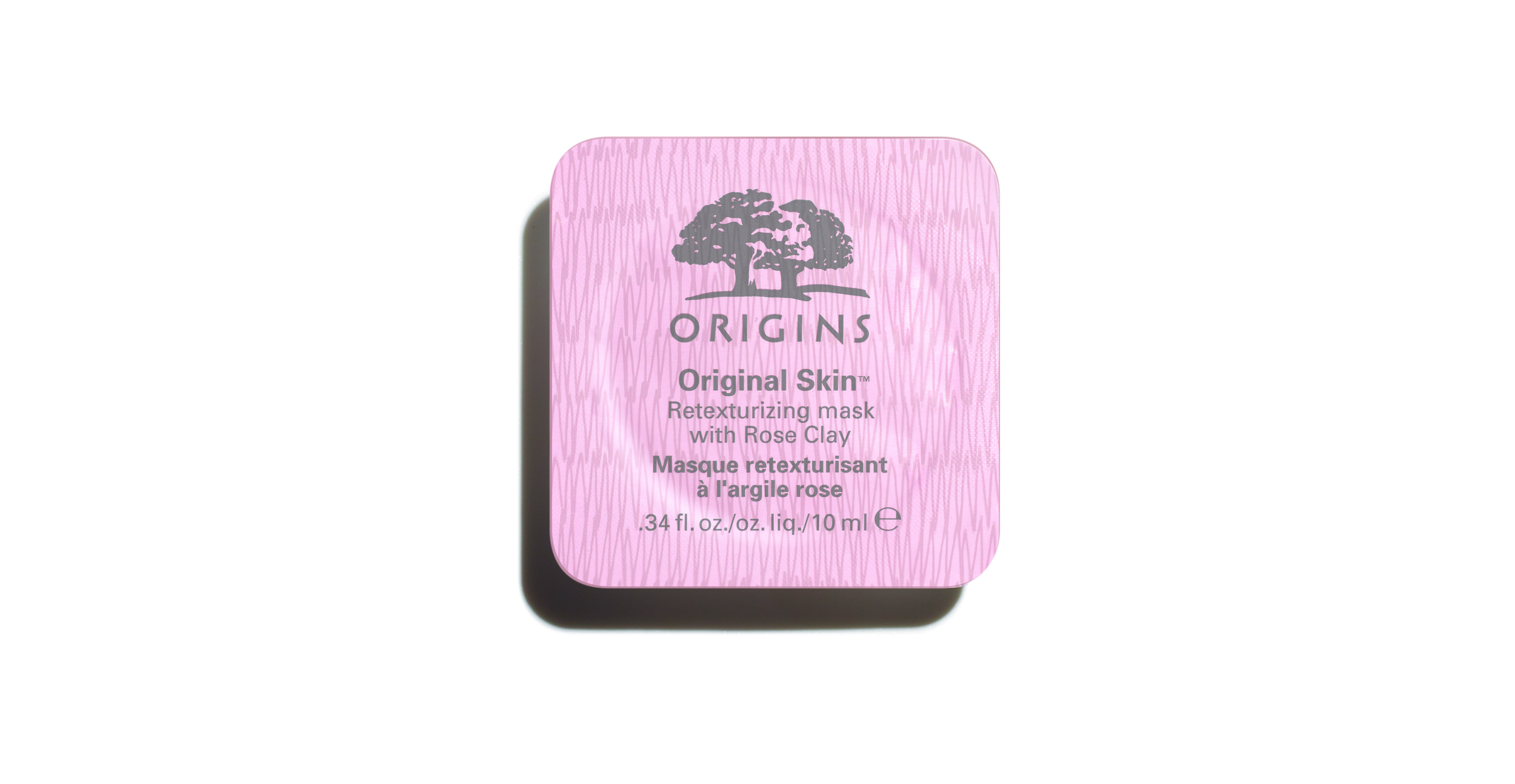
Glowing skin is like a great hair day, it can give you the confidence boost you need before meeting with a potential employer. After all, you want them to focus on what you’re saying, not any skin issues. Show them how you’re a true “Original” by outlining your best traits and what you can add to the company. Your glowing and radiant skin is a bonus.
Ask for a Raise with Confidence: Use Clear Improvement™ Active Charcoal Mask To Clear Pores

A meeting with the boss can be stressful, even to employees who are in good standing. But if you’ve shown “Clear Improvement,” that’s the mask you should use. This active charcoal mask clears your pores, absorbs environmental toxins, and dissolves impurities. Which means, while you’re outlining the progress you’ve made as an employee and giving your boss reasons to give you a raise, your skin is working for you as well.
Before Flying In for a Meeting: Use Drink Up™ Intensive Overnight Mask

Hopping on a flight to pitch a new client can seriously dehydrate you. So what’s girl boss on-the-go to do? Before you take off, opt for the “Drink Up, Intensive Overnight Mask.” The avocado and apricot kernel oils instantly quench compromised moisture reserves and help build a reservoir for tomorrow— which you’ll need once you’re up in the air.
And remember the best way to leave a killer impression in any meeting, is to be yourself. The best you is the one that’s comfortable in her skin— we’re just helping you give it some major glow.
The 5 Clutch Business Tools Every Startup Needs Now
Cutting out and pulling ahead of the competition starts here.

Managing the day-to-day stressors of a startup is, well, stressful. These five tools will help you mitigate and manage, so that you have time to focus on the million + 1 other tiny details. No one ever said rising, grinding, and making your own way was easy!
Breather: Your Place to Pitch
A startup doesn't always come with a cute office space. In fact, most of the time it's you hustling from your living room in the attempt to get your idea off the ground. Well, think of Breather as your wings-- because you should never pitch where you eat. If you need a space to look professional, Breather is your new startup BFF. Take meetings with potential investors or new clients in one of their rentable spaces. The way it works is simple. Sign up on their site for free, and book "peaceful and practical" spaces when you need them.
Freshbooks: The Fresh Way You Get Paid
If billing clients and keeping track of invoices is SBT (small business torture) Freshbooks is your savior. Freshbooks is an accounting software program that makes it easy to keep track of billing. Built specifically for small business owners to get organized and get paid, you’ll be tracking time, logging expenses and invoicing your clients with efficiency. It will make you look professional and gets that money in the bank an average of 5 days faster (based on a Freshbooks conducted of 2,000 users) than what you're used to. That's a whole business week.
Sell Hack: A Cold Email Is DOA If You've Got the Wrong Contact
Cold emailing is the new cold calling, but without the right contact you're wasting a fair amount of time sending off emails to info@bemyclient.com. Generic email accounts will sometimes get forwarded to the right place, but when you're attempting to build your business, the right contact is a golden ticket. Sell Hack gives you just that, and was created to make prospecting on the Internet easier. It's a simple plugin that gives you the option to search and build out email lists. So create an account, look up the people you want to pitch, and start hacking into success.
Bench Accounting: For the Numbers You Don't Want to Crunch
Make keeping your finances in order Bench's problem. For small businesses and small business owners, Bench collects all your financial data and turns it into tidy financial reports. Which means no: data entry, number crunching, or worrying that you are going to severely screw up your entire life with QuickBooks. Bench offers you a personal bookkeeping team, ready to tackle all of those receipts. You'll get financial statements every month and year-end reporting. It also makes TAX SEASON a breeze.
Sunrise Calendar: Keeping You Organized and On Time
So you don't have the capital for a personal assistant? Not a problem. Sunrise Calendar is a free calendar made for Google Calendar, Exchange, and iCloud that automatically syncs between your phone tablet and computer so you can access your calendar from anywhere. Fashionably late is not a thing in the startup world.
What It Takes to Become Two of the Most Successful Female Architects in America
“I have learned to talk hunting and fishing and SEC football.”
“Oh…I guess girls are going into architecture now.”
In the 1970s, this was the type of pronouncement one might hear as a female high school student trying to ask a professional architect about his job. And by “one might,” I mean it was Jane Frederick’s real life. The architect in question was likely not trying to be rude—female architects were still a fairly new concept at the time. Nowadays, women earn about 42 percent of architecture degrees in the United States, but they only hold about 25 percent of industry jobs. So: progress, but not enough.
Becoming an architect is no small feat—it usually takes about eight years of post-graduate training to complete 5,600 internship hours and seven exams—but you don’t hear encouragement toward the field as often as you do other go-to prestige categories like law and medicine. So, what is it really like to be a female architect today? For this piece, I spoke to major success cases: first, Jane Frederick, the principal architect at Frederick + Frederick, a small, well-established South Carolina firm that specializes in custom residences for hot, humid climates. She is a Fellow in the Aspen Global Leadership Network and currently serves on the American Institute of Architects Board as one of three at-large directors.
Then we have Courtney Casburn-Brett, the youngest entrepreneur-architect in the United States. Again, in an industry with an exceptionally long path to licensure, a 40-year-old professional is considered a “young architect.” Casburn-Brett started college at 14, was working for one of the top firms in the world at 20, and started her own firm when she was just 24.
The Early Years: “I’m lucky I stuck with it.”
It is perhaps no surprise that Casburn-Brett’s fast-track to architecture began at an early age. “We moved around a lot when I was young, and I was fascinated by how different all the houses we lived in and all the schools I went to were,” she says. “And I loved to draw. I would draw these buildings that I was experiencing depending on where we were.” For her 11th birthday, Casburn-Brett’s parents gave her graph paper and an architect’s drawing tools, including a scale and tracing triangles, and explained to her that this interest of hers could actually be a job one day. “From that point on, I knew that’s what I wanted to do,” she says.
With an interior designer mother and an engineer father, architecture was a perfect synthesis for Frederick in more ways than one. “I was strong in math and really enjoyed art, and I felt like it was a good mix of the two,” she says. But female architects were few and far between at that time. Starting college at Auburn in 1978, there were only six women in Frederick’s architecture class of 50 people, and she did not have a single female professor.
Fast forward to 2004, when Casburn-Brett started at Auburn, and the class gender gap had thankfully closed a bit. She entered the first architecture class at Auburn that was half women, half men. Since then, however, “I’ve found that the higher I’ve climbed, the fewer women I’m around,” she says.
Climbing the Ladder: “I just didn’t fit in at all.”
In Casburn-Brett’s first job at SOM, the legendary firm behind projects like the Freedom Tower and the Sears Tower, she was lucky to find a female role model in her immediate team manager. “She was this really powerful, go-getter woman,” she says. “I was able to see the way that she interacted both with her peers and the next tier above her.”
Graduating in 1982 during the recession, Frederick was not so lucky. She started out working at a small firm in Washington D.C. who hired architects not as employees but as independent contractors. Frederick found herself babysitting for one of her co-worker’s kids to try to make ends meet. At her next job, Frederick was happy to discover her first female co-worker, but her boss ran into a cash flow problem yet again. “Then I worked in another job where I was not only the only woman but the youngest employee,” says Frederick. “That was the most challenging job I ever had. It wasn’t like they were unkind or anything, I just didn’t fit in at all.”
Back at SOM, Casburn-Brett started noticing that there really is a difference in how people interact with men and women in the industry. She says: “One of my favorite stories is about one of the leaders in my studio, an older gentleman who had been practicing hospital architecture for almost 50 years. He had this habit of micromanaging everything that I did. I had been out of school for a year and I wasn’t a licensed architect, so it made sense that he would want to keep an eye on his younger employees. But everything that I did, he would follow up my email with additional information or constantly insert himself, even when I was doing my job well. It drove me crazy because he didn’t do it to one of my male colleagues on the team.”
Instead of writing it off as something she would “just have to deal with,” Casburn-Brett took action. “I marched upstairs to his office and I told him that what he was doing, whether or not he was aware of it, was undermining my ability to do my job well. I said that if he would let me just do my job, I would take responsibility for any mistakes I made and we could re-visit the conversation, but if I didn’t make a mistake, it would save him a lot of time and effort,” she says. After that conversation, Casburn-Brett says he became her greatest mentor: “At that point, I don’t think he really knew the way that his behavior and training were coming across. To his credit, as soon as I brought it to his attention, he immediately changed the way that he interacted with me and treated me on the team. I learned that sometimes you just need to be a little more assertive.”
Of course, being an assertive woman also puts you on a tightrope of sorts. In her next job at a small development company in the South, Casburn-Brett was once told by a male colleague that her attitude was “very I-am-woman-hear-me-roar.” She remembers thinking, “Wow, that is an extremely inappropriate and a horrible thing to say,” but also taking it as a lesson on how to interact with different types of people. She explains: “What was a direct, business-oriented, confident approach to my work in the setting of New York wasn’t translating the same way here. My confidence level didn’t change, my competence level didn’t change, but the way I was being perceived did. I don’t want to suggest that you should necessarily change your behavior based on the people around you, but you do have to have an awareness about the best way to interact with certain people. So now that I’m a business owner and I interact with so many different types of clients and vendors, I find myself trying to actively at least show the warmer side of my personality if I’m being that direct all the time.”
Becoming Your Own Boss: “You get more control that way, but it’s tough.”
Without any female mentors in architecture—let alone those who had started their own firms—Frederick just became one herself. “I was 26 when I got my license, and six months pregnant when I passed my test,” she says. “And I was like, ‘I need to pass this test because once I have a baby I’m not going to be able to,’ which is what a lot of young women find. It’s very difficult to do with a family because you need that time to study.” She passed. And when her oldest daughter was born, Frederick set out on her own, doing freelance work from home that amounted to about six hours a day. A few years later she moved to South Carolina and opened Frederick + Frederick alongside her husband—a firm that has been going strong for almost 30 years.
Both Frederick and Casburn-Brett appreciate the freedom they have found by starting their own firms, though the challenges are many. “You get more control that way, but it’s tough,” Frederick says. “You have to bring the work in, and if there’s a recession you have to figure out how to make it through, but if that’s your temperament, it’s a really good route.” She acknowledged that at major firms you’ll have the opportunity to work on bigger projects, but that can be difficult as well. “One thing I’ve heard from other women is that in large firms they sometimes tend to get pigeon-holed doing interior architecture instead of doing say, big tall buildings,” Frederick says.
As she approaches the four-year mark of her company, Casburn-Brett is grateful that her client relations have been overwhelmingly positive. “I’ve definitely been fortunate that my story has brought to me the types of clients that I really want to work with,” Casburn-Brett says. “Being a woman is a part of that story, but it has more to do with being tenacious and young and going after something that other people may not have had the gumption to go after, like starting a business and getting a license at this stage in my career.”
What No One Tells You: “I have learned to talk hunting and fishing and SEC football.”
Casburn-Brett says the most important thing she’s learned is to come to the table prepared. “I want to make sure that I’m the person at the table with the answers, because I don’t want to give anyone any reason to doubt me and think that it has something to do with my gender,” she says.
And as Frederick has learned in her 35 years in the industry, having street smarts is just as essential. “One thing that’s really different is doing construction site visits—typically you are dealing with men, so I have learned to talk hunting and fishing and SEC football,” she says. “The other thing that might make a difference is I’m really tall—I’m 5’9—and I think that’s an advantage for me.”
Frederick urges young women to consider something she didn’t have the opportunity to consider when she was applying to architecture school. “Even though most schools now are mostly 50-50 male-female overall, I would check and see how many women there are who are full professors,” she says. “Not that you can’t have a man that is a mentor, but having some women there too is really important.”
Once you graduate, she adds, keep doing that type of research. “When you’re looking for your first job, really look at what the culture is like,” she says. “Make sure that it’s a diverse office, which will have a broader mindset and often have more flexible policies, particularly if you have small children or want to have children. Those types of firms can be large or small.”
As for architecture’s youngest entrepreneur, Casburn-Brett’s best advice is to make like Nike and just do it. “This is exactly what I knew I wanted and I went for it,” she says. “So whenever there were times that I could have given myself an out or it seemed hard or even impossible, there was no, ‘It might be easier to XYZ.’ I’ve never had a plan B. I was going to get into architecture school, I was going to be an architect, I was going to be a small business owner. I didn’t waste any time thinking about whether or not I should try to execute a different plan. I found a way through.”
Up In the Air: 3 Ways Boss Women Fly Hydrated

It's 10pm and you're in the airport lounge waiting to board a redeye for your business trip across the country. It's a flight path all too familiar to you-- after all, the hustle can sleep on a plane. Why not make moves across the country to make moves with your career the next day? You say it's time well-managed.
However, it can ravage your body. The mixture of recycled plane air, low humidity environments, and the moisture zapping tendency of winter, can leave you with dry skin, itchy eyes, and you're even more prone to catch a virus. So, what's a boss to do?
Drink Water
This may seem obvious, but for anyone on-the-go a drink and a movie sounds much more appealing (especially on a redeye) than a bottle of water. But make a point to buy a big one before you get on your flight, and make sure you finish it by the time you land.
Flyers tend to nix big bottles of water to avoid annoying their aisle mates by heading to the bathroom every hour, but lack of water and sleeping on a plane make for the perfect recipe for fatigue. Which, IS THE LAST thing you need when you're trying to nail down and impress an investor.
Have trouble remembering? Make it a game and take a sip every time the stewardess turns on the seatbelt sign.
Take Emergen-C or Airborne
It's not in your head that you always get sick on a plane. The air inside the cabin of a plane usually has a humidity level of 10 to 20 percent, which is much lower than typical indoor humidity of 30 to 65 percent. This low humidity level actually affects your health. When your airways are moist, the lining traps viruses from entering your body. When they are dry, those germs have a one-way ticket to your body.
Pack an immune booster in your carry-on.
Pack the Right Moisturizer
Dry, itching skin is the worst. So is a dehydrated looking face. You want to look fresh-faced and rested when you step off the plane. Yes to has a new line formulated specifically for dry skin. The Yes to Coconut is a natural collection that combines nourishing moisturizers like coconut oil that's perfect for skin in need of heavy hydration. To wipe away impurities and makeup try the Coconut Cleansing Wipes. The Ultra Hydrating Facial Souffle Moisturizer is non-greasy and super hydrating. And a dab of Ultra Hydrating Overnight Eye Balm says bye bye to dry eyes as you say hello to a new city.
9 Killer Public Speaking Tips from Top Female Entrepreneurs
Get ready to pick up this mic we're about to drop.

Jittery hands, racing heart, blank mind. If you're climbing the career ranks, there is a good chance you've experienced one or all of these emotions when you get up to give a presentation or a talk. There's no escaping it, and the earlier you accept that public speaking is going to be a part of your career, the better. After all, practice makes perfect (or so said Tina Craig of Bag Snob this weekend at Create & Cultivate Dallas).
Whether you're prepping for a pitch meeting or you're planning to one day give a world-changing TED talk, we asked the industry best to give their quick and dirty tips for getting up in front of a crowd or an investor.
ANNIE LAWLESS, NY TIMES BEST SELLER, CO-FOUNDER SUJA, CREATOR BLAWNDE.COM
"Don't filter yourself because everyone can tell. Be authentic-- that will help you be conversational. And don't worry about what you think they want to hear."
DANIELLE DUBOISE, CO-FOUNDER SAKARA LIFE
"Memorize three things you know you want to say. Don't memorize anything else because you'll sound like a robot. And have a code word for yourself. Mine is solar plexus, for when I tap into my power."
SOPHIA RIVKA ROSSI, CO-FOUNDER HELLO GIGGLES
"The key to public speaking is to disassociate, j/k, to connect to what you are expressing, and just remember no one really ever cares more than you do."
JACLYN JOHNSON, FOUNDER CREATE & CULTIVATE
"The worst thing you can do on stage is think about yourself. What matters is the audience. So get out of your head and your inspirational insight will find a way into theirs."
JULIE RICE, CO-FOUNDER SOULCYCLE
"Speak from your heart. Everyone can understand passion...oh yeah and 'takeaways.' Leave people with something actionable."
TINA CRAIG, CO-FOUNDER BAG SNOB
“I talked about the end user, as if she was there.” On “Shirley,” the character she created and used when pitching HSN. Adding, "You do anything enough, and it becomes fun. Practice in your sleep."
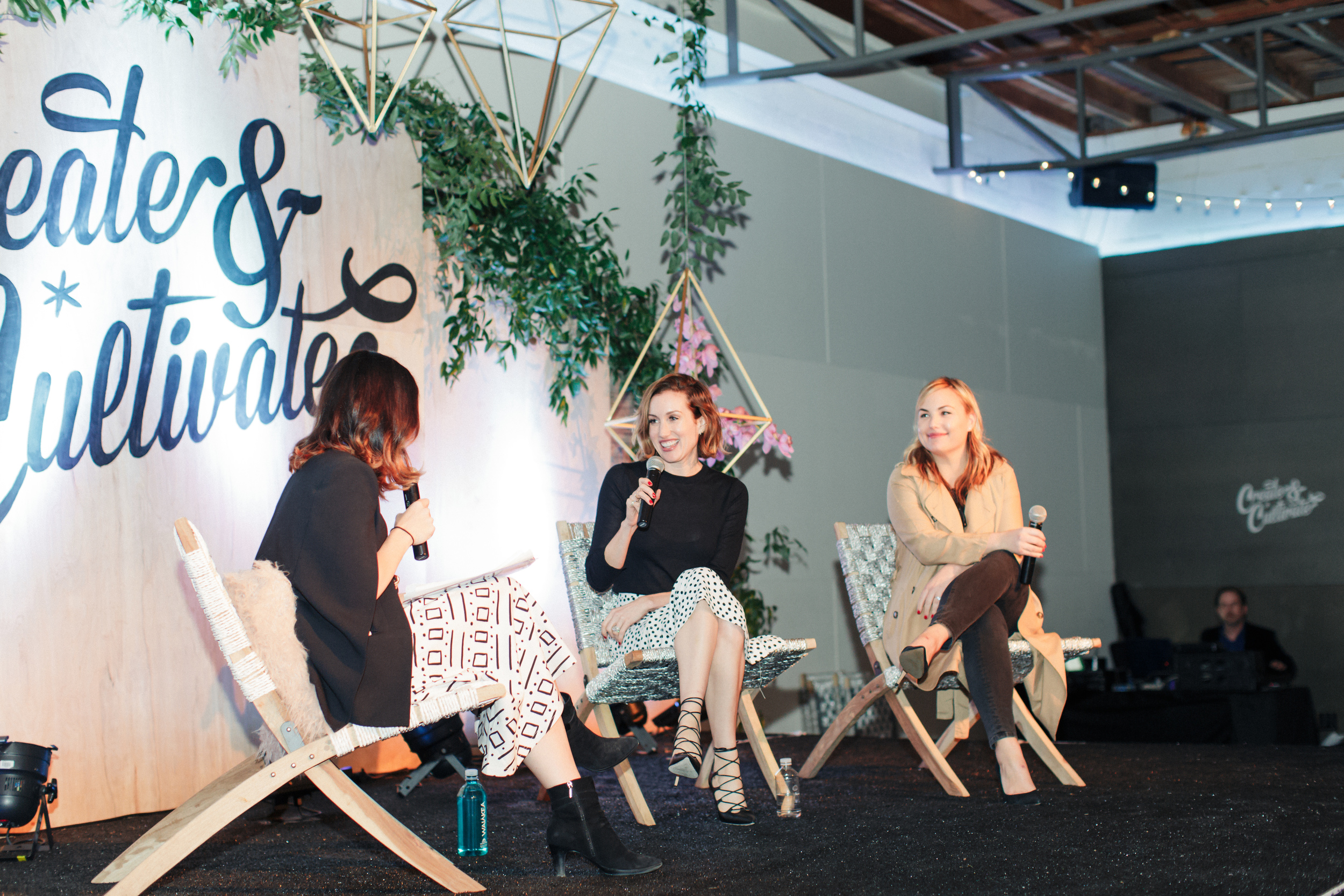
HILLARY KERR, CO-FOUNDER WHO WHAT WEAR, CLIQUE MEDIA
"Some people thought we were cream puffs, but we were smart. I like to say it was like being bitten to death by a butterfly." On early fundraising meetings for Who What Wear.
RACHEL ASHWELL, FOUNDER RACHEL ASHWELL SHABBY CHIC
"Be truthful. It's too easy to say what you think sounds good."
ELIZABETH CUTLER, CO-FOUNDER SOULCYCLE
"And concise."
Mic drop, Elizabeth. *claps*

15 of the Most Quotable Moments from Create & Cultivate Dallas
Be inspired. Stay inspired.
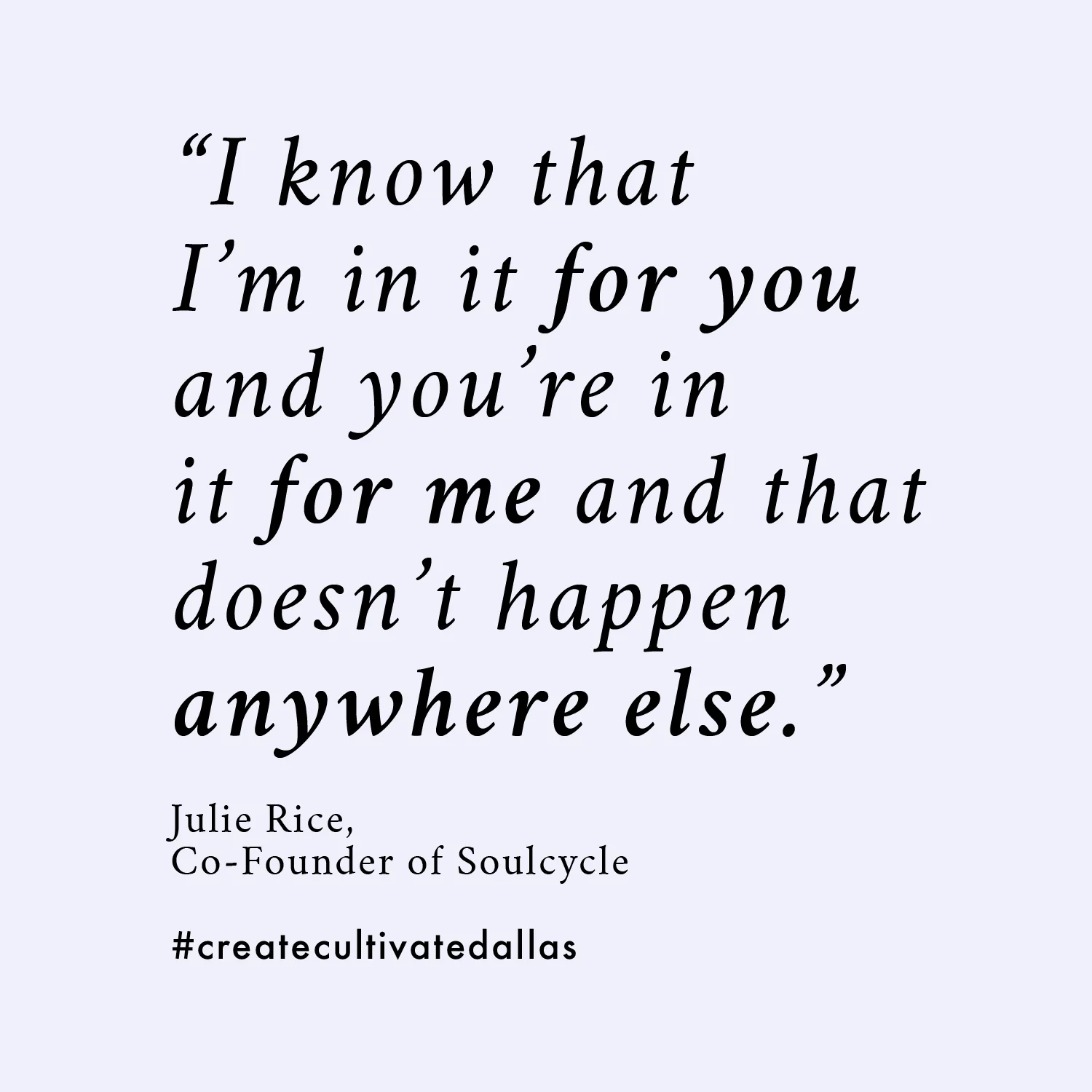
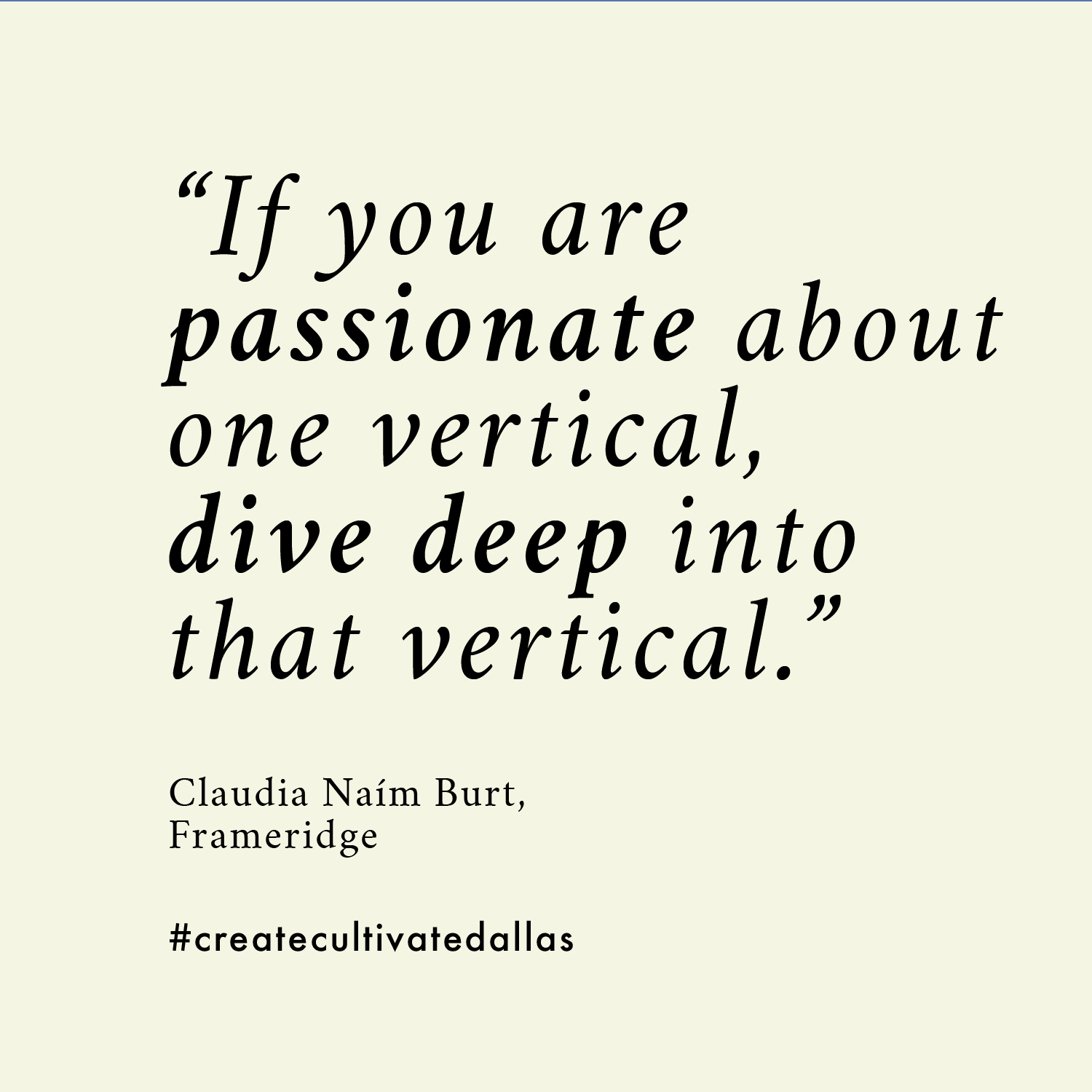
There are so many brilliant moments at each Create & Cultivate, it's hard to pick our favorites. So we're rounding up a few that we couldn't not share. Click through to be inspired by the very best.




5 Pieces of Must-Know Advice from C & C Dallas
Yesterday at Create & Cultivate these ladies (and one gent) dropped some serious knowledge.

Snapchat has DJ Khaled and his major keys, but yesterday Dallas had all the keys to creative, entrepreneurial boss success when Create and Cultivate hit Lofty Spaces. The energy was electric. Attendees were on fire with their outfits and questions for panelists. And the speakers, let’s say they knocked the yee out of the haw.
Here are five MAJOR KEY takeaways from yesterday’s Create & Cultivate Dallas.
IT’S ALL ABOUT THE MISSION
We heard this reiterated a couple of different ways yesterday, but there's not doubt that buzzword of the day was MISSION. Everyone from the Soul Cycle co-founders to Stephanie Mark of The Coveteur made it clear: the goal SHOULD NEVER BE FOLLOWERS OR MONEY. You start with an idea you believe in and make that carry your business and fuel those late nights.
"Trying to get 500k on Instagram is not a goal or a business plan."
Tweet this.
Soul Cycle co-founders Julie Rice and Elizabeth Cutler told the crowd that their mission has always been simple: "to put joy and empowerment into their business."
Sakara Life co-founder Danielle DuBoise encouraged the audience to make sure that their work “is a mission driven business, because it will change your trajectory.” Adding, “When times get tough, you can make it so it’s not about you. Stay true to your mission because that is what will carry you through.”
WHEN PUSH COMES TO SHOVE, JUST WORK B.
What we see on stage is pretty and inspiring, but is also the result of late, wee-morning work hours, tears of exhaustion, missteps, hustling two jobs to fuel to the passion project, and even moving back in with mom and dad.
At the end of day what everyone on these stages has is a propensity to work, work, work— something they reiterated to attendees time and again.
From Annie Lawless telling the crowd: “Any entrepreneur will tell you, you are always working, but for you it’s not a job, it’s a dream.”
To Emily Schuman explaining to a captivated audience: “Have patience. I’m sitting up here talking about all of these things I’ve done, but it’s taken a really long time. Have determination and patience and believe in yourself.”
On her early days of self-taught Photoshop Katherine Power told the crowd: “You just have to get it done.”
Kendi from Kendi Everyday said something rather similar: “You just have to decide to do it. And then do it.”
IT’S QUALITY AND QUANTITY
There is something to be said that “done is better than perfect”— which, is an adage we heard a couple of times from the stages yesterday. But when the world is watching you need to be on your A-game. Matt Crump of #candyminimal fame explained to the crowd the importance of delivering on both quality and quantity if you want to grow your following.
“I was working two jobs,” he said, “and moved back in with my parents. But I would make sure that what I was putting out was thoughtful and consistent. If it’s your passion, you make it great, and you make it work.”
Tina Craig of Bag Snob also made clear that in addition you need to know all sides of what you’re doing.“If you want to get in the business,” she said, “get in the back end of the business. Not just the fun. Not just the selfies.”
In the age of social platforms you have to consistently pump out content, but it needs to be solid.
A BAD RELATIONSHIP CAN RUIN YOUR WORK SPIRIT
We heard this sentiment repeated three times and we think it’s worth repeating here.
First, Whitney Wolfe CEO and Founder of dating-app Bumble asked the crowd to consider what a bad relationship has the ability to do. “If you’re in a bad relationship,” she said, “it can destroy your life.”
On a lighter (but also totally serious note), Soul Cycle CEO Elizabeth Cutler told everyone, “No deadbeat boyfriends for anyone who works for us.”
This also applies to work relationships. Hillary Kerr and Katherine Power are coming up on their ten year workaverssary and told attendees, “WE obviously have a friendship but it’s business first and foremost. You have to be respectful.”
THERE’S NEVER THE RIGHT TIME
Waiting for the perfect day to come along to take a risk? Not gonna happen.
When Danielle DuBoise and Whitney Tingle (who just made Forbes 30 Under 30) started Sakara Life they had a combined 700 dollars. Annie Lawless (also on Forbes' coveted list), who dropped out of law school and started delivering juice around San Diego in her 2-door coup, had less than that. If you’re waiting for lightning to strike, the stars to align, or enough money in the bank, there’s a good chance you’re going to miss your shot. There is someone right now taking that risk.
Tze Chun of Uprise Art told the crowd: “When you’re starting a company just saying it’s real, makes it real.”
Whitney Wolfe said, “There are so many days when it’s terrible. But if there is one good relationship taking place out there, it’s all worth it.”
And Soul Cycle boss Julie Rice put it clear as day: “Whatever you’re doing now, I actually only think there is one skill you need, and that’s making shit happen.”
Get ready for our announcement on Feb 15th about the next Create & Cultivate. Sign up for our newsletter to be the first to hear where we are heading next!!

ITK: How to Price Yourself Part II Based on IG Follower Count
In a #followforfollow world, there's serious money to be made.

Instagram is a powerful visual marketing tool, and a highly engaged audience is something that brands are willing to pay good money for. Studies have shown that Instagram provides brands with 25% more engagement than other social media platforms.
What brands are looking for is a good like to follower percentage-- about 10% and engaged commenters who have long-term interest in your feed. For example, not a group of followers you got for #followforfollow. If you've purchased your followers, the engagement will never be what you need. A better way to spend your time (and not money) is figuring out how to position your brand and self so that your engagement is real. There's something to be said for faking it till you make it, but with IG, it's not the case. It doesn't look good to have 50k followers, 36 likes, and 1 comment from your BFF on a post.
However, if you have a big, authentic following (congrats!), there is money to be made.
Figuring out what to charge a brand can be tricky, especially when you're just starting out. What they are banking on is targeted marketing that increases brand awareness and leads to sales.
Here is a reasonable breakdown of what you can change. Keep in mind, there is no one size fits all model, and price points depend not only on the brand's bank account but also how specifically you're targeting an audience. If you are posting for an athletic wear line, and you're a yoga instructor with a high follow count, you might be positioned to charge more.

You can also charge more based on case studies and proven ROI driving traffic.
This is often done two ways. The first is with a dedicated hashtag created by you and the brand. With websites like Keyhole, you can track how and where the hashtag has been used.
Second, if the brand provides you with a dedicated Bit.ly link that you can share in your bio (you'll often see this listed in the IG post as "link in bio") they can track how much traffic you're driving from that link. The more clicks, the more green.